


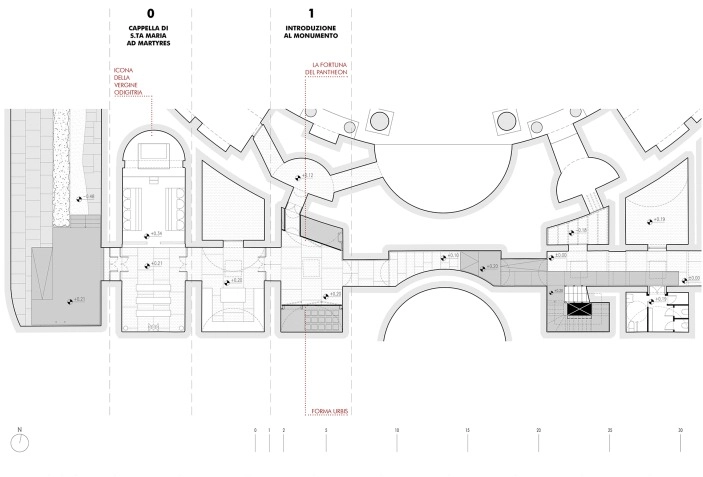
Reframing the Pantheon through Roman spatial order and subterranean archaeology, STARTT’s intervention responds to the need for controlled public access and a clearer interpretation of the monument’s complex underground layers, without compromising its fragile historic fabric. The project introduces new visitor routes and archaeological access through a non-invasive design approach, opening up previously concealed strata beneath one of Rome’s most studied structures, while treating the Pantheon as a continuously evolving historical field.
The Pantheon stands as a synthesis of Greek formal language and Roman engineering precision. Over centuries, it has been interpreted as an architectural icon and an urban artifact embedded within the evolving fabric of the city. STARTT’s intervention, commissioned by the Italian Ministry of Culture, reframes this relationship by focusing on restoration alongside calibrated access to its hidden and transitional spaces.
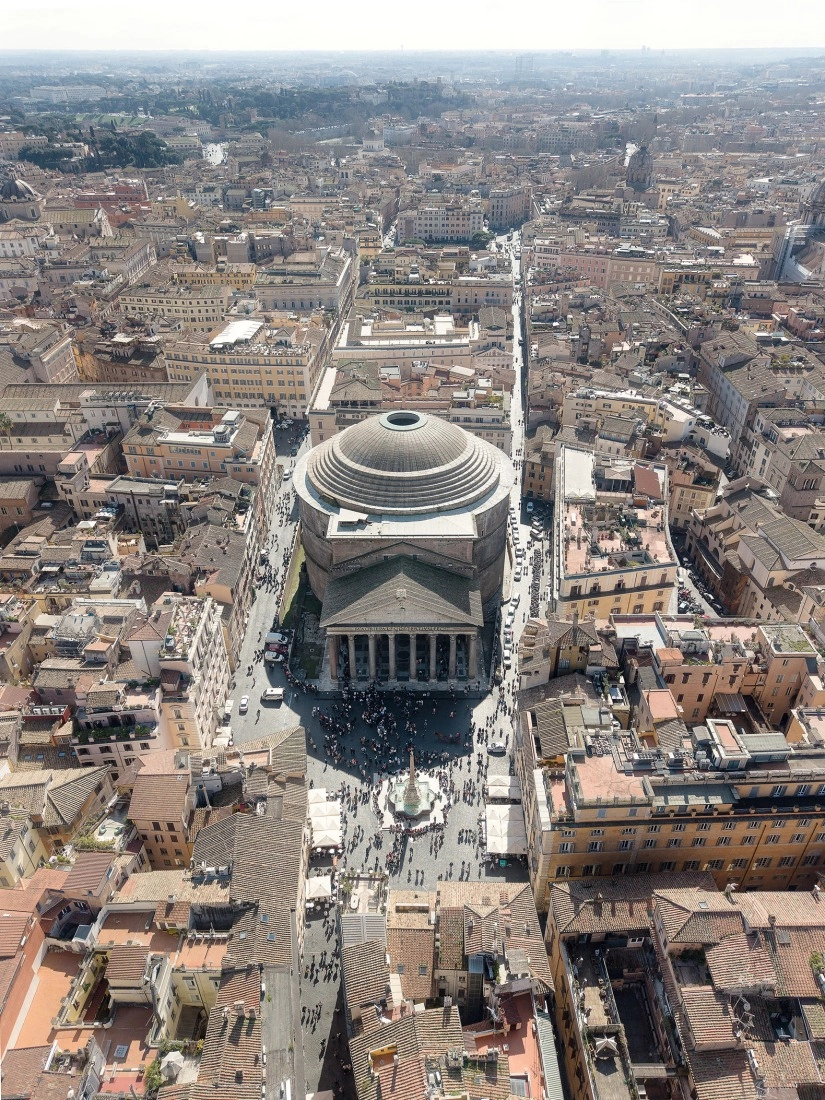
Titled Beyond the Pantheon, the project establishes a direct public connection between the monument and the archaeological remains of the Basilica of Neptune located directly behind its Rotunda. This connection is not merely symbolic, as it serves as a spatial and experiential route that allows visitors to move through previously inaccessible layers of historical conditions.
Phase One: Reopening Hidden Thresholds
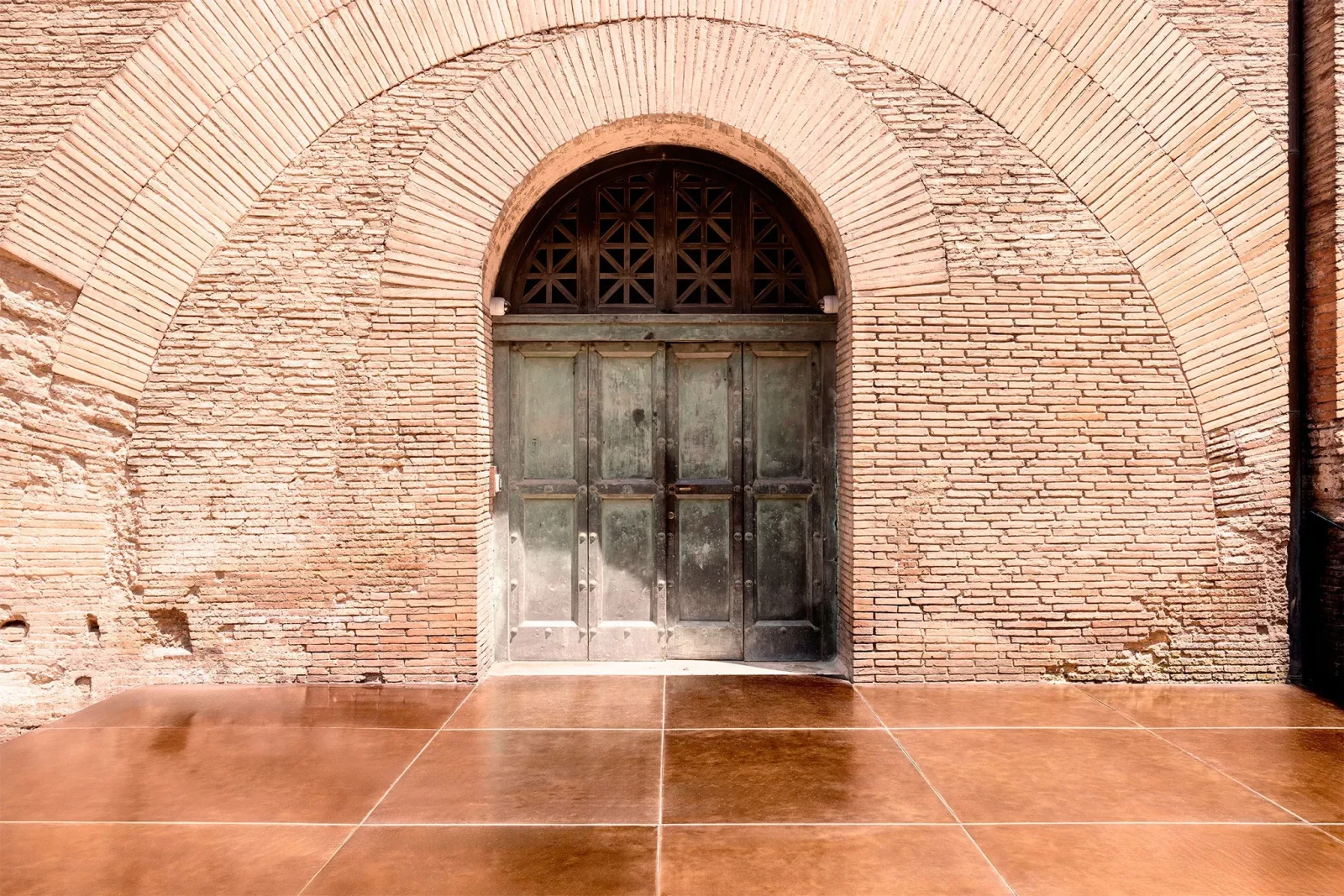
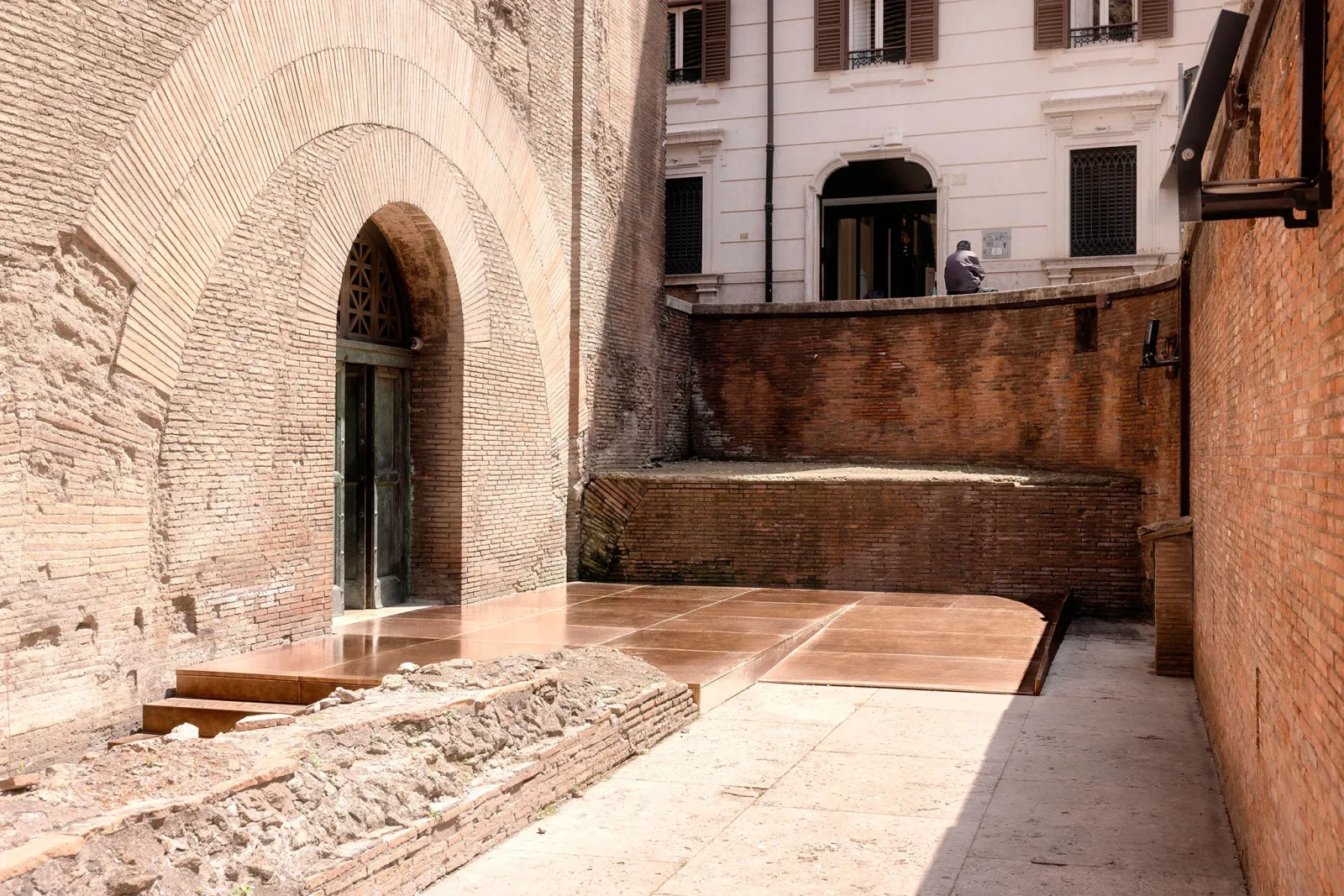
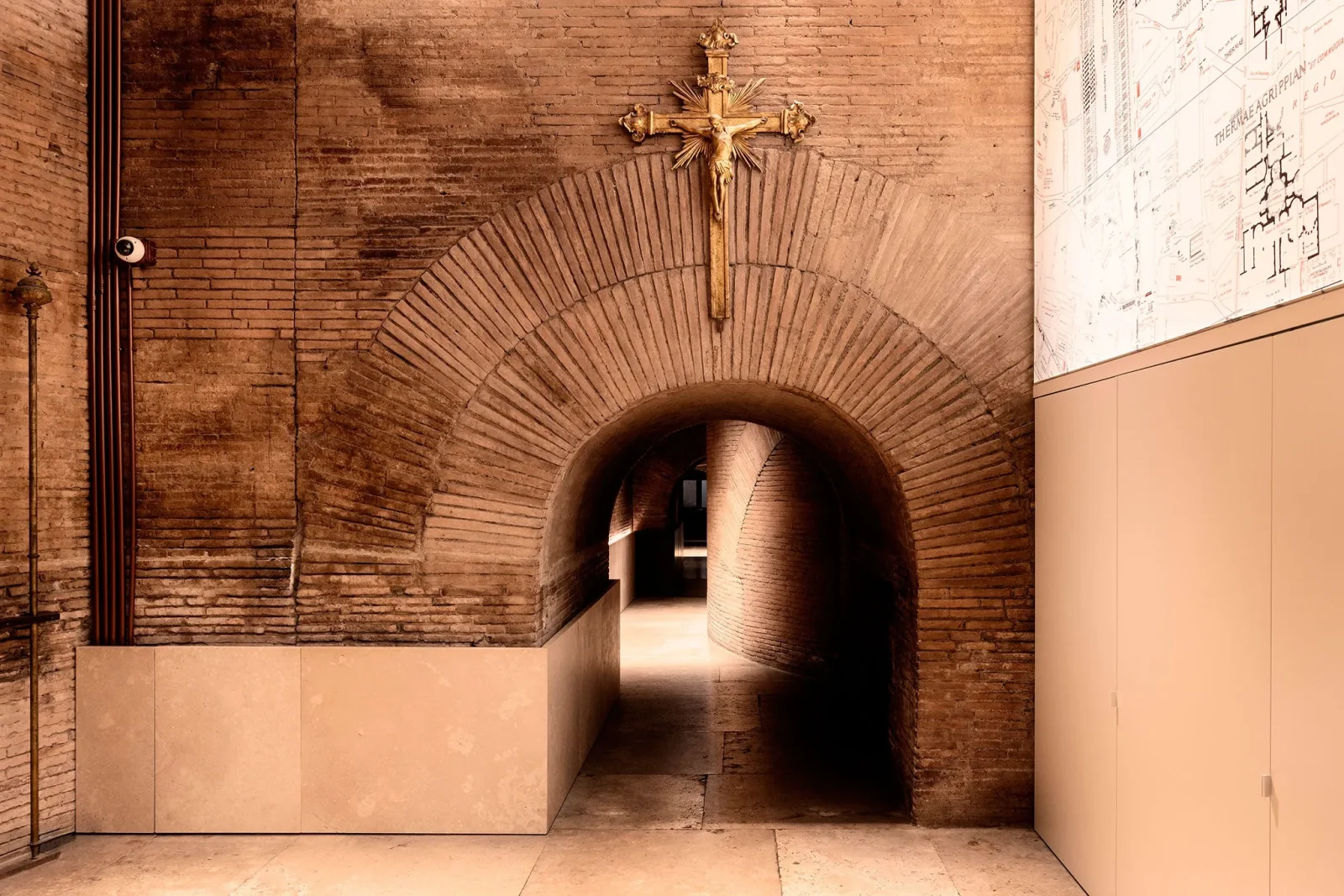
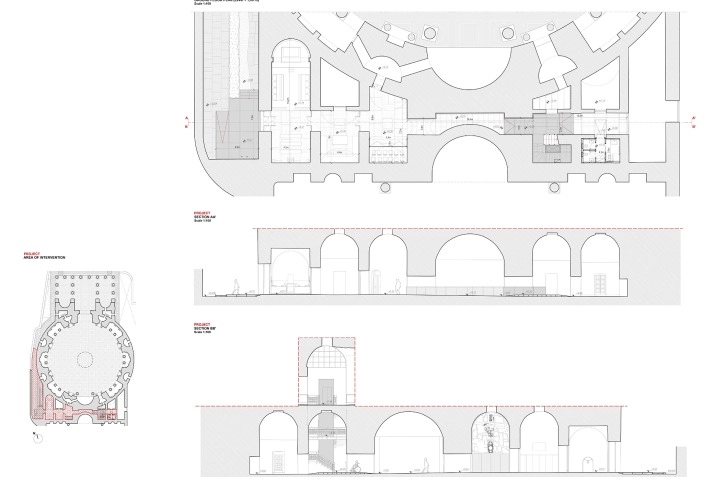
The first phase of the Pantheon project introduces a new entry sequence through the Pozzo del Diavolo, a technical area situated behind the Rotunda. This space, once restricted to maintenance functions, is transformed into a public threshold. The intervention carefully avoids altering the ancient fabric and opens controlled passages that reveal buried architectural conditions.
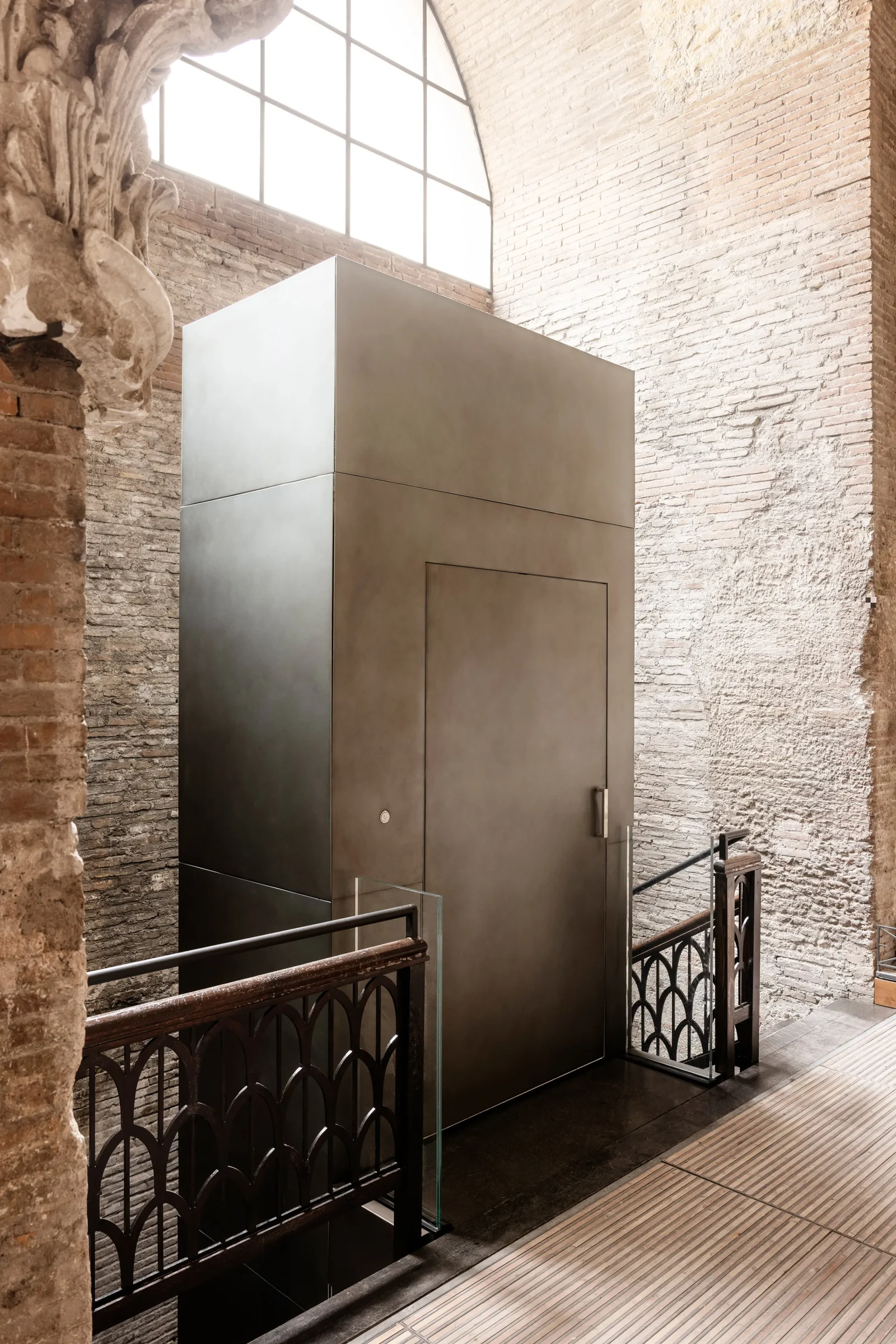
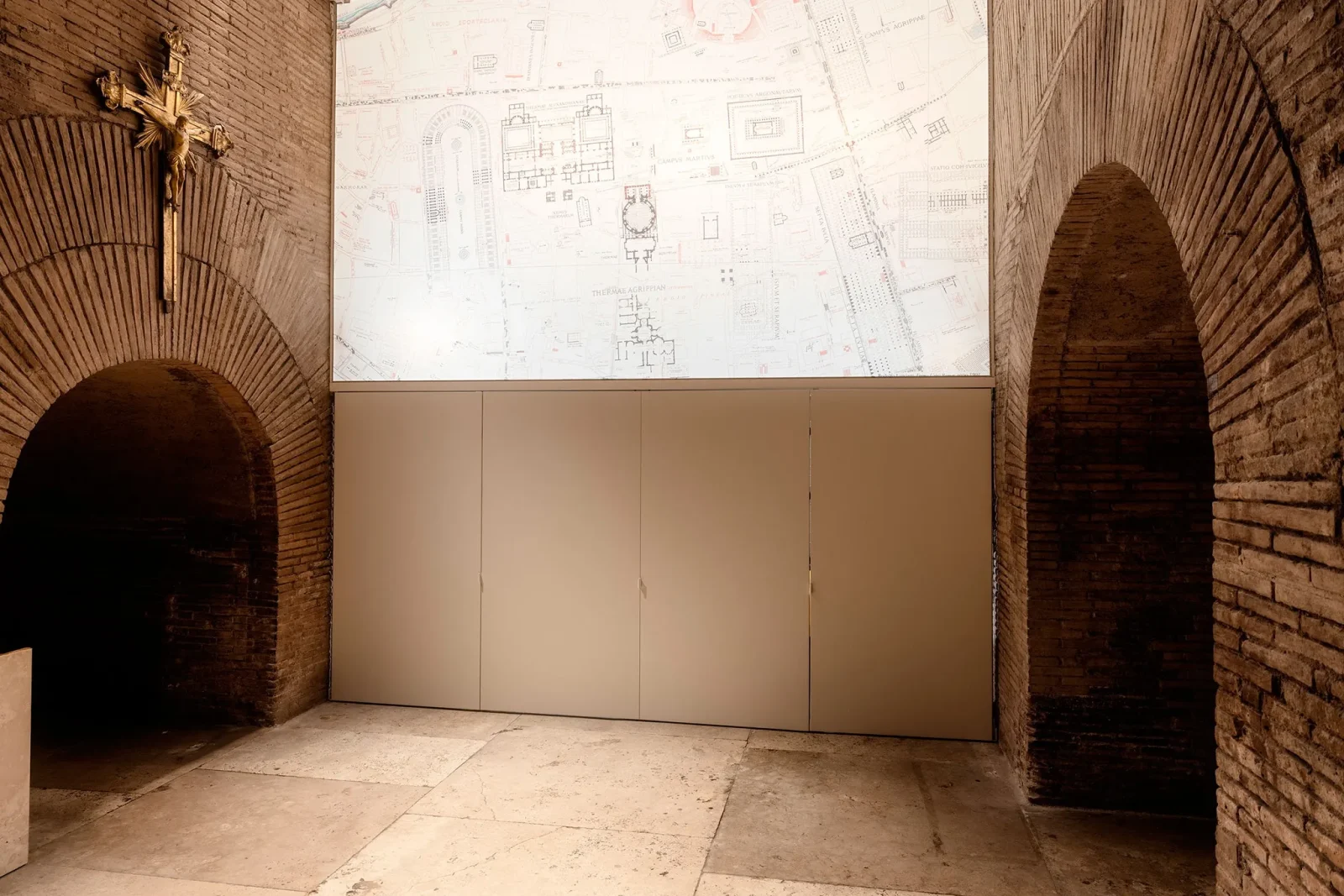
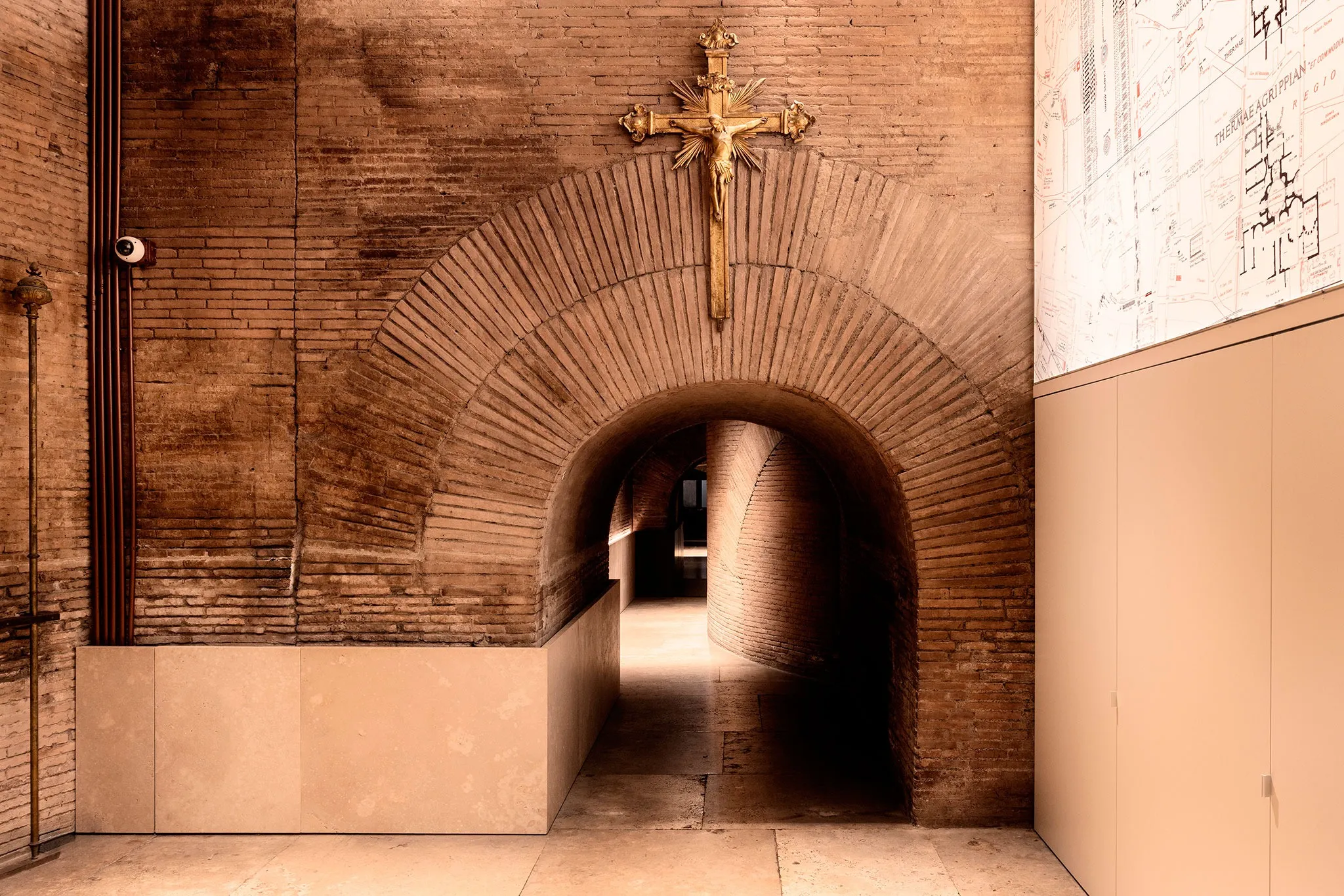
Within this framework, STARTT introduces a series of steel and stone “micro-architectures.” These elements are intentionally minimal and clearly contemporary. They are inserted to support essential functions such as vertical circulation, accessibility, and storage. A lift, designed as a sculptural monolith, becomes part of this system, allowing access without disturbing the archaeological layers.
Reconstructing the Lost Urban Continuum
Historically, the Pantheon was not an isolated monument but part of a longitudinal urban system extending toward Largo Argentina, integrating the Greek pronaos, the Rotunda, and a dense civic fabric behind it. This continuity was disrupted during the Kingdom of Italy, when large-scale demolitions isolated the structure and reshaped its urban context.
At the same time, excavations revealed remains of ancient Roman architecture of the adjacent buildings, including the Basilica of Neptune, further deepening the site’s layered historical narrative.
Subsoil Fragility and Archaeological Exposure
By 2019, increasing sinkhole activity across Rome revealed the fragile condition of the city’s historic subsoil. Investigations around the Pantheon identified extensive underground cavities and structural voids beneath the urban surface. These findings shifted conservation strategies toward controlled access rather than physical reconstruction.
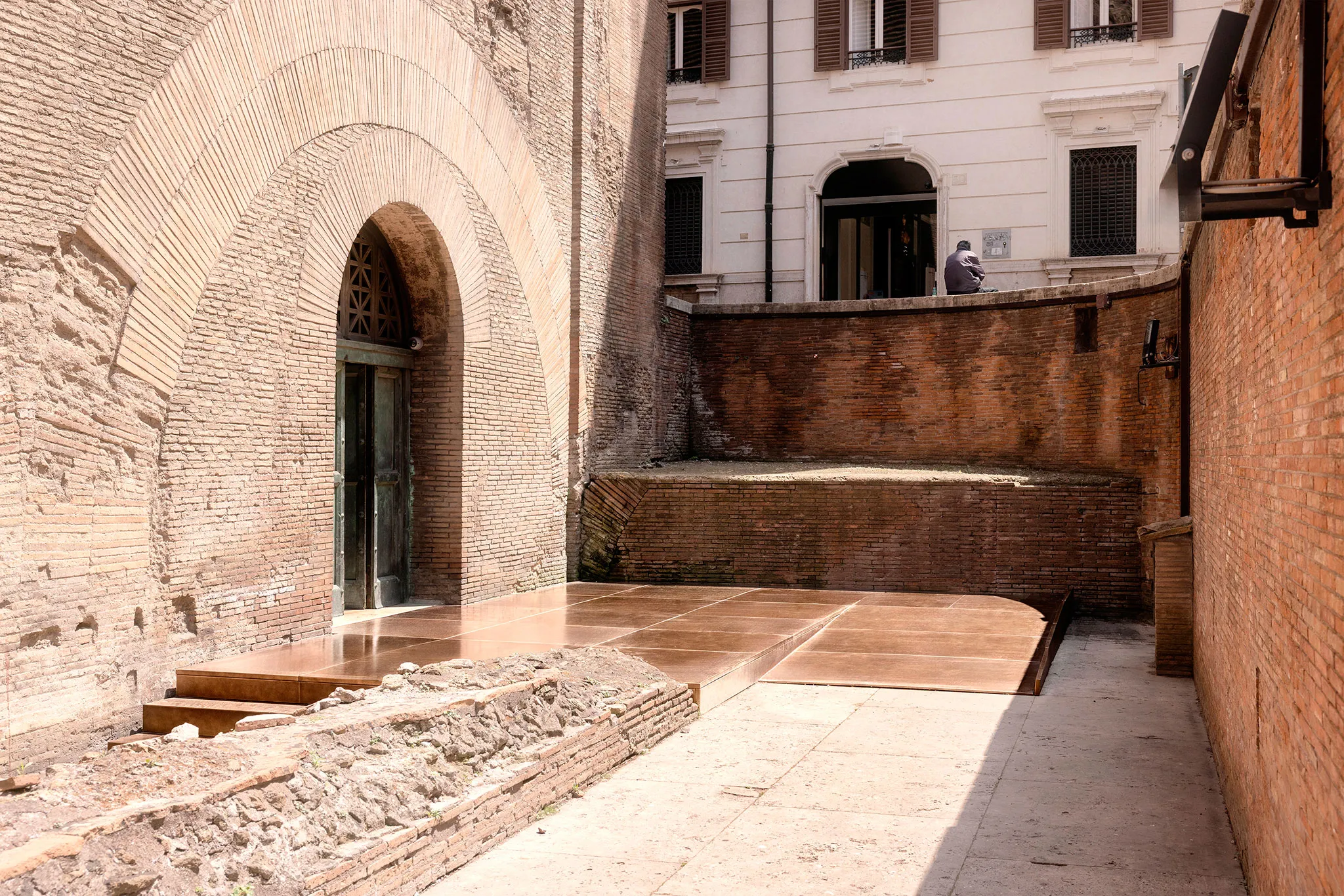
STARTT’s proposal, conceived in 2020 and completed in 2025, responds directly to this condition. Instead of reinforcing the monument through reconstruction, it carefully integrates visitor movement within existing archaeological zones, particularly around the buttressed structures connecting the Rotunda to the remains of the Basilica of Neptune.
A New Visitor Route Through Layered Histories
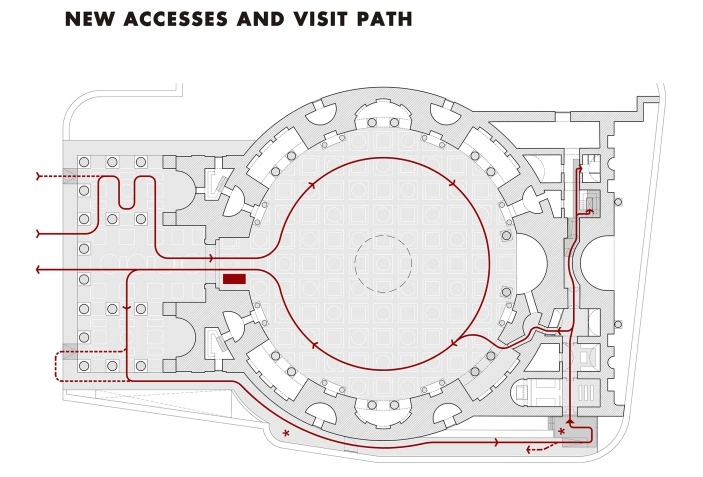
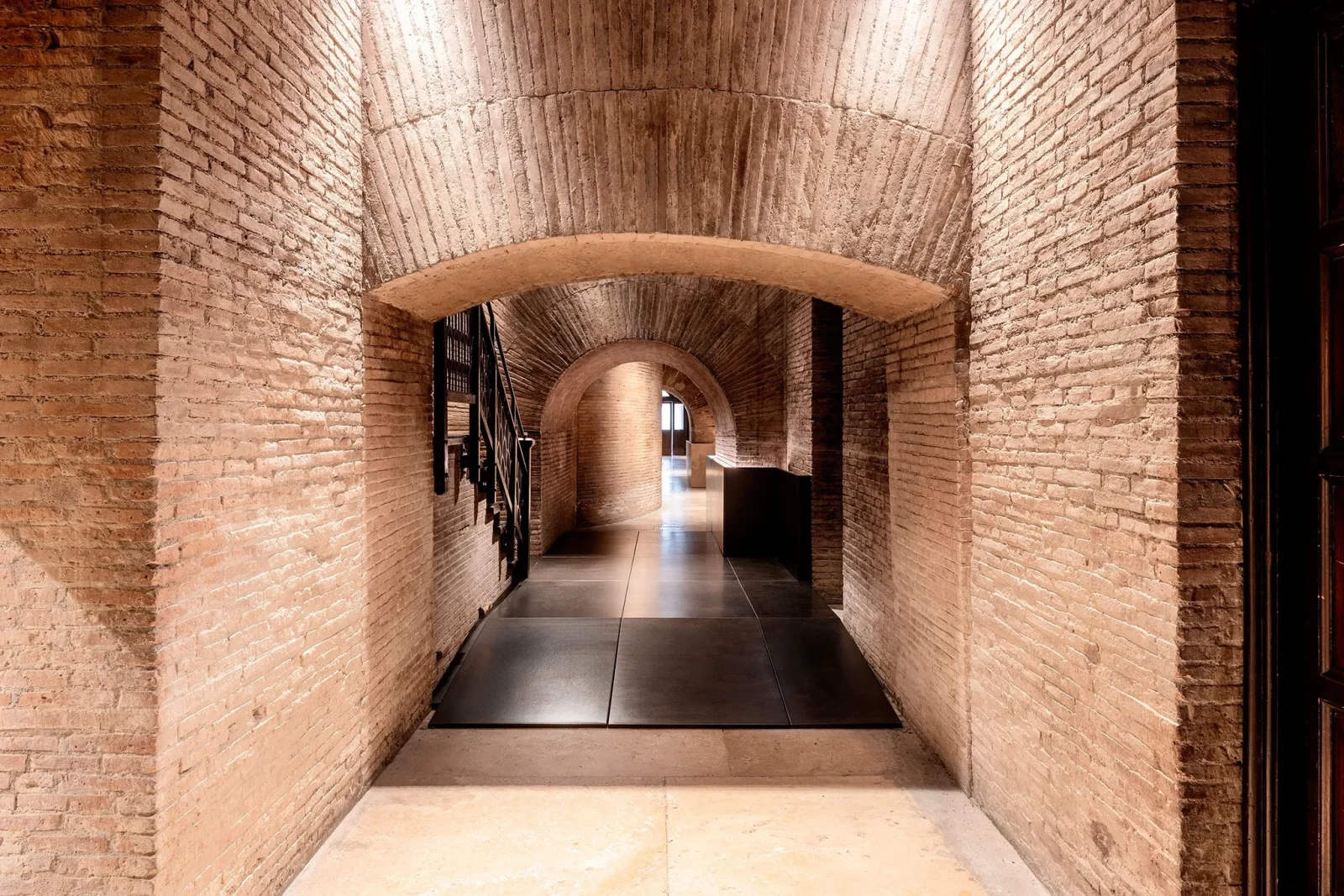
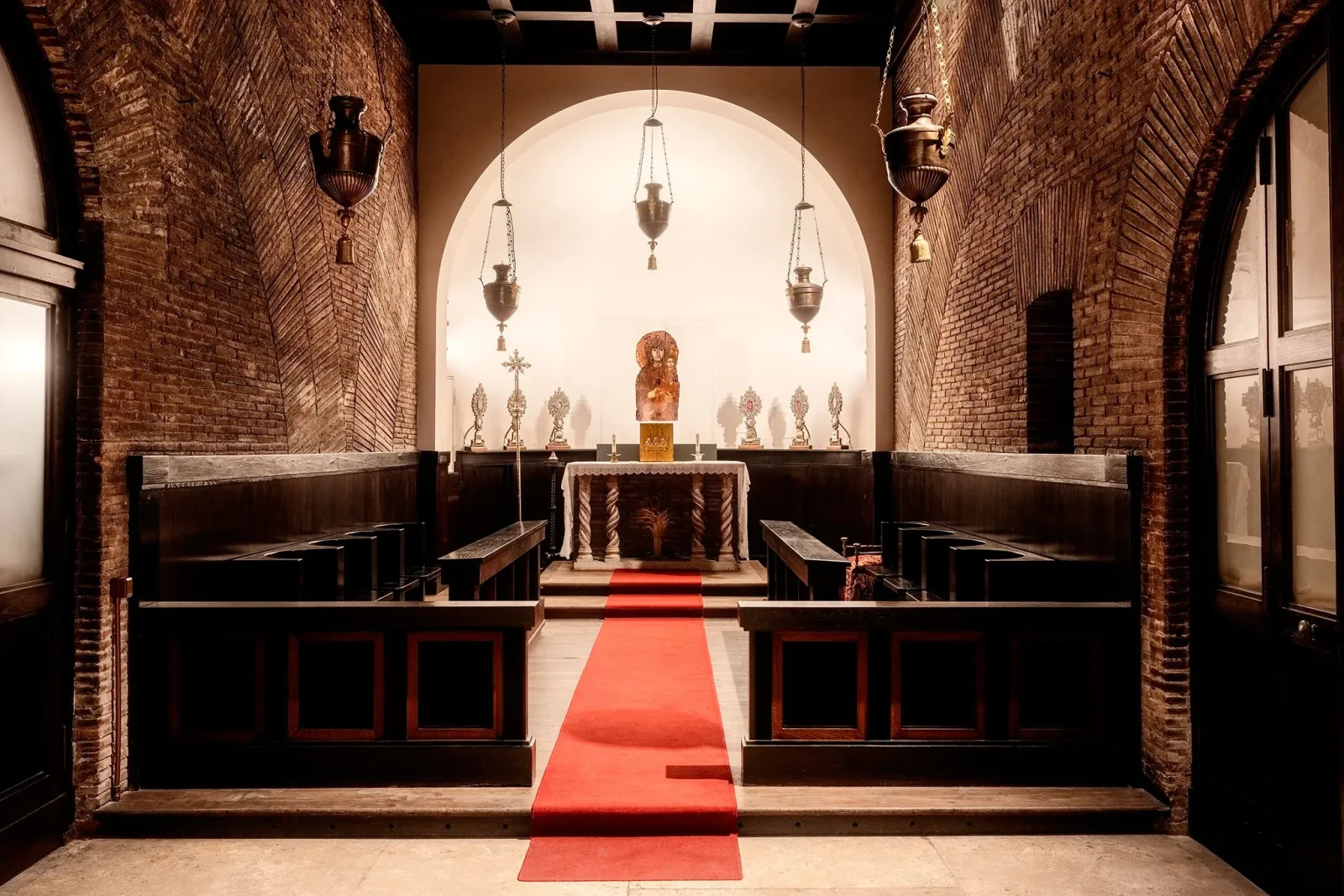
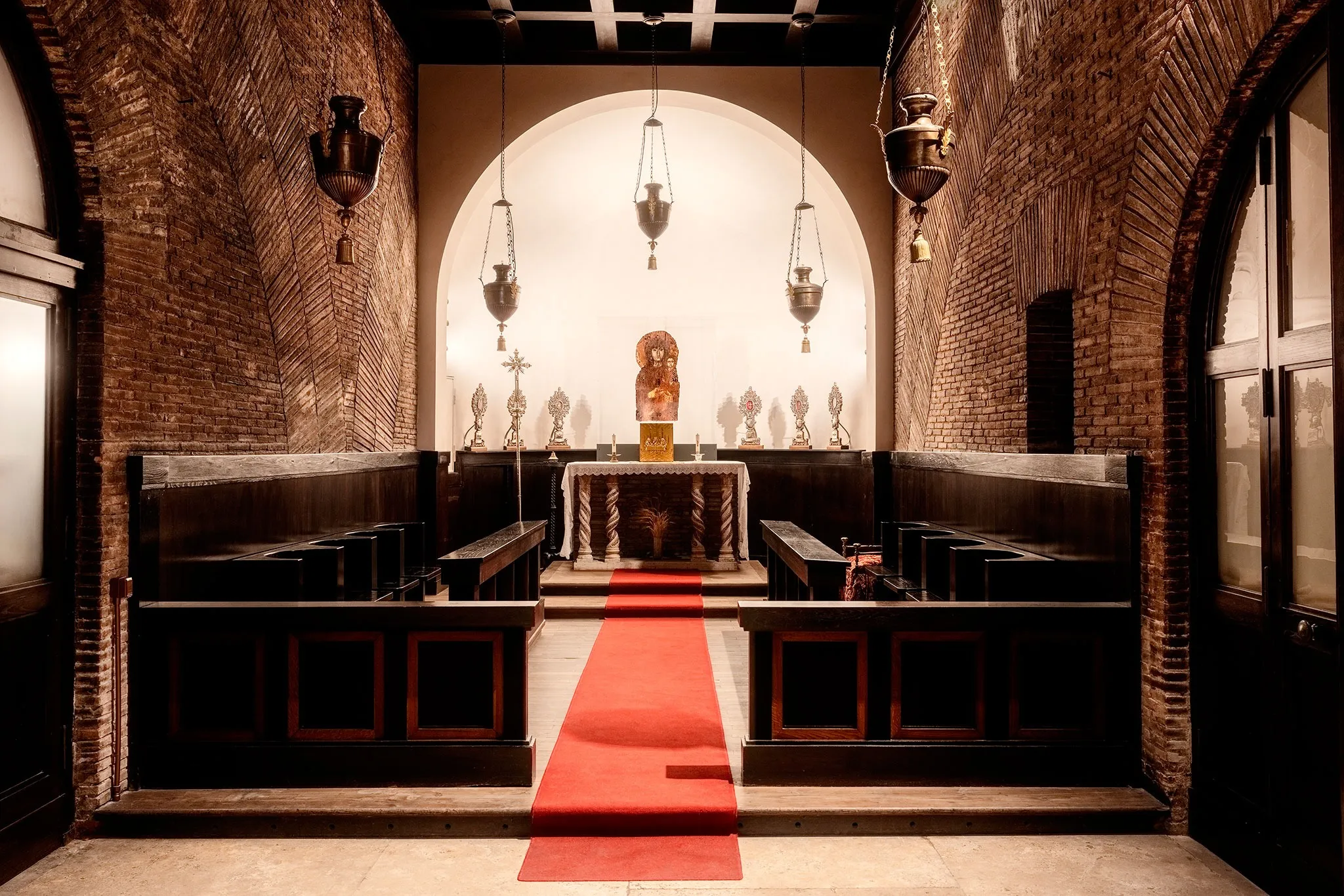
The intervention introduces a precise circulation path through the compressed spatial corridor between the cylindrical volume of the Rotunda and the apse of the former basilica. This passage reveals overlapping historical strata, from Roman construction fragments to later religious adaptations. It also connects to the chapel of the Basilica of Santa Maria ad Martyres, which preserves one of the earliest Byzantine icons in Rome.
Micro-Architectures Defined by Contrast as Strategy
STARTT’s architectural approach is defined by restraint and clarity. The inserted elements are deliberately distinguishable from the ancient material palette of brick and concrete. These steel interventions act as precise tools ensuring that new additions remain legible within the archaeological context.
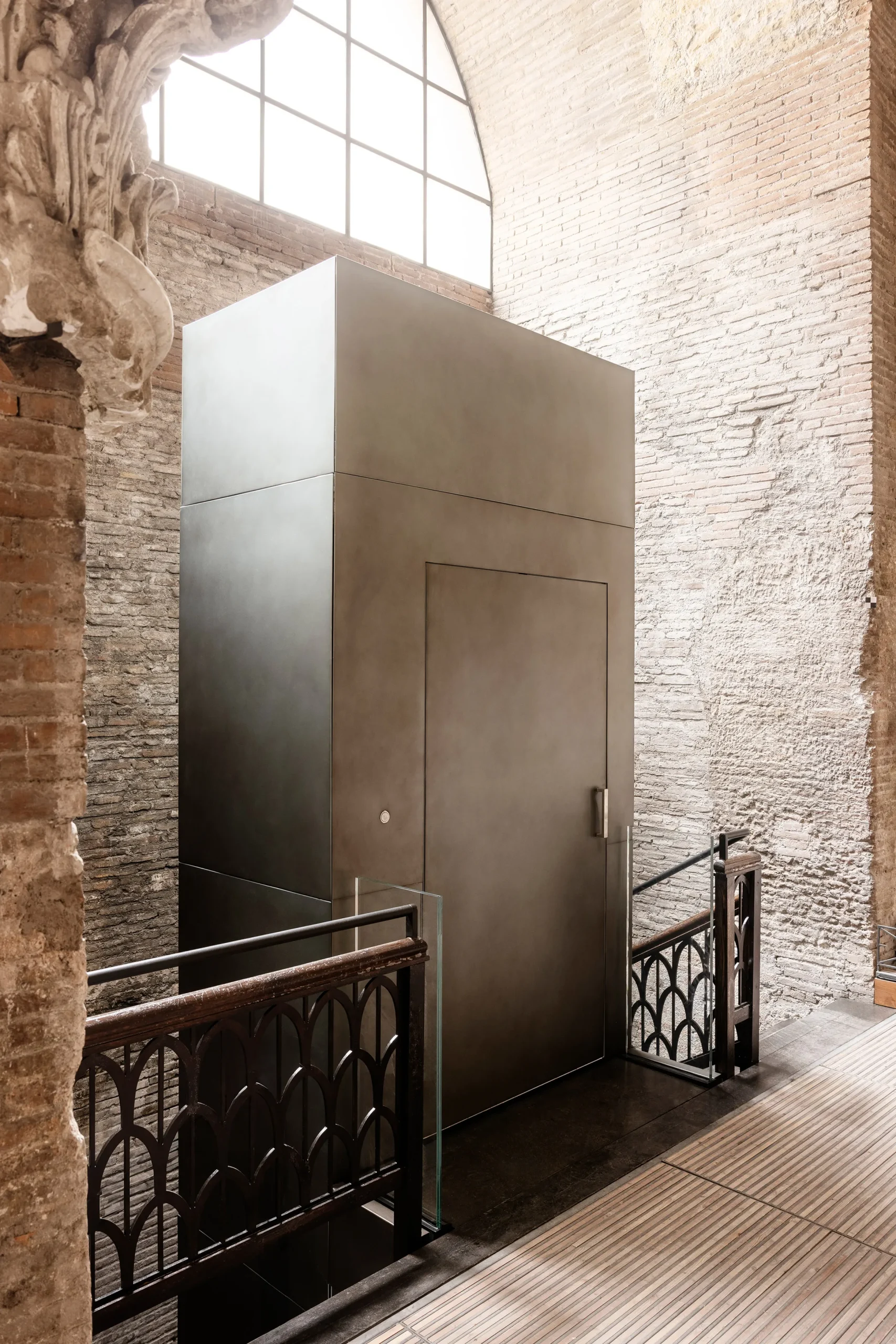
A sculptural elevator extends this logic vertically, providing access to an upper level where a multimedia installation presents the monument’s layered history.
Adaptive Reuse Without Imitation
The project establishes a careful model of adaptive reuse. It avoids reconstruction or stylistic imitation, instead relying on precision, contrast, and spatial sensitivity. The result is an inclusive visitor route that enhances accessibility while preserving archaeological authenticity.
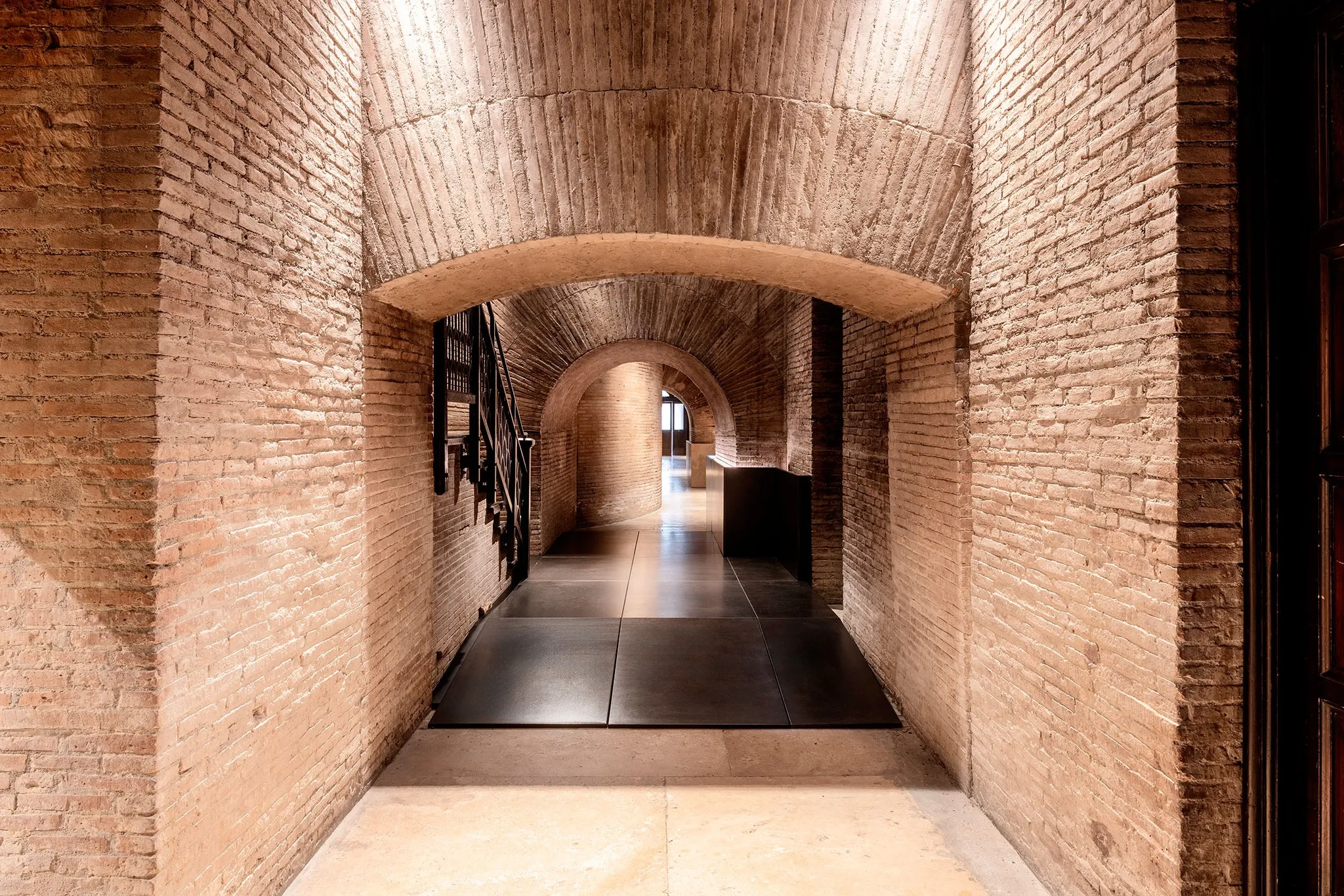
The Pantheon is ultimately experienced as a stratified urban field where Roman engineering, Byzantine continuity, and contemporary design coexist in dialogue rather than competition.
Image Credit: Courtesy of the Directorate of National Museums of the city of Rome
Explore Courses
.jpg "Ondrej Chybik - Rethinking Architecture")