

In 1929, American medicine faced a quiet but significant structural crisis. Doctors and hospitals were genuinely committed to care, yet their reach remained limited. Healthcare largely operated on a “pay-as-you-go” model, making access a privilege rather than a public good. Hospitals were often seen either as almshouses for the poor or as last resorts for the wealthy, while the growing middle class found quality healthcare increasingly out of reach—not because of a lack of medical expertise, but because there was no effective system to deliver it at scale.
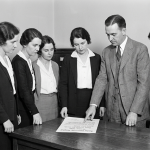
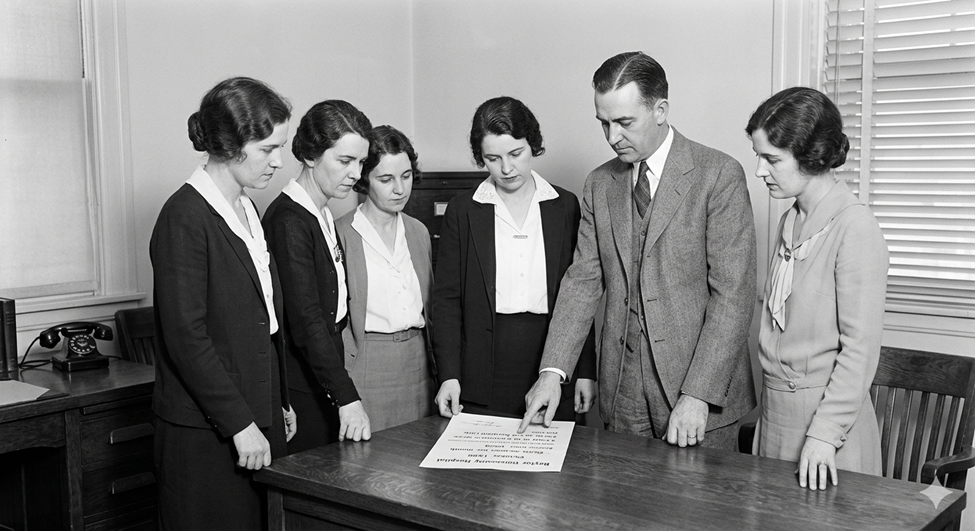
Then came a modest agreement between Dallas schoolteachers and Baylor University Hospital: for just 50 cents a month, teachers were guaranteed up to 21 days of hospital care.
That simple arrangement did more than stabilize a hospital—it became the foundation of Blue Cross. Physicians, initially resistant and concerned about professional autonomy, later developed Blue Shield on their own terms. Together, these models transformed healthcare from an elite privilege into an essential social backbone. The system did not diminish doctors; it amplified their ability to serve.
Architecture today stands at a remarkably similar crossroads.
The Twentieth Century’s Missed Opportunity
To understand the profession’s current stagnation, we must return to the birth of the modern middle class. In the late 19th century, the Industrial Revolution did more than produce factories—it created the “aspirational citizen.” As cities expanded and economic mobility increased, the single-family home emerged as the ultimate symbol of independence, security, and dignity.
At this pivotal moment, architecture faced a defining choice.
While professions like medicine and law developed business structures capable of scaling expertise, architecture largely remained within the realm of bespoke service. We did not create the systems needed to make design accessible to the rapidly expanding middle class—a new generation of homeowners who required a different kind of architectural service.
By relying almost exclusively on one-to-one custom commissions, the profession unintentionally distanced itself from the 98% of society who could benefit from thoughtful design but could not access traditional architectural services.
This was architecture’s great missed opportunity of the early 20th century.
Because architects failed to build a bridge to the masses, others built it instead—without architectural leadership. Catalog house plans, speculative developers, and volume home builders stepped into the gap, prioritizing speed and efficiency over innovation and long-term design thinking.
The “plan book” replaced the architect’s role—not because architects lacked ambition, but because the profession lacked a relevant delivery model.
In the decades that followed, names like Sears, House & Garden, and countless plan catalogs filled the market. Architectural intention was overtaken by supply efficiency. The result is a century-long legacy in which the largest segment of society continues to live in homes shaped more by the economic and social constraints of the 19th century than by the needs and possibilities of the 21st.
This is not a critique of style—it is a recognition of structural absence.

For more than 100 years, a profound disconnect has existed between architectural intelligence and the majority of the housing market. It was never a lack of demand, but a lack of infrastructure that prevented architects from serving the public at scale with integrity.
The 2026 Crisis of Agency
In 2026, architecture faces a dual crisis: one of identity and one of agency.
The recent reclassification of professional degrees signals a weakening of architecture’s protected status, while the profession is simultaneously losing influence over the built environment itself. As an architect and strategist, Evelyn Lee recently noted in a LinkedIn post, we are witnessing the “un-architecting” of the residential sector.
External capital, private equity, and Prop-Tech interests are increasingly shaping housing decisions—often with greater authority than architects themselves.
The risk is not simply aesthetic. It is structural. The future of the built environment is being directed by forces that may prioritize financial velocity over design integrity and efficiency over human dignity.
The Missing “Second Track”
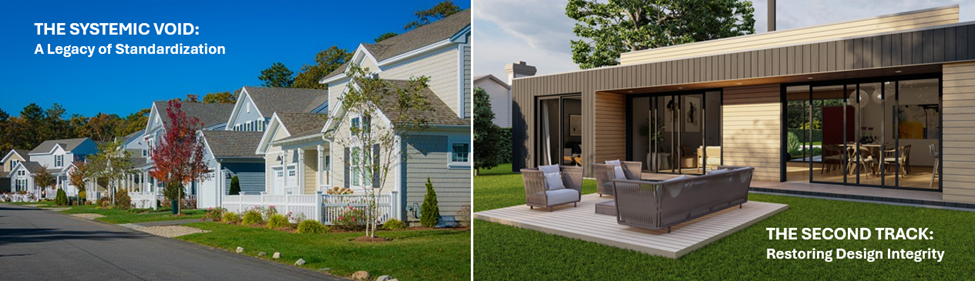
Today, single-family residential architecture operates within a rigid binary. On one end is the high-volume, low-intention commodity market. On the other is the high-barrier, bespoke custom commission—the traditional “first track.”
Between these two extremes lies an enormous void. Most homeowners are left without access to homes that reflect genuine architectural authorship, thoughtful design intelligence, or long-term cultural value.
History shows that transformation happens when professions build systems that reconnect expertise with the public. In healthcare, that change began when schoolteachers—middle-class citizens with limited access to quality care—helped create a model that bridged hospitals and the people they served.
Architecture needs its own equivalent. Structural problems require structural solutions.
Every architect has at least one unrealized residential design sitting on a hard drive—a resolved, thoughtful idea that never found its client. Not because the design lacked value, but because the infrastructure to connect it to the market did not exist.
That missing infrastructure is the profession’s real problem.
A Professional Vehicle for the 98%
Homboo proposes that infrastructure. It represents a “Second Track” for architecture—a curated framework for limited-series architectural assets. By treating unrealized residential designs as protected intellectual property rather than abandoned drafts, it creates a new category of homeownership.
This is not another stock-plan platform. It is a professional vehicle for design integrity—one that makes architectural excellence accessible to a broader market while fully protecting authorship, dignity, and professional standards.
It allows architects to extend their work beyond the traditional commission model without compromising their values.
The Collective Decision
Change begins structurally, but it moves forward individually. The architects joining Homboo as contributors are not leaving their practices behind—they are expanding them. They are choosing relevance over retreat, participation over observation, and action over endless discussion.
Architecture has always known how to design for permanence. Now it must learn how to design for reach. The profession’s future may depend not on better buildings alone, but on better systems that allow architectural intelligence to serve all levels of society. This may be architecture’s own 1929 moment—and perhaps its greatest opportunity.