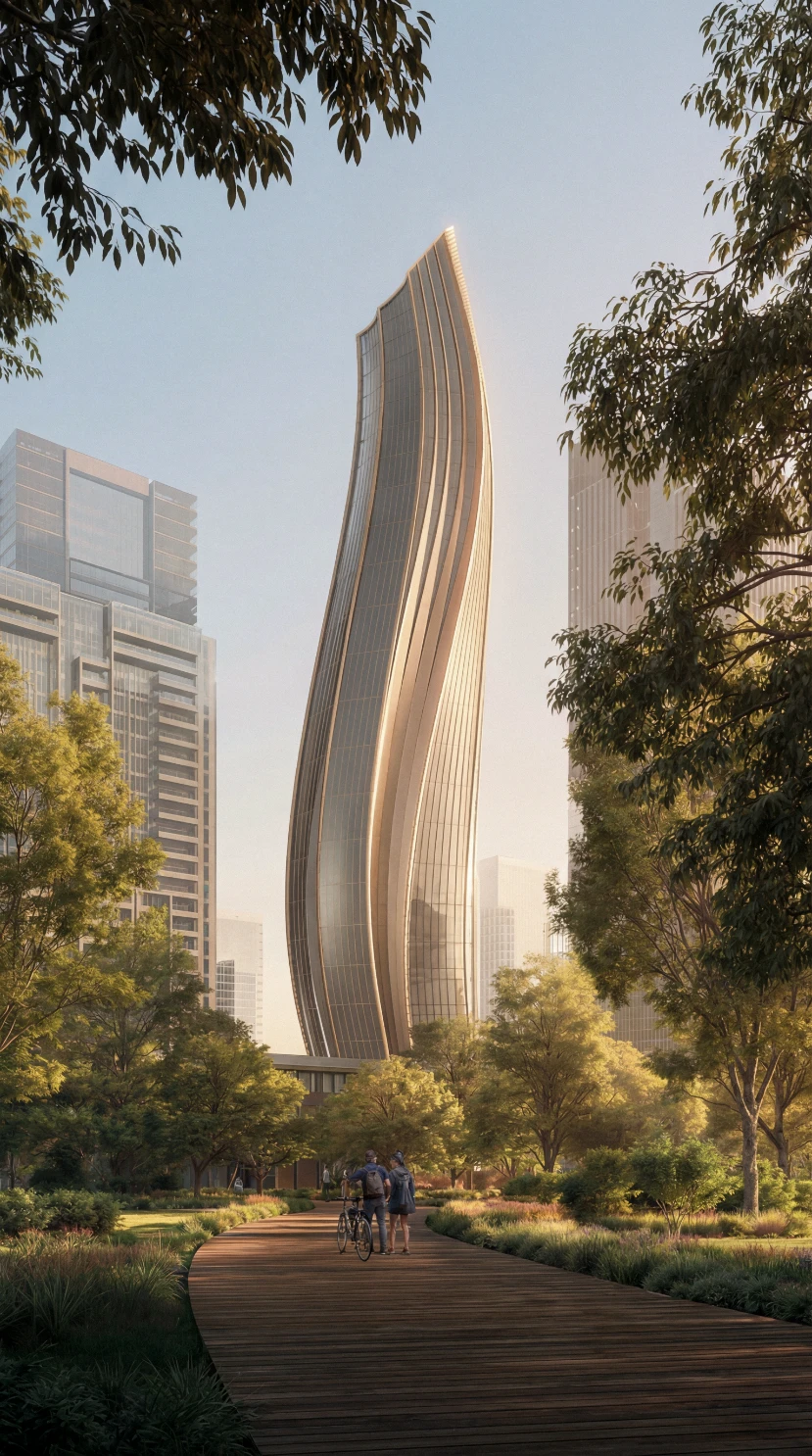



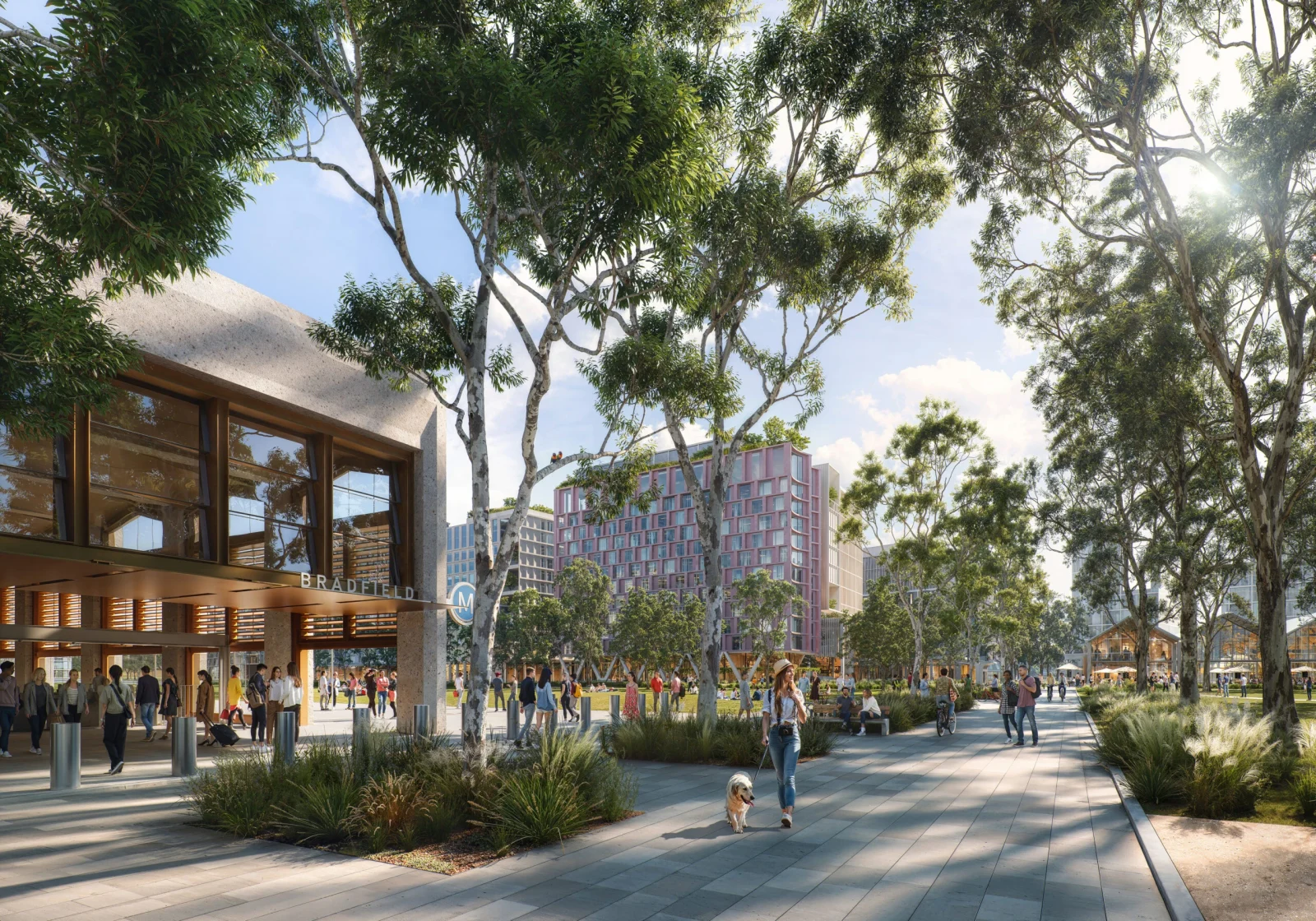
The masterplan for Bradfield City, Australia’s first entirely new city in over a century, positions architecture and urban design as tools for climate resilience, cultural connection, and civic life. Led by SOM in partnership with Hassell and informed by Indigenous cultural design firms Djinjama and COLA Studio, the First Land Release precinct (Superlot 1) outlines a 5.7-hectare mixed-use core that aims to integrate nature and urbanism rather than treating them as separate domains.
Much of the design logic centers on the Green Loop, a 15-meter-wide linear park that threads Moore Gully’s ecological systems into the city fabric, guiding public space, pedestrian movement, and water management in a single, continuous urban space. Buildings around this loop transition in character and materiality from earthy tones and massing near the natural gully to lighter forms echoing “Sky Country” at higher ground, creating a deliberate architectural expression of place and topography.
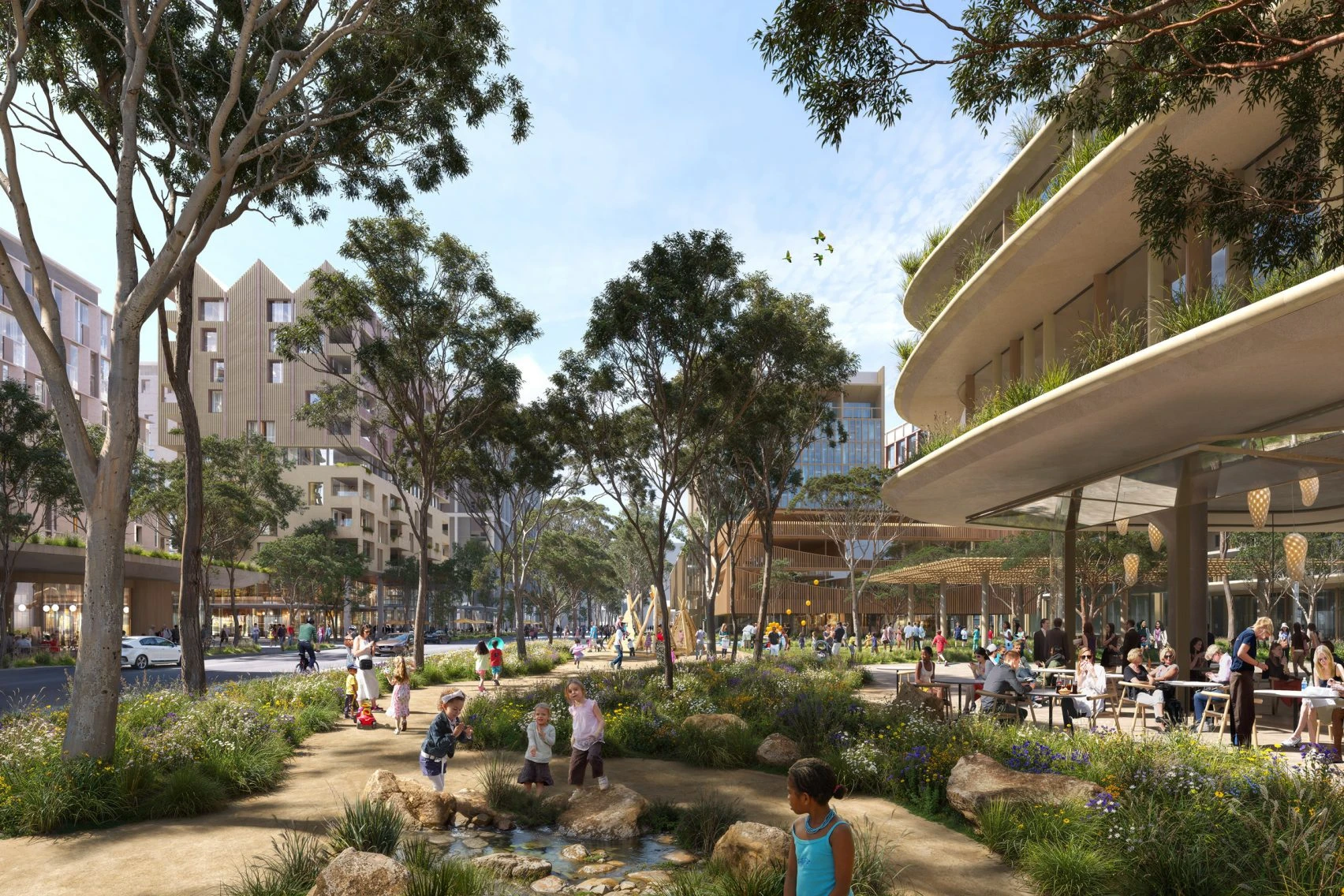
Passive design elements such as green roofs, biosolar infrastructure, and water-sensitive urban systems are integrated into the precinct from the outset, reflecting an environmental strategy that is normative. Superlot 1 also embeds walkability, a fine-grained street network, mid-block paths, active ground-floor frontages, and proximity to transit, all of which are calibrated to foster a vibrant, connected civic quarter, creating a balance between density and human scale.
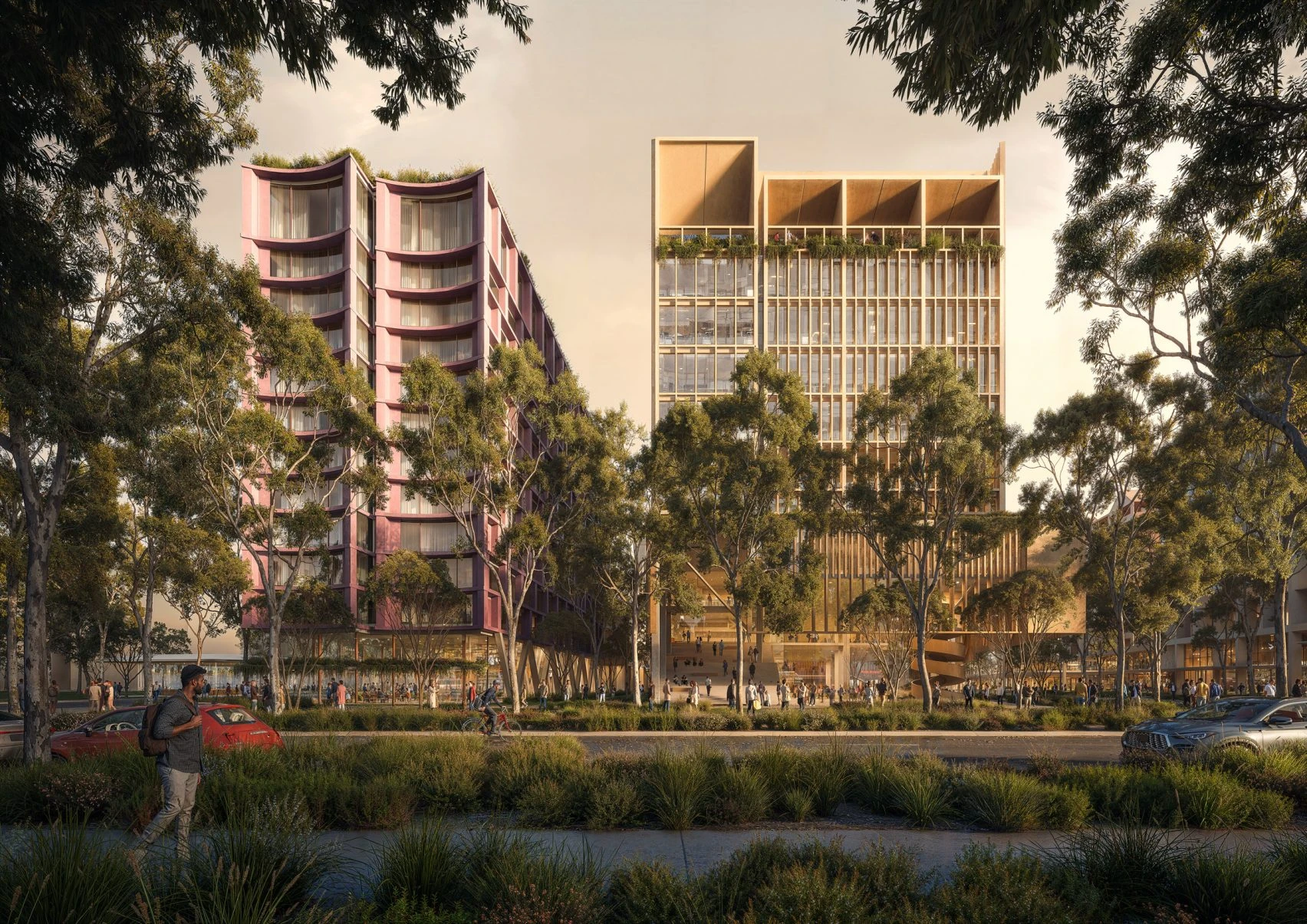
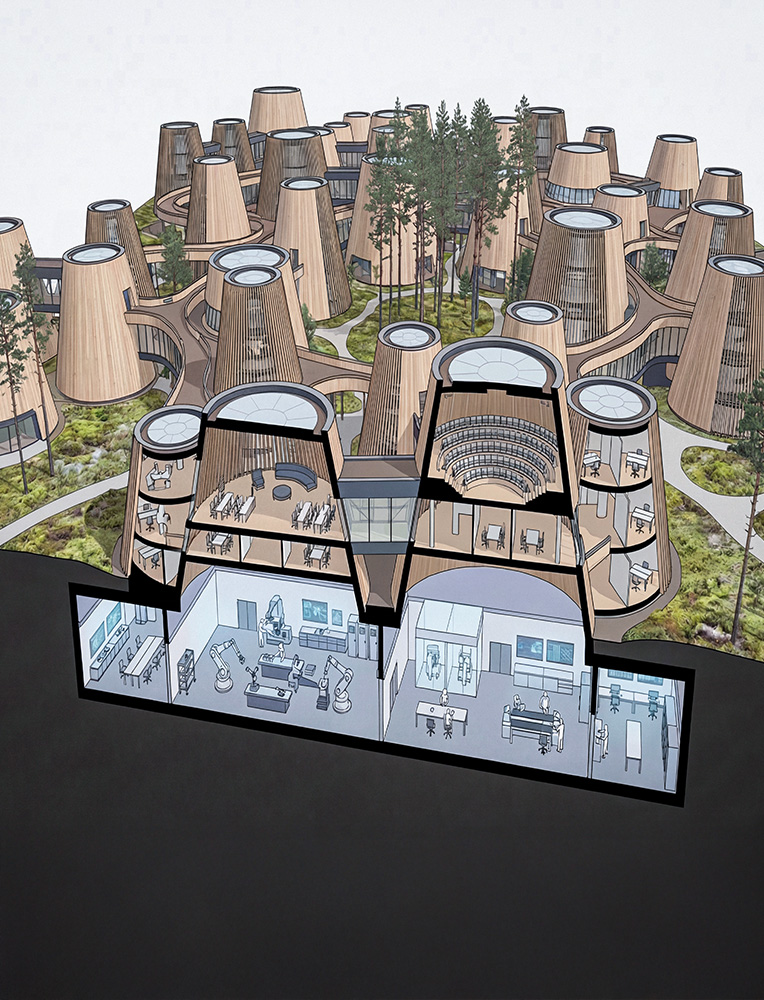
The masterplan and early built works signal a departure from generic high-rise planning. The material palette prioritizes low-carbon, high-performance materials, particularly terracotta and timber, chosen for their embodied energy profiles and tactile qualities that resonate with the landscape. This approach is evident in the First Building, designed by Hassell for the Advanced Manufacturing Readiness Facility, which uses mass timber and modular construction to achieve flexibility, circularity, and ecological responsiveness.
Components can be disassembled, reconfigured, or reused as the city evolves. Its landscaping and water strategy recall the Cumberland Plain’s natural hydrology, integrating rainwater capture and biodiversity-rich ground planes that actively engage users with the site’s ecology. Beyond materials, the inclusion of a woven timber community pavilion anchored by Indigenous design principles of “enoughness” reflects an effort to embed cultural meaning into shared spaces.
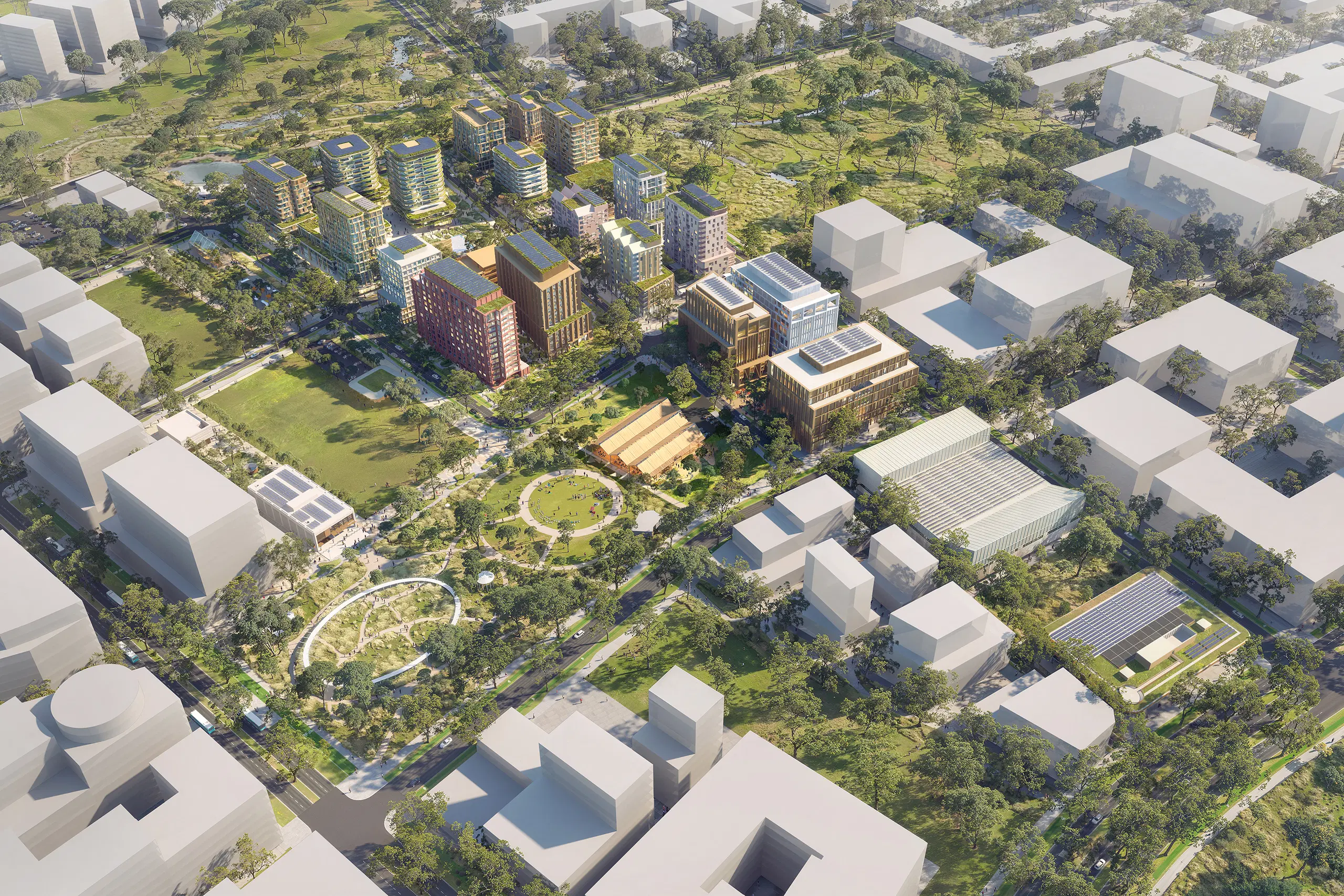
On the programmatic side, the First Land Release includes more than 1,400 homes with a minimum 10% affordable housing target, a university campus, offices, a hotel, retail, childcare, and significant public space, a deliberate mix meant to ensure activity across dayparts and demographics from day one.
Together, these strategies signal a new model for urban growth in Western Sydney, one that hopes to be sustainable, inclusive, and reflective of place rather than merely efficient or iconic.
Credit: SOM
Explore Courses
.jpg "Ondrej Chybik - Rethinking Architecture")