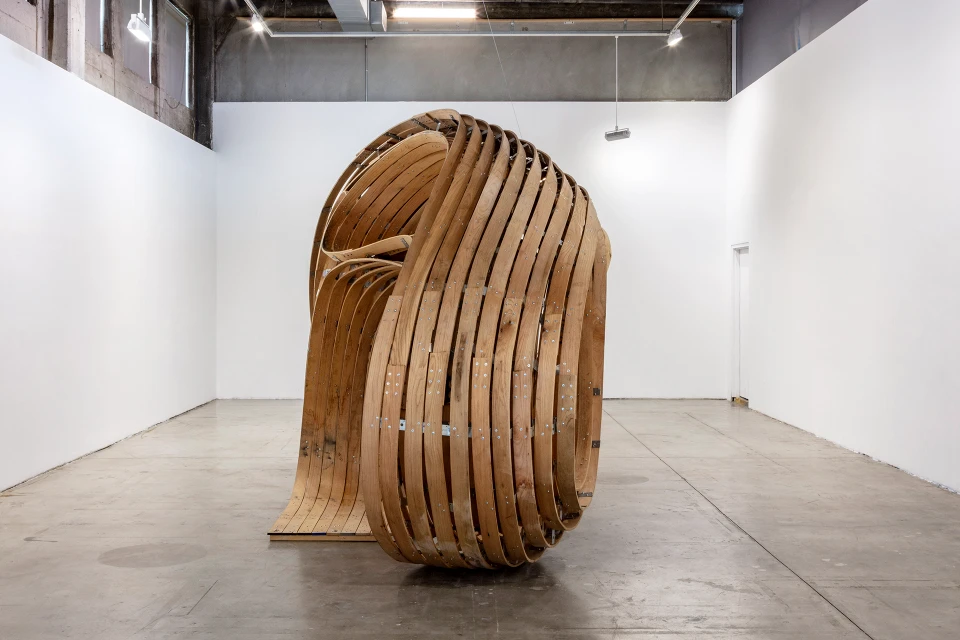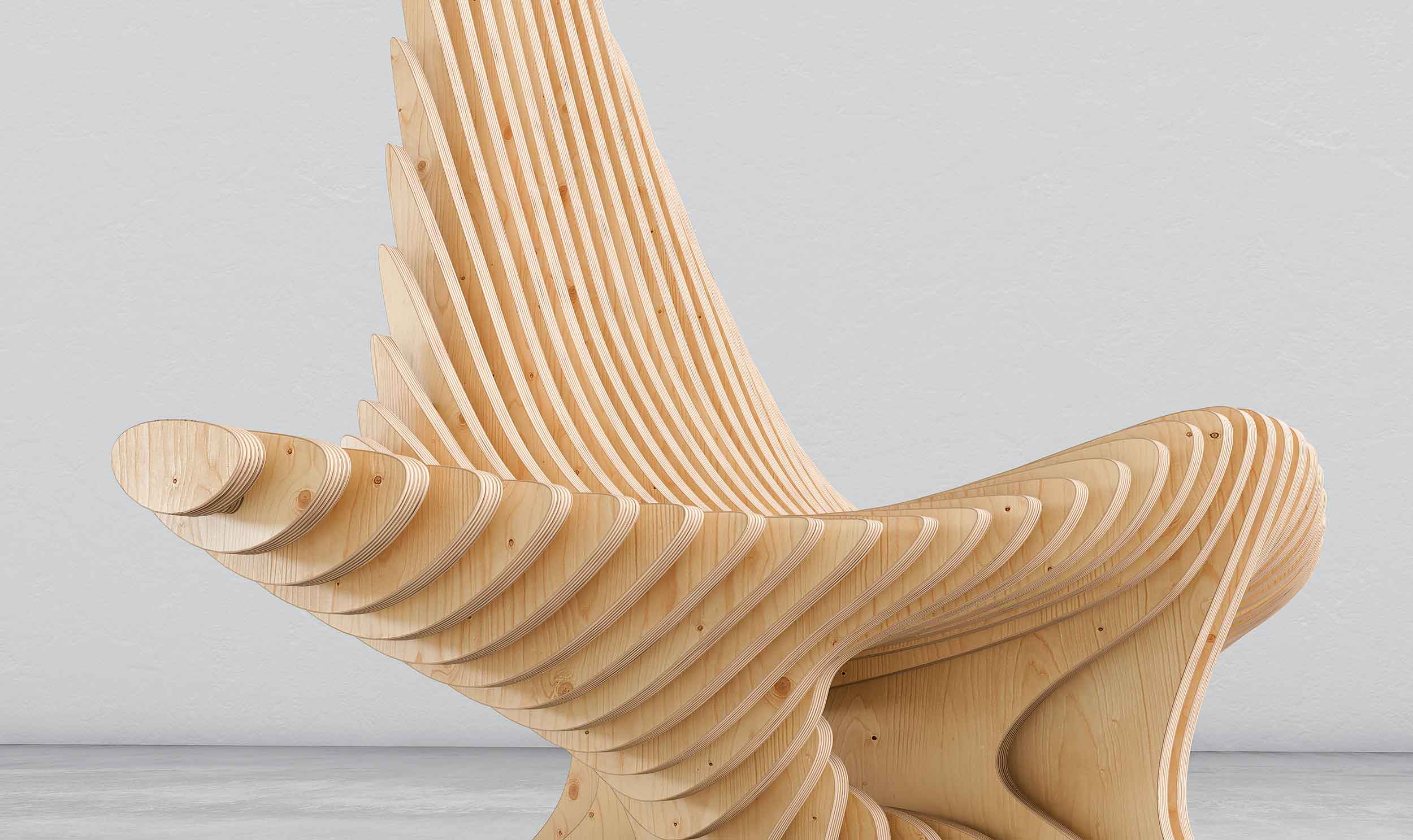


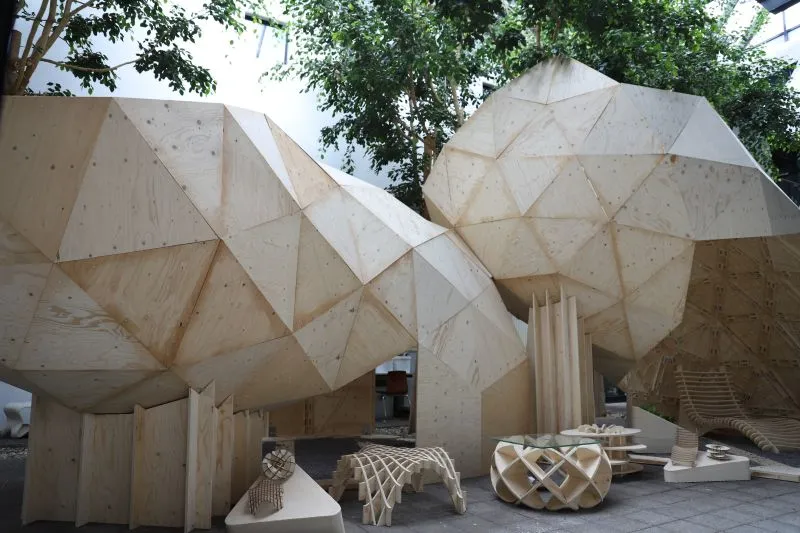
At the intersection of technology, innovation, and digital fabrication, sustainable architecture shapes the future of design. A striking architectural marvel is the full-scale Shellscape pavilion, officially unveiled at the Hochschule Anhalt’s Doctoral Center for Architecture and Design Research in Dessau, Germany. It is now presented on display in Building 5 at the Dessau Campus, illustrating a tangible future about how the adaptation of waste materials, digital design, and robotic manufacturing can create a new paradigm of sustainable construction.
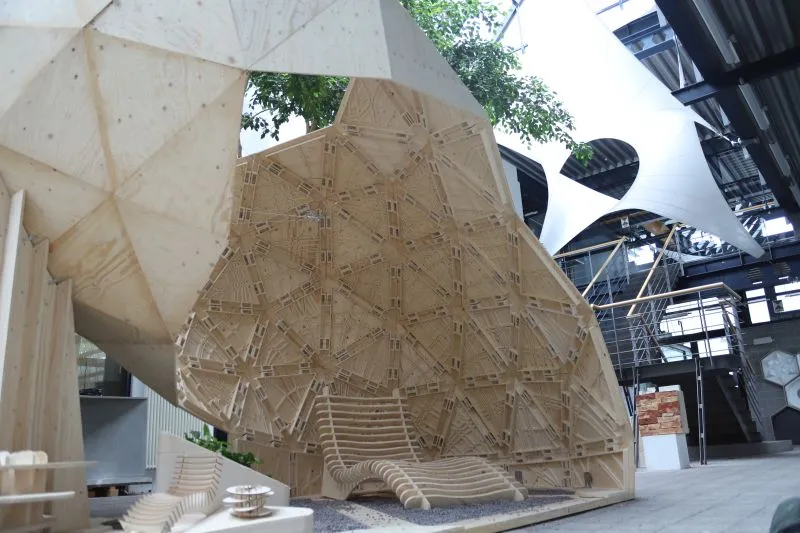
The Shellscape Pavilion at Hochschule Anhalt
The vision for the shellscape pavilion was simple – to rethink the material waste in construction and manufacturing. The team dedicated two and a half years to intensive research, finding design iterations, and hands-on fabrication for the prototype and its environmental impact. The project aimed to explore the architectural prospect of an unexplored composite from abundant scrap wood and biobased plastics found in the surroundings.
To enhance this vision, the team used reclaimed wood and cutting-edge UPM Formi 3D, a bio-based polymer, to craft a fusion that is resilient and eco-friendly. Together, these materials formed a lightweight structure providing possibilities for architectural creation.
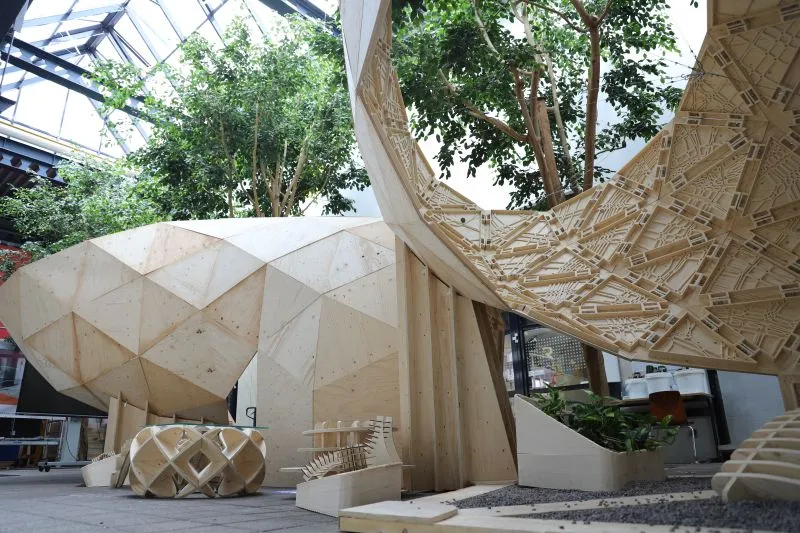
Inspired by Nature: Turtle Shell Geometry and Kinematic Design
The biomimetic design principles guided the spatial design of the sheelscape pavilion, transforming it into a lightweight construction. Inspired by the form and structure of a turtle shell, the design adapted the natural system of symmetry, flexibility and efficiency. The form of the pavilion evolved, reflecting the movements of a turtle’s fins and providing flexible construction and material composition to craft a multi-layered shell from modular segments, each digitally fabricated with precision.
Following kinematic design strategies, the geometry of the form offers intriguing visuals and structural stability. The Shellscape Pavilion reflects a broader shift explored by platforms like Parametric Architecture, where one can also learn such methods..
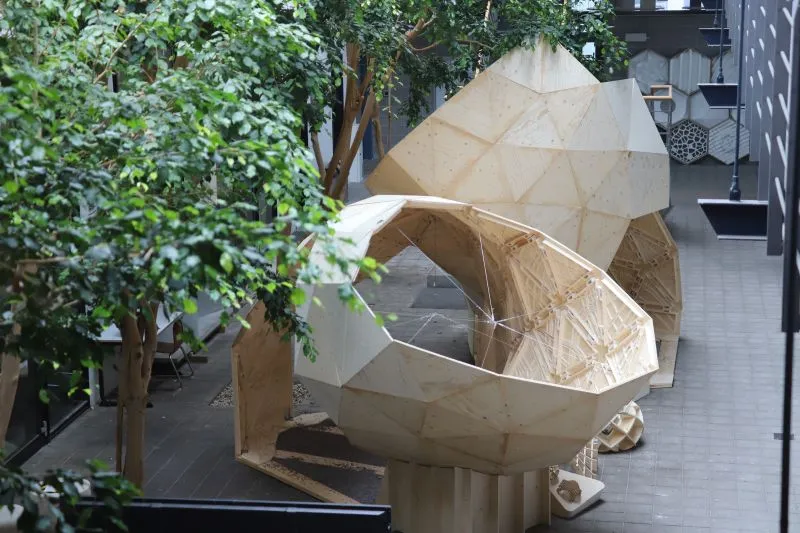
Robotic Fabrication: From Digital Model to Built Form
The most interesting feature of the shellscape pavilion is its use of cutting-edge computational tools and robotic fabrication methods. From the early stages of design, the digital approach was carefully implemented from parametric modeling to full-scale robotic fabrication. Digital Fabrication involved QR-coded wooden components, robotic milling systems, and augmented reality (AR) technologies to assist with real-time, on-site assembly.
This mixture of physical and digital craftsmanship showcases how automation and human creativity can coexist to craft a structure that is smart, adaptive, and follows circular building practices. The Shellscape pavilion illustrates the mastery of robotic fabrication and the revolutionary notion of composite materials brought together to form a narrative that unlocks the future of lightweight and flexible design.
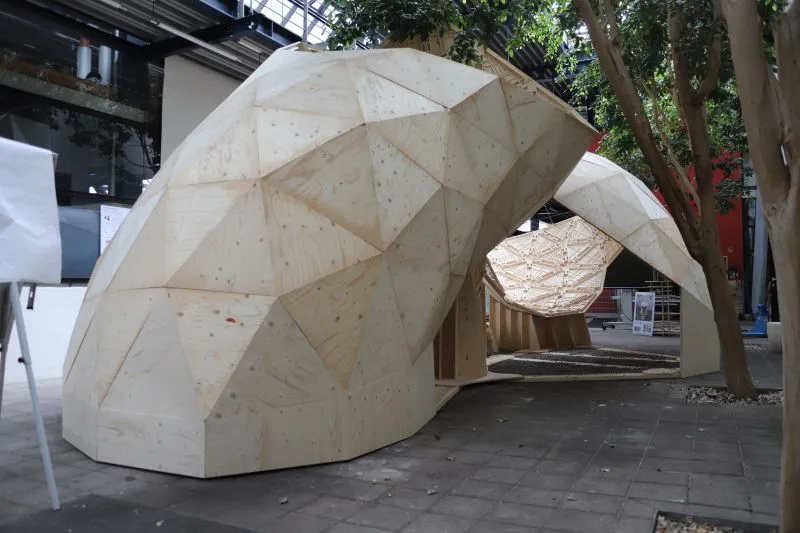
Collaborative Design: Visit the Pavilion
This PhD research project was guided by Prof. Dr.-Ing. Stefan Reich from Hochschule Anhalt and Prof. Dr. Reinhard Koenig from Bauhaus-Universität Weimar will encourage the next generation of sustainable design leaders. This project not only advances material and fabrication studies but also sets a precedent for how academic institutions can lead innovation through hands-on experimentation and interdisciplinary collaboration.
For creatives and enthusiasts, the shellscape project is on exhibit, where visitors can experience the remarkable fusion of robotic technology, sustainable composite materials, and innovative design. Don’t miss the opportunity to see how the future of architecture is taking shape, one recycled material at a time.
Explore Courses
.jpg "Ondrej Chybik - Rethinking Architecture")