

Home has long been treated as a fixed idea, a foundation set in soil and memory. Yet architecture today is loosening its roots. Across disciplines, designers are questioning the permanence that once defined domestic space. Mobility, once seen as a constraint of necessity, has become a catalyst for innovation.
Portable architecture is no longer a fringe experiment or a temporary solution for crisis housing. It is evolving into a language of autonomy and adaptability, a way to rethink how structures respond to context and climate. Advances in lightweight materials, precision fabrication, and modular assembly are enabling homes that adapt to movement instead of resisting it.
If a home can travel, does its meaning change along the way? For architects, the challenge is to design dwellings that move without losing their sense of belonging, homes that remain grounded in craft even as they embrace impermanence.
The Nomadic Turn: A Shift in Architectural Philosophy
For much of architectural history, permanence equated to success. Buildings were designed to outlast generations, to assert continuity against time and weather. But as life accelerates, permanence feels less like stability and more like inertia. The home, once tied to a single plot of land, is being reimagined as a system that can relocate, adapt, and evolve.
This shift goes beyond logistics. Mobility challenges the classical ideals of firmness and fixity, suggesting instead a new kind of permanence based on adaptability. Portable architecture becomes an ongoing process rather than a finished object. It asks how built space can respond to changing economies, climates, and social rhythms while preserving identity.
Parametric and computational design have already paved the way for this mindset. Algorithmic modeling encourages systems that respond to data and environment, mirroring the same principles that drive modular and portable construction. A structure that folds, detaches, or migrates no longer seems experimental but part of an architectural continuum that values resilience and renewal.
Material and Meaning: Craft in the Age of Portability
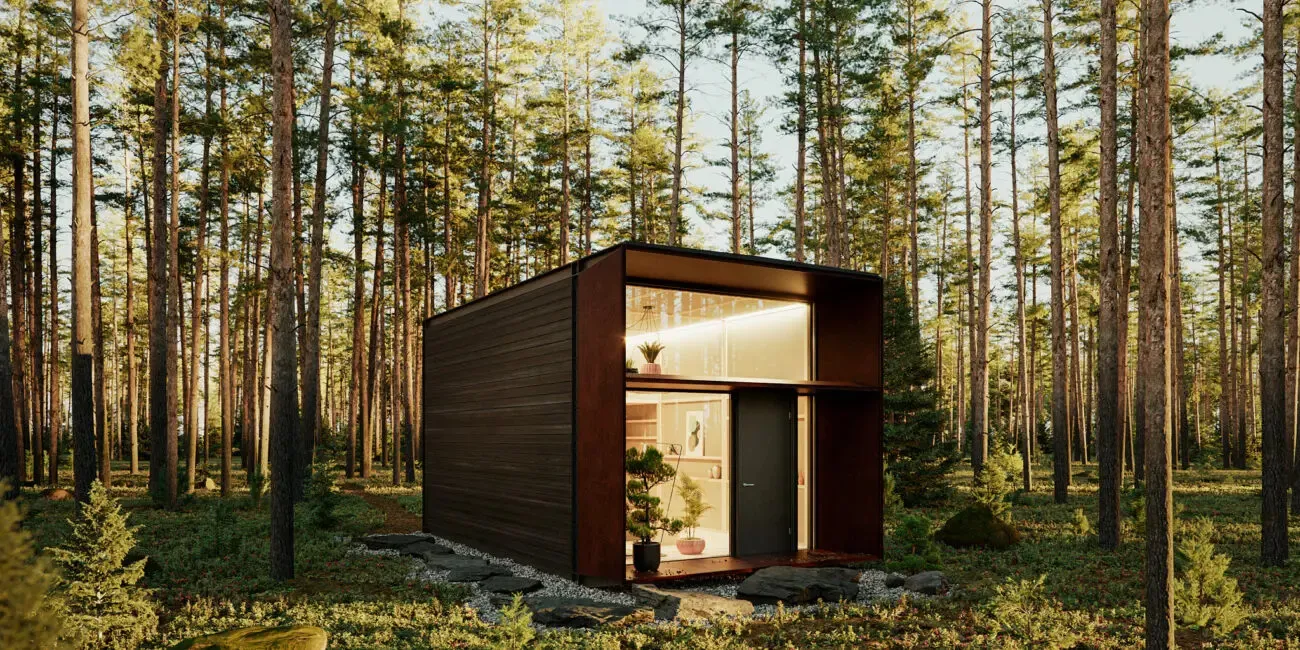
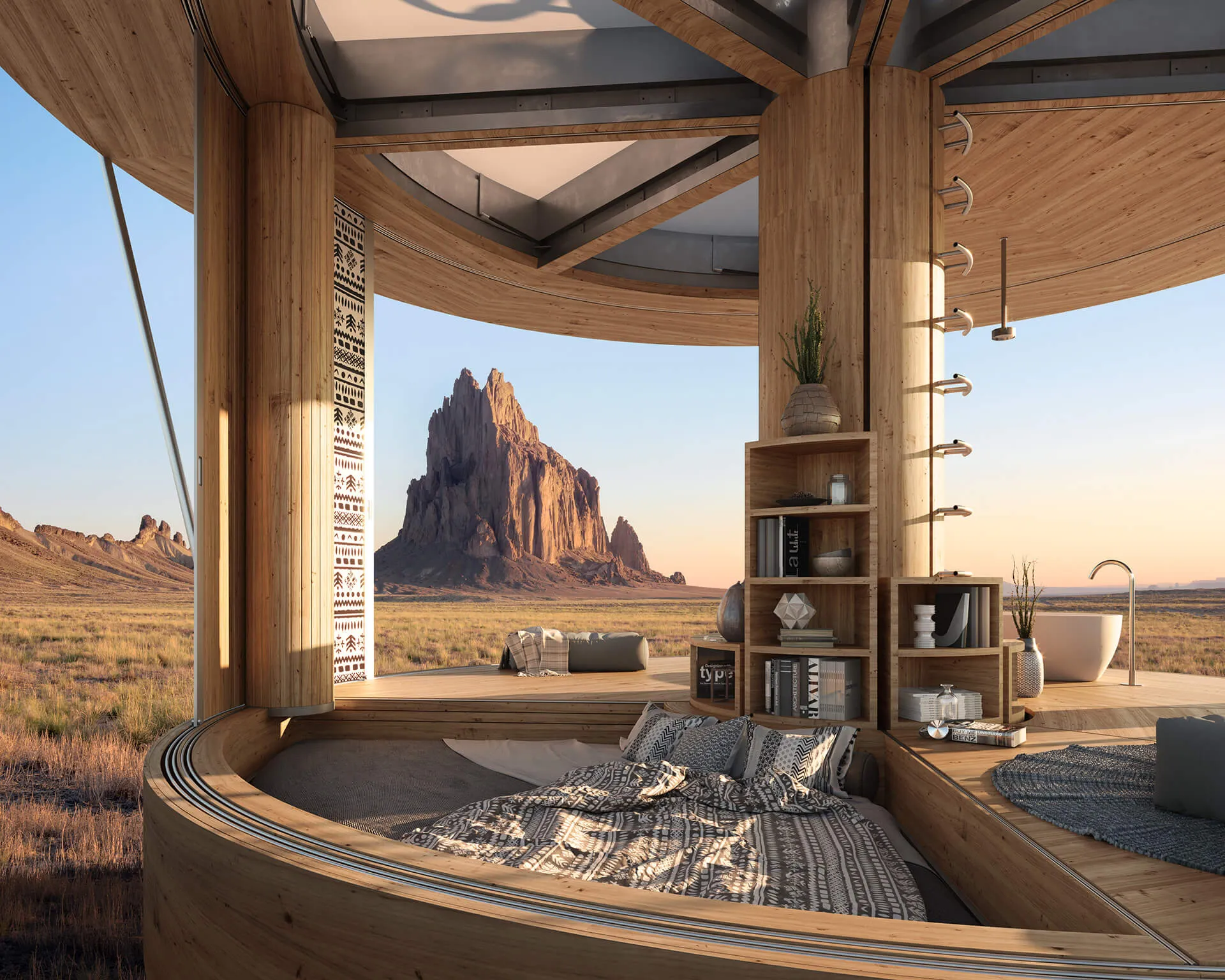
As homes become lighter and more mobile, materials carry more of the emotional weight. Wood, steel, and natural finishes help a traveling structure hold warmth and memory, qualities that root movement in familiarity.
In parts of the United States, options such as park model homes in South Carolina show how timber craft and prefabrication can share the same chassis. The region’s moderate climate and pragmatic codes keep log construction feasible without extensive reinforcement.
By contrast, California’s ADU-friendly framework prioritizes energy efficiency and tightly controlled assemblies. Texas leans on zoning flexibility, allowing experimentation across rural areas but demanding careful oversight of standards. Florida’s hurricane codes call for stronger fasteners, structural anchors, and impact-rated cladding. Oregon, guided by a focus on ecological performance, supports small dwellings that rely on efficient shells and local materials.
These differences show how legislation and environment shape material expression. Portability becomes a palette rather than a typology, and each state reflects its own interpretation of home in motion.
Systems, Sustainability, and Self-Sufficiency
Portability requires more than lightweight walls. It relies on systems that let a dwelling function independently of fixed infrastructure. Solar panels, compact batteries, and closed-loop water setups are transforming small homes into self-contained environments. Their success depends not on scale but on how well structure, energy, and utility design are integrated.
As energy standards tighten, efficiency has become the measure of freedom. Designers are developing modular service cores that consolidate plumbing, power, and ventilation into compact modules. The logic behind these systems parallels parametric thinking, flexibility built into every connection.
According to the UNEP Sustainable Buildings Initiative, construction and building materials already account for over half of global resource consumption. Portable architecture can counter this trend when designed for reuse. Frames and panels that endure multiple relocations extend a building’s lifespan, transforming movement into an act of conservation rather than waste.
The Emotional Geometry of Home
When a home can move, its sense of comfort changes. Fixed walls once defined belonging; now it is found in proportion, light, and the familiarity of materials that travel with their owners. Rooms become adaptable stages instead of permanent anchors.
Designers working in this space are rethinking intimacy at home. Where safety once hinged on an address, it now grows from design quality: insulation that hushes a room, light that follows daily rhythms, and layouts that open and close with purpose. Scale reads less as distance on a map and more as how a space feels in the body.
Principles drawn from the tiny house movement, integrated service cores, multiuse furniture, and daylight-first layouts reveal how constraint can sharpen comfort and spatial clarity. Portable dwellings extend this logic, suggesting that home is less about where one stays and more about how one designs a space worth taking along.
The Future Is Flexible
Architecture has always balanced permanence with change, but portability gives that tension new meaning. Homes that move compel architects to think beyond land boundaries and into the lifespan of materials and systems. Value now lies not in immobility but in adaptability.
The convergence of craftsmanship, digital precision, and environmental awareness is forming a new architectural language that treats flexibility as a measure of endurance. Portability no longer signals transience; it reflects a design built to survive change.
For architects and builders, the task ahead is to shape this movement into a mature practice, dwellings that move lightly yet hold meaning, proving that a mobile home can be both efficient and deeply human.
Explore Courses
.jpg%202.jpg "Building Performance with Forma & Opossum")
.jpg "Ondrej Chybik - Rethinking Architecture")