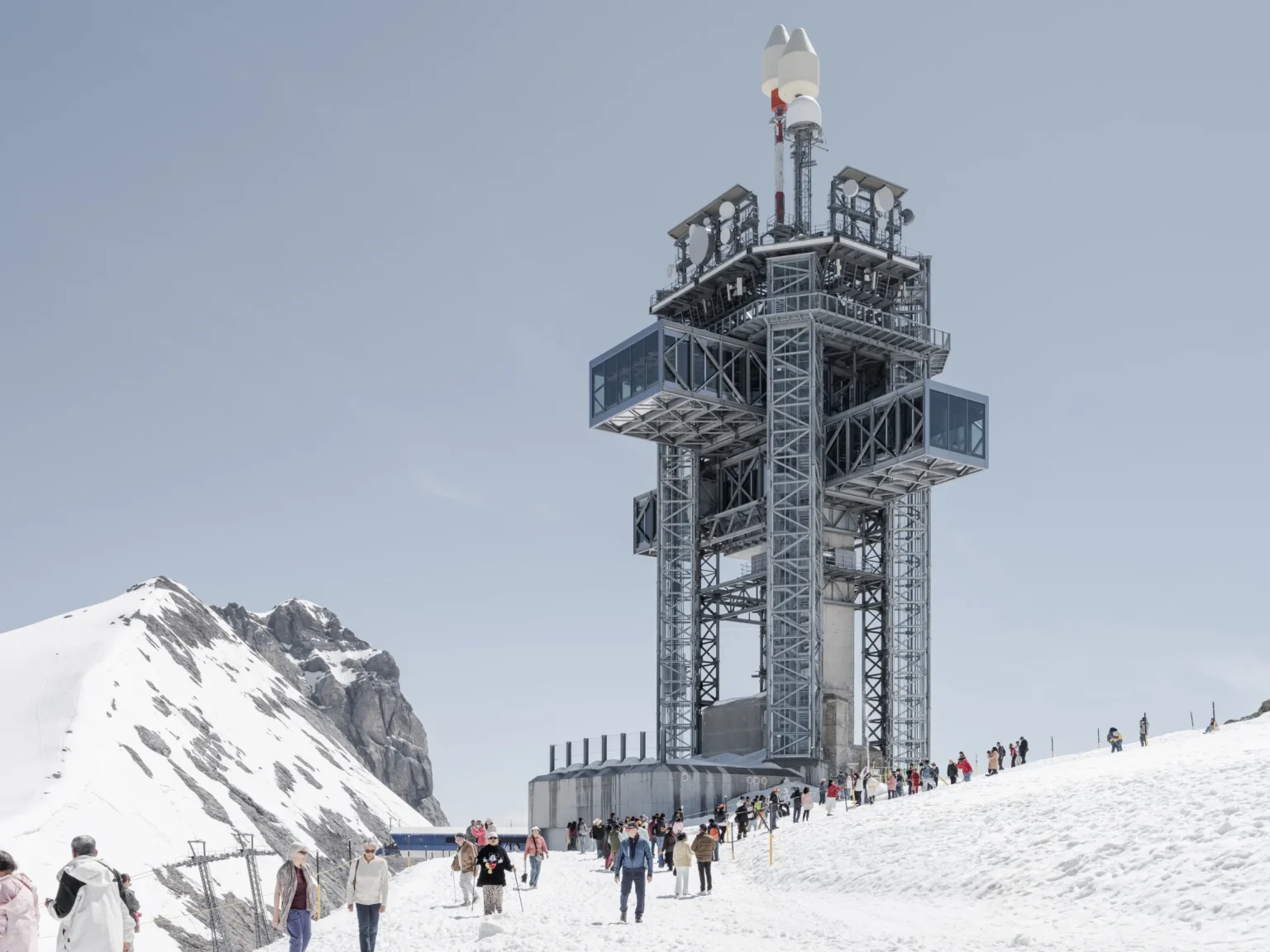




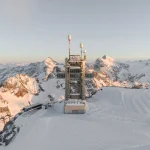
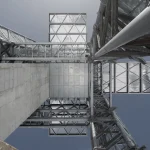
Perched more than 3,000 meters above sea level in the Swiss Alps, the Titlis Tower has been transformed from a former telecommunications structure into a dramatic visitor destination by Herzog & de Meuron. The redesign converts the 1980s antenna tower into a sculptural attraction, introducing panoramic viewpoints, hospitality spaces, and enhanced visitor experiences while preserving and extending the existing infrastructure.
Design of the Functional Alpine Tower
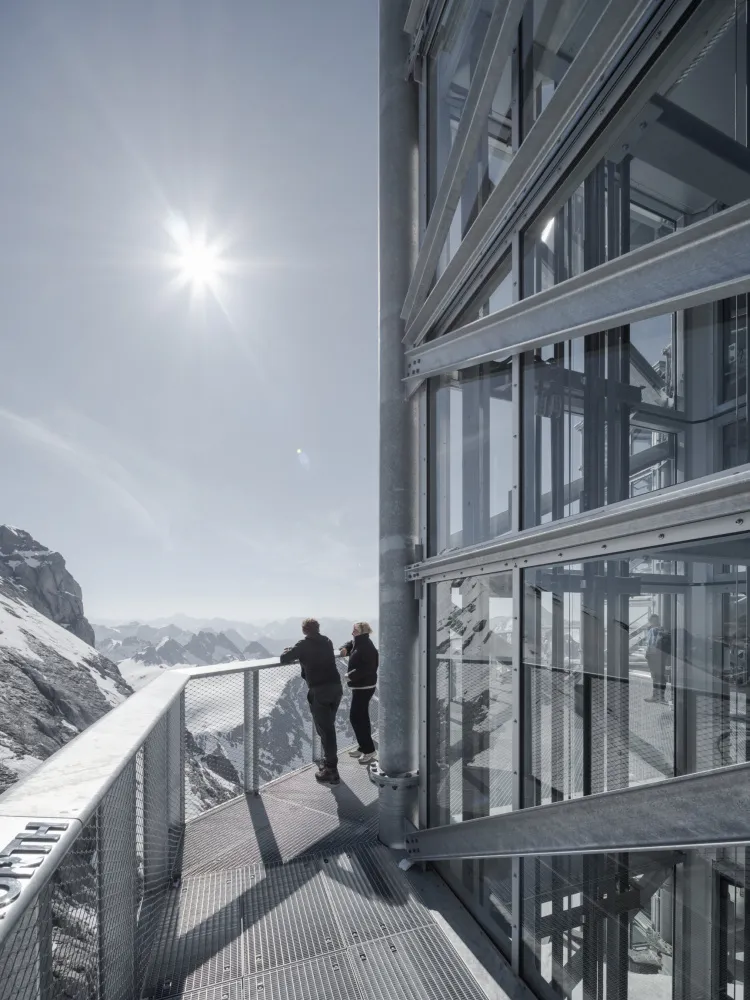
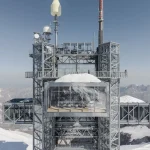
Originally built in the mid-1980s as part of Switzerland’s telecommunications network, the 56-meter-high TITLIS tower was deeply anchored into the limestone mountain and defined by its lightweight steel framework.
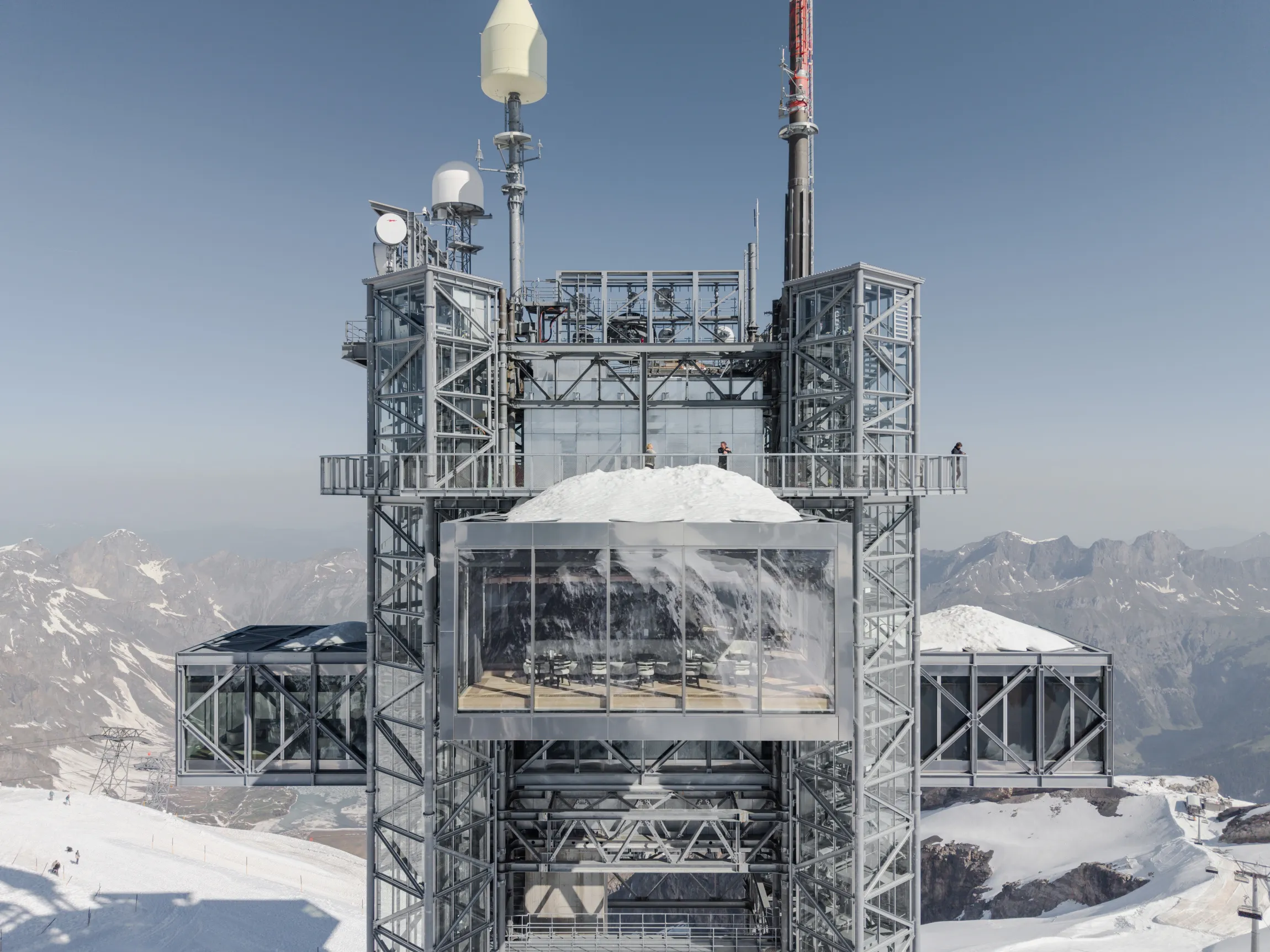
As part of a broader summit masterplan, Herzog & de Meuron reimagined the structure of TITLIS Tower as a public attraction, marking a shift from purely technical infrastructure to a new form of contemporary Alpine architecture.
Highest Rolex Boutique
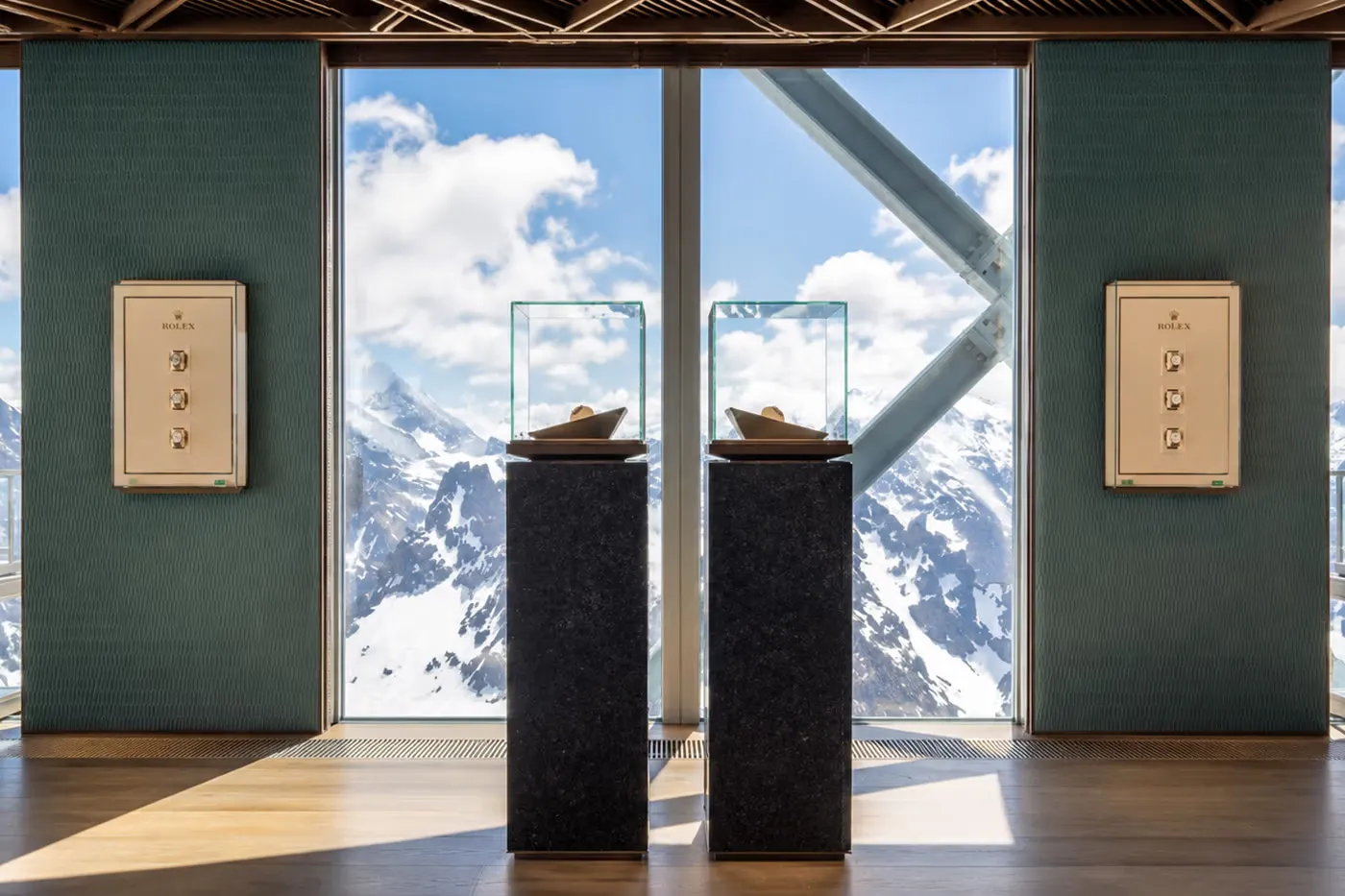
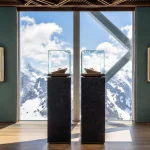
Rolex has unveiled its highest boutique in the world, set against a dramatic alpine landscape that echoes the brand’s enduring spirit of exploration and adventure. Accessible via a scenic cable car journey, the mountaintop destination is expected to draw luxury travelers and watch enthusiasts from across the globe.
Dramatic Cantilevers and Panoramic Experiences
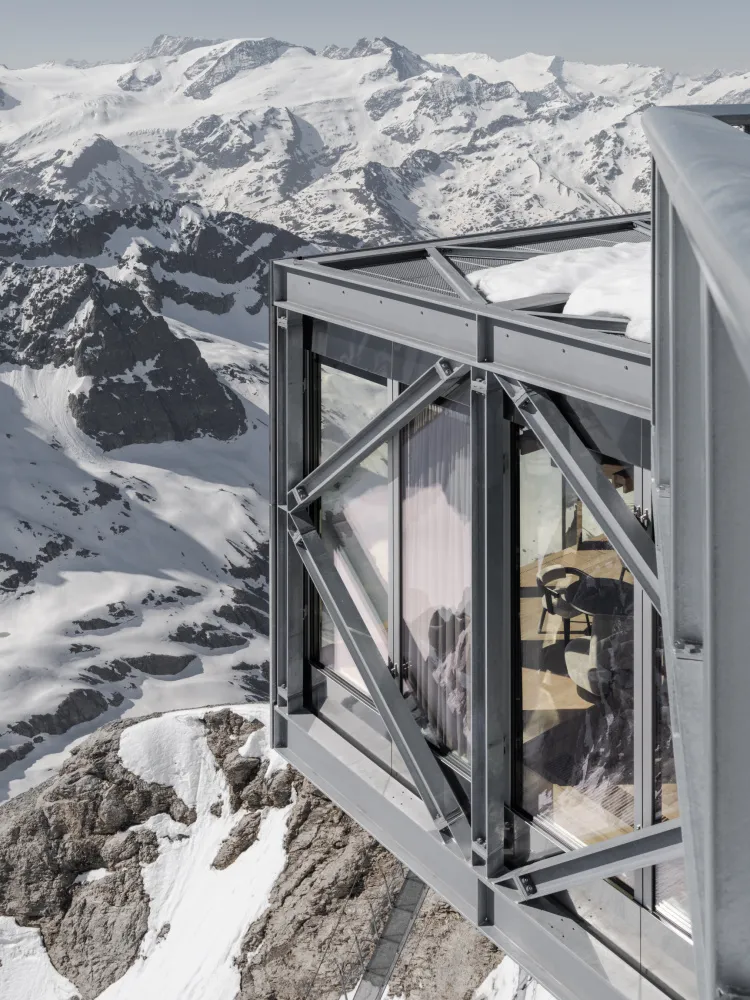
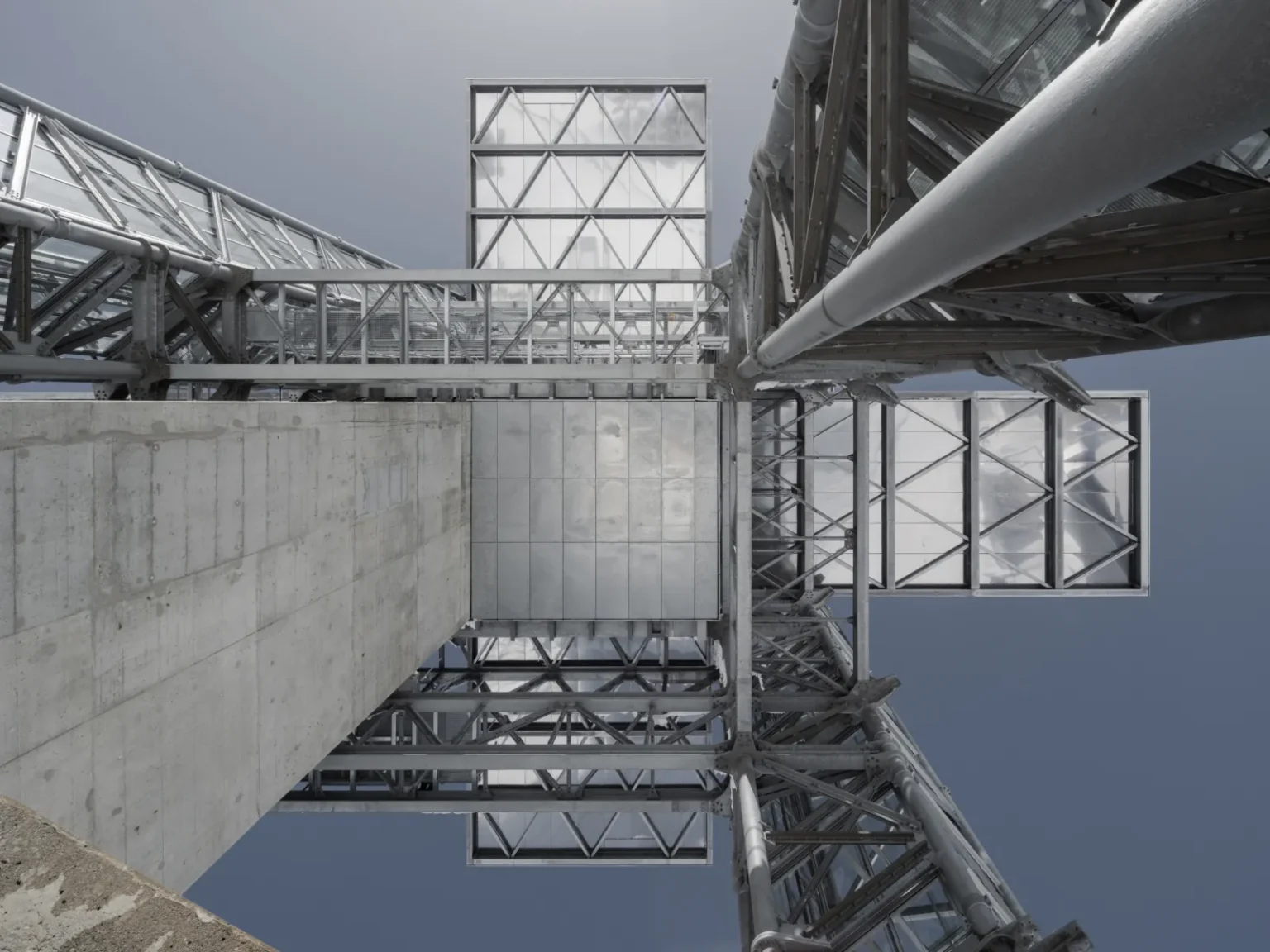
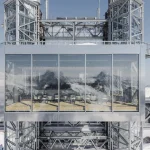
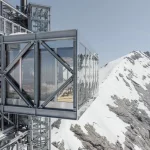
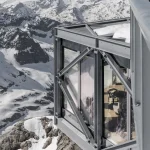
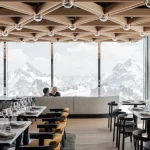
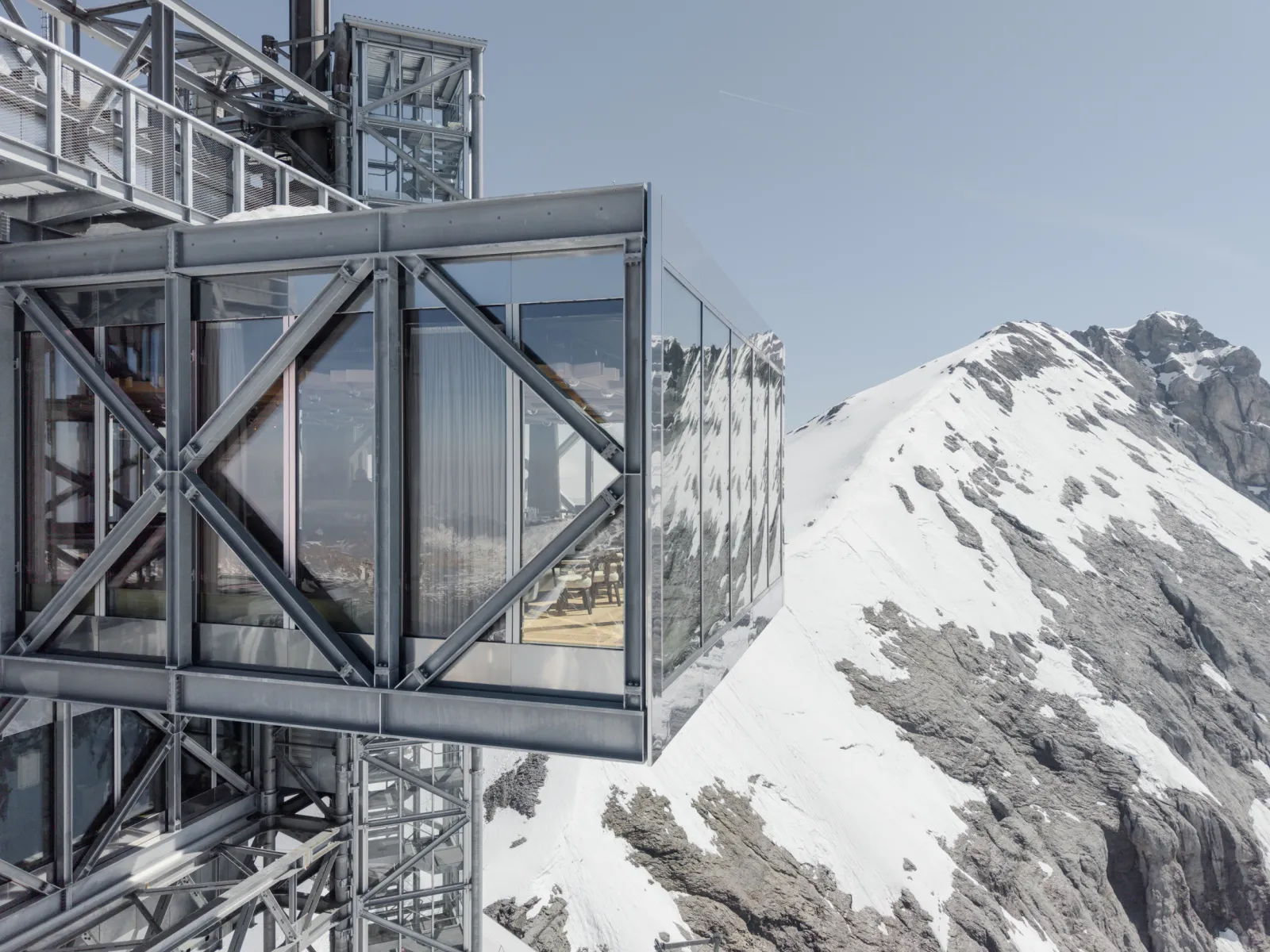
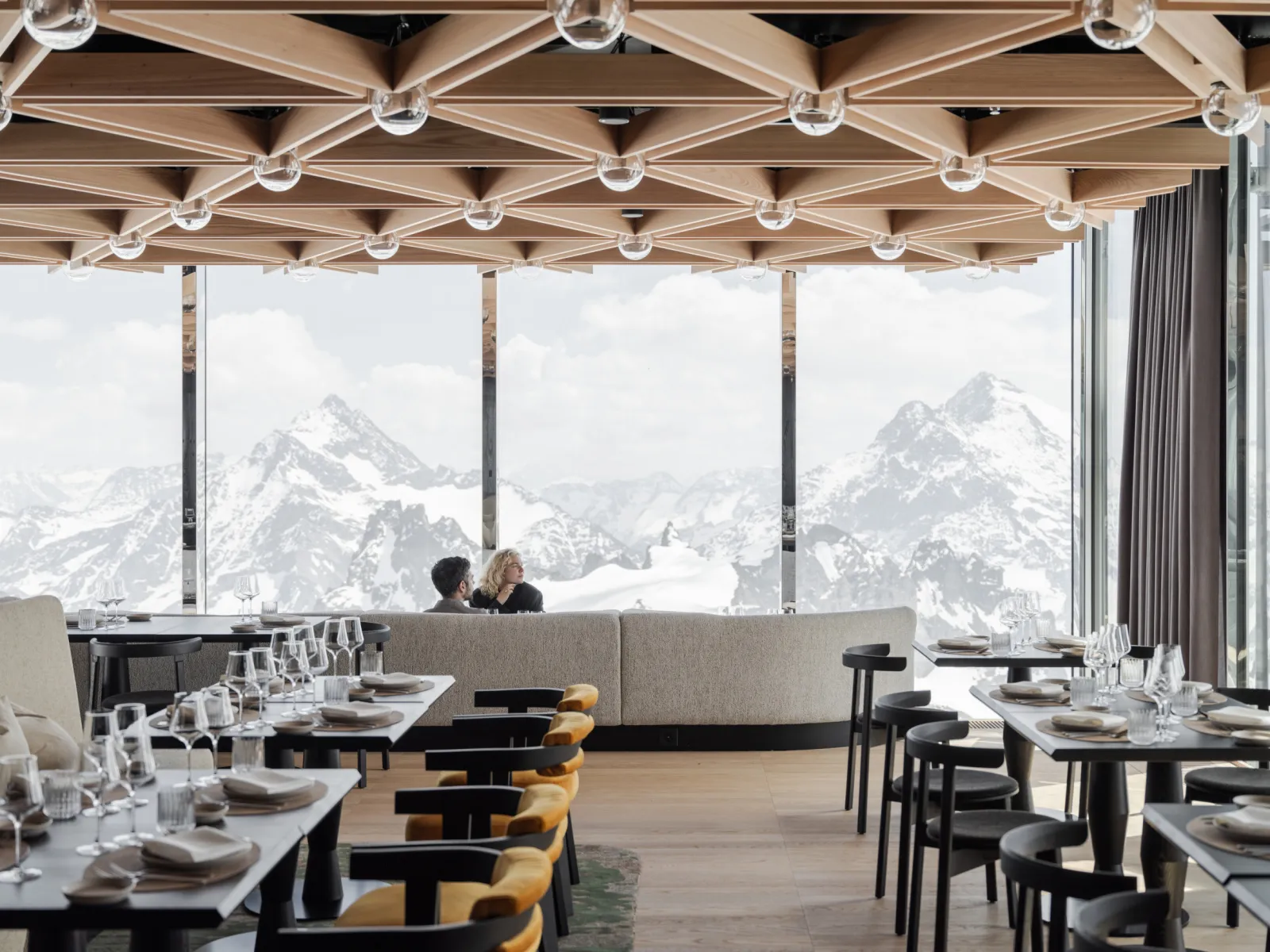
The transformation introduces two glazed cantilevered volumes inserted crosswise into the existing steel framework, supported by four new vertical circulation towers. The lower volume accommodates retail functions, while the upper level contains a 140-seat restaurant overlooking the surrounding peaks.
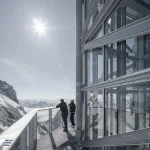
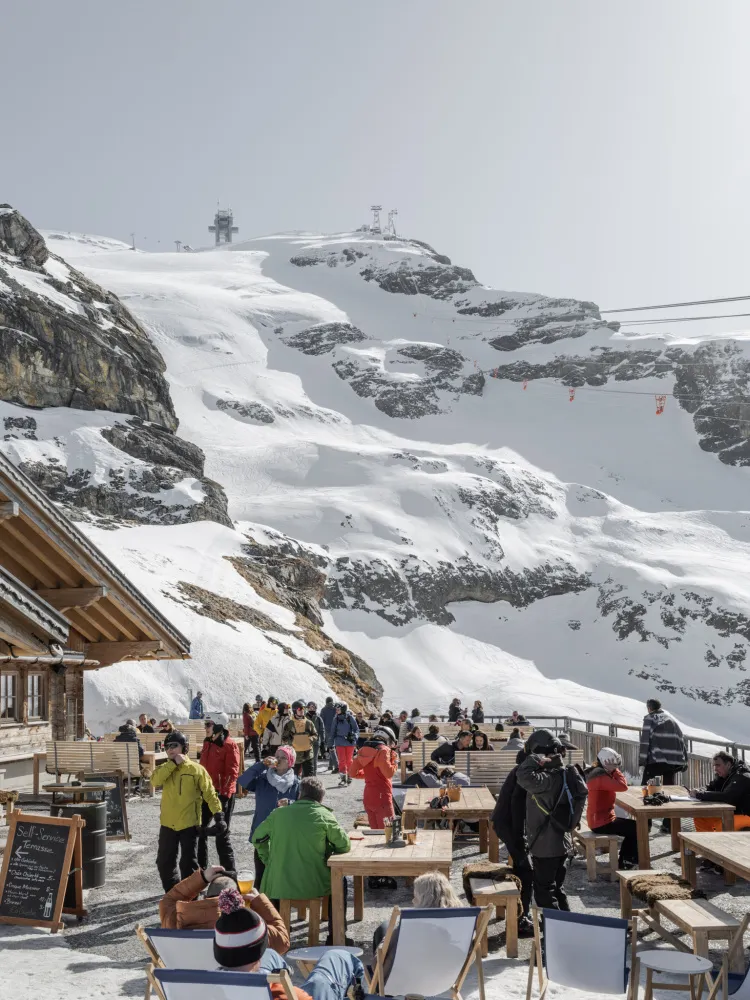
At the summit, a public viewing platform offers sweeping vistas across the Swiss Alps, turning the tower into a unique destination for visitors.
Enhancing Connectivity Through Adaptive Reuse
The TITLIS Tower makes extensive use of existing infrastructure, including an underground tunnel connecting the tower to the mountain station and glacier cave. Conceptualized as a visitor route, the tunnel features reflective steel surfaces and integrated LED displays that provide orientation and landscape information.
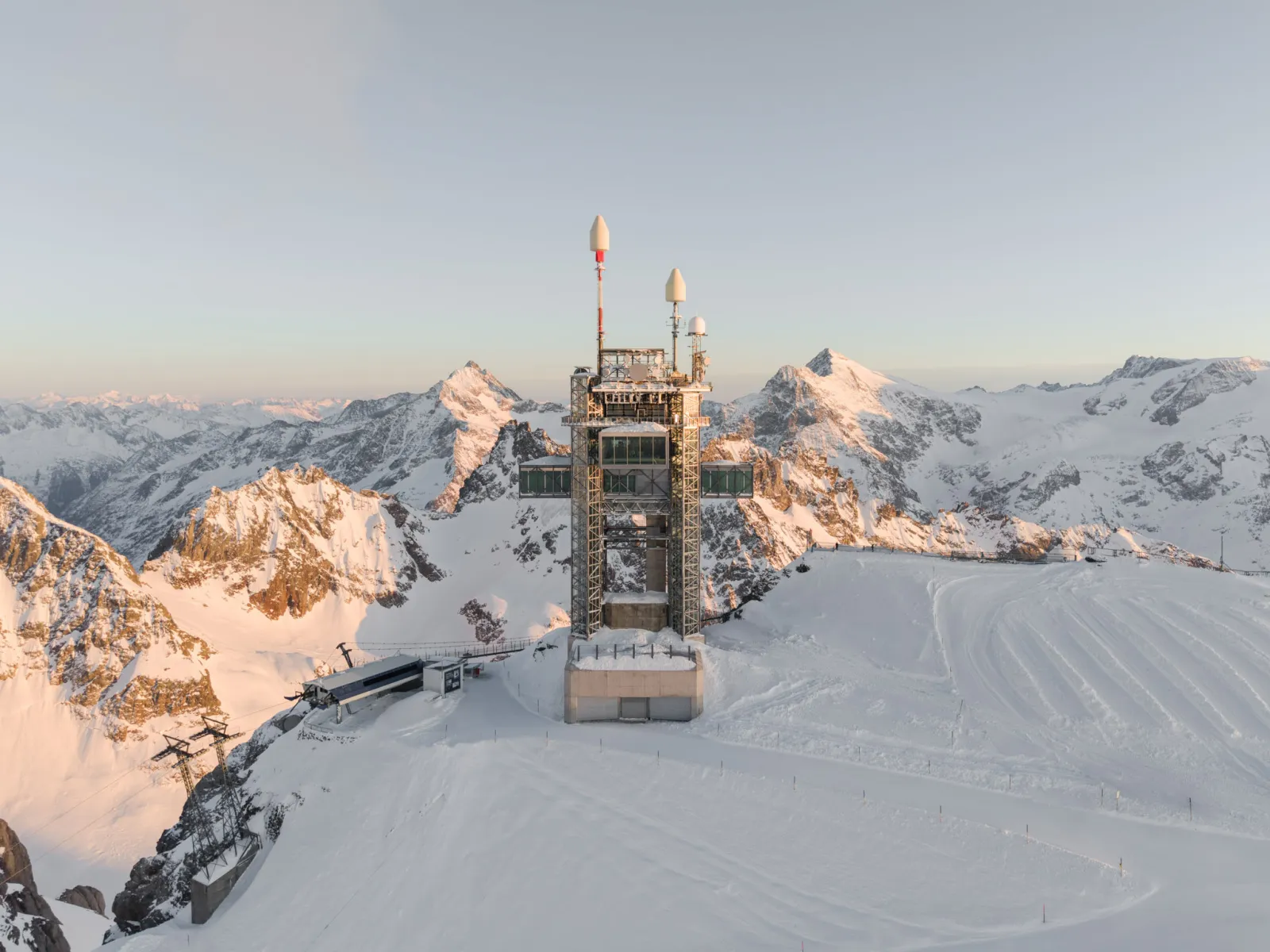
Alongside upgrades to the mountain station, the design employs durable materials such as galvanized steel, stainless steel, concrete, and glass to withstand the site’s extreme alpine conditions.
Image Courtesy: Herzog & de Meuron