

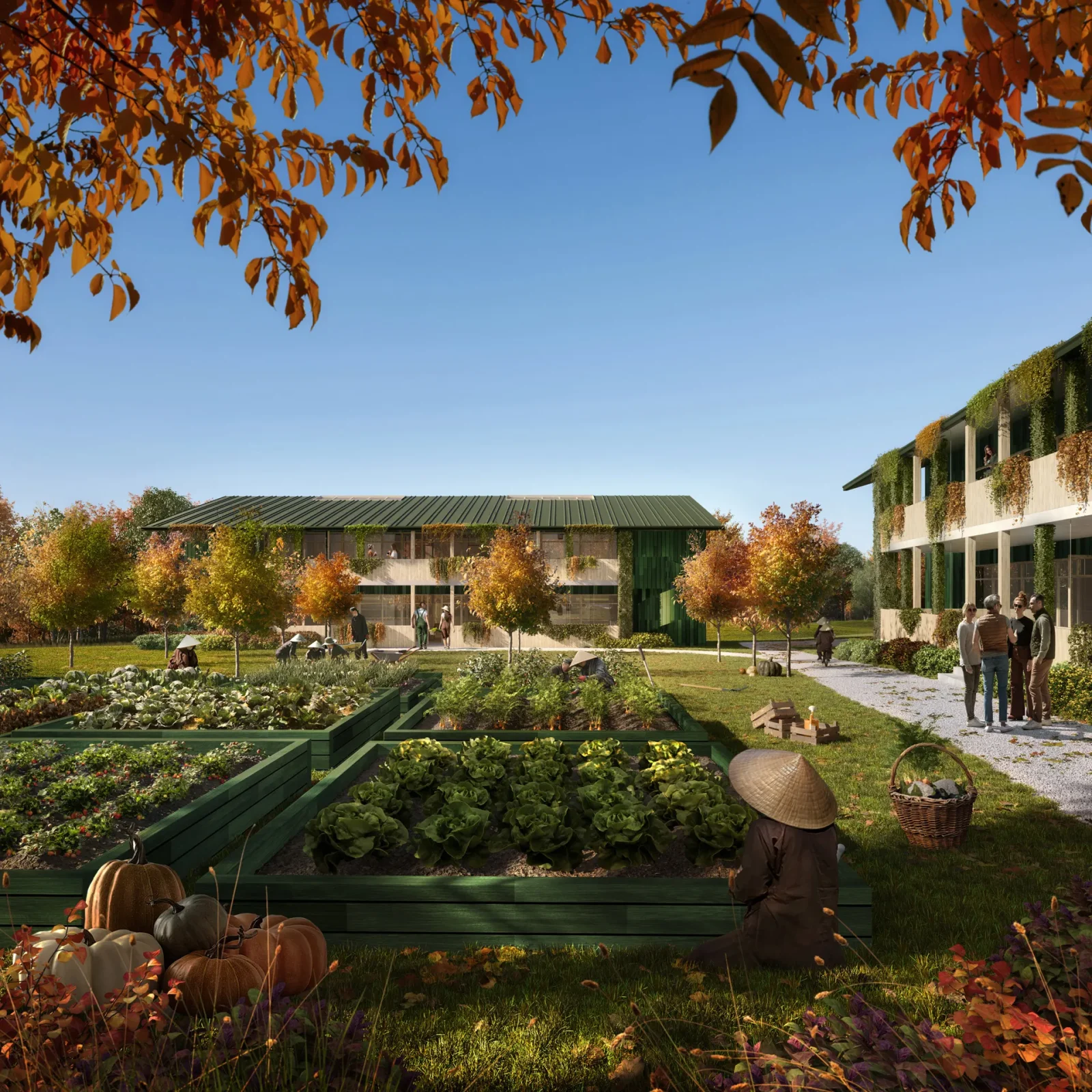
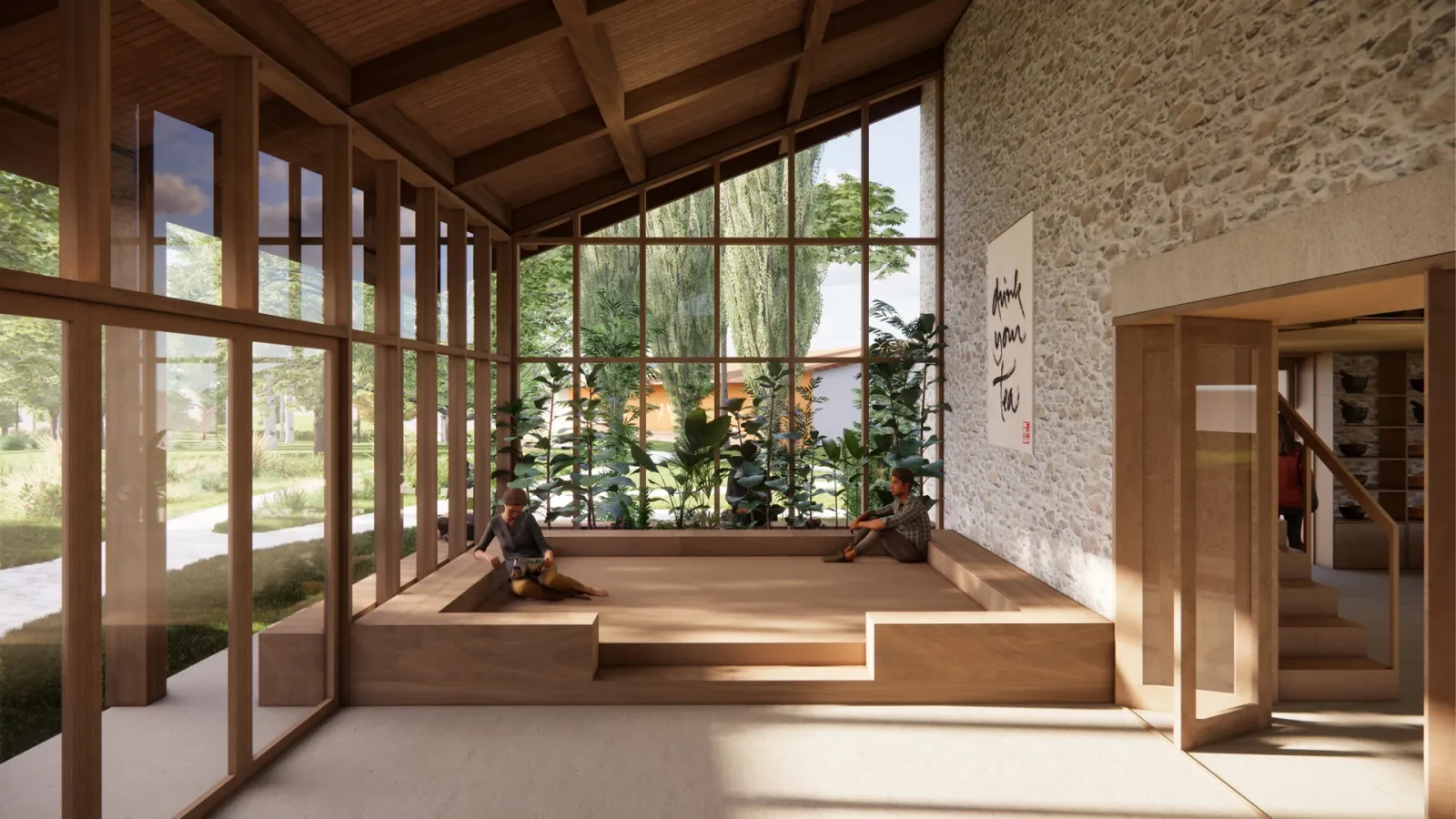
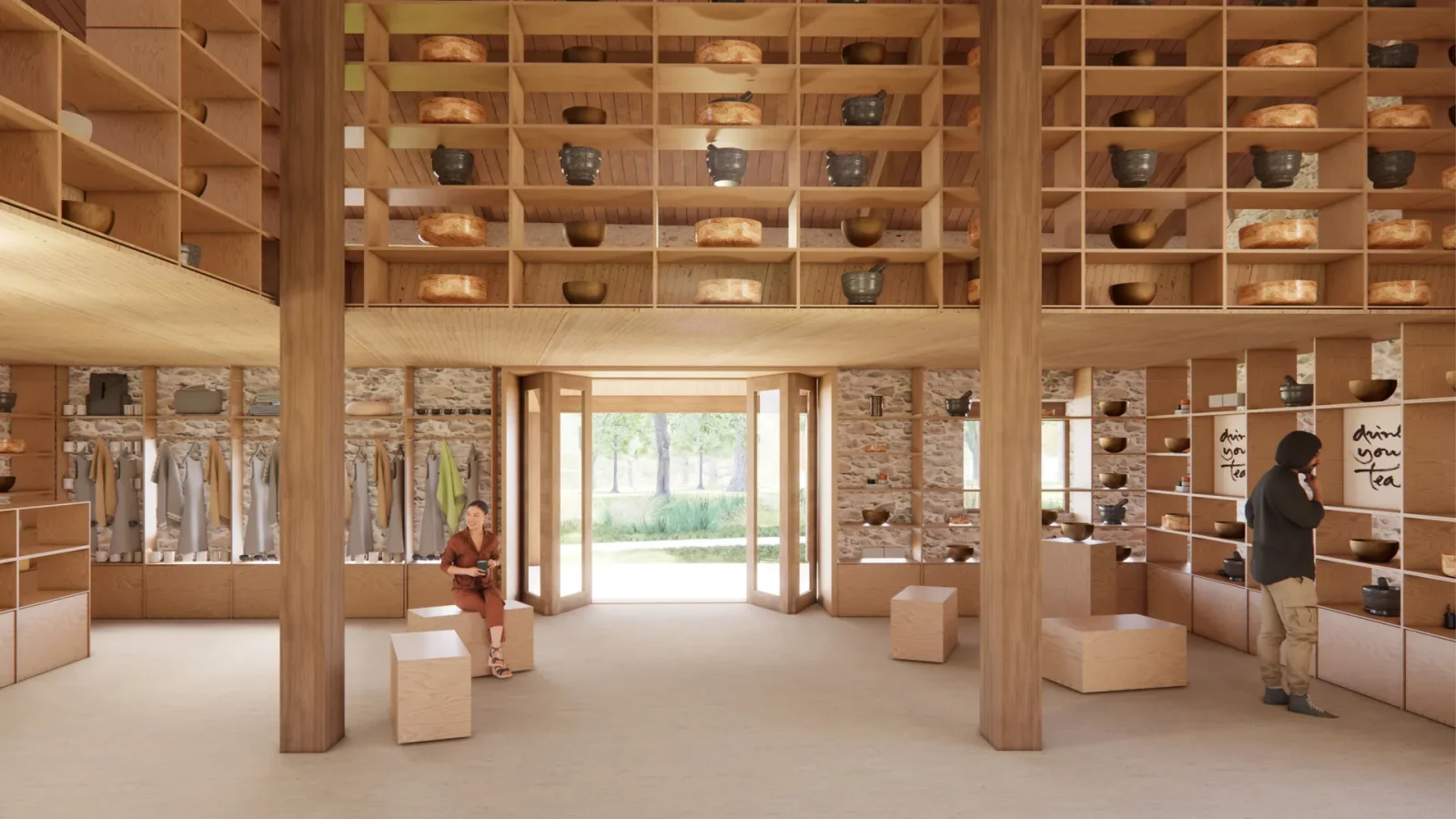
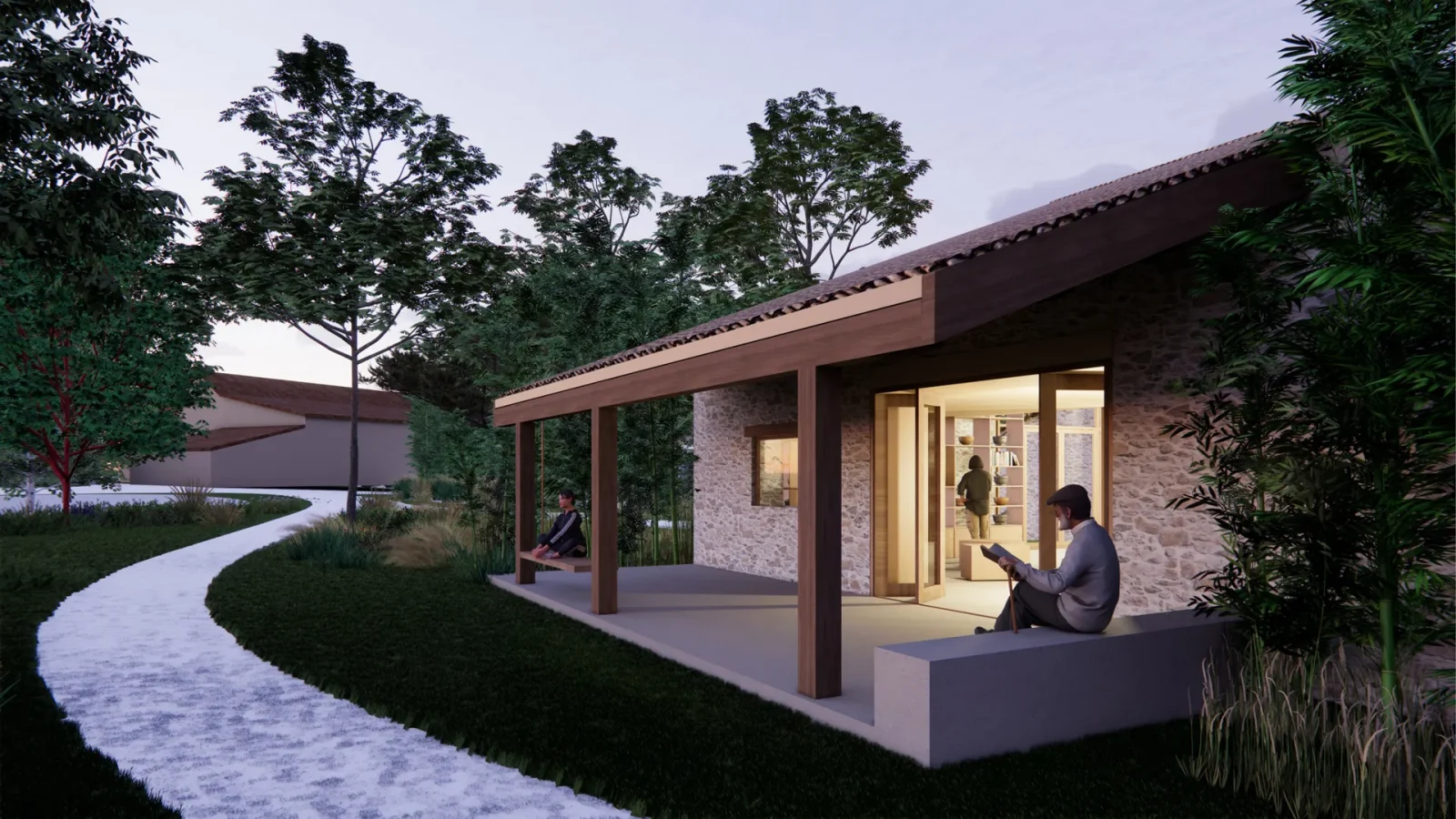
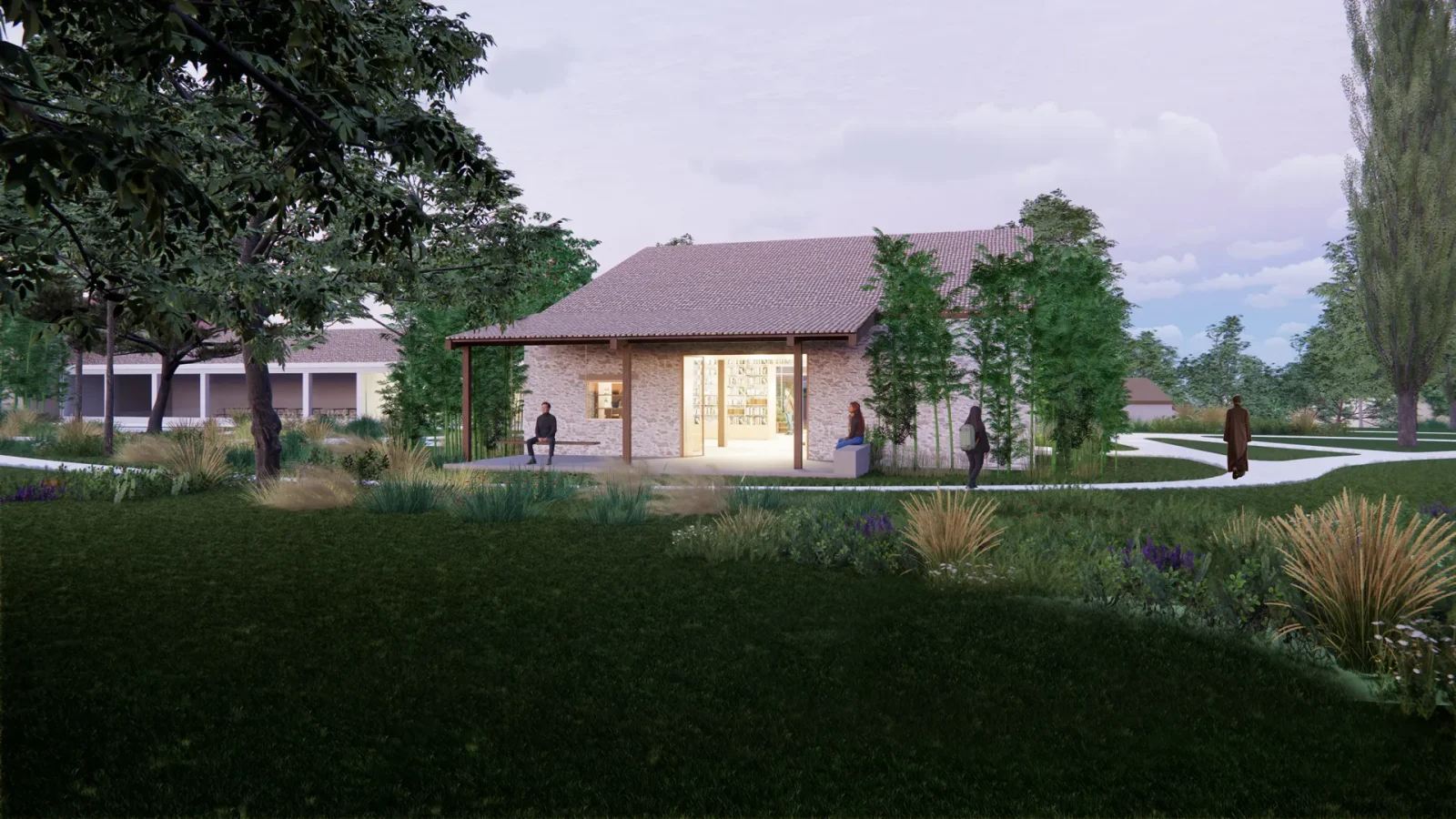
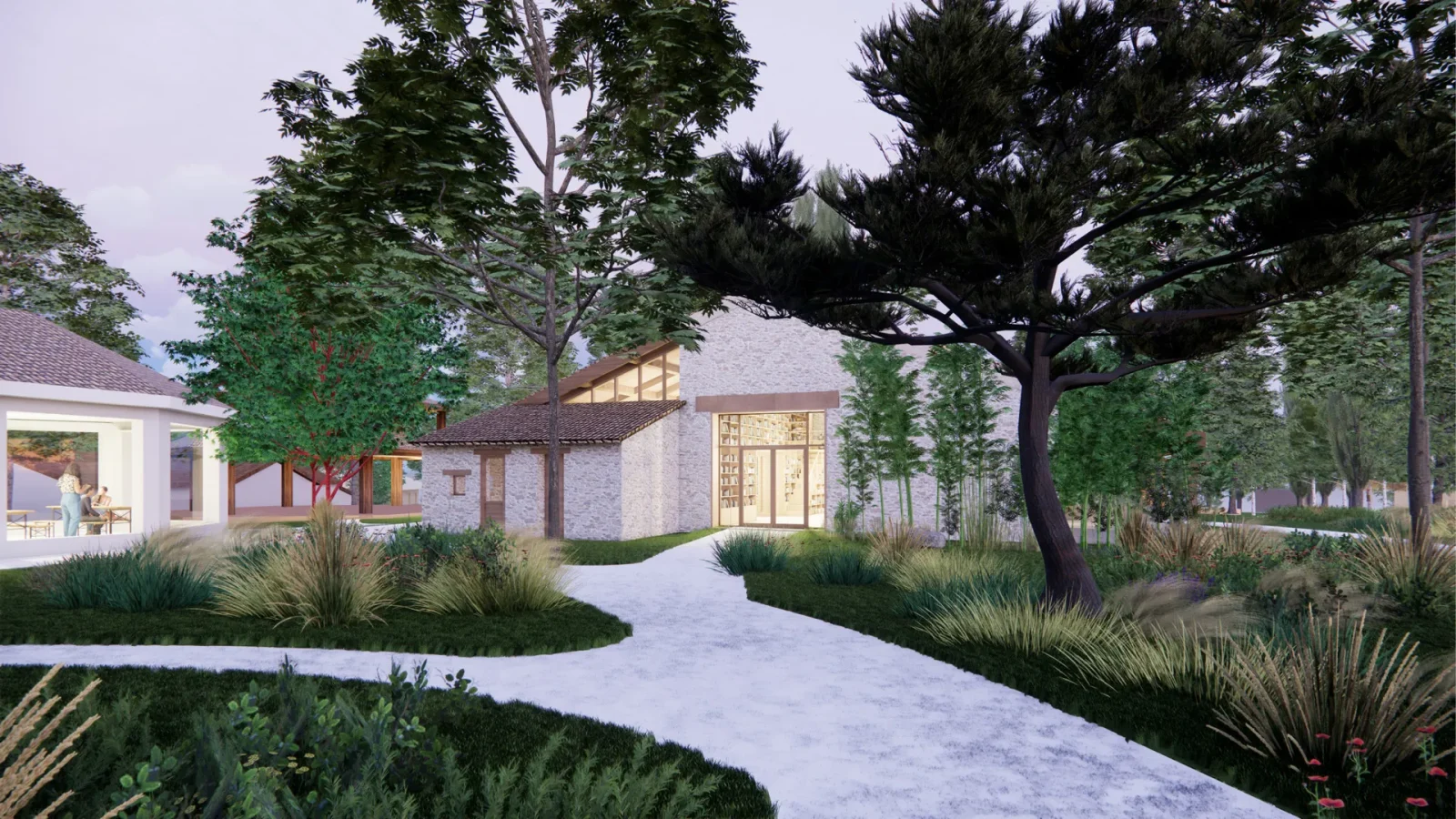
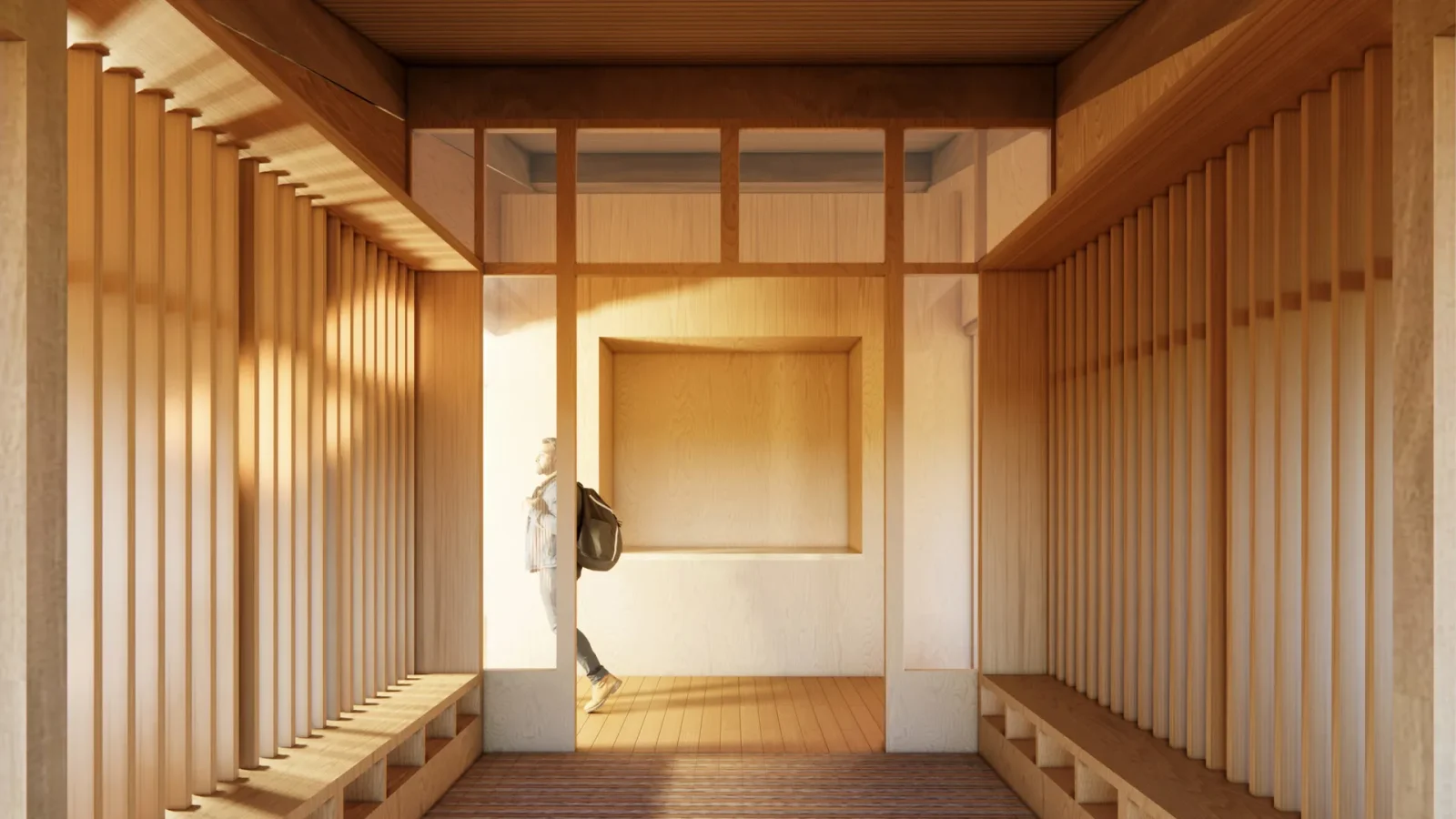
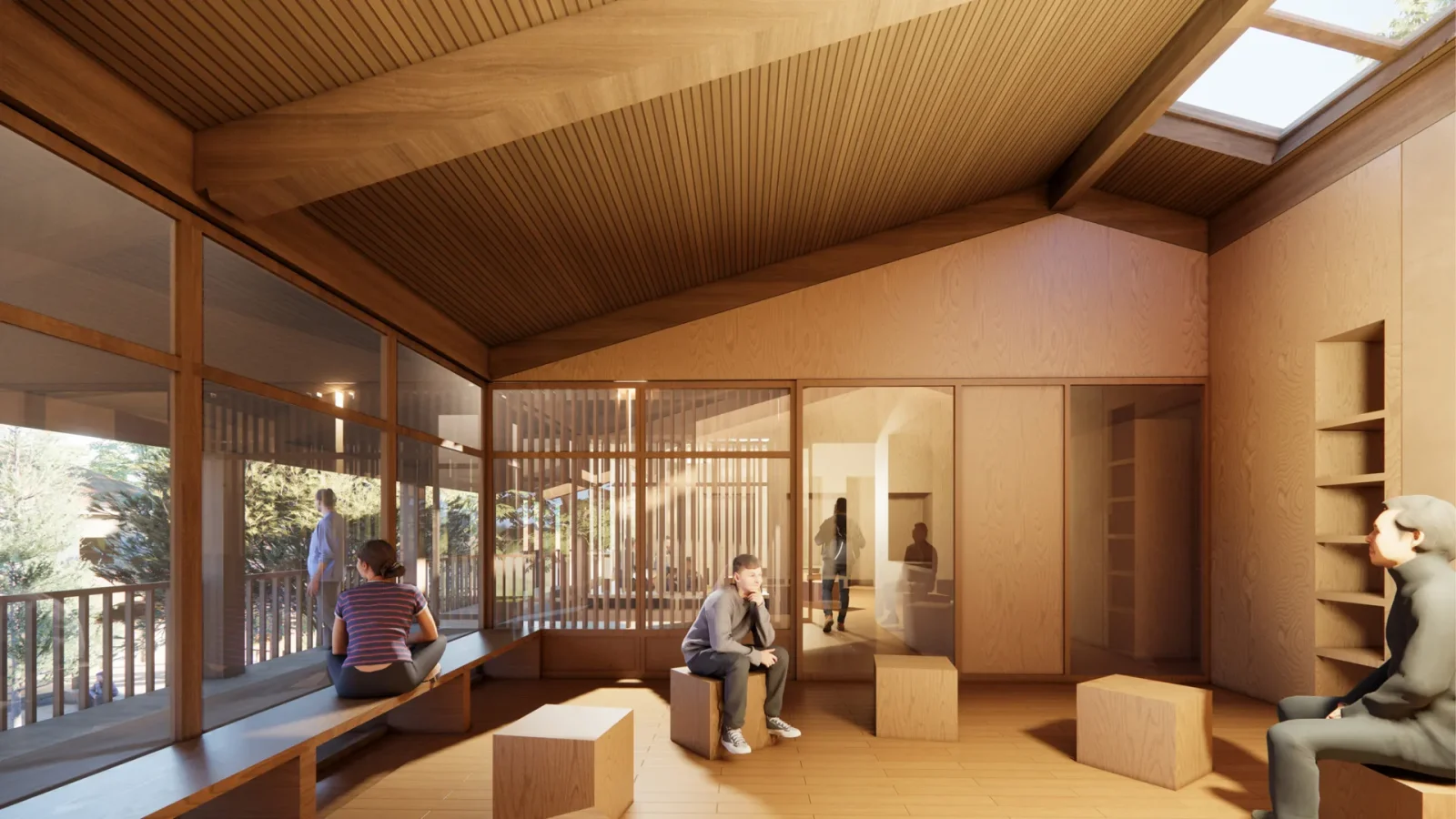
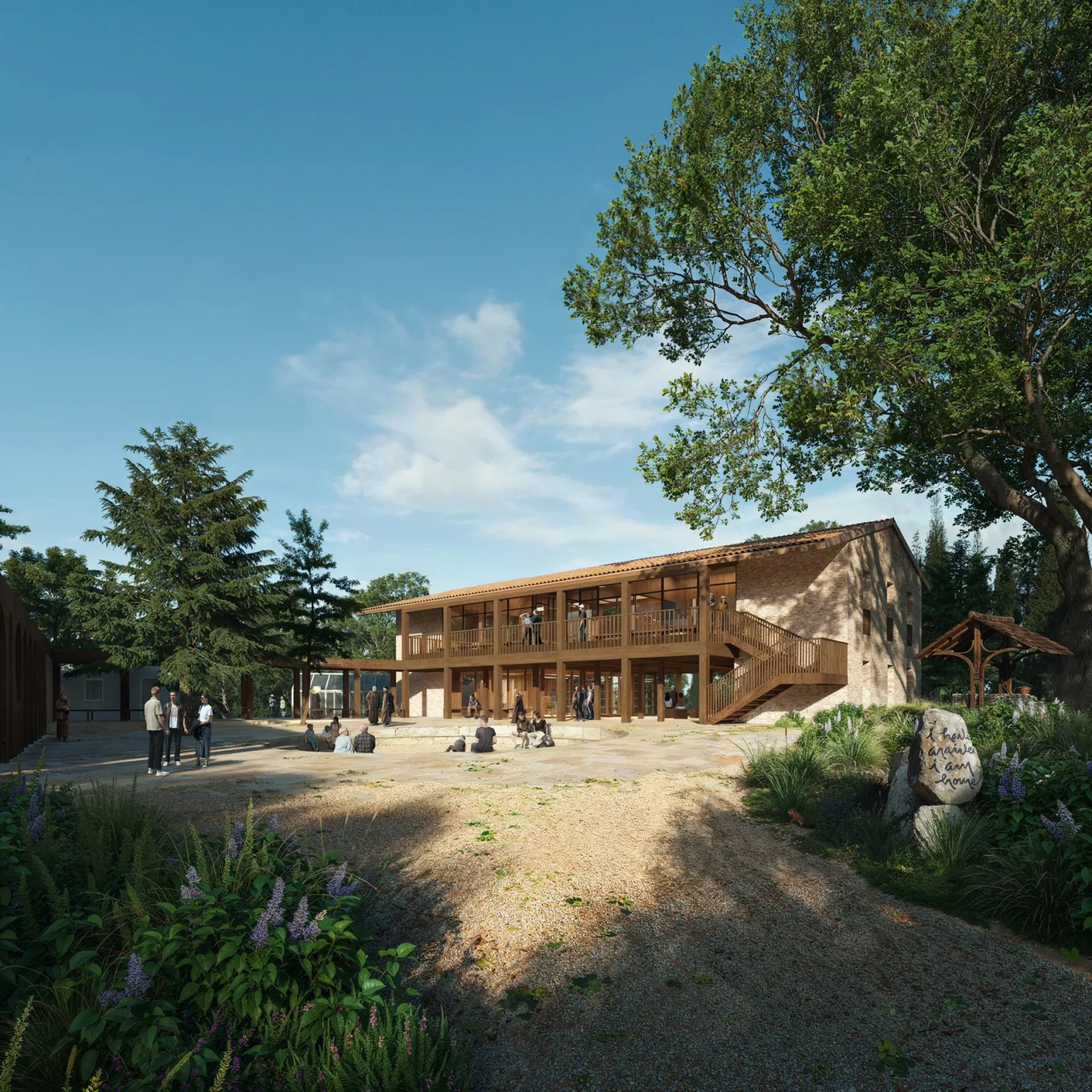
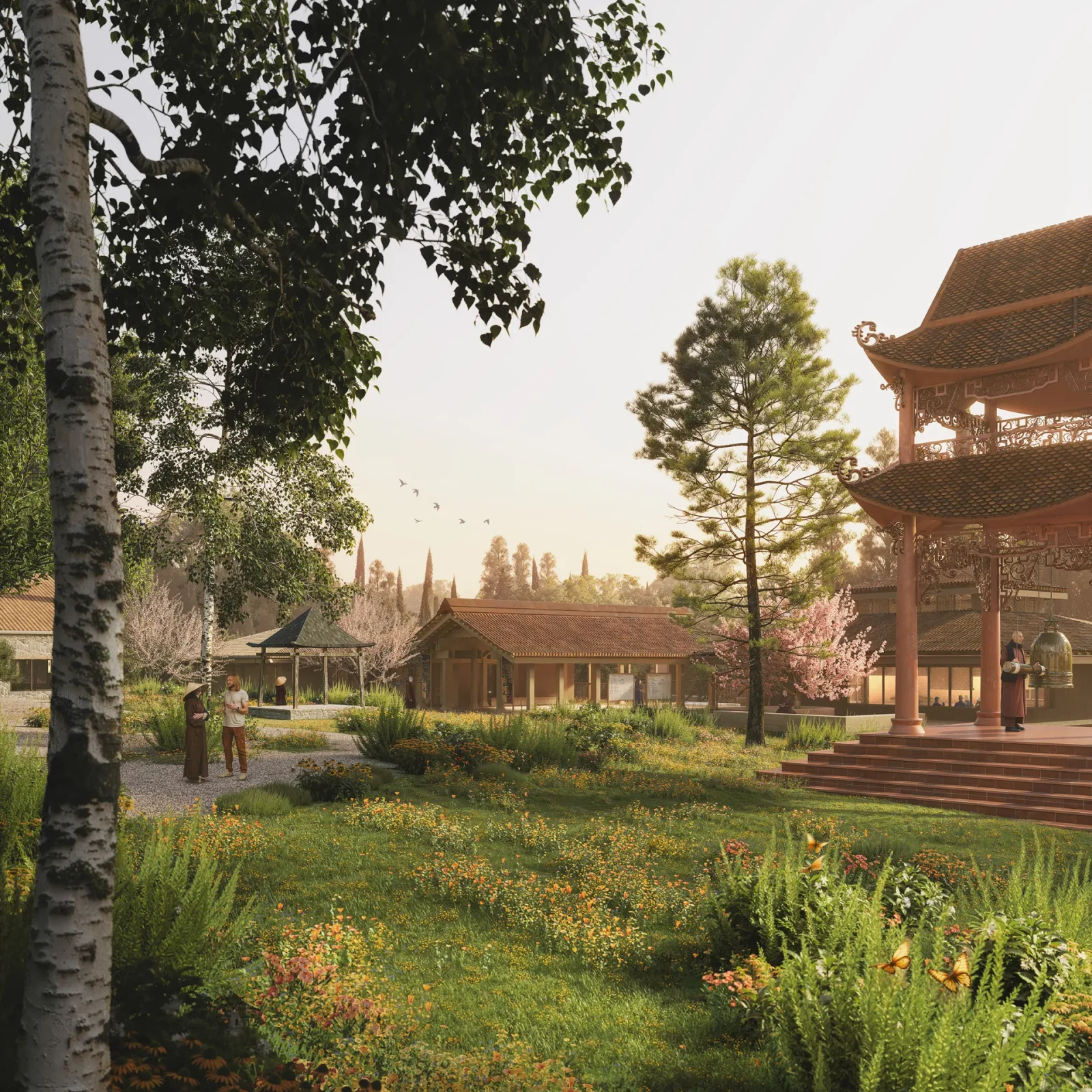
MVRDV unveils a multiphase, non-profit collaboration with the Plum Village Buddhist Monastery in southern Dordogne, France. The project signifies an ecologically driven design deeply rooted in spiritual tenets of the organization. The first phase includes two comprehensive master plans, a new nunnery, four guest houses, and a renovated bookshop.
Thích Nhất Hạnh’s Plum Village
Plum Village, established by the late Zen master Thích Nhất Hạnh, widely known as the Father of Mindfulness, is recognized as the largest international practice center. It comprises three distinct locations, with the work focusing specifically on the Upper Hamlet (home to the monks and the root Dharma Cloud Temple) and the Lower Hamlet (home to roughly half of the monastery’s nuns).
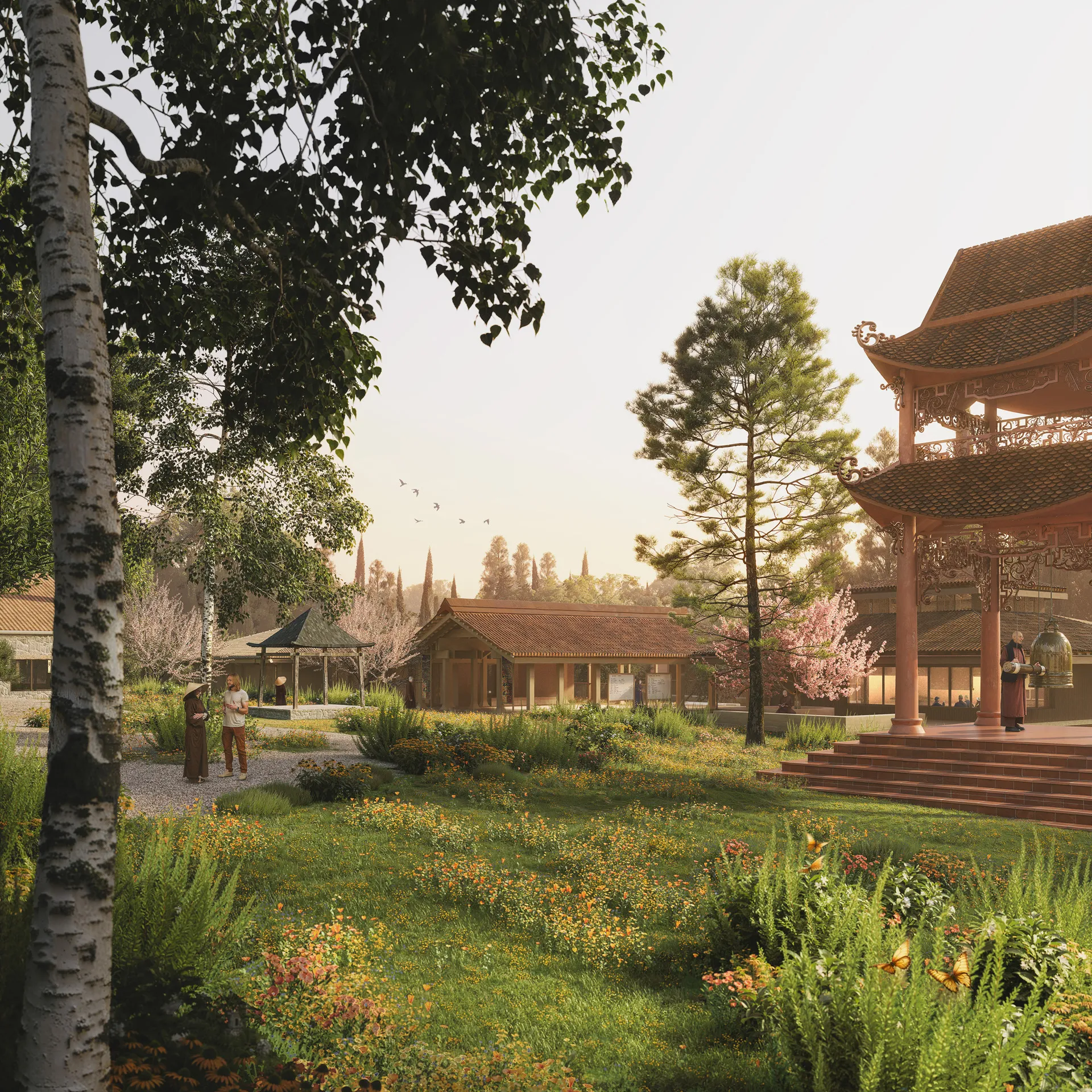
Disciples of the Plum Village tradition practice Buddhism, a movement grounded in ethical principles and meditative insights that address contemporary societal issues. The monastery actively engages with peace and climate activists, serving as a platform for an architectural reaction to climate change.
Sustainability, Serenity, and Material Responsibility
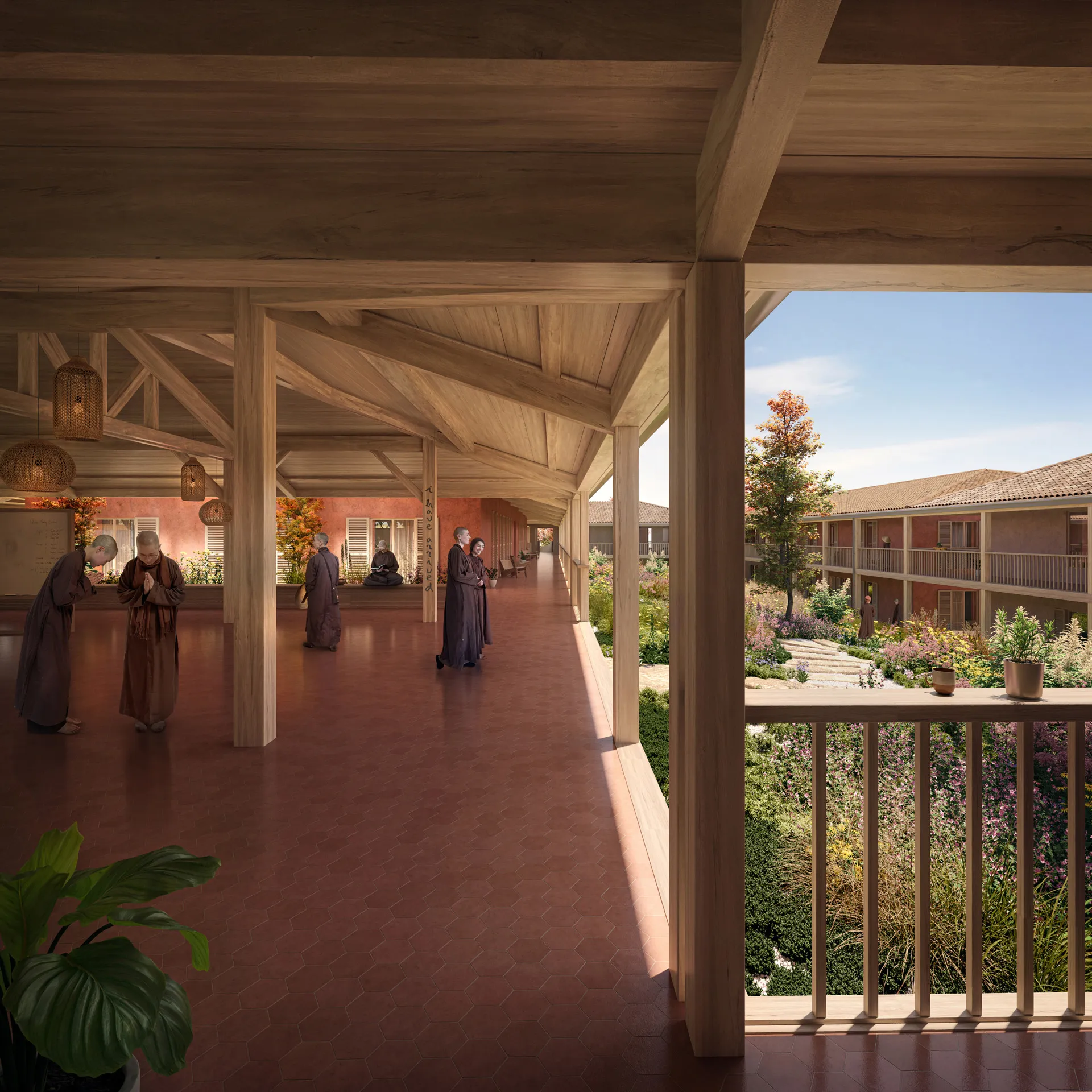
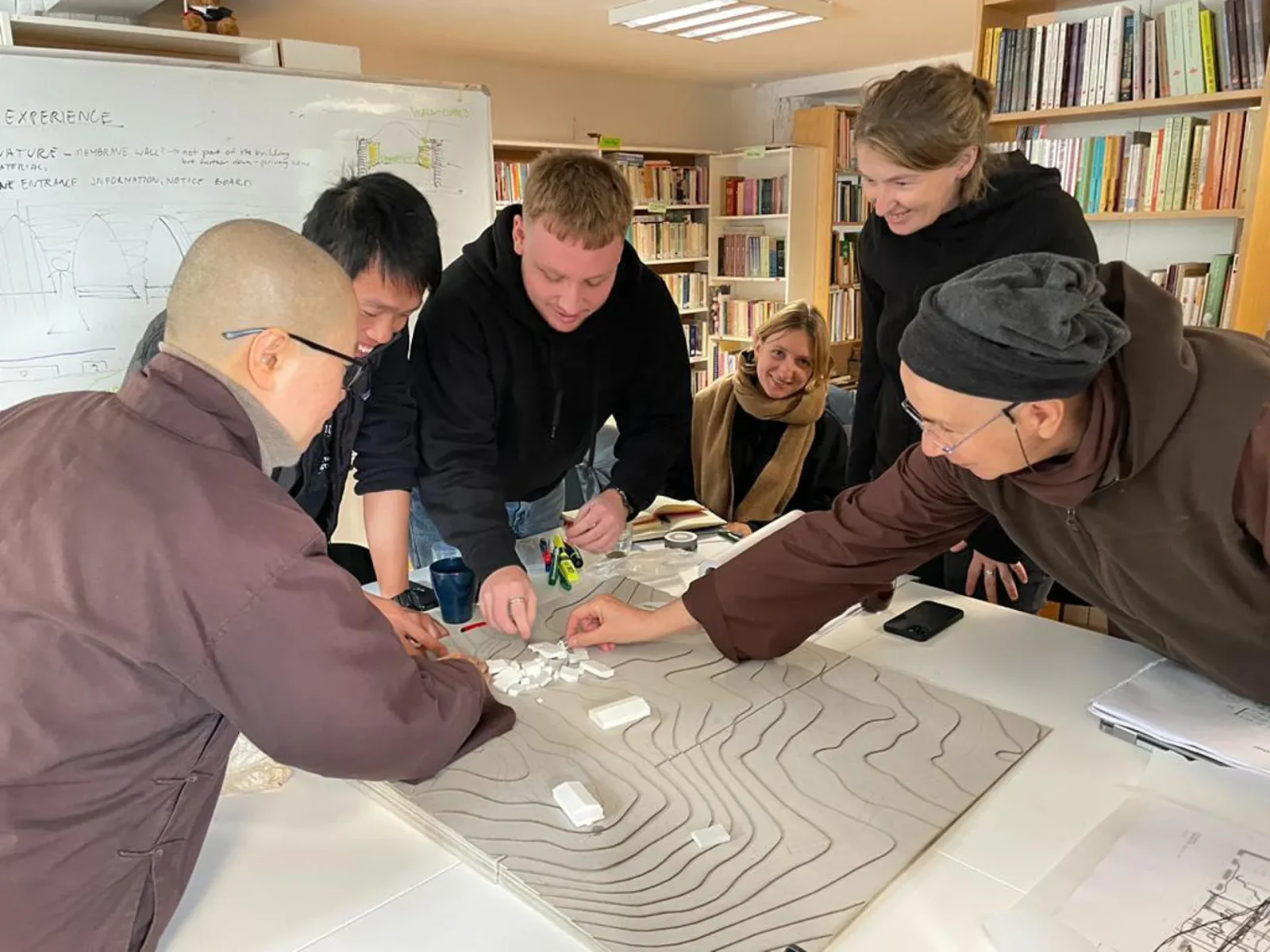
MVRDV, closely associated with the Bordeaux-based co-architect MoonWalkLocal, developed an understanding of the monks’ daily routines and conducted dialogue-based workshops to analyze the challenges and unusual needs of the residents in depth. Sanne van der Burgh, Associate Director at MVRDV, noted that the team had to “un-learn what we learned as architects” and engage in the practice of “deep listening.
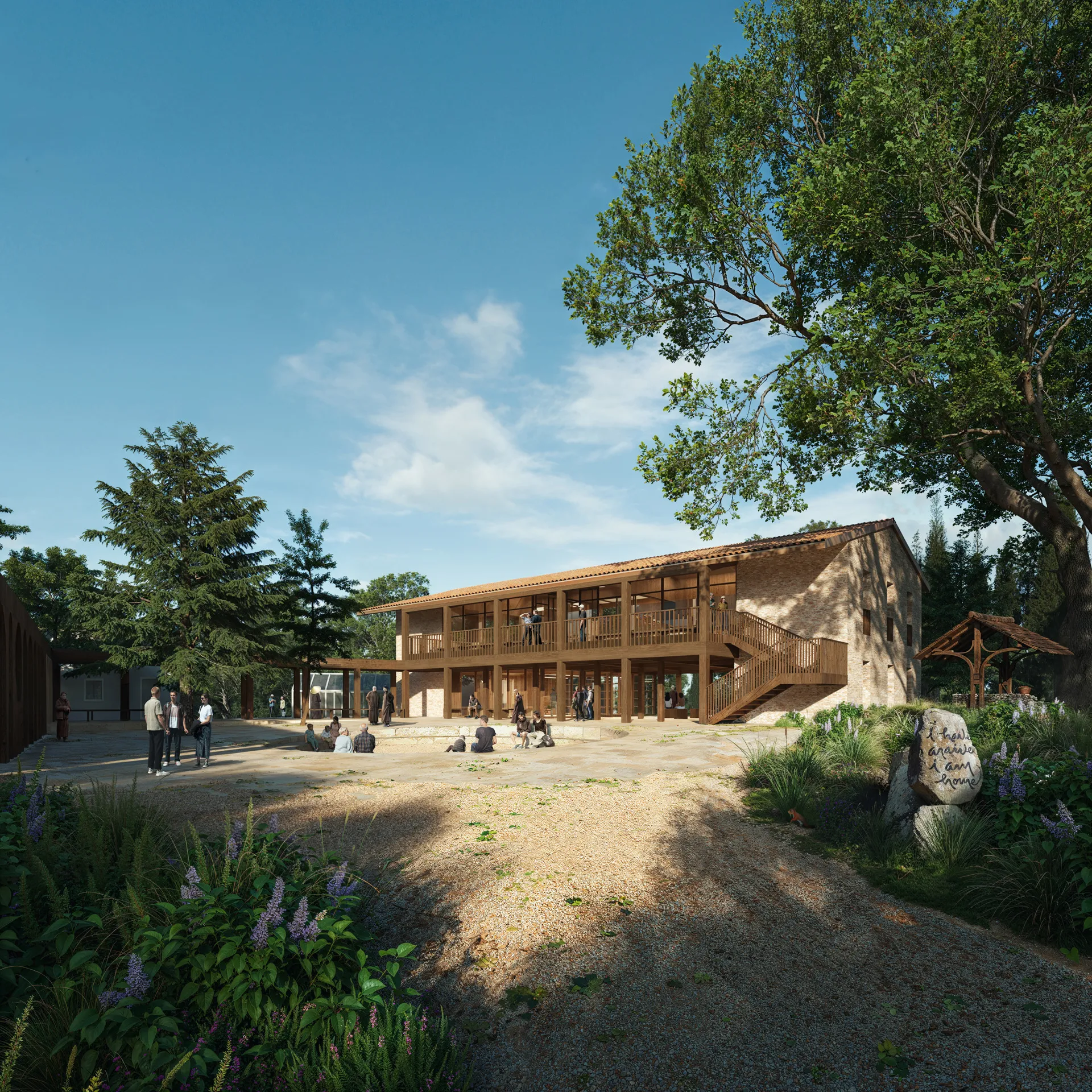
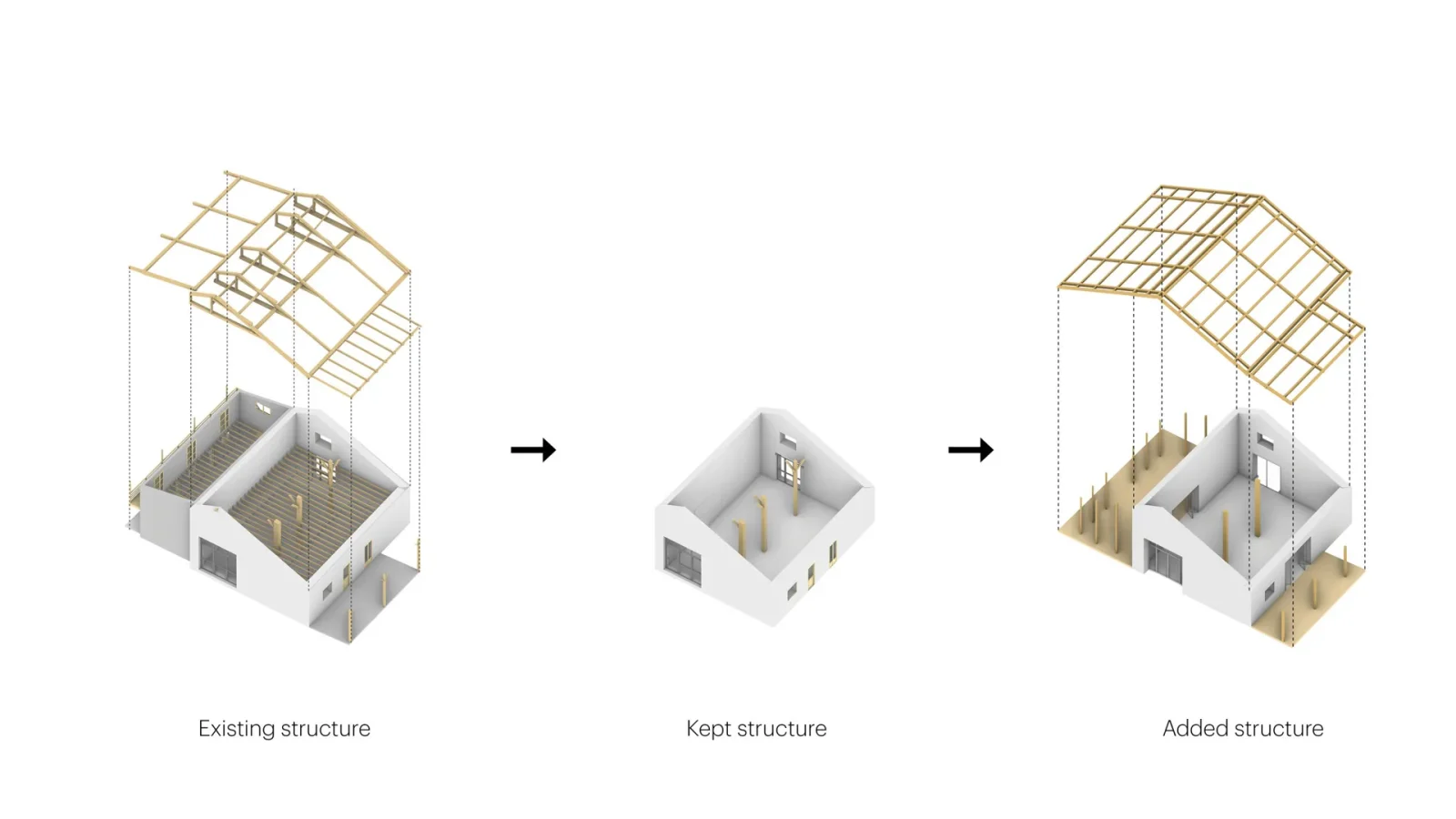
The daily life of the monks guided the spatial organization, a programmatic approach rooted in the spiritual logic of the Plum Village. The design centers on prioritizing resource conservation, favoring renovation and the use of circular and bio-based materials in all new construction, a sustainable approach that aims to blend seamlessly with the surroundings.
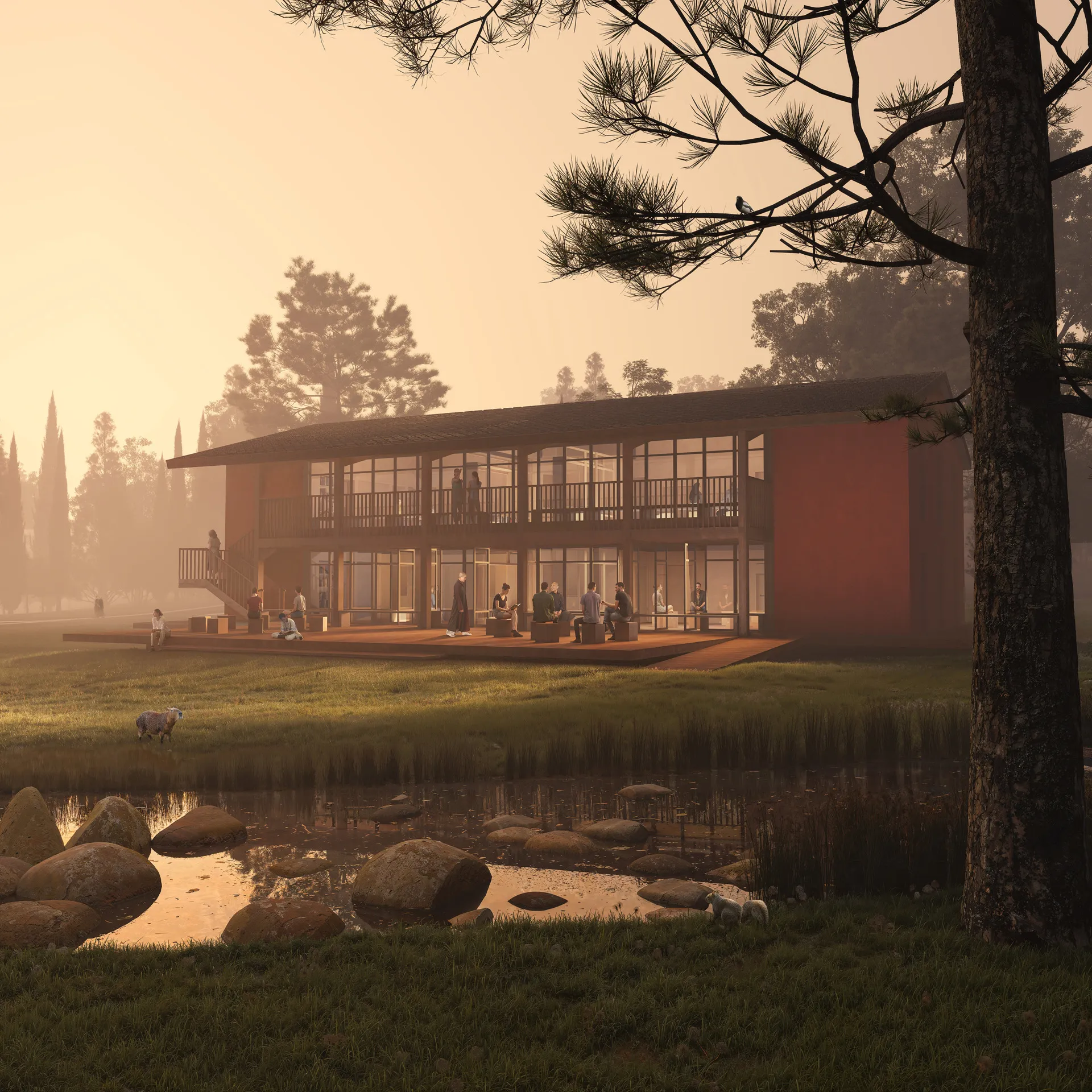
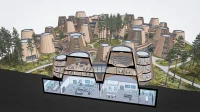
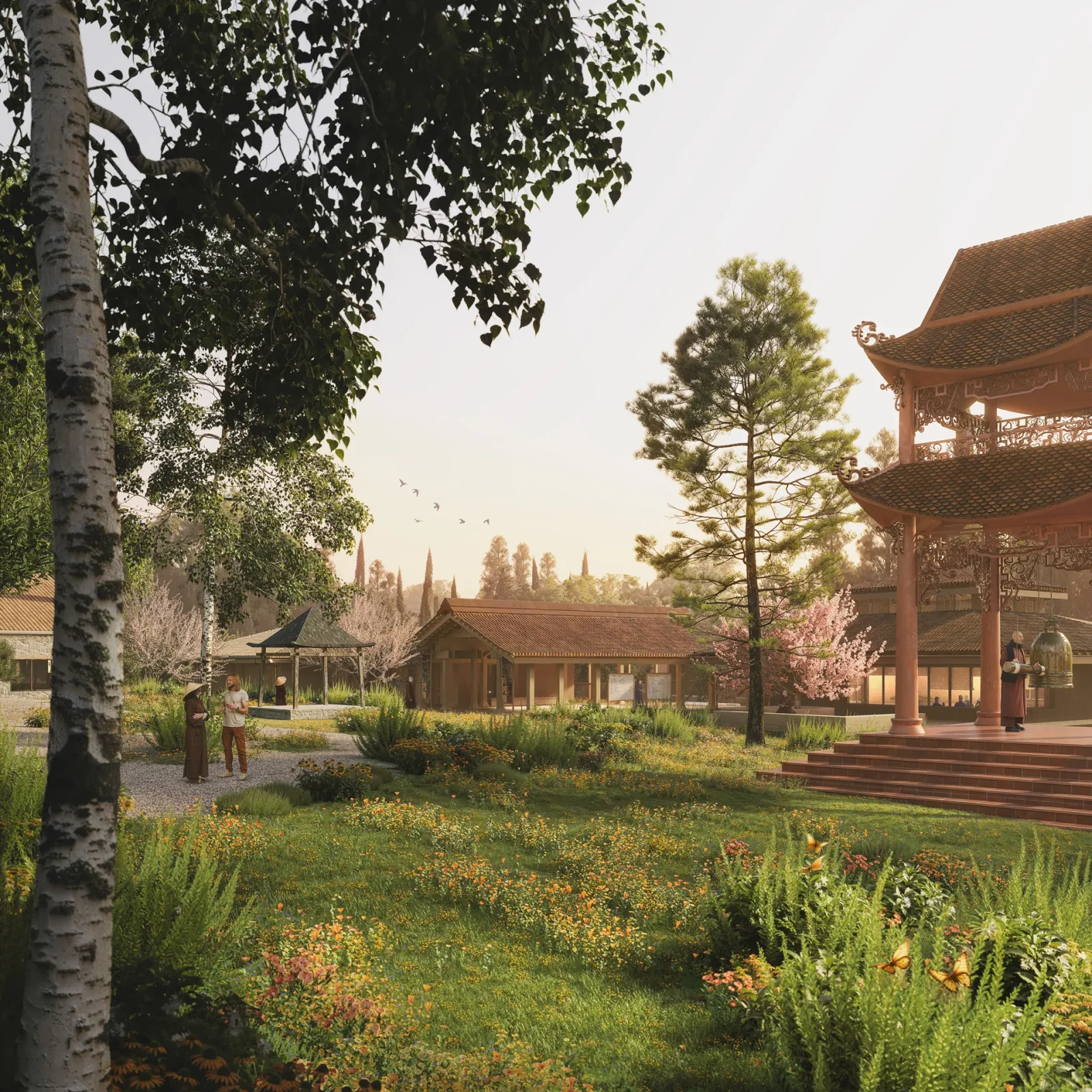
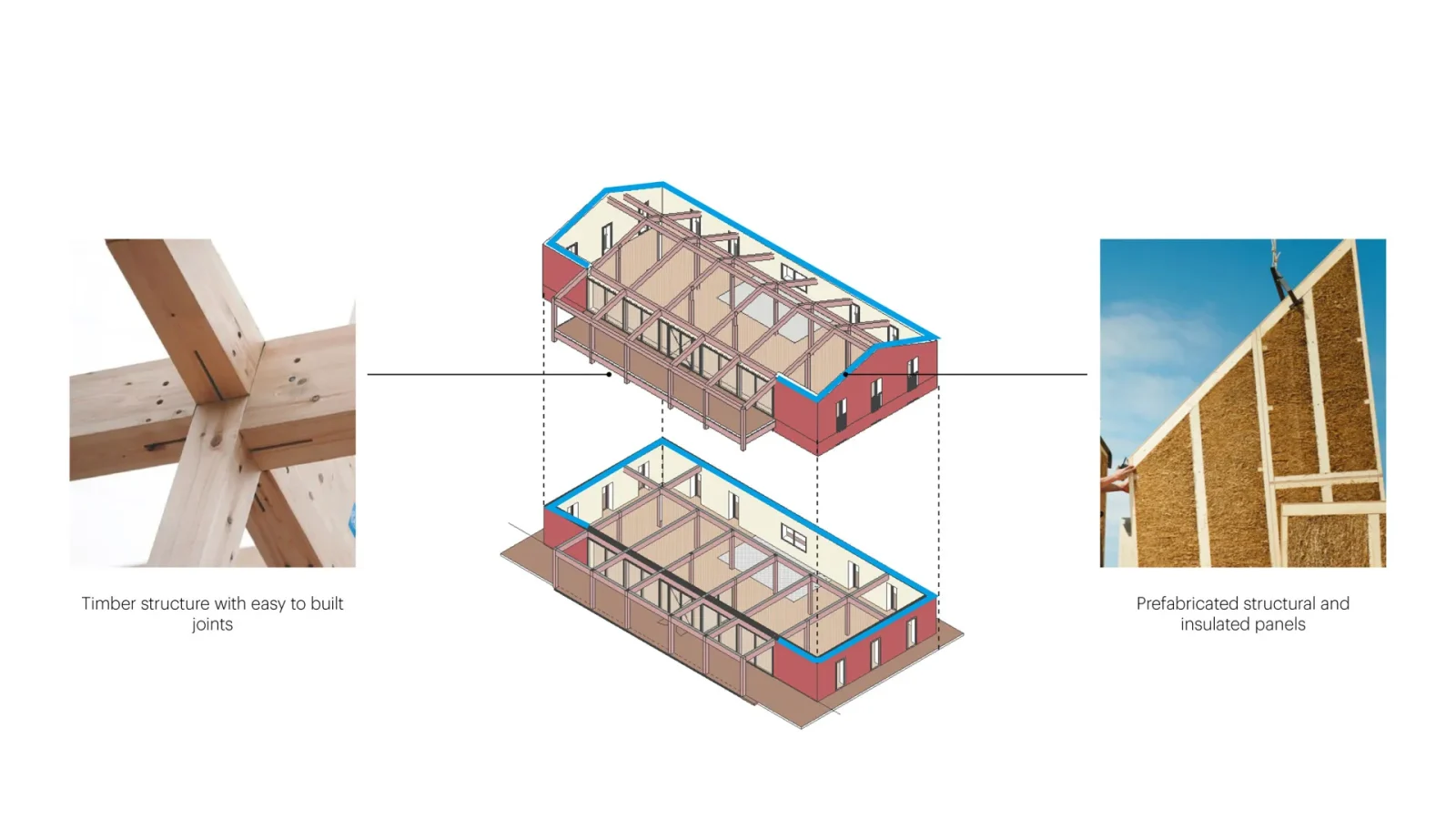
The master plan illustrates deliberate details of the local atmosphere and ecological conditions, emphasizing timber construction and prefabricated techniques. The architectural language shapes the built form as the timber structures and landscapes that support retreat life through environmentally responsive design.
Programs for Sustainable Community Design
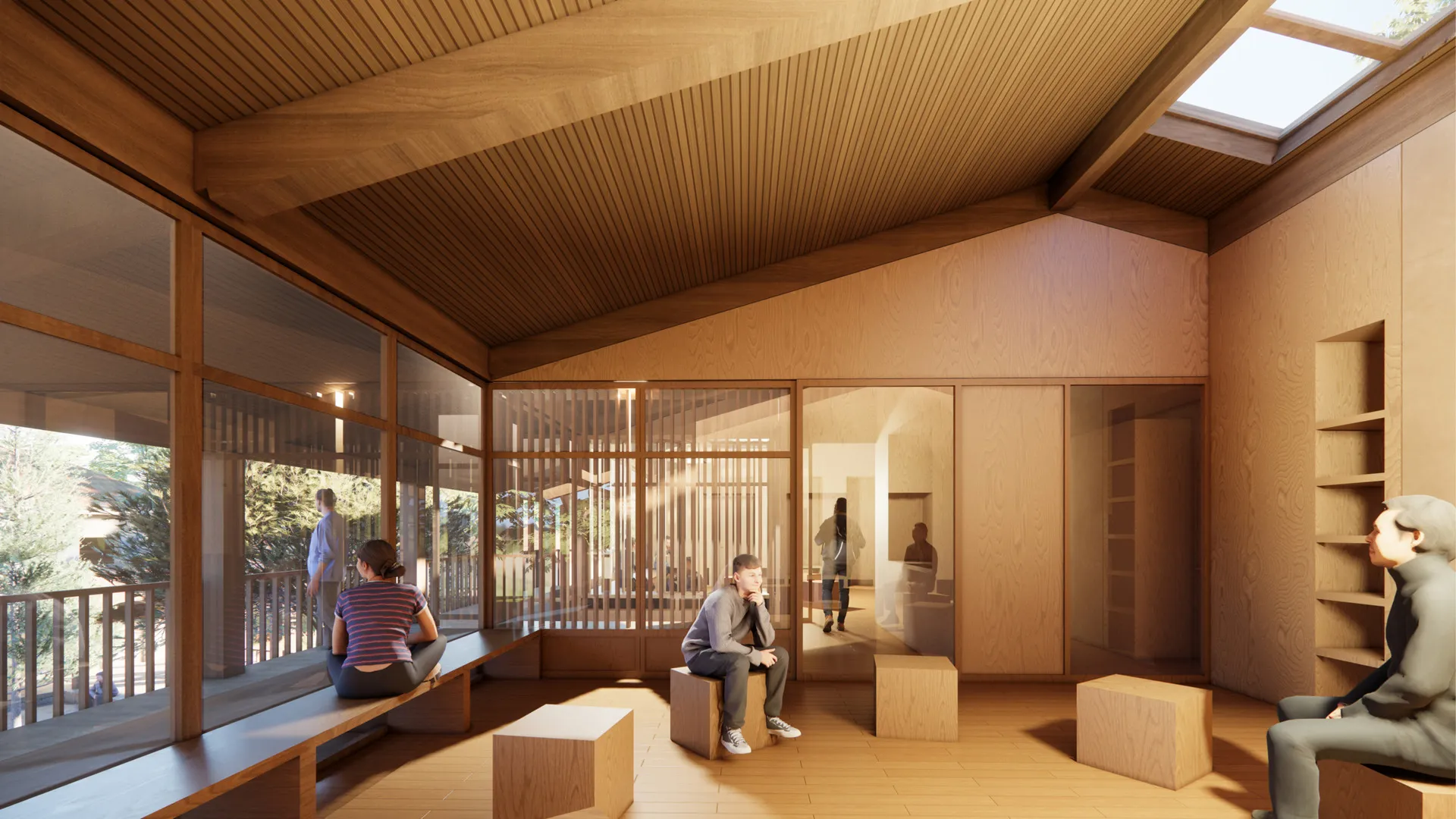
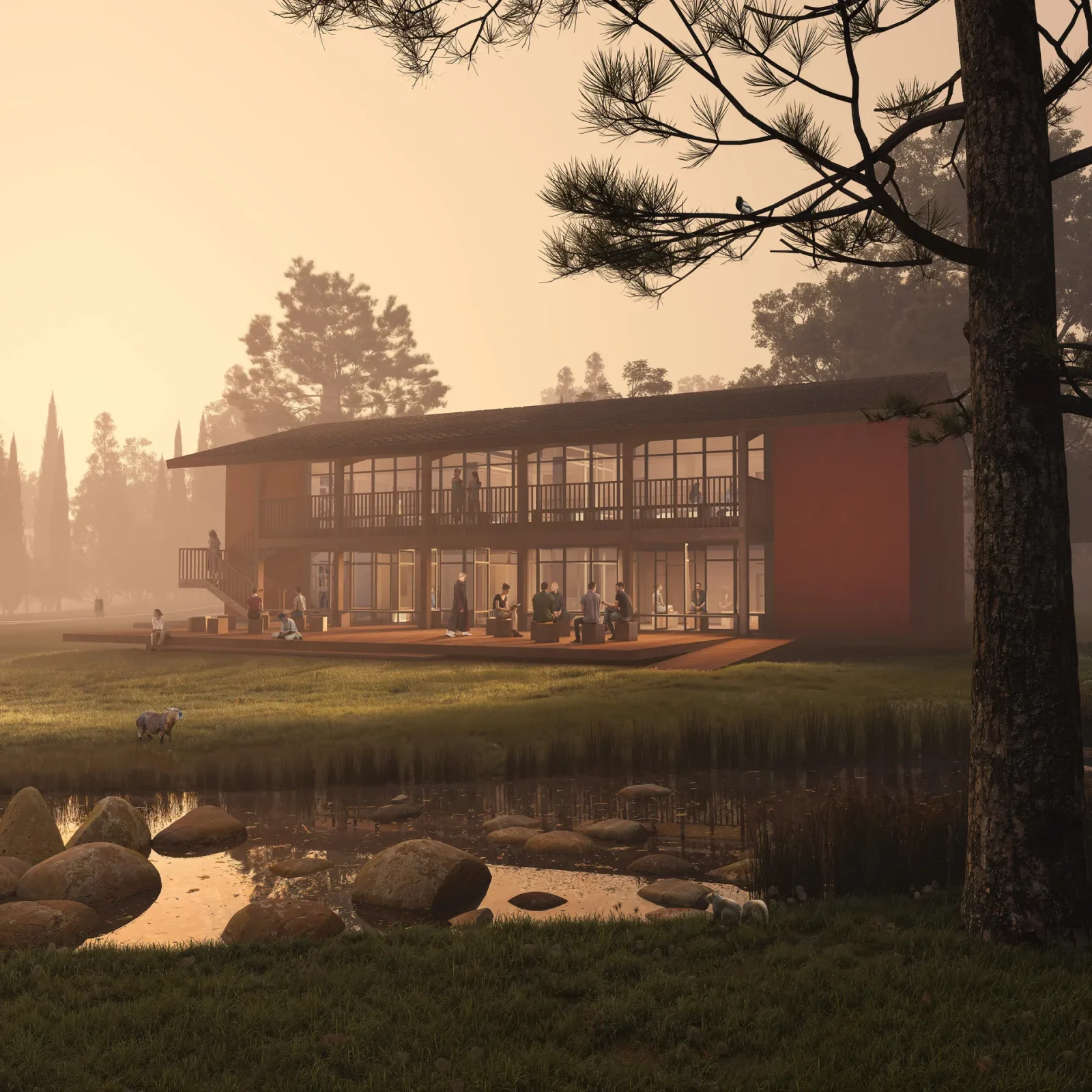
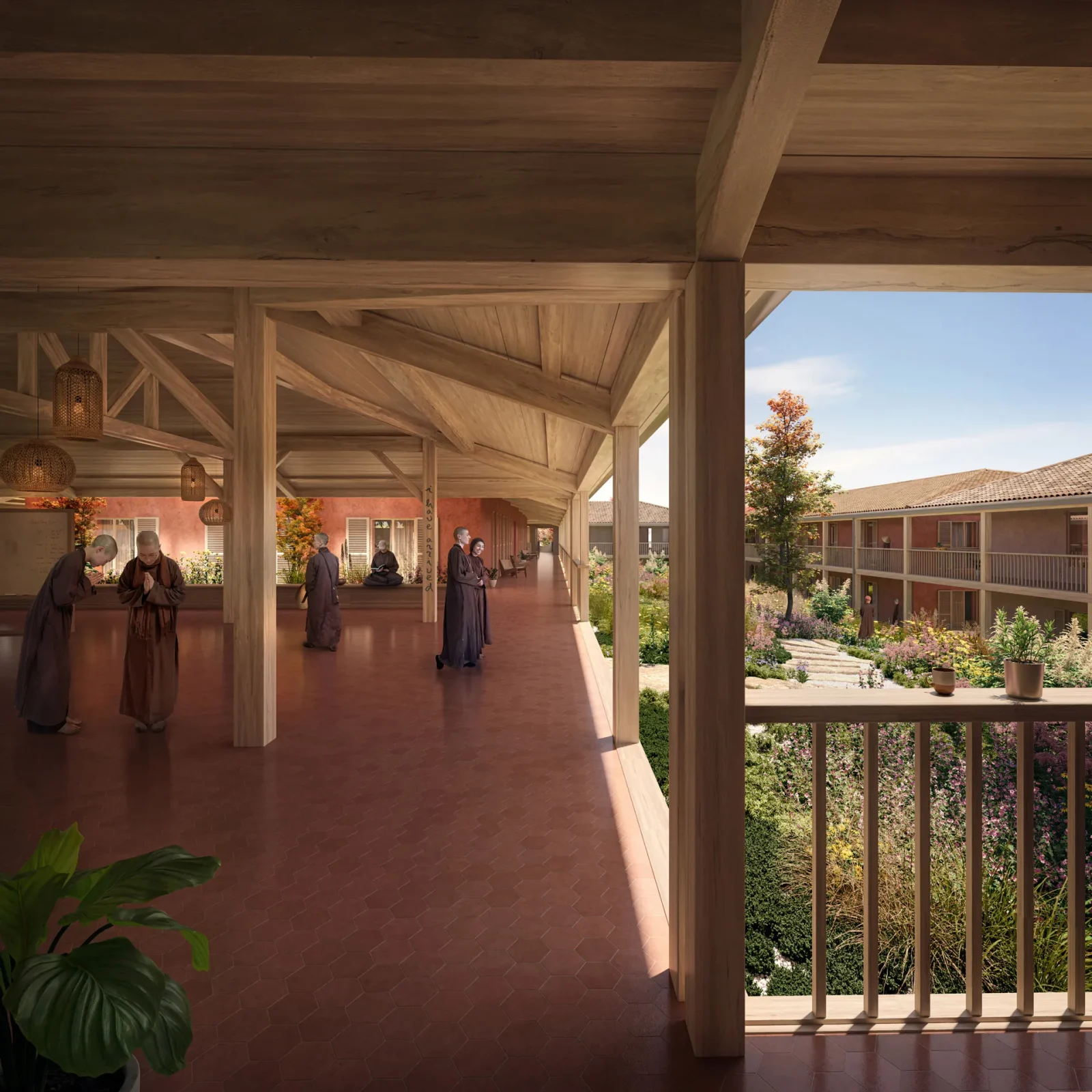
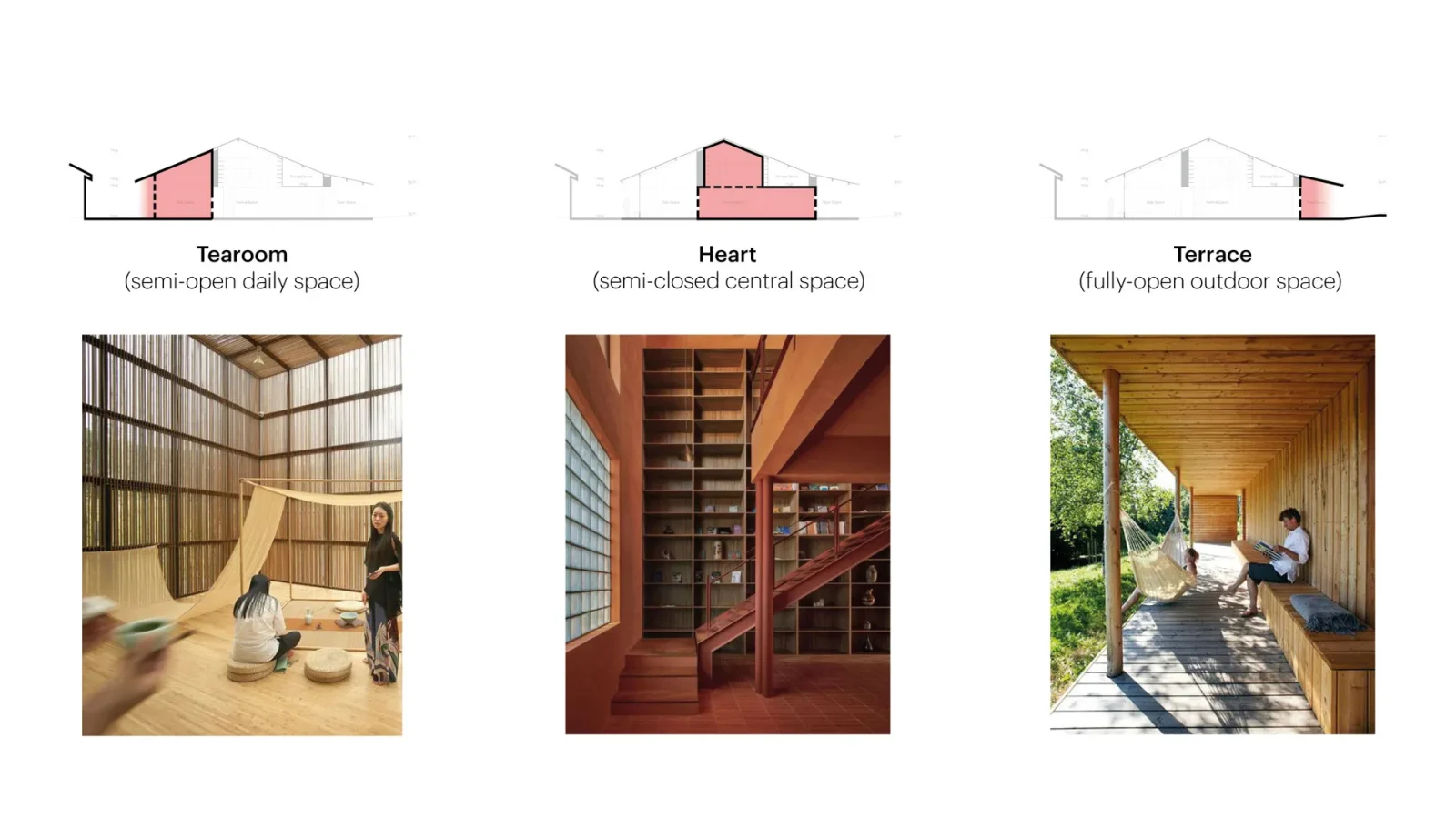
Spatially, the nunnery situated on a sloping site is organized as a courtyard-style building, including functional spaces for monastic life: dormitories, a zendo (meditation hall), a library, and a classroom. The architectural element of a verandah encircling the courtyard reinforces the idea of collective life and mediates between interior spaces and the surrounding terrain. It is not merely a circulation pathway but also functions as a ritual infrastructure for sheltered walking meditation (Kinh Hành).
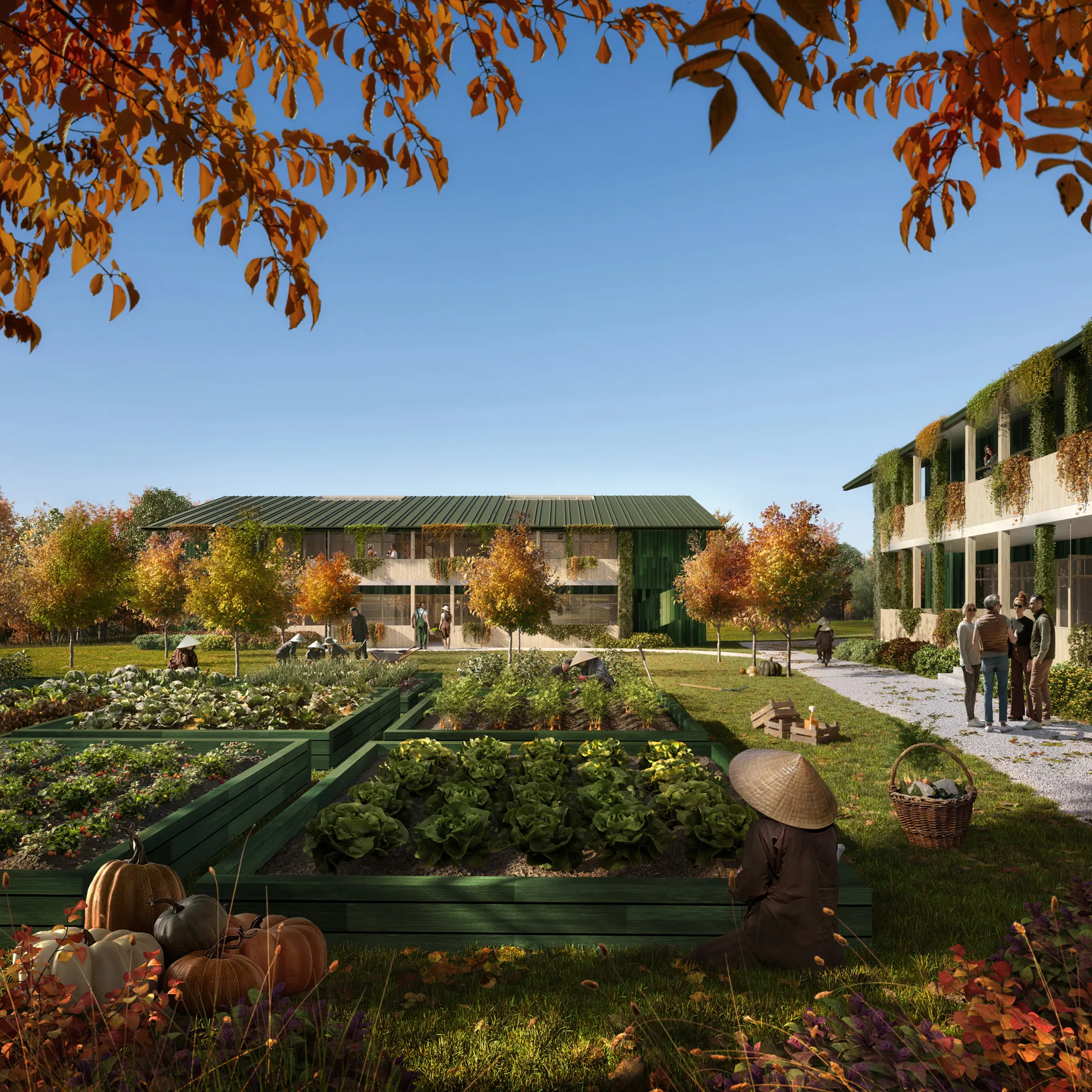
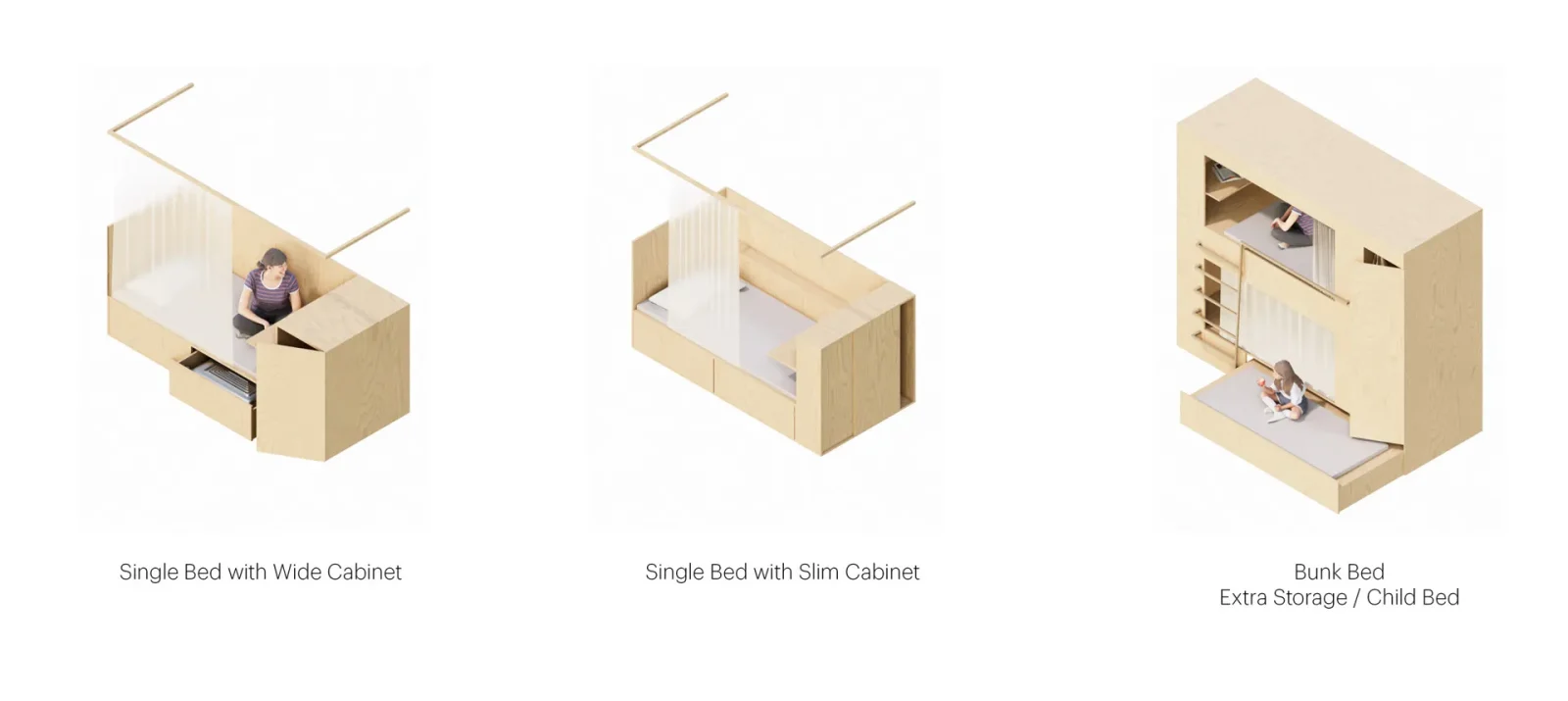
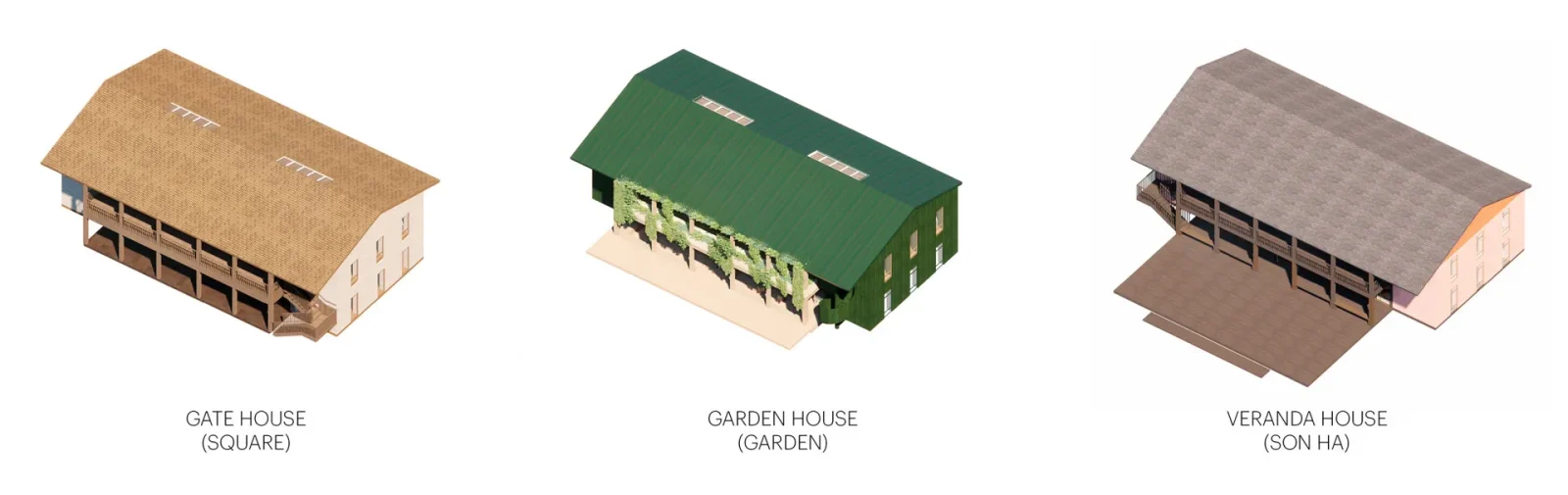
The new nunnery located at Loubès-Bernac will house 76 monastics and aspirants and is built from a prefabricated timber system integrated with straw insulation. This modular construction technique also utilizes circular economy principles, aligning with efficient and low-impact construction. To address the daily visitors’ traffic, MVRDV designed four communal guest houses arranged across two stories, featuring rooms centered around shared living areas proportioned for Dharma circles.
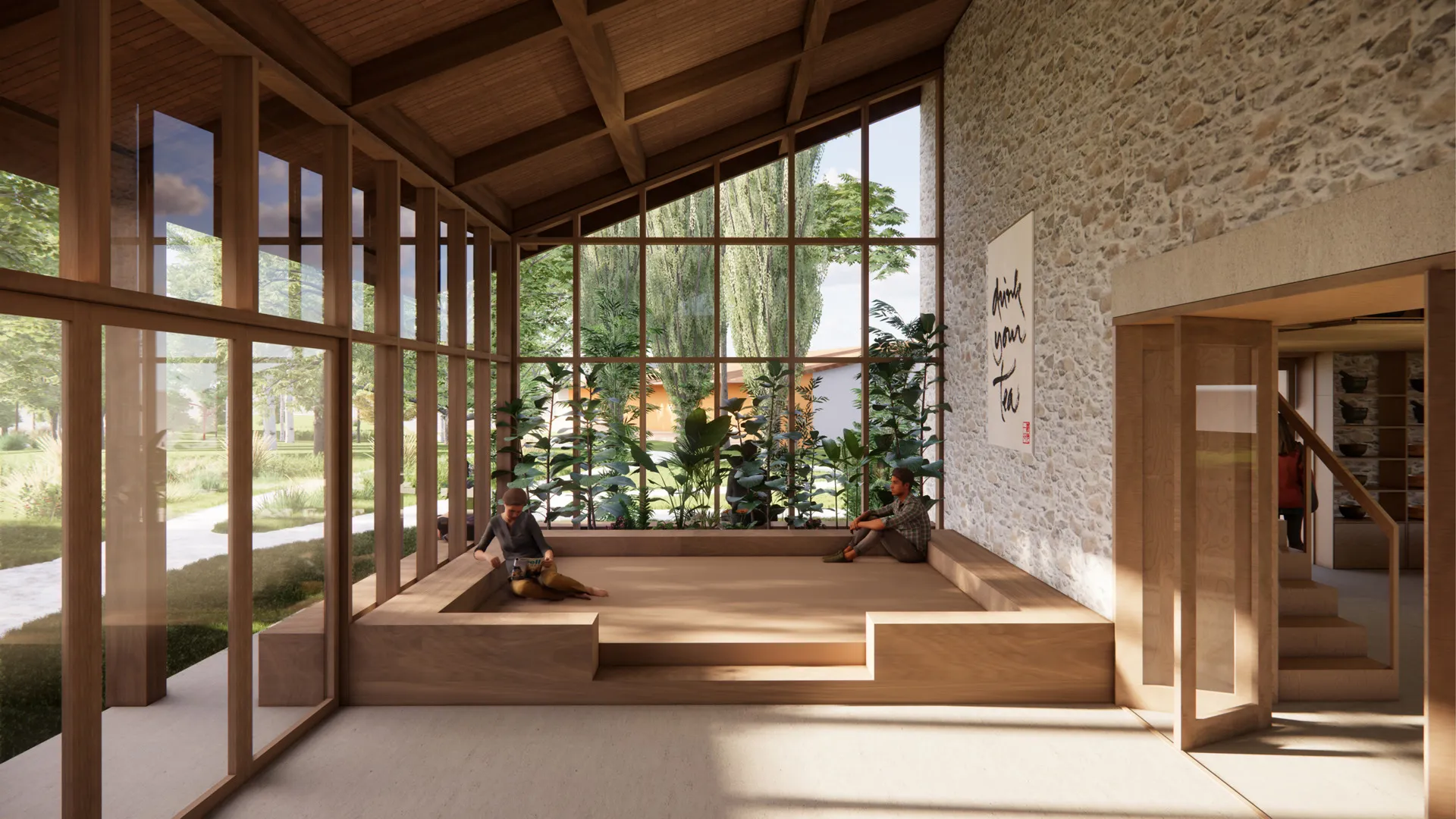
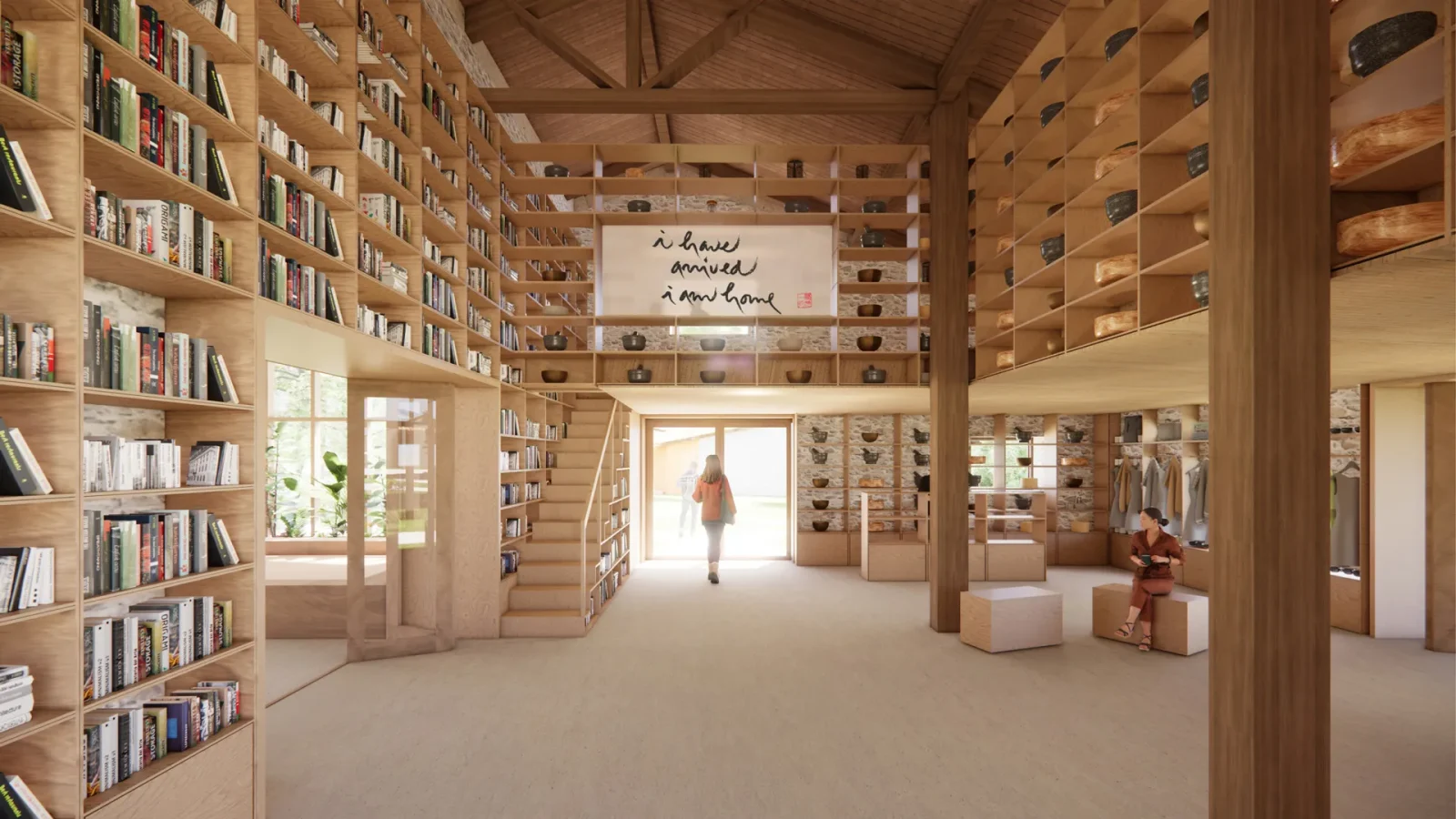
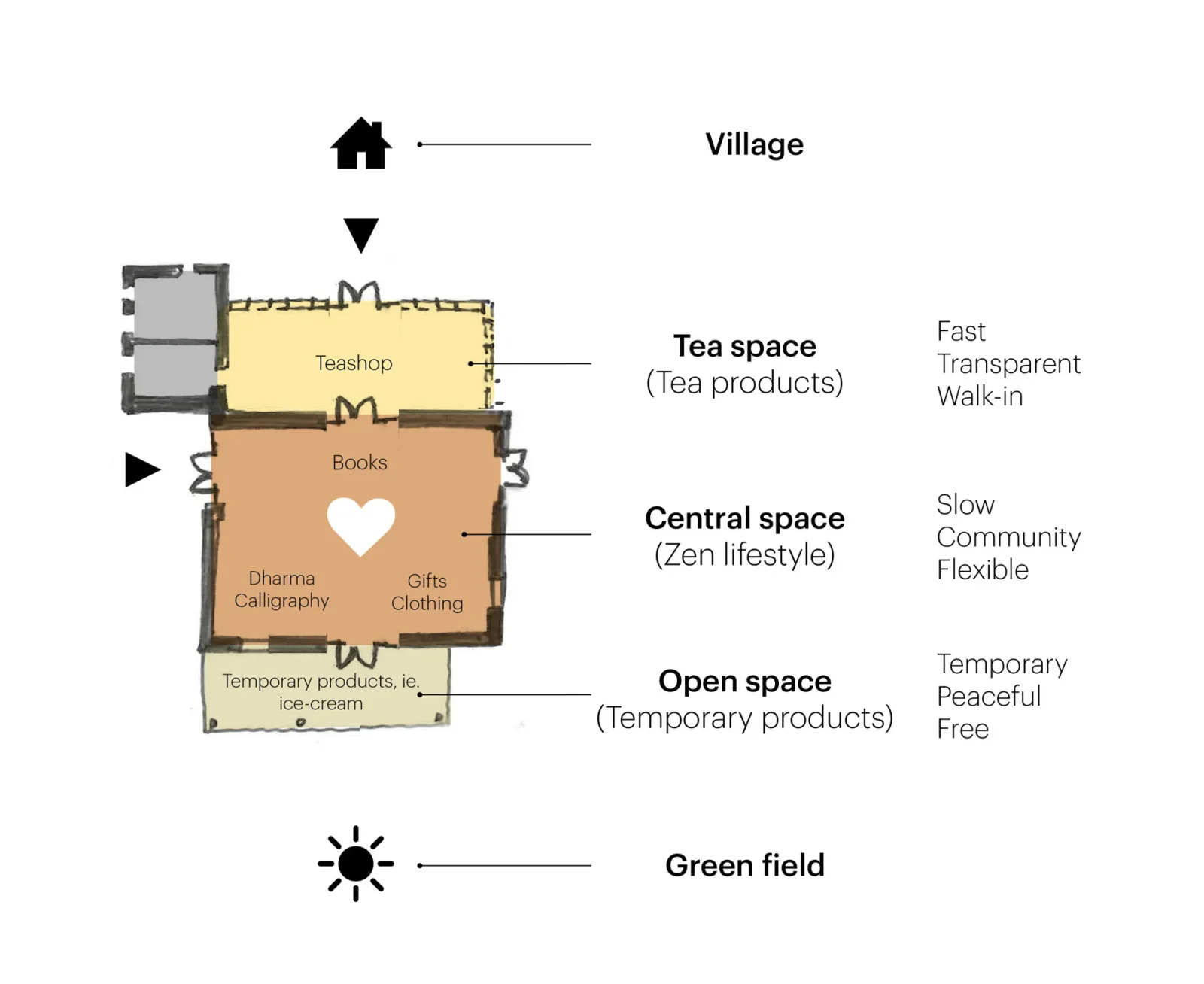
The intentional creation of four smaller, distinct guest houses, rather than a single large structure, preserves the scale of the rural landscape and avoids the institutional feeling of monolithic retreat centers. Alongside the new builds, MVRDV is renovating the existing bookshop. The design solution addresses the previously cramped and disorganized space by introducing a simple, modular wooden shelving system.
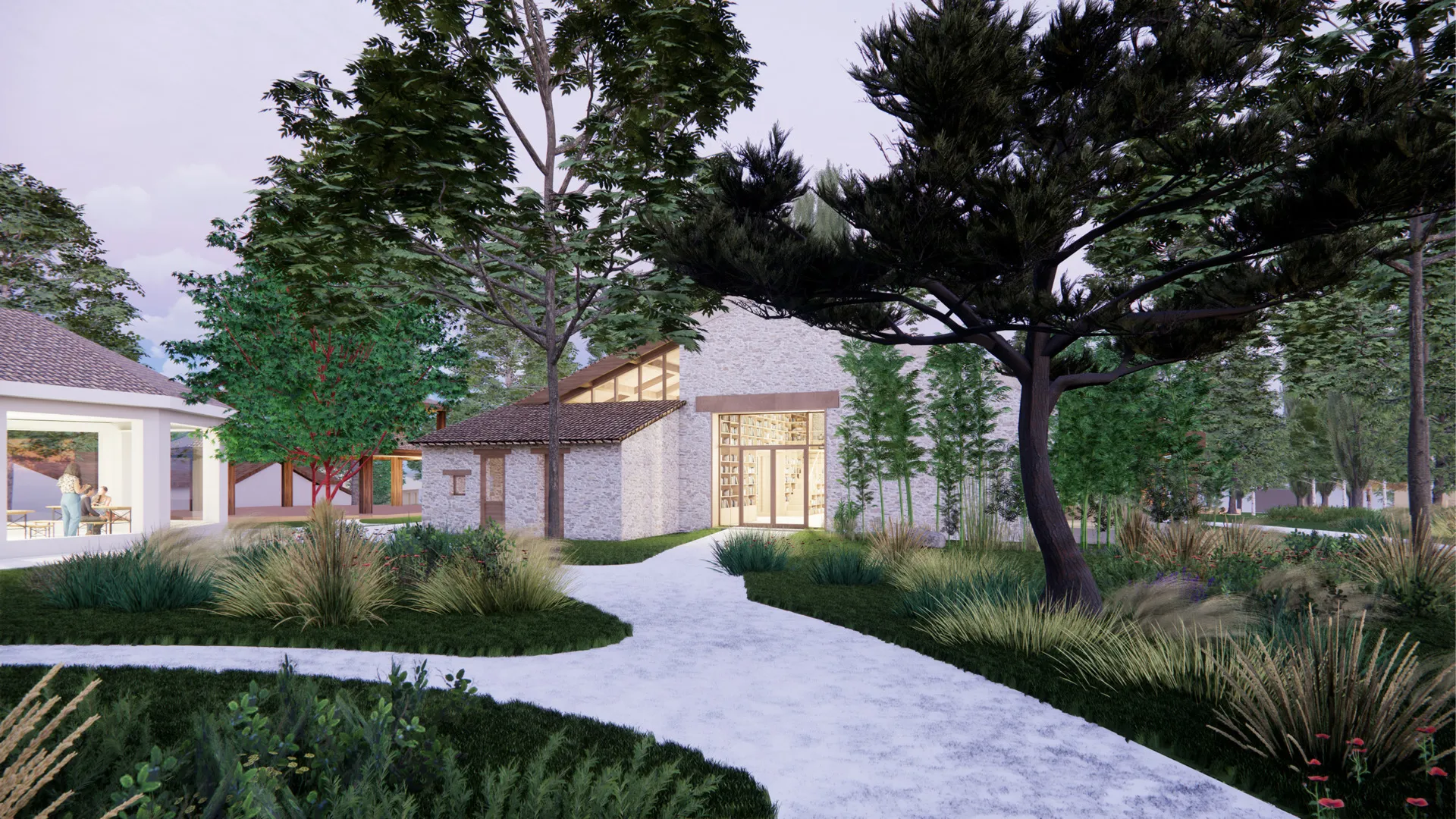
The key feature of the master plan is the drastic reorganization of vehicle routes to shift traffic away from communal areas, creating dedicated car-free villages within both hamlets. It ensures that pathways are primarily used for walking practices intrinsically linked to meditation (Kinh Hành), minimizing interruptions and improving the experience of arrival. The design team created a specific habitat for birds to help curb the high mosquito population, a bio-integrated pest management strategy that restores ecology and enhances the monastery ethos.
Plum Village Buddhist Monastery Project Details
Architect: MVRDV
Location: Dordogne, France
Visualizations: © MVRDV, REDVERTEX
Consultants: OTEIS, VPEAS, and Emacoustic.
Explore Courses
.jpg "Ondrej Chybik - Rethinking Architecture")