

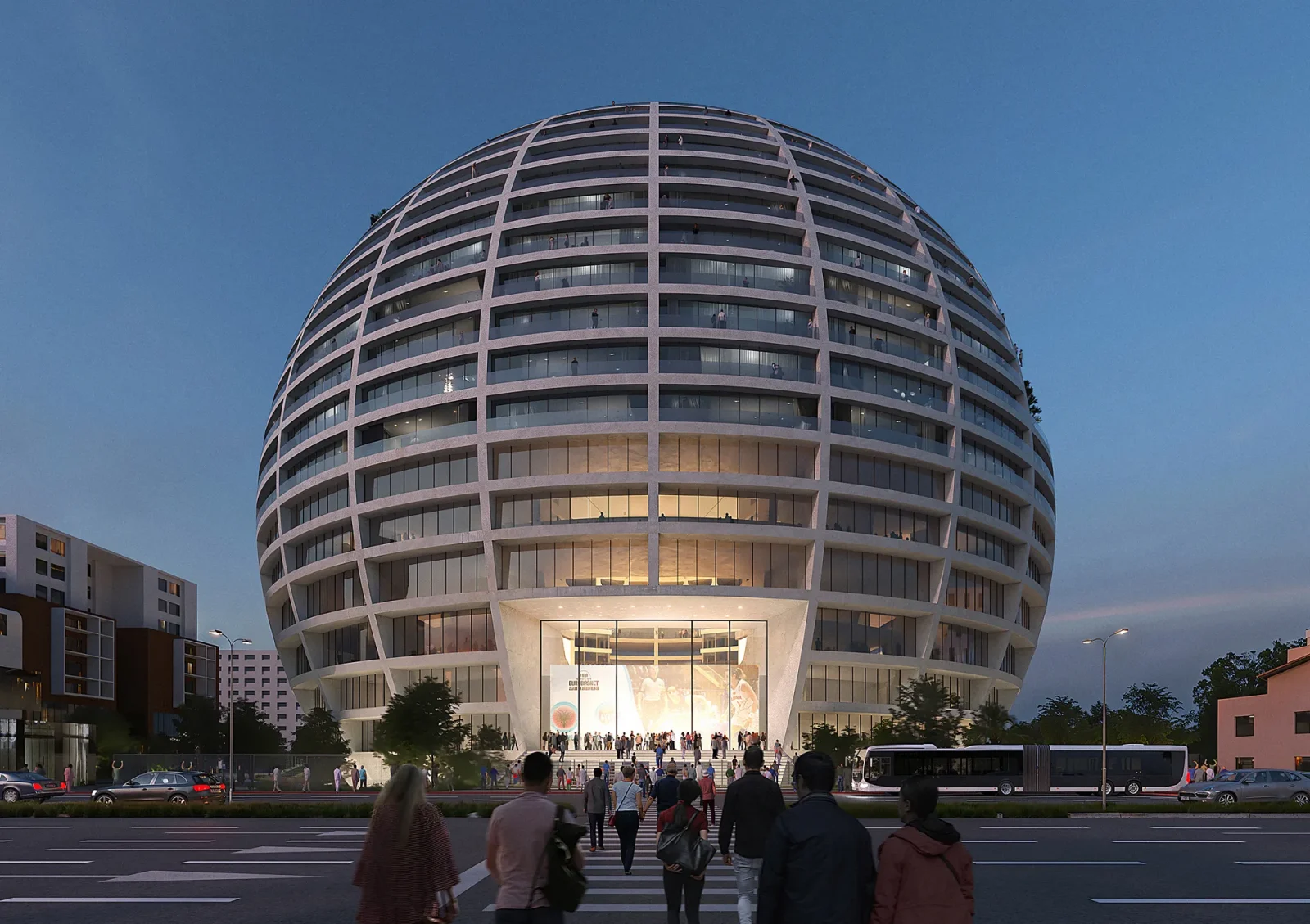
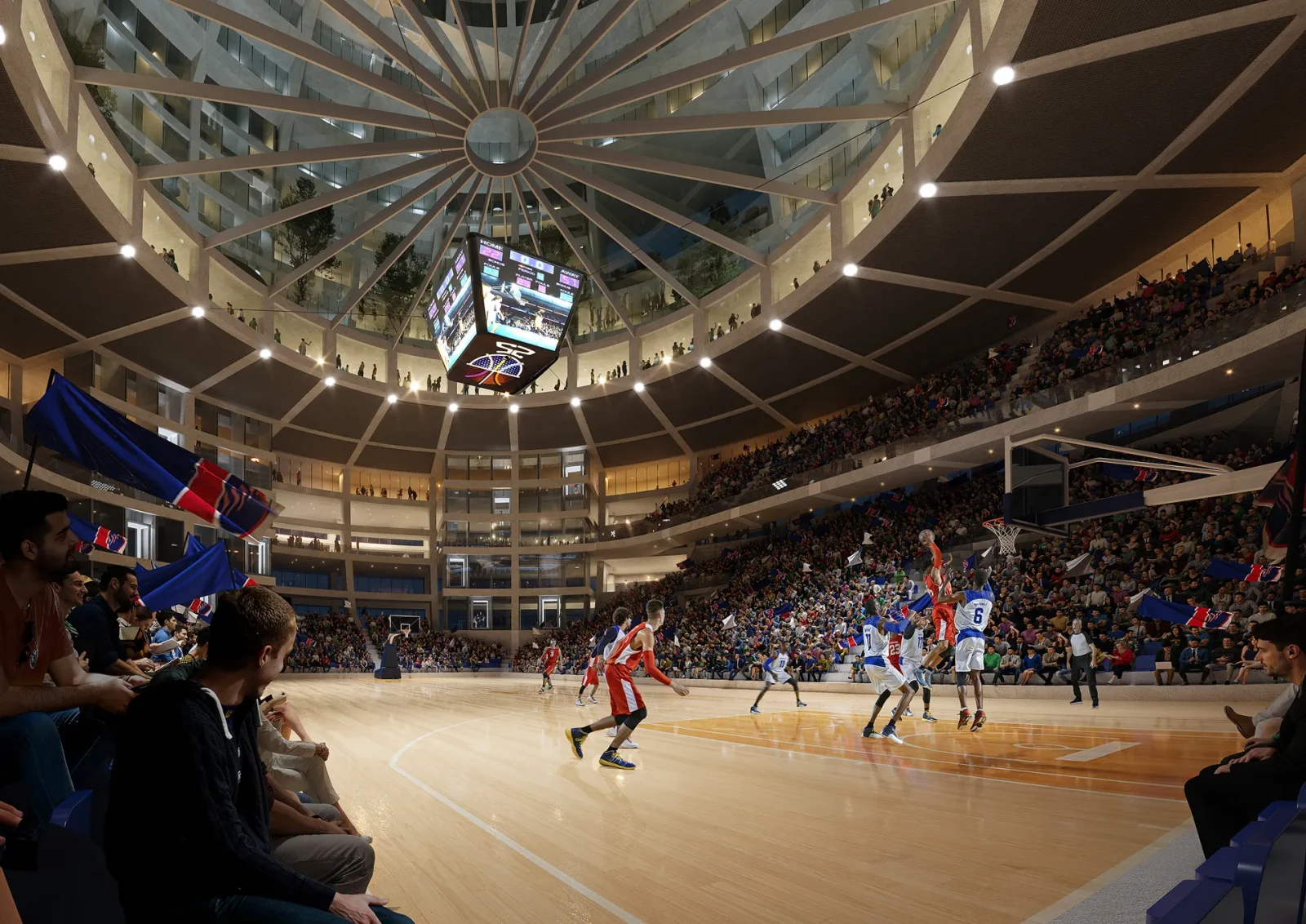
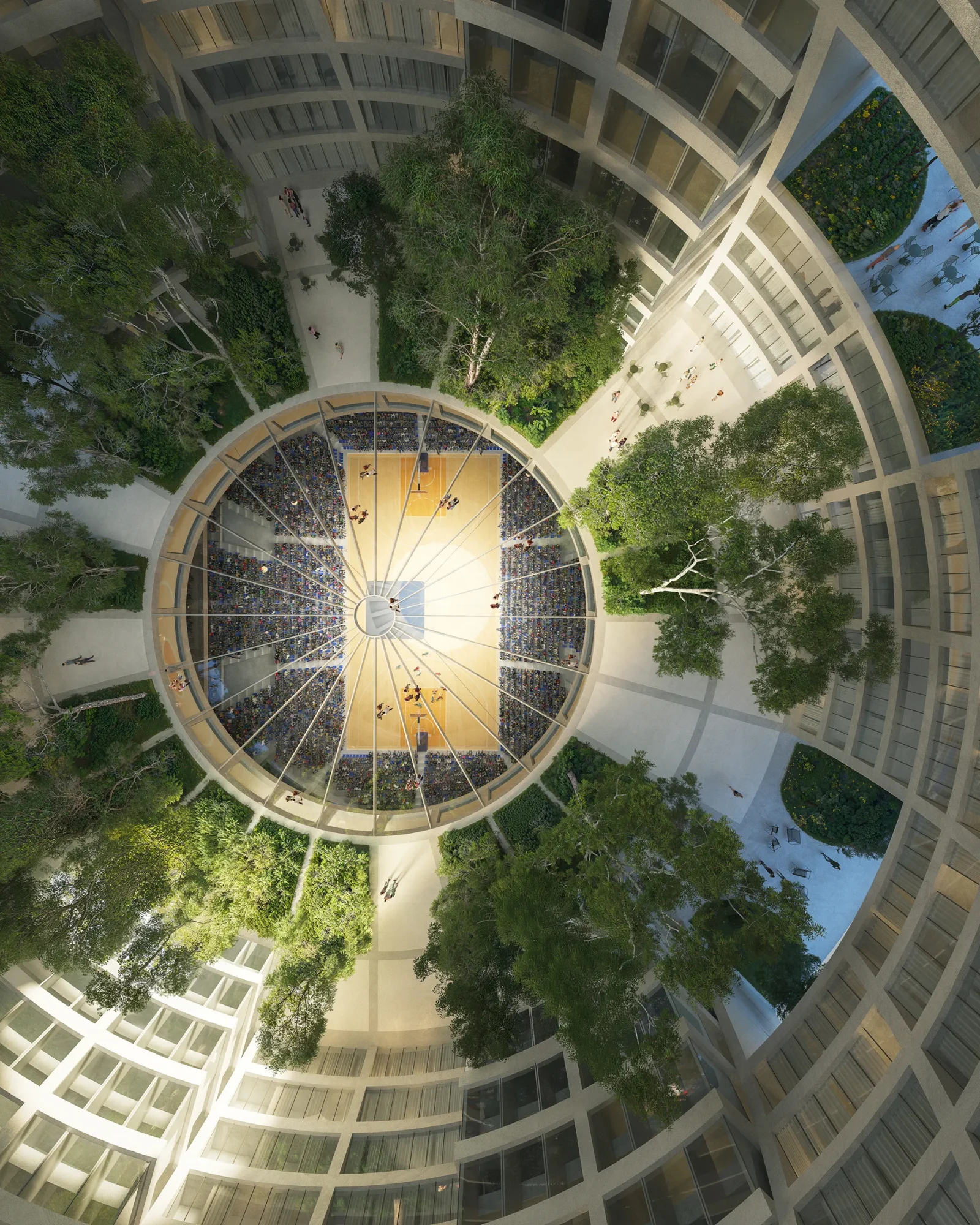
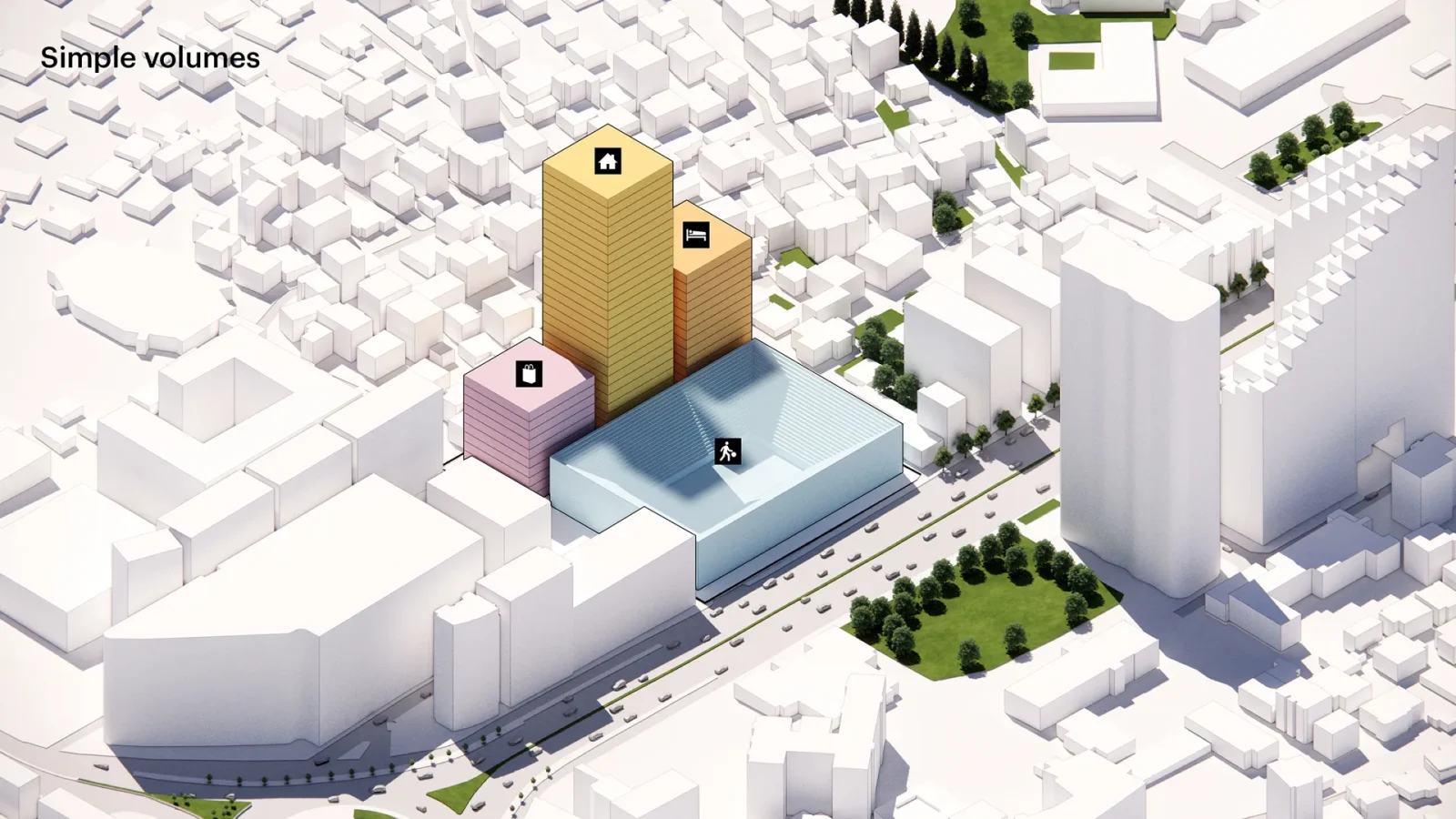
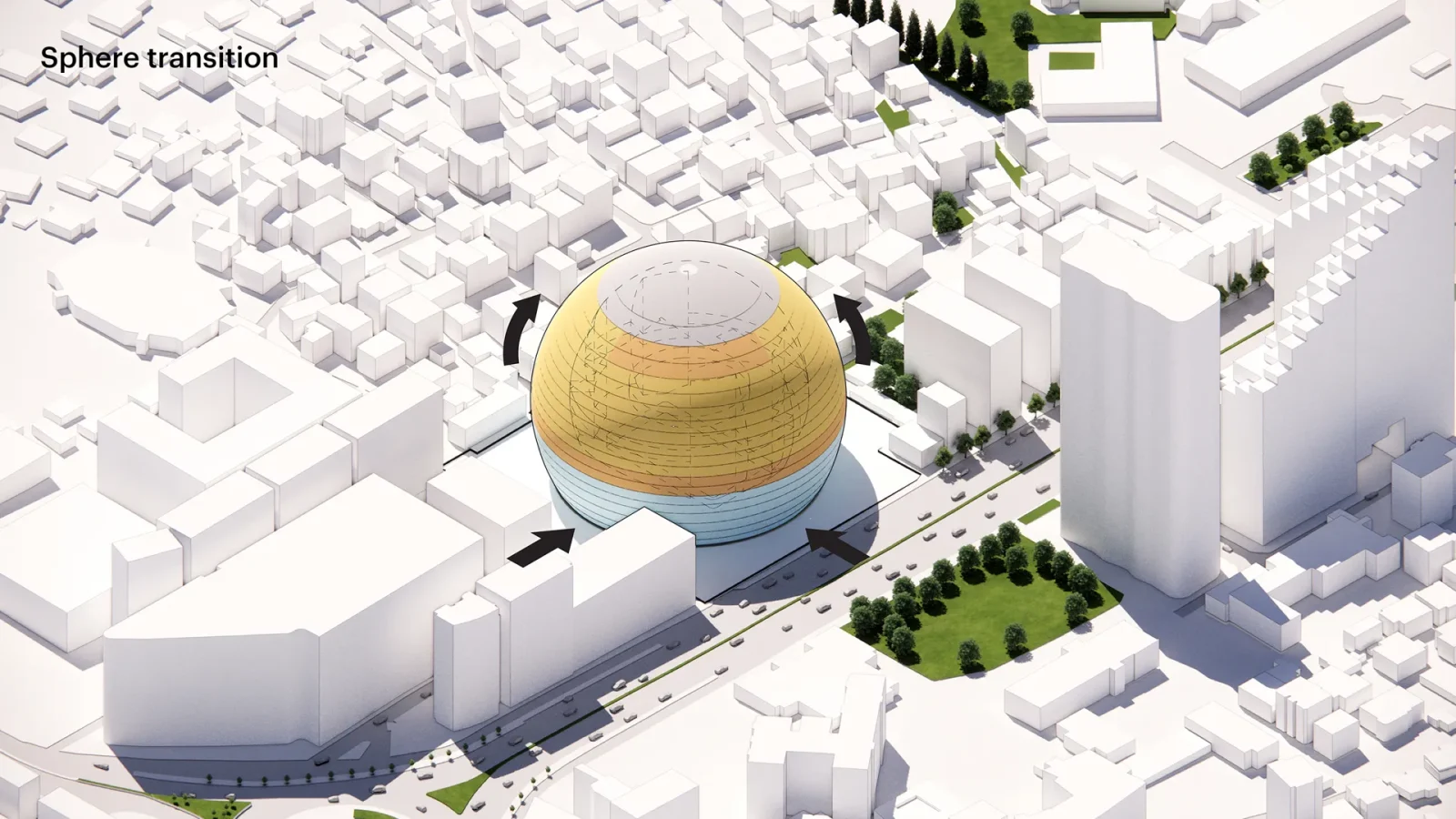
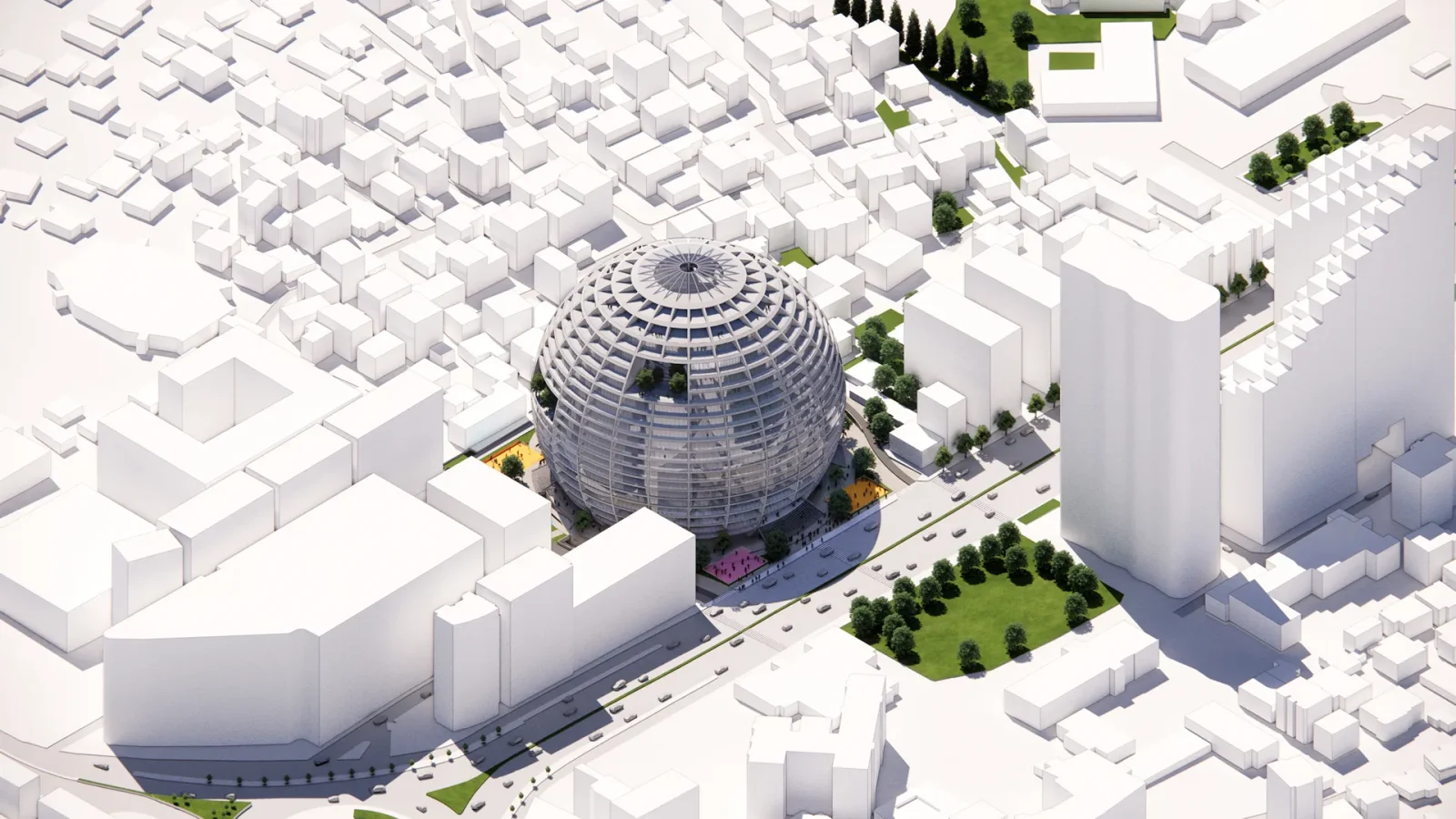
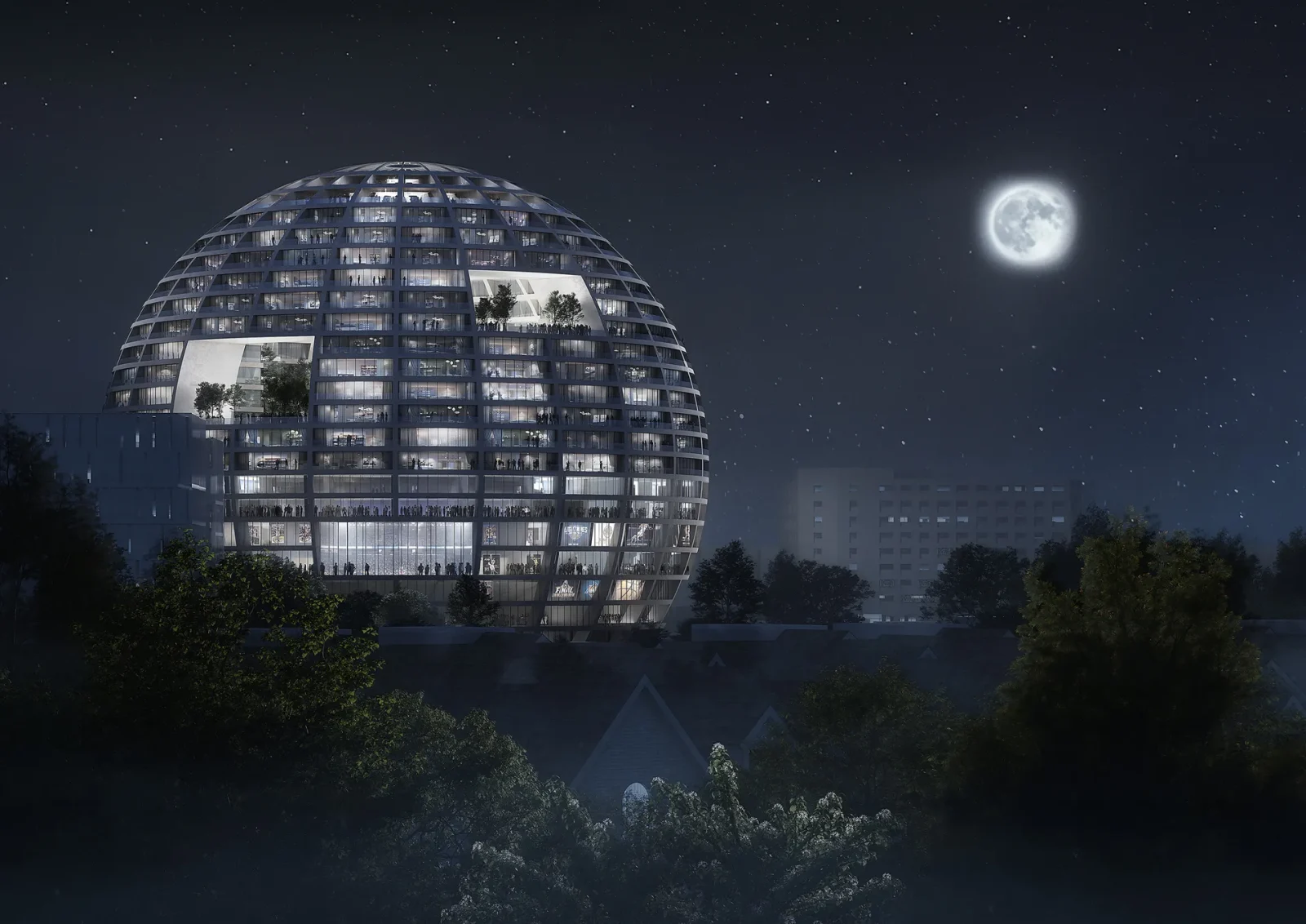
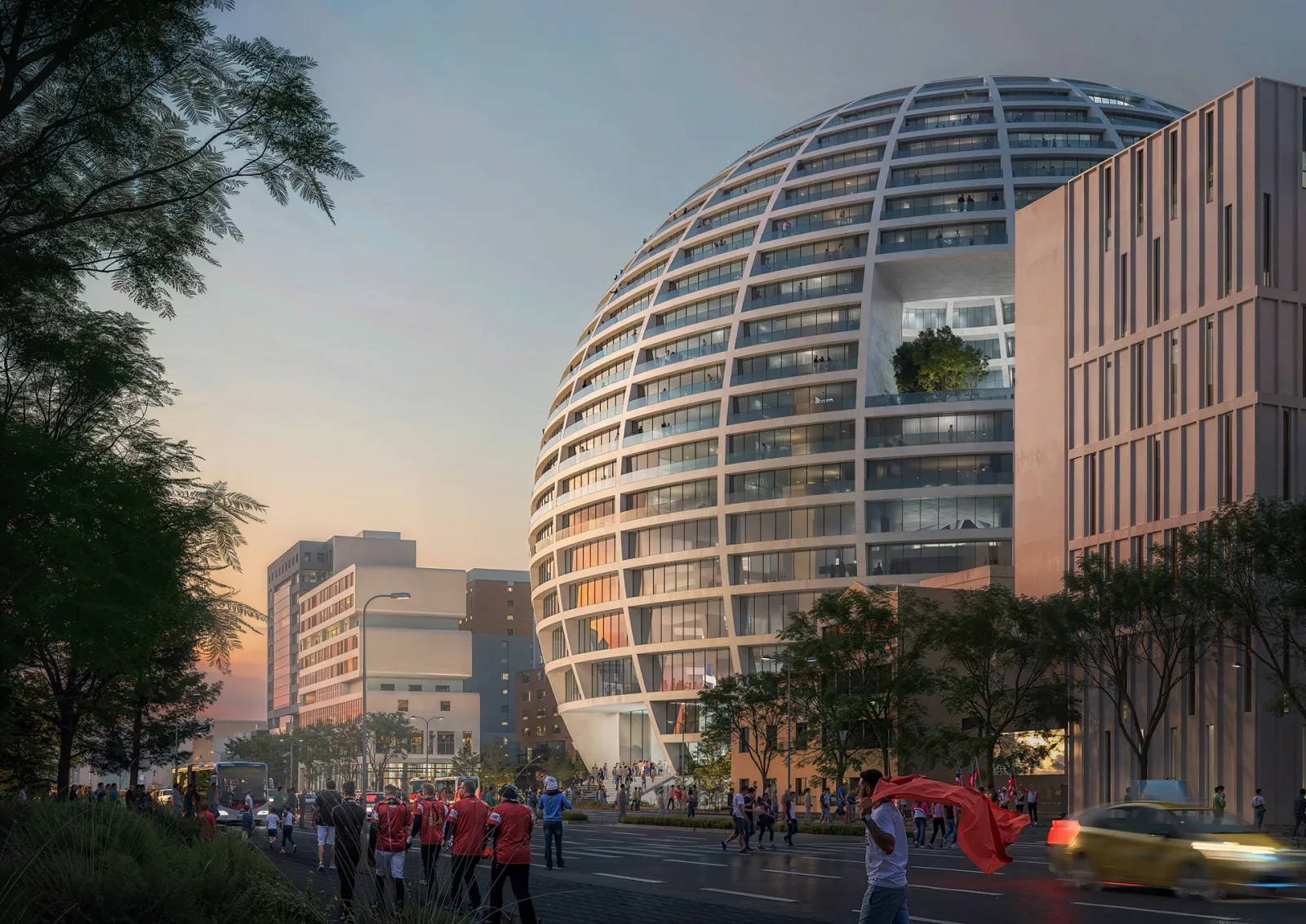
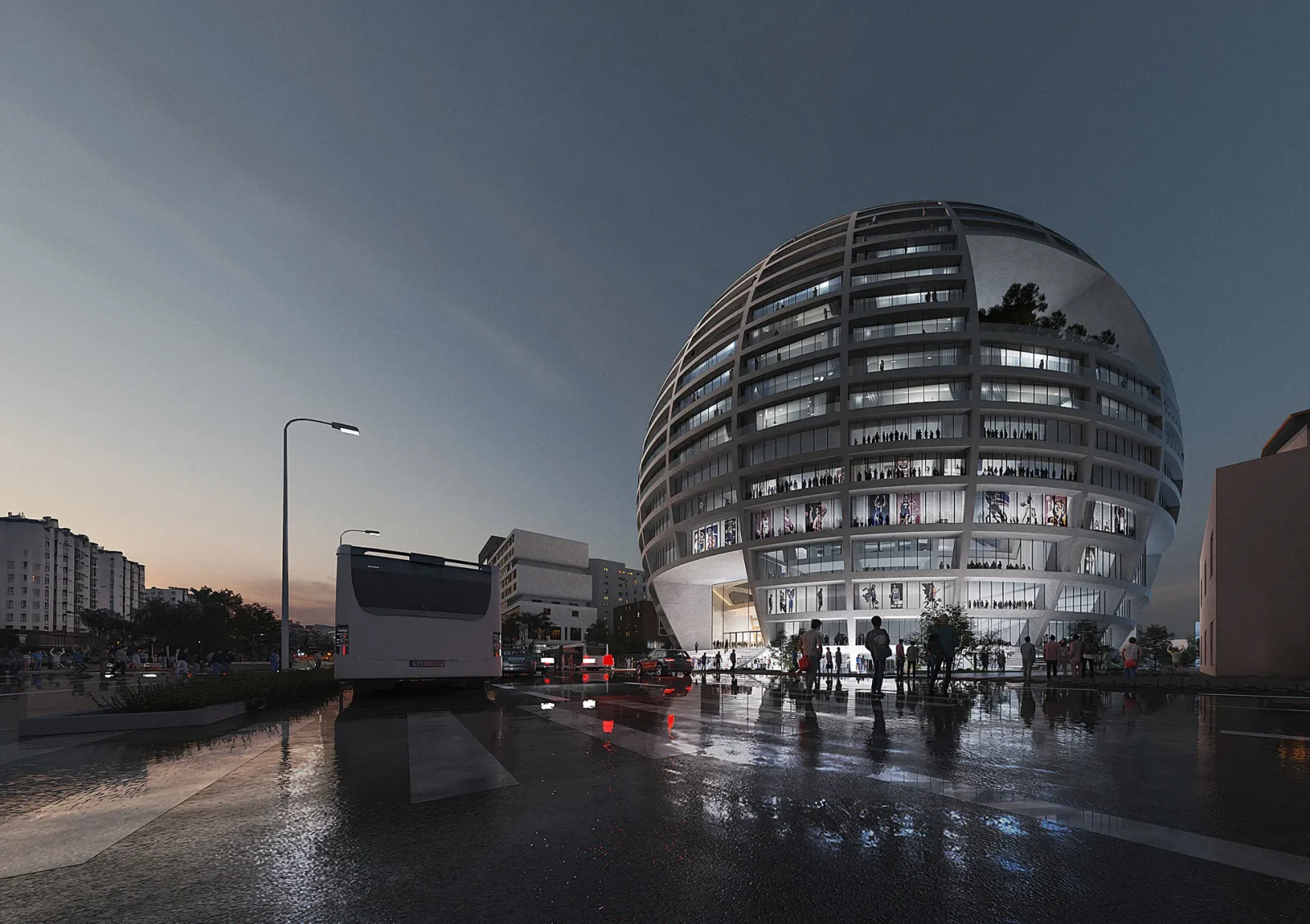
MVRDV’s proposed Grand Ballroom has won an international competition to redevelop the site of Tirana’s Asllan Rusi Sports Palace. The project’s spatial ambitions serve as a vessel for dialogue, aspiration, and transformation, inviting the jury to experience not just a space but an idea that redefines the city’s skyline. MVRDV’s design for the Grand Ballroom features a monumental sphere approximately 100 meters in diameter, accommodating diverse programs on a compact urban site.
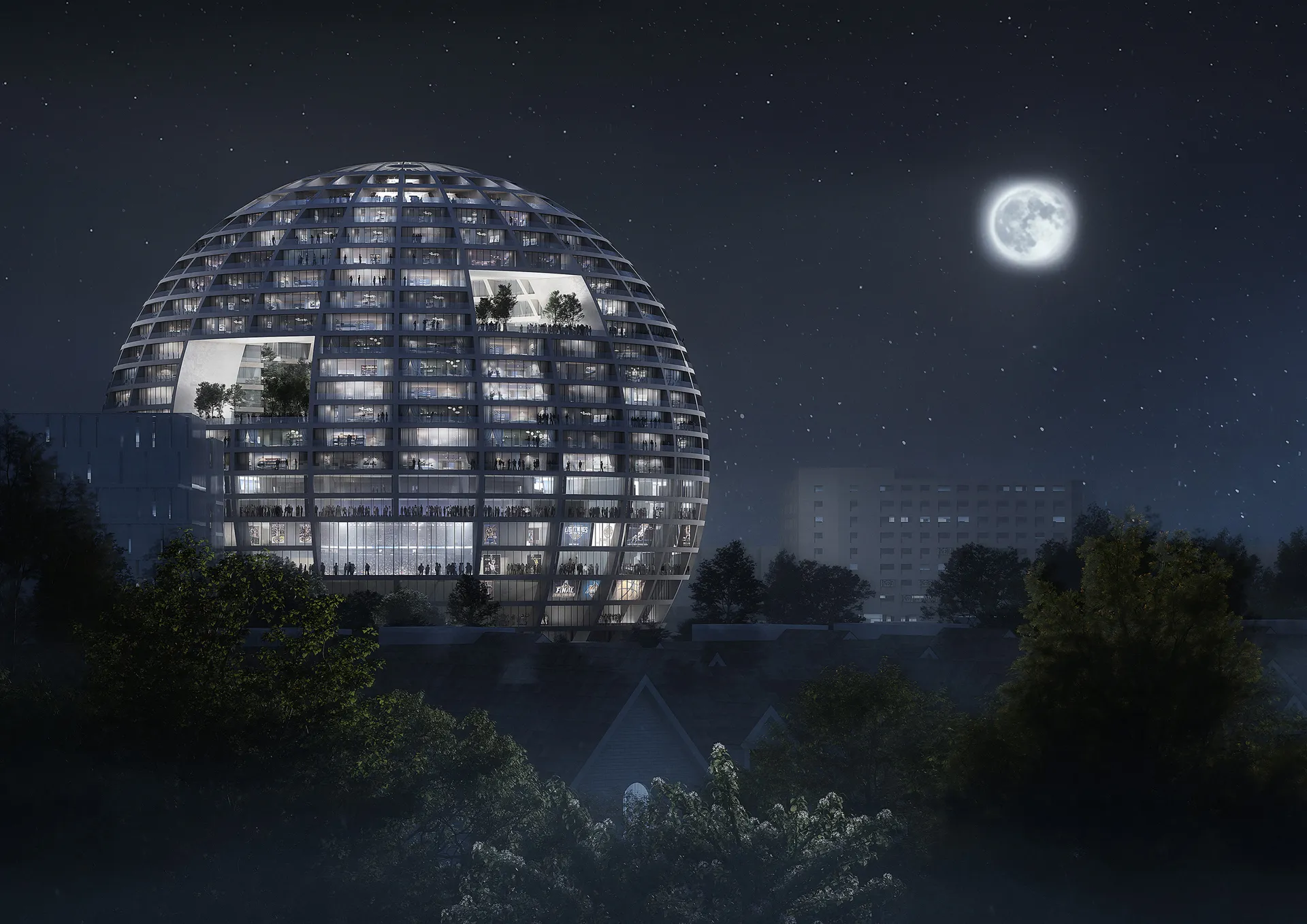
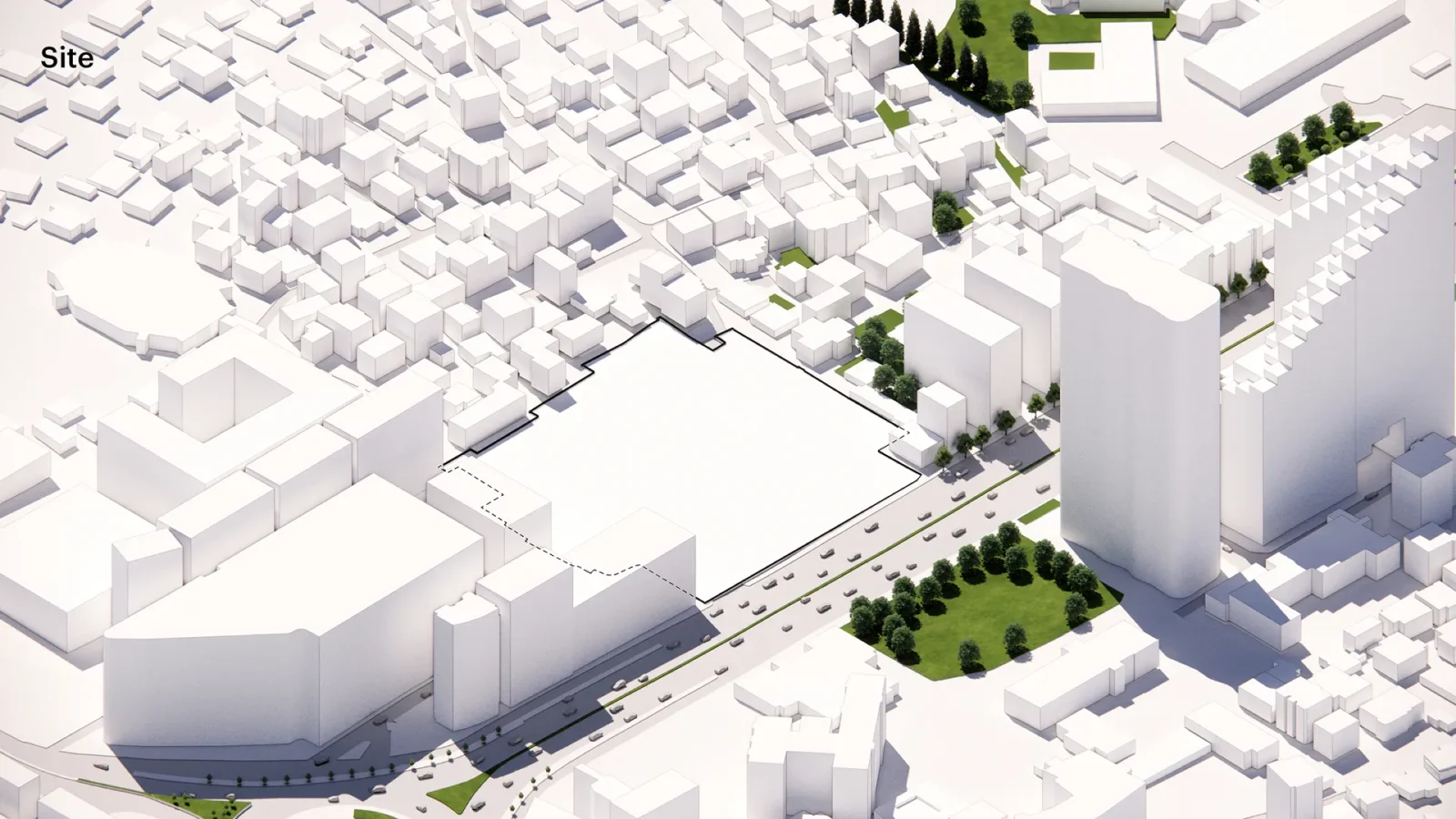
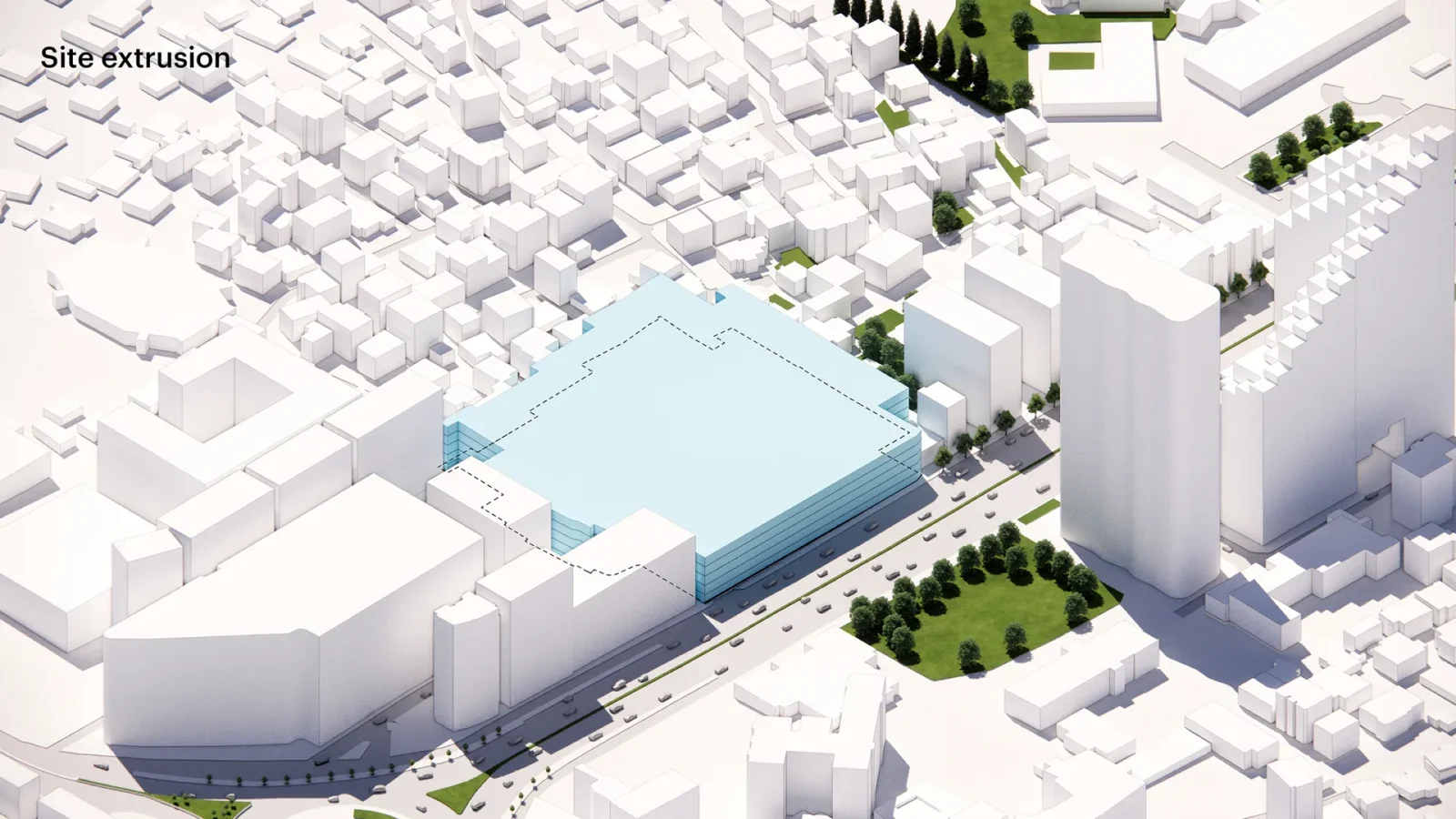
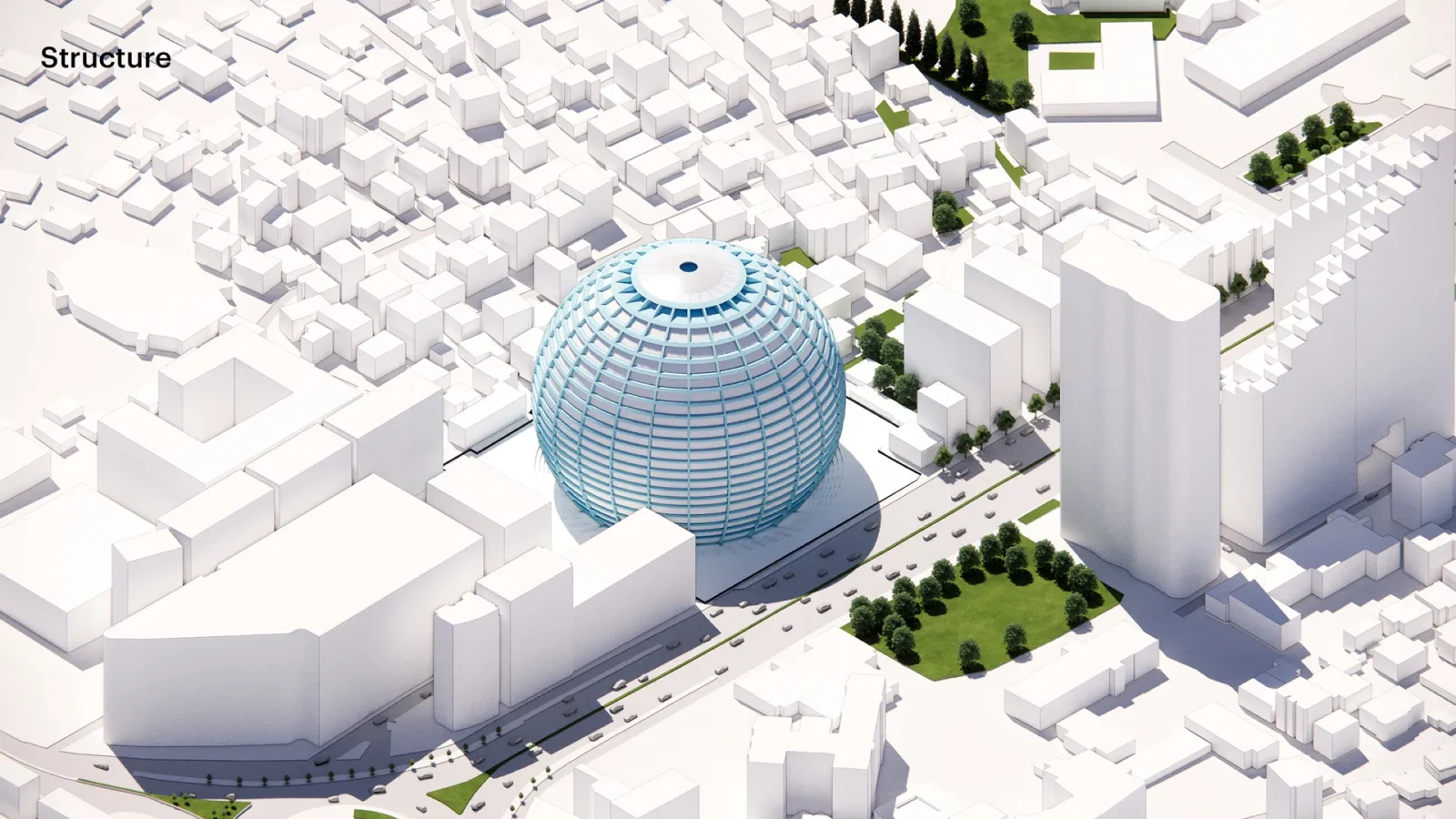
Strategically located on the main road, the project connects to the city center, establishing the new structure as a prominent civic landmark. The winning design showcases an innovative approach that integrates green spaces and public areas linked to central Tirana. The building is a sphere featuring a lattice shell and urban windows that visually engage all sides of the city.
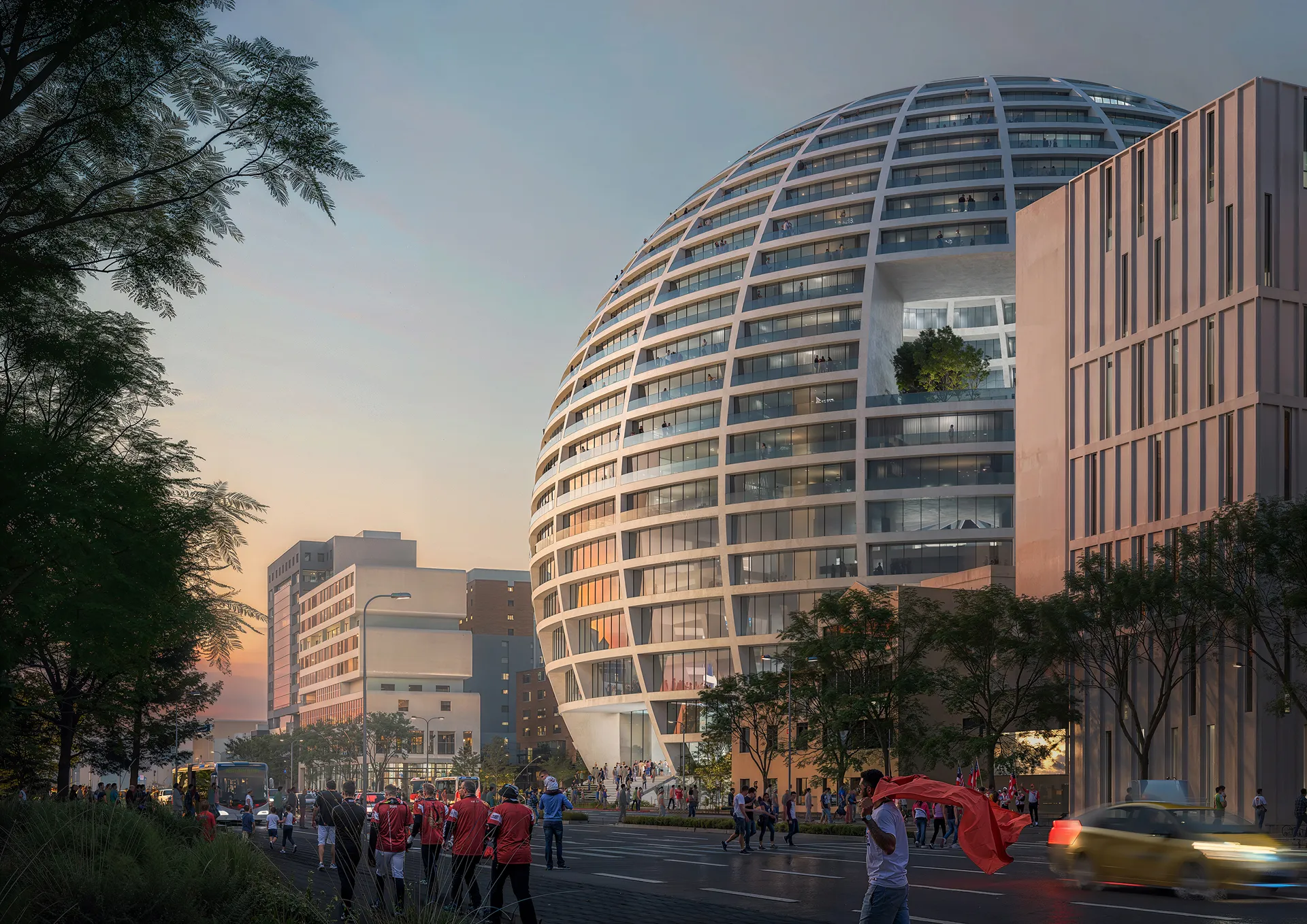
The geometry of the sphere represents MVRDV’s ongoing theoretical exploration of urban density, a theme frequently discussed in the firm’s publications. The choice of a symbolic, rounded surface ensures continuous, 360-degree interaction with the surroundings, fostering public participation and engagement.
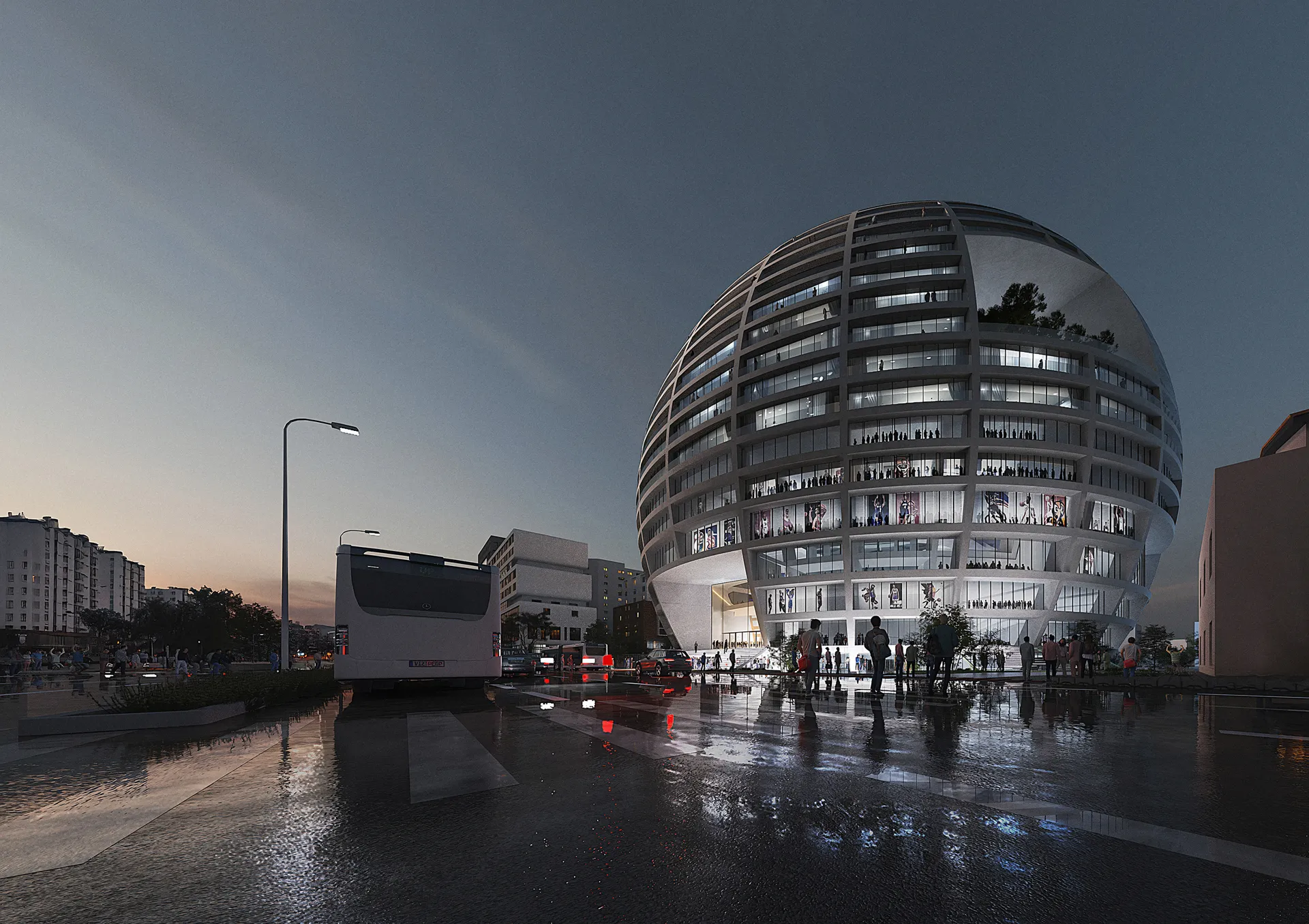
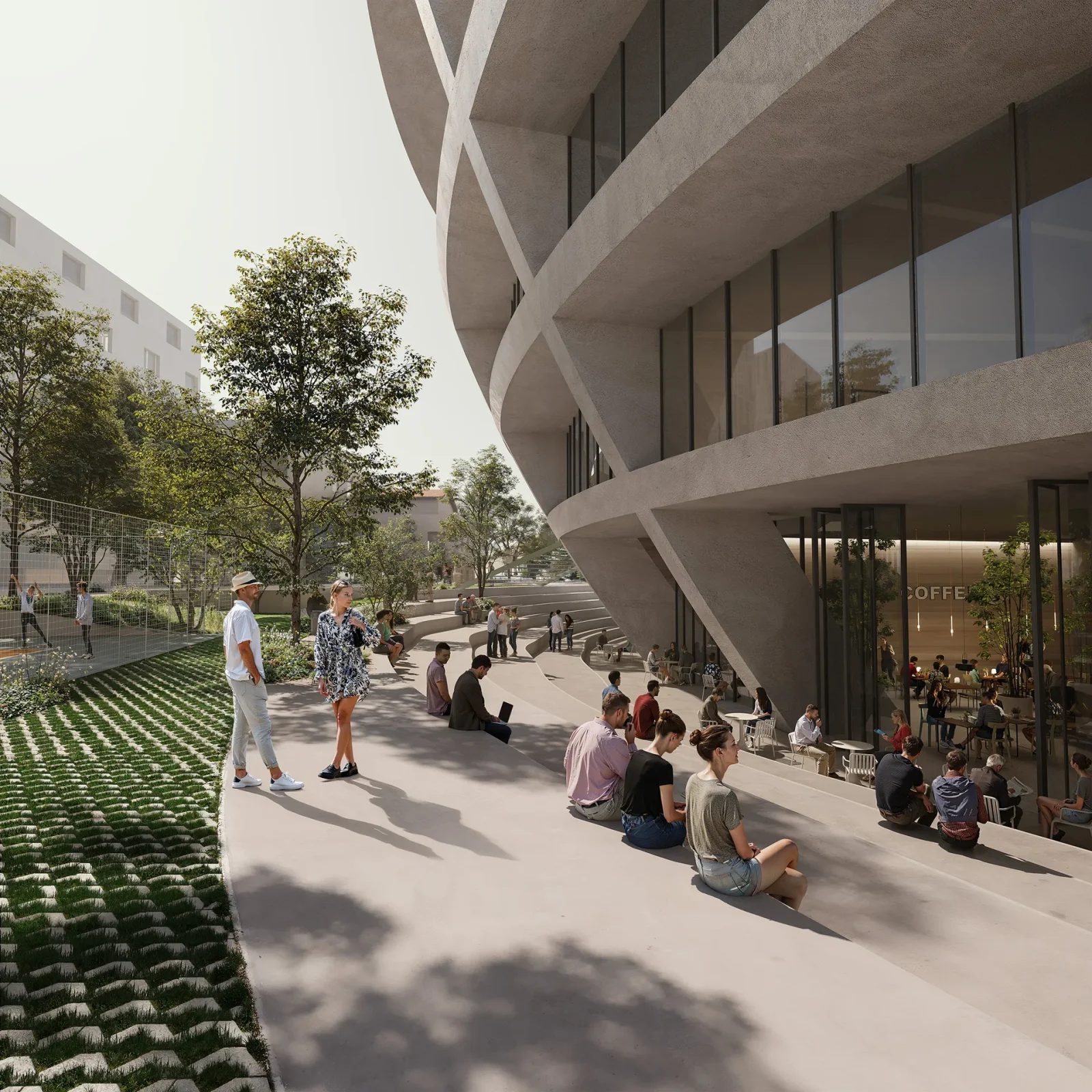
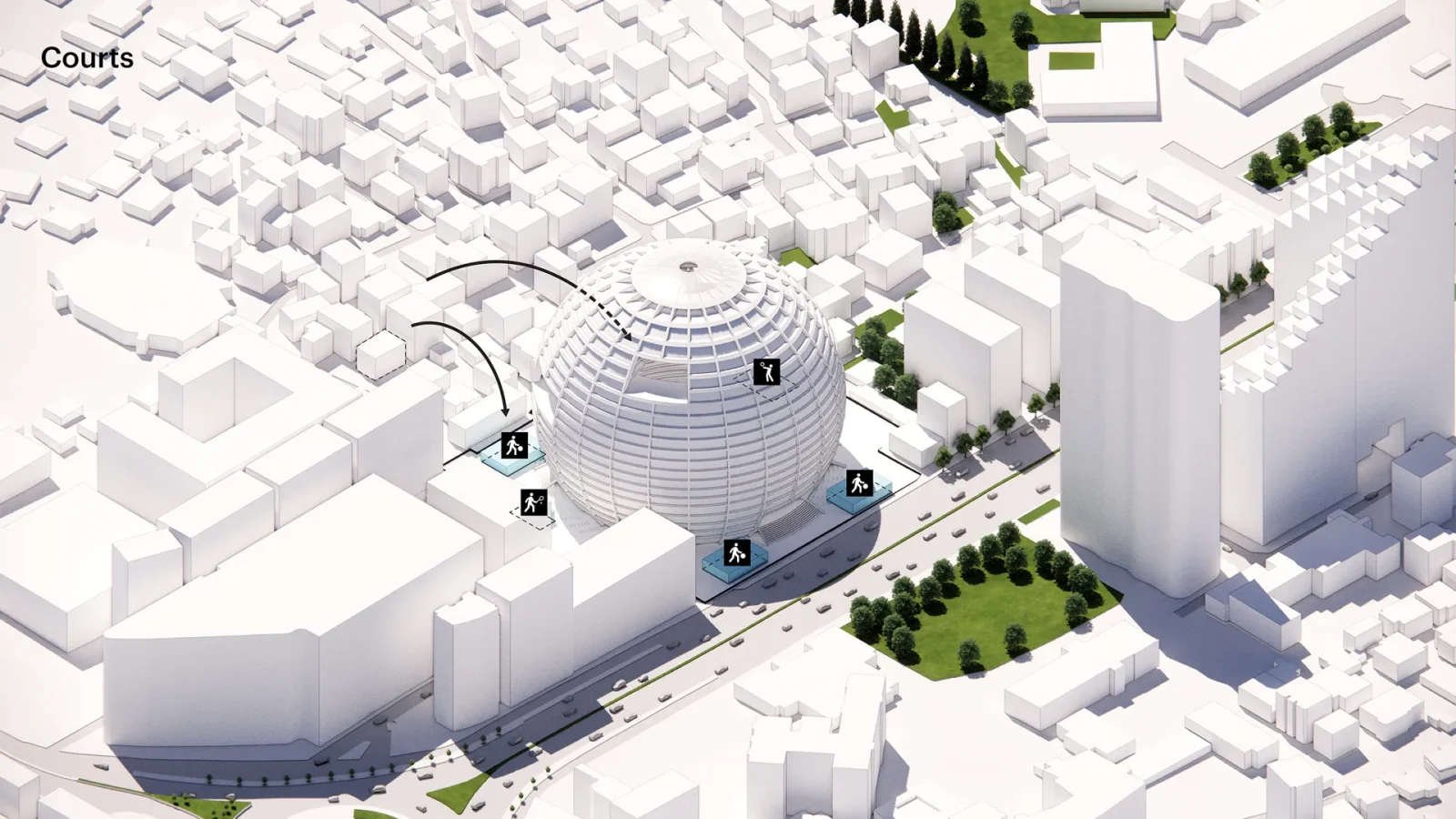
The architectural massing of the structure gently tapers inward at its base, creating negative voids that form public plazas and outdoor courts.
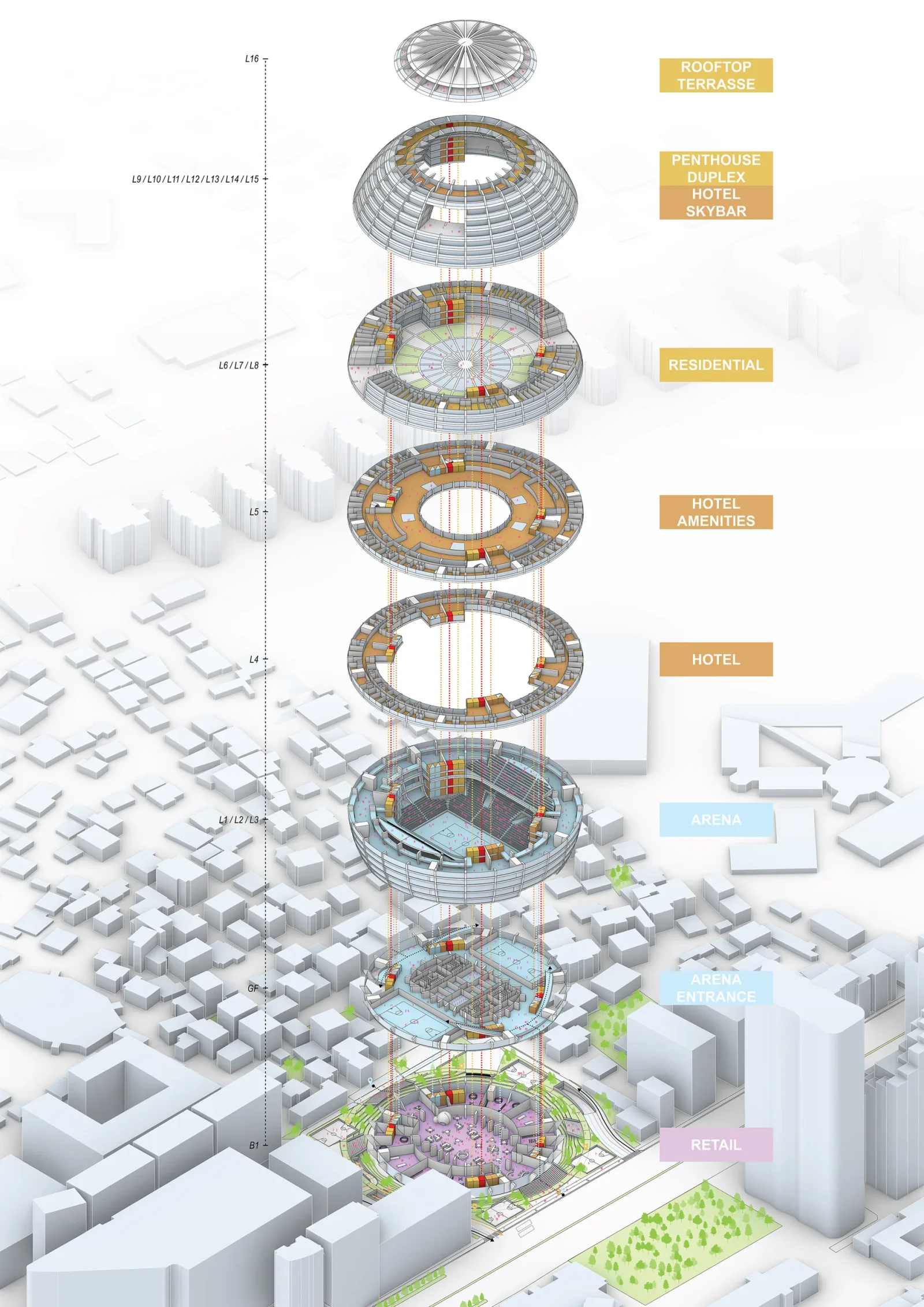
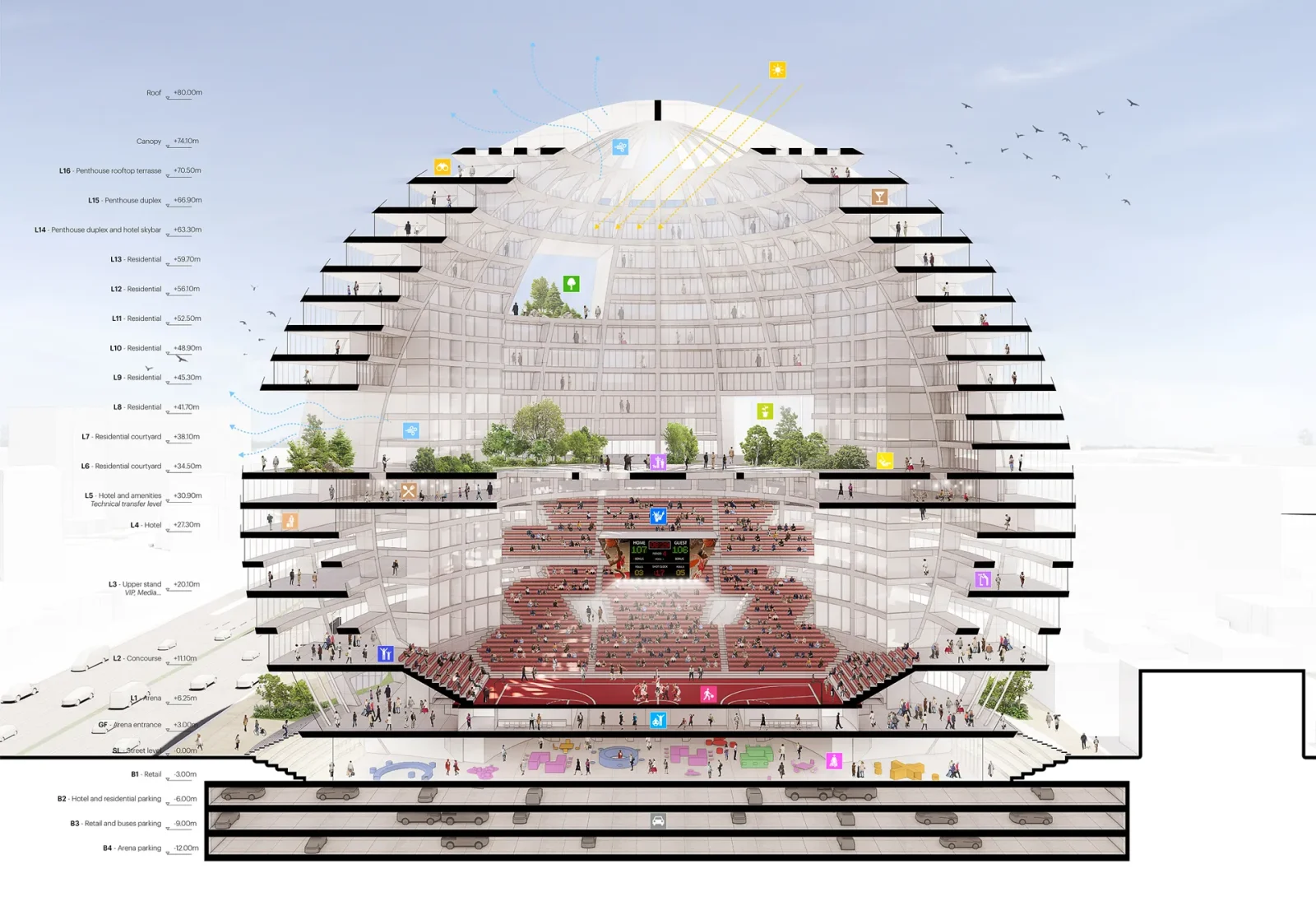
Conversely, the structure narrows again toward the top, shaping distinct spaces, including large terraces that overlook the Tirana skyline, culminating in duplex penthouses and a double-height sky bar. Designed for 6,000 spectators, the central arena bowl is flanked by two auxiliary training courts.
Living Within the Layers
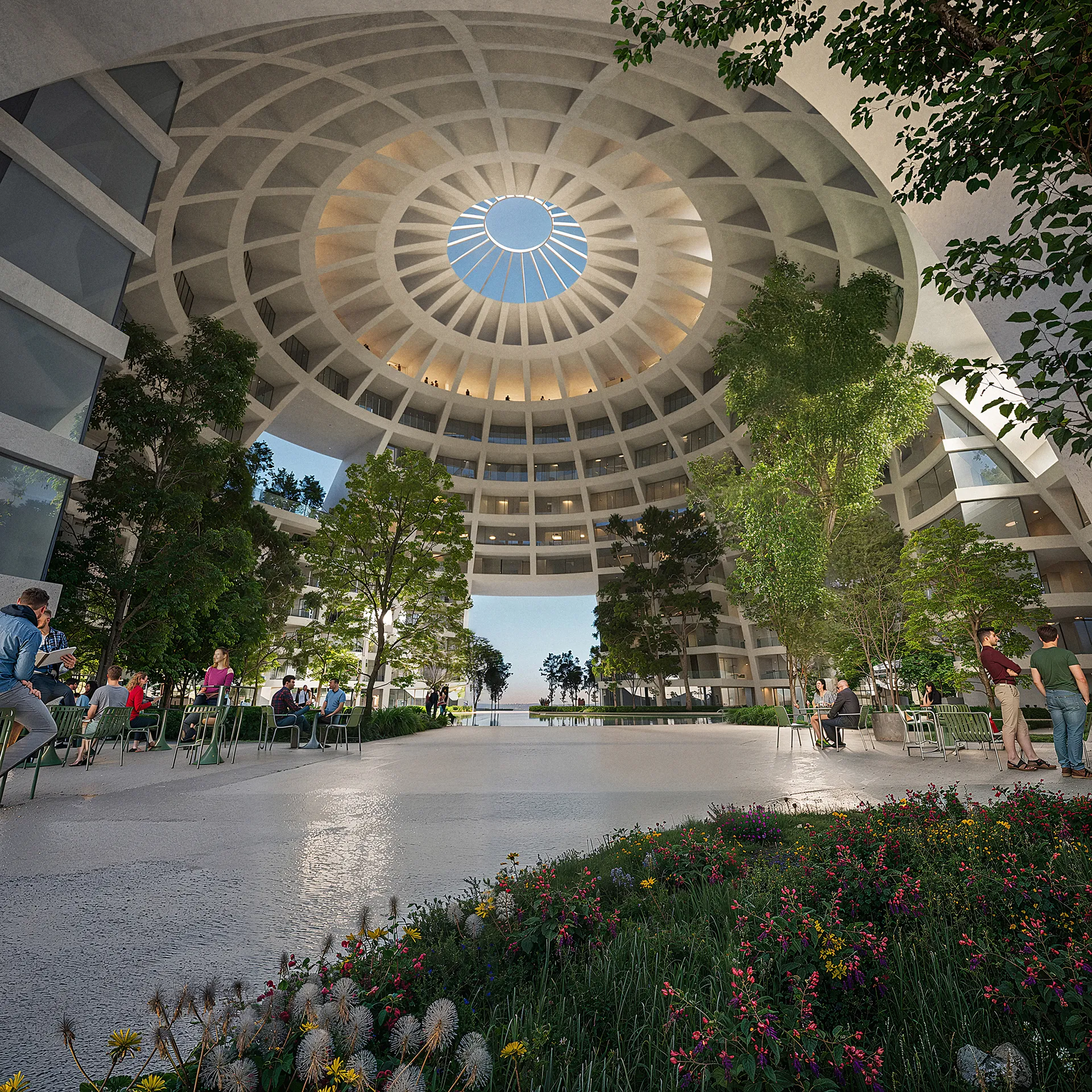
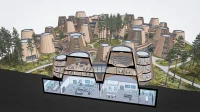
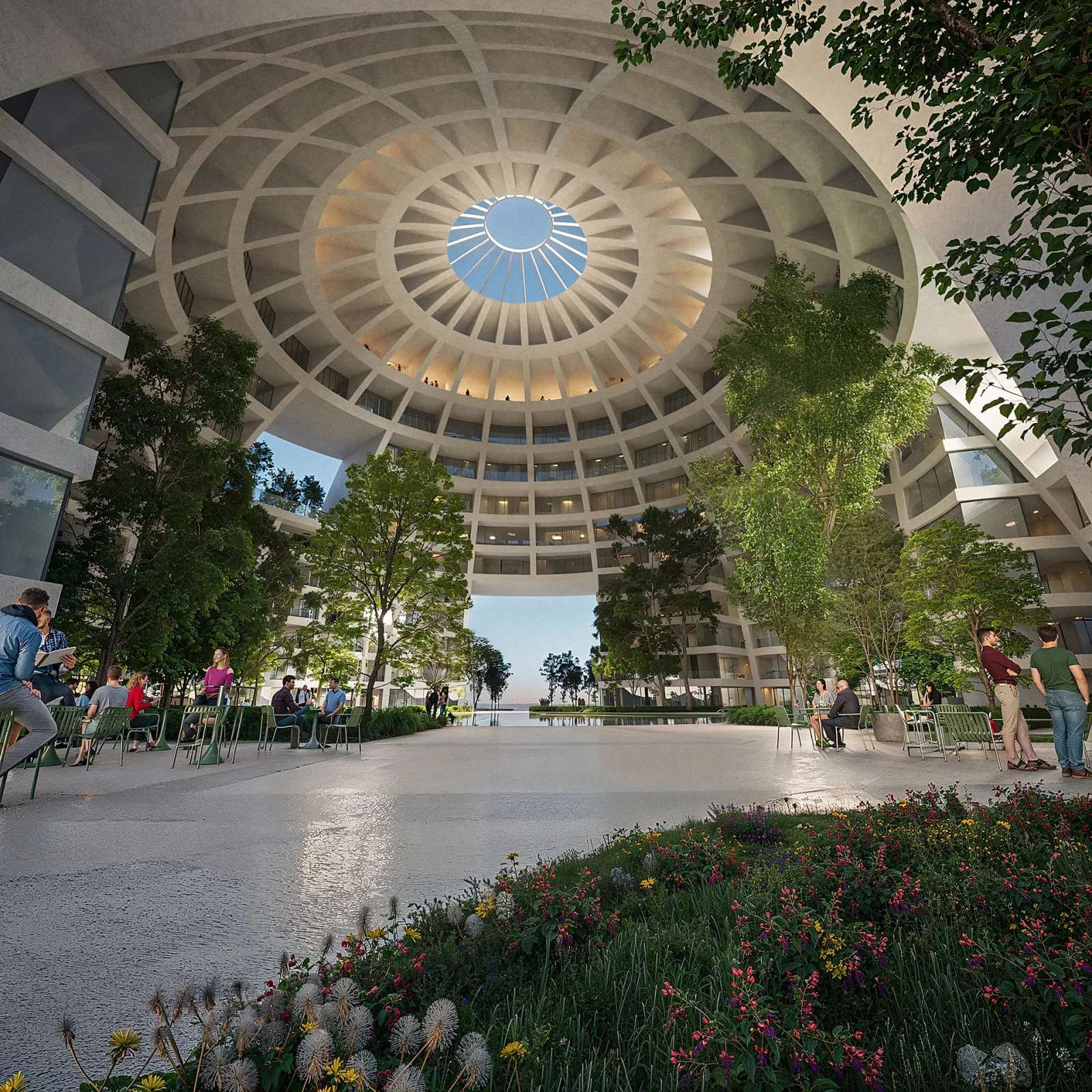
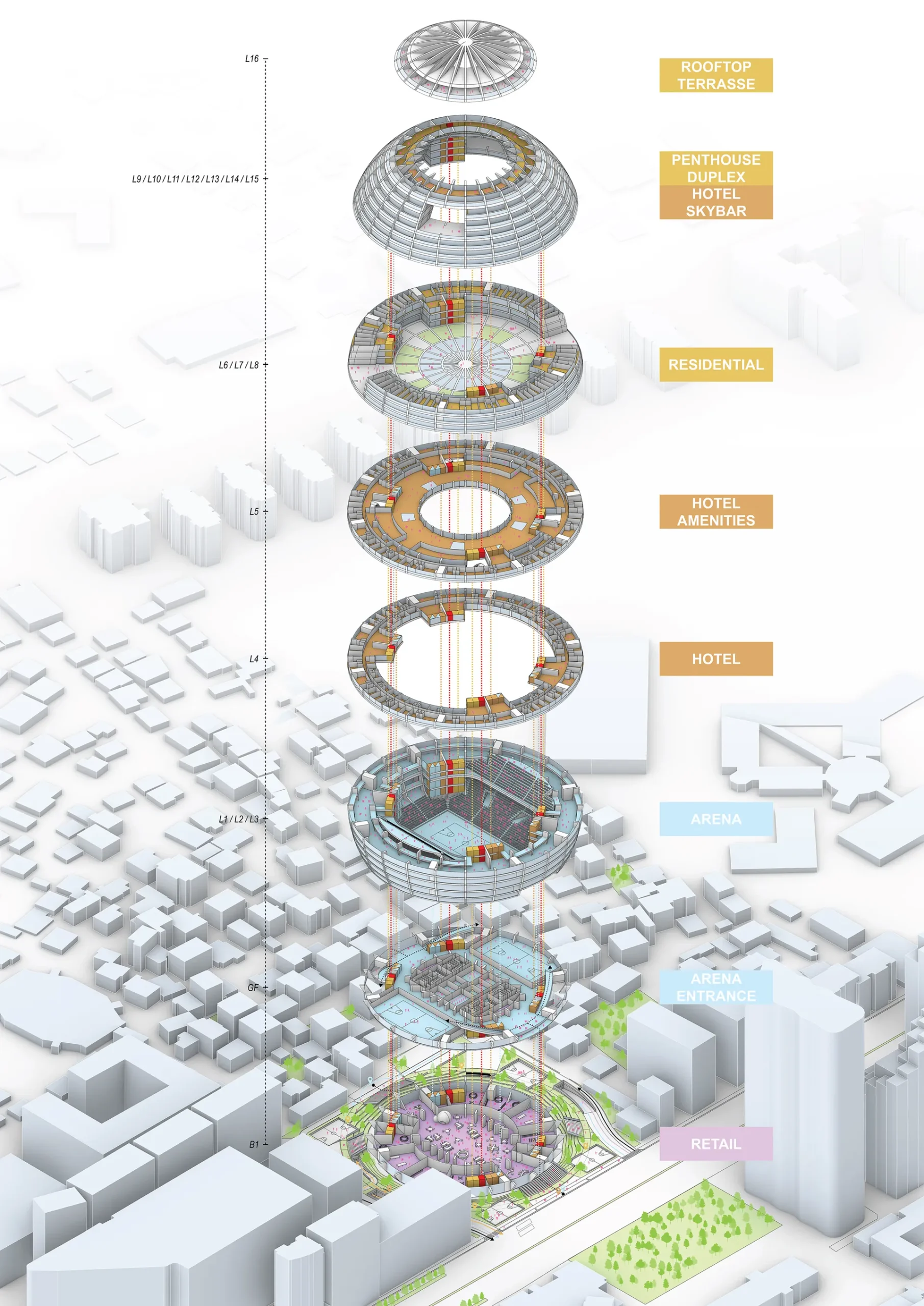
Conceptualized through layering, the design philosophy behind the Grand Ballroom is consistent with MVRDV’s foundational pursuit of density and hybrid typologies. Above the arena, two floors of hotel rooms offer guests a unique opportunity to watch the games, while cantilevered lounges open through a massive oculus set into the arena’s ceiling. This creates a dramatic visual connection between spectators, residents, and players below, transforming the act of sports viewing into an immersive architectural experience.
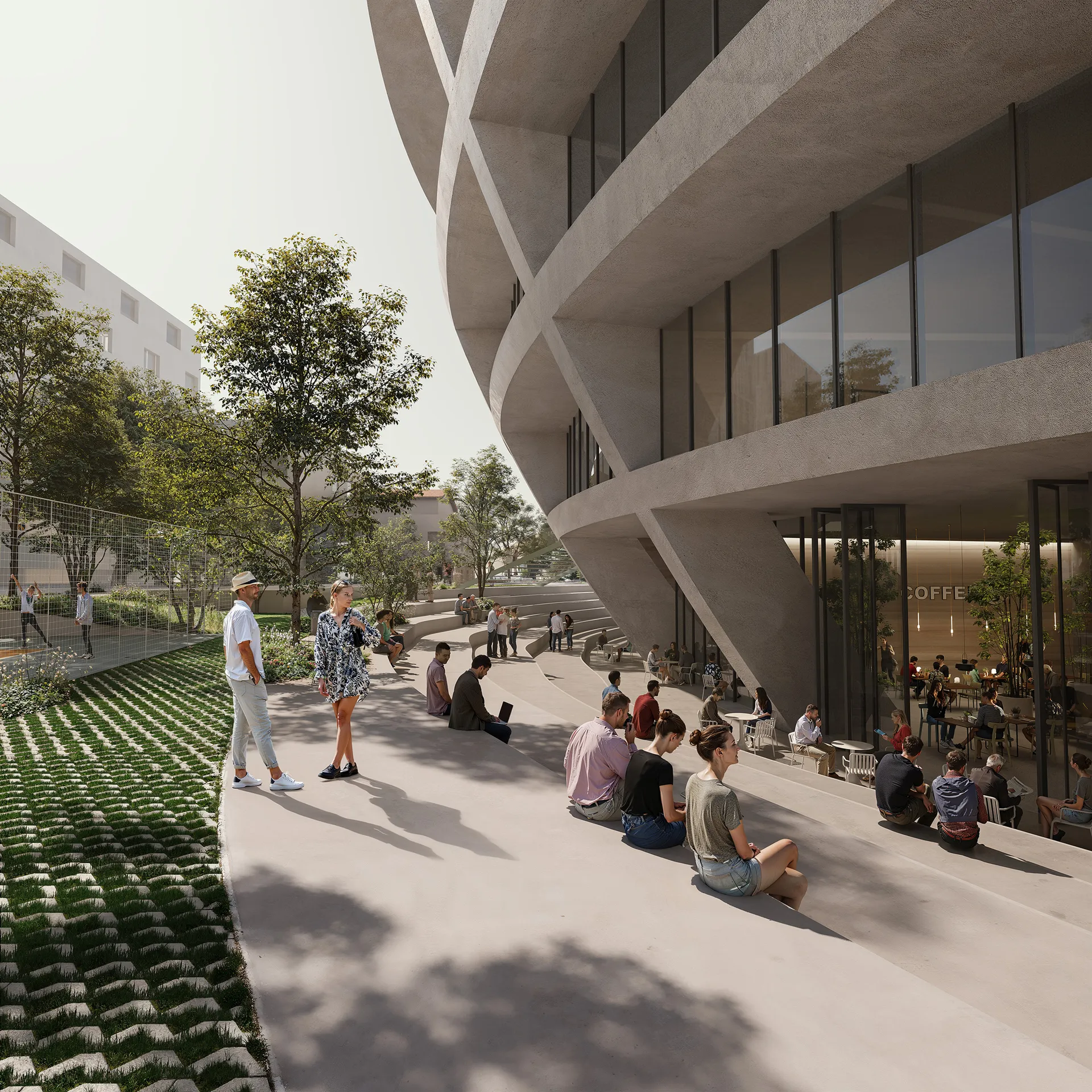
Inside the sphere’s double-shell structure, the residential apartments embody a vertical village typology. The most striking element is the internal green void; the upper level encloses a vast semi-outdoor courtyard garden and green, tree-filled spaces. Natural ventilation and passive design strategies are integral to the concept, animated through every layer of the sphere. The multi-story green terraces will be maintained by an automatic irrigation system, which provides active shading and contributes to cooling, reducing the solar heat gain.
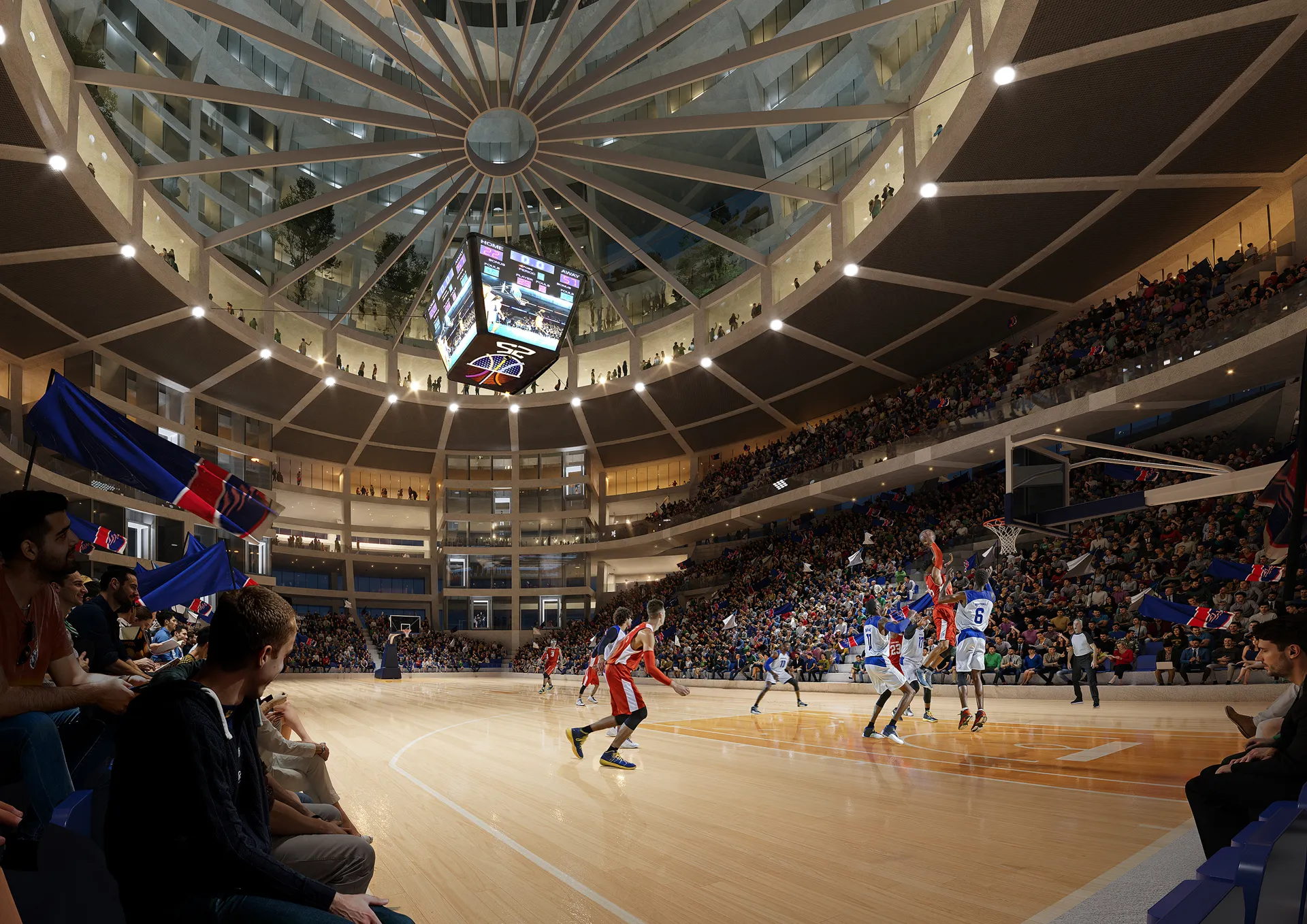
The design for the Grand Ballroom represents a highly evolved response to the challenges of urban density, programmatic layering, and civic function in the 21st century. The mixed-use development is a boldly sculpted mixed-use development, integrating residential, hotel, and retail functions in the urban fabric.
The Grand Ballroom is envisioned as a welcoming civic landmark where people come to play, watch, and celebrate sport. Its spherical form, reminiscent of both a ball and the visionary domes of history, symbolically connects sports, homes, and public spaces, creating a shared arena for the entire city to gather.
The Grand Ballroom drew entries from six leading architecture firms, including Kengo Kuma & Associates, Sauerbruch Hutton, Chybik + Kristof, and Archea Associati. MVRDV, in collaboration with Trema Tech shpk, Likado BV, Albanian Capital Group shpk, and BCN Investments BV, emerged as the winning team selected by the international jury.
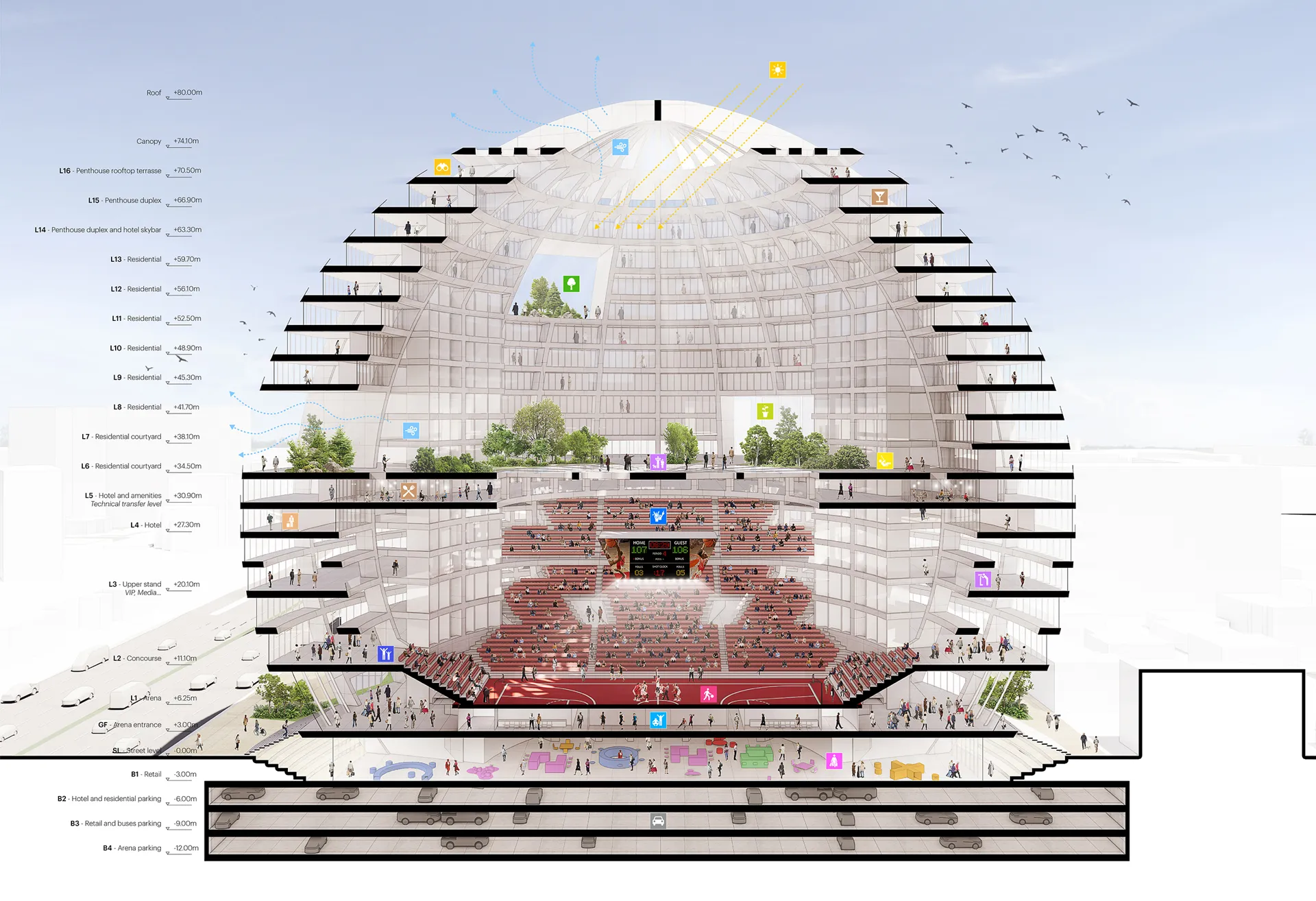
Photo Credits: © MVRDV
Explore Courses
.jpg "Ondrej Chybik - Rethinking Architecture")