


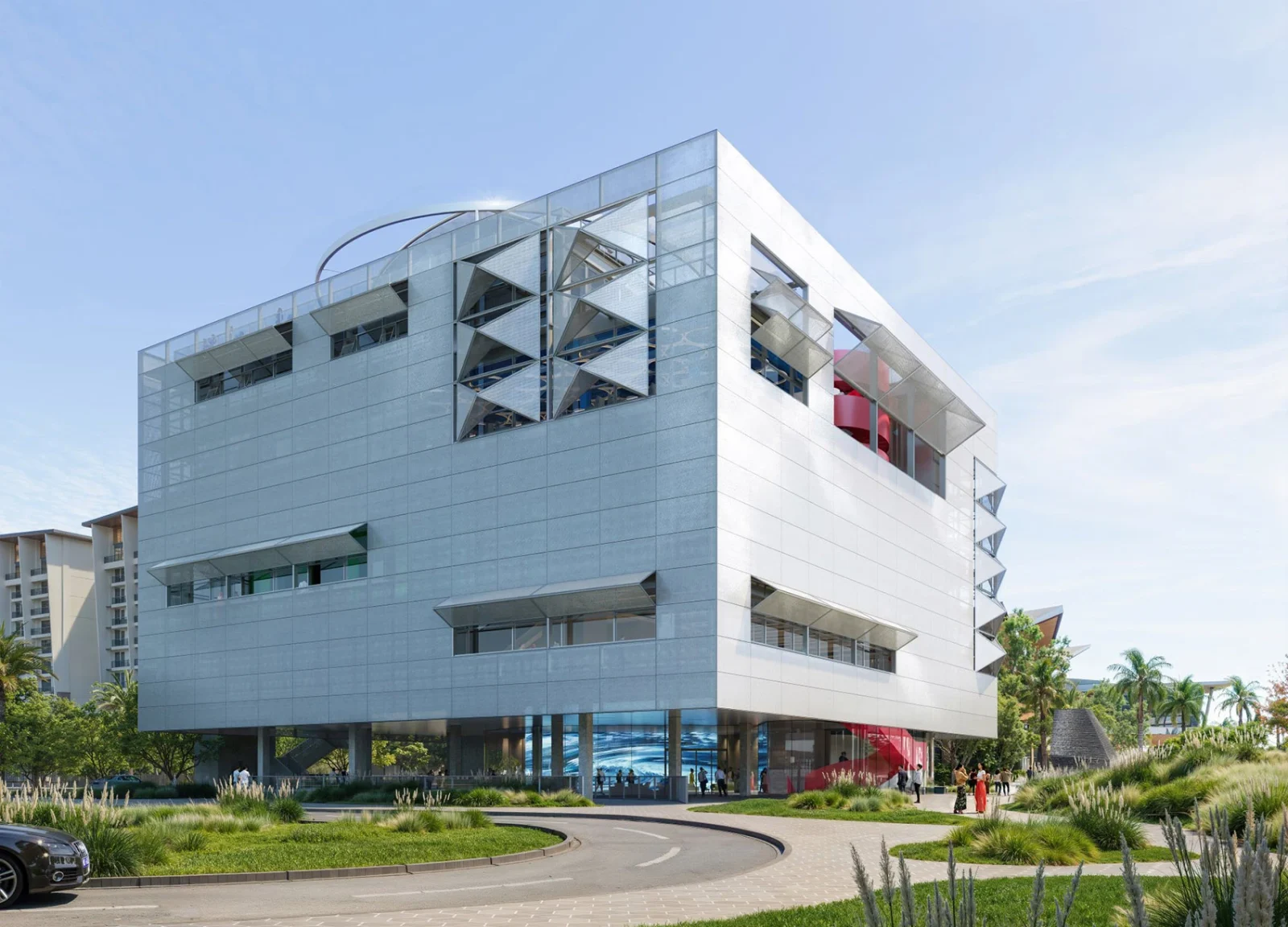
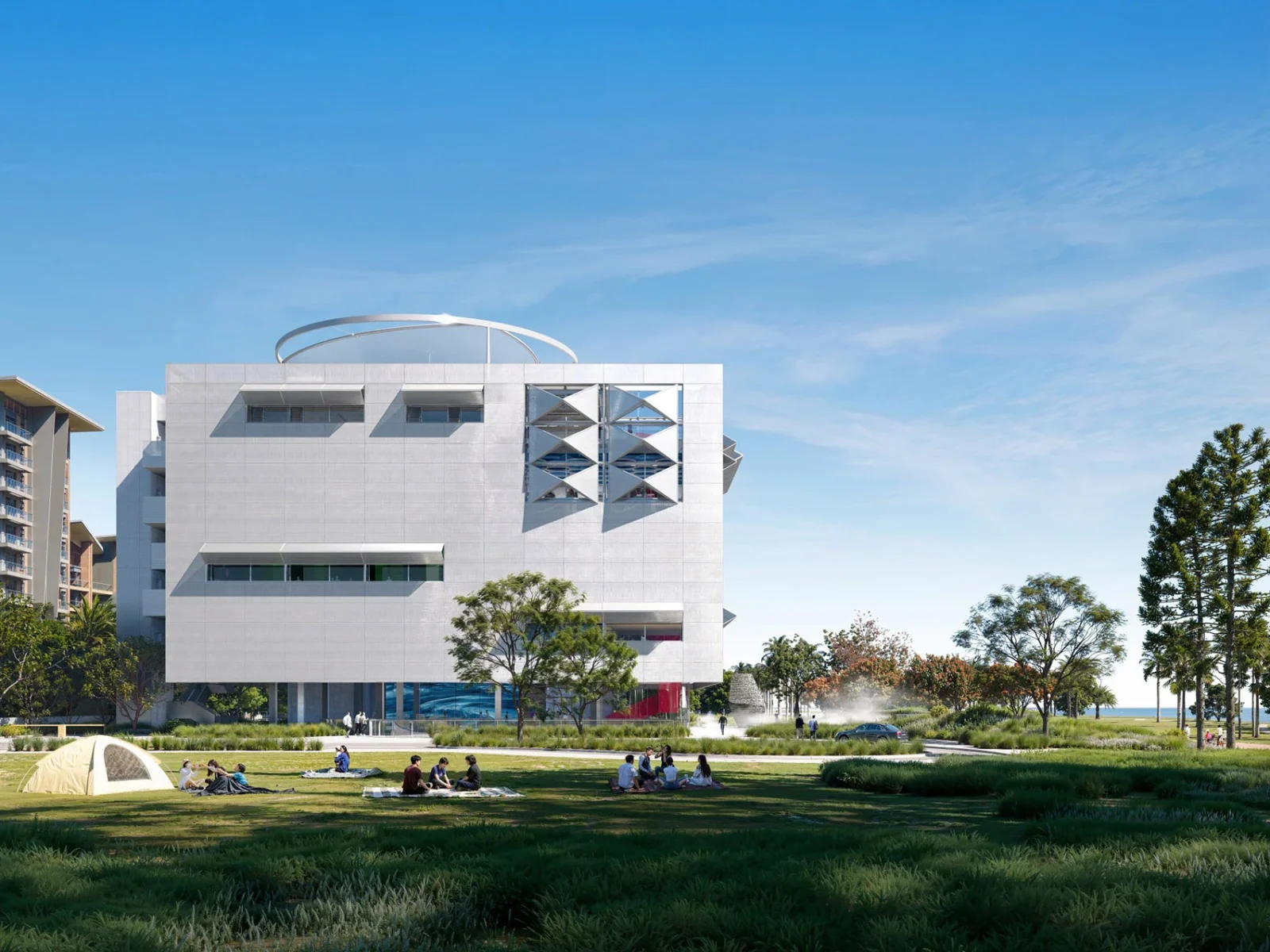
Set along the dynamic coastal edge of Xiamen, the Meitu Cube Visual Arts Center by OPEN Architecture is conceived as a seemingly simple cubic volume that conceals a highly complex spatial and programmatic system. Designed as a cultural platform for Meitu Inc., the project responds to contemporary shifts in art, technology, and public engagement through adaptability.
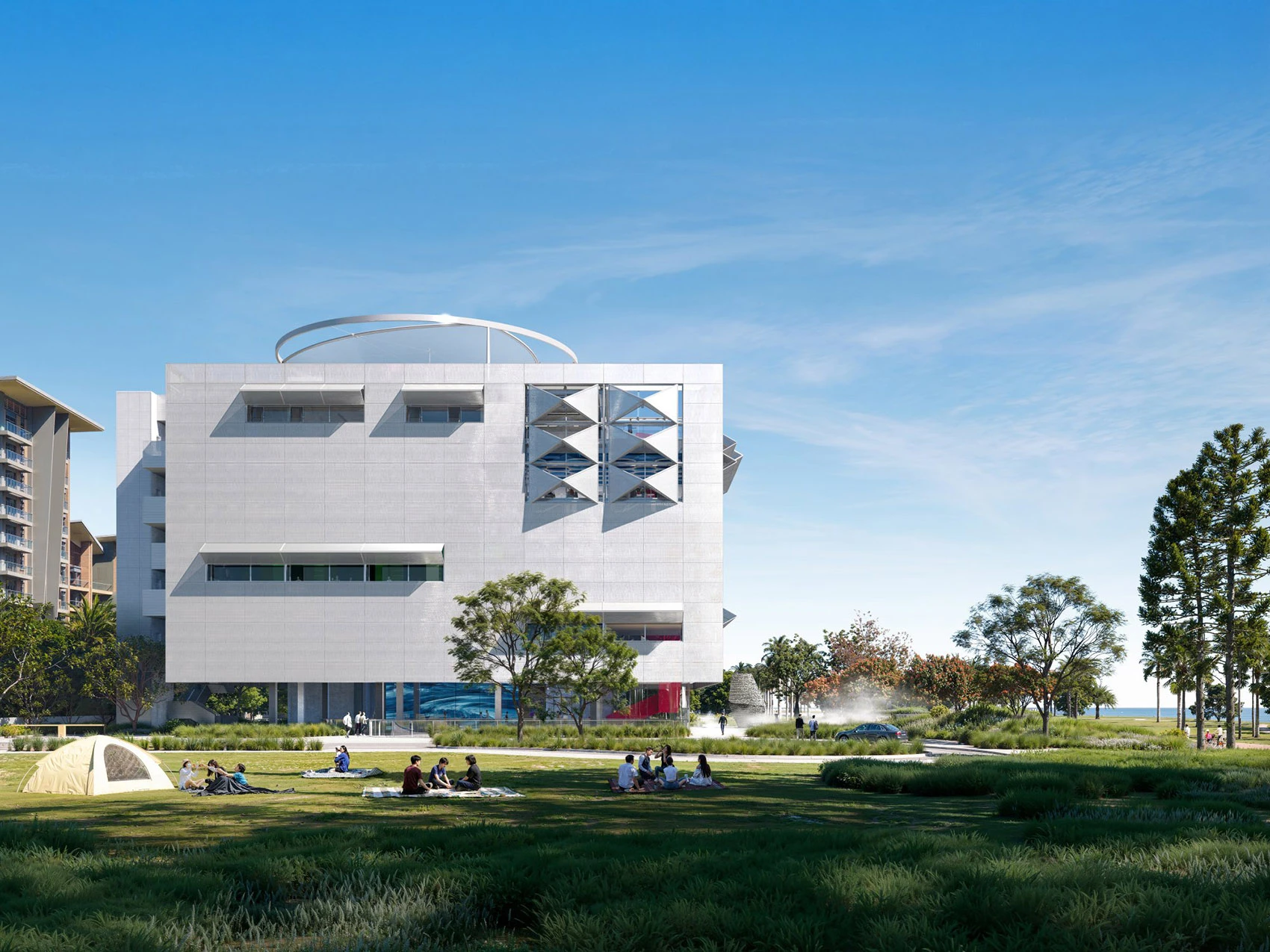
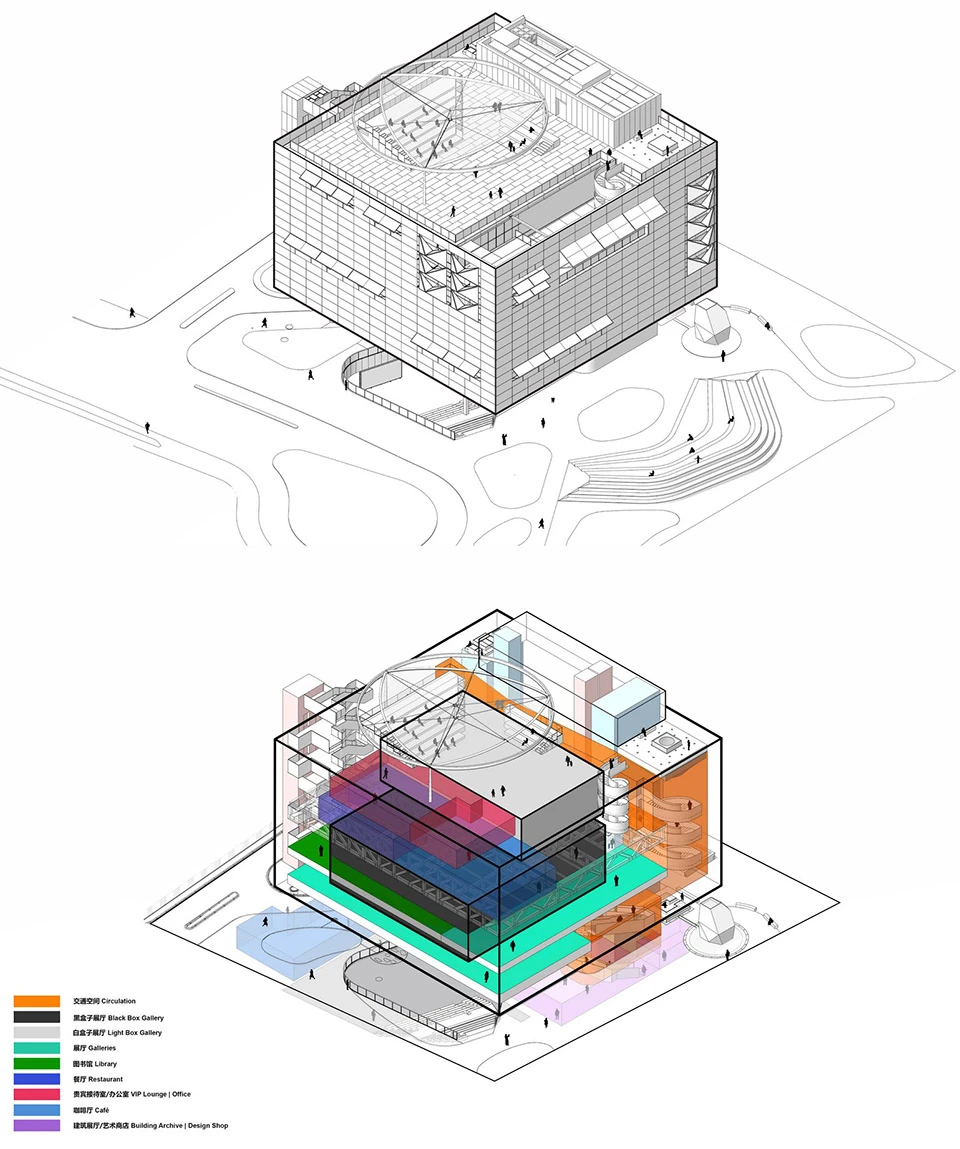
Despite its geometric clarity, the building operates as an interconnected spatial framework. Internally, it brings together a nine-meter-high black-box gallery, a naturally lit white-box gallery facing the ocean, flexible exhibition halls, a library, terraces, and a rooftop theater. These spaces are designed to shift in scale and atmosphere, accommodating exhibitions, digital installations, performances, screenings, and public gatherings.
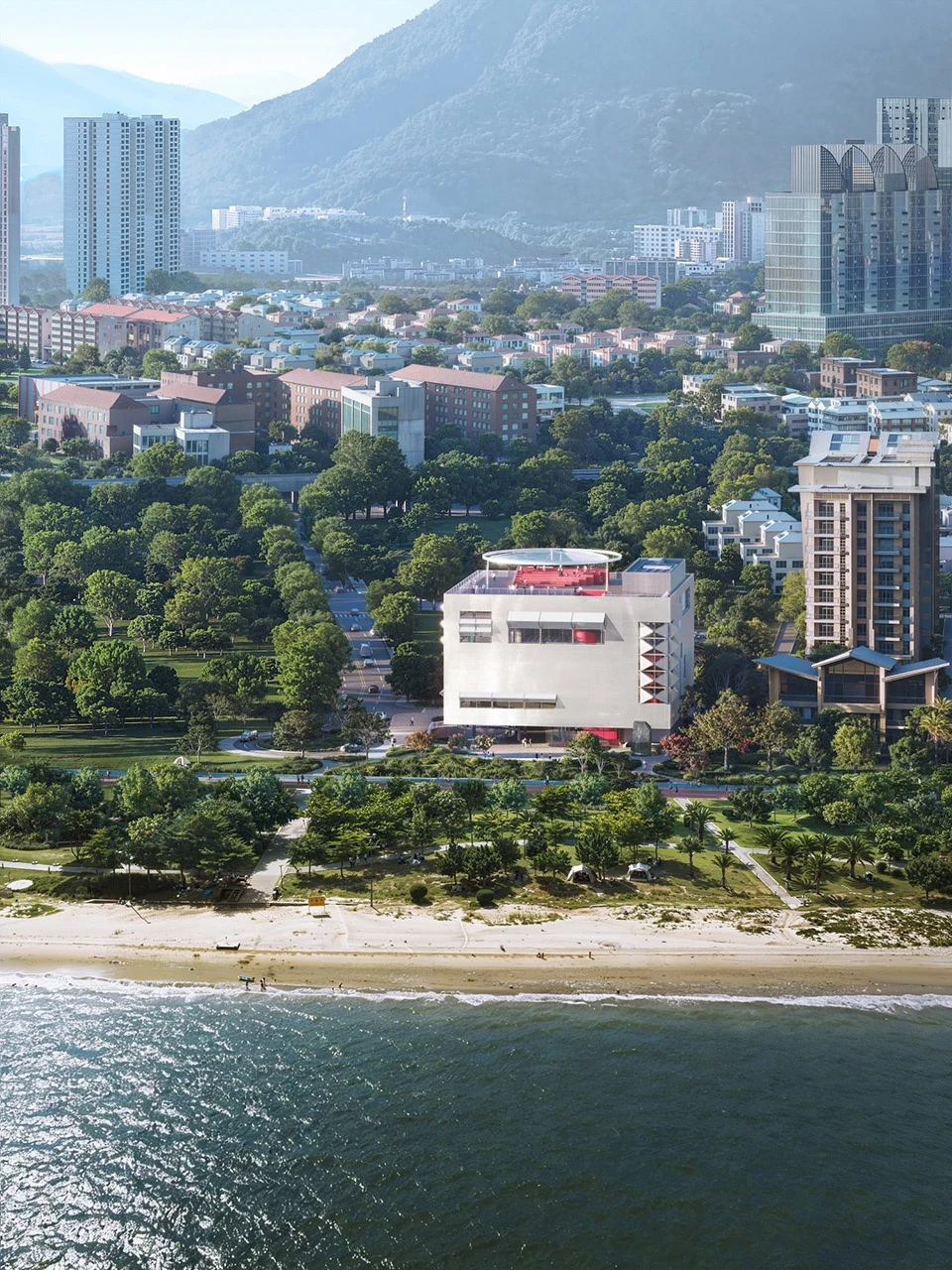
Movement unfolds through layered routes, galleries merge with transitional spaces, terraces extend circulation outward, and visual connections remain constant. A prominent waterdrop-shaped spiral staircase, finished in Meitu’s signature red, becomes both a sculptural and navigational element, linking all levels up to an ocean-facing terrace and rooftop.
At the ground level, permeability defines the relationship between architecture and site. The building opens into a landscape inspired by the surrounding archipelago, integrating natural forms into circulation and public space. A sunken plaza, activated by a café and informal seating, connects seamlessly to indoor exhibition areas, reinforcing the idea of the building as an extension of the public realm.
Facade Strategy and Environmental Integration
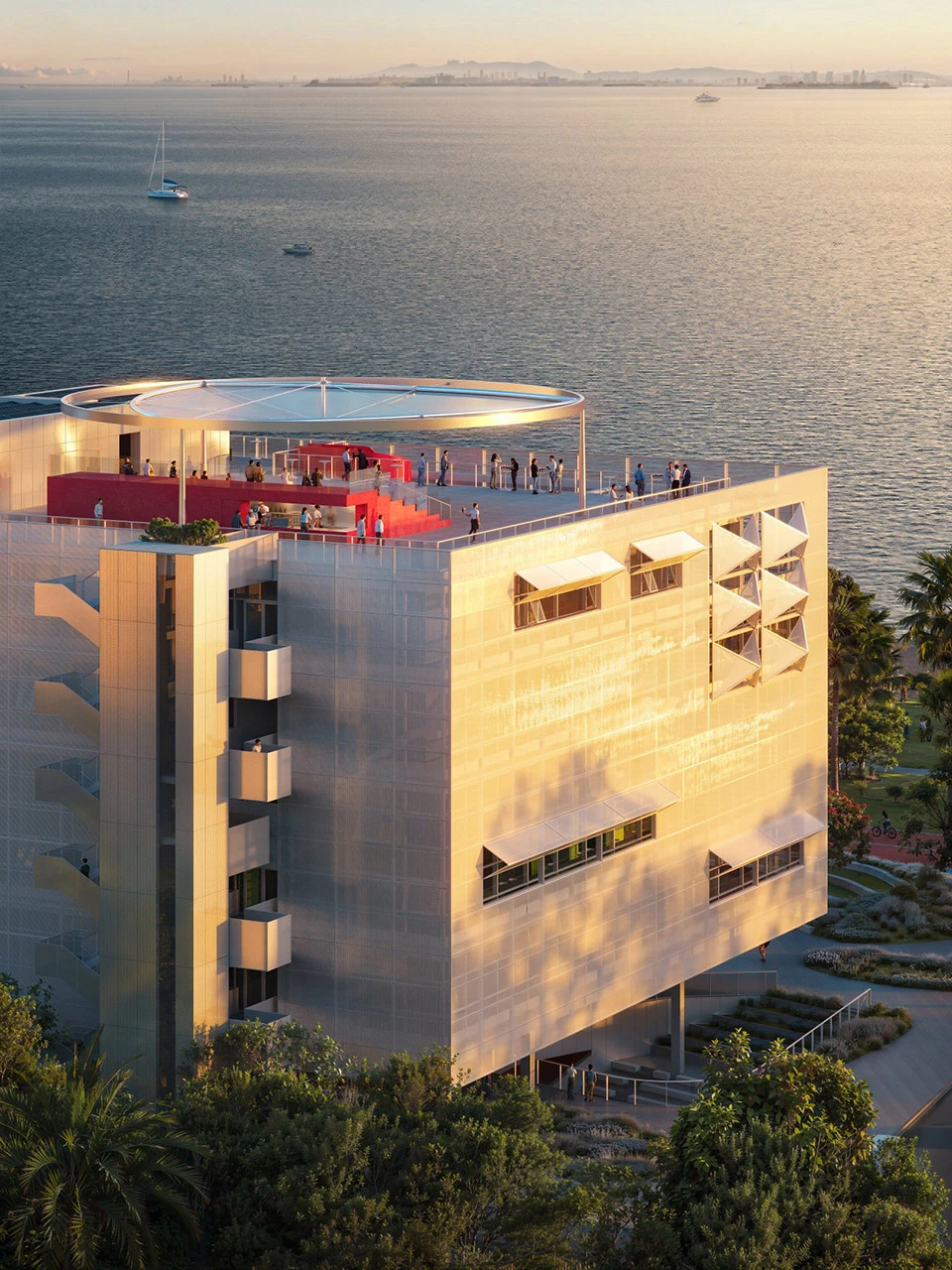
The defining architectural feature of the project is its double-layer façade system, which mediates between environmental performance and visual expression. The outer skin, composed of perforated PTFE, gives the building a lightweight, translucent quality. During the day, it allows filtered daylight to penetrate deep into the interiors while maintaining visual continuity with the surrounding coastline. At night, this outer layer transforms into a luminous surface, functioning as a projection screen that extends artistic content outward into the city.
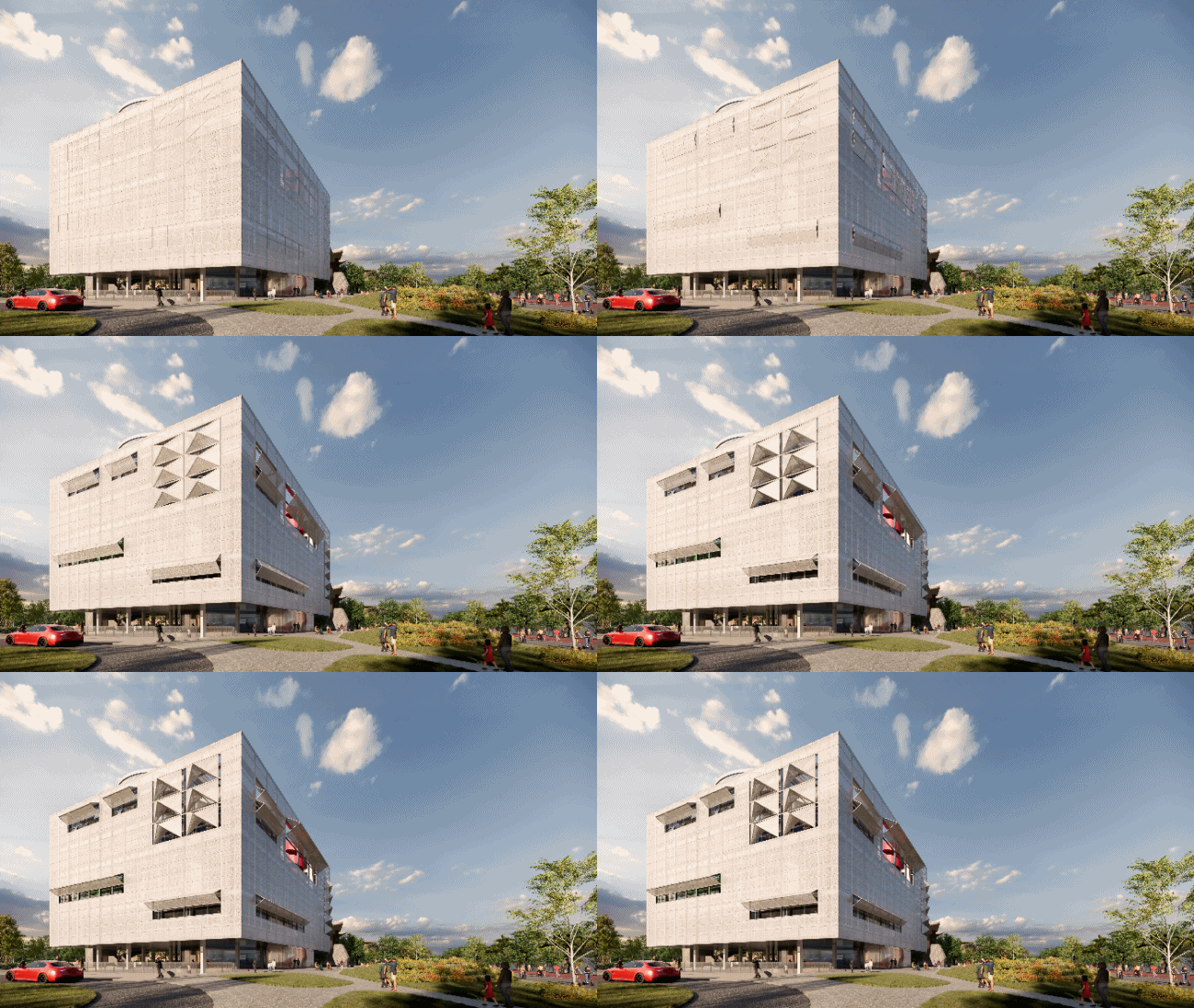
Behind this layer, the inner façade incorporates strategically placed openings that align with prevailing wind directions, enabling natural cross-ventilation. This dual system reduces thermal gain, improves indoor comfort, and minimizes reliance on mechanical cooling. A zoned air-conditioning strategy further enhances energy efficiency by allowing selective conditioning based on programmatic needs.
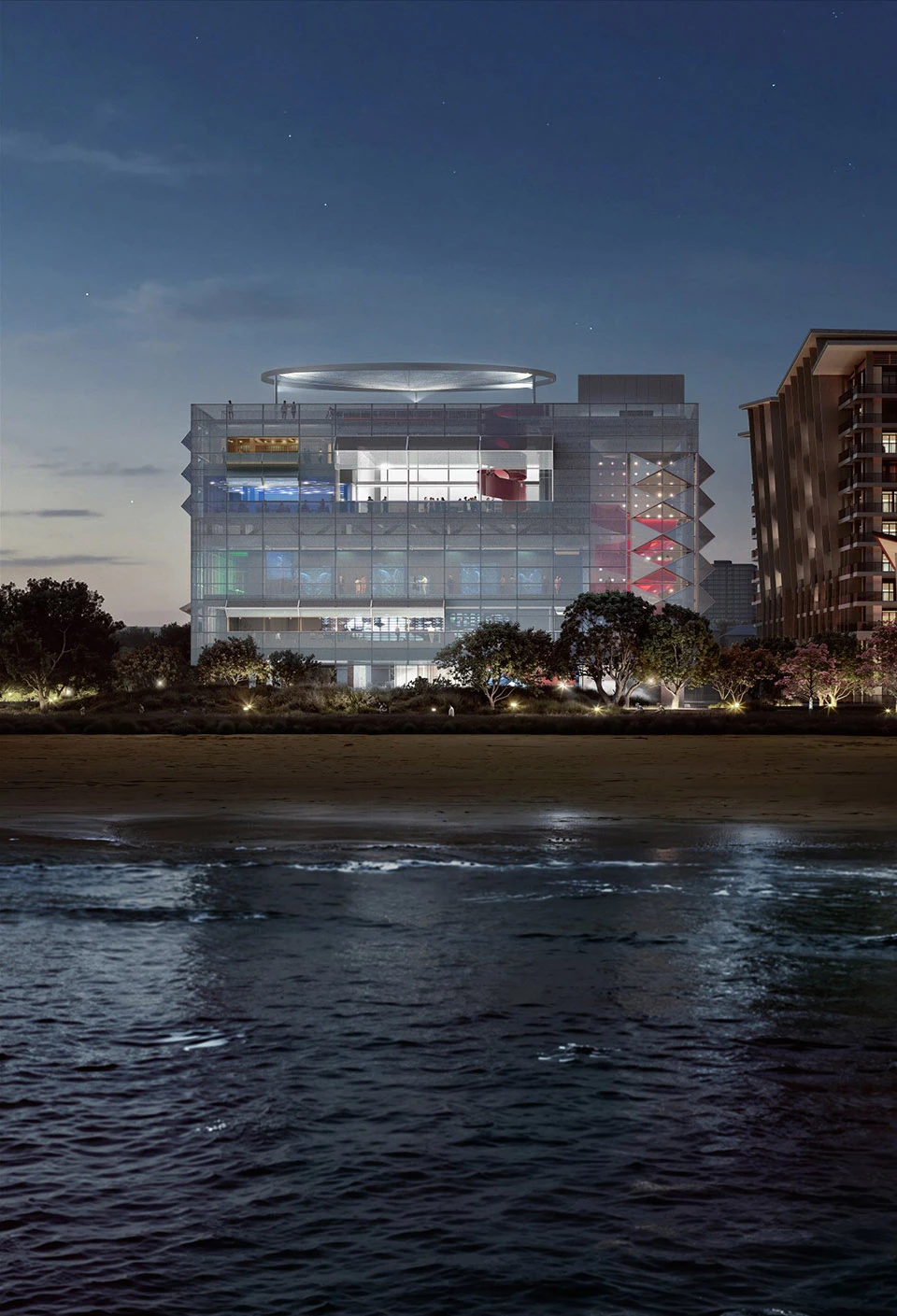
Sustainability is embedded across multiple layers of the design. Rain gardens, permeable paving, and water retention systems collect and reuse stormwater for landscape irrigation. Solar photovoltaic panels installed on the rooftop contribute to powering outdoor lighting, while planted terraces distributed vertically throughout the building establish a continuous ecological interface.
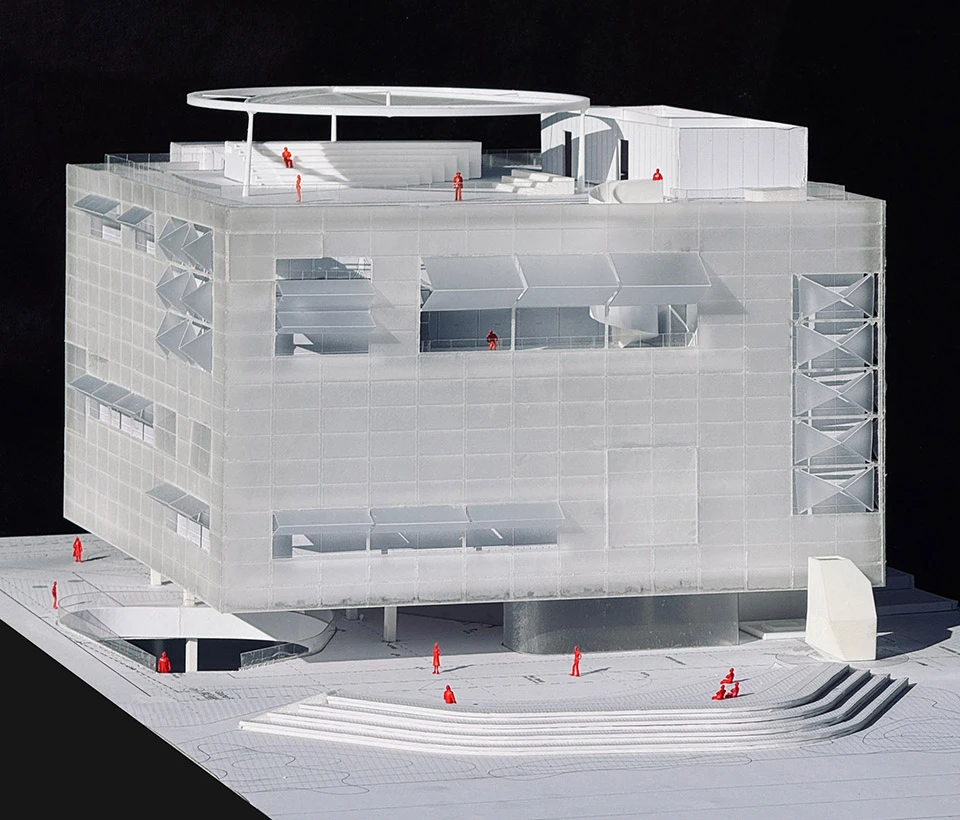
The cube operates as a cohesive yet flexible framework, allowing large column-free interiors essential for adaptable programming. The façade becomes an active environmental and experiential device filtering light, enabling airflow, and redefining the building’s presence from day to night.
Meitu Cube Visual Arts Center Project Details
Project Name: Meitu Cube Visual Arts Center
Architecture Firm: OPEN Architecture
Location: Xiamen, China
Floor Area: 12,200 sqm
Site Area: 4,018 sqm
Client: Xiamen Meitu Cube Cultural Development Co., Ltd.
Construction, Structural, MEP & Sustainability Consultant: China Academy of Building Research
Curtain Wall Consultant: RFR
Scenographer: dUCKS scéno
Acoustic & Theater Consultant: ECADI
Landscape Design: OPEN Architecture + Landtek Group
Lighting Consultant: Gradient Lighting Design
Image credit: OPEN Architecture
Explore Courses
.jpg "Ondrej Chybik - Rethinking Architecture")