
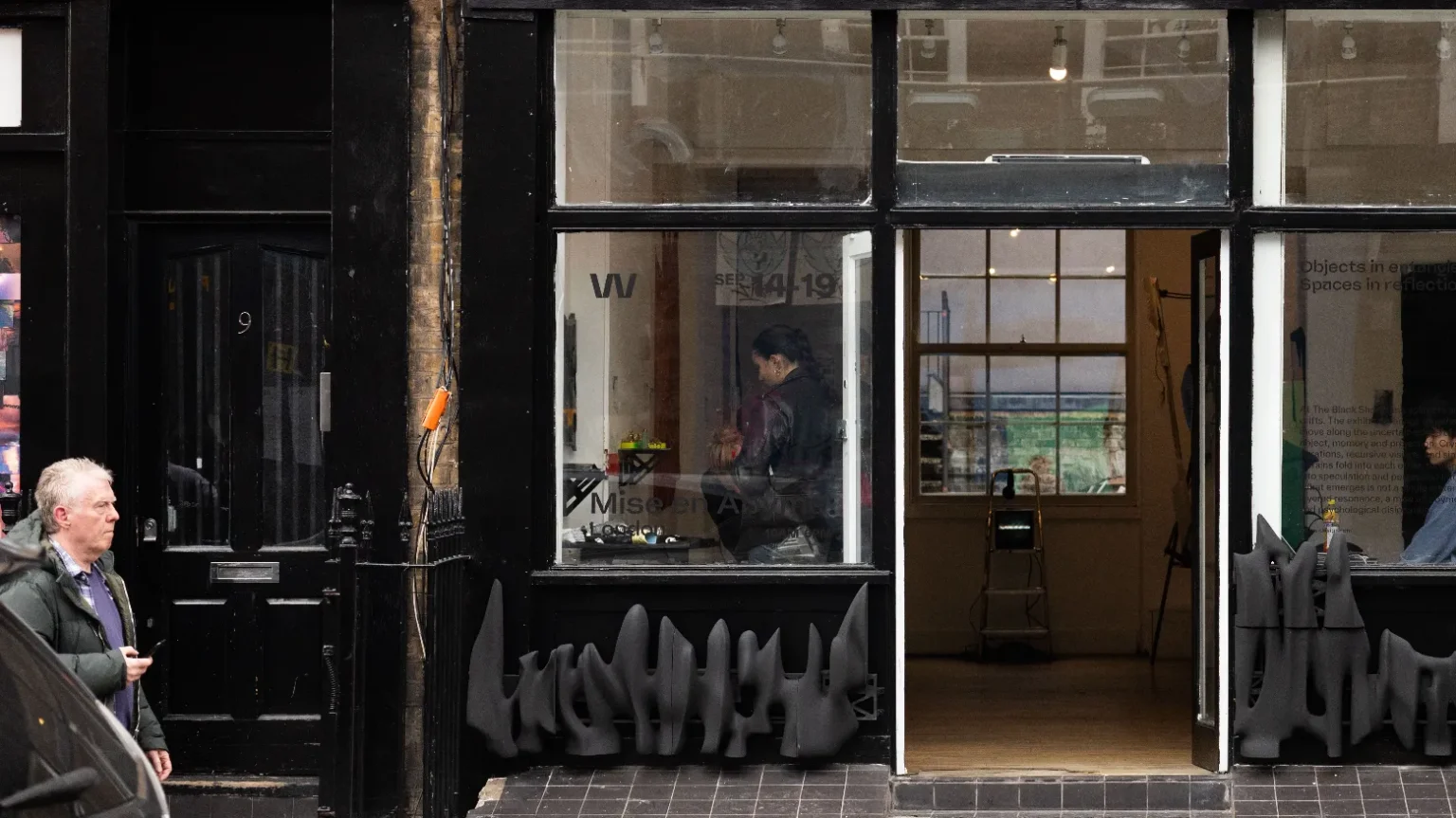



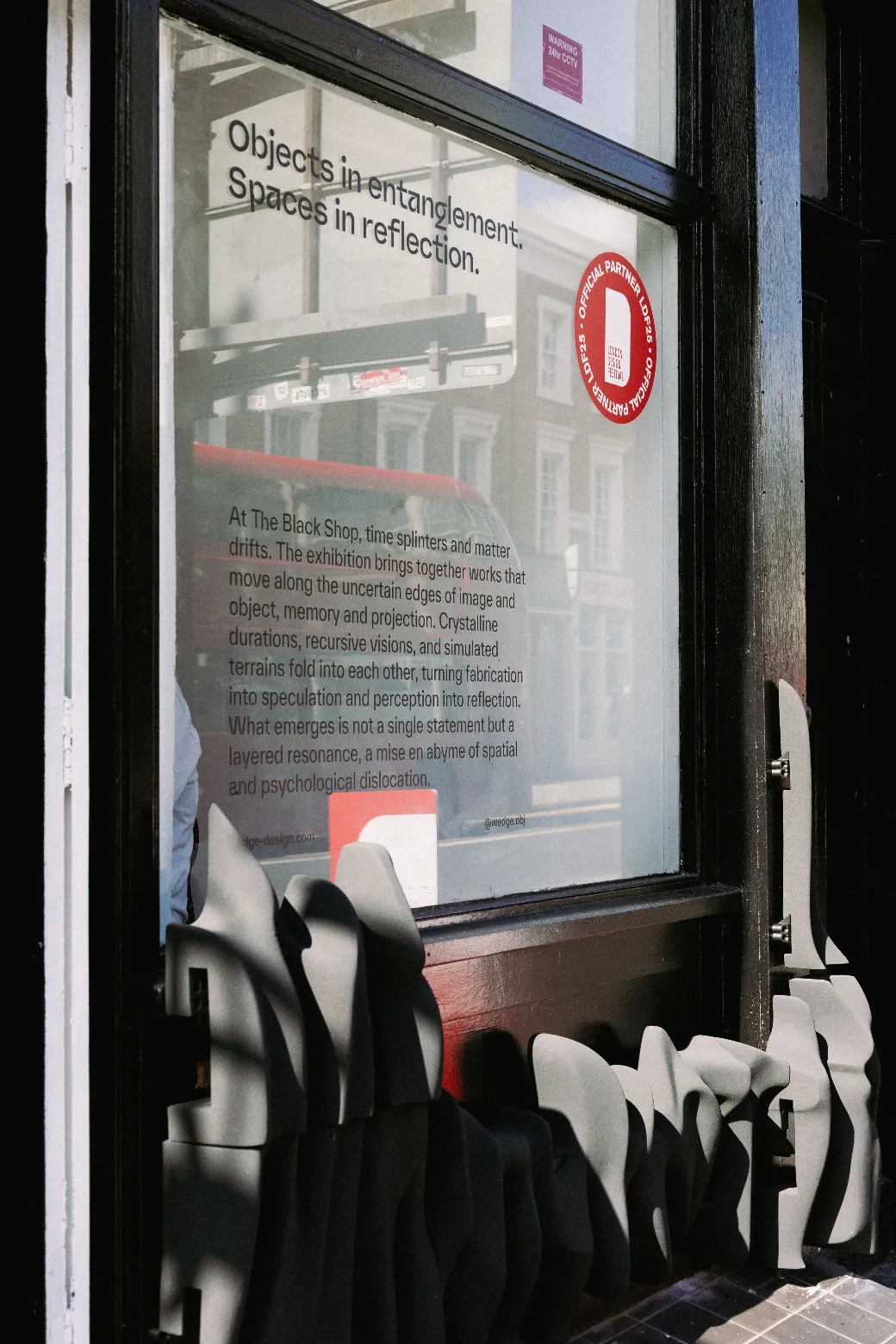
London based studio Wedge has unveiled Recurrence, a pioneering modular façade system at The Black Shop in King’s Cross. Installed during the London Design Festival 2025, the project transcends traditional fabrication by utilizing digital data as the core generative input for a mass-customized exterior. The resulting structure, fabricated from 3D-printed quartz silica sand, functions not as a static object but as the physical manifestation of a data-driven rule set, positioning the work at the intersection of generative design and circular material ecology.
Parameterizing Imperfection: Capturing Reality and Algorithmic Grammar
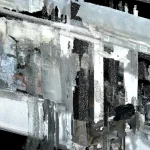
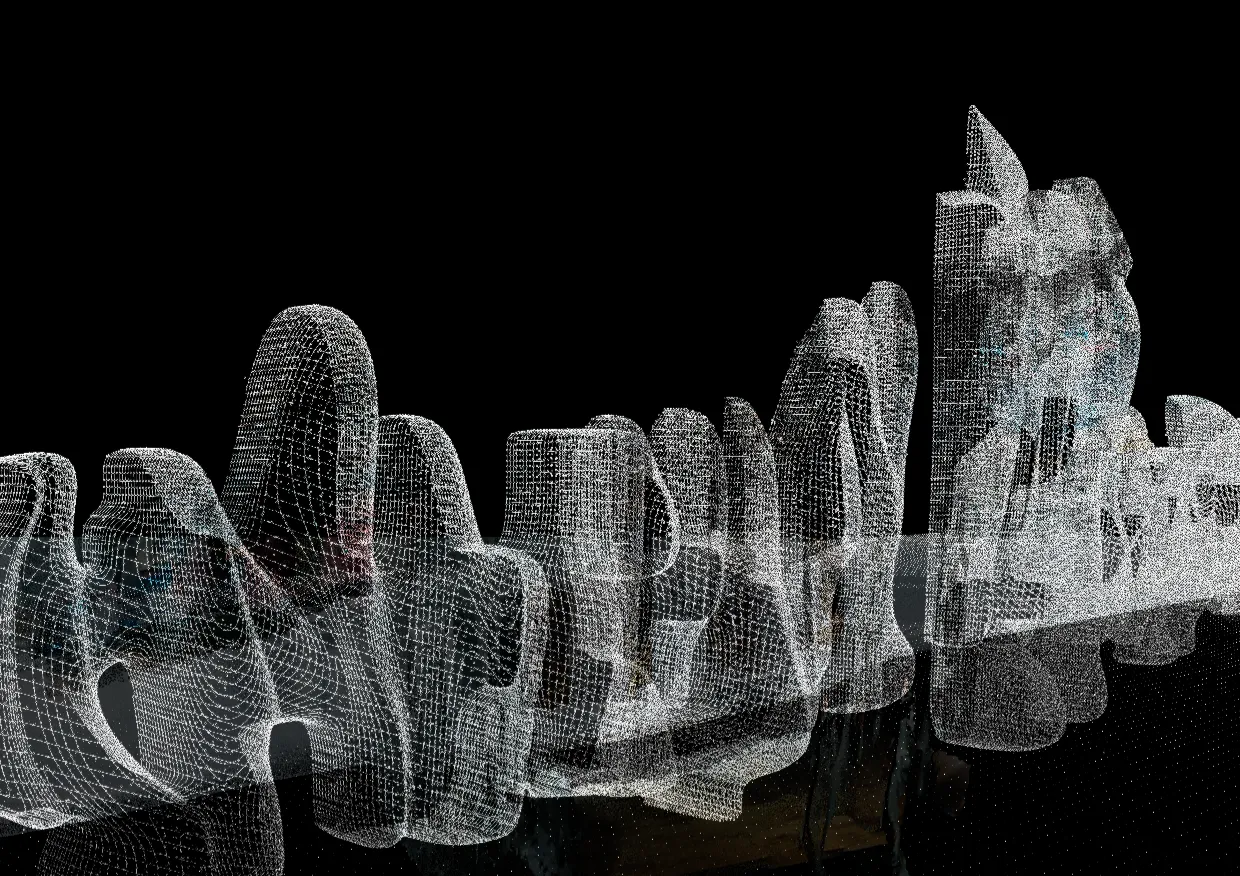
The design process is defined by the sophisticated use of digital scanning. Wedge utilized LiDAR scans of the storefront, generating a dense point cloud that captured the geometry of the existing environment alongside transient urban noise, movement, and light data.
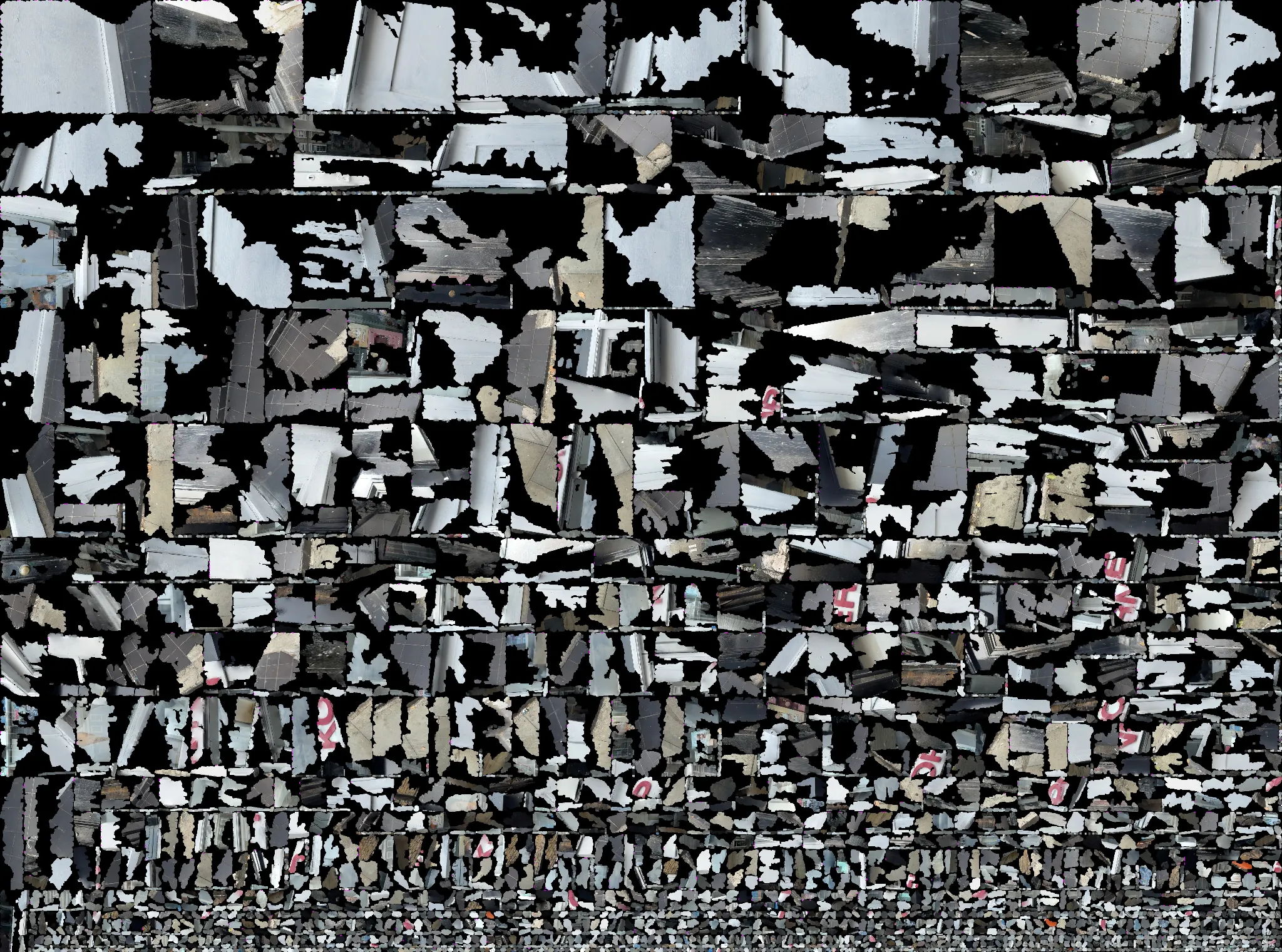
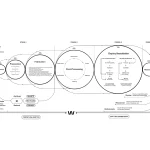
Crucially, the design methodology subverted conventional Cleaning and Filtering protocols. Instead of removing artifacts such as drift, glare, and occlusion, inherent noise in the raw scan data, the Wedge team integrated these inconsistencies directly into the design language. A custom algorithm was developed to systematize and structure this non-domain specific input, transforming noise into a generative factor.
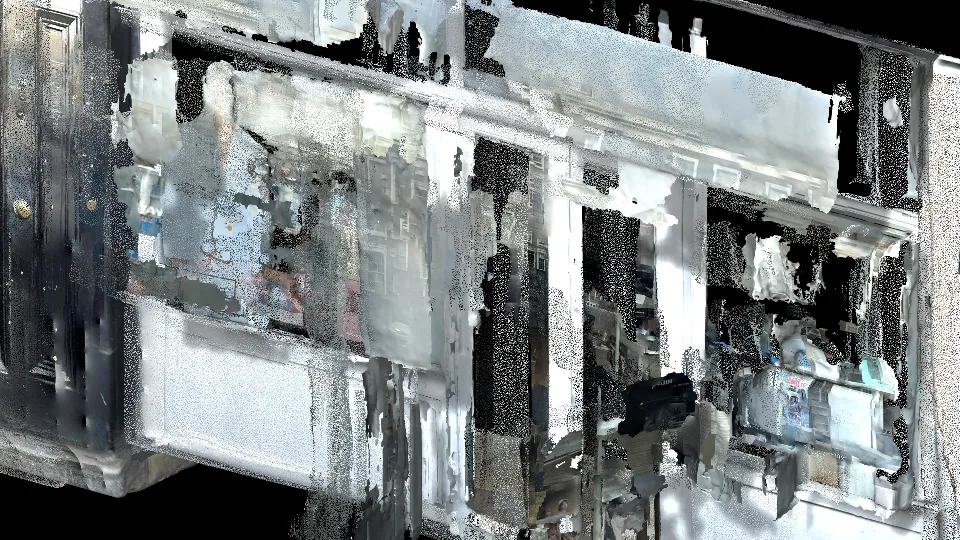
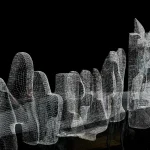
This governing algorithm processed the point-cloud data to define geometric and material properties: localized areas exhibiting low data variance (stable geometry) were computationally thickened, while zones characterized by high data noise (imperfection) were progressively eroded. This iterative design loop resulted in a precise geometry where the computational management of “error became structured,” establishing a new architectural parameter for site responsiveness. The resulting complex form is intrinsically data-driven and achieves a tectonic variation that was previously unattainable with traditional techniques.
Binder Jetting and the Circular Tectonic
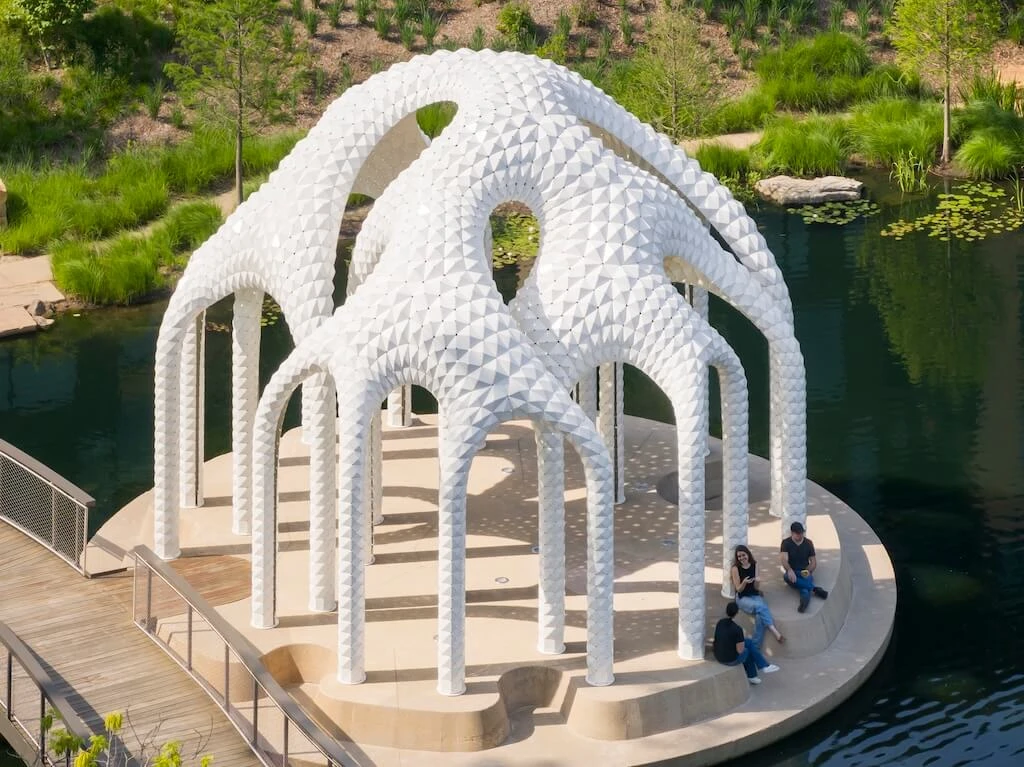
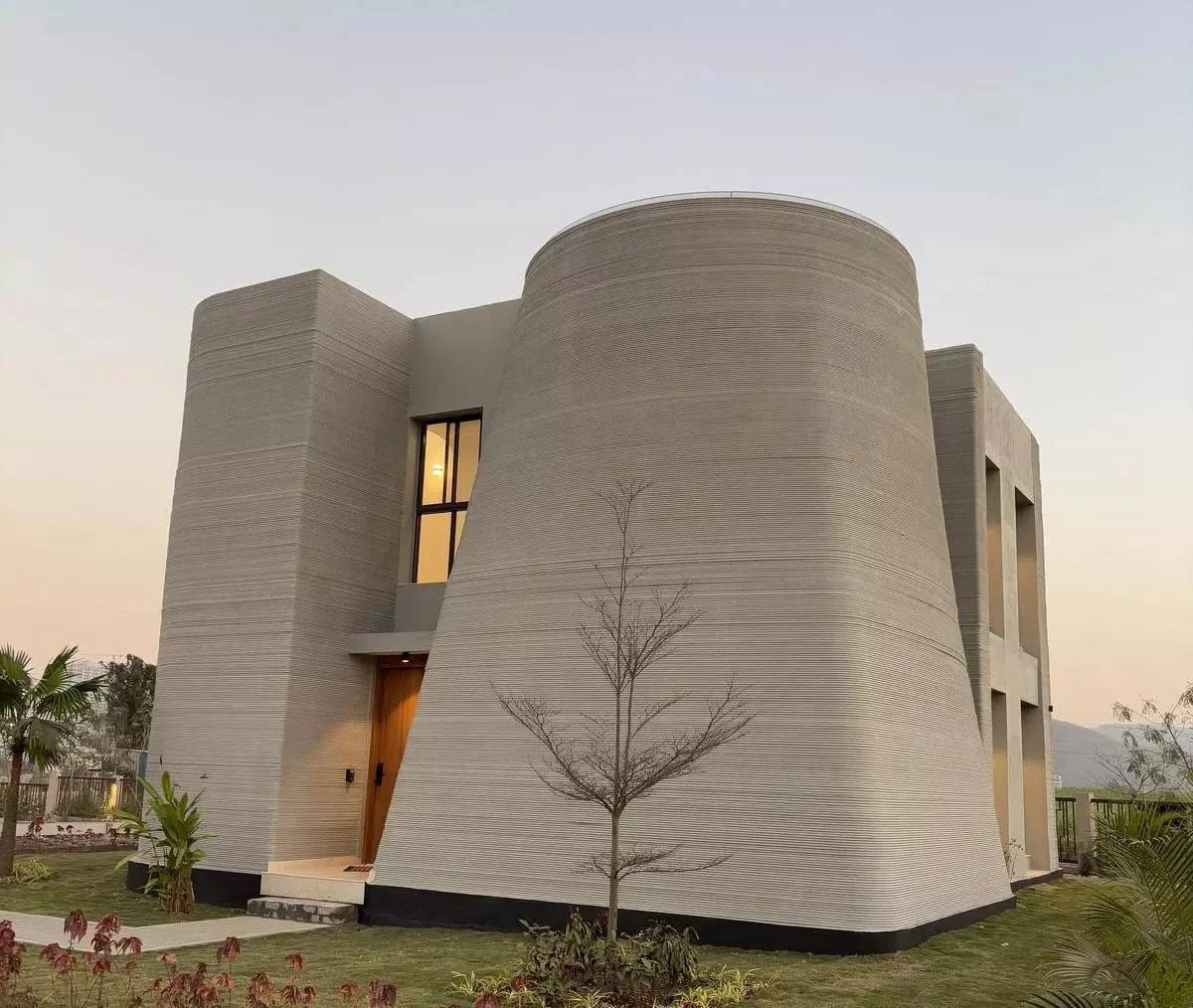
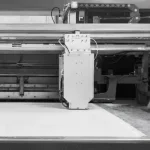
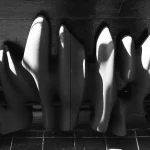
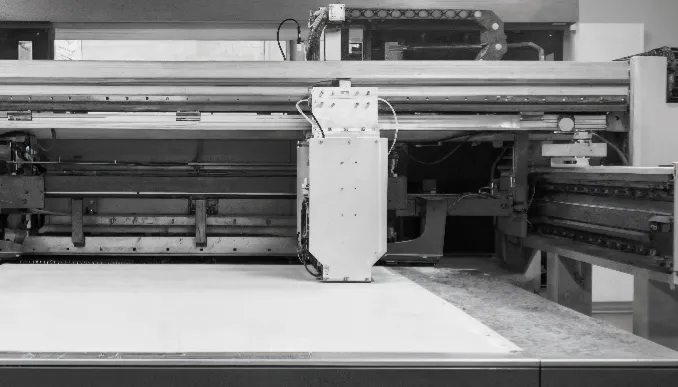
The physical realization of this algorithmic complexity required a high-precision, non-standard digital fabrication strategy. Wedge utilized sand Binder Jetting, an additive manufacturing process that builds three-dimensional structures layer-by-layer directly from CAD files, thereby enabling the project’s complexity and mass customization. The system employs an inkjet-style printhead to selectively deposit a Furan binder solution onto a powder bed of recycled quartz silica sand. This methodology proved essential for translating the unique digital information of each element into its resolved physical structure, demonstrating the power of computational design to manage high component variety.
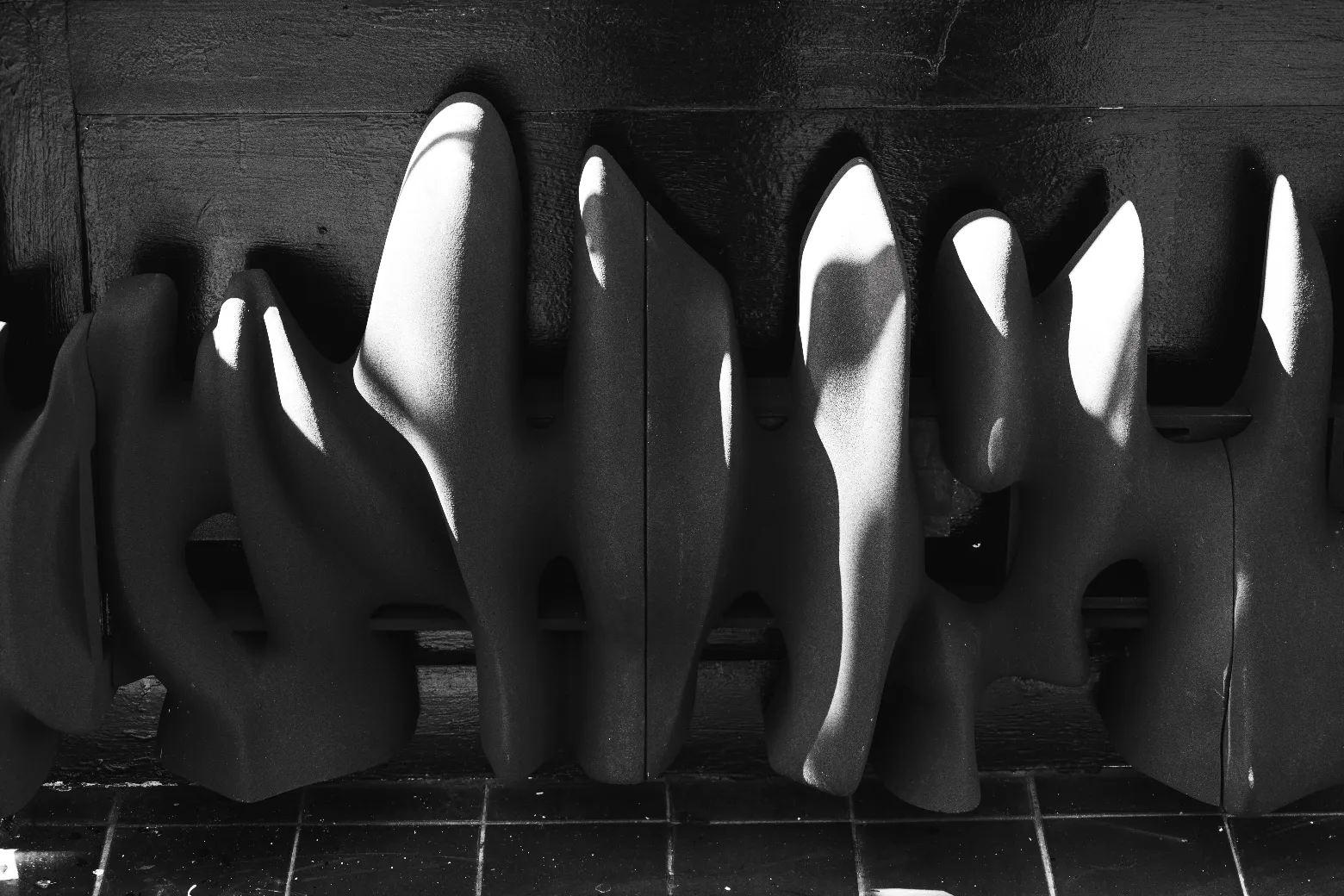
The project is conceived as a fully demountable, circular tectonic system. Each façade component is printed in recyclable quartz silica sand, optimized for disassembly, re-crushing, and re-printing. This circular workflow of data, volume, and matter aligns the project with the contemporary imperative for resource-conscious and energy-efficient architecture.
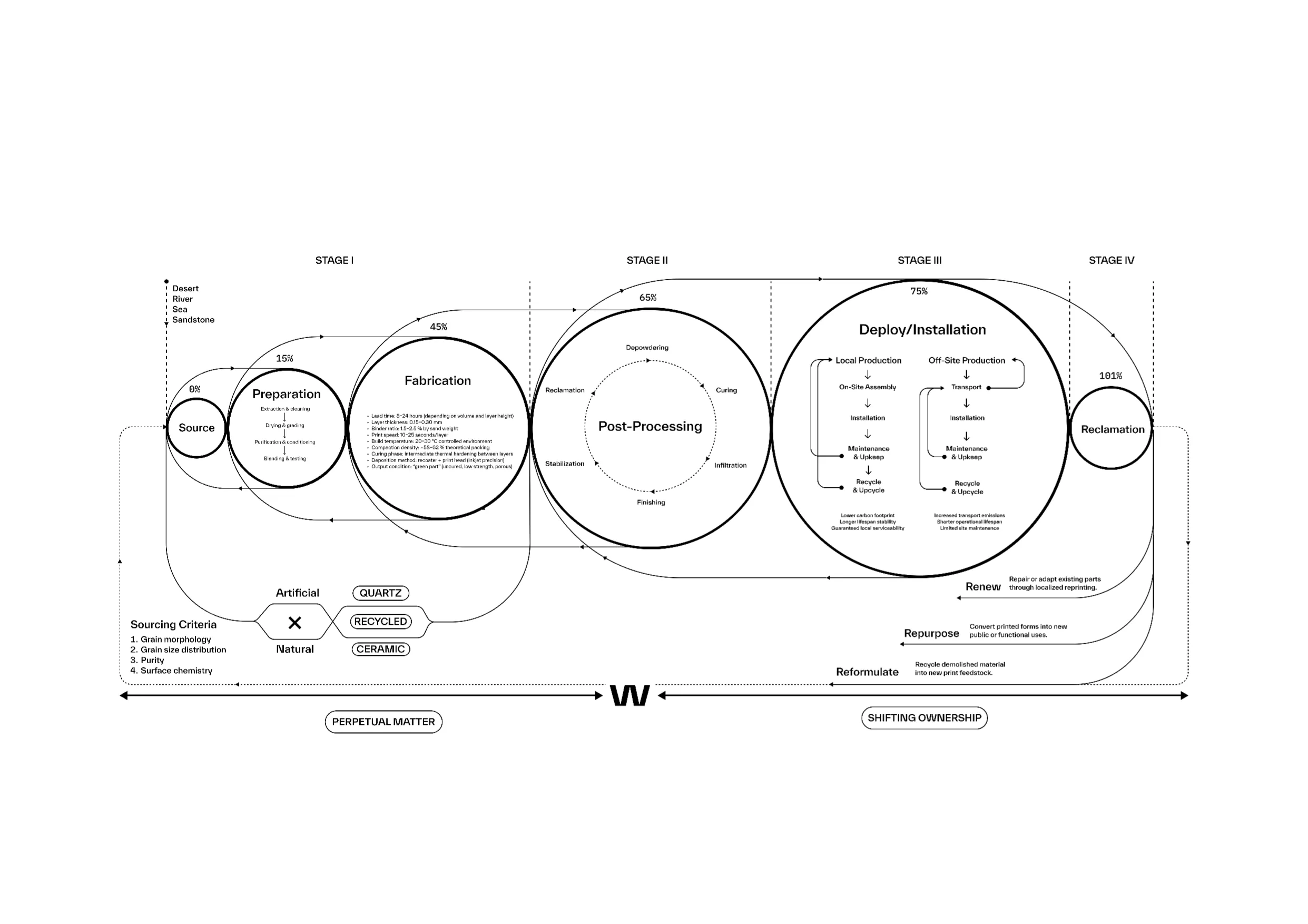
“Digital fabrication isn’t only about precision; it’s about enabling materials to adapt with social and technological change,” adds Wedge co-founder Lei Zhang. “We want architecture to behave like a city, something that can be repaired, reshaped, and reused.” By ensuring material and formal adaptability, the system provides a critical response to the long-term sustainability challenges inherent in permanent architectural construction.
Post-Human Vision and Computational Practice
By embracing the noise inherent in reality capture as an architectural medium, ‘Recurrence’ actively investigates a “Post-human vision”. “As sensors learn to see with us, design may no longer centre on the human eye,” says Peiyan Zou, designer and Director of Wedge. “Post-human vision, shaped by phones, headsets, and LiDAR, is transforming how we perceive and create.”
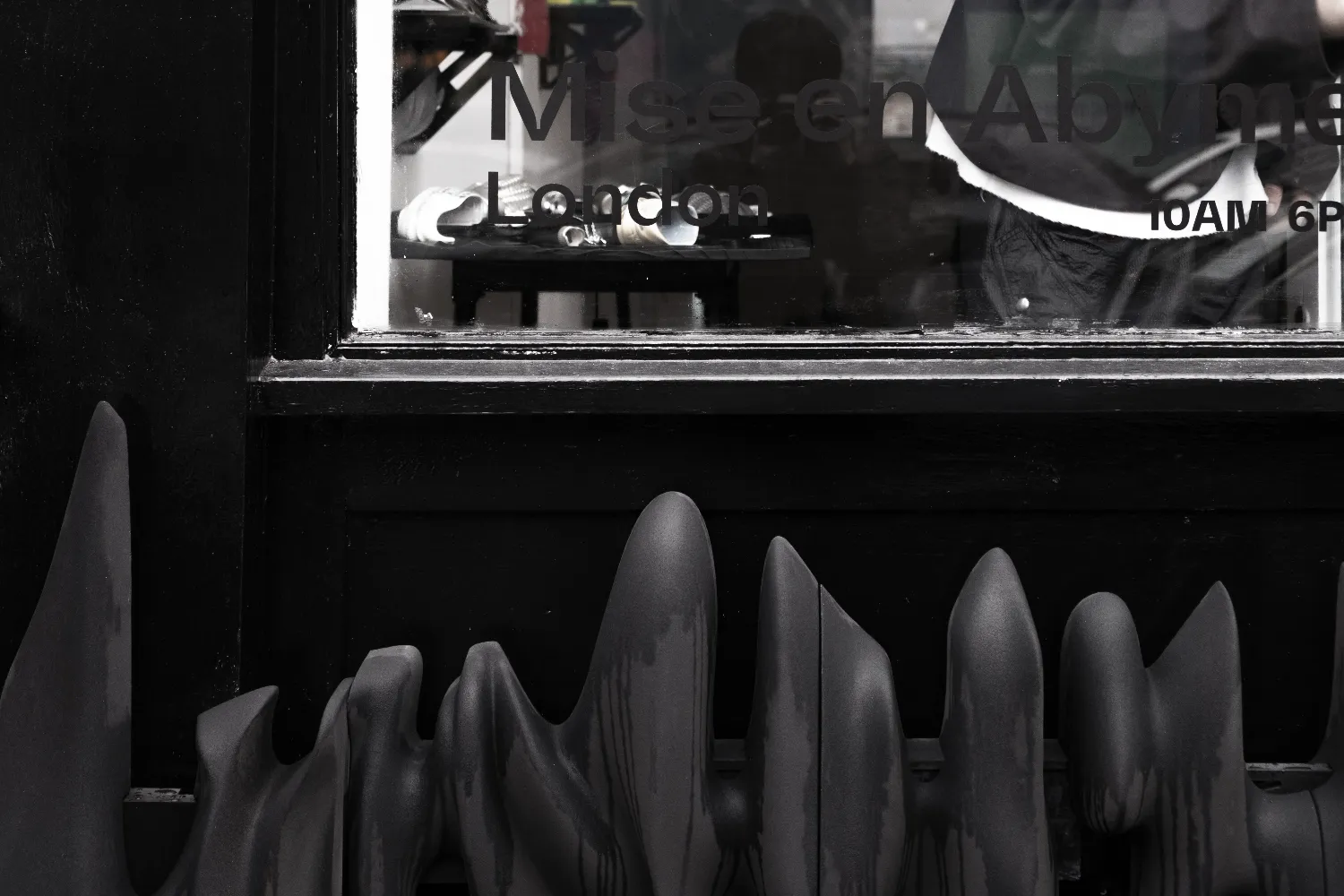
This approach contributes to the architecture discourse by advancing both novel computational tools and their theoretical underpinnings. Recurrence translates the intricacy of its parametric model into a fully resolved physical structure, meeting the stringent demands of aesthetic ambition, structural performance, and constructability. Within London’s shifting urban landscape, the project proposes a future in which architecture is continuously renewed through algorithmic processes, where data shapes form and the digital city becomes a tangible, adaptive surface. At the same time, it treats the façade as a testing ground for collaboration between human and machine vision: a prototype for spaces co-authored by the human eye and the sensing “eyes” of scanners and algorithms.
Alongside Recurrence, Wedge debuted its Epoch collection of sand- and metal-printed sculptural furniture at Material Matters during the London Design Festival, extending the same investigations into algorithmic generation, human–machine co-perception, tactile craft, and material sustainability at the more intimate scale of interior objects.
Project Details:
Project Title: “Recurrence”
Location: 11 Caledonian Road, King’s Cross, London N1 9DX
Date: 2025/09/14 – 2025/09/20
Core Software Suite: Rhino, Grasshopper, Houdini
Project Team (Wedge): Andy Zhang, Lei Zhang, Peiyan Zou
Fabrication Strategy: Sand Binder Jetting
Material: Recycled Quartz Silica Sand, Furan Binder System
Construction and Fabrication Support: Cem Dilekci, Peter Cook Architecture Studio, Shusheng Wang, Tina Wu, Yinuo Pan, Yuhan Wu
Official Partner: London Design Festival 2025