


Luxury retail today is not just defined by interiors alone, as it is shaped by architecture that performs as branding, storytelling, and spatial experience at once. Flagship stores of global fashion houses are increasingly treated as urban landmarks, where façades behave like sculptural media and interiors unfold as curated narratives. Through fluid materials, kinetic surfaces, and immersive spatial planning, retail architecture transforms consumption into experience, positioning design as the primary language of luxury identity.
In this shift, buildings are no longer passive containers for commerce but active cultural instruments that shape perception and behavior. Every surface becomes communicative, from reflective glass skins to textured structural frames that respond to light and movement. Materiality is used for emotional impact, guiding visitors through carefully composed spatial sequences. Lighting, transparency, and layering work together to create depth and anticipation, encouraging slow movement and visual engagement. As a result, luxury retail spaces operate as hybrid environments that blend gallery, urban landmark, and experiential theater, where architecture itself becomes the brand’s most powerful storytelling medium.
Façades as Brand Language and the New Urban Identity of Luxury Retail
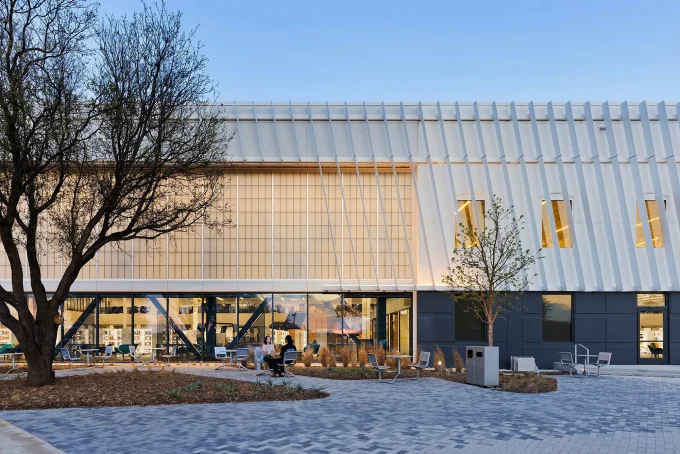
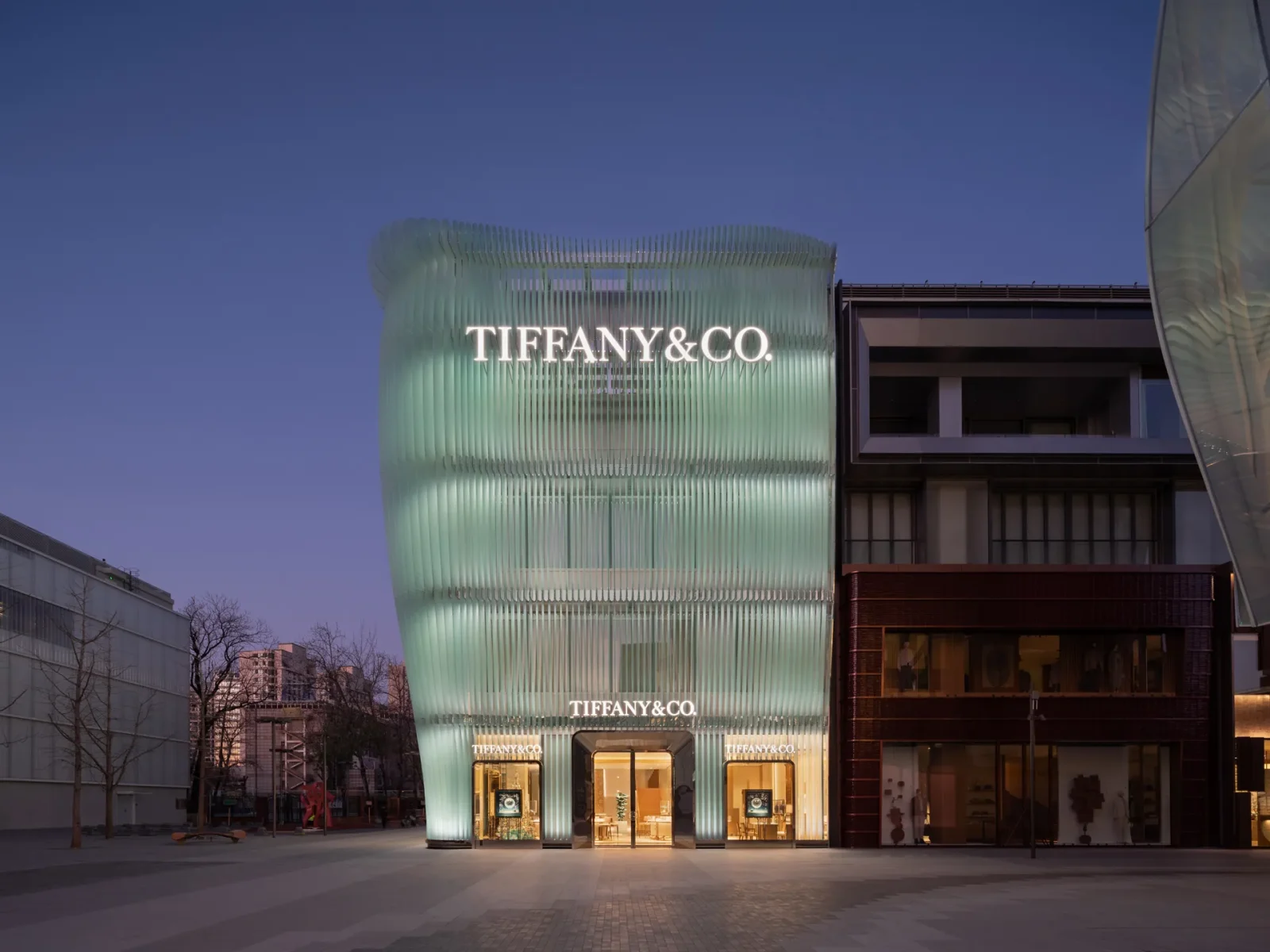
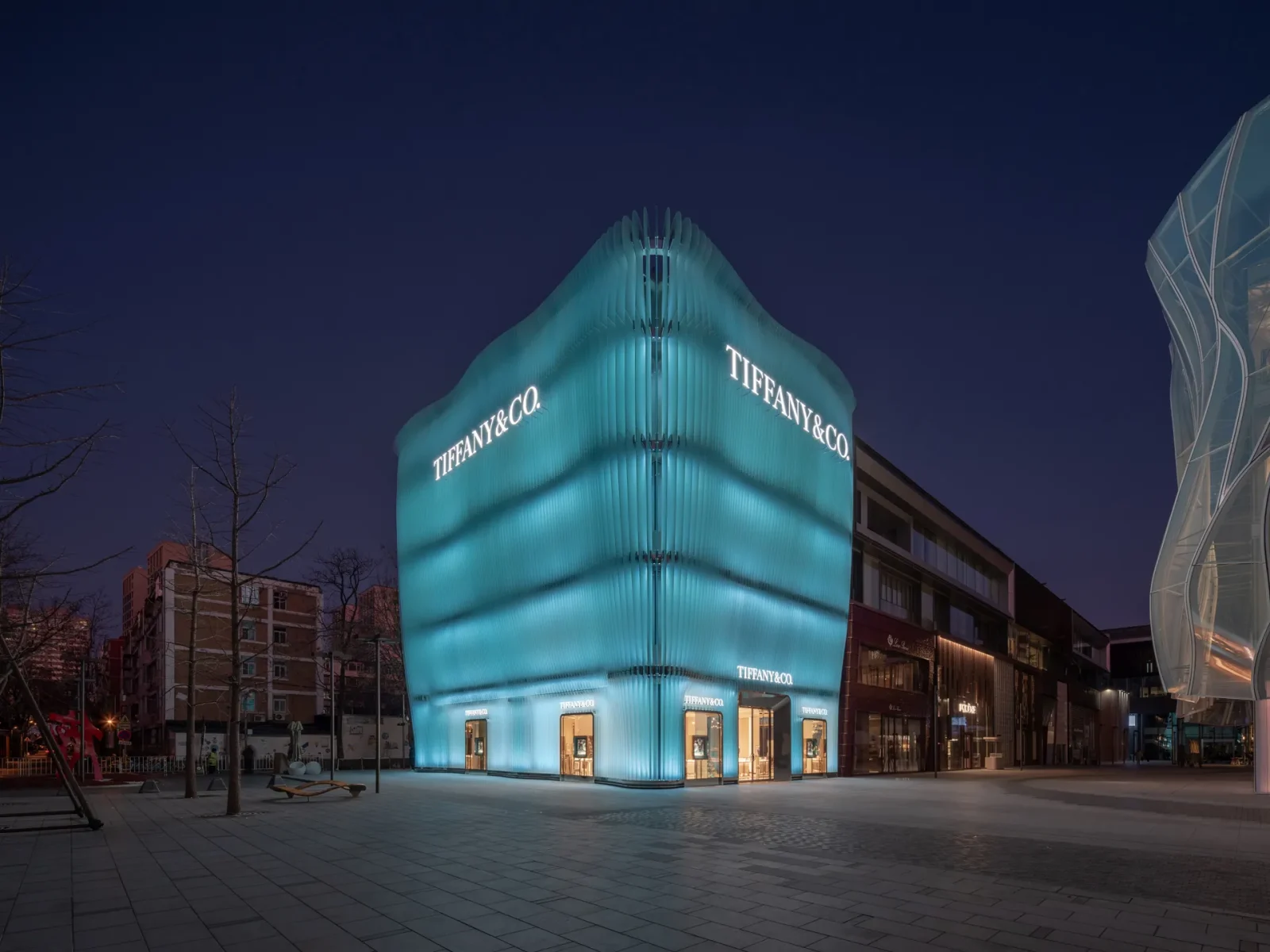
In contemporary retail architecture, the façade has become a communicative surface that replaces traditional signage with material expression. In Beijing, MVRDV designs the Tiffany & Co. flagship as a glowing architectural jewel, wrapping the building in curving, translucent glass fins that shimmer with shifting reflections throughout the day. The surface behaves less like a wall and more like a soft, light-filtering skin, echoing the fluidity of jewelry itself and reinforcing the brand’s identity through texture and transparency.
Additionally, the Louis Vuitton flagship in Beijing by Louis Vuitton and architect Jun Aoki takes a different yet equally expressive approach, using layered geometry and luminous surfaces to create a landmark that feels monumental and delicate.
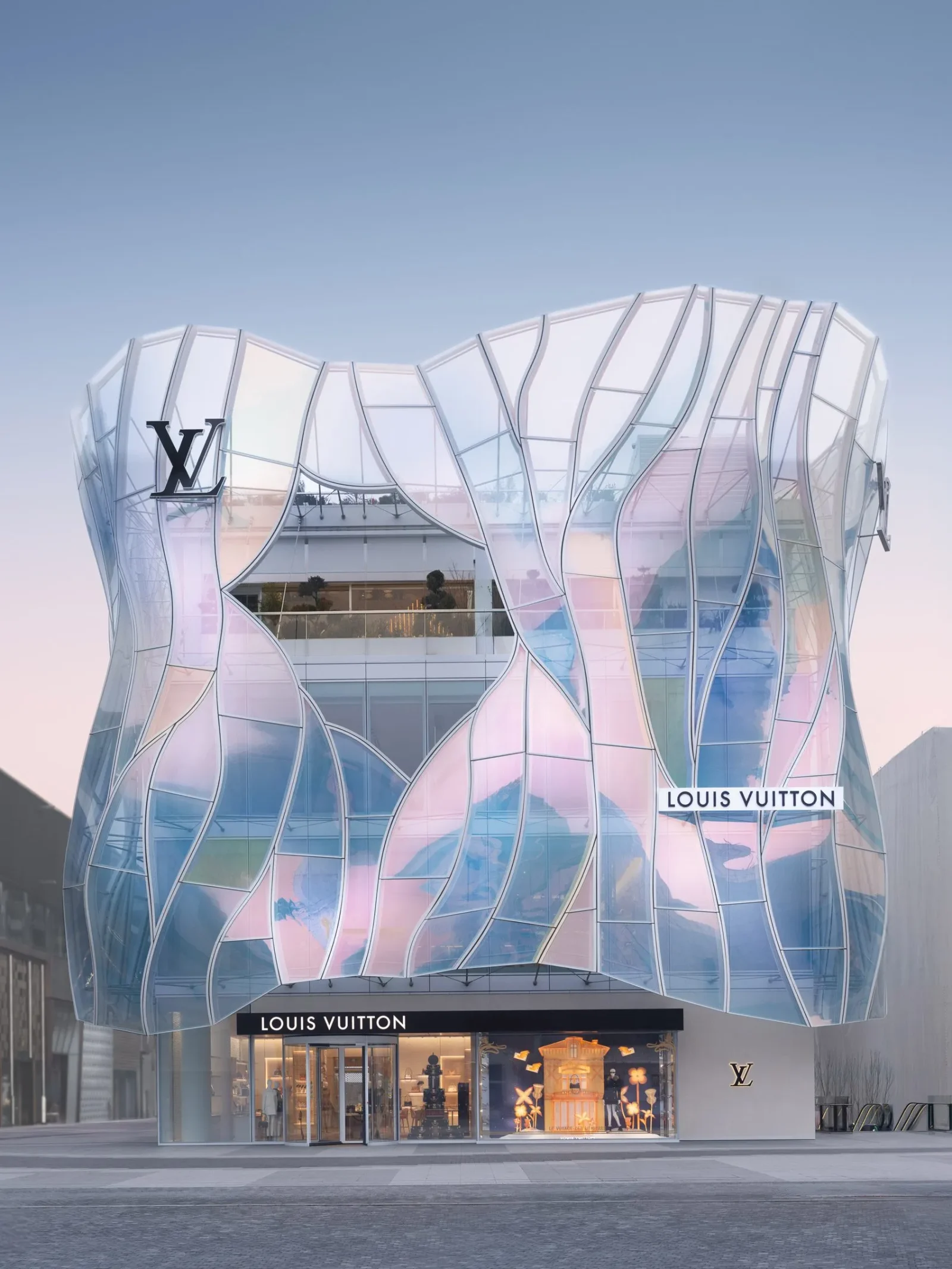
Instead of transparency, it relies on volumetric presence and iconic patterning, turning the building into a recognizable urban object that communicates brand heritage through form and scale.
Kinetic Surfaces and Optical Illusion in Retail Design
Retail façades are increasingly designed as perceptual systems and not just static envelopes. The Prada Fifth Avenue flagship uses a moiré-like scaffolding effect that changes as people move, creating a dynamic link between viewer and building. This shifting pattern turns the store into a living surface, where perception becomes part of the architectural experience.
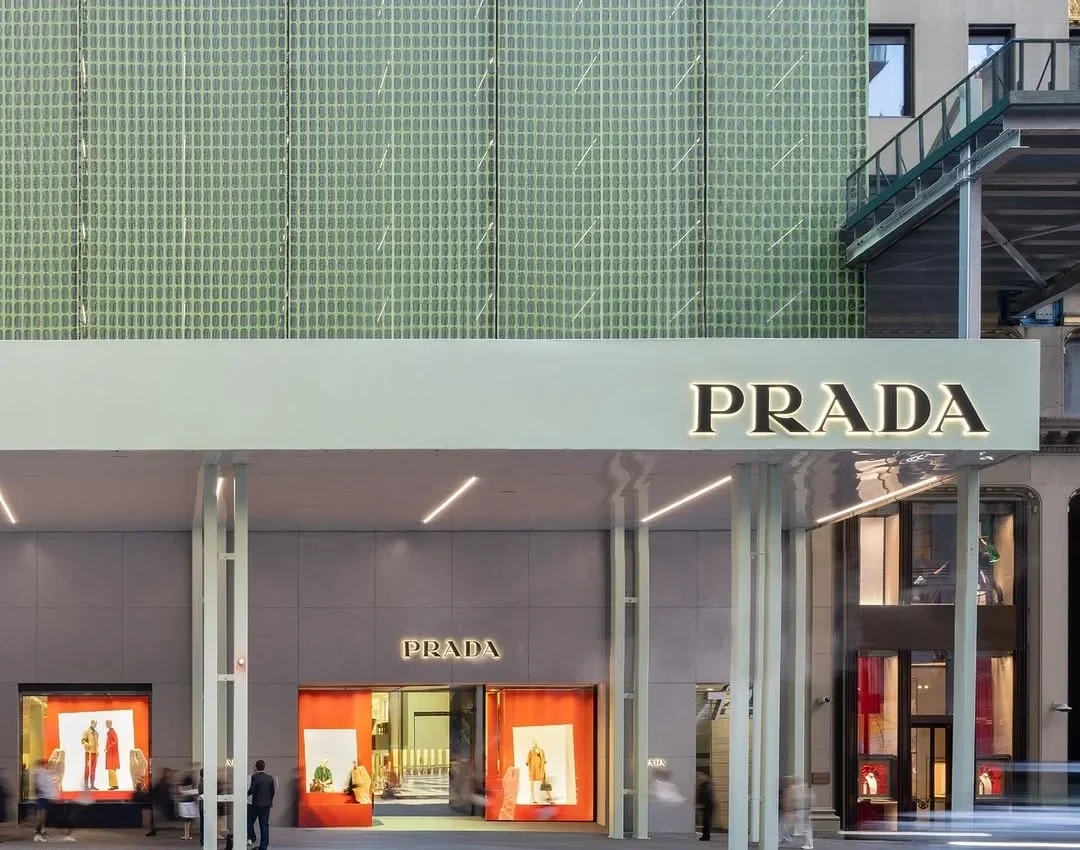
Across these projects, architecture behaves like a moving image that is responsive to light, motion, and distance. Glass, mesh, and layered structures are used not for enclosure alone but for visual vibration, giving retail buildings an almost cinematic quality. This shift reflects a broader trend in luxury branding where attention, not just presence, is the core design goal.
Interior Worlds from Retail Space to Curated Experience
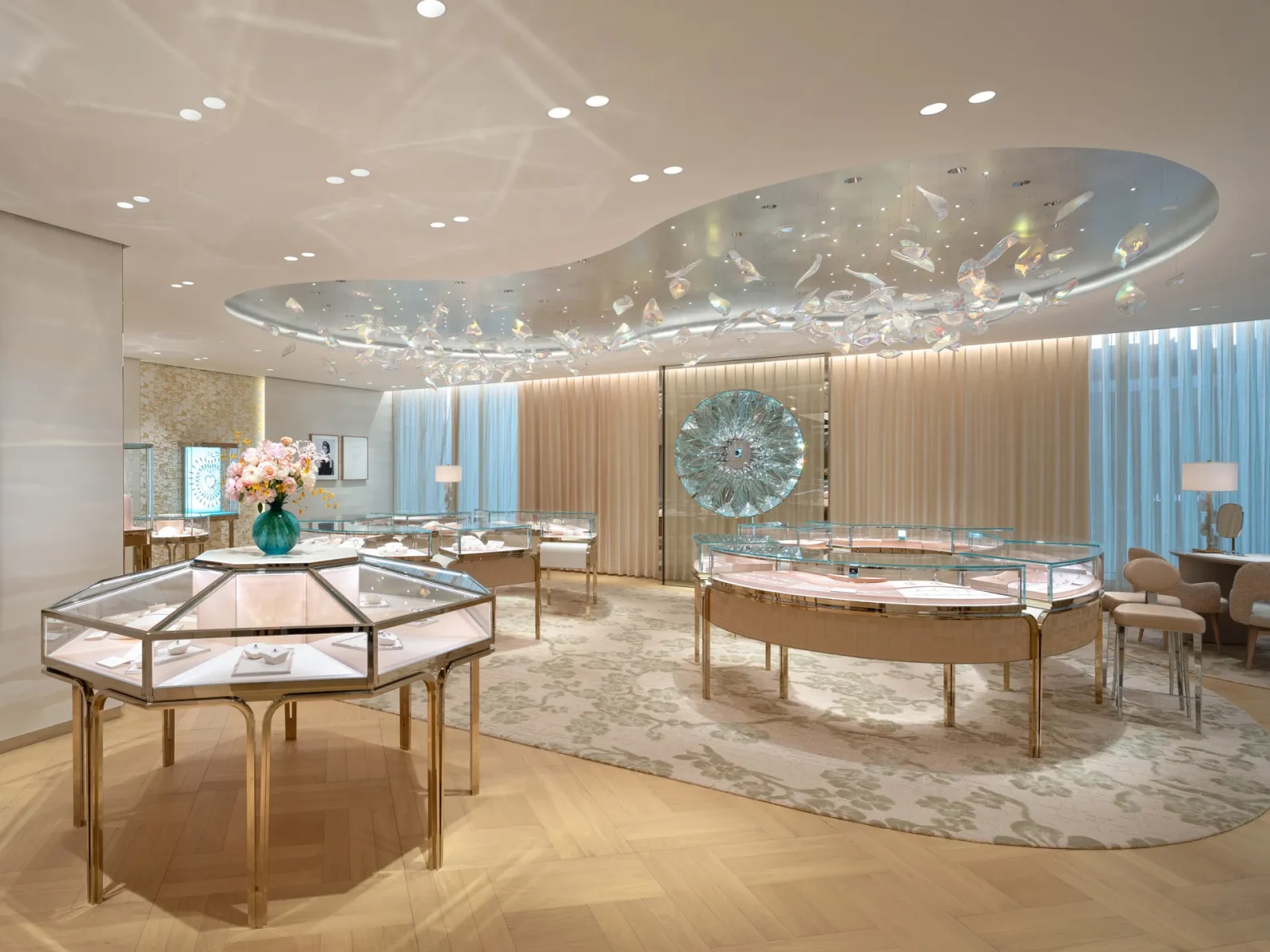
Inside these flagships, interiors extend the narrative established by the façade. Spaces are no longer organized purely for product display but for emotional sequencing and spatial storytelling. In Tiffany & Co.’s Beijing store, the interior contrasts the fluid exterior with warm, jewel-like atmospheres, where lighting and material tactility guide movement through carefully staged zones.
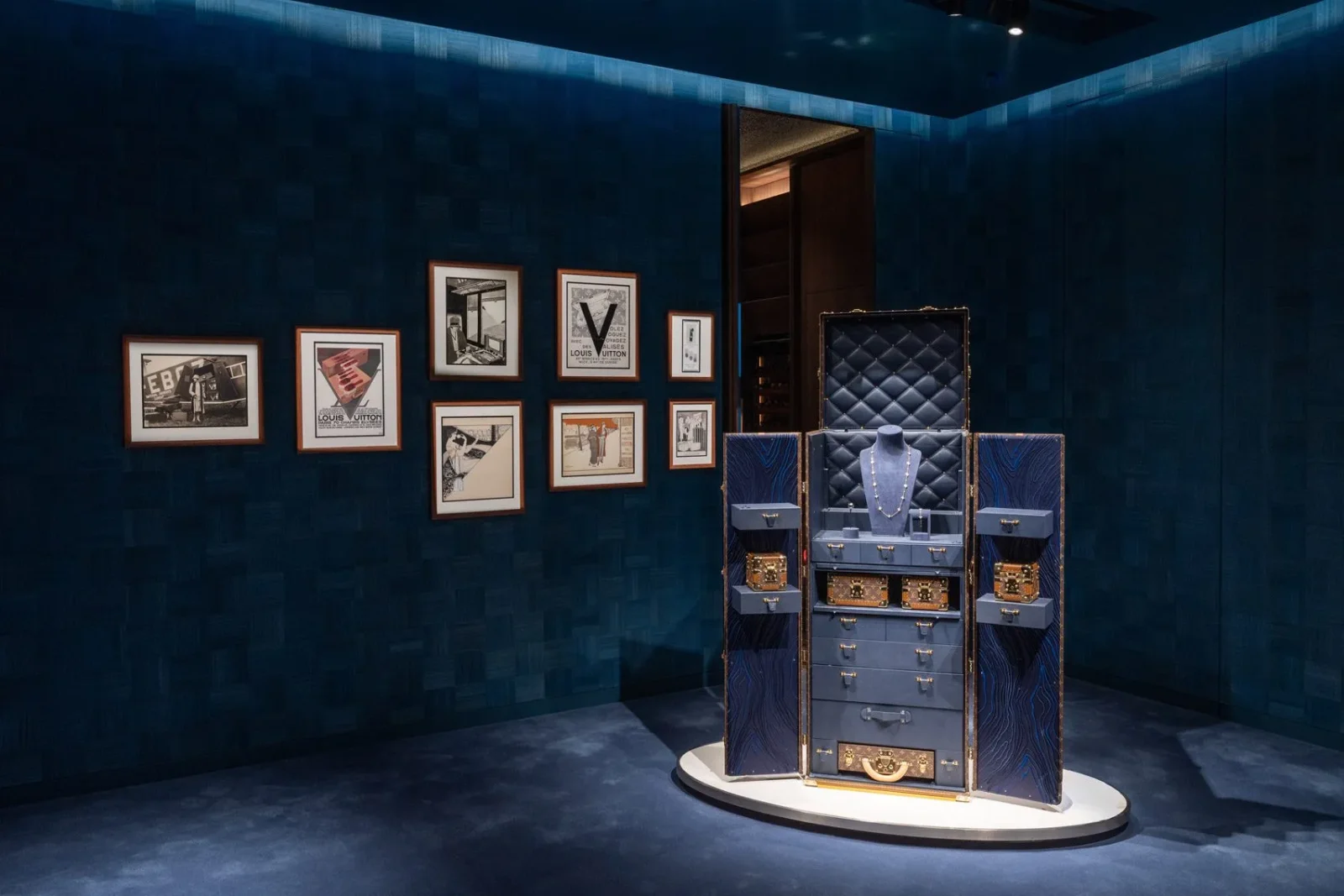
Similarly, Louis Vuitton’s interior environments in Beijing emphasize immersive spatial transitions, blending exhibition-like arrangements with retail functions. The boundary between store, gallery, and cultural space dissolves, reinforcing luxury as an experiential journey that steps beyond a transactional environment.
Luxury retail architecture today operates at the intersection of branding, urban design, and experiential storytelling. The façades of these flagship stores around the globe have evolved into expressive media, while interiors function as choreographed experiences. Together, they redefine retail as a spatial narrative or one where architecture is not a backdrop for commerce but the primary medium through which identity, desire, and cultural meaning are constructed.
Explore Courses
.jpg "Ondrej Chybik - Rethinking Architecture")