



Snøhetta, founded in 1989 by Kjetil Trædal Thorsen and Craig Dykers, has grown from a Norwegian design studio into a global practice spanning architecture, landscape, interiors, art, product, graphic, and digital design.
Named after a remote mountain in Norway, the firm first gained international attention with the Bibliotheca Alexandrina in Egypt, followed by projects such as the Norwegian National Opera and Ballet in Oslo and the National September 11 Memorial Museum Pavilion in New York. Snøhetta is guided by the belief that design should strengthen our sense of surroundings, identity, and relationships.
The studio integrates sustainability at every scale, from urban master plans to furniture designs, ensuring its work responds to major global challenges such as climate change.
1. The Glasshouse Theatre (Queensland Performing Arts Center) – Brisbane, Australia
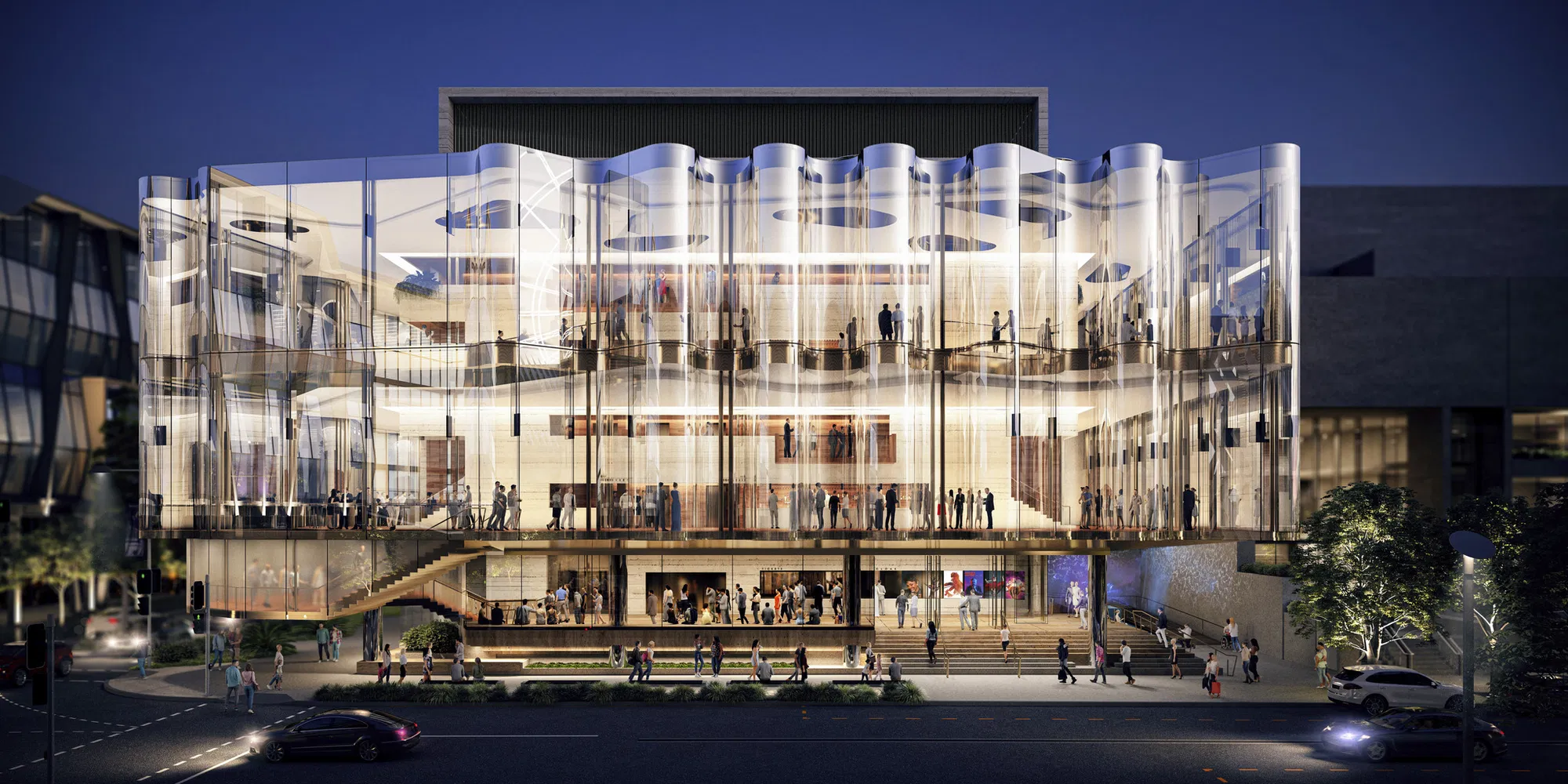
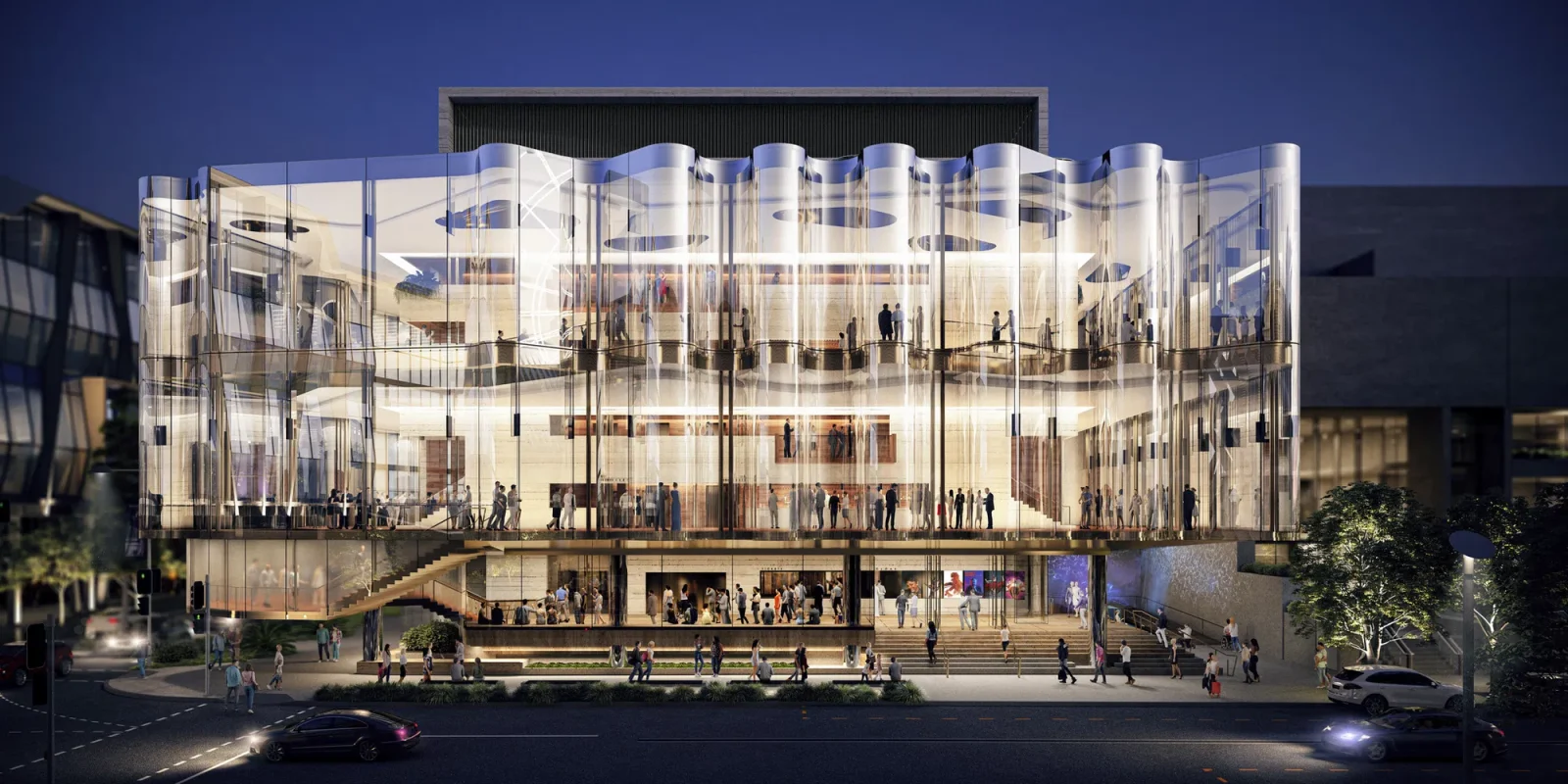
In 2019, Snøhetta, together with Brisbane-based Blight Rayner, won the competition to design the new 1,500-seat Glasshouse Theatre at the Queensland Performing Arts Center (QPAC). The venue is set to host ballet, opera, drama, musicals, and contemporary performances and is supported by the Queensland Government.
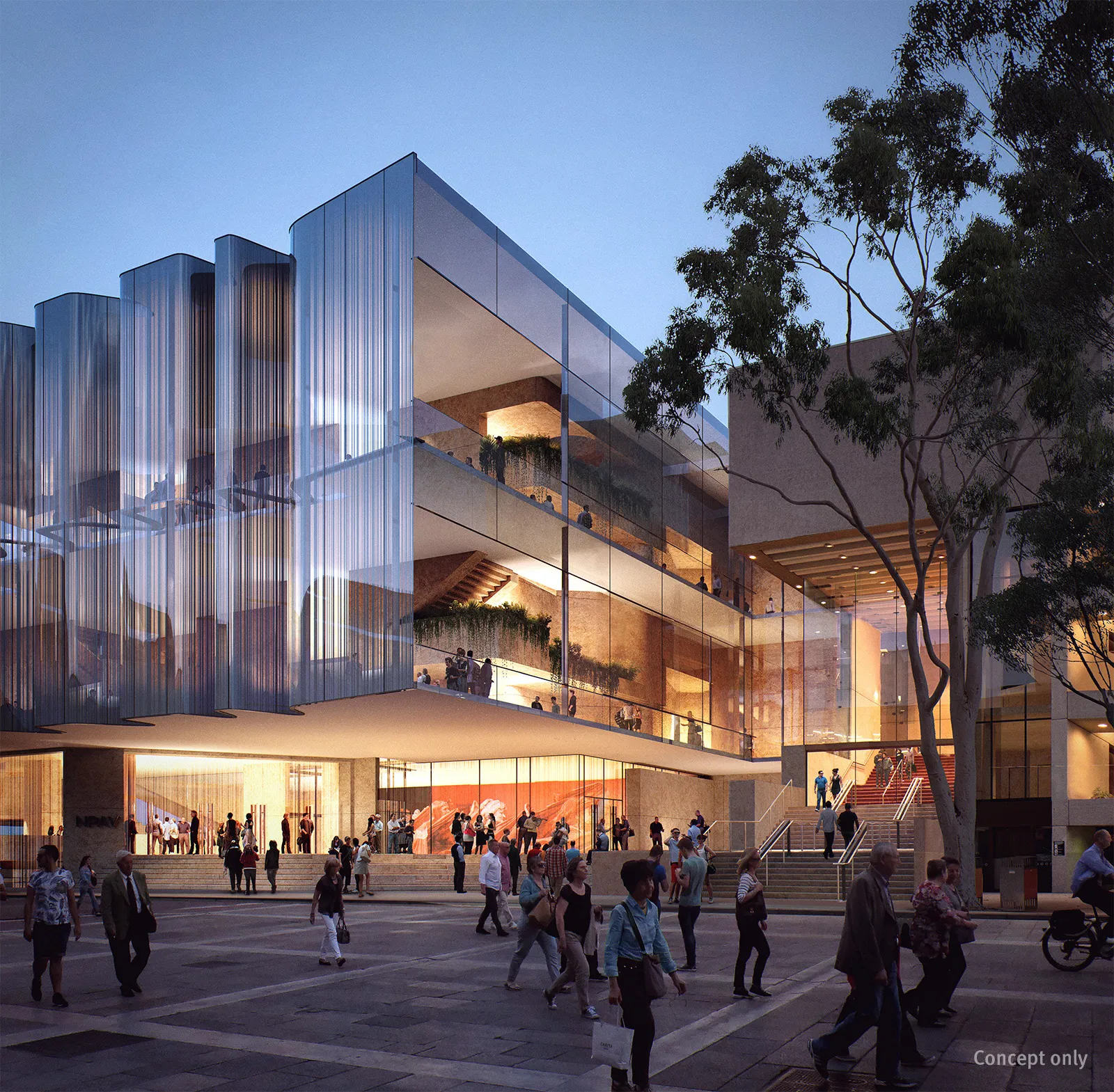
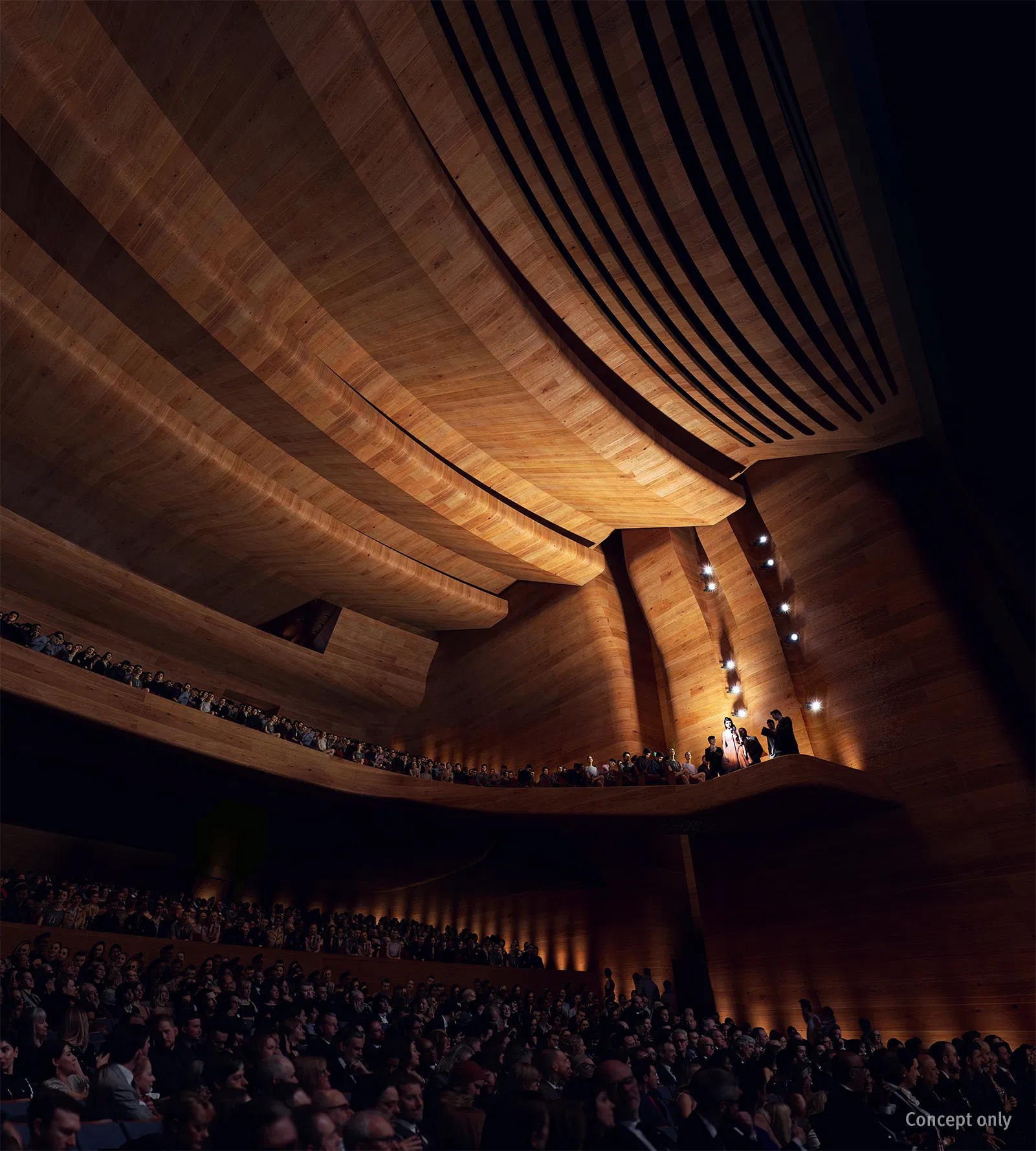
The design honors the Turrbal and Yuggera people and is inspired by the Brisbane River, with Aunty Lilla Watson’s poem about the kurilpa (a native water rat) shaping the concept. At its heart is a concrete auditorium that connects to Robin Gibson’s 1986 QPAC building, wrapped in a rippled glass facade that reflects the movement of water. Inside, curved timber ribbons create a flowing space, while hidden black areas contain technical systems.
Natural materials, timber, deep green seating, and black panels reflect Queensland’s forests. The balconies are pulled close to the stage. Extra balcony boxes improve sightlines, and aisles are arranged for comfort and access. A flexible orchestra pit with movable lifts allows for multiple stage setups, including a thrust stage.
The Glasshouse Theatre was also shortlisted in 2024 for the World Architecture Festival Awards in the Future Projects – Culture category.
2. Kringkastern Headquarters – Oslo, Norway
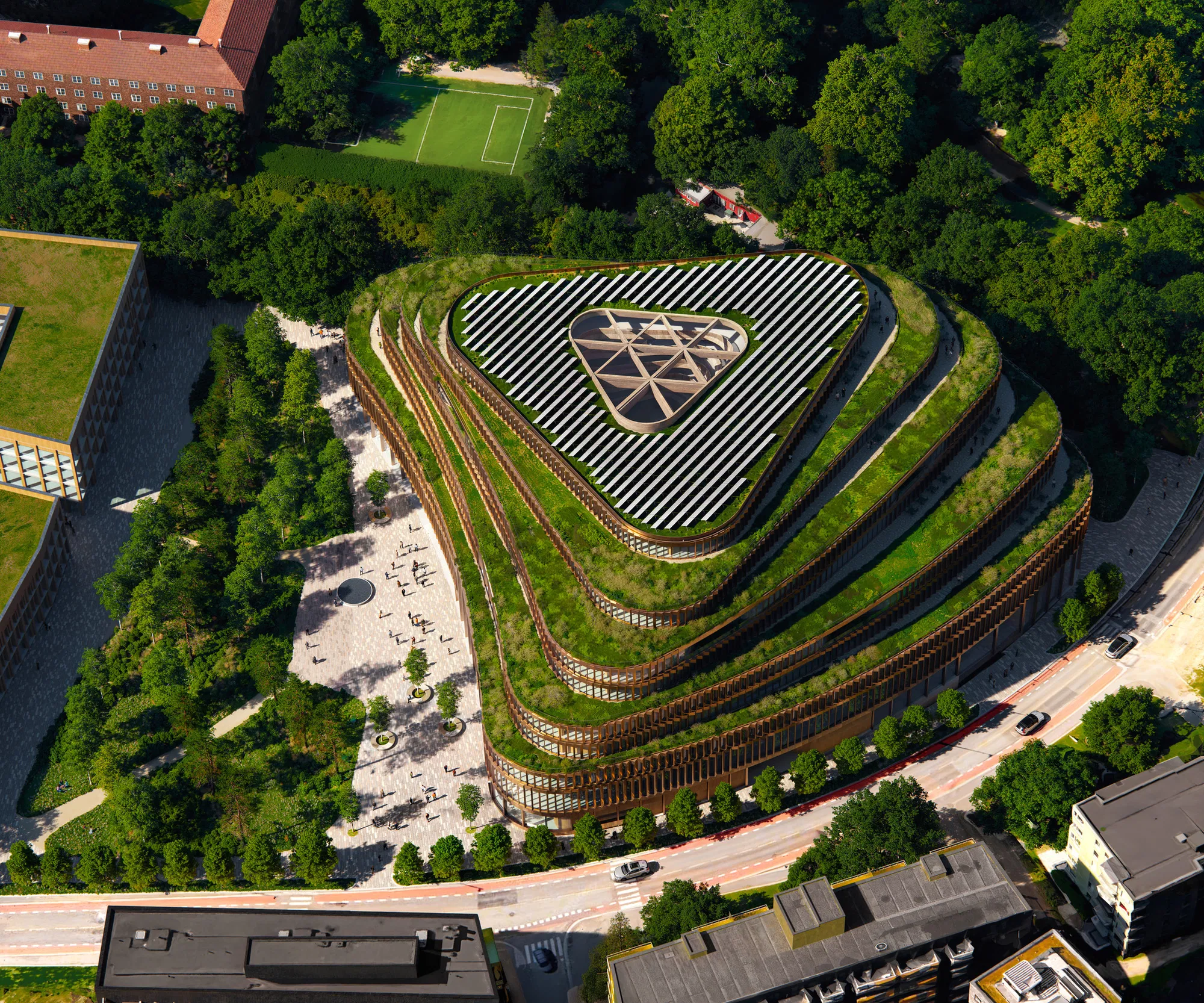
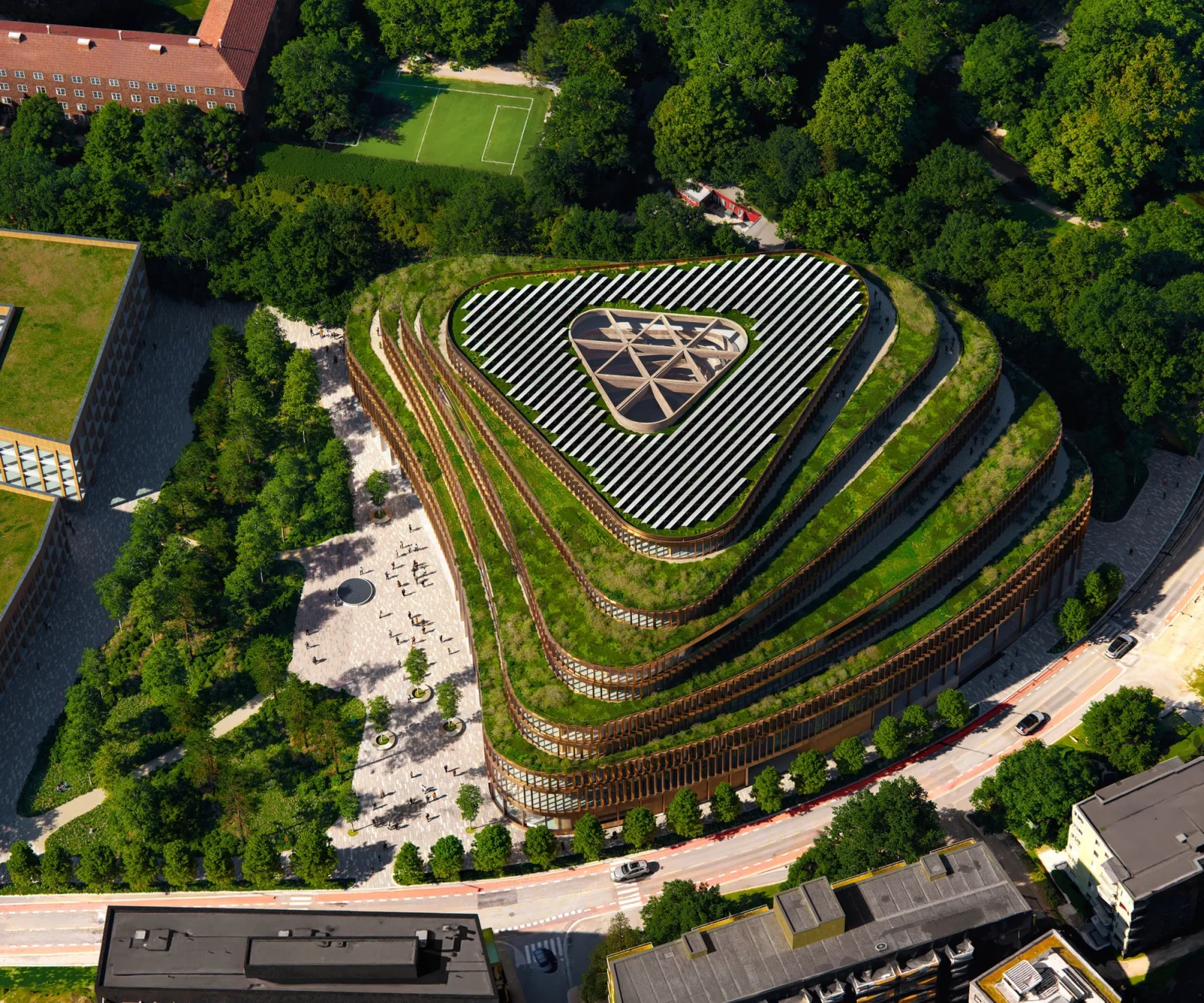
The new Kringkastern (NRK) headquarters and broadcasting center in Oslo was completed as part of an ongoing commitment to media architecture. The building’s form features soft, curved lines and terraced levels. Its composite volume transitions between the urban environment and surrounding green spaces, while green terraces on all upper floors provide outdoor areas for staff.
Landscaping and planting have been planned according to wind and climate analyses. A four-acre park at the entrance connects the site to Kampen Park, establishing a new communal green space for the neighborhood and visitors.
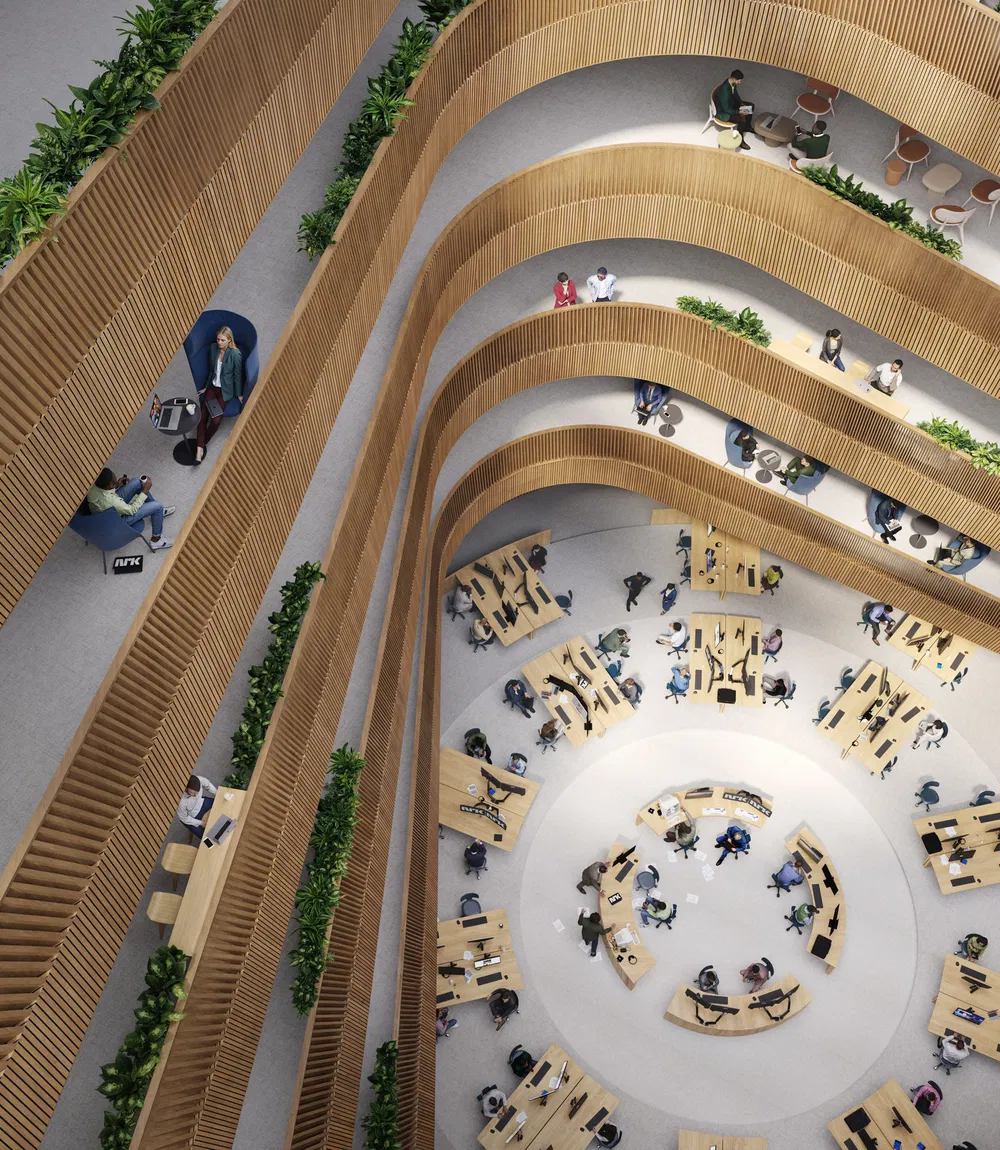
The glass facade conveys the credibility of a national media house. The compact, terraced form gives the building a distinct profile visible from afar without dominating the skyline, while extensive planting integrates nature into the architecture and enhances biodiversity. At night, the warm wooden core and lighting highlight the geometric forms.
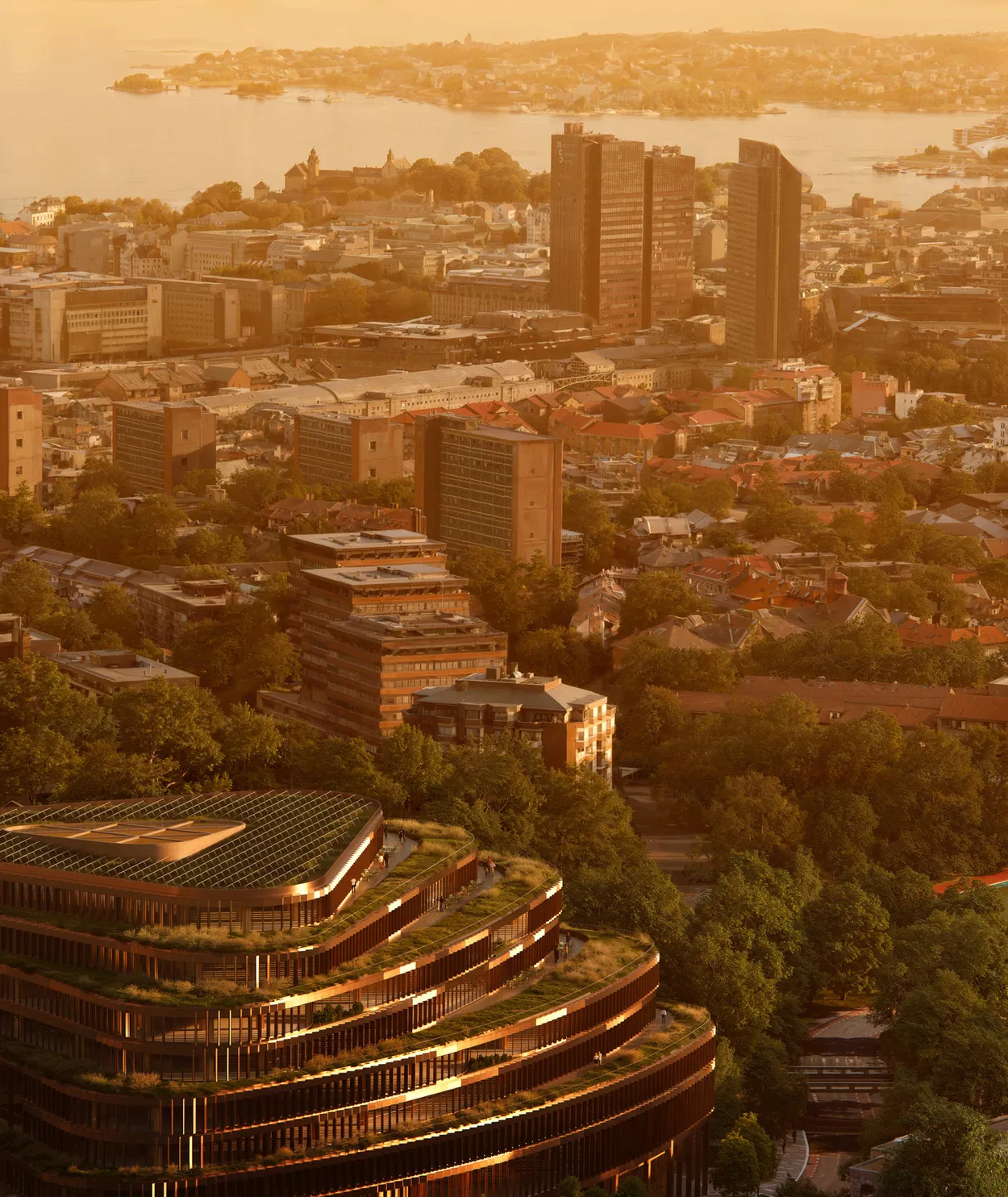
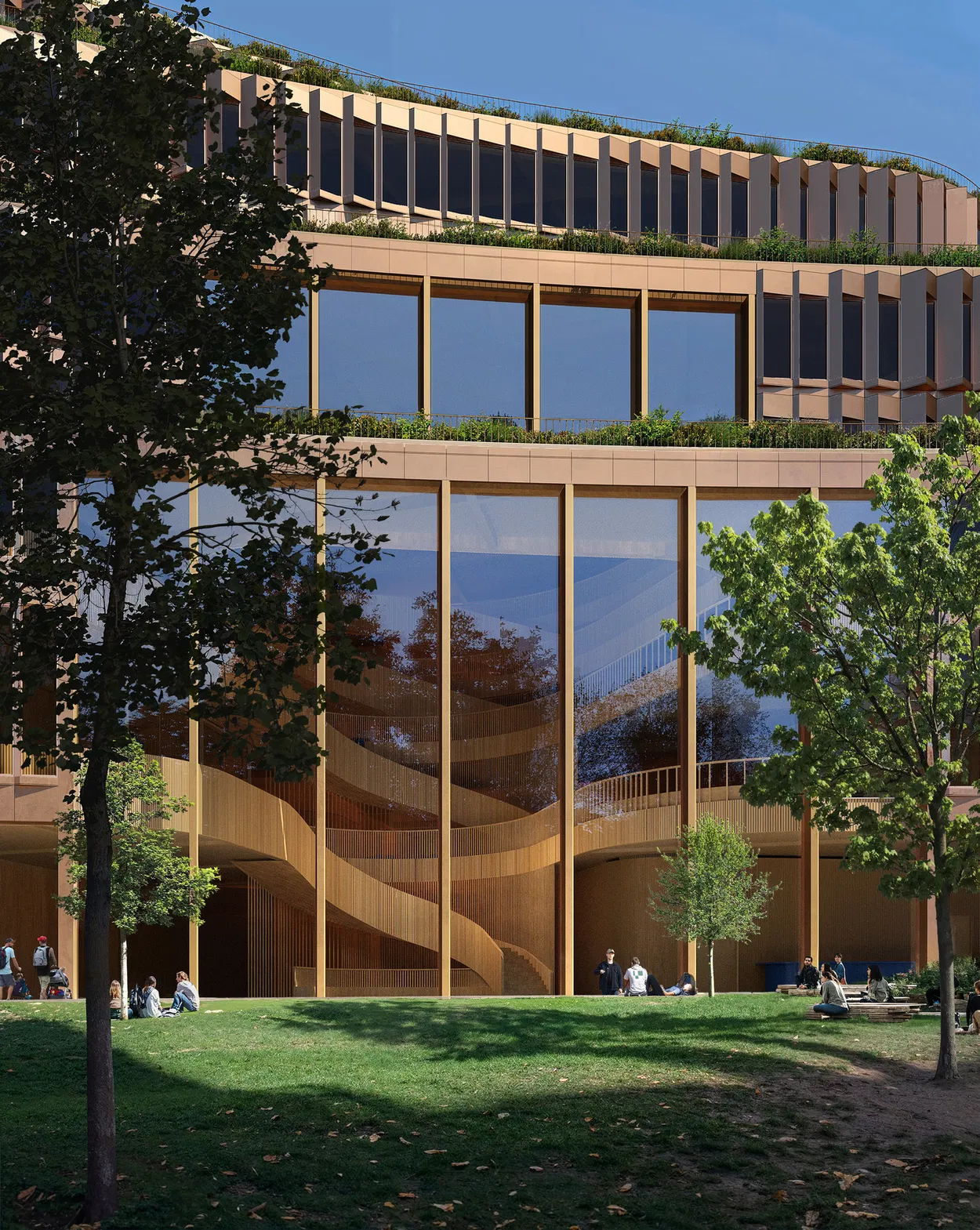
The visible wooden structure provides durability and environmental performance, while planting and green terraces reduce heat and wind islands, improve air quality, and support biodiversity. Building-integrated solar panels contribute to renewable energy production.
3. NOT A HOTEL Vacation Home – Rusutsu, Hokkaido, Japan
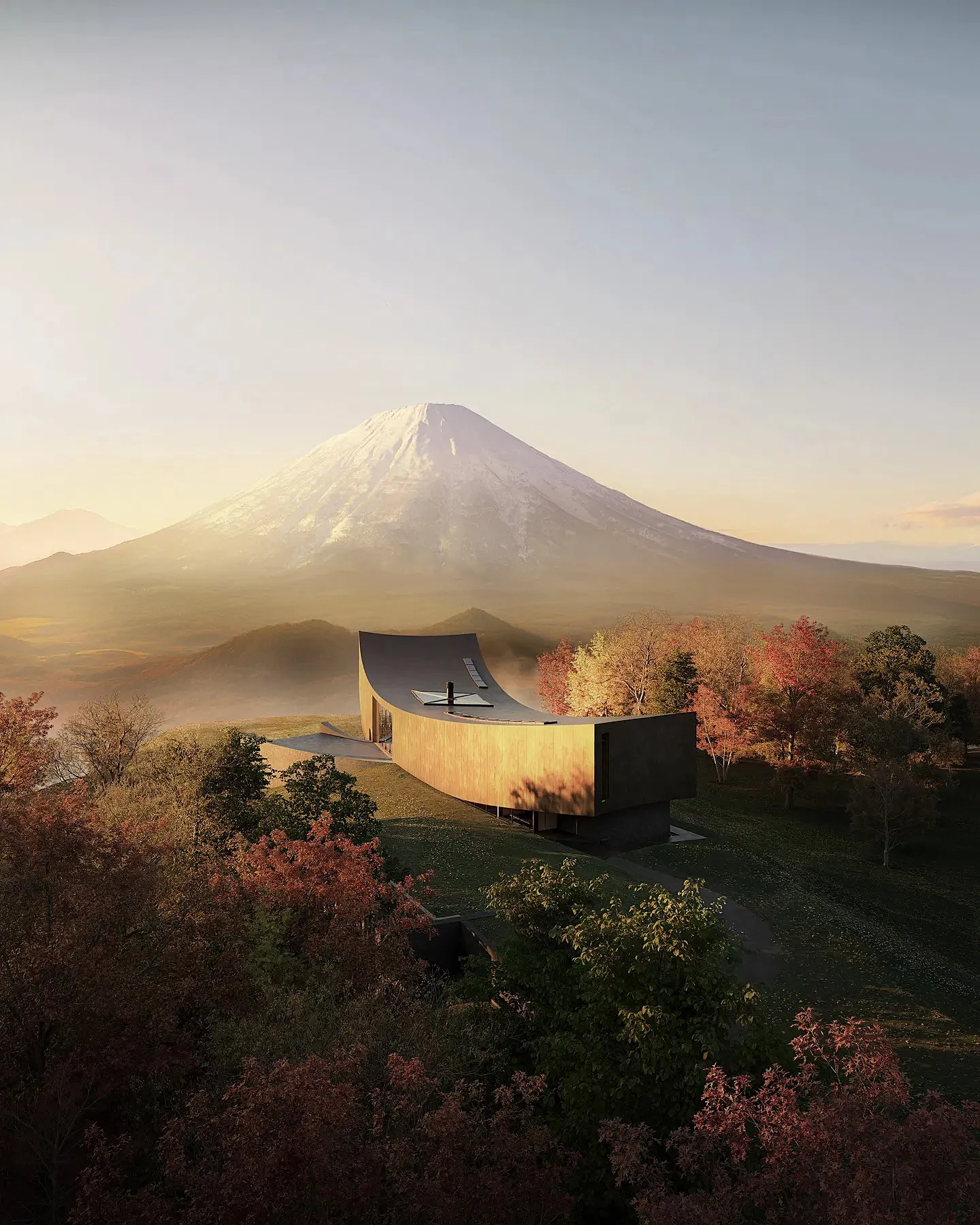
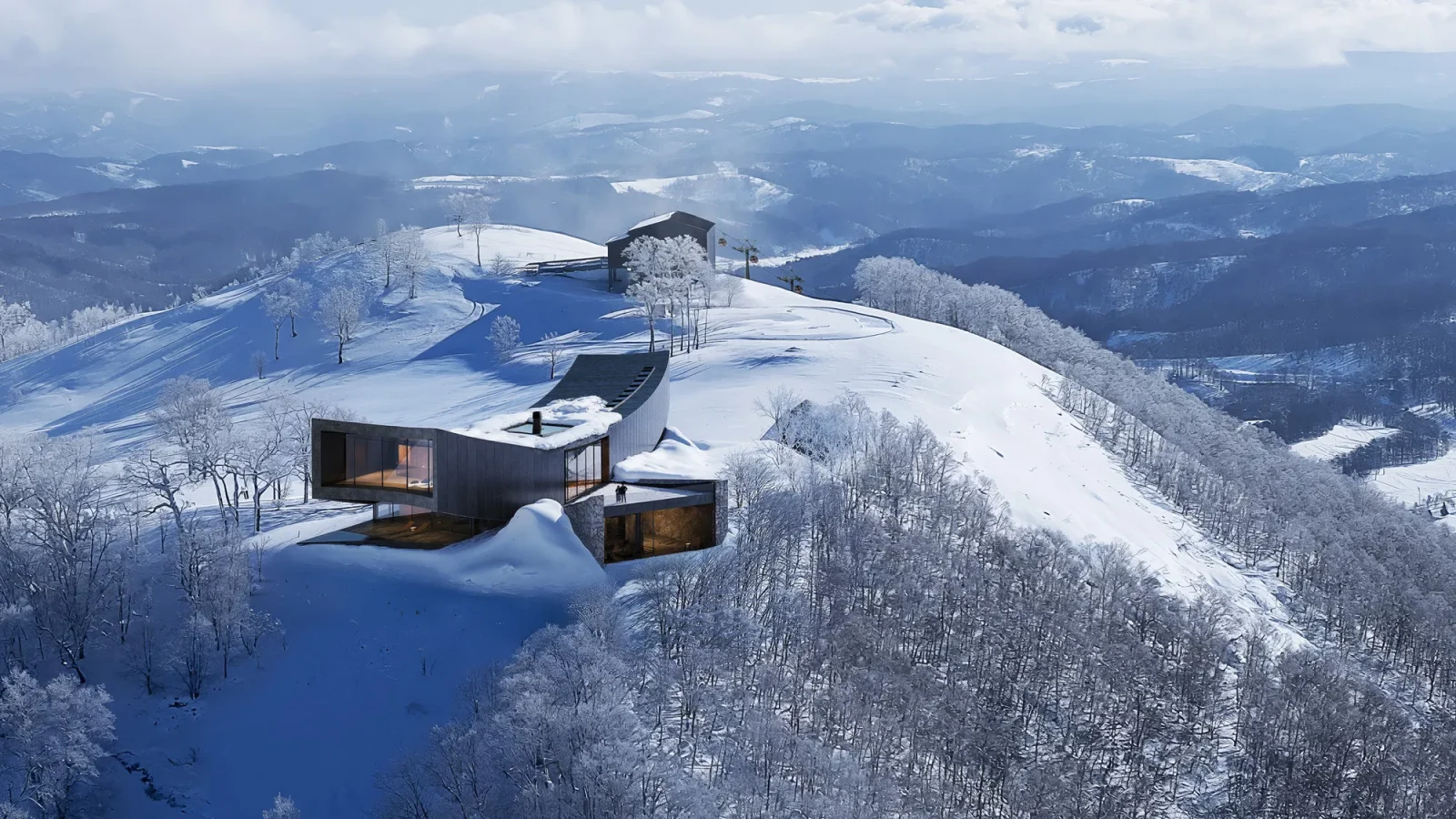
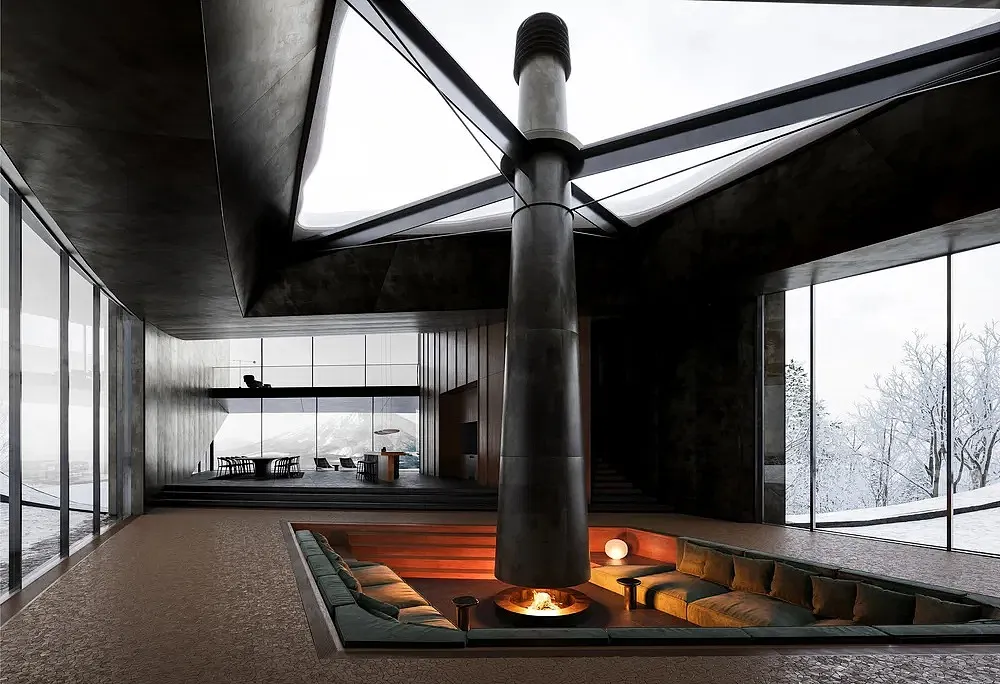
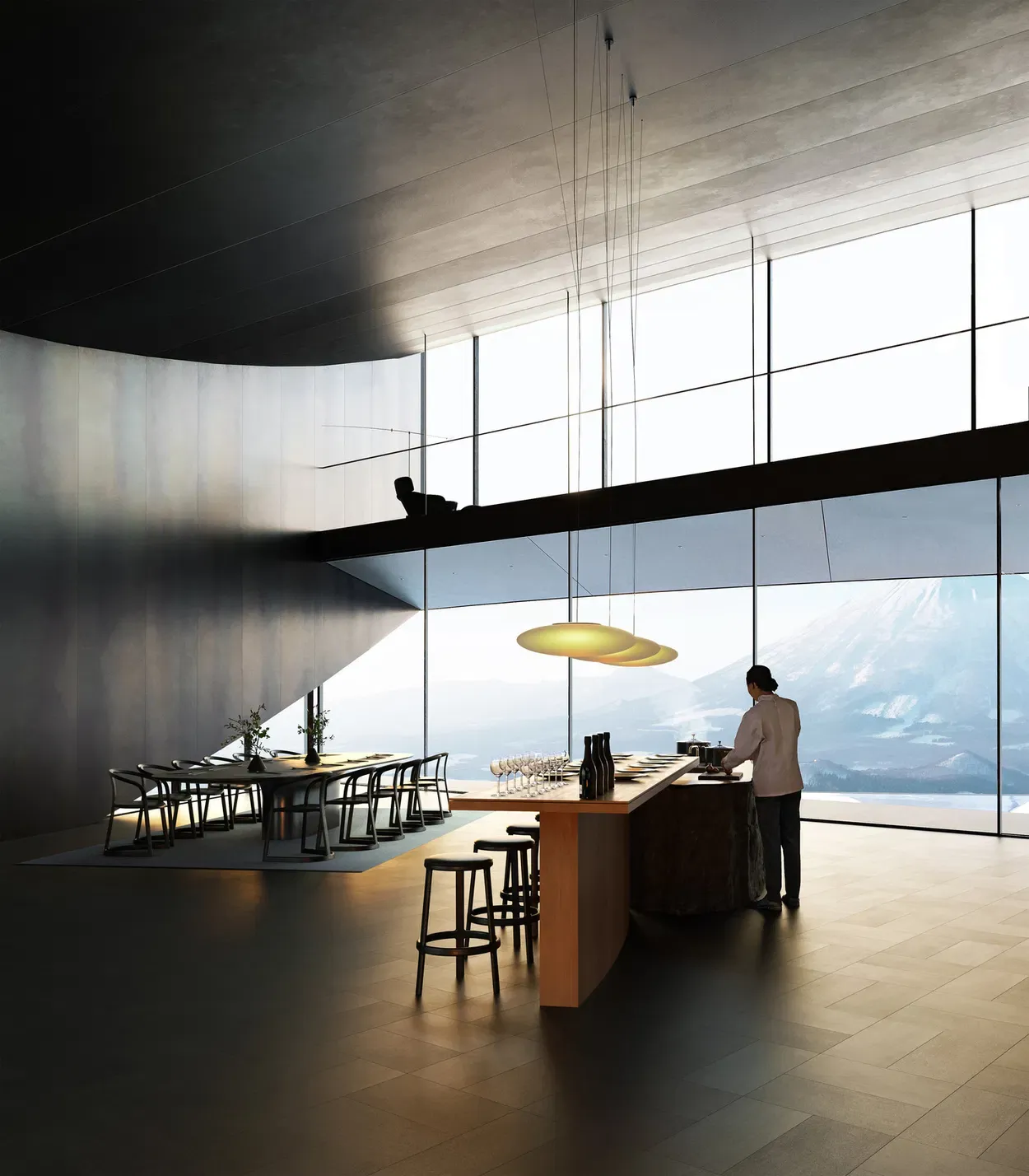
Snøhetta is designing a vacation home for NOT A HOTEL at the top of Rusutsu Resort on Hokkaido Island, Japan. The place is known for its powder snow in winter and scenic hiking in summer. This 1,200 sqm home offers views of Mount Yotei.
It features two linear volumes placed perpendicularly, gently curving at the center. The lower volume, partly underground, houses a gym and sauna, while the upper volume contains the living room, kitchen, dining area, outdoor bath, and central courtyard. Bedrooms and a study hover above the ground, creating an interesting layout.
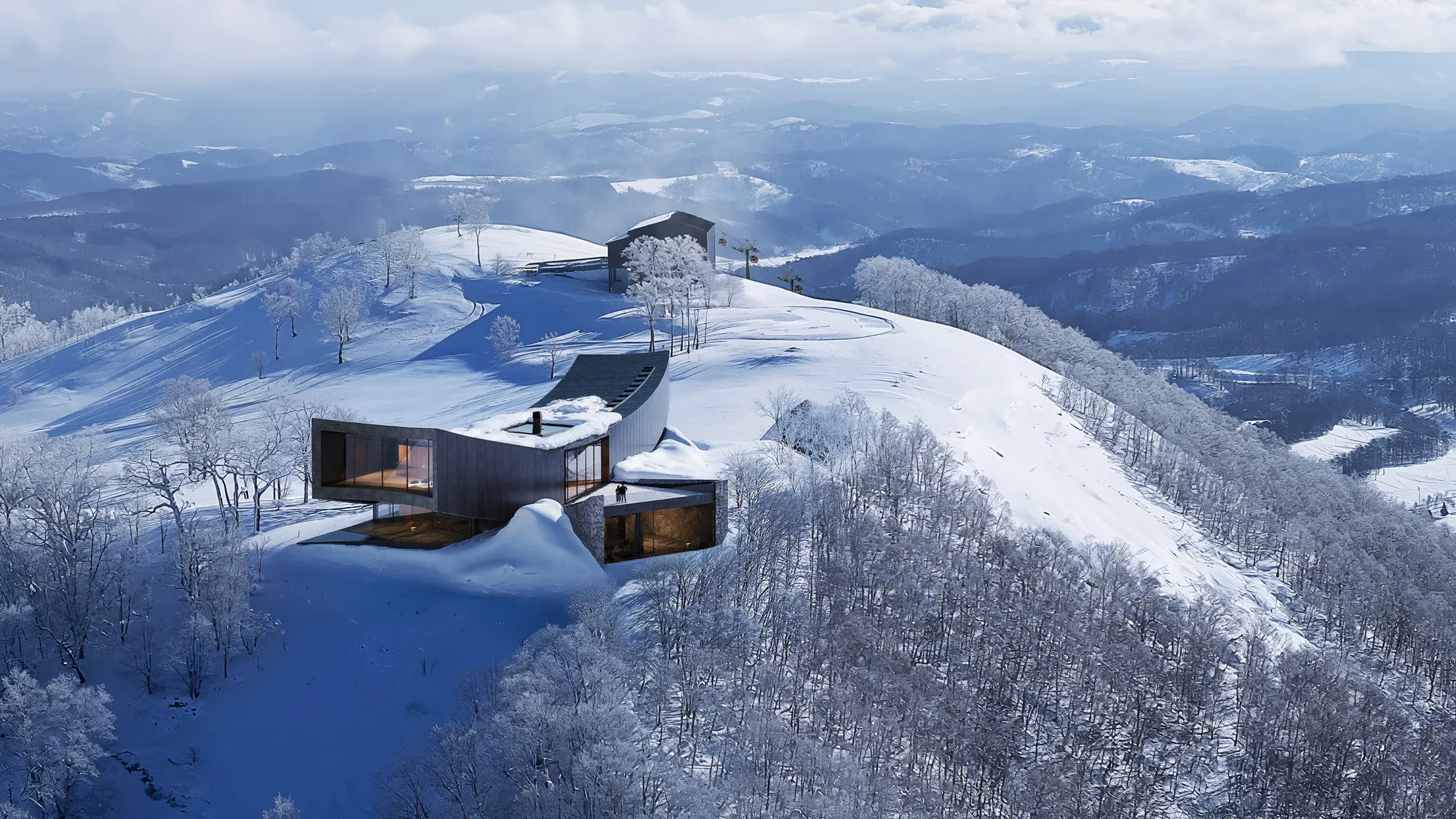
The design is inspired by the zenith, symbolizing elevation and aspiration. The central courtyard serves as a gathering space for social interaction. Expansive glass facades bring in natural light and connect the interiors with the landscape, while locally sourced stone and wood ensure sustainability.
4. Harbourside – Darling Harbour, Sydney, Australia
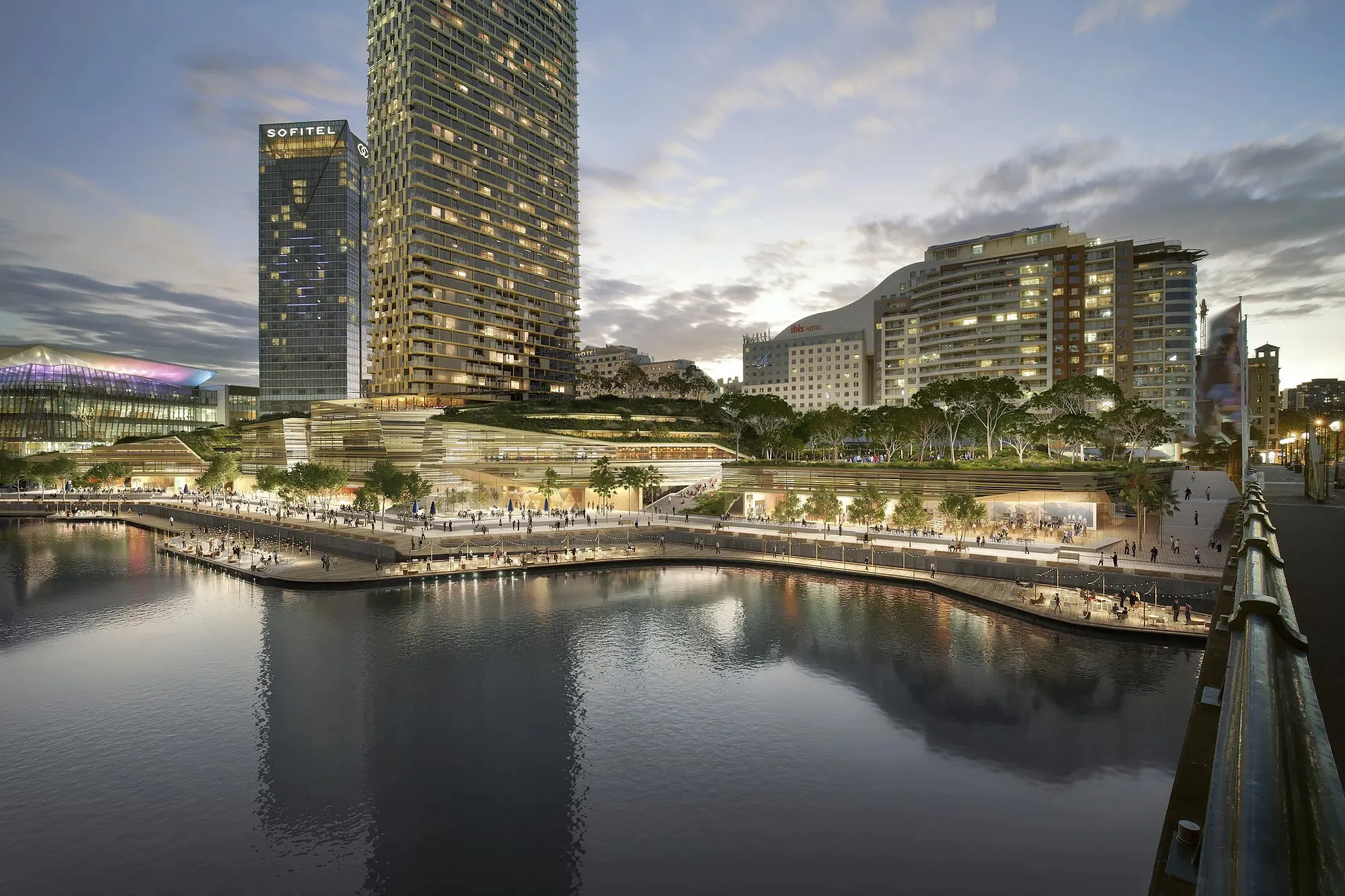
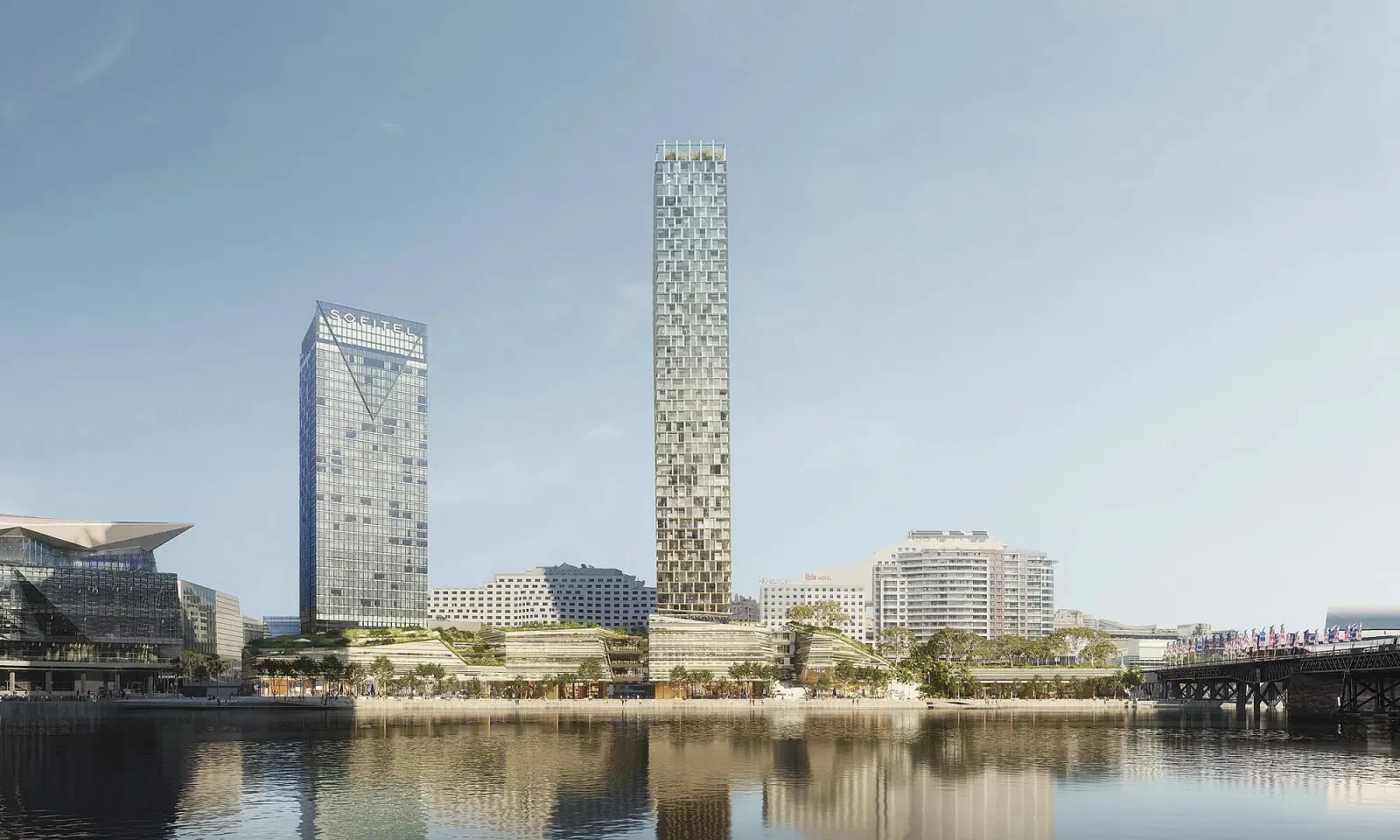
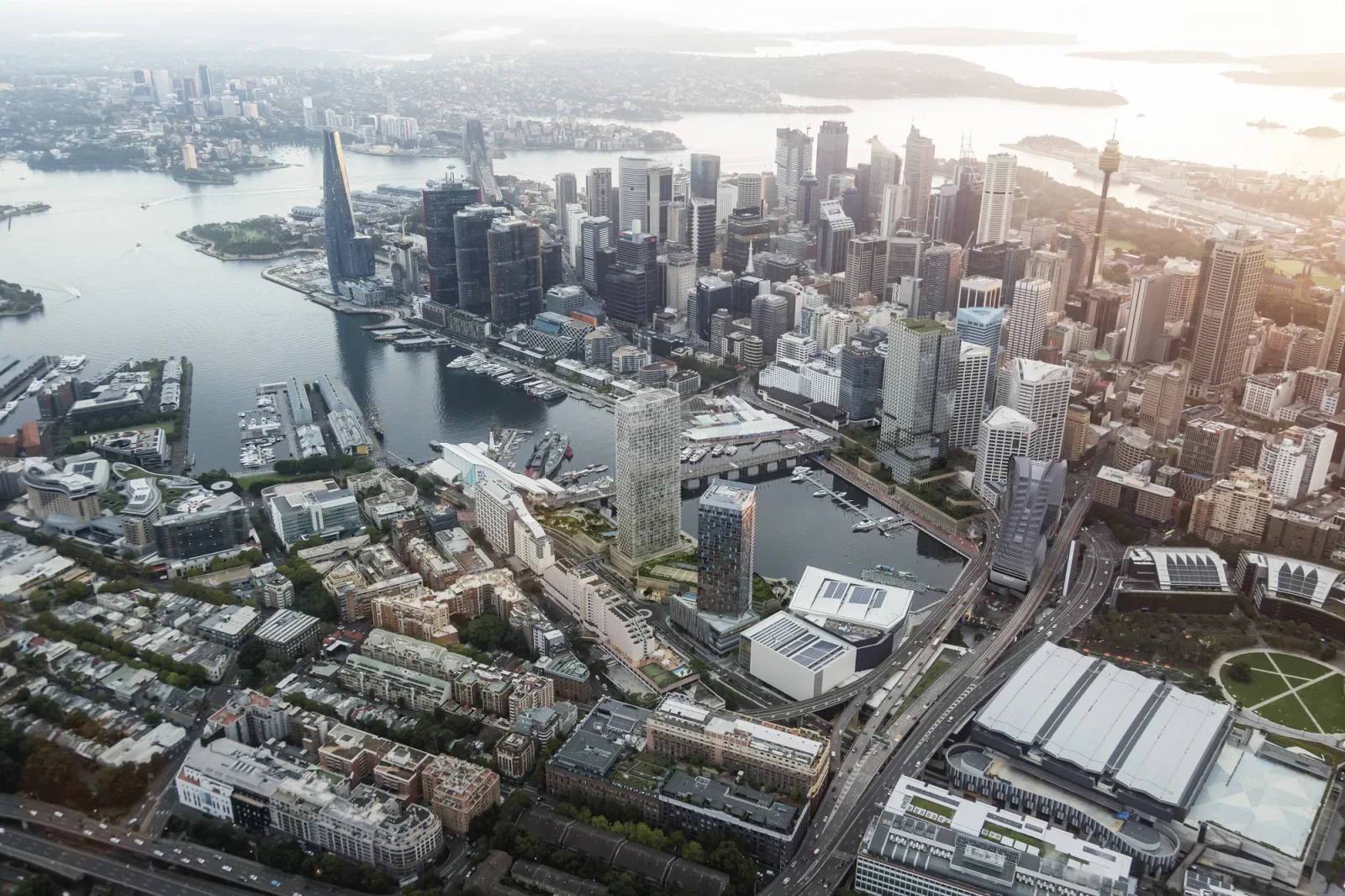
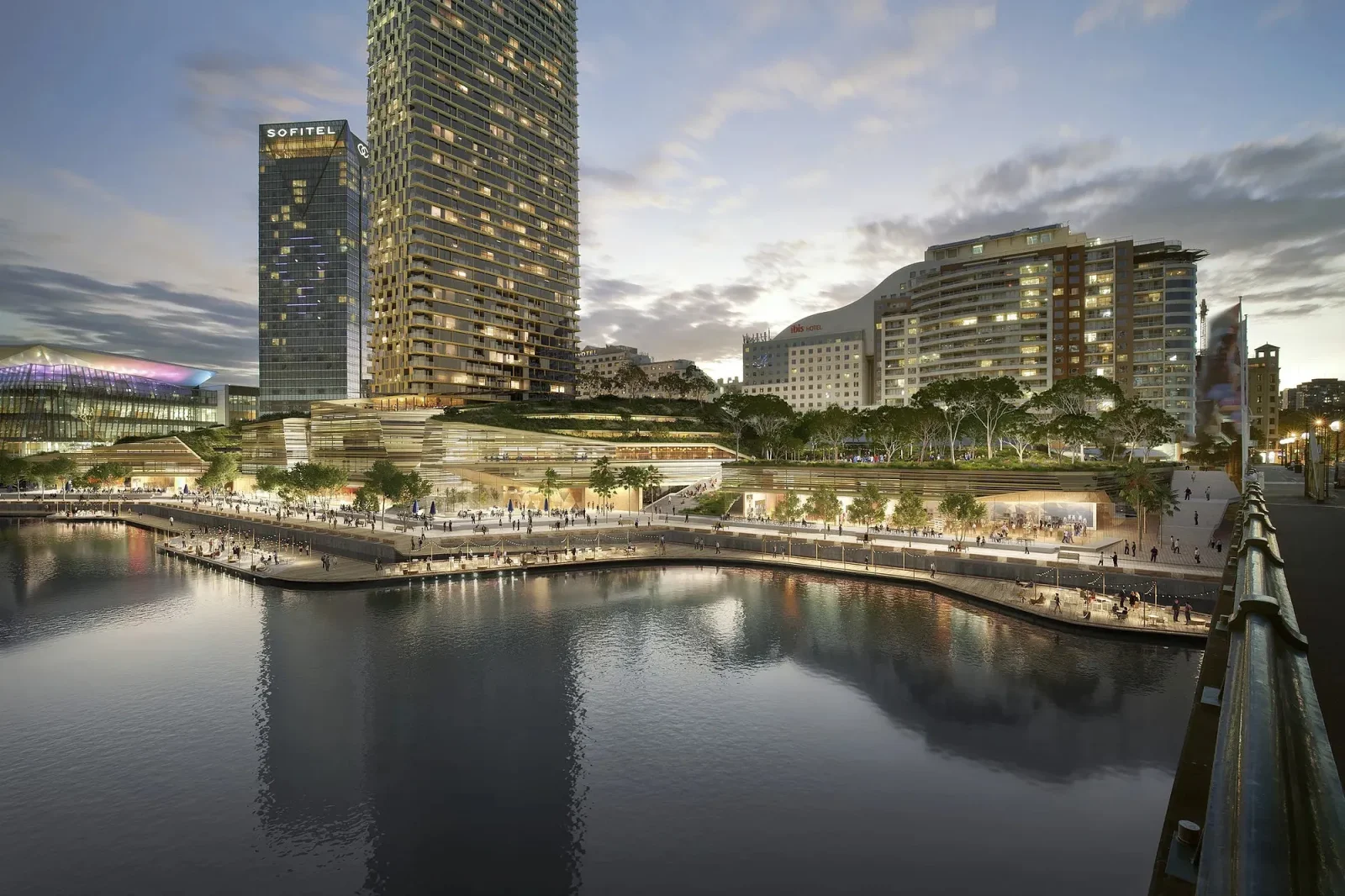
Snøhetta, in collaboration with Hassell, won an international design competition to transform Harbourside in Darling Harbour, Sydney, into a sustainable and iconic destination. Spanning 240 meters of waterfront, the mixed-use redevelopment includes premium retail, hospitality, entertainment, a 42-storey residential tower, upgraded public spaces, and a new public square connecting to Pyrmont Bridge. The project, led by developer Mirvac, aims for ambitious Green Star and WELL ratings.
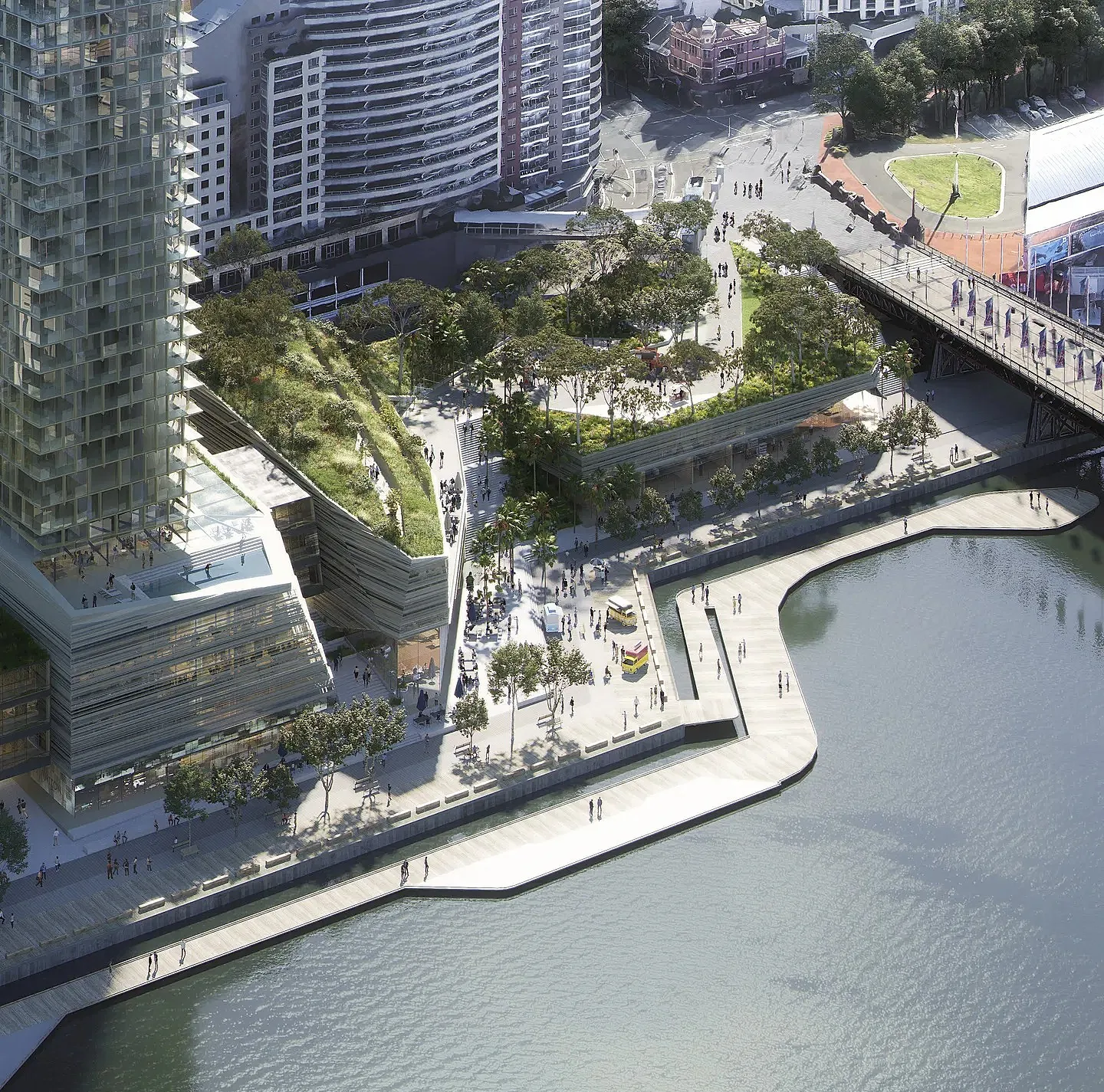
The design is centered around a network of welcoming public open spaces, incorporating natural materials, landscaping, water features, terraces, and productive gardens. Guardian Square forms the heart of the precinct, acting as a community gathering space.
The project integrates the history and ecology of the site, acknowledging Gadigal and Wangal Country and the Tumbalong area, which was historically an important gathering place for Aboriginal people.
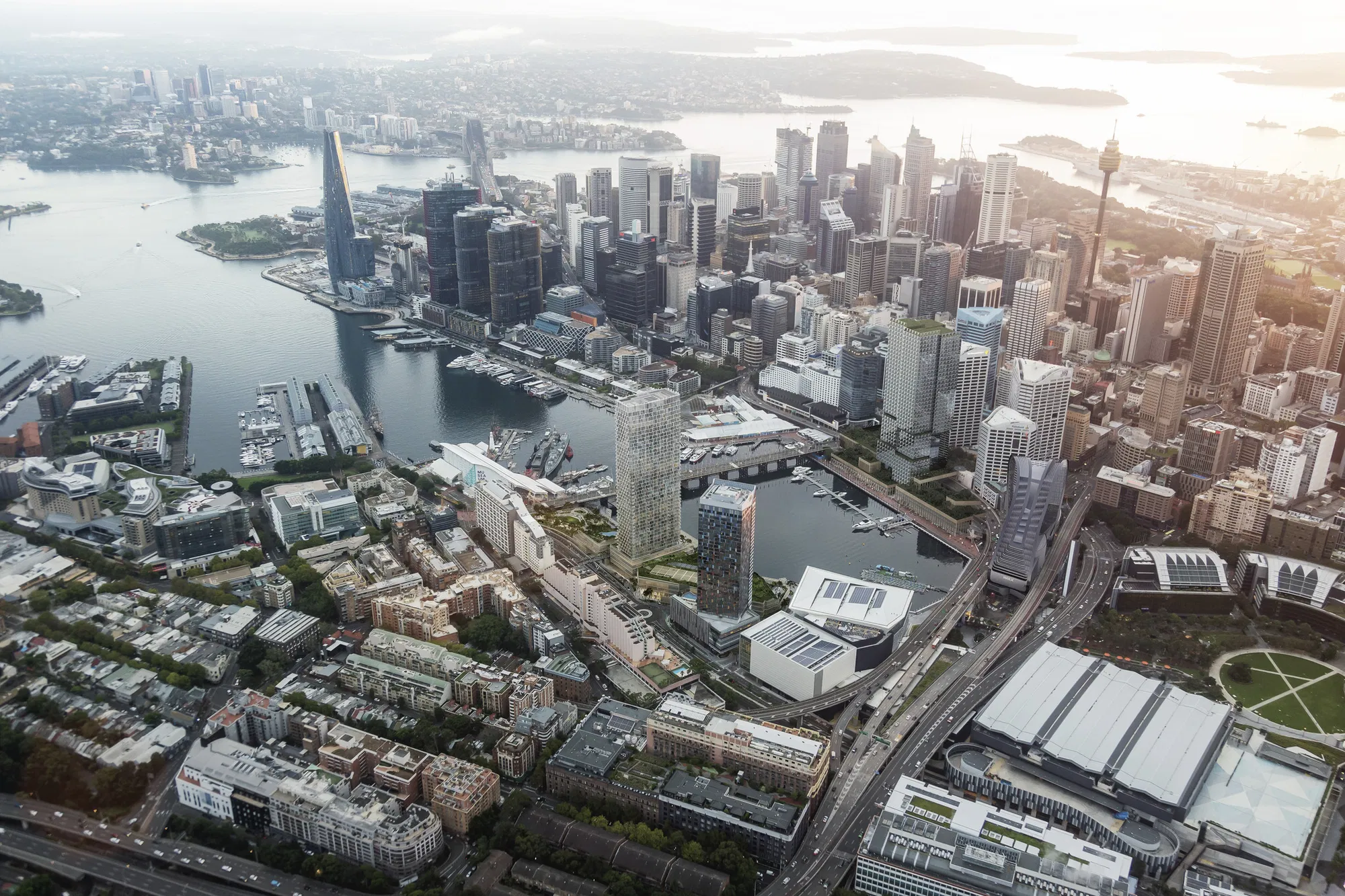
The inclusive waterfront destination will provide approximately 24,000 sqm of office space, 7,000 sqm of retail, 350 luxury apartments, and 10,000 sqm of public domain, including the 3,500 sqm Guardian Square and an expanded waterfront promenade.
5. Beijing Library – Tongzhou District, Beijing, China
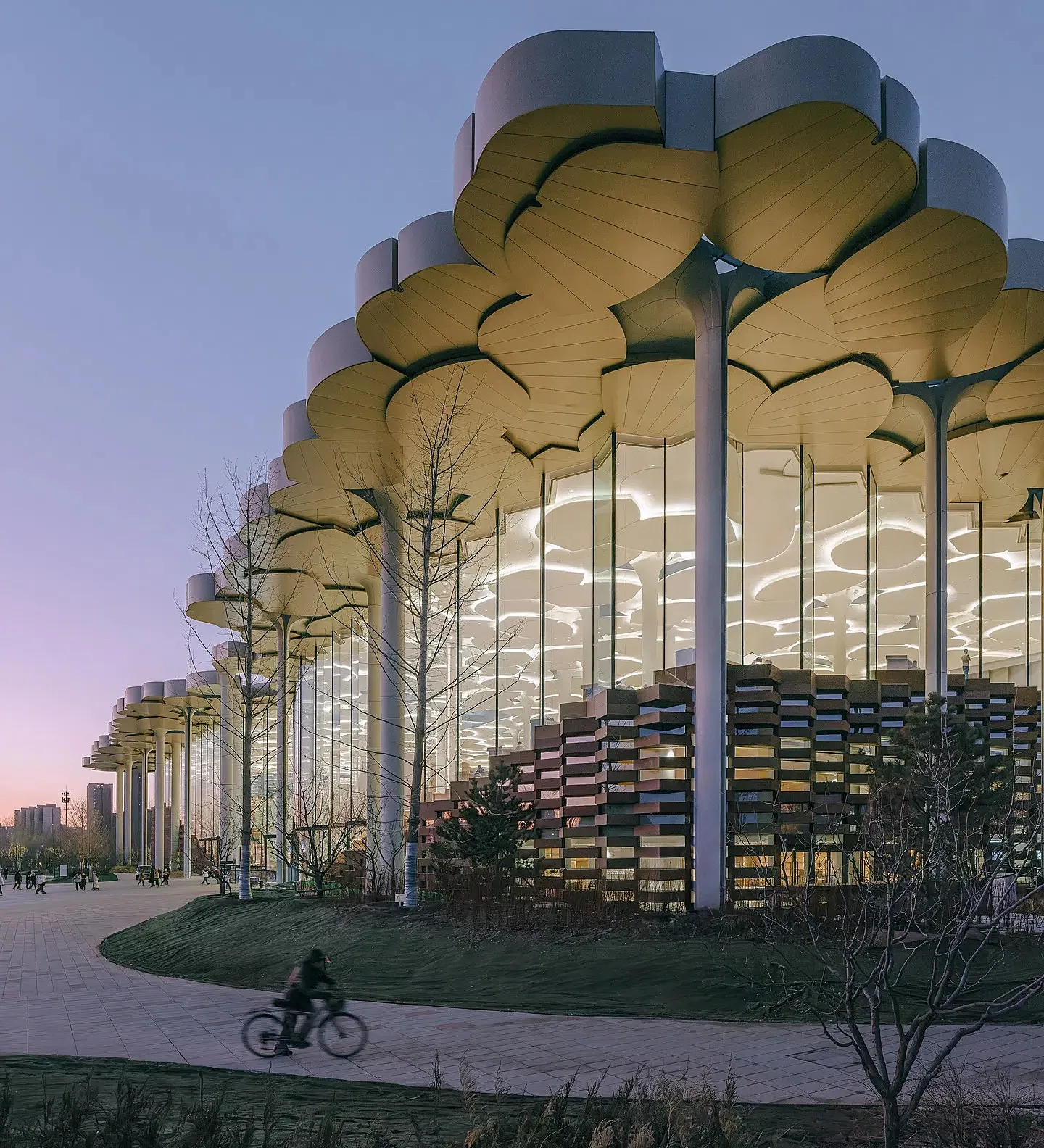
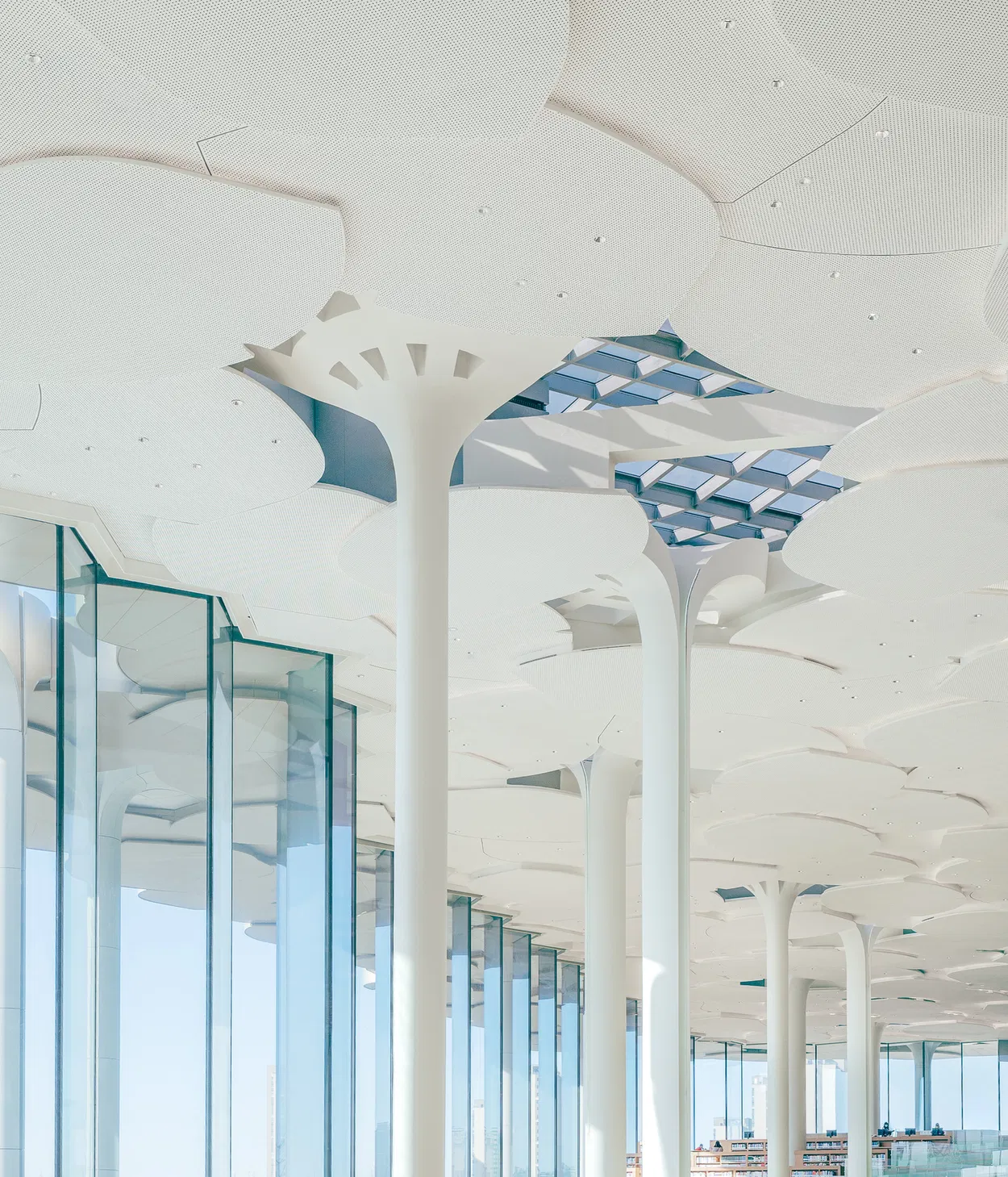
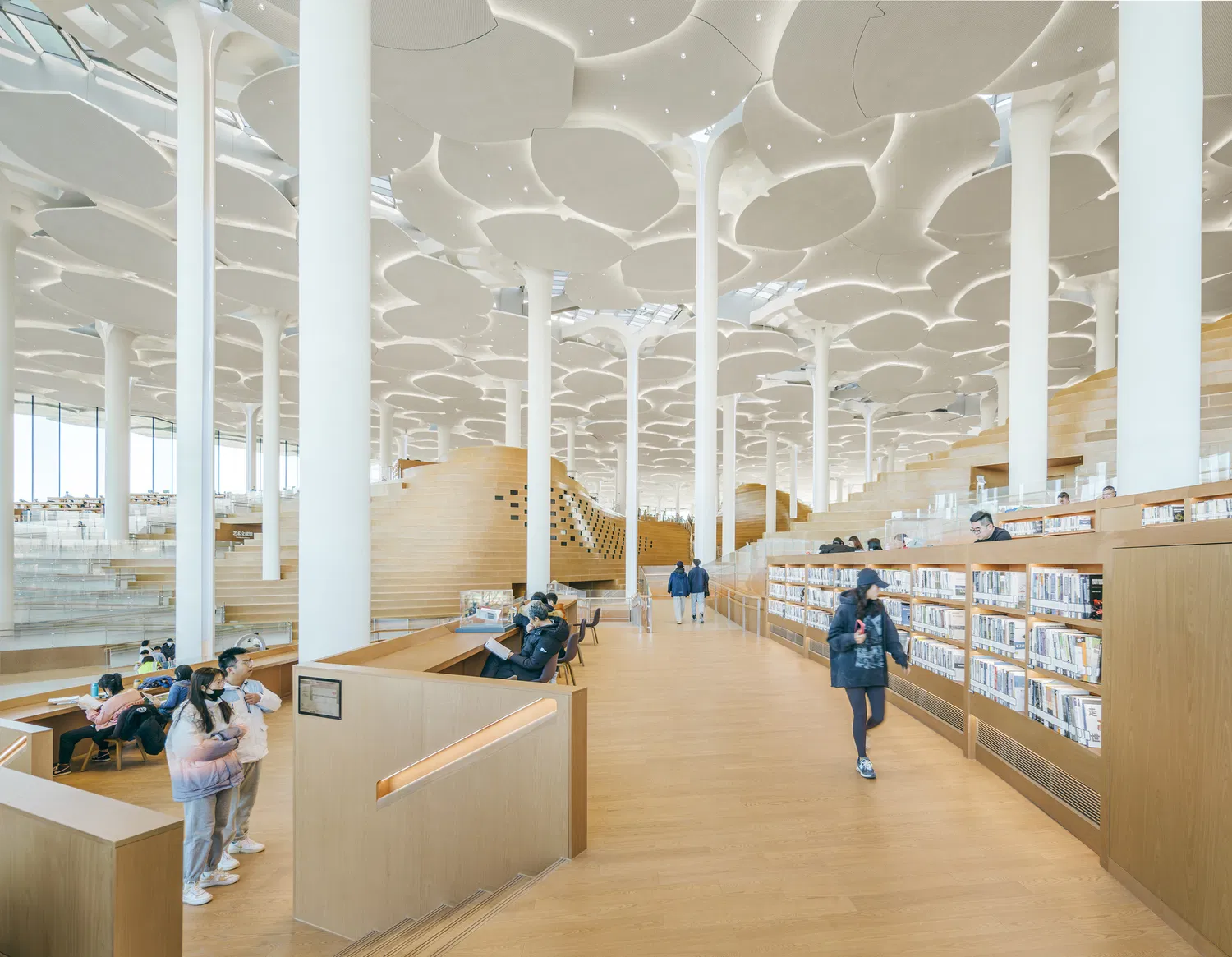
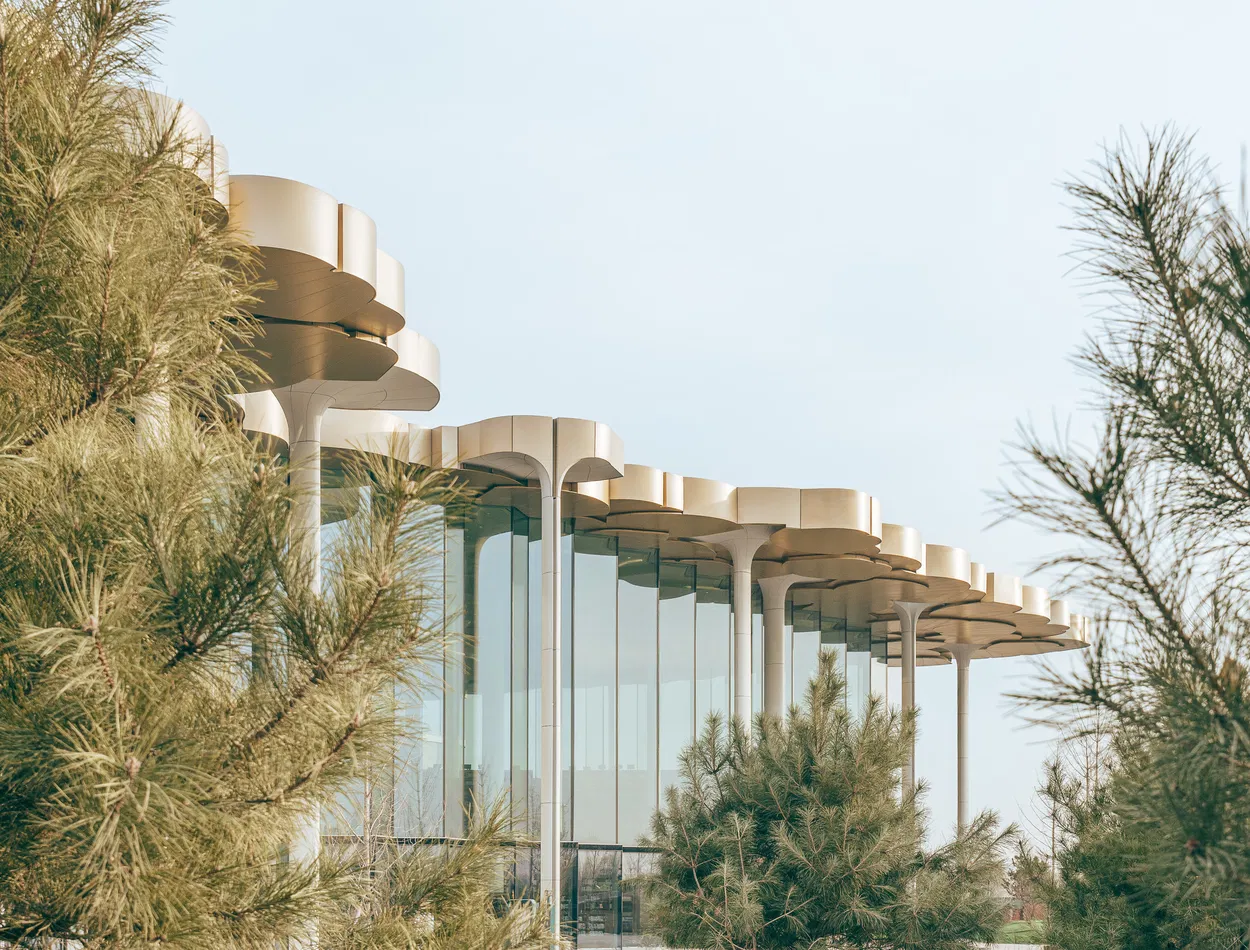
The Beijing Library in Tongzhou District is a cultural sub-center and eastern gateway of Beijing. Completed in 2023, the library serves as a hub for learning and community engagement. The library features China’s largest load-bearing glass system and the world’s largest climatized reading space, creating a transparent, light-filled environment that invites the surrounding landscape into the building.
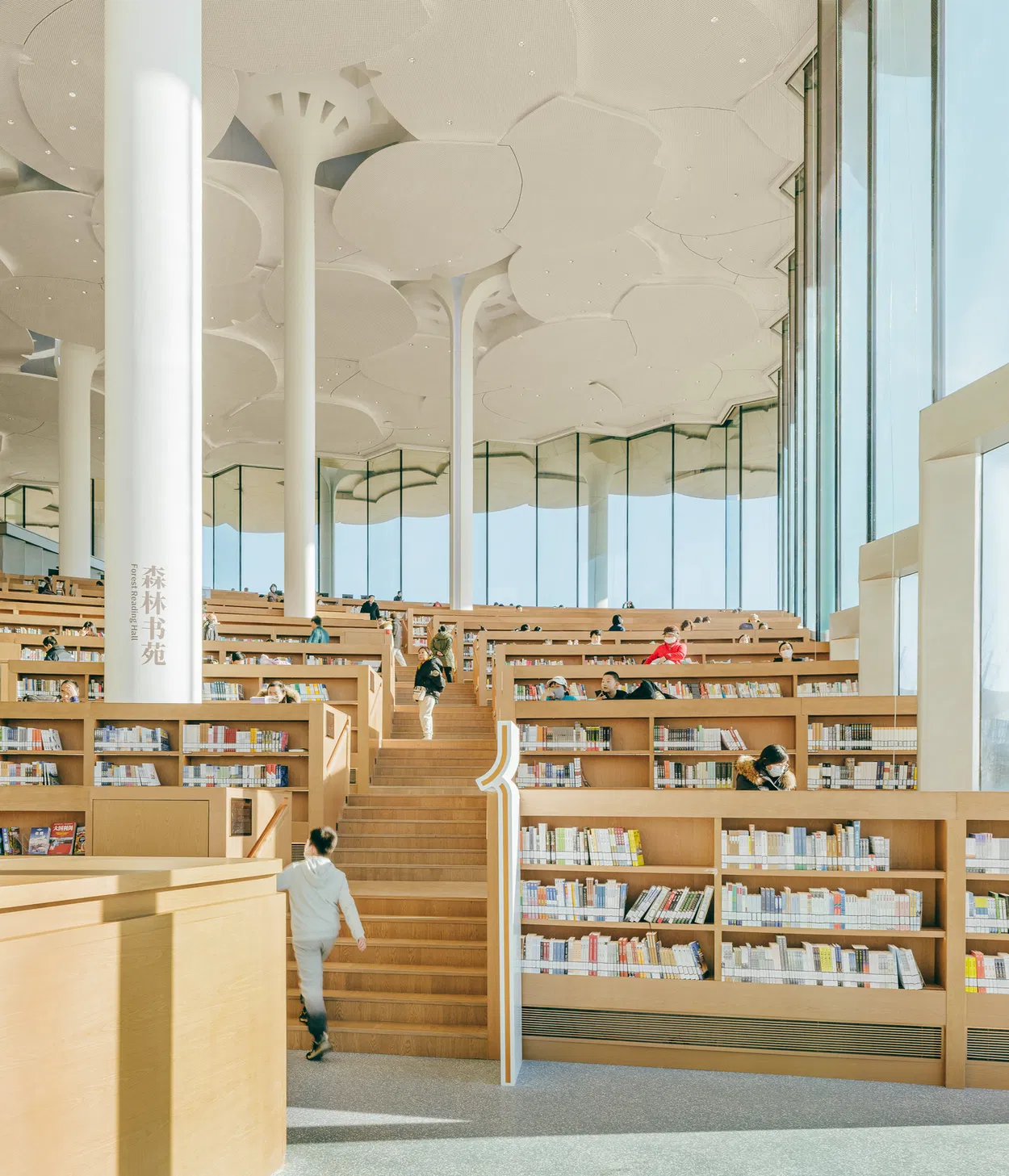
At the heart of the library is a 16-meter-tall central forum with stepped terraces forming a sculpted interior landform. Known as the Valley, this main circulation pathway mirrors the nearby Tonghui River and links the building’s north and south entrances. Terraced hills provide flexible spaces, while semi-private reading rooms, conference spaces, and book stacks are embedded within the terrain. The library also incorporates the largest Automated Storage and Retrieval Systems (ASRS) for books in the world.
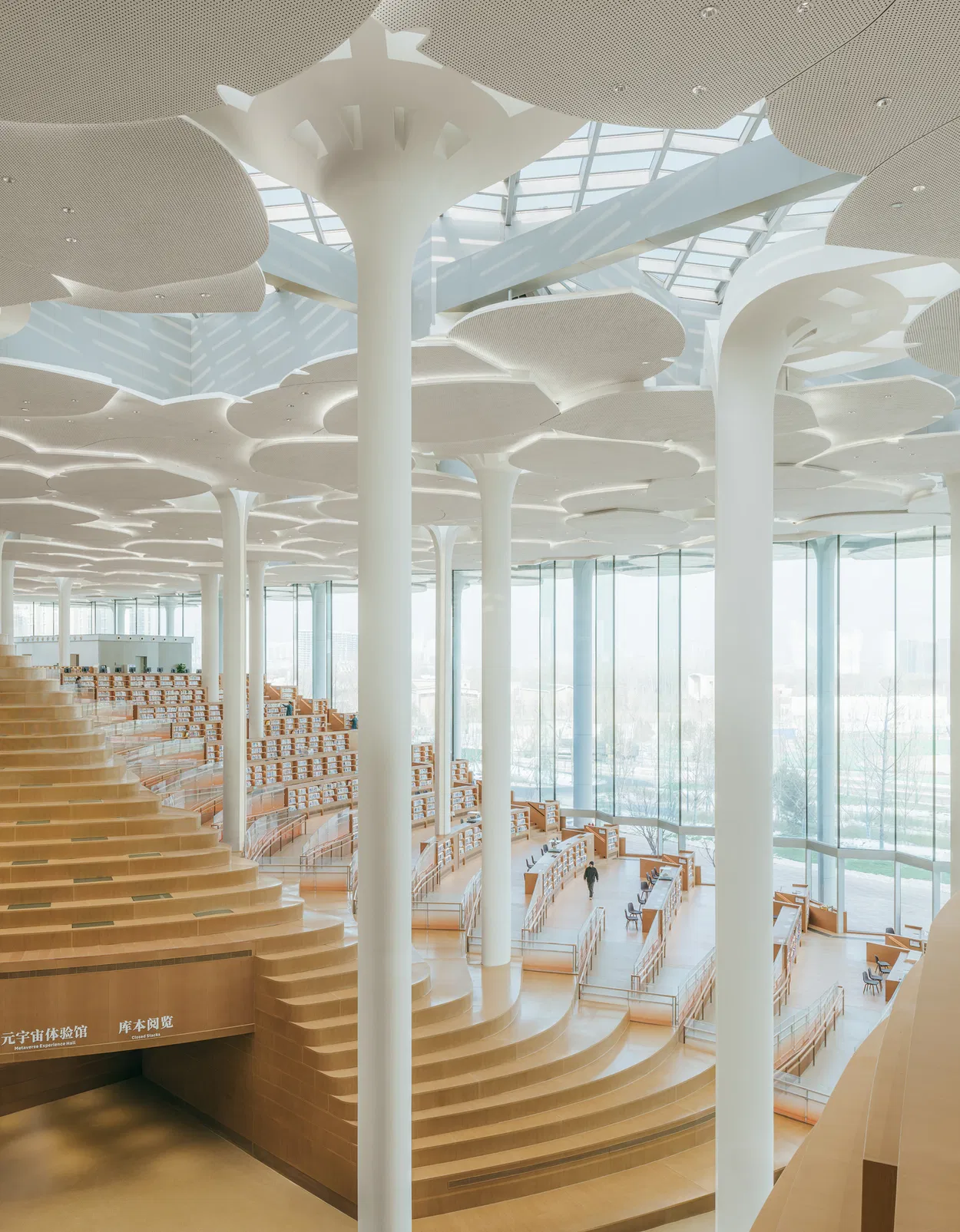
The design draws inspiration from nature and heritage, including a ginkgo canopy that references a 290-million-year-old tree species native to China. Slender ginkgo-shaped columns filter daylight into the space, while roof overhangs and integrated BIPV photovoltaic panels enhance energy efficiency.
The modular design and rationalized structural grid reduce construction waste and support sustainability, earning the building China’s GBEL Three Star rating, the highest sustainability standard in the country. The library hosted over 3.7 million visitors in its first year and more than 3,400 cultural and educational events, engaging nearly 19 million participants.
6. Le Monde Group Headquarters – Paris, France
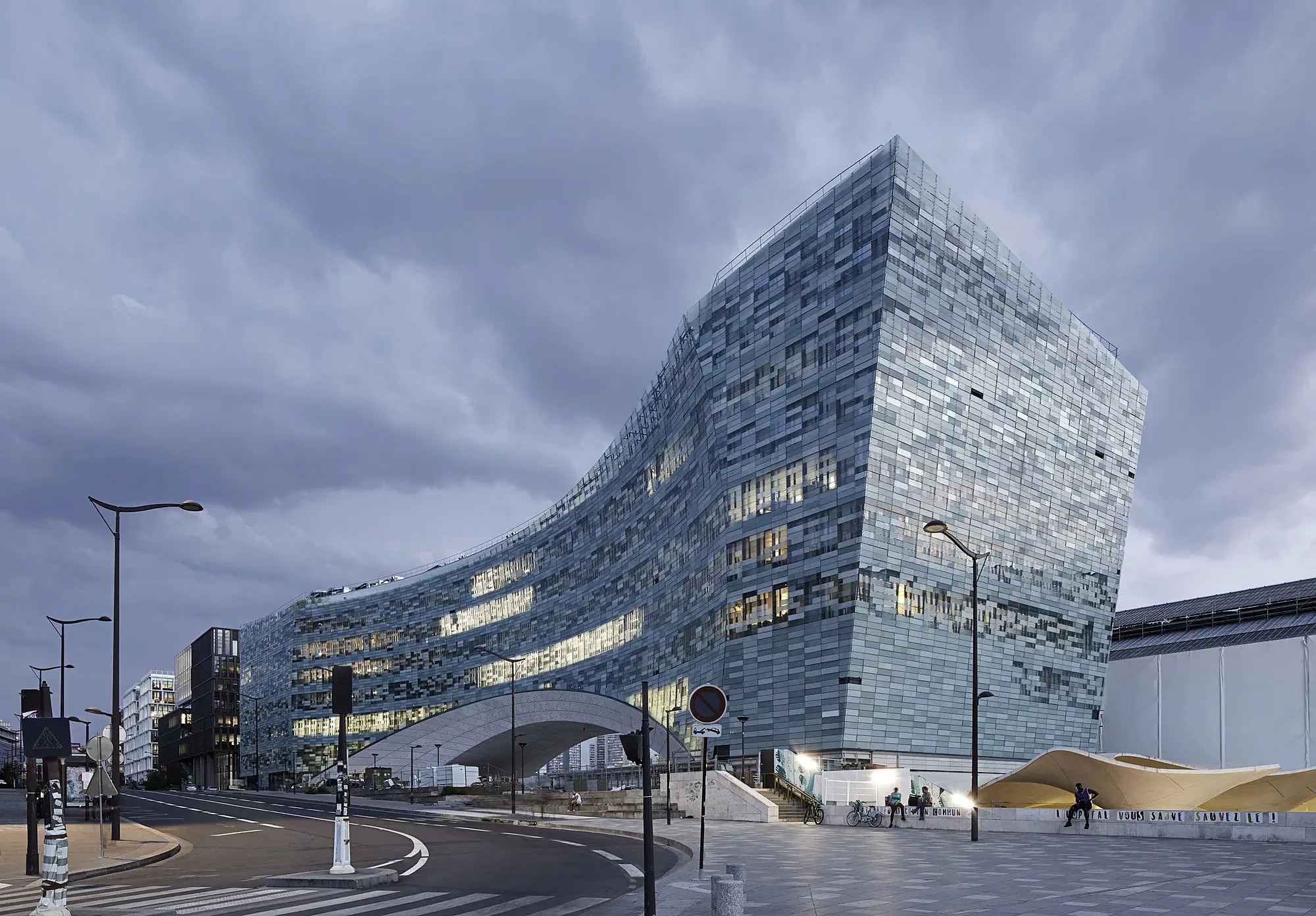
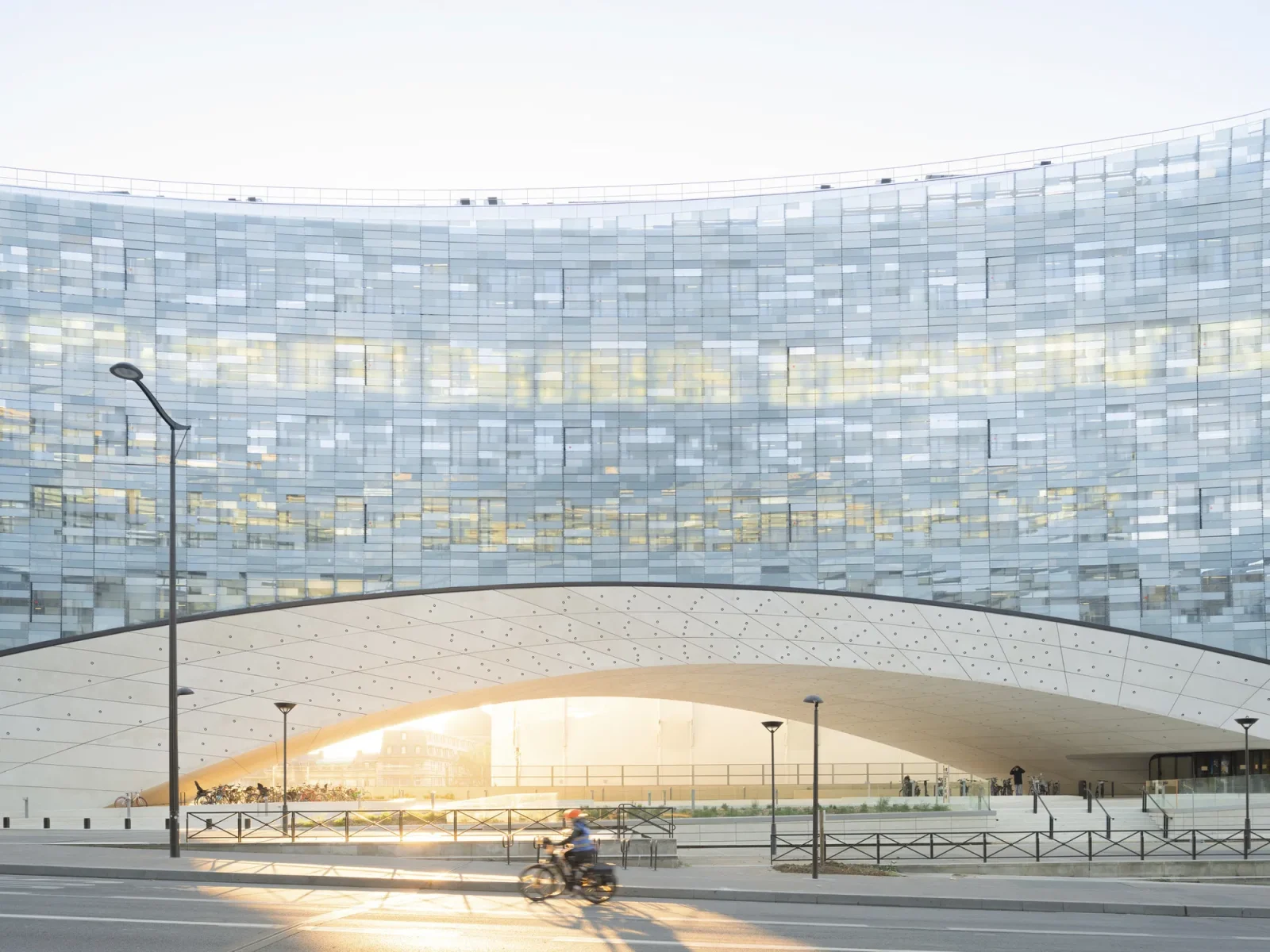
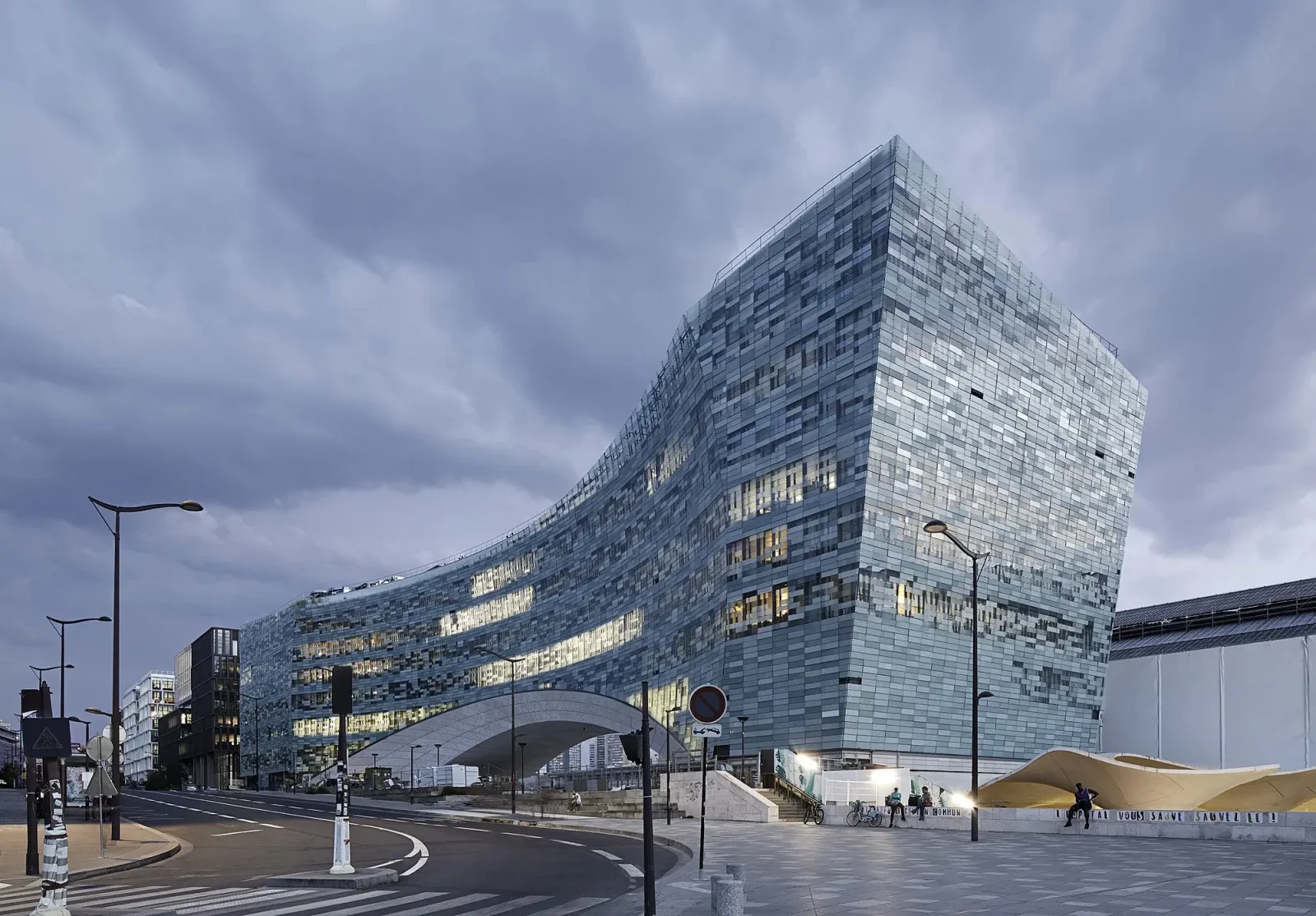
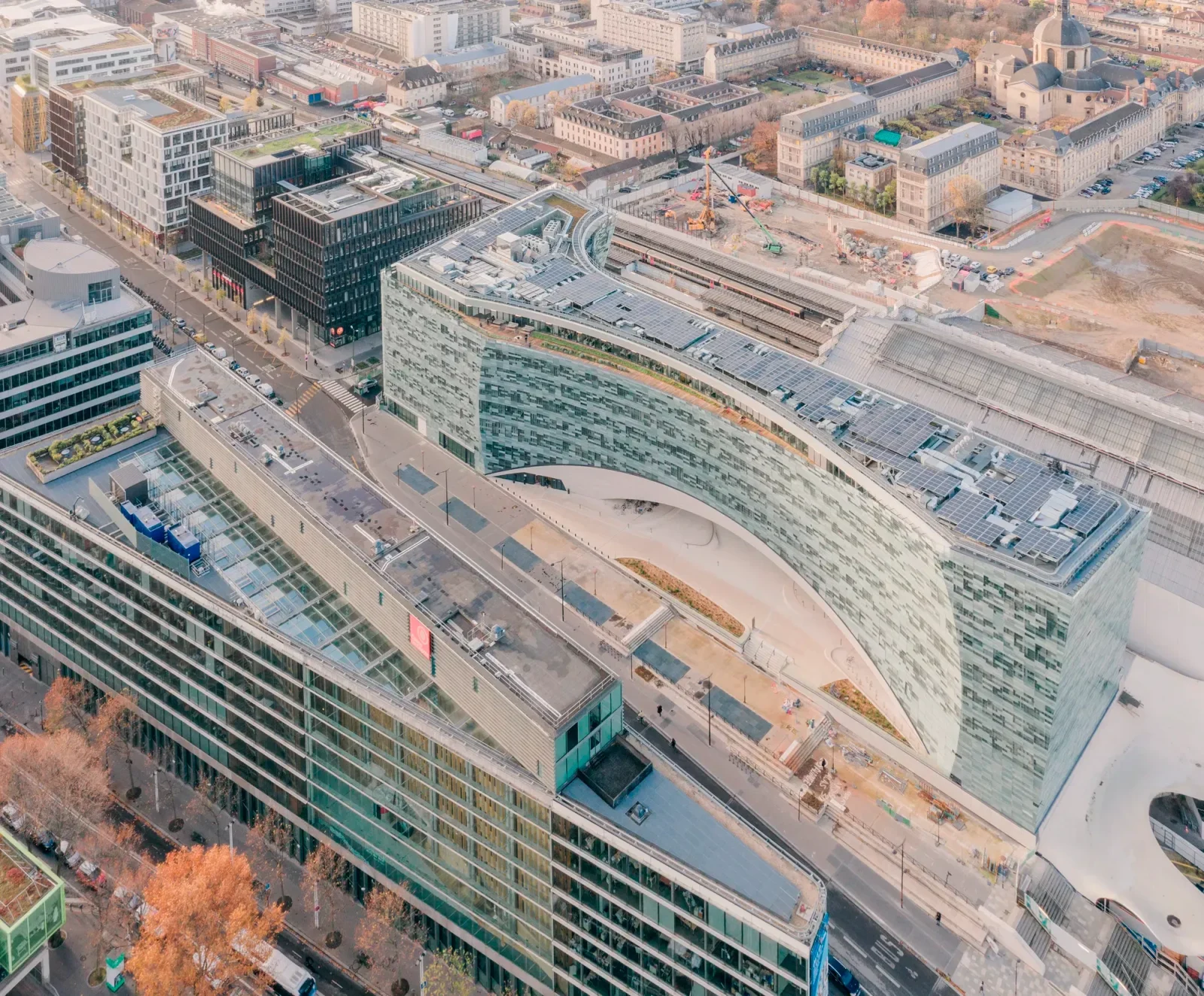
Snøhetta designed the new headquarters for the Le Monde Group in the 13th arrondissement of Paris. Completed in 2021, the building brings together all six of the group’s publications, including Le Monde, Courrier International, Télérama, La Vie, HuffPost, and l’Obs, under a single roof. The project reflects the organization’s commitment to its staff and the creation of an accessible civic space.
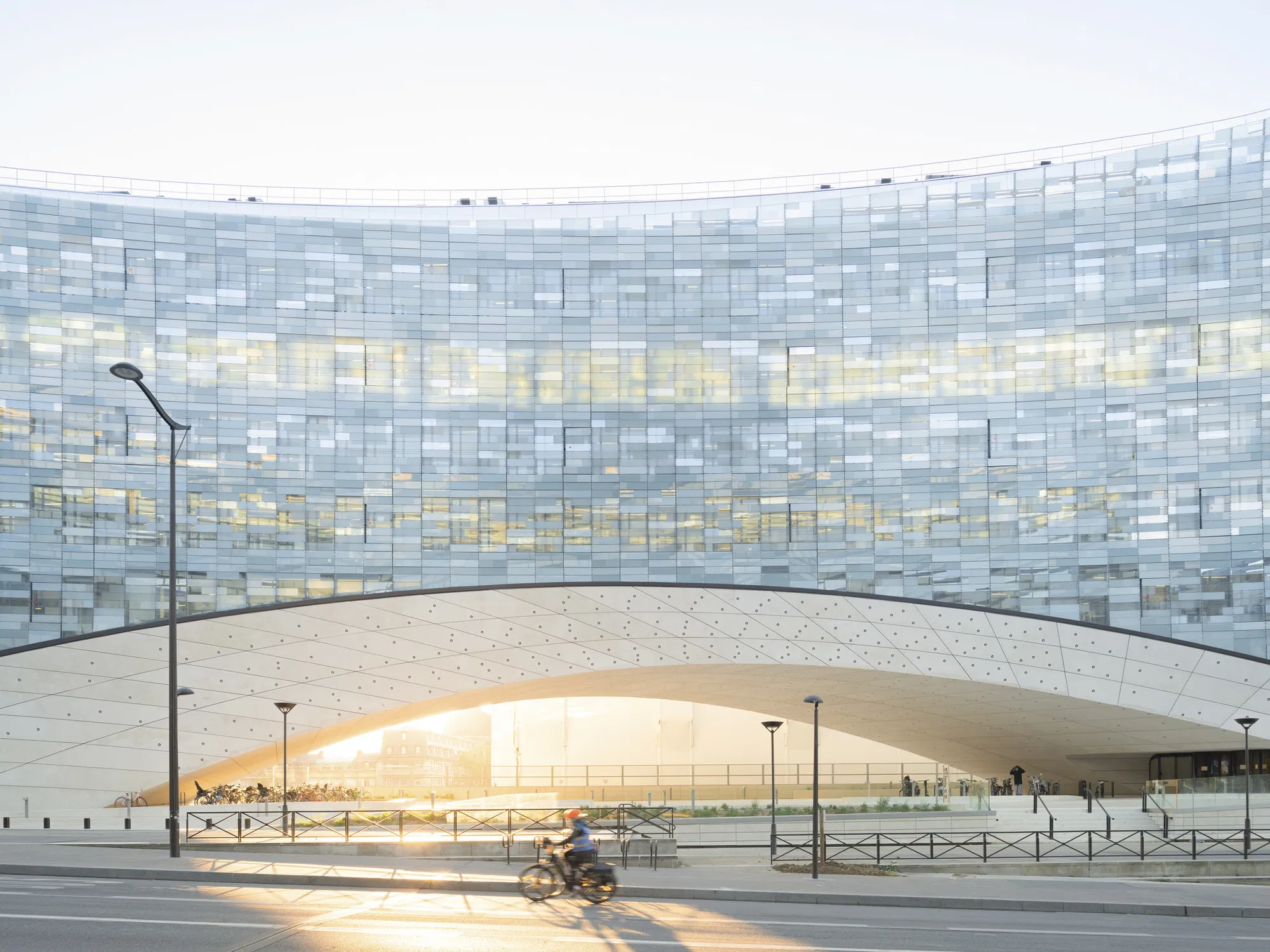
Located above the railway lines of Gare d’Austerlitz and adjacent to the Latin Quarter and Jardin des Plantes, the headquarters addresses technical challenges. The site could only support heavy loads at its edges, requiring Snøhetta and collaborator SRA to design two cantilevered volumes bridged by a steel structure, creating a unified building over the railyard. Spanning 80 meters, the arching building connects the city, the plaza, and the workplace while ensuring structural stability for over 1,600 employees.
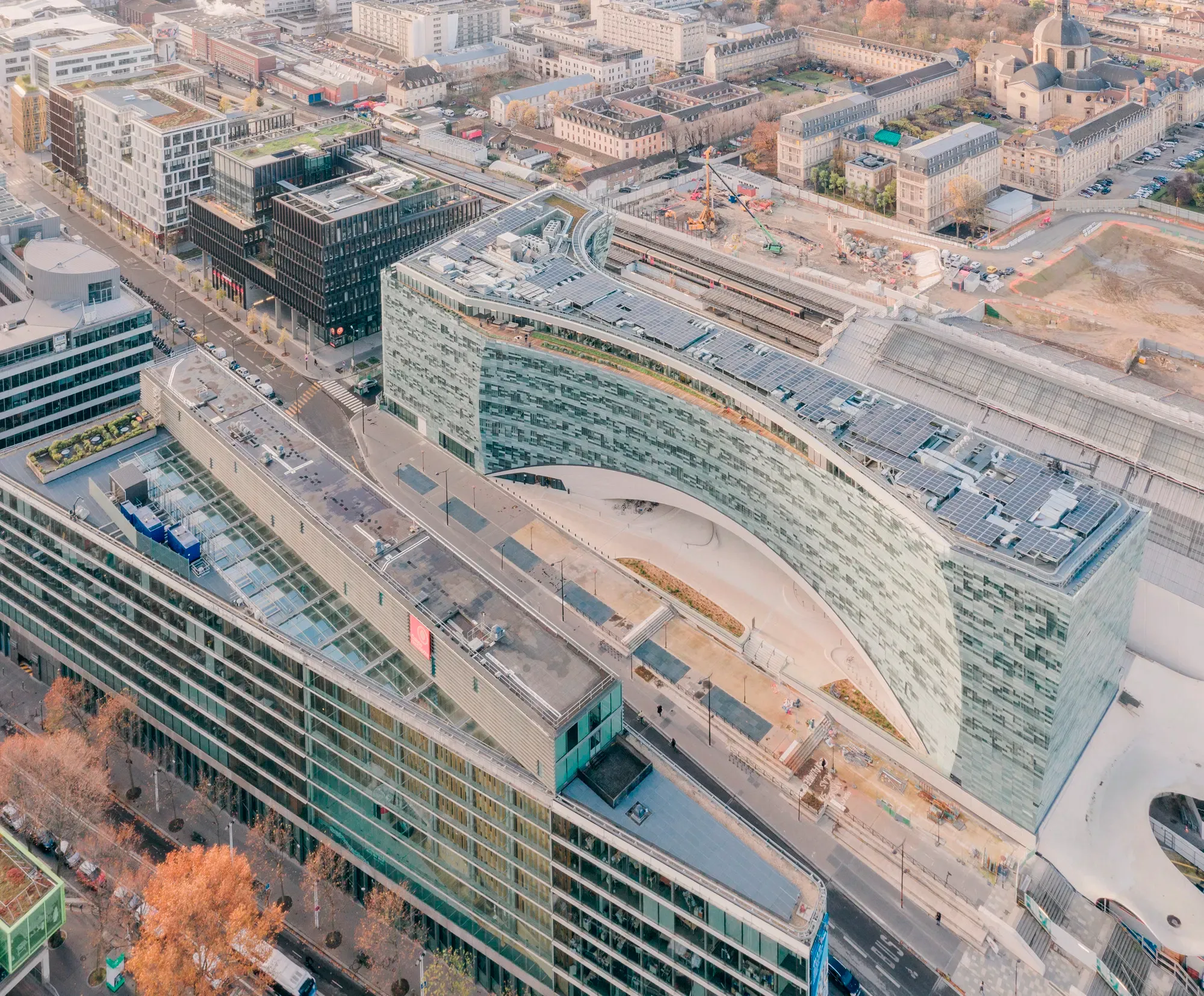
The pixelated glass facade, composed of over 20,000 elements in 772 possible configurations, references printed letters and allows varying levels of transparency for optimal daylight penetration and views. Its text-like pattern becomes legible from a distance. The building’s plaza and amphitheater stairs encourage public engagement, while over 300 bicycle parking slots promote sustainable transit.
Internally, the building prioritizes flexible, open-plan office spaces. High ceilings with integrated heating, ventilation, and lighting support adaptable layouts, while floor-to-ceiling windows frame views of the Seine and Paris. The top level leads to an open-air terrace, framed by vegetation.
7. Val d’Isère Activity Center – Val-d’Isère, France
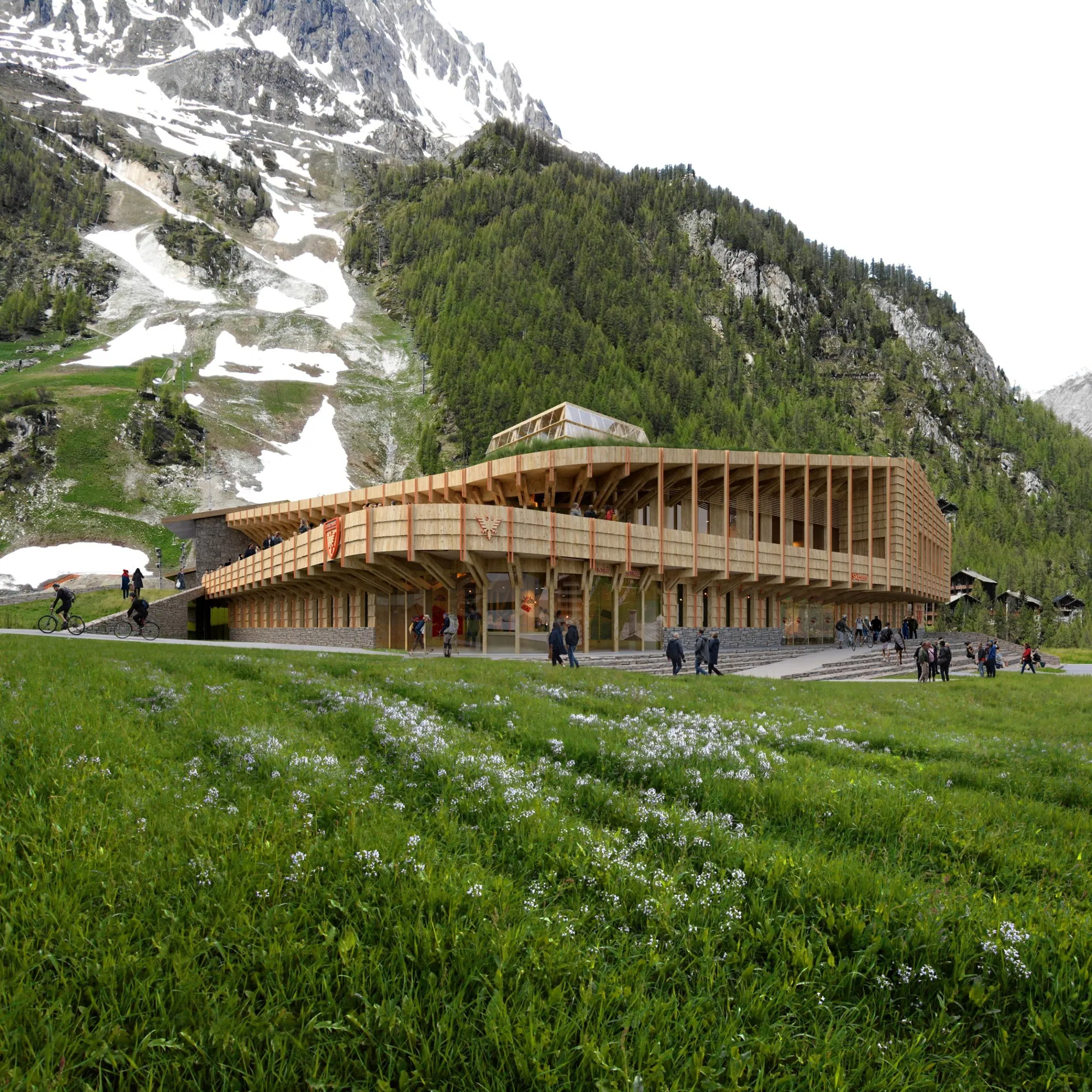
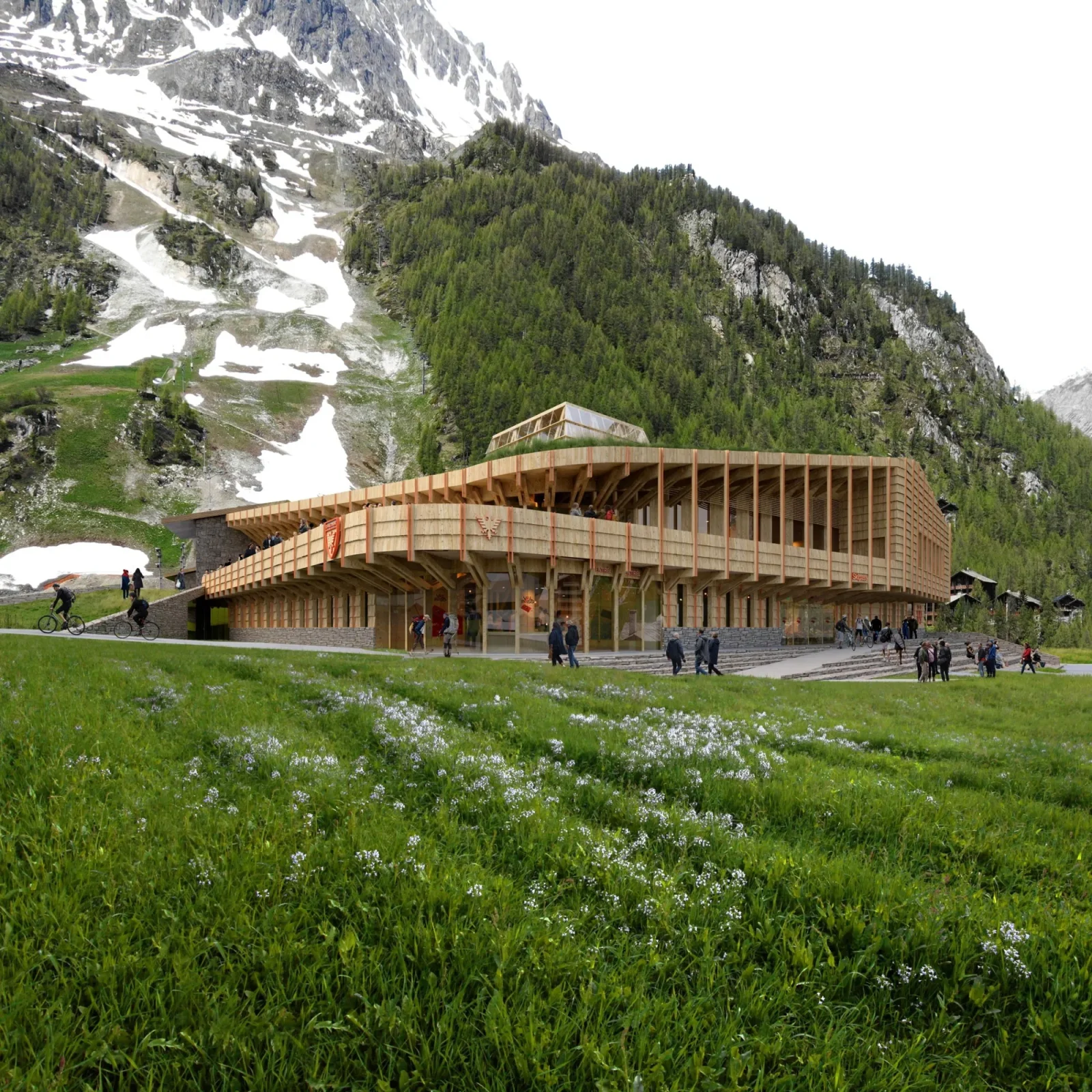
Snøhetta’s proposal for the Val d’Isère Activity Center was planned to include the village’s ski club, a multi-purpose hall, ticketing facilities, and community spaces. Located at the foot of the ski slopes in the Tarentaise Valley, the design aimed to create a place where the community can come together.
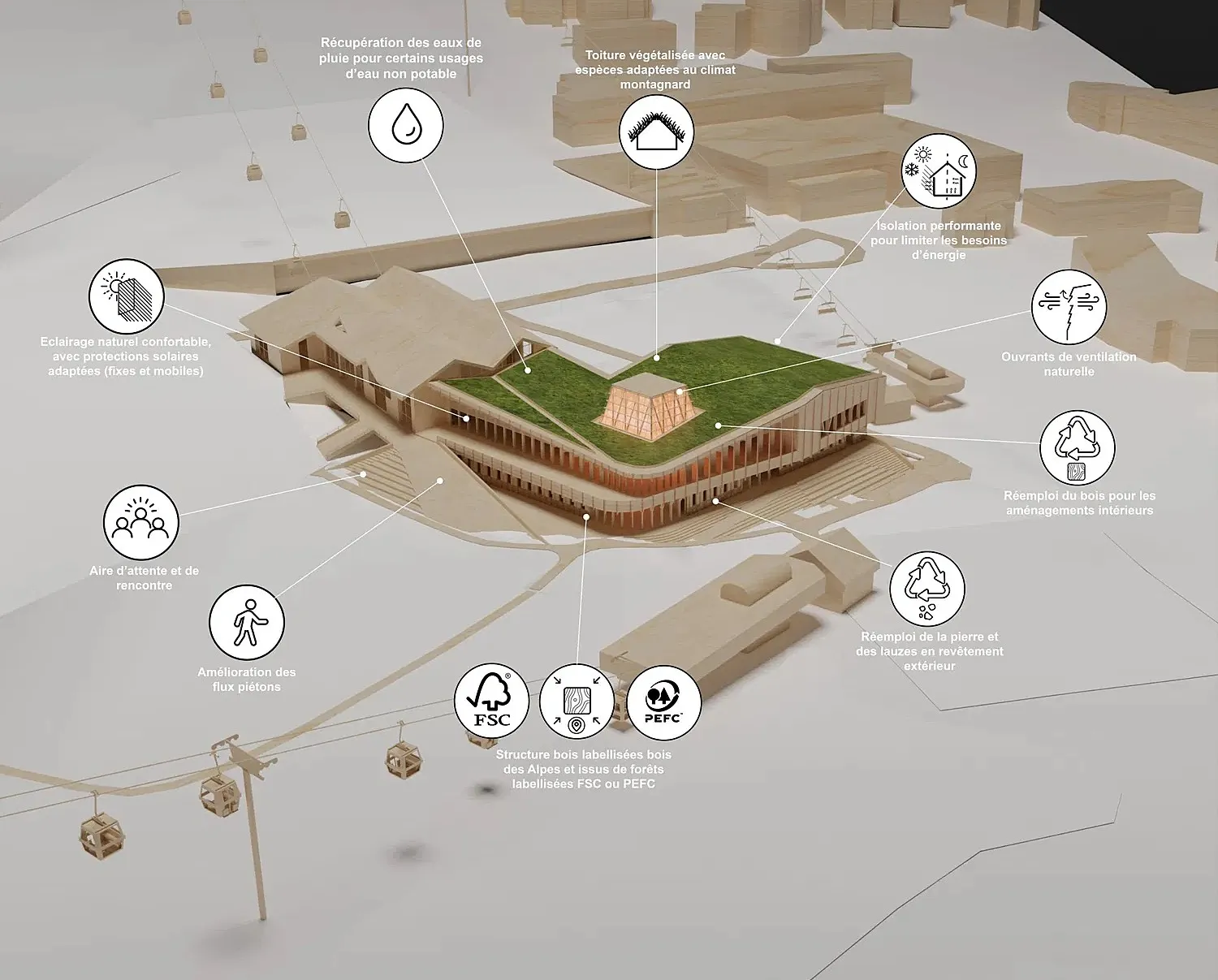
The ski club, which has shaped Val d’Isère’s reputation in mountain sports, was central to the plan. Snøhetta reimagined Alpine architecture with a timber structure, wood facades, and a folded roof covered in local plants.
Local stone from the existing building was to be reused for the lower facade, linking the new center with the site’s history. The green roof helped merge the building with the mountains while also addressing environmental challenges like snowmelt water collection.
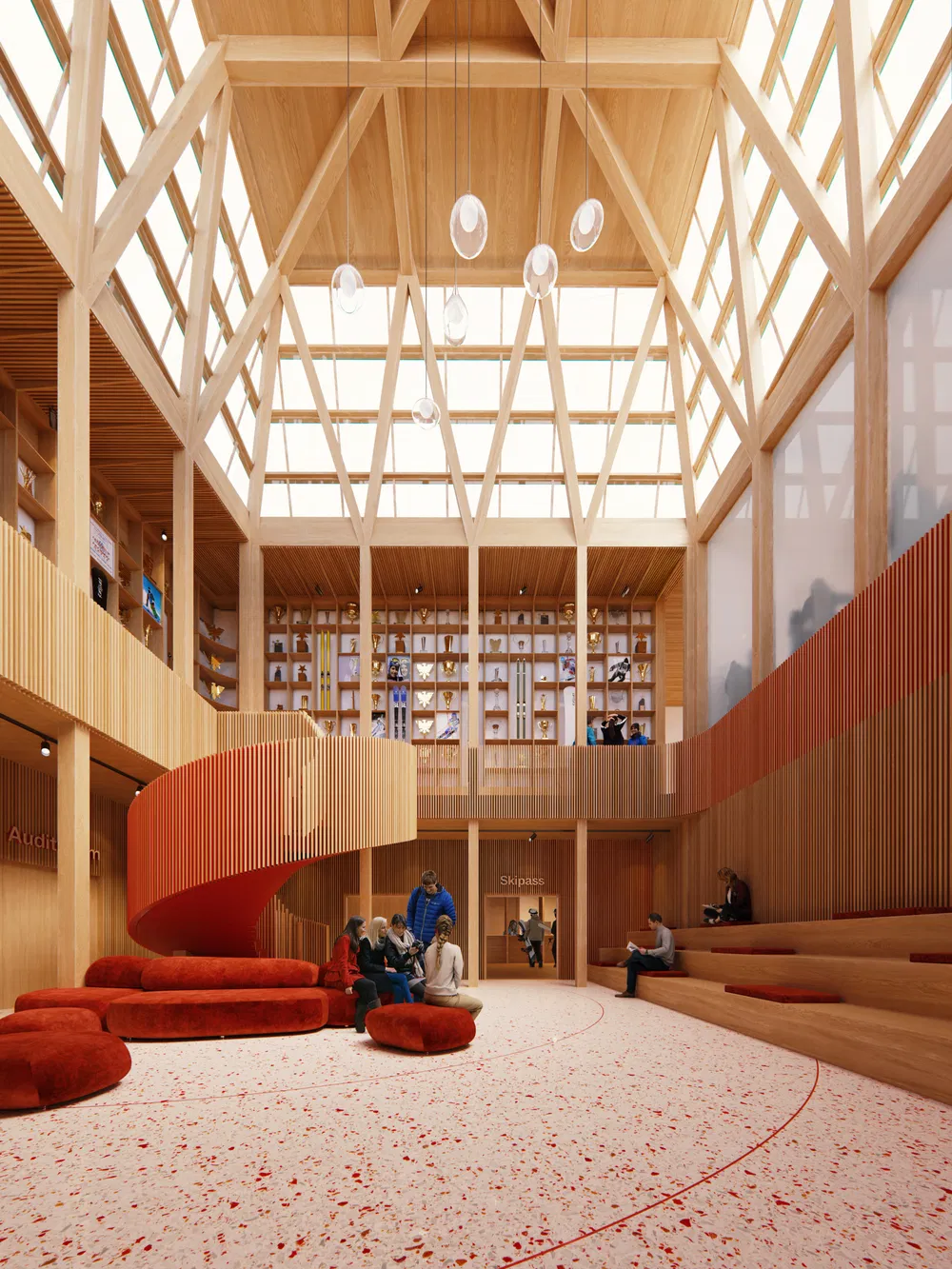
The design has a tall glass atrium called the Heart. Rising from the roof like a lantern, it was designed as a meeting point for locals and visitors. Around this central space, different functions were arranged—such as reception, multi-purpose halls, and a clubhouse with a restaurant and bar that opened directly onto the slopes.
8. Vertikal Nydalen – Oslo, Norway
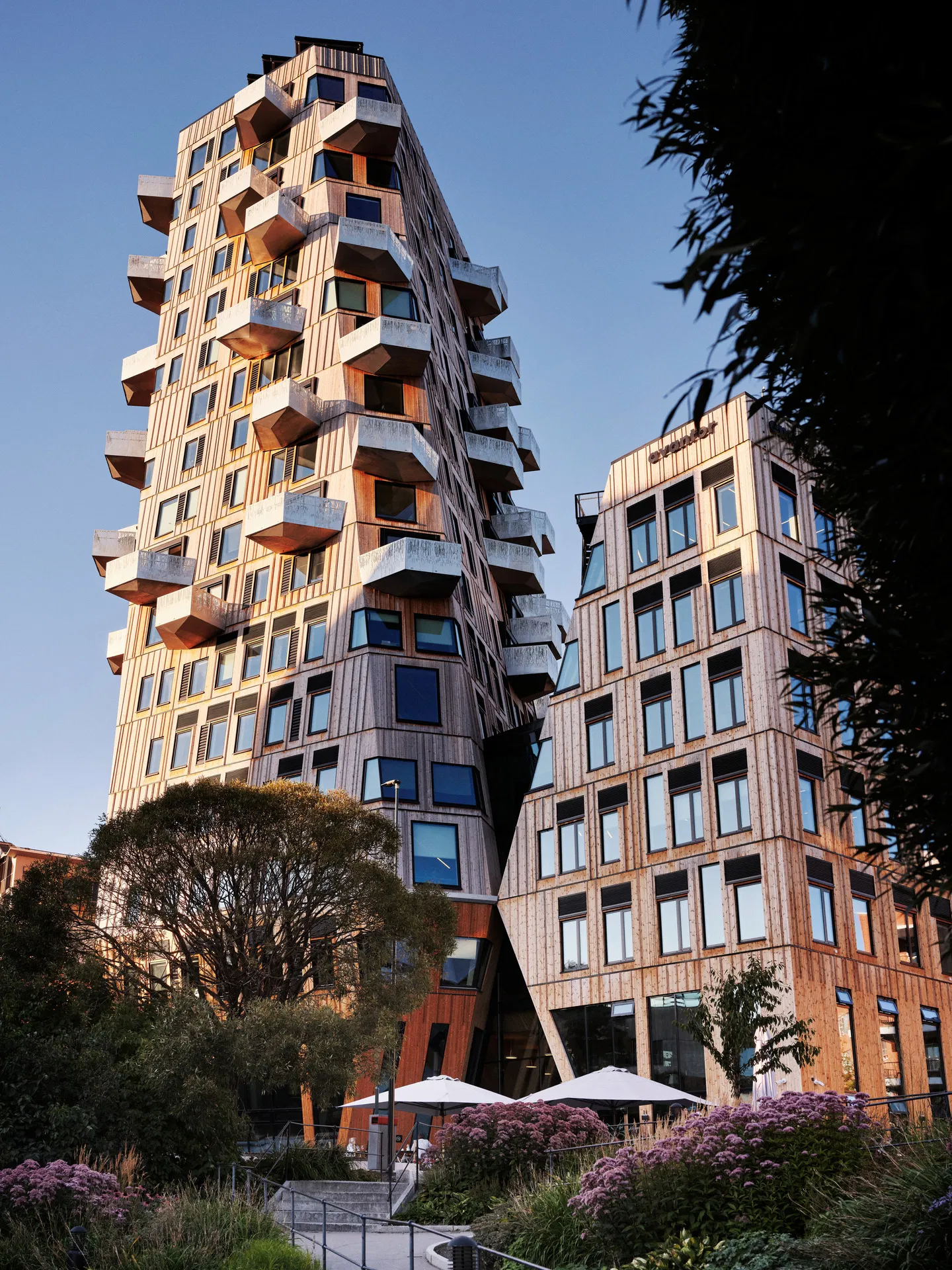
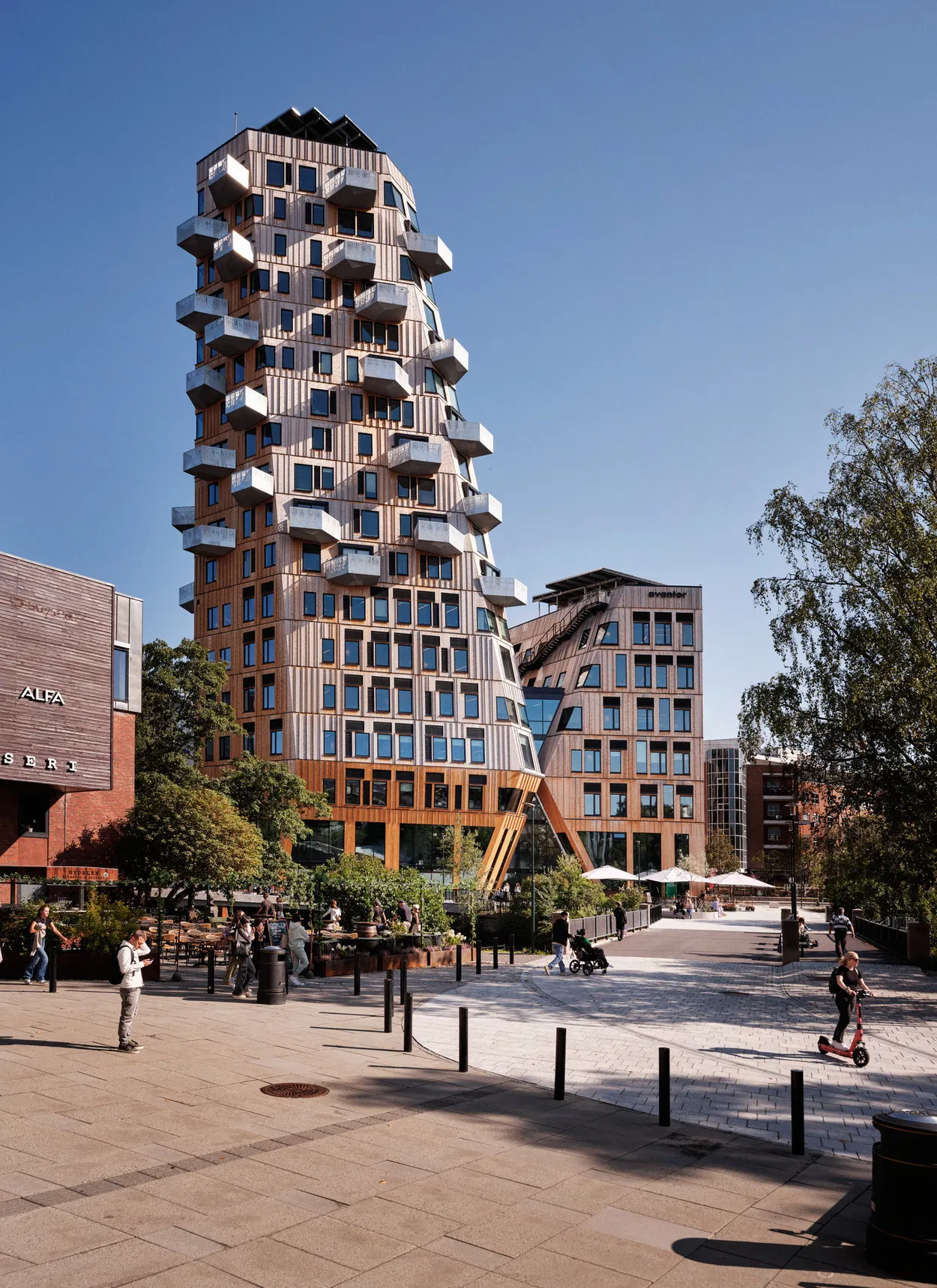
In Oslo’s former industrial district of Nydalen, by the river Akerselva, Vertikal Nydalen exists as an 18-storey mixed-use building that includes street-level restaurants, offices, and apartments. It is Norway’s first naturally climate-adapted high-rise. Vertikal Nydalen is a FutureBuilt pilot project, certified BREEAM NOR Excellent for its office spaces and Very Good for apartments.
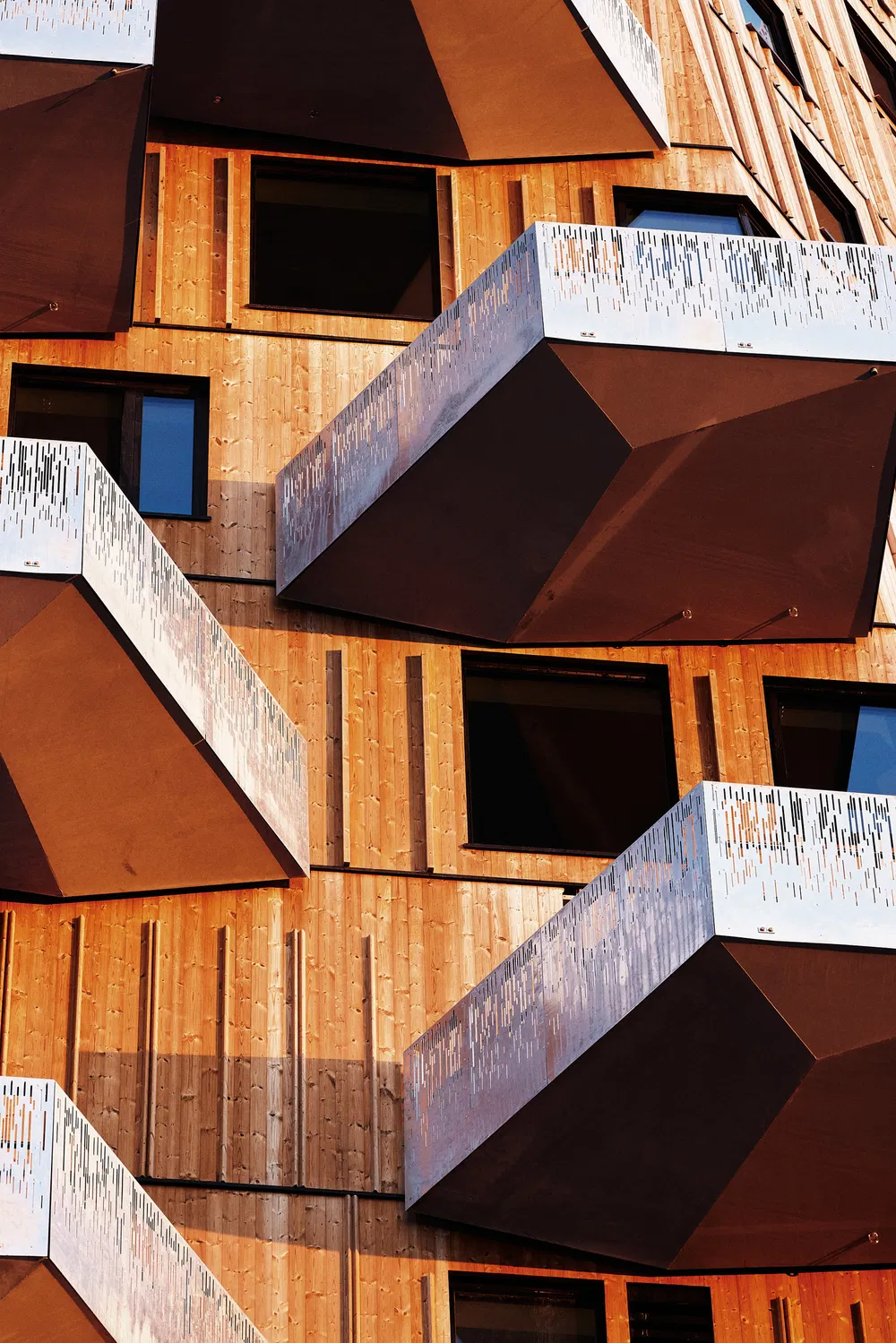
The building operates as a “triple zero solution,” requiring no purchased energy for heating, cooling, or ventilation. This is achieved through the use of geothermal wells, rooftop photovoltaic panels, and a low-exergy system, combined with natural ventilation.
Concrete walls and slabs act as thermal mass, absorbing heat during the day and releasing it at night, while angled facades and the building’s tapered silhouette create pressure differences that drive airflow without mechanical fans. These solutions cut CO2 emissions by more than 50 percent compared to a standard reference project.
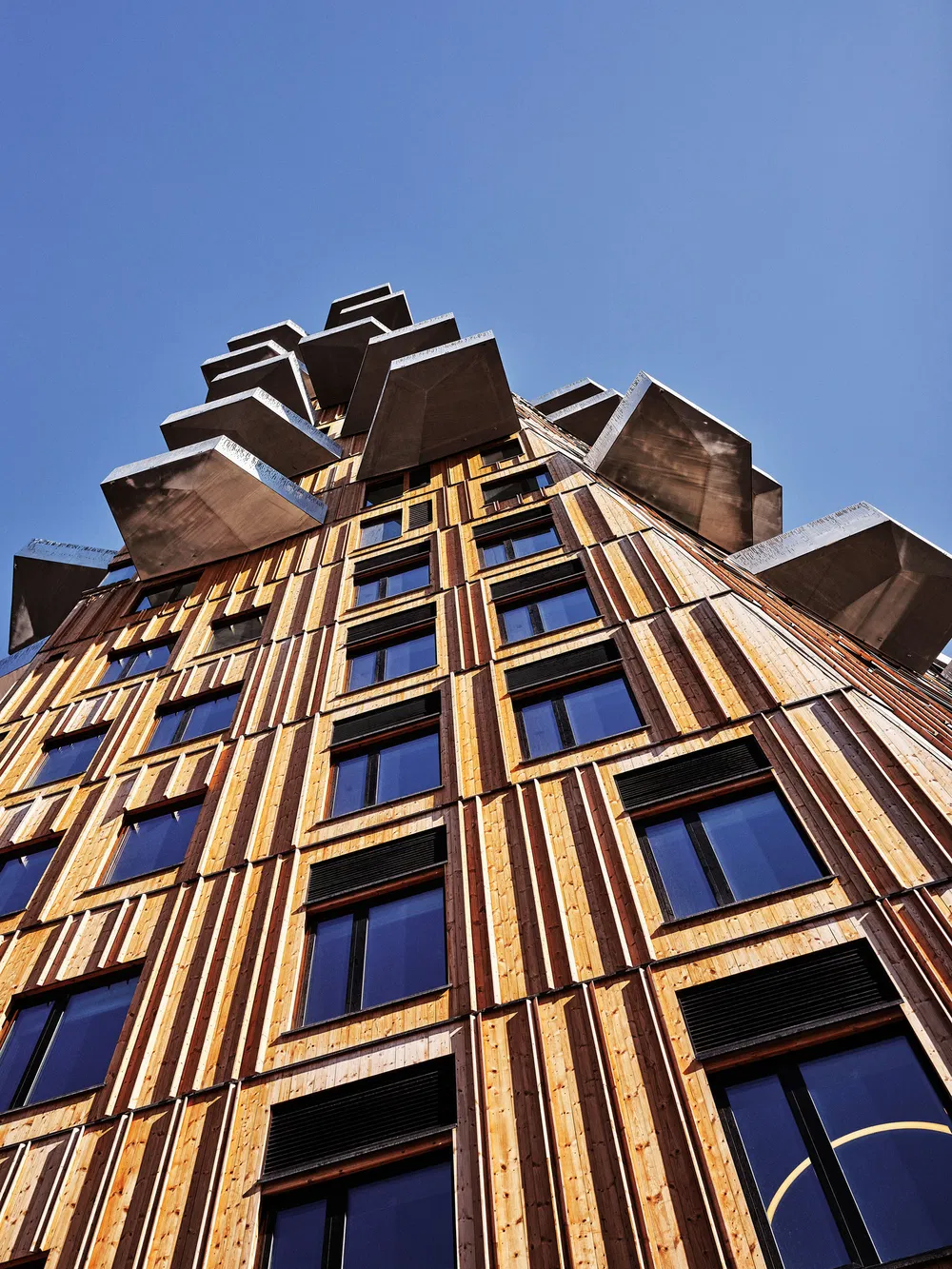
Vertikal Nydalen is divided into two volumes. The facade combines heat-treated pine with steel balconies, perforated railings, and vertical wooden slats that emphasize the building’s height. Two rooftop terraces, partly shaded by PV panels, feature planter boxes irrigated with collected rainwater.
Interior showcases exposed concrete, generous ceiling heights, and large windows that offer panoramic views toward Oslo and the fjord. Apartments vary in size and layout, unified by oak details. Interiors draw from the neighborhood’s river and parkland, with recycled plastic baffles for sound absorption and clay-clad walls with integrated water pipes for humidity control.
9. Shanghai Grand Opera House – Shanghai, China
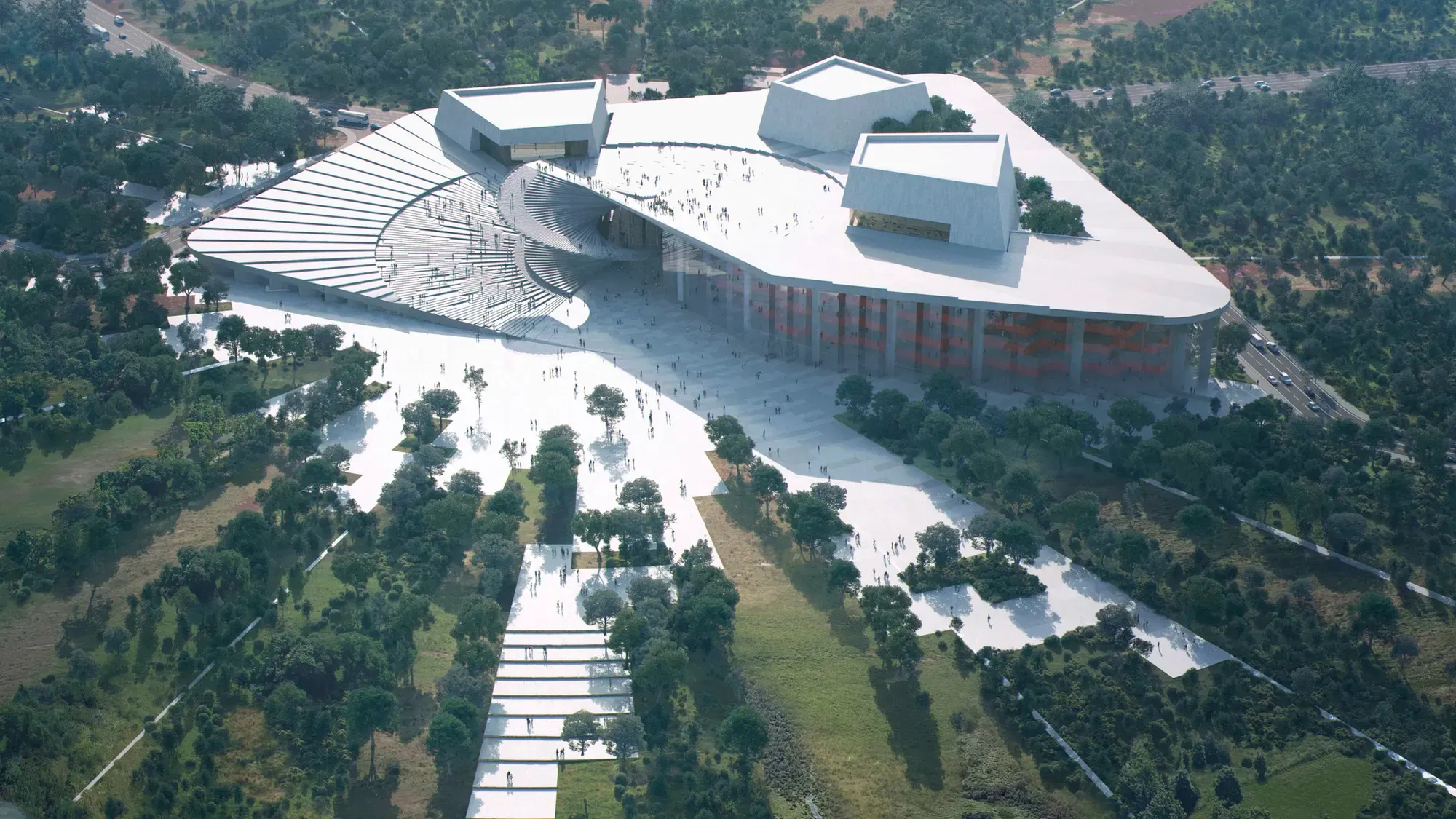
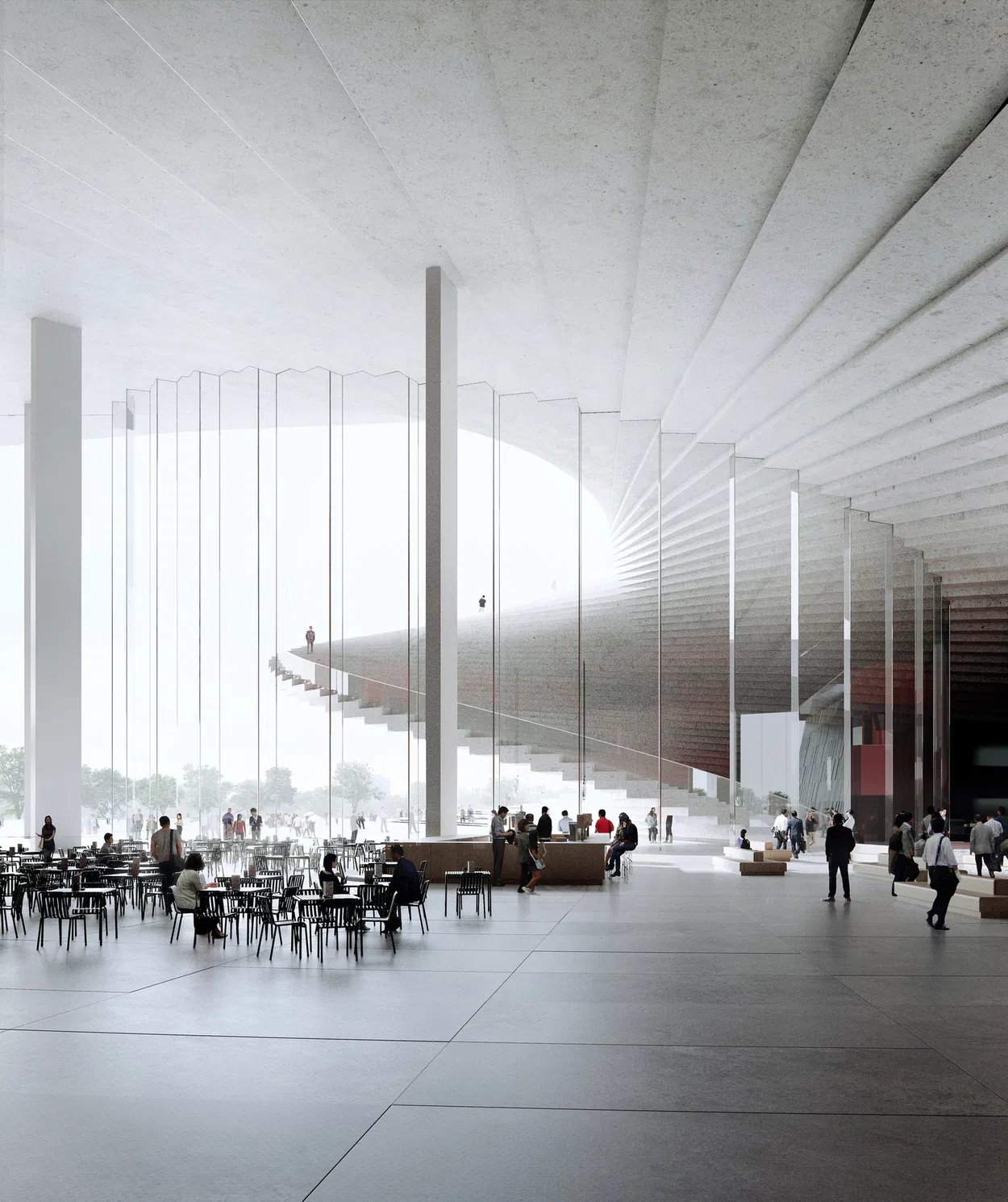
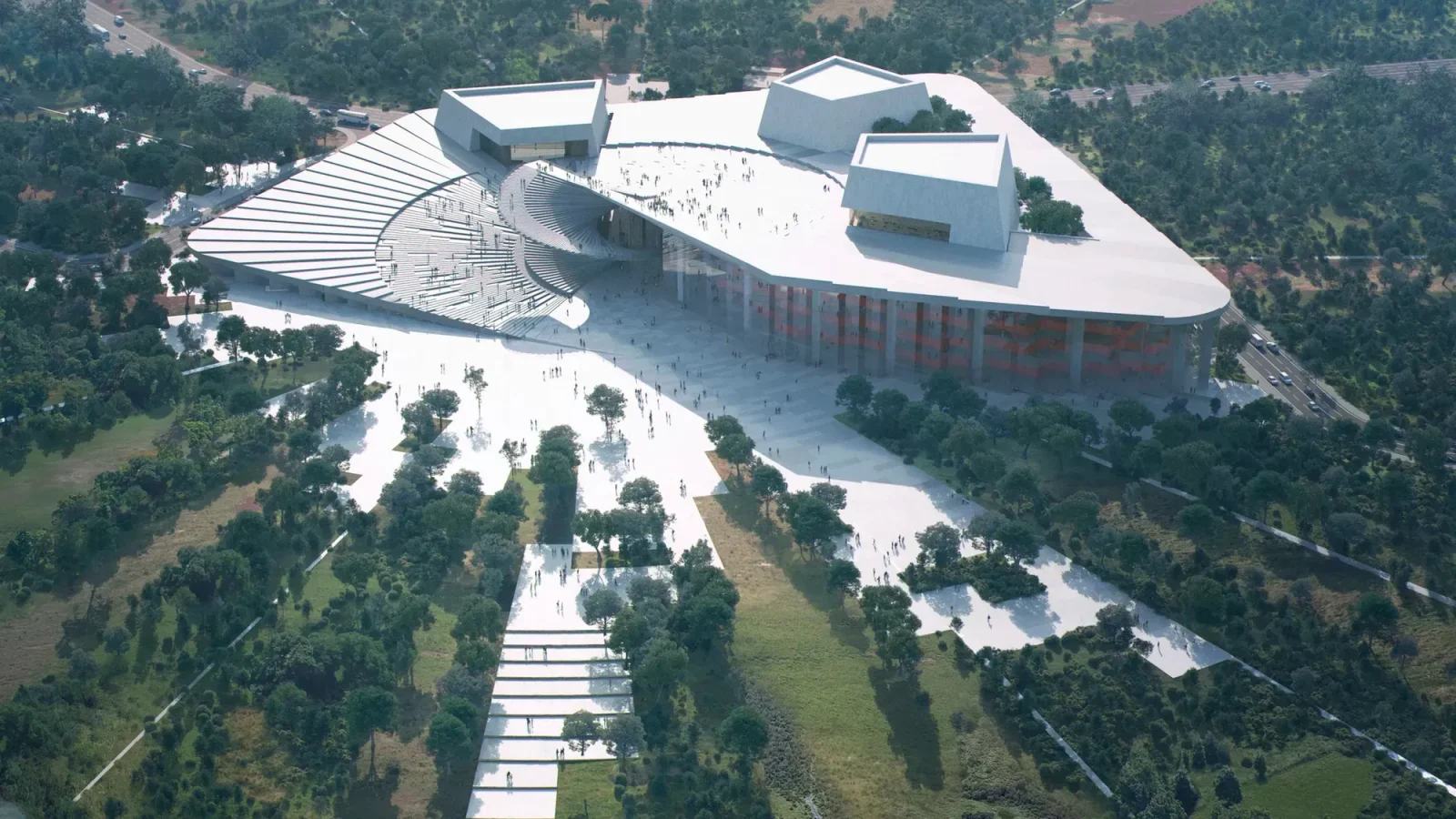
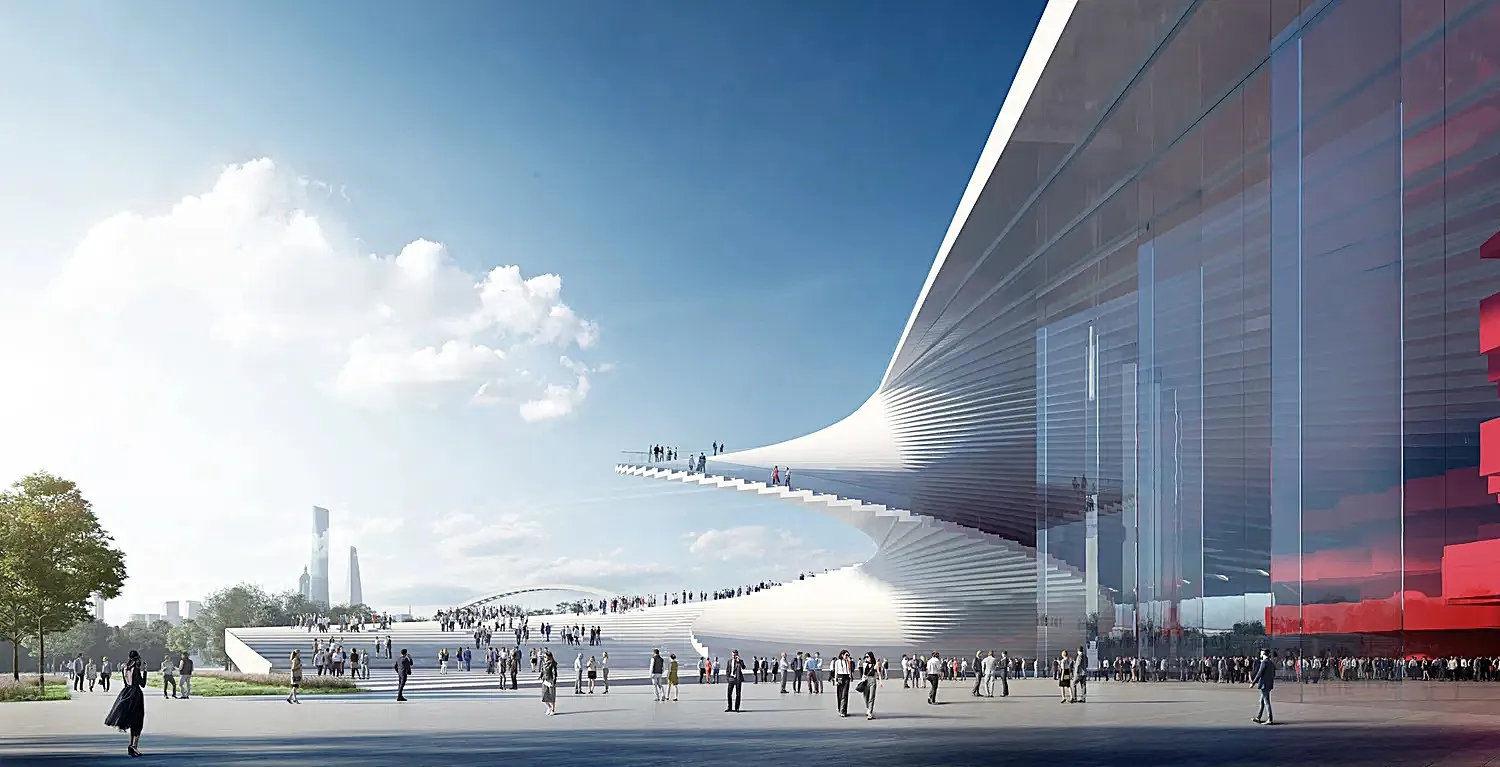
Following an international competition, Snøhetta has been commissioned to design the Shanghai Grand Opera House in the Expo Houtan neighborhood along the Huangpu River. The Opera House is conceived to offer spaces for Chinese opera, classical concerts, and experimental performances aimed at attracting younger audiences.
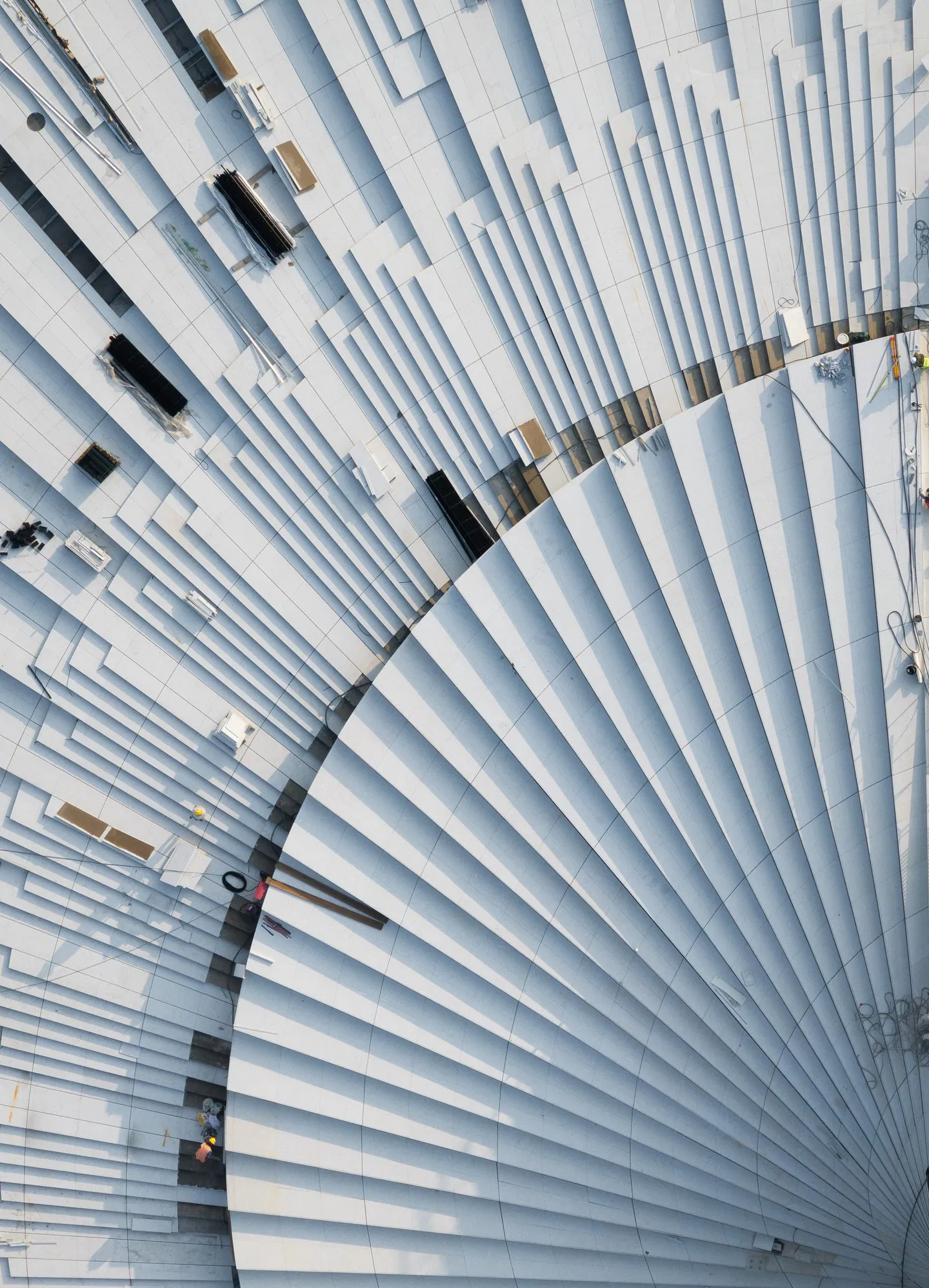
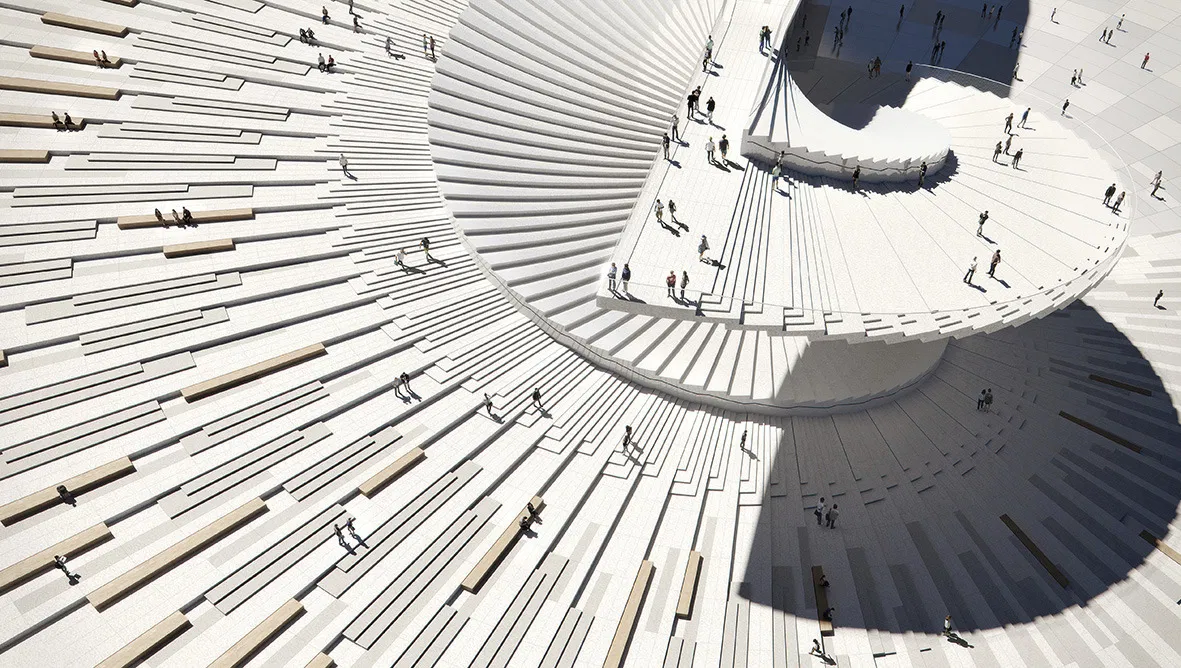
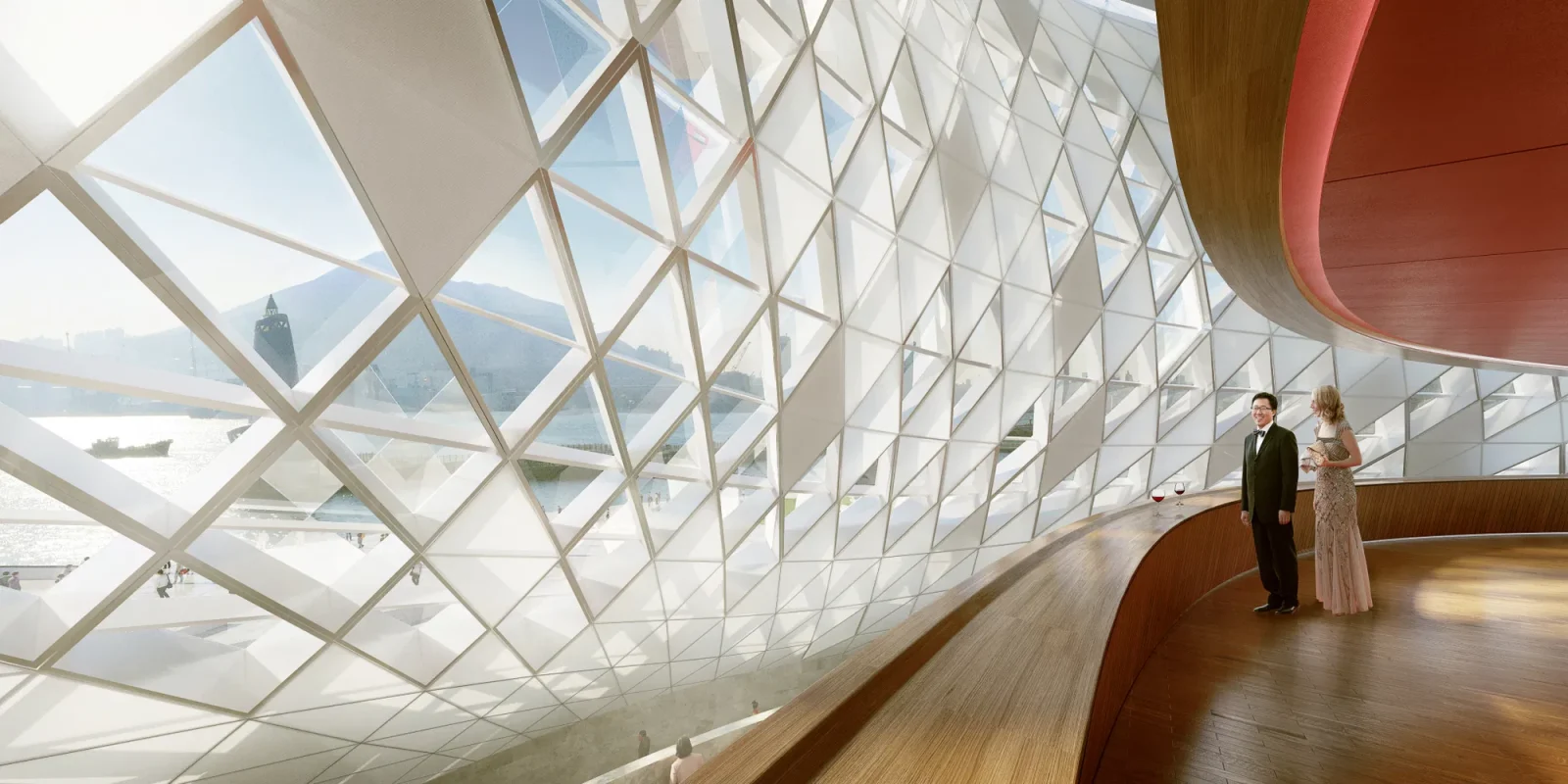
The building is defined by its sweeping fan-shaped roof, which evokes movement and the dynamism of dance. The helical surface unfolds like an open fan, creating a spiraling staircase that visually connects the ground to the sky and frames views of the river and the city. This fanning gesture extends throughout the interiors, from the lobby to the auditoriums, and informs the Opera’s visual identity through a recognizable radial motif.
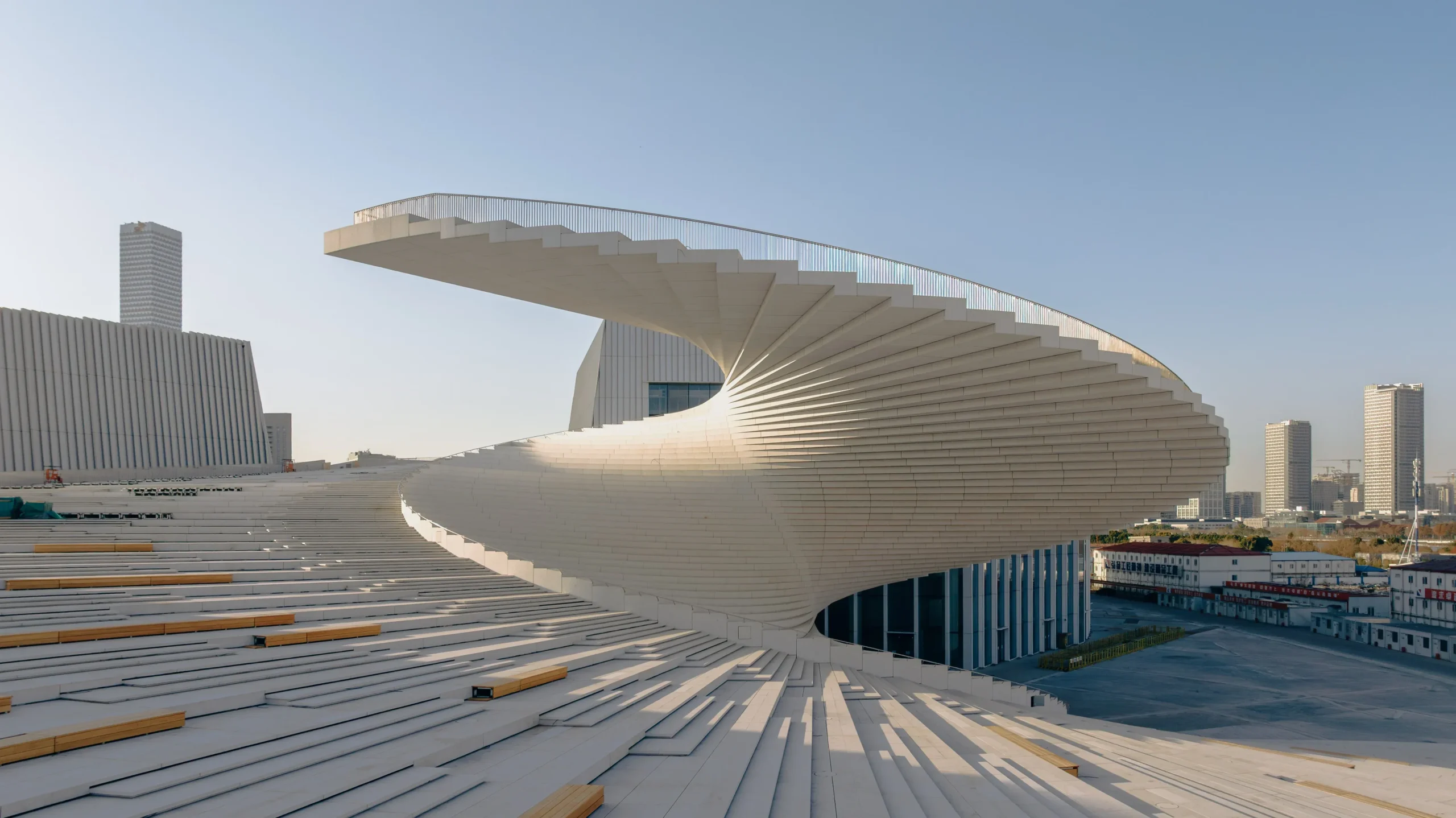
The Opera House has three performance spaces. A 2,000-seat main auditorium, engineered for superior acoustics and state-of-the-art technical performance, and a 1,200-seat second stage provide a more intimate setting, while the 1,000-seat third stage is adaptable for experimental productions. Surrounding spaces include galleries, restaurants, museums, exhibition spaces, and educational facilities.
The exterior is crisp white, contrasting with soft silk linings inside. Oak floors in galleries and halls ensure durability and sound quality, while the main auditorium is lined with dark-red stained wood. Expansive glass walls bring natural light into the spaces, while evening lighting transforms the roof and towers into glowing lanterns that illuminate the skyline.
10. Busan Opera House – Busan, South Korea
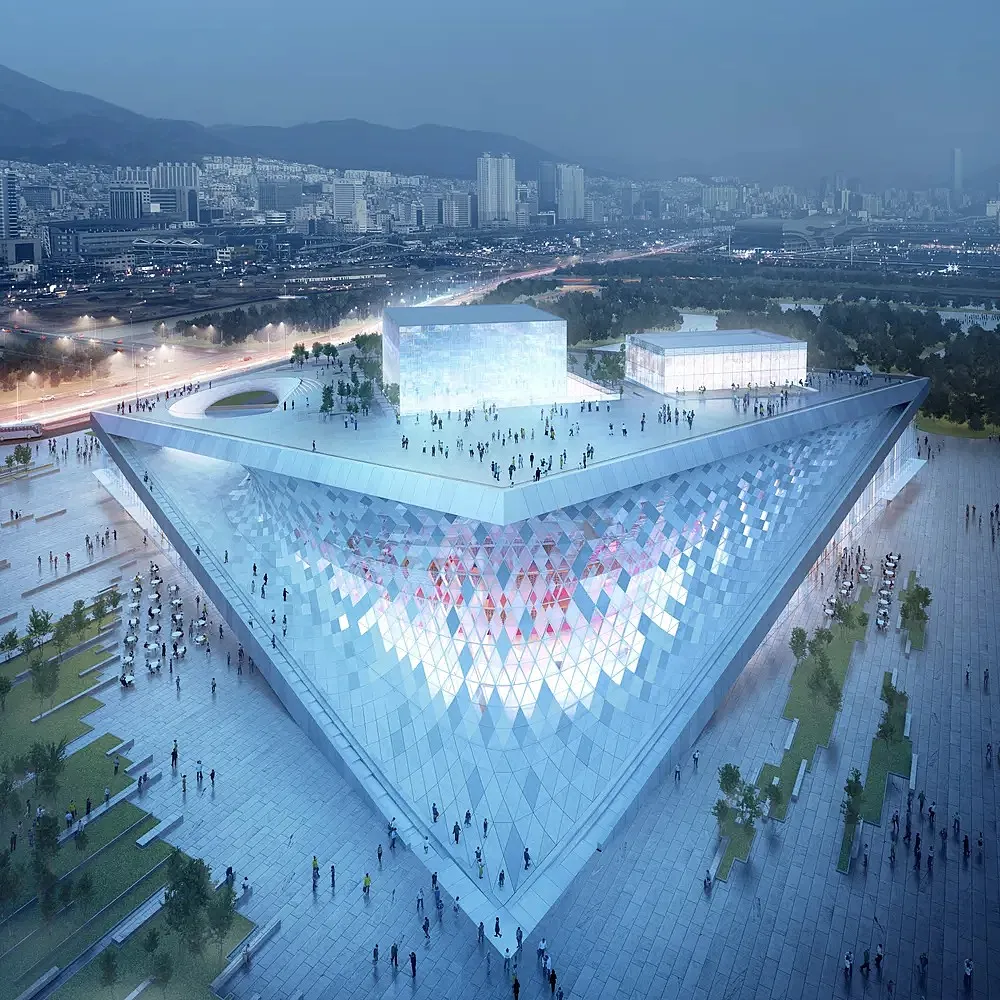
The Busan Opera House is designed to have a softly flowing facade, a publicly accessible rooftop, and entrances from both the park and the seaside. The building opens itself to the city in a welcoming gesture. It converts a former industrial waterfront into a lively public realm, marking the entrance to this contemporary architecture in Busan.
The building’s form is inspired by its cultural and natural context. Its layout references the classical Korean trigrams of Kun (heaven), Kon (earth), and Kam (water), with bent surfaces that meet in subtle ways, symbolizing the interaction of earth, sky, and sea.
Two opposing curves define the geometry: a lower arching curve anchors the project to the site, while the upper curve reaches toward the sky. The four corners of the building link the city and the sea, with two lifted to form entrances and a public path that flows through the plaza around the opera house.
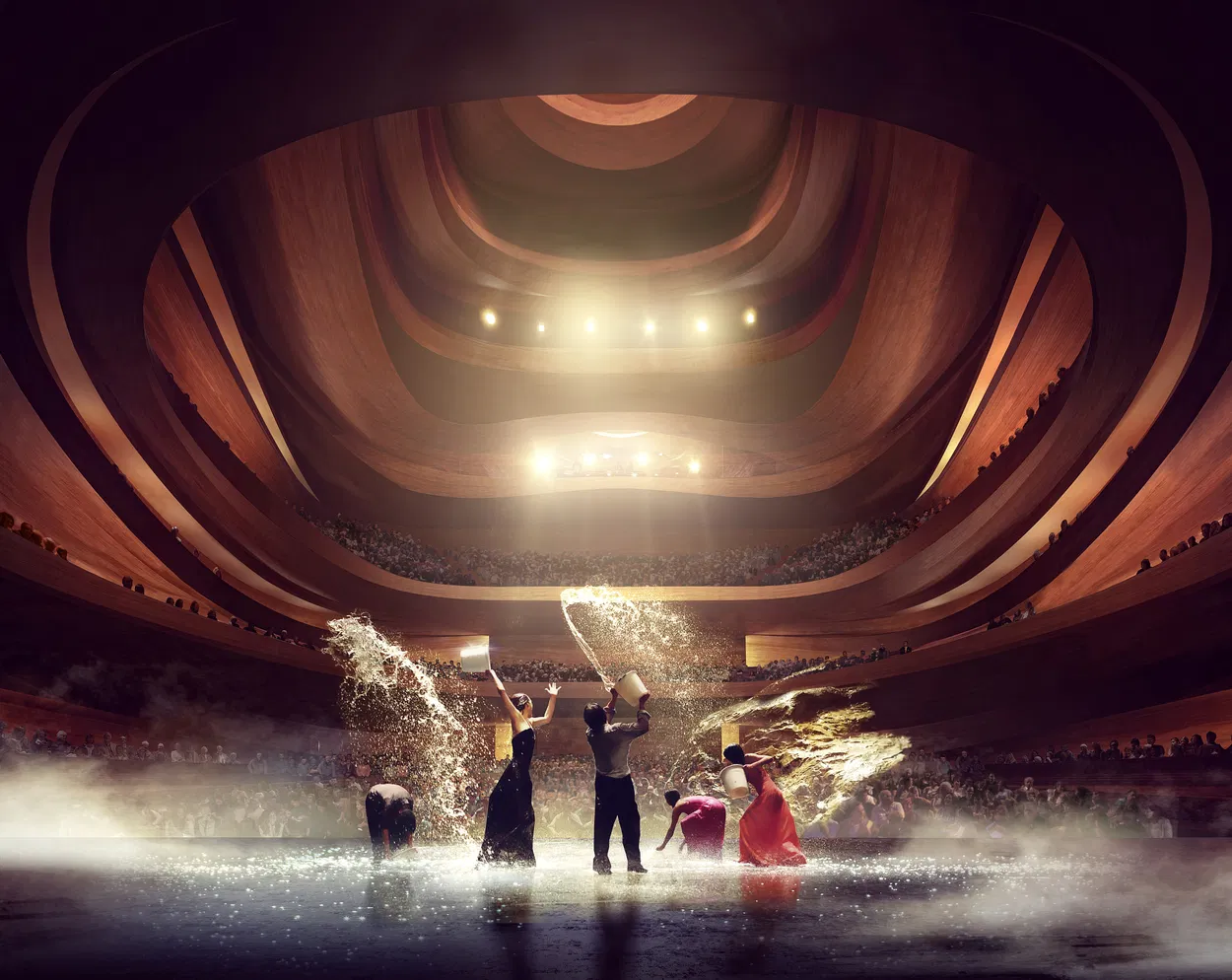
A foyer on the ground floor wraps around two sides of the building, connecting the main entrance, restaurant, and parterre. At the core, the opera hall is conceived as a musical instrument, shaped to achieve optimal acoustics. Cherry wood panels line the interior, enhancing the resonance of operatic performances.
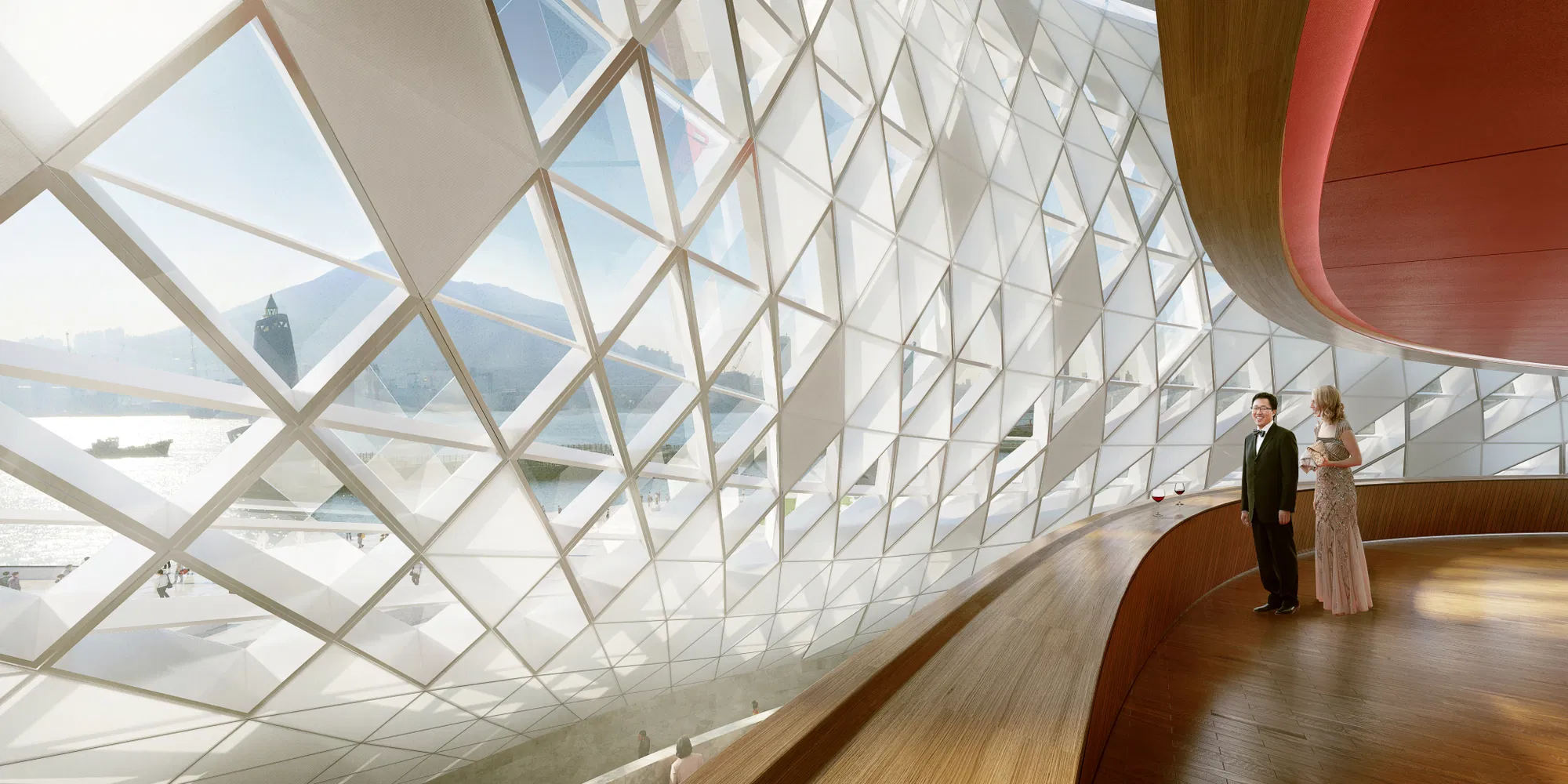
Characteristic onramps guide visitors to the rooftop, creating a contemplative public space that contrasts with the bustling ground level. The rooftop offers wide views of the surrounding mountains and ocean, giving back to the community the space occupied by the building. A continuous, soft exterior skin spans the public areas and functions, linking ground and roof in an unbroken flow while providing protection and transparency.
Explore Courses
.jpg2.jpg "Carlo Ratti - Rethinking Architecture")
.jpg "Architecture Diagram Mastery: Concept to Portfolio")
.jpg%202.jpg "Building Performance with Forma & Opossum")