


Cities are often defined by what endures: the towers that pierce their skylines, the monuments that anchor their histories, the streets that hold generations of footsteps. Yet some of the most intriguing architecture today is designed not to last. Ephemeral architecture, structures conceived to live briefly and then vanish, upends the very idea of permanence.
These fleeting interventions have become unlikely agents of transformation. A pop-up pavilion might turn a vacant lot into a gathering place; a temporary shelter might provide relief and dignity after disaster; an installation at a festival might spark a conversation about how public space is used. They appear suddenly, like guests at a party, altering the mood of a neighborhood before slipping away.
For architects, the impermanence is liberating. Freed from the weight of endurance, they can experiment, provoke, and play. For the public, the experience is just as vital, an invitation to see the city differently, if only for a moment. Ephemeral architecture, in its brevity, reminds us that the life of a city is not only in what remains, but also in what passes through.
How Did Ephemeral Architecture Emerge?
The origins of ephemeral architecture trace back to the earliest periods of human history, with its first signs found in the portable tents and shelters of nomadic societies. These structures, which met the sheltering needs of their inhabitants, also served as centers of cultural and social life. Thanks to Deipnosophistae, a Greek work written by Athenaeus in the early 3rd century, it is evident that ephemeral architecture was also present in Egypt. In this text, the author recounts how the Egyptian Pharaoh Ptolemy Philadelphus (283–246 BCE) commissioned a temporary pavilion for a magnificent banquet.
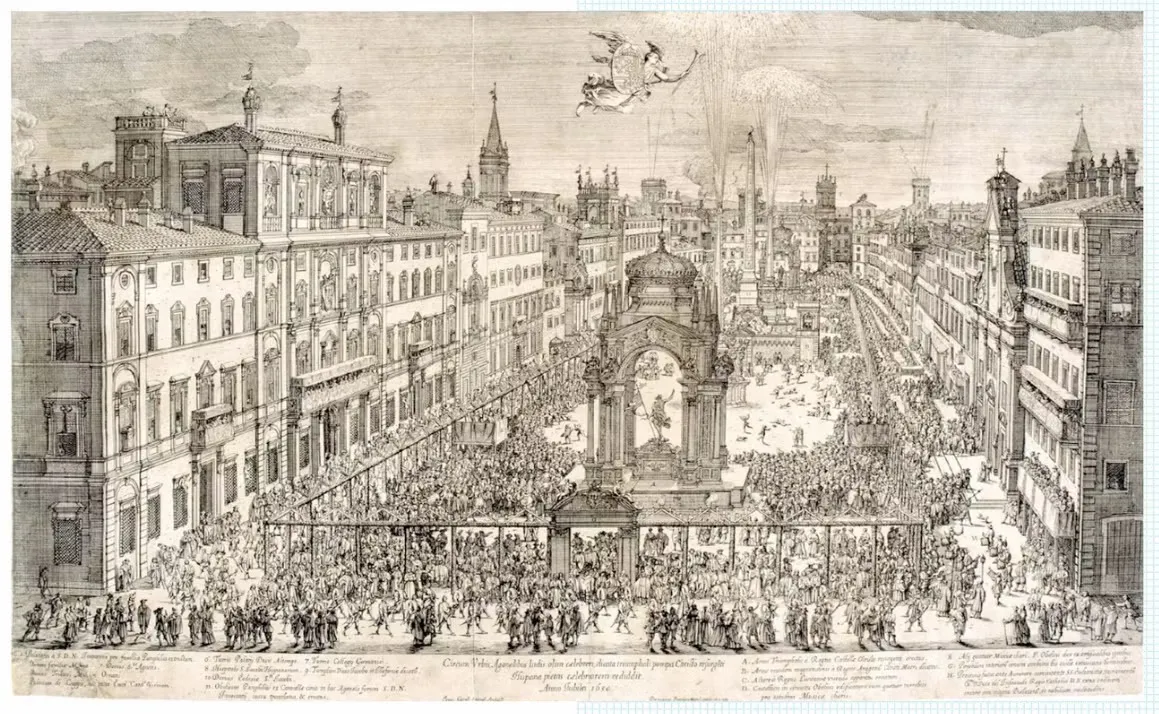
Ephemeral architecture, which also found its place in ancient Rome, became a part of urban space, particularly with triumphal arches, theater stages, and decorative structures erected for religious festivals. These structures, built for a specific celebration or event, were removed after the ceremony concluded. During the Renaissance and Baroque periods, temporary pavilions constructed for festivities in European courts became symbols of power and magnificence. Since then, this design form has evolved to adapt to other uses and technological advancements, while maintaining its relevance and ability to surprise and enchant.
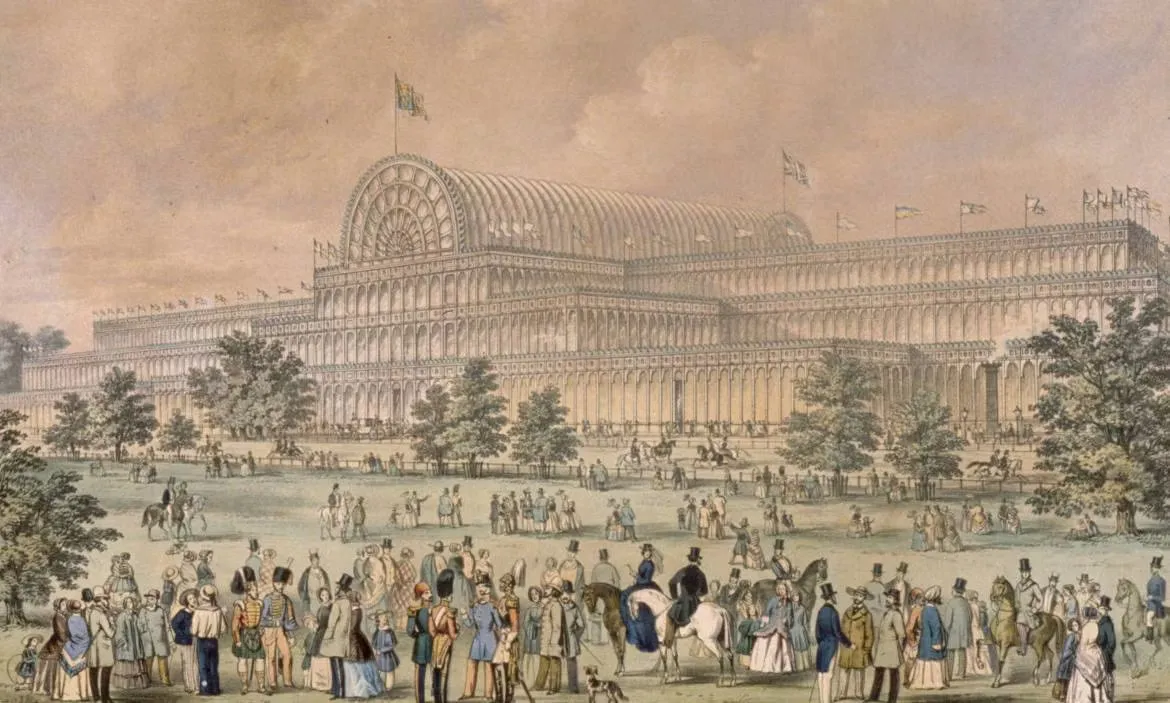
The Industrial Revolution, the rise of the bourgeoisie, and scientific and technological advancements made ephemeral architecture a necessity. At international exhibitions, temporary structures built to showcase new technologies helped advance this architectural practice. Temporary exhibitions, which provide a valuable opportunity for architects and engineers to express themselves, have given rise to some of the world’s most iconic and symbolic temporary spaces, such as the Crystal Palace.
Ephemeral architecture, which we can see in many areas today, from museums to store windows, from urban planning to stage designs, can be divided into two categories depending on the direction in which it has developed: temporary structures focused on art and culture, and disaster response architecture.
What are the Characteristics of Ephemeral Architecture?
Ephemerality and Time Limitation
Unlike permanent structures, ephemeral architecture is designed and built for a specific event or need, with a limited lifespan.
Portability and Modularity
Structures built for temporary periods are designed to be easily disassembled and transported in a short time. Lightweight, prefabricated, or modular elements are generally preferred for this purpose

Material Use and Cost
Ephemeral structures constructed from lightweight, recyclable, and sustainable materials such as wood, bamboo, fabric, and membranes offer low-cost and rapid construction solutions.
Flexibility and Adaptability
Temporary designs are not bound to a fixed list of needs; they can be expanded, reduced, or rearranged as required, and adapted to different spaces or functions.
A Tool for Urban Intervention
Ephemeral architectures, which play a significant role in shaping the future of urban spaces, offer a platform for creativity, interaction, and experimentation. These interventions keep cities vibrant while helping anticipate future needs.
Prototypes for Permanent Solutions
Ephemeral structures can serve as flexible solutions to address immediate challenges while testing ideas for future developments. They allow public response to be gauged and concepts refined before making permanent changes.
Notable Examples of Ephemeral Architecture
Head in Clouds Pavilion
Location: Governors Island, New York, USA
Architect: STUDIOKCA
Year: 2013
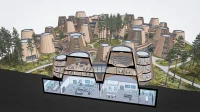
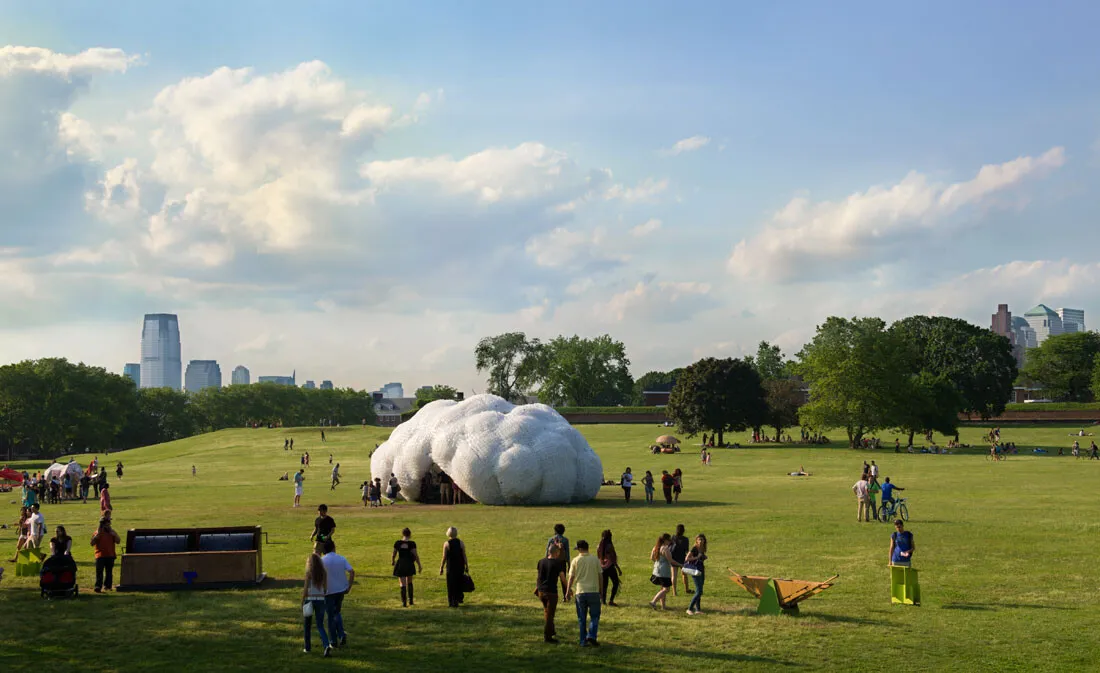
The Head in the Clouds Pavilion, a temporary social center built by STUDIOKCA for the Figment Art Festival, perfectly reflects the creative and experience-focused aspects of ephemeral architecture. Born from the desire to create “a place where you can dream in the city of dreams,” the pavilion was constructed from 53,780 recycled bottles, the number of bottles discarded in New York in just one hour.
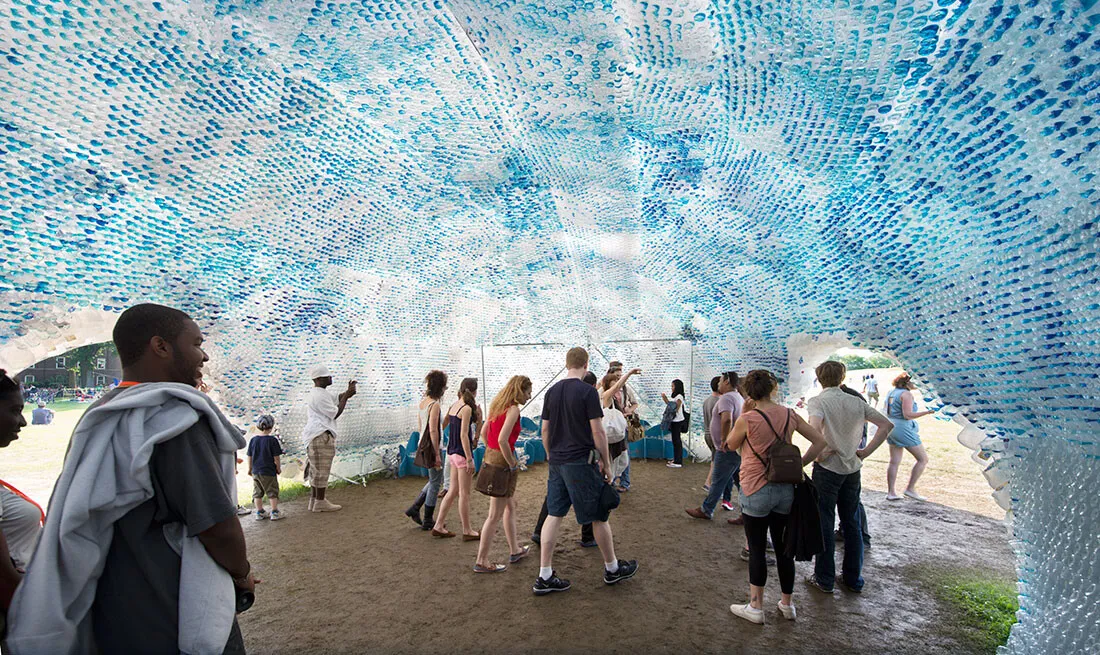
Raising awareness of plastic consumption and recycling, Head in the Clouds is a space where visitors can observe the light and color filtering through a “cloud” from inside to outside. The exterior consists of a series of “pillows” made from gallon-sized jugs, while the interior is composed of 450 ml and 750 ml bottles. Sand, water, and a curved aluminum frame provide structural integrity, creating a small seating/dream space at the base that accommodates up to 50 people.

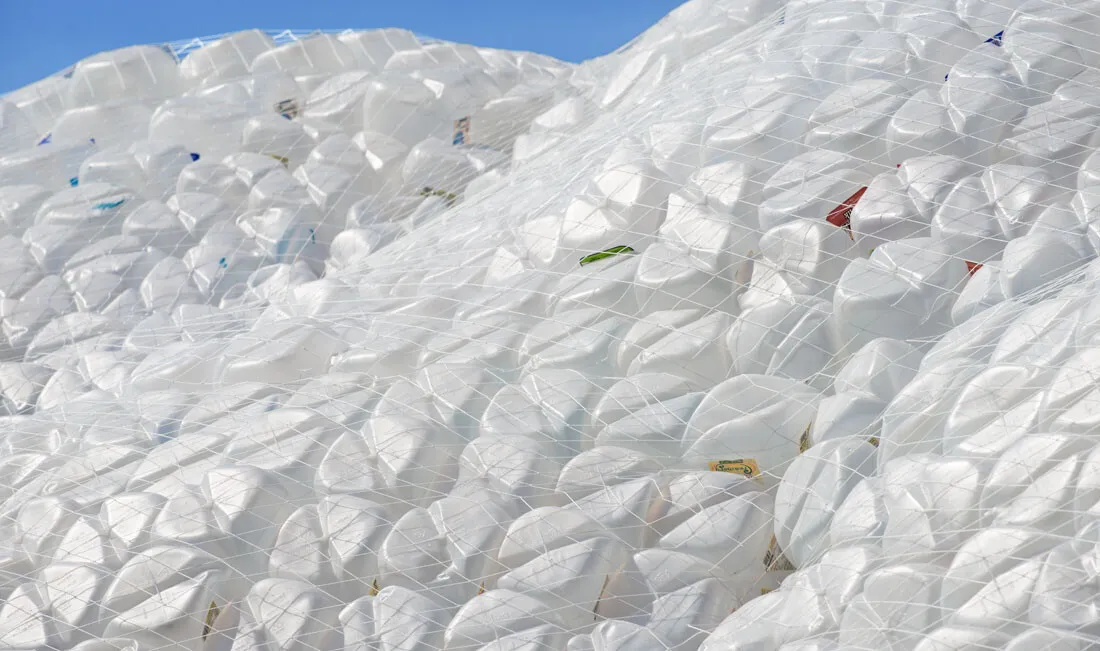
Combining architecture with environmental awareness, this iconic temporary structure was used throughout the festival and then dismantled and recycled, reinforcing the sustainability of the design.
Portable Dining Unit (PDU)
Location: San Fransicso, CA, USA
Architect: EDG Interior Architecture + Design
Year: 2012
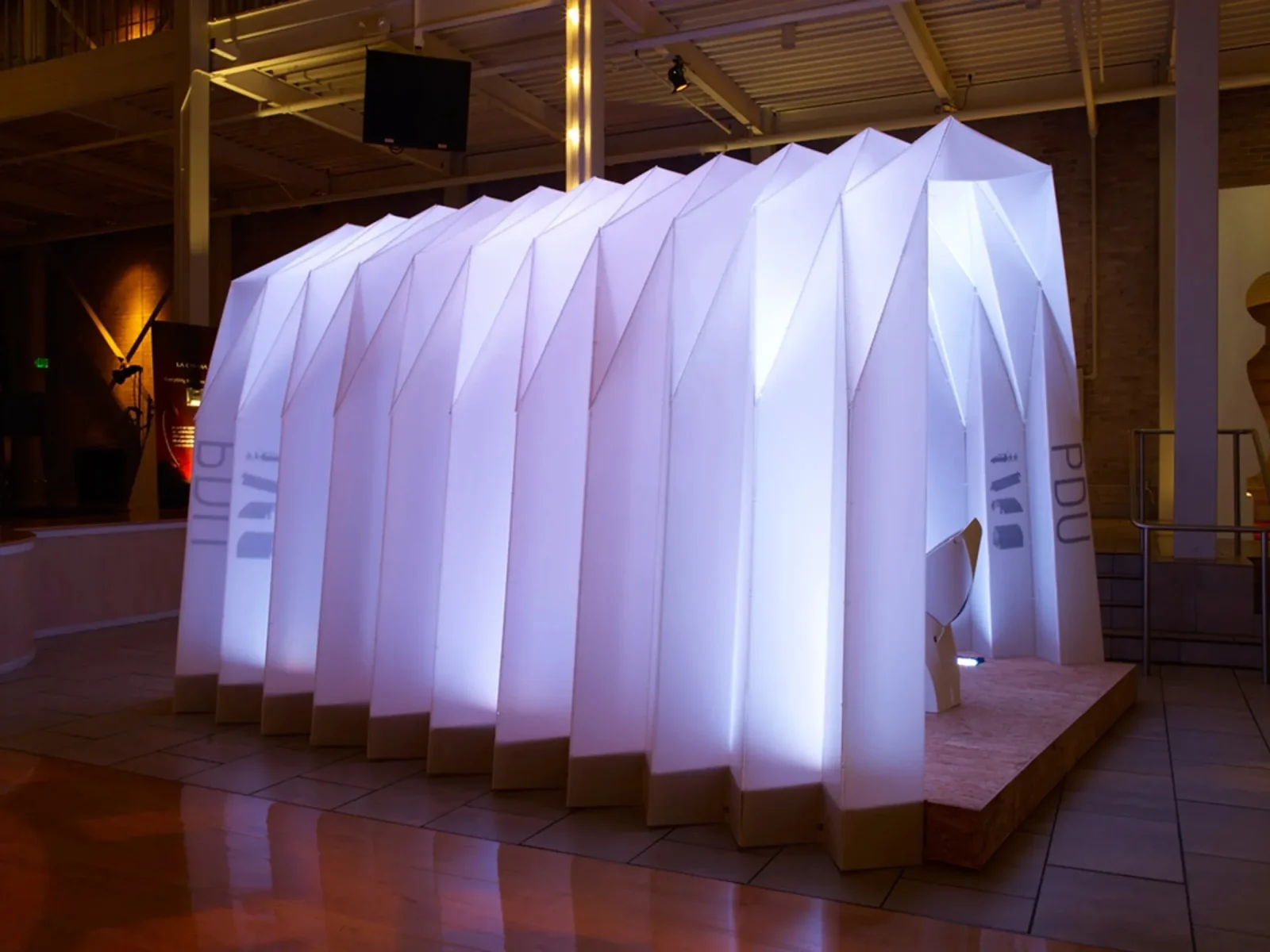
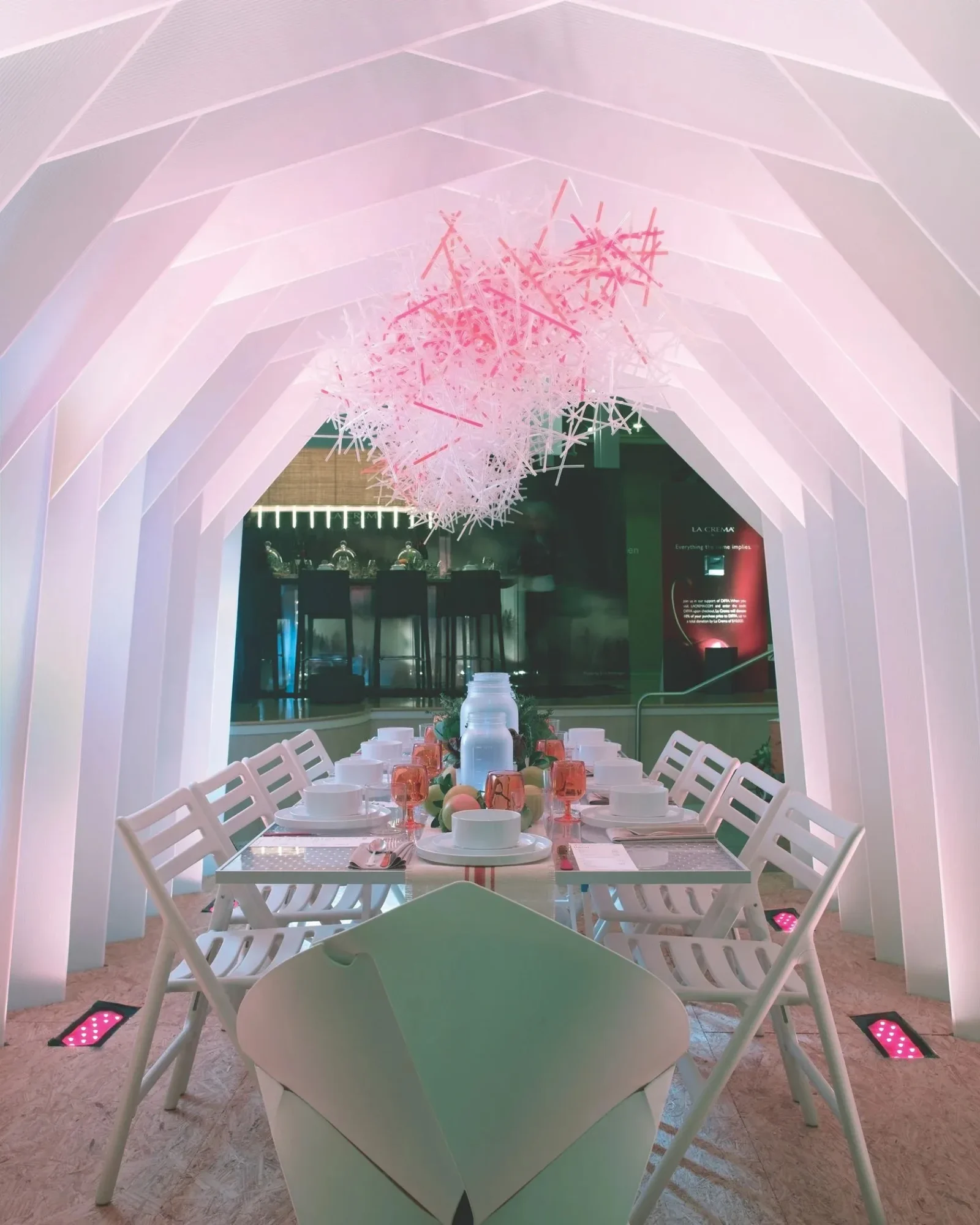
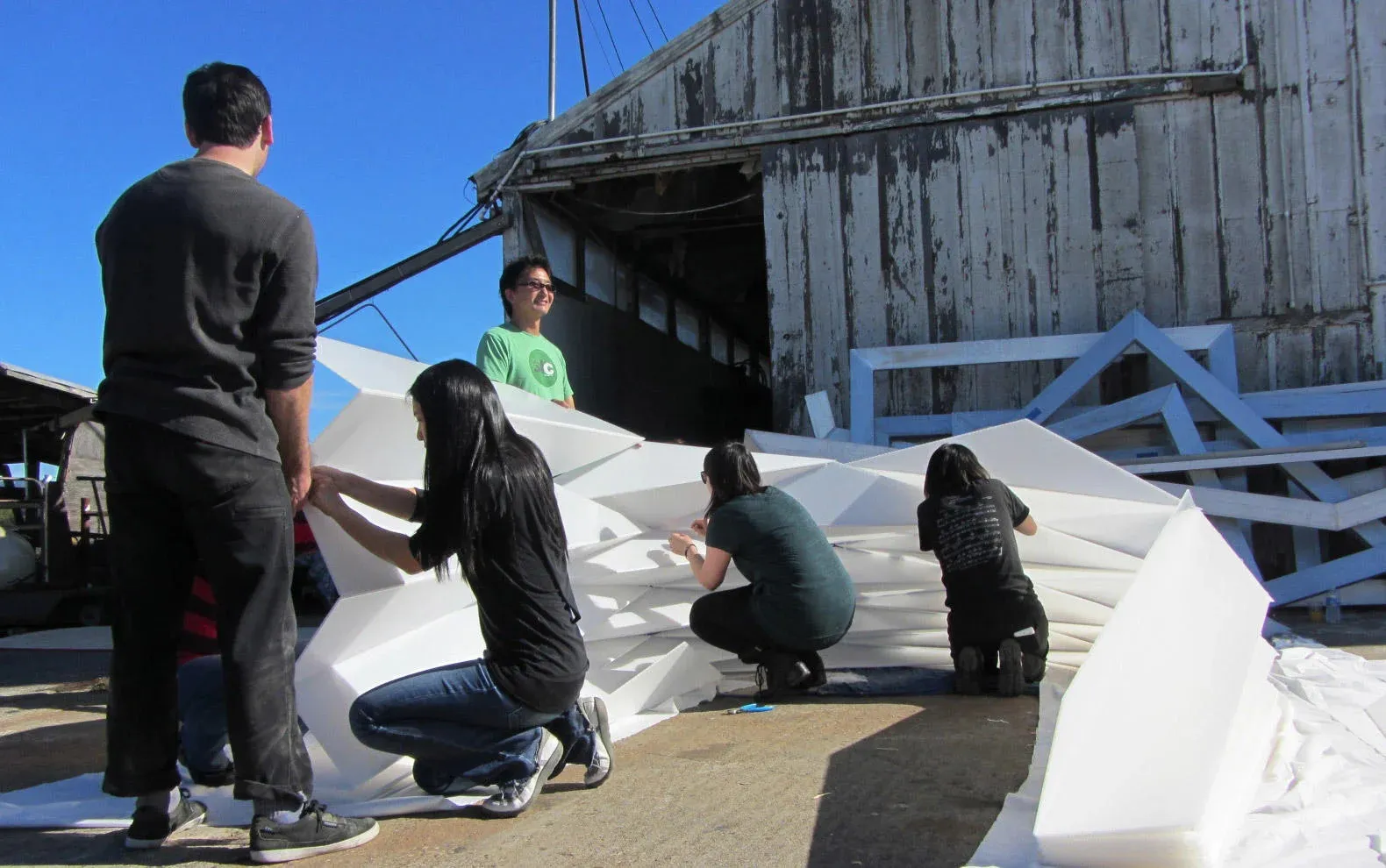
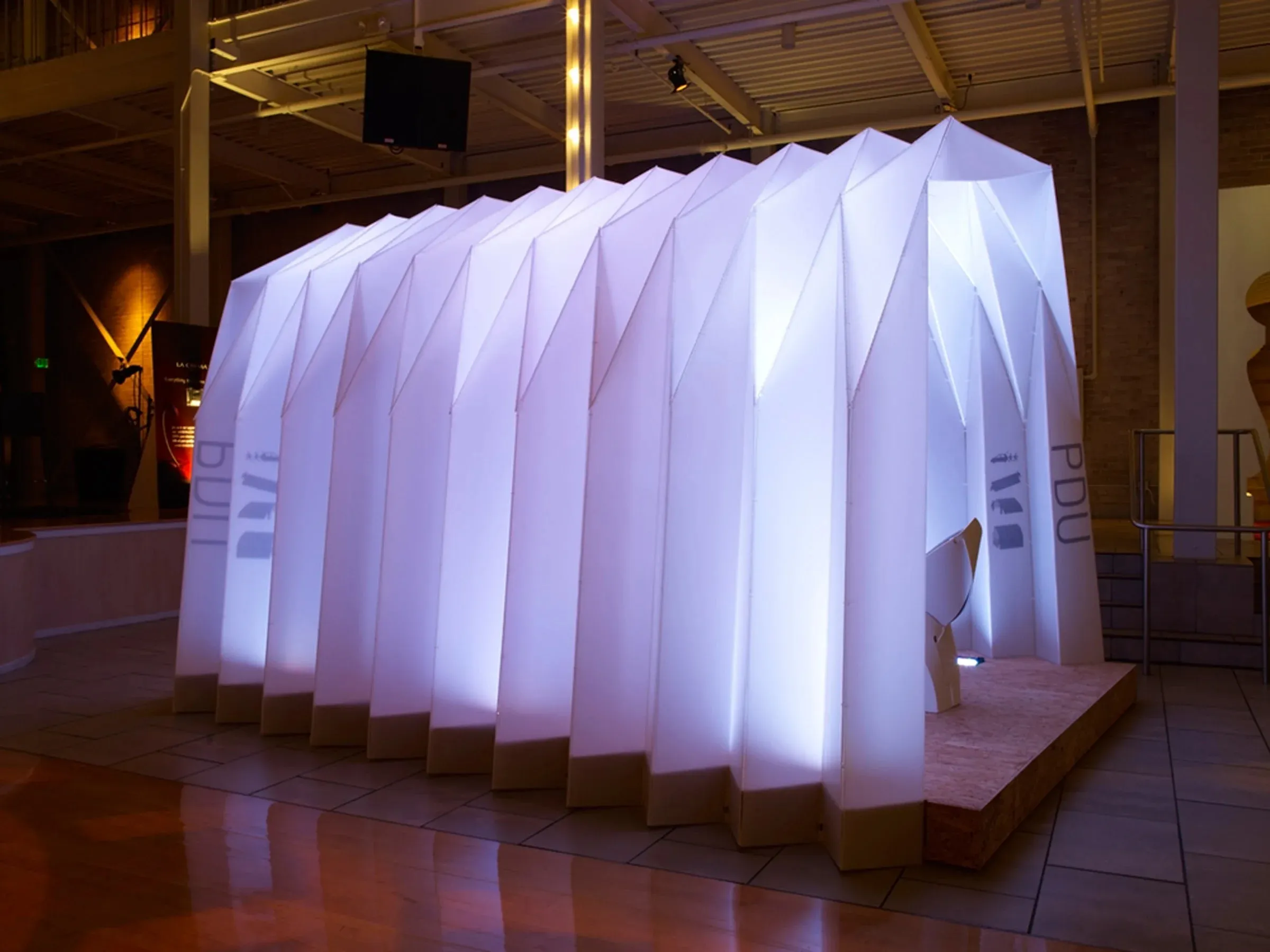
Designed with young and emerging chefs, particularly pop-up chefs and food truck operators, the PDU is a project that strongly embodies both the aesthetic and functional aspects of ephemeral architecture. This prototype, an innovative combination of foldable partitions, portable tables, and collapsible chairs, allows for rapid setup and dismantling in the food market environment.
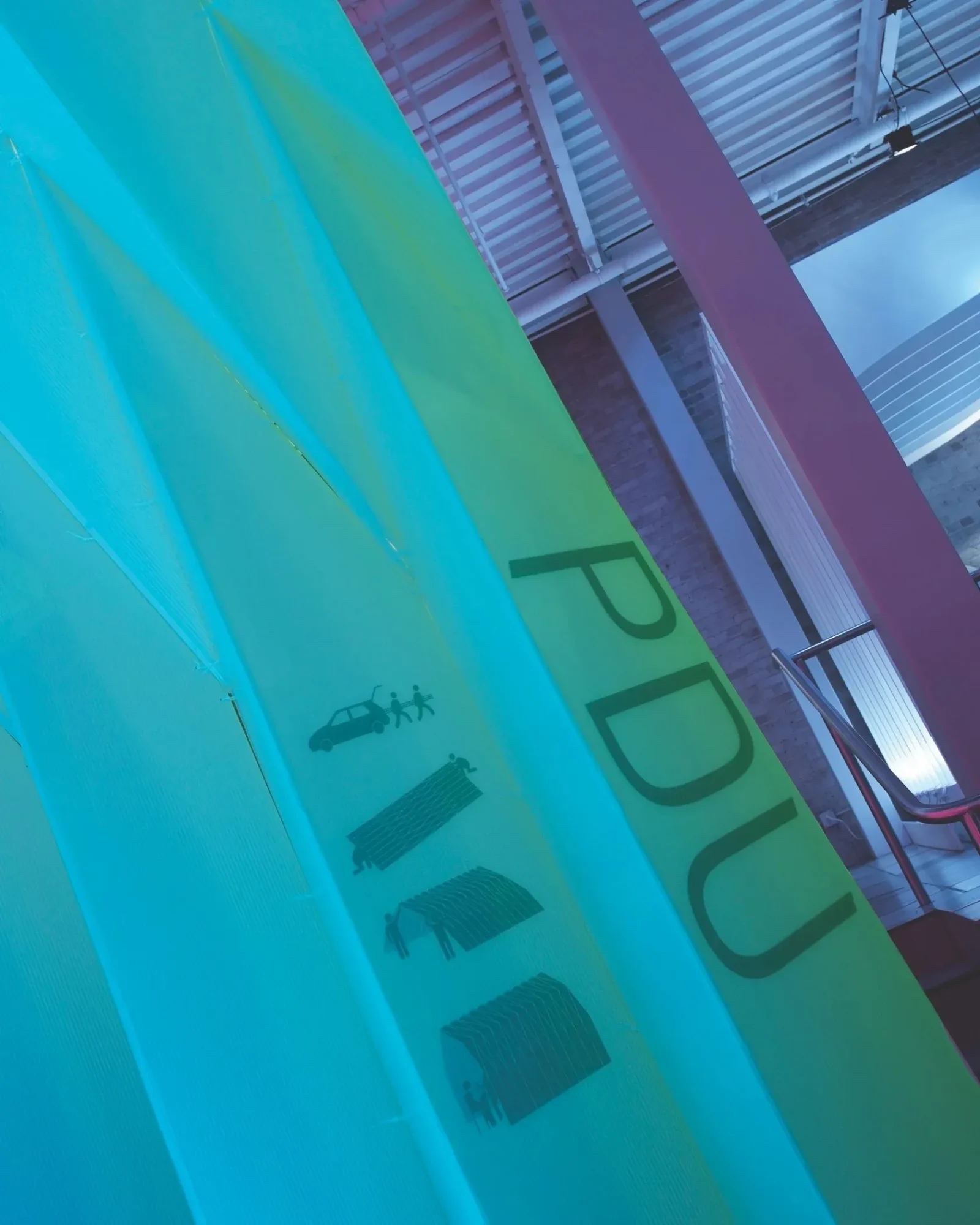
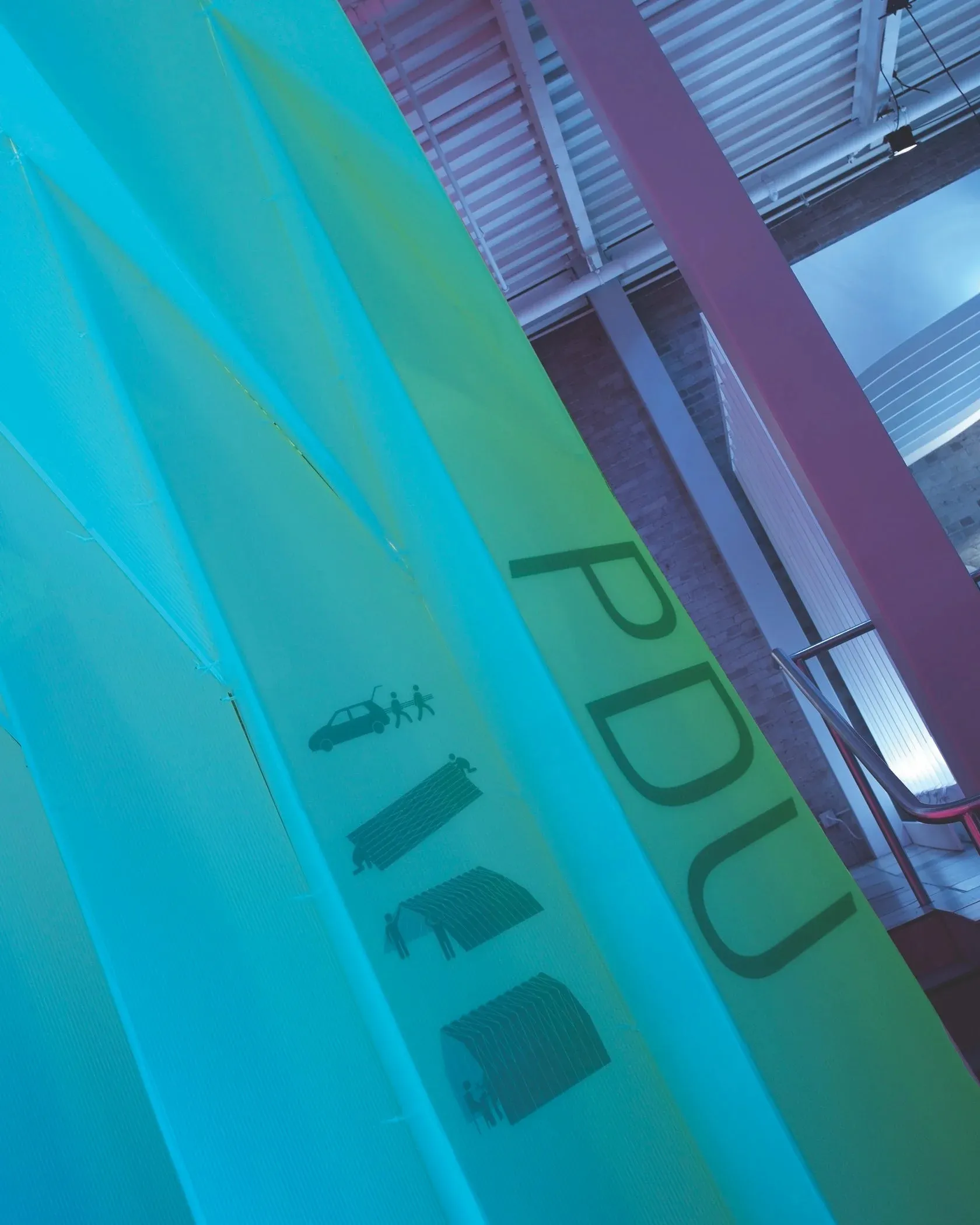
Constructed with corrugated plastic panels, the PDU features origami-like foldable surfaces that open and close like an accordion. Simple zip ties connect the panels through pre-existing holes, and the entire structure can be assembled, installed, and modified by just two people using basic DIY tools. The required PDU requires no expertise, and the ‘user manual’ is a sticker with simple graphic installation instructions on one of the flat-packed panels at the top. The sculptural curtain attracts hungry passersby with a shimmering glow at night and filters sunlight during the day, giving guests the feeling of a lived-in sculpture.
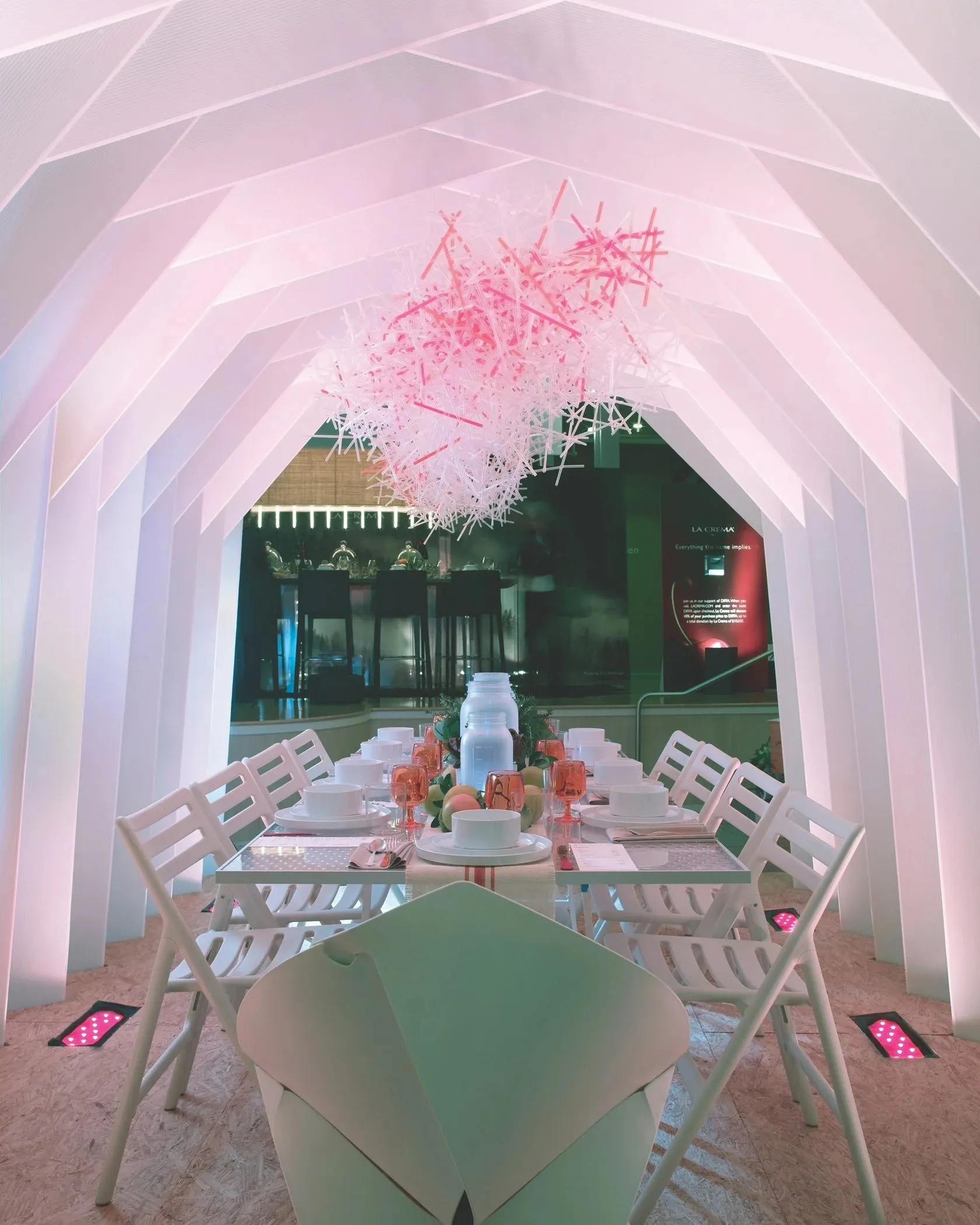
The PDU’s interior can be furnished in a variety of ways, ranging from an intimate dining room to a dome-like party experience for over 50 people. The portable, folding furniture is in harmony with the structure itself. Inside, a lightweight organic form, resembling a chandelier, is an art piece made from neon straws, echoing the undulating organic patterns of the portable shell. By transforming the dining space into an immersive spatial experience, the PDU invites users to perceive the environment differently, challenging the traditional notion of permanence in architecture.
Paper Log Houses
Architect: Shigeru Ban
First application: After the 1995 Kobe Earthquake
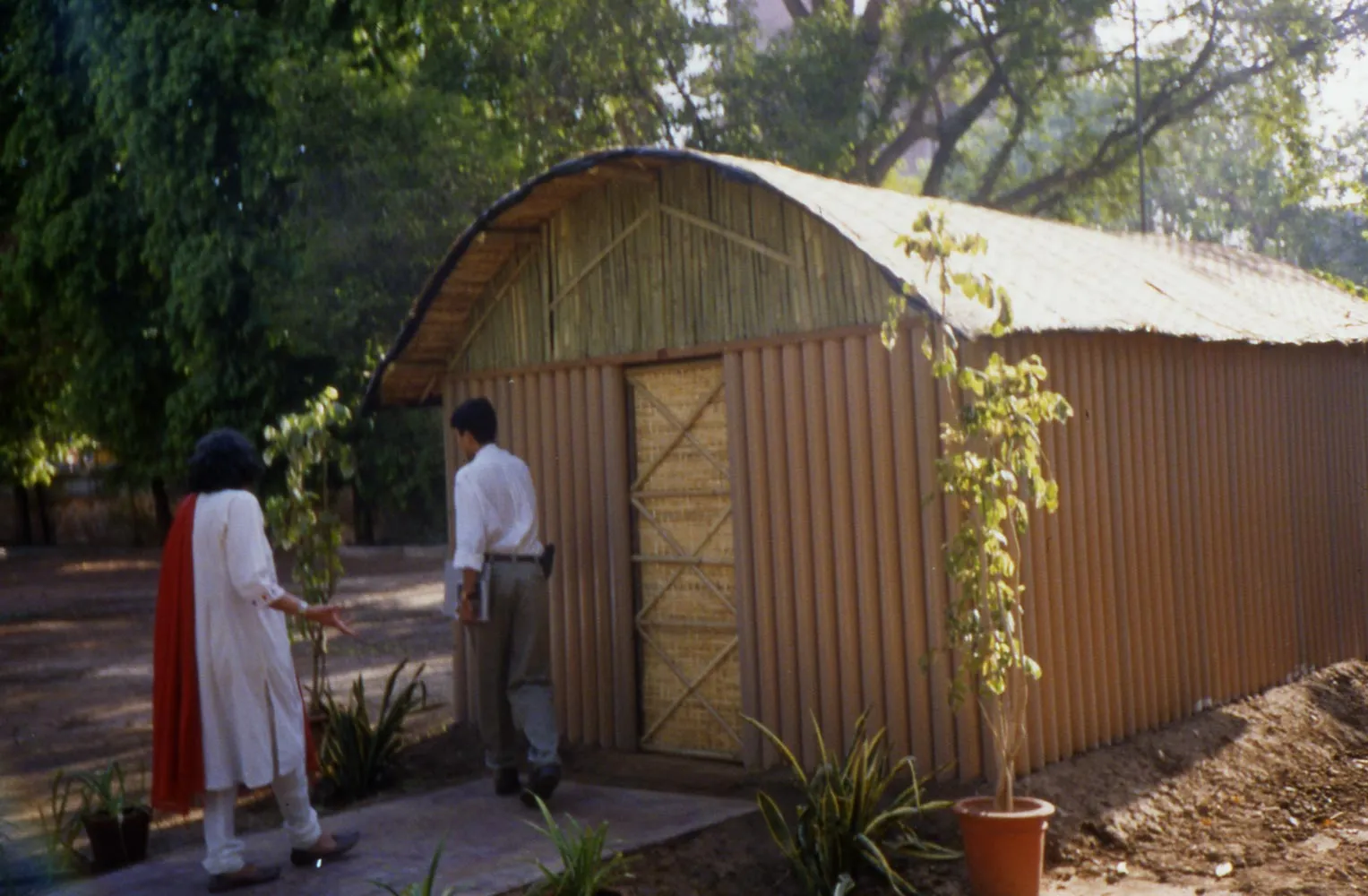
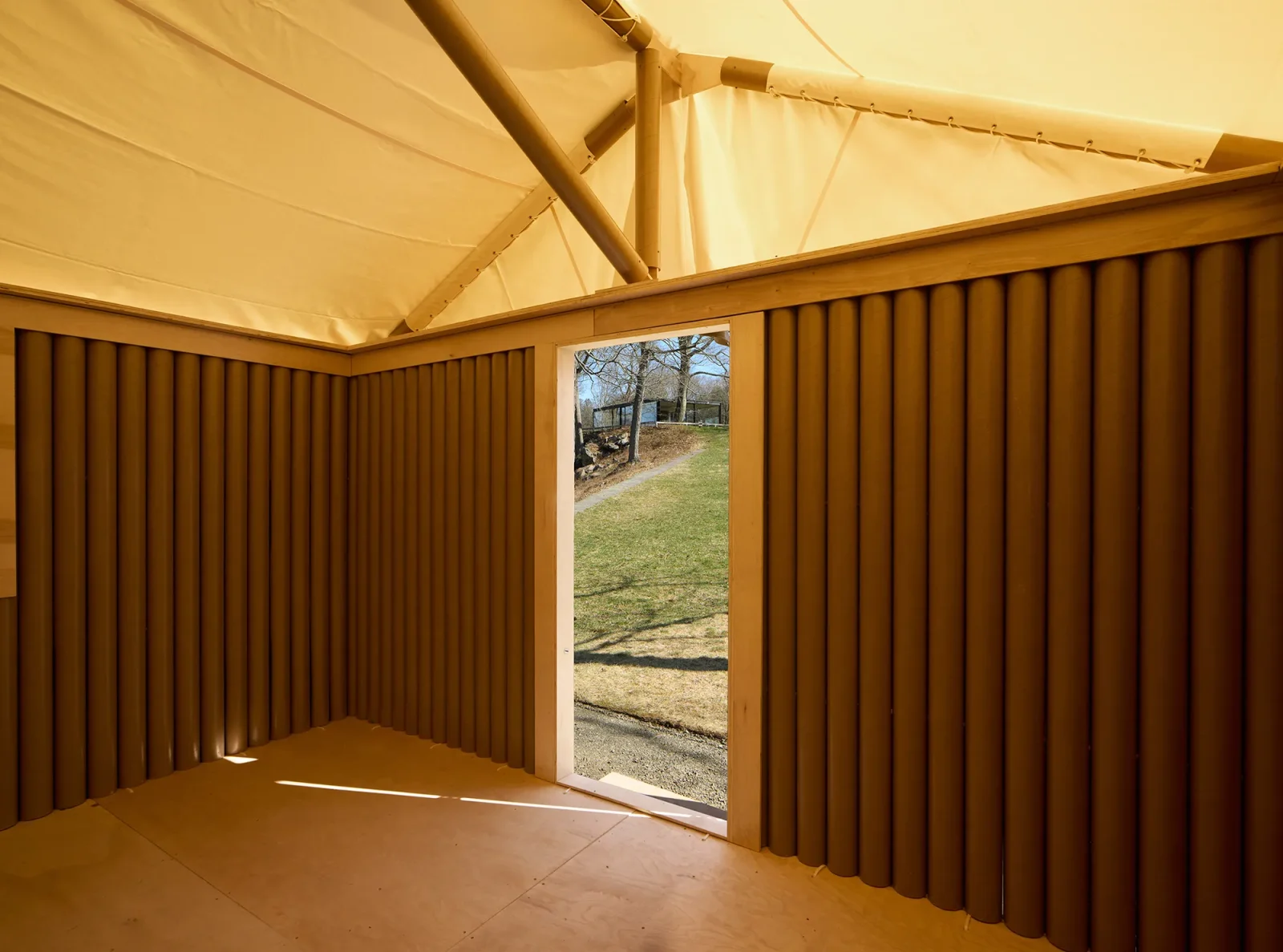
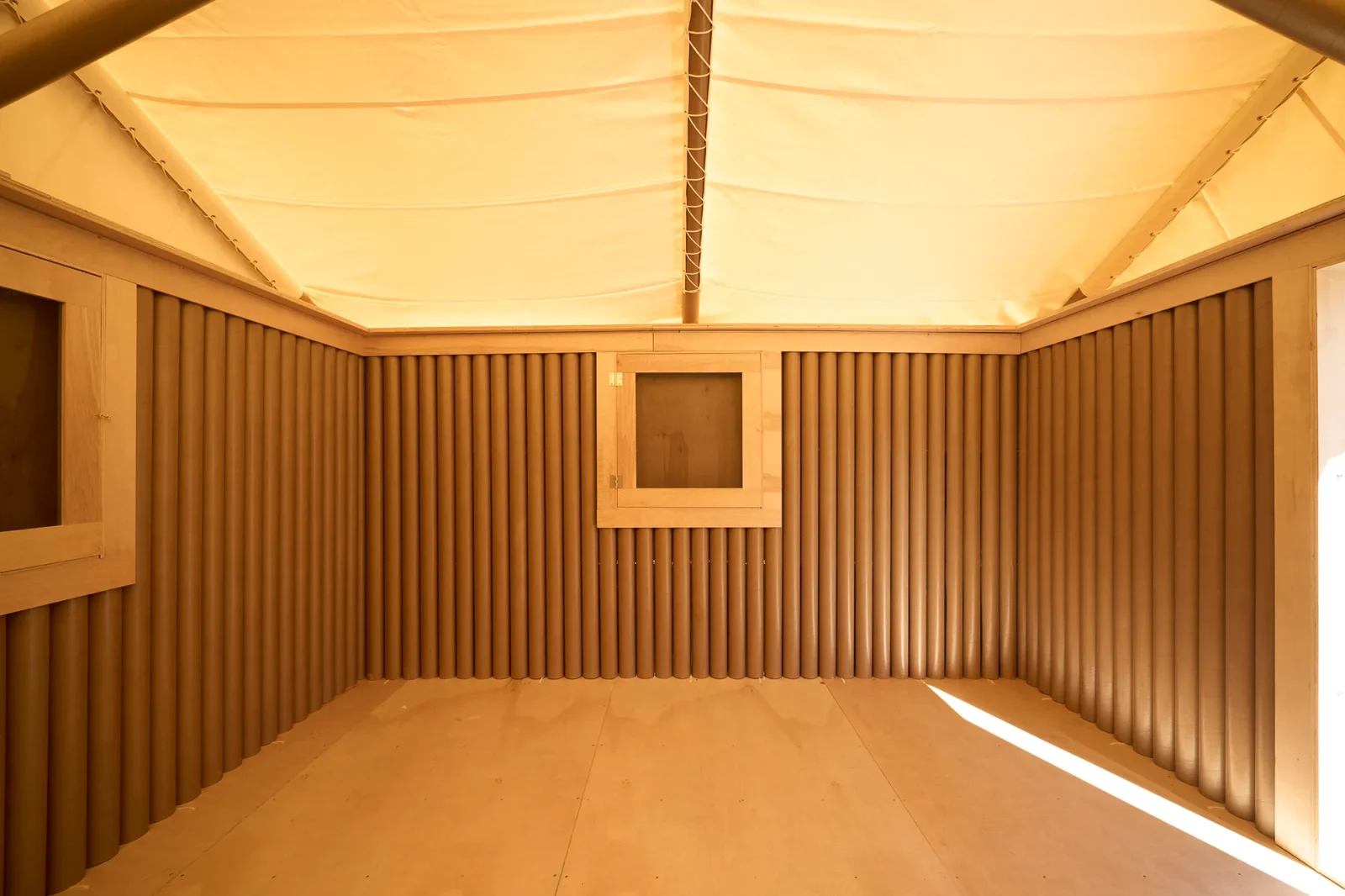
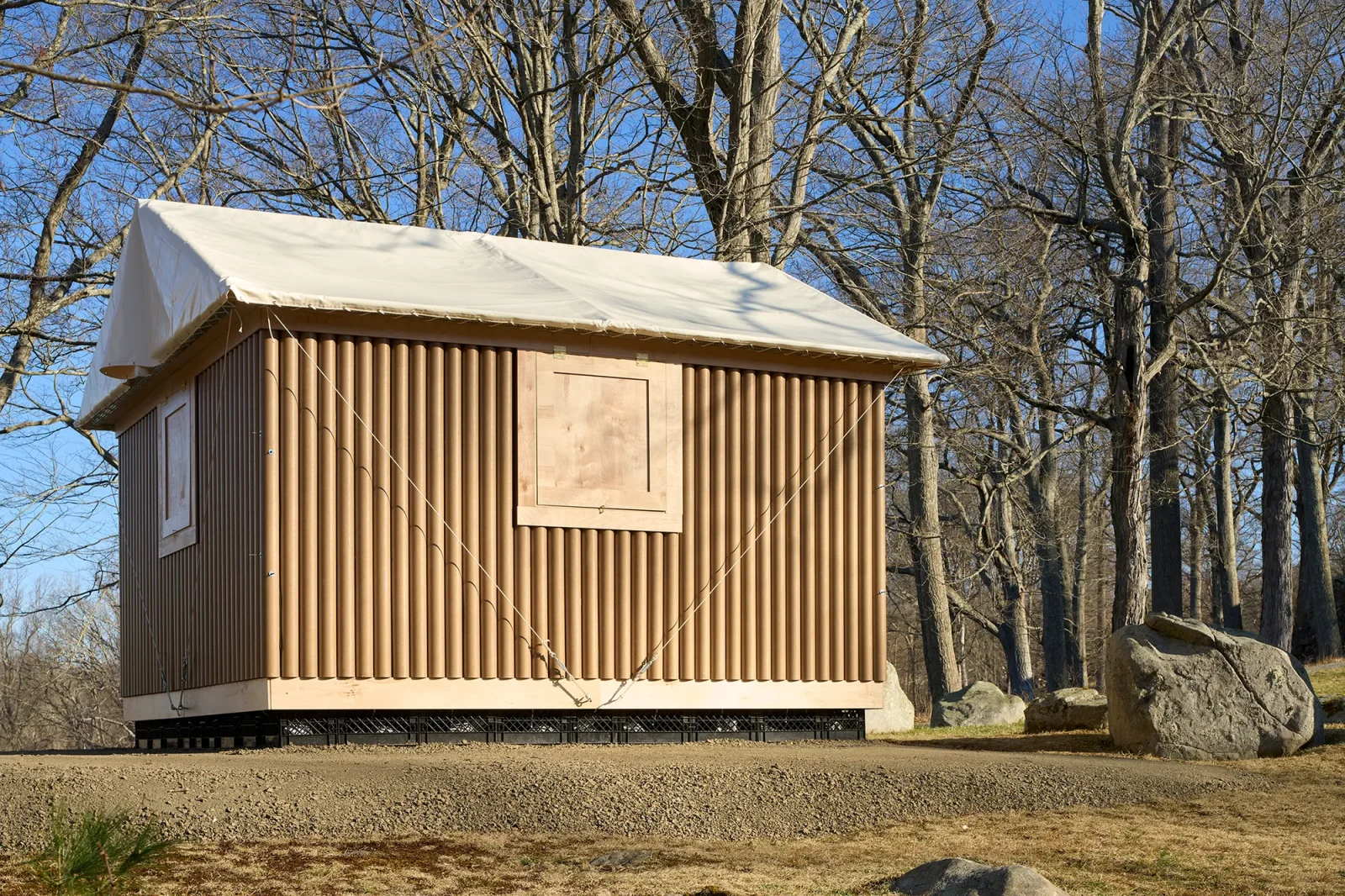
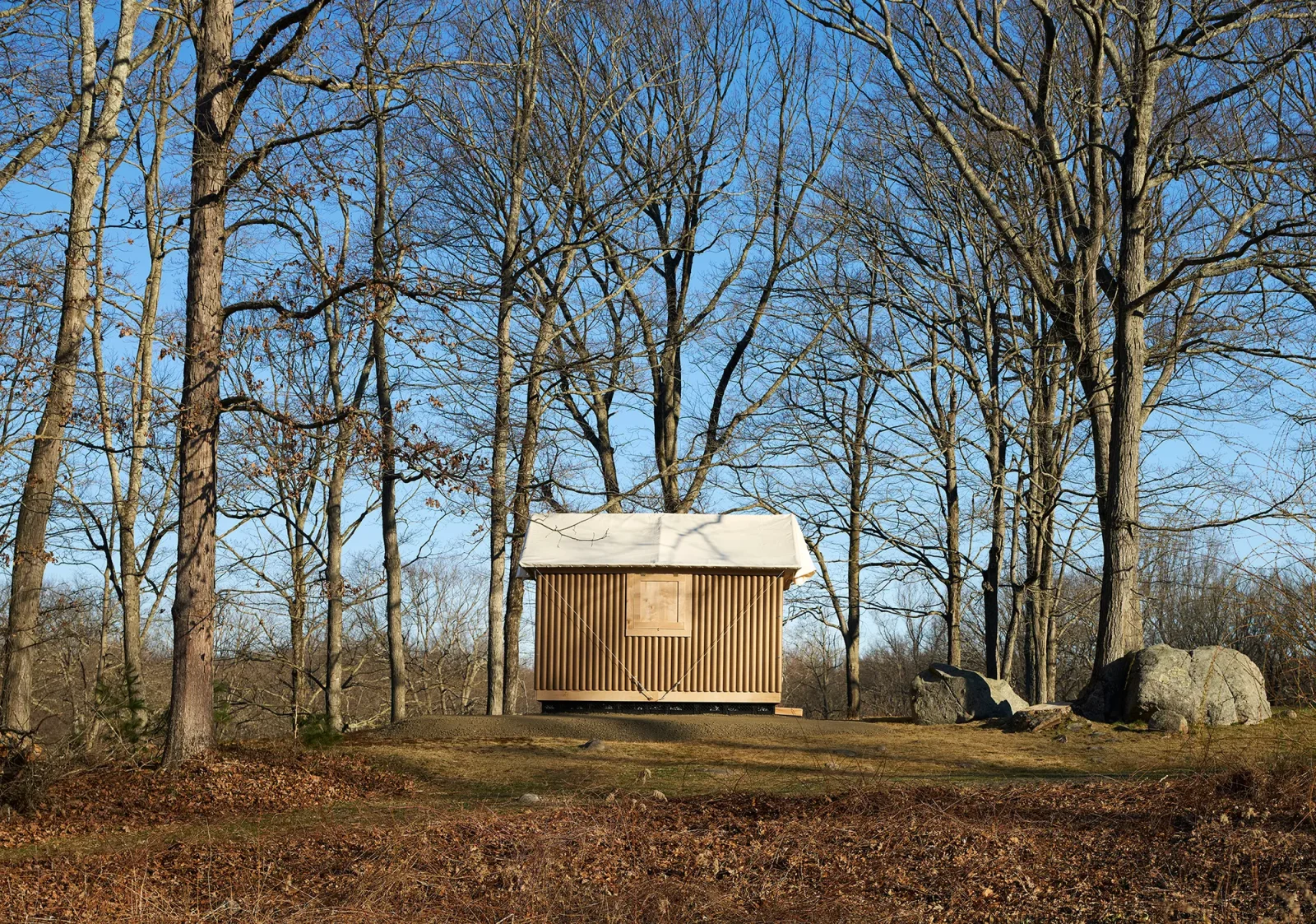
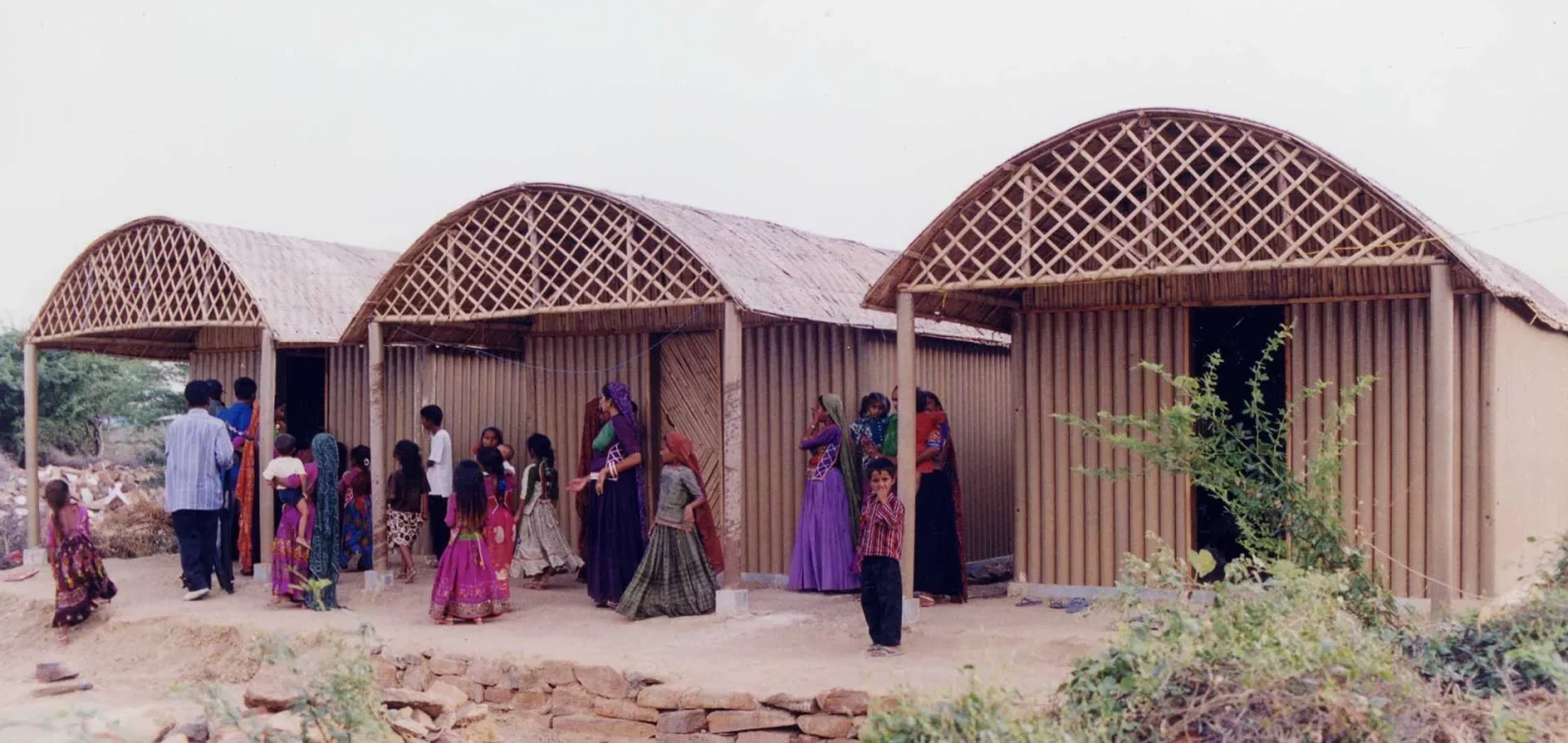
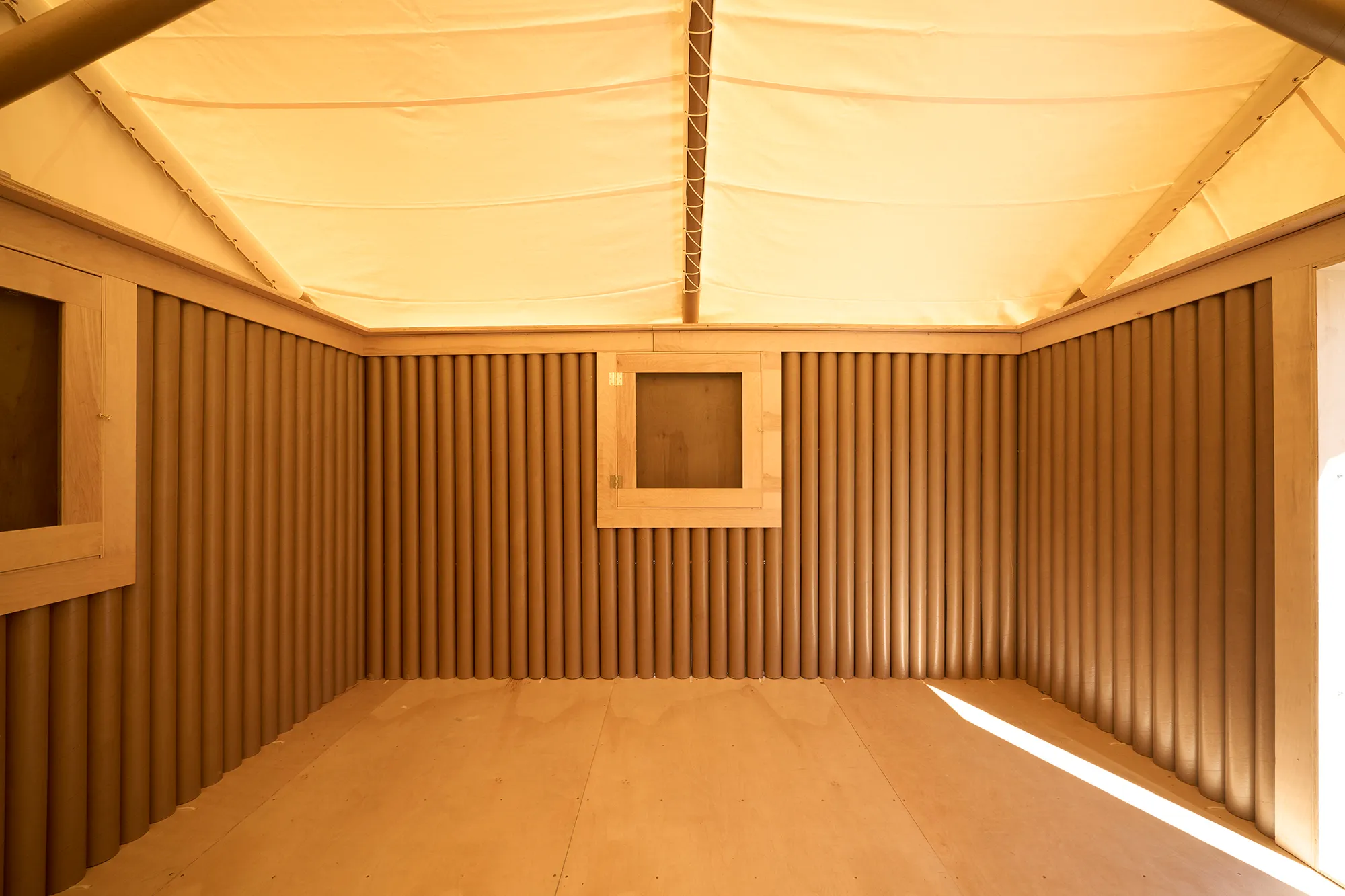
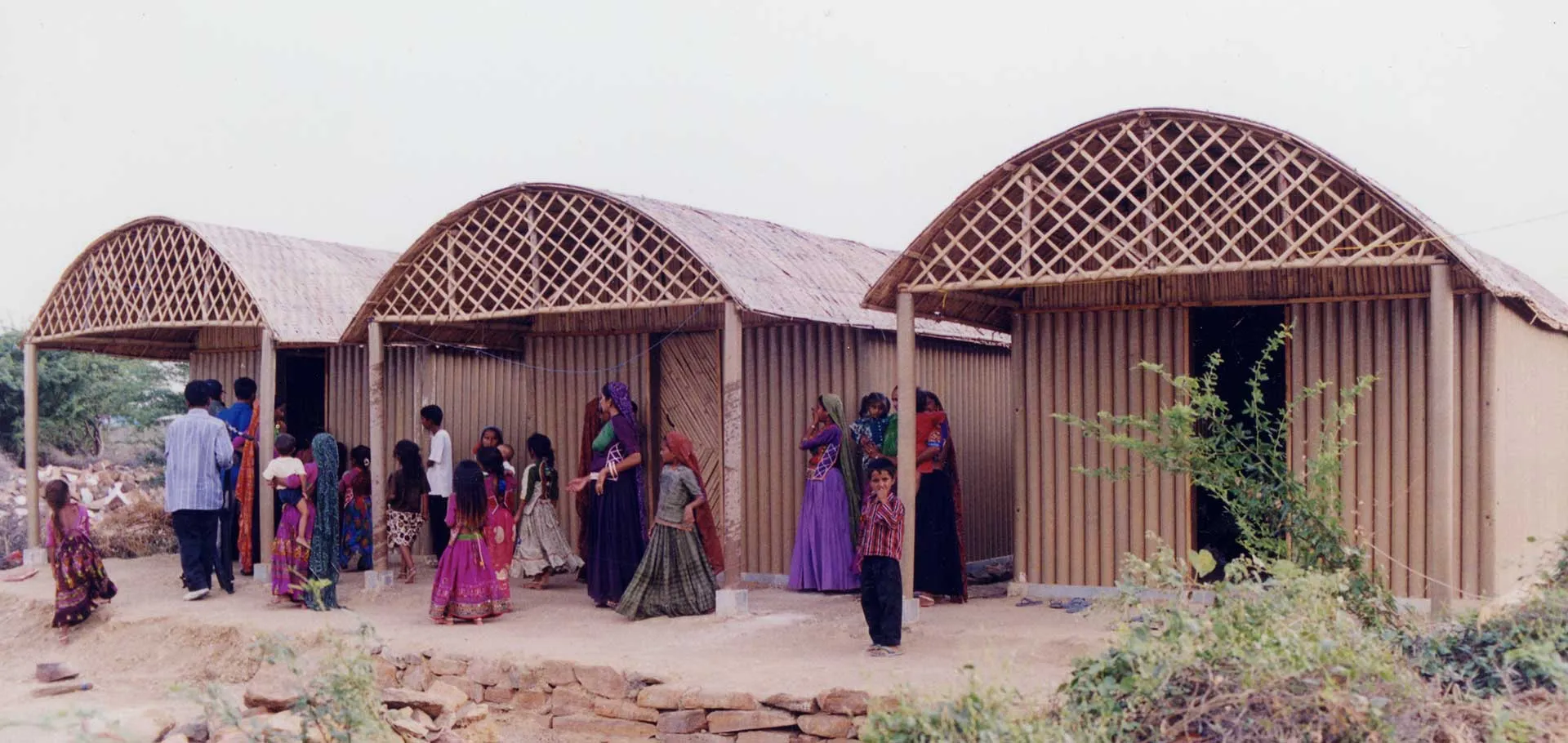
One of the most influential examples in the field of ephemeral architecture, Shigeru Ban’s Paper Log Houses is based on the concept of an affordable structure that can be built by anyone. First designed after the 1995 Kobe earthquake in Japan, this temporary post-disaster structure can be easily dismantled and recycled once the need for it is over. The building is composed of lightweight, inexpensive, and readily available paper tubes, which are treated with special chemicals to enhance fire and water resistance.
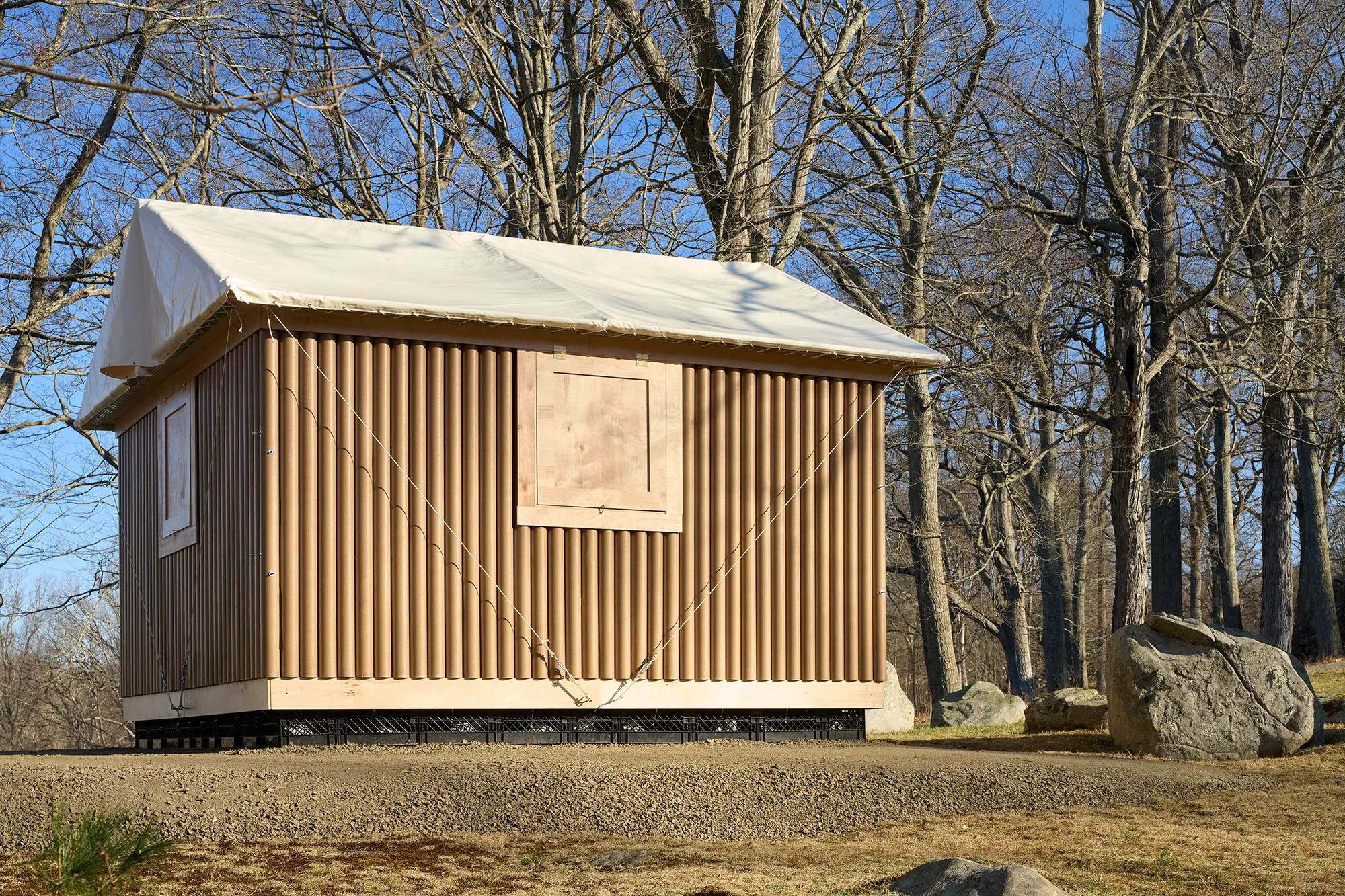
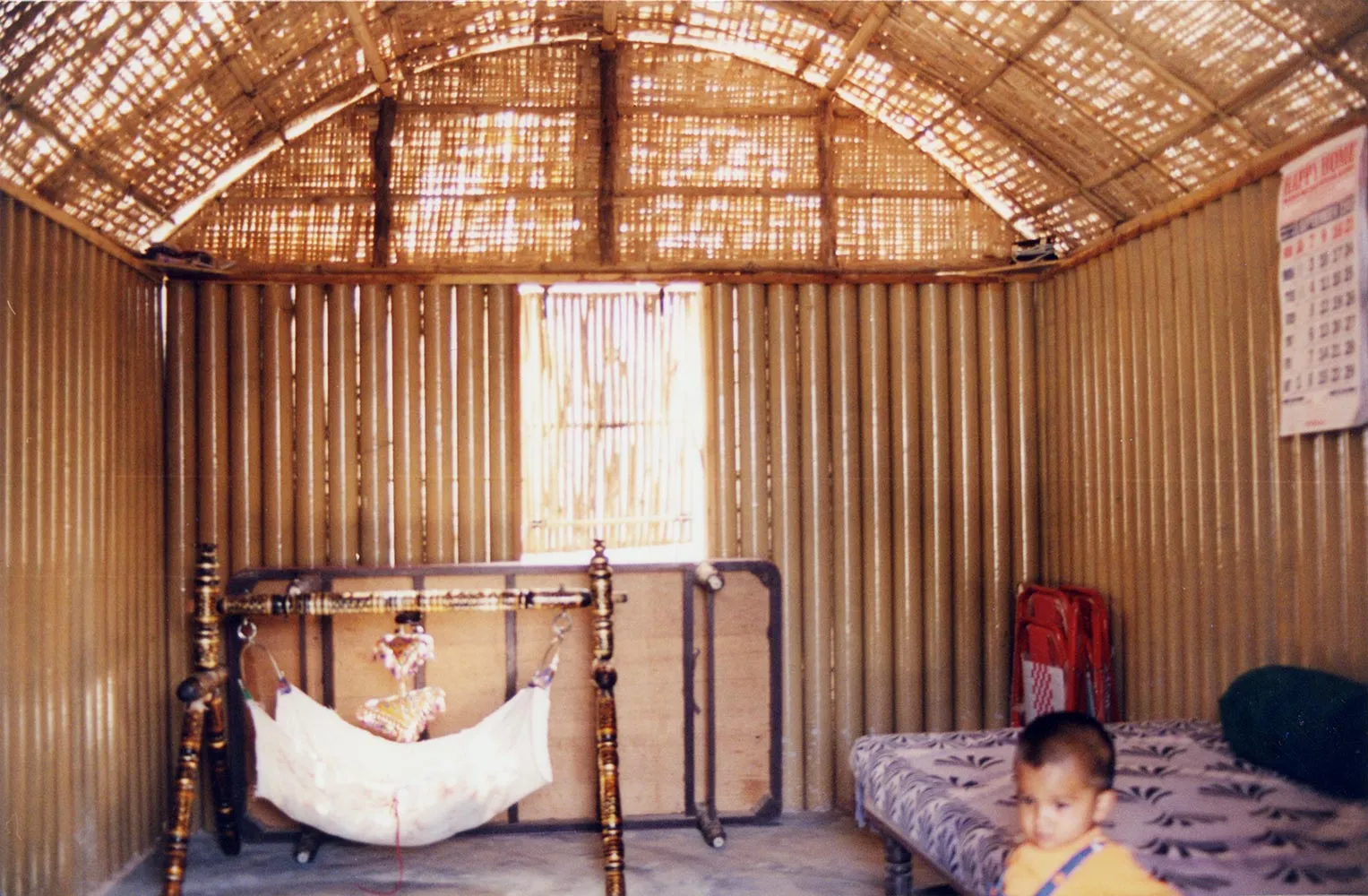
In the earliest versions, the foundation was a simple system raised with beer crates and bags of cement. Later iterations incorporated locally available materials such as wooden pallets, stones, and compressed earth. The roof is covered with materials such as tarpaulin, sheet metal, or wood adapted to local conditions.
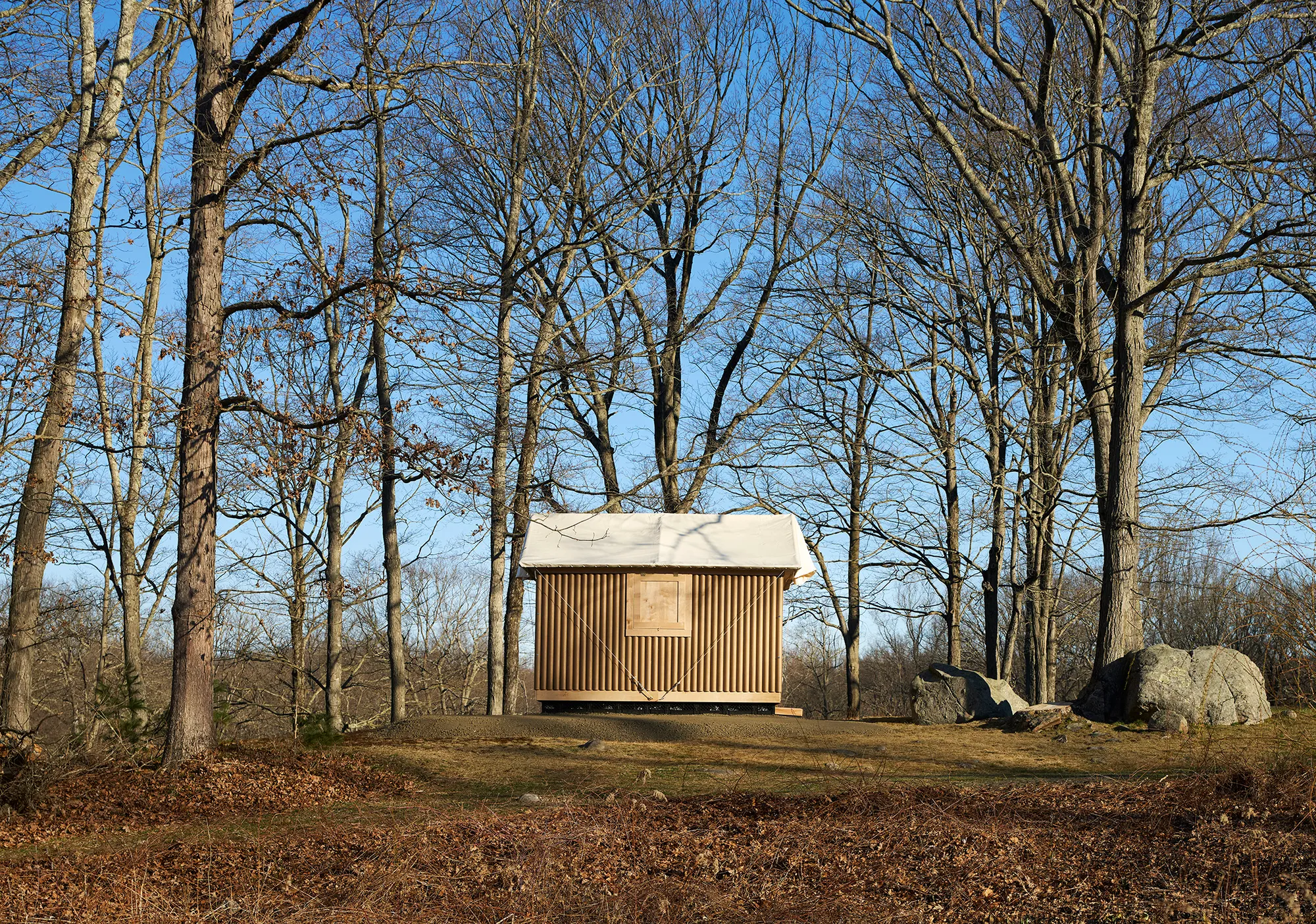
Paper Log House, which can be easily assembled and dismantled by volunteers and disaster victims with its simple construction technique, is one of the most iconic examples of ephemeral architecture in the field of post-disaster shelter.
The Stairs to Kriterion
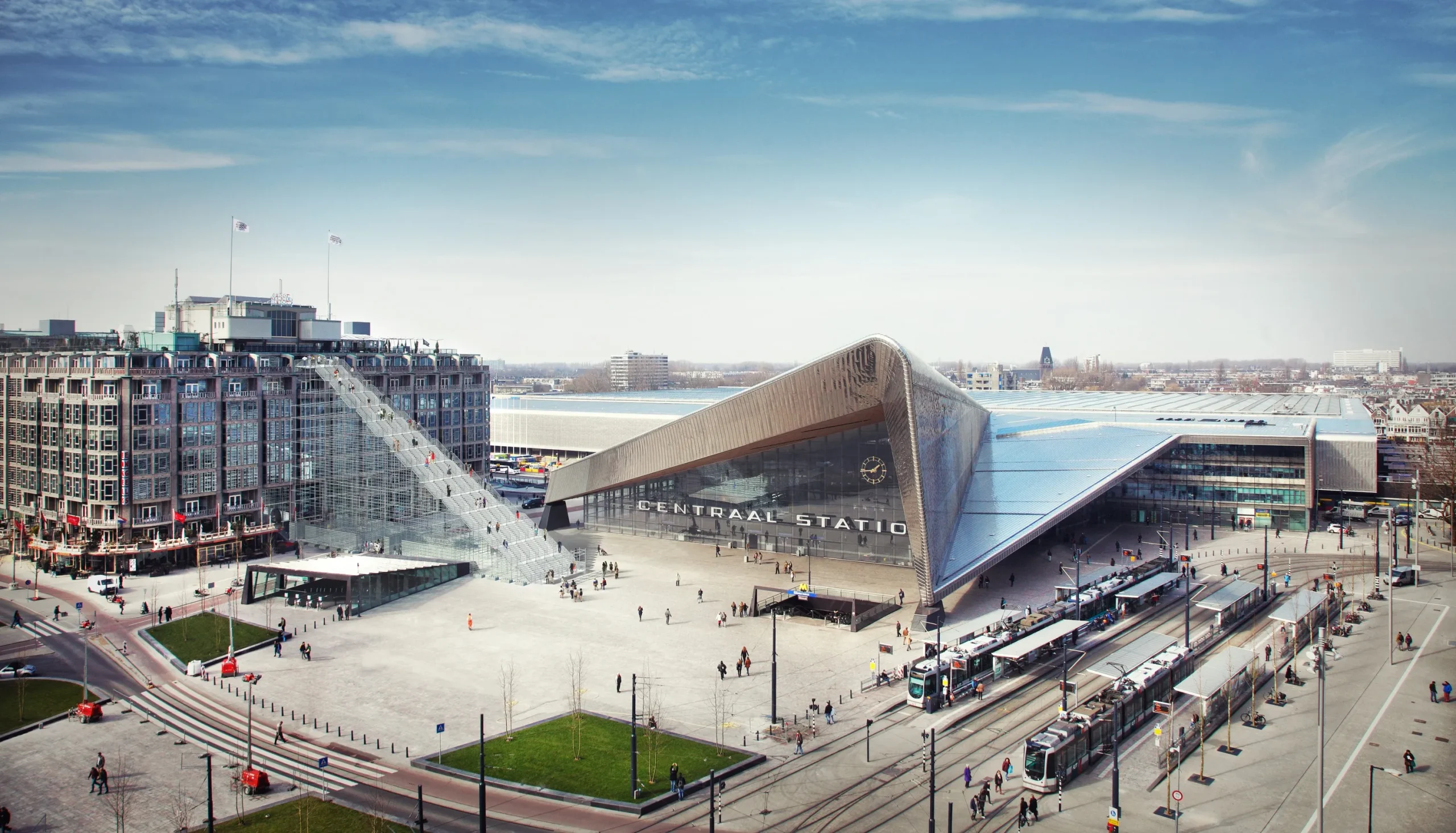
Location: Rotterdam, Netherlands
Architect: MVRDV
Year: 2016
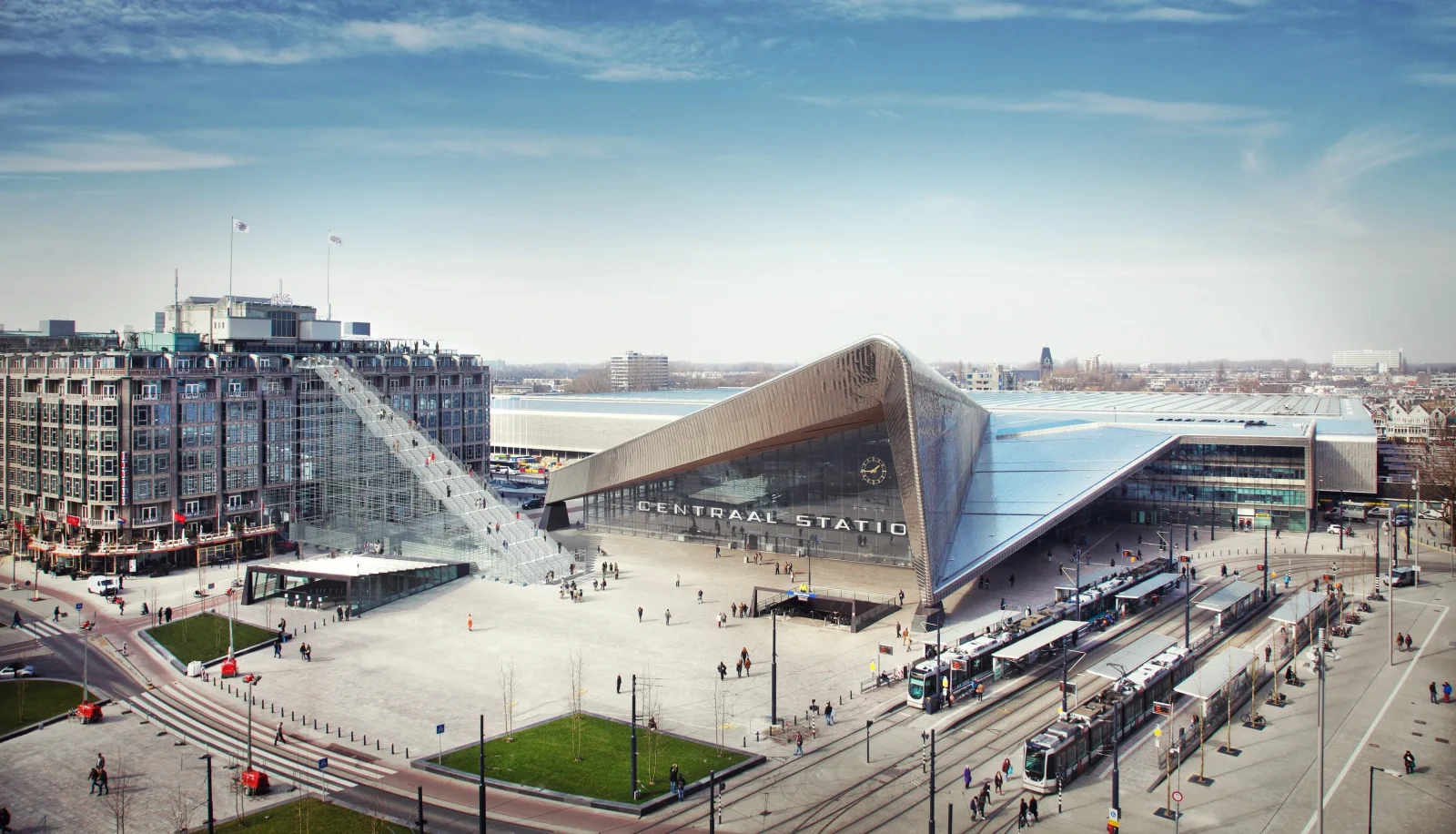
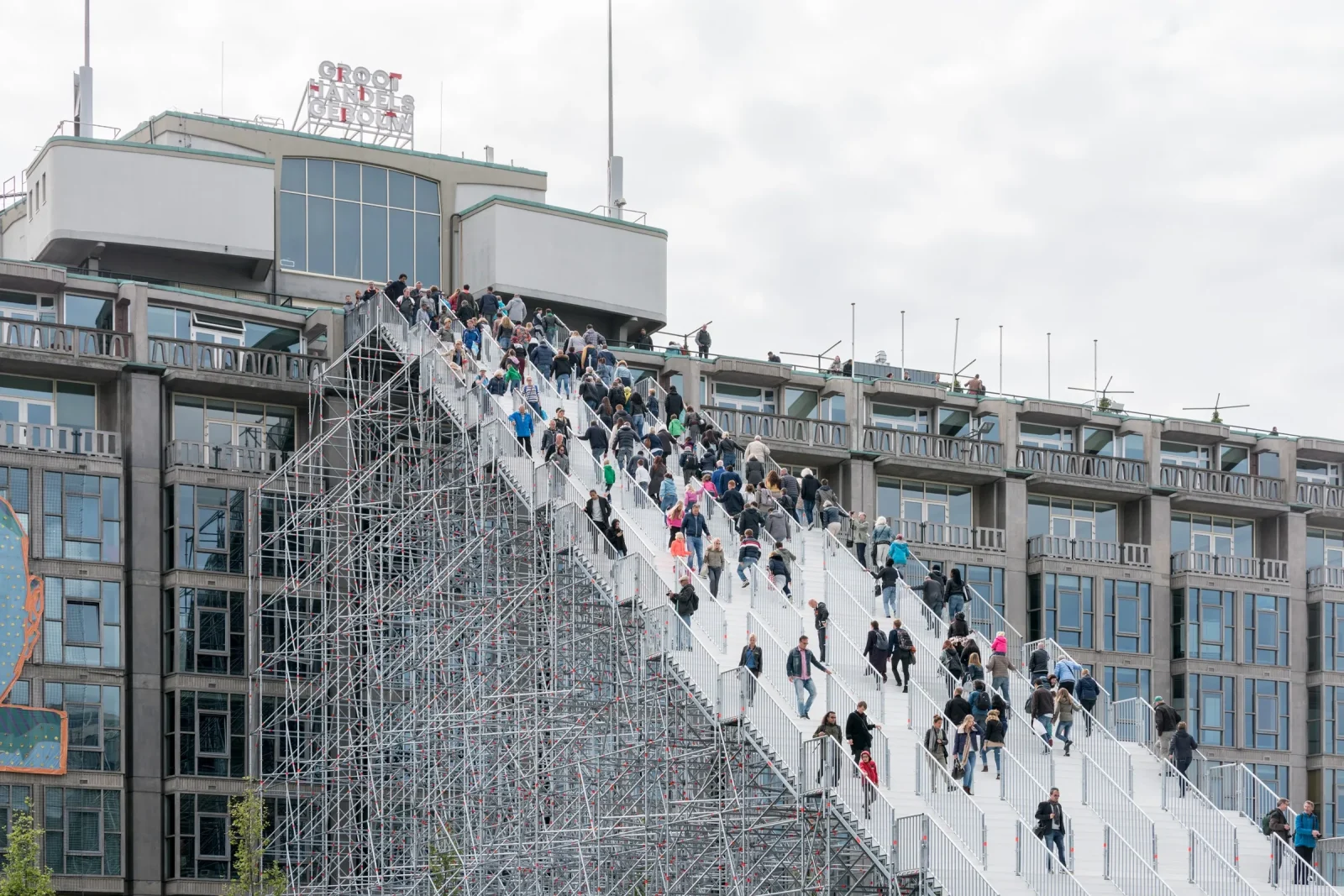
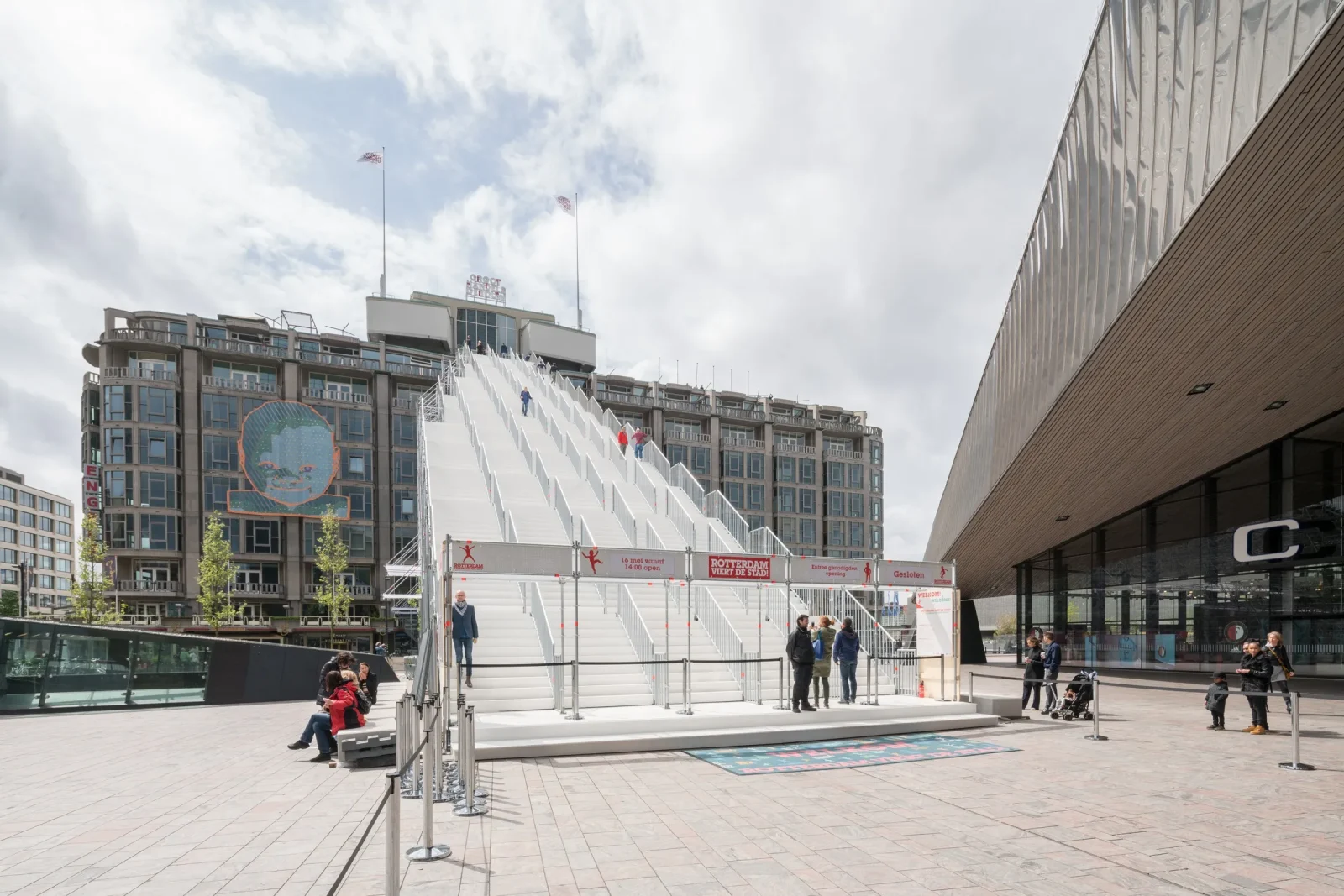
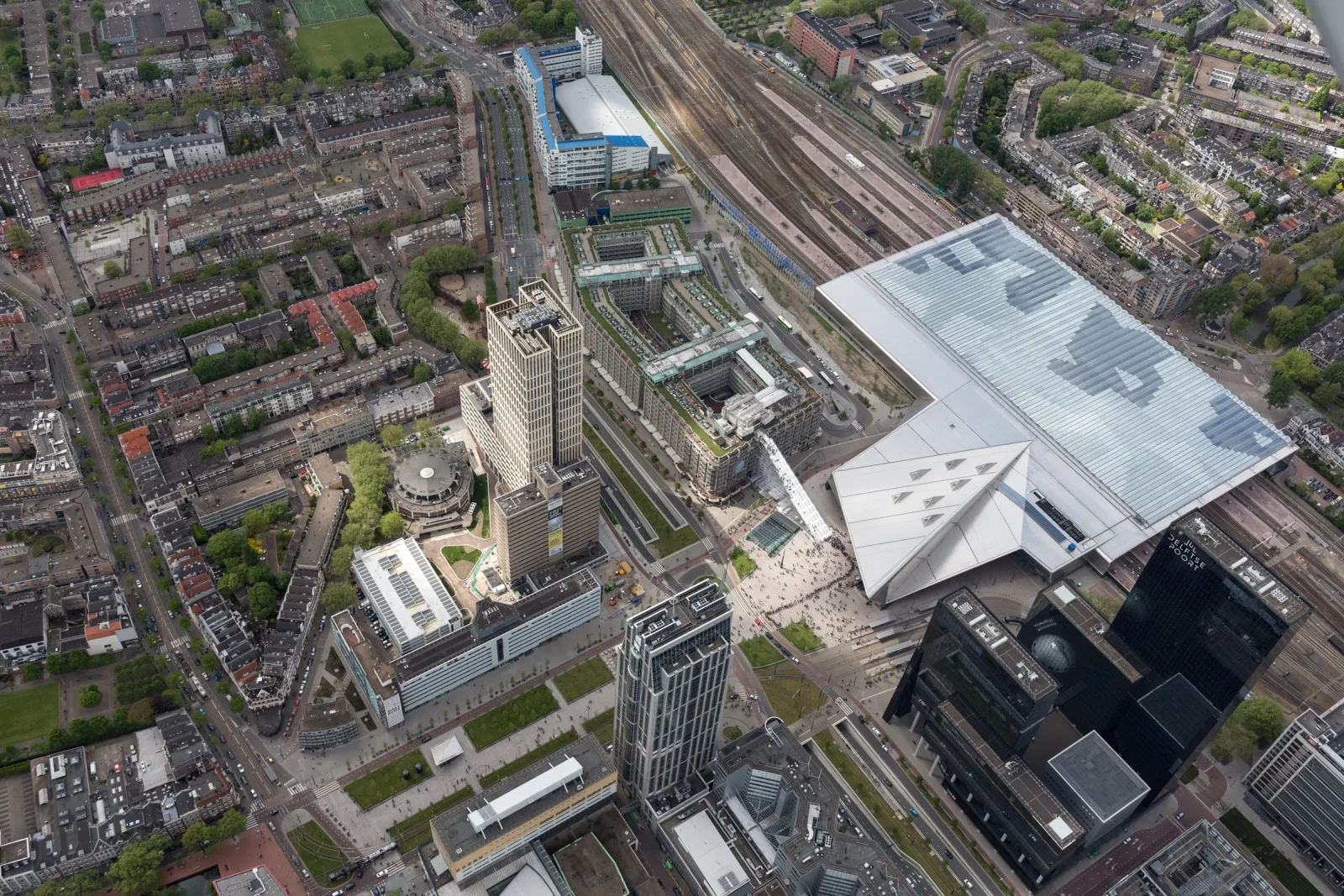
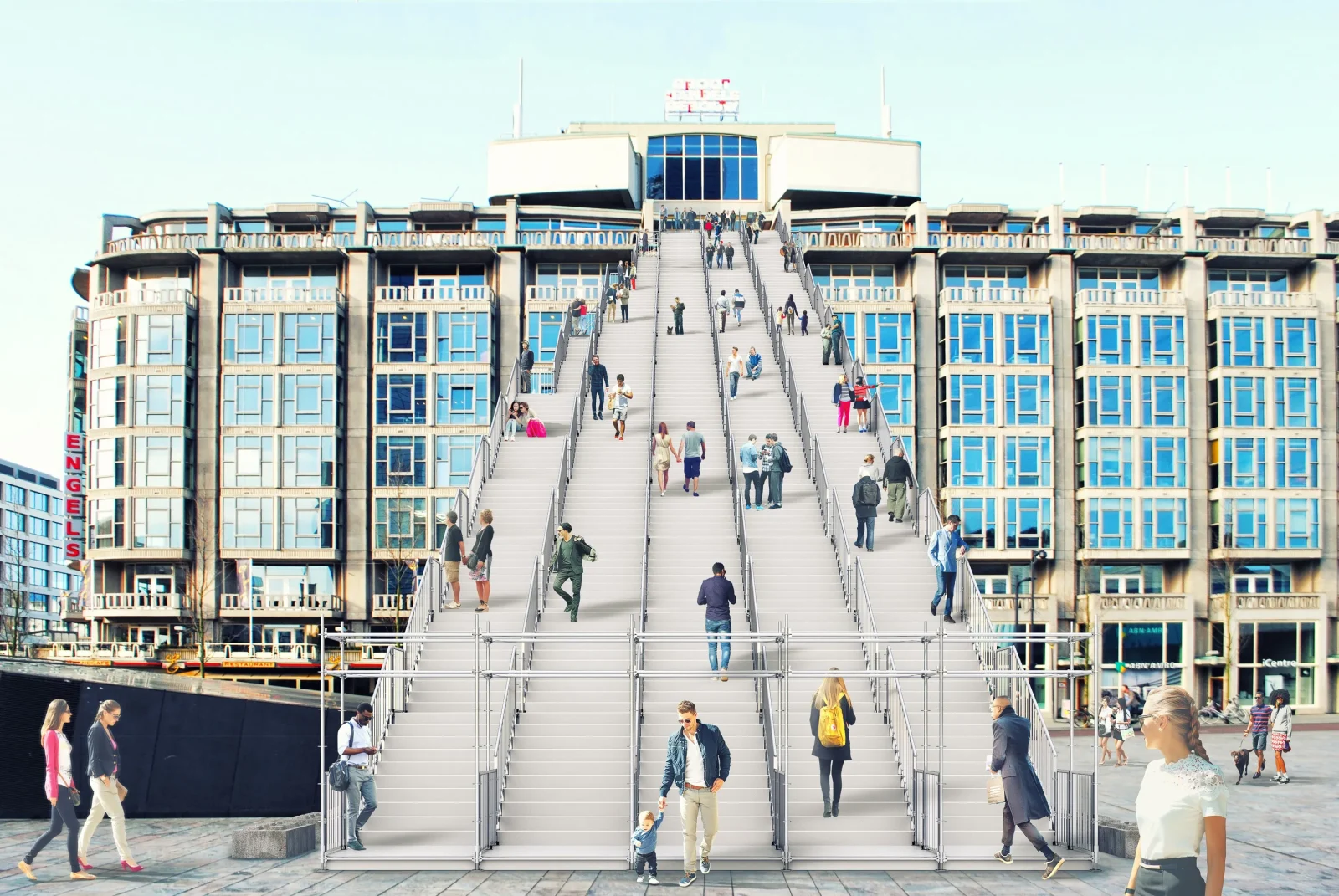
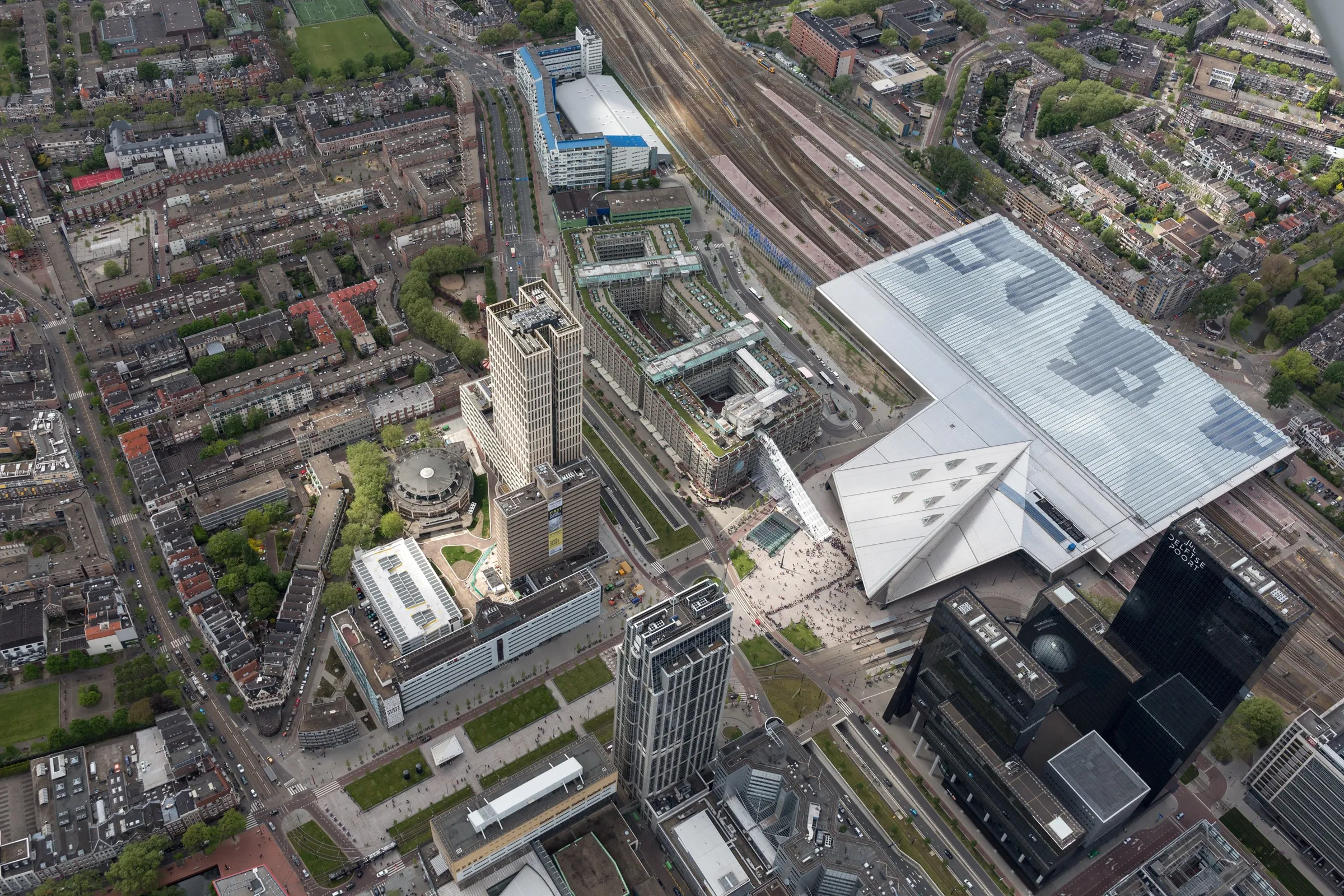
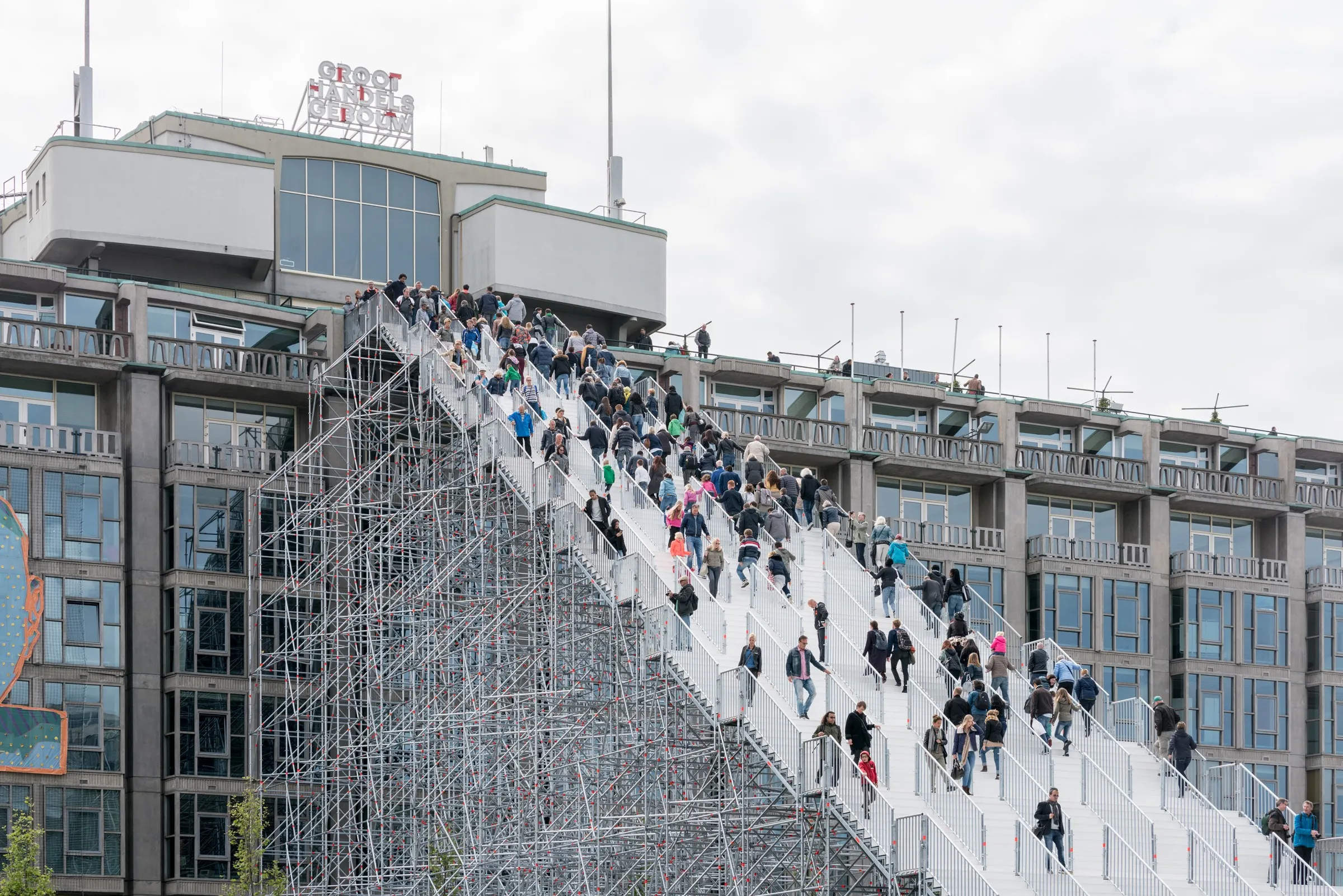
The Stairs to Kriterion, built in Rotterdam to celebrate the city’s 75th anniversary of post-war reconstruction and cultural heritage, is one of the most striking examples of ephemeral architecture. Opened on May 16, 2016, and dismantled on June 12, 2016, the 180-step staircase, 29 meters high and 57 meters long, was placed atop the Groot Handelsgebouw. It offered visitors not only the chance to experience the city from above but also a rooftop bar and the temporary reopening of the Kriterion cinema, which had last operated in the 1960s.
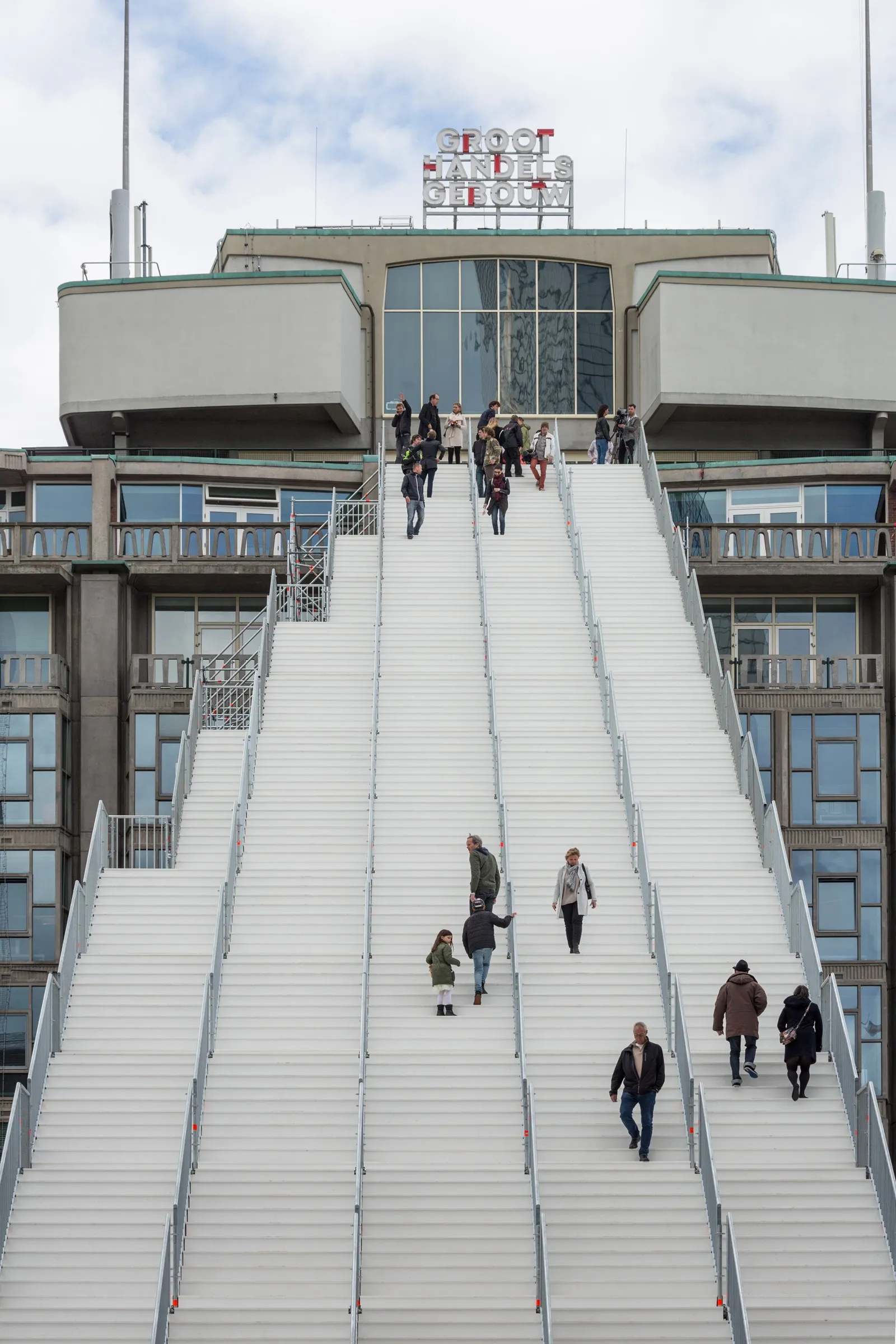
The design’s geometric and angular structure draws inspiration from the architecture of Rotterdam Central Station, while the steel framework of the staircase facilitates its installation. Although temporary, the Stairs to Kriteron have succeeded in providing an iconic visual silhouette to the city while increasing social interaction in public spaces.
Lisbon Falls
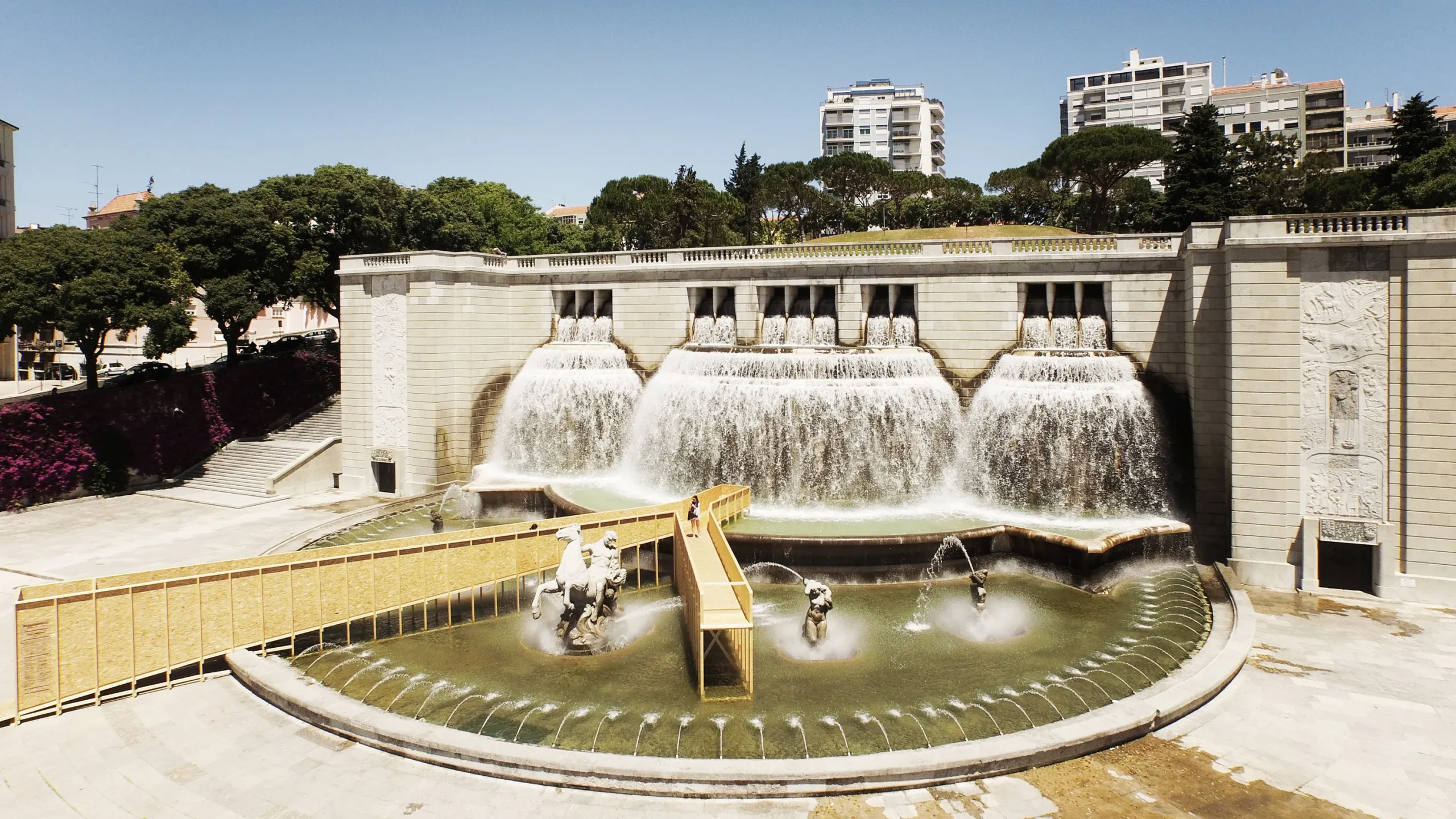
Location: Lisbon, Portugal
Architect: Marcelo Dantas
Year: 2015
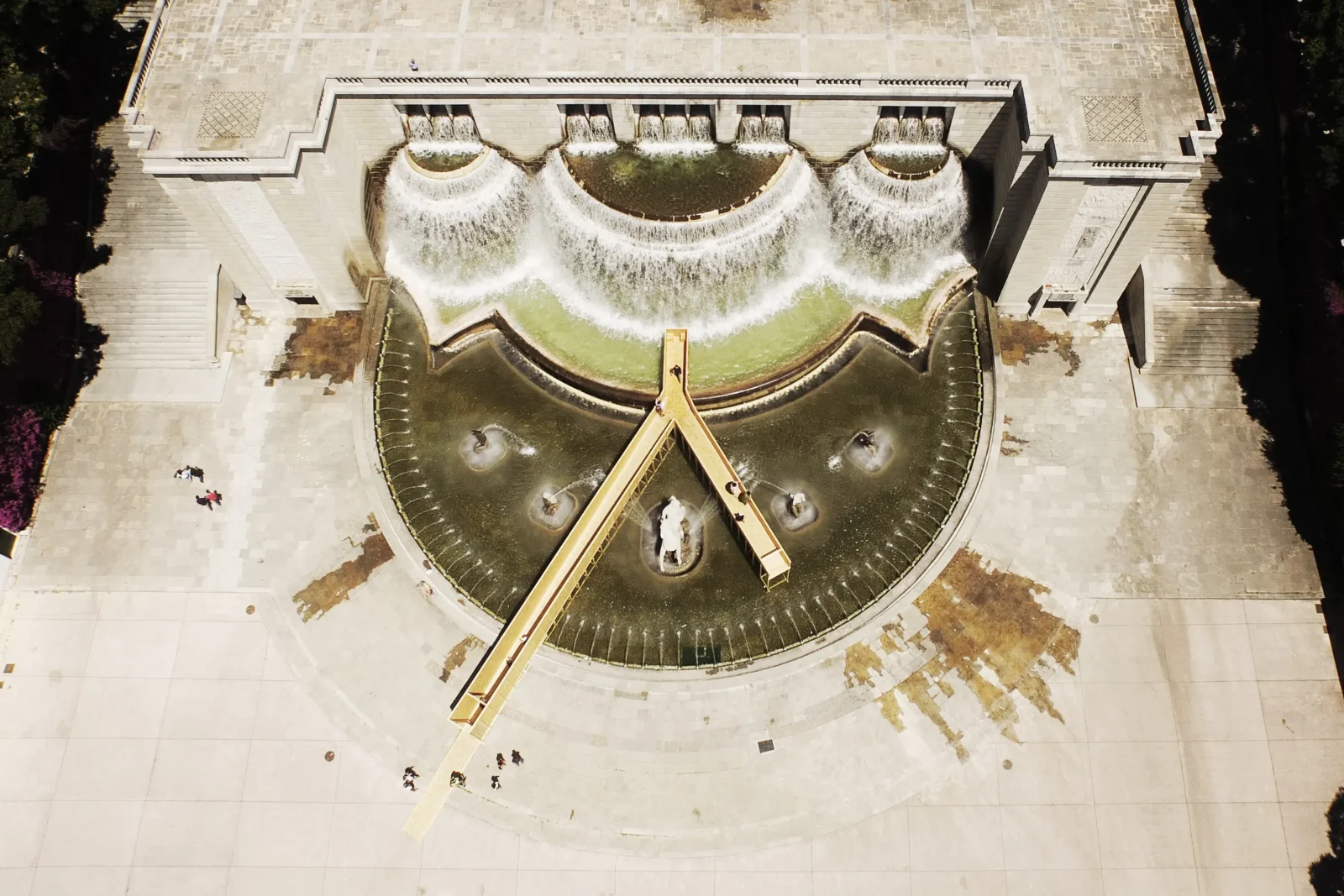
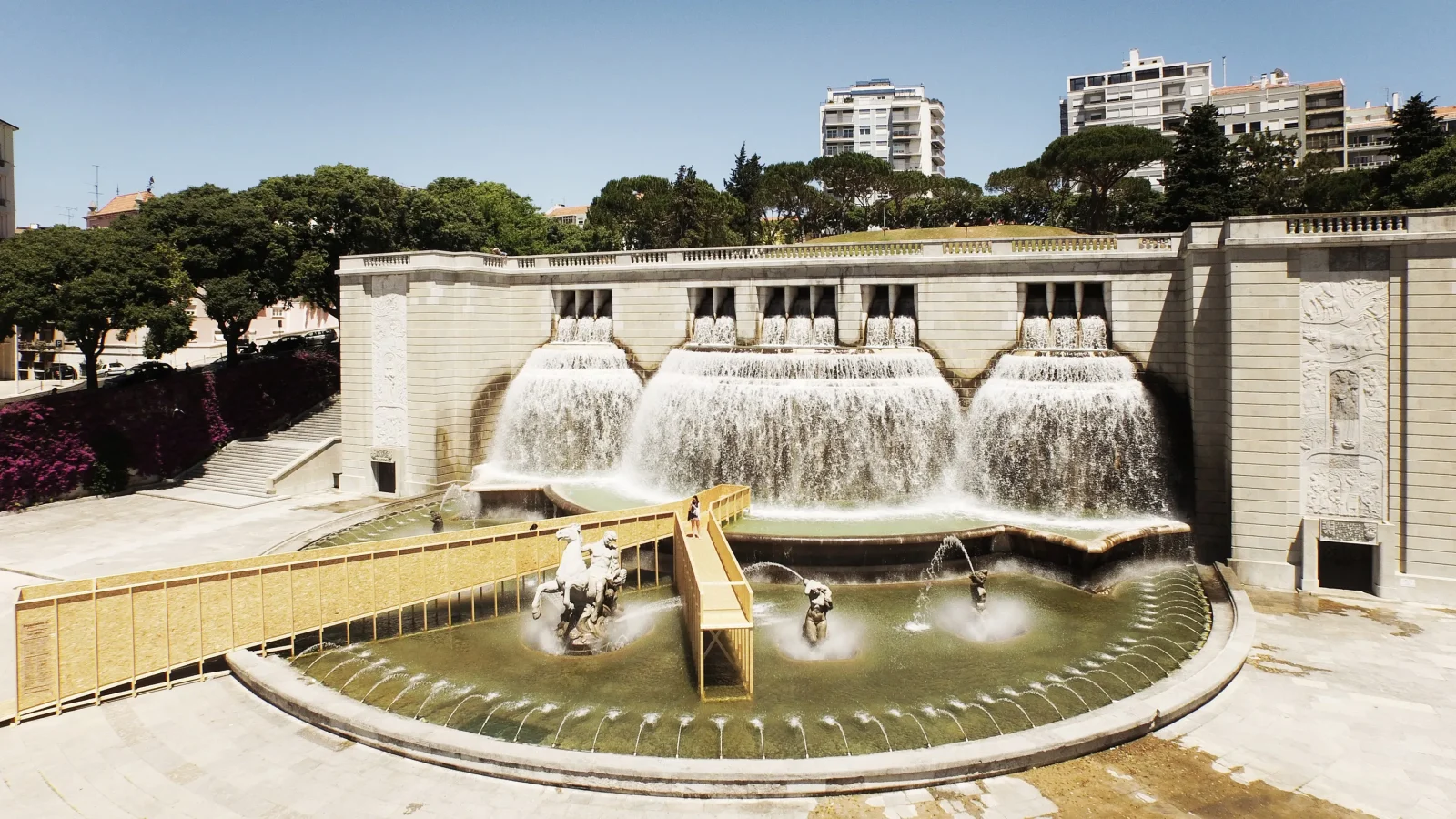
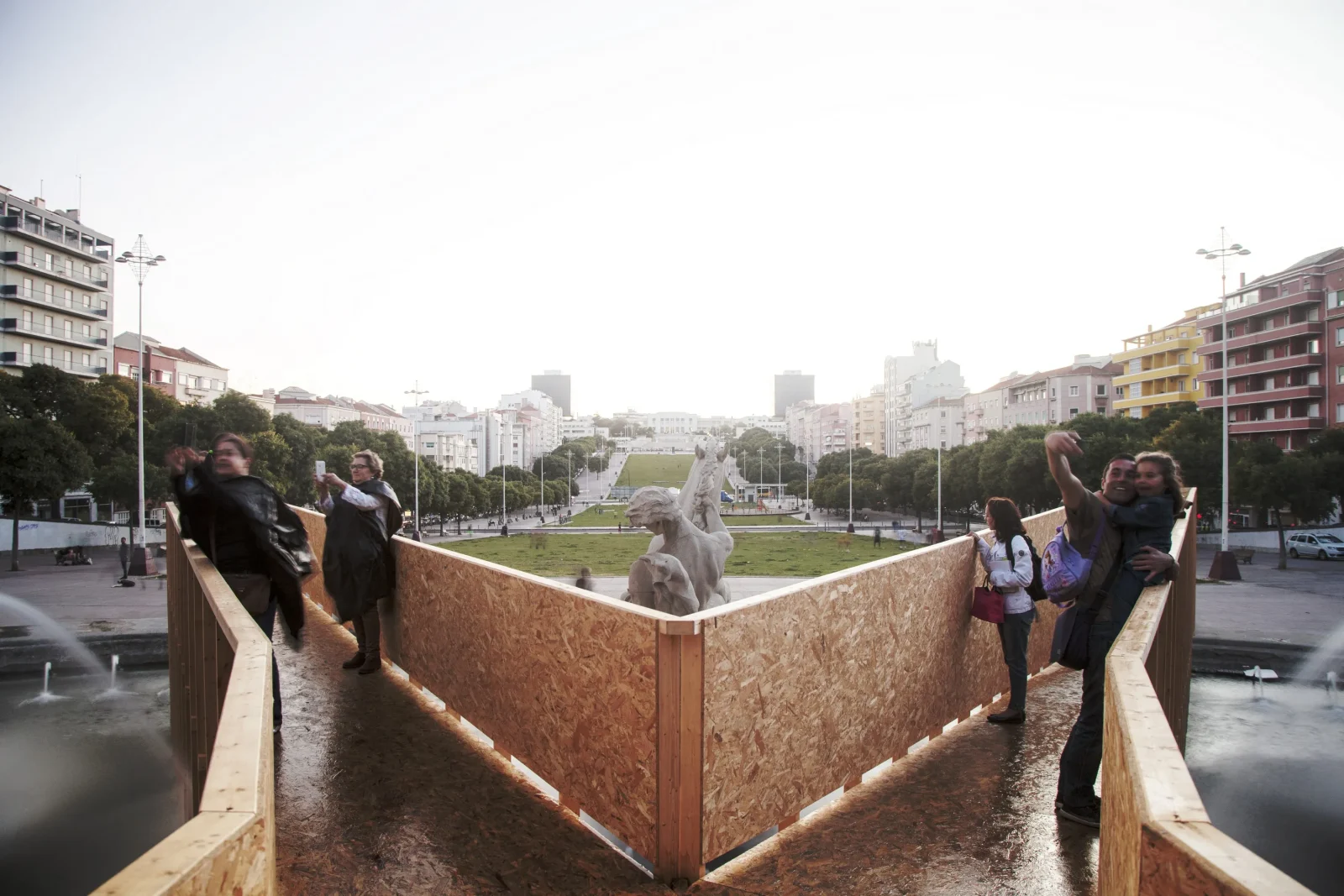
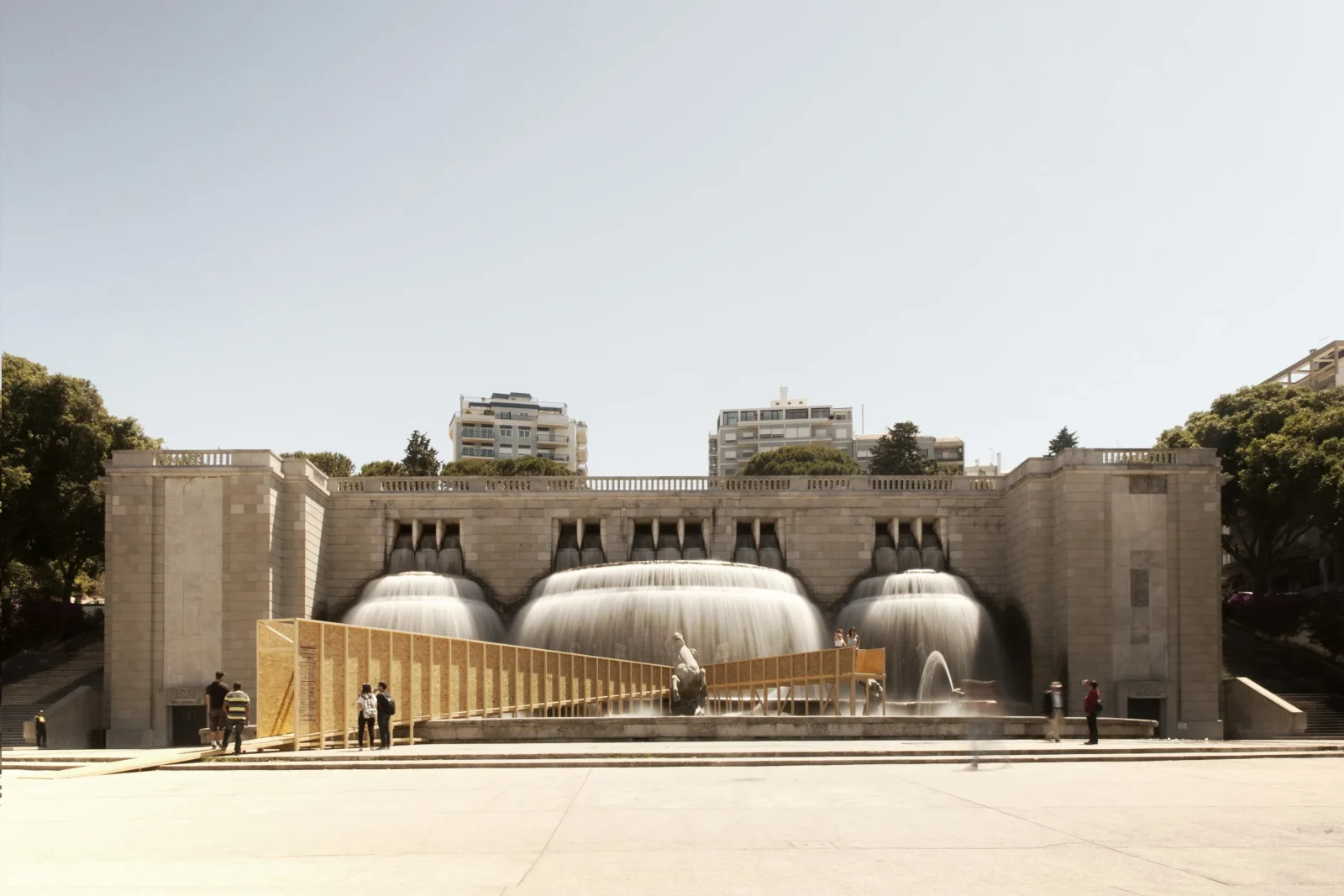
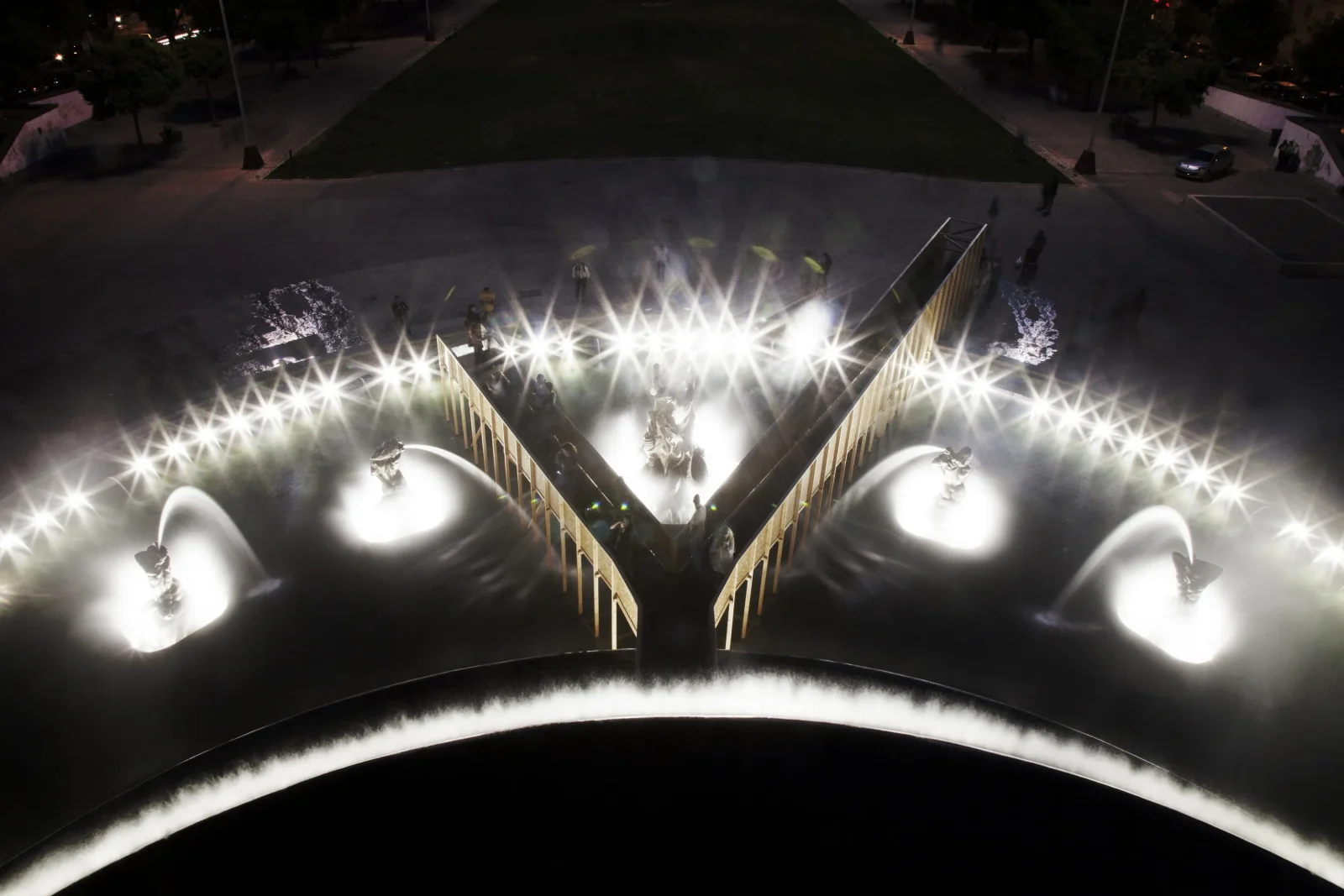
Built within the Fonte Luminosa in Lisbon, the temporary Lisbon Falls is a pedestrian path structure that allows visitors to enter through fountains and cascades, interacting with sculptures, water, light, and sound. The project aims to provide a more holistic spatial experience by engaging the body’s full range of senses, offering an immersive user experience in the rediscovery of a familiar place.
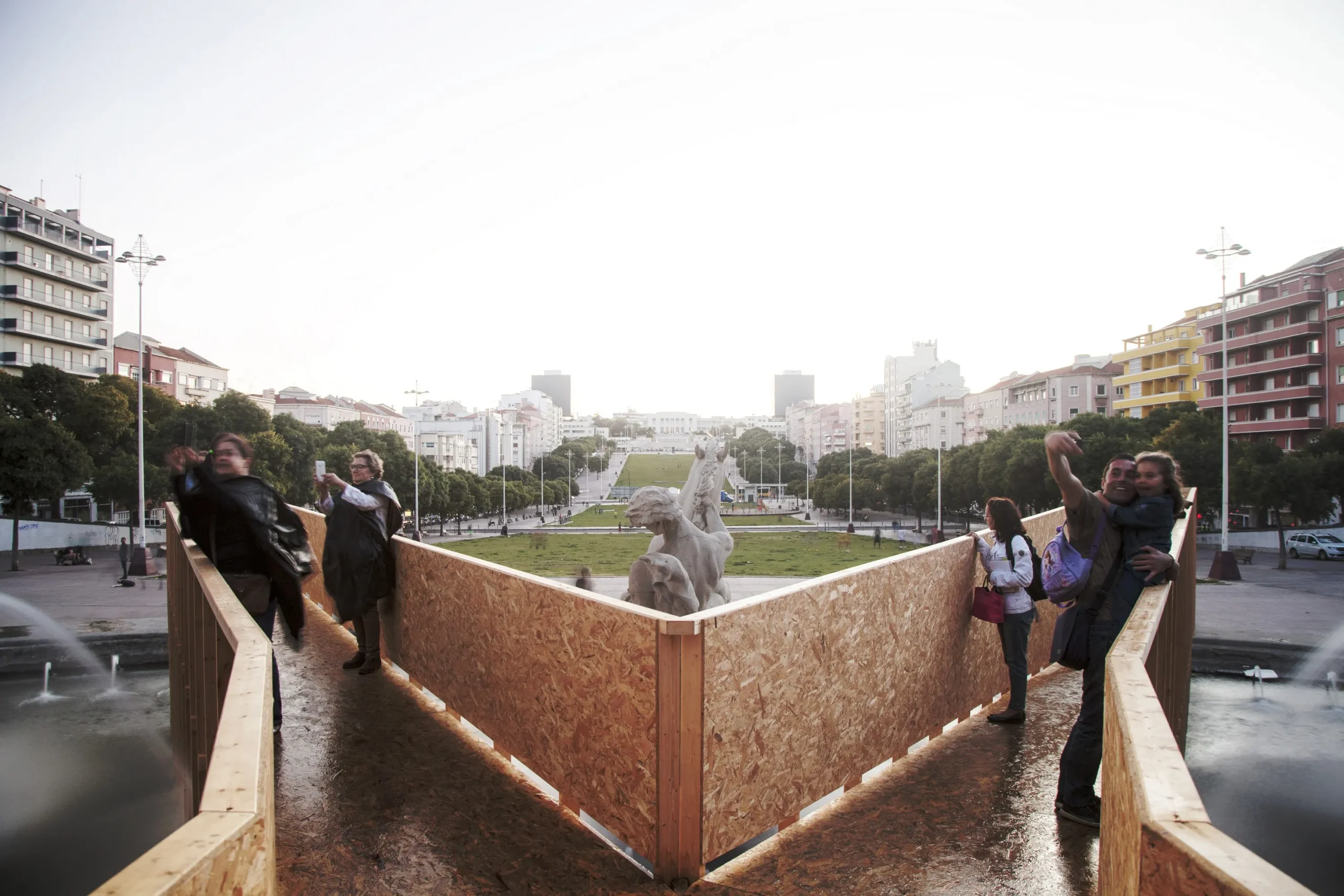
Although Lisbon Falls is constructed from wooden slats, it is clad in oriented strand board (OSB) panels, an engineered wood product. The pedestrian path’s simple, temporary nature, composed of wood, contrasts with the fountain’s dense stone materiality, creating a dynamic scene. As the ground rises, the height of the walls decreases, allowing visitors to climb and explore panoramic views of the surroundings.
The first branch of the walkway, which splits into two on the upper floor of the fountain, continues to the waterfalls flowing next to the fairy statues of sculptor Maximiano Alves, while the other branch extends to the opposite side of the central statue of Tejo, the work of sculptor Diogo de Macedo.
Explore Courses
.jpg "Ondrej Chybik - Rethinking Architecture")