


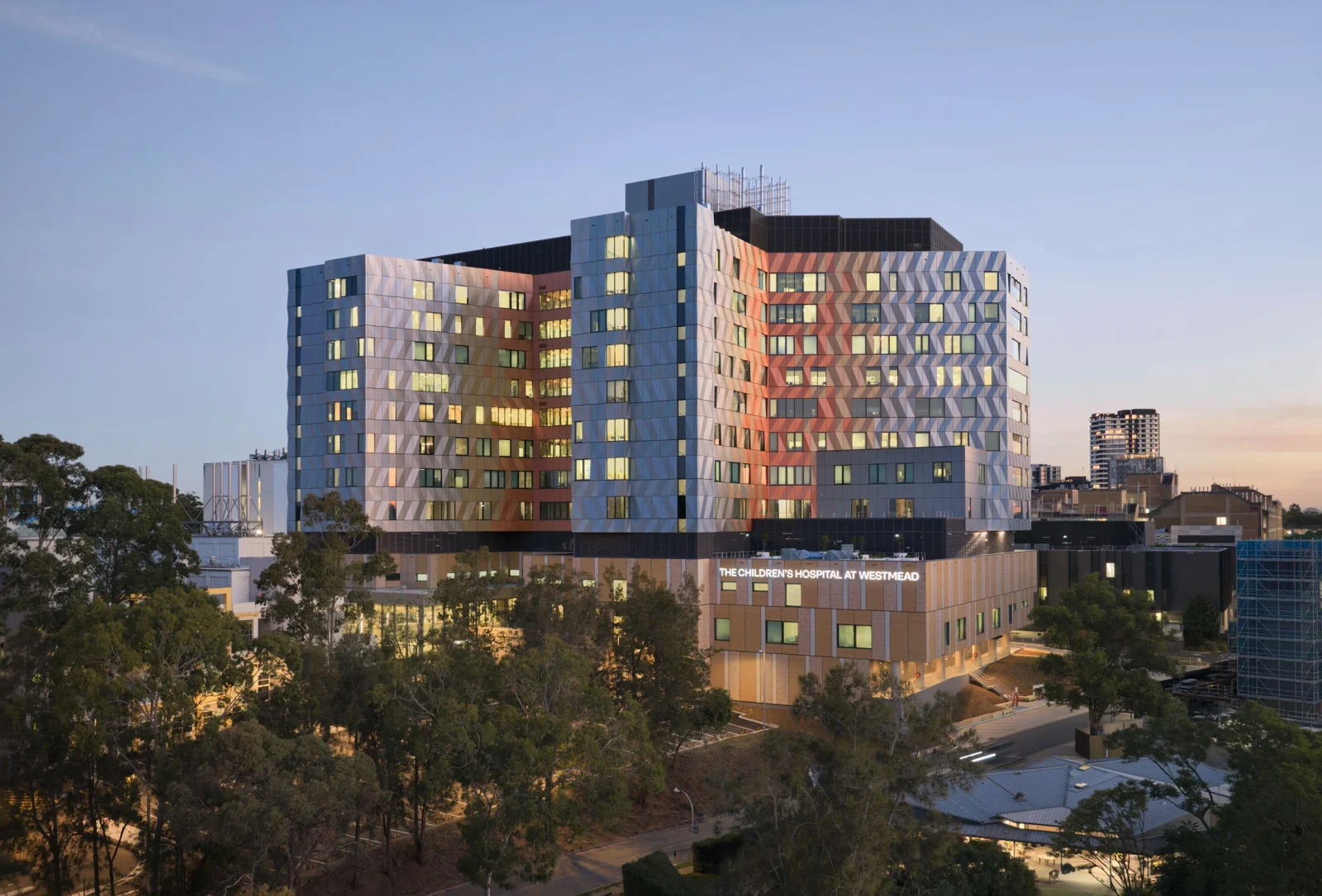
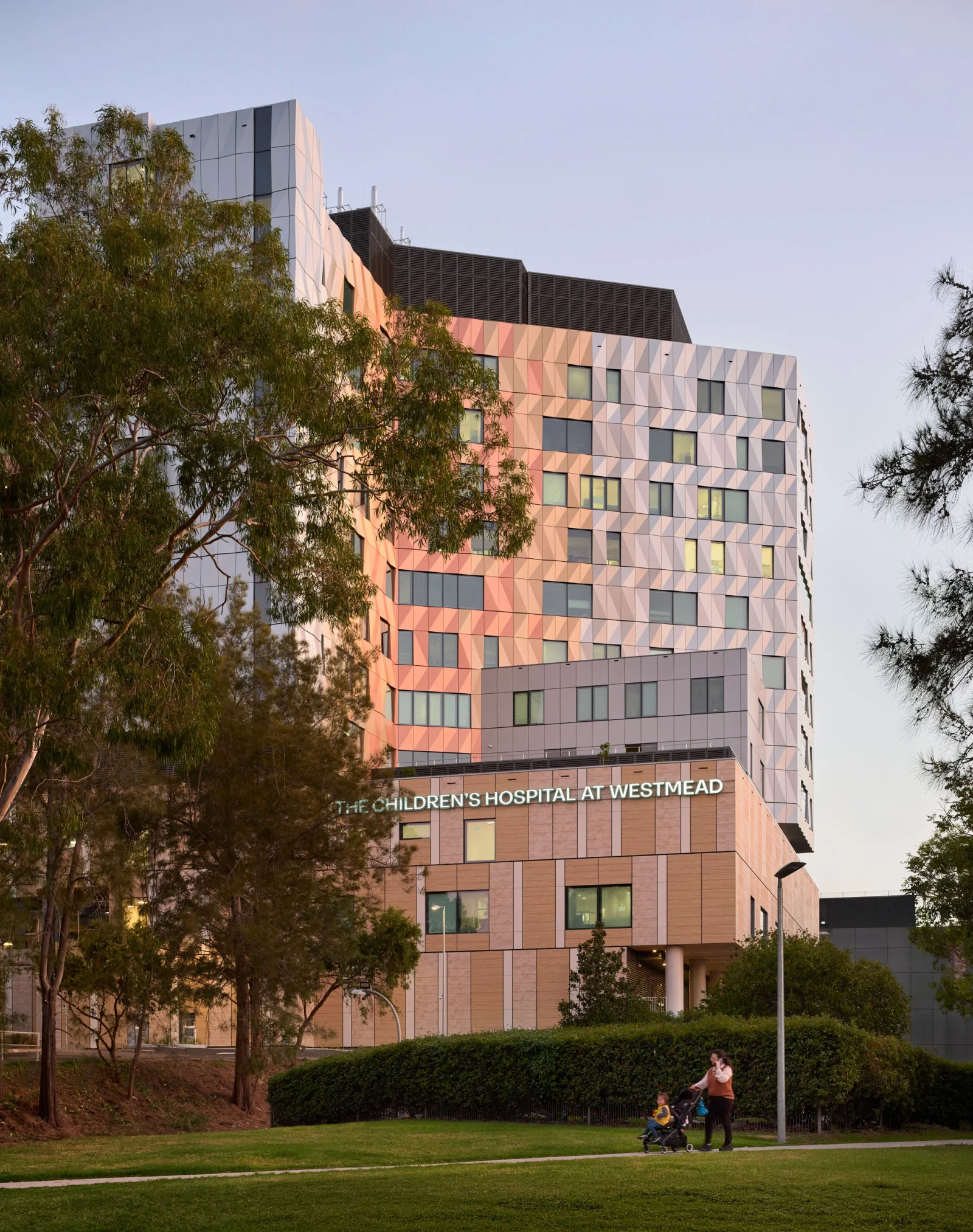
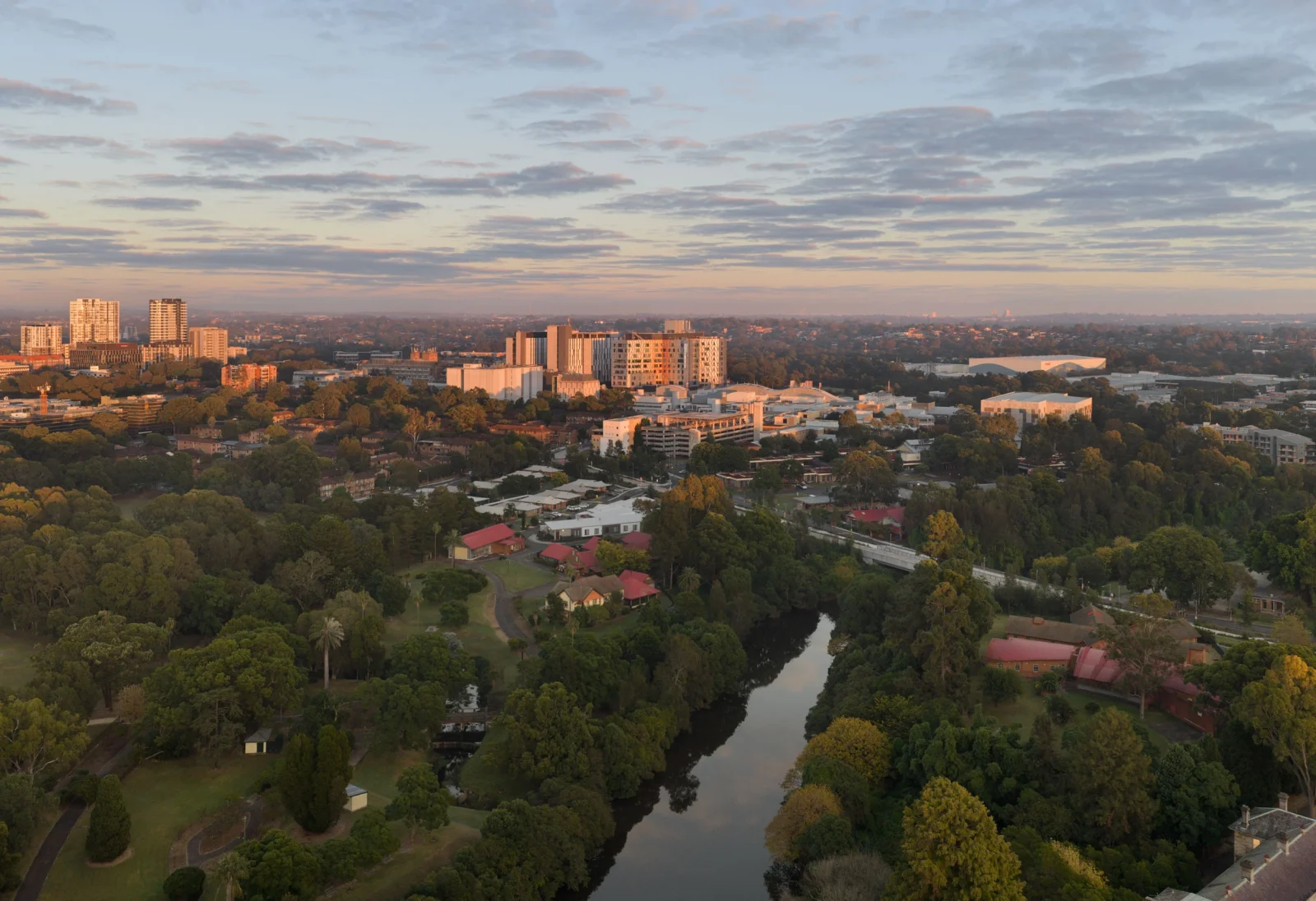
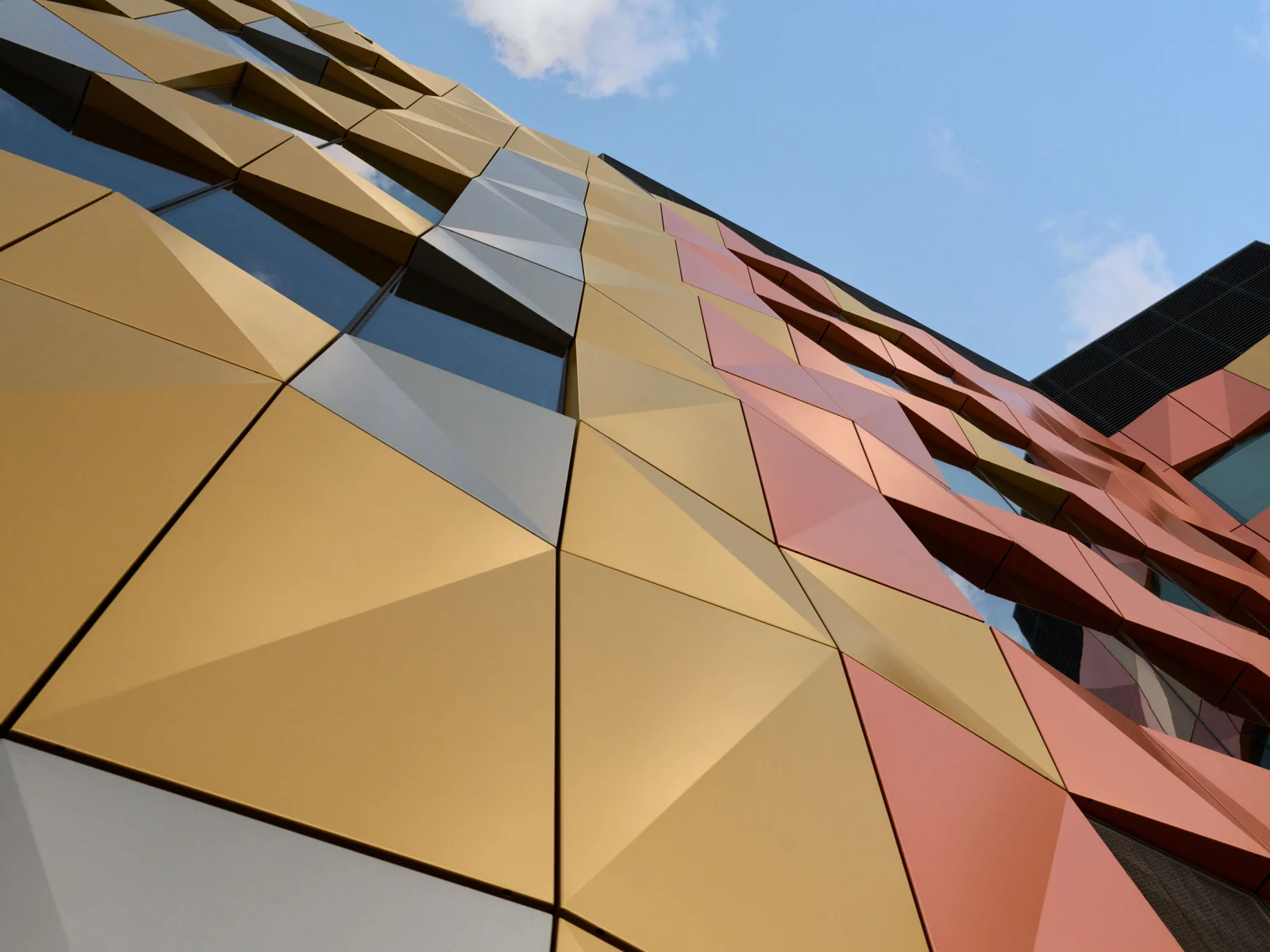

The opening of the new Wattle Building at The Children’s Hospital at Westmead marks a significant milestone in Australian healthcare architecture. Designed by Billard Leece Partnership (BLP) for Health Infrastructure and the Sydney Children’s Hospitals Network, the project extends far beyond the delivery of additional clinical capacity. Instead, it presents a contemporary vision for how children’s hospitals can function as therapeutic landscapes, civic destinations, and family-centred environments while supporting highly specialised medical care.
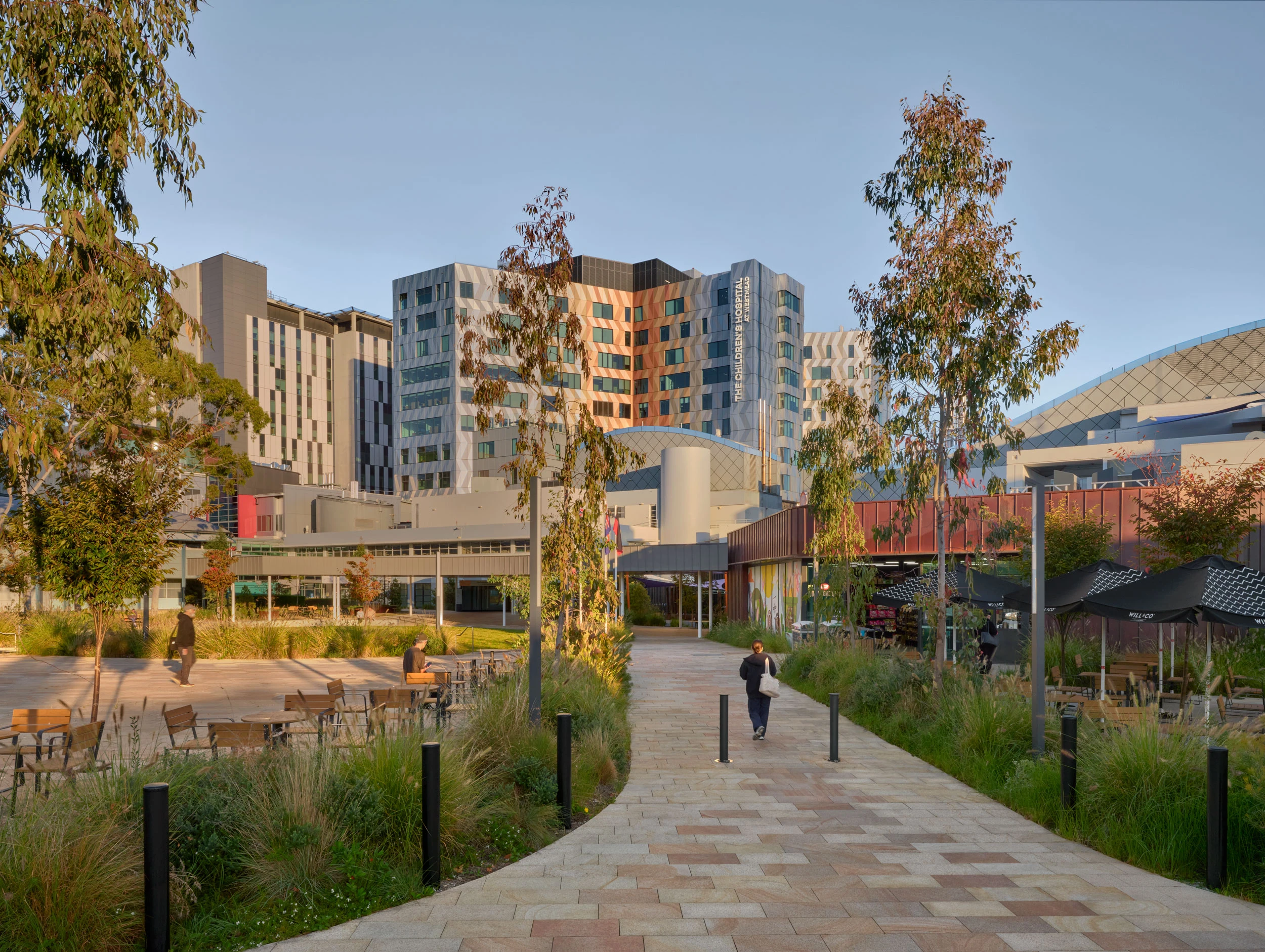
Located in the Westmead Health and Education Precinct in New South Wales, the redevelopment forms part of the largest investment in paediatric healthcare undertaken by the state in the past twenty-five years. Together with the recently completed Sydney Children’s Hospital, Randwick and the Minderoo Children’s Comprehensive Cancer Centre, the project contributes to a broader network strategy that reimagines healthcare environments for children and young people across NSW. The two hospitals were conceived as complementary facilities connected by a shared vision while responding distinctly to their respective contexts.
Designing a Therapeutic Journey Through Landscape
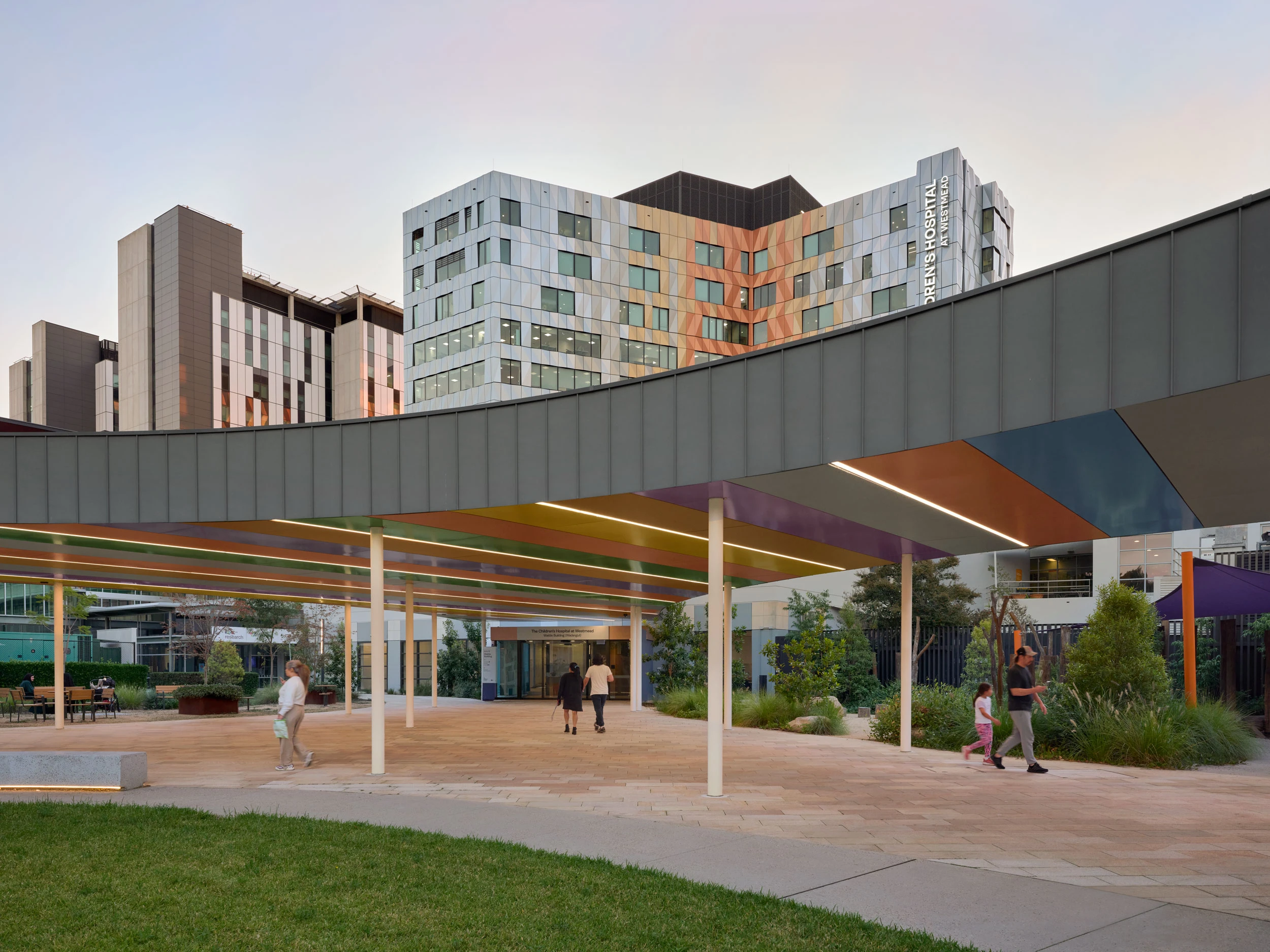
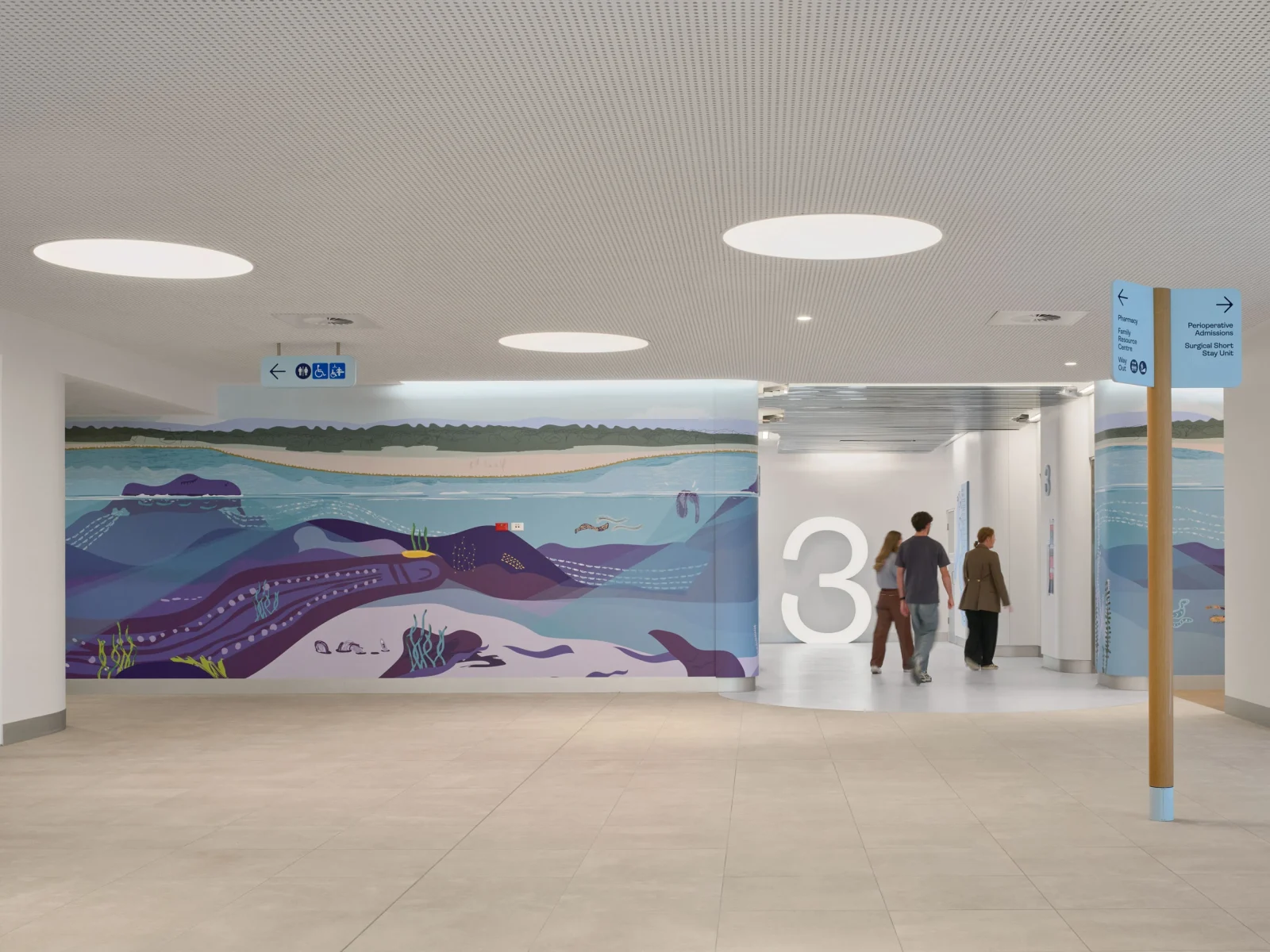
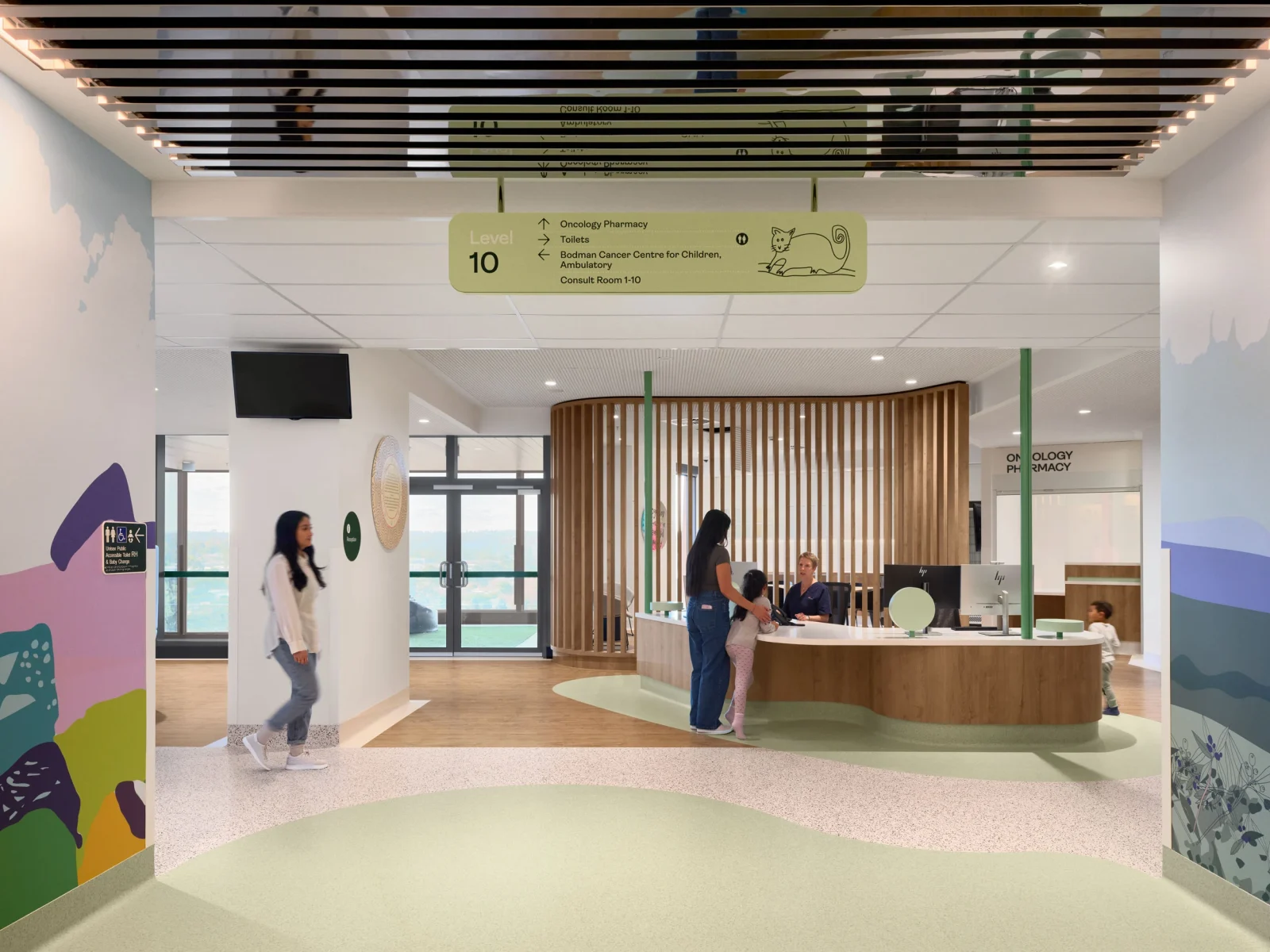
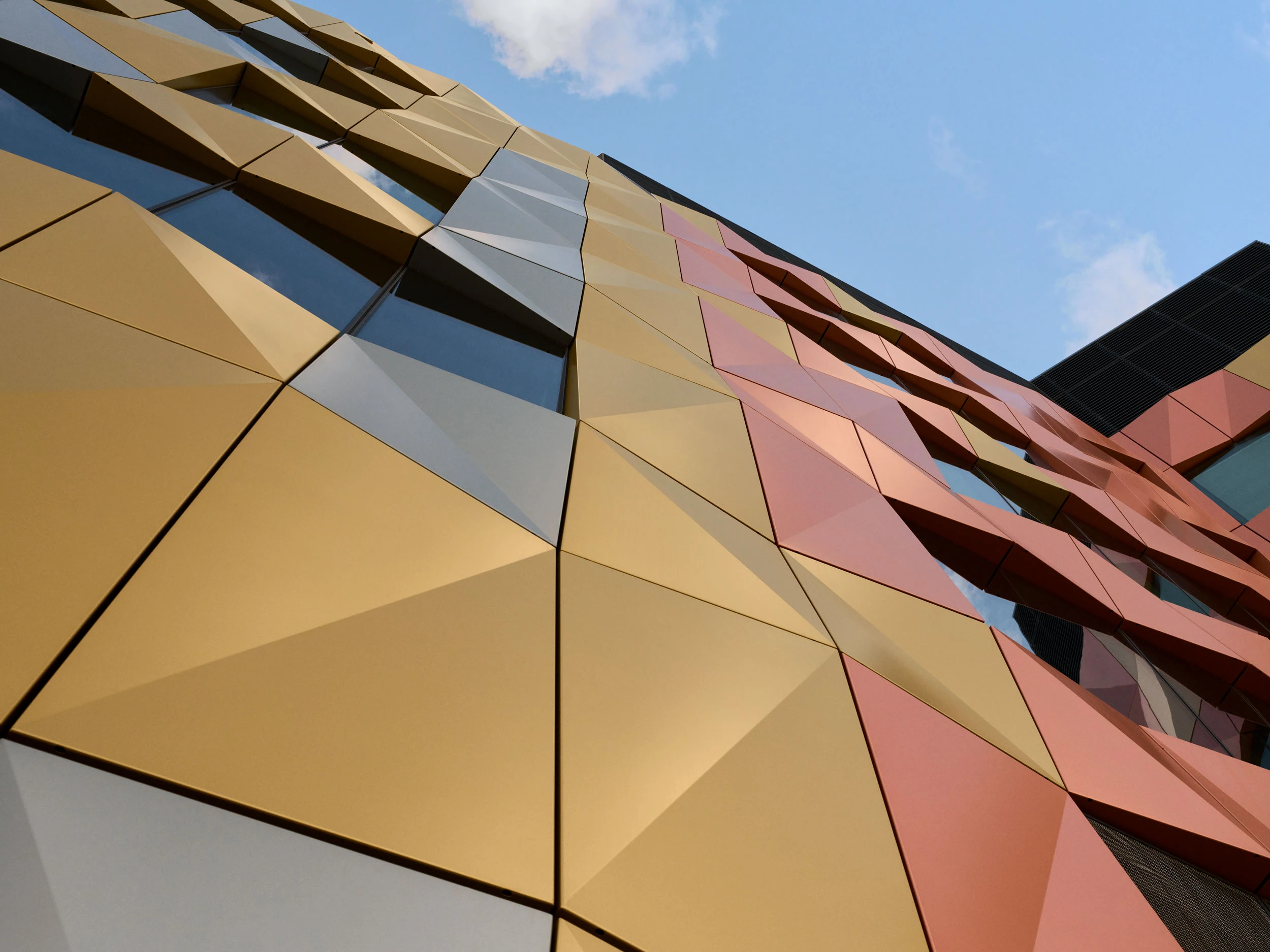
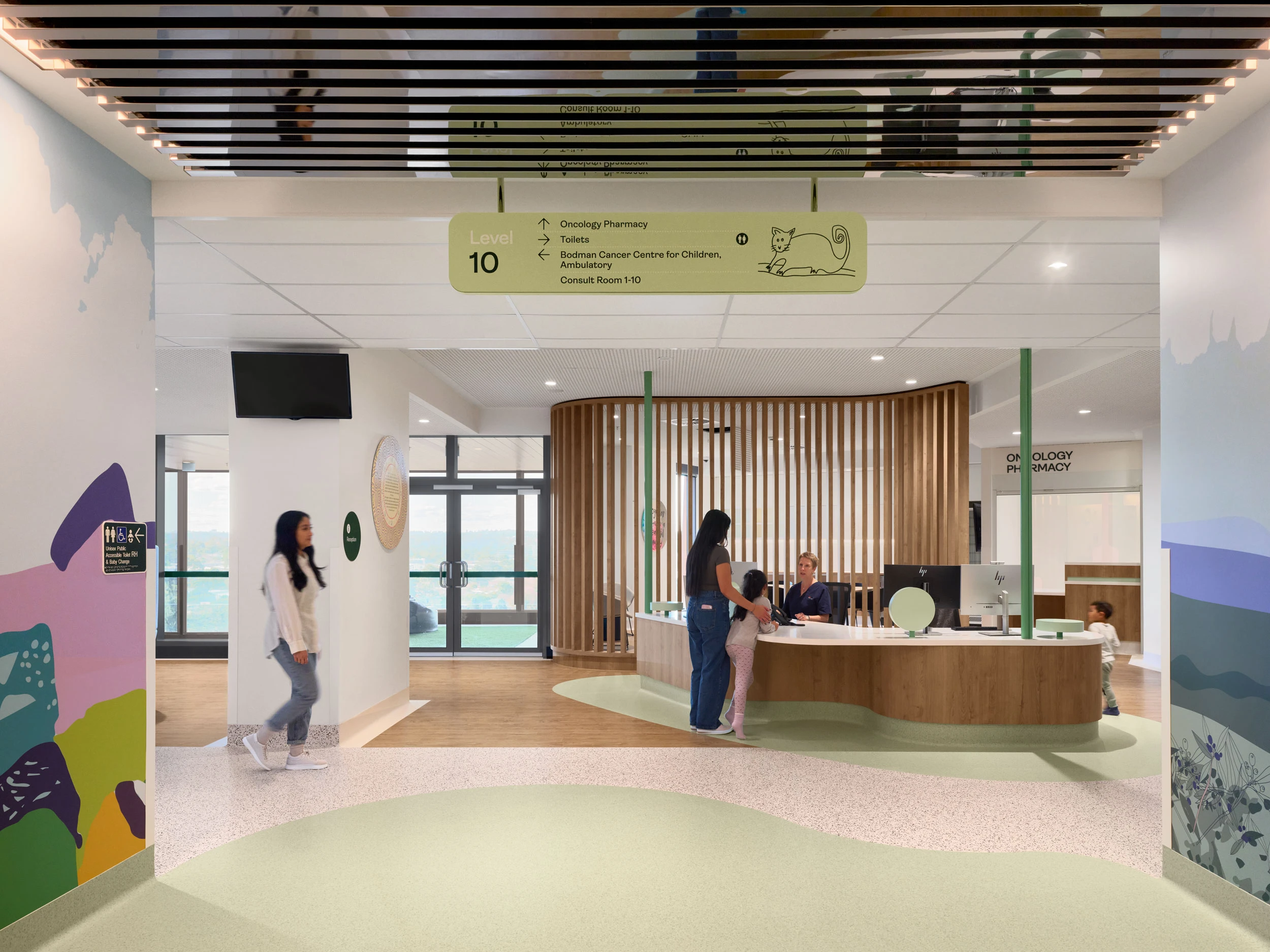
At Westmead, BLP approached the project through the lens of place-making, drawing inspiration from the convergence of the Parramatta River, Toongabbie Creek, and Darling Mills Creek. This ecological narrative informed both the architectural and interior design strategies, creating a strong connection between the hospital and its surrounding landscape. The influence of water is expressed through the building’s geometry, façade articulation, colour palette, and wayfinding systems, all of which reference the movement and reflective qualities of river environments.
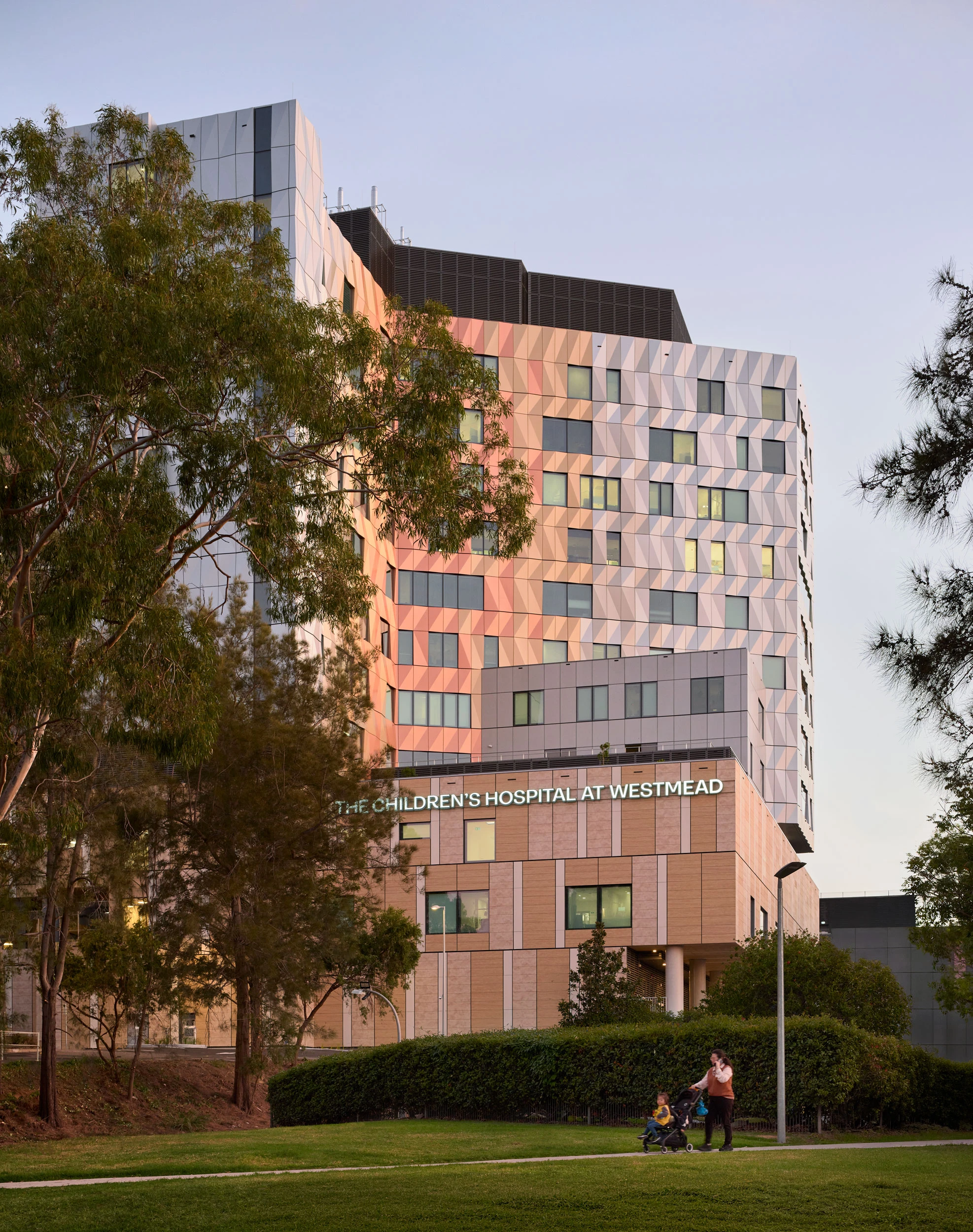
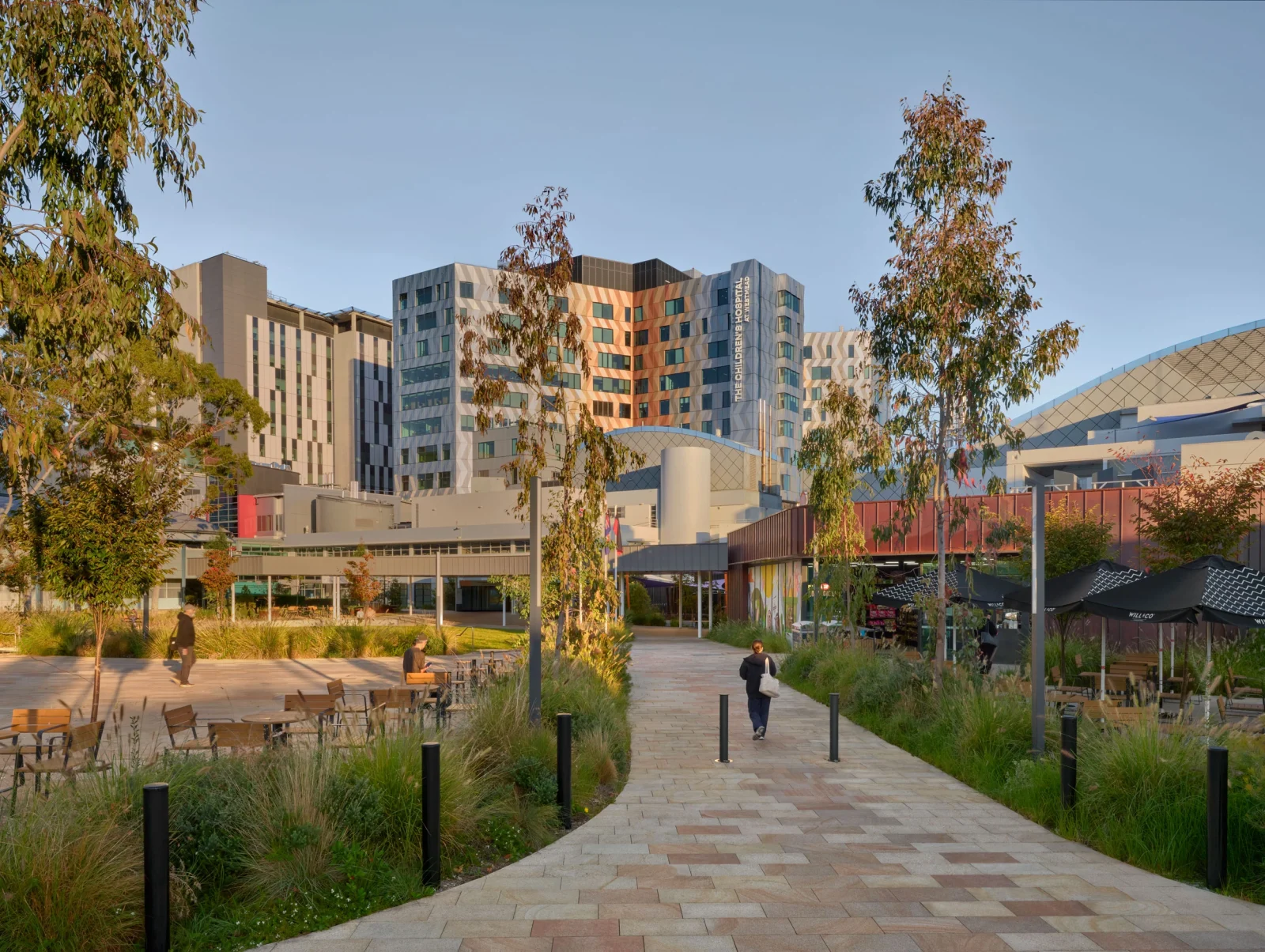
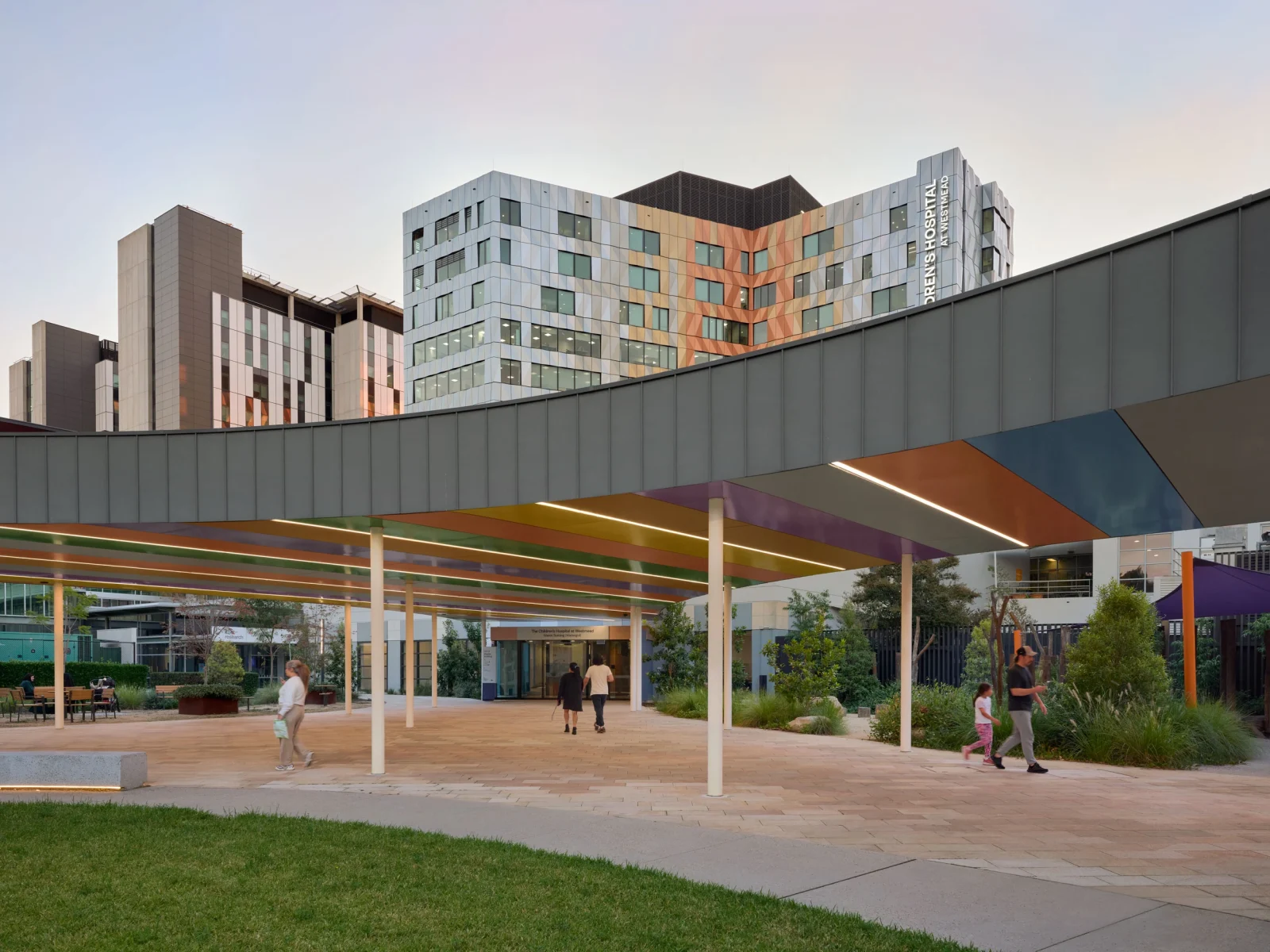
The redevelopment introduces a new public face for the hospital through KidsPark, a landscaped forecourt that functions as both a civic gathering space and a playful threshold. The design encourages visitors to arrive through landscape, activity, and moments of discovery. This approach intentionally softens the often-intimidating experience of entering a healthcare facility and establishes a welcoming environment for children, families, and the broader community.
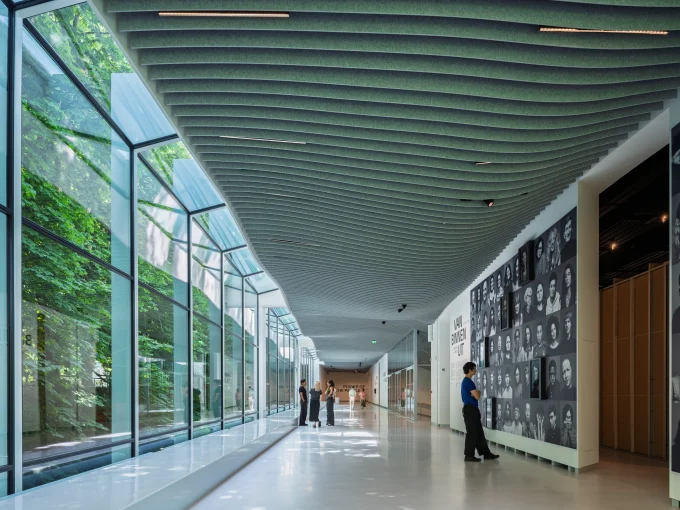
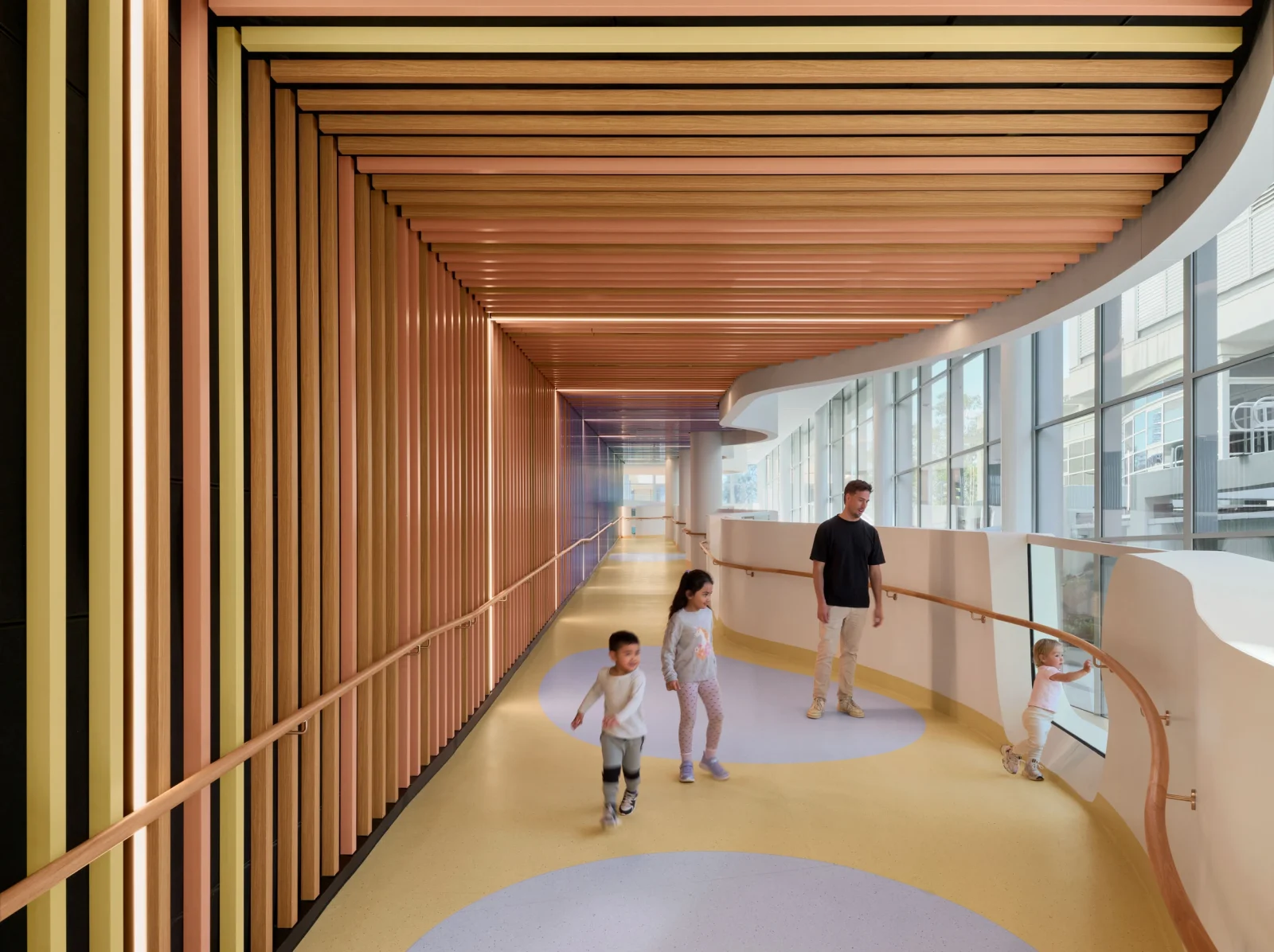
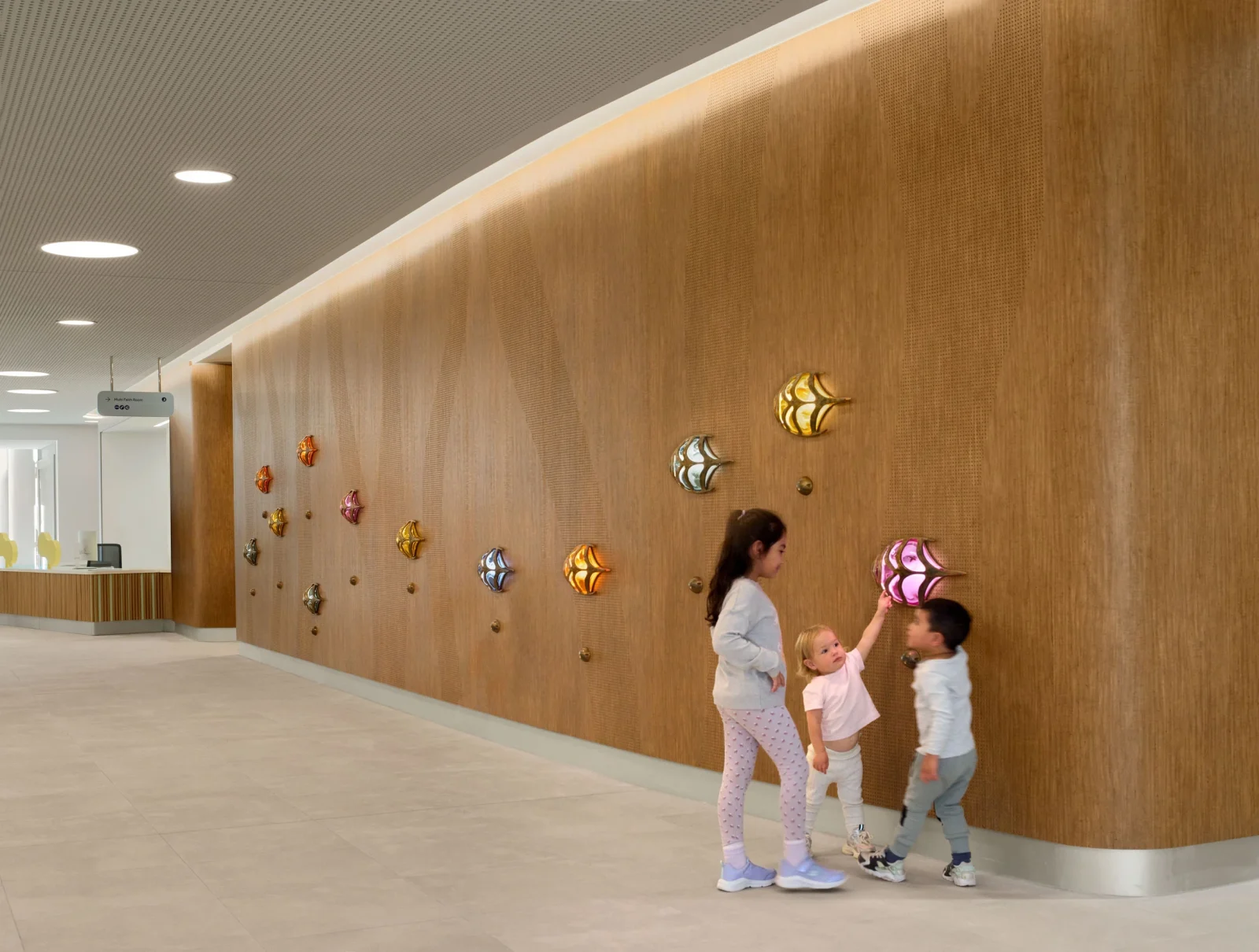
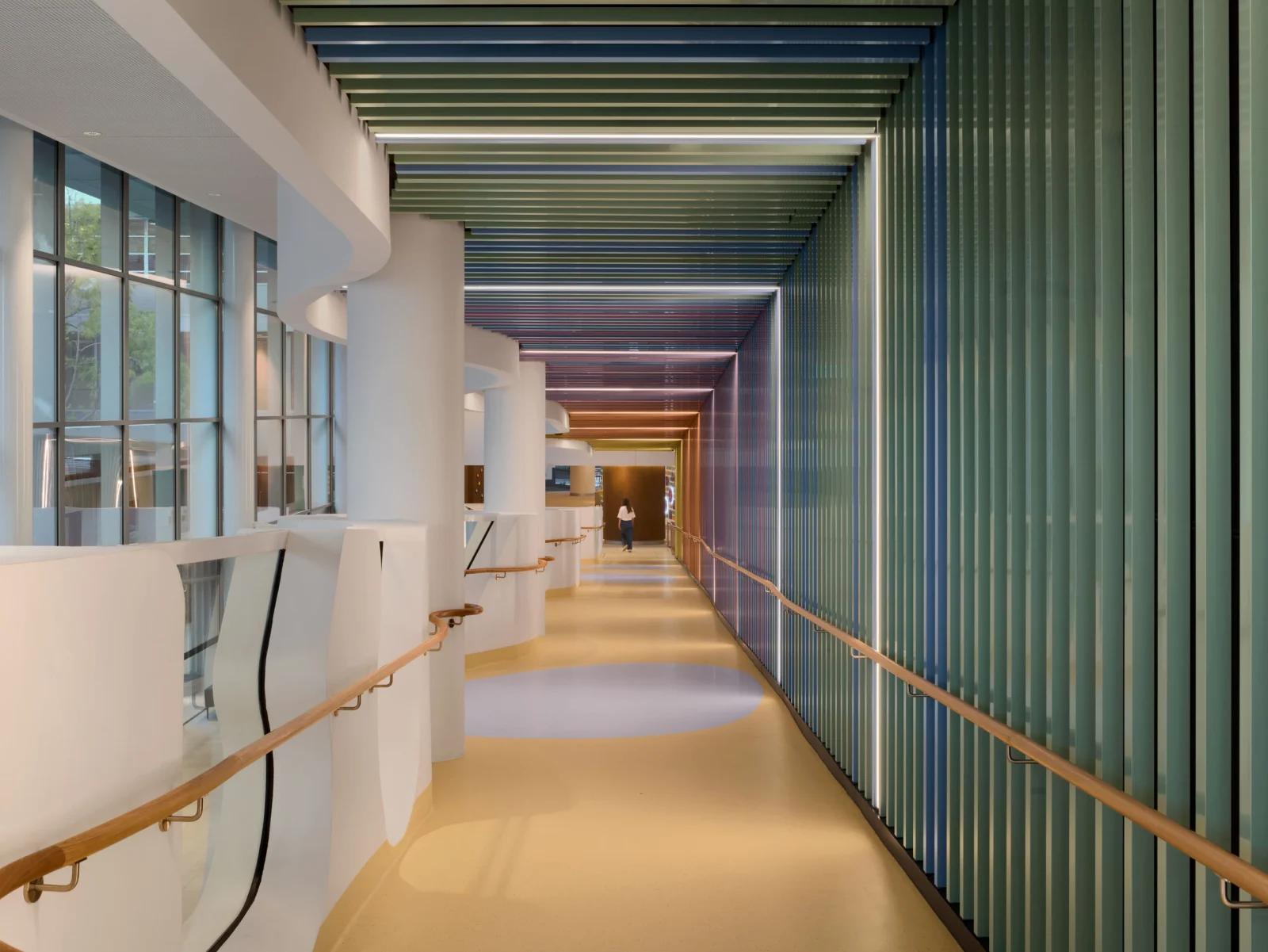
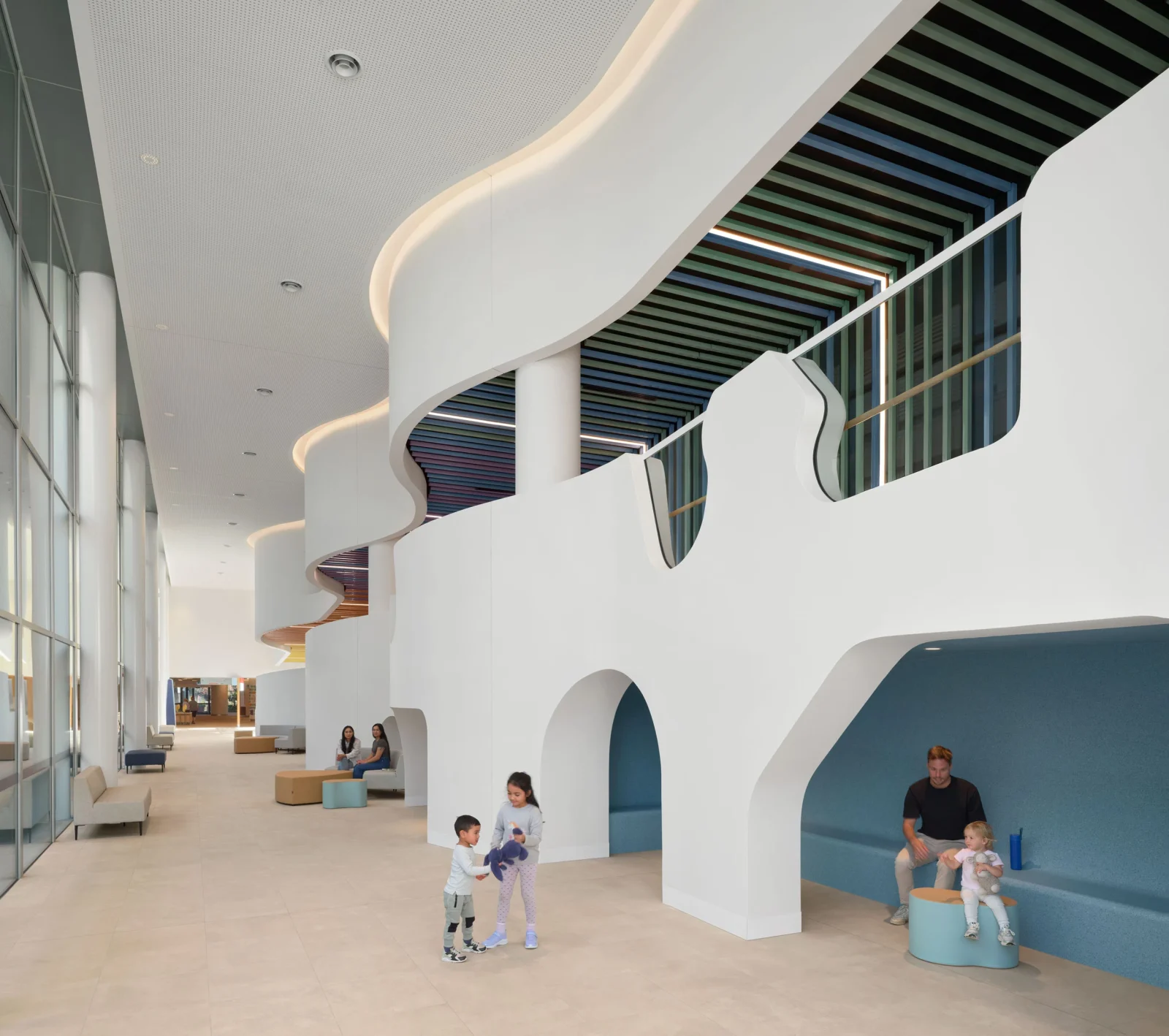
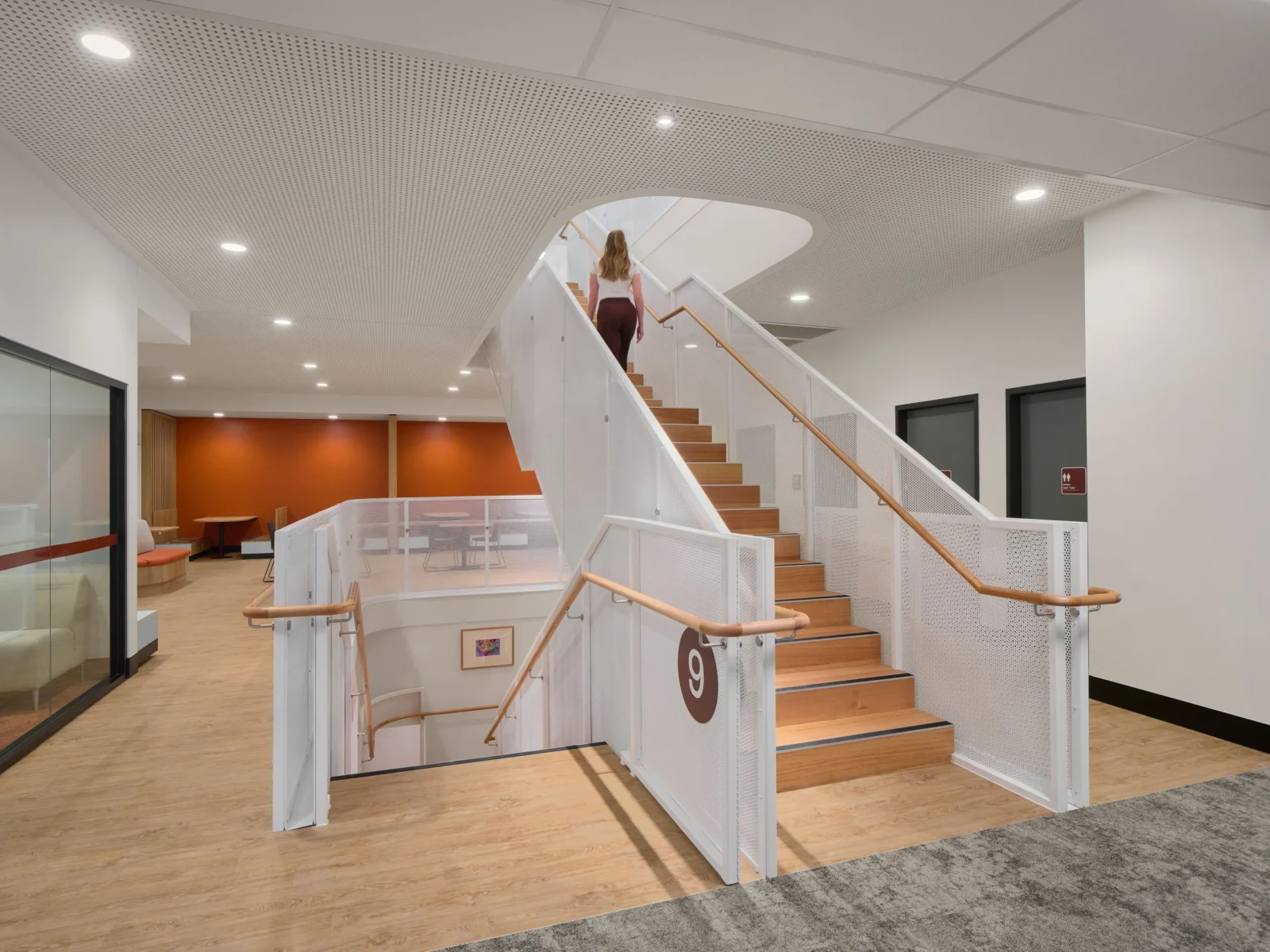
Extending from KidsPark is KidsWay, an elevated pedestrian pathway that acts as the project’s central experiential spine. KidsWay transforms movement into a therapeutic journey. Curvilinear forms, natural materials, daylight-filled spaces, and integrated play opportunities create an engaging sequence that supports emotional well-being while helping families navigate the complex hospital environment. The design challenges traditional notions of hospital circulation by replacing anonymous corridors with spaces that encourage exploration, interaction, and positive distraction.
Inside Westmead’s New Children’s Hospital
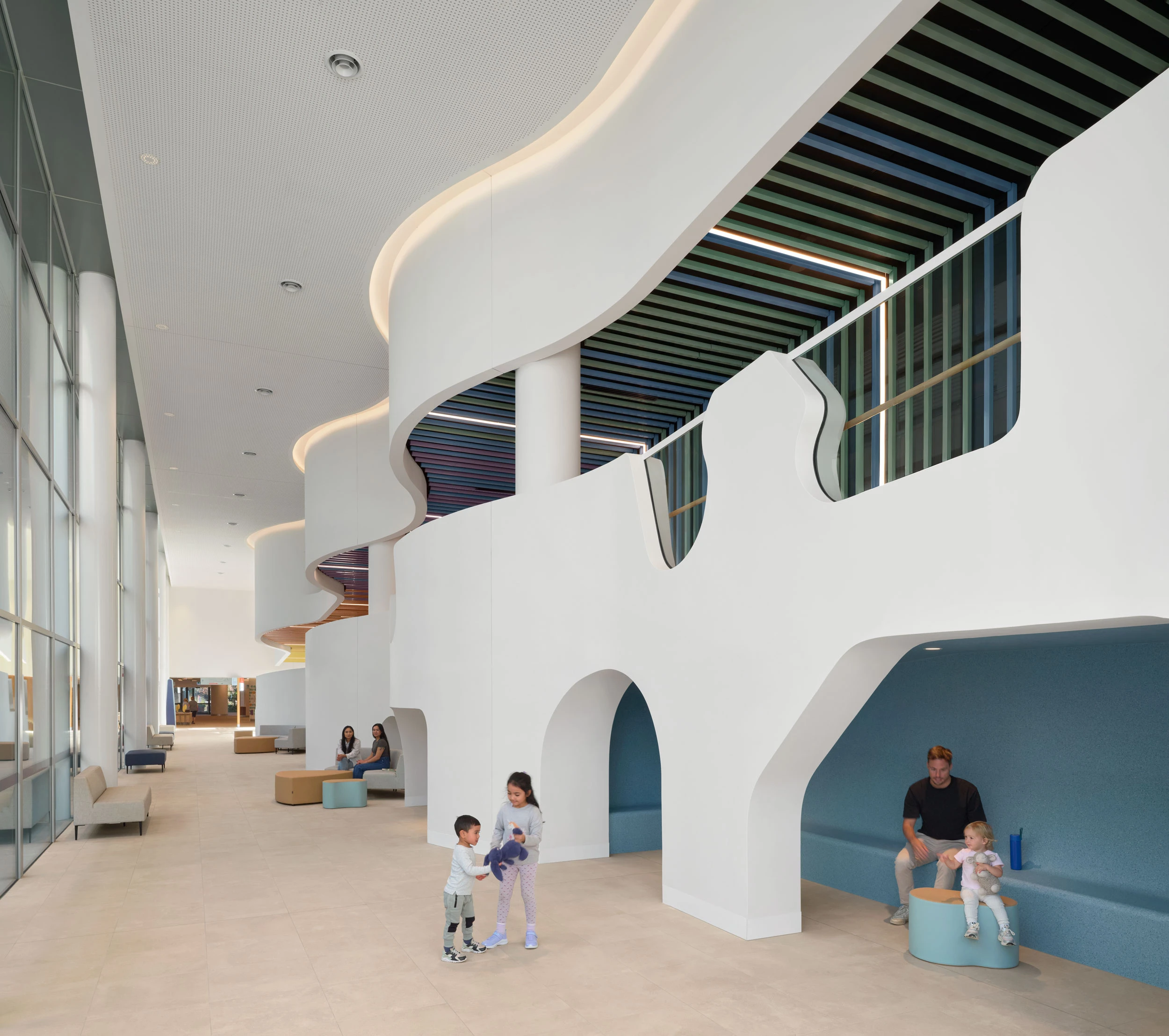
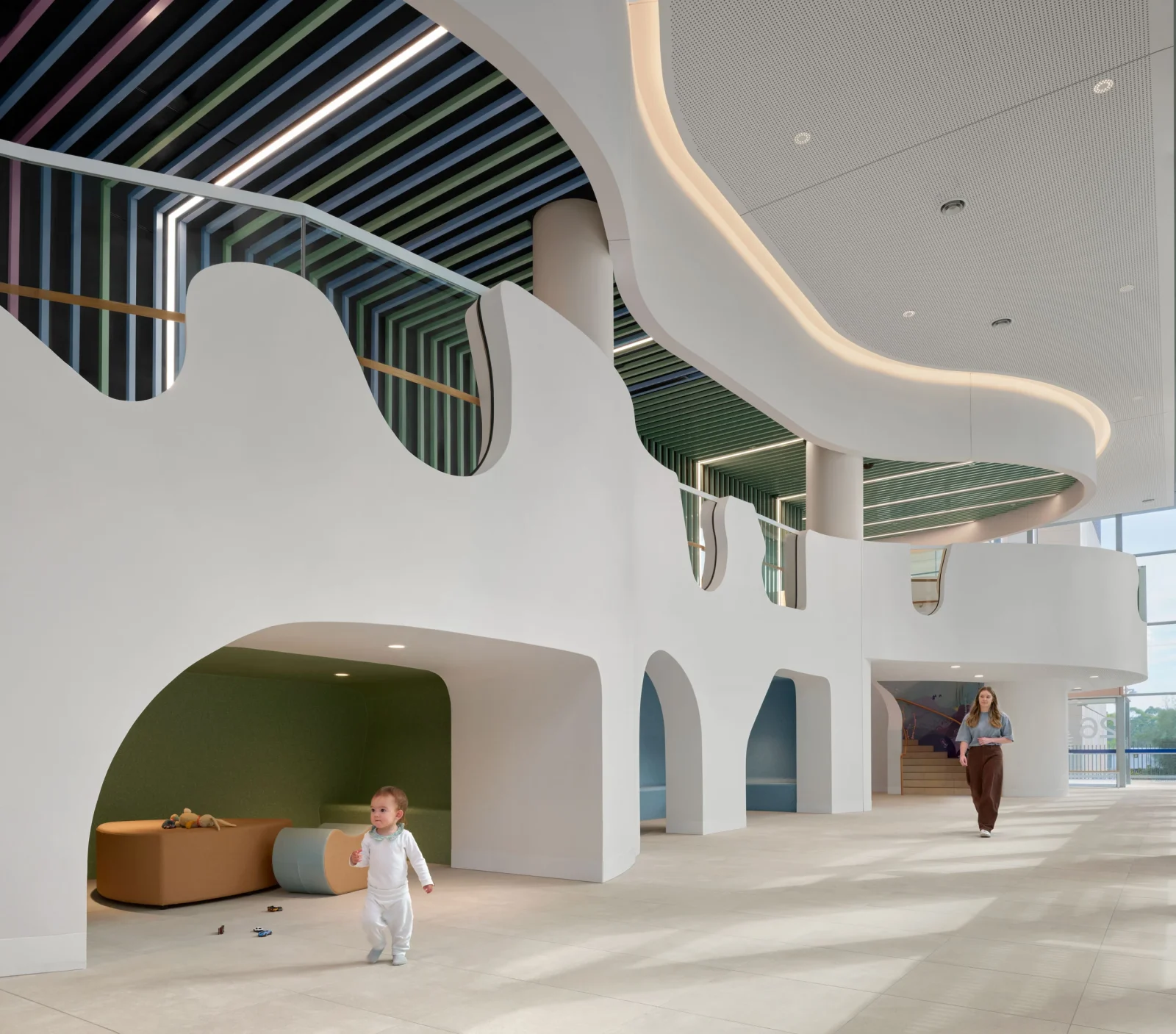
Central to the project is the concept of the “activated journey,” a design philosophy that recognises movement through the hospital as a meaningful part of the healthcare experience. BLP sought to create spaces that support children and families emotionally as well as functionally. By integrating opportunities for play, rest, discovery, and social connection throughout the building, the hospital becomes a place where care extends beyond clinical treatment.
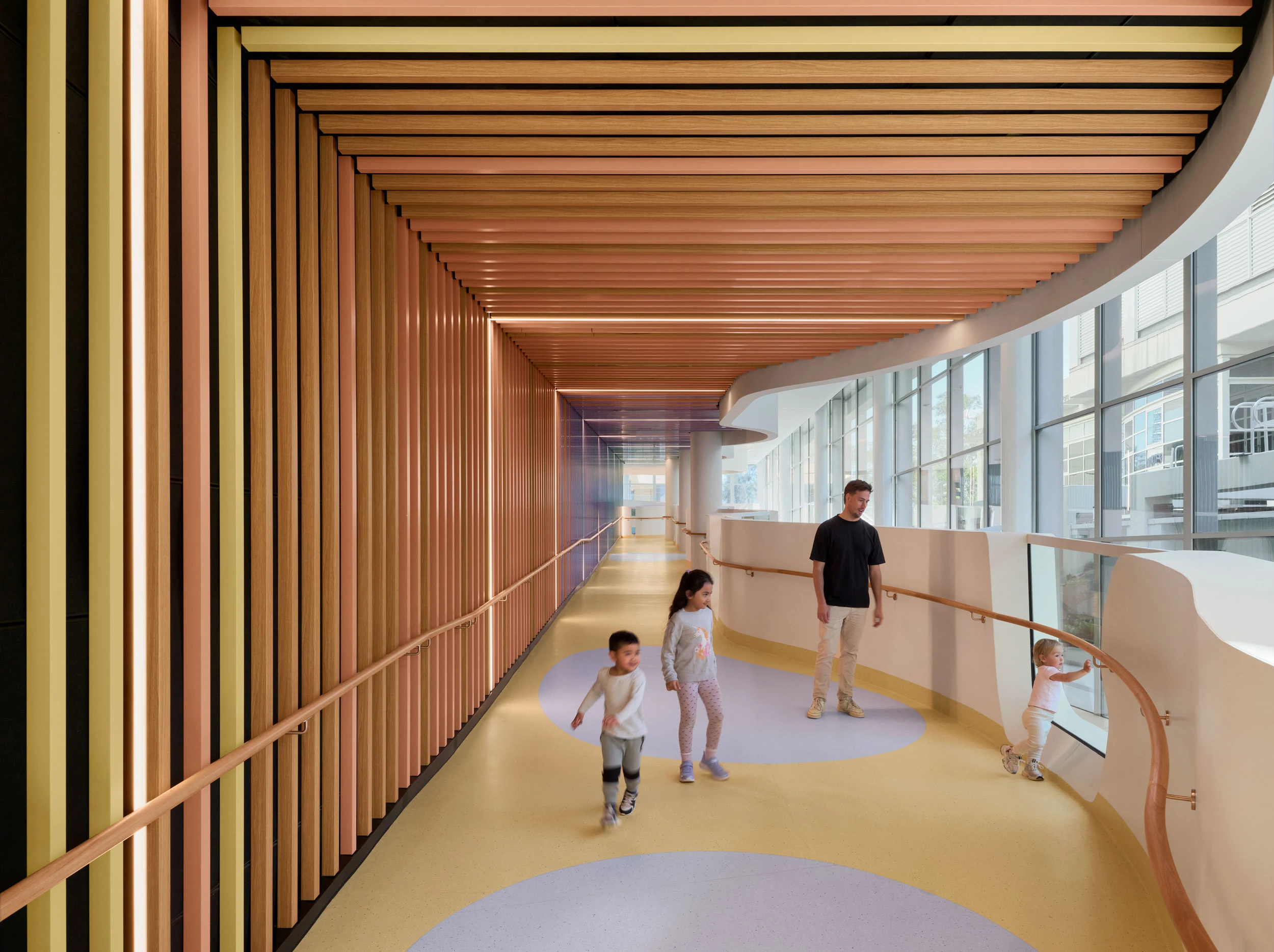
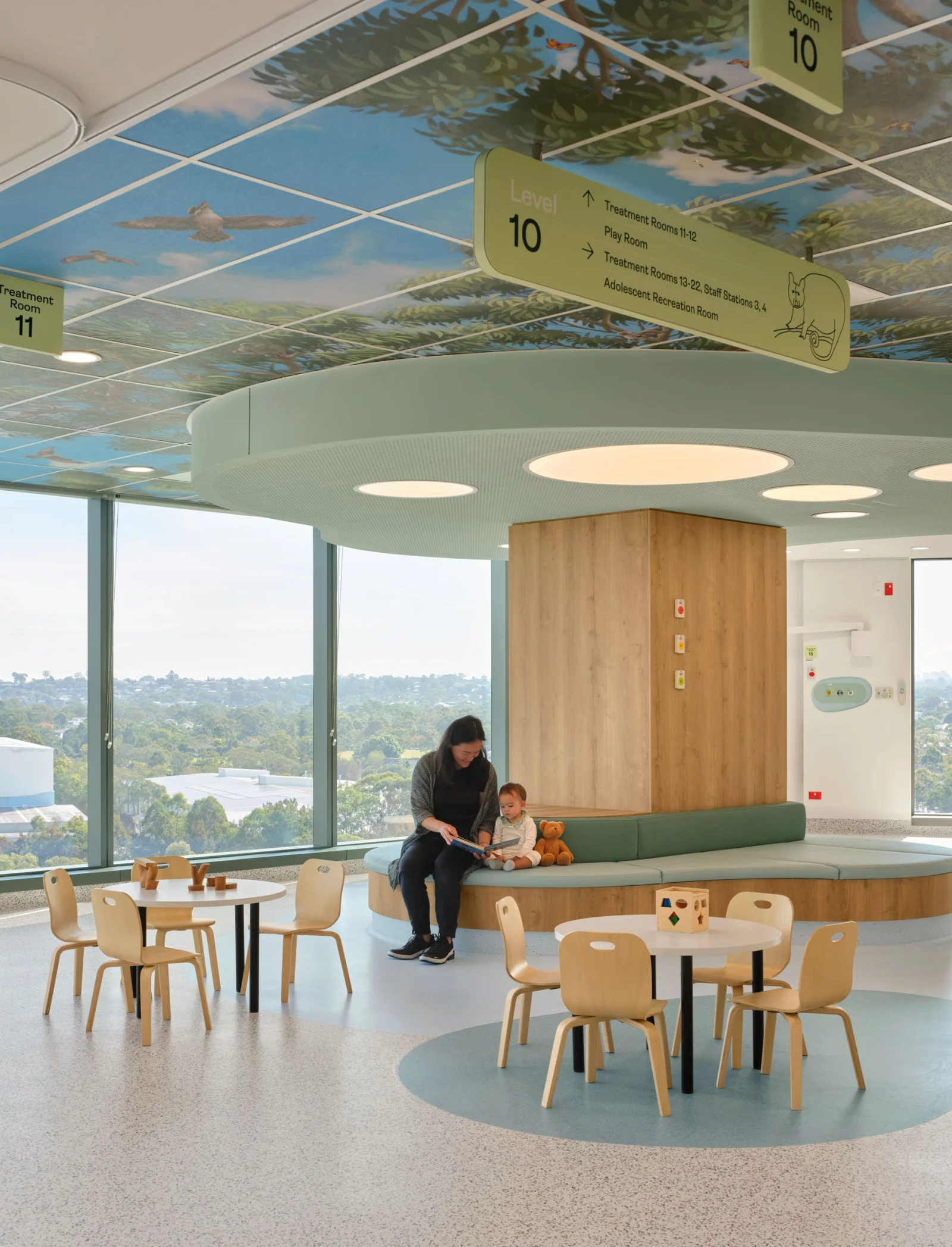
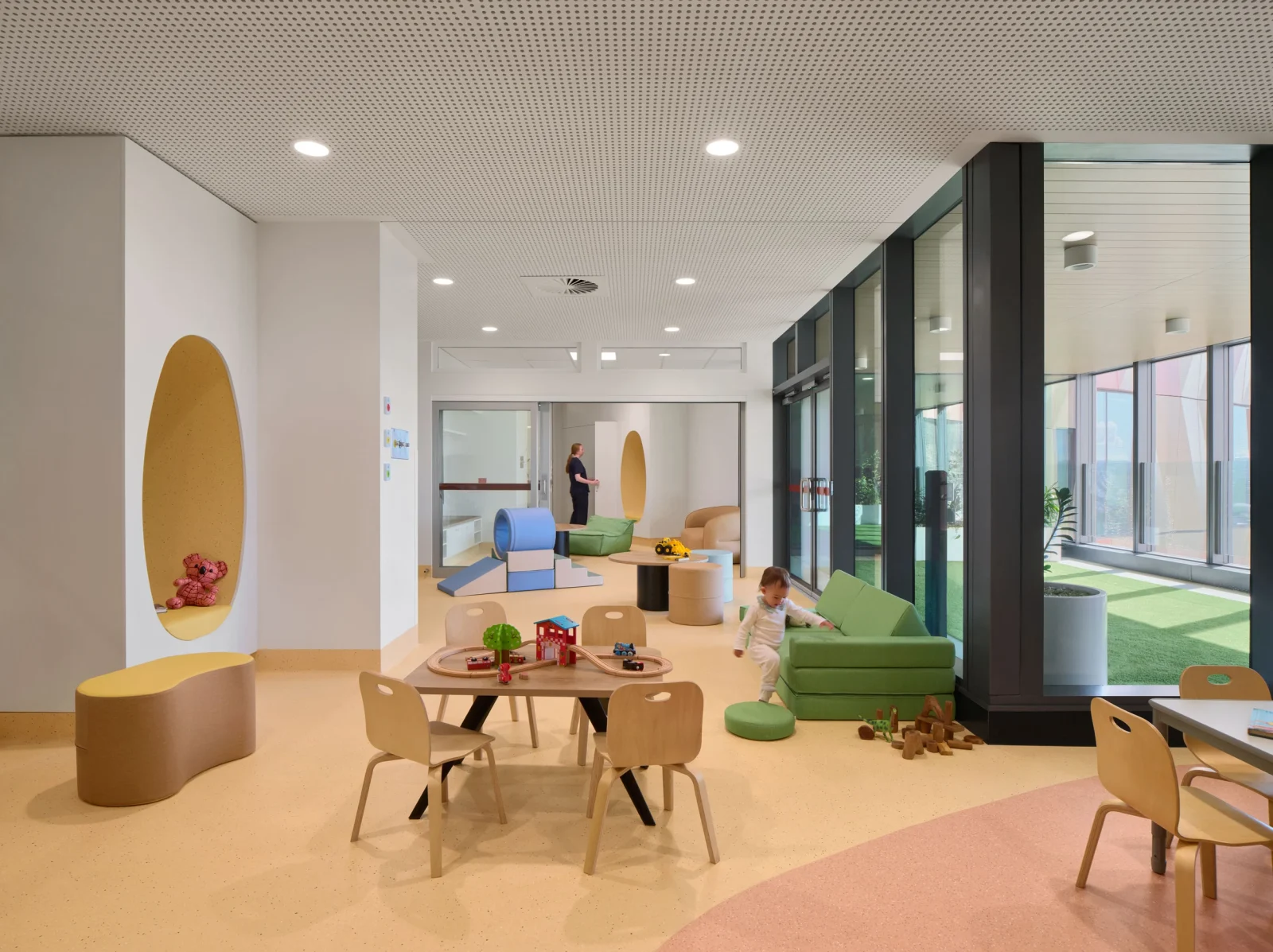
Inside the building, clinical performance and human experience are treated as inseparable design priorities. Natural light, visual connections to the surrounding landscape, family-centred planning, and carefully considered material selections contribute to an atmosphere that feels calm, familiar, and reassuring. The interiors draw upon evidence-based design principles, including biophilic design and positive distraction strategies, which have been shown to reduce stress and improve well-being in paediatric healthcare settings.
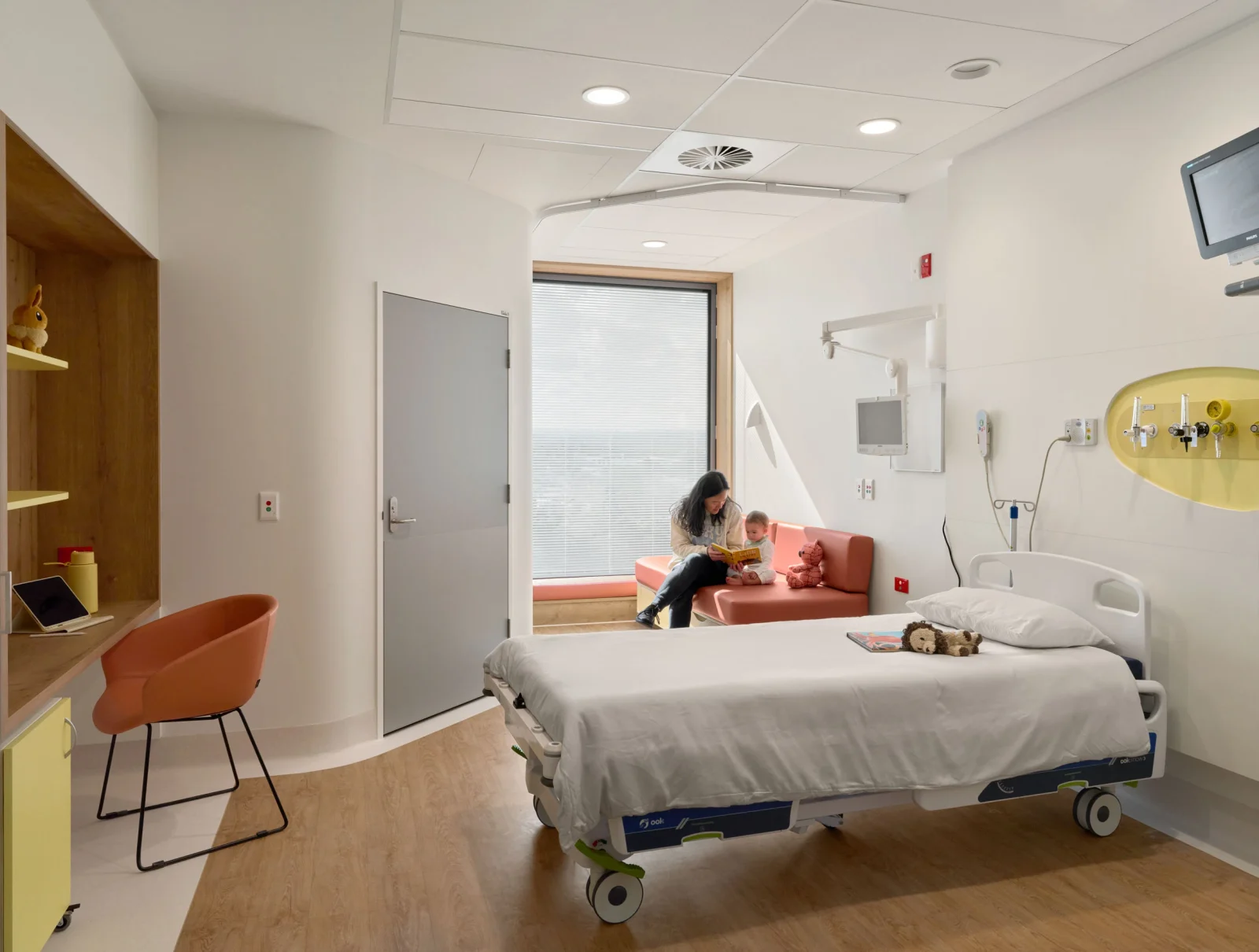
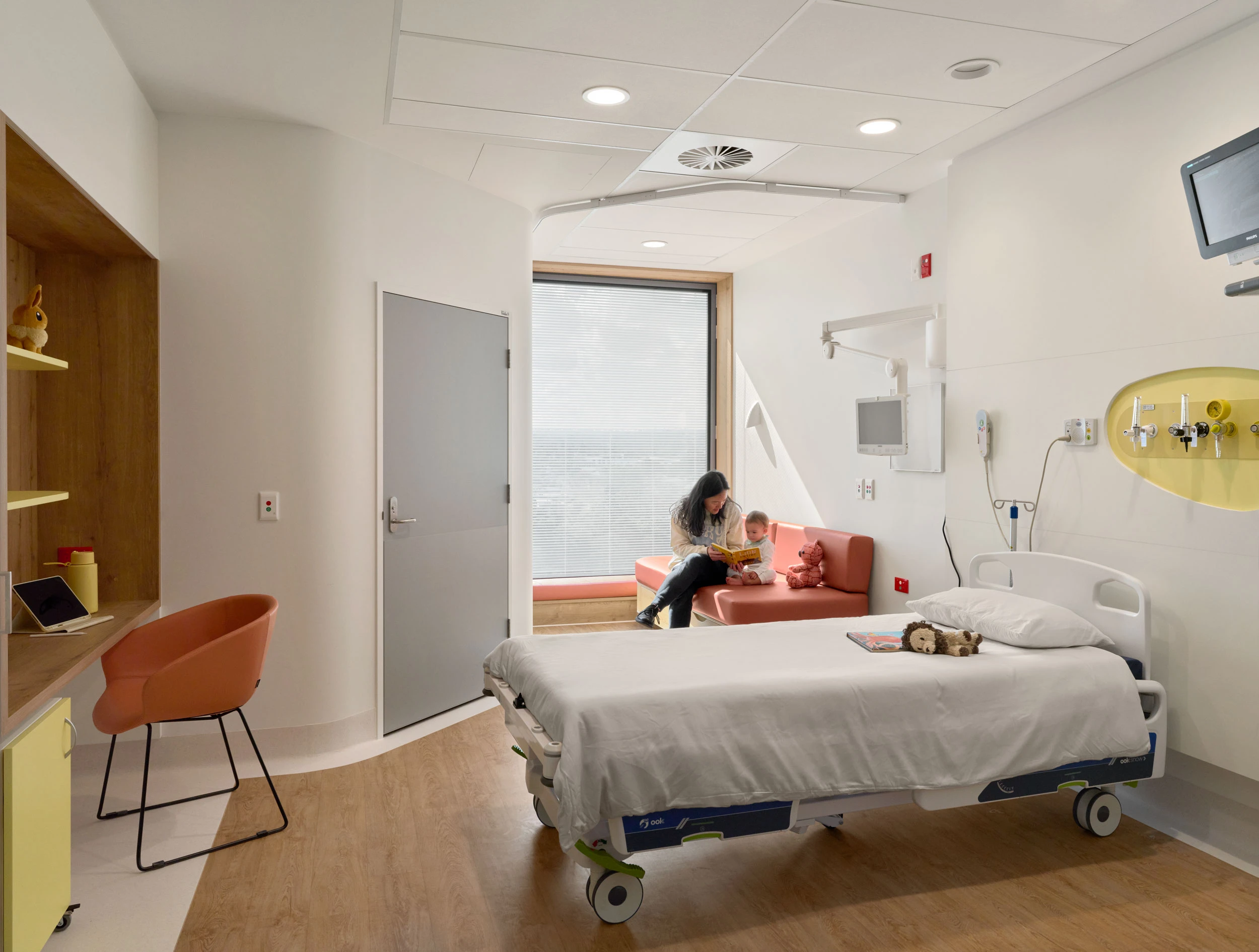
A key innovation within the hospital is the organisation of inpatient units into neighbourhoods comprising twelve rooms each. Patient accommodation has been designed as “bedrooms rather than wards,” with every room configured as a single-occupancy space and equipped with desks, lounges, and views towards the landscape. This approach reinforces privacy, comfort, and family involvement while supporting contemporary models of care.
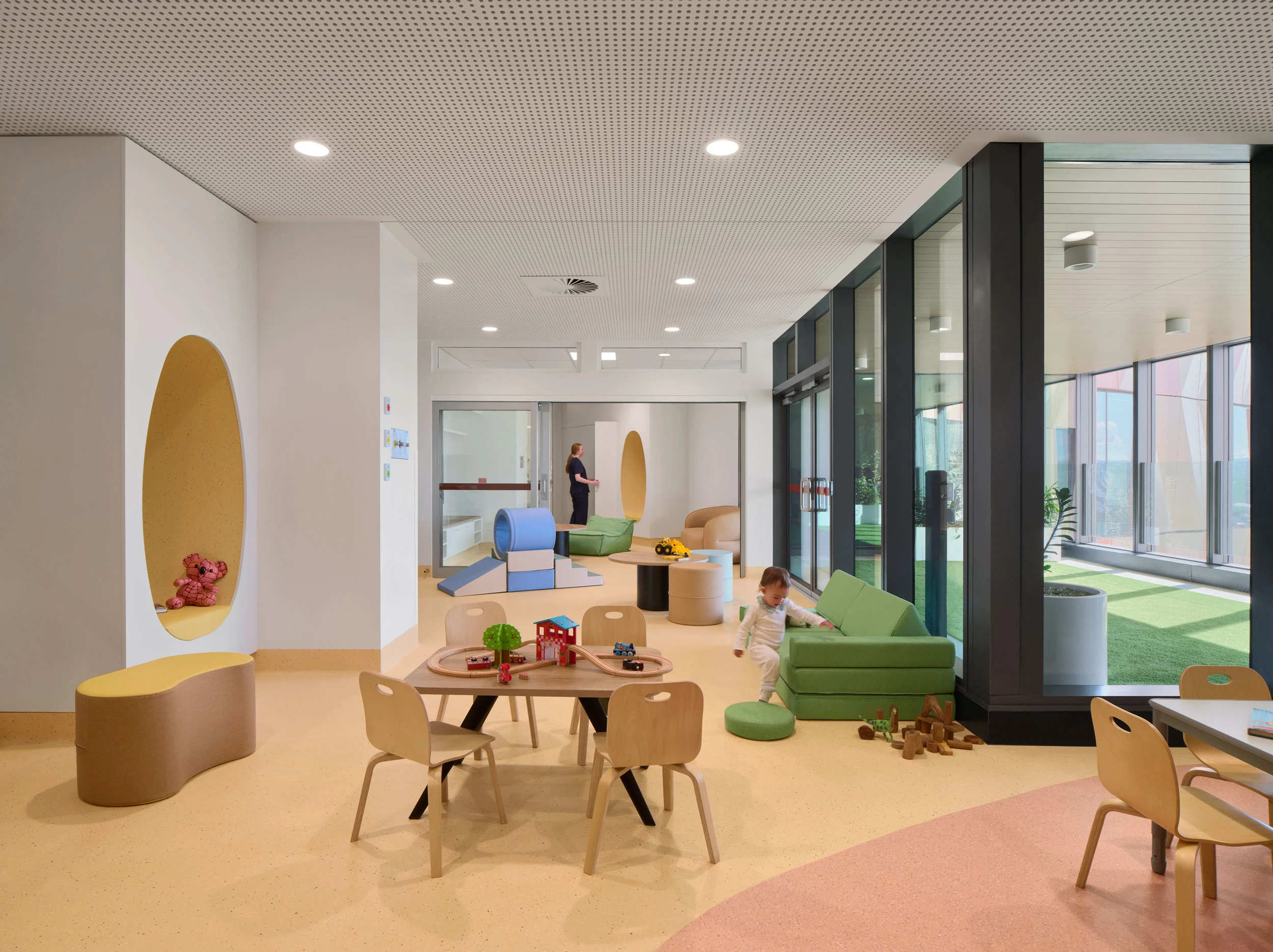
The redevelopment also acknowledges the vital role families play in a child’s healthcare journey. Multi-purpose family spaces offer extended twenty-four-hour access, while outdoor respite areas, retail amenities, and dedicated support facilities provide practical assistance during extended hospital stays. Interactive play zones, discovery spaces, and specialised distraction areas are integrated throughout the building to create environments that stimulate imagination and encourage engagement.
Connection to Country forms another important dimension of the project. Working with Indigenous design practice Yerrabingin, BLP incorporated cultural narratives related to water, Country, and children’s experiences into the overall design framework. Indigenous artworks, a Yarning Circle, and culturally responsive spaces help establish meaningful connections with local communities while embedding First Nations perspectives within the healthcare environment.
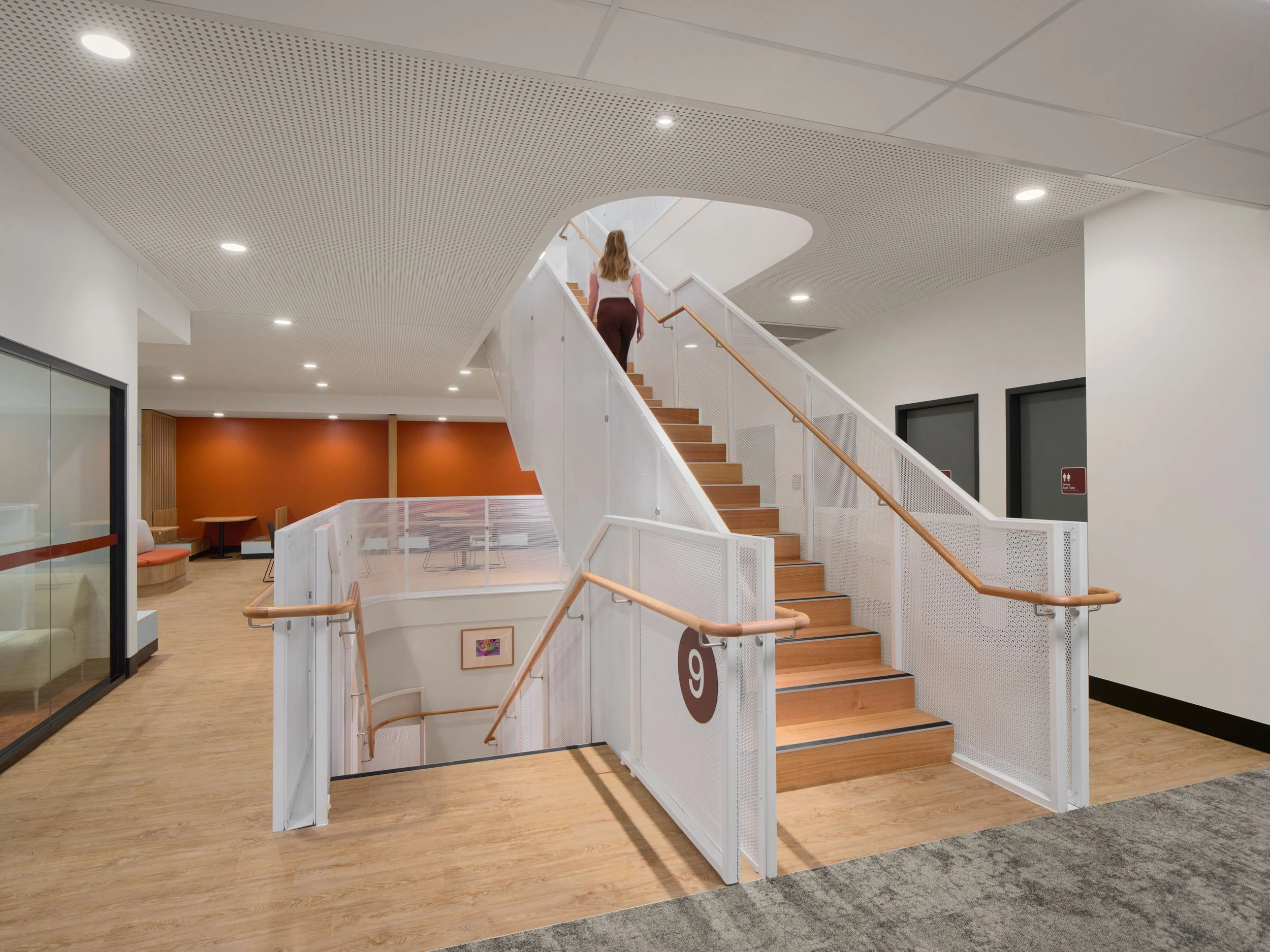
The building’s emphasis on wellbeing extends to its relationship with nature. Every ward benefits from access to natural light and views, while biophilic design principles are incorporated through landscaping, outdoor spaces, and visual references to the river landscape. The result is a healthcare environment that feels integrated with its ecological setting rather than isolated from it.
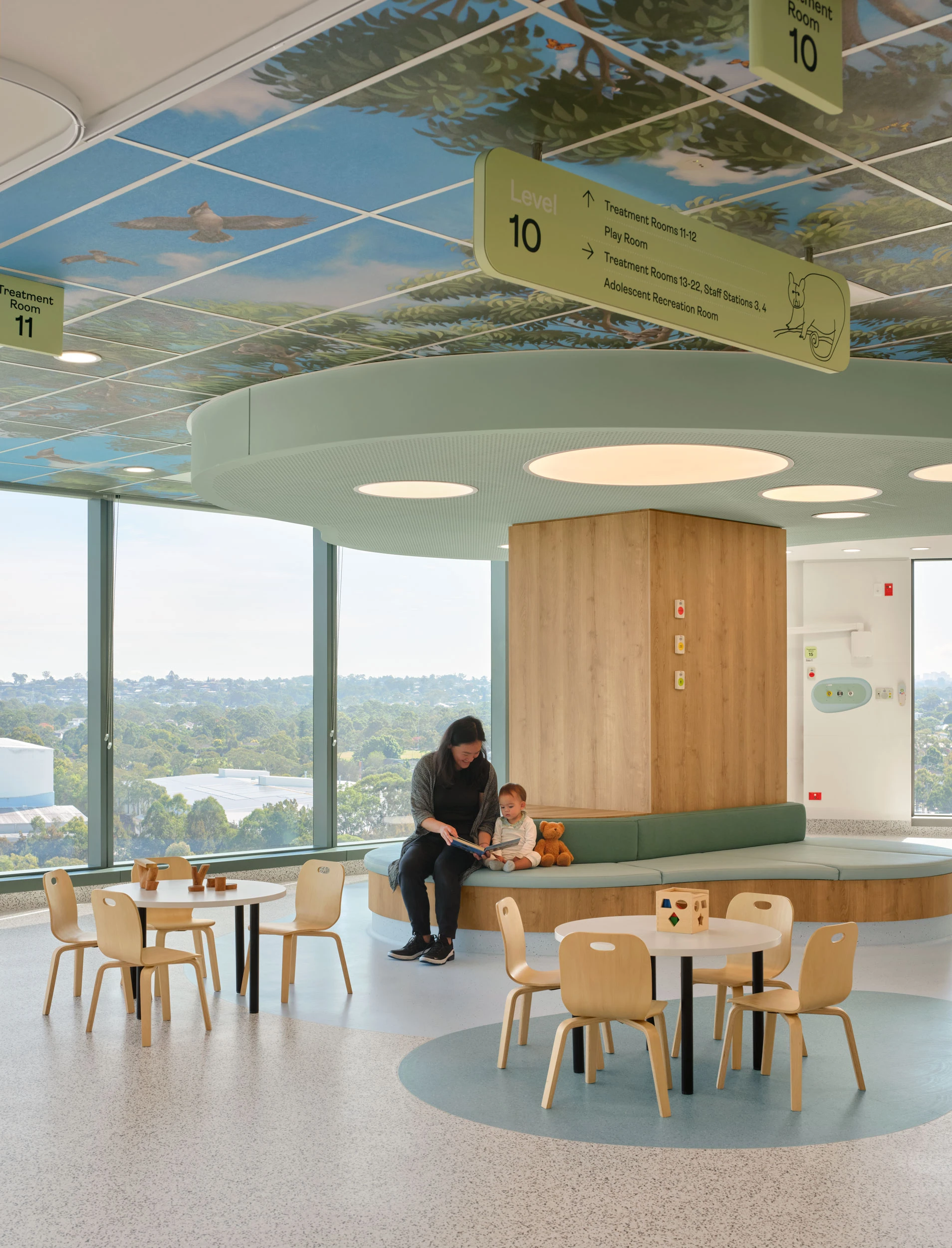
Spanning approximately 57,000 square metres alongside a 1,004-space multi-storey car park, the redevelopment represents one of the most significant paediatric healthcare projects delivered in Australia in recent years. The multidisciplinary team behind the project included Billard Leece Partnership as lead architect, McGregor Coxall as landscape architect, RobertsCo as builder, Arup as structural and civil engineer, Stantec for mechanical, electrical, acoustic, and services engineering, WSP for traffic engineering, Architectus for planning, and Frost*Collective for wayfinding and environmental graphics.
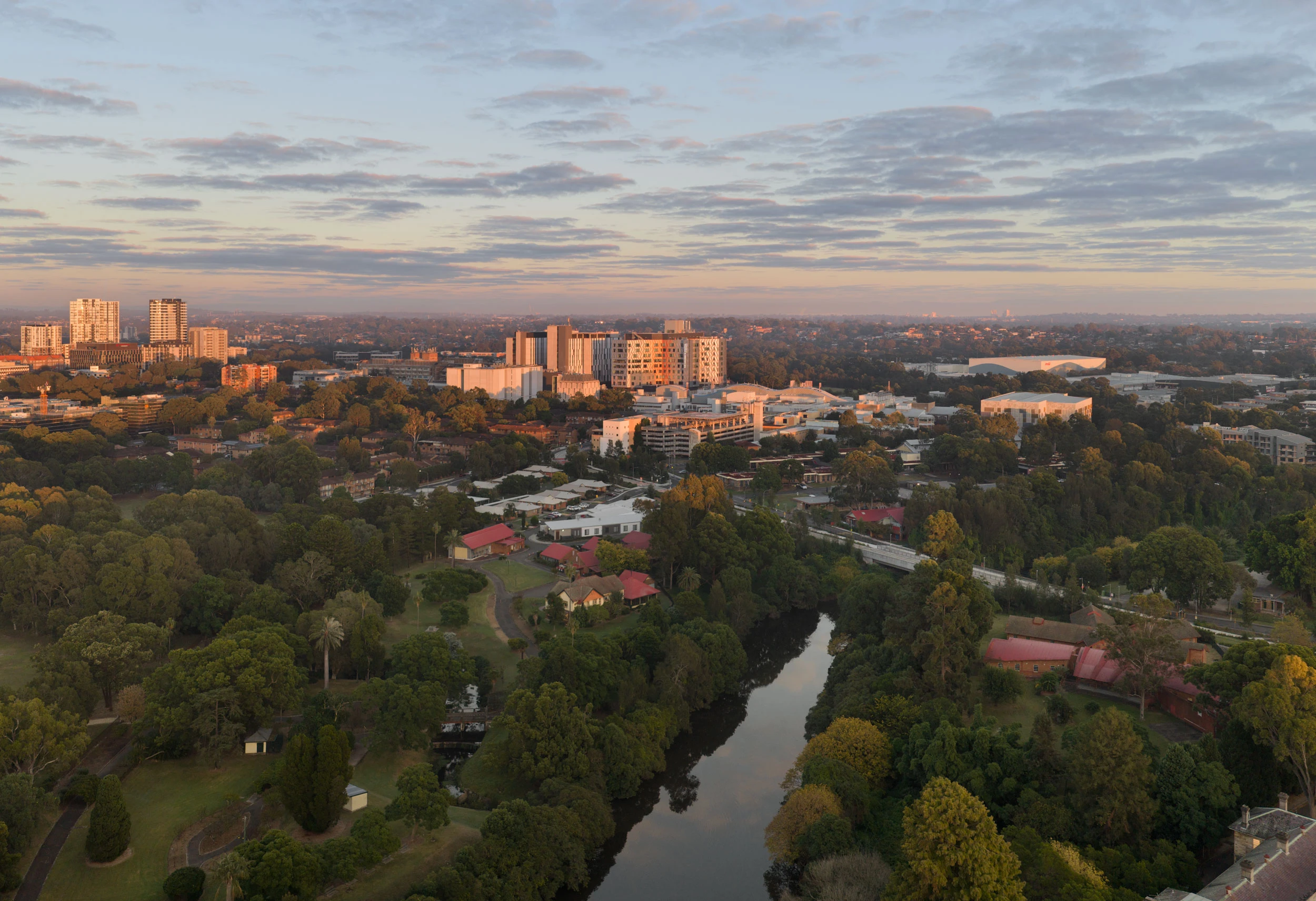
The Children’s Hospital at Westmead demonstrates how healthcare architecture can operate simultaneously as social infrastructure, a public realm, and a therapeutic environment. By placing children’s experiences, family wellbeing, cultural connection, and landscape integration at the centre of the design process, the project establishes a new benchmark for paediatric healthcare architecture in Australia and offers a compelling model for future hospital design worldwide.
Image credit © Tom Roe
Explore Courses
.jpg "Ondrej Chybik - Rethinking Architecture")