
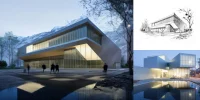

The Centre Pompidou is set to extend its global cultural network with the opening of Centre Pompidou Hanwha in Seoul in June 2026, marking a significant architectural and institutional expansion into East Asia. Designed by French architect Jean-Michel Wilmotte, the project transforms a former aquarium within the landmark 63 Building in Yeouido into a contemporary museum environment shaped by light, transparency, and urban integration.
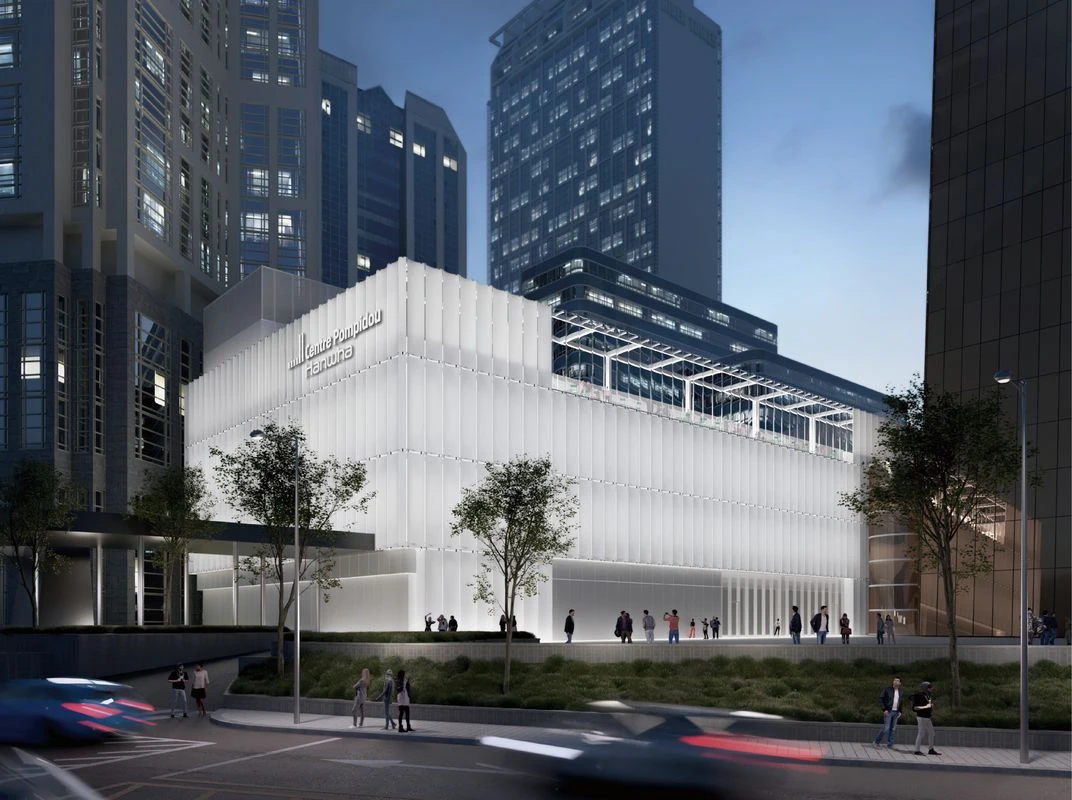
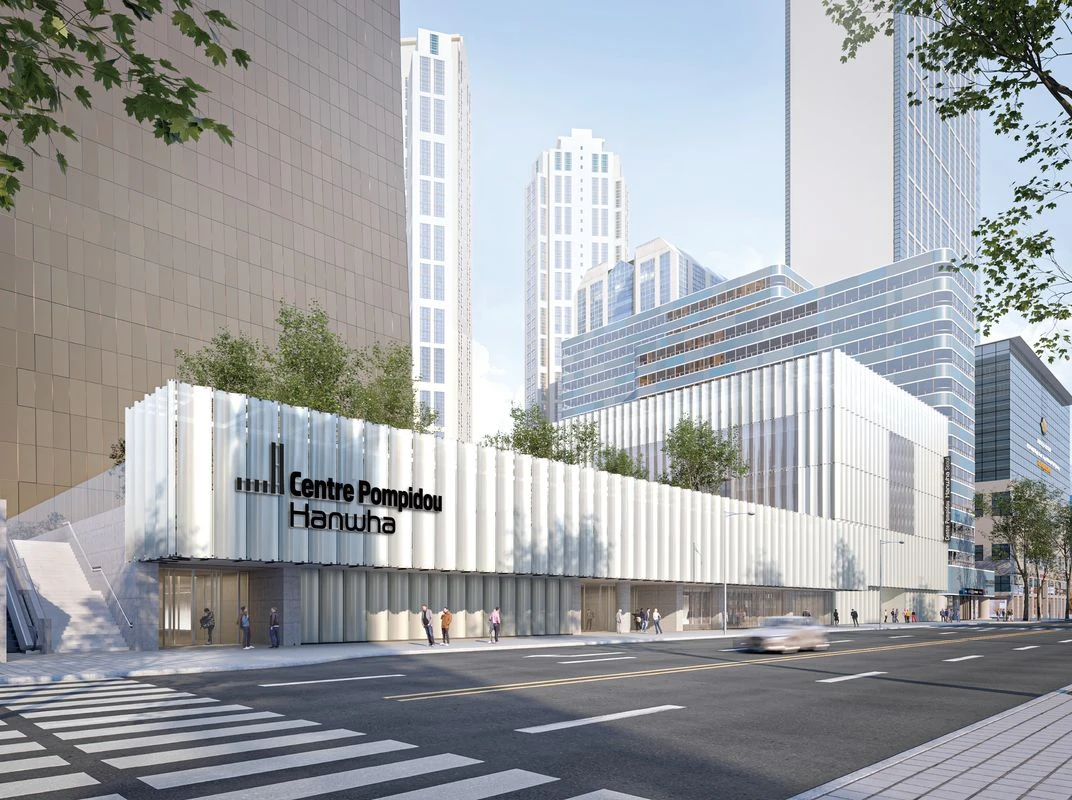
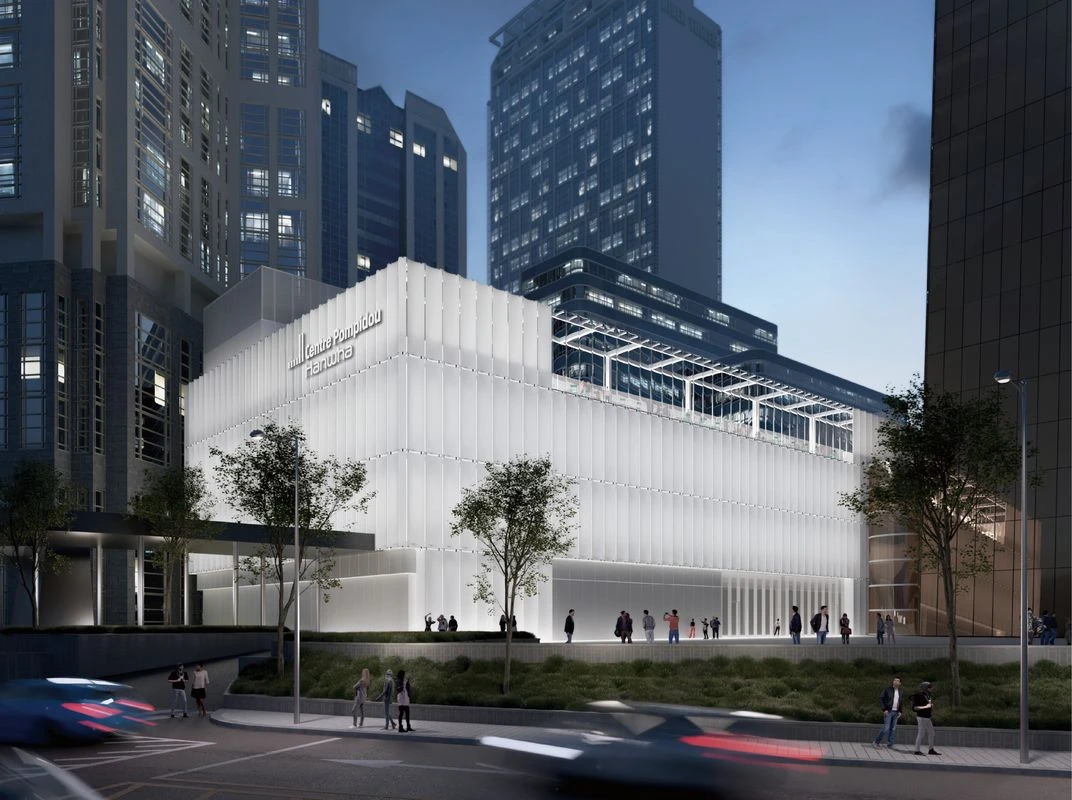
Wilmotte’s intervention reconfigures an existing interior volume of over 10,000 square meters across four levels, converting a once inward-looking aquatic facility into a permeable cultural venue. The design introduces what has been described as a “box of light,” achieved through a translucent envelope and carefully produced daylight penetration that activates exhibition spaces throughout the day while projecting illumination outward at night.
The project negotiates its relationship with the surrounding city through a strong horizontal expression that contrasts with the vertical dominance of the 63 Building tower. A 150-meter-long glazed façade establishes a visual dialogue with the Han River and the Yeouido financial district, effectively recasting the museum as an urban lantern. This luminous frontage, combined with a reworked public interface that includes a ground-level sculpture garden, positions the institution as both a cultural destination and a civic threshold within a dense metropolitan context.
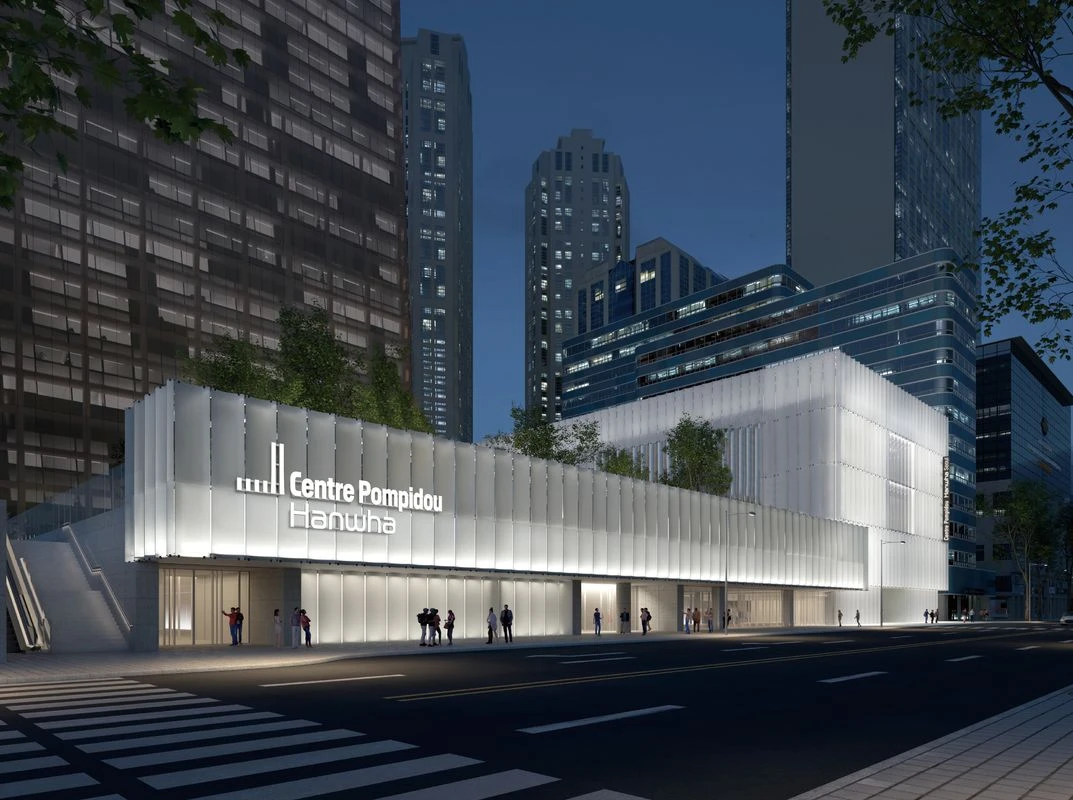
The museum is organized around two principal gallery spaces of approximately 1,500 square meters each, supported by additional exhibition areas, educational facilities, and public programs. The spatial layout prioritizes flexibility, allowing for a dual curatorial model that alternates between exhibitions drawn from the Paris collection and presentations focused on contemporary Korean art. This programmatic structure is embedded in the architecture, with circulation and gallery sequencing designed to accommodate parallel narratives and varied scales of display.
The Seoul outpost emerges from a four-year partnership between the Centre Pompidou and the Hanwha Foundation of Culture, reflecting a broader institutional strategy of internationalization during the Paris museum’s ongoing renovation closure (2025–2030). Within this framework, the architecture plays a mediating role, translating Pompidou’s ethos into a new cultural and geographic context while engaging local urban and material references, including façade details that subtly echo traditional Korean roof forms.
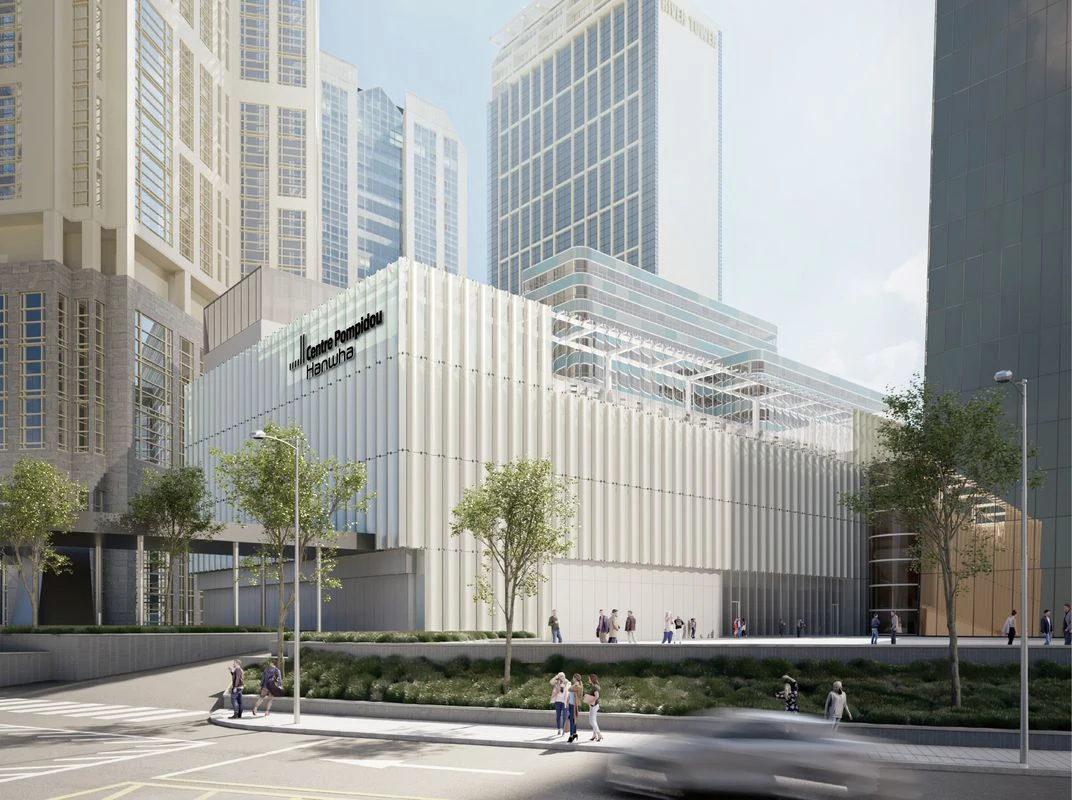
Scheduled to open with the exhibition The Cubists: Inventing Modern Vision. The building is conceived as part of a distributed museum model. In Seoul, Wilmotte’s design reframes the museum typology through reuse, light, and urban connectivity, offering a calibrated response to both the constraints of an existing structure and the ambitions of a global cultural institution.
Image credit: Hanwha Foundation of Culture, architect Jean-Michel Wilmotte
Explore Courses
.jpg "Architecture Diagram Mastery: Concept to Portfolio")
.jpg%202.jpg "Building Performance with Forma & Opossum")
.jpg "Ondrej Chybik - Rethinking Architecture")