

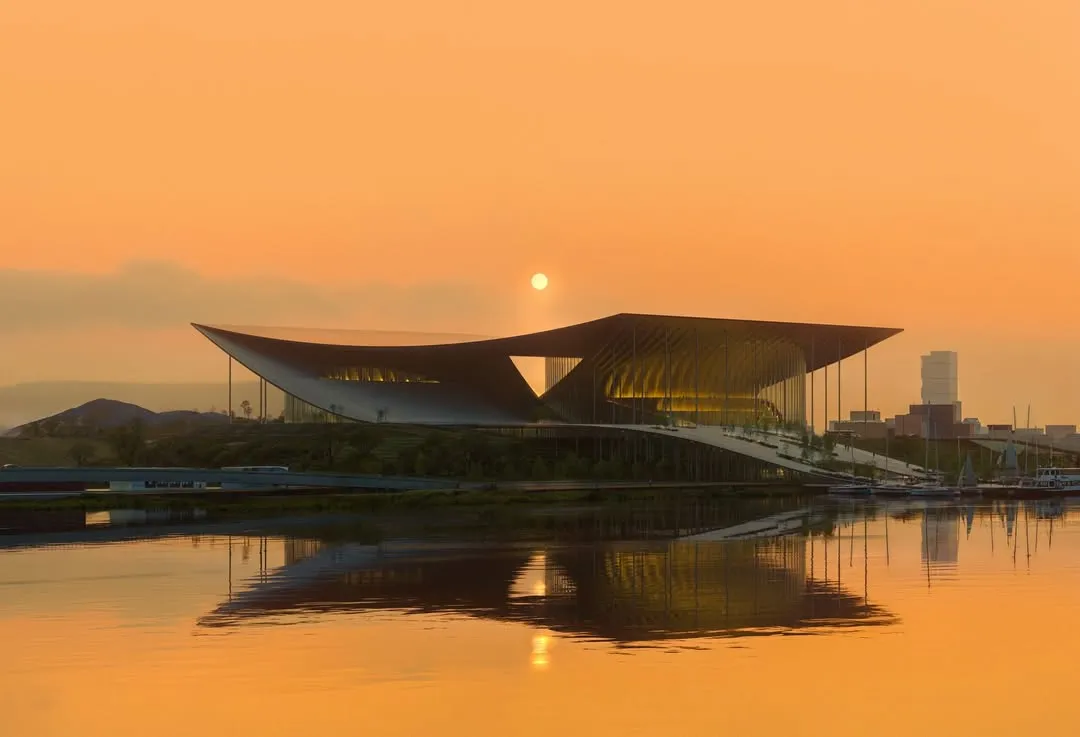
Bjarke Ingels Group (BIG) reveals its proposal after advancing to the second phase of Ulsan City’s international invited competition for a new performing arts venue in South Korea. Organized by Ulsan Metropolitan City, the competition seeks a new cultural anchor for the port city, which is shifting its identity from heavy industry toward public space and cultural infrastructure.
Four teams advance to the next stage, including Bjarke Ingels Group, Atelier Jean Nouvel, Designcamp Moonpark DMP, and The System Lab Architects. The second phase focuses on further design development and evaluation.
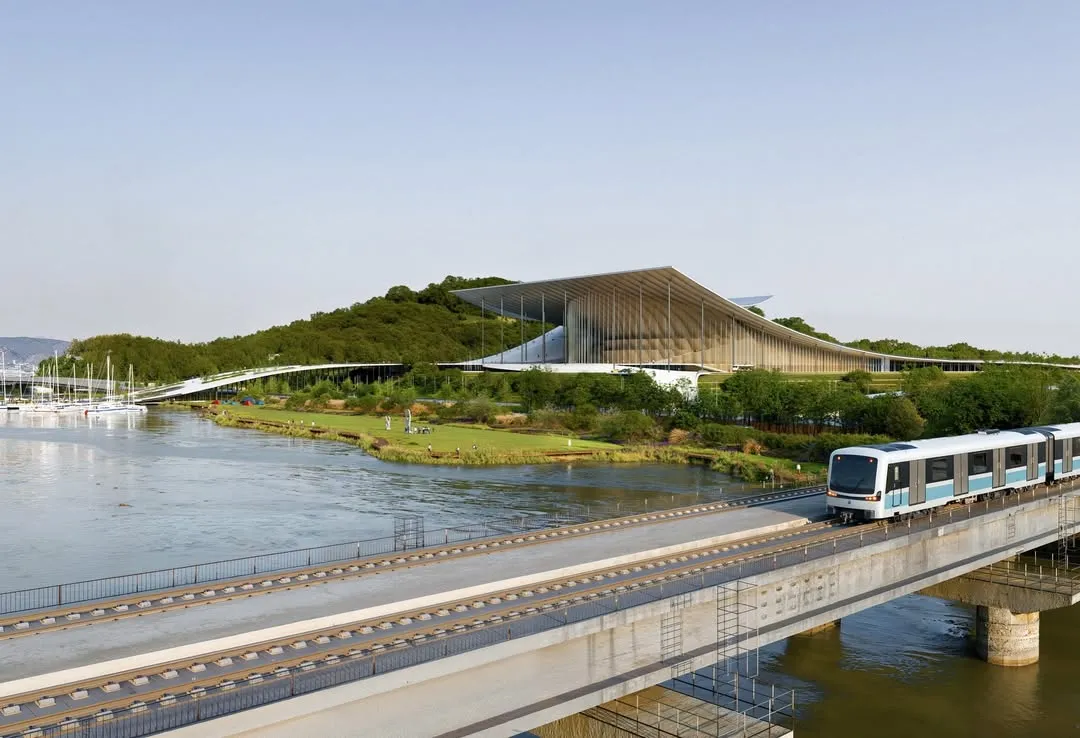
The building is planned for a redeveloped site in Ulsan’s Nam-gu district, on land associated with the former Samsan landfill and close to the Taehwagang river. The site sits between established neighborhoods, public open space, and future waterfront routes. Its location provides a unique opportunity to weave the new cultural venue into the city’s urban fabric while strengthening connections to Ulsan’s waterfront.
The competition brief calls for a cultural complex of roughly 50,000 square meters, bringing together multiple performance halls and extensive public areas. The project is intended to support formal productions while also functioning as a daily public destination, reinforcing Ulsan’s effort to extend its cultural identity beyond industry.
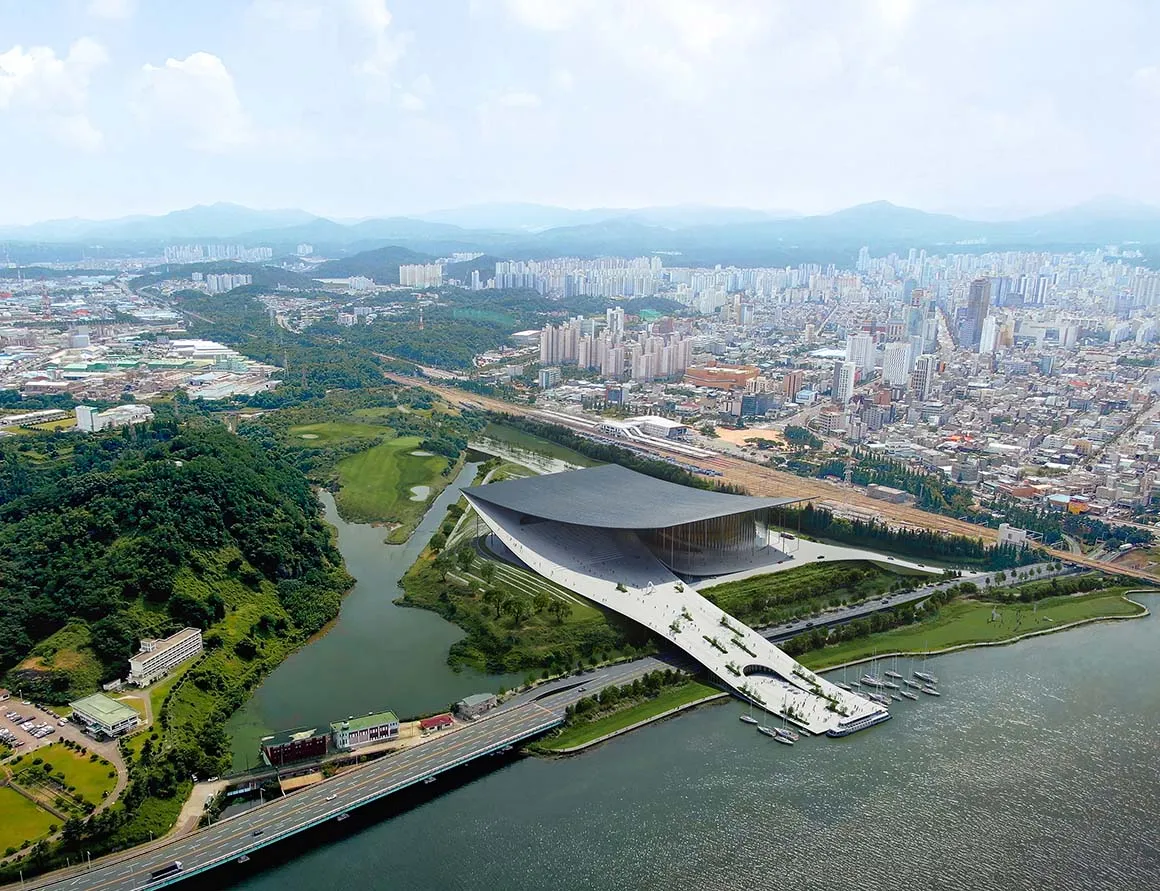
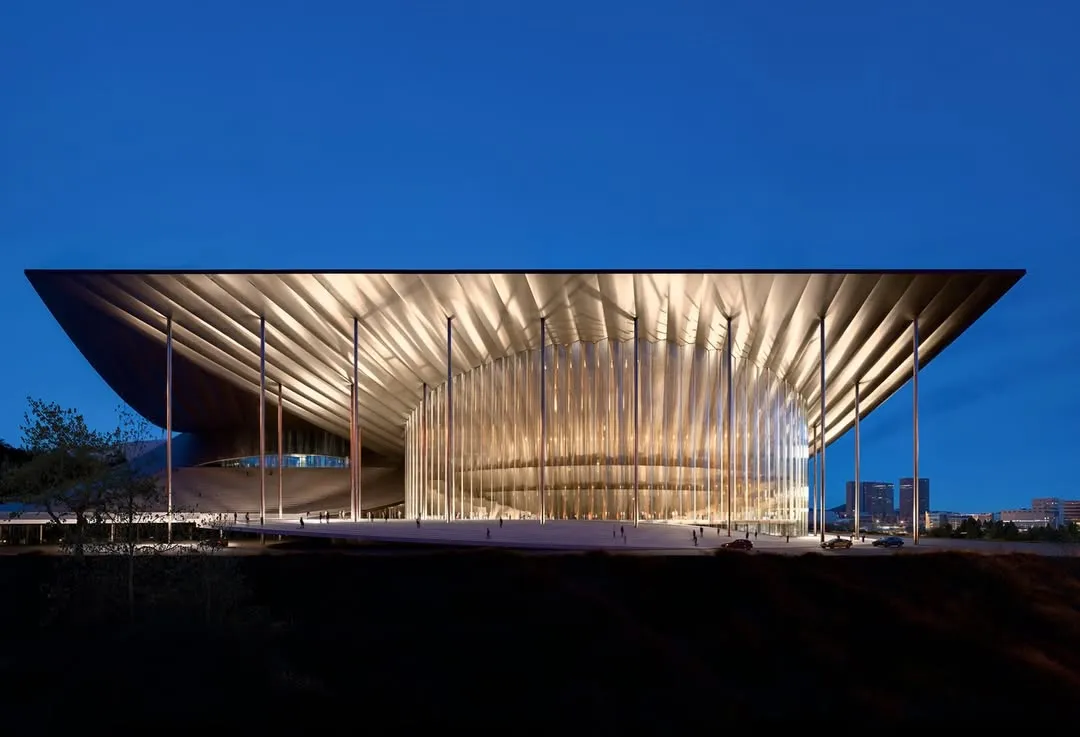
BIG’s proposal unfolds through two sweeping, ribbon-like architectural forms. Inspired by the theme “Whale Song, Symbolizing Ulsan, the City of Whales,” the design evokes the fluidity and movement of whales, reflecting the city’s maritime heritage. Instead of housing the performing arts venue within a singular enclosed volume, the building becomes a connective ground, stitching together the city and the river.
One ribbon aligns with pedestrian routes and patterns of urban movement, pulling the project into the city fabric. The other extends toward the waterfront, tying the venue to Ulsan’s geography and long relationship with water. Between them, a series of open spaces takes shape, including plazas, shaded walkways, and outdoor gathering areas that remain accessible throughout the day. Together, the ribbons structure circulation and public space while framing the venue as a public threshold.
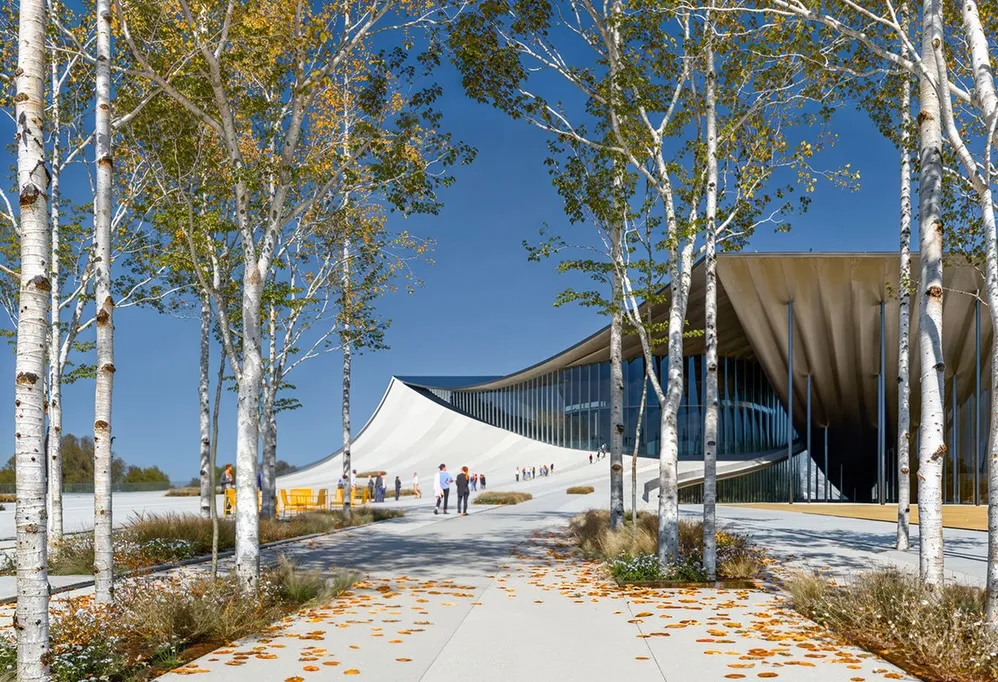
Public Zones Bring Life to Ulsan Performing Arts Venue
The design distributes public space across the site, allowing people to pass through or enjoy informal events without entering the performance halls. Outdoor stages and gathering spots are embedded within the structure, supporting informal events, seasonal programs, and everyday use. Circulation paths frame views of the river, while terraces and covered zones provide shelter and define scale.
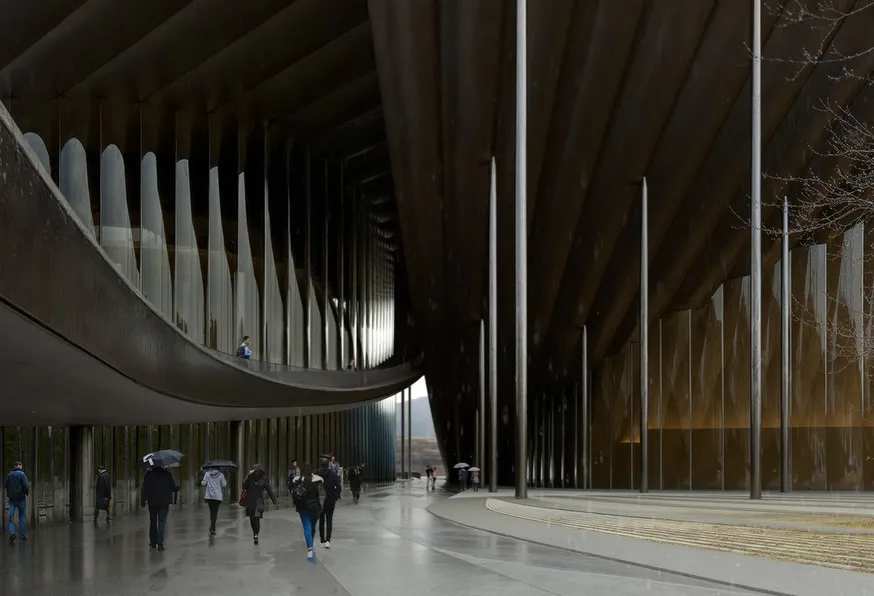
The venue is expected to include a main performance hall of approximately 2,500 seats, a secondary hall of around 1,000 seats, and a dedicated space for digital or immersive performances. Supporting facilities such as rehearsal rooms, backstage areas, technical support, lobbies, and outdoor stages are integrated into a single complex.
BIG works with Heerim Architects and Theatre Projects to bring local knowledge and expertise in performance planning, acoustics, and stage operations. Phase Two will focus on schematic refinement, cost evaluation, operational planning, and further technical development.
The dual-ribbon proposal frames the Ulsan Performing Arts Venue as a gathering place that connects neighborhoods rather than a building reserved for audiences. The design integrates cultural programming with daily urban movement, making the venue a part of city life.
Image credit: BIG
Explore Courses
.jpg "Ondrej Chybik - Rethinking Architecture")