

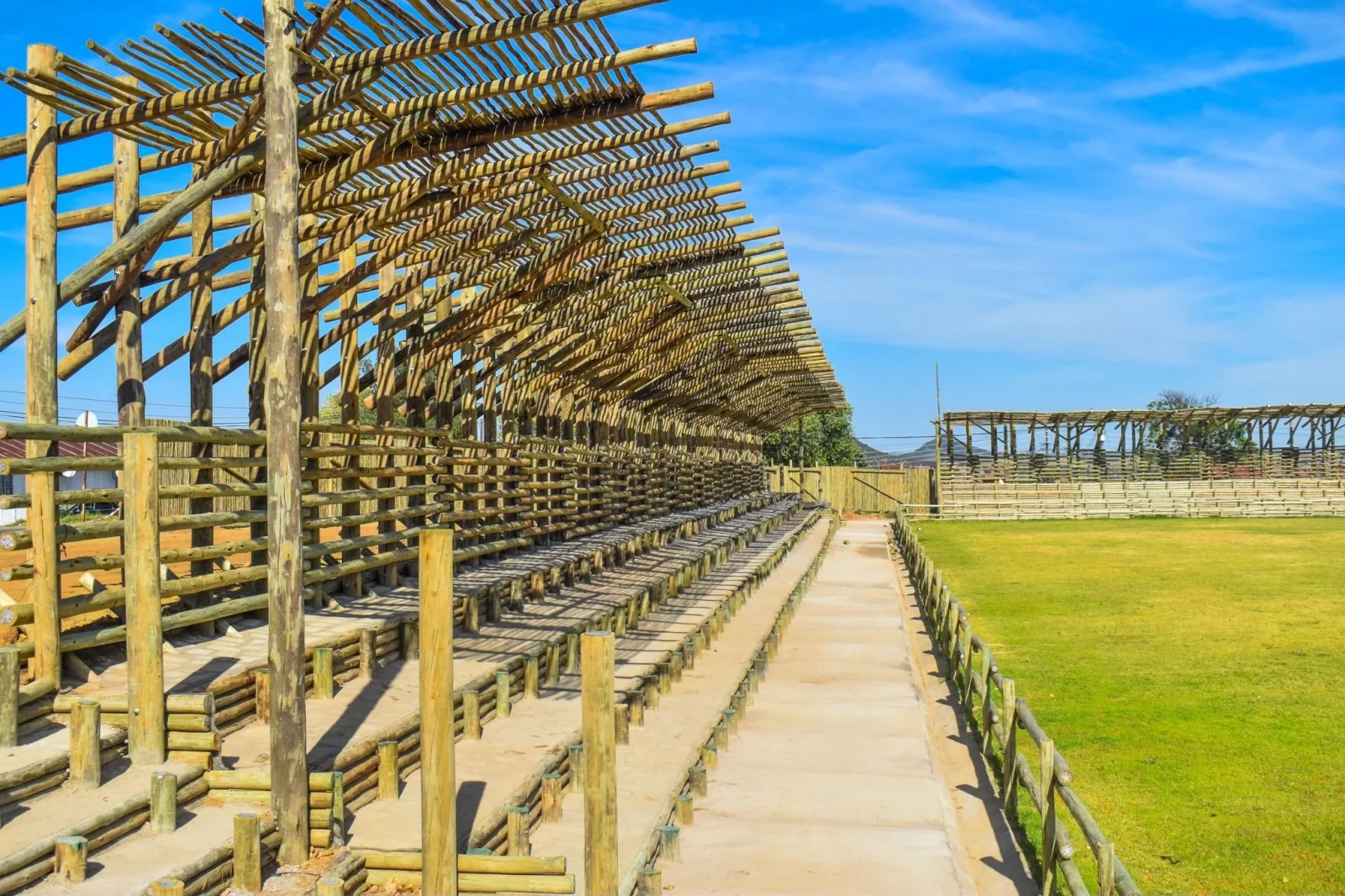
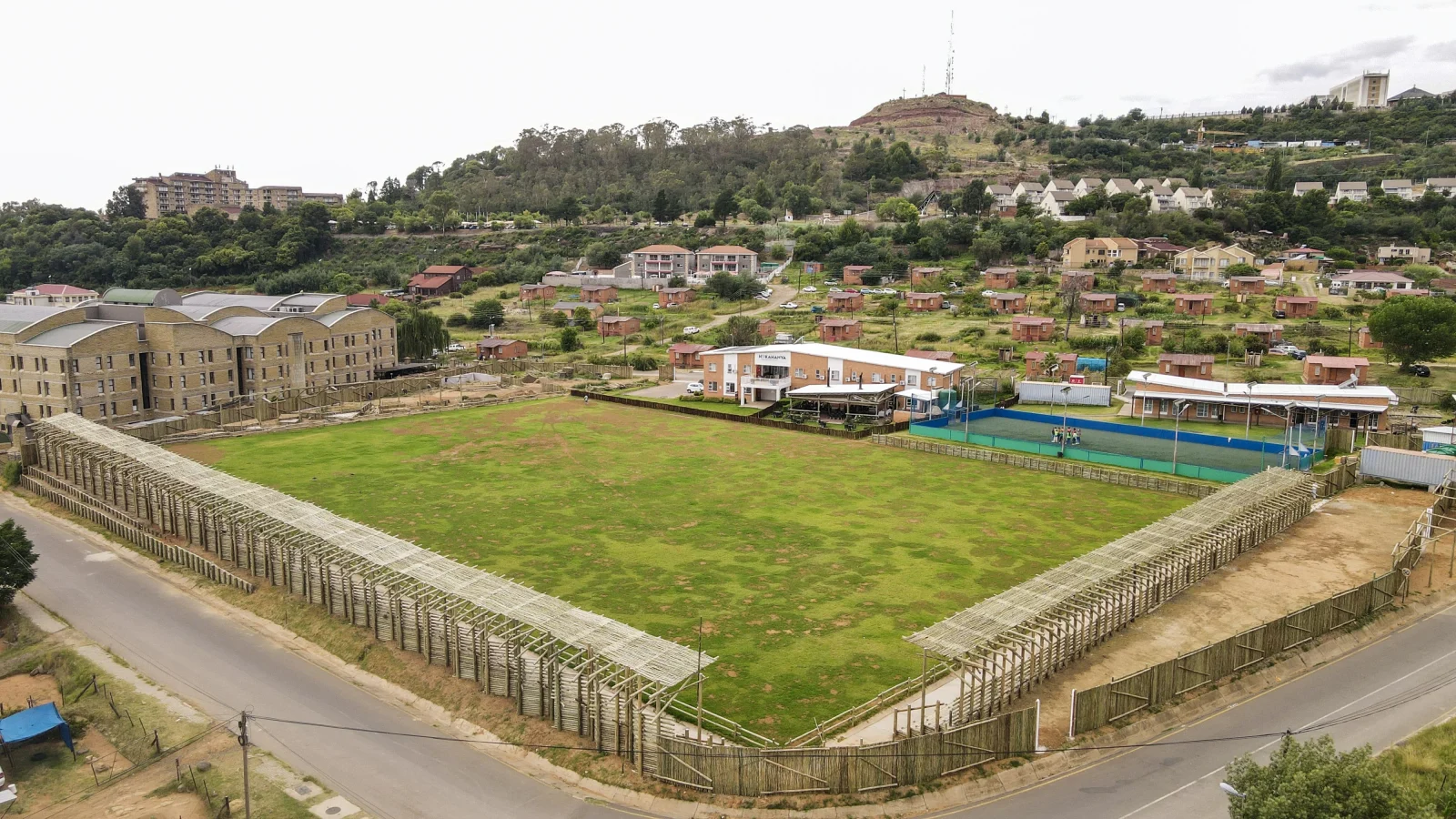
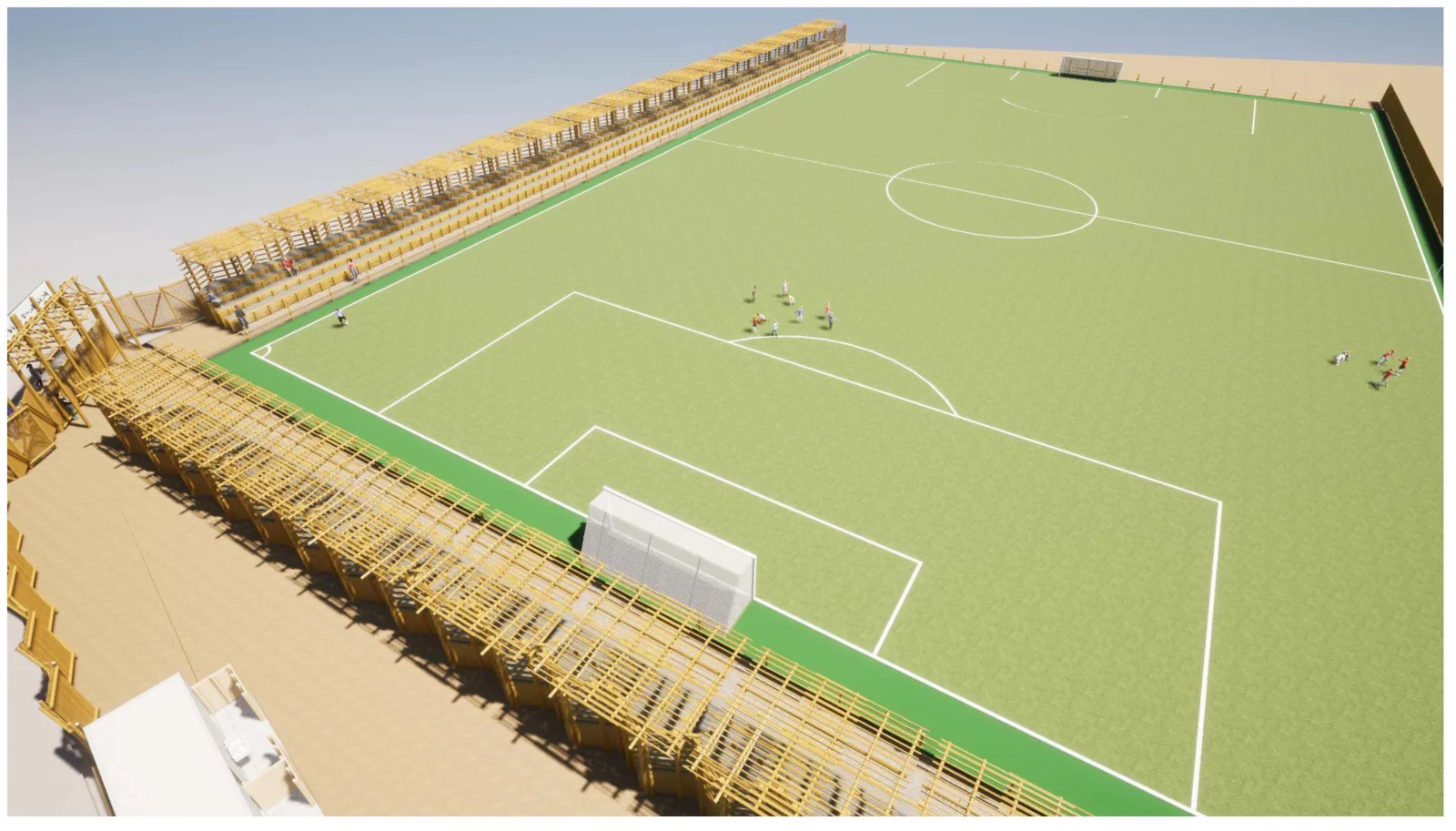
In the capital city of Maseru, Lesotho has unveiled the groundbreaking ‘Stadium of Life,’ Africa’s first FSC-certified timber stadium and a football venue redefining the future of sustainable sports architecture. Developed as part of the Kick4Life Centre, the project merges football, biodiversity, education, and community development within a low-carbon architectural framework. The stadium has already gained international attention as one of the continent’s most innovative examples of environmentally conscious sports infrastructure.
The “Stadium of Life” was designed and constructed by Rise International through its “in loco” design-build training program, which also trained local young professionals during construction. The initiative was developed in collaboration with Kick4Life, a charity football club known for using sport as a tool for social transformation.
A Timber Stadium Built Around Sustainability
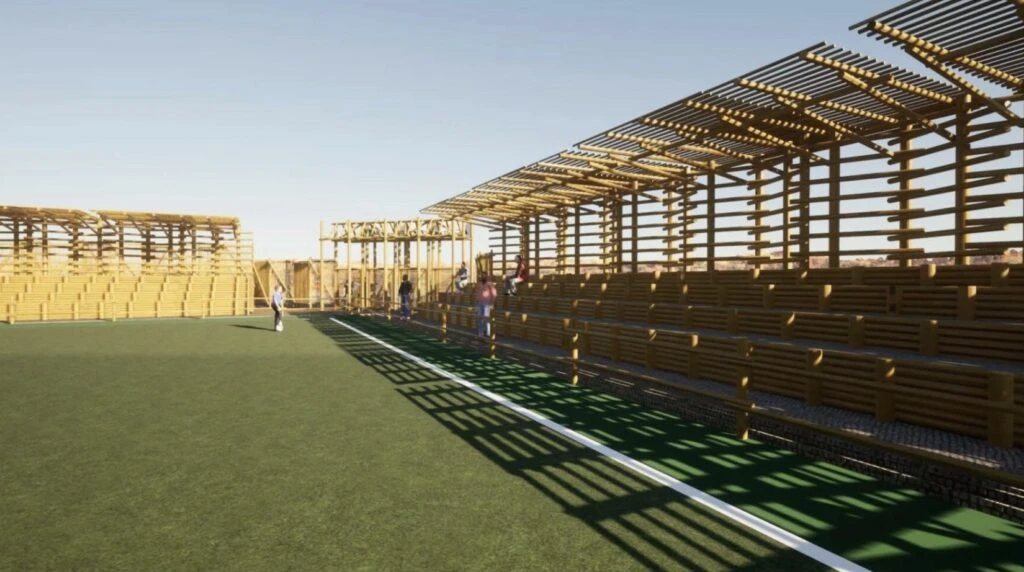
The “Stadium of Life” relies heavily on sustainably sourced timber. The structure incorporates 8,584 treated eucalyptus poles sourced from FSC-certified plantations in Mpumalanga, South Africa, significantly reducing embodied carbon while showcasing the architectural potential of renewable materials.
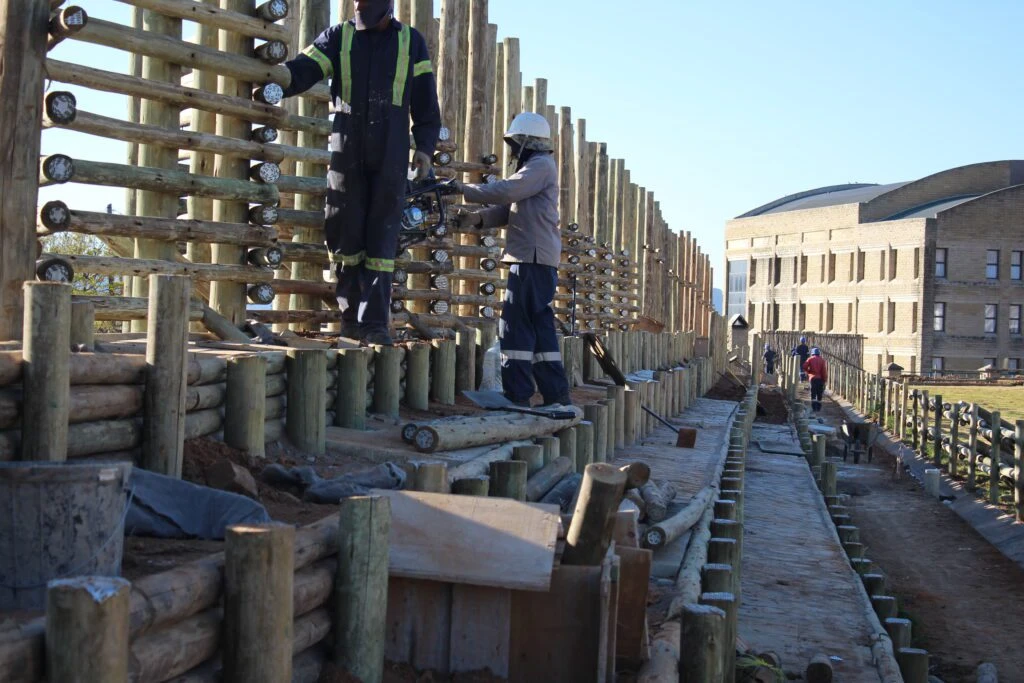
The use of timber was central to the project’s environmental strategy. According to project architect Pedro Clarke of Rise International, the construction industry is increasingly turning toward forest-based materials because of their lower carbon footprint and renewable lifecycle. The timber system also minimized the use of concrete and heavy machinery during construction, helping the project establish a benchmark for climate-responsive stadium design in Africa.
Architecture Inspired by Nature and Community
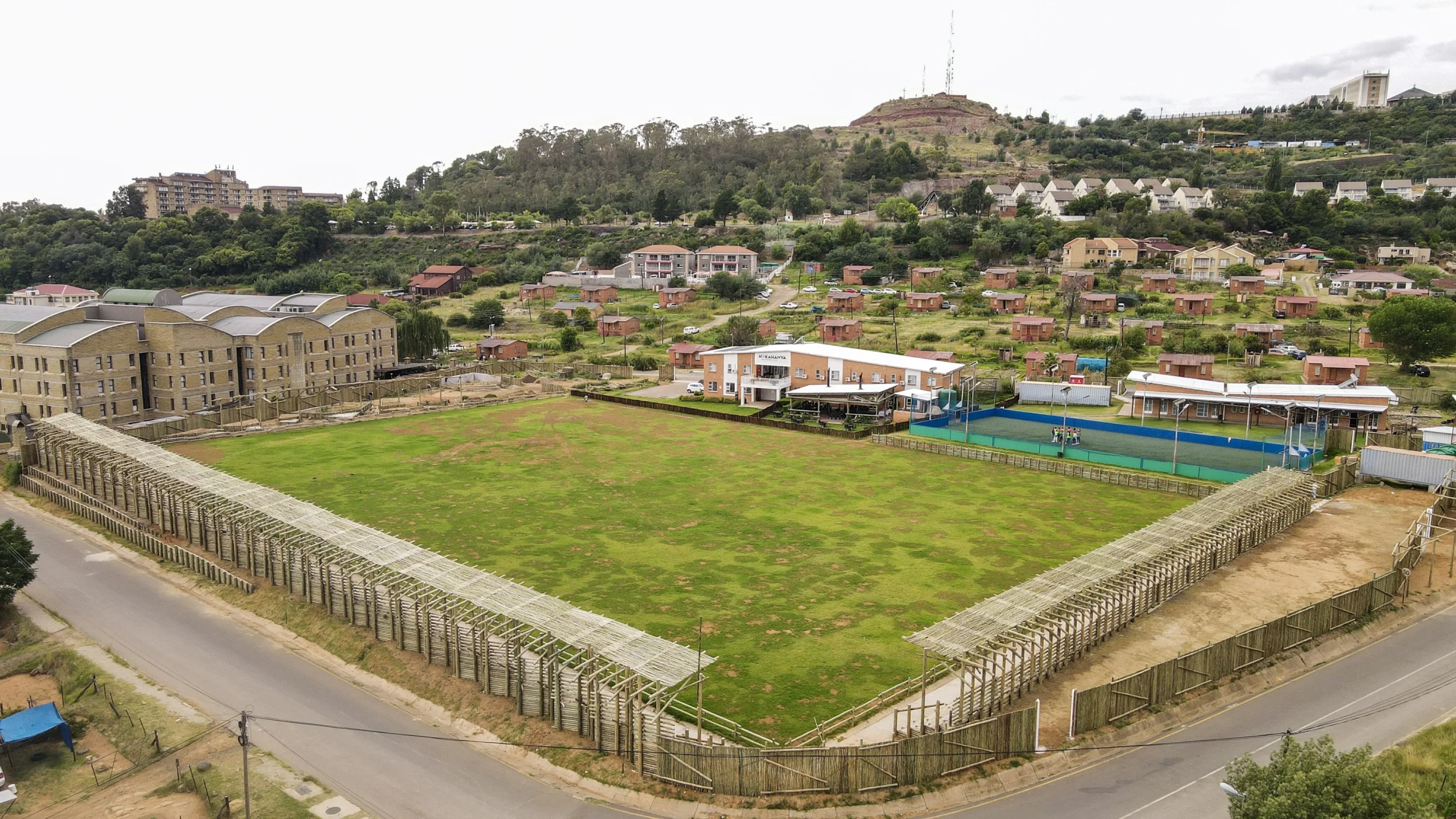
One of the most architecturally distinctive elements within the complex is the “Theatre of Life,” a landscaped stand designed by Park Associati. The stand takes inspiration from the Southern Bald Ibis, a symbolic bird of Lesotho, with its timber form evoking wings in motion. Built using locally sourced timber, clay flooring, and integrated planted seating, the intervention transforms the spectator stand into a social and ecological gathering space.
The design also introduces a “Biodiversity Stand” featuring native plant species representing Lesotho’s ten districts. The biodiversity zone functions as an educational platform that highlights the relationship between sport, ecology, and local identity.
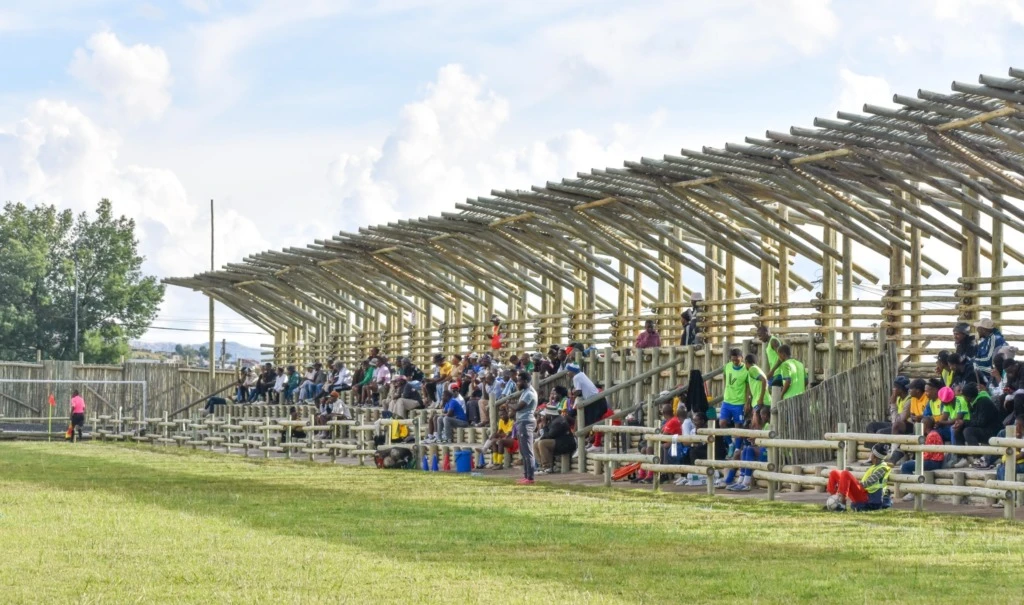
While the venue serves as the home ground for Kick4Life FC, including its women’s team that qualified for the CAF Women’s Champions League in 2025, the “Stadium of Life” was conceived as a multifunctional civic space.
The larger Kick4Life Centre already includes classrooms, counseling spaces, a restaurant, conference facilities, gardens, and community infrastructure. The new stadium expansion further integrates an outdoor amphitheater for educational programs and cultural performances, alongside a gymnasium built from repurposed shipping containers.
The project’s flexible design allows spaces to support workshops focused on life skills, gender equality, climate awareness, employability, and public health. In this sense, the architecture positions football as a catalyst for social resilience and youth empowerment in Lesotho.
A New Direction for Stadium Architecture in Africa
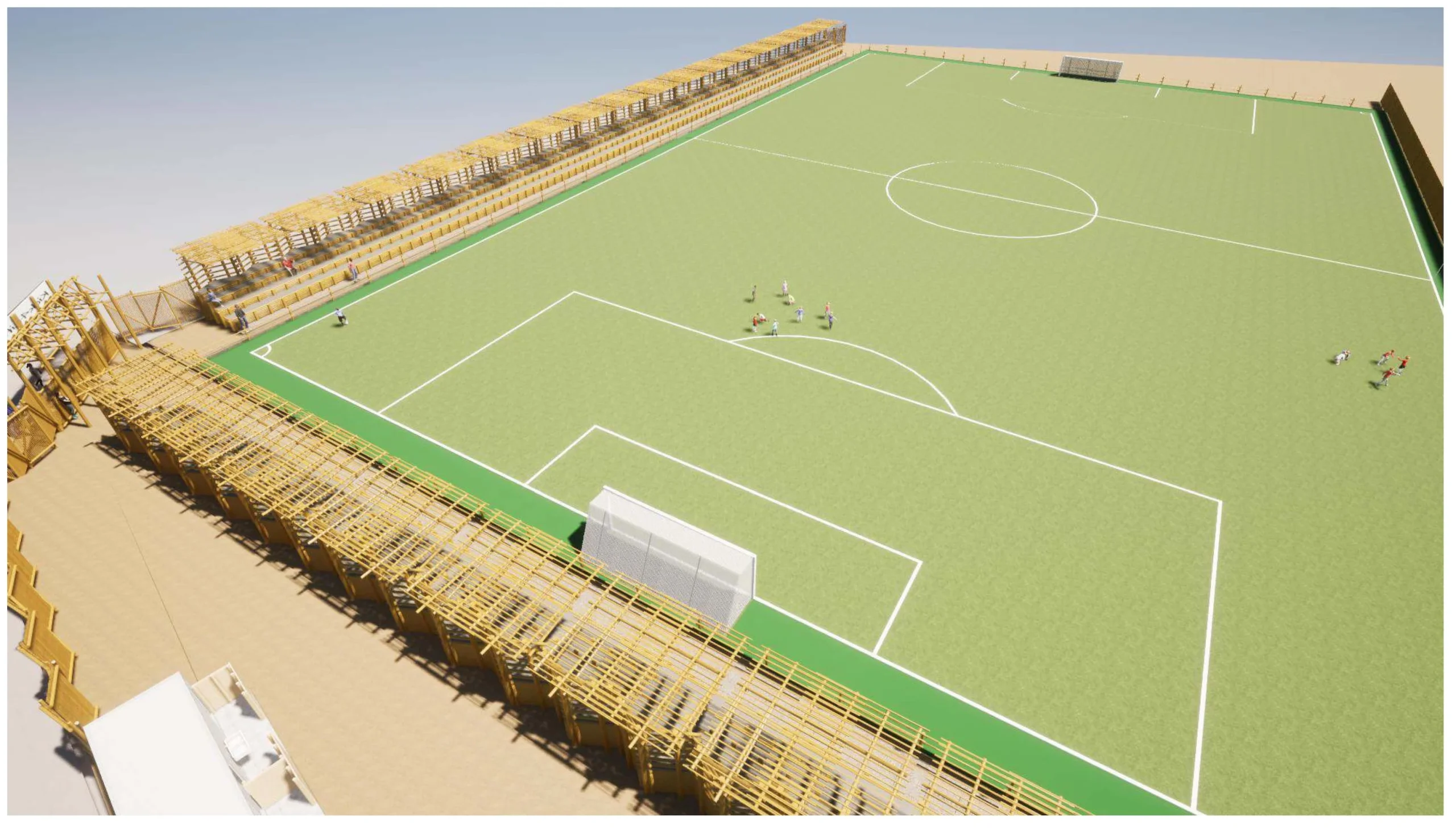
As stadium construction worldwide faces increasing scrutiny over carbon emissions and material consumption, the “Stadium of Life” demonstrates an alternative path for future sports venues. The project focuses on local materials, social value, environmental responsibility, and community participation.
The stadium’s FSC certification by DNV Business Assurance further strengthens its role as a model for responsible sports infrastructure across emerging economies. Industry observers have already described the project as a new benchmark for low-carbon stadium design on the African continent.
Credit: Kick4Life / Rise International
Explore Courses
.jpg "Ondrej Chybik - Rethinking Architecture")