



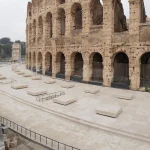
Rome’s famous Colosseum has entered a major restoration milestone with the reopening of its southern ambulatory areas, long obscured by collapse, modern fillings, and 19th‑century interventions. The initiative led by Stefano Boeri Interiors for the Parco Archeologico del Colosseo reconstructs the original ground‑level geometry and clarifies how this segment once worked within the city’s circulation and architectural order.
Restoring the Colosseum’s Southern Ambulatory
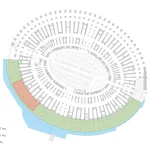
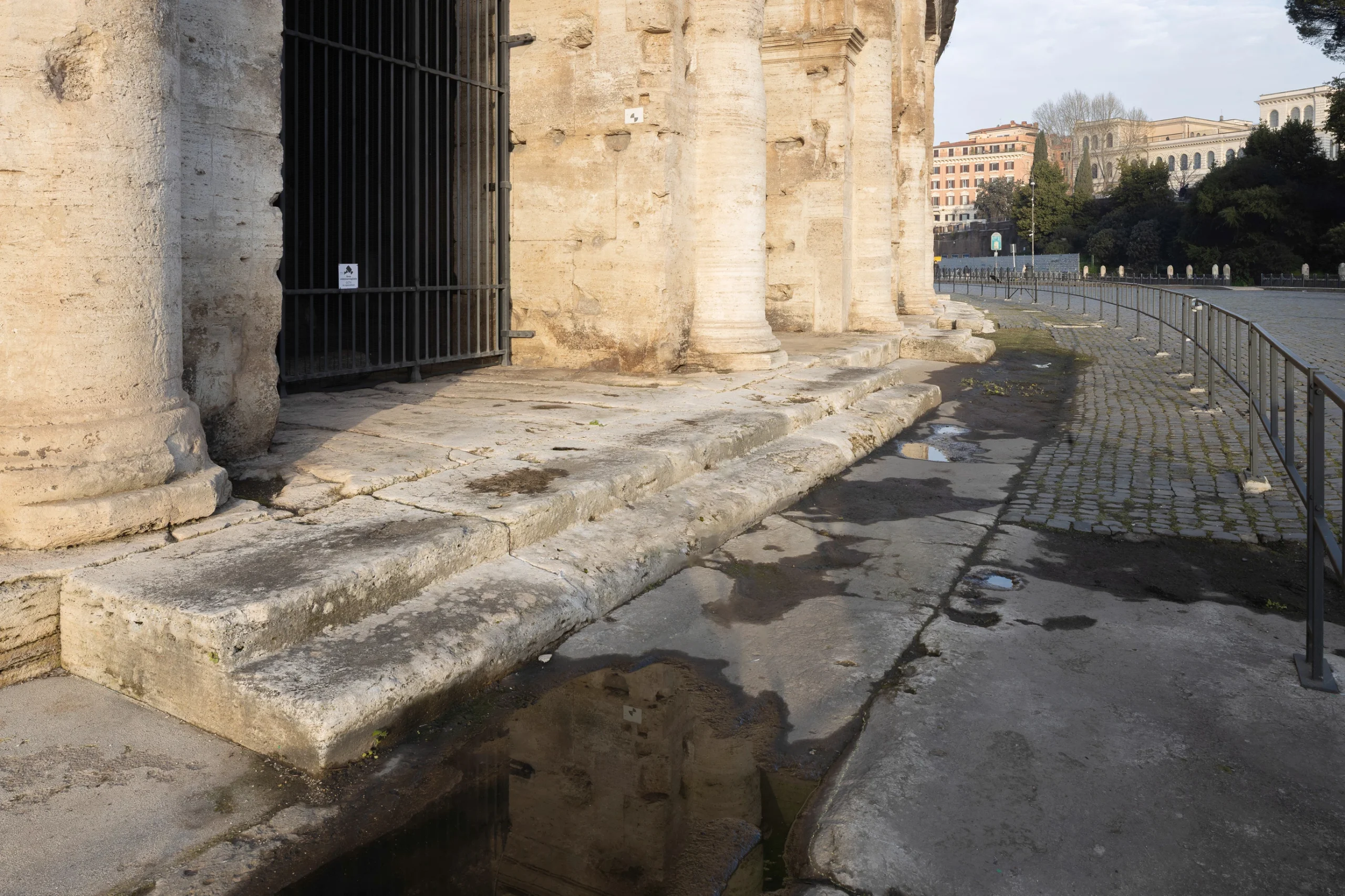
The southern ambulatory, the ring corridor between arches 60–76 and 1–18, had lost its crepidine, the double step that once defined the amphitheater’s base and helped establish its relationship with the surrounding piazza. On the northern side, these steps remain legible; on the south, centuries of flooding, structural collapse, and reuse erased them.
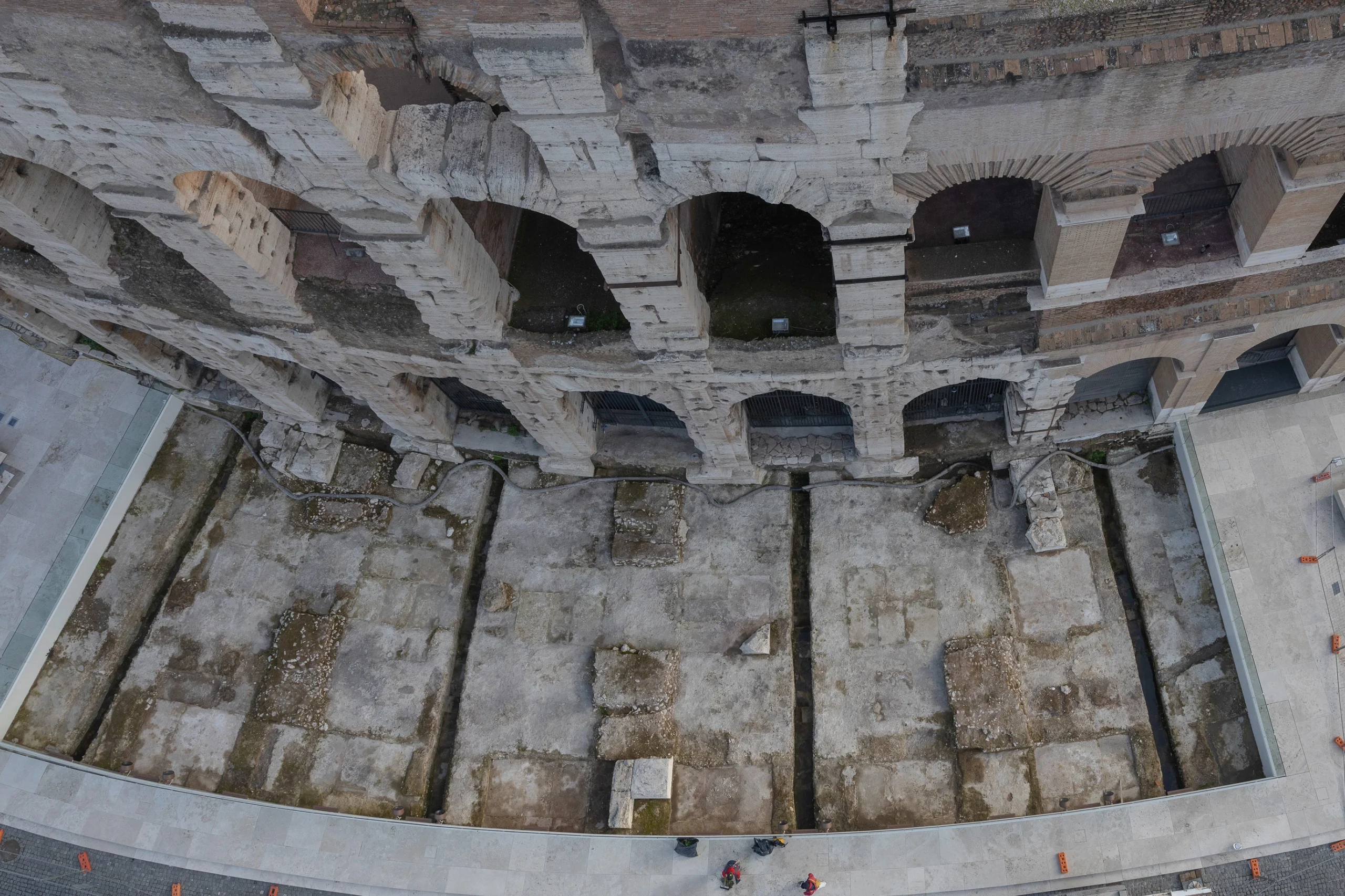
Boeri’s team began by integrating extensive archaeological data with geometric analysis of the amphitheater’s original layout. By overlapping excavation results with a geometric study informed by classical proportions, the team could determine the exact level and profile of the lost surfaces. This enabled them to lower the modern piazza by about one meter to reach the original ground plane of the Flavian era.
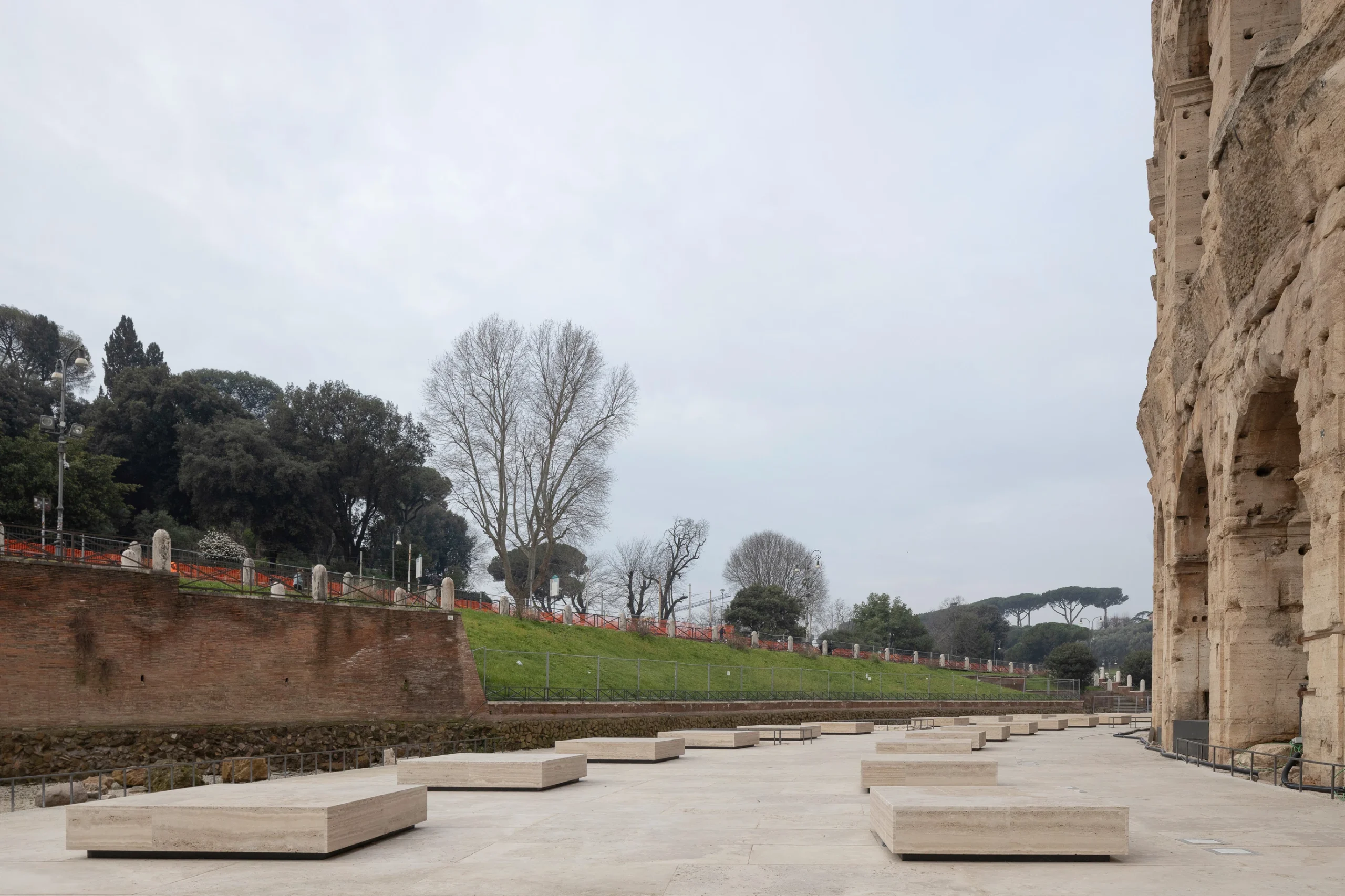
Resetting the historical pedestrian level also allowed the design team to reconsider surface water management, calibrating slopes, drainage, and transitions so that rainwater now flows coherently within a paving structure that relates directly to the Colosseum’s original hydraulics.
Travertine Paving as Interpretation and Structure
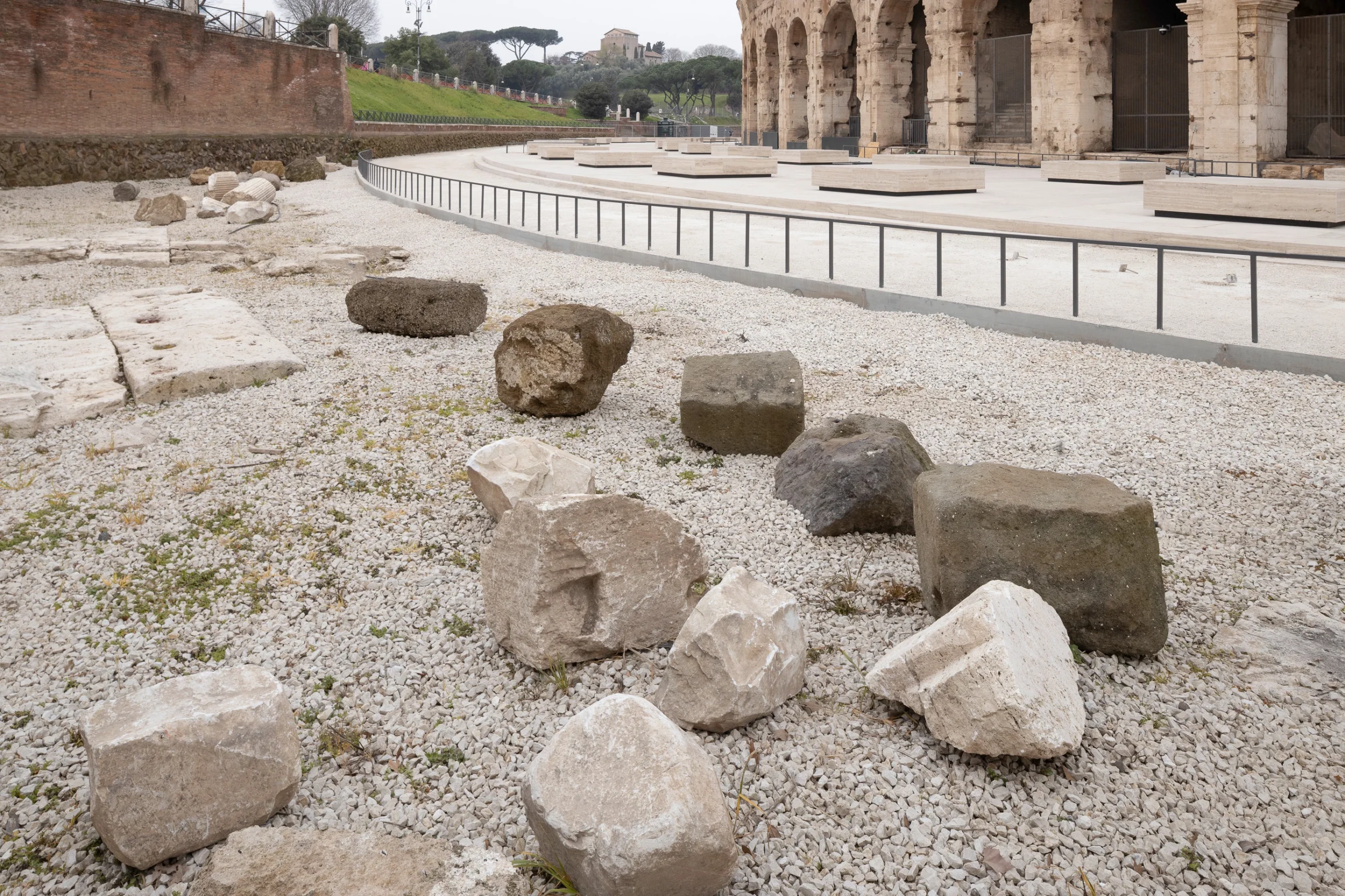
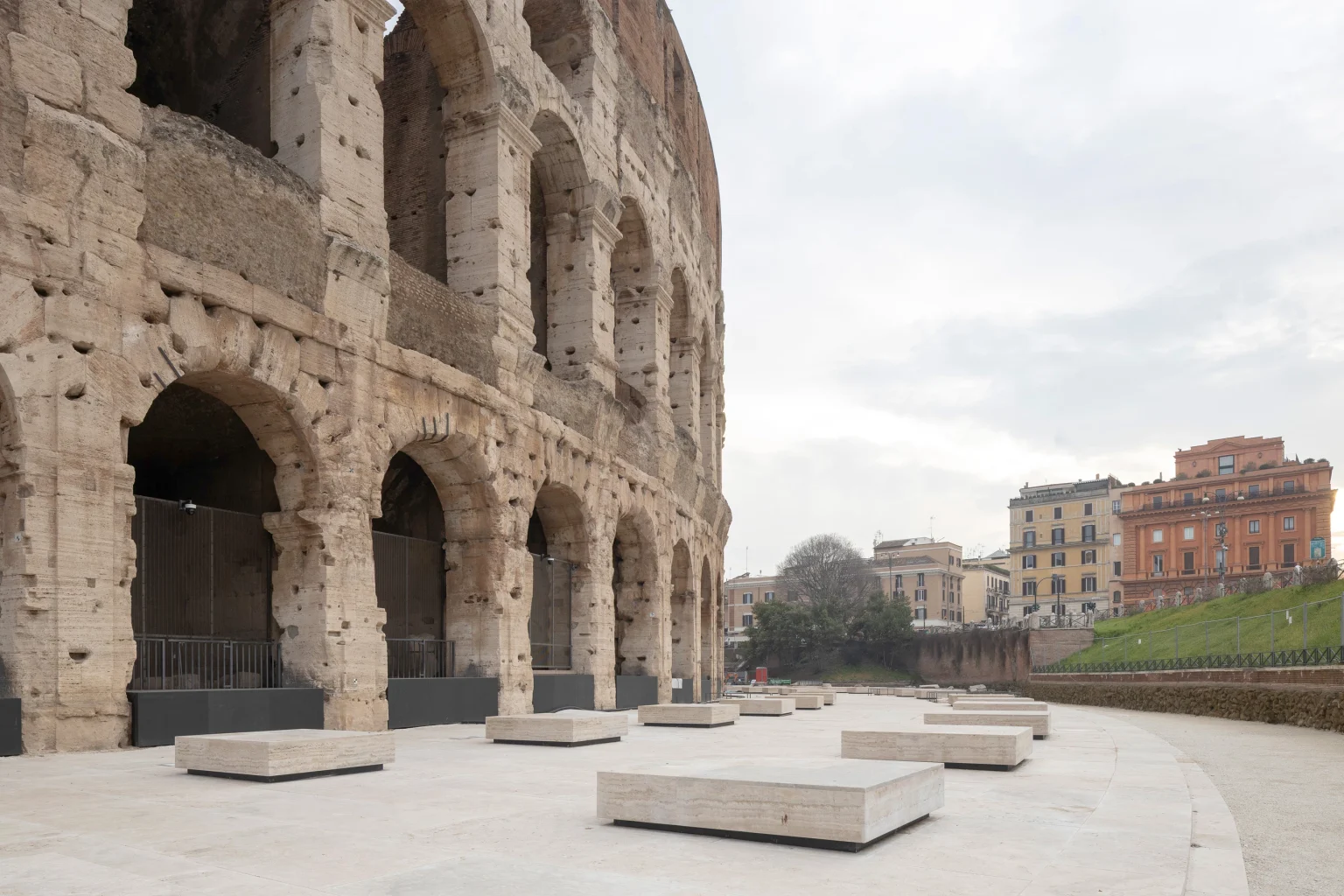
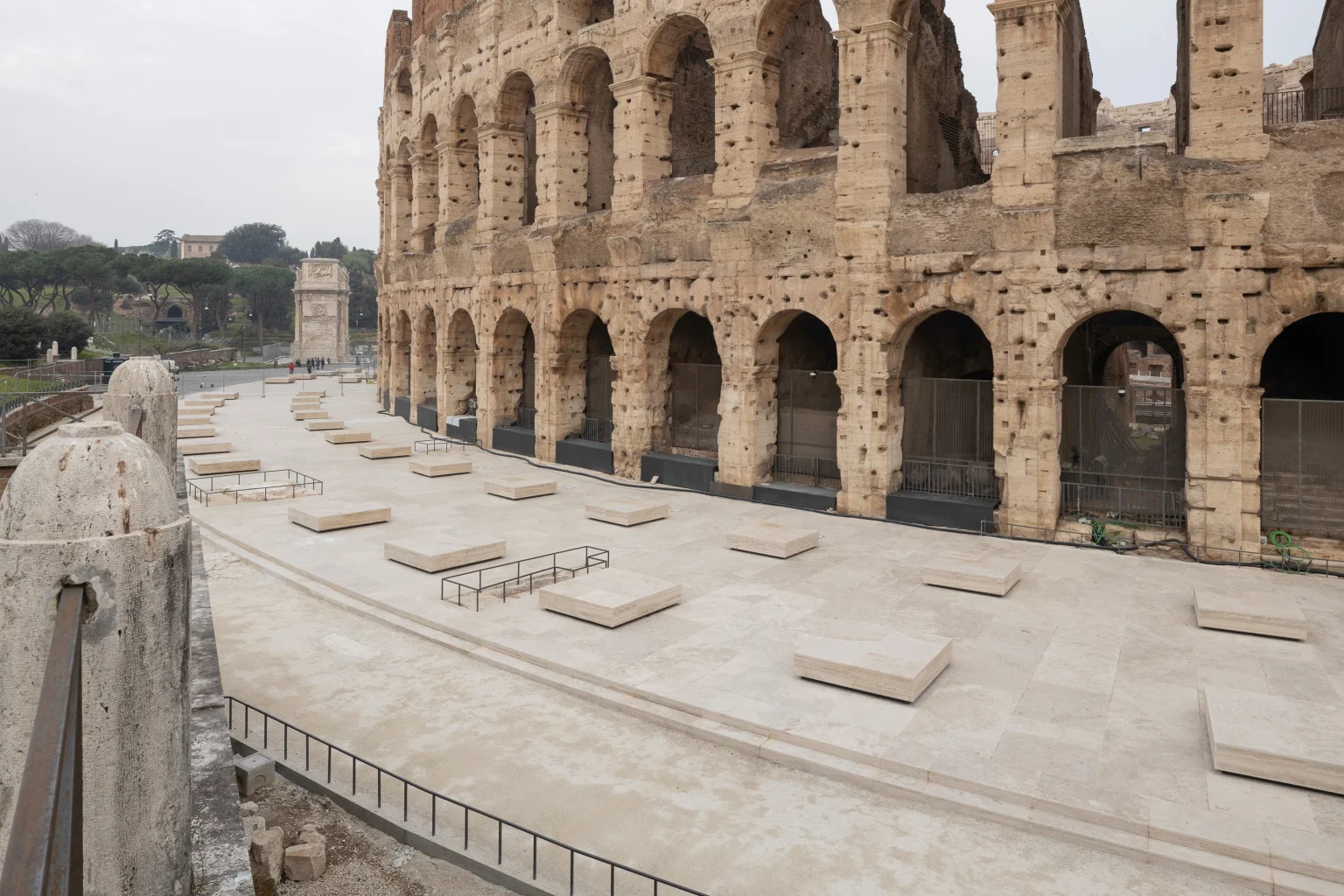
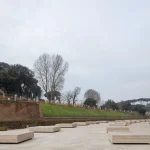
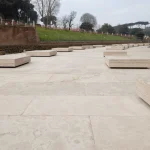
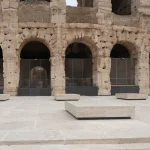
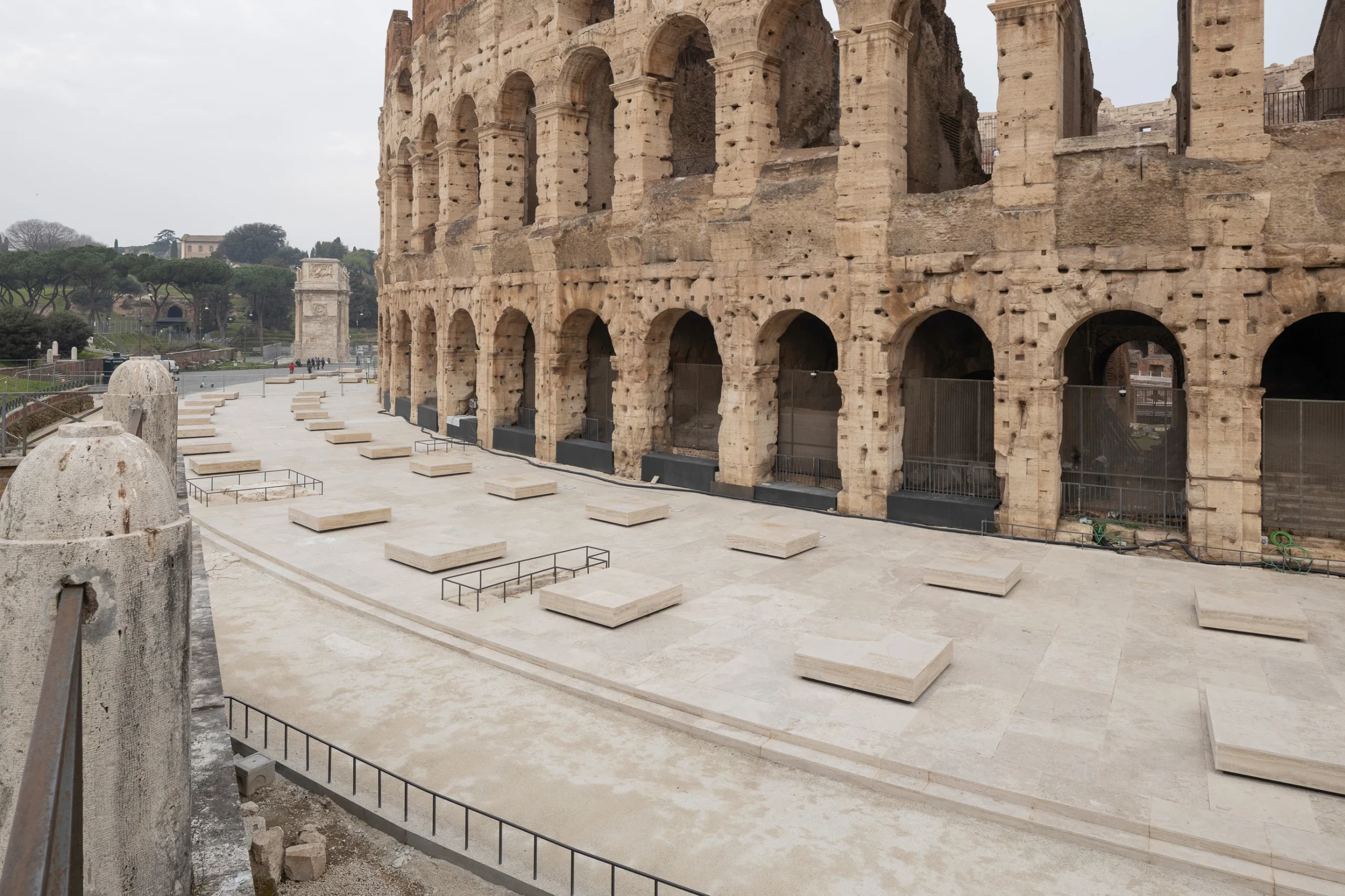
On the newly revealed plan, a 3,130 m² travertine paving was laid, following the building’s radial sense. Trapezoidal slabs were shaped and set in alternating rows that follow the curves of the structure and line up with the arches, helping visitors navigate and understand the space better.
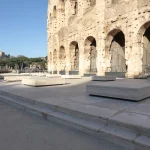
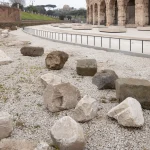
The choice of Classic Travertine connects the intervention to the monument stone in a material pattern. It echoes the original fabric of the Colosseum while still making the restored surface stand out from the historic cobbles around it. Drainage and surface changes are carefully included in the paving, addressing the needs of rain and foot traffic while keeping the historical feel of the site intact.
To reconcile the Roman curvature with regular laying modules, the design uses compensation strips, a subtle but precise technical solution that absorbs variation without disrupting the overall rhythm.
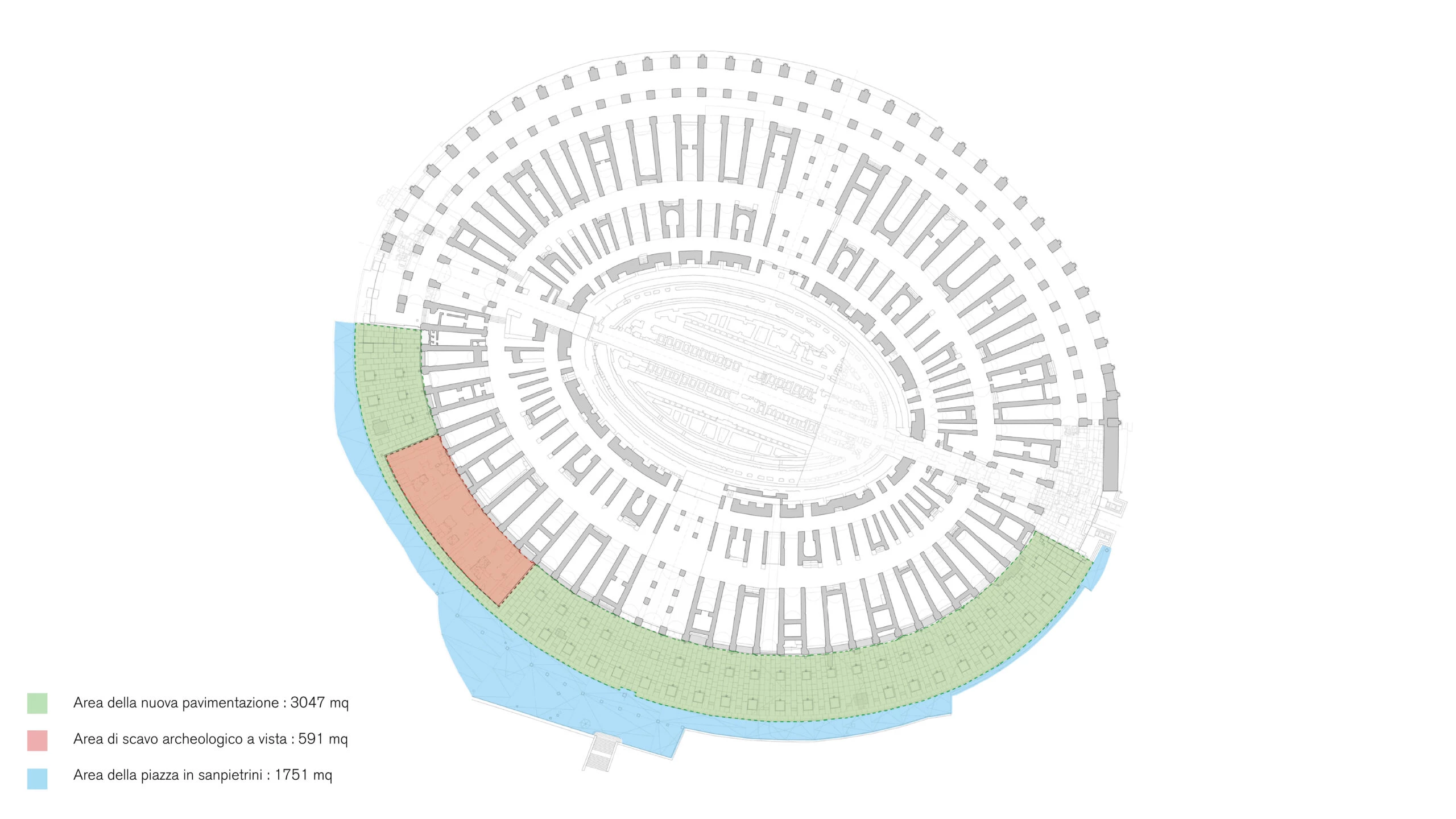
Travertine visually links the intervention to the Colosseum’s original fabric, yet its layout clearly distinguishes it as new work rather than ancient remains. This approach preserves historical accuracy while allowing visitors to read the pavement as both structure and interpretation.
Evoking Lost Volumes and Circulation
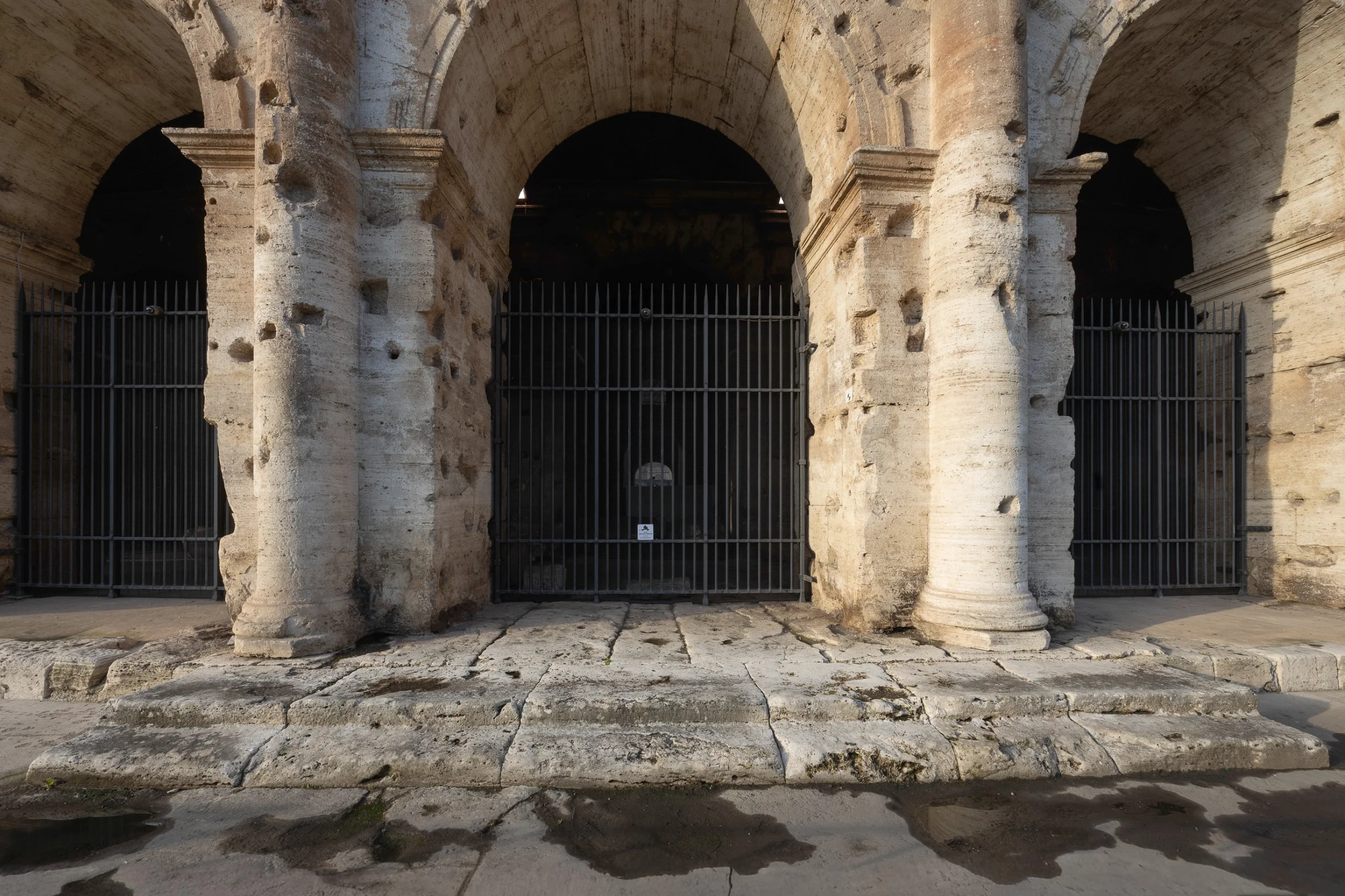
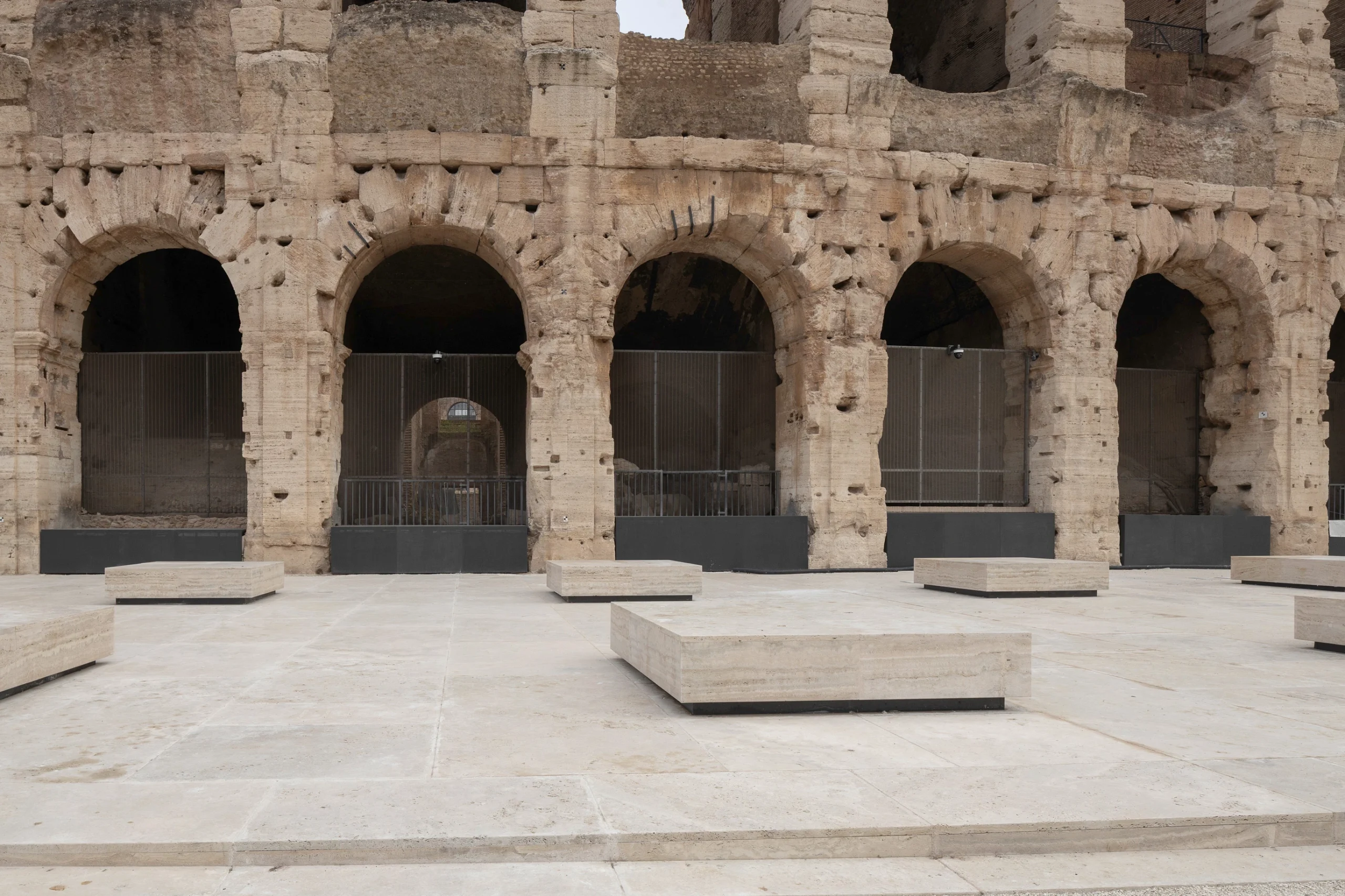
The design evokes absent structures through minimal geometric cues. Along the southern façade, 44 raised travertine elements, each about 40 cm high, indicate where pillars once stood. These elements function as informal seating and spatial anchors, helping visitors visualize the rhythm of the lost ambulatory architecture. In key circulation nodes, flush, textured markers indicate movement paths without obstructing sightlines or flow.
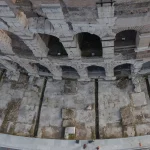
Between arches 65 and 71, the pavement is interrupted to create an archaeological window, a deliberate aperture that exposes the original foundation and stratifications of the walls. Protected by glass and metal profiles, this visible cut offers a direct glimpse into Roman construction techniques and the amphitheater’s deep history.
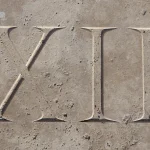
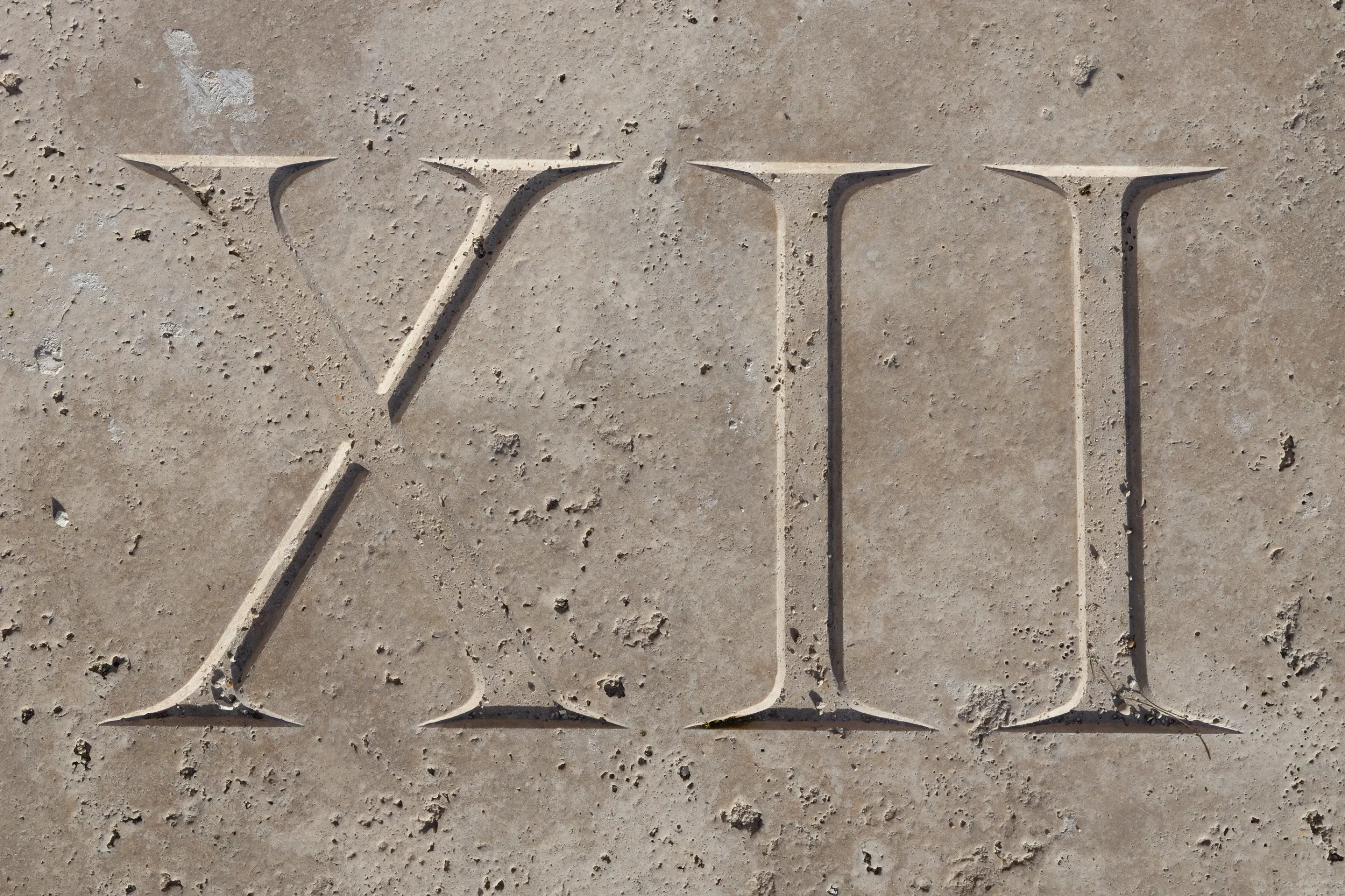
To restore the ancient system of wayfinding, the design team also engraved progressive numbering onto dedicated travertine slabs aligned with the entrances, based on preserved examples from the northern façade. This reintroduction brings back a lost element of the Colosseum’s original organizational logic.
Accessibility with Respect to History
Modern accessibility requirements were woven into the design from the start. Ramps at strategic places along the ambulatory allow visitors to negotiate level changes introduced by the restoration, while maintaining a strong connection to the historical ground plane.
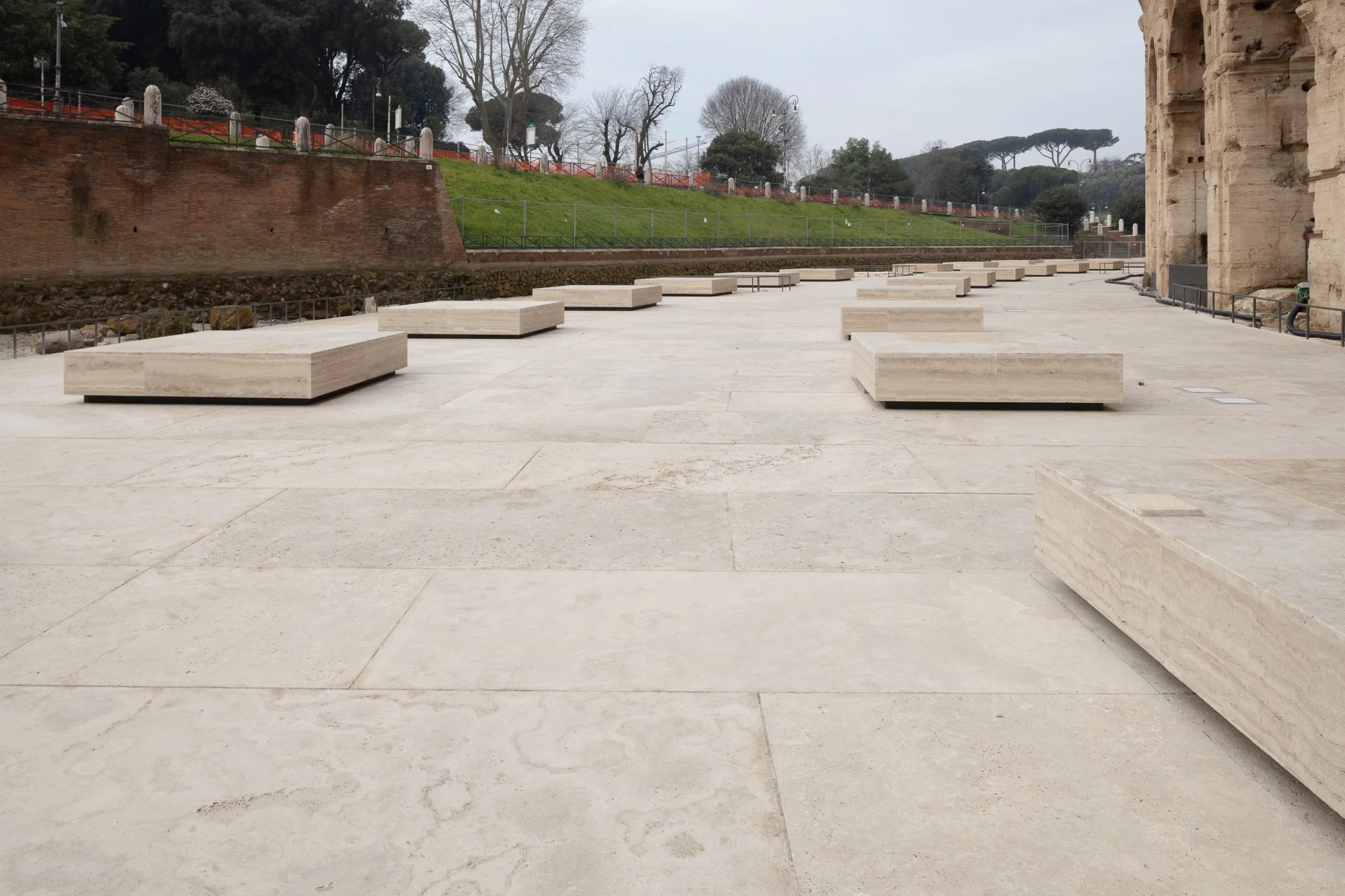
Since the intervention took place on ancient levels only recently exposed by systematic excavation and study (2021–2024), the team coordinated closely with archaeologists to document, record, and incorporate findings into the design.
Engraved travertine slabs mark the arch numbering along the southern façade, a system lost after the collapse. This restoration helps people find their way and links the southern area with the northern side, which is in better shape, making it easier to understand how the amphitheater
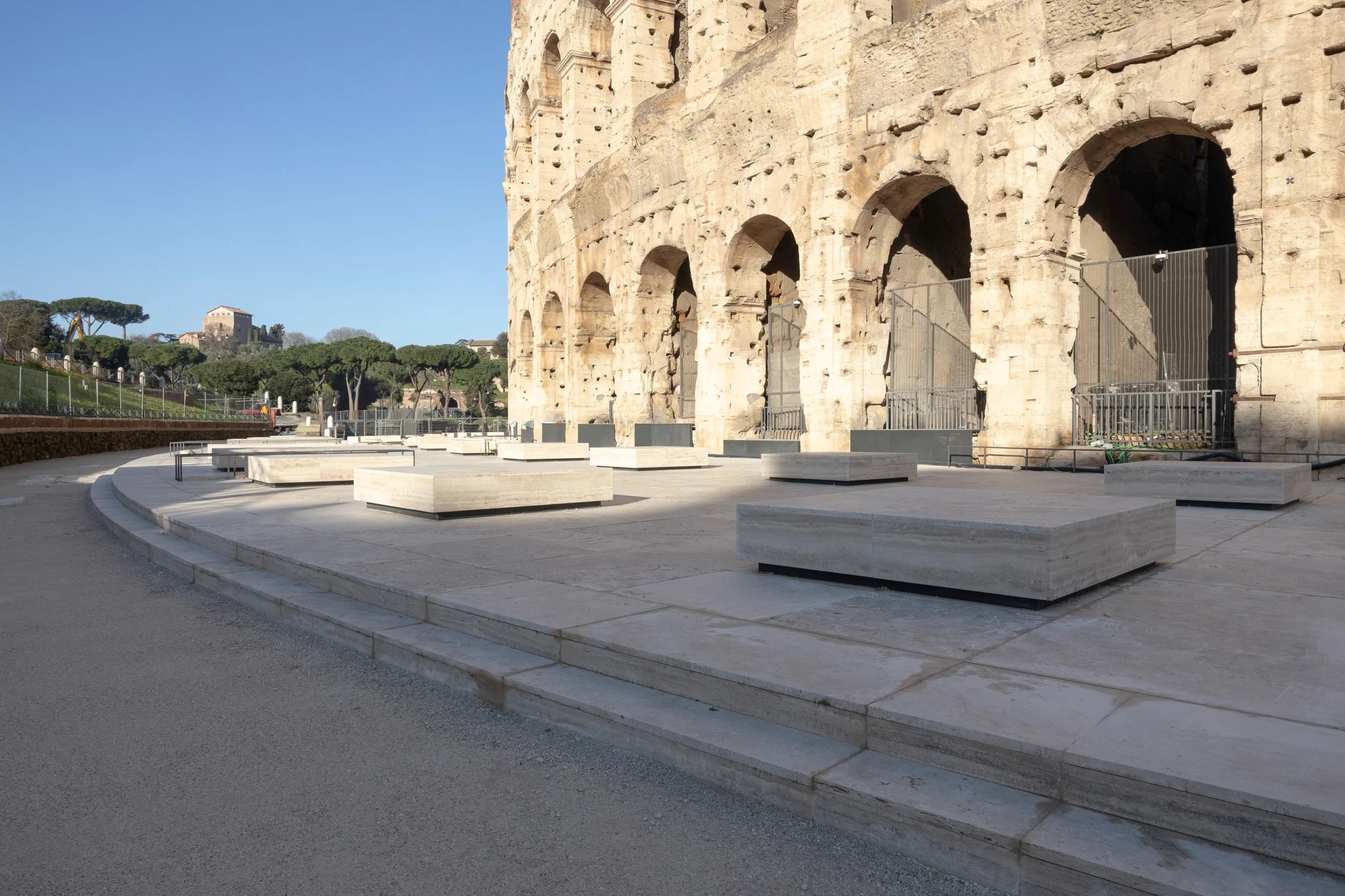
Stefano Boeri Interiors has helped reclaim a sense of architectural coherence and public legibility for the Colosseum’s southern side by re-establishing levels, redefining geometry, and using paving as both a structural and visual tool.
Image credit: © Simona Murrone / Source: arquitecturaviva