

Long ago, in medieval Europe, kings and churches topped their buildings with tall spires and golden rooftops to impress everyone. Temples of China had expensive roof tiles, often in vibrant colors, which were used in wealthy palaces like the Forbidden City.
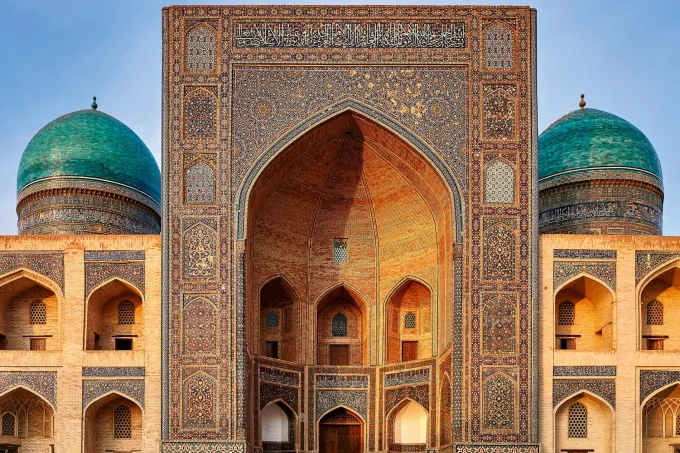
In ancient Rome, wealthy homes had roofs made of marble or exaggerated sculptures to show off their wealth. Islamic domes were covered in intricate mosaics, showcasing wealth and artistry. Today, architects continue this legacy, transforming rooftops into spaces of experimentation.
Here are 12 unique roof designs across the globe:
1. Harbin Opera House, China
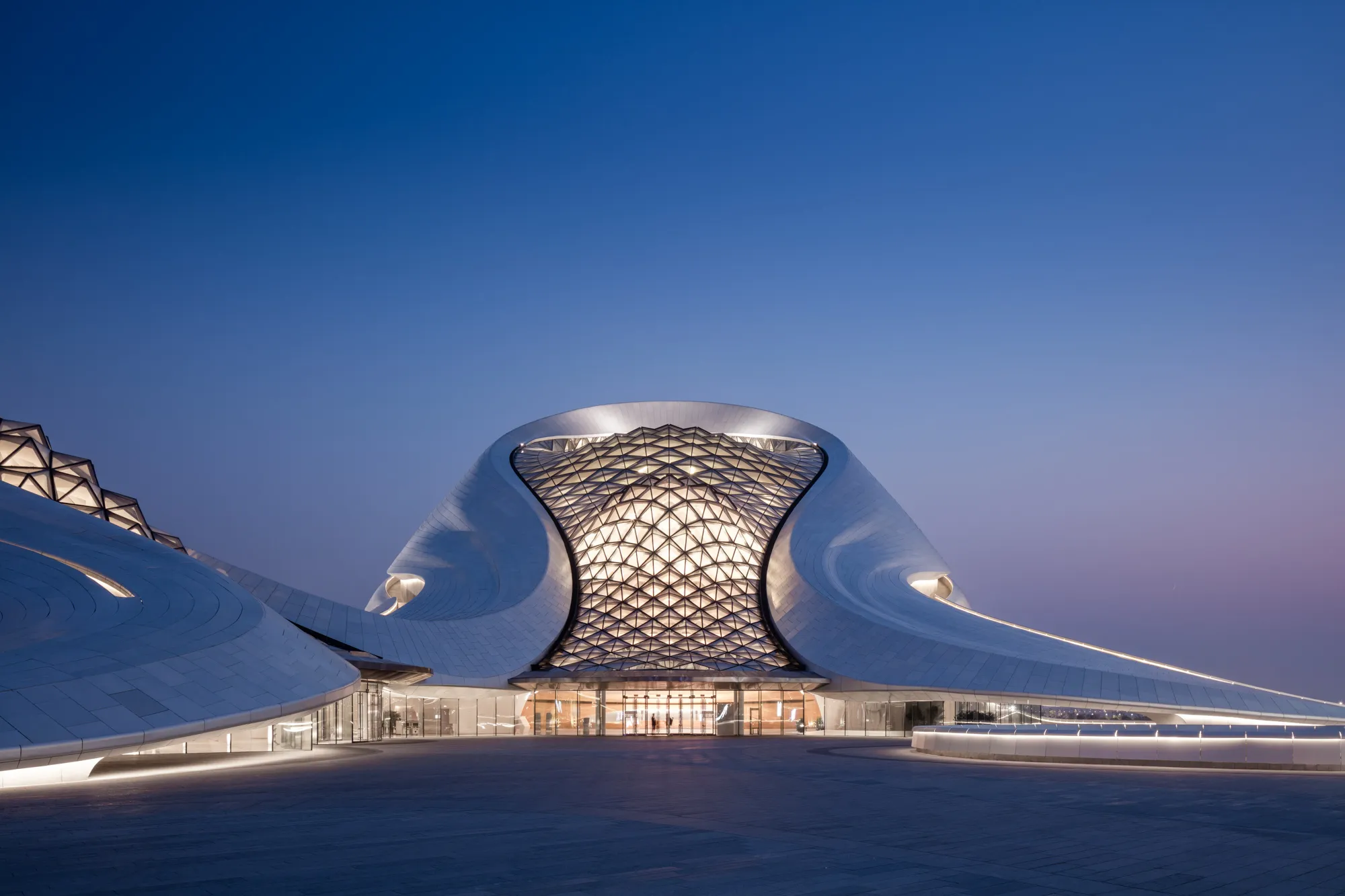
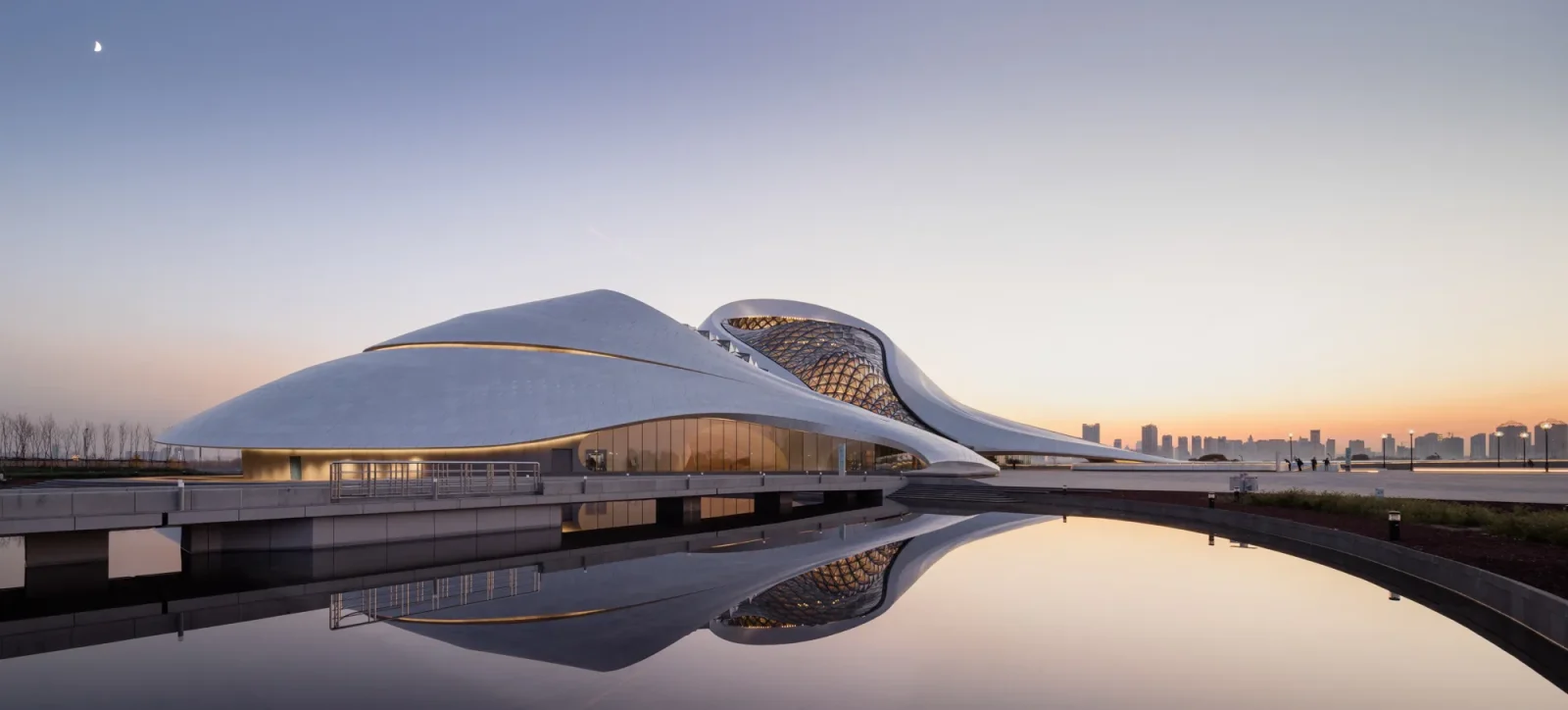
The Harbin Opera House in Harbin, China, is a cultural center designed by MAD Architects. It houses a 1,600-seat main theater and a 400-seat smaller theater with a panoramic glass backdrop.
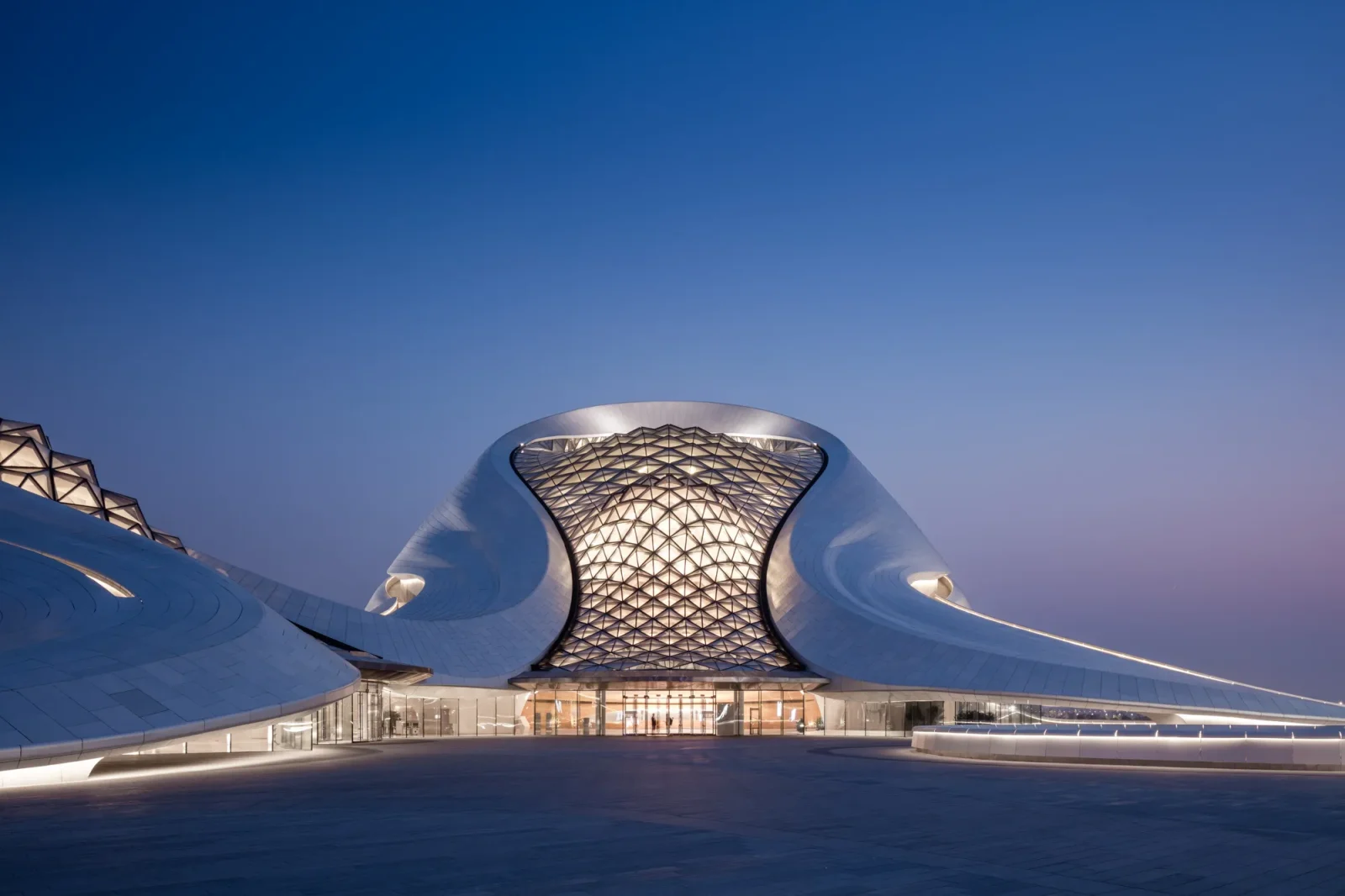
The Harbin Opera House flanks a flowing, sculptural roof. It merges perfectly with the surrounding Harbin Wetland and the Songhua River. Its sweeping, curving forms, covered in smooth white aluminum panels, mimic the natural shapes of snow-covered hills and marshlands, making the building appear as if it has grown from the landscape itself.
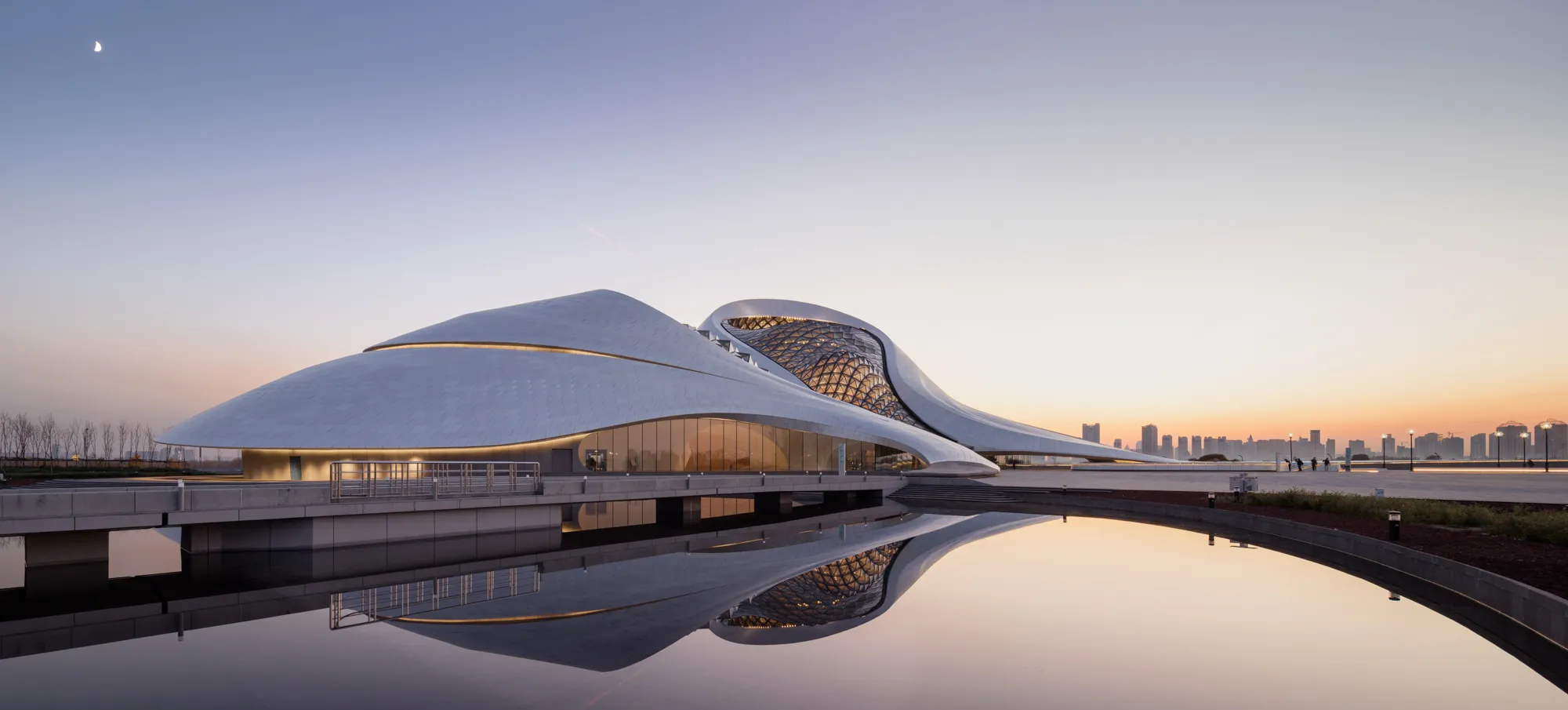
The roof is publicly accessible, with carved pathways that allow visitors to climb and explore the building, ending at an open-air performance space and observation deck with wide views of the city and wetlands. Large crystalline glass curtain walls, alternating between smooth and faceted pyramids, reflect the region’s icy winters and let natural light flood the interior. Engineering this free-form roof was a major challenge. A lightweight diagrid frame supports the glass walls, while a special waterproofing membrane beneath the aluminum panels ensures durability.
The roof is designed to withstand Harbin’s heavy snow and extreme cold, with heating systems preventing blockages in drainage. Skylights in the grand theater and panoramic windows in the smaller theater make the landscape part of the performance experience.
2. Philharmonie de Paris, France
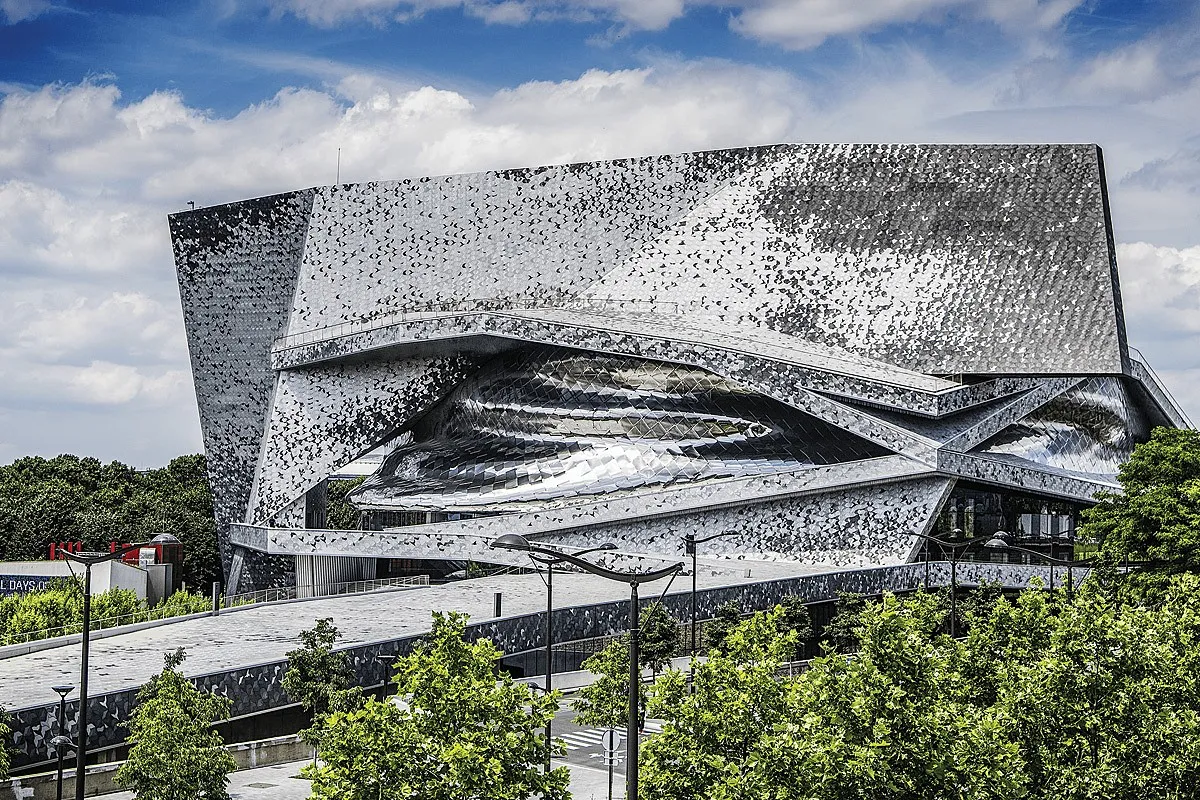
The Philharmonie de Paris in France is a concert hall designed by Jean Nouvel. It is home to the Orchestre de Paris and hosts a wide range of classical, contemporary, and world music performances. The building also houses exhibition spaces and rehearsal rooms.
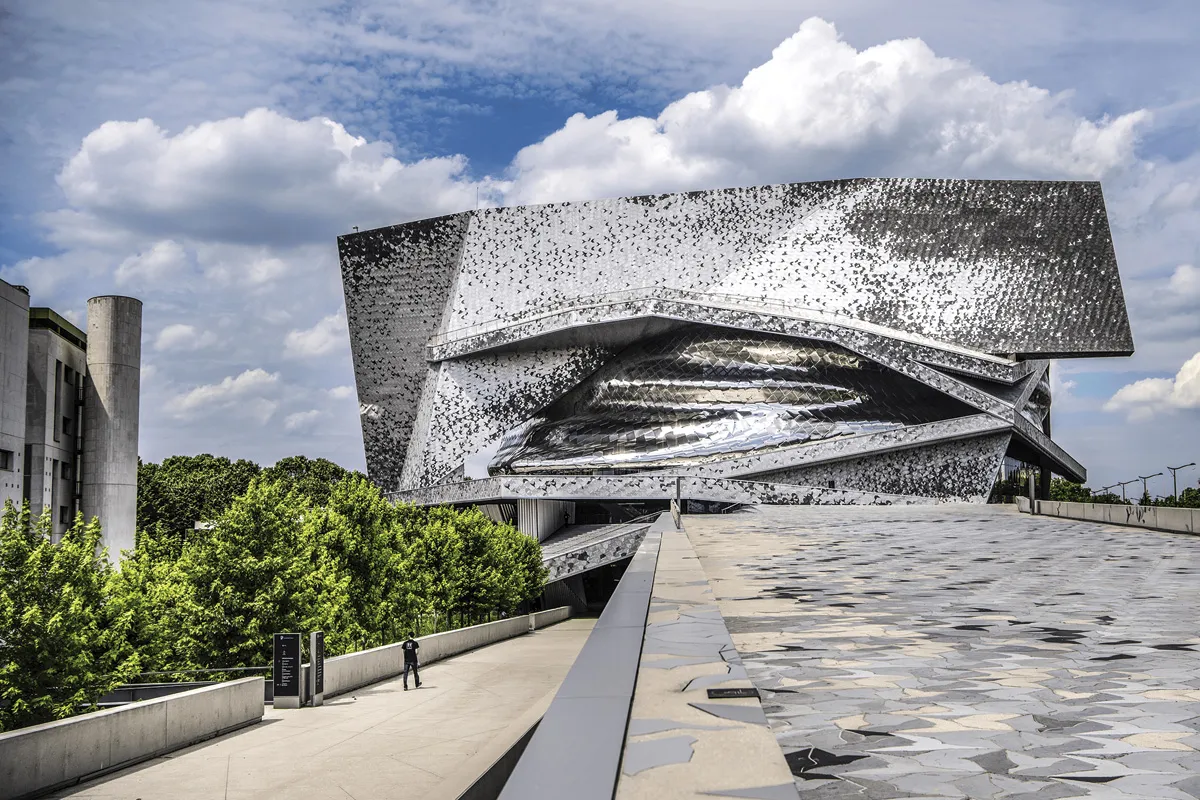
Opened in 2015, the Philharmonie de Paris rises like a rocky hill from the Parc de la Villette. Its sharp, spiraling shapes make it look almost like a giant spaceship. Visitors can climb up to 37 metres high and stroll across the sloping roof, enjoying panoramic views of Paris and the surrounding suburbs. The building’s exterior is covered in a matte finish with a mosaic of bird patterns in different shades of grey, giving it a shimmering effect in sunlight.
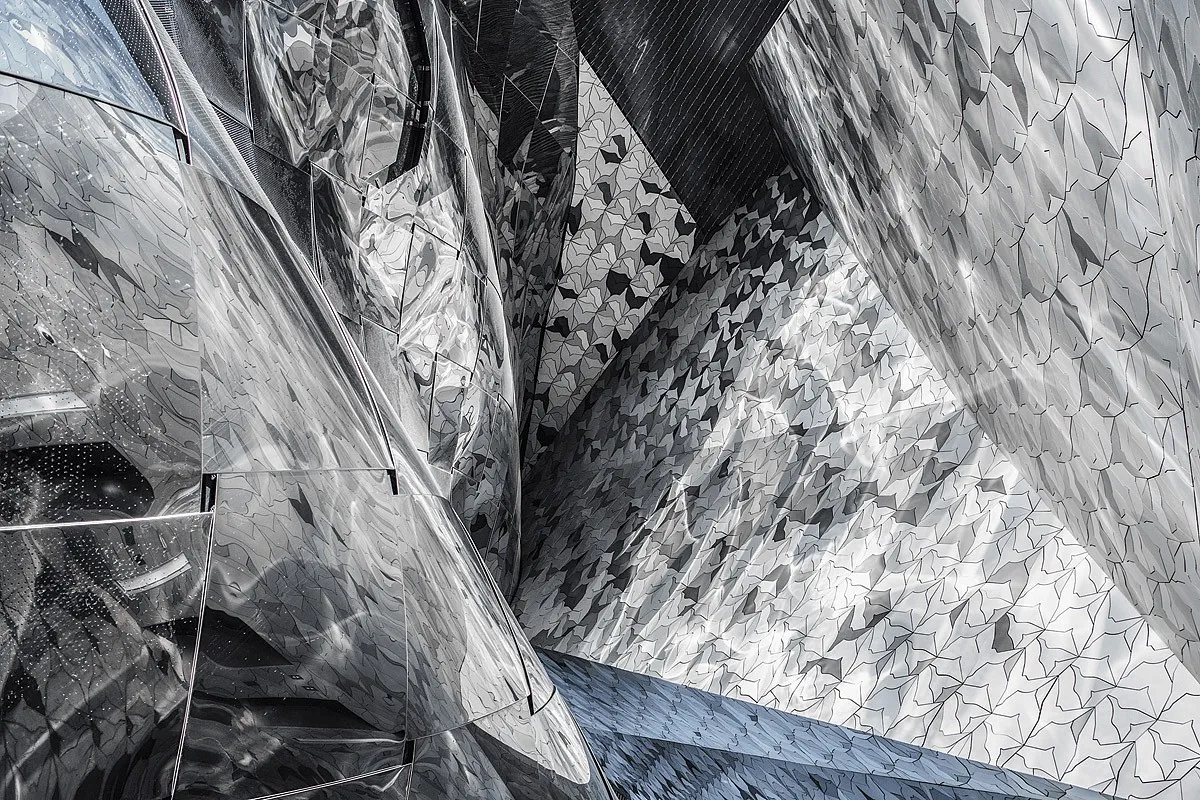
The roof is a highlight of the design. Its complex, sloping geometry is engineered using reinforced concrete and metal to create a strong, safe structure. A double-layer roof with stone wool insulation helps keep the music inside perfect, blocks outside noise, and ensures safety from fire. The roof also meets strict acoustic requirements, making it ideal for concerts. Philharmonie de Paris itself is a perfect contrast between the bold exterior and the softer interior.
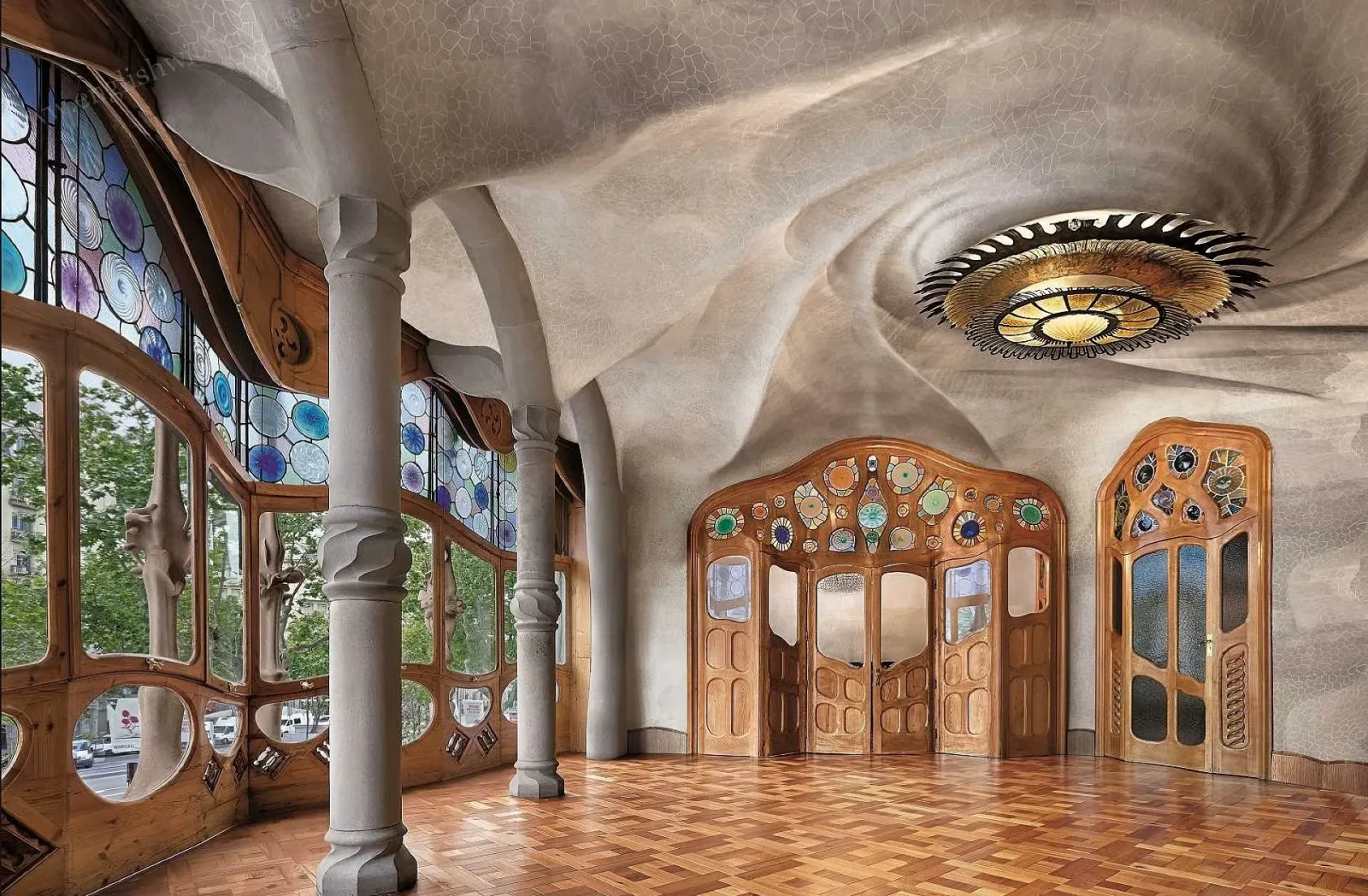
3. Casa Batlló, Spain
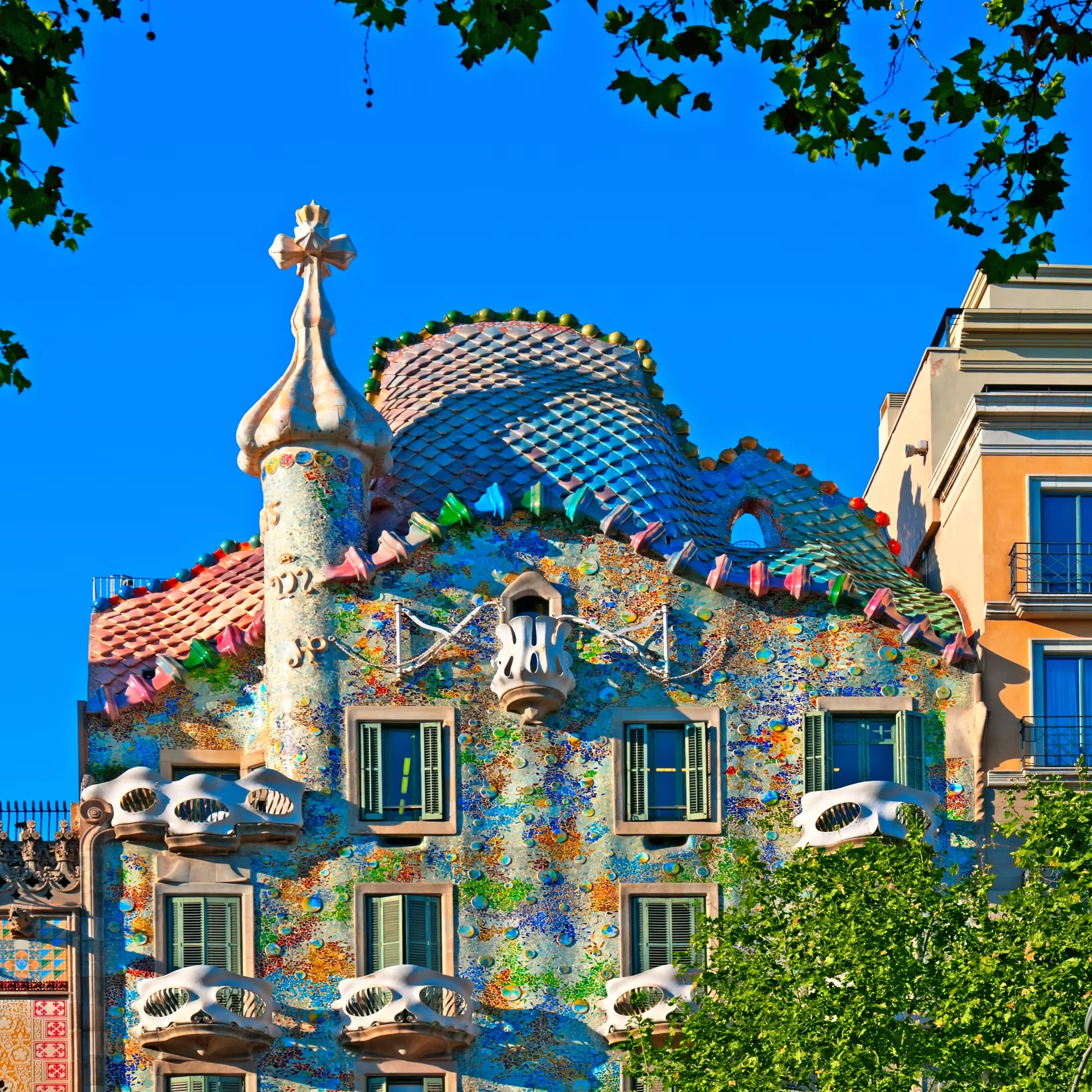
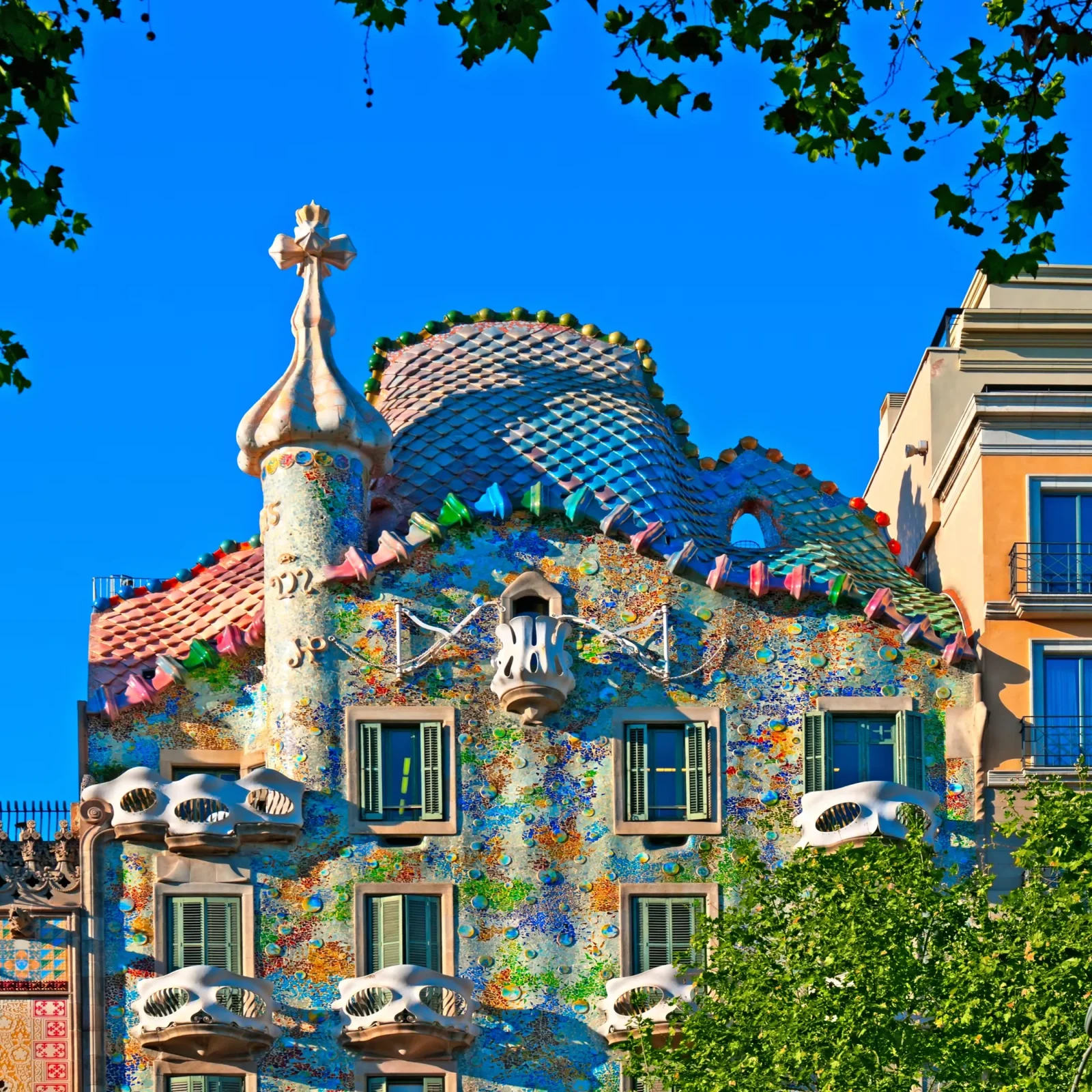
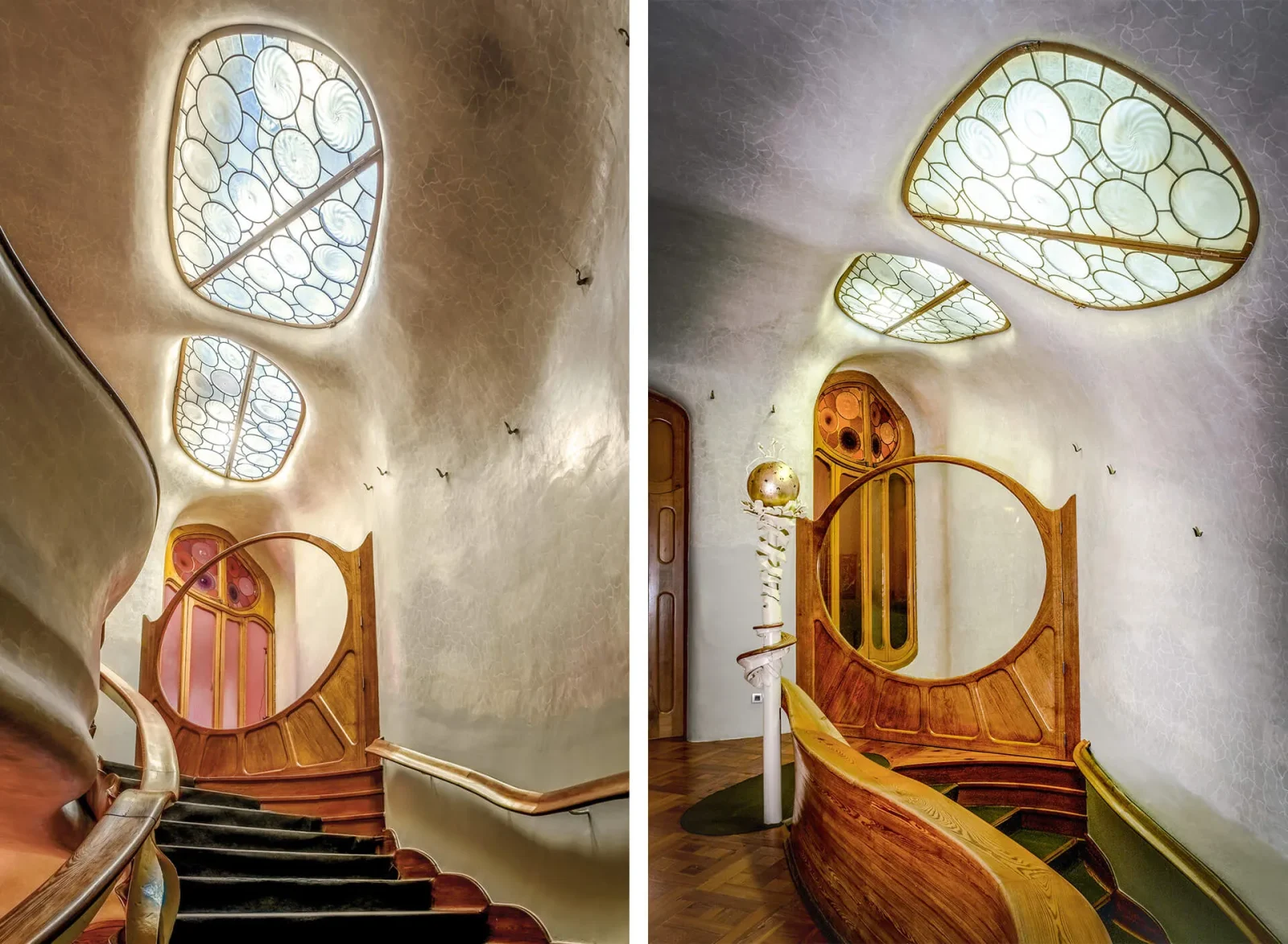
Casa Batlló in Barcelona, Spain, was designed by architect Antoni Gaudí. It is one of his most celebrated works and a UNESCO World Heritage Site. Built between 1904 and 1906, it is a remodel of a previously built house. It has been refurbished several times since. The building showcases Gaudí’s Catalan Modernisme style, inspired by organic shapes, colors, and light.
The roof of Casa Batlló is known as the “dragon’s back.” The arched roof is covered with shimmering, colorful ceramic tiles that resemble a dragon’s scales, transitioning from green and blue in the center to red and pink at the edges. A central turret topped with a four-armed cross is said to represent Saint George’s lance piercing the dragon’s spine, while a small triangular window represents the dragon’s eye, giving the roof a storytelling quality inspired by the legend of Saint George.
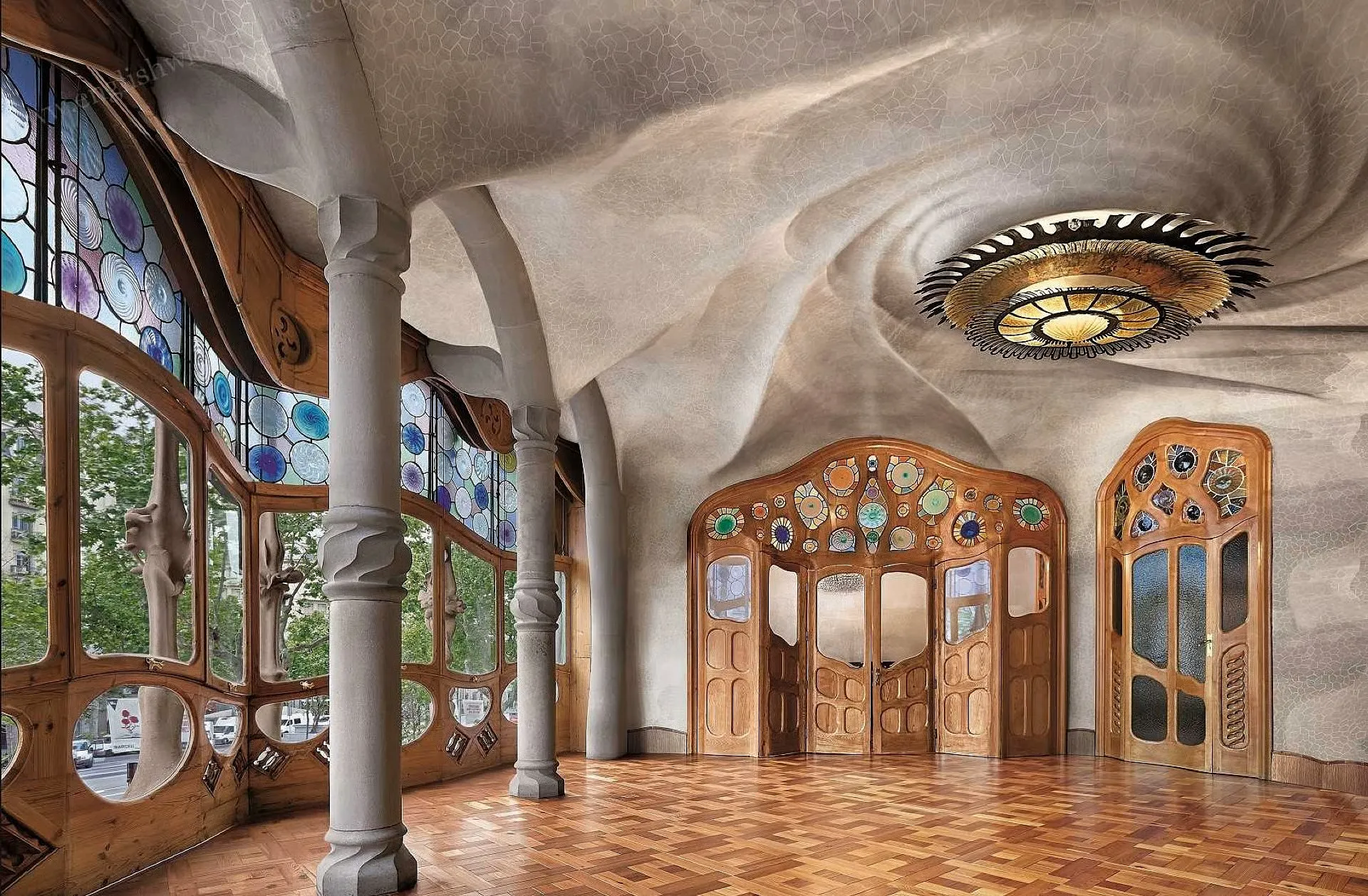
Four groups of sculptural chimneys, covered in mosaic tiles, rise from the roof, each shaped in a way to prevent backdrafts. Beneath the roof, 60 catenary arches form a ribcage-like structure that supports the fantastical shape above. The roof and facade are covered in trencadís, a mosaic technique using broken ceramic and glass pieces, creating flowing surfaces without straight lines. Gaudí’s use of organic shapes, biomimicry, and natural forms makes the roof appear alive.
4. House of the Five Senses, Netherlands
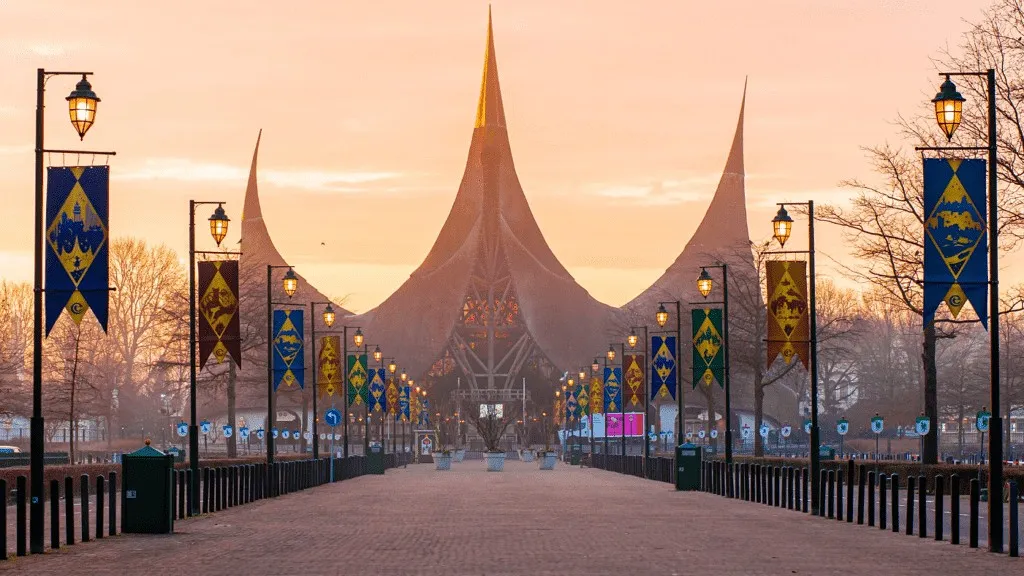
The House of the Five Senses in Kaatsheuvel, Netherlands, is the main entrance building to the Efteling Theme Park, one of Europe’s largest amusement parks. It was designed by Dutch architect Ton van de Ven, who was the park’s chief designer for many years and shaped much of its fairy-tale-inspired architecture.
The structure is topped by a spectacular reed-thatched roof, recognized by the Guinness Book of Records as the largest thatched roof in the world, measuring about 4,500 square meters (48,437 sq ft) and rising to a height of 52 meters (171 ft). Its sweeping, layered design rises to five distinct peaks, each representing one of the human senses: sight, hearing, smell, taste, and touch. The building draws inspiration from the traditional Rumah Gadang architecture of the Minangkabau people of Indonesia.
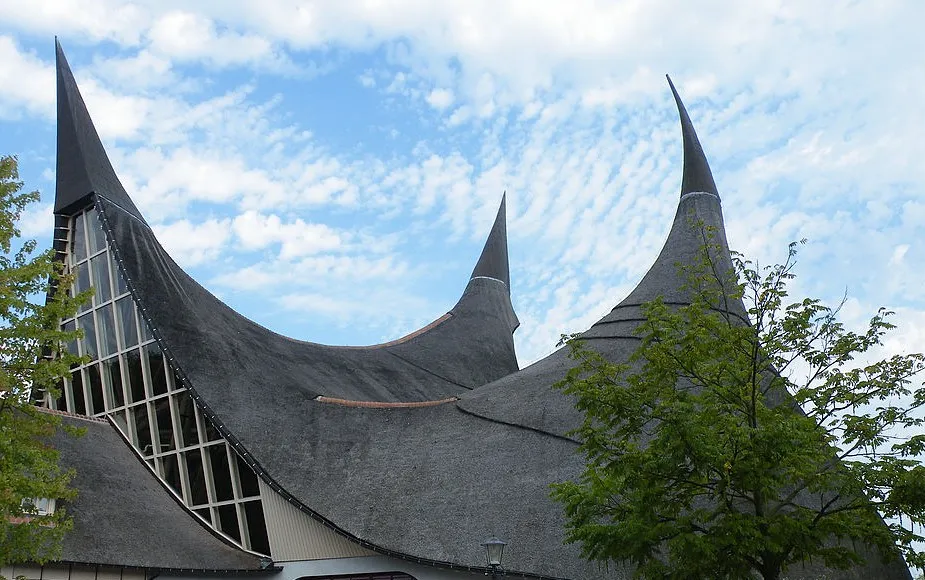
The roof’s overall silhouette resembles a jester’s hat, perfectly suited to the park’s fairy-tale theme. At night, lights embedded in each peak illuminate the roof, emphasizing its contours and whimsical character. Made from reeds layered over supporting battens, the roof curves at delicate points. The building also houses the entrance halls, customer service, a souvenir shop, and other visitor facilities.
5. Wat Rong Khun, Thailand
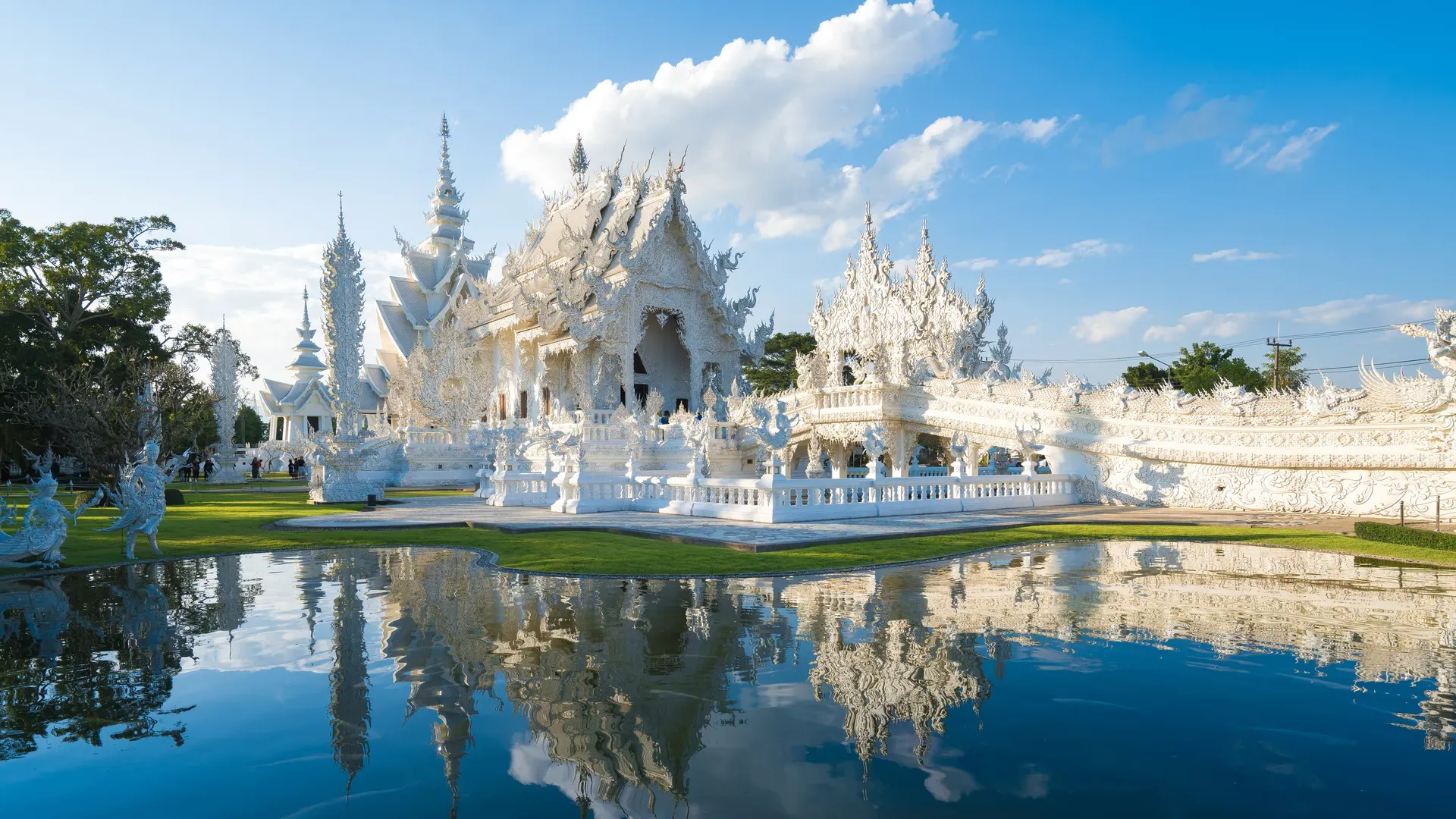
Wat Rong Khun of Thailand is a contemporary Buddhist temple located in Chiang Rai. It was designed and constructed by Thai artist Chalermchai Kositpipat. Situated outside the city of Chiang Rai, the temple attracts a large number of visitors, both Thai and foreign, making it one of Chiang Rai’s most visited attractions.
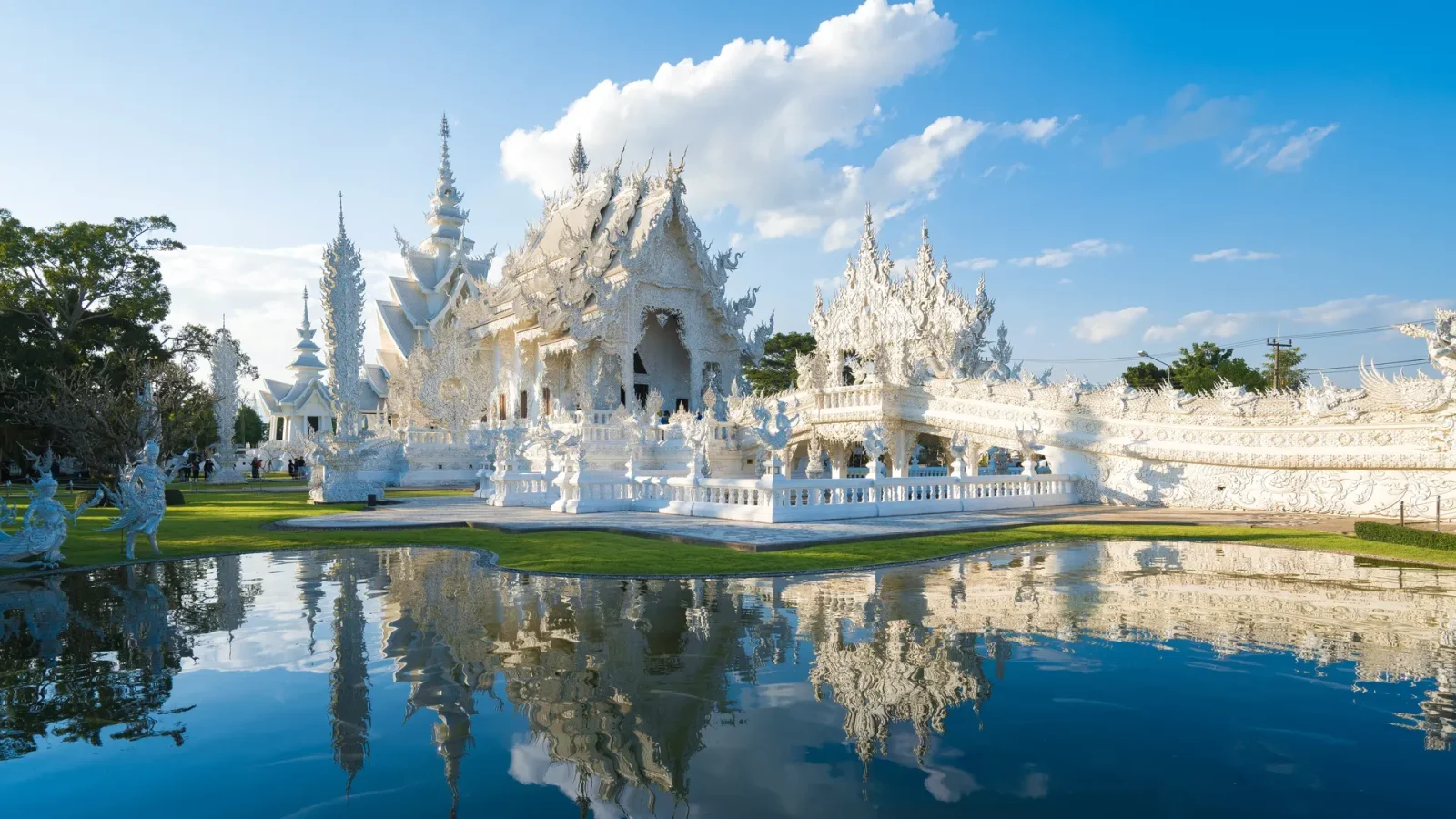
Wat Rong Khun, also known as the White Temple, has a white roof and intricate design. The temple portrays traditional northern Thai Lanna architecture with a touch of contemporary art. The main building, or ubosot, features a three-tiered roof, a classic element of Lanna-style temples, while stylized Nāga (serpent) sculptures decorate the roof edges.
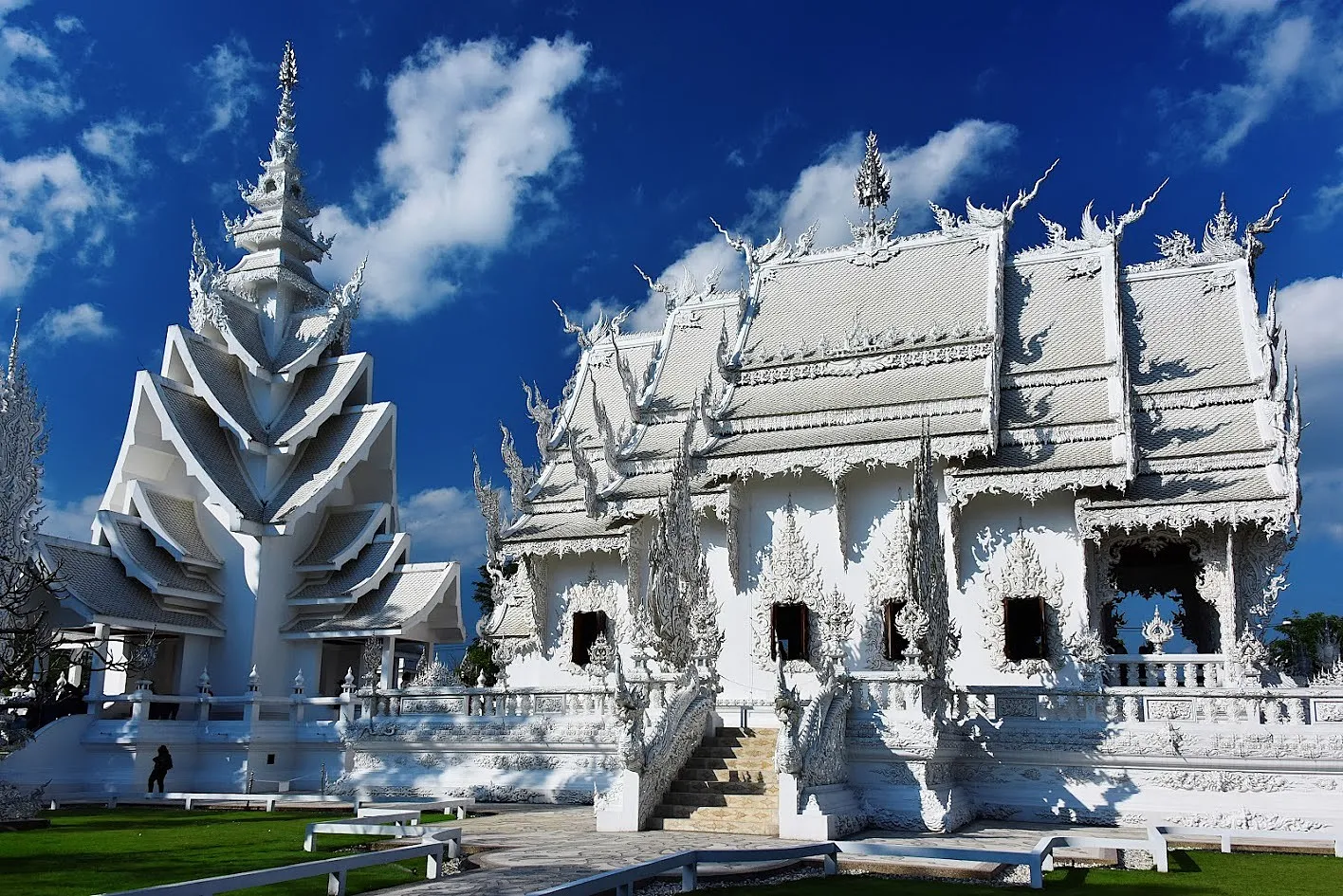
The entire roof, like the rest of the temple, is covered in white plaster and fragments of mirrored glass. The white represents the purity and wisdom of Buddha, while the mirrored pieces reflect sunlight, symbolizing the shining wisdom of the universe. Unlike many Buddhist temples that use gold, Wat Rong Khun’s all-white roof creates an otherworldly effect.
6. Taj Mahal, India
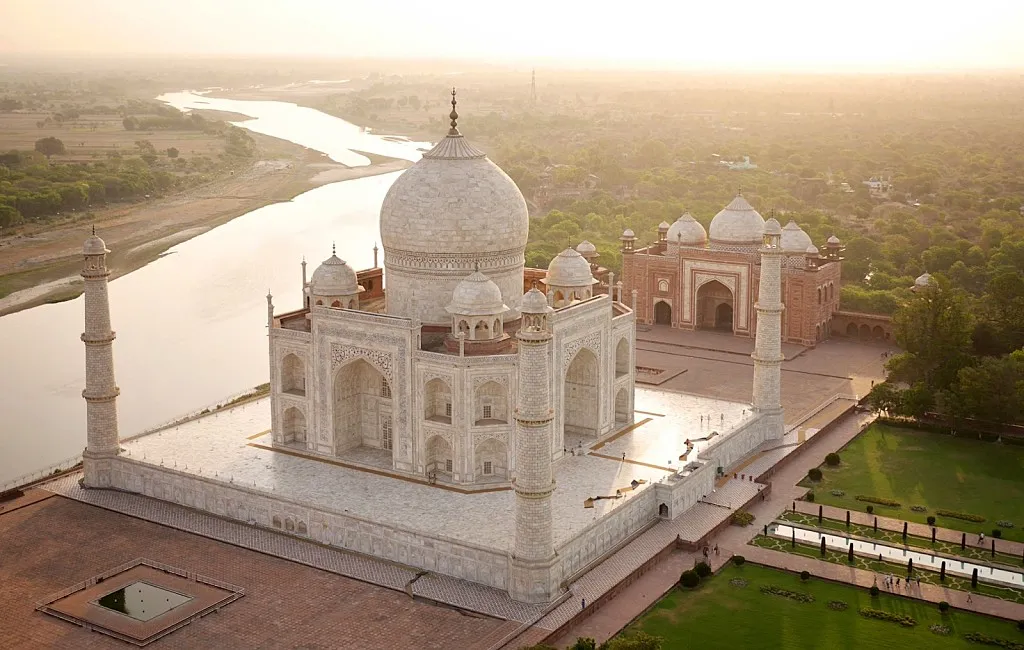
The Taj Mahal is a 17th-century mausoleum located in Agra, India. It was built by the Mughal emperor Shah Jahan in memory of his wife, Mumtaz Mahal. Recognized as a UNESCO World Heritage Site and one of the Seven Wonders of the World, it is a masterpiece of Mughal architecture.
The Taj Mahal boasts a stunning white marble dome, which crowns the mausoleum with grandeur. The central dome, shaped like a bulbous onion, rests on a cylindrical drum and is decorated with a lotus motif, giving it a delicate and monumental appearance. A Persian-inspired double-dome system allows the structure to reach an impressive height while keeping the weight manageable and enhancing the acoustics inside.
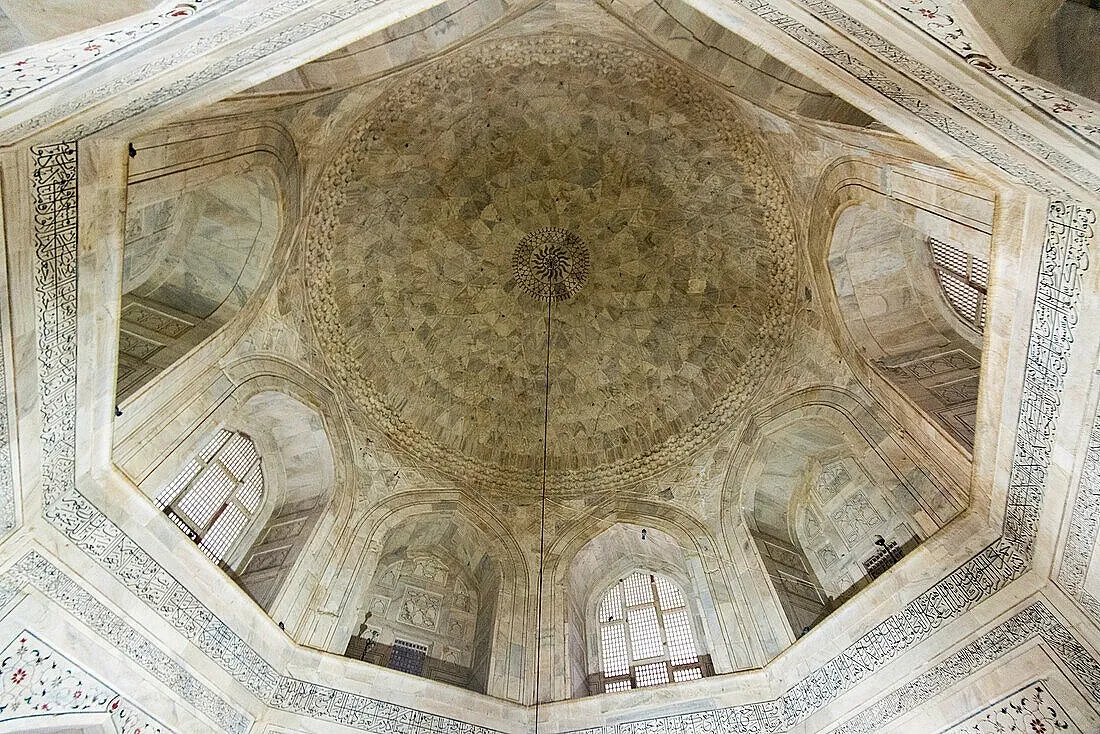
Four smaller domed kiosks, called chattris, sit at the corners of the main dome. They mirror its shape and provide natural light to the interior, emphasizing the central dome’s verticality. Topped with a gilded finial, the dome combines Persian and Hindu decorative elements, while the lotus design accentuates its soaring form. Beyond its beauty, the dome and chattris also carry symbolic meaning, representing the transition from the earthly to the divine.
7. California Academy of Sciences, USA
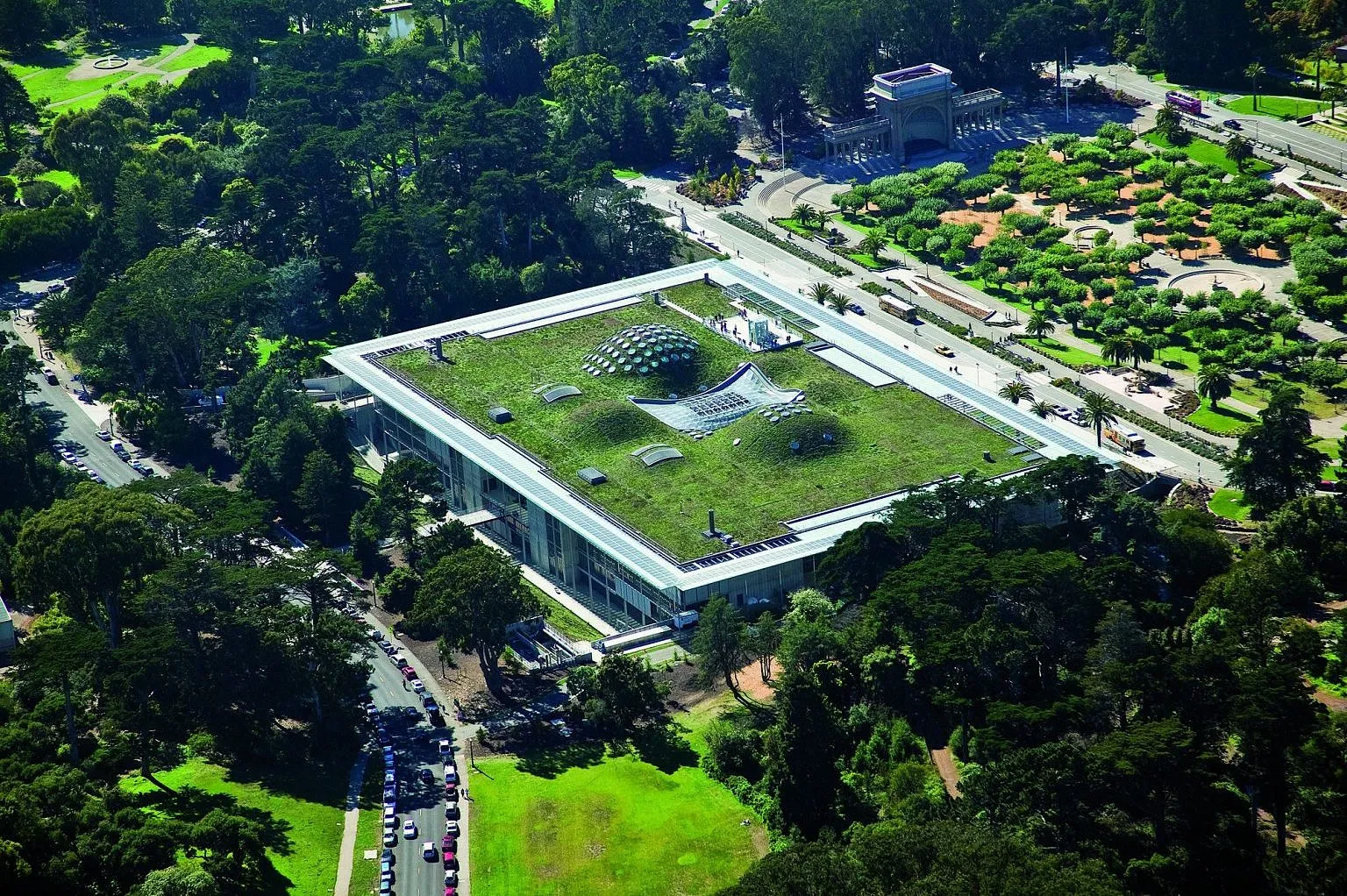
The California Academy of Sciences in San Francisco, USA, is a natural history museum and research institution. Located in Golden Gate Park, it has a museum, planetarium, aquarium, and rainforest dome under one roof. It houses over 46 million specimens.
The California Academy of Sciences in San Francisco was designed by Renzo Piano. Unlike a traditional roof, it is built on a 2.5-acre living roof. The structure creates a sculptural landscape of seven undulating hills and four steeply sloped domes that mimic the rolling hills of the city. Planted with nearly two million native California plants, including over 50 wildflower species, the roof creates a thriving ecosystem and supports a variety of insects and birds.
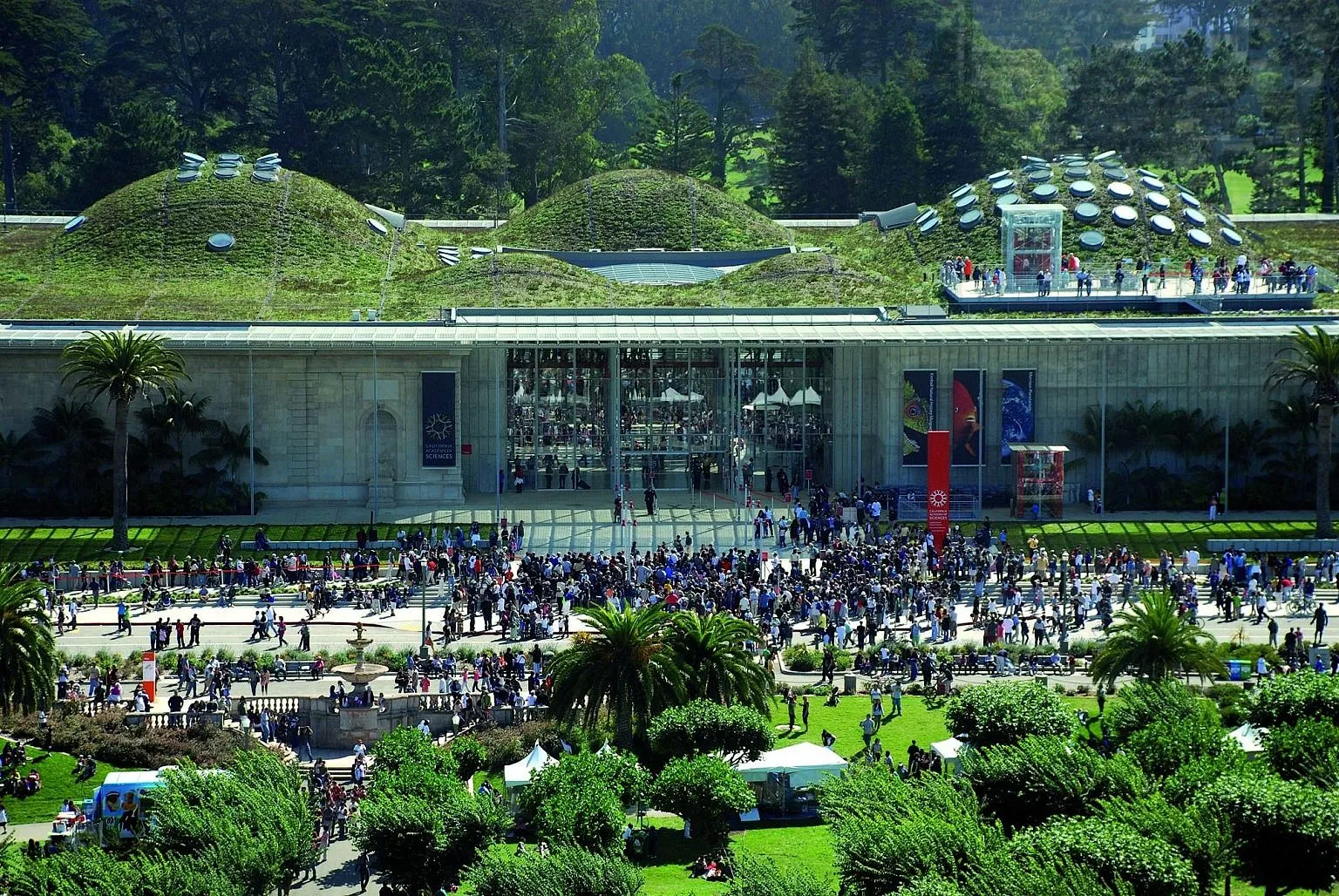
The roof is also highly functional. Its soil and vegetation provide natural insulation, help absorb nearly all rainwater, and reduce the urban heat island effect. Integrated skylights allow natural ventilation, while 60,000 photovoltaic cells generate part of the building’s energy needs. Visitors can also explore the living roof as a model of sustainable design.
8. Lotus Temple, India
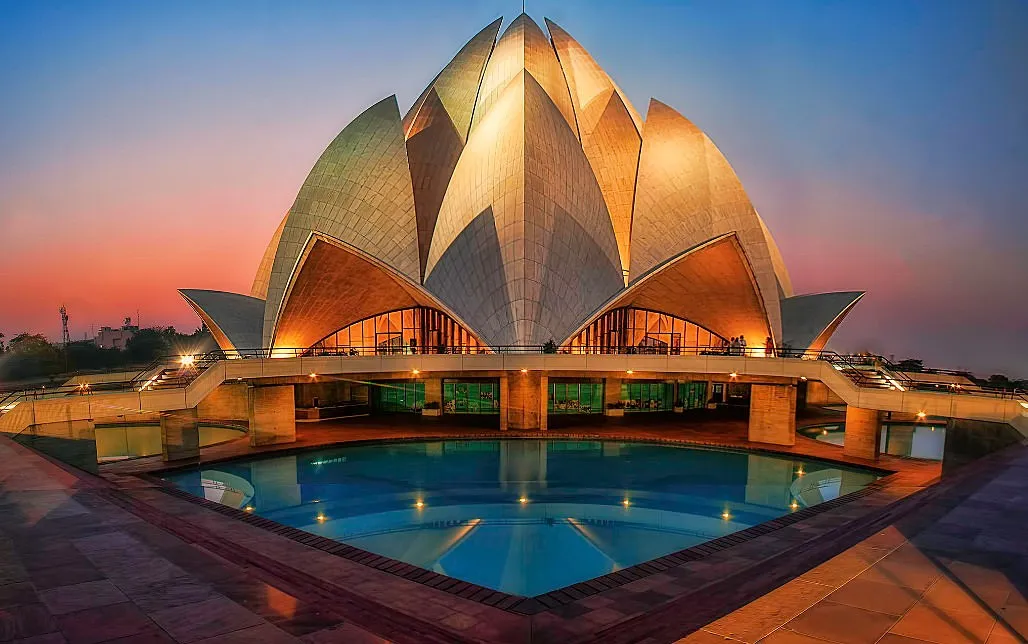
The Lotus Temple in Delhi, India, is a Bahá’í House of Worship completed in 1986 and renowned for its flower-inspired architecture. It is designed by Iranian architect Fariborz Sahba. The Lotus Temple is part of the seven continental Bahá’í Houses of Worship around the world. The other six are located in the USA, Australia, Uganda, Germany, Panama, and Chile.
The Lotus Temple is famous for its stunning roof shaped like a half-bloomed lotus. The roof consists of 27 marble-clad concrete petals, arranged in three tiers to form nine sides around the central worship hall. The inner petals are capped by a glass and steel skylight, allowing natural light to fill the space below.
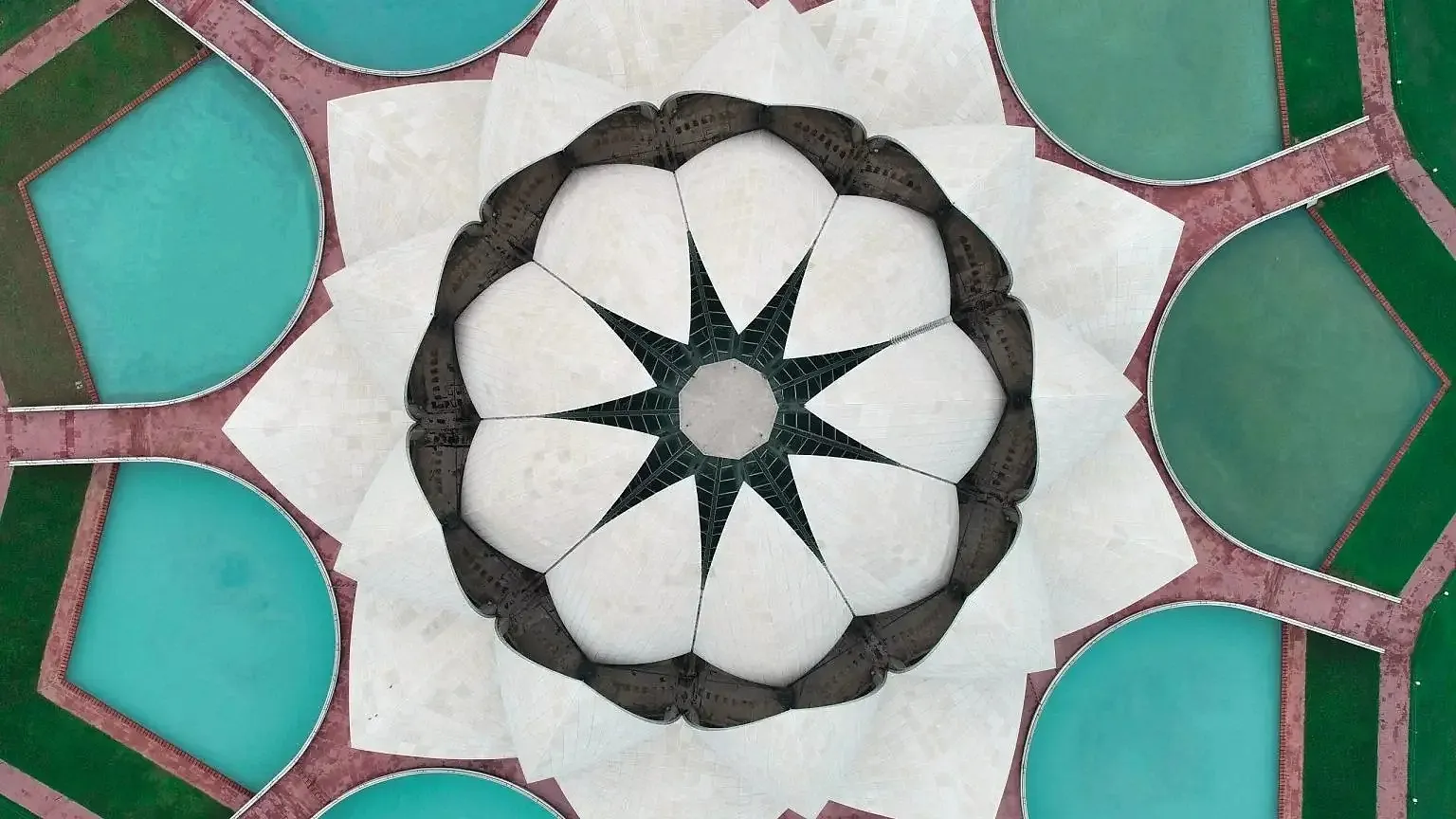
The design is deeply symbolic, inspired by the lotus flower, a symbol of purity and spiritual growth. Each petal is a concrete shell, poured in one piece. Building the roof was a major engineering challenge, requiring timber models to perfect the complex curves and support structures. In addition to its beauty, the roof supports natural ventilation and solar energy, keeping the temple cool and partly powered by sustainable energy.
9. Hotel Marqués de Riscal, Spain
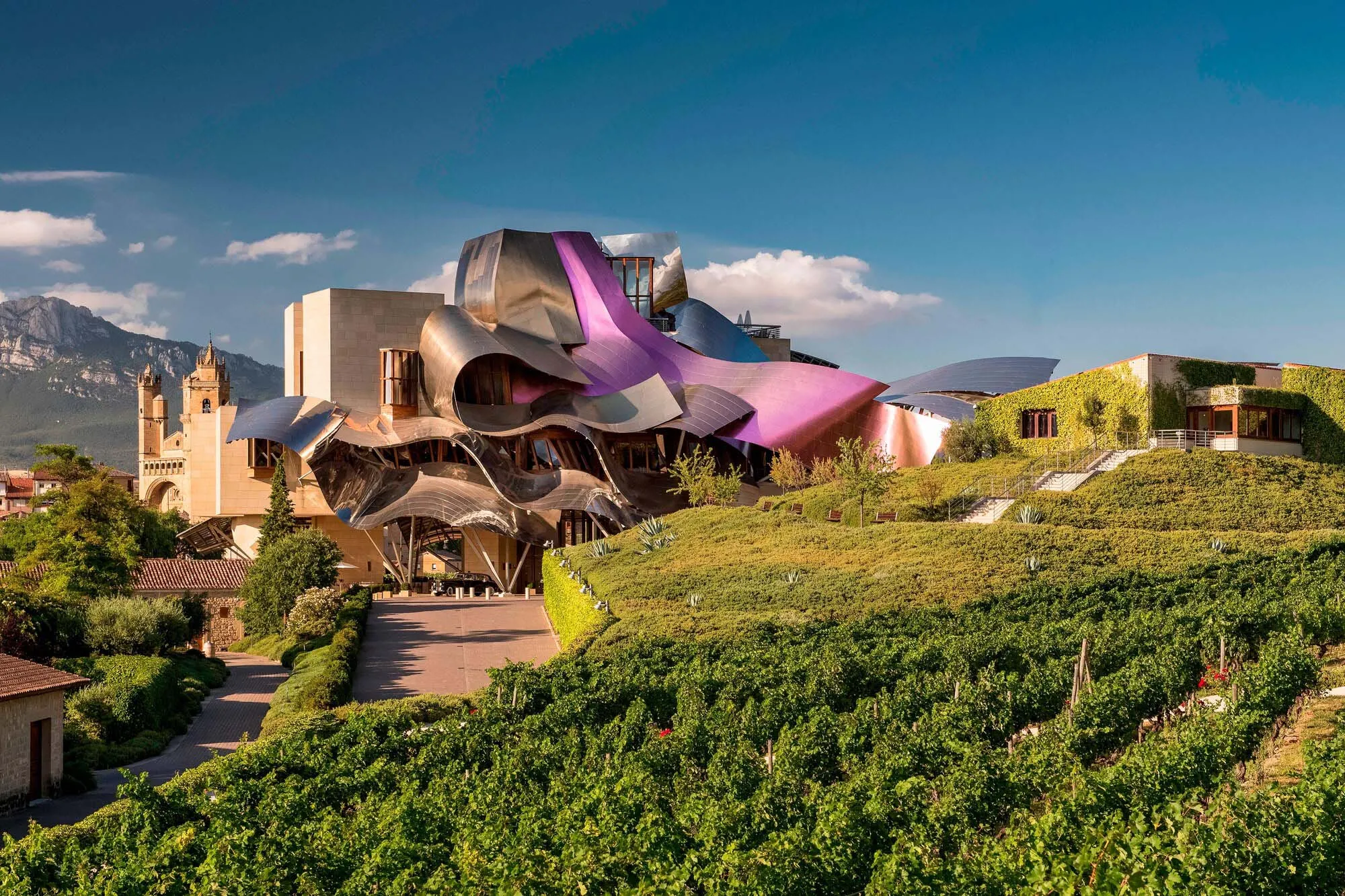
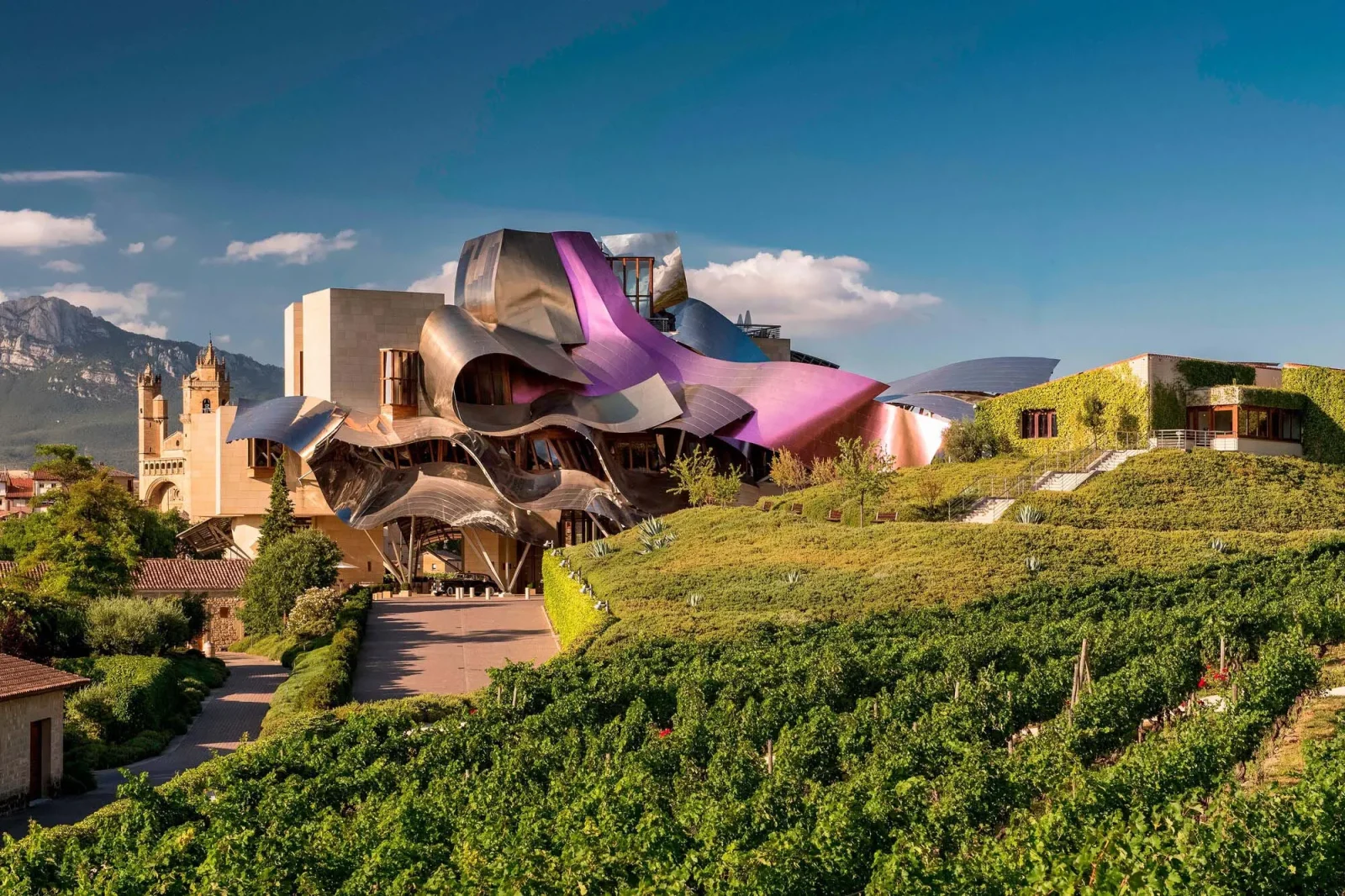
The Hotel Marqués de Riscal in Elciego, Spain, is a luxury hotel designed by architect Frank Gehry and opened in 2006. Located within the Marqués de Riscal winery, the building showcases deconstructivist design.
The hotel has a fluid roof of multi-colored titanium panels. The sweeping, free-form roof appears like floating metallic ribbons, curving over the building that recalls Gehry’s Guggenheim Museum in Bilbao. The colors are symbolic: pink titanium represents the red hues of Rioja wine, gold reflects the wire mesh around the bottles, and mirror-finished steel echoes the silver foil on bottle necks, linking the design to the region’s winemaking tradition.
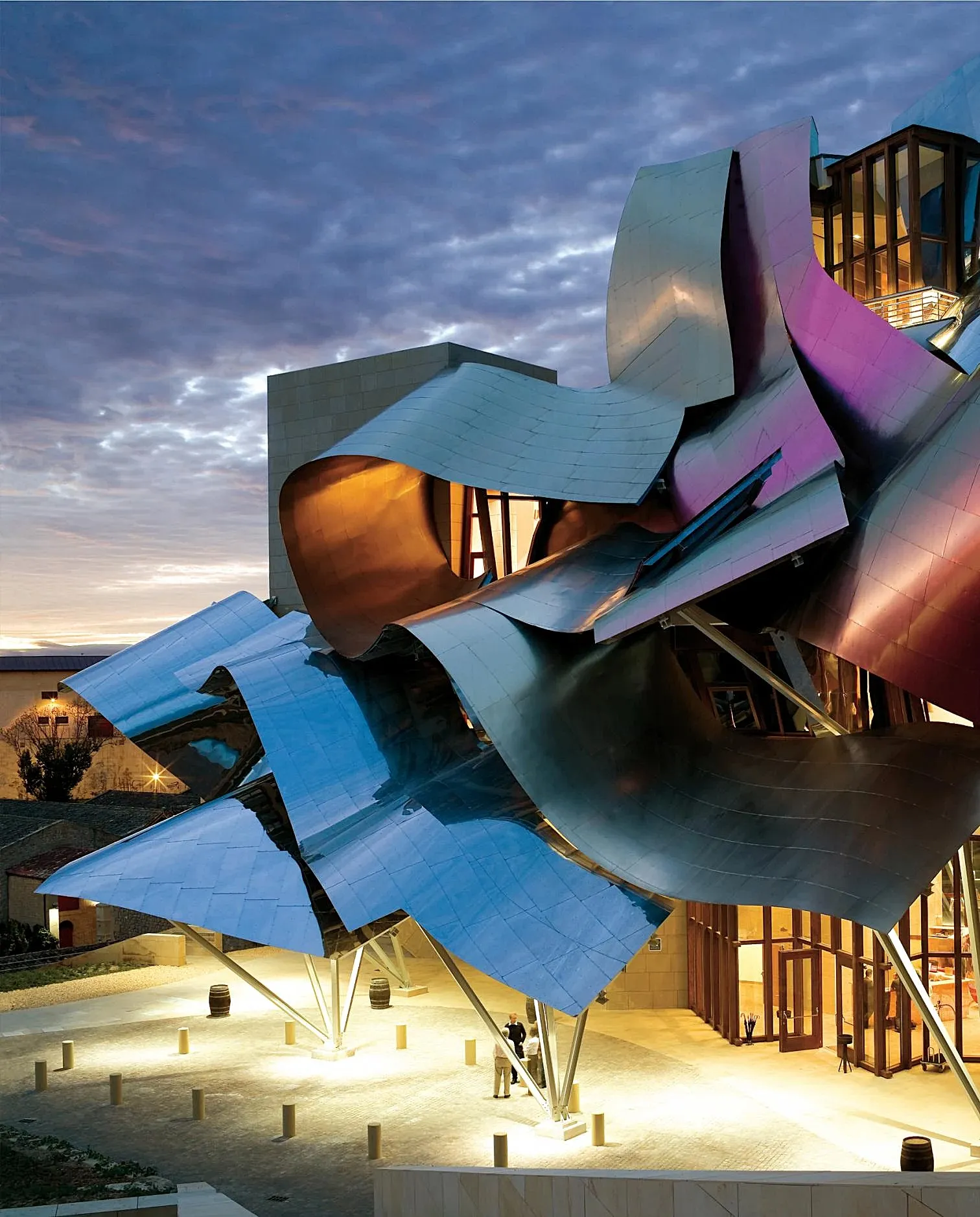
The roof was designed through digital modeling with multiple software and wind-tunnel testing to ensure stability. The roof’s self-supporting, double-curved canopies are anchored independently from the main building, creating a dramatic visual effect while providing shade and framing views of the vineyards. In 2020, an extension added 961 photovoltaic panels to the roof, generating up to 30% of the hotel’s electricity.
10. Eden Project, United Kingdom
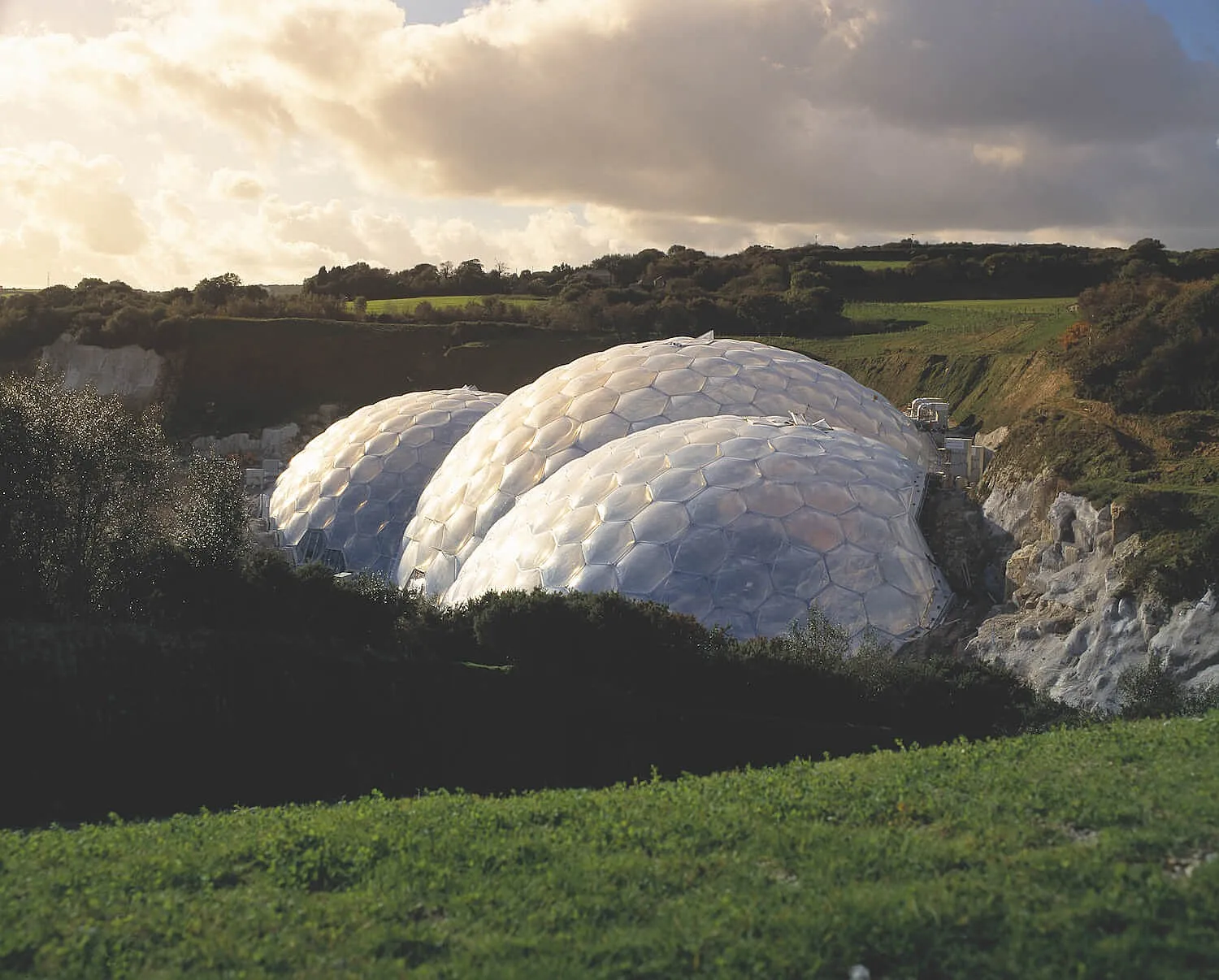
The Eden Project in Cornwall, United Kingdom, is an ecological and educational attraction. Designed by architect Nicholas Grimshaw, the complex showcases the relationship between plants, people, and the environment through exhibits and living collections.
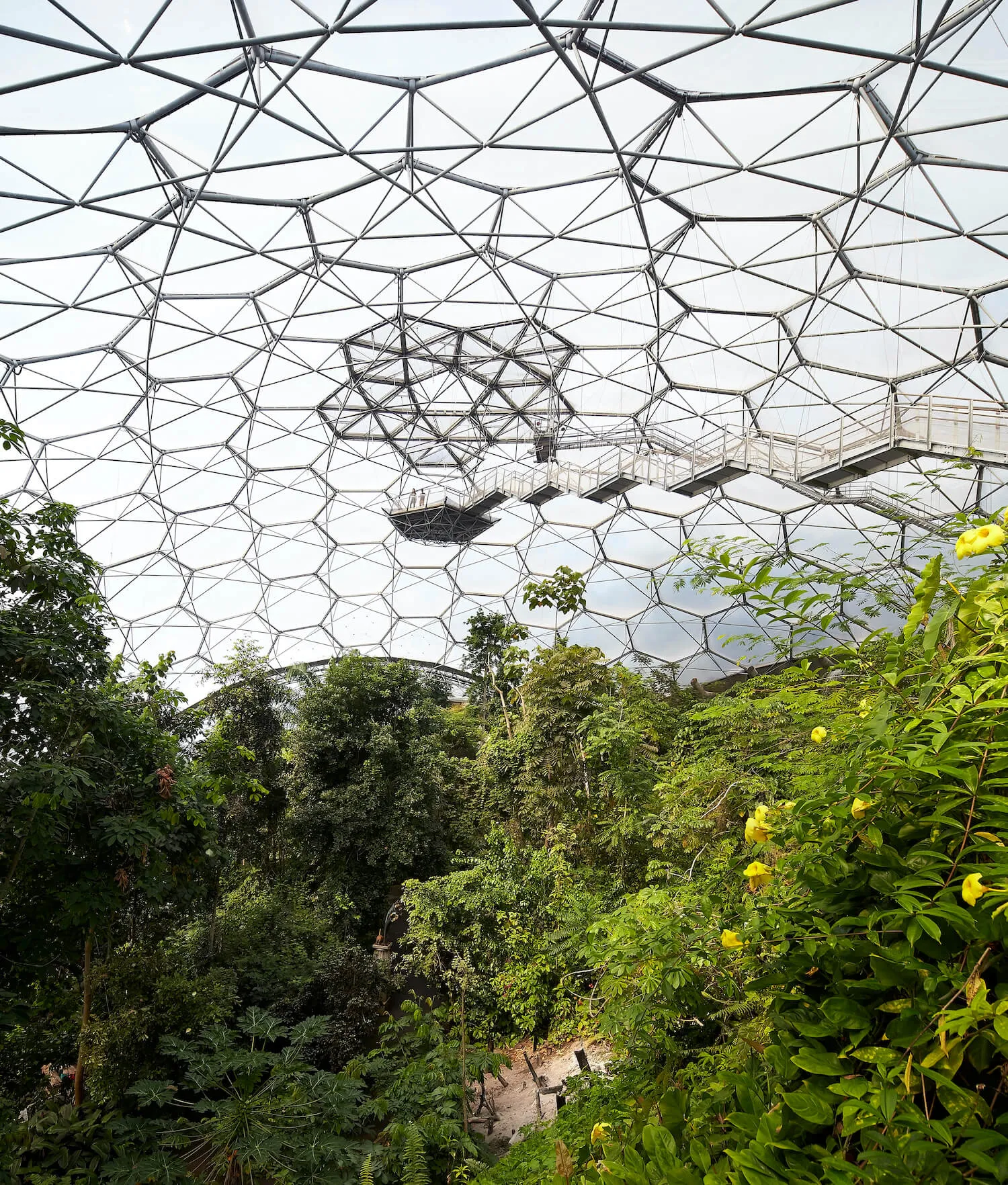
The Eden Project is known for its two roof designs: the massive Biomes and the timber-and-copper-clad Core building. The Biomes are vast climate-controlled domes made from a double-layered steel hex-tri-hex space frame, covered in lightweight, transparent ETFE cushions. These cushions trap air to provide insulation and create the perfect environment for different plants. The domes’ geometric design is inspired by natural forms like pollen and seeds.
The Core building features a roof inspired by plant growth, shaped like a pinecone using phyllotactic geometry, the spiral patterns seen in sunflowers, pinecones, and pineapples. Clad in timber and copper, the roof includes pyramid-shaped windows that bring in natural light and ventilation. Artist Peter Randall-Page collaborated with architect Nicholas Grimshaw to create this biomimetic design. Together, the Biomes and the Core building make the Eden Project a sustainable design.
11. Chrysler Building, USA
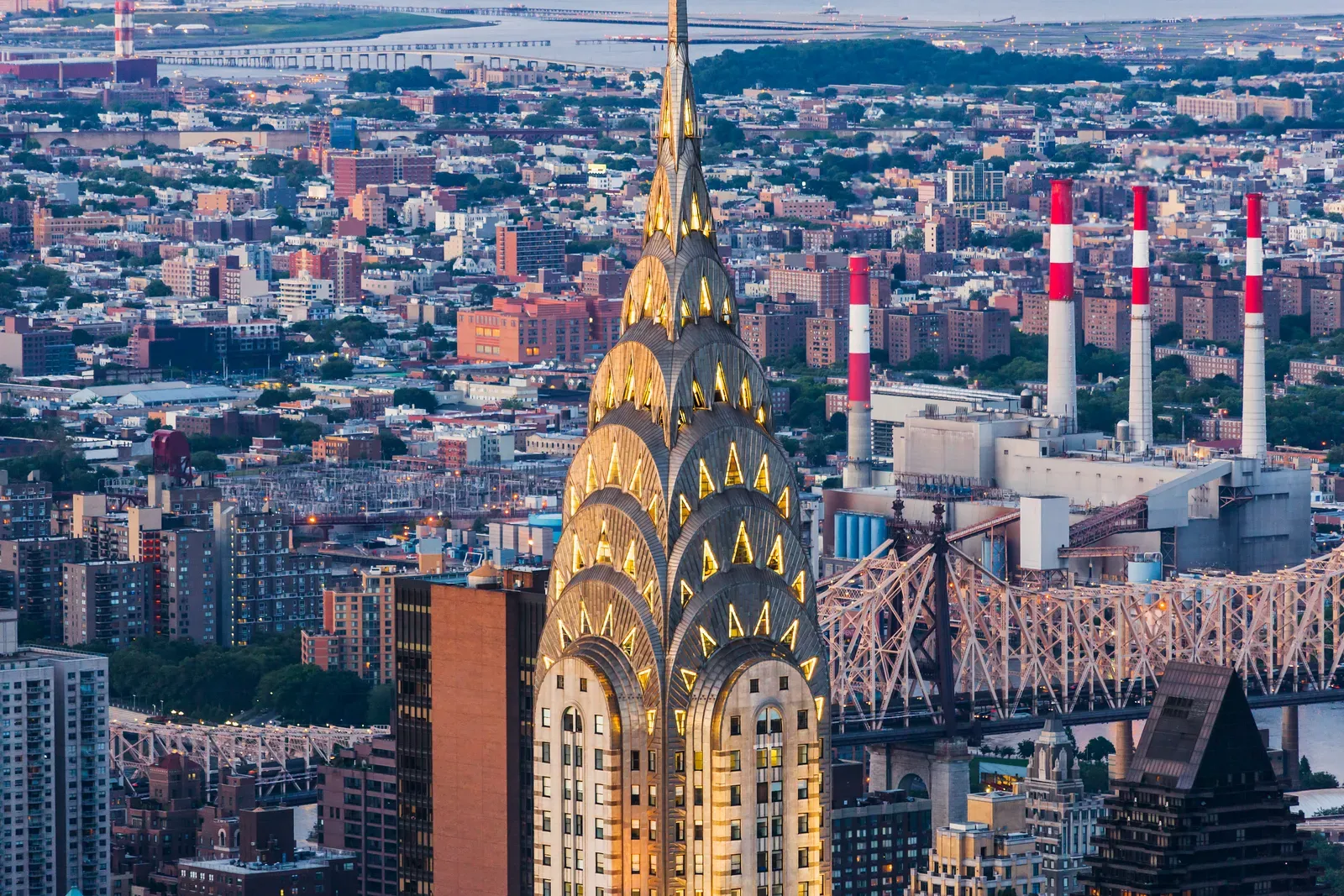
The Chrysler Building in New York City, USA, is an Art Deco skyscraper designed by architect William Van Alen. When the building was completed in 1930, its spire helped it claim the title of the world’s tallest skyscraper. It was primarily designed as a commercial office building for Chrysler Corporation executives and related businesses.
The Chrysler Building is known for its gleaming stainless steel crown, symbolizing progress and the automobile age. The roof consists of seven terraced arches forming a radiating sunburst pattern, with triangular windows that echo the spokes of a wheel. Built from Nirosta stainless steel, the crown shines in sunlight and was fabricated on-site using workshops set up on the upper floors due to its complex curves.
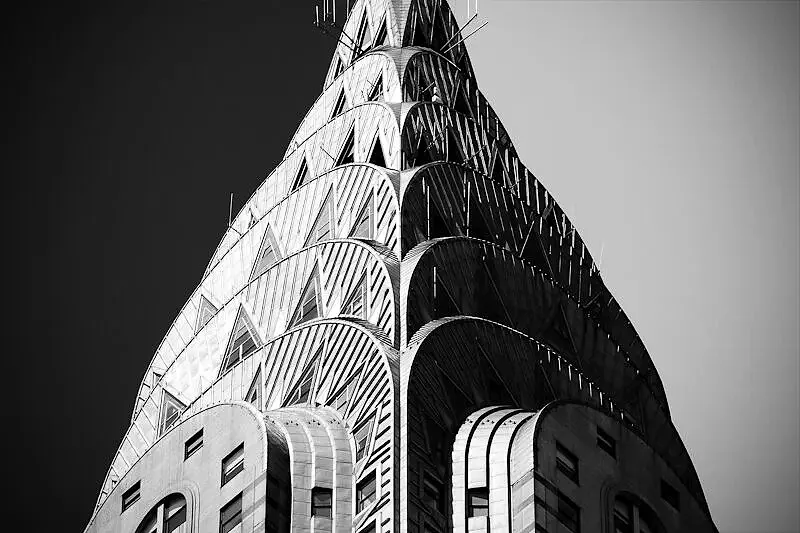
Automotive motifs are woven throughout the design, including gargoyles inspired by Chrysler hood ornaments and decorative elements resembling radiator caps. The crown’s sunburst pattern conveys energy and optimism, reflecting the industrial spirit of the 1920s.
12. Marina Bay Sands, Singapore
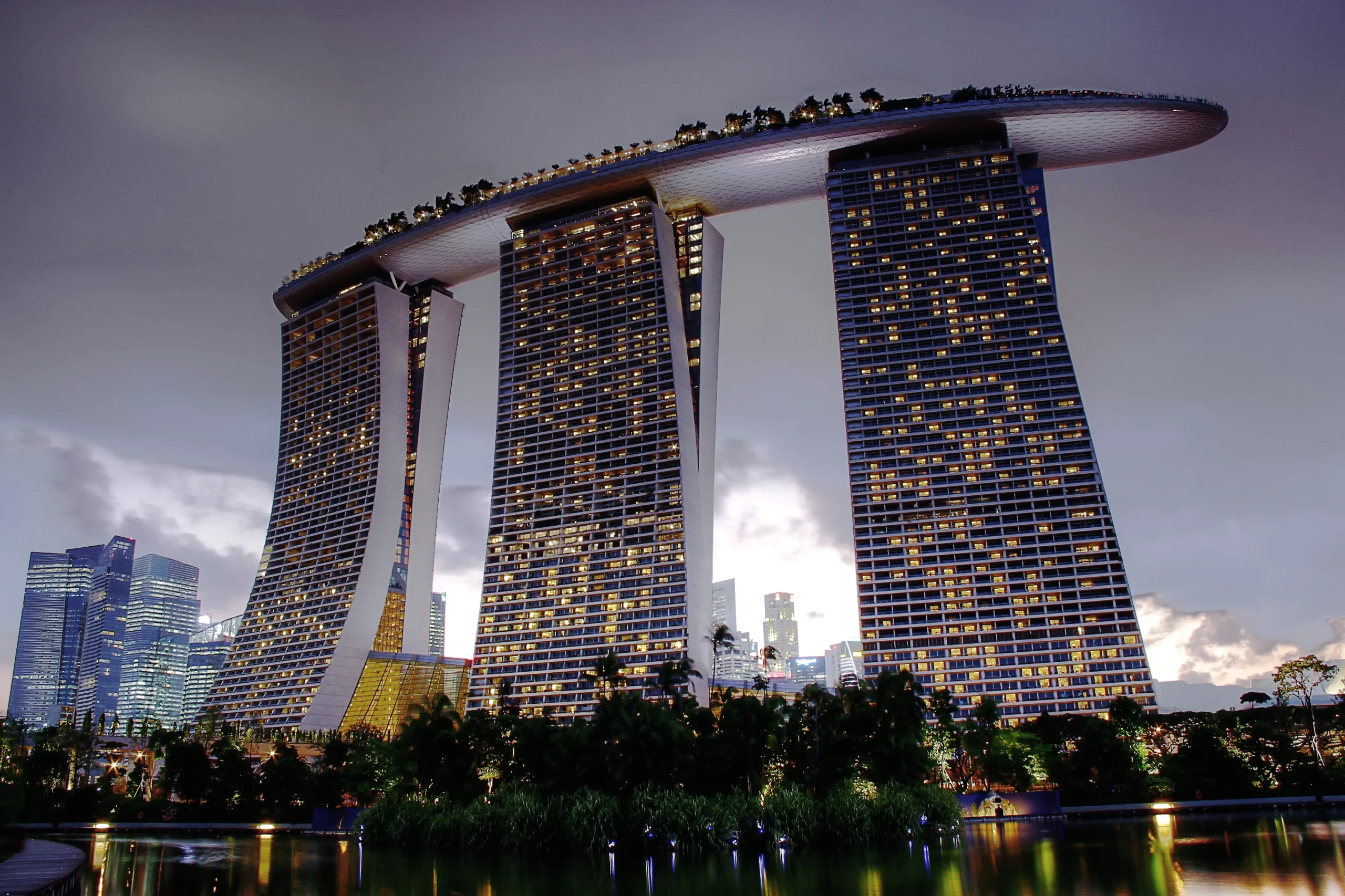
Marina Bay Sands in Singapore is an integrated resort, completed in 2010 and designed by architect Moshe Safdie. It houses casinos, a museum, a hotel, etc. Designed as a self-contained city, Marina Bay Sands brings together hospitality, entertainment, shopping, and cultural experiences in one space.
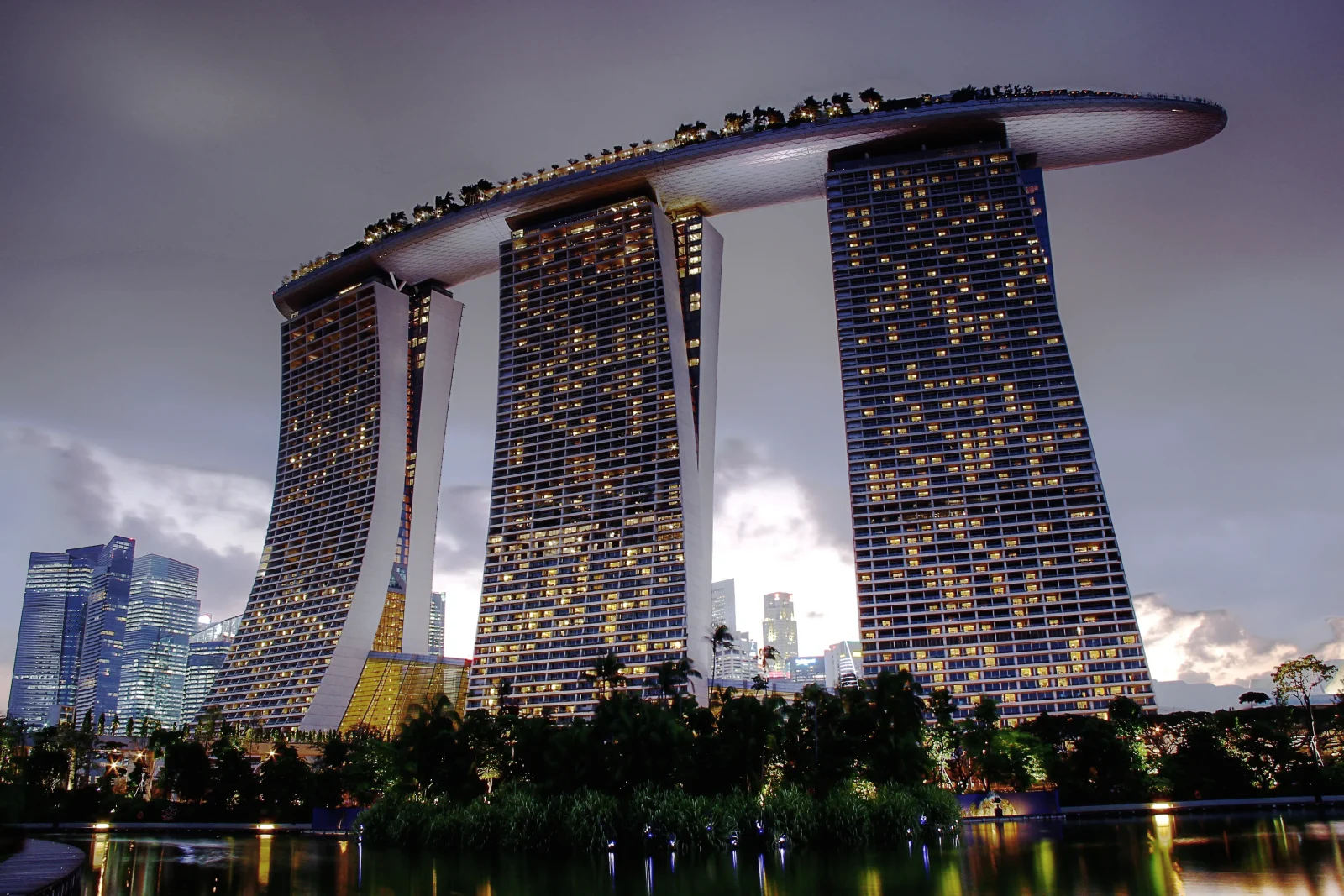
The Marina Bay Sands has an extraordinary roof, the SkyPark, a 340-meter-long platform that stretches across three 55-story hotel towers. The SkyPark is supported by massive steel box girders and assembled on-site, cantilevering beyond the towers. The house-of-cards concept inspires the roof and features an infinity pool, landscaped gardens, dining spaces, and a public observation deck with stunning panoramic views of the city.
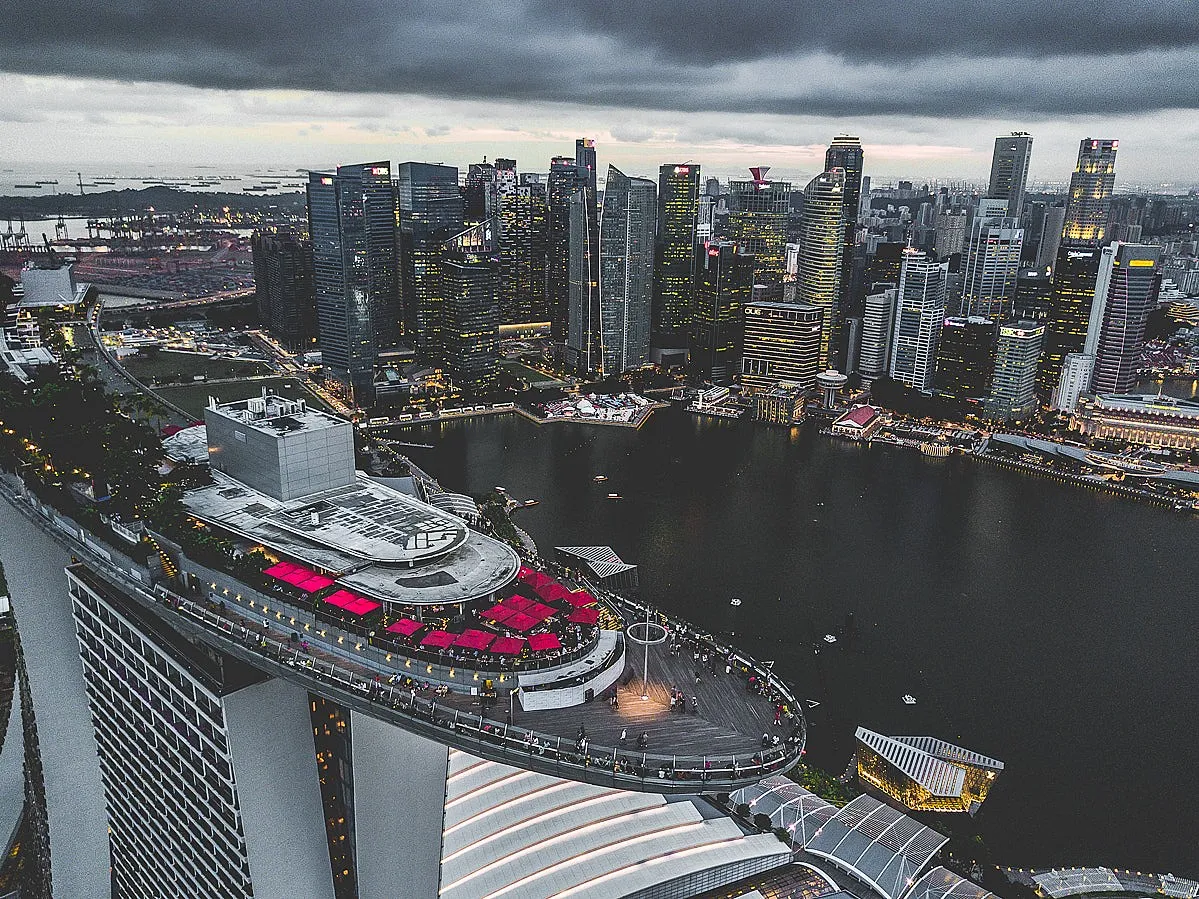
The SkyPark’s construction involved lifting pre-assembled steel segments atop the towers using hydraulic jacks, while the connecting bridges were designed with a slight upward curve to support the weight of the pool when filled.
Explore Courses
.jpg "Ondrej Chybik - Rethinking Architecture")