






Modern architecture, which emerged in the early 20th century, is largely characterized by its commitment to functionalism. Modernist architects, who believed that form should follow function, adopted a minimalist approach, eschewing unnecessary ornamentation in their designs. Iconic modern buildings, notable for their sharp and angular lines, are often characterized by light, open plans, and distinctive volumes. The leading figures of modern architecture often preferred materials such as glass, steel, and reinforced concrete in their constructions.
Playing a significant role in the evolution of contemporary architecture with its simple and unique appearance, modernism enjoyed a long and fruitful reign, leaving behind an unparalleled legacy of iconic architects, buildings, and design styles. In this article, we will explore the ten most iconic works of modern architecture.
1. Villa Savoye
Location: Poissy, France
Architect: Le Corbusier
Year: 1931
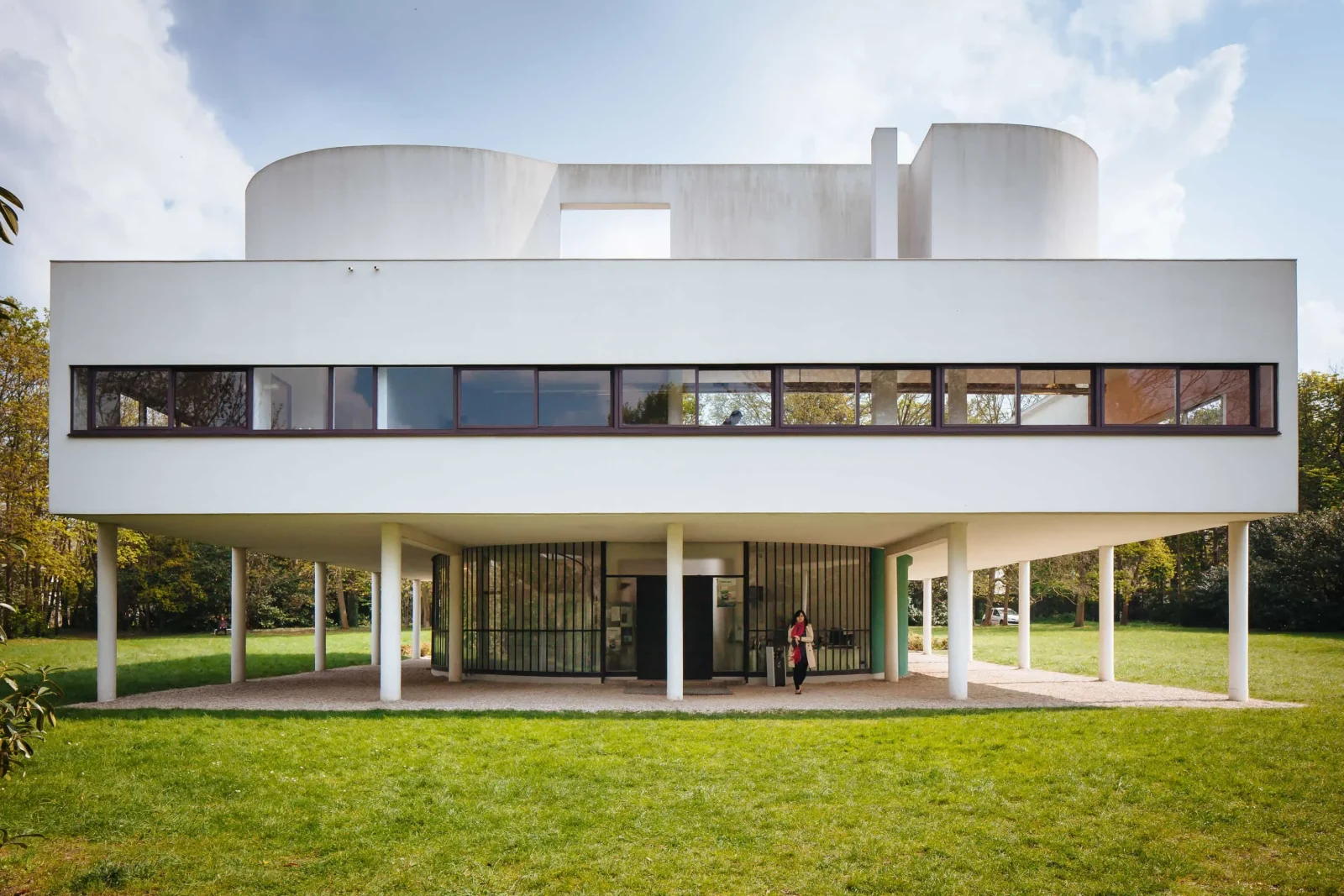
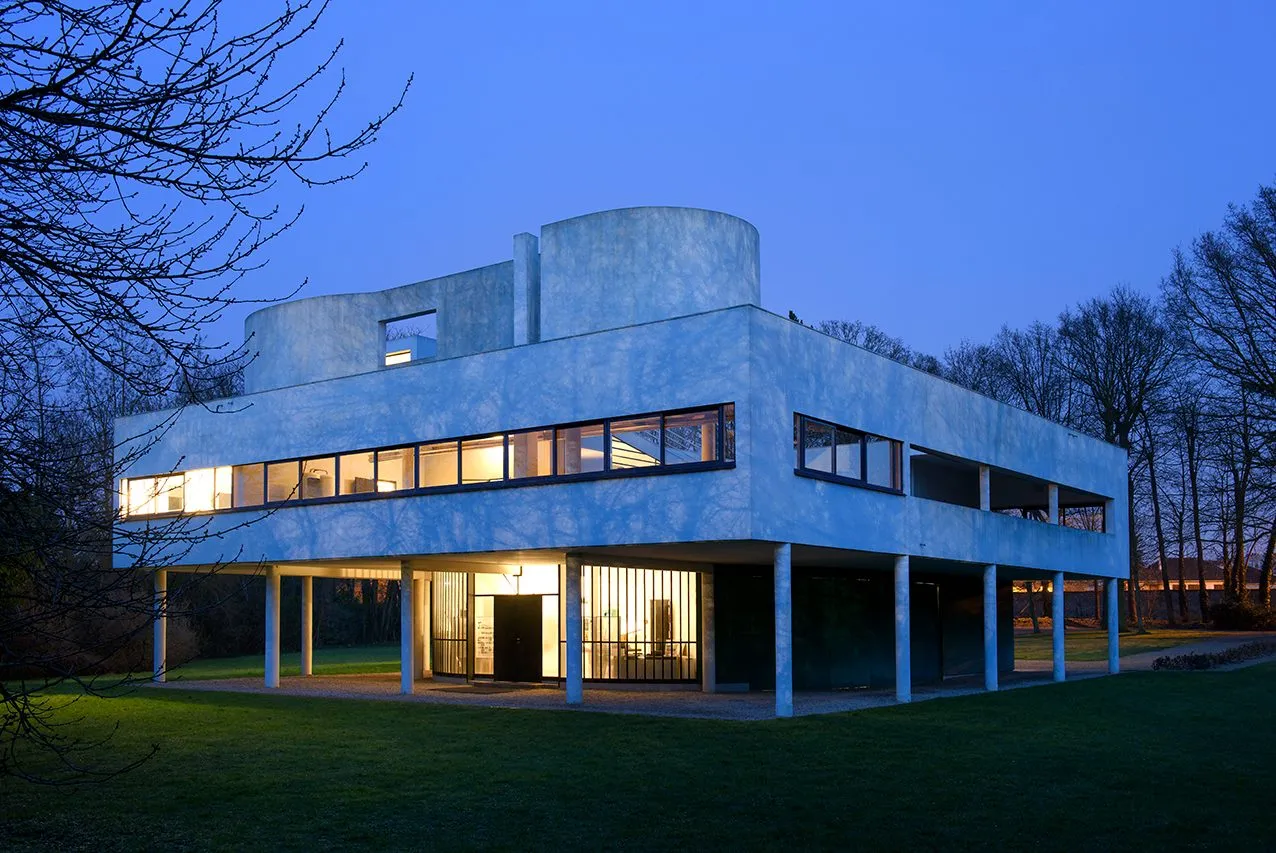
One of the first and most iconic structures of modern architecture, Villa Savoye, designed by Le Corbusier, was a family home built for the Savoye family. In this residence, which single-handedly transformed Le Corbusier’s career and the principles of the International Style, one can find an open floor plan, a grid of reinforced concrete columns (pilotis), horizontal ribbon windows, a roof garden, and an independent façade. Offering a striking blend of functionality, expressionism, and advanced technology, this innovative building is a timeless testament to architecture’s power to shape the future.
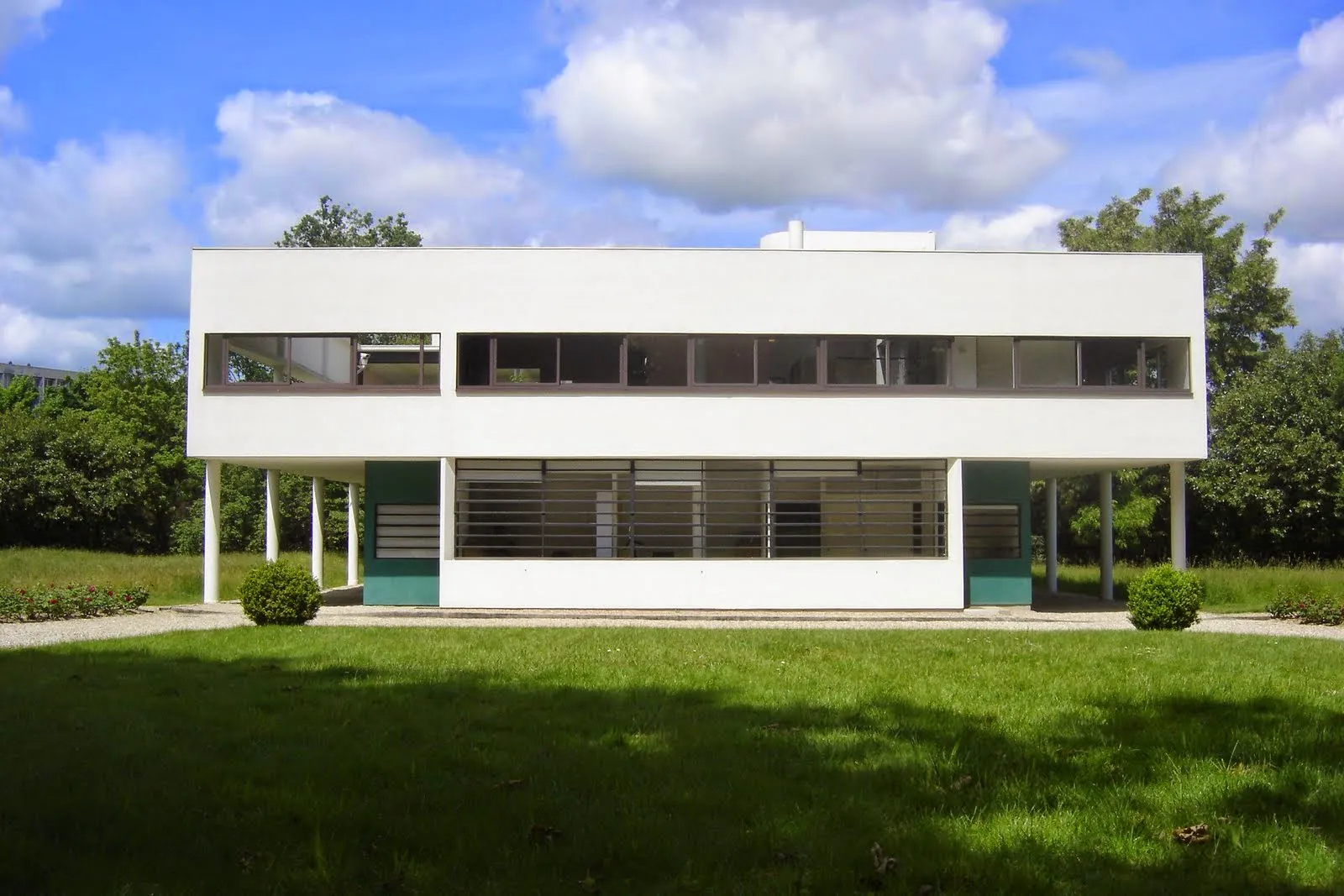
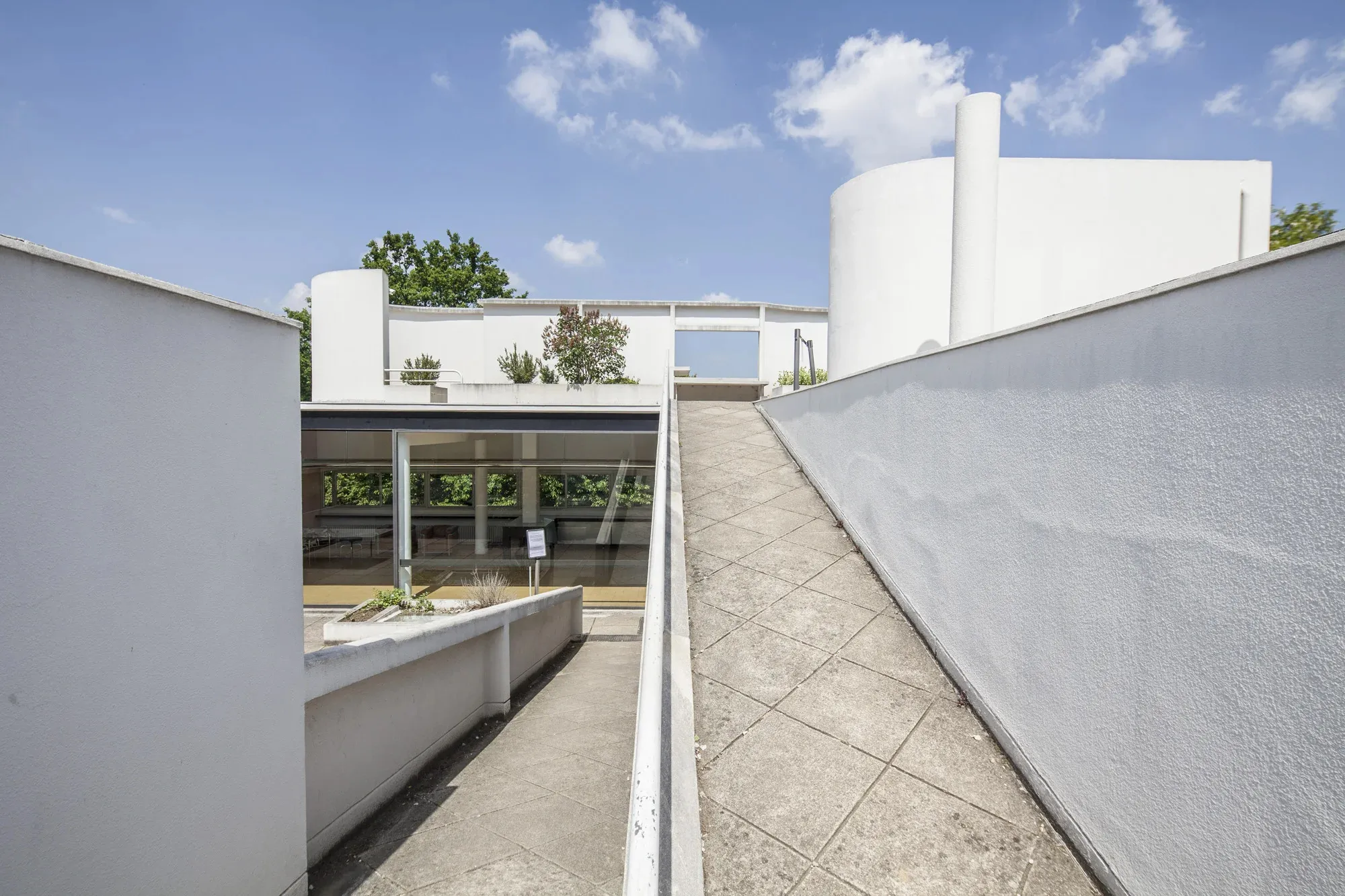
Designed by Le Corbusier to embody the concept of “the machine as a home,” Villa Savoye was constructed in the 1920s and 1930s using a highly modern construction method: reinforced concrete and plaster masonry. Vertical circulation is achieved through a gently sloping ramp and a spiral staircase located at the center of the plan. The functional roof returns the building’s footprint to nature, serving as both garden and terrace. Inside, elegant kitchen floor tiles add a sophisticated and practical element to the design, completing the building’s harmonious blend of functionality and aesthetics.
The article Le Corbusier’s 10 Iconic Projects on PAACADEMY takes a closer look at the architect’s most significant works, offering a deeper understanding of his lasting impact on modernism and his role in shaping 20th-century architecture.
2. Fallingwater House
Location: Pennsylvania, USA
Architect: Frank Lloyd Wright
Year: 1937
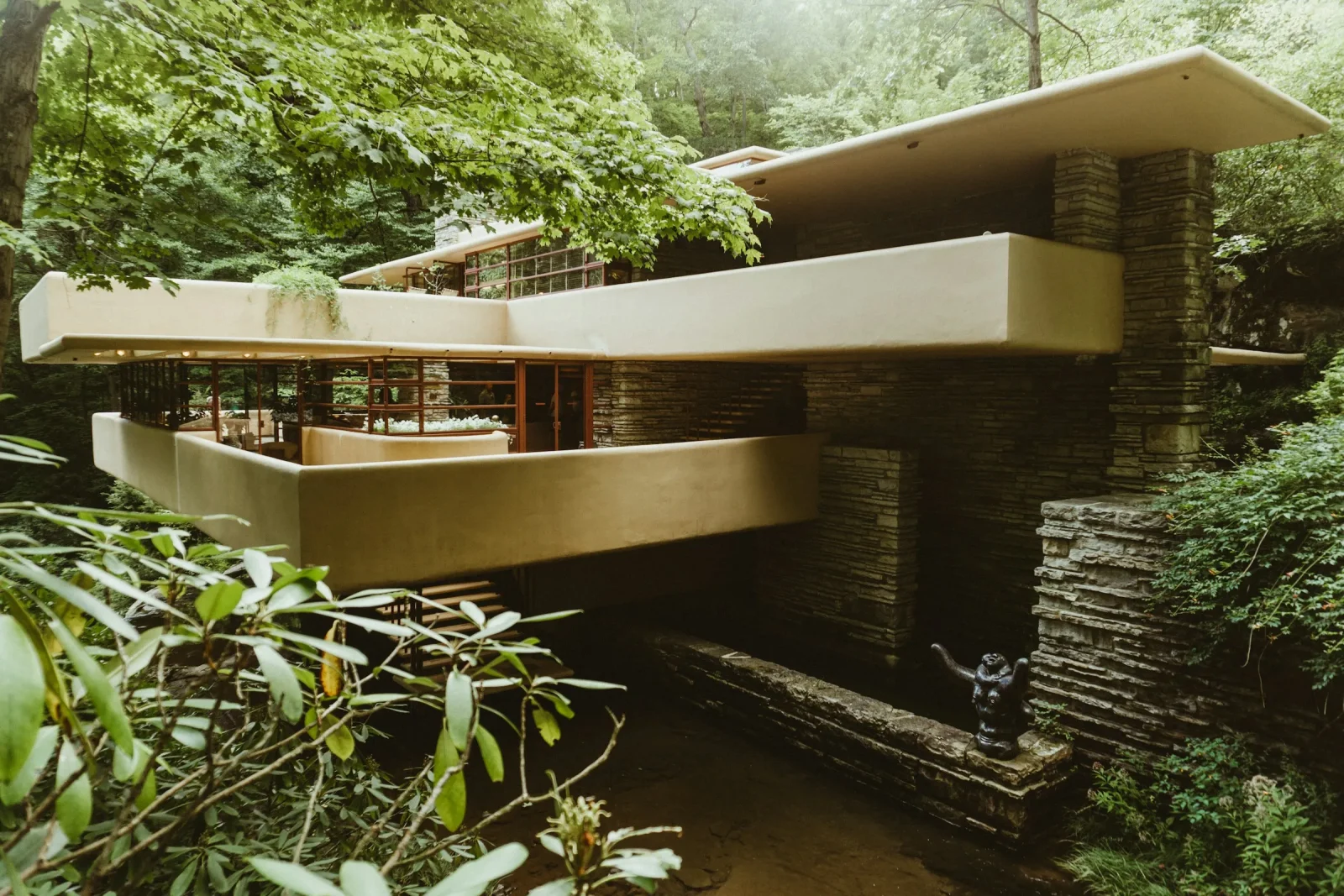
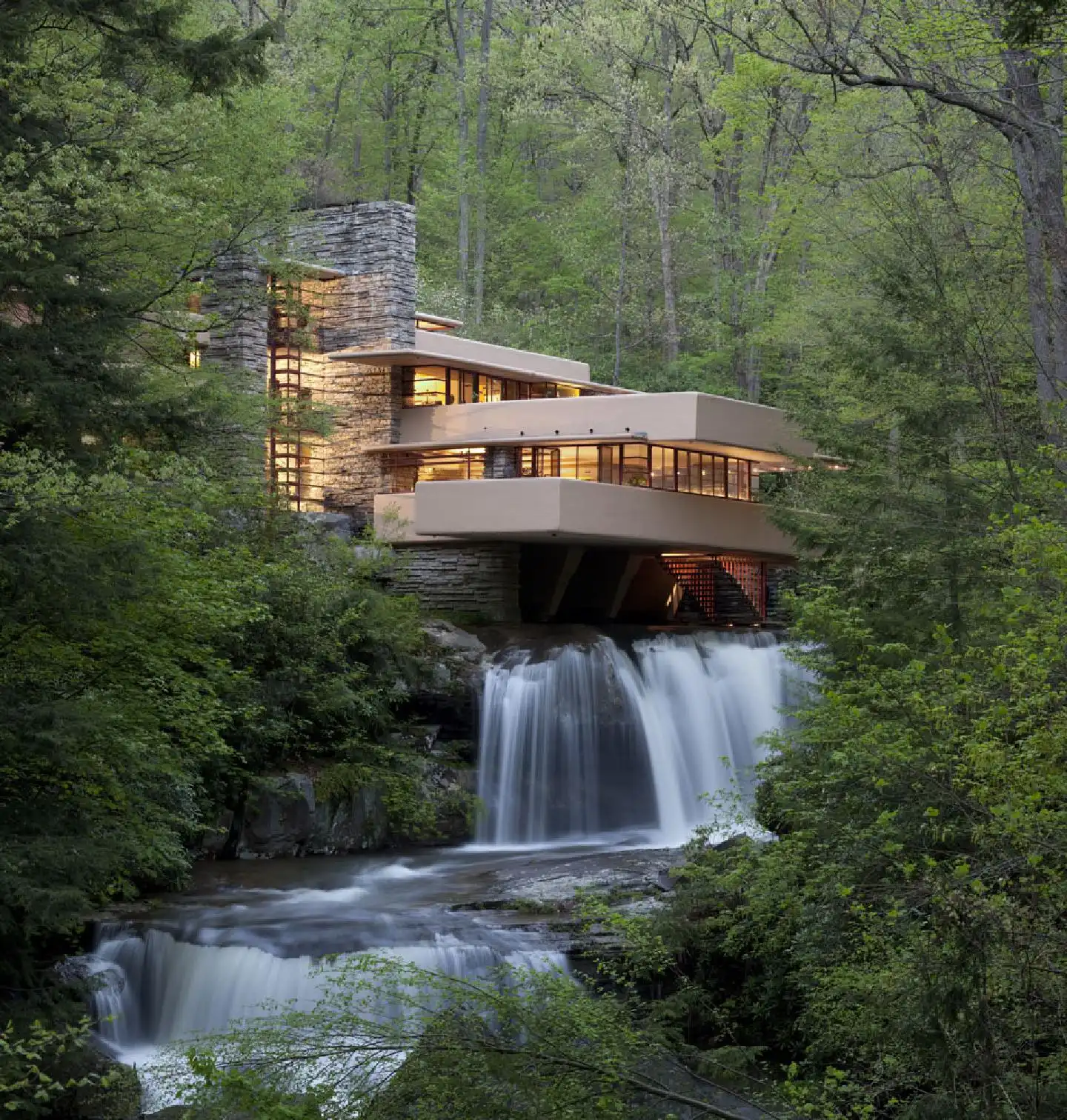
Fallingwater House, one of the most significant residential projects by Frank Lloyd Wright, a renowned architect who shaped the 20th century, is a seminal example of modern architecture. Built as a weekend retreat for the Kaufmann family, Fallingwater embodies all the principles of Wright’s concept of organic architecture. Situated on the Bear Run waterfall, the house’s horizontal architecture is striking. The structure, which grows according to its functions, has acquired an asymmetrical identity.
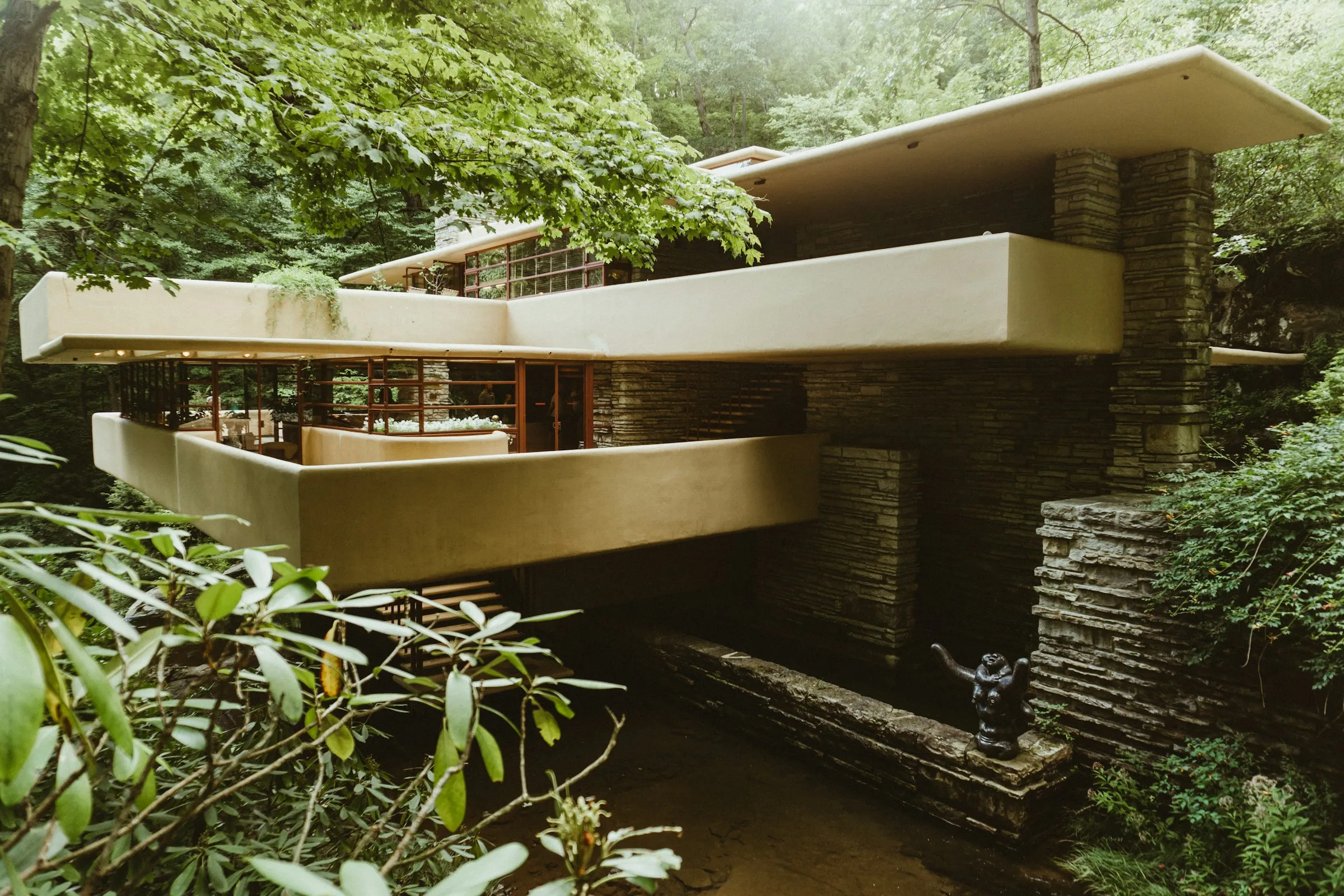
As a unique example of modern architecture in harmony with nature, the exterior of Fallingwater House is made of stone and brick, while the terraces and floor slabs are left in a raw, natural state. The two-story house, with an open and free-flowing layout, features a spacious entrance hall, a small storage room, and a spacious living room on the ground floor. The upper floor houses two bedrooms, two bathrooms, and an office. Steps from the living room lead directly to the waterfall.
3. Solomon R. Guggenheim Museum
Location: New York, USA
Architect: Frank Lloyd Wright
Year: 1959
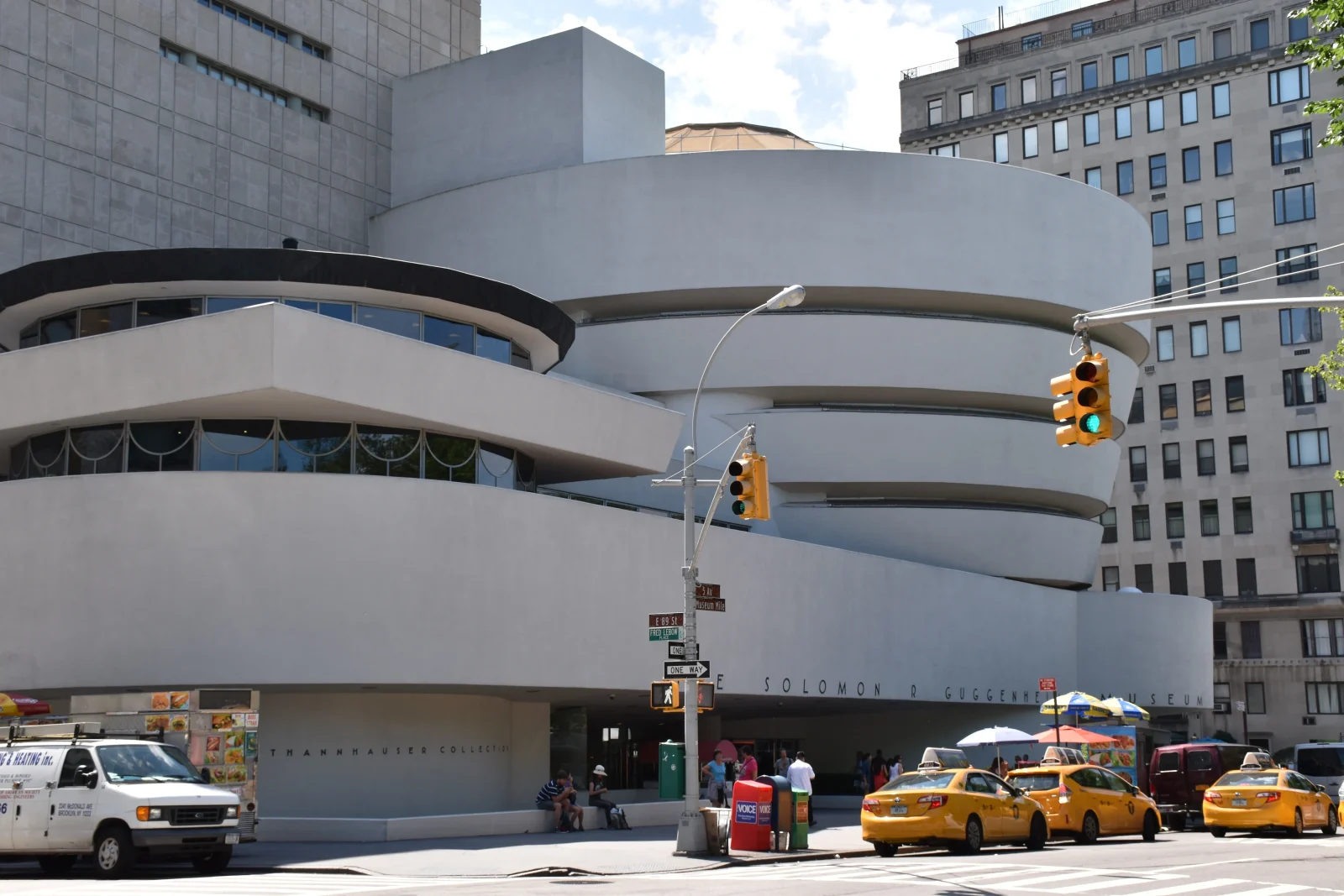
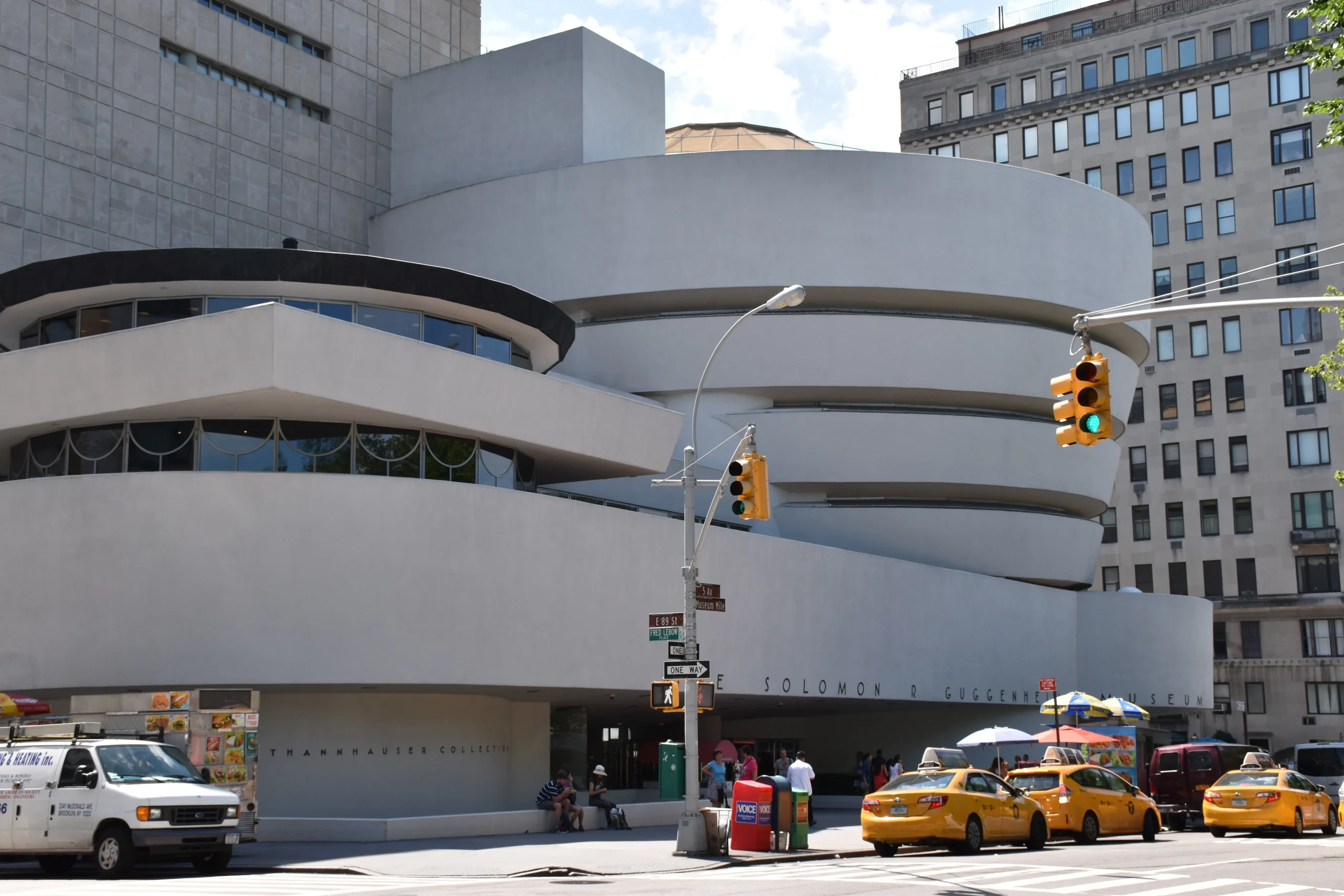
One of the most iconic buildings of modern architecture, the Solomon R. Guggenheim Museum is a world-renowned art museum, home to some of the most significant works of modern art. Seeking to create something different from the rectangular and rigid architecture typical of Manhattan, Frank Lloyd Wright designed the Guggenheim Museum with an organic and curvilinear form. Based on the idea of a “single, continuous space on an uninterrupted floor,” the building features a spiraling ramp that ascends through six levels, allowing visitors to experience art in a seamless flow.
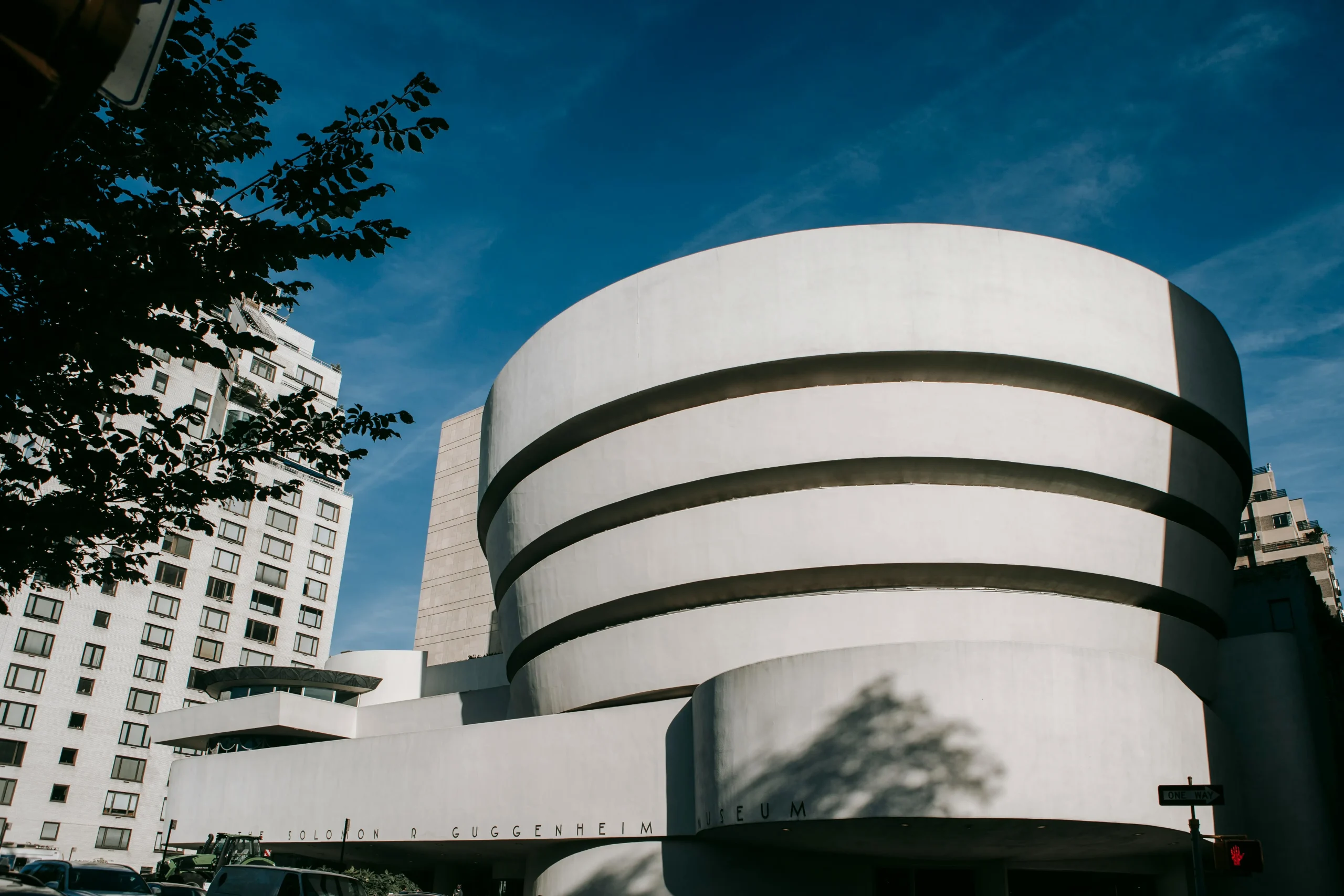
Demonstrating an inextricable fusion of creativity, form, and function, the Solomon R. Guggenheim Museum redefines the concept of the museum. Its cylindrical form, a harmonious contrast to the Manhattan skyline, reflects the unpredictability found in nature. The museum’s curves are an architectural reflection of Wright’s organic approach; the form responds not only to its physical surroundings but also to its cultural and social context.
4. Glass House
Location: New Canaan, USA
Architect: Philip Johnson
Year: 1949
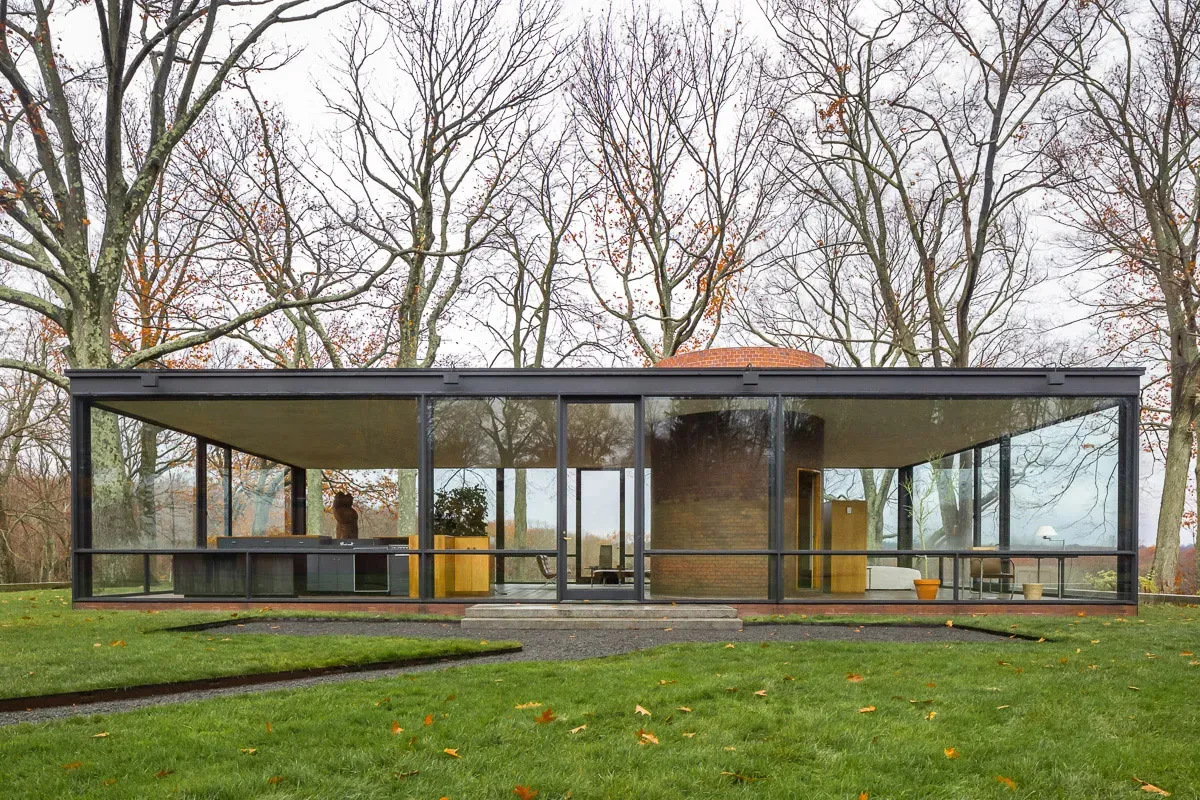
Defined as a pavilion designed for observing the surrounding landscape, the Glass House stands as one of the most iconic examples of the International Style within 20th-century modern architecture and American residential design. Located on a wooded site with unparalleled views, the Glass House’s four rectangular exterior walls, constructed entirely of glass, completely open to the surrounding landscape.
Used as a residence by Philip Johnson until 2005, the Glass House comprises a kitchen, dining room, living room, bedroom, fireplace, restroom, and entrance area. Conceived as a single, open-plan volume without internal walls, its rectangular, loft-like interior areas are interpreted as distinct functional zones.
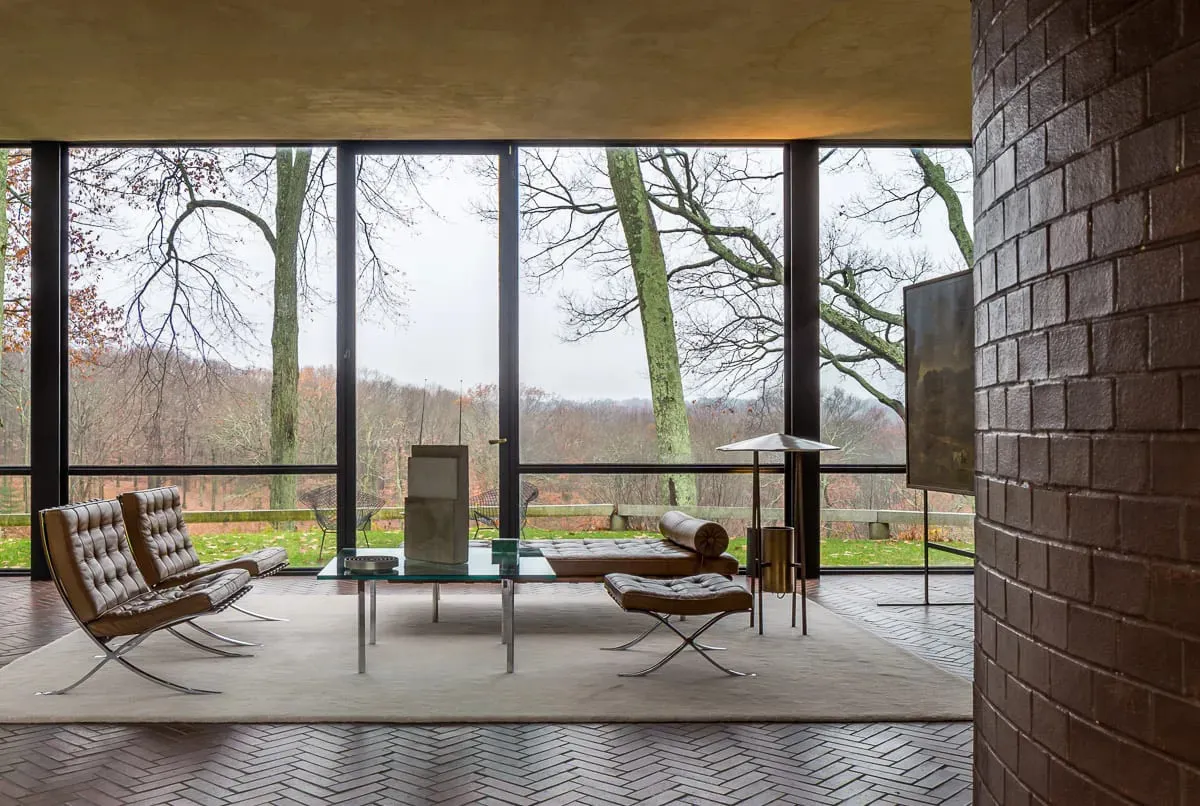
The furniture, arranged in a precise order, contrasts beautifully with the ever-changing scenery outside. The centrally located living room is defined by a rug, and the bedroom, the most private space, is separated from the living room by a closet. Aside from the wall separating the bathroom from the house, the Glass House has no fixed walls.
5. Dessau Bauhaus

Location: Dessau, Germany
Architect: Walter Gropius
Year: 1926
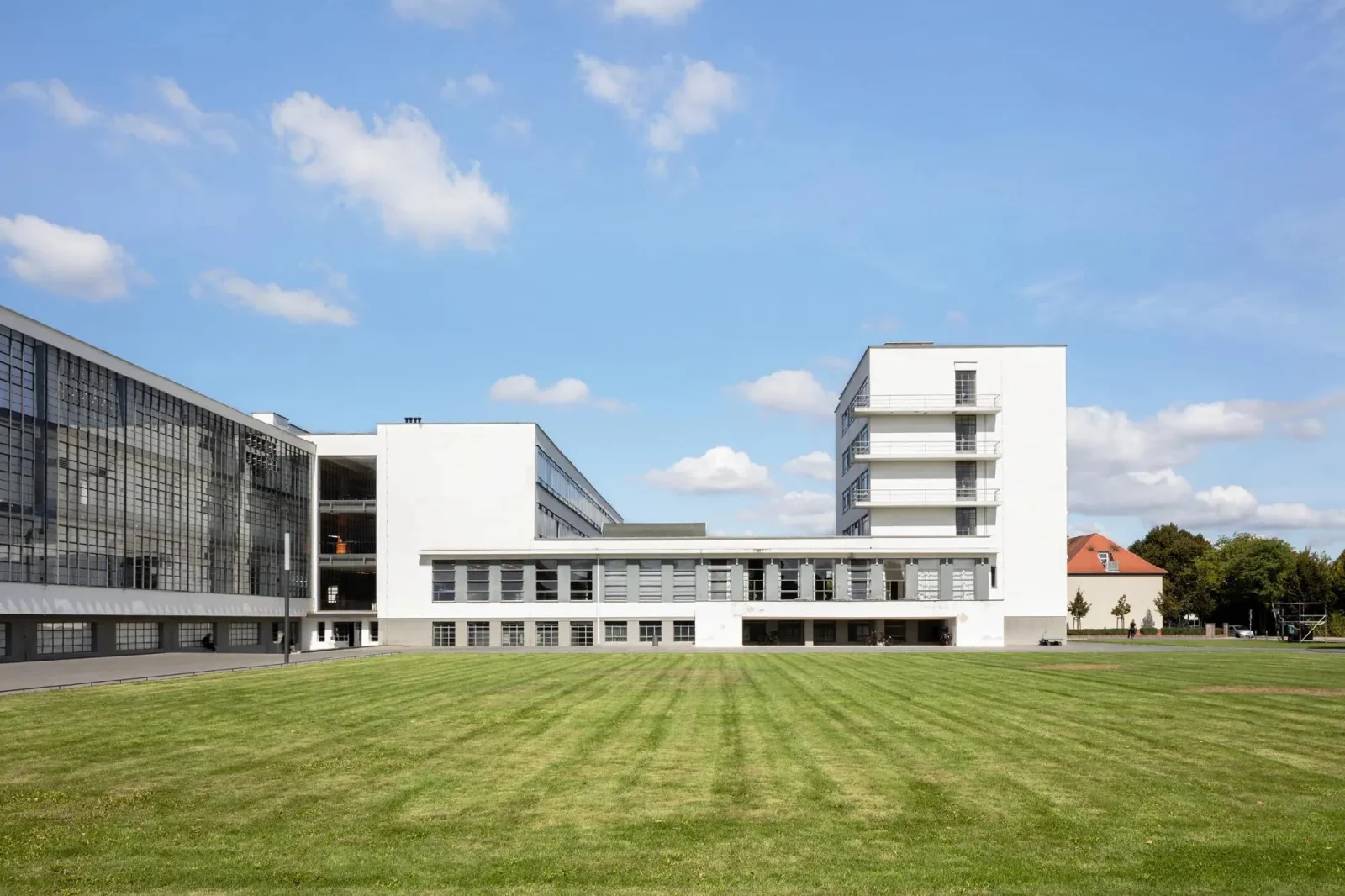
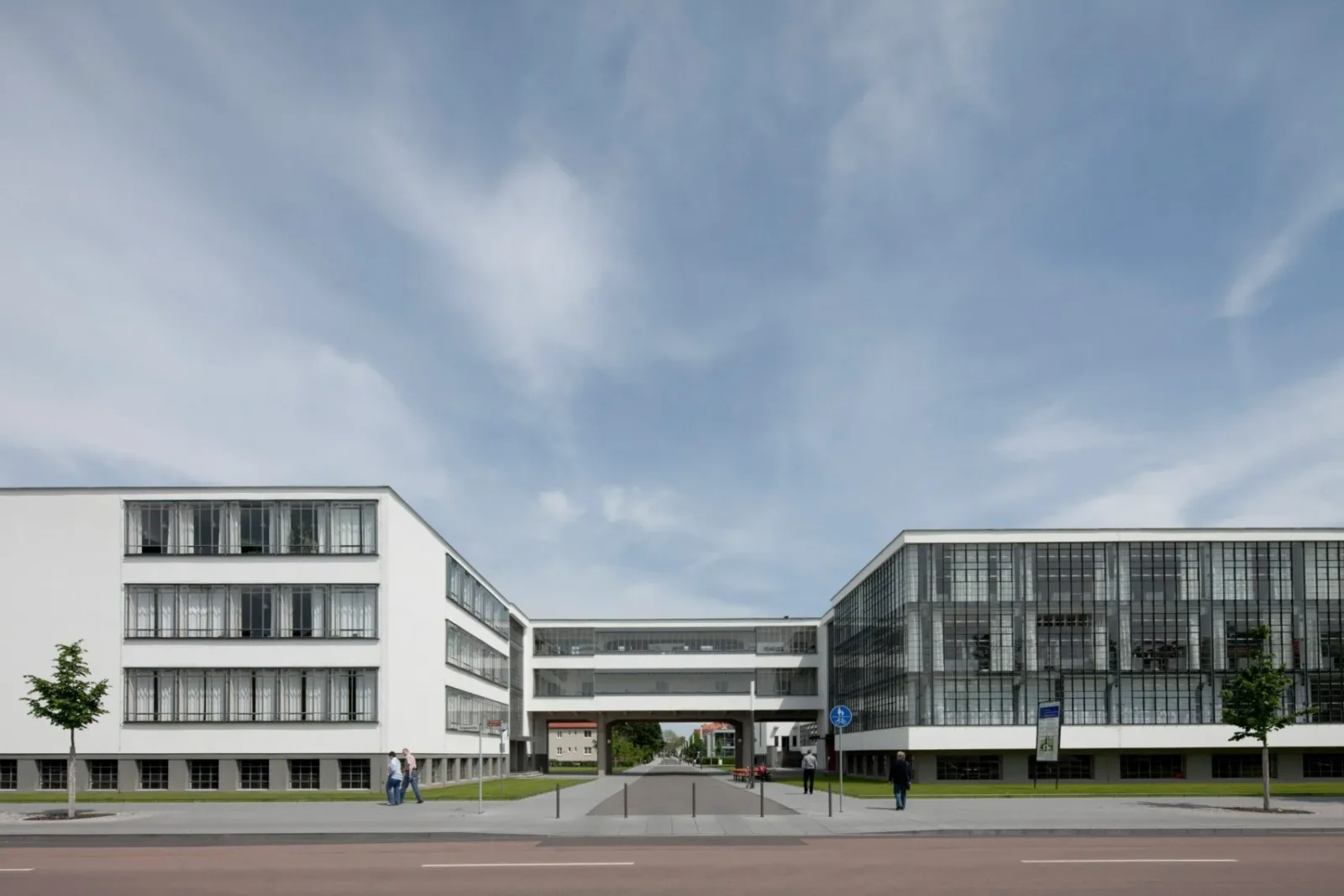
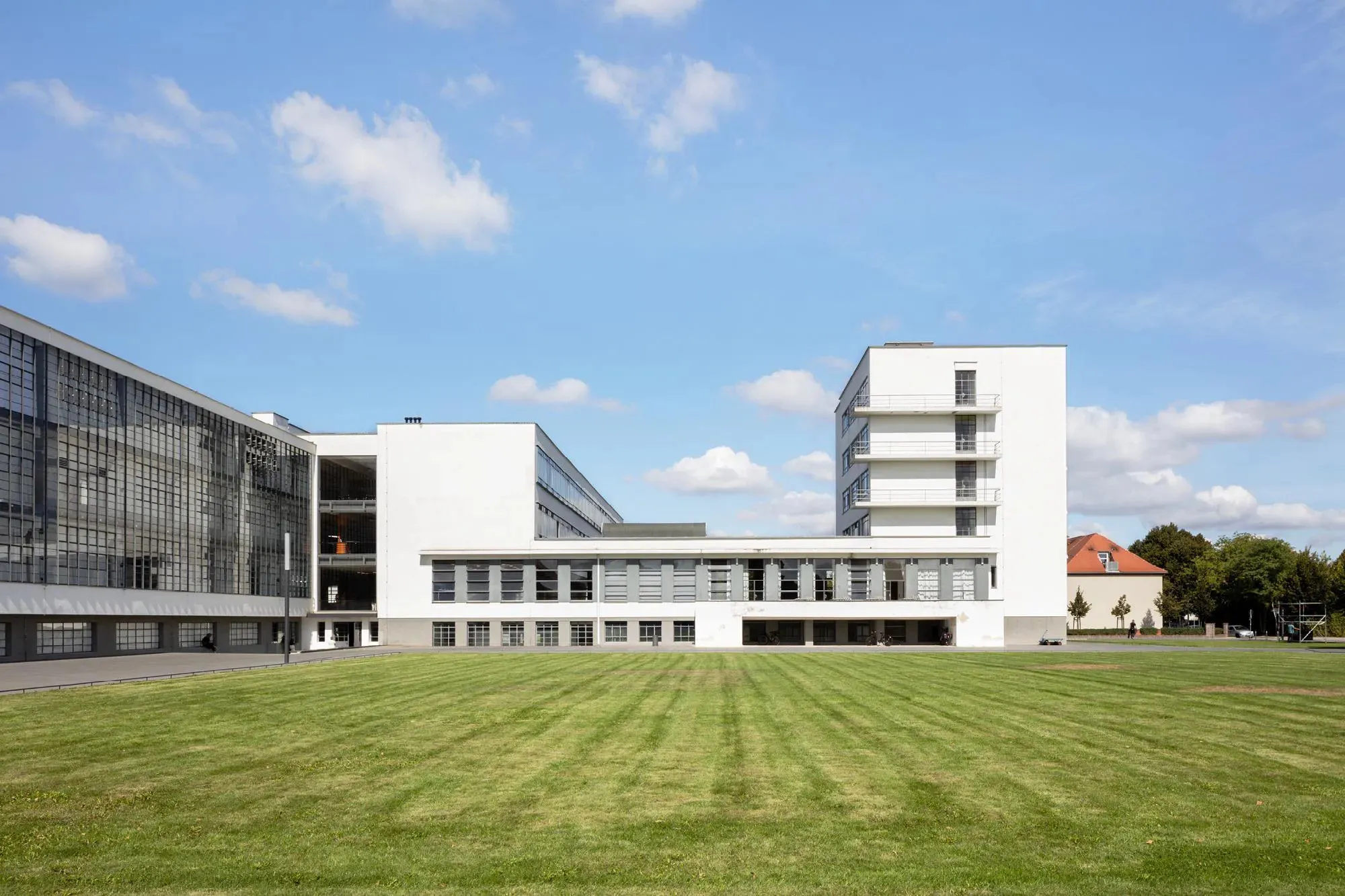
A groundbreaking building in the history of modernist architecture, the Bauhaus, designed by Walter Gropius, embodies the principles of the Bauhaus movement, which aimed to combine art, craft, and technology in a harmonious and functional design. A masterpiece of functional design, the building boasts a minimalist aesthetic characterized by clean lines, geometric shapes, and the use of industrial materials.
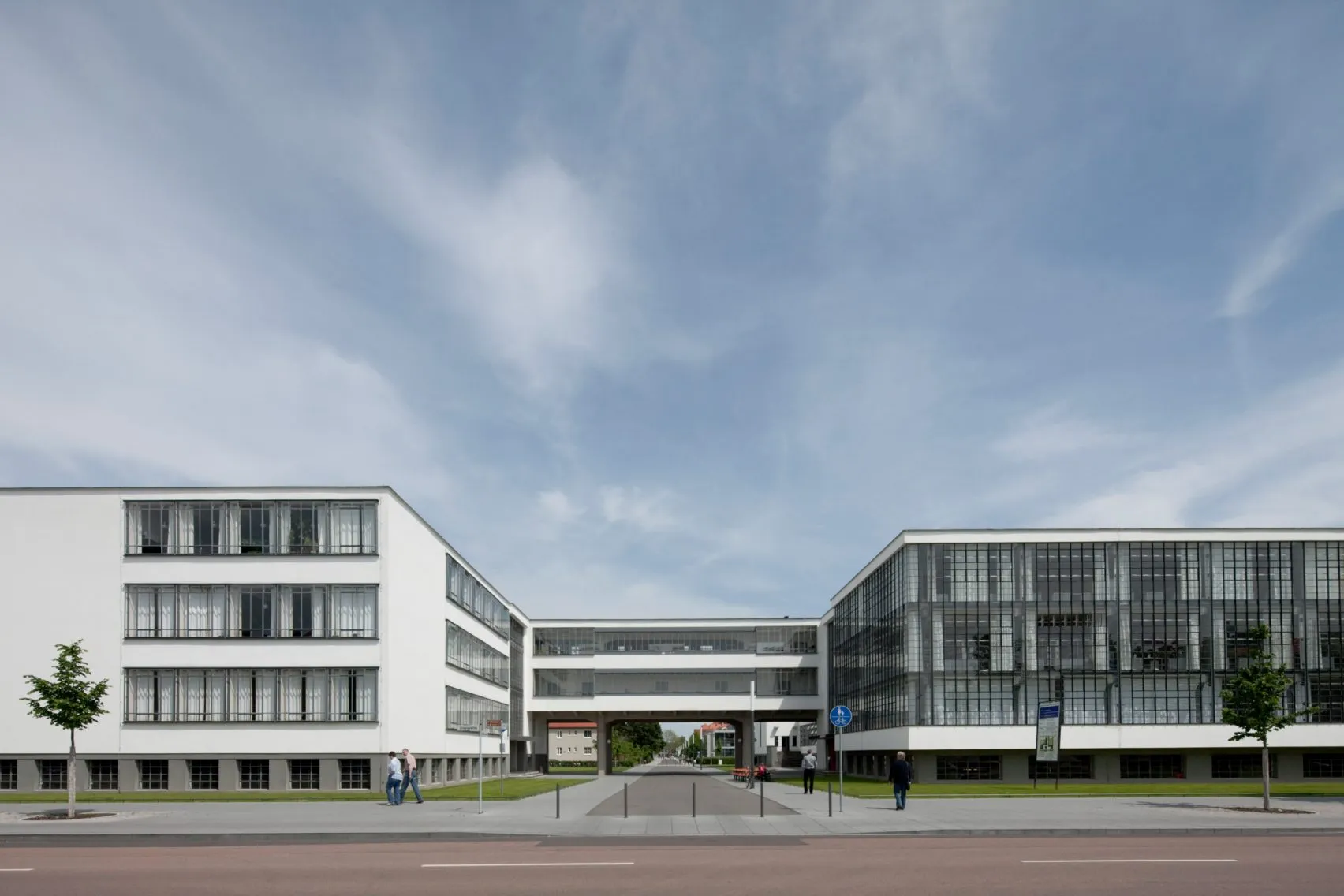
The Bauhaus building, with its asymmetrical design, has each wing serving a different function and is cohesively connected. The extensive glass curtain walls allow abundant natural light to enter, creating a sense of transparency and openness that blurs the boundaries between interior and exterior spaces. Flat roofs and cantilevered balconies exemplify a modernist rejection of traditional pitched roofs.
To design the interior spaces, which are as innovative as the exterior, Gropius collaborated with leading Bauhaus artists and designers. The interiors are designed to be adaptable to different needs, with movable partitions and multifunctional furniture. Modular furniture, open floor plans, and minimalist décor reflect the school’s commitment to practical design solutions.
6. Barcelona Pavilion
Location: Barcelona, Spain
Architect: Ludwig Mies van der Rohe
Year: 1929
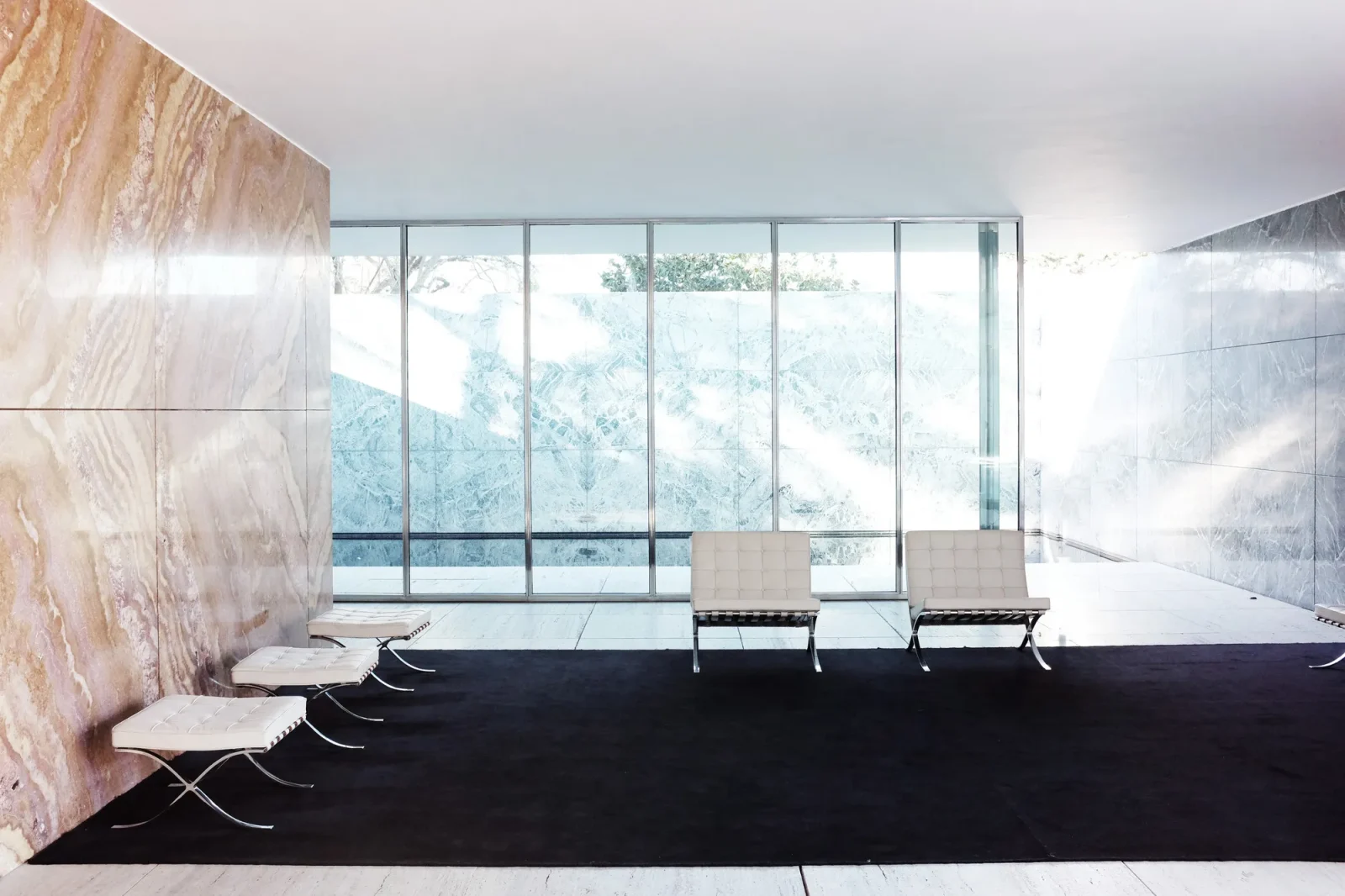
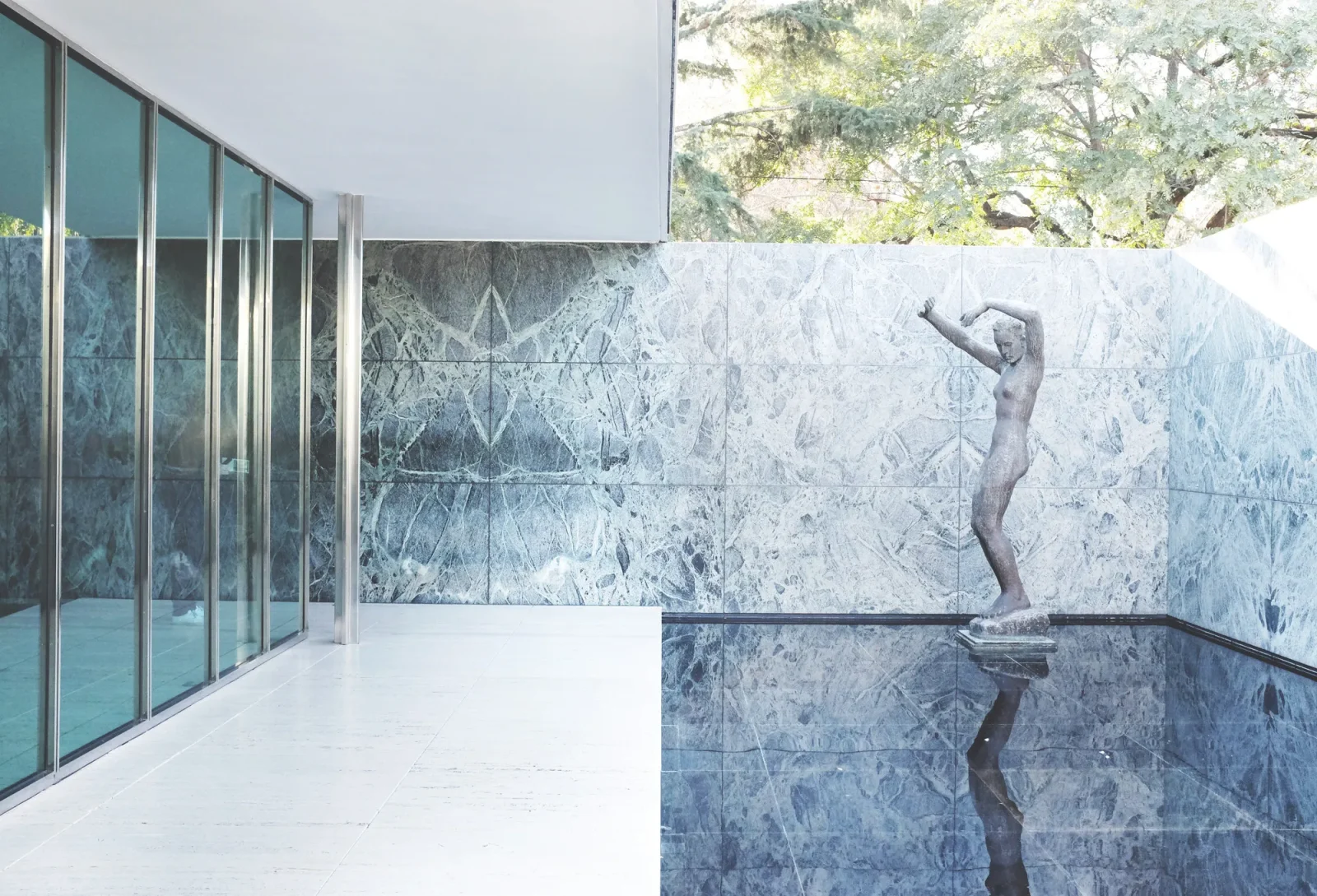
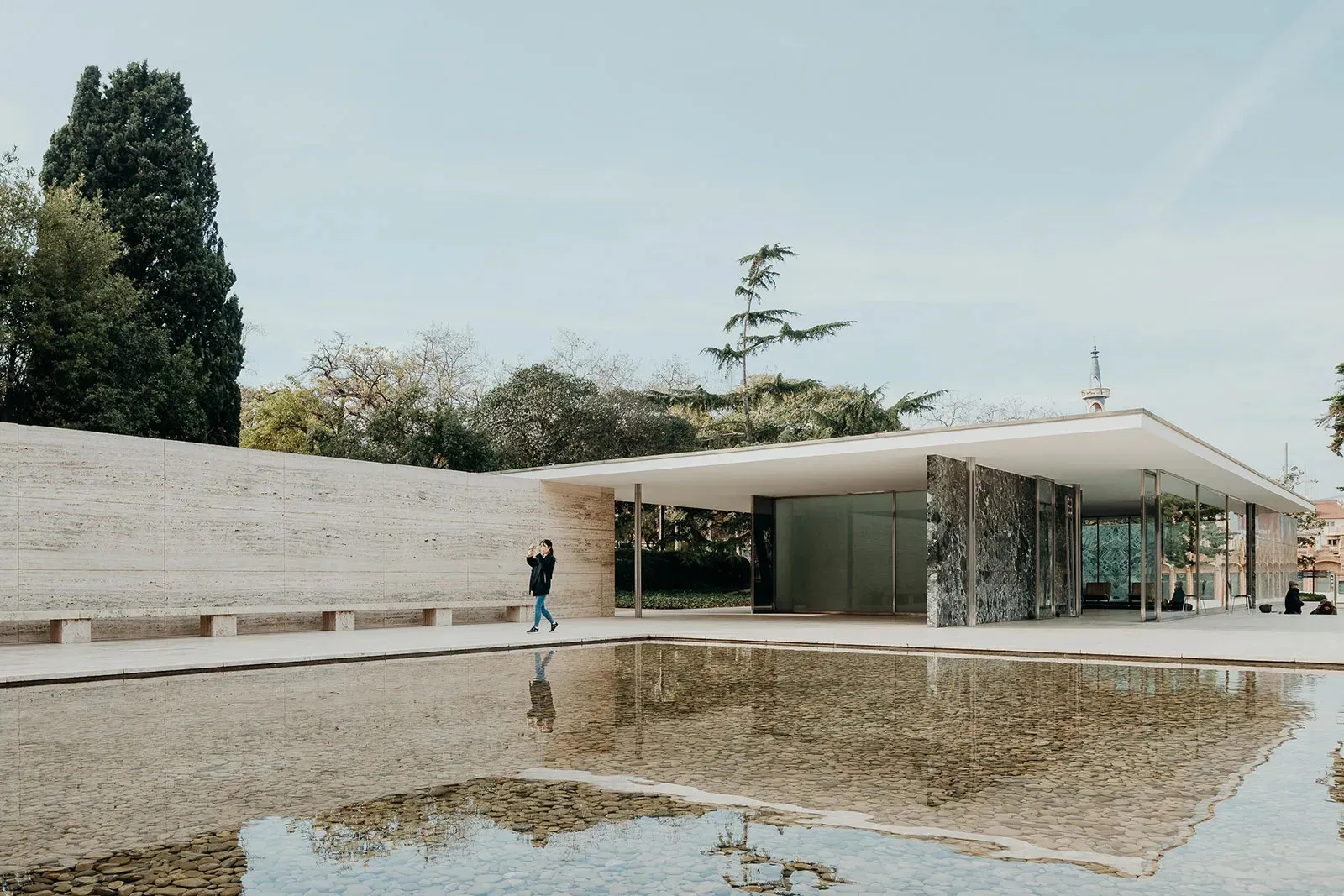
Designed by Ludwig Mies van der Rohe as the German National Pavilion for the 1929 Barcelona International Exposition, the Barcelona Pavilion stands as one of the key symbols of 20th-century modern architecture. Intended to represent the New Weimar Germany, the pavilion was built with the “Free Plan” and “Floating Room” concepts to express the spirit of a new era.
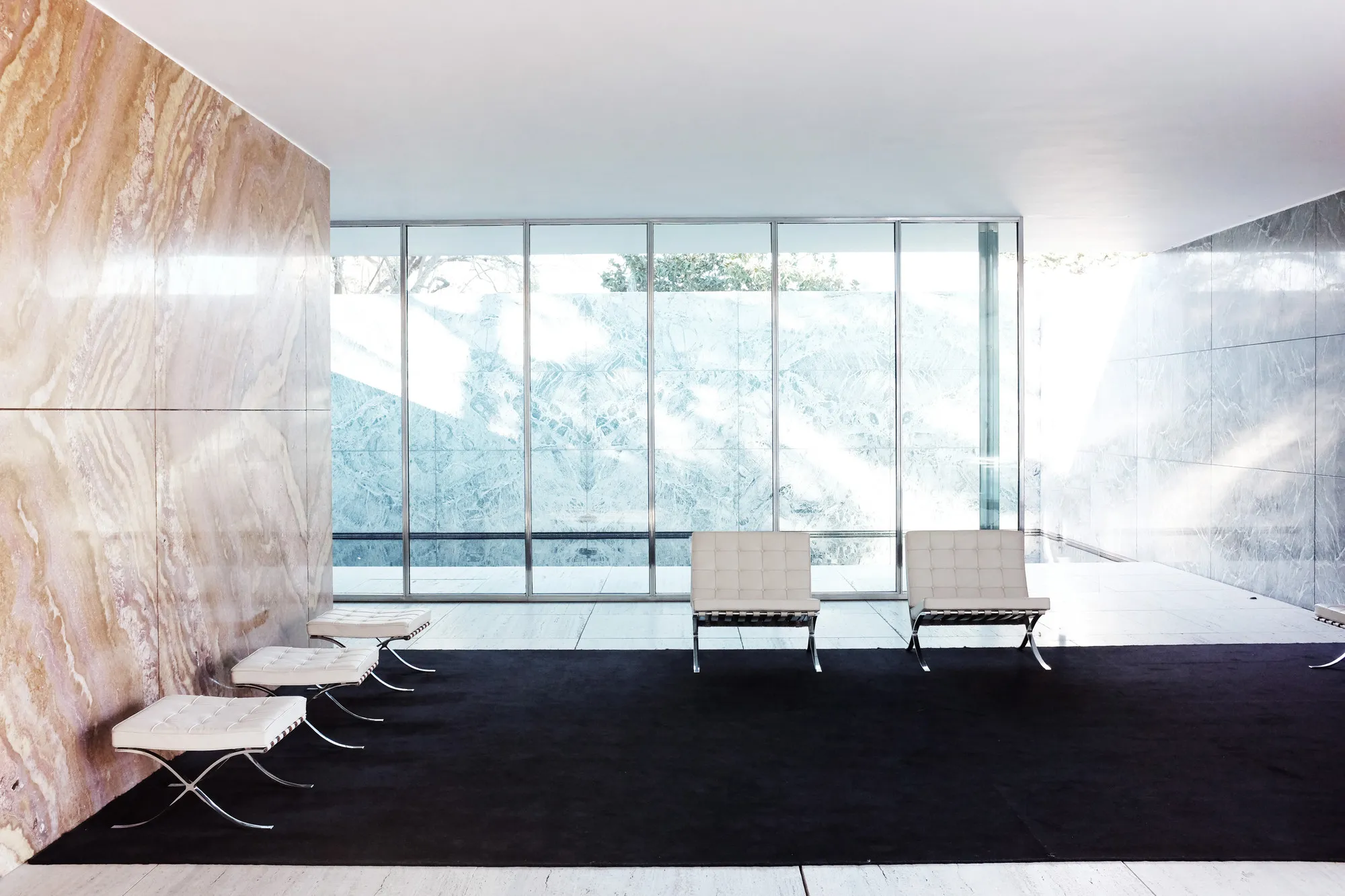
Characterized by symmetry, open-plan spaces, precise proportions, and minimalist design, the Barcelona Pavilion brings together materials such as glass, steel, and luxurious marble. Resting on a travertine plinth, the floor slabs extend outward and over the reflecting pool, visually connecting the interior and exterior. The relatively small roof plates are supported by chrome-plated, cross-shaped columns, creating the impression of a suspended roof.
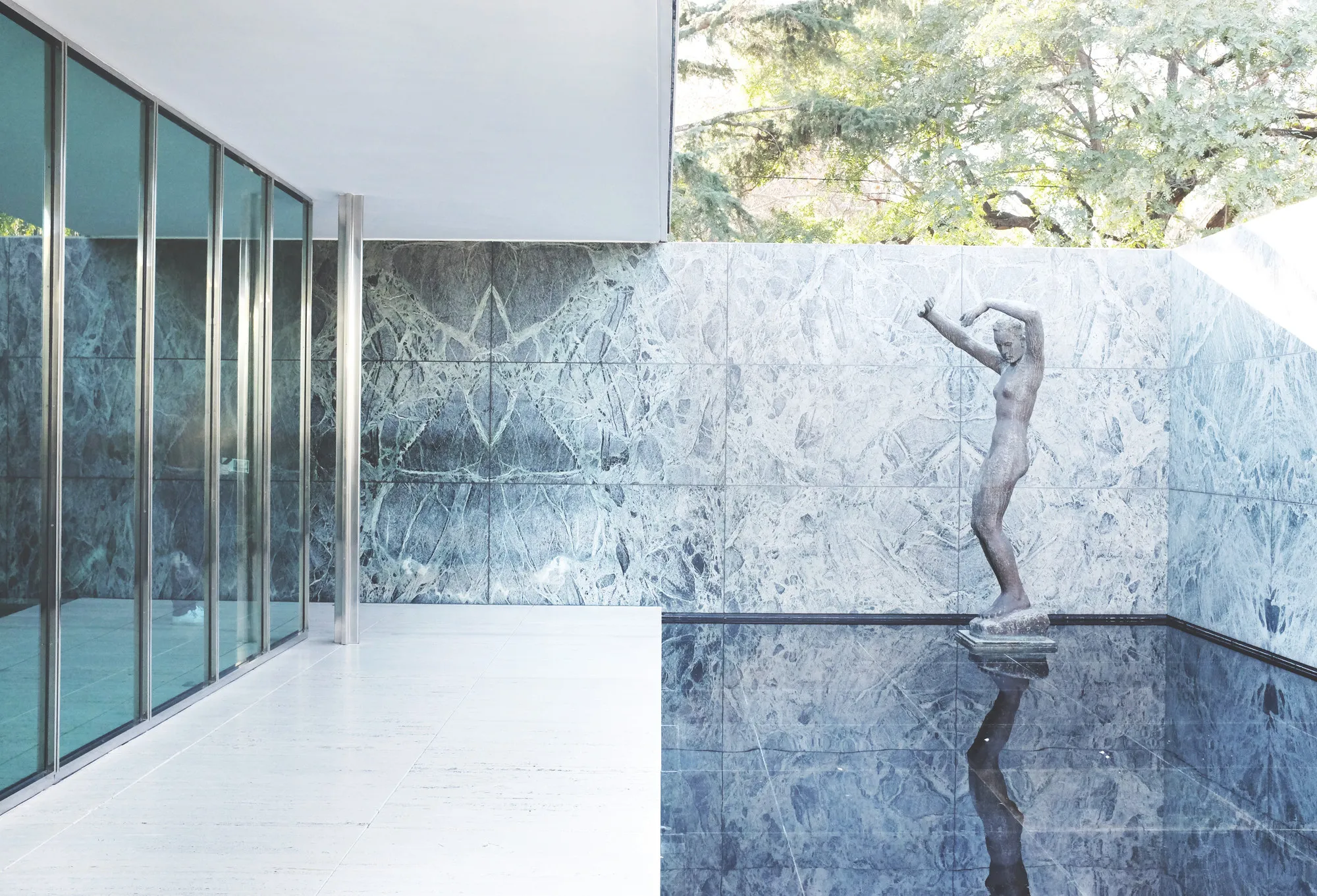
Dismantled in 1930 after the exhibition closed, the Barcelona Pavilion became a significant landmark in both Mies van der Rohe’s career and in modern architecture. The rebuilt building opened on its original site in 1986.
7. Crown Hall
Location: Chicago, Illinois, USA
Architect: Ludwig Mies van der Rohe
Year: 1956
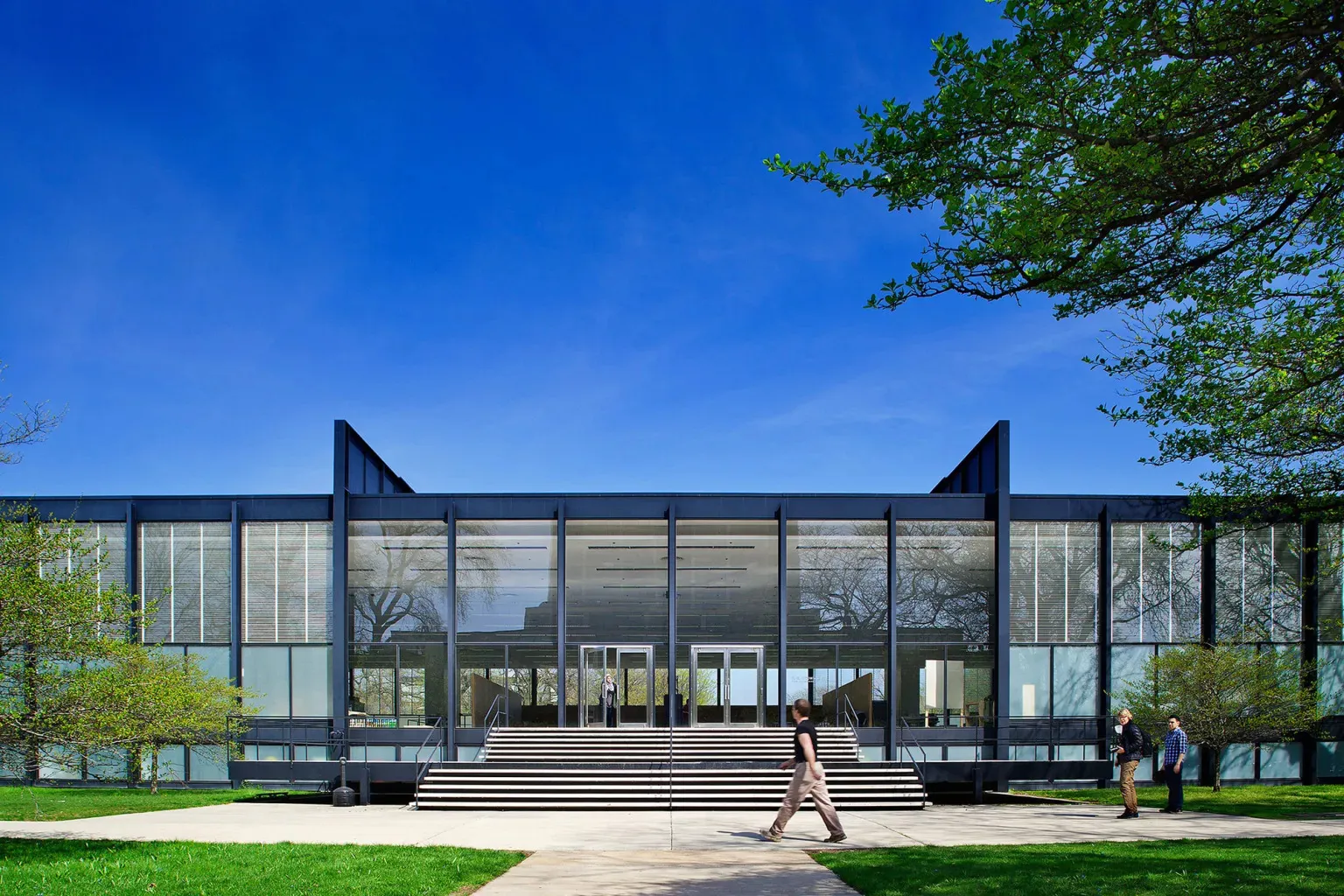
A testament to modern architecture’s potential to combine form and function in harmonious balance, Crown Hall is at the center of Mies van der Rohe’s master plan for the IIT campus. Reflecting Mies’s design philosophy and shaping the fundamental principles of architectural education, the building was recognized by the American Institute of Architects as one of the most important buildings of the 20th century.
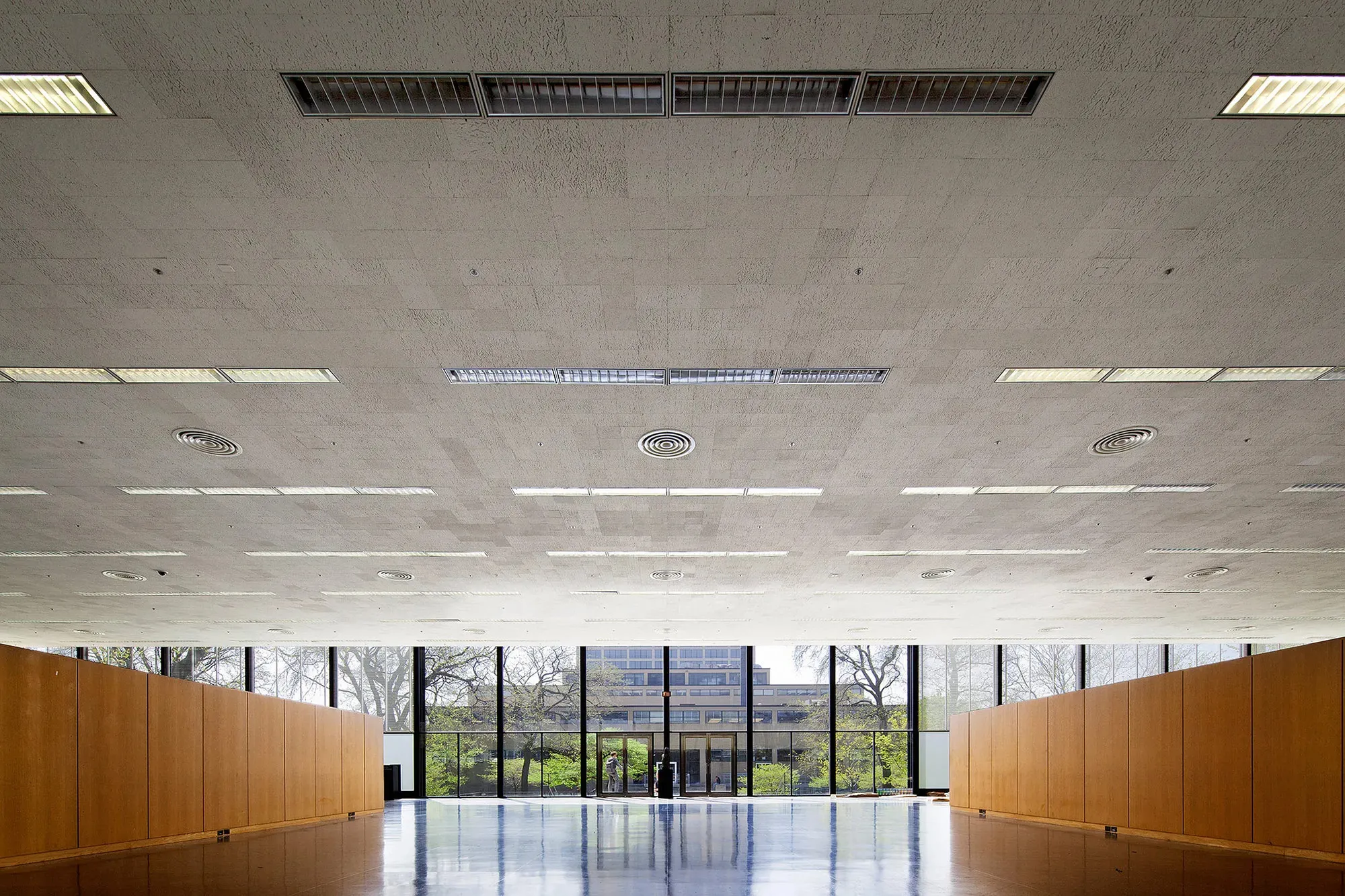
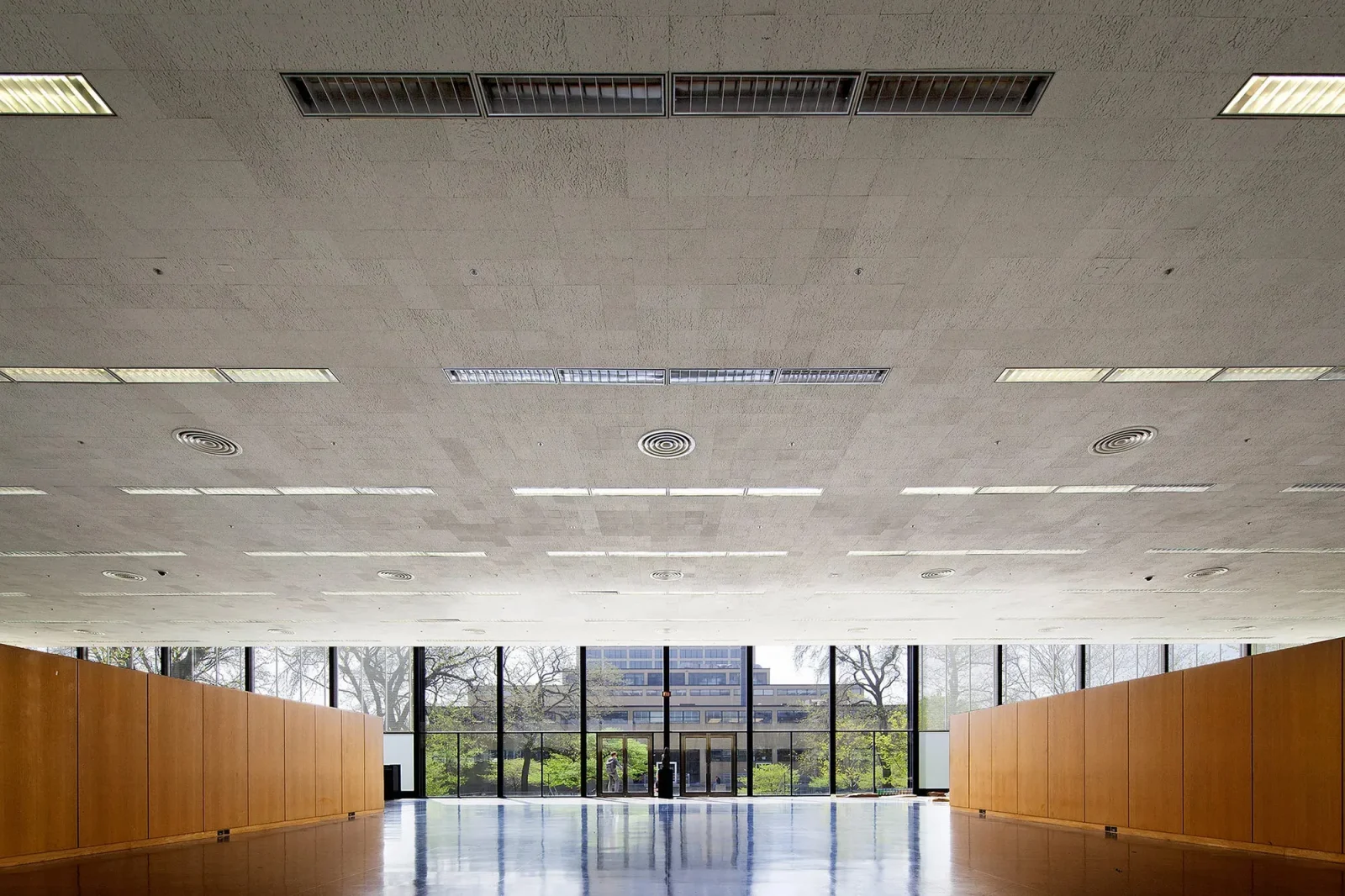
With its innovative and daring design, Crown Hall breaks away from standard steel and glass structures, offering a virtually column-free space. Crown Hall, notable for its roof suspended from the undersides of four steel plate beams supported by exterior steel columns, creates an unobstructed interior. Measuring 120 by 220 feet with an 18-foot-high ceiling, the main floor provides a spacious and flexible environment where students and faculty can interact freely, unconfined by the traditional boundaries of divided classrooms.
8. Villa Dirickz
Location: Brussels, Belgium
Architect: Marcel Leborgne
Year: 1933
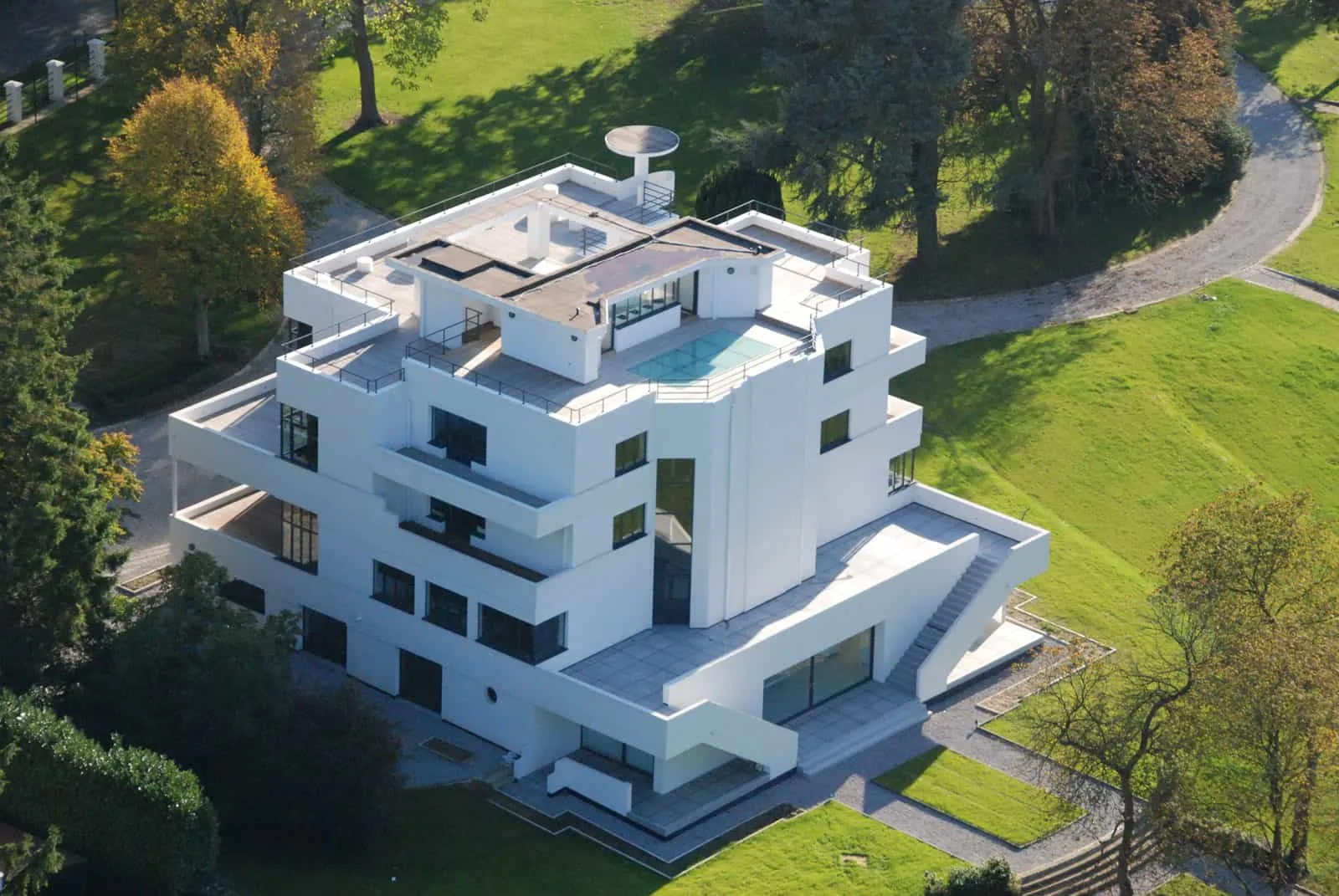
Built by architect Marcel Leborgne, one of the founders of modernism in Belgium, Villa Dirickz was designed for Mr. Dirickz, who loved art, theater, and a flamboyant lifestyle. An iconic structure of modern architecture, this villa consists of a virtual cube where geometric volumes are manipulated to create a homogeneous blend of forms. The four-story Villa Dirickz is striking with its glasswork and white concrete surrounded by greenery. Boasting a sumptuous interior, the villa boasts amenities such as a wine cellar and a cinema.
After a period of neglect, Villa Dirickz was purchased in 2007 by Alexander Cambron, who restored it into a fully functional and exquisitely decorated residence once again.
9. David S. Ingalls Rink
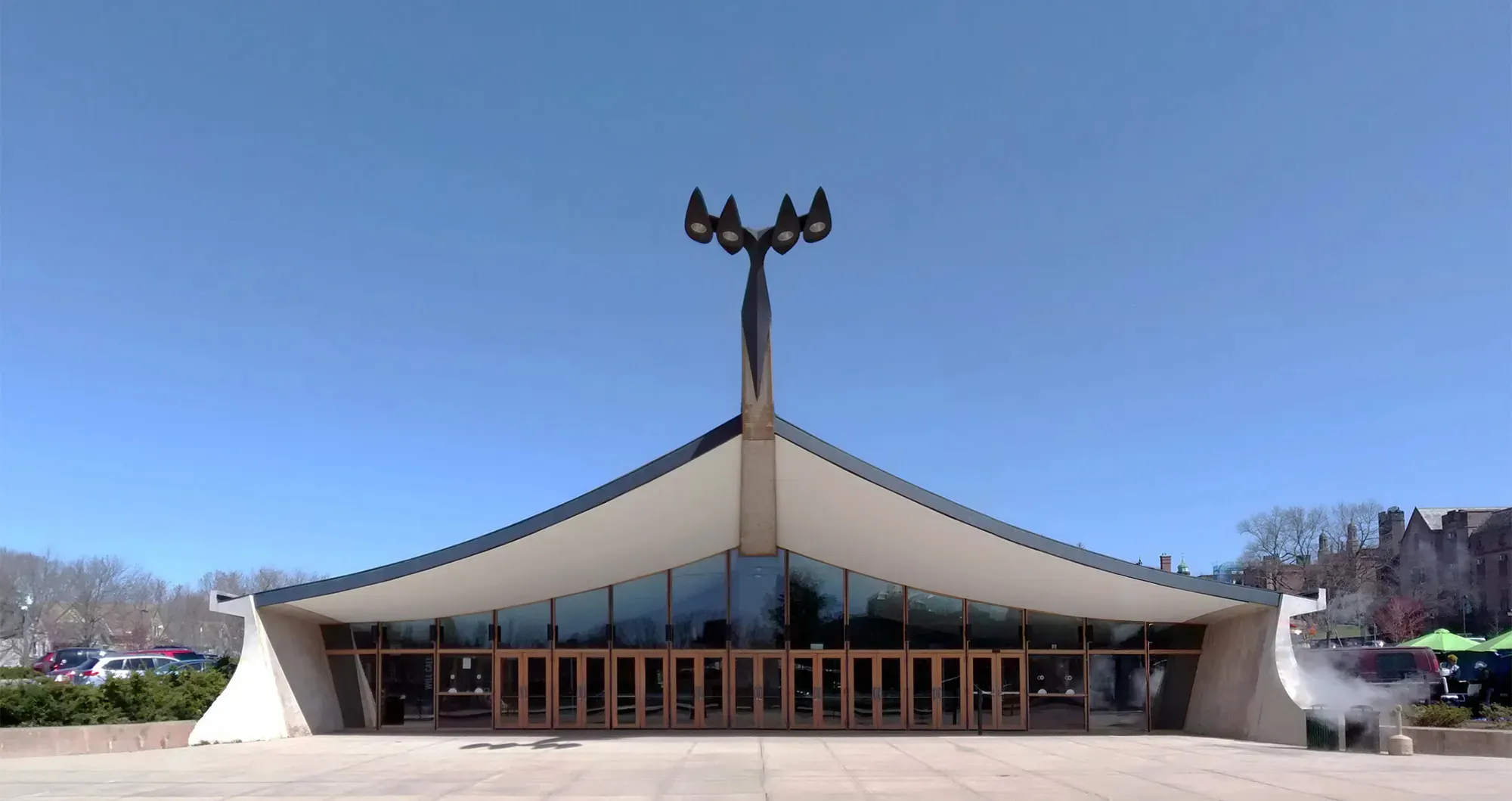
Location: New Haven, USA
Architect: Eero Saarinen
Year: 1958
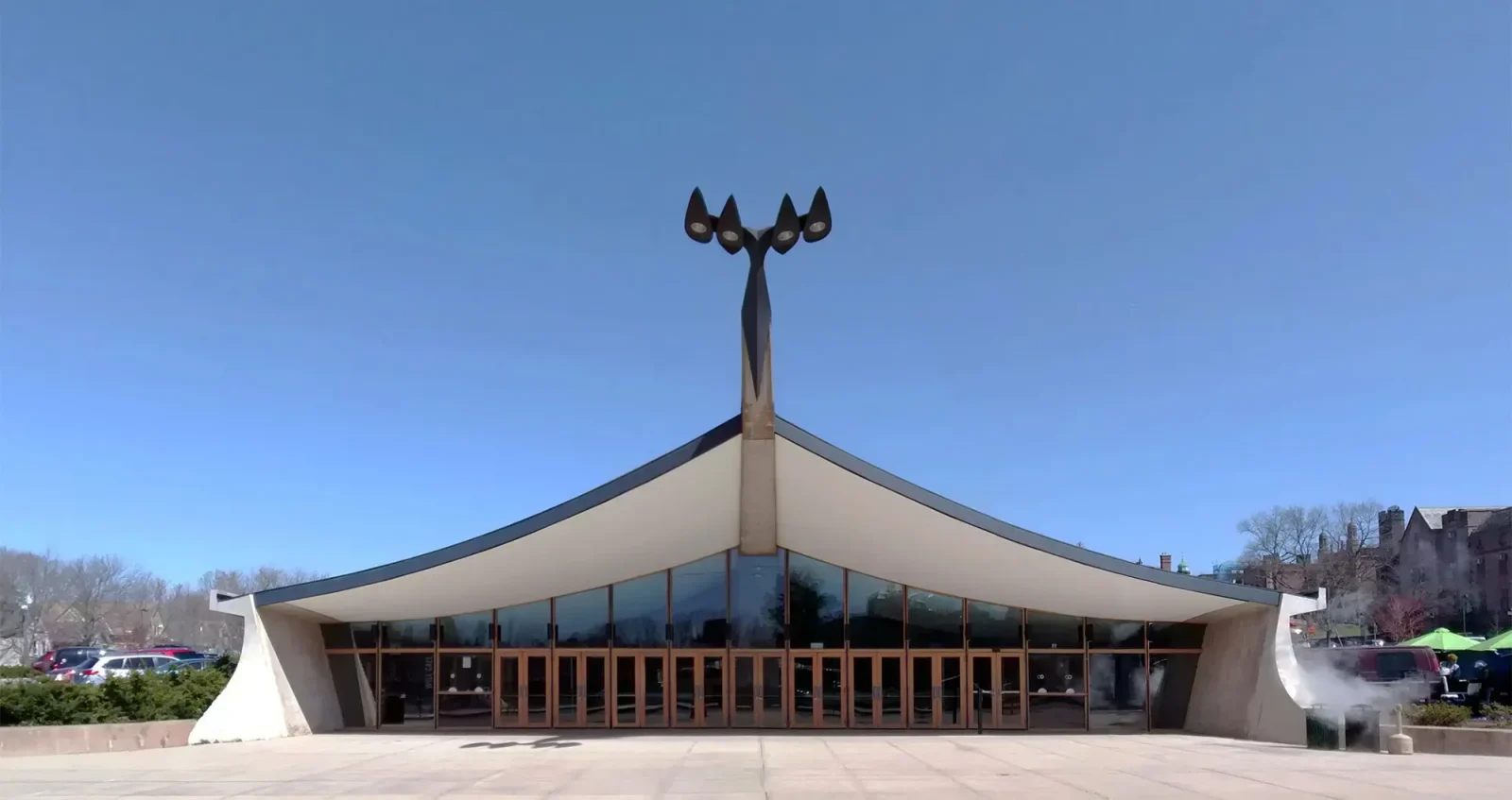
The David S. Ingalls Rink, designed by Eero Saarinen for Yale University, is one of the most iconic buildings of modern architecture. The rink is characterized by an unusually long span organized around a single structural idea: a longitudinal concrete chain spine that supports a cable-stayed wooden roof, creating a clear and uninterrupted ice-skating hall. The cable spans create a legible module across the ceiling, which in turn directs the placement of lighting, acoustics, and services. Luminaires are placed within the gaps in the net, protecting the ice from glare while maintaining downward illumination. The result is a roof that functions simultaneously as a structure, a ceiling, and a scaffolding for infrastructure.
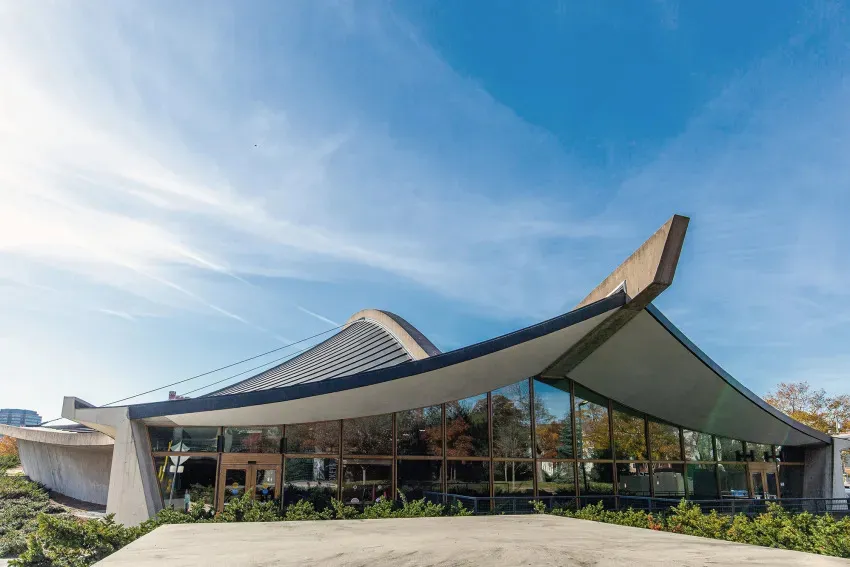
The low and broad eaves of David S. Ingalls Rink compress the entrance and create a horizontal reference line that intensifies the transition into the main volume. The arching spine, acting as a continuous line of orientation, not only guides circulation along the length of the rink but also frames the central void, making spatial navigation intuitive. A warm wooden eave softens the acoustics and scale, while controlled daylight from the surrounding area illuminates the rink without directly hitting the ice.
10. Congresso Nacional
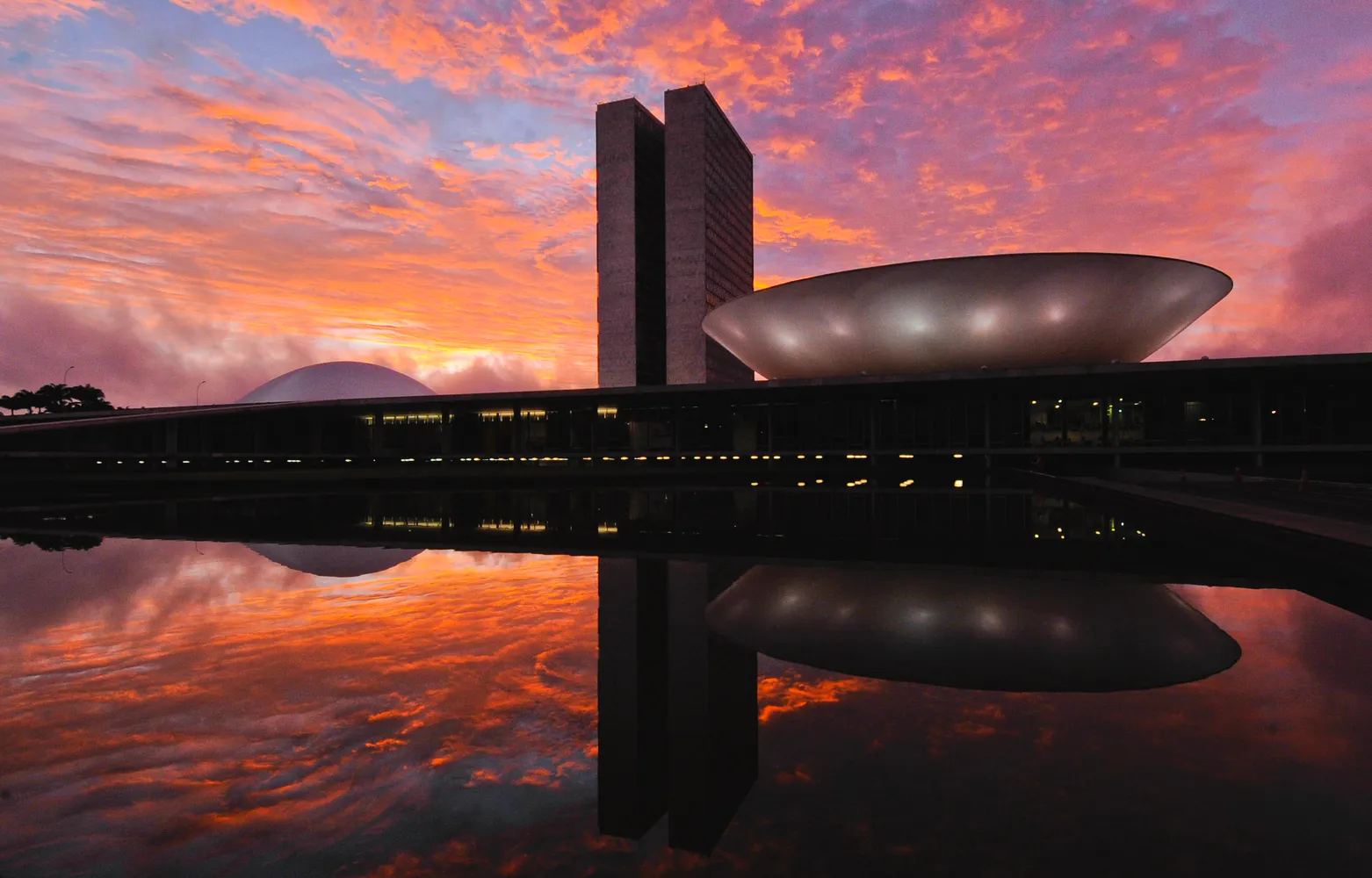
Location: Brasilia, Brazil
Architect: Oscar Niemeyer
Year: 1960
The Congresso Nacional, which epitomizes Brazilian modernism through the work of Oscar Niemeyer, stands at the center of the eastern wing of Brasília’s Monumental Axis. The two streets that define the Monumental Axis rise on slopes level with the roof of the National Congress building’s foundation, and triangular segments extend from each corner of the broad, cantilevered, flat roof, touching the edges of the streets. Above this flat roof rise two domes symbolizing the chambers of Brazil’s legislature. For the larger Chamber of Deputies, Niemeyer inverted the symbolic dome to form an open bowl shape, while the smaller convex dome represents the Federal Senate.
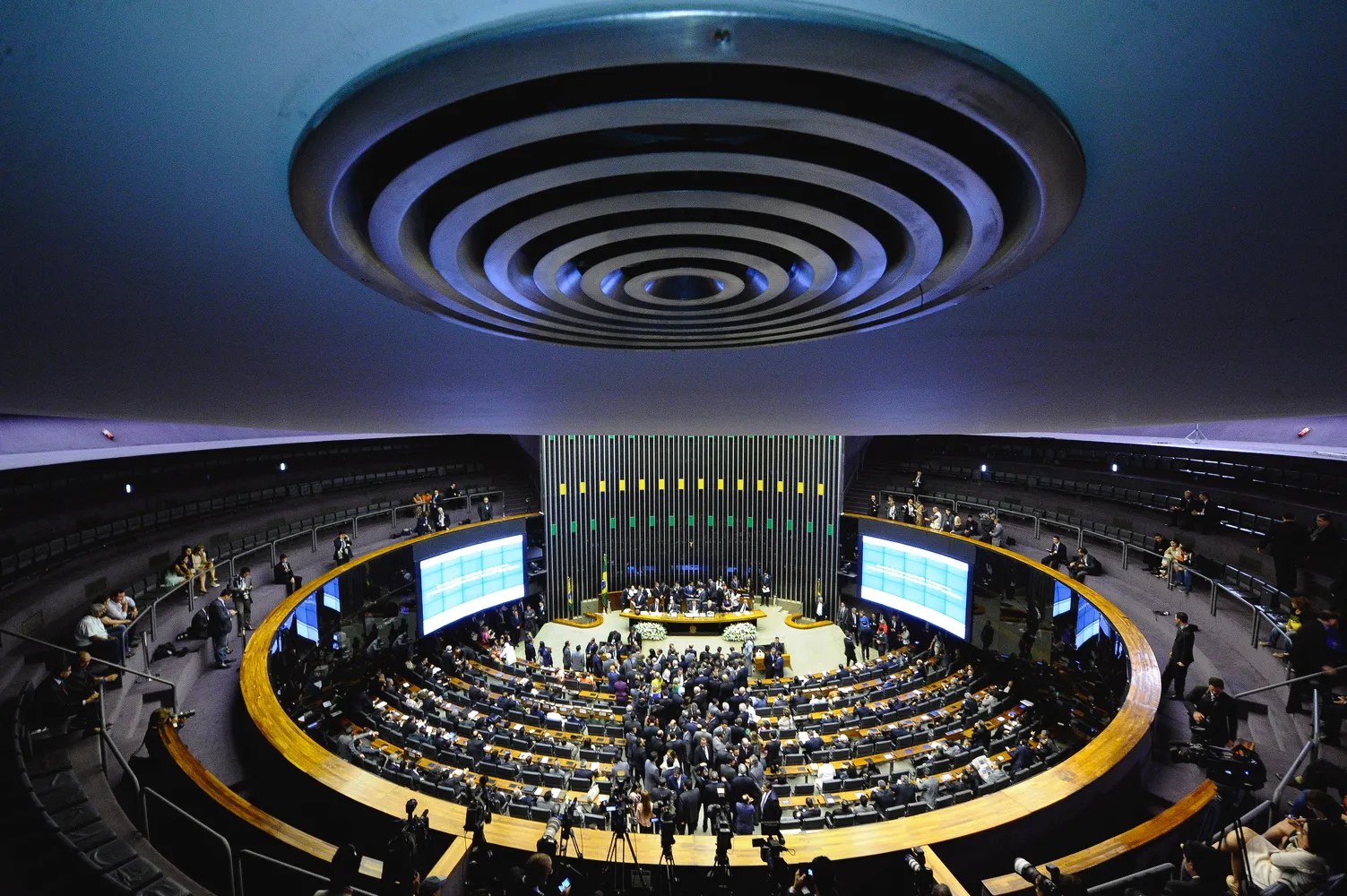
In addition to the parliamentary chambers, parliamentary offices and other administrative functions are located in two 27-story twin towers. In addition to the parliamentary chambers, parliamentary offices and other administrative functions are located in two 27-story twin towers. With pentagonal floor plans and gently angled façades, the towers narrow toward a central vertical void. Offices and meeting rooms occupy the outer perimeters of the towers, while elevators and service cores are located in the space between them.
Explore Courses
.jpg "Ondrej Chybik - Rethinking Architecture")