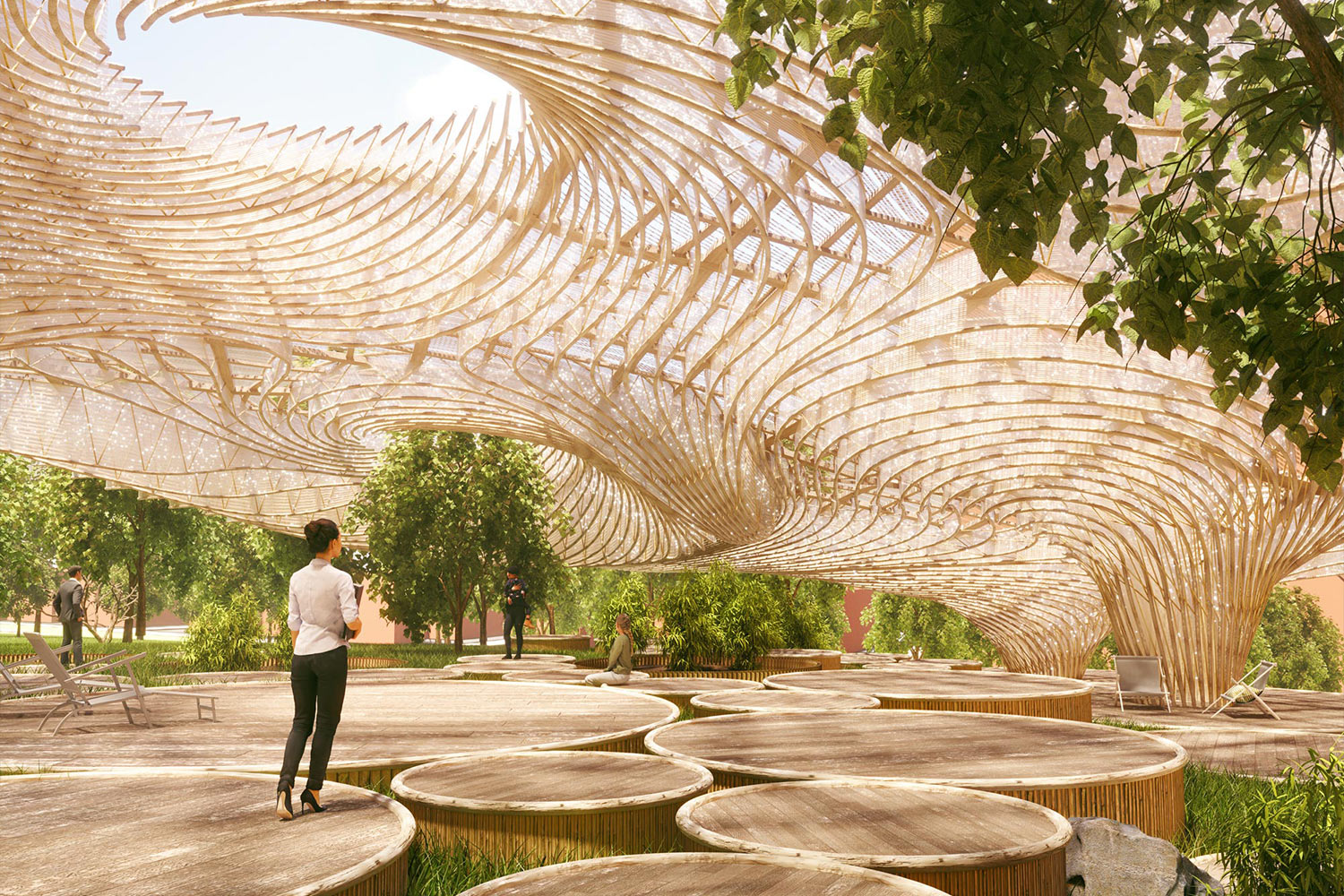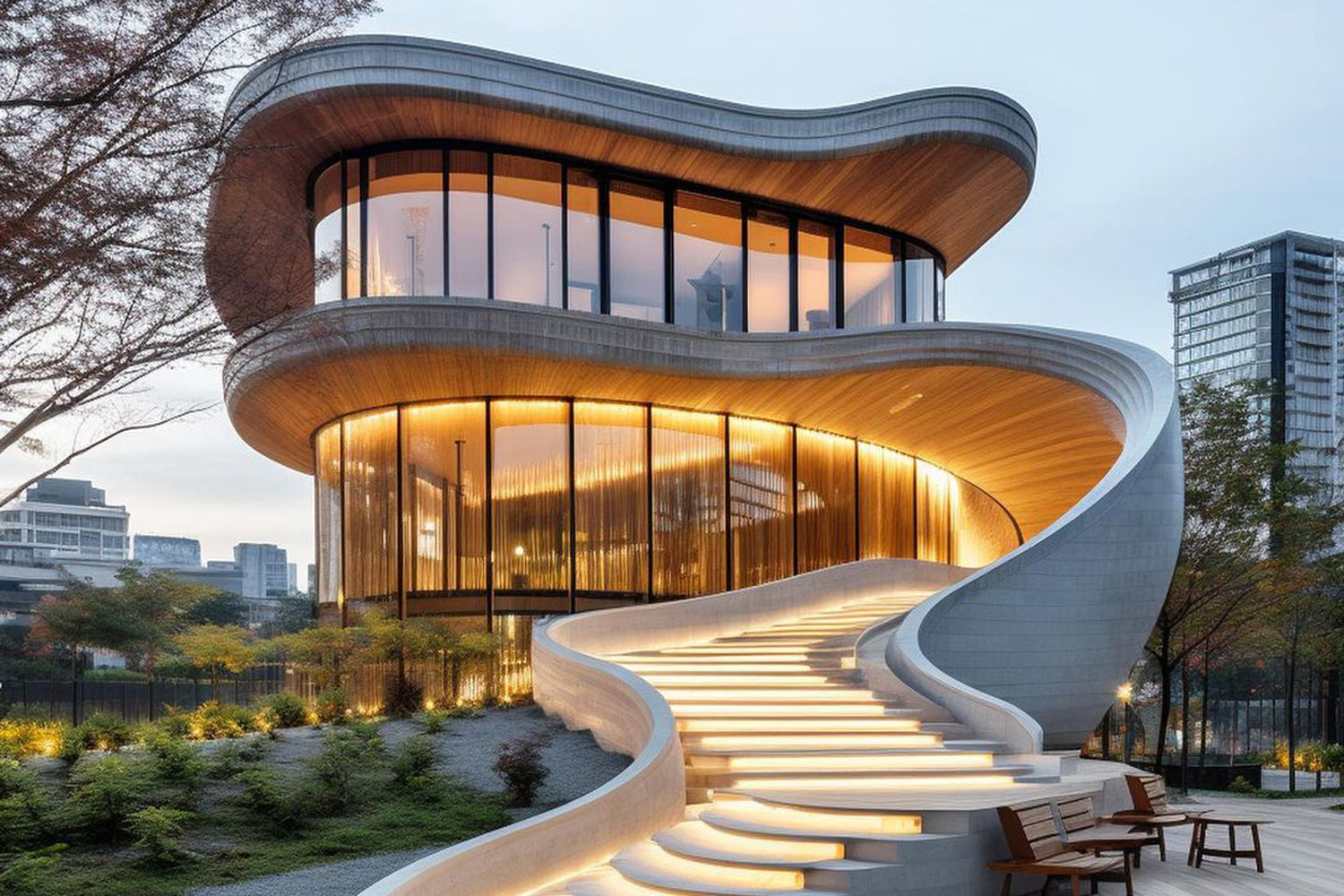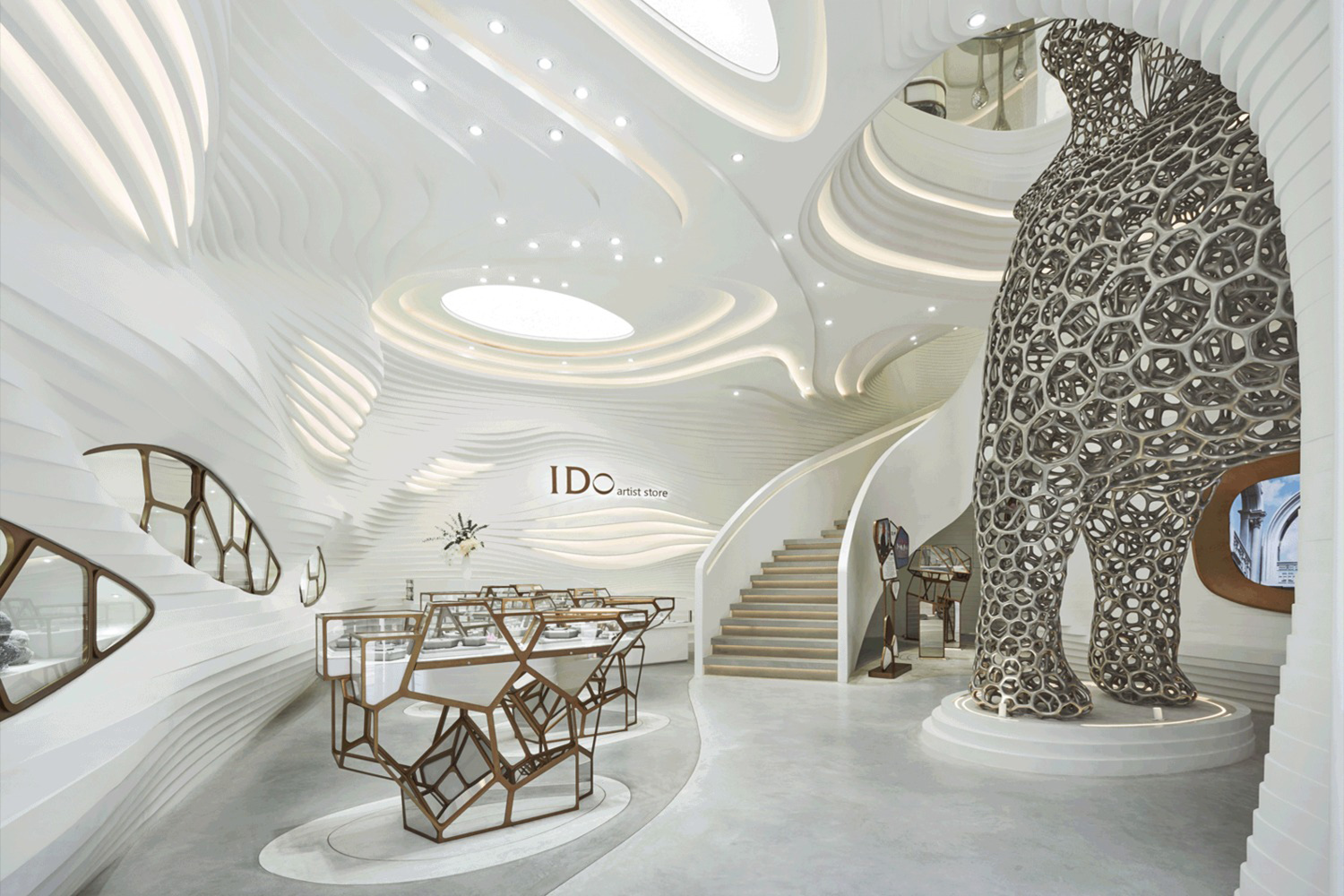



Modularity in architecture proposes a quieter revolution, one that replaces the drama of the construction site with the logic of assembly. Buildings emerge from a sequence of prefabricated elements, designed in advance and brought together with measured precision, shifting authorship from on-site improvisation to systemic thinking. Developed through 20th-century industrial experimentation, modular design has matured into an architectural language defined by adaptability, resource awareness, and restraint, less concerned with form-making as spectacle than with how buildings are produced, used, and sustained over time.
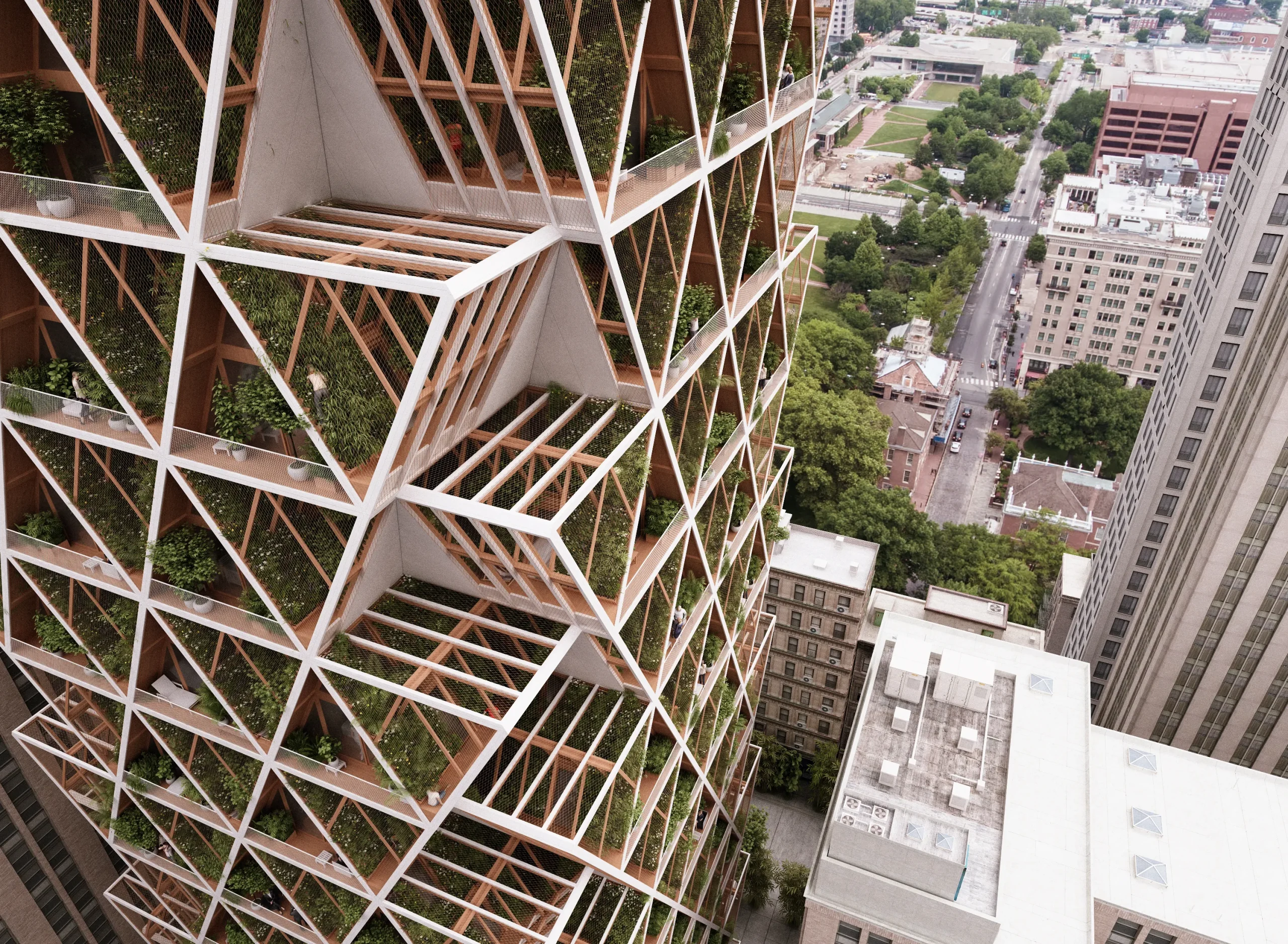
What is Modular Architecture?
Modular Design is a design approach that utilises a single system into multiple parts referred to as ‘Modules.’ The prefabricated modules are constructed off-site in a factory and then transported to the site for assembly. The flexibility of the architecture enables its application in various fields such as architecture, interior design, product design, automobile design, etc. The beauty of modular architecture is that one can replace or add any module without affecting the rest of the system. Beyond efficiency, modularity champions sustainability by reducing waste, minimizing site impact, and supporting energy-conscious construction, still leaving ample room for creativity and human-centered innovation.
10 Examples of innovative modular architecture redefining architecture
1. Nakagin Capsule Tower, Japan
Architect: Kisho Kurokawa
Location: Ginza, Tokyo, Japan
Typology: Residential / Apartments
Completed: 1970-1972
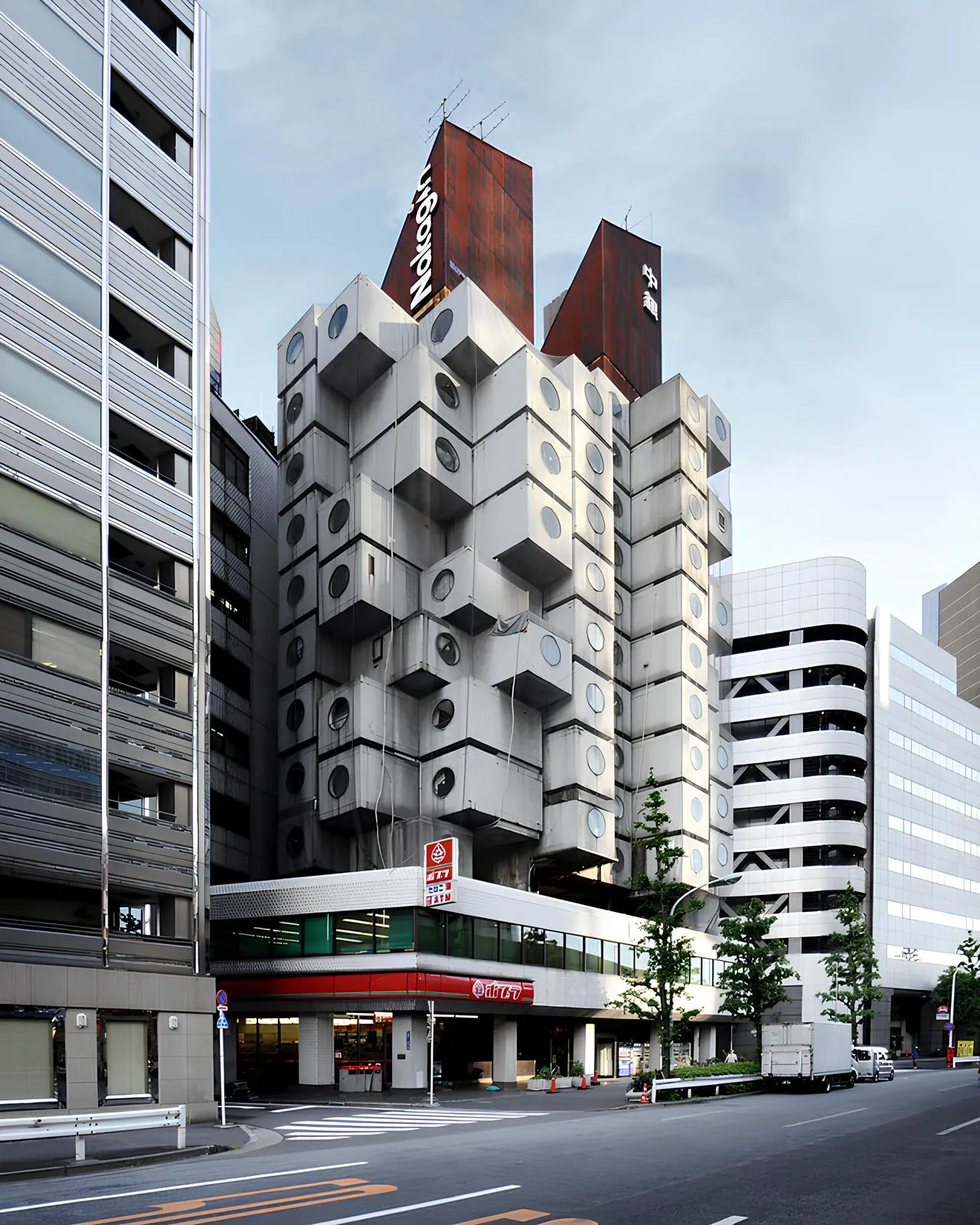
The Nakagin Capsule Tower, designed by architect Kisho Kurokawa, was completed in 1972 in Tokyo and stands as one of Japan’s most iconic expressions of Metabolist architecture. As the world’s first mixed-use residential and office tower built entirely from prefabricated modular capsules, it is a remarkable architectural feat that pushed the boundaries of design and technology. The iconic tower completed its dismantling process in the year 2022. Demolition was initiated due to the building’s aging and disrepair over time.
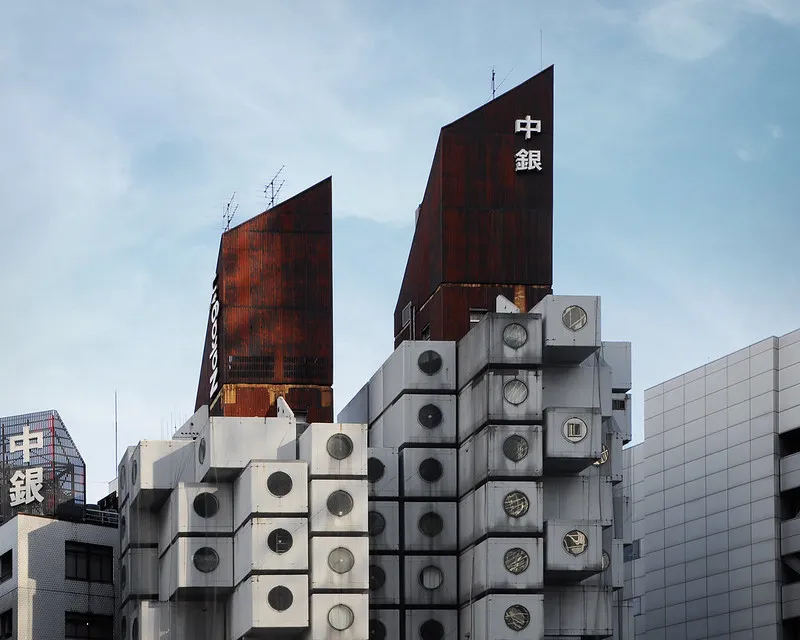
The architecture of the tower celebrates flexibility, replaceability, and the idea that architecture could grow and adapt like a living organism. The innovative building is composed of 140 individual capsules, each meticulously designed and prefabricated for sustainability and adaptability. The bold capsule designs are boldly bolted onto two concrete cores composed of 2 towers rising 11 and 13 stories high, respectively.
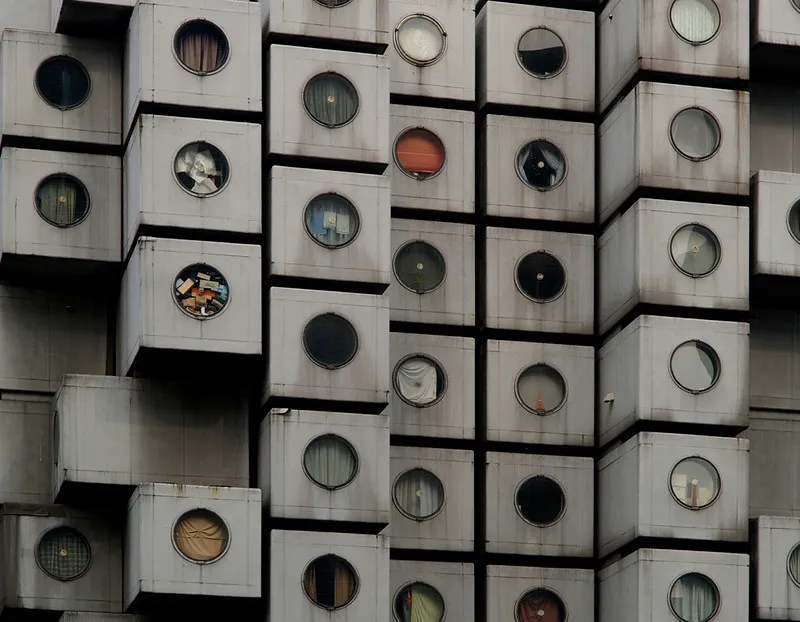
The tower’s bold industrial aesthetic, defined by its cube-like capsules, signature circular porthole windows, and unpolished finishes, captures the futuristic spirit of Japan’s evolving urban life. Each compact unit, measuring 2.5 by 4 meters with an iconic 1.3-meter window, was designed as a lightweight steel truss box clad in galvanized, rib-reinforced panels, coated and finished with Kenitex spray.
2. Habitat 67, Canada
Architect: Safdie Architects
Location: Montreal, Quebec, Canada
Typology: Residential / Apartments
Completed: 1966-1967
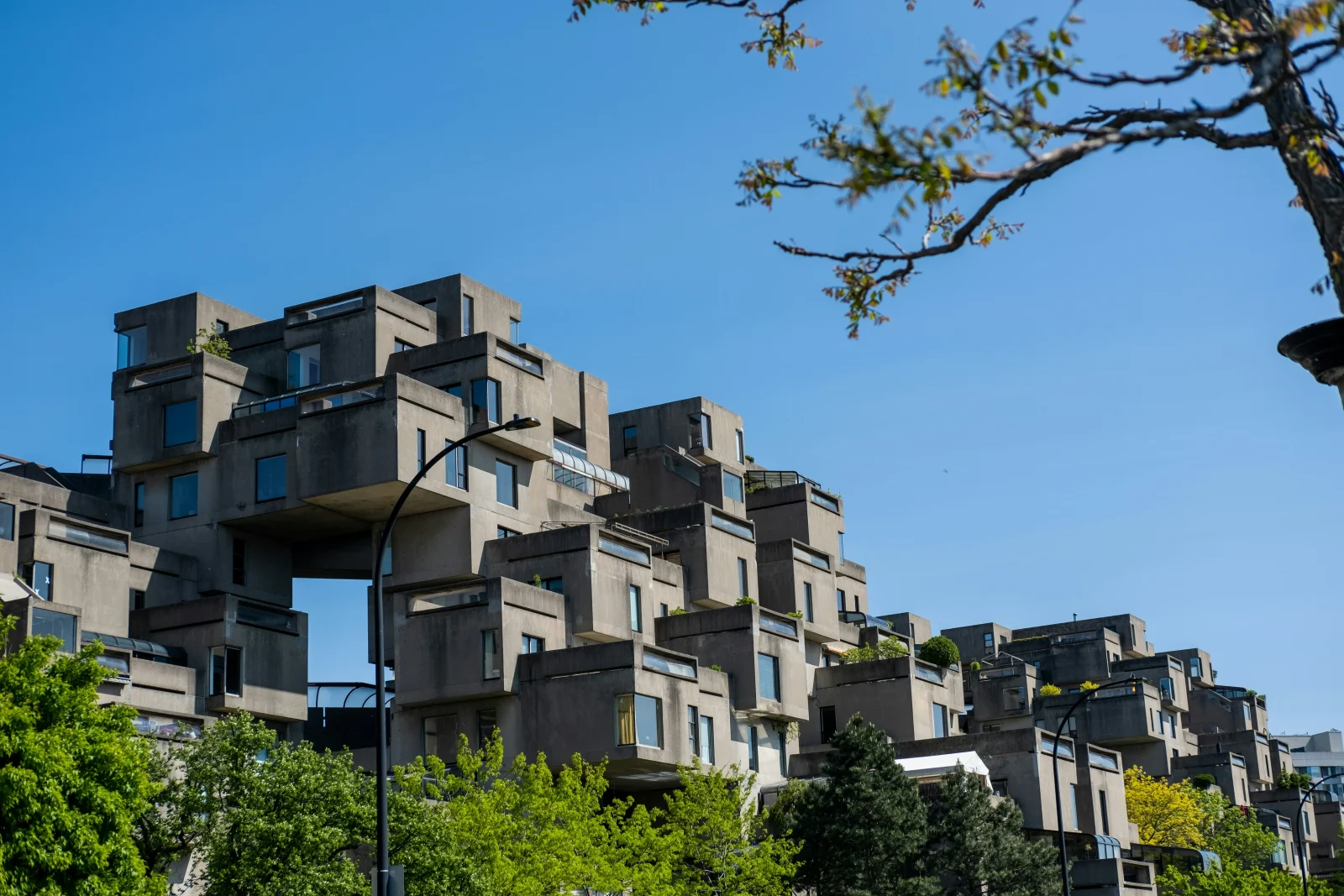
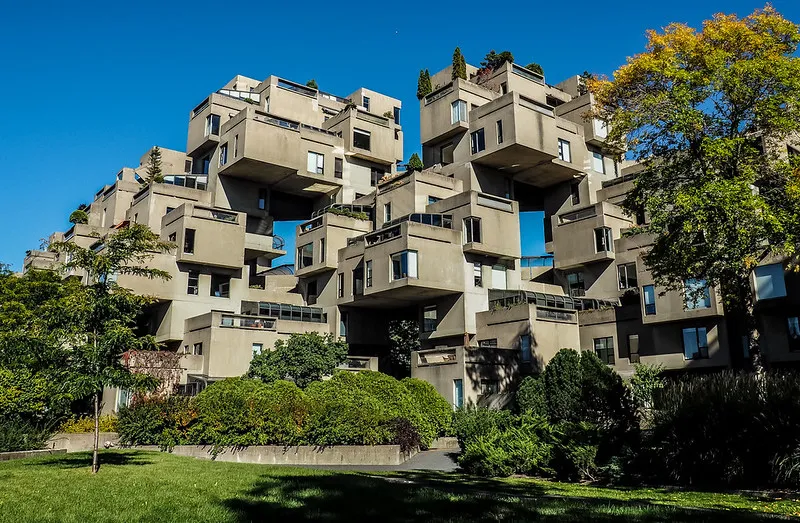
Habitat 67, designed by Moshe Safdie for the 1967 Montreal World Expo, redefined what urban living could look and feel like. What was conceived as his McGill University thesis, ‘A Case for City Living,’ grew into a pioneering experiment that challenged the norms of dense city housing. Its modular, prefabricated units are stacked together like a sculpted housing complex, offering light, privacy, and community in one architecture. Today, Habitat 67 stands as a renowned architectural landmark, proof that thoughtful, human-centered design can transform the way we live in an urban fabric.
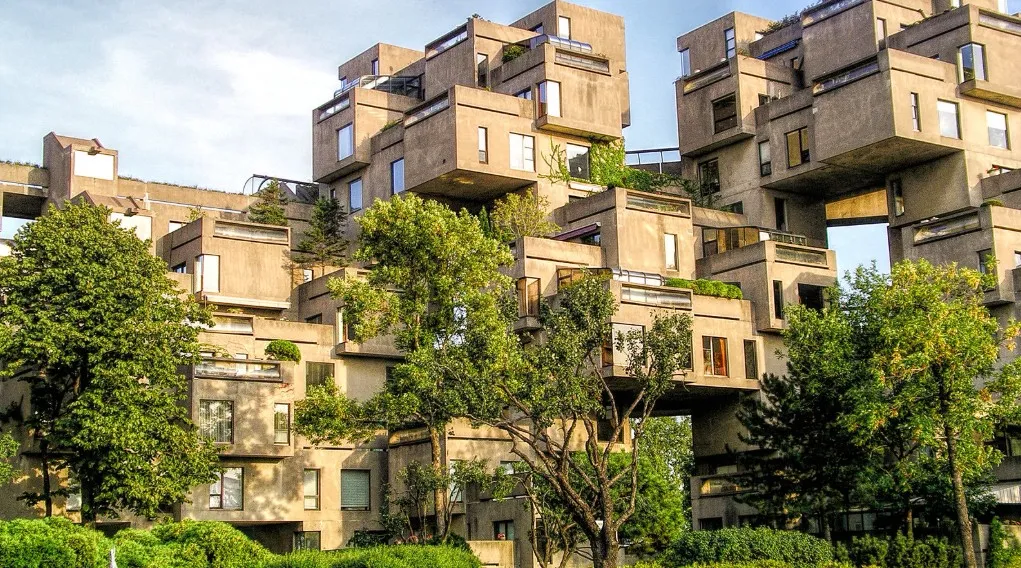
The housing complex is composed of 365 prefabricated modules that form 158 uniquely designed residences, each featuring a private roof garden and generous open spaces. Each modular unit, measuring 38×17 feet, crafted from concrete and reinforced steel with utilities built in, was designed for comfort, efficiency, and adaptability. These volumes are stacked in thoughtful combinations, creating homes that range from intimate one-bedroom units to spacious four-bedroom dwellings.
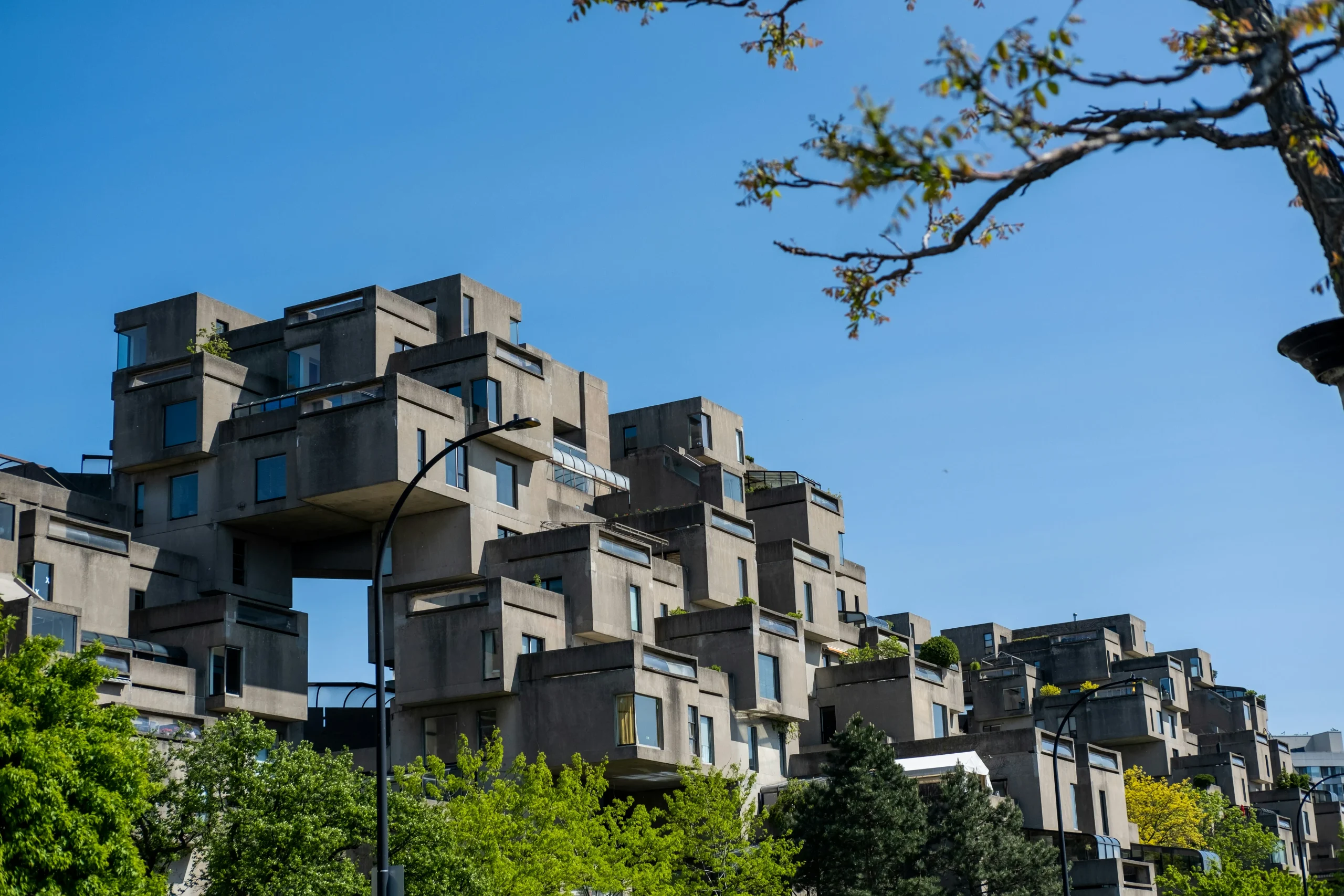
The prefabricated modules were carefully lifted by cranes, assembling the housing complex with a unique pedestrian street and structural elevator cores. These cores serve as the backbone of the housing complex, with elevators stopping every fourth floor to meet elevated walkways guiding residents directly to their doors. The result is an architecture seamlessly connecting with the community where movement feels efficient, thoughtful, and wonderfully human-centered.
3. Revival, Ukraine
Architect: Zikzak Architects
Location: Ukraine
Typology: Education
Completed: 2022 (Concept)
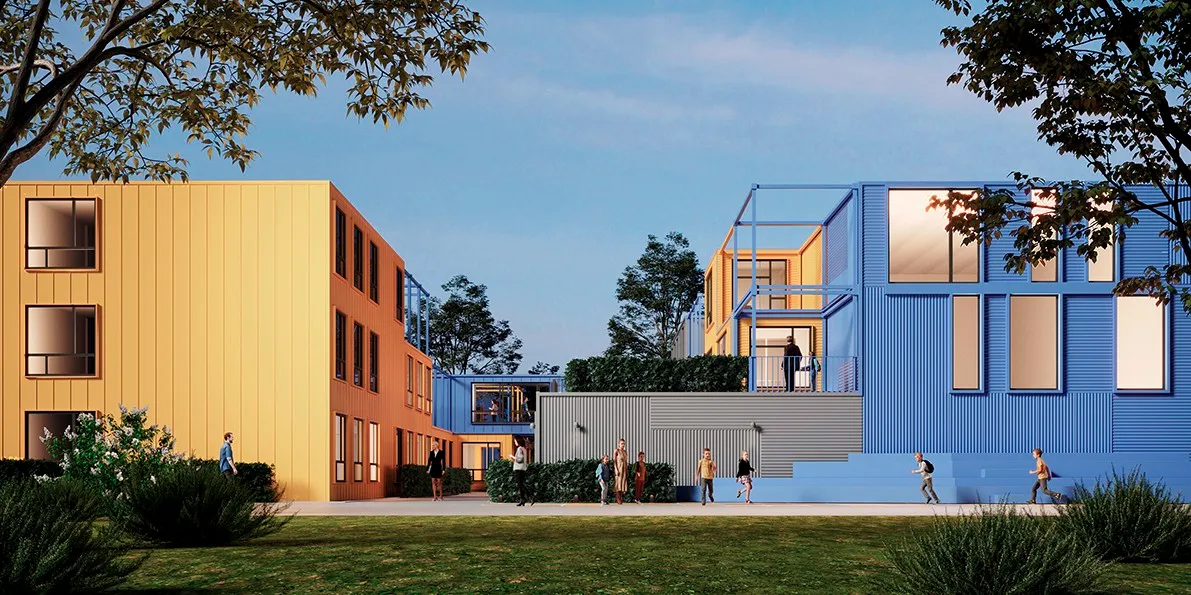
“The war is causing irreparable damage very quickly. Our task is to build Ukraine even faster because people want to return home now!” share ZIKZAK Architects. In response to the unfortunate disrupted lives and damaged cities, upon recognizing the importance of speedy recovery, the studio has envisioned REVIVAL. A fast-track reconstruction concept featuring stacked rectangular volumes clad in corrugated metal, echoing the colors of the Ukrainian flag, standing as symbols of resilience and a nation ready to rebuild.
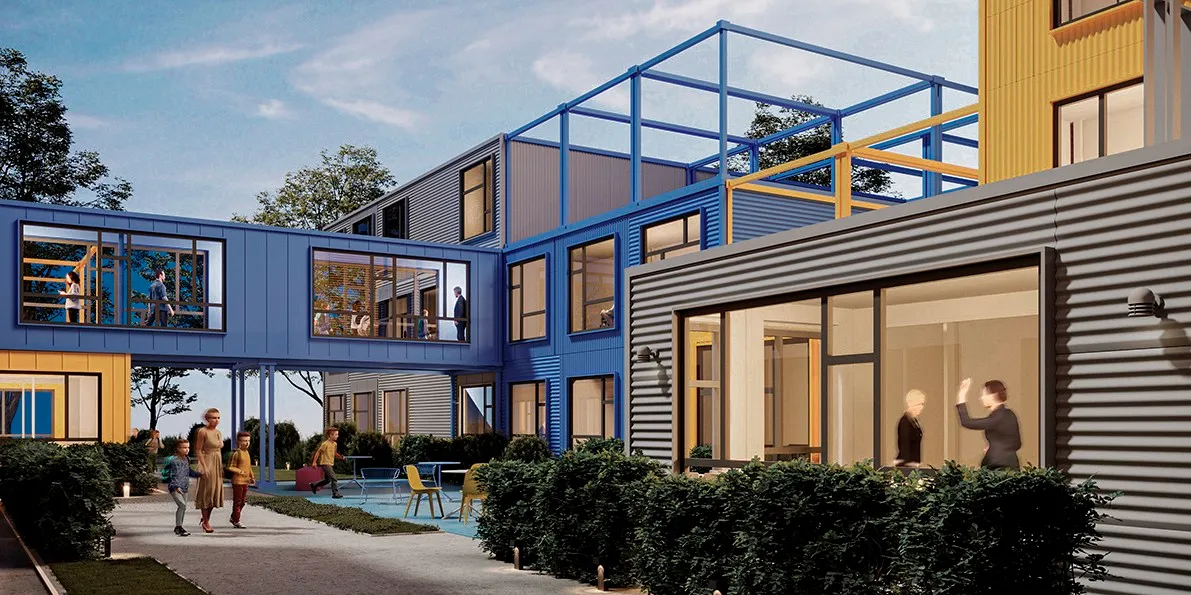
The modular blocks represent a unique and collapsible design from a metal framework with filling, with boxes composed of floor slabs, ceiling tiles, and longitudinal and transverse wall slabs. Each of the modular volumes consists of six-meter by three-meter and nine-meter by three-meter blocks organized to form large rooms. Each room of the volumes is dedicated to various educational facilities, including classrooms, sports rooms, showers, and canteens.
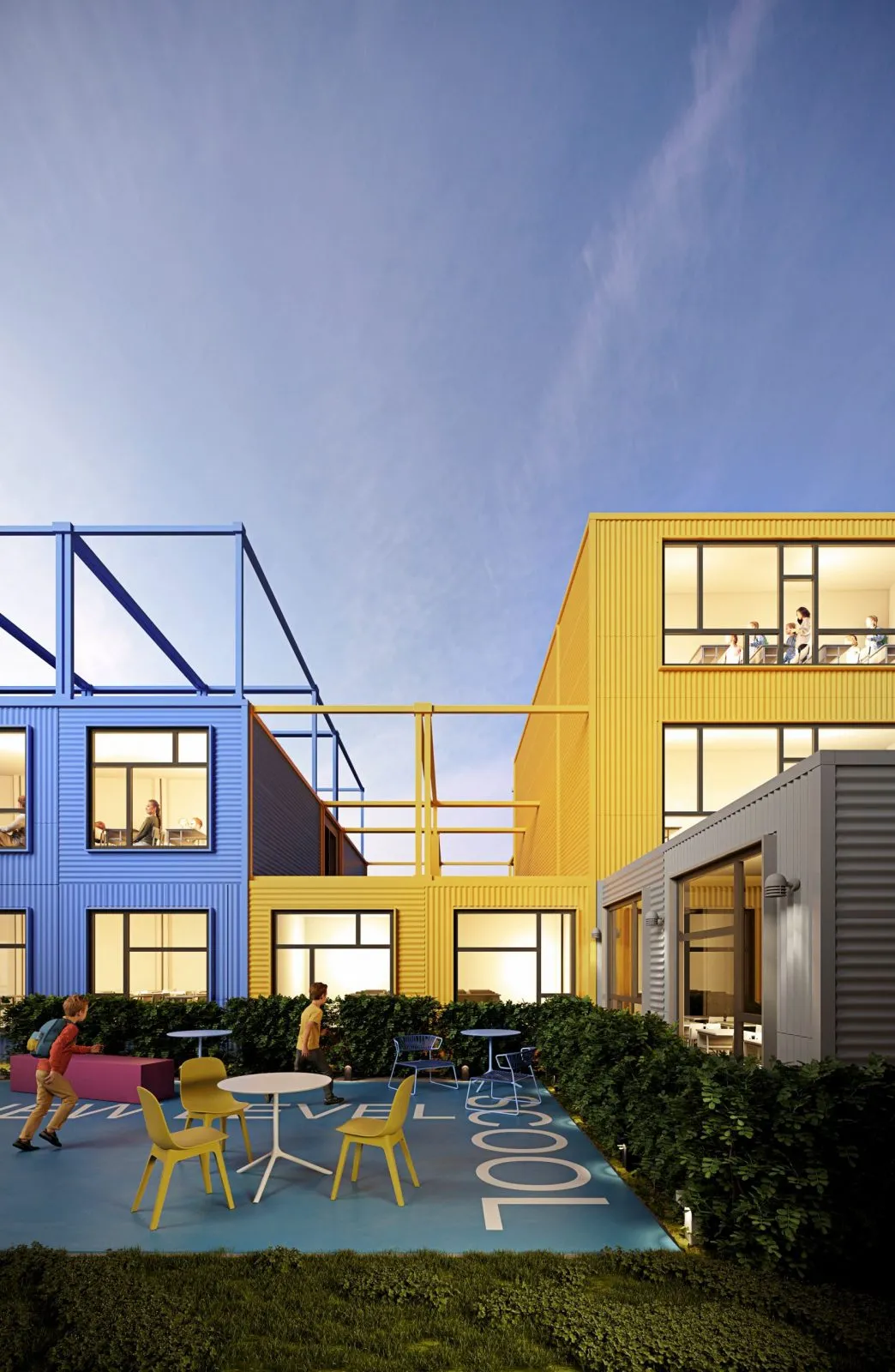
Each modular volume is crafted from a lightweight metal framework with insulated panels, connected by angular joints that give the structure strength. Before installation, it is necessary to lay the columnar or pile foundation at the points of knot connections of the blocks. The units are designed for flexibility, with adaptable interior and exterior walls, sliding doors, and thoughtful openings that let the space adapt to different functions. The unique architectural feature lies in its scalability, an architecture that can grow with communities through the seamless addition of new blocks.
4. Makoko Floating School (MFS), Nigeria

Architect: NLE Architects
Location: Lagos, Nigeria
Typology: Education
Completed: 2011
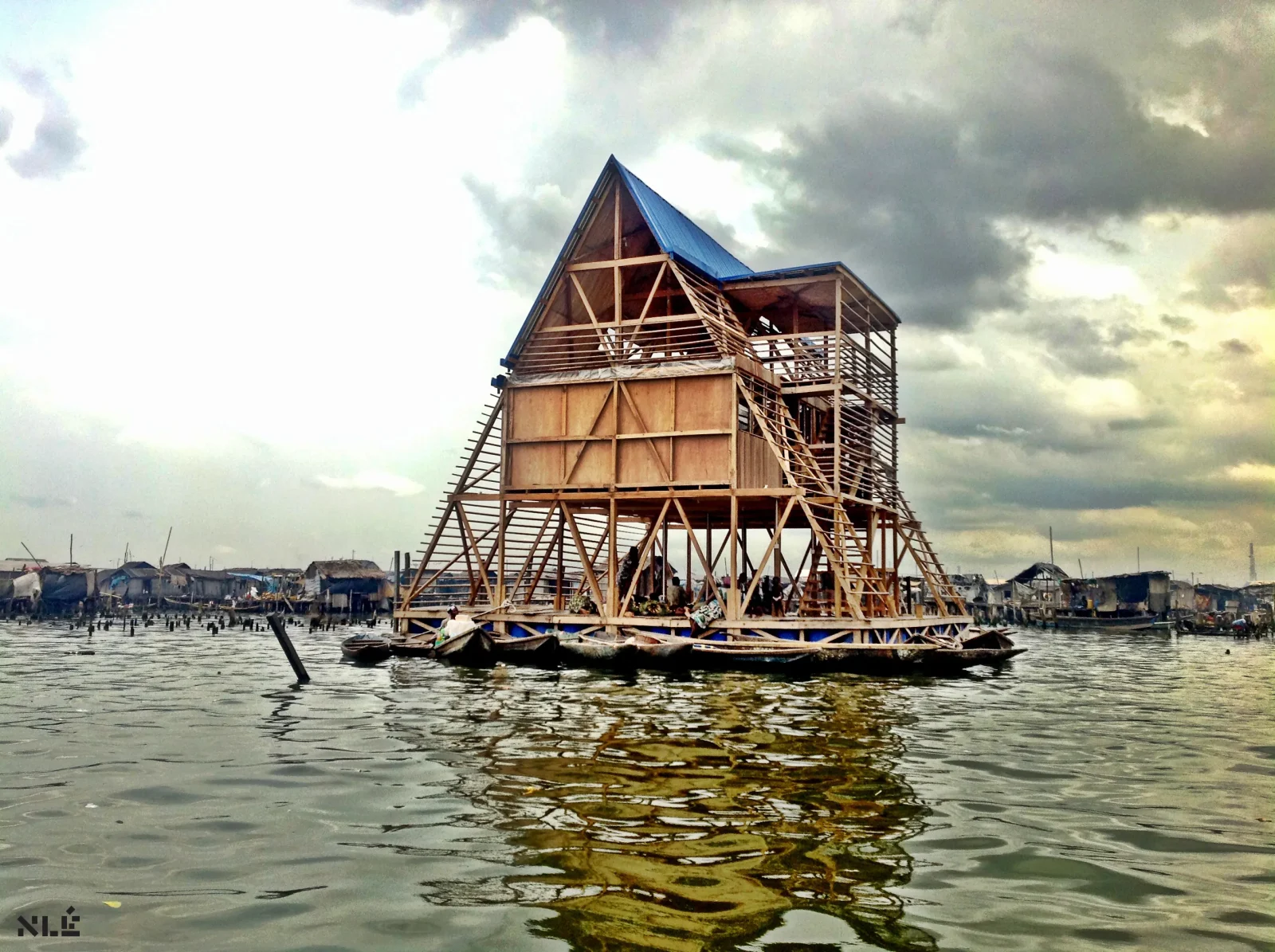
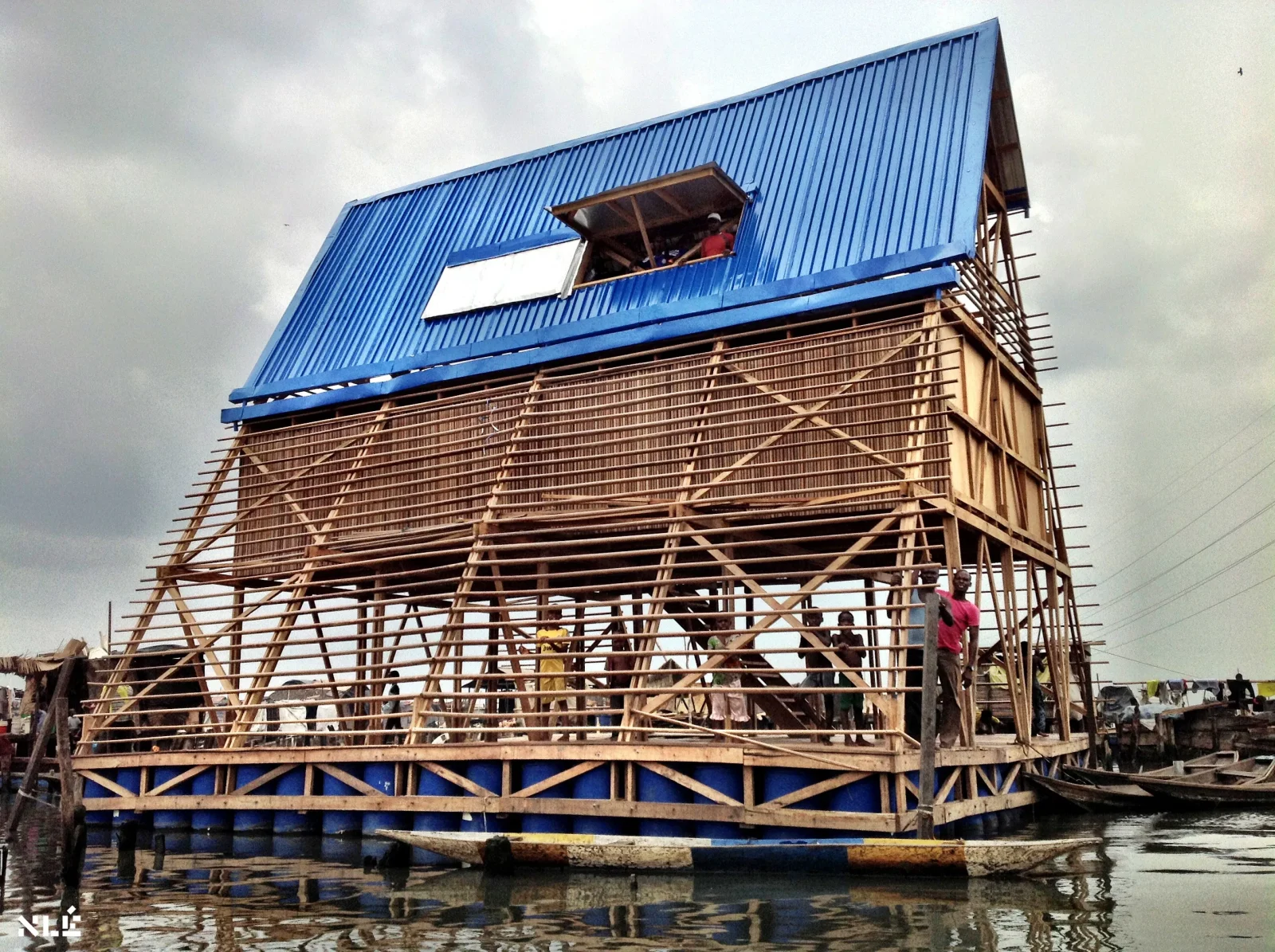
Makoko Floating School, designed by NLÉ Architects, emerges as a visionary architectural response to the everyday challenges of Lagos’s waterfront community. The architecture is designed to meet the social needs and the pressures of climate change, focusing on sustainability and ecological alternatives for rapidly growing coastal regions across Africa. The project integrates new building systems and water-based urban cultures, which reimagines what resilient architecture can look like in a flood-prone environment, creating an adaptable model for communities living on the water.
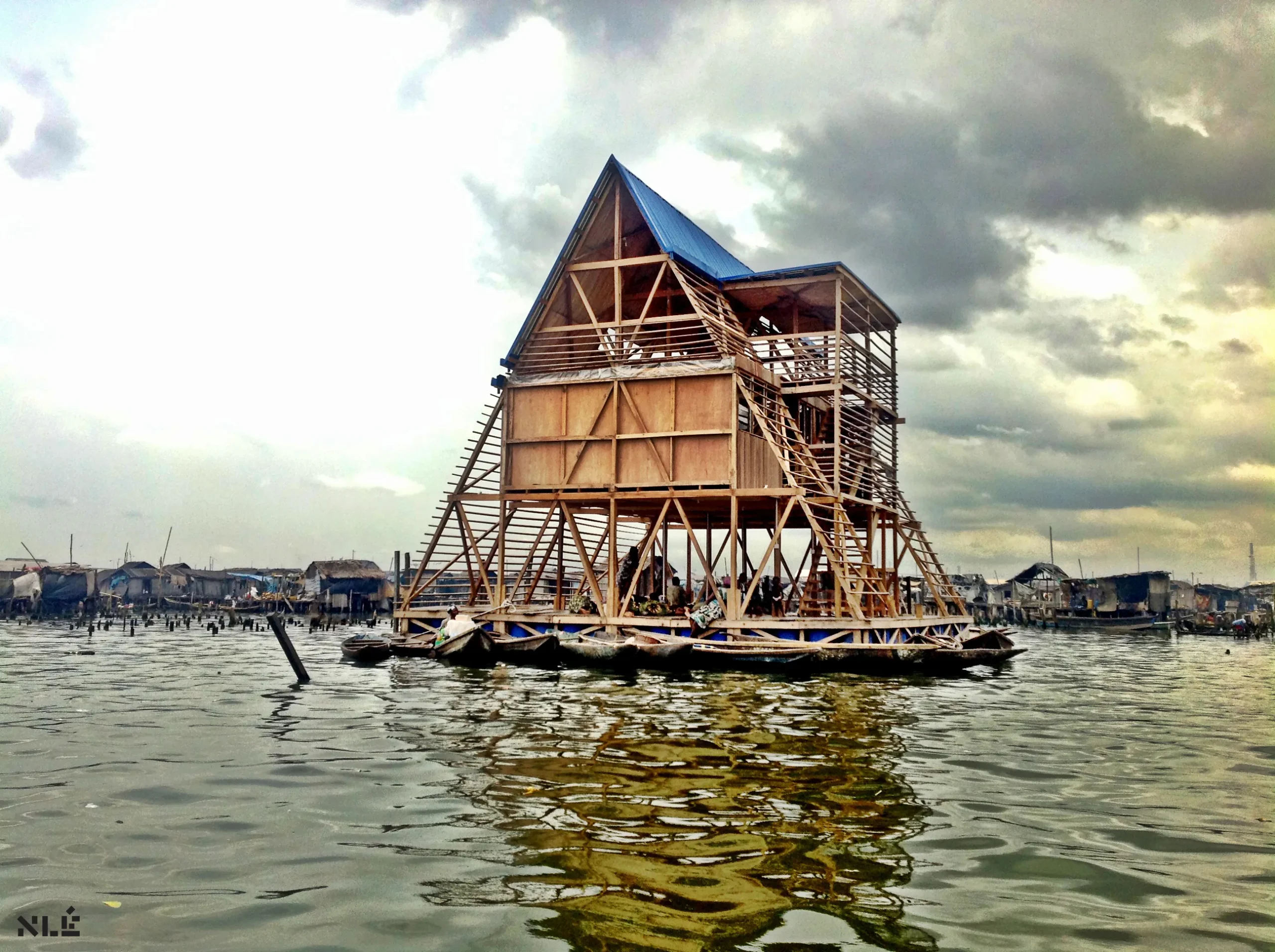
The architecture of the school is defined by its striking A-frame structure, lifted by a buoyant base made of 256 recycled plastic barrels that keep it steady on the water. The 220-meter A-frame or pyramid rises 10 meters high with a 10×10 meter base. Built with a lightweight timber frame and open-air terraces, the design embraces natural ventilation, while the design shows a simple, efficient, and deeply climate-responsive architecture. At its core, the project celebrates modular architecture, sustainable construction, and an approach that is both cost-effective and rooted in community.
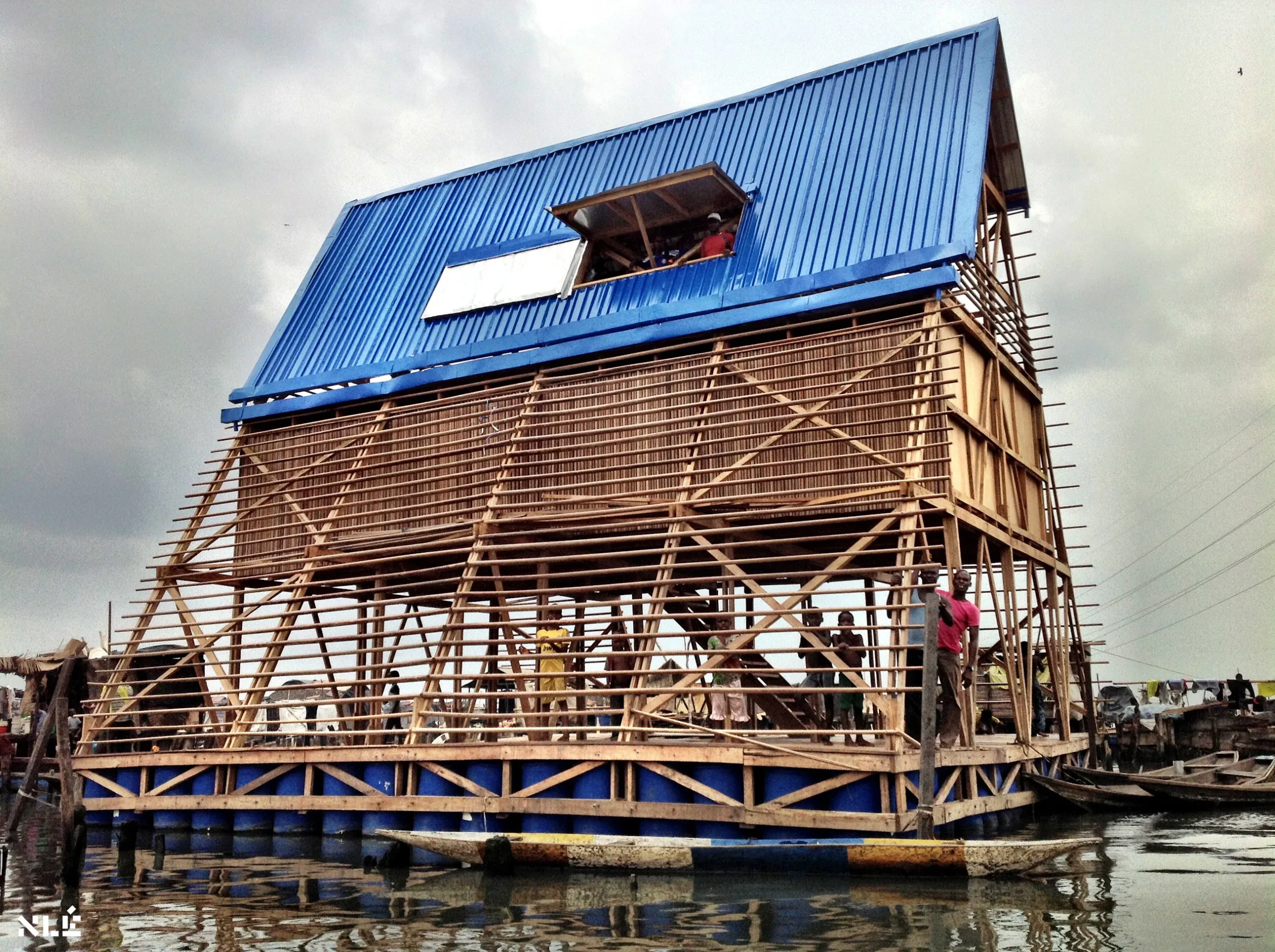
Assembled on-site with simple prefabricated timber components, the design offers a model that can be easily replicated, repaired, or expanded by the community. Designed to harvest rainwater, generate renewable energy, and recycle organic waste, the school embraces sustainability. Primarily serving as an education space, its modular nature allows it to transform and adapt seamlessly into a community hub, clinic, market, cultural venue, or even housing.
5. Alibaba Offices, China
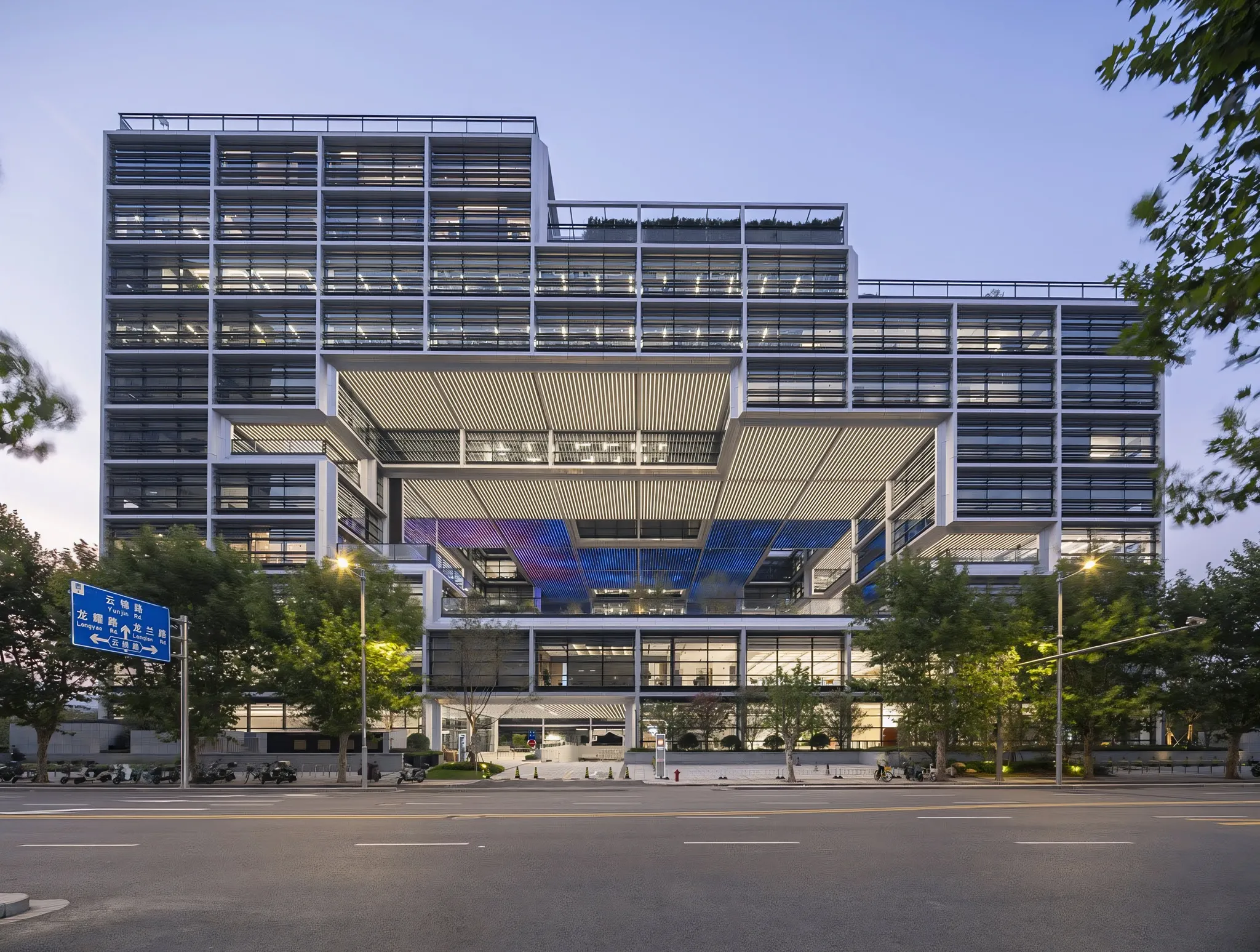
Architect: Foster + Partners
Location: Shanghai, China
Typology: Office Building
Completed: 2024
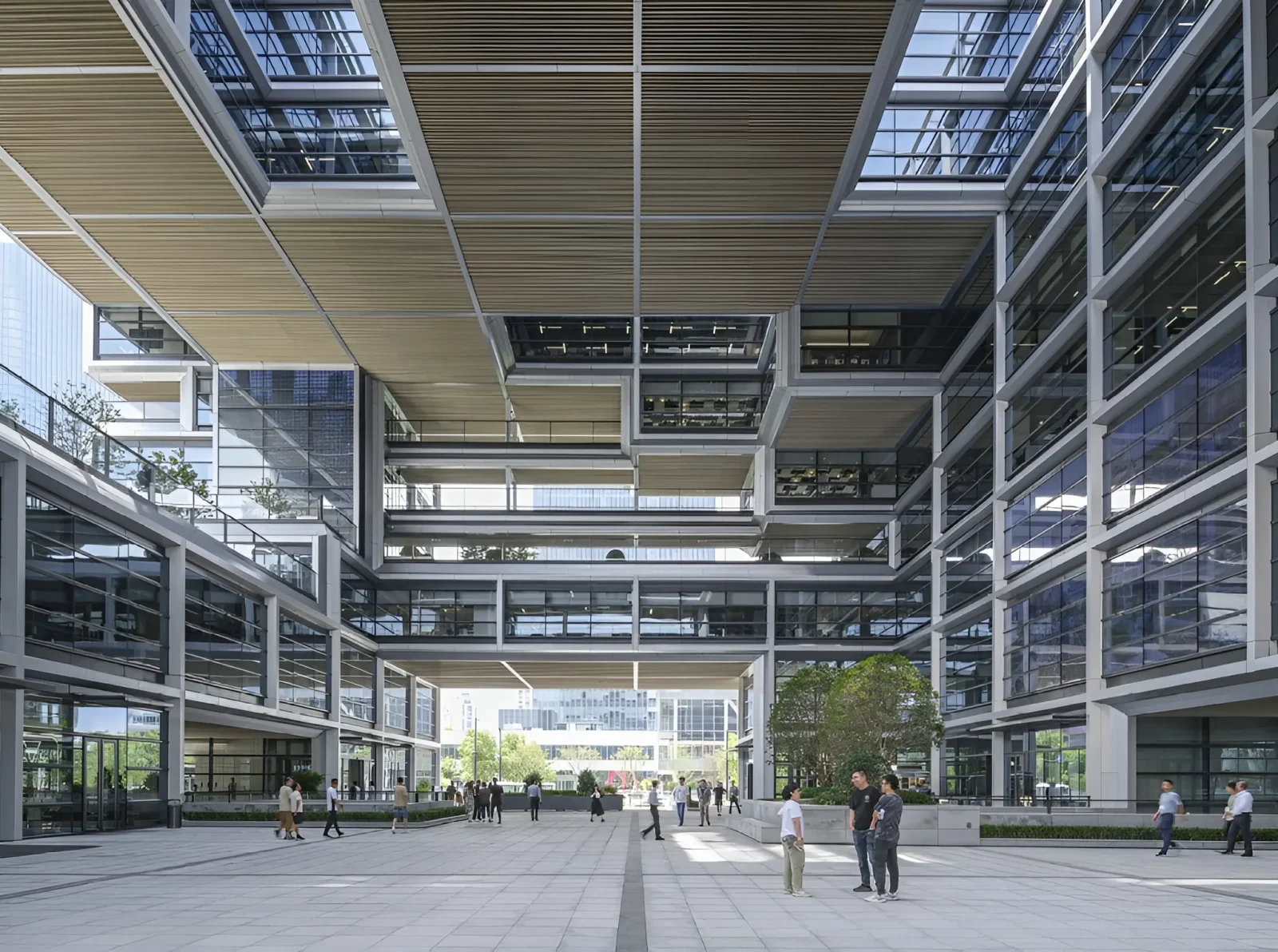
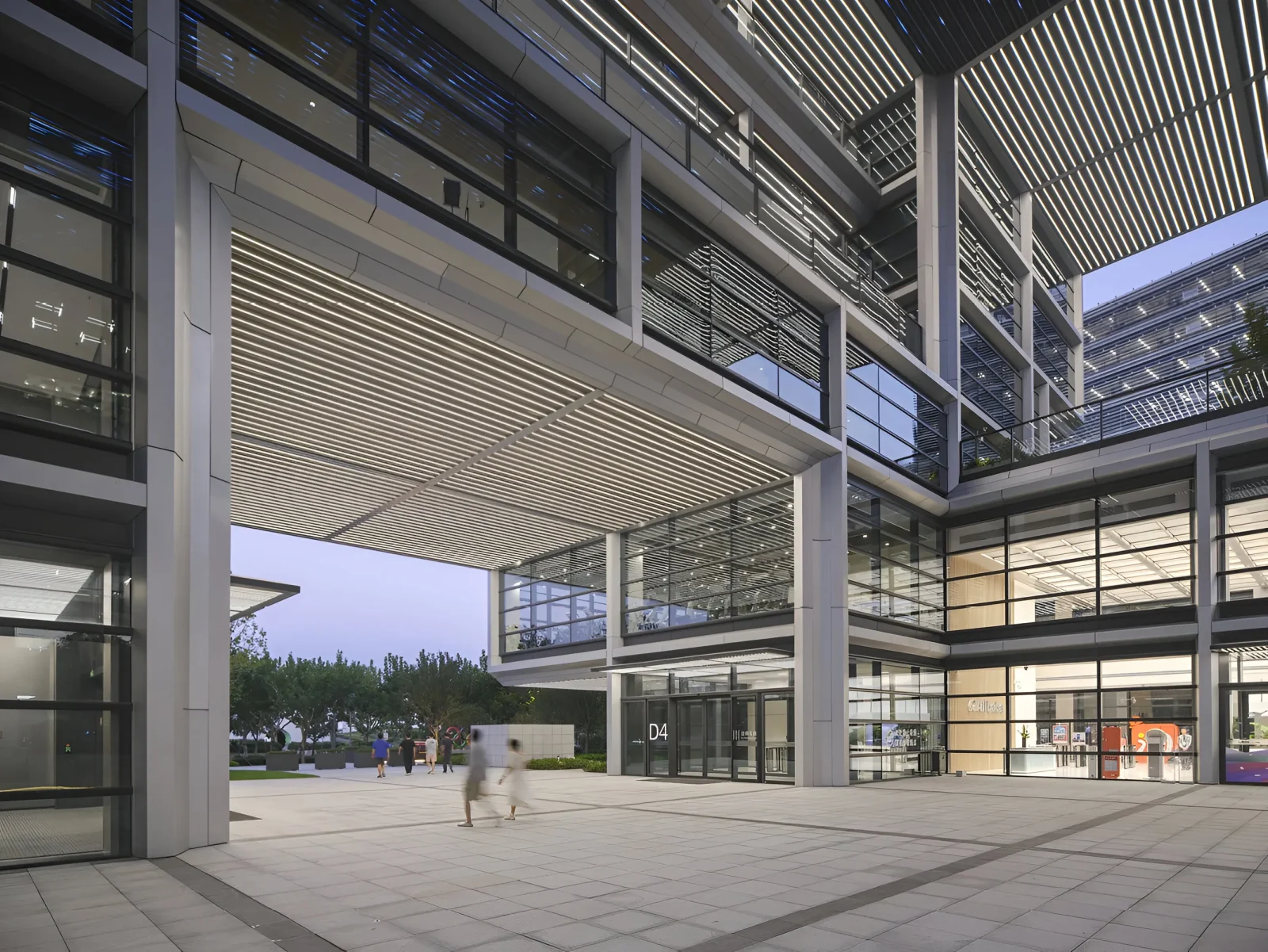
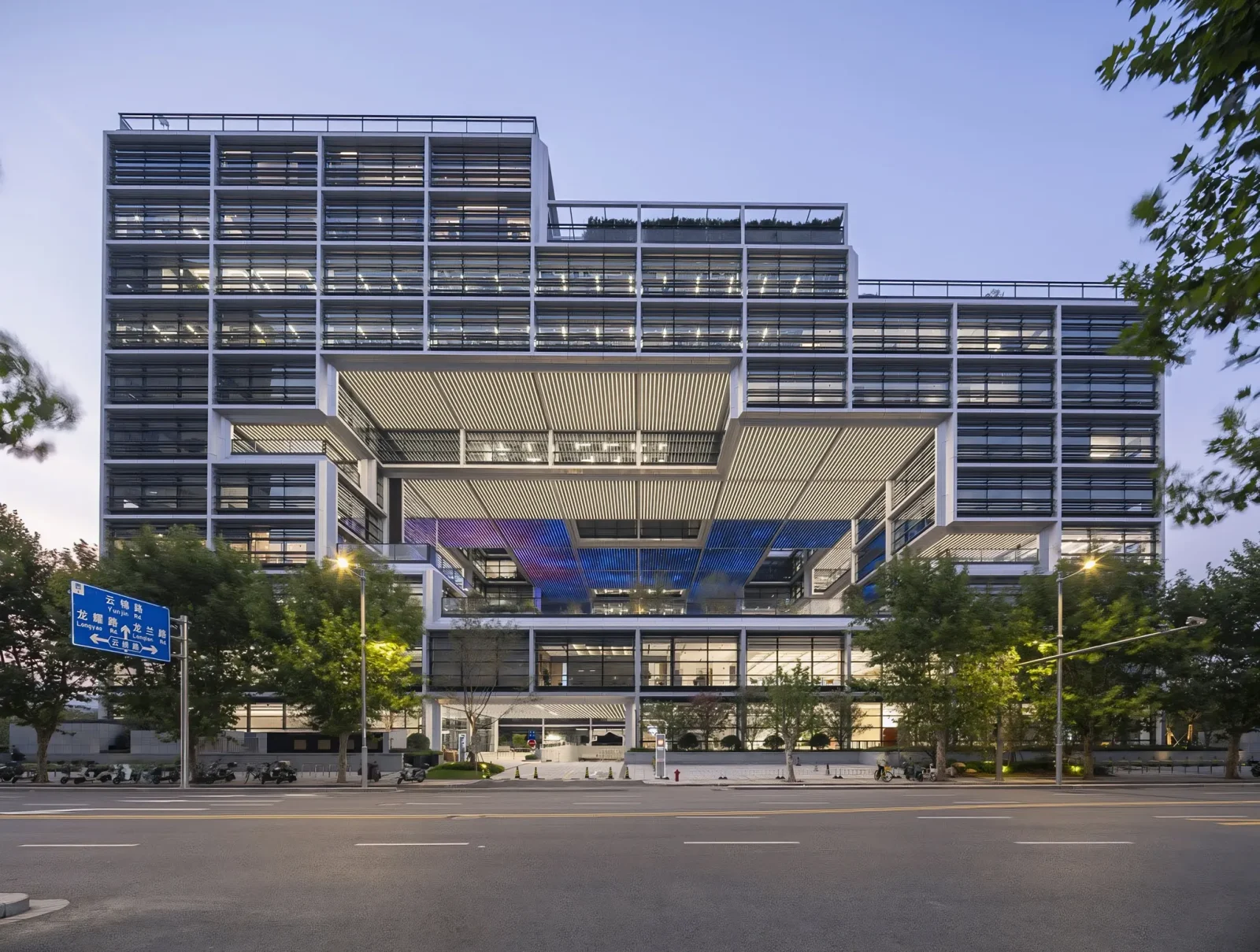
Foster + Partners has completed Alibaba’s new Shanghai office, a workplace that breathes fresh design perspective into the modern office model. Reimagining a traditional office setting, the building unfolds as an open, nature-integrated architecture where public space, daylight, and transparency shape the daily interactions. Its modular architecture supports a design with highly collaborative work zones, evolving effortlessly with the company’s fast-moving teams. The architecture is a prime example of design, weaving together advanced technology, flexible spatial planning, and a human-centered approach.
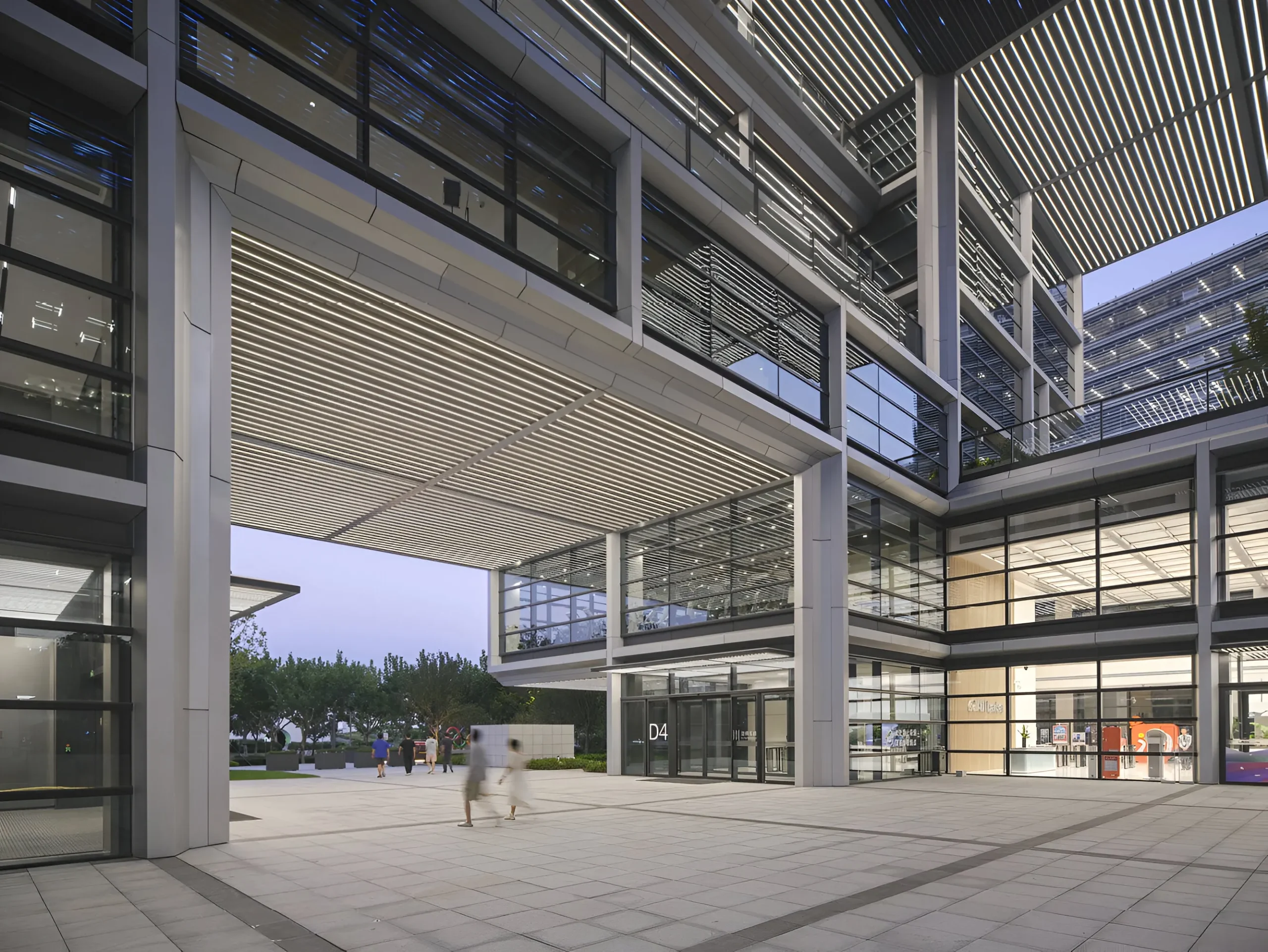
The architecture is shaped as a workspace that feels open and deeply connected to the users who move through it. It is conceived as a fluid spatial ecosystem built from modular blocks that maximize natural light and strengthen visual connections with seamless circulation. The volumes are organized around sun-filled atriums and quiet courtyards, with light, transparent, and thoughtfully composed spaces, nurturing collaboration, movement, and creativity with an inherent sense of openness.
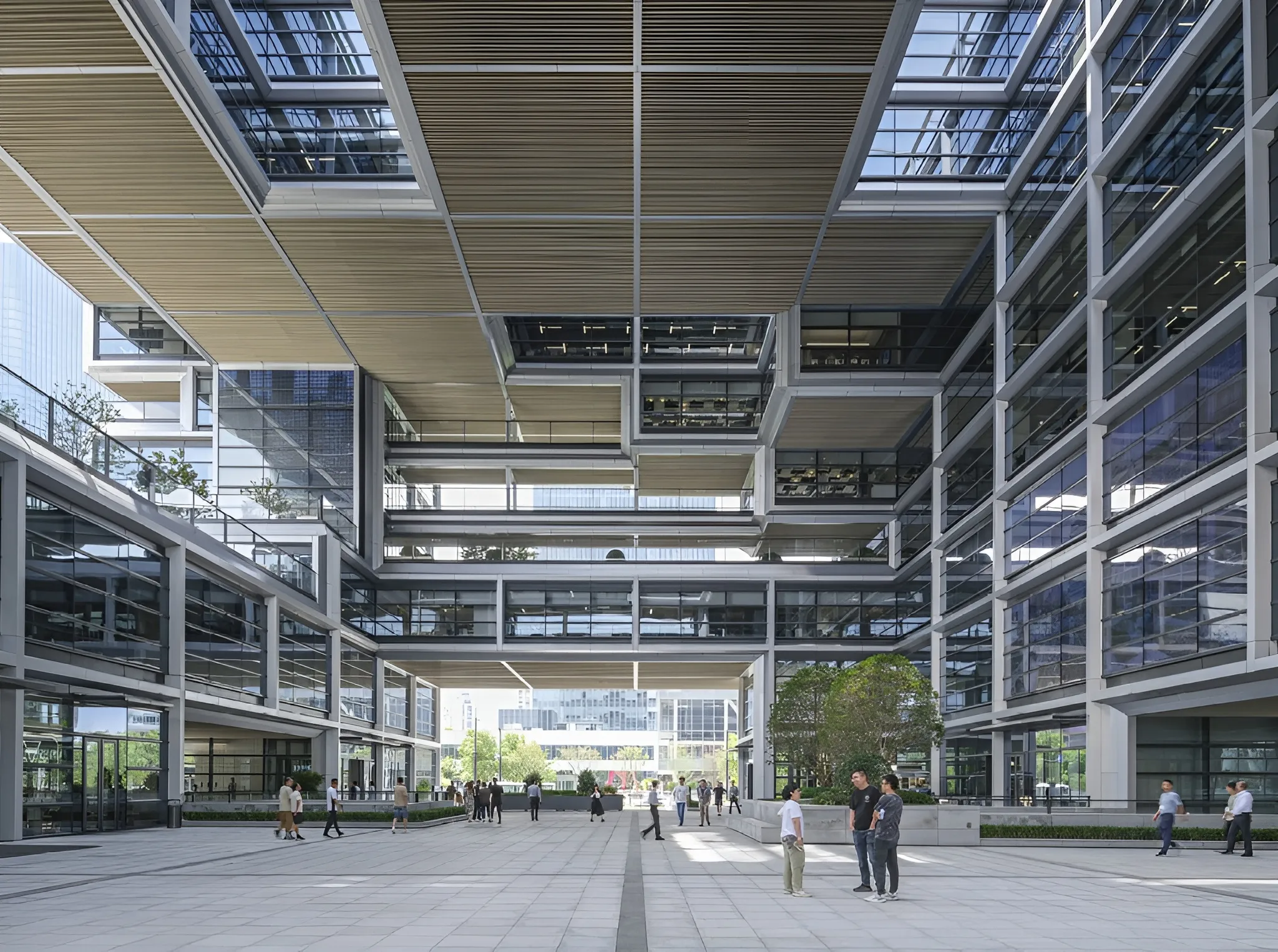
The offices open into a central atrium that serves as the building’s lively social heart, where entrances, terraces, and gathering spaces visually connect across levels. Each floorplate is uniquely varied and layered to maximize flexibility, allowing teams in the office to adapt to their environments as their needs evolve. With generous green terraces, naturally ventilated workspaces, and operable windows, the design focuses on health and well-being at its core, creating a workplace that feels open, human-centered, and rooted in nature.
6. Tetris Apartments, Slovenia
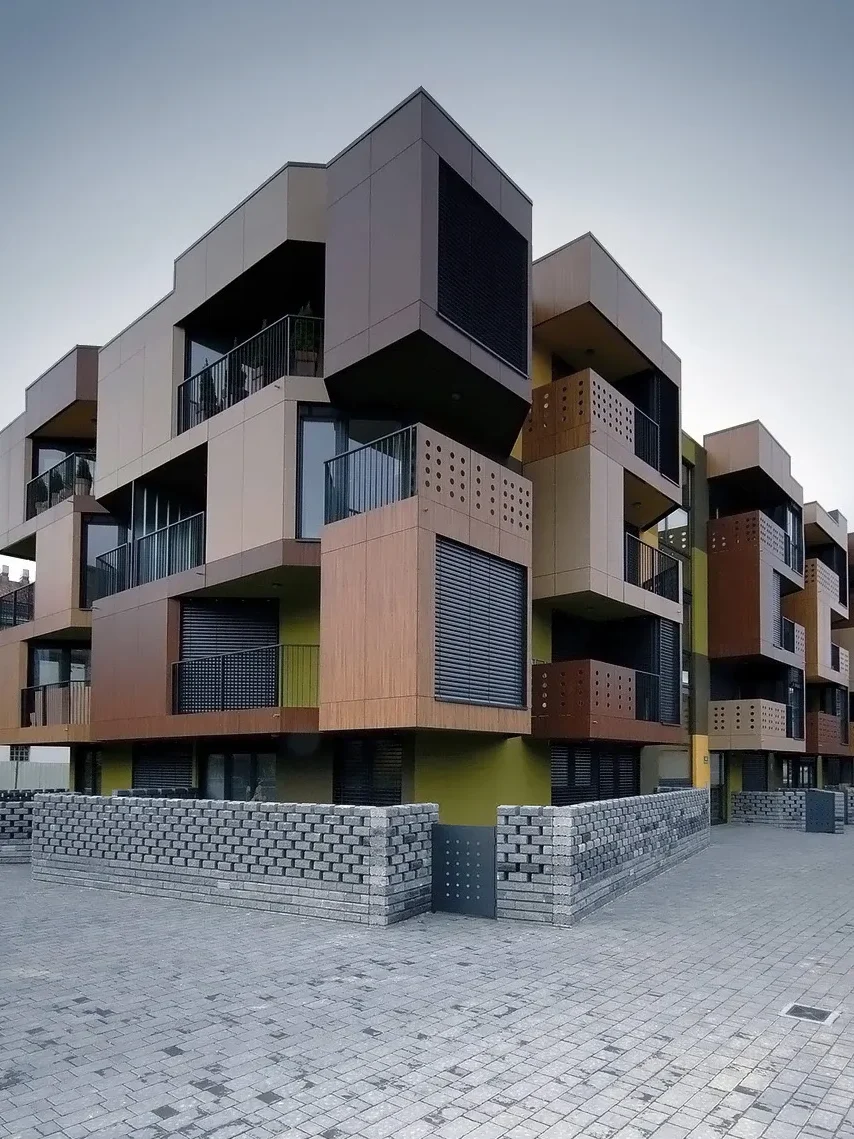
Architect: OFIS Architects
Location: Ljubljana, Slovenia
Typology: Housing/Apartments
Completed: 2007
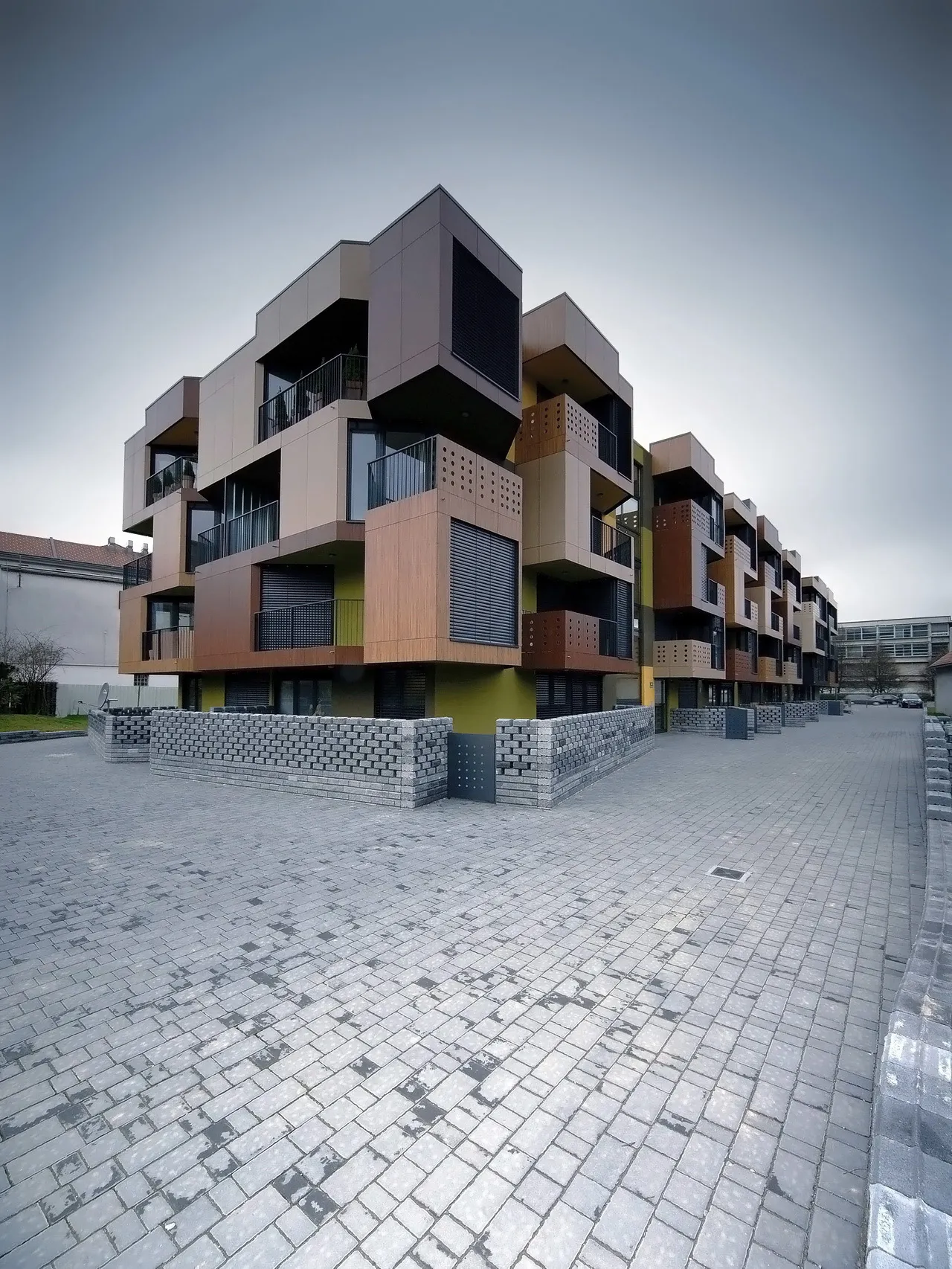
Tetris Apartments by OFIS Architects brings a unique perspective to compact urban living, designing smart modular architecture to create efficient homes. Situated on the edge of the planned 650 apartments, which were finished one year earlier. Its distinctive façade is made of staggered, cube-like volumes forming a playful rhythm that captures generous natural light and cross ventilation throughout each unit. These cube units do more than shape the building’s bold identity; they also offer residents a personal balcony, framed views, and recessed pockets of space.
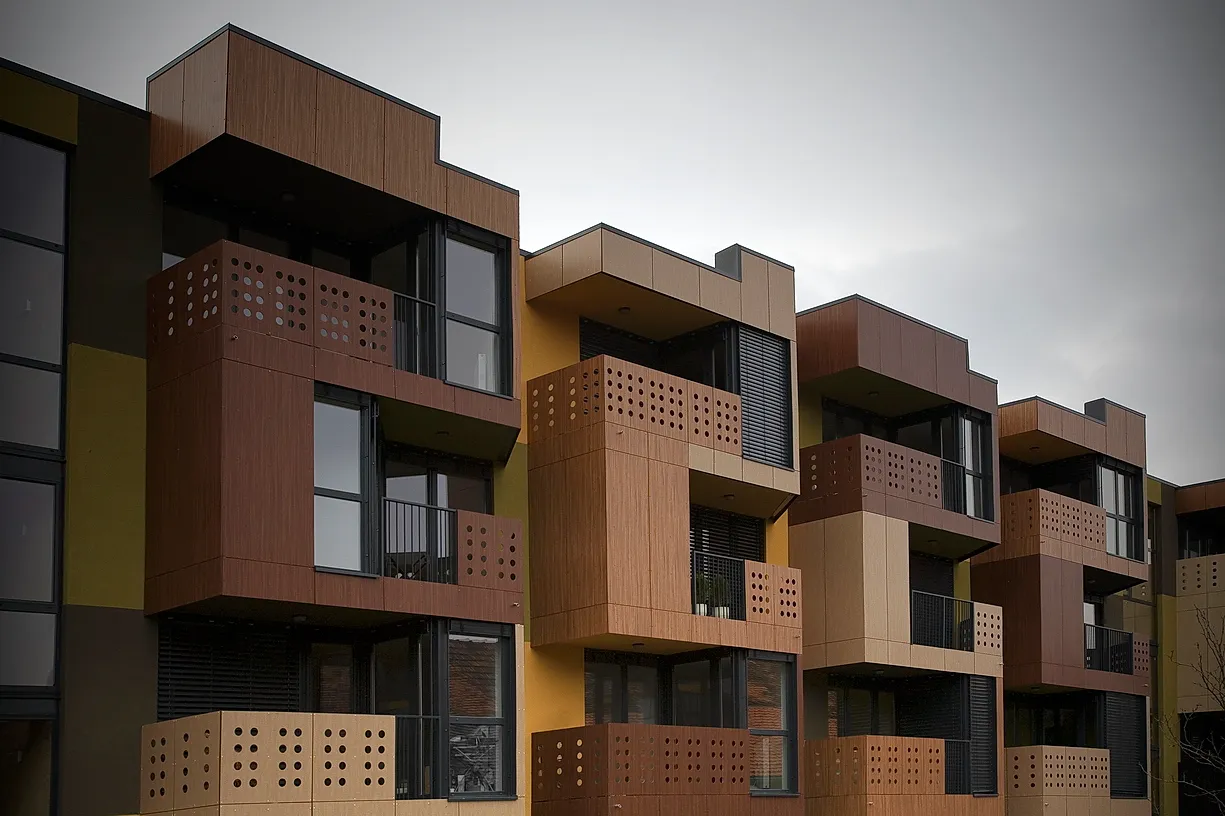
Tetris Apartments by OFIS Architects brings a unique perspective to compact urban living, designing smart modular architecture to create efficient homes. Situated on the edge of the planned 650 apartments, which were finished one year earlier. Its distinctive façade, made of staggered, cube-like volumes forming a playful rhythm that captures generous natural light and cross ventilation throughout each unit. These cube units do more than shape the building’s bold identity, but also offer residents a personal balcony, framed views, and recessed pockets of space.
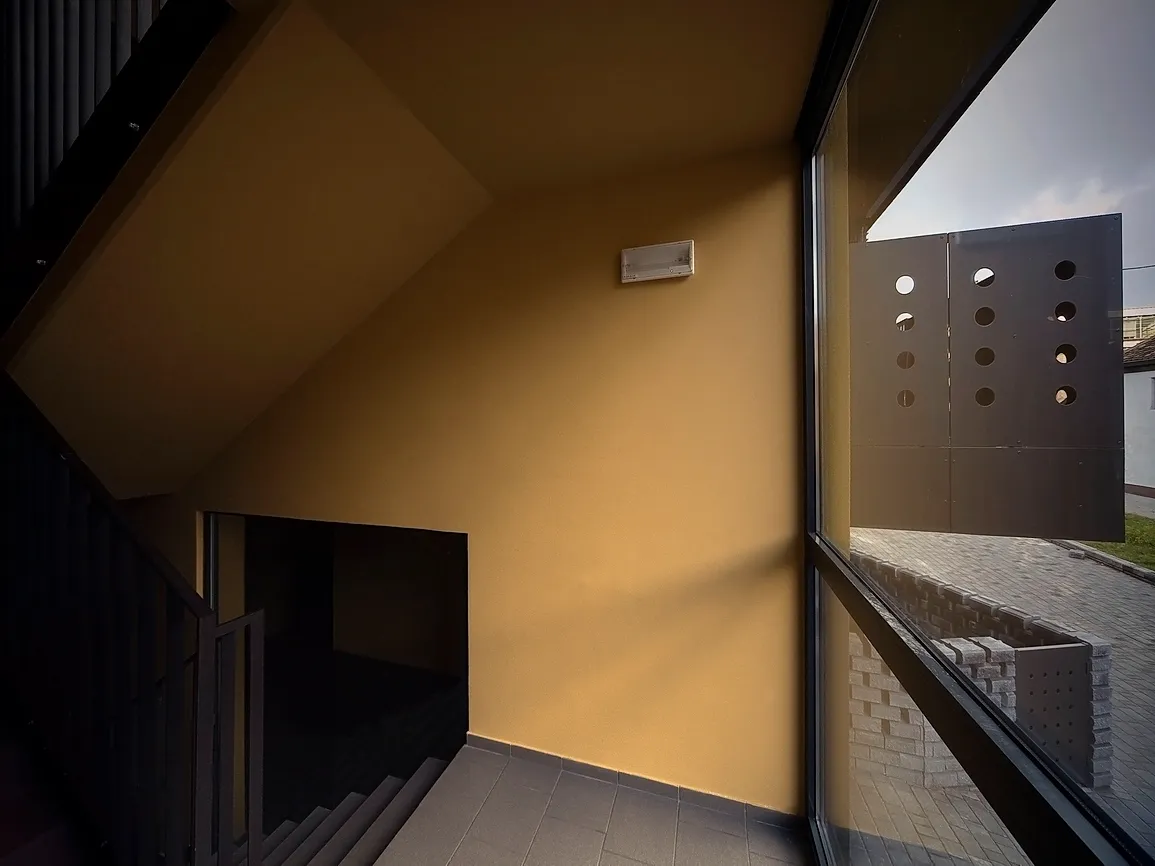
The apartments are designed in a range of sizes, from compact 30 sqm studios, 70sqm apartments to larger family units, ensuring thoughtful living spaces for different needs, with the biggest homes along the façade for better views and orientation. The project is a perfect example of creating a rich spatial experience in a small footprint, making everyday living more connected, flexible, and human-centered. Designed emphasizing connection, comfort, and flexibility through generous glazing, smart orientation, and natural cross-ventilation, and crafted with durable materials and refined contemporary detailing.
7. The Farmhouse
Architect: Studio Precht
Typology: Housing/Apartments
Completed: Concept
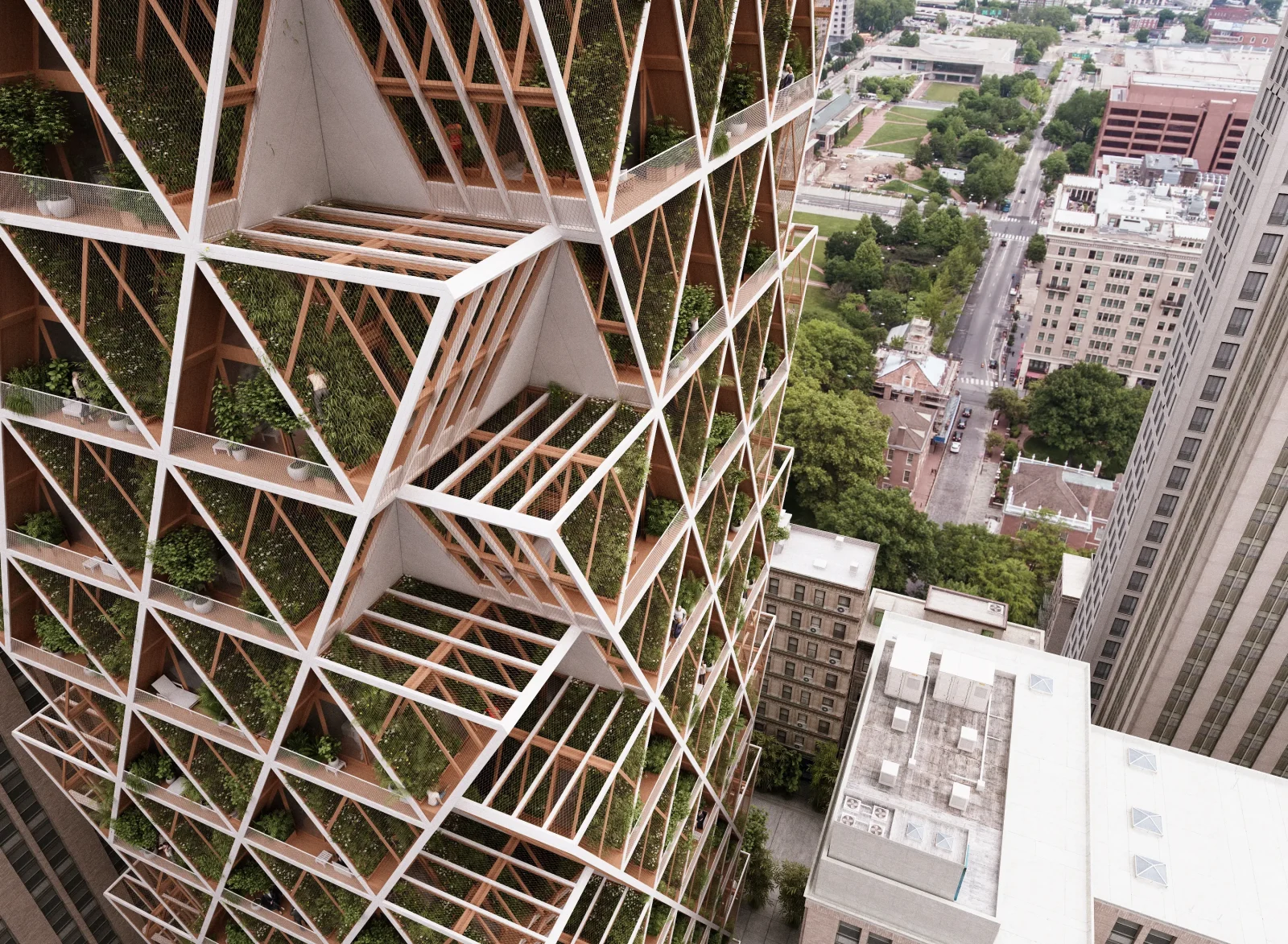
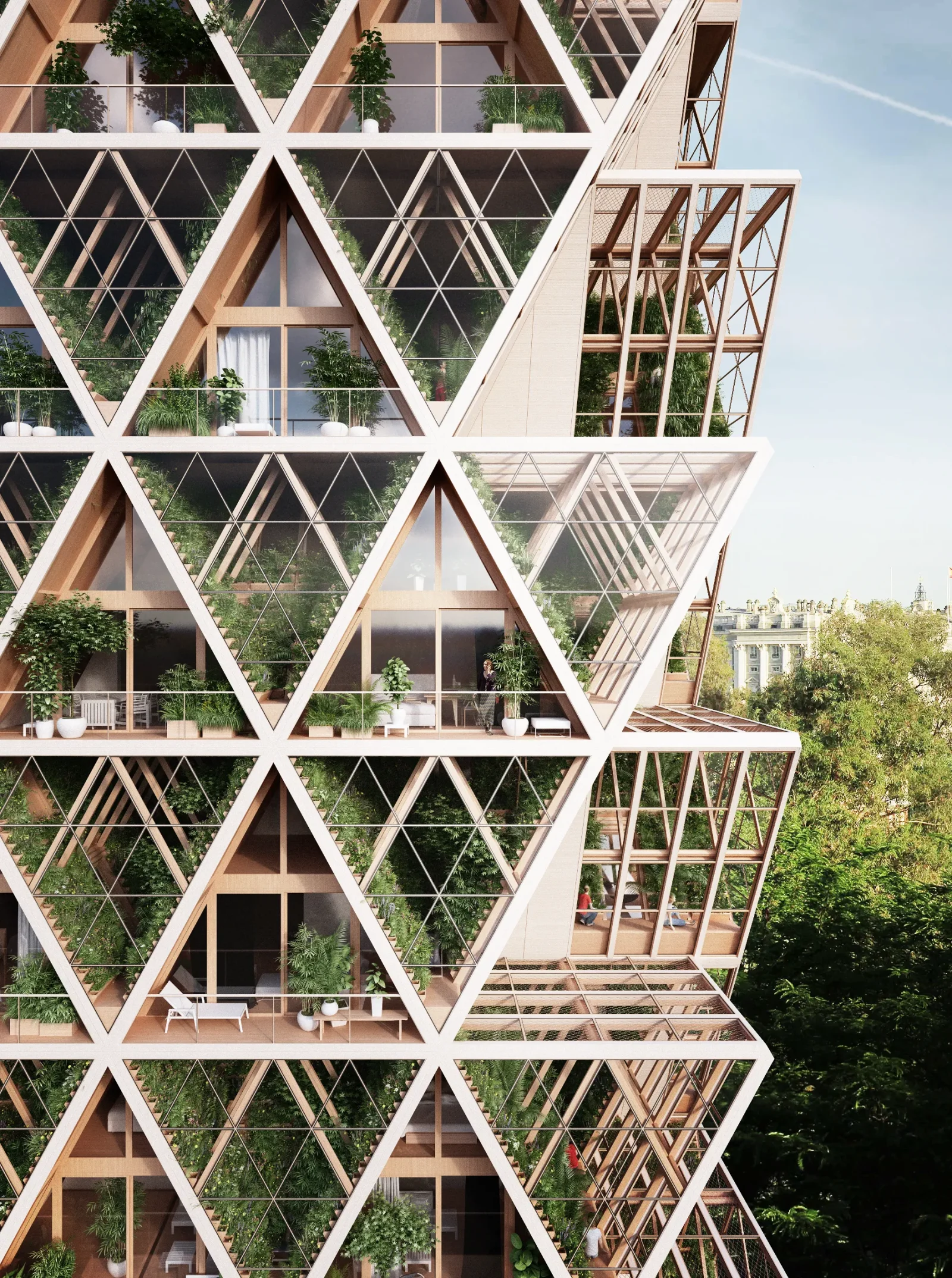
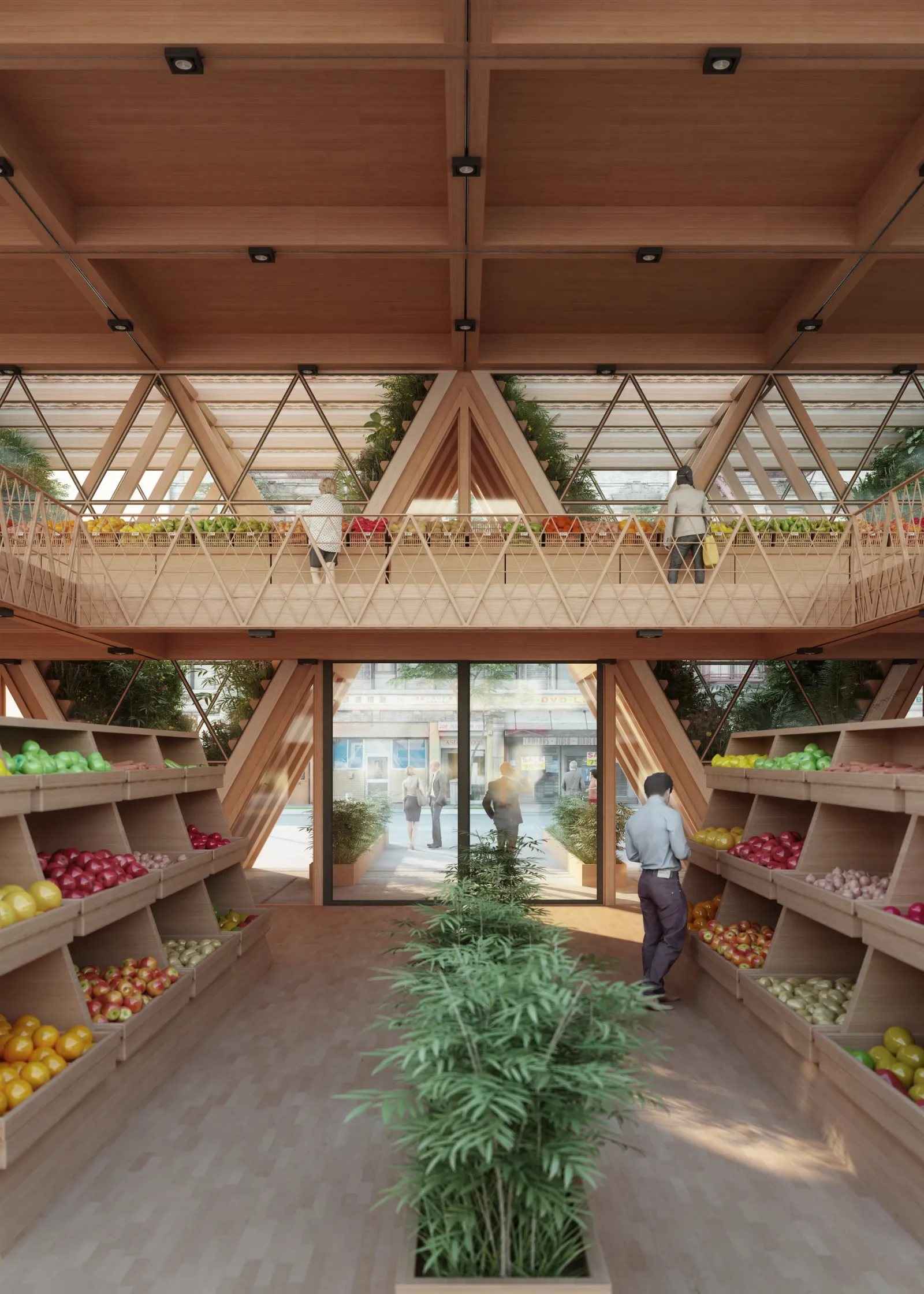
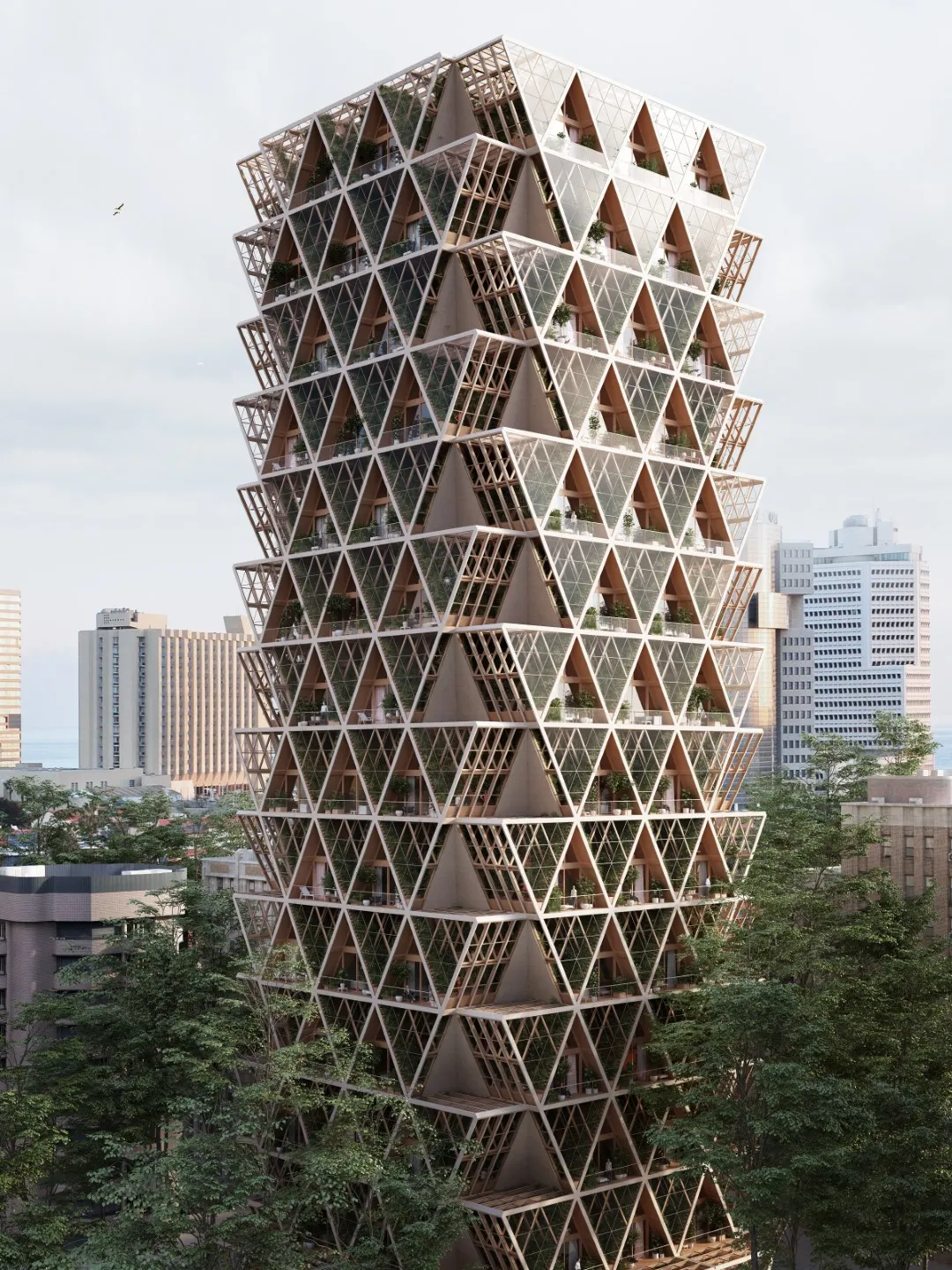
The Farmhouse, designed by Studio Precht, was developed from the belief that our growing disconnect from people and food production hurts individual health and the environment. As globalized systems offer effortless, year-round access to produce shipped from every corner of the world, the environmental cost from carbon-heavy transport to chemical-intensive farming continues to rise. Hence, in the past few years, the project called “The Farmhouse” was conceptualized and designed to reconnect people with the process of growing their own food.
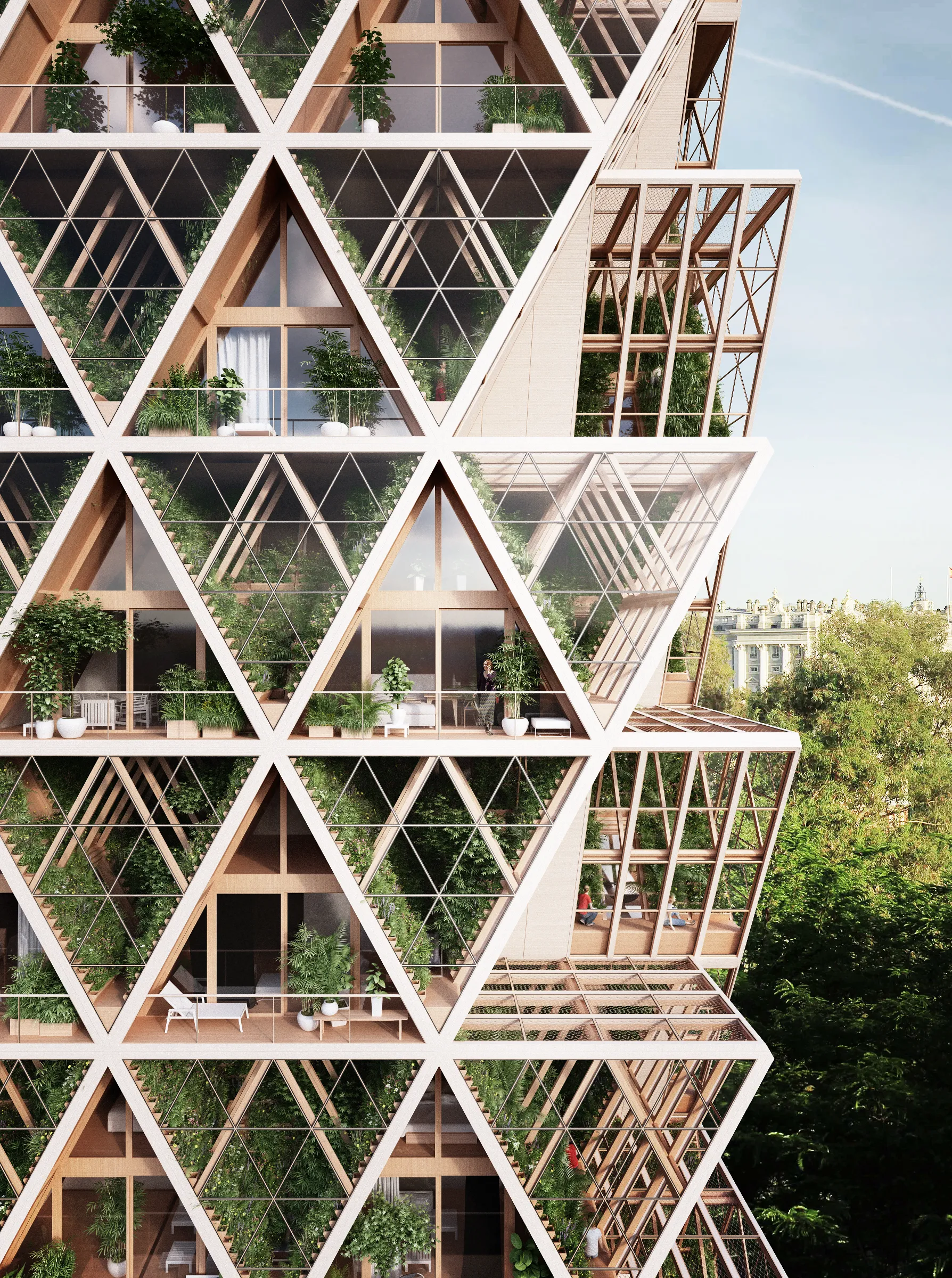
The Framework’s primary design philosophy and aim is to encourage citizens to grow food locally, and to continue the ecological aspect with architecture. The building is a prefabricated and modular building system, designed to be assembled quickly and with minimal impact on the surrounding context. The structural design of the building is composed of a traditional A-frame housing that uses a diagrid to distribute the load of the entire building. Each wall of each unit is composed of three layers, including inner finishes, electrical, and pipe layer, a middle layer with insulation, and the outer layer for protection from elements.
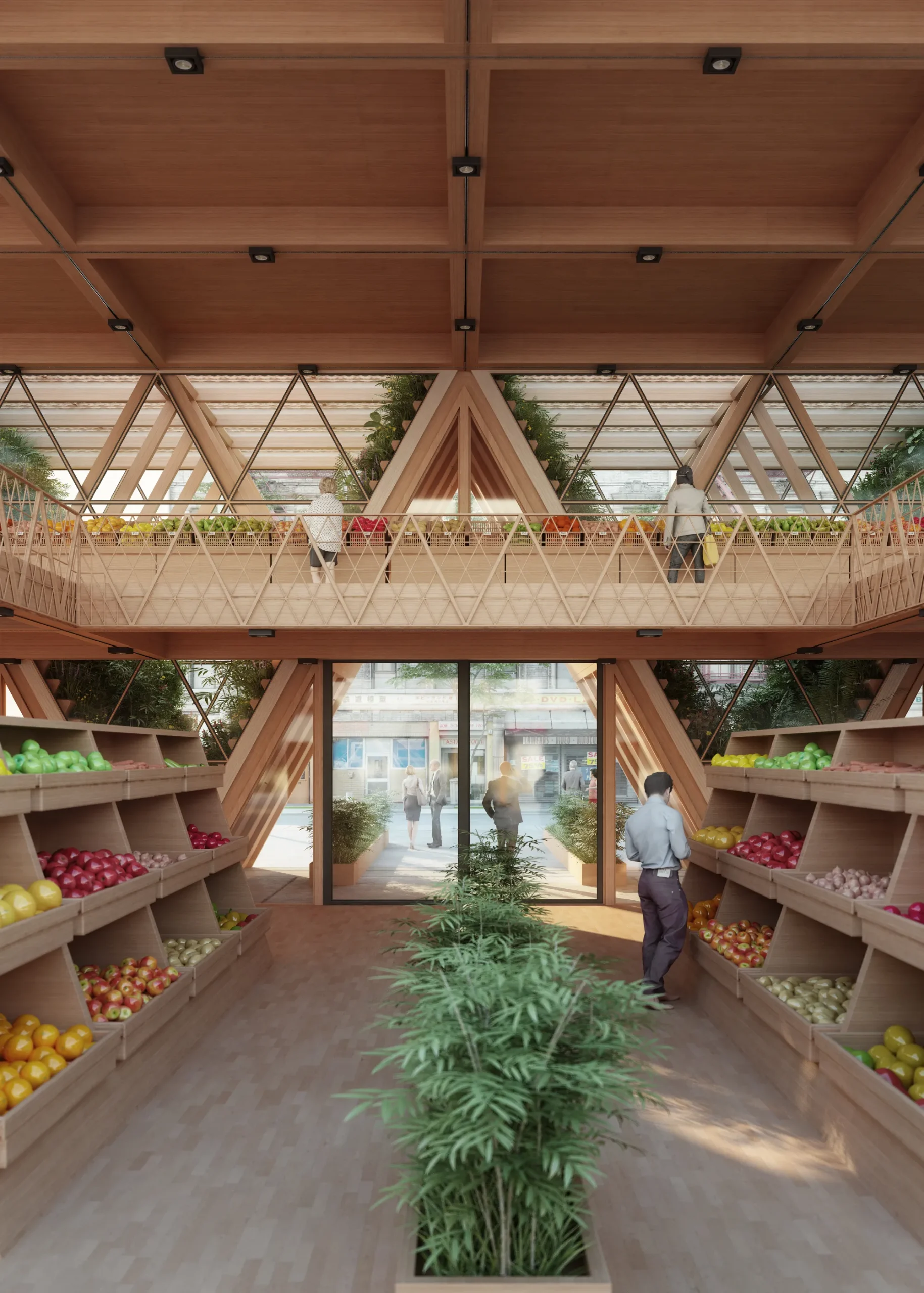
The architecture is built primarily from Cross-Laminated Timber (CLT) panels that shape the modular structure, finishes, and integrated planters, allowing for precise fabrication, easy transport, and fast assembly. Beyond efficiency, wood offers ecological benefits, growing with natural energy, emitting fewer greenhouse gases during production, and carrying a lighter carbon footprint. Designed as a living extension of its surroundings, the building becomes part of the ecosystem rather than an isolated urban object.
8. Izola Social Housing, Slovenia
Architect: OFIS Architects
Location: Izola, Slovenia
Typology: Housing/Apartments
Completed: 2006
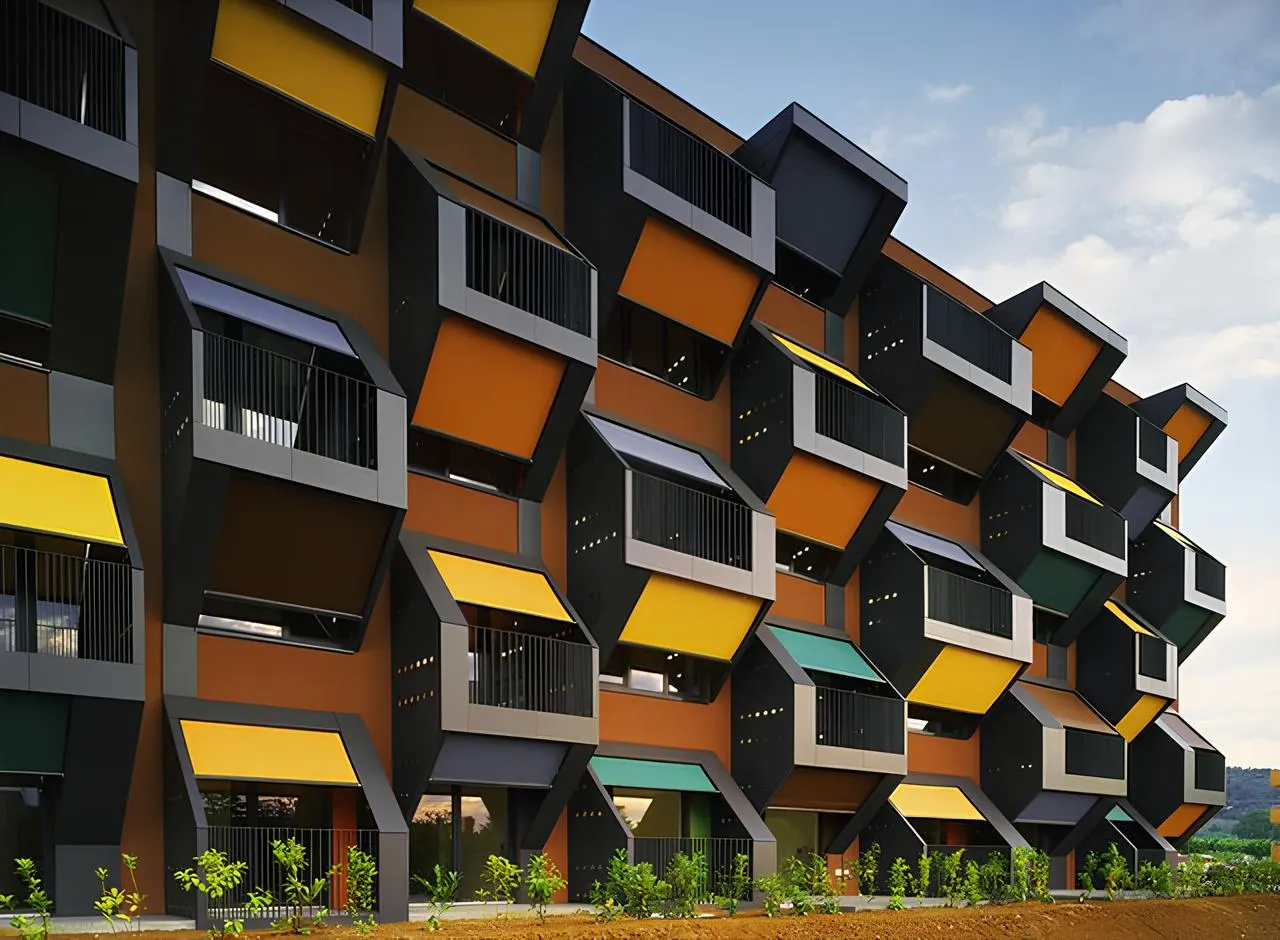
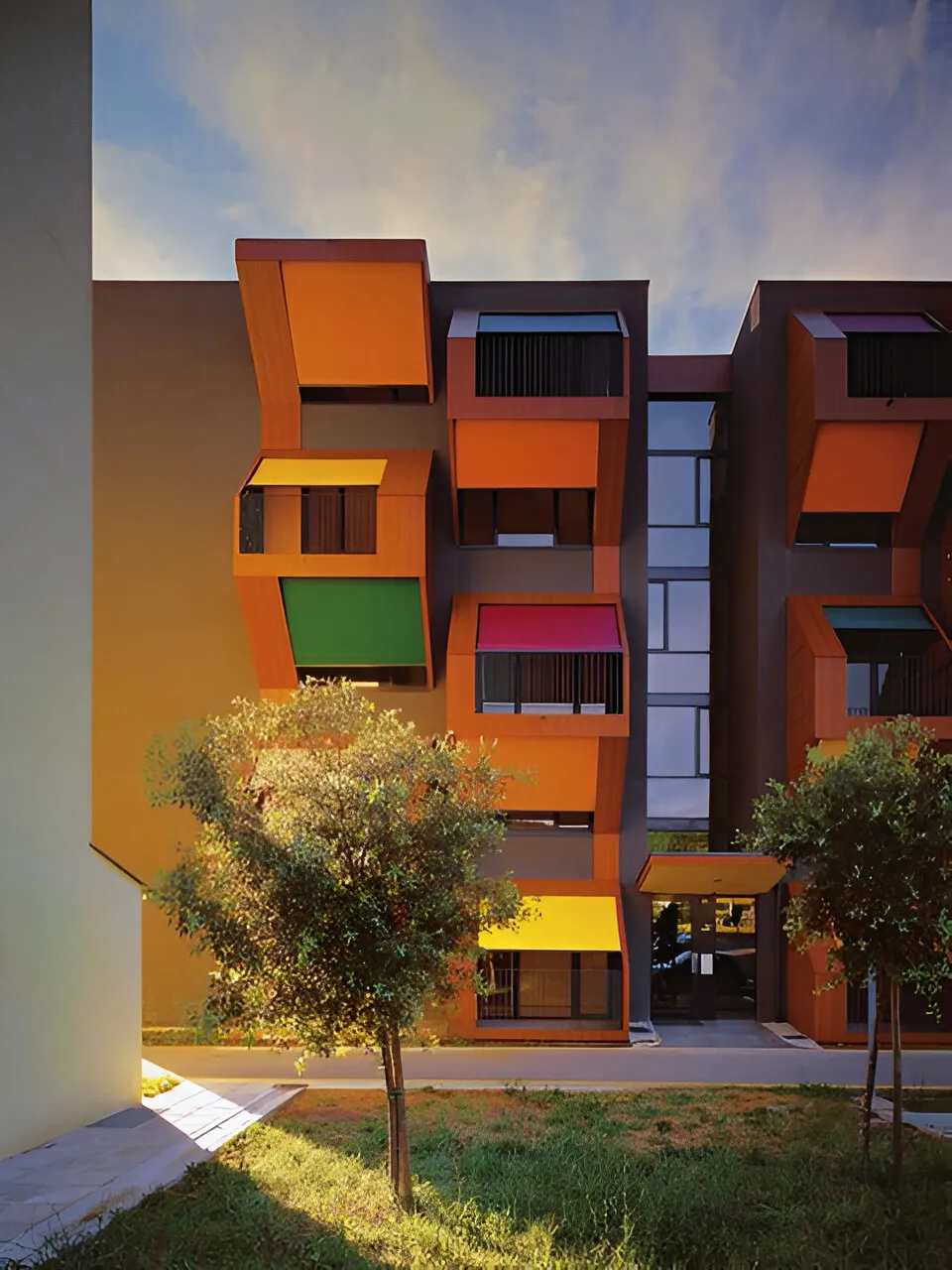
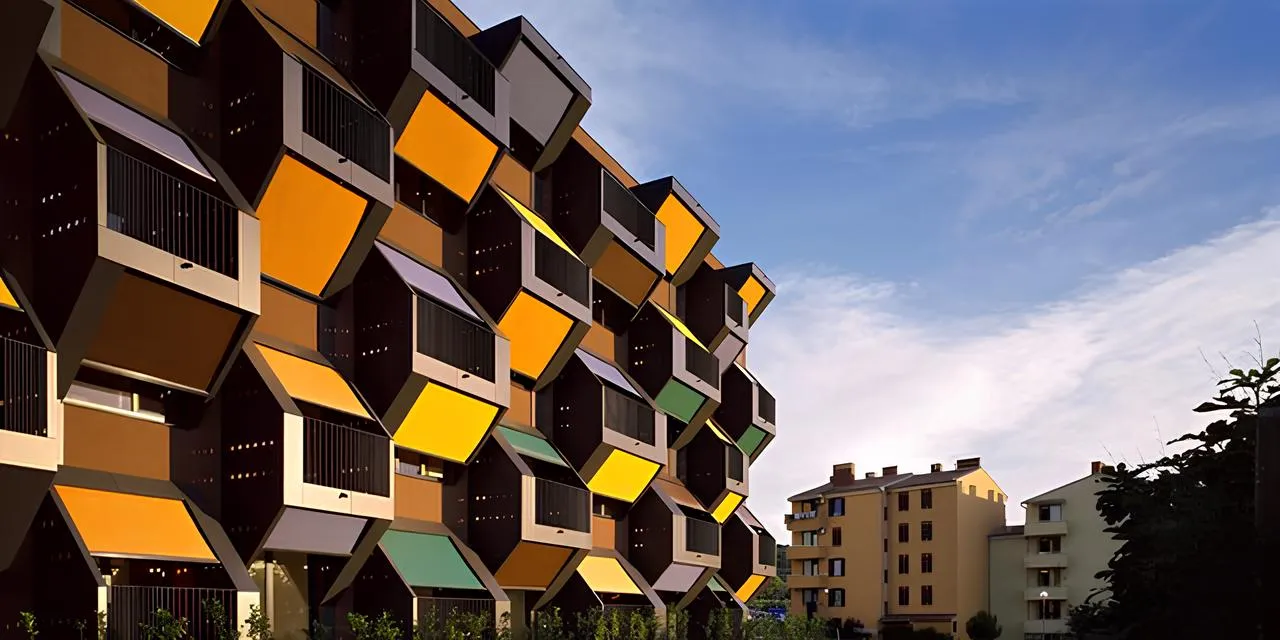
Izola Social Housing by OFIS Architects was designated the winner in a competition for the construction of two blocks of low-cost apartments. Situated on a hill with views onto Izola Bay on one side and a beautiful mountainous landscape on the other side. The building is a thoughtful approach to community-focused living that blends smart spatial planning with climate-responsive design. Architecturally, the housing complex emphasizes modularity, durability, and sustainability in design.
Each one of the honeycomb-shaped buildings accommodates thirty different types of dwellings from studios to three-bedroom apartments. The façade is defined by repeating geometric elements that create rhythm and visual coherence while providing shading and privacy for residents. The building is organized as a series of compact and efficient residential blocks arranged around shared outdoor spaces, encouraging social interaction.
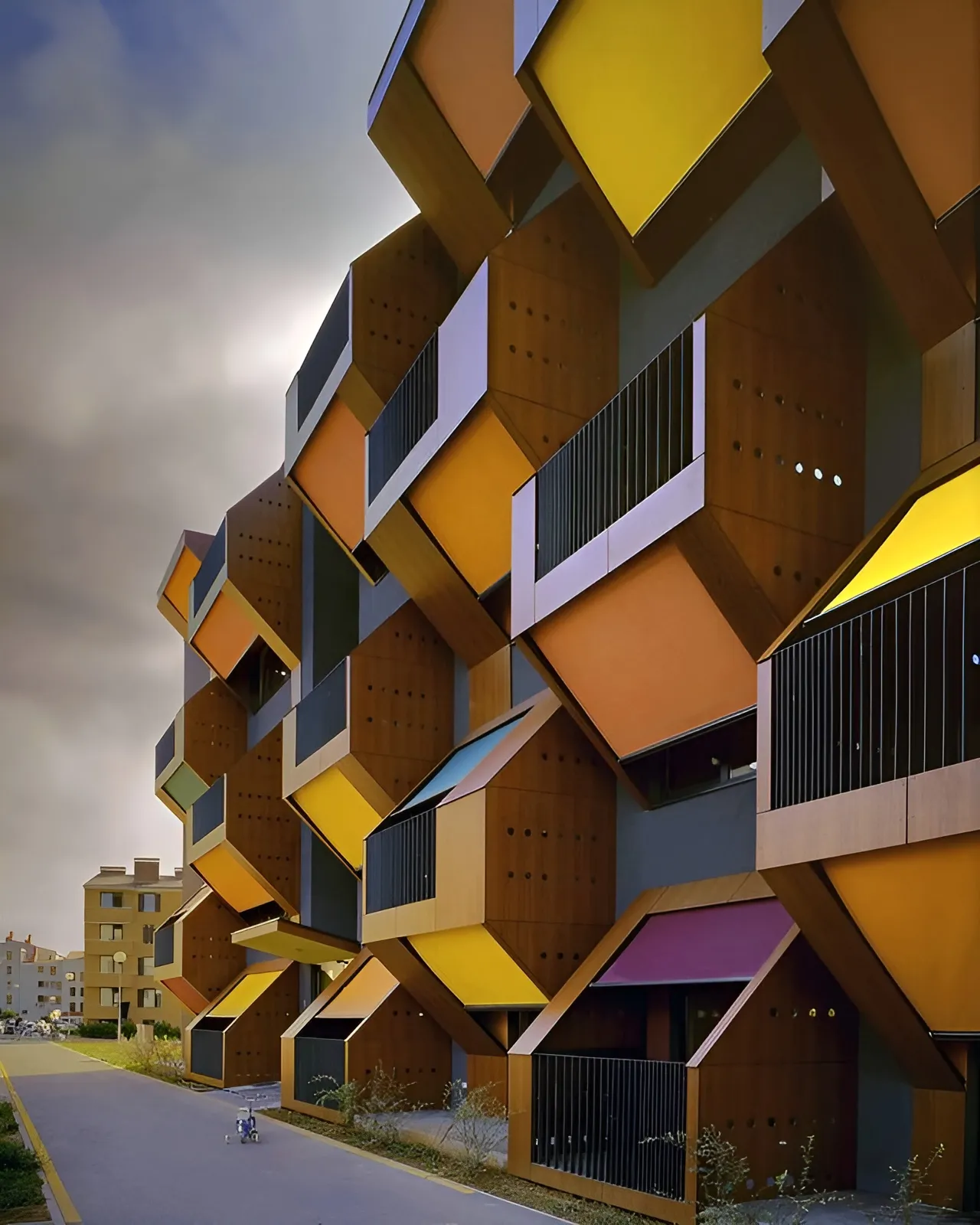
The architecture has been shaped by the region’s warm Mediterranean climate, and the design transforms shade, airflow, and outdoor living into essential elements of everyday comfort. With interiors free of structural obstructions, each compact unit feels open and flexible with generous balconies, well-placed openings, and steady cross-ventilation ensuring abundant daylight and fresh air, creating a bright and uplifting home within a modest footprint.
9. Macquarie University Incubator, Australia
Architect: Architectus
Location: Macquarie Park, NSW
Typology: Education
Completed: 2017
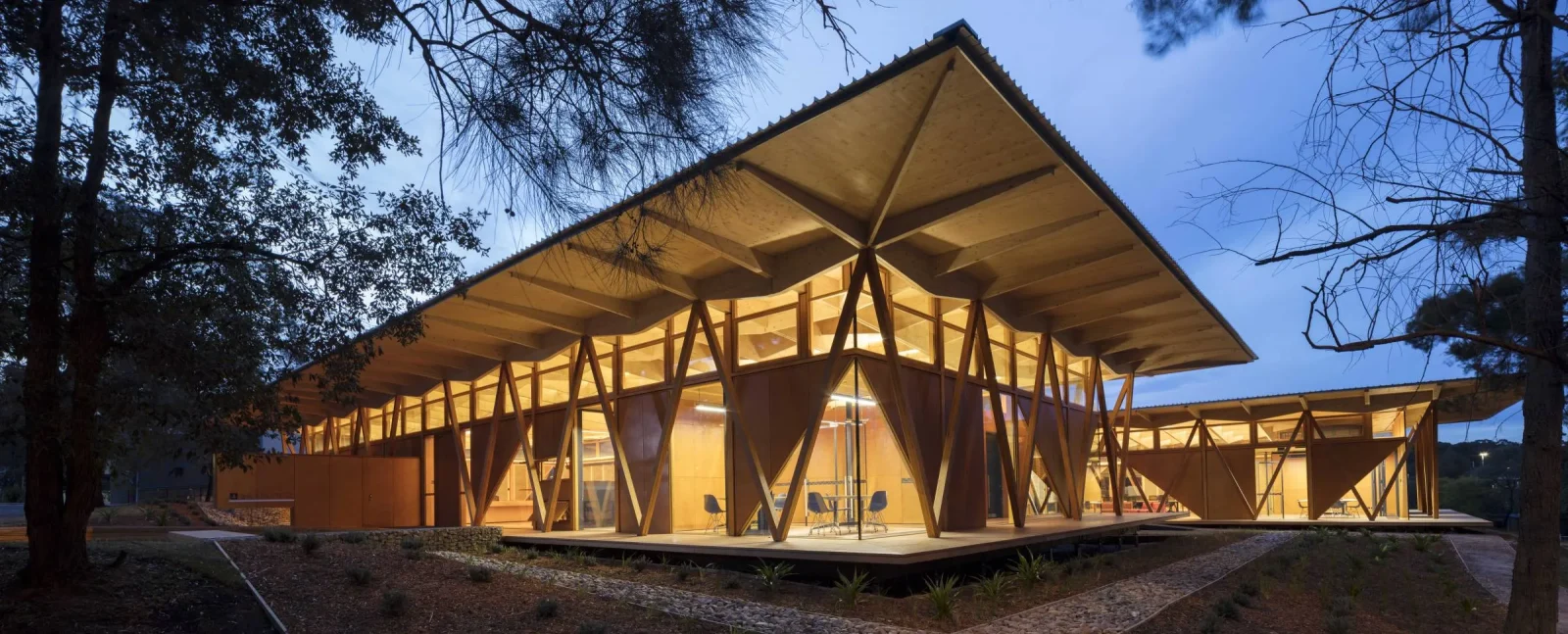
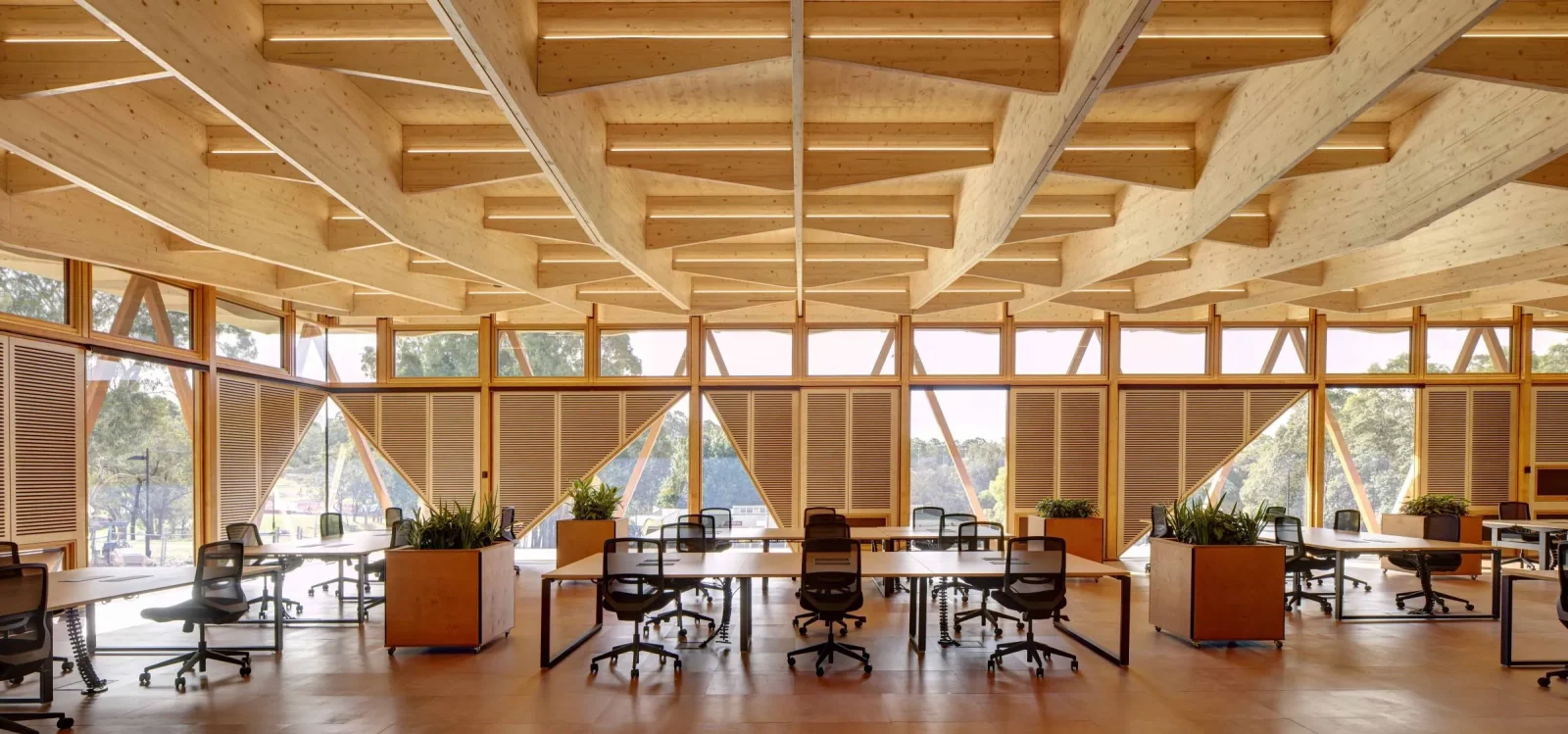
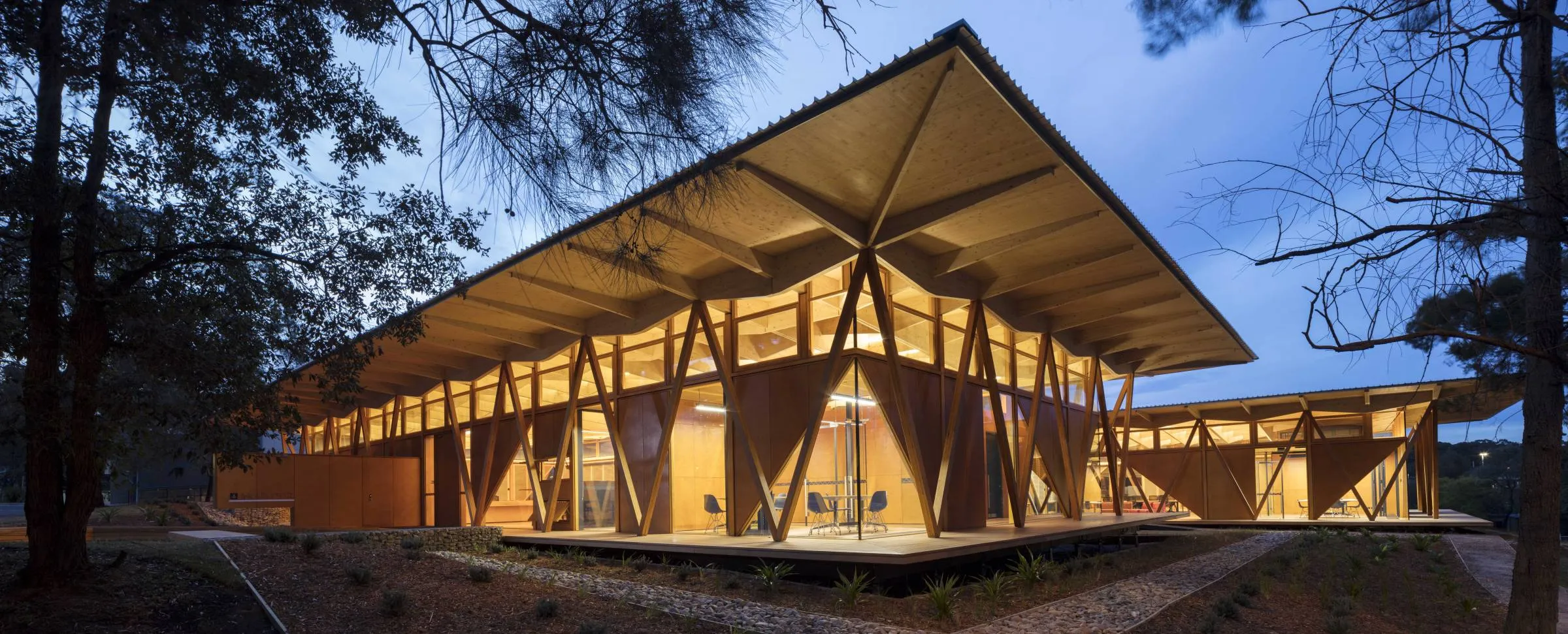
Macquarie University’s Incubator by Architectus is a contemporary learning hub shaped by the university’s need for flexibility and speed. Designed as a relocatable structure, the building is crafted from engineered timber and is one of the first wooden campus designs in Australia. The modular design is composed of prefabricated components that are built off-site for rapid installation. Its lightweight, sustainable construction creates a human-centered campus environment that can adapt with people and programs and evolve, reflecting the spirit of innovation.
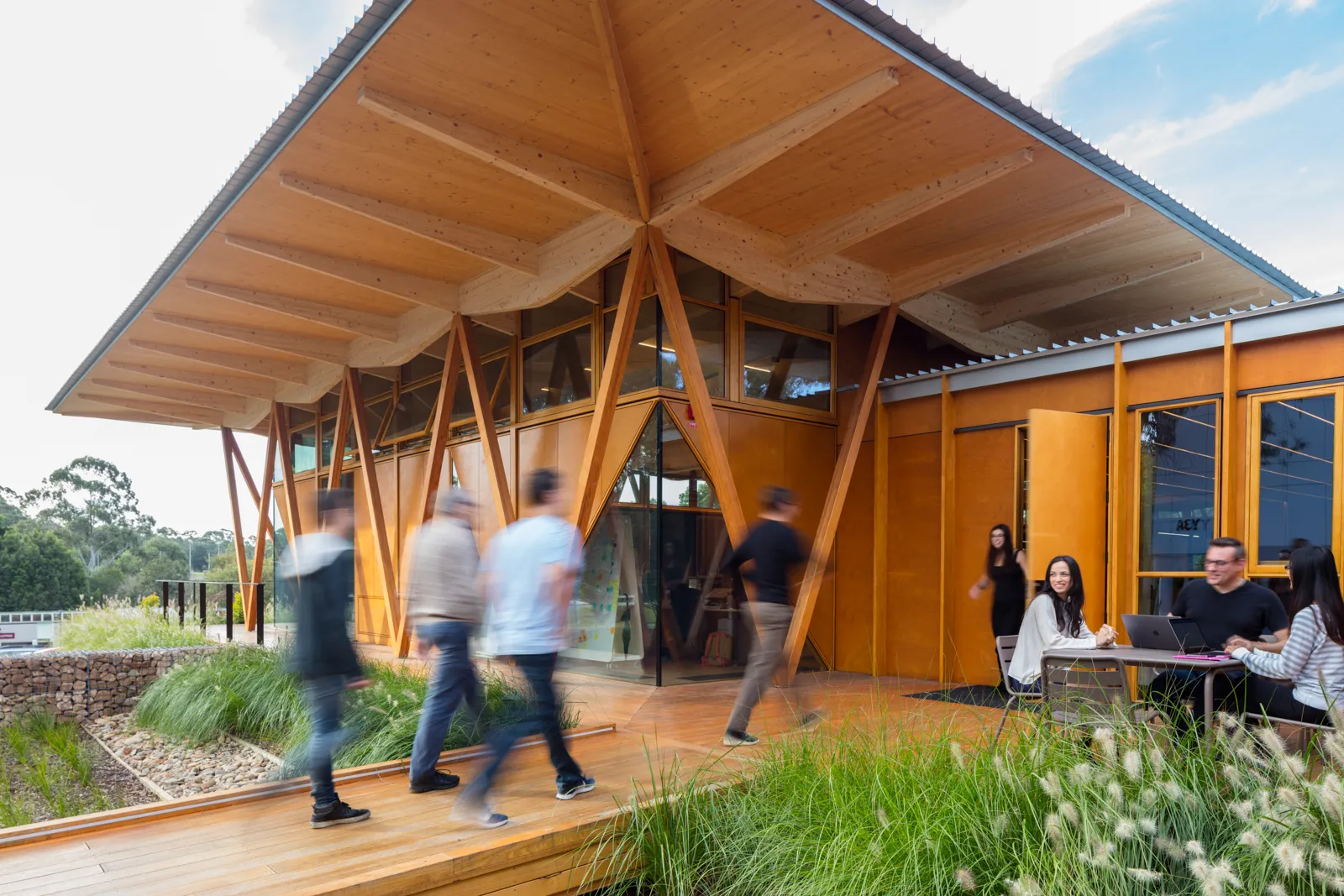
Timber was selected as the primary material for construction for its capacity; it is beautifully engineered, swiftly fabricated, and of high quality, and in the future, it can be easily disassembled and relocated. The sustainable and modular architecture of the building was swiftly completed within five months of construction.
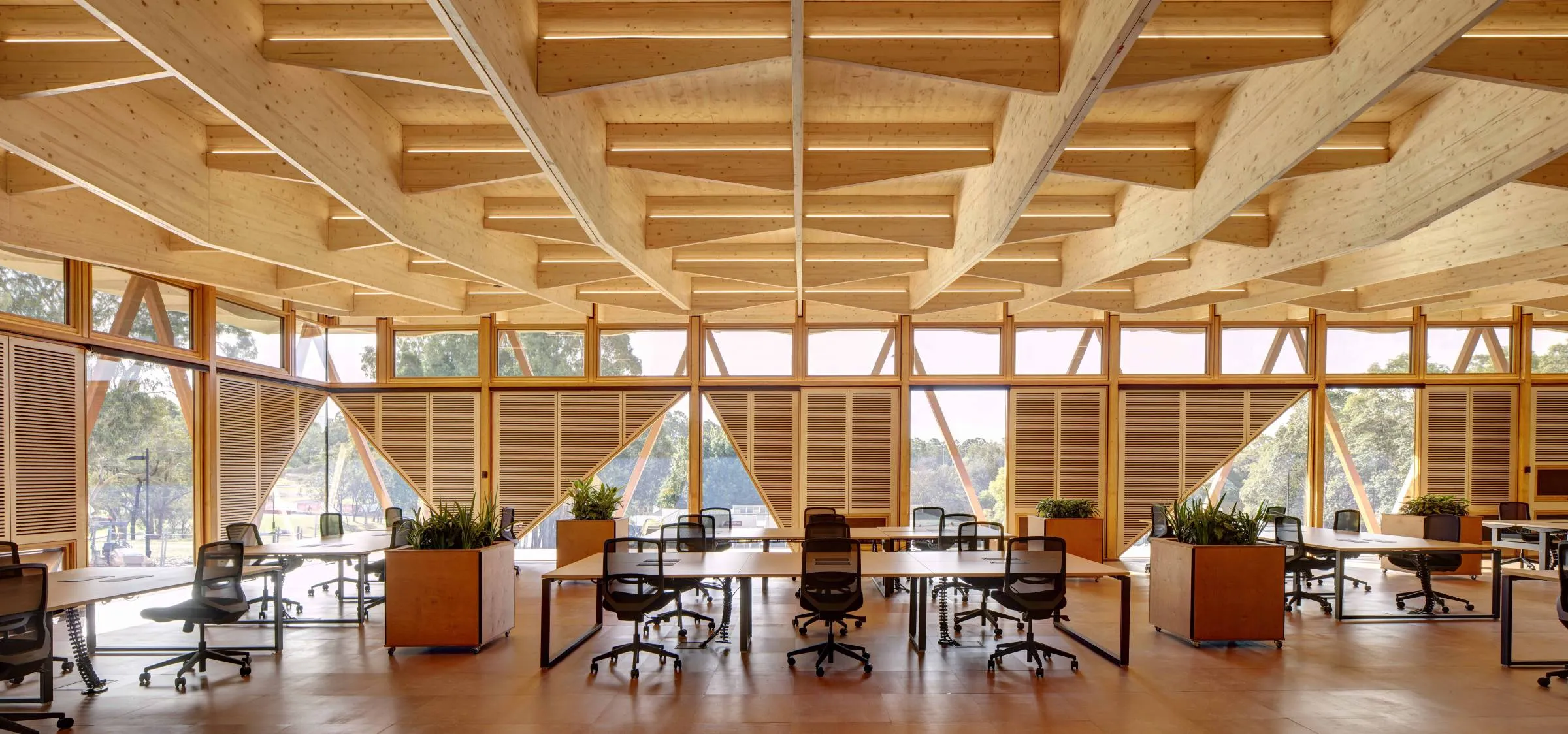
The University is one of the best examples of innovative architectural collaboration between the client, designer, and the contractors. It is one of the few buildings in Australia that can be disassembled, relocated, and repurposed, which was completed within budget, on time, with exceptional quality of architecture.
10. B2 Campus Tower, Germany
Architect: Delugan Meissl Associated Architects (DMAA)
Location: Hamburg, Germany
Typology: Office
Completed: 2020
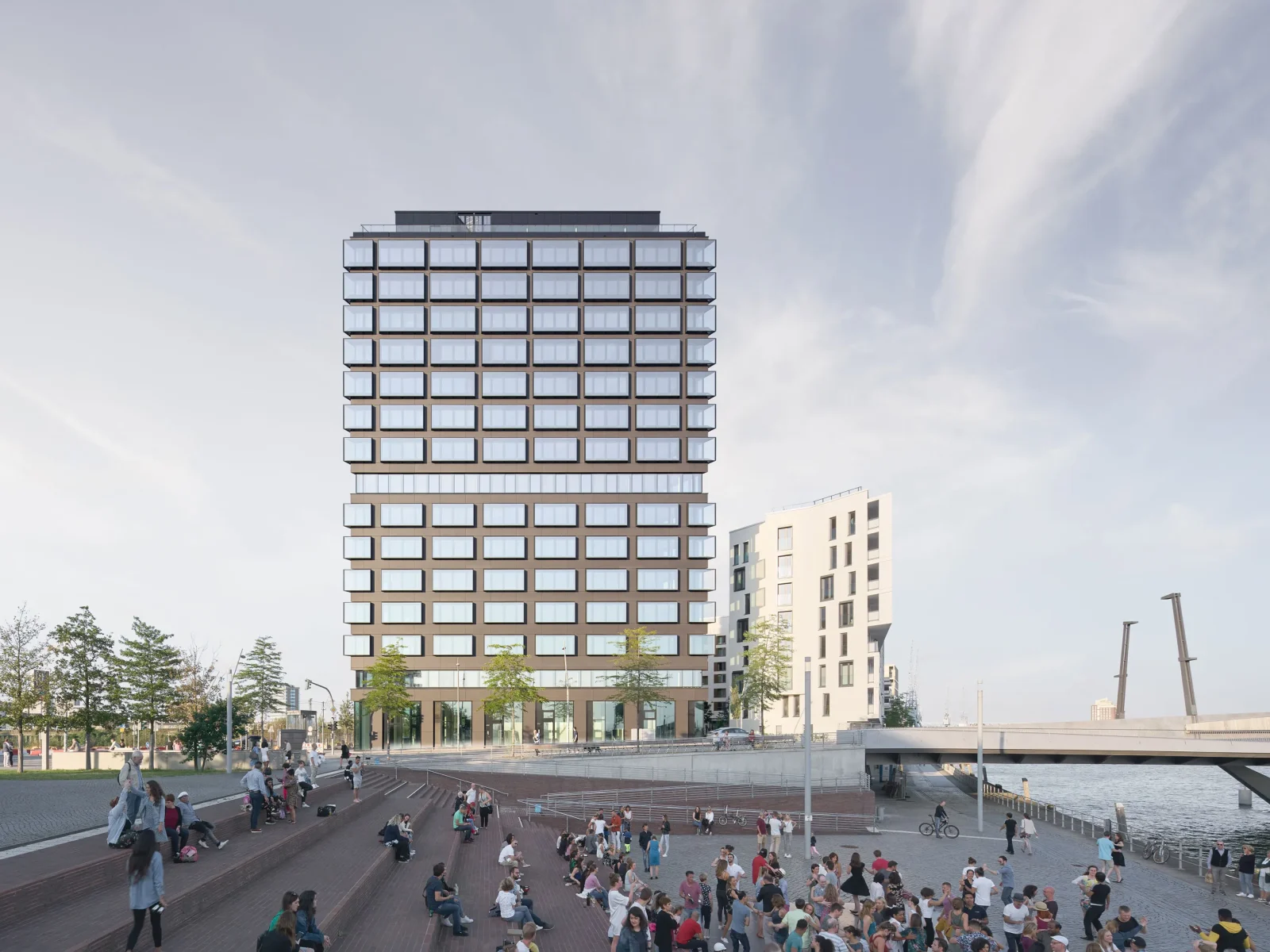
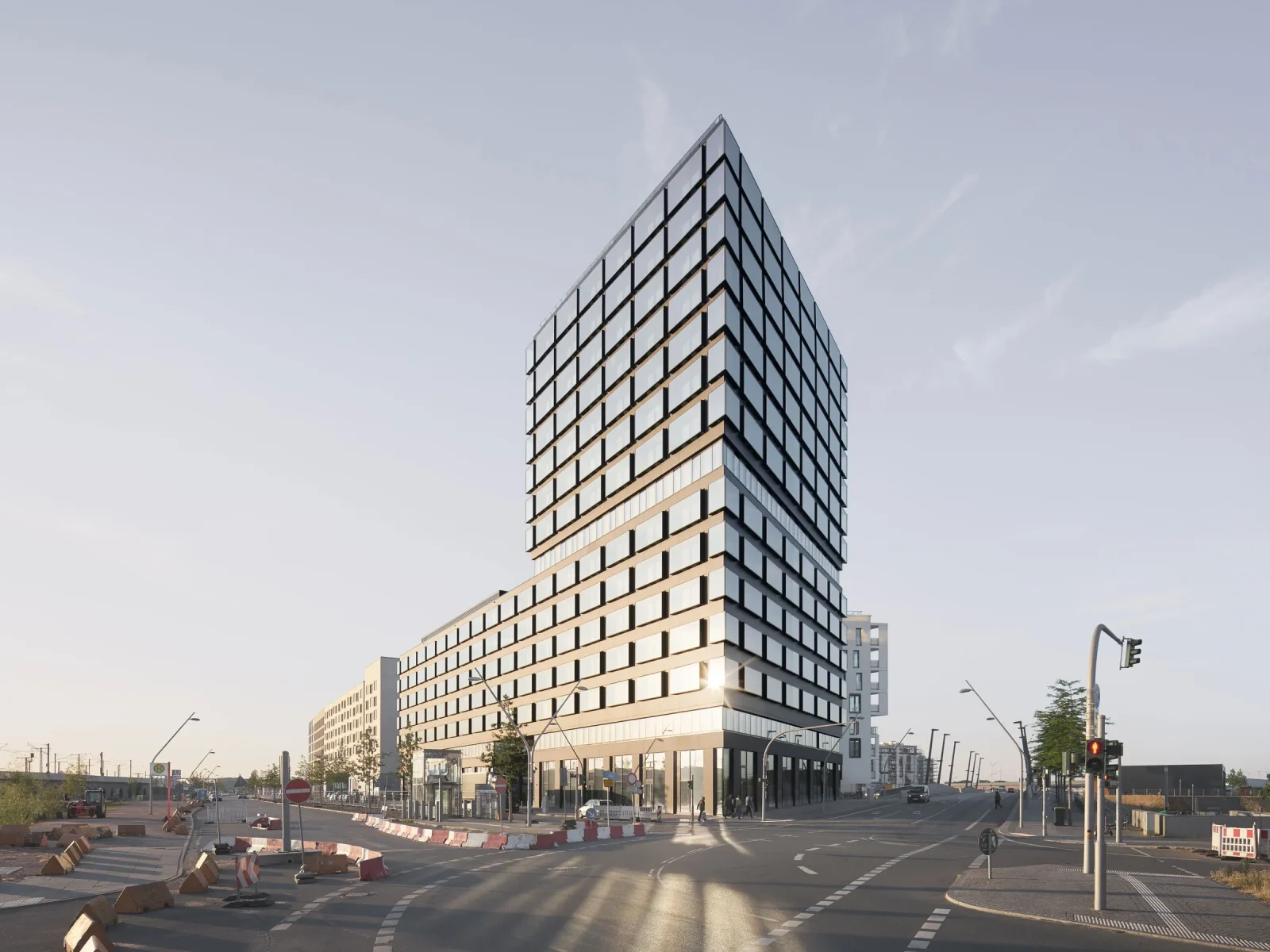
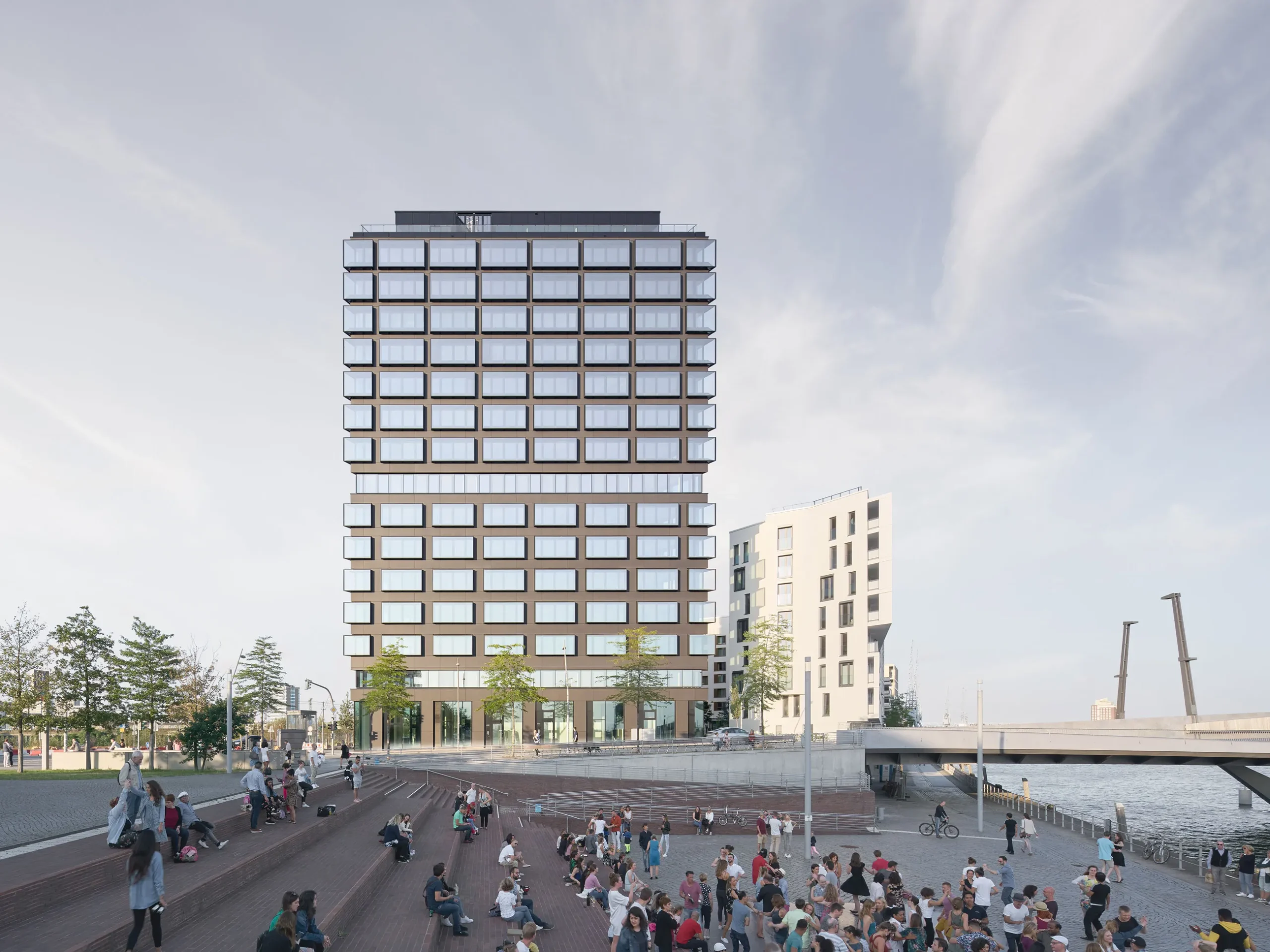
The B2 Campus Tower, designed by Delugan Meissl Associated Architects, stands as a striking architectural landmark characterised by its dynamic modular architecture with sharp geometry. The office building is divided into three parts, determined by contextual parameters: an architrave block, a waler, and a head. This partition creates, on the one hand, a strong identity of the whole ensemble as an urbanistic prelude for the development of the Baakenhafen, and on the other hand, generates urban qualities inside the building.
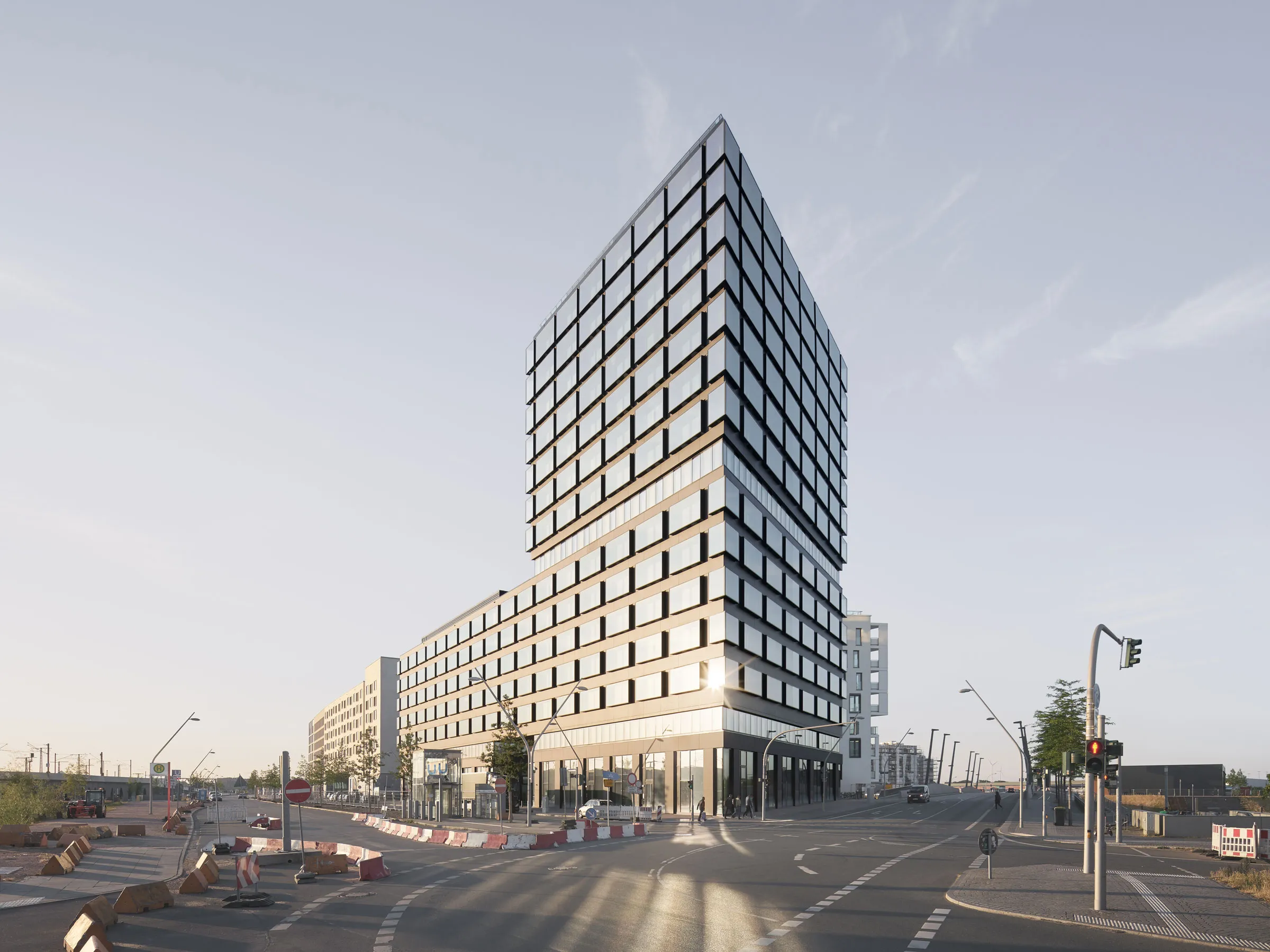
The building’s modular façade gives it a bold, expressive identity while boosting overall energy performance. The building’s modular façade gives it a bold, expressive identity while boosting overall energy performance. The building is crafted from a series of prefabricated panels that create shifting depths, shadows, and textures, forming a dynamic envelope that responds beautifully to changing daylight. A thoughtful mix of dark concrete cladding and translucent zones with deflector panes balances noise protection with openness, allowing the workspace to feel both sheltered and visually connected to its surroundings.
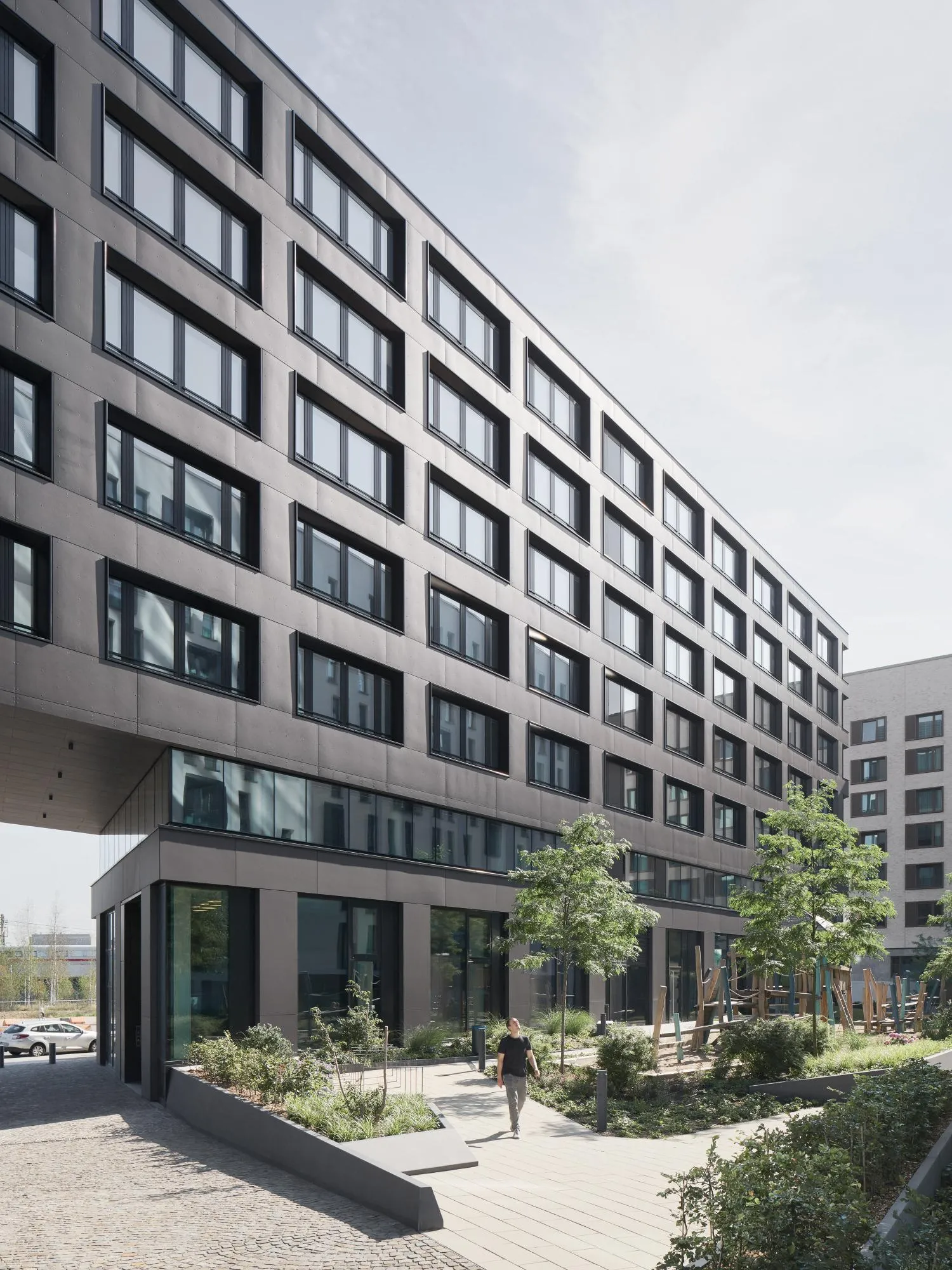
The tower’s modular façade is designed to boost energy performance by smartly balancing daylight, ventilation, and solar protection across its surface. As the pattern rises, the opaque elements slim down to reveal lighter railing and pillar expressions, creating a dynamic visual gradient that reflects the building’s internal structure. Sustainability is embedded through material efficiency, modular construction, and passive environmental strategies, making the tower a future-forward architectural model blending performance, adaptability, and expressive design.
Explore Courses
.jpg "Ondrej Chybik - Rethinking Architecture")