





Everyone knows the feeling: the slow walk through a vast terminal before a long flight, the first glimpse of a city through a wall of glass after landing, the quiet pause between departures and arrivals. Airports are where journeys begin and end, and over time they have grown into much more than places of transit. Today, they are some of the most public and emotionally charged spaces we experience, shaping how we remember cities, countries, and even entire trips.
In 2026, the world’s largest airports reflect this shift. Built at extraordinary scales, they stretch across deserts, plains, and metropolitan edges, yet their architecture is increasingly focused on people rather than just planes. Daylight-filled halls, clear circulation, cultural references, and adaptable layouts turn infrastructure into experience. These airports tell stories of ambition, identity, and movement, revealing how architecture can bring a sense of ease and meaning to one of the most complex environments of modern life.
Here are the world’s 10 largest airports in 2026
1. King Fahd International Airport (DMM), Saudi Arabia
Architect: Minoru Yamasaki Associates
Location: Dammam, Saudi Arabia
Area: 776 km²
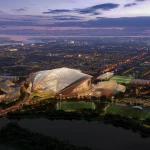
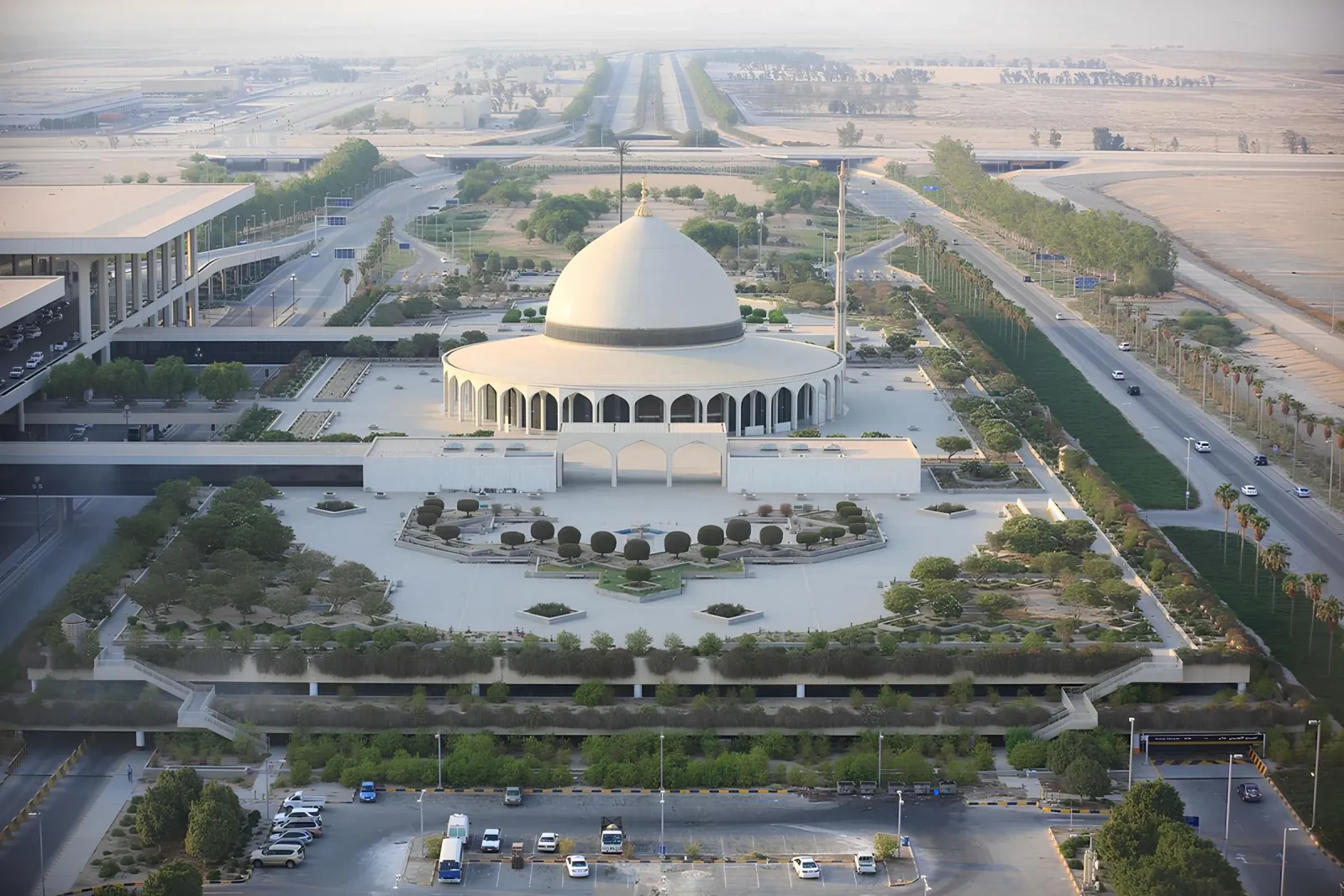
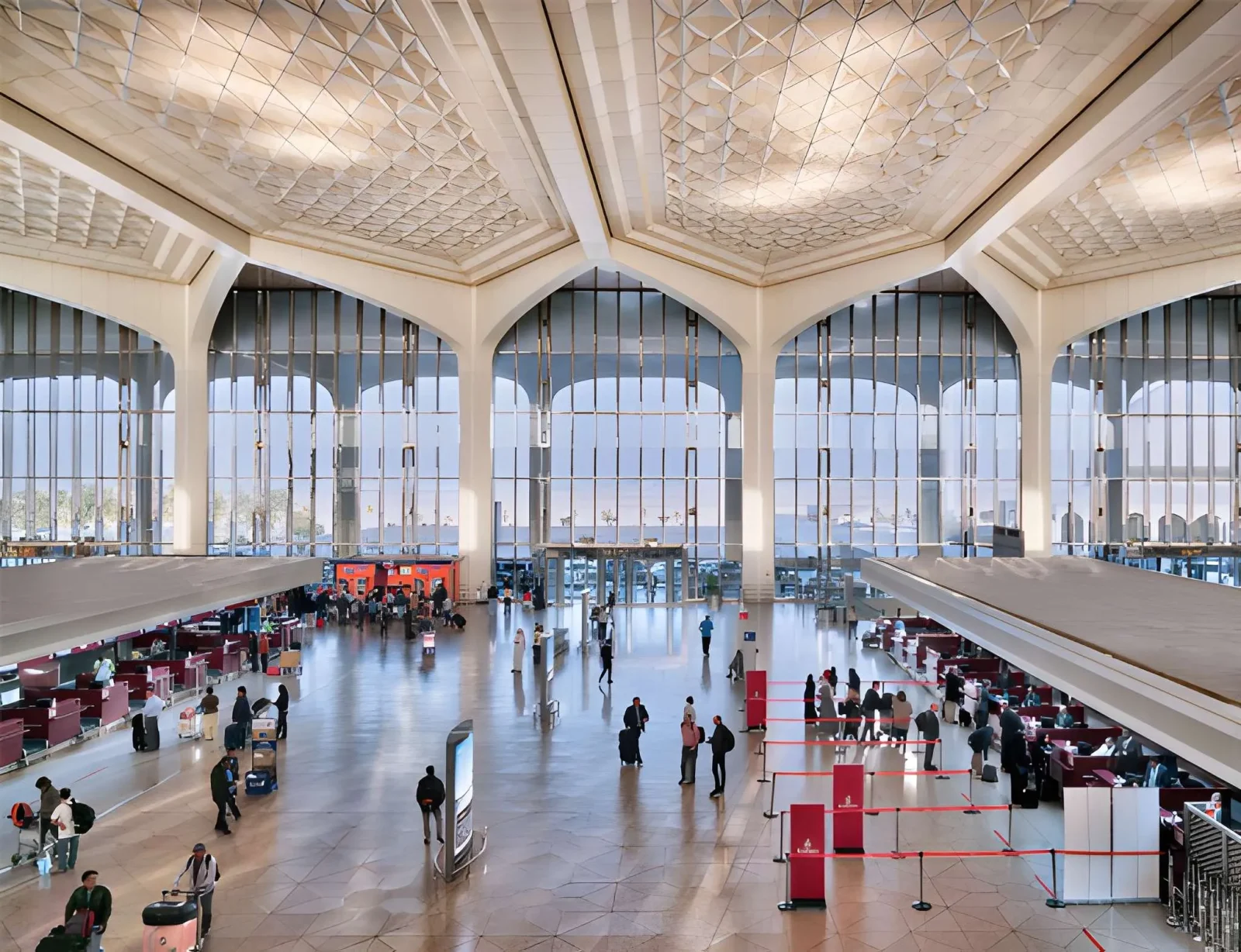
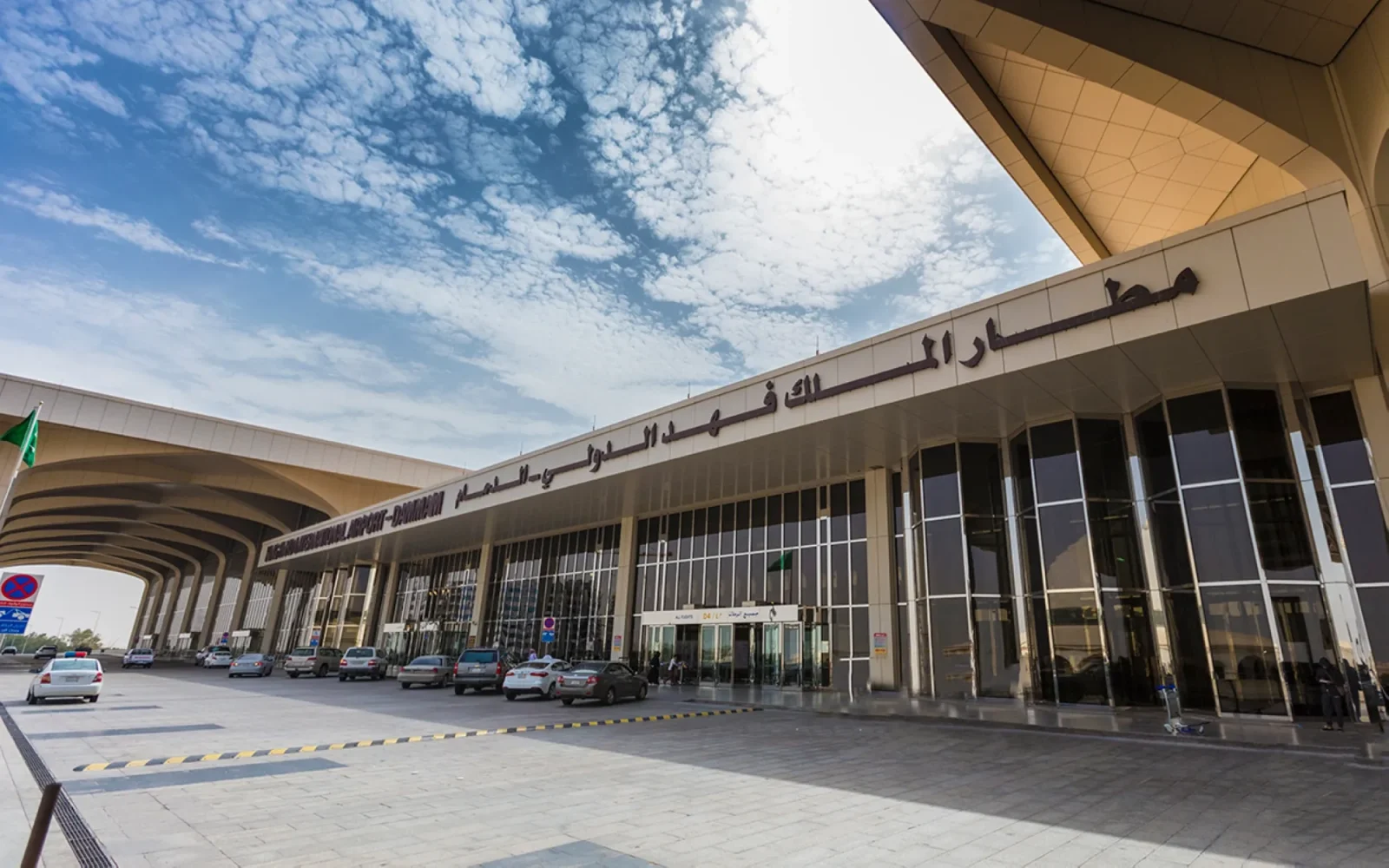
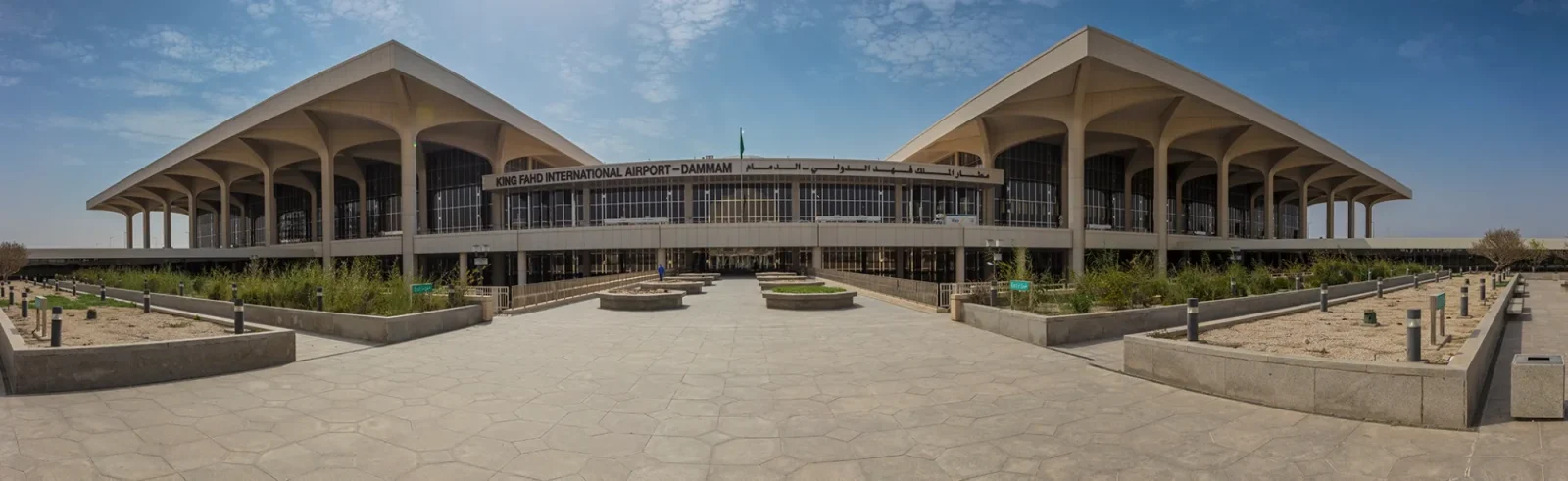
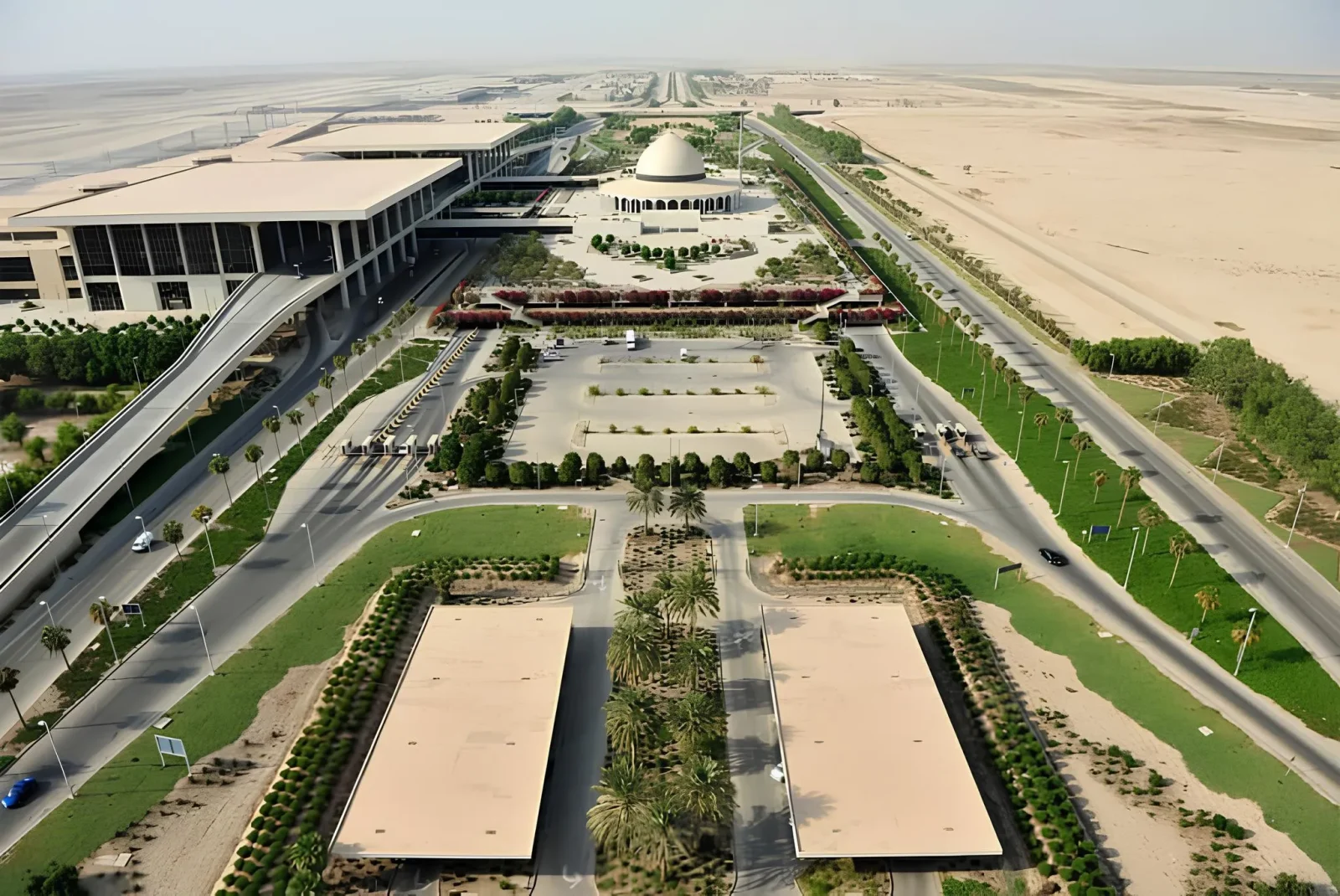
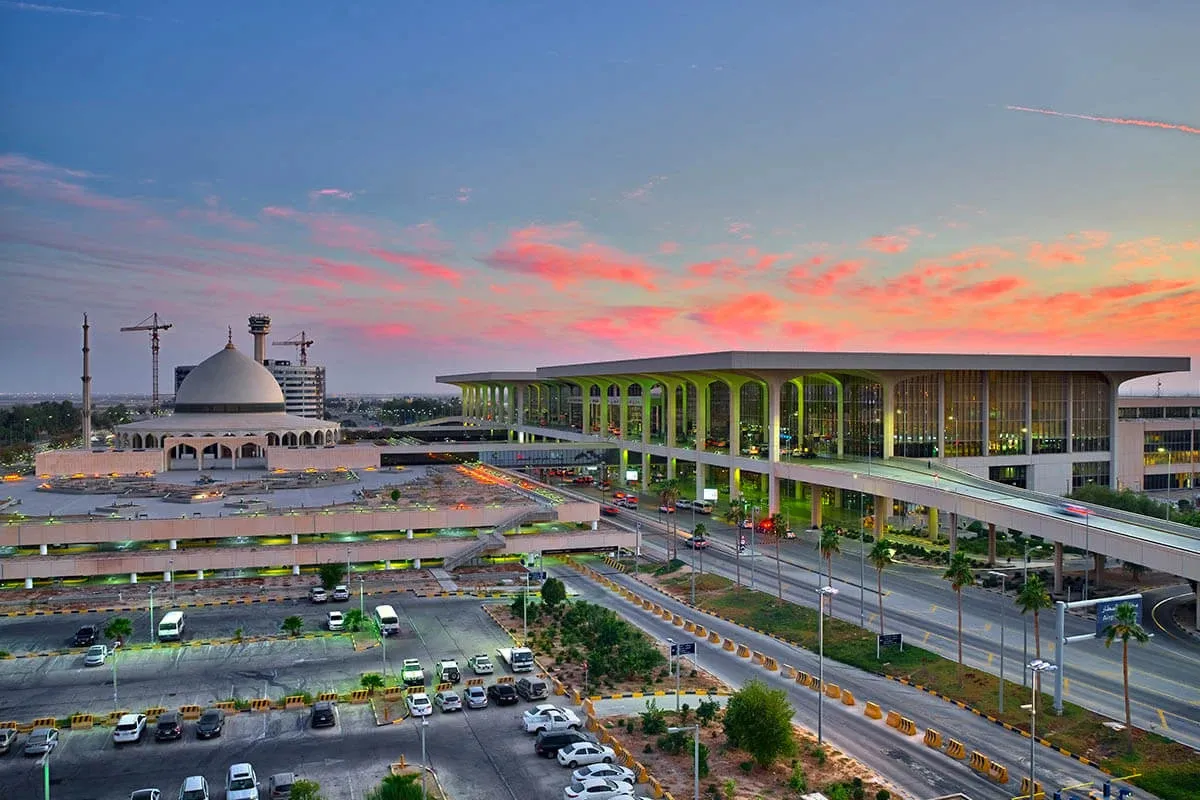
King Fahd International Airport stands as the world’s largest airport by land area, stretching across an extraordinary 776 km² area, redefining the scale of global aviation infrastructure. Designed by Minoru Yamasaki Associates, the airport reflects Saudi Arabia’s ambition to modernize its transport networks, yet is rooted and grounded in its cultural expression. More than a functional aviation hub, its architecture creates a distinctive sense of place that serves as a national identity and increased global connectivity. The airport, to meet contemporary and continuous travel demands, balances operational efficiency with architecture, reinforcing it as a symbol of scale and futuristic vision.
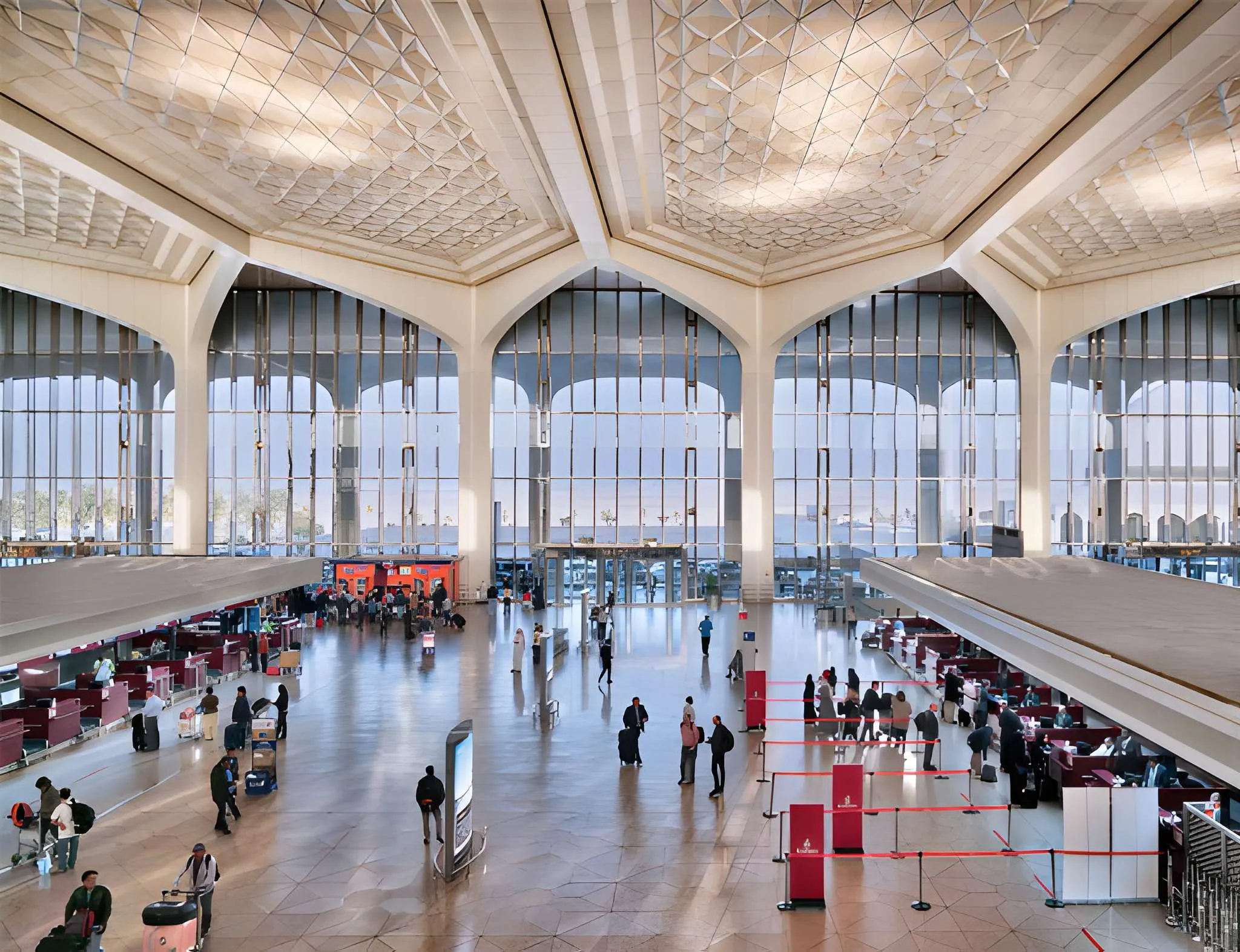
The airport is a refined dialogue between contemporary engineering and timeless Islamic architecture. Designed into three distinct terminals, one for commercial travel, Saudi Aramco operations, and royal use, balancing efficiency with exclusivity. Intricate geometric patterns and ornamental details inspired by Islamic art ground the vast infrastructure in cultural meaning. Expansive halls, rhythmic structural grids, and generous ceiling heights guide large passenger flows while preserving a sense of calm and clarity. Carefully placed skylights and a centrally integrated mosque soften the scale of the interiors, reinforcing comfort, orientation, and spiritual identity within the airport experience.
2. Denver International Airport (DEN), USA
Architect: Curtis Fentress | Fentress Architects
Location: Denver, USA
Area: 135.70 km²
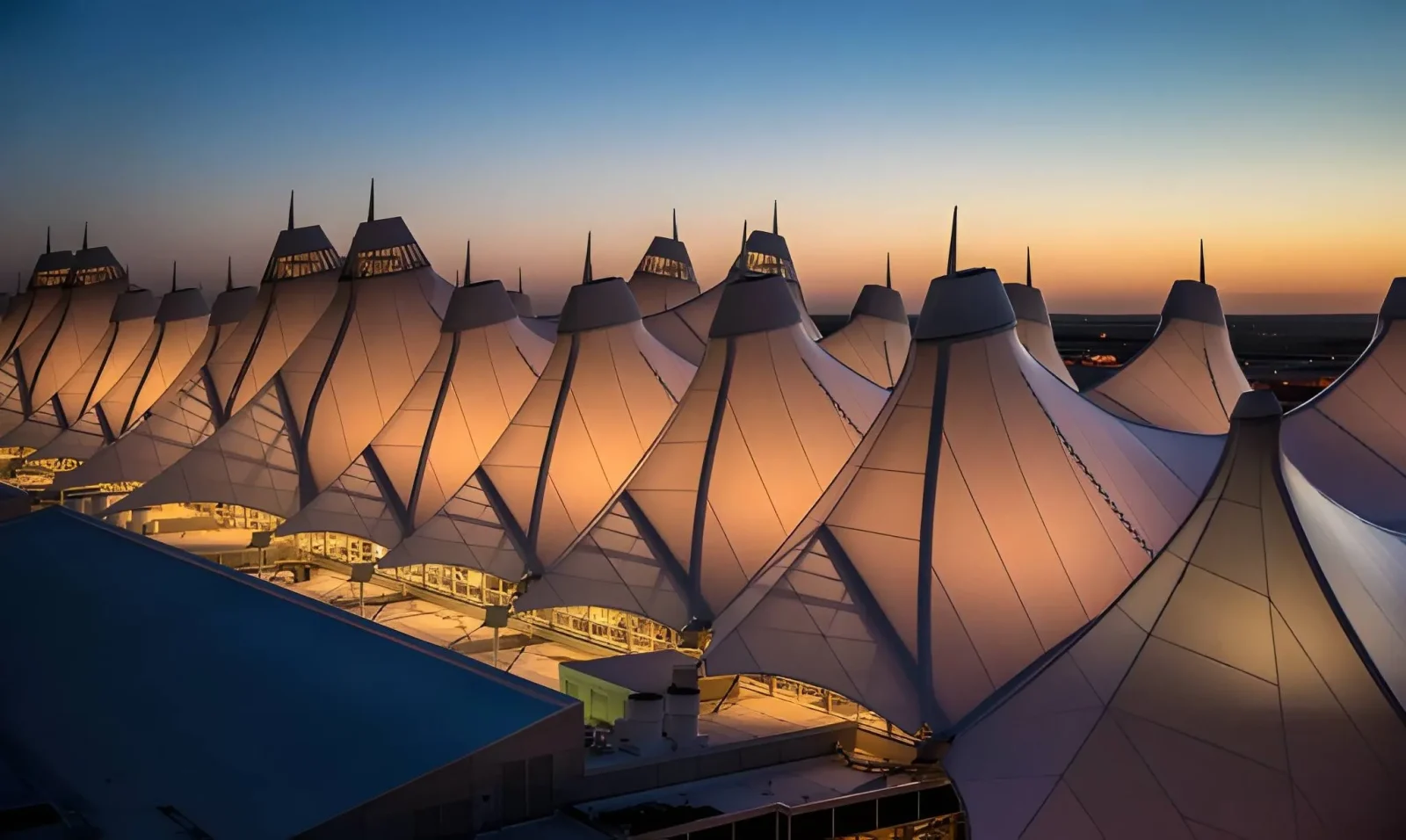
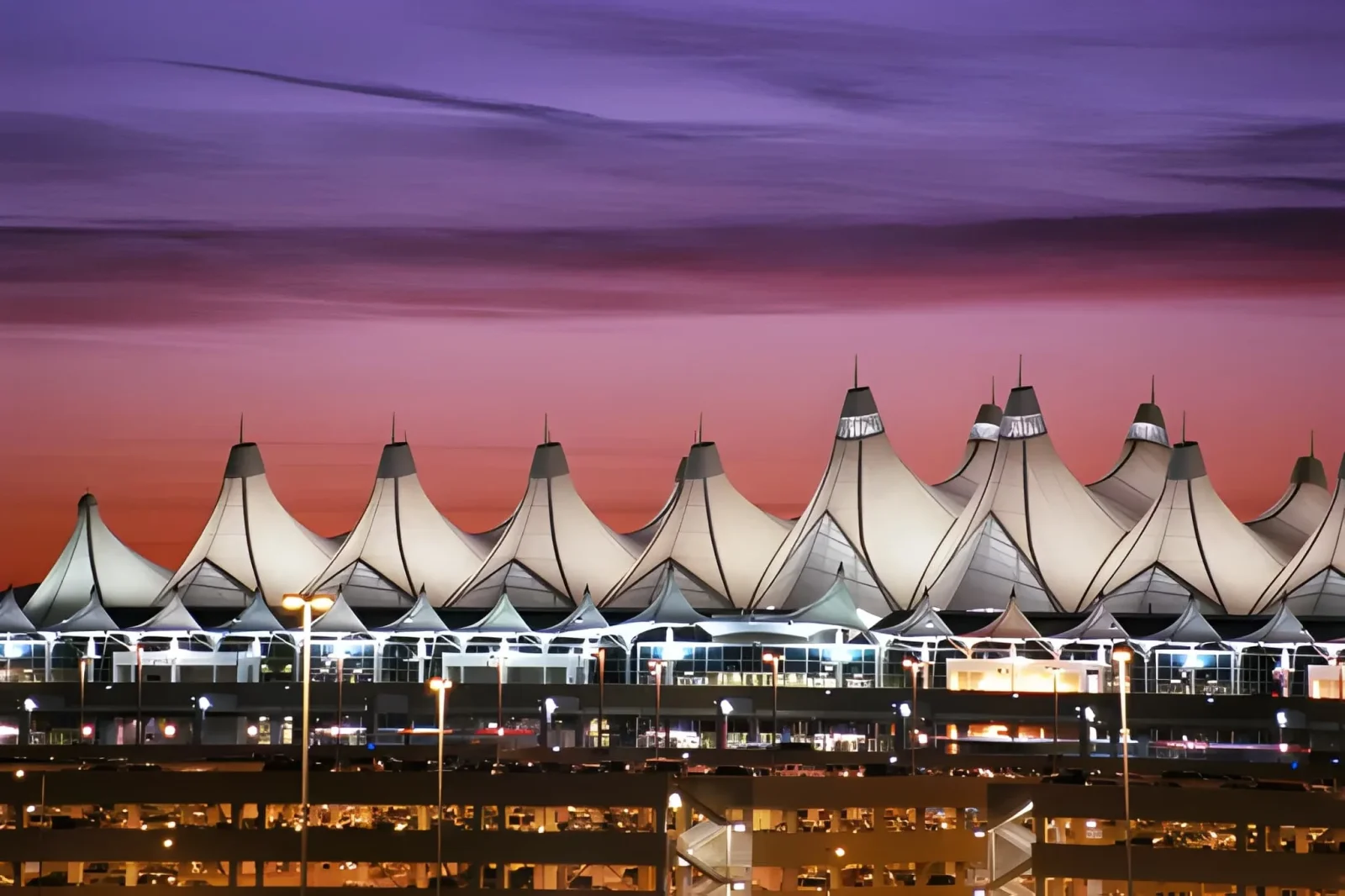
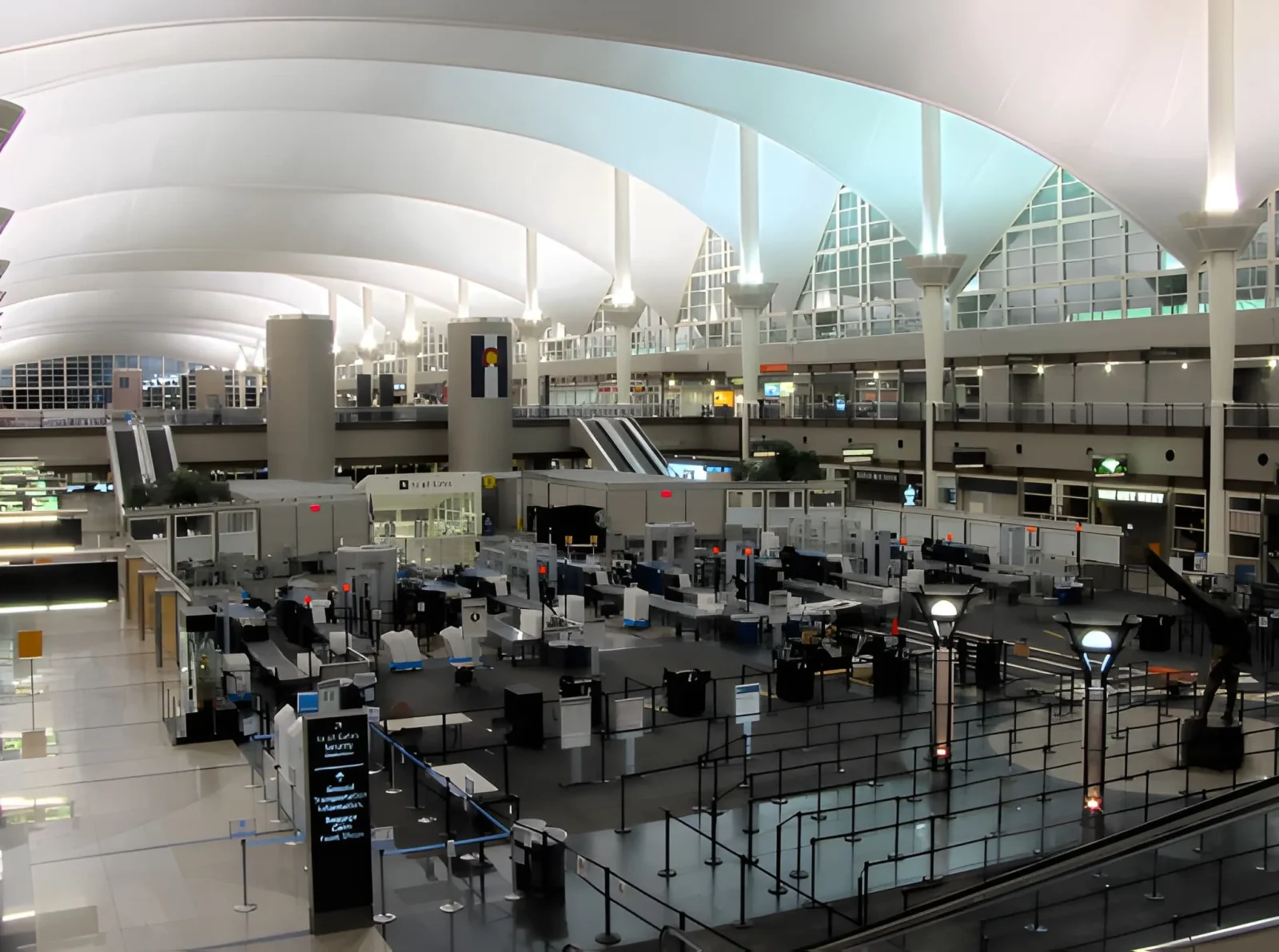
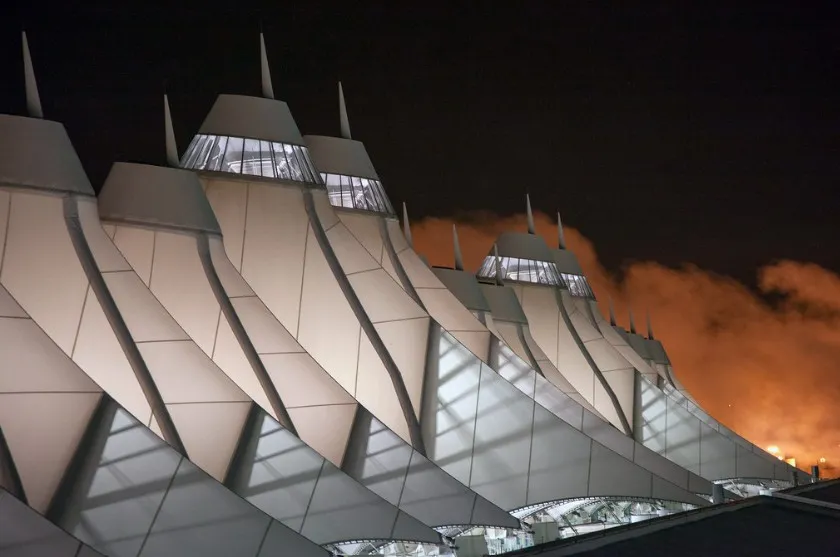
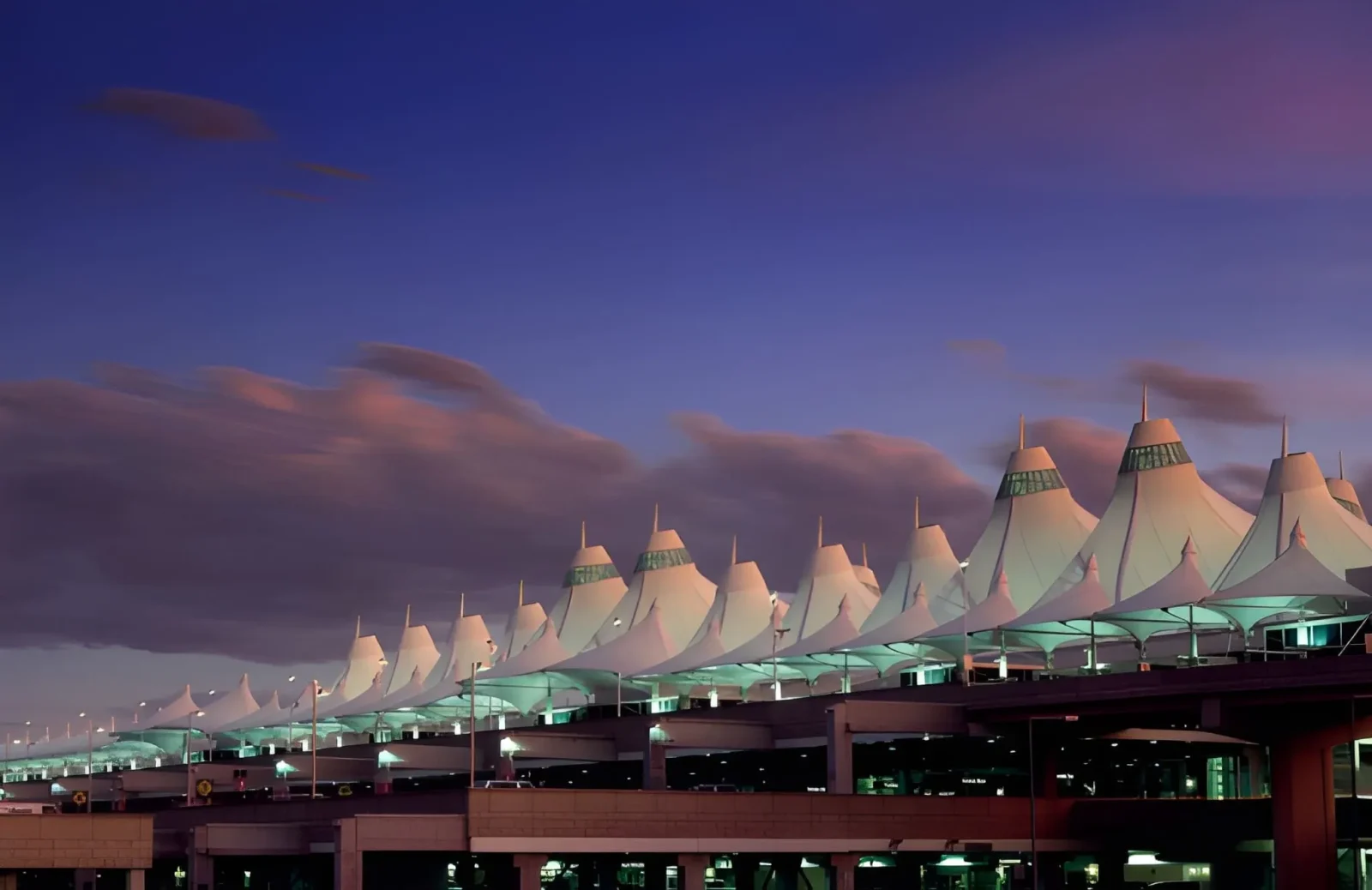
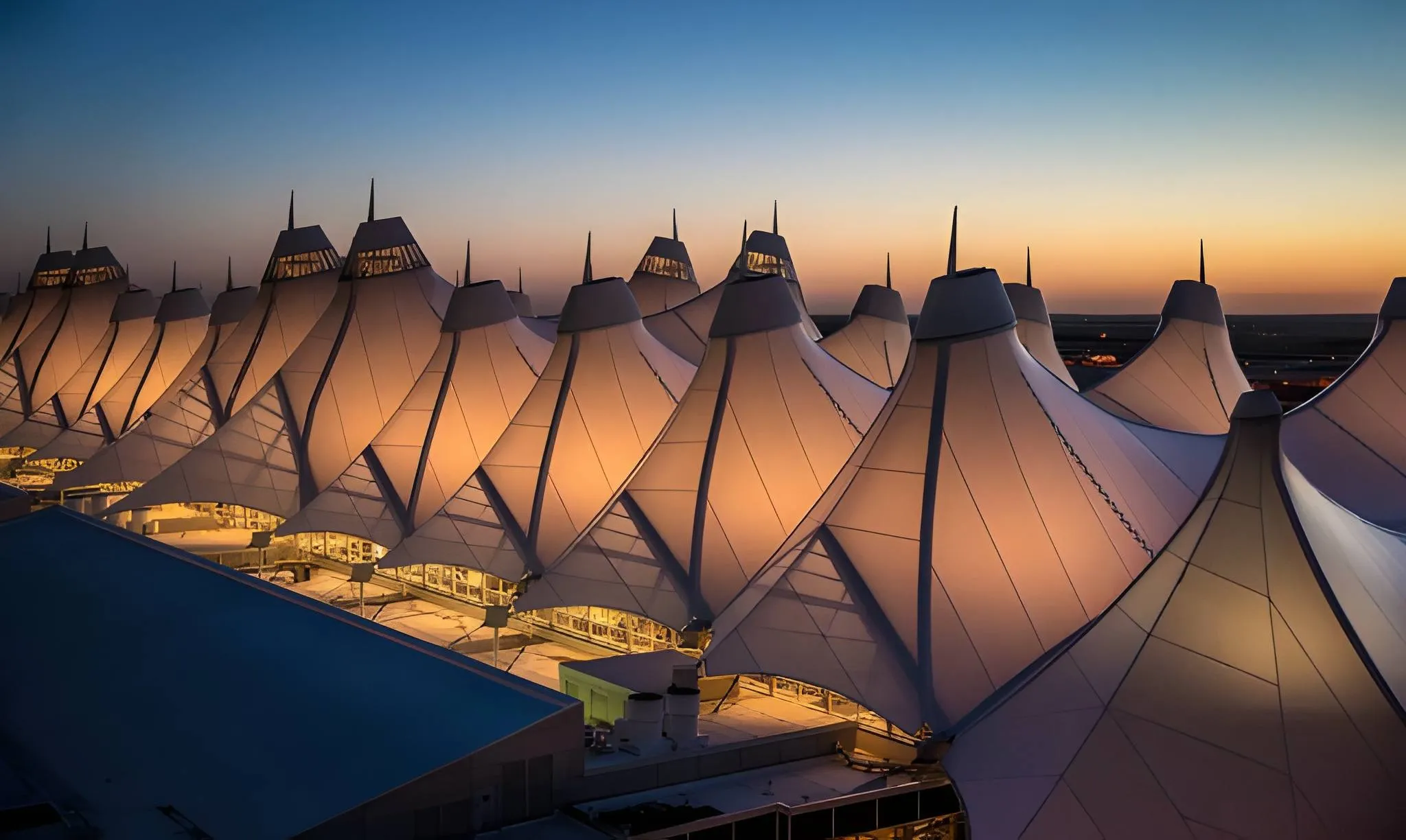
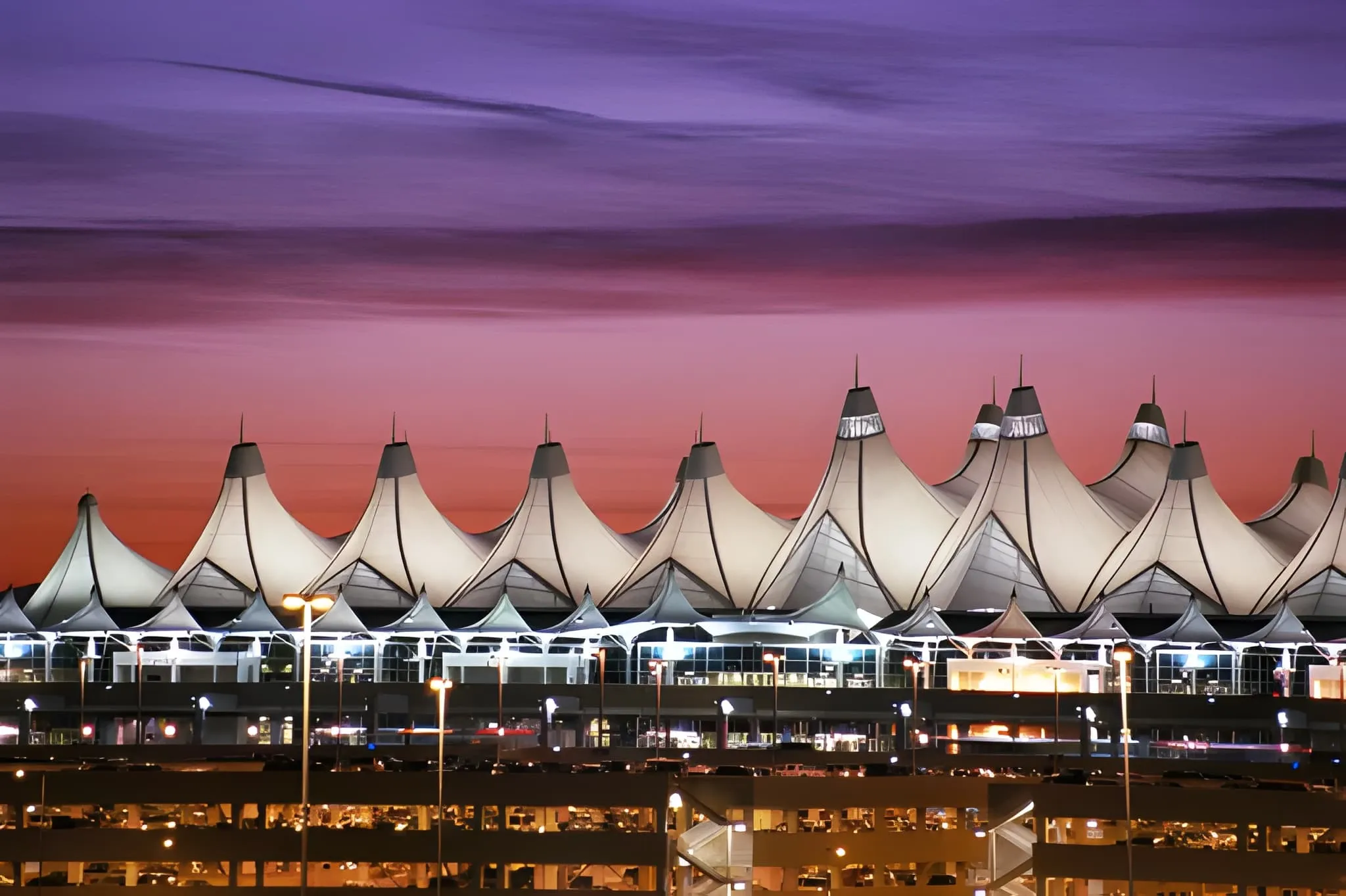
Spanning an immense area of 135.70 km², the Denver International Airport stands among the largest airports in the world, recognized for its bold architectural expression inspired by the Rocky Mountain landscape. Located in Denver, the airport is crowned by a striking Teflon-coated tensile membrane roof that, at the time of its completion, was the largest structure of its kind. Designed by Curtis Fentress, the soaring peaks echo mountain forms, bringing a strong sense of place to the terminal and also transforming travel into a spatial experience rather than a routine journey.
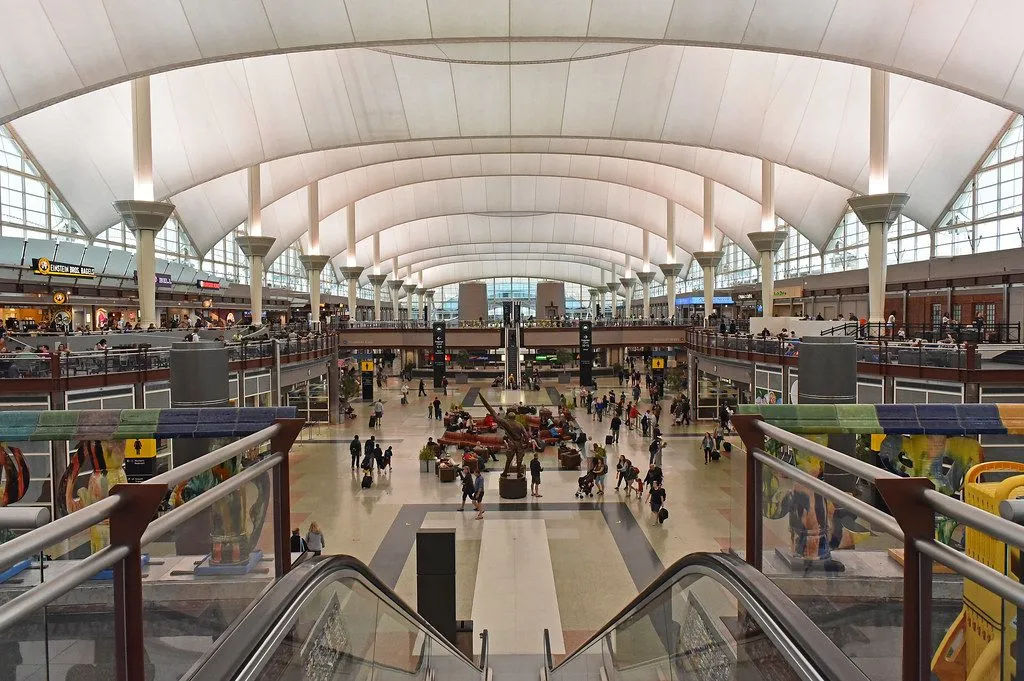
The airport’s design is thoughtfully engineered, weaving sustainability and functionality into its architectural core. Its lightweight, translucent tensile roof gently diffuses natural daylight throughout the terminal, filling the interiors with a bright, airy quality, significantly reducing the need for artificial lighting. The clear-span structure creates expansive, column-free spaces, allowing passengers to move effortlessly with uninterrupted views. Thoughtfully planned terminals and concourses support smooth circulation, complemented by glass, steel, and muted materials, with integrated public art, fostering transparency, flexibility, and a distinct sense of place that enhances the overall travel experience.
3. Kuala Lumpur International Airport (KLIA), Malaysia
Architect: Kisho Kurokawa and AJM
Location: Kuala Lumpur, Malaysia
Area: 100 km²
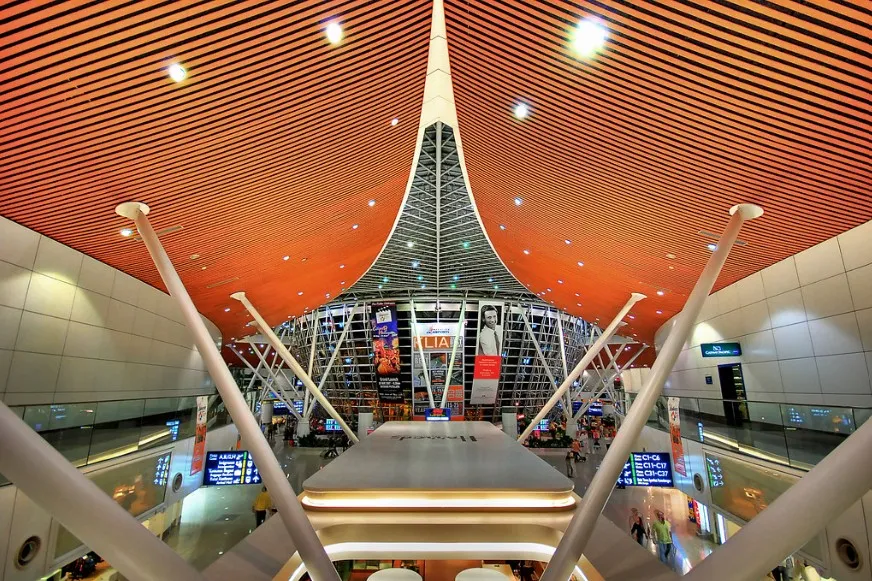
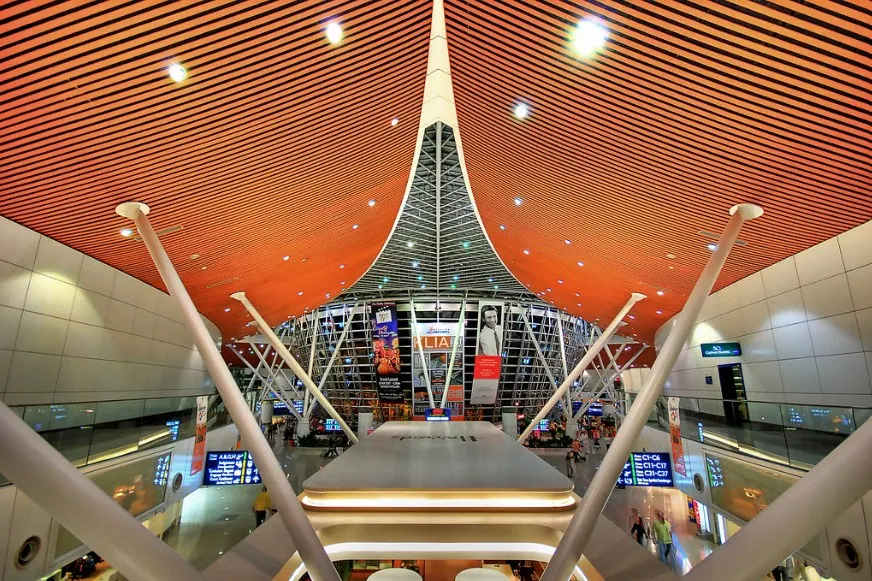
Spanning nearly 100 km², Kuala Lumpur International Airport ranks among the world’s largest airports. The airport’s design is a striking collaboration between Japanese architect Kisho Kurokawa and Malaysia’s AJM. Conceived as an “airport in the forest,” the design reflects Kurokawa’s philosophy of creating harmony between architecture, technology, and nature. Aviation functions, support facilities, and expansive green buffer zones are seamlessly interwoven, transforming infrastructure into an immersive spatial experience. From the exterior to the interiors, the architecture draws inspiration from Malaysia’s tropical landscape. From wooden ceilings, tree-like structural columns evoke a forest canopy.
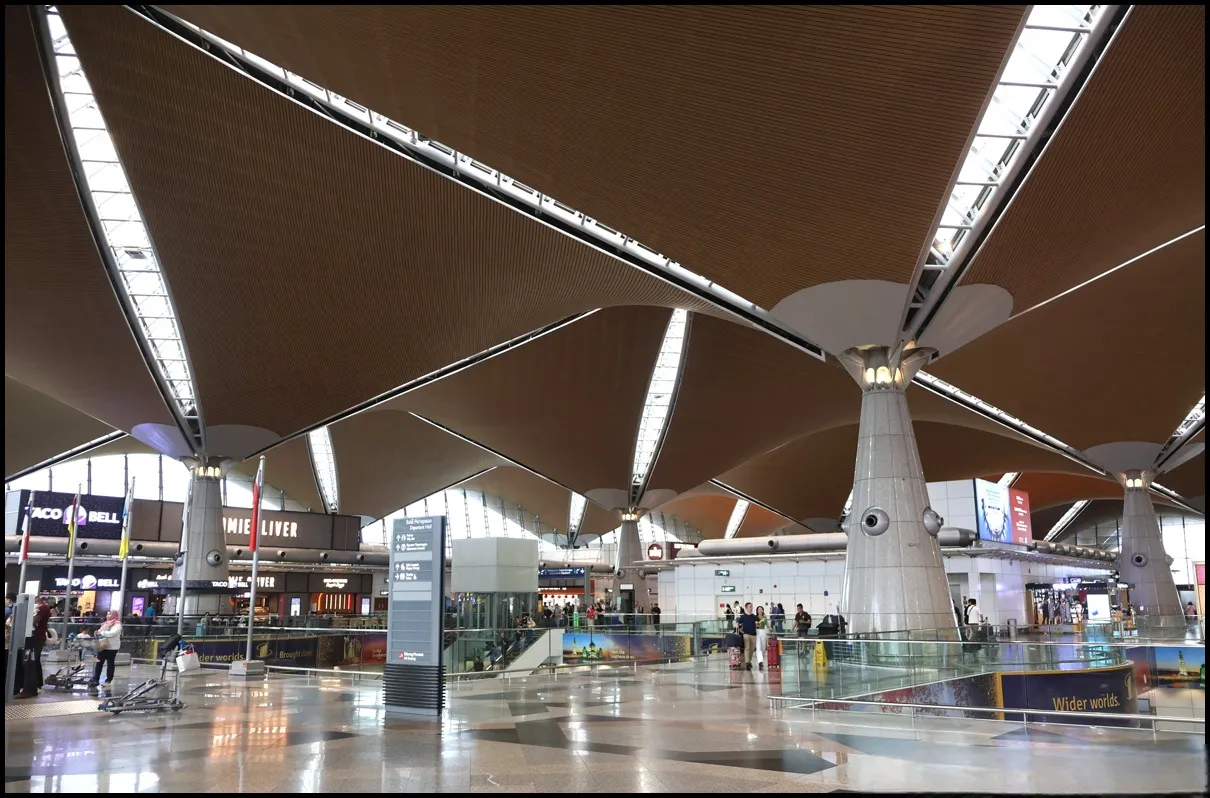
The design vision was rooted in creating an airport that belongs to its landscape rather than standing apart from it. The interiors feature tree-like structural canopies pierced with skylights, which filter soft, natural daylight and create a calm, forested atmosphere, elevating the passenger experience. The design elements provide a strong visual identity but also enhance the wayfinding and spatial clarity, making the airport easy to navigate with human-scaled elements. At the planning level, the design, rather than isolating the terminal from its context, carefully weaves buildings, runways, and support facilities into the surrounding environment, reflecting Kurokawa’s philosophy of coexistence between technology and nature.
4. Hartsfield-Jackson Atlanta Airport, United States
Architects: Stevens & Wilkinson, Smith Hinchman & Grylls, HOK, and Minority Airport Architects & Planners
Location: Atlanta, Georgia, USA
Area: 78 km²
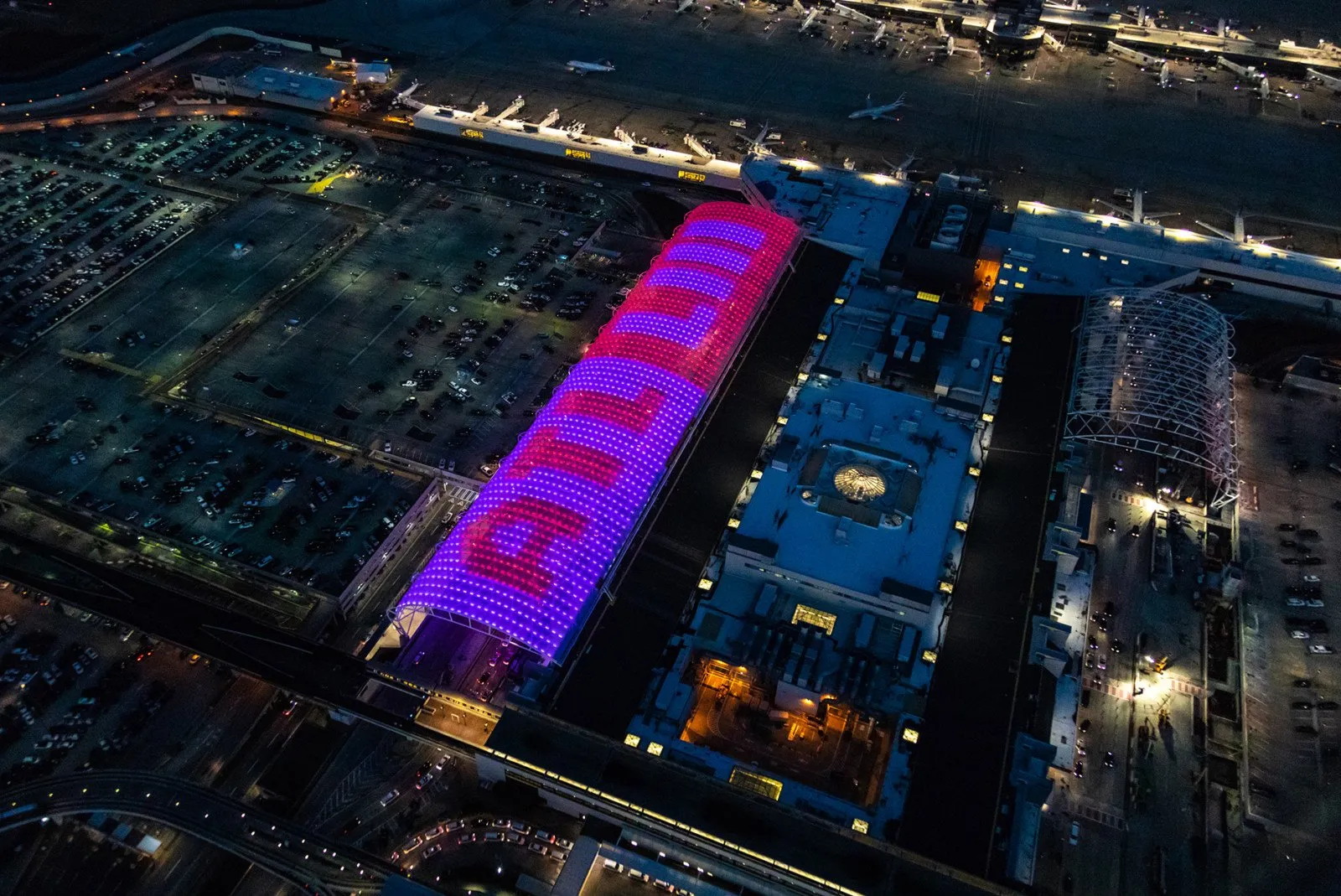
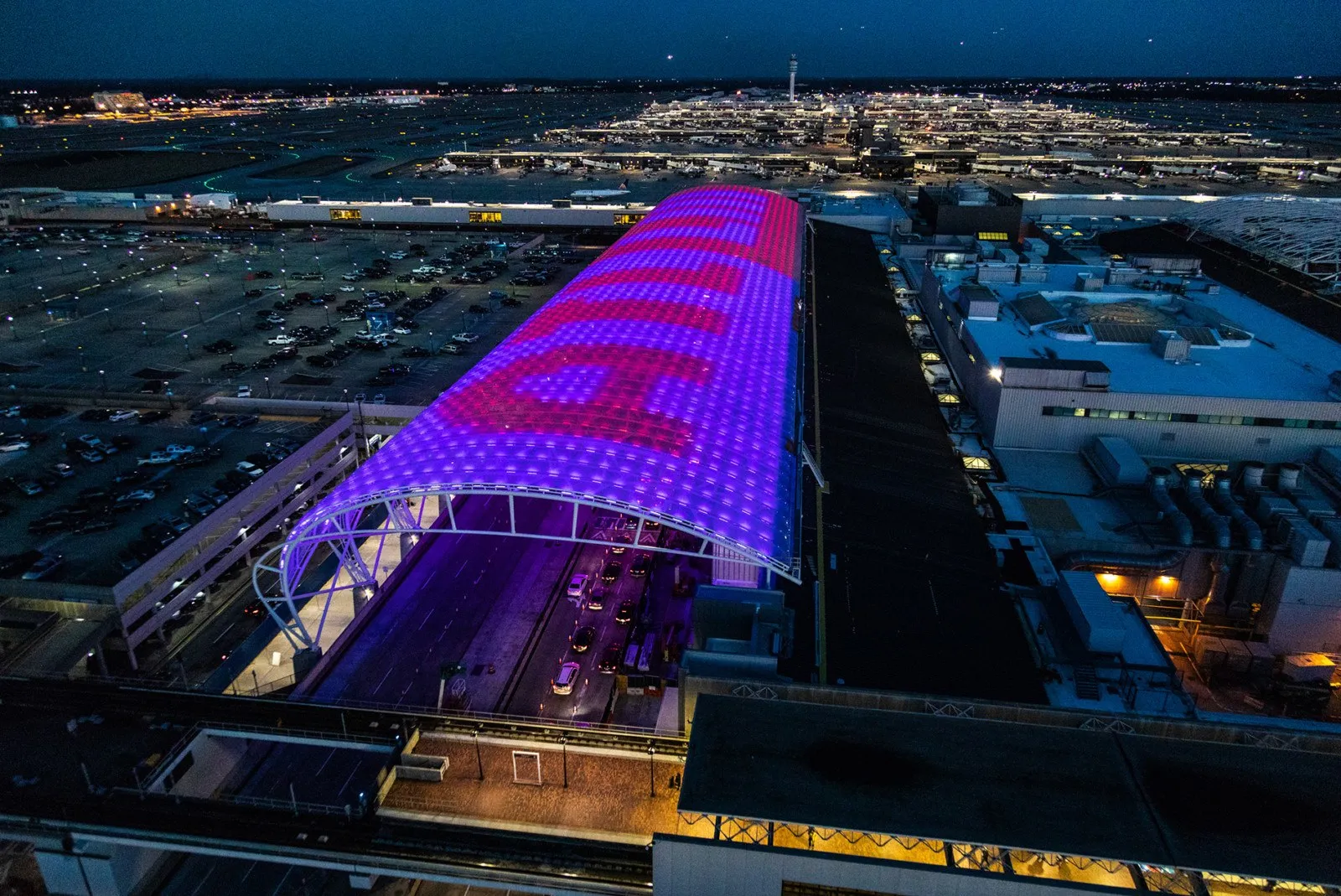
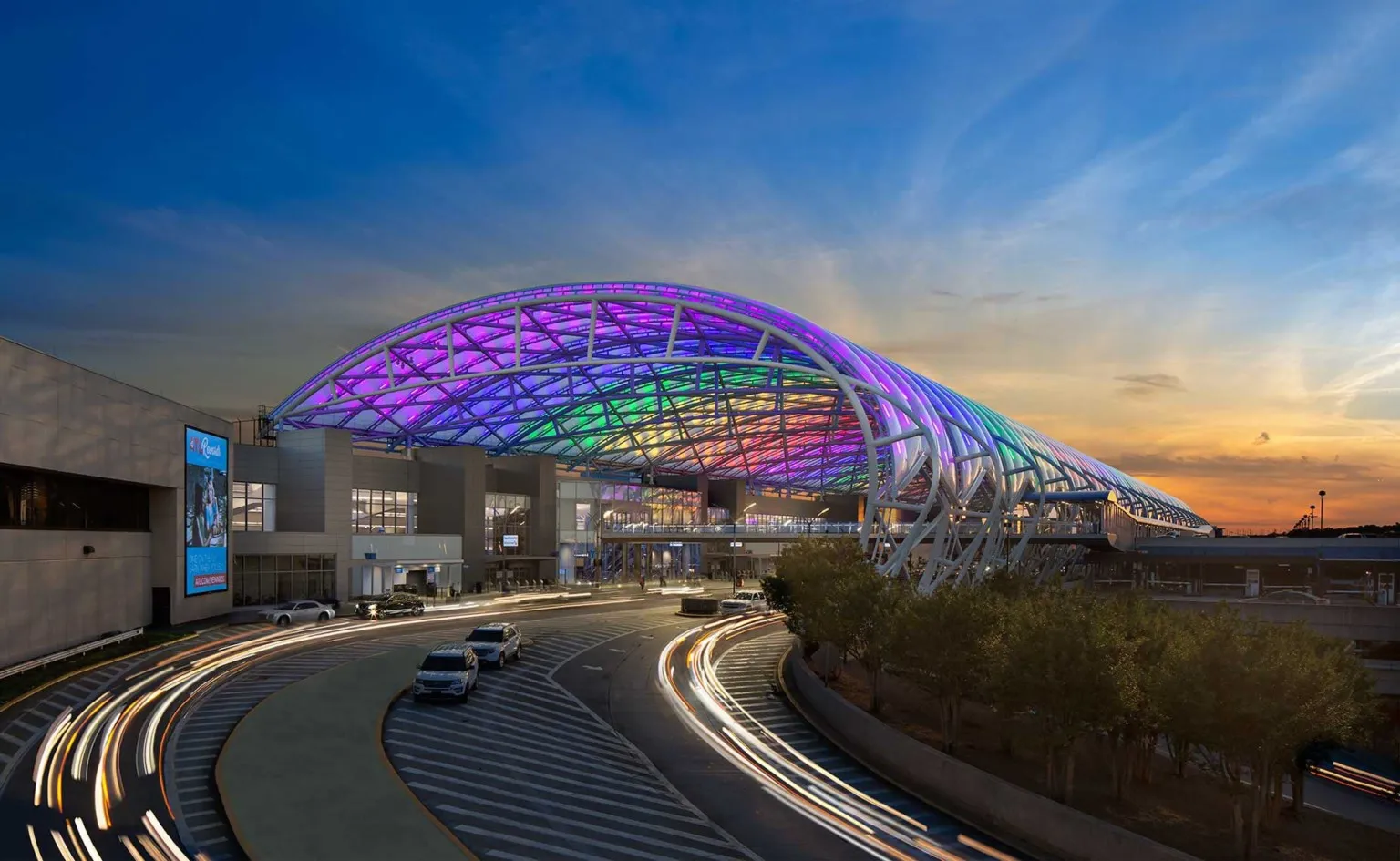
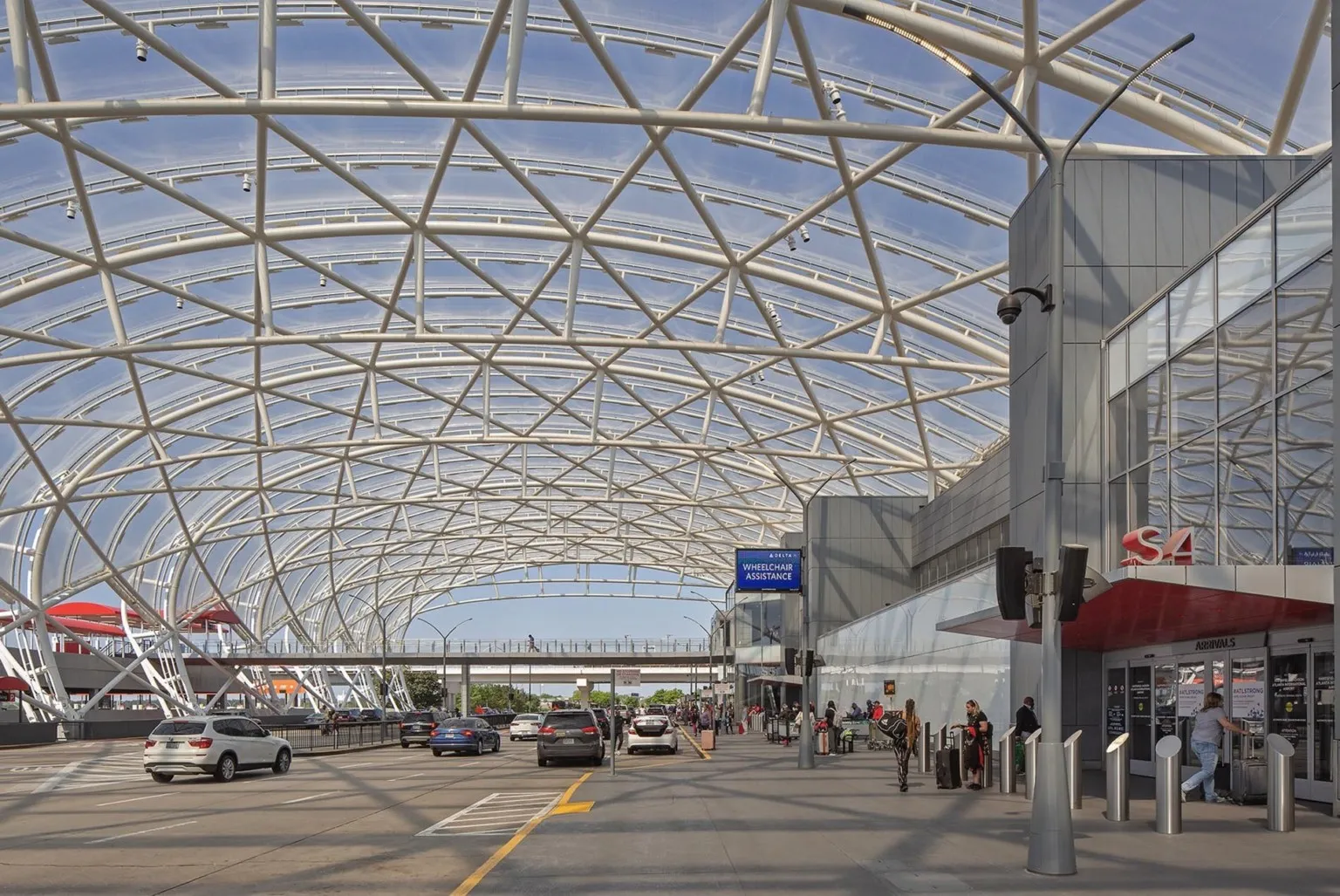
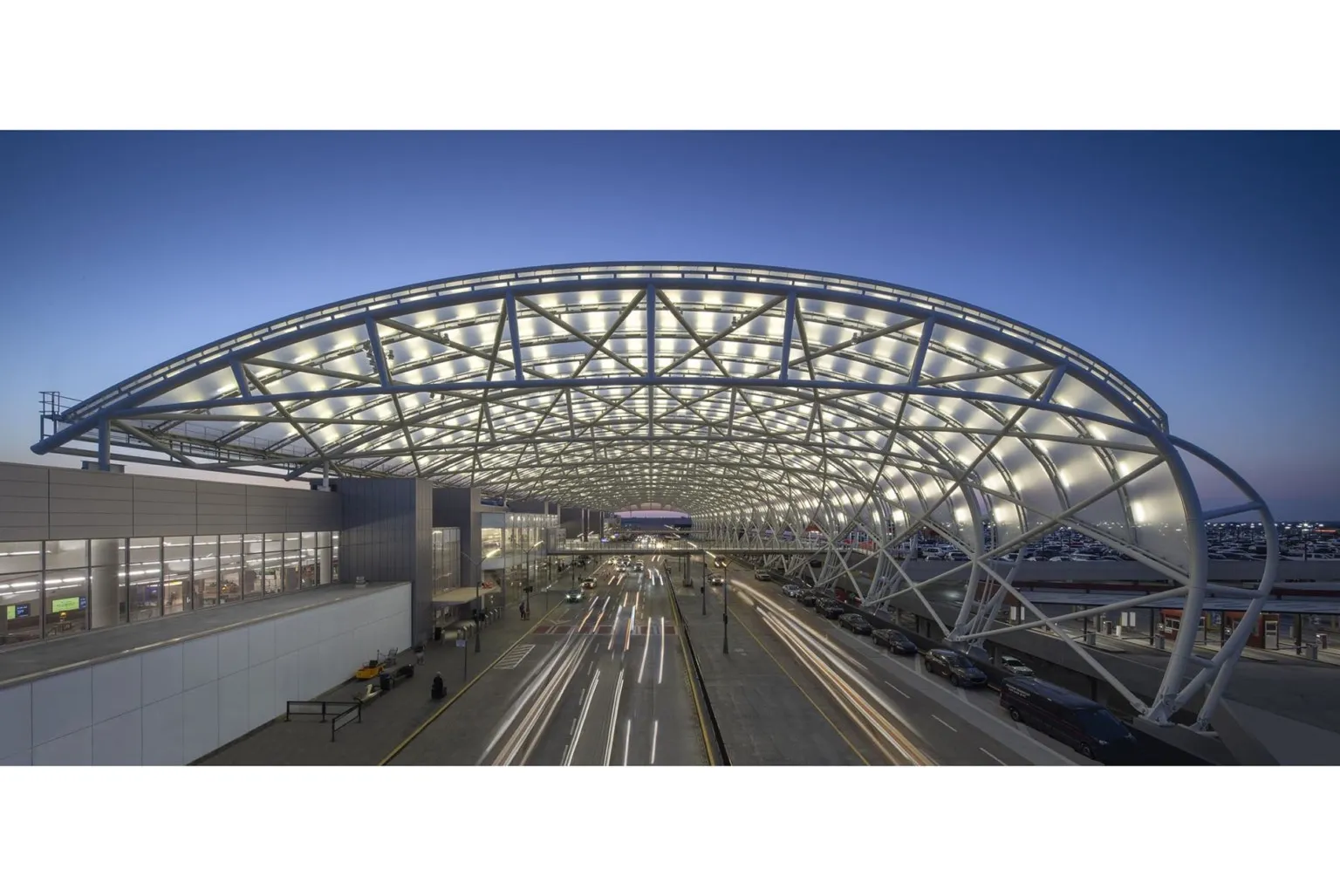
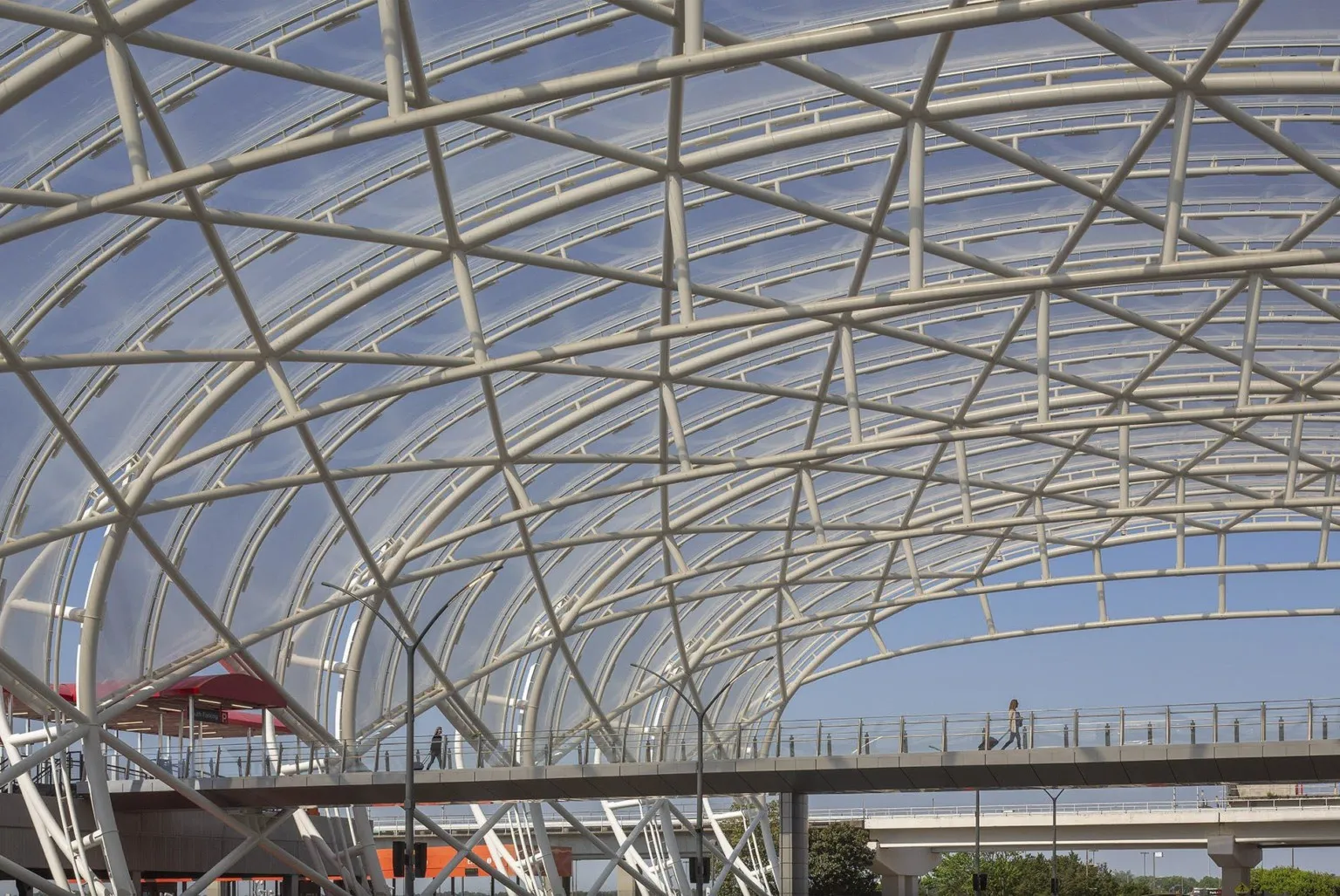
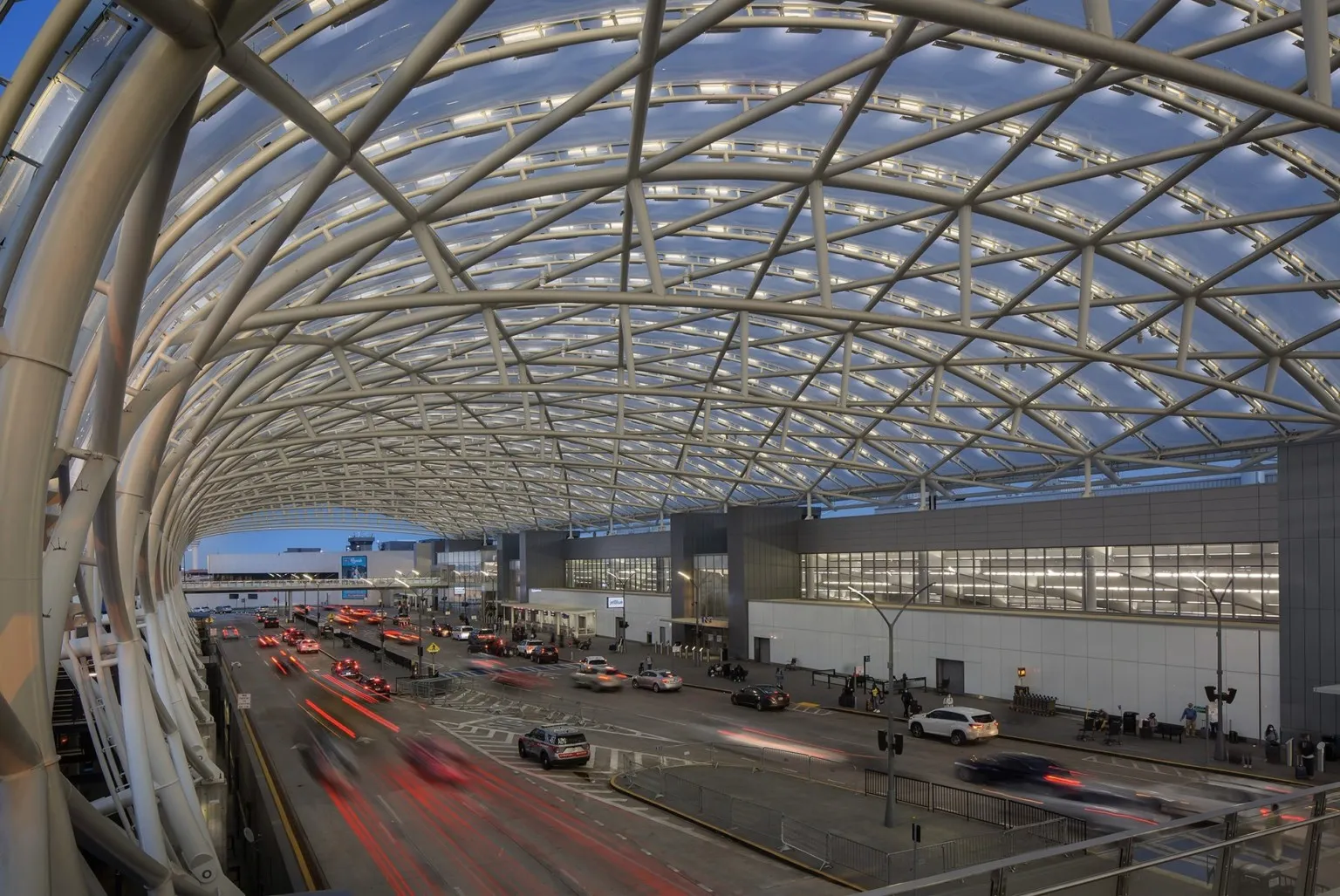
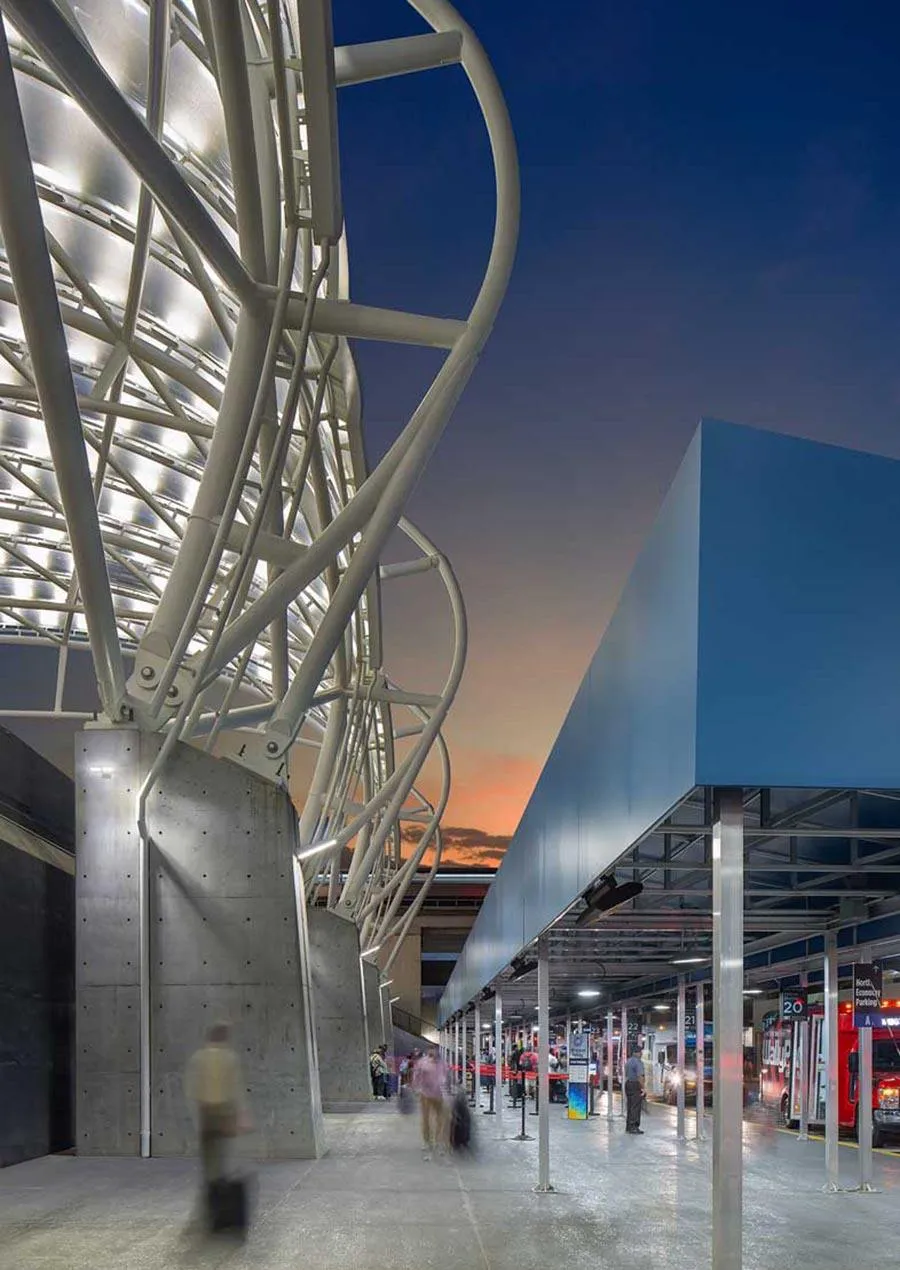
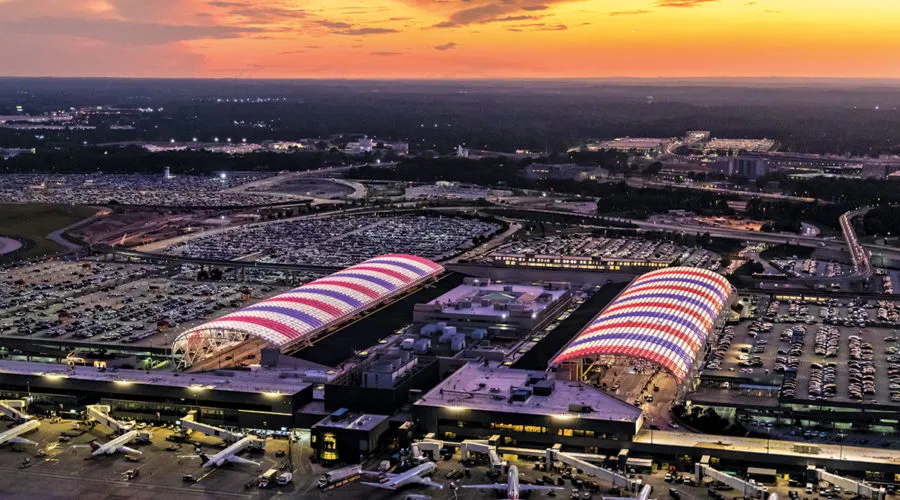
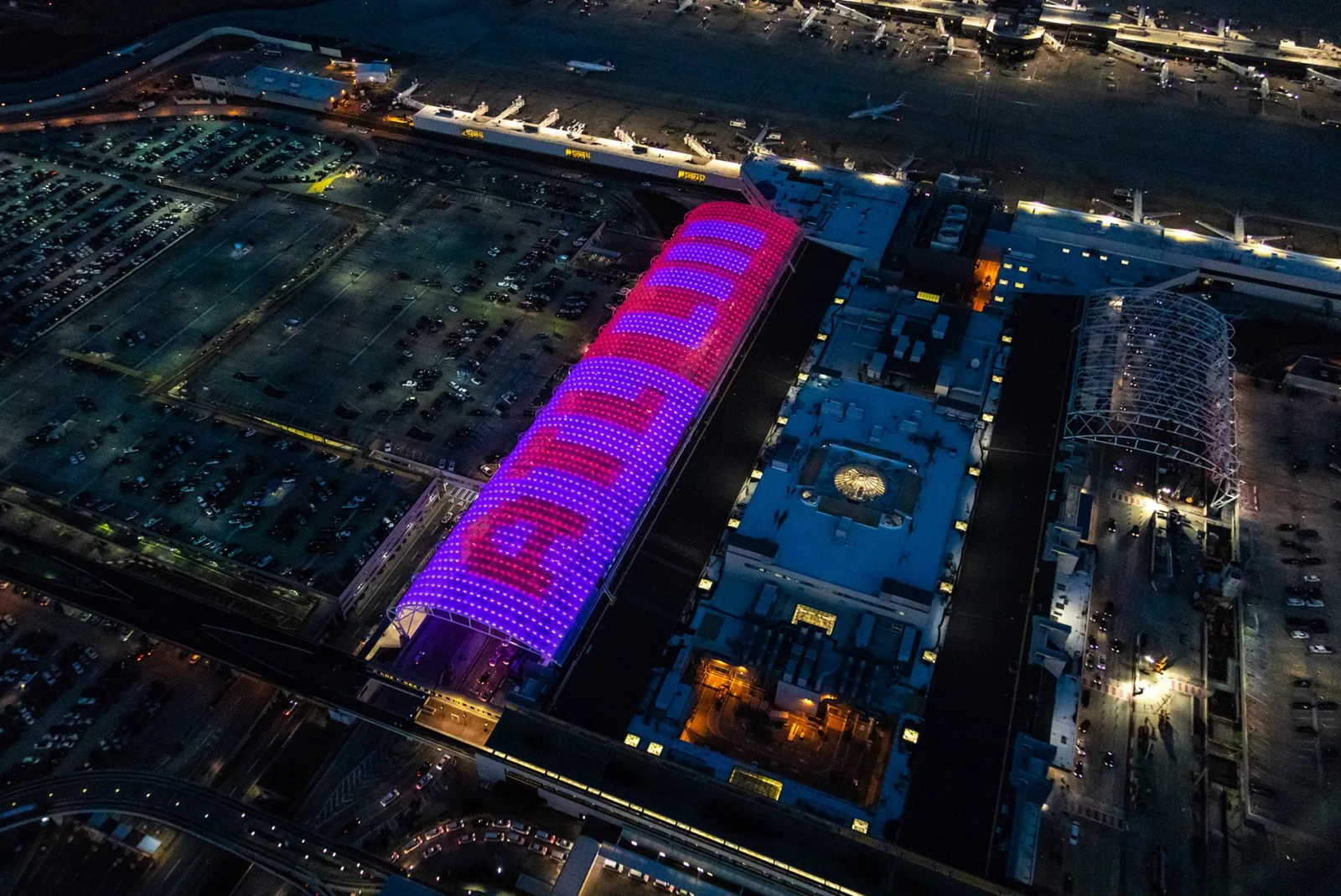
The Hartsfield-Jackson Atlanta International Airport stands as a global aviation infrastructure recognized as the world’s busiest airport and a benchmark for operational efficiency. Located in Georgia, the architecture skillfully balances passenger volumes with swift movement between domestic and international connections. Spreading across 78 km², the airport operates across an efficient five parallel east–west runway systems to manage extraordinary levels of air traffic. The terminal’s design is crowned by twin structural steel canopies, clad in translucent ETFE panels, creating a distinctive symbol of the airport’s scale and precision.
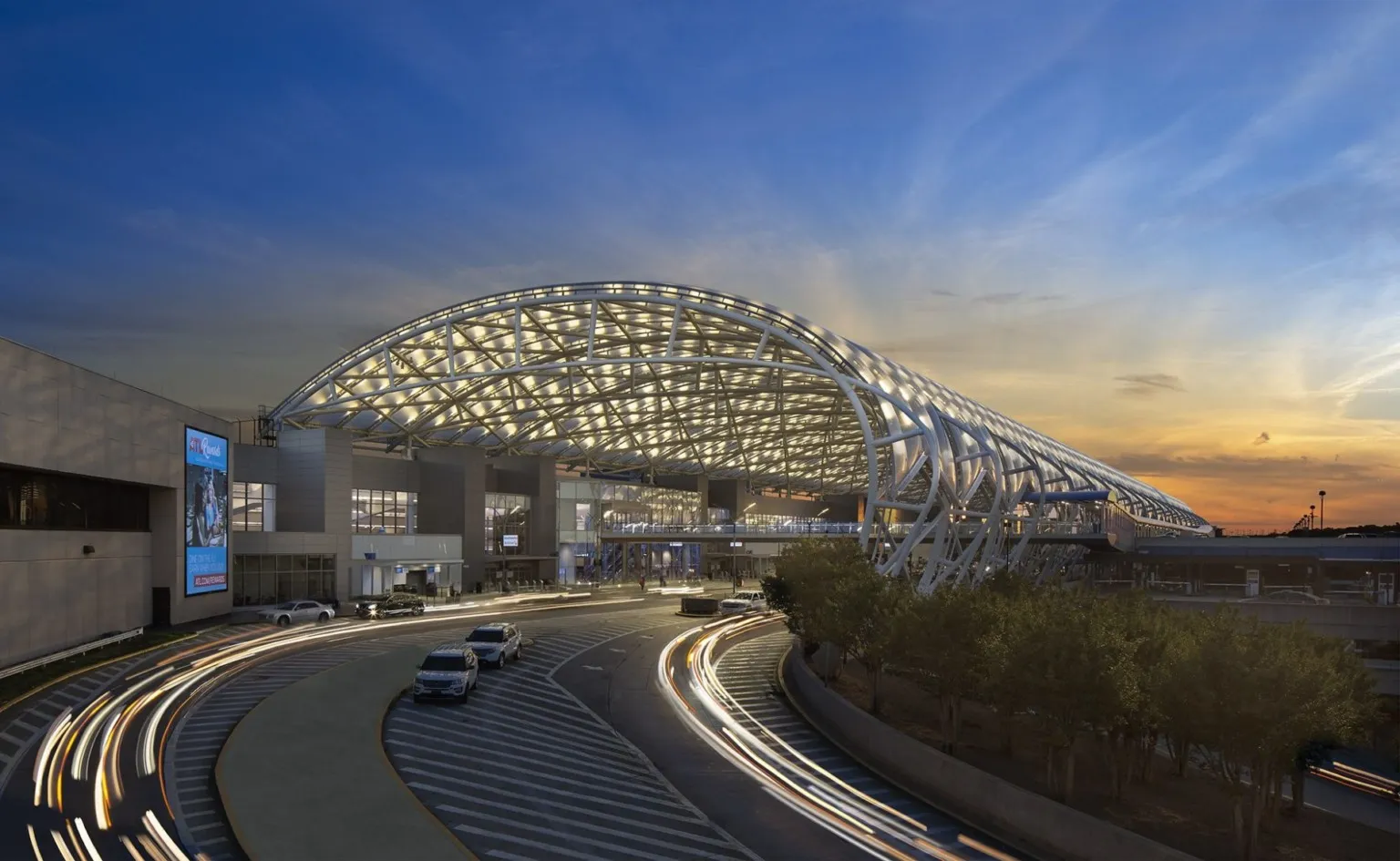
The midfield terminal complex was designed by a consortium including Stevens & Wilkinson, Smith Hinchman & Grylls, and Minority Airport Architects & Planners, creating a clear, efficient, and scalable framework that enabled the airport to handle massive passenger growth and set a benchmark for high-performance airport design. Recently, HOK has modernized the domestic terminal with new canopies and atrium spaces, and HKS Architects has upgraded airside areas, enhancing comfort, daylight, and circulation. Together, these interventions demonstrate how a flexible and scalable design strategy can continually evolve, reinforcing it as a global benchmark for airport architecture.
5. Istanbul Airport (IST), Turkey
Architect: Grimshaw Architects, Nordic Office of Architecture, and Haptic Architects
Location: Istanbul, Türkiye
Area: 76.5 km²
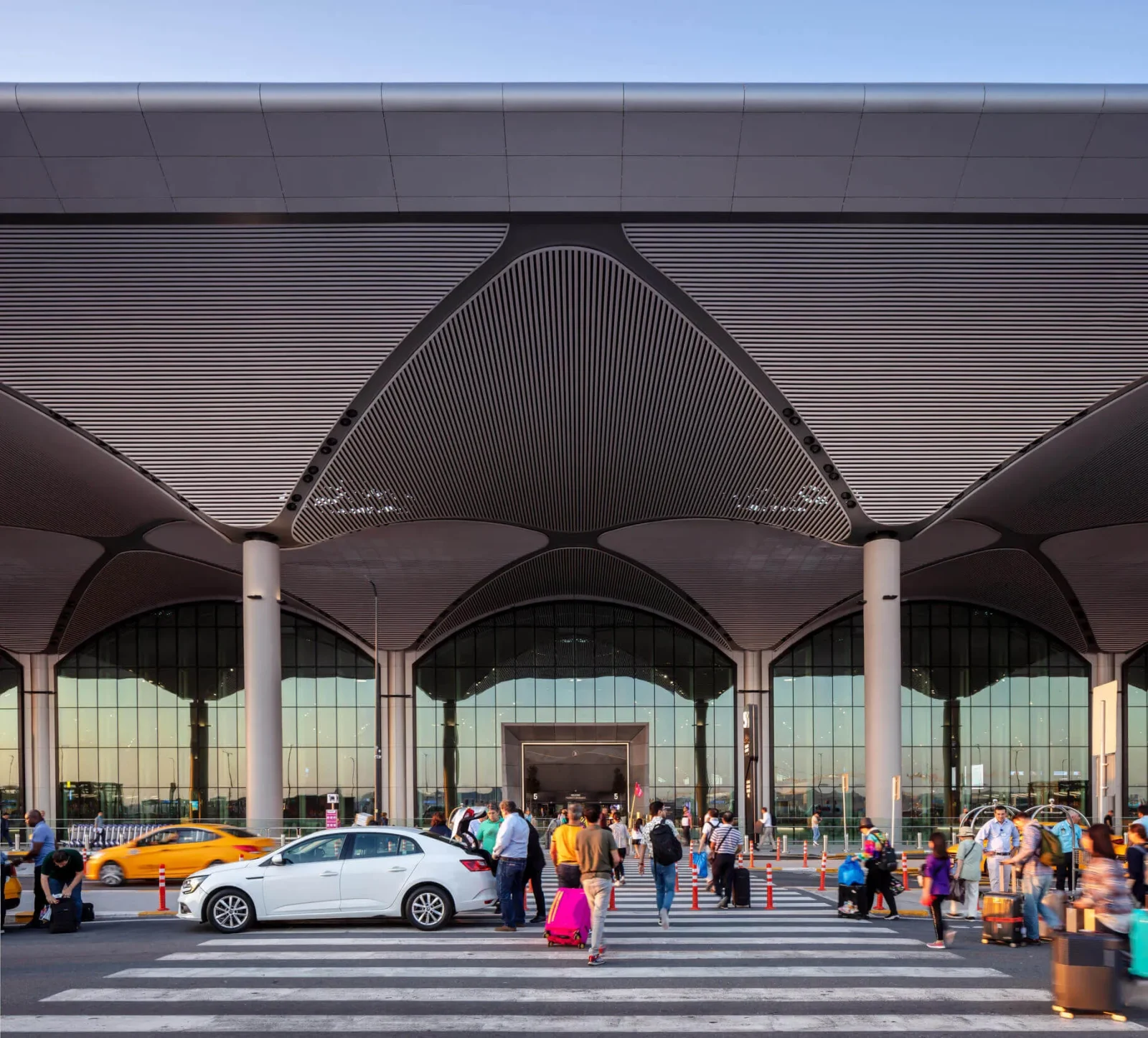
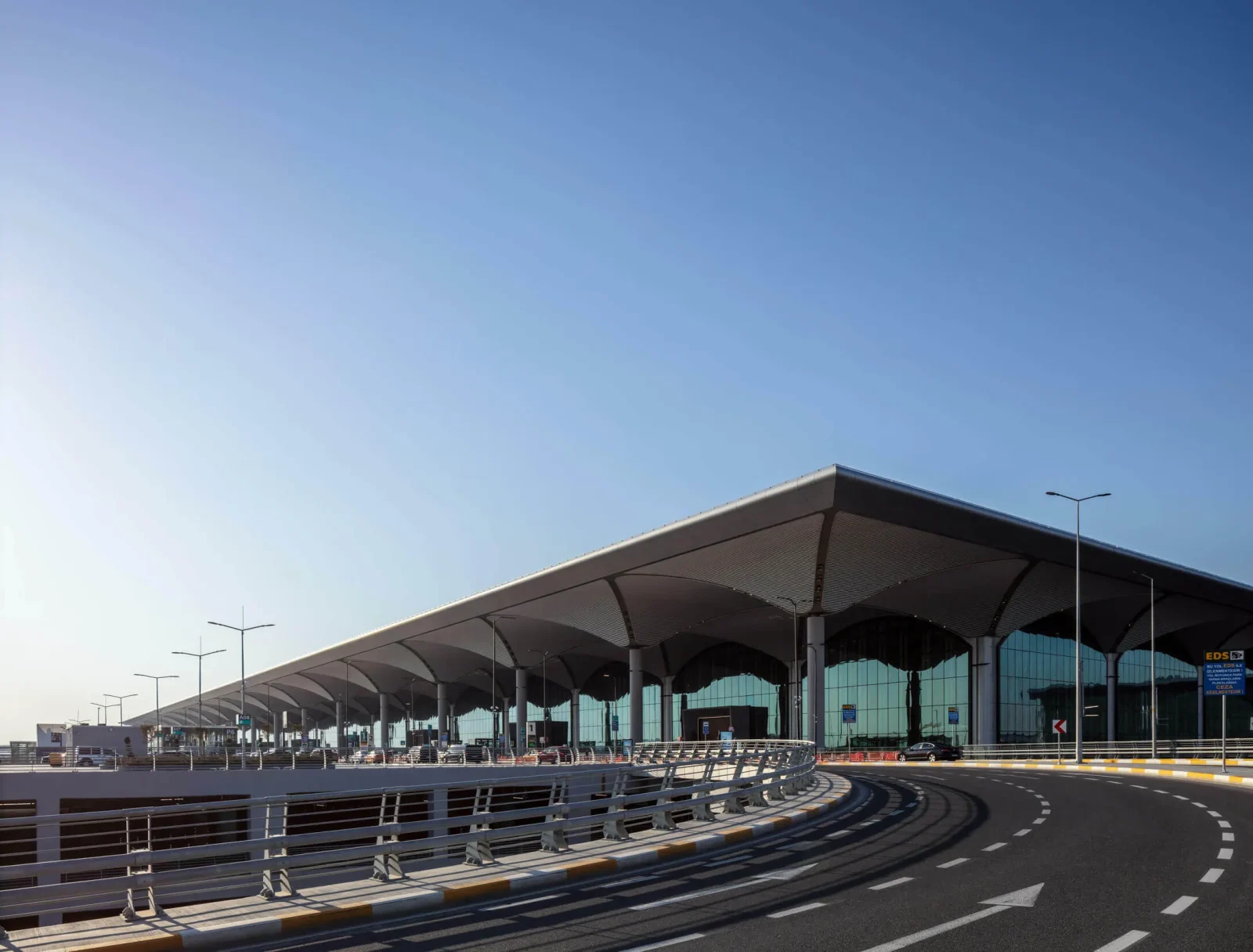
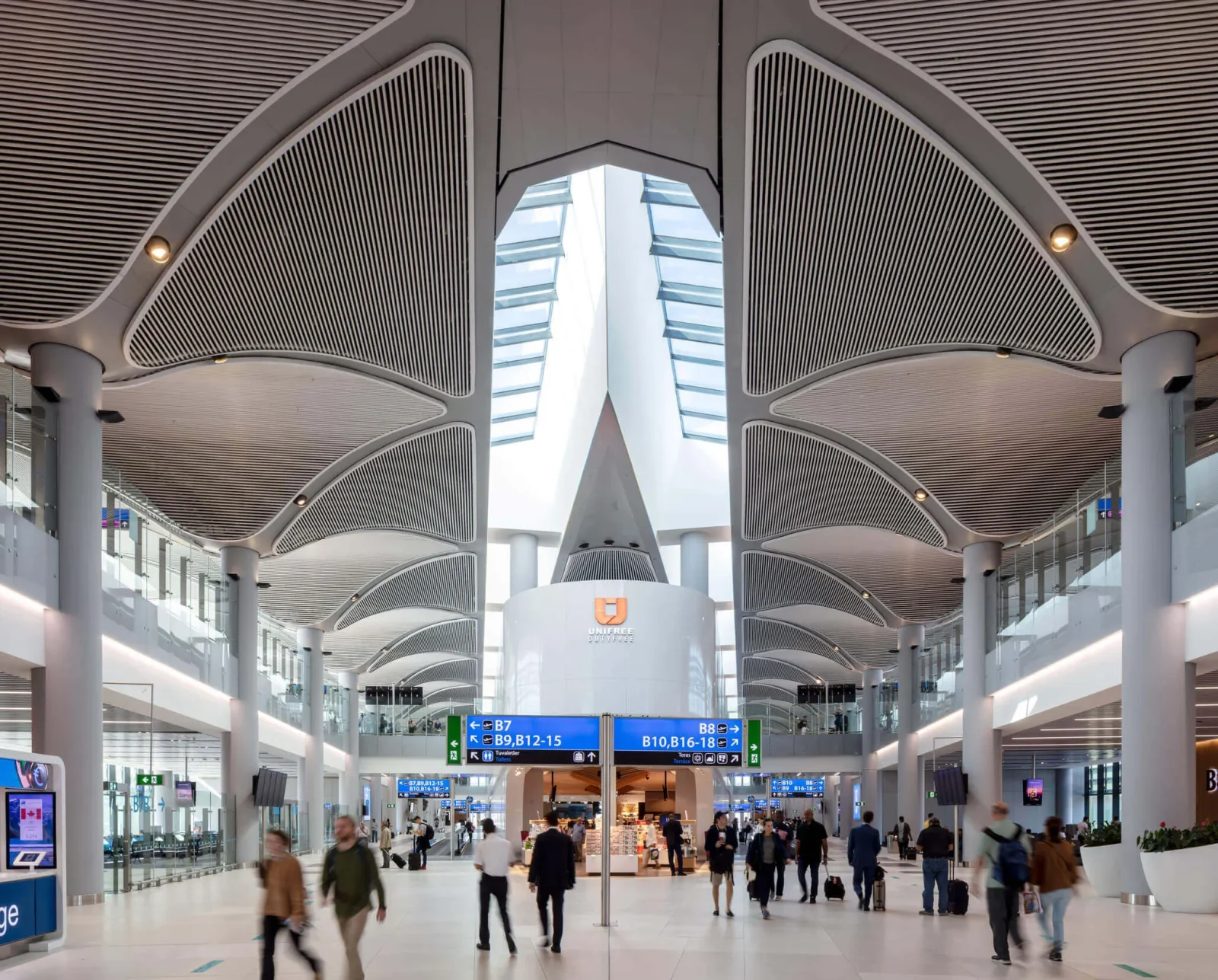
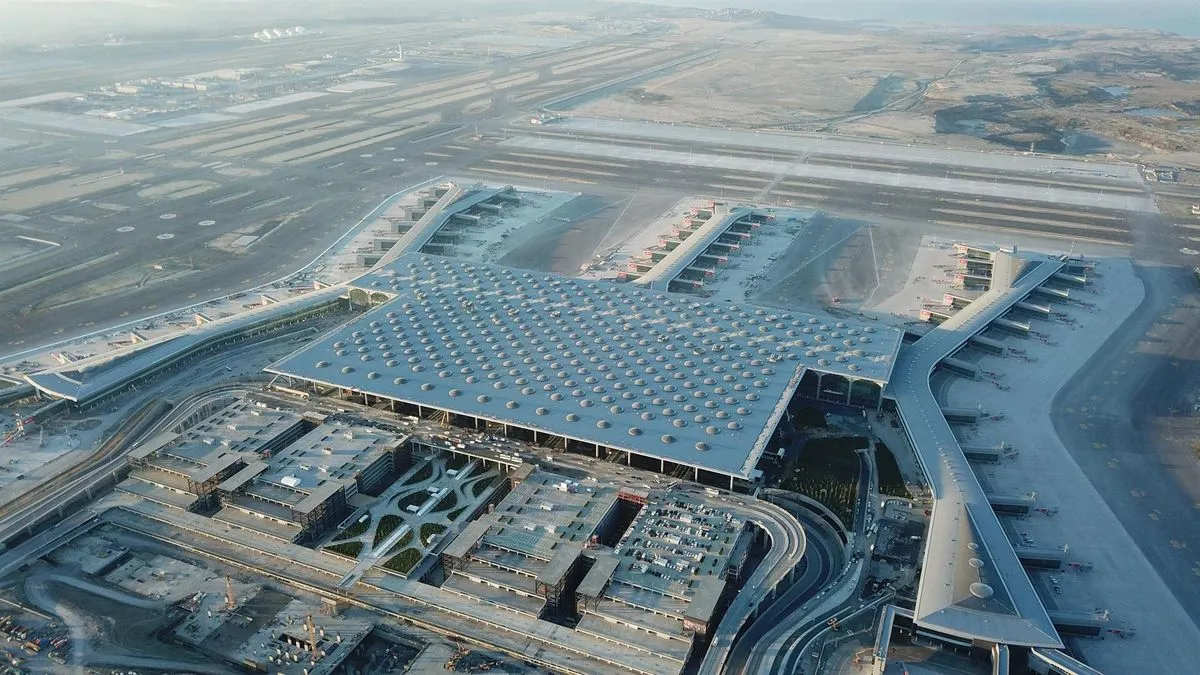
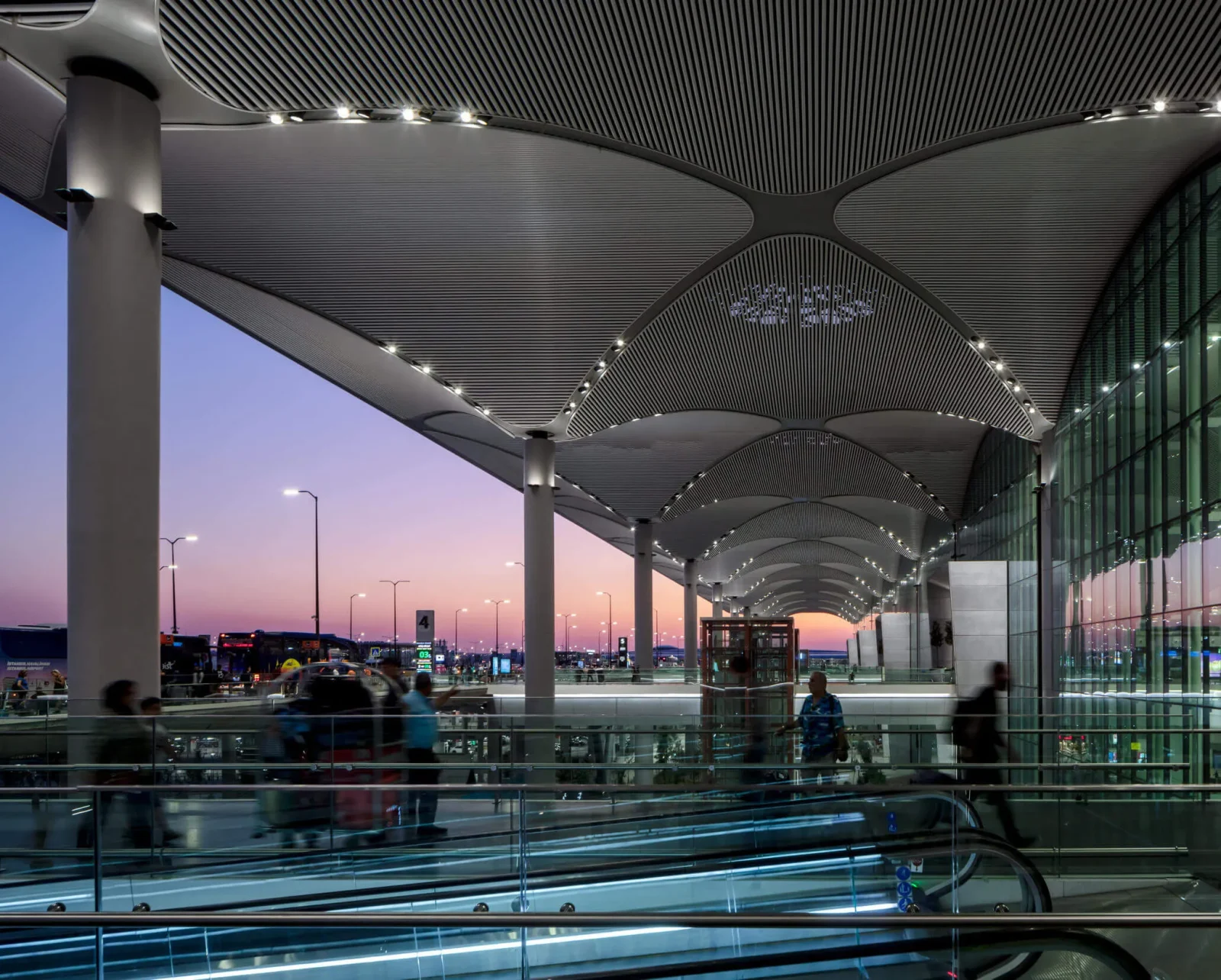
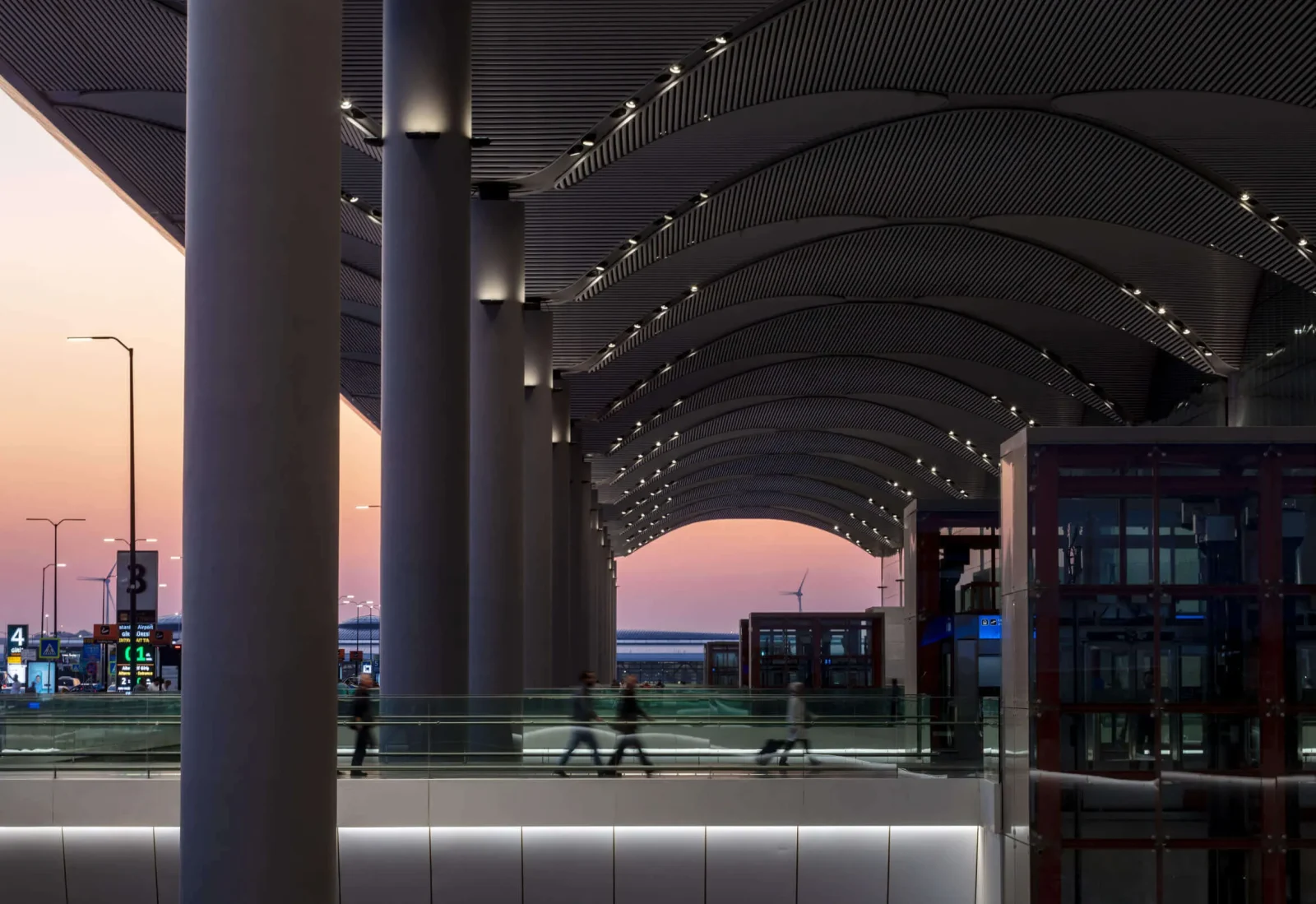
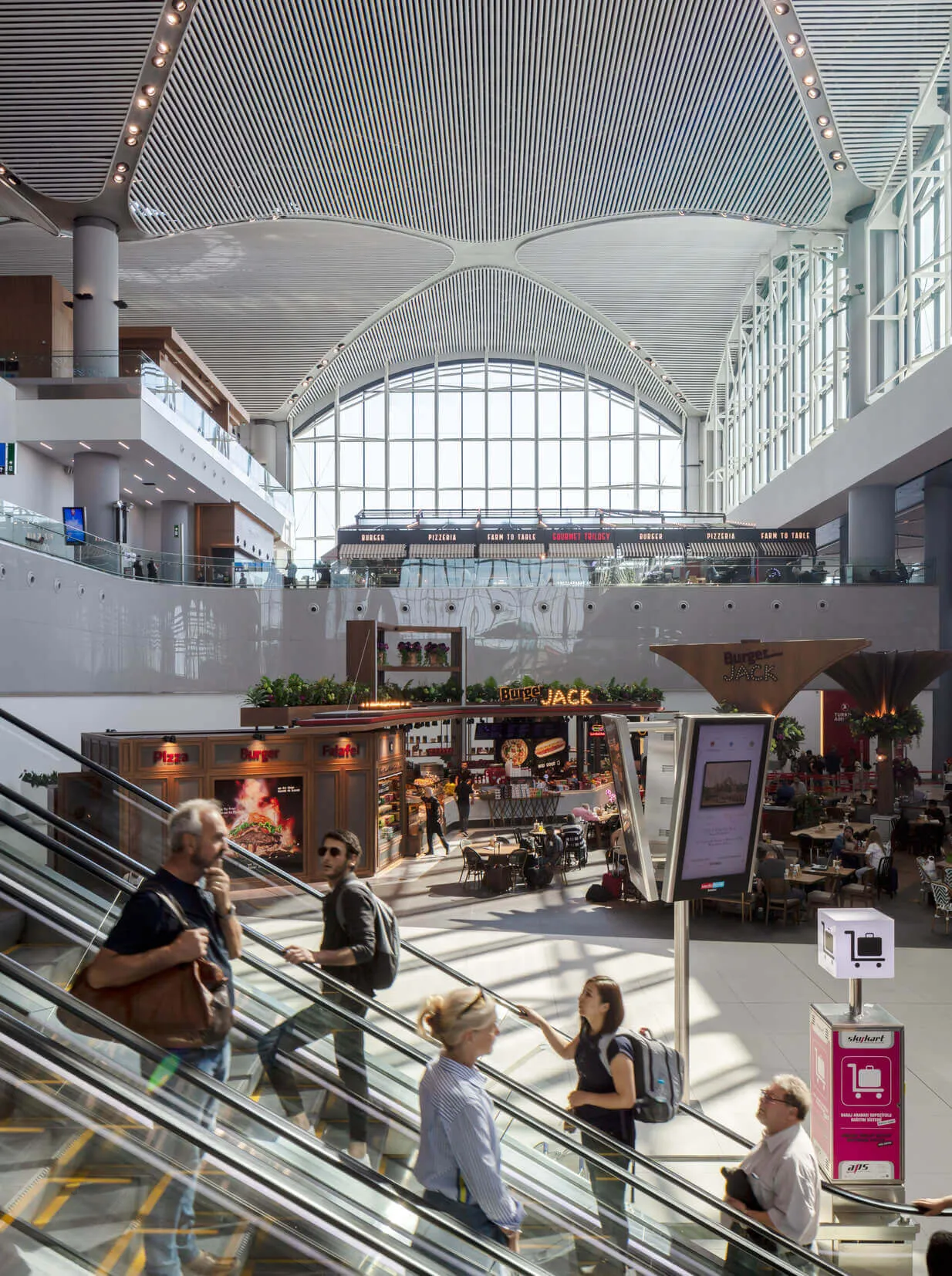
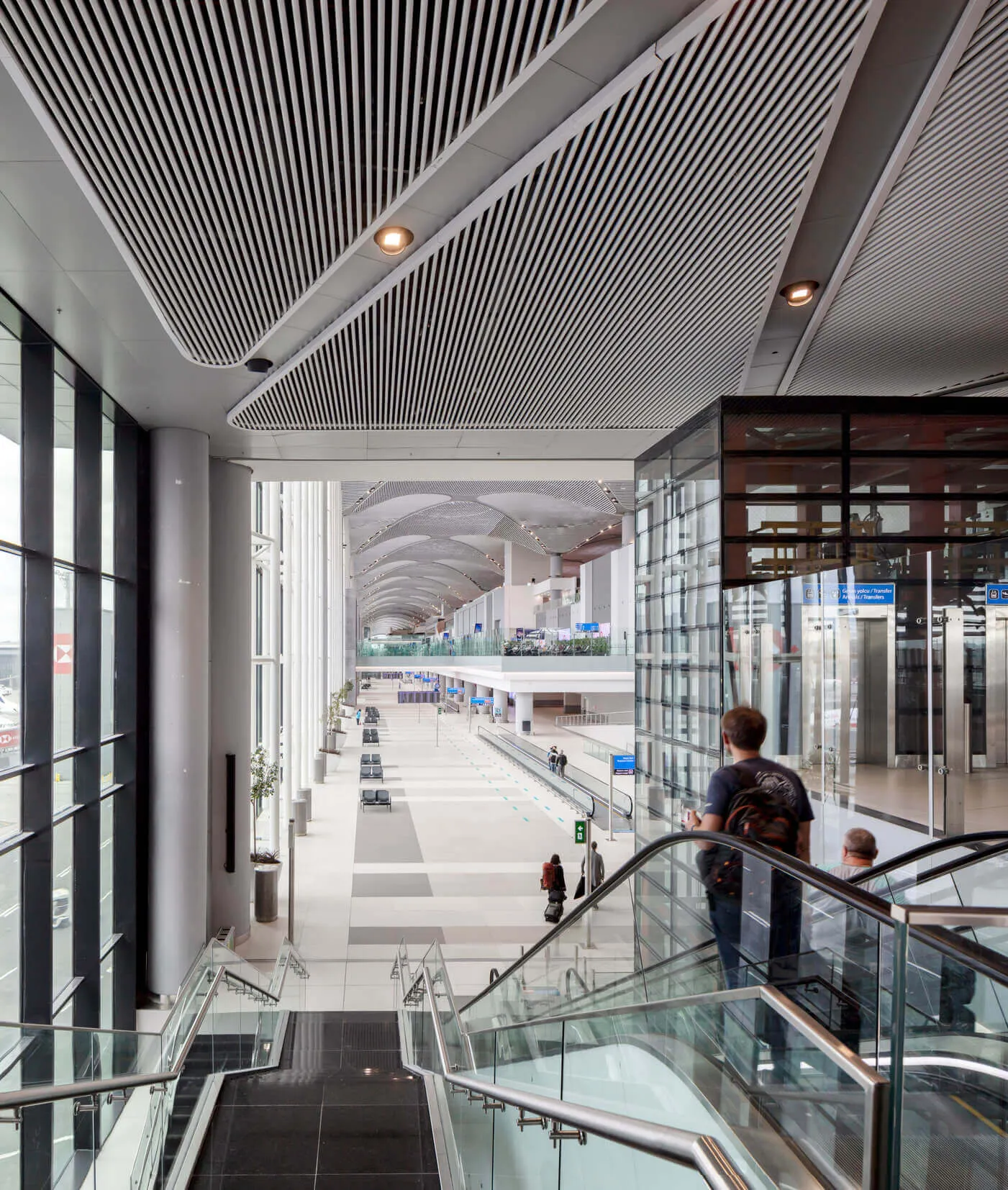
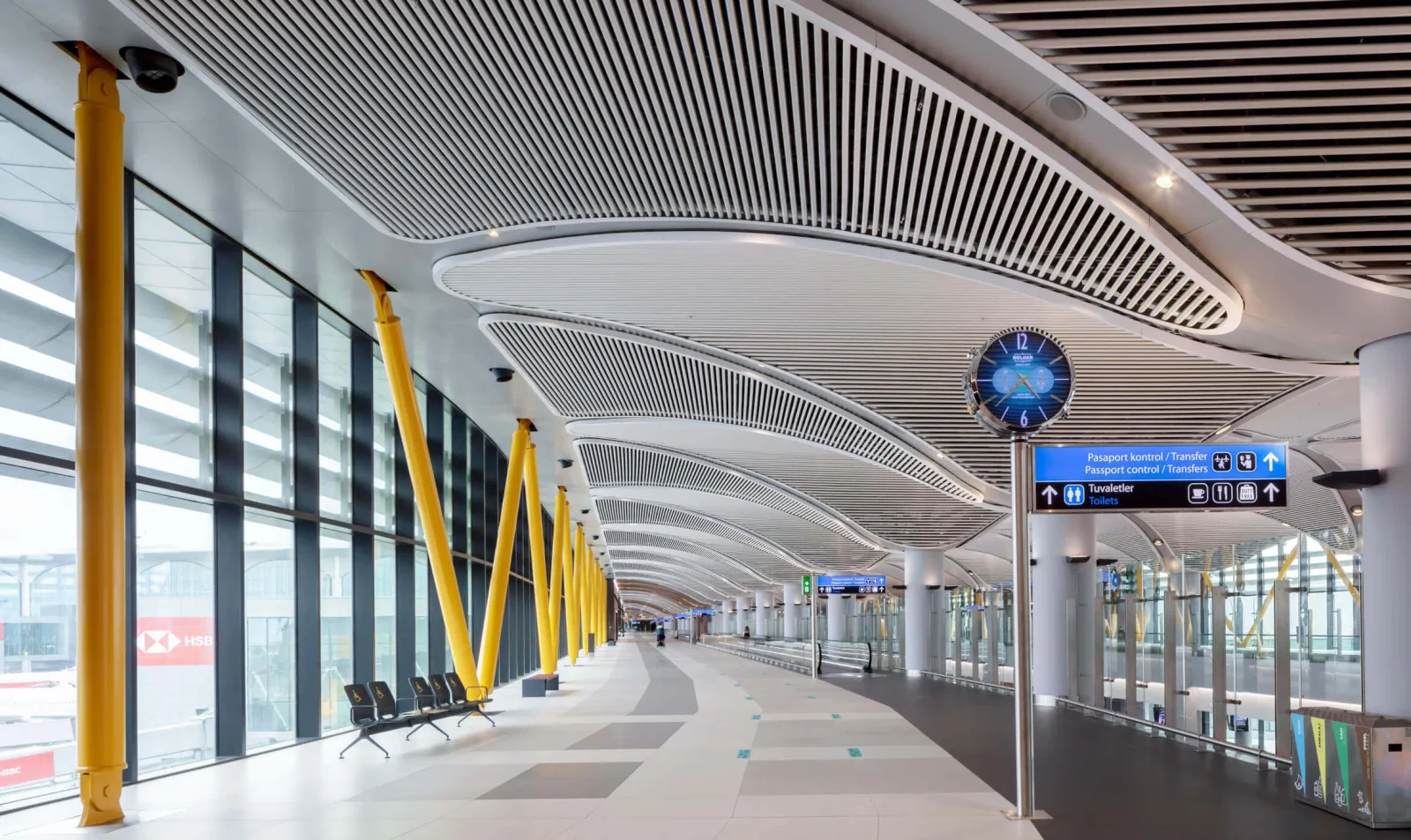
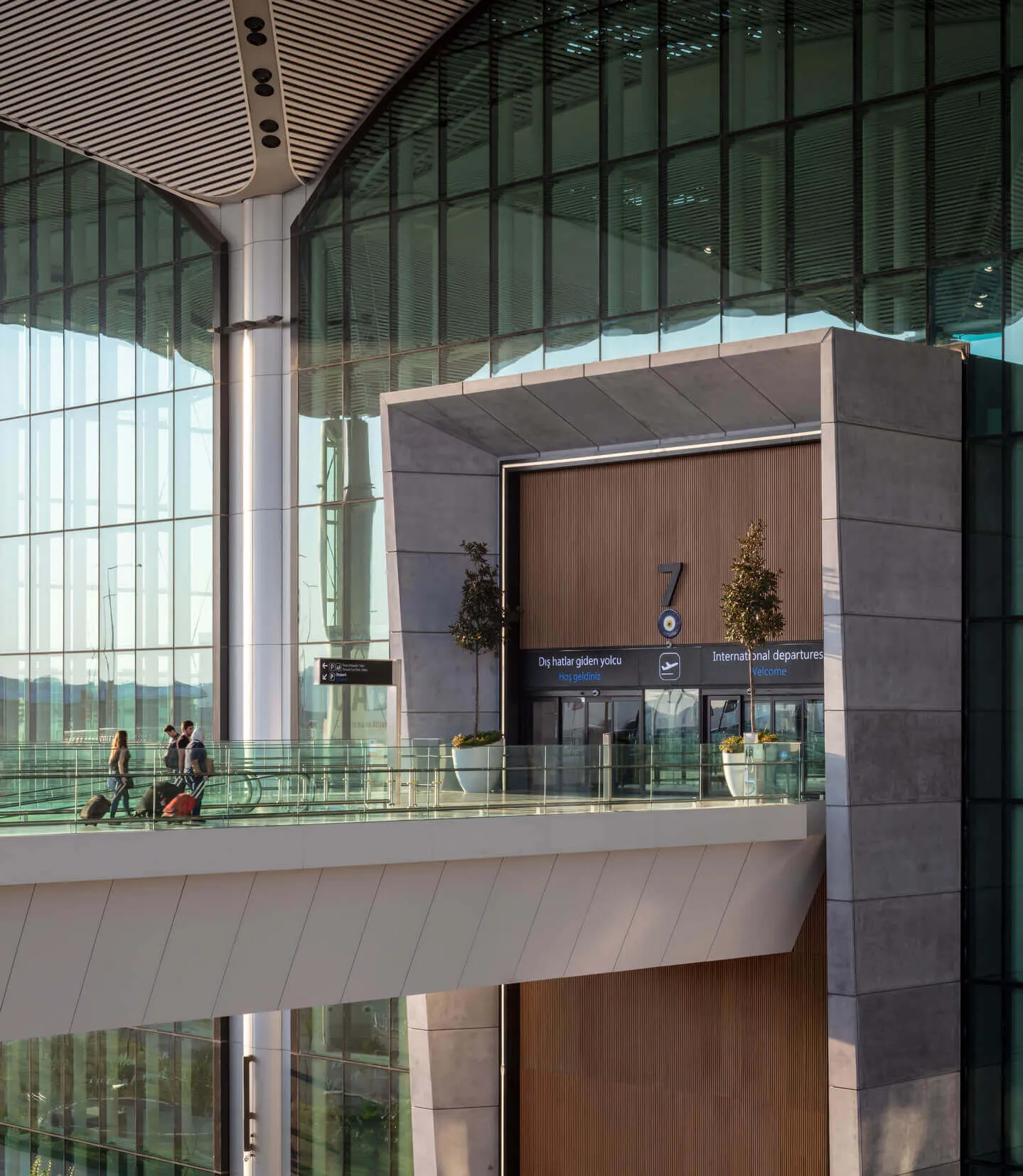
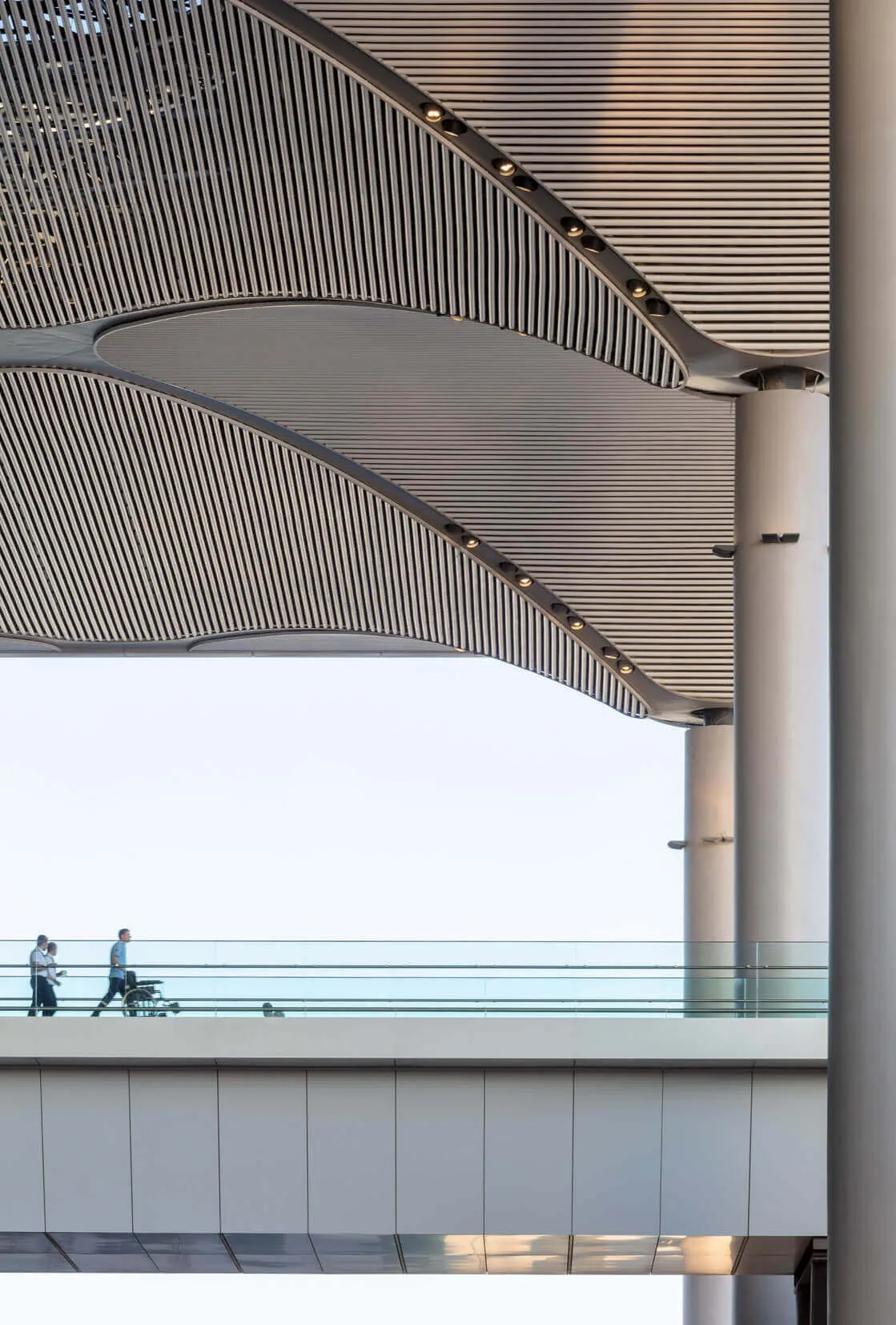
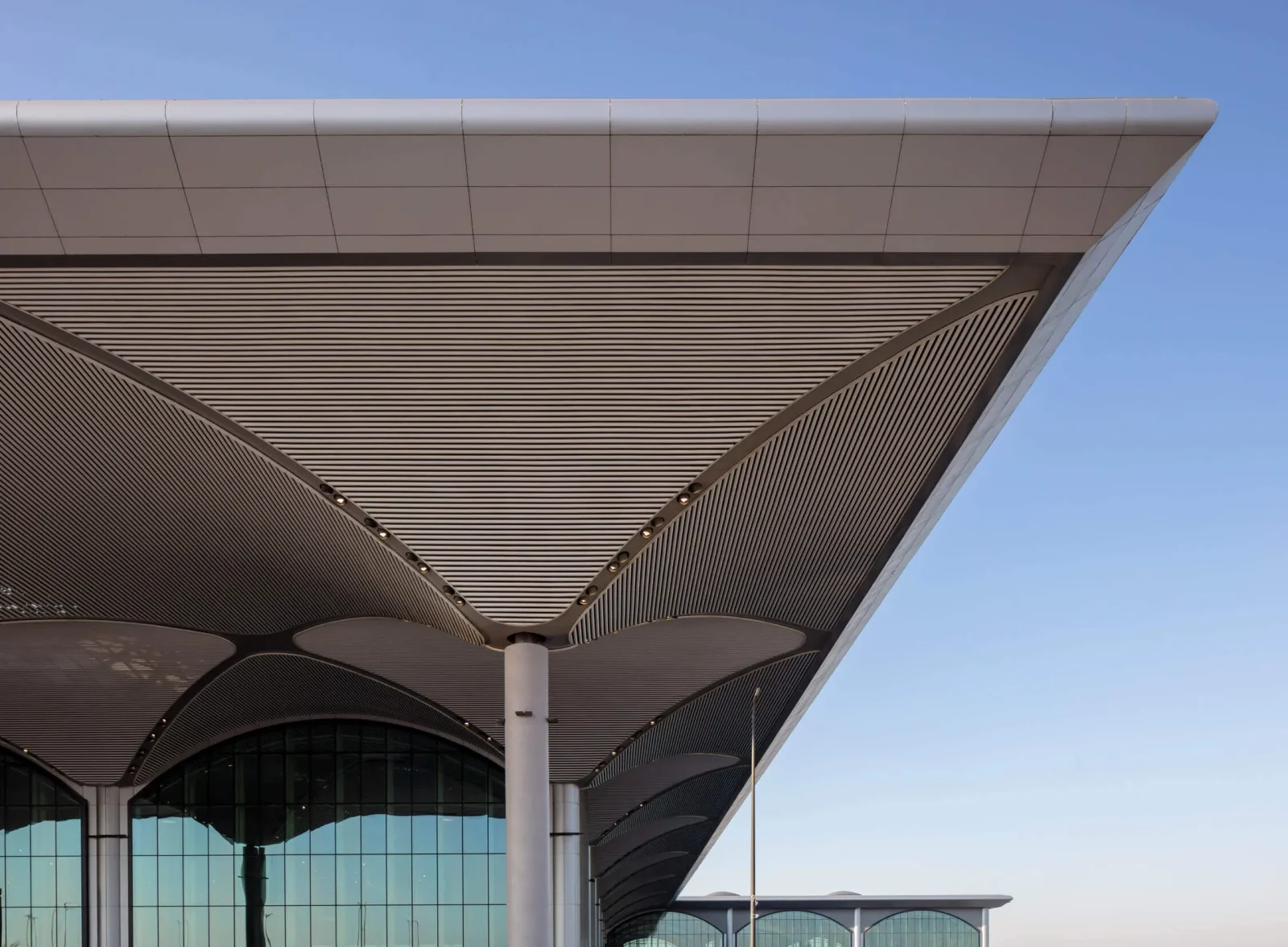
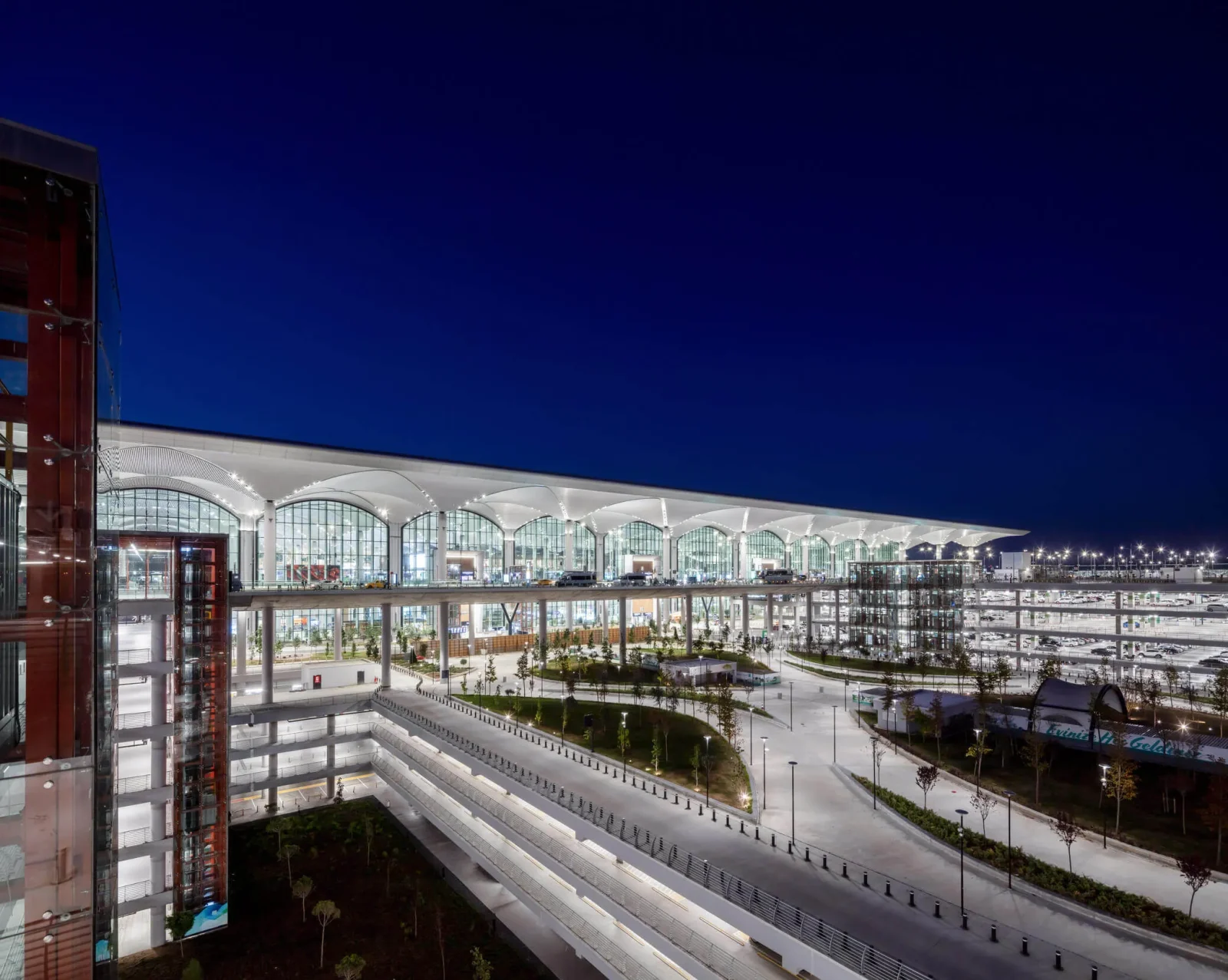
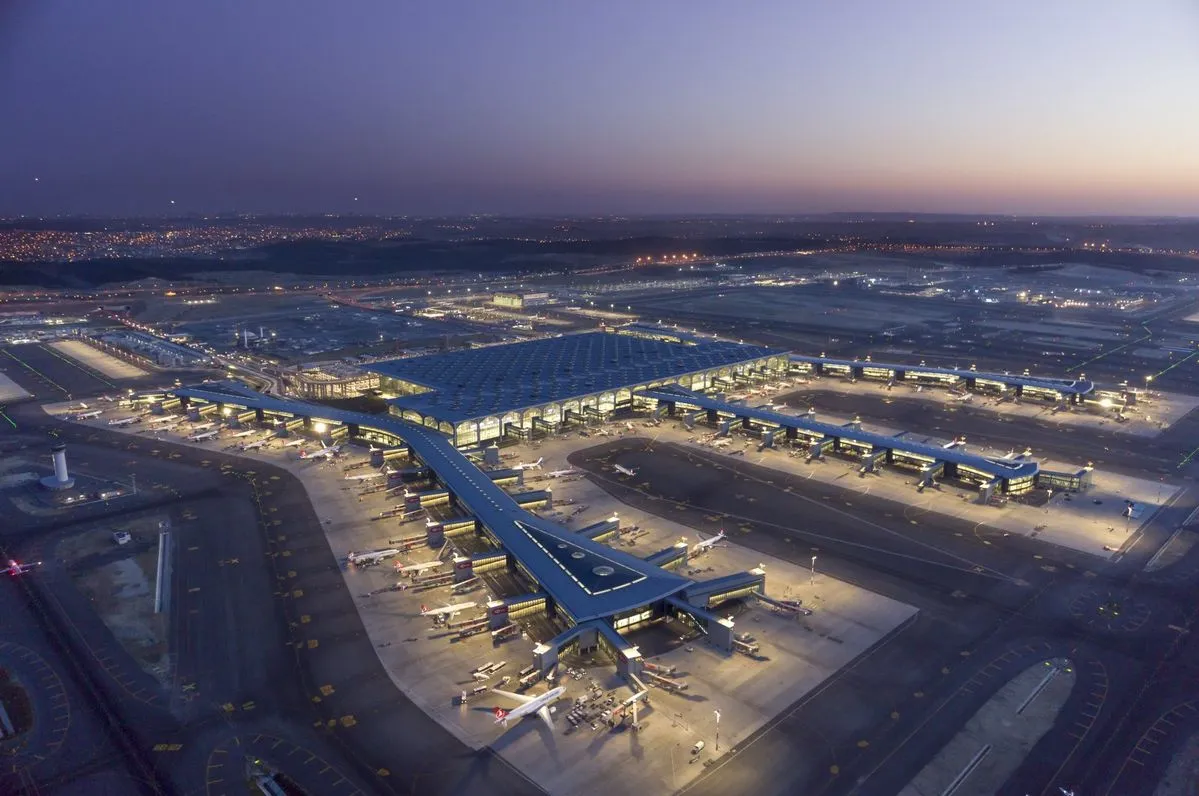
Situated near the Black Sea, 35 kilometers from the heart of Istanbul, the Istanbul Airport stands as a bold expression of contemporary airport design. Spanning an immense 76.5 km², the site brings together multiple runways with vast terminals, reinforcing the city’s role as a vital link between Europe and Asia. Conceived as a monumental landmark, the architecture is inspired by Istanbul’s history, where cultures, eras, and continents intersect. Designed with long-term growth in mind, the airport’s flexible infrastructure allows it to adapt seamlessly to future aviation demands.
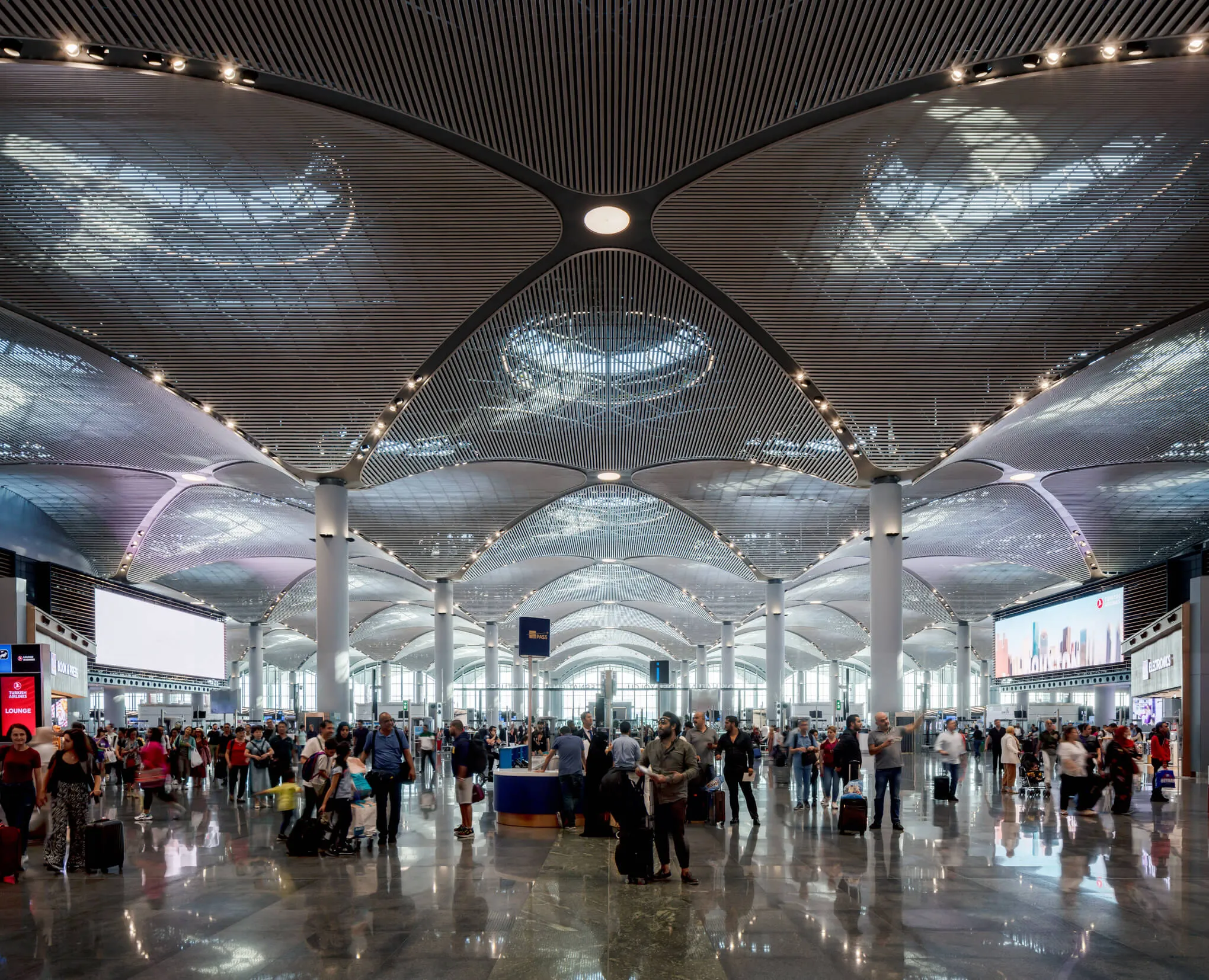
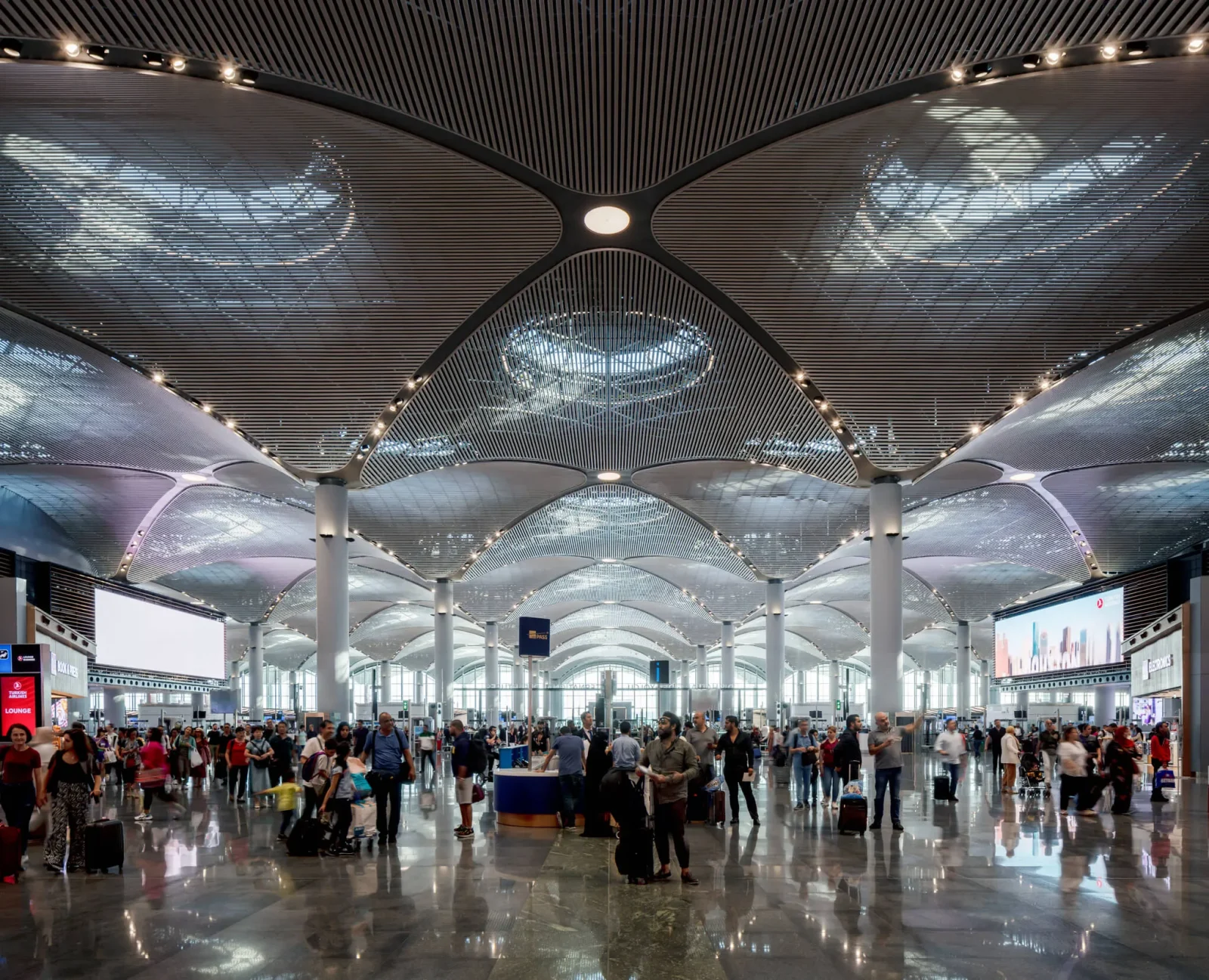
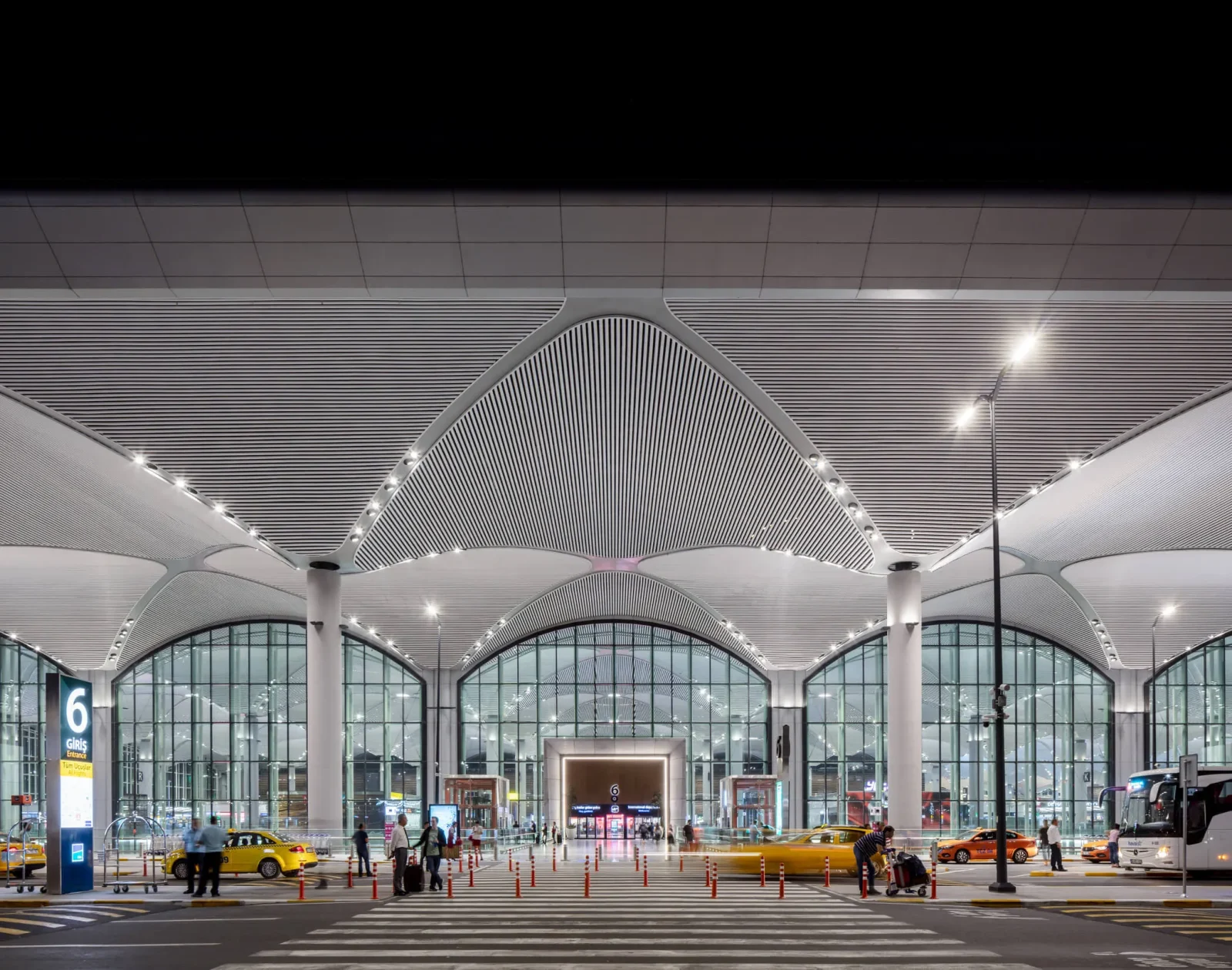
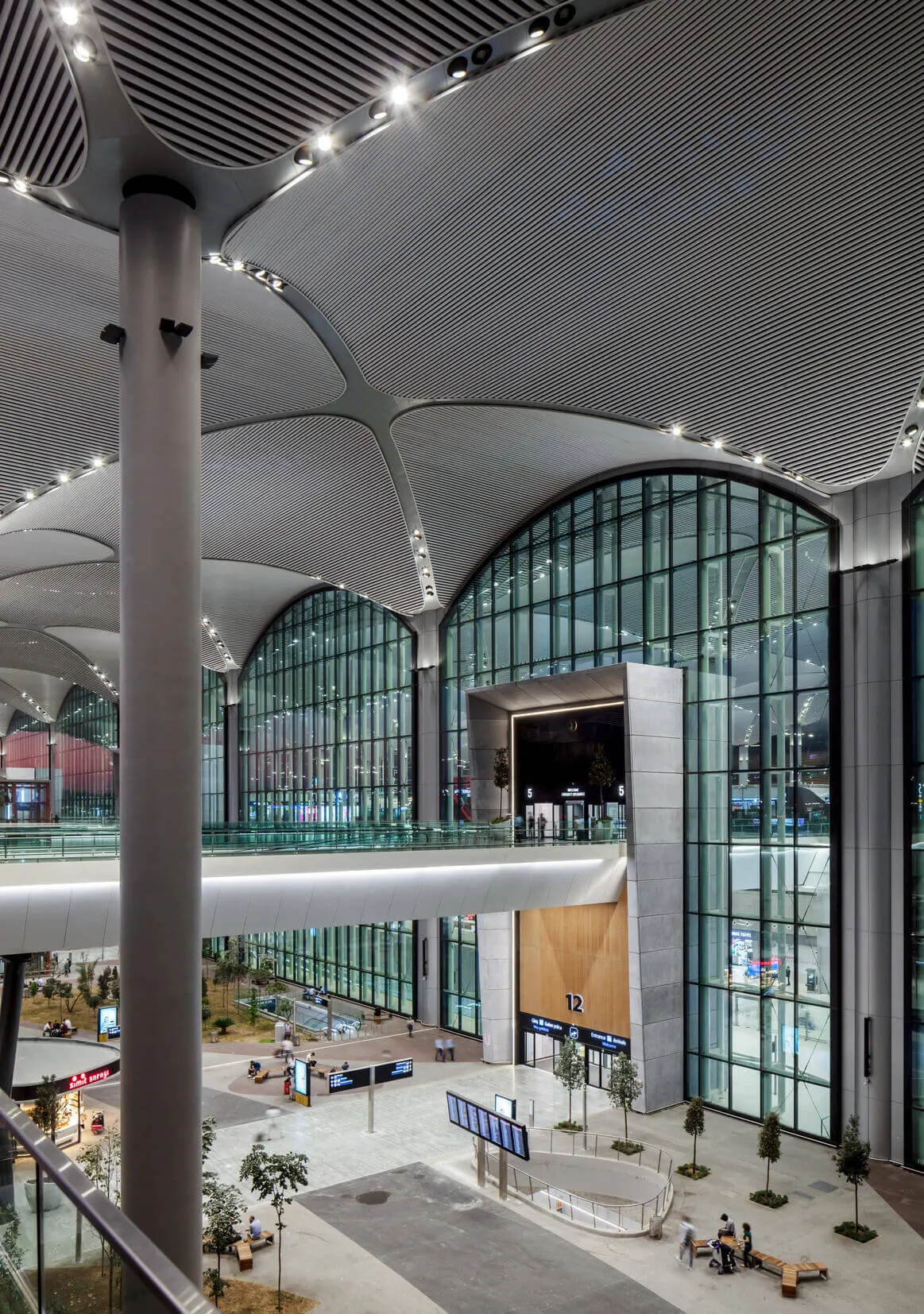
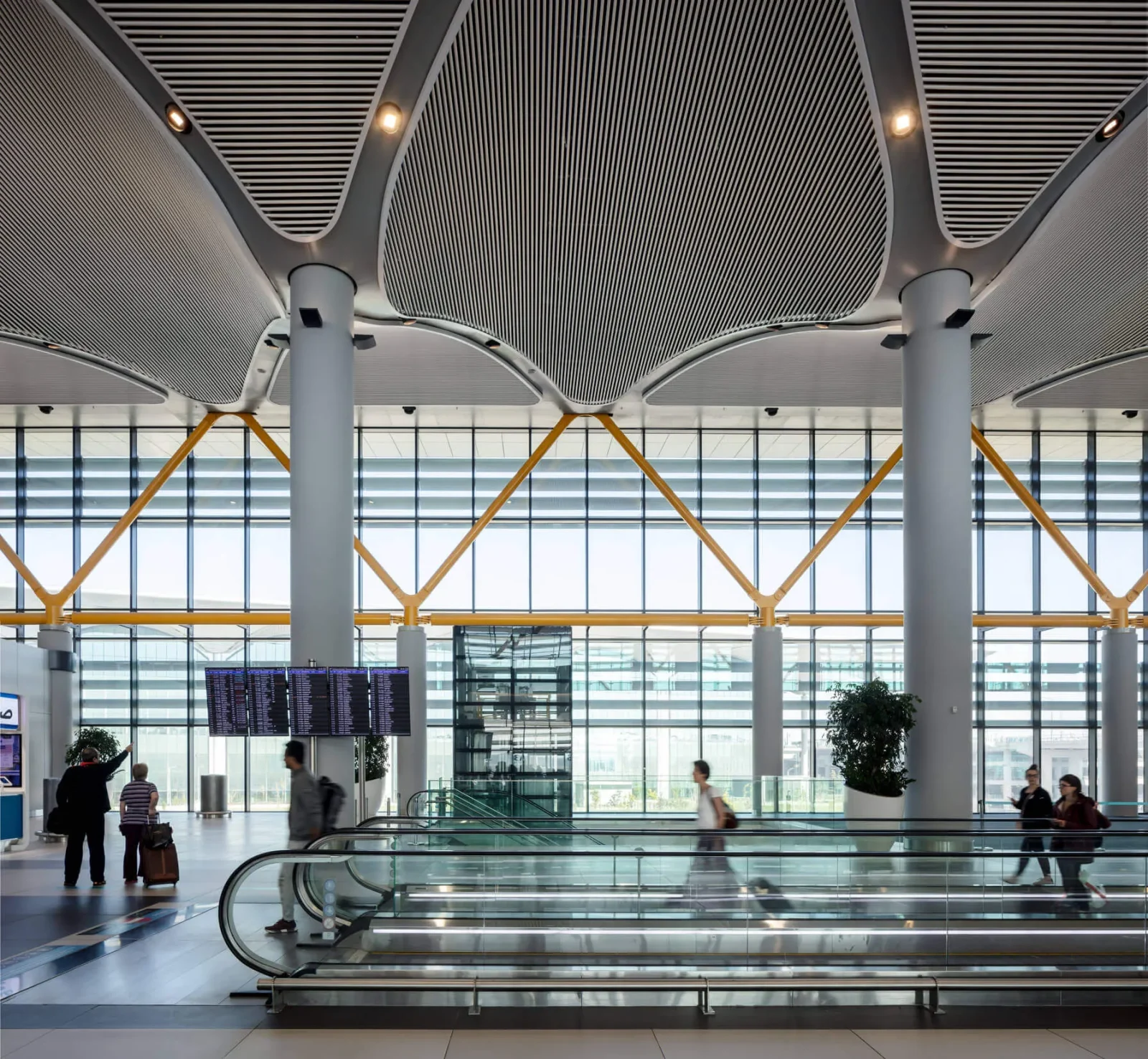
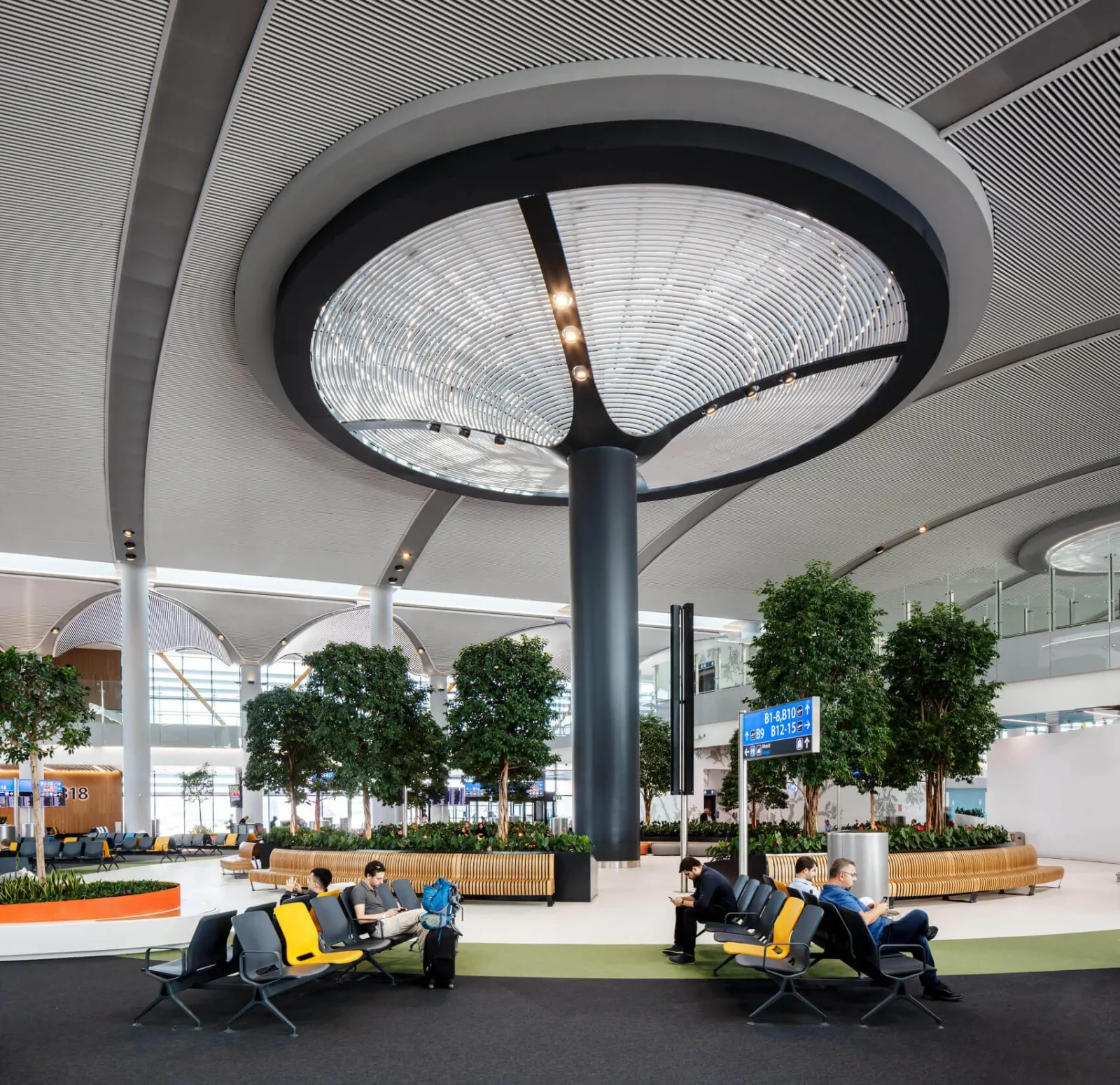
The striking airport was designed by iconic architecture firms, including Grimshaw Architects, Nordic Office of Architecture, and Haptic Architects. The interiors of the terminal, inspired by the grandeur of Ottoman mosques, reinterpret rhythm and monumental scale for a contemporary travel experience. Designed with a vast single roof, vaulted ceilings, rhythmic structural arches, and abundant daylight, it creates a calm and open atmosphere despite its immense size. Warm materials and refined details elevate the space beyond a functional transport hub, transforming it into a civic interior that reflects Istanbul’s cultural legacy.
6. Dallas Fort Worth International Airport (DFW), United States
Architect: Gyo Obata
Location: Texas, USA
Area: 69.93 km²
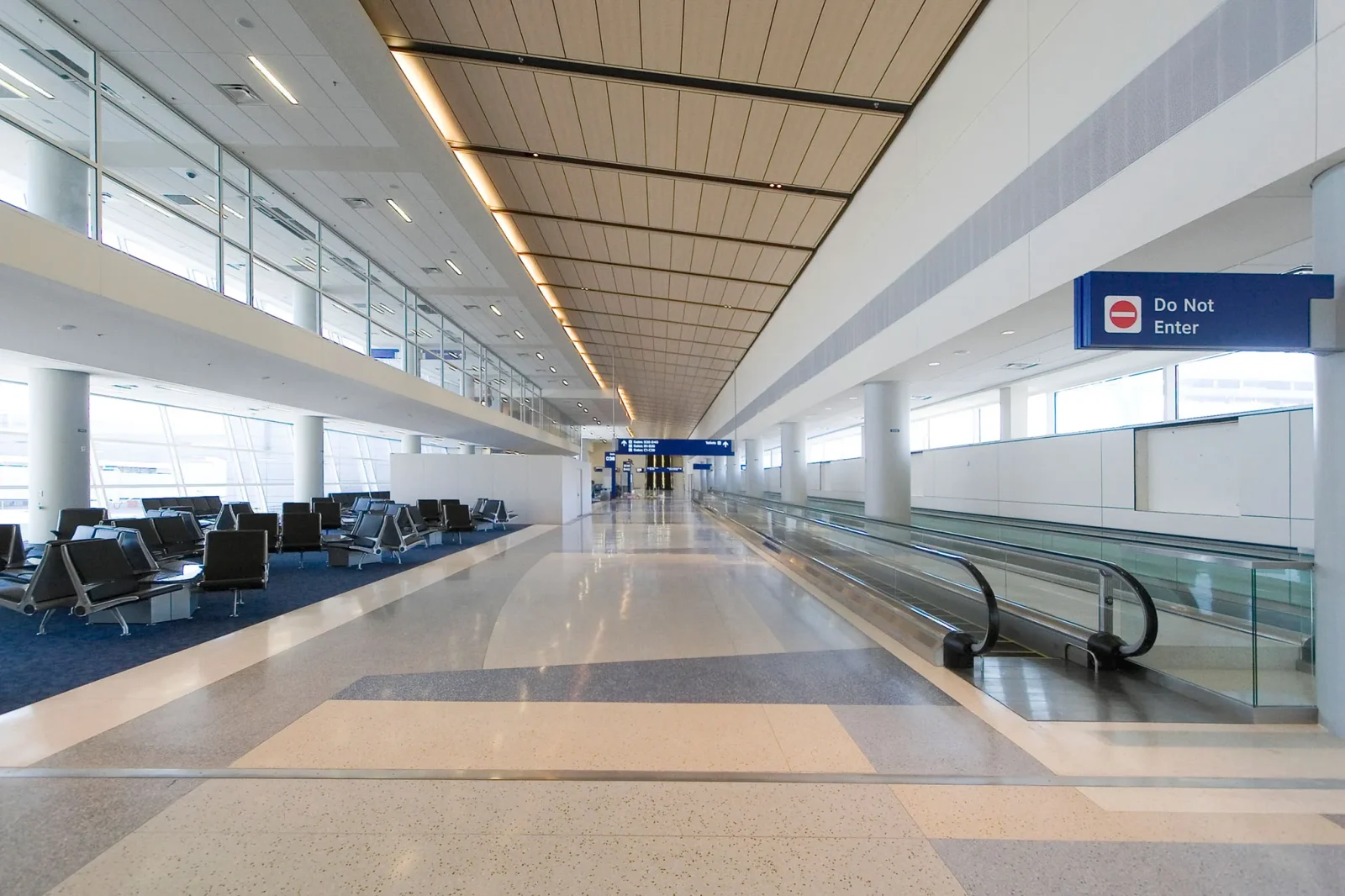
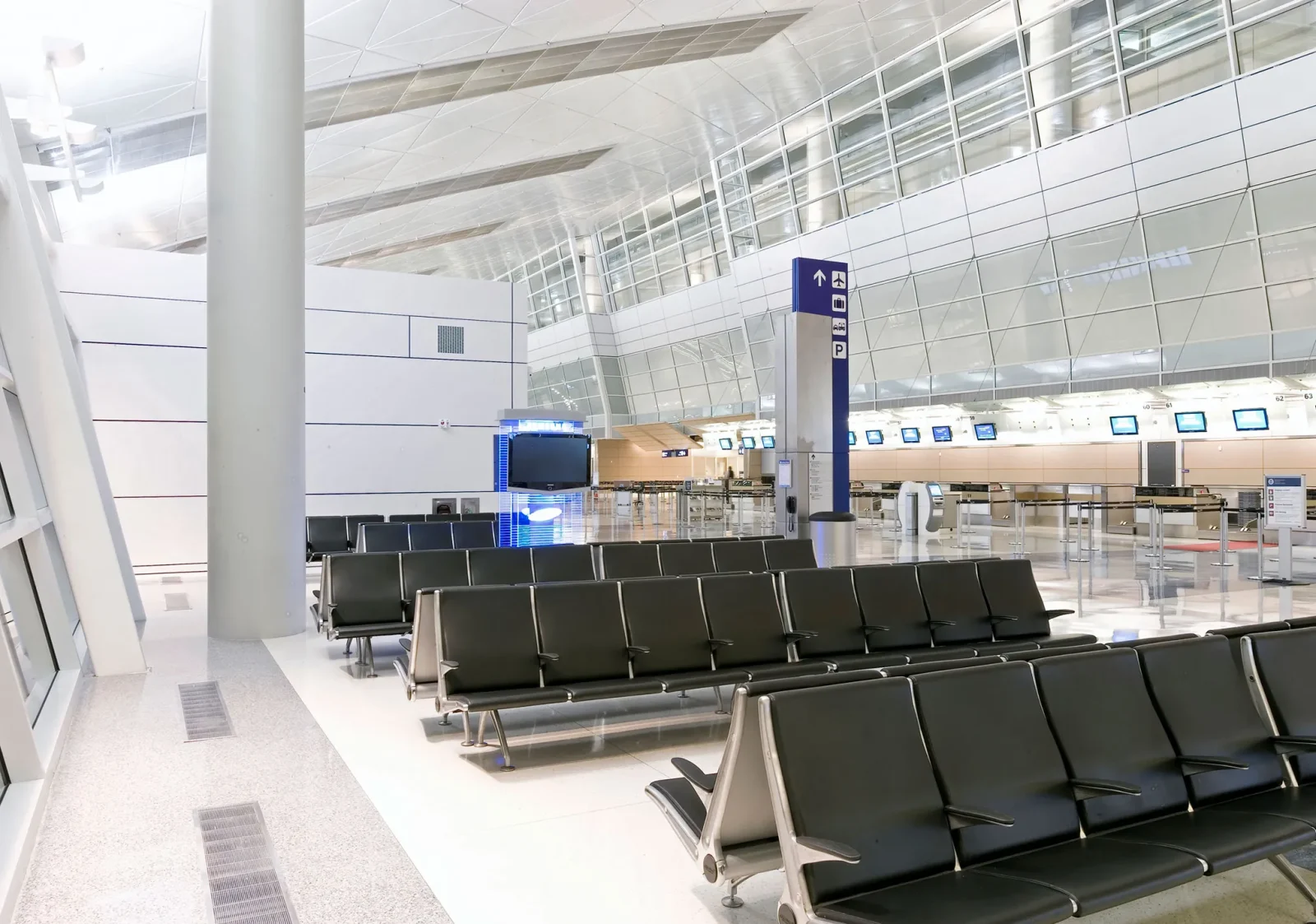
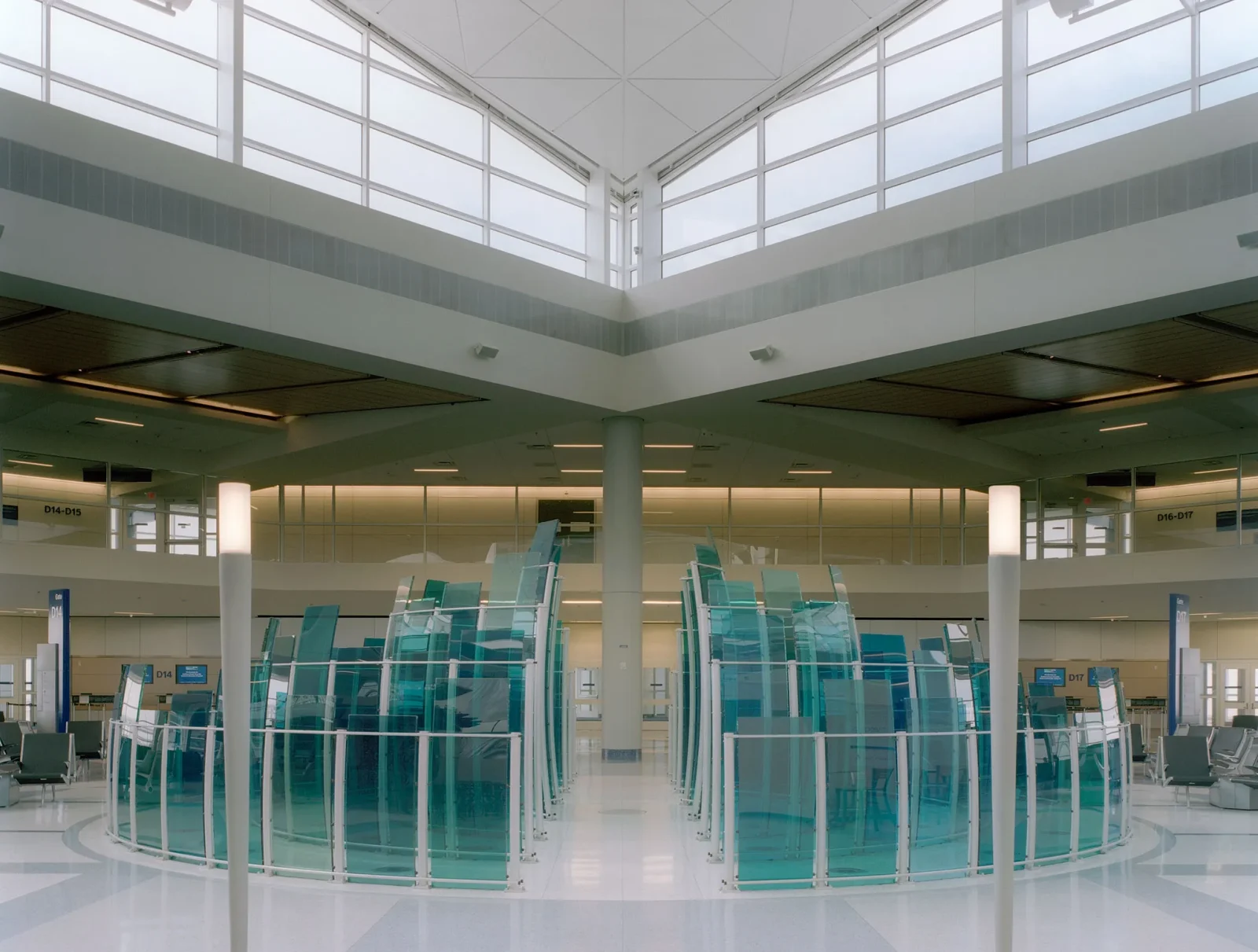
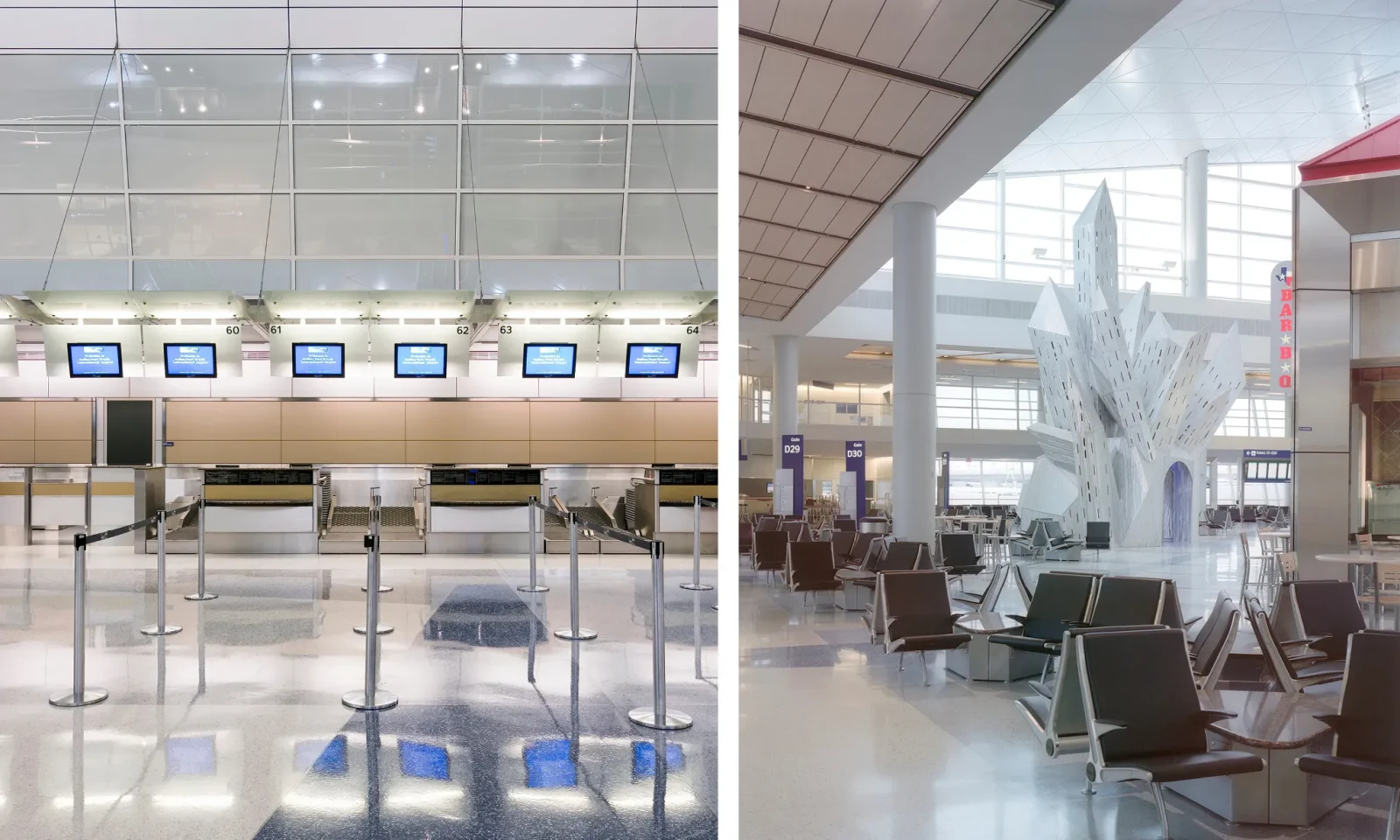
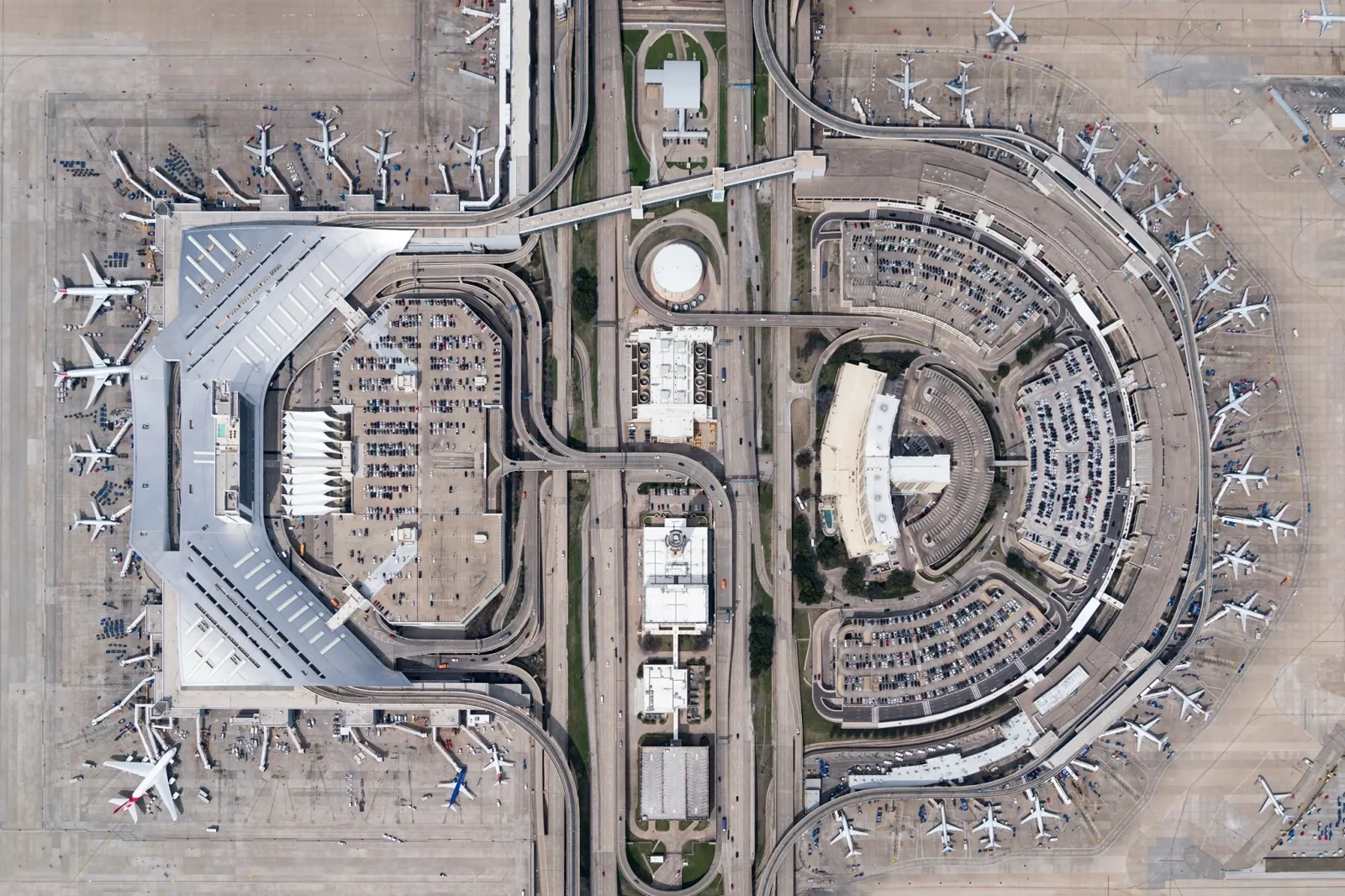
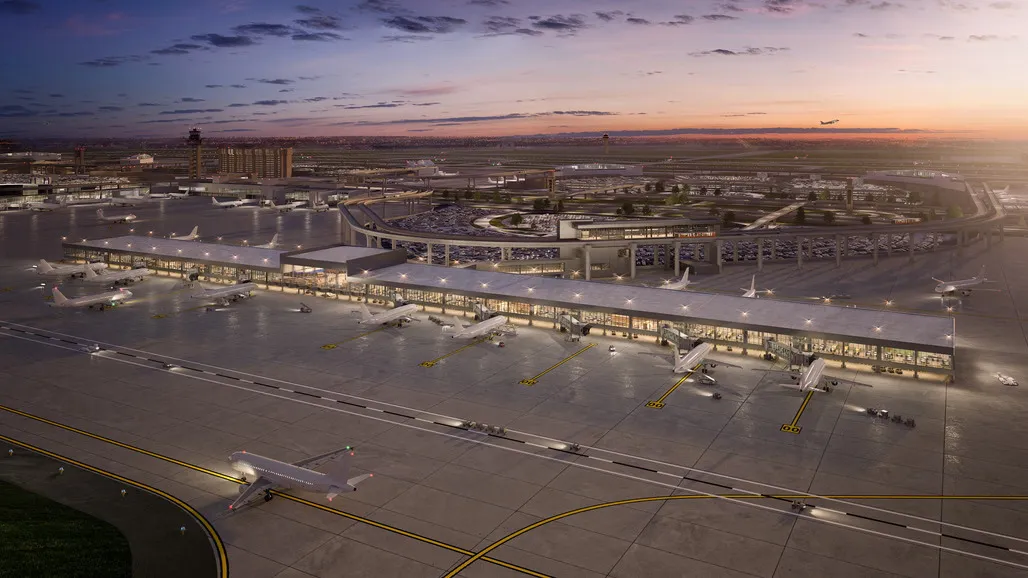
Dallas/Fort Worth International Airport stands as a landmark in aviation in Texas and a key component of global airport infrastructure, renowned for its scale and efficiency. Spanning a 69.93 km² area, it is conceived as a city-sized transportation hub linking Dallas and Fort Worth; the airport strikes a balance between complexity and clarity. The terminal is designed as an architecture welcoming travelers while thoughtfully planning the operation of airlines, security, customs, and retail. Its master plan is defined by distinctive semicircular terminals organized along a central roadway spine, a layout that streamlines aircraft movement and public access.
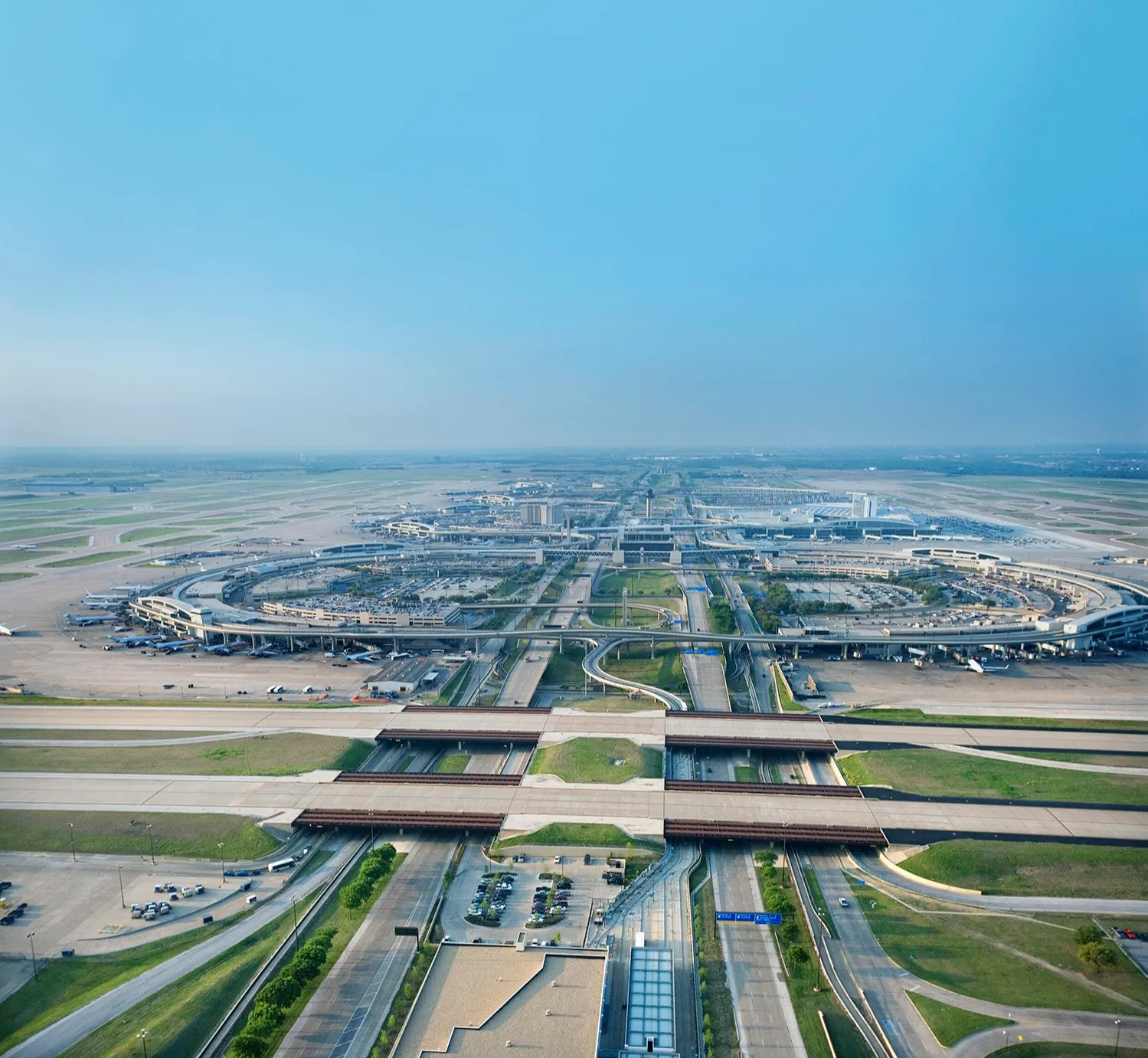
DFW’s carefully planned modular system allows the airport to operate with remarkable efficiency while being flexible enough to accommodate future terminal extensions for global travel. The addition of Terminal D elevates this experience further with warmer materials, refined designs, and enhanced daylight, transforming the spaces into welcoming environments.
7. Orlando International Airport (MCO), United States
Architect: Schenkel Shultz, Fentress Architects, and DeepStream Designs, Inc
Location: Florida, USA
Area: 69.63 km²
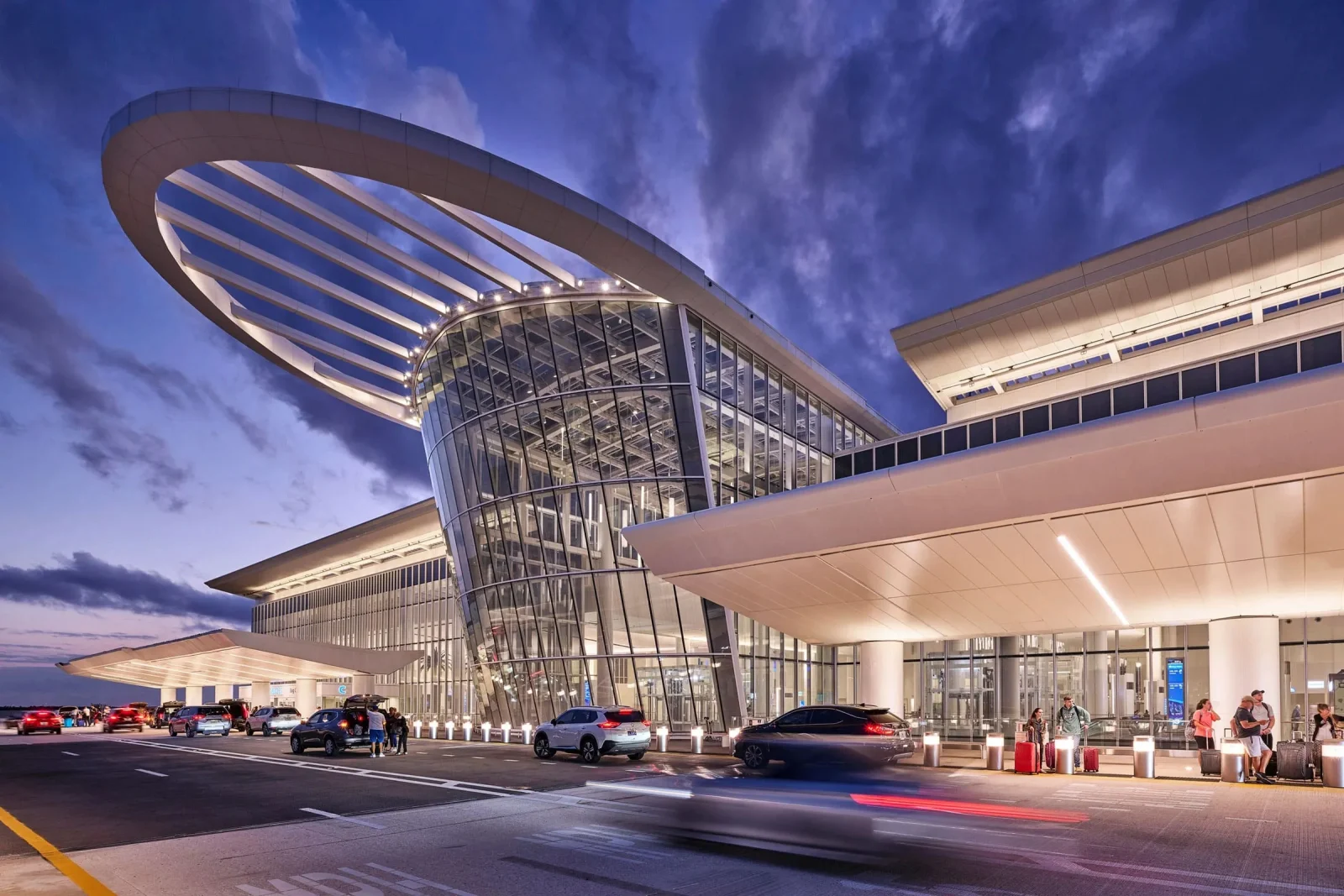
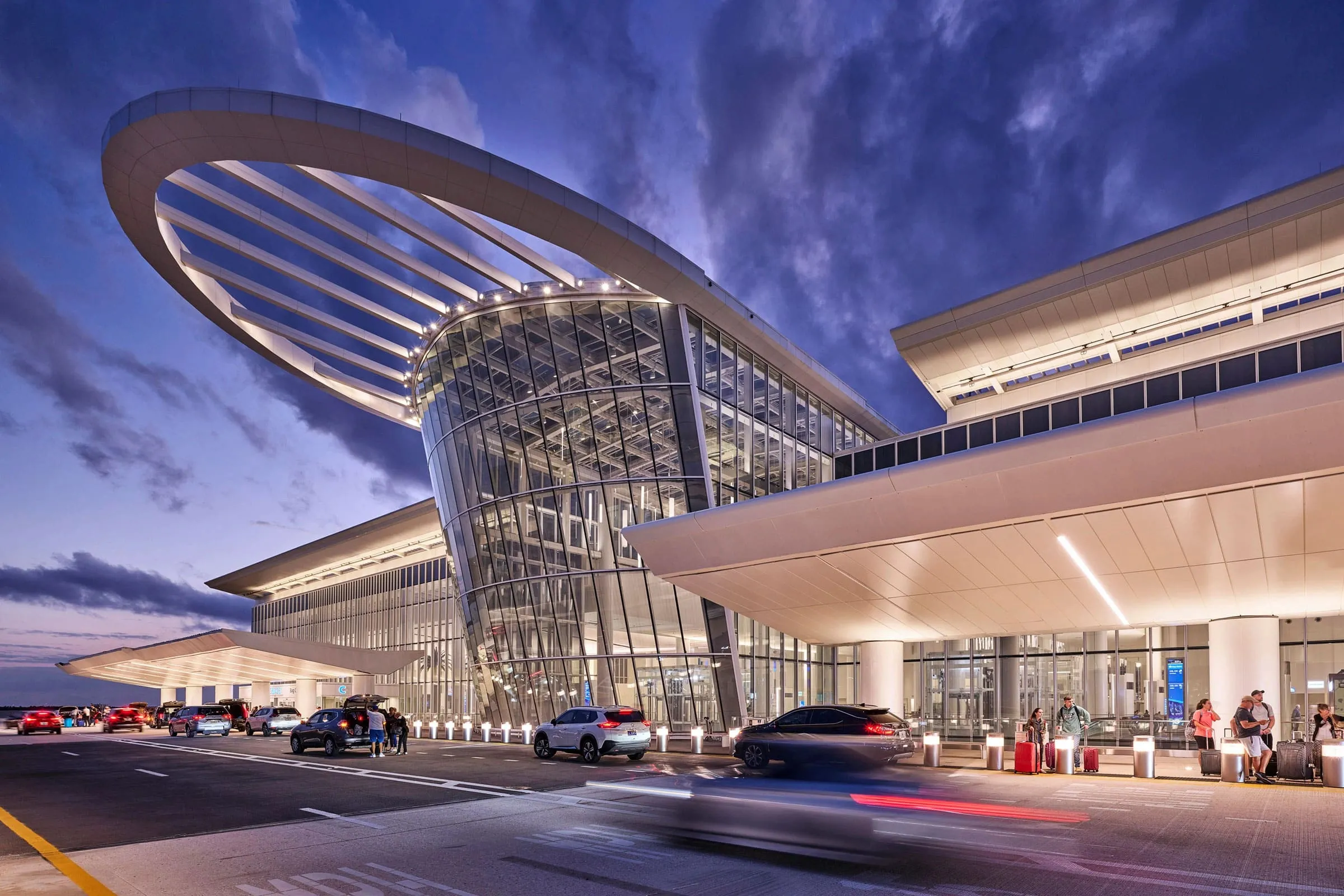
Orlando International Airport, once known as McCoy Air Force Base, has evolved into one of the busiest and largest aviation hubs in the United States. Shaped by the collective vision of firms including Schenkel Shultz, Fentress Architects, and Deep Stream Designs. The airport’s architecture emphasizes sustainability and contemporary design, with a prime focus on enhanced passenger experience. Expanding beyond the original airport’s North Terminal A/B complex, Fentress Architects designed the South Terminal, introducing new terminals C and D and paving the way for significant future growth.
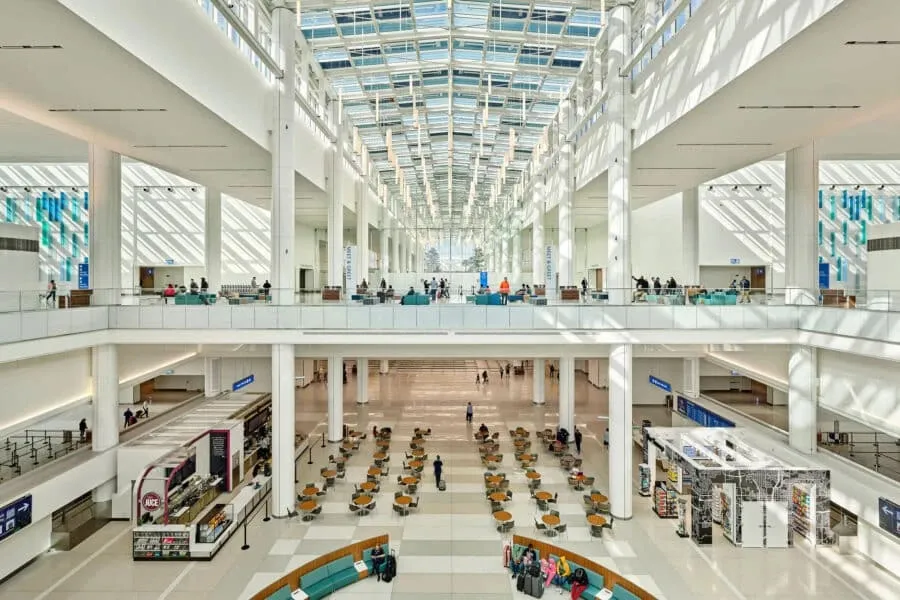
The ongoing architectural evolution of Orlando International Airport has transformed it into a modern, future-ready global gateway. Its vast scale and spacious contemporary terminals comfortably serve millions of passengers each year. Designed to achieve LEED v4 certification, the terminal reflects a strong commitment to sustainability and environmental responsibility. Guided by the concept of “Beyond the Orlando Experience,” the architecture blends advanced technology with a strong sense of place, with Terminal C anchored by a 1,000-foot-long skylit “Boulevard” that acts as an urban-style spine for passenger movement.
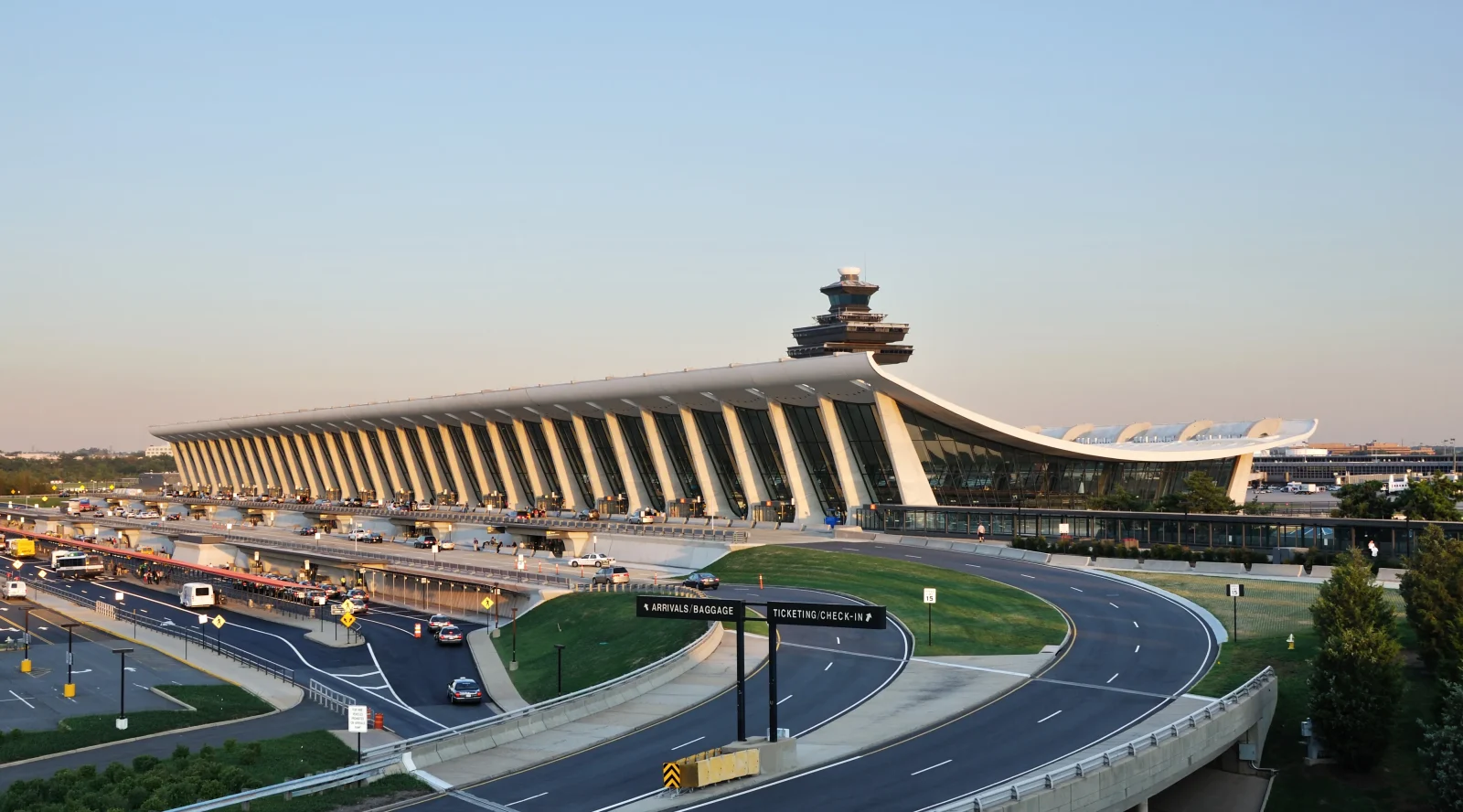
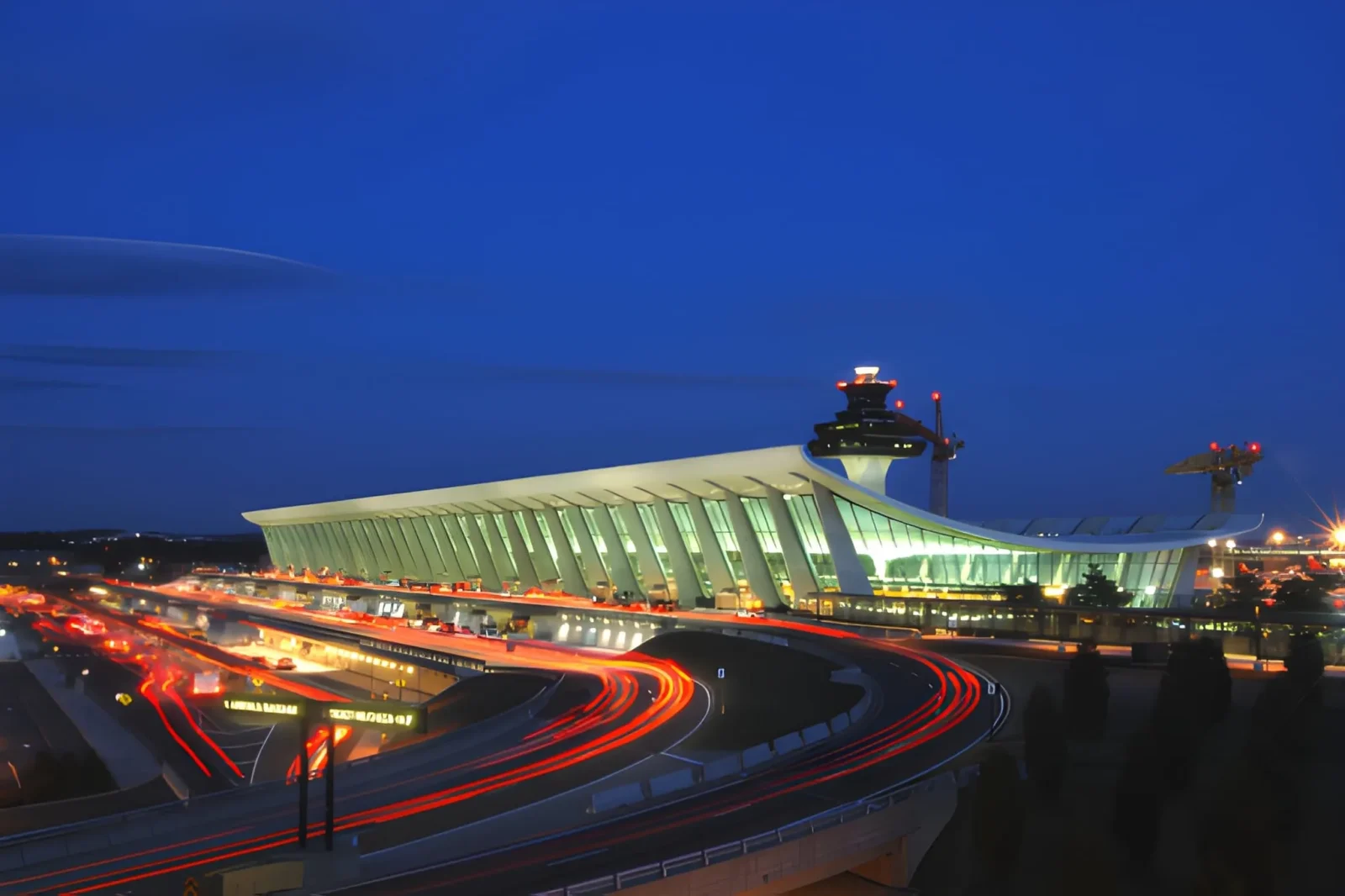
8. Washington Dulles International Airport (IAD), United States
Architect: Eero Saarinen
Location: Washington, D.C., USA
Area: 52.6 km²
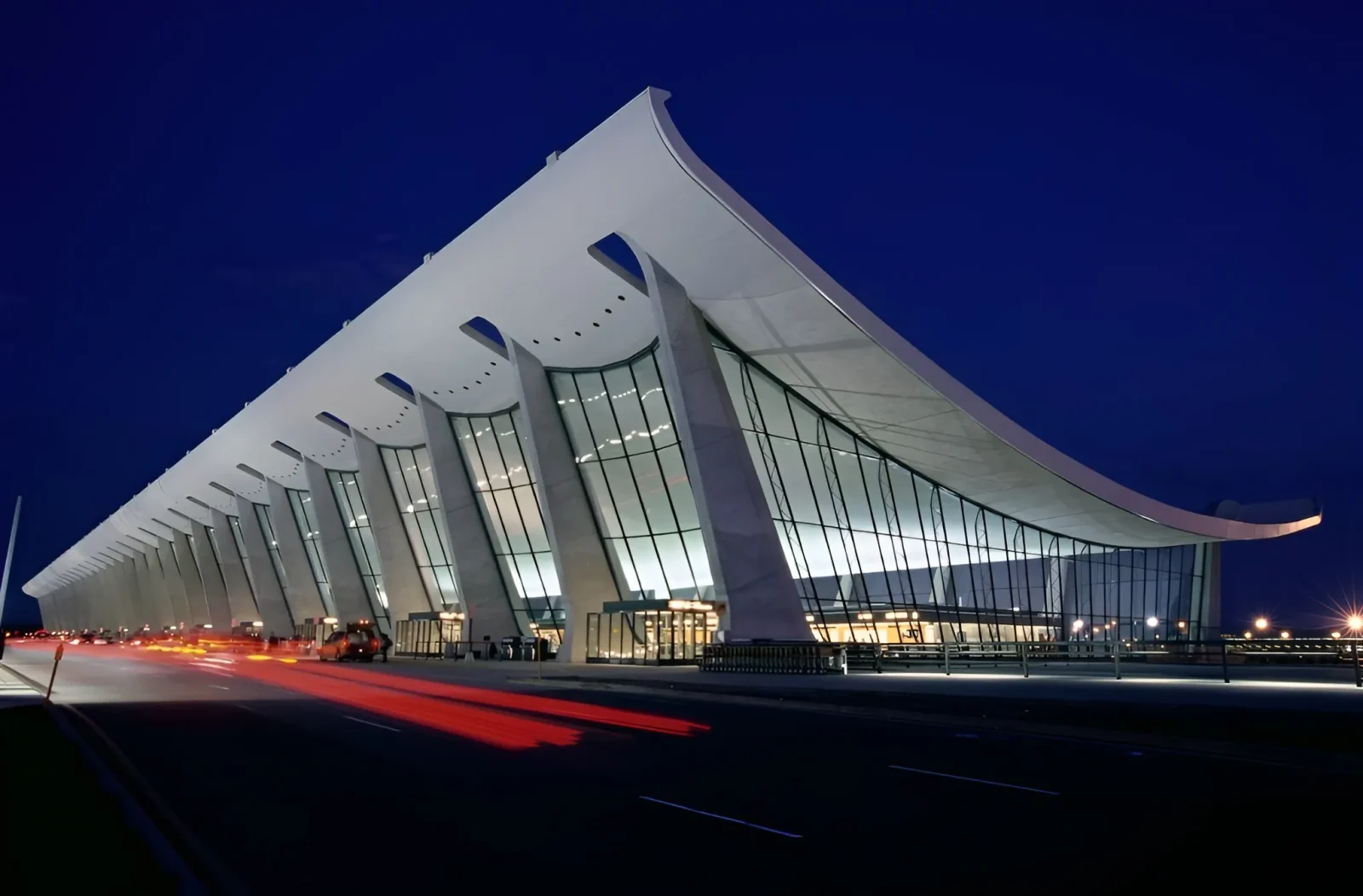
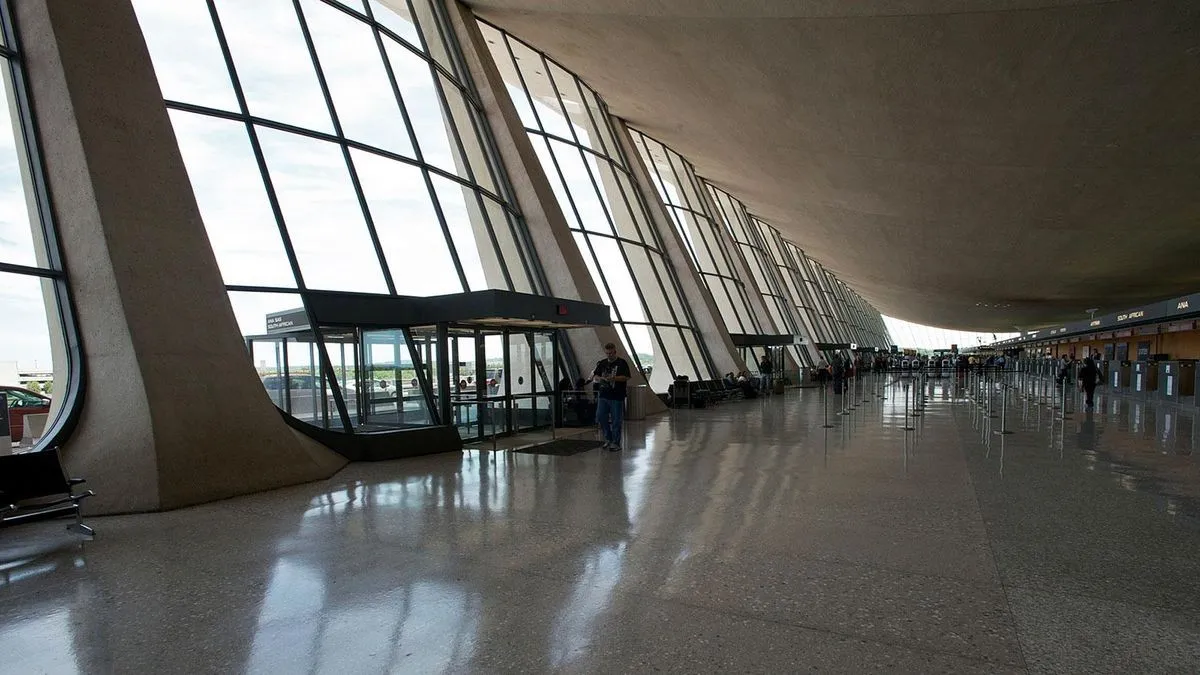
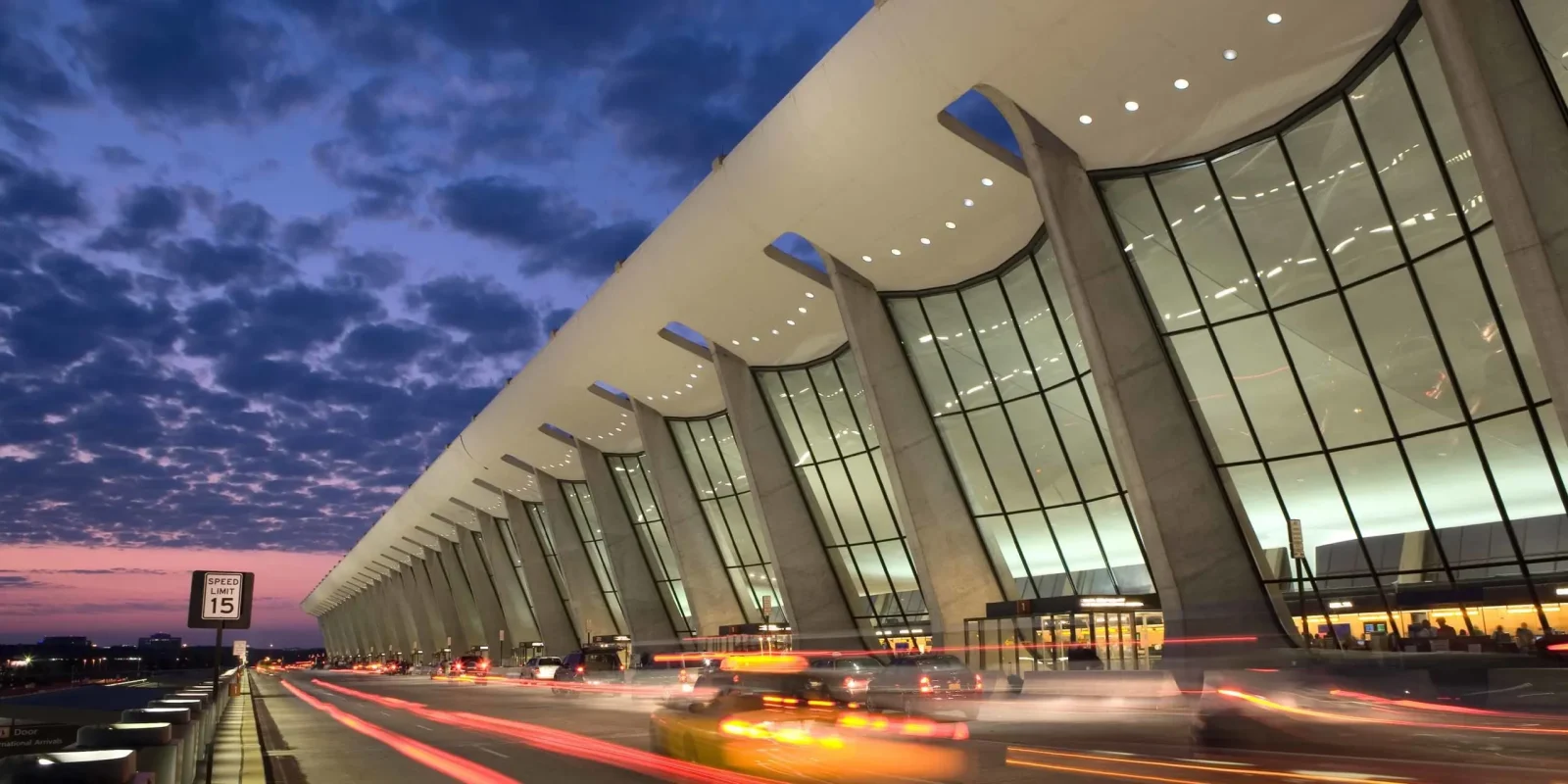
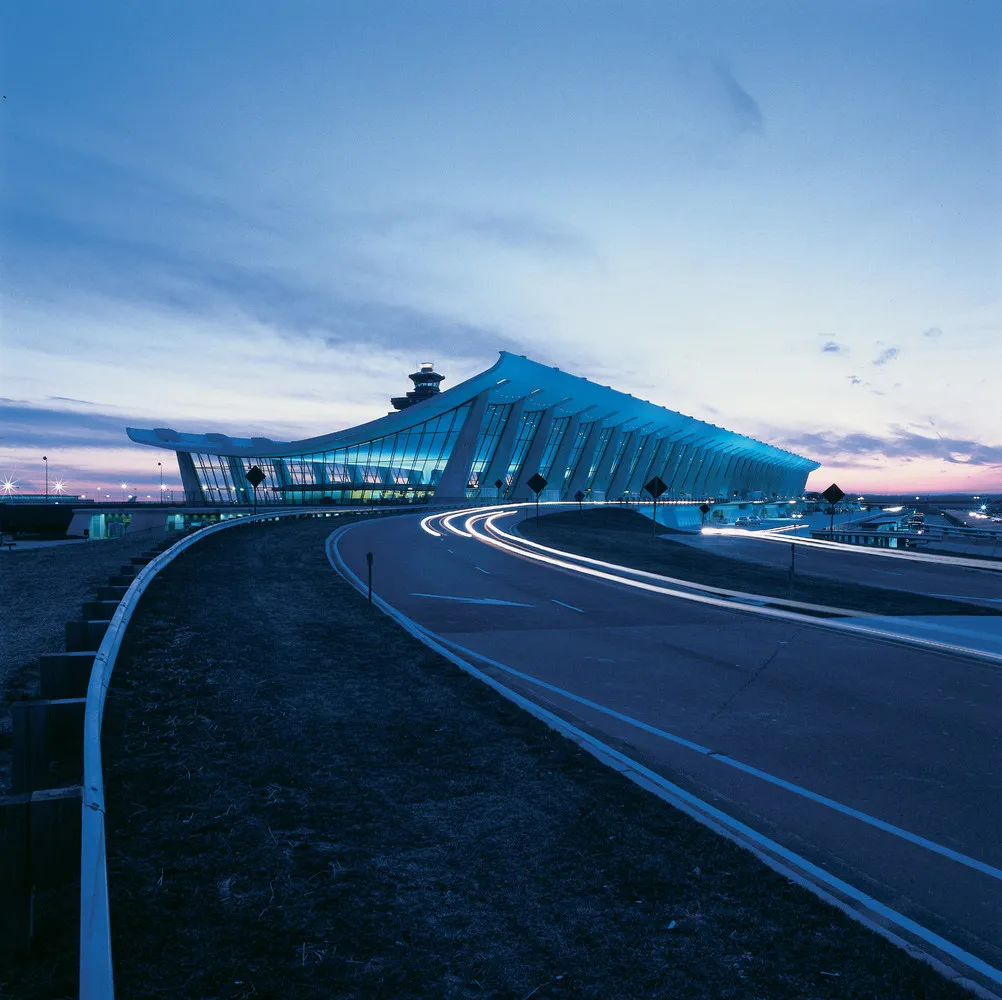
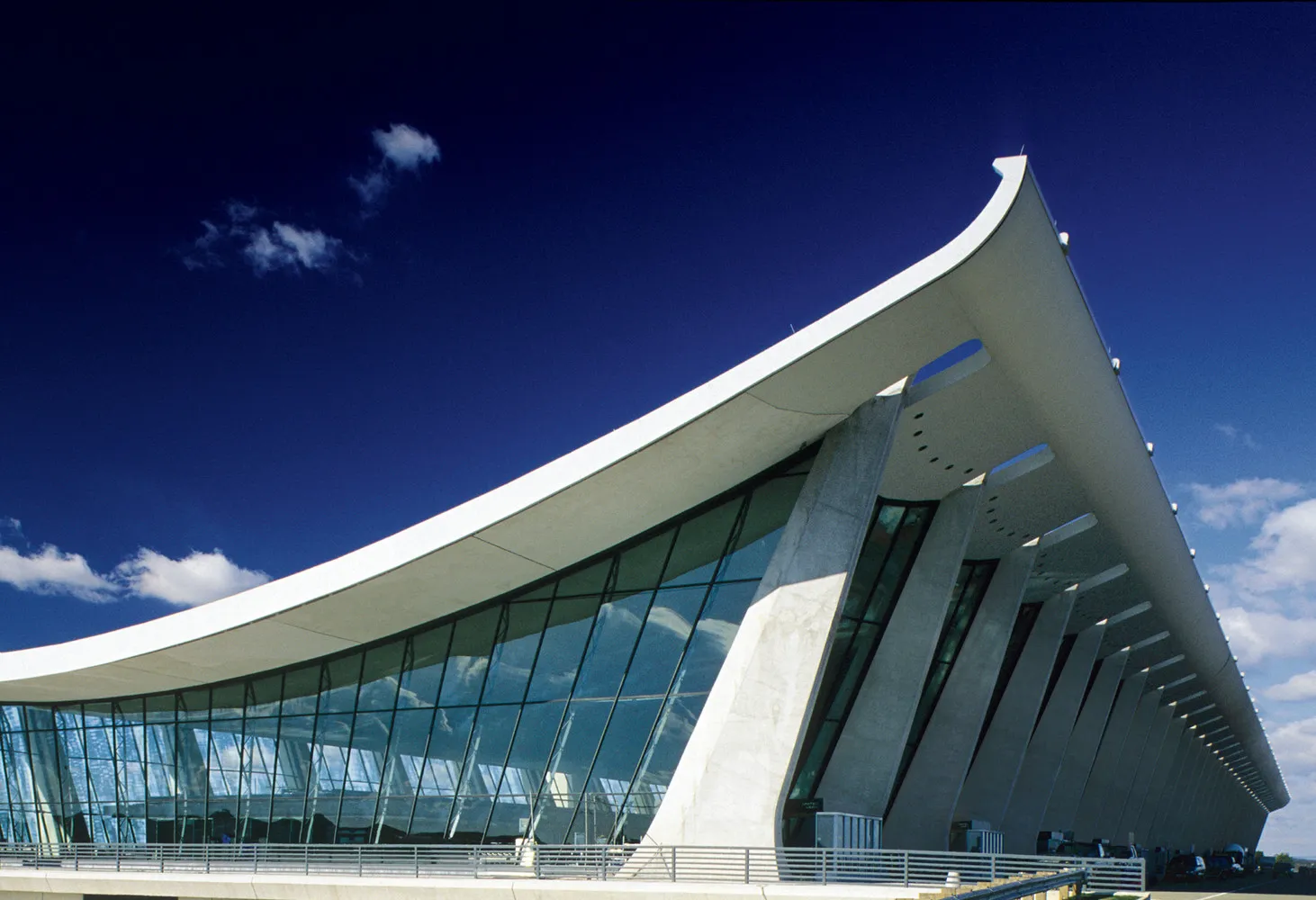
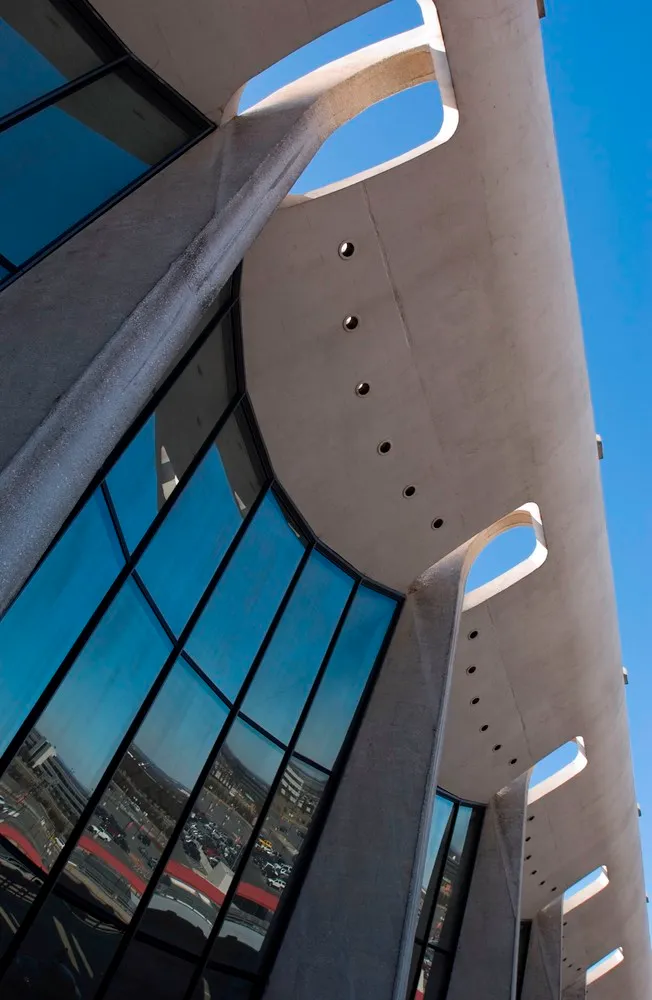
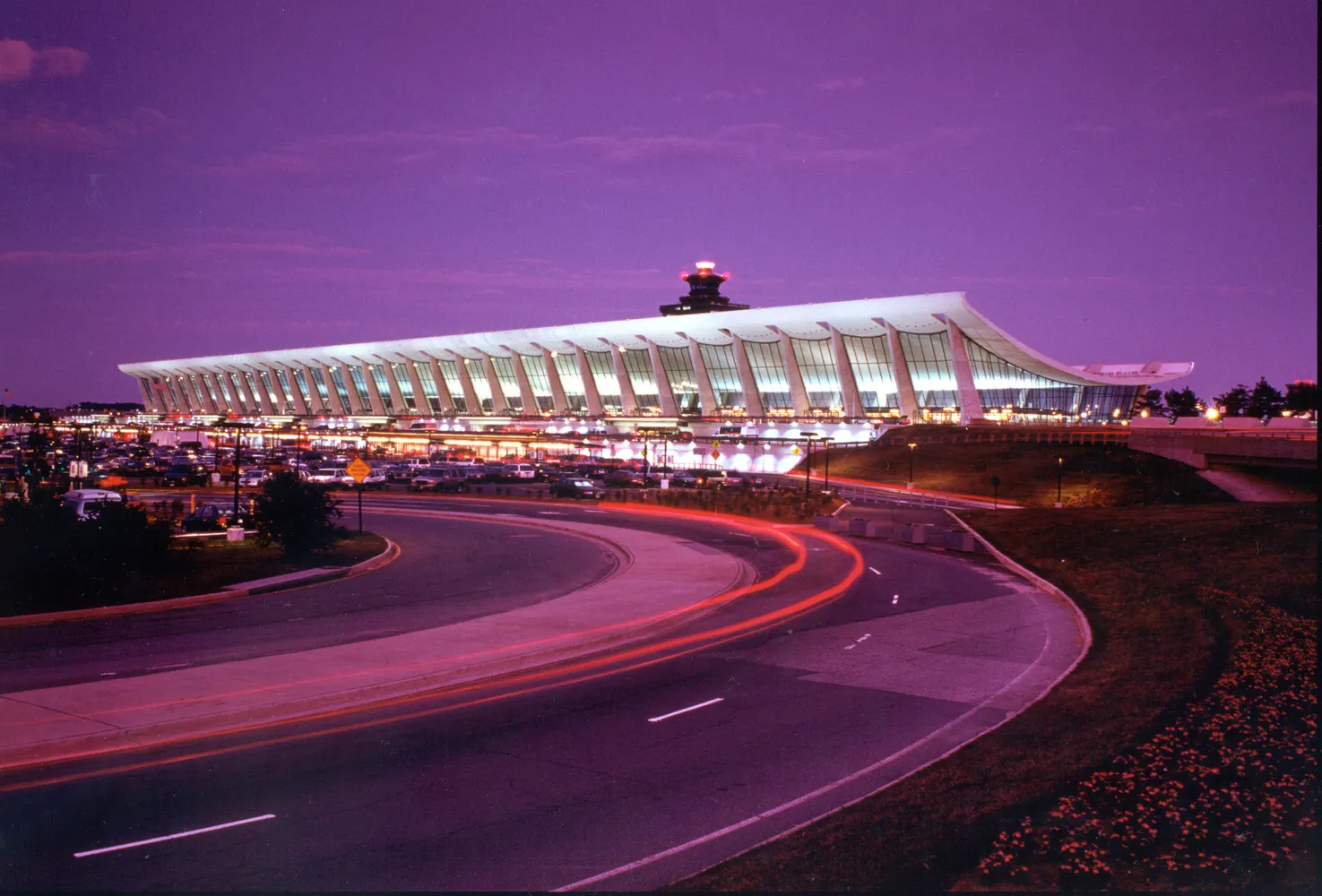
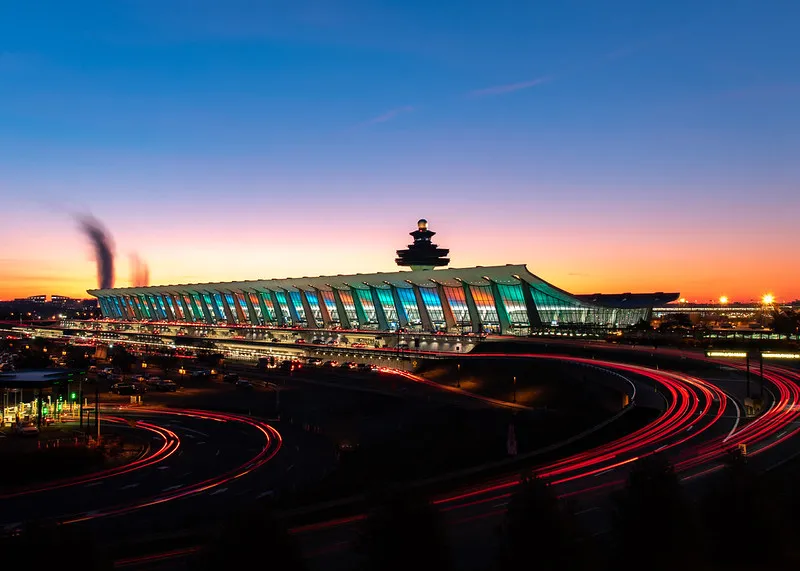
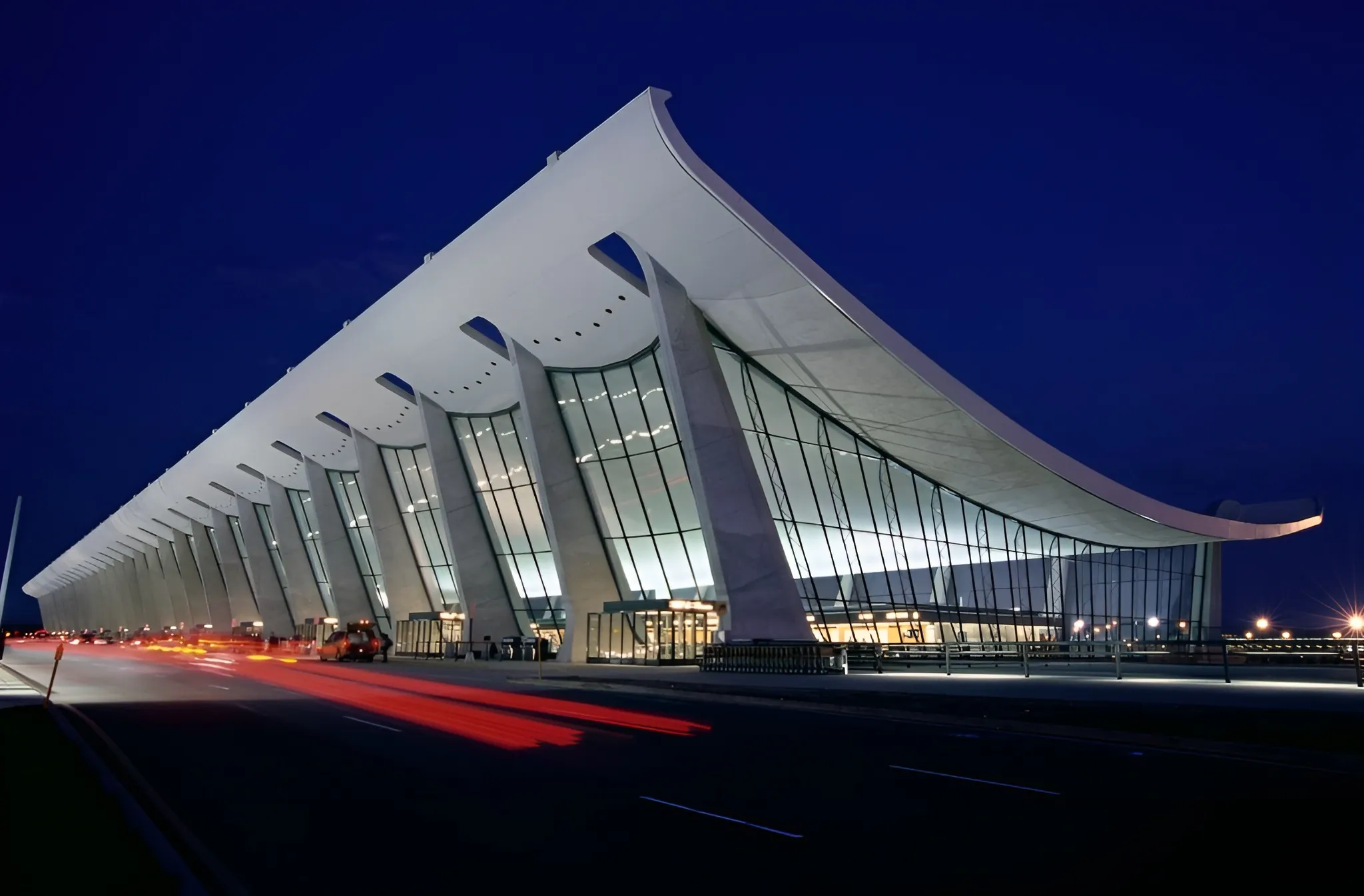
The Washington Dulles International Airport, spanning about 52.6 km², which is located 26 miles west of Washington, D.C., is one of the world’s most iconic transportation hubs. Designed by the master architect Eero Saarinen, the airport is celebrated for its vast layout and bold architectural identity, representing a landmark achievement in both engineering and design. Saarinen’s sweeping terminal redefined airport architecture by merging functionality with sculptural elegance. Today, its distinctive form stands as a lasting symbol of mid-century American modernism in global aviation.
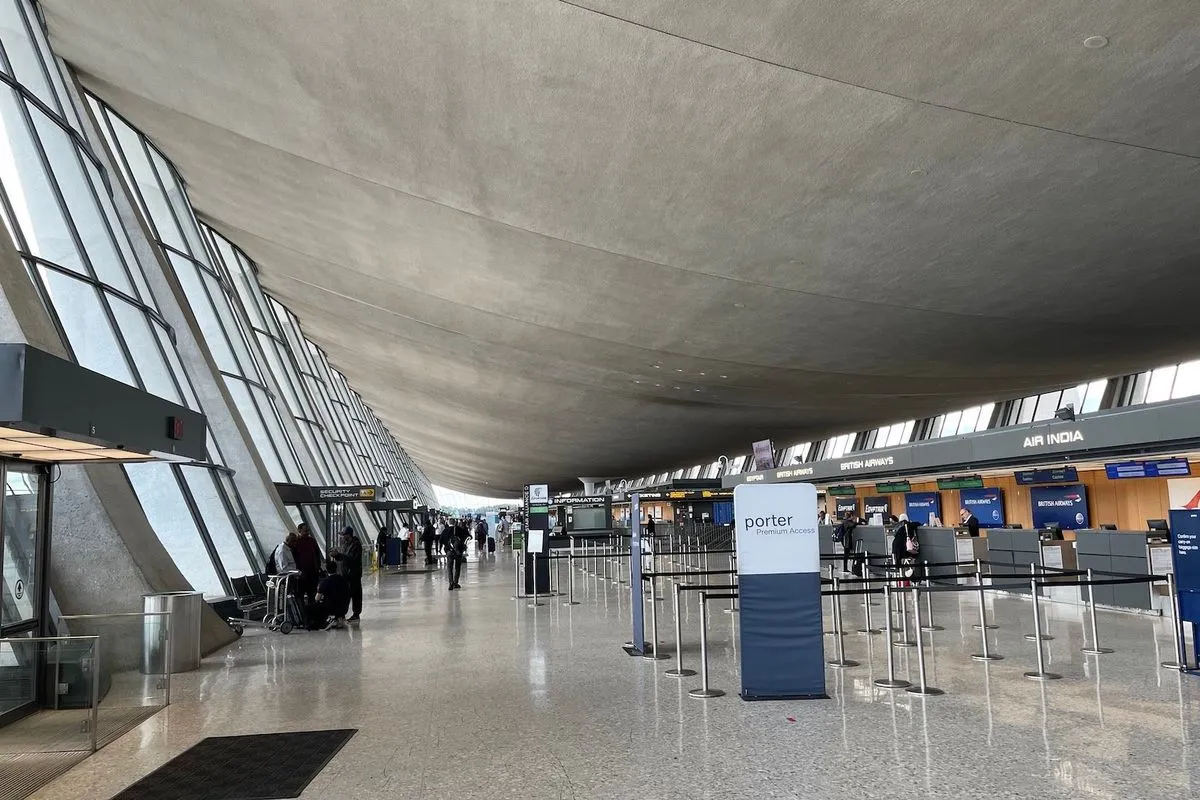
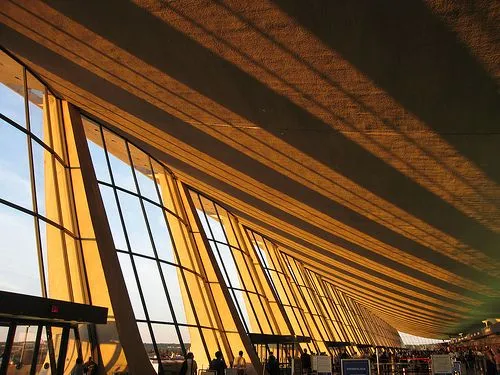
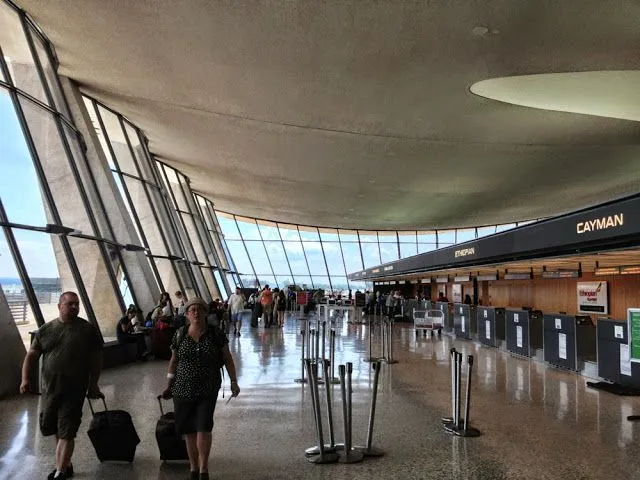
The 15-bay modular structure features a cable-supported roof suspended from outward-sloping concrete piers described by Saarinen as ‘a huge continuous hammock suspended between concrete trees.’ The airport features a functional hub and an iconic symbol of postwar American design, serving over 23 million passengers annually. The architecture allows for a vast, column-free interior, offering flexibility and clarity for passenger circulation. An extensive glazed façade allowing visual openness, while innovative mobile lounges originally designed to transport passengers directly to aircraft, reflected Saarinen’s experimental approach to airport design.
9. Beijing Daxing International Airport (PKX), China
Architect: Zaha Hadid Architects
Location: Beijing, China
Area: 47 km²
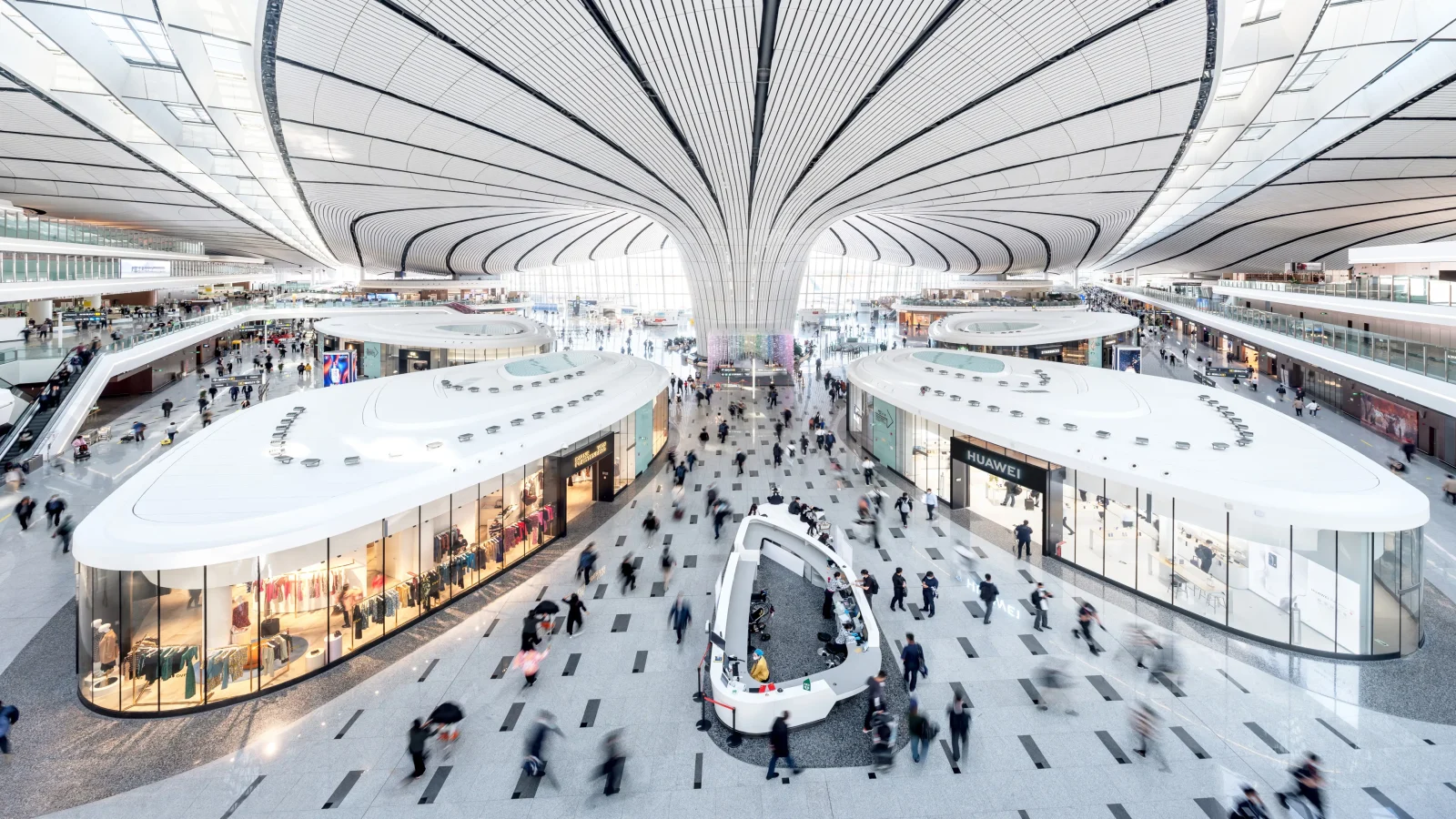
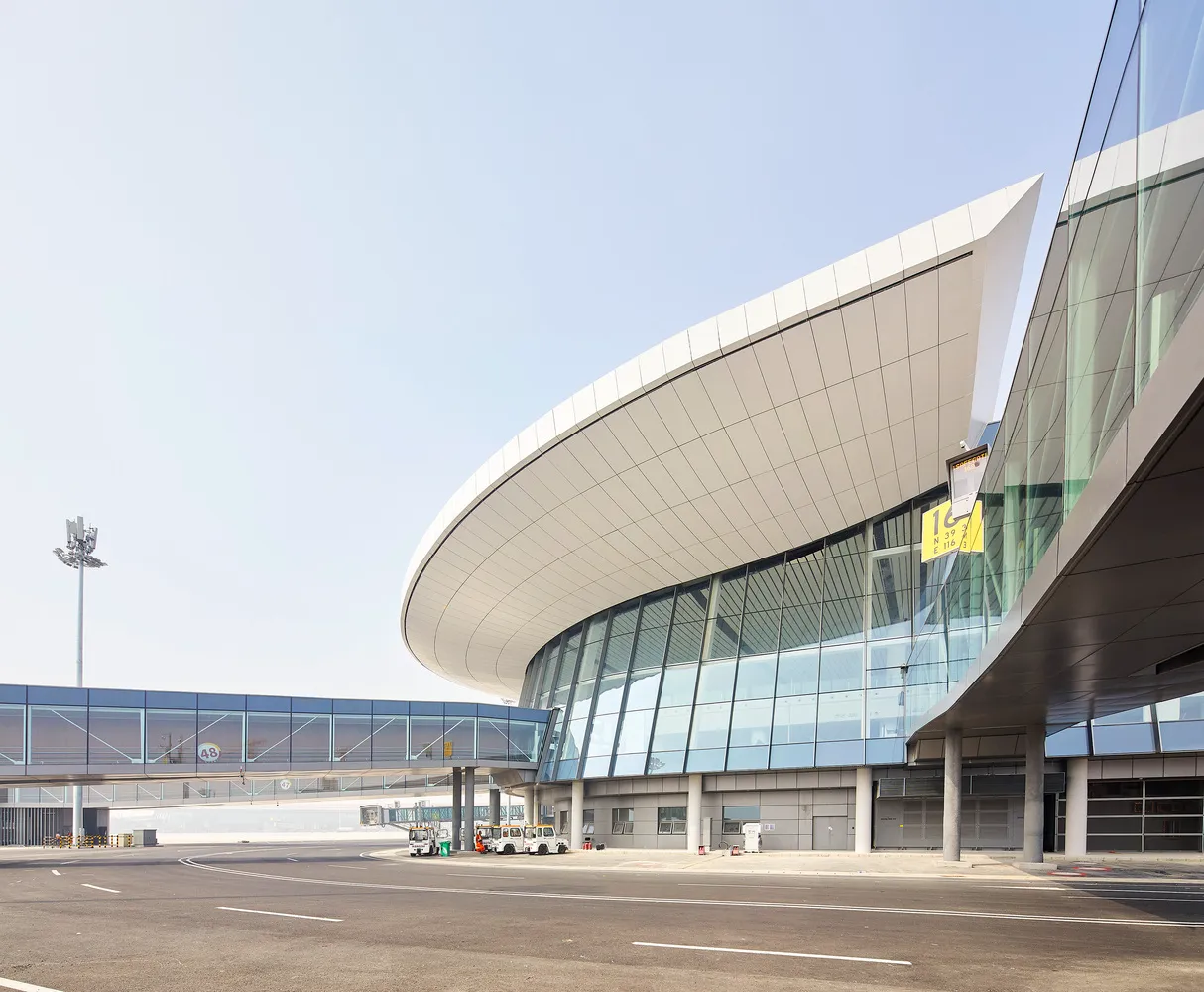
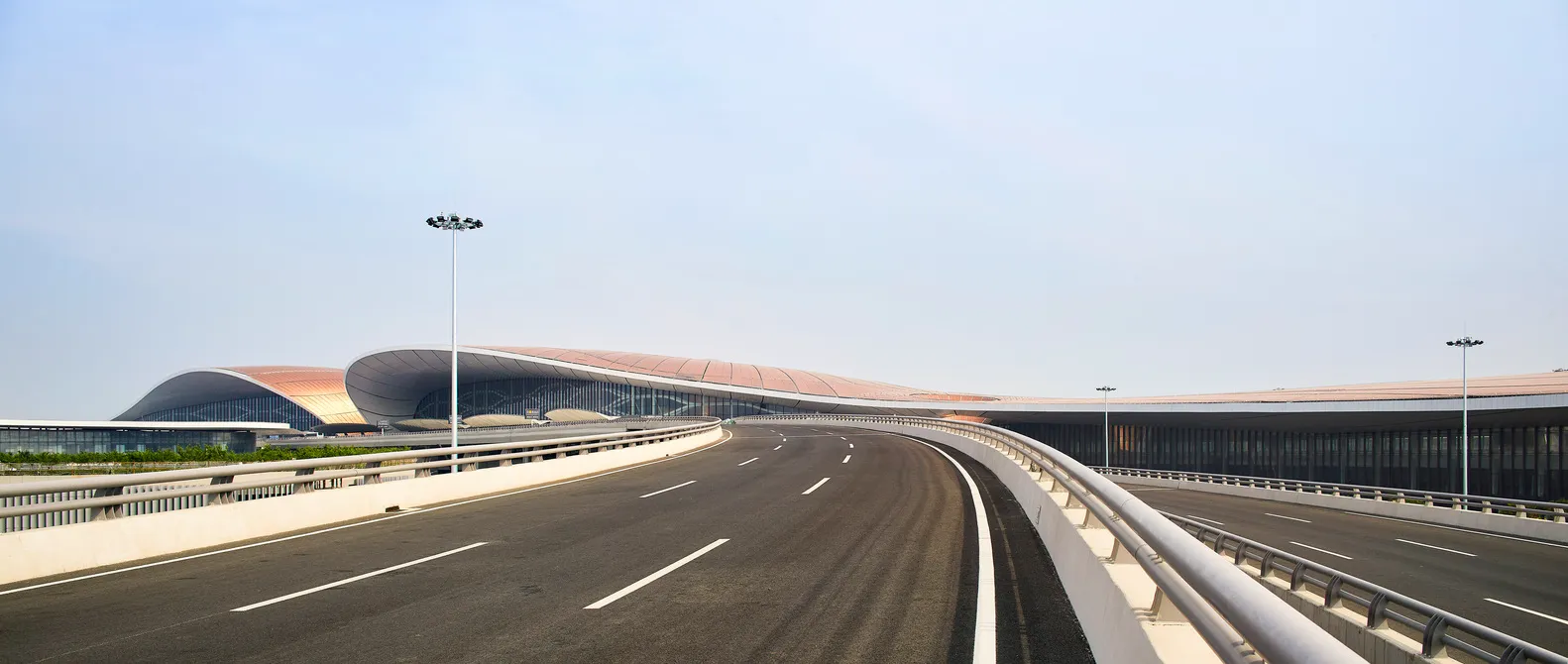
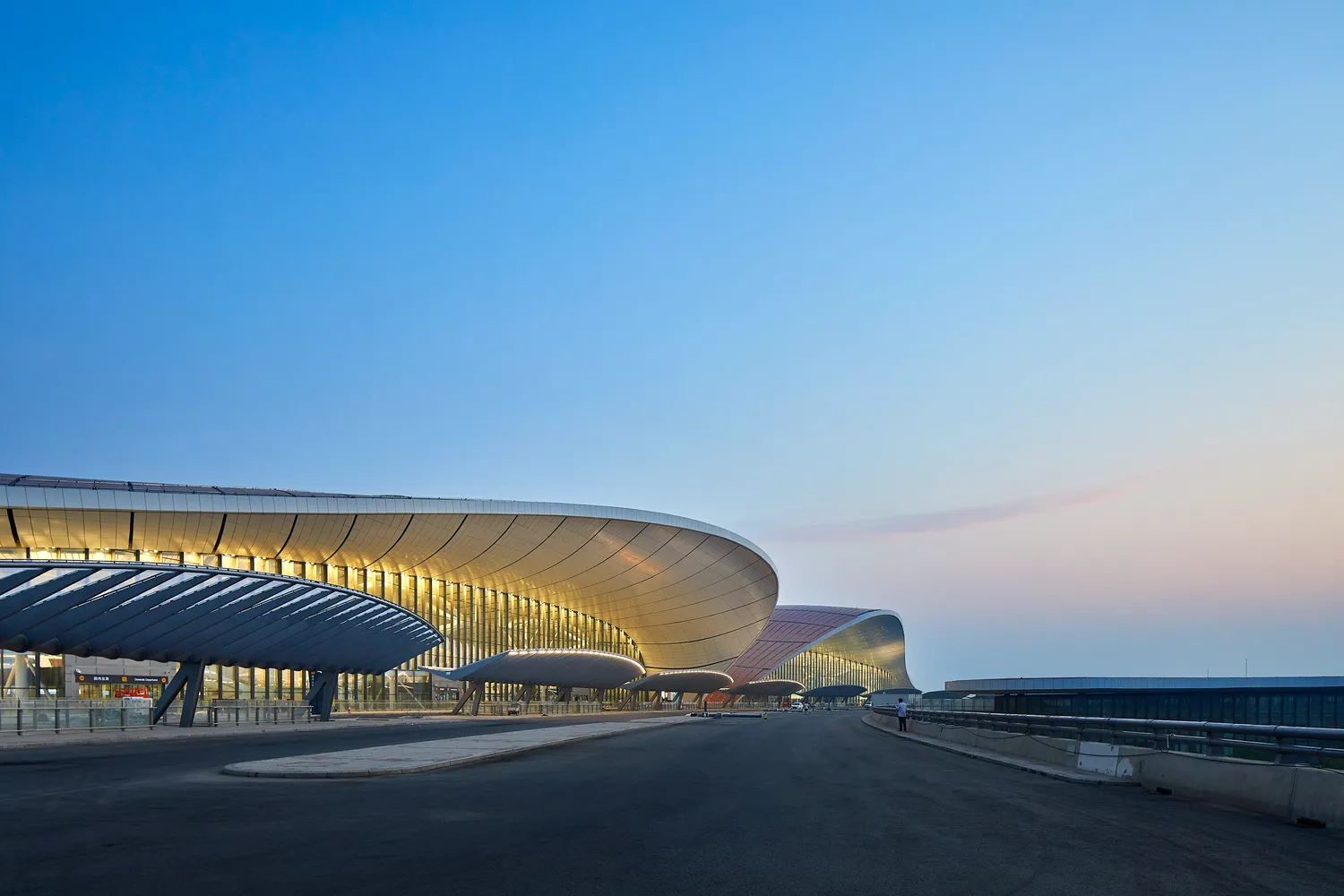
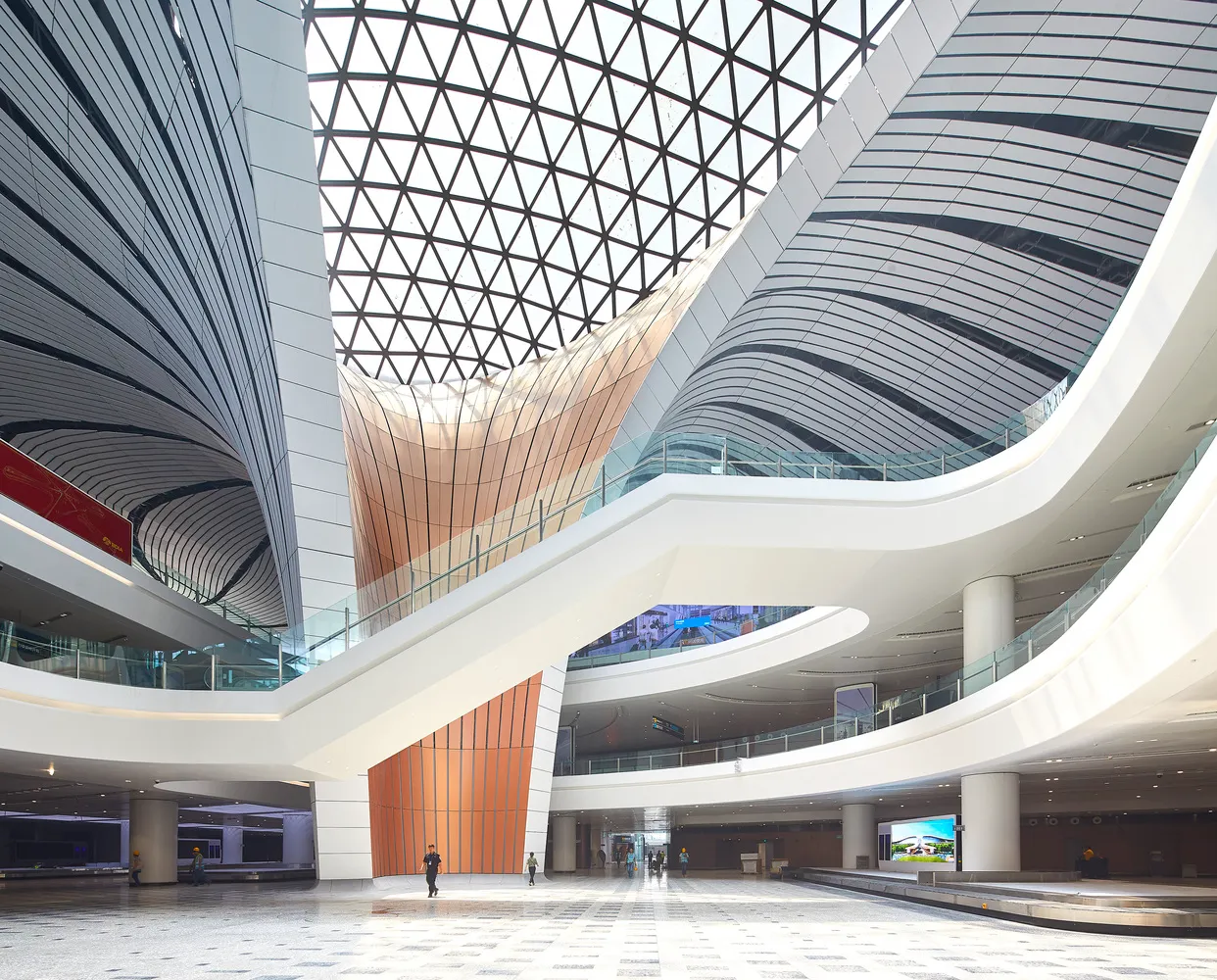
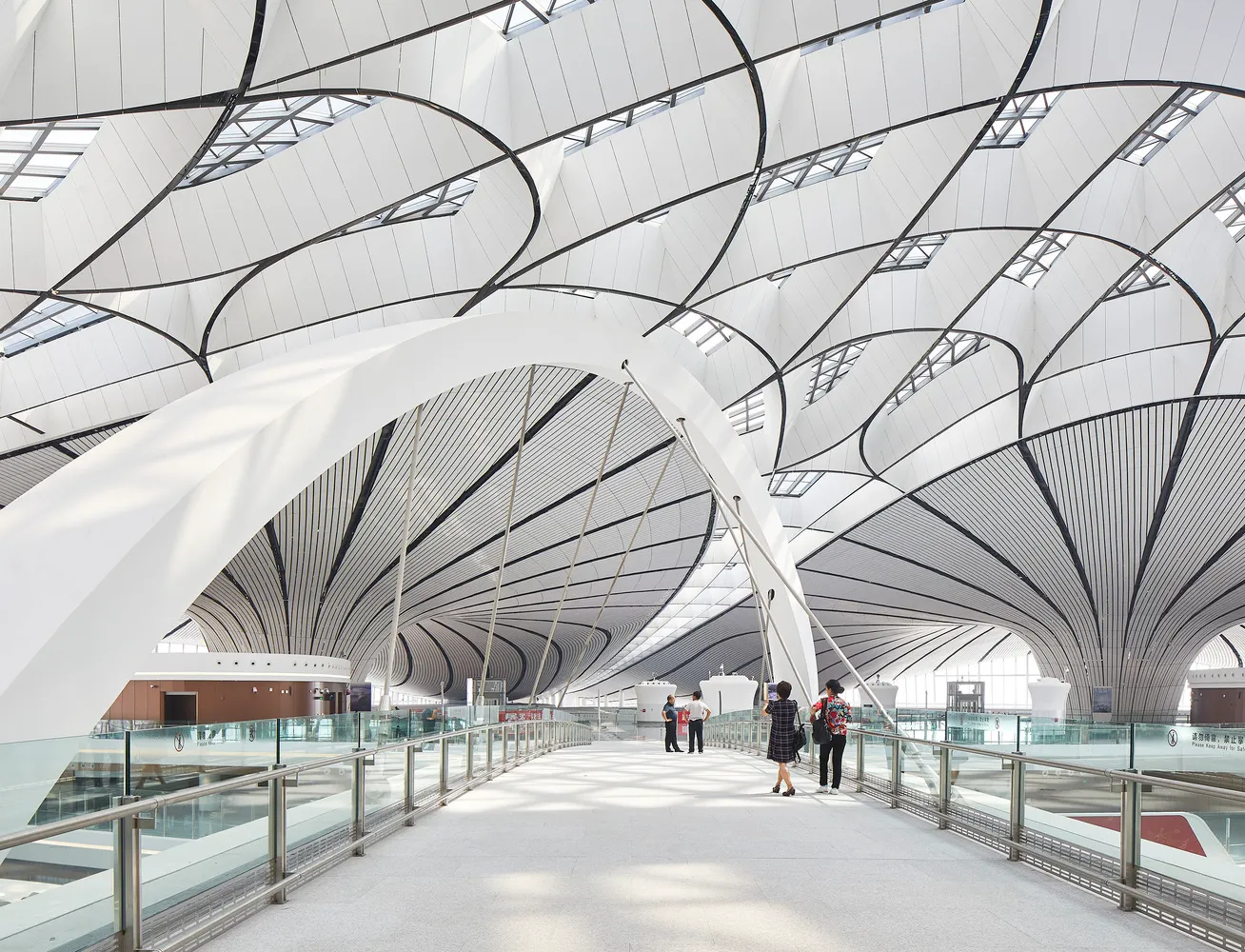
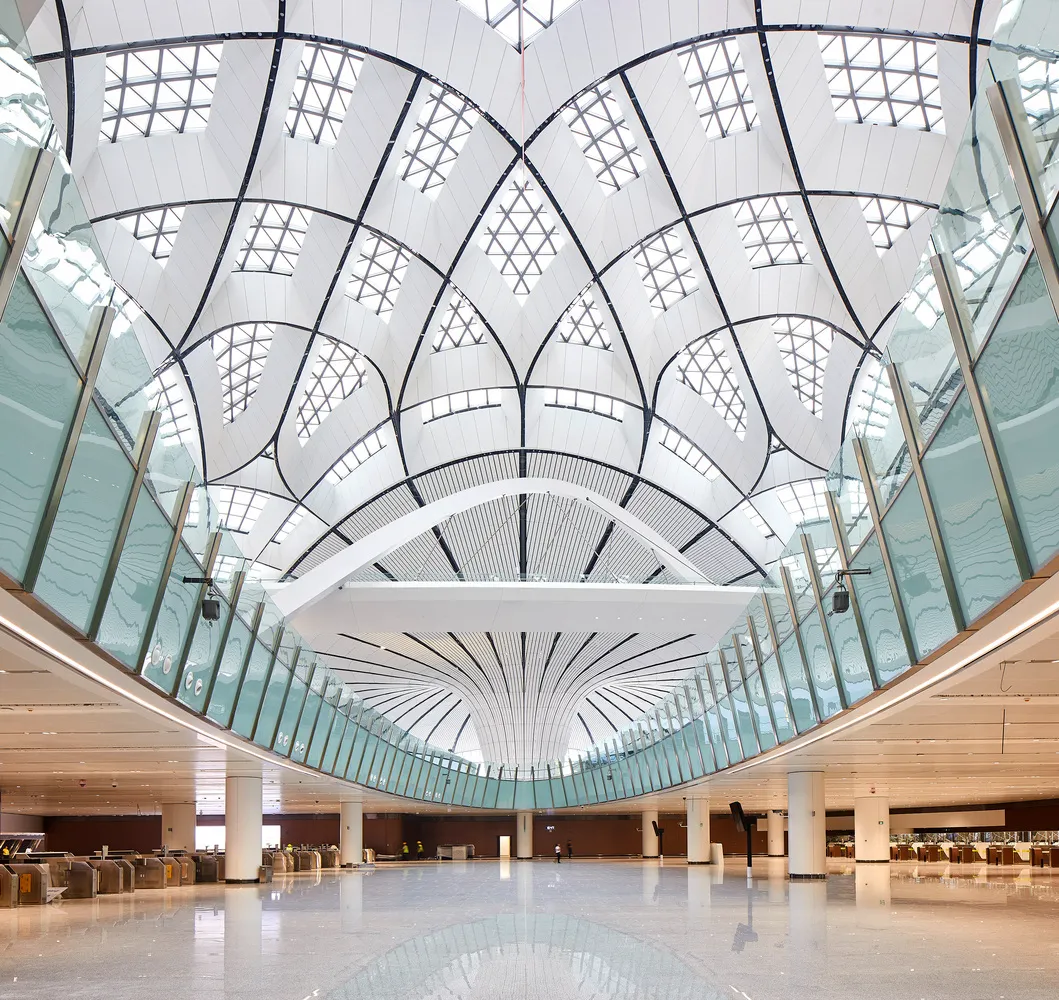
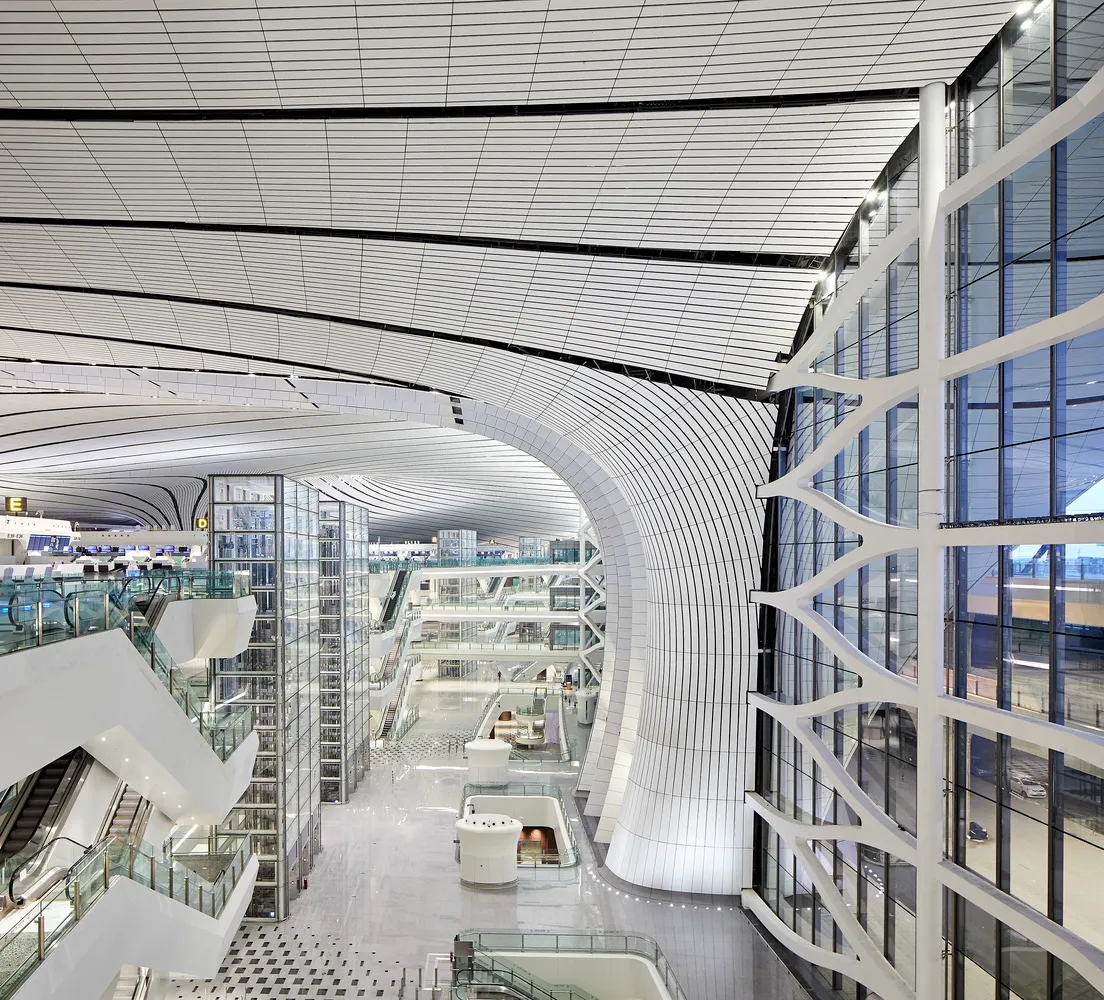
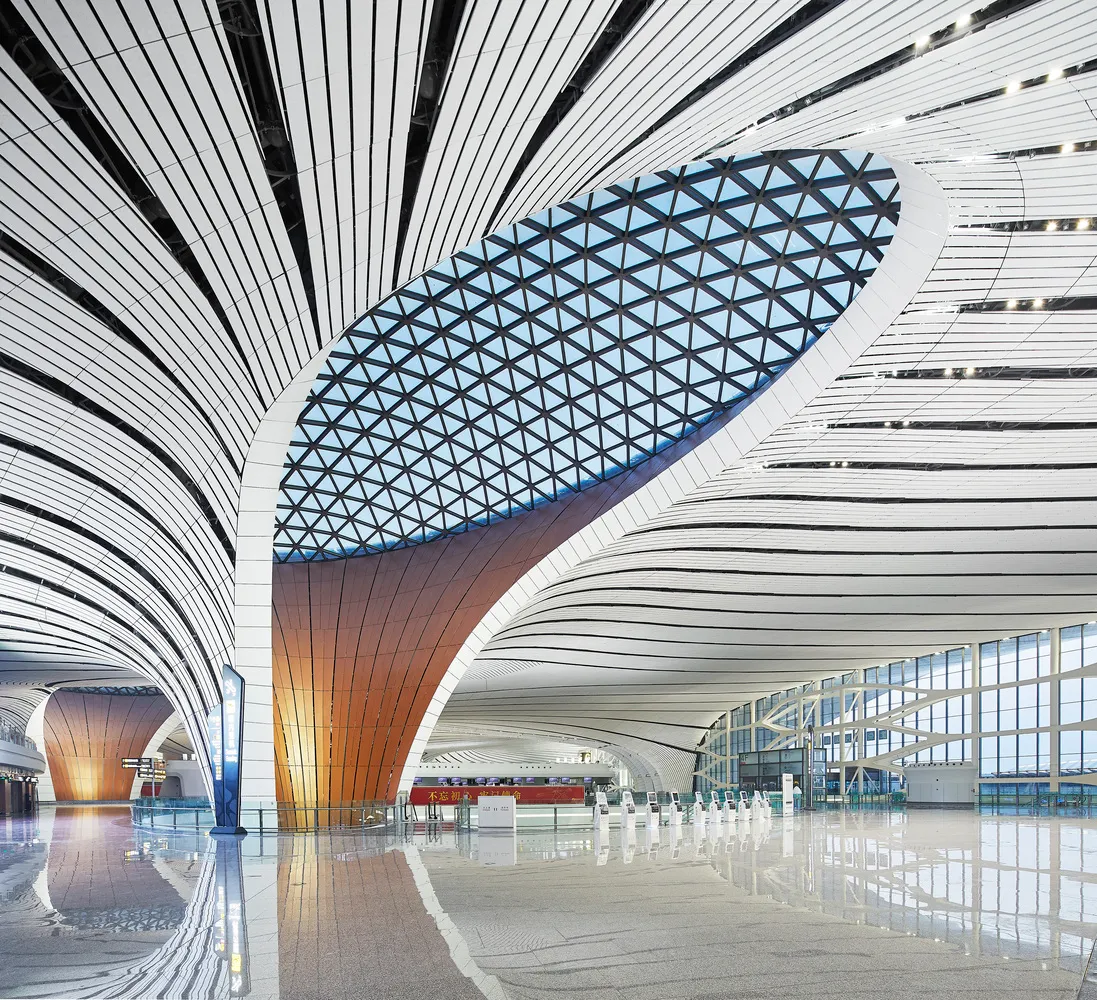
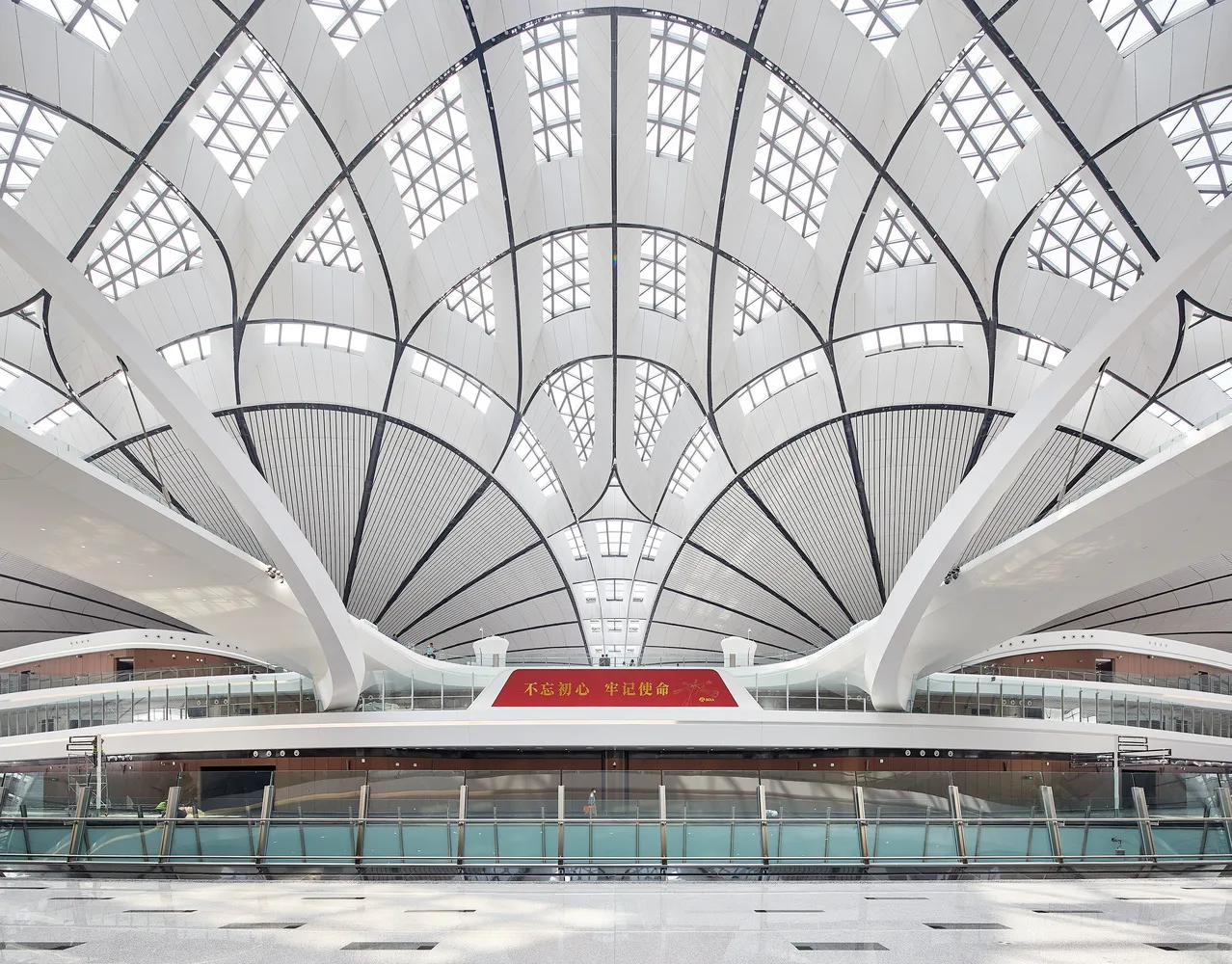
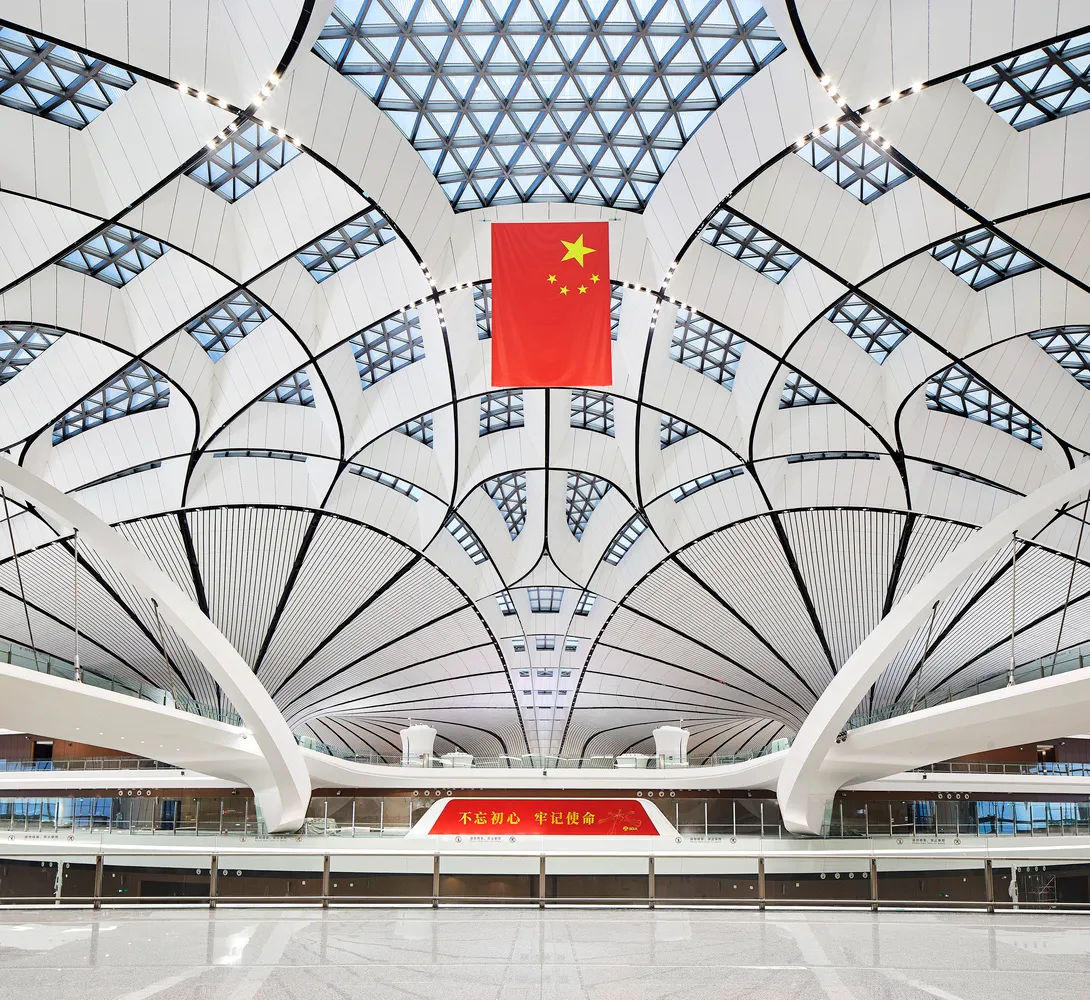
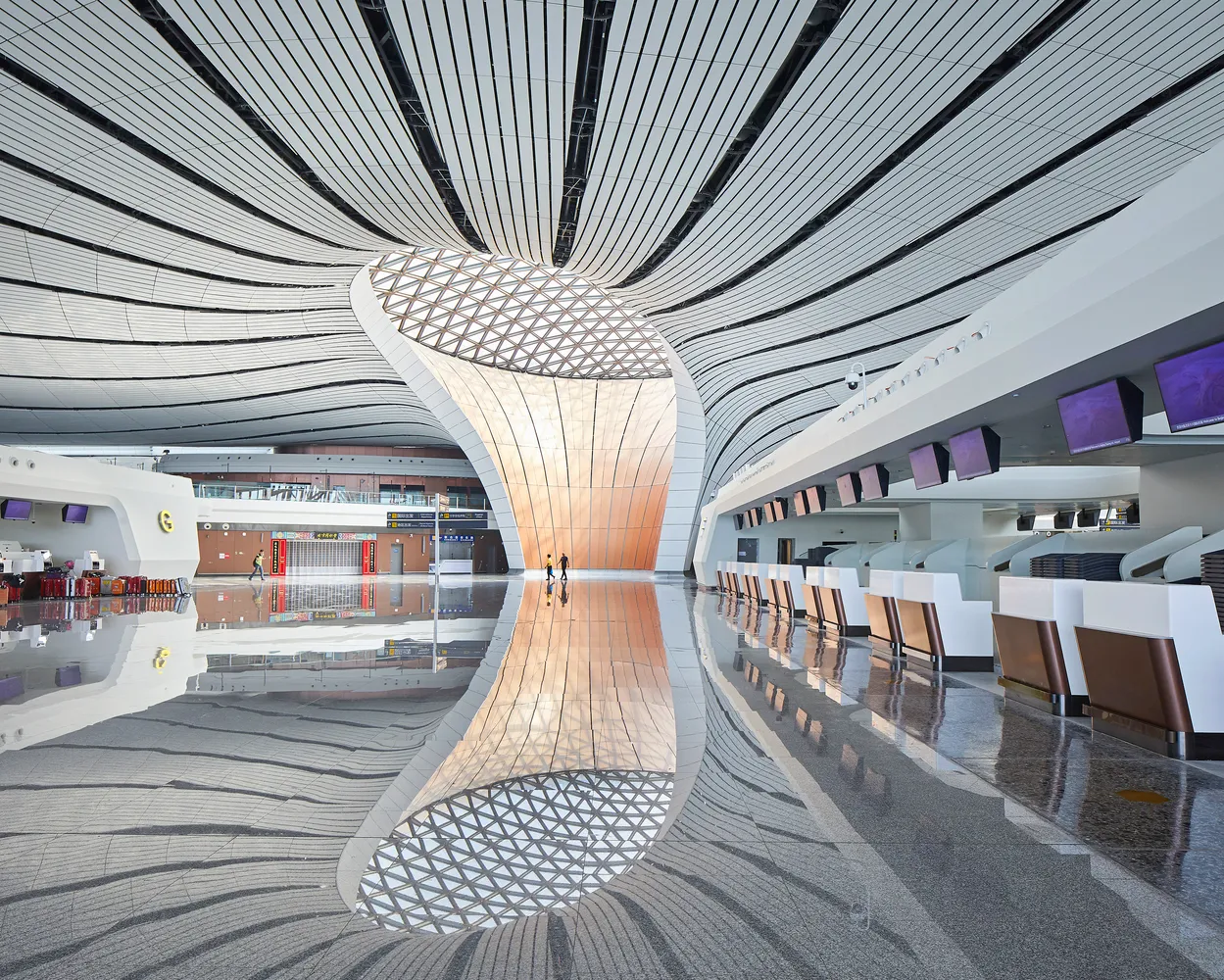
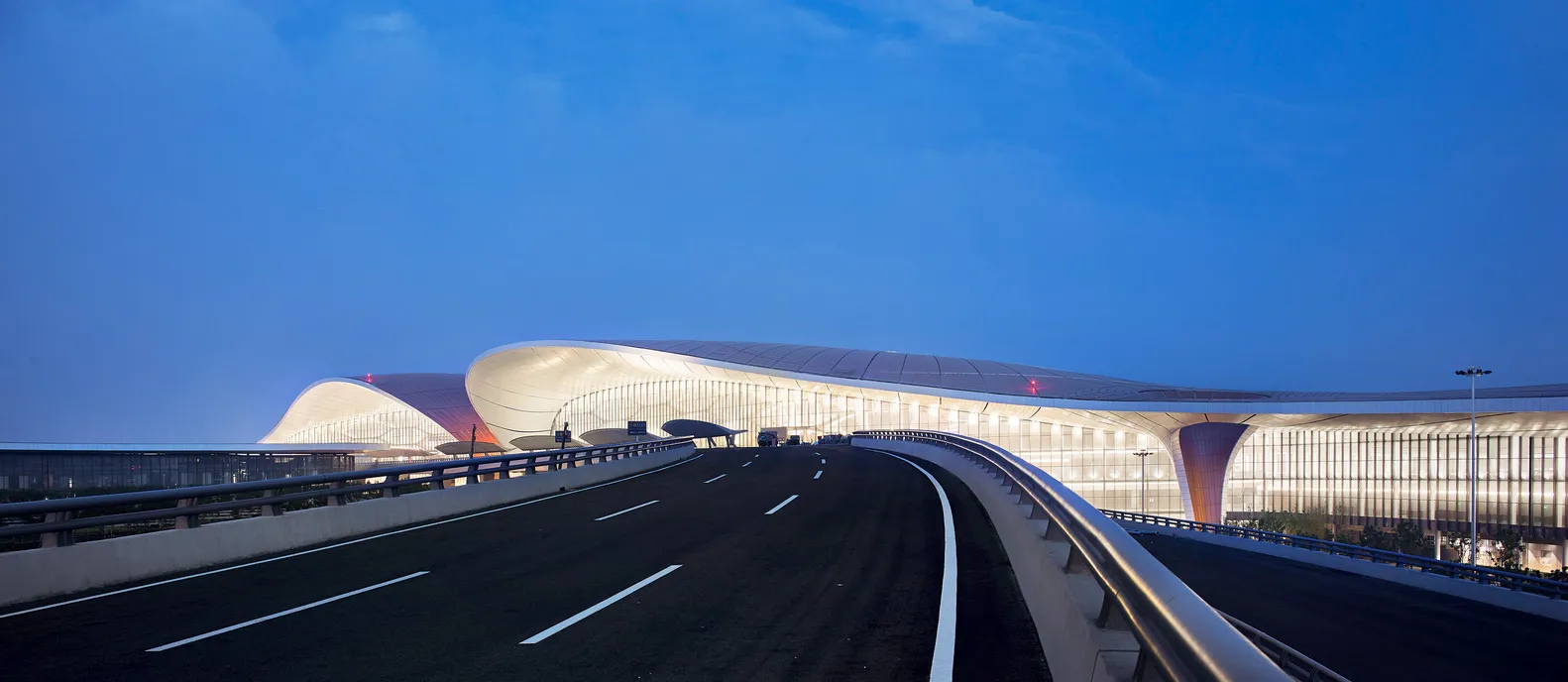
Beijing Daxing International Airport, designed by Zaha Hadid Architects, spans approximately 47 km² and stands as one of the most ambitious pieces of contemporary infrastructure built in response to China’s rapidly growing air traffic. Conceived as a compact, starfish-shaped terminal, the building organizes passenger movement around a central courtyard, minimizing walking distances while allowing light, space, and orientation to guide the journey intuitively.
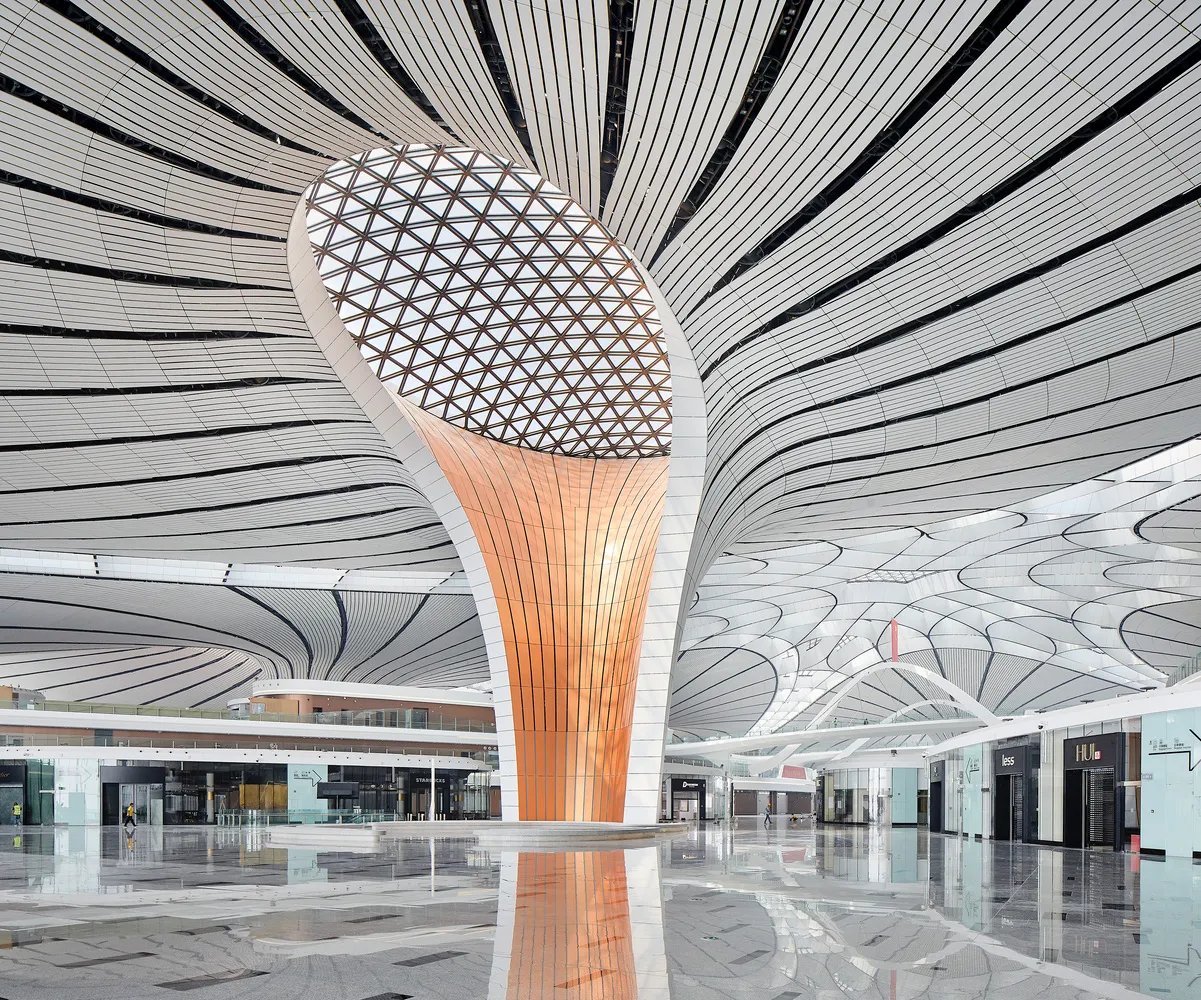
As the world’s largest single-building airport, Beijing Daxing stands as a bold expression of ambition and architectural innovation. Its futuristic design is rooted in tradition, organized around a central courtyard inspired by Chinese architectural principles. The compact starfish-shaped layout minimizes walking distances and allows aircraft to dock efficiently around the terminal. Characteristic of Zaha Hadid Architects, the building is defined by fluid, organic forms and sweeping curves that create a strong sense of movement.
10. George Bush Intercontinental Airport (IAH), United States
Location: Houston, Texas, USA
Area: 44.5 km²
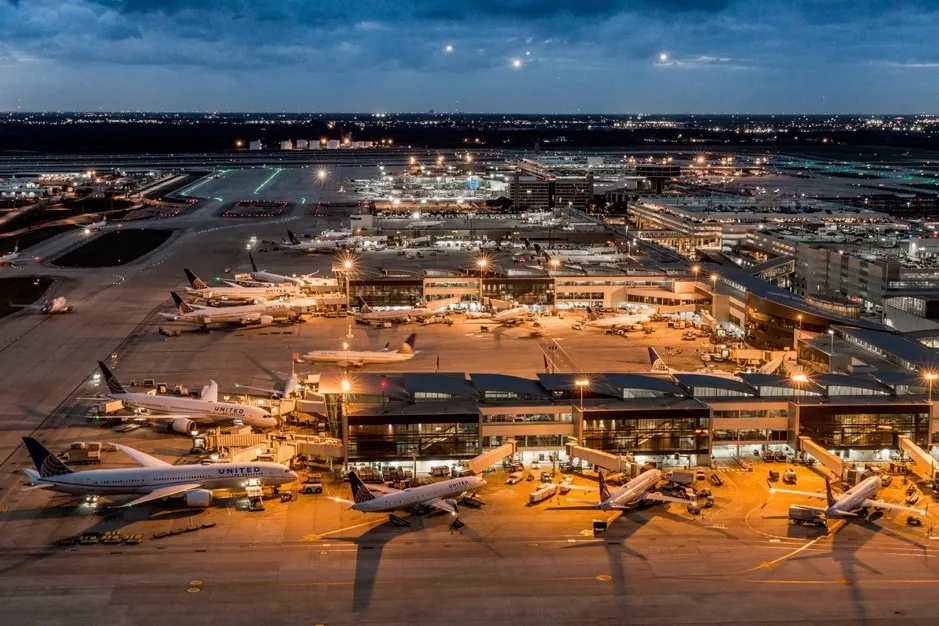
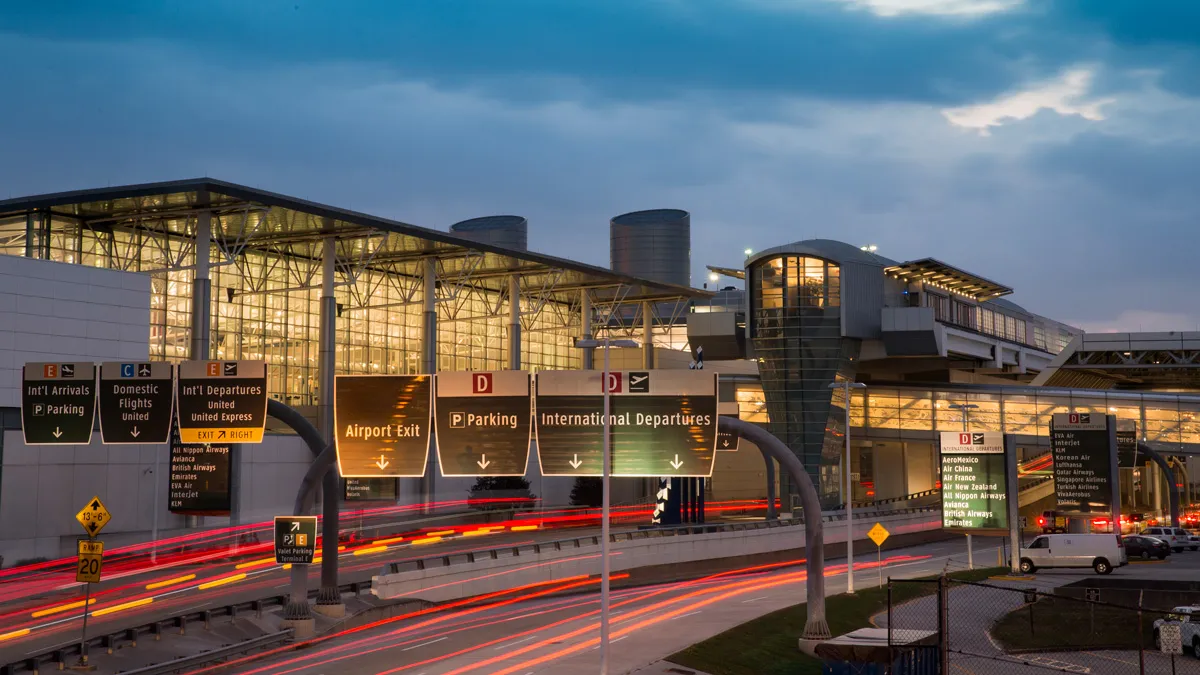
Opened in 1969, George Bush Intercontinental Airport (IAH) ranks among the world’s ten largest airports and has continually evolved to meet the demands of global travel. Rooted in Houston’s modernist architectural heritage, the airport’s design reflects the city’s cultural diversity and connection to its natural landscape, creating a welcoming environment for passengers. Recent transformations, including the Mickey Leland International Terminal and Terminal D West Pier, designed by Fentress Architects in collaboration with Smith & Company, introduce contemporary spatial quality, also strengthening the airport’s identity.
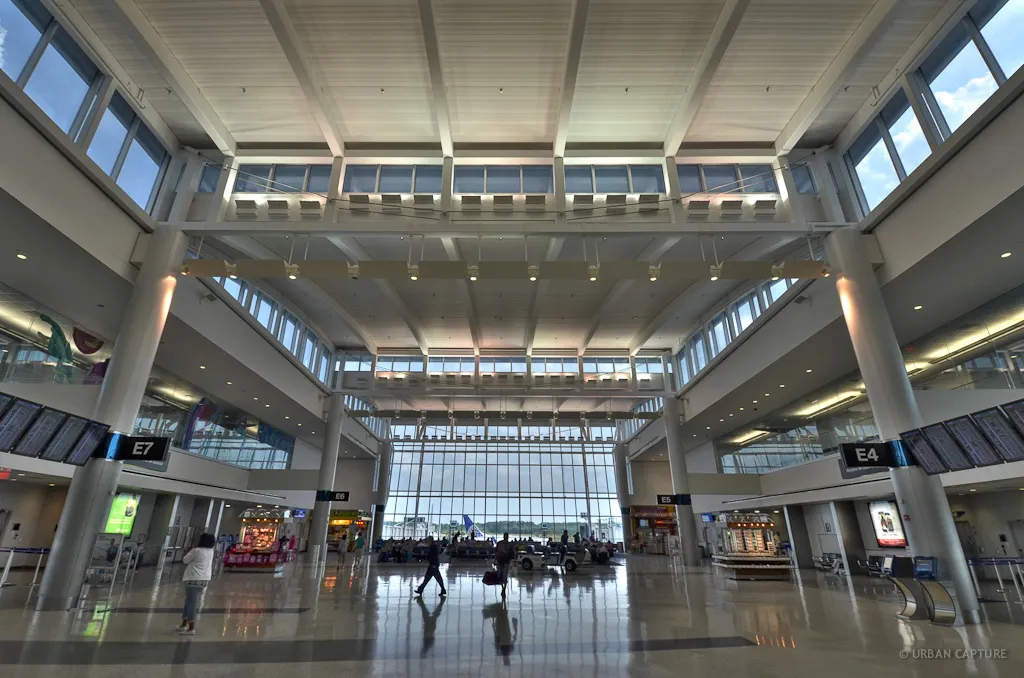
Inspired by Houston’s modernist heritage, cultural diversity, and surrounding landscape, the architecture creates spaces that feel both efficient and welcoming. Recent expansions introduce sweeping rooflines, abundant daylight, and column-free interiors, while intuitive wayfinding, integrated art, and upgraded amenities shape a fluid and comfortable travel experience.
Explore Courses
.jpg "Ondrej Chybik - Rethinking Architecture")