



Luxury retail architecture has emerged as a refined brand expression, where the façade becomes a critical medium through which brands communicate their identity beyond just their products. Contemporary retail or flagship stores are conceived as immersive architectural narratives, translating craftsmanship, heritage, and exclusivity into spatial form.
Through meticulously composed façade design, premium materials, and nuanced detailing, retail environments transcend their commercial role to assume the presence of urban landmarks. These spaces are designed not merely for function, but to command visual attention and orchestrate a sensorial brand experience.
Here are 10 iconic facade designs redefining luxury retail architecture:
1. Cartier Flagship, Miami
Architect: Diller Scofidio and Renfro
Location: Miami Design District, USA
Completed: 2025
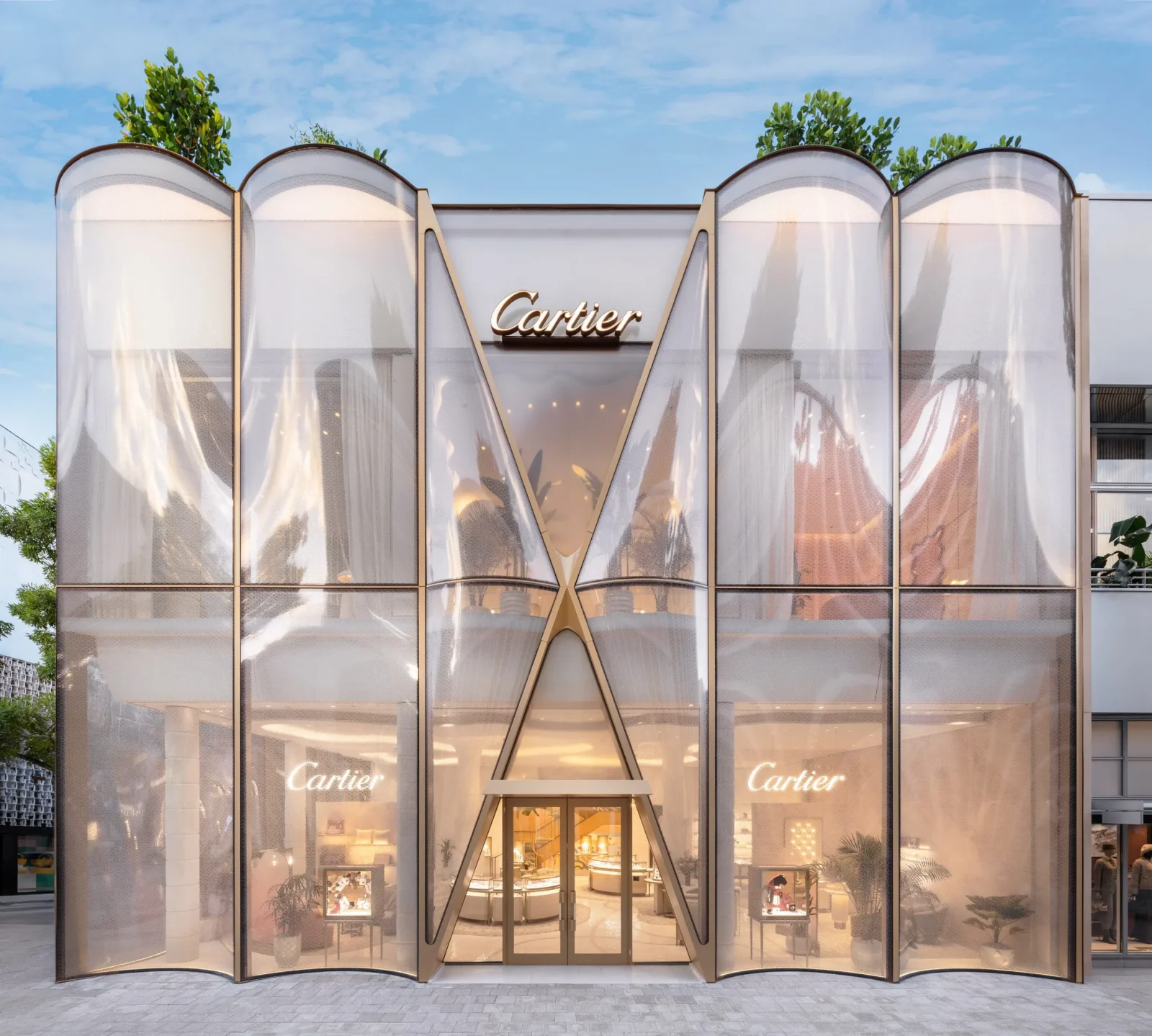
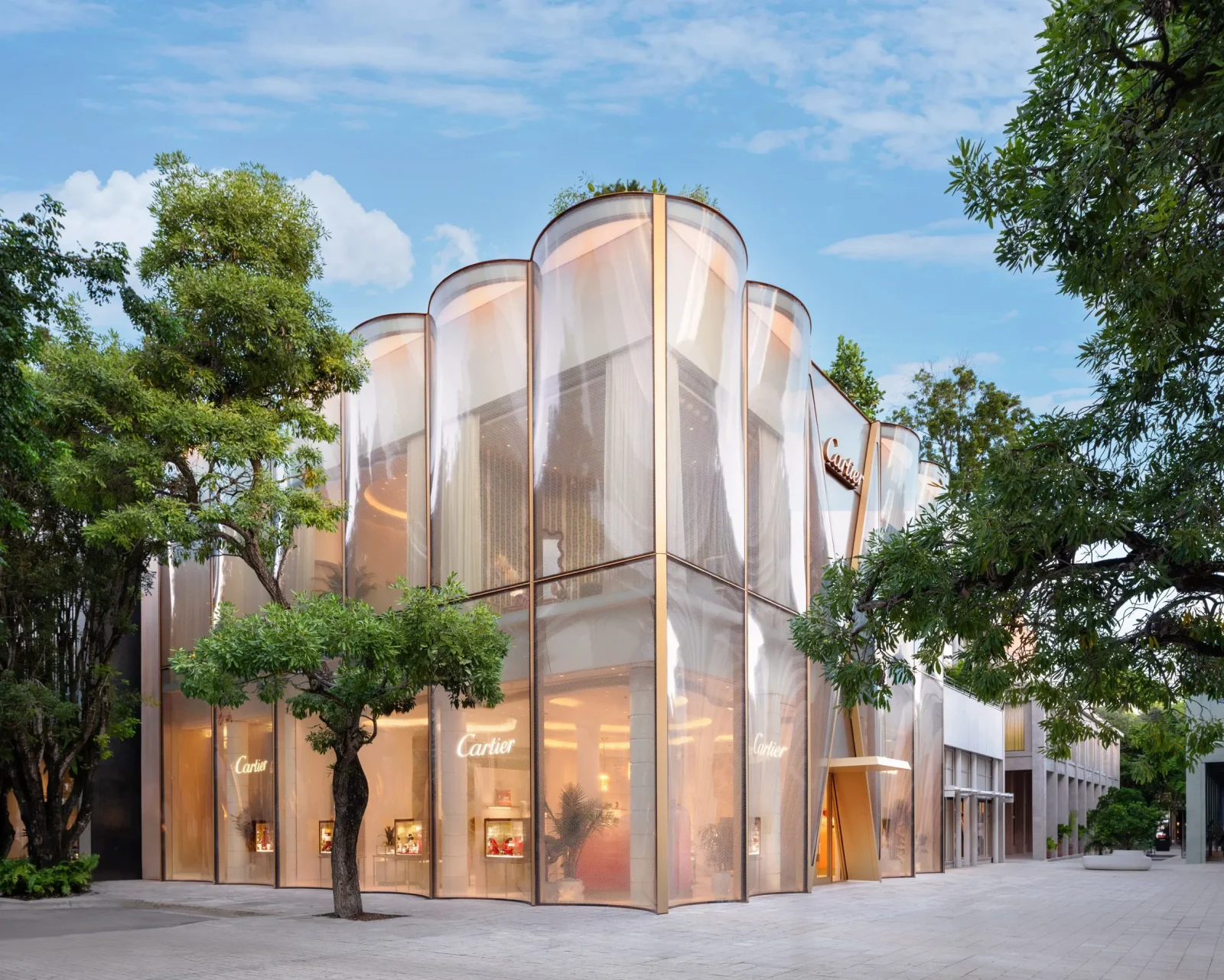
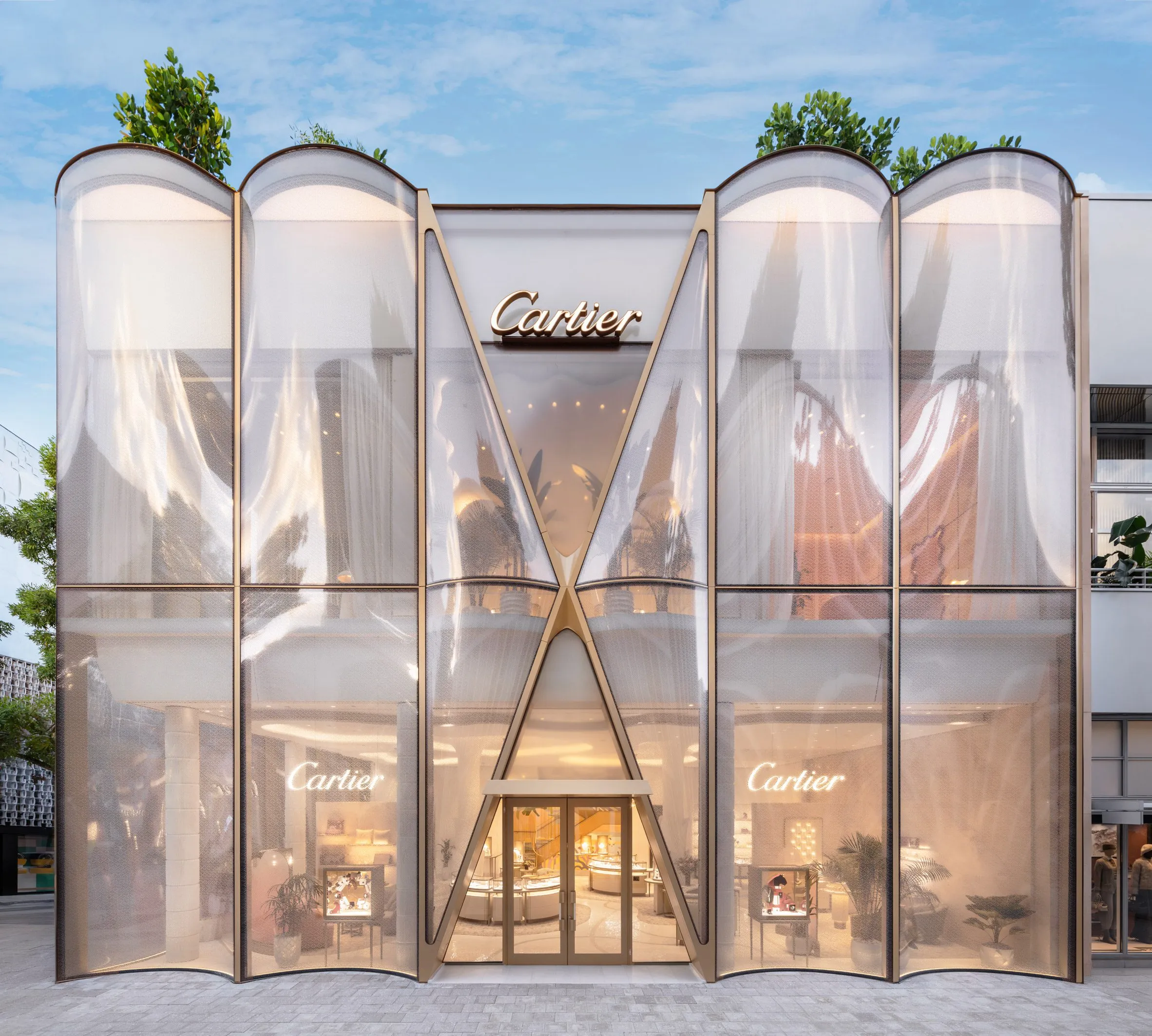
The Cartier flagship store in Miami is expected to be completed in 2025, situated in Miami’s Design District at 147 NE 39th Street. The characteristic new façade, reopened after renovation, features a striking undulating glass façade designed by Diller Scofidio and Renfro, and Laura Gonzales conceived the interiors. The architectural inspiration of the façade has been derived from a delicate pattern translated from a 1909 Cartier brooch. Elizabeth Diller, founding partner of Diller Scofidio and Renfro, describes the facade as “a surface to draw in passersby while knitting together the store and the street.”
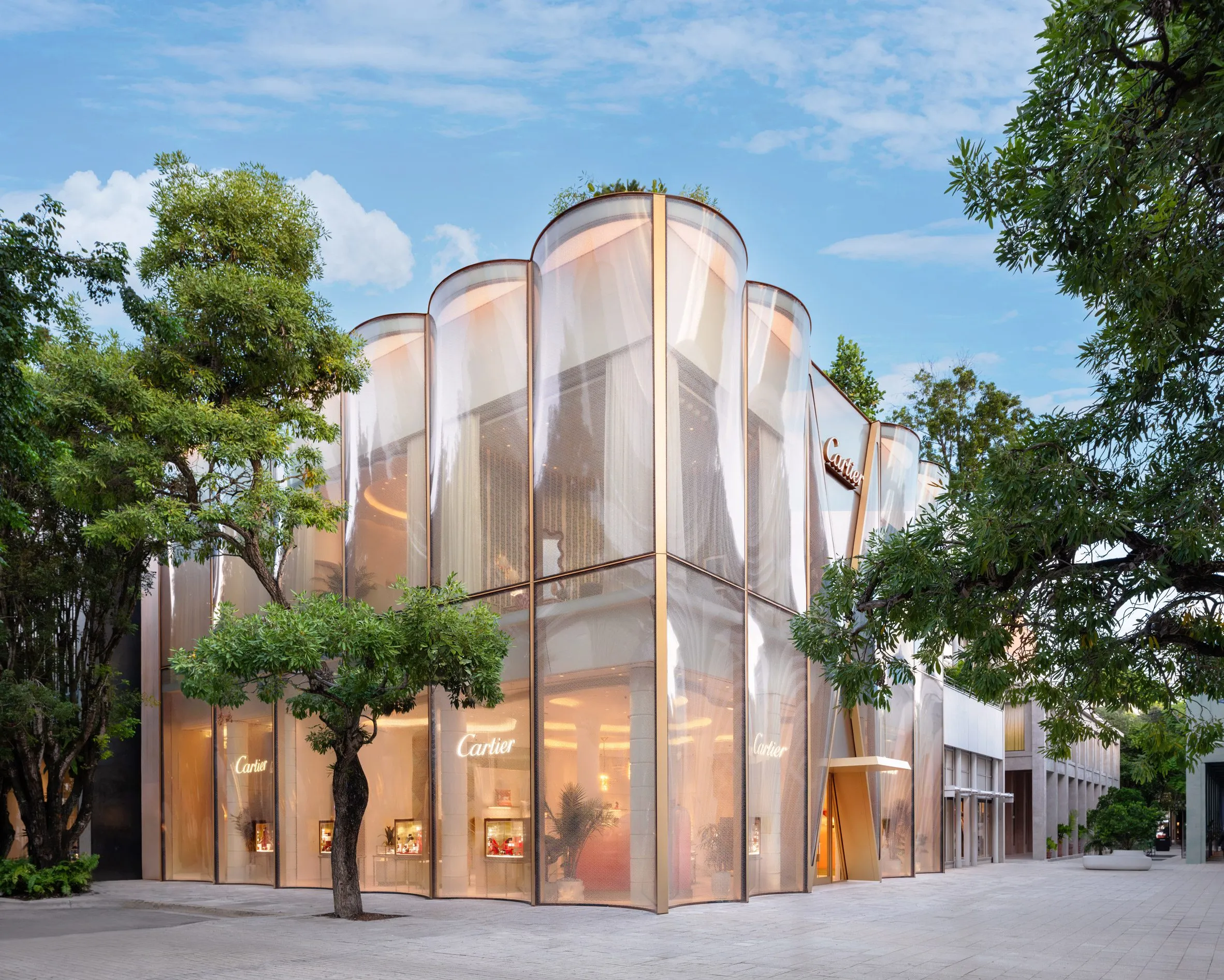
The undulating glass façade introduces a fluid, rhythmic skin that shifts with light and shadow, creating a subtle sense of movement. Formed as a continuous curved surface, the transparent envelope alternately reveals and conceals the interior, softening the boundary between inside and outside while reflecting the flow of pedestrians through the Miami Design District.
Light becomes a defining element of the architecture. During the day, the façade filters sunlight gently by reflections, and by night, the building glows with a warm, lantern-like presence. This careful modulation of transparency and lighting creates an intimate setting, allowing the architecture to frame Cartier’s jewelry with elegance rather than overpowering it.
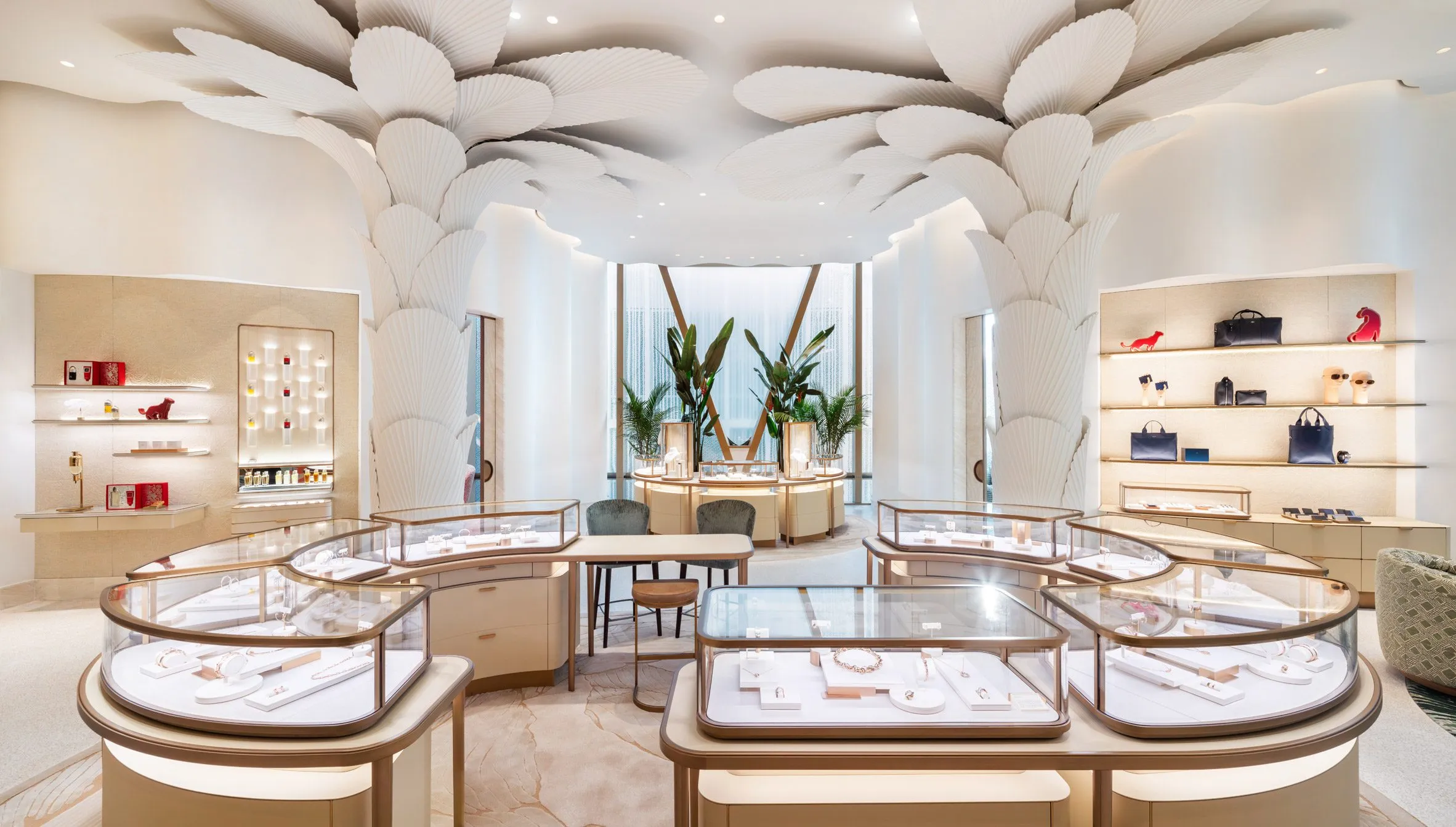
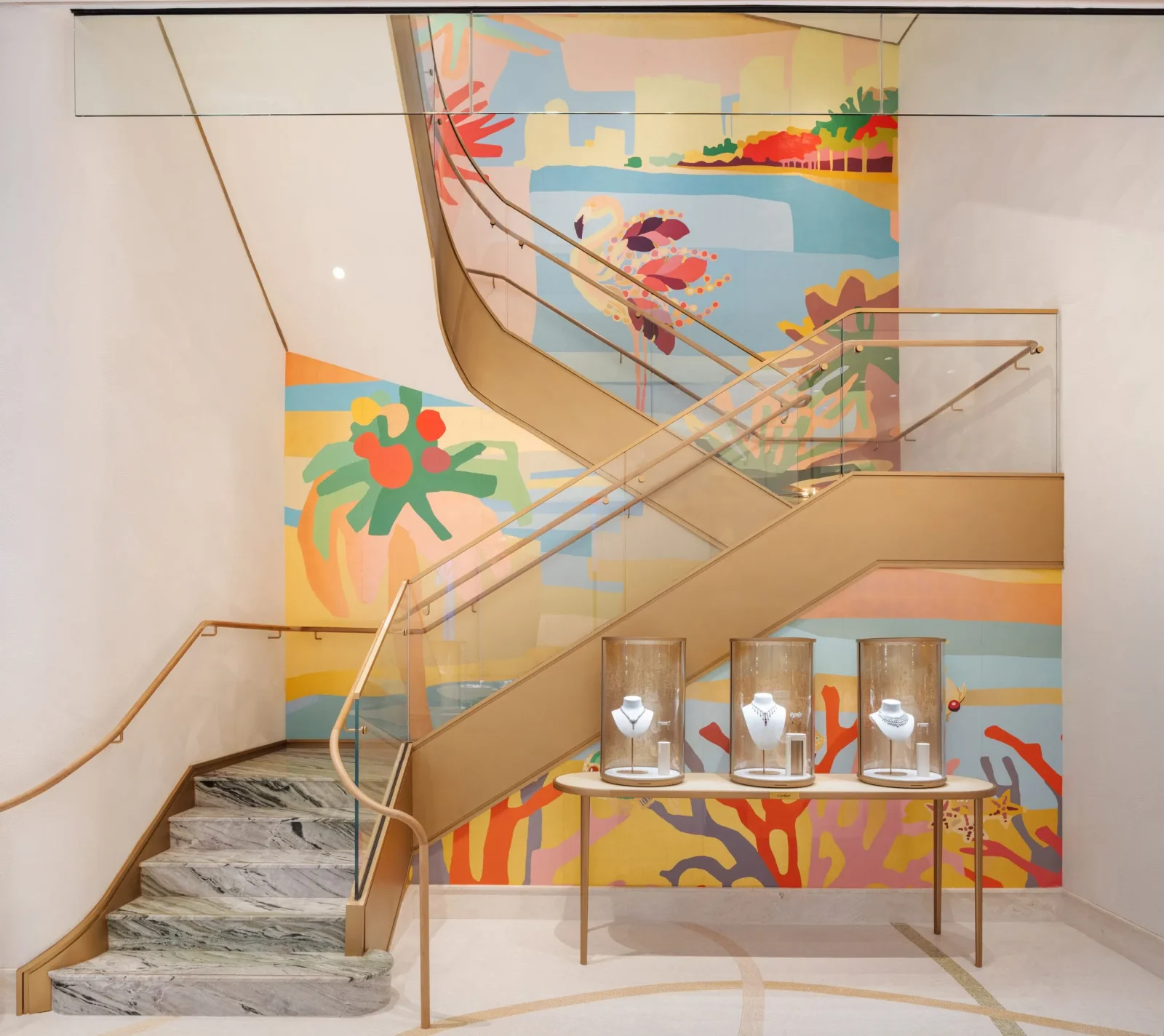
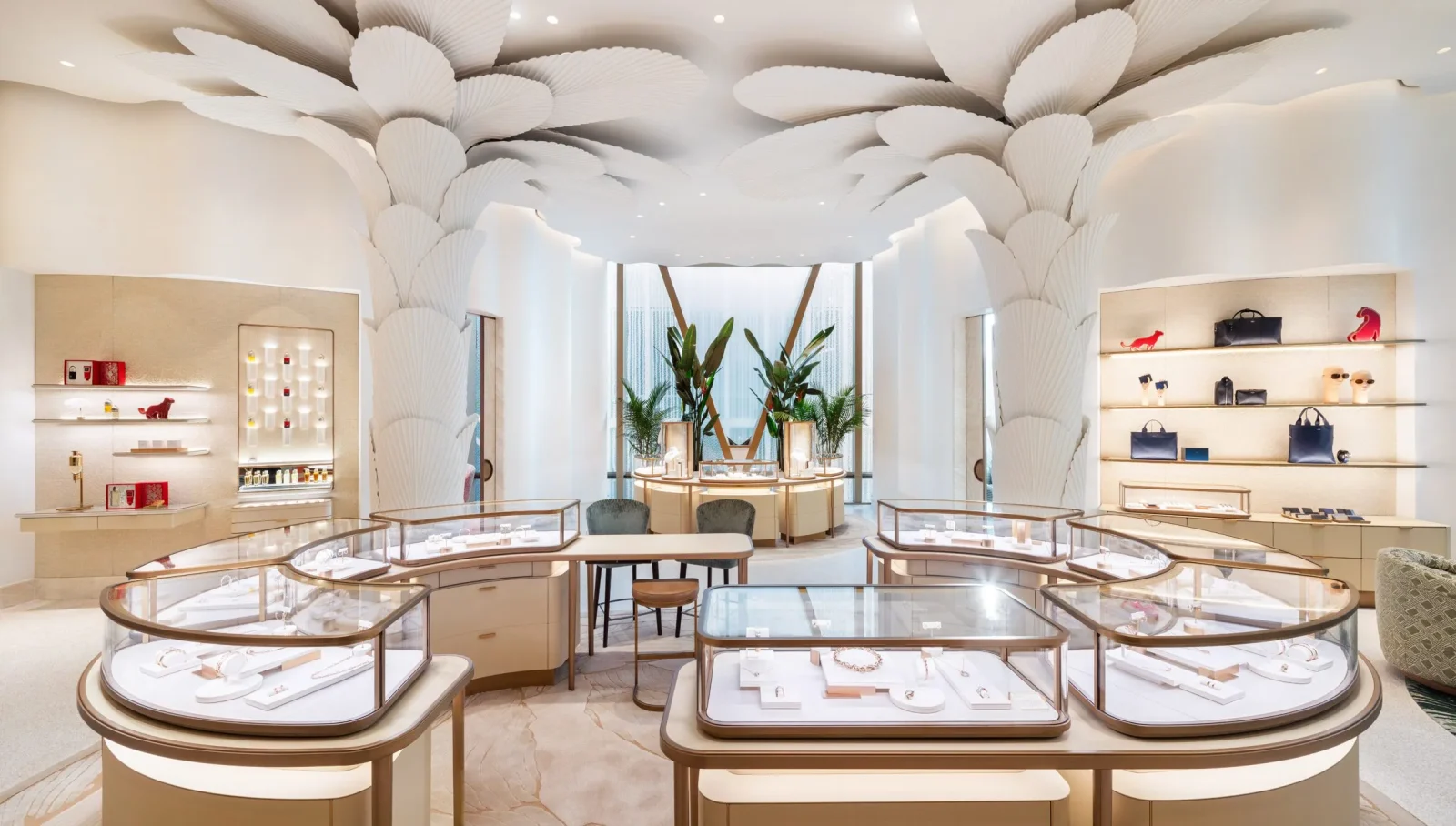
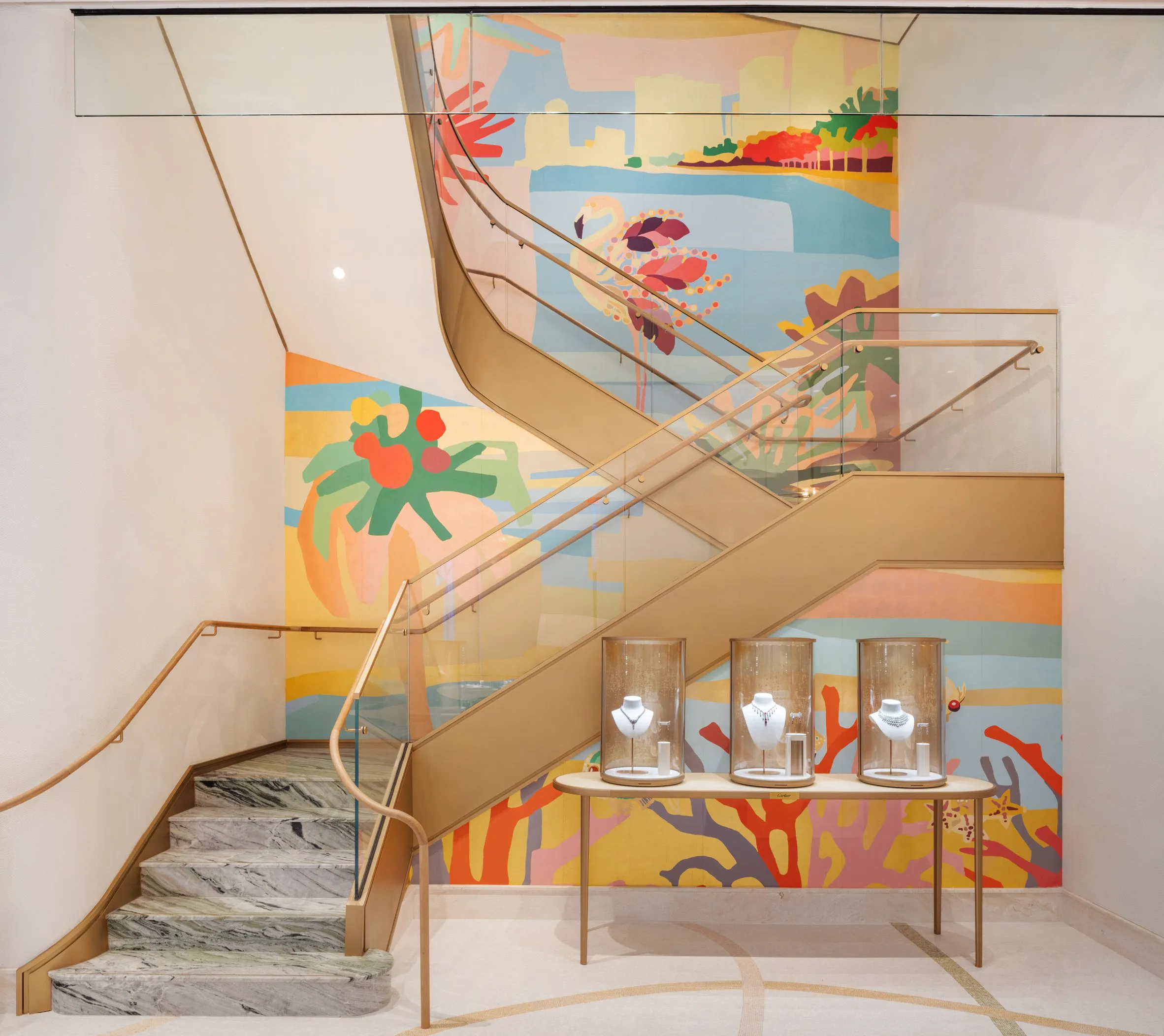
Designed by Laura Gonzalez, the interiors unfold as a sequence of carefully curated rooms, with each level introducing a distinct atmosphere and tonal shift. Conceived as a sensory journey, the boutique places Cartier’s jewelry at the center, using architecture and interiors to enhance rather than overpower the pieces on display. The ground floor feels light and open, with filtered sunlight through etched glass and a palette inspired by the coastline, soft corals, gentle greens, and muted gold accents. A sculptural staircase evolved as a seashell in motion, guiding visitors from vibrant public spaces to more intimate lounges above. The journey is tied together with a rooftop terrace, where tropical planting and patterned tiles create a serene open-air retreat.
2. Tiffany and Co Store, Shanghai
Architect: MVRDV
Location: Shanghai, China Mainland
Completed: 2024
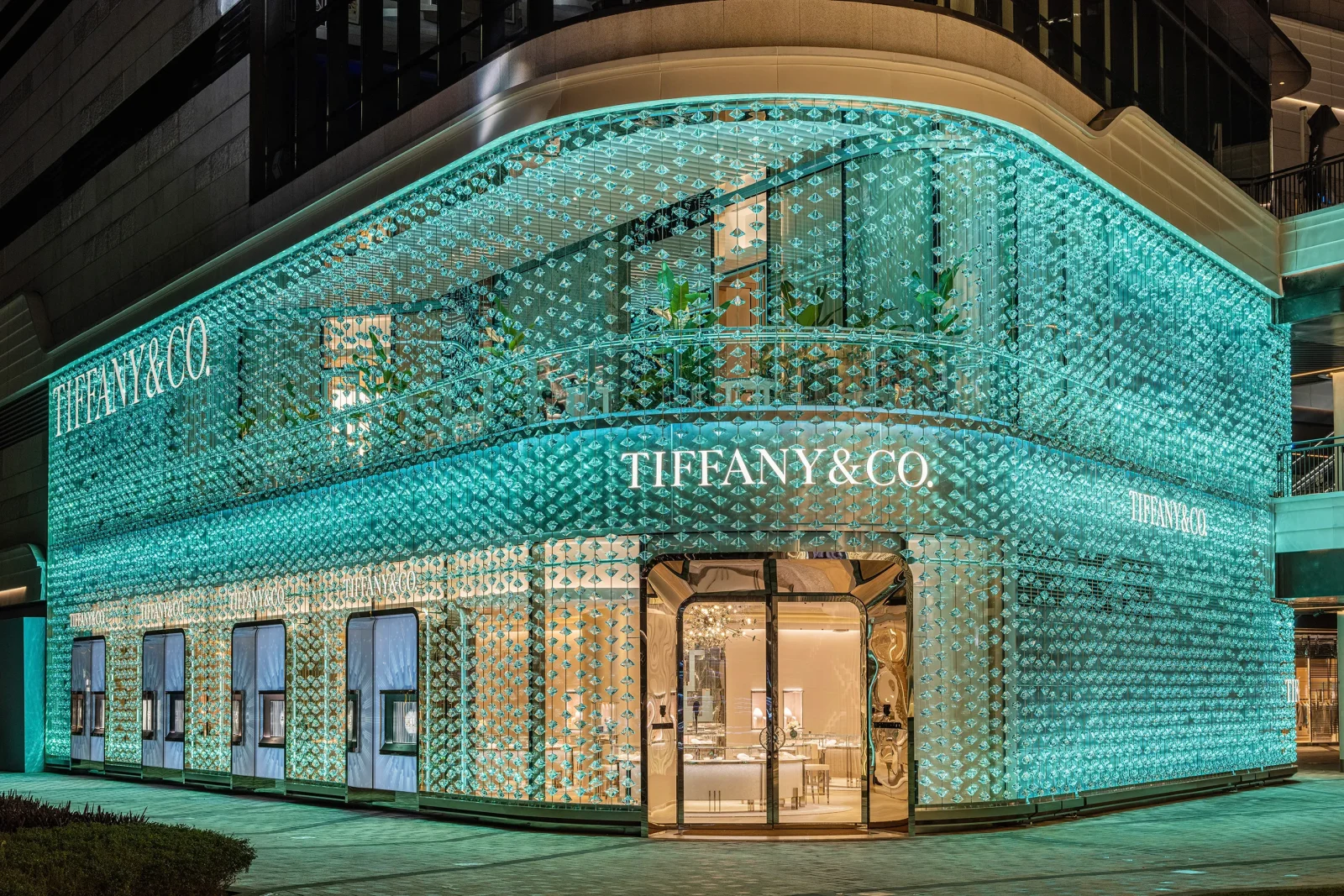
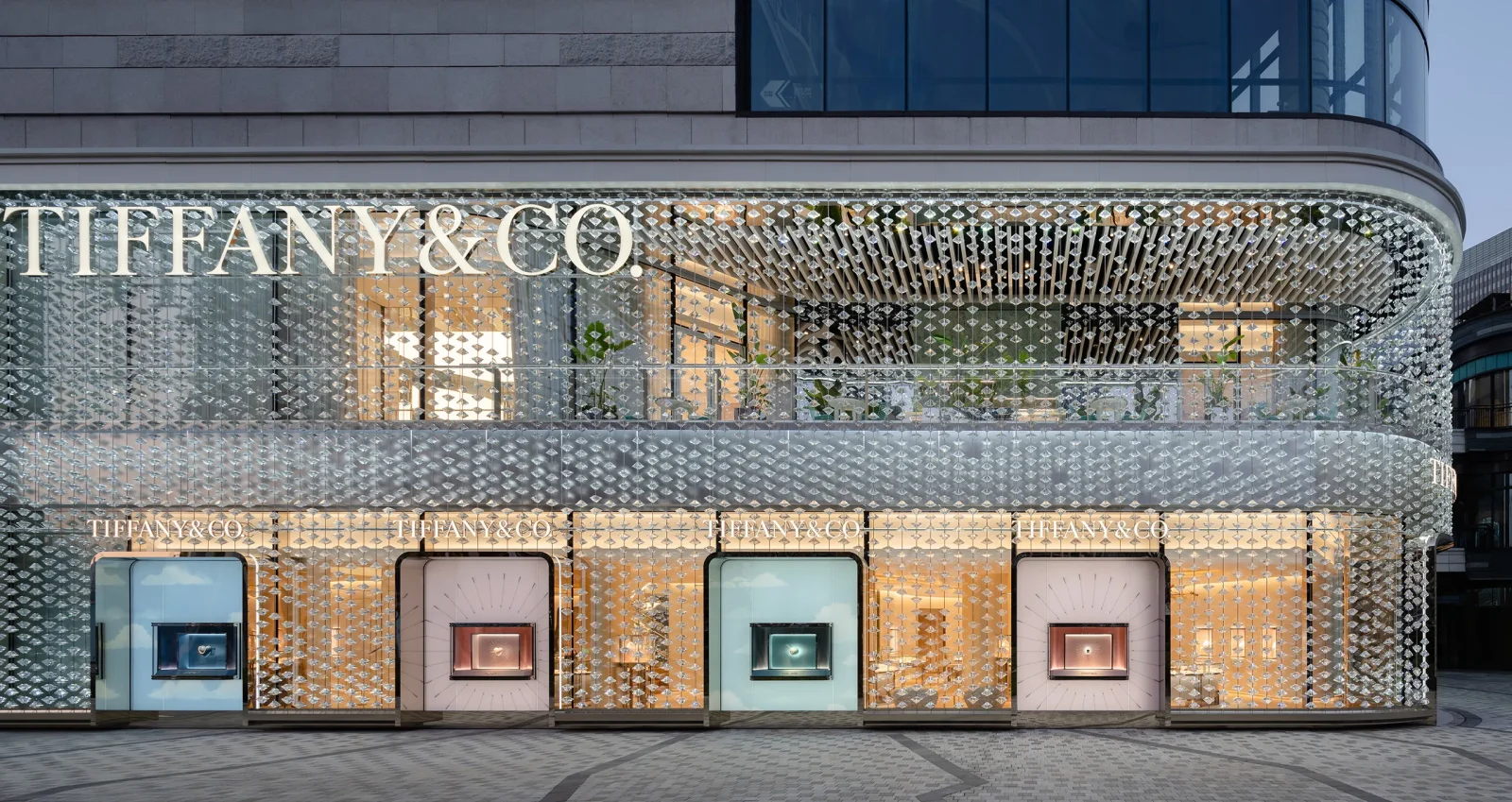
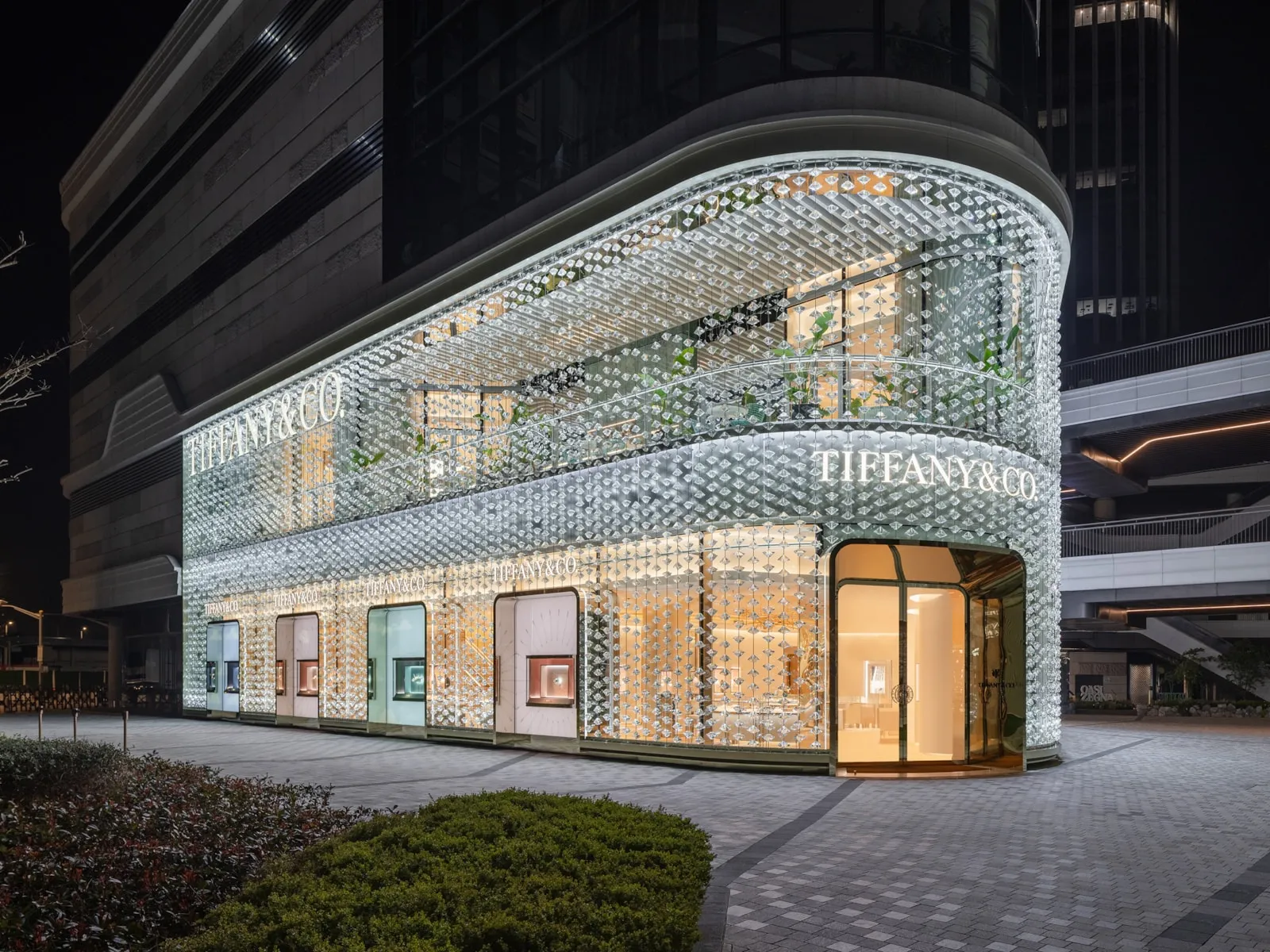
The Tiffany & Co. flagship in Shanghai, a glistening façade designed by the acclaimed architecture studio MVRDV, makes a grand statement at the heart of Taikoo Li Qiantan. Situated along the central retail axis, with luxury brands centered, the boutique distinguishes itself with a bold yet refined architectural gesture. Its shimmering façade wraps gently around the structure, composed of 6,988 handcrafted glass “diamonds” that echo the brilliance of Tiffany’s iconic jewelry. This crystalline skin captures light and movement, transforming the store into a glowing landmark that celebrates the brand’s legacy through material and form.
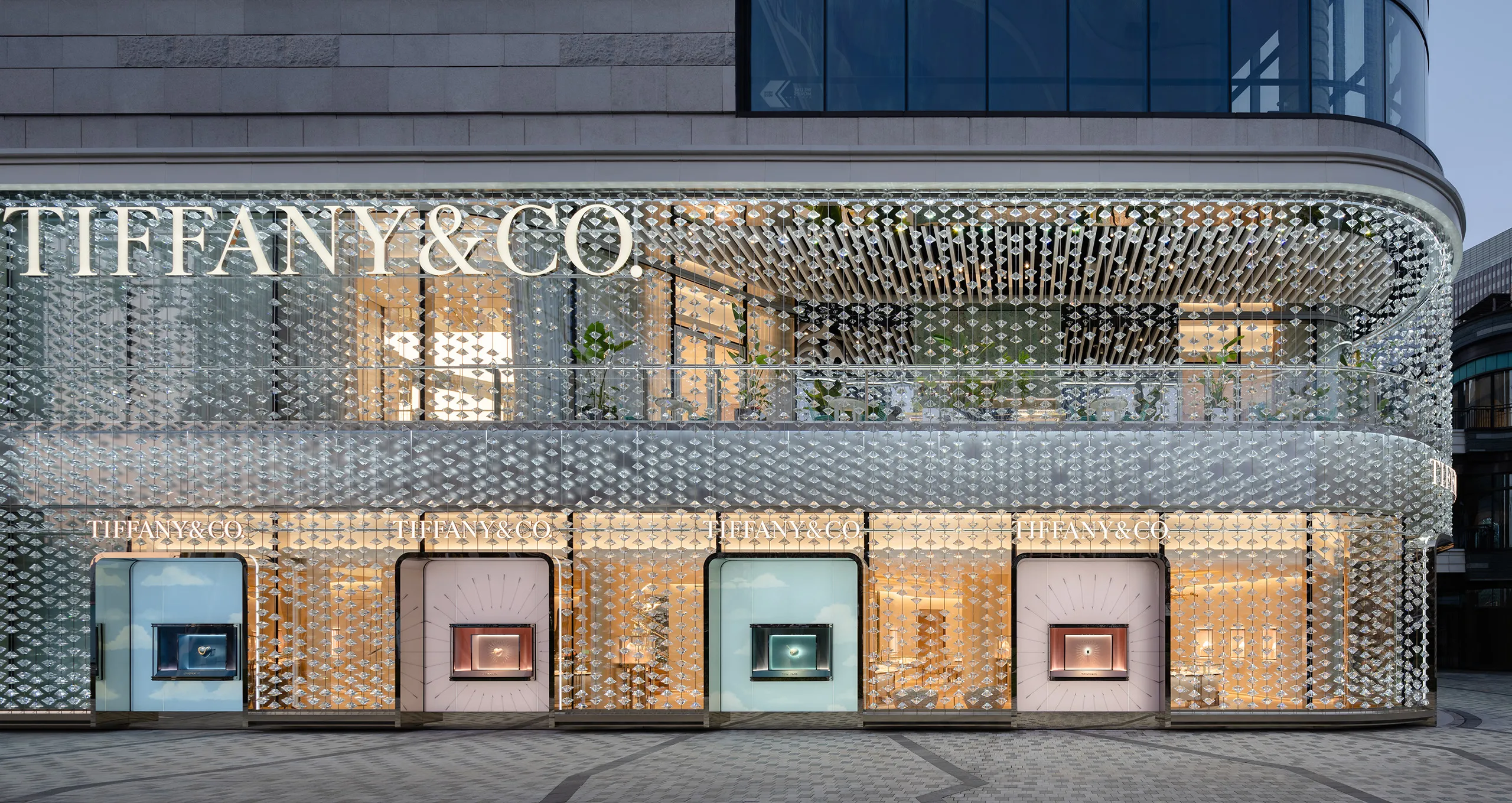
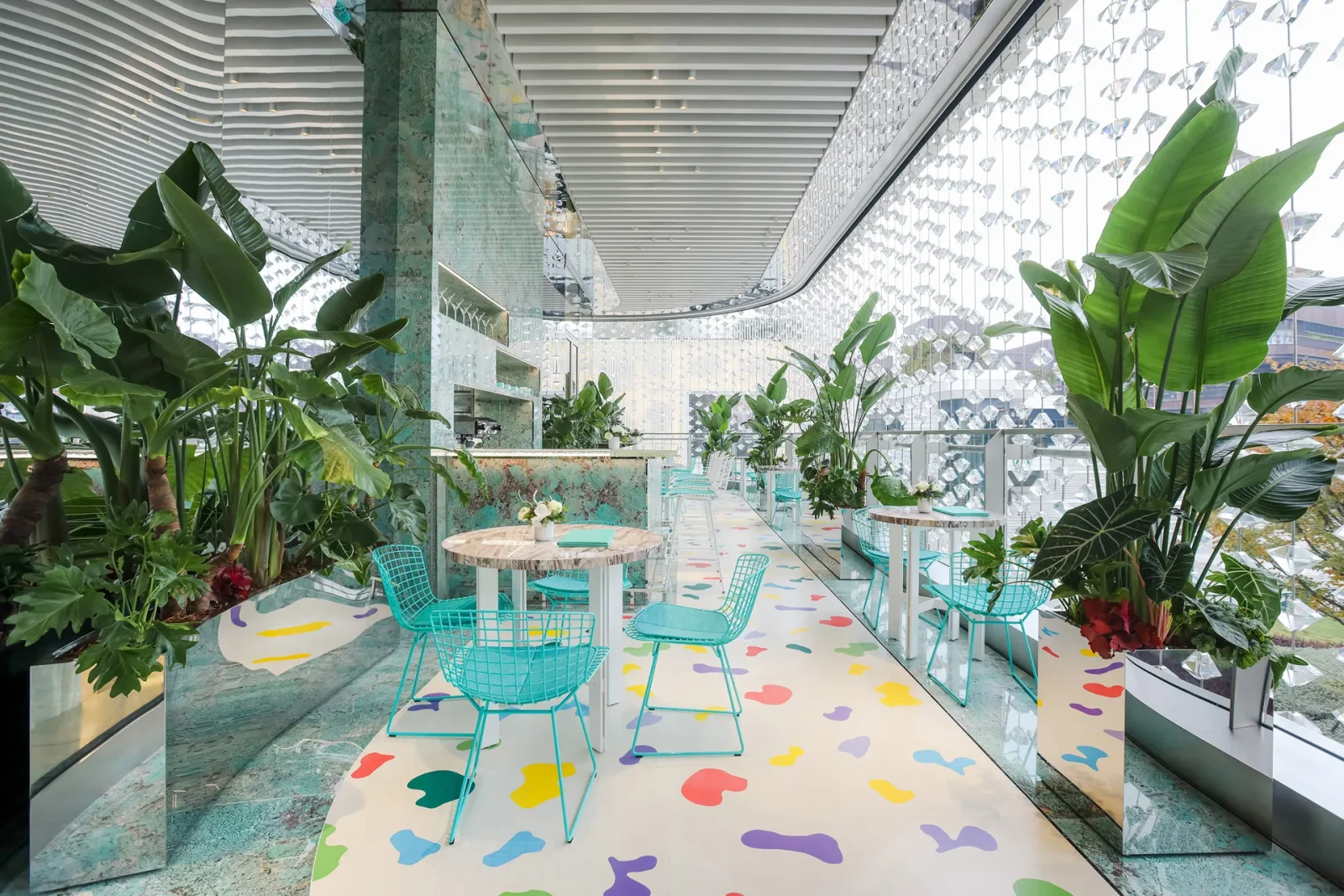
The façade’s design concept is deceptively simple, yet it reflects a thoughtful interpretation of the brand’s heritage and identity. Glass “diamond” elements are arranged in a seemingly random pattern, subtly thinning where greater transparency is required near the first-floor café balcony. Suspended on high-tension steel cables with a mirrored finish, the diamond elements appear to float effortlessly across the building’s surface, held in place by precise, unobtrusive fixtures. By day, the façade captures and refracts its surroundings with a gentle sparkle, while at night, integrated LED lighting transforms the building into a luminous presence.
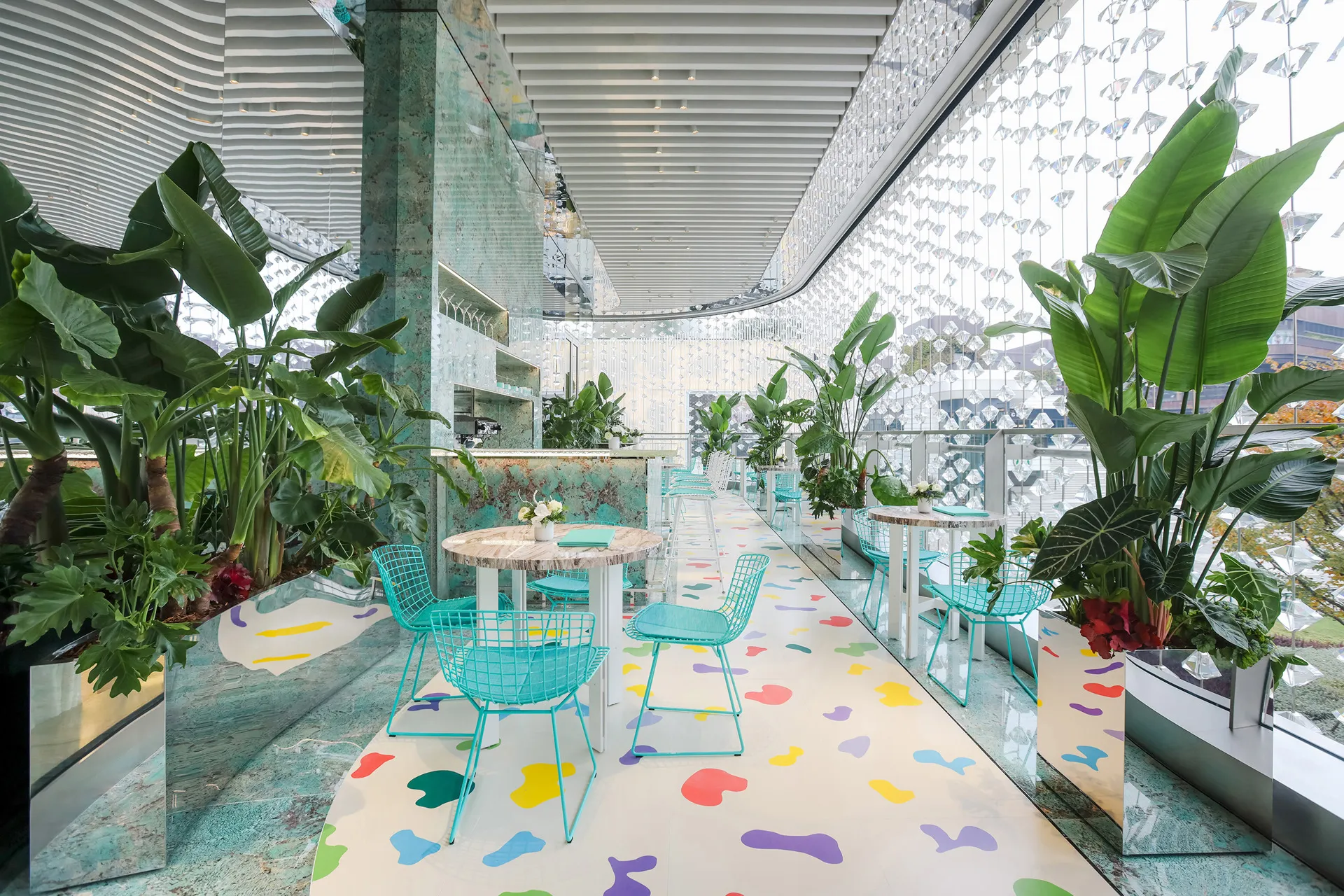
MVRDV’s design demonstrates a thoughtful commitment to sustainability, where the meticulous façade is assembled using mechanical connections, allowing it to be carefully dismantled in the future, with components reused or recycled rather than discarded. Integrated low-energy, color-changing LED lighting is seamlessly embedded at both the top and base of the structure. This system allows the façade to glow in a full spectrum of hues, including the iconic Tiffany Blue, colors amplified by the shimmering, refractive quality of the glass diamonds.
3. House of Dior, China
Architect: Christian de Portzamparc
Location: Beijing, China
Completed: 2025
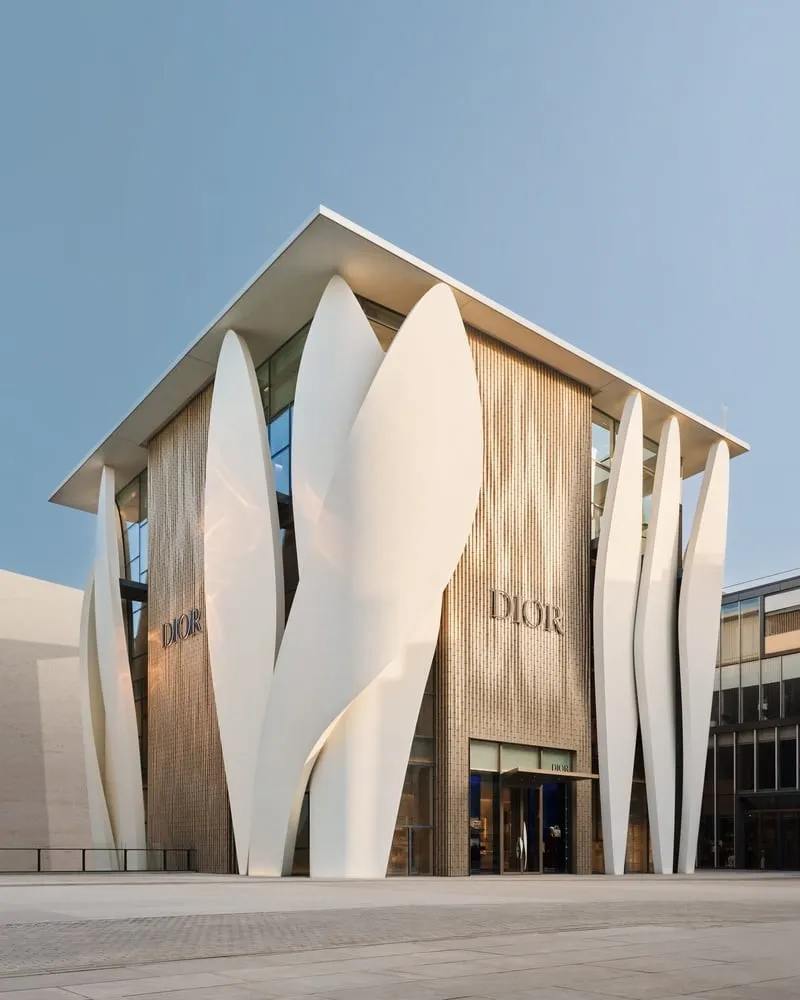
The House of Dior in Beijing, an architectural structure with a petal-inspired sculptural façade, was unveiled in 2025 as the brand’s latest flagship. Rising five stories high, it is situated in the heart of Sanlitun, Beijing’s most dynamic district for luxury and cultural life. Designed by acclaimed French architect Christian de Portzamparc, the façade stands out for its distinctive, bold, and expressive form that sets the tone for the boutique. The architecture associates Dior’s new creative chapter by creating a distinctive stage for the brand’s evolving collections while seamlessly blending fashion, art, and the city’s energy.
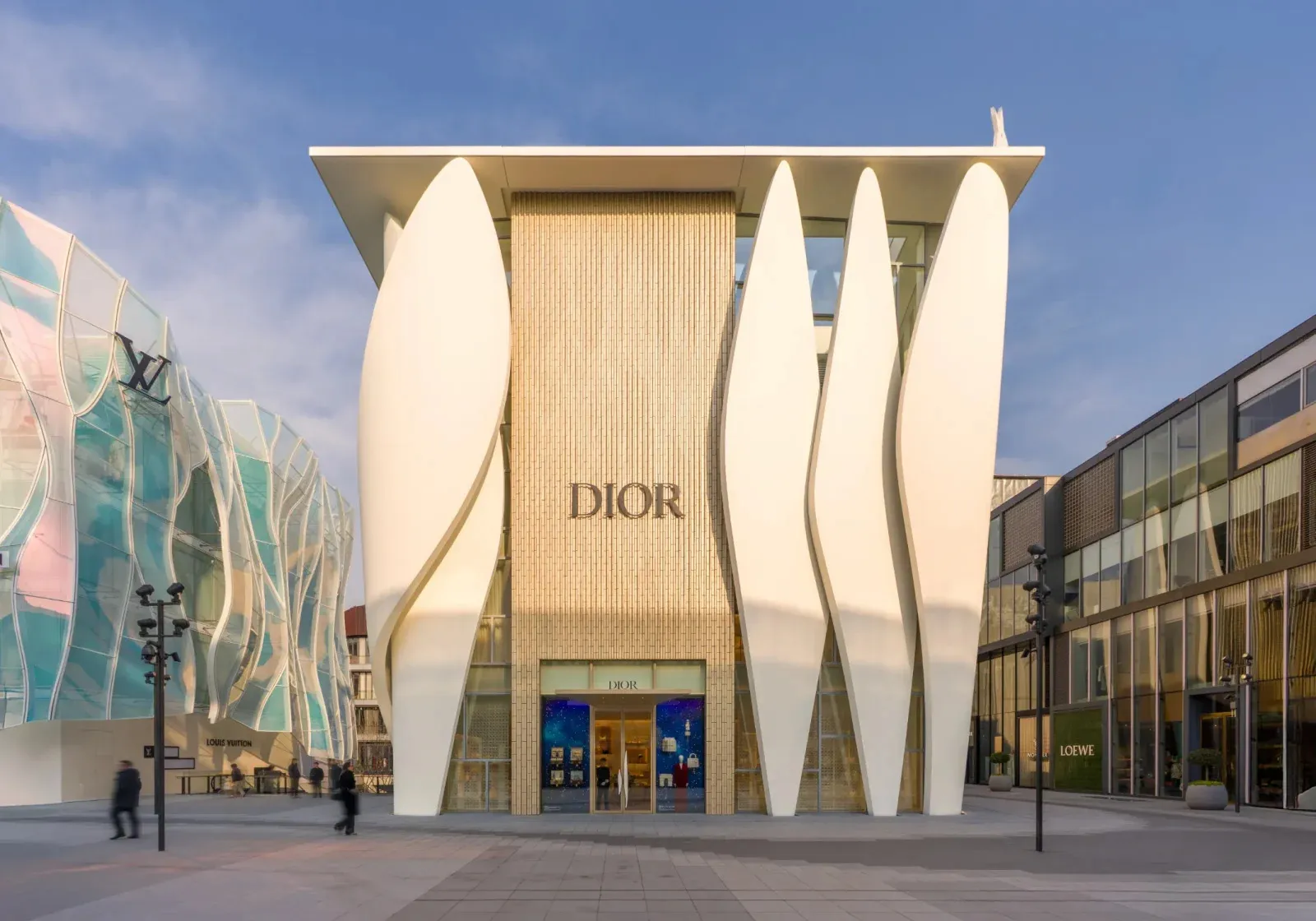
The design unfolds as a luminous sculptural façade; petal-like resin forms paired with shimmering golden glass tiles wrap the building in a lantern-like glow. These flowing petals echo the movement of the toiles that inspired Monsieur Dior’s New Look, while the golden glass references a color traditionally associated with royalty in Chinese culture. At street level, display windows reimagine Dior suitcases as playful miniature scenes that evoke imagined journeys to Paris. Above, the top floor references La Galerie Dior at 30 Montaigne with a dramatic spiral staircase and an OMA-designed installation of white toiles celebrating the Maison’s craftsmanship.
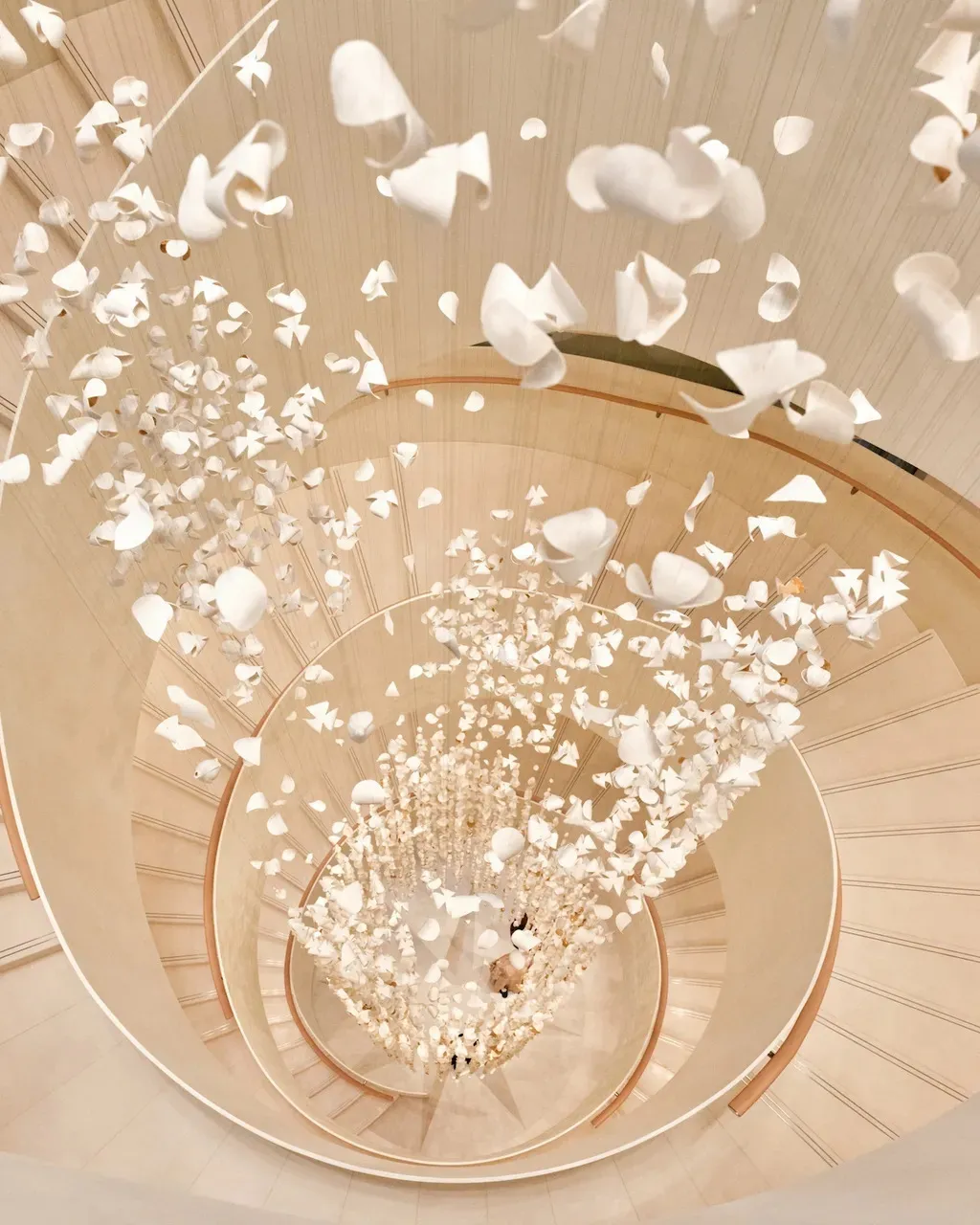
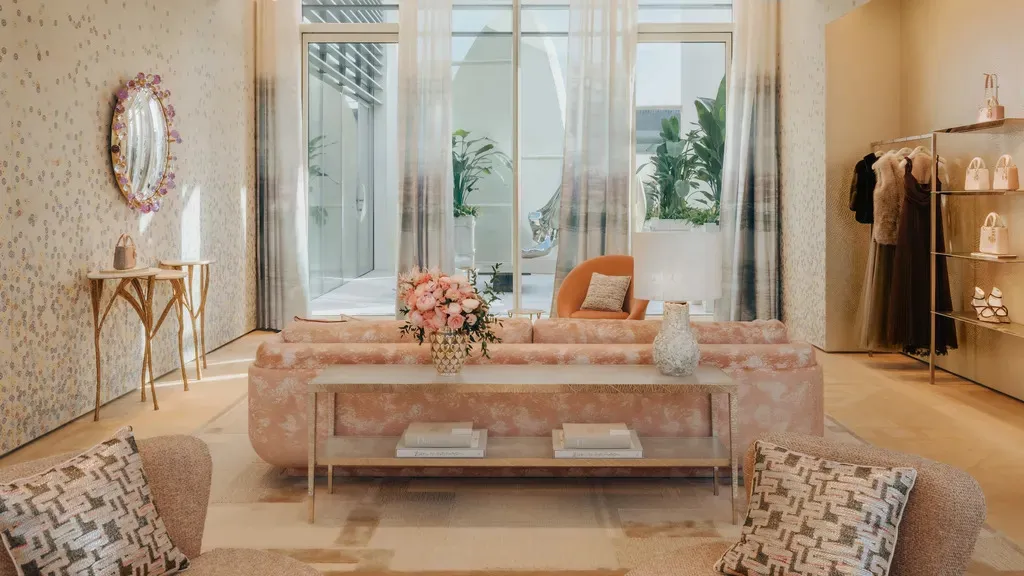
The interiors showcase a refined interplay between Dior’s heritage and contemporary design, expressed using noble materials and thoughtful detailing. Unique elements such as cabochon-inspired parquet flooring, reinterpreted canage, and subtle gold accents create an intimate, dreamlike atmosphere. These classic references are balanced with sculptural contemporary furniture and a timeless sense, yet focus on Dior’s works. Artworks by Wang Xiyao, Hong Hao, Franck Evennou, and Gio Ponti add cultural depth to the interiors, subtly referencing Monsieur Dior’s early passion for art and his Parisian gallery beginnings of the 1920s.
4. Cartier Ginza 4-Chome Boutique, Japan
Architect: Klein Dytham Architecture
Location: Tokyo, Japan
Completed: 2025
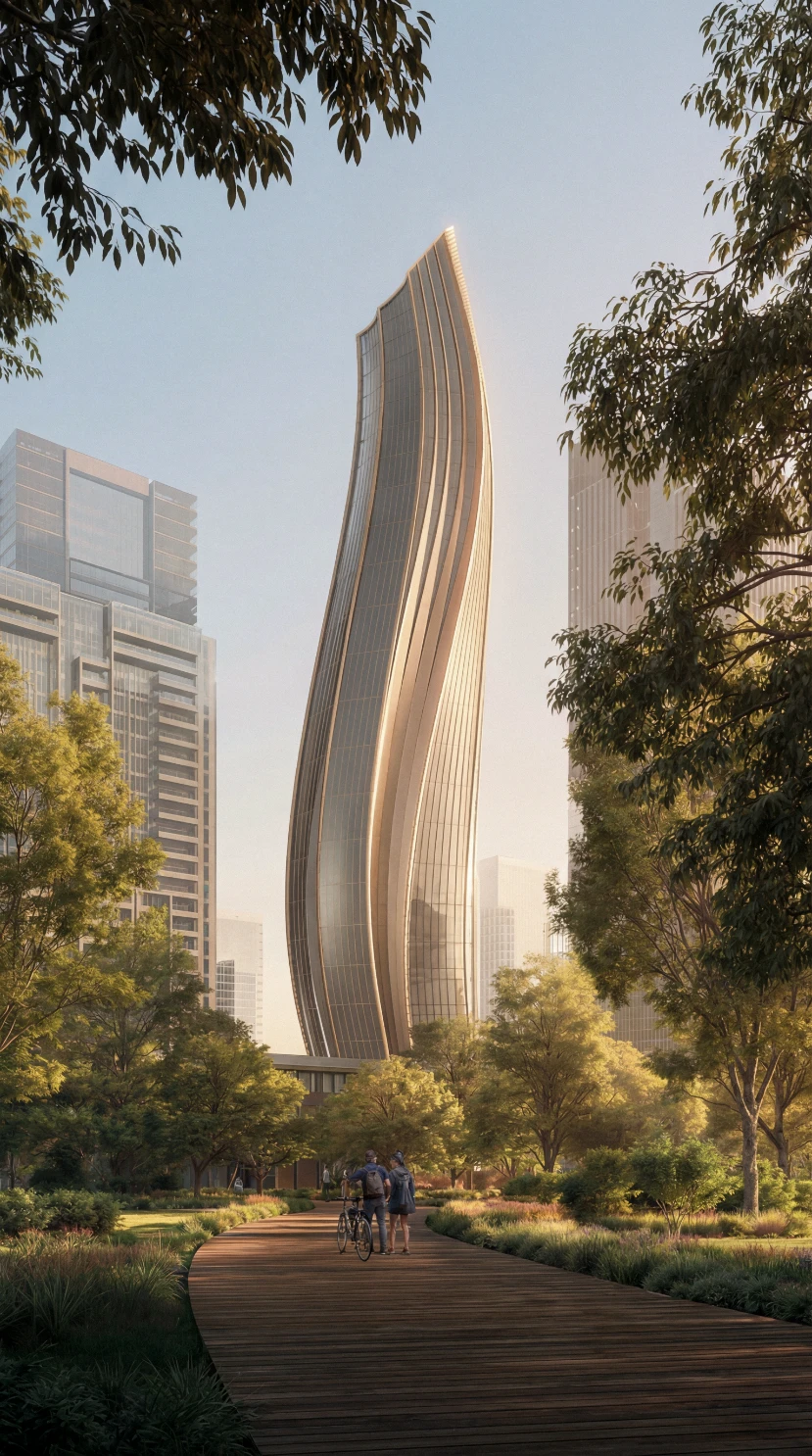
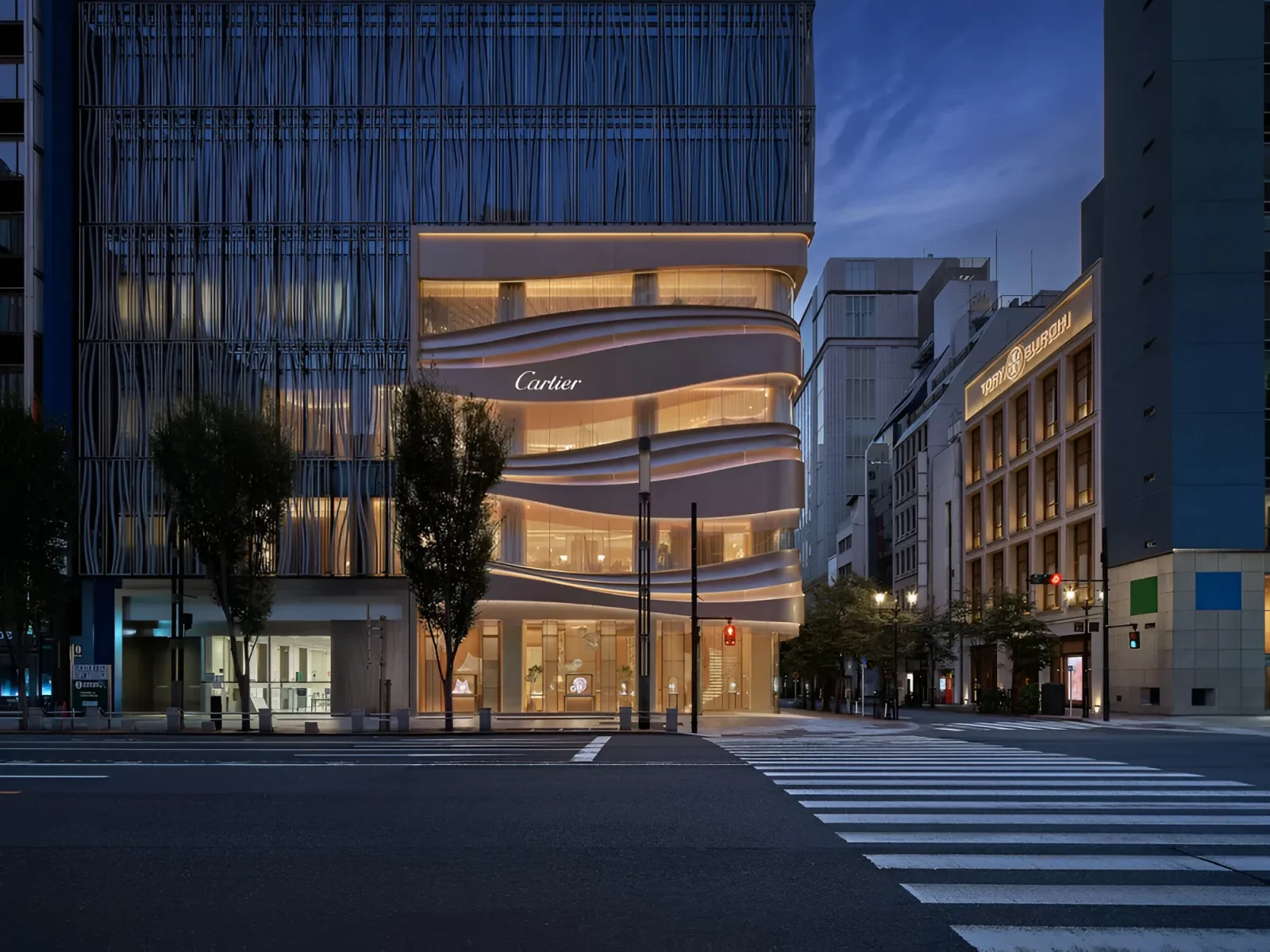
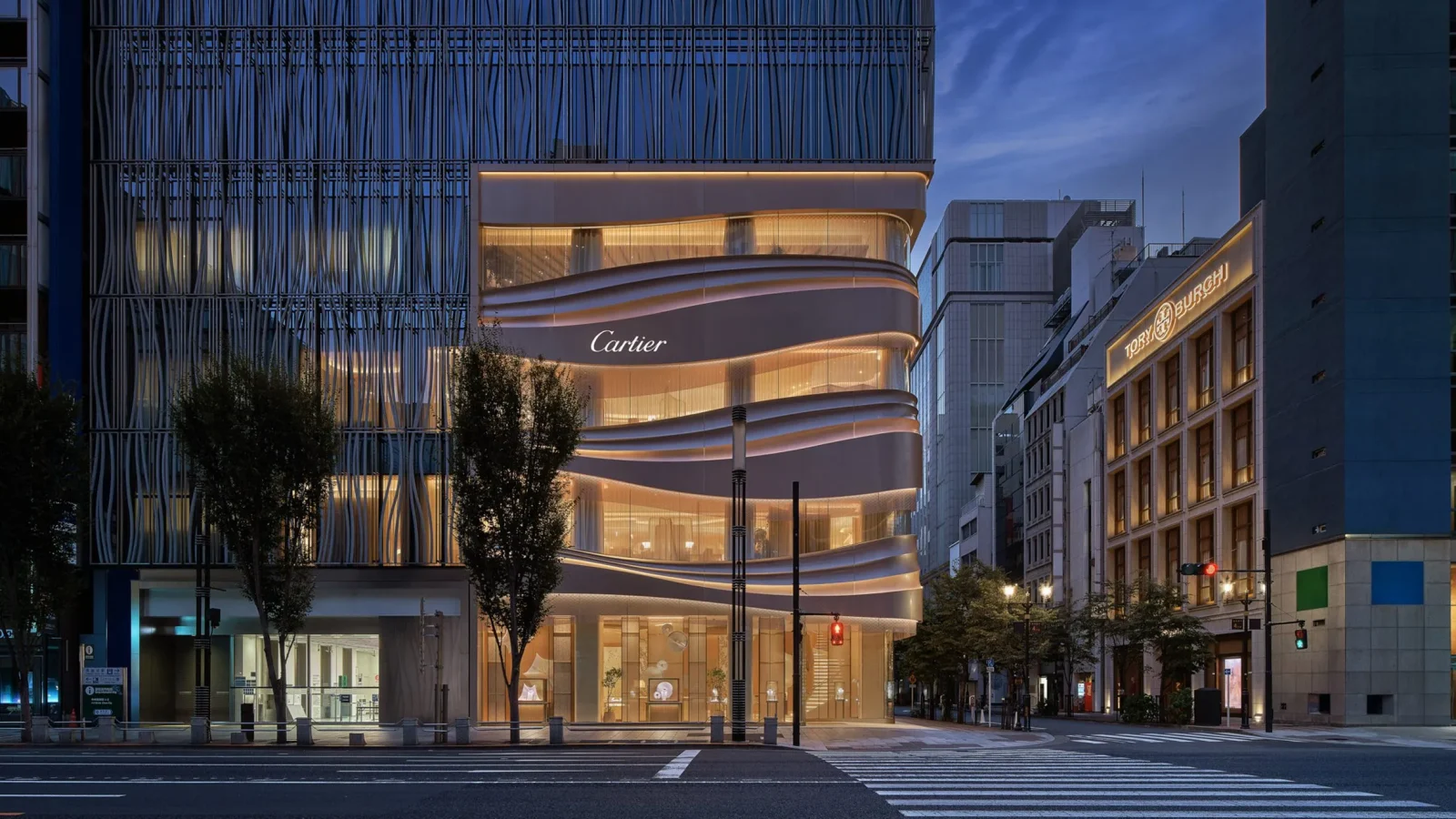
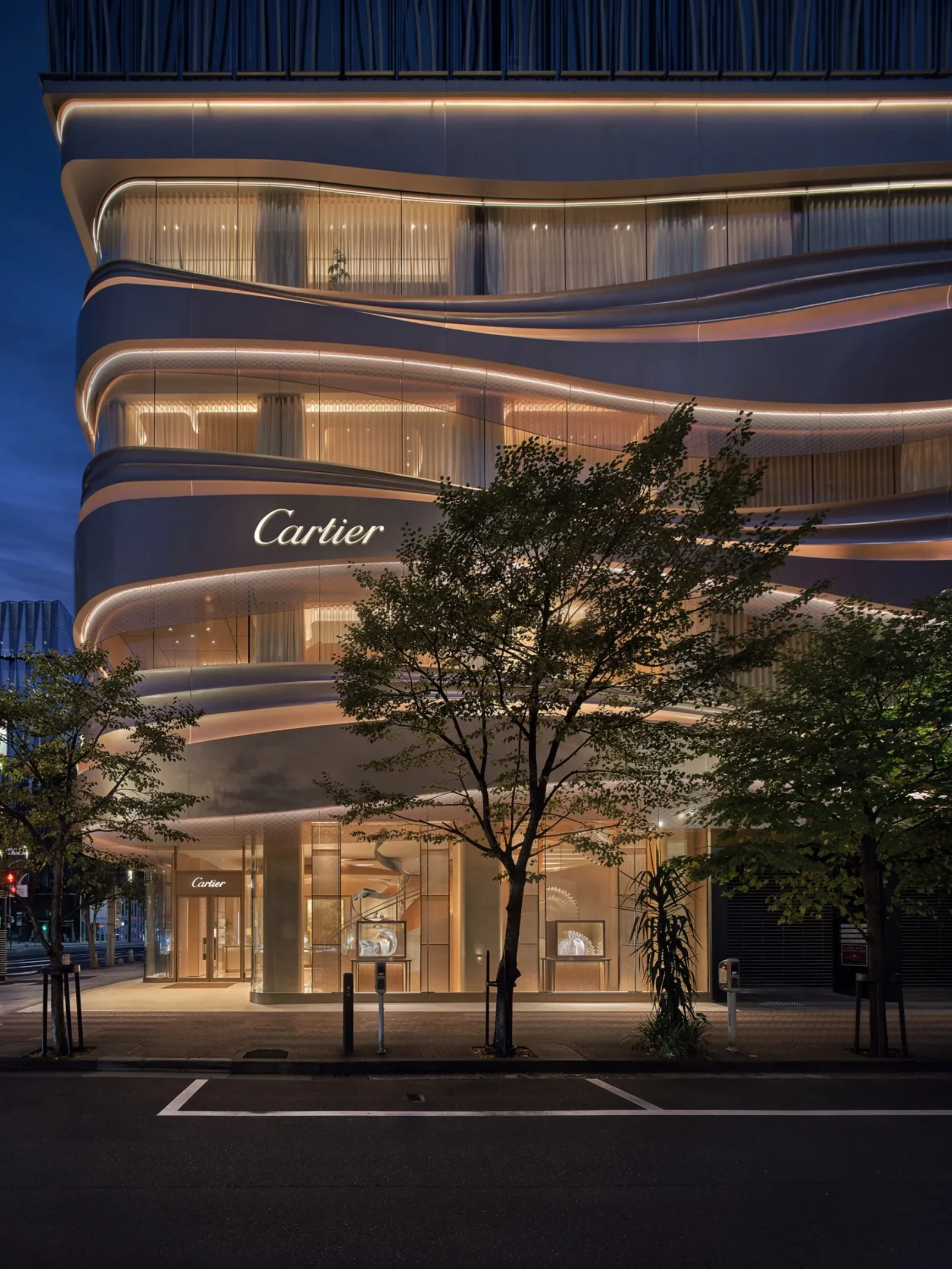
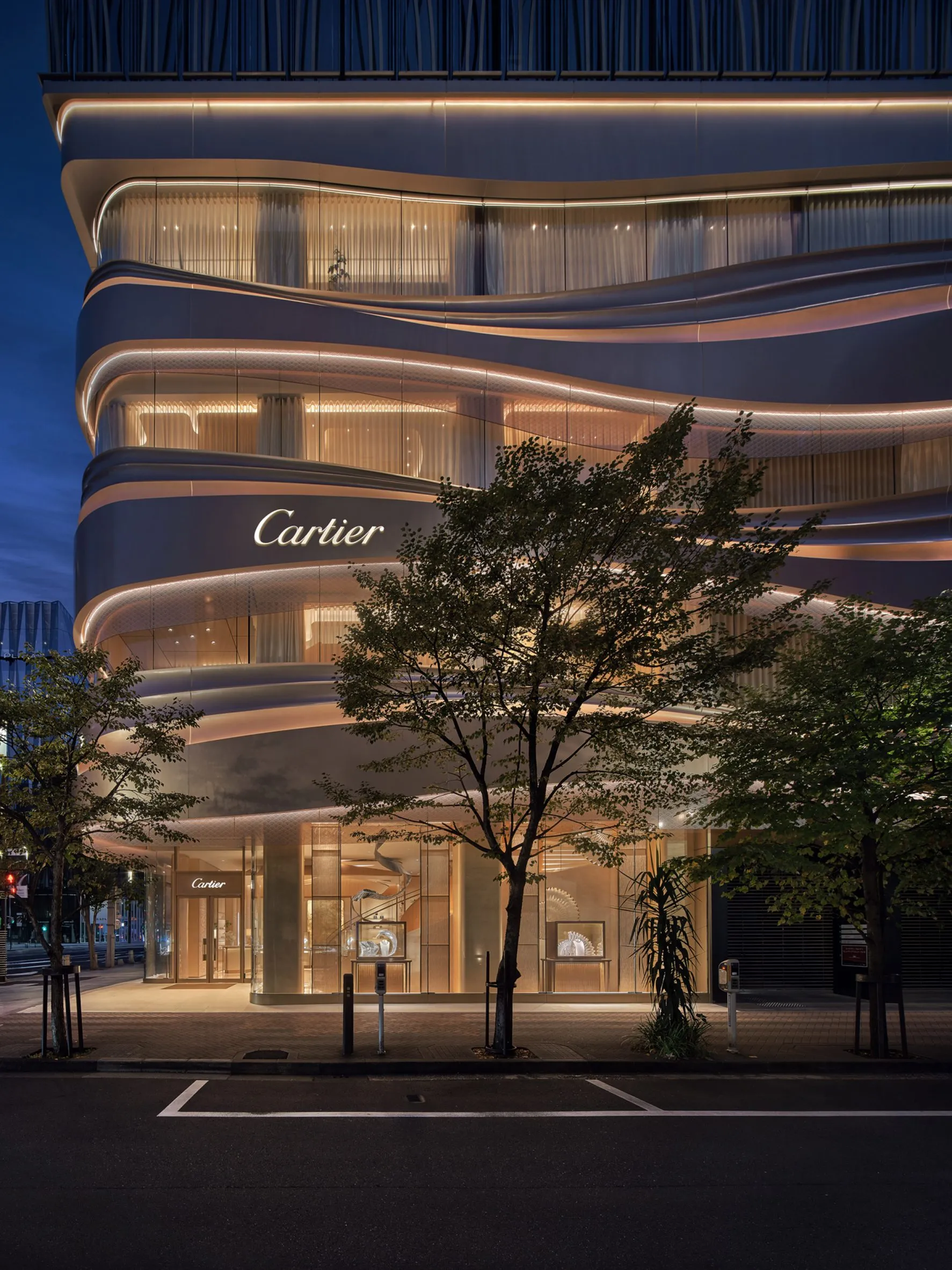
Tokyo-based Klein Dytham Architecture has crafted a distinctive façade for Cartier that reimagines the idea of ‘Fabric draped in motion.’ Composed of flowing aluminum curves, the design evokes the softness of a wedding gown while translating the elegance and precision of Cartier’s jewelry in architectural form. Set within the dense, linear skyline of Ginza, the sculptural façade stands out as a refined urban landmark amid the district’s vertical rhythm. Finished in Cartier’s bespoke Moon Gold, a delicate, pale-gold hue for the panels lends the building a subtle luminosity that captures both luxury and lightness.
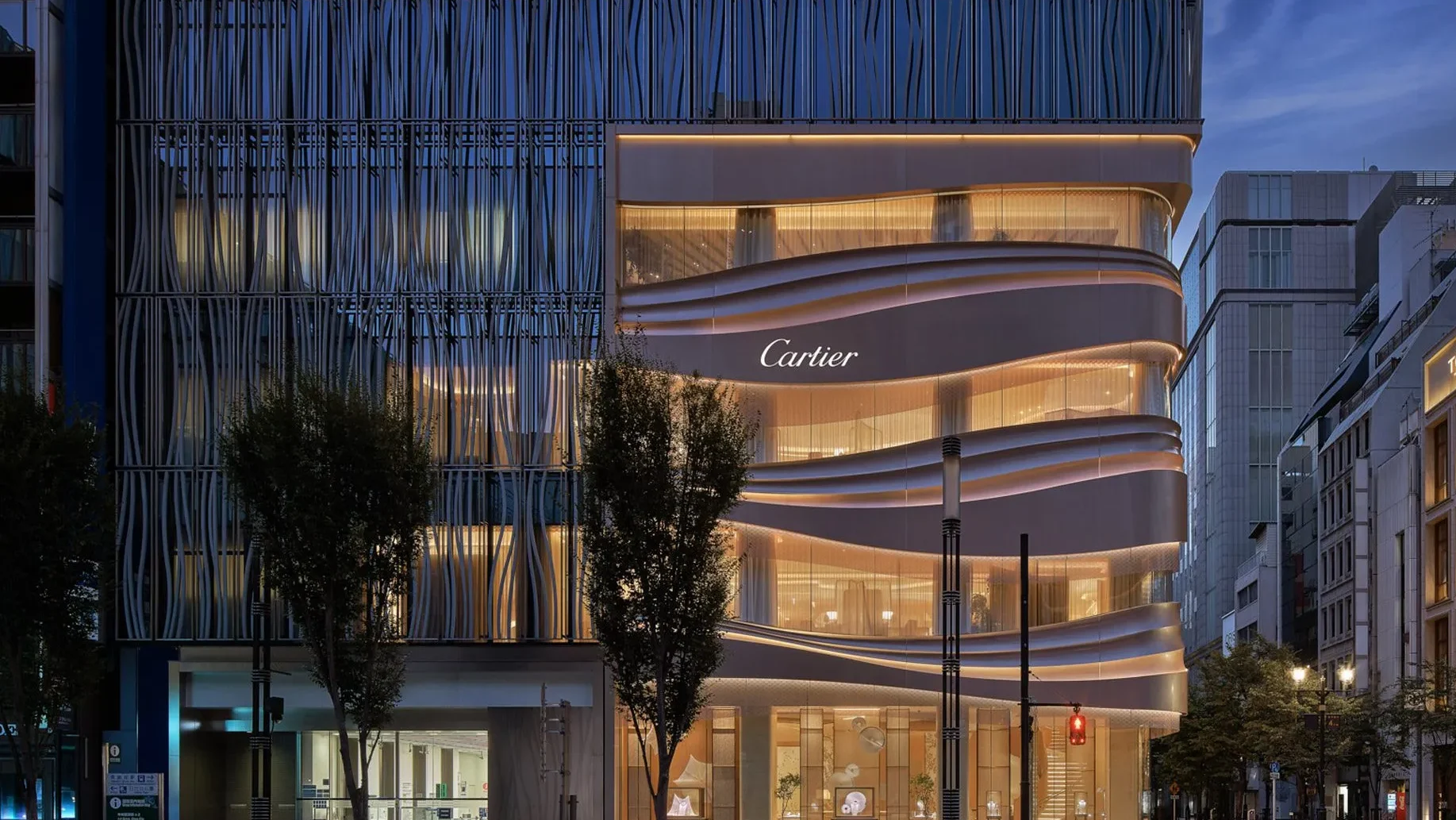
Conceived as an architectural elegance in Ginza’s rigid urban grid, the façade introduces a sense of softness and sculptural restraint to the surroundings. Rather than competing with the district’s strong vertical rhythm, its layered, flowing form builds a subtle sense of anticipation as visitors approach the Cartier flagship. Crafted from versatile aluminum panels, the surface carries a gentle shimmer that lends depth and texture to the design. As daylight shifts, the façade reflects and absorbs light, allowing it to transform continuously with the movement of the city and its pedestrians.
The façade is wrapped in a delicate glass layer etched with a Seigaiha-inspired pattern, reinterpreting the traditional Japanese motif of overlapping concentric waves. The pattern translated into a refined geometric print, bringing cultural depth and visual rhythm to the building envelope. Soft, flowing curves further enhance the design, subtly dissolving the fire-compartment lines between floors. Together, these gestures create a seamless and elegant façade that feels both contemporary and rooted in tradition.
5. Hermes, Taichung
Architect: RDAI | AVT Design
Location: Tokyo, Japan
Completed: 2025
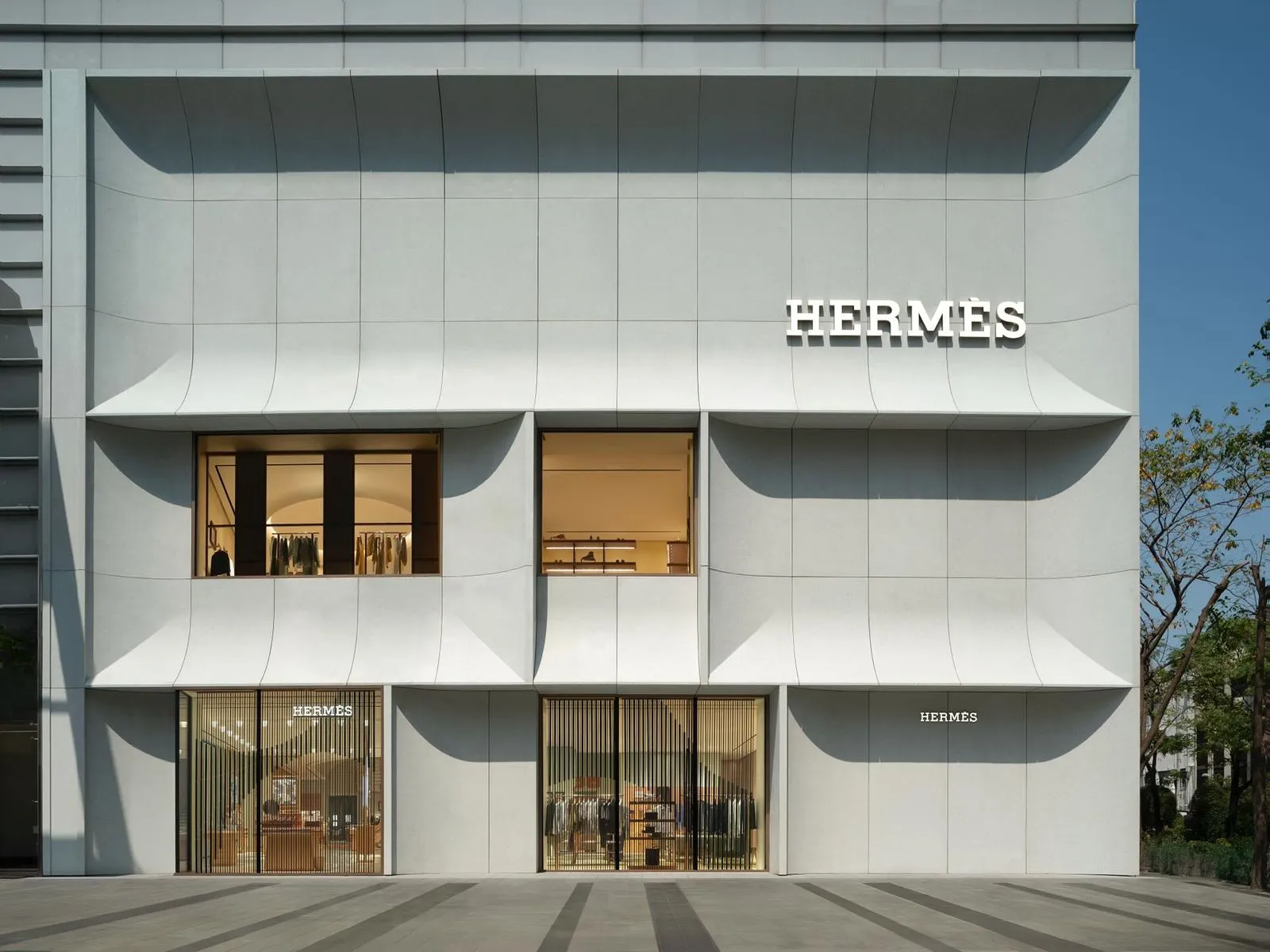
RDAI reinterprets the Hermès boutique in Taichung as a poetic architectural expression. The boutique is situated in the heart of Taichung, and the architecture is shaped by Taiwan’s landscapes of mountains and sea. The design is rooted in local craft and tradition and invites visitors into a space where emotion and architecture gently merge. The façade presents a contemporary presence while drawing inspiration from traditional forms, creating a dialogue between past and present. Its soft curves flow naturally into the interiors, where a calmer palette and refined detailing extend the building’s graceful design language.
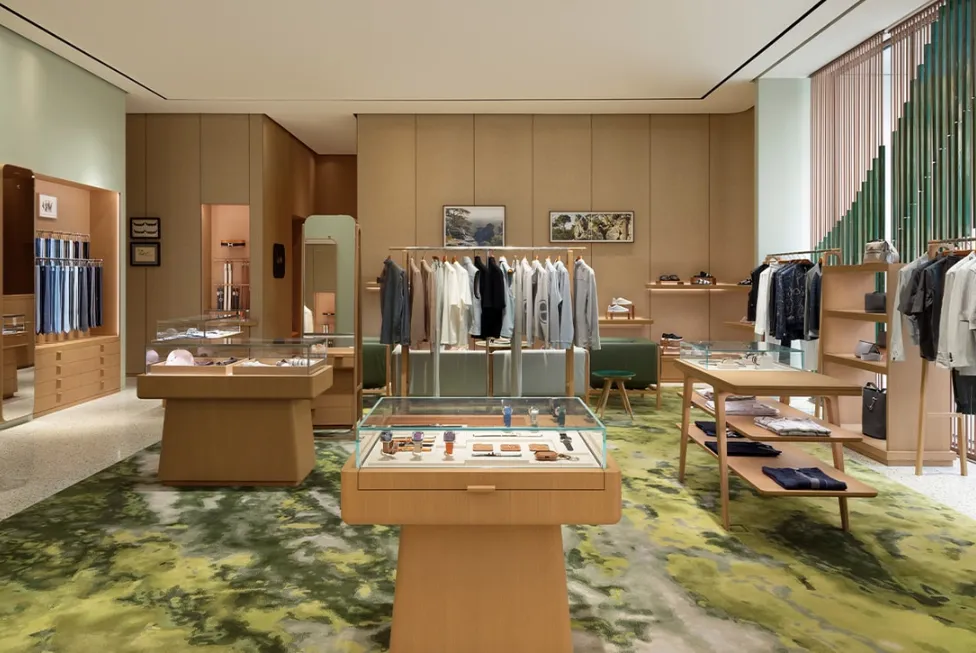
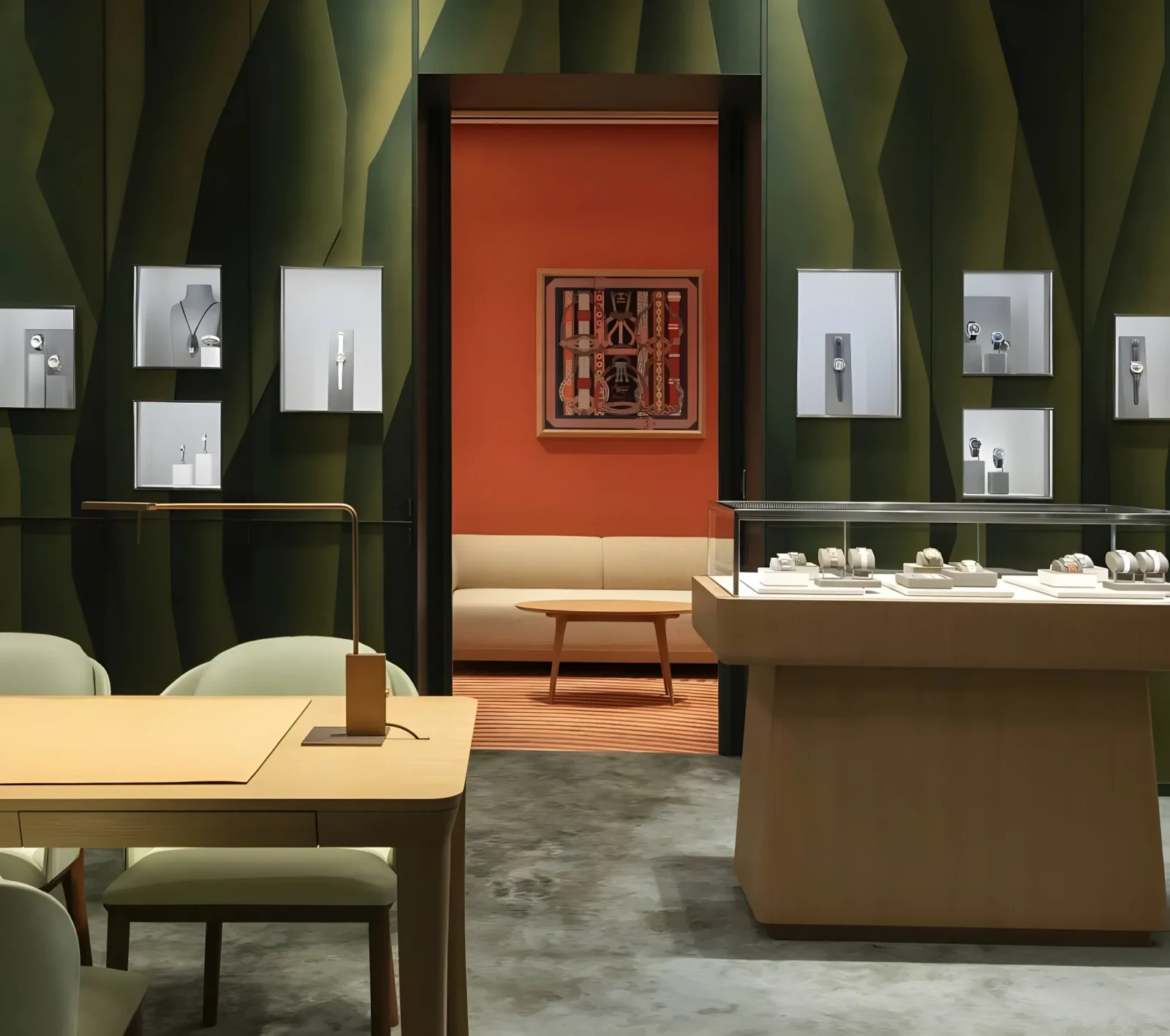
The boutique’s white façade, finished in terrazzo-textured concrete, unfolds as soft, flowing curves that echo the sweeping rooflines of traditional Asian architecture. As daylight shifts, shadows glide across the building and appear as if moving with a sense of movement. Brushed-metal window frames and ceramic rods form subtle circular forms, introducing rhythm and detail to the calm exterior. Inside, moss-green walls and warm rust-toned accents create a serene progression of spaces. Together, the design reimagines Hermès retail as an intimate dialogue between nature, craftsmanship, and contemporary design.
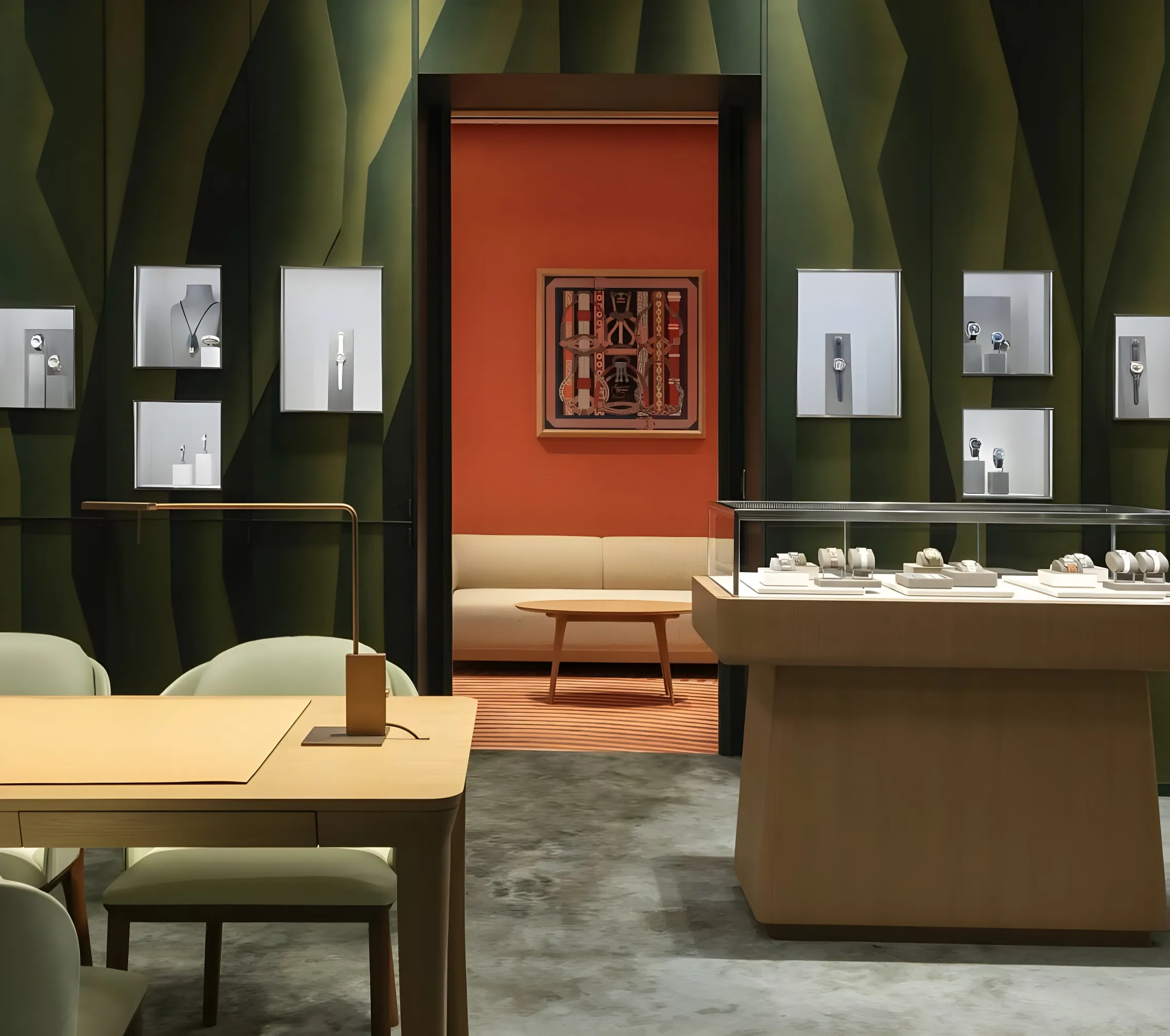
At Hermès, design and art act as quiet narrators; the architecture shapes the space through meaning rather than decoration. The interior palette draws inspiration from Taiwan’s forests and fields, blending greens, earthy browns, and soft orange tones to create a warm, timeless atmosphere. Signature Grecques lighting floats overhead, casting a gentle glow, while the subtle house anchors the space in Hermes’ heritage. The boutique opens into the refined world of silk and fragrance, setting a tone of understated elegance for the Hermes brand language.
6. Tiffany & Co. Ginza Flagship, Japan
Architect: Jun Aoki | Peter Marino
Location: Tokyo, Japan
Completed: 2025
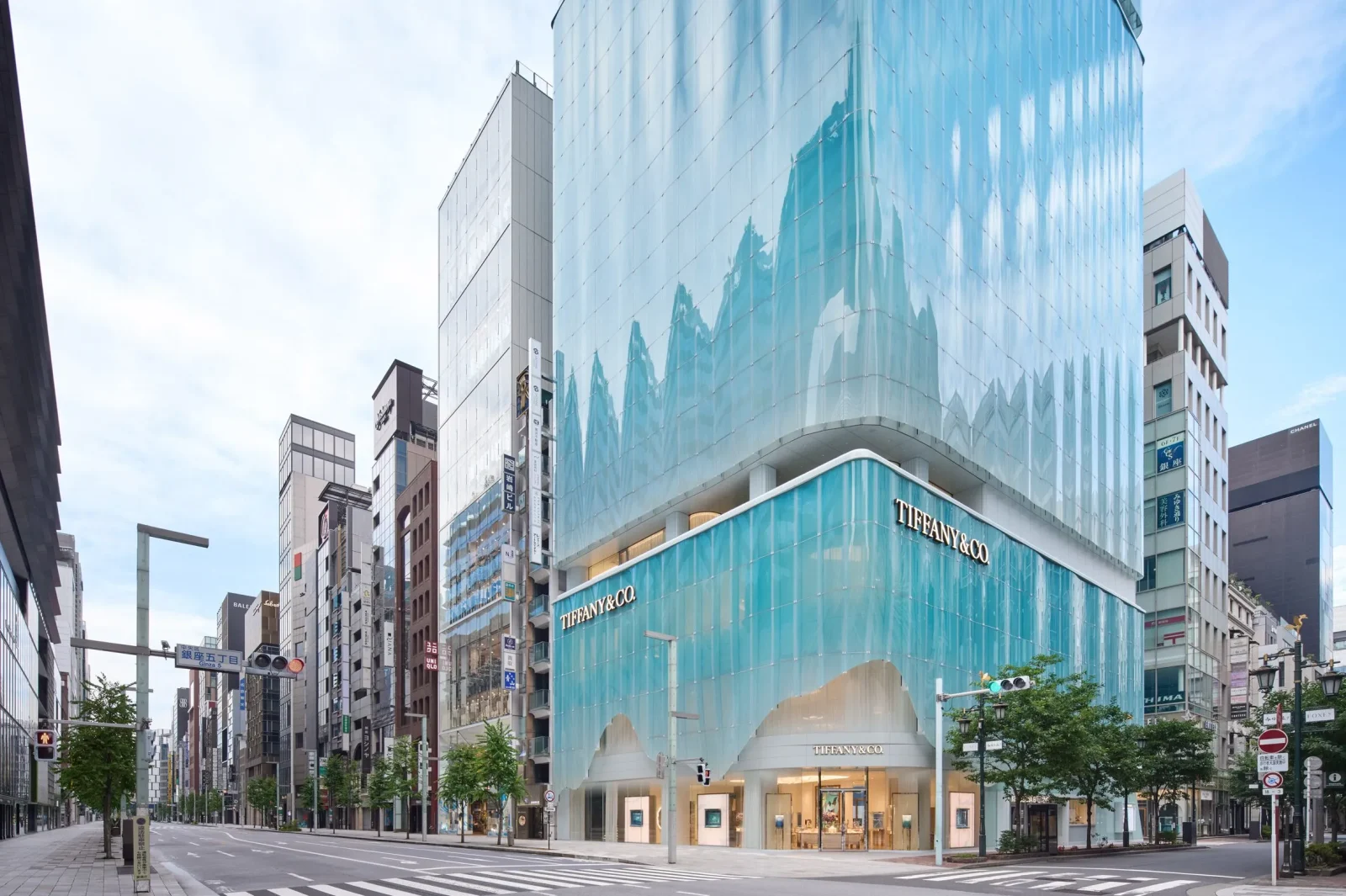
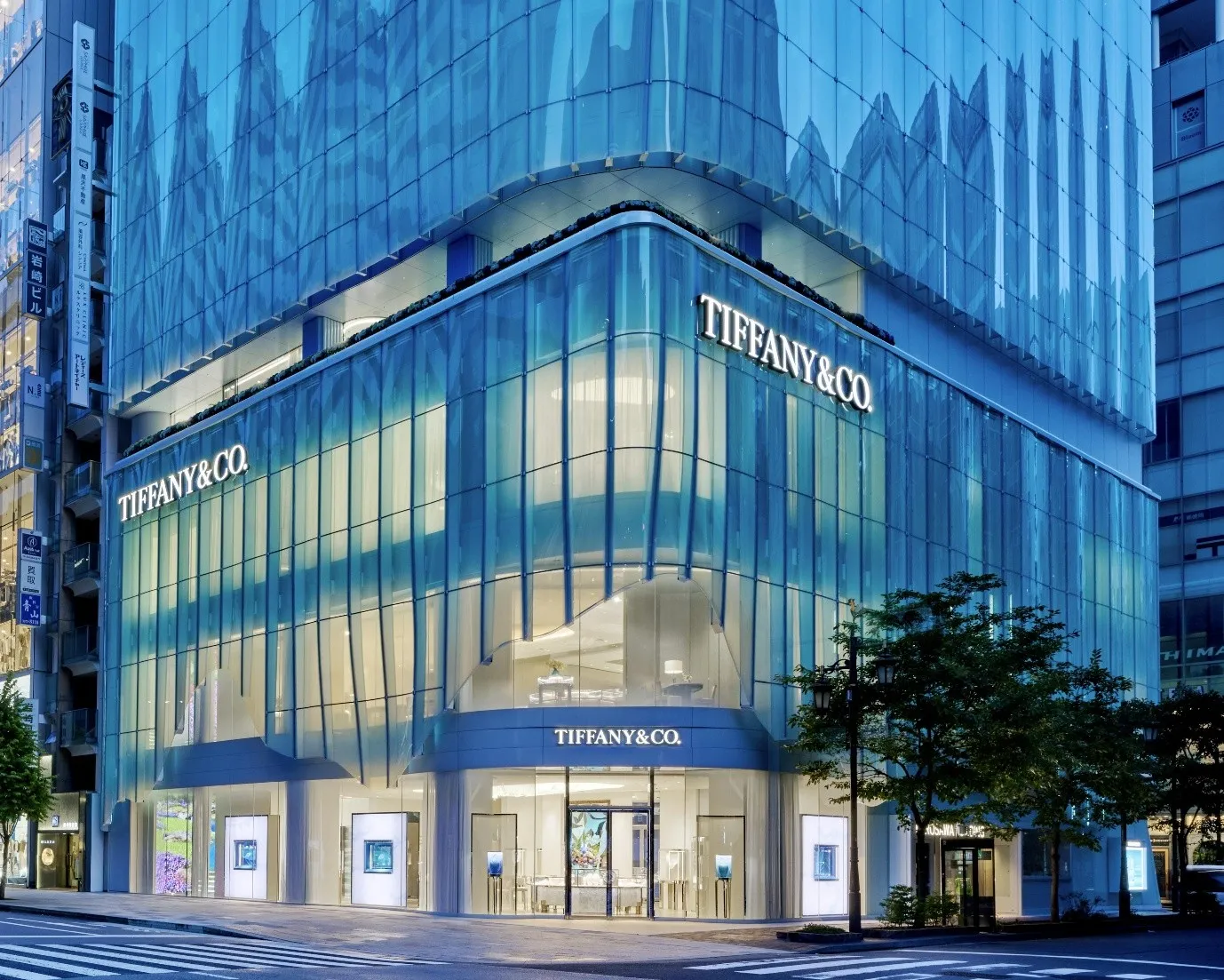
Japanese studio Jun Aoki & Associates has designed a sculptural glass façade for Tiffany & Co.’s flagship in Ginza, giving the luxury brand a fluid architectural identity within Tokyo’s iconic shopping district. The building, rising 66 meters on a prominent corner site, is wrapped in gently curving glass that shifts between Tiffany’s Blue and soft white hues. The façade balances presence and restraint, creating a luminous, contemporary expression that reflects the brand’s elegance while engaging seamlessly with Ginza’s urban fabric.
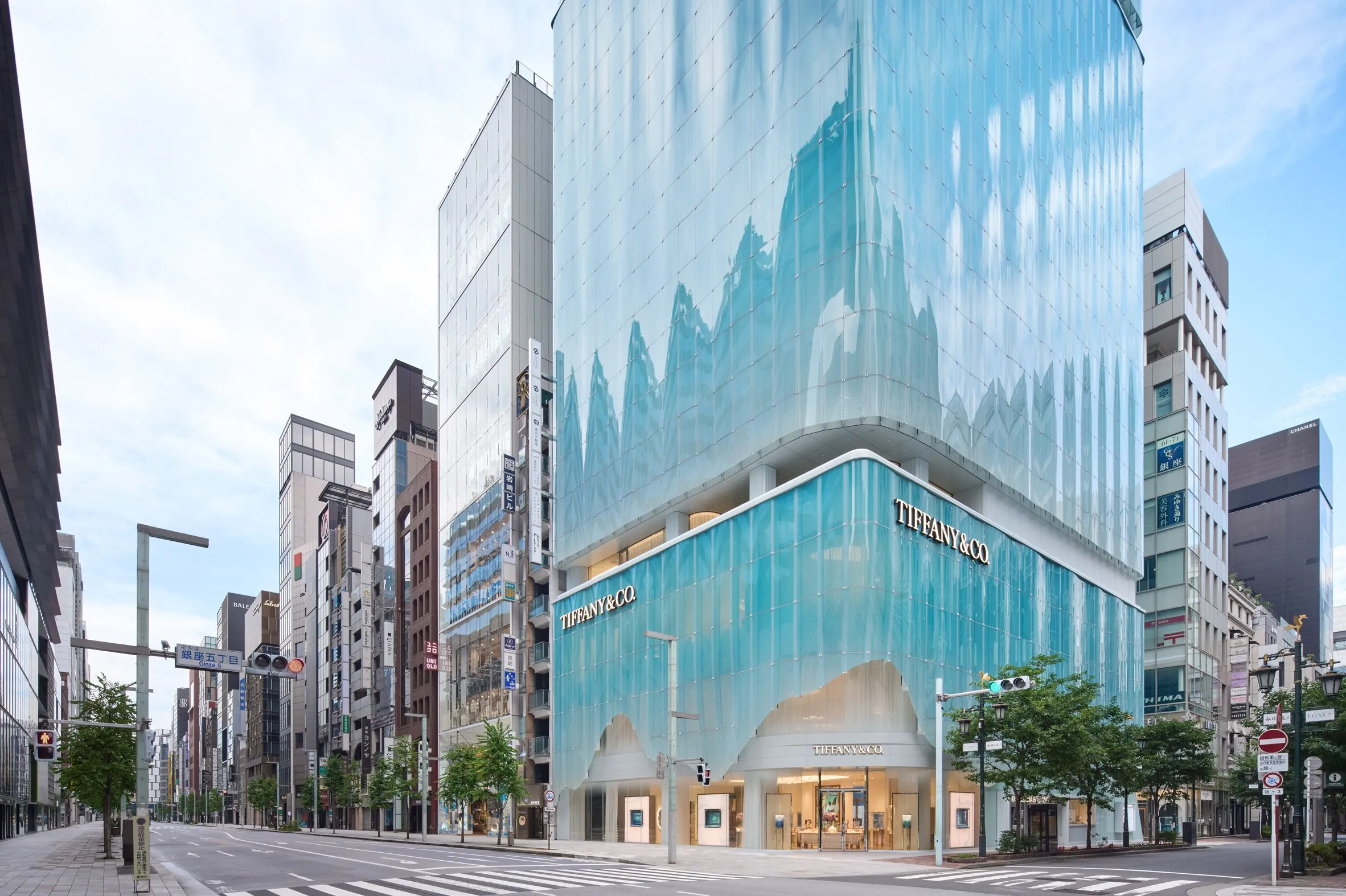
“We were very conscious that the design could easily become too rigid and imposing. So, early on, our core vision was a ‘facade like a wisteria trellis swaying in the soft wind,” mentioned by Aoki. Each rippled glass panel was designed with unique curved shape elements, which are sustainable in the sense that they allow for future maintenance. The facades are individual panels, which have been attached to an inner, glazed facade using supports that wrap around the volume to create curved edges bulging outwards at the corners.
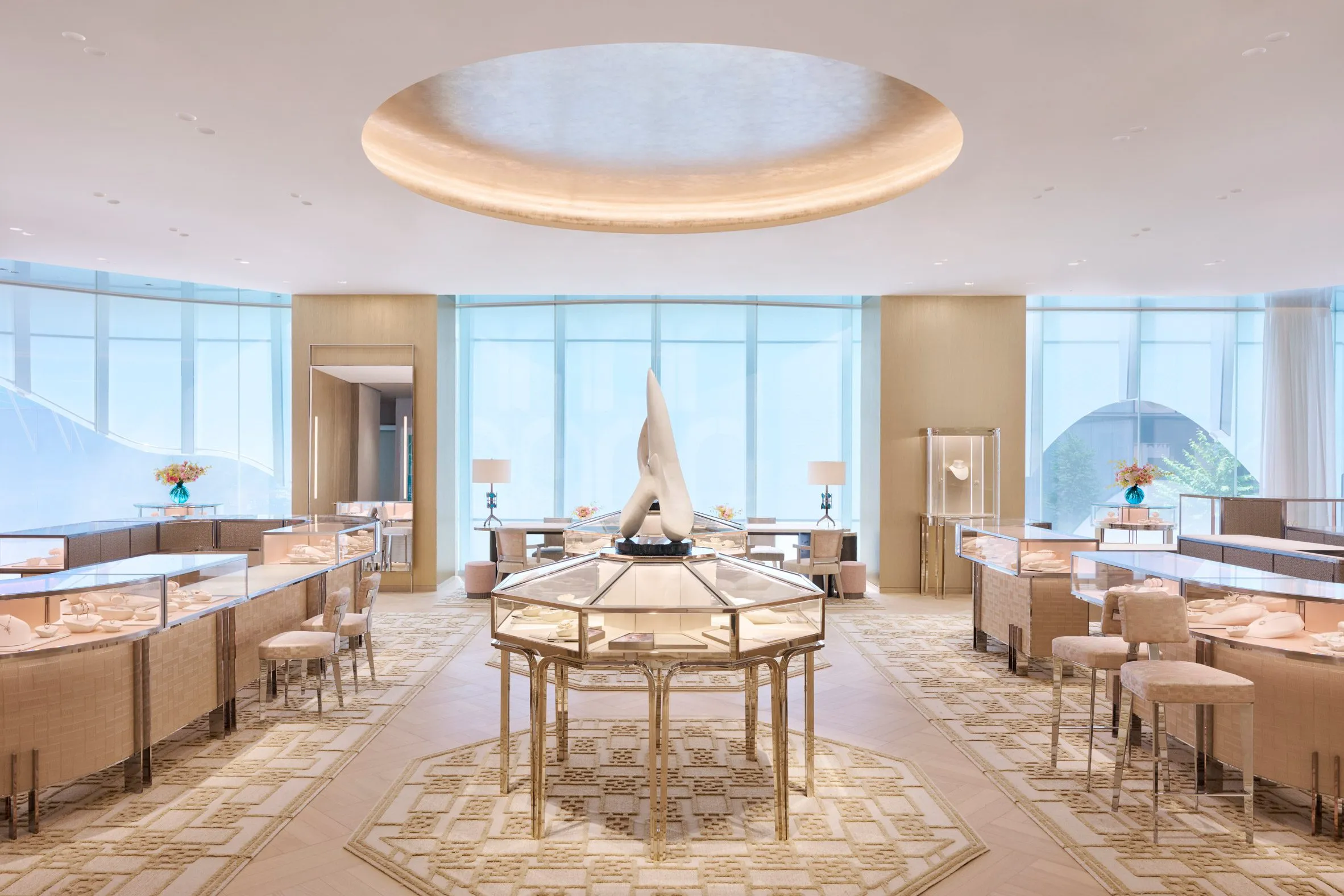
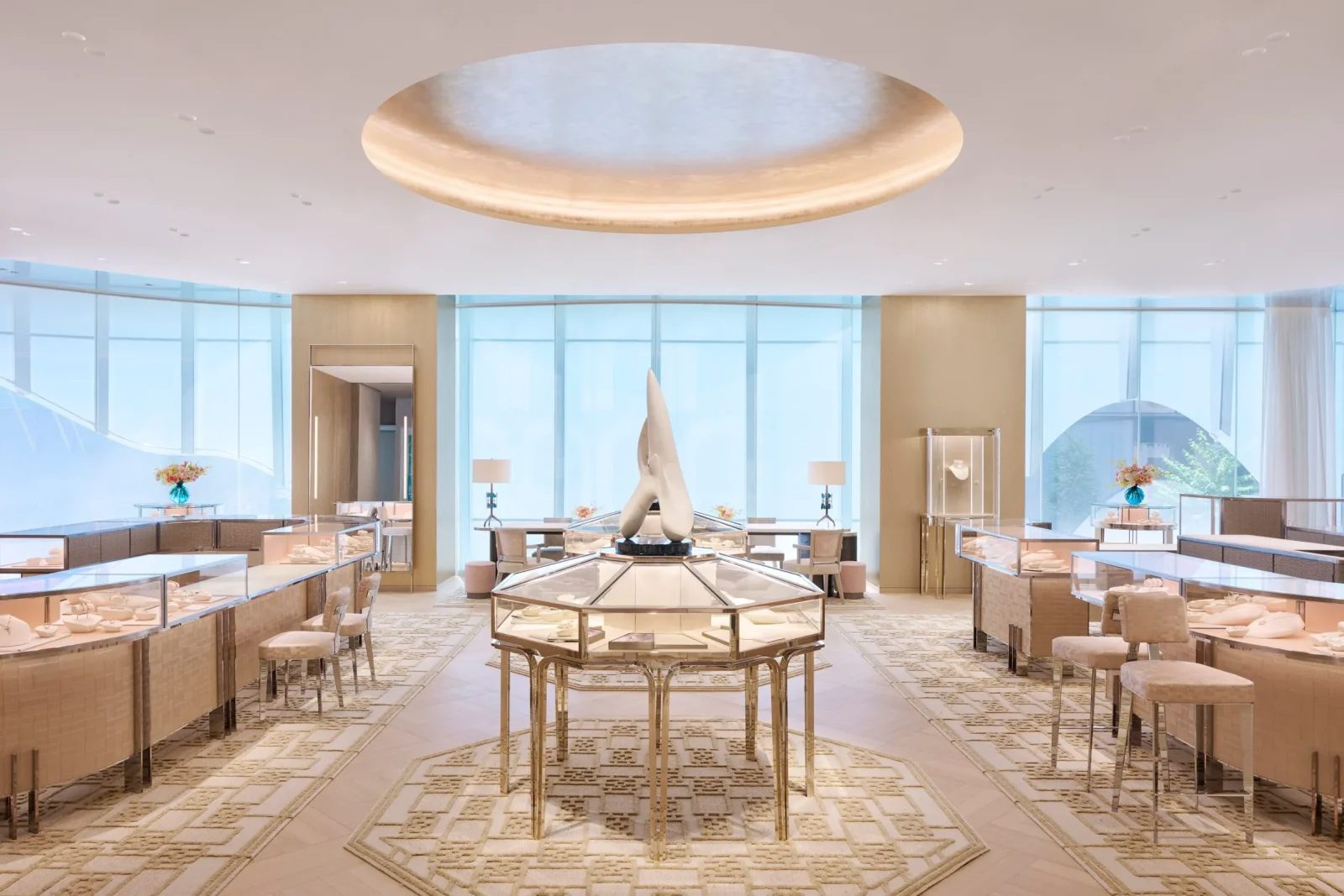
Interiors designed by Peter Marino unfold across four levels and more than 2,500 square meters, inviting visitors into an immersive world shaped by Tiffany’s spirit of creativity and innovation. Guests are welcomed by striking artwork by Michelangelo Pistoletto, while a sculptural staircase lined with digital screens presents an ever-changing Moving Fresco by Oyoram Visual Composer. Thoughtful technical detailing ensures the jewelry is experienced in its best light, with ceramic printing techniques subtly filtering the blue tones of the façade to create a refined interior atmosphere. The flagship space expresses Tiffany’s enduring commitment to craftsmanship, sustainability, and cultural dialogue.
7. Dolce & Gabbana, New York City
Architect: Carbondale Studio | Eric Carlson
Location: New York City, USA
Completed: 2025
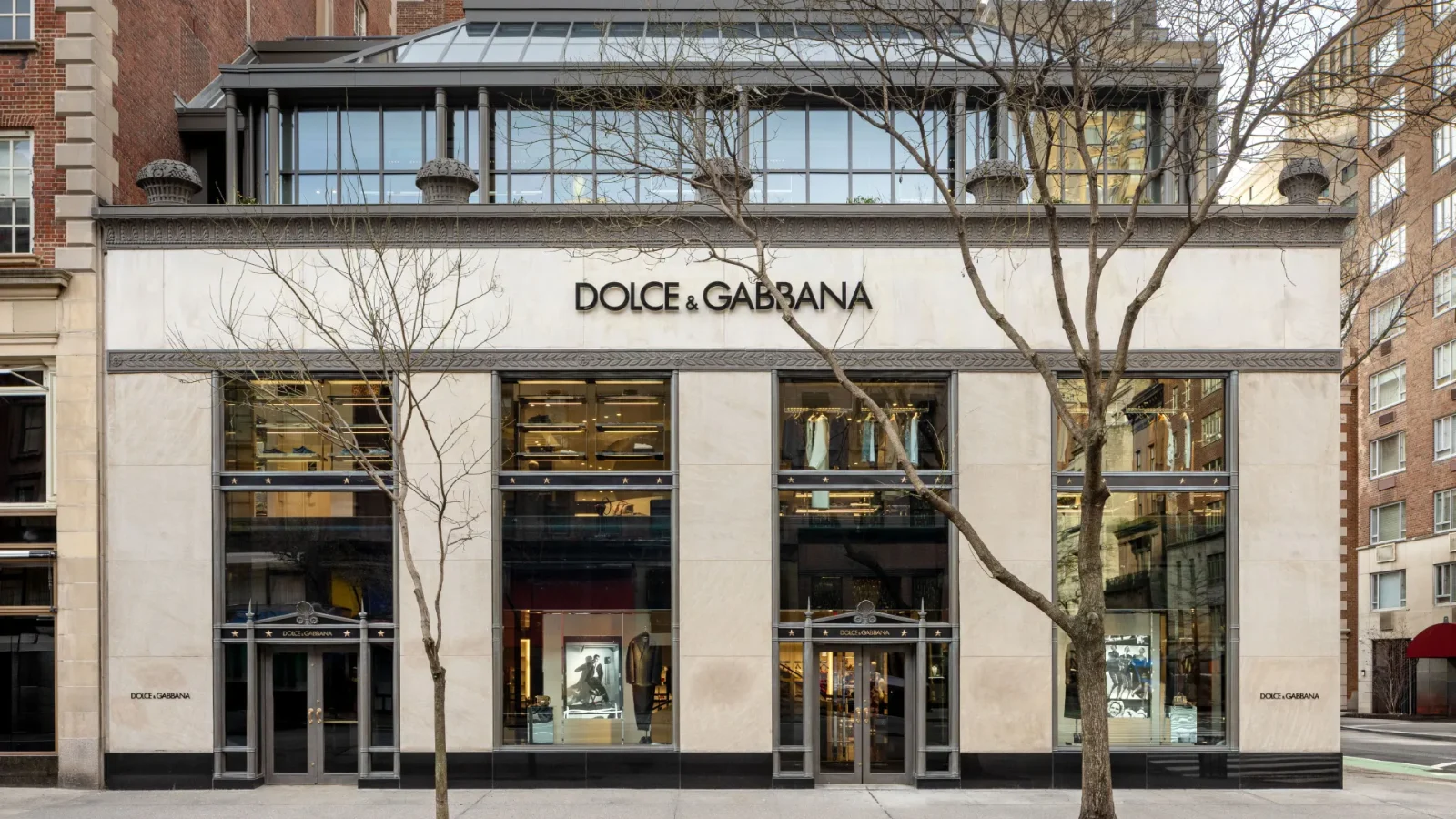
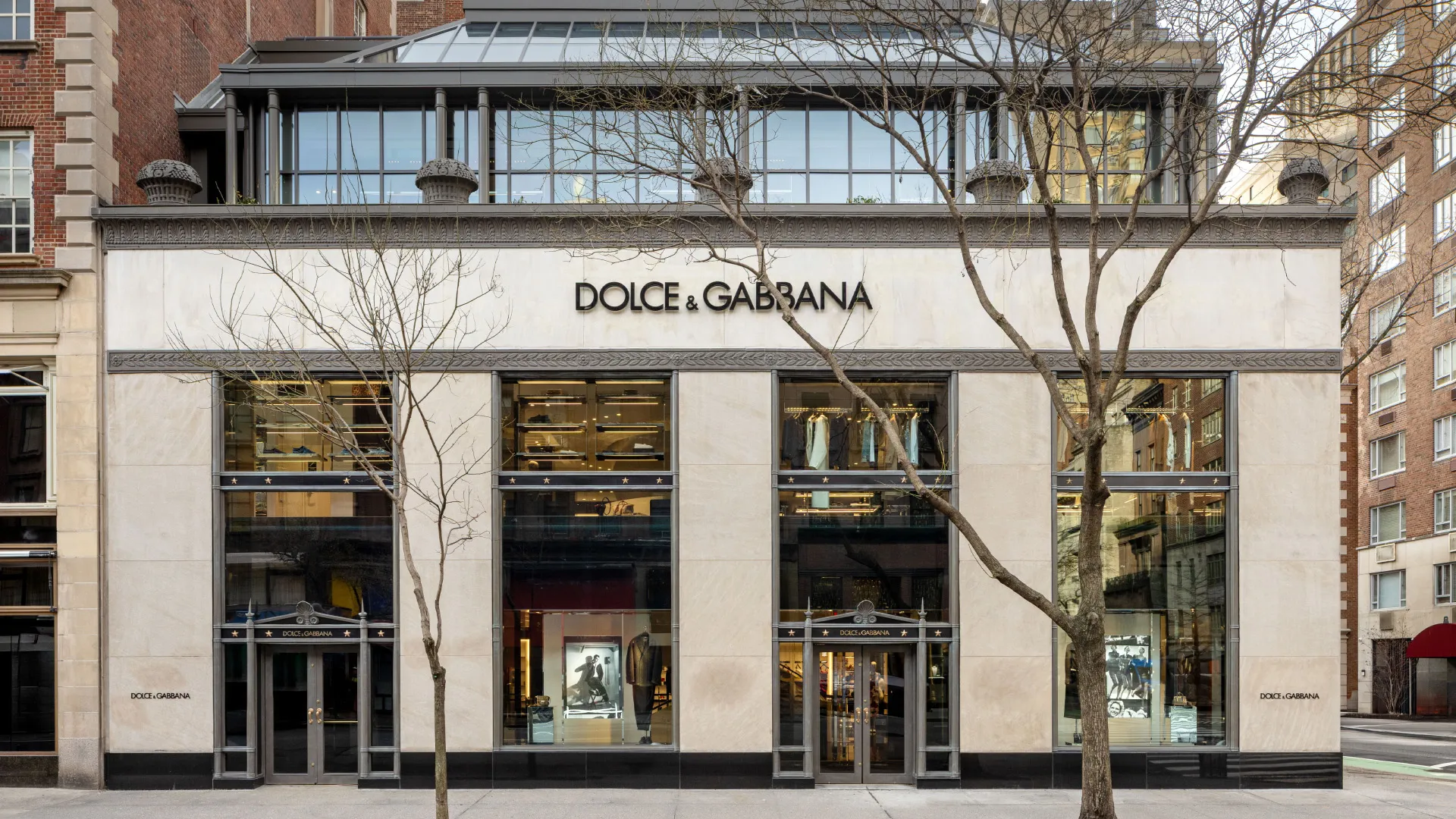
Dolce & Gabbana’s latest New York boutique brings a refined and expressive presence to Madison Avenue, inviting visitors into an immersive world shaped by the brand’s distinctive creative spirit. Designed by Eric Carlson’s Carbondale studio, the space unfolds as a thoughtful dialogue between the building’s vintage architectural character and the contemporary luxury aesthetic. The resulting architecture is a richly layered environment that feels both timeless and current, capturing Dolce & Gabbana’s heritage while confidently projecting its evolving identity.
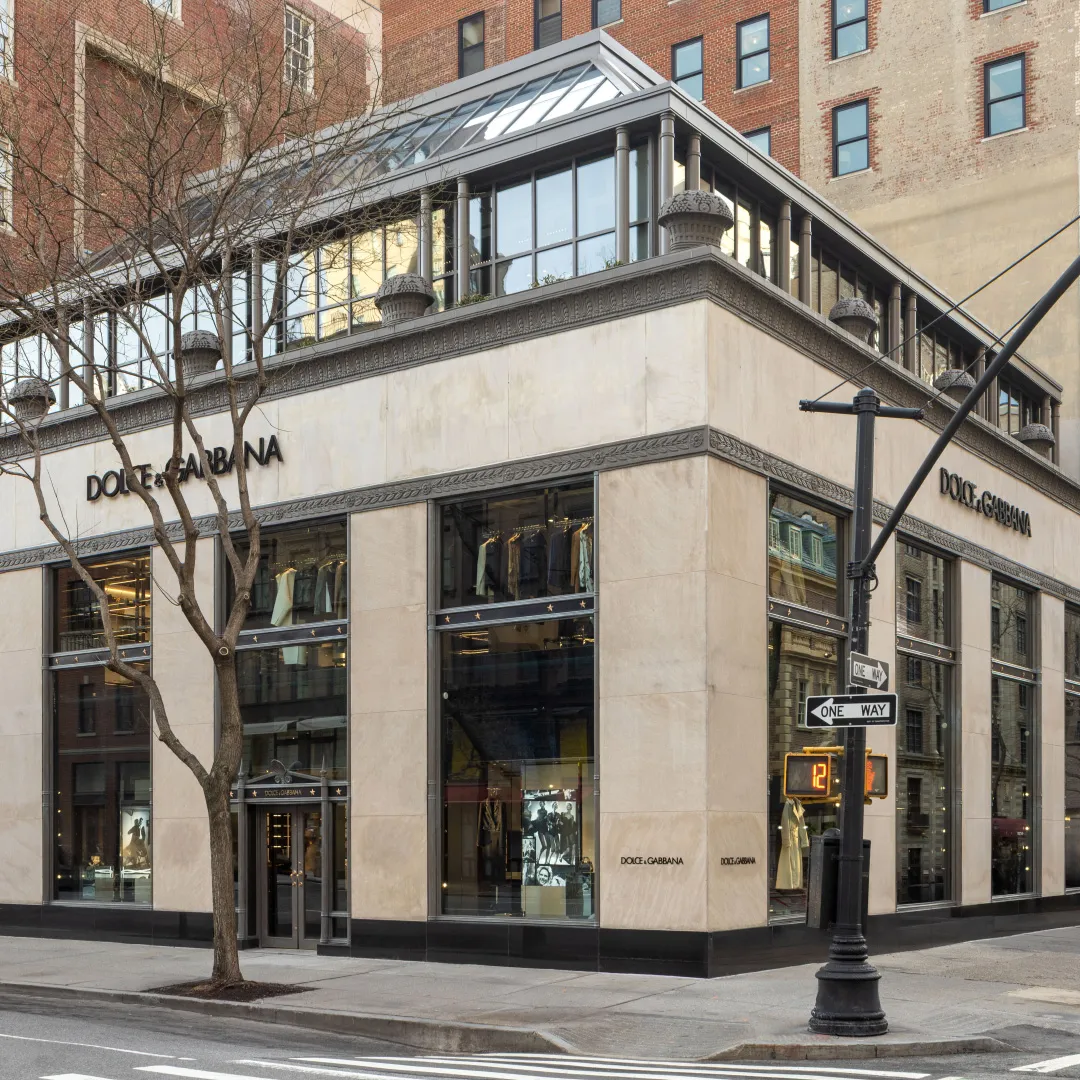
The architecture is defined by a refined dialogue between light and material; the new boutique speaks quietly yet confidently of fine Italian craftsmanship. Every element reflects a careful balance of strength and delicacy, shaped through close collaboration between the brand and the architect, where precision and artisanal skill guide the design. The façade is composed of rhythm with elegant vertical lines and dramatic double-height windows, rising to a glass-clad penthouse that captures one’s eye. Interiors are composed of five levels, unfolding around a sculptural circular staircase in polished characteristic Nero Assoluto granite.
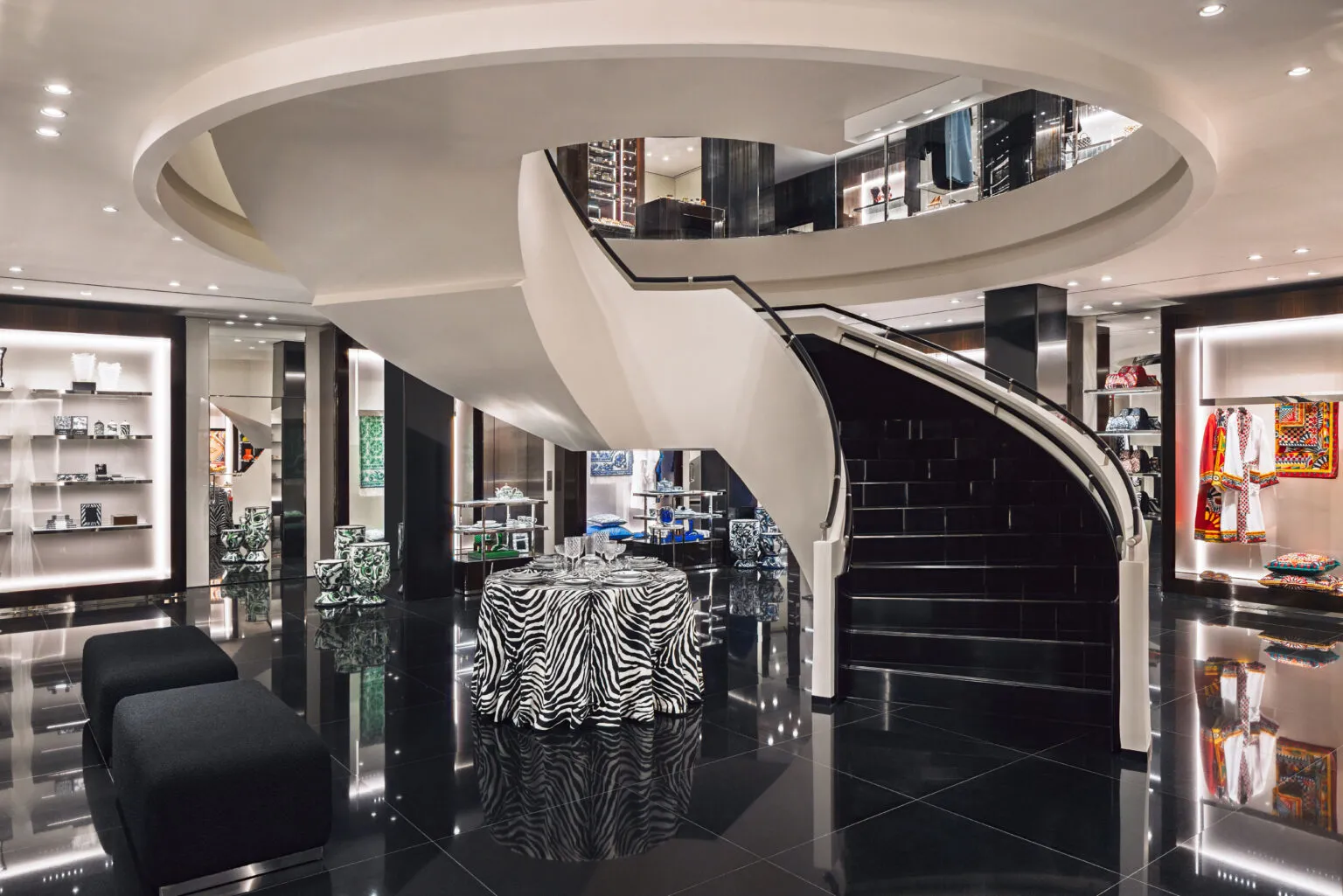
The design unfolds as a light-filled, airy interior shaped by fluid circulation that creates an inviting sense of interiors. Influenced by a refined European sensibility, the space highlights precision, thoughtful detailing, and skilled craftsmanship, transforming the building into a polished yet energetic environment. Gentle shifts between light and shadow enliven a soft, neutral palette, while the open plan captures the rhythm of the city outside. Eucalyptus wood accents, sleek steel details, and layered materials echo New York’s cosmopolitan character. The boutique ultimately offers an immersive architectural journey into the brand’s world of elegance, creativity, and artisanal identity.
8. Rolex Tower, Japan
Architect: Curiosity Inc
Location: Tokyo, Japan
Completed: 2024
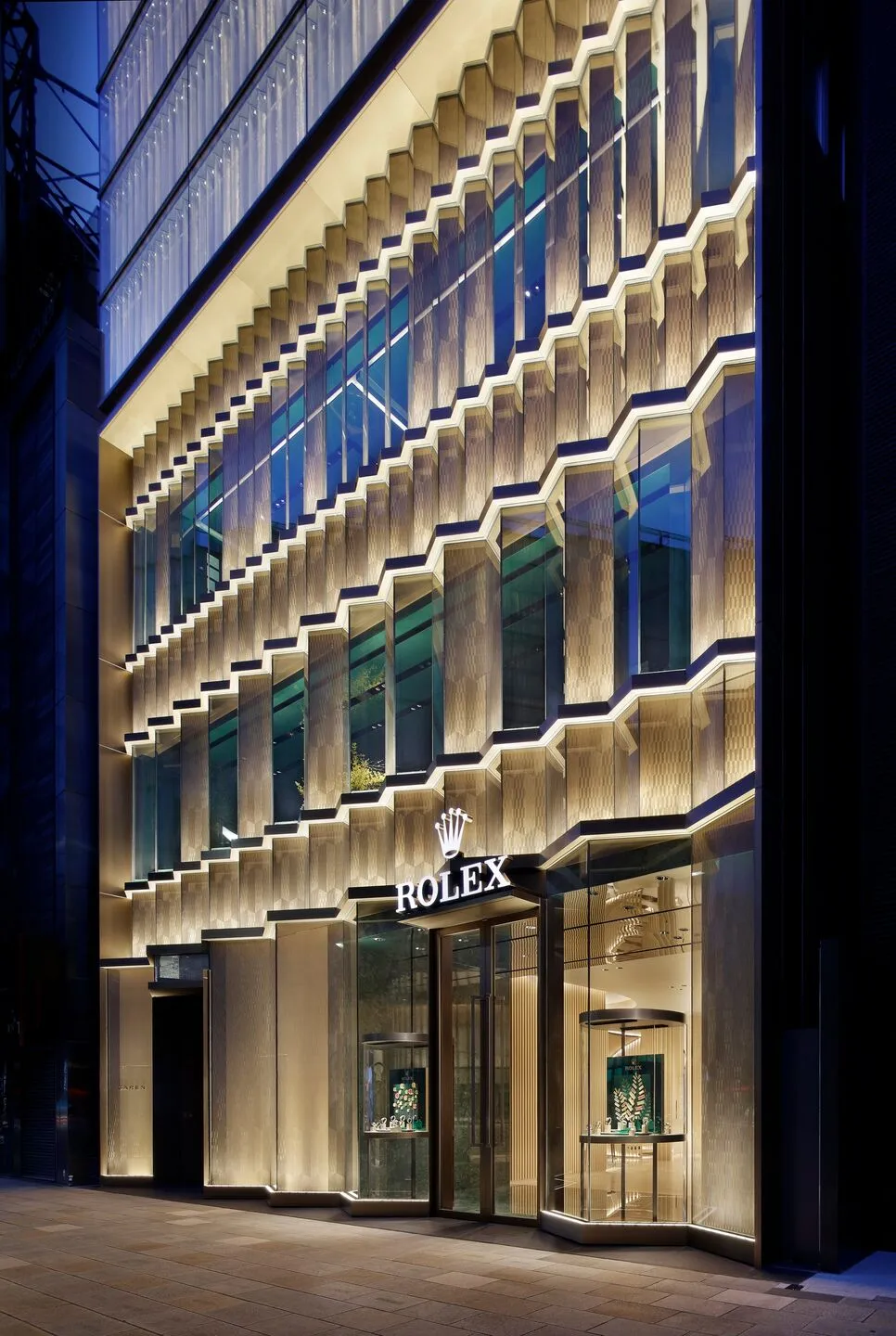
The new iconic Rolex flagship store, designed across four levels as a refined expression of the brand’s identity, is situated on Ginza’s Chuo-Dori Avenue. Designed by Gwenael Nicolas of Curiosity Inc., the building is wrapped in a luminous façade with a unique layered bezel-inspired pattern that references the craft of watchmaking. Inside, the architecture continues this dialogue between precision and elegance, spaces that feel both as prestigious as the iconic brand and like a welcoming space. Tradition and contemporary design are carefully interwoven, allowing the store to sit comfortably within Ginza’s urban rhythm.
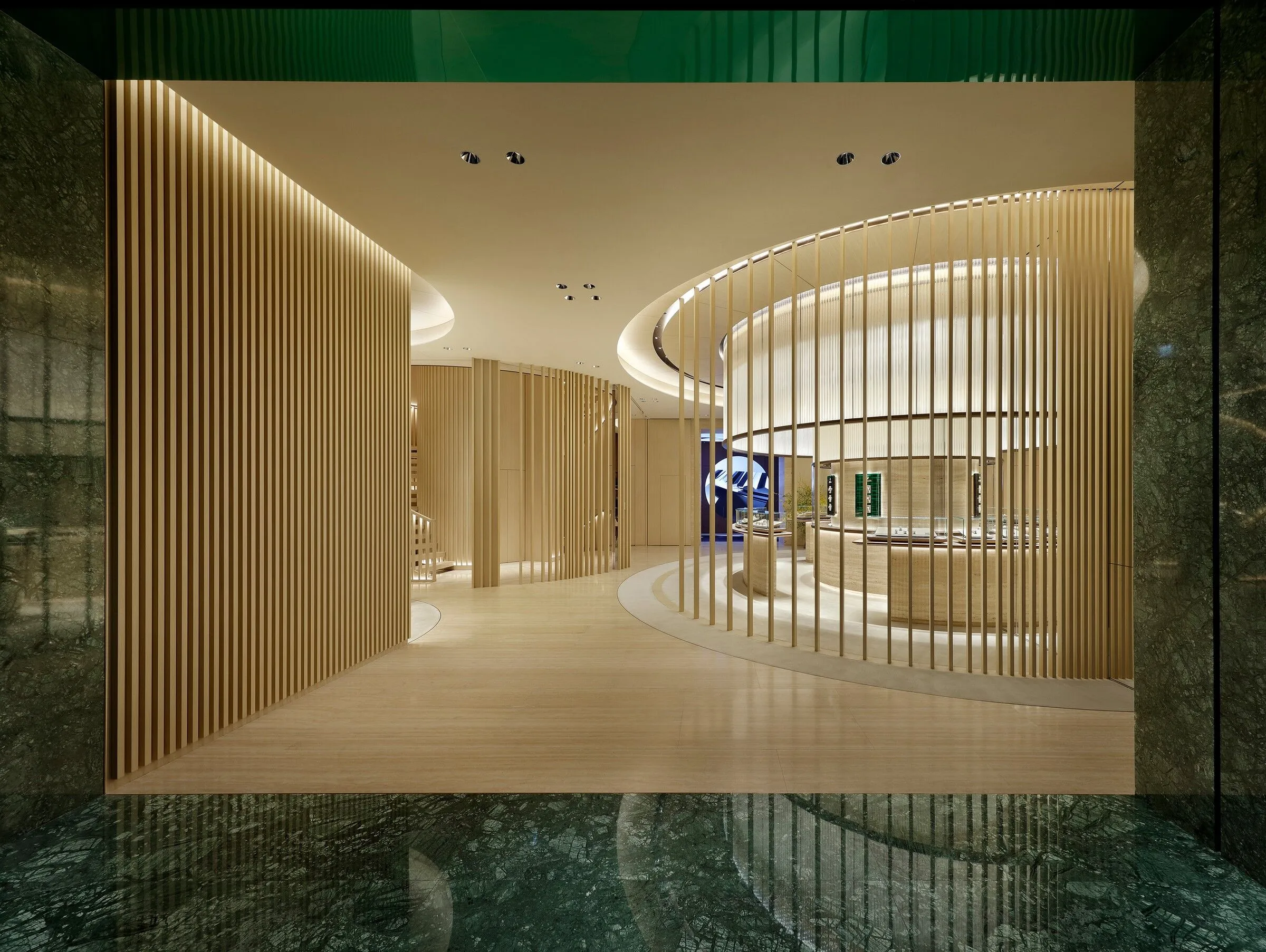
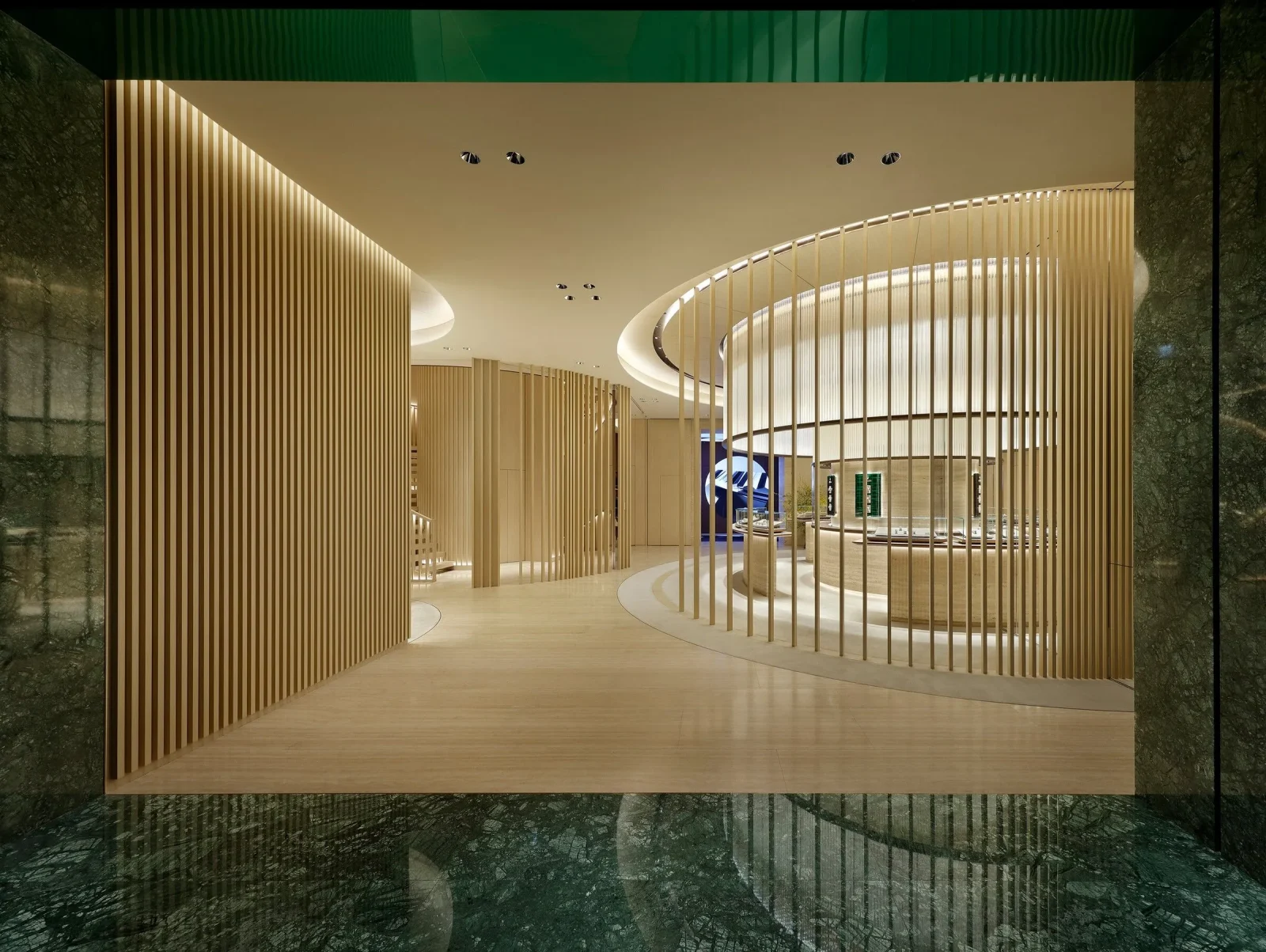
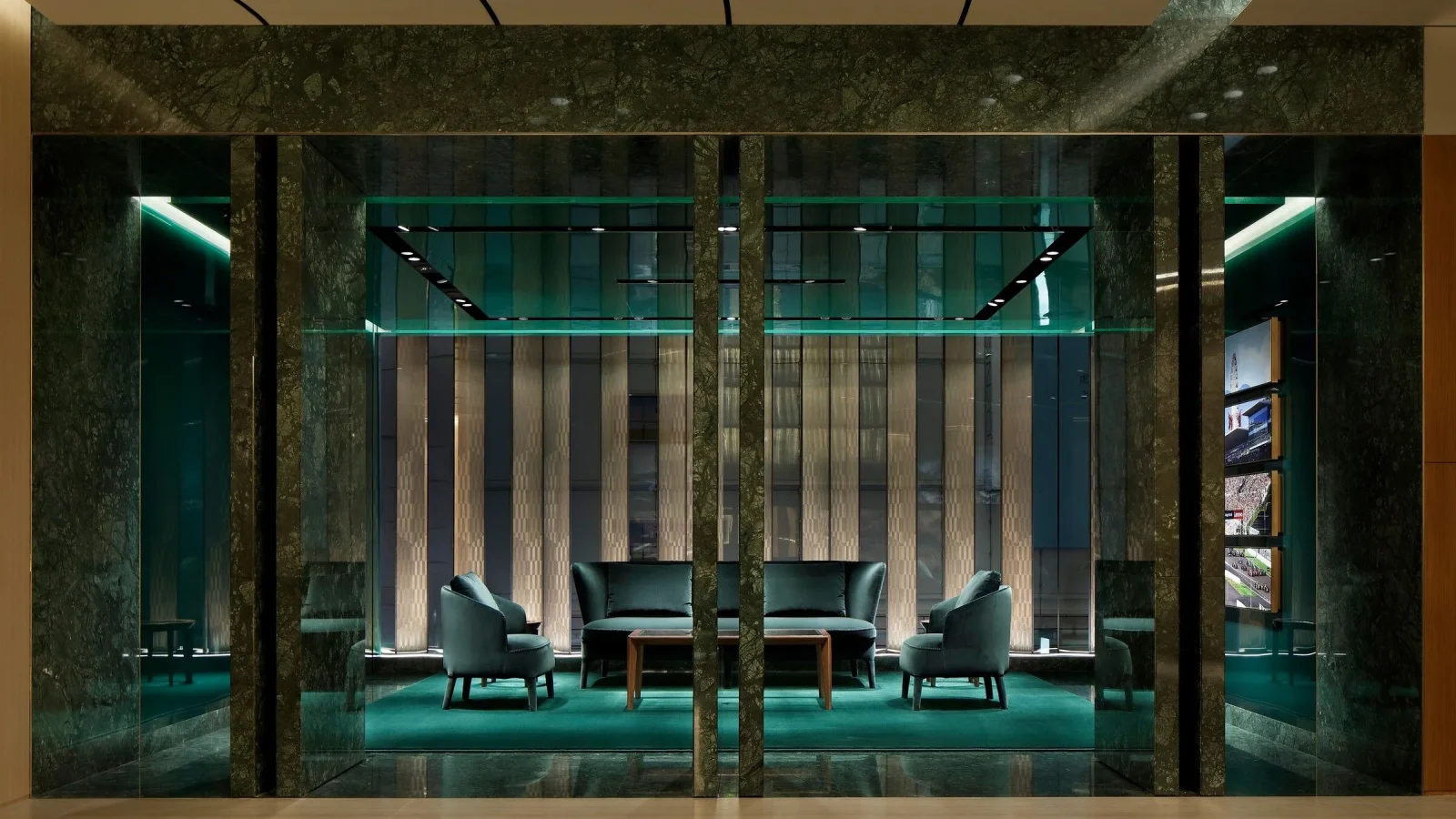
Every element of the design conveys a sense of timeless sophistication, harmonizing Rolex’s heritage with Tokyo’s distinctive culture of hospitality. The glass façade glows with a unique double bezel pattern, crafted by a metal mesh work produced in Kyoto, embedded in the glass. The striking feature of the façade is that the pattern changes depending on the viewer’s angle. The interior retail space is clearly visible from the outside through a large green stone gate that frames the entrance. This threshold gently transitions visitors from the energy of Ginza into the calm, composed atmosphere of the boutique within.
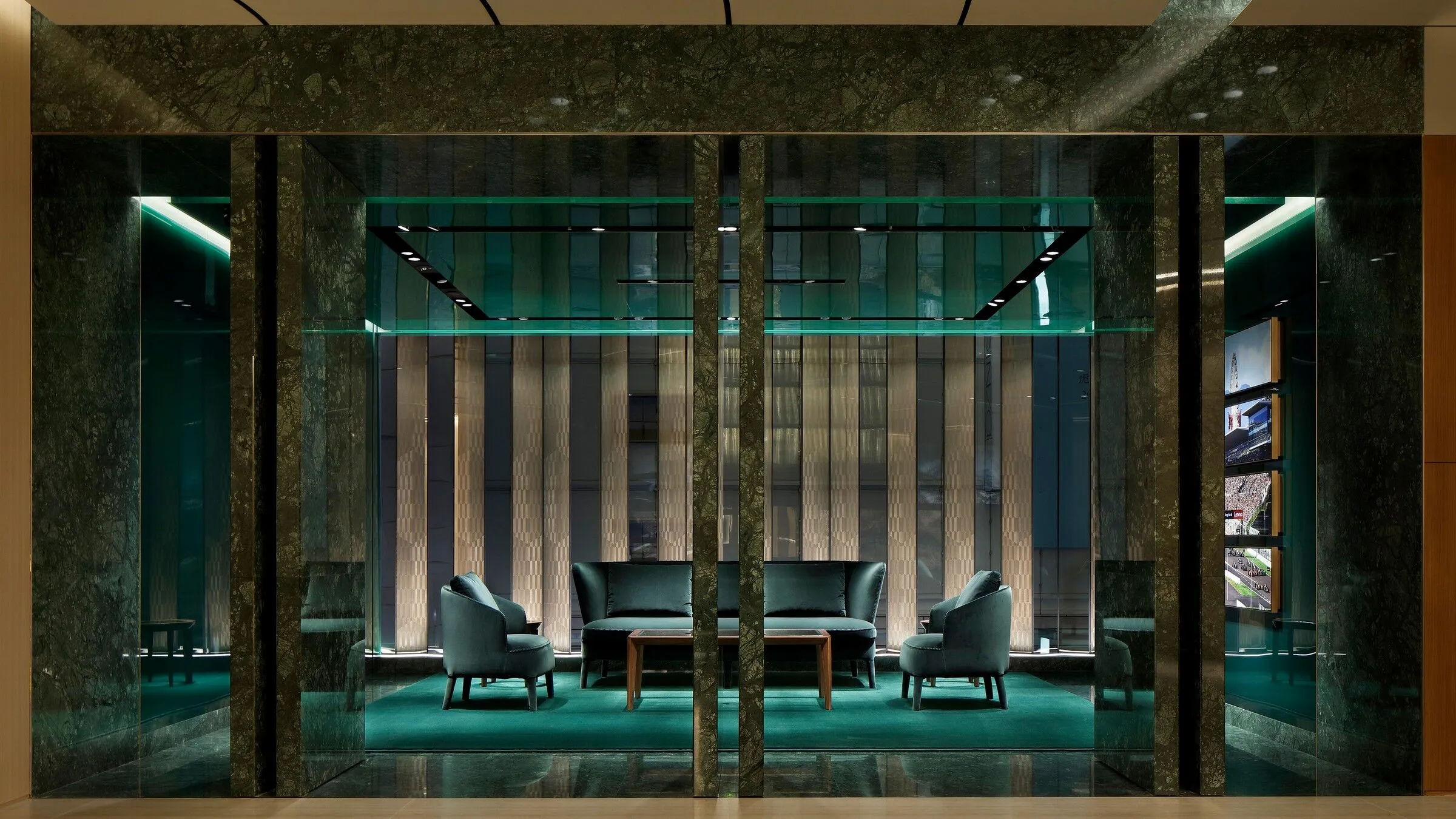
Each room is carefully designed to highlight the distinct character of individual Rolex models and collections. A library wall displays artworks by Japanese artists, capturing the spirit and precision of the brand’s most iconic timepieces. Above the circular display zones, a floating double-layered glass element features a “space within a space,” enhanced by mirrored reflections behind wooden louvers. A sculptural central core, a vertical connector to four levels, serves as a powerful architectural statement. On the second floor, an open sequence of salons unfolds around a signature deep-green stone and lacquer bar, welcoming guests while subtly projecting Rolex’s iconic identity onto the street beyond.
9. ZARA Nanjing Xinjiekou Flagship Store, China
Architect: AIM Architecture
Location: Xinjiekou, Nanjing, China
Completed: 2025
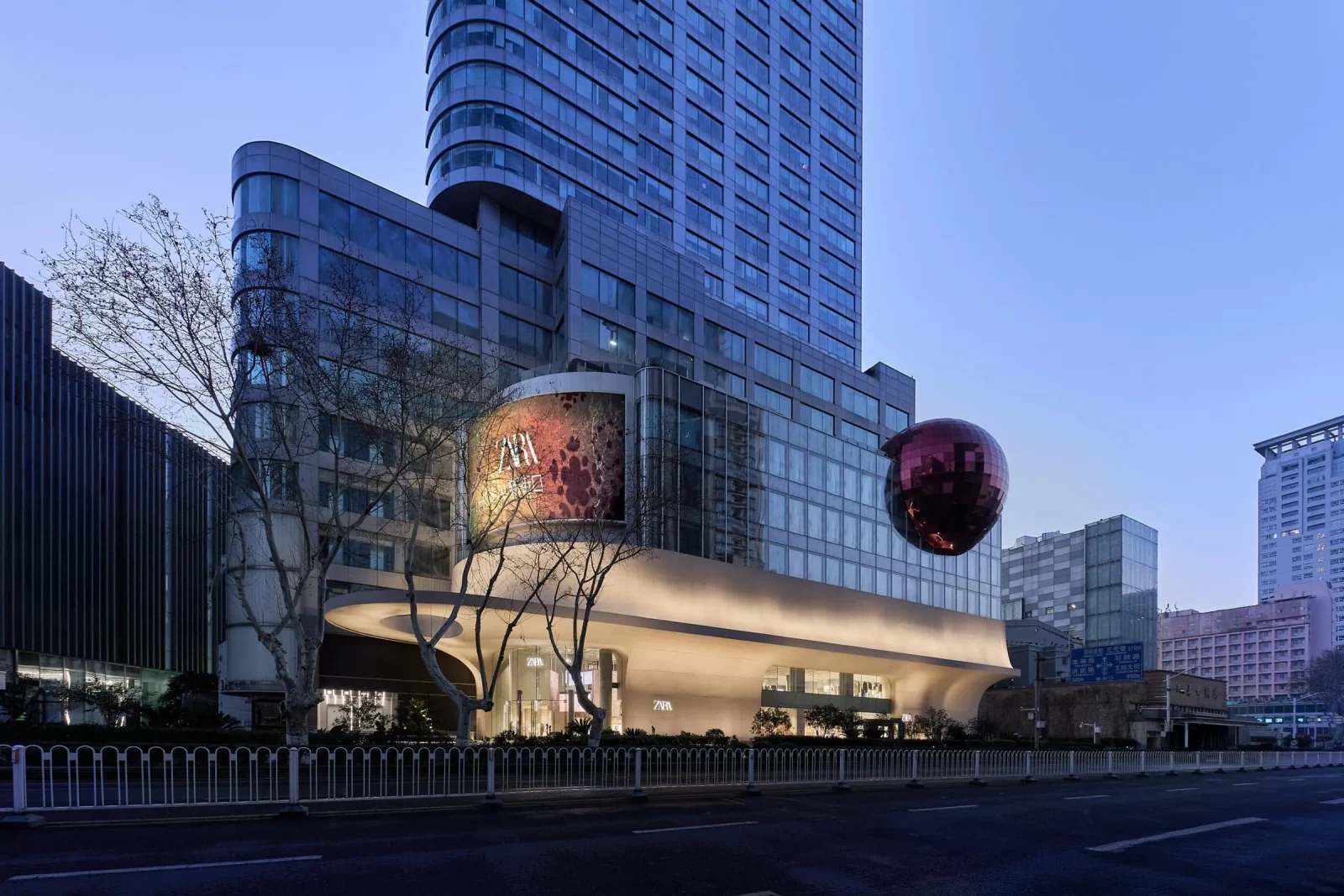
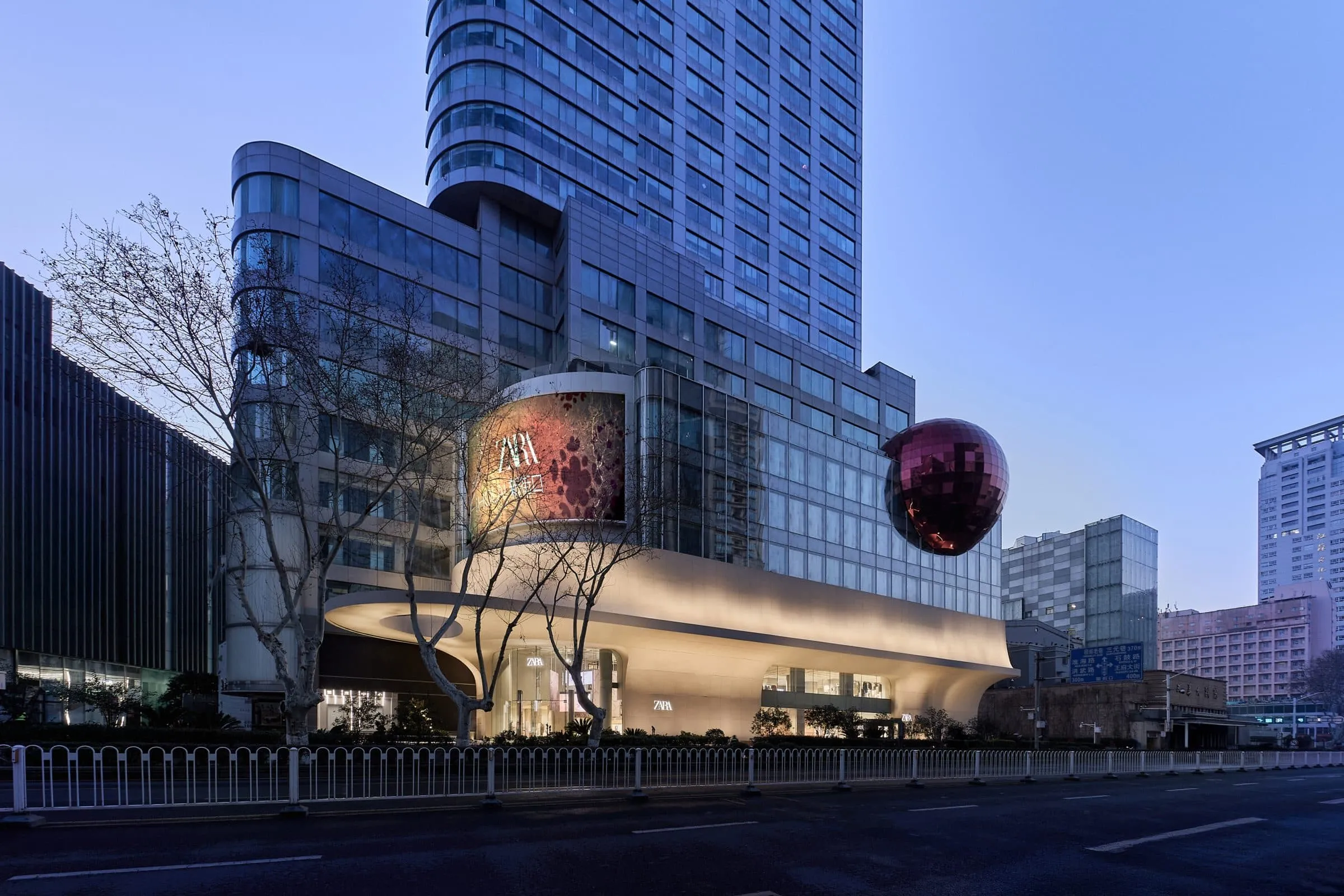
AIM Architecture has created the new ZARA Asia flagship store, seen as one of the key architectural movements in the brand’s retail evolution. The store is a bold new flagship store, featuring architecture that is immersive, dynamic, and closely connected to the city’s urban fabric. The design aimed to bring the brand’s vision to life, setting a new standard for the brand’s future store concepts. Situated in the heart of Nanjing Xinjiekou, China’s vibrant commercial area, the flagship store marks a significant step forward in the retail fashion evolution.
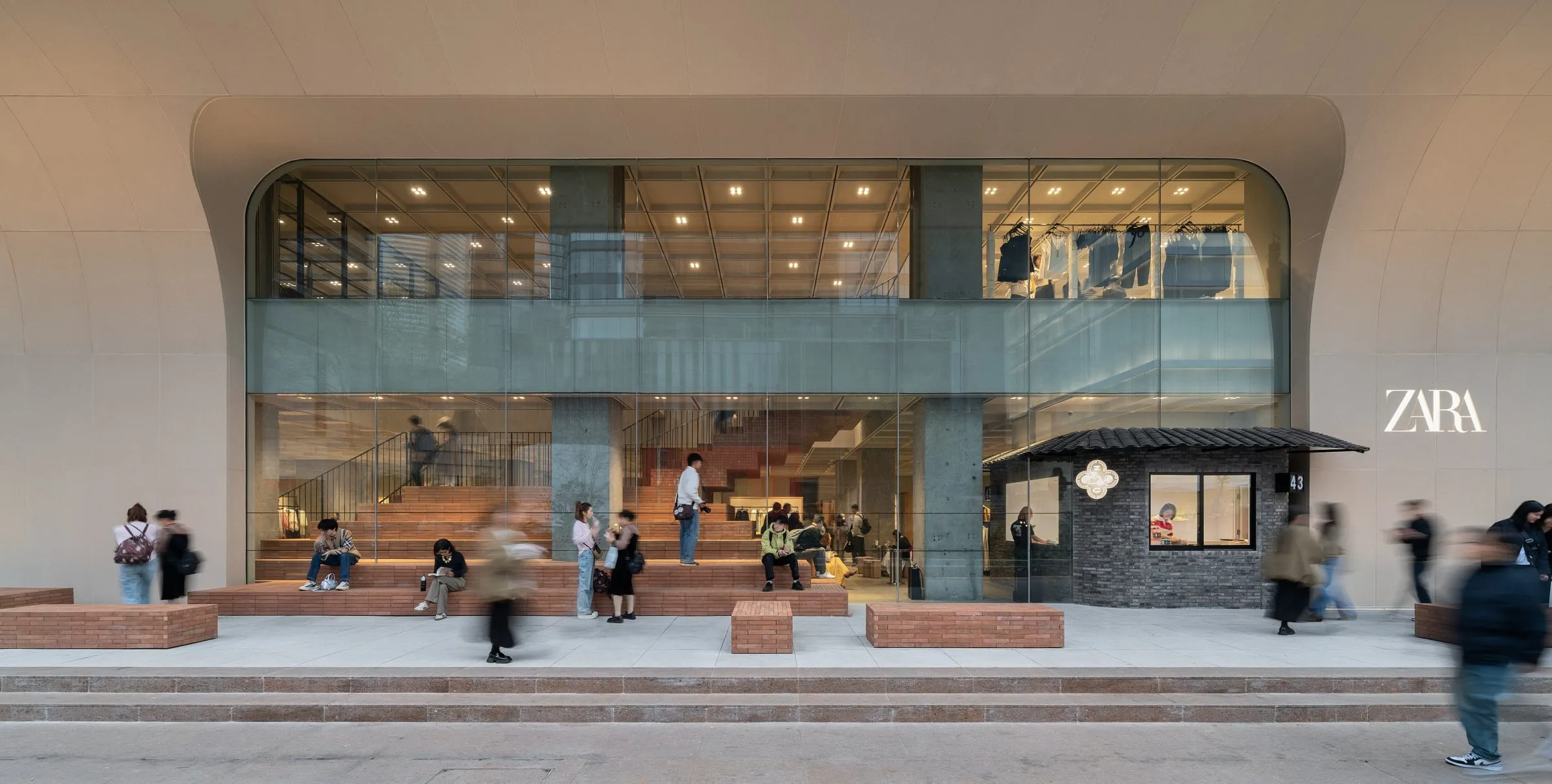
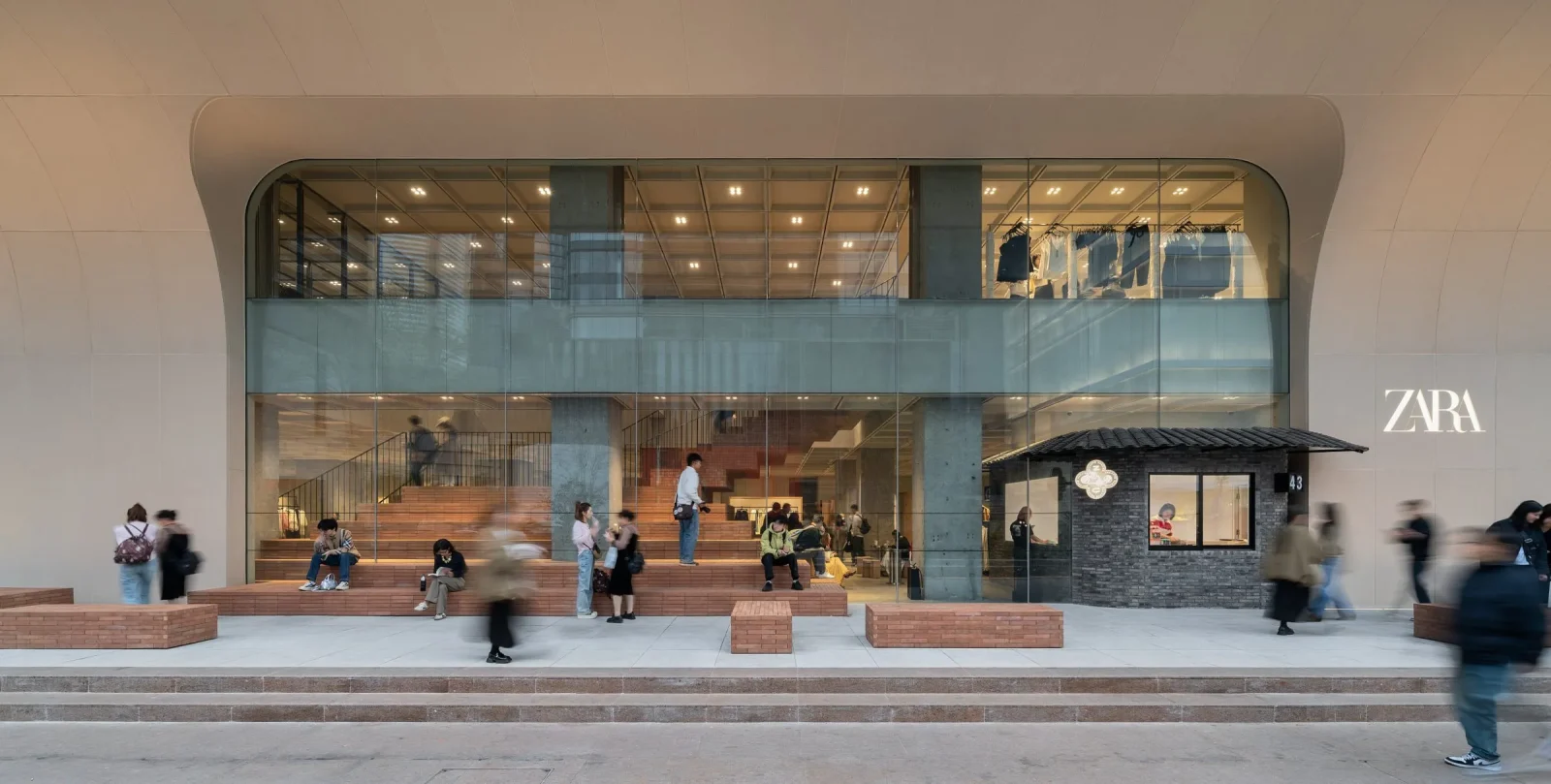
The fluid and organic architectural skin features a huge cantilevered canopy that connects the store with the dynamic population of the city. With the redesigned streetscape and entrance plaza, we extend the brand experience beyond the retail floor, welcoming passersby to engage with the store beyond shopping. The design forges a vital connection between the brand, the city, and its vibrant population, fundamentally redefining the retail journey.
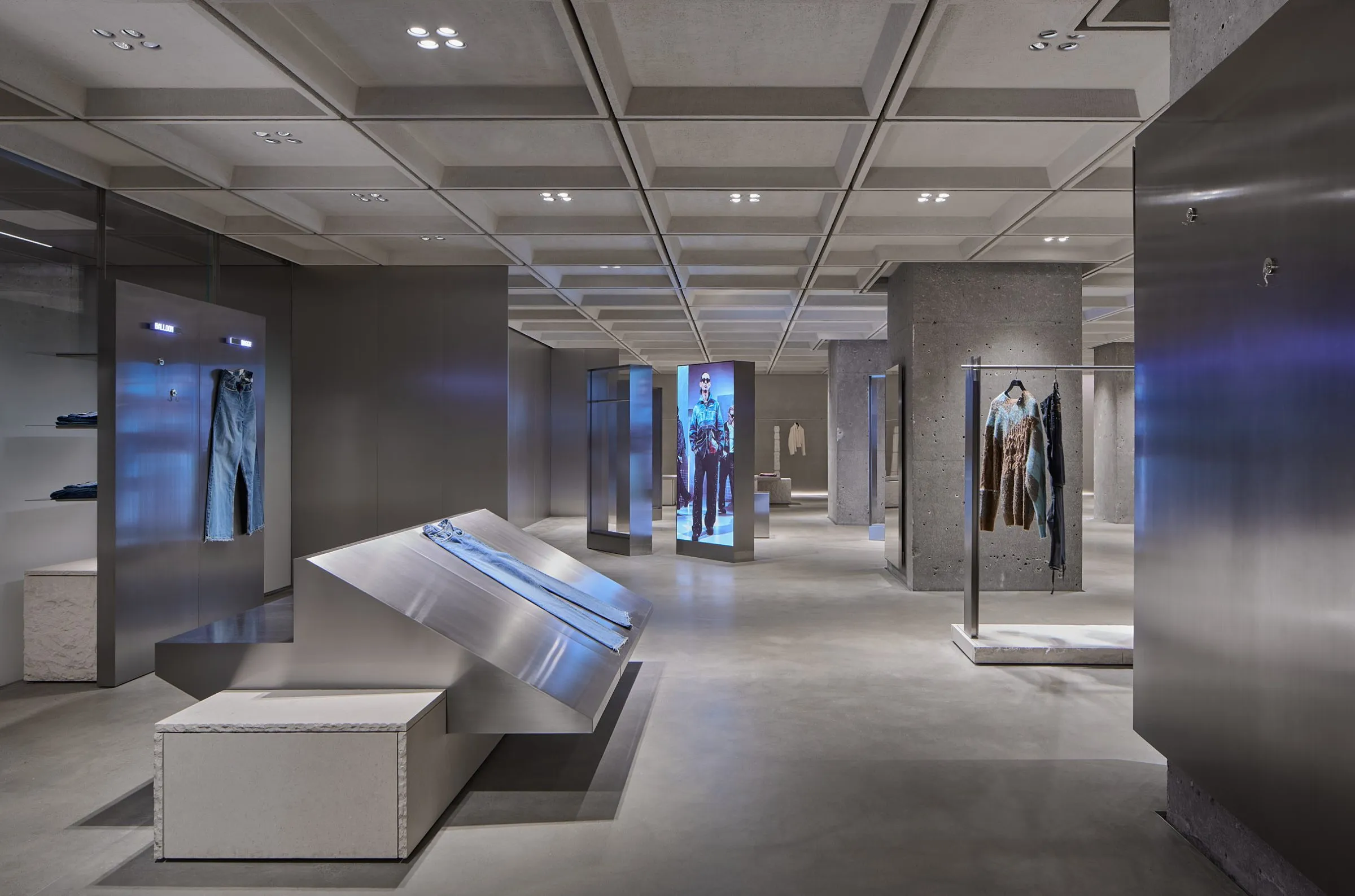
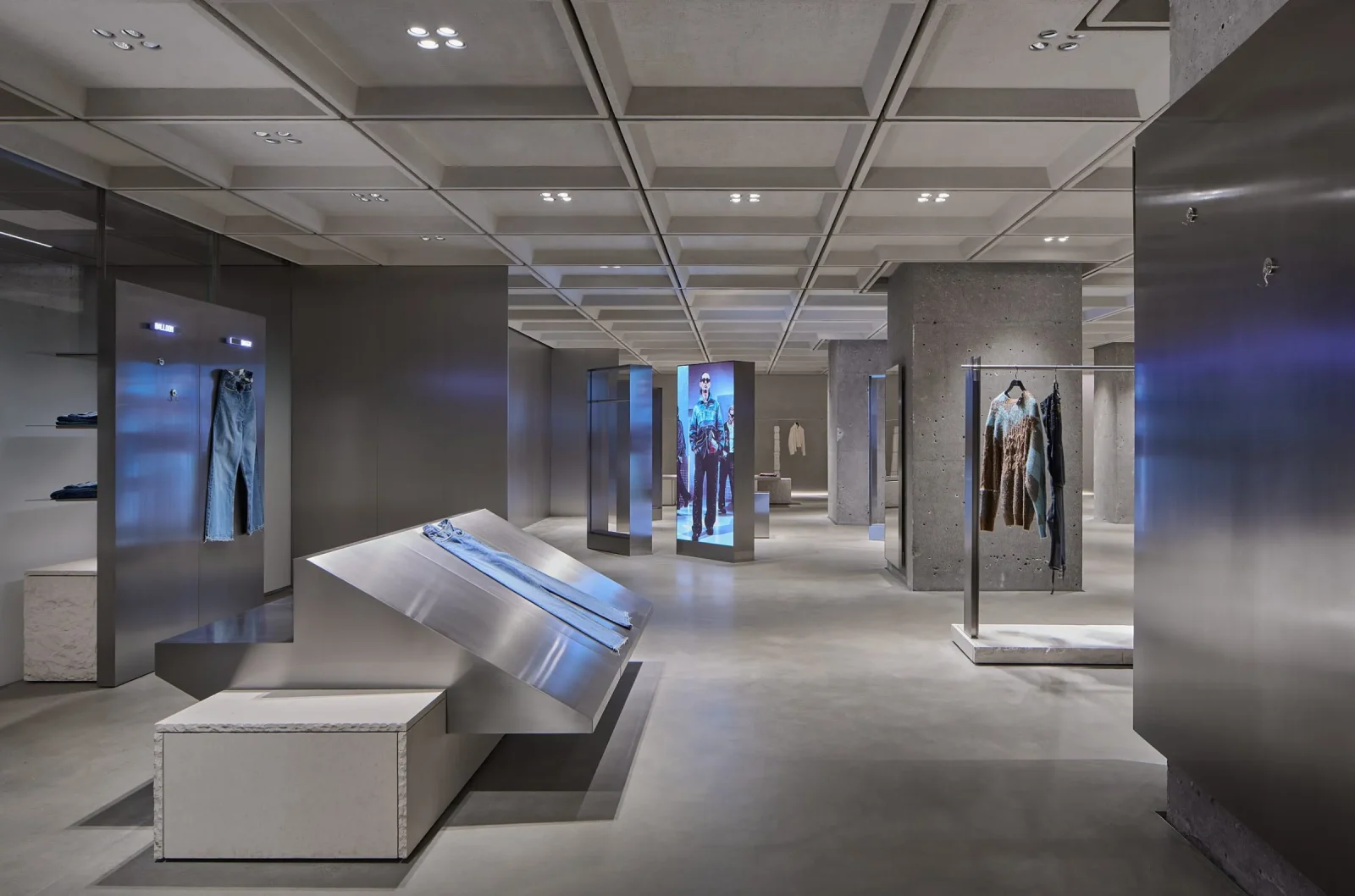
The store introduces a refined balance between structure and spontaneity, transforming shopping into an experience of exploration rather than a mere transaction. Design thoughtfully blends ZARA’s contemporary global language with sensitivity to the cultural context. The interiors come to life through a sculptural red brick mountain staircase echoing local heritage. Digital innovation is seamlessly woven into the space, featuring Zara Fit Check, offering an interactive bridge between physical and virtual retail. Layered materials, exposed columns, polished concrete floors, and a calm concrete ceiling create a bold yet serene architectural setting that feels authentic and forward-looking.
10. Pomellato New Rodeo Drive Flagship, Los Angeles
Architect: Davide Caprioli
Location: Los Angeles, United States
Completed: 2024
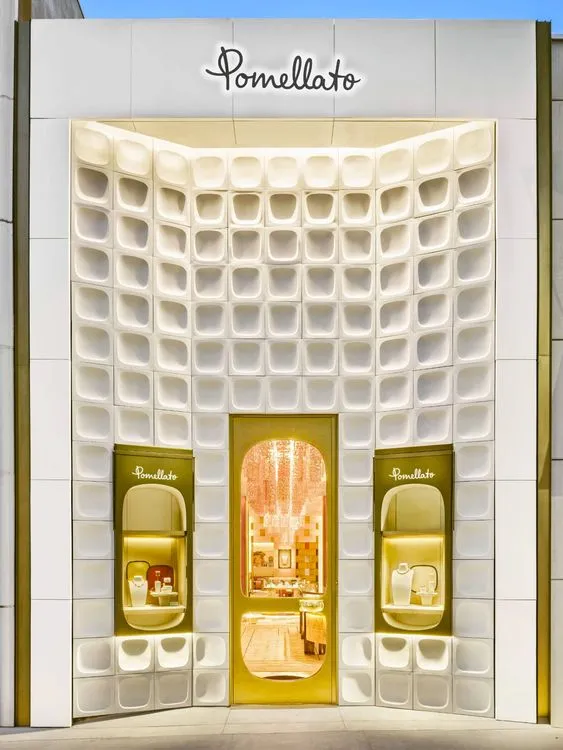
Pomellato’s new Rodeo Drive flagship boutique, situated in Los Angeles, features a glowing bronze entrance that showcases the Italian jeweler’s rich heritage. Designed by architect Davide Caprioli, the boutique reveals its identity even before entry, with an oversized brass door handle sculpted to echo the brand’s iconic ring. The façade is wrapped in hand-shaped white tiles by Fornace Sant’ Anselmo, their soft geometry inspired by Pomellato’s signature Nudo jewels. Together, these tactile details create a warm, expressive storefront that invites visitors into a world of craftsmanship, artistry, and understated luxury.
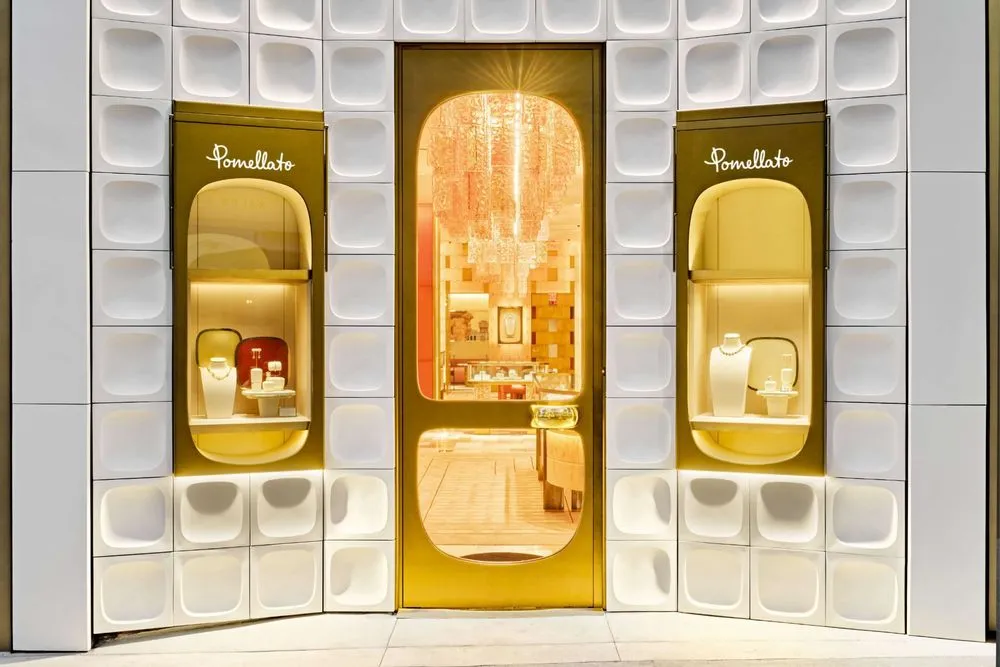
The boutique draws deeply from Pomellato’s heritage, expressed through both subtle gestures and bold architectural statements. As architect Davide Caprioli describes, the façade carries a sense of monumentality, echoing American iconic architecture. Milanese refinement meets Los Angeles’ confidence in a sculptural exterior formed by hand-crafted white concrete blocks, evoking the strength of American landmarks. Inside, Pomellato’s signature Montenapoleone Red is enriched with soft pink tones across embroidered panels and hand-painted silk wallpaper, shaping an interior that feels vibrant, elegant, and unmistakably contemporary.
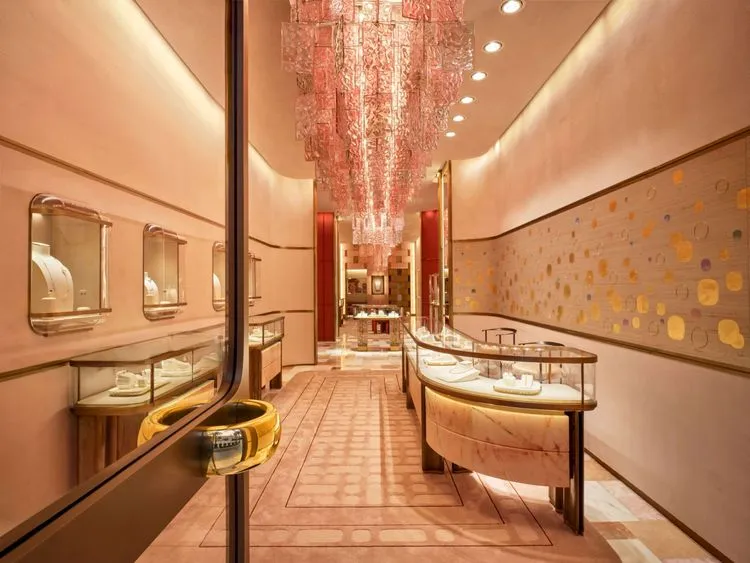
The boutique unfolds as an immersive world where art, architecture, and craftsmanship engage in a refined, contemporary dialogue. Subtle tributes to Pomellato’s Italian roots appear through Northern Italian marble floors and luminous Murano glass sculptures placed throughout the space. Hand-painted and embroidered silk wallpapers reinterpret the Nudo motif as a delicate, suspended wisteria, while soft pink marbles recall the historic stones of Milan’s Duomo. Every detail is guided by a philosophy of subtle, intentional luxury, crafted to feel intimate and personal, and reinforced by the project’s achievement of LEED Platinum certification.
Explore Courses
.jpg "Ondrej Chybik - Rethinking Architecture")