




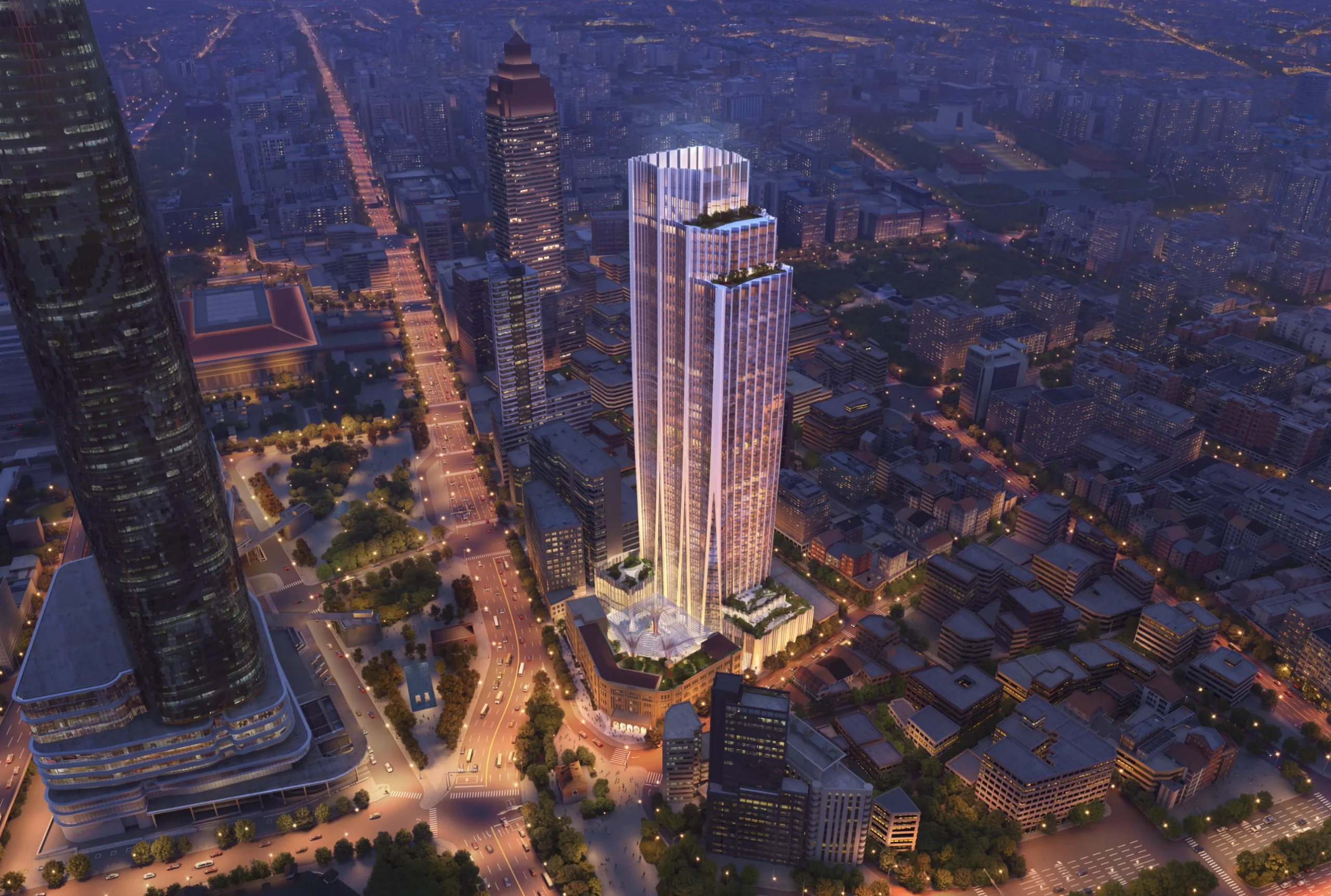
Zaha Hadid Architects (ZHA), in collaboration with C.Y. Lee & Partners, has been selected to design the new National Innovation, Creativity and Finance Center (NICFC) in Taipei. The announcement follows an international design competition and marks a major addition to Taiwan’s financial and cultural landscape.
Located in Beimen, Taipei’s historic financial district, NICFC will serve as the headquarters for four institutions under the Financial Supervisory Commission: the Taiwan Stock Exchange, the Futures Exchange, the Depository & Clearing Corporation, and related financial bodies.
The project introduces a major new commercial tower and also reshapes the public realm around one of the city’s busiest and most historically significant urban intersections.
Reconnecting Taipei’s Western Gateway
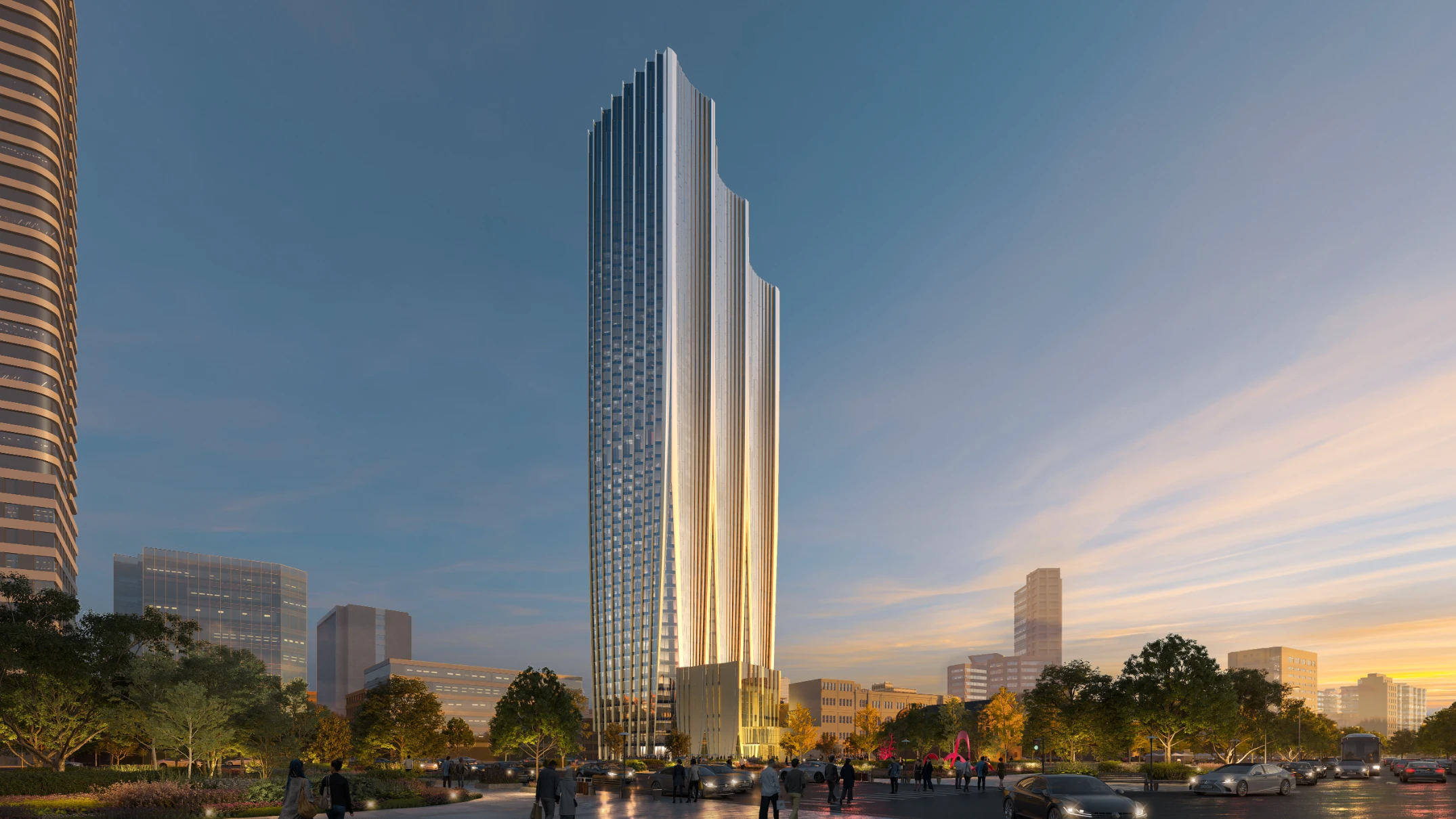
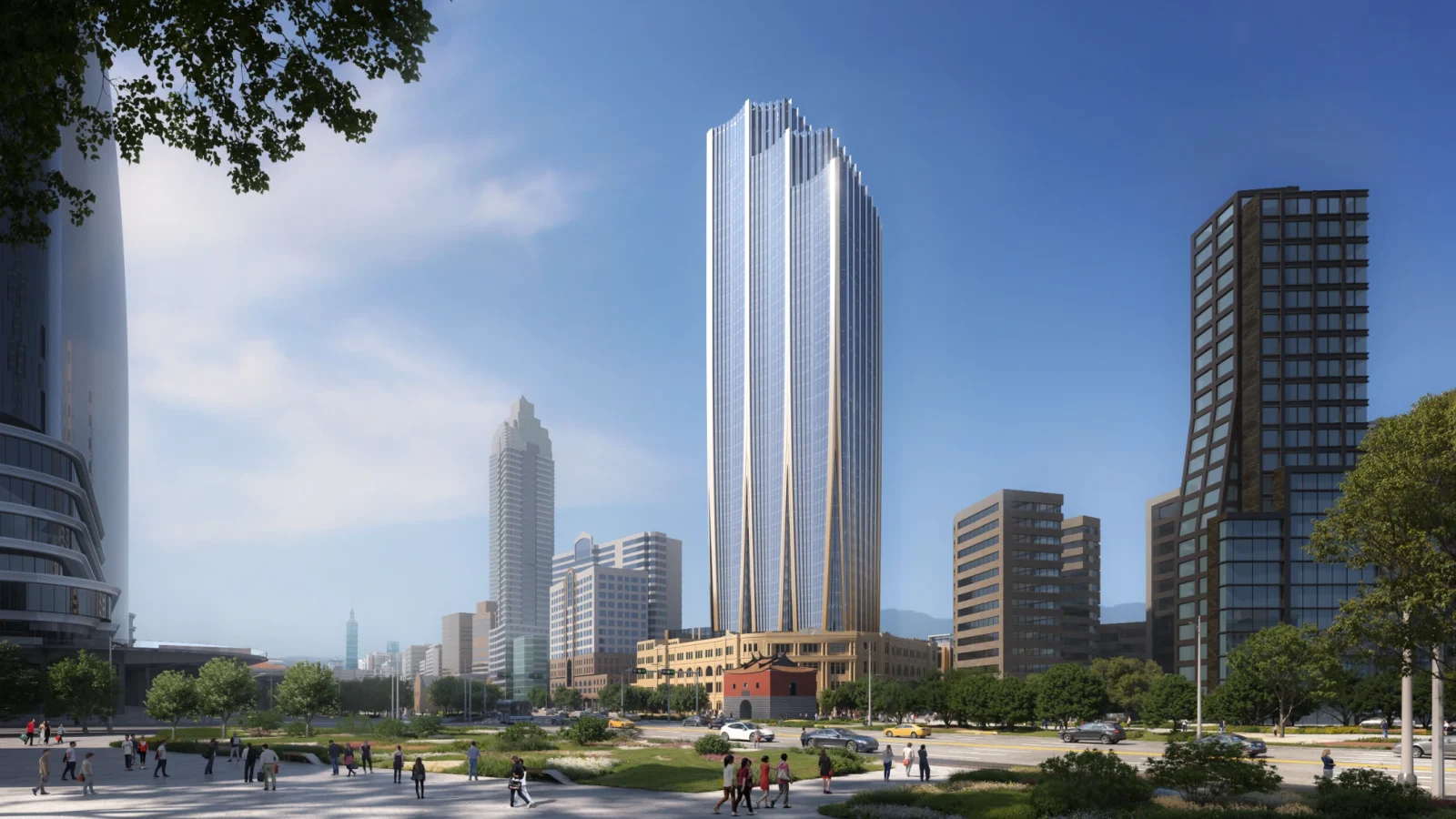
Situated at the junction of Zhongxiao West Road and Bo’ai Road, the development stands within walking distance of Taipei Main Station, Beimen MRT Station, Zhongshan Hall, the historic Beimen Gate, the Railway Museum, and the 1930 Taipei Beimen Post Office.
In line with the city’s Western Gateway Project, the 175,000-square-meter design prioritizes walkability and public connectivity. A network of plazas, courtyards, and pedestrian routes links surrounding civic and cultural landmarks, strengthening the district’s urban fabric while preserving long-standing sightlines and historic streetscapes.
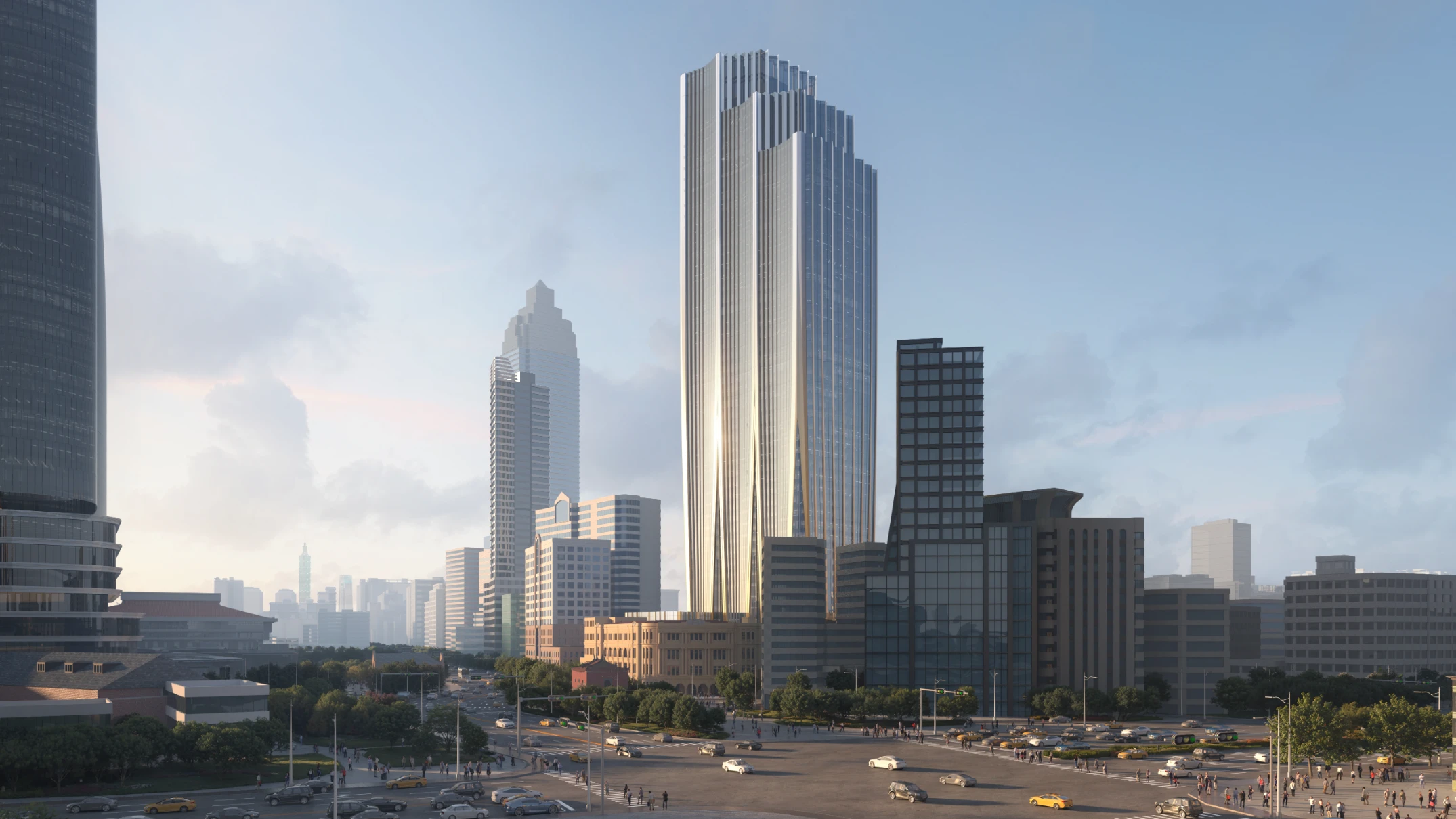
The approach ensures that Beimen’s heritage remains clearly visible and legible within a rapidly modernizing city.
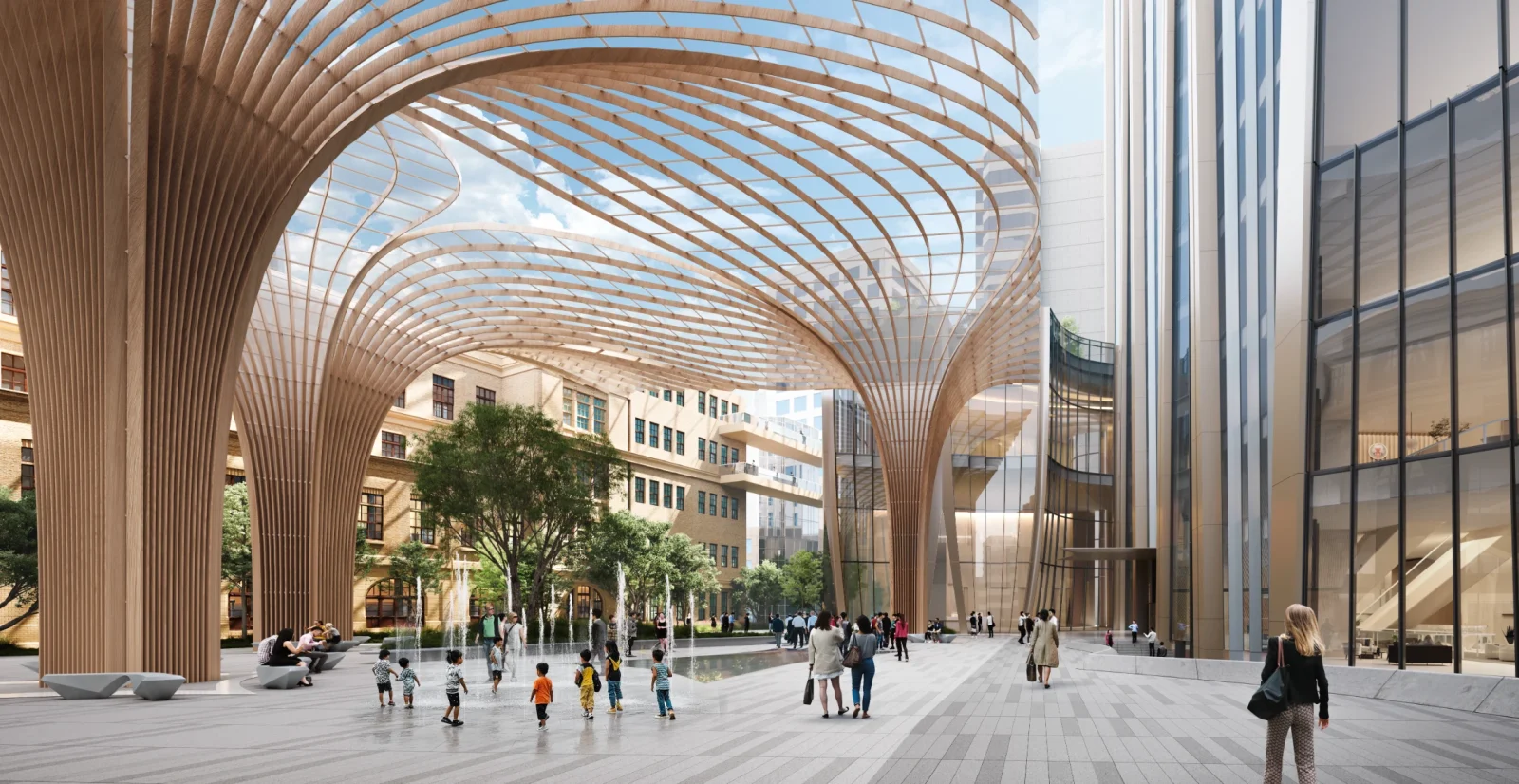
The NICFC rises five stories, mirroring the scale of the adjacent post office. Pleated columns support a sculptural glazed canopy that shelters a new central courtyard between the old and new structures.
This sheltered plaza is designed for public performances, events, and everyday use, reinforcing the project’s civic role beyond its financial functions.
Revitalizing the Historic Beimen Post Office
A key component of the project is the preservation and transformation of the 95-year-old Taipei Beimen Post Office. While later extensions will be removed, the ornate 1930 heritage structure will be carefully restored.
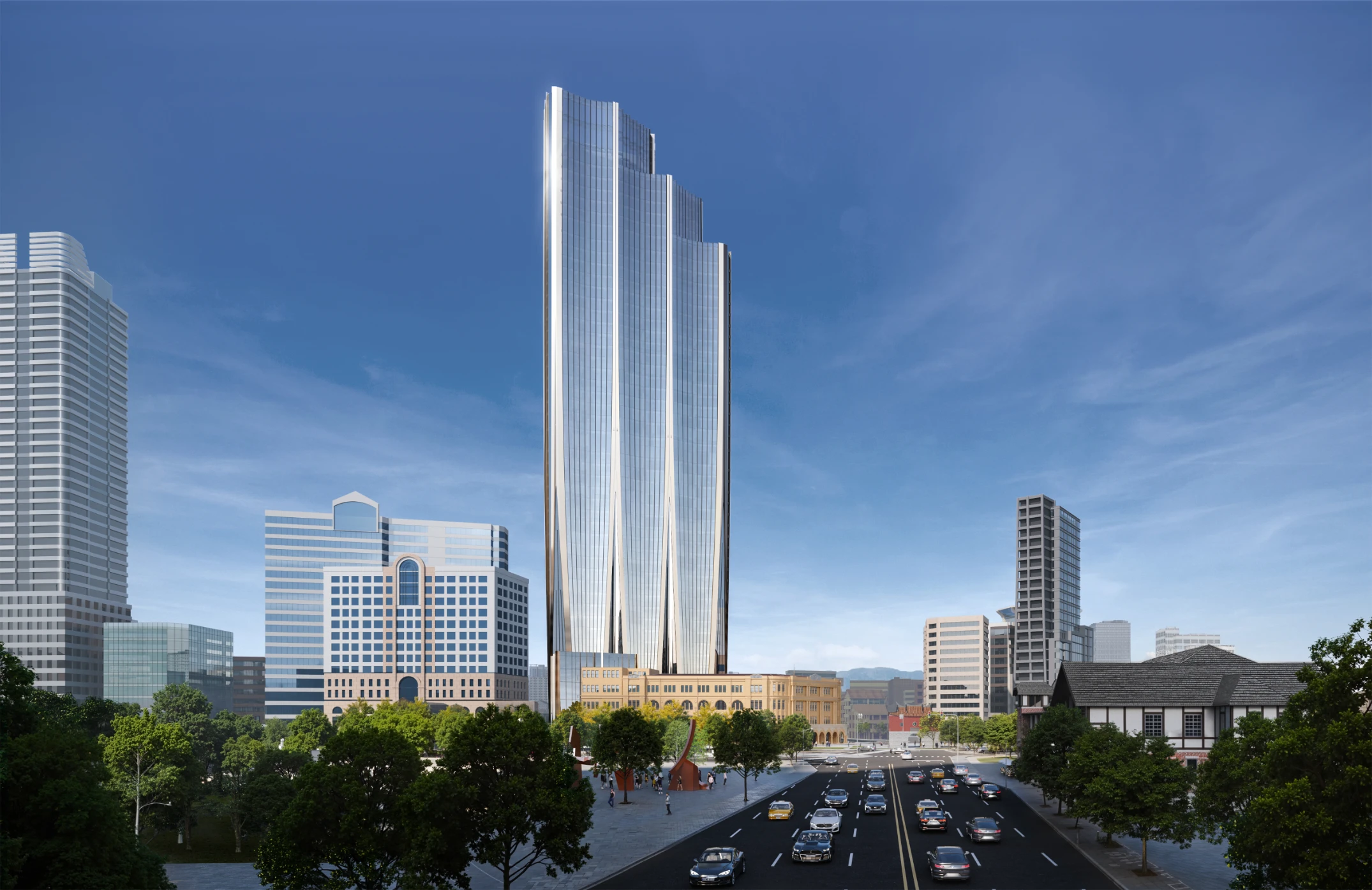
The building will be repurposed as a postal communications museum and cultural venue. Its original interiors will house immersive exhibitions, literary archives, and historic artifacts, while the restored portico will function as a community hub and public gathering space.
Postal operations will move to a modern facility equipped for contemporary infrastructure needs, allowing the historic building to transition from a service center into a civic and cultural landmark.
A 47-Storey Tower Inspired by the Phalaenopsis Orchid
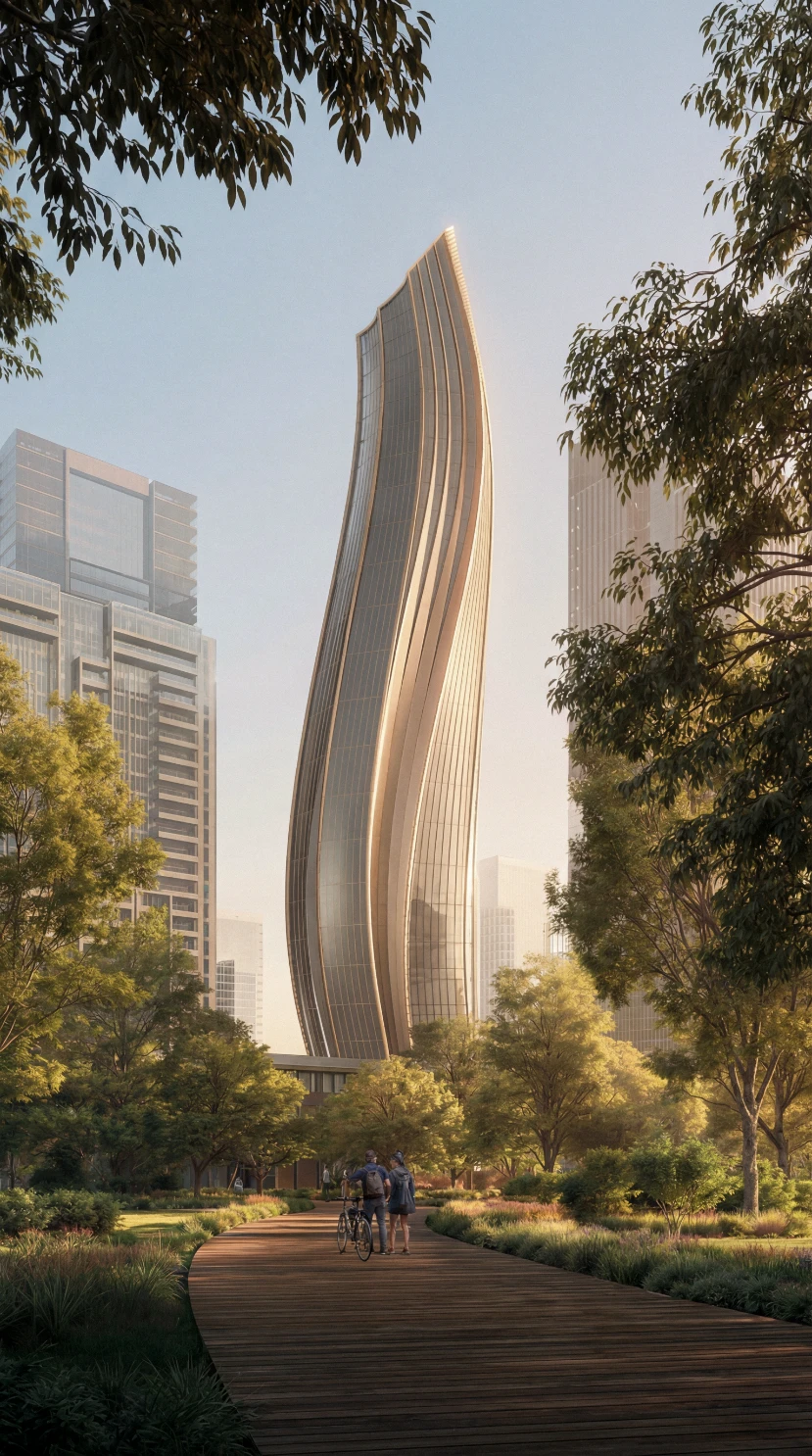
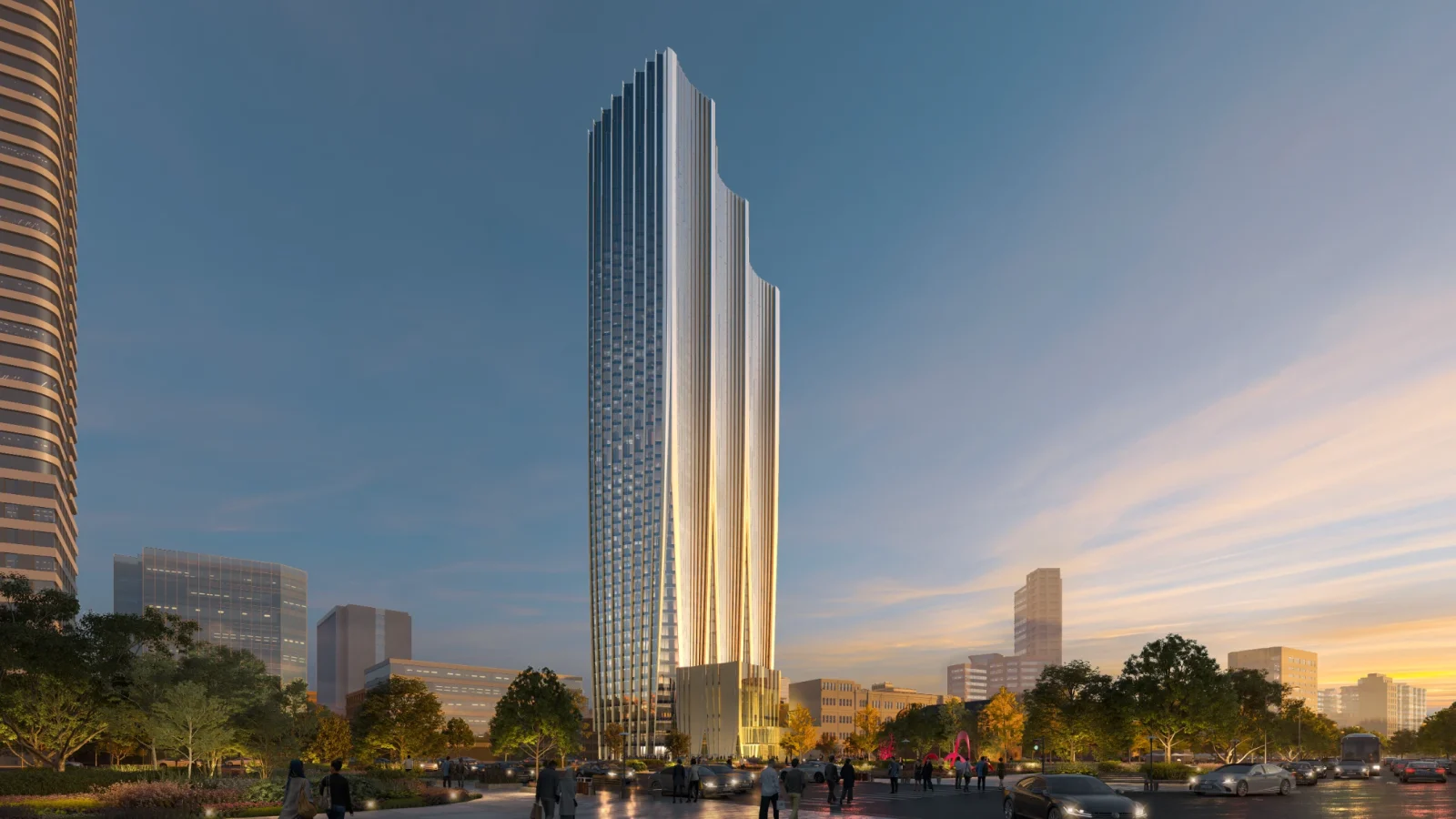
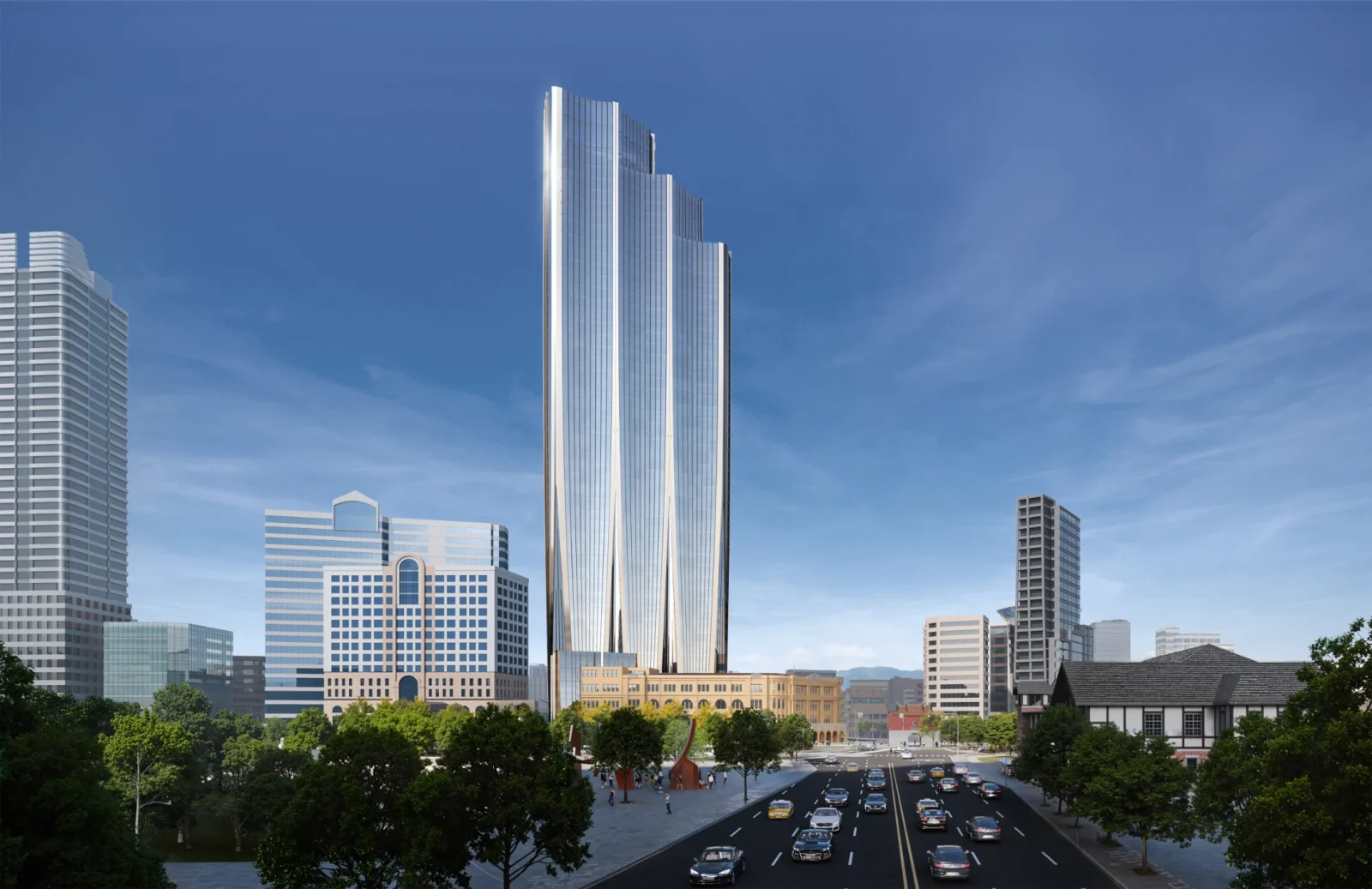
Stepping back from the heritage building, the 47-storey tower draws inspiration from the fluted structures of Taiwan’s native Phalaenopsis orchid. As the orchid’s delicate fluting supports its petals and sepals, the tower’s organic geometry unfolds and extends upward.
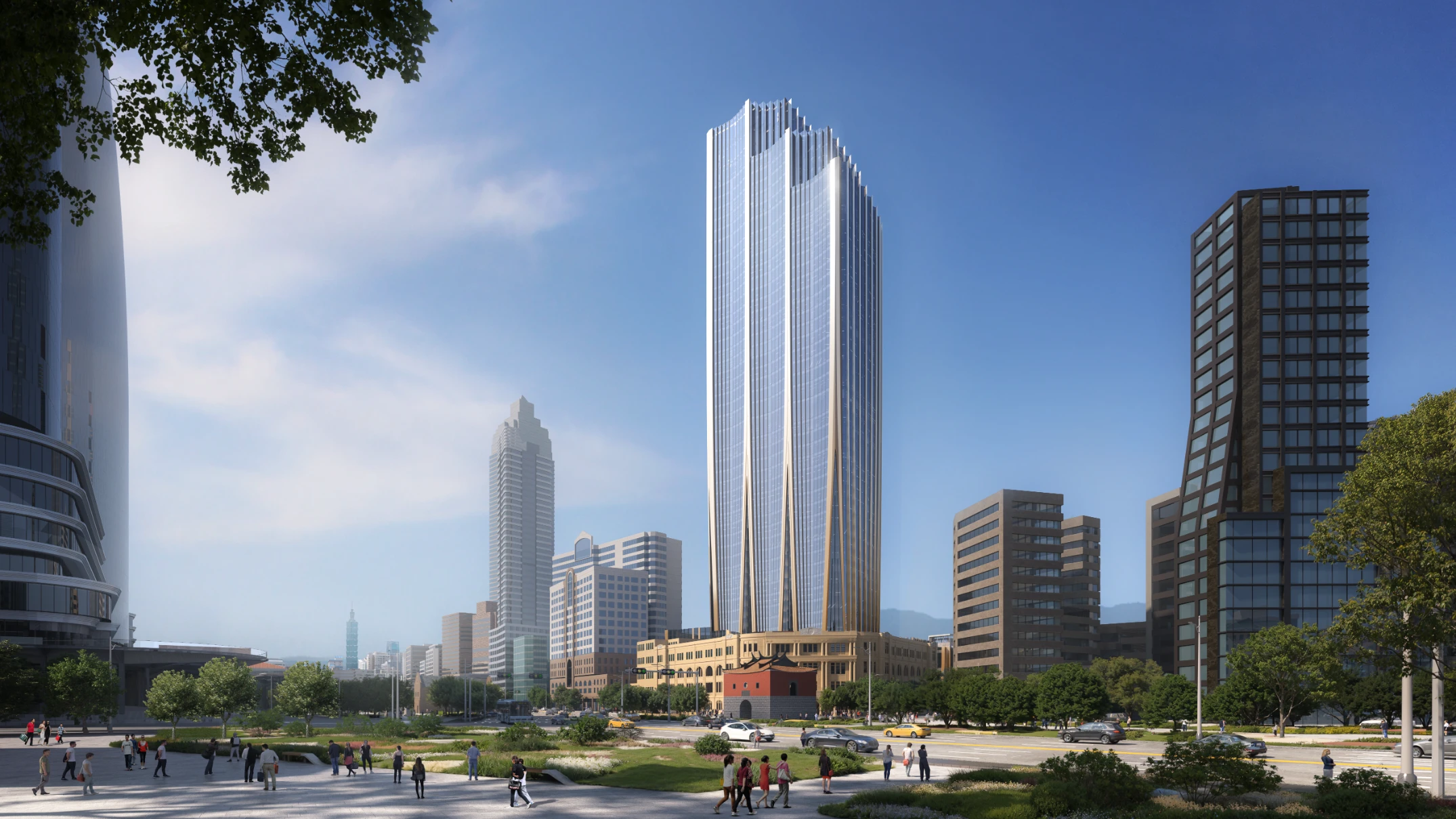
The design balances sculptural expression with operational efficiency. Floor area usage rates exceed 70 percent, and the tower is divided into distinct vertical zones for each of the four financial institutions.
Shared flexible office floors and a conference center provide adaptability, while three independent elevator banks ensure secure and seamless circulation for institutions, tenants, dignitaries, and services.
The tower’s façades respond to the surrounding city and landscape. Concave bays along the northern façade frame panoramic views toward the Qixing and Guanyin mountains. To the east, the building aligns with Taipei’s primary urban axis, offering direct sightlines toward Taipei 101 and the Xinyi District.
A vertical pleated rhythm shapes the western façade facing the Tamsui River landscapes, while the southern façade follows the city’s administrative district guidelines. Upper levels step back in layers to provide shading and reduce lateral wind forces.

Designed for Taipei’s humid subtropical climate, NICFC incorporates a responsive pleated façade system that regulates solar exposure and airflow.
The curvature of the tower defines varying depths and angles in the façade, reducing solar heat gain and guiding natural ventilation. The system allows the building envelope to perform dynamically, improving comfort while reducing energy demand.
A high-performance double-glazed curtain wall is integrated within the pleated structure, while photovoltaic panels are embedded in the façade and installed on the roof to generate on-site renewable energy.
Targeting Net-Zero Carbon Performance
NICFC aims for dual sustainability certification: LEED Platinum and EEWH Diamond. The project is designed to operate at net-zero carbon emissions, setting a benchmark for large-scale developments in Taiwan.
Advanced digital mapping and 3D modeling were used to optimize orientation, façade performance, and structural systems. Recyclable materials, low-VOC finishes, and modular construction methods help reduce embodied carbon and extend lifecycle durability.
Rainwater collection, storage, and reuse systems further decrease reliance on municipal water supply, reinforcing the project’s environmental strategy.
NICFC Project Details
Project Name: National Innovation, Creativity and Finance Center (NICFC)
Location: Beimen District, Taipei, Taiwan
Architects: Zaha Hadid Architects (ZHA)
Executive Architect: C.Y. Lee & Partners
Total Floor Area: 175,000 sq. m
Tower Height: 47 storeys
Sustainability Targets: LEED Platinum, EEWH Diamond, Net-Zero Carbon
Render by X Universe Visual Design
Explore Courses
.jpg%202.jpg "Building Performance with Forma & Opossum")
.jpg "Ondrej Chybik - Rethinking Architecture")