

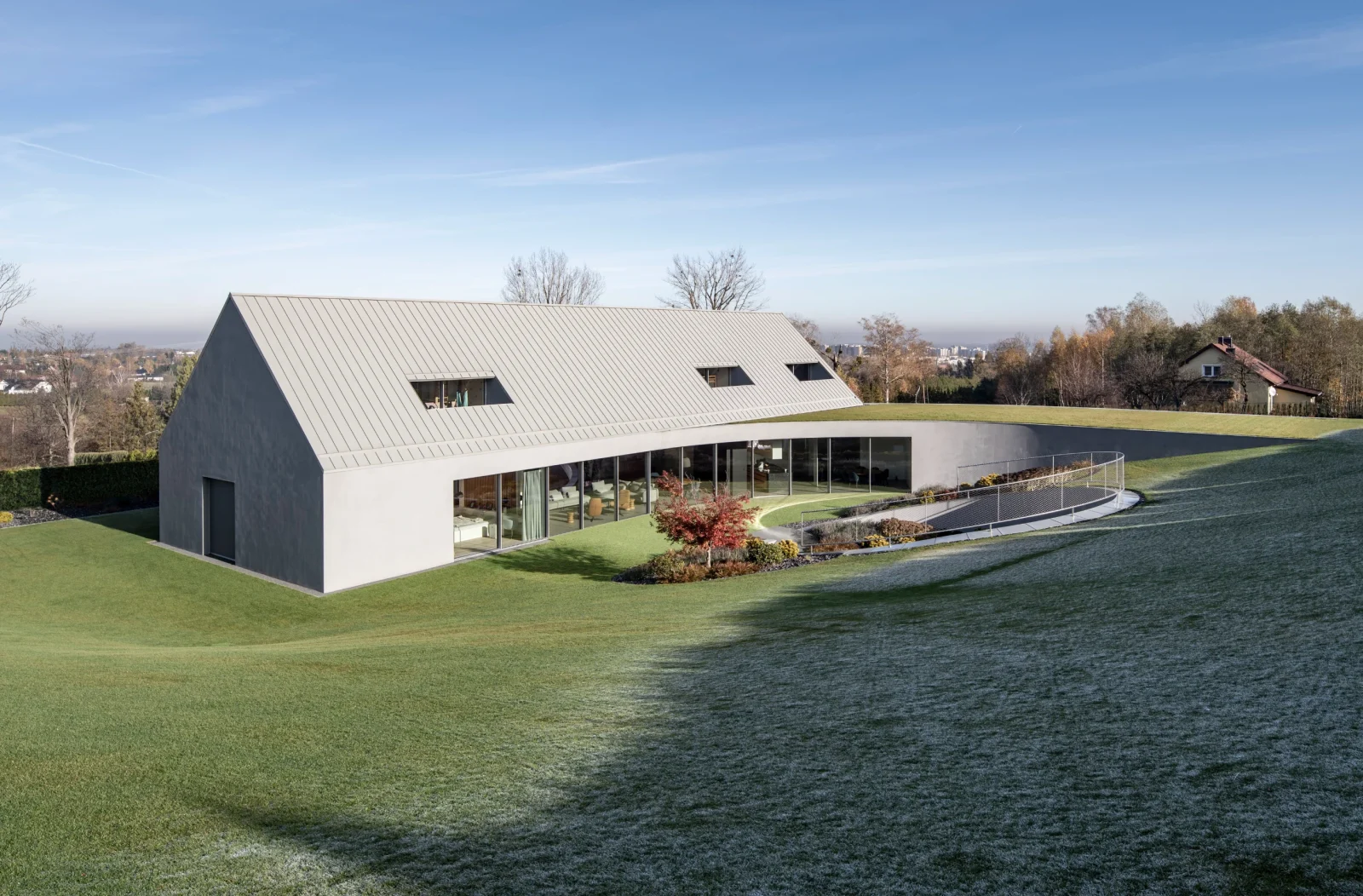
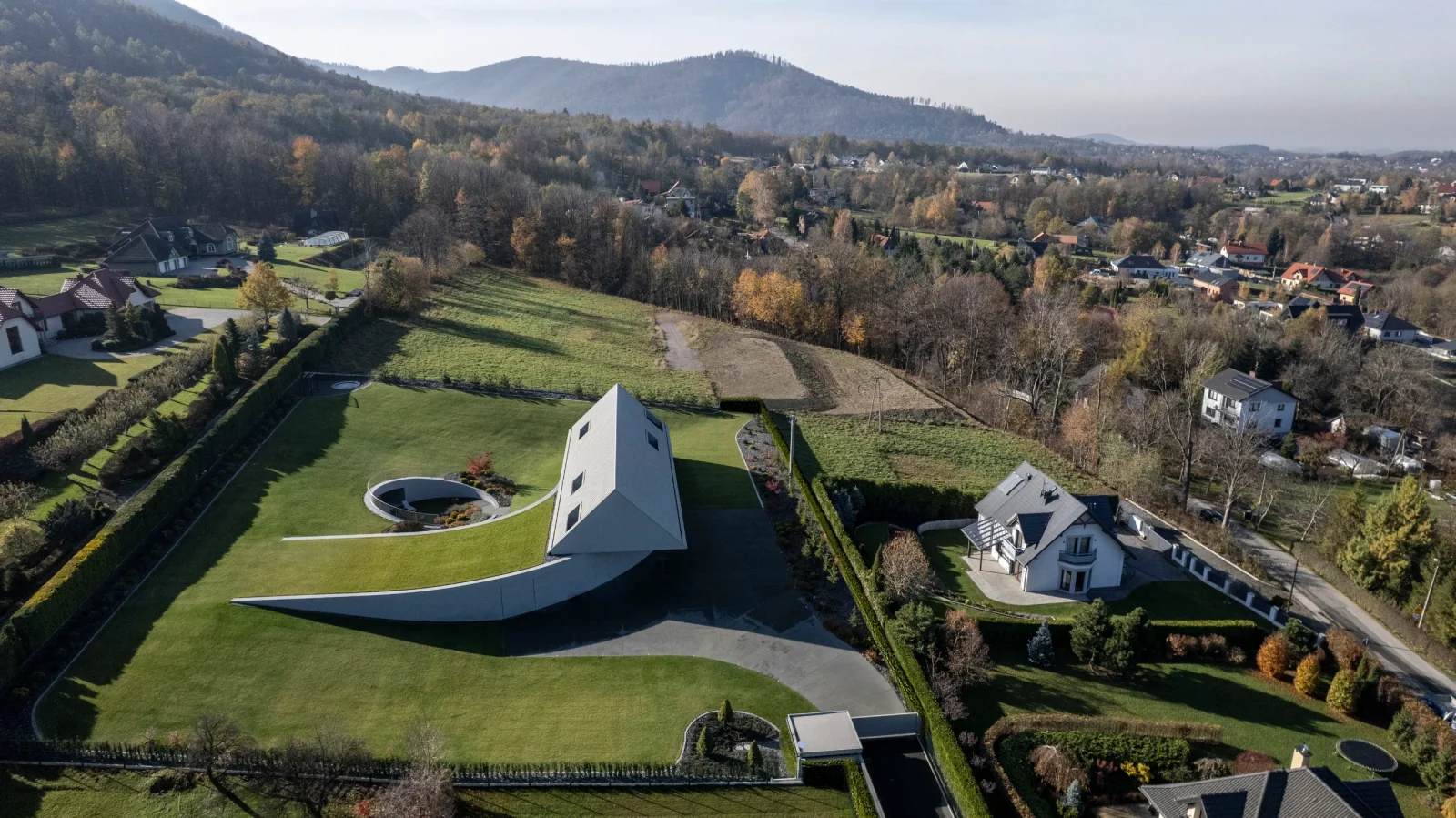
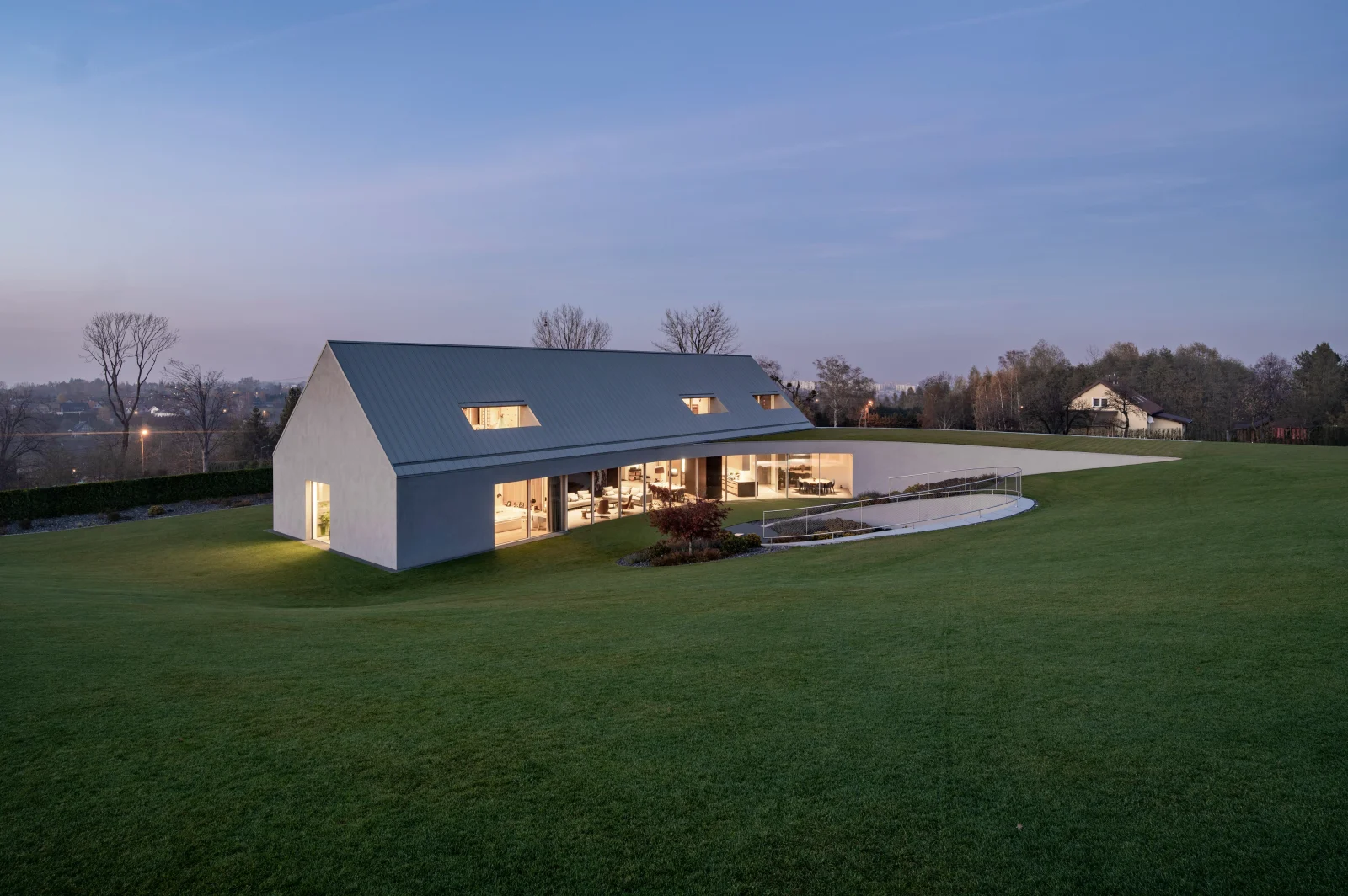
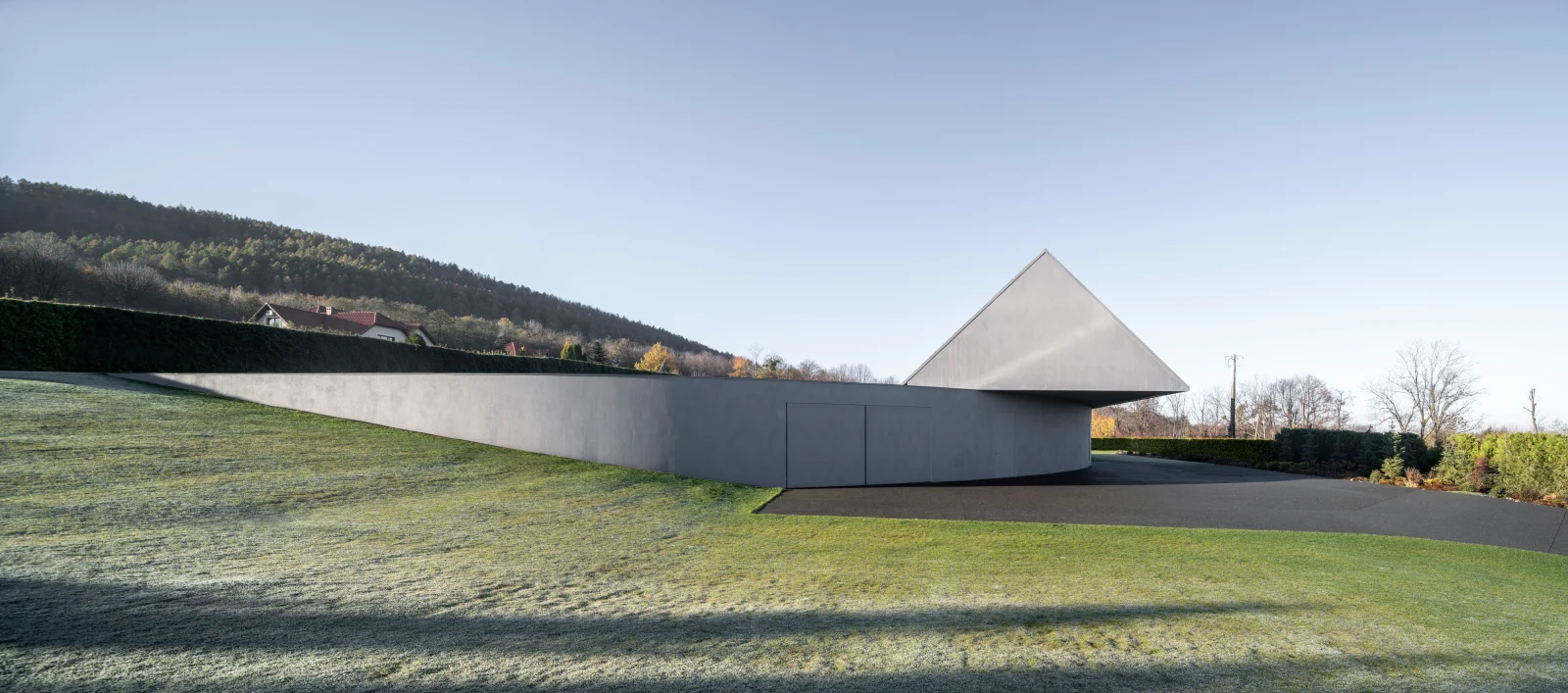
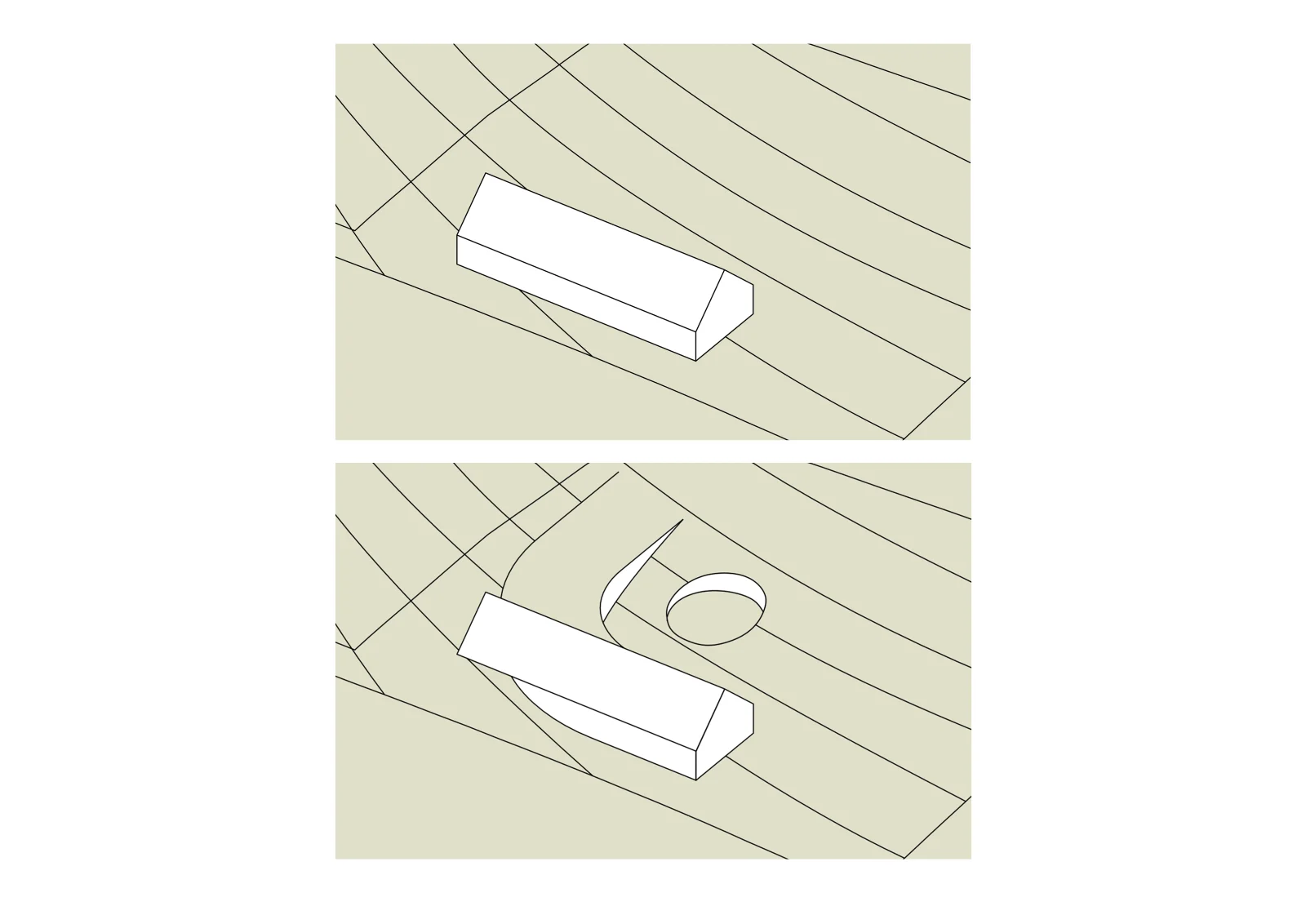
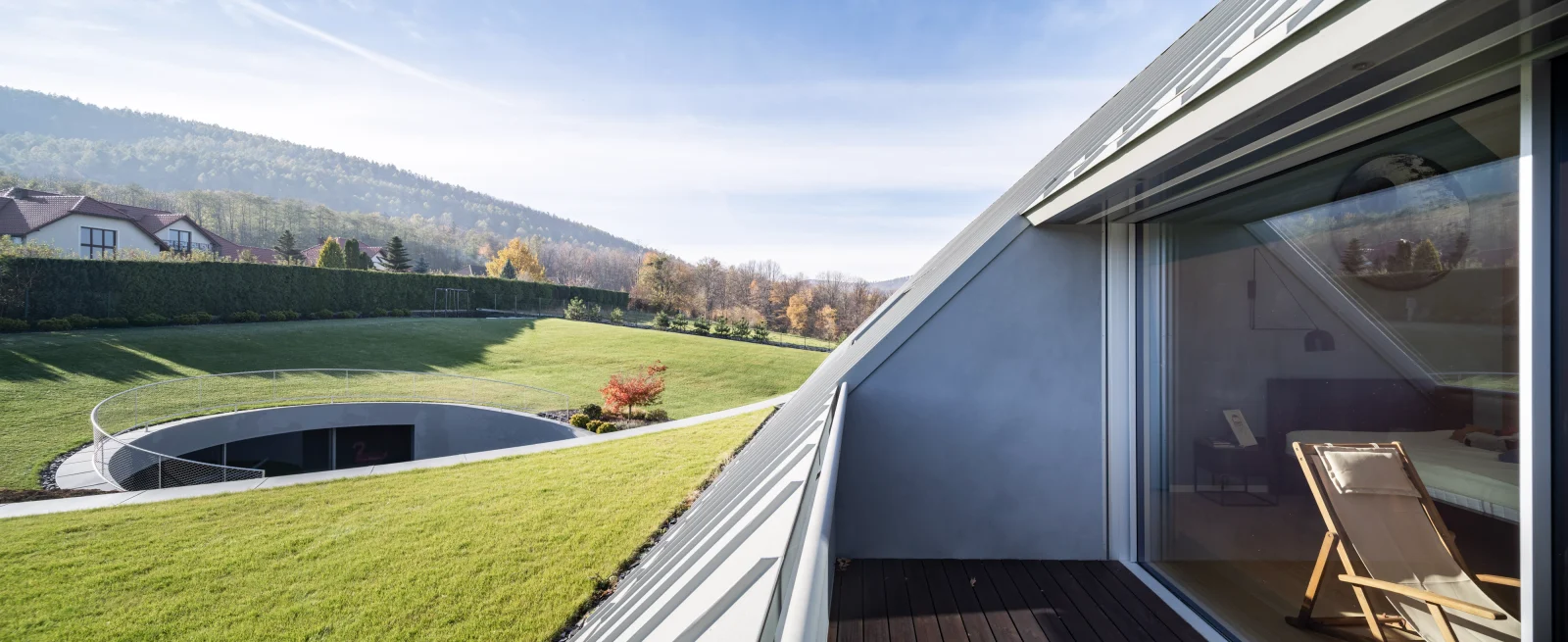
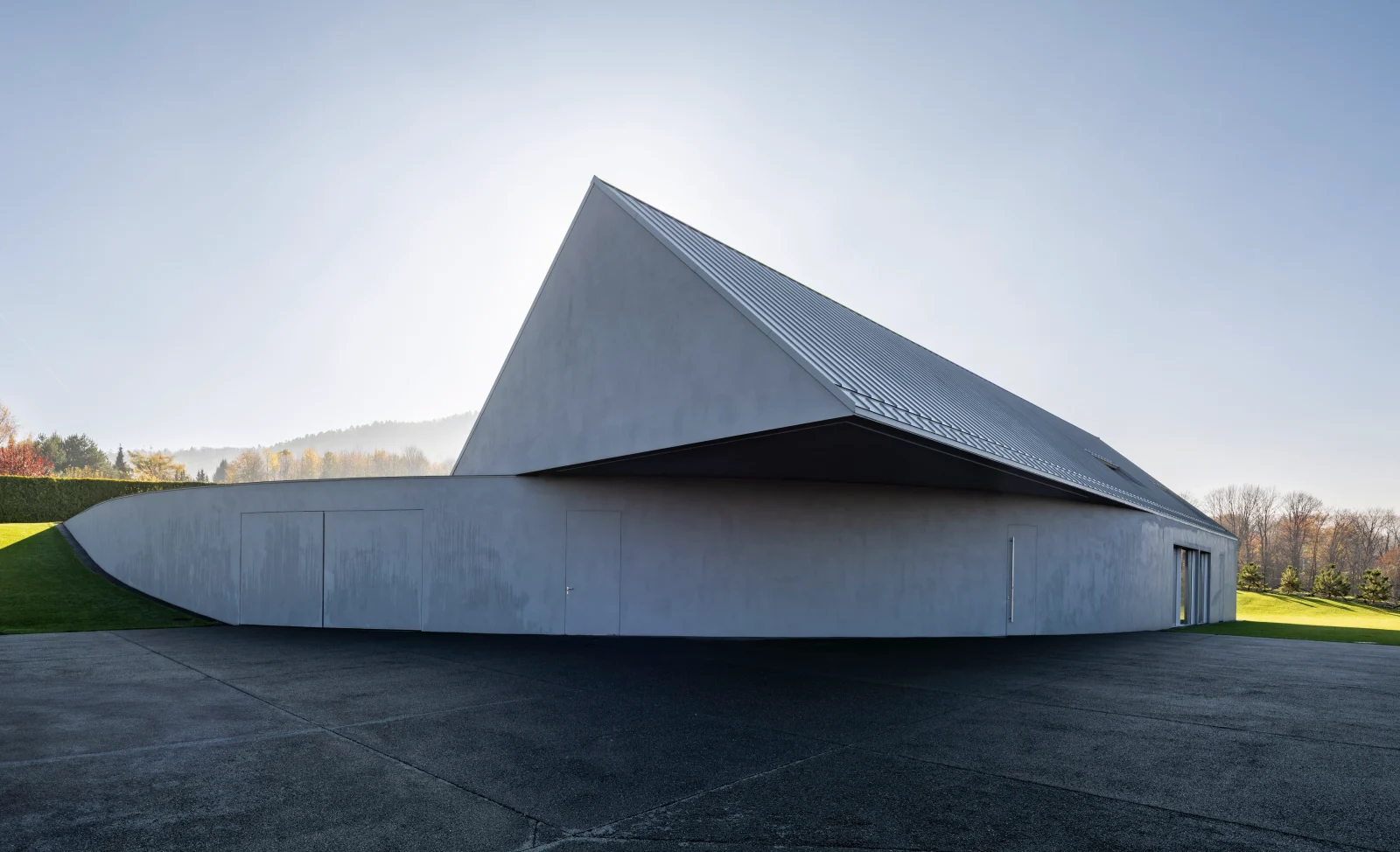
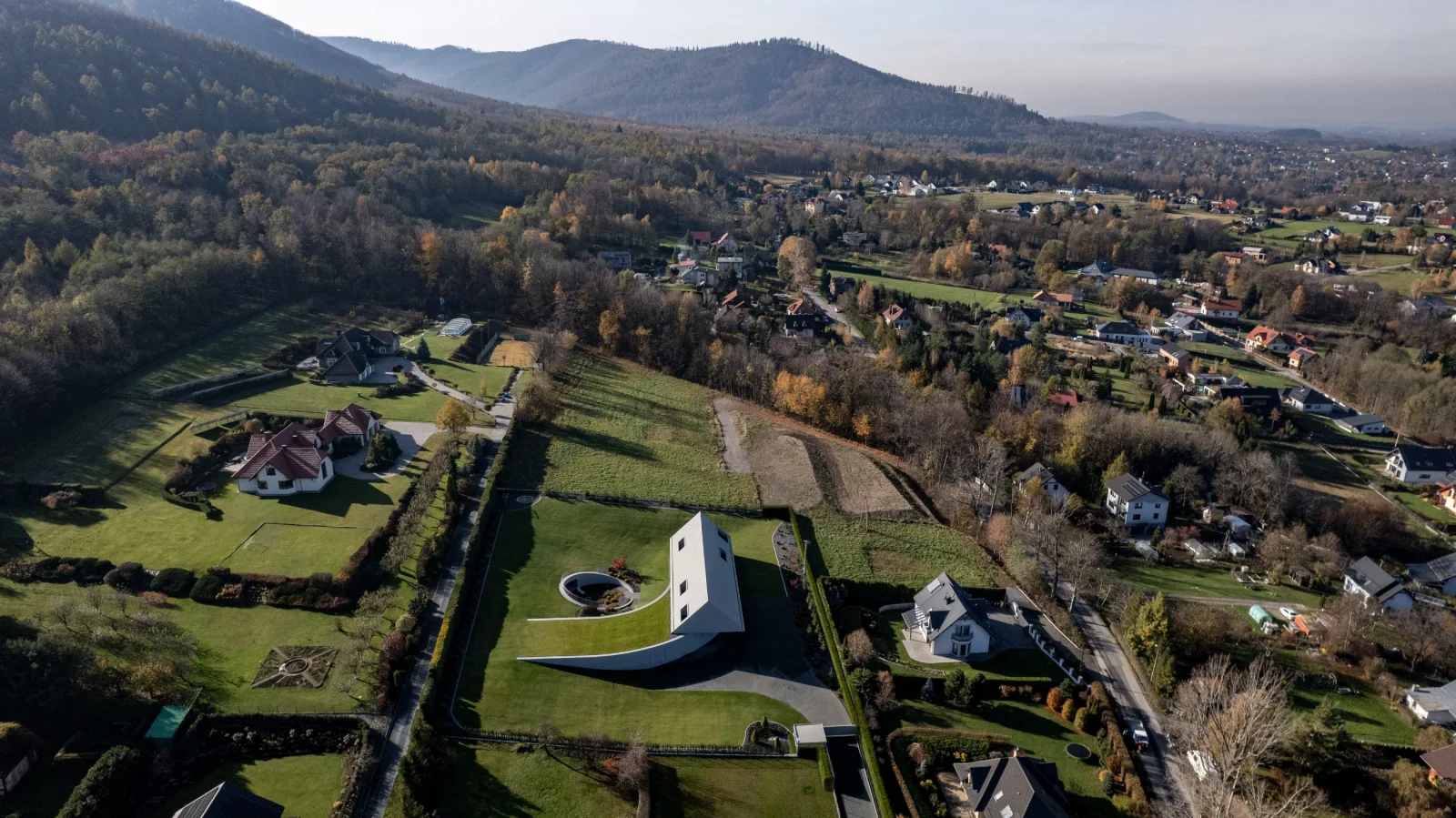
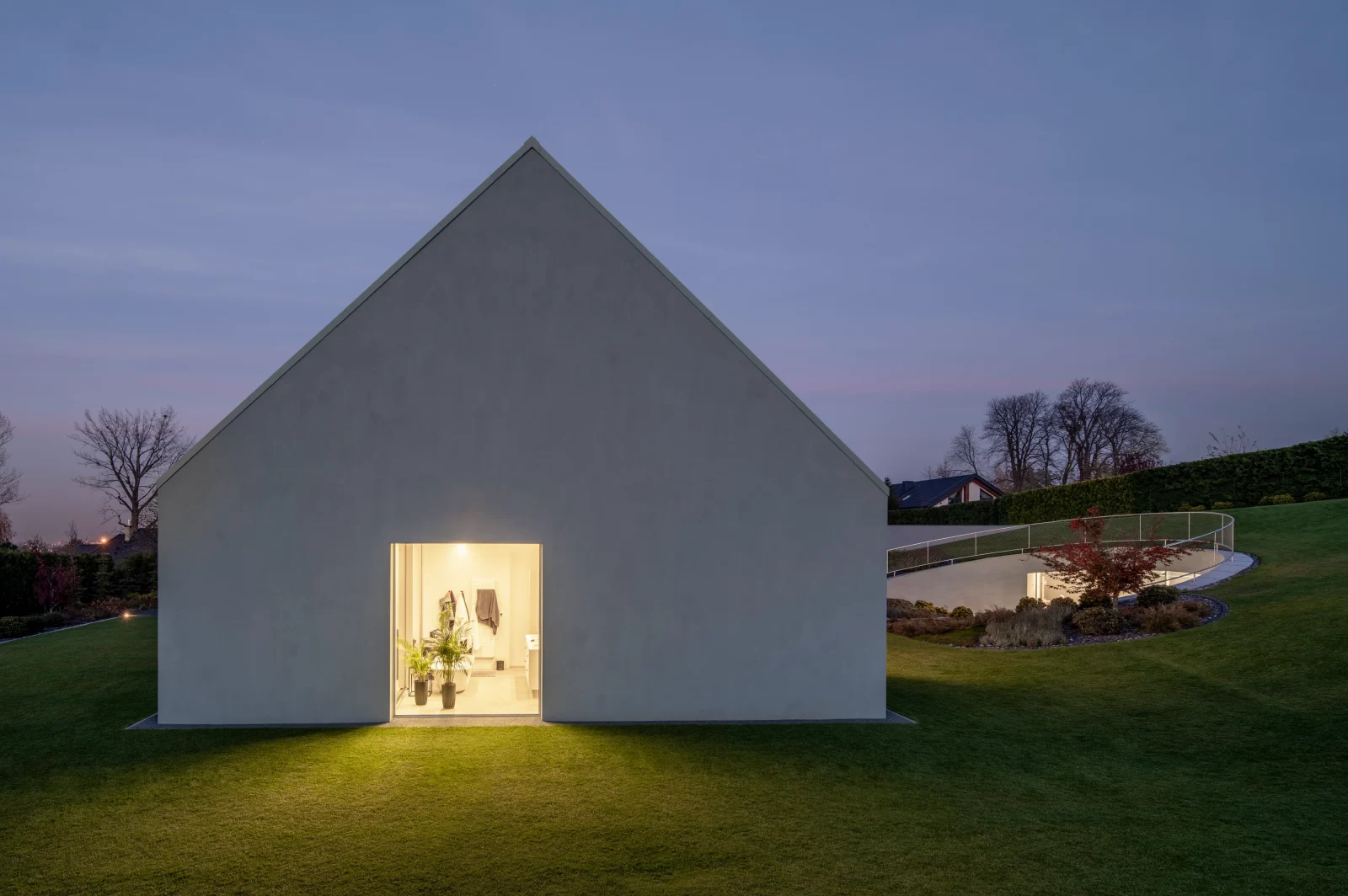
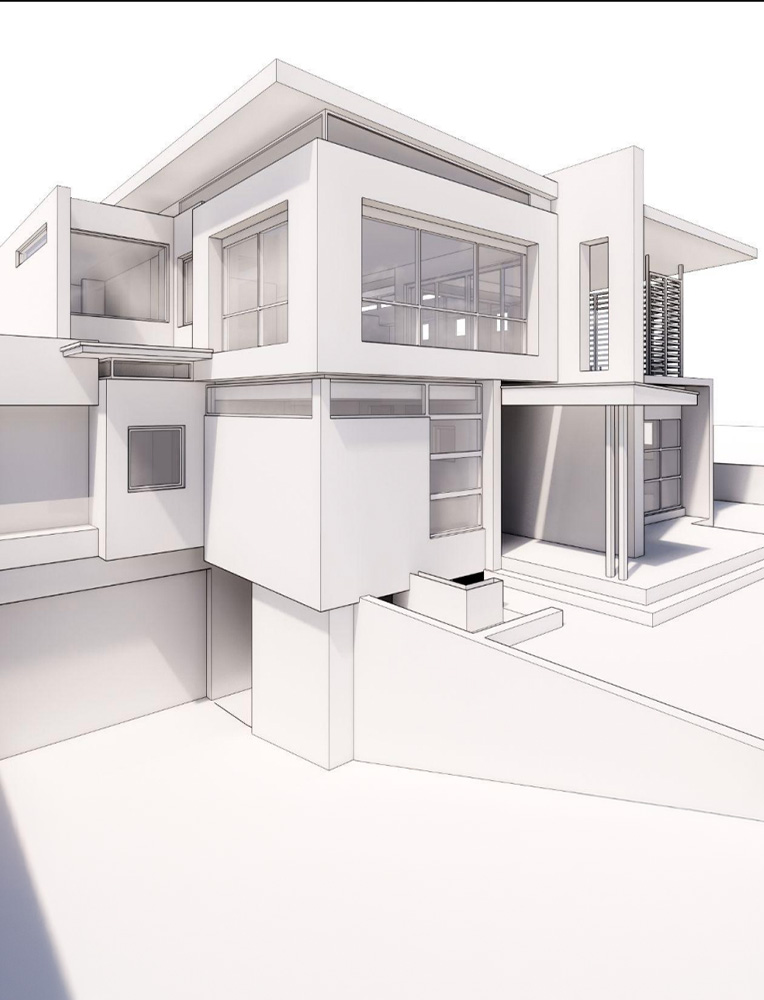
Set on a steep and demanding plot in the Beskid Mountains, Yaw House is a residence that responds directly to the terrain. Designed by KWK Promes under the direction of Robert Konieczny and Marek Golab-Sieling, the project takes its name from the aviation term “yaw,” referring to rotation around a vertical axis. That single architectural move became the defining gesture of the house, allowing it to orient itself toward the southern exposure while embedding naturally into the sloping landscape.
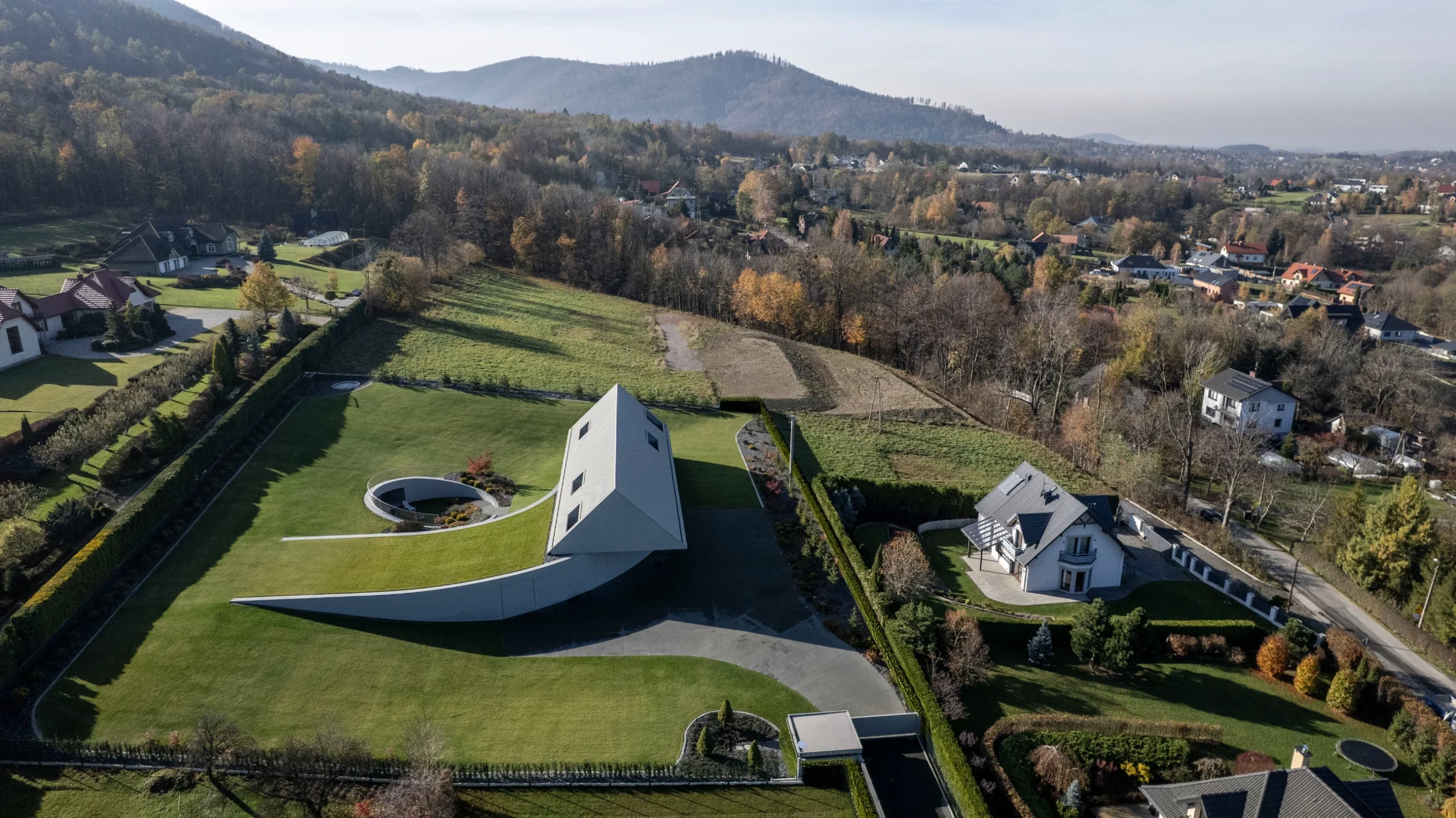
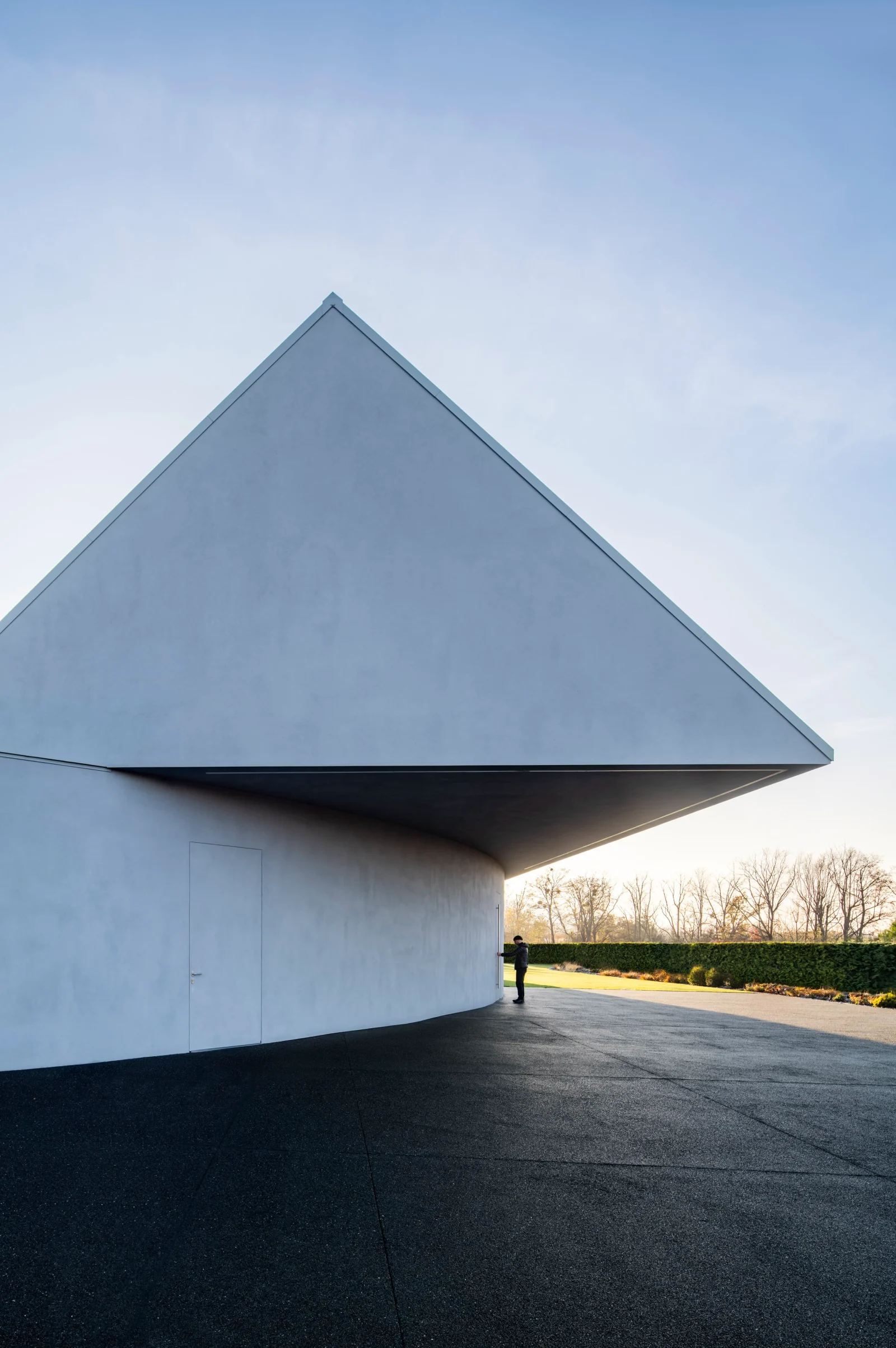
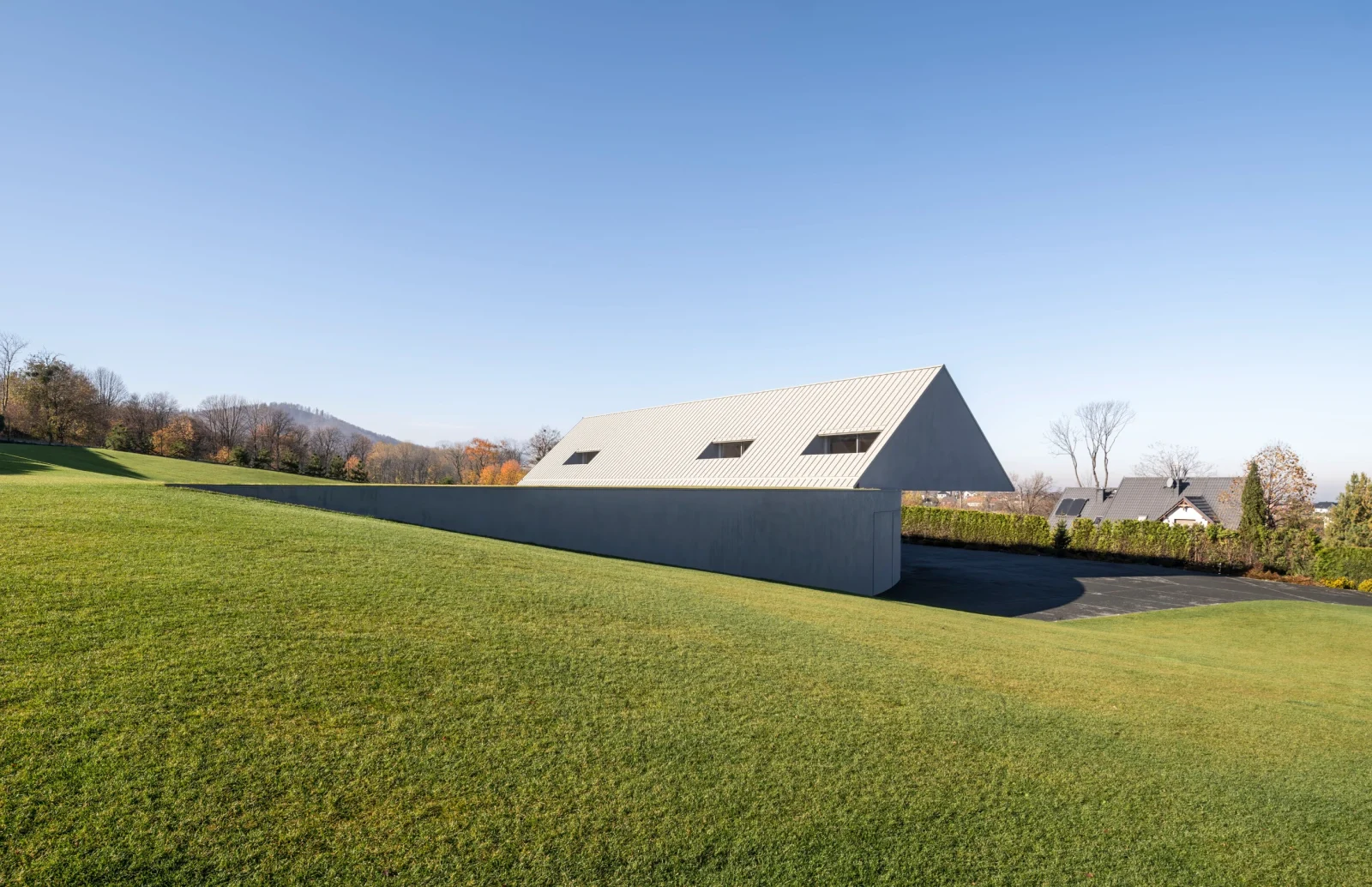
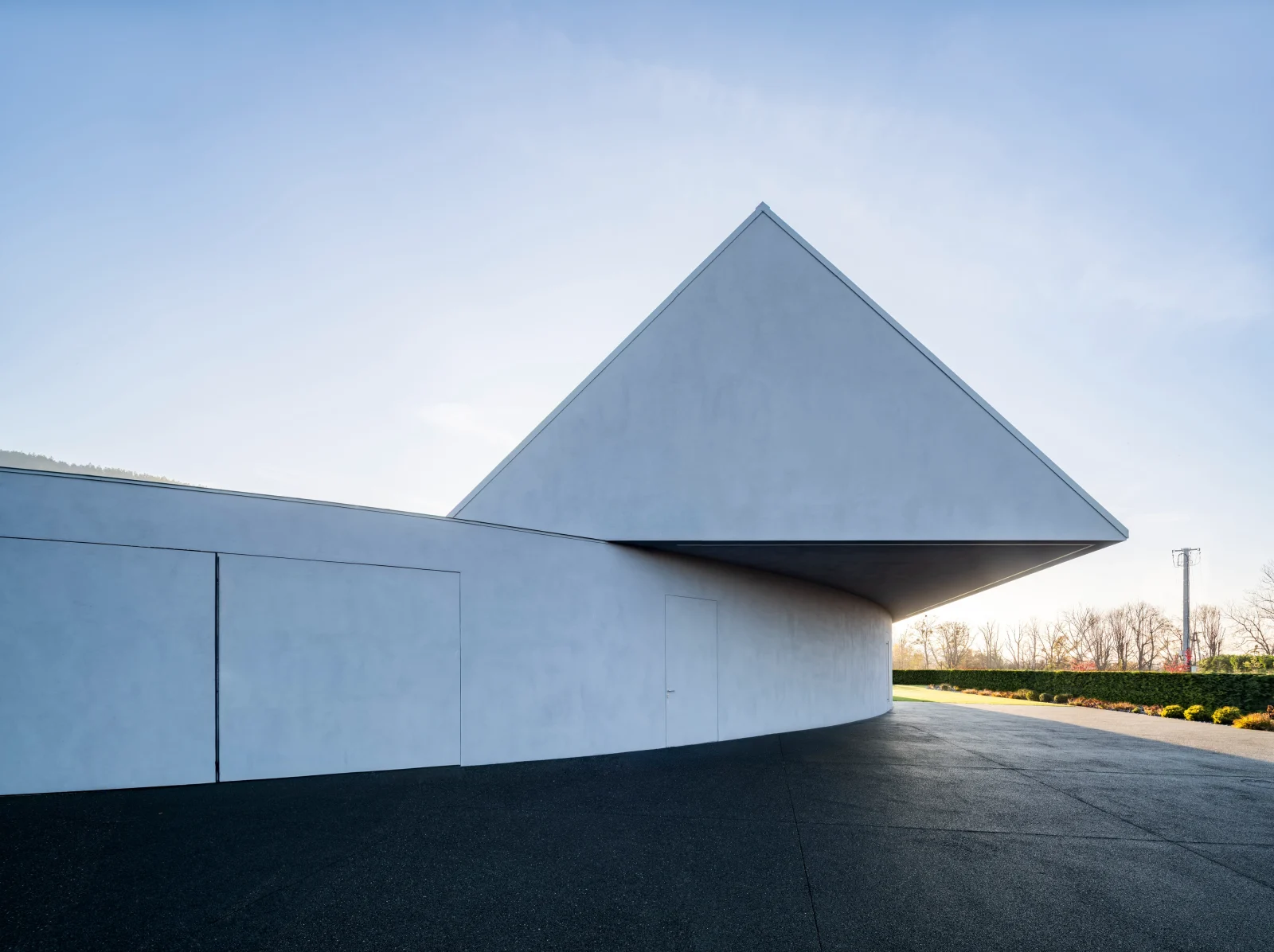
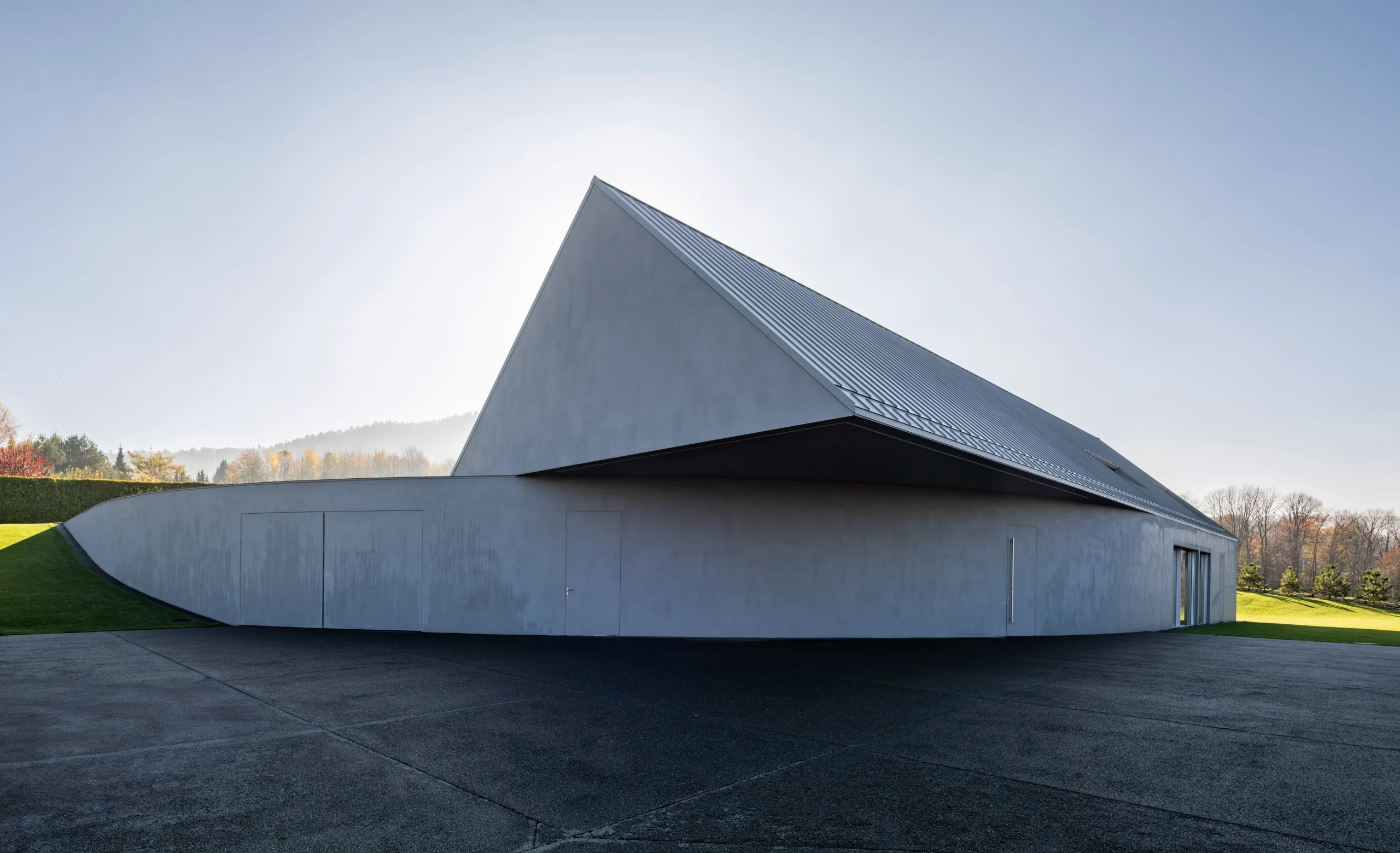
The design began with a familiar regional archetype: a classic gabled form positioned parallel to neighboring buildings to respect the local architectural context. Instead of preserving the volume as a rigid object, the architects introduced a subtle rotation that transformed the entire spatial organization. The shifted geometry anchors the structure into the hillside while simultaneously opening the house toward sunlight, views, and the surrounding greenery.
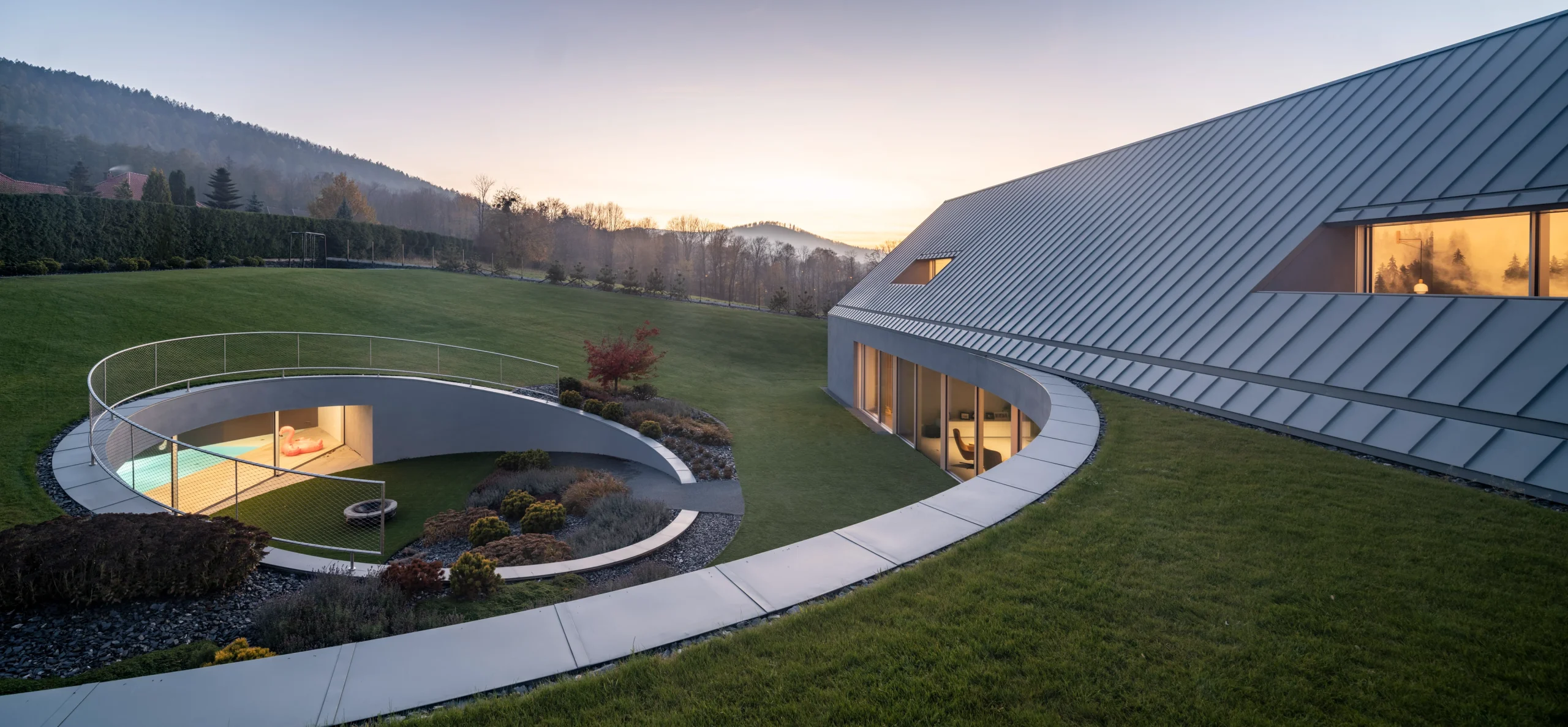
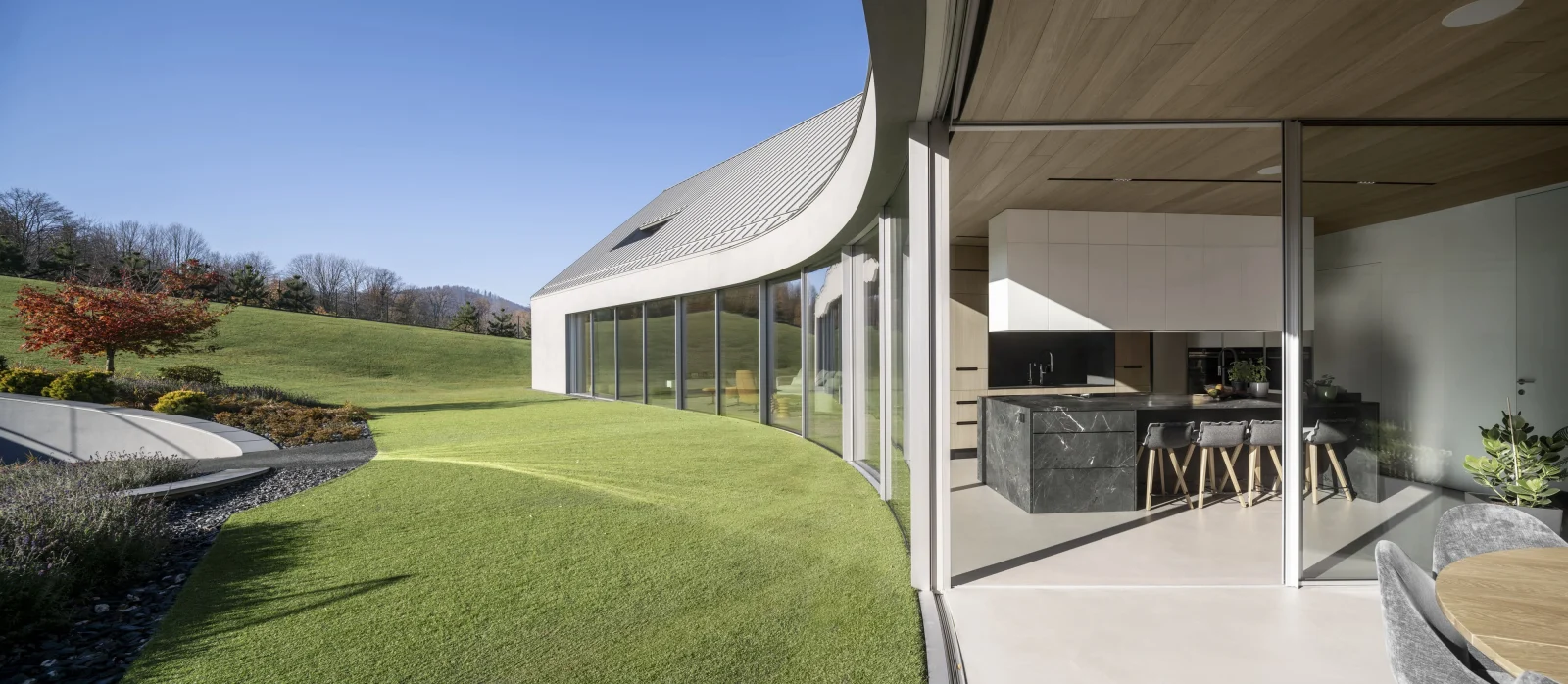
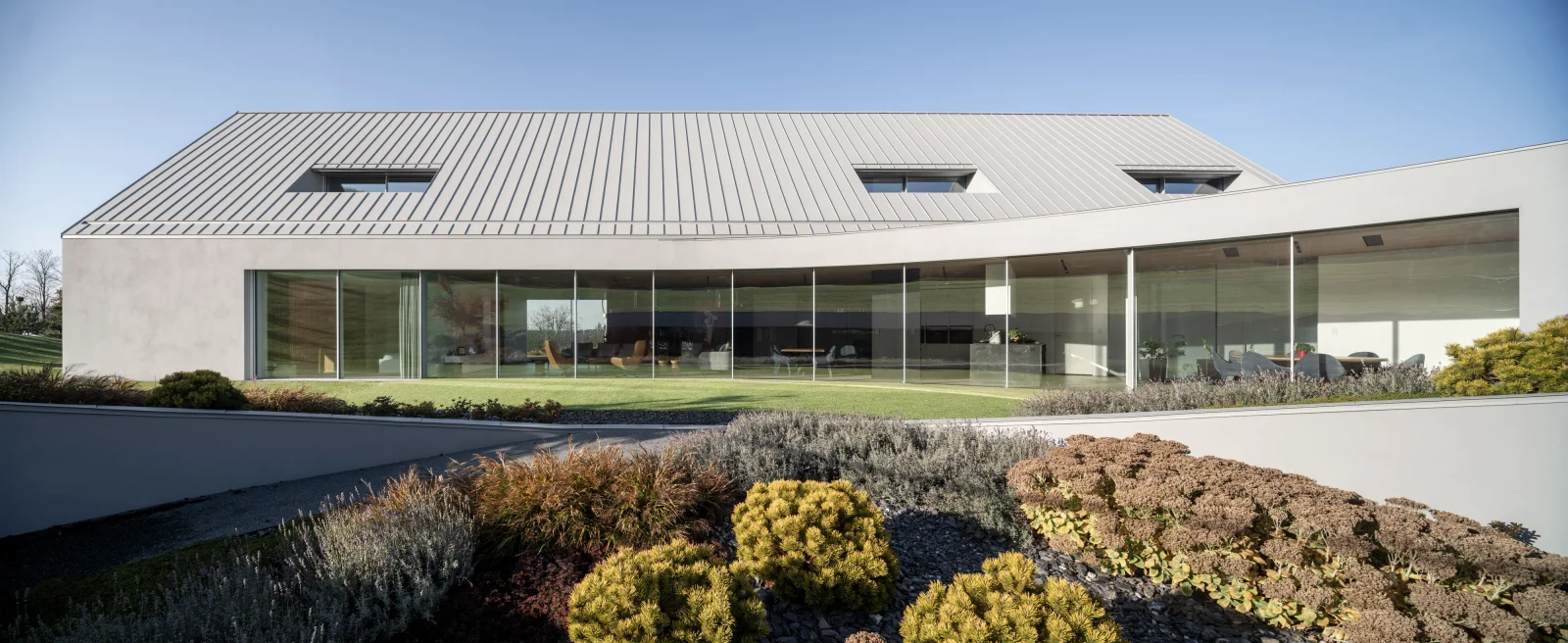
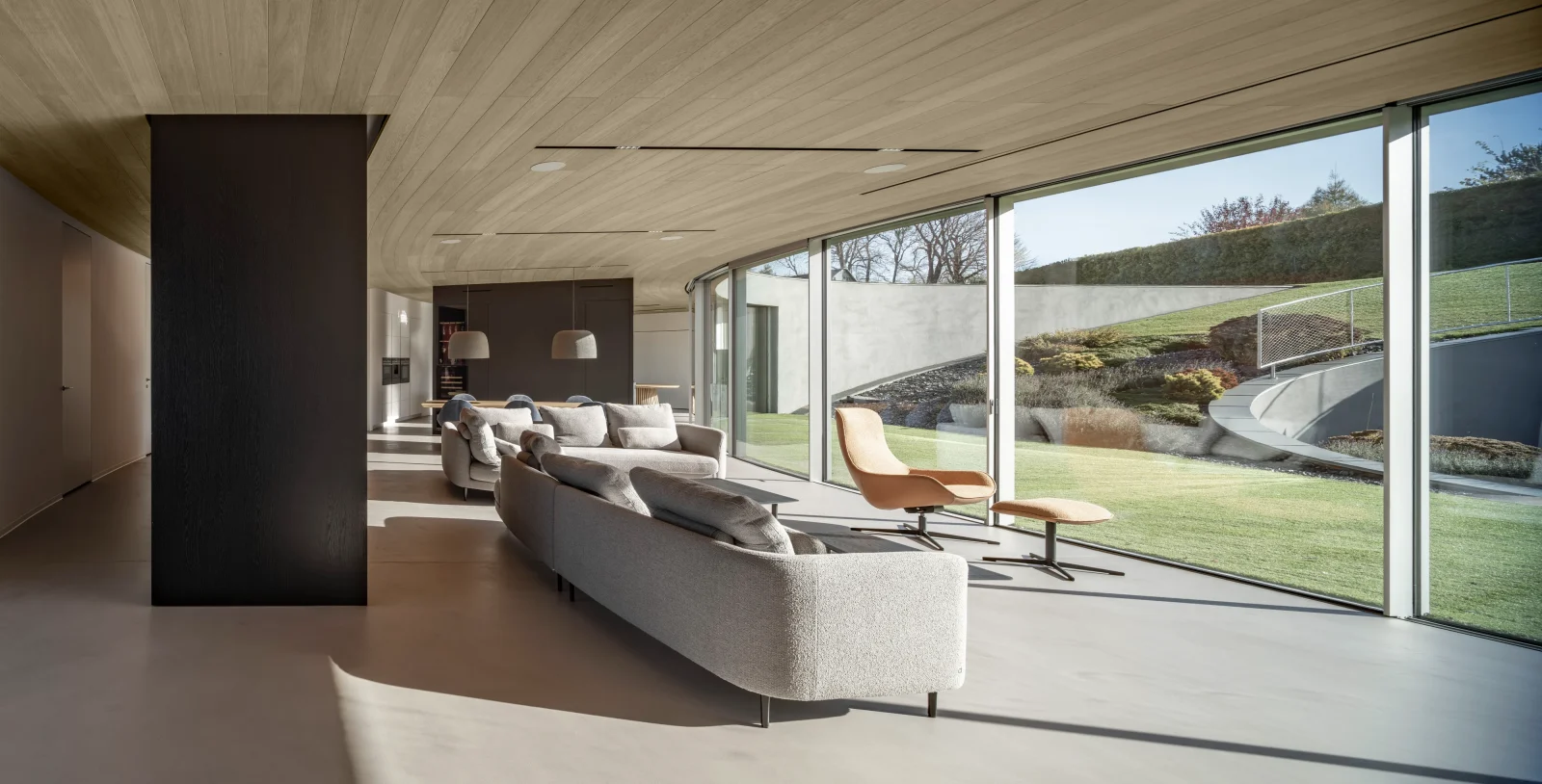
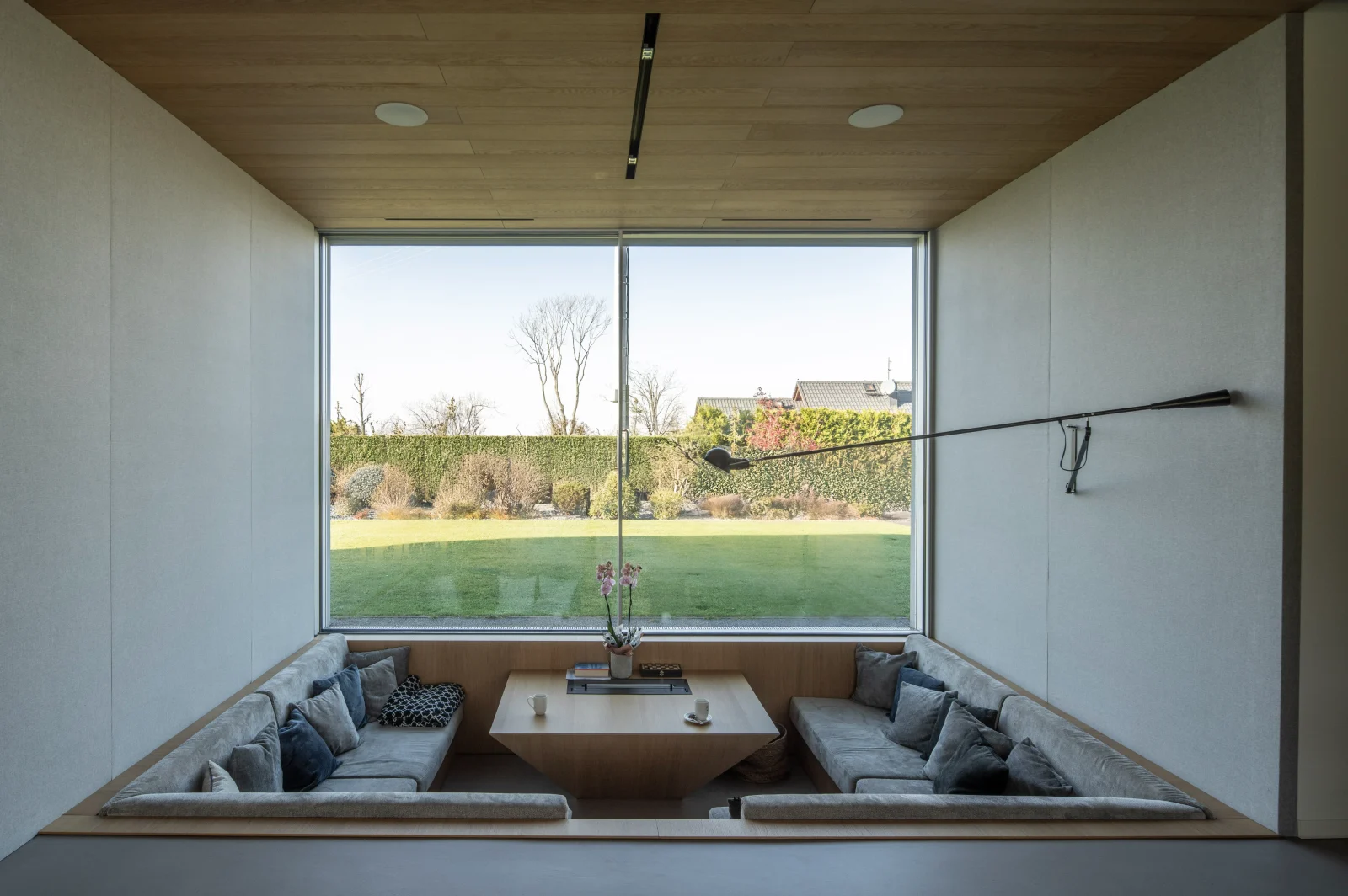
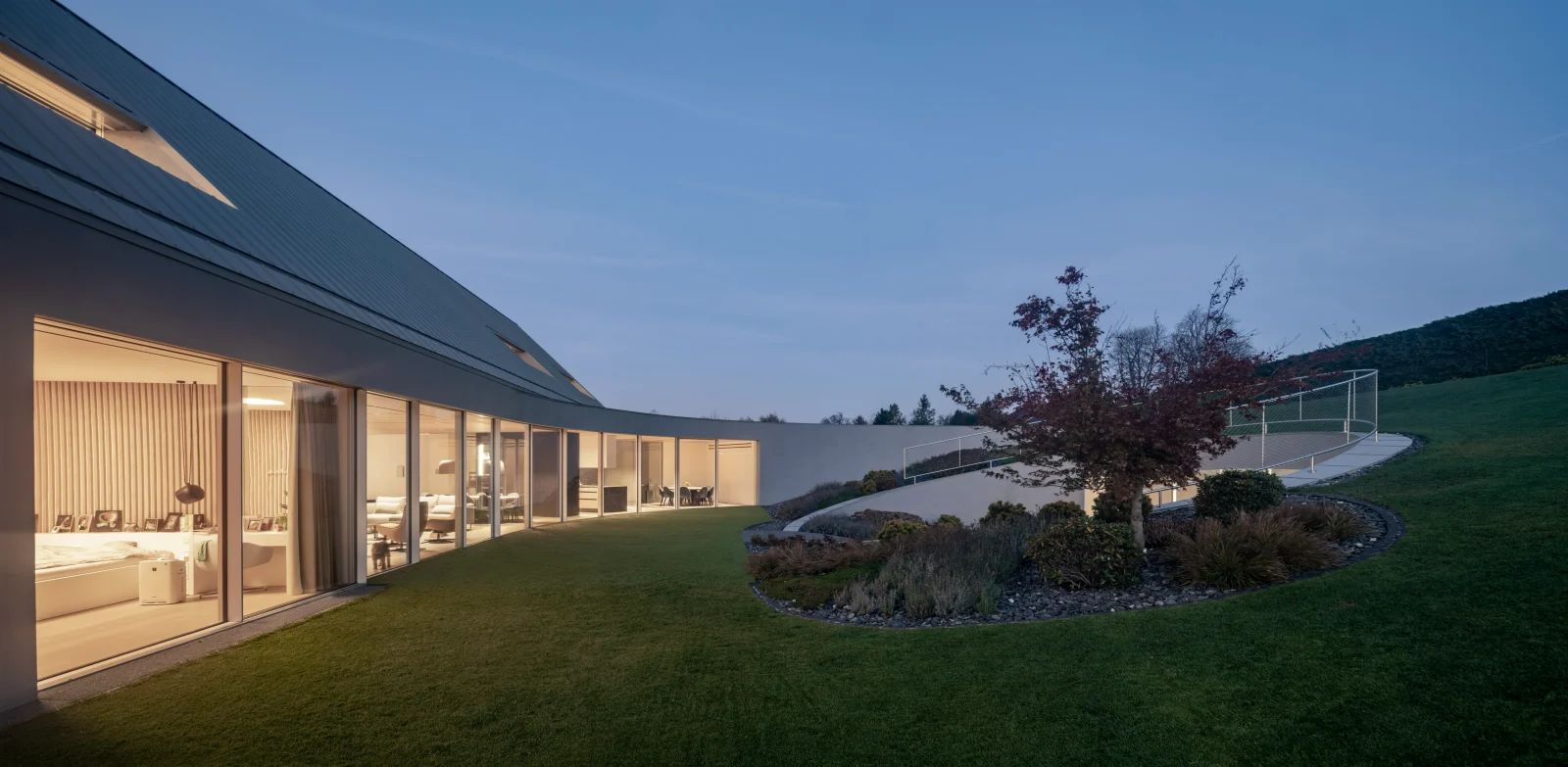
This rotation also established a clear division of functions throughout the residence. The front section contains the entrance and technical zones, designed specifically around the owner’s passion for off-roading and automotive activities. Toward the garden side, the architecture becomes more open and expansive, revealing a living area connected directly to the landscape. Upstairs, the private night zone provides a quieter and more secluded atmosphere overlooking the mountains.
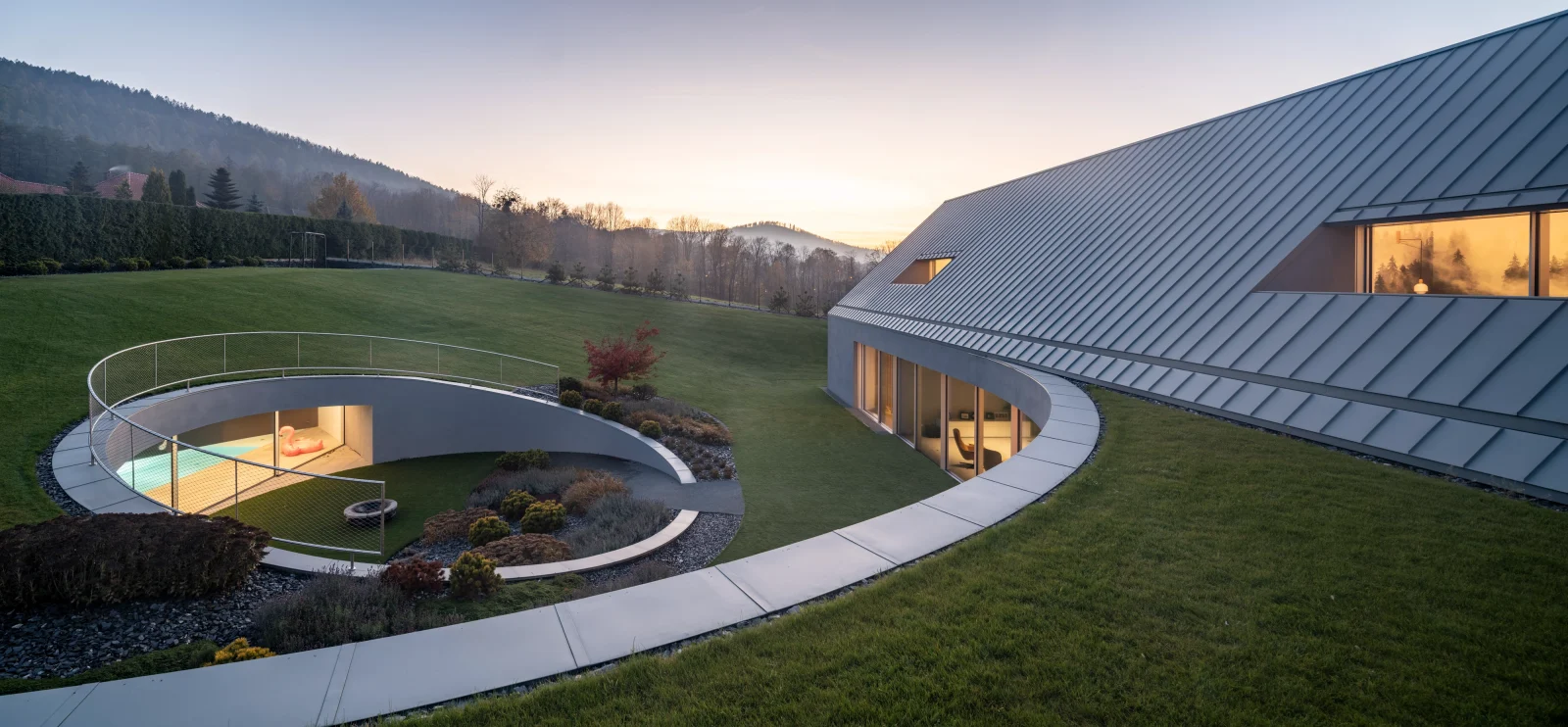
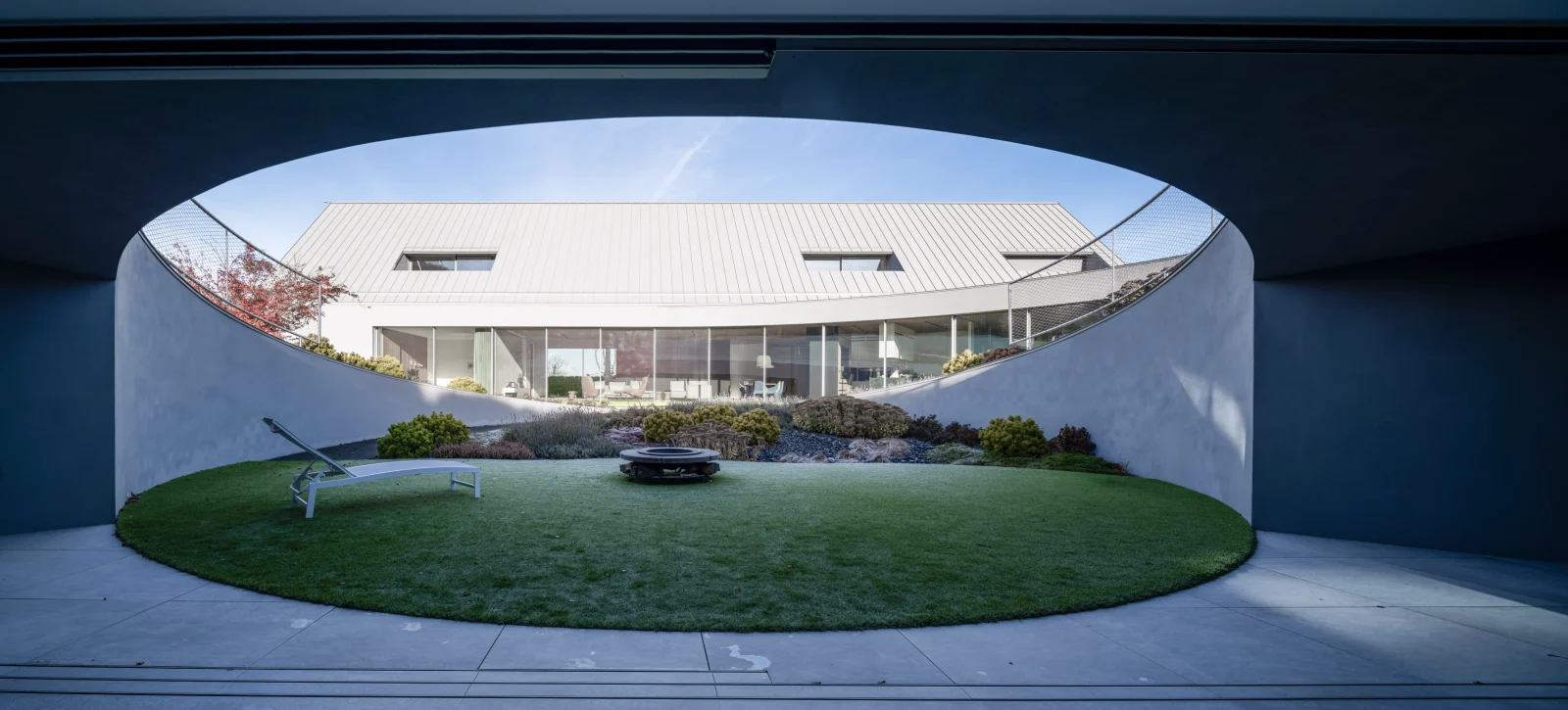
A major transformation occurred during construction when one of the residents required intensive rehabilitation. This unexpected situation led to the introduction of a swimming pool into a building that was already under development. Integrating such a large programmatic addition without compromising the architectural clarity posed a considerable challenge. Instead of appearing secondary, the circular pool ultimately became the emotional and spatial center of the house. Positioned centrally, it now connects the recreational spaces, living area, and garden, appearing as though it had always belonged to the original concept.
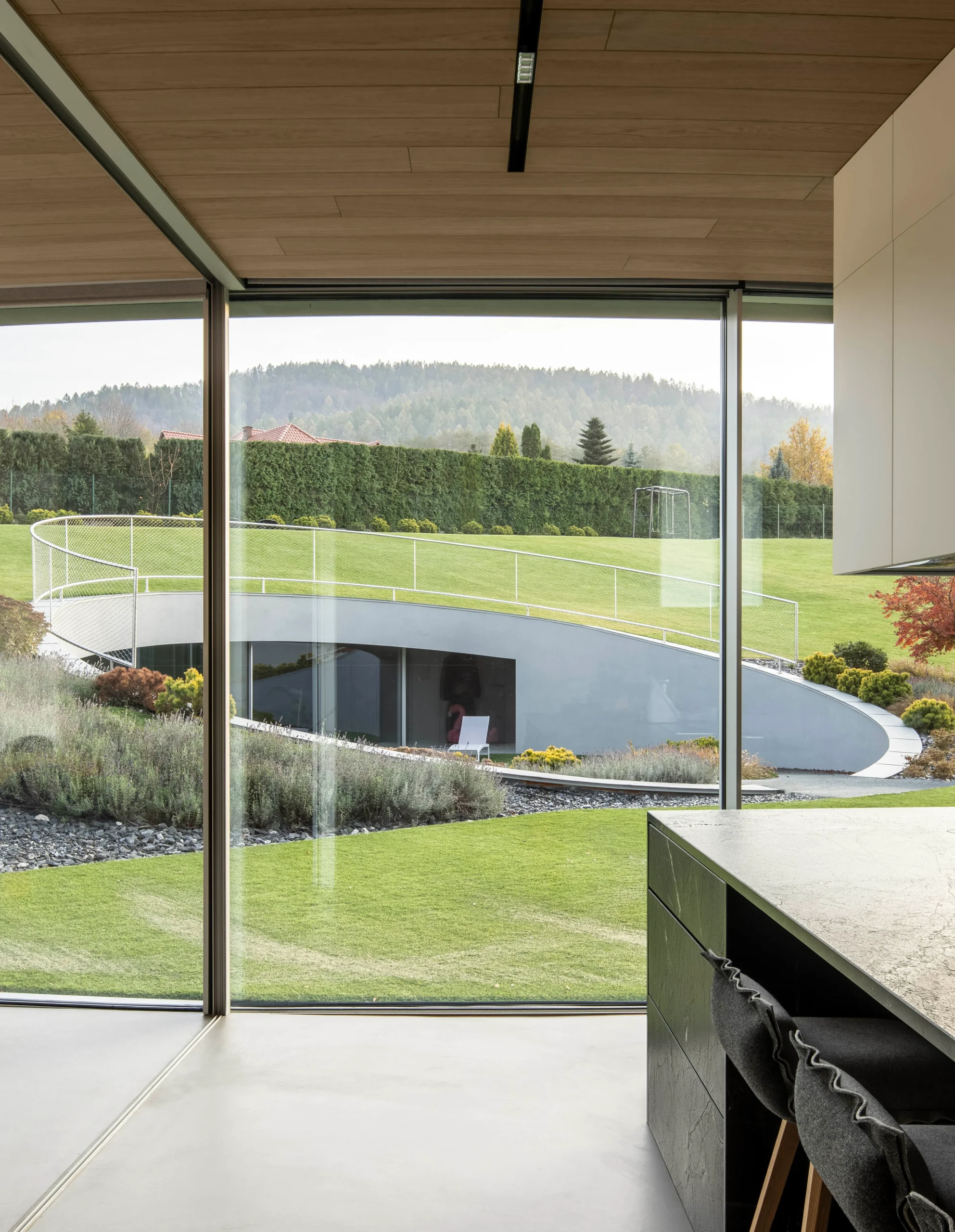
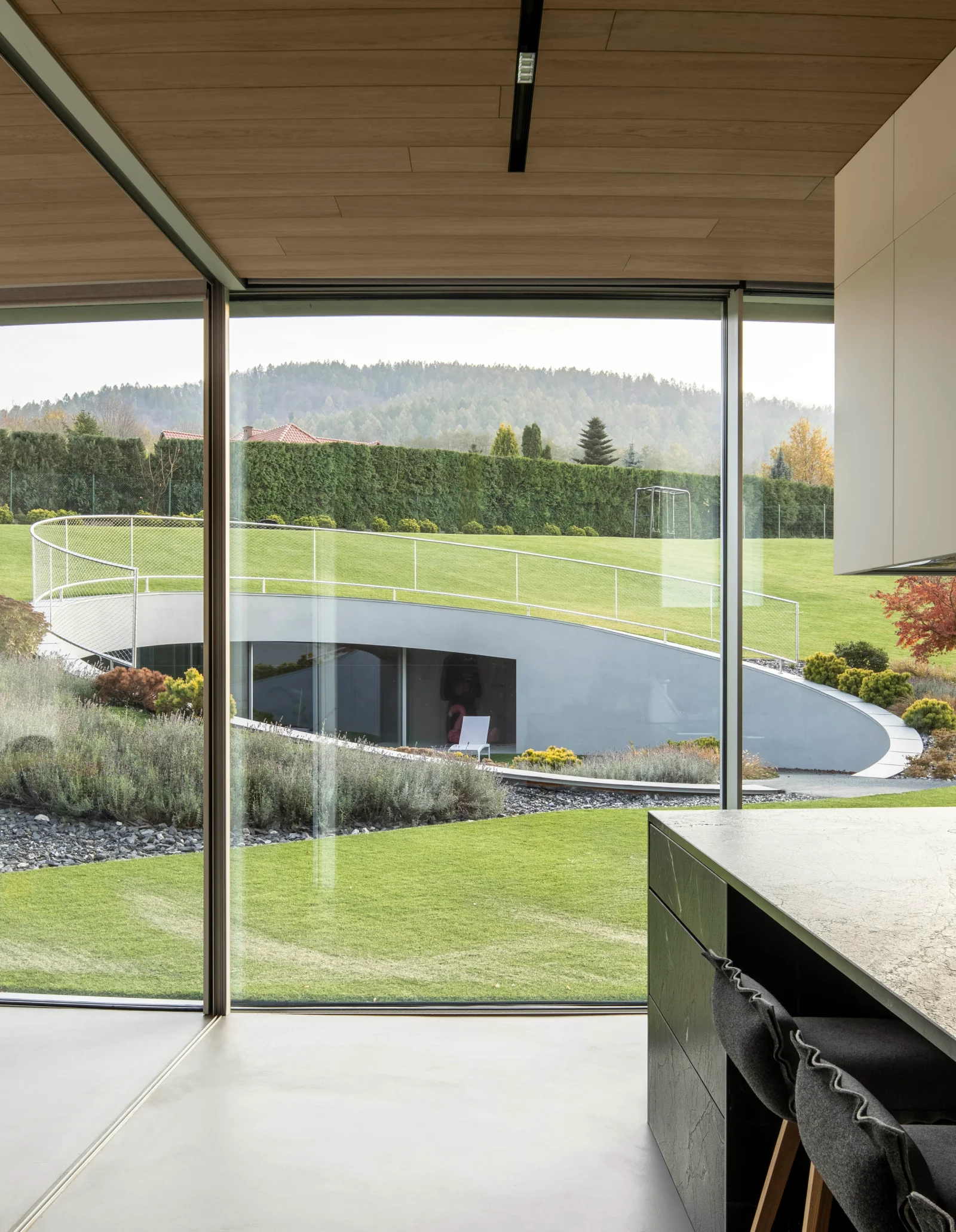
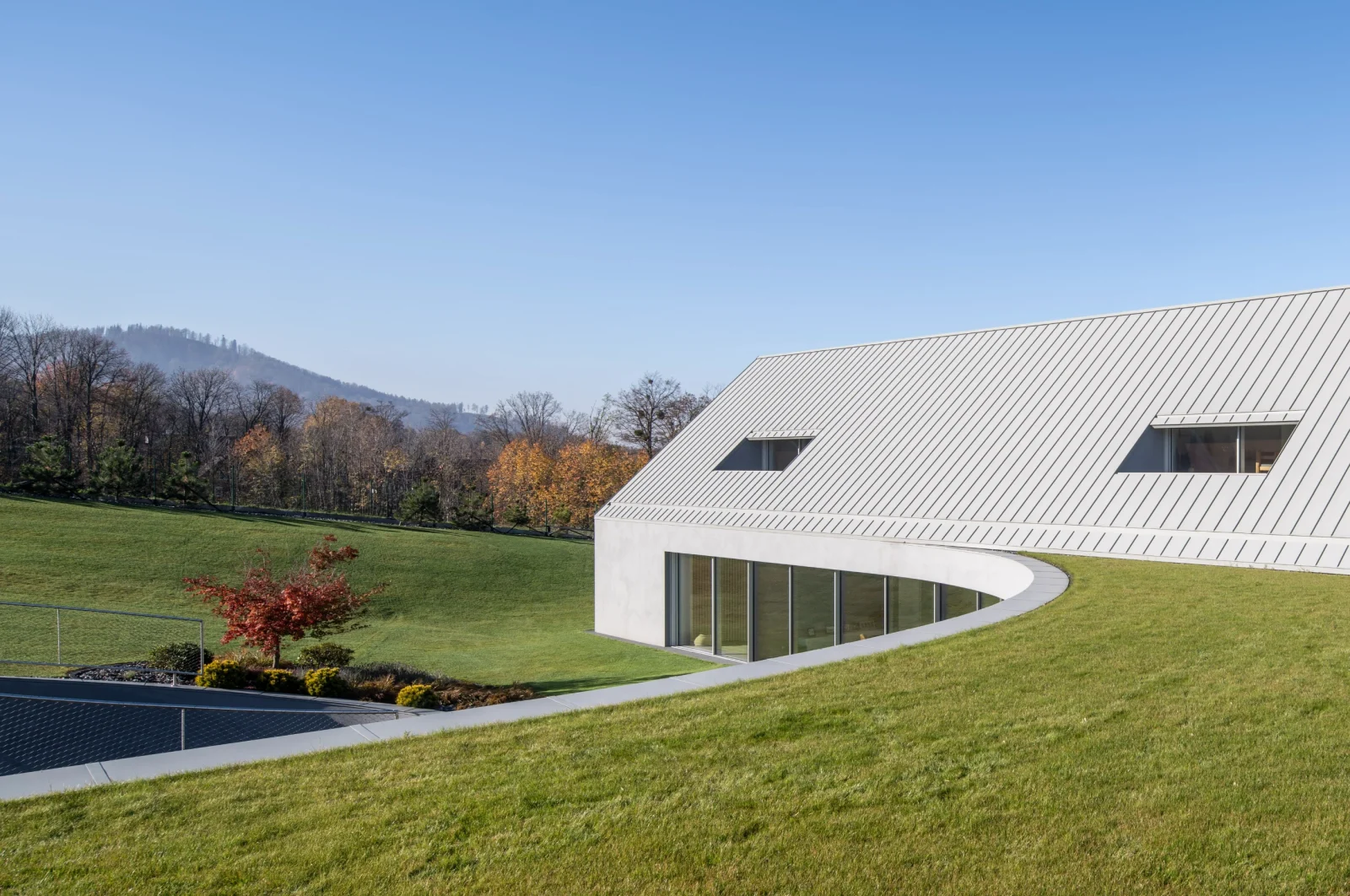
Natural light played a crucial role in shaping the project. Due to the orientation and steep topography, the placement of openings had to be carefully calibrated to maximize solar exposure while preventing overheating. UV-filtering glazing systems were used to capture daylight efficiently and maintain interior comfort throughout the seasons. The building’s roofline further strengthens its connection to the site, with portions blending into the surrounding terrain to soften the visual impact of the structure within the mountain landscape.
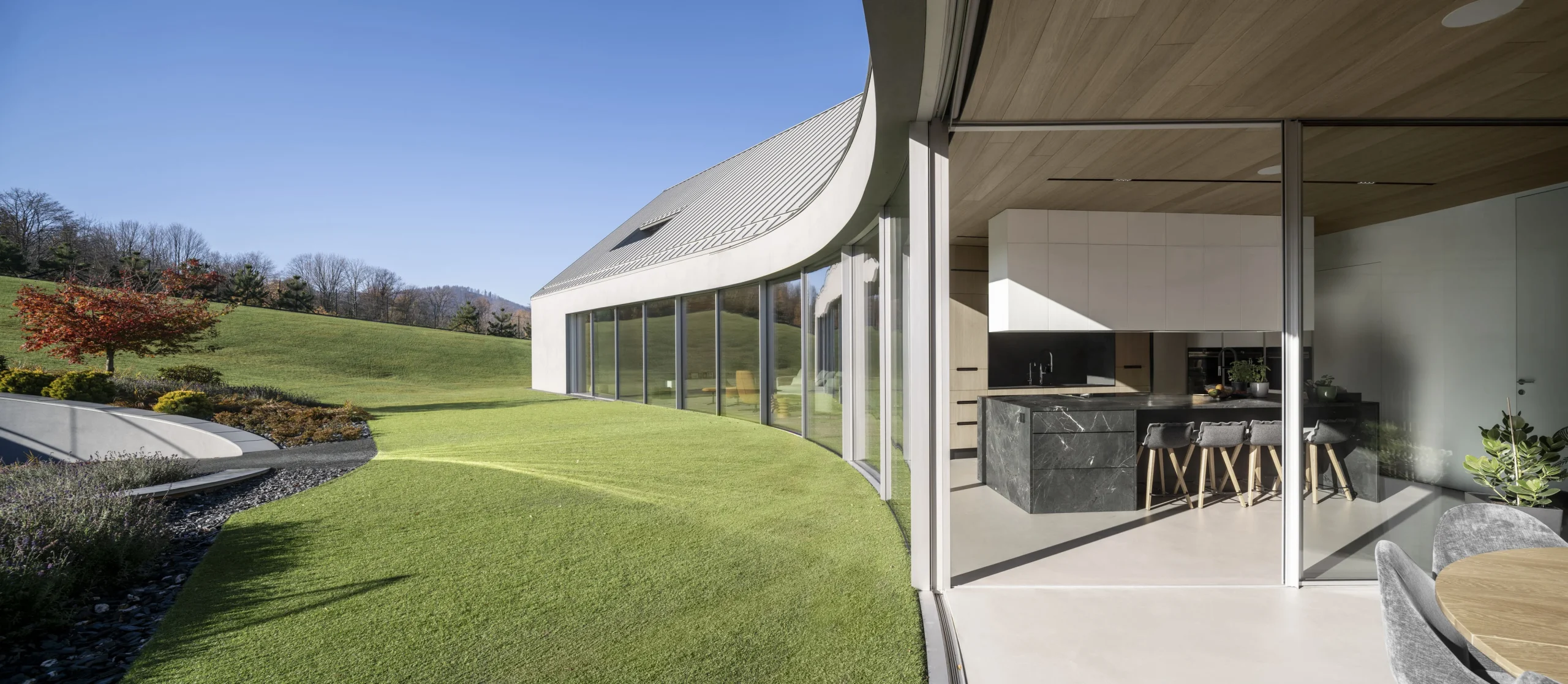
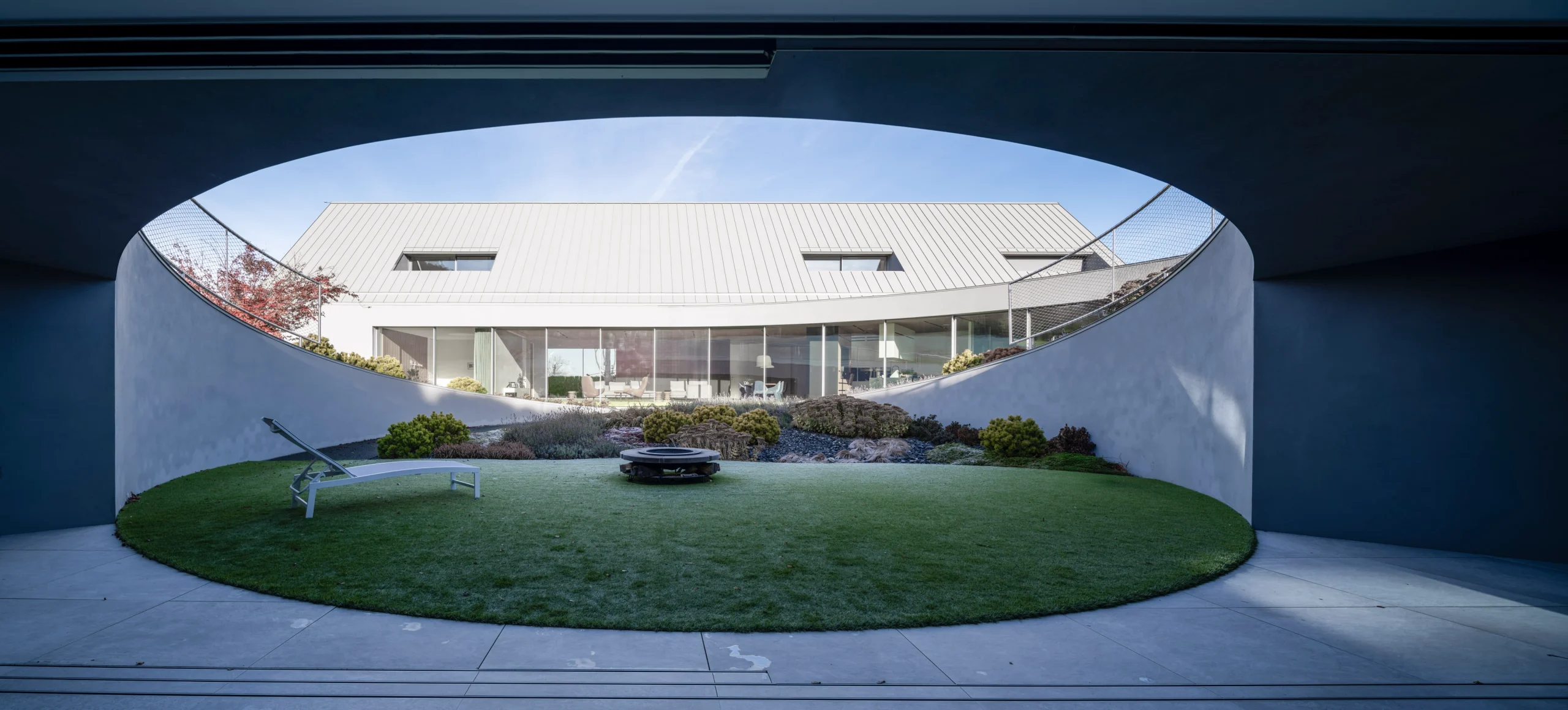
The landscape strategy was created as an extension of the architecture itself. The architects intended to surround the building with wild meadows and natural vegetation that could flow freely around the structure, allowing the house to merge gently with its environment. However, the presence of vipers in the area introduced an unexpected practical concern. At the request of the residents, the vegetation was intentionally kept trimmed back, prioritizing safety over the originally intended wild landscape aesthetic.
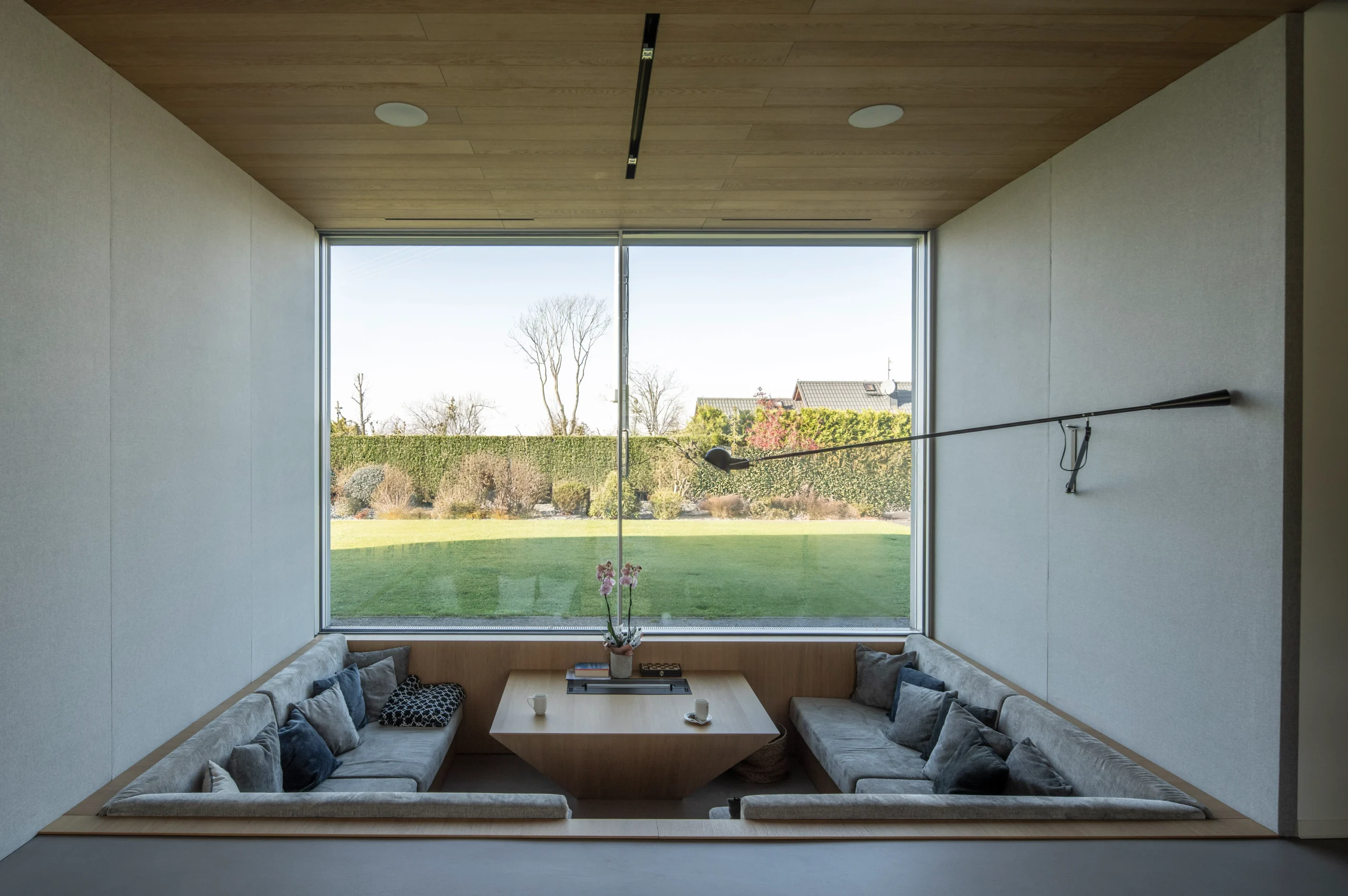
Yaw House ultimately demonstrates how a single architectural gesture can redefine the relationship between building and site. Through rotation, adaptation, and flexibility, the project evolves beyond a conventional mountain residence into a home that responds continuously to terrain, sunlight, changing needs, and everyday life.
Yaw House Project Details
Location: Beskid Mountains, Poland
Architecture Office: KWK Promes
Architects: Robert Konieczny, Marek Golab-Sieling
Collaboration: Anna Szewczyk
Structural Design: Kornel Szyndler Proeco
Interior Design: WIDAWSCY studio architektury
Glazing: KELLER system glazing, KER+3MR
Site Area: 4,870 m²
Gross Covered Area: 1,354 m²
Usable Floor Area: 929.9 m²
Ground Floor Area: 581.7 m²
First Floor Area: 206.7 m²
Pool Area: 141.5 m²
Volume: 3,095 m³
Design Period: 2018–2019
Completion: 2021–2025
Image credit: Jakub Certowicz
Explore Courses
.jpg "Ondrej Chybik - Rethinking Architecture")