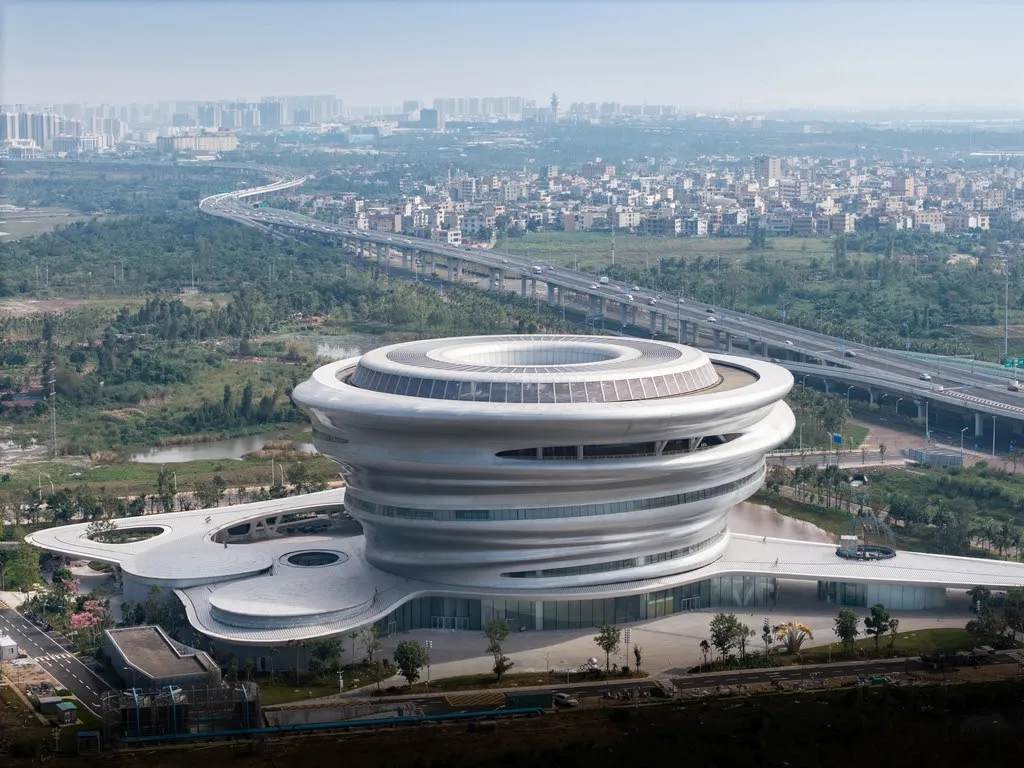


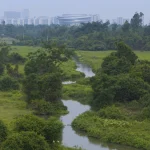
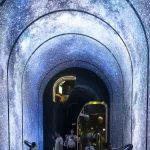
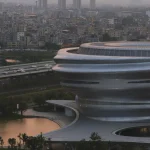
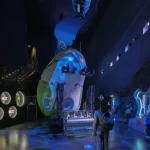
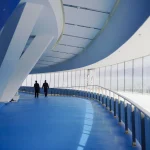
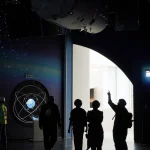
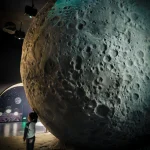
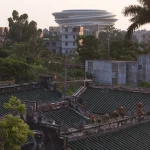
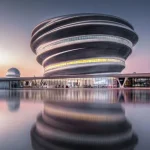
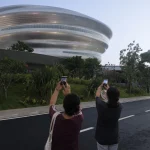
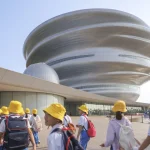
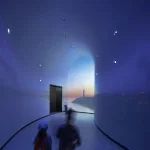
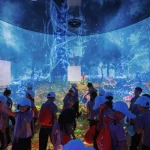
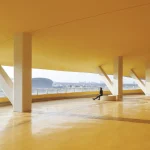
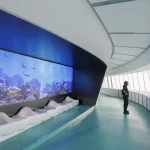
On the edge of the Wuyuan River National Wetland Park in Haikou, the Hainan Science Museum has opened as a major new cultural landmark in China. Developed by MAD, the 46,528-square-meter museum has already drawn hundreds of thousands of visitors within months of opening. Designed as a continuous journey instead of a traditional exhibition building, it transforms science into an immersive spatial experience shaped by movement, nature, and discovery.
A Civic Landmark Rooted in Education and Public Life
The Hainan Science Museum is positioned within a dense educational zone surrounded by more than 30 schools and kindergartens. This location defines its role as everyday civic infrastructure rather than a distant destination. It functions as an open, accessible space where learning extends beyond classrooms and into a shared public environment.
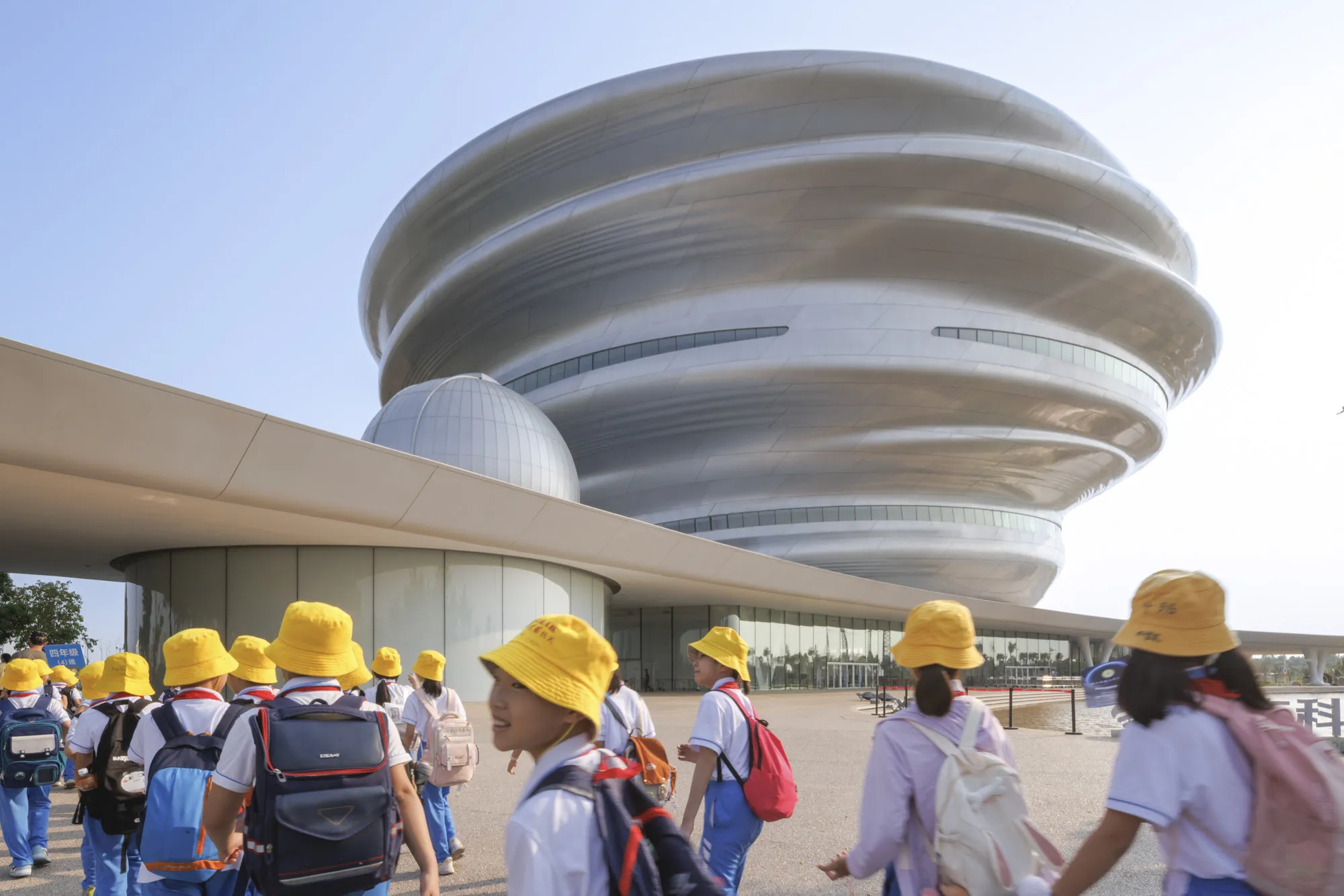
A wide canopy lifts above the ground level, creating shaded outdoor areas that act like a public square. Families, students, and residents pass through, meet, and gather beneath the building, making the museum part of daily urban life.
A Continuous Spiral of Scientific Exploration
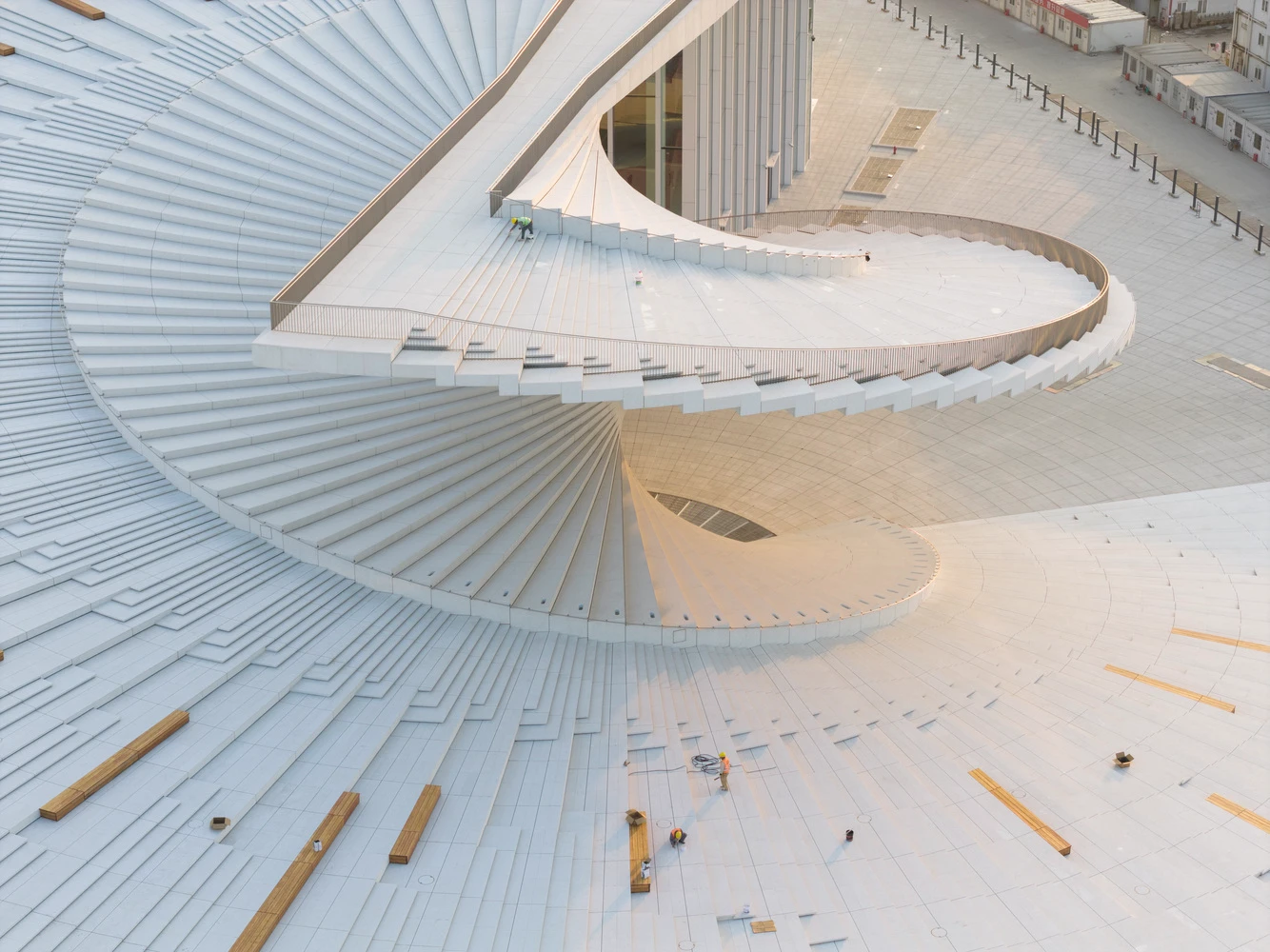
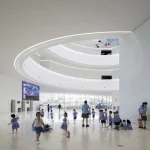
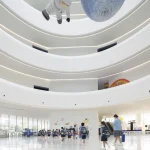
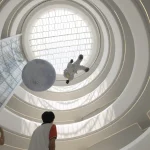
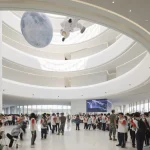
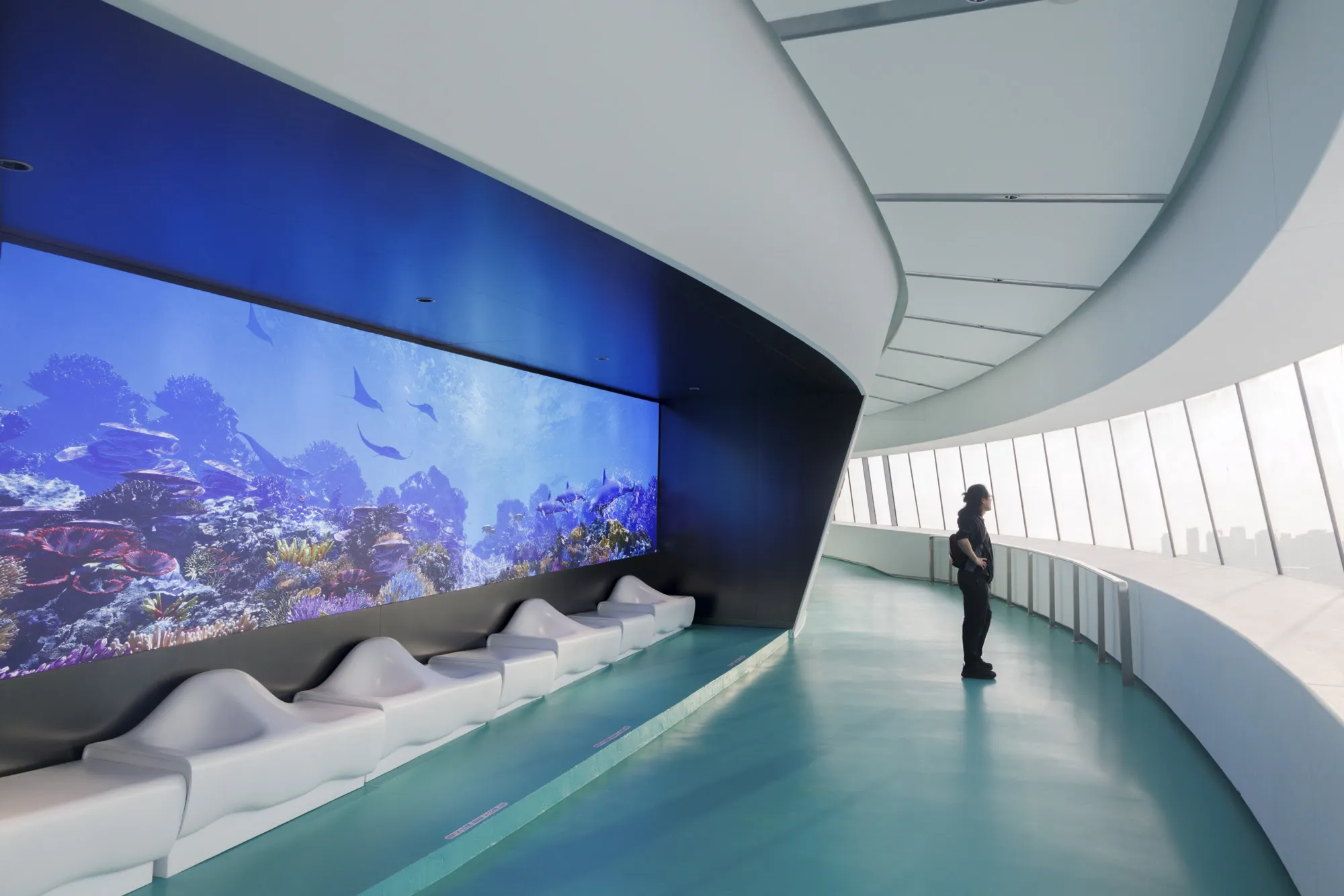
At the core of the building is a single spiraling route that connects all exhibition spaces into one continuous journey. Instead of separated galleries, the Hainan Science Museum unfolds as a seamless path where subjects flow into one another.
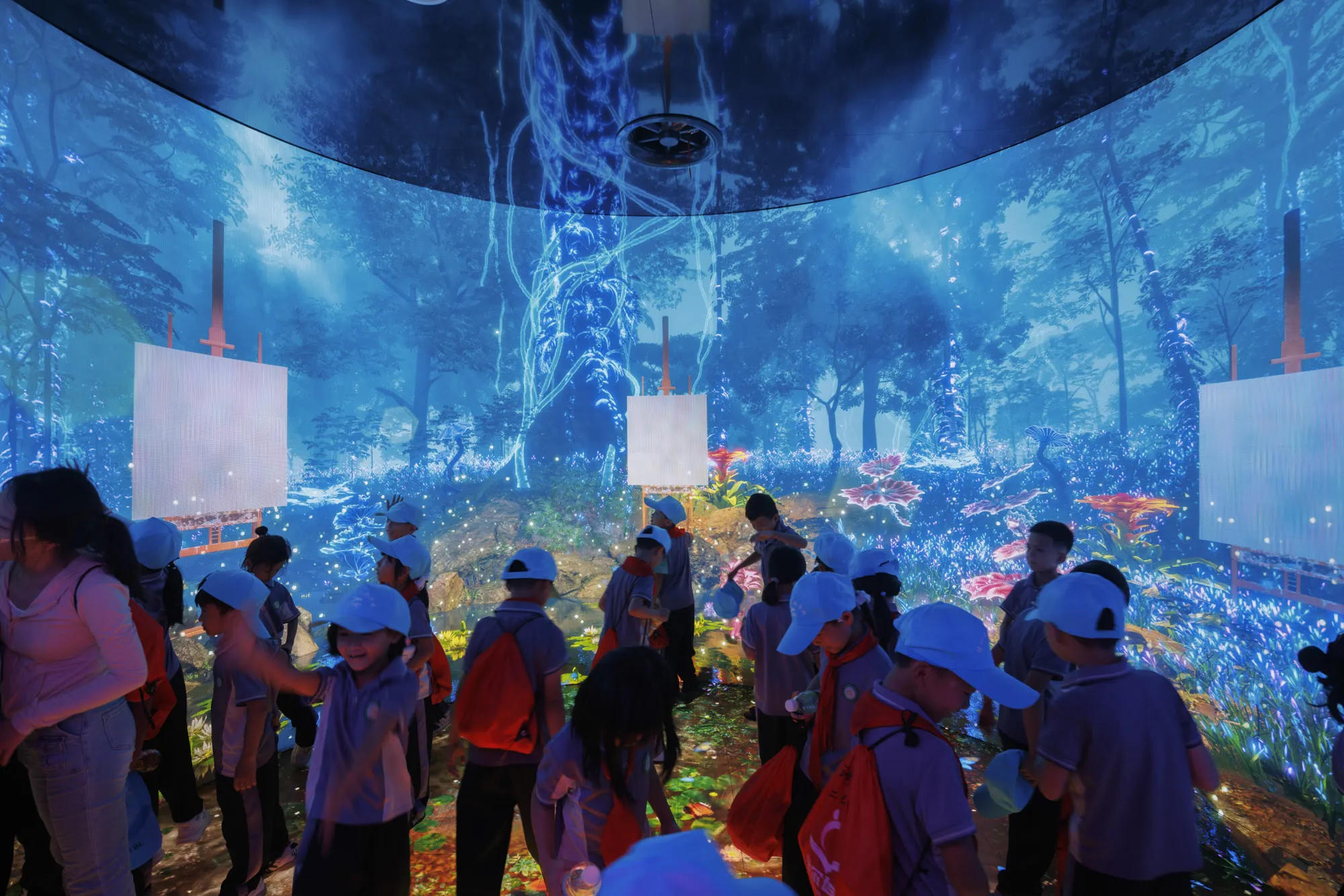
Visitors move through themes including space, oceans, forests, and agriculture. The experience works in two directions: descending from cosmic subjects down to interactive learning zones or rising from hands-on exploration toward broader scientific concepts. This creates two complementary readings of the same building, shaped entirely by visitor choice.
A Floating Structure Without Internal Columns
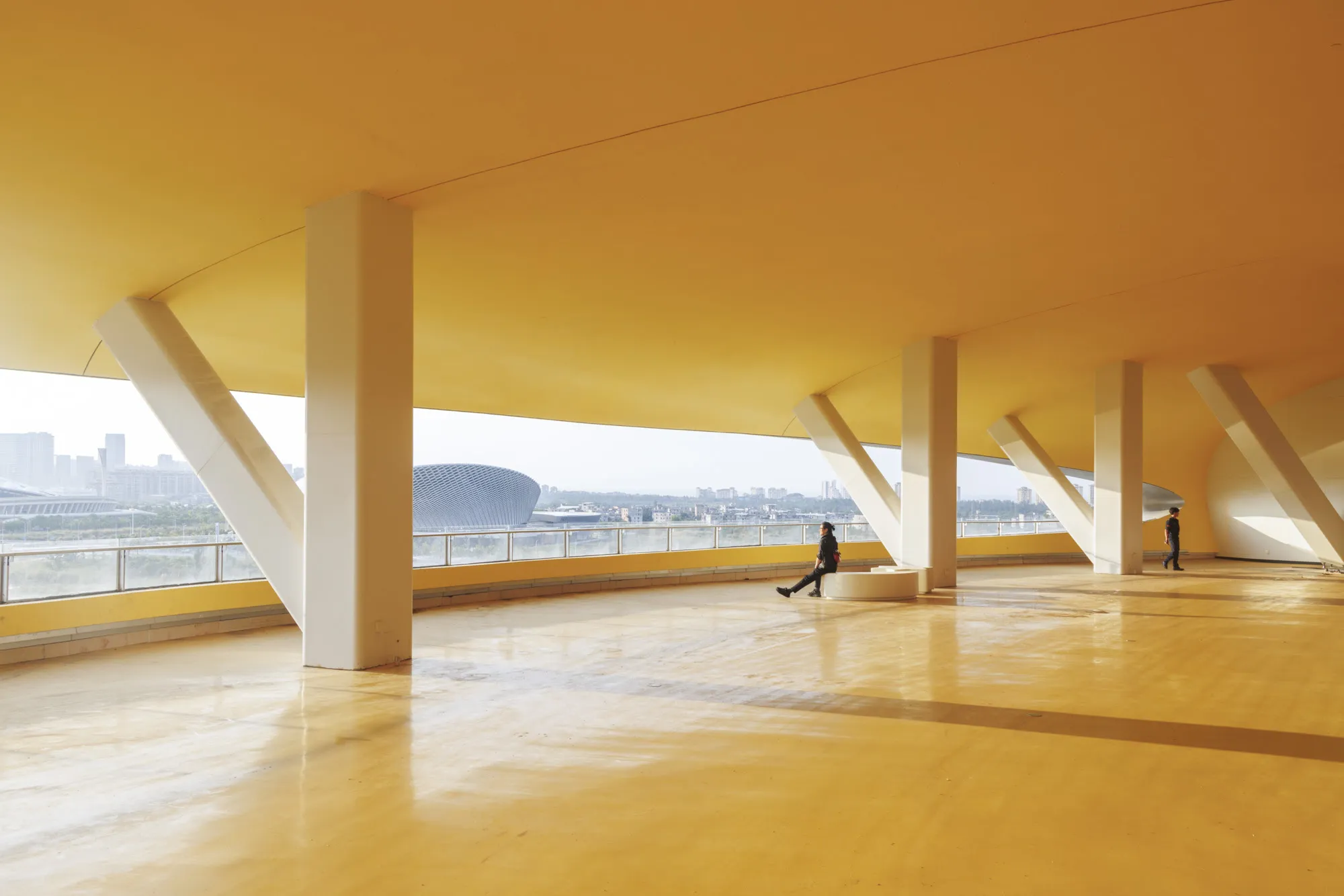
The entire spiraling volume by MAD Architects is supported by three structural cores, allowing the exhibition floors to remain completely free of columns. This creates large open interiors and enhances visual continuity throughout the museum.
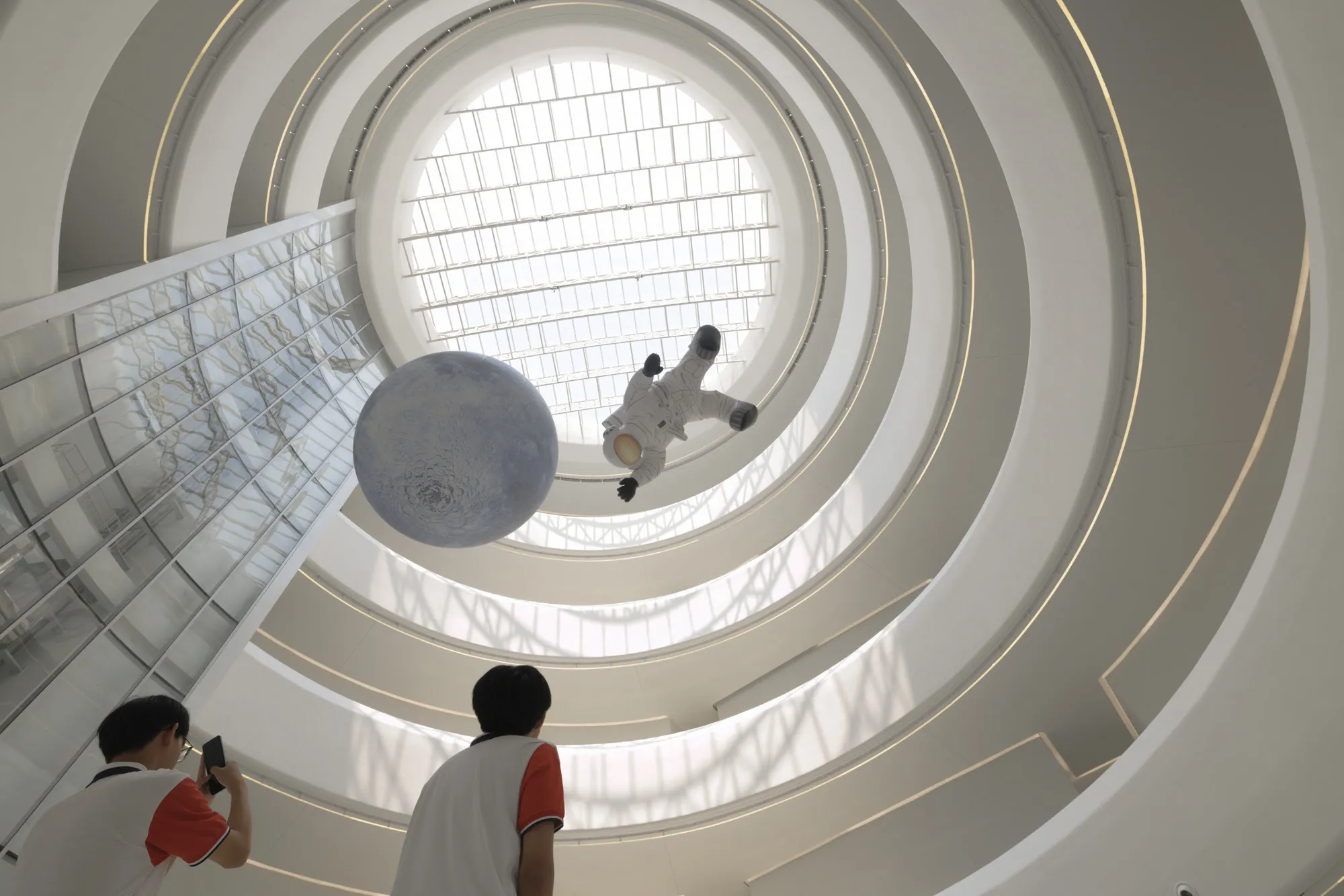
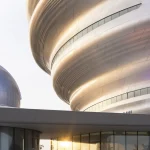
Raising the main volume above ground level allows the building to hover above reflecting pools and landscaped areas. The result is a sense of lightness, where the museum appears to float above the landscape while preserving uninterrupted public space beneath it.
A Reflective Shell That Changes With the Environment
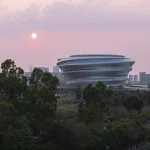
The exterior is clad in 843 fiber-reinforced polymer panels, forming a smooth metallic shell. The surface continuously responds to changing daylight, sky conditions, and weather, giving the building a shifting visual identity throughout the day.
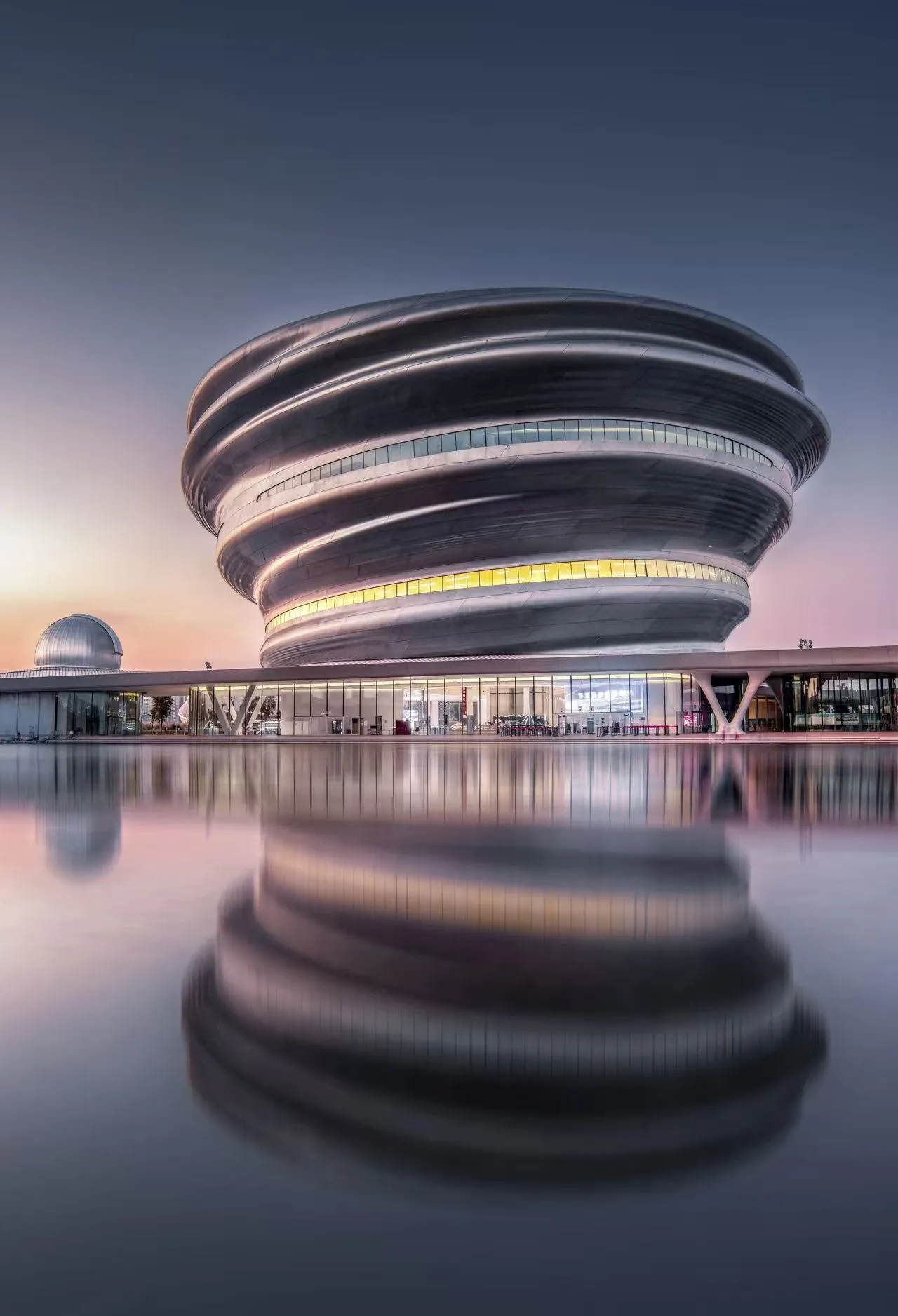
This reflective skin reinforces the museum’s connection to its coastal surroundings, blending architecture with atmosphere and environment.
Integrated Cultural and Educational Spaces
Beyond exhibition areas, the Hainan Science Museum includes a planetarium, a giant-screen cinema, and outdoor learning landscapes focused on tropical ecology and agriculture. A network of covered walkways connects these zones, ensuring uninterrupted movement across different programmatic spaces.
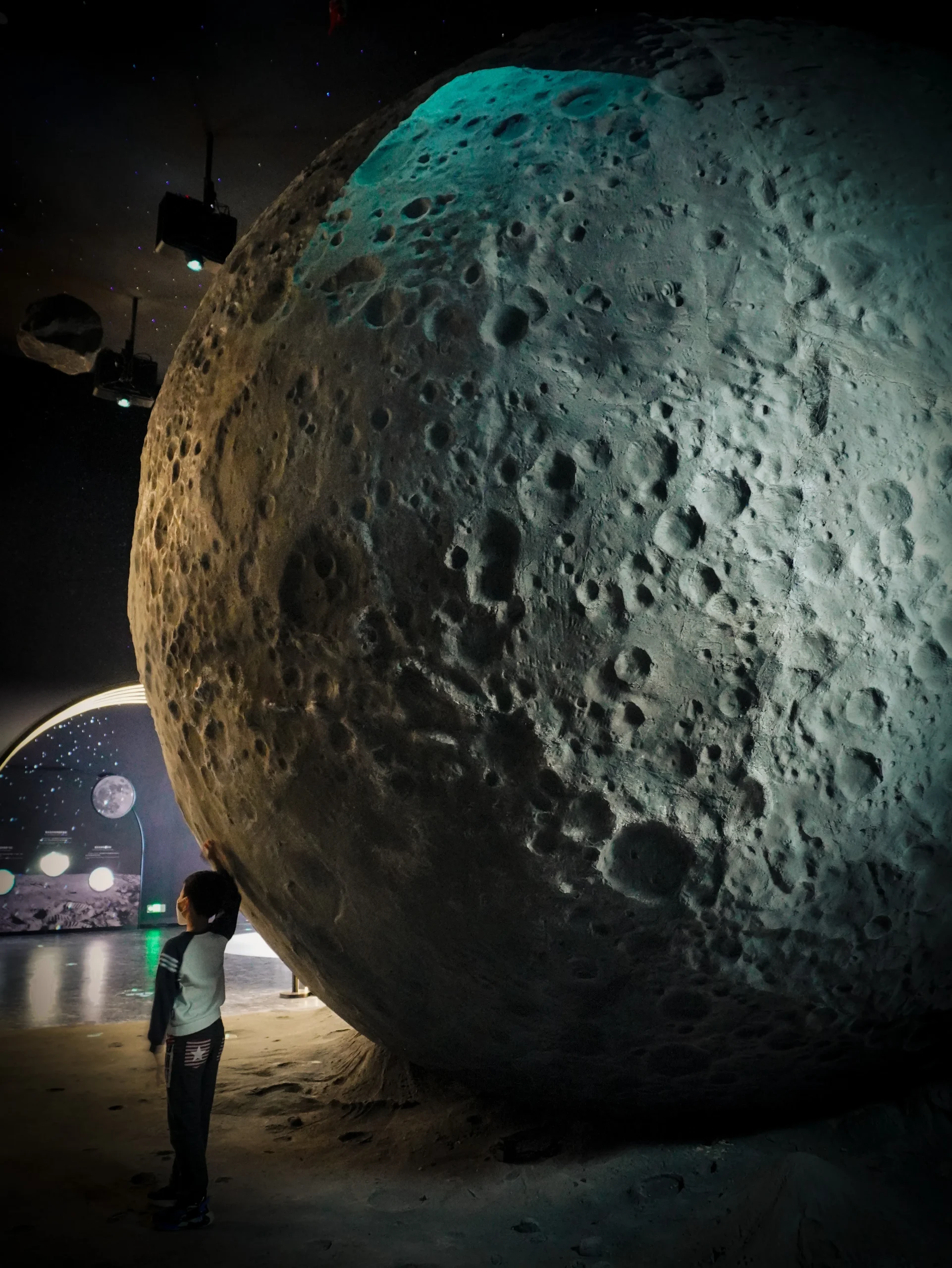
A sunken plaza and shaded gardens extend the experience outdoors, reinforcing the building’s role as both an educational and public environment.
Part of a Growing Coastal Cultural Network
The museum forms part of a broader sequence of public architecture along Haikou’s coastline, including the earlier Cloudscape of Haikou pavilion. Together, these projects contribute to a continuous public landscape that integrates architecture, leisure, and cultural activity.
Such projects collectively shape an evolving urban coastline focused on public engagement and open space.
A New Model for Experiencing Science
The Hainan Science Museum redefines the science museum as a fluid environment where learning happens through movement, interaction, and spatial discovery. By removing rigid boundaries between disciplines and replacing them with a continuous spiral experience, the building turns scientific exploration into a physical journey.
It stands as a large-scale example of how contemporary public architecture can merge education, landscape, and experience into a single unified form.
Project Credit: MAD Architects