



The City of Arts and Sciences (Ciudad de las Artes y las Ciencias) is one of the most iconic architectural complexes in Spain, located in Valencia. Designed by Santiago Calatrava and Félix Candela, this futuristic cultural and architectural landmark has become a symbol of modern Valencia and a world-renowned tourist attraction. It stands as one of the most extreme examples of computationally driven architecture.
The City of Arts and Sciences, completed between 1998 and 2009, transforms an urban landscape into a science fiction environment. Wavy curves, mirrored pools, and giant structures blend into an interactive spatial landscape. Its buildings seem to follow the lead of nature. Advanced computational software translates organic forms into inhabitable, functional structures.
Architectural Concept
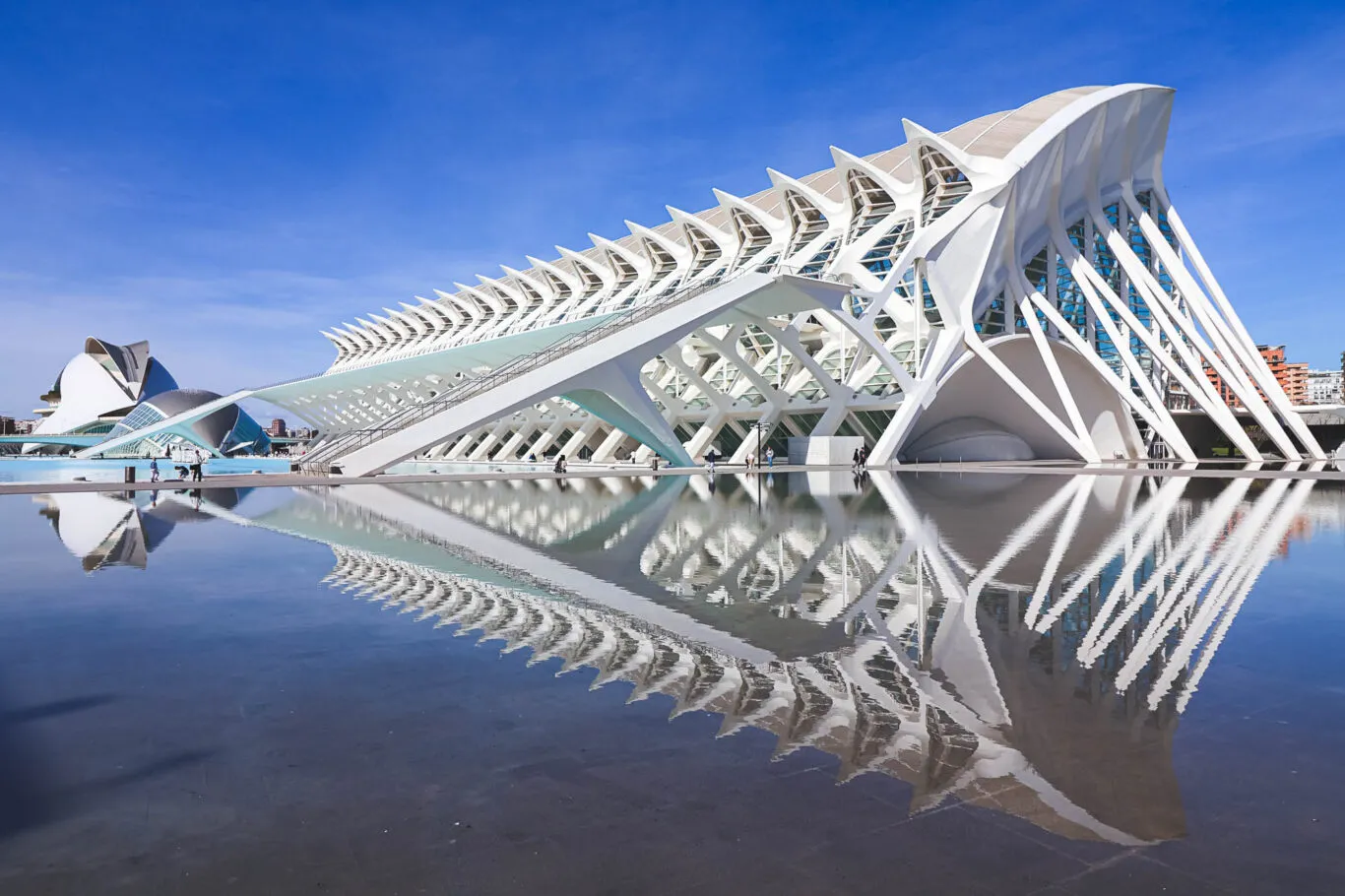
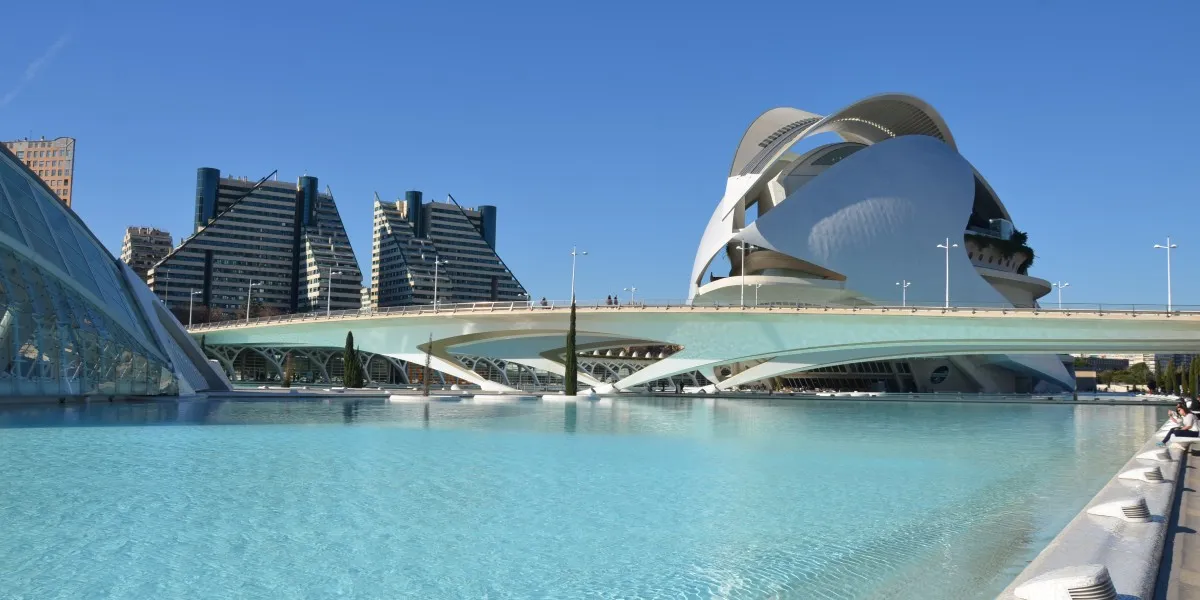
The complex is designed with a futuristic and organic approach, reflecting Calatrava’s signature style. Its fluid lines, white concrete surfaces, and reflective pools create harmony with the environment. Geometry plays a central role in structures that are inspired by natural forms such as the skeleton of a whale, the shape of an eye, and the ribcage of a giant creature.
Geometric Innovation in Valencia
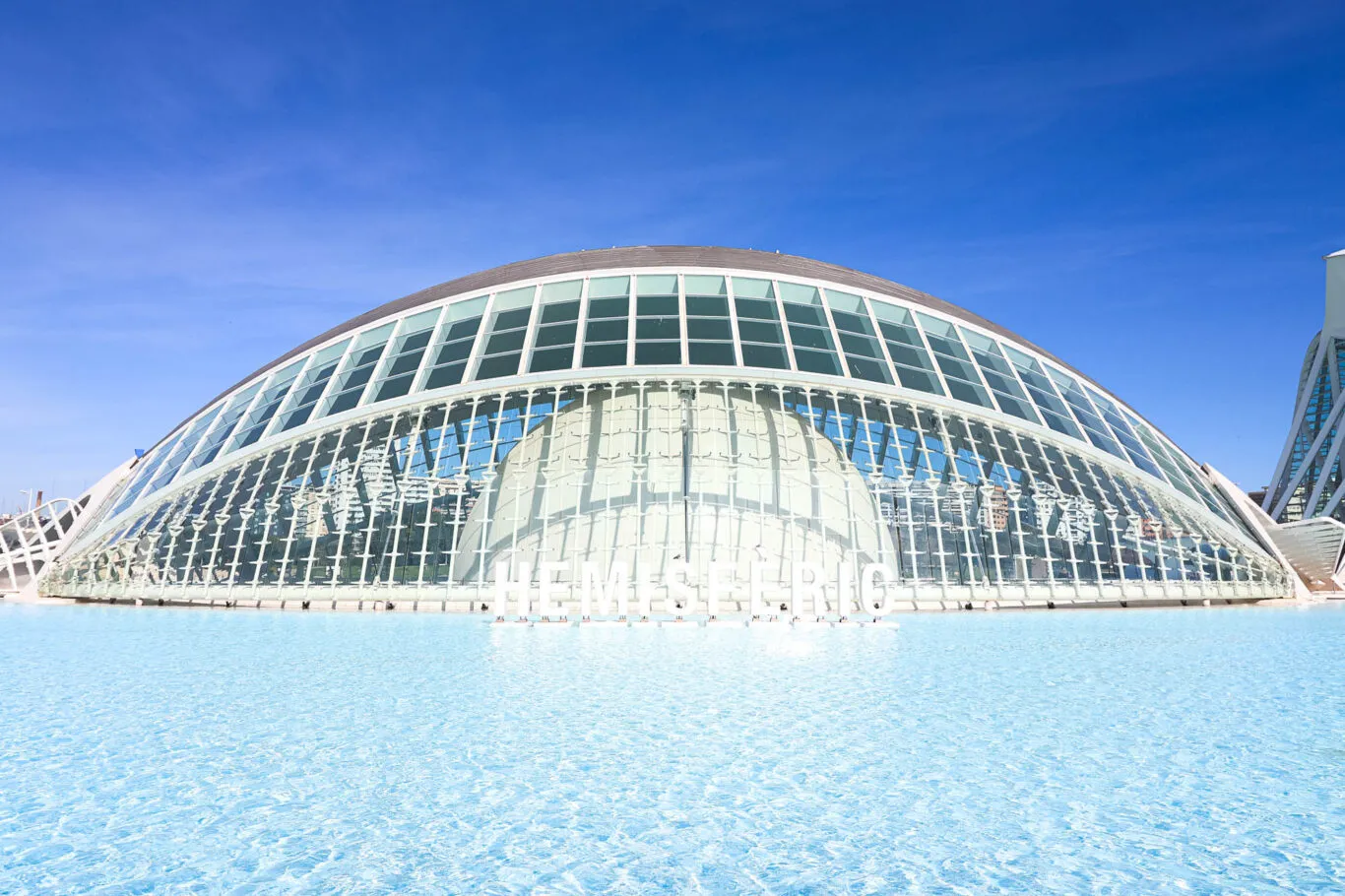
The City of Arts and Sciences in Valencia has 5 main buildings. Its centerpiece, L’Hemisfèric, resembles a giant eye with an elliptical roof that opens and closes like an eyelid. The building houses an IMAX cinema and planetarium. Its design maximizes light and reflection, while the surrounding water amplifies its visual impact. Santiago Calatrava’s parametric approach enabled precise control over sweeping curves and the structural shell, creating a dynamic interplay of structure and environment.
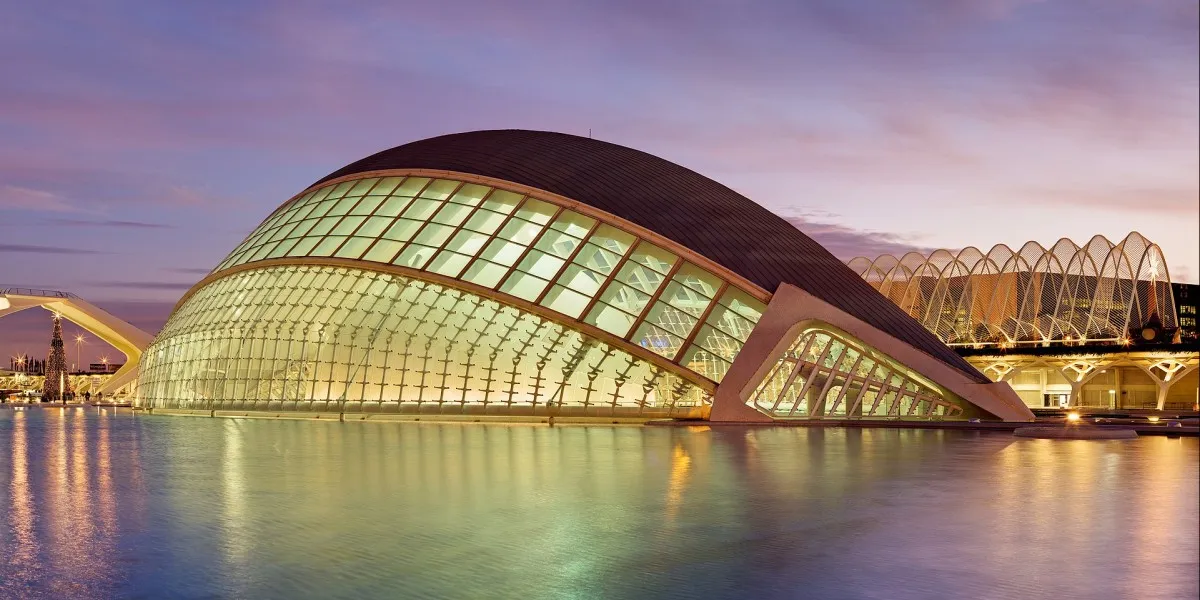
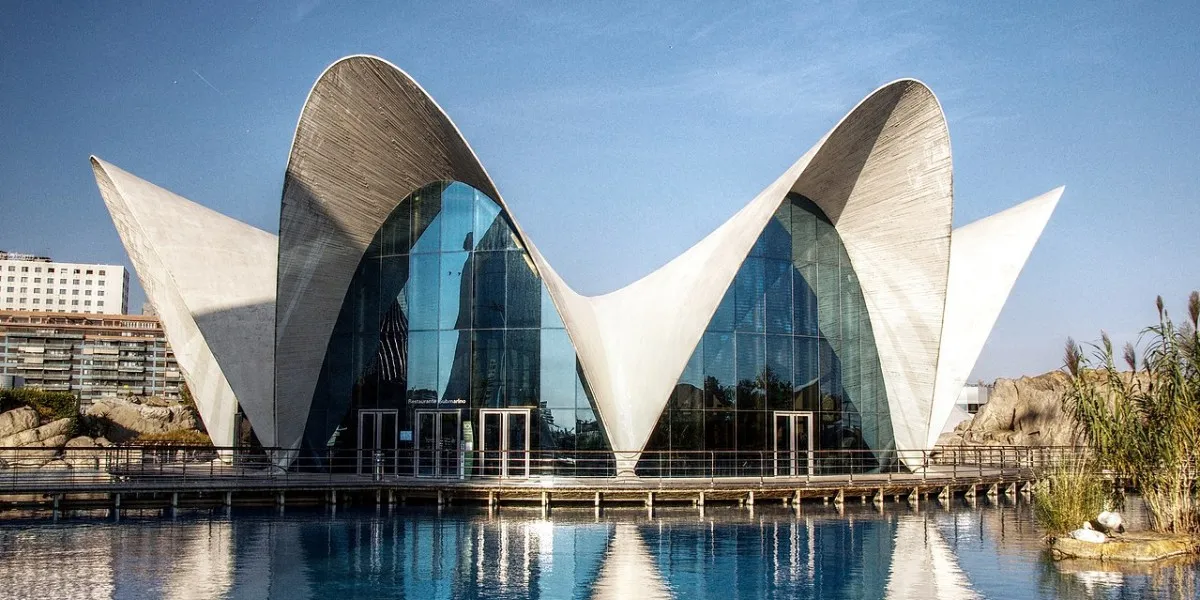
Next, L’Oceanogràfic, the largest aquarium in Europe, uses reinforced concrete and steel frameworks to create organic forms that mimic aquatic habitats. Its composition guides circulation and frames underwater views, while glass and water reflections connect interior spaces with the landscape.
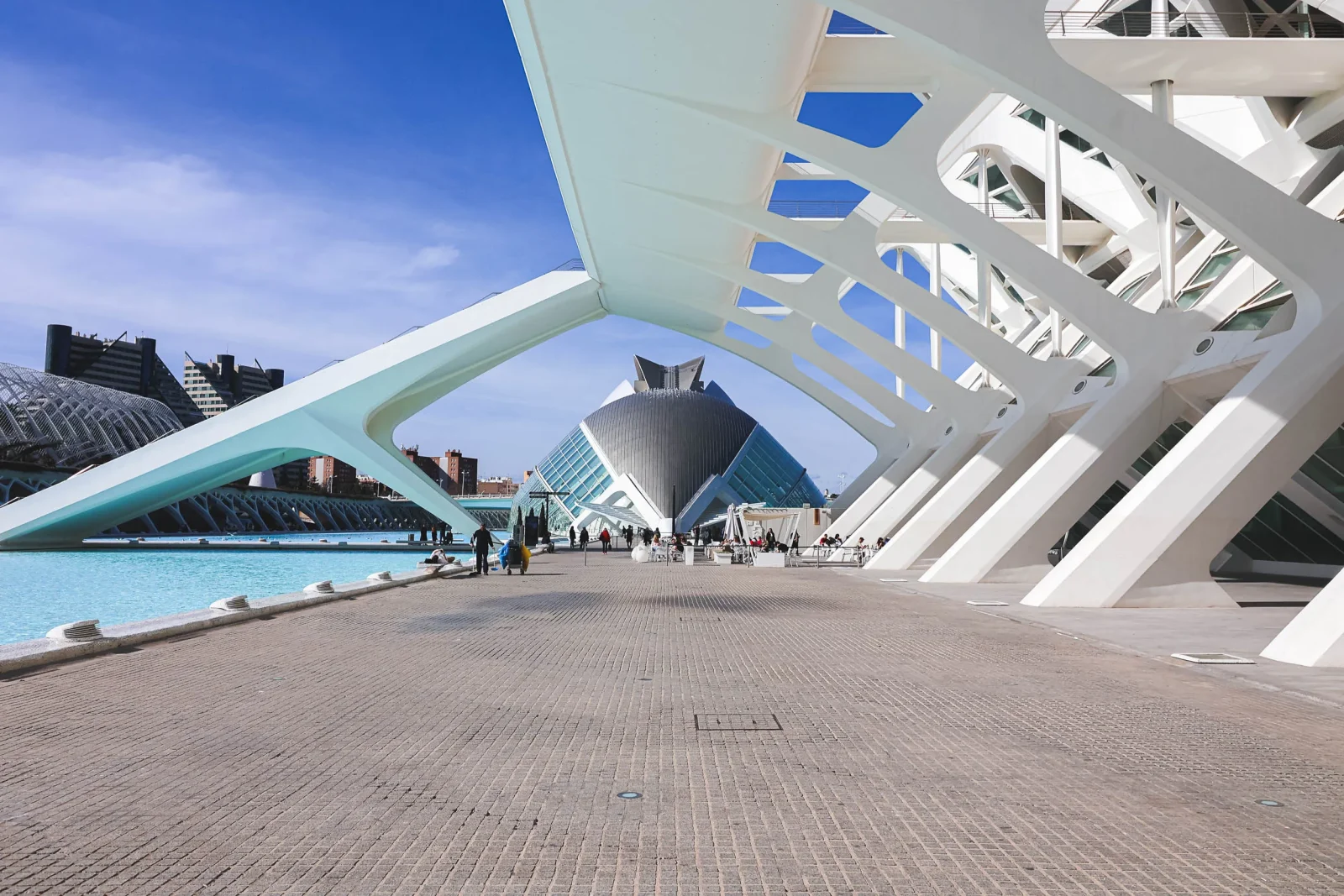
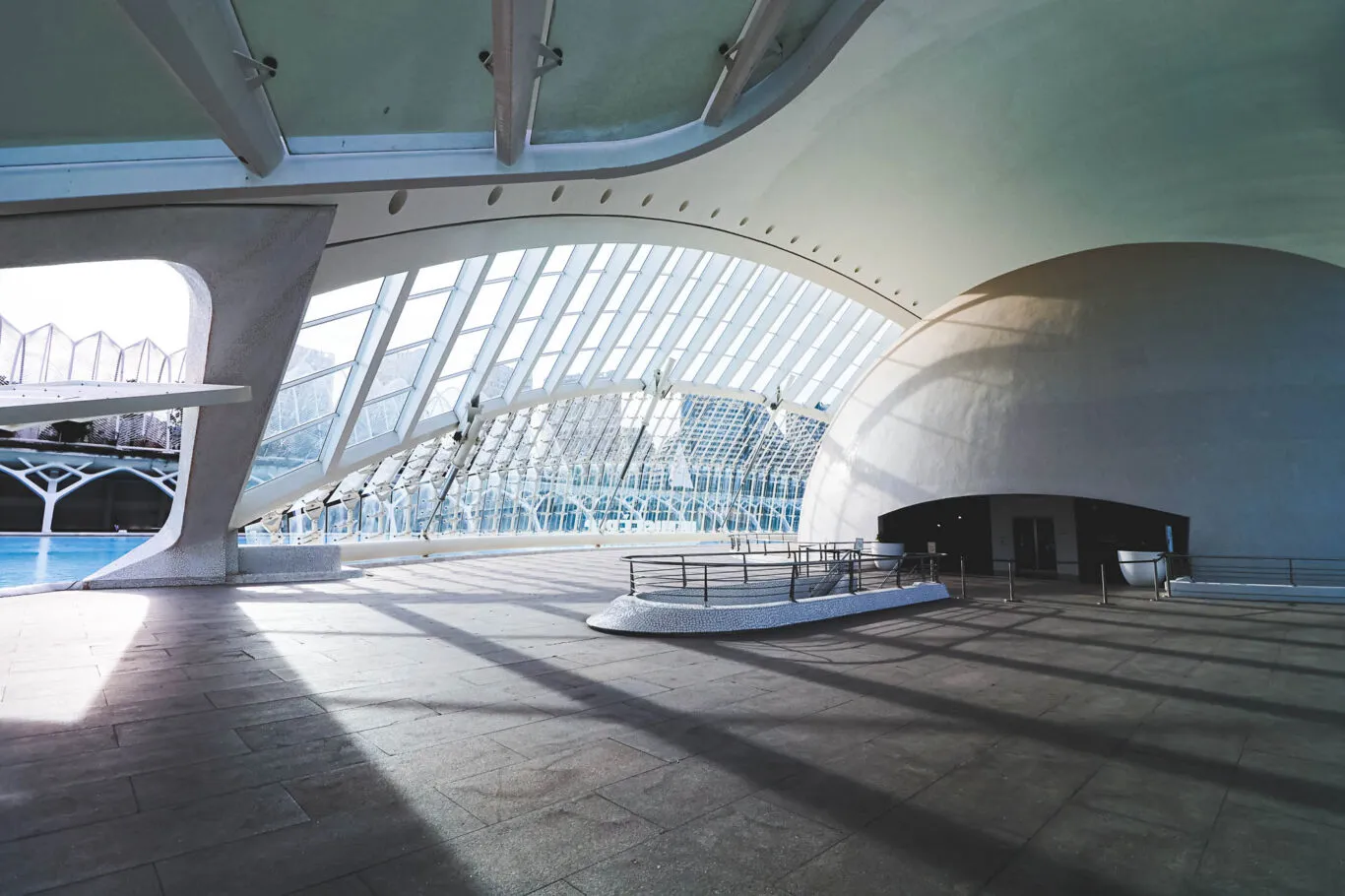
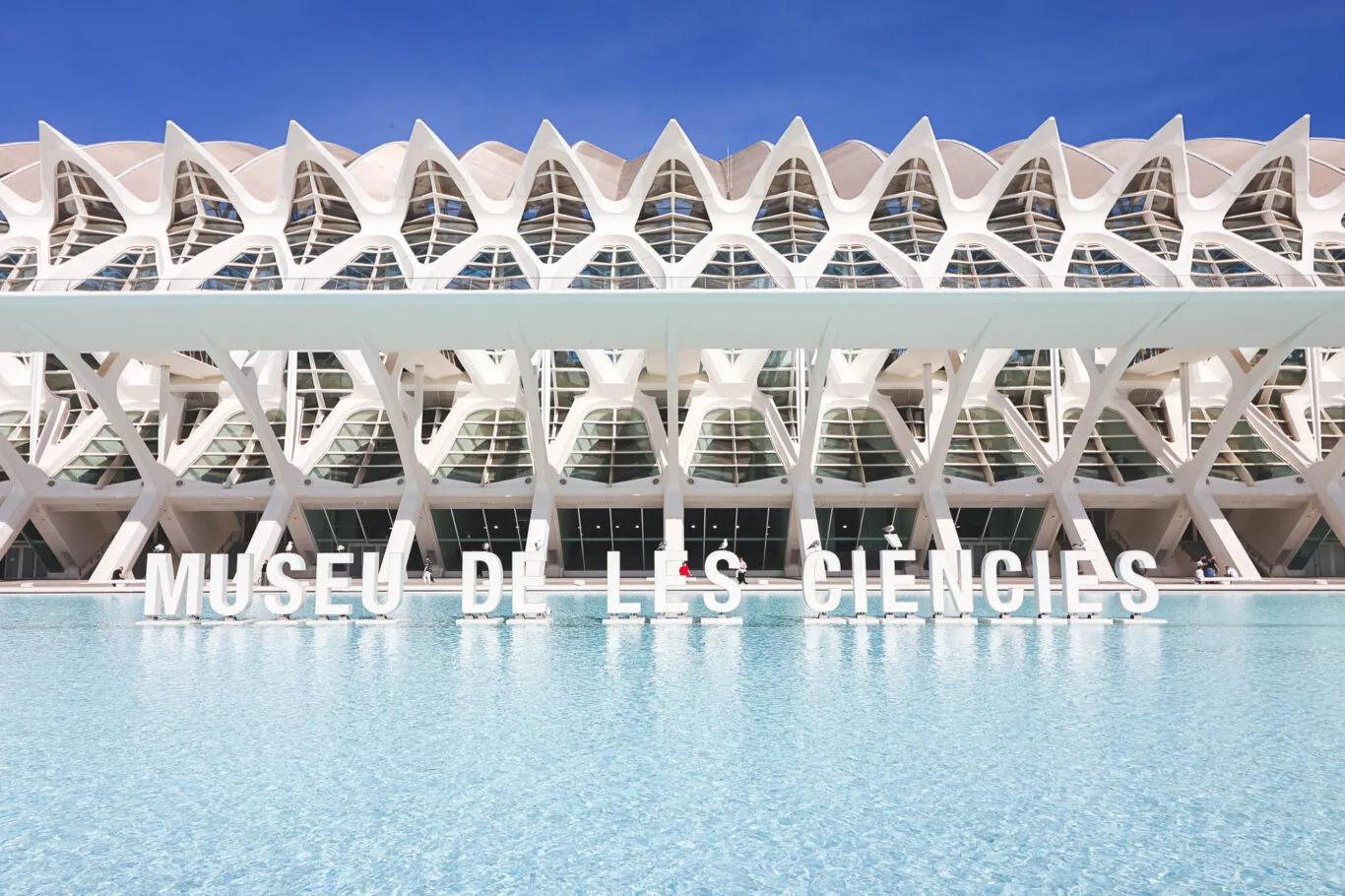
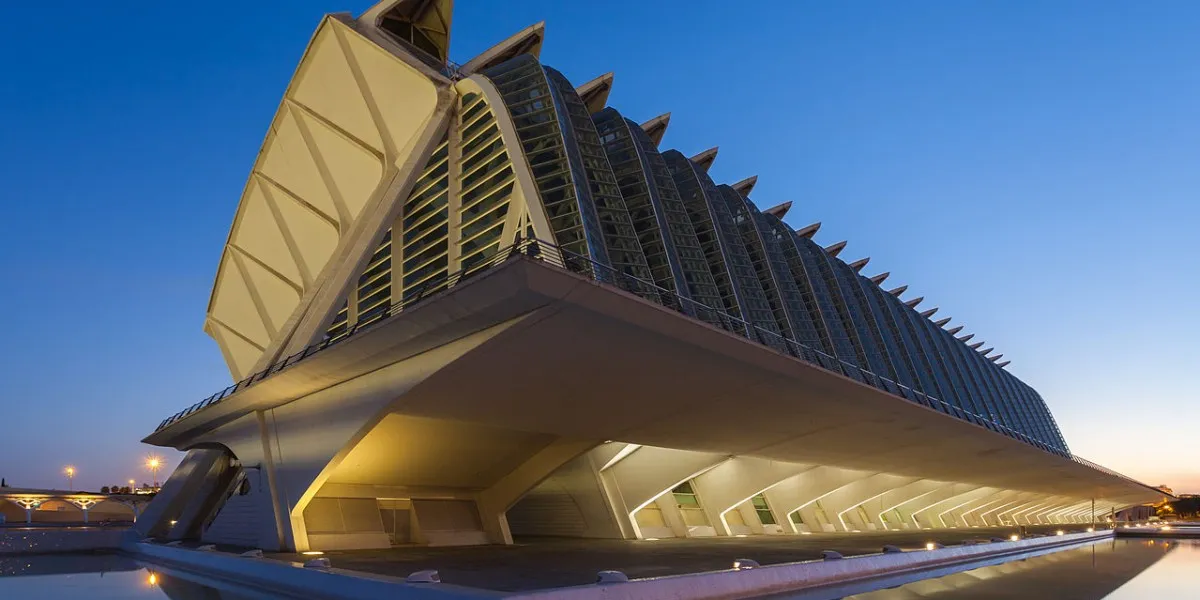
The Museu de les Ciències Príncipe Felipe serves as a hands-on science museum, featuring a long, skeletal structure inspired by the human spine. Calatrava used parametric models to optimize its cantilevers and roof trusses. High-performance concrete and glass ensure structural stability, while an airy interior creates a sense of space.
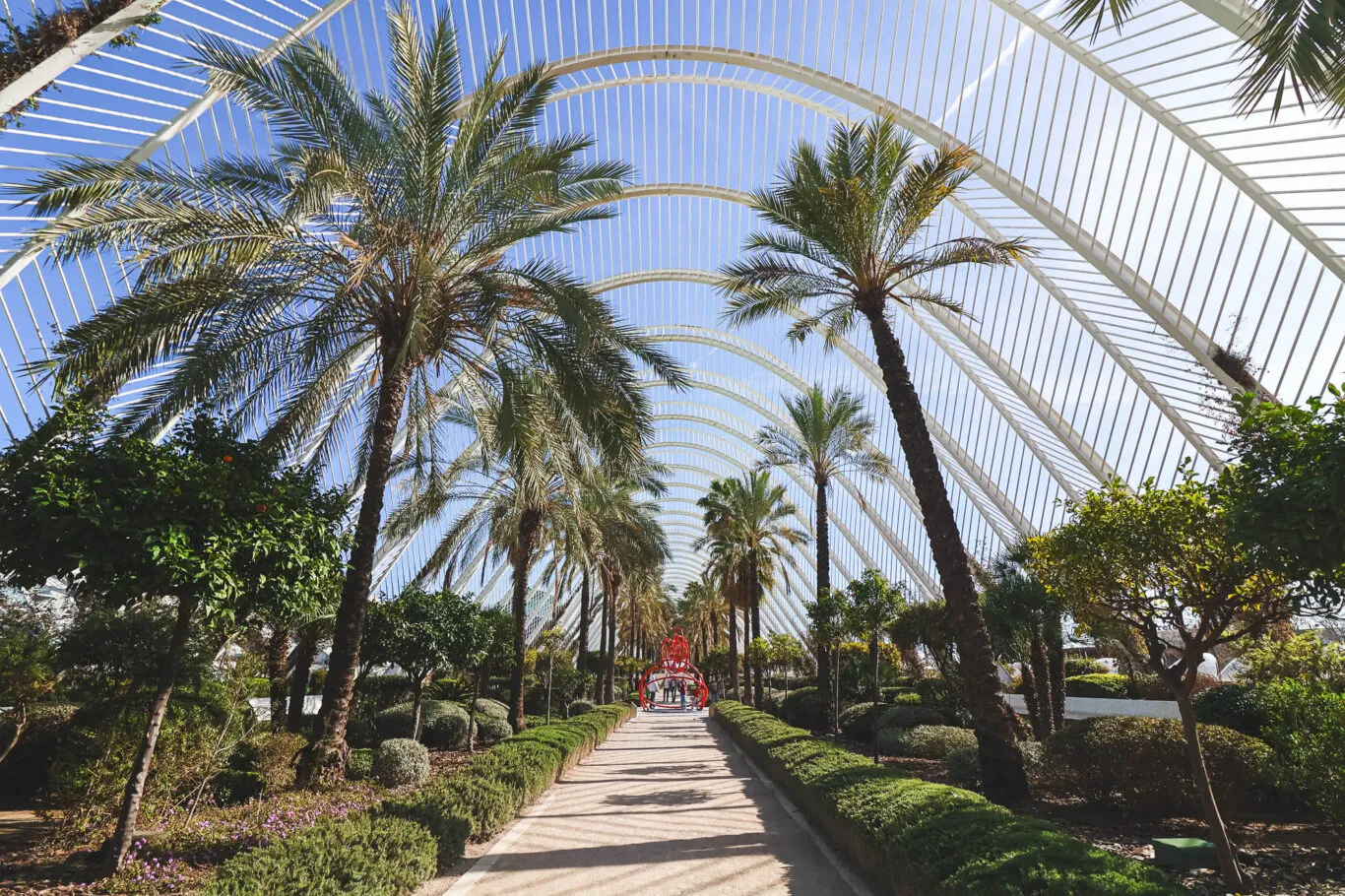
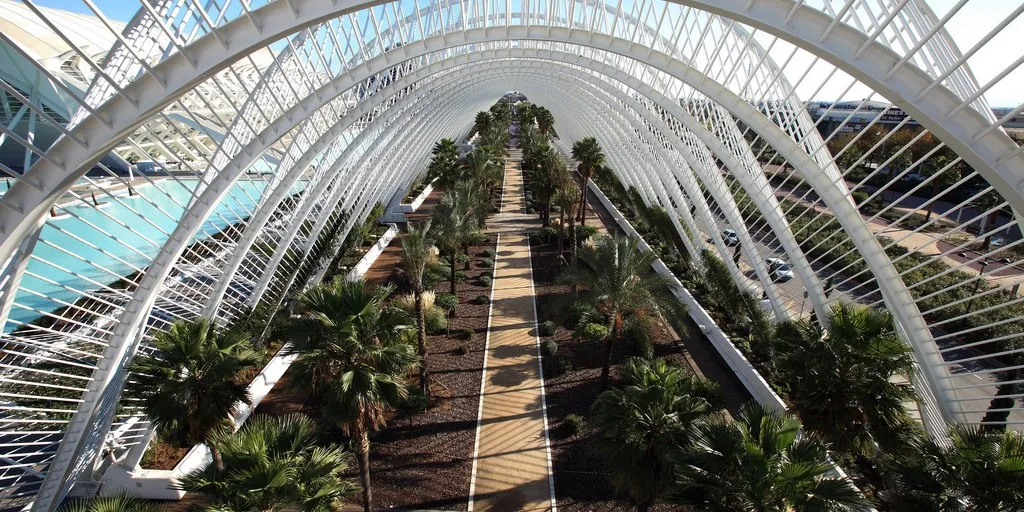
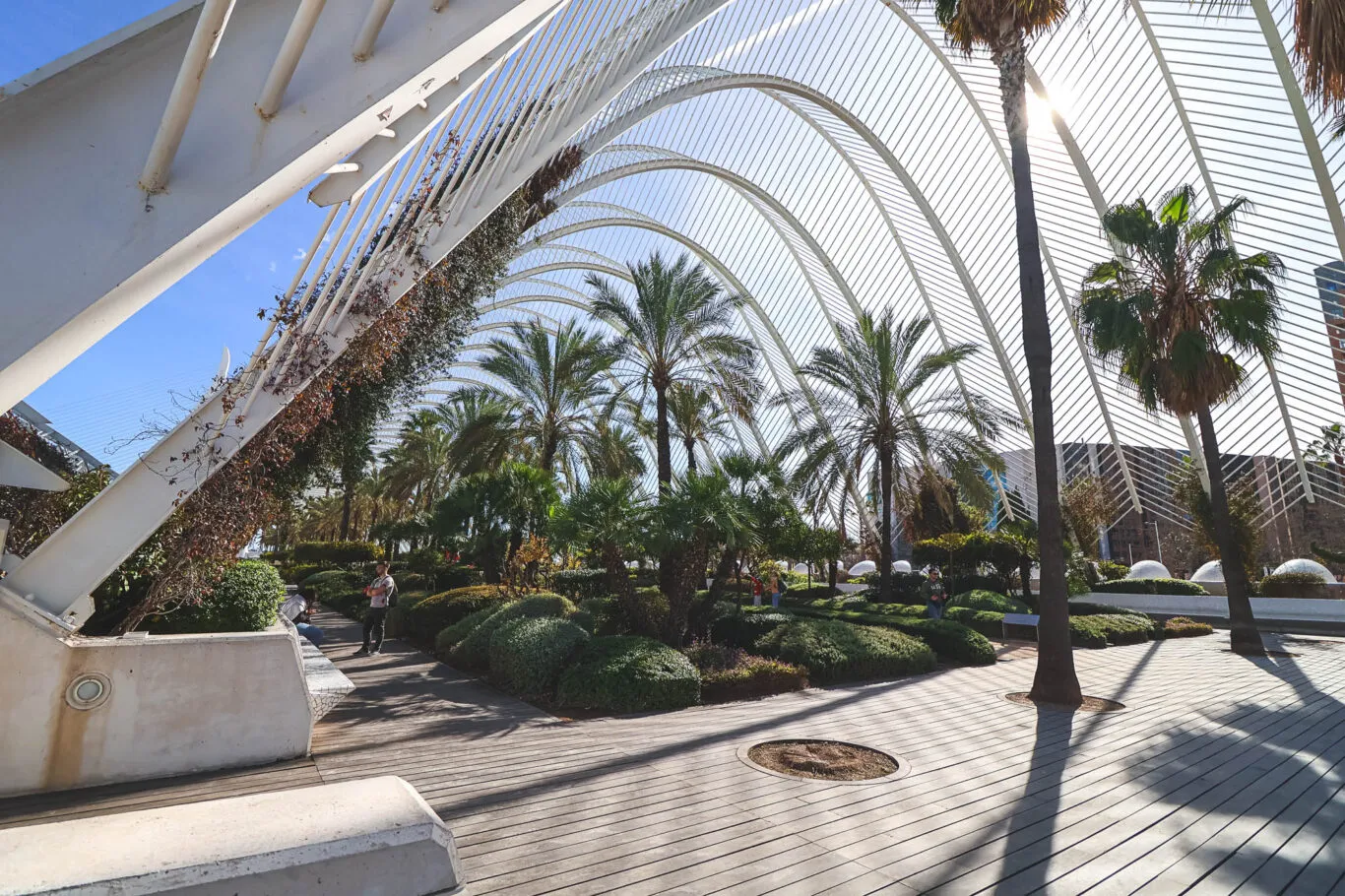
The L’Umbracle, a landscaped walkway and garden, uses parabolic arches to filter sunlight and frame views of the complex. It integrates architecture and landscape, guiding pedestrians while providing an immersive experience. L’Assut de l’Or Bridge, with its single inclined pylon and radial cable system, shows Calatrava’s ability to turn natural and biological inspiration into tensioned structures, blending engineering precision with sculptural elegance.
What are digital forms in architecture?
Digital forms in buildings refer to geometries and spatial organizations shaped by computational modeling, organic design, and digital simulation. Computational modeling uses powerful computers to simulate and calculate the shapes of buildings. Parametric design manipulates these shapes by changing specific rules or variables. These forms differ from traditional rectilinear buildings. They respond to multiple variables (structural performance, environmental conditions, human traffic, and aesthetic intent) at the same time.
In Valencia, the various arches, shells, and bridges result from iterative digital design processes. These processes create a coherent yet dynamic urban fabric.
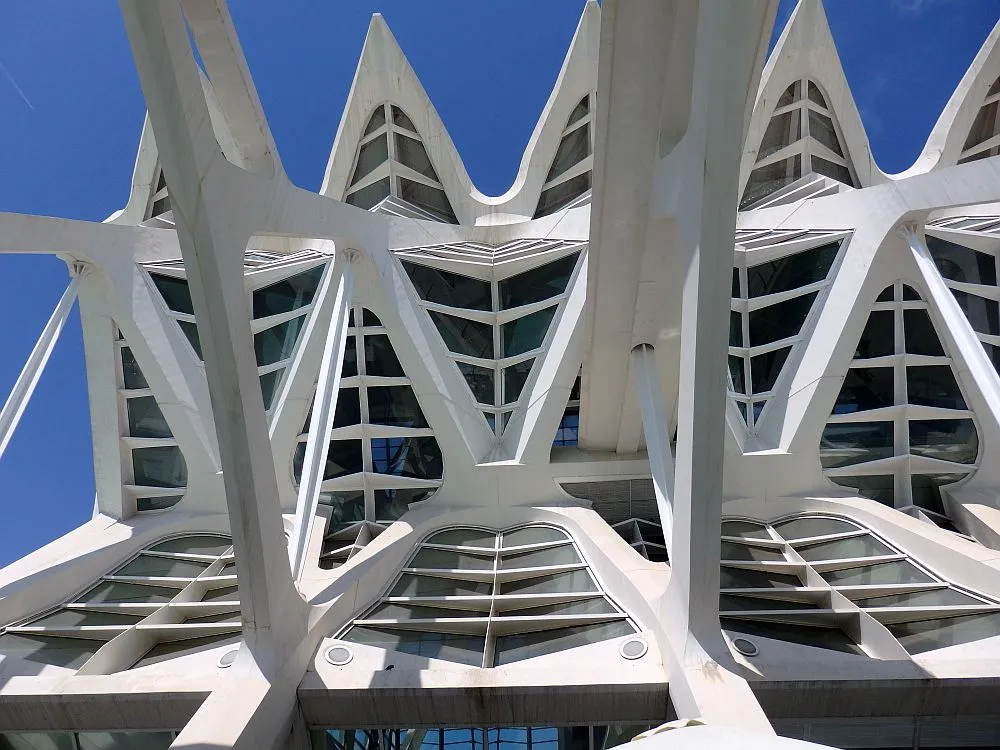
Digital Architecture as Experience
At the City of Arts and Sciences, geometry defines both the architecture and the experience of being there. Each building begins with digital design rules that can be adjusted and tested on the computer, allowing complex forms to take shape with precision. The result is an environment where curves and structures are not only visually striking but also guide how people move through the space and interact with it.
The Assut de l’Or bridge features a tall pylon and a splayed radial cable arrangement, resembling spokes emanating from a central point. It is both a circulation route and a visual anchor. The bridge orients sightlines to the horizon and frames the complex. Computer simulation balanced form, load distribution, and aesthetic rhythm. These simulations make the structure monumental, yet lightweight.
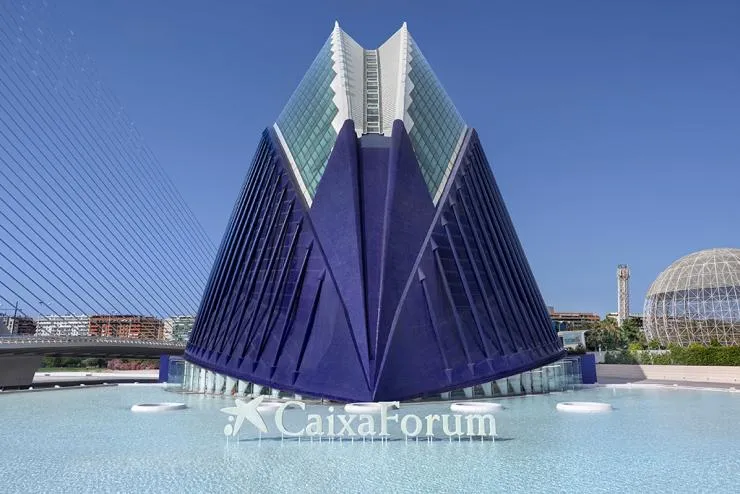
The City of Arts and Science as a Living Laboratory
The complex is now a hybrid of culture, science, and urban experimentation. It demonstrates how digital design makes architecture sensitive to human scale, environmental context, and artistic intention simultaneously. Valencia’s signature icon proves that computational tools are not only technical aids but also storytelling devices. These tools shape both form and perception. From extensive pedestrian itineraries to close-up points beside mirror pools, the City of Arts and Sciences is a platform where parametric design becomes everyday magic.
Project Details
Project Name: The City of Arts and Sciences
Architect(s): Santiago Calatrava & Félix Candela
Year: 1991–2005
Location: Valencia, Spain
Type: Cultural complex
Explore Courses
.jpg "Ondrej Chybik - Rethinking Architecture")