

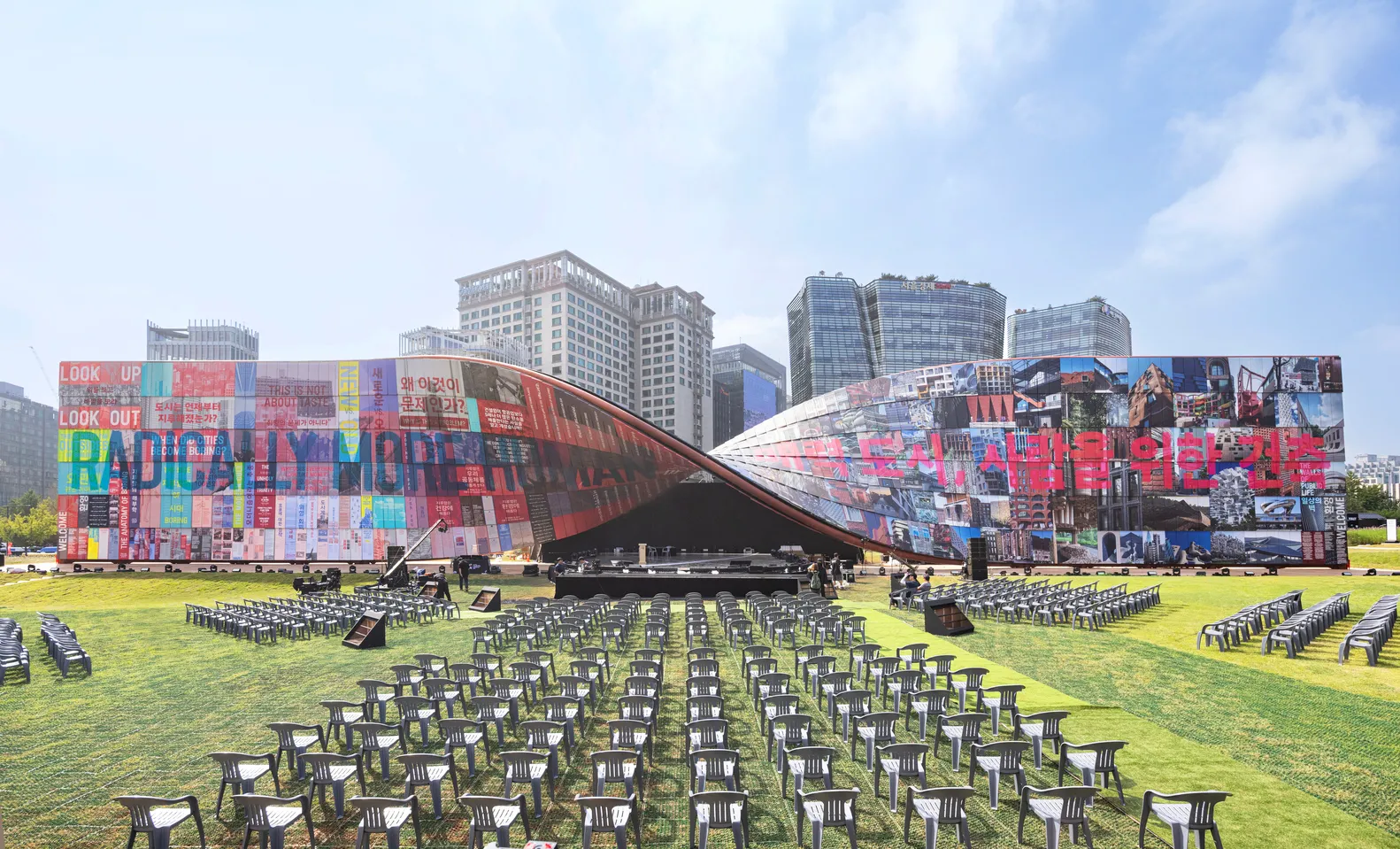
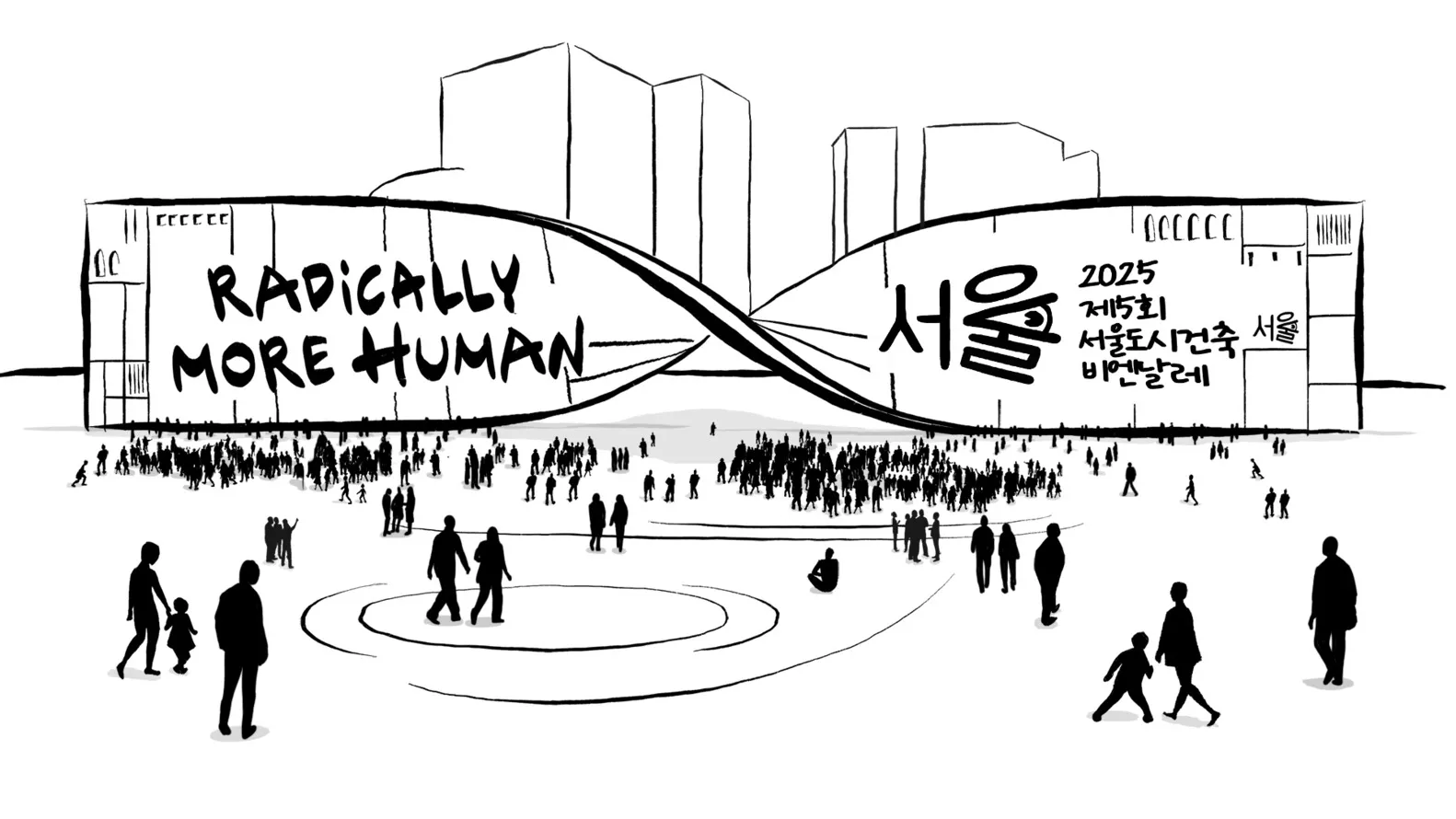
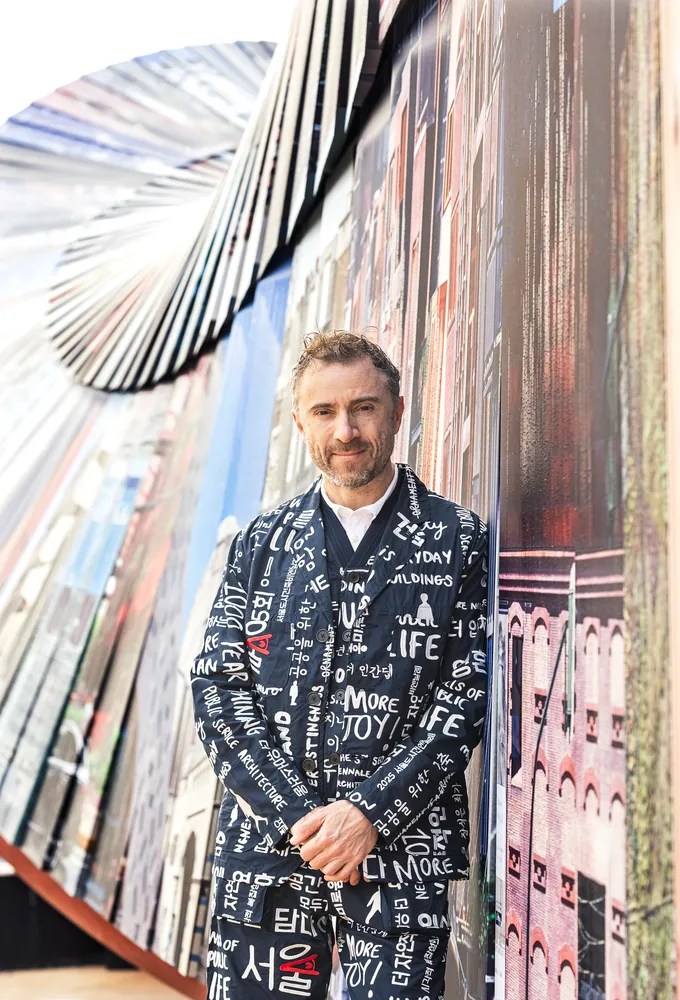
The Seoul Biennale of Architecture and Urbanism 2025 opened in late September at Songhyeon Green Plaza in central Seoul. Under the stewardship of British designer Thomas Heatherwick, this year’s edition, themed Radically More Human, turned that question into an act in public, installing a 90-metre-long “Humanise Wall” across Songhyeon Green Plaza and staging 24 full-scale façade fragments, workshops, research talks, and citizen-led projects that ask how architecture can do more than shelter us how it can matter emotionally.
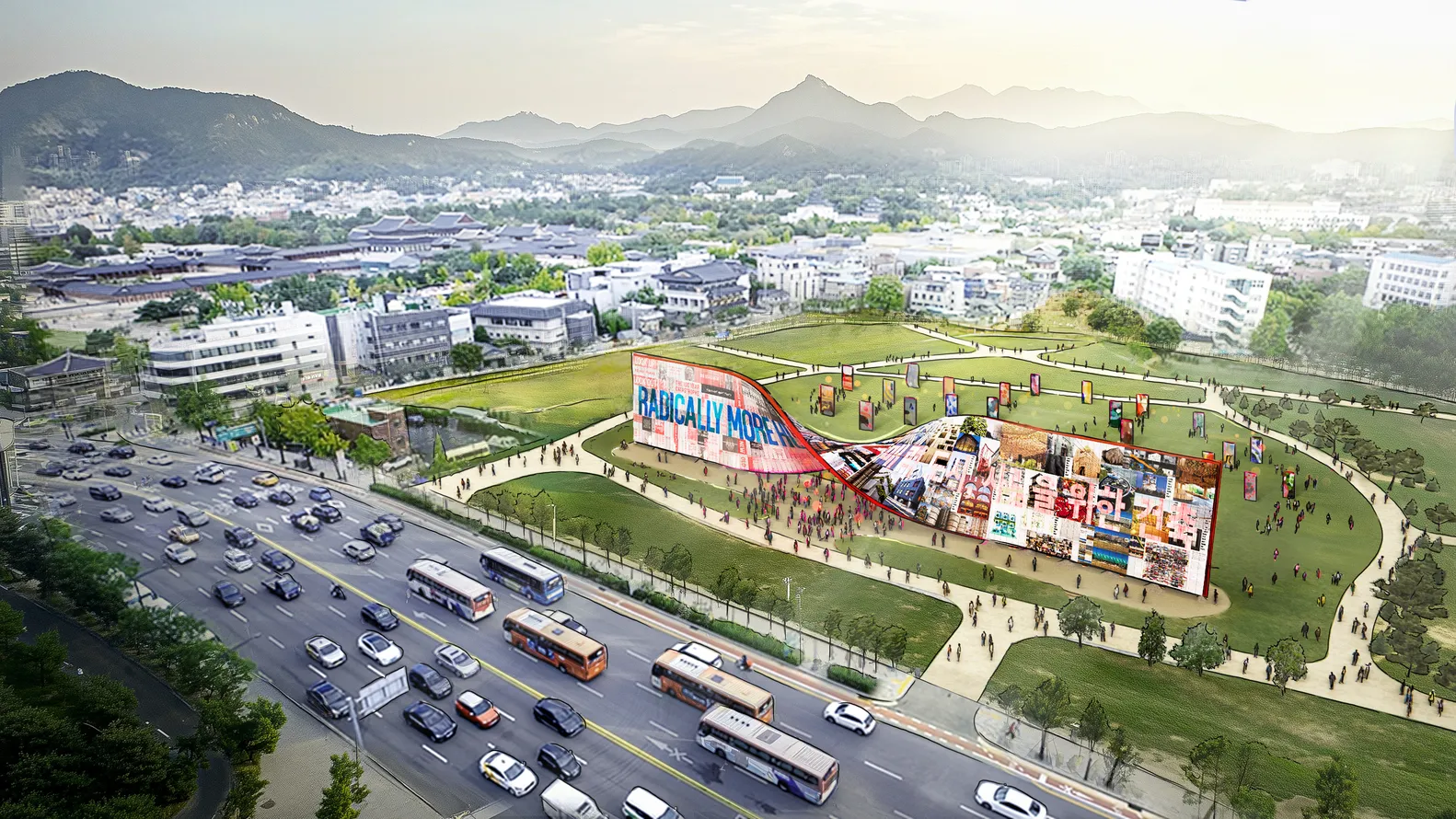
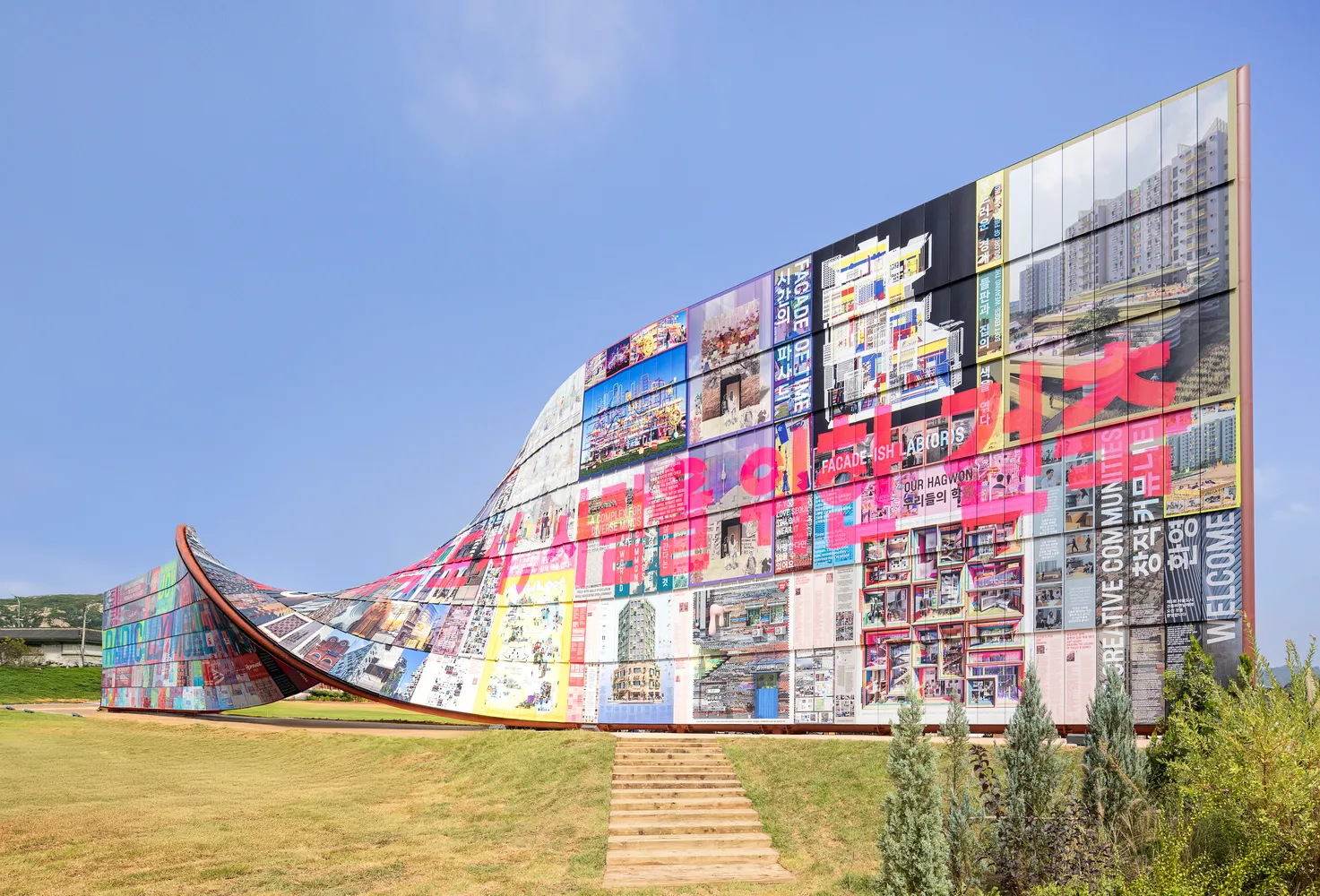
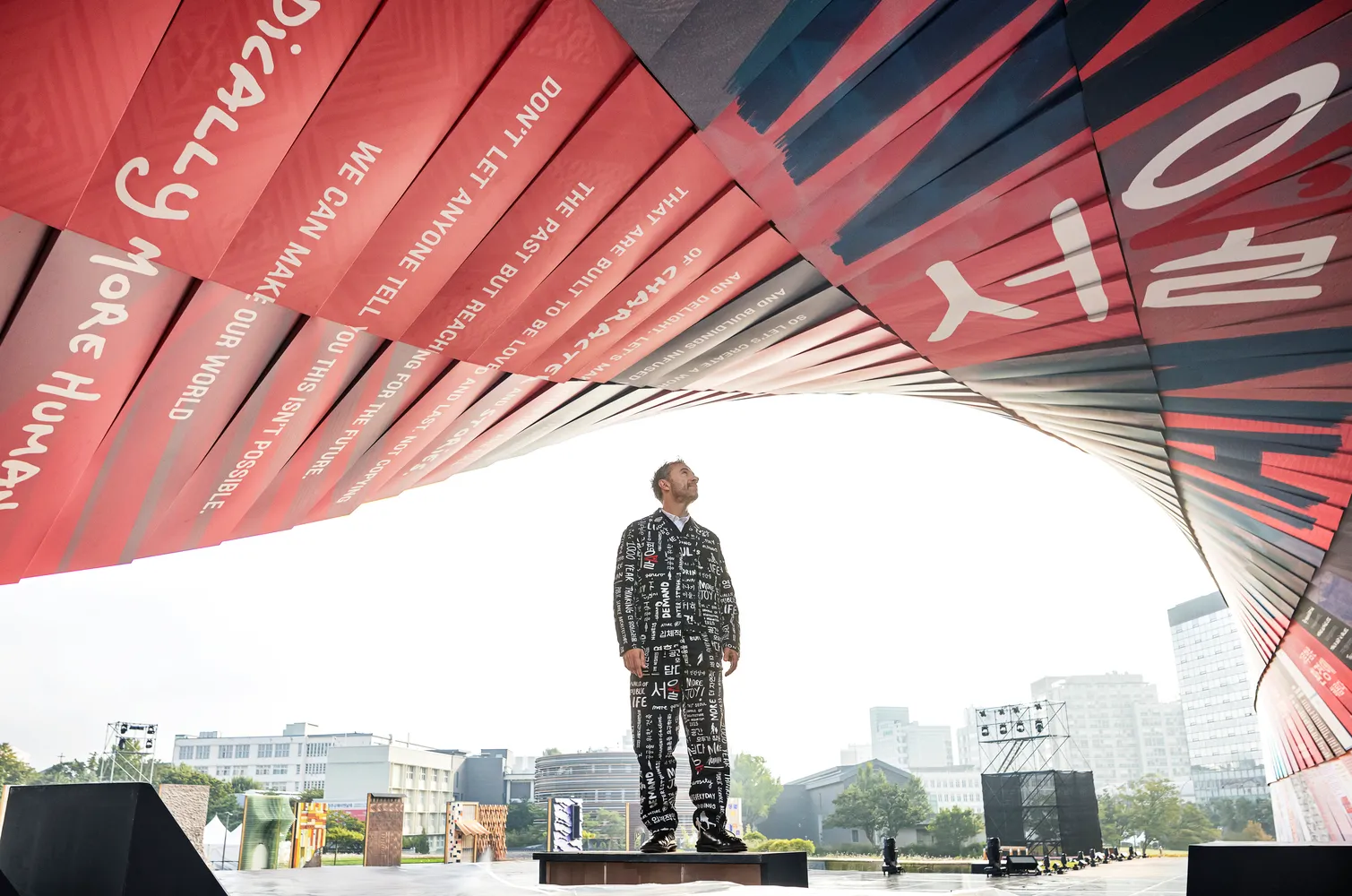
Heatherwick’s brief was plainly civic, bringing the debate out of lecture halls, putting it into the park, and letting people judge for themselves. The Big Thing on view, the Humanise Wall, is both manifesto and museum, a twisting, four-storey installation made from 1,428 steel tiles, each tile bearing images, annotations, or contributions.
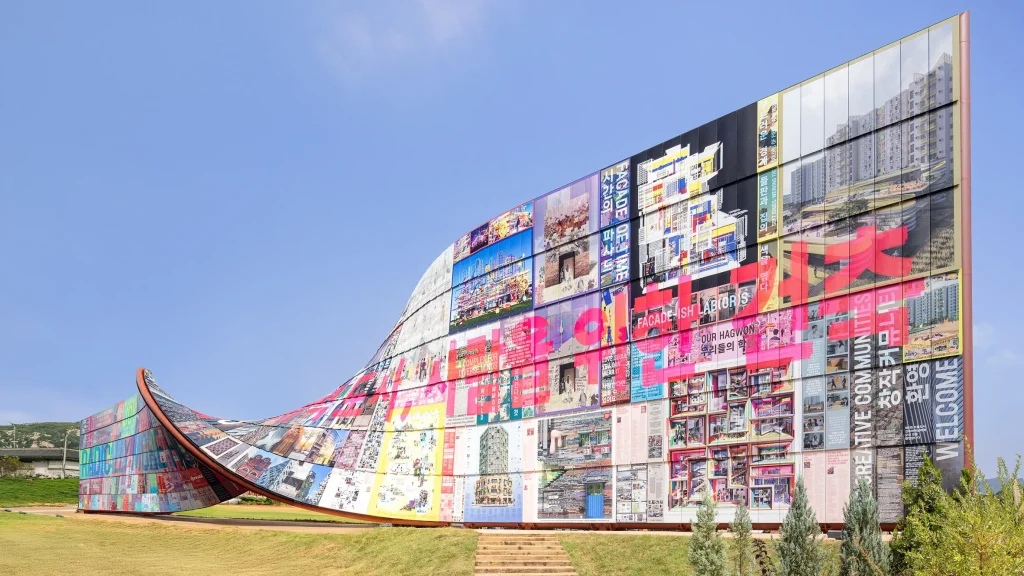
From a distance, it appears as a single bold gesture; up close, it reveals hundreds of case studies, 400 projects from 38 countries, assembled to demonstrate the visual and social richness that building skins can deliver. The piece physically forms a gateway and invites people to walk through and respond.
Putting “human” back into façades – the idea behind Humanise
Heatherwick’s “Humanise” campaign, an argument that plain, repetitive, anonymous façades harm public life and mental well-being, is the Biennale’s operating system. The campaign makes a practical claim that details, texture, variety, and narratives in the external face of buildings matter. The Biennale layers that claim with evidence public polling, commissioned research, and hands-on examples to push the argument beyond taste into the realms of policy and public health. If the last few decades of development favored surfaces that are easy to build and cheap to maintain, this festival asks developers and city officials to consider a cost that is rarely quantified—the emotional cost of soullessness.
Heatherwick himself has been blunt about what he sees as the problem: that an industry can accept blandness, and he’s used the Biennale to argue for a different standard of civic responsibility. The Humanise Wall is meant to be persuasive as well as a visual database of alternatives that can influence client decisions and municipal guidelines.
The Humanise Wall—how it’s built and what it shows
At ground level, the Humanise Wall is tactile and varied. It’s constructed from those 1,428 steel tiles, each one a small poster for an idea of a low-rise neighborhood that uses porches to animate the street, a school whose textured brickwork invites touch, and a community-run project that grafts art onto plain housing. Together, the tiles add up to a four-storey, 90-metre ribbon that twists into a portal, a theatrical but also practical invitation to conversation. The installation’s curatorial logic is to show enough persuasive examples, and the implications for regulation, procurement, and design culture become harder to ignore.
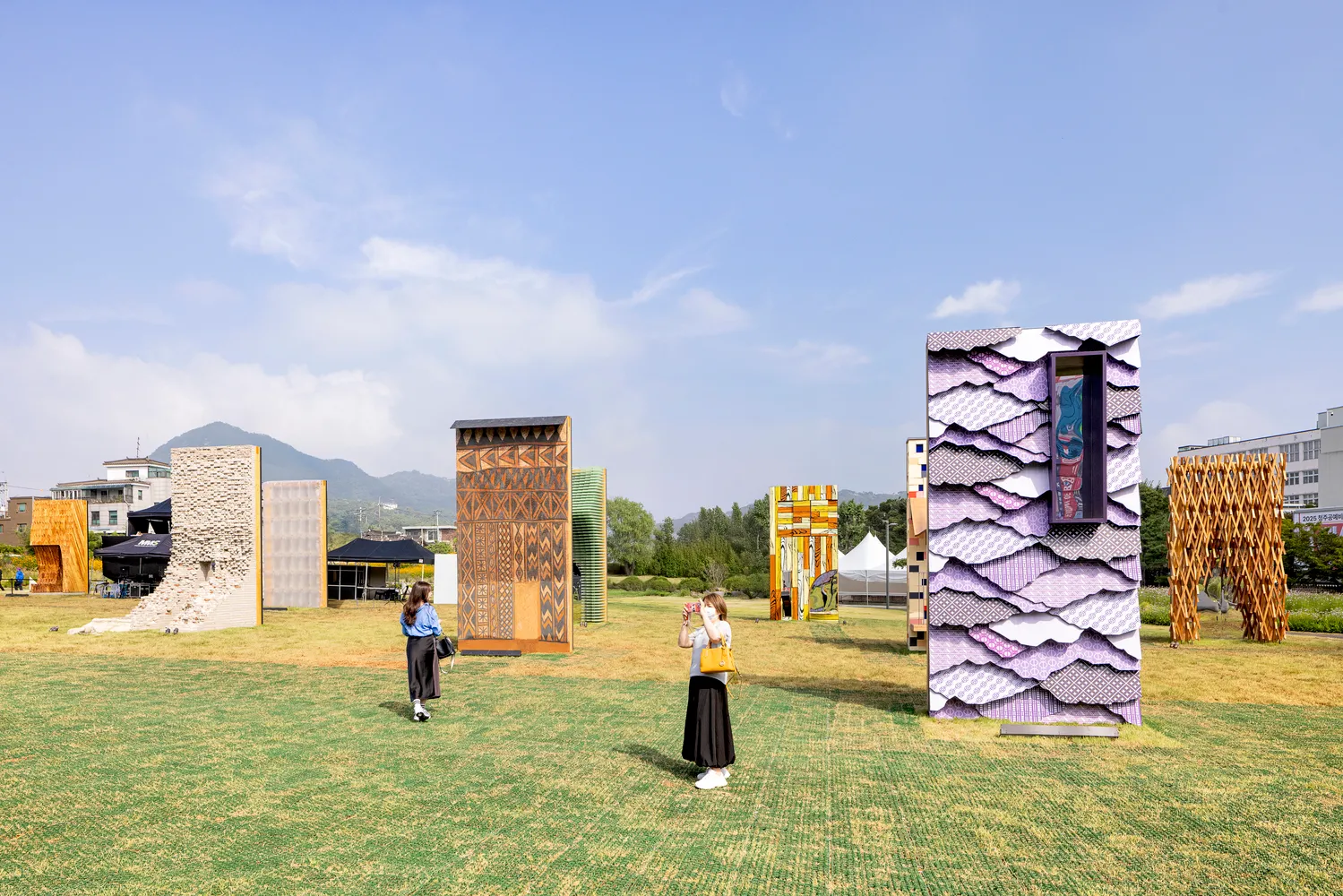
Surrounding the main wall are the “Walls of Public Life,” 24 life-size façade fragments (each 2.4 by 4.8 metres) produced by an intentionally eclectic roster of contributors. Designers range from established architects to practitioners outside architecture, entirely chefs, fashion designers, and artisans, deliberately widening the field of who gets to imagine a building’s skin. If communities, chefs, fabric makers, and car designers can show a better way to make façades feel alive, developers can no longer say that the appetite for difference doesn’t exist.
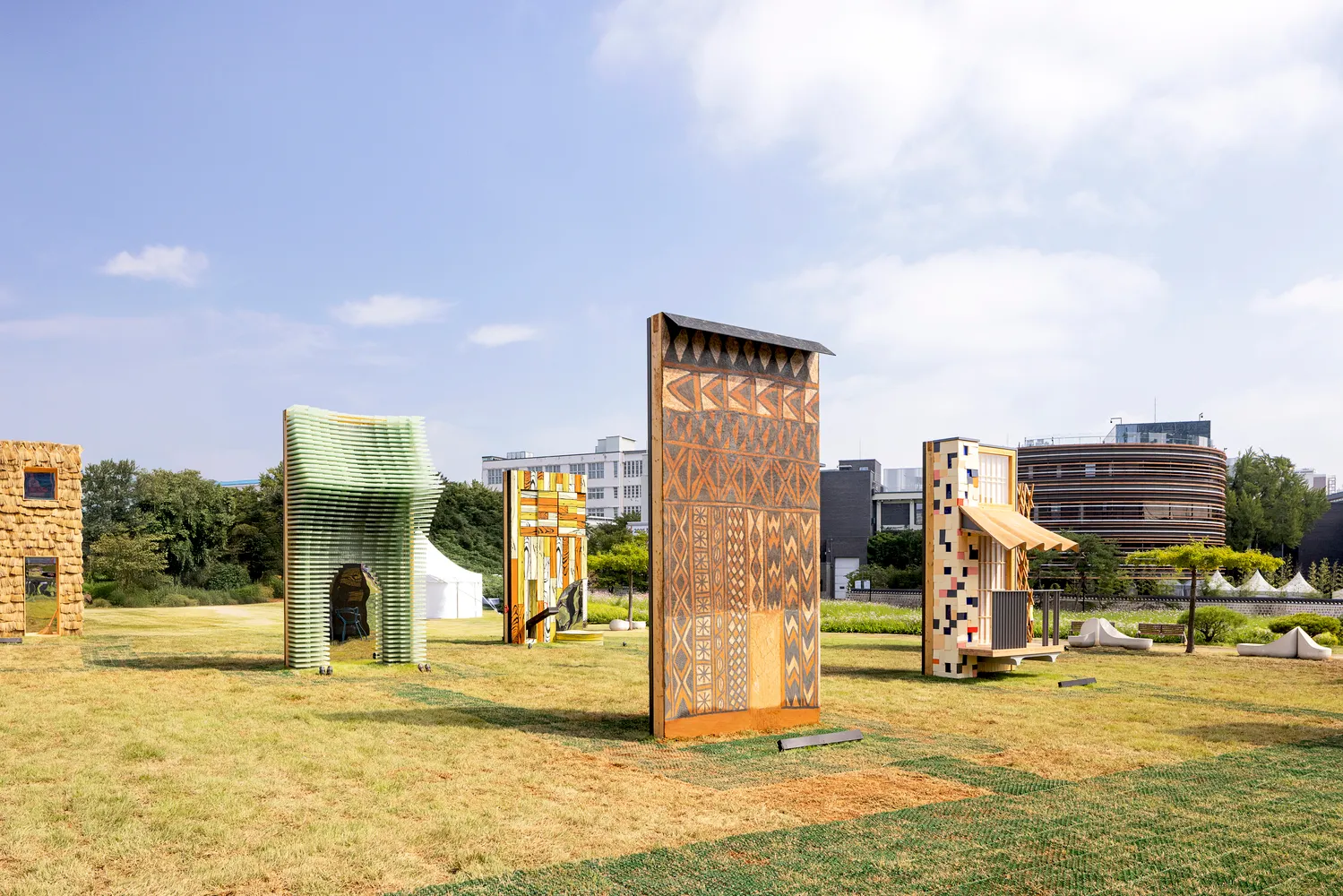
Walls of Public Life: From Francis Kéré to Stella McCartney at Seoul Biennale 2025
The list of participants reads like an argument in itself. Alongside architecture practices are names you wouldn’t expect in a conventional façade exhibition—Stella McCartney, chef Edward Lee, Francis Kéré, Kengo Kuma, MAD Architects, and others. Some practices contributed two walls, bringing research, craft, and local materials into dialogue with modern construction techniques.

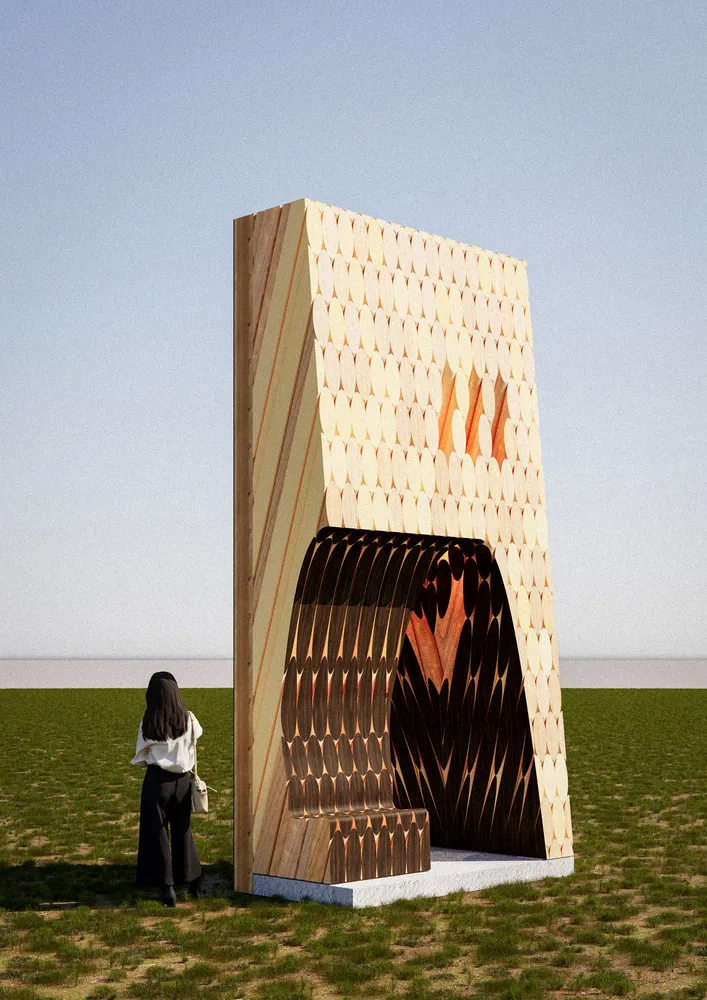
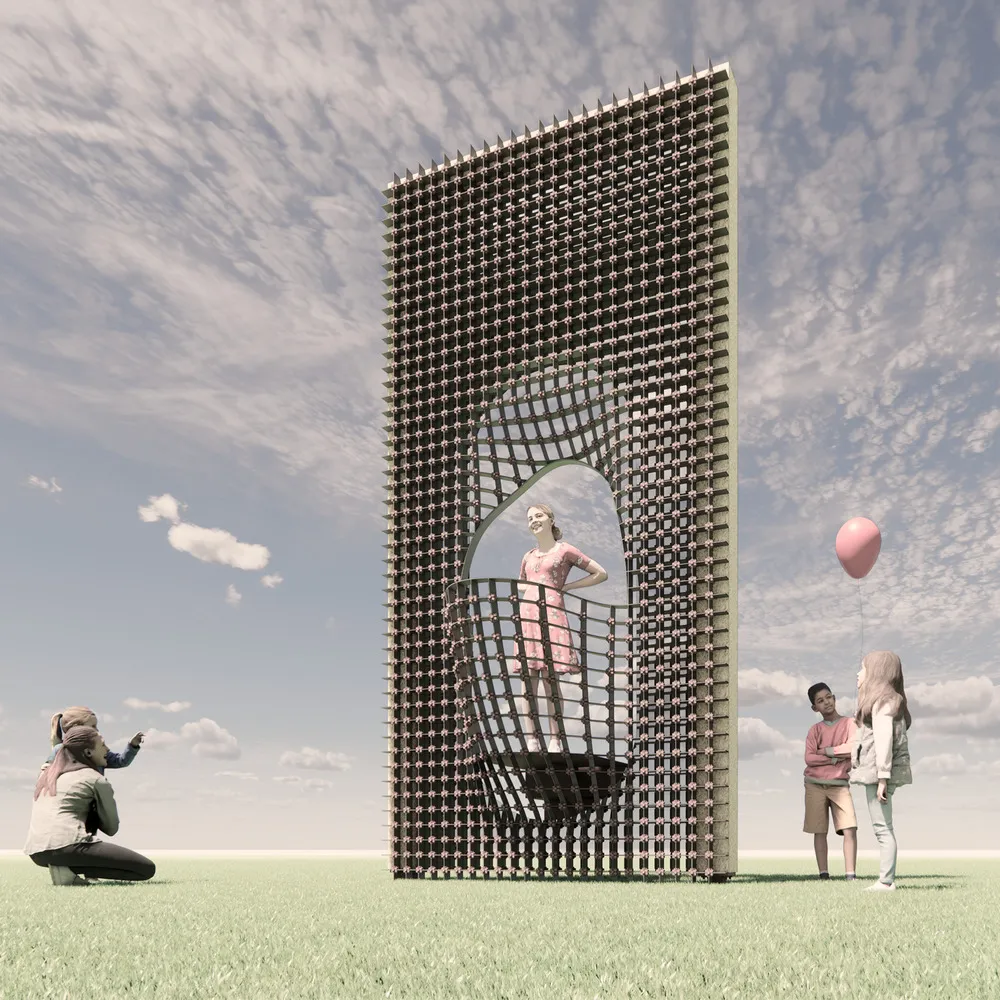
Francis Kéré’s entry, for example, pairs Korean pine and clay with references to his own village-building traditions in an explicit attempt to show that walls can be cultural bridgework rather than barriers. More Less Architects (sometimes written as Moreless) approached balconies and thresholds as negotiators between private and public life, seeking to recover those in-between zones that high-density cities often erase. In short, the curators wanted a roster that would demonstrate both high design and human practice.
Citizen science, polling, and the “Emotional City” argument
What made the Biennale feel less like a design carnival and more like an evidence-based intervention was the research strand tied to the Humanise campaign. Heatherwick’s team convened a two-day forum called “Emotional City,” where academics, activists, and policymakers discussed how façades affect human well-being. Polling cited at the event was stark: a large share of Seoulites reportedly said buildings affect how they feel, and a majority described local housing as unimaginative or depressing. Those figures were used to argue that aesthetic and sensory qualities should be part of urban planning metrics, not just zoning rules and floor-area ratios.
That evidence-led approach is important because it gives the city hall something concrete to work with. Talking about “beauty” is easily dismissed as subjective; talking about measurable psychological outcomes, or the effect of façades on social interaction, is harder to ignore. The Biennale’s strategy is to move the debate from taste to impact: if façades can be shown to influence mental health and civic engagement, then design becomes a legitimate target for regulation and investment.
City-scale exhibitions and the other shows to see
The public installations in Songhyeon Green Plaza are only the most visible part. The Biennale extends into indoor venues; the Seoul Hall of Urbanism and Architecture hosts the Cities Exhibition, the Seoul Exhibition, and Global Studios. The Cities exhibition gathers 25 façades from 21 cities to compare strategies at different scales. The Seoul Exhibition presents local proposals for housing, mobility, and small-scale urban retrofit. Global Studios offers a media-driven, interactive look at memory, perception, and the emotional resonance of building skins. Together, the program builds a layered case for change, big public gestures, comparative case studies, and digital participation that lets residents add their own stories.
The politics of making “more human” cities
There’s a political dimension to this work. Seoul’s municipal government invited Heatherwick to curate the Biennale in part to spur a new kind of conversation, one that uses culture as a lever for policy. That matters because façades are often the outcome of procurement decisions—what developers are allowed to build and what local codes require. A festival that shows alternatives can tilt procurement norms over time. The opening ceremony, overseen by the city’s mayor and joined by an “Emotional City” forum of international researchers and citizens, underlines that the Biennale has a clear civic brief about what Seoul wants to be, not just what architects want to show.
At the same time, there are real questions about implementability. Prototypes in a park are one thing; retrofitting or influencing the mass housing that defines many neighborhoods is another. Yet that gap is exactly what the organizers wanted to highlight: small, replicable interventions that can change how buildings meet the street and policy nudges that can make those interventions more likely.
The Seoul Biennale of Architecture and Urbanism 2025 was, at its core, a public provocation. It encouraged citizens to examine the façades around them and question whether those surfaces embodied social values, local craft, and the rhythms of daily life. For architects and developers, it underscored the need to weigh emotional function alongside structural and financial considerations. And for policymakers, it highlighted architecture’s role as a tool of civic health.
The Biennale’s central message was clear: façades matter. They are not passive skins but the very interface where a city meets its people.
Explore Courses
.jpg%202.jpg "Building Performance with Forma & Opossum")
.jpg "Ondrej Chybik - Rethinking Architecture")