

The Santa Maria Goretti Church, designed by Mario Cucinella Architects (MCA), holds a singular historical and spiritual significance within contemporary Italian ecclesiastical architecture. The design was the winner of the prestigious CEI 2011 Pilot Project (Italian Episcopal Conference), a commission that planned to set new national standards for the typology of modern sacred structures.
Mario Cucinella’s Vision of Santa Maria Goretti Church
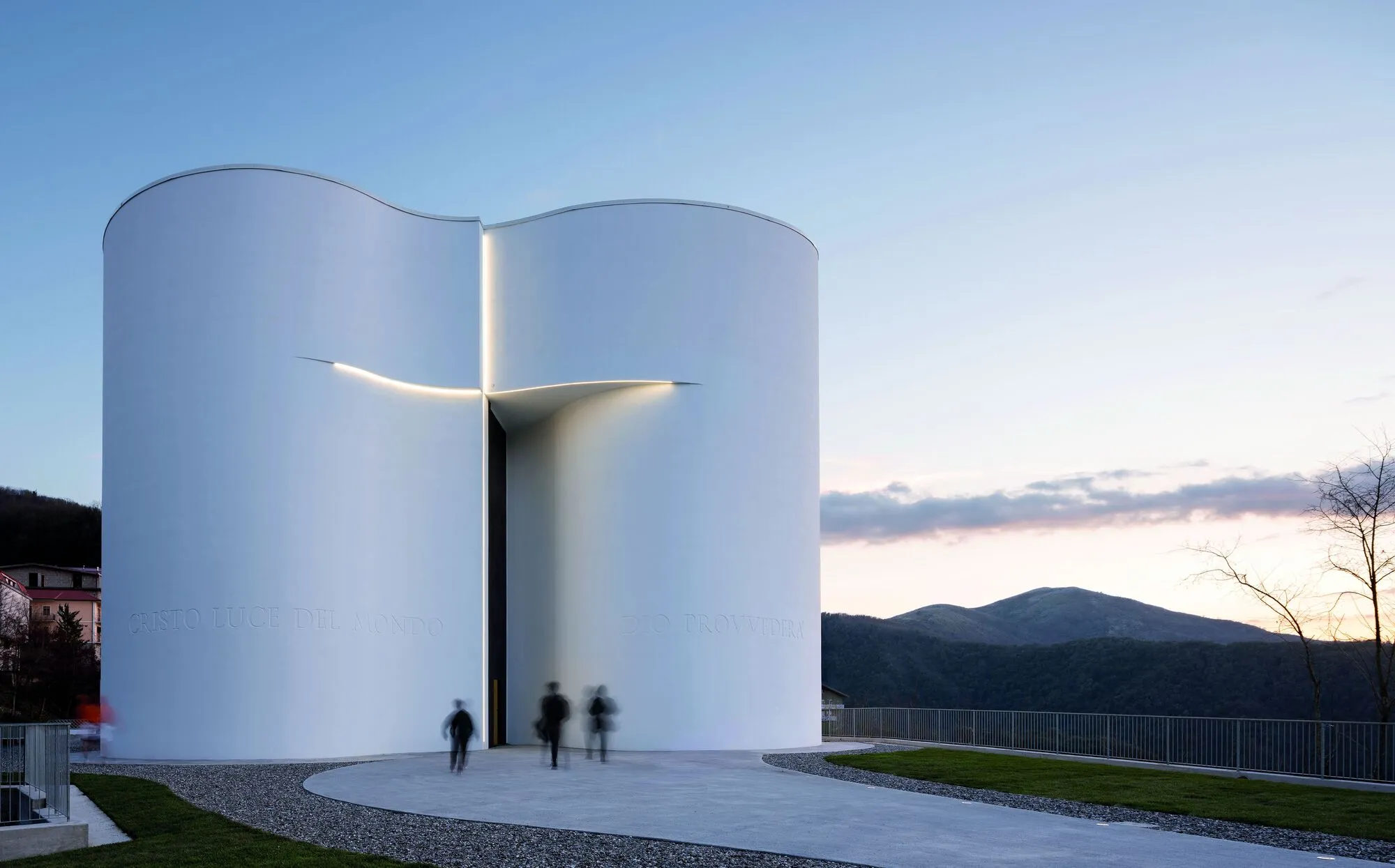
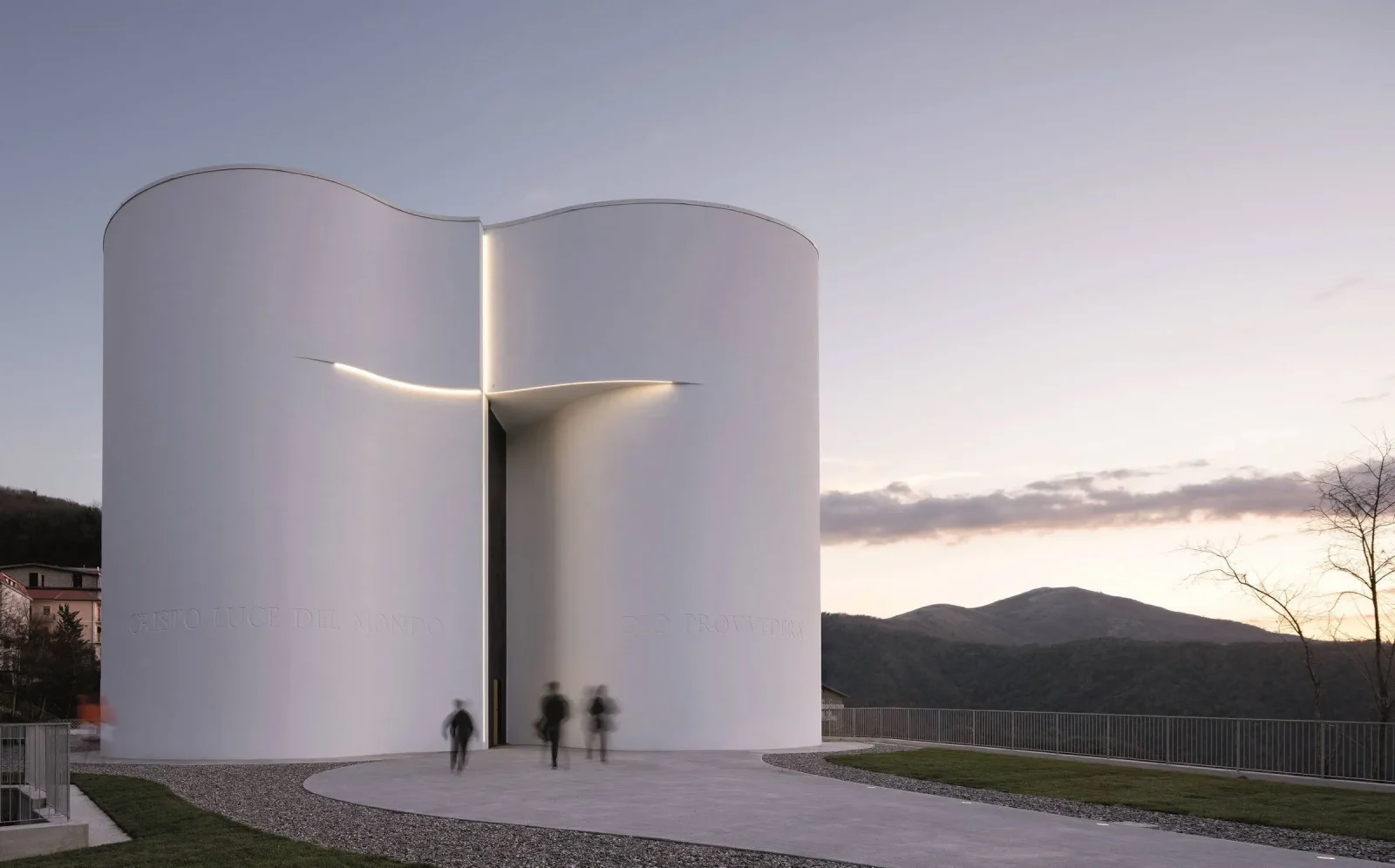
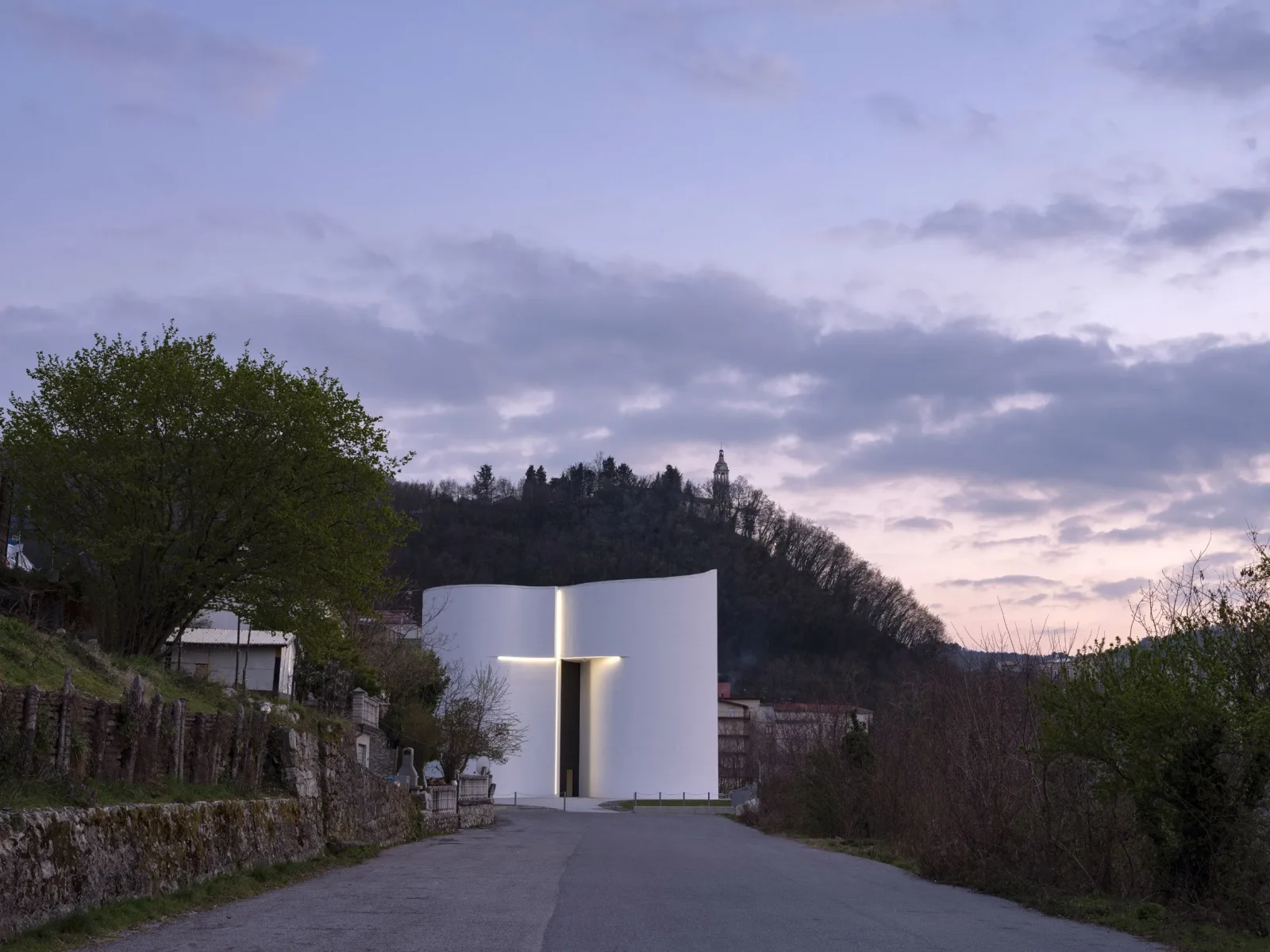
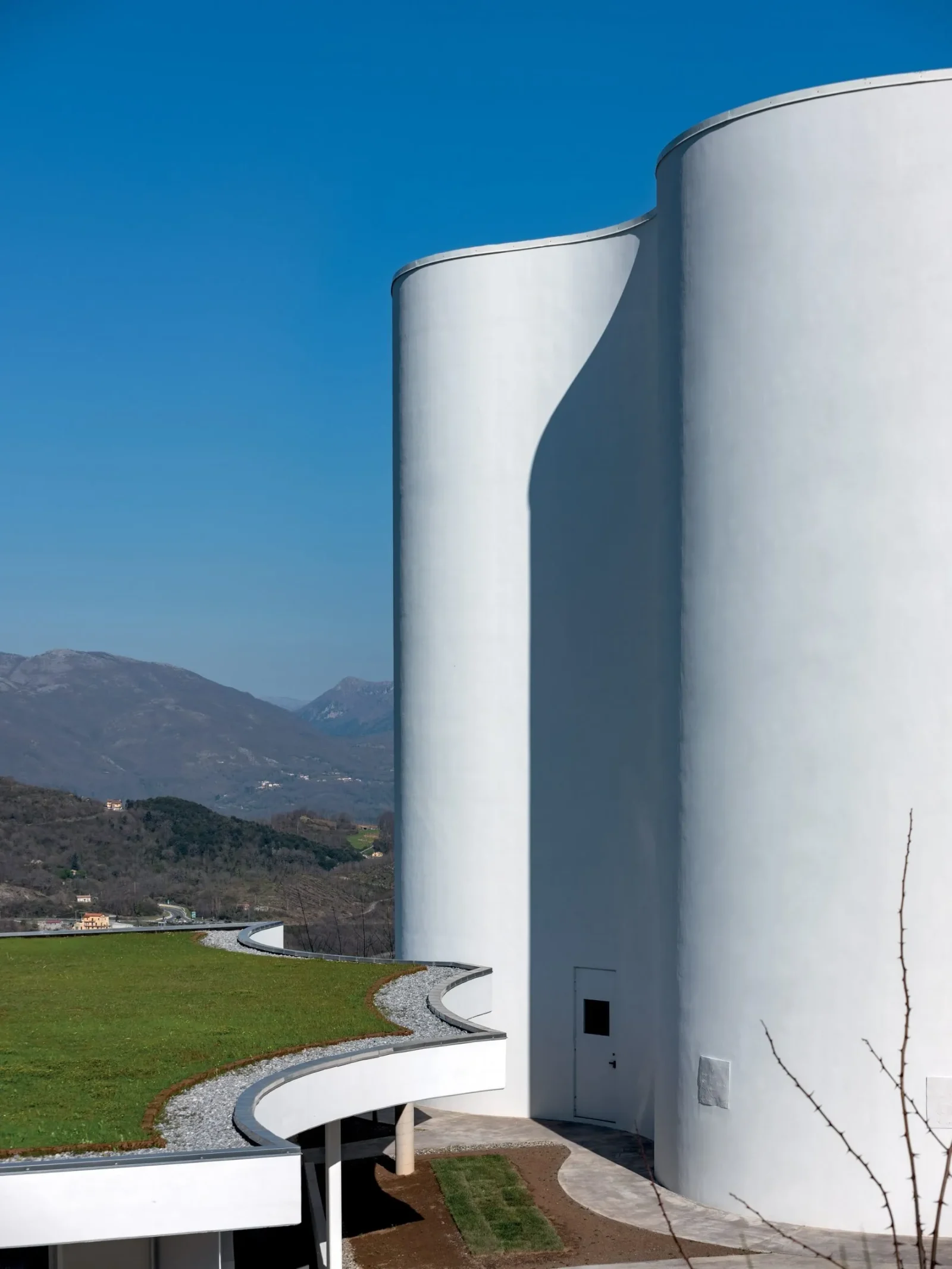
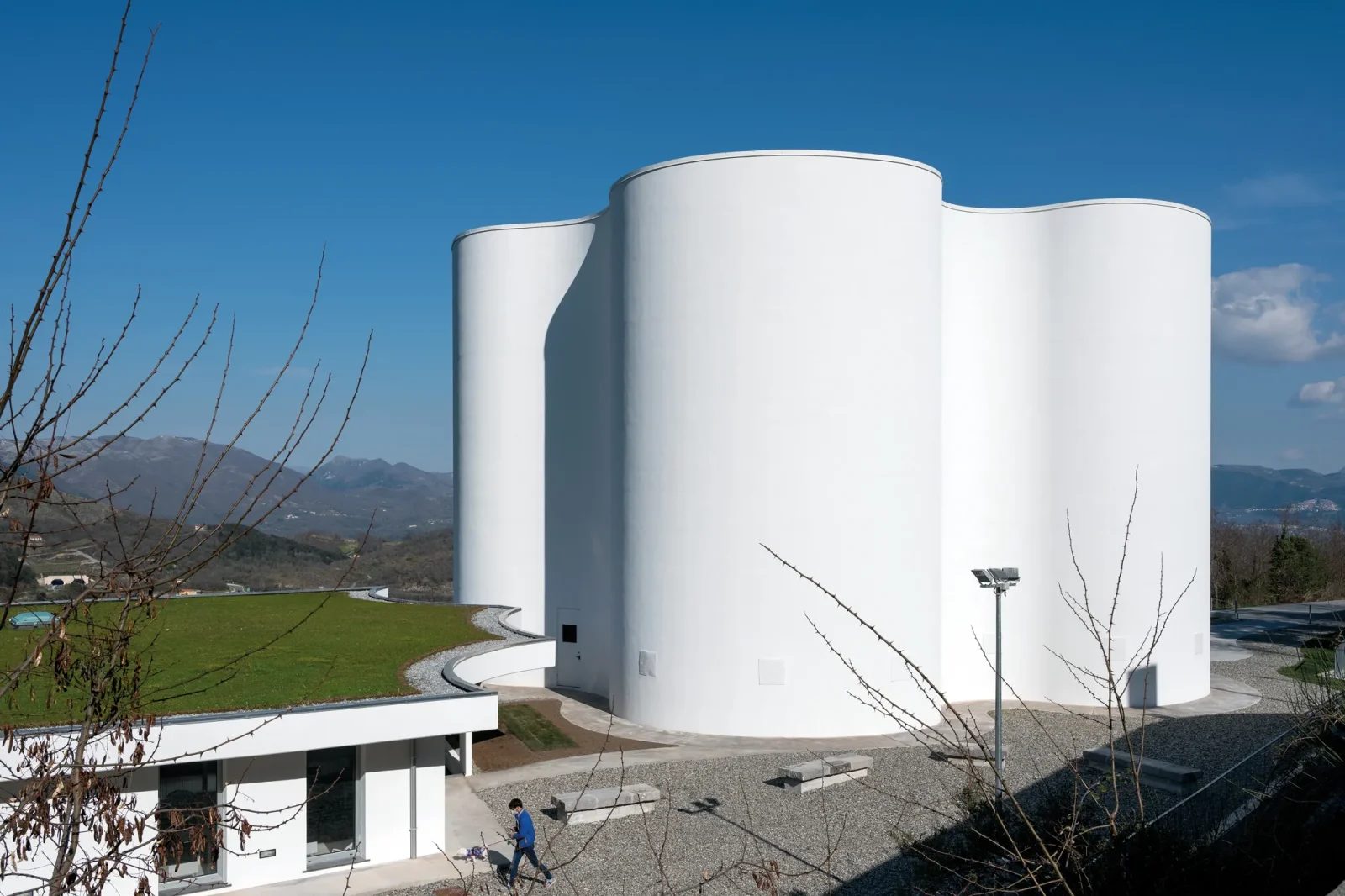
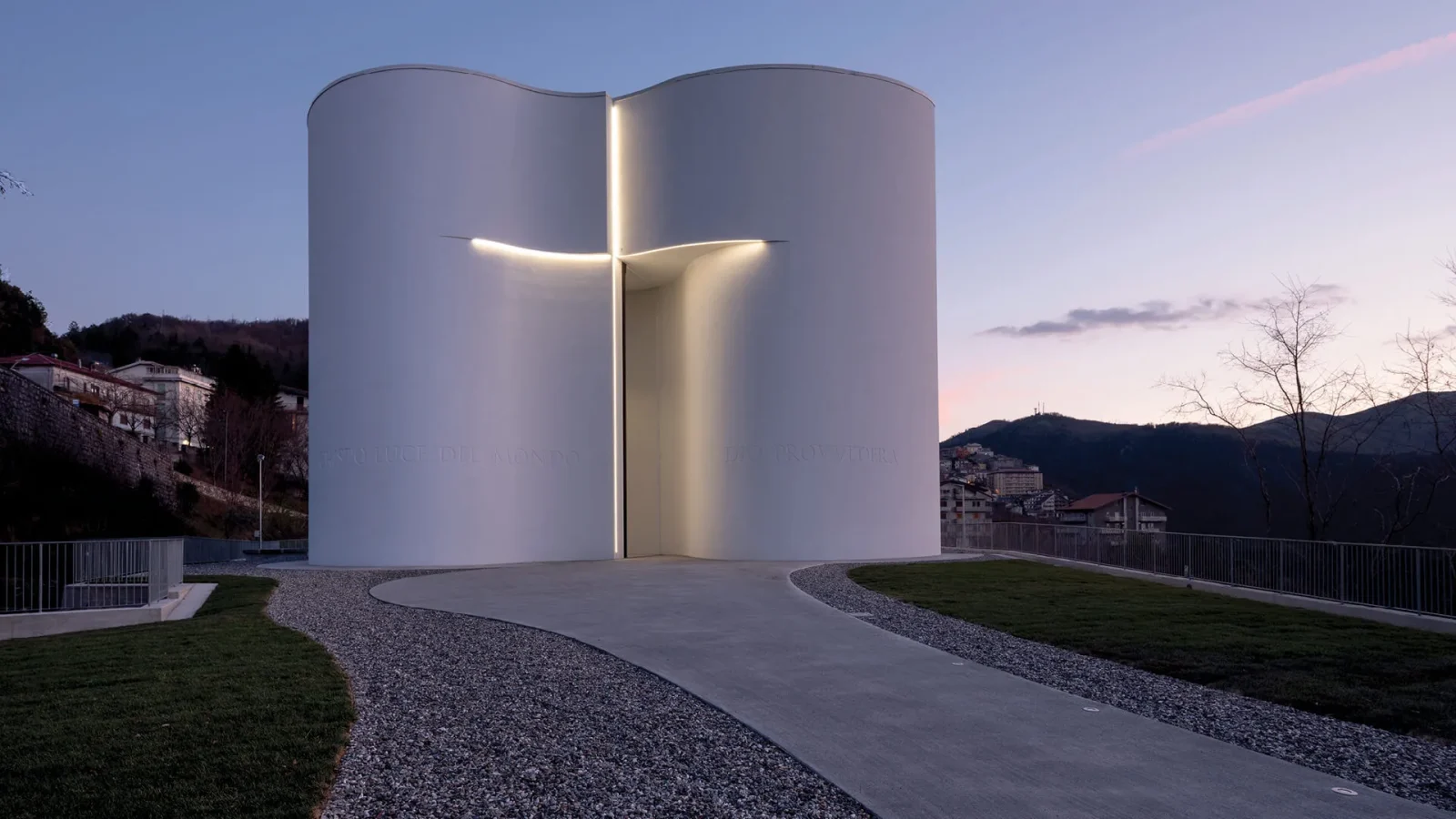
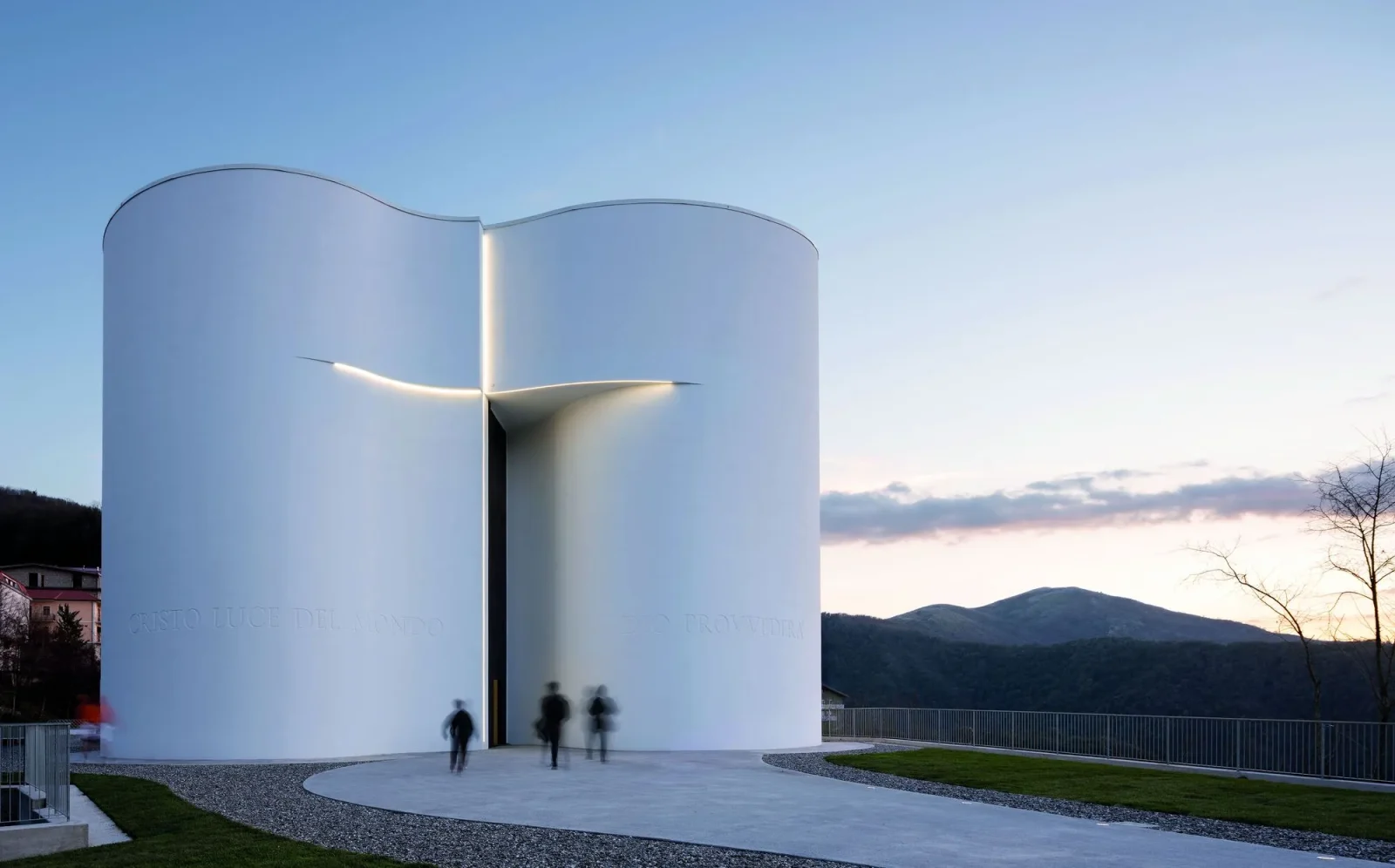
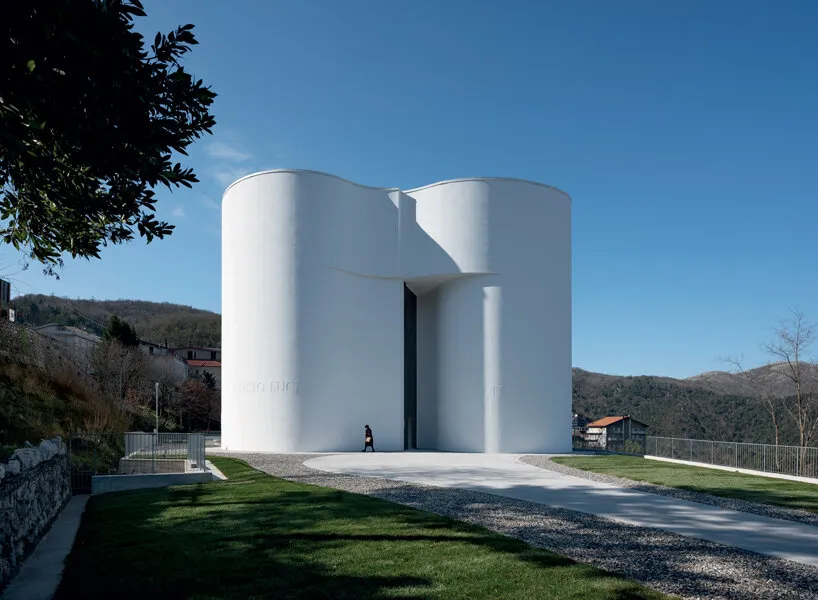
Located at the edge of the small mountain town of Mormanno, the Santa Maria Goretti Church nestles among hills in Southern Italy. Spanning 950 square meters and rising 16 meters in height, the structure’s visual impact represents a peaceful, isolated, and monolithic presence. The smooth, curving concrete walls define the formal language of the exterior form, reinforcing the structure as a visually prevailing landmark and spiritual focal point.
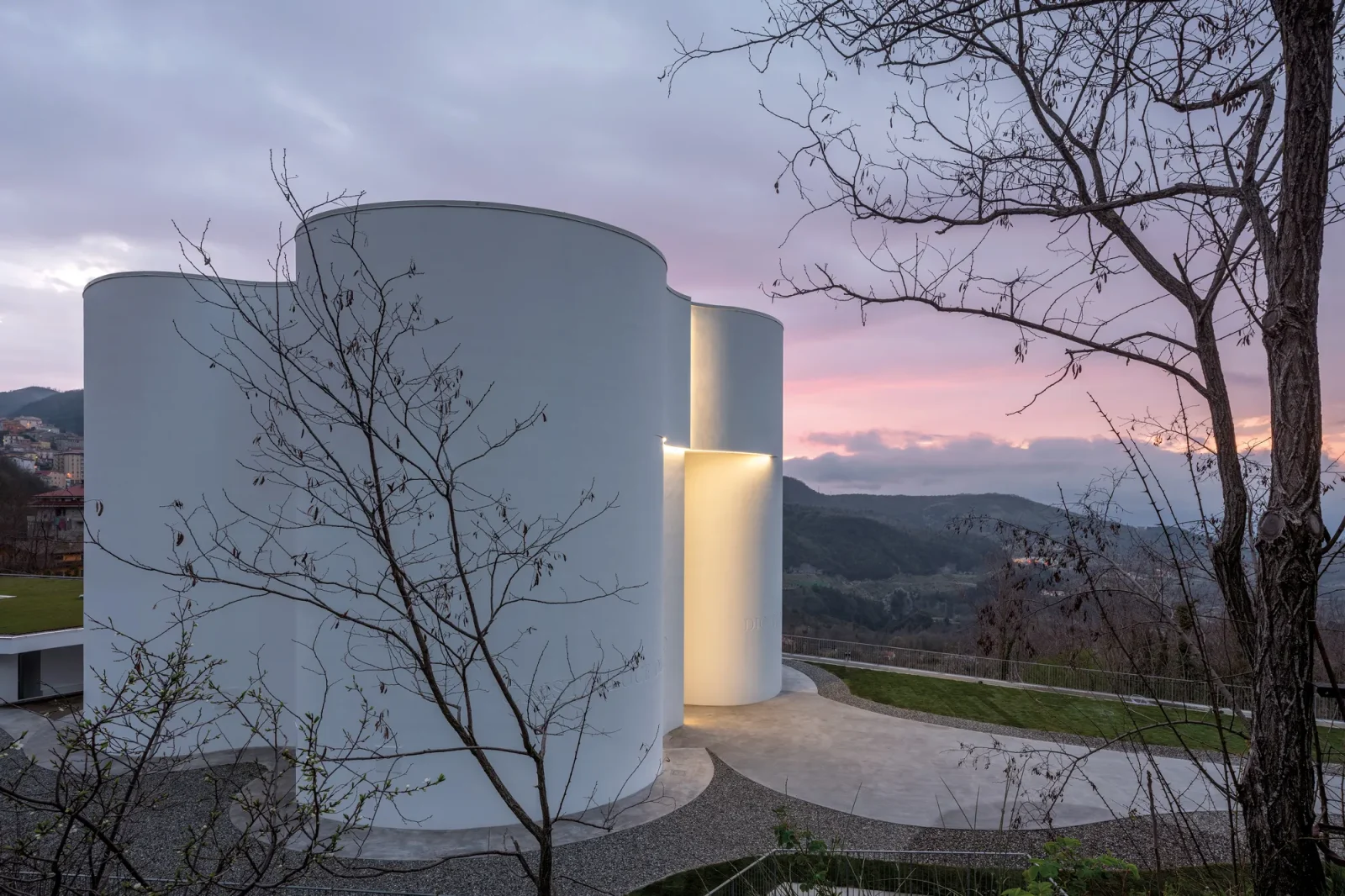
Overlooking the mountain ranges of the National Park, the main facade marks the arrival route oriented towards a new church square. The dramatic entrance was executed as a tall incision cut between two of the frontal concrete apses. This vertical gap forms an external cross, which, when illuminated with LEDs at night, acts as a powerful visual presence.
Contemporary Echoes of Baroque Grandeur
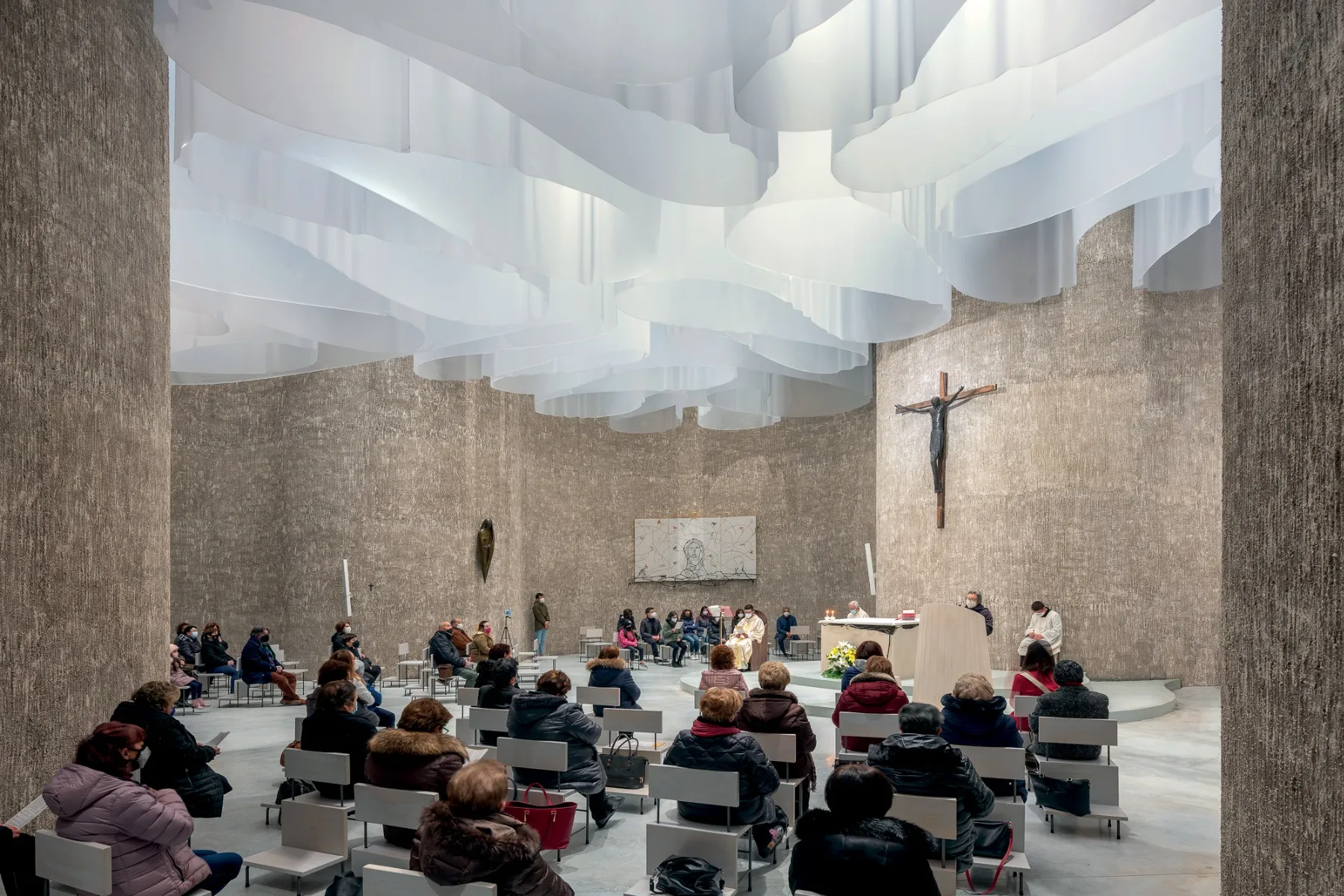
Inspired by Italian Baroque geometries, the curvilinear volumes are reinterpreted to create a moving experience centered around an altar and a minimalistic concrete shell. The design referred to spirited historical works, including geometries found in the Basilica of Sant’Andrea delle Fratte, San Carlo alle Quattro Fontane, and Sant’Ivo alla Sapienza.
By understanding the principles of baroque spaces, Mario Cucinella Architects transformed them into a contemporary expression. This approach of design states a thoughtful strategy to direct the movement, light, and spiritual focus of the worshipper.
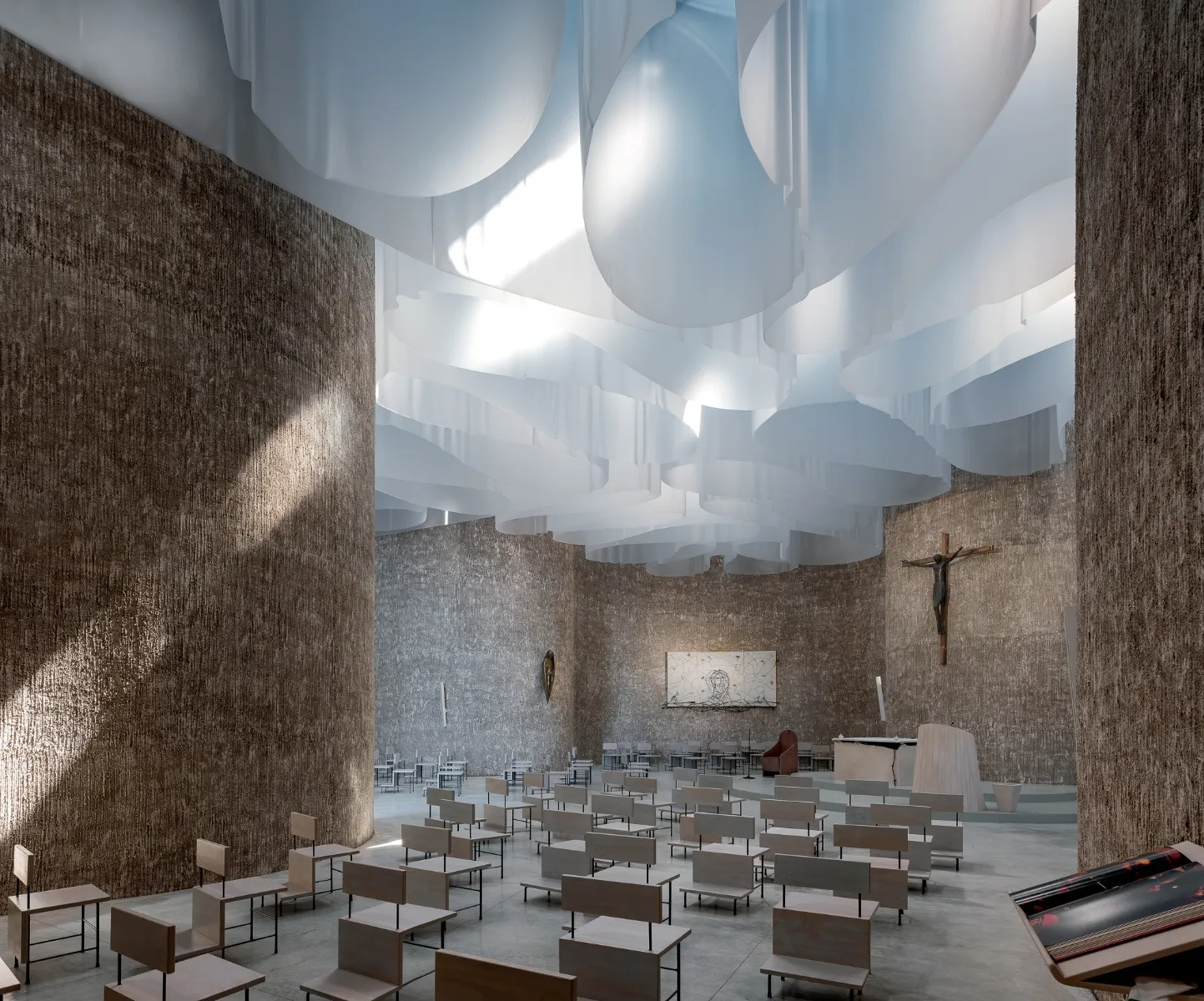
Mario Cucinella articulated his vision to create a contemporary structure that expresses a strong sense of continuity and connection with the design deeply rooted in spiritual sacred architecture. Therefore, the design challenge required incorporating historical religious conservatism and cutting-edge sustainable innovation, ensuring to serve both spiritual and community needs.
The Four-Leaf Clover: A Symbolic Plan for Unity and Focus
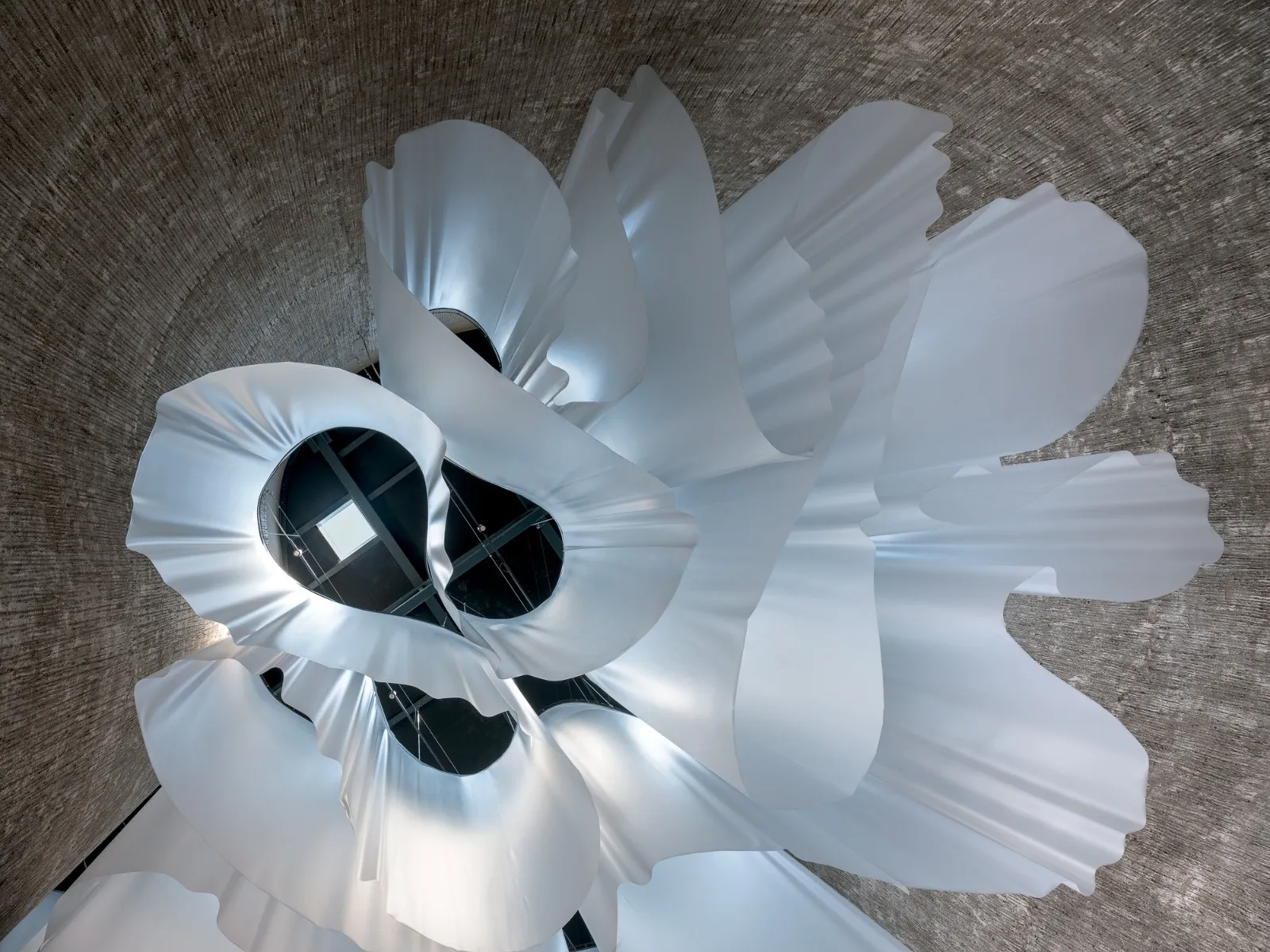
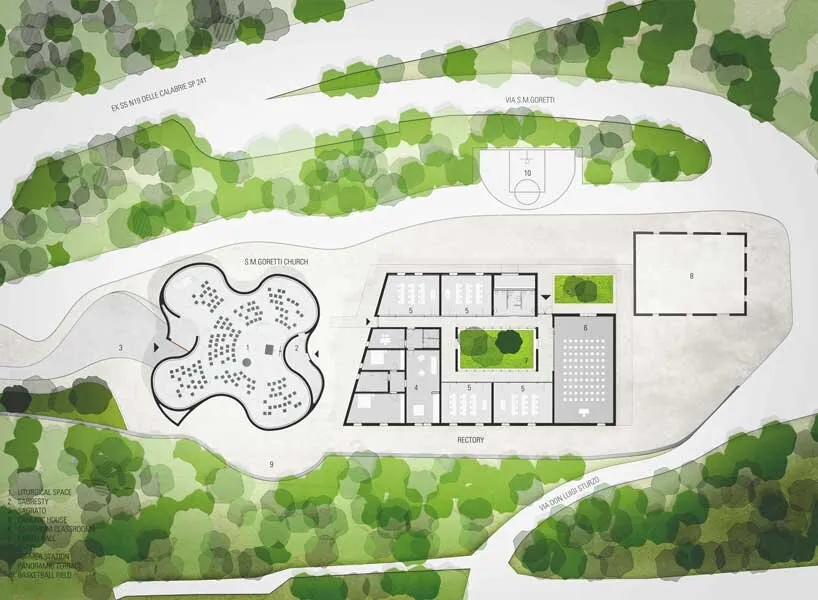
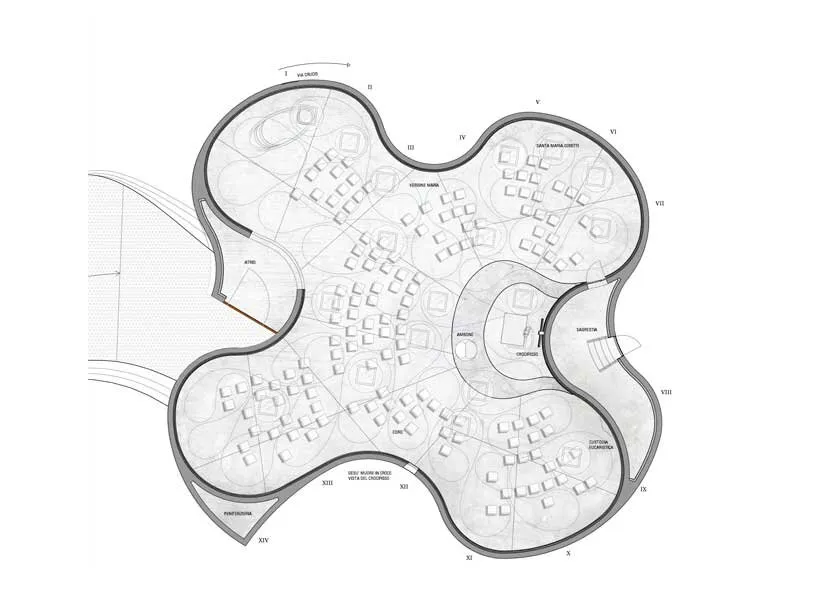
The spatial organic plan was crafted on the shape of a four-leaf clover, composed of four distinct apsidal structures that interlock and are grouped around a central core. The curvilinear volume and building’s flowing layout provide a sense of security and intimacy, focusing the congregational attention inward, particularly toward the liturgical center dedicated to the Eucharist and prayer.
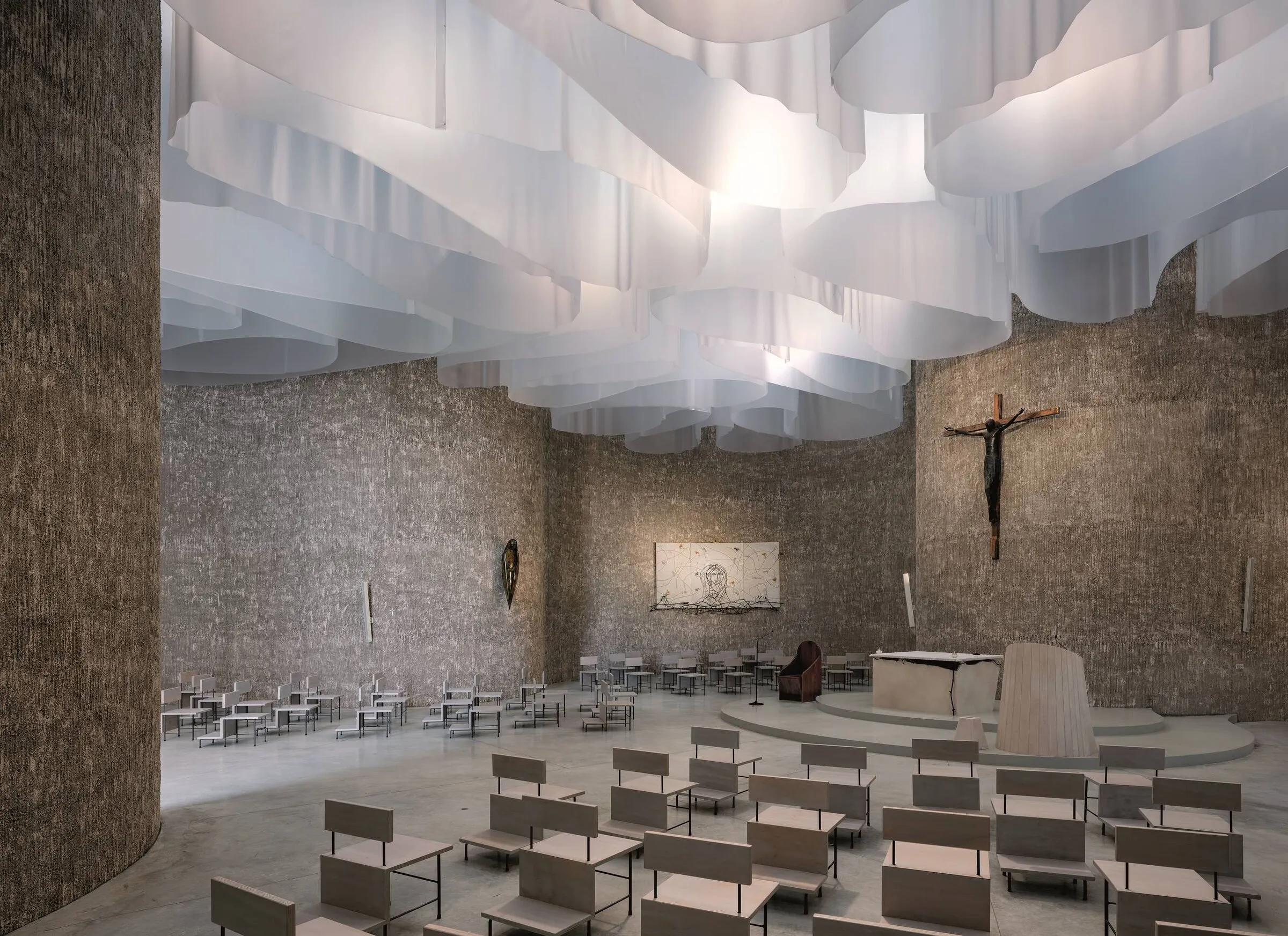
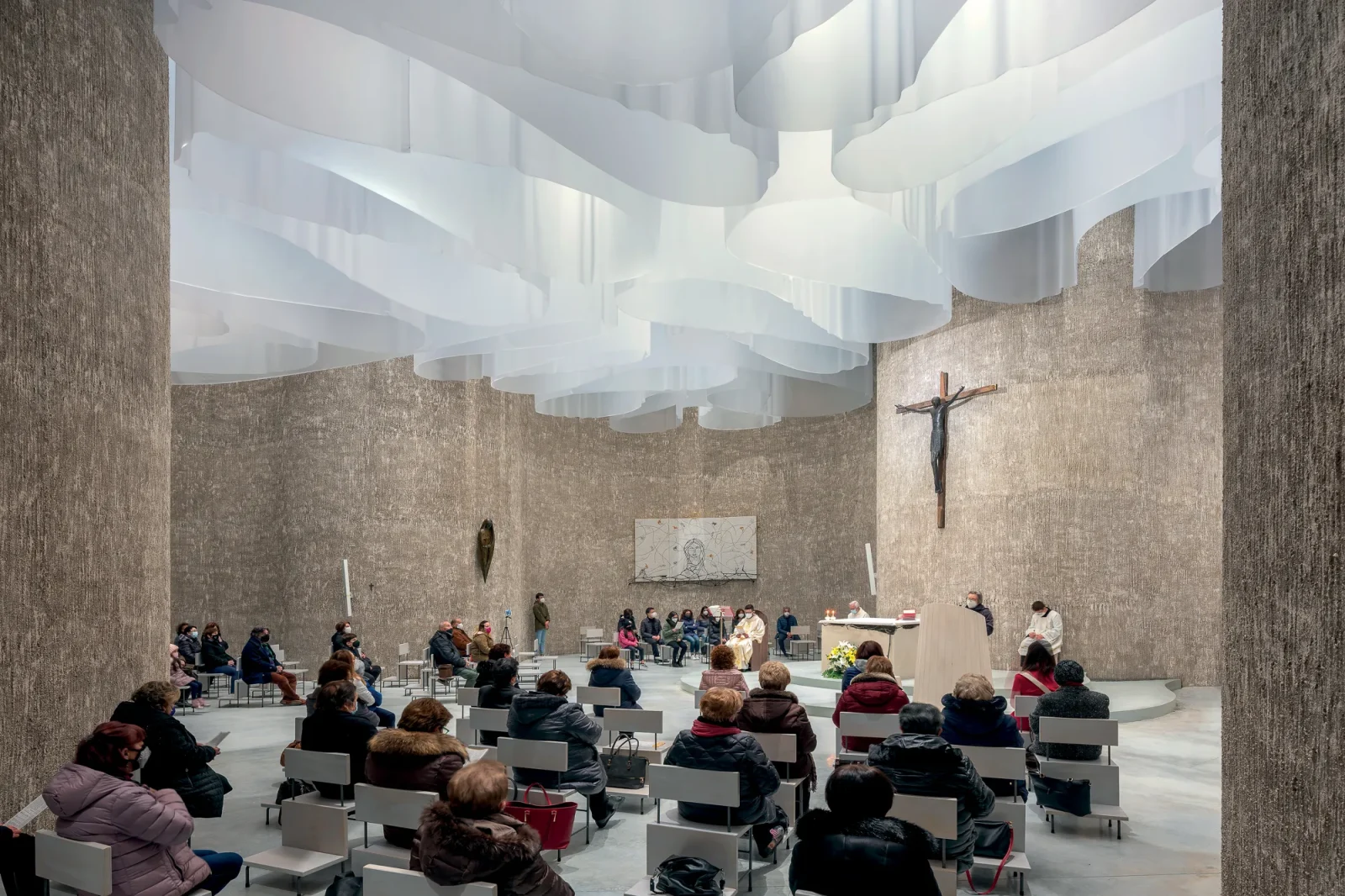
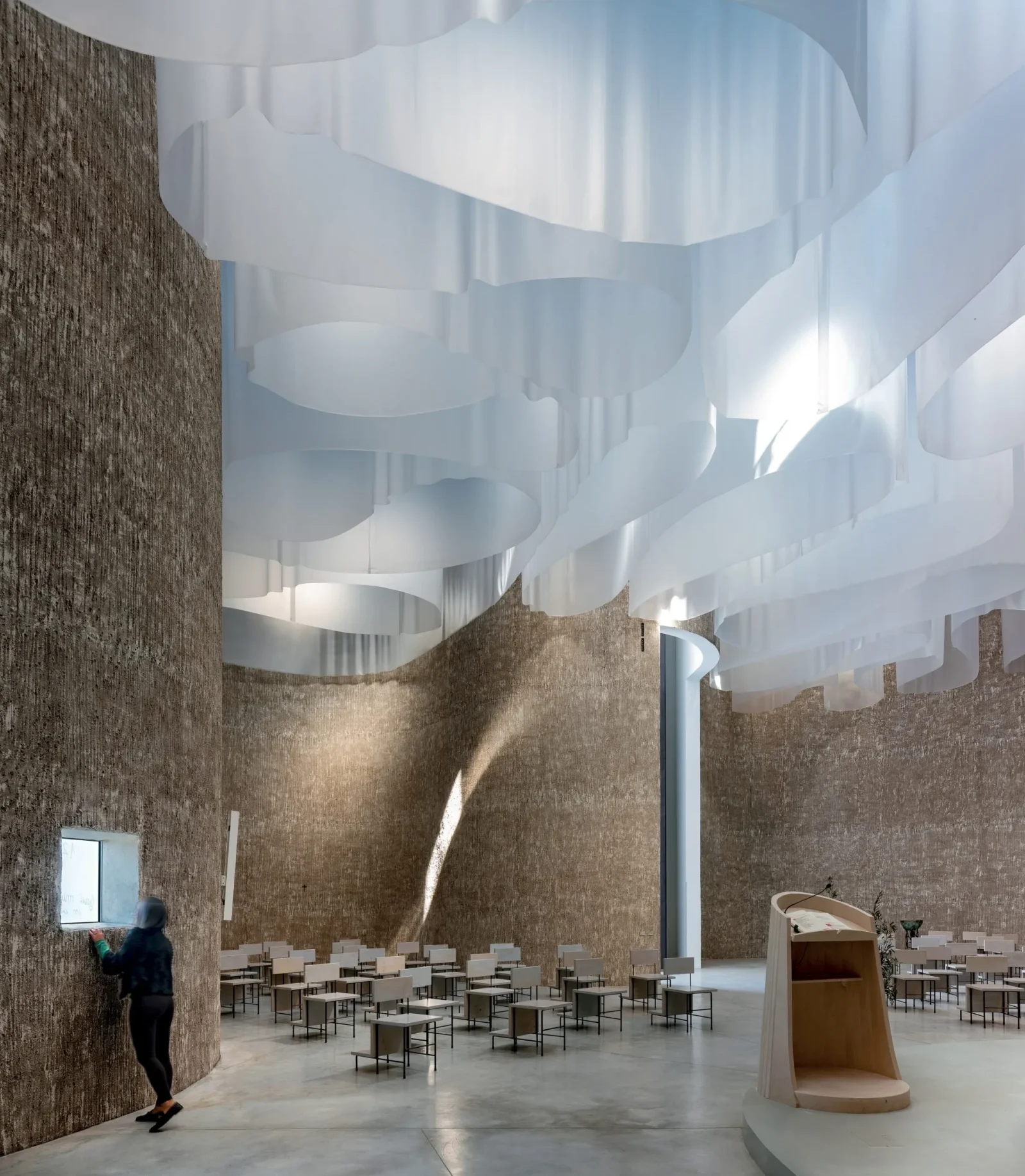
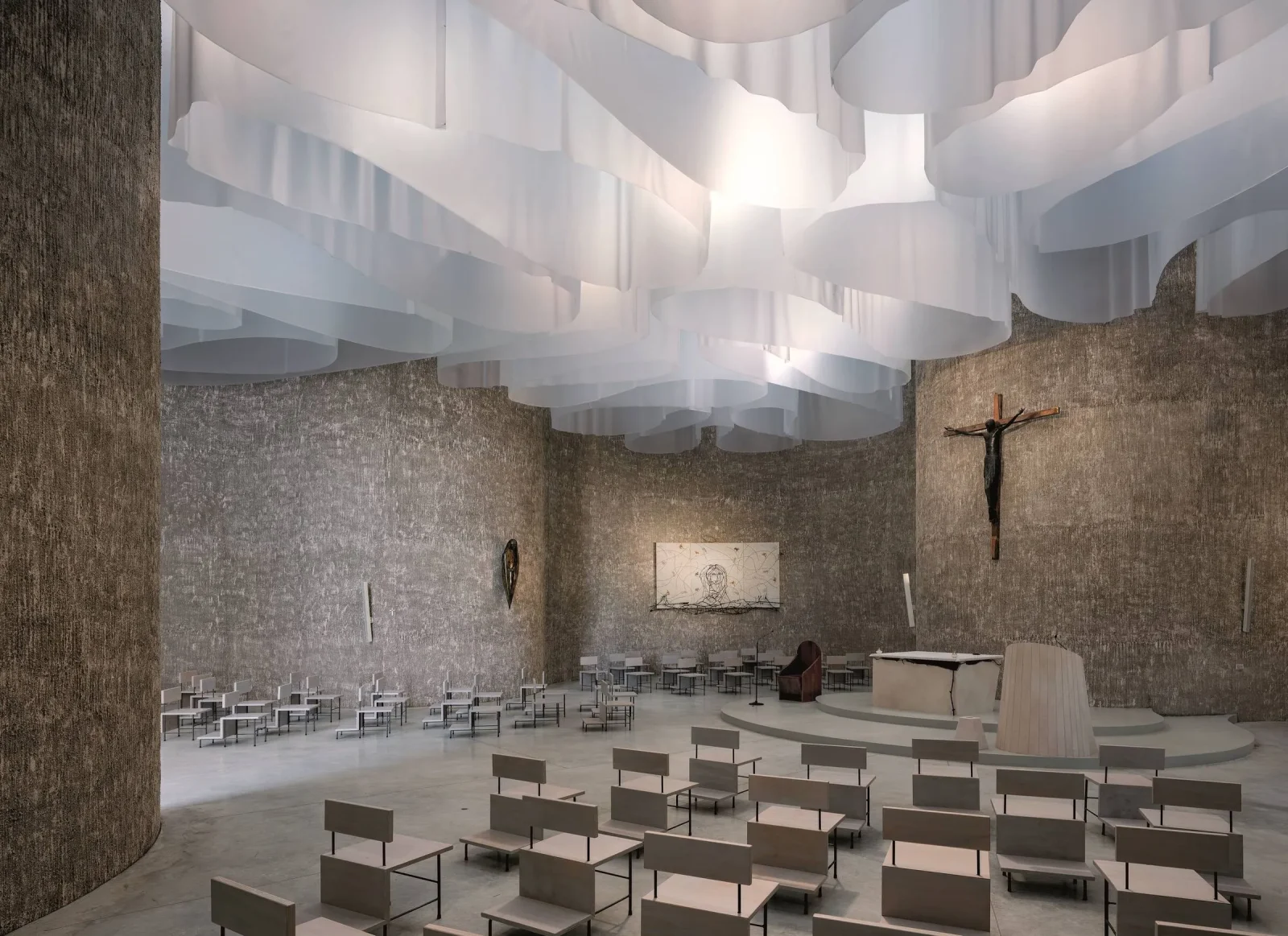
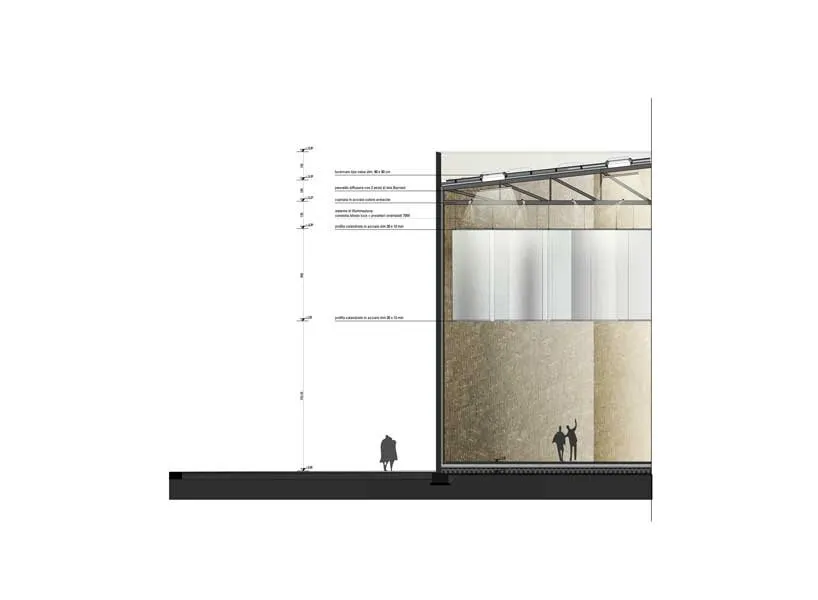
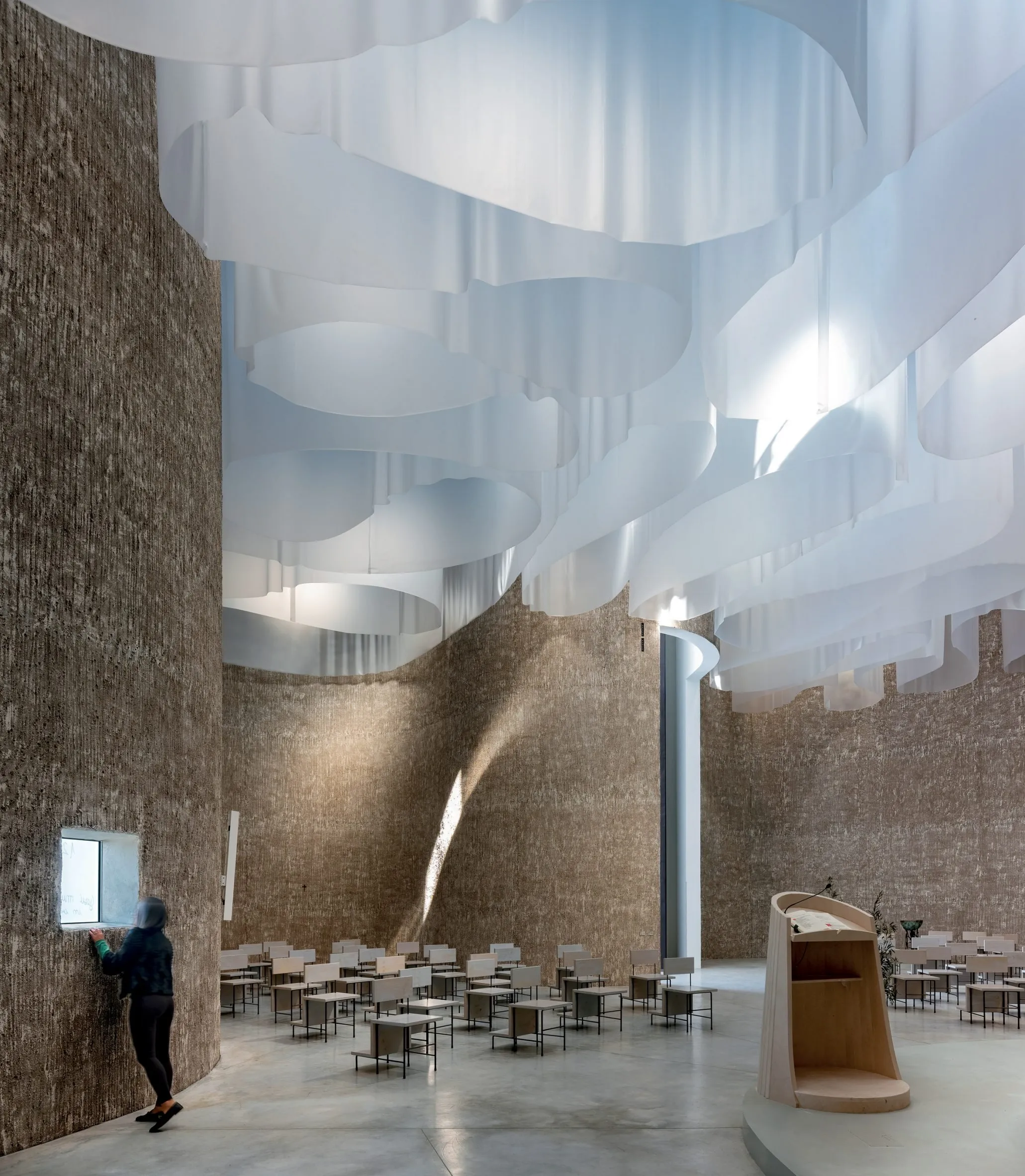
The veils resemble scenic drapes that fill the central space with natural light through skylights and folds, creating a reflective pattern that carefully curates the light, replacing traditional illumination methods.
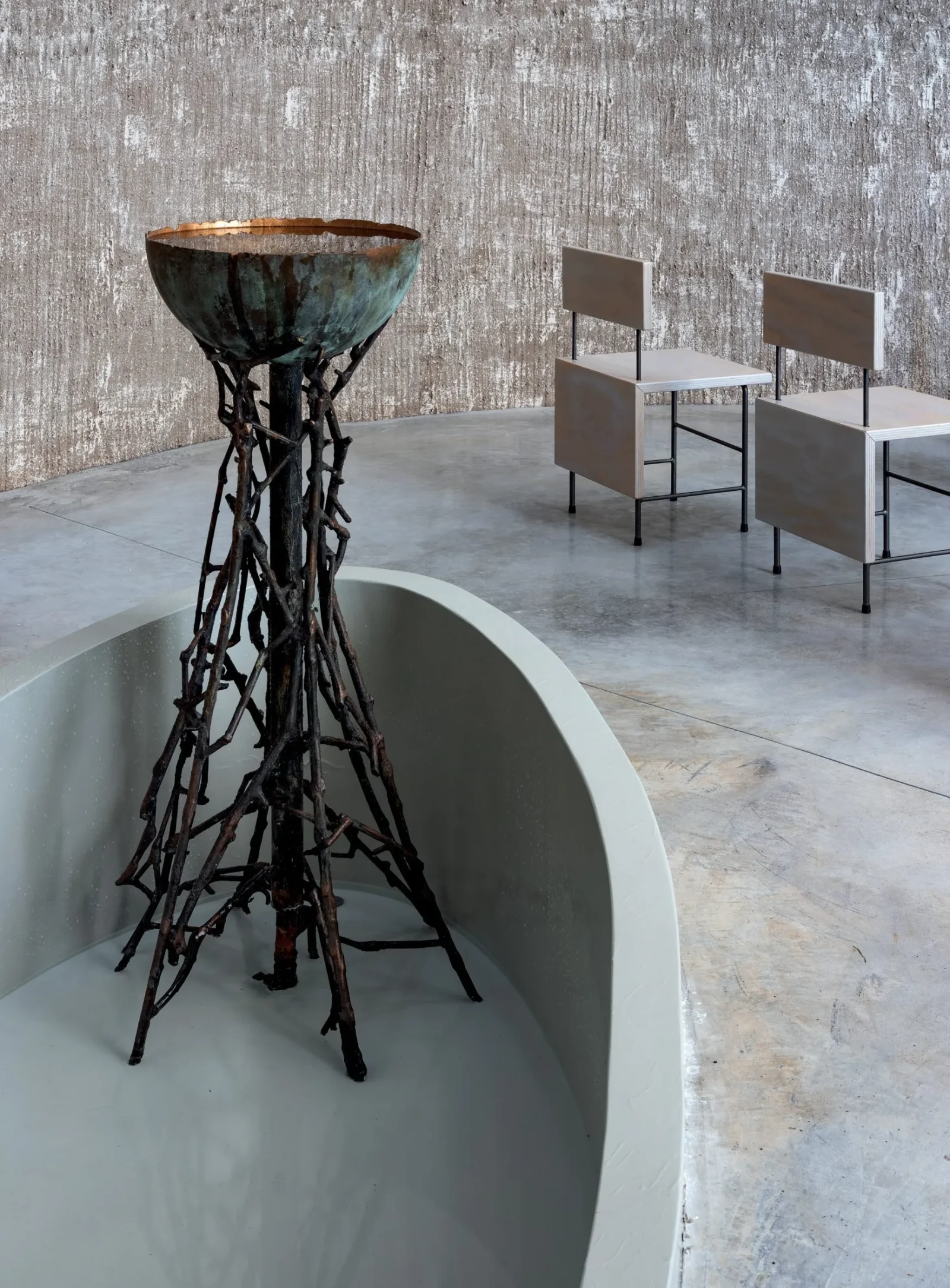
The walls are hand-finished with lime and hemp, which imparts a subtle vibration and texture and hides church bells and the sacristy, allowing the clergy to enter the church secretly from behind the altar. The functional furniture adopted a minimalist strategy, crafted from wood and steel, aimed to focus on people and ceremony rather than on objects.
Bioclimatic Strategies
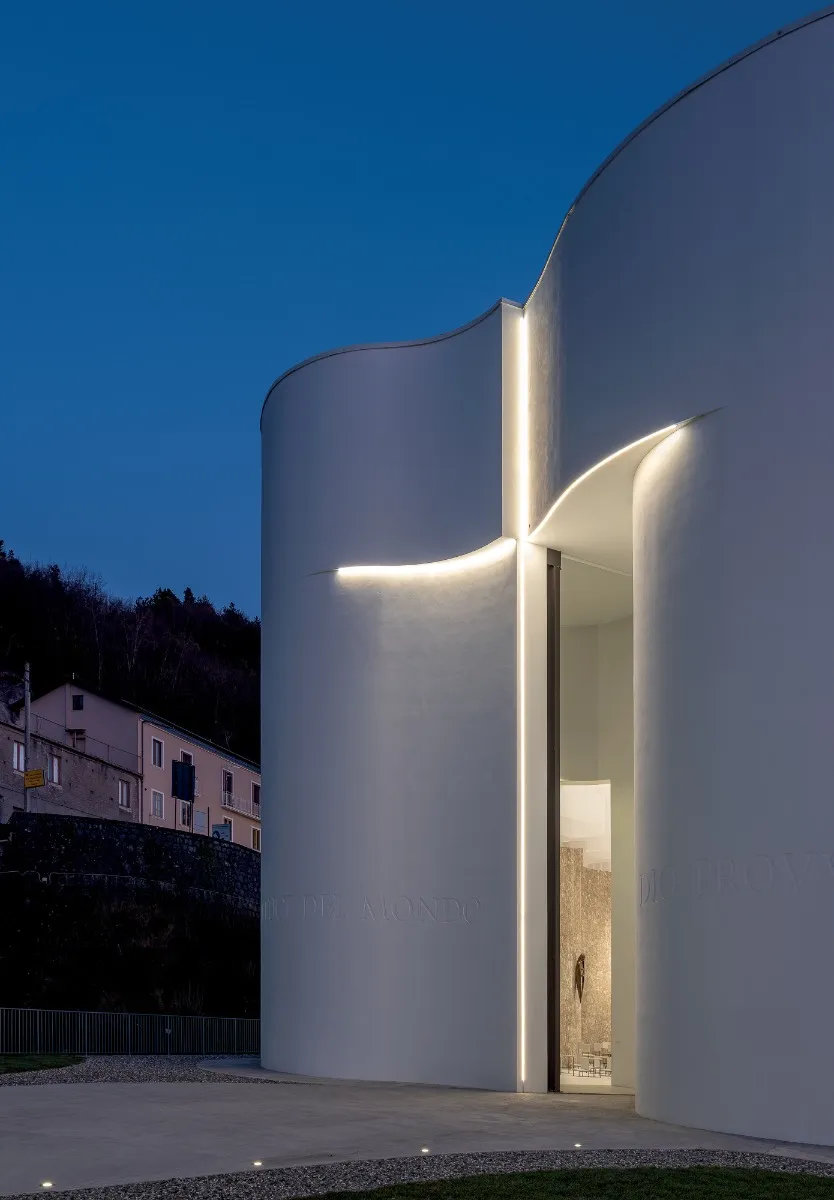
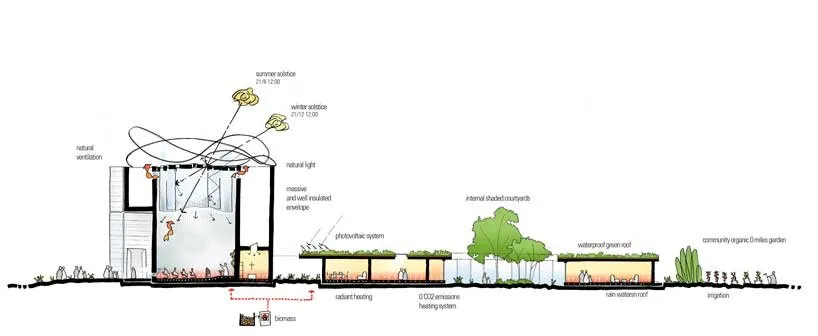
Guided and constructed by bioclimatic principles, the structure focused on minimal energy use and the need for maintenance. One of the innovative techniques was to improve air quality rooted in biomimicry, inspired by natural photosynthesis through the utilization of a specialized coating of KEIM Soldalit-ME, a white silicate-bound paint.
The Parish Complex and Community Integration
The church’s sweeping curves are paired with a low, orthogonal parish center arranged around a planted courtyard that forms the green heart of the complex. The single-story concrete structure houses meeting rooms, classrooms, and the priests’ residence, opening directly onto this shared space.
Green roofs top the buildings, with a scalloped northern edge echoing the church’s clover-shaped plan. An organic garden, rooftop greenery, and planted courtyards act as ecological and social spaces, reinforcing the complex’s community role.
Santa Maria Goretti Church Project Details
Location: Mormanno, CS, Italy (Pollino National Park)
Architects: Mario Cucinella Architects
Artist (Liturgical Elements): Giuseppe Maraniello (Lectern, Tabernacle, Baptismal Font, Virgin Mary figure)
Photo Credits: © Duccio Malagamba
Explore Courses
.jpg "Ondrej Chybik - Rethinking Architecture")