



The Digital Backbone of the Green Revolution
The renewable energy industry has been growing steadily in recent years. Renewable energy currently provides millions of jobs worldwide, from engineers to technicians, from data analysts to grid managers. The sector is growing faster than oil and gas, especially in the areas of installation and maintenance.
Denmark gets more than 50% of its electricity from wind, Iceland gets almost 100% from geothermal and hydropower – figures that seemed like a fantasy a few decades ago. Green innovations are becoming “mobile” and decentralized. For example, solar panels on rooftops or windmills in farm fields do not require huge areas and allow ordinary people to become energy producers, not just consumers. This is the democratization of energy at its best.
All this is also causing a real boom in the renewable energy software development industry, because hardware is only half the battle. Because it is clear to everyone that without software, even the most efficient solar panels or turbines do not reveal their full potential. Many interesting solutions are being created – smart platforms for managing distributed networks, predictive tools for forecasting energy generation, AI-driven control systems that optimize work in real time. We will go through these technologies, trends and practical aspects in this guide to Renewable Energy Software Development.
Building a Renewable Energy Software Solution: Where It All Connects
When people talk about a renewable energy software solution, they mean an environment where software connects generation, management, analytics, forecasting, and energy demand and supply management. DXC offers exactly such solutions: AI forecasts, digital twins, real-time analytics for grids, so that variable energy sources (wind, sun, etc.) can operate stably.
A similar approach is used by Schneider Electric with its EcoStruxure platform, which combines energy systems, buildings, and industrial facilities into a single digital ecosystem, and Siemens, which through its digital twin modeling and analytics solutions helps operators optimize grid operations and predict peak loads.
Unified dashboards allow administrators to see information from all energy types: solar, wind, hydro, geothermal, bio. AI-maintenance predicts failures when equipment might face stress or wear. Cross-sector analytics lets you compare which type of energy production is currently most efficient, where reinforcement is needed, where savings are possible.
When all these elements are connected through a smart software ecosystem, you can manage energy in real time: balancing production and consumption, reducing losses, planning for peaks and reducing load.
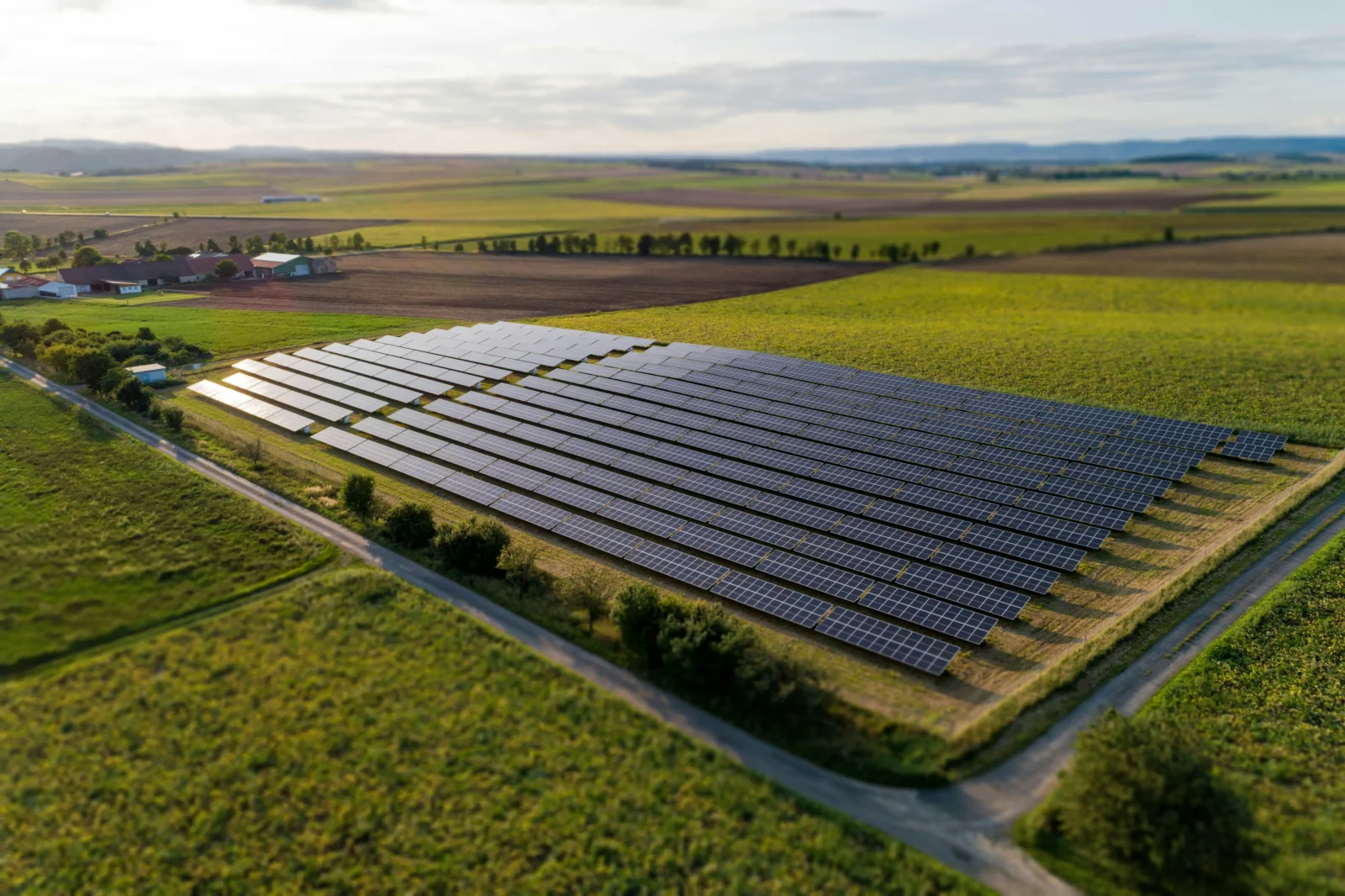
Solar Energy: When the Sun Meets Software
The sun gives us more energy in an hour than humanity consumes in an entire year. The problem isn’t a lack of resources, but how to collect and use it. Without renewable energy software development, this is harder than it seems.
Modern solar energy platforms transform solar plants into “smart” systems that analyze their own performance. AI and computer vision track the condition of panels: finding damaged or inefficient ones, analyzing shadows, dust, even the angle of sunlight. This prevents energy loss through small issues.
Another direction is forecasting platforms. They combine weather forecasts with consumption data, helping optimize when and how much energy to produce or store. If clouds are expected in the morning, the system automatically redistributes the load to other sources.
Cloud-based solutions make this scalable: solar operators can track thousands of panels in different countries from one dashboard. Predictive maintenance algorithms signal performance drops long before actual breakdowns.
By the way, solar panels are becoming increasingly affordable. Over the past decade, their cost has dropped by more than 80%, which means more data, more analytics, more software helping manage these systems.
And here’s a fact that always impresses: a solar power plant in the desert can provide electricity for an entire country. The desert solar farm in Morocco, for example, is planned as an energy source for most of North Africa and part of Europe. And all this is thanks to smart software that knows how to efficiently use every ray.
Wind Power: The Art of Predicting the Unpredictable
Wind is a challenge for engineers. It’s hard to predict, so software development in renewable energy here works at the edge of forecasting and analytics. Modern systems use machine learning models that analyze data from thousands of sensors to predict wind speed, direction, and duration. This helps reduce energy losses and maintain grid stability even during sudden weather changes.
Digital twins are another powerful solution. These are digital copies of turbines that show how each one operates in real time. If the algorithm notices excessive load or vibrations, the system signals for technical inspection.
Remote control systems allow managing entire wind farms from one dashboard: you can stop a turbine before a storm or redirect energy flow to another region.
Ironically, but true: wind can be capricious, but algorithms love patterns. Thanks to this, major energy companies today are almost “teaching” the wind to behave predictably.
By the way, wind turbines have become real giants, some reaching over 200 meters, with blades the length of a football field. And they can work at sea, where wind is more constant. Offshore wind farms already provide energy to millions of households in Europe.
Hydropower: From Water Flow to Data Flow
Hydropower seems simple: water flows, turbines spin, electricity is produced. But modern hydropower contains hundreds of sensors and thousands of lines of code.
IoT sensors capture flow, pressure, and water temperature, transmitting this data in real time to software platforms that control locks, pumps, and generation systems. This allows for more precise operation: not overloading turbines, responding to water level changes, and optimizing energy production even on a minute-by-minute scale.
Algorithms predict overloads or potential risks, for example, rising water levels during floods. This is especially important for new generation hydropower, where automated SCADA systems coordinate station operations without constant human intervention.
Interestingly, water doesn’t just produce energy, it can also store it. Pumping water to an upper reservoir during excess electricity, then releasing it during peak demand is an energy storage method increasingly integrated into smart grids along with solar and wind systems.
And of course, we can’t forget the Three Gorges in China, the world’s largest hydroelectric plant. It produces more electricity than any other plant on the planet. And while the scale is impressive, it’s the software that allows such a giant to operate stably: without it, the data would simply drown in chaos of capacities.
Bioenergy: Turning Waste Into Data-Driven Power
In bioenergy there’s no stable raw material like water or wind: everything depends on the type of biomass, moisture, chemical composition. That’s why custom bioenergy software plays a significant role in using this type of renewable energy. Thanks to analytics dashboards, operators see the efficiency of each process in real time. The system can show when biomass combustion gives the best results or when CO₂ emissions exceed norms. This allows for instant corrections, reducing costs and increasing productivity.
Another important tool is blockchain solutions. They create transparency in the biofuel supply chain: you can trace where raw materials came from, how they were transported, and whether they meet sustainable production standards.
And yes, even compost has its digital dashboard in 2025. Thanks to sensors and artificial intelligence, even organic waste turns into data that helps generate clean energy.
Today bioenergy has become a complex ecosystem where software development in renewable energy opens a new level of control: precise calculation of heat, efficiency, and even environmental impact.
Geothermal Energy: Deep Data from Deep Earth
Geothermal energy is when we literally draw heat from the Earth’s depths. But these processes are so complex that the software must match that complexity. This is the most challenging niche.
Geothermal exploration software analyzes geological data, determining where to drill to get maximum energy with minimum risks. 3D modeling helps engineers predict thermal flow behavior and create virtual copies of deposits before drilling the first well.
Then AI-driven control systems step in: they regulate pressure, temperature, and fluid flow underground in real time, preventing energy losses or equipment damage. And cloud platforms allow remote management of networks of deep sensors and analyzing data from dozens of sites simultaneously.
Interesting fact: Geothermal energy is a real treasure for countries like Iceland or the Philippines. There, hot water and steam literally come out of the ground, heating cities and providing electricity to industry. And yes, even here everything is under the control of analytics and artificial intelligence.
The Future of Renewable Energy Software Development
Without software, green energy would remain just an inspired idea on paper, a beautiful theory without practical implementation.
It is software development that transforms it into a living, breathing ecosystem where data, sensors, and algorithms work in tandem, ensuring not just energy production, but its stability, efficiency, and scalability at levels previously unattainable.
Investing in renewable energy software development is a long-term, conscious contribution to a future where energy does not destroy the planet but harmoniously coexists with it, where every watt is produced intelligently, used efficiently, and leaves no toxic footprint for future generations.
When data and energy work together in a harmonious symphony of technologies, even the sun shines smarter.
Explore Courses
.jpg "Ondrej Chybik - Rethinking Architecture")