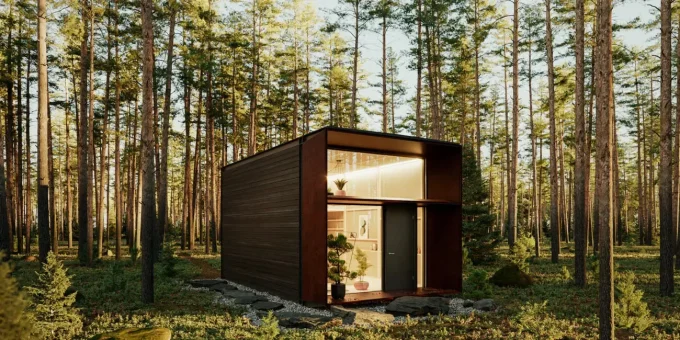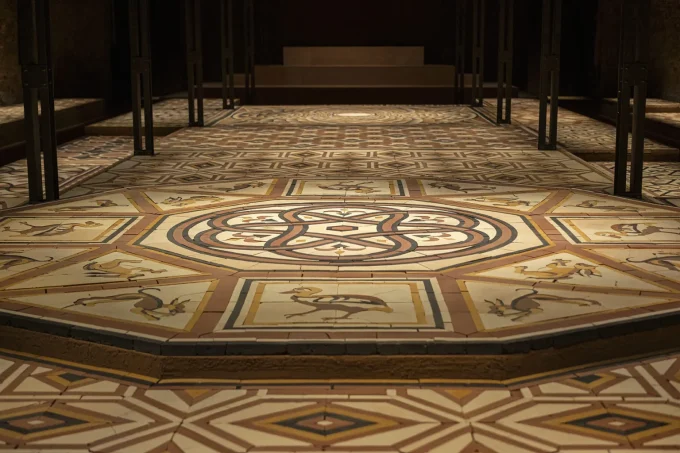



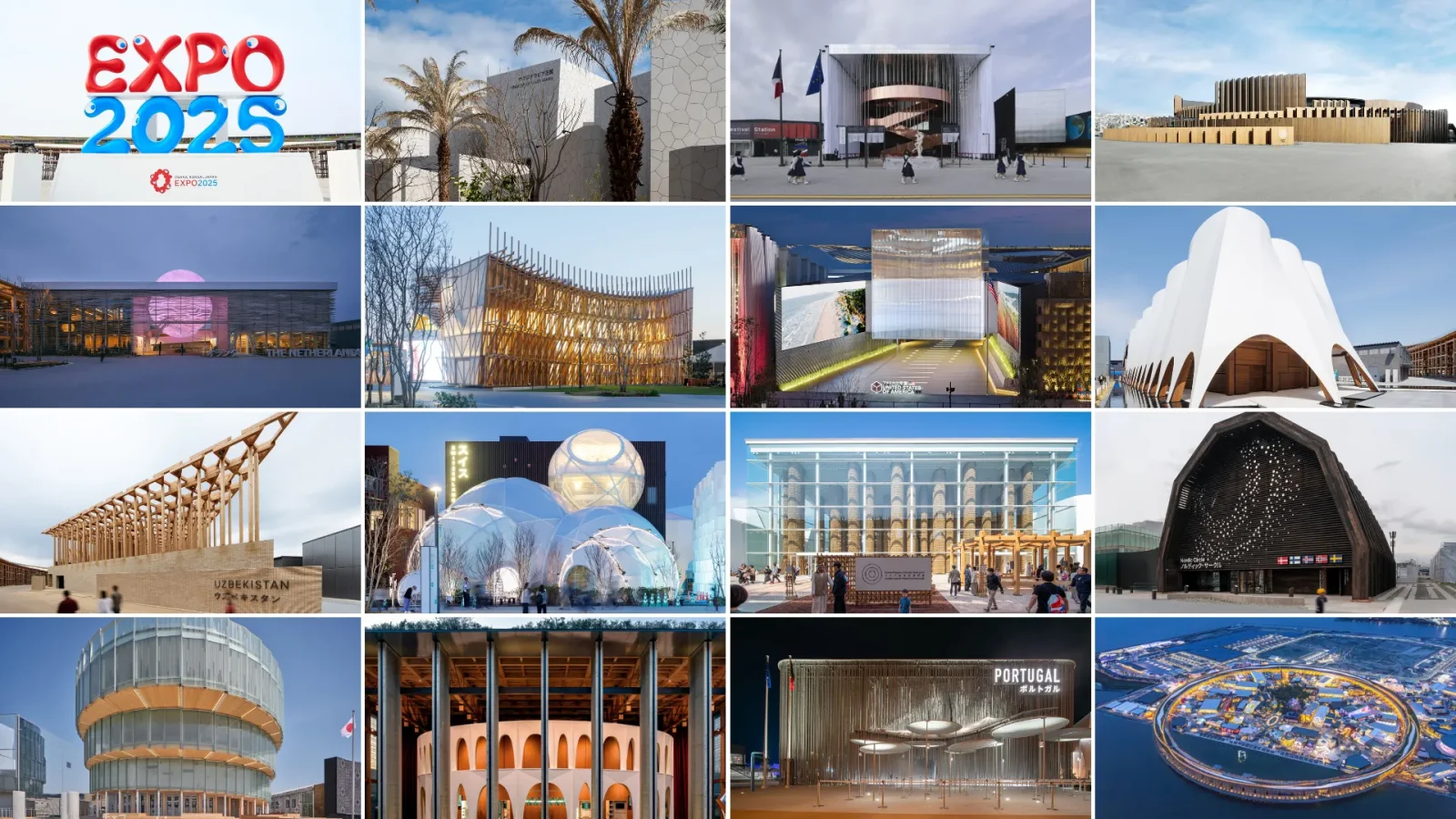
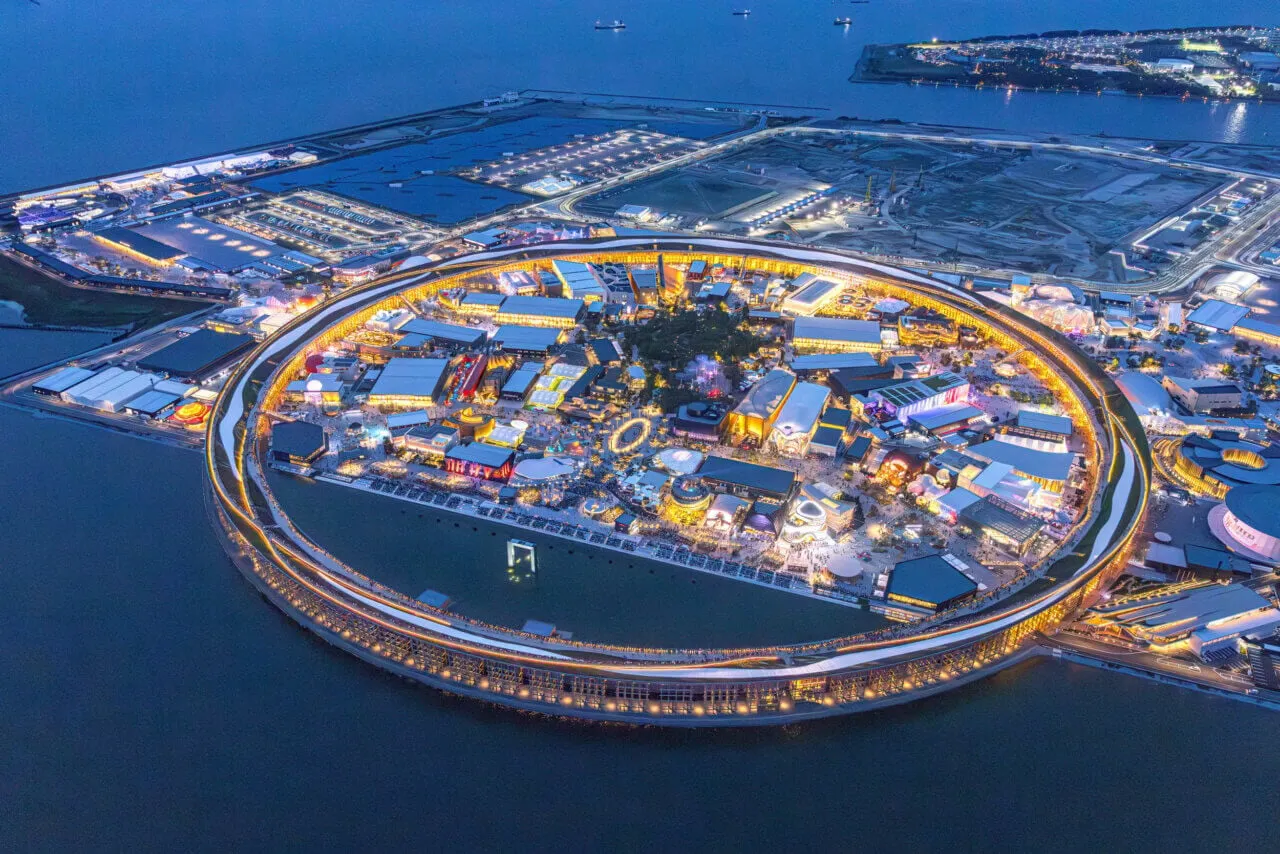
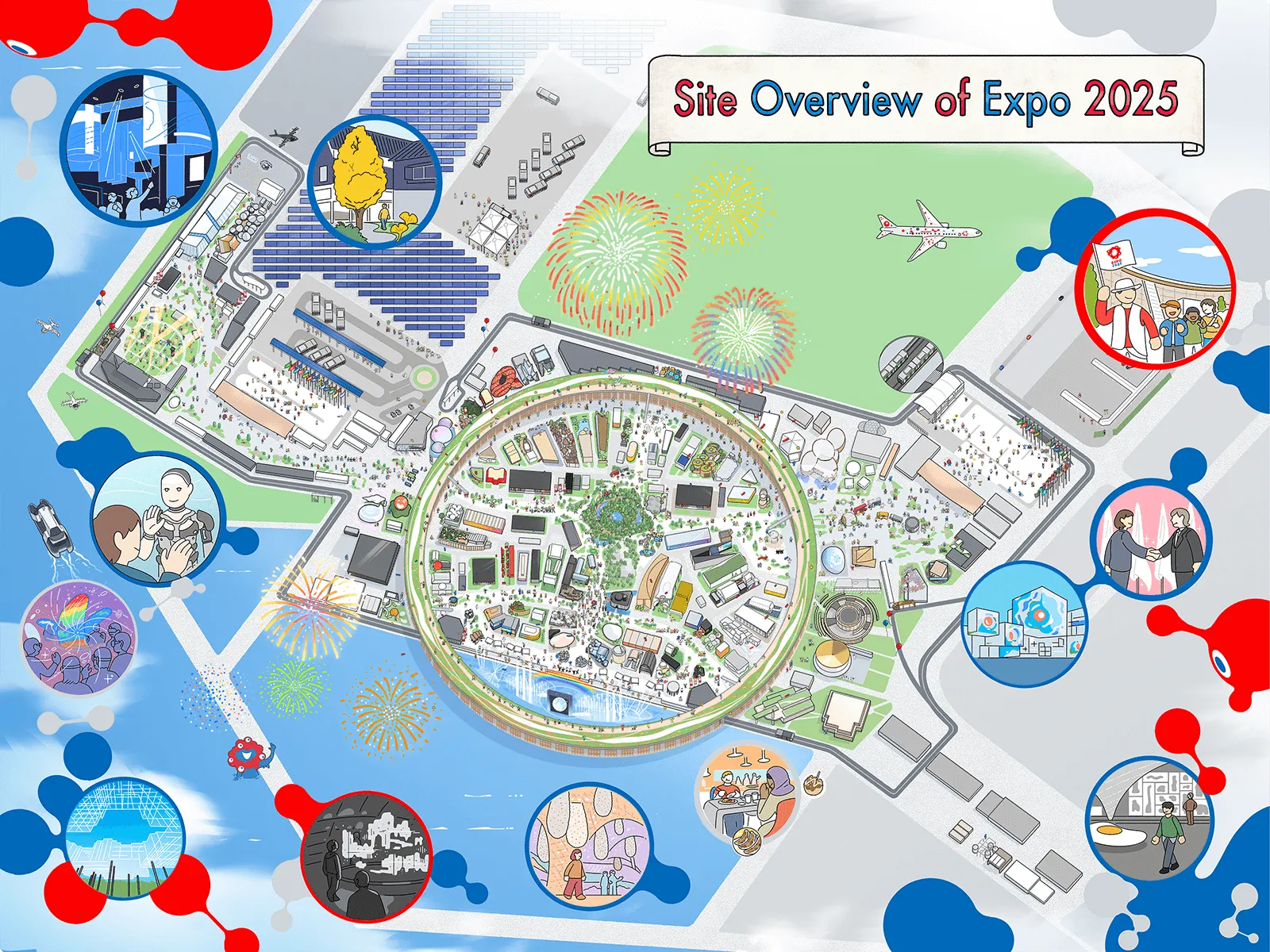

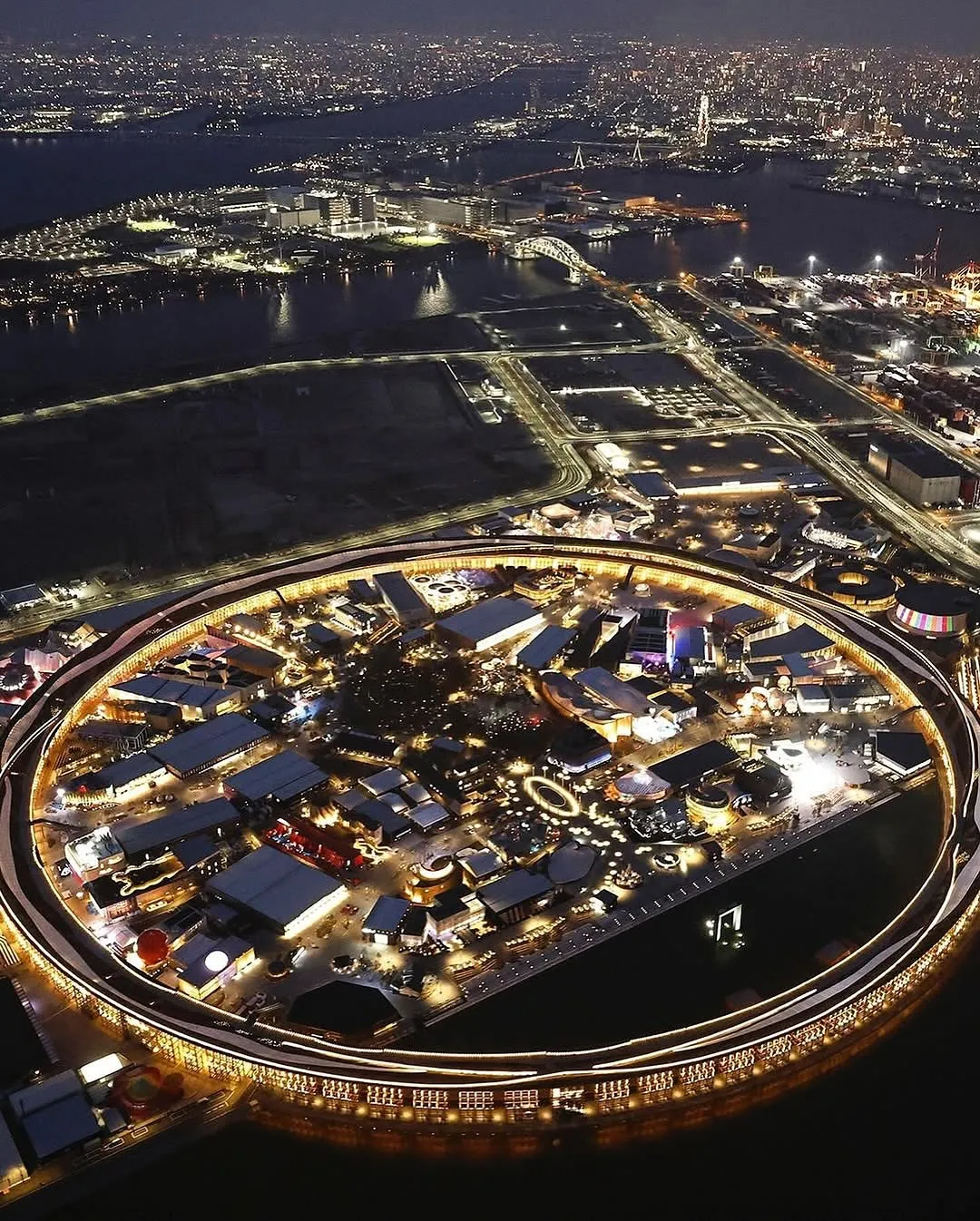
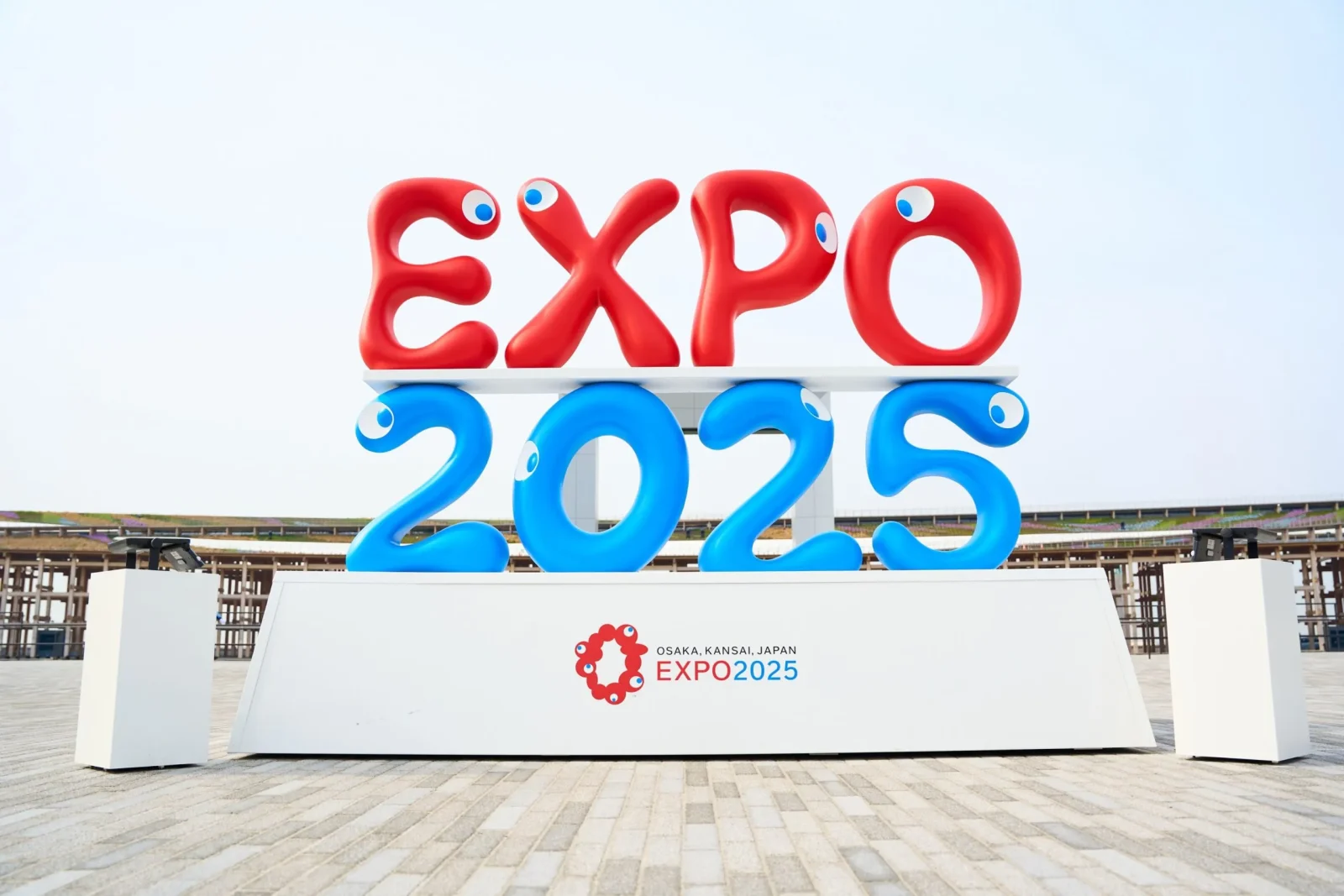
The world turned its eyes to the Osaka Expo 2025, which took place on the reclaimed island of Yumeshima in Osaka Bay. The Expo officially opened on 13 April 2025 and concluded on 13 October 2025, offering 184 days of global cultural exchange, technological innovation, and bold architectural experiments.
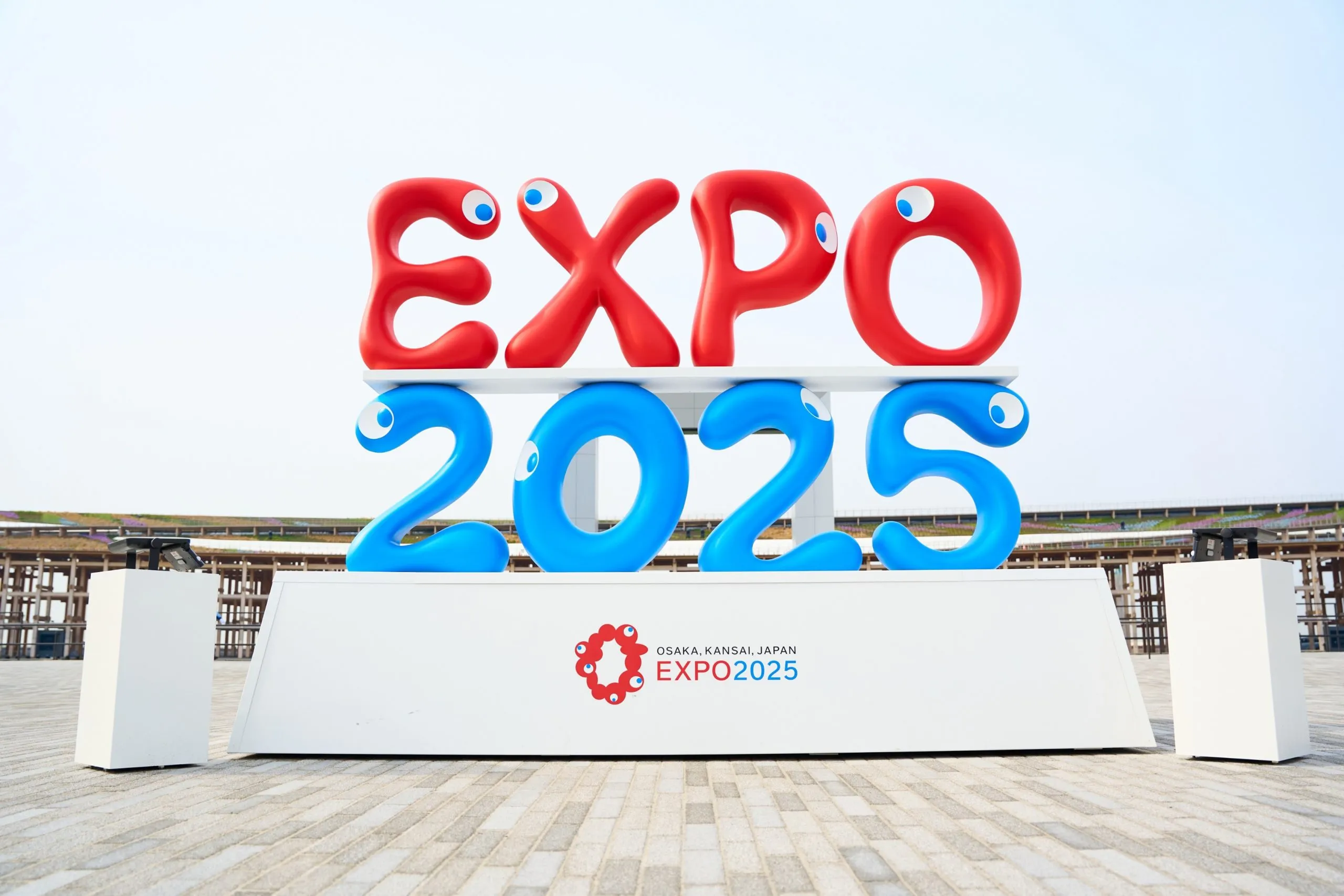
Under the theme “Designing Future Society for Our Lives,” the Expo organized its vision around three powerful subthemes: Saving Lives, Empowering Lives, and Connecting Lives.
The goal was to present meaningful ideas on how architecture, technology, and collaboration could shape a sustainable, inclusive, and connected future. The Osaka Expo featured the monumental Grand Ring, a wooden circular structure designed by Sou Fujimoto. The Ring served as the symbolic and physical backbone of the entire Expo site, connecting pavilions, walkways, and gathering spaces under a unifying architecture.
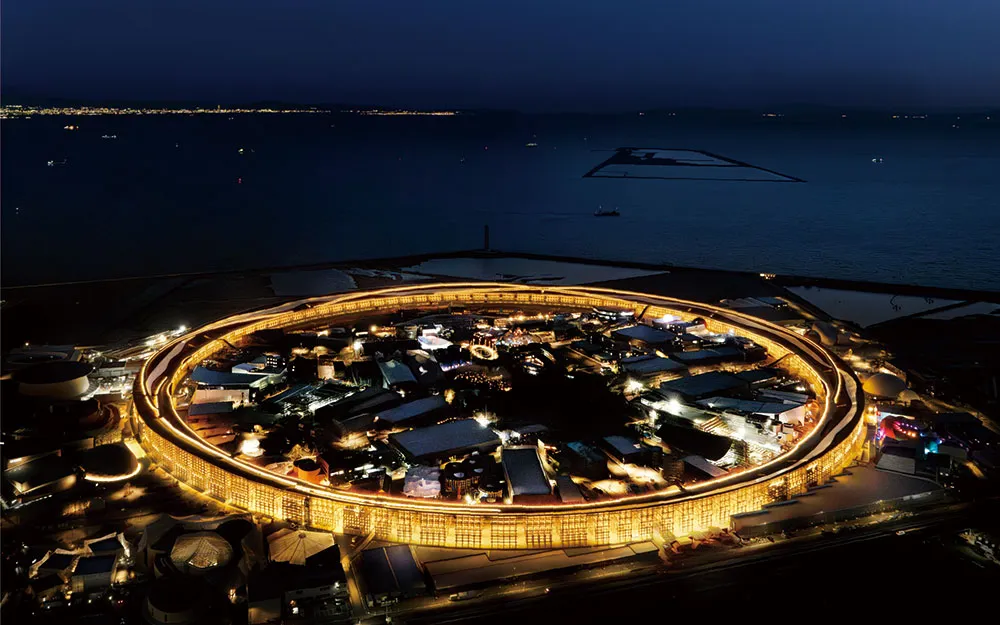
Although the Expo has now concluded, its legacy endures, and this article reflects on the top 10 pavilions that left a lasting impression. Among them were standout contributions like the Bahrain Pavilion by Lina Ghotmeh Architecture, celebrated for its sustainable, material-conscious design grounded in maritime heritage, and the France Pavilion by Carlo Ratti Associati and Coldefy, which invited visitors to journey through ecosystems as part of a reflective sensory experience.
As we look back at the grand experiment that was Osaka Expo 2025, these pavilions stand out for the ideas, architecture, sustainability, cultural exchange, and hope for a better, shared future.
Here are PA’s top 10 pavilions at Osaka Expo 2025:
1. Saudi Pavilion
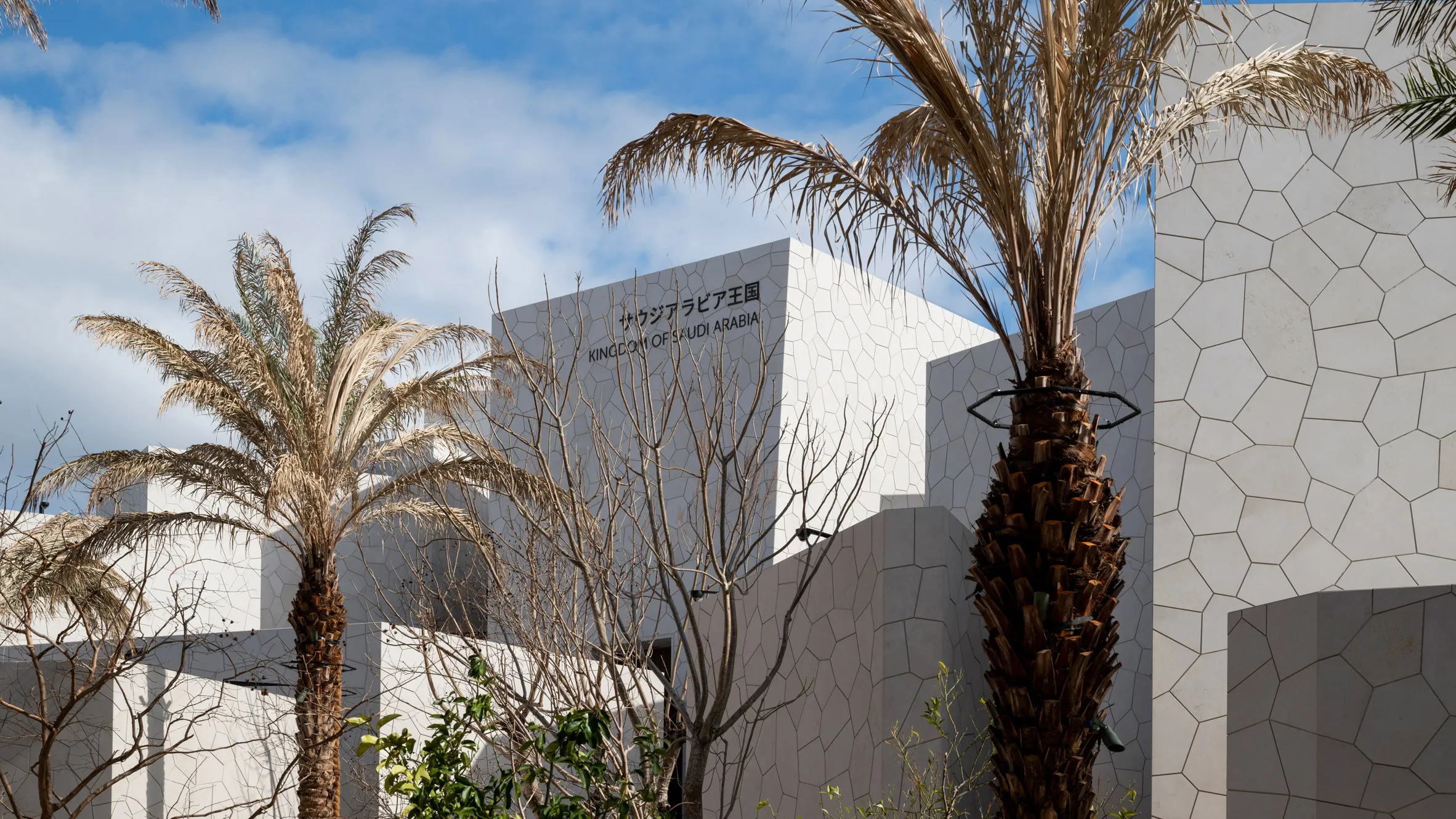
Architect: Foster + Partners
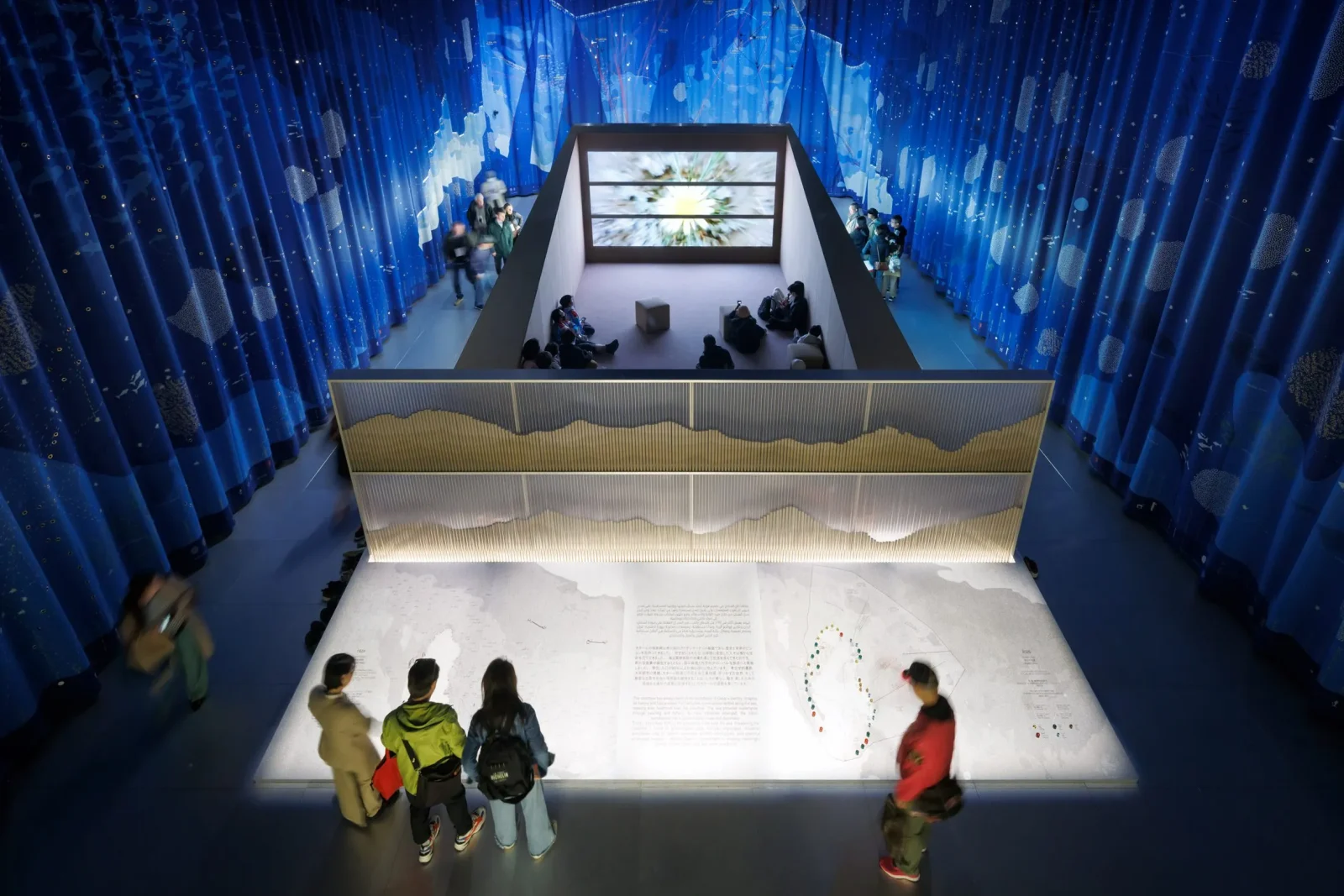
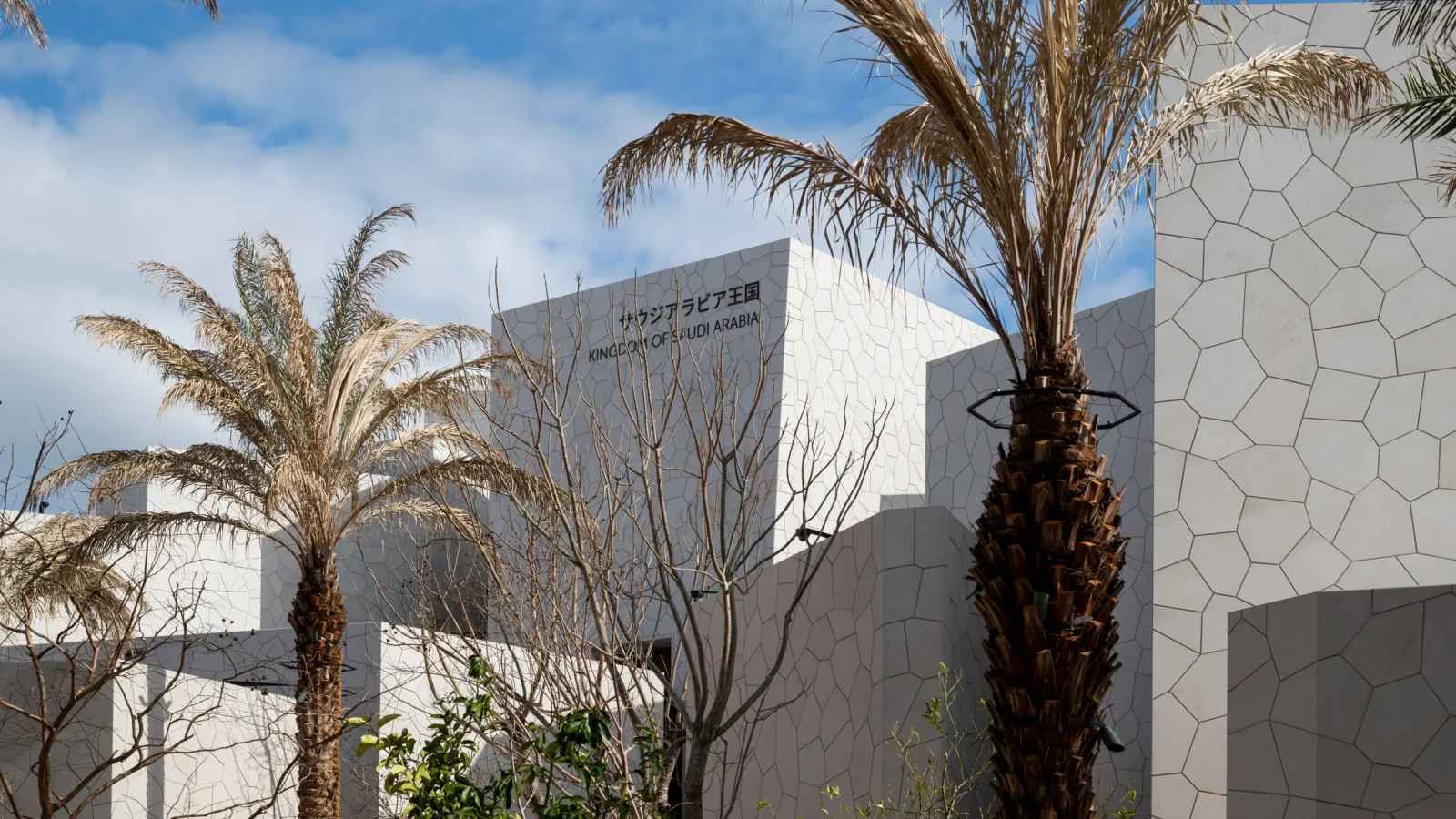
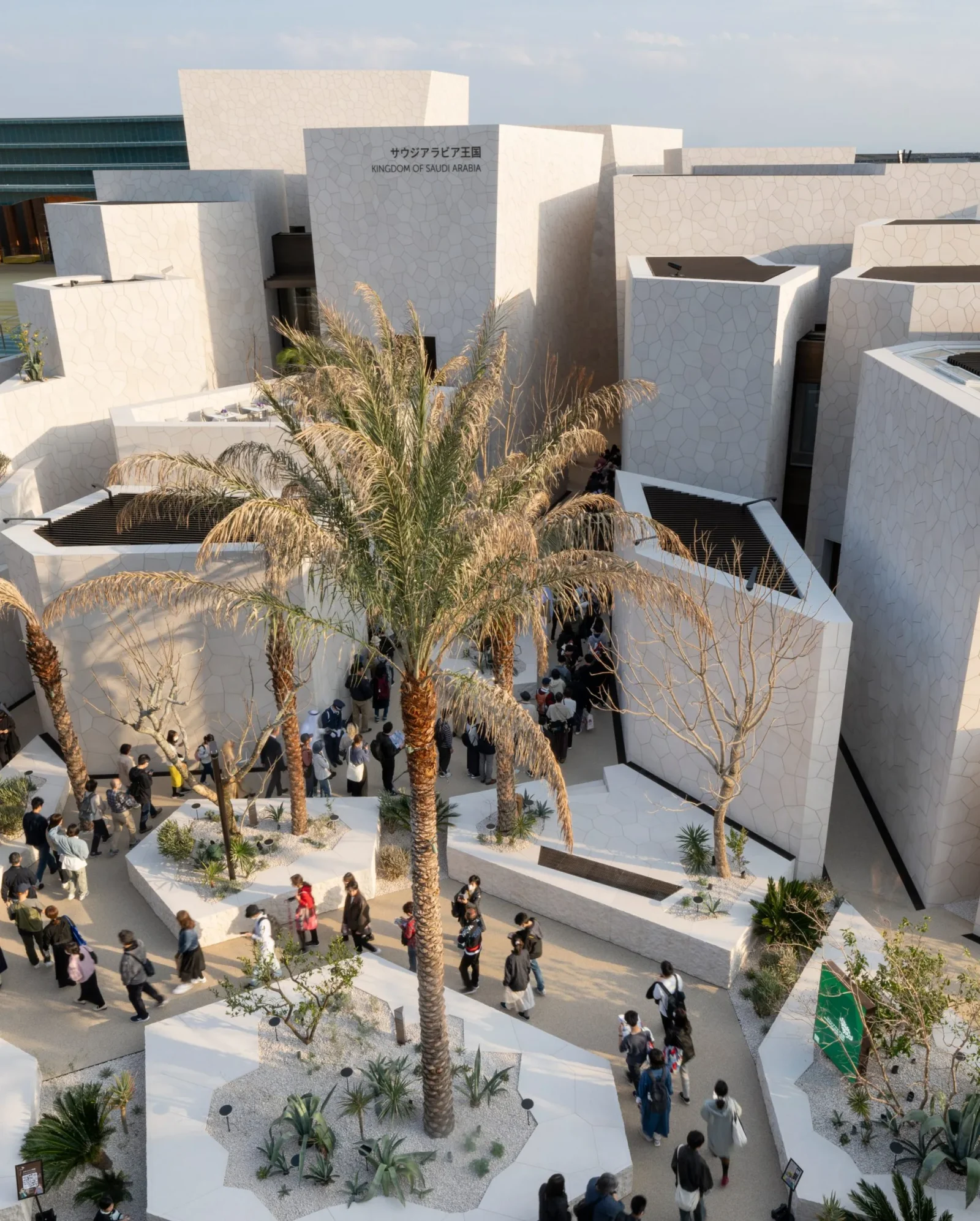
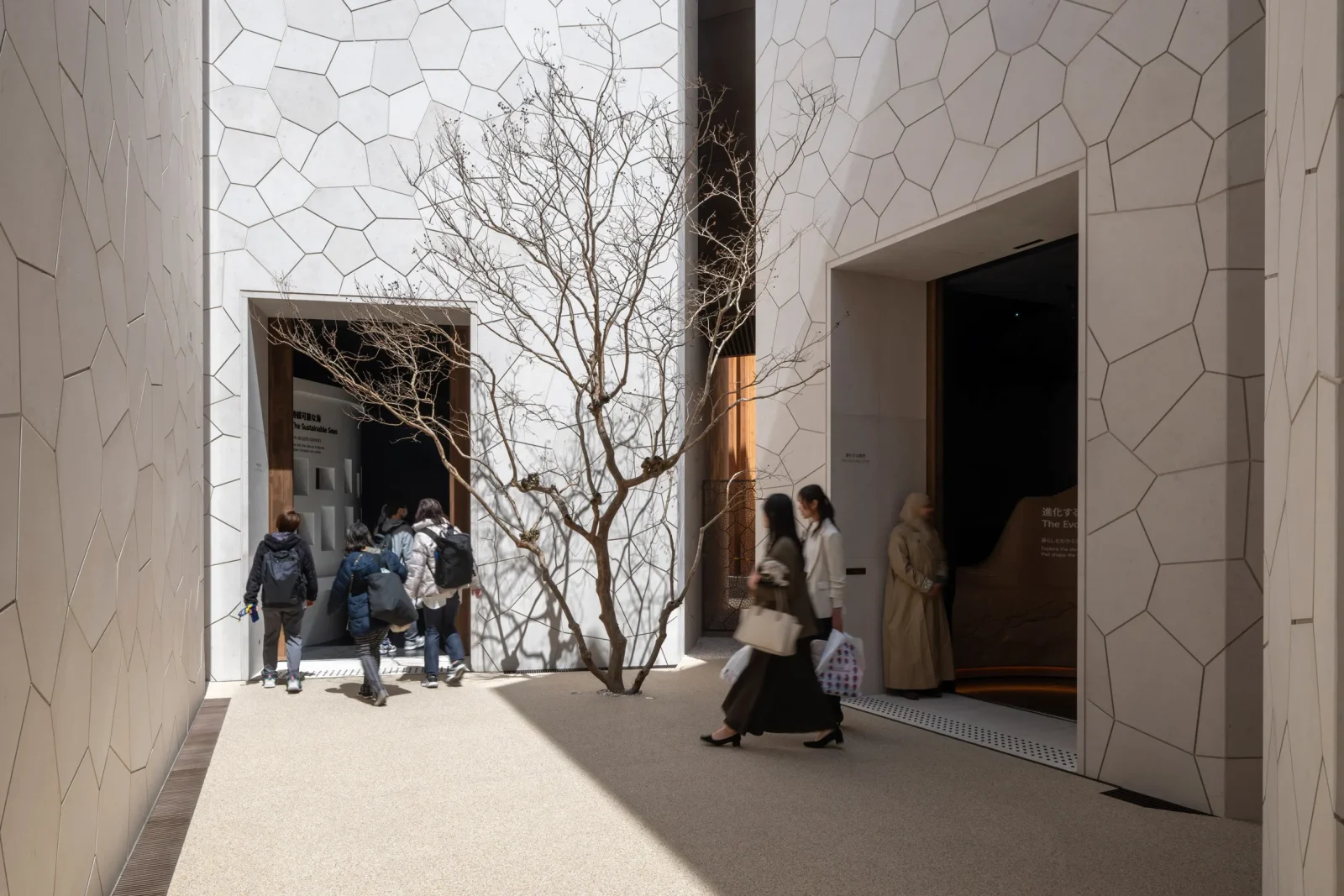
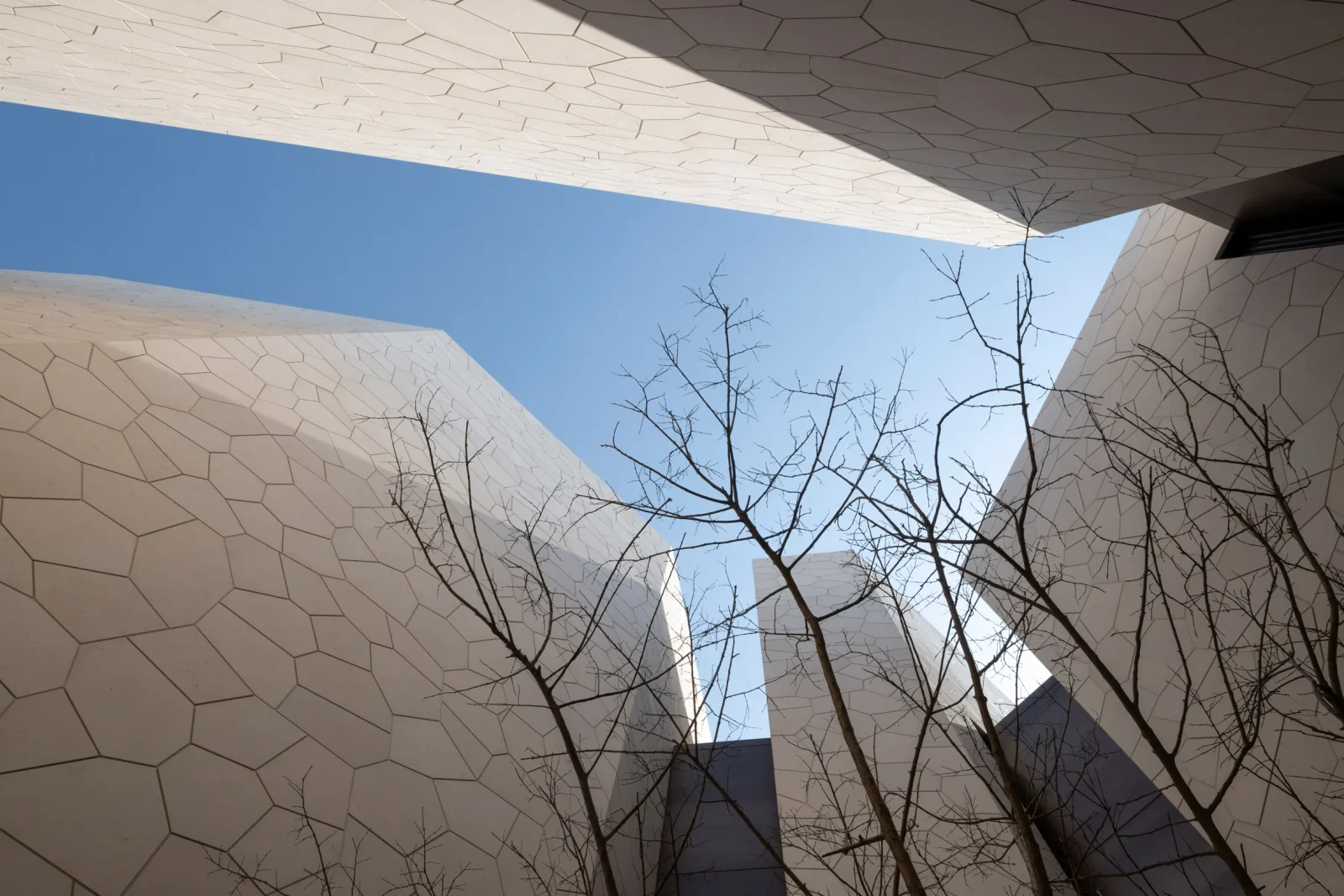
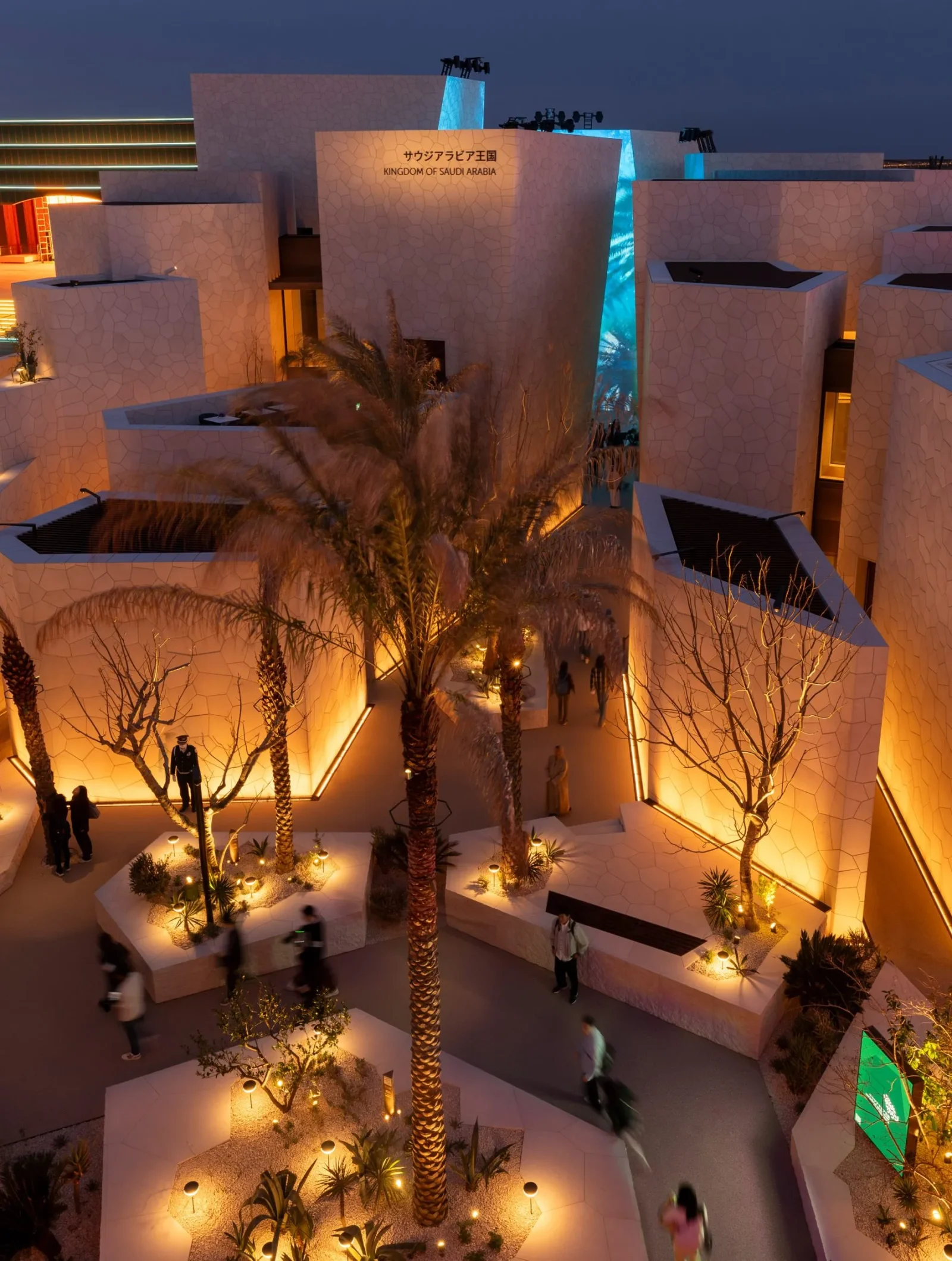
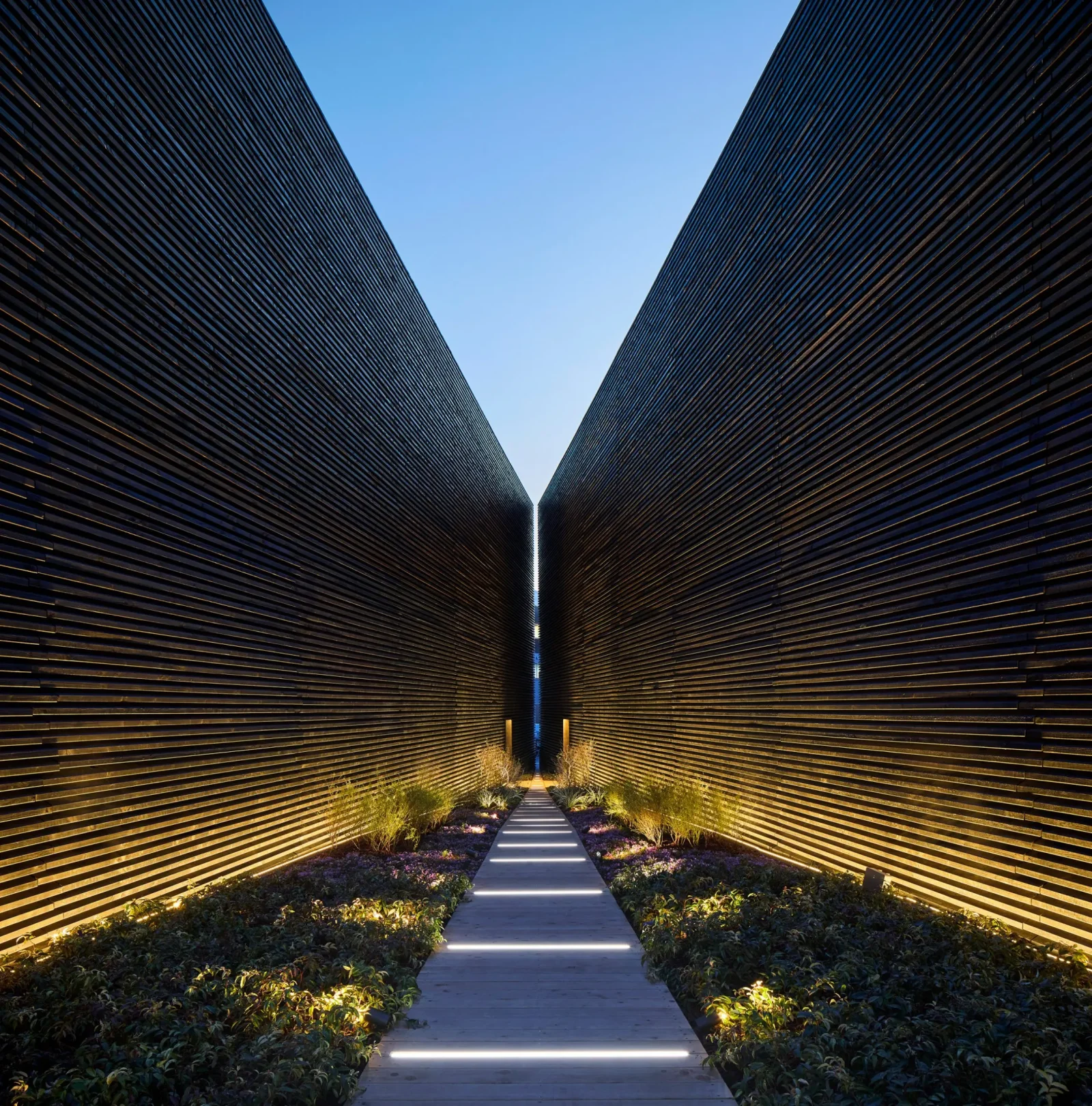
The Saudi Pavilion at Osaka Expo 2025 was designed by Foster + Partners as an immersive architectural journey that wove together the Kingdom’s heritage, contemporary identity, and future ambitions. Set along the Yumeshima waterfront, the pavilion drew inspiration from the organic structure of traditional Saudi towns, forming a clustered composition of interconnected buildings, narrow passages, and a shaded central courtyard.
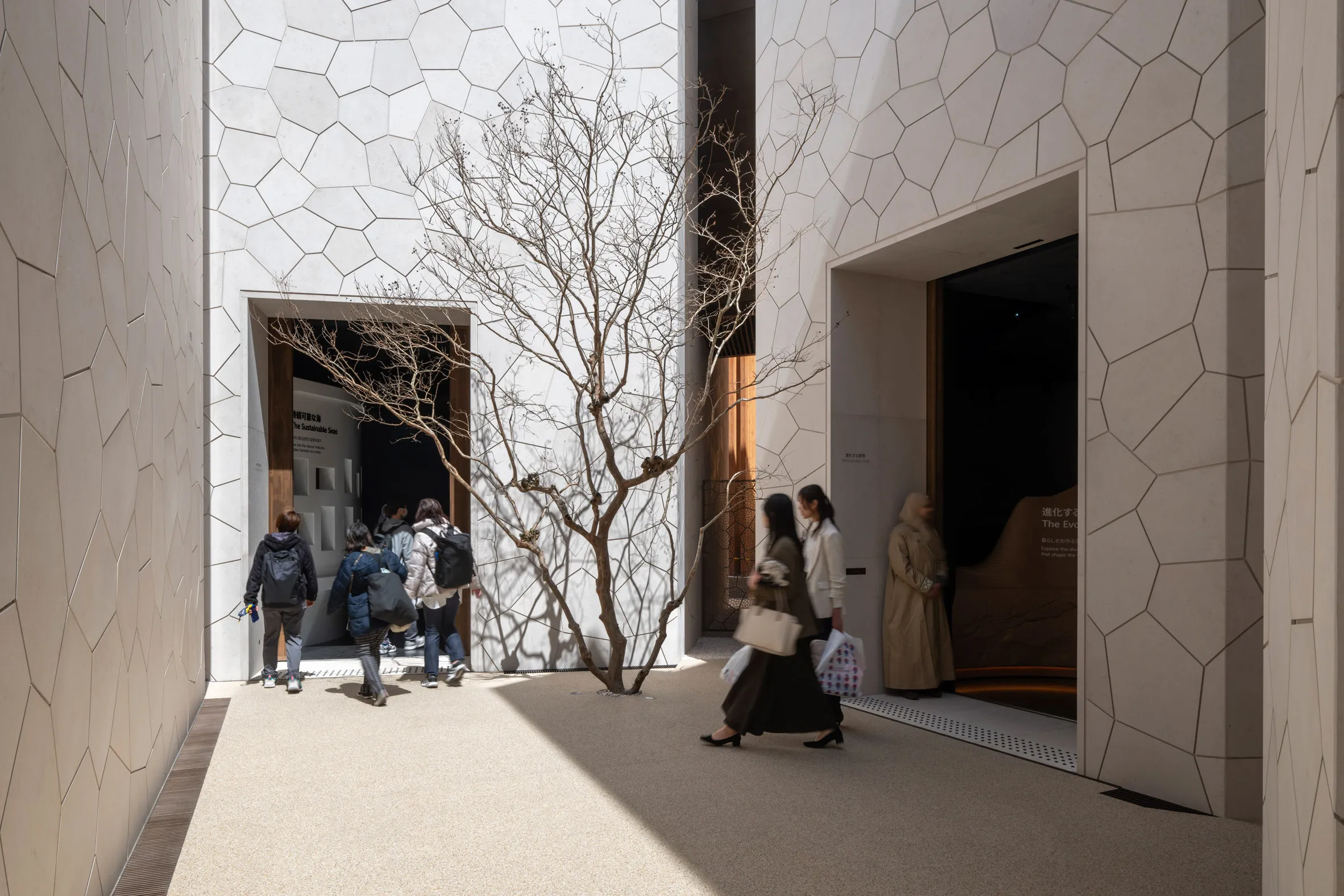
Visitors entered through a lush forecourt planted with native Saudi flora before moving into winding pathways reminiscent of historic medinas. These intimate spatial sequences shifted in character throughout the day, quiet and contemplative in daylight, then vibrant at night with cultural performances and community gatherings. Every architectural gesture aimed to create an environment that felt both familiar and exploratory, echoing the textures, materials, and rhythms of Saudi urban and rural landscapes.
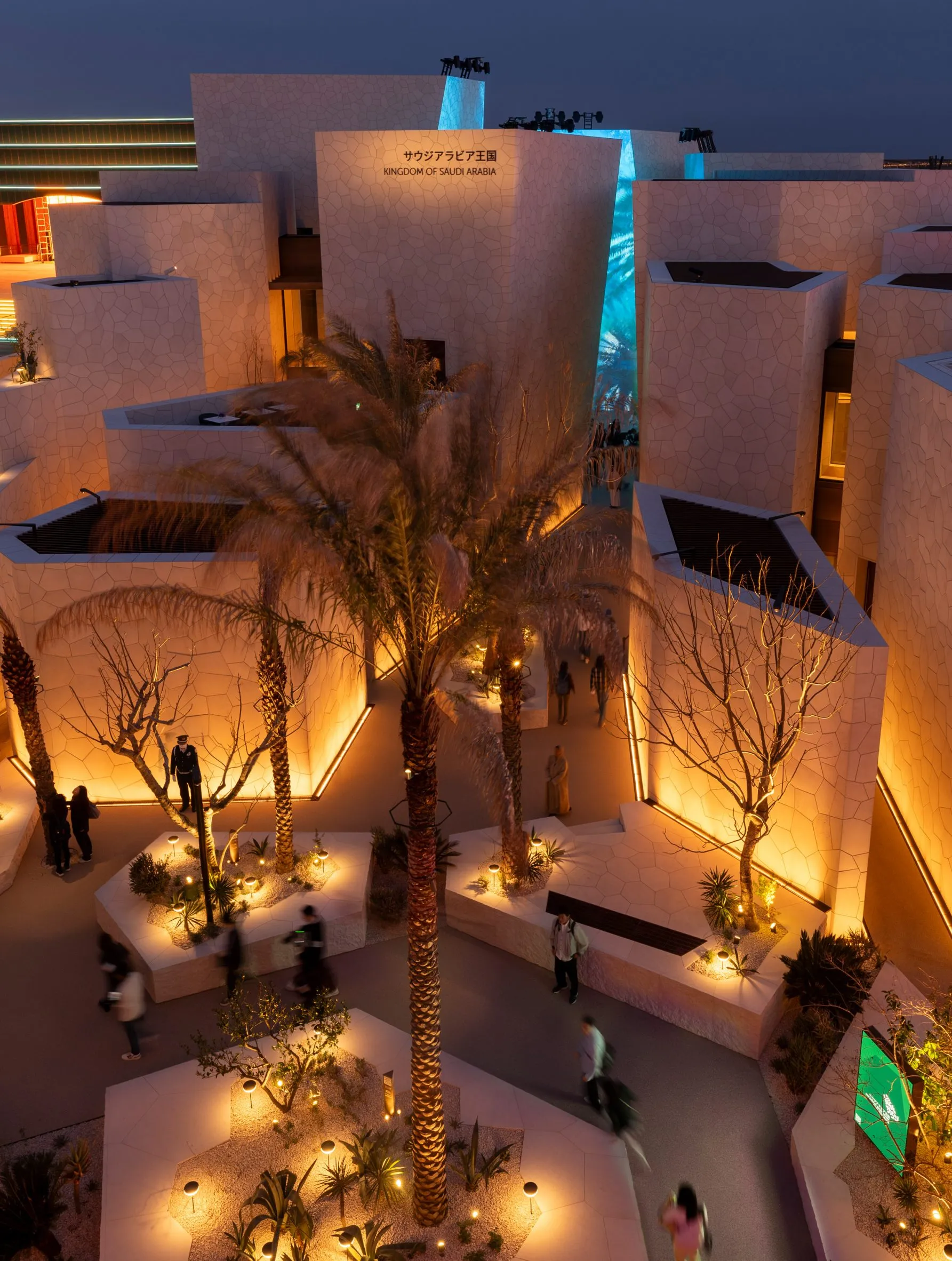
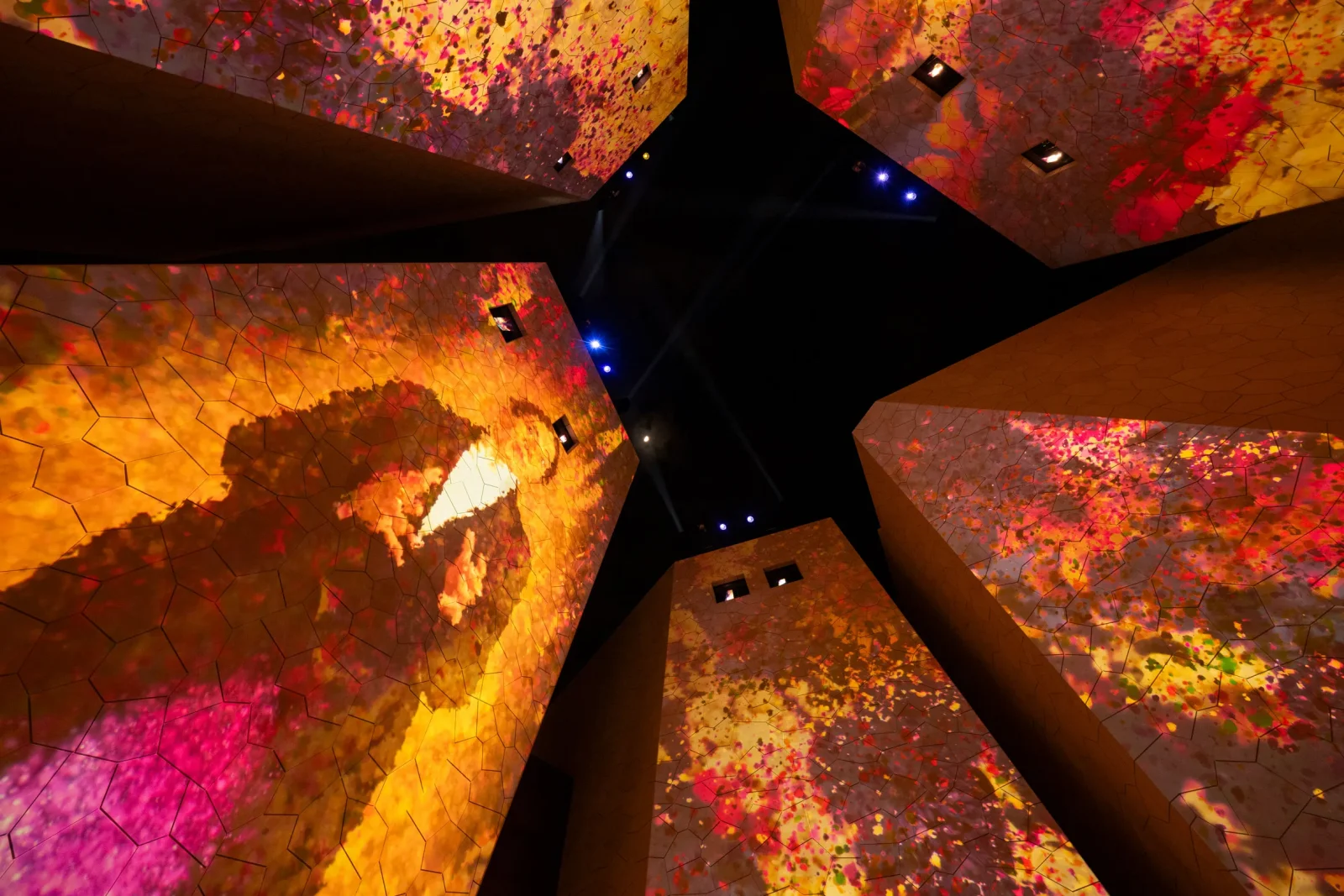
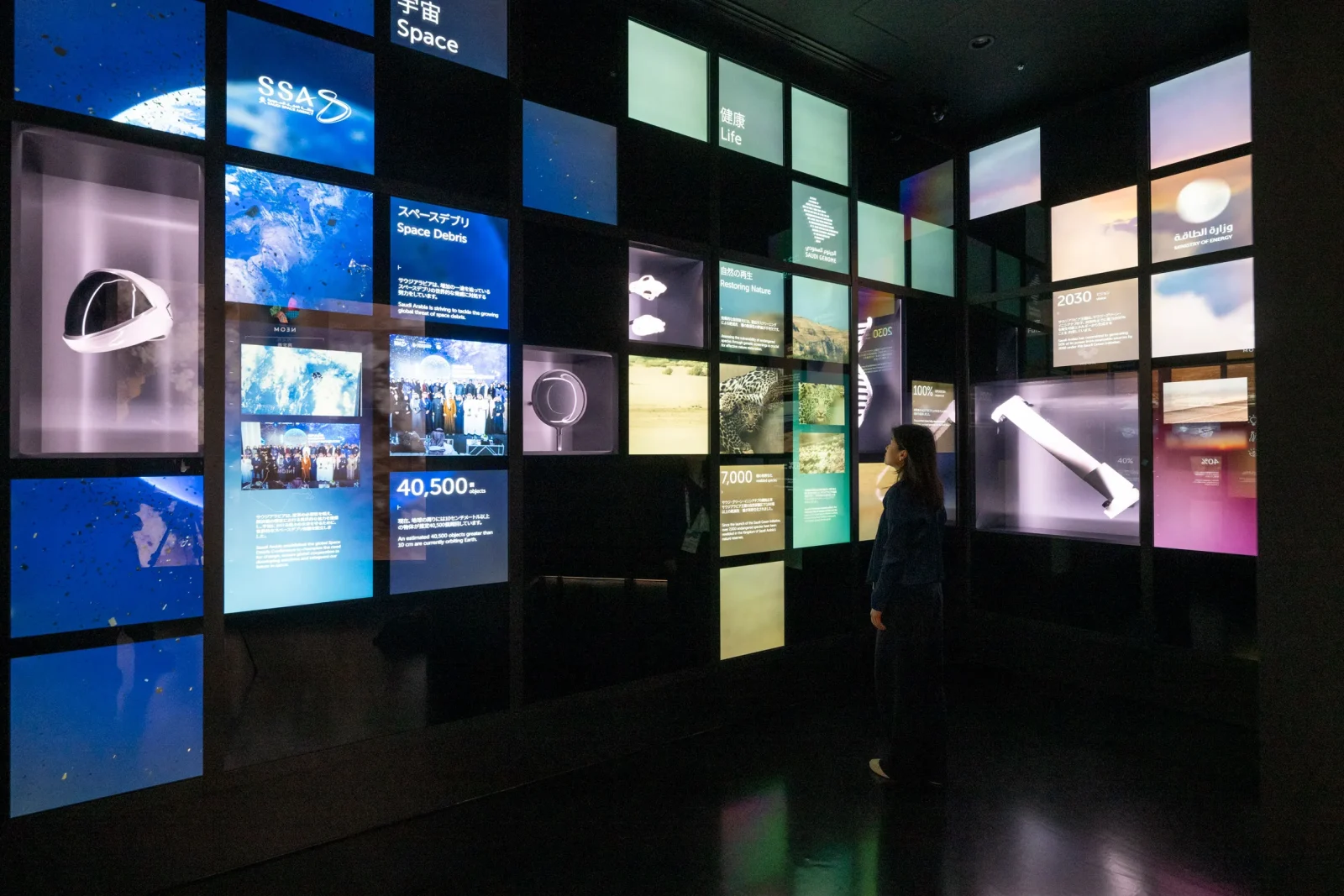
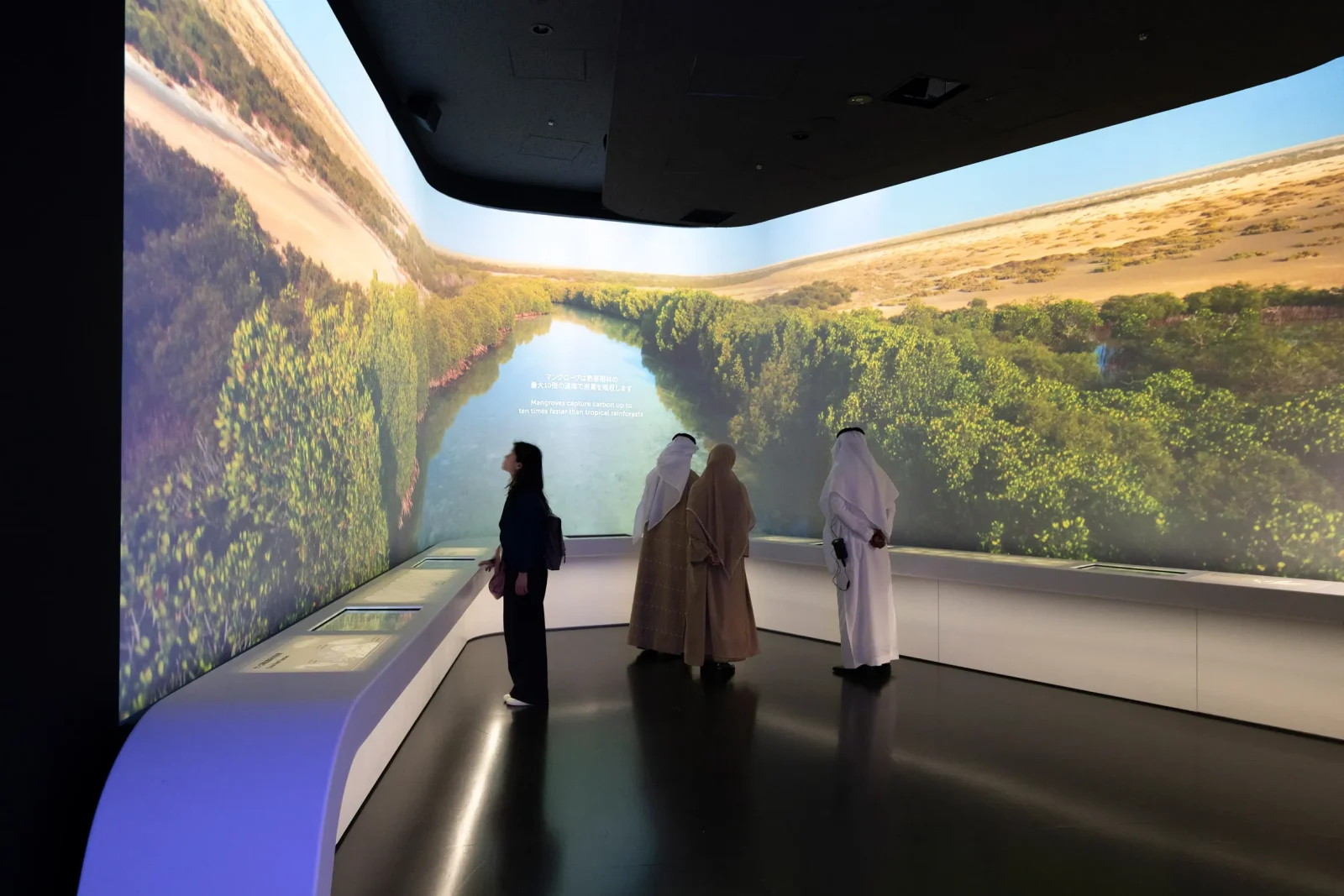
The structure used low-carbon materials, integrated rainwater recycling, and employed photovoltaic panels for on-site energy generation. Computational fluid dynamics (CFD) modeling helped optimize airflow, allowing sea breezes to cool the narrow alleys in summer, while its landscaped forecourt softened northern winter winds. Inside, the pavilion presented a multisensory narrative developed in collaboration with studios such as 59 Productions and Squint/Opera, blending audiovisual installations with exhibitions that highlighted Saudi cultural heritage, arts, and innovation.
2. France Pavilion
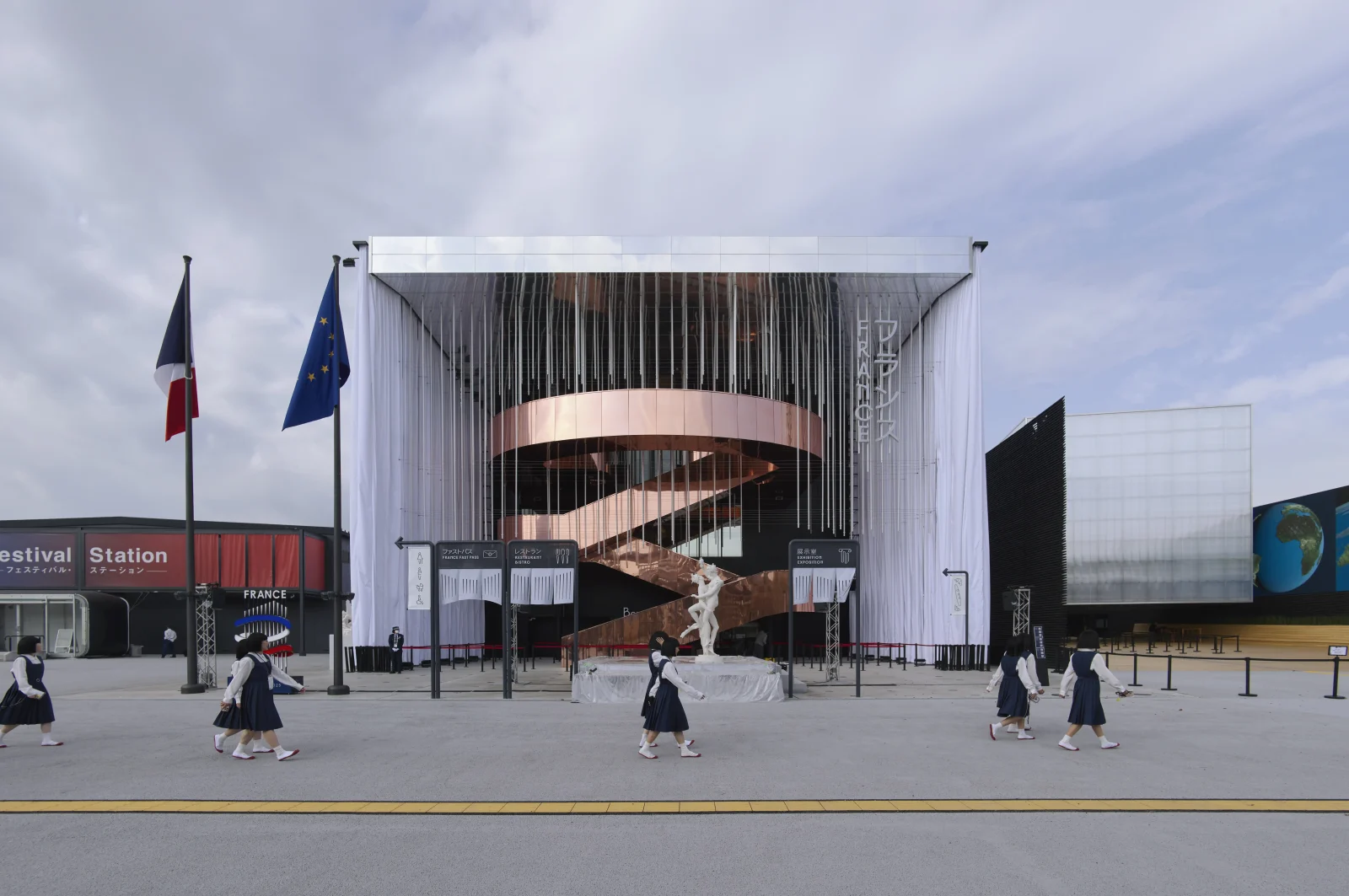
Architect: Coldefy (France) in collaboration with CRA–Carlo Ratti Associati
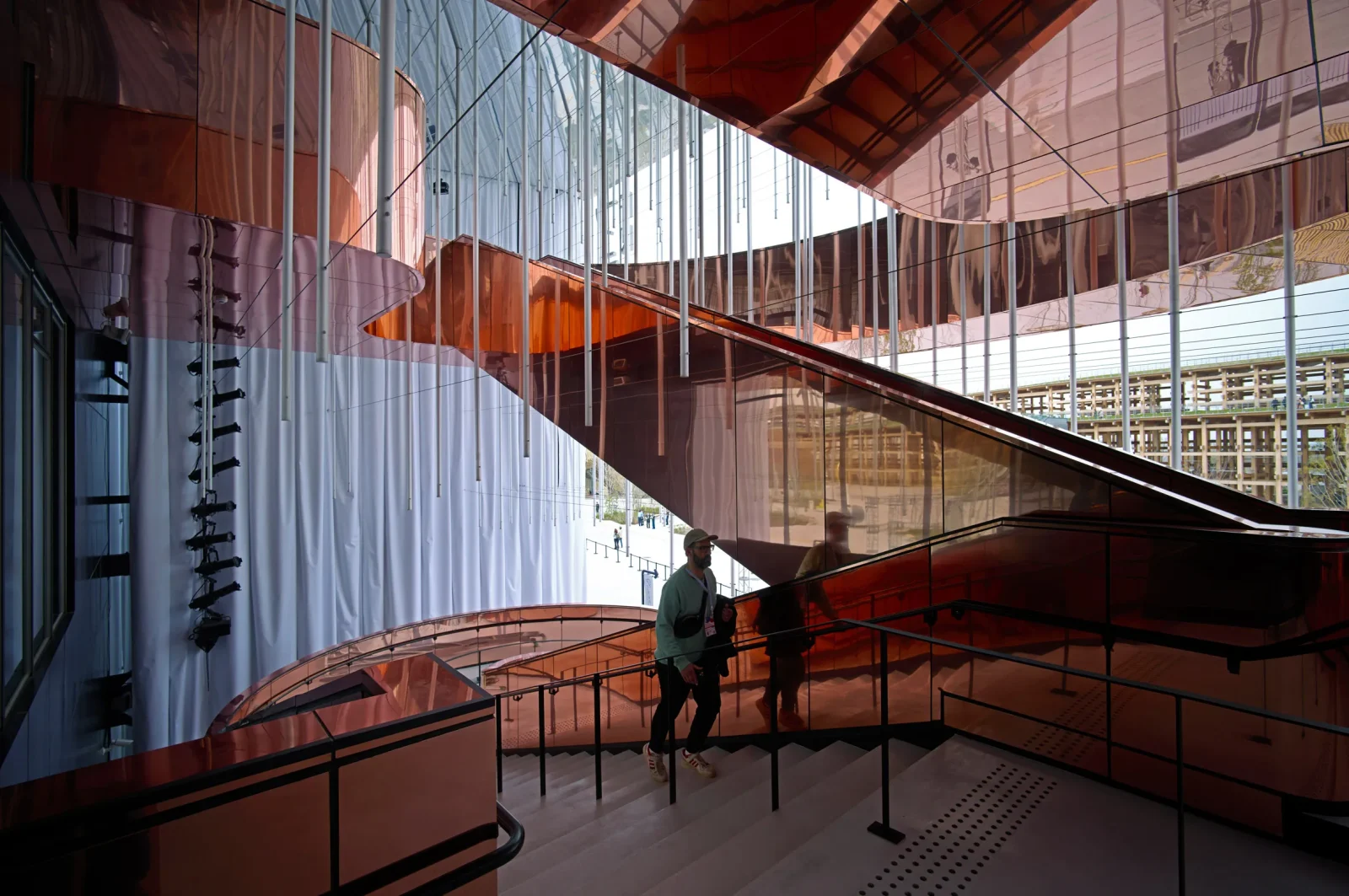
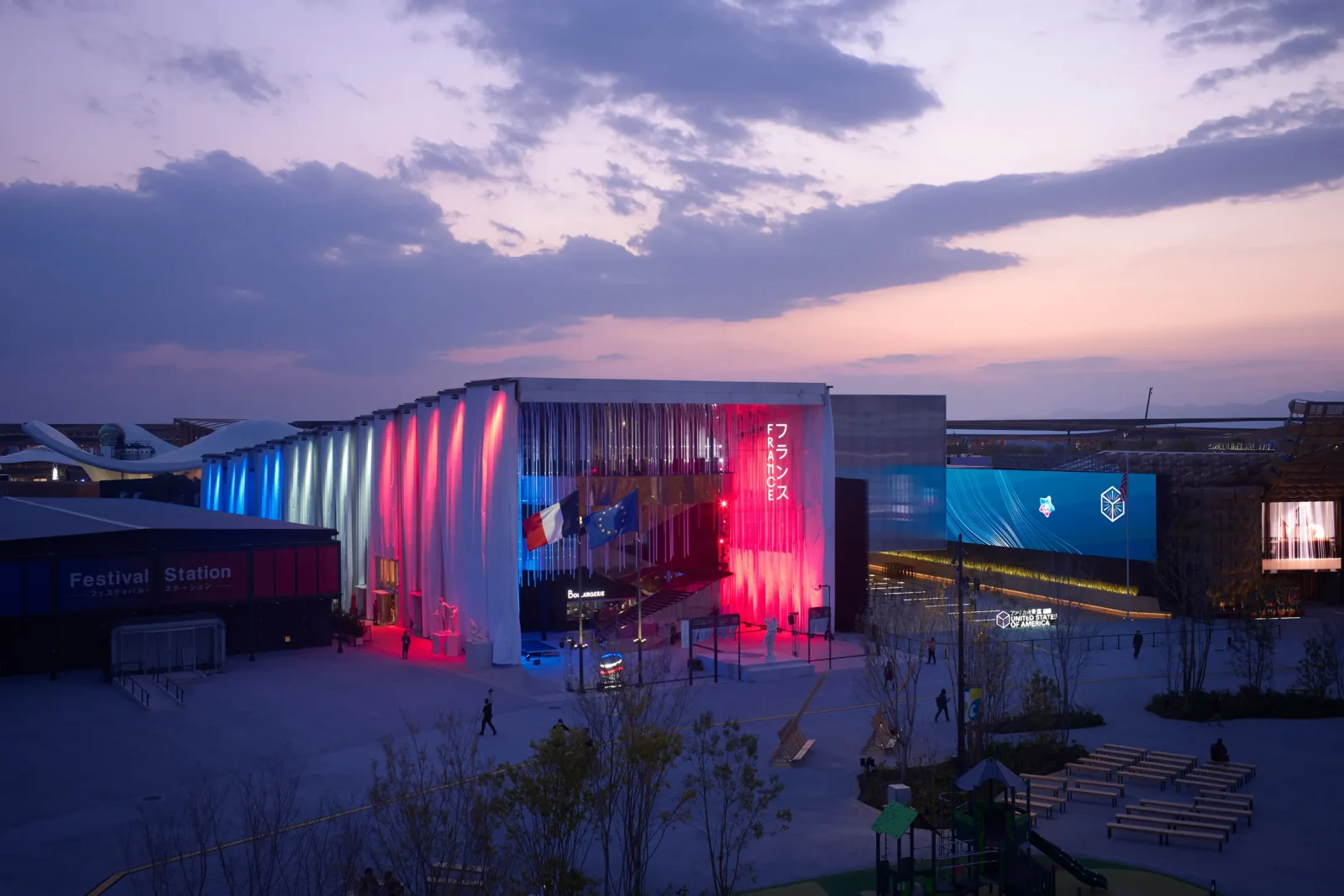
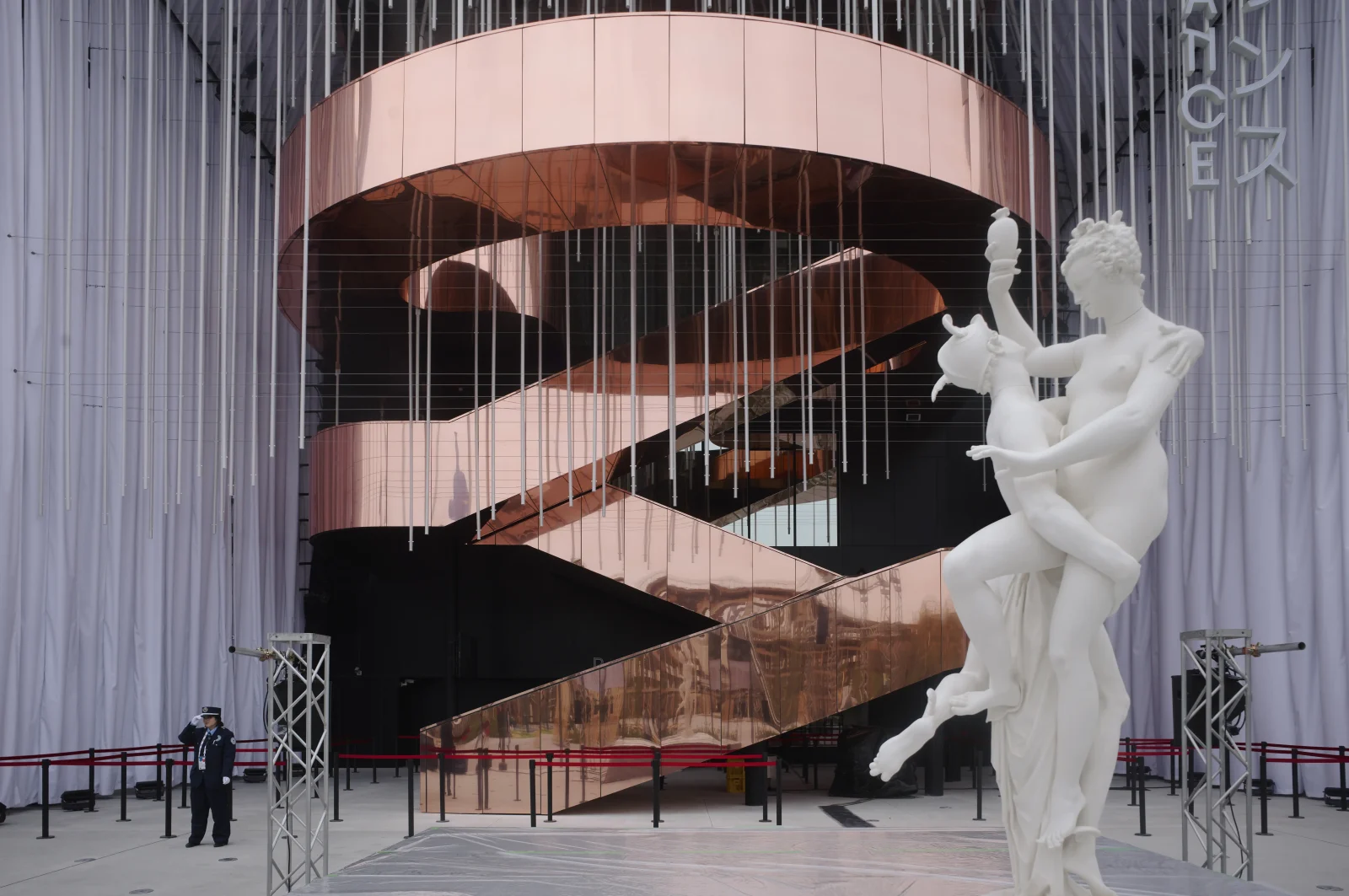
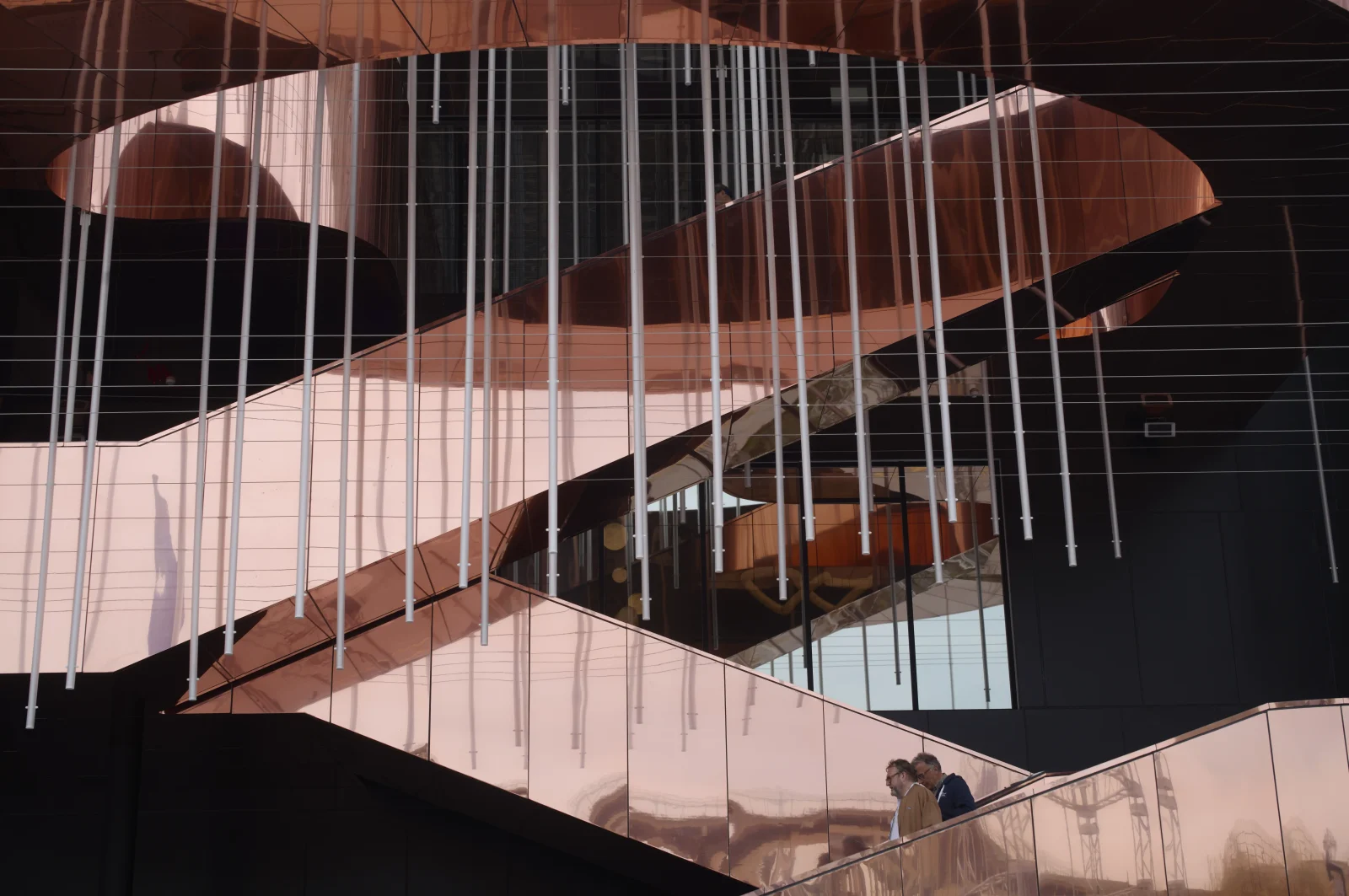
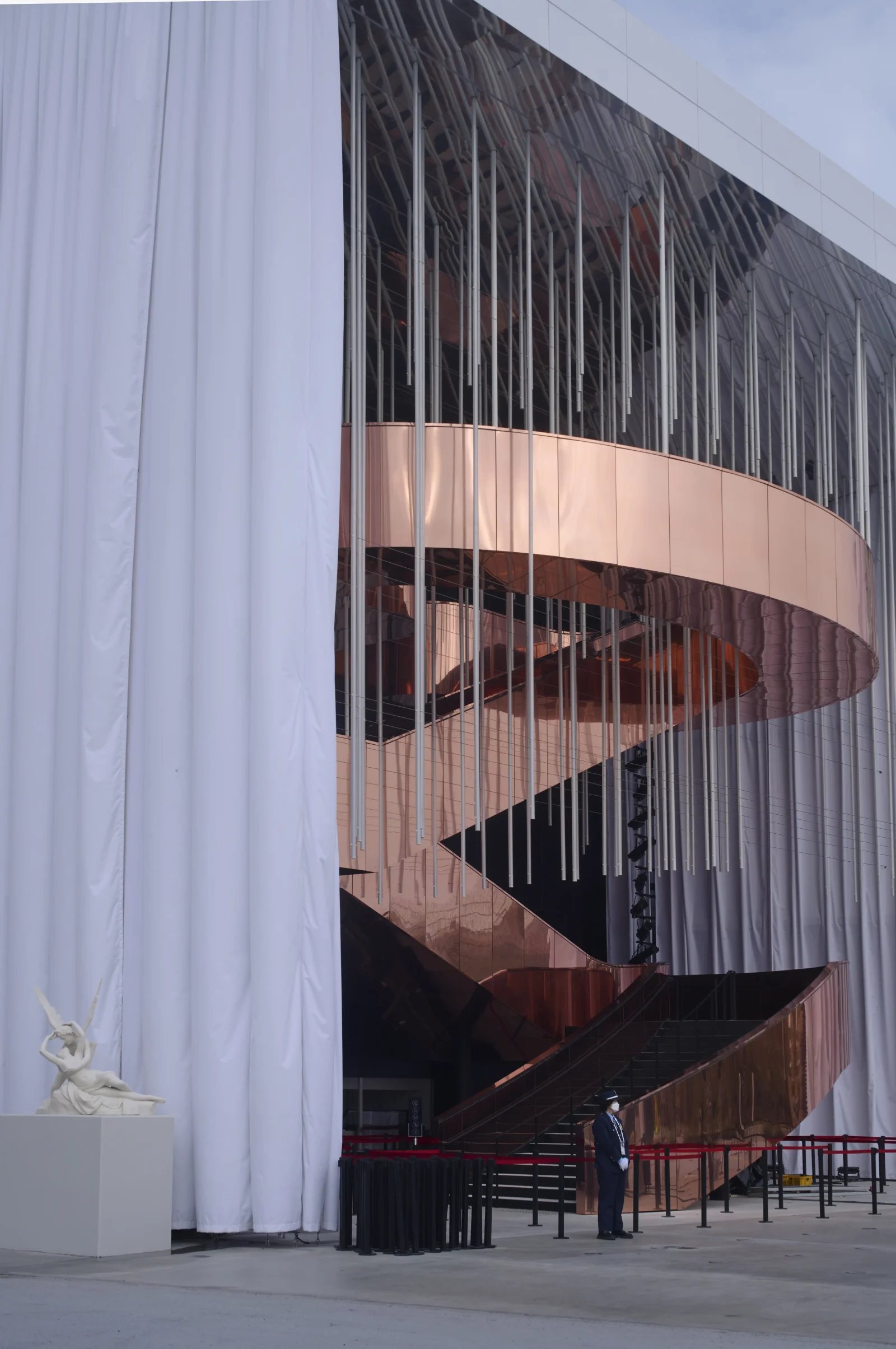
The France Pavilion, also known as “the theatre of life” or “A Hymn to Love,” offered visitors at Expo 2025 Osaka a poetic, sensory journey through design, nature, and human connection. From the moment guests approached the pavilion, the architecture evoked the feel of an open stage, with two sides draped in 17-meter-high fabric curtains that swayed gently with light and wind, suggesting the beginning of a performance.
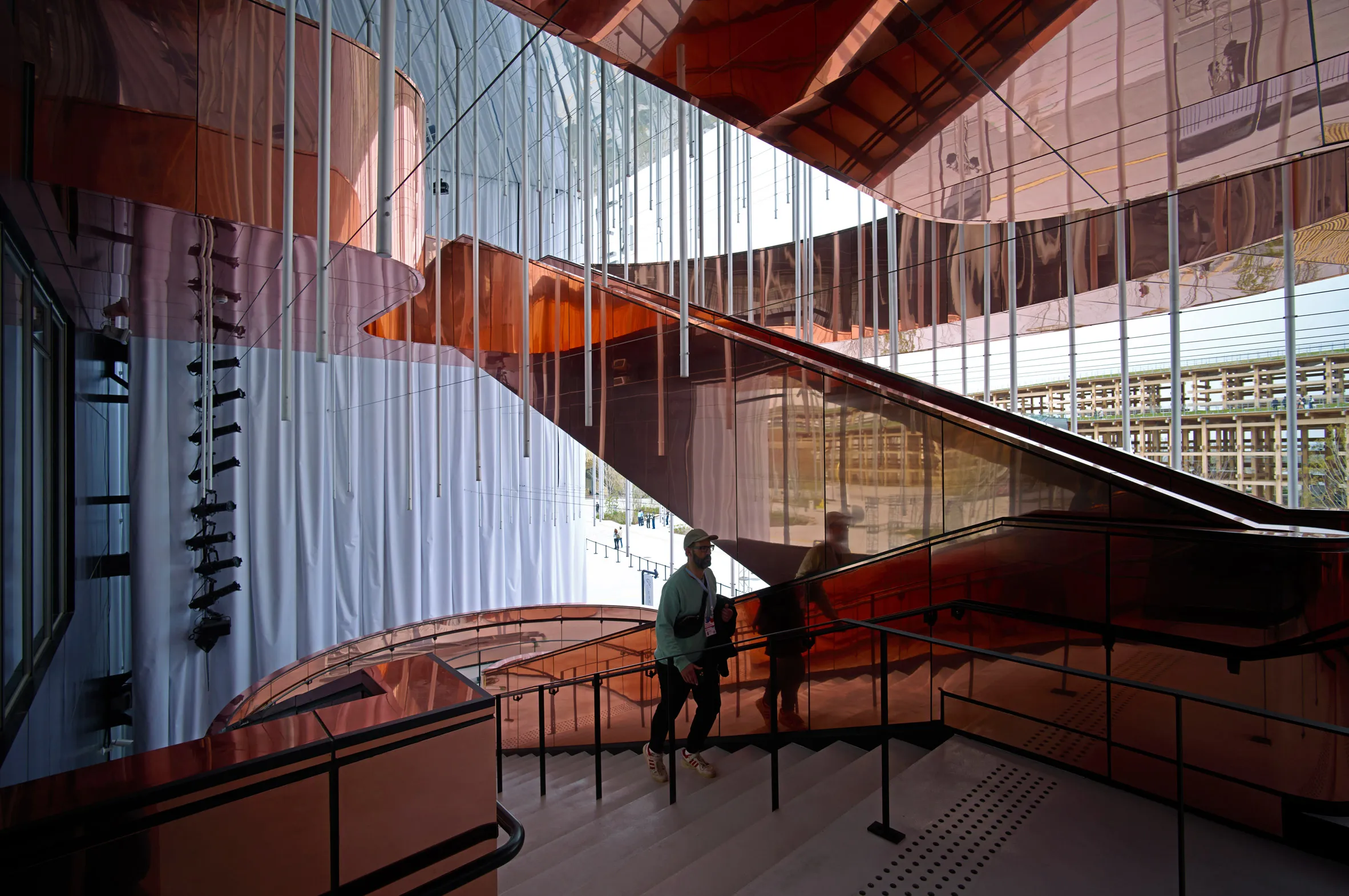
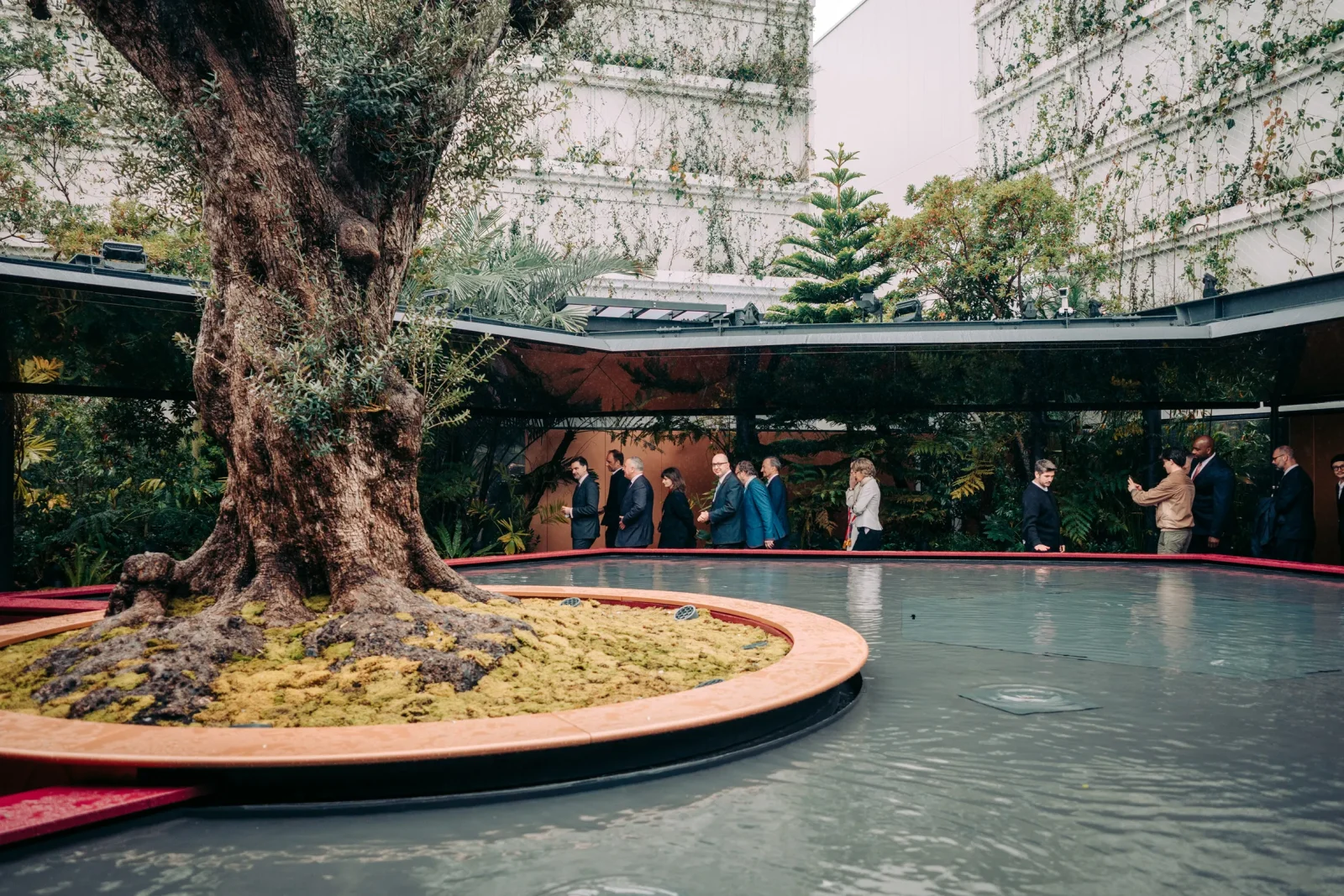
Inside, visitors followed a looping pathway divided into three “acts”: first, an ascent via a spiral staircase toward an observation balcony; then, a passage through curated exhibition spaces that highlighted French craftsmanship and a respectful dialogue with nature; and finally, a descent into a serene rooftop garden full of plants and designed landscapes, a tribute to France’s diverse ecosystems, from mountains to coastlines.
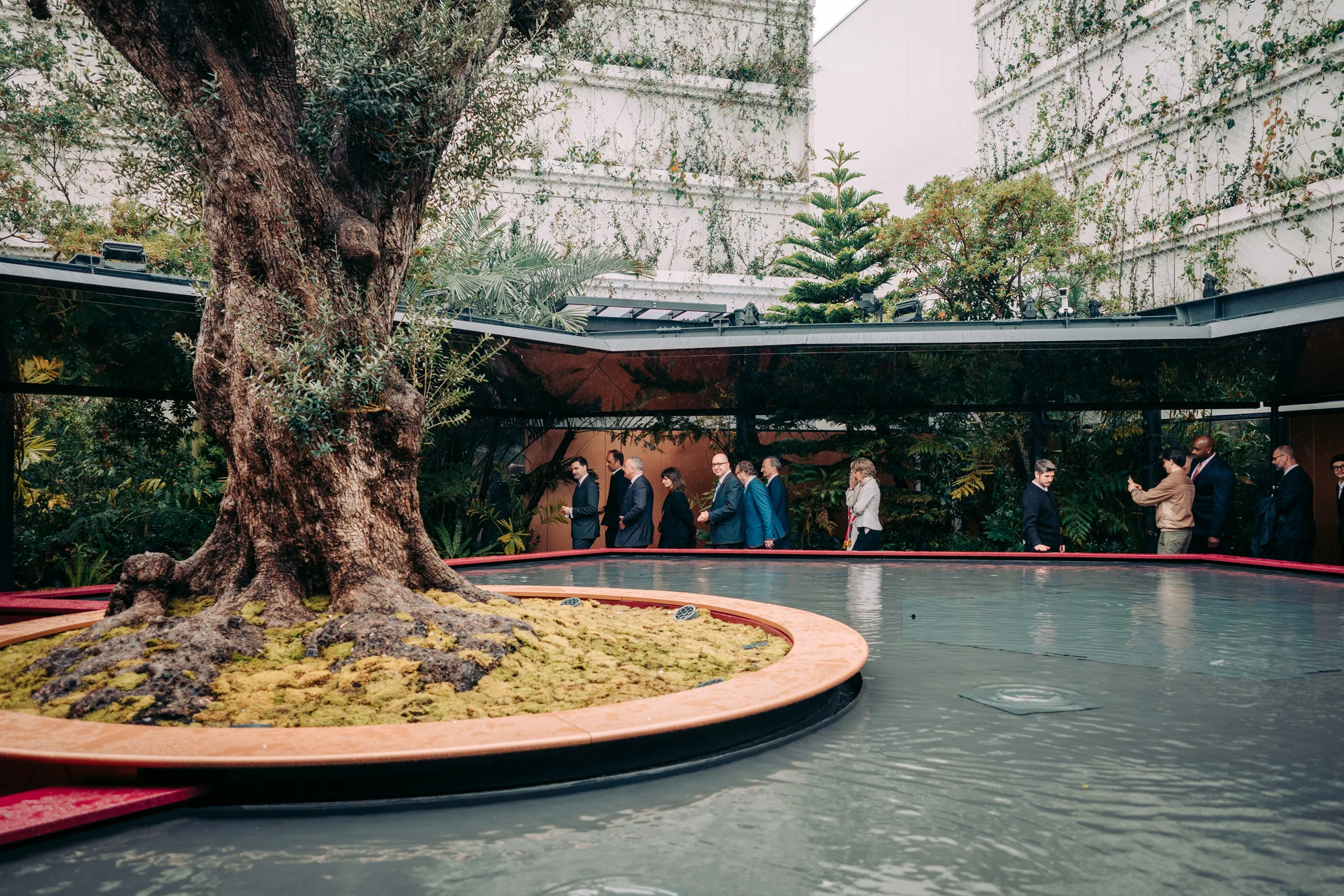
The pavilion could be disassembled and reused after the Expo, minimizing environmental impact. Its green roof helped regulate temperature and manage rainwater, while the double-skin facade and natural ventilation reduced energy consumption. In essence, the France Pavilion invites people to rediscover love for themselves, for others, and for nature.
3. Japan Pavilion
Architect: Nikken Sekkei
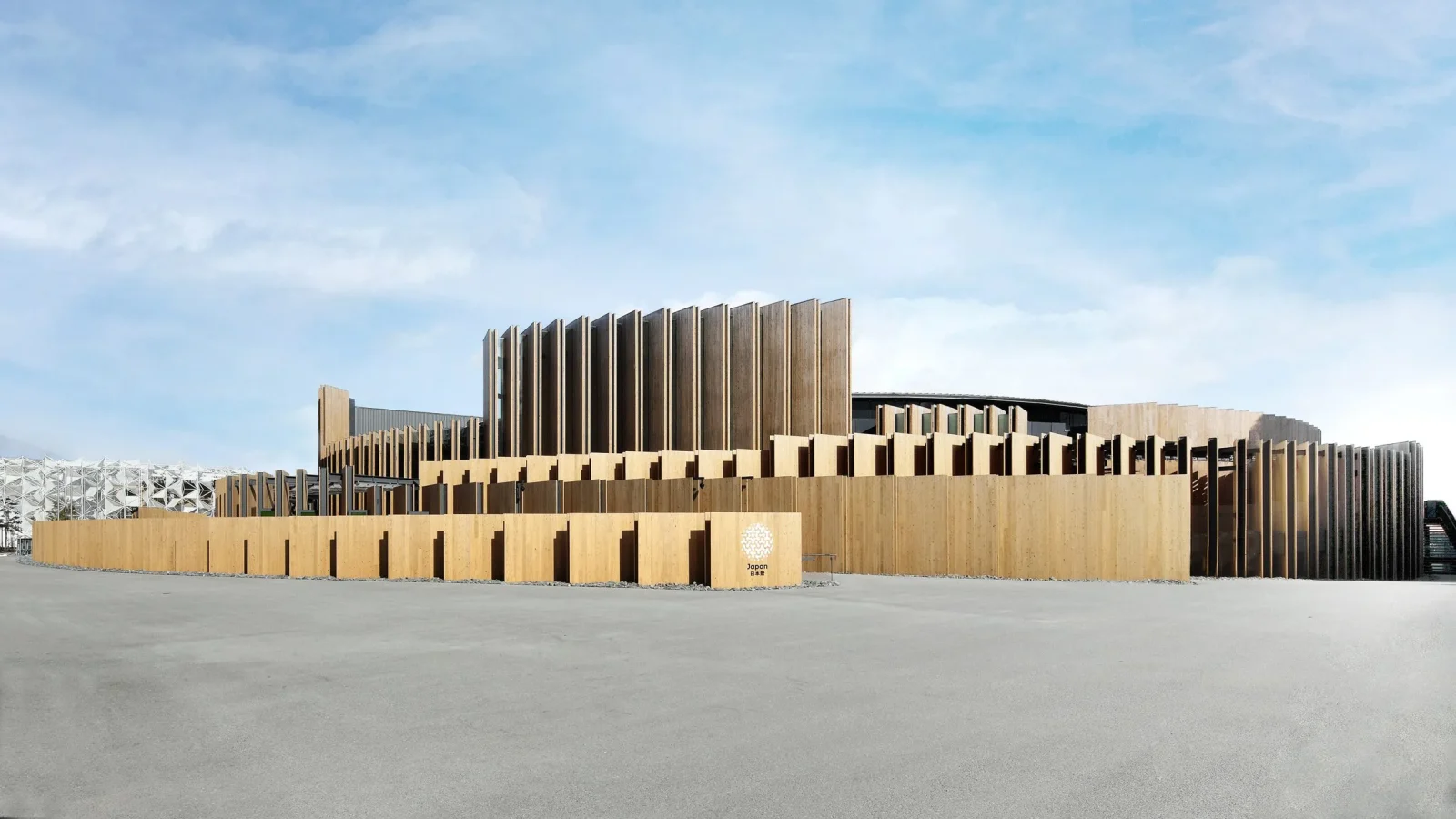
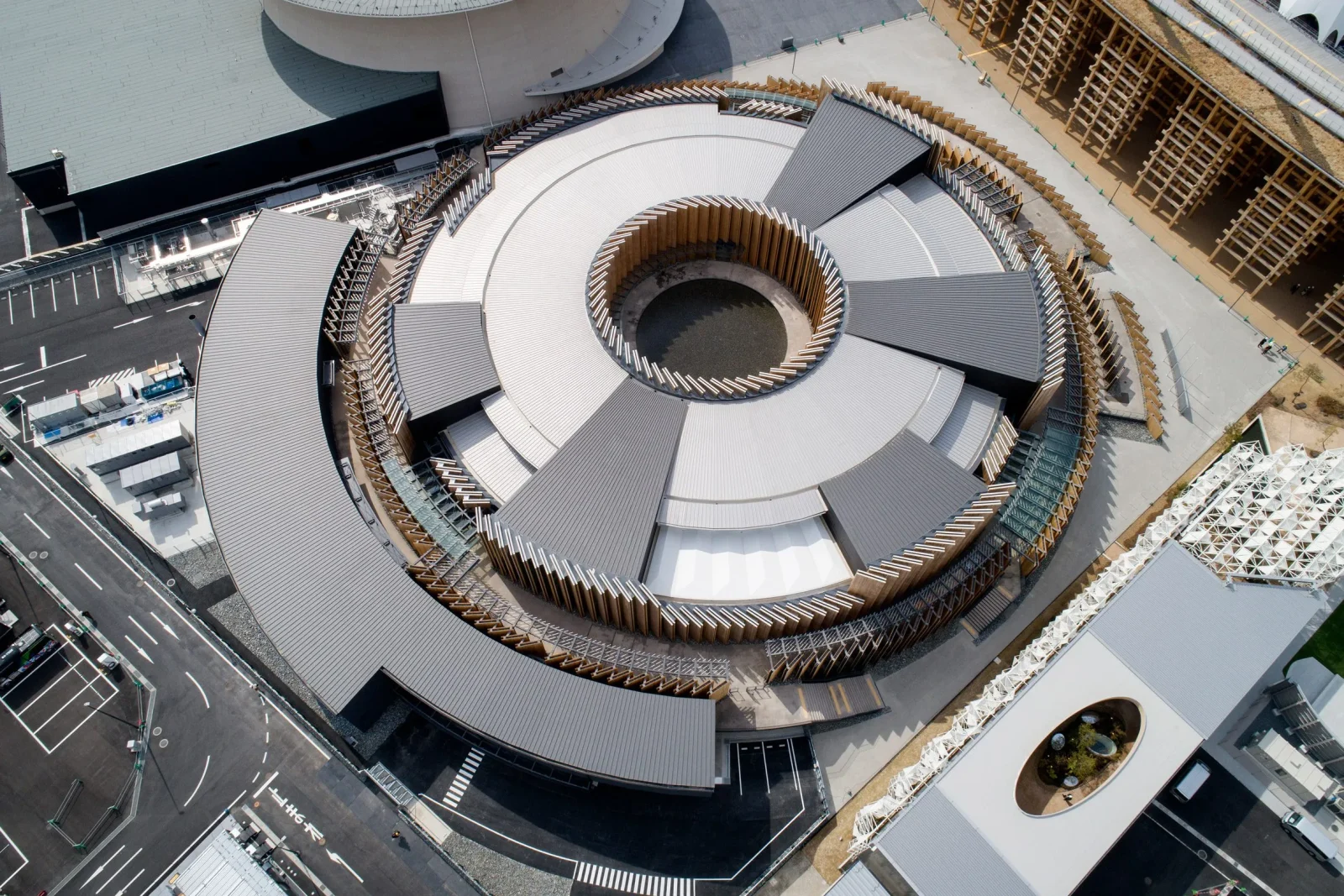
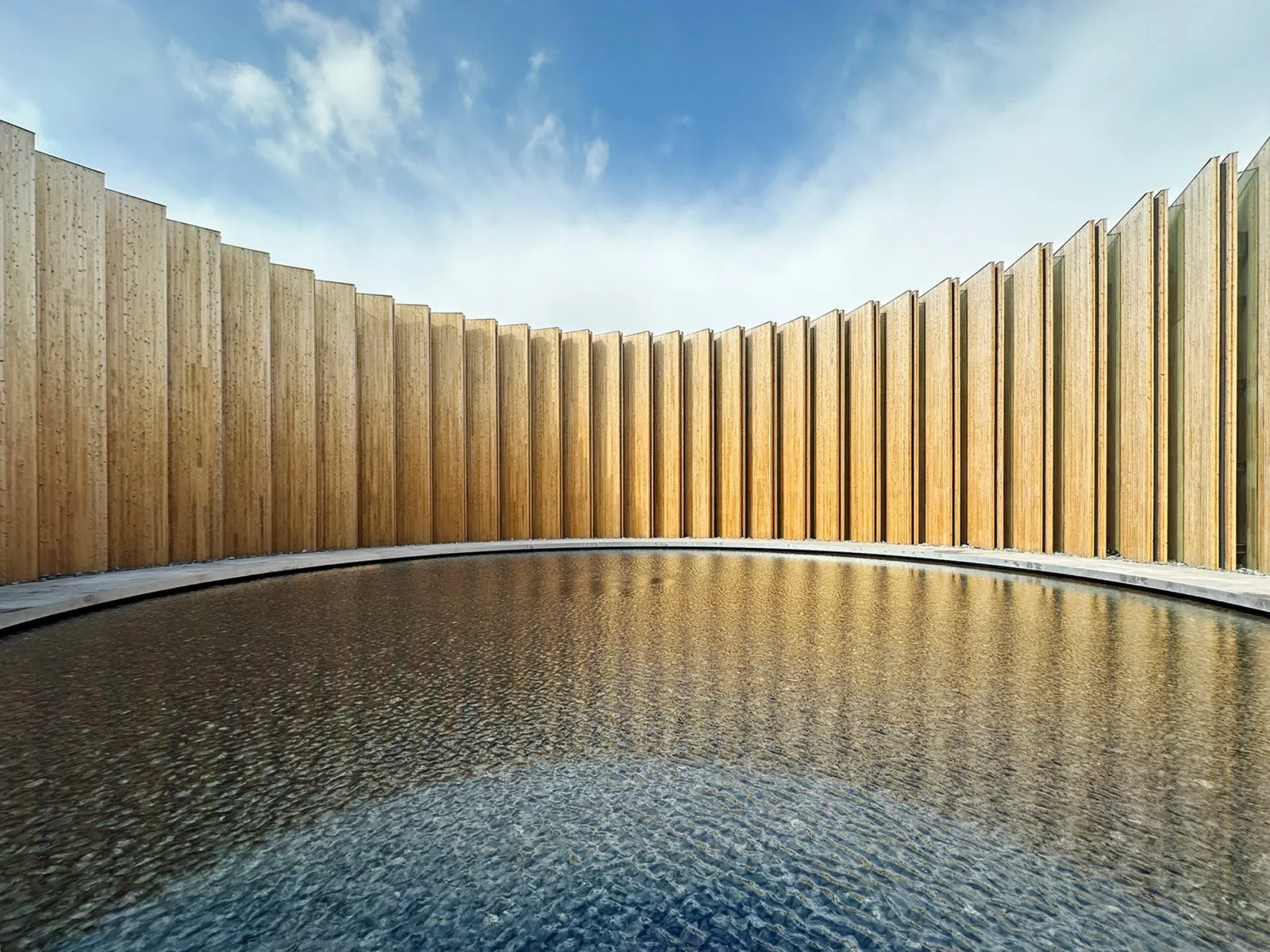
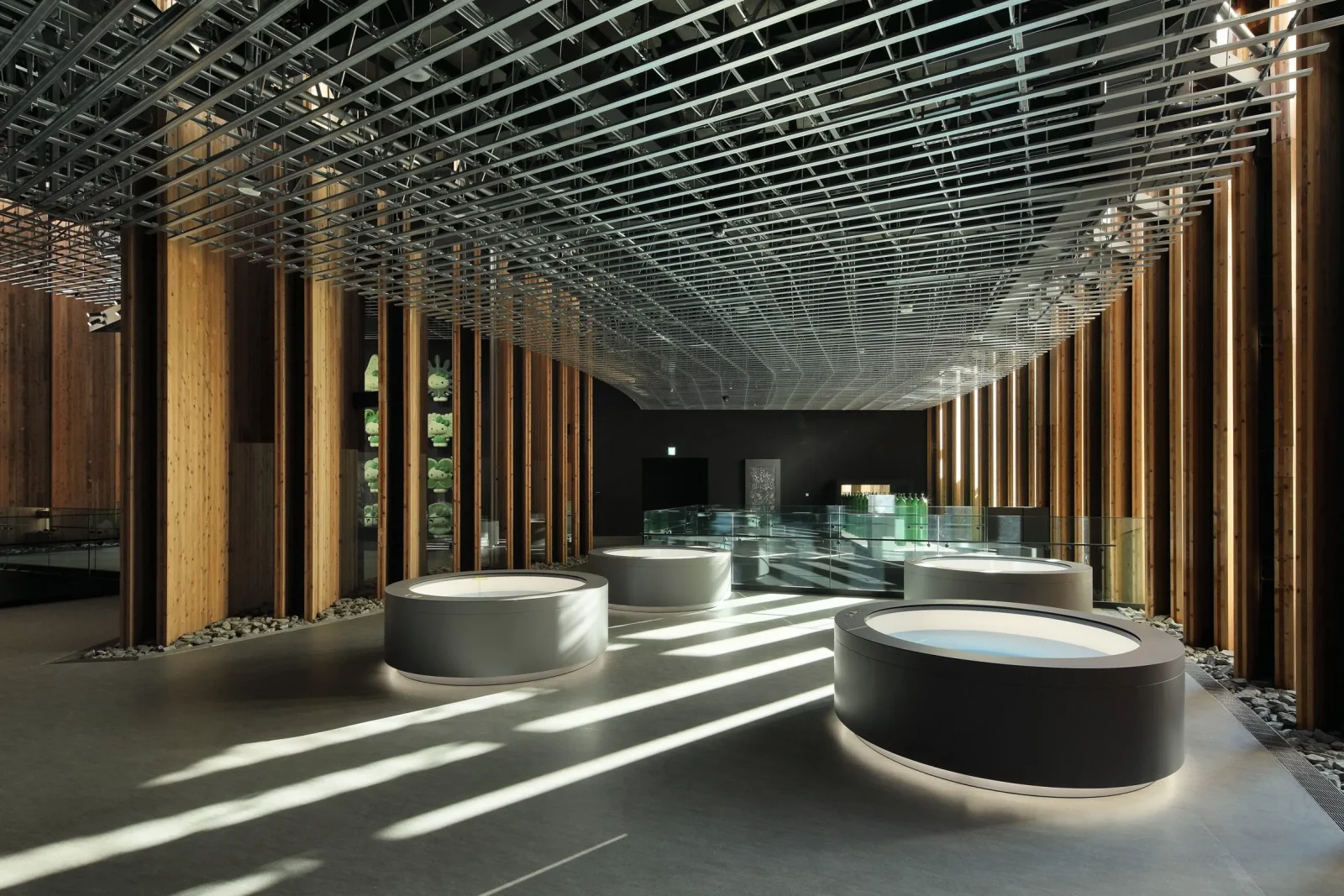
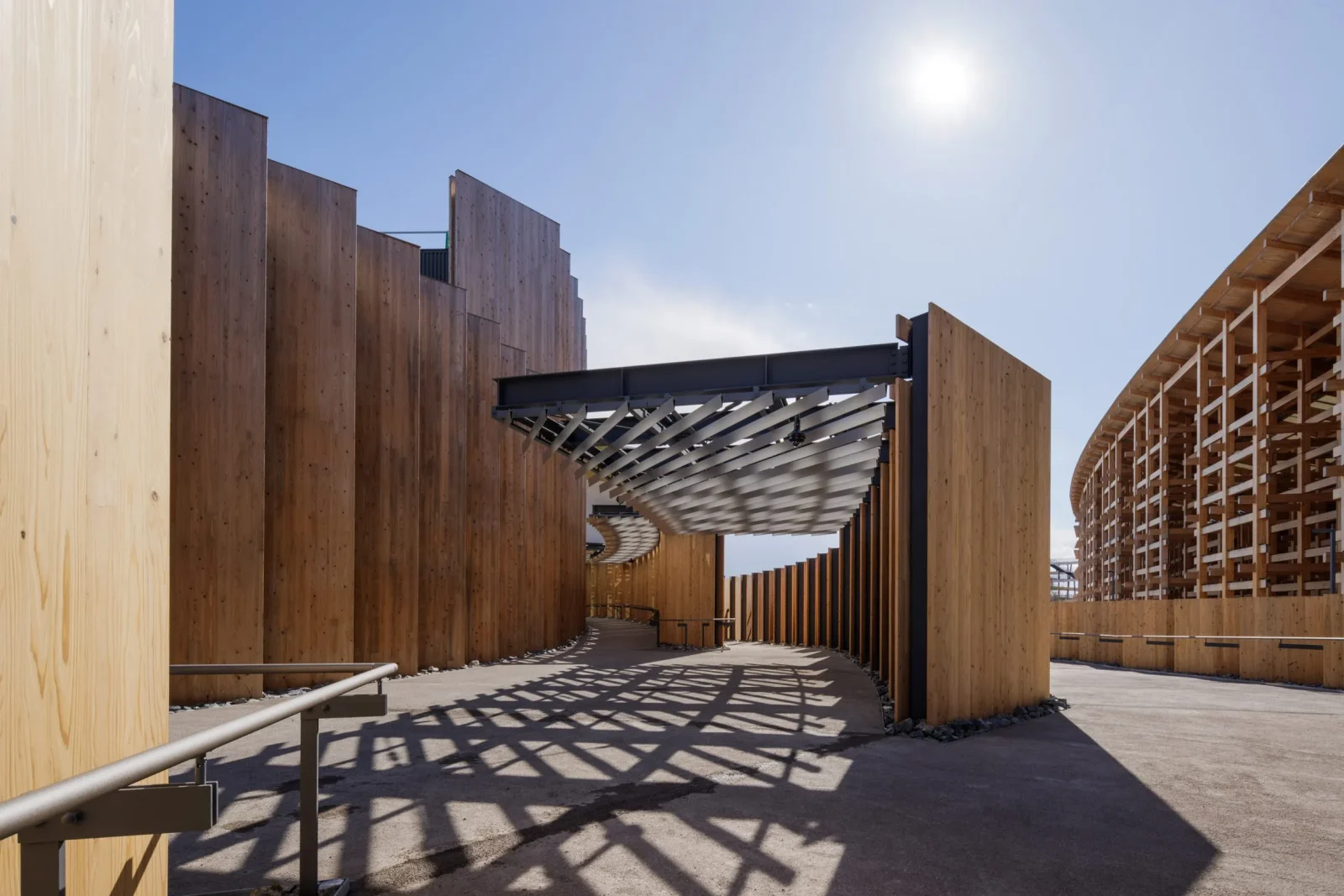
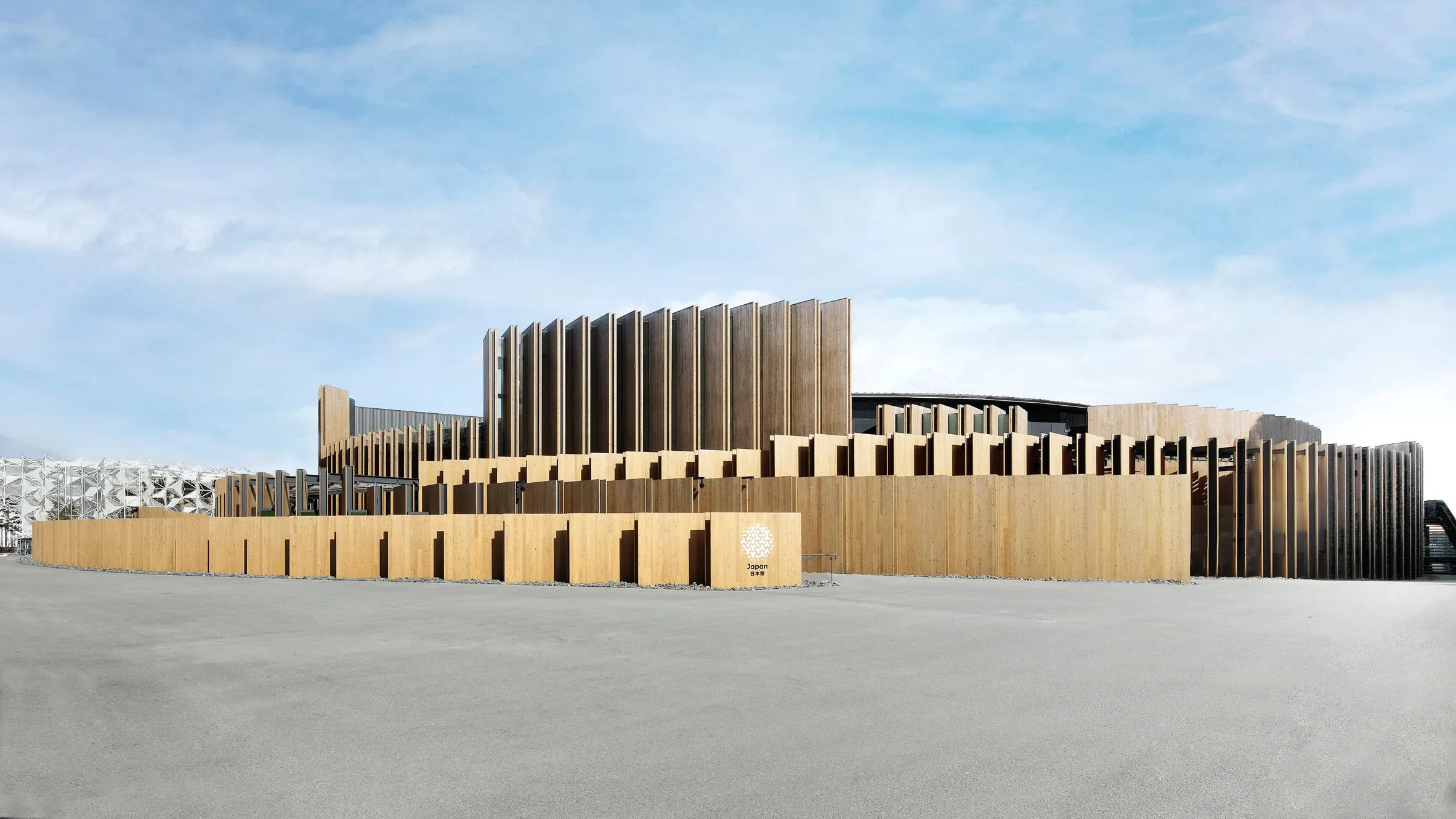
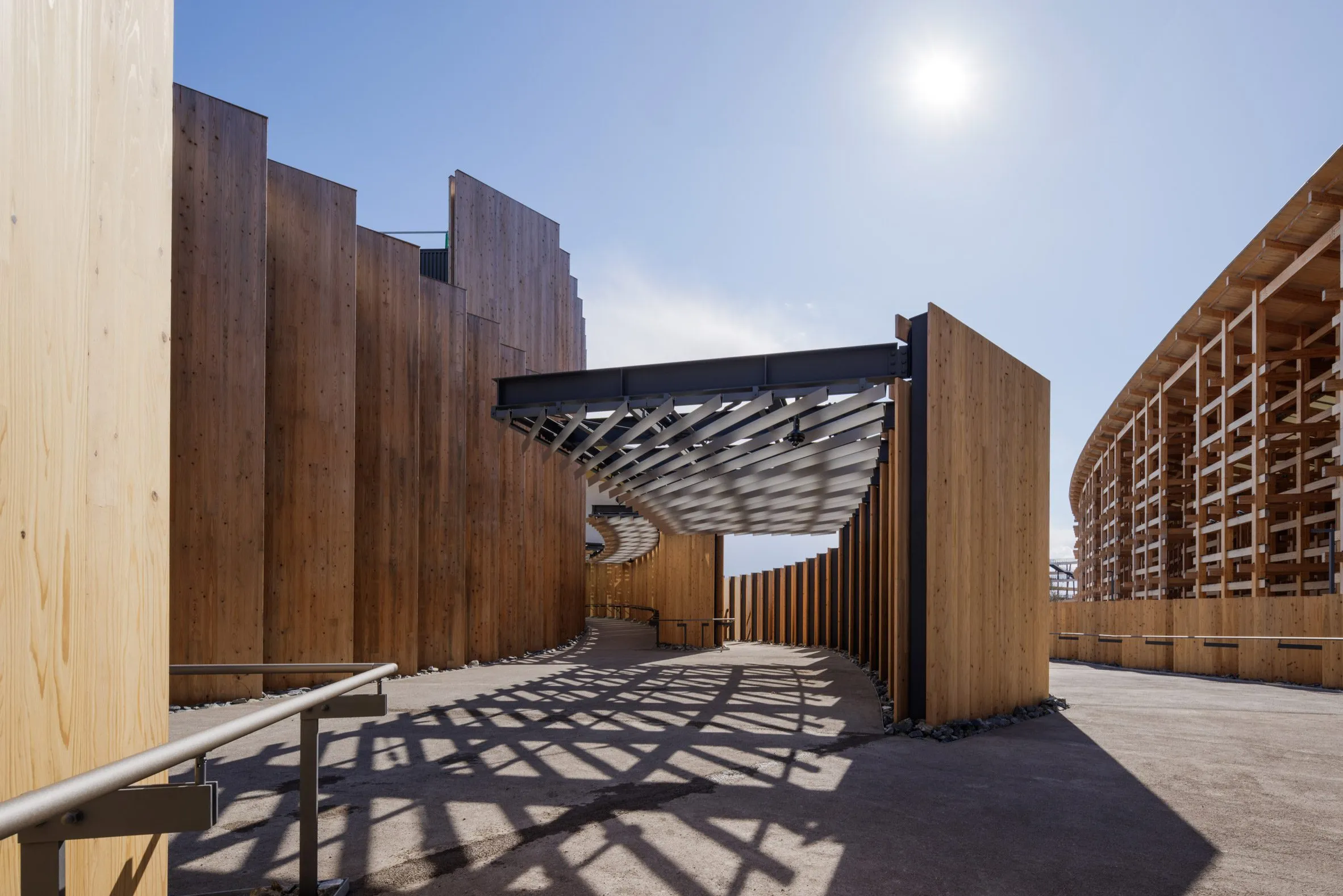
The Japan Pavilion embraced the theme “Between Lives,” transforming that concept into architecture that celebrates cycles, continuity, and regeneration. Built using cross-laminated timber (CLT) made from Japanese cedar, the pavilion was arranged as a concentric circular ring, a symbolic “forest-ring” that blended structural innovation with deep respect for nature. The timber panels, each up to 3 m × 12 m, were arranged radially around a steel frame, forming a large ring with open-slot facades that allowed visual and spatial continuity between exterior and interior.
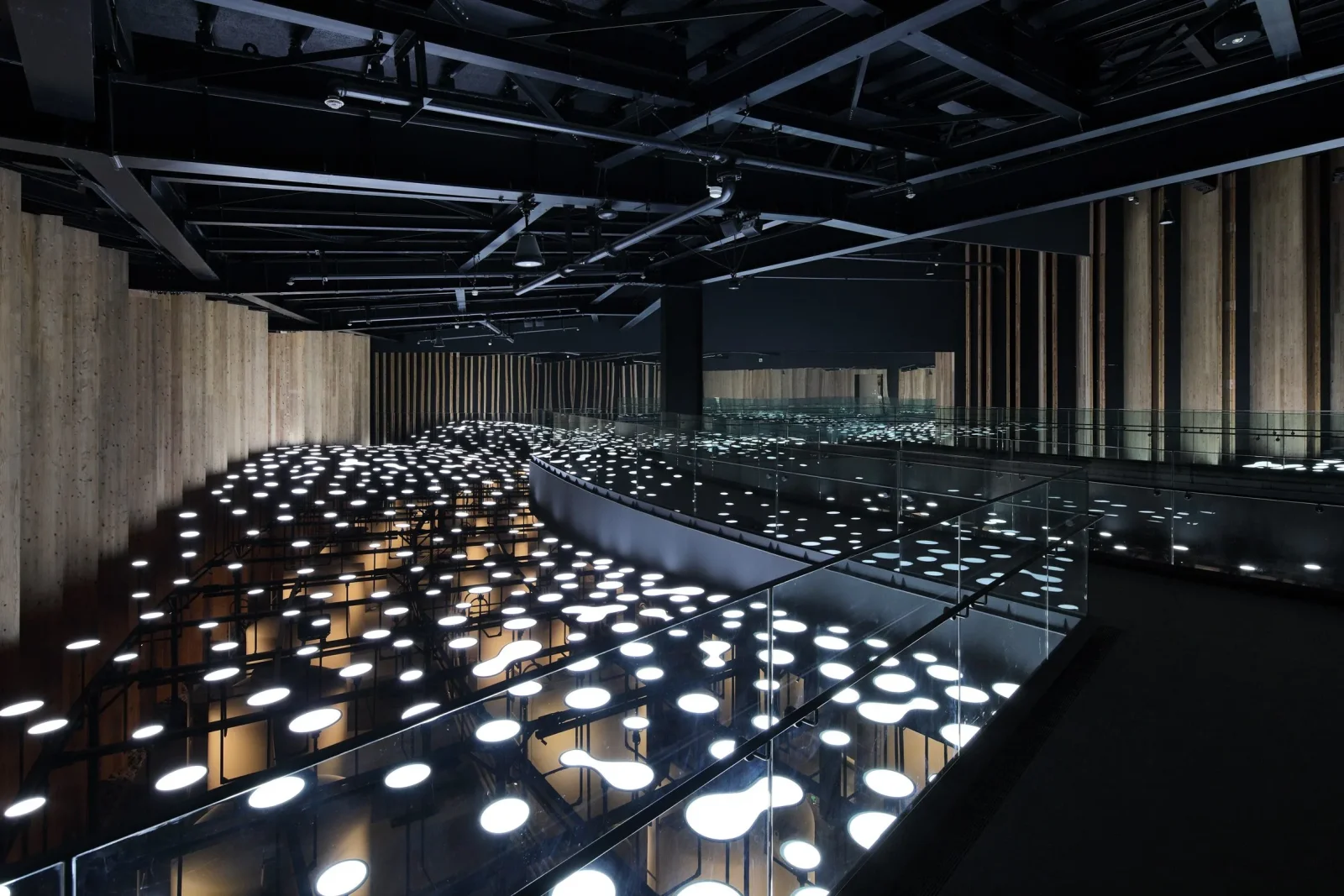
This pavilion was designed as a “living” structure. It featured an on-site biogas plant. Food waste from the expo was processed through microbial fermentation to generate biogas, which was then converted to electricity, powering the pavilion itself.
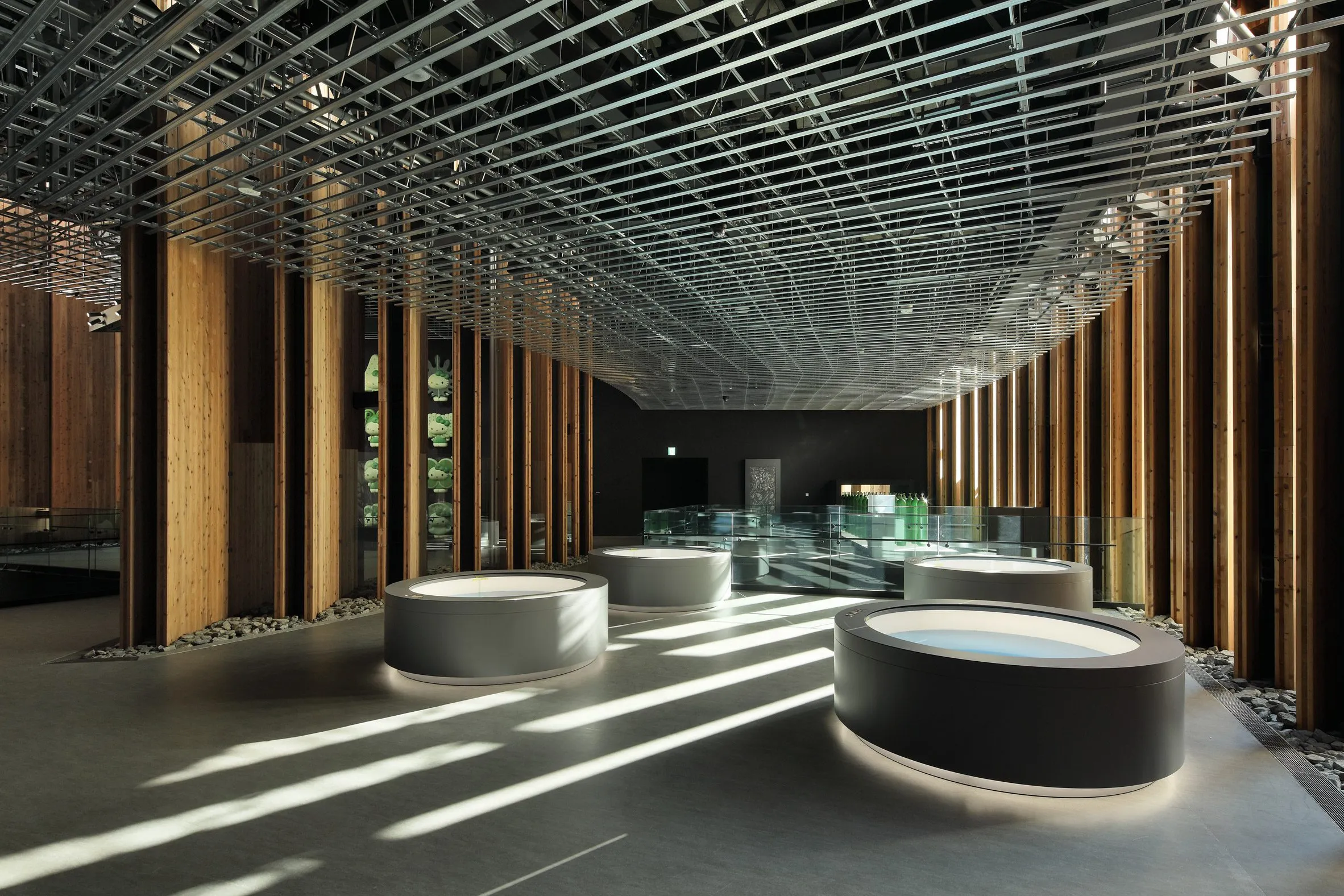
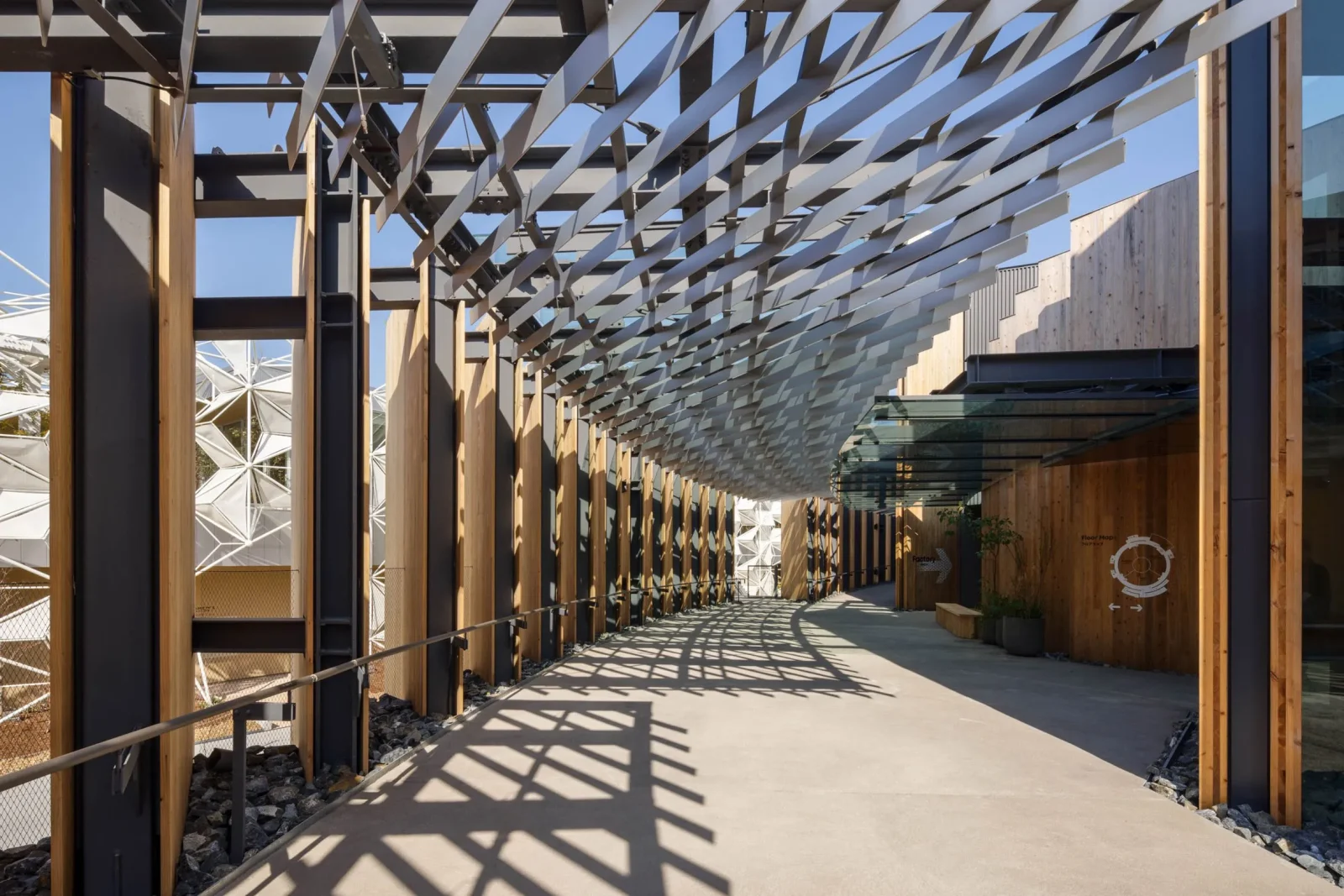
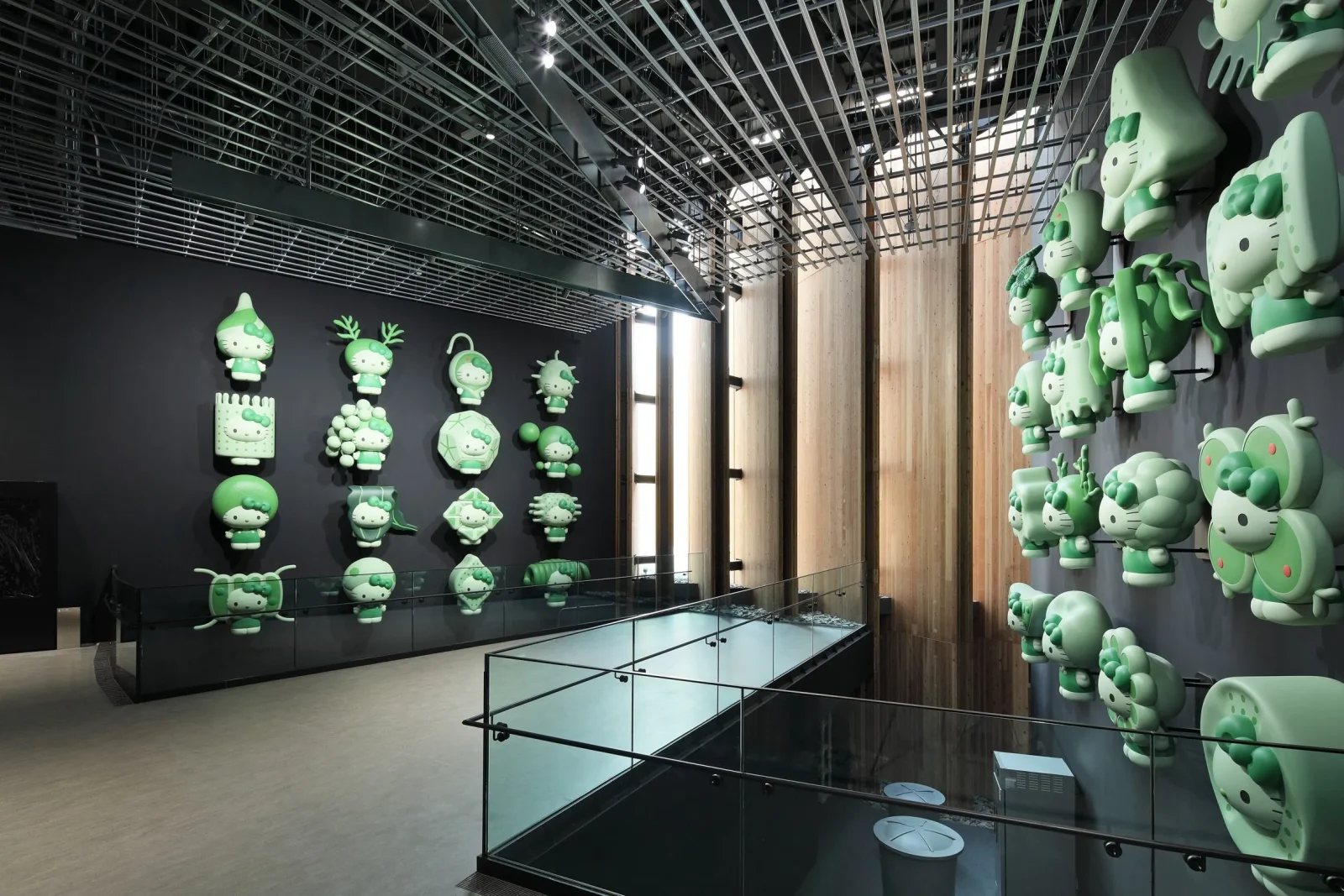
Spatially, the pavilion offered a dynamic, multi-level experience. A gently sloping outdoor corridor encircled the second-floor exhibition spaces to ensure barrier-free access. The exhibition zones spanned different levels connected by ramps and walkways, creating a layered journey that echoed the pavilion’s theme of cycles and transitions.
4. Netherlands Pavilion
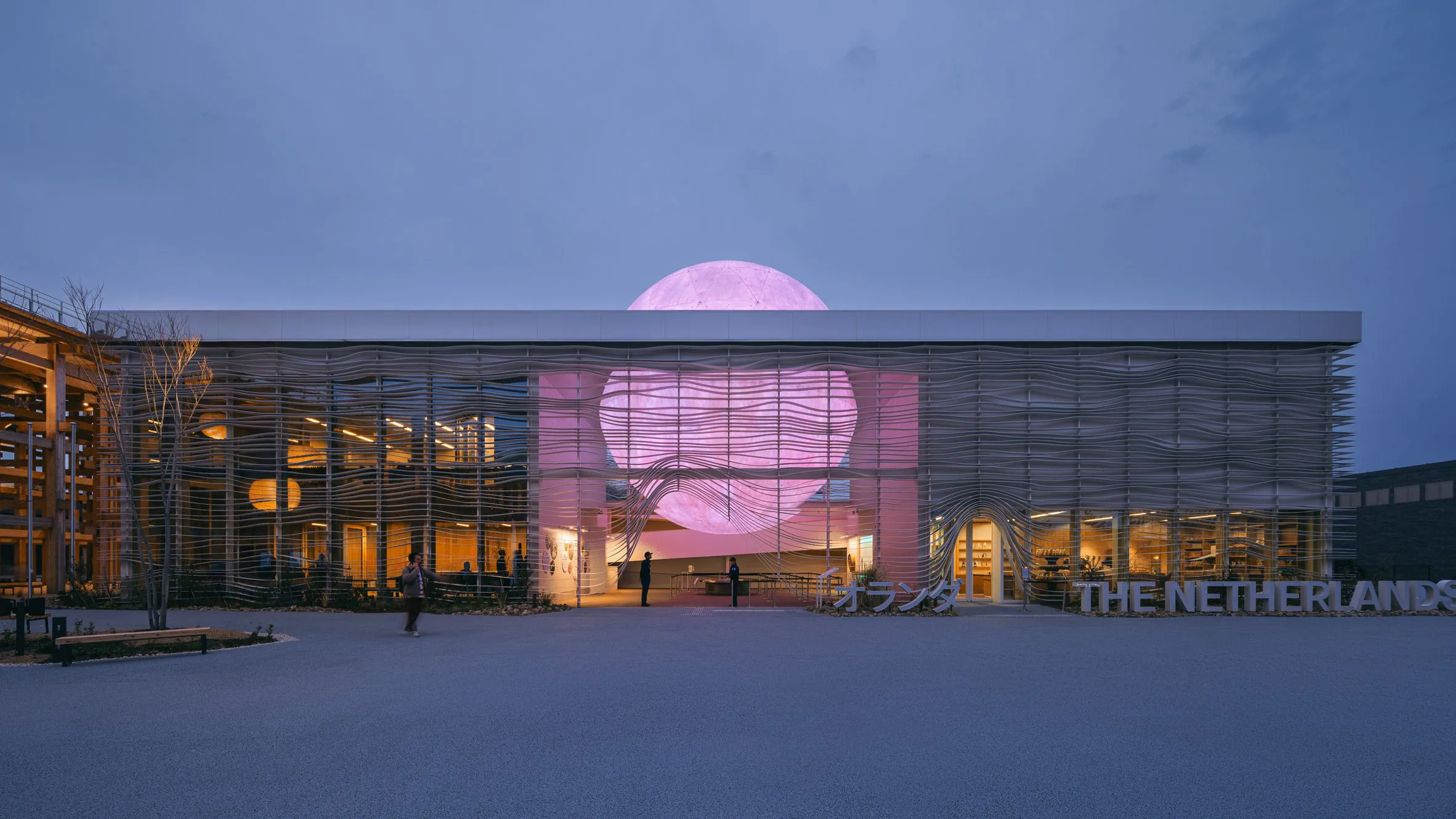
Architect: RAU Architects, design studio Tellart
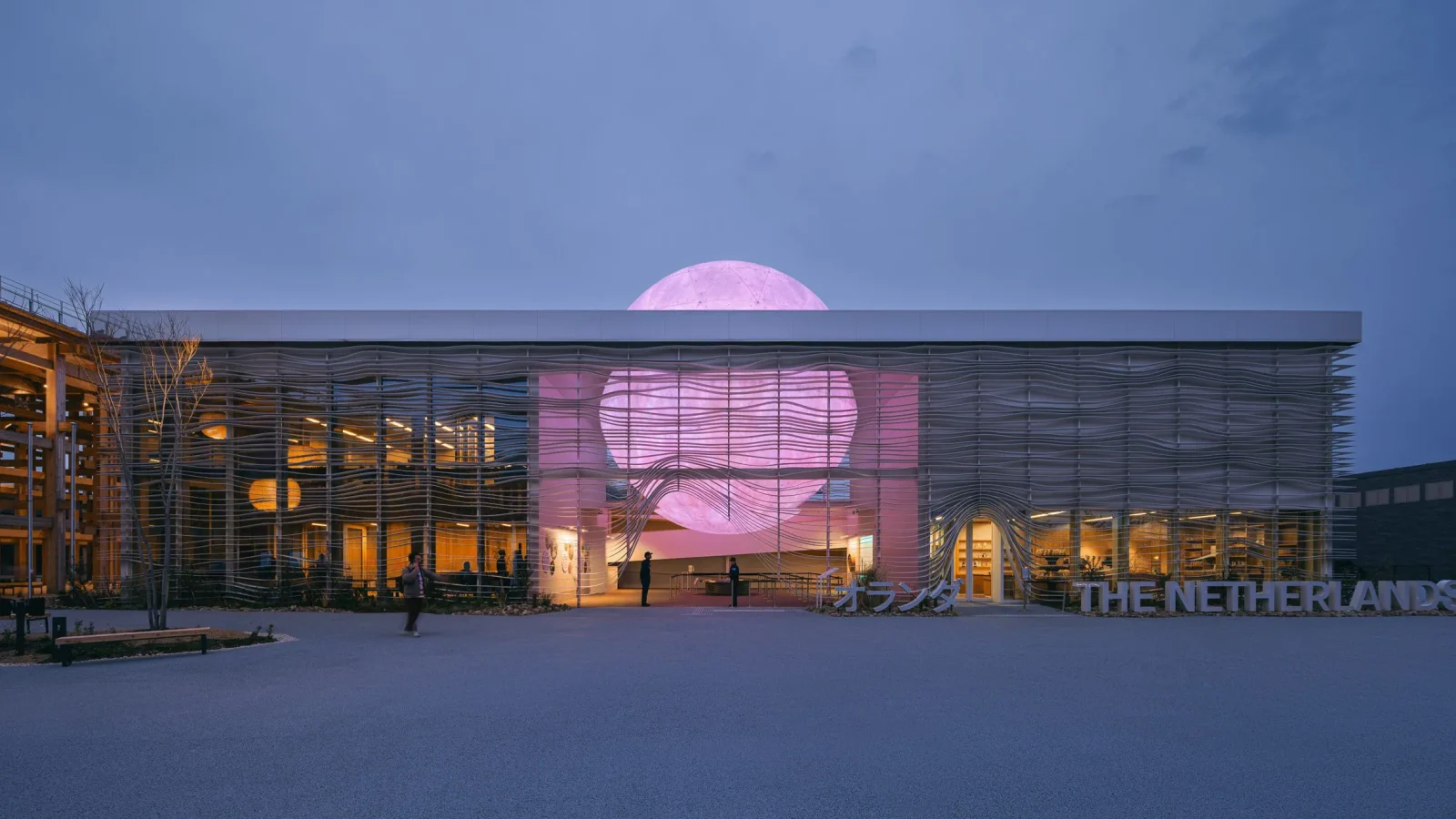
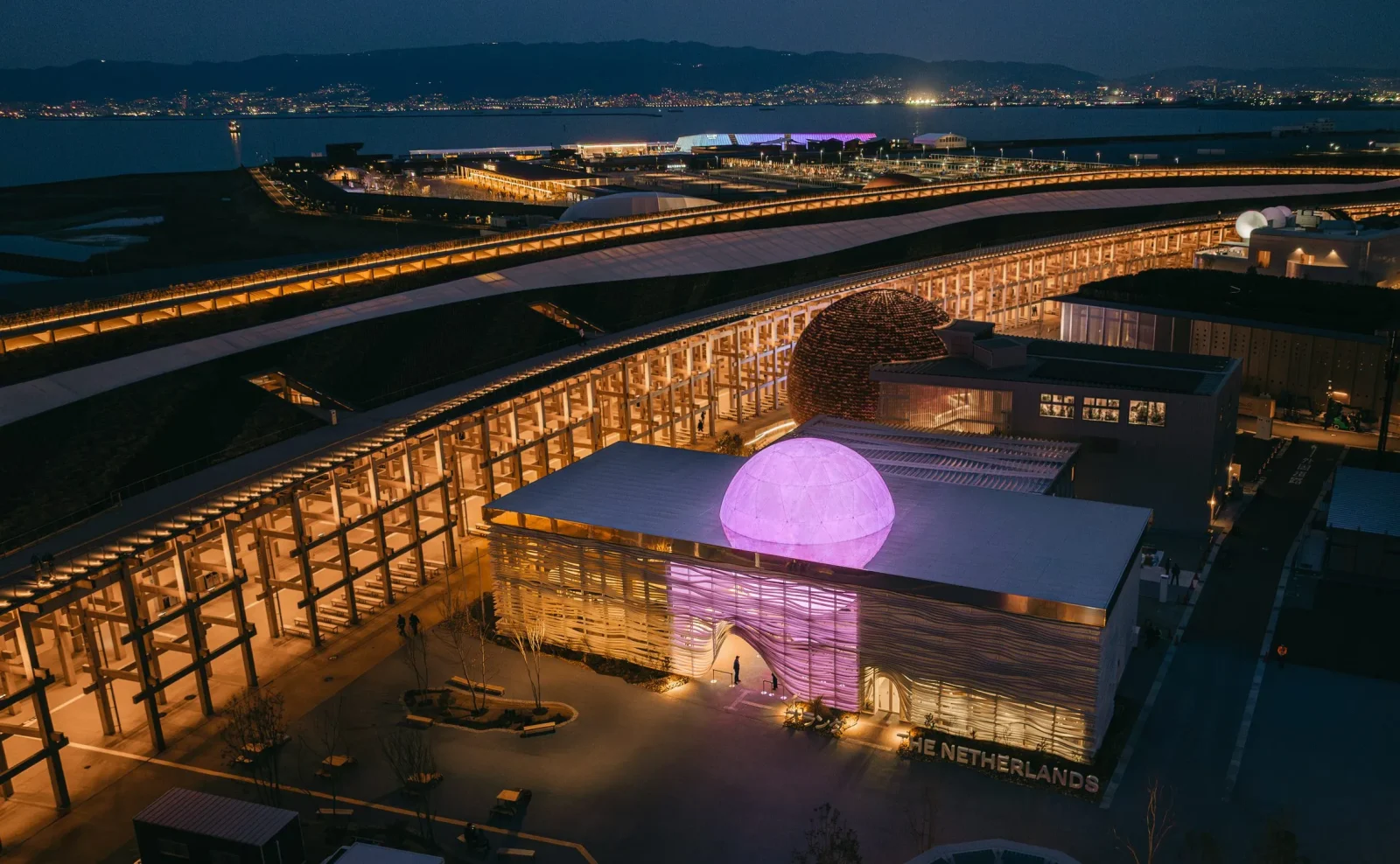
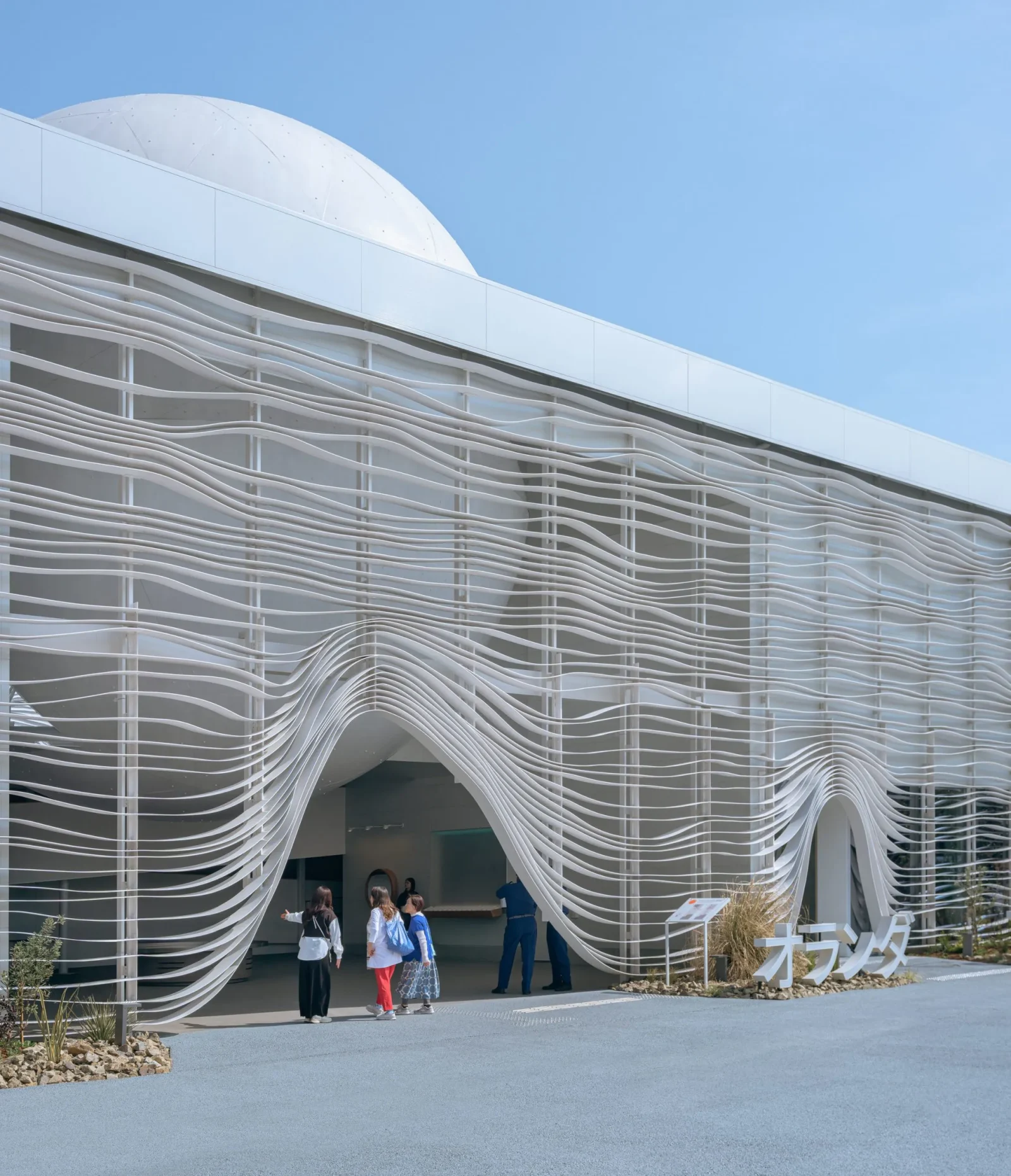
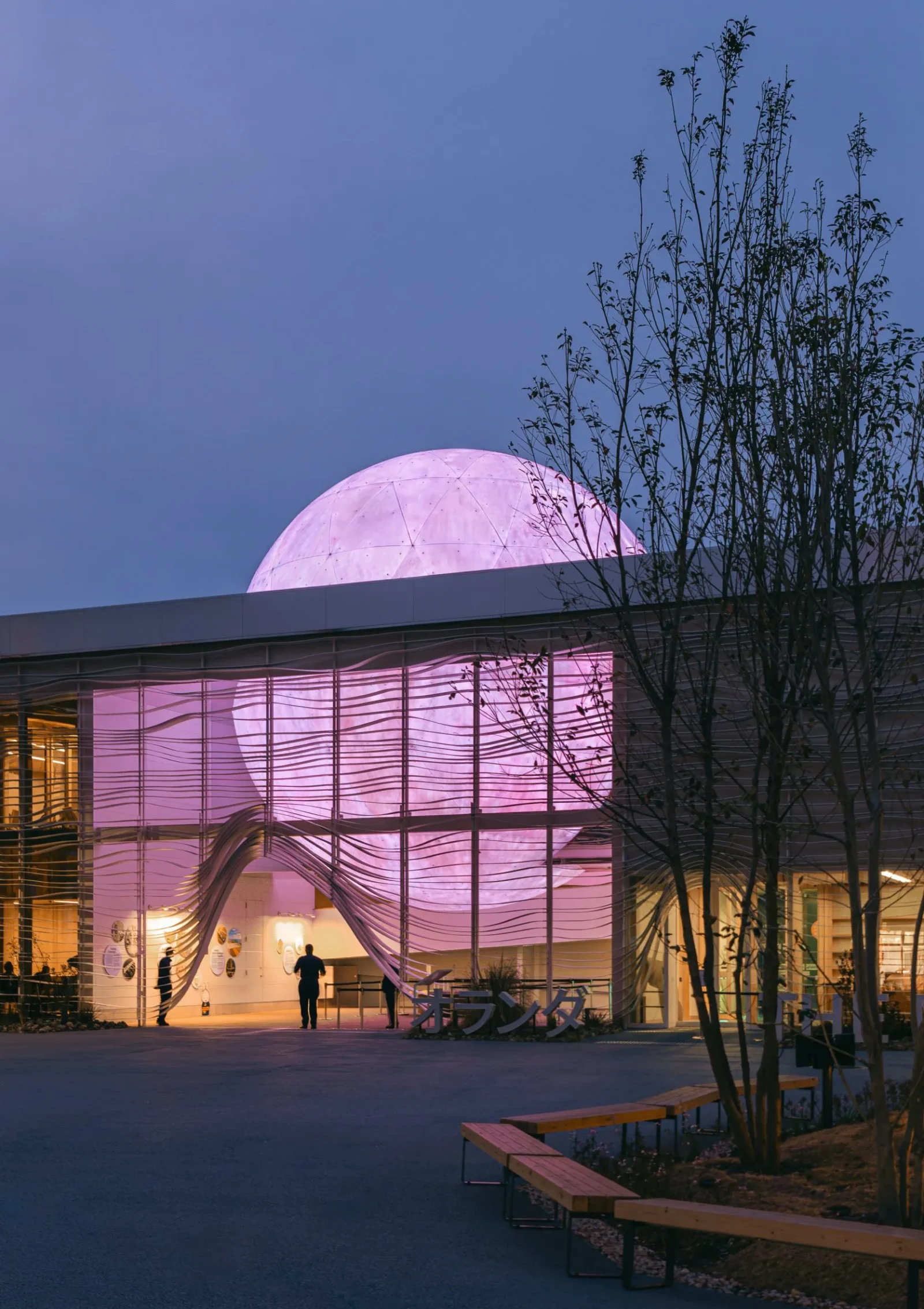
The Netherlands Pavilion, carrying the concept “Common Ground,” offered collaboration, sustainability, and shared responsibility. At its center stood a glowing sphere, symbolizing a “man-made sun” and representing the promise of clean, renewable energy. The overall form was shaped by undulating slats along the exterior, evoking the motion of water, a nod both to the Netherlands’ long history of water management and to the pavilion’s focus on sustainable energy and circular design.
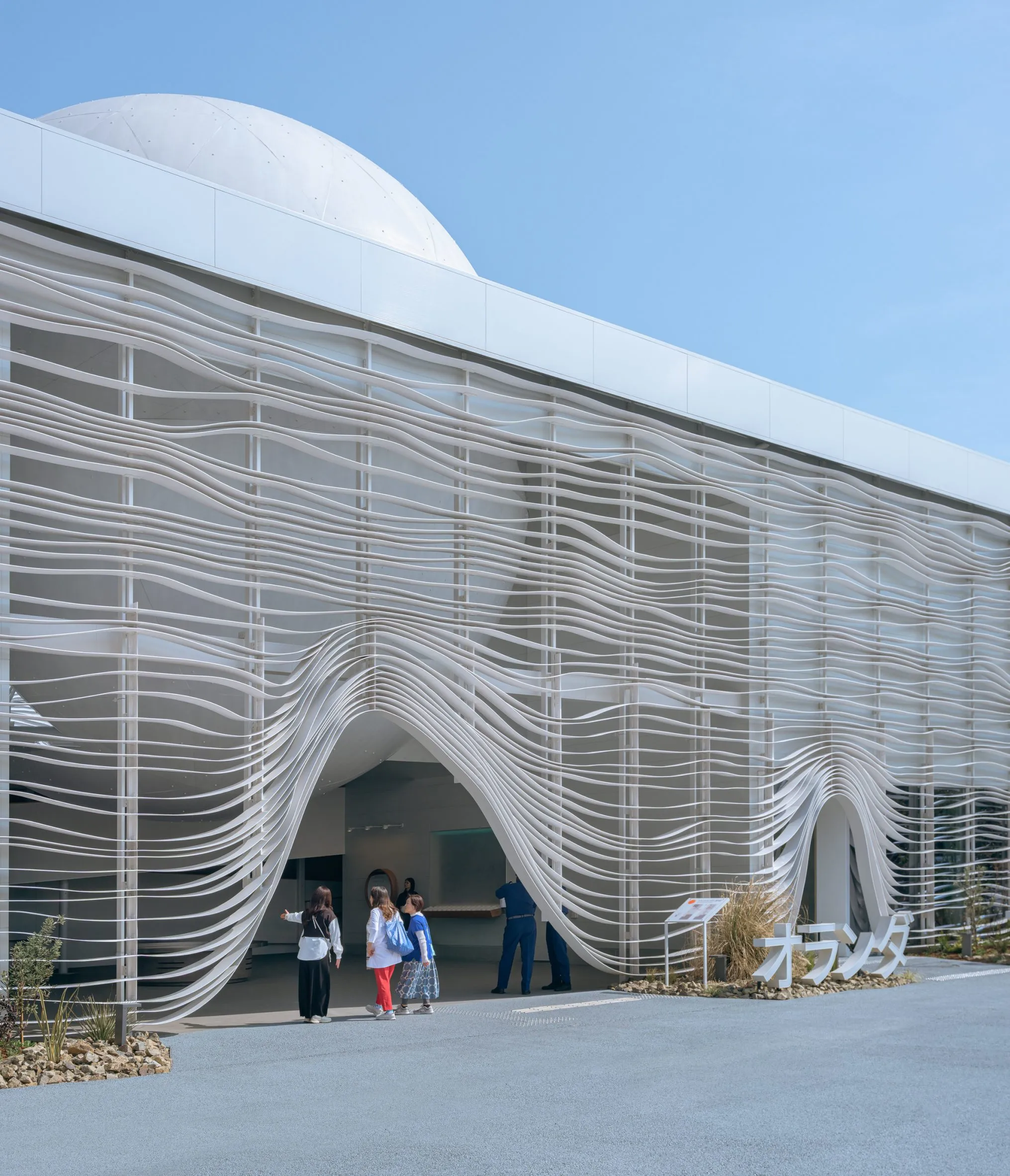
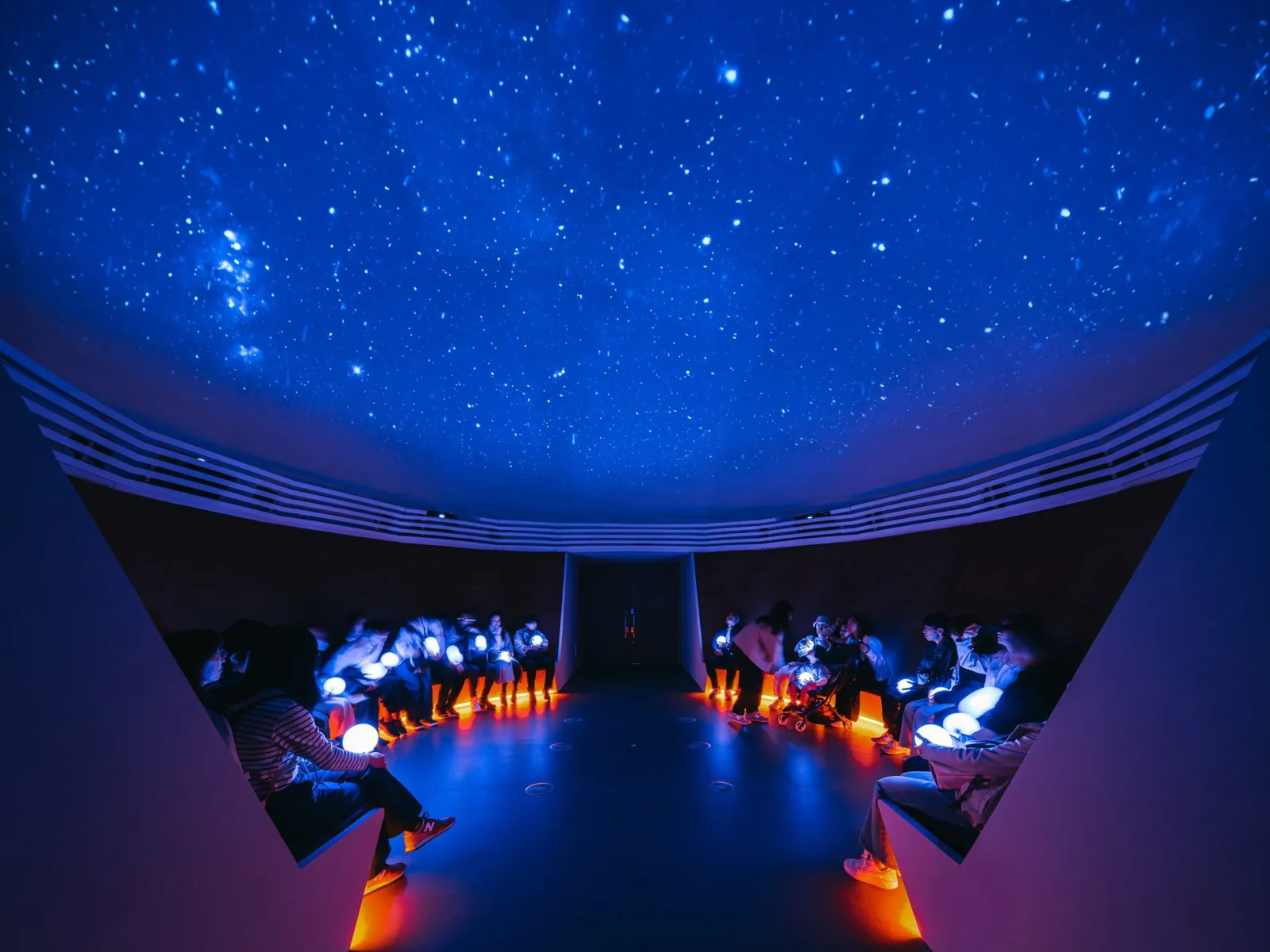
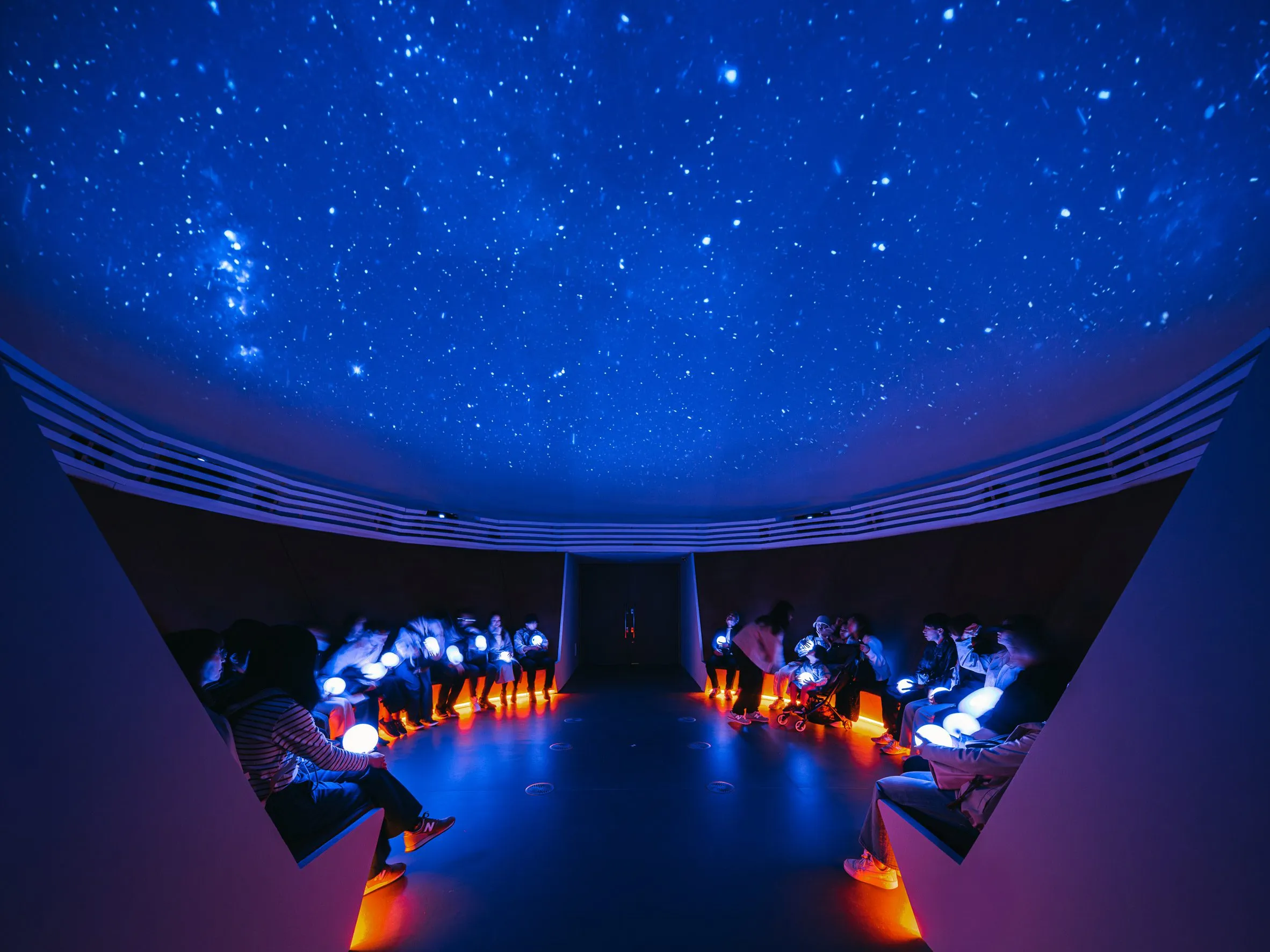
Visitors engaged in an immersive journey upon entry, and each guest received a small luminous orb that interacted with installations throughout the pavilion. The path guided them through displays exploring the historical and future ties between the Netherlands and Japan, innovations in water and energy management, and broader global challenges like climate change. At the heart of the experience was a 360-degree AI film projected inside the central sphere, a dramatic, sensory-rich moment designed to evoke reflection on a shared global future.
Materials were catalogued in the circular-construction registry (Madaster), ensuring that after the Expo, the pavilion could be dismantled and reused, reducing waste and supporting reuse. The design also paid tribute to the long history between the Netherlands and Japan; the façade’s slats span exactly 425 meters in total, symbolizing 425 years of diplomatic and trade relations between the two nations.
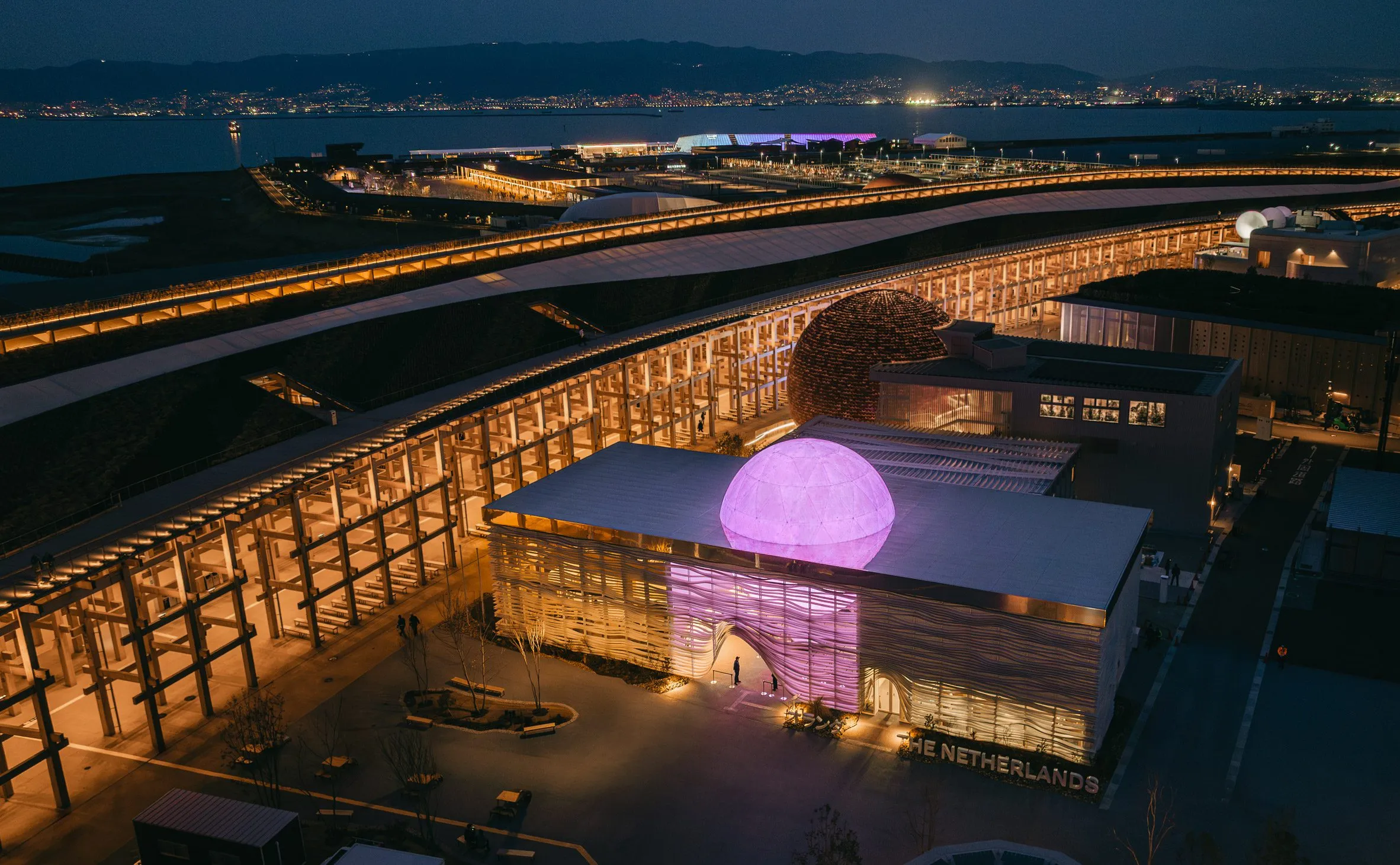
The Netherlands Pavilion at Expo 2025 Osaka stood out as a thoughtfully crafted environment. It invited visitors to reflect on water, energy, cooperation, and the idea of a shared future grounded in “common ground.”
5. Bahrain Pavilion
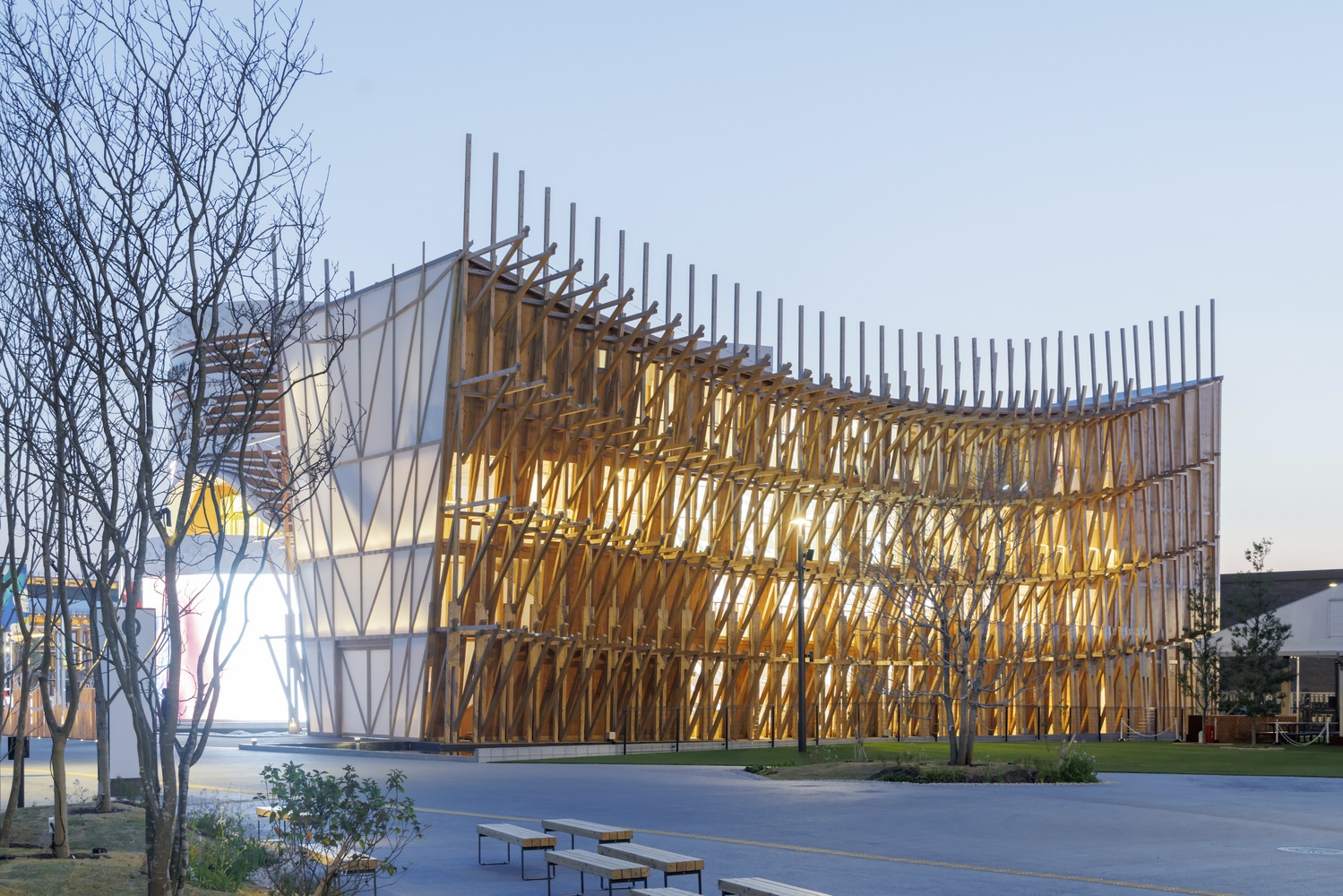
Architect: Lina Ghotmeh
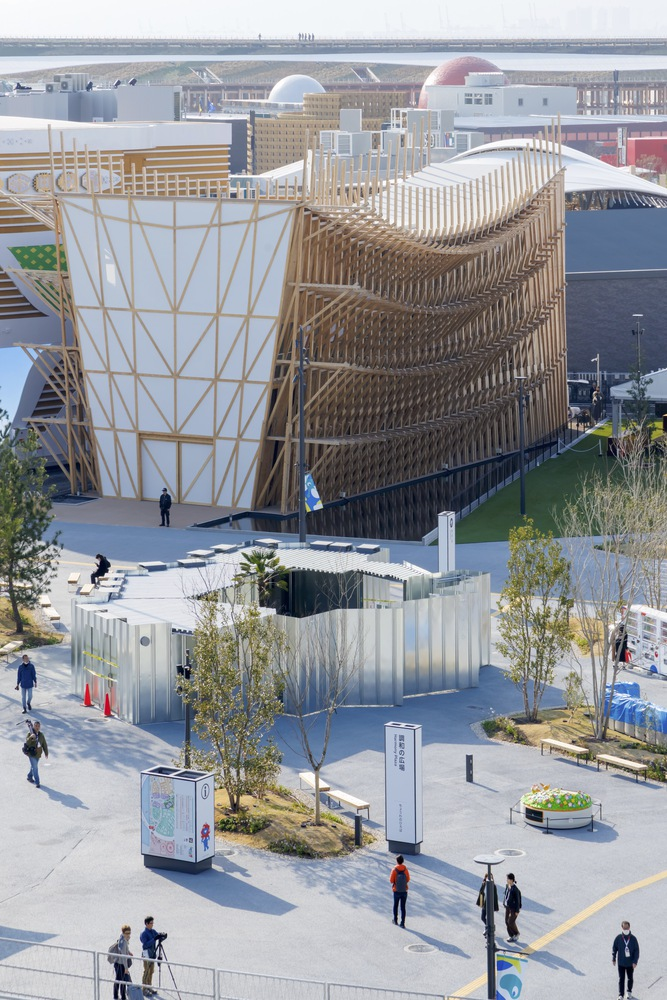
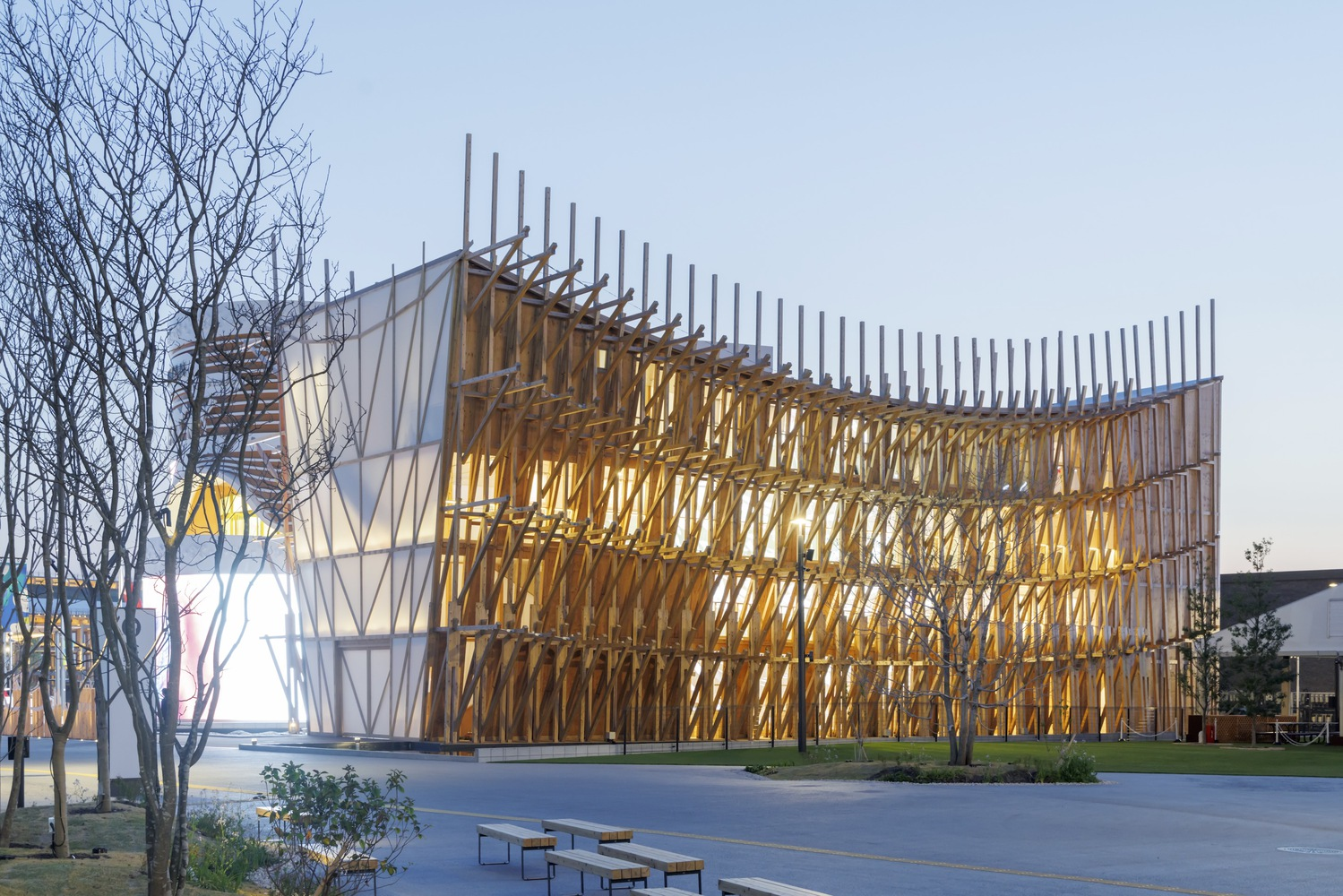
The pavilion of the Kingdom of Bahrain at Osaka Expo 2025, under the name “Connecting Seas,” was crafted as a tribute to the nation’s historic maritime heritage. Evoking the form of a traditional Bahraini dhow, a wooden sailing vessel once central to trade and pearling, the building’s structure reaches between 13 and 17 meters across four levels, spanning 995 square meters. The pavilion abstracts the idea of a rhythmic wooden framework of roughly 3,000 pieces of cedar clad with a translucent membrane that suggests sailcloth, creating a structure that feels both vessel and pavilion at once.
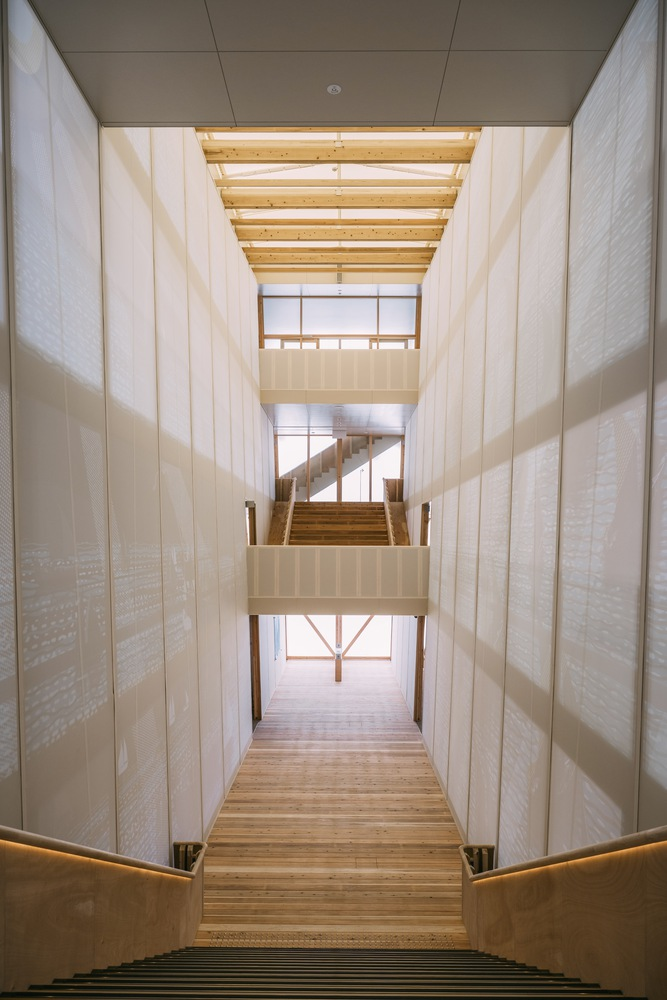
The pavilion offered a deeply sensory experience rooted in Bahrain’s identity and history. Exhibitions curated by the Bahrain Authority for Culture and Antiquities (BACA), with contributions from creative studios such as Shepherd Studio, Sissel Tolaas, and others, guided visitors through themes of trade, craftsmanship, pearling, ecology, and cultural exchange. Spaces ranged from exhibition corridors around a central atrium to a café offering a fusion of Bahraini and Japanese cuisines, a business floor showcasing Bahrain’s economic openness, and a design shop with heritage-inspired goods, all reinforcing the pavilion’s message of connection between sea, culture, and modernity.
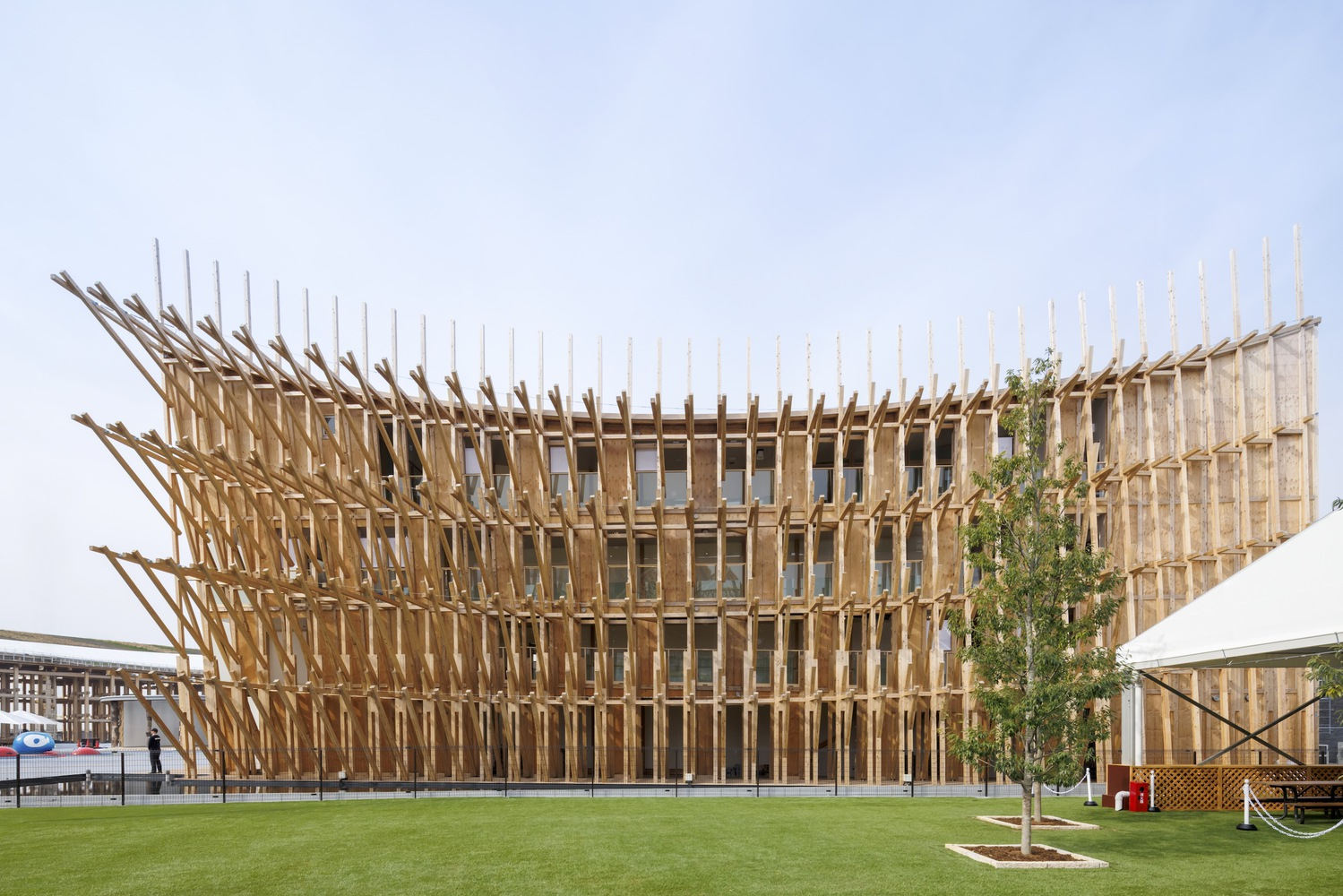
The pavilion leveraged passive cooling from coastal winds, minimal foundations (avoiding heavy concrete), and reused natural materials, making it one of the most environmentally thoughtful constructions at the Expo. Underwater lighting in adjacent water features projected shifting ripples onto the timber façades, giving the sense that the pavilion itself was afloat, a tribute to Bahrain’s seafaring legacy.
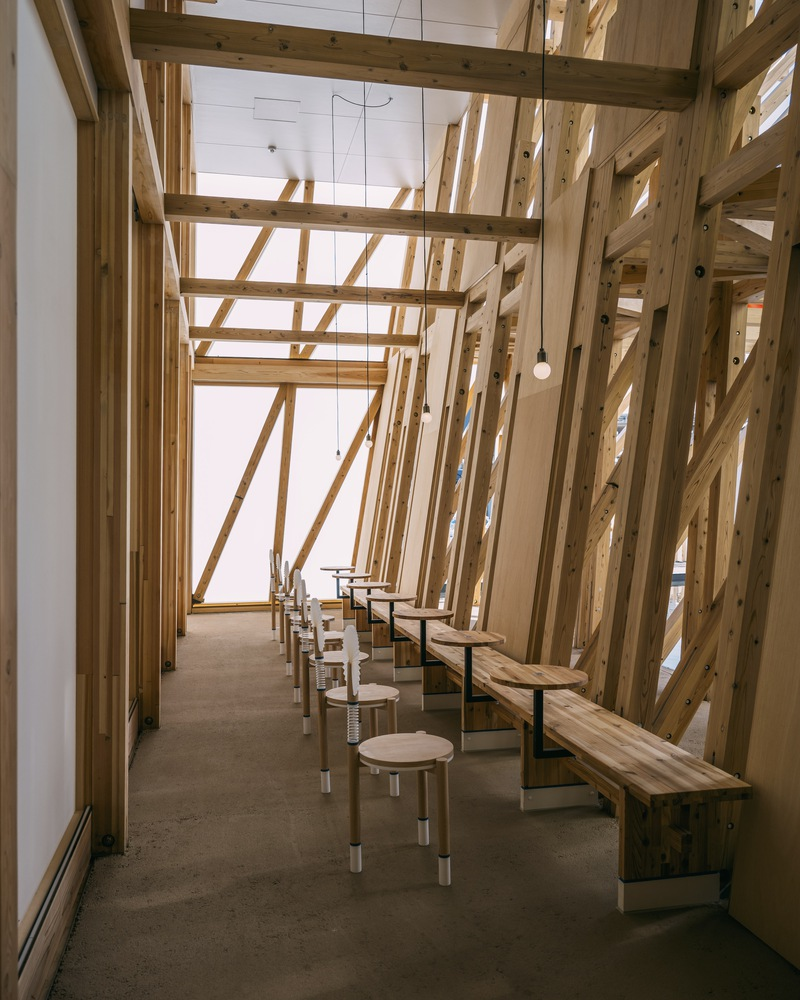
In recognition of its architectural clarity, cultural depth, and ecological sensitivity, the Bahrain Pavilion was honored with the Gold Award for Architecture & Landscape under the self-built pavilions (under 1,500 m²) category by the official awards of the event’s organizing body.
6. USA Pavilion
Architect: Trahan Architects
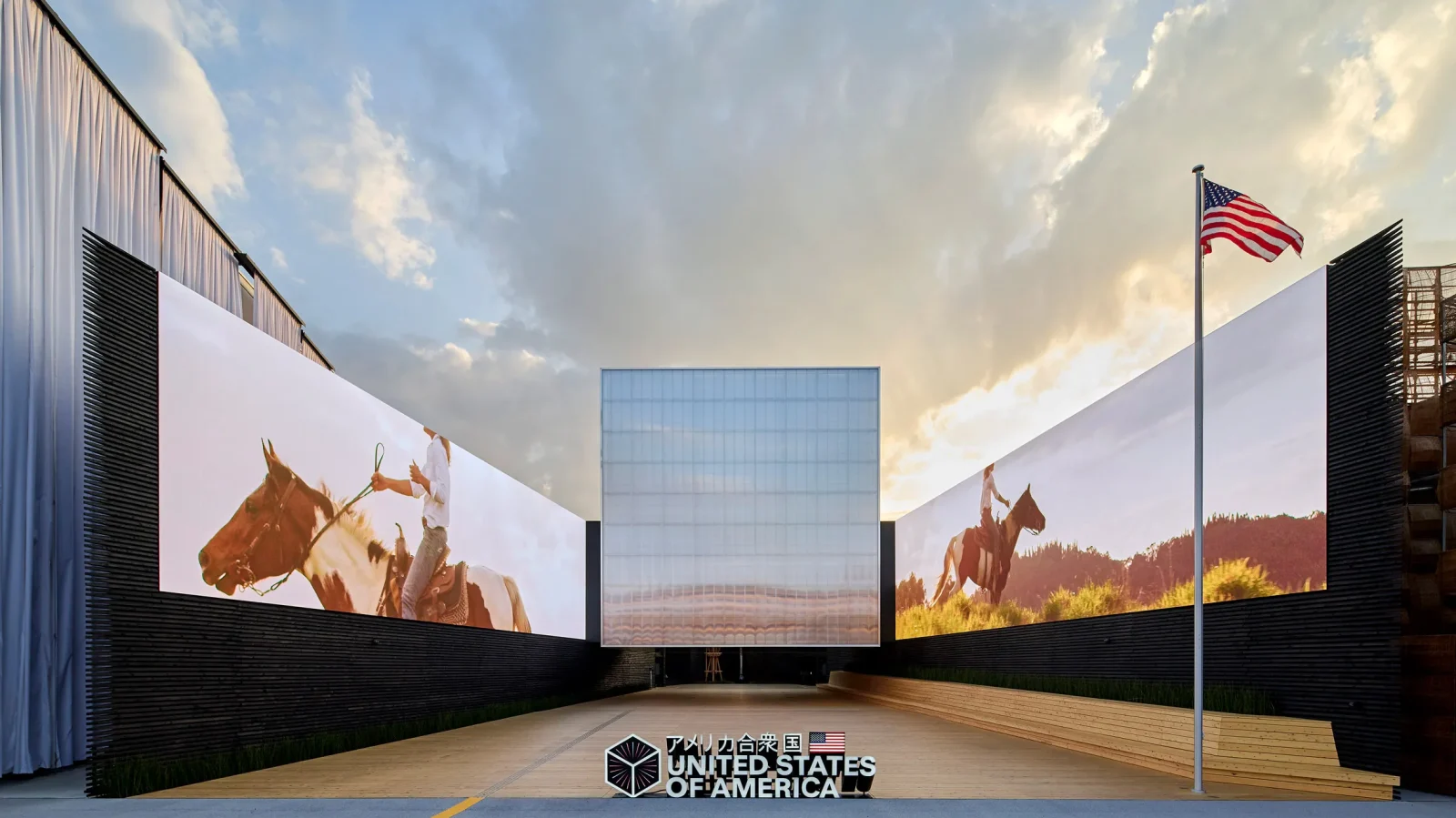
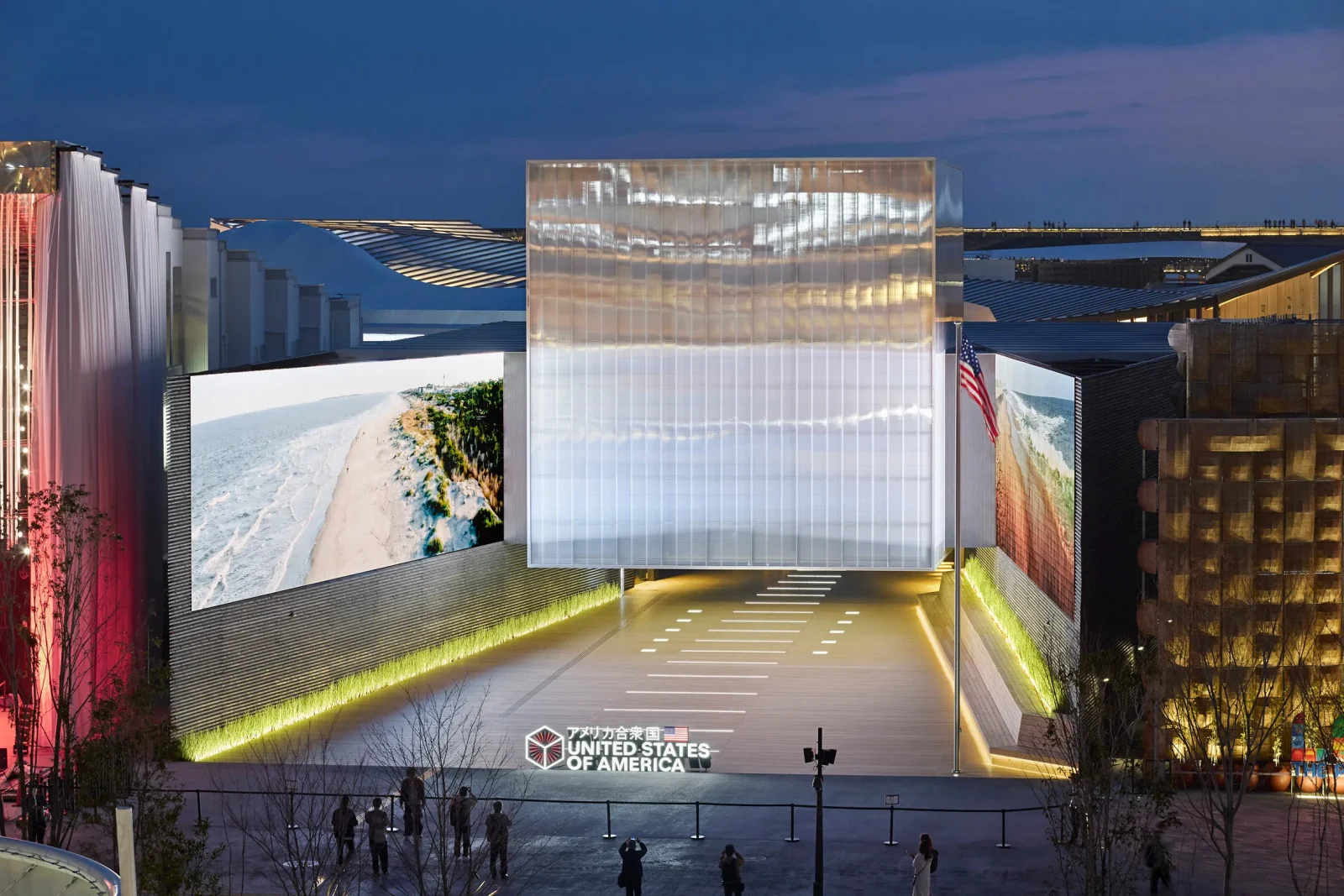
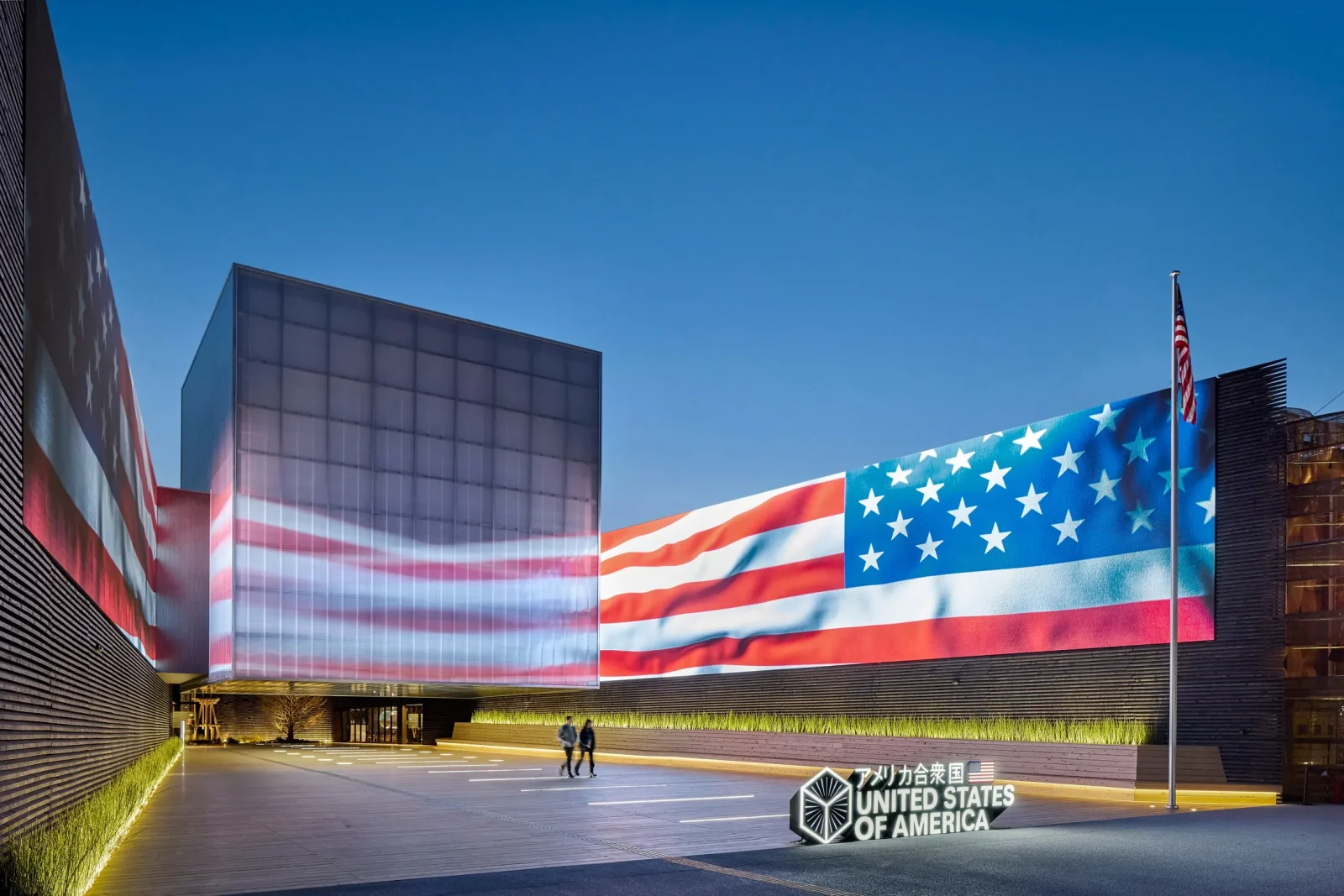
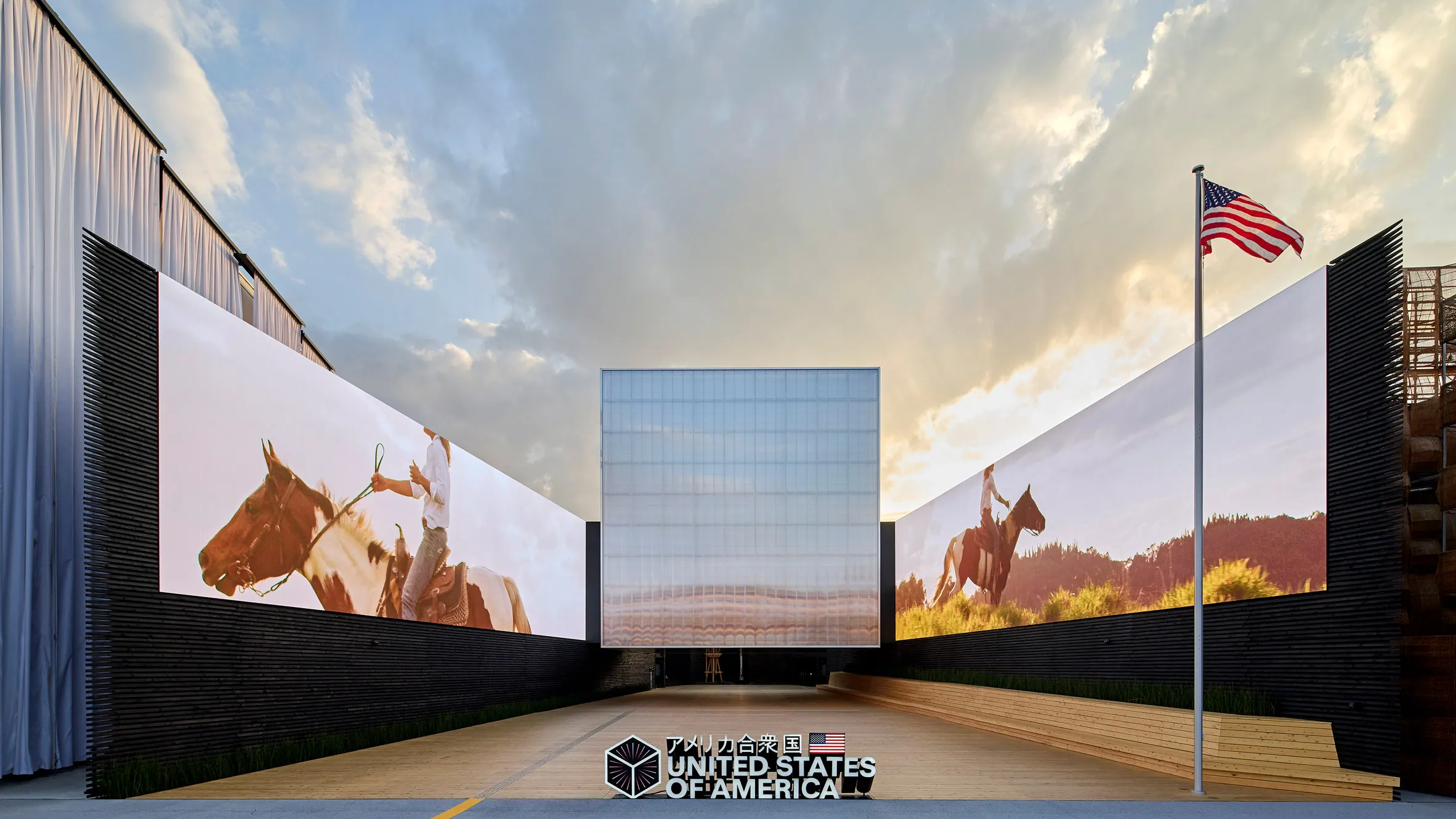
The USA Pavilion at Osaka Expo 2025 stood out as a minimalist yet monumental design that integrated American sensibility with traces of Japanese spatial sensibility. The pavilion consisted of two broad, triangular wings that opened outward, framing a central plaza beneath a “floating” translucent cube, the pavilion’s signature architecture.
The cube, softly illuminated during the day and glowing at night, functioned as both a symbolic gateway and a visual anchor, giving visitors a striking sense of arrival as they passed beneath it. The plaza itself curved gently like a traditional Japanese footbridge, guiding visitors inward along a path that narrowed as it approached the cube, a measured transition from open public space to intimate interior.
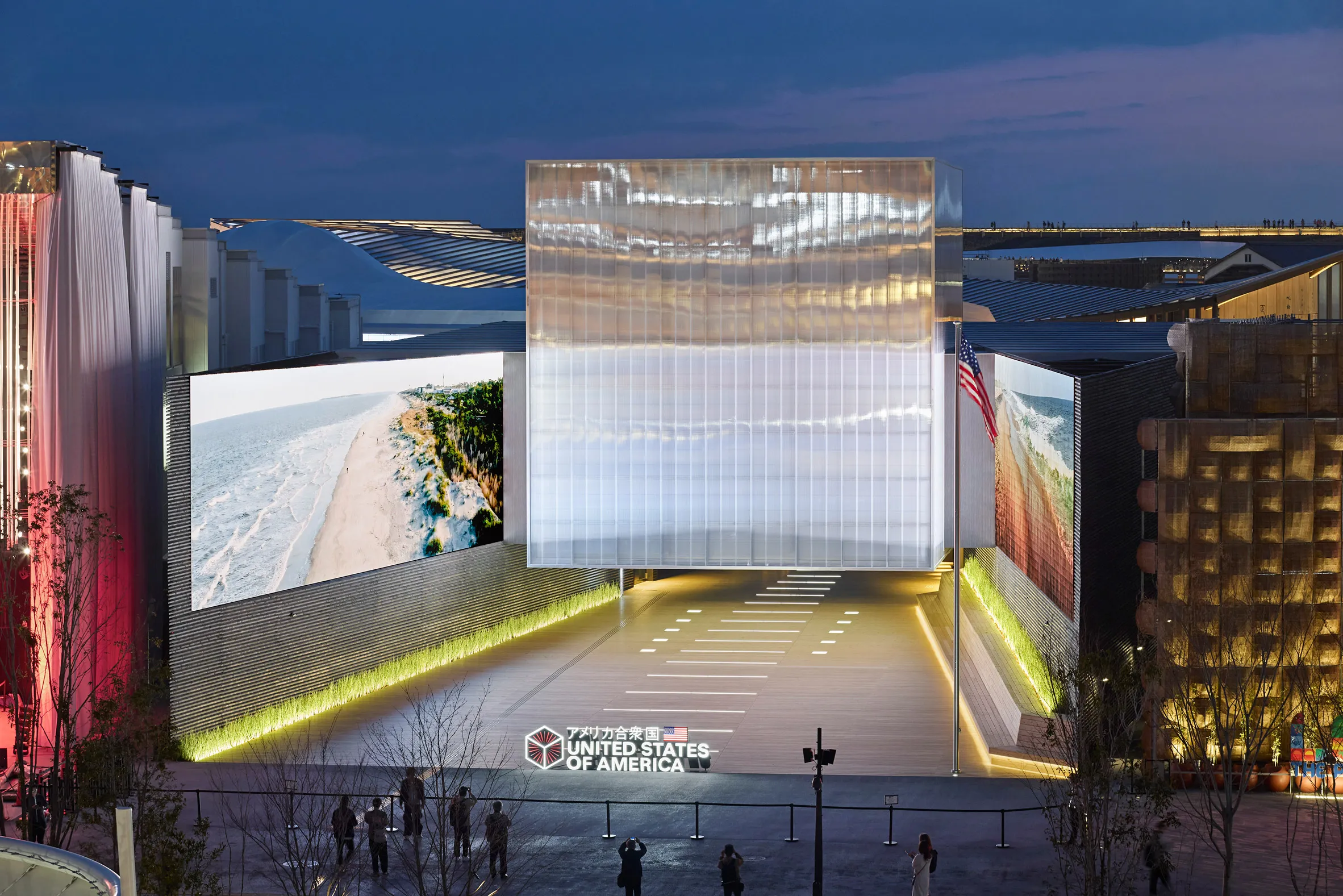
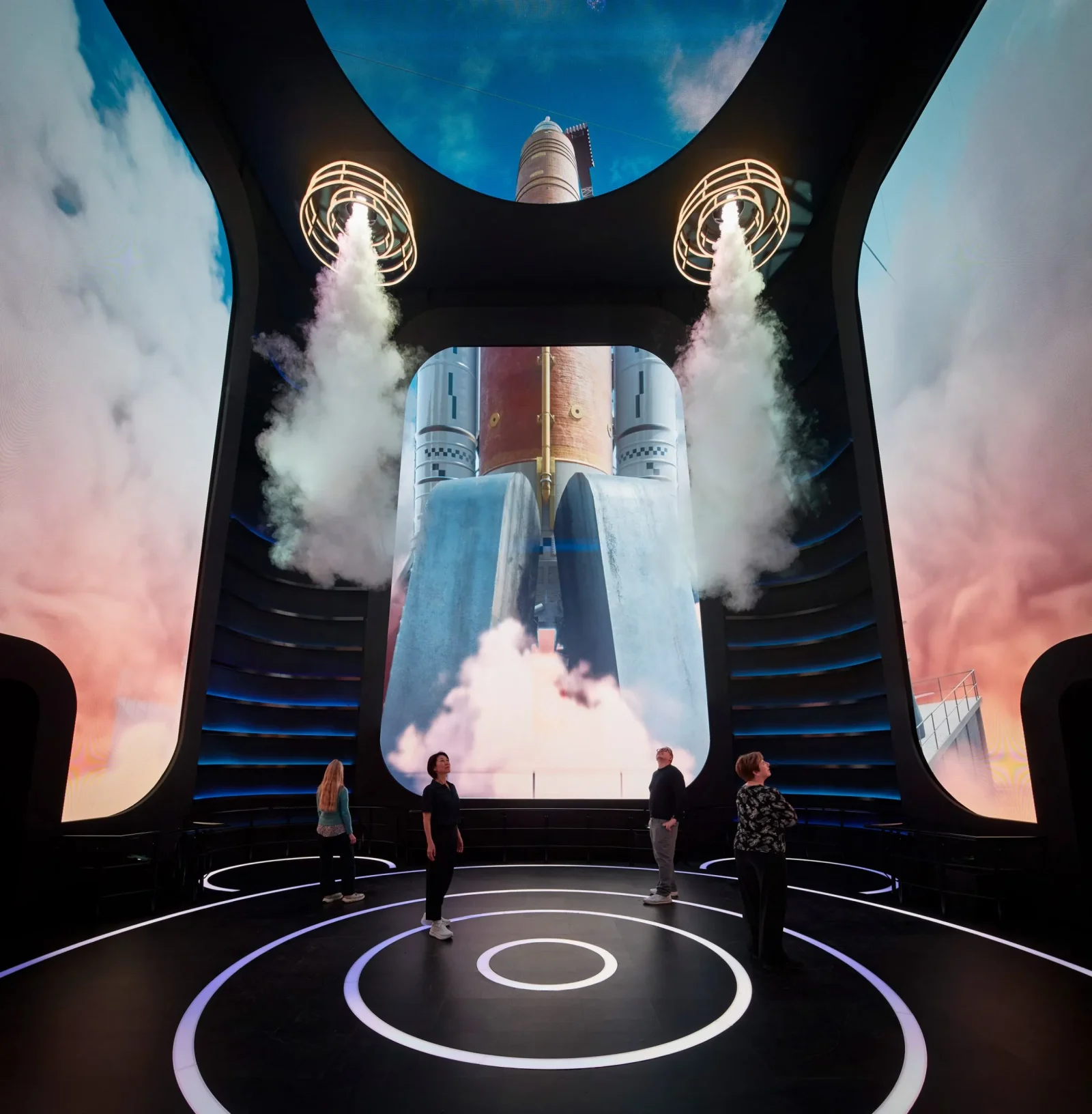
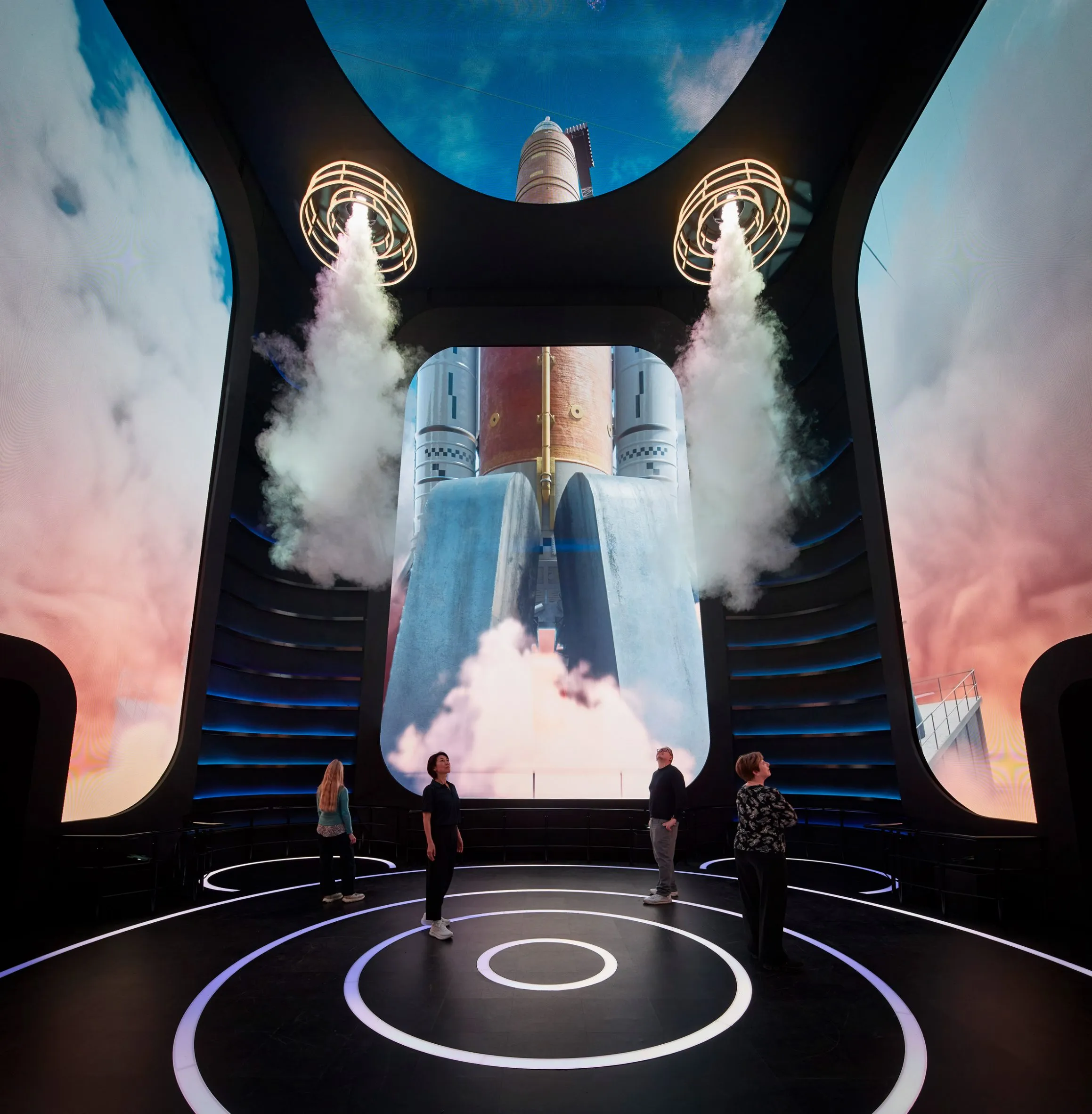
Along the wings, large LED screens displayed panoramic views of American landscapes, cities, and cultural scenes, immersing guests in a dynamic “canyon” of visuals as they made their way through. The pavilion hosted a sequence of immersive exhibits exploring themes such as sustainability, space exploration, education, entrepreneurship, and American culture, inviting visitors to envision “what we can create together.”
After the exhibit journey, visitors emerged into a meditative garden, a quiet, landscaped courtyard beyond the cube, where natural light filtered in softly, offering a reflective counterpoint to the sensory richness of the interior.
Constructed with a mixed system of steel and modular timber façade elements, the USA Pavilion embraced sustainability; many structural components and tensile fabrics were repurposed from dismantled venues of the Tokyo Olympics. The timber used in the façade came from certified sources, supporting eco-friendly forestry and enabling the pavilion’s eventual disassembly and reuse post-Expo.
7. Qatar Pavilion
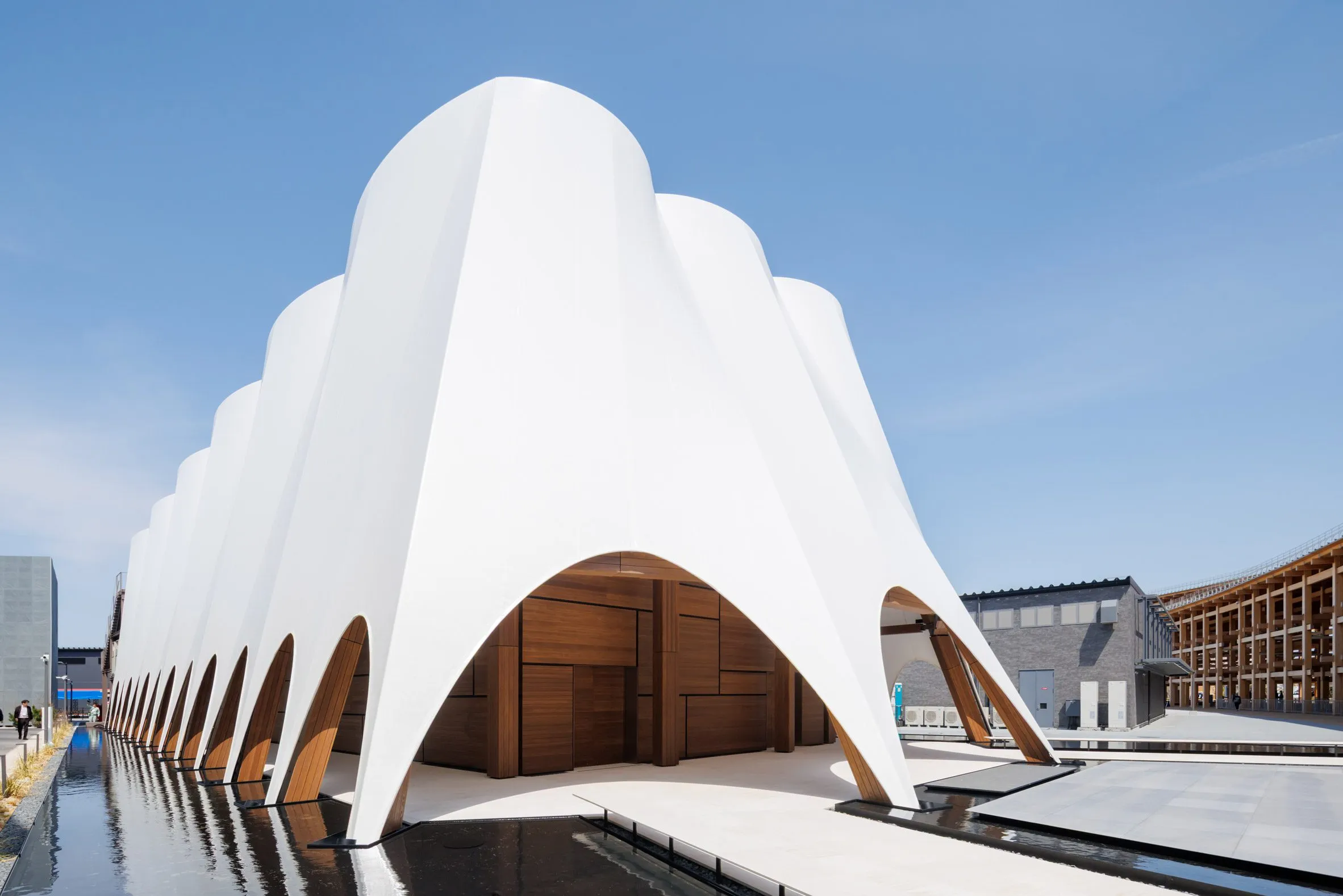
Architect: Kengo Kuma & Associates
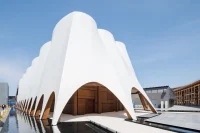
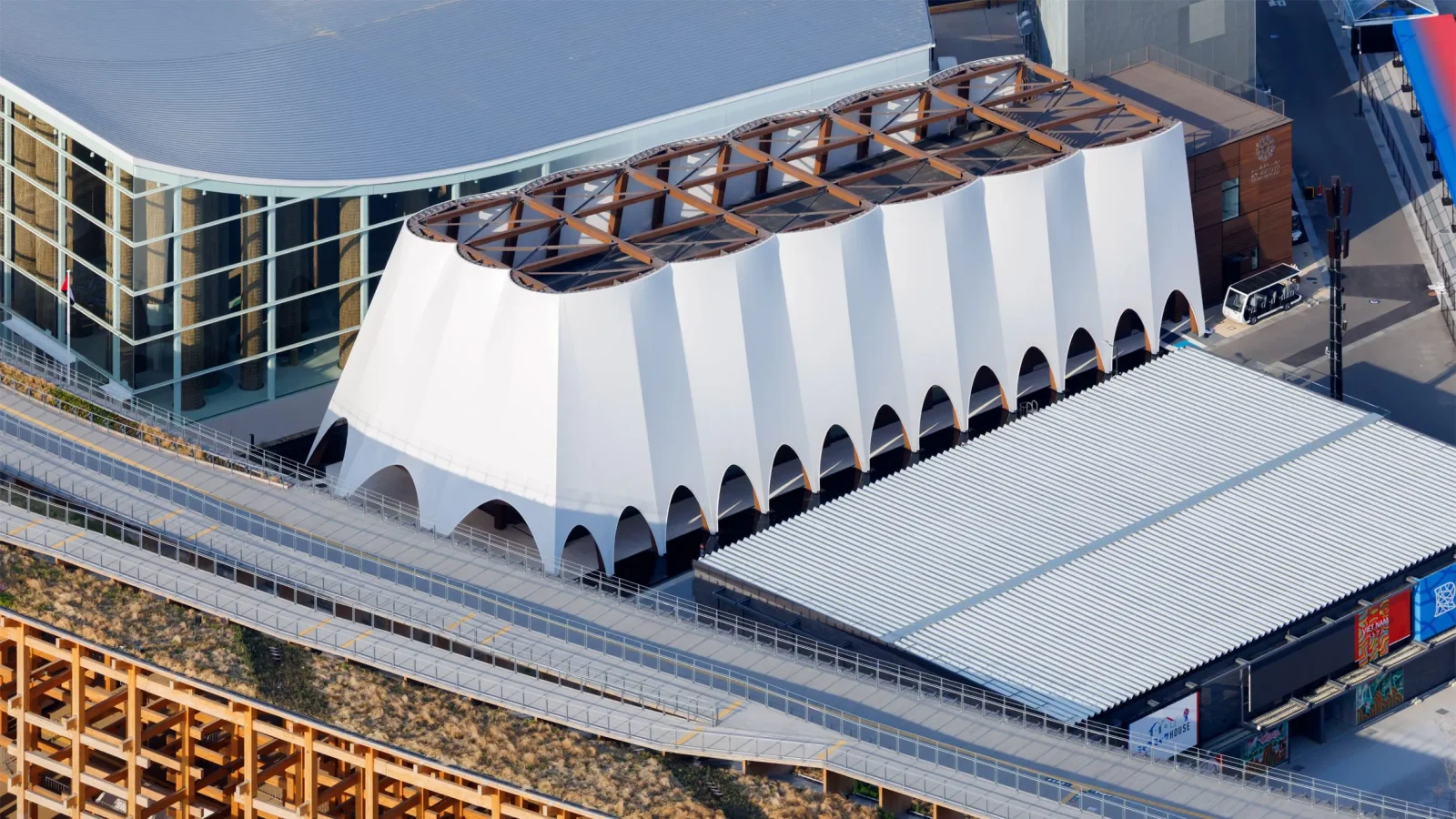
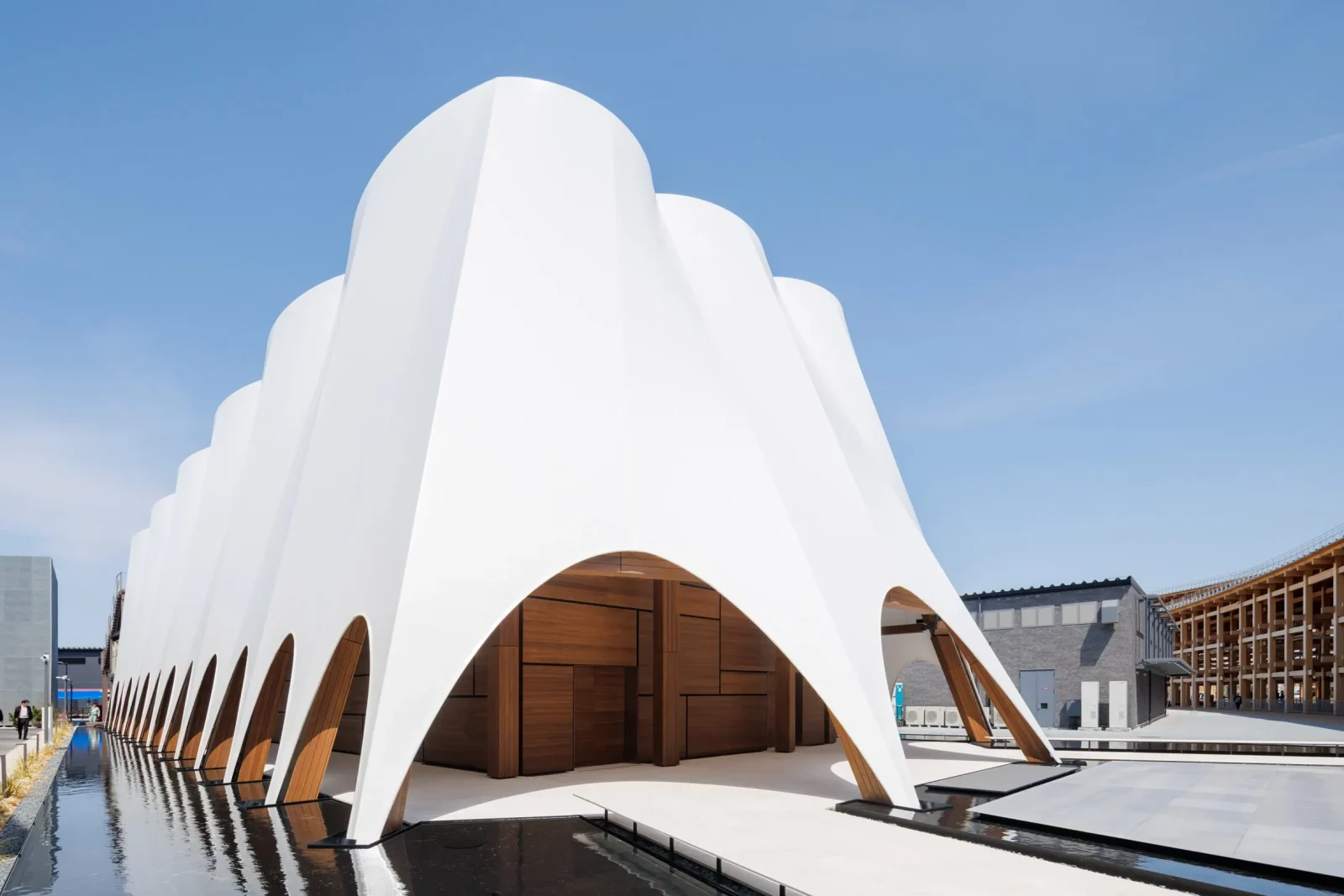
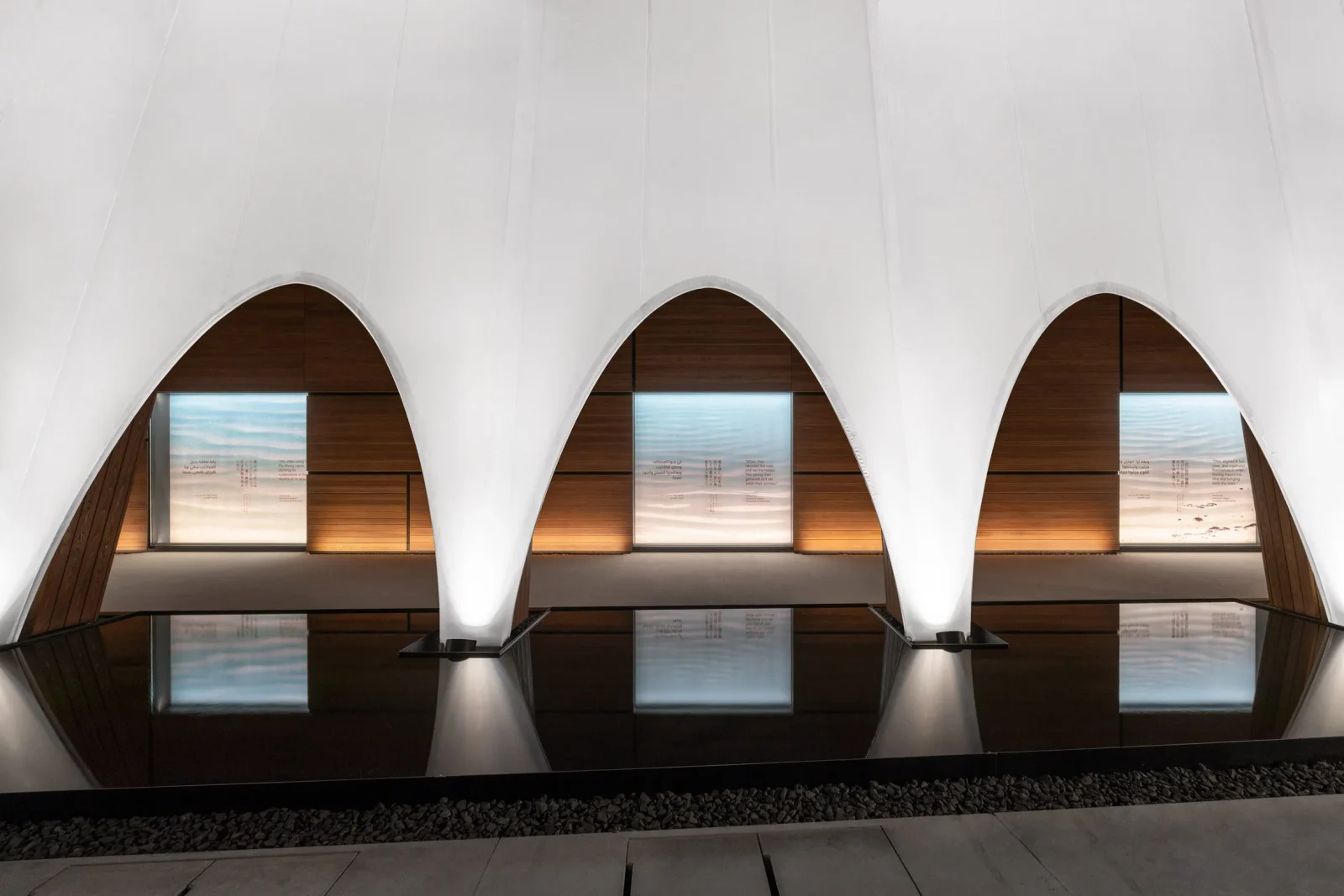
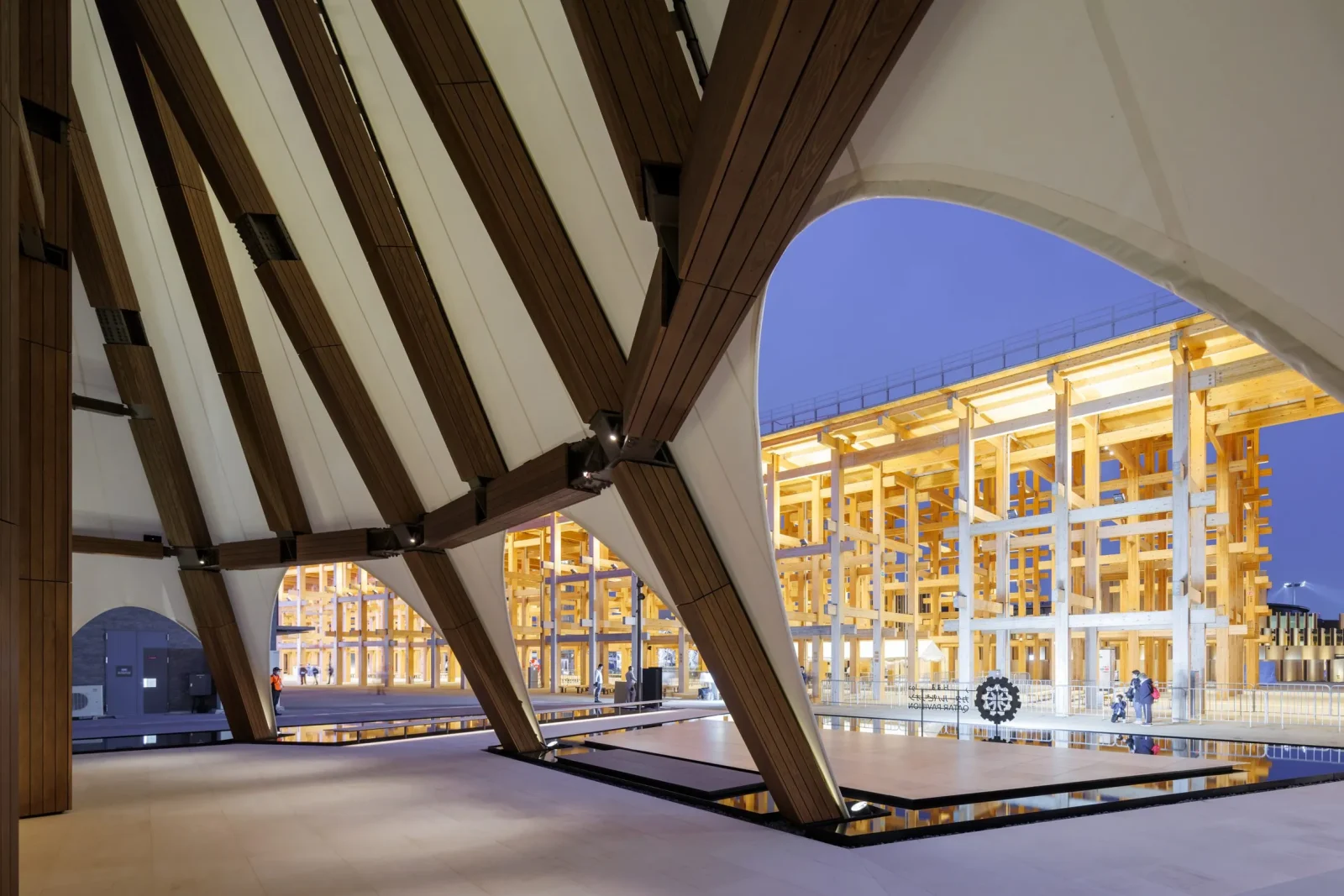
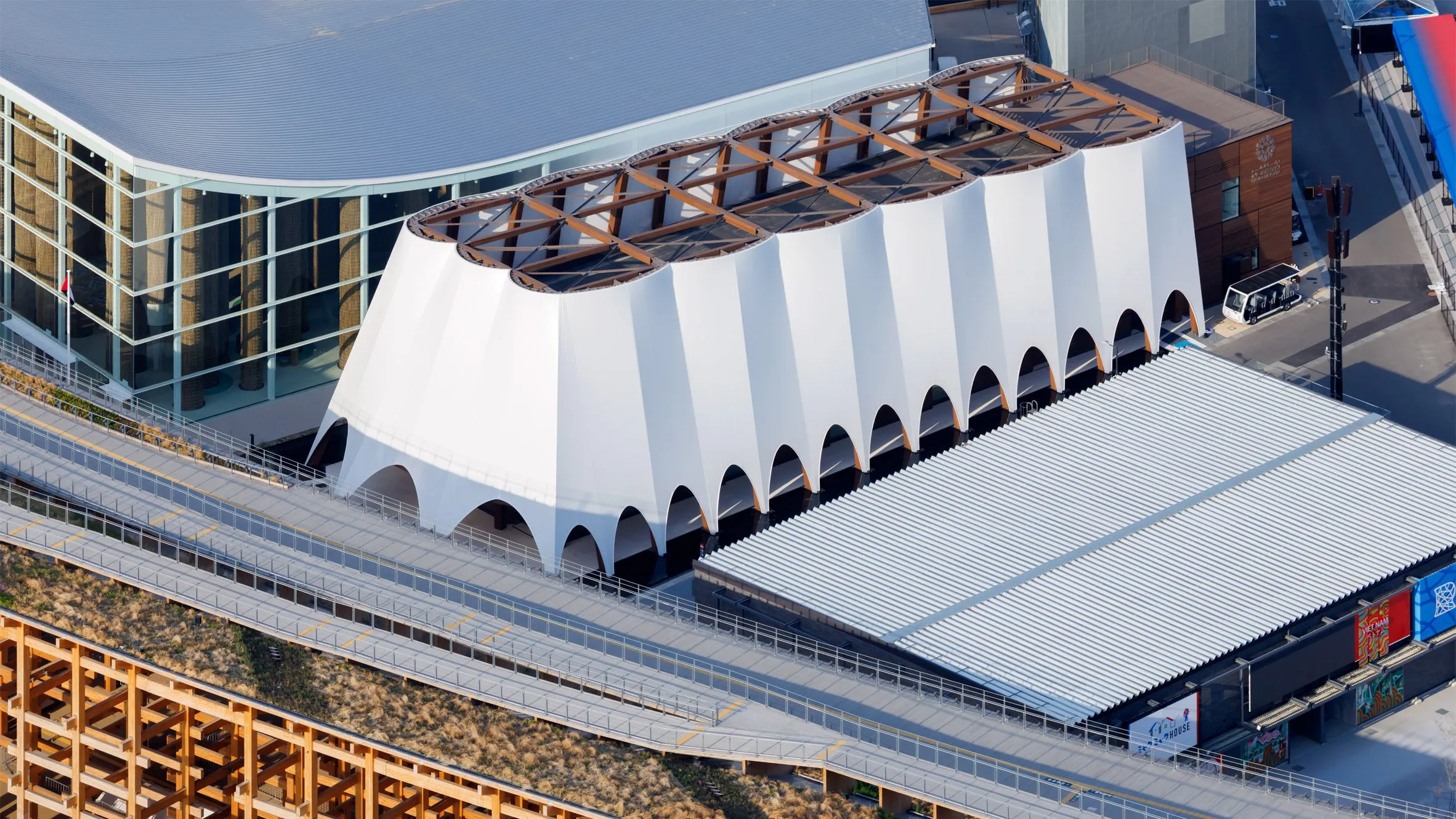
The Qatar pavilion at Osaka Expo 2025 transformed maritime heritage into a rich architectural and cultural narrative. Drawing inspiration from the shape of a traditional Qatari dhow, a wooden sailing vessel central to the country’s history, the design uses a finely crafted timber framework wrapped in a white fabric veil, evoking the sails of old seafaring ships. The building sits water-adjacent, and a surrounding water table reinforces the illusion of a vessel afloat, a symbolic bridge between Qatar’s seafaring past and its modern identity.
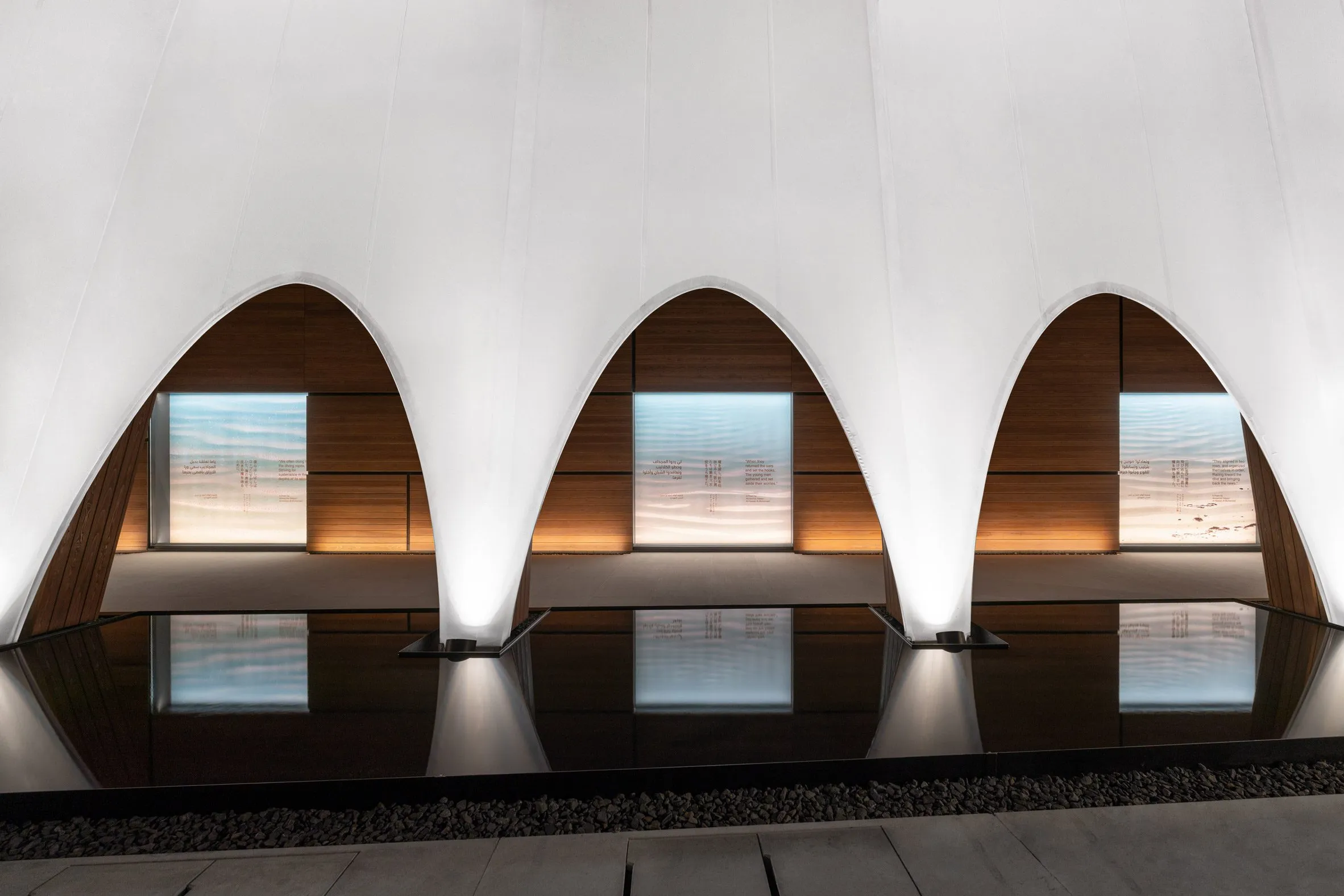
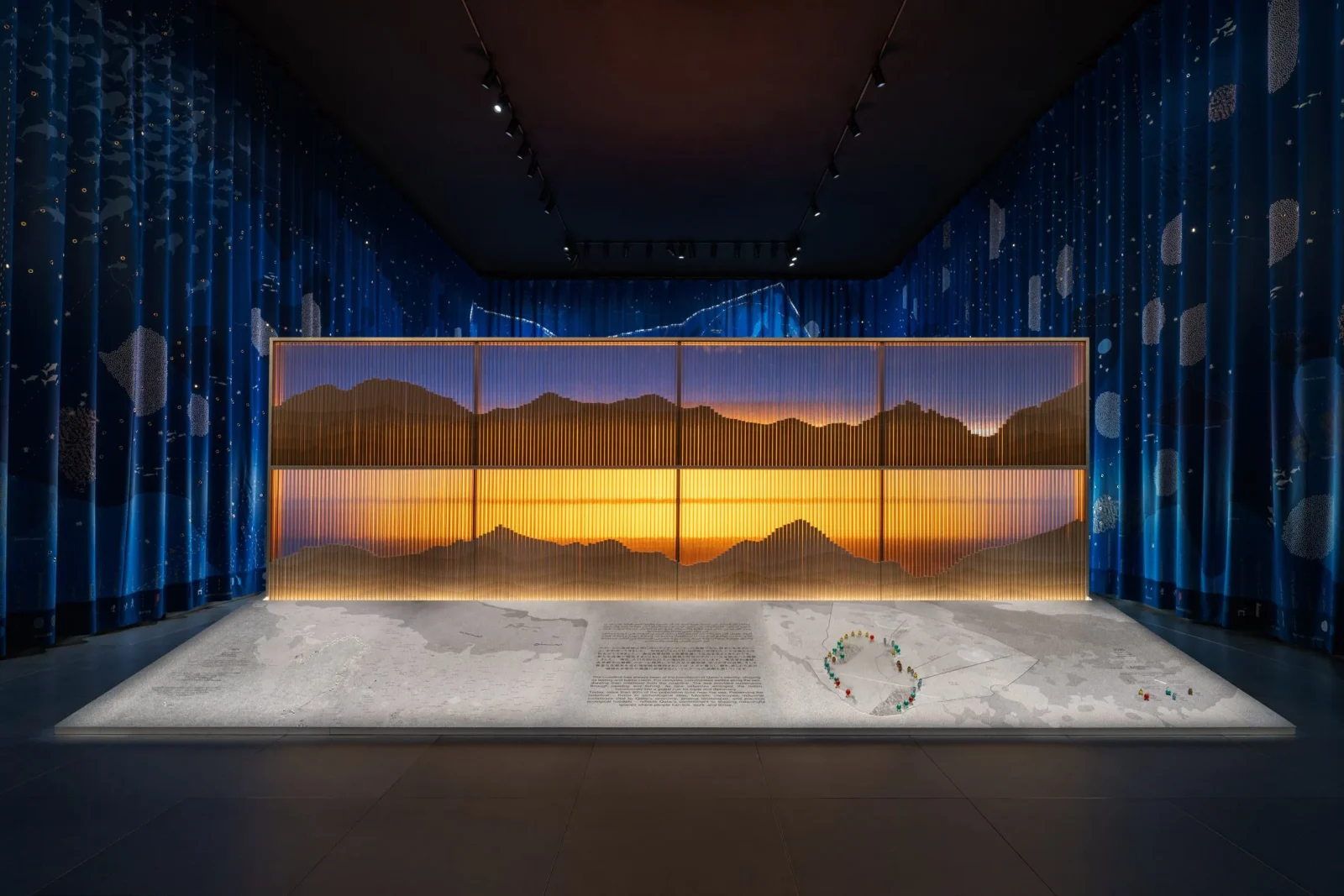
Inside the pavilion is the exhibition titled “From the Coastline, We Progress,” curated by OMA/AMO, which traces Qatar’s 563-kilometre coastline and its transformation over time. At an entrance framed by poetic verses, poems by founding figures such as Sheikh Jassim bin Mohammed bin Thani and poet Ahmed bin Hassan Al‑Muhannadi are displayed against imagery of Qatar’s coastal waters, creating a sensory prelude to the exhibition.
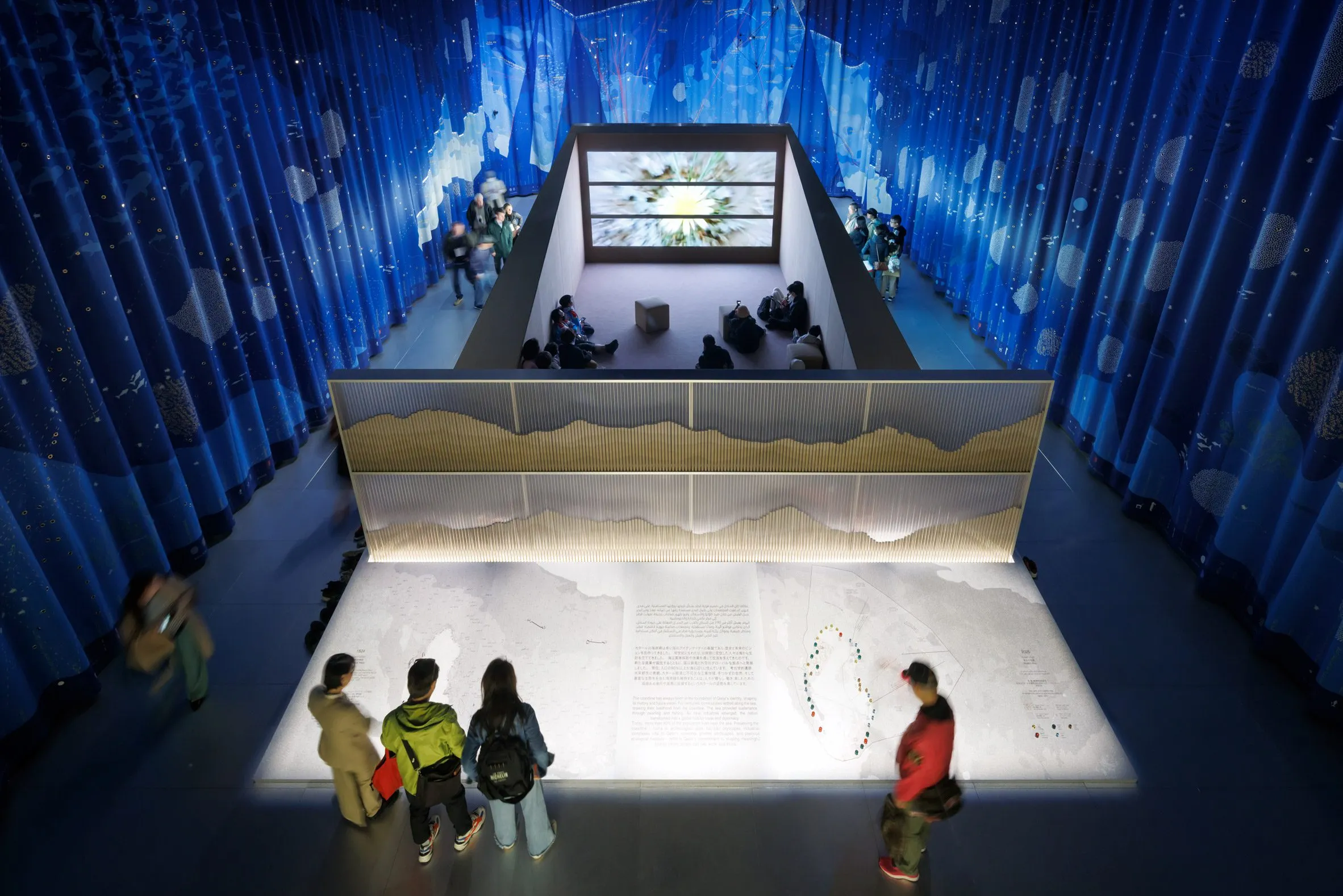
The interior experience moves visitors from sea to land. Early exhibits evoke the maritime life: wall panels with rock-carving motifs from historic coastal sites like Al Jassasiya, sand samples reflecting different land zones, and visual narratives of coastal villages and pearling traditions.
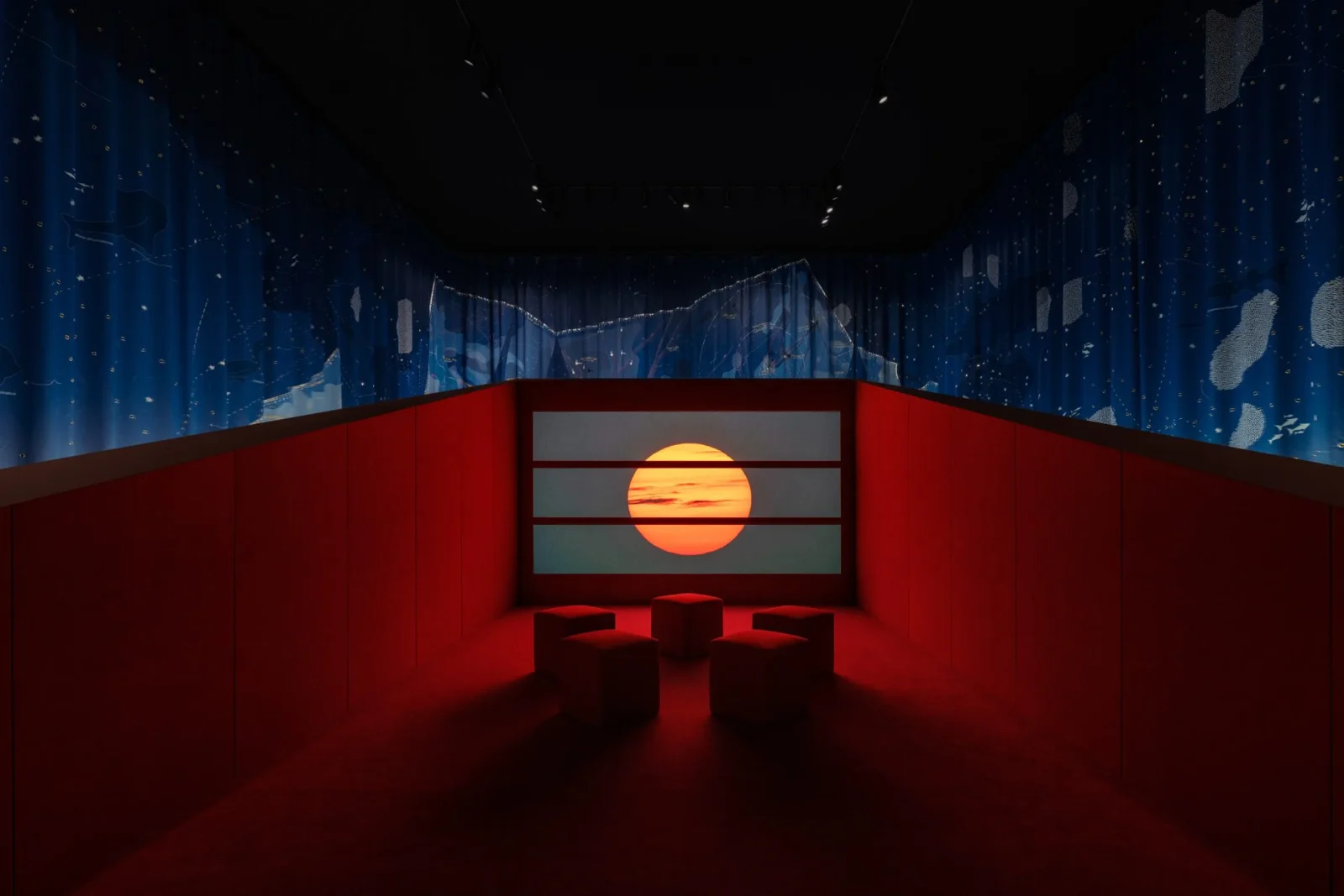
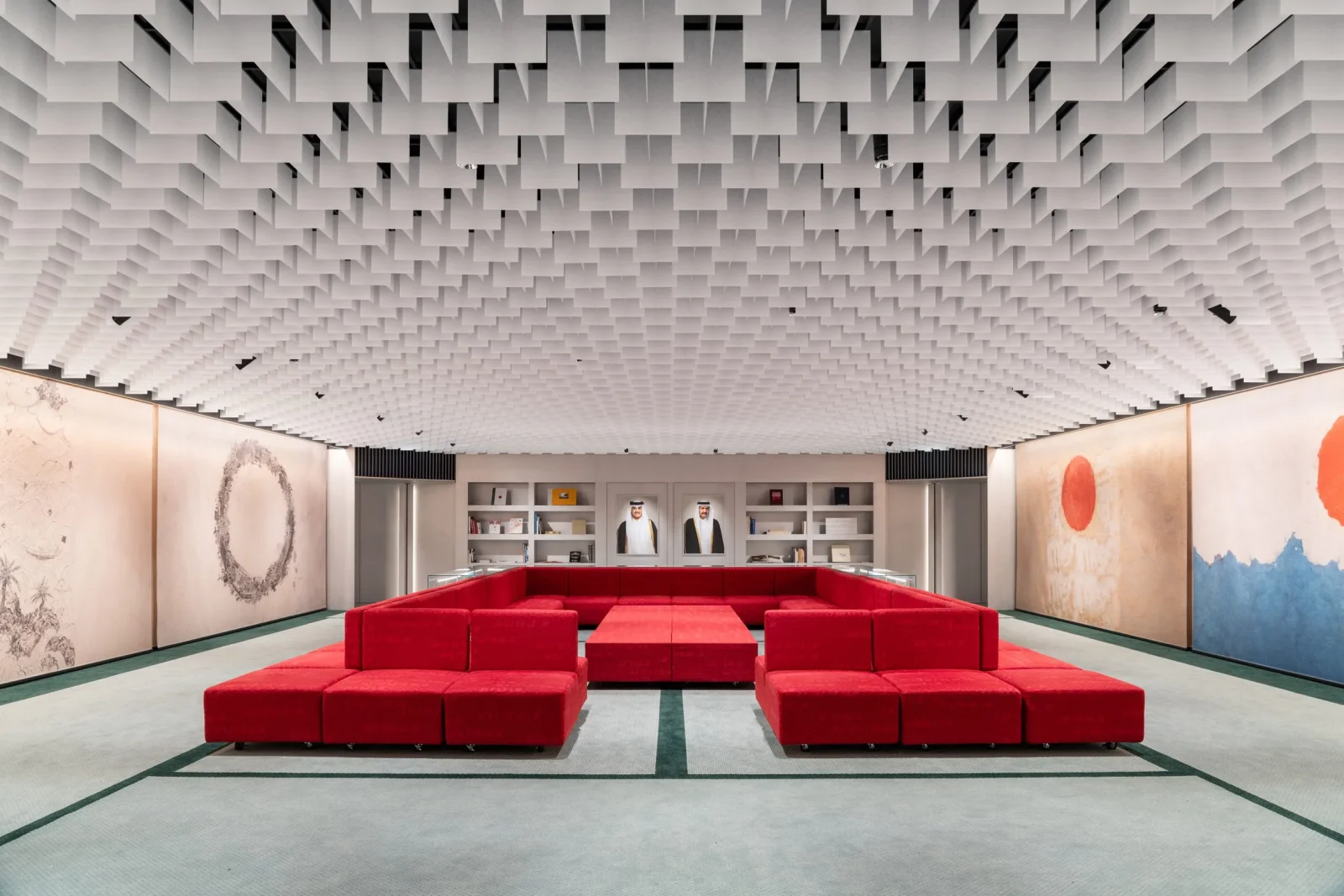
Further in, a cinematic installation enclosed in a fluid “Sea Curtain” by design firm Inside-Outside uses panoramic film and archival footage to depict the cultural, ecological, and economic evolution of Qatar’s coastal regions. A second-floor “majlis” and library offer space for visitors to gather, reflect, or enjoy exhibitions, including artworks created under the 2012 Qatar–Japan Year of Culture, spotlighting long-standing ties between the two nations.
8. Uzbekistan Pavilion
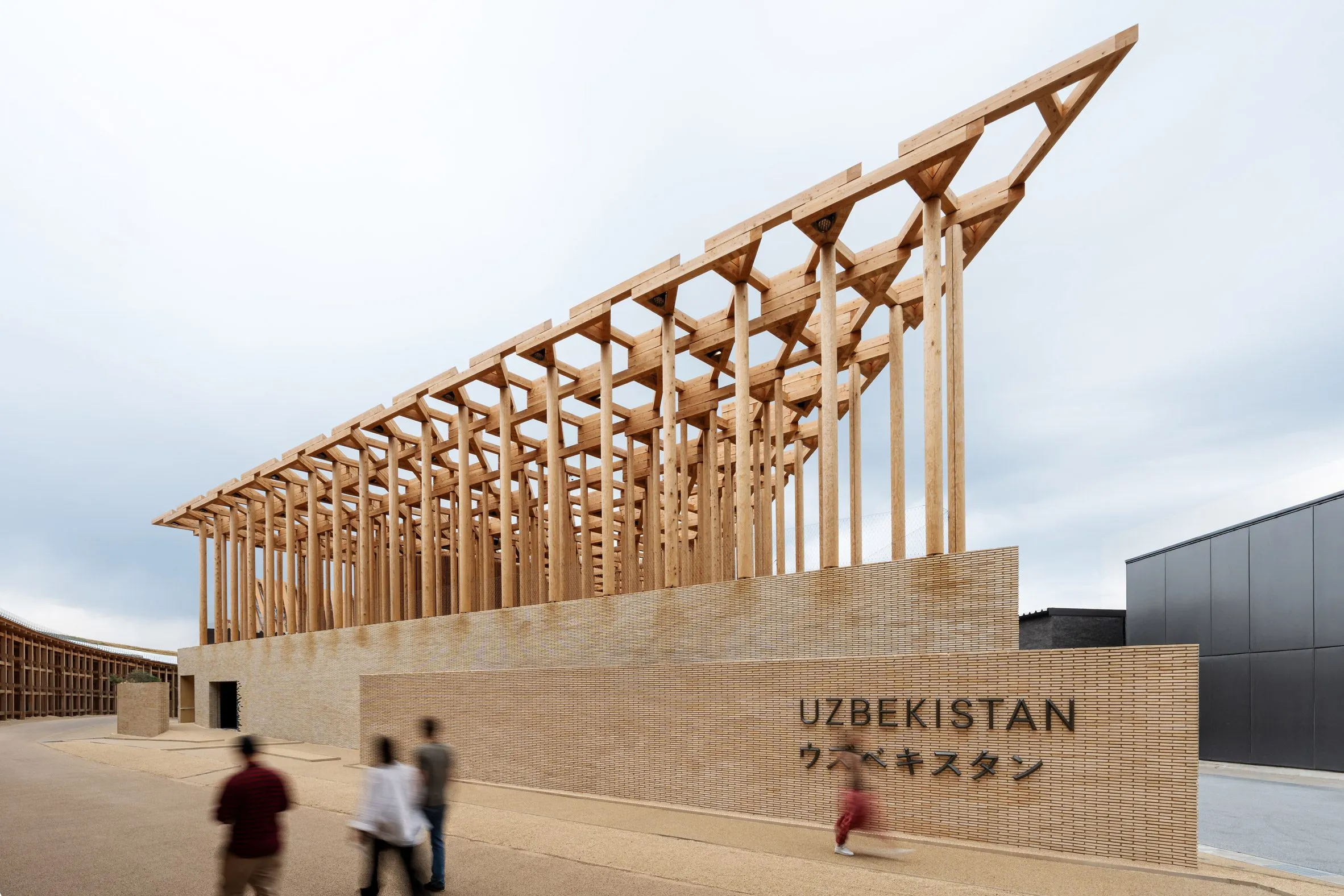
Architect: Atelier Brückner
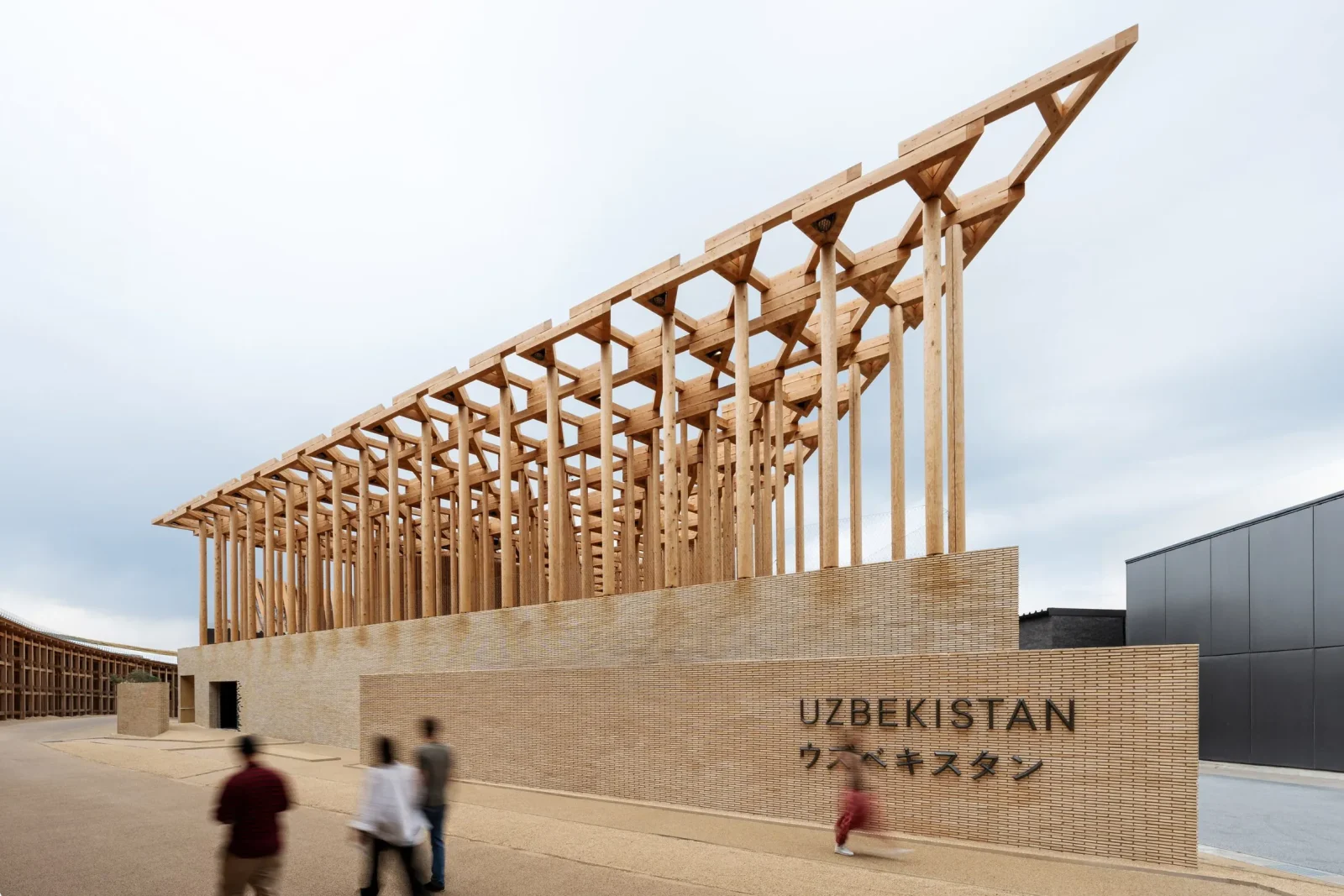
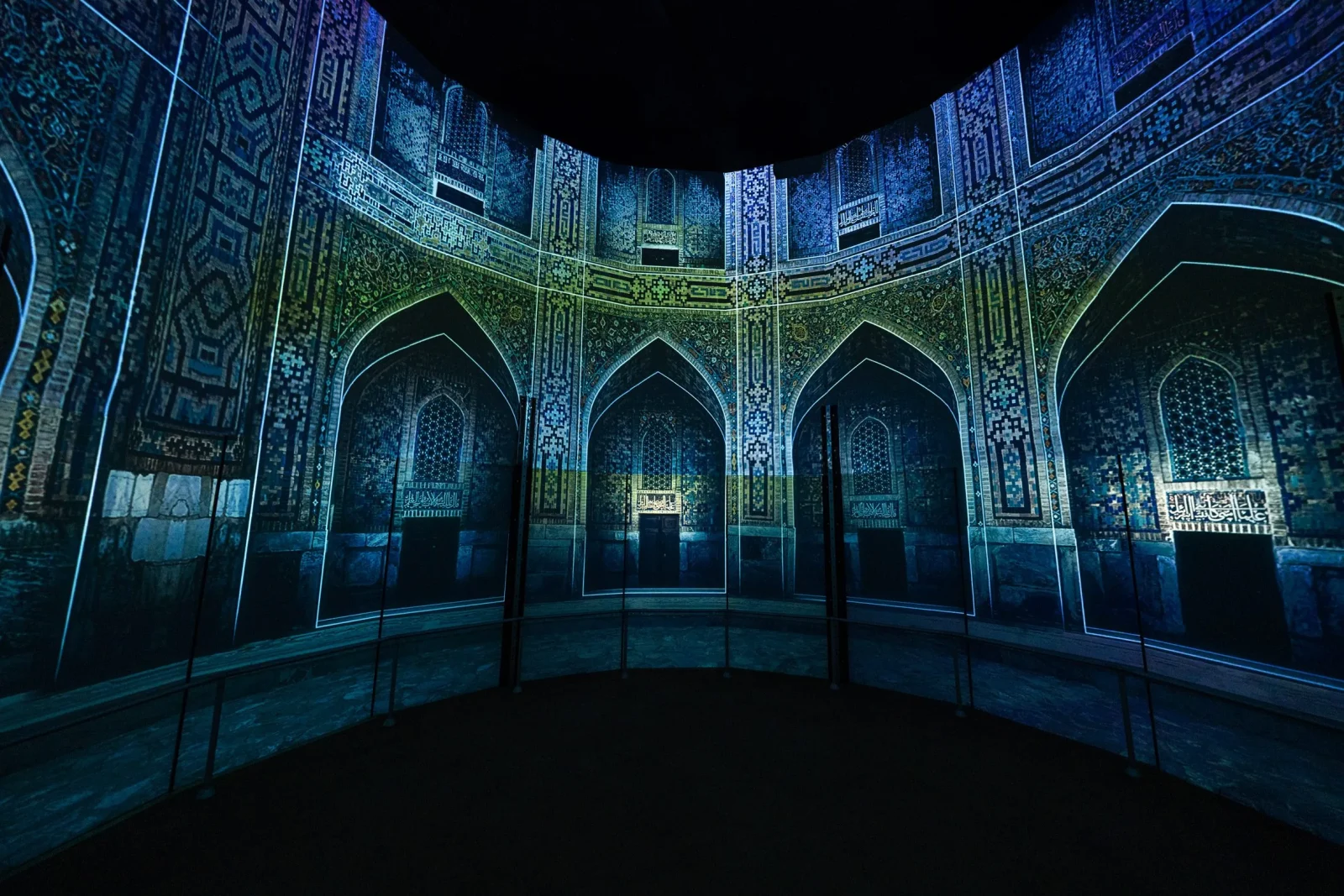
The Uzbekistan Pavilion at Osaka Expo 2025 invited visitors into a thoughtful combination of heritage, nature, and forward-looking vision. Named “Garden of Knowledge,” it reimagined the classic Silk Road caravanserai, long a resting place for travelers and a hub for cultural exchange, as a modern space for learning, dialogue, and sustainable innovation. The pavilion’s footprint was triangular, echoing the form of a traditional Uzbek amulet (tumar), covering roughly 750–860 sqm over two levels.
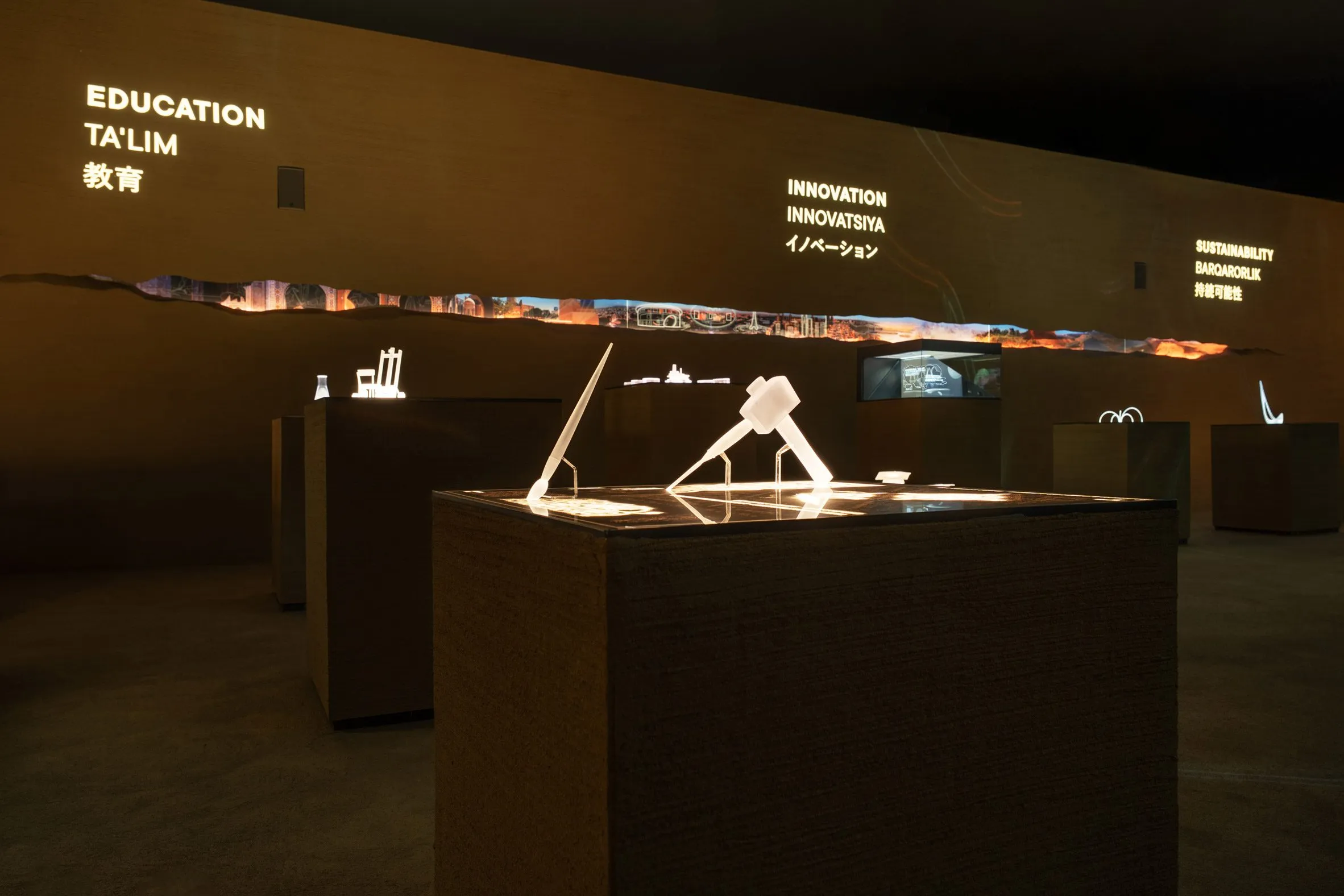
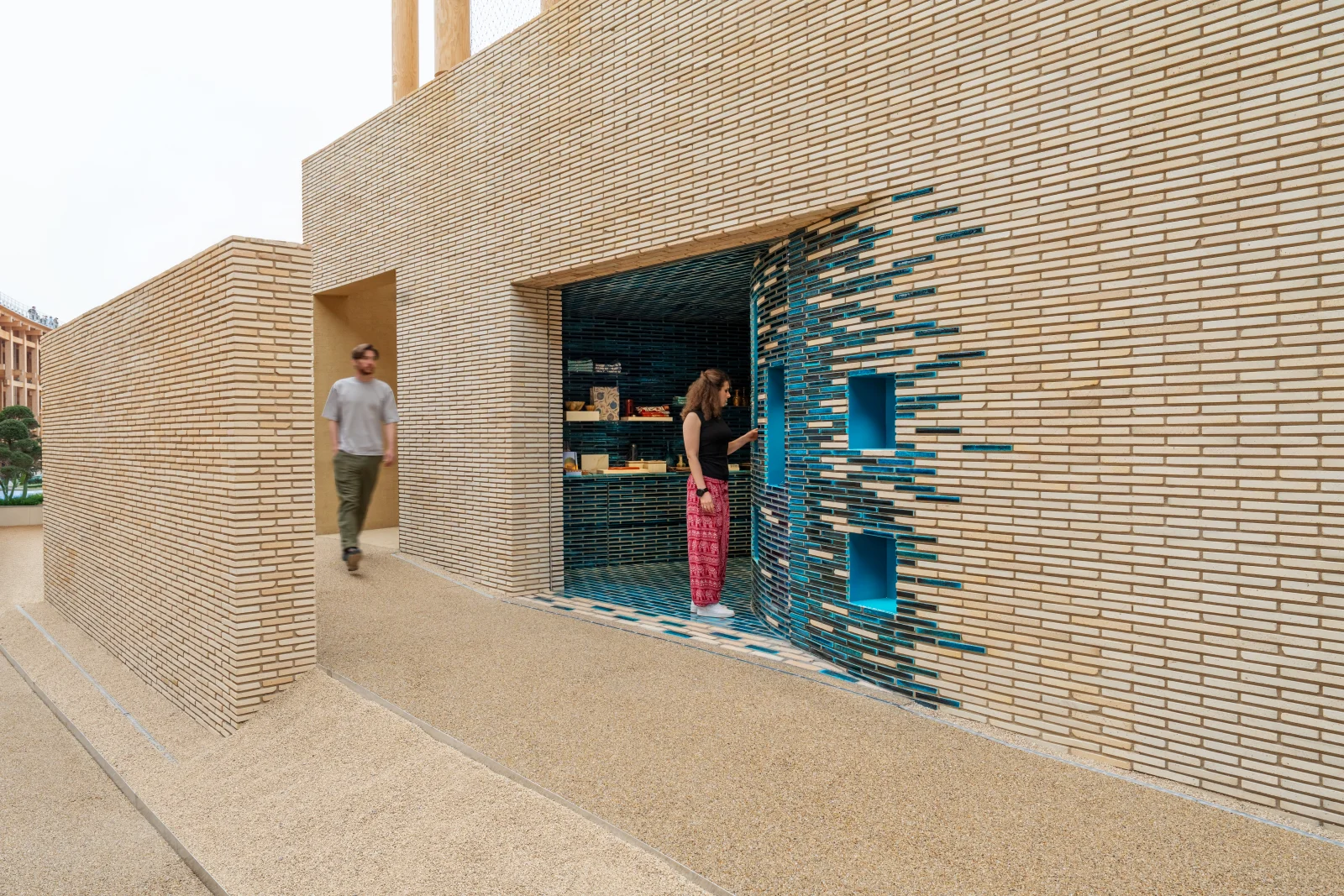
The materials themselves carried deep symbolic meaning: clay and brick for earthy grounding; cedar wood columns sourced from near Osaka; and handcrafted turquoise tiles inside, all pointing to the pavilion’s dual commitment to authenticity and sustainability.
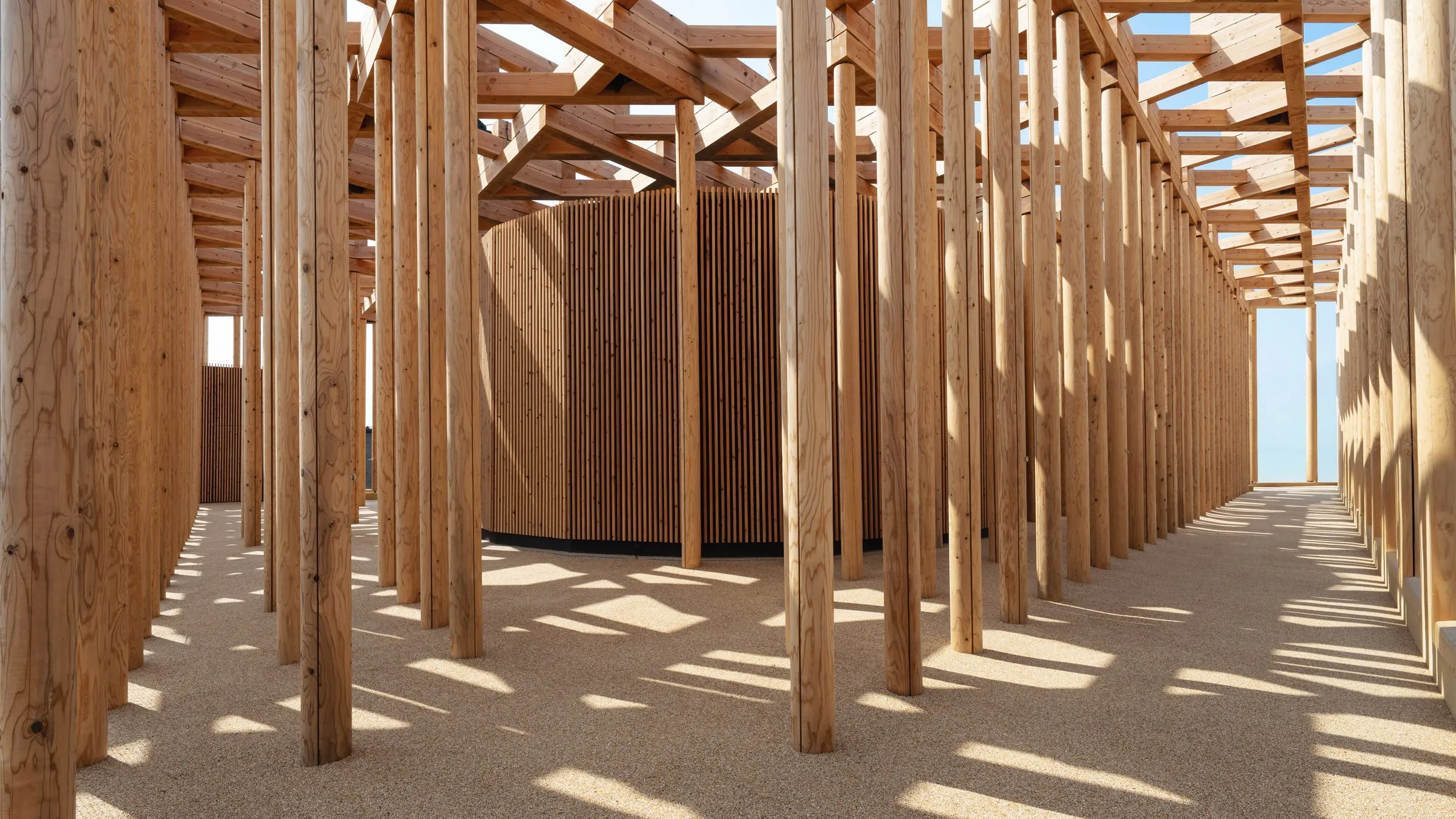
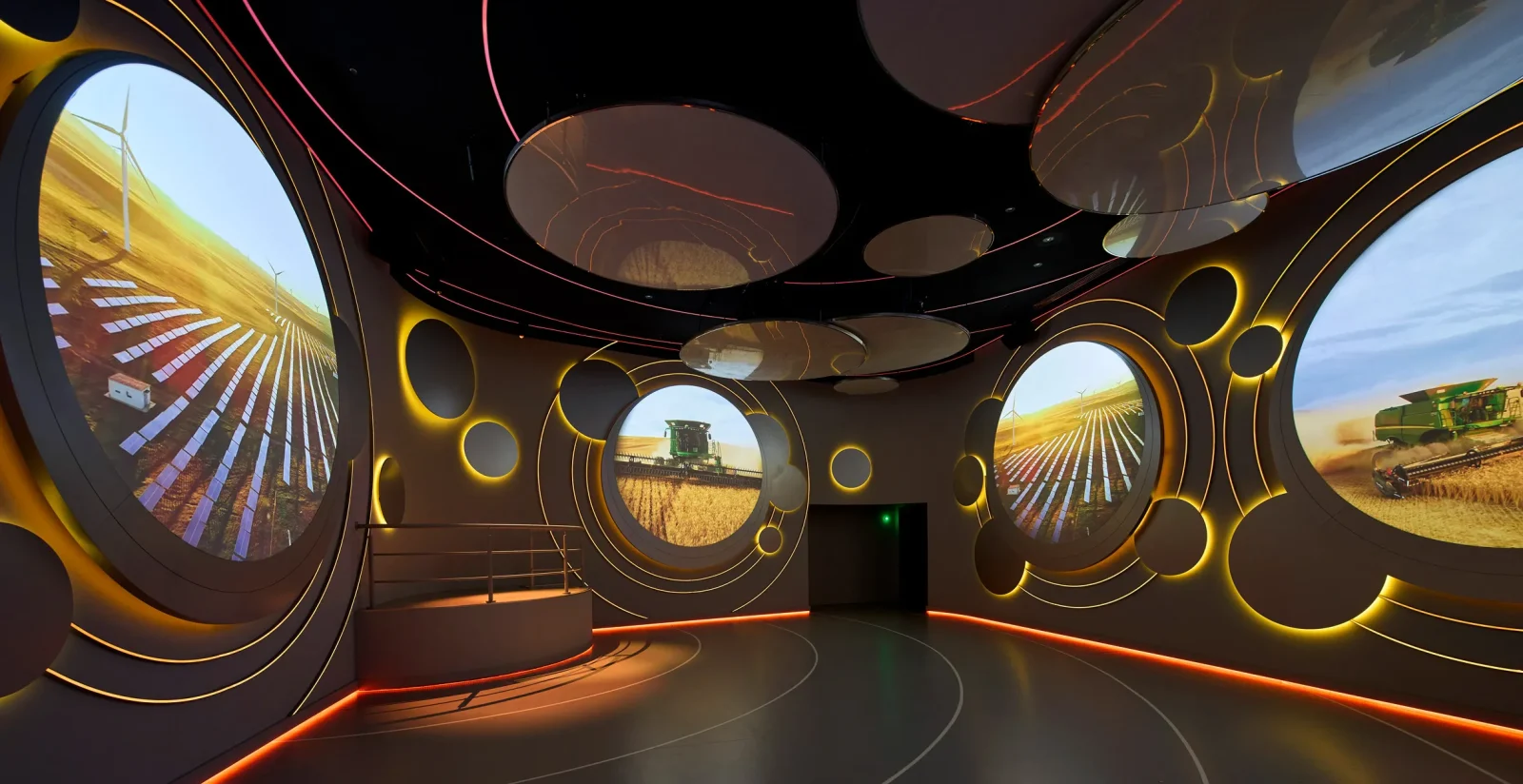
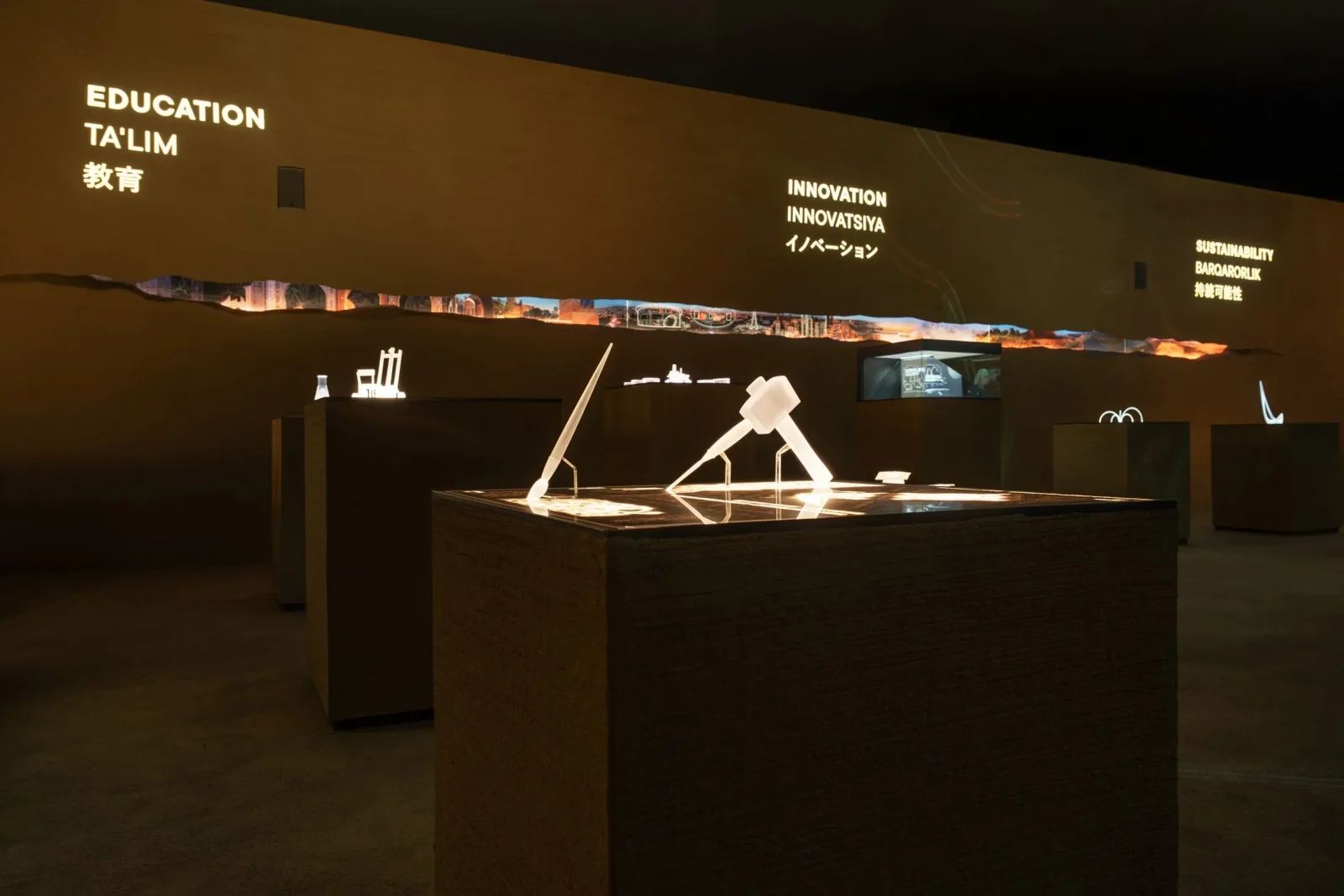
Visitors entered through an earthy, dimly lit tunnel with subtle water and light effects, metaphorically like a seed germinating underground before emerging into open, column-filled spaces evoking gardens and forests. The ground-floor exhibition highlighted Uzbekistan’s transformation in areas like clean energy, green transport, and industrial innovation (in line with SDGs for energy, education, and infrastructure). Around the pavilion, visitors encountered a “forest of wooden columns,” a reference to the column-halls of historic mosques in Khiva, integrating Islamic architectural memory with modern sustainable design. A roof-terrace garden offered a final contemplative space, a symbolic “fruit” of knowledge and growth for the future society.
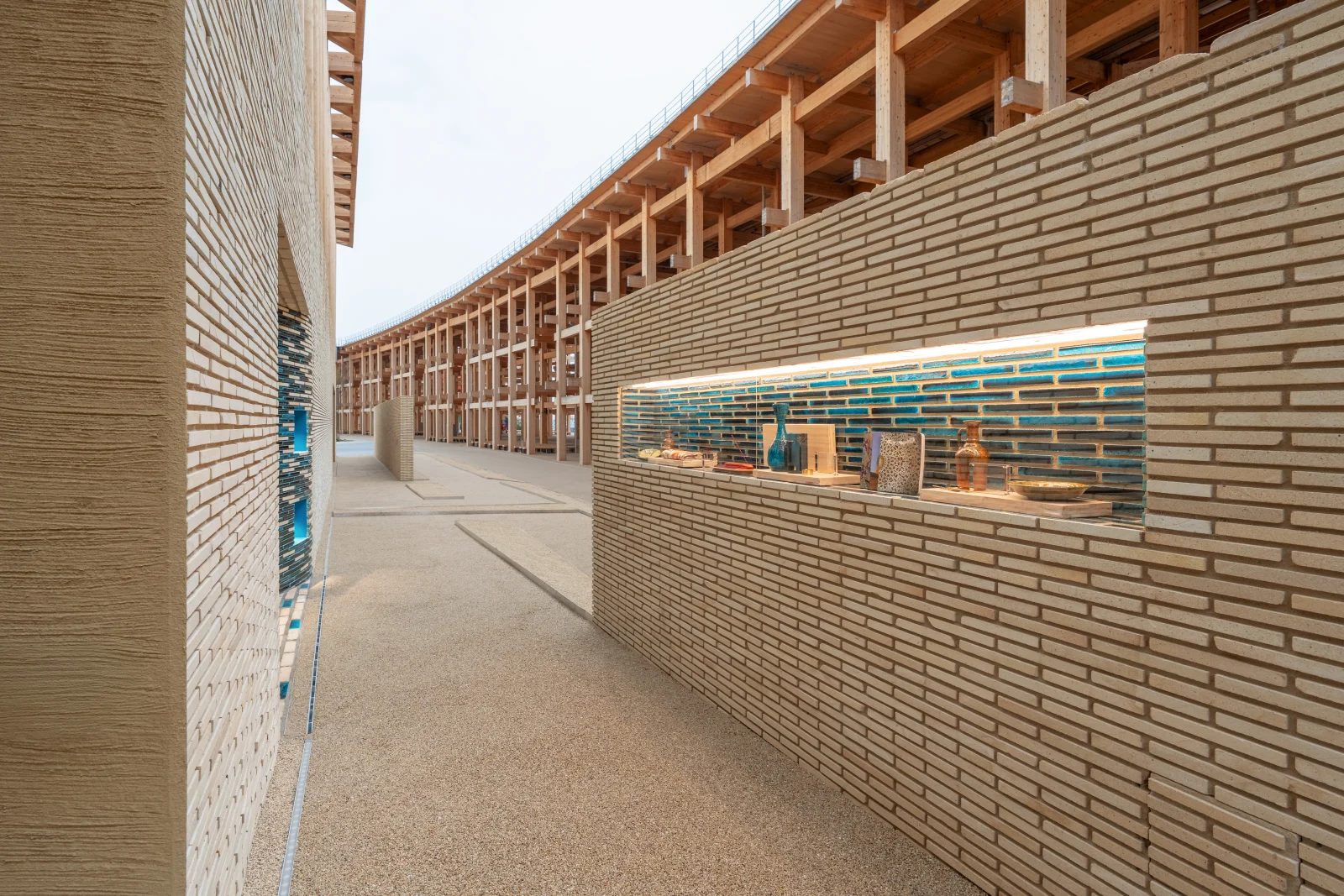
After the Expo, the pavilion’s modular wooden construction is planned to be deconstructed and transported to Uzbekistan, where it will be repurposed as a school, studio, or community facility, giving “Garden of Knowledge” a second life beyond Osaka. The pavilion won the Gold Prize at the German Design Award 2025 (category: Excellence in Architecture – Fairs & Exhibitions) and also earned the top “Theme Development” Gold Medal from the Bureau International des Expositions (BIE), underscoring its success in turning cultural legacy into an inspiring vision for the future.
9. Switzerland Pavilion
Architect: Manuel Herz Architekten
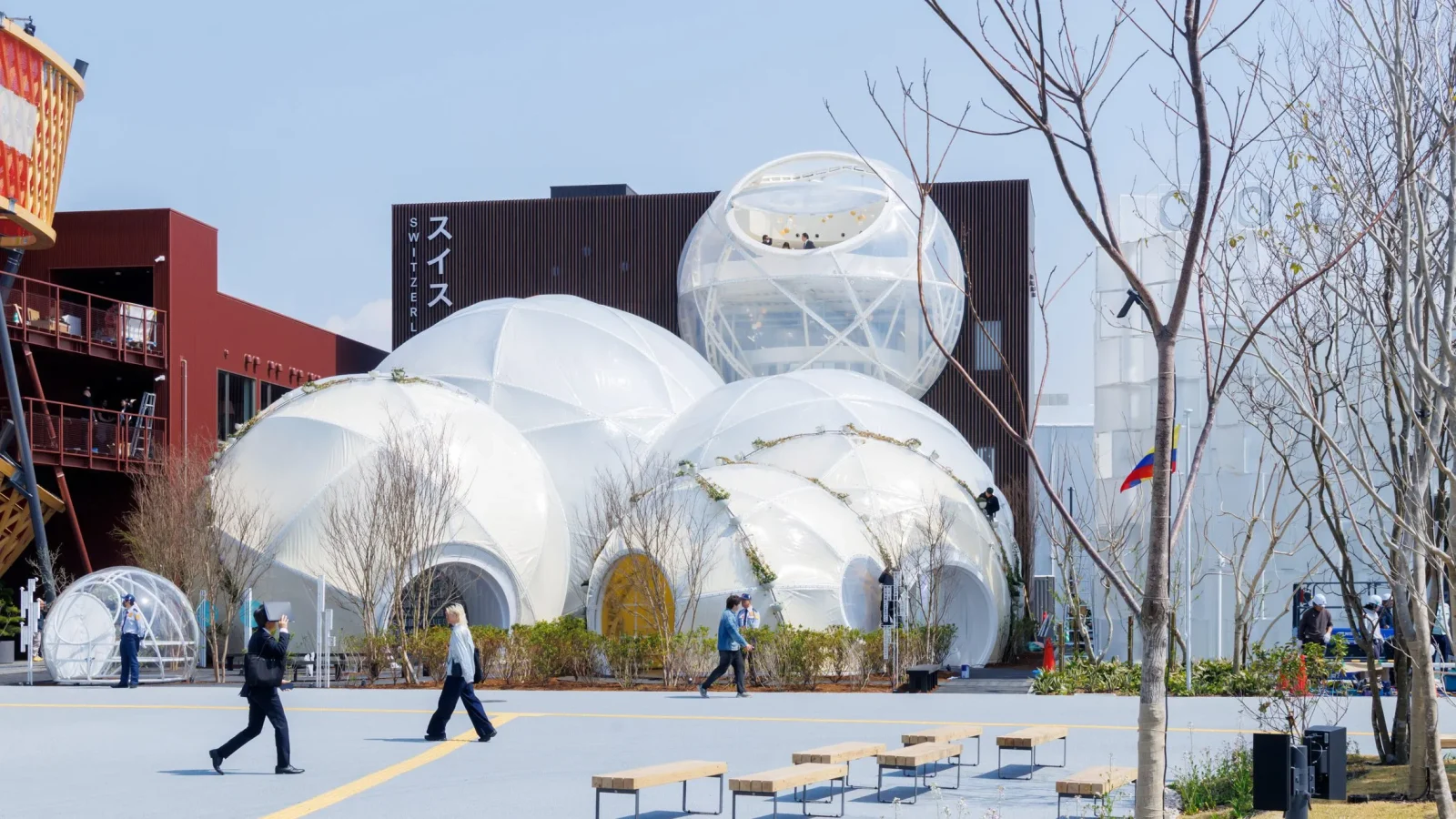
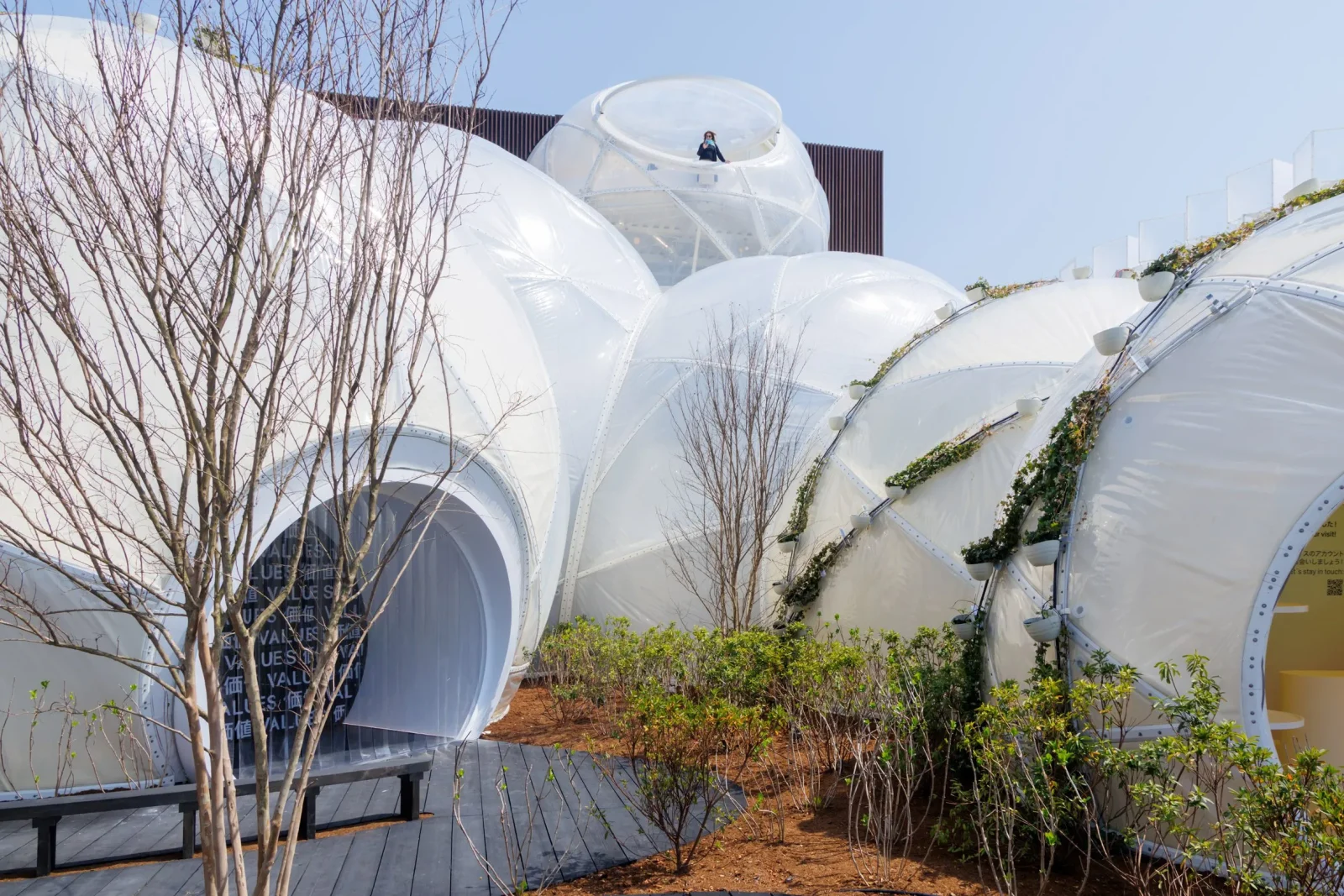
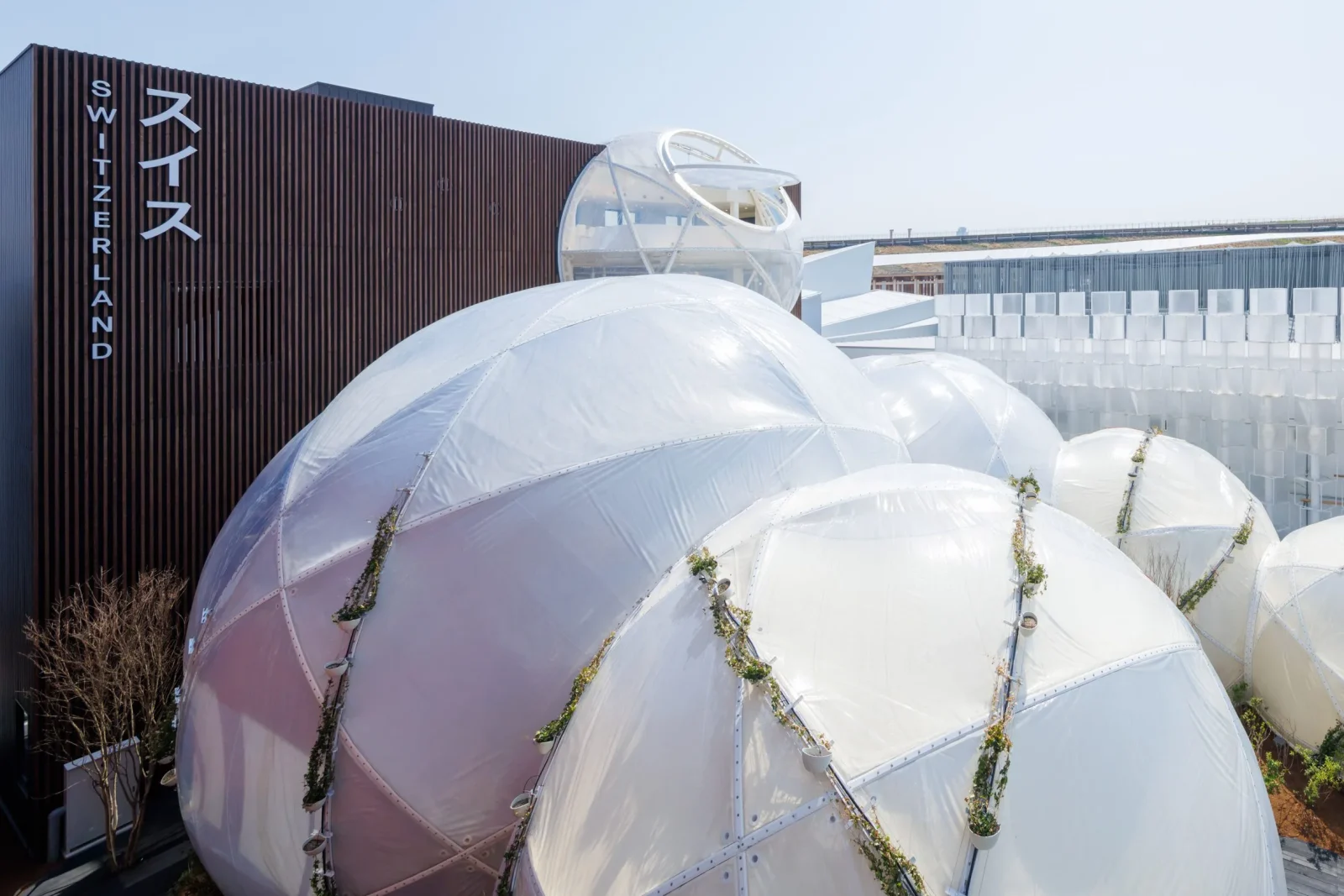
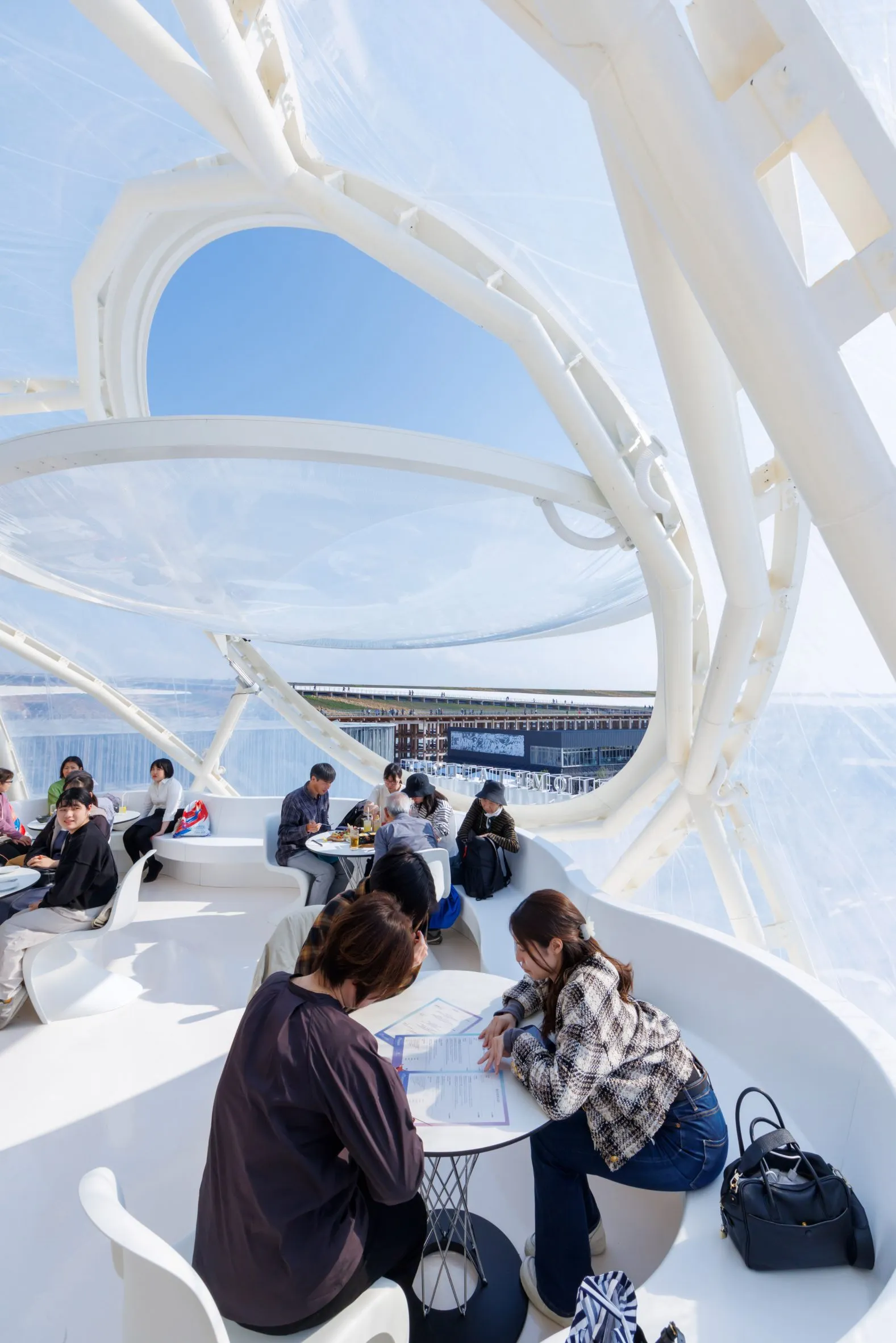
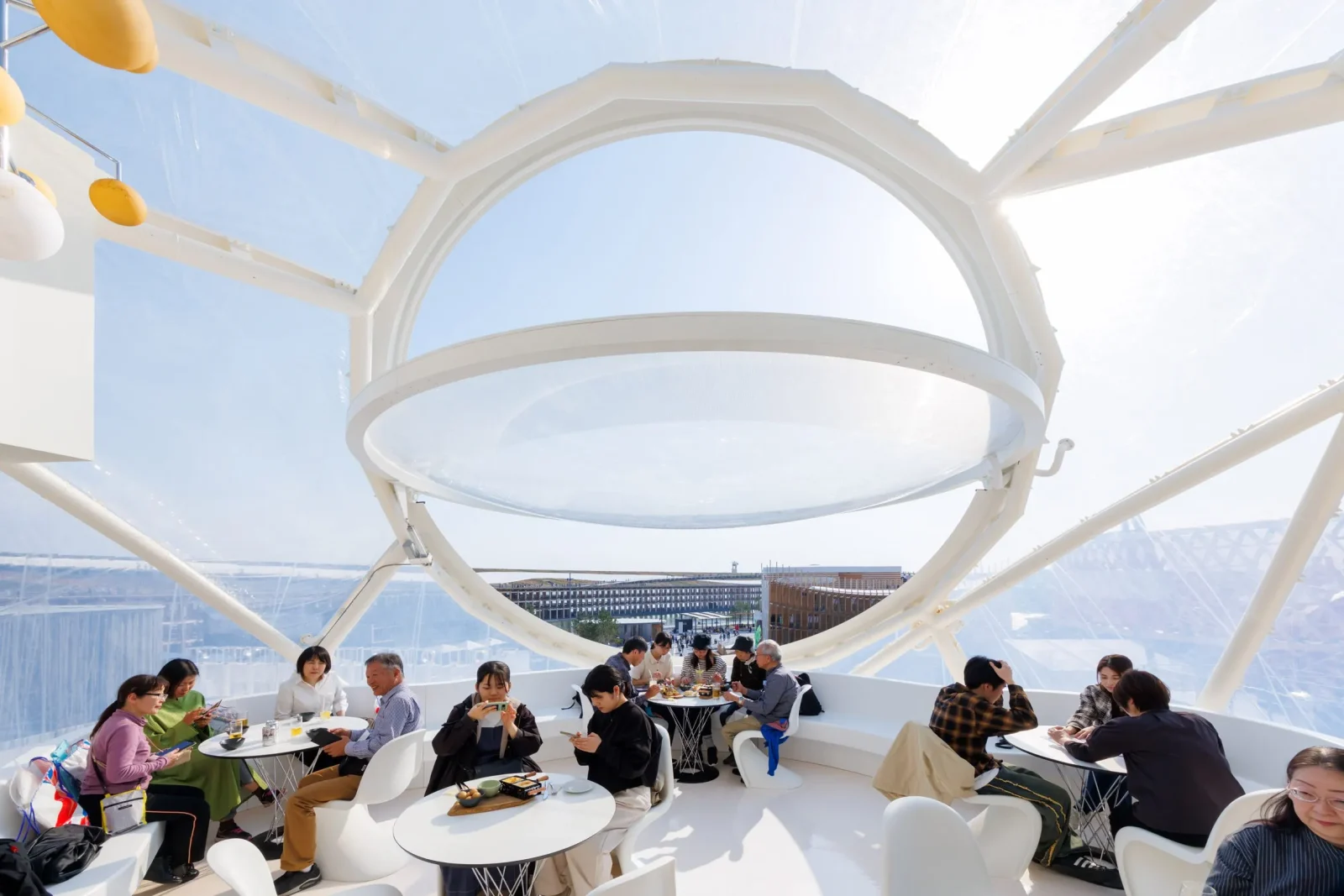
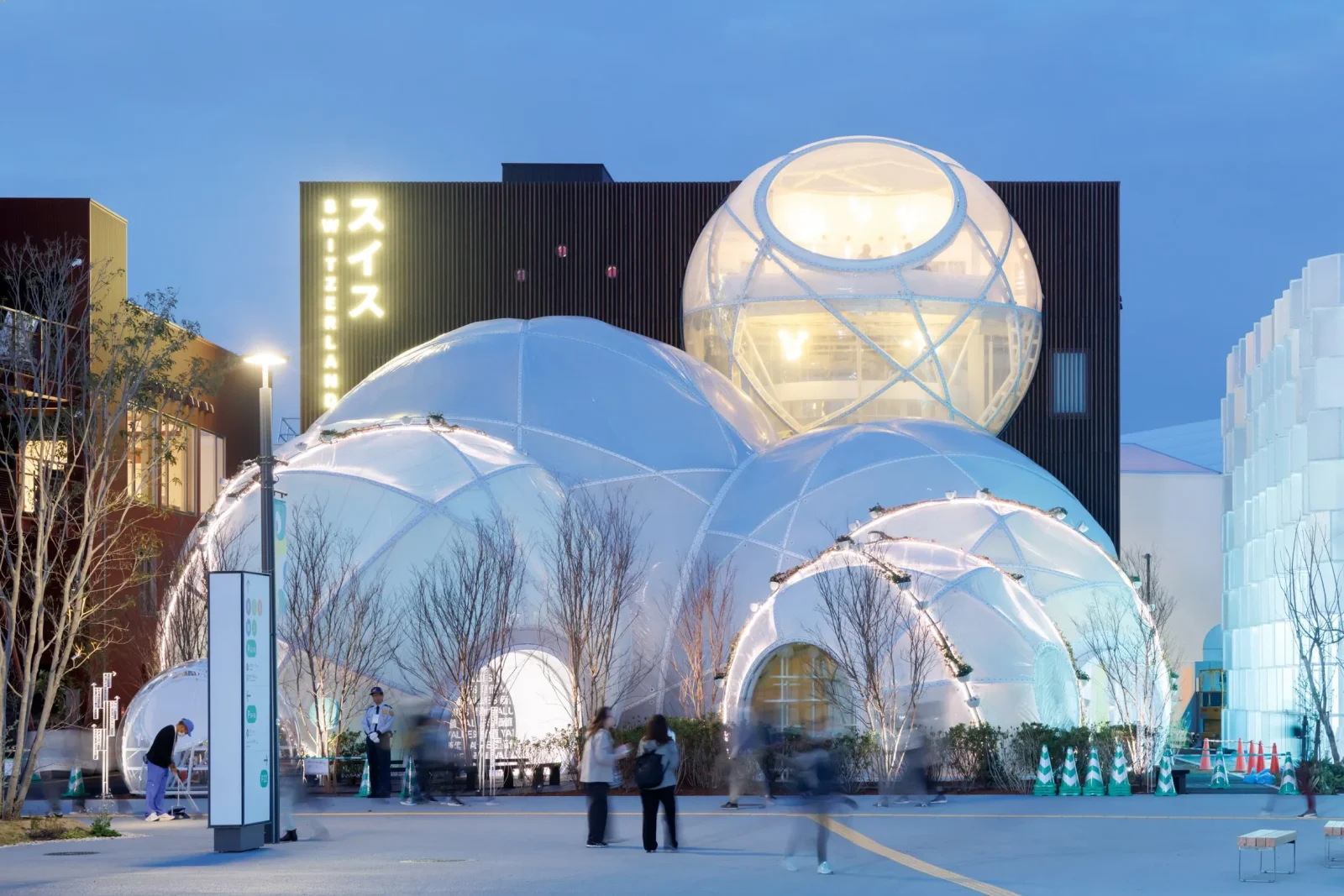
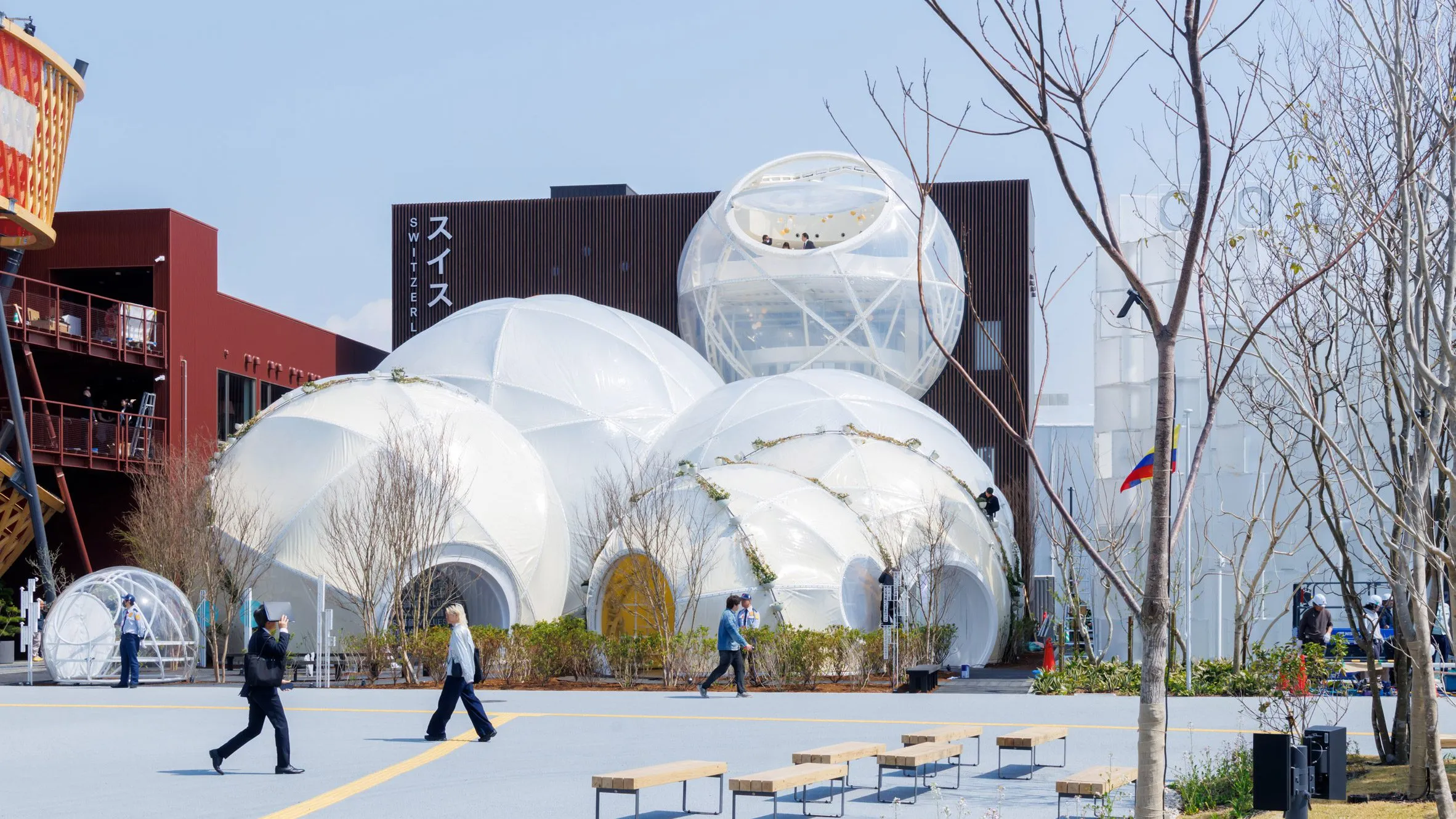
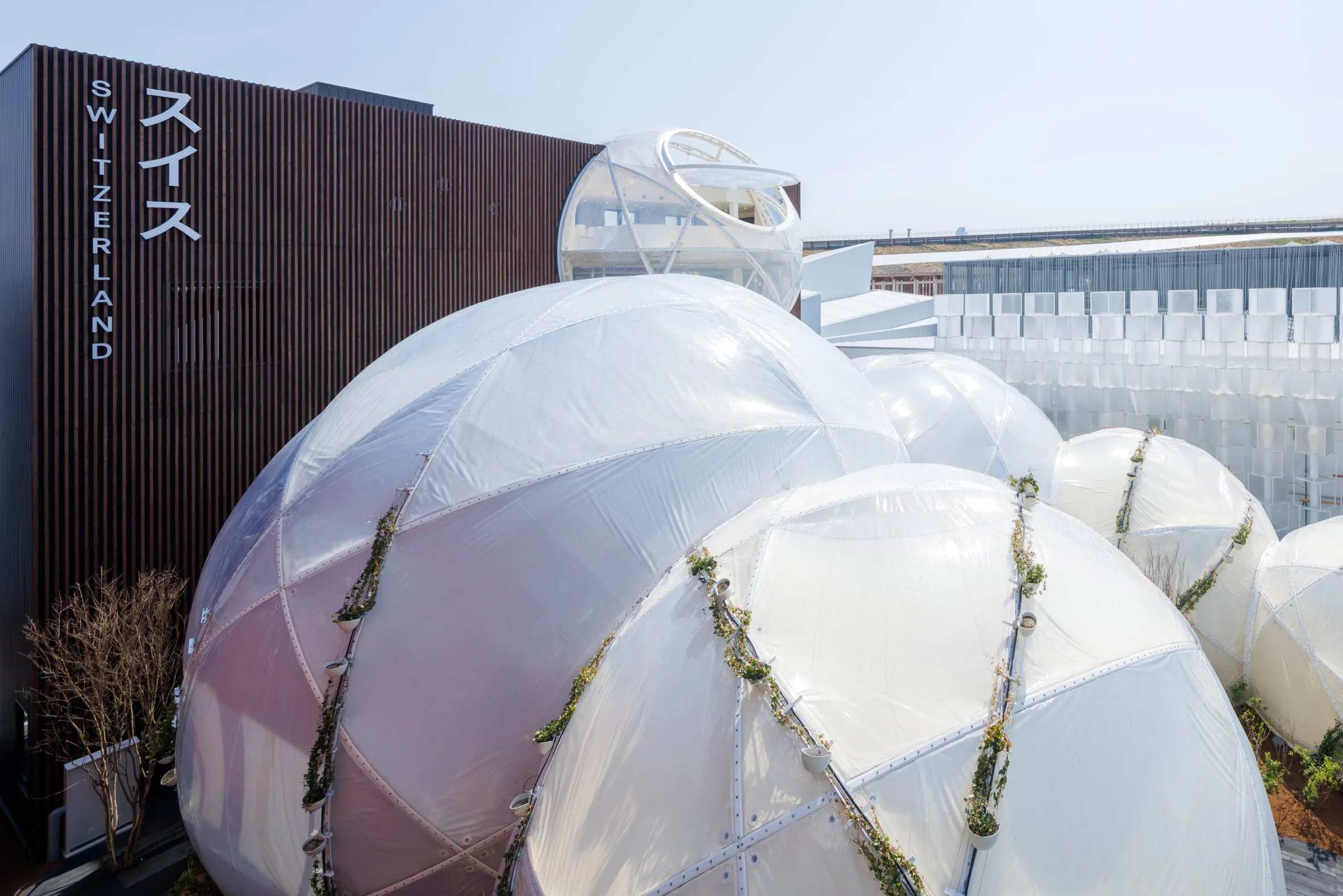
The Switzerland Pavilion for Osaka Expo 2025 follows the theme “From Heidi to High Tech.” It was created with NUSSLI and Bellprat Partner and presents Switzerland as a place rooted in its Alpine past while active in technology and research. The structure is built from a set of spherical rooms set in a planted landscape. Each sphere uses an outer ETFE membrane with inner PVC and PES layers on a light steel frame.
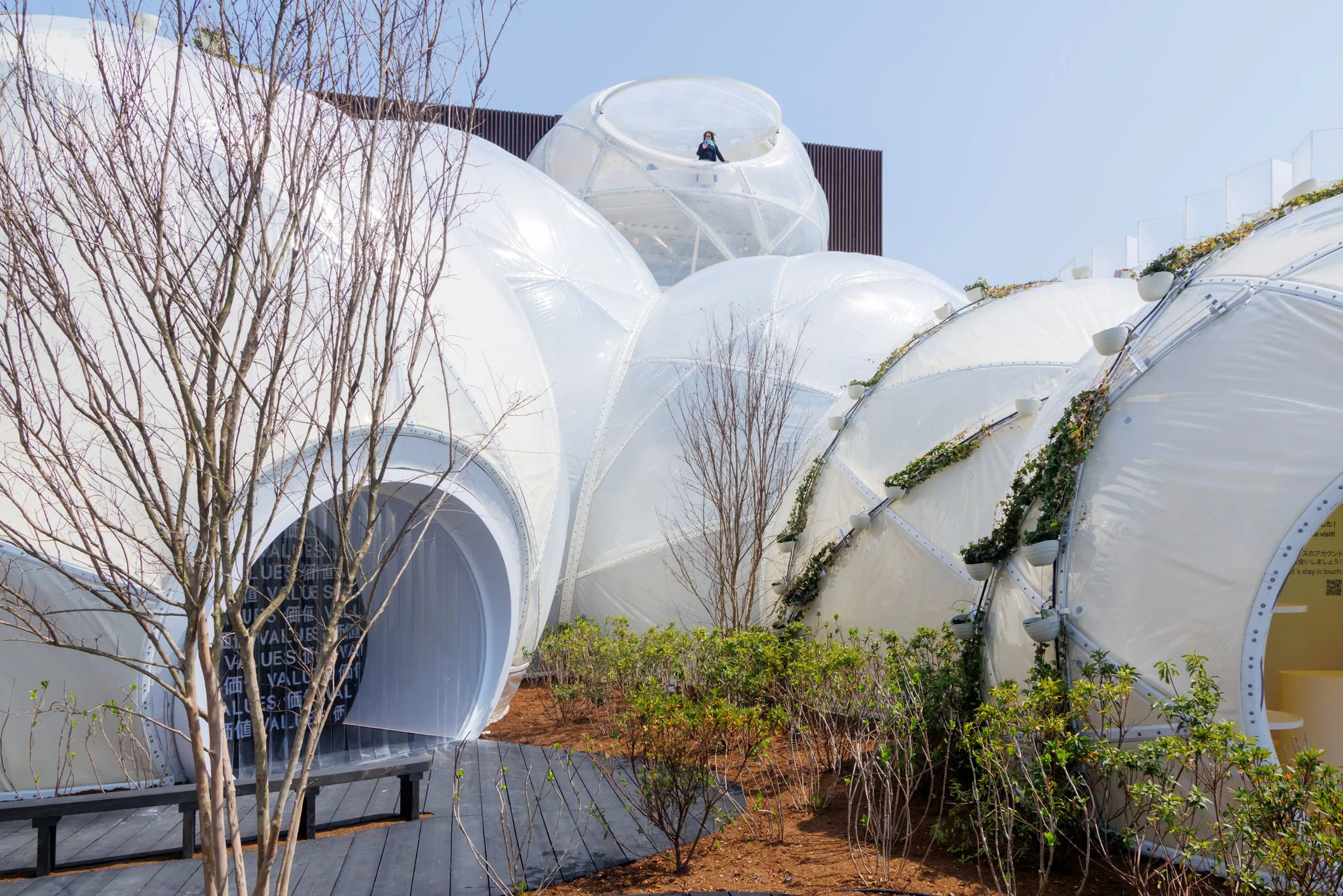
The entire shell weighs about 400 kilograms, which is about one percent of a typical building envelope. Because of this low weight, components can be moved without heavy equipment and in some cases even by cargo bike. The design also plans for reuse. After the Expo, the membrane material and many modular parts will be turned into furniture or other products.
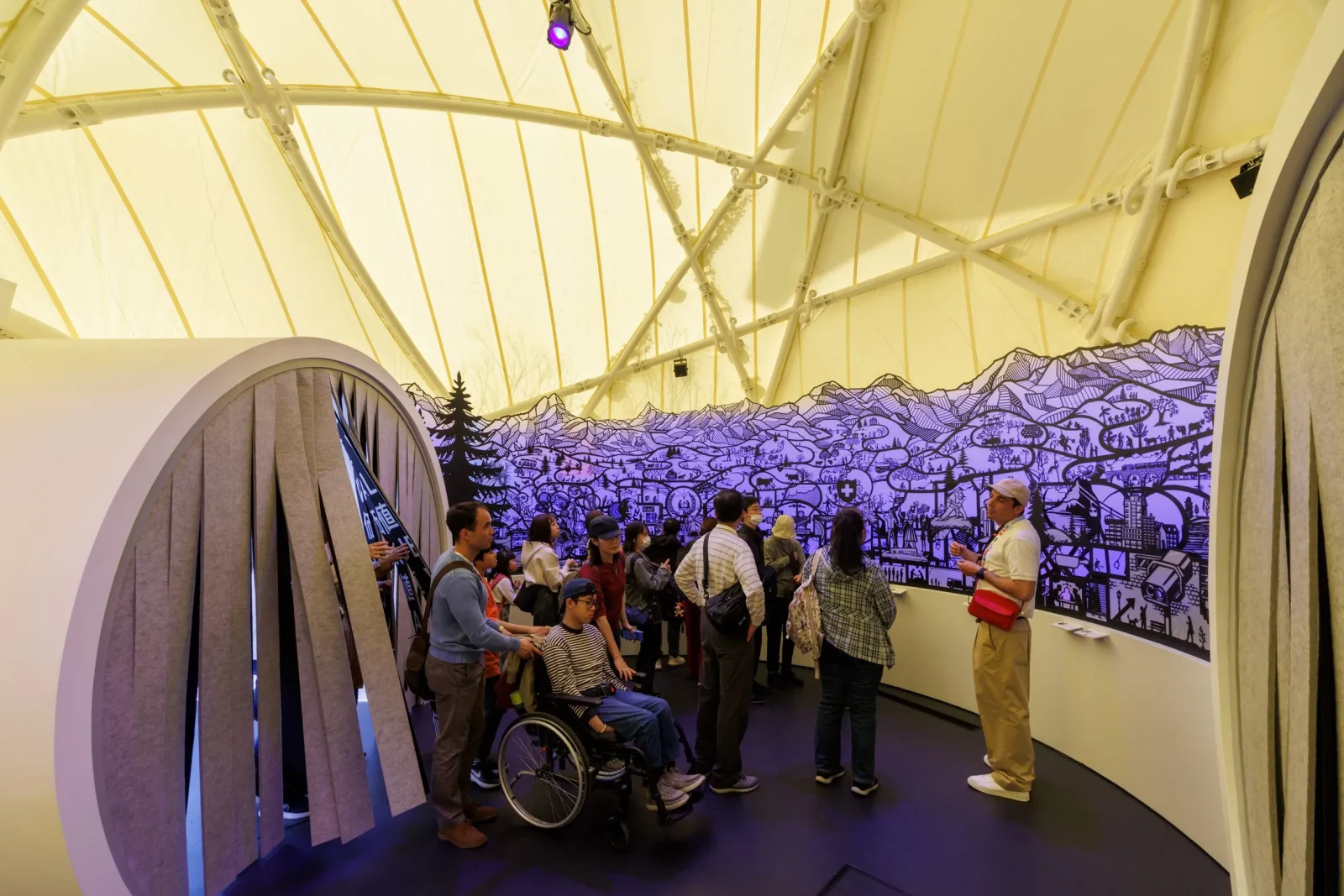
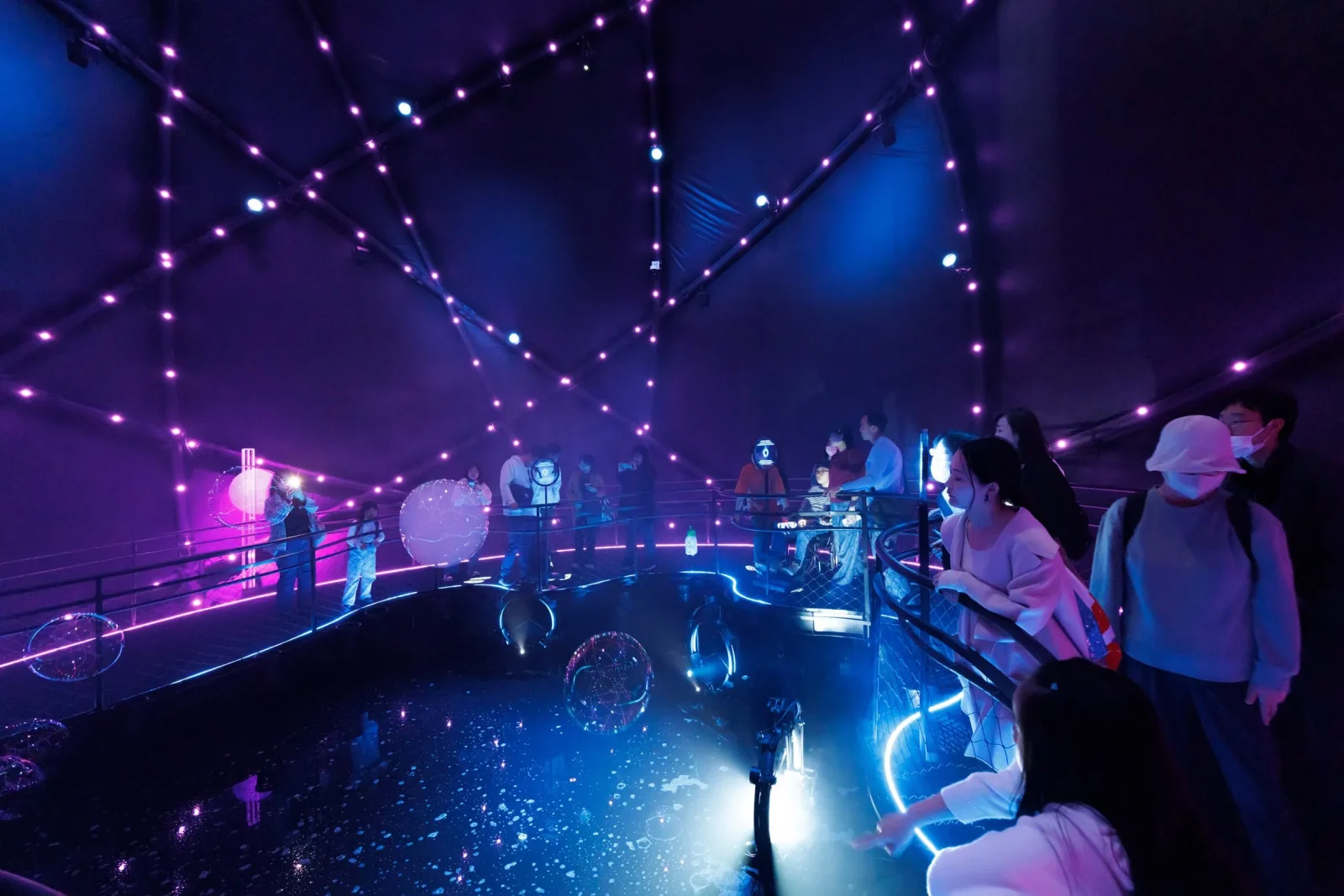
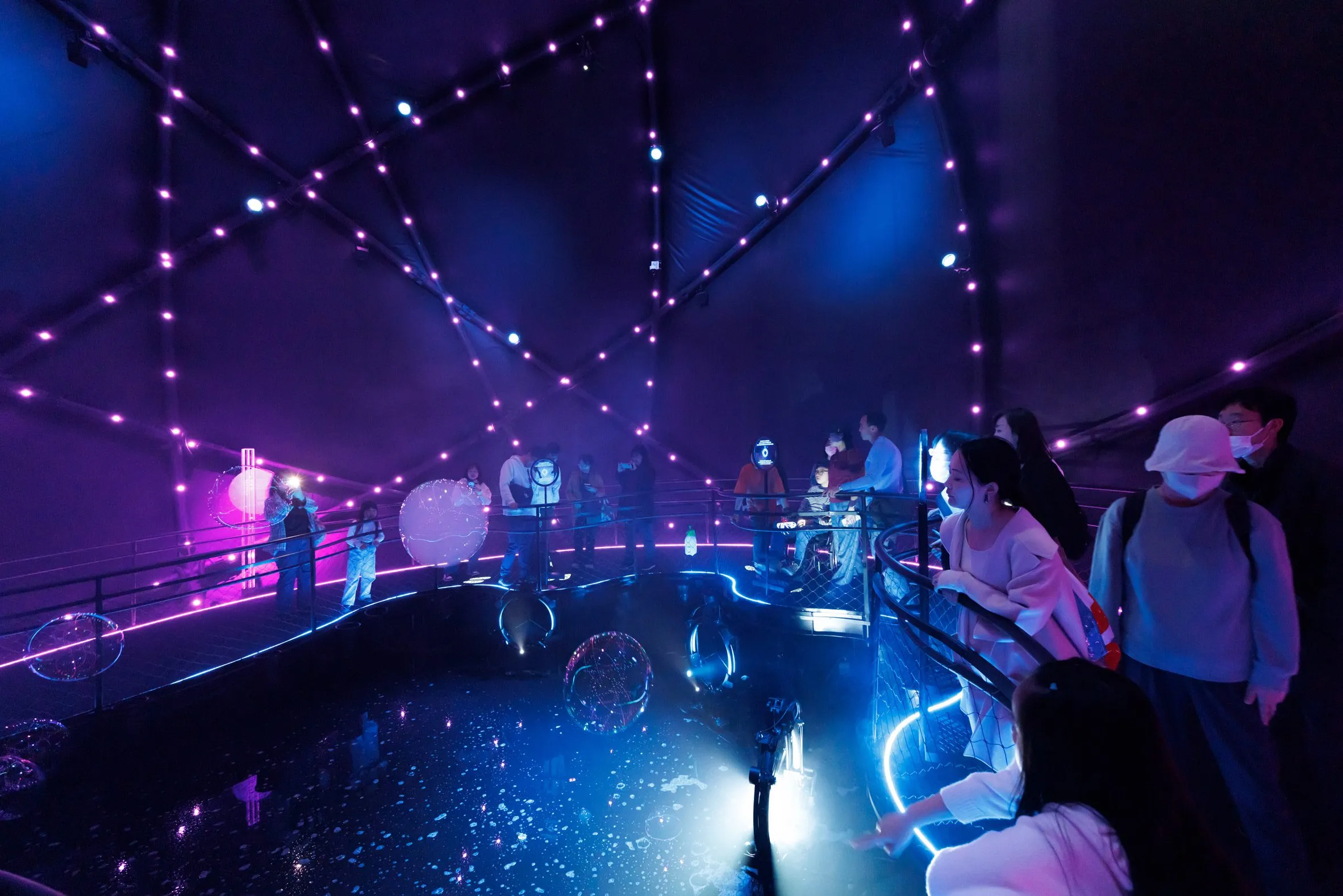
Inside, visitors move through four spheres, each with its own role. The first introduces Swiss values through a large layered paper cut that shifts as people walk by. The second invites visitors to whisper ideas for the future that become a bubbling visual piece as they leave. The third shows current work from Switzerland in robotics, AI, health, nutrition, climate, and energy. Displays use dichroic glass and controlled light to create a clear sense of change and motion.
The final sphere focuses on culture and joy, with Heidi as a familiar figure for Japanese audiences. Above the sequence of rooms, a small café serves Swiss dishes with some local touches and looks out across the Expo site. A shop nearby carries limited-edition Swiss products.
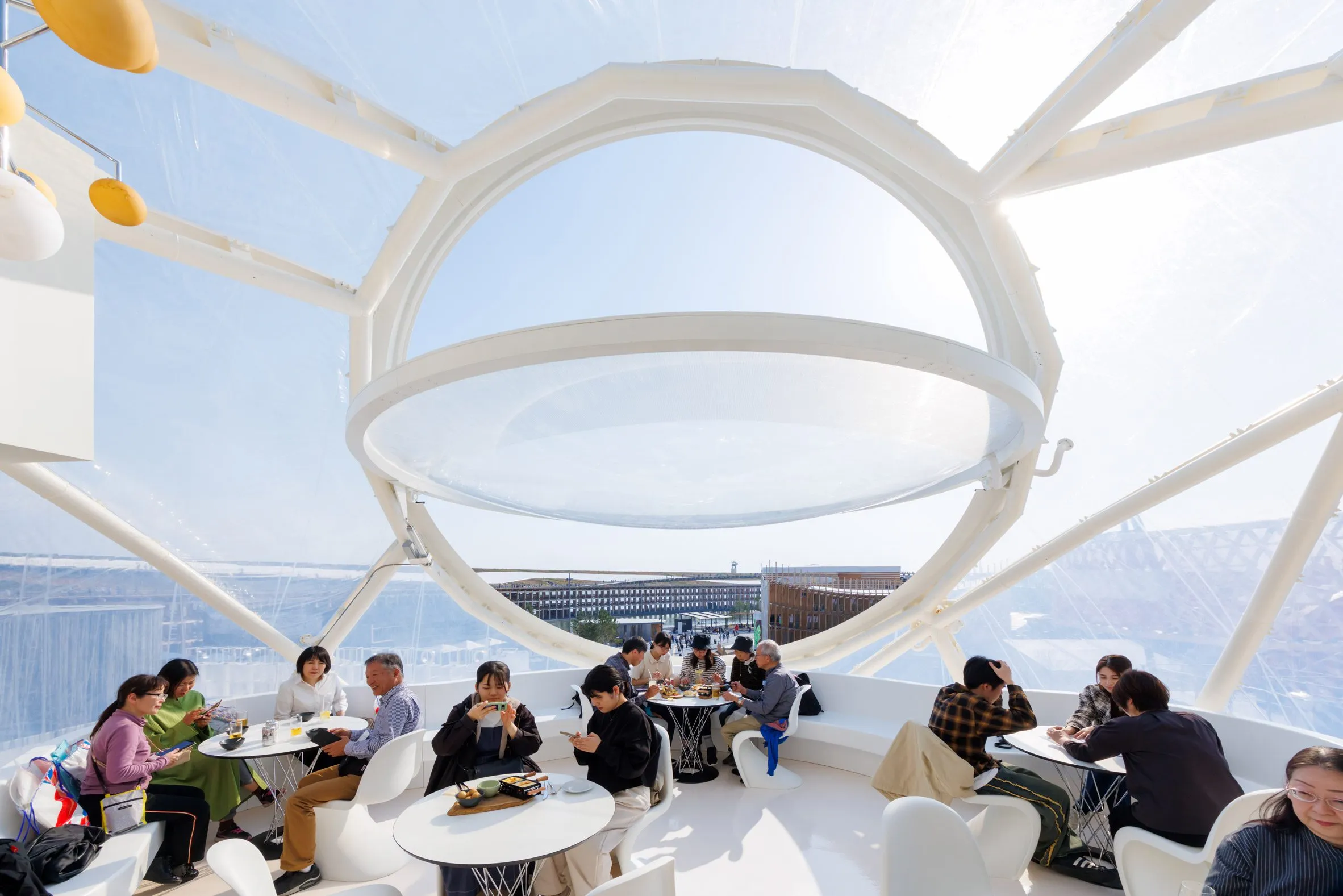
The lightweight foil system keeps material use and transport impacts low. Local vines such as wisteria will grow over the spheres and soften the structure as the event progresses. The wider aim is to show how a national pavilion can combine low-impact construction with a clear presentation of research, culture, and creativity.
10. UAE Pavilion
Architect: Earth to Ether Design Collective
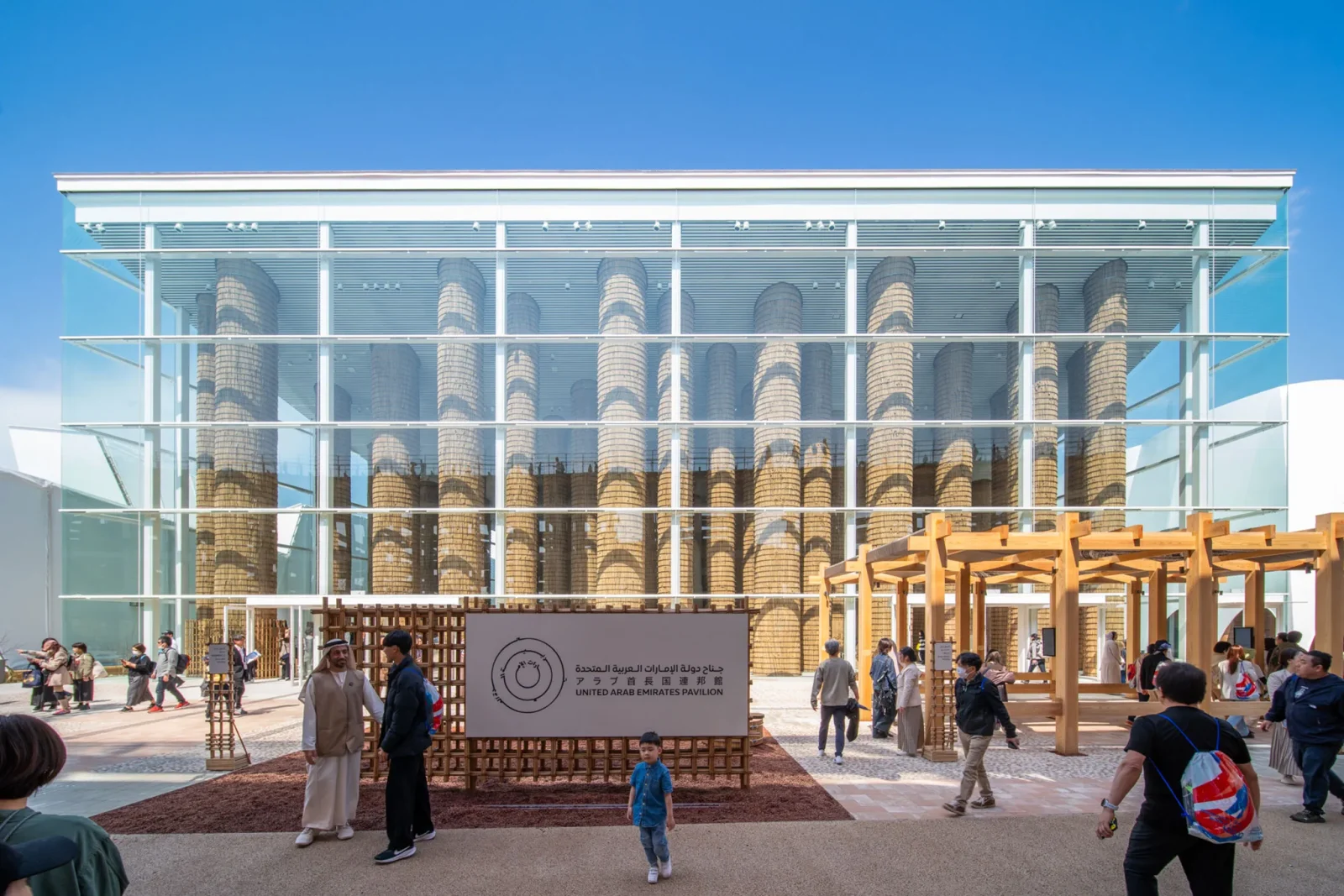
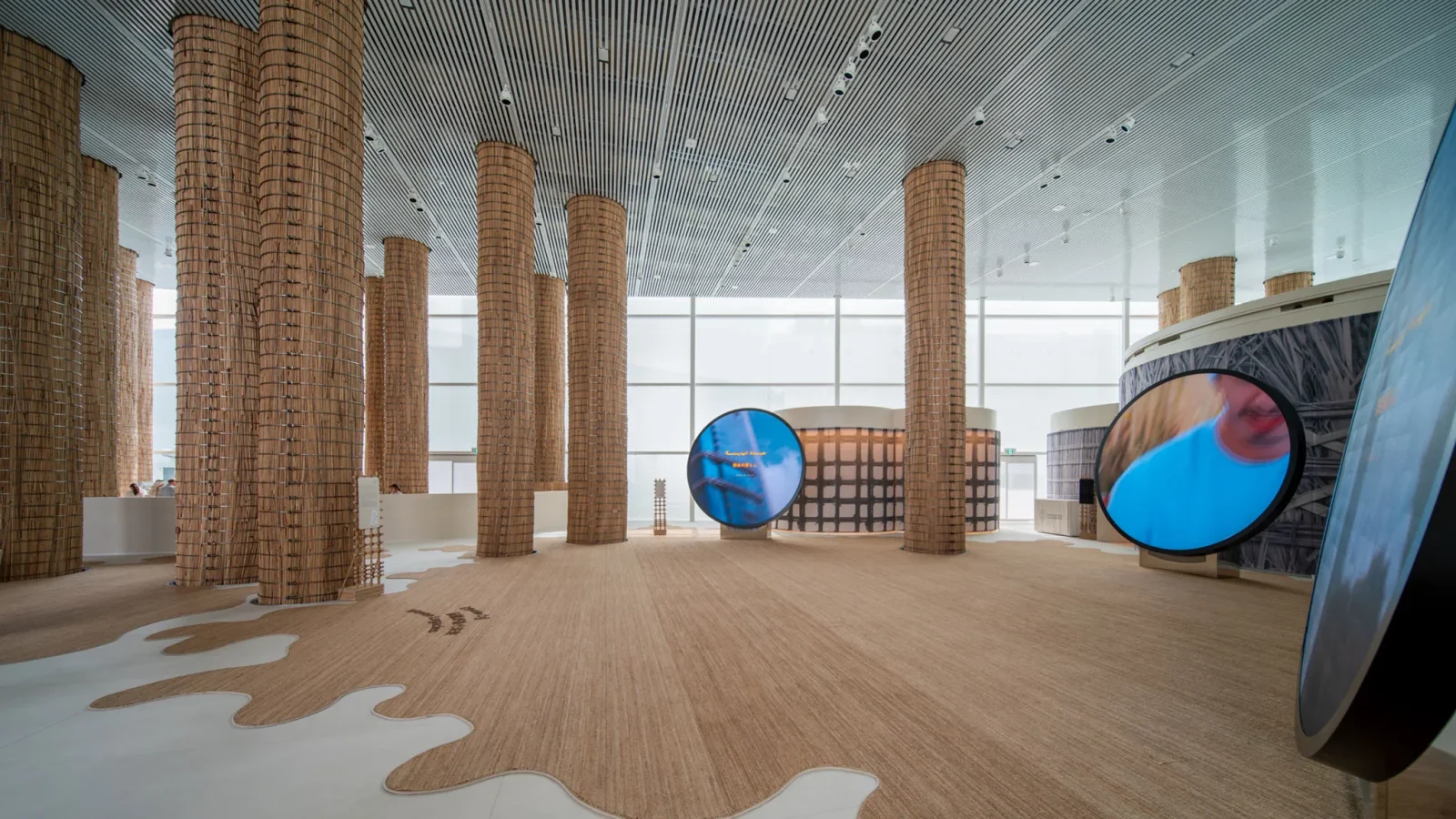
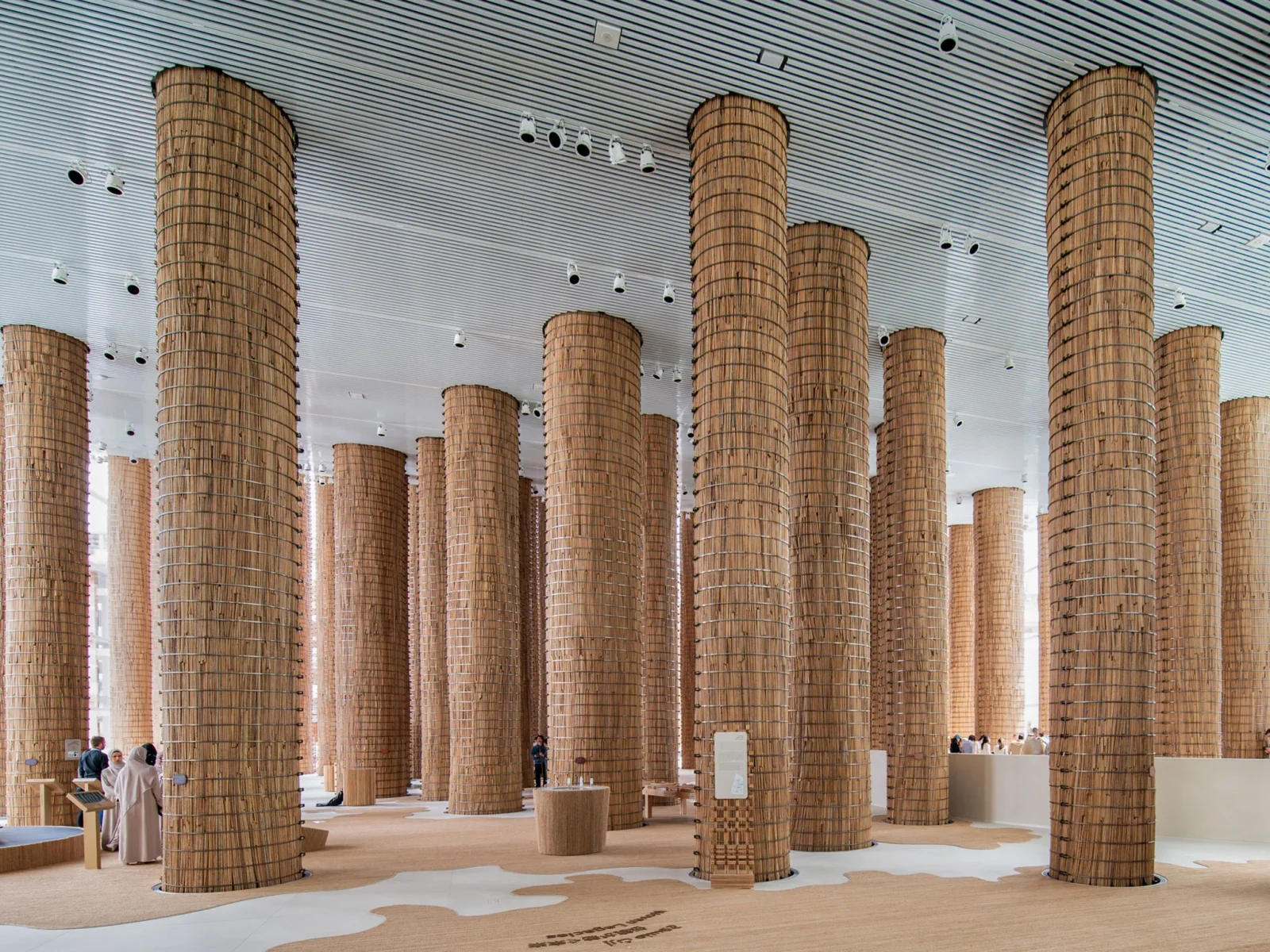
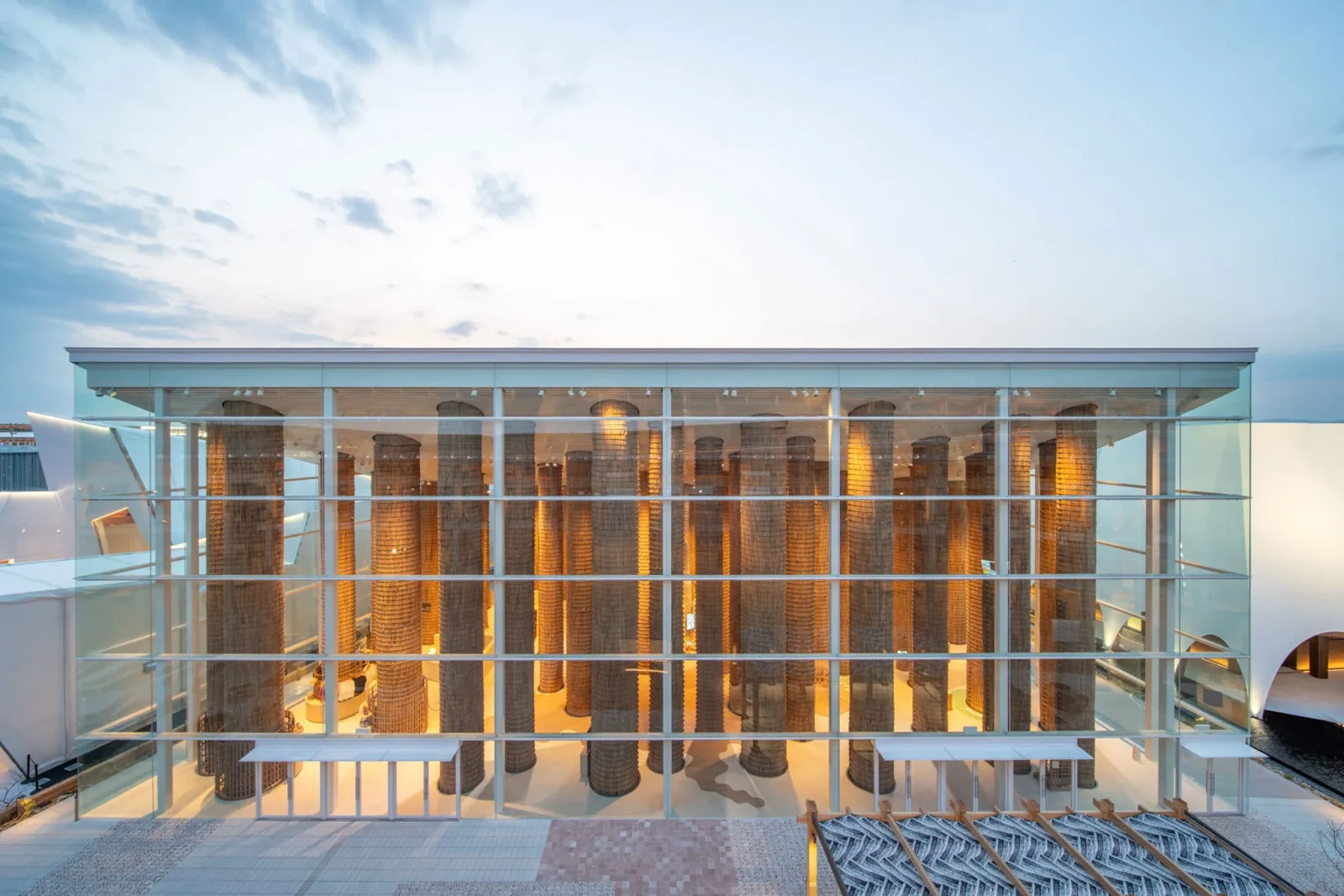
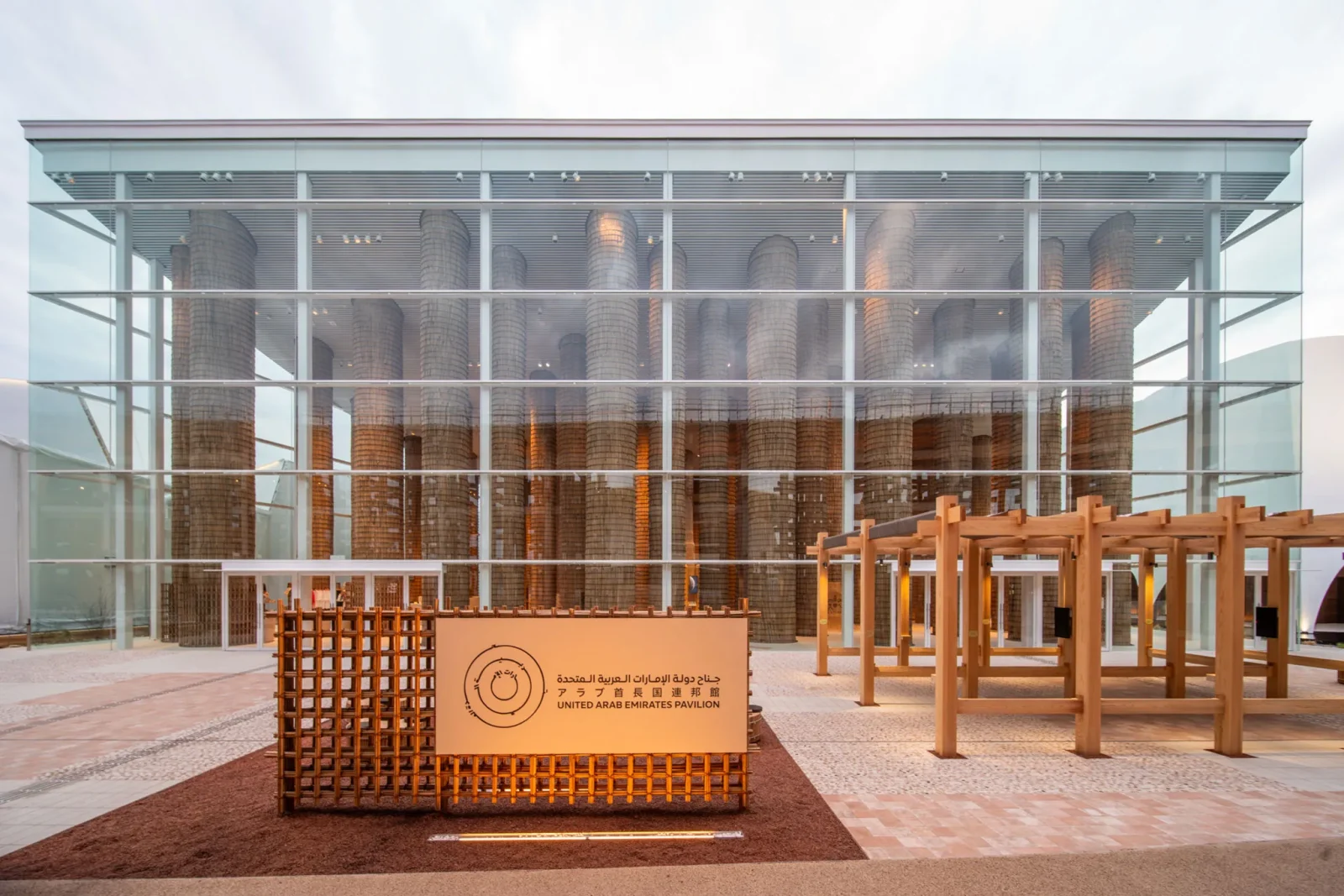
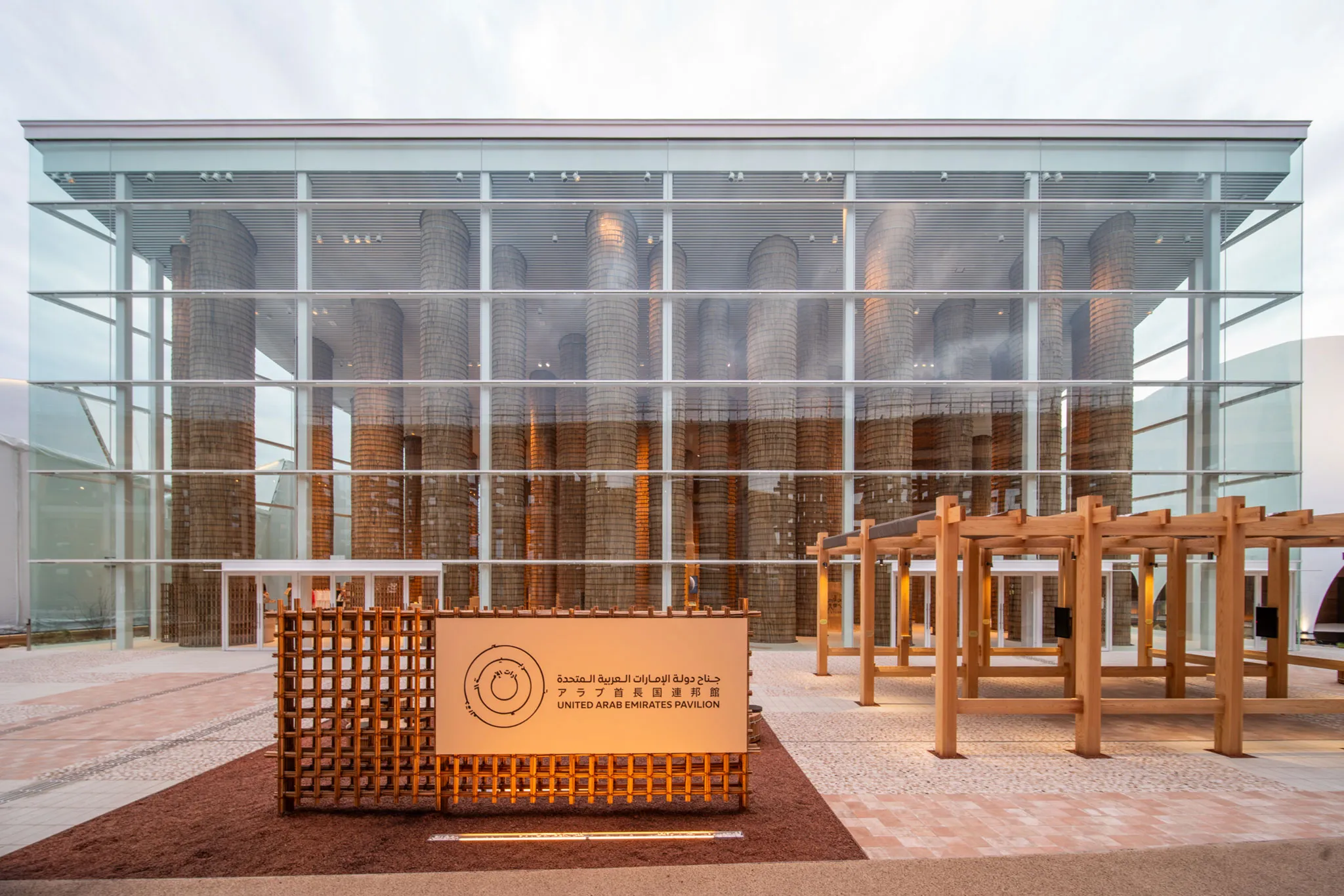
The pavilion is designed by the Earth to Ether Design Collective, a collaborative group from the UAE and Japan. Under the name “Earth to Ether,” the pavilion aims to bring together the heritage of the UAE and a vision for the future, using traditional materials and sustainable design in a contemporary context. The design draws deeply on the symbolic value of the Date Palm, a tree central to Emirati identity.
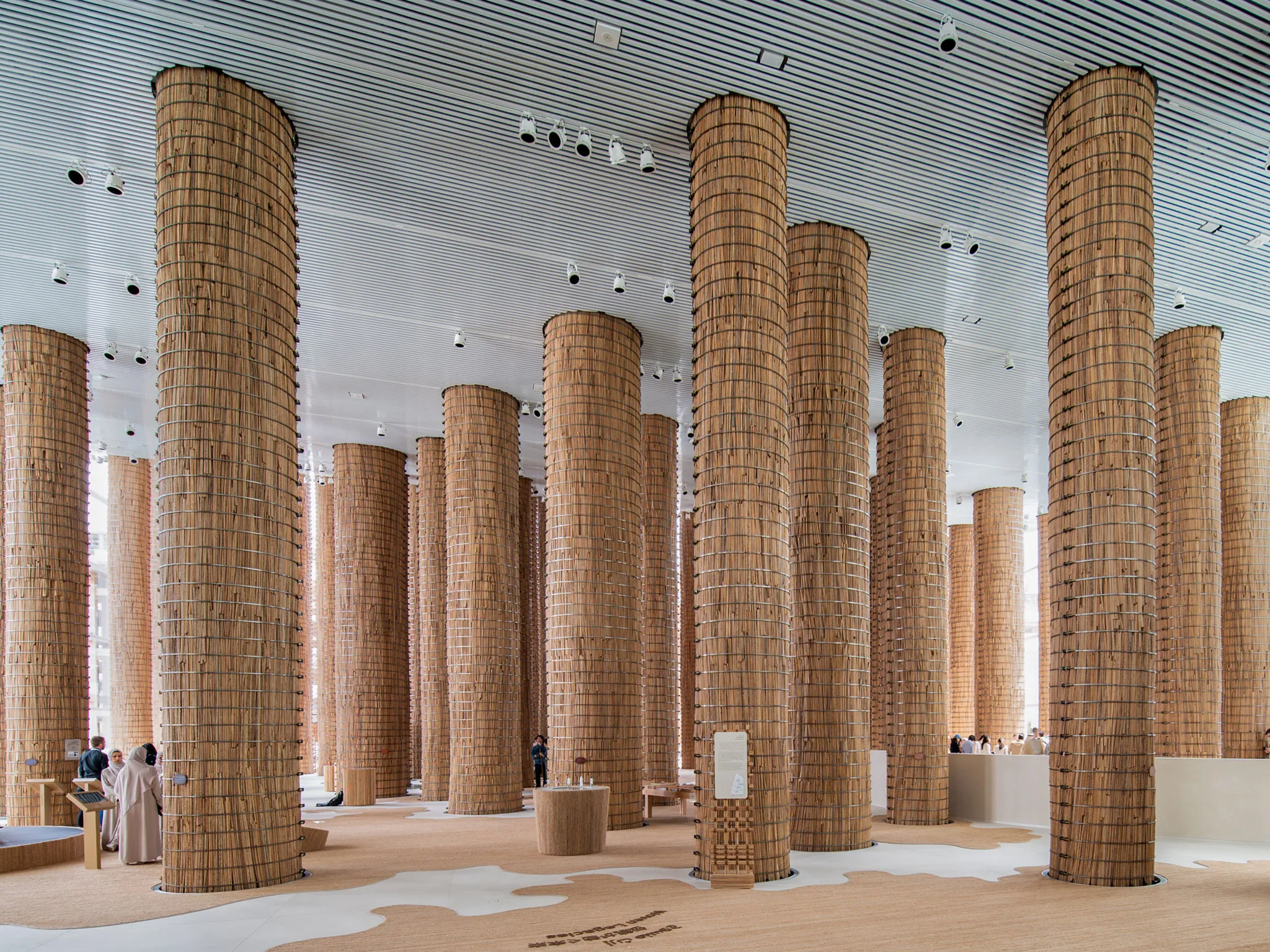
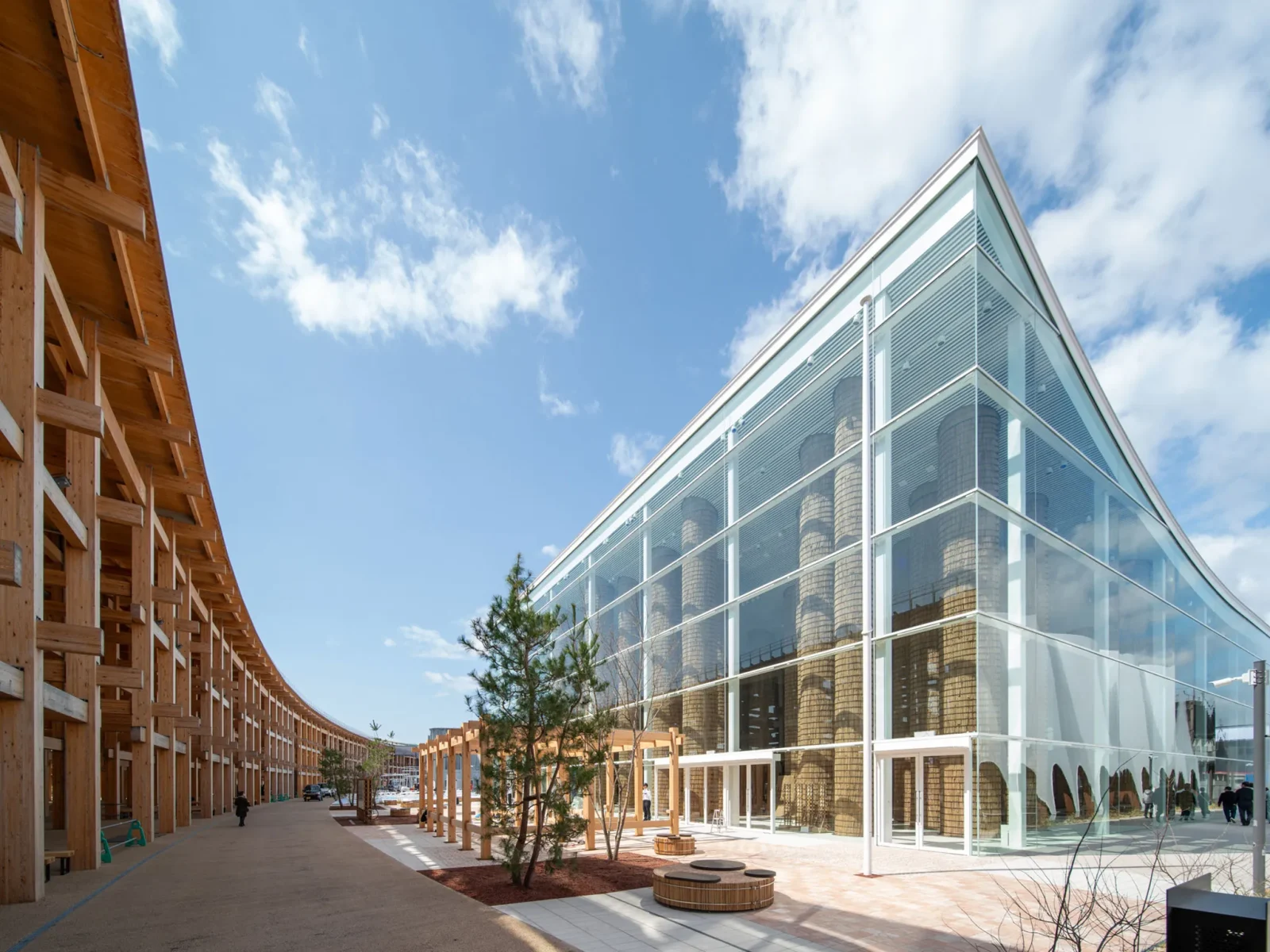
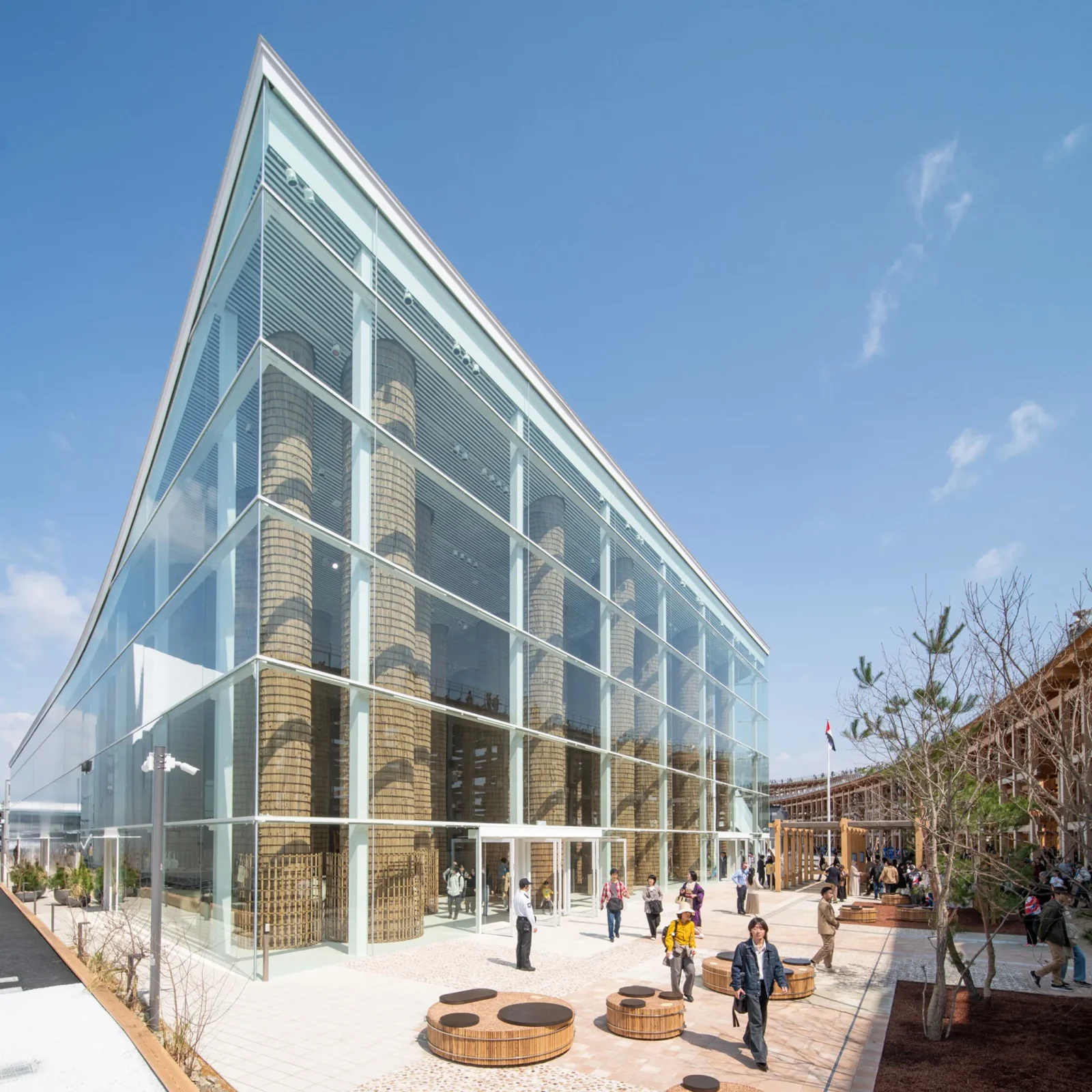
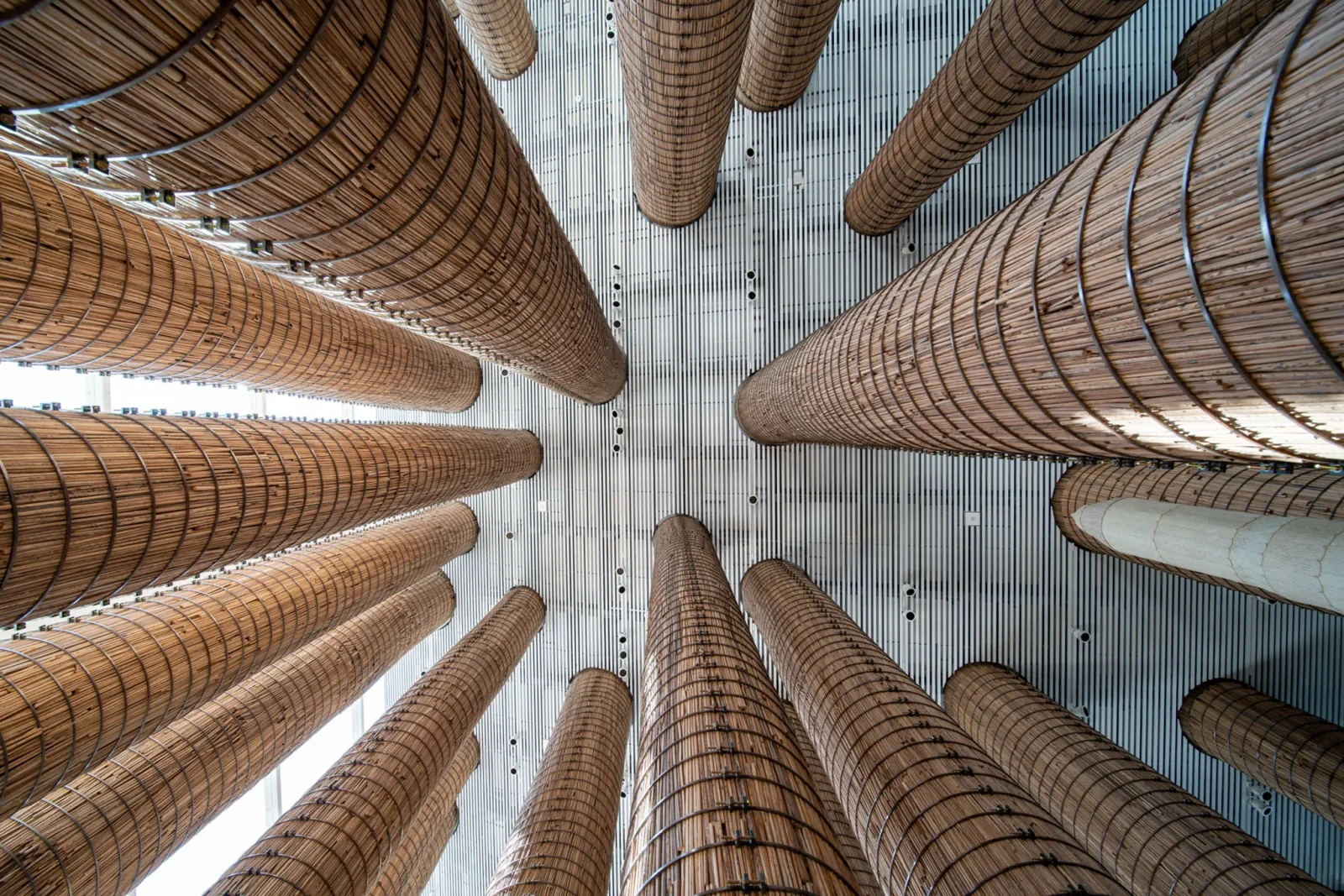
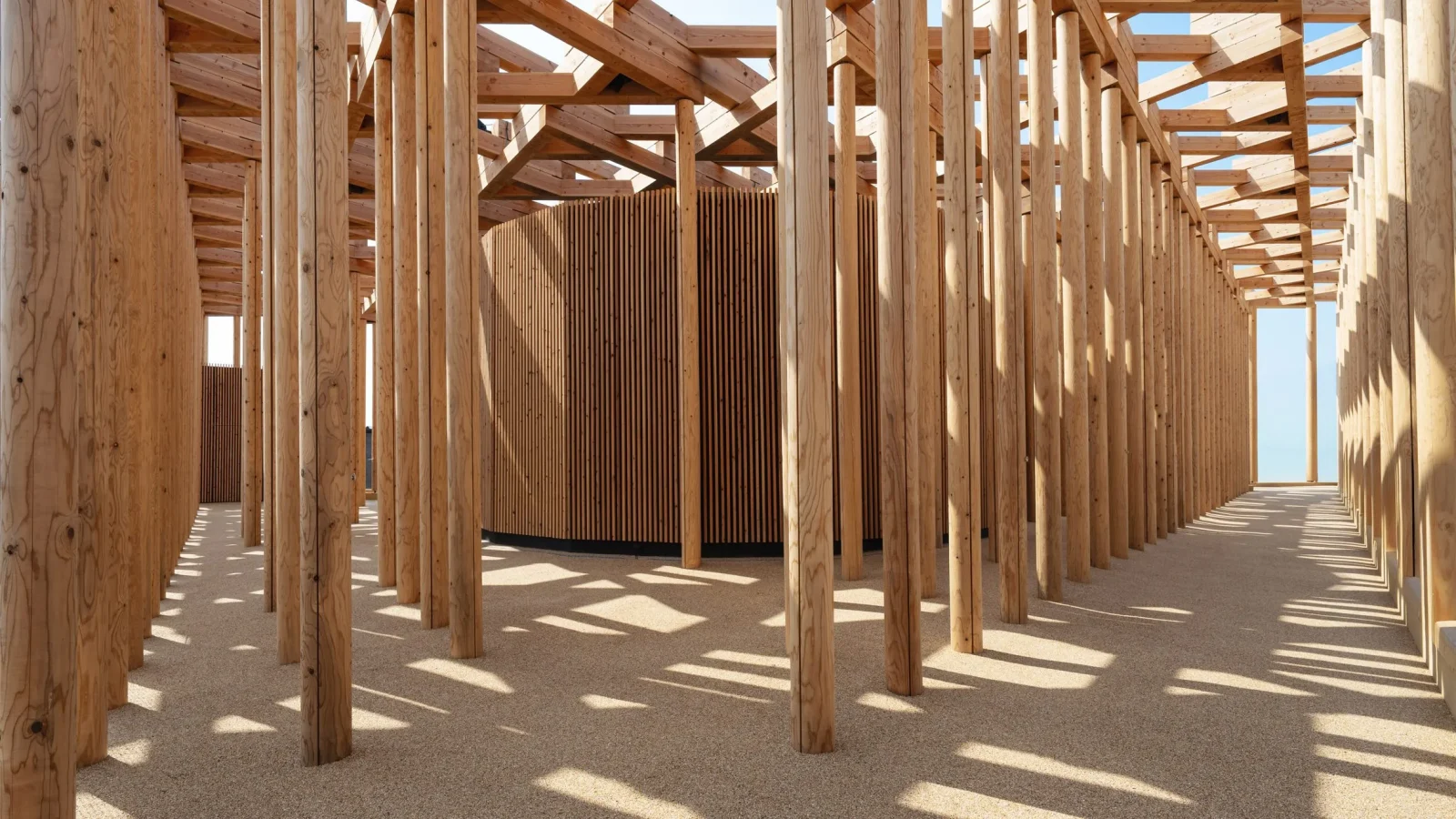
The pavilion’s main structural feature is a “forest” of 90 tall rachis-columns, each reaching up to 16 metres. These columns are crafted from waste material from date palms, re-imagining traditional vernacular architecture (the UAE’s “areesh” style) through modern, sustainable construction. The result is a shaded, open, pavilion-like canopy that evokes a desert oasis while offering contemporary architectural form.
The design corresponds to date-palm agricultural byproducts with skilled Japanese woodworking and timber technology brought by collaborators like Japanese firms specialized in wood construction. Additionally, floor and paving elements at the entrance use innovations like “Datecrete,” a cement alternative made from crushed date seeds, underlining the commitment to circular, eco-conscious materials.
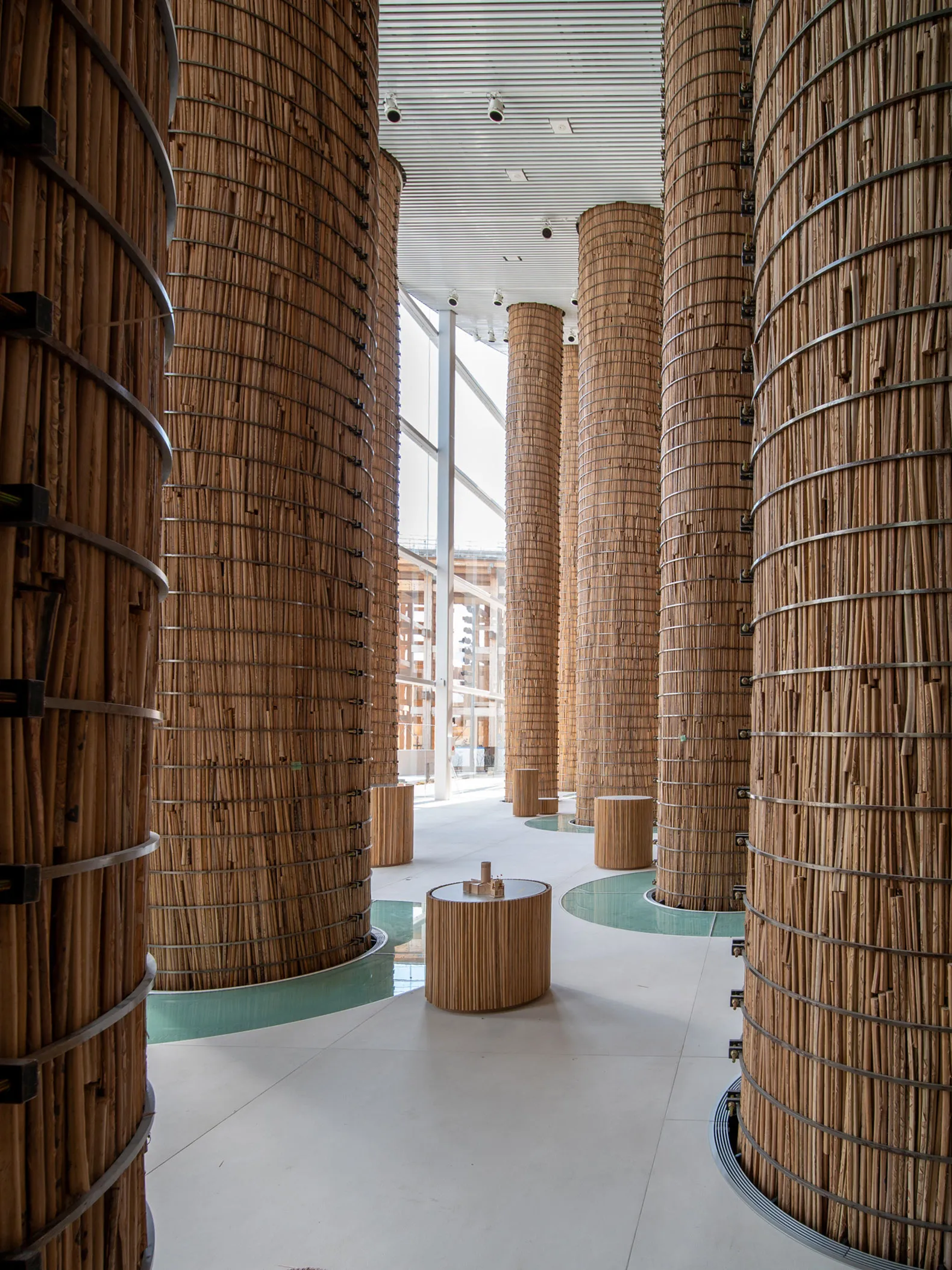
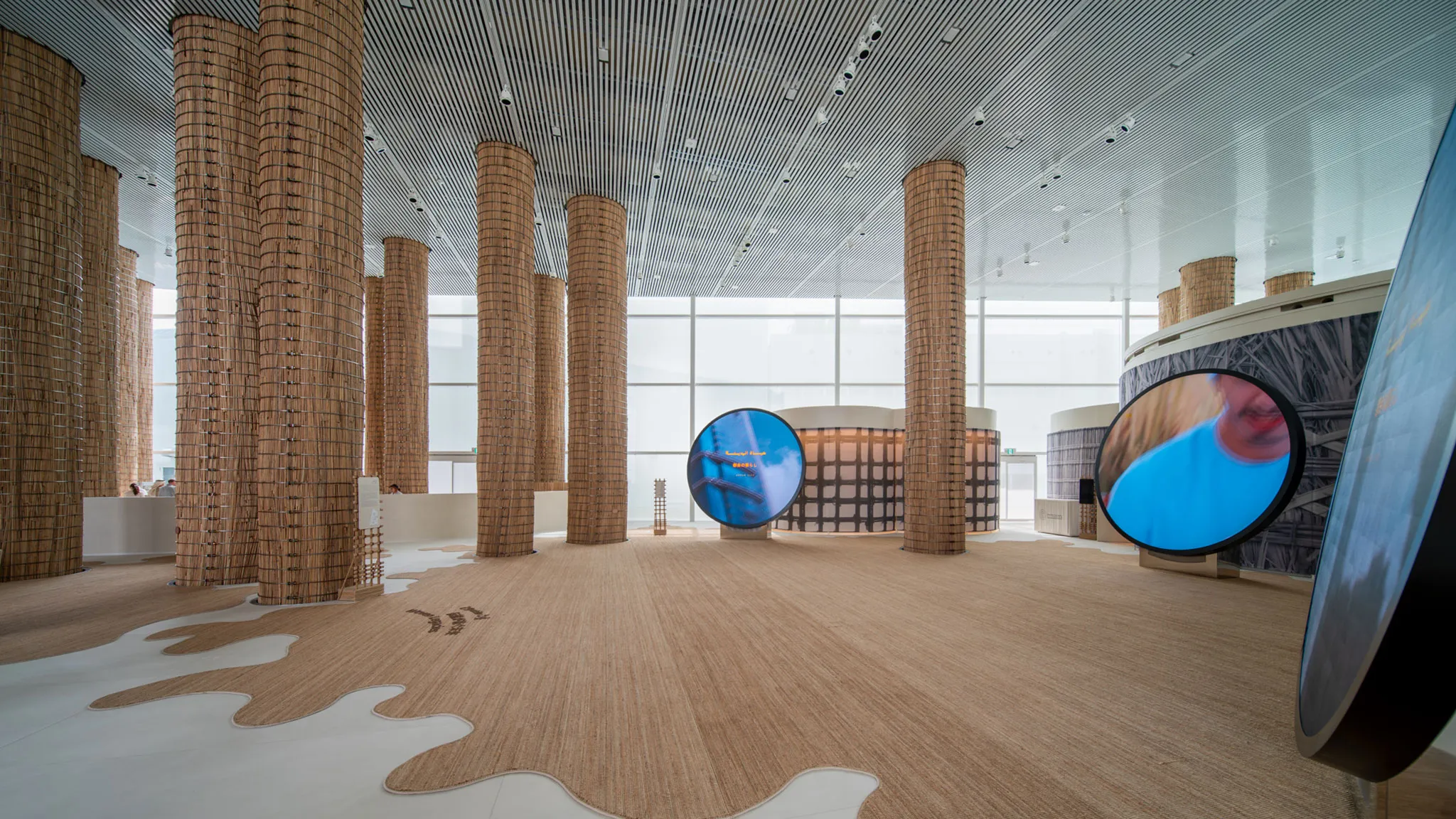
Beyond the structure, the pavilion weaves heritage, sustainability, and forward-looking endeavor into a multisensory visitor experience. Inside, exhibits and installations highlight the UAE’s cultural heritage, space exploration, healthcare innovation, sustainability, and visions for the future. The landscaping around the pavilion also reflects a meeting of cultures: Japanese-inspired “Satoyama” planting oak, red pine trees, cedar pergolas, combined with textures and tones evocative of the UAE’s environment, creating an atmosphere of shared tradition and global collaboration.
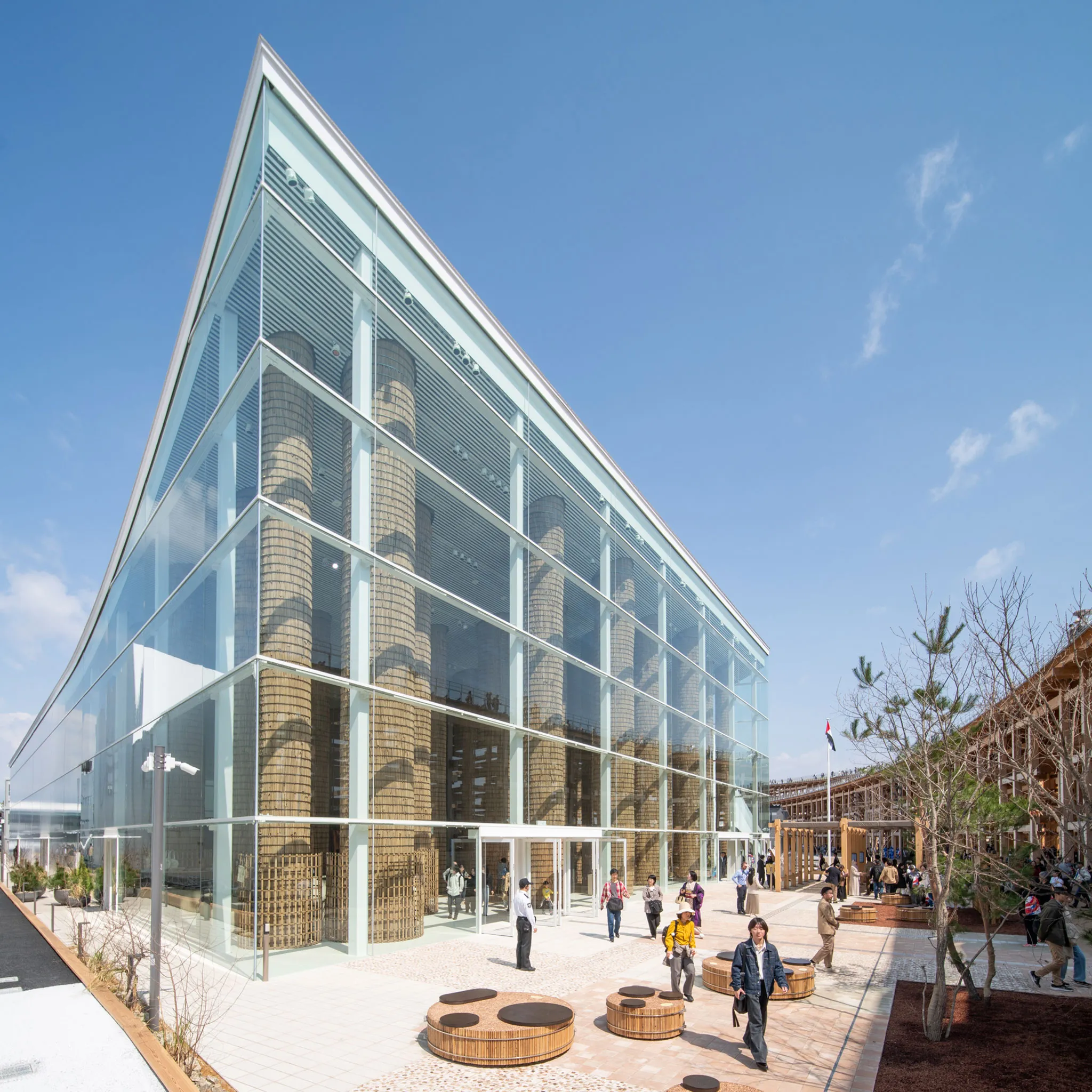
The pavilion has been widely recognized for its design excellence. It received a Silver Award at the Design for Asia Awards 2025, praised for the creative integration of architecture, heritage, and sustainability. When the Expo concluded, the UAE Pavilion was named one of the top three large national pavilions, a recognition of both its architectural and landscape design.
More Standout Pavilions from Osaka Expo 2025
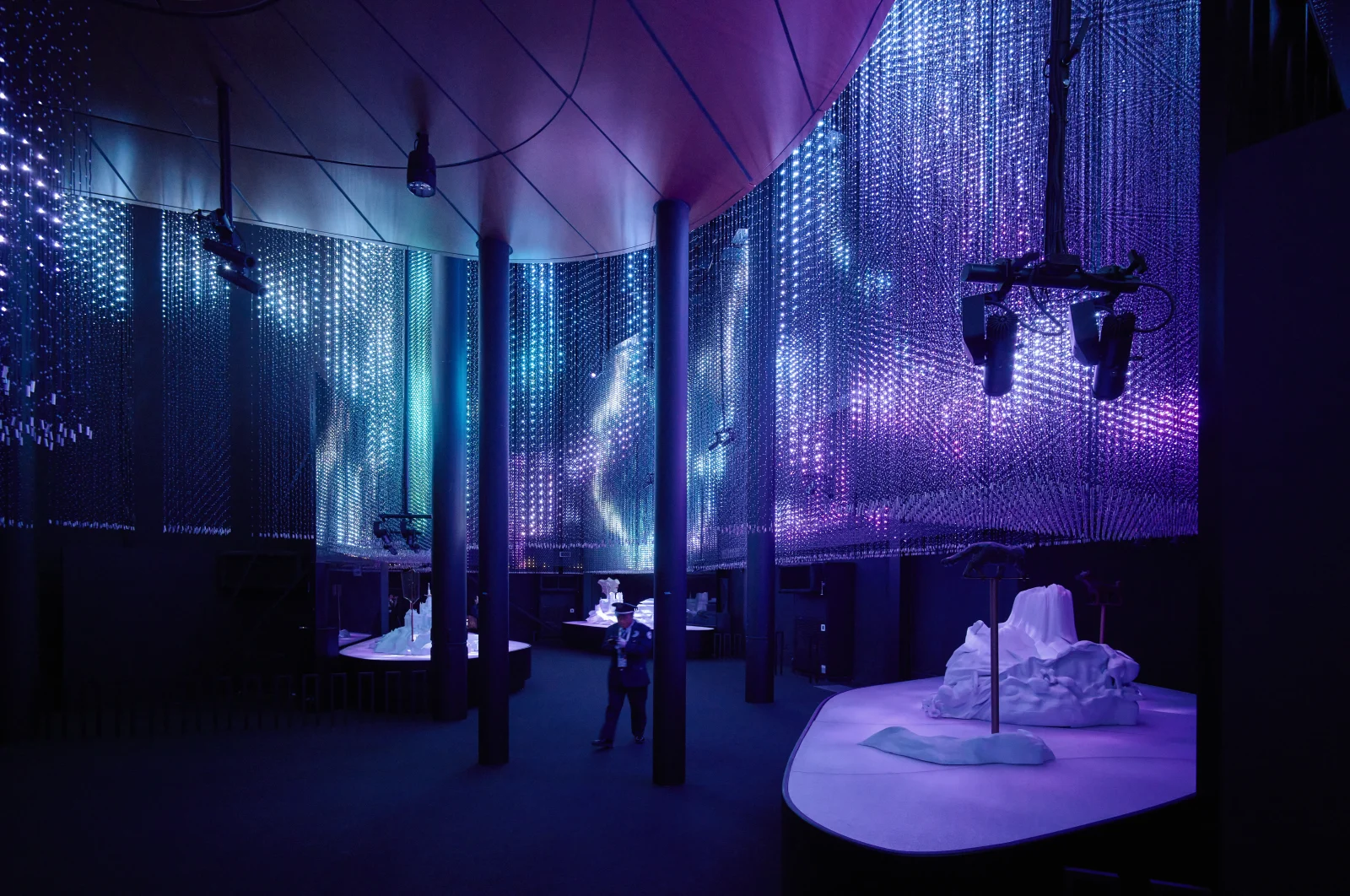
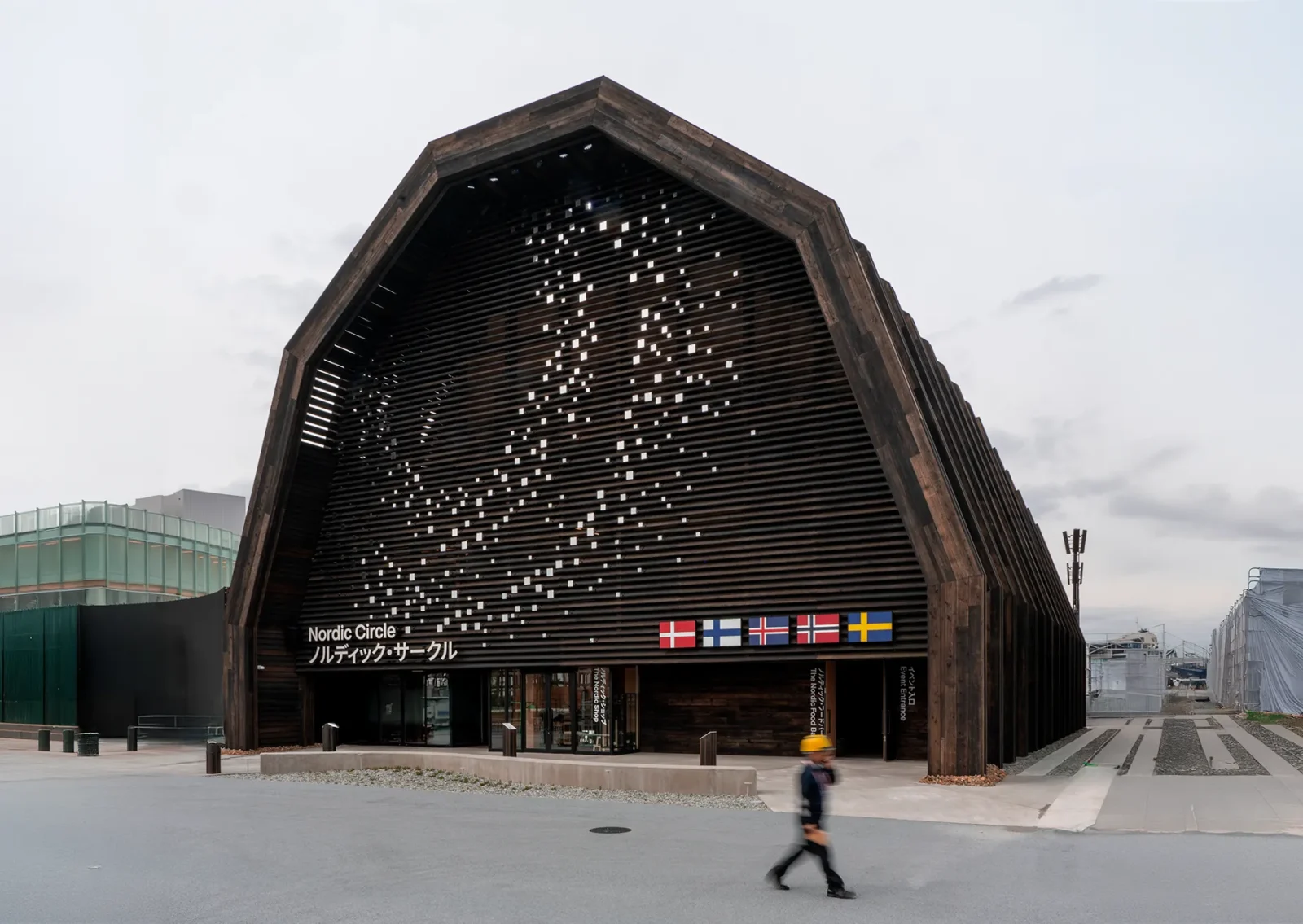
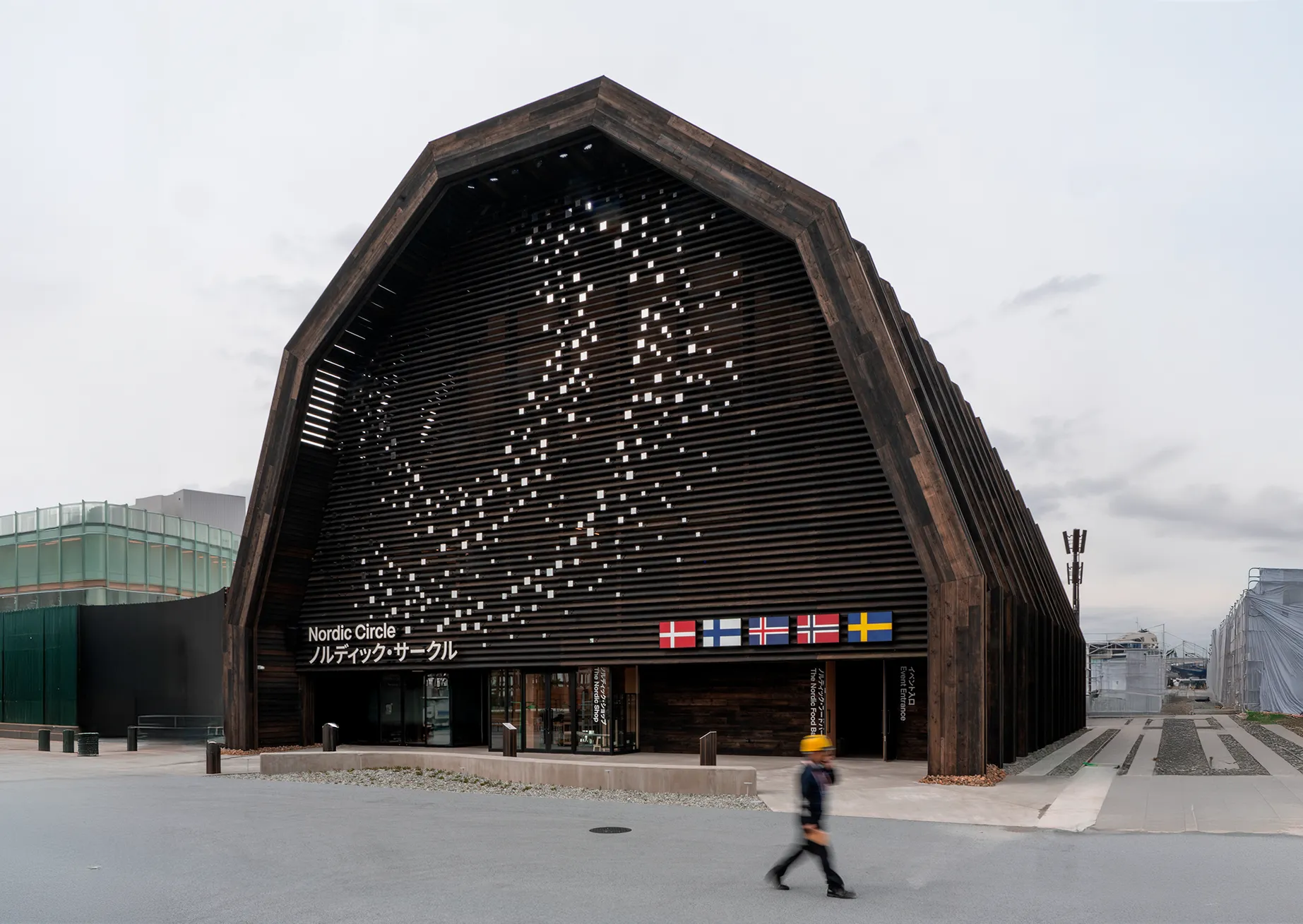
Several other national pavilions at Osaka Expo 2025 added depth to the event’s architectural field, each offering its own take on material intelligence and cultural identity. The shared Nordic Pavilion, designed with Rintala Eggertsson Architects, relied on a timber hall built from locally sourced Japanese wood. Its interior used a simple grid of columns that created a soft, filtered atmosphere. The design focused on low-carbon construction and collective resilience, presenting nature-based technologies and Arctic research as practical tools for future society.
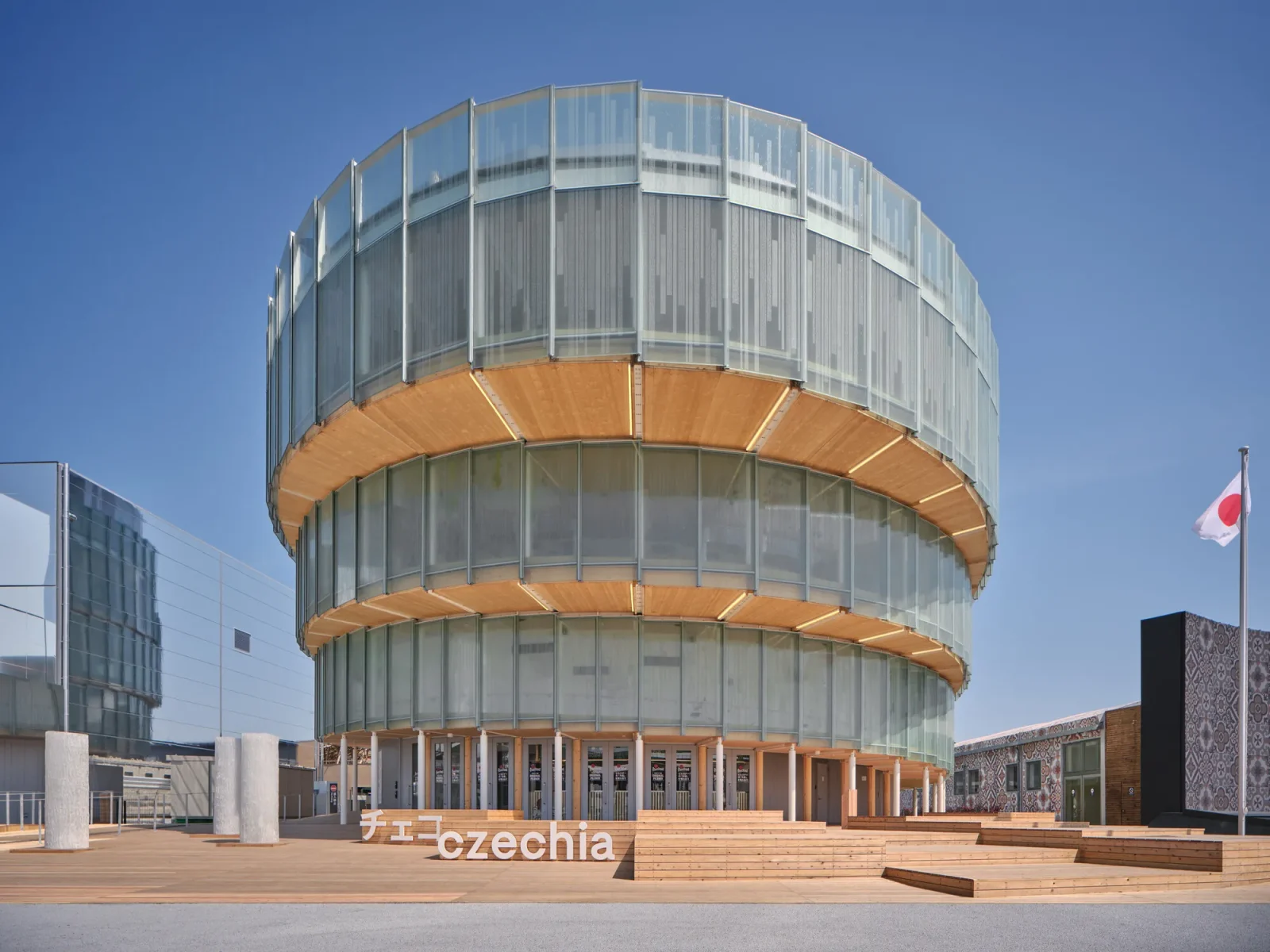
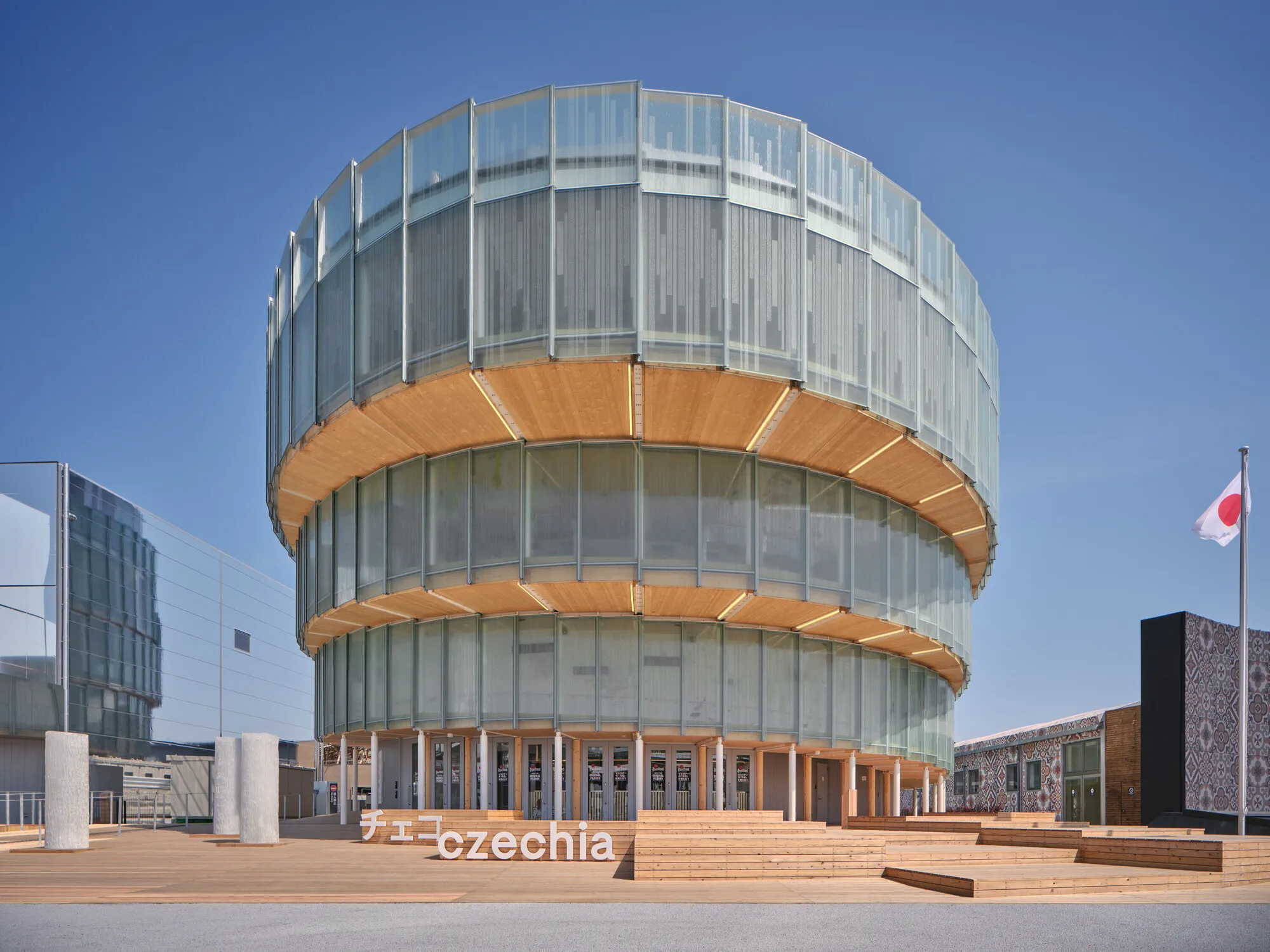
The Czech Pavilion by Apropos Architects stood out with a spiral timber form shaped like a rising wave. Cross-laminated timber panels and a curved shell carried by steel ribs formed the main structure. Inside, visitors encountered installations centered on Czech science, glassmaking, and experimental design. The building used passive daylighting and a compact footprint, and its façade acted as both structure and environmental buffer.
Italy’s pavilion by Mario Cucinella Architects and Yoshiki Matsuda Architects approached the Expo through the idea of material cycles. Its soft, arching geometry drew from both Roman porticos and thin-shell construction. Most components were recyclable or bio-based, and the building was designed for complete disassembly. Exhibits covered food systems, climate work, and craft traditions, all set within naturally lit rooms that kept energy use low.
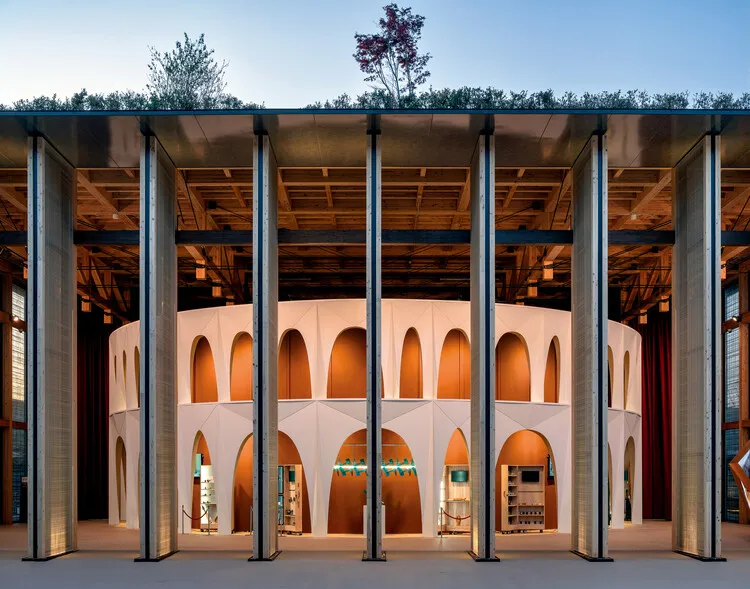
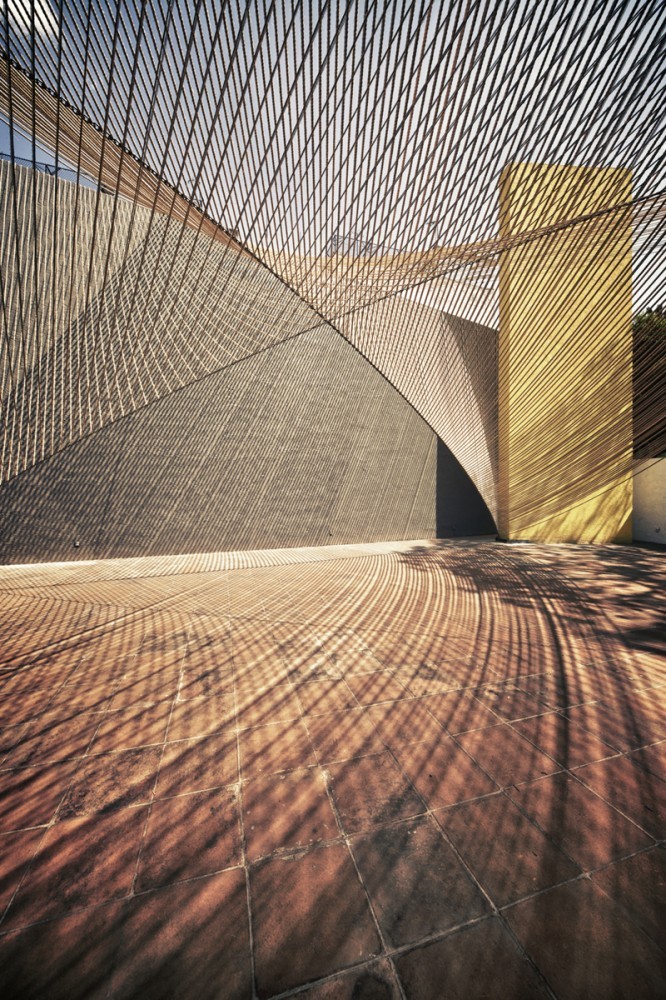
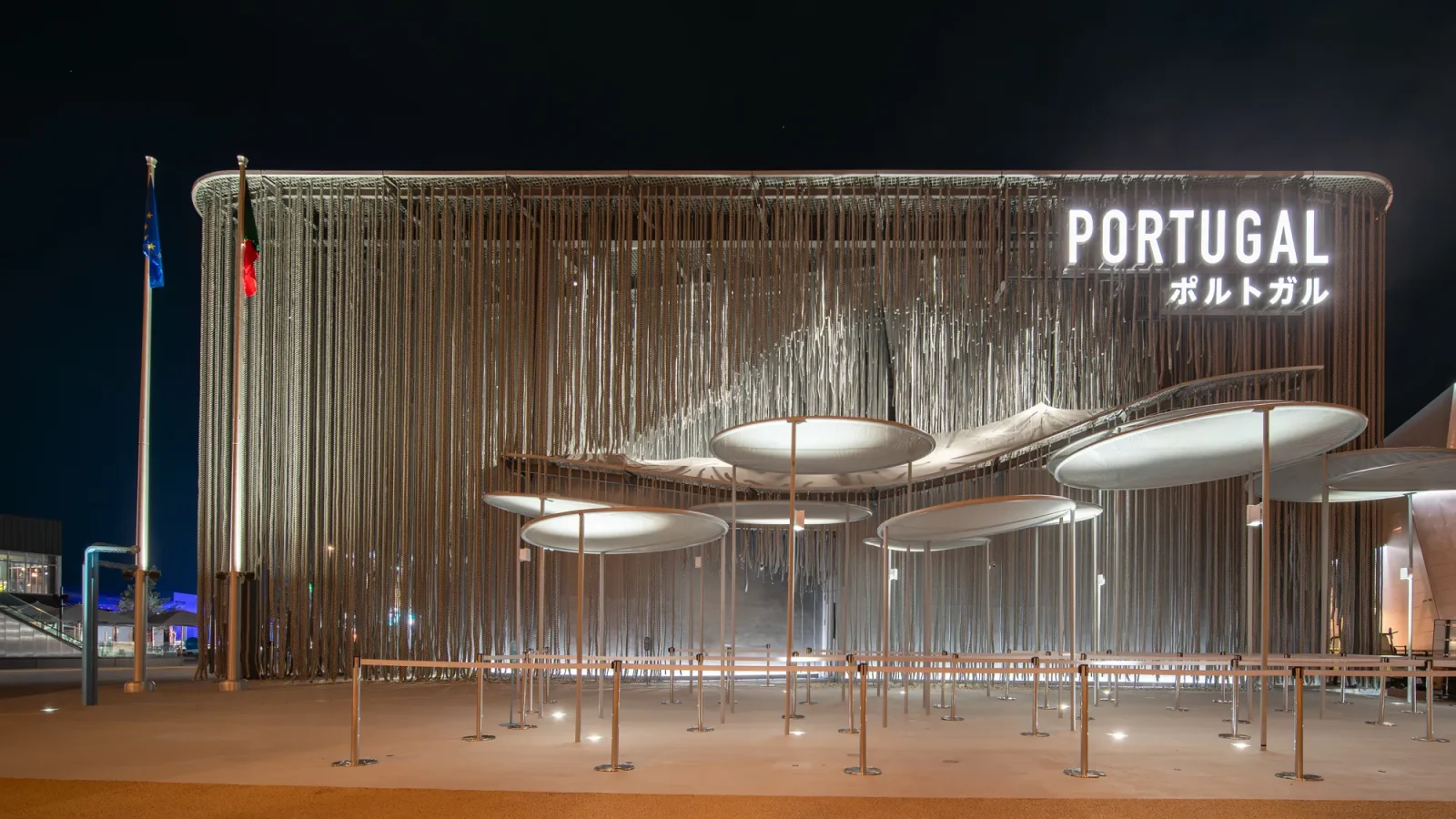
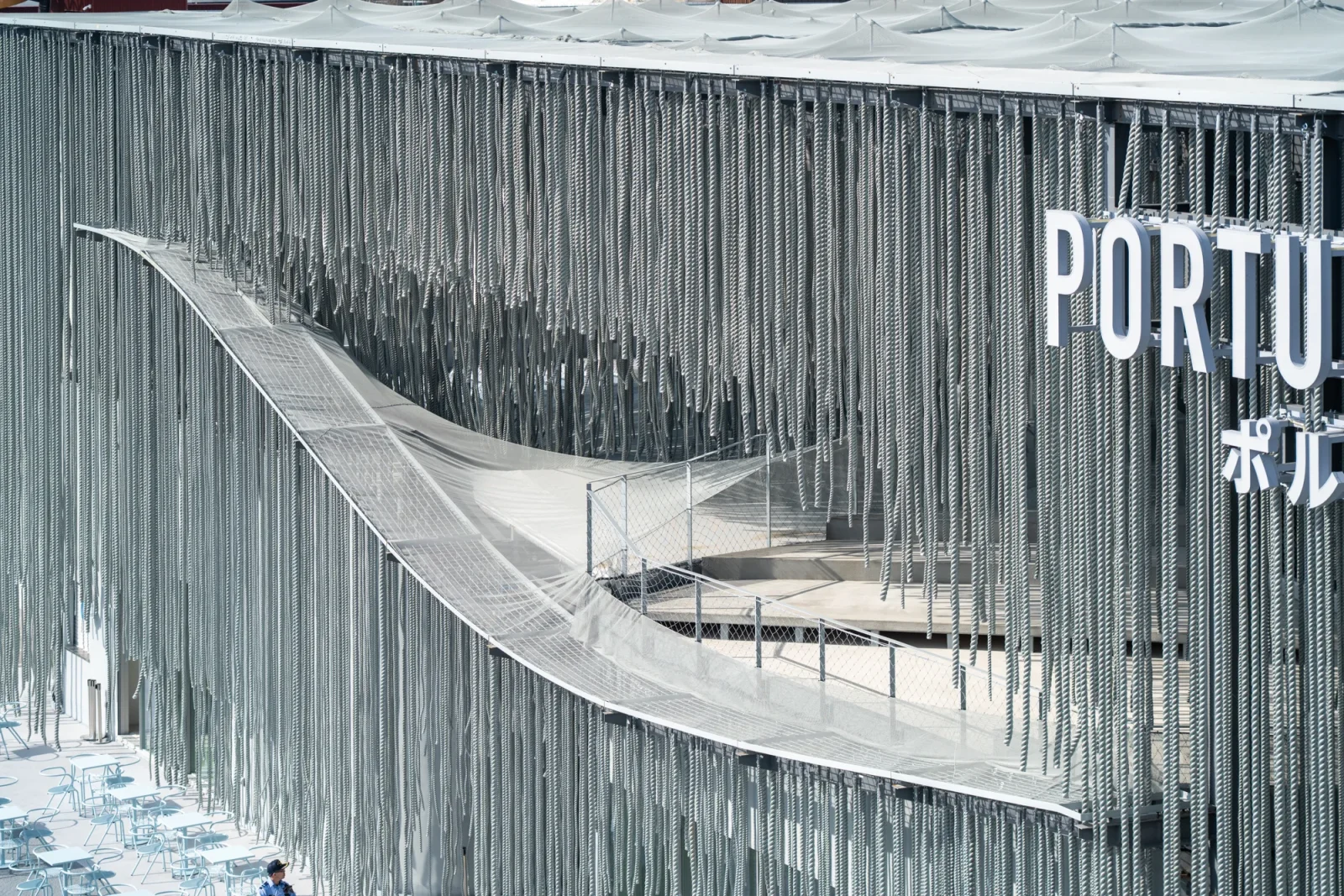
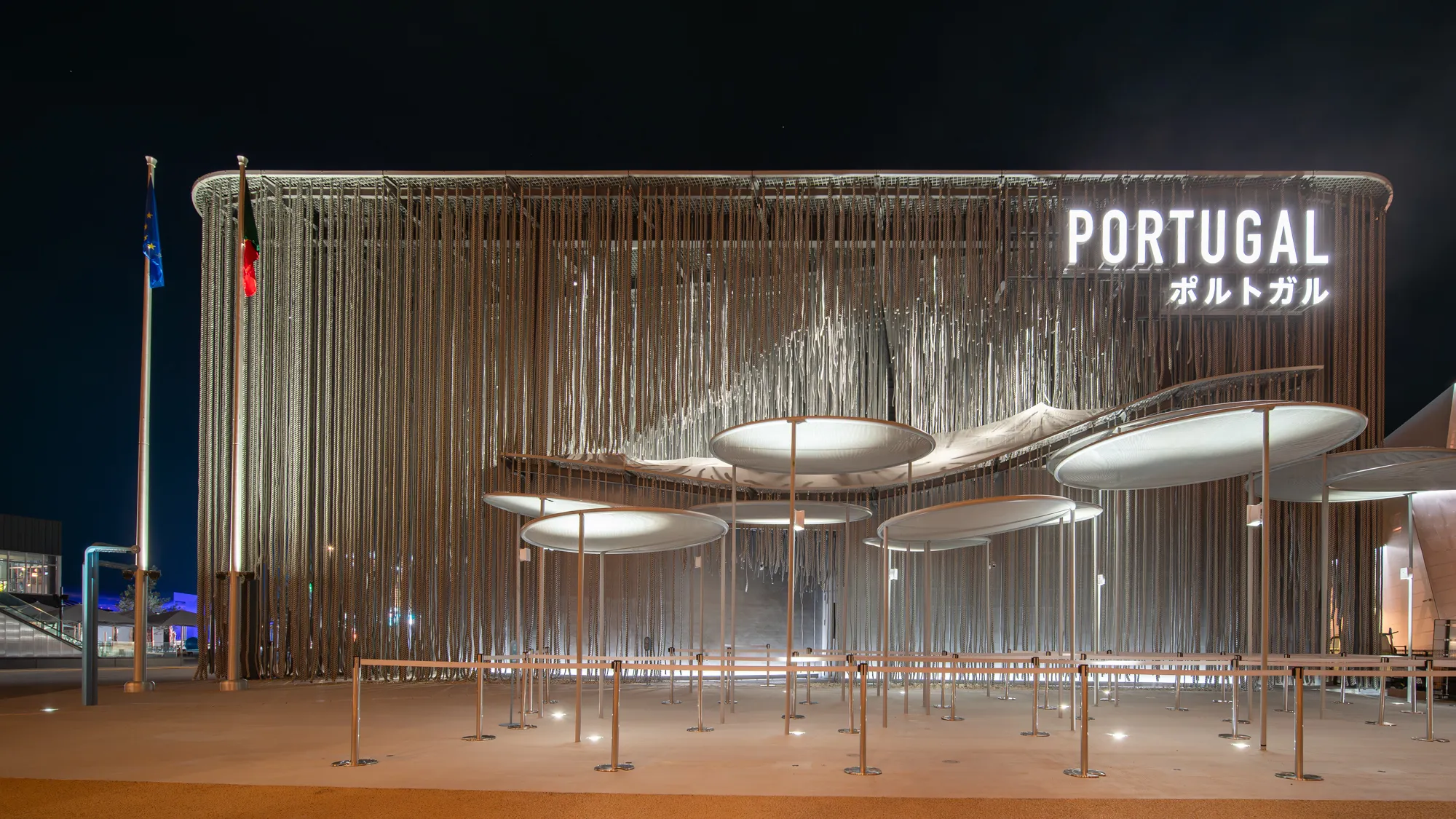
Kengo Kuma’s Portugal Pavilion took inspiration from the Atlantic, wrapping a light timber structure in deep blue Portuguese tiles arranged to recall moving water. Kengo Kuma uses suspended ropes and recycled nets to echo the movement of waves and cast shifting patterns of light and shadow. Visitors followed a clear path through displays on maritime heritage and ocean research. The pavilion used passive ventilation and was built around materials intended for reuse. Its tile skin linked Portugal’s craft history with the Expo’s focus on regenerative design.
Osaka Expo 2025 brings together a wide mix of architectural ideas, from lightweight experimental structures to spaces rooted in craft, culture, and environmental care. Each pavilion, whether large or modest, adds its own angle on how countries see their future and the values they want to share. Taken together, they show a shift toward building with less impact, telling clearer stories, and using design as a way to connect people rather than impress them.
Explore Courses
.jpg%202.jpg "Building Performance with Forma & Opossum")
.jpg "Ondrej Chybik - Rethinking Architecture")