


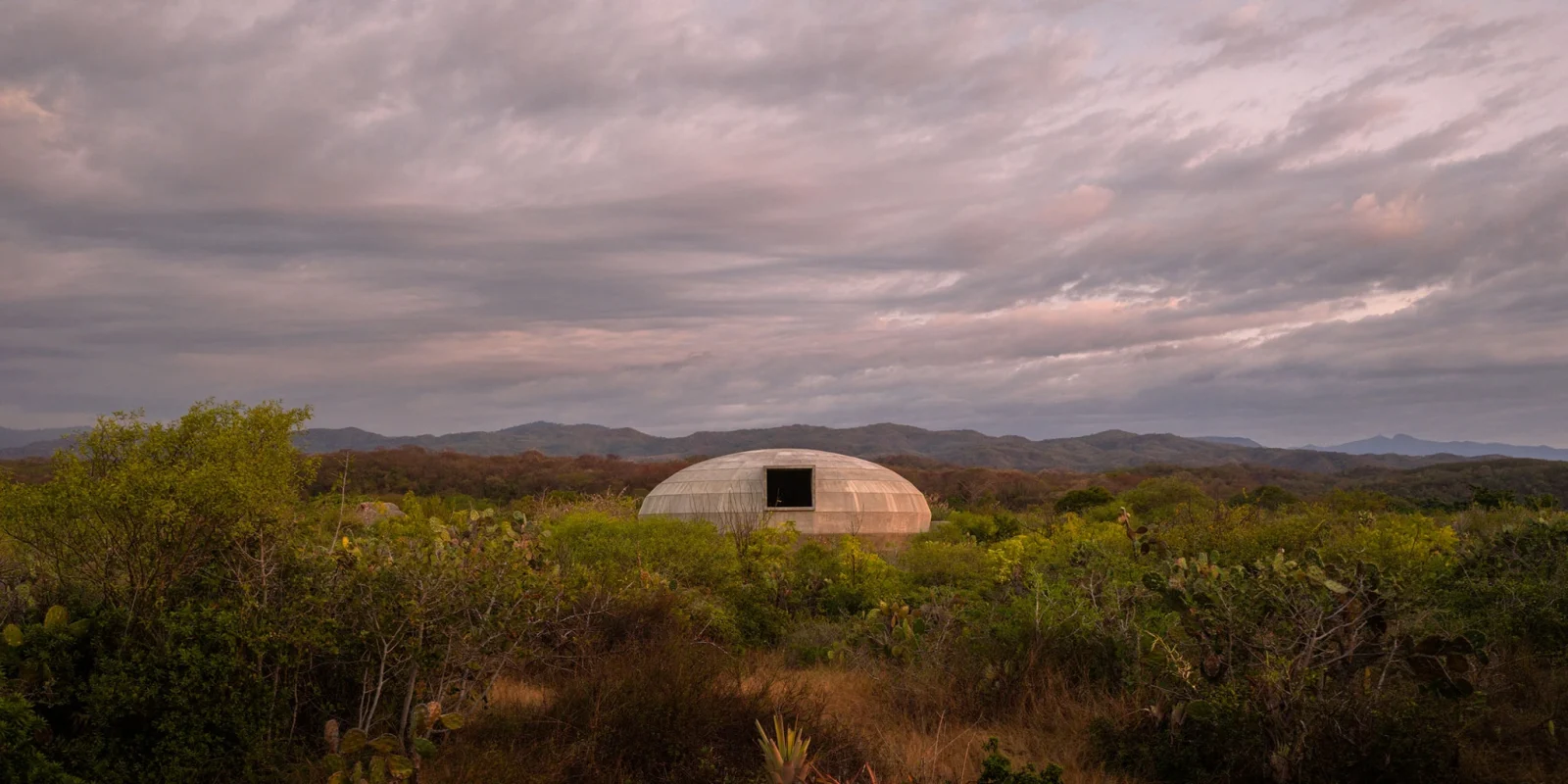
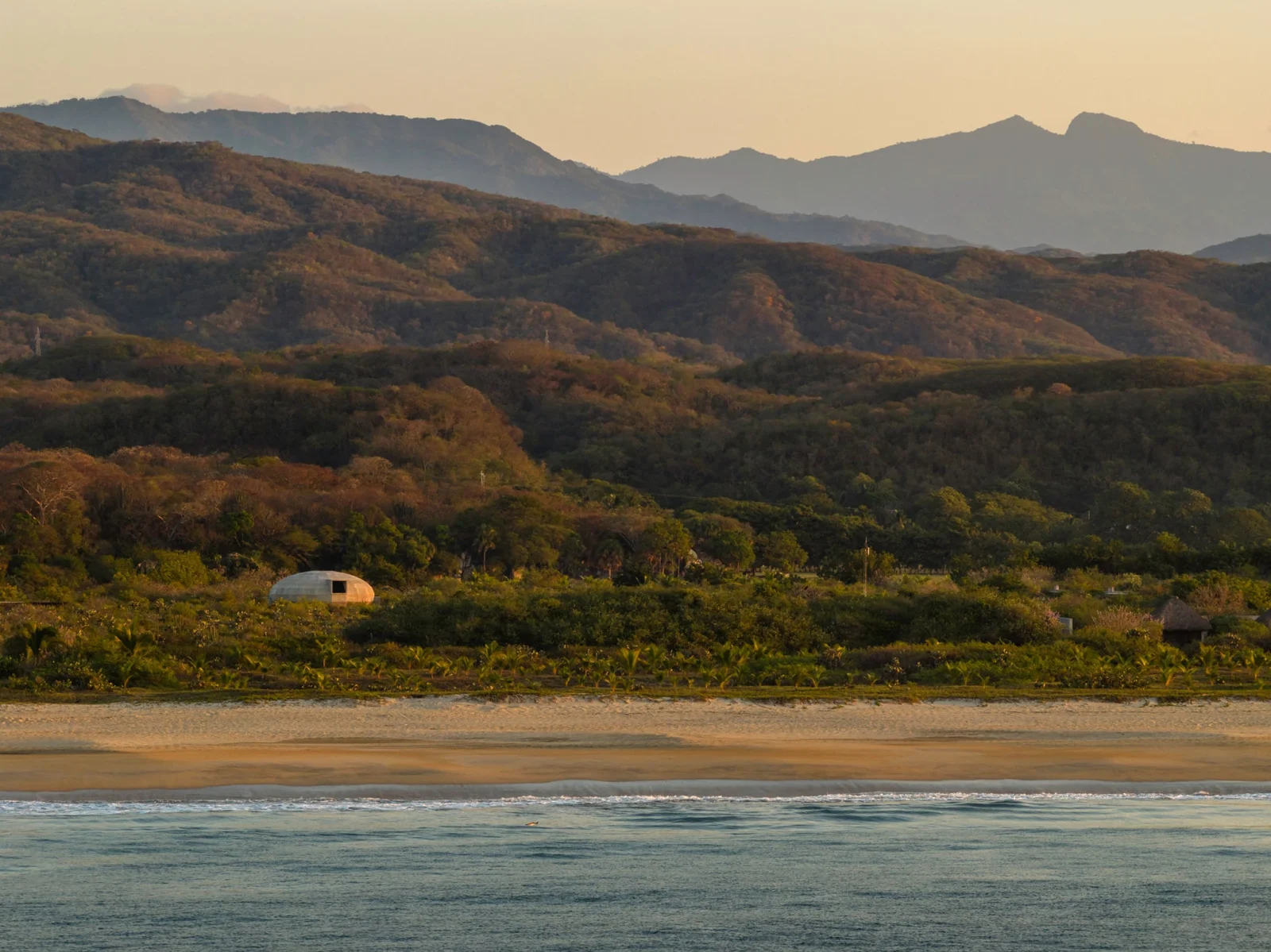
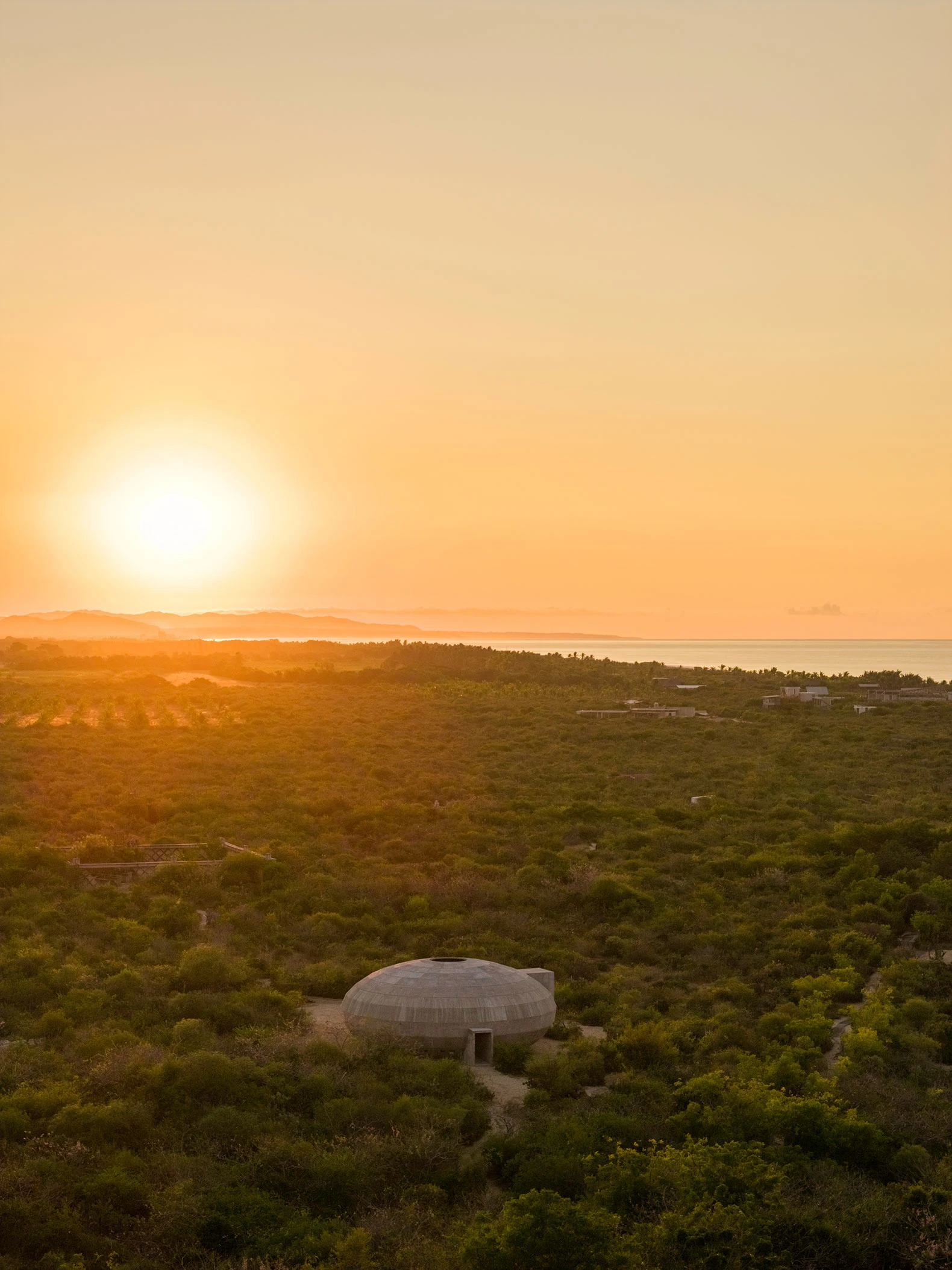
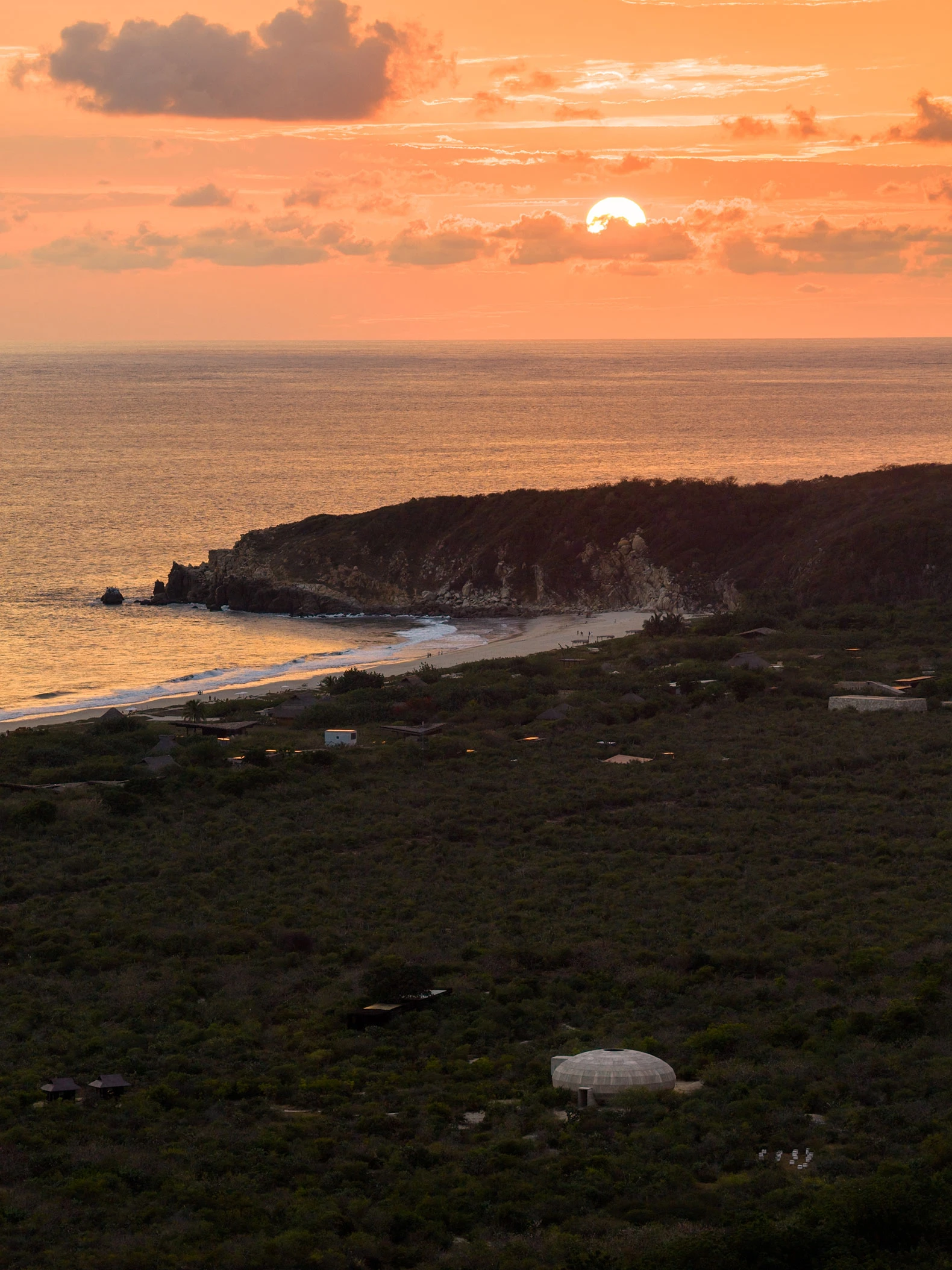
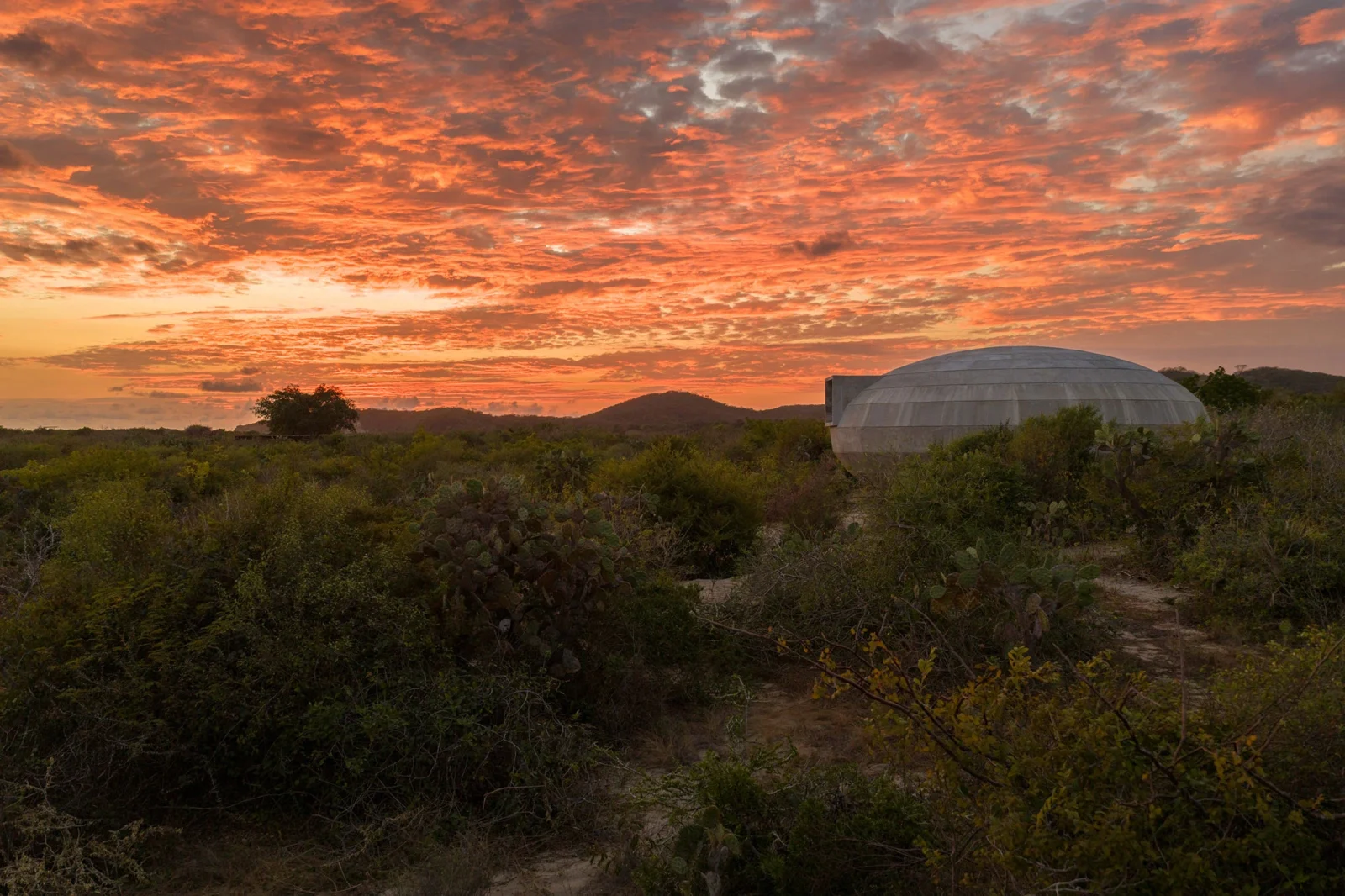
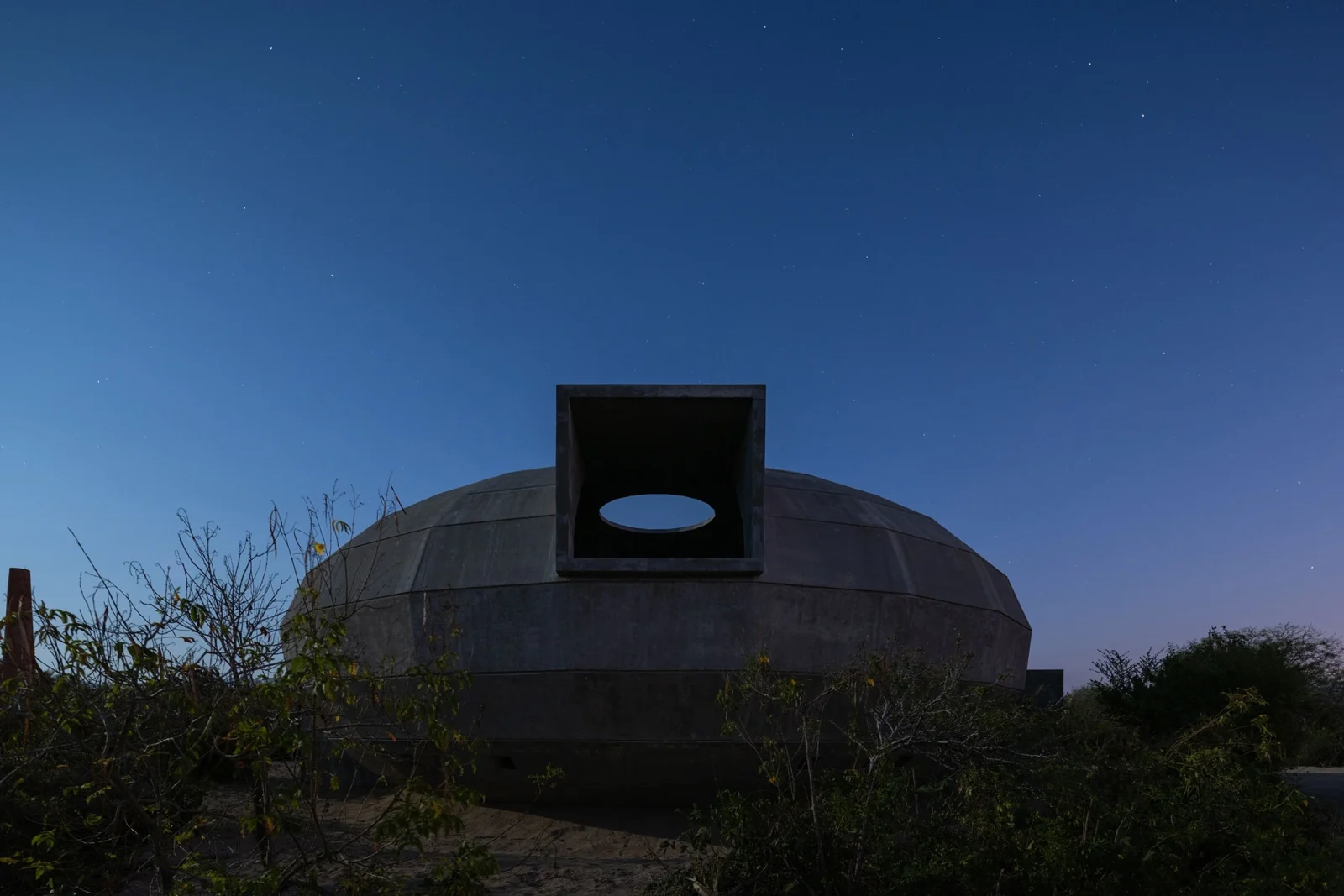
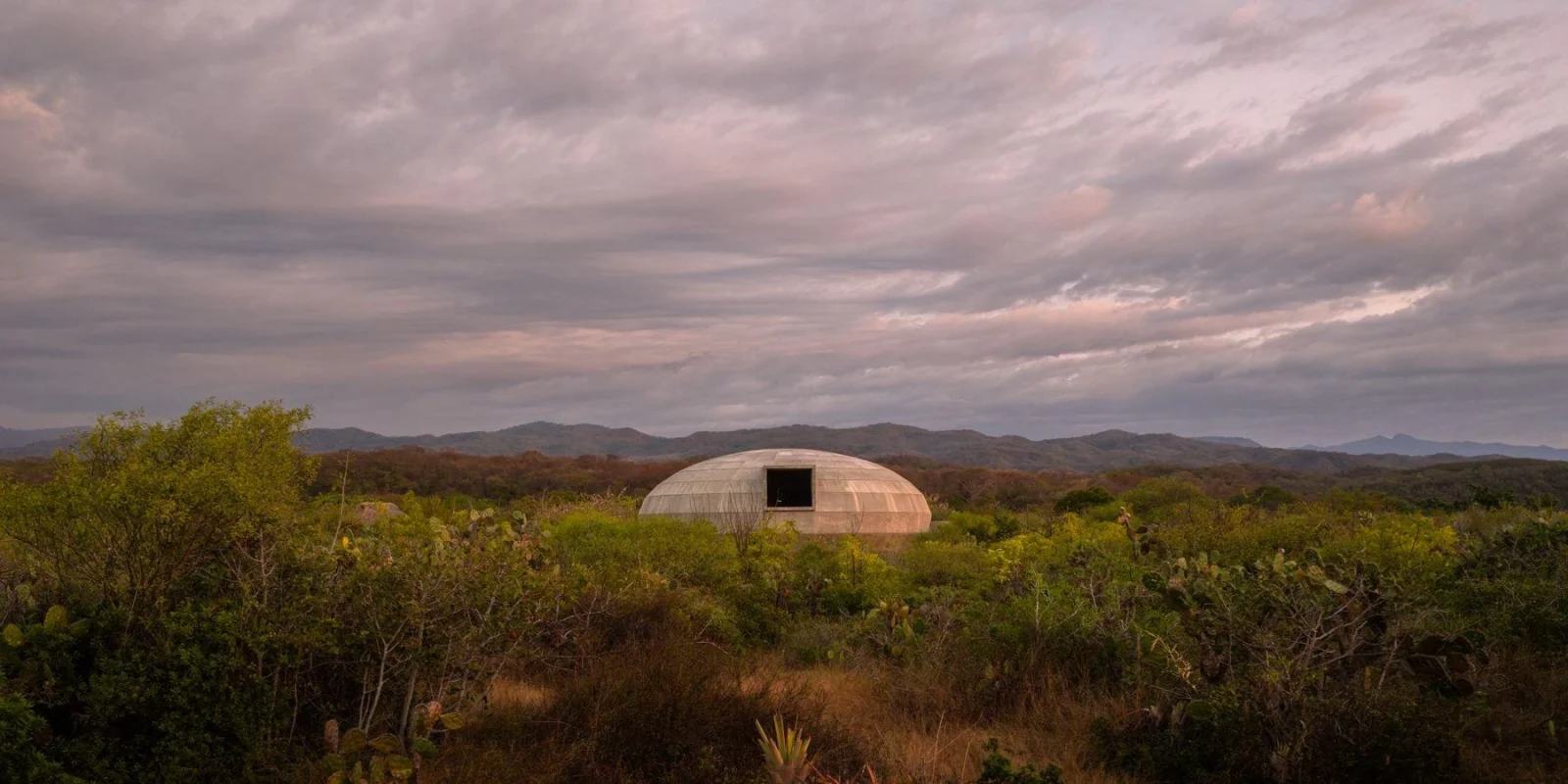
The Mushroom Pavilion, which opened at Fundación Casa Wabi on March 4, 2026, serves as a food and community incubator facility. Developed by OMA and led by partner Shohei Shigematsu in collaboration with Fundación Casa Wabi and local craftspeople, the sustainable pavilion explores the intersection of architecture, food production, and cultural exchange through a material-driven design approach.
Mushroom Pavilion as a Living Organism
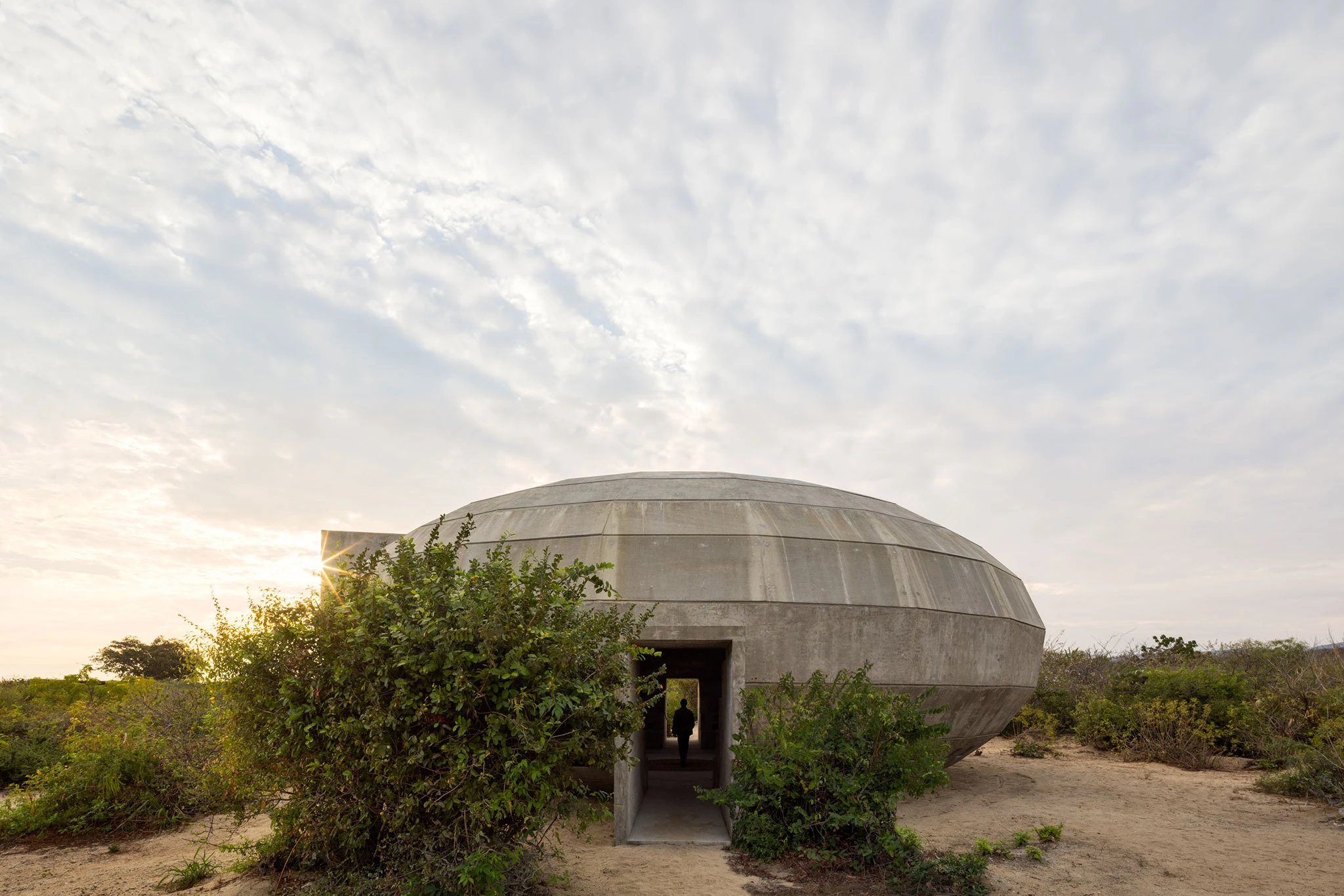
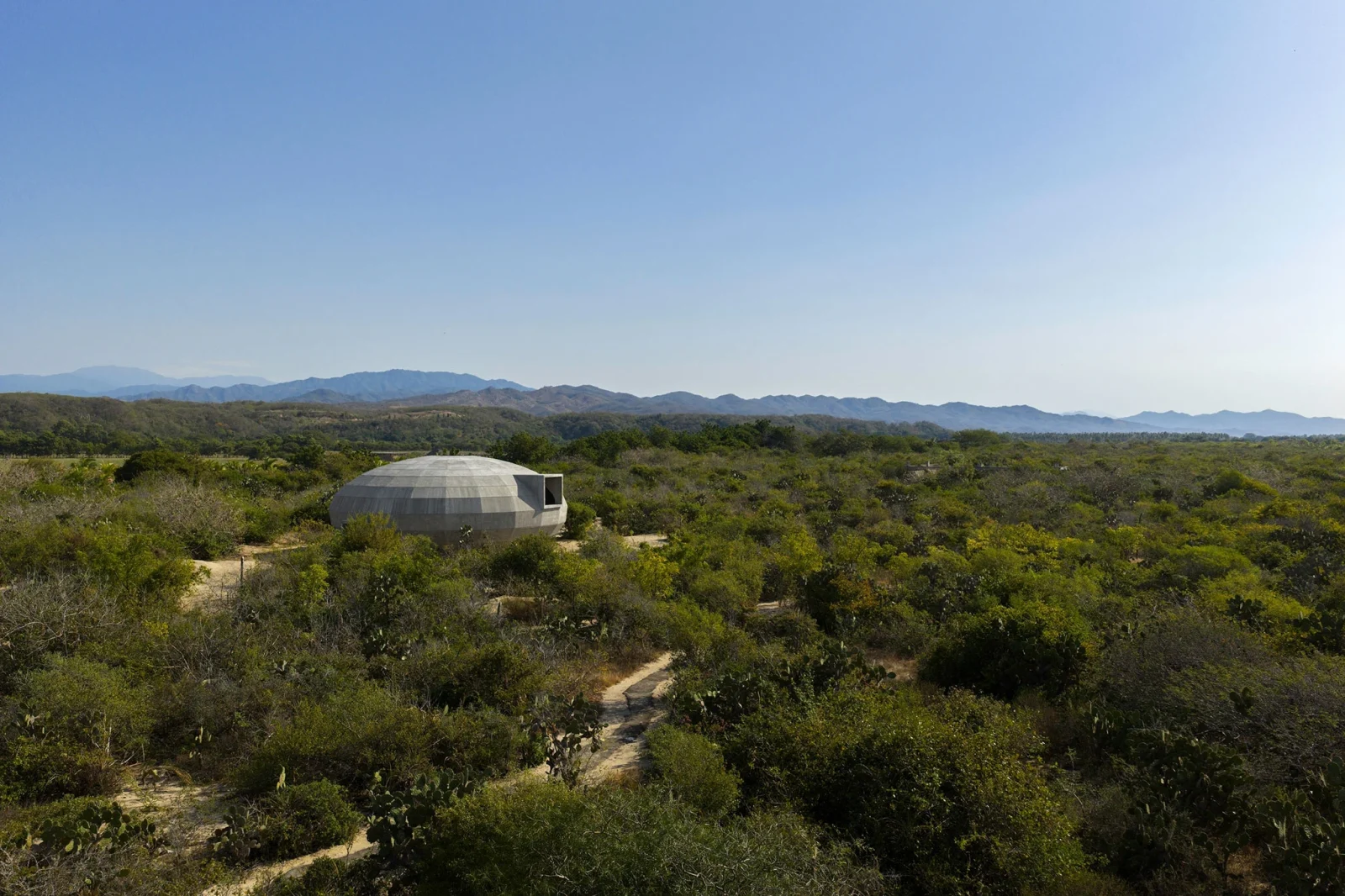
Spanning 65 acres of coastal landscape, the site lies between the dramatic Sierra Madre del Sur mountains and the Pacific Ocean. Founded by Mexican artist Bosco Sodi, the foundation operates on the Japanese principle of wabi-sabi, emphasizing the beauty of impermanence, simplicity, and the inherent imperfections of natural processes. The sustainable design of the Mushroom Pavilion joins the line of distinguished structures commissioned by Sodi, establishing the area as a laboratory for architectural experimentation.
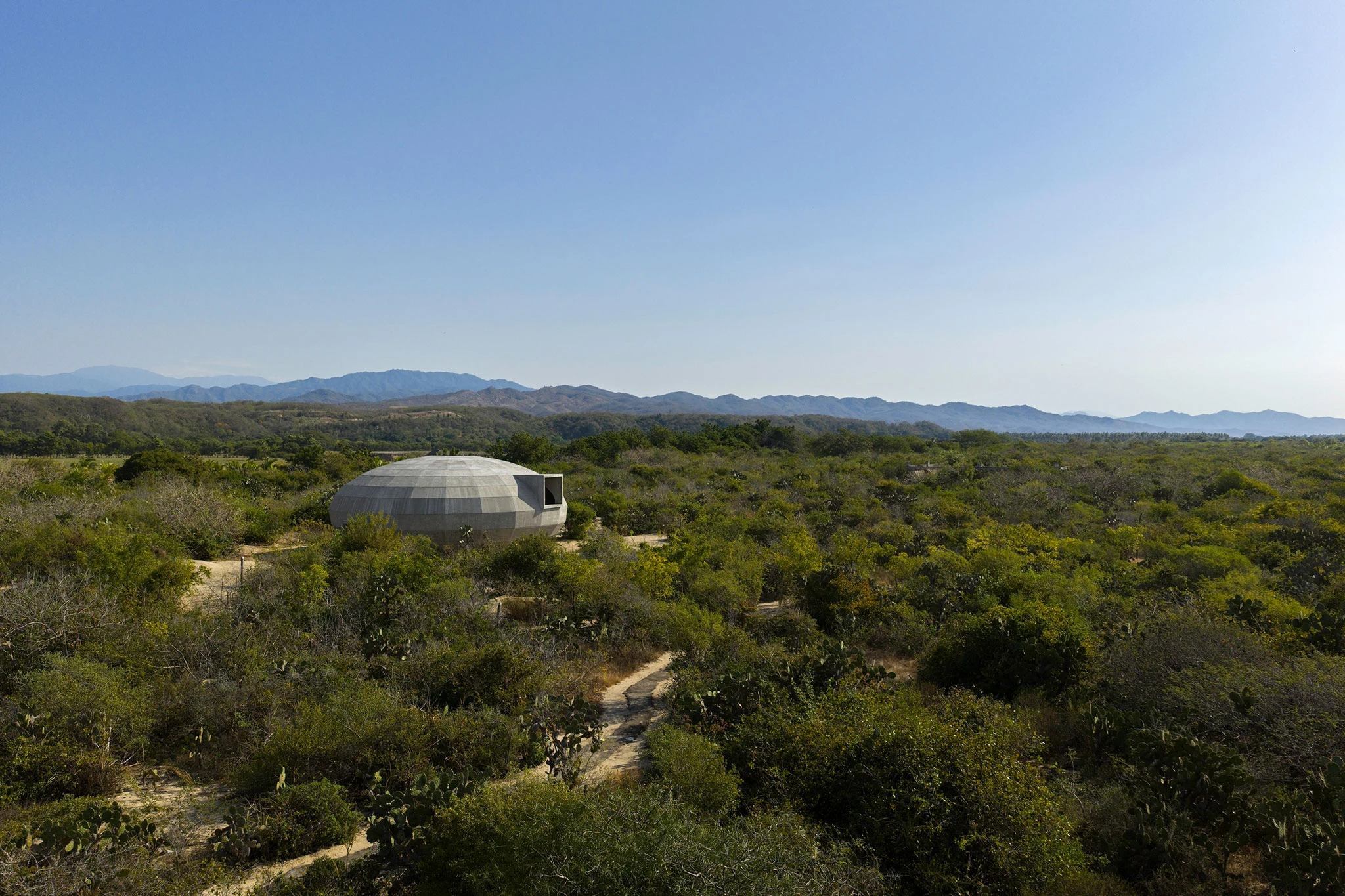
The site has also hosted works by several Pritzker Prize laureates and influential contemporary studios, each addressing a specific agricultural or community need. The structural form of the Mushroom Pavilion integrates material innovation and addresses ecological and social impacts within the broader Casa Wabi campus.
The Geometry of the Incubator
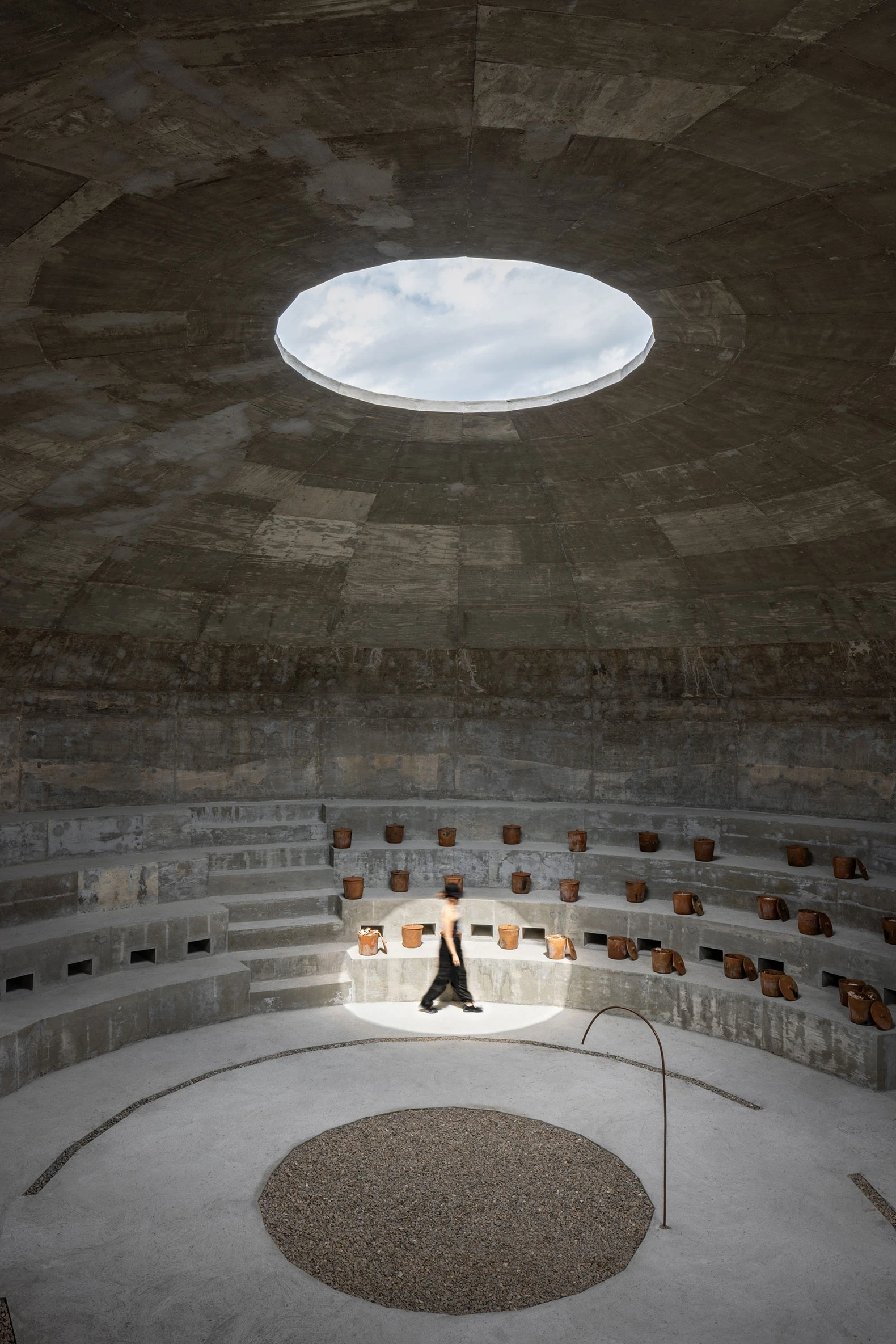
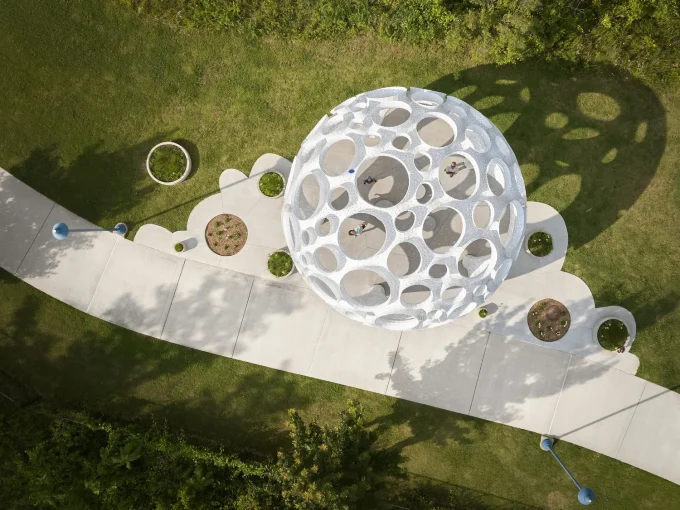
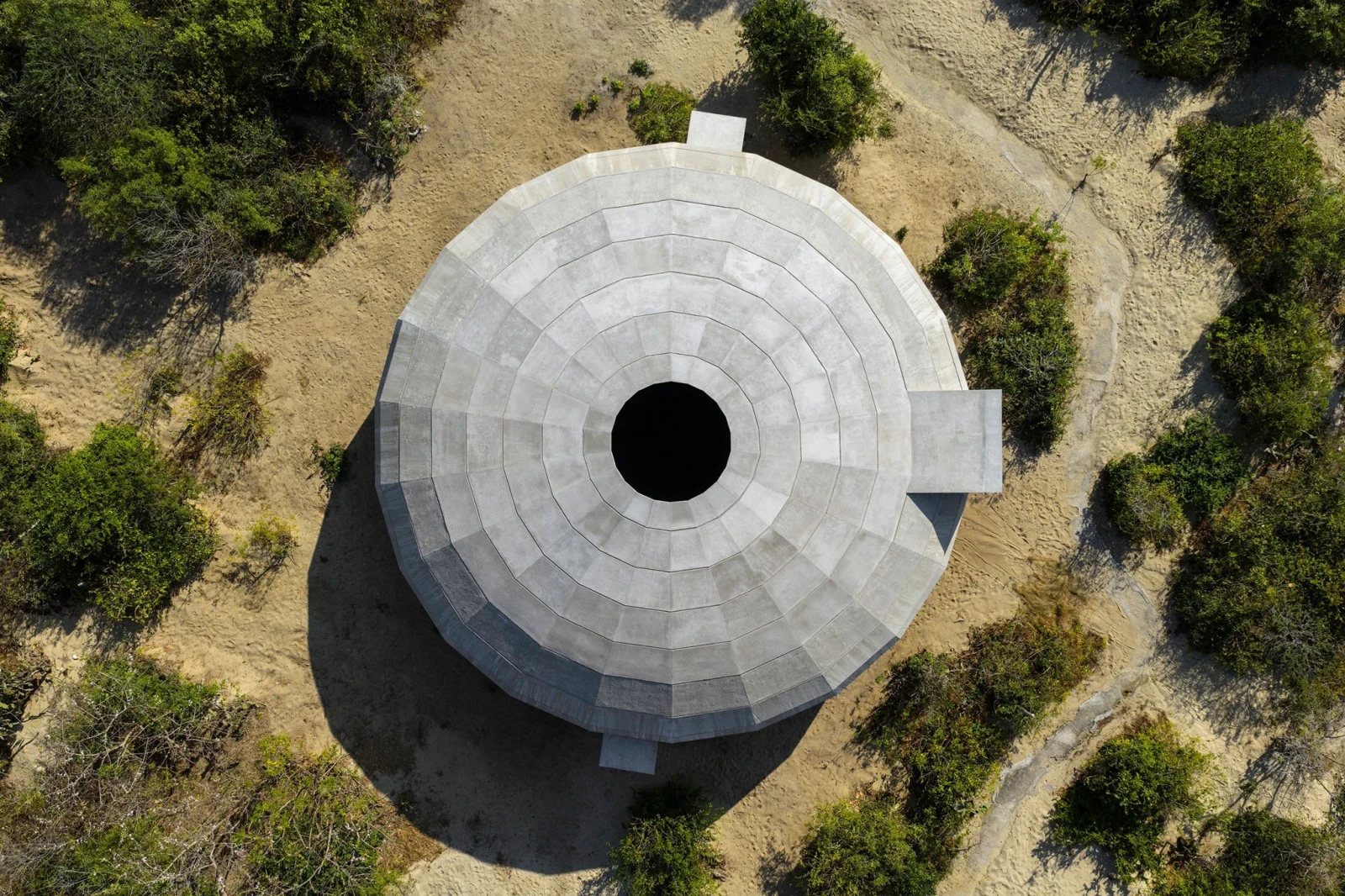
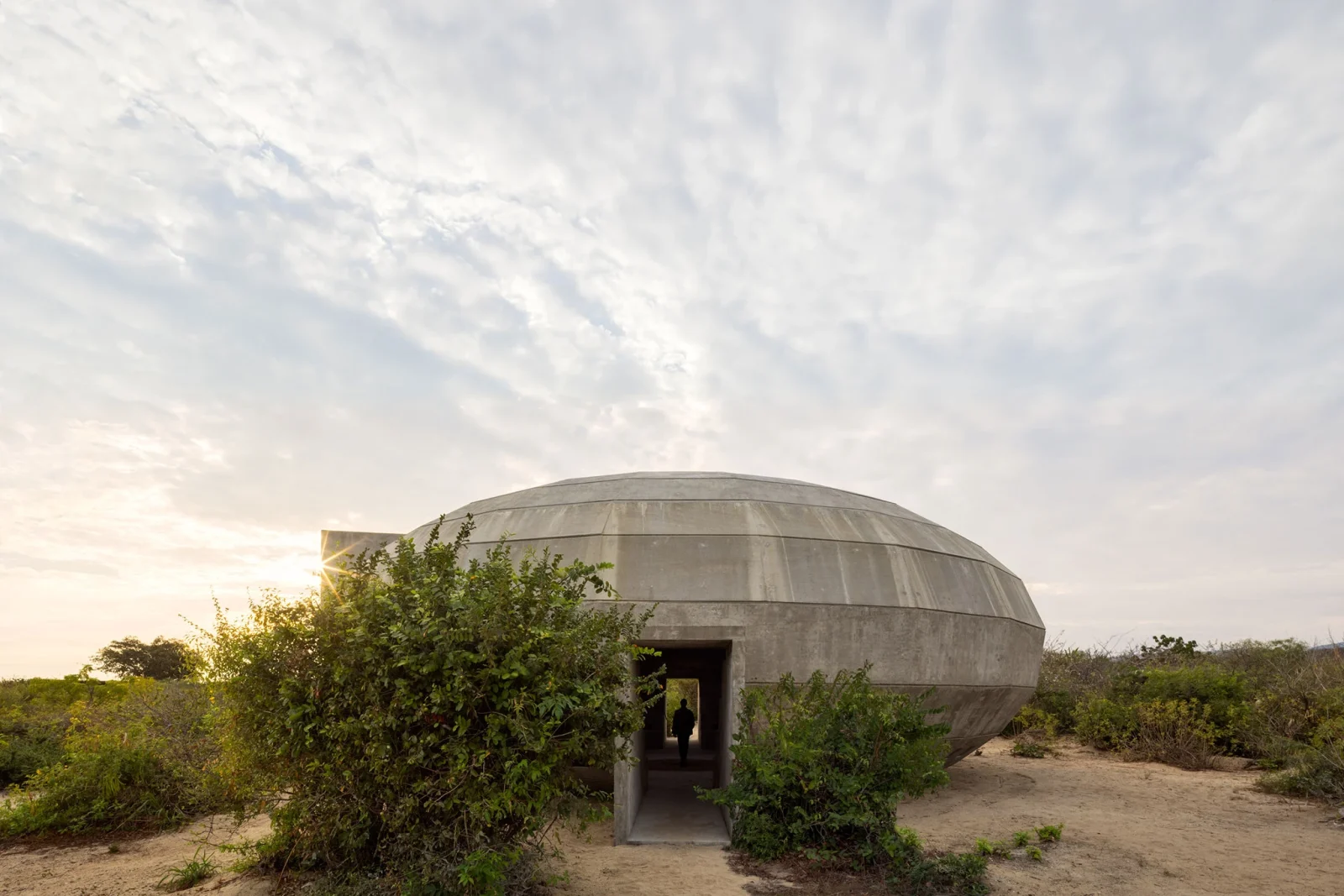
The Mushroom Pavilion spans 200 square meters and forms a self-supporting ellipsoid, a geometry Shigematsu describes as an incubating egg. The choice of this form is not merely aesthetic, but it also optimizes the interior organization into three phases of mushroom production: incubation, fruiting, and storage. The structural ellipsoidal form provides a high volume-to-surface-area ratio that is required for maintaining stable microclimates for fungal growth.
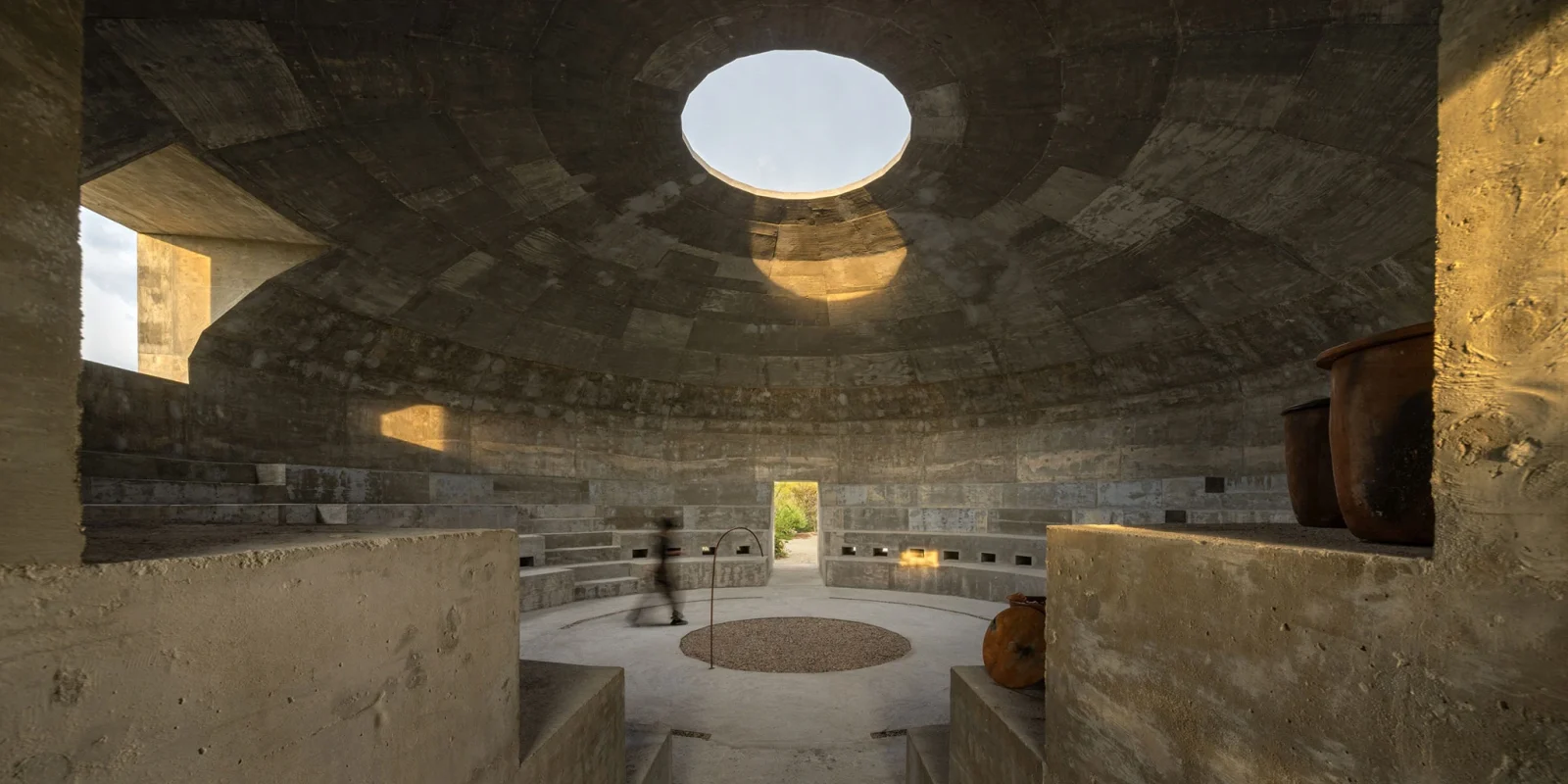
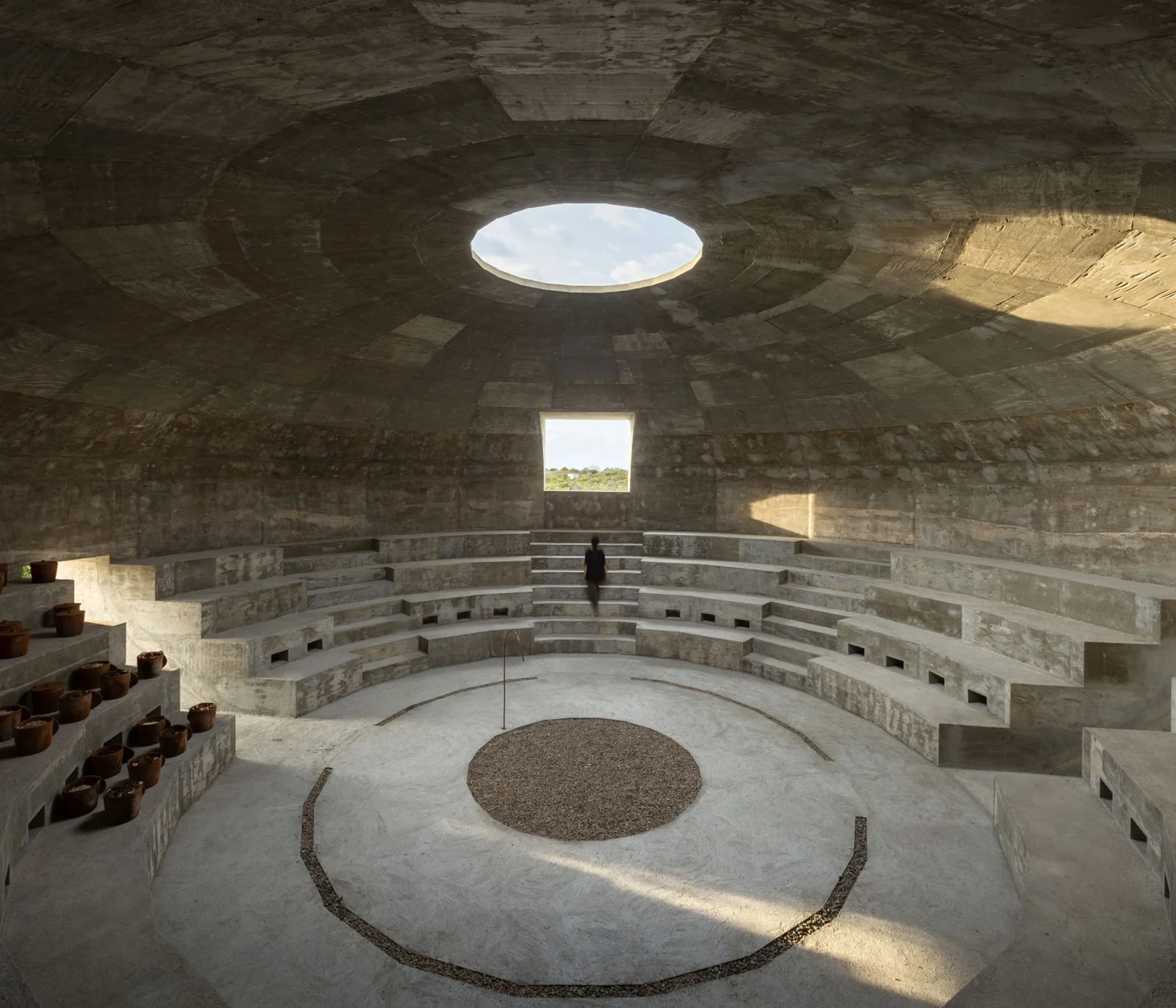
The structure is constructed of troweled and poured-in-place concrete panels that radiate around a central oculus. The ingenious innovation lies in the pavilion’s inward curvature, which minimizes the building’s footprint and helps preserve the root systems of the surrounding guayacán trees. This design approach allows the natural landscape to blend with the site, reinforcing its ecological commitments.
Material Innovation: The Bioclimatic Skin
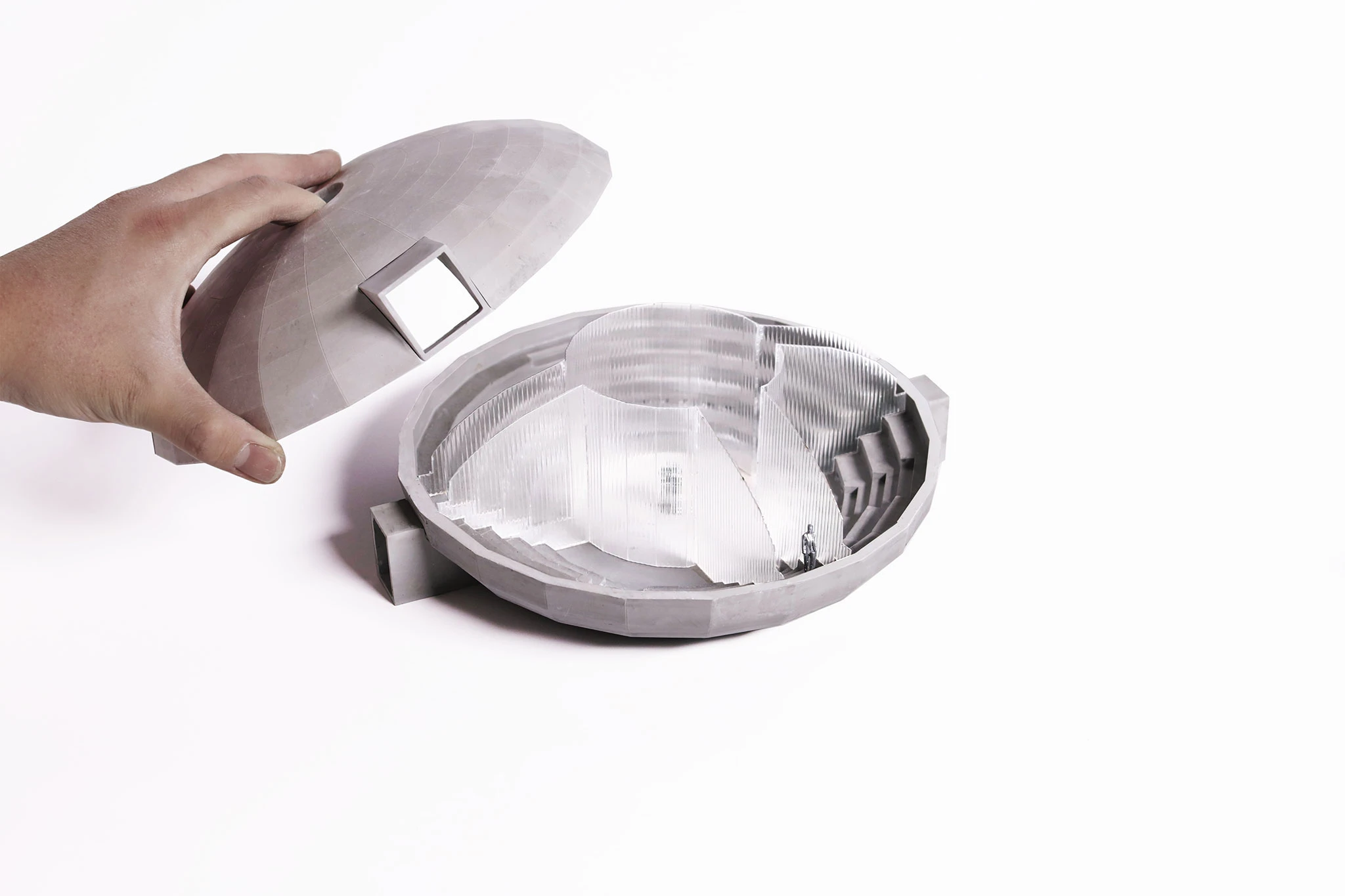
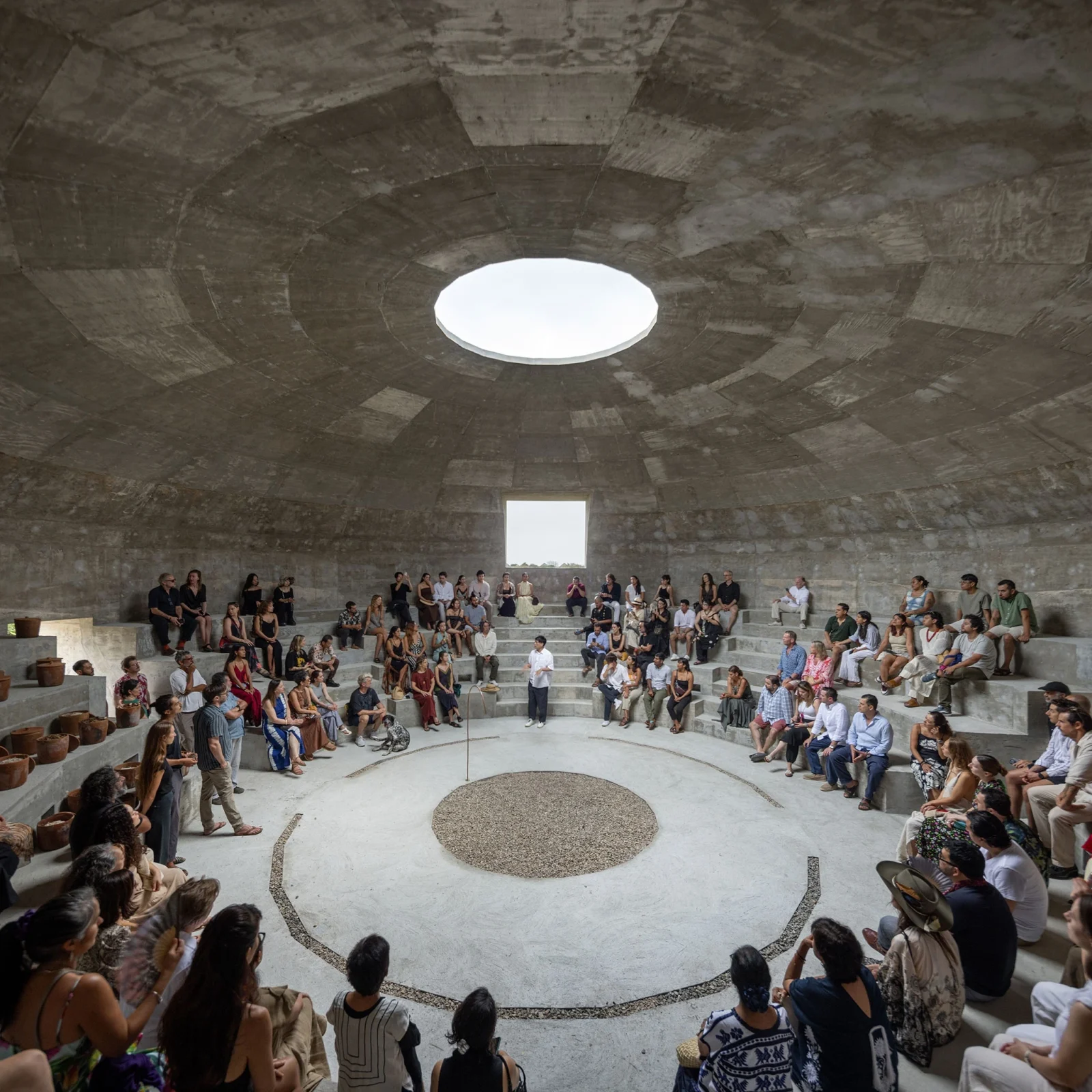
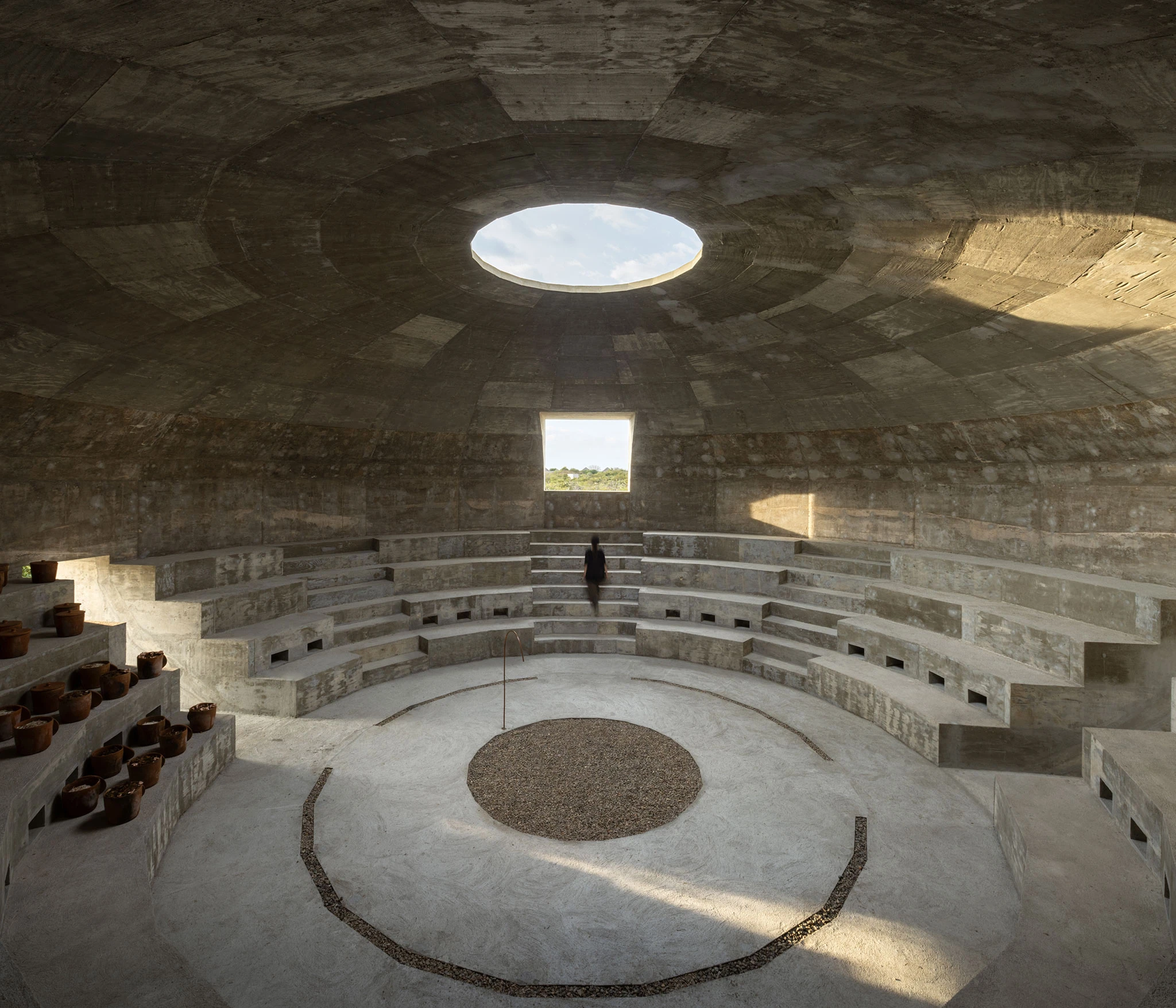
The self-supporting nature of the dome eliminates the need for internal columns, allowing a completely open interior to function as a social hub for community gatherings and educational activities. While the pavilion’s primary structure is concrete, the treatment of its exterior surface represents an innovative finishing approach.
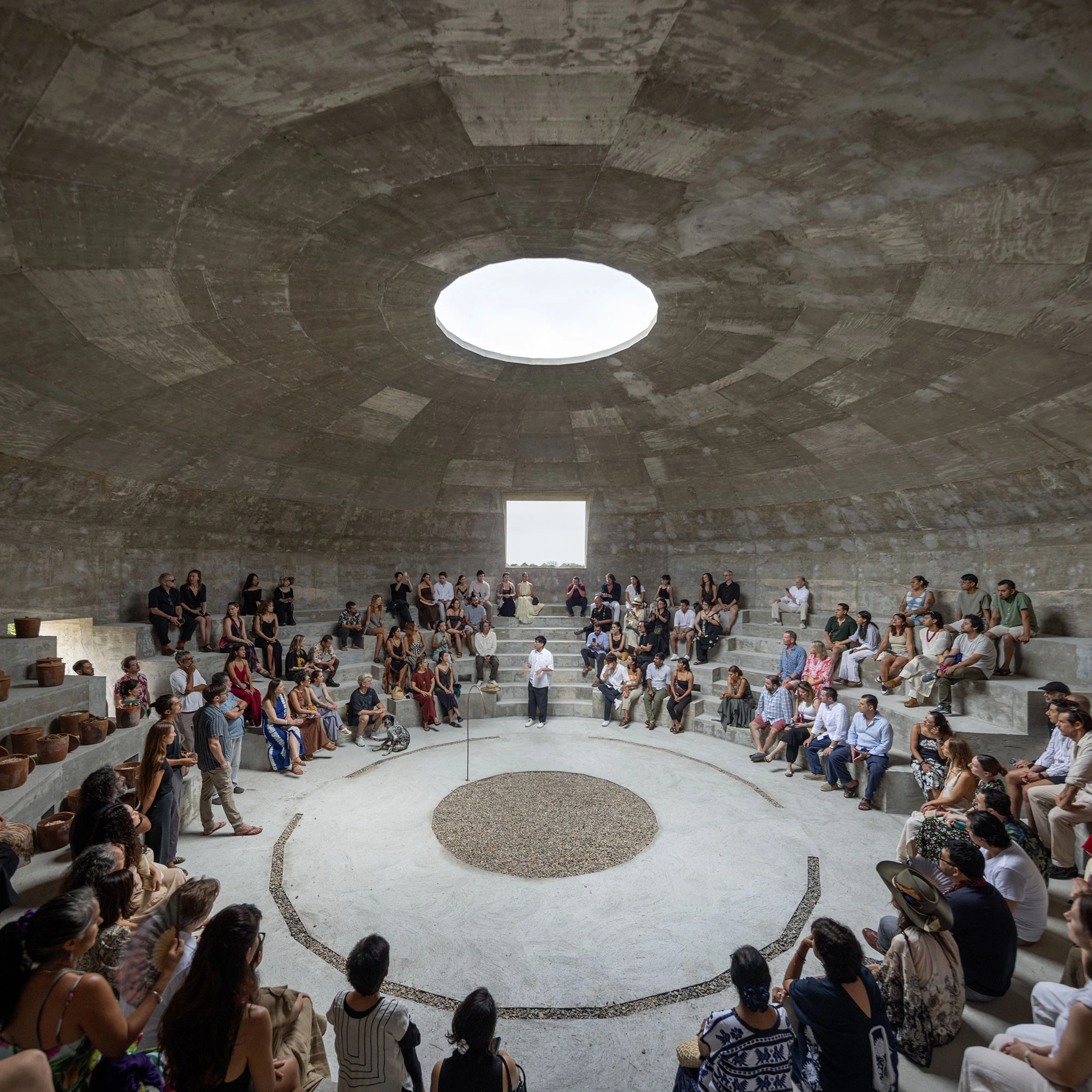
Since the water in the Puerto Escondido region has an exceptionally high iron content, the burlap texture on the concrete is designed to retain it. This process is expected to rust and develop a deep, variegated patina that transforms its appearance from a stark grey volume into an earthy, rust-colored object that mirrors the tones of the Oaxacan soil. This design choice closely aligns with the Wabi-Sabi philosophy of finding beauty in simple, imperfect things.
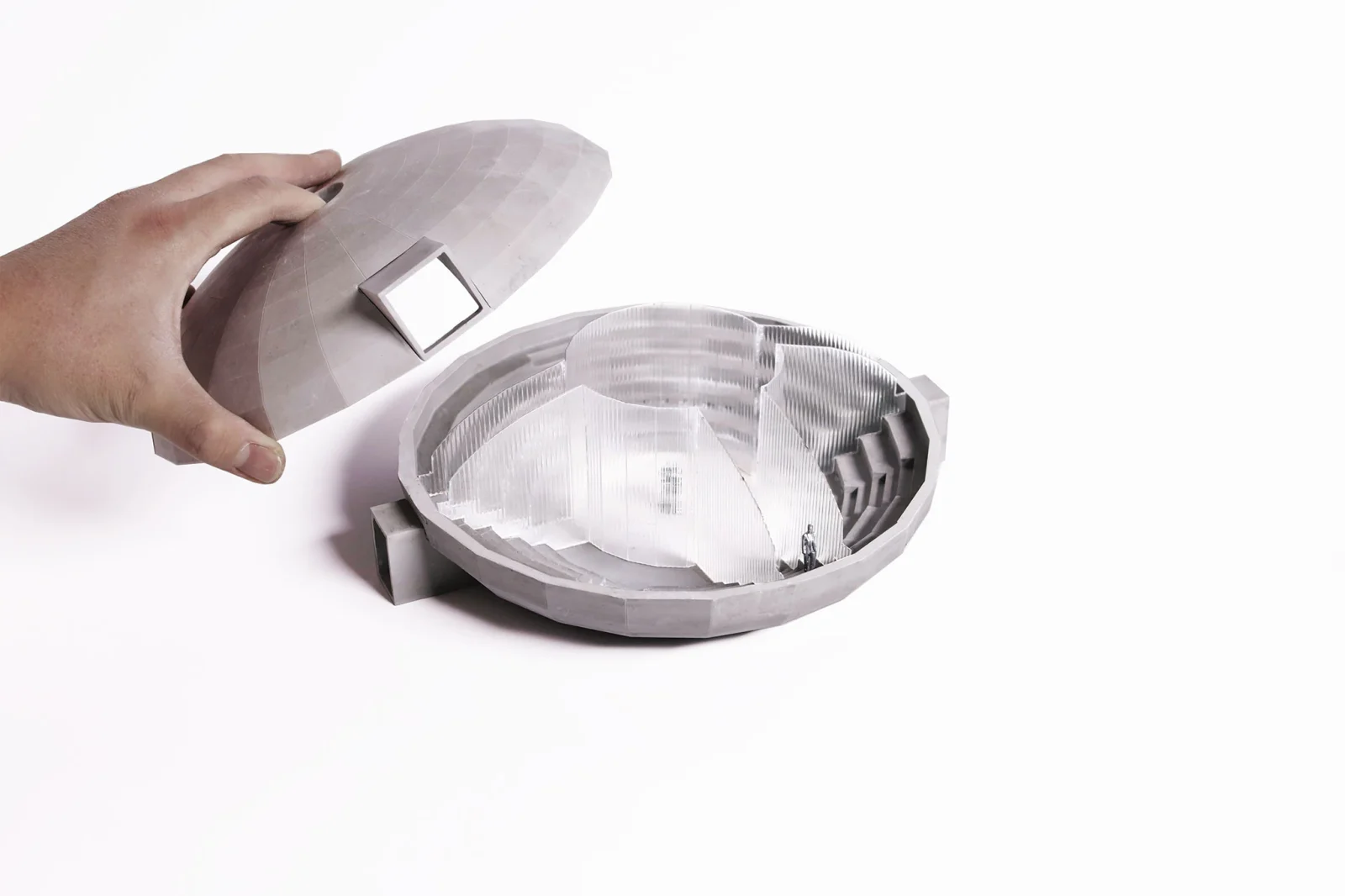
The interior is designed like a round theater that enhances the viewing experience.
Functional Zonation for Fungi Production
The three rooms reflect the cultivation of mushrooms through a series of specialized zones.
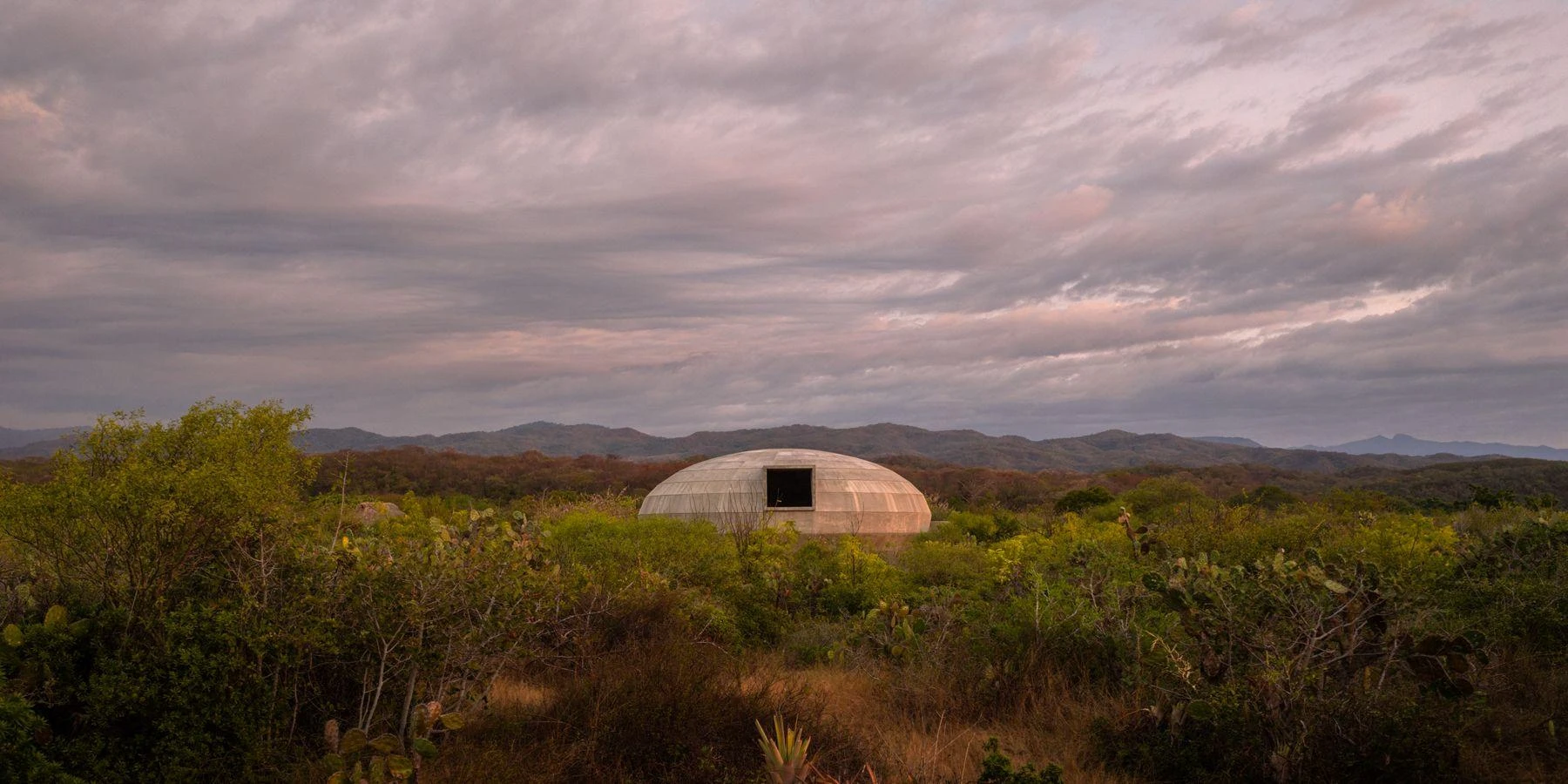
Incubation room: This space is dedicated to the initial development of mushroom cultures. It requires high humidity and controlled, low-light conditions that allow mycelium to colonize the substrate effectively.
Fruiting room: Once the mycelium is fully colonized, it is moved to the fruiting room, designed to stimulate the production of the edible parts of the fungi through specific shifts in light, temperature, and ventilation.
Storage room: It is a dedicated zone for housing harvested produce and the materials required for the ongoing cultivation cycle, ensuring that the production loop remains self-contained within the structure.
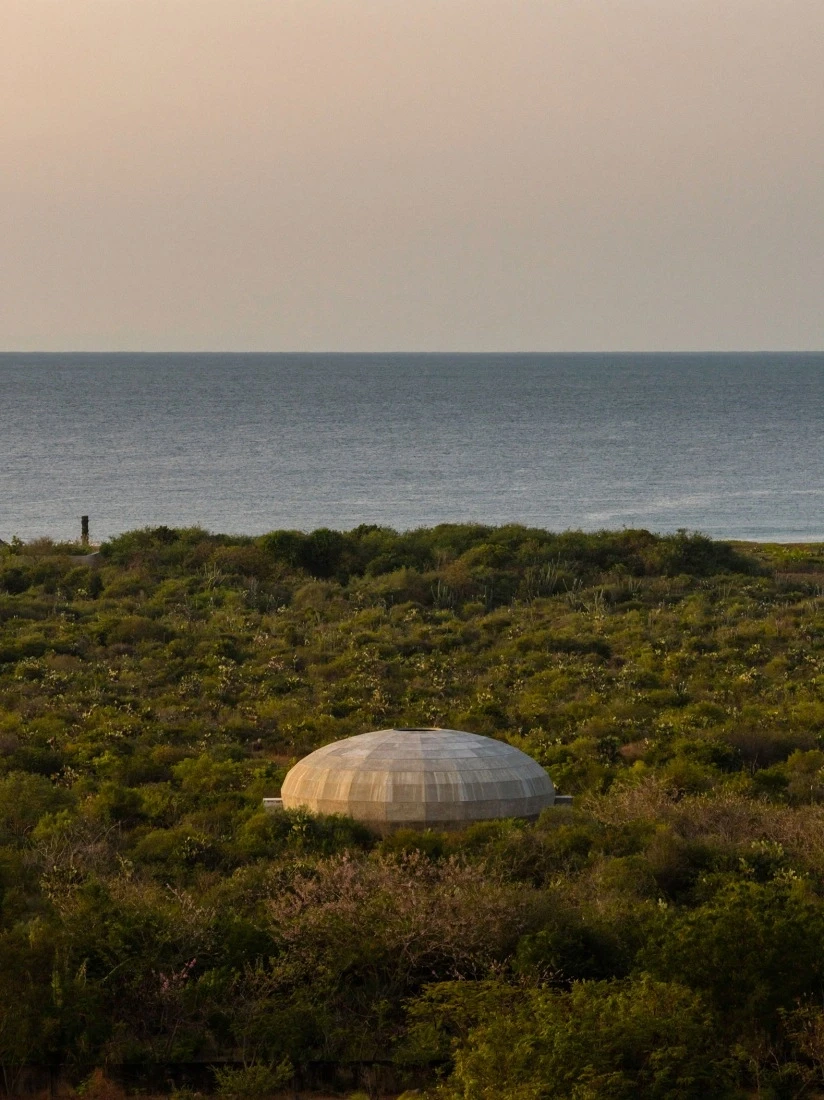
The lower half of the ellipsoidal bowl is stepped, and it resembles a circular amphitheater. These steps serve as multifunctional tiers: they provide seating for human participants during community workshops and also function as terraced shelving for the mushroom pots. The Mushroom Pavilion at Fundación Casa Wabi balances the technical requirements of mushroom production with a functional architectural approach that is ecologically sensitive, socially engaged, and deeply informed by the temporal cycles of the earth.
Mushroom Pavilion Project Details
Project Location: Oaxaca, Mexico
Architects: Office for Metropolitan Architecture (OMA)
Area: 200 m²
Photo Credits: © Rafael Gamo, OMA
Explore Courses
.jpg2.jpg "Carlo Ratti - Rethinking Architecture")
.jpg "Architecture Diagram Mastery: Concept to Portfolio")
.jpg%202.jpg "Building Performance with Forma & Opossum")
.jpg "Ondrej Chybik - Rethinking Architecture")