


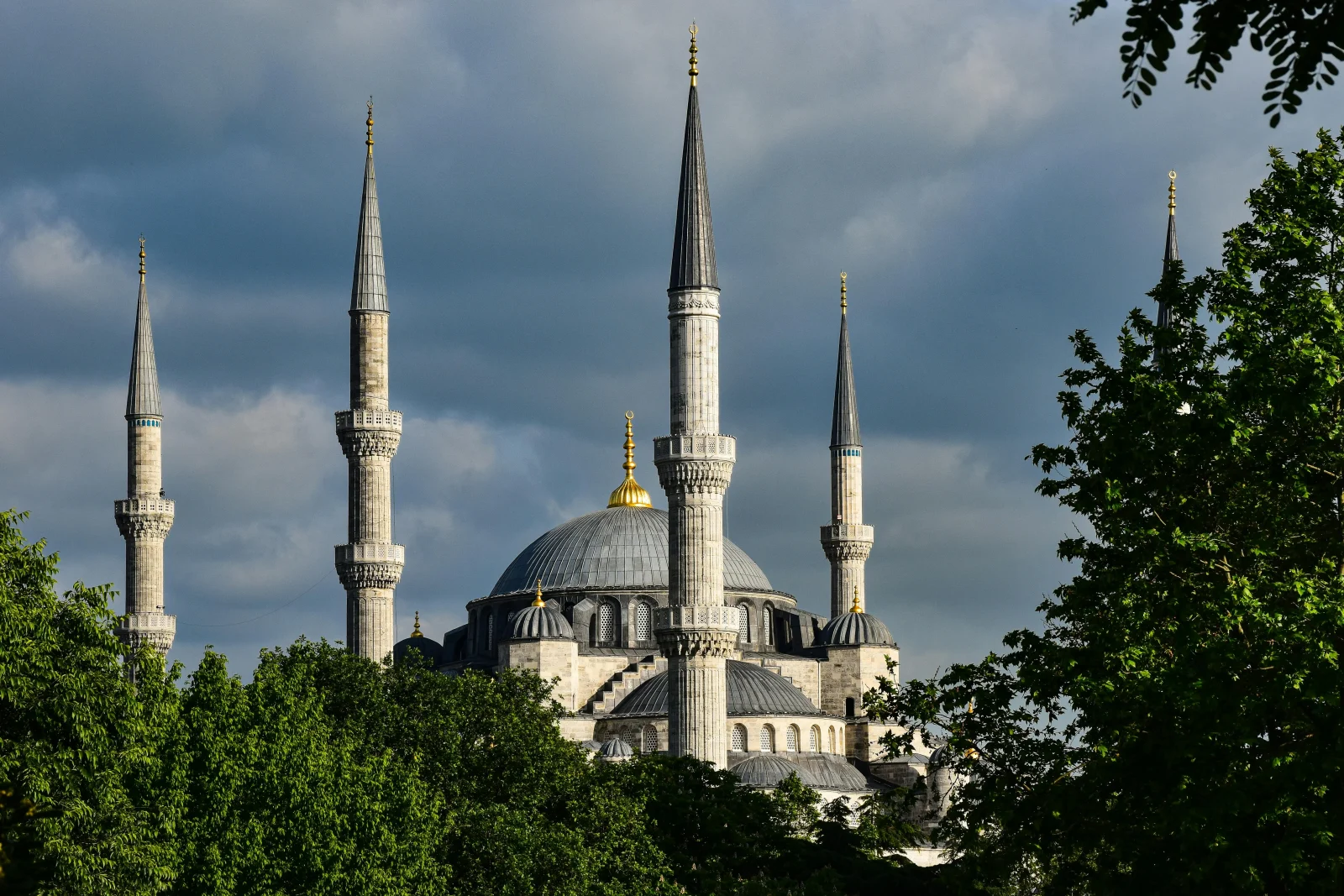
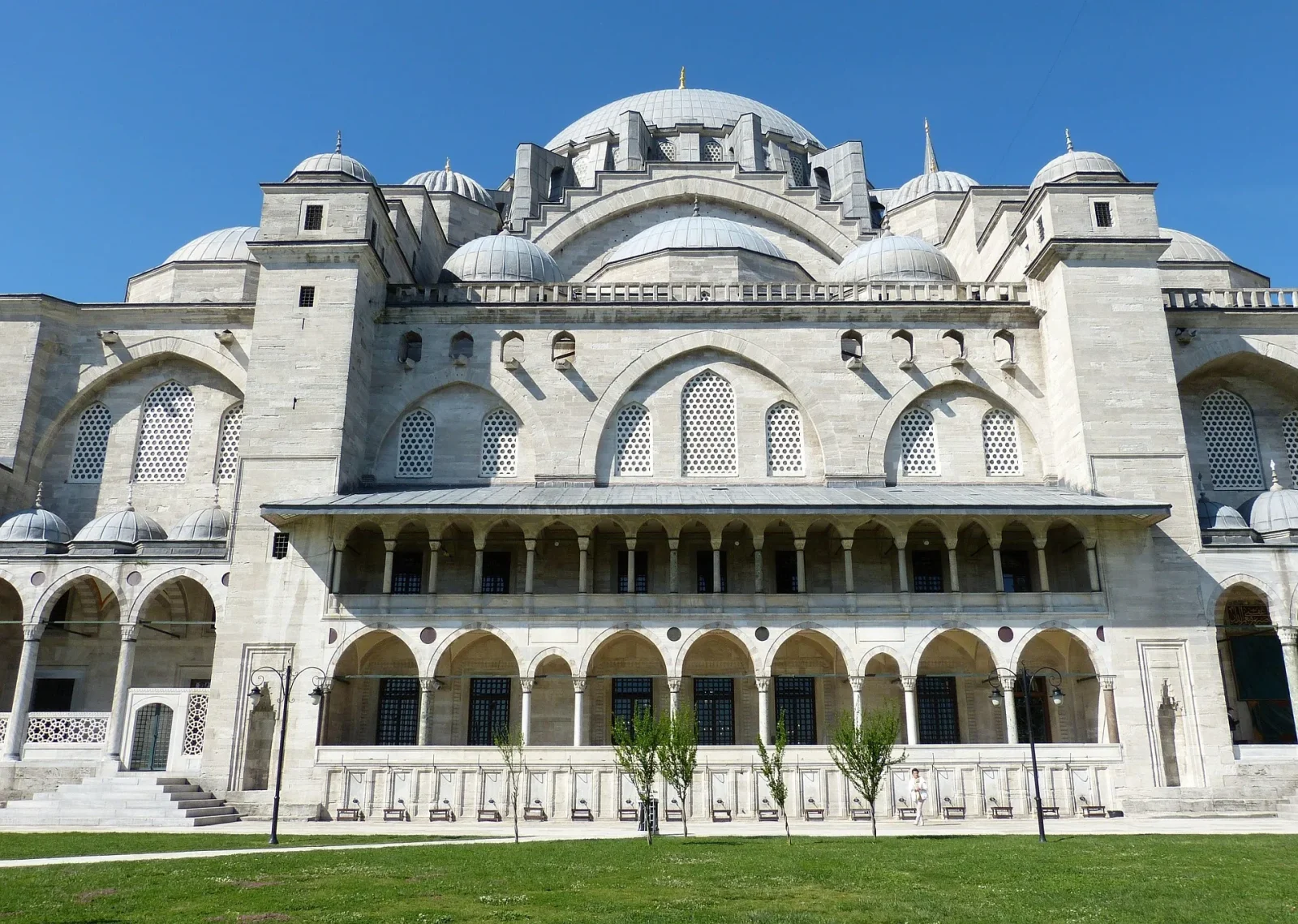
Mimar Sinan, one of the most important architectural geniuses in Turkish and world history, shaped the golden age of Ottoman architecture. Serving as the chief imperial architect of the Ottoman Empire in the 16th century, Sinan achieved a perfect balance between architecture, engineering, and spiritual depth in the hundreds of works he designed.
In his works, he combined the concepts of beauty and function, combining the creativity of engineering technique with the taste of the artist and creating original structures. In his 99-year life, Mimar Sinan designed 8 cellars, 38 baths, 36 palaces, 20 caravanserais, 8 bridges, 5 aqueducts, 3 hospitals, 17 soup kitchens, 17 tombs, 26 darül-kurra, 55 madrasahs, 51 small mosques, and 81 mosques.
Who Was Mimar Sinan?
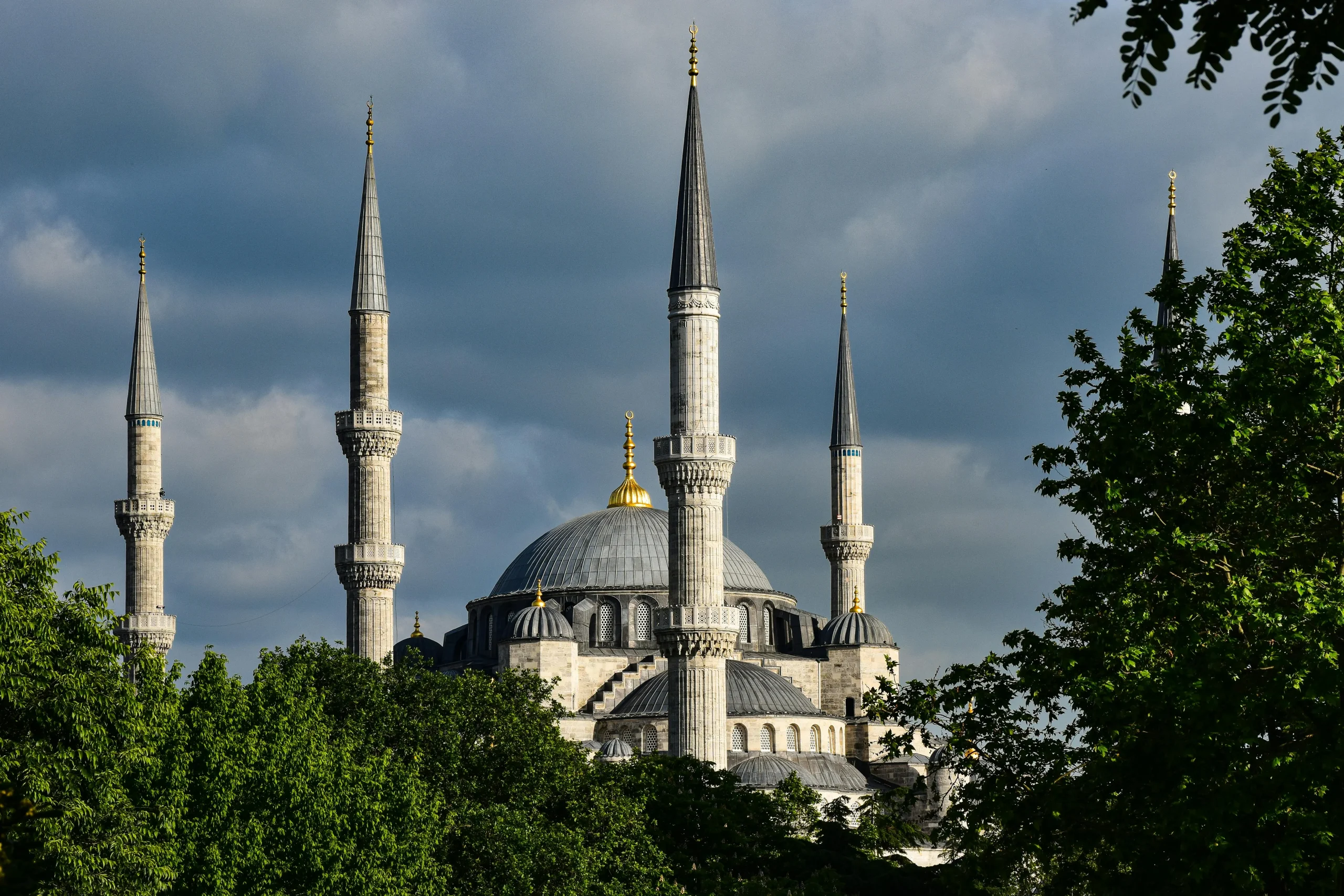
Mimar Sinan, who served as the chief architect during the reigns of Suleiman the Magnificent, Selim II, and Murad III, is considered one of the greatest architectural geniuses of the Ottoman Empire. Originally from Kayseri, he was recruited through the devshirme system and brought to Istanbul in 1512, where he entered the Janissary corps as an apprentice.
Here, Sinan, who chose the profession of carpentry, received education from the best architects of the era and acquired advanced engineering knowledge of the period, such as mathematics, geometry, and construction techniques. Accompanying the sultans on various military campaigns, Sinan had the opportunity to observe the architectural traditions of the regions they passed through. During the expeditions, he had the opportunity to observe Byzantine, Persian, Arab, and Roman architecture and thus was able to synthesize different cultural architectures while building his style.
In 1539, Sultan Suleiman the Magnificent appointed him Chief Imperial Architect. An architectural genius, Sinan shaped the classical period of Ottoman architecture with the mosques, madrasahs, tombs, aqueducts, palaces, inns, baths, and bridges he built from the Ottoman capital to the countryside. By studying his surroundings and delving deeply into both architectural and engineering knowledge, Sinan educated himself and became a master of his craft. He examined the legacy of past civilizations while always looking toward the future.
By studying his surroundings and delving deeply into both architectural and engineering knowledge, Sinan educated himself and became a master of his craft. He examined the legacy of past civilizations while always looking toward the future.
In this article, we will explore ten of the most iconic mosques designed by the architectural genius of the Ottoman Empire, Mimar Sinan.
1. Şehzade Mosque
Location: Fatih, Istanbul, Turkey
Year: 1543-1548
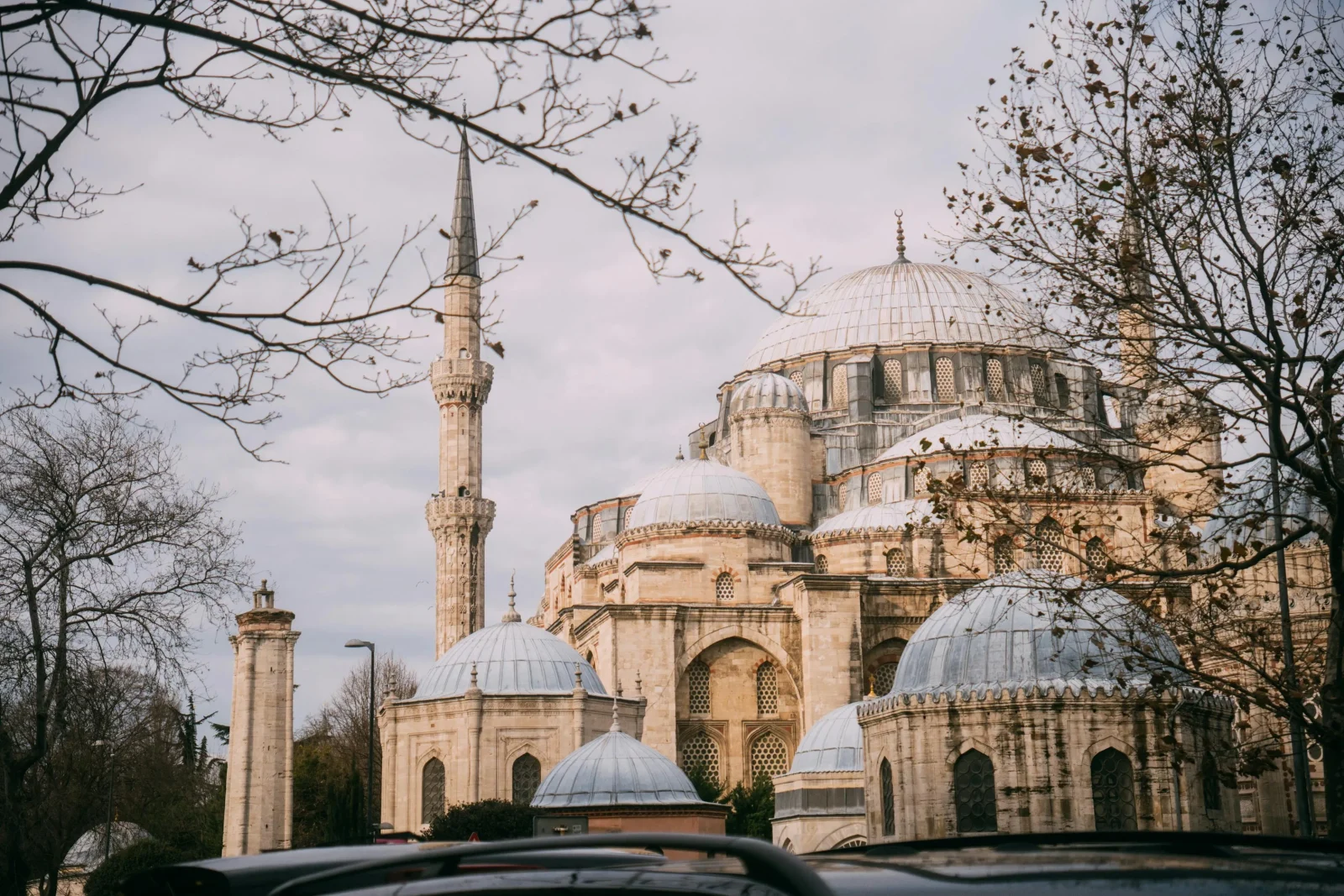
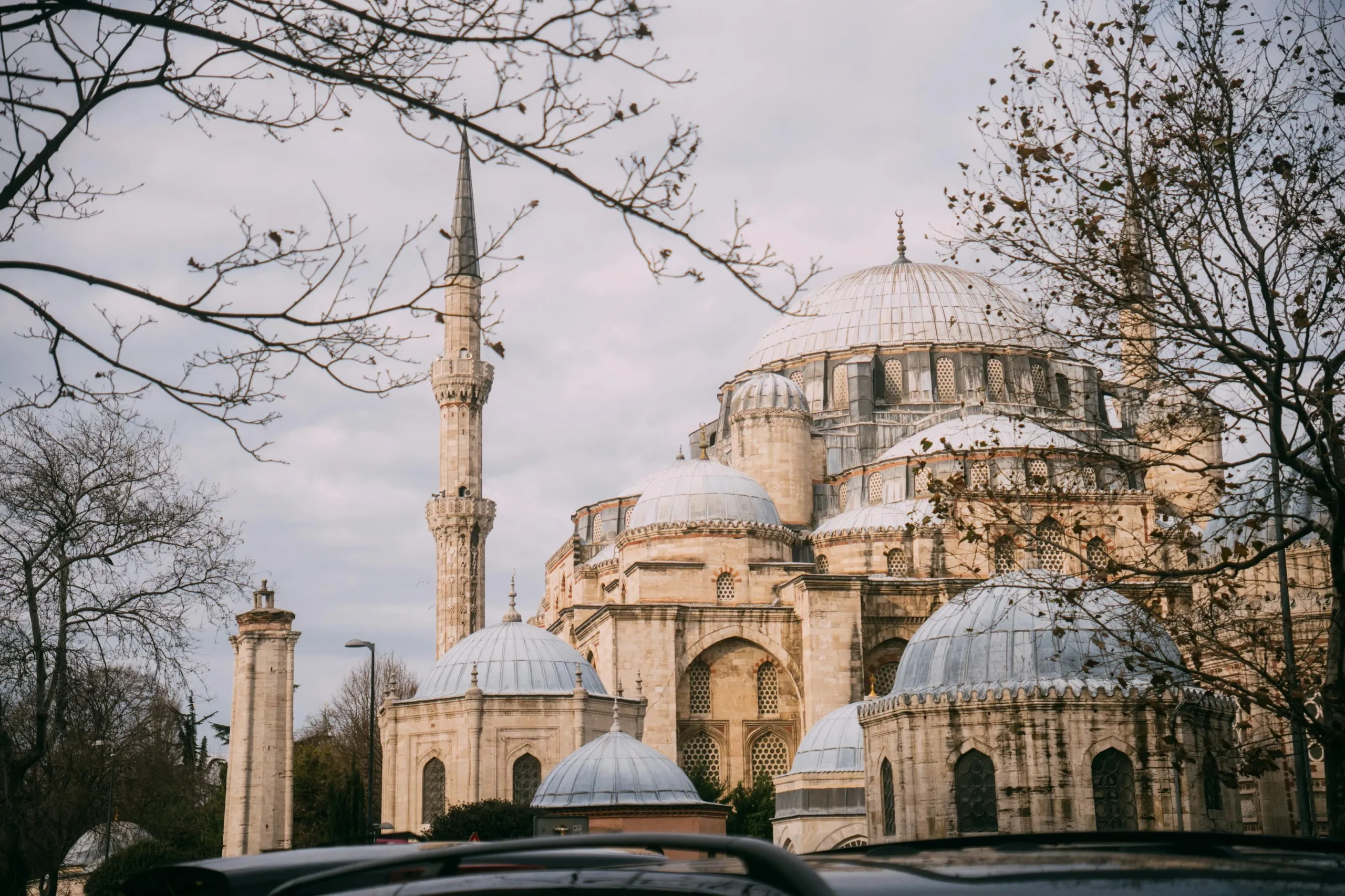
Şehzade Mosque, one of the most important examples of Ottoman architecture, is one of the most iconic structures of Mimar Sinan. Built as part of a külliye (complex) in memory of Şehzade Mehmet, the son of Suleiman the Magnificent, the mosque reflects the architectural characteristics of its time while also influencing later architectural styles.
Şehzade Mosque has a square central plan. The large dome in the center is supported by the surrounding half domes. The main dome, with a diameter of 18.42 meters, rests on four massive “elephant foot” piers. Mimar Sinan, who considered both durability and aesthetics in the selection of materials, used marble, brick, and stone in the construction of the mosque.
The stonework in the mosque shows that each stone was carefully selected. Cream-colored Seljuk-style cut stones play a major role in illuminating the interior. The mosque also draws attention with its woodwork. The interior is decorated with various hand-drawn and calligraphic works, and the ceiling decorations are particularly striking. The minbar (pulpit) and mihrab (prayer niche) are carved from pure marble and feature intricate latticework and balustrades.
There are three entrances to the Şehzade Mosque, with the largest doorway bearing an inscription plaque. The mosque courtyard opens to a large courtyard. The fountain in the middle of the courtyard meets the water needs of the mosque. On both the right and left sides of the mosque, there are two minarets, each with two balconies.
2. Süleymaniye Mosque
Location: Fatih, İstanbul, Turkey
Year: 1550-1557
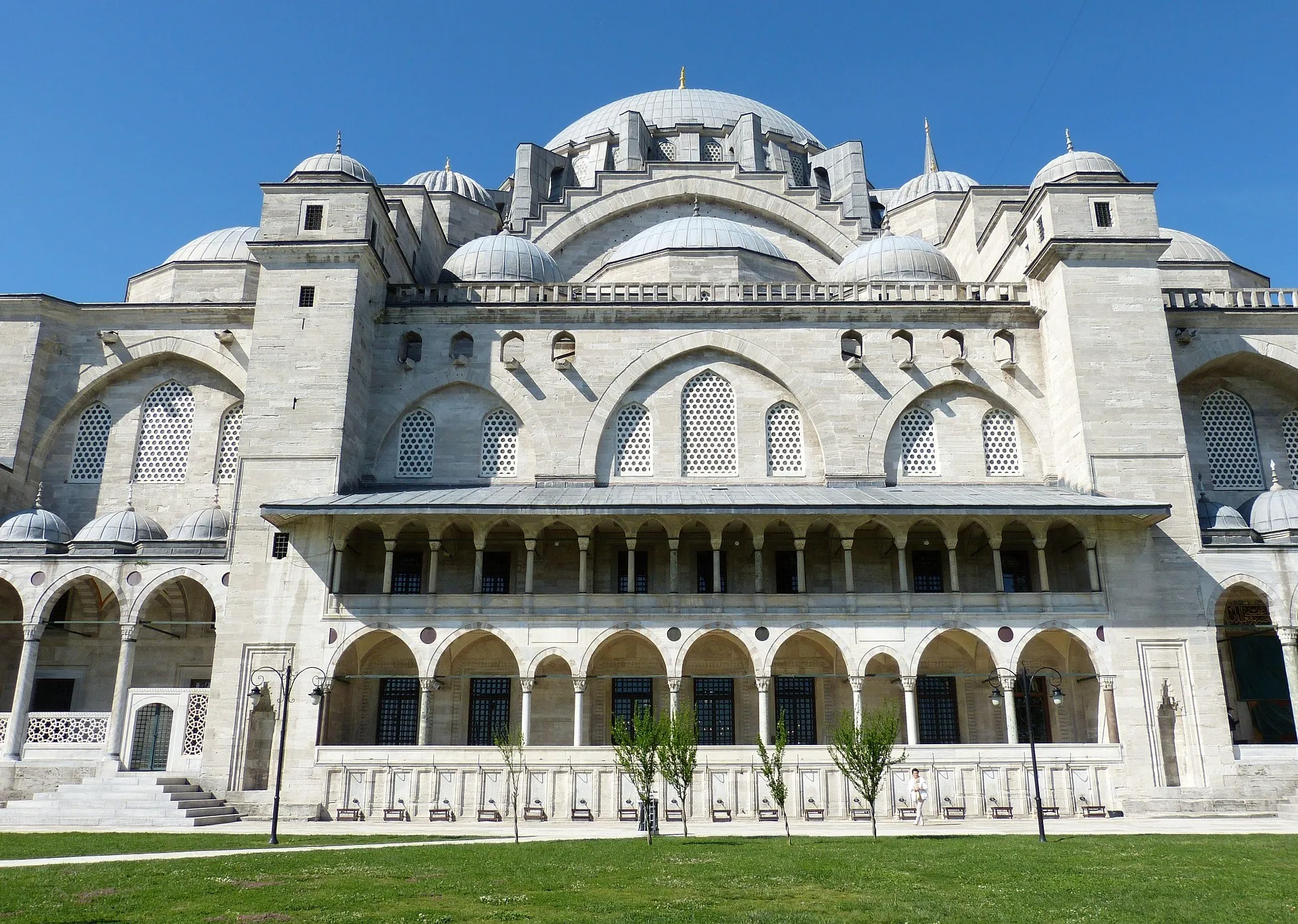
One of Mimar Sinan’s most iconic mosques, the Süleymaniye Mosque, was built in honor of Suleiman the Magnificent, the longest-reigning sultan of the Ottoman Empire. This mosque, which is a part of the complex, is located on the third hill, one of the seven highest hills in Istanbul, in a position overlooking the Golden Horn, thus maximizing the urban silhouette effect of the mosque.
Rising magnificently on an area of 3500 m², Süleymaniye Mosque is one of the two mosques in Istanbul with four minarets, along with Hagia Sophia. The 4 minarets in the mosque represent the 4 sultans who ascended to the throne after the conquest of Istanbul. The 10 balconies on the minarets represent Suleiman the Magnificent as the 10th sultan of the Ottoman Empire.
The mosque’s construction primarily features finely cut stone and marble. Limestone blocks (known as küfeki stone) were intricately carved and reinforced with iron clamps to strengthen the structure. The main dome of the Süleymaniye Mosque, which has a classical Ottoman central dome plan, rises 53 meters with a diameter of 26.5 meters. It is supported by four massive “elephant foot” piers.
Mimar Sinan left the two sections on the north and south without a dome; he added windows to the walls of the main dome, called the arch of power, thus allowing light to enter. The mosque, which has become iconic with its acoustic superiority, also has sound reflections under the dome, allowing the imam’s voice to reach every corner of the mosque without any technological means.
3. Selimiye Mosque
Location: Edirne, Turkey
Year: 1568-1575
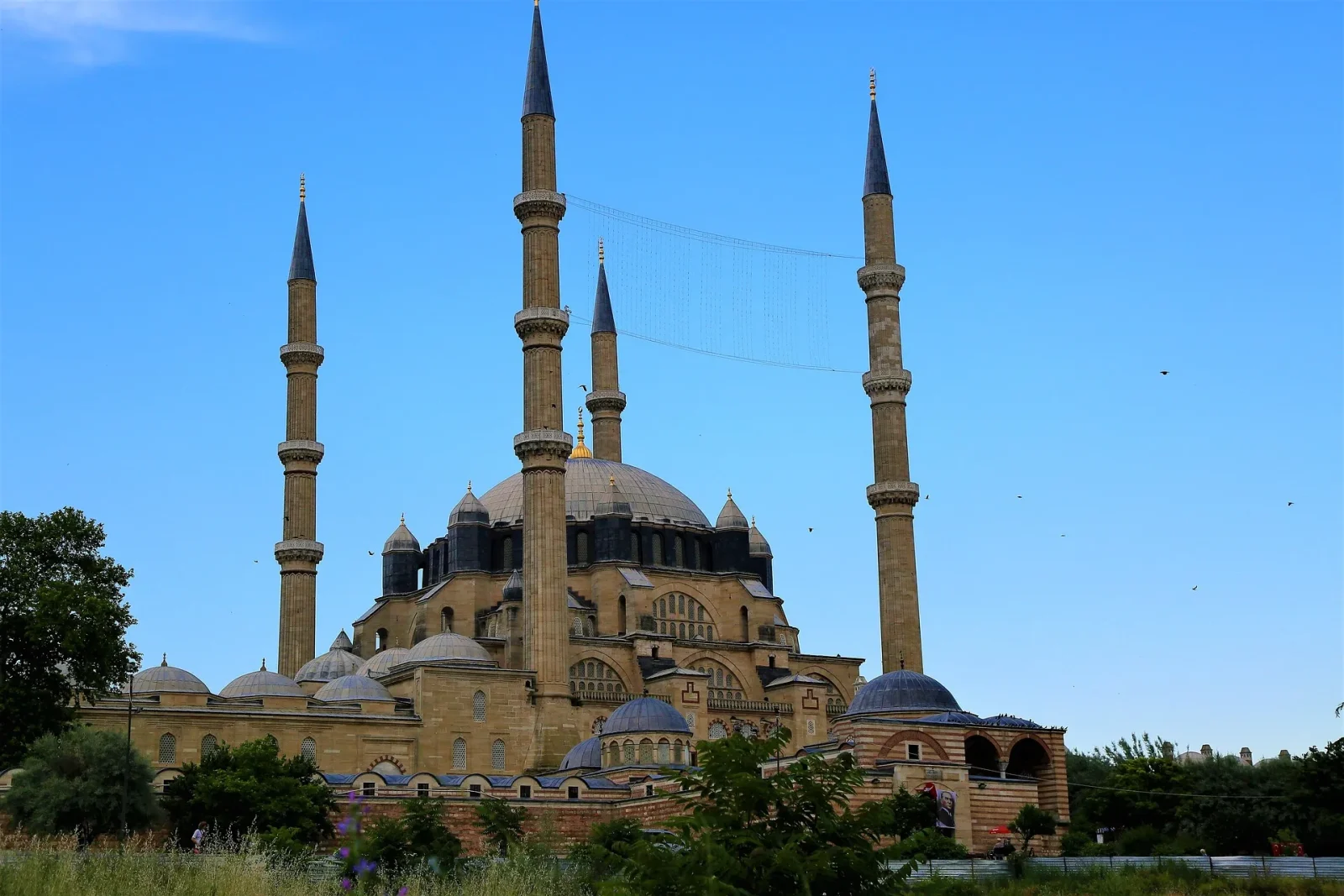
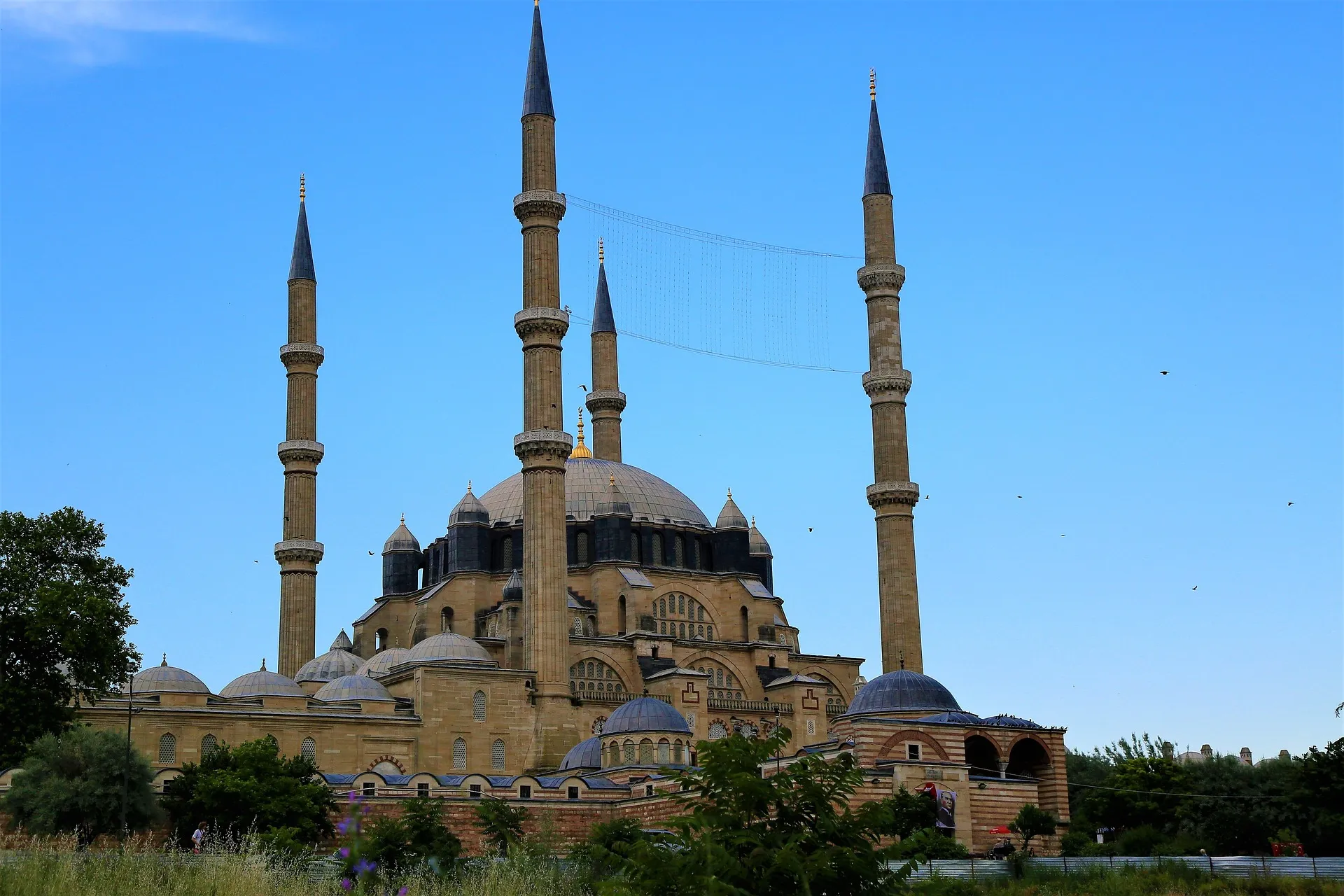
The Selimiye Mosque, one of Mimar Sinan’s most impressive works, was commissioned by Sultan Selim II and is located on a hill overlooking the Meriç River in the center of Edirne. The mosque, which can be seen from almost every point in the city due to its location, is a masterpiece that determines the architectural character of Edirne. Built by Sinan when he was 80, this mosque is a unique structure with its four elegant minarets and magnificent dome.
The mosque’s four minarets, each with three balconies, enhance its monumental appearance. Designed to be as slender as possible, the minarets reach a height of 85.67 meters including their finials. The dome, which rises 42.30 meters and has a diameter of 31.30 meters, envelops the entire space of the mosque as a single whole. The domes are placed on eight large piers without dividing the mosque in the interior. Thus, the effect of uninterrupted space becomes an ideal form in Ottoman mosque architecture, and with the centralized plan of the Selimiye Mosque, Mimar Sinan built the ideal order he aimed for in his career.
Its magnificent architecture continues to show itself with the decorations in the interior. The tile decorations of the mosque, whose minbar (pulpit) and mihrab (prayer niche) are considered masterpieces of marble workmanship, were manufactured in Iznik, the most important tile production center of the period. 101 different tulip patterns were used in these decorations. All height and openness ratios in the interior are balanced with windows that illuminate the space. The numerous windows on the dome drum and the facade walls allow natural light to be distributed elegantly in the space.
4. Mihrimah Sultan Mosque (Iskele Mosque)
Location: Üsküdar, Istanbul, Turkey
Year: 1547-1548
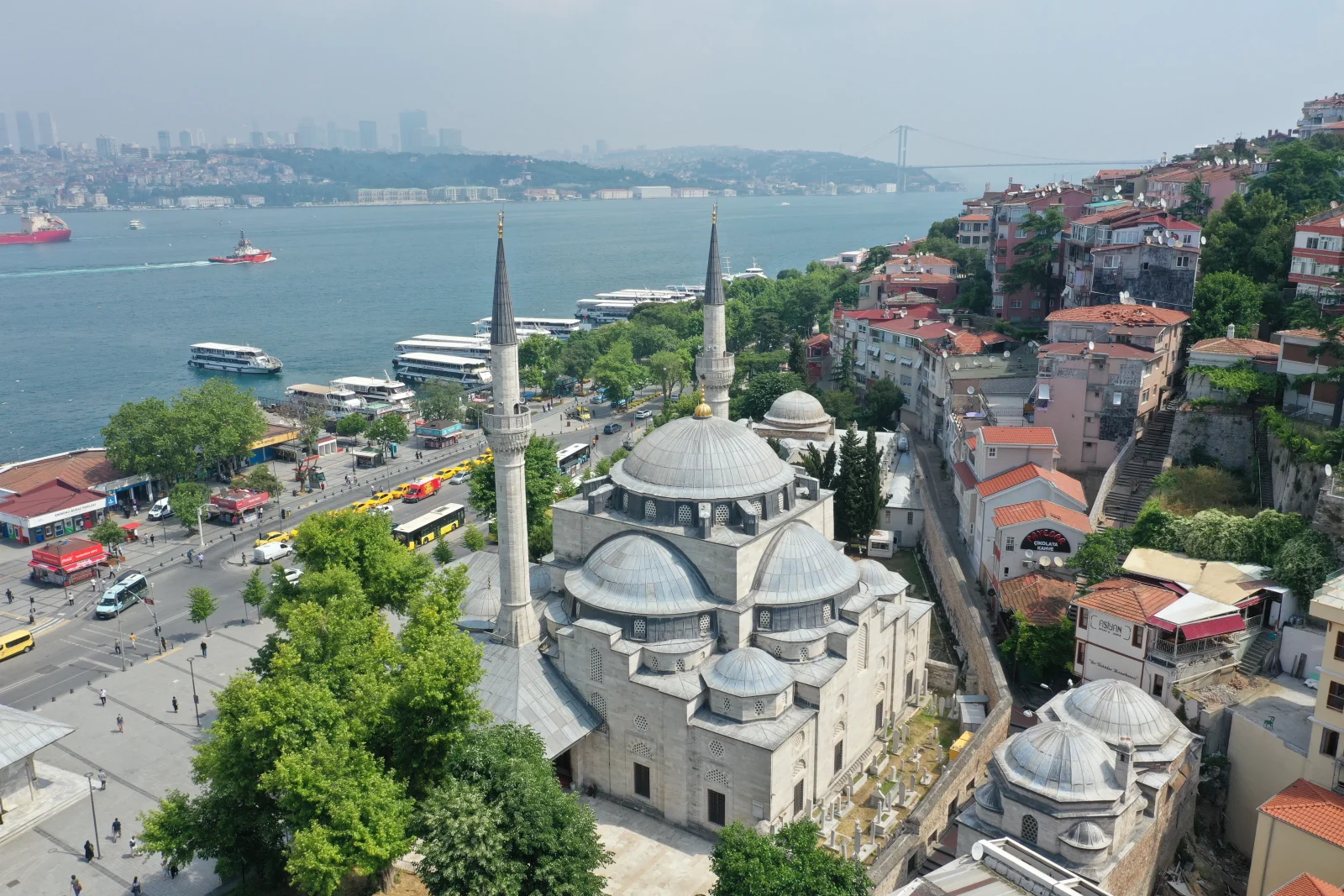
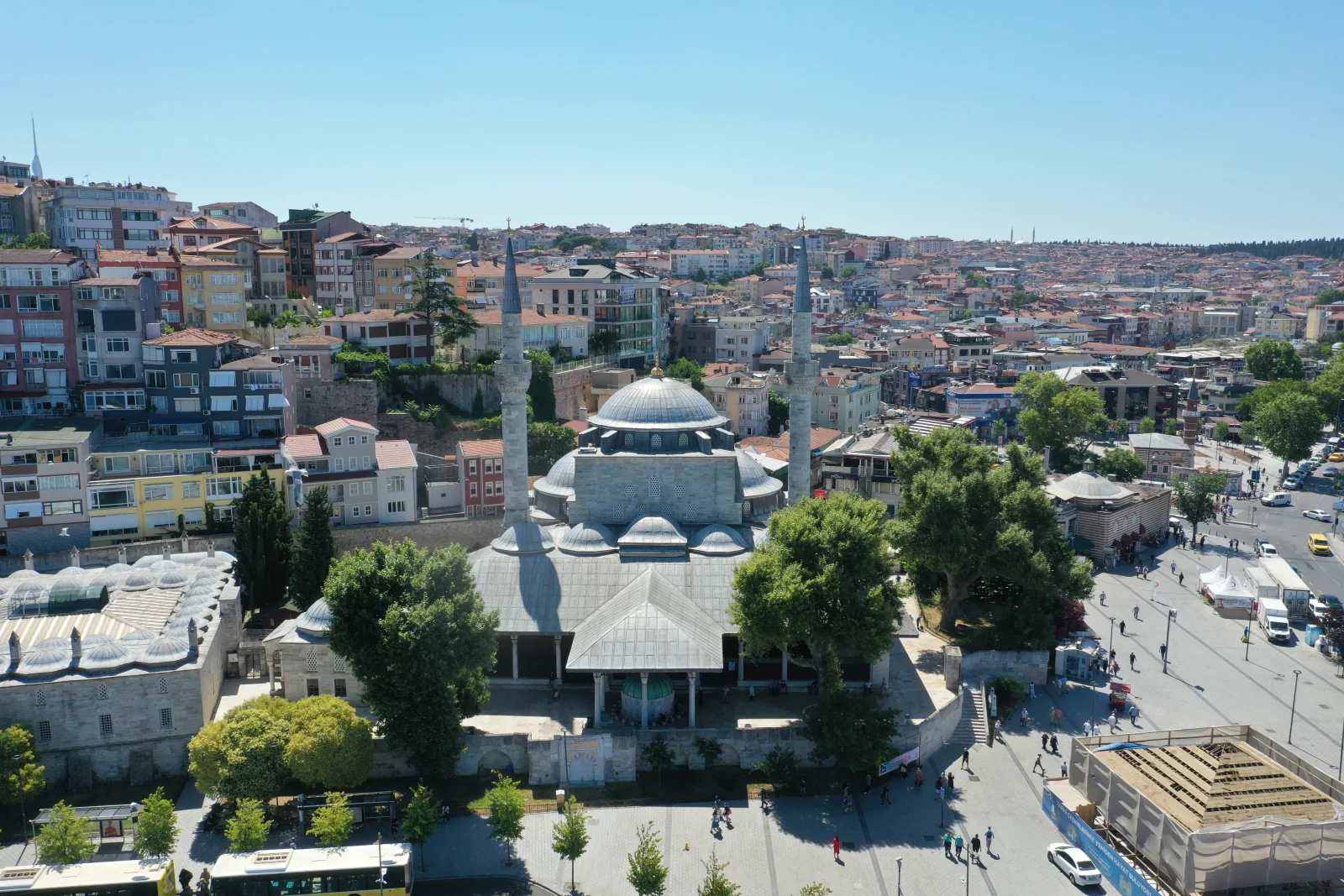
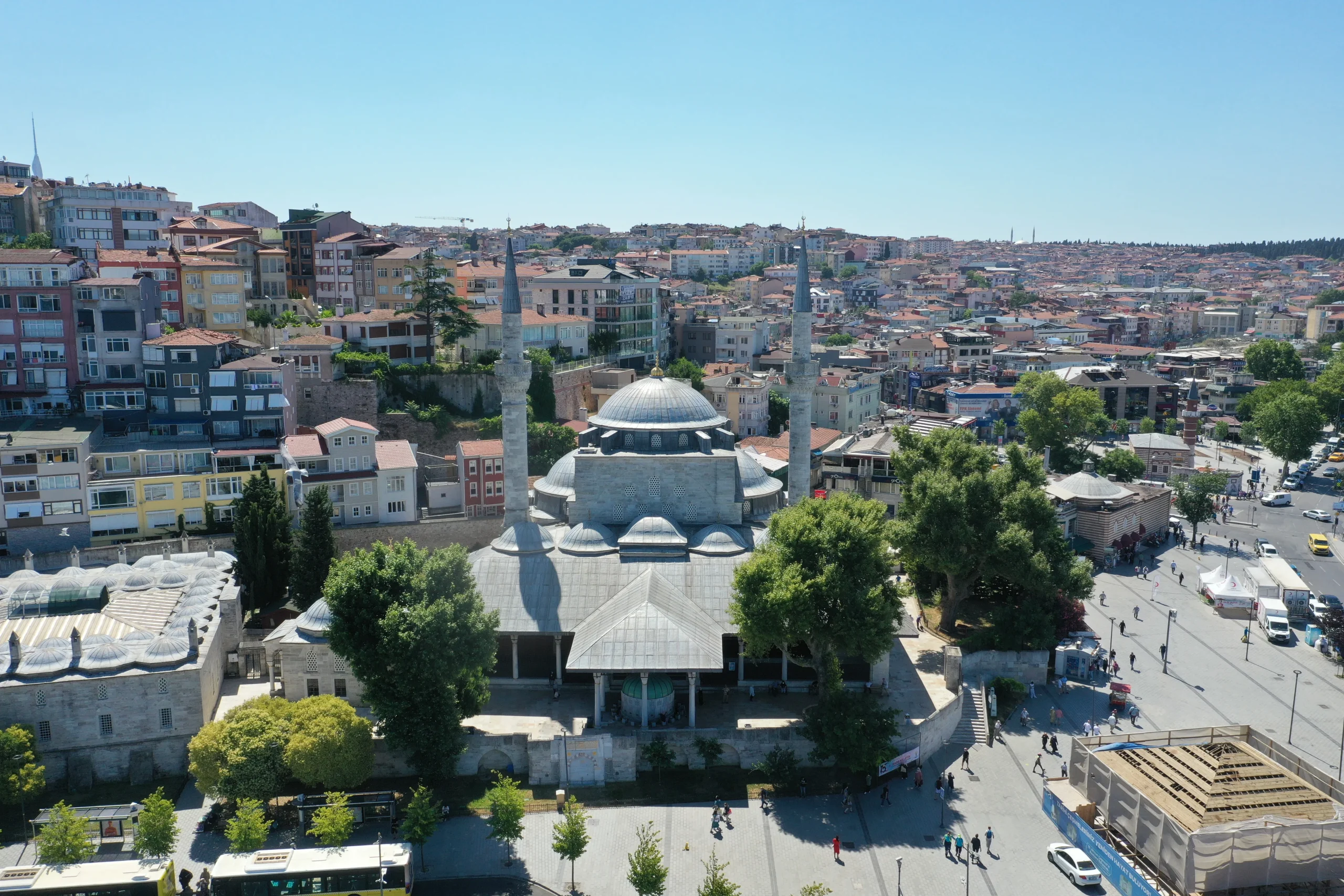
The iconic Mihrimah Sultan Mosque, an example of Mimar Sinan’s elegant style, is one of Sinan’s early works. The Iskele Mosque, or Mihrimah Sultan Mosque as it is known, is located in the center of the complex built for Mihrimah Sultan, the daughter of Suleiman the Magnificent, and is located on the shores of the Bosphorus in Üsküdar, very close to the sea. Thanks to this location, the mosque also serves as a reception and passage space.
The mosque consists of a prayer hall (harim) covered by a central dome supported by three semi-domes, along with a double portico forming the entrance courtyard. The main dome has a diameter of 10 meters. Its two minarets each have a single balcony, and the mosque features a muqarnas-adorned mihrab (prayer niche) and a marble minbar (pulpit), reflecting the strongest elements of classical Ottoman architecture.
The courtyard of the Mihrimah Sultan Mosque, which resembles the silhouette of a perched eagle when viewed from the dock, is smaller than other historical mosques. The mosque, built using cut stone, has a simple but balanced facade composition. The surfaces shaped by symmetrical window rows and simple moldings give the mosque a clear but impressive exterior appearance.
5. Mihrimah Sultan Mosque
Location: Edirnekapı, Istanbul, Turkey
Year: 1562-1565
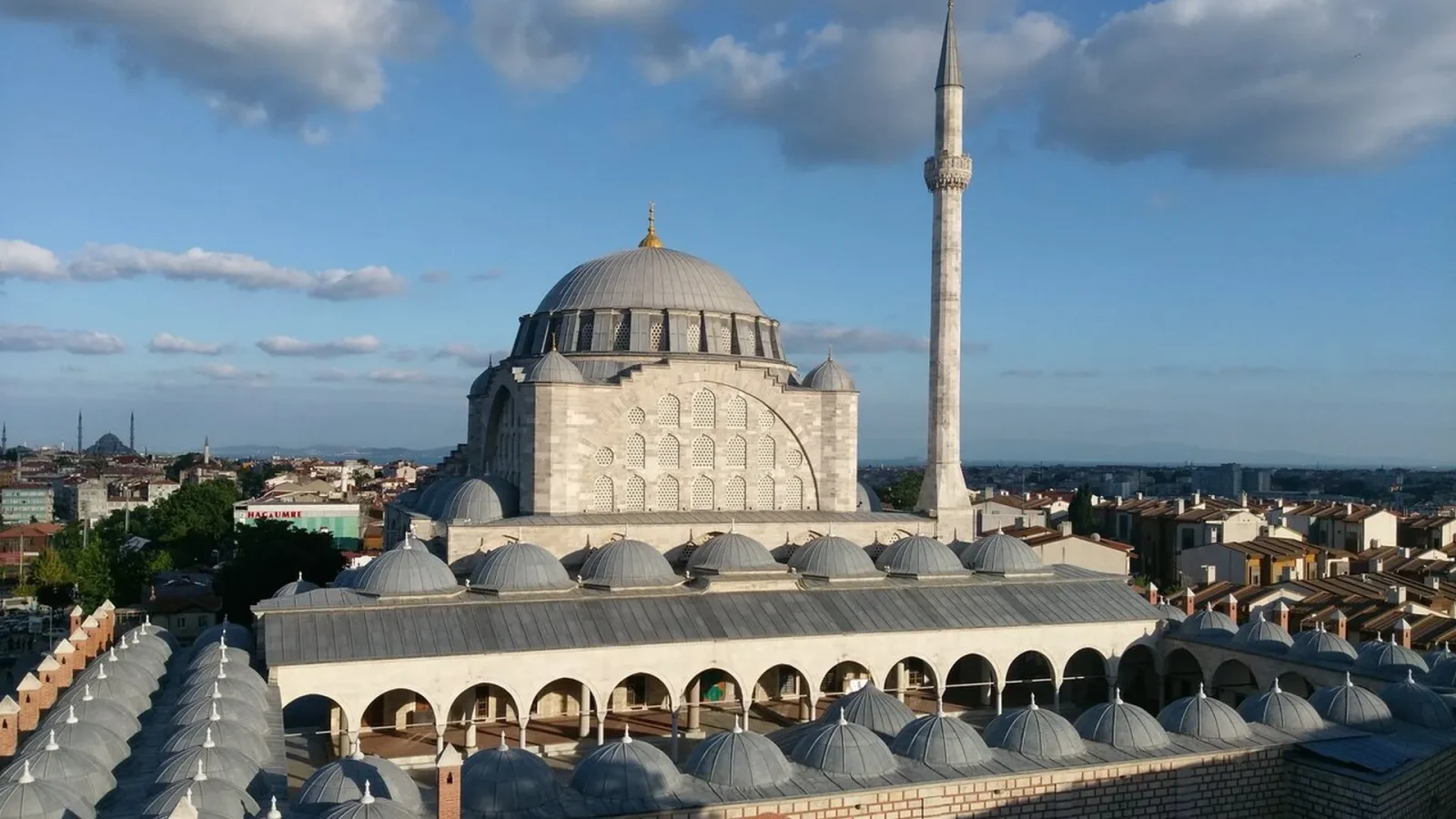
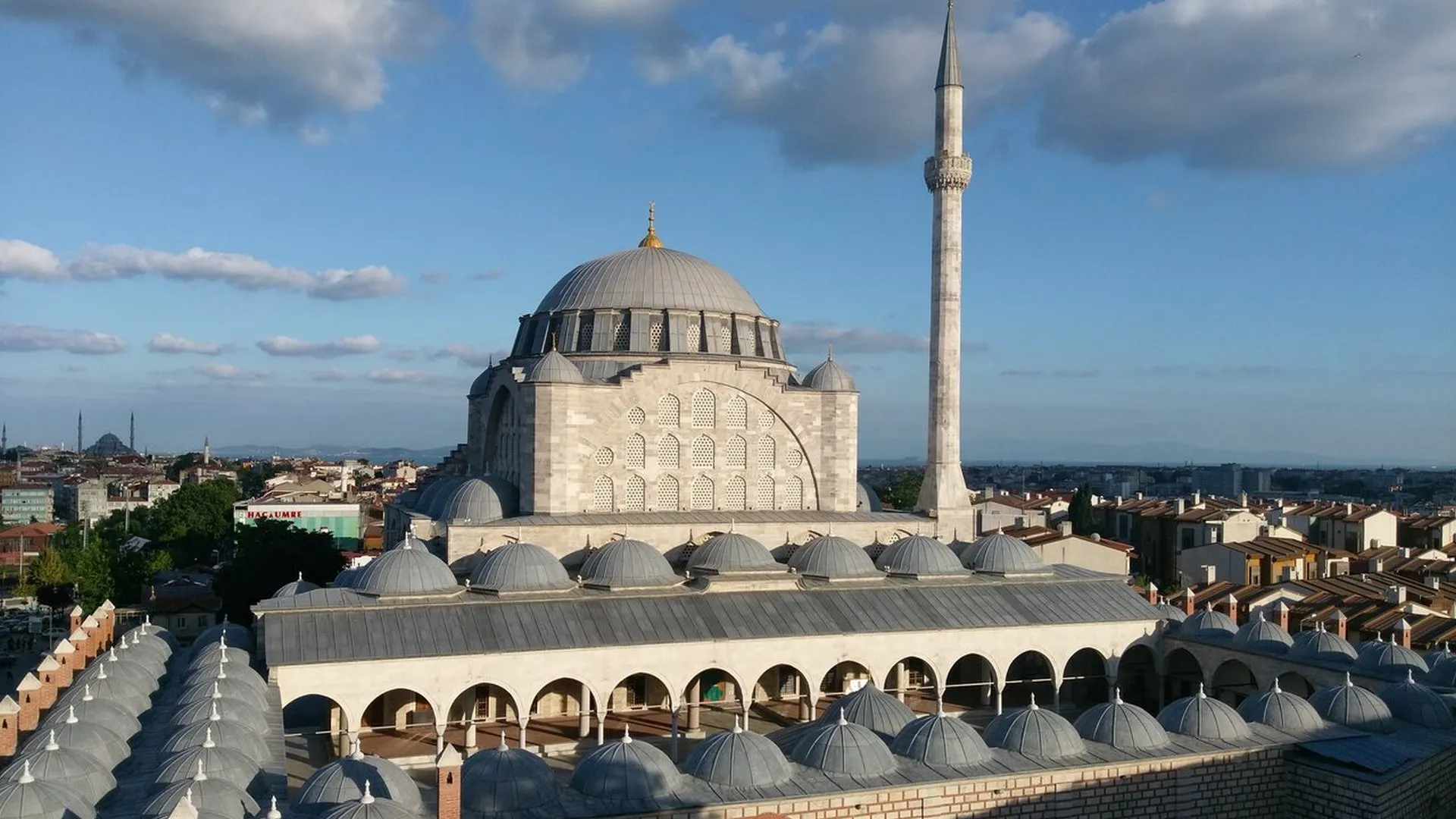
The main structure of the second social complex built by Mimar Sinan in the name of Mihrimah Sultan, the daughter of Suleiman the Magnificent, is located on the sixth hill of Istanbul. This hill, which Mimar Sinan consciously chose, makes the mosque a structure that is almost integrated with the sky. Another unique feature of its location is that it is positioned directly opposite the mosque of the same name in Üsküdar. Every year, on March 21, when day and night are equal, the sun setting over the minaret of the mosque in Edirnekapı is greeted by the moon rising behind the minaret in Üsküdar. This is an architectural symbol that visually embodies the name “Mihr ü Mah”, meaning “Sun and Moon”.
The prayer hall of Mihrimah Sultan Mosque, one of Mimar Sinan’s iconic mosques, has a rectangular plan. The central area is separated from the eastern and western wings by two columns. The wings are covered with three domes. The center of the prayer hall is covered with a large dome with a diameter of 20.25 meters, carried by four large arches. The arches feature three rows of windows, and additional windows on the dome’s drum allow ample natural light to fill the prayer hall.
The mosque is constructed predominantly from finely cut stone and marble, and its façade presents a simple yet powerful composition. The prominently visible external buttresses add rhythmic order to the structure. The elegant minaret located in the northwest corner of the mosque dates back to the aftermath of the 1894 earthquake, one of the biggest earthquakes Istanbul has ever experienced. The minaret, which collapsed as a result of the earthquake on July 10, 1894, was later rebuilt in an elegant and thin body by the National Architectural Style.
6. Lala Pasha Mosque
Location: Erzurum, Turkey
Year: 1562
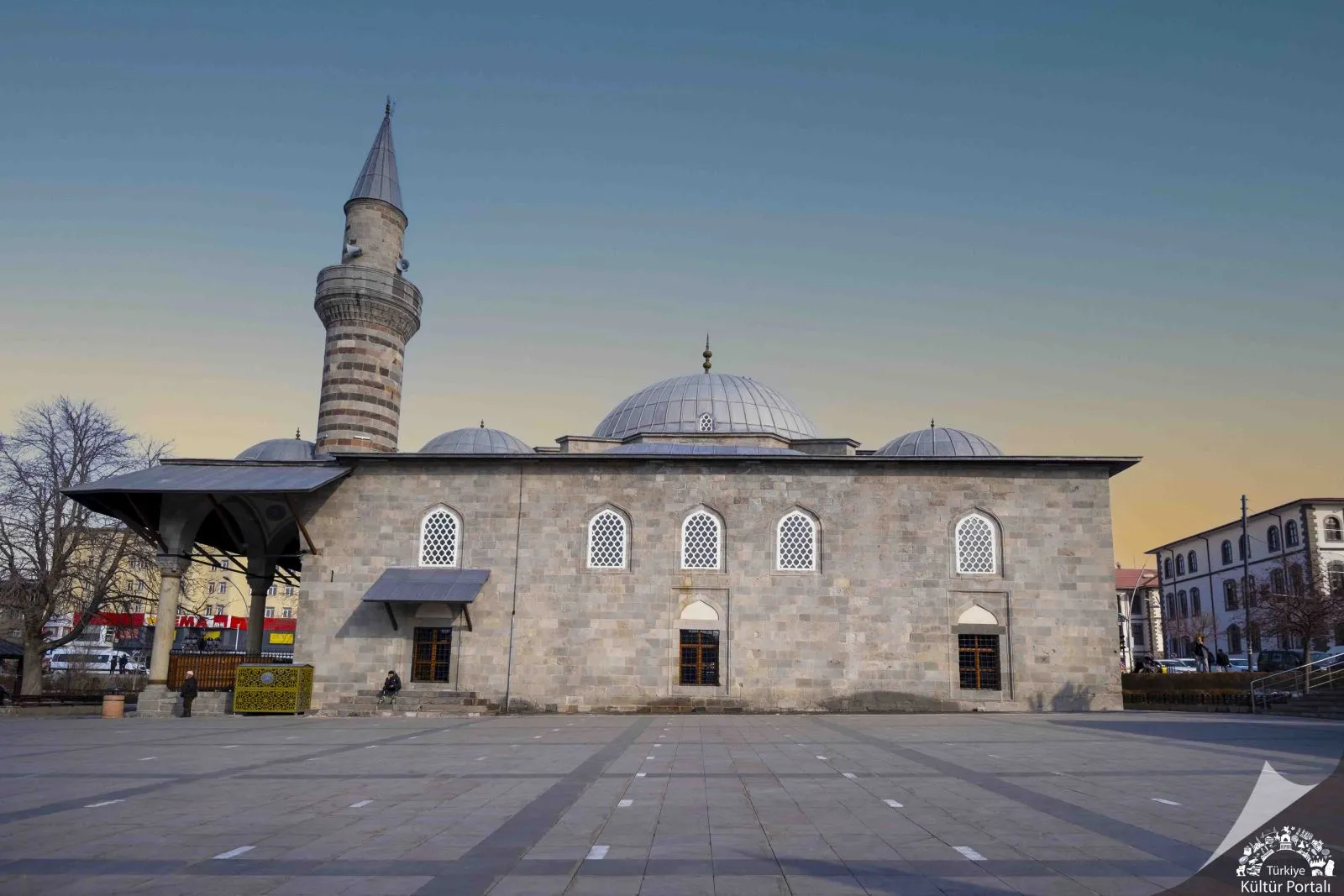
Lala Pasha Mosque is the first mosque built in Erzurum during the Ottoman period. This mosque, which has become an example for other Ottoman mosques, was built by the Grand Vizier of Erzurum, Lala Mustafa Pasha, during the reign of Suleiman the Magnificent. The mosque follows the classical Ottoman central plan typology but is smaller in scale compared to Sinan’s examples in Istanbul.
The mosque, which has a centrally planned cover form consisting of a central dome supported by four piers in the middle, half cross vaults supported by pointed arches on four sides, and four small domes in the corners, is illuminated by 28 windows in two rows. The inscriptions of hadiths on the windows represent exquisite examples of Islamic calligraphy.
The mosque’s round-bodied, single-balcony minaret sits on a square base. The minaret, built of white stone, is decorated with red stone bracelets. The columns in the octagonal wooden and iconic roofed fountain in the mosque’s courtyard are decorated with stonework.
7. Behram Pasha Mosque
Location: Diyarbakır, Turkey
Year: 1572- 1573
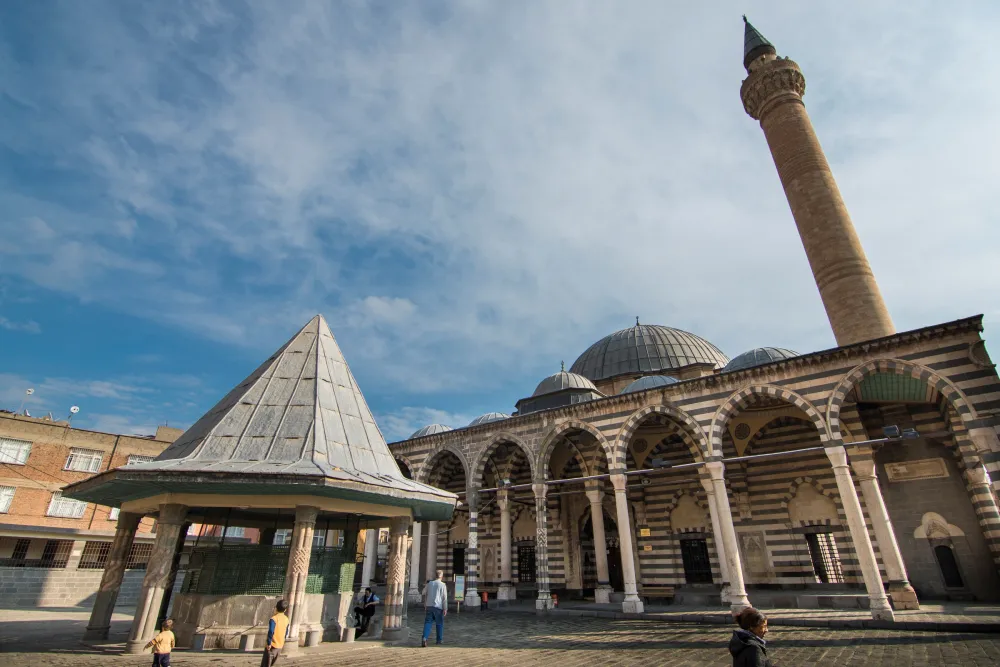
Behram Pasha Mosque, one of the iconic mosques of Mimar Sinan, was built by the governor of Diyarbakir, Behram Pasha. Showcasing a modern compressed architectural style, the mosque features stunning stone craftsmanship and is one of the most influential examples of the region’s unique architecture.
Located in the Suriçi region, one of the most important axes in the city center, the mosque is perfectly integrated into the city’s historical stone texture and black basalt architecture. Sinan designed the Behram Pasha Mosque by blending Diyarbakir’s black stone architecture with classical Ottoman lines.
Constructed entirely from cut stone, the mosque has a single dome and a single minaret. The minaret, which was partially destroyed in 1928, was rebuilt the following year in the same style. Mimar Sinan, who placed the squinch dome on four thick walls, opened rectangular spaces on these walls and placed mihrab niches on each.
This design effectively transforms the dome’s support from four walls to an octagonal base system. The voids left in the thick walls created four square spaces at the corners, which were covered with small domes to form separate chambers. The mosque’s portico consists of five domes supported by columns and covered with eaves, creating an open-air prayer area suitable for worship during the summer months.
8. Kılıç Ali Pasha Mosque
Location: Tophane, Istanbul, Turkey
Year: 1578-1580
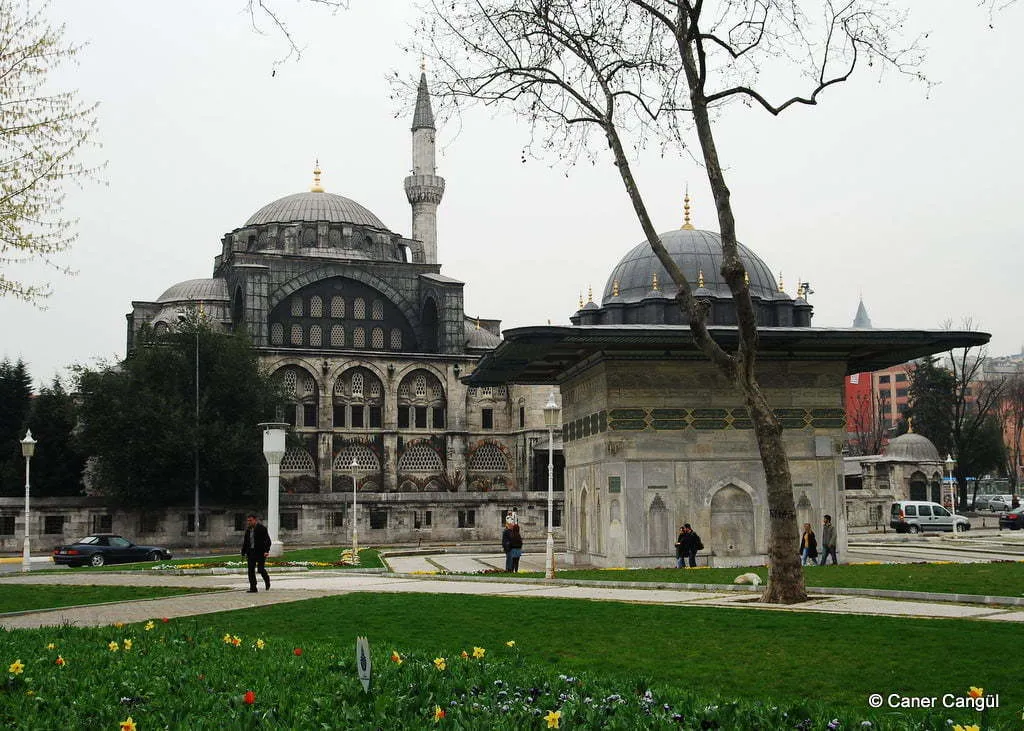
The Kılıç Ali Pasha Mosque is one of Mimar Sinan’s most elegant architectural works, reflecting his refined relationship with the sea. Commissioned by Kılıç Ali Pasha, the famous admiral (Kapudan Pasha) of the Ottoman Navy, the mosque was one of Sinan’s later projects. Although originally located right on the waterfront, it has since lost its direct connection to the sea due to land reclamation and urban development. Kılıç Ali Paşa Mosque, which reflects the plan of Hagia Sophia, is an original interpretation of classical Ottoman architecture and Byzantine influence.
The front of the mosque, which consists of a large rectangular block, is surrounded by large double arcades. In front of the mosque is a paved ablution area. The mosque’s single minaret is adjacent to the western corner of the prayer hall. It is accessed by one of two symmetrical staircases at either end of the northwestern portico, the steps of which rise to the gallery level. All domes and roofs, including the conical spire of the minaret, are covered with lead panels on the exterior.
The interior of the mosque resembles the layout of a Byzantine church, with a central nave flanked by two side aisles. The long nave is covered by a central dome with a diameter of thirteen meters and supported by two semi-domes of the same radius to the northwest and southeast. As in Hagia Sophia, the lateral thrust of the dome is counterbalanced asymmetrically by large arches on both sides. The interior is remarkable for its elegant hand-drawn works, floral and geometric motifs, and Iznik tiles.
9. Valide-i Atik Mosque
Location: Üsküdar, Istanbul, Turkey
Year: 1570-1589
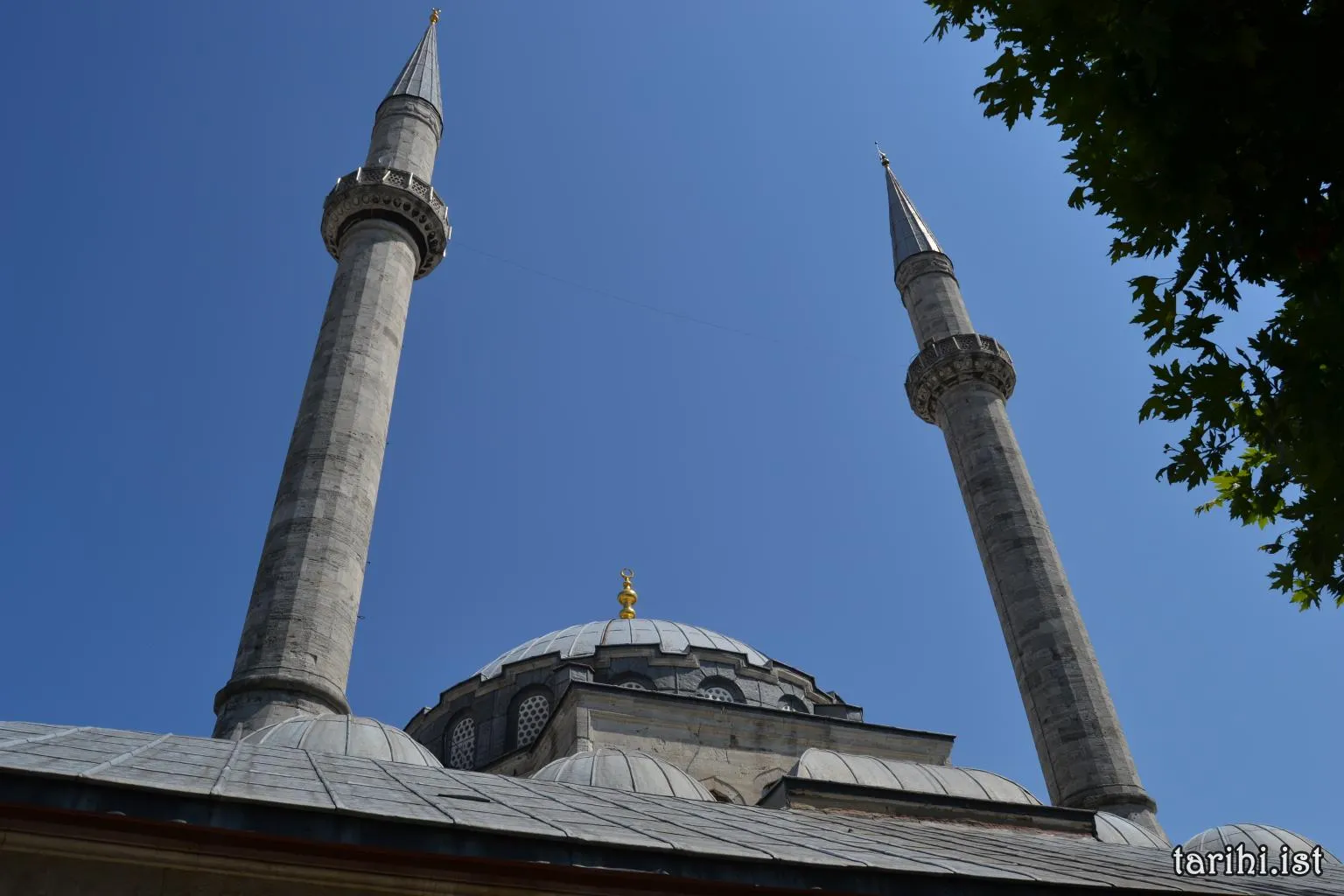
The Valide-i Atik Mosque, the central structure of the Valide-i Atik Complex built by Nurbanu Sultan, the wife of Sultan Selim II and mother of Murad III, is one of the most striking works of Mimar Sinan. The mosque has two entrances, two on the sides and one on the facade. The two long minarets in the mosque are made of cut stone and have a single balcony. The minarets, which have square bases and triangular bodies, were probably destroyed in the 1765 earthquake and were rebuilt according to the baroque style, the famous movement of the period.
The mosque was constructed in three phases. The portion designed by Mimar Sinan is the central section, which has a hexagonal plan. The central dome is surrounded by five semi-domes placed over the corners and the mihrab projection. To the north, there is a five-unit narthex, a wooden porch surrounding it, and a double minaret.
During the second construction phase (1582–1583), domed aisles were added to the east and west sides of the prayer hall, along with two-story galleries inside and a large courtyard featuring a colonnaded ablution fountain. The final additions were made during the reign of Sultan Mahmud II, around 1834–1835, including the sultan’s pavilion and imperial gallery.
The facade, which is free from ornamentation, is also noticeable in other mosques by Mimar Sinan and is seen in the Valide-i Atik Mosque. In contrast, a very rich ornamentation program was applied to the interior. İznik tiles are noticeable in the mihrab, window interiors, and some arch surfaces. The hand-drawn decorations inside reflect the simplicity of the late Sinan style.
10. Sokollu Mehmed Pasha Mosque
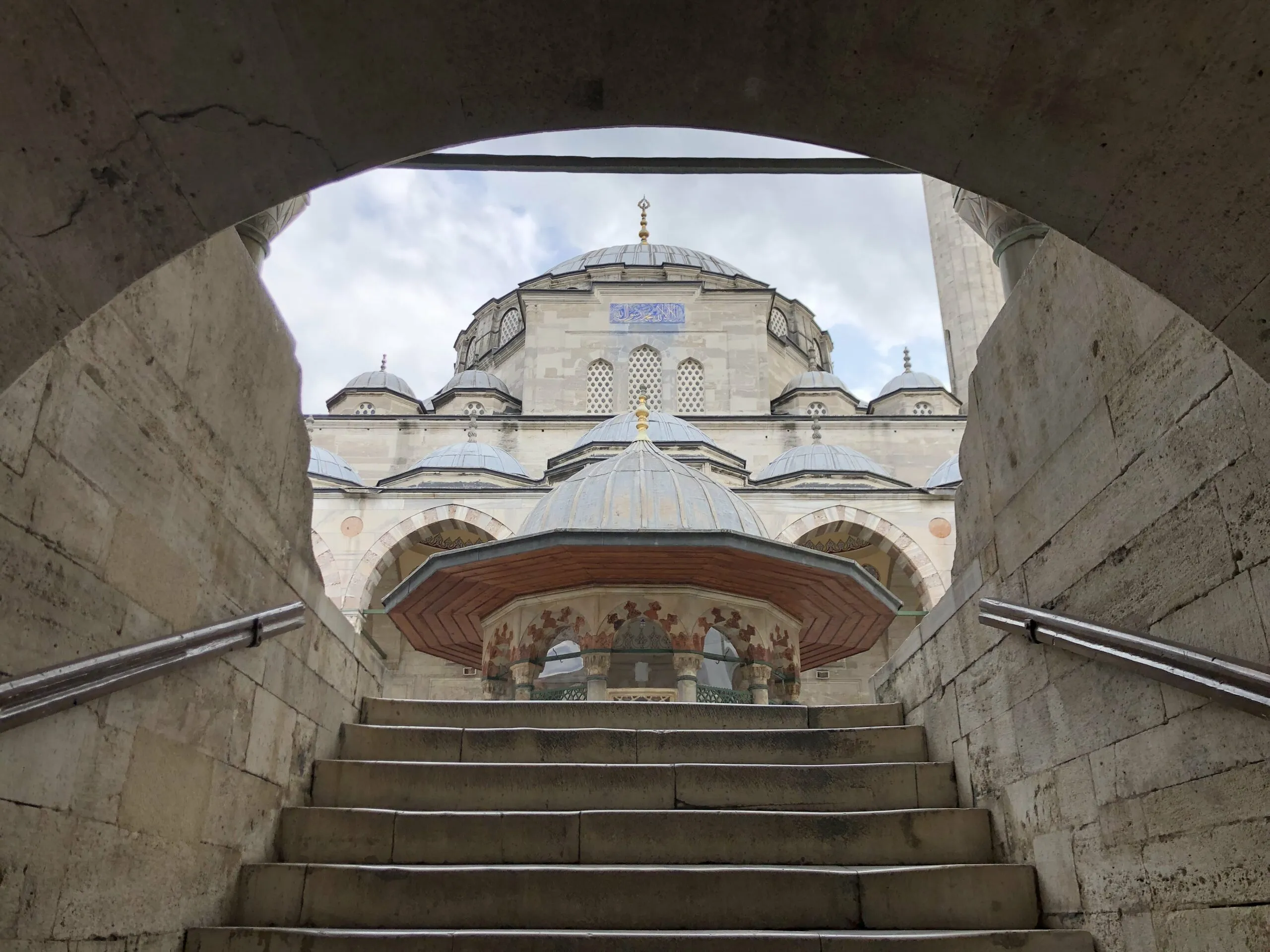
Location: Fatih, Istanbul, Turkey
Year: 1571
One of the masterpieces of Ottoman mosque architecture, the Sokollu Mehmet Pasha Mosque was built by Esmahan Sultan for her husband, Grand Vizier Mehmet Pasha. Situated on a very sloping land, the mosque is remarkable for the spatial solution designed by Mimar Sinan in a narrow area. The inner courtyard of the mosque, which does not have an outer courtyard, is entered by stairs from the North Gate. This courtyard is surrounded on three sides by porticos and 16 domed medrese (school) cells located behind them.
The mosque has a nearly rectangular floor plan, in which Sinan employed the classical six-pier scheme. The main area of the mosque is covered with a dome with a diameter of 13 meters. The central prayer space is covered by a 13-meter diameter dome. This dome is supported by six piers, two flanking the mihrab and portal, and one on each of the other two sides.
These piers are connected by round arches. To prevent the dome from opening to the sides, a weight tower was placed on each leg outside the mosque, and a half dome was added to the corners. The body of the cut stone minaret on the right side of the mosque has vertical lines seen in many of Mimar Sinan’s works. The mihrab wall of the mosque, covered with Iznik tiles up to the arches, shows the most mature phase of Turkish tile art.
Explore Courses
.jpg "Ondrej Chybik - Rethinking Architecture")