


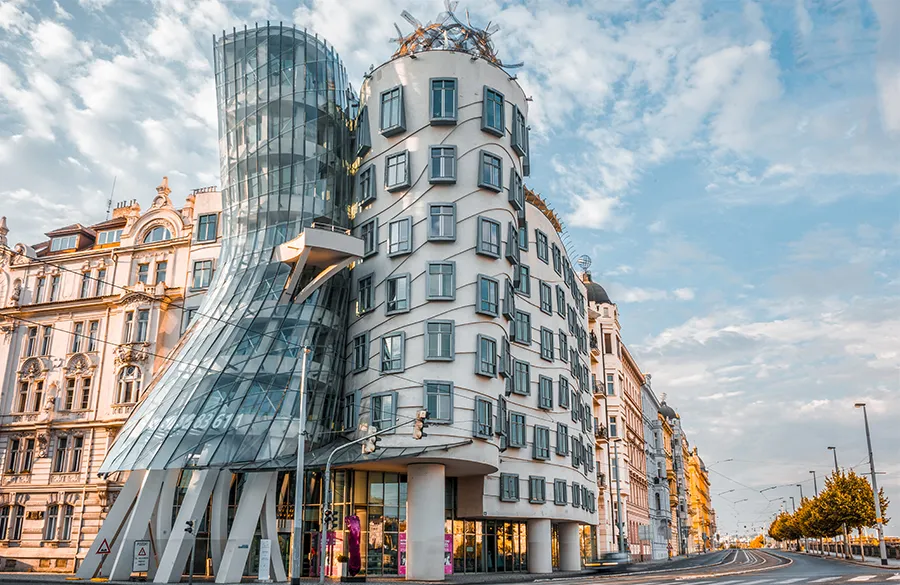
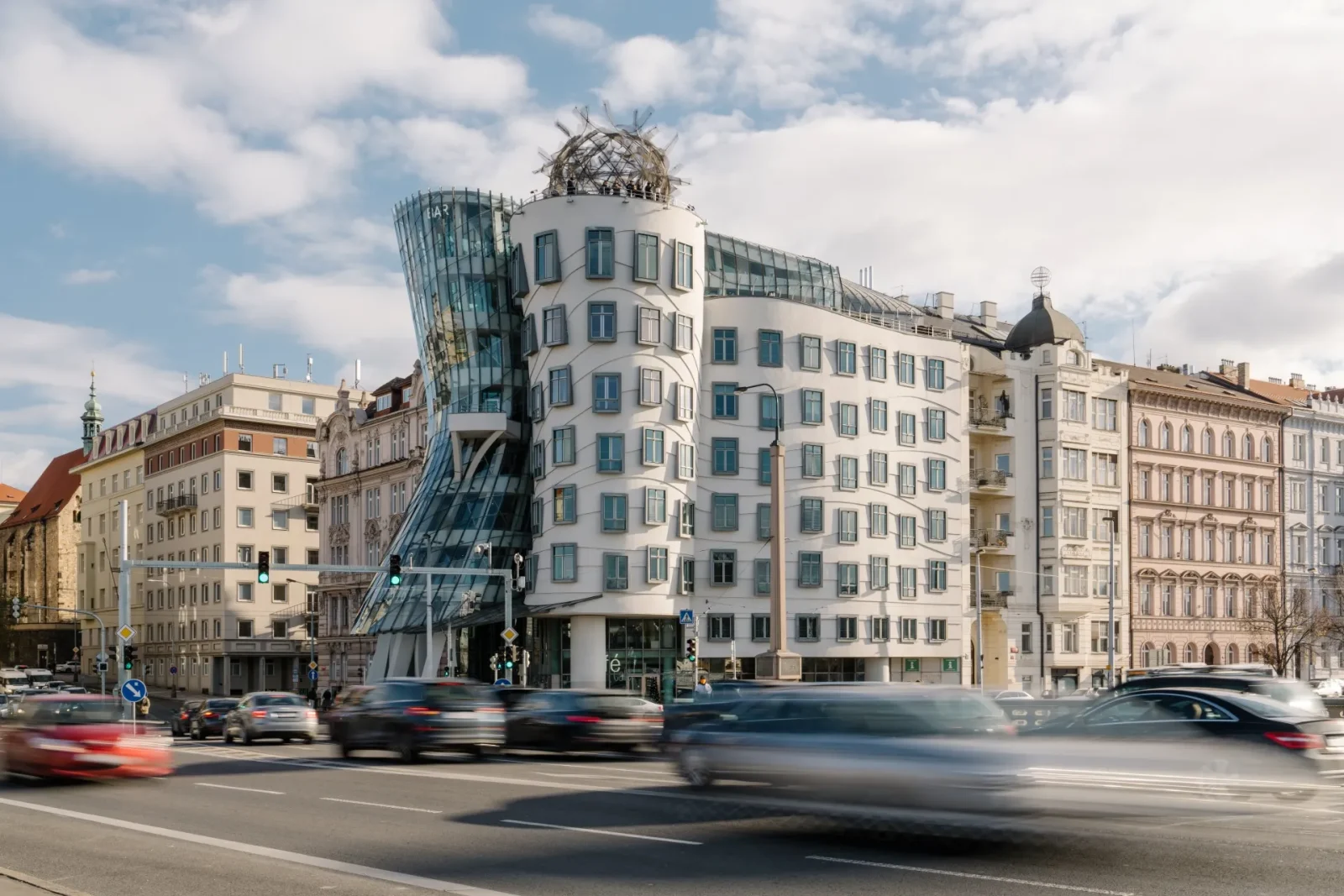
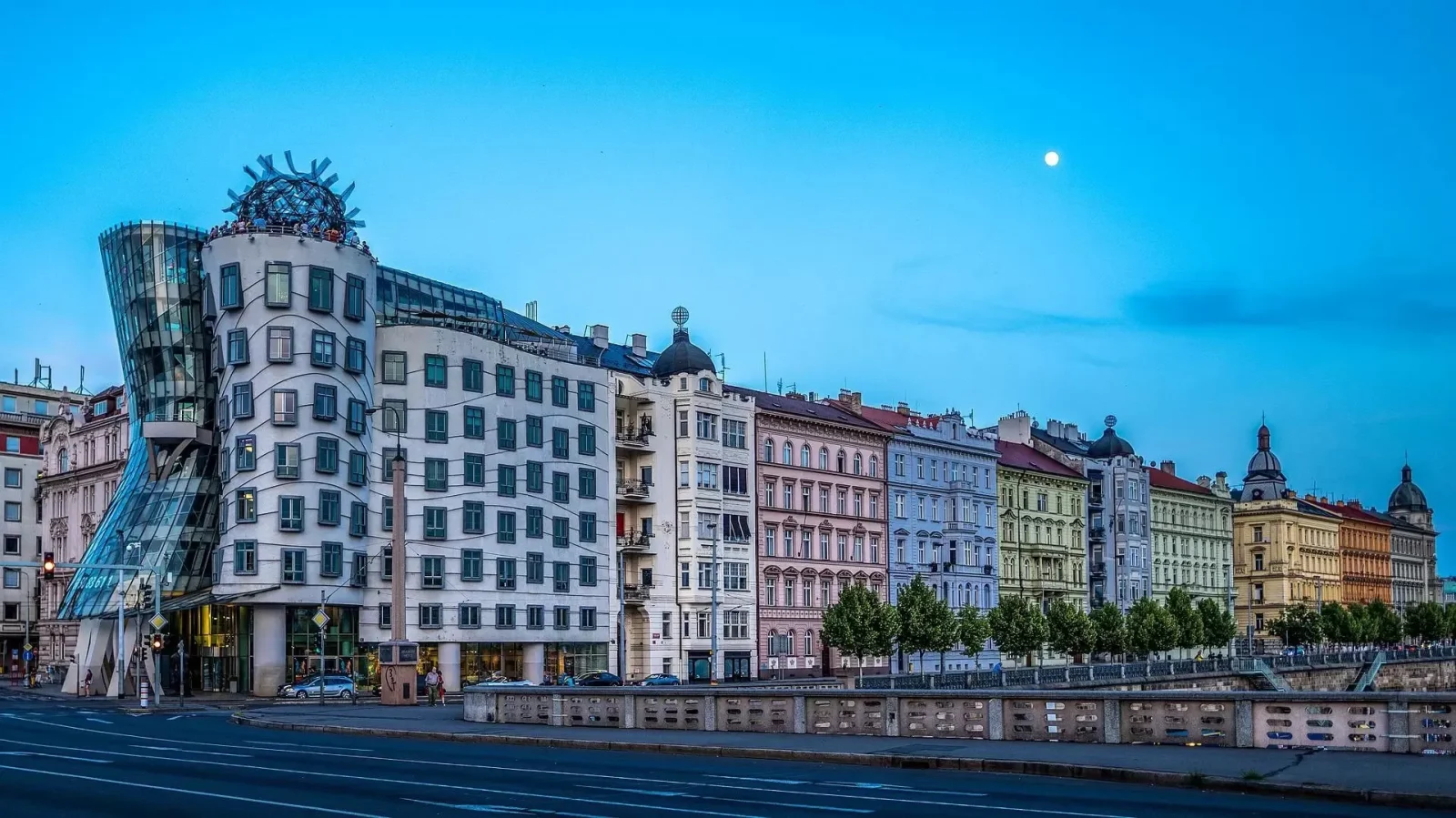
In the heart of Prague, the Dancing House is often recognized for what its form suggests: two figures frozen mid-dance. Yet few realize that the building also symbolizes the Czech Republic’s transition from a communist regime to a parliamentary democracy, a metaphor of liberation expressed through glass and concrete. This article uncovers the lesser-known story behind the building, designed in the early 1990s by Frank Gehry in collaboration with Vlado Milunić.
The Story Behind the Dancing House: From Ruins to Revolution
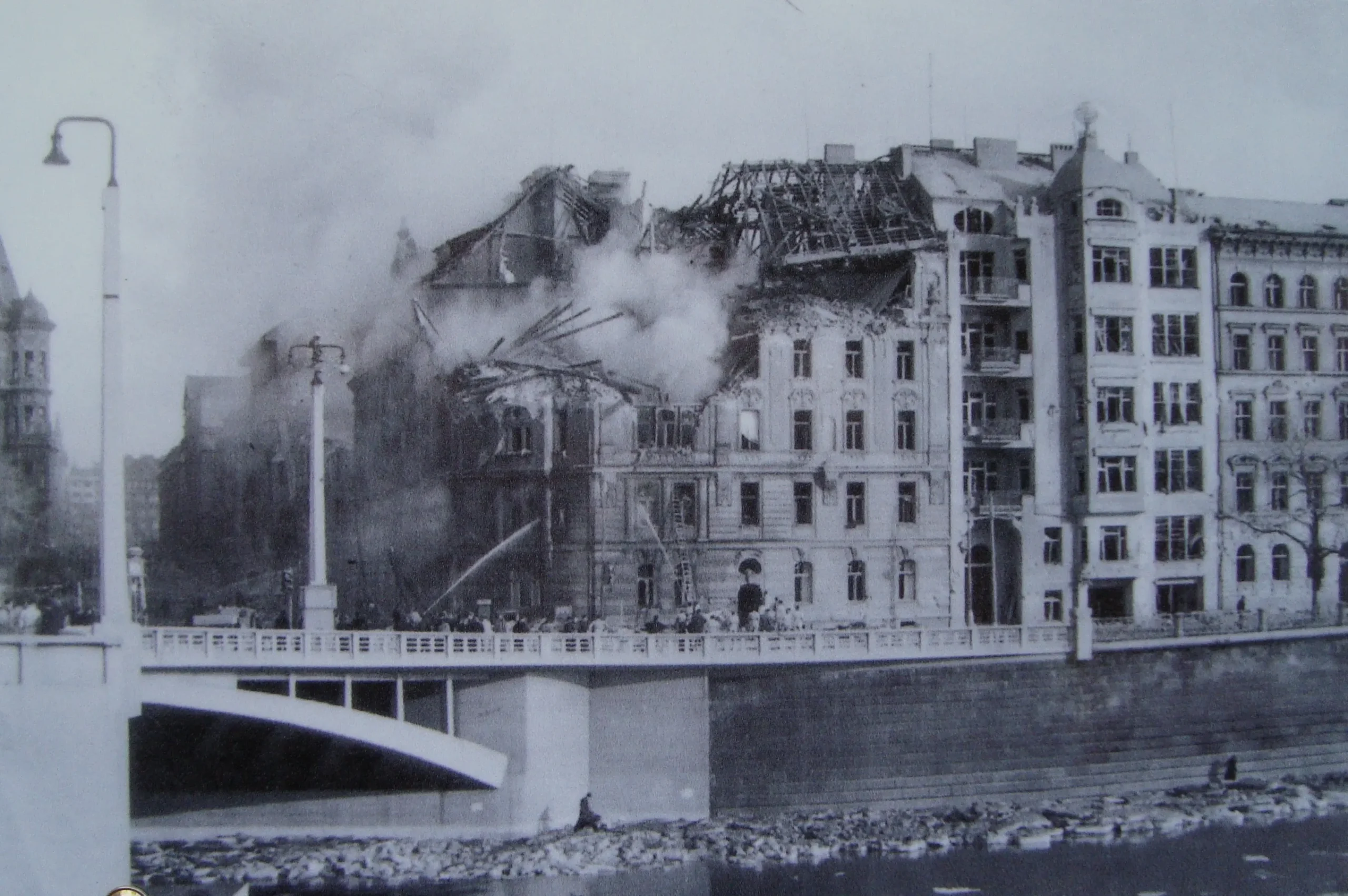
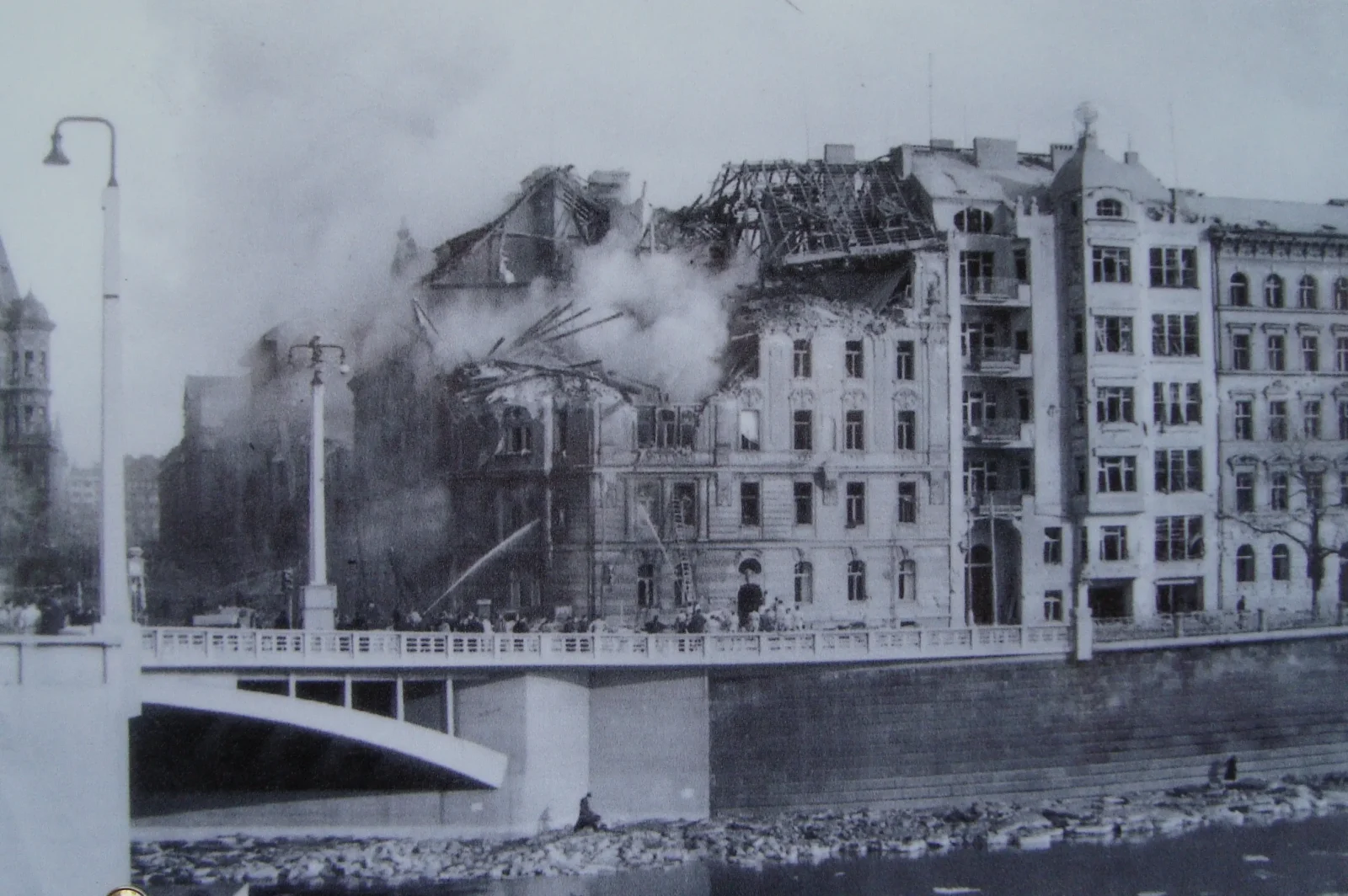
During World War II, Czechoslovakia suffered heavy bombardments, particularly in 1945, leaving many structures across the country in ruins. One of them was a residential building once standing on the site where the Dancing House now rises. Abandoned for decades, the plot was acquired in 1992 by the Dutch insurance company Nationale-Nederlanden, which envisioned not just a functional office but an architectural statement within Prague’s historic fabric. To initiate the project, the company first approached Czech-born architect Vlado Milunić.
The year 1992, when the plot was purchased and plans for a new building were initiated, also marked a pivotal moment in the nation’s history. It was the period when Czechoslovakia dissolved, the Czech Republic was born, and the country began its transition from a communist regime to a democratic system. Inspired by this profound societal shift, the idea emerged to create a design that would embody and symbolize this transformation.
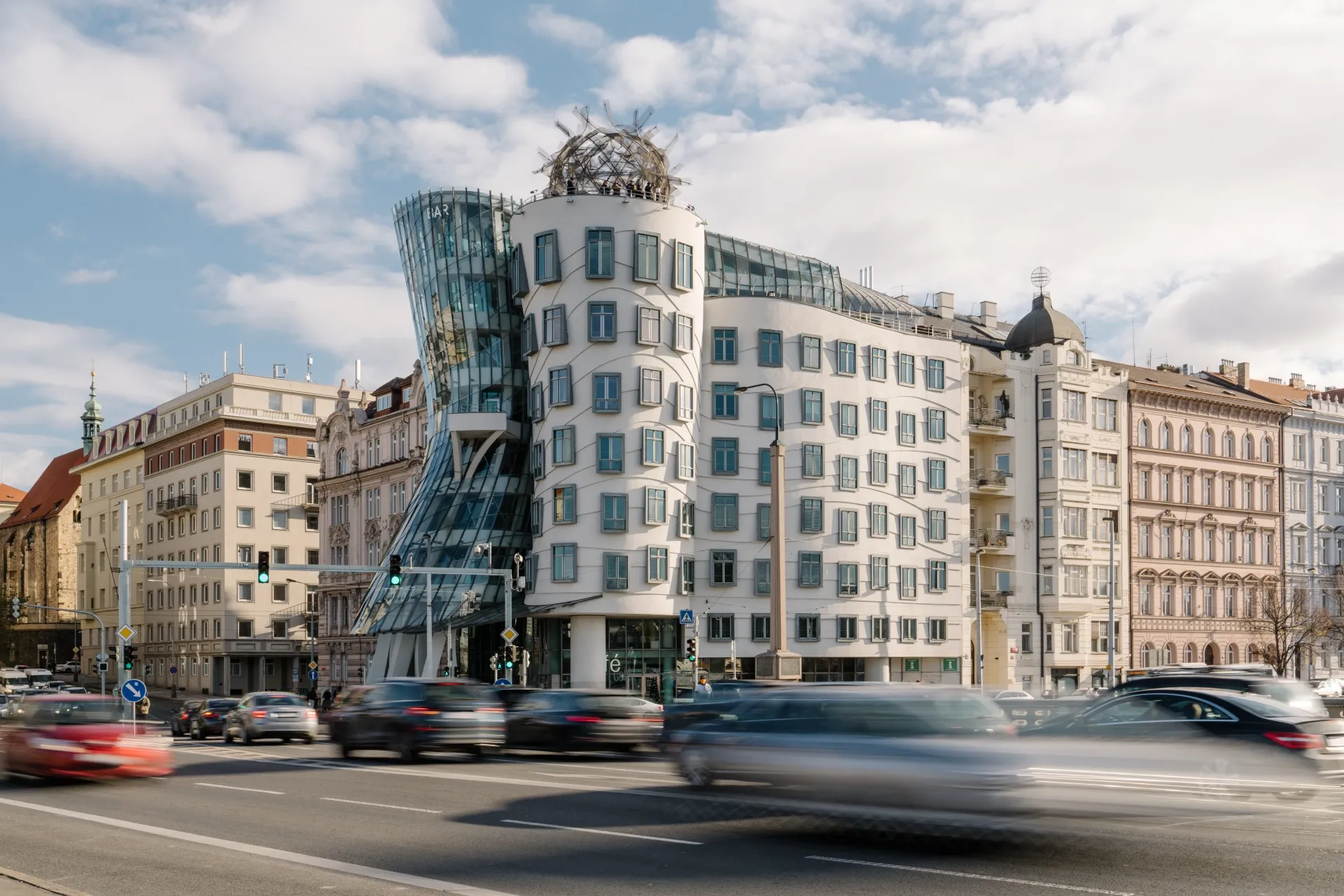
Wishing to associate the project with a world-renowned architect, the investor Nationale-Nederlanden turned to Jean Nouvel to join the design process. However, Nouvel considered the project too limited in scope and chose not to take part. Backed by a generous budget, the collaboration ultimately gave rise to a building that would stand as an architectural monument.
The Idea Behind the Dancing House: The Ginger & Fred Metaphor
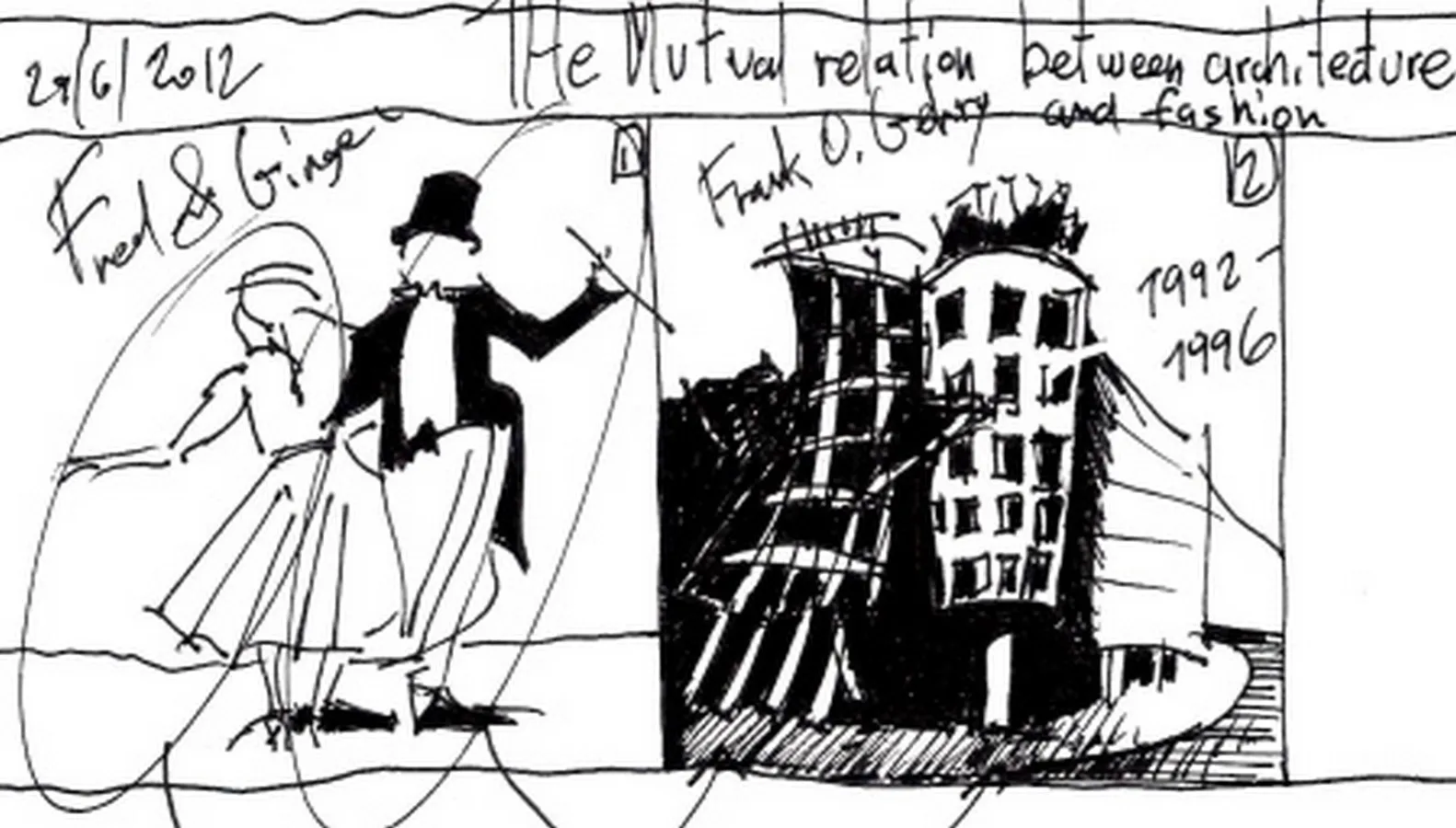
The conceptual origin of the Dancing House was based on the idea of a dancing man and woman. Composed of two distinct volumes, the building brings together the static nature of the old regime and the dynamism of the new through these dancing figures.
Frank Gehry initially named the project “Fred and Ginger,” a direct reference to the famous dance duo Fred Astaire and Ginger Rogers. The glass facade embodied “Ginger,” while the concrete and stone elements represented “Fred.” However, Gehry later reconsidered the name, feeling that the reference might bring an element of “American Hollywood kitsch” to Prague, and ultimately decided to abandon it.
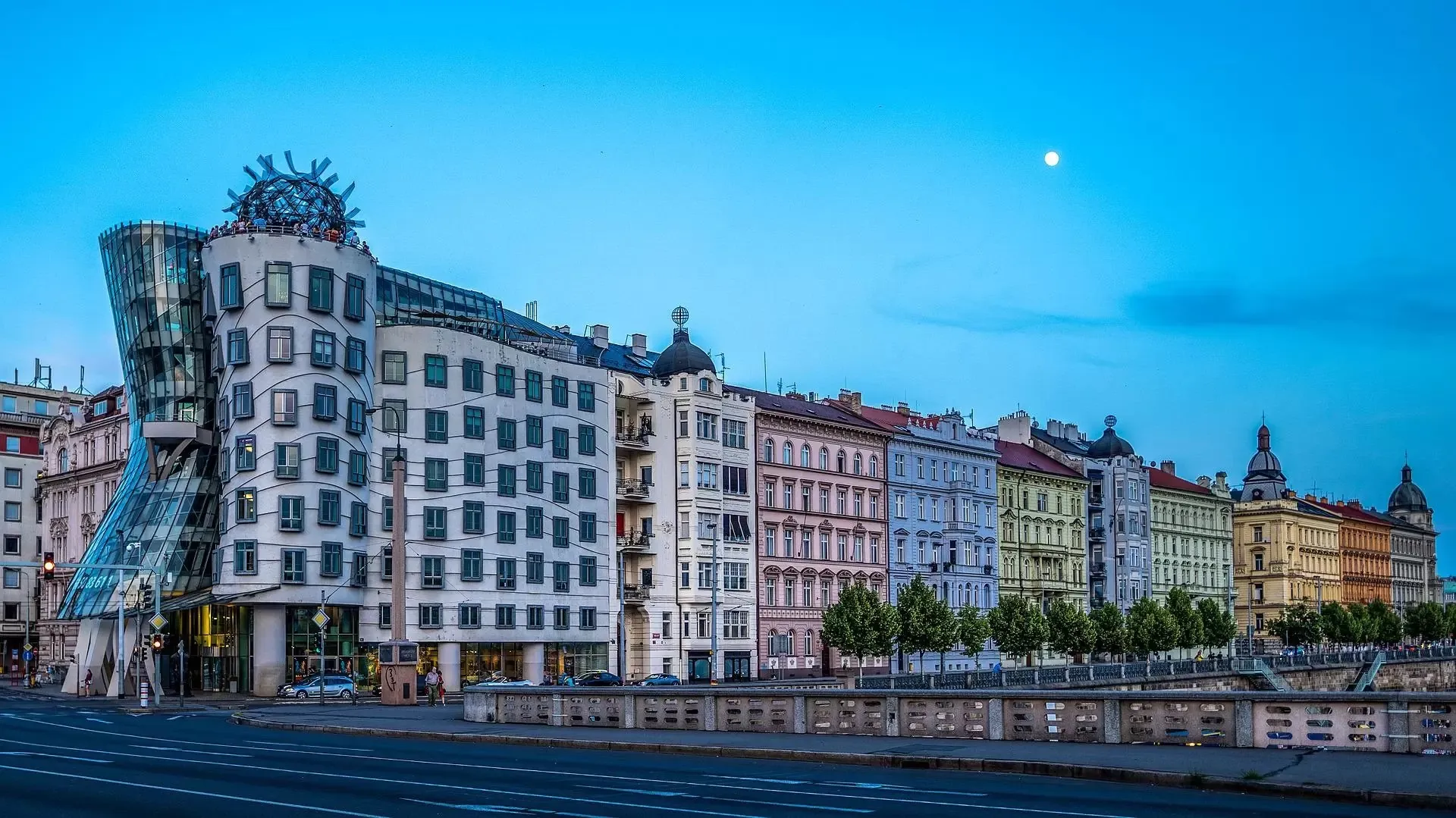
The Dancing House, symbolizing the transition to a new era, was designed with fluid and dynamic forms, in stark contrast to the rigid, symmetrical, and monotonous architecture typical of the communist period. In doing so, it has become one of the pioneering examples of modern architecture in Central Europe.
Dancing House Architectural Details
Challenging traditional architectural conventions, the Dancing House was an exceptionally unusual building for its time. At the same time, it stands as one of the most significant examples of deconstructivist architecture.
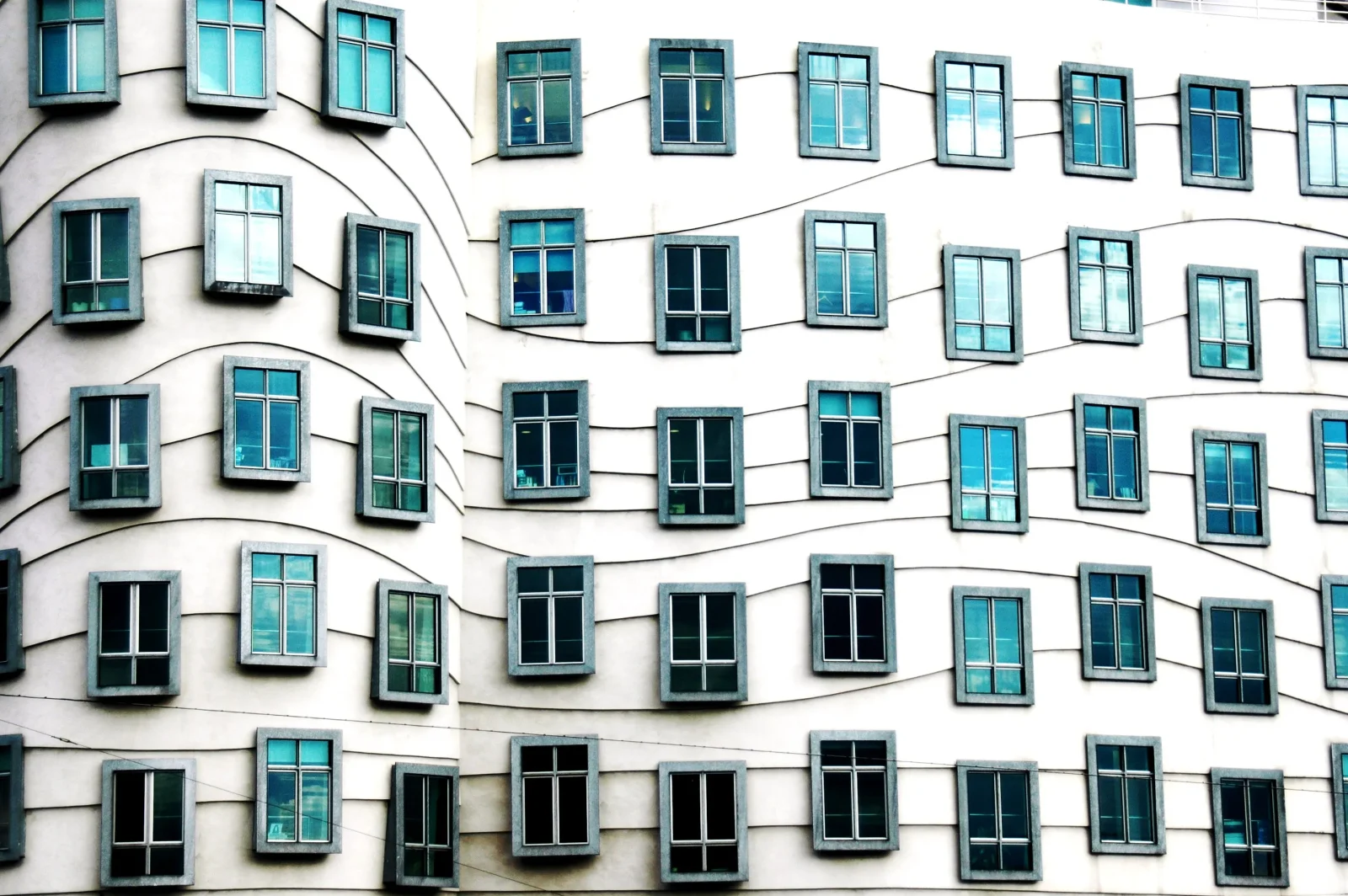
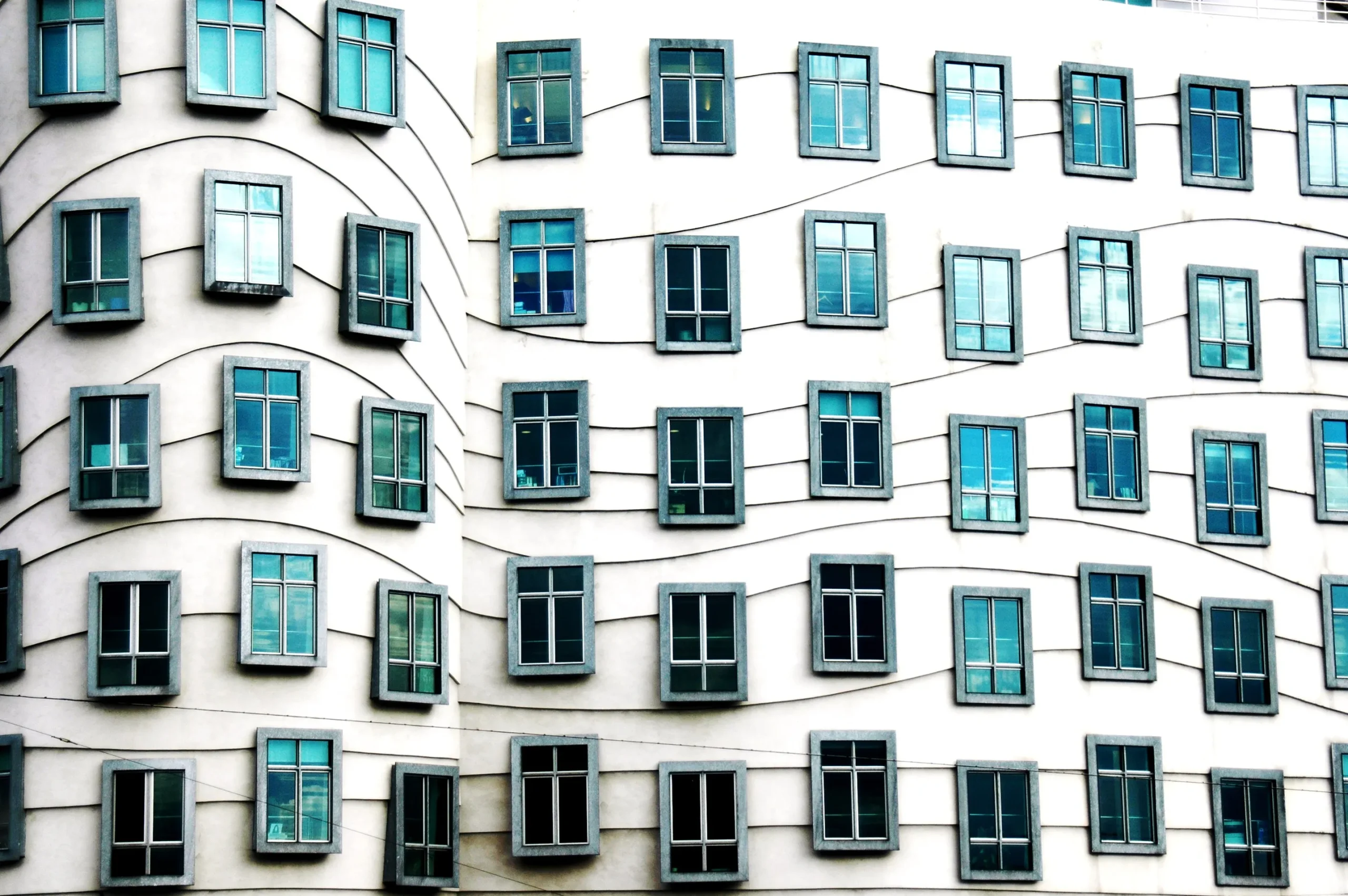
Of the two blocks composing the building, the straight one known as “Fred” incorporates a reinforced concrete core and precast concrete panels. The windows are arranged irregularly, and their frames protrude from the façade, giving the block a more three-dimensional quality.
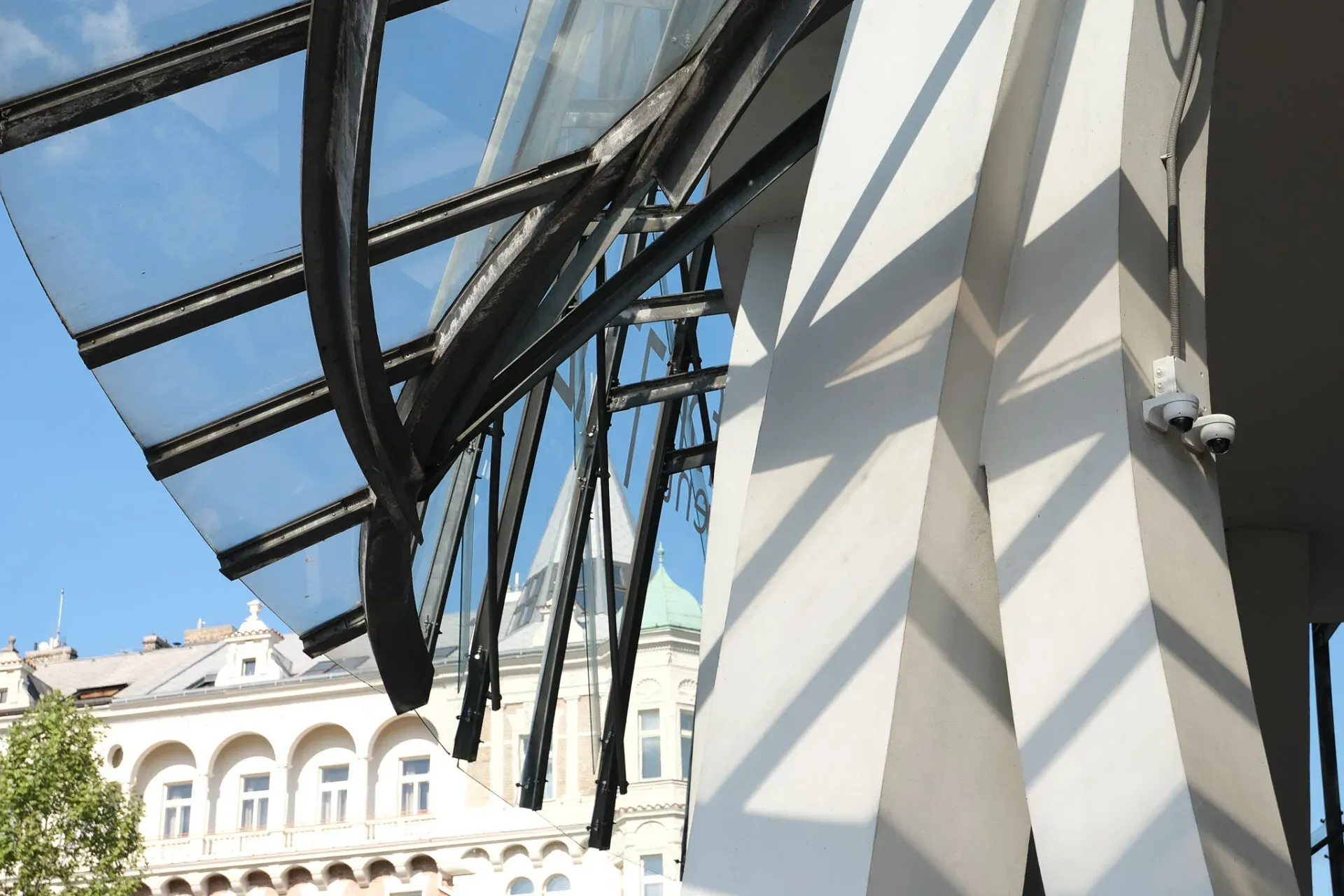
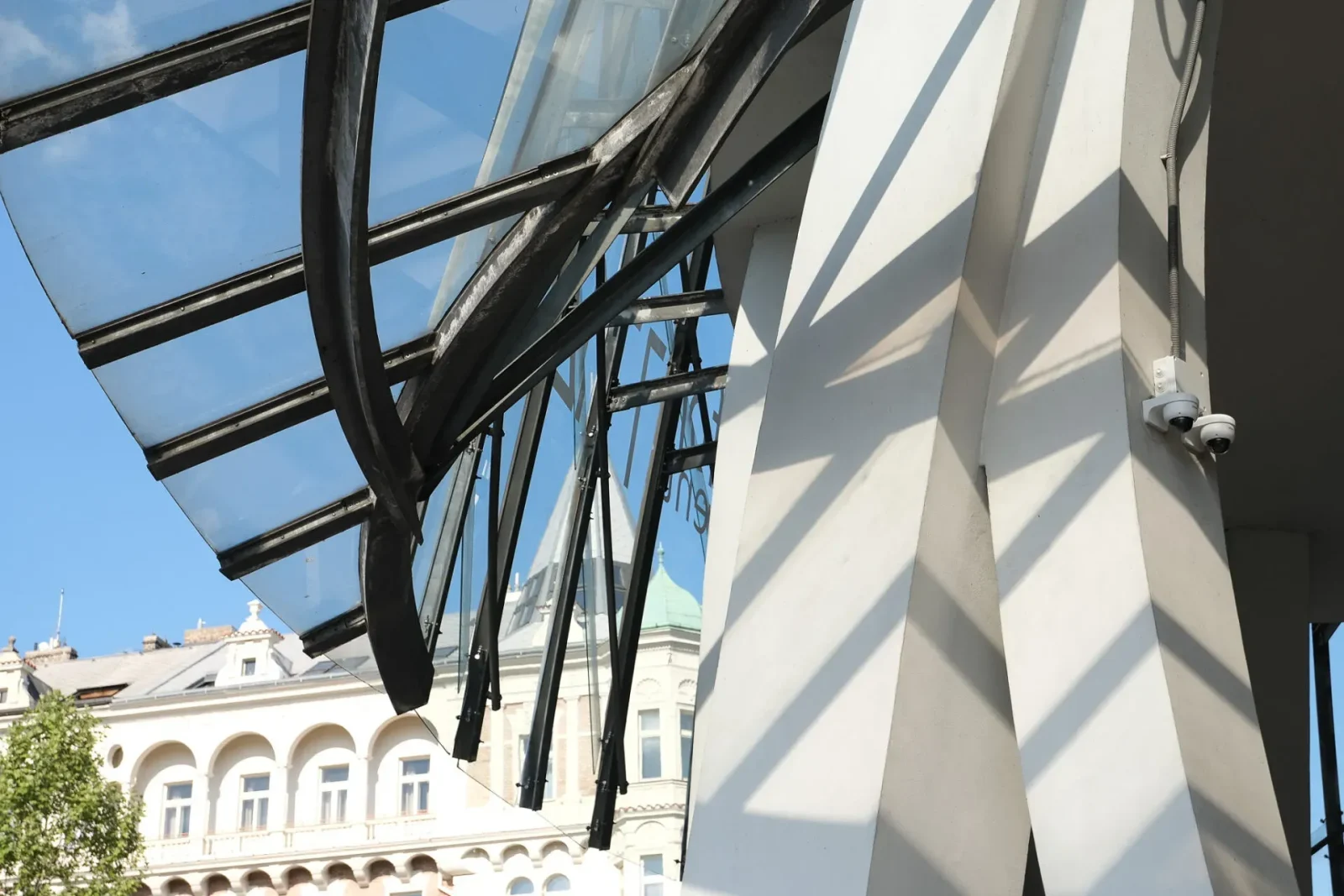
The sloping block, known as “Ginger,” utilizes a steel space-frame system, with glass panels supported by the steel structural elements. Its framework is composed of 99 concrete panels, each uniquely shaped to define the building’s sweeping curves. The use of modern materials such as glass, steel, and reinforced concrete on the façade imparts both transparency and a sense of movement to the structure.
Because the building’s complex geometry was too unconventional to be drawn using traditional 2D techniques, CATIA software was used in the design process. This program allowed Gehry’s office to model the structure’s organic curves and structural deformations with millimetric precision. The Dancing House is notable as one of the first architectural projects worldwide to employ this software on such a scale, serving as a pioneering example of the early use of digital tools in the production of free-form architecture.
Today, such tools have evolved into powerful ecosystems that merge computation, creativity, and design intelligence. At PAACADEMY, architects and designers can explore these advancements through hands-on workshops that delve into computational design, parametric modeling, and AI-driven workflows, continuing the digital legacy that projects like the Dancing House helped to initiate.
The Dancing House, with its abstract and unconventional lines, marked an early exploration of the architectural language that Frank Gehry would later bring to full expression in the Guggenheim Museum Bilbao. Considered Gehry’s masterpiece, the Guggenheim stands as the most striking outcome of this experimental journey.
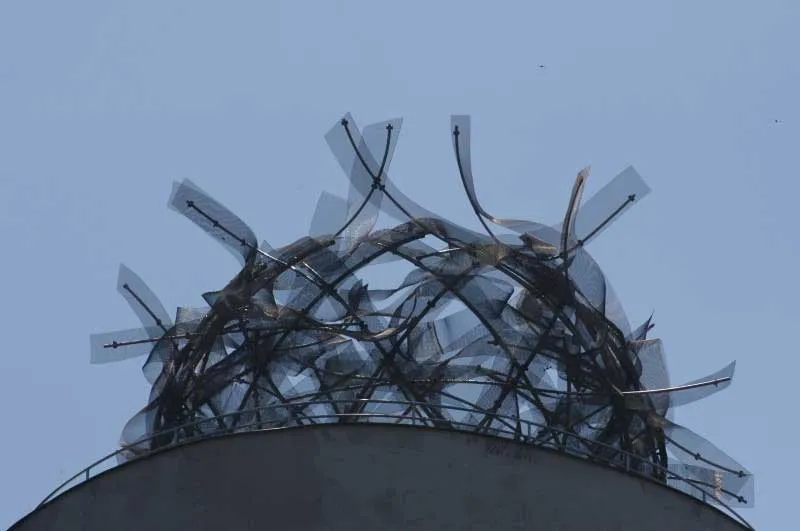
On the roof of the building sits Medusa, a sculptural installation composed of twisted metal tubes and wire mesh. Integrated into the structure during construction, this composition was designed to give the concrete form a sense of movement and vitality.
From Controversy to Icon: Dancing House Today
Rising in the heart of Prague, the Dancing House has faced a variety of criticisms, controversies, and debates since its construction. Designing a so-called “deconstructivist building oblivious to its surroundings,” particularly in a neighborhood dominated by Art Nouveau architecture, drew sharp criticism from residents and even some architects.
It was periodically subjected to nicknames like “Drunken House” and labeled as “Out of Character.” Over time, however, these controversies laid the foundation for the building’s eventual status as a cultural icon.
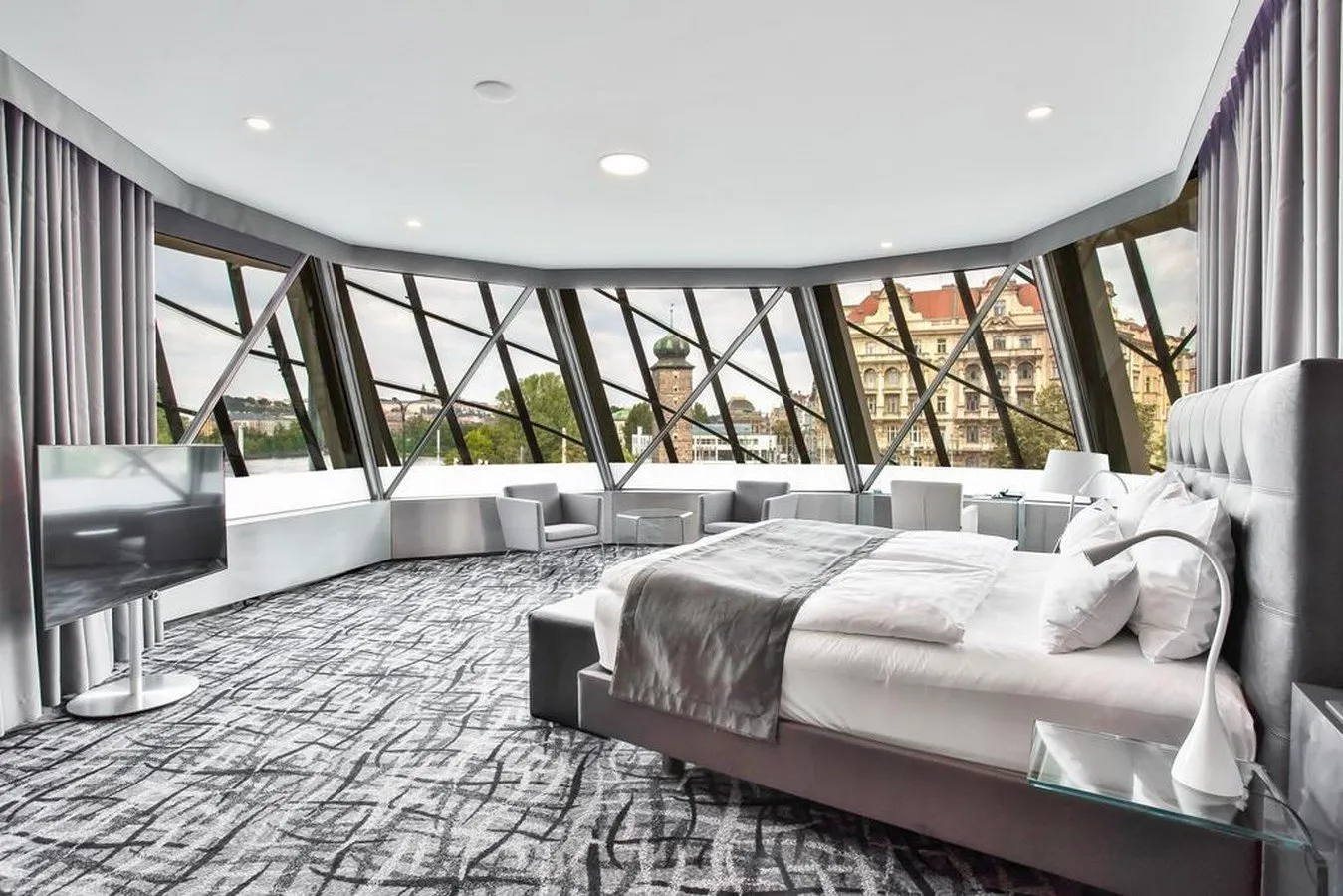
Today, the Dancing House is not only an architectural experience but also an integral part of Prague’s cultural life. The building houses an art gallery, a 21-room boutique hotel, a restaurant, and a bar. Additionally, for visitors with limited time or budget, an observation terrace offers panoramic views of the city free of charge.
The Dancing House is a rare example not only of architecture but also of how politics and design intertwine. It reveals how the Czech Republic’s social and political transformations found expression in the form, function, and public perception of a building. Ultimately, the Dancing House tells the story of both a controversial past and a bold icon of contemporary architecture.
Explore Courses
.jpg "Ondrej Chybik - Rethinking Architecture")