


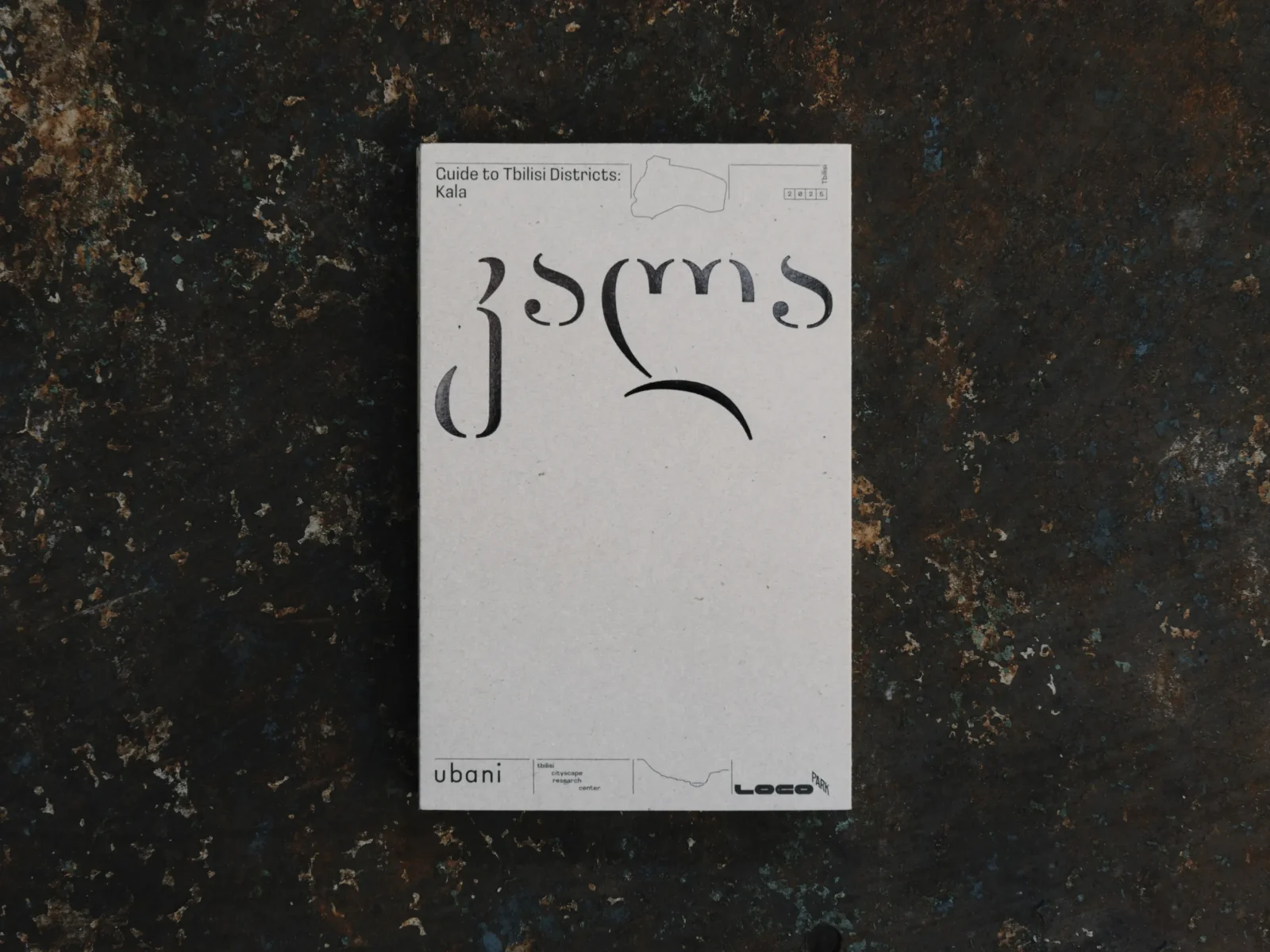
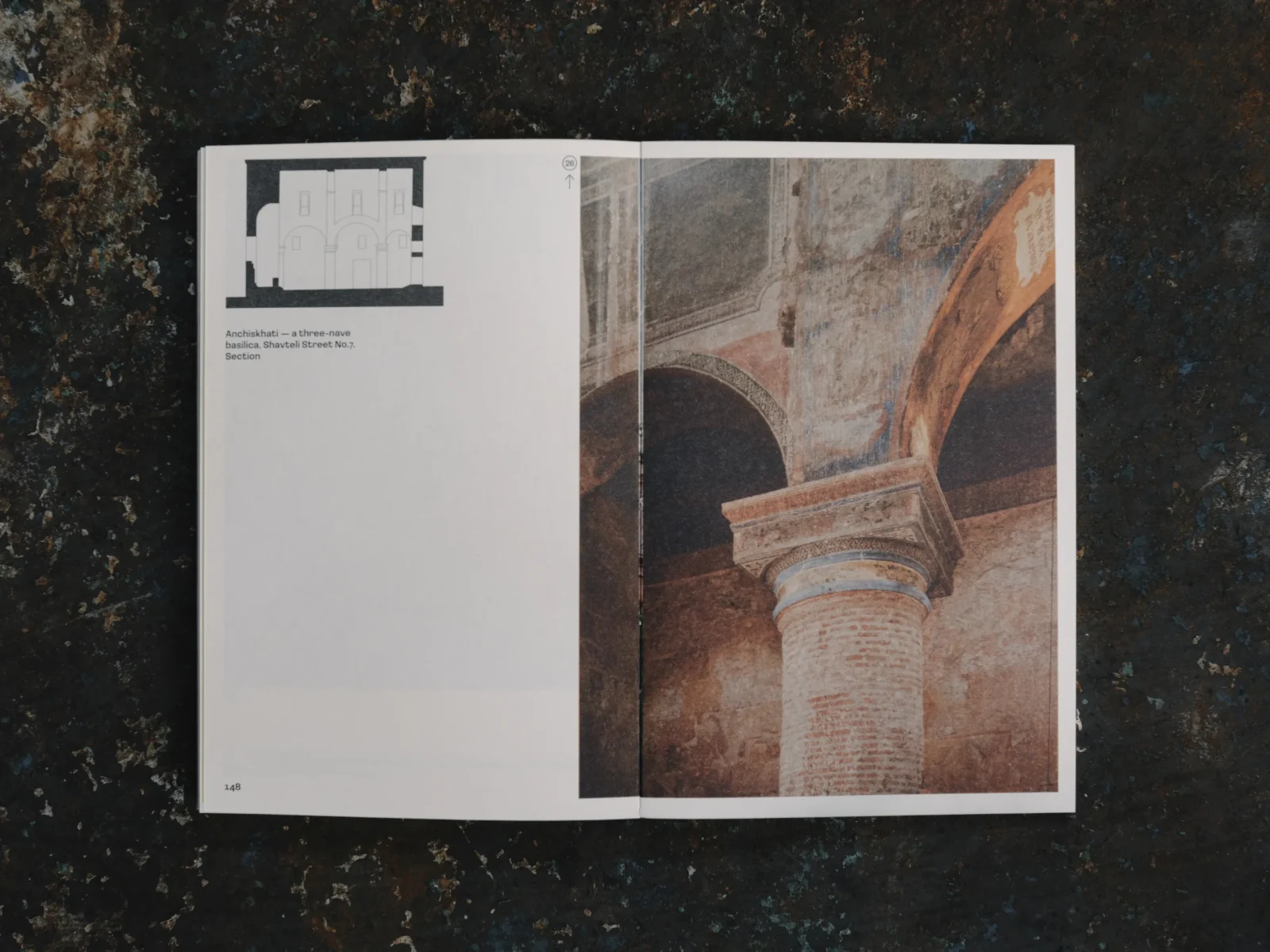
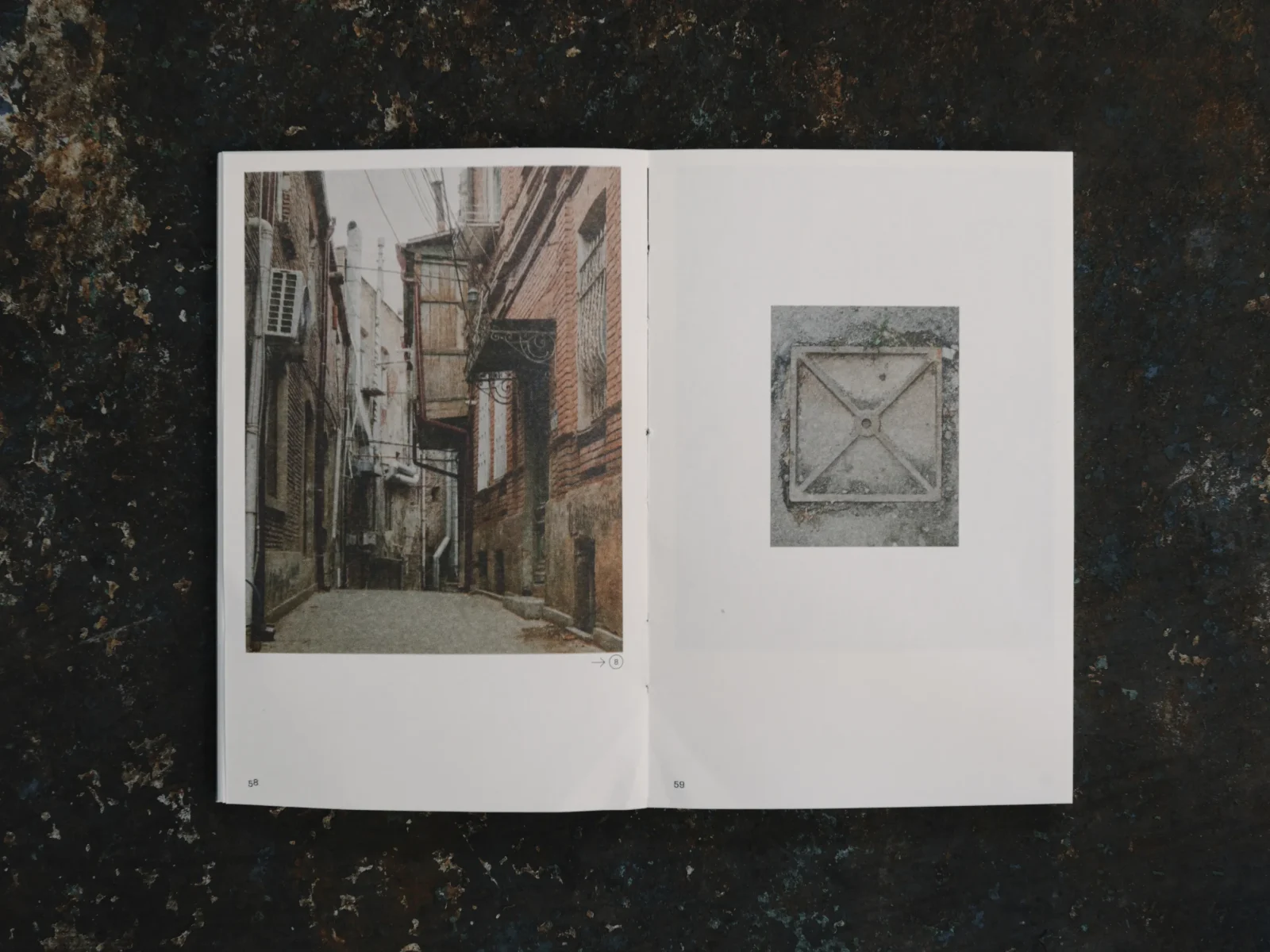
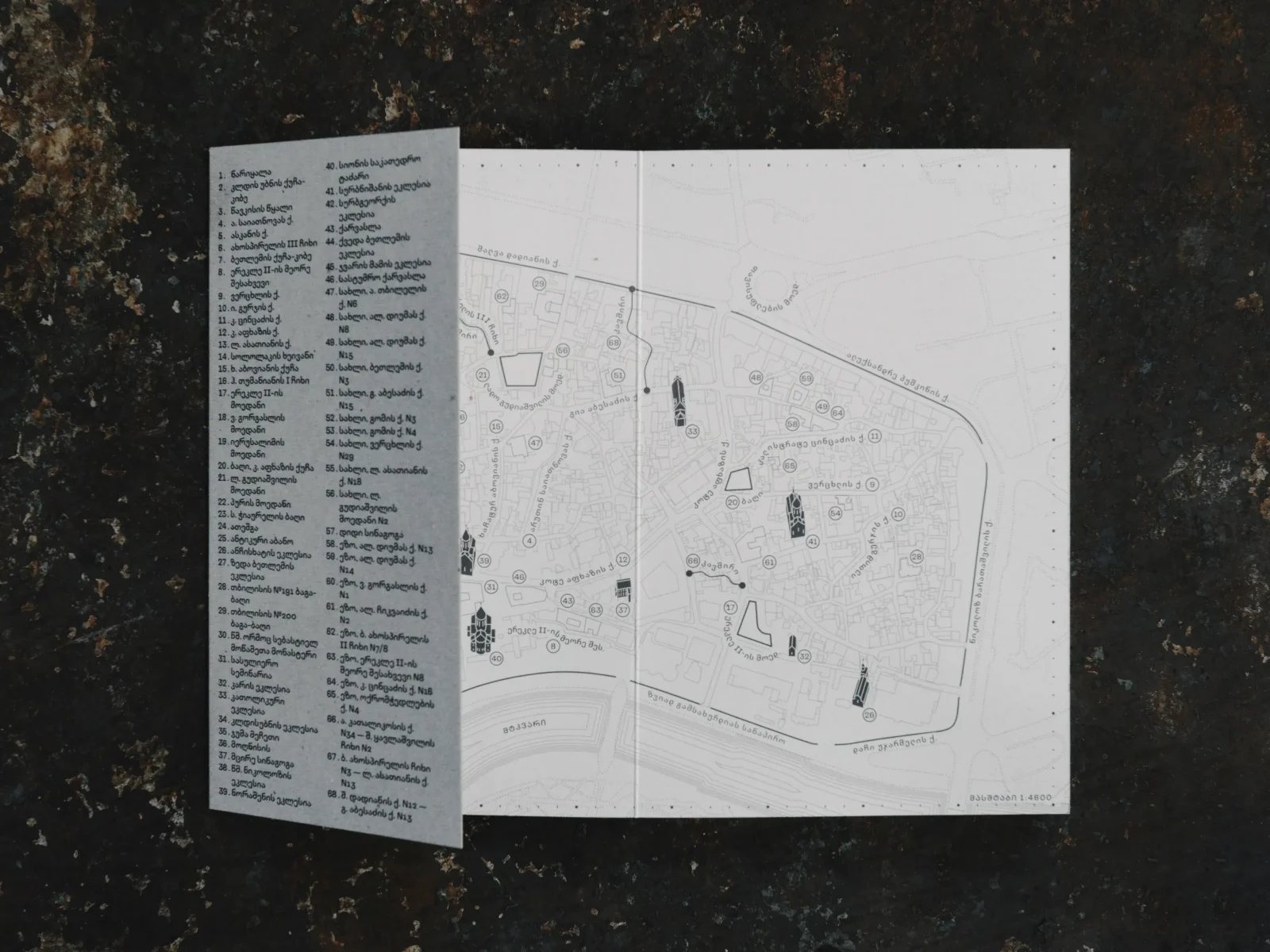
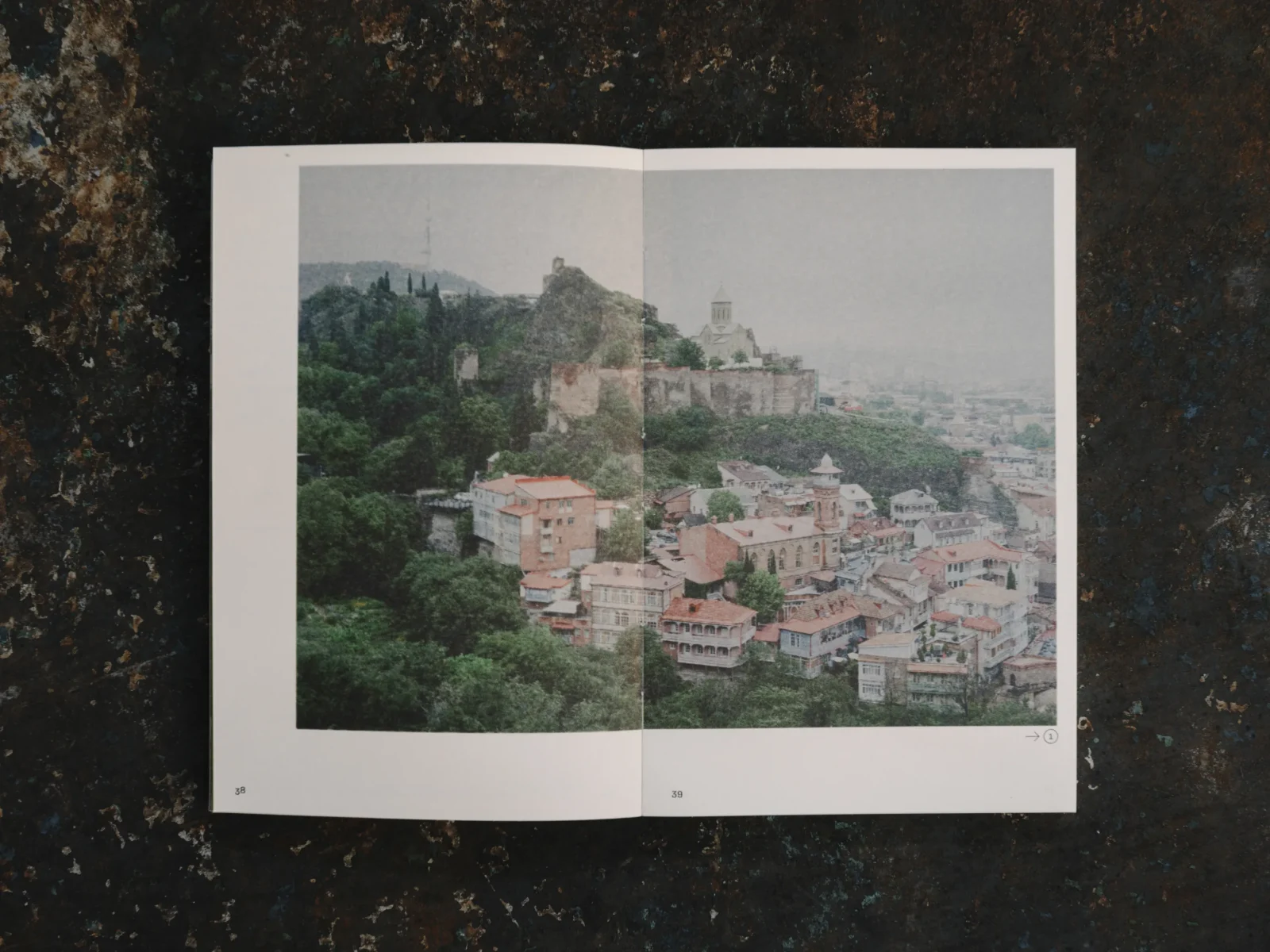
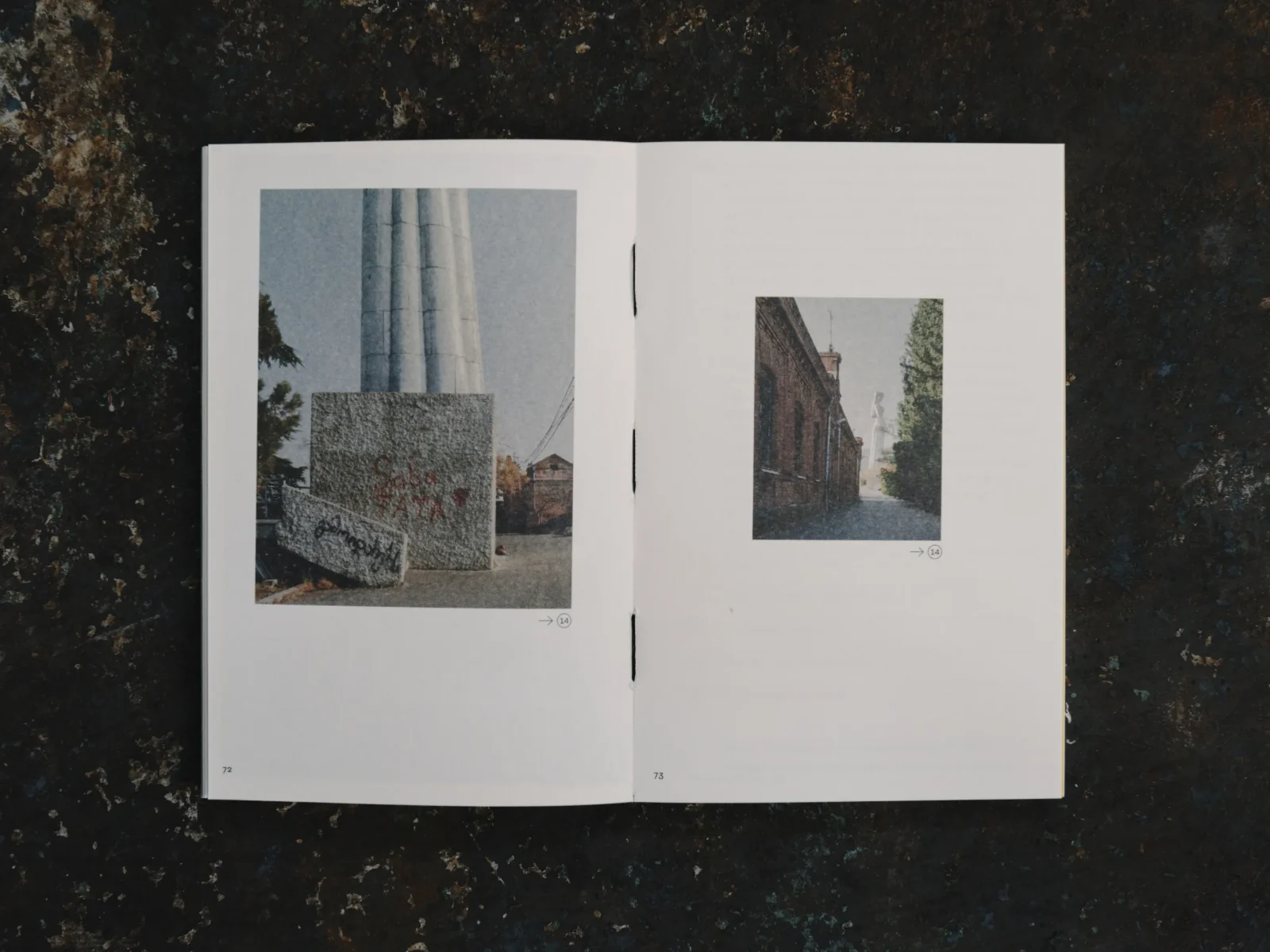
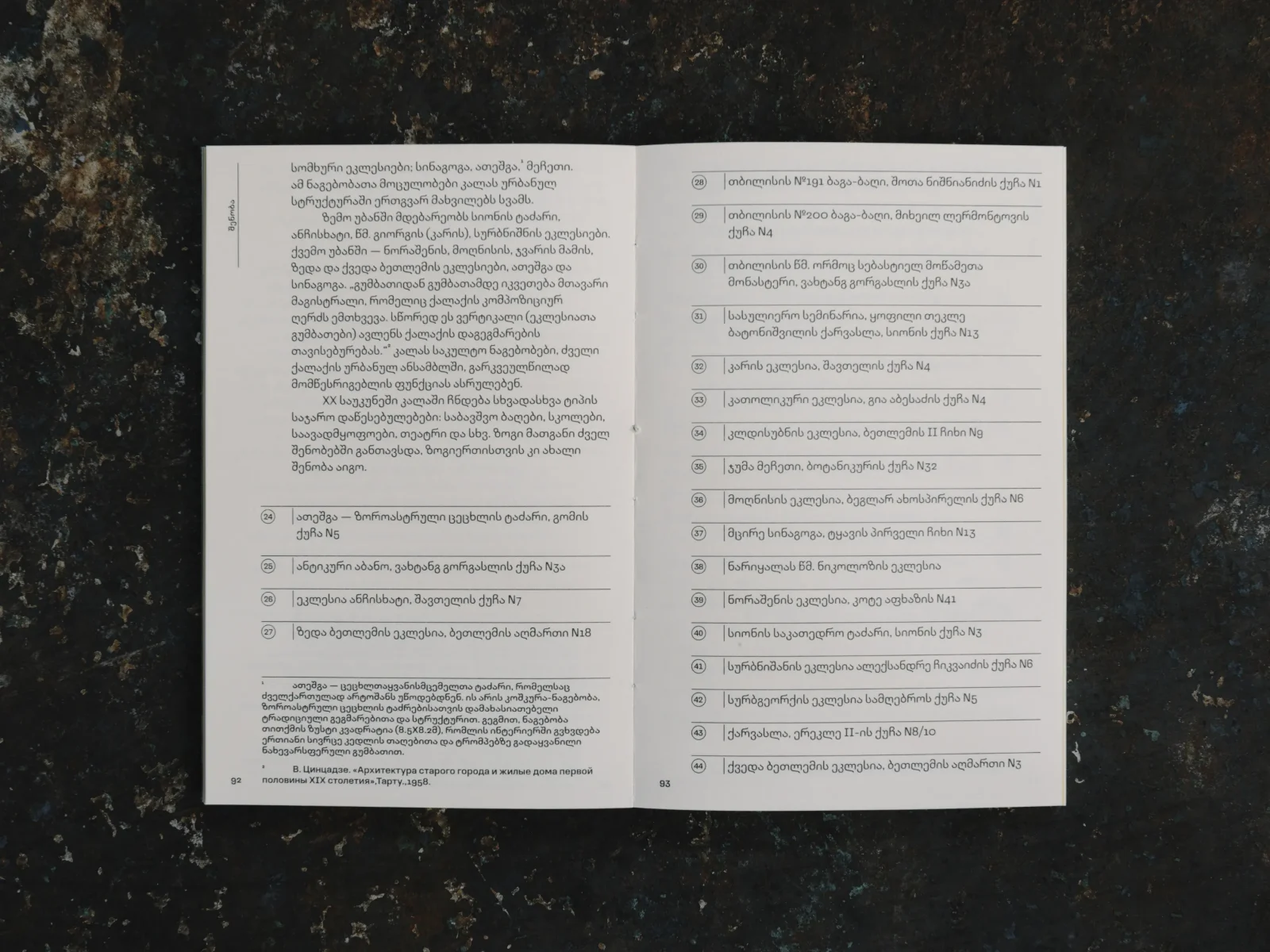
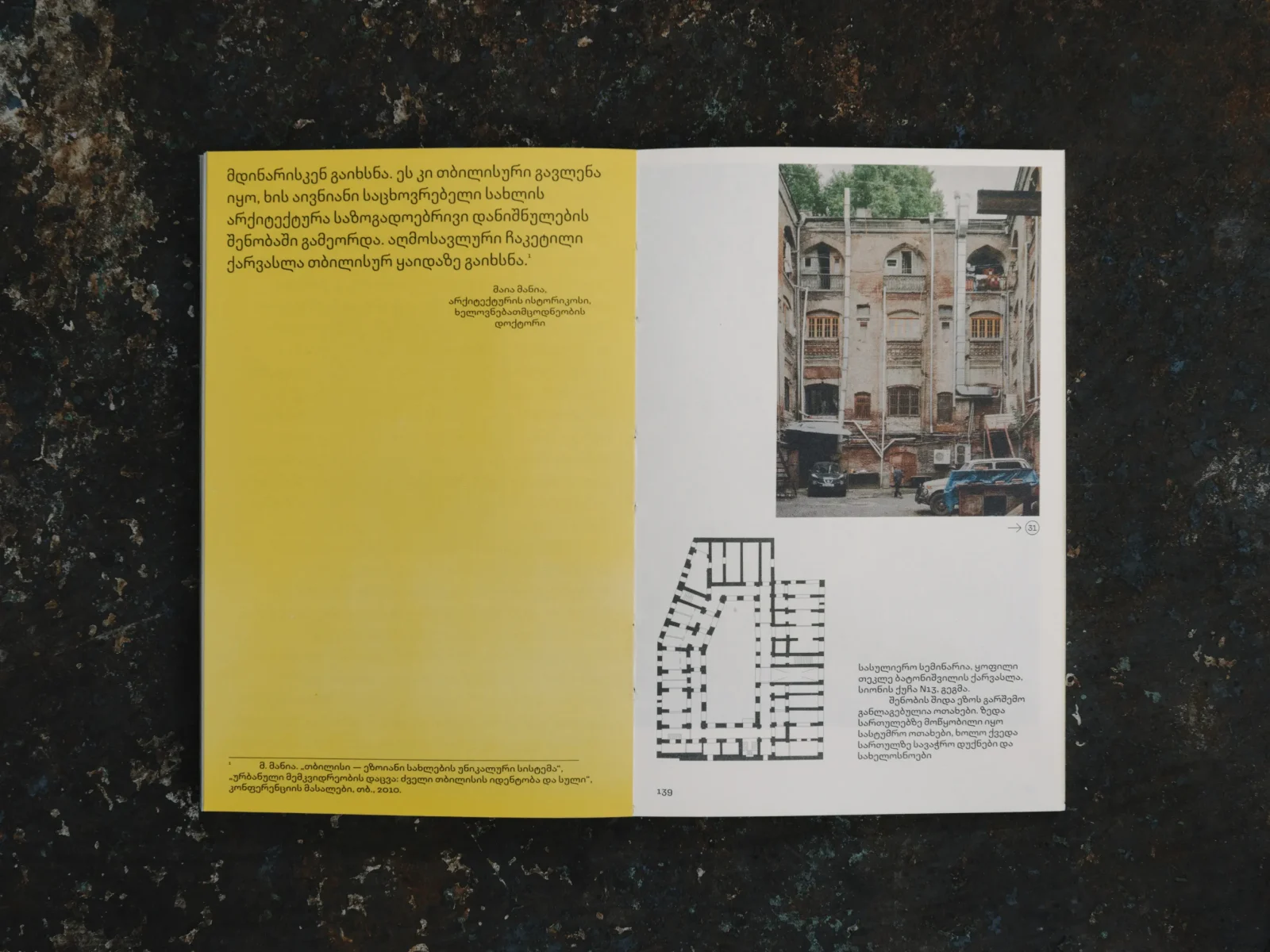
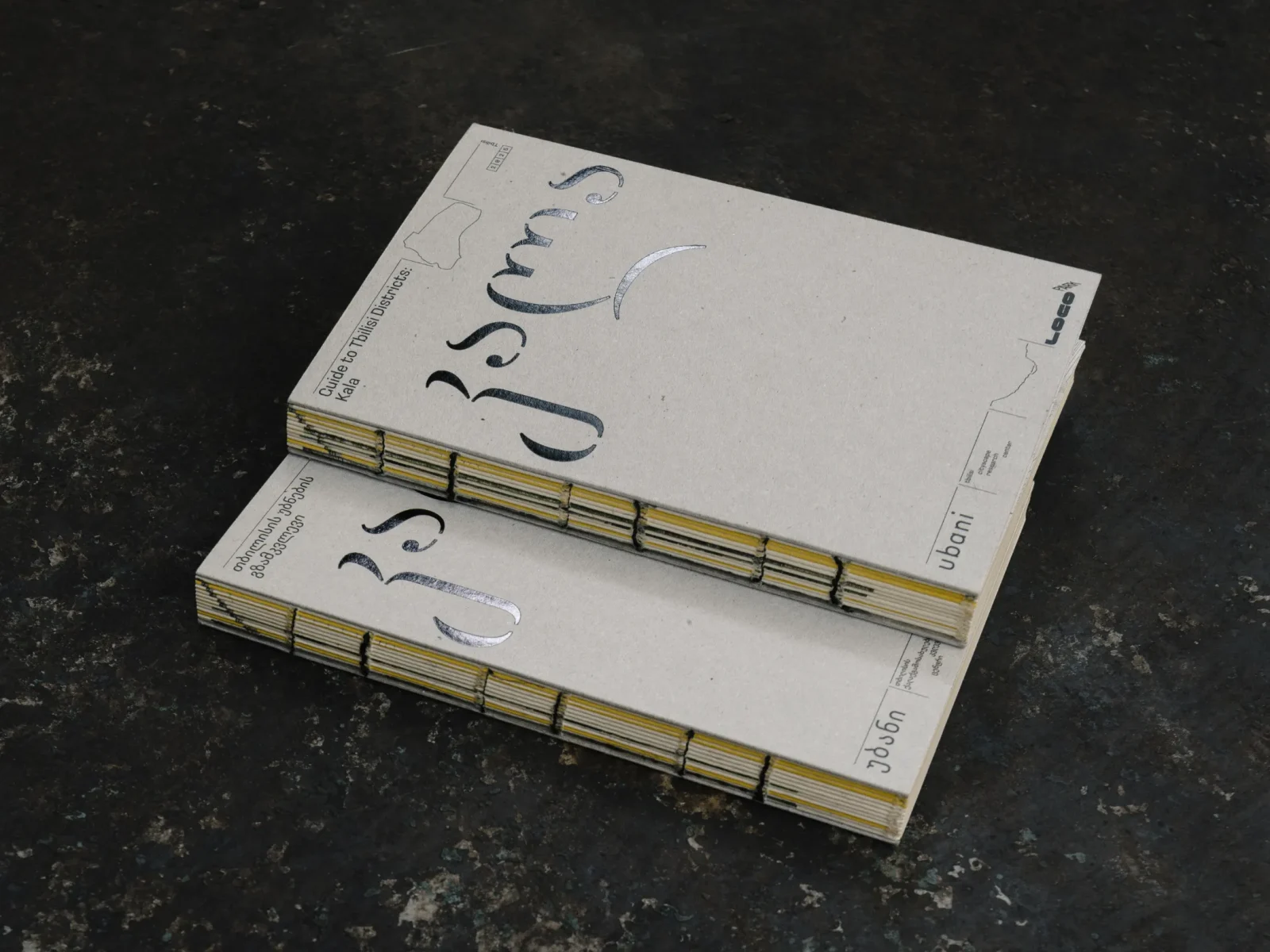
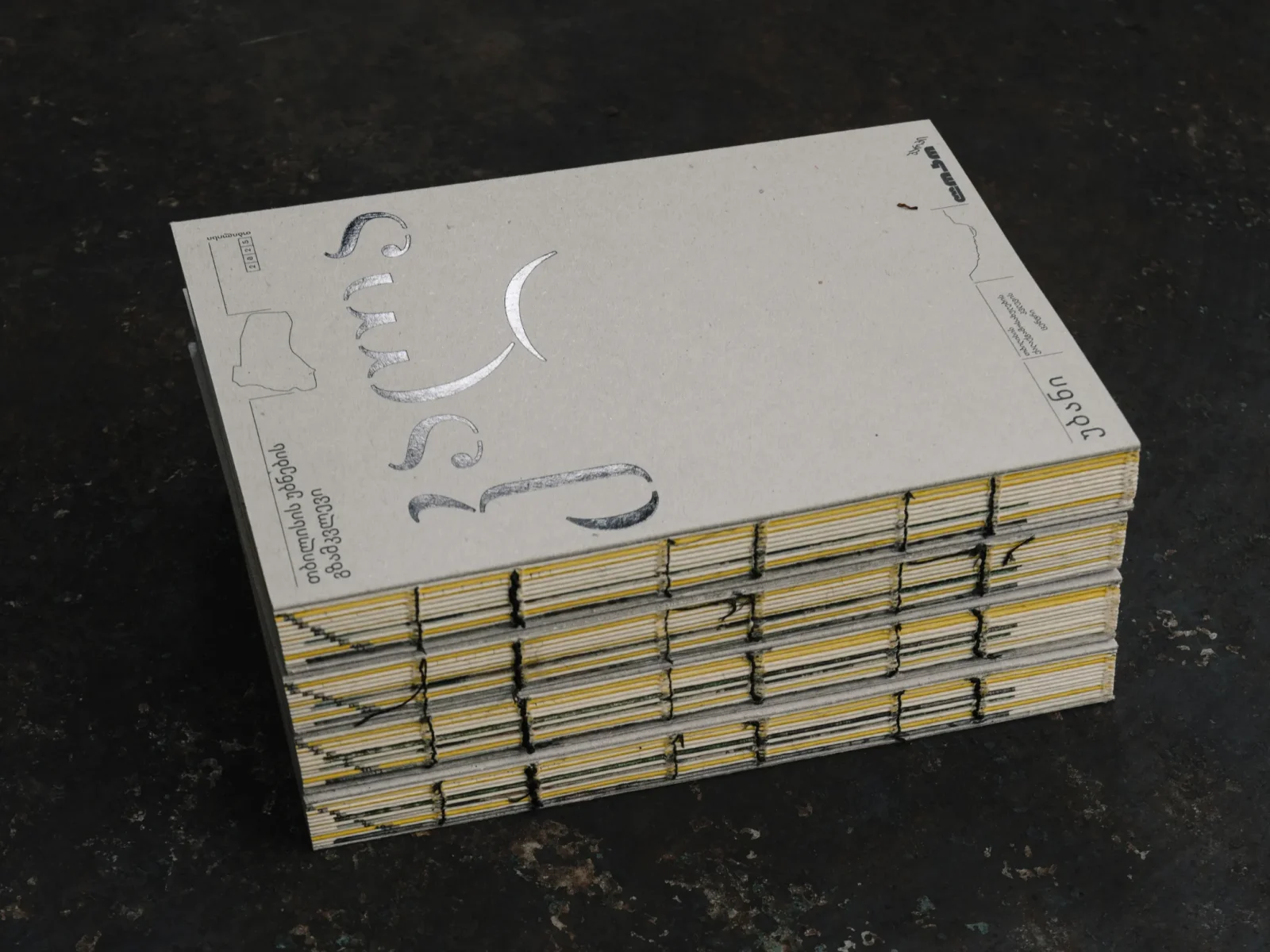
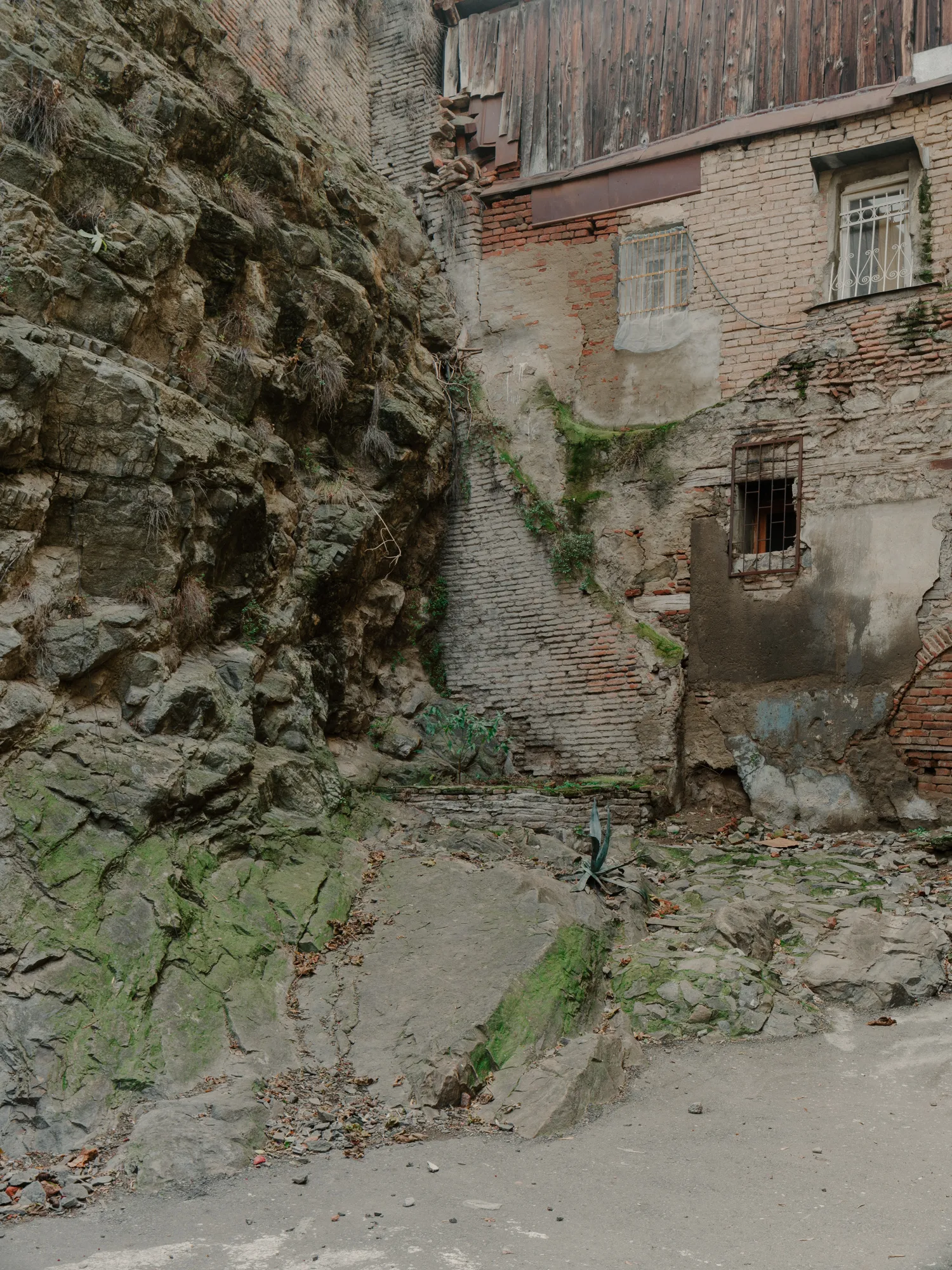
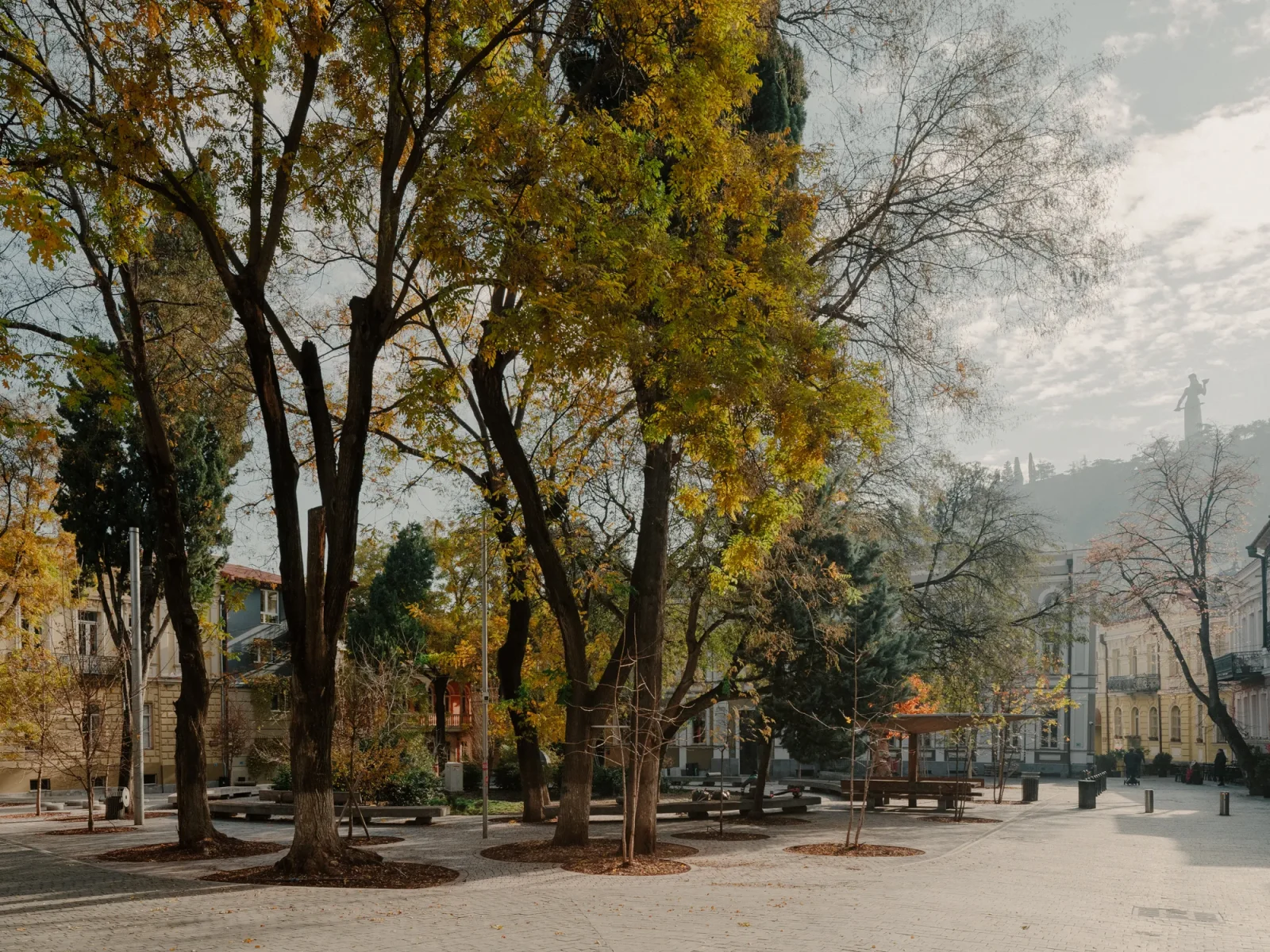
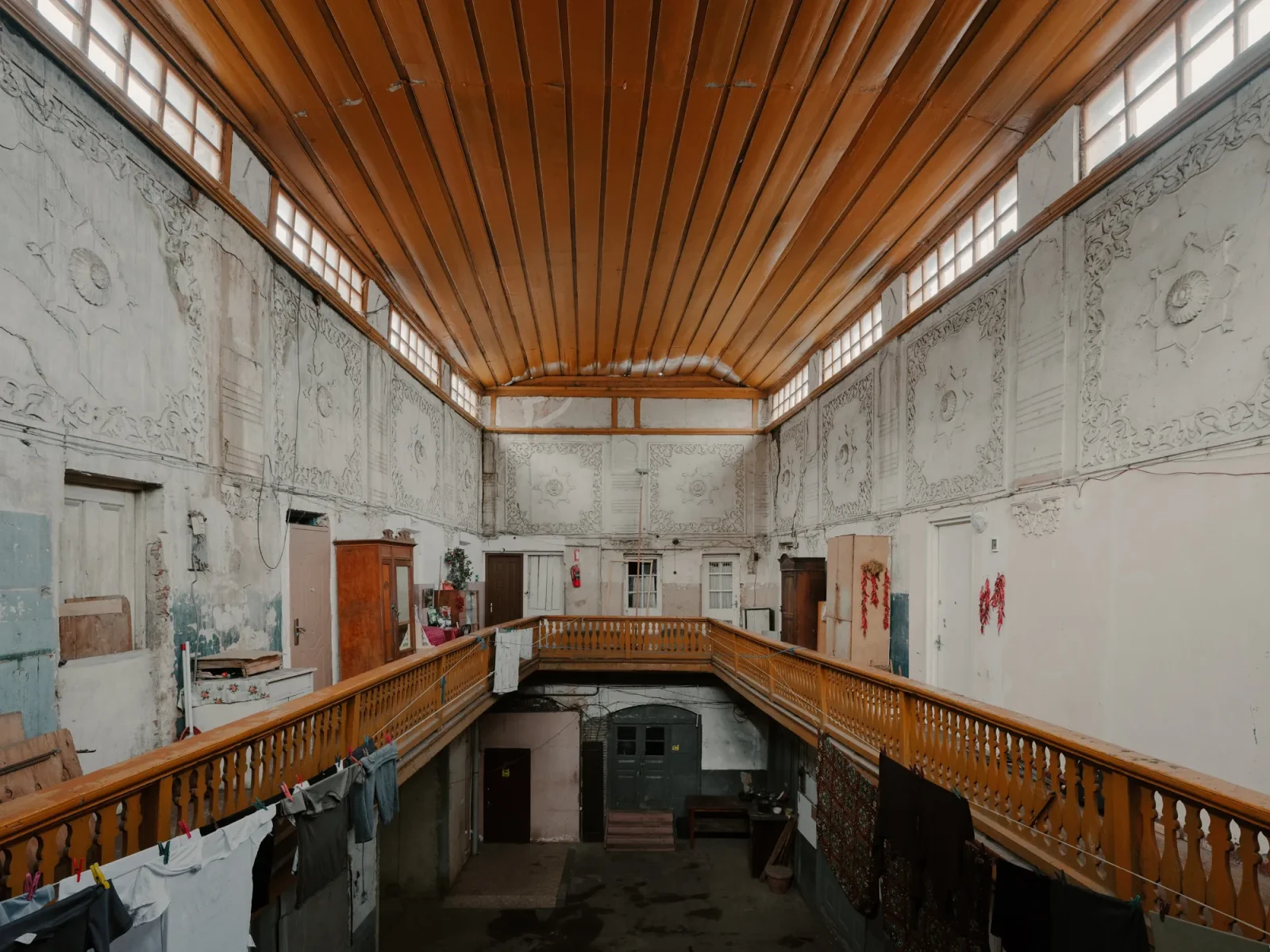
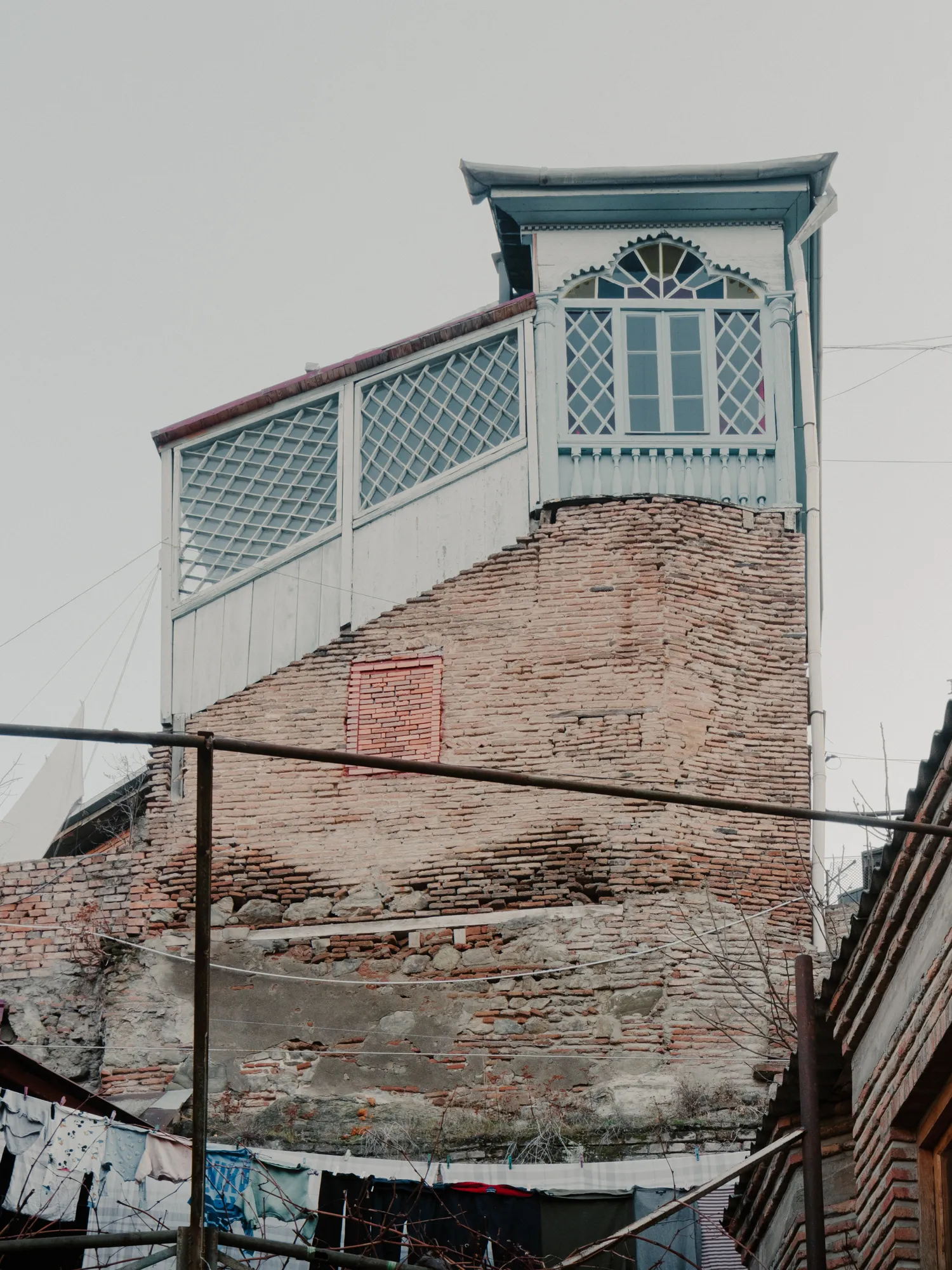
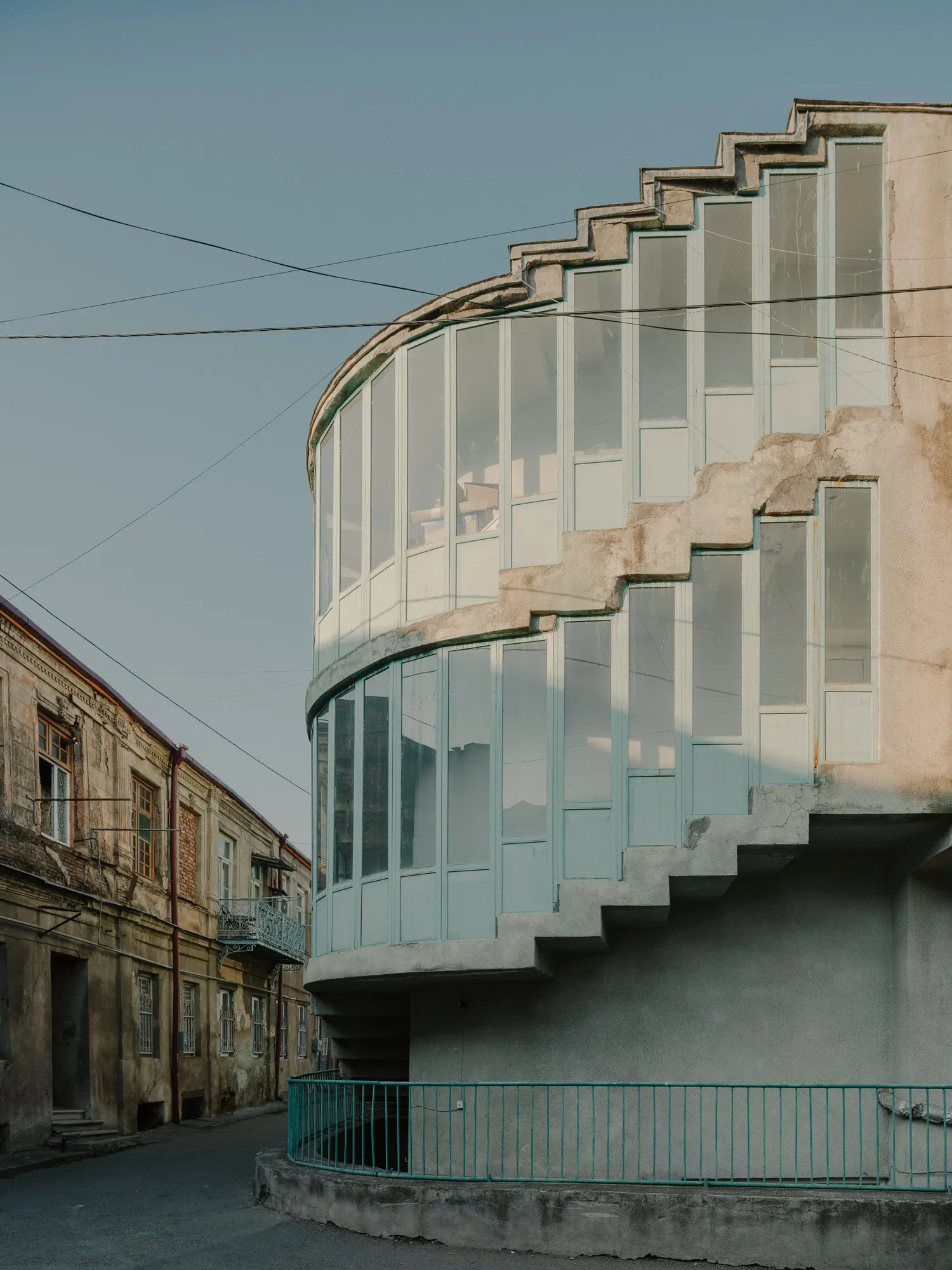
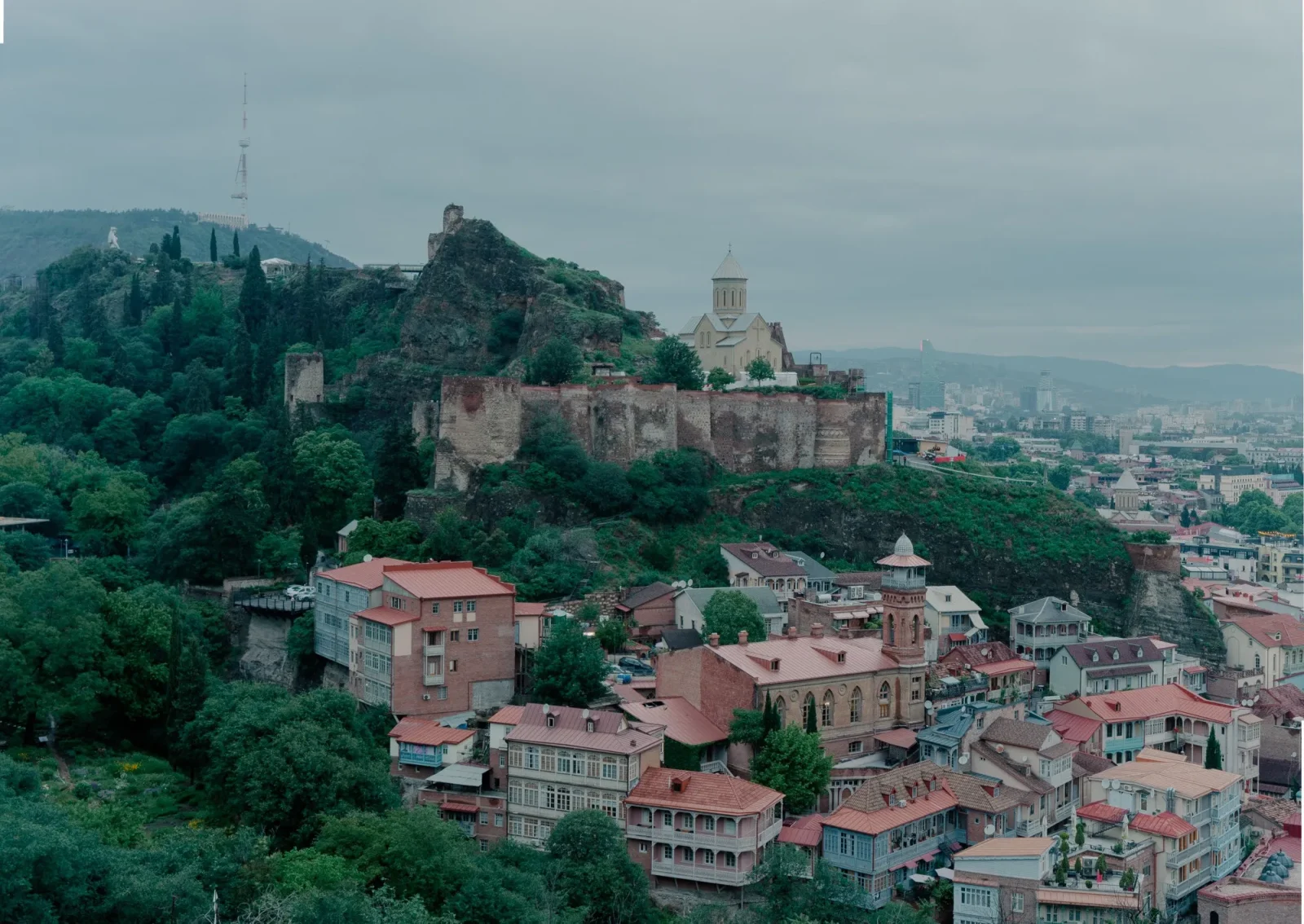
A non-profit organization, the Ubani-Tbilisi Cityscape Research Center, dedicated to rigorous exploration and preservation of Tbilisi’s complex architectural and urban environment, is launching a series of guidebooks about Tbilisi’s districts. The first edition, Kala, spans 190 pages in a compact 110 × 170 mm format and focuses on one of the oldest and densest districts of Tbilisi. It invites readers to explore through its fundamental urban elements: landscapes, streets, squares, buildings, courtyards, and their spatial connections.
The Ubani-Tbilisi Cityscape Research Center
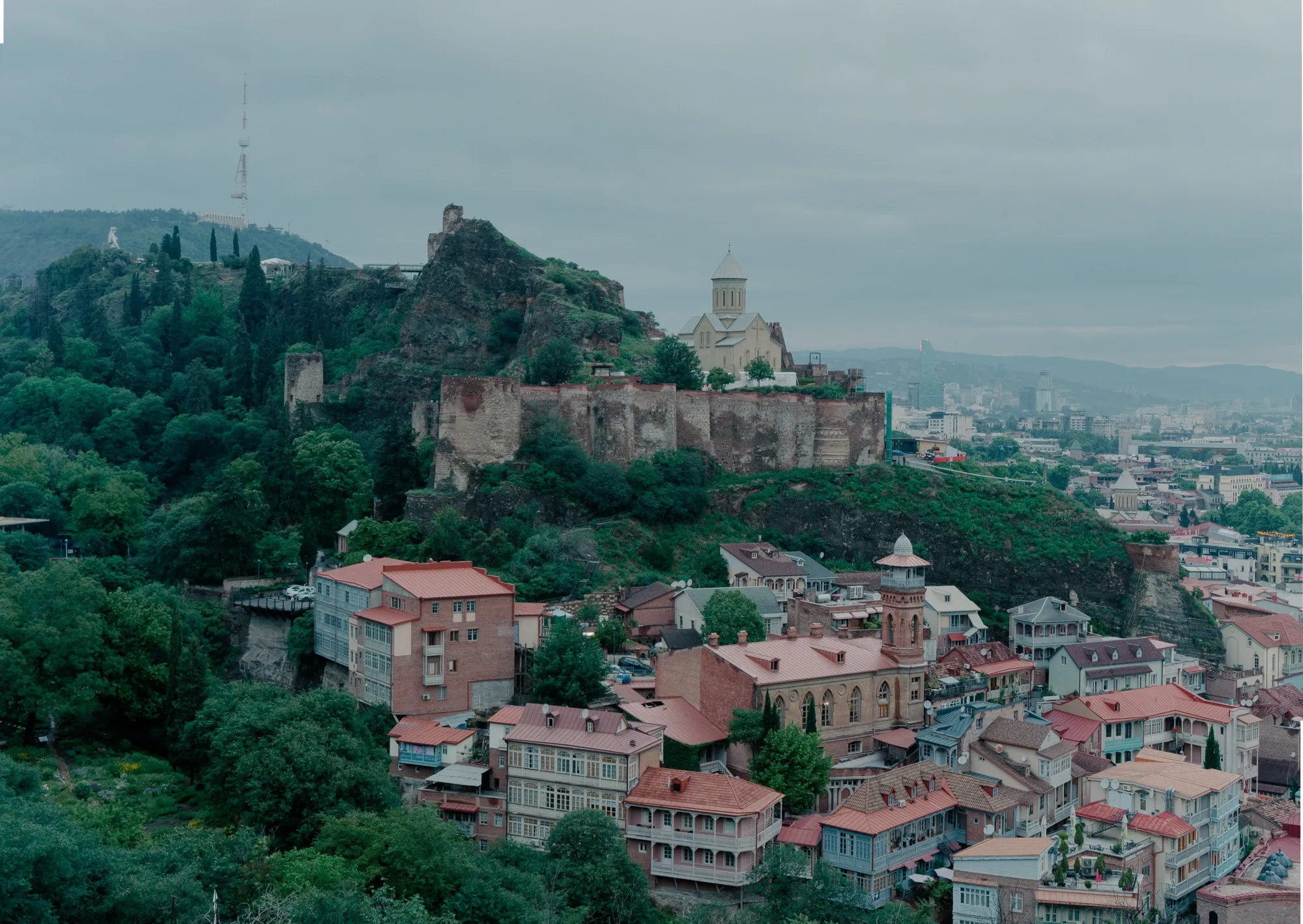
The Ubani-Tbilisi Cityscape Research Center’s foundational pillars focus on research, education, and public engagement, offering a fresh perspective that reevaluates the intricate fabric of Tbilisi’s landscape and architecture. Ubani, which means “district” in Georgian, addresses the gaps in documentation and public discourse surrounding the historical processes that have shaped Tbilisi. The dedicated team of scholars, architects, researchers, and cultural managers now presents the historical Kala district’s guidebook, published with the support of Loco Park.
Kala’s Place in Tbilisi’s Urban History
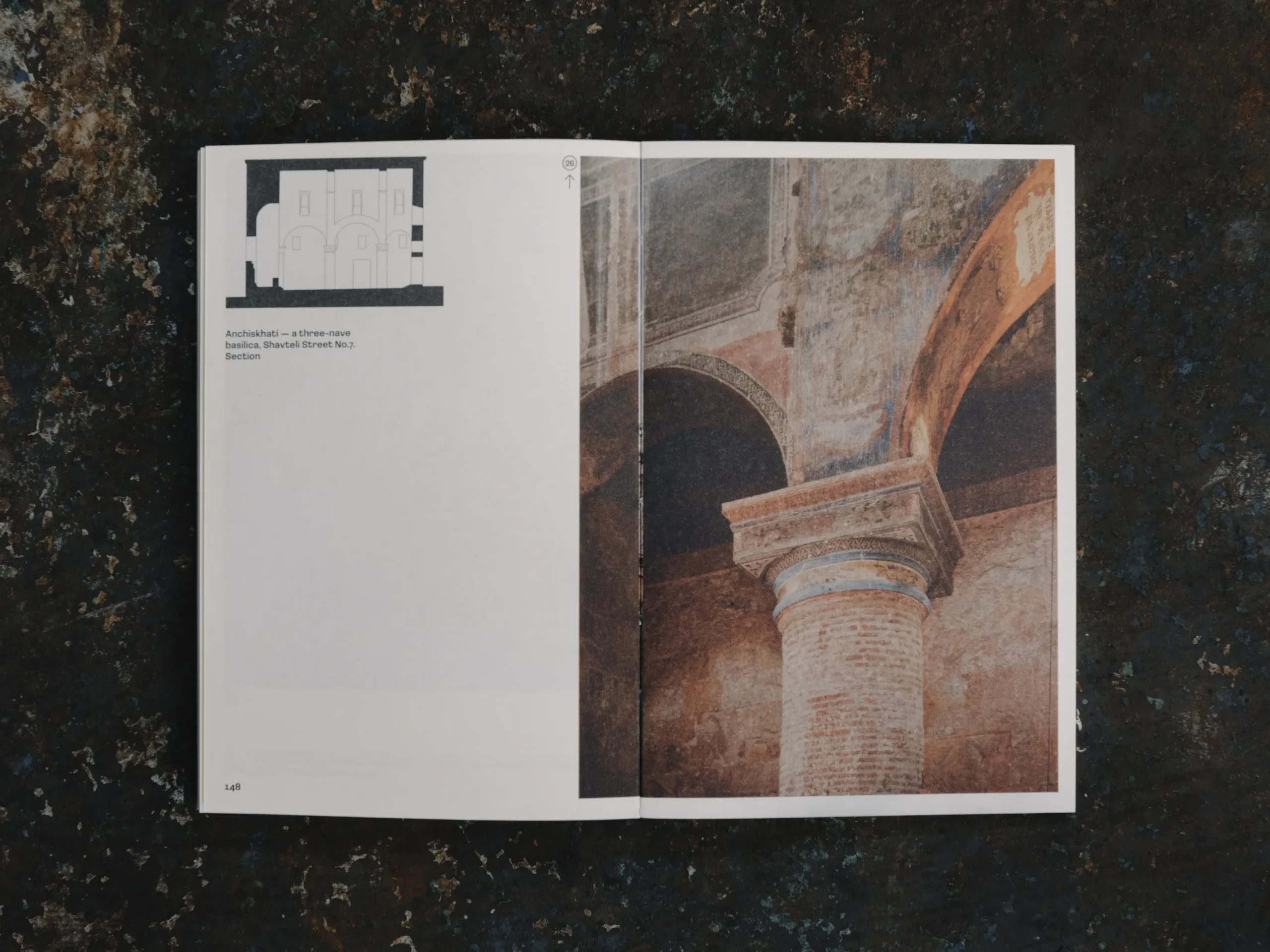
The center’s inaugural major publication is the Guide to Tbilisi Districts. Kala is part of Ubani’s research program titled Rocks, which explores the topography of Tbilisi and how its urban landscape shapes its surroundings. The guidebook is bilingual (English/Georgian), ensuring accessibility to a diverse readership, including experts, professionals, tourists, and local enthusiasts.
The Kala guide is a response to the immediate infrastructure decay and climate challenges, employing technical documentation such as digital cartography and 3D modeling, ensuring that the knowledge of the city’s unique architectural heritage is preserved. The guide is not conceived merely as a descriptive publication but as an advanced instrument for urban morphological study.
Significance of the Kala Guide
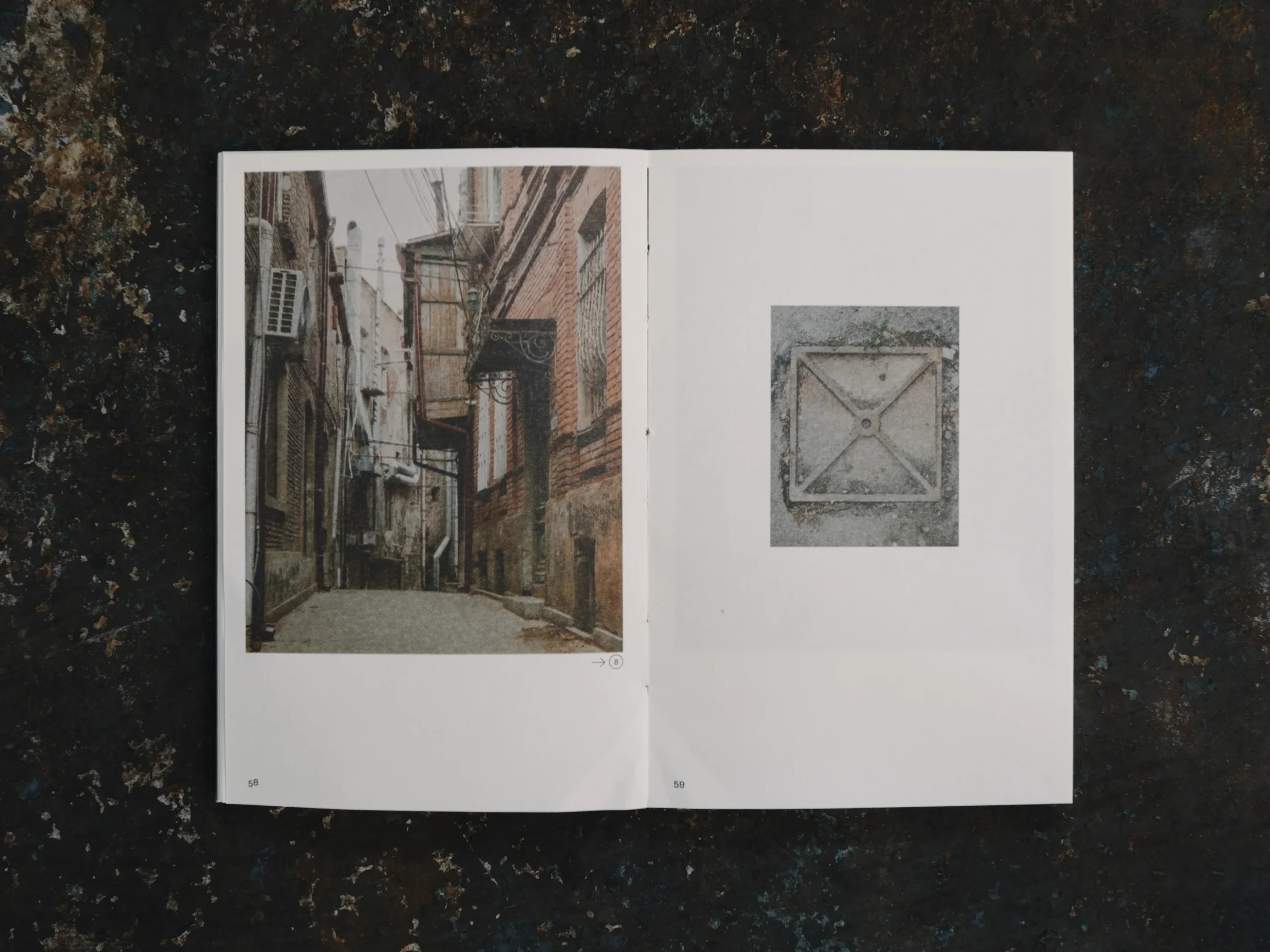
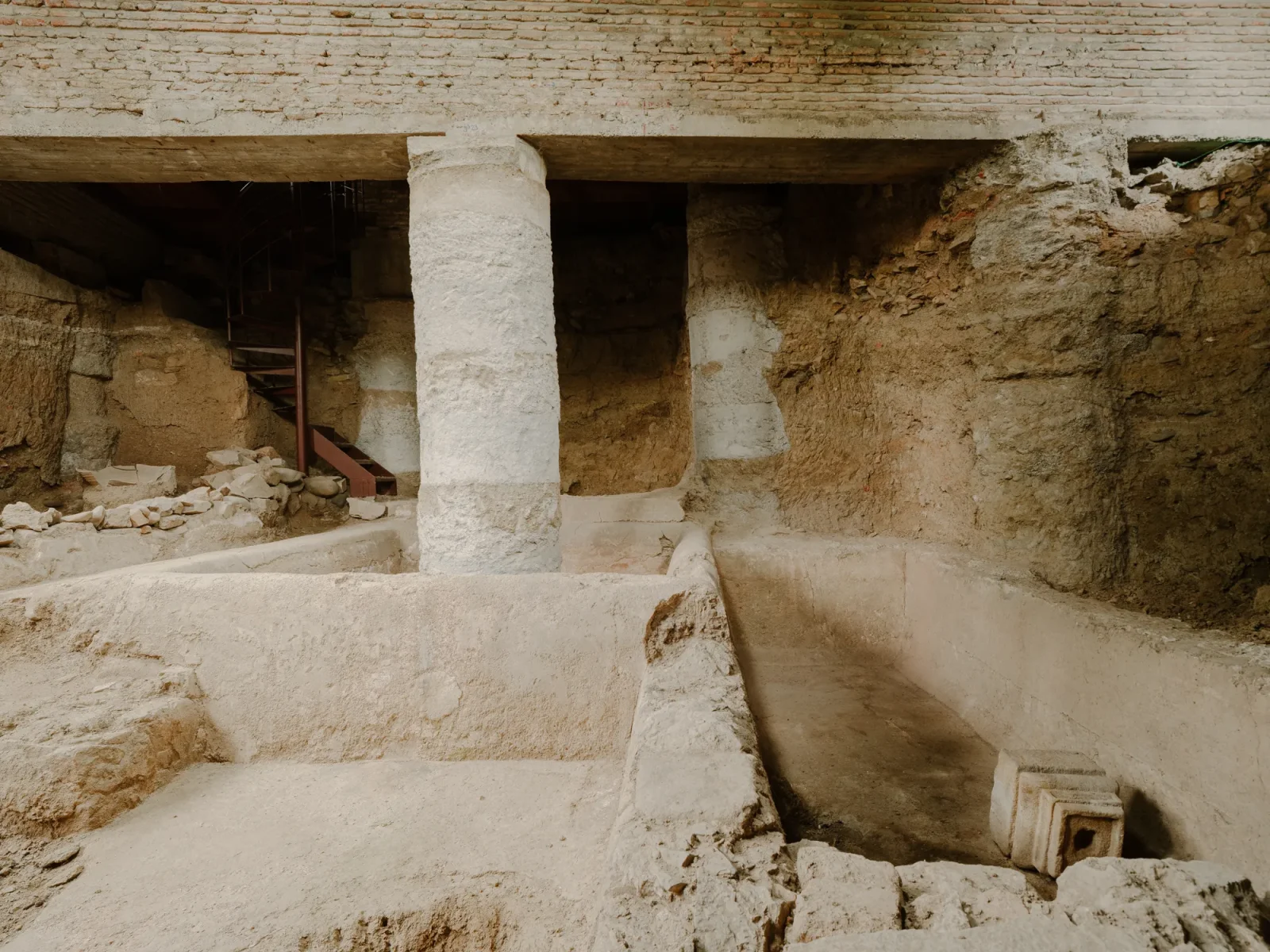
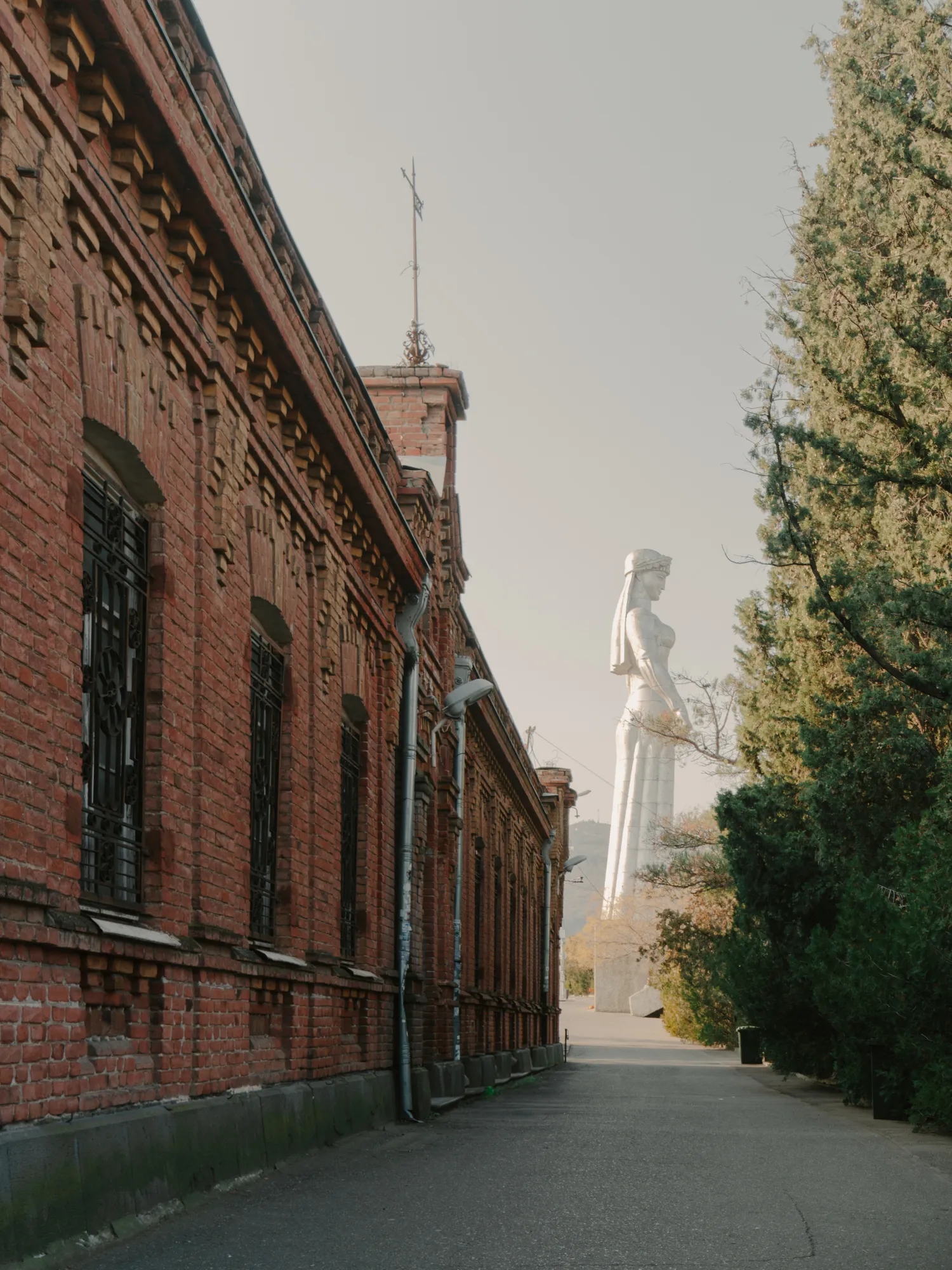
Located on the slope of the right bank of the Mtkvari River, Kala is recognized as one of the largest and oldest parts of medieval Tbilisi. The architectural identity emerges from the interplay between its spatial structure, urban fabric, and architecture with its rugged landscape. The significance of Kala reflects its international validation on the UNESCO tentative list. The striking feature of the Kala guide lies in its purposeful deviation from conventional tourism literature, not merely listing landmarks but offering an alternative way of navigating the narrow streets of this medieval district.
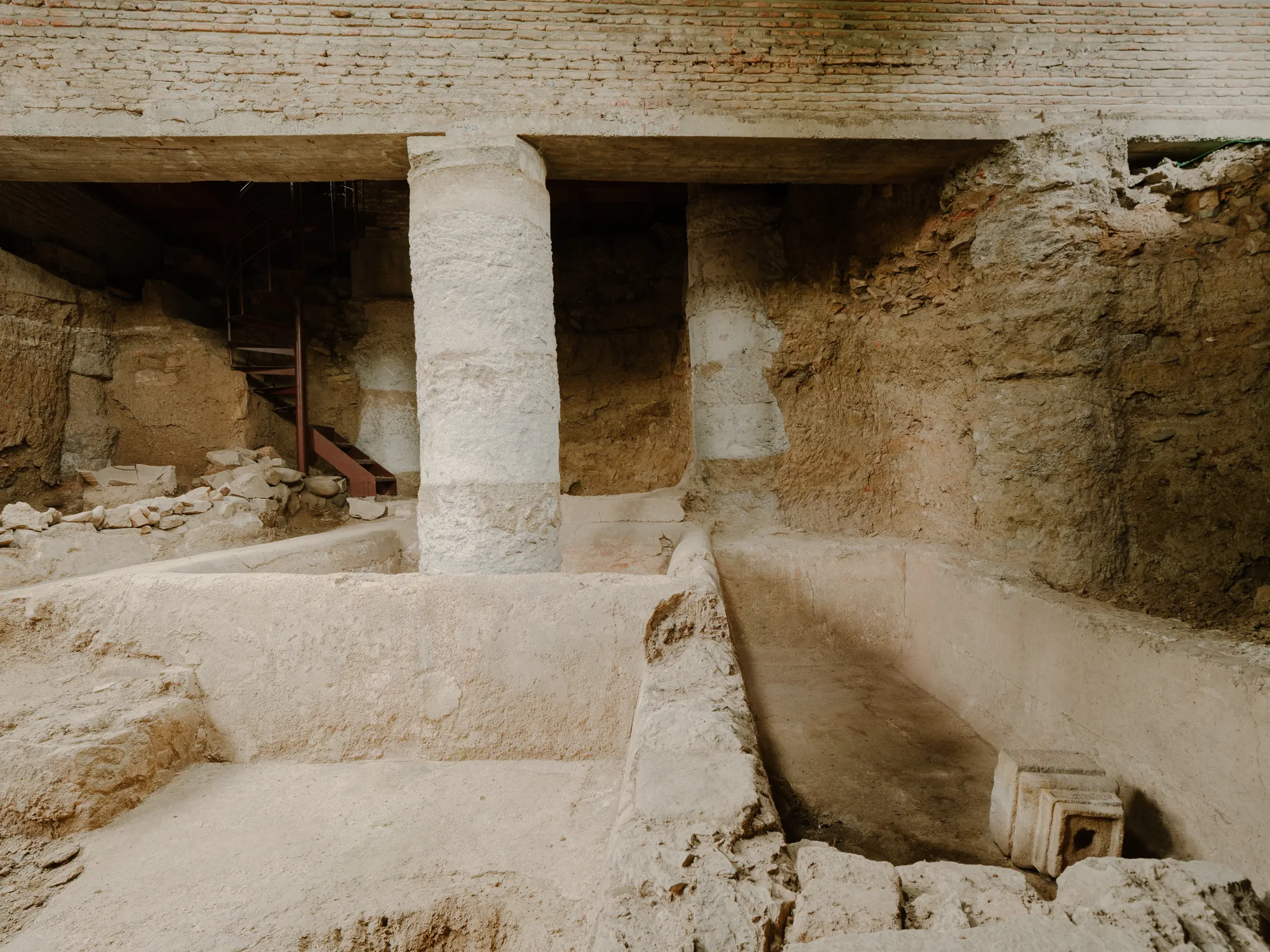
By highlighting the elements like courtyards and connections, Ubani encourages the reader to engage with the unique spatial grammar of Kala. Courtyards, often shared or semi-private spaces in historic Tbilisi, illustrate how to read the urban fabric as a continuous, self-reliant character, aligning with UNESCO’s recognition of the district as a homogeneous urban organism.
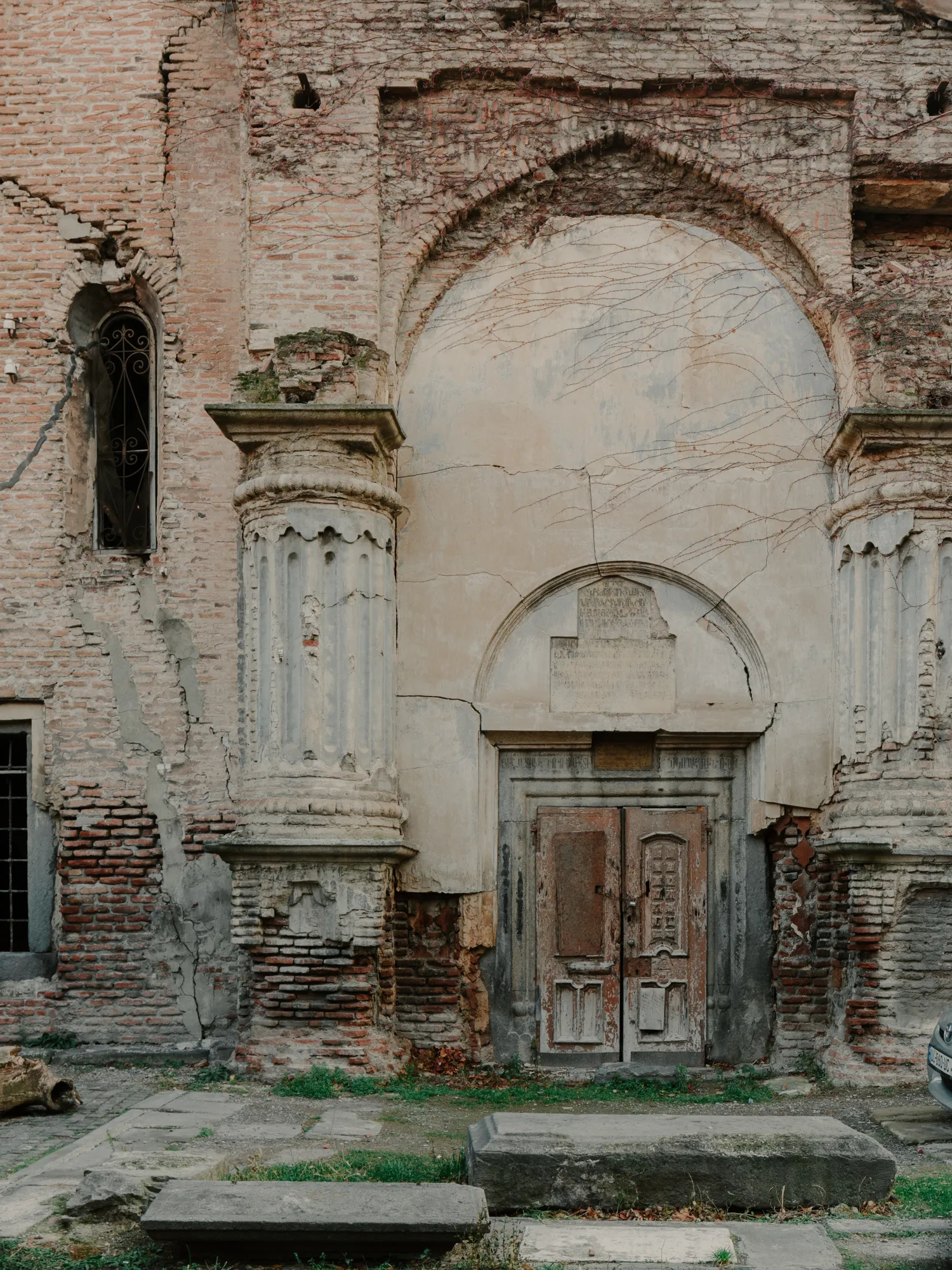
The organization delves into how the region’s distinct position at the crossroads of Eastern and Western cultures has significantly influenced the historical events that, in turn, have defined the city’s unique appearance. Drawing from architectural records, maps, and archives, Ubani approaches the study of Tbilisi through a rigorous fusion of artistic and scientific methods.
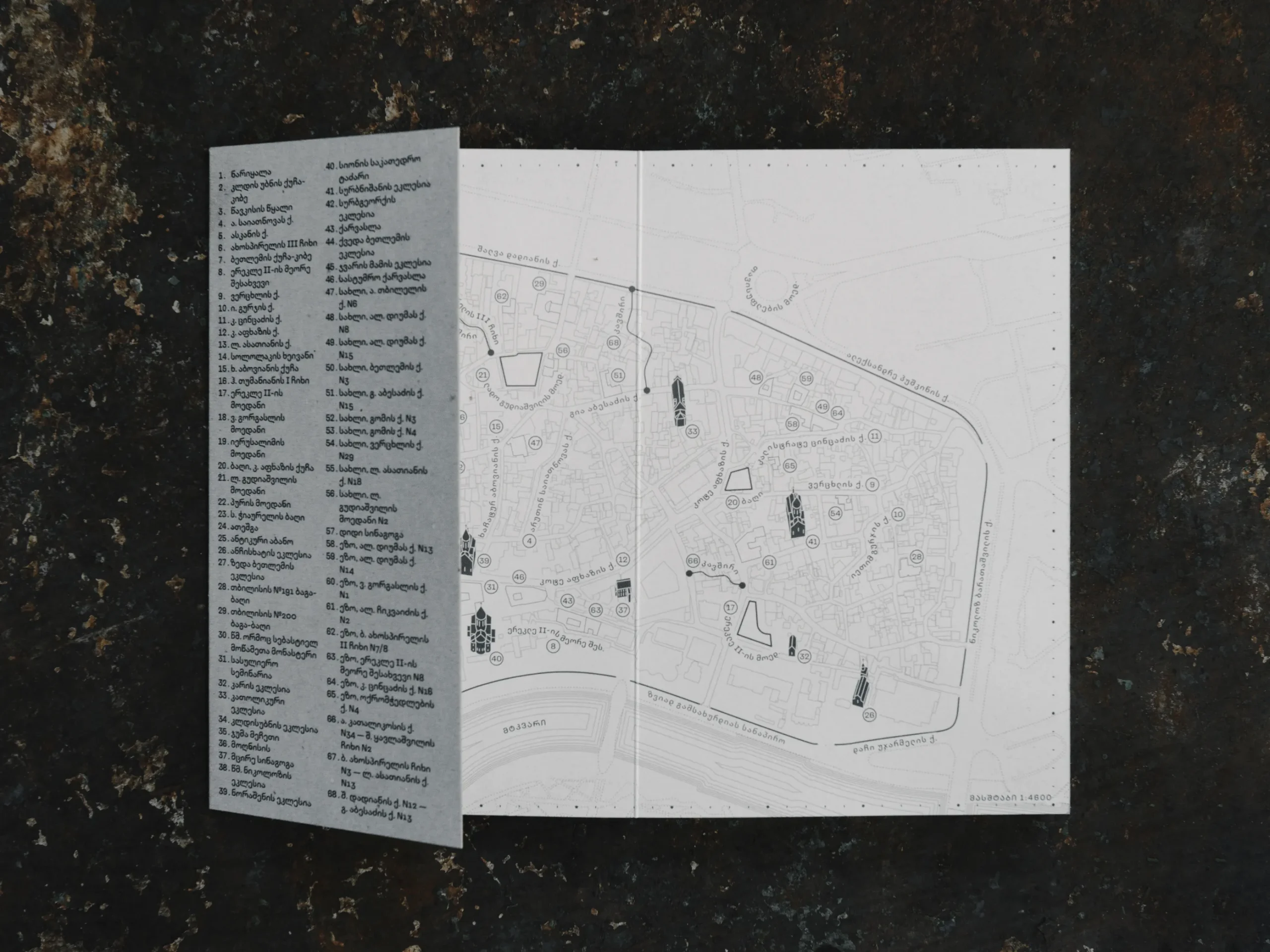
Releasing in 2025, the project was developed by David Brodsky as a content creator, with Ana Chorgolashvili as editor and Nino Bughadze providing the main text. The comprehensive nature of the project required a multidisciplinary team, including Daria Yarzhambek and Yury Ostromentsky for design and specialized graphics by Aleksandre Gaphrindashvili, Oleg Glebov, and Georgiy Gnilorybov.
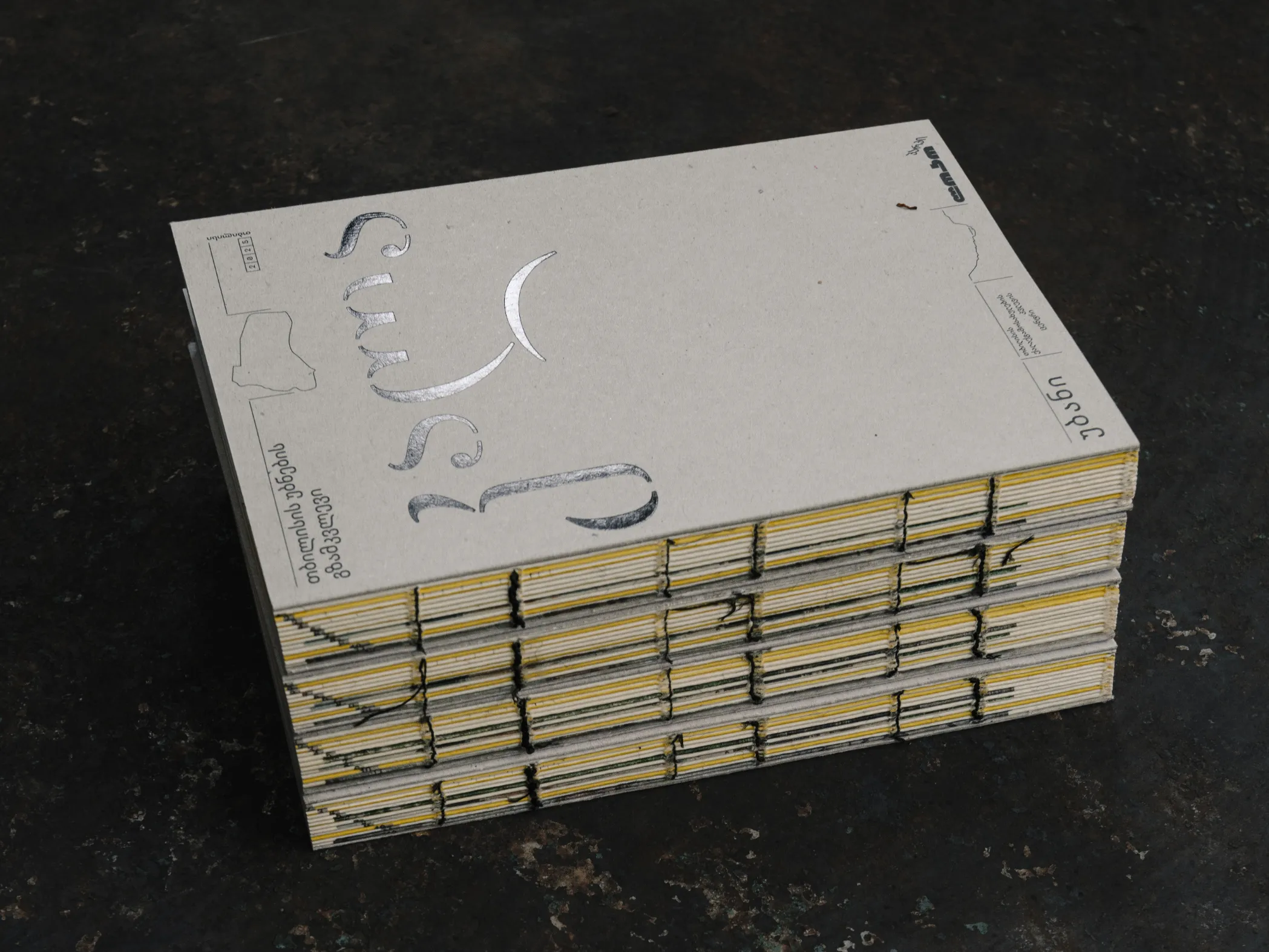
Kala District Guidebook Details
Publisher: Ubani – Tbilisi Cityscape Research Center
Editorial Team: David Brodsky, Ana Chorgolashvili, Nata Tatunashvili
Concept Creator: David Brodsky
Editor: Ana Chorgolashvili
Text: Nino Bughadze
Design: Daria Yarzhambek, Yury Ostromentsky
Graphics: Aleksandre Gaphrindashvili, Oleg Glebov, Georgiy Gnilorybov
Photography: © Grigory Sokolinsky, Ubani
Translation: Elene Kobidze
Language and Style Editor: Ben Wheeler
Language: EN / GE
Explore Courses
.jpg "Ondrej Chybik - Rethinking Architecture")