


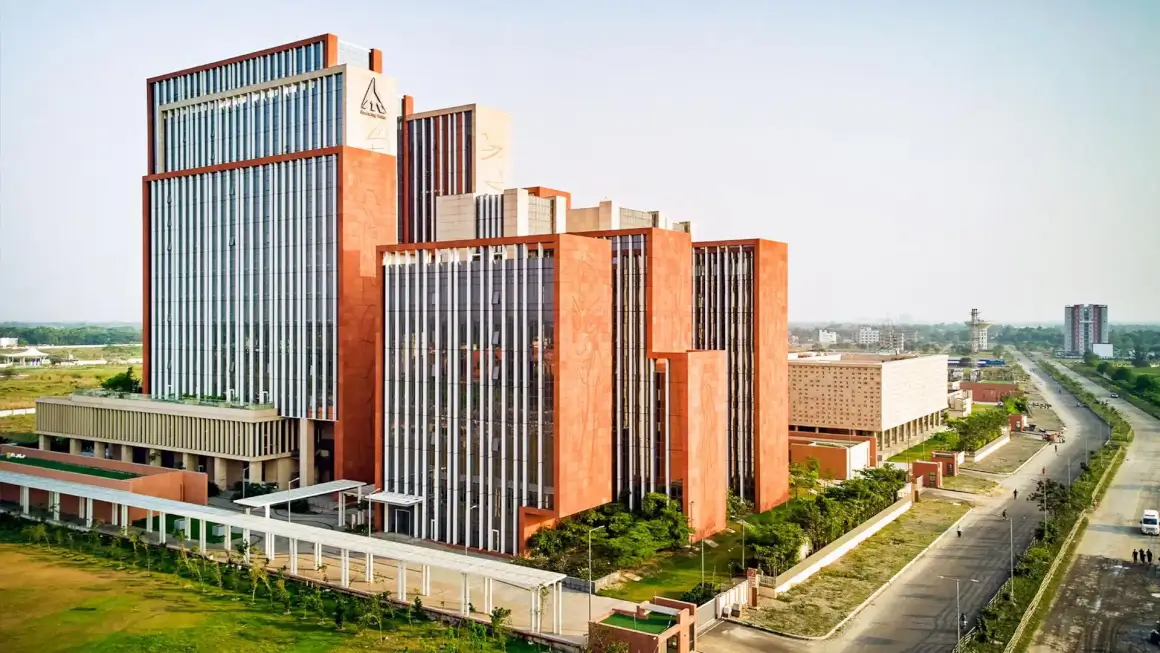
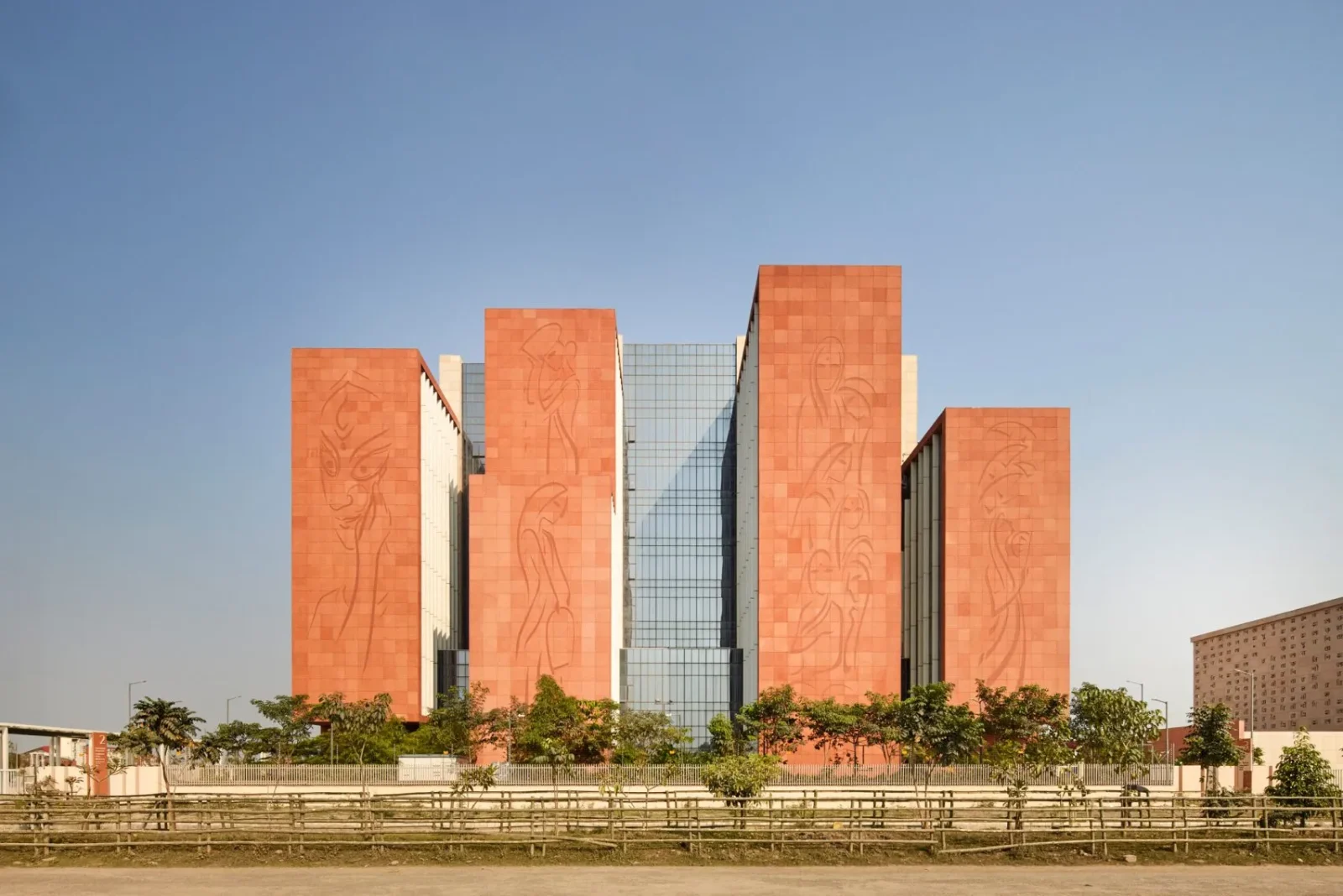
In Kolkata, India, the ITC Green Center by Morphogenesis redefines the modern mixed-use campus through climate-responsive architecture, public art, and sustainable urban planning. Spread across 17 acres in Rajarhat’s rapidly expanding IT district, the development combines corporate offices, hospitality spaces, residences, and a knowledge center within a pedestrian-focused environment inspired by Bengal’s climate and cultural identity.
Rather than treating sustainability as an added feature, the project integrates passive cooling, natural ventilation, adaptable workspaces, and large-scale artistic interventions directly into its architectural language. The result is a high-performance campus that balances environmental responsibility with regional storytelling, setting a new benchmark for mixed-use sustainable development in India.
A Mixed-Use Development Designed Around Community and Connectivity
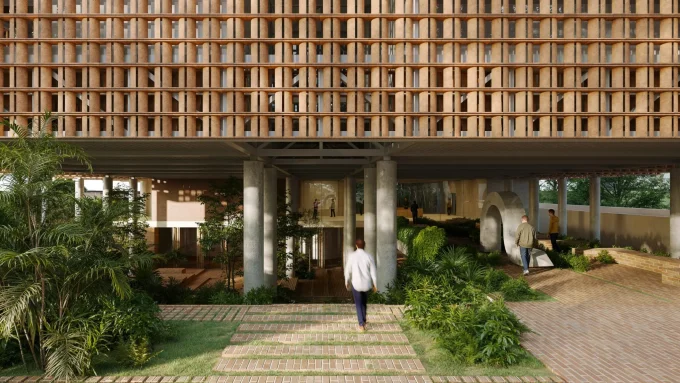
The ITC Green Center brings together workplaces, residential towers, hospitality functions, and public amenities within a unified master plan centered on walkability and social interaction. Vehicular circulation is limited to the perimeter of the site, allowing the central spine to function as a shaded pedestrian boulevard that encourages movement, gathering, and public engagement.
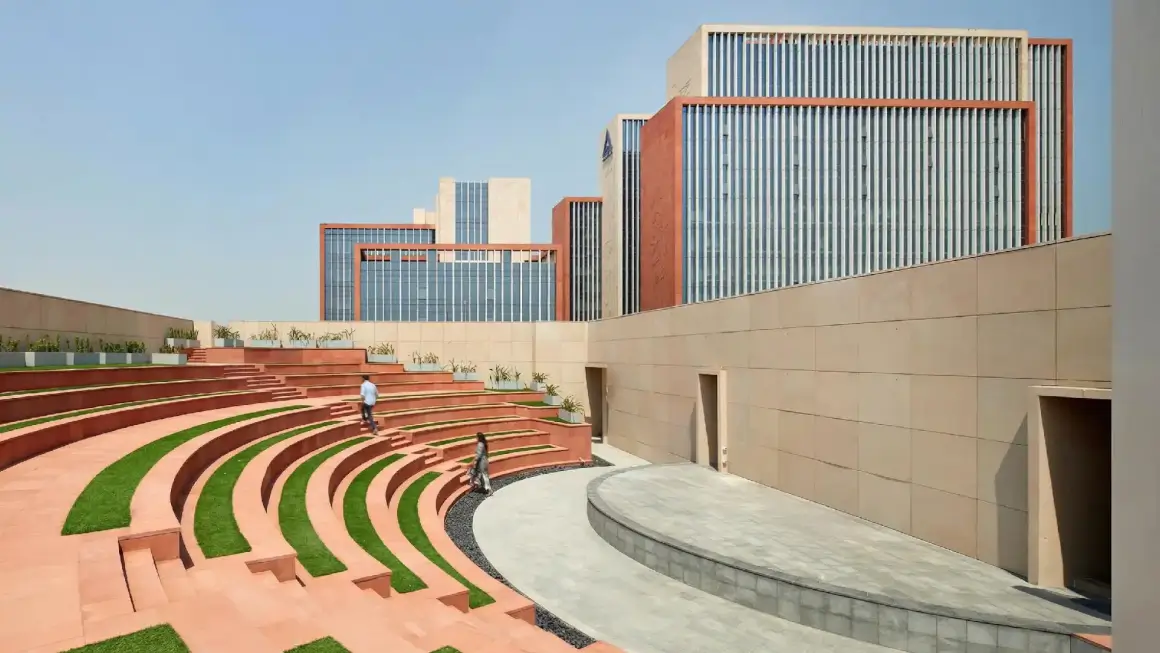
Inspired by Bengal’s strong culture of community living, the campus creates interconnected public spaces, landscaped courtyards, and weather-protected pathways that transform the development into a people-focused urban environment rather than a conventional corporate district.
Passive Design Strategies Reduce Heat and Improve Efficiency
Morphogenesis integrates passive environmental strategies that play a major role in the project’s performance. All buildings are positioned at an 18-degree angle away from the east-west axis to reduce direct solar heat gain while maximizing prevailing southern winds. This approach cuts solar exposure by nearly 25 percent and helps lower perceived outdoor temperatures by up to 5°C.
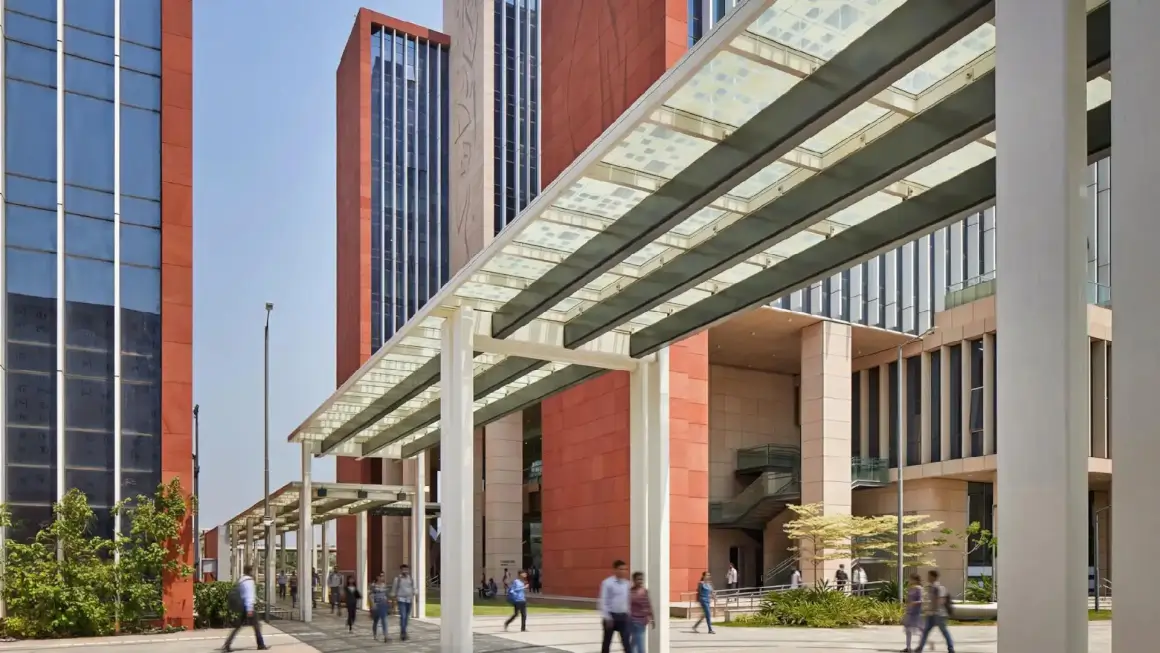
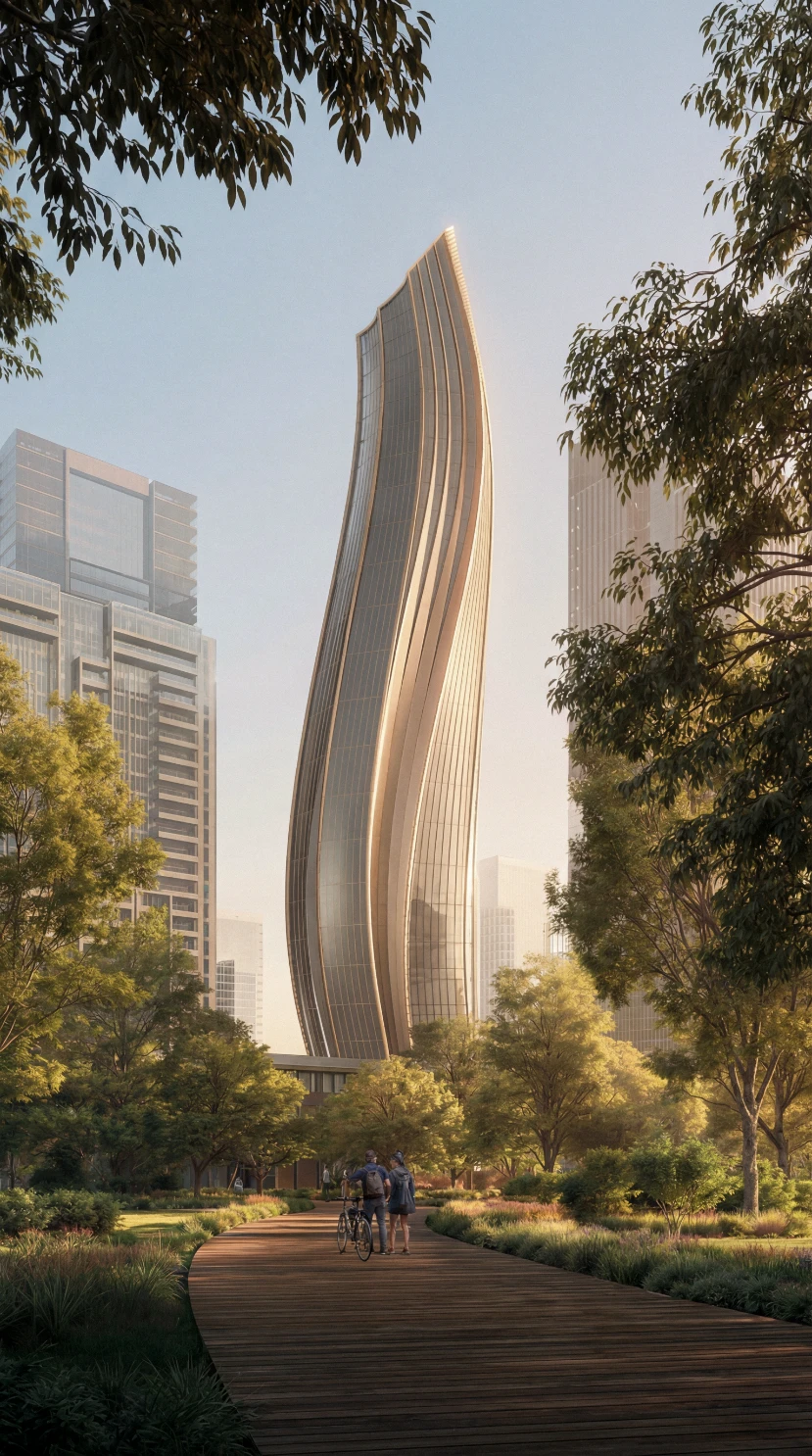
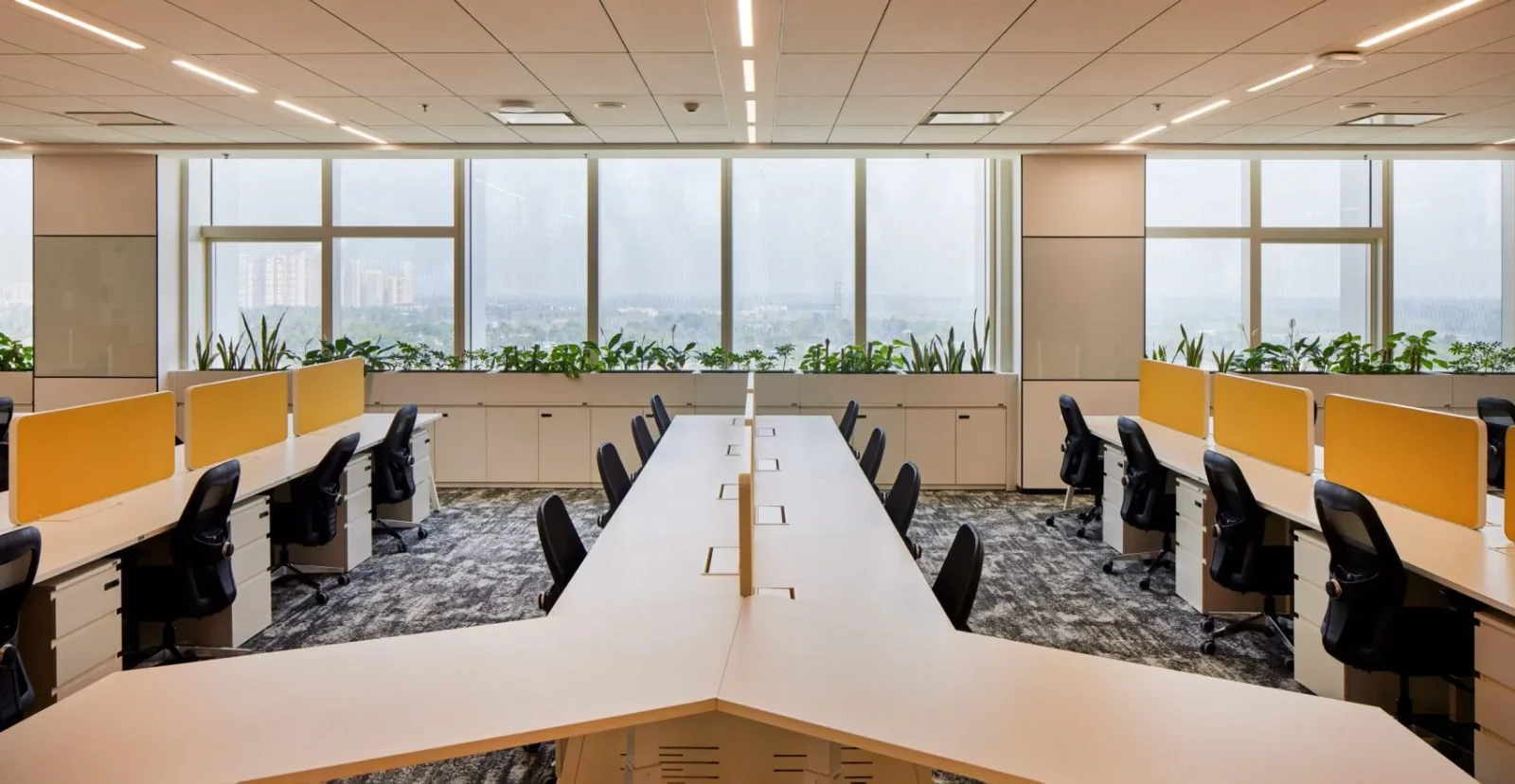
The office towers feature narrow floor plates that allow nearly 90 percent of workspaces to receive glare-free natural daylight. High-performance façades with external insulation, controlled glazing, and deep vertical stone fins minimize heat gain while improving thermal comfort. Combined with a radiant cooling system, these measures significantly reduce operational energy use and carbon emissions.
Art and Cultural Identity Become Part of the Architecture
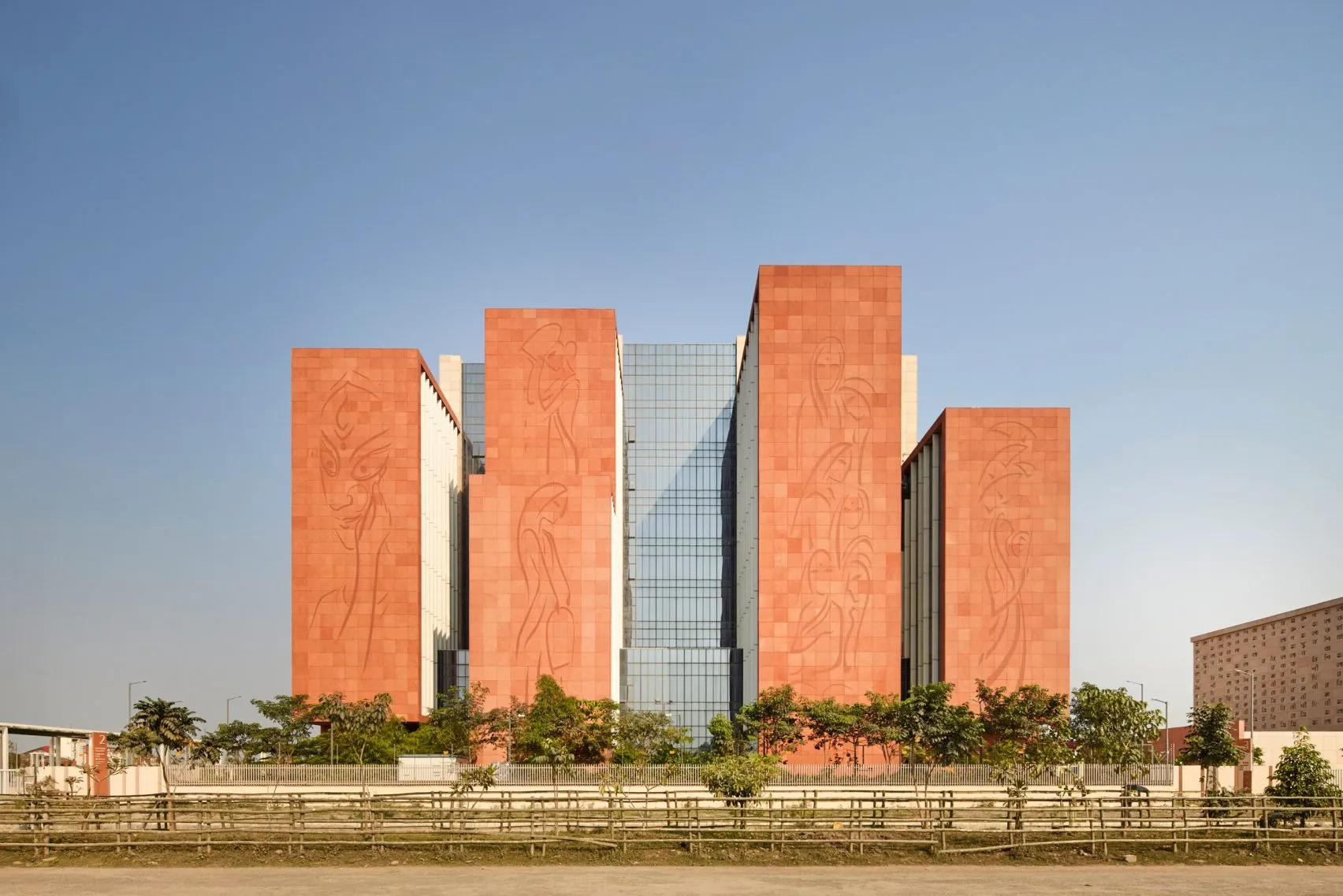
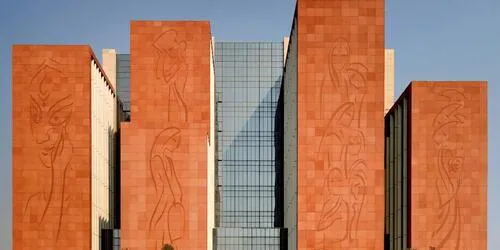
Art is embedded directly into the architectural identity of the campus through large-scale handcrafted façades and culturally inspired interiors. Expansive sandstone panels across the eastern and western elevations depict Bengal’s seasons, landscapes, and everyday life. These installations were digitally fabricated and hand-finished by local artisans, blending advanced technology with traditional craftsmanship.
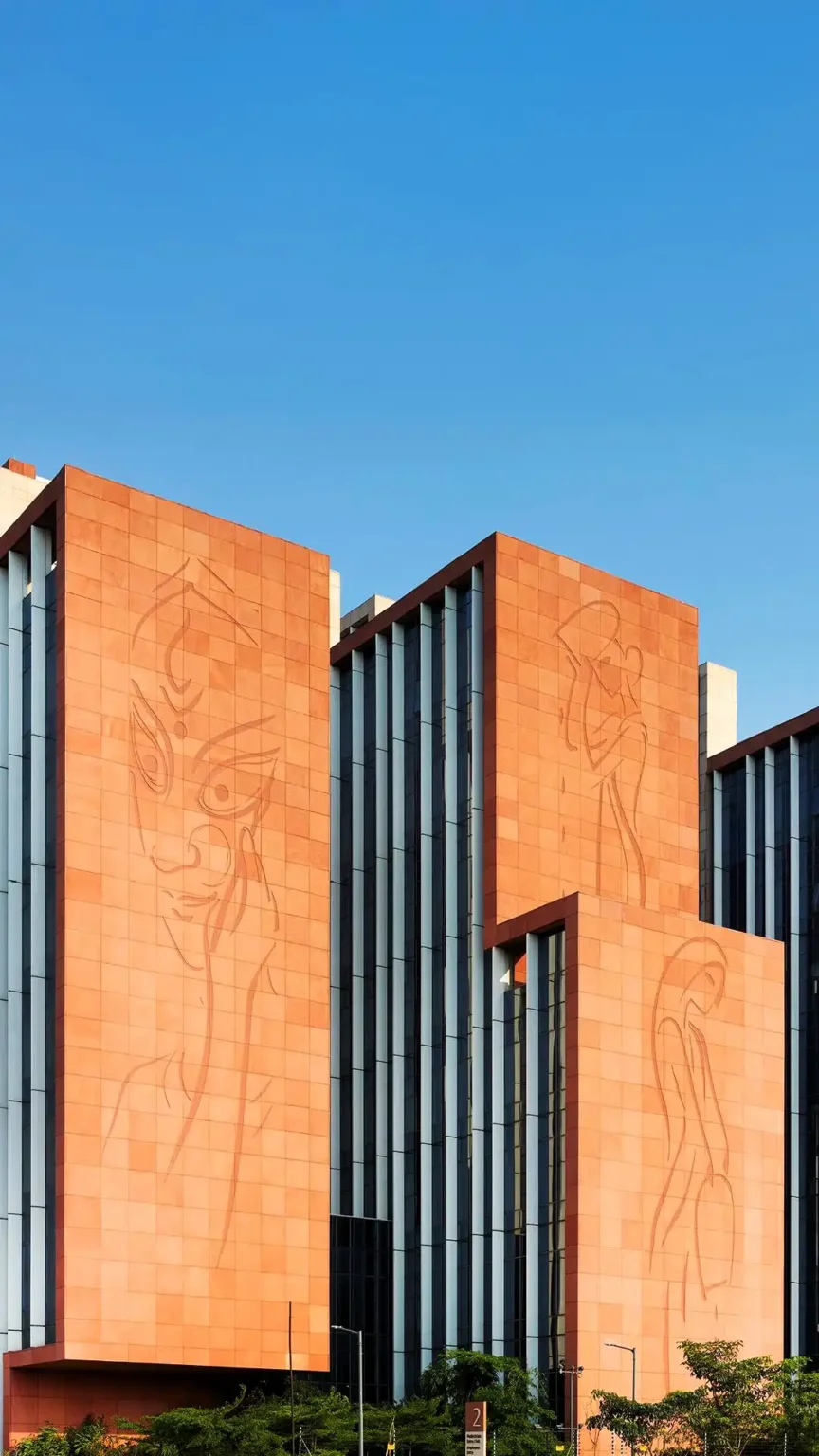
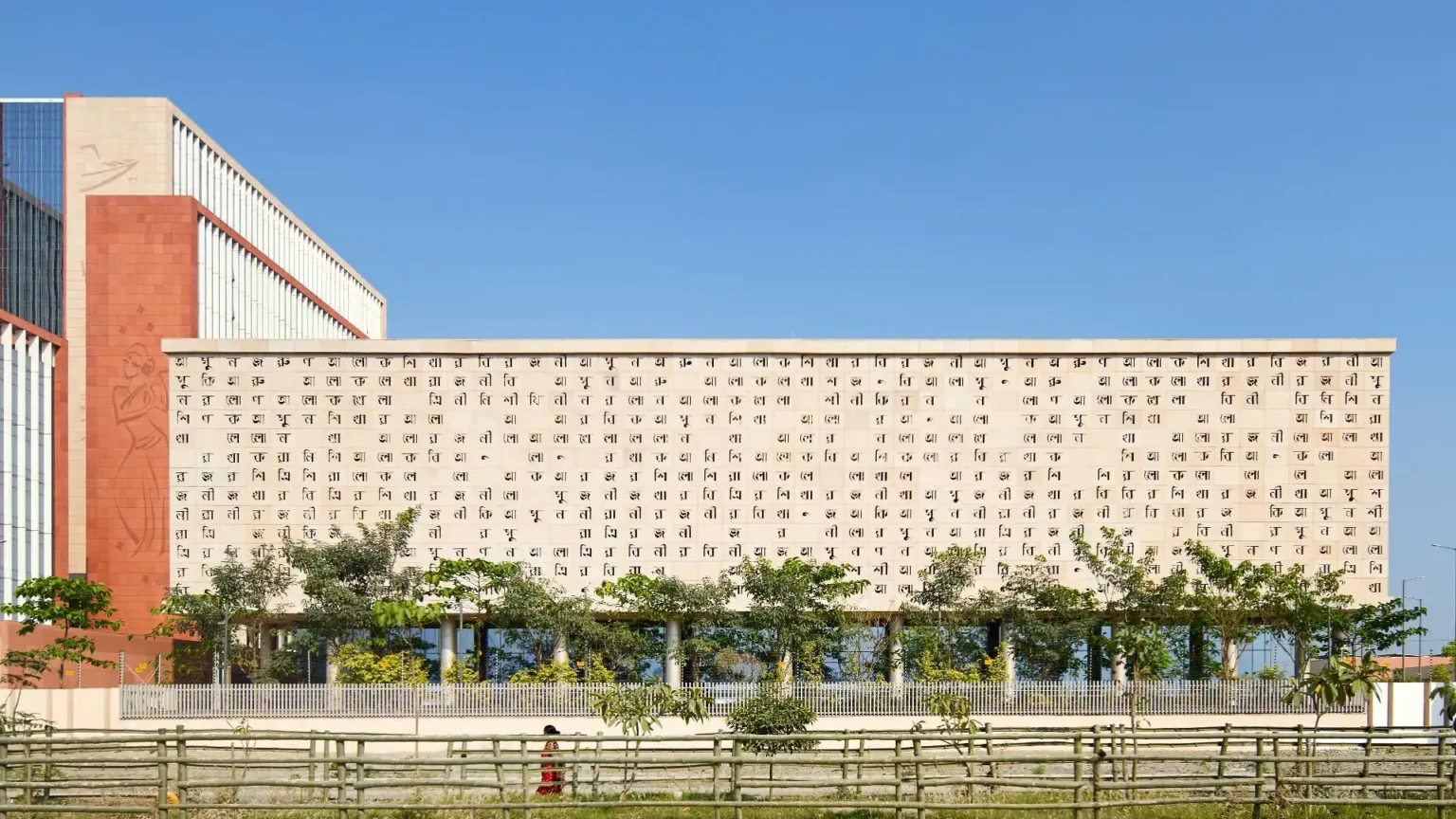
The knowledge center façade references Bengali literary heritage through compositions inspired by Gitanjali by Rabindranath Tagore. Inside, terracotta finishes, woven graphics, and festival-inspired motifs reinforce the project’s connection to local culture and artistic traditions.
Flexible Workspaces Support Long-Term Sustainability
Adaptability is another defining aspect of the development’s sustainability strategy. The office buildings use a virtually column-free structural system with more than 85 percent spatial efficiency, allowing flexible planning and future reconfiguration. A modular 8.5-meter structural grid supports efficient layouts for both offices and parking systems.
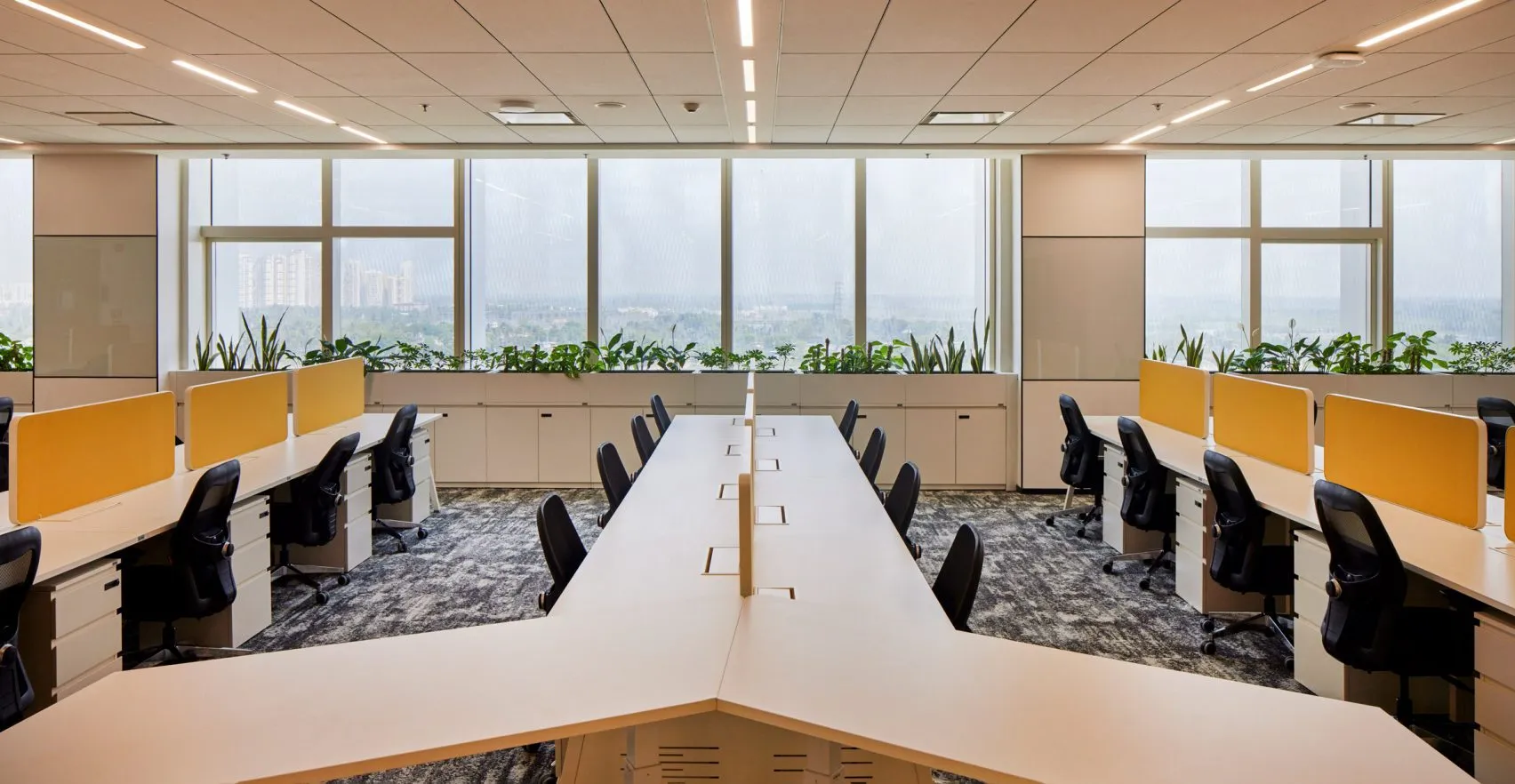
This flexible framework has already enabled sections of the first-phase towers to be converted into research facilities, demonstrating the campus’s ability to evolve alongside changing operational needs. By combining passive environmental strategies, mixed-use planning, artistic expression, and adaptable infrastructure, the ITC Green Center presents a future-focused model for sustainable urban development.
Explore Courses
.jpg "Ondrej Chybik - Rethinking Architecture")