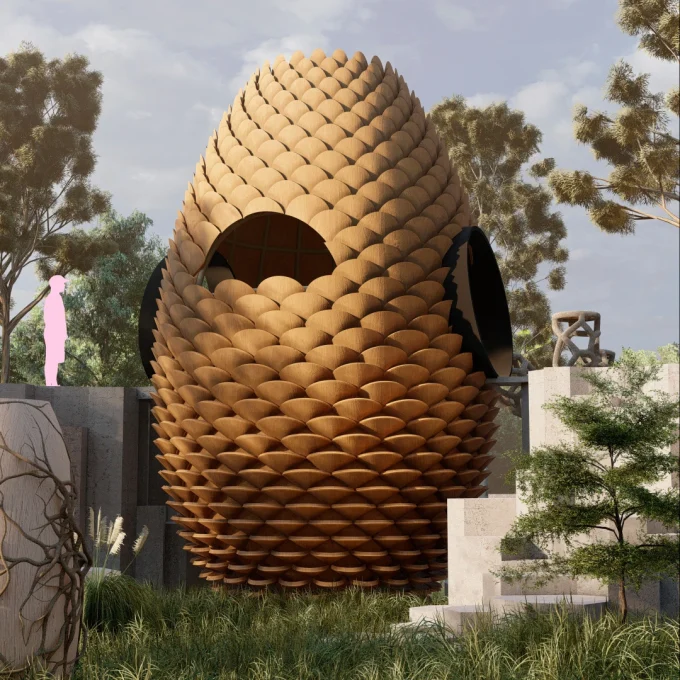



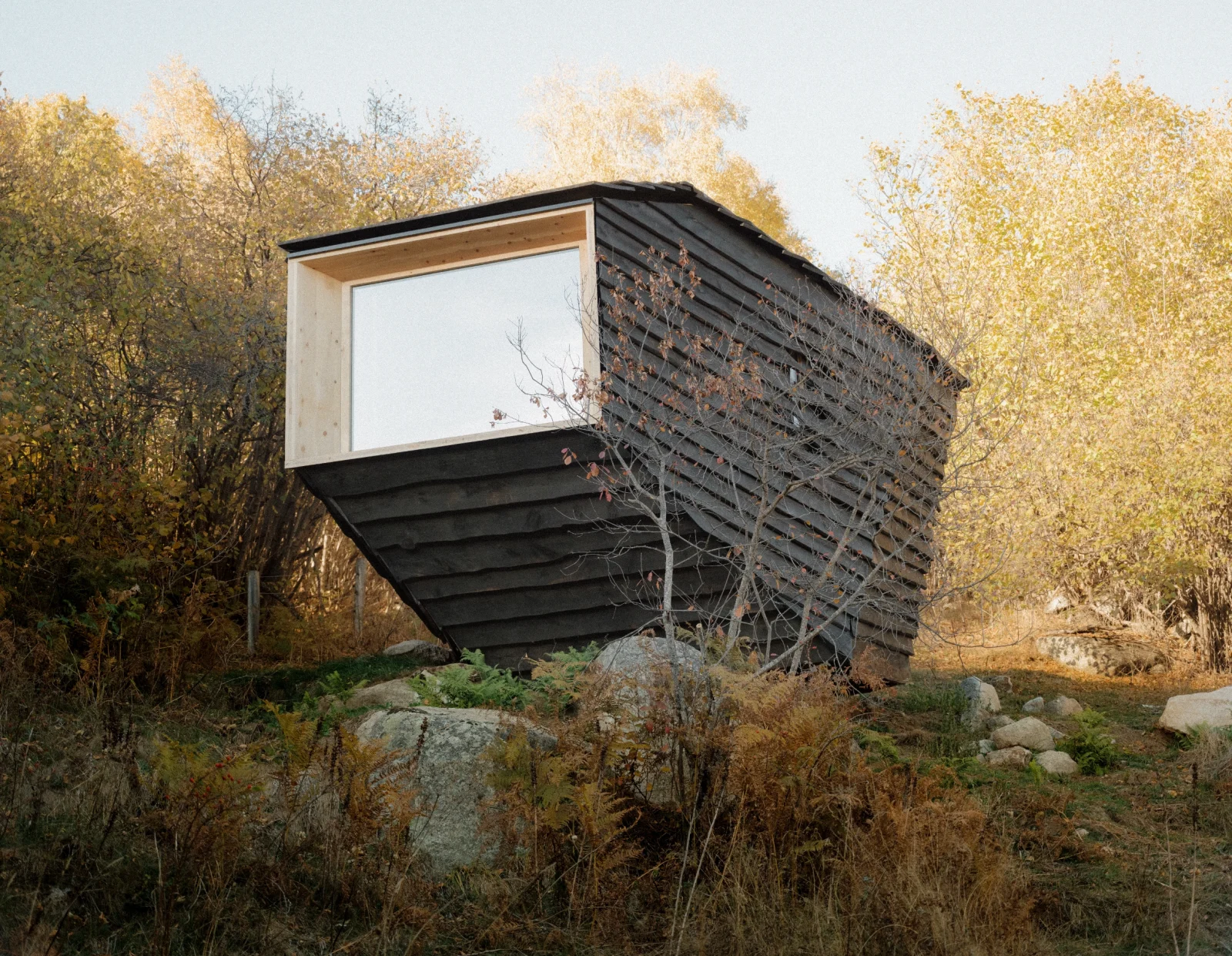
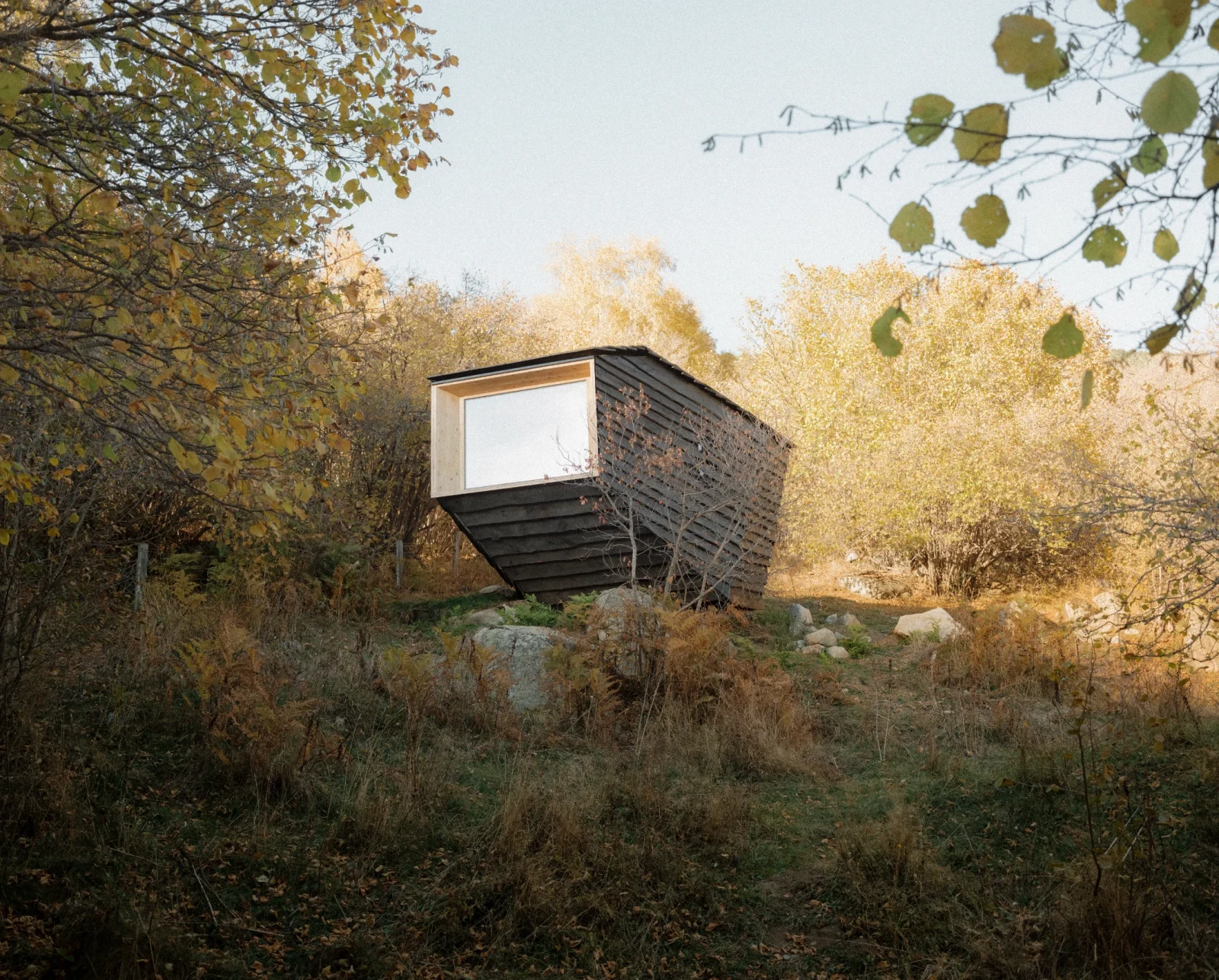
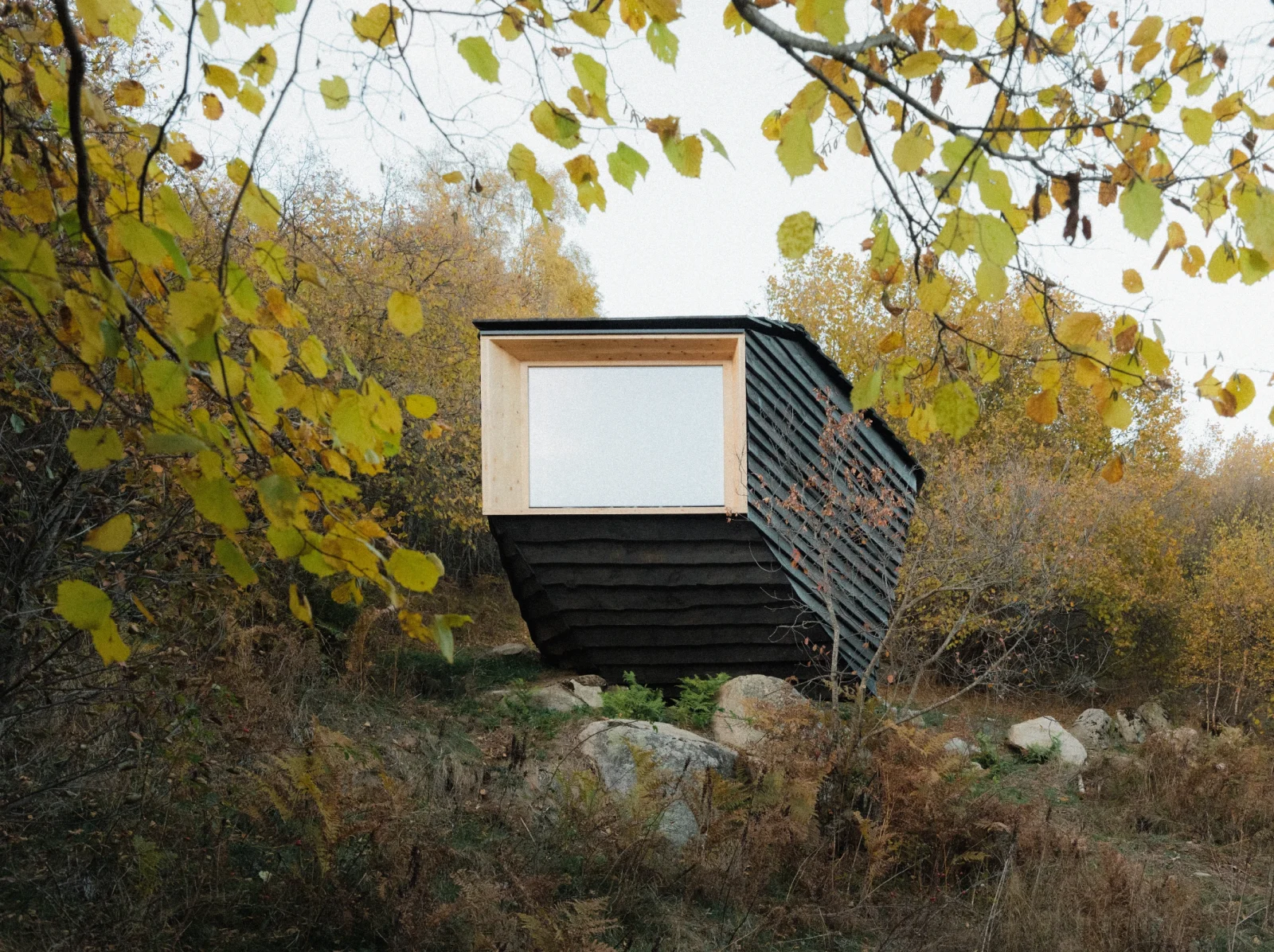
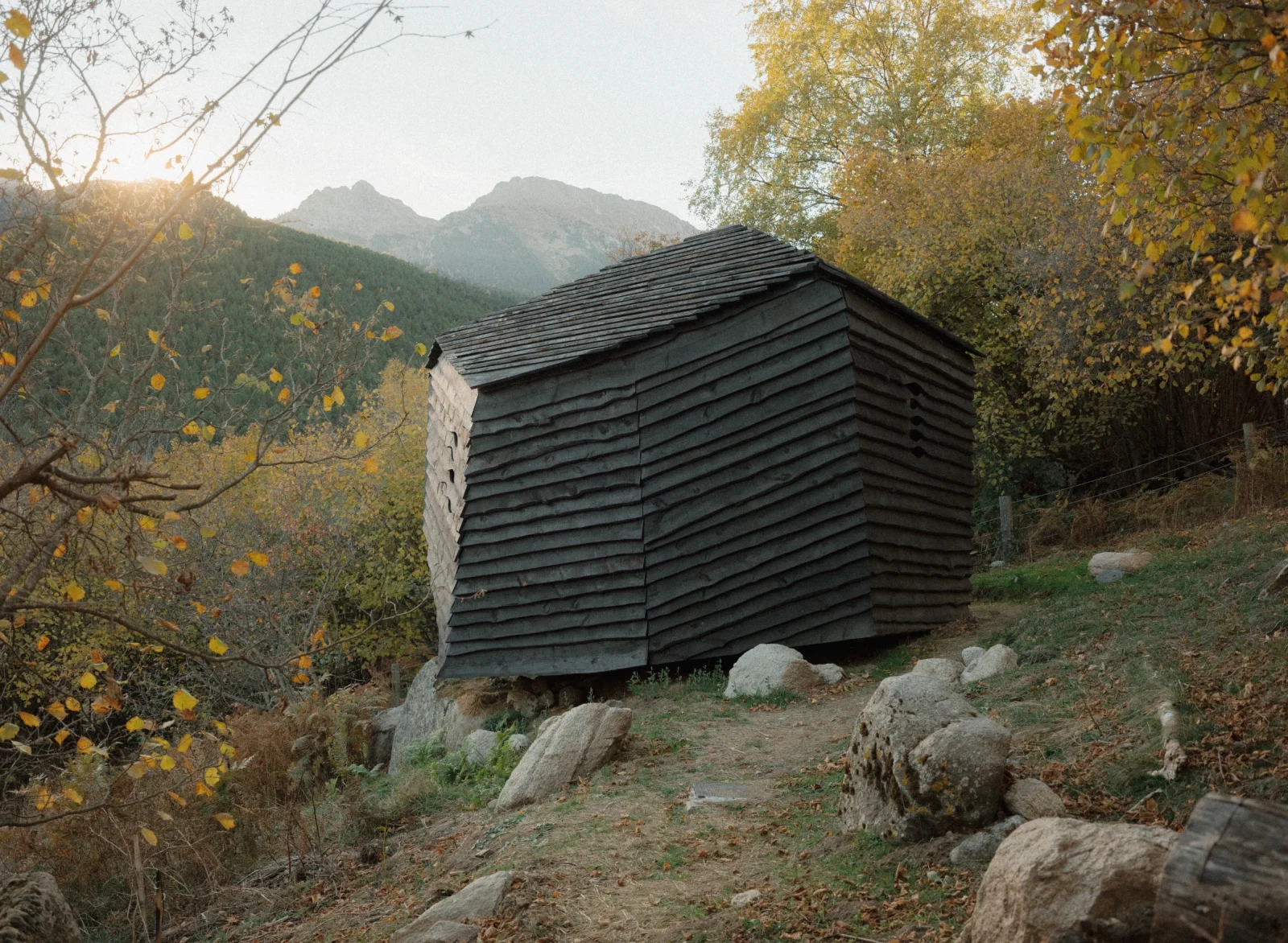
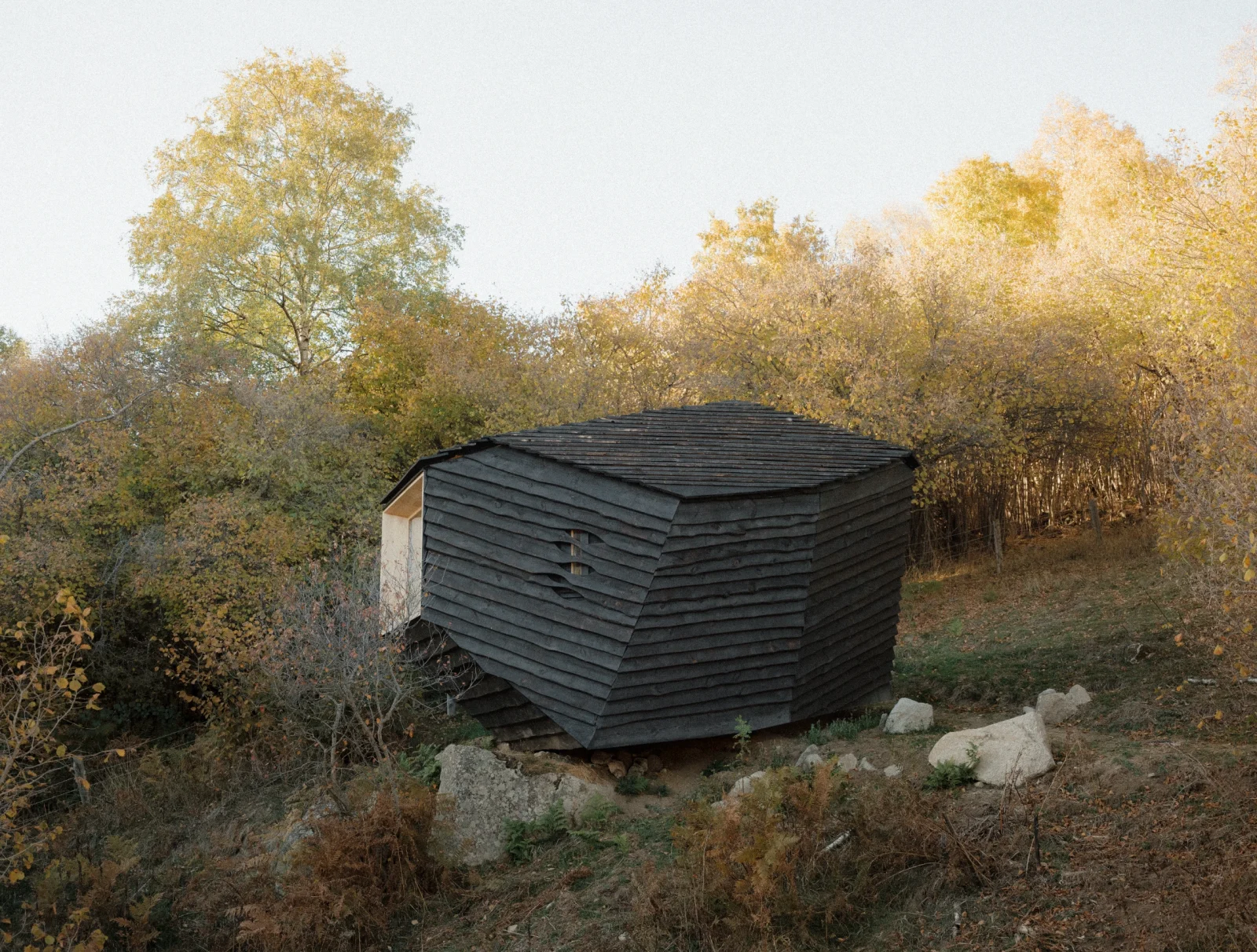
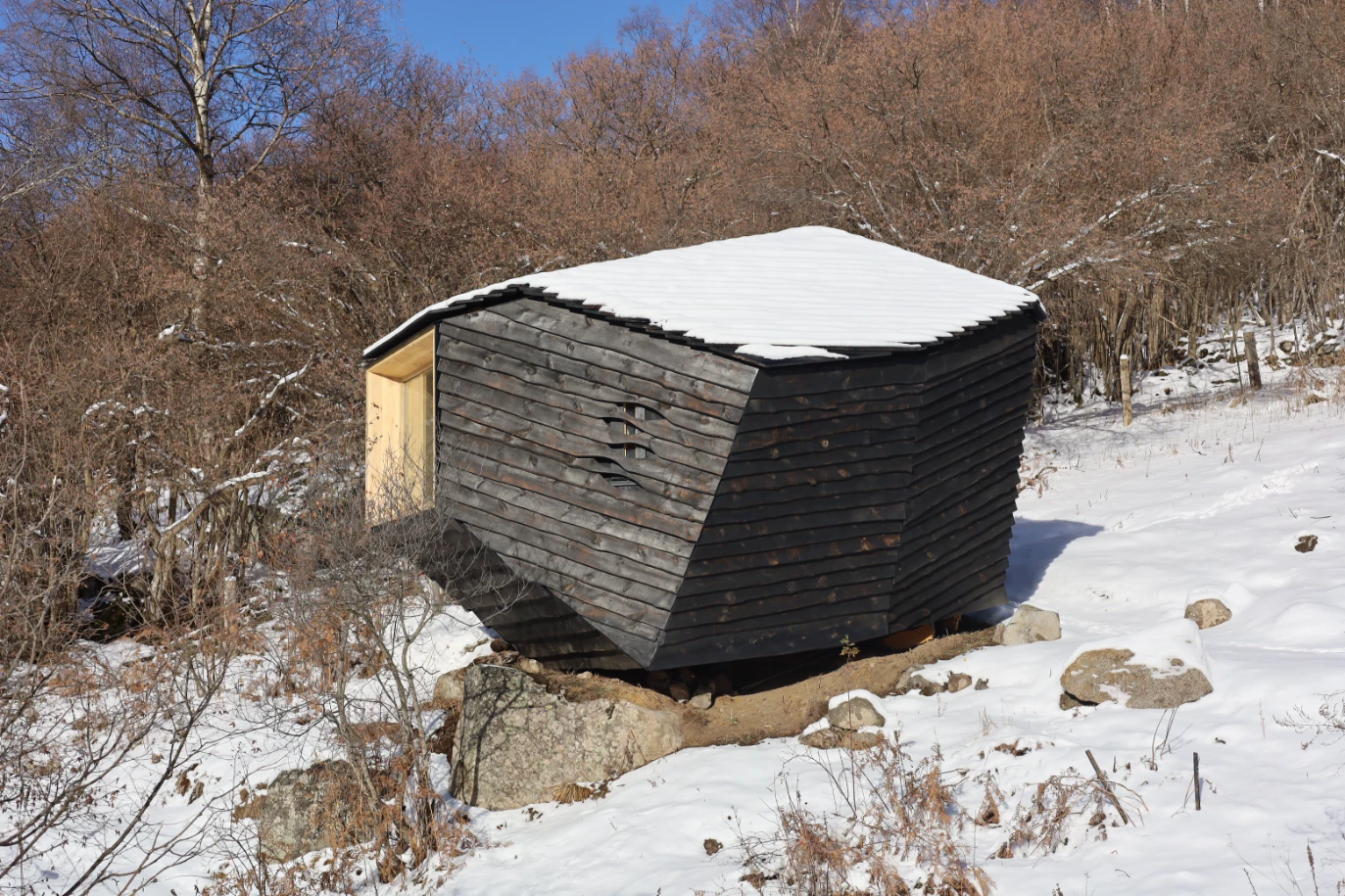
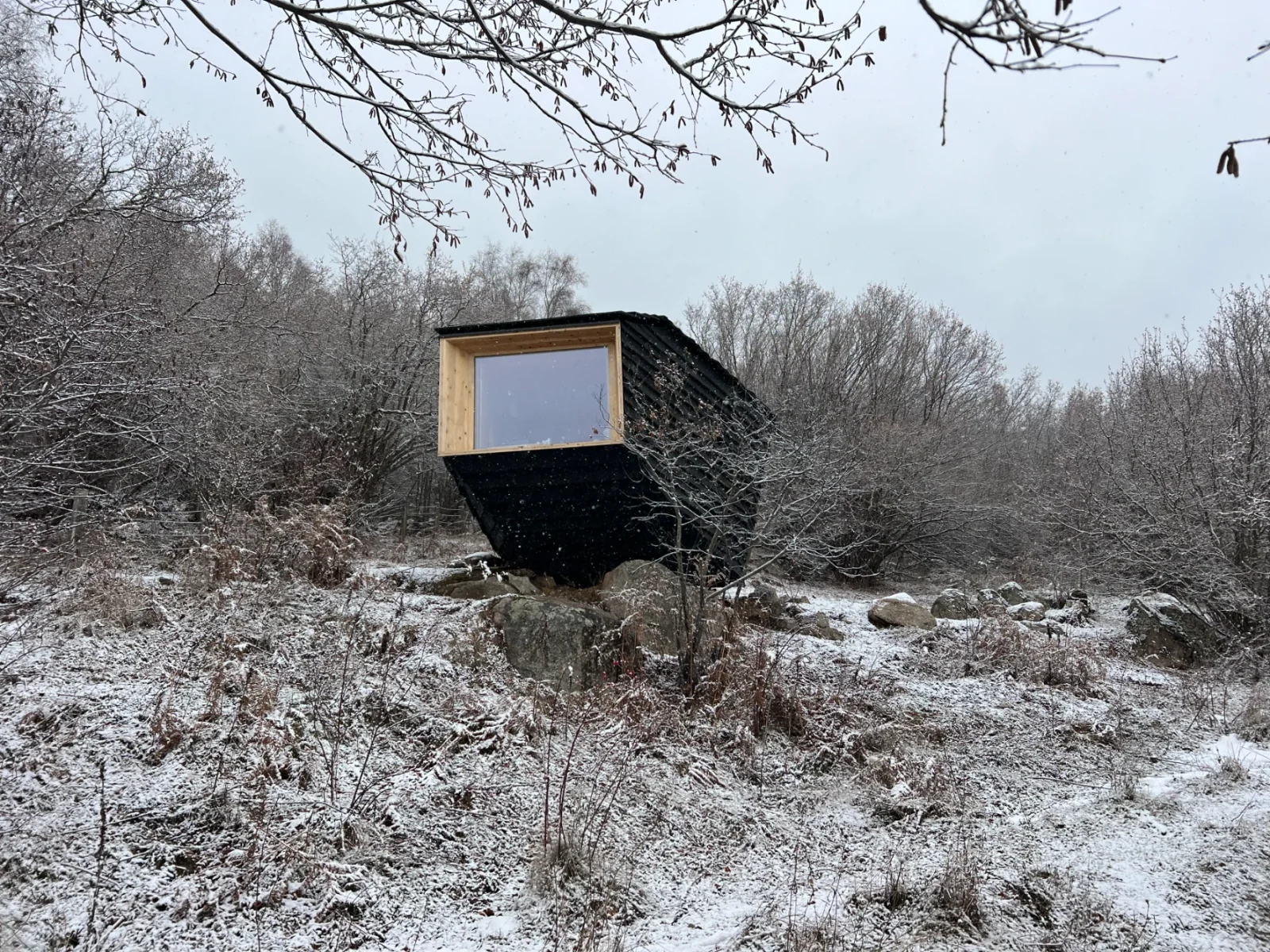
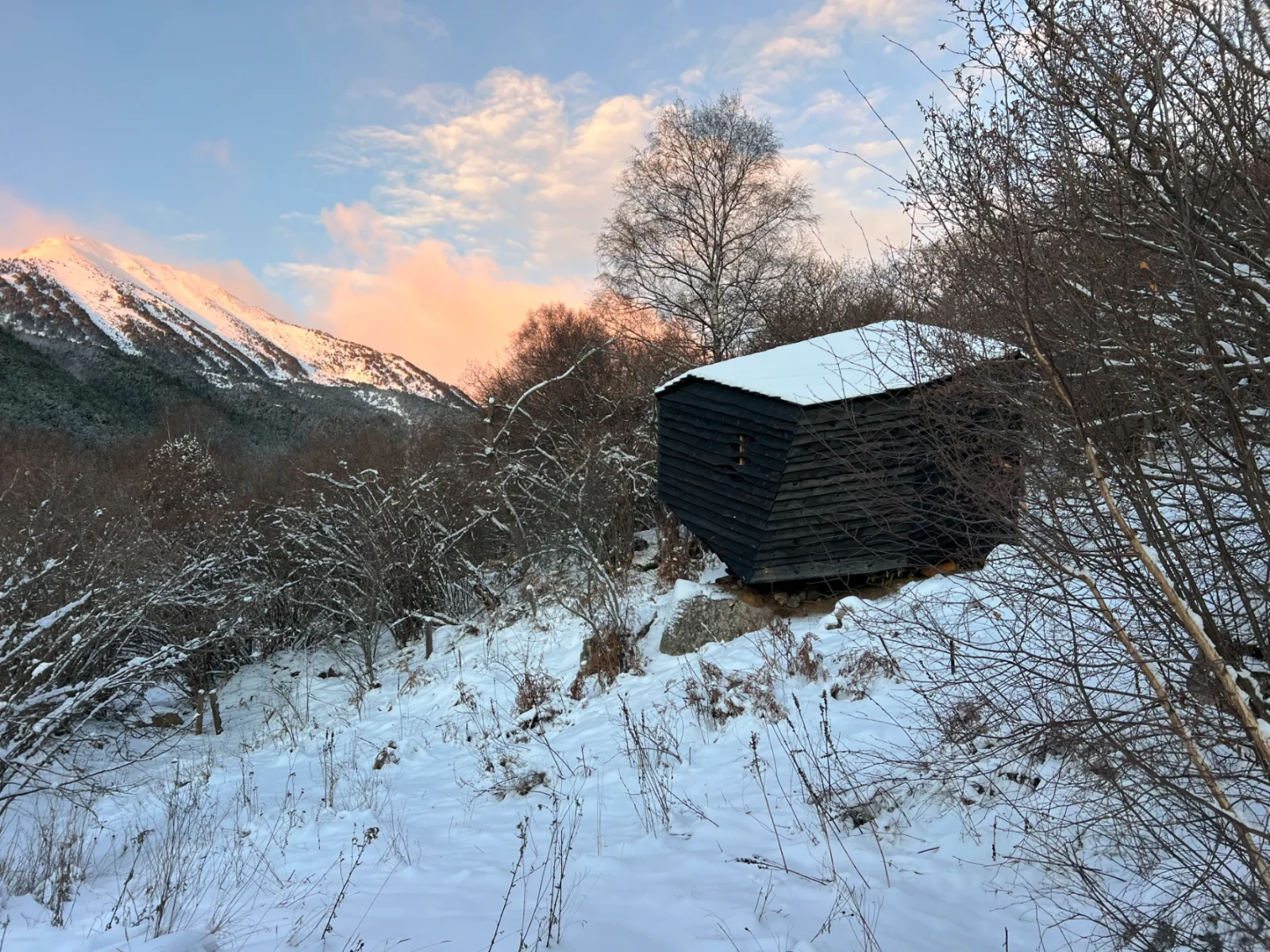
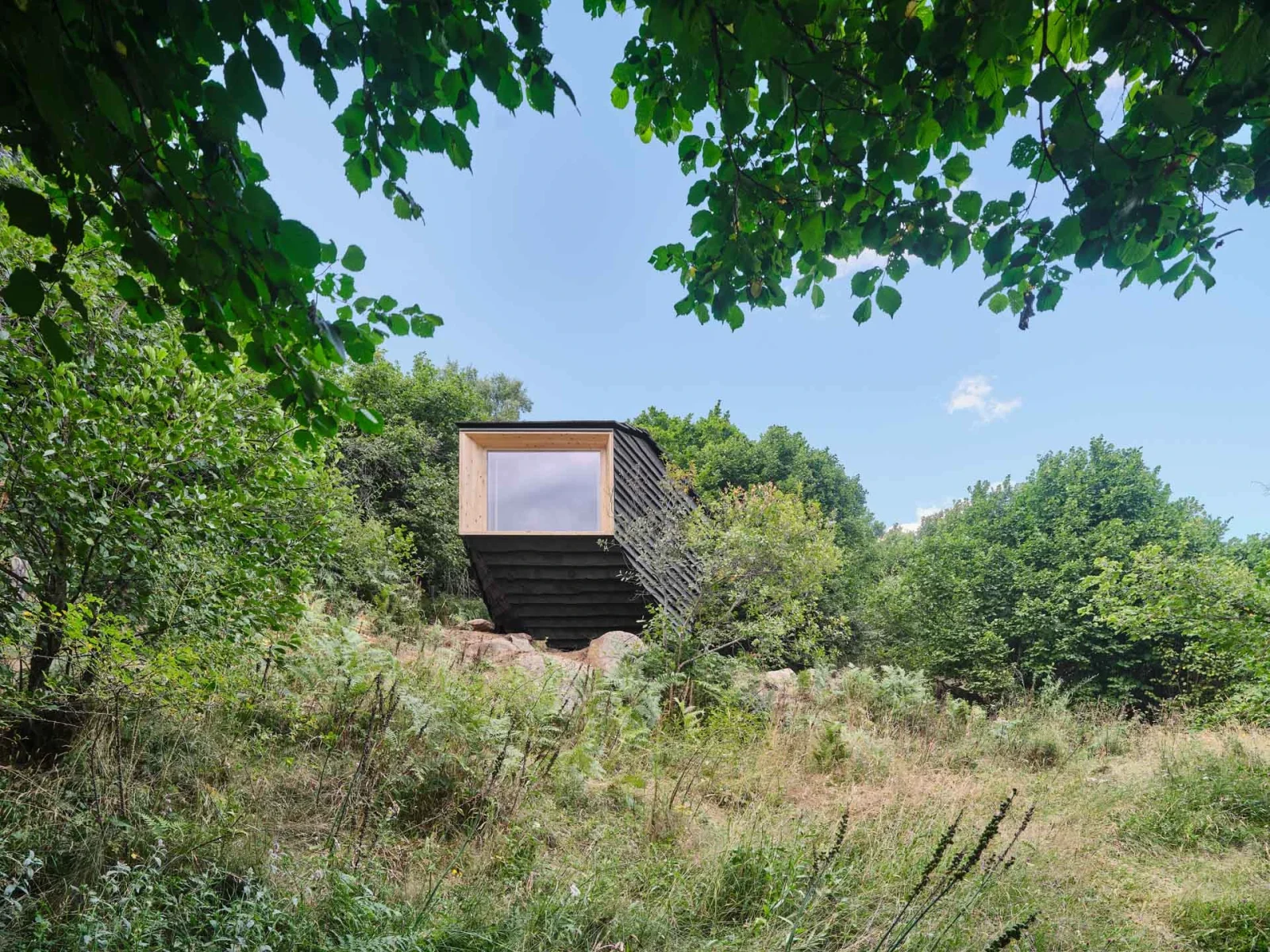
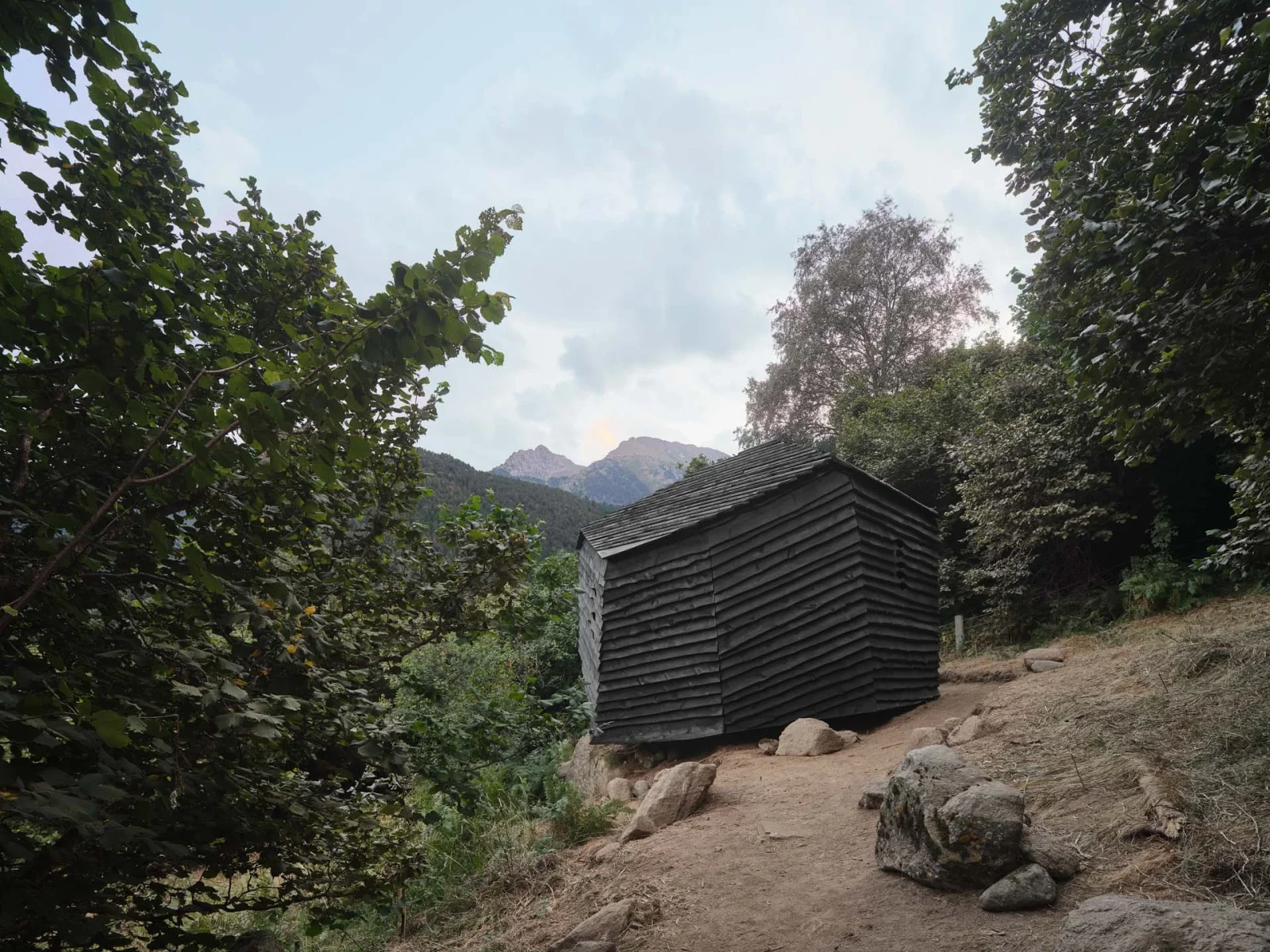
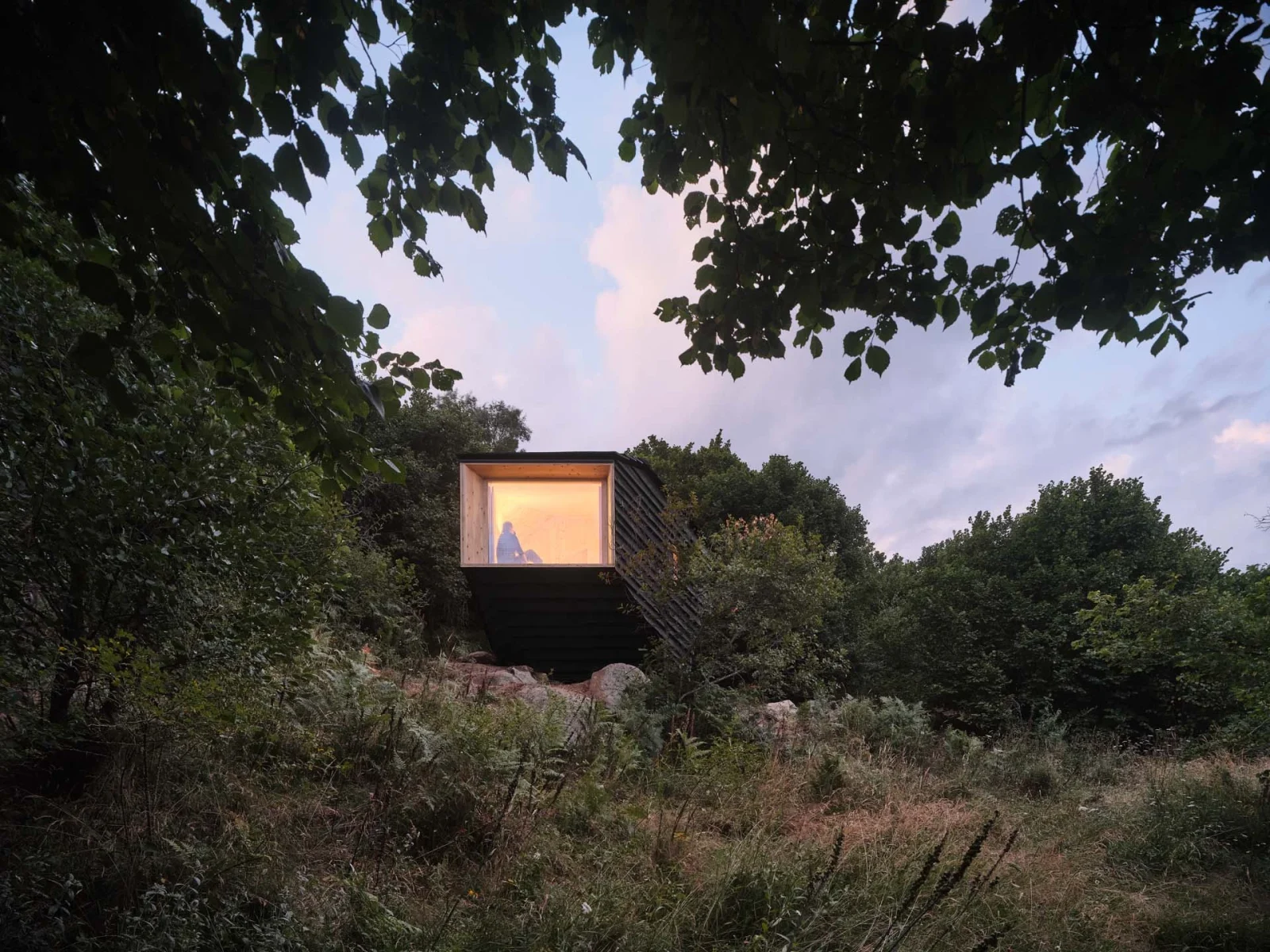
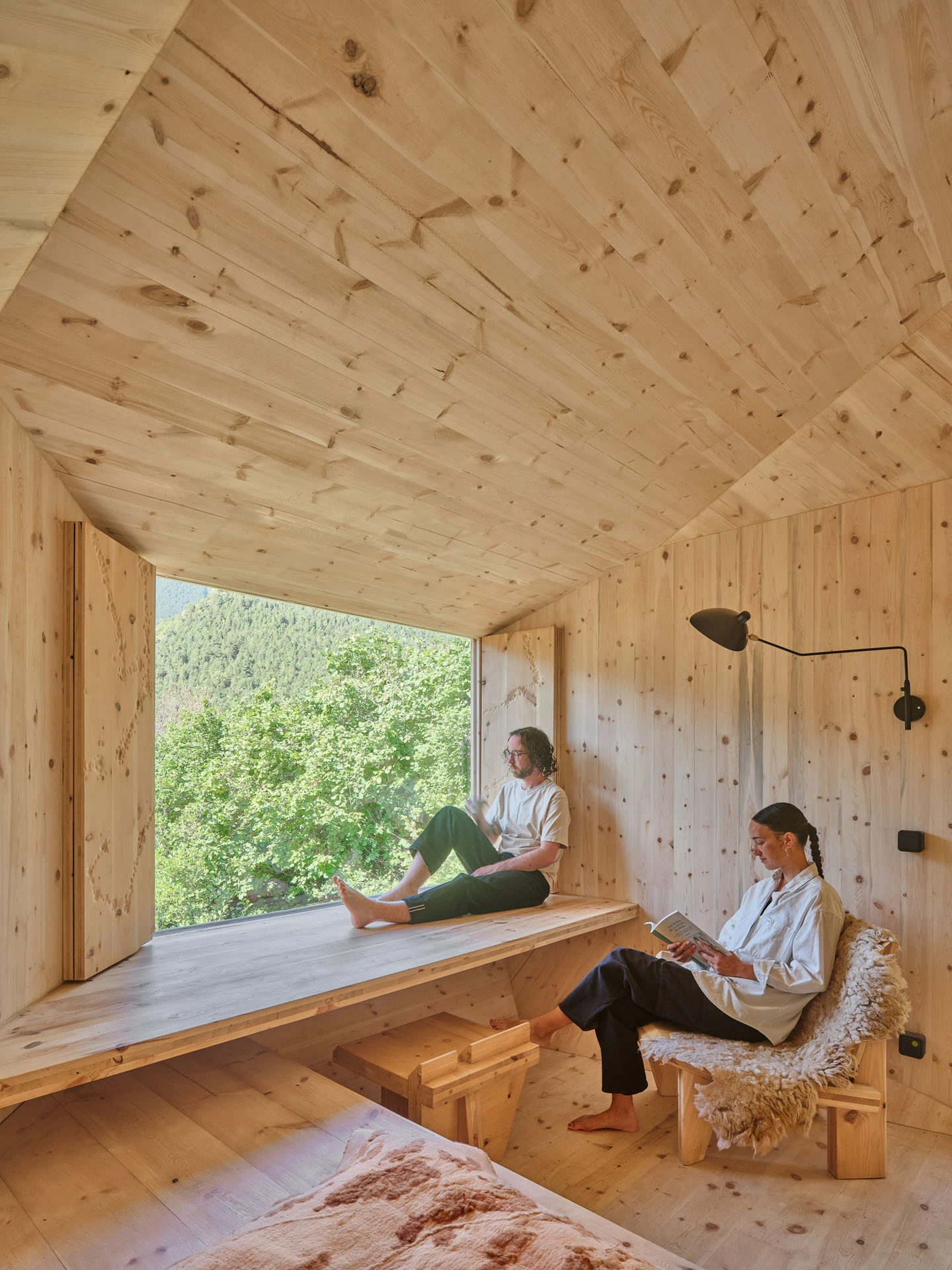
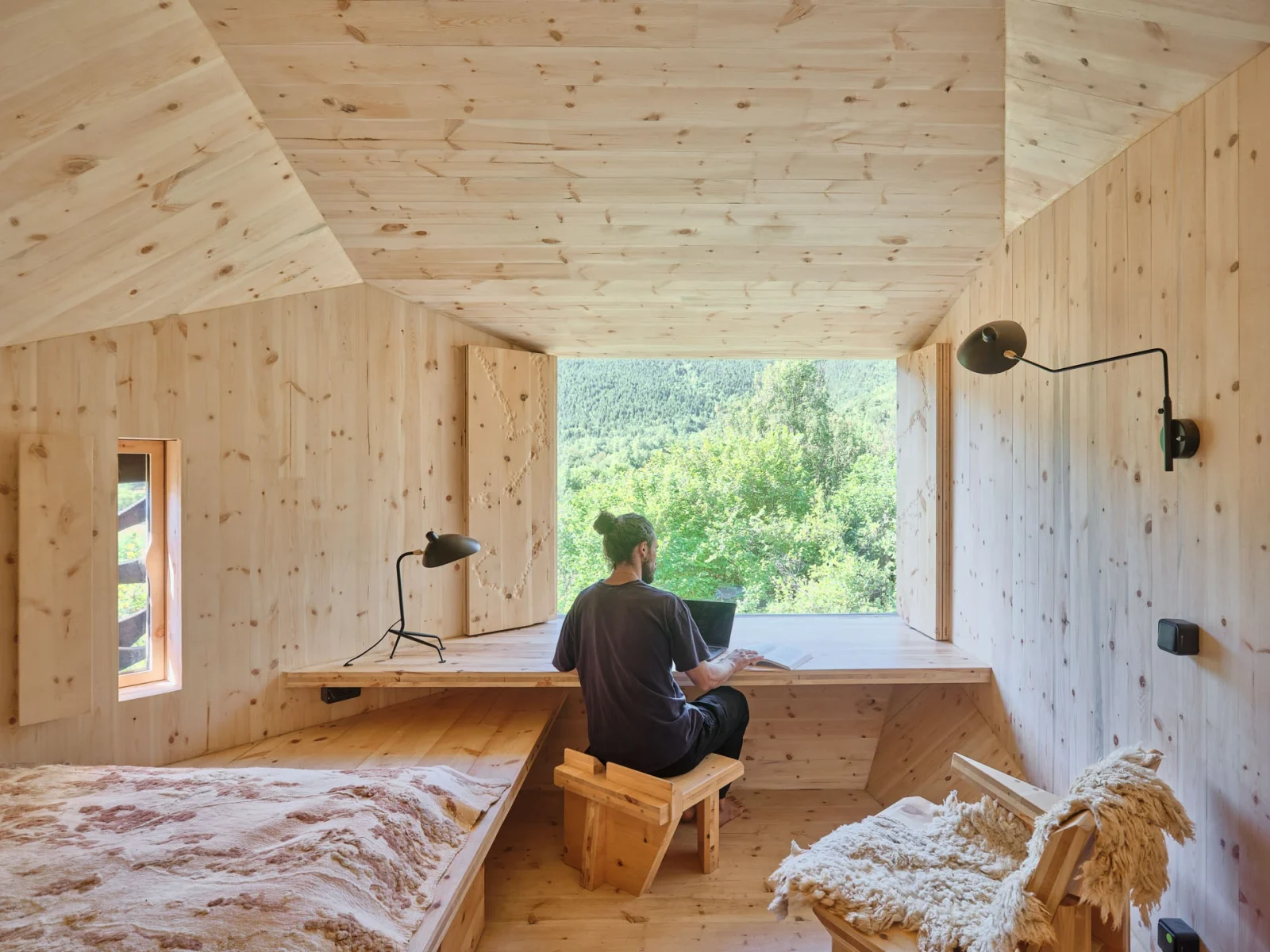
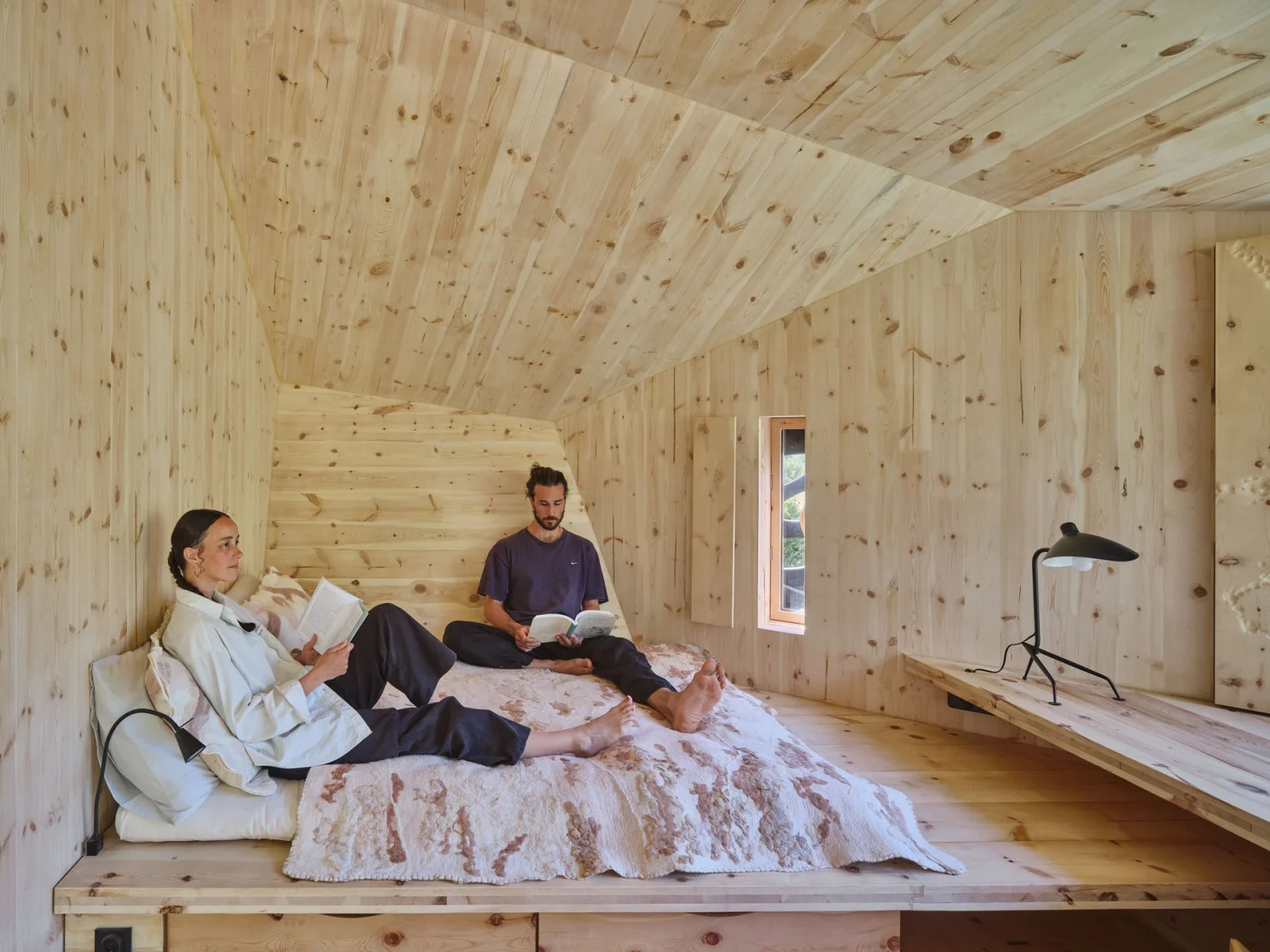
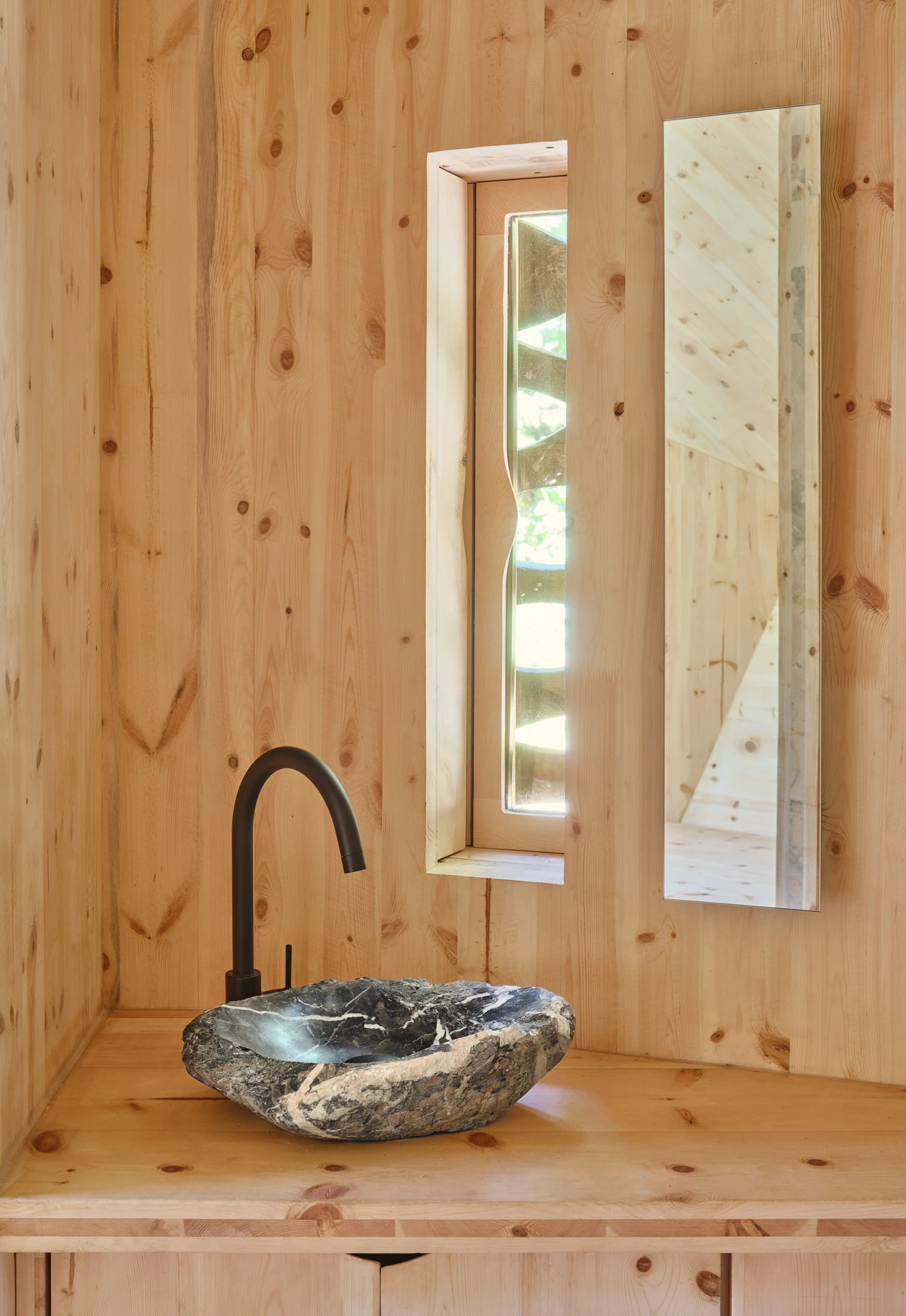
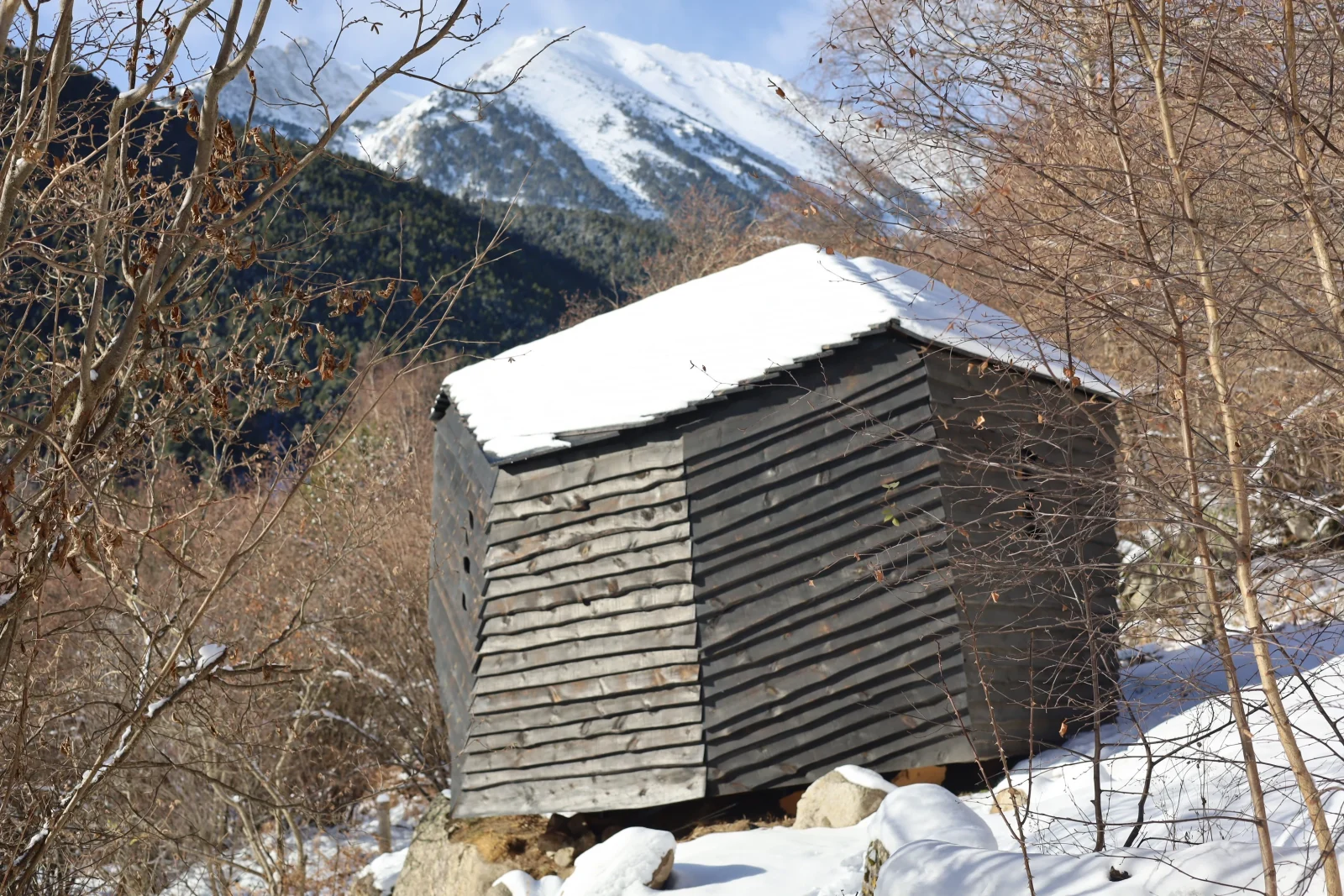
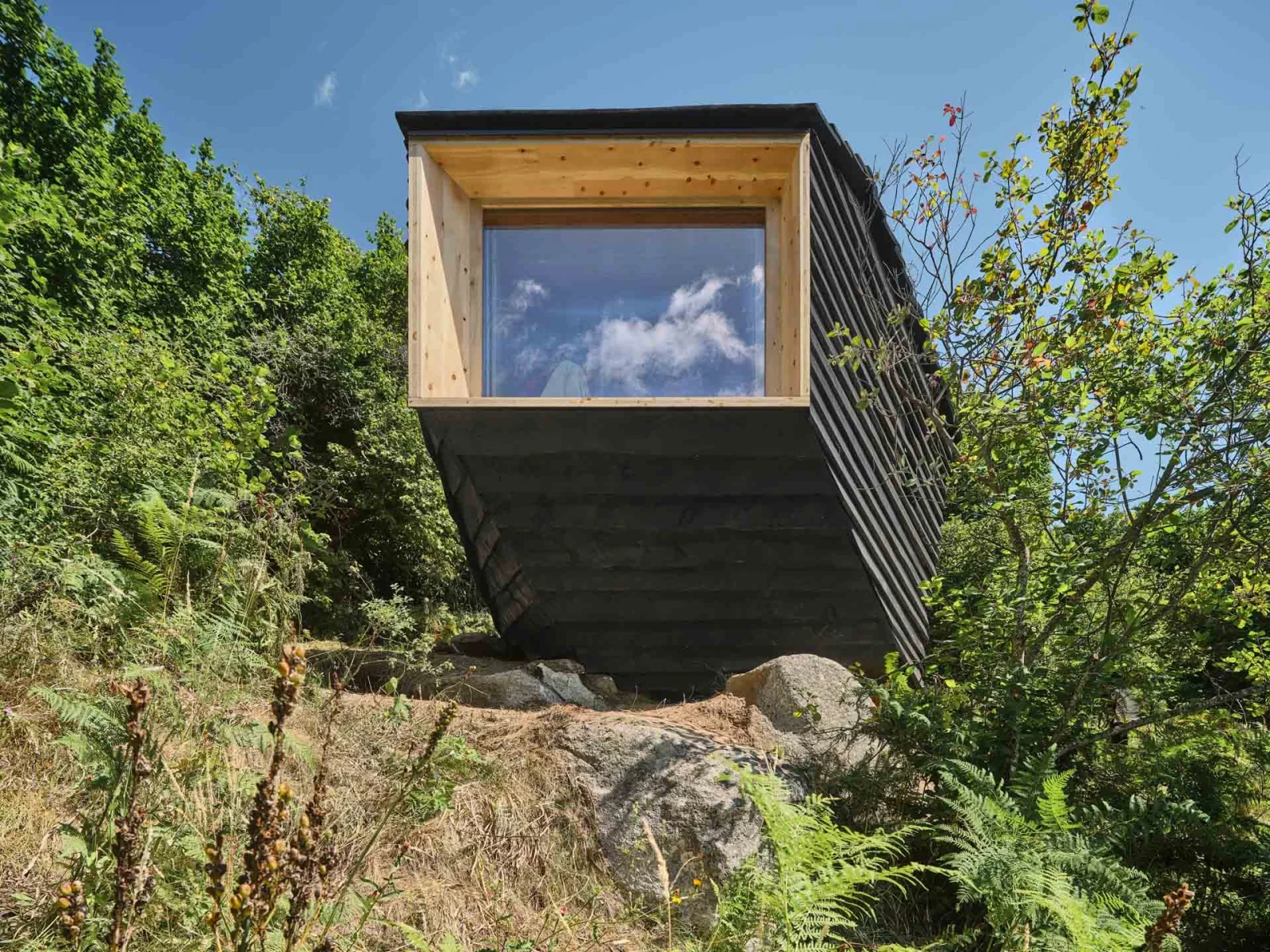
The 20-square-meter Forestone cabin, developed by the Institute for Advanced Architecture of Catalonia (IAAC) through its Master in Ecological Architecture and Advanced Construction (MAEBB) program, showcases high-performance digital fabrication. As part of the Bio for Piri initiative, the project seeks to address the challenge of wildfire prevention through regenerative management.
Forestone Cabin Prototype: The Bio for Piri Initiative
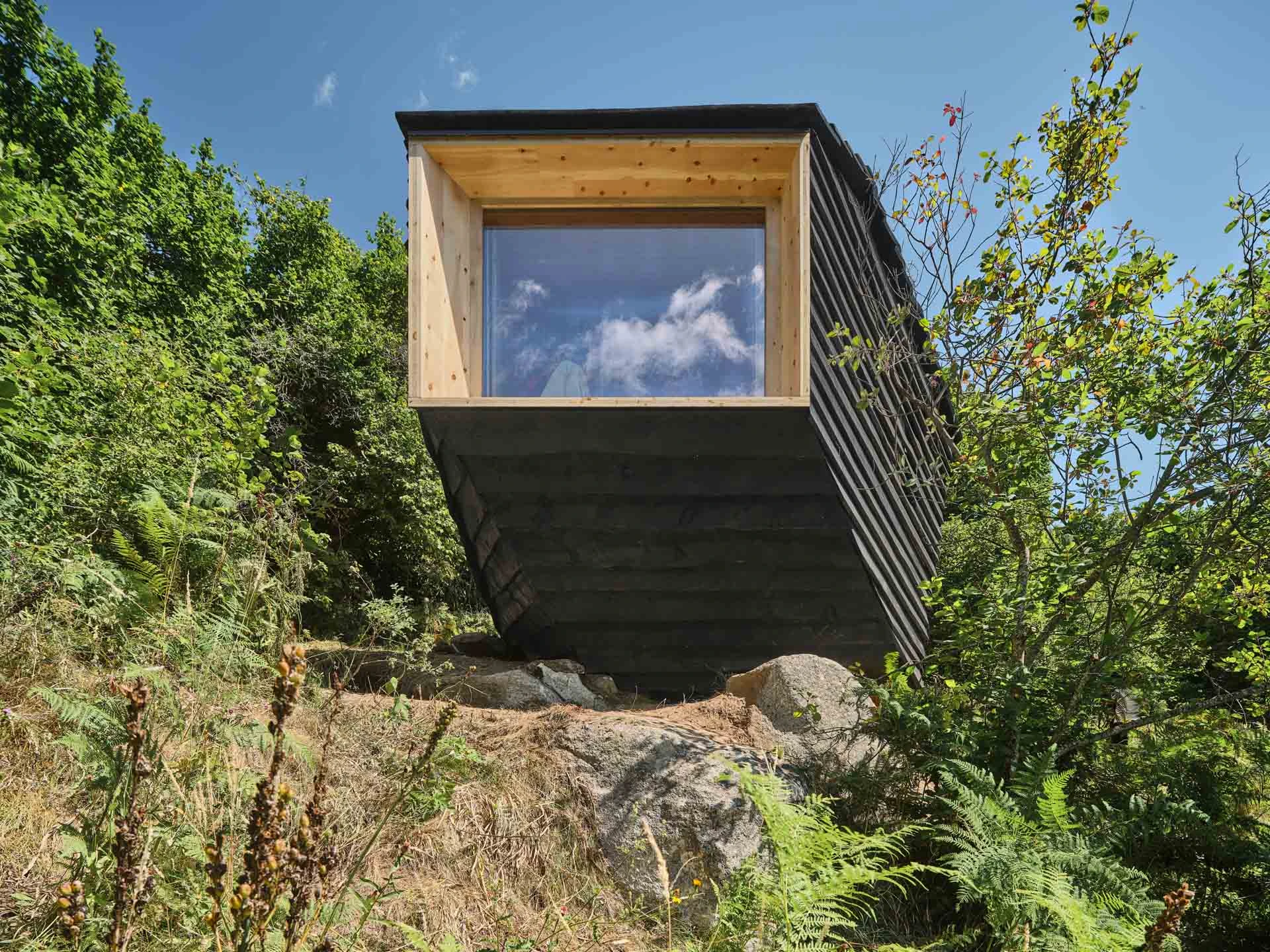
Located at MónNatura Pirineu, near Planes de Son in the region of Lleida, the proposed structure is a collaborative endeavor involving the Fundació Catalunya La Pedrera, supported by the European Next Generation funds via the Biodiversity Foundation. This cabin functions as a research prototype, an educational milestone, and a functioning guest retreat. The architecture evolved from the surrounding abandonment of traditional silvicultural practices, where the decline of mountain grazing has led to a dangerous accumulation of biomass in European forests.
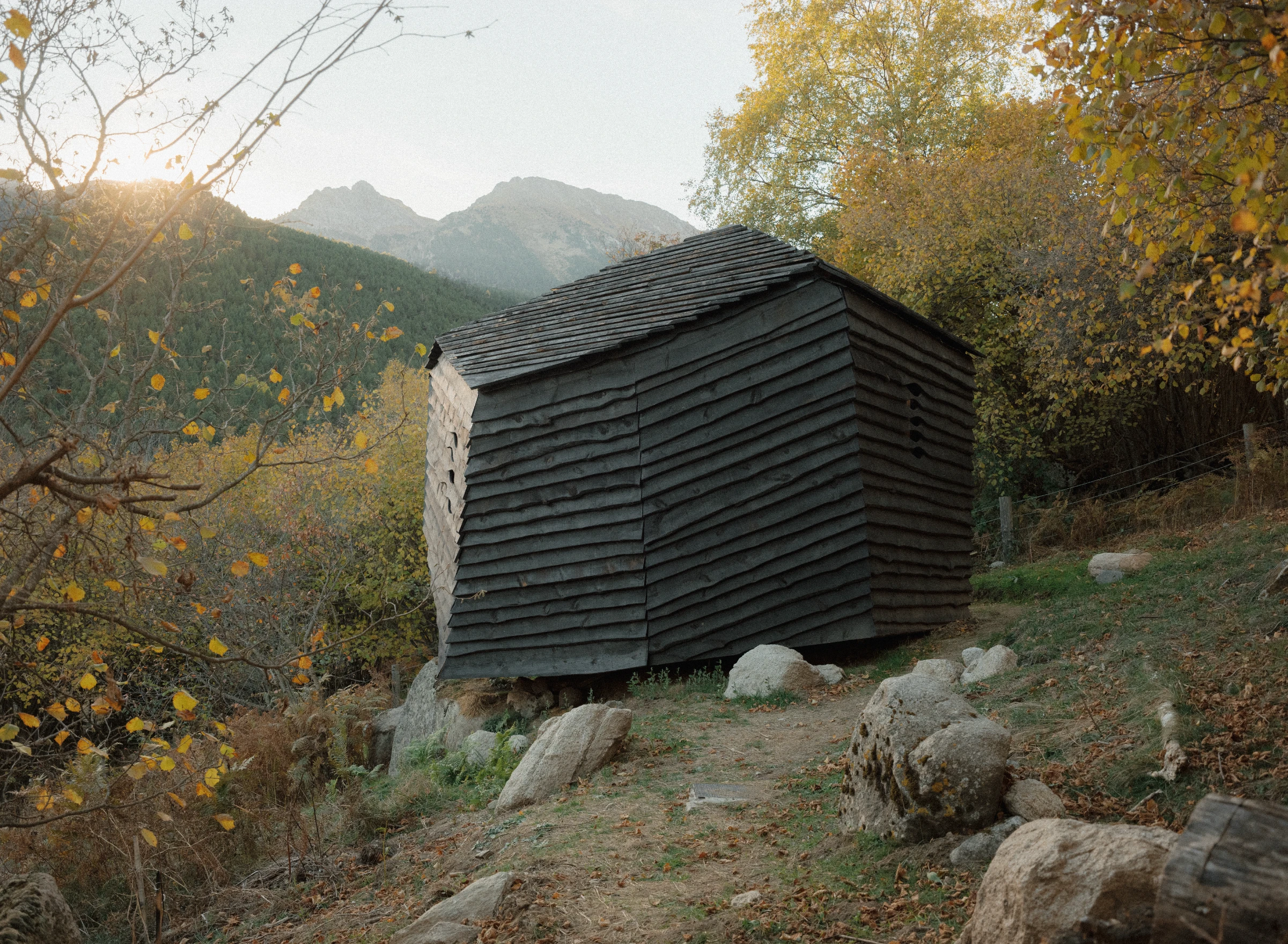
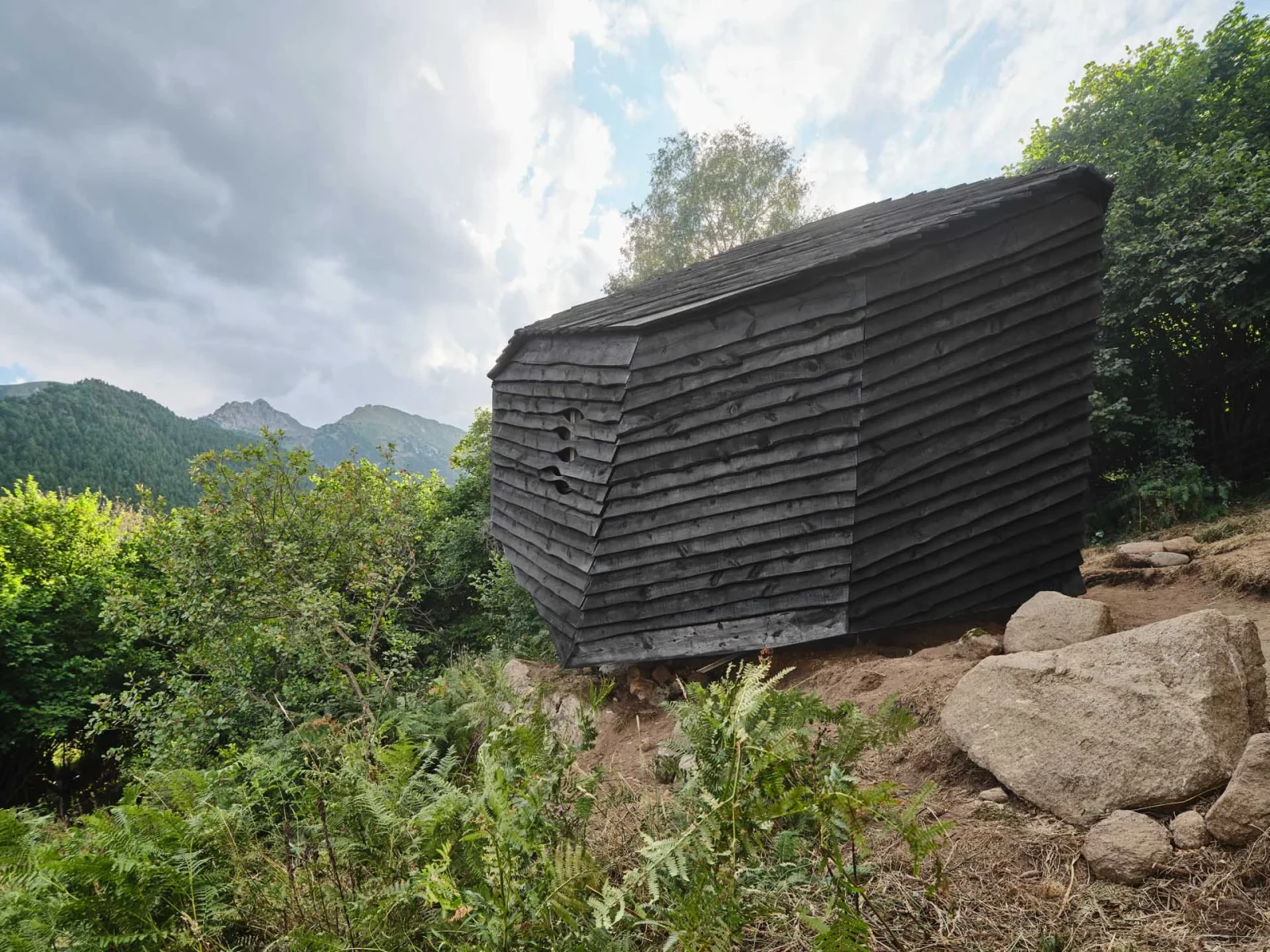
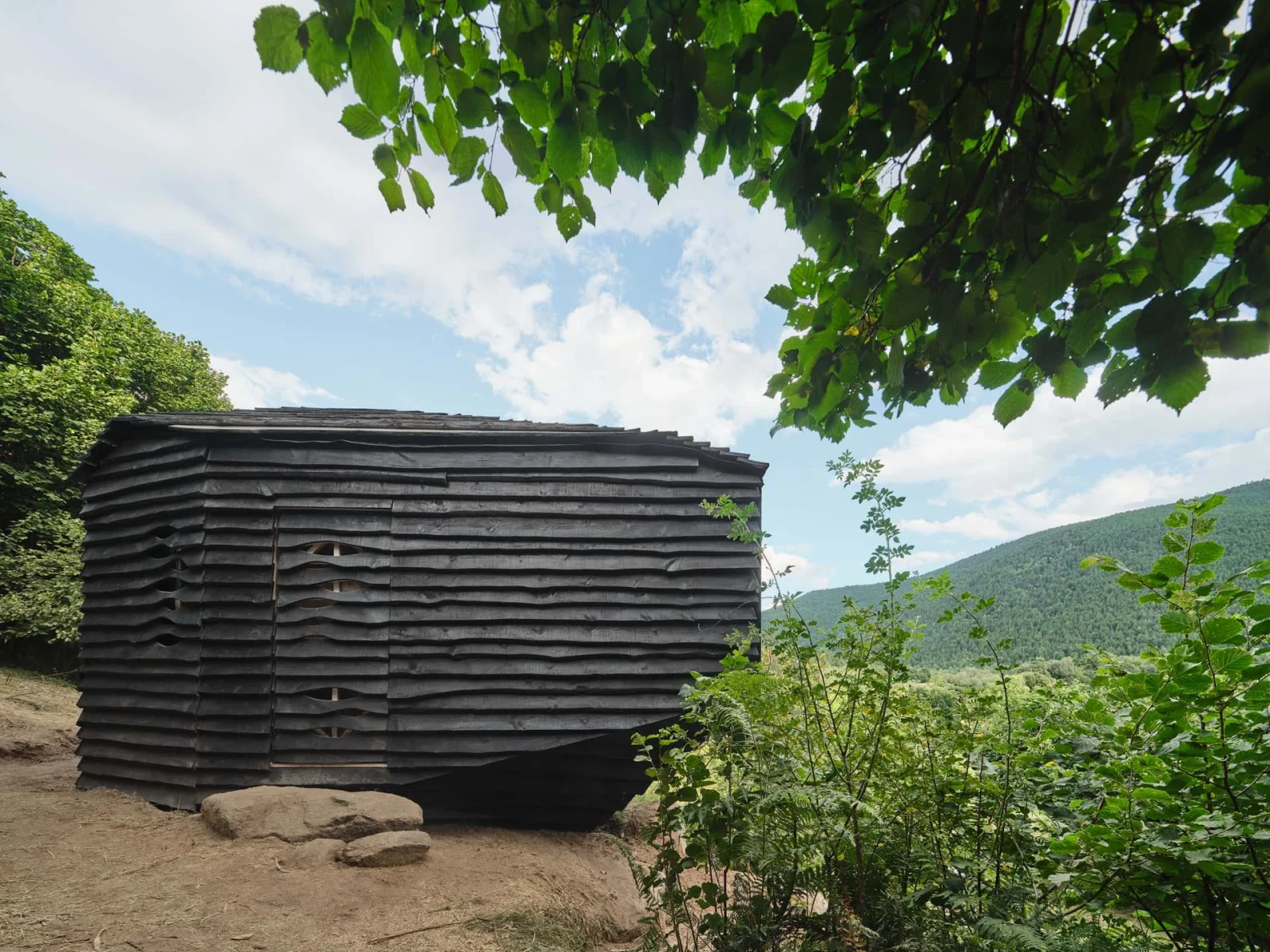
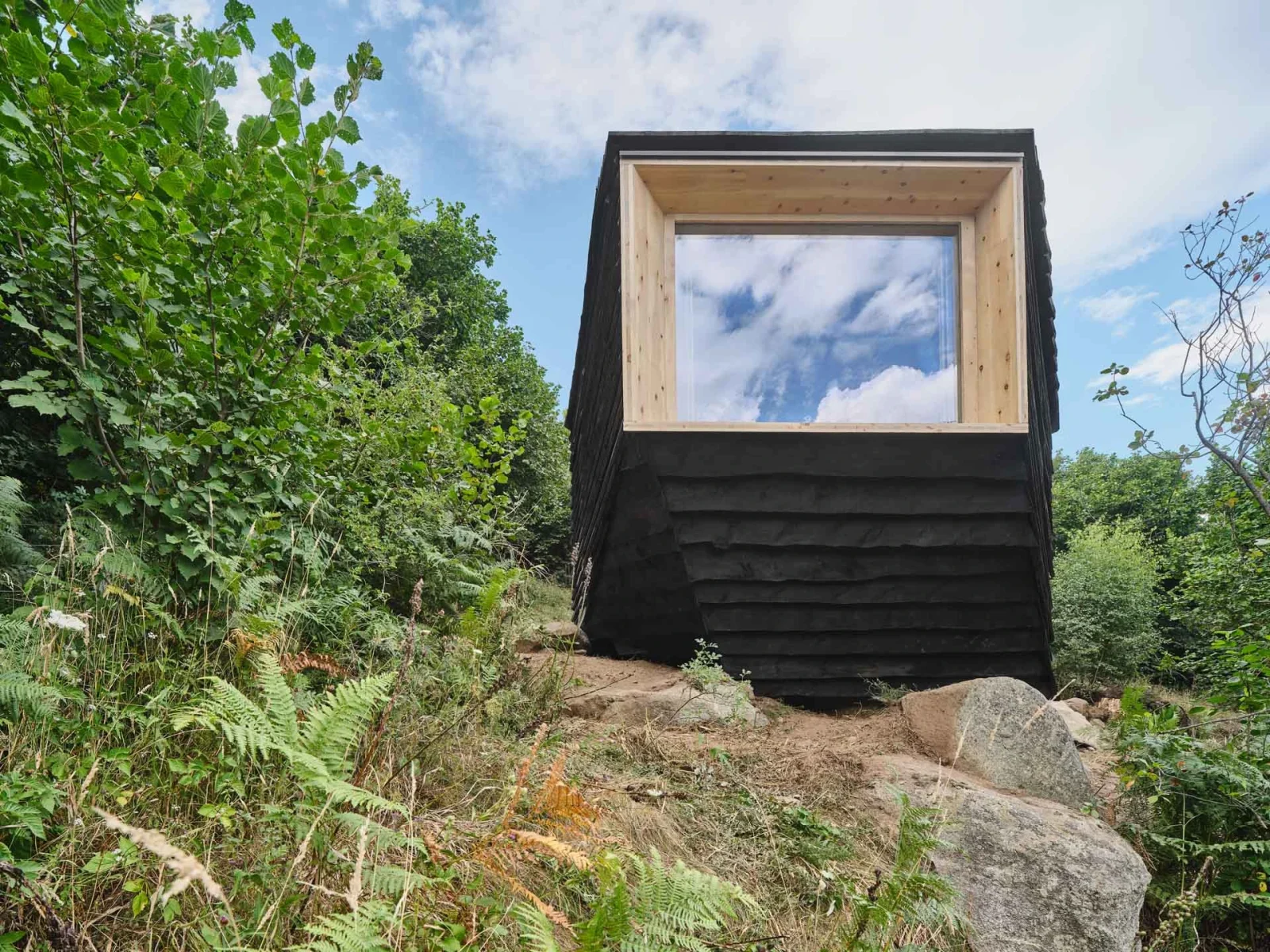
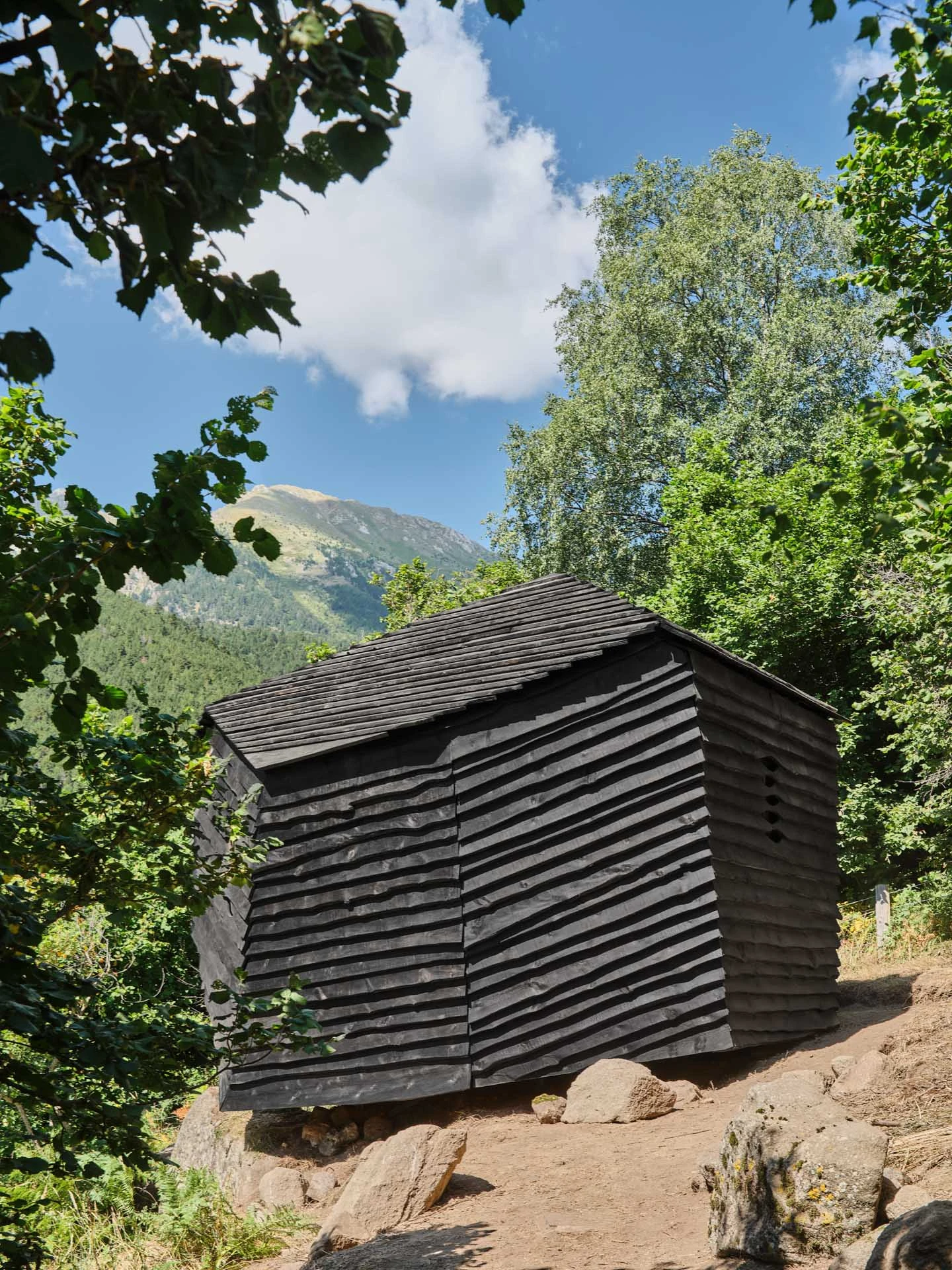
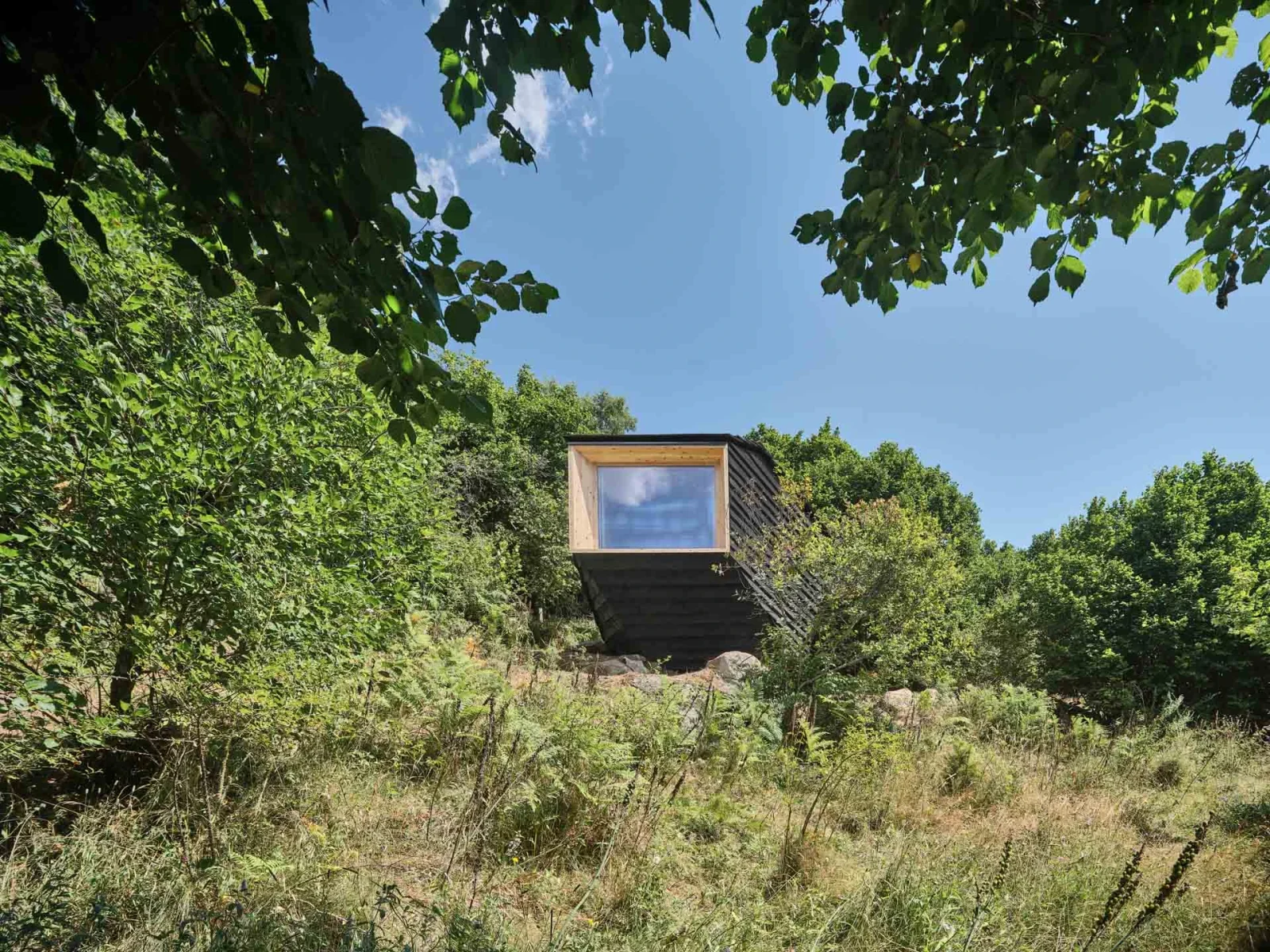
The Bio for Piri initiative represents a systematic response, advocating a bio-economy grounded in the intelligent extraction and transformation of local timber. Context-driven design is conceived as a resting rock, mimicking the rugged landscape that highlights the high Pyrenees. The form of the structure features faceted geometry, inclined walls, and a steeply pitched roof designed to handle heavy snow loads and optimize solar exposure during winter months.
Cross-Laminated Timber Structure and Digital Fabrication
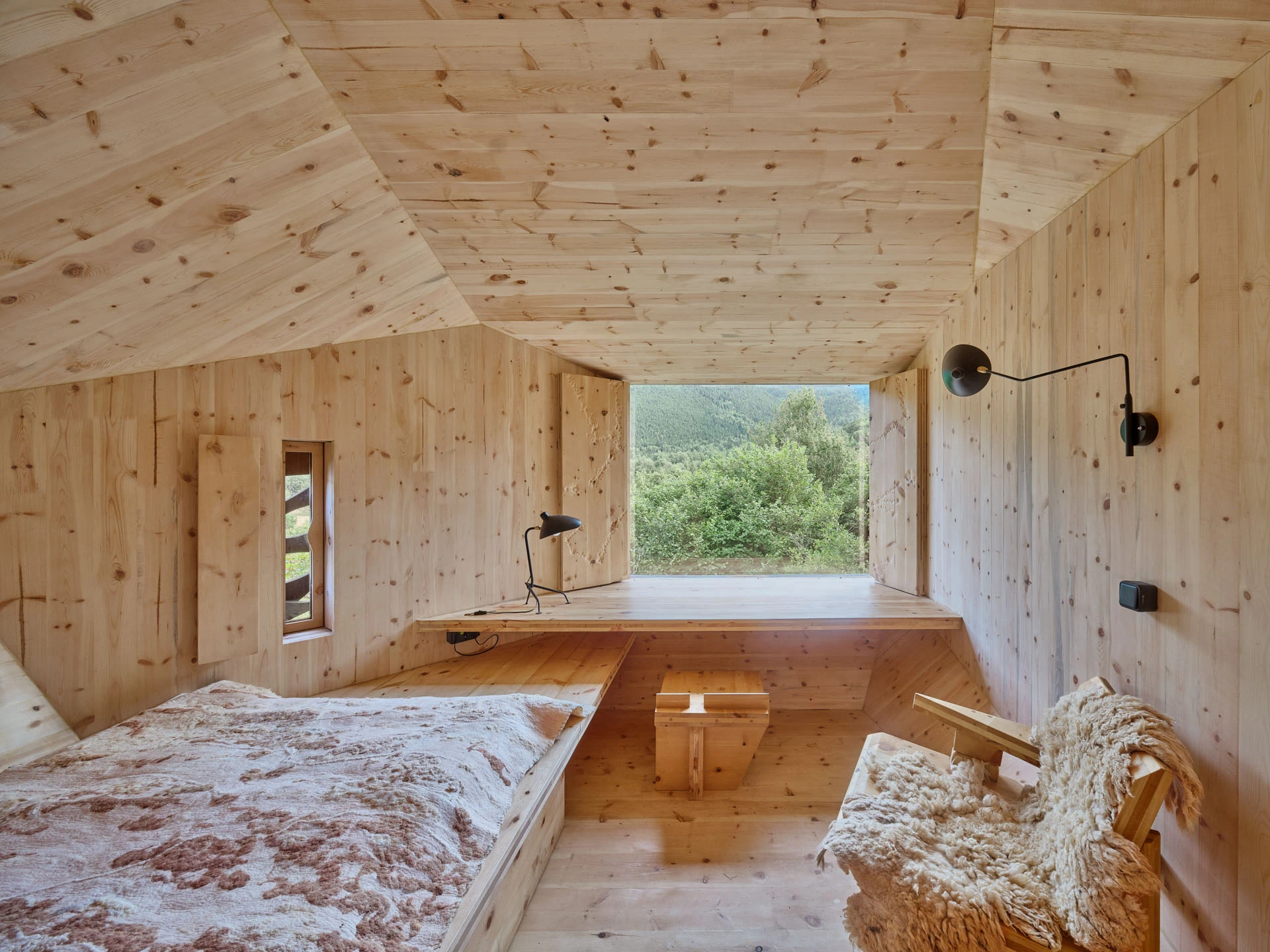
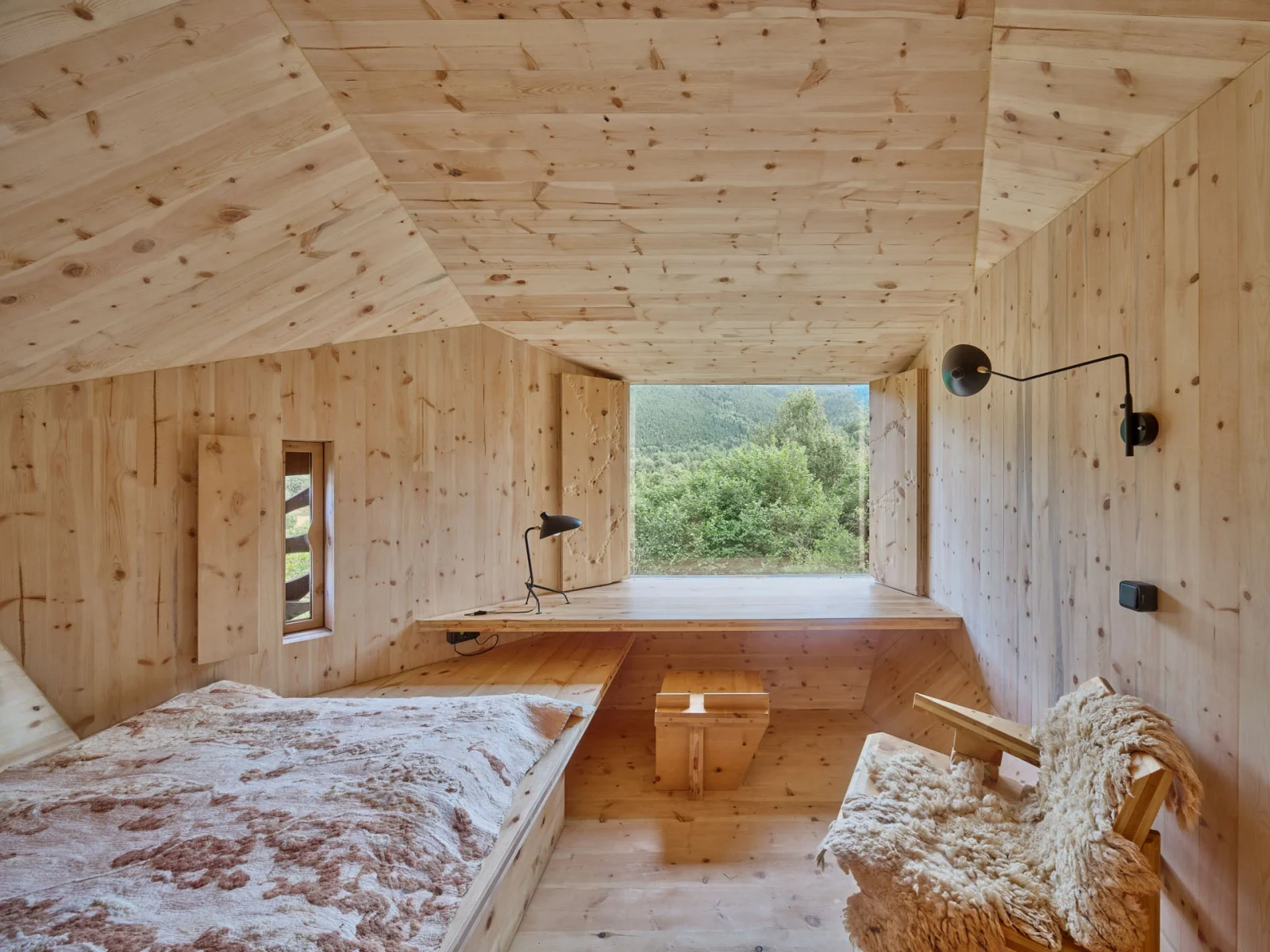
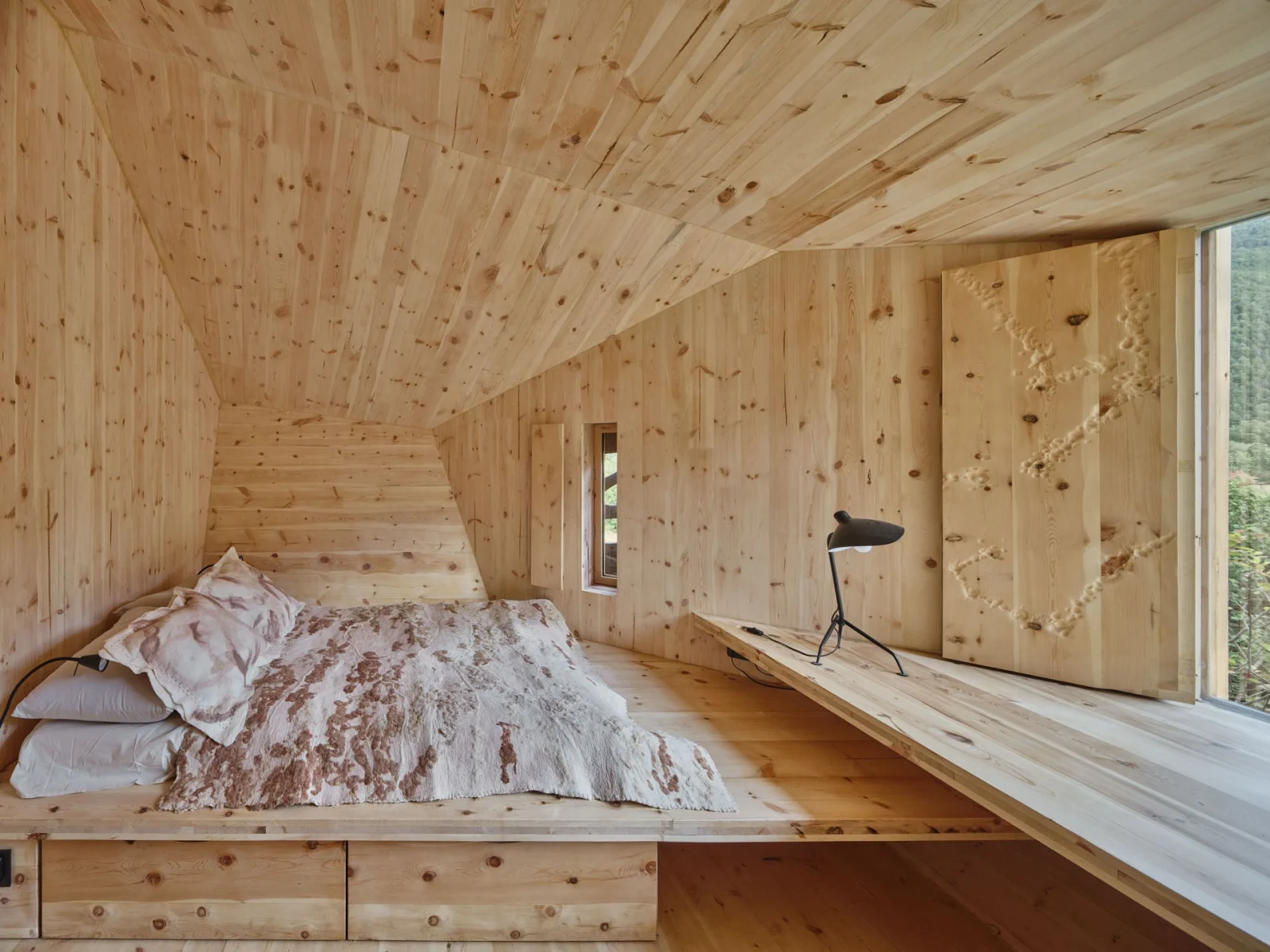
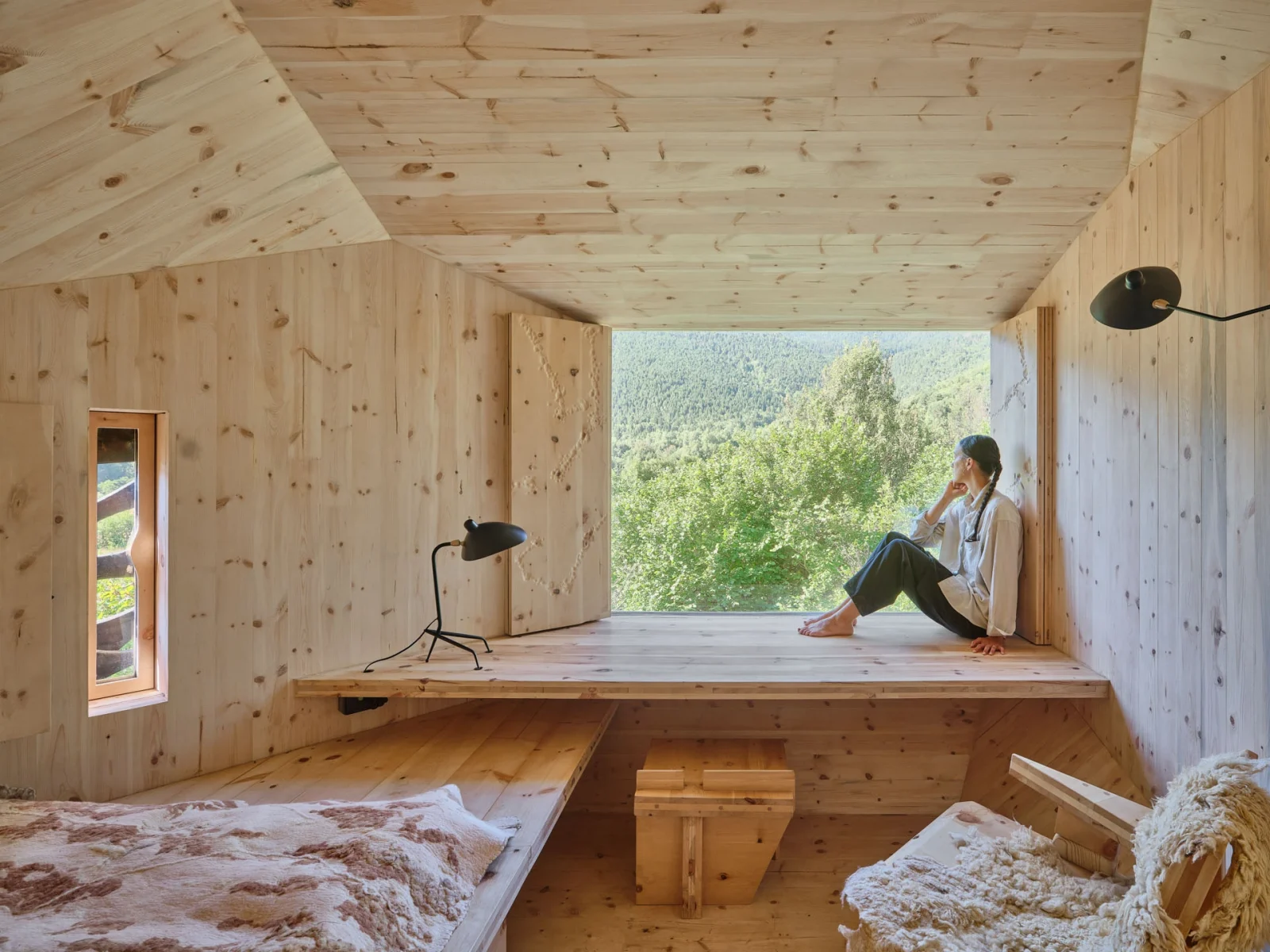
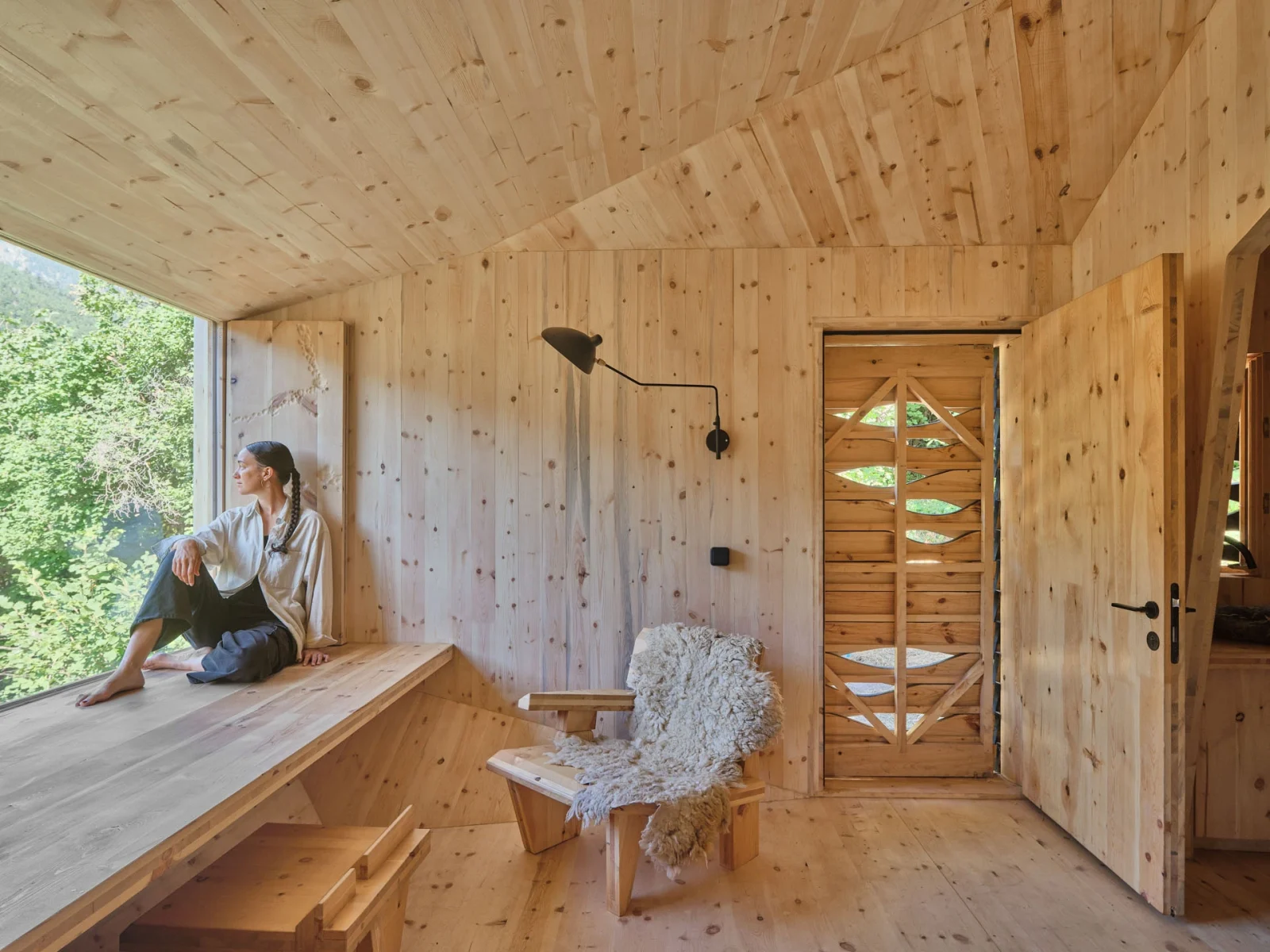
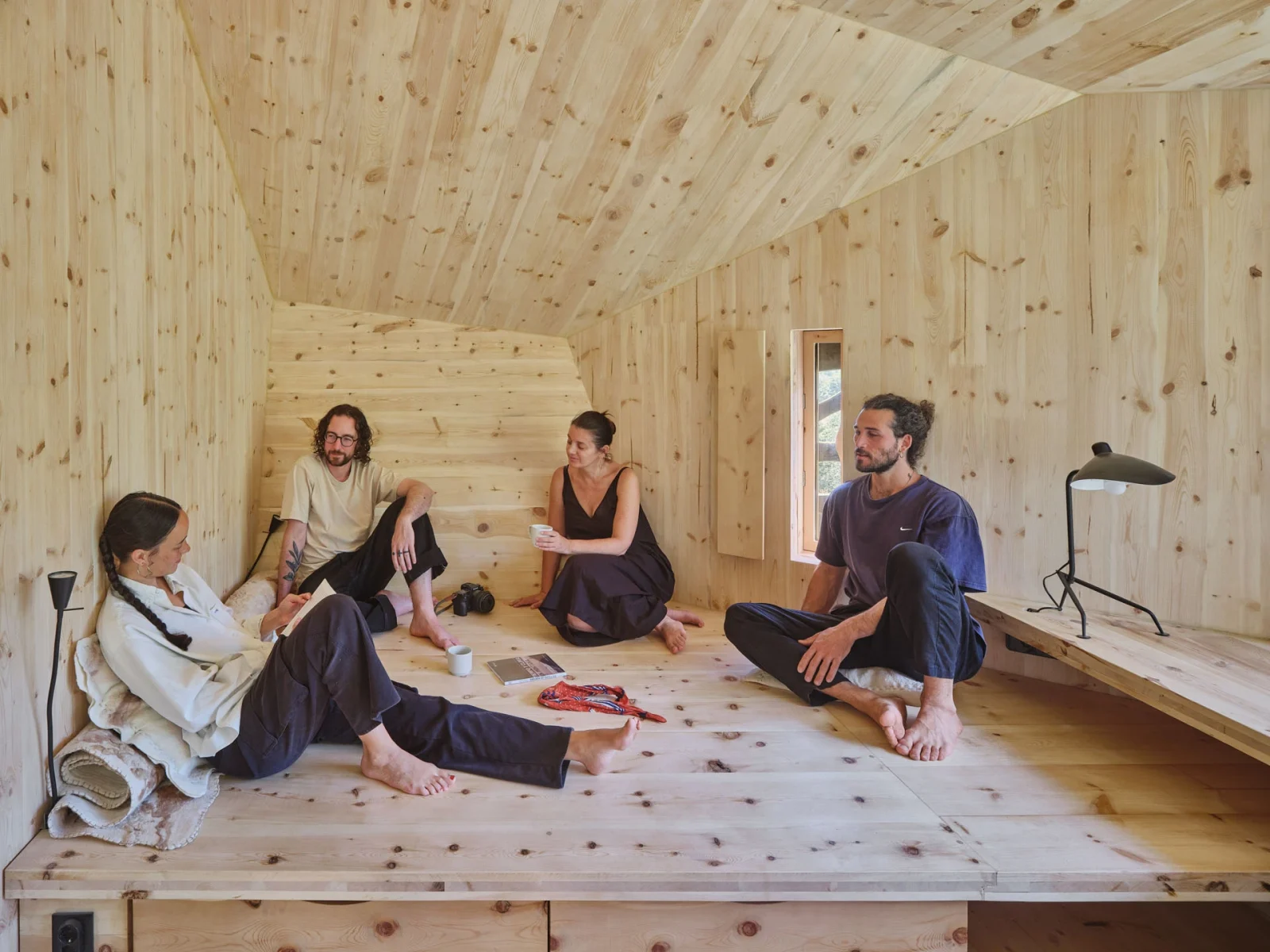
The compact 20-square-meter footprint’s interior is defined by sectional heights, and the geometry subtly adjusts the ceiling proportions to differentiate between the active workspace, the intimate sleeping area, and the functional bathroom. Operable wooden shutters provide complete blackout conditions at night, preventing light pollution.
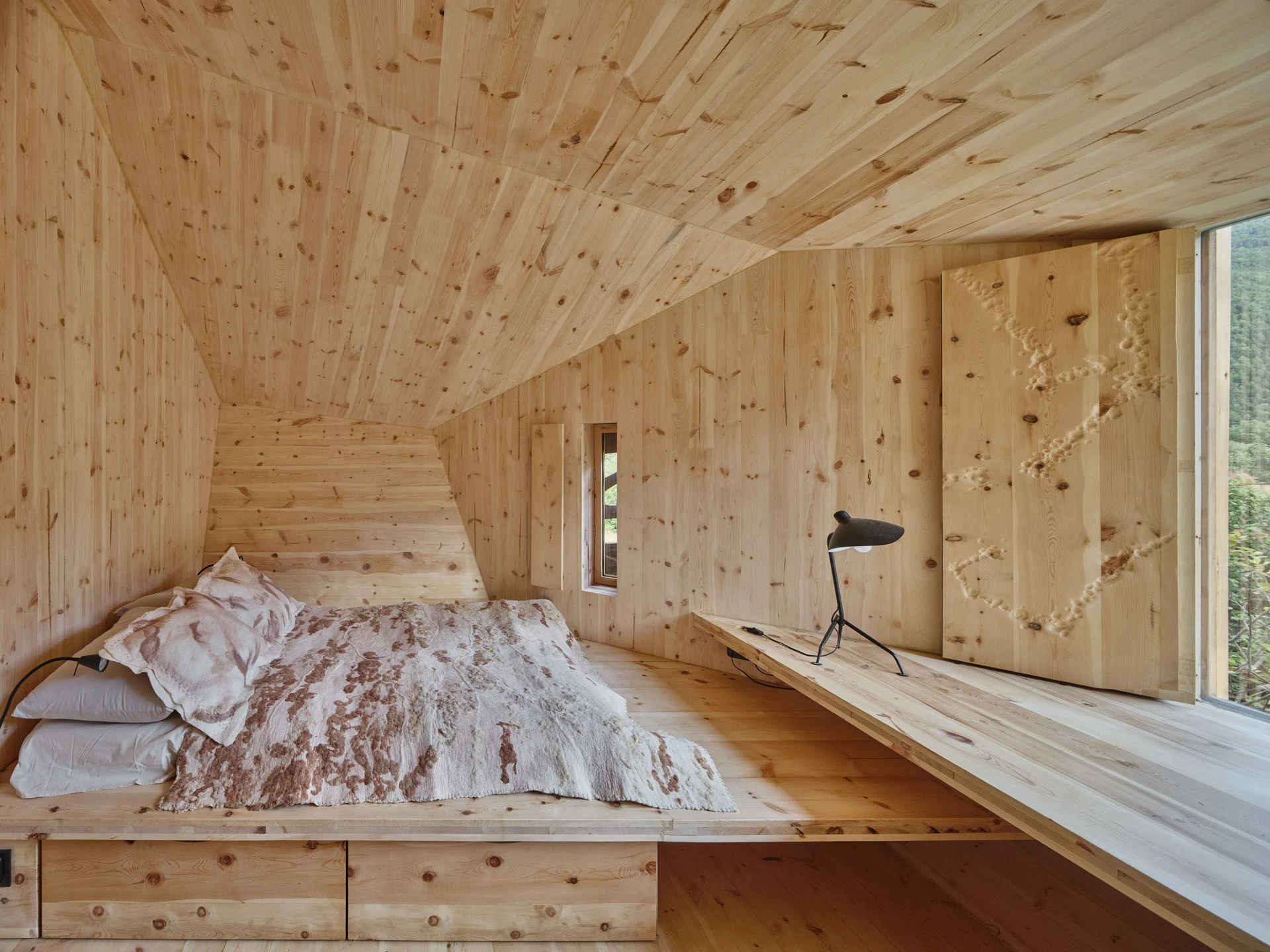
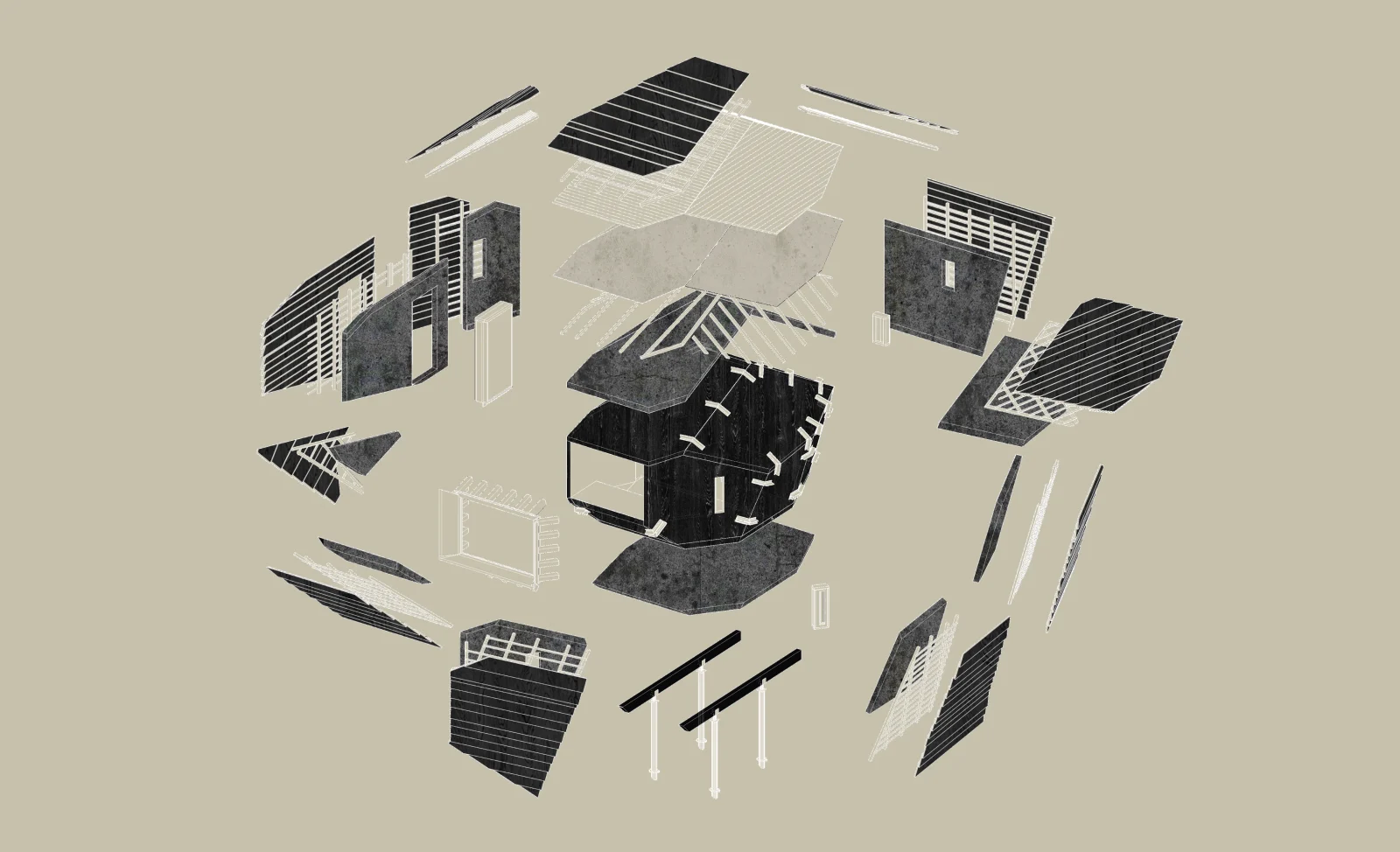
The structure, composed of Cross-Laminated Timber (CLT), serves as the primary medium for both the envelope and the interior. Sourced from the forests of Alinyà, the project utilizes Scots pine as the structural material. The MAEBB program engaged in an exhaustive process of digital design and robotic fabrication, ensuring that every panel was optimized for material efficiency and structural performance. The assembly emphasizes dry construction by using modular CLT elements and mechanical fasteners. This low-impact construction strategy can be adapted, replicated, and dismantled without destroying the ecosystem.
Yakisugi and Fire Resistance
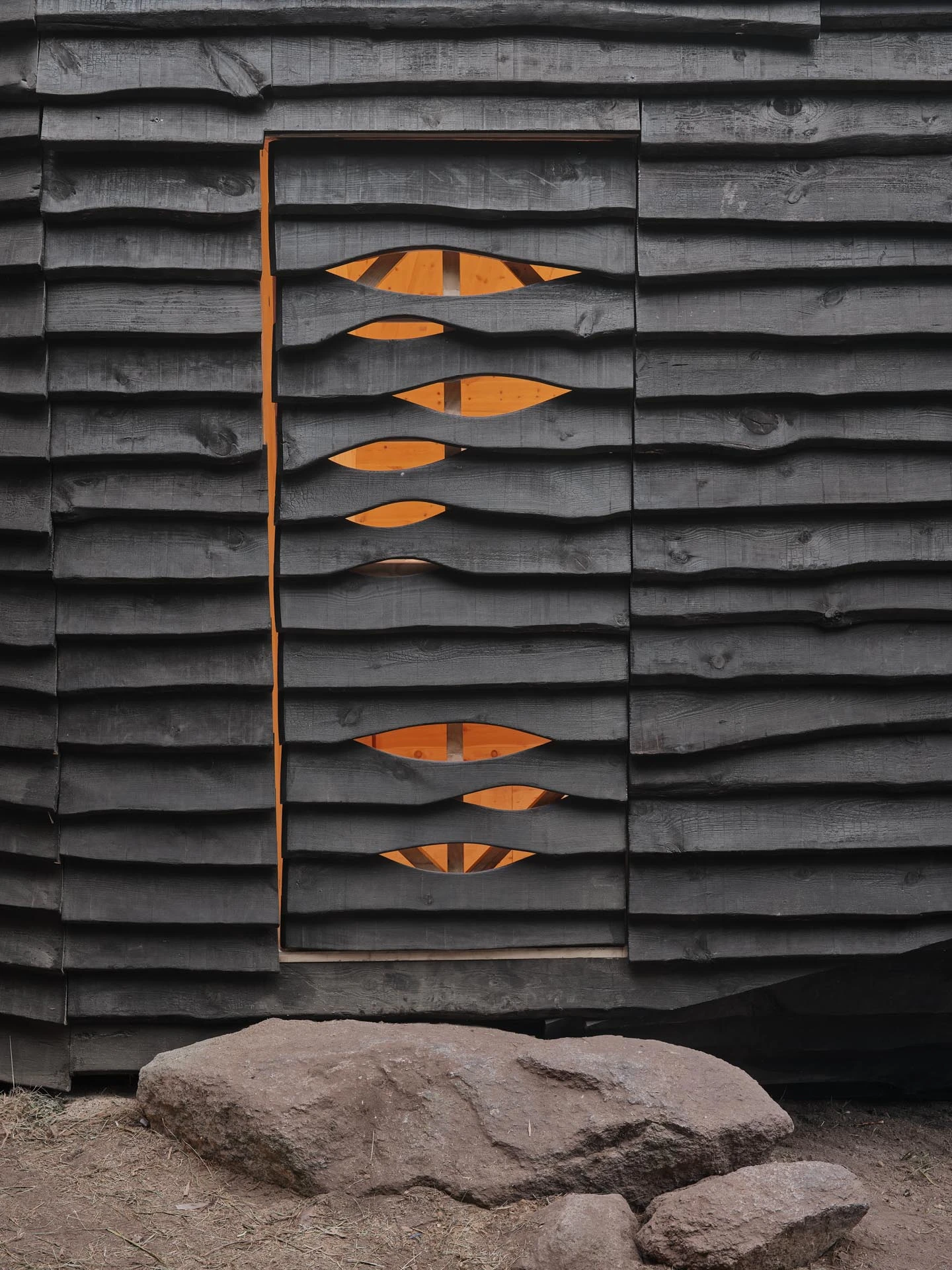
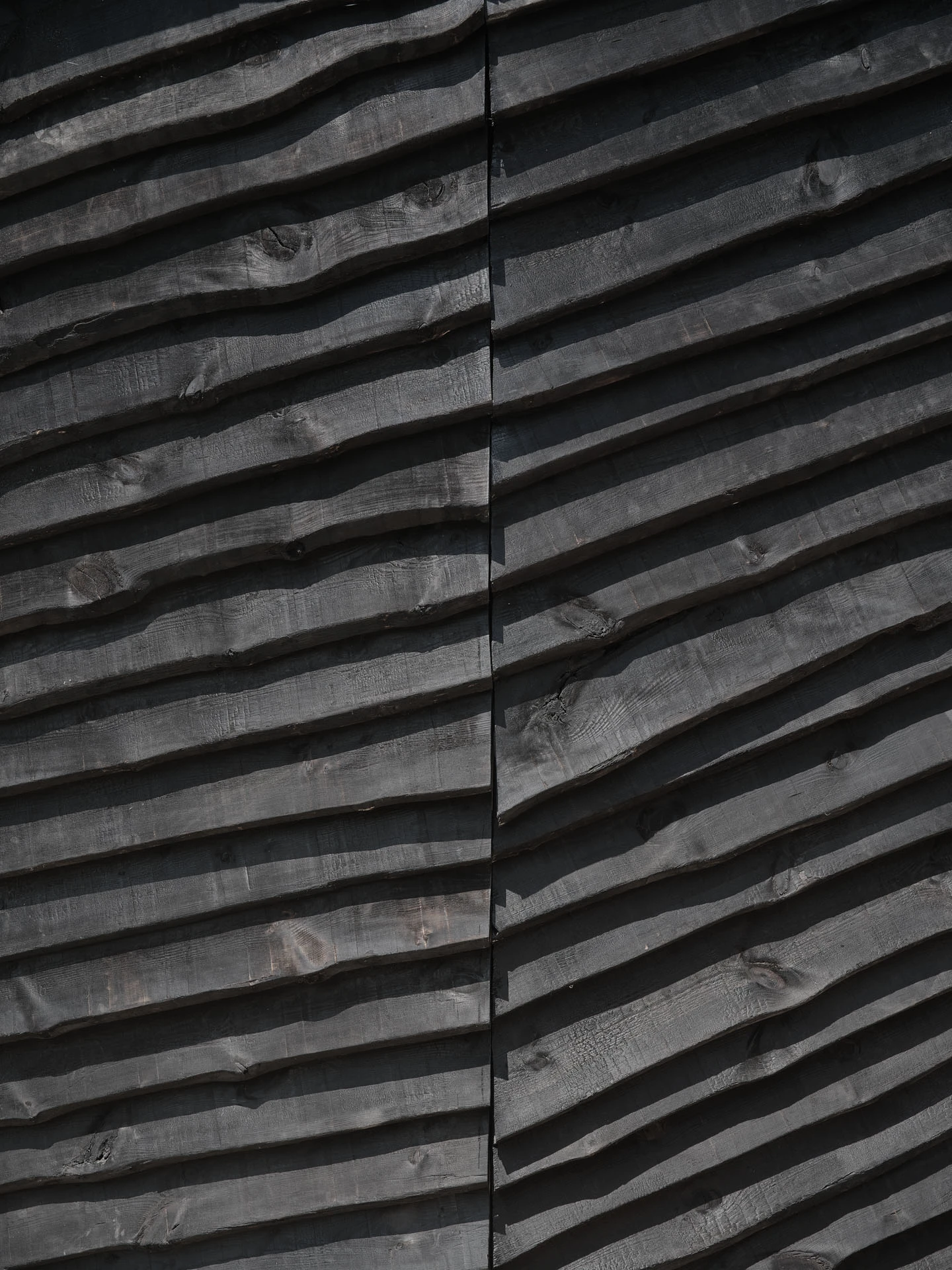
The striking feature of the Forestone cabin is its carbonized skin created using the Japanese Yakisugi technique. This process involves controlled charring of the pine boards’ surface to create a layer of carbon that is naturally resistant to water, insects, mold, and fire. The Forestone cabin also incorporates various agricultural by-products and geological finds from the Sort region. This holistic approach to sourcing creates a tactile, human-centric interior that reinforces the project’s connection to the local bio-economy.
Learning Through Making
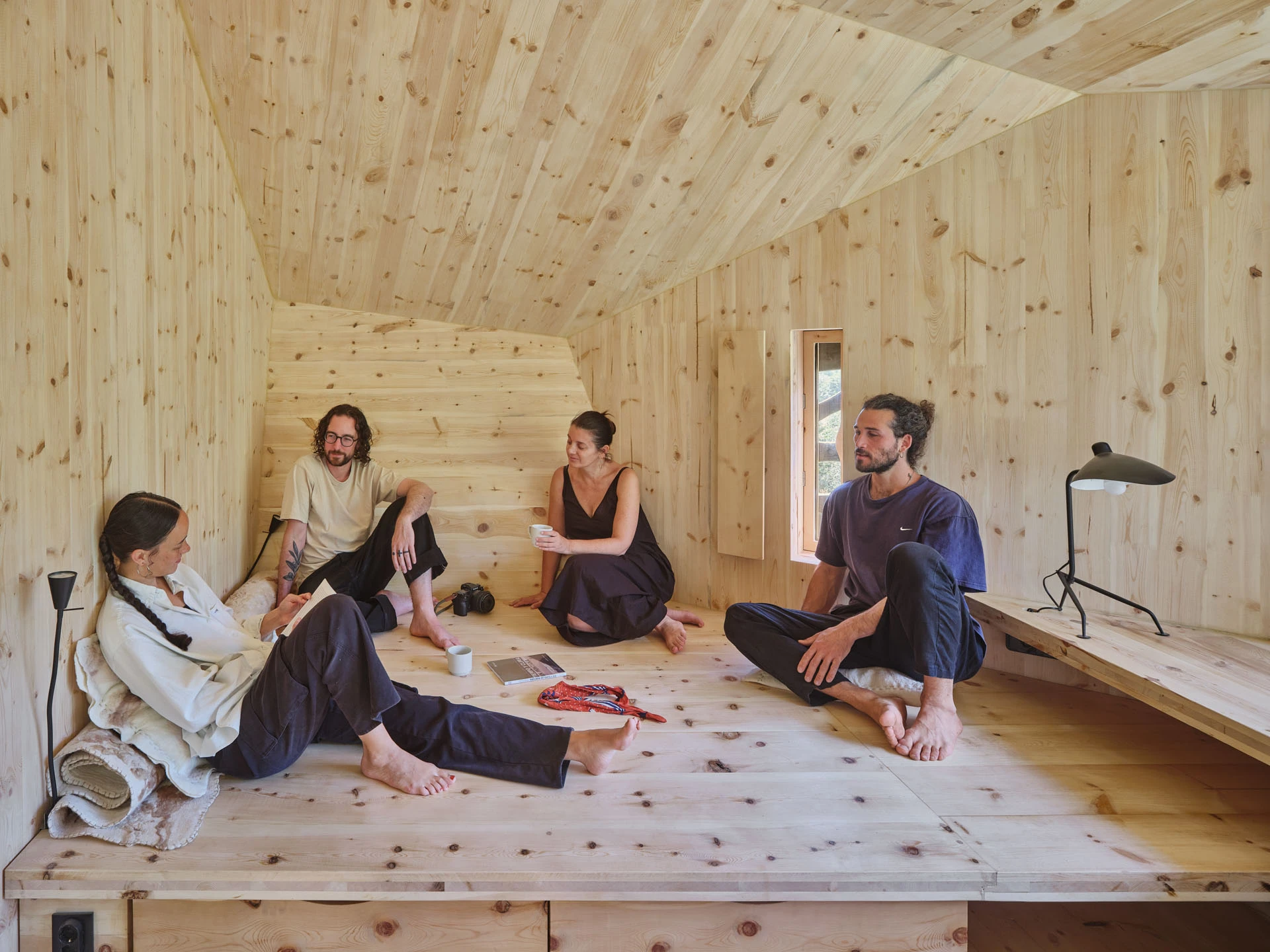
Students collected low-market-value raw sheep wool and, with the guidance of artist Rian van Dijk, transformed it into hand-felted blankets, rugs, and textiles for the cabin’s interior. The Forestone cabin illustrates IAAC’s learning-by-making approach, where students are not merely designers but builders who must confront the physical realities of material, logistics, and on-site assembly.
Project coordination, led by Esin Aydemir and assisted by Bruno Ganem, Oliver Needham, and Alkis Avarkiotis, emphasized a continuous feedback loop between digital modeling and physical prototyping. The project exemplifies the modern-day challenges of addressing circular material systems, low-impact construction, and fire-aware design.
Forestone Cabin Project Details
Project Location: MónNatura Sort, Spain
Architecture Firm: IAAC – Institute of Advanced Architecture of Catalonia
Built Area: 20m²
Photo Credits: Adrià Goula, Alexander Herbig, Nina Poort
Direction: Vicente Guallart, Daniel Ibañez, Michael Salka
Developed by: The students of the MAEBB Program, 2024/25 class: Alexander Bruce Herbig, Ateet Singh, Atticus Cummings, Breno Teixeira Martinelli, Dammes de Zoeten, Georgia Ann Hoyer, Isabel Flores, Jasper Runge, Magdalena Kurdzialek, Nina Poort, Pragyna Madhav Thondapu, Reuben Diamond, Shivani Edukulla, Shanon Shahan, Santosh Shyamsundar, Sipan Celiker Sporidis
Host: Mon Natura Pirineus, Fundació Catalunya la Pedrera
Project Coordination: Esin Aydemir
Assisted by: Bruno Ganem, Oliver Needham, Alkis Avarkiotis
Structural assembly: Fustes Sebastia (Sergi Sebastia, Emma Sebastia Sarroca, Estel Arnal Llunell) and Tallfusta (Ignasi Caus, David Valldeoriola)
Advised by: Miquel Rodriguez, Elena Orte, Guillermo Sevillano, Firas Safieddine, Rian van Dijk
Explore Courses
.jpg "Ondrej Chybik - Rethinking Architecture")