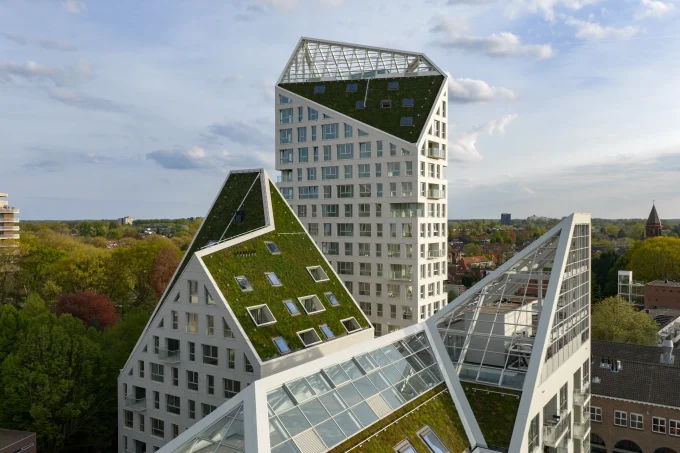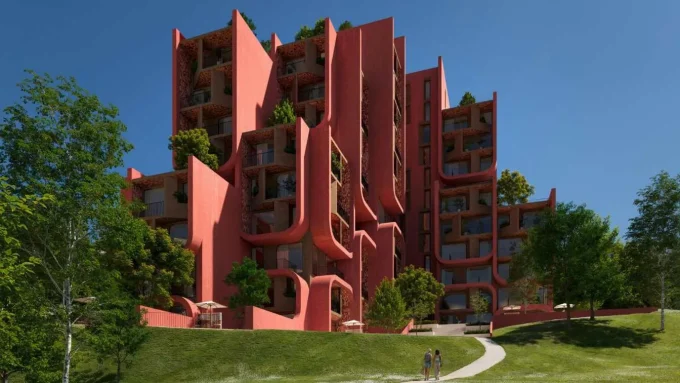



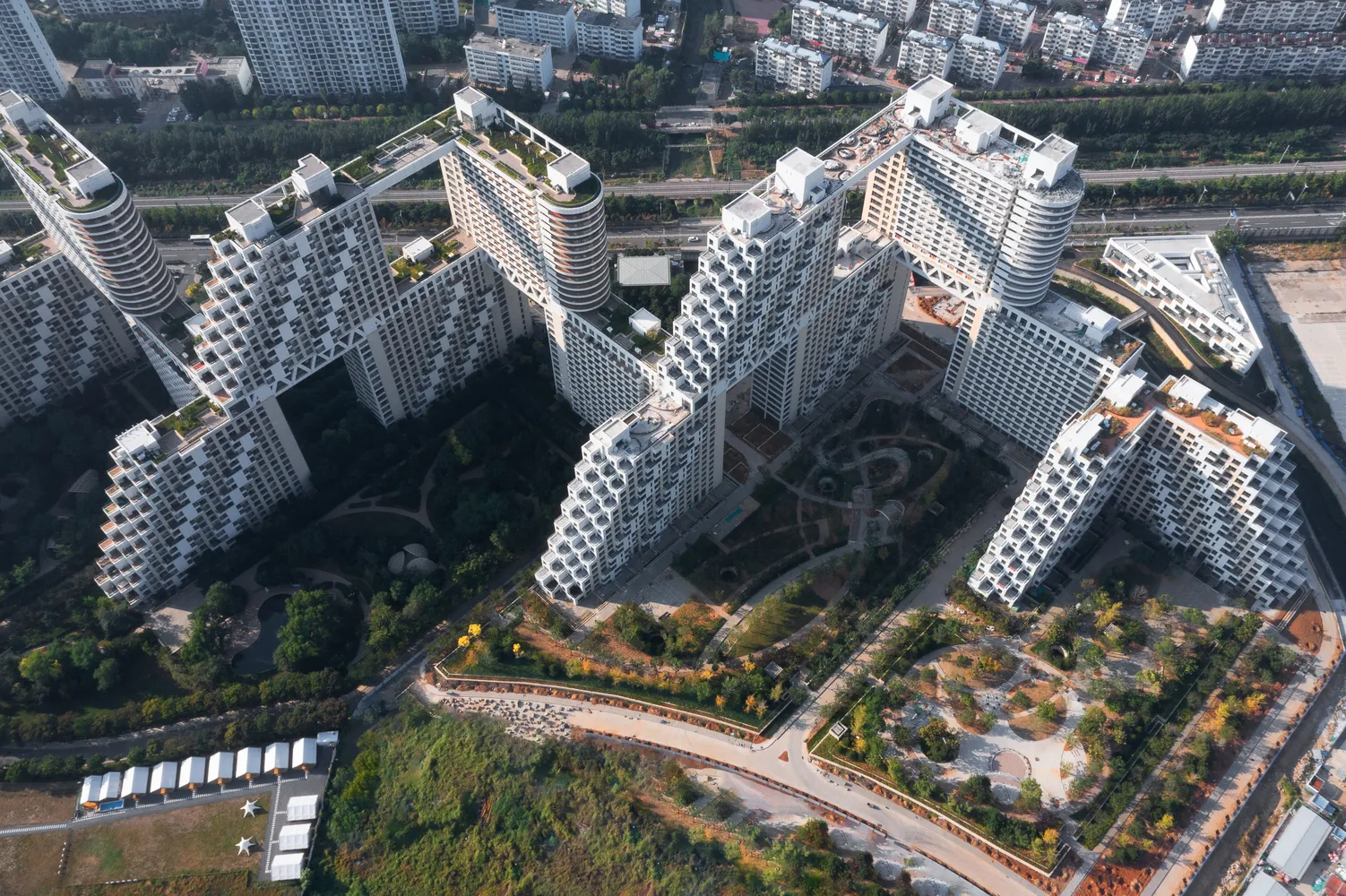
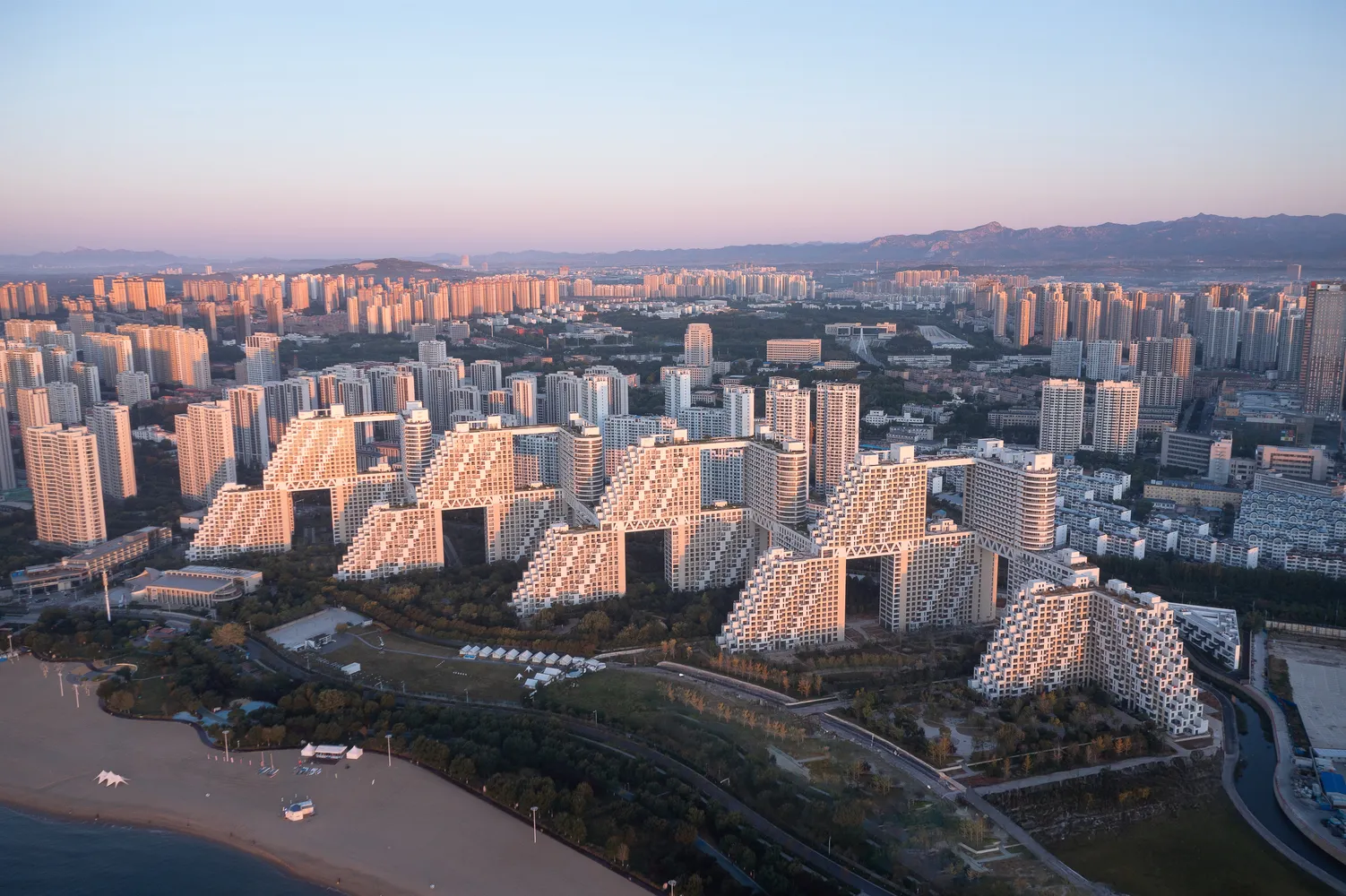
Safdie Architects has completed Phase II of Habitat Qinhuangdao, the firm’s realization of its long-standing vision for high-density, livable housing. Located on China’s Bohai Sea coast in Qinhuangdao, the project expands significantly on the first phase, unveiled in 2016, more than doubling the built area and bringing the total number of residential units to over 1,800.
This marks the largest application to date of the design philosophy first seen in Habitat ’67, the seminal modular housing experiment designed by Moshe Safdie for the 1967 Montreal Expo. While Habitat ’67 challenged the conventions of urban housing in the 20th century, its legacy finds new footing in 21st-century China, where the demand for high-quality, multi-family housing in rapidly growing cities continues to surge.
Habitat’s Evolution from Montreal to Qinhuangdao
Habitat Qinhuangdao Phase II demonstrates how the foundational principles of Habitat ’67, access to daylight, ventilation, private outdoor space, and visual connectivity, can be scaled up without compromising quality. Rather than repeating the generic high-rise typology prevalent across urban China, Safdie Architects offers a counter-model grounded in spatial diversity, permeability, and human-scale design.
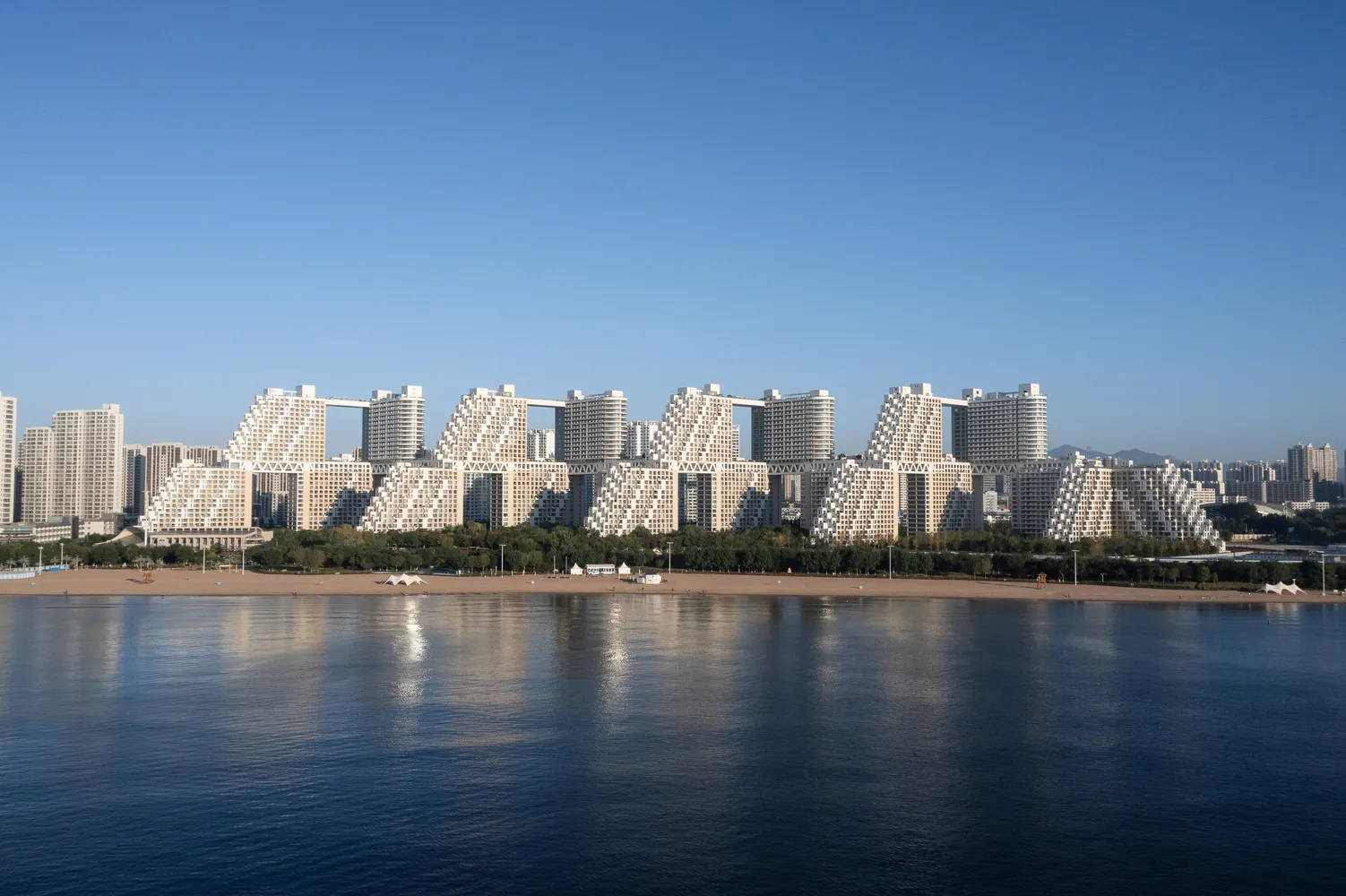
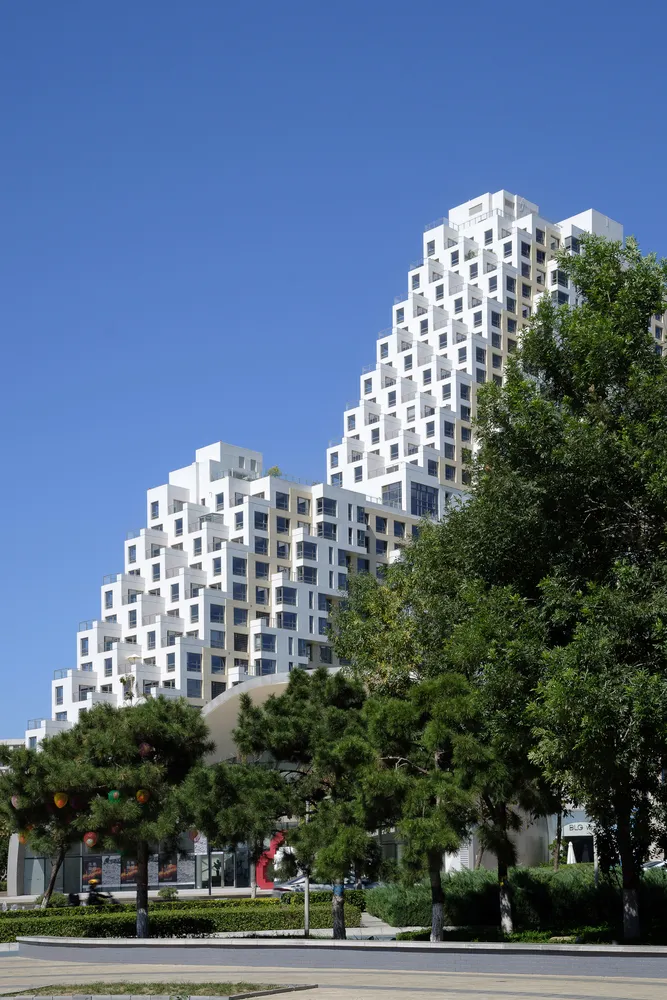
Organized as a series of 16-story stacked blocks, the buildings are offset in plan and section, generating private terraces, balconies, and solariums for nearly every unit. This step provides open-air outdoor space, and maximizes sightlines, and sun exposure.
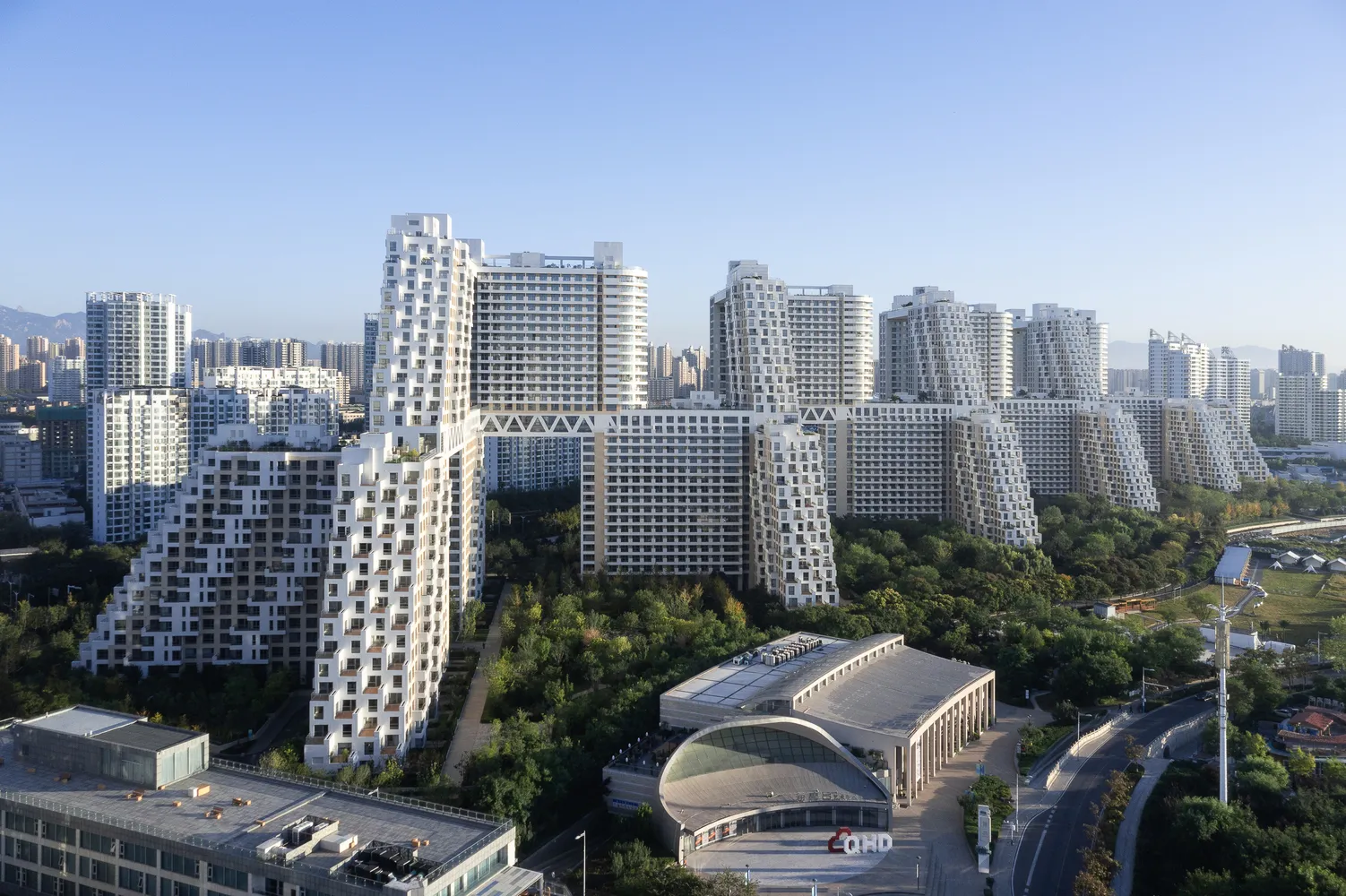
Long building elevations face east, west, and south, ensuring deep access to natural light. At the same time, north-facing interiors receive indirect illumination filtered through generous “urban windows”, gaps strategically carved into the massing to open up view corridors to the city and the sea.
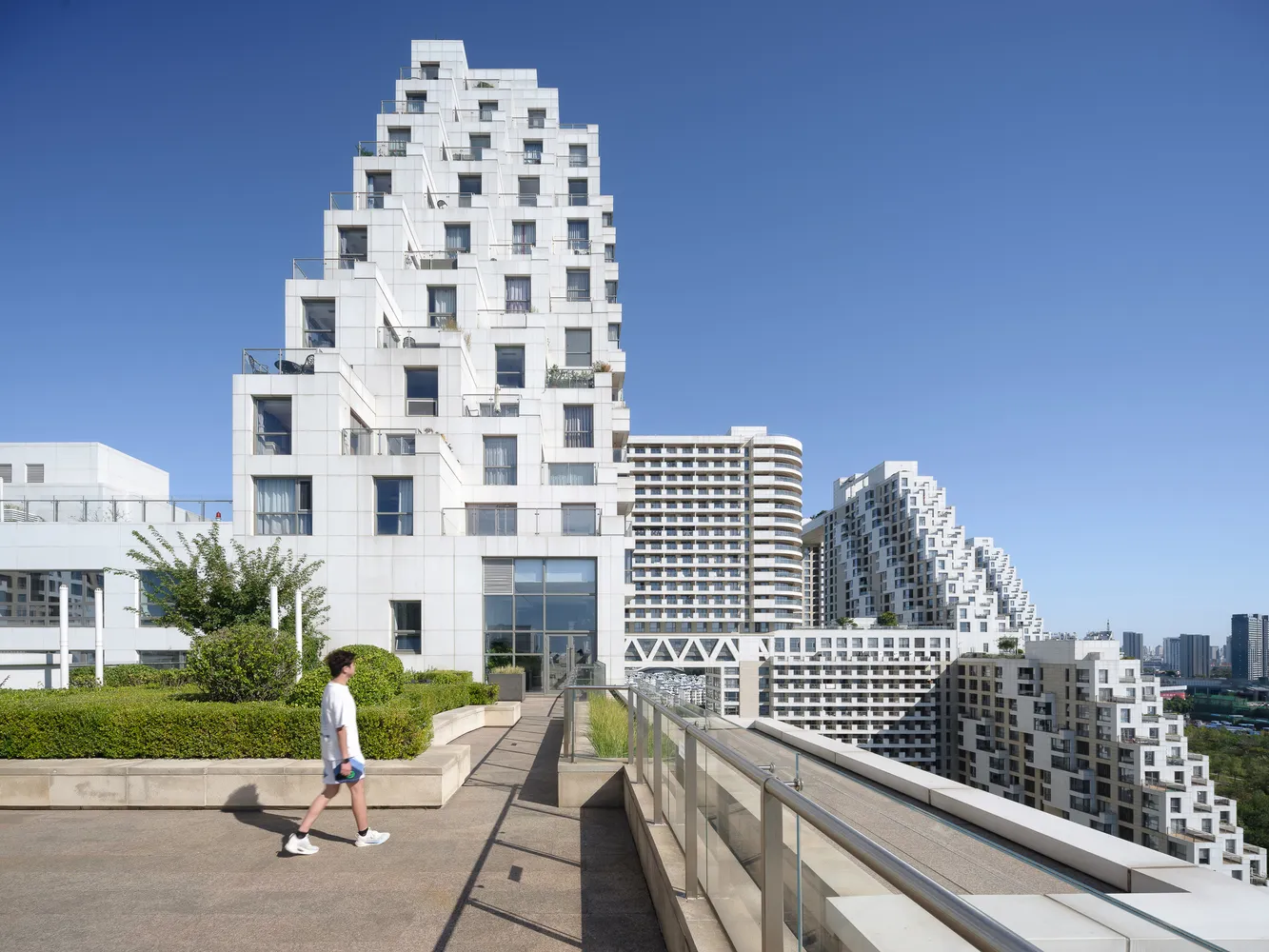
Moshe Safdie describes “breaking down the megascale.” He noted that the project proves that amenities typically reserved for luxury housing can be delivered at the scale of mass housing, without sacrificing efficiency or dignity.
Designing Multi-Level Community Networks from Ground to Sky
Skybridges at the 17th and 32nd floors link the residential towers, creating a vertical network of communal amenities. These bridges serve more than a circulatory function; they support community gardens, pools, and outdoor lounges with panoramic views over the Bohai Sea and the city beyond. Their inclusion transforms circulation infrastructure into activated social spaces.
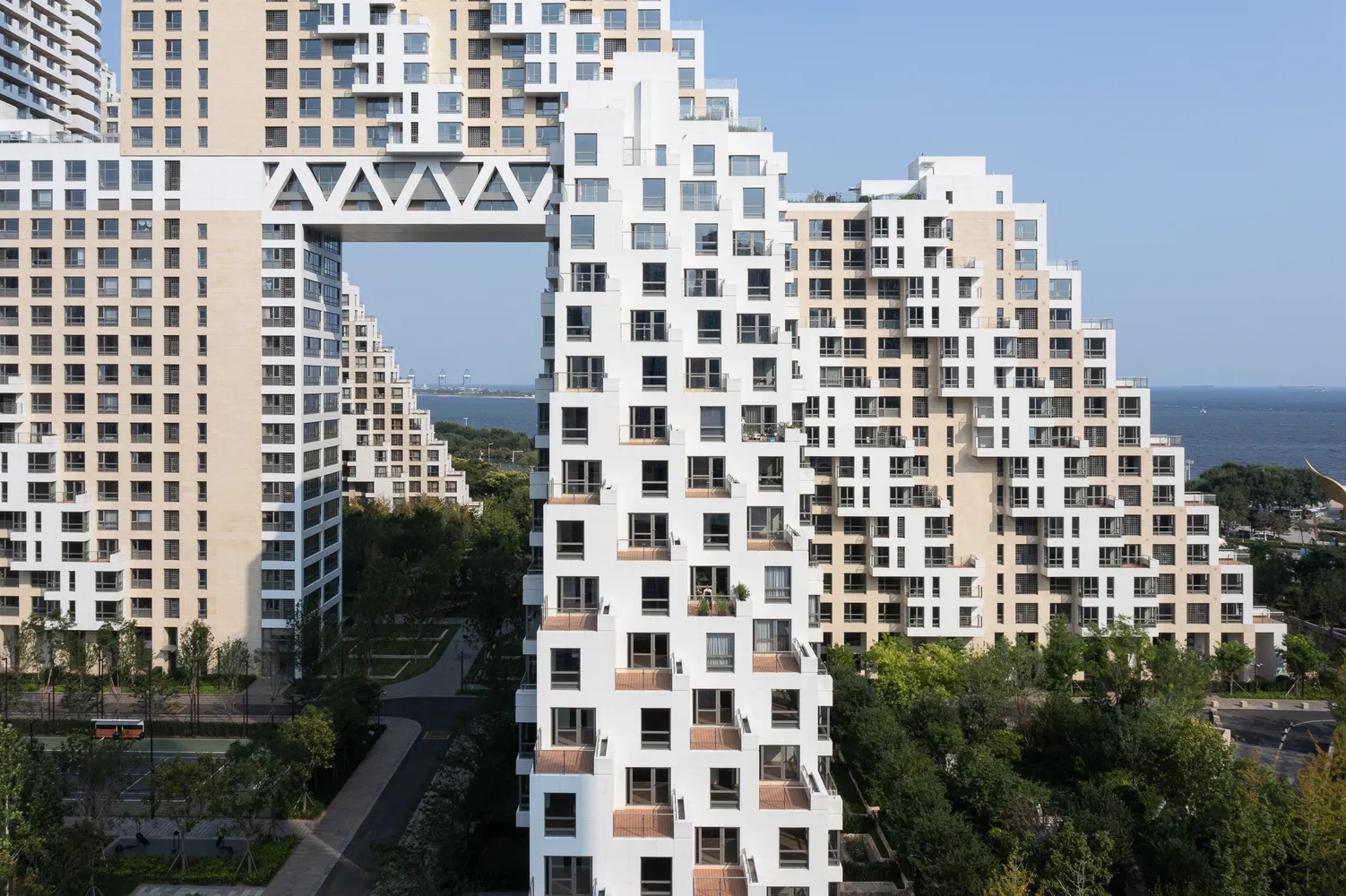
On the ground, over 40 acres (approximately 160,000 square meters) of public gardens and recreational areas form a porous, layered landscape. According to project information released by the architects, these spaces are intensively planted and topographically varied, offering a spectrum of recreational opportunities: amphitheaters, promenades, adventure playgrounds, and water features. The landscape work executed in collaboration with WAA+ Landscape Architects and Beijing-based Ager Group and DQLand blurs the line between city infrastructure and nature, reinforcing the central premise that density and livability can coexist.
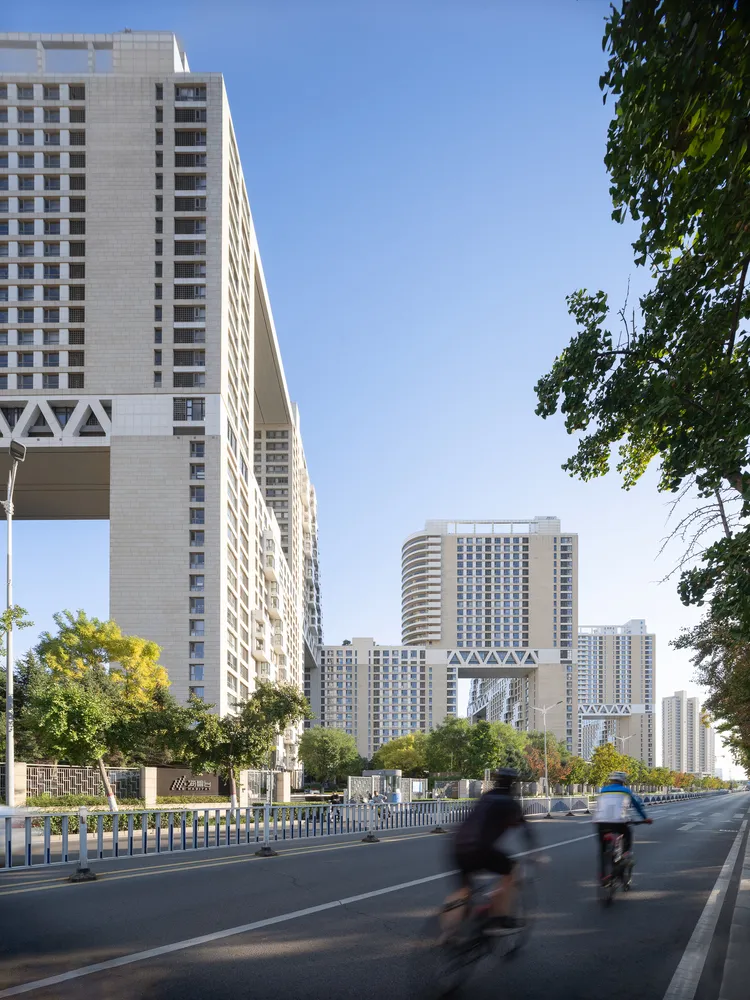
Staggered Massing and the Pursuit of Livability
The massing strategy, based on staggering and offsetting units, delivers a rational yet expressive form. As senior partner Sean Scensor explained, the approach creates terraces that give each residence a “penthouse” feel while preserving visual intrigue and structural logic. The buildings step away from the sea, creating tiered sightlines that increase privacy and maximize exposure to natural views.
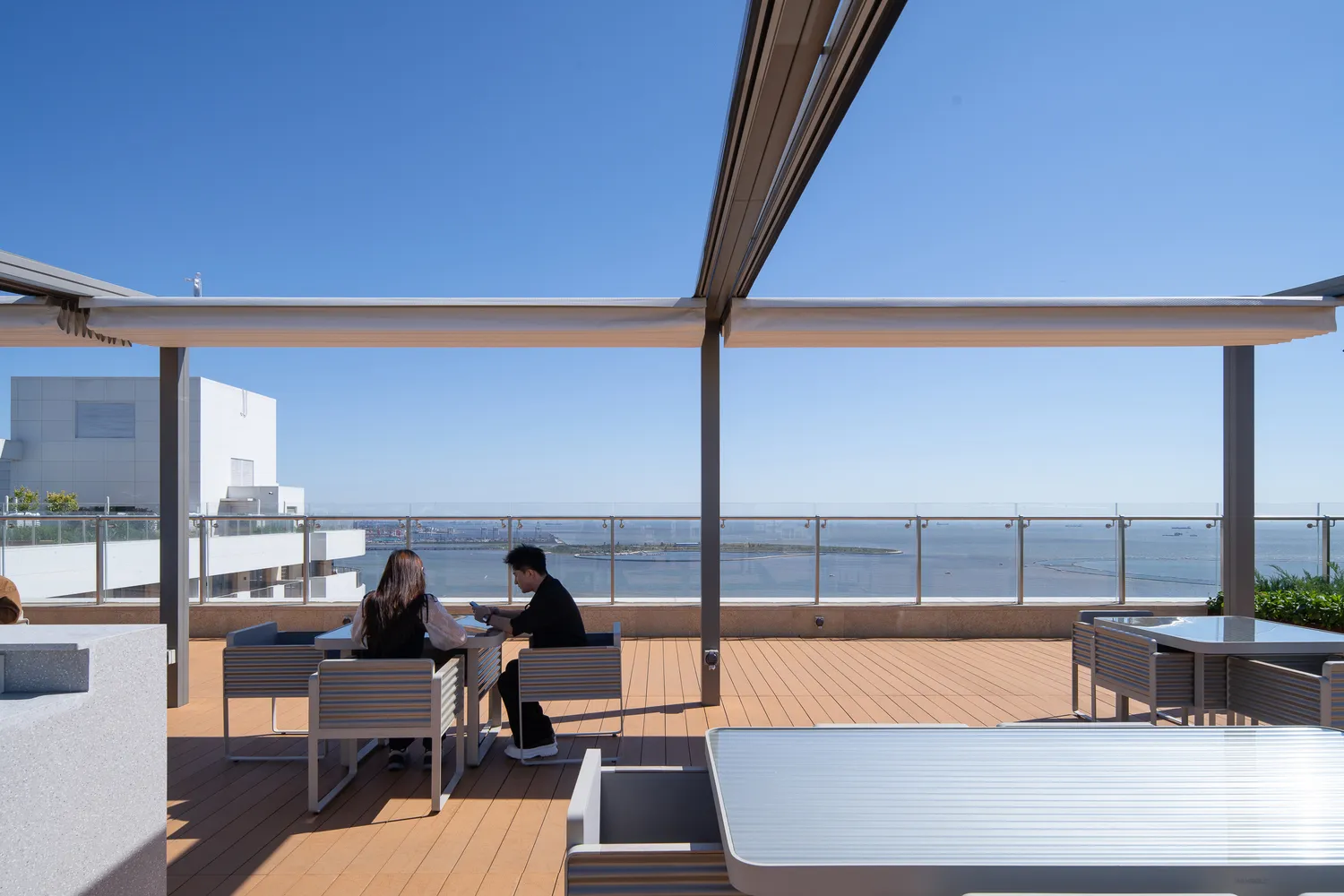
Crucially, Habitat Qinhuangdao is a fully functioning, large-scale community with infrastructure to match. Interior spaces for Phase II were developed by Shenzhen-based Yang and Associates and QUAD, while the public realm is supported by a new 5,500-square-meter cultural center with exhibition halls, dining areas, and flexible event space for seasonal activities like garden walks and sea fishing. This integration of the program strengthens the project’s claim as a model for “three-dimensional garden living.”
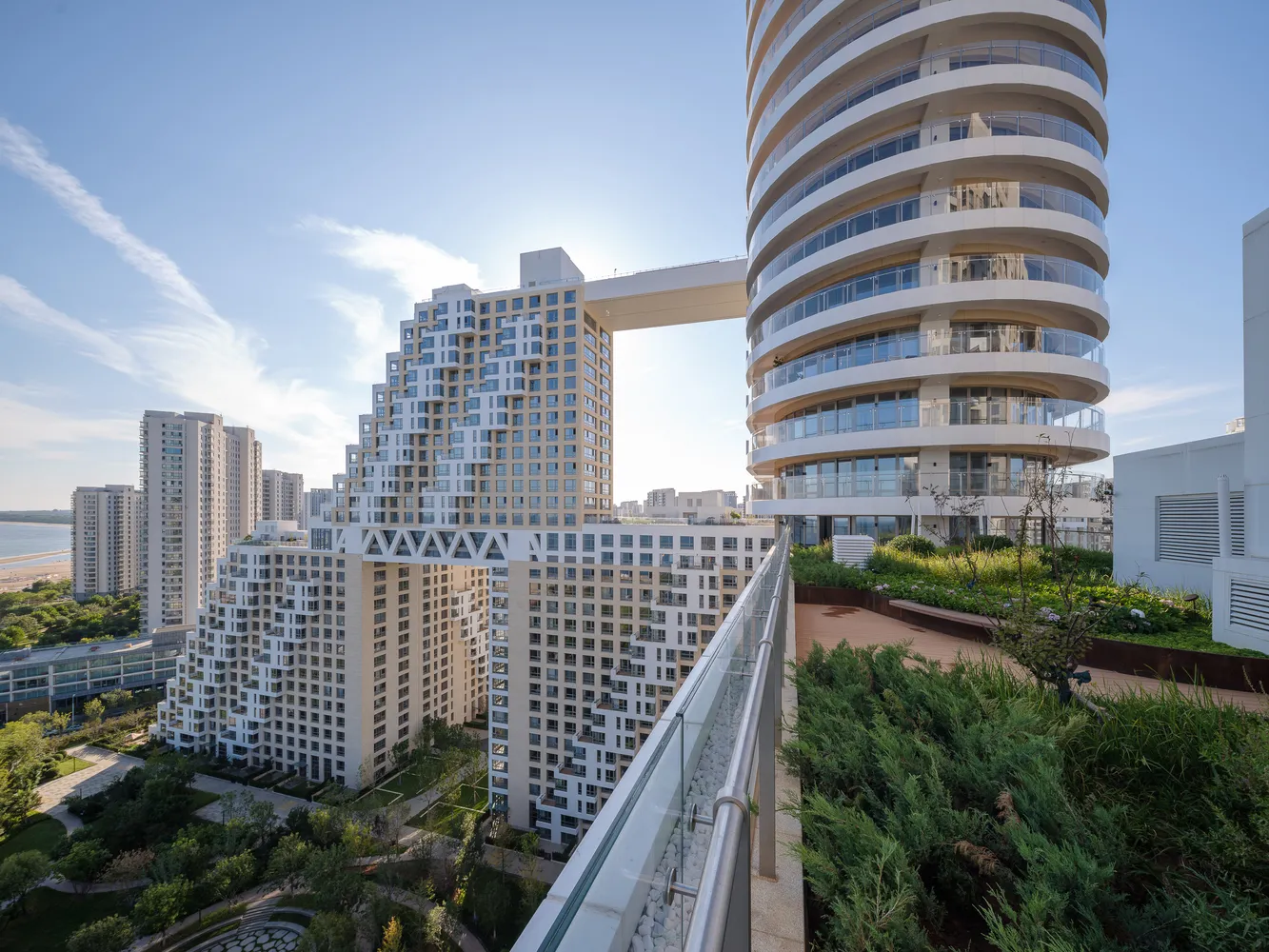
At 244,000 square meters of built area, Habitat Qinhuangdao Phase II is the largest expression of Safdie Architects’ long-held belief that architecture should shape buildings, as well as communities. Working with Kerry Properties and local collaborators such as the China Shanghai Architectural Design & Research Institute and China Railway Group Limited, the firm has delivered a cohesive vision that resists the aesthetic and planning homogeneity of typical high-rise developments.
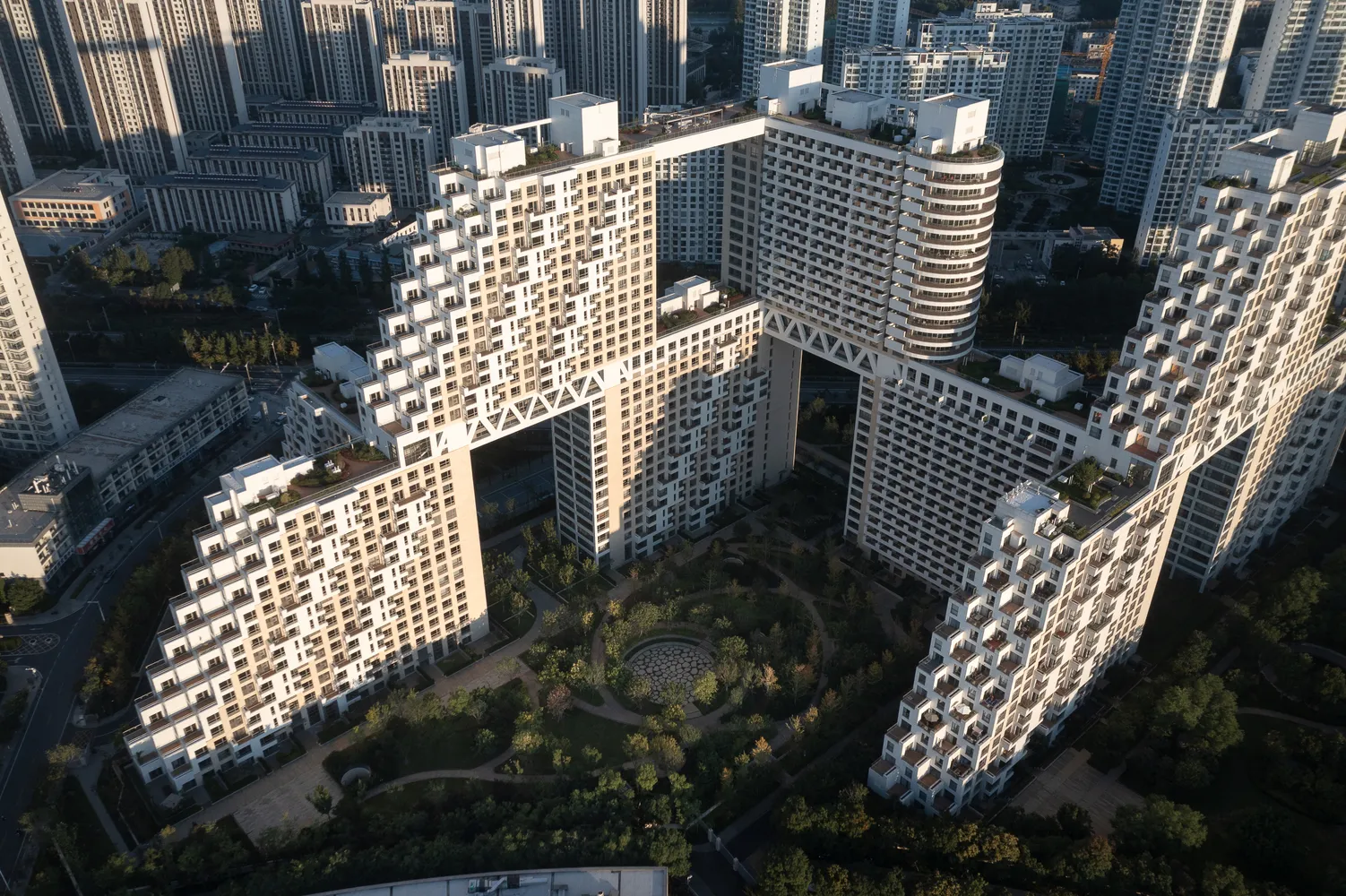
Habitat Qinhuangdao, Phase II Project Details
Location: Qinhuangdao, Hebei Province, China
Project Name: Habitat Qinhuangdao, Phase II
Design Architect: Safdie Architects
Built Area: 244,000 m²
Landscape: WAA+, Ager Group, DQLand
Facade Consultants: AECOM, Zhejiang Zhongnan Construction Group Co., Ltd
Client: Kerry Properties Limited
Completion: 2024
Image Credits: © Shao Feng, courtesy of Safdie Architect / © SFAP
Explore Courses
.jpg "Ondrej Chybik - Rethinking Architecture")