


• Submit Project
  • Advertise
  • NewsLetter
PA | Architecture and Technology
Courses
  • Articles
    • Archipreneurs
    • Technology
    • Bim / Aec
    • 3D Printing
    • Architects
    • Artificial Intelligence
    • Robotics
    • Sustainability
    • Tools
    • Case Study
    • City Guide
    • Opinions
    • Interviews
    • Architecture & Design
      • Urbanism
      • Metaverse
      • Space Architecture
      • Geography
  • Projects
    • Architecture
    • Interior
    • Design
      • Fashion
      • Pavilion
      • Installation
      • Digital Art
      • Landscape Design
    • Products
  • News
  • Workshops
  • PA Talks
  • Videos
  • Books
  • More
    • PA+ Membership
    • Competitions
    • Courses
    • Events
    • Jobs
    • About Us
    • Contact Us
Font ResizerAa
PA | Architecture and TechnologyPA | Architecture and Technology
Search
  • Articles
  • Projects
  • News
  • Workshops
  • PA Talks
  • Videos
  • Books
  • Advertise
  • Submit Project
  • NewsLetter
  • Contact Us
Have an existing account? Sign In
Follow US

Home - Landscape Architecture - The Design Legacy of Grant Park in Chicago

Landscape ArchitectureArticles

The Design Legacy of Grant Park in Chicago

Last updated: June 5, 2025 9:22 am
Faiza Ansari
Faiza Ansari
ByFaiza Ansari
I am an architect and urban planner from India with a passion for writing and storytelling. I completed my Master’s in Urban Planning in 2024 and...
Share
List of Images 1/15
SHARE

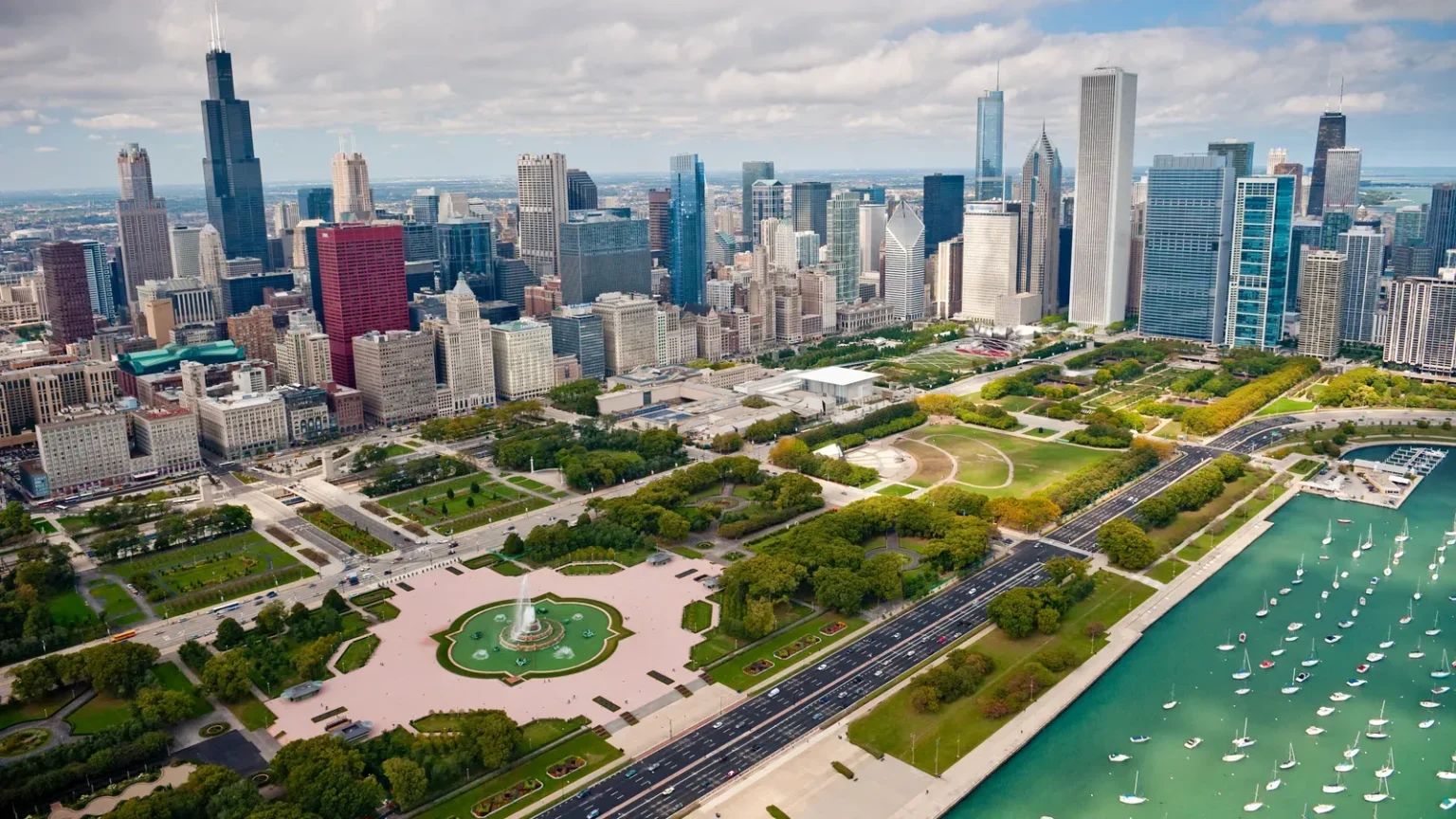
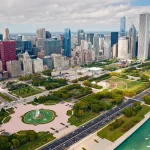
Grant Park is a large public park spanning 319 acres situated in the city’s central business area. Its evolution reveals a complex web of civic resolve and urban planning. Chicago’s park system was greatly affected by Frederick Law Olmsted, who is most known for his work on Central Park in New York. However, his successors and other notable landscape architects had a greater direct influence on Grant Park’s design.

Contents
  • Initial Vision
  • The Formal Design and Burnham Plan
  • Grant Park Today
  • Legacy and Ongoing Impact
- Advertisement -
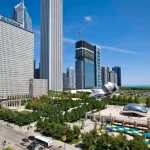
Image by Vito Palmisano, Photographer’s Choice, Getty Images

Initial Vision

As Chicago grew quickly in the middle of the 19th century, municipal planners realized that public green areas were necessary. Lake Park, a little strip of land along Lake Michigan, was the original designation for the area that is now Grant Park. However, detailed plans for the park’s construction were not put forth until the late 19th and early 20th centuries.

Frederick Law Olmsted had a significant role in establishing Chicago’s park environment, particularly due to his work on Jackson Park and the Midway Plaisance for the 1893 World’s Columbian Exposition. Naturalistic landscapes, curved walkways, and the healing potential of green areas were highlighted in their architectural concepts. Despite having little direct involvement in Grant Park, Olmsted’s impact was felt throughout the city’s park design process.

The Formal Design and Burnham Plan

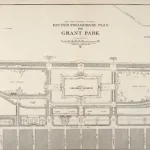
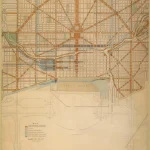
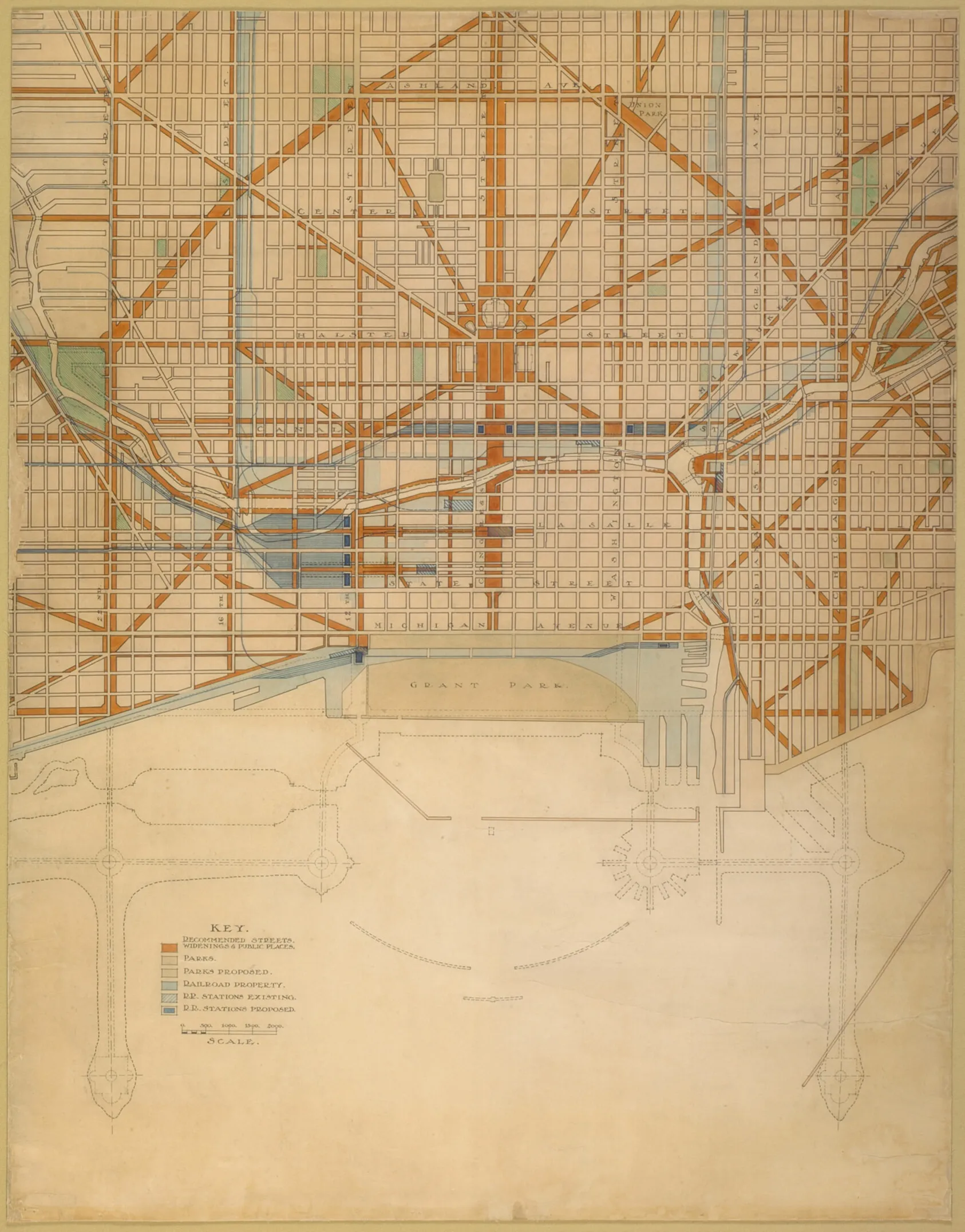
Daniel Burnham and Edward H. Bennett presented the Plan of Chicago, a blueprint for the growth of the city, in 1909. With its wide boulevards, classical buildings, and expansive lawns, this proposal suggested a formal, symmetrical layout for Grant Park. Bennett in particular was instrumental in making this idea a reality by supervising the park’s conversion into a masterpiece of Beaux-Arts.
- Advertisement -
Plan of the Center of the City, the 1909 Plan of Chicago, Daniel Hudson Burnham &
Edward Herbert Bennett

Grant Park Today

Millennium Park 

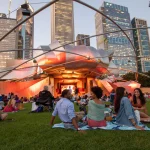
Millennium Park is one of Grant Park’s most noteworthy areas. Its focal point is the Jay Pritzker Pavilion, a spectacular bandshell that Frank Gehry created and is used for public events and concerts. It has a distinctive stainless-steel headpiece. 

Jay Pritzker Pavilion © Abel Arciniega

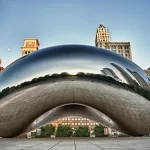
Anish Kapoor’s Cloud Gate, also referred to as The Bean, is a nearby mirrored sculpture that has come to represent Chicago and its skyline, as well as its visitors. 
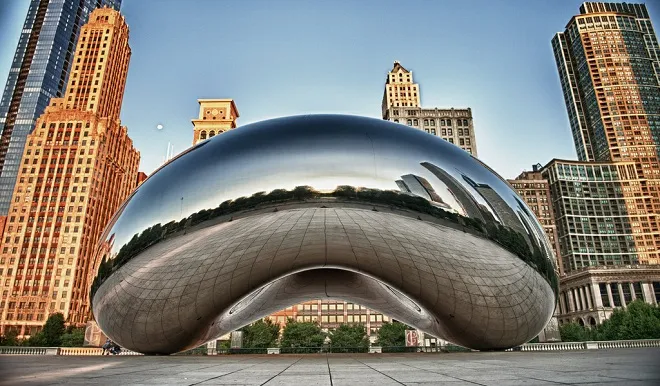
Cloud Gate or The Bean

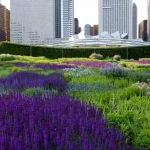
The Lurie Garden, a 2.5-acre landscape created by Gustafson Guthrie Nichol Ltd. in partnership with plantsman Piet Oudolf and renowned for its use of native plants and sustainable gardening techniques, adds a lush, ecological layer to the park.

- Advertisement -
Lurie Garden © Judy Giannetto

Central Grant Park

One of the biggest fountains in the world, the Clarence Buckingham Memorial Fountain is located in the center of Grant Park. Featuring water displays and evening light performances from mid-April to mid-October, it was designed in the style of a rococo wedding cake.

Buckingham Memorial Fountain © Choose Chicago

Chicago’s Cultural Identity

Chicago’s Iconic Skyline © Patrick L. Pyszka 

Some of Chicago’s most prominent institutions are situated in the Grant Park neighborhood and add to the city’s diverse artistic and intellectual scene. 

The Art Institute of Chicago, which is famous for its extensive and varied collection of artwork spanning centuries and countries, is located next to the park. One of the top organizations of its kind, the Field Museum of Natural History is located nearby and features a wide range of cultural and scientific displays. 

- Advertisement -

One of the biggest indoor aquariums in the world, the Shedd Aquarium provides visitors with up-close encounters with marine species from all over the world. The first planetarium in the United States, the Adler Planetarium, completes the cultural complex with captivating astronomy exhibits and celestial shows.

Events and Recreation

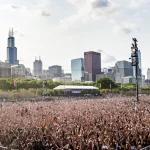
With a number of public sports and event facilities, Grant Park also serves as a recreational area. A popular location for important events and sports, Butler Field is adaptable. Another important space in the park, Hutchinson Field, frequently holds sizable gatherings and events, such as the well-known Lollapalooza music festival. The park includes well-kept baseball and public tennis courts. 

Lollapalooza 2017 at Hutchinson Field © Charles Reagan Hackleman

Monuments and Public Art

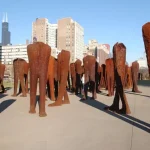
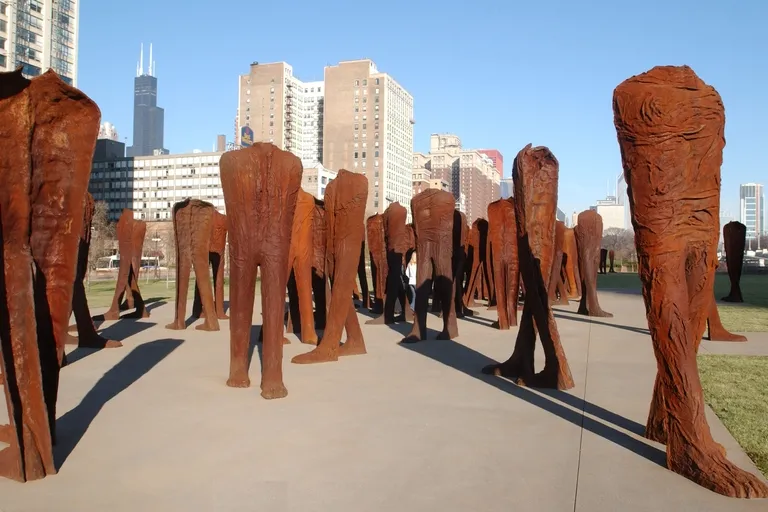
Grant Park is home to a wide variety of monuments and sculptures that give the park’s landscape more artistic and historical richness. Agora by Magdalena Abakanowicz is one of the most stunning installations; it consists of 106 tall, headless iron figures that conjure ideas of anonymity, crowd behavior, and the human condition.
- Advertisement -
 Agora by Magdalena Abakanowicz

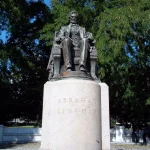
The Abraham Lincoln Monument, a stately seated statue of the 16th President of the United States by famed sculptor Augustus Saint-Gaudens, is also located in the park. The General John Logan Memorial, which honors the Civil War general’s service and accomplishments by showing him mounted, is another notable landmark.

Abraham Lincoln Monument 

Accessibility and Infrastructure

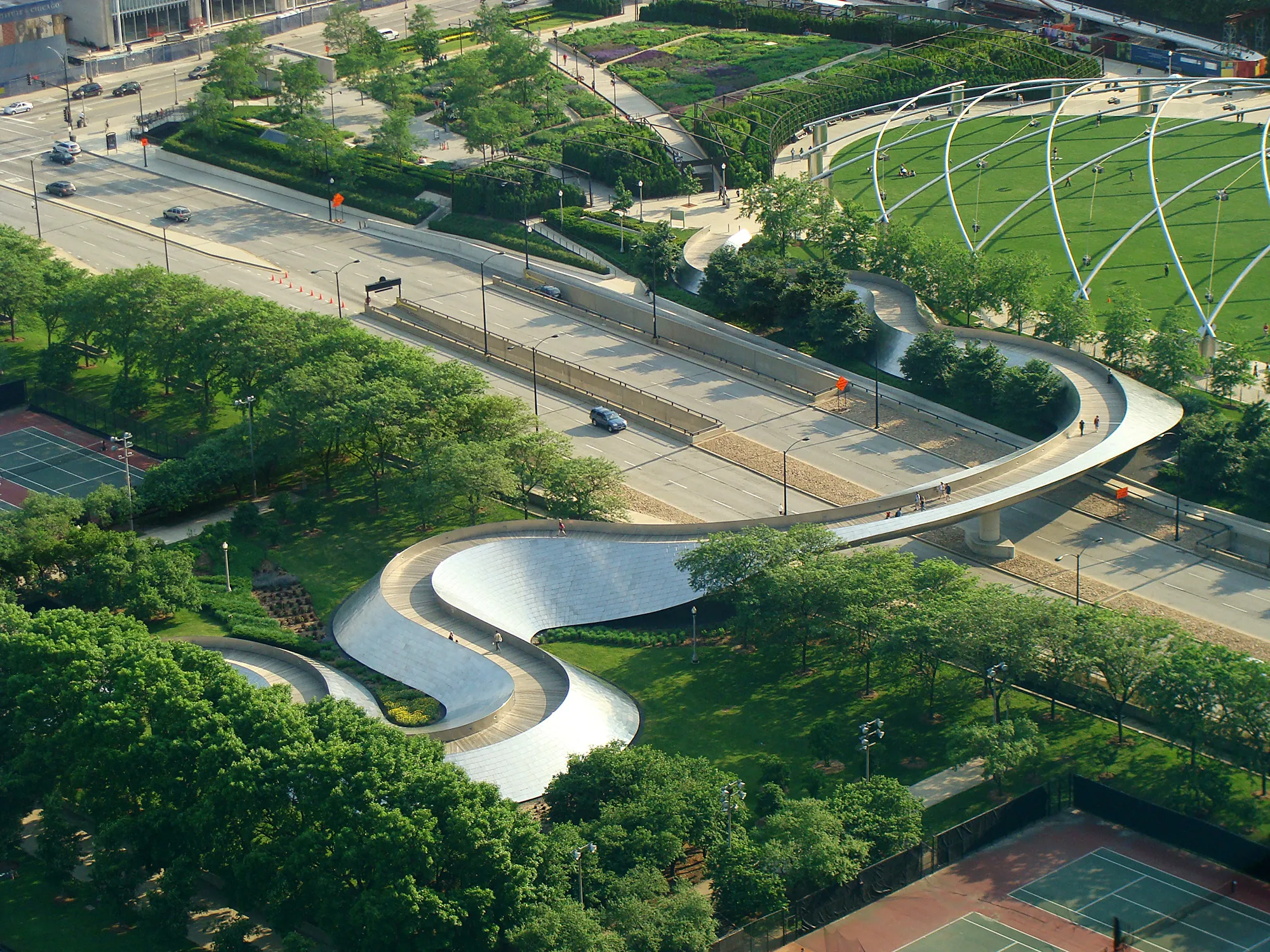
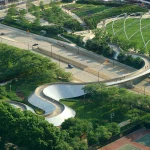
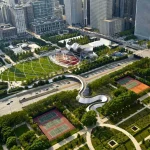
BP Pedestrian Bridge © Torsodog

Grant Park has been planned to allow both pedestrian and vehicular access. In order to minimize surface traffic and preserve the park’s open green aspect, there are over 9,000 parking spots spread among multiple subterranean parking garages. 

Furthermore, a well-designed system of walkways and bridges improves connection, enabling guests to effortlessly traverse the park’s sections while also connecting it to the lakefront and other communities.

- Advertisement -

Legacy and Ongoing Impact

Grant Park may not have been directly created by Frederick Law Olmsted, but his ideas and methods for landscape architecture had a significant impact on its creation. The park serves as evidence of the perennial importance of open green areas in cities. Grant Park is still a major meeting spot for both locals and tourists in Chicago today, hosting events and concerts and offering a calm haven in the middle of the city.

TAGGED:Chicagogrant park
Share This Article
Facebook LinkedIn Email Copy Link Print
ByFaiza Ansari
I am an architect and urban planner from India with a passion for writing and storytelling. I completed my Master’s in Urban Planning in 2024 and have been actively exploring the intersections of design, policy and people-centric development. With hands-on experience in urban development sector, I aim to make complex urban challenges accessible and engaging for diverse audiences.
Previous Article Top Emerging Building Materials for 2025: Redefining Sustainable Construction
Next Article Biomimicry in Generative Design, Morpheus Hotel by Zaha Hadid Architects in Macau ; Photograph by Ivan Dupont Algorithm Aesthetics: Hamid Hassanzadeh on the Future of Parametric Design
Leave a Comment Leave a Comment

Leave a Reply Cancel reply

You must be logged in to post a comment.

Most Popular

From Hyperloop to Mars: Musk’s Vision of Subterranean Living

Articles

OMA Wins Competition to Redesign Tirana’s Selman Stërmasi Stadium

Architecture & Design
allianz arena Architectural Evolution of Stadiums: From Colosseums to Modern Arenas

Architectural Evolution of Stadiums: From Colosseums to Modern Arenas

Architecture & Design

8 Architectural Styles That Shaped The World

Architecture & Design
VR sculpting, Gravity Sketch, Substance Modeler, 3D design, prototyping

VR Sculpting Fundamentals in Gravity Sketch and Substance Modeler

Articles

Logo Mistakes That Weaken Your Brand and How to Fix Them

Tools

12 innovative Halloween gifts for architects

Articles

Irish Pavilion: A cultural perspective on sustainable and resilient communities

Articles
10 Remarkable Mosques in the Arabian Peninsula

10 Remarkable Mosques in the Arabian Peninsula

Architecture & Design
The Emotional Side of Computational Architecture

The Emotional Side of Computational Architecture

Architecture & Design
Previous Next
L’île Folie Pavilion by Marc Fornes/THEVERYMANY

Subscribe to our newsletter

- Advertisement -
Ad image

You Might Also Like

Metal and glass facades of the Istanbul Modern Museum
ArchitectsArticles

Renzo Piano’s Civic Icons: Redefining Community Through Architecture

November 24, 2024
Architecture NewsSpace Architecture

Autodesk Fusion and Revit Helped Bring ESA’s FLEXHab Lunar Training Habitat to Reality

June 22, 2025
Articles

Extend The Life of Your Heating System: What You Should, Must, And Need To Know

February 8, 2025
ArticlesArtificial Intelligence

Louhi Chairs: Productions of intelligence without intentions

July 30, 2024
PA | Architecture and Technology

© All rights reserved. Parametric Architecture (2018-2026) – ISSN 3023-7564

Parametric Architecture (PA) is a leading global architecture and design platform connecting millions of architects, designers, and students through innovative projects, industry insights, and educational initiatives.

Instagram Facebook X-twitter Youtube Linkedin Pinterest Tiktok

Get in touch​

  • About Us
  • PA+ Membership
  • Contact Us
  • Submit Project
  • NewsLetter
  • Advertise
  • Cookie Policy
  • Distant Sales Agreement
  • PA+ Membership Agreement
  • Privacy Policy

Explore More

  • Articles
  • Projects
  • Videos
  • Books
  • PA Talks
  • Jobs
  • Subscribe

Subscribe Newsletter

Subscribe to our newsletter to get our newest articles instantly!

© 2026 ParametricArchitecture. All Rights Reserved. By utilizing this website, you are consenting to our User Agreement, Privacy Policy, and Cookie Statement. In compliance with the privacy laws of Turkey and the United States, we recognize and respect your rights. Please be aware that we may receive commissions for products bought through our affiliate links. Unauthorized reproduction, distribution, or transmission of any material from this site is strictly forbidden without prior written permission from ParametricArchitecture.

Welcome Back!

Sign in to your account

Username or Email Address
Password


Lost your password?

Not a member? Sign Up