




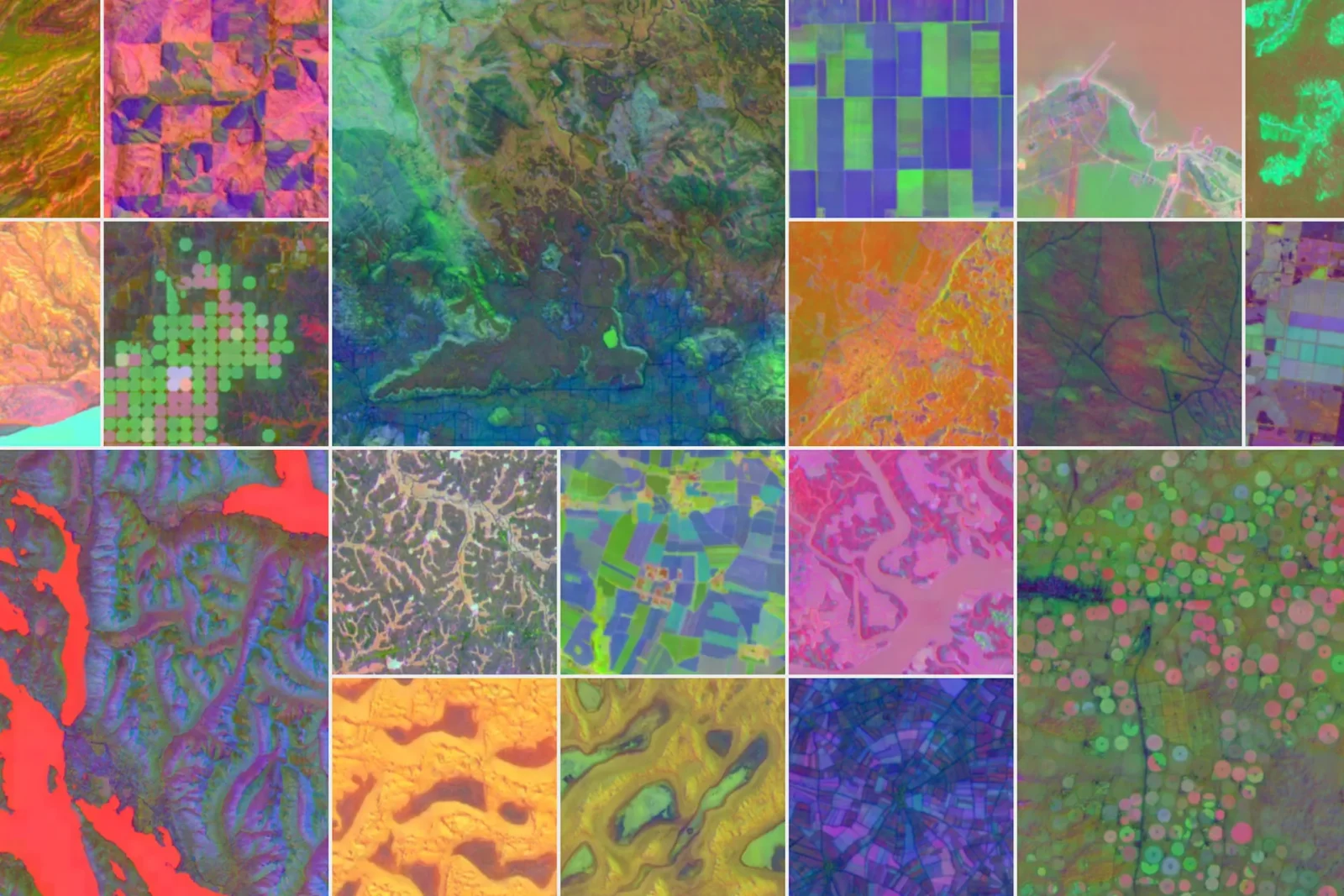
Google DeepMind and Google Research announced a new geospatial foundation model named AlphaEarth. The project is presented as a set of foundation models and system-level capabilities that ingest and reason across diverse geospatial signals to produce high-fidelity maps, analyses, and cross-modal outputs, a capability described as functioning like a “virtual satellite” or creating a “digital twin” of Earth.
What AlphaEarth Is
AlphaEarth is described by DeepMind/Google as a set of geospatial foundation models and associated tooling built to map and analyze the planet at scale. The team positions AlphaEarth as enabling new categories of geospatial reasoning by combining foundation-model scale with specific cross-modal training and engineering for remote-sensing tasks. The DeepMind announcement is dated 30 July 2025.
Core capabilities & high-level technical approach
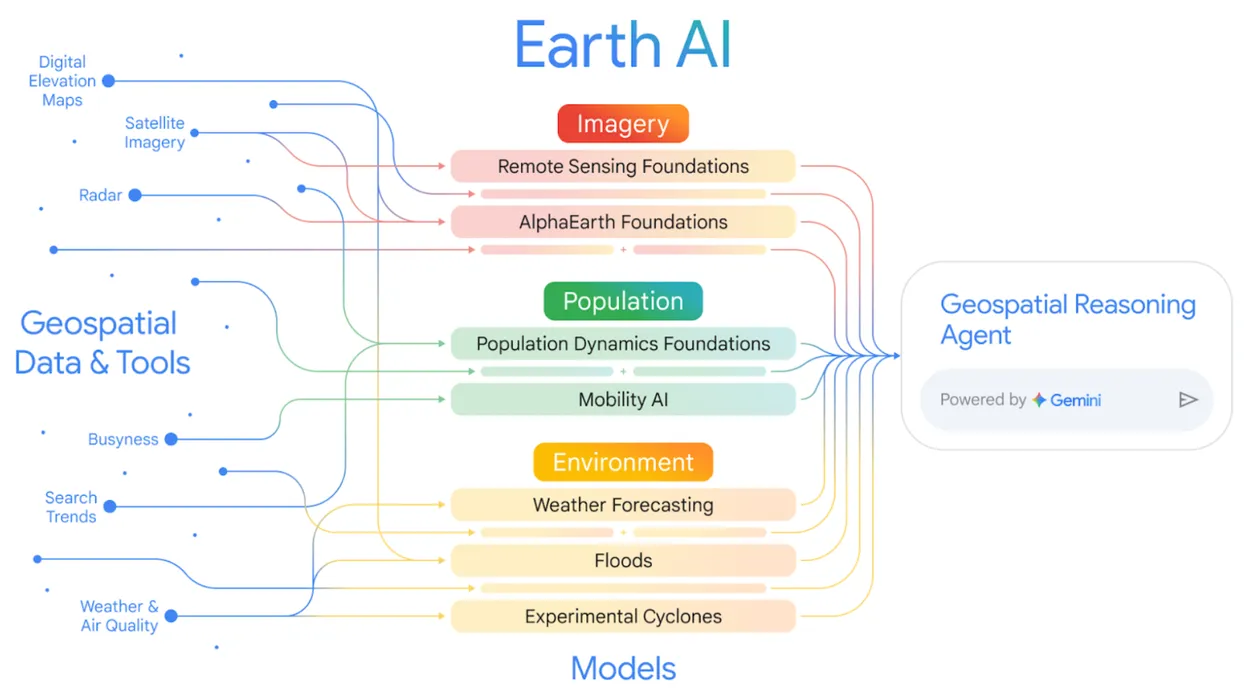
- Foundation-model backbone for geospatial tasks: AlphaEarth is built as a set of foundation models tuned for geospatial inputs and tasks rather than a single narrow classifier—the intent is broad capability across mapping, segmentation, and reasoning over Earth data.
- Cross-modal reasoning: The system is developed to reason across multiple modalities (for example, satellite and aerial imagery, vector data, and auxiliary metadata), enabling queries and inferences that combine visual and non-visual inputs. Google Research frames this as “cross-modal reasoning” to unlock richer geospatial insights.
- Aggregate of geospatial signals: Announcements emphasize training and inference over diverse geospatial data sources to produce coherent outputs (maps, labels, and analyses) at a large geographic scale.
Inputs, outputs, and what “virtual satellite” / “digital twin” means in practice
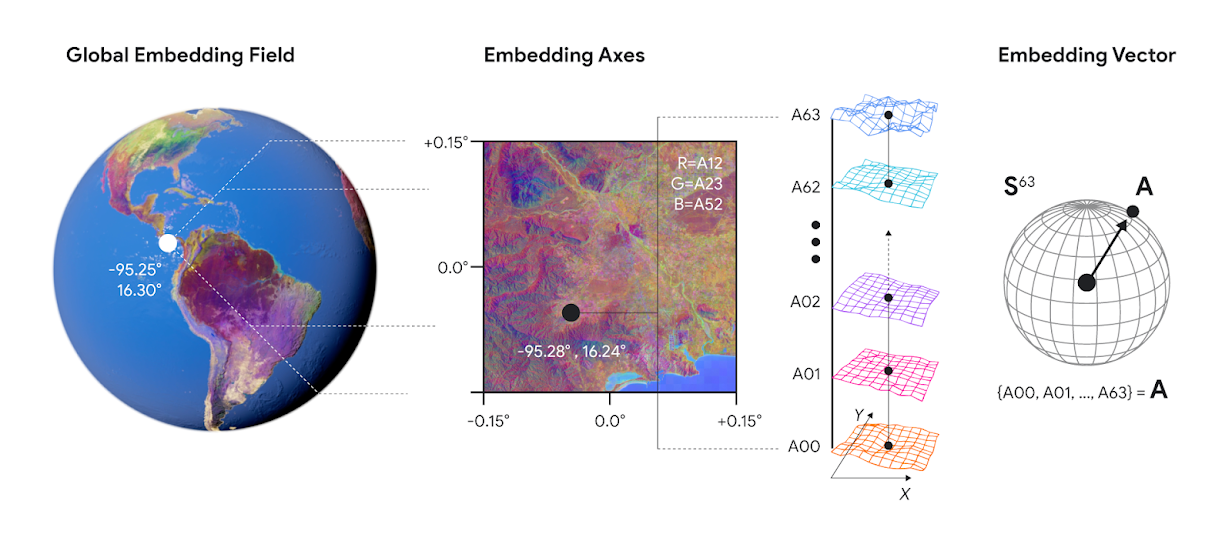
- Inputs: AlphaEarth consumes large amounts of geospatial imagery and related datasets (satellite imagery and other geospatial signals). The official materials emphasize combining multiple data sources so the model can reason even when single data sources are light.
- Outputs: Outputs described include high-resolution mapping layers, inferred land cover and feature maps, and analytical products that approximate what one could do with direct satellite sensing; hence, the characterization as a “virtual satellite.” These outputs together are framed as components of a digital twin, a computational representation of Earth useful for mapping, monitoring change, and generating geospatial insights.
Core Technical Applications and Use Cases of AlphaEarth
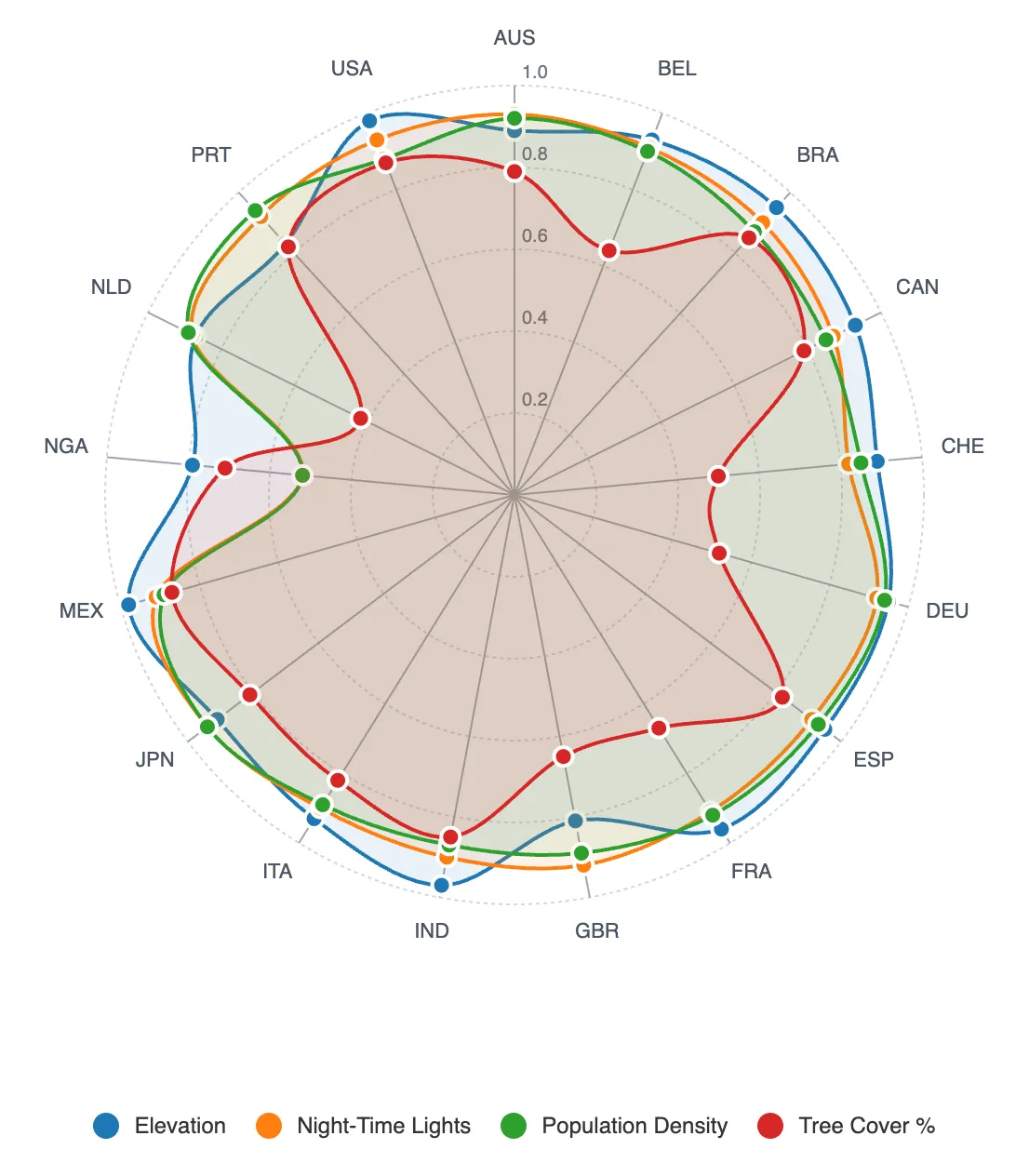
Google’s AlphaEarth and the broader Google Earth AI ecosystem are designed to transform how geospatial data is processed, analyzed, and applied across scientific and industrial domains. The official materials from Google DeepMind and Google Research highlight several key technical applications that demonstrate the model’s real-world potential. These use cases reflect both the research innovation and the engineering infrastructure underpinning AlphaEarth’s capabilities.
1. High-Fidelity Mapping at Global Scale
One of AlphaEarth’s primary functions is to generate extremely detailed, high-resolution maps that far exceed the precision of earlier automated mapping systems. By leveraging massive datasets from satellite imagery, aerial photos, and other remote-sensing sources, AlphaEarth reconstructs surface details, terrain patterns, and land features with remarkable accuracy.
Unlike conventional mapping pipelines that rely heavily on manual classification and static algorithms, AlphaEarth uses its geospatial foundation model to continuously learn from multi-source data. This adaptive learning enables the model to refine its output as new imagery becomes available, resulting in maps that are not only more detailed but also contextually aware of geographic and environmental changes. According to DeepMind, this high-fidelity mapping capability is central to enabling smarter city planning, infrastructure design, and environmental monitoring.
2. Change Detection and Environmental Monitoring
Another significant application lies in temporal and spatial change detection, the ability to identify how landscapes evolve. Using advanced temporal analytics, AlphaEarth can detect land-use changes, deforestation, urban expansion, glacial retreat, and agricultural transformation by comparing sequences of geospatial observations.
Google Research notes that this temporal reasoning allows researchers and policymakers to monitor environmental dynamics with greater speed and accuracy. Instead of waiting for periodic satellite updates and manual reviews, AlphaEarth automates the detection process, flagging meaningful shifts in real time. This makes it invaluable for climate research, disaster management, and sustainable development, where up-to-date information is crucial for decision-making.
3. Cross-Modal Geospatial Reasoning
A defining feature of AlphaEarth is its ability to perform cross-modal reasoning, a process where the AI interprets and integrates data from multiple sources and modalities. This includes combining visual inputs (like satellite images) with non-visual datasets such as metadata, geographic coordinates, textual descriptions, and vector-based geographic information.

Through this integration, AlphaEarth can answer complex, multi-source queries that traditional mapping systems cannot handle. For instance, it can infer population density in a region based on land patterns and infrastructure or correlate climate data with vegetation distribution. Google Research emphasizes that this multi-modal intelligence is what elevates AlphaEarth from a mapping tool to a reasoning system, capable of generating geospatial insights rather than merely visual outputs.
4. Accelerated Generation of Derived Geospatial Products
In addition to raw mapping and analysis, AlphaEarth streamlines the creation of derived geospatial products, which are essential for downstream applications in analytics, cartography, and environmental modeling. These outputs include segmentation masks, object labels, vector layers, and topographic models that can feed into larger mapping workflows or support AI-driven research tools.
By automating the generation of these assets, AlphaEarth significantly reduces the latency between data collection and actionable output, a bottleneck that has long limited traditional remote-sensing systems. According to DeepMind, this capability allows organizations to build and update geospatial datasets in near real time, improving everything from natural resource management to infrastructure resilience modeling.
How Google positions AlphaEarth relative to Google Earth AI and product integration
Google Earth AI and related product initiatives are the product/engineering front that will incorporate geospatial foundation models (the same conceptual stack that includes AlphaEarth) to deliver practical tools and services. In other words, AlphaEarth functions at the model/foundation level, while Google Earth AI outlines product use cases and deployment pathways.
The technology is both a research milestone (DeepMind/Google Research) and a product capability (Google Earth AI) that creates a near-real-time or high-detail computational representation of Earth, the “digital twin” label used by several outlets.
The company’s vision extends beyond academic exploration. AlphaEarth is being integrated into Google’s geospatial products and partner ecosystems, ensuring that the technology benefits not just the scientific community but also industries that rely on precise geographic intelligence.
From environmental science and urban development to disaster response and logistics, AlphaEarth represents a fundamental evolution in geospatial AI, offering scalable, high-fidelity insights into our ever-changing planet.
Image Credits: Google AlphaEarth AI/Deepmind/Google
Explore Courses
.jpg%202.jpg "Building Performance with Forma & Opossum")


.jpg "Ondrej Chybik - Rethinking Architecture")