




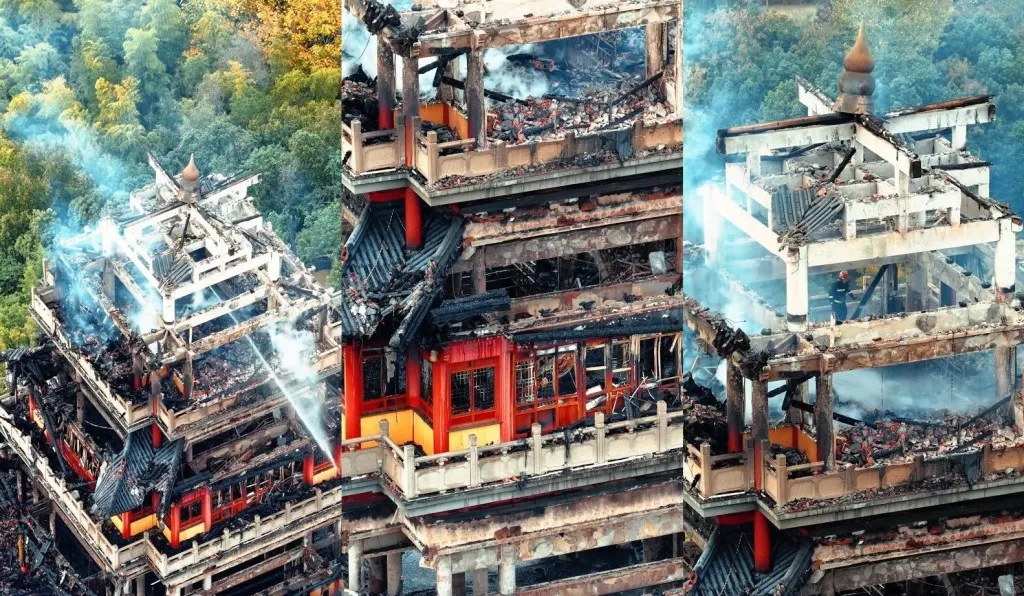
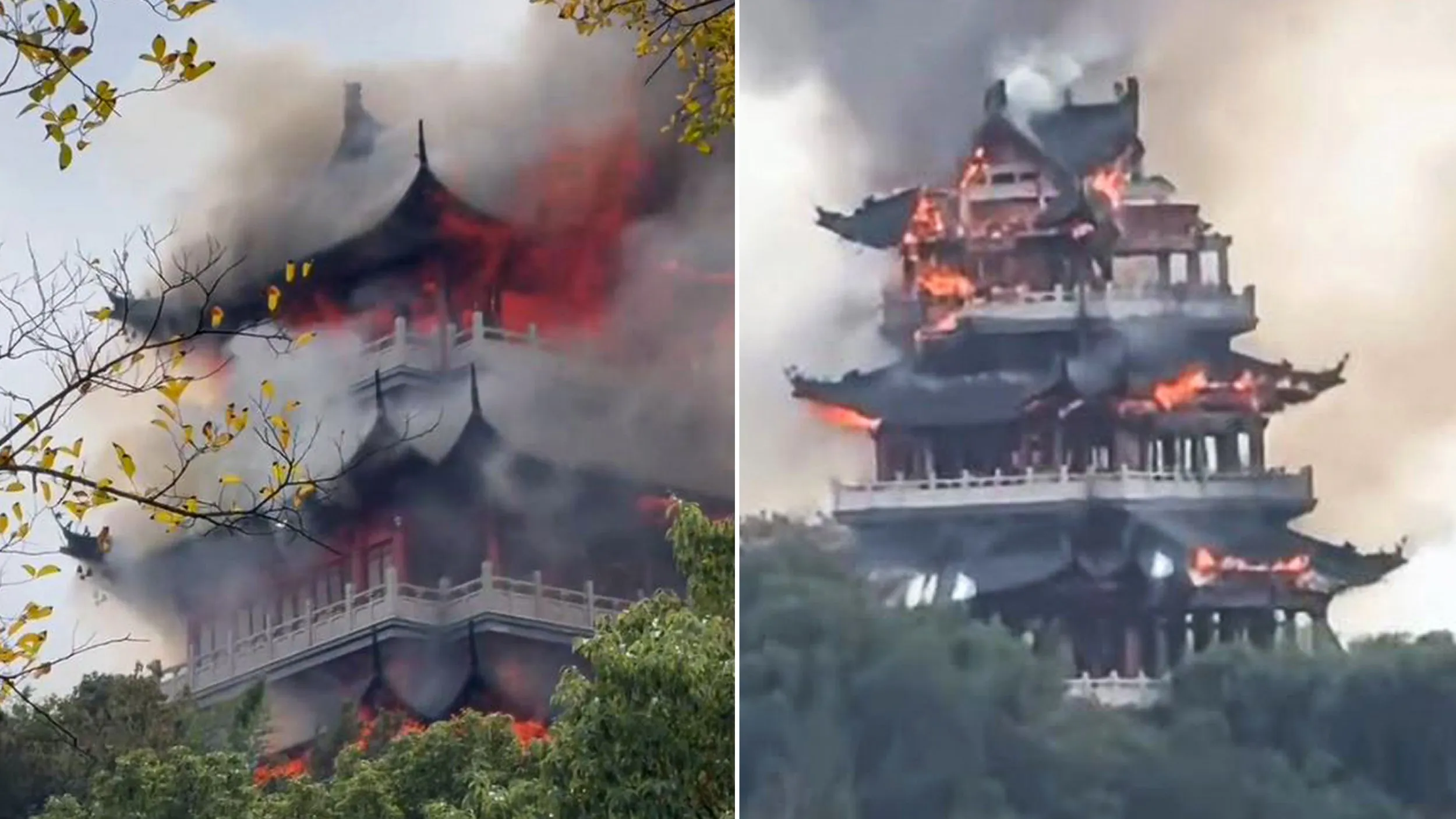
A large fire broke out on 12 November 2025 at the Yongqing Temple complex in Zhangjiagang, Jiangsu Province, destroying its three-storey Wenchang Pavilion. Flames reportedly started around 11:24 a.m., sending thick smoke into the sky as video footage showed the wooden structure engulfed from top to bottom.
Authorities confirmed no casualties, and firefighters contained the blaze without spreading to the nearby forested areas. The city’s fire department is investigating, but early reports point to improper incense or candle use by a visitor as the likely trigger.
Architectural Heritage and Rebuilt History of Yongqing Temple
While Yongqing Temple dates back some 1,500 years, its current buildings are modern reconstructions. The original temple was founded during the Liang Dynasty (around 536 AD), but fell into ruins. Reconstruction began in the early 1990s, based on historical records. Specifically, the Wenchang Pavilion that burned down was built in 2008–2009, and officials say it did not house any cultural relics.
The Wenchang Pavilion was a multi-storey wooden building, designed in a traditional style with graceful sweeping eaves. Although modern, it imitates classical Buddhist architecture, utilizing timber framing under tiled roofs, which reflects the region’s Jiangnan wood-building tradition. Yongqing Temple itself sits at the foot of Fenghuang Mountain and was historically counted among the “480 Temples of the Southern Dynasties,” a group celebrated in classical poetry. The site also holds literary significance in earlier times; the pavilion was associated with Shi Nai’an, the reputed author of Water Margin, who is said to have stayed in the Wenchang Pavilion.
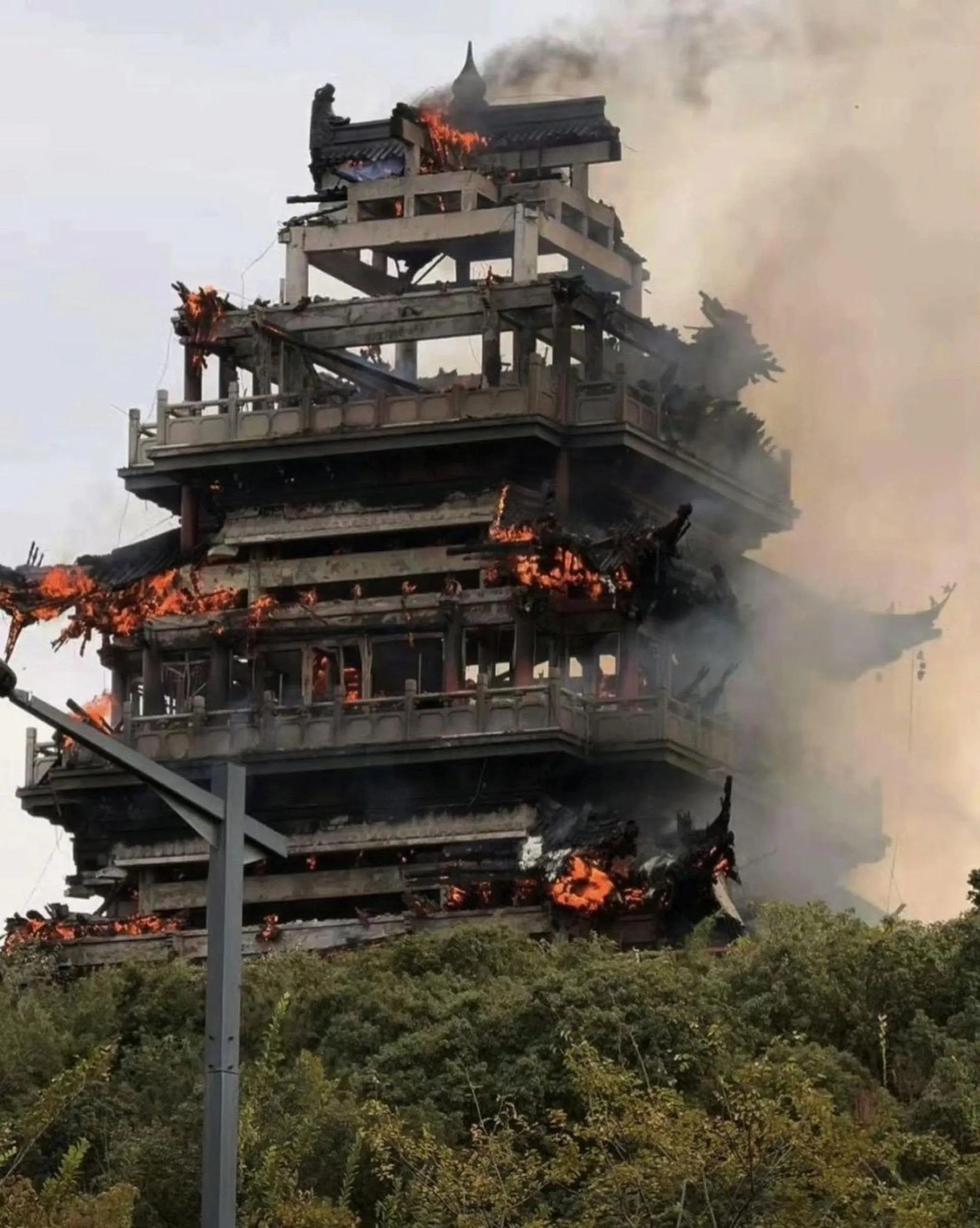
Fire at Yongqing Temple Sparks Wider Cultural Concerns
This fire has sparked concern because of what the temple represents: a living link to China’s Buddhist and literary heritage. Although the Wenchang Pavilion was reconstructed only in modern times, its symbolic value runs deep for both pilgrims and cultural historians. According to preliminary reports, the fire may have been triggered by a visitor’s improper use of incense and candles.
Local authorities are investigating the exact cause, and if misuse of incense or candles is confirmed, they may review fire-safety protocols for visitors. Restoration of the pavilion will likely be needed; since it’s newly built, rebuilding may be more straightforward than restoring an ancient relic. Officials have pledged to take “comprehensive measures” to eliminate such fire risks and strengthen protection across the temple complex.
Explore Courses
.jpg "Ondrej Chybik - Rethinking Architecture")