




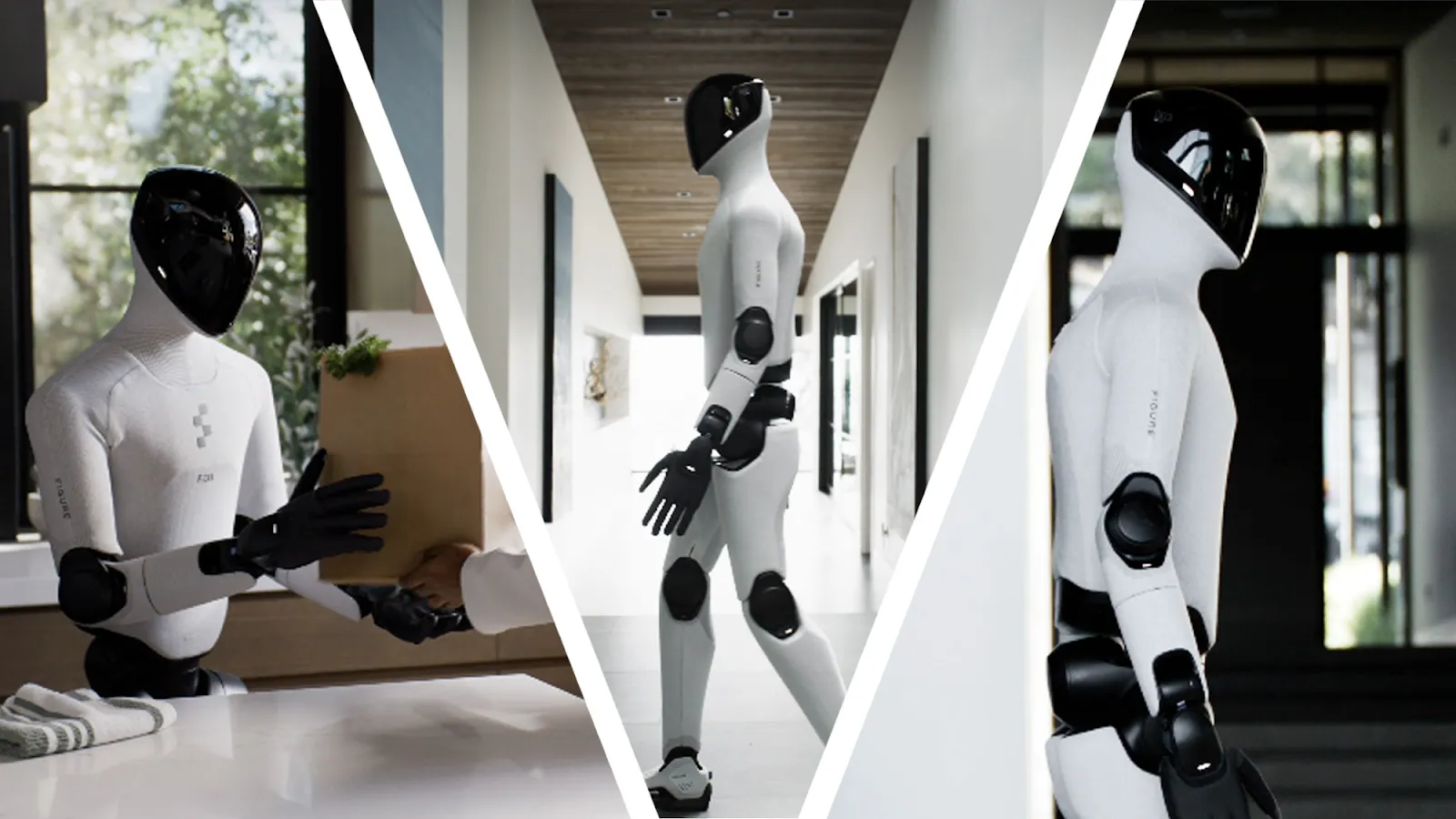
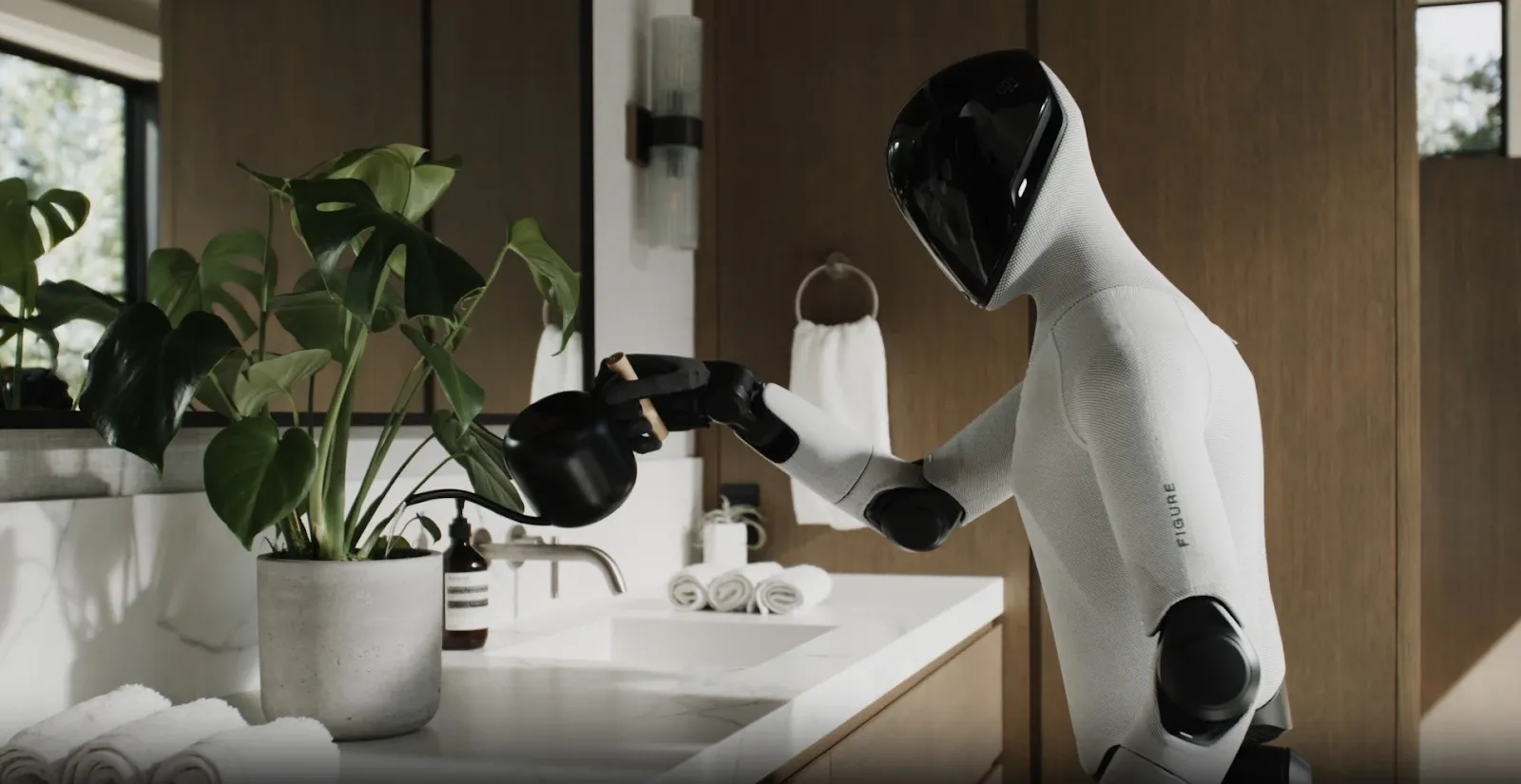
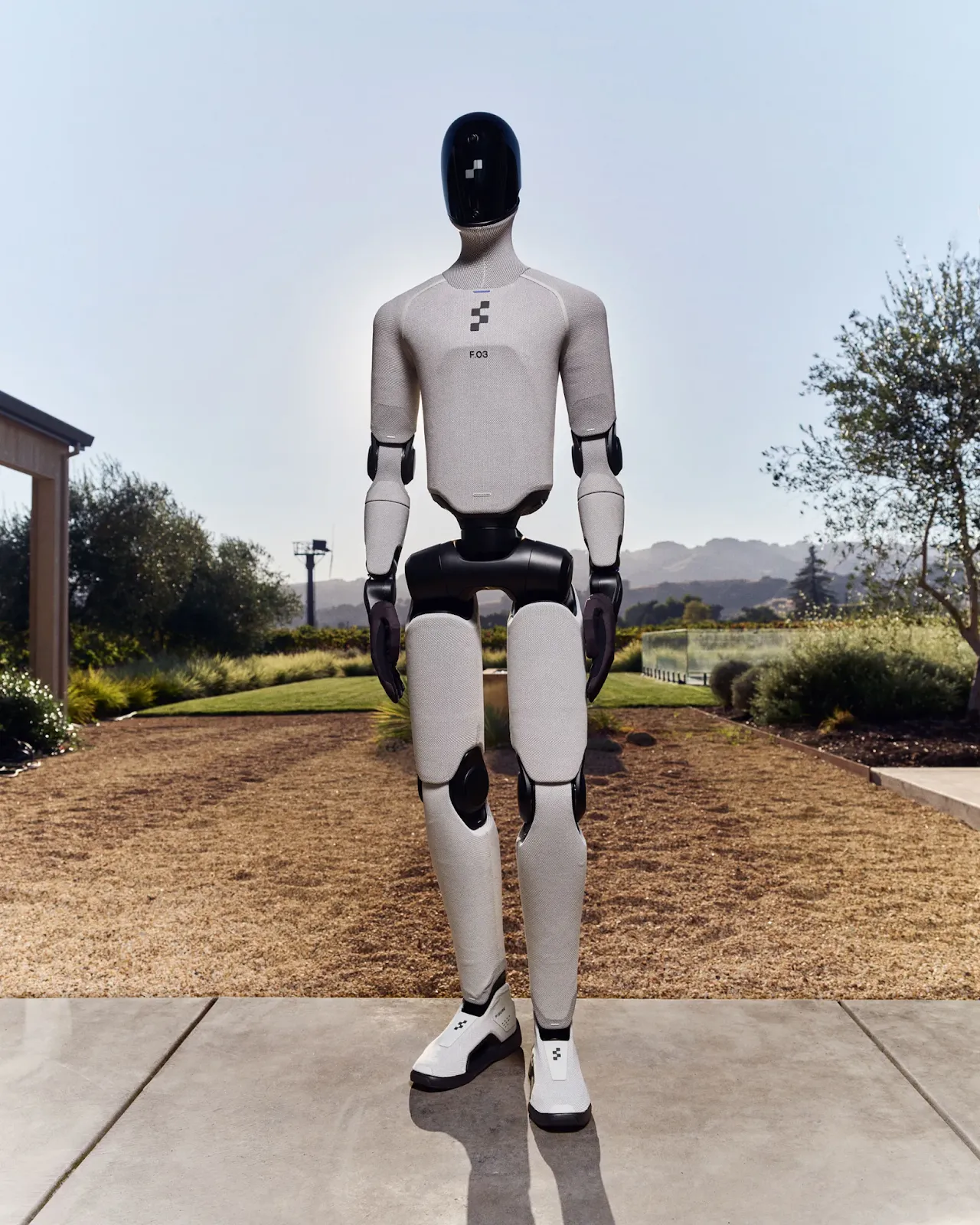
Figure 03 is the third-generation humanoid from Figure (often called Figure AI), designed as a physical platform for Helix, the company’s vision-language-action system, and built from the ground up to work safely in homes, scale in factories, and operate across commercial environments. Under the leadership of CEO Brett Adcock, Figure has positioned the robot as a true general-purpose platform that combines high-frequency perception, more compliant and tactile hands, seamless home integration, and manufacturing innovations engineered to reduce cost at scale.
Built around Helix: perception that drives action
Figure deliberately engineered the robot to serve Helix’s needs. Helix is a unified model that connects visual input, language understanding, and continuous control. In short, it learns to translate pixels and instructions into coordinated, high-rate motion of the upper body, wrists, and individual fingers. Figure 03’s hardware changes the cameras, depth sensing, compute plumbing, and hand sensors, which were redesigned to supply a denser, lower-latency perceptual stream that Helix can use for real-time decision making.
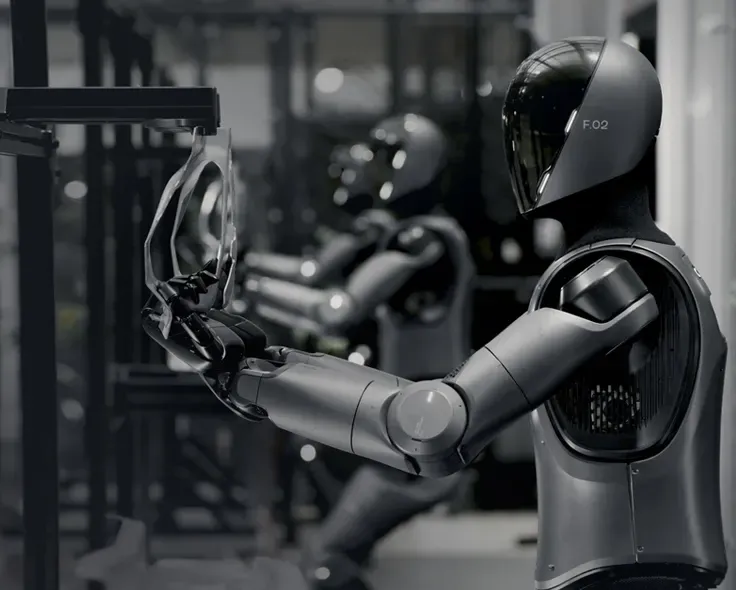
Key sensory improvements called out by the company include a next-generation camera architecture with roughly double the frame rate, about one-quarter the latency, and a substantially wider per-camera field of view, plus expanded depth of field changes intended to stabilize visual tracking and visuomotor loops in cluttered, real-world environments. Those same design choices are meant to reduce blind spots and give the control stack the frequent, reliable inputs it needs to perform timely correction during manipulation and navigation.
Hands, touch, and close-range vision
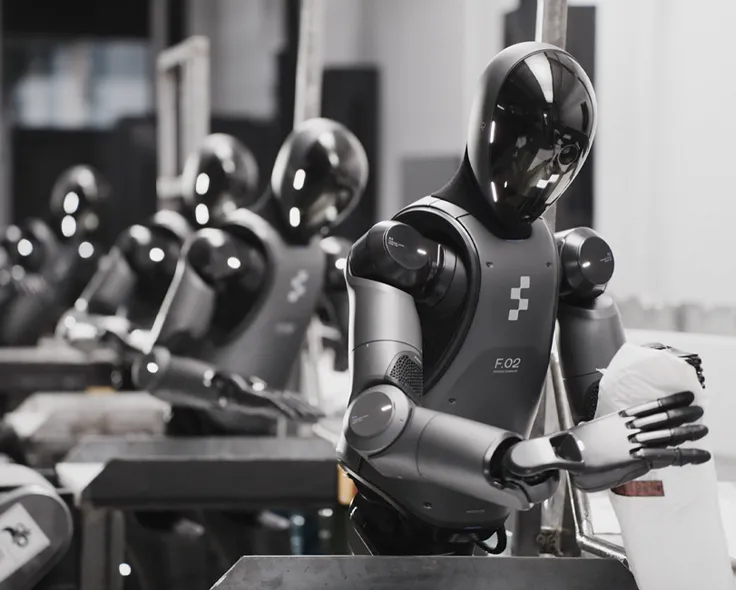
Figure 03’s hands combine softer fingertip geometry with embedded sensing and a small camera in the palm. The softer materials increase contact area and compliance, making grasps more robust across irregular objects. The new tactile sensors are claimed to be very durable and capable of detecting tiny forces, reportedly down to about three grams, roughly the weight of a paperclip, so the robot can detect slips or pressure changes before an error becomes a dropped object.
The palm cameras provide redundant, short-range visual feedback for grasps and allow the system to see when the main head cameras are occluded (for instance, when reaching inside a cabinet). Together, these design elements are meant to produce smoother, continuous control during complex modifications.
Home-friendly engineering and safety
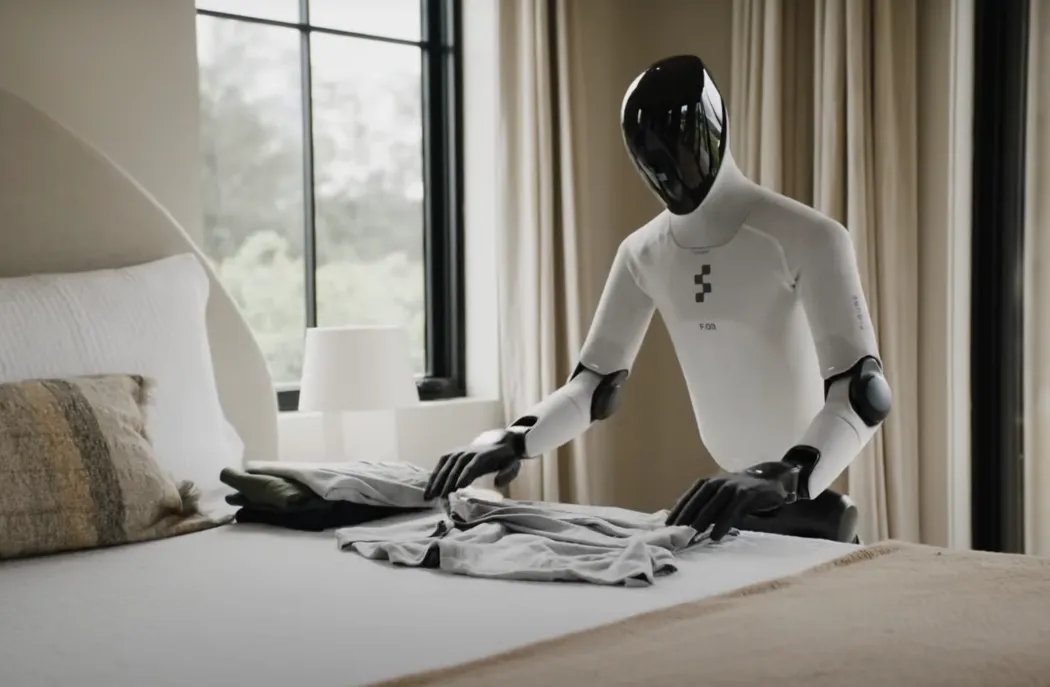
Figure 03 incorporates several features targeted specifically at domestic use. The shell and joints use multi-density foam and soft textiles in key areas to reduce pinch risks and to make interactions feel less mechanical. The soft covers are designed to be washable and removable without tools. The robot is lighter and slightly smaller than the prior generation to better fit through typical household spaces. Power and audio were upgraded for everyday usability.
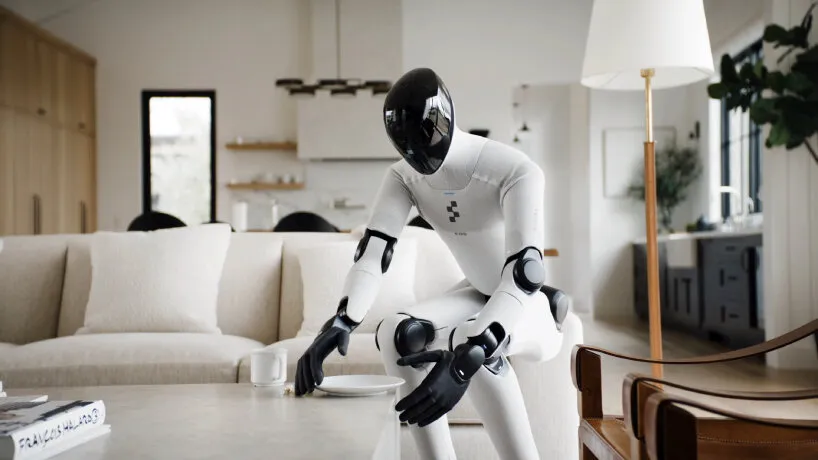
The speaker and microphone arrangements are improved to support clearer voice interaction and two-way speech workflows. On energy and safety, the battery design includes layered protections at the cell, pack, interconnect, and BMS levels, and the Figure reports UN38.3 certification for the pack.
Practical conveniences for homes include wireless inductive charging: charging coils in the feet allow the robot to step onto a mat or stand and charge at up to 2 kW, enabling near-continuous operation when paired with opportunistic docking. For large-scale learning and fleet management, Figure 03 also supports very high-speed data offload advertised as 10 Gbps mmWave, so robot data can be uploaded for model improvement without physical tethers.
Designed for mass manufacture: the BotQ strategy
Perhaps as important as the robot’s sensors and hands is how it’s made. Figure repositioned nearly every component of Figure 03 with manufacturability and cost in mind, with fewer separate parts, fewer hand-assembled steps, and a shift away from expensive, slow CNC machining toward tooled processes such as die-casting, injection molding, and stamping. Those choices require significant upfront tooling investment but reduce per-unit cost as volumes scale.
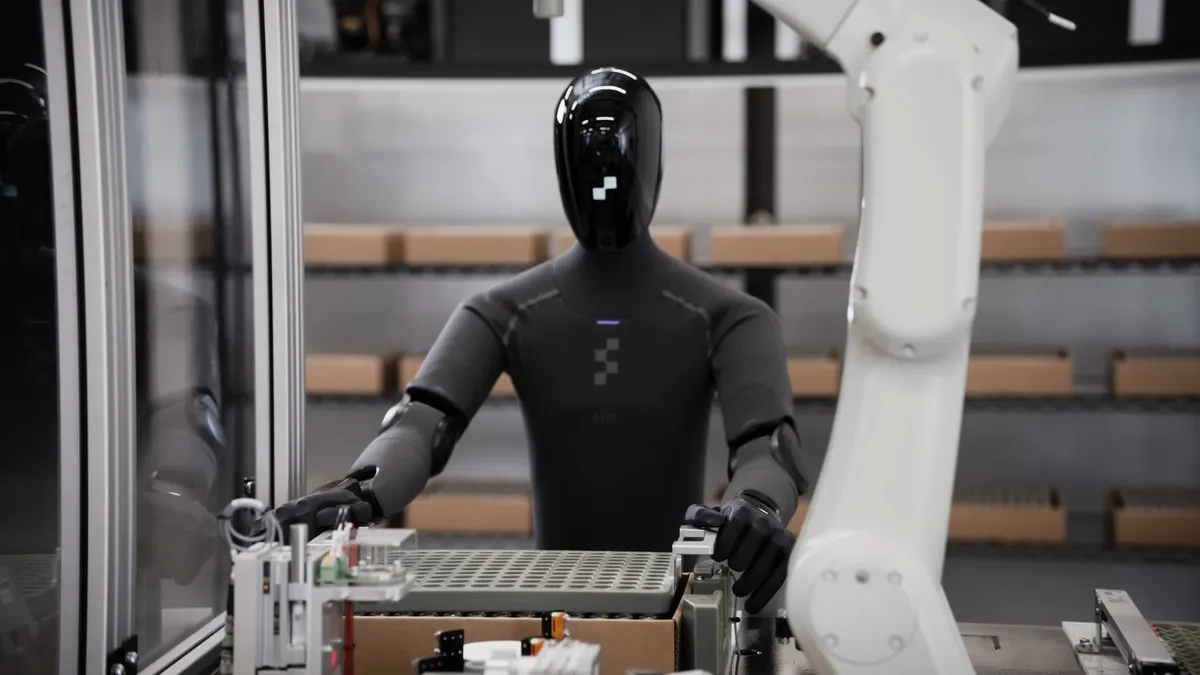
To support high throughput, Figure created BotQ, its dedicated, high-volume manufacturing facility, and reworked supply-chain relationships, verticalizing certain critical module builds (actuators, batteries, sensors, structures, and electronics) while partnering for high-volume component production. BotQ’s first-generation line is stated to aim for roughly 12,000 units per year, with broader plans to scale into the tens of thousands over subsequent years. Those production commitments are central to Figure’s claim that humanoids can transition from lab curiosities to deployable products.
Commercial uses beyond the household
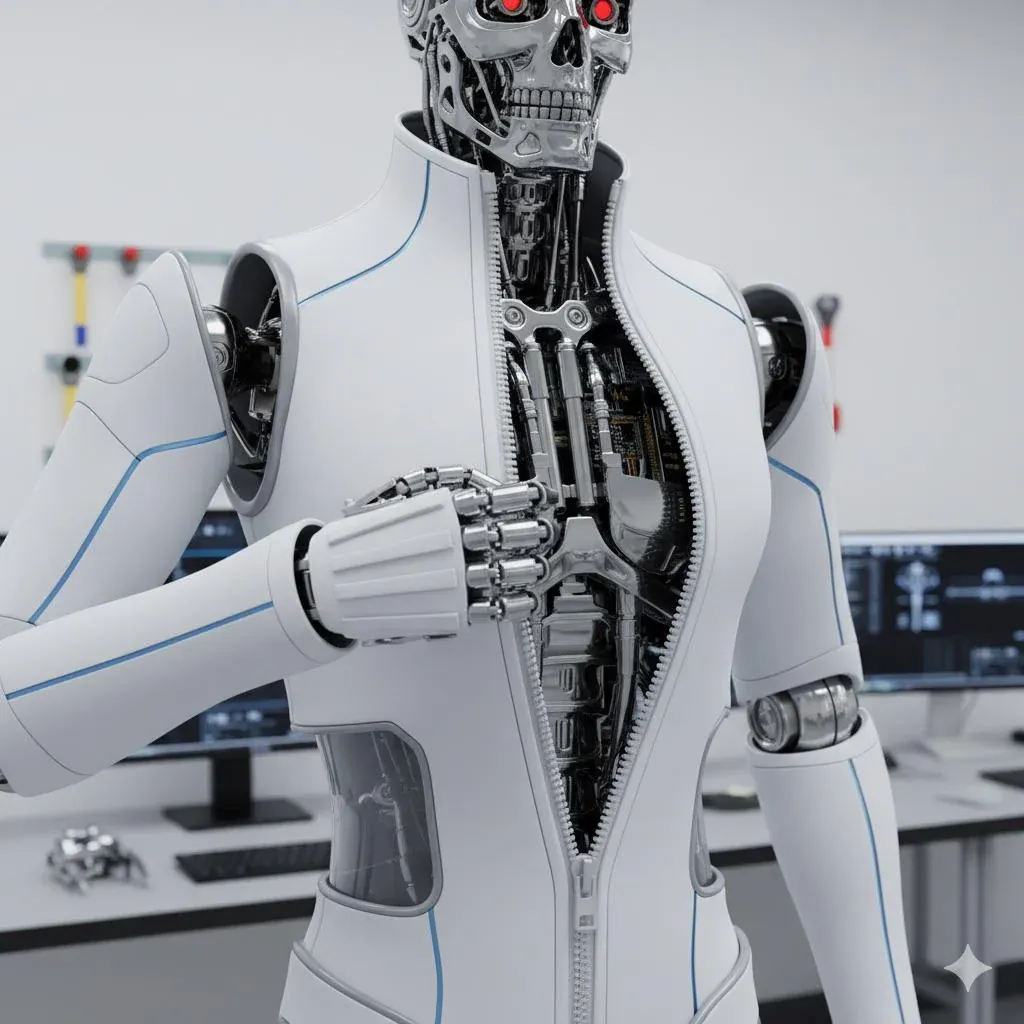
While Figure highlights home use extensively, the same sensing, hands, charging, and manufacturing choices have clear commercial legs. Faster actuators and higher torque density translate into quicker pick-and-place cycles in logistics or retail stocking.
Tactile robustness and fingertip sensing help with delicate or deformable items like thin sheet metal or poly bags, inductive charging, and high-speed data offload fit shift-based workflows where robots return to docks between jobs. The ability to dress fleets in specialized, durable “uniforms” and to display information or brand elements on side screens also anticipates deployment at scale in service and industrial contexts.
Figure 03’s Place in the Global Humanoid Robotics
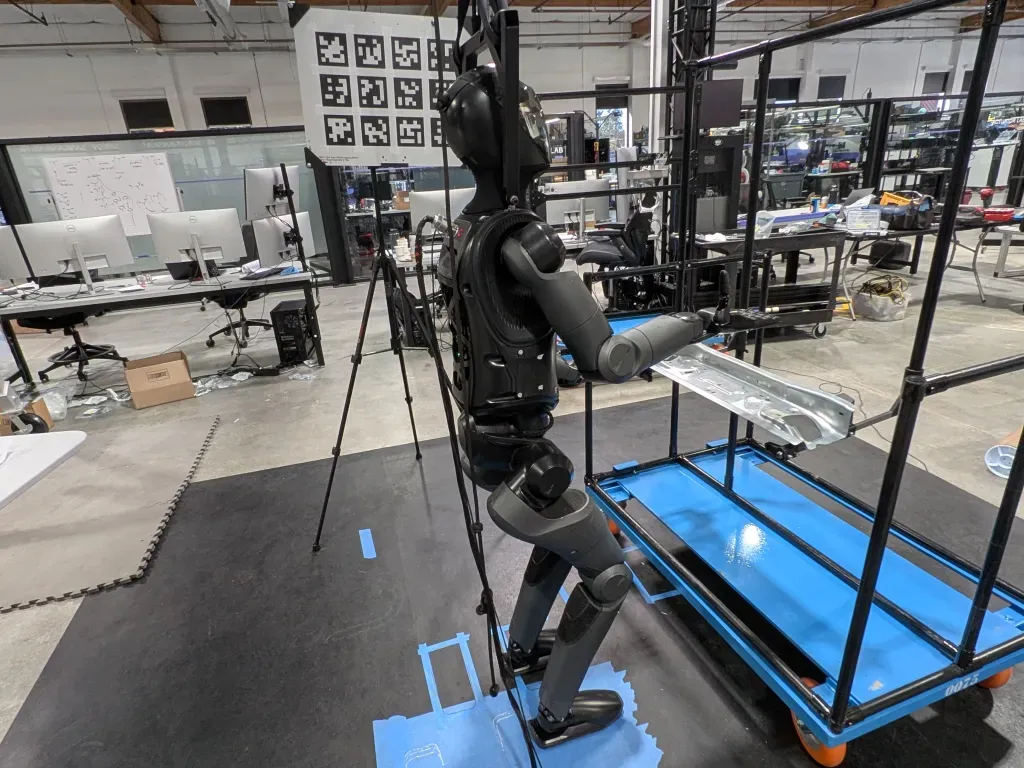
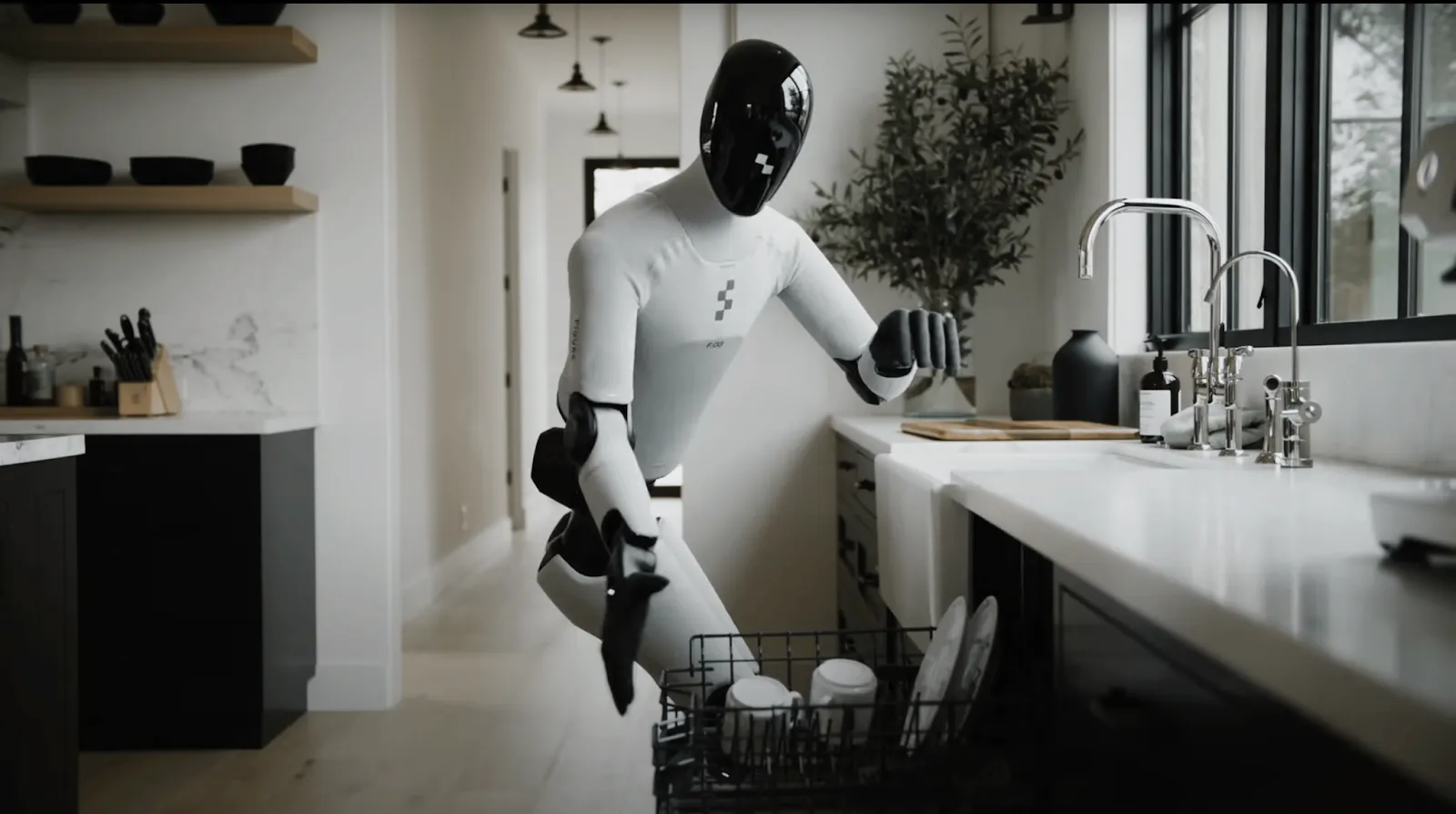
Independent coverage places Figure 03 among a crowded and fast-moving field that includes other well-funded humanoid efforts. Emerging capabilities include folding towels, loading dishwashers, and manipulating everyday items, but also point out that many tasks still require careful setup, controlled demonstrations, or occasional human intervention.
The company’s emphasis on data collection (training Helix from human first-person footage) and on scalable manufacturing shows how Figure plans to close that gap over time, but broader questions of safety in unstructured spaces, privacy of continuous onboard sensing, and the economic impacts of widespread automation remain part of the public conversation.
The Future of Humanoid Robotics with Figure 03
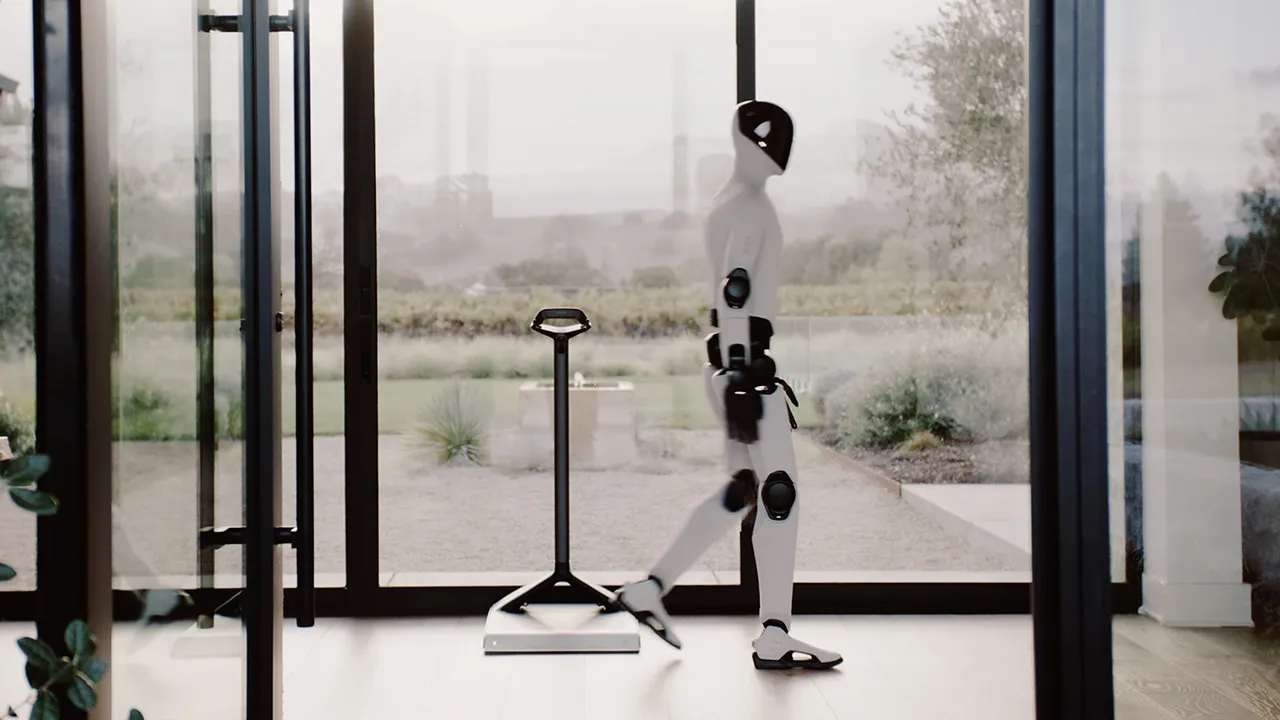
Figure 03 is best read as a systems play; it pairs a perception-heavy body and more tactile hands with a software architecture (Helix) built to turn denser sensory streams into sustained motion and manipulation. The home-facing features lower the bar for day-to-day usability, while manufacturing changes and BotQ aim to make production economically feasible at scale.
Whether Figure 03 becomes the “Model T” of humanoid robotics will depend on how rapidly the autonomy improves in real, messy environments, how well safety and privacy are managed, and whether the economics of mass production lead to wide availability. For now, Figure 03 is a technically detailed step toward that future, notable both for what it can already do and for how it tries to make general-purpose humanoids practical to build and deploy.
Image Credit: Figure AI
Explore Courses

.jpg "Ondrej Chybik - Rethinking Architecture")