


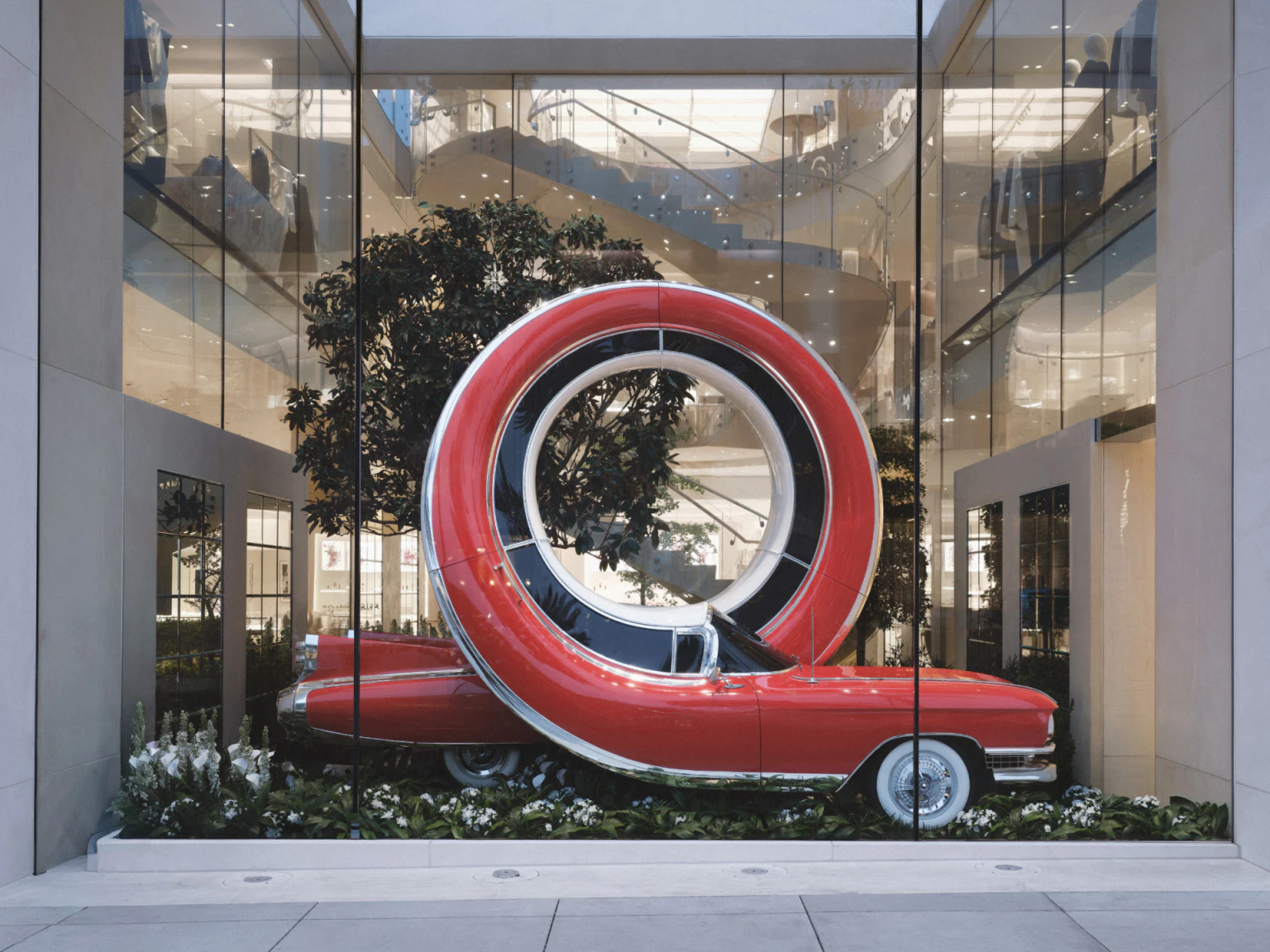
British artist Alex Chinneck has transformed the flagship windows of Dior into theatrical urban landscapes where taxis curl upward, street lamps knot themselves into bows, and vintage cars loop like ribbons. Installed at the House of Dior locations in New York and Beverly Hills, the sculptural interventions blur the boundary between public streetscape, fashion display, and contemporary art installation.
The project arrives as part of the first anniversary celebrations for Dior’s recently opened American flagships, extending the fashion house’s ongoing relationship with artists, architecture, and scenography. Chinneck’s contribution transforms the windows into immersive city fragments that feel caught somewhere between illusion and couture.
Dior’s Surreal New York Built Behind Glass
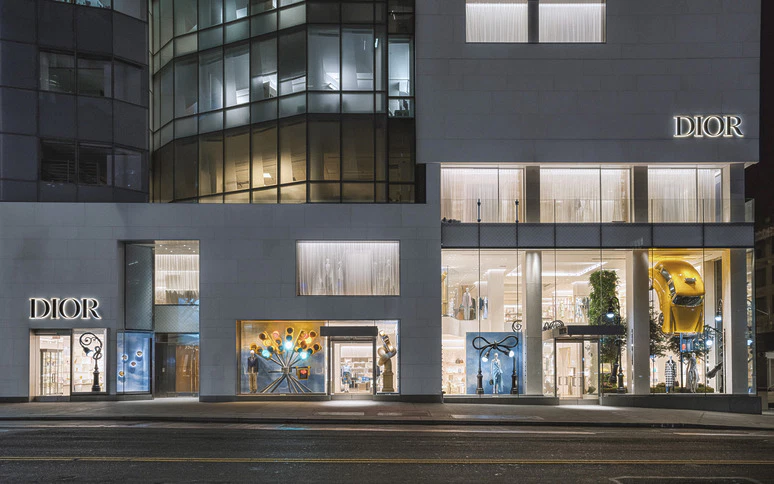
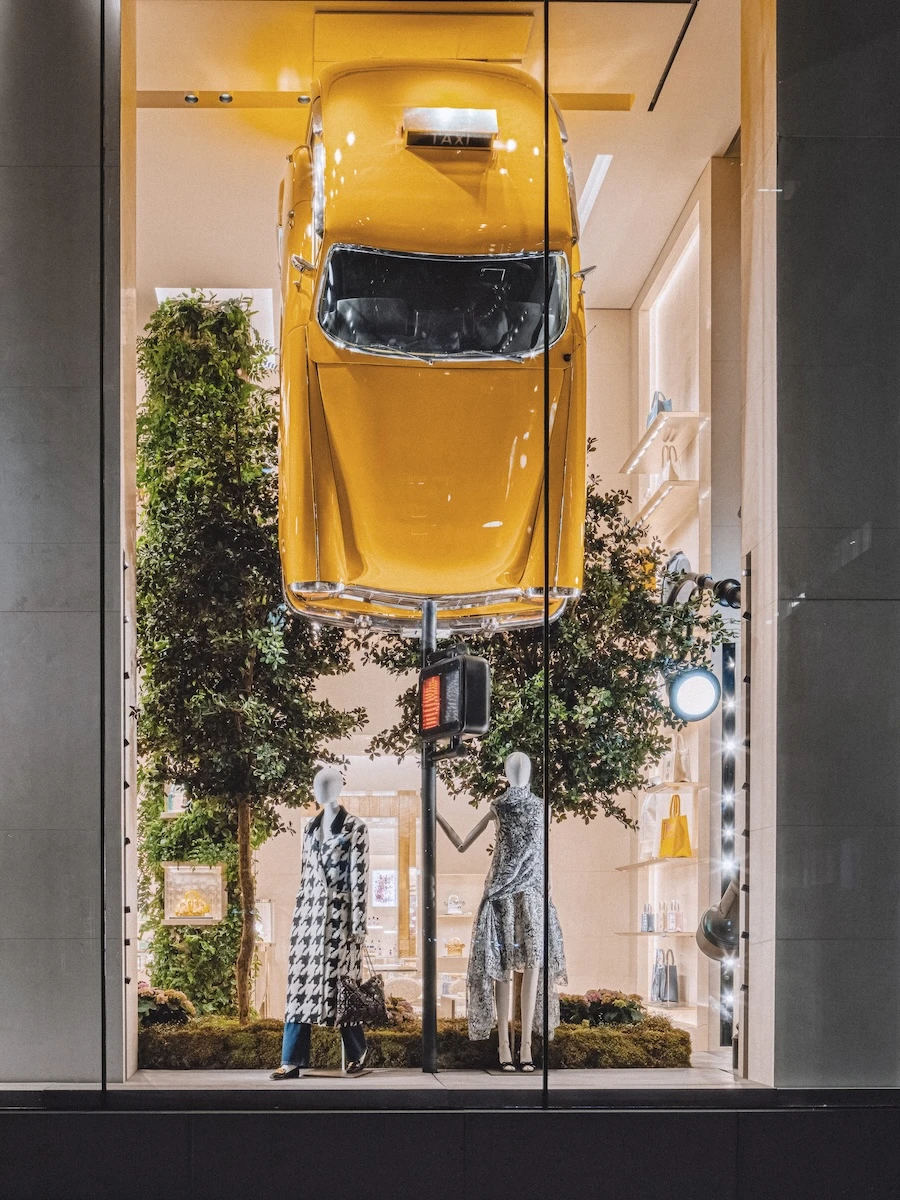
At the House of Dior New York on 57th Street, Chinneck constructed nine sculptural works that reinterpret familiar Manhattan street elements through distortion and theatricality. The most striking installation suspends a classic yellow taxi as though it were peeling upward from the pavement and folding into the air like fabric. Nearby, traffic lights burst outward in clustered formations while clocks twist unnaturally, disrupting the logic of the city’s rigid geometry.
The installations create the illusion of movement and softness within heavy industrial materials. Lamp posts bend into loops and oversized bows, evoking drapery techniques associated with haute couture. Chinneck’s manipulation of urban infrastructure turns ordinary street hardware into sculptural gestures that mirror the language of tailoring and ribbon work.
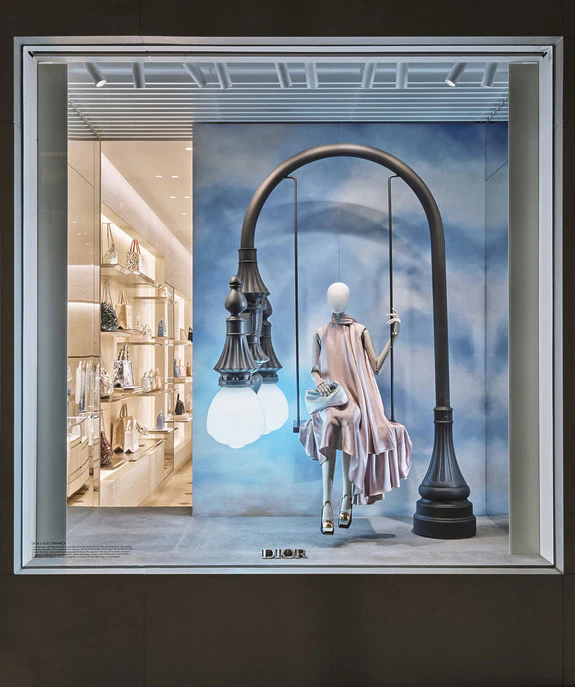
The windows function almost like miniature stage sets visible from the sidewalk. Passersby encounter objects they immediately recognize, only to realize those objects have been physically reimagined into impossible forms. This tension between familiarity and distortion is central to Chinneck’s practice, which often manipulates architecture and industrial materials into optical illusions and surreal interventions.
Beverly Hills Through the Lens of Hollywood Fantasy
In Beverly Hills, the installations shift in tone to reflect Los Angeles culture and Rodeo Drive’s polished visual identity. Here, Chinneck replaces New York’s taxis and traffic signals with sculptural reinterpretations of glossy automobiles and ornamental street lamps.
One installation places a vintage red car inside a giant looping form, bending the automobile into what resembles a calligraphic or oversized metallic ribbon. The object remains identifiable as a car, yet its proportions and impossible curvature transform it into something closer to a surreal public sculpture than a vehicle.
Elsewhere, street lamps twist into knots and bow-like formations that echo the folds and silhouettes of Dior garments displayed nearby. The installations deliberately connect Los Angeles’ automotive culture with the craftsmanship of couture, translating bodywork and chrome into sculptural analogies for draping, threading, and tailoring.
Fashion Windows as Public Art
The collaboration reflects Dior’s increasing investment in experiential retail environments where architecture, art, and fashion operate simultaneously. Both House of Dior locations were designed by architect Peter Marino, whose boutiques often function more like curated cultural spaces than conventional stores.
Chinneck’s installations continue that direction by turning storefront vitrines into urban-scale artworks visible to the public without entering the boutiques. The project uses handcrafted sculptural illusion to command attention at street level. The works are humorous and visually accessible, yet technically precise in the way they manipulate proportion, weight, and material behavior.
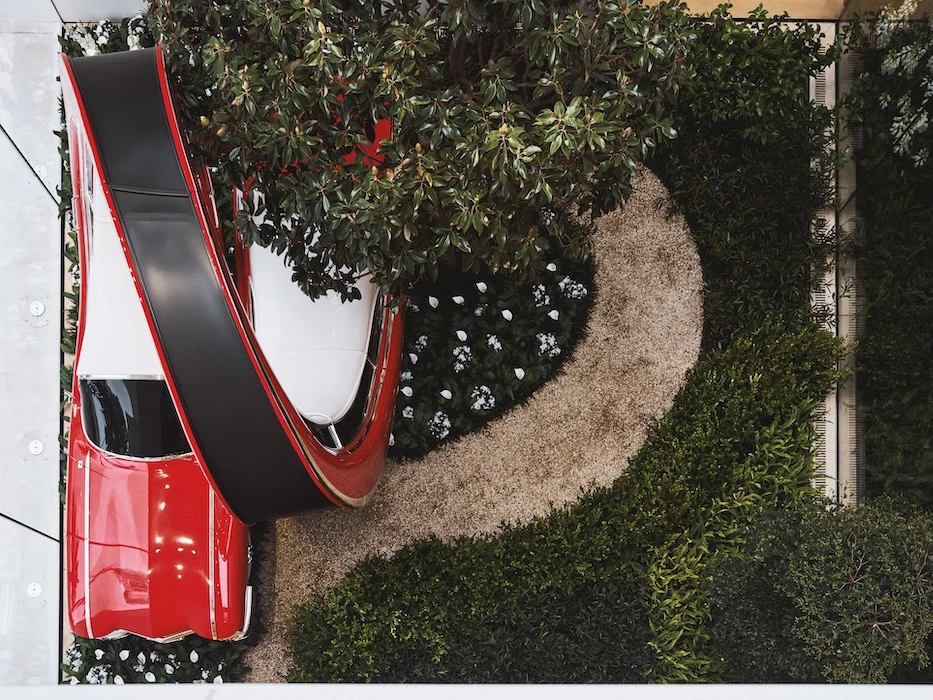
The collaboration also aligns with Dior’s broader cultural positioning under the house’s current creative era, where fashion increasingly intersects with cinema, architecture, and installation art. Recent Dior projects in Los Angeles and New York have emphasized theatrical storytelling and American cultural imagery, making Chinneck’s warped city objects feel like a continuation of that visual strategy.
Turning Everyday Infrastructure Into Couture Objects
What makes the project particularly effective is how it elevates everyday infrastructure into objects of spectacle without stripping away their identity. Taxis, lamps, traffic lights, and cars remain legible, but they behave as though softened, folded, or tied by hand. The installations occupy a strange middle ground between sculpture, scenography, and architectural intervention.
For Dior, the windows become more than retail displays; they operate as visual narratives tied directly to the identities of New York and Los Angeles. For Alex Chinneck, the collaboration expands his ongoing exploration of transforming familiar urban materials into moments of surprise. Together, they create storefronts that feel less like commercial façades and more like fragments of a surreal city unfolding behind glass.
Image credit: © GUILLAUME BARRY
Explore Courses
.jpg "Ondrej Chybik - Rethinking Architecture")