

Topic: Dynamic Wearables for Fashion Design 2.0
Date: July 18 – 19, 2026
Time: 14:00 – 18:00 GMT
Format: Online on Zoom
Duration: 2 Sessions (8 Hours)
Registration Deadline: July 17th, 2026
Total Seats: 50 seats
Difficulty: Beginner – Intermediate
Language: English
Certificate: Yes
General Registration: 100 EUR
Join free: with Full Access membership
Fee for Digital Members: 85 EUR (15% discount available only for Digital Members)
Organized By: PAACADEMY
Tutor: RJ Weaver
Recordings: Recordings will be available for all participants afterward indefinitely.
Introduction to Dynamic Wearables for Fashion Design 2.0:
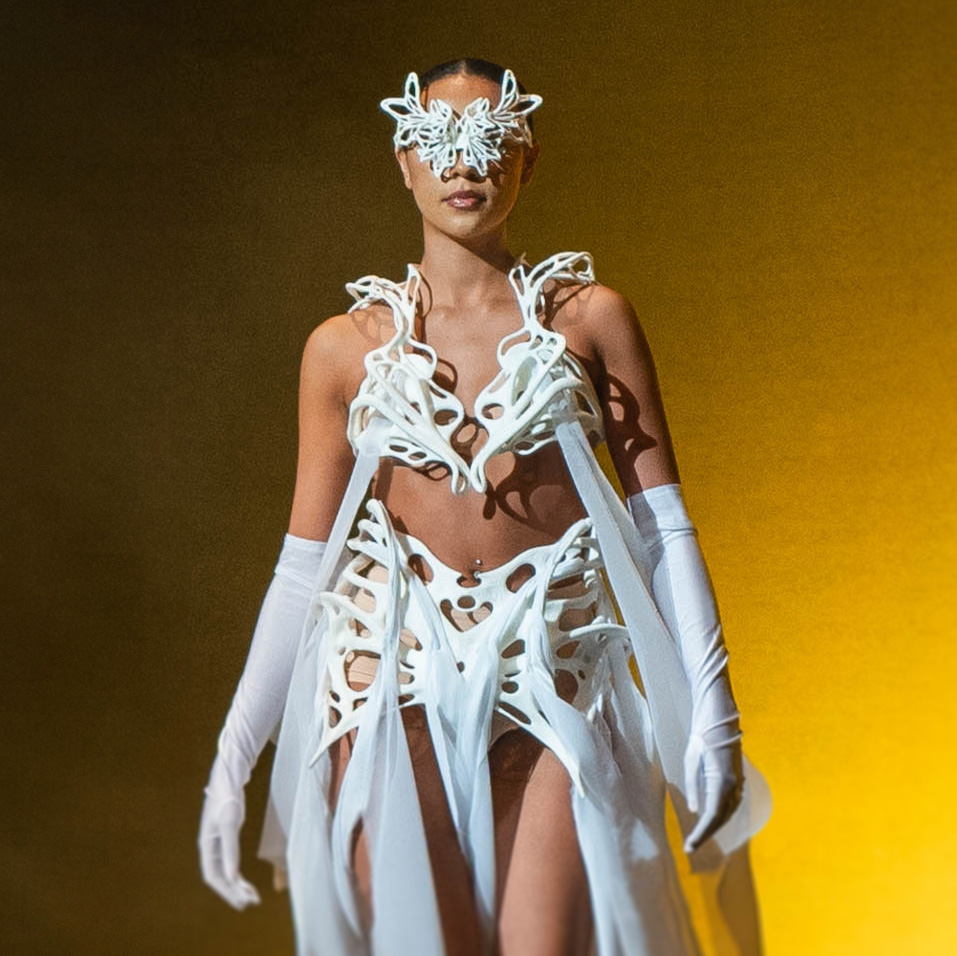
This workshop expands the logic of dynamic wearables from jewelry-scale precision into garment-scale body systems, teaching students how to generate, map, segment, and fabricate computational designs that move between ornament, accessory, and fashion.
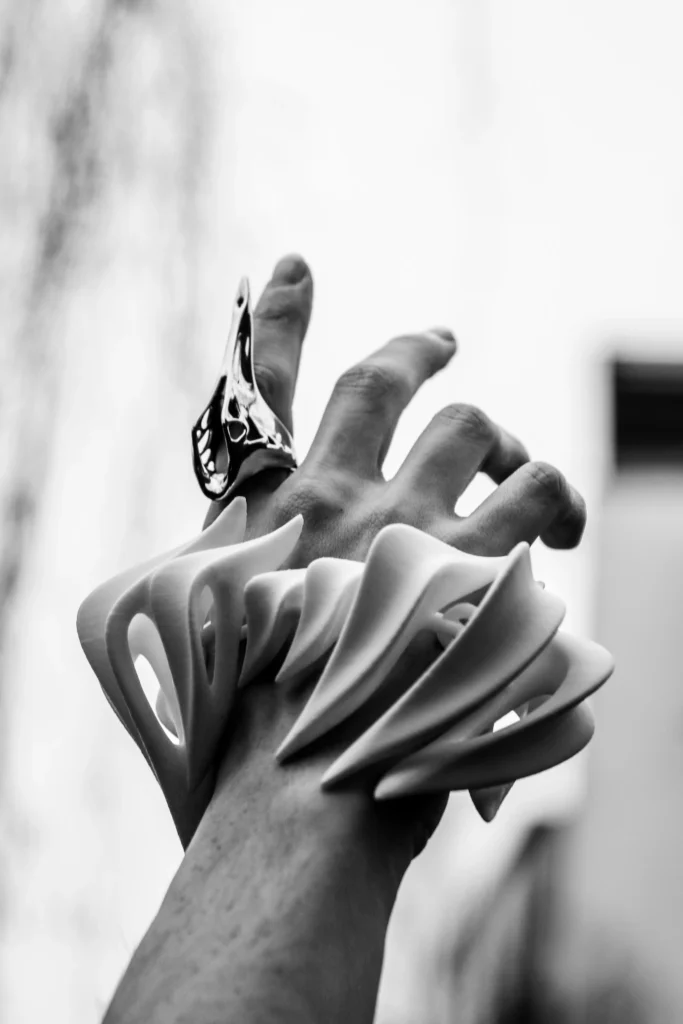
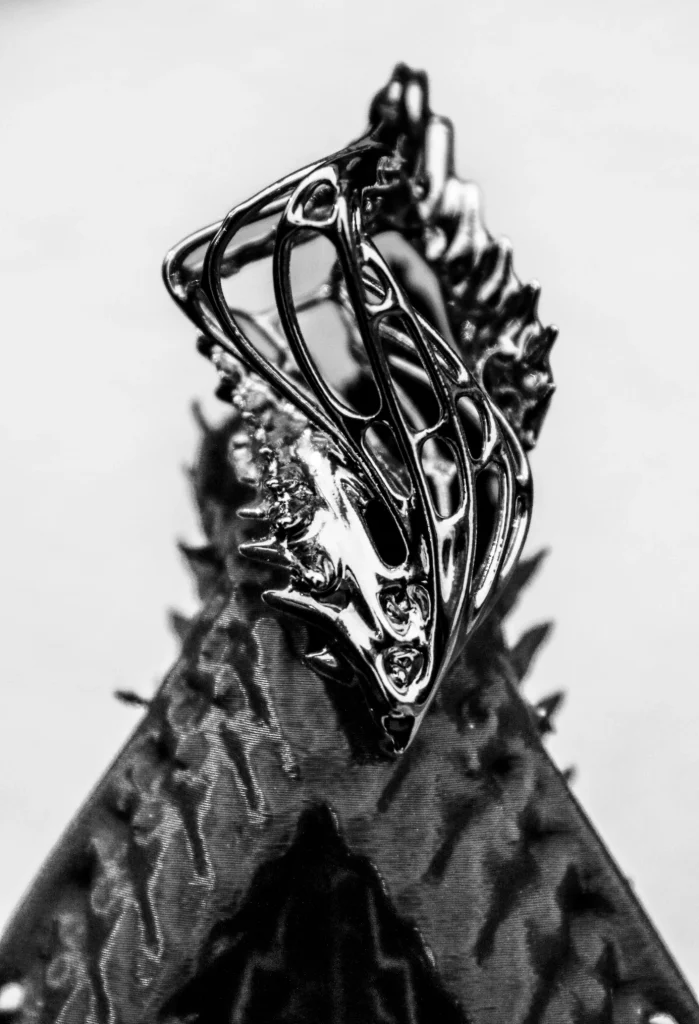
Rather than treating jewelry and garments as separate disciplines, the course explores how the same parametric logic can operate across multiple scales of the body. A small module, such as a scale, bead, link, rib, tile, or pendant-like element, can become a bracelet, collar, surface detail, flexible textile structure, or the building block for a larger garment system.
On Day 1, students will create a jewelry-inspired parametric module or pattern system using Rhino and Grasshopper. They will learn how to control repetition, spacing, density, orientation, and variation through arrays, attractors, graph mappers, and mapping workflows. Between sessions, students will refine this module into their own visual language.
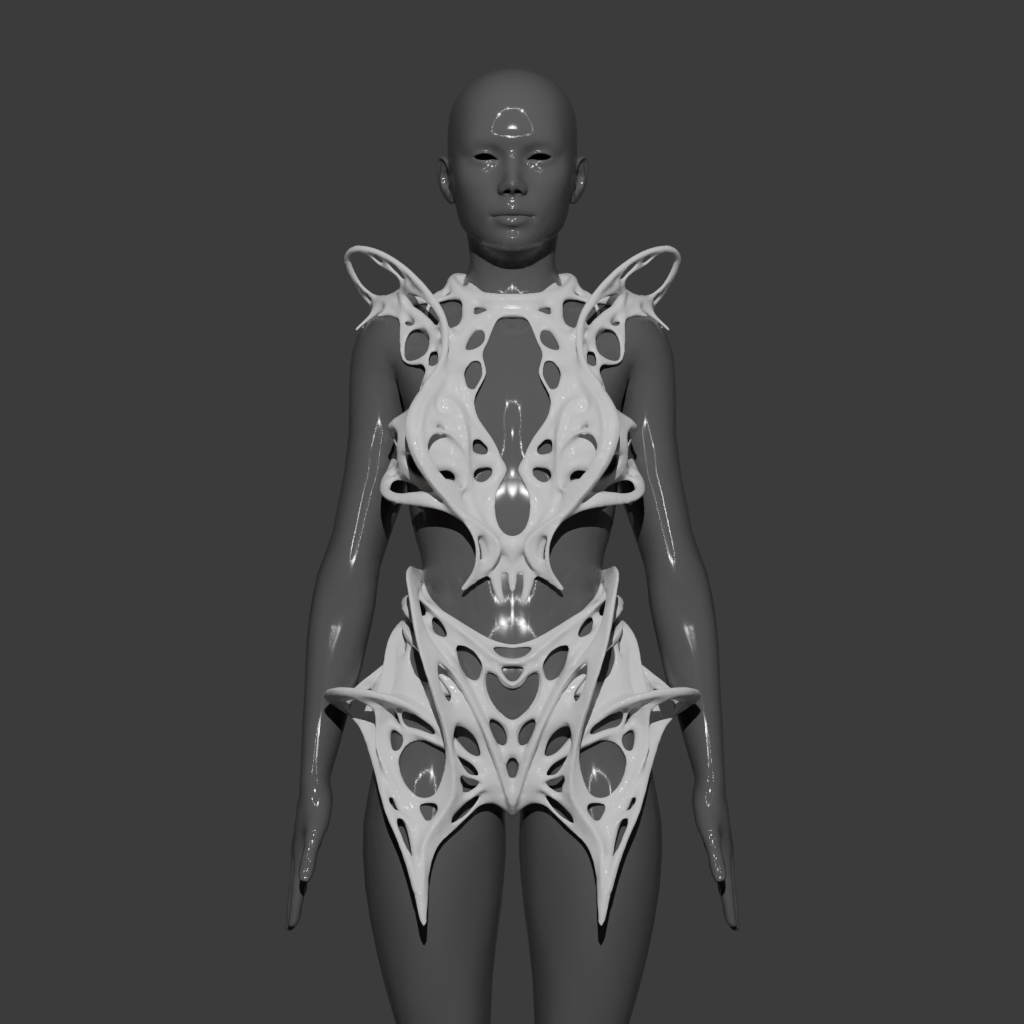
On Day 2, the workshop scales this system onto the body. Students will learn how to use body scans, garment regions, curves, surfaces, twisted box mapping, segmentation, and flattening logic to transform a small computational detail into a larger body-driven wearable system.
By the end of the workshop, students will understand how to move from a small parametric ornament to a garment-scale computational design workflow while considering body fit, flexible fabrication, flat pattern logic, and hybrid assembly.

Methodology:
This workshop is structured as a two-day progression from small-scale computational ornament to larger body-driven garment systems. It combines short lectures, live Rhino/Grasshopper demonstrations, follow-along workflows, and a homework prompt for the first night that prepares students for the second day.
Day 1 focuses on jewelry-scale pattern logic. Students will build a small parametric module and learn how to repeat, array, morph, and control it across curves or surfaces. This smaller scale gives students a clear and manageable entry point into computational design before expanding into more complex body-based systems.
Between sessions, students will refine their module or pattern system by adjusting its silhouette, spacing, density, thickness, and overall design language. The goal is not to complete a final project, but to prepare a personal computational element that can be reused on Day 2.
Day 2 focuses on garment-scale application. Students will learn how to bring their module into a body-based workflow using scans, garment regions, curves, surfaces, twisted box mapping, and parametric pattern placement. The course will also introduce segmentation, unrolling, flattening, and flexible fabrication logic so students understand how digital garment systems can be prepared for physical development.
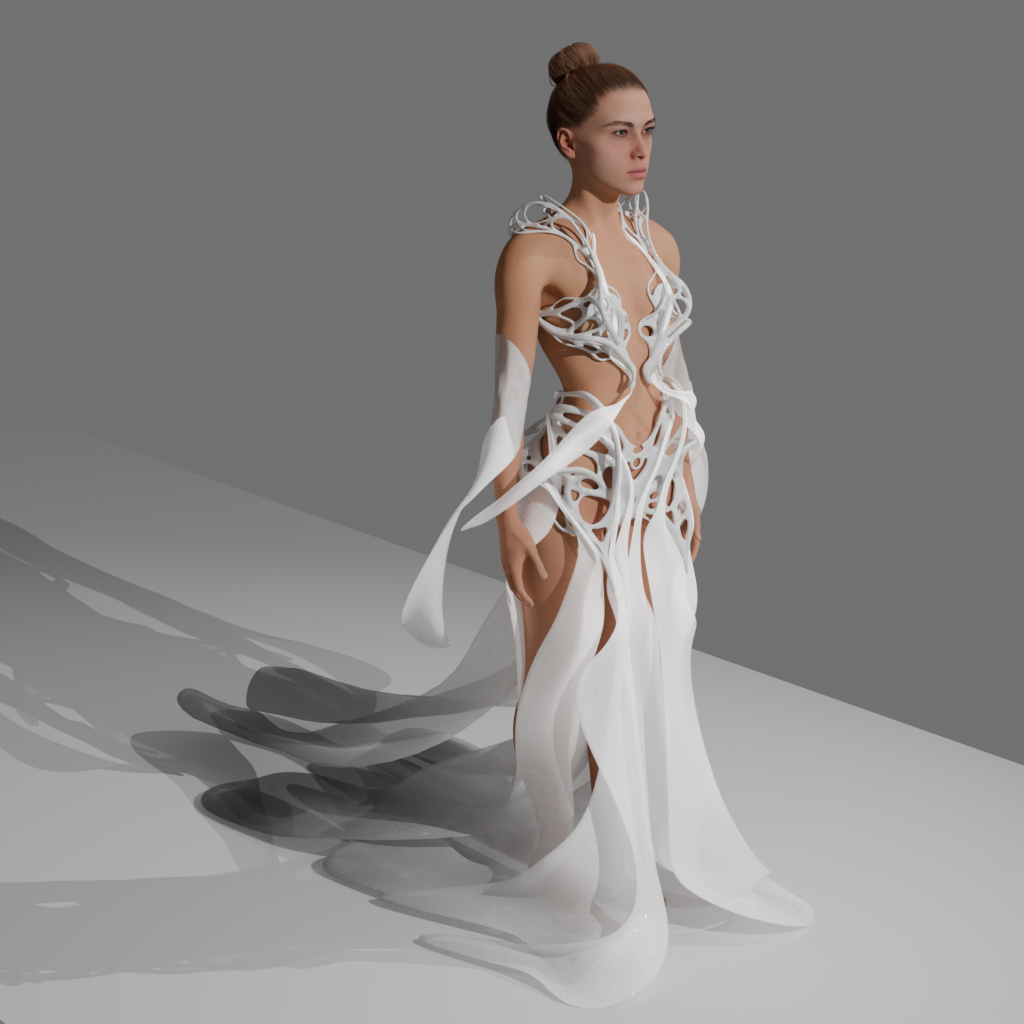
By the end of the workshop, students will understand how one computational detail can scale from ornament to accessory to garment structure.
This workshop is structured as a two-day progression from small-scale computational ornament to larger body-driven garment systems. It combines short lectures, live Rhino/Grasshopper demonstrations, follow-along workflows, and a homework prompt for the first night that prepares students for the second day.
Day 1 focuses on jewelry-scale pattern logic. Students will build a small parametric module and learn how to repeat, array, morph, and control it across curves or surfaces. This smaller scale gives students a clear and manageable entry point into computational design before expanding into more complex body-based systems.
Between sessions, students will refine their module or pattern system by adjusting its silhouette, spacing, density, thickness, and overall design language. The goal is not to complete a final project, but to prepare a personal computational element that can be reused on Day 2.
Day 2 focuses on garment-scale application. Students will learn how to bring their module into a body-based workflow using scans, garment regions, curves, surfaces, twisted box mapping, and parametric pattern placement. The course will also introduce segmentation, unrolling, flattening, and flexible fabrication logic so students understand how digital garment systems can be prepared for physical development.
By the end of the workshop, students will understand how one computational detail can scale from ornament to accessory to garment structure.
- Jewelry Pattern Thinking
Learn how to create jewelry components and patterns that can become the foundation for larger fashion and body systems. - Patterning and Variation
Control repetition, density, spacing, orientation, and scale using arrays, attractors, graph mappers, and curve-based systems. - Body-Driven Design
Use body scans and anatomical regions to guide the placement and behavior of computational patterns. - Accessory and Garment Applications
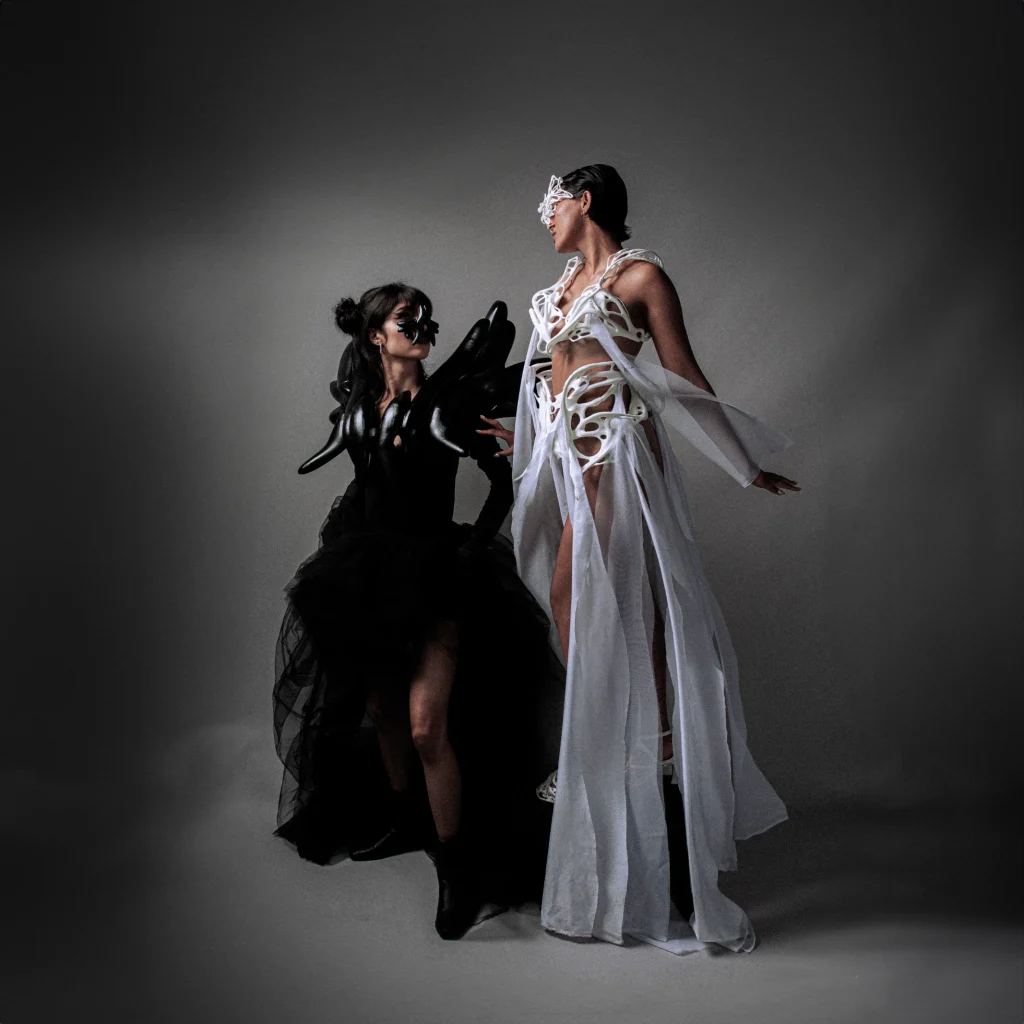
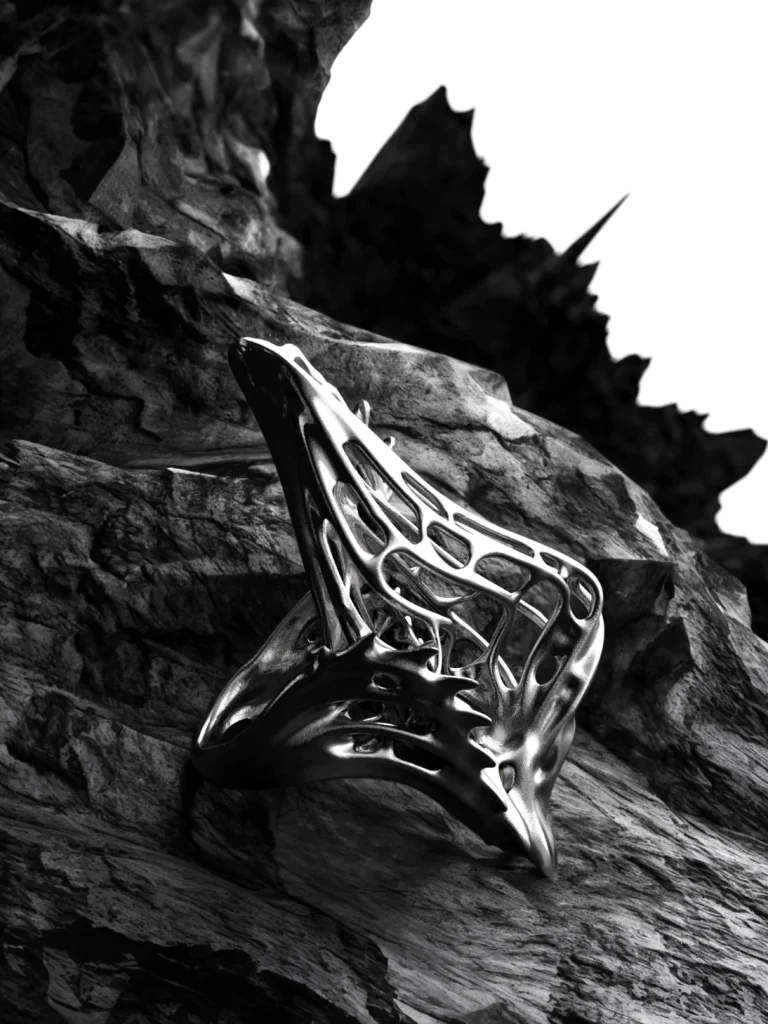
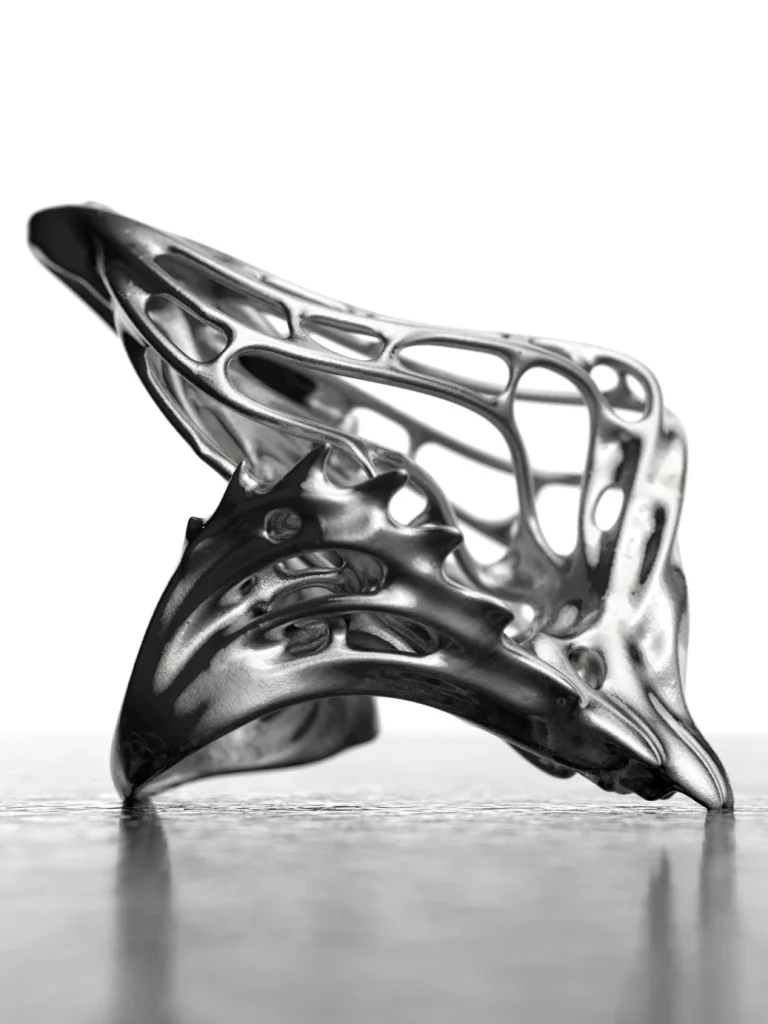
Apply module systems to bracelets, collars, necklaces, shoulder pieces, sleeves, bodice panels, corset sections, and sculptural wearables. - Mapping Geometry Around the Body
Learn how to place curves, surfaces, repeated components, and pattern systems onto body-based garment regions. - Rhino, Grasshopper, and SubD Workflows
Combine Rhino modeling, Grasshopper systems, twisted box mapping, and SubD techniques for wearable form generation. - Segmentation and Flat Pattern Logic
Divide 3D garment systems into panels or components that can be flattened, printed, cut, or assembled. - Flexible Fabrication Awareness
Understand design considerations for TPU, flexible resin, lattices, hinges, perforations, textile attachments, and hybrid construction.
Key Learning Topics:
- Create parametric modules for jewelry and wearable systems.
- Build adjustable workflows in Rhino and Grasshopper.
- Generate arrays, curve-based patterns, and modular distributions.
- Control density, spacing, scale, thickness, and variation.
- Design using body scans and mannequin-based geometry.
- Map modules across body surfaces with twisted box mapping.
- Combine SubD modeling, panelization, flattening, and unrolling.
- Prepare flexible fabrication systems using TPU, lattices, and hinges.

Program:
Day 1 – Jewelry-Scale Pattern Systems
Designing the Module, Pattern, and Ornament Logic
Introduction: From Ornament to Garment
- Instructor introduction and overview of relevant wearable, jewelry, and garment work
- Overview of the workflow:
Jewelry Module → Pattern System → Body Mapping → Garment Structure
- Explanation of the course thesis:
Dynamic wearables can move between ornament, accessory, and garment when they are built as adaptable parametric systems.
Building a Jewelry-Scale Module
- Introduction to small-scale parametric design logic
- Designing a simple module that can become:
- a pattern
- tile
- curve system
- surface detail
- Rhino modeling techniques:
- curves
- surfaces
- SubD forms
- simple solids
- Grasshopper setup:
- sliders
- parameters
- controllable proportions
- repeatable geometry
Patterning, Arrays, and Variation
- Turning a single module into a repeatable system
- Creating arrays along curves and surfaces
- Using Graph Mapper to control variation
- Using attractors to control:
- scale
- density
- spacing
- height
- thickness
Mapping Modules onto Jewelry and Accessory Forms
- Applying the pattern to smaller wearable forms:
- bracelet
- cuff
- collar
- necklace
- pendant surface
- Introduction to twisted box mapping and morphing logic
- Understanding orientation, spacing, deformation, and pattern direction
- End-of-day homework:
- Refine your module or pattern system
- create 2–3 variations
- Choose one version to bring into the garment workflow on Day 2
Day 2 – Garment-Scale Body Systems
Scaling Jewelry Logic into Body-Based Fashion Structures
Body Scan Setup and Garment Region Design
- Importing or referencing a body scan/mannequin
- Reading the body as a design environment
- Using curves to define seams, boundaries, gesture lines, and structural paths
Mapping Jewelry Patterns onto the Body
- Bringing the Day 1 jewelry-scale pattern into a garment-scale workflow
- Placing modules across body-based curves or surfaces
- Using attractors and graph mappers to control density and scale across the body
Garment Form Development and Surface Control
- Developing the mapped system into a larger garment structure
- Rhino and Grasshopper methods for:
- curve networks
- contour systems
- ribs
- lattices
- surface subdivision
- modular panel systems
- SubD modeling for soft body-adjacent garment volumes
Segmentation, Flattening Logic, and Fabrication-Aware CAD
- Dividing garment systems into printable or cuttable panels
- Preparing geometry for unrolling, flattening, or a 2D layout
- Brief overview of flexible fabrication logic:
- TPU
- flexible resin
- printed panels
- lattice flexibility
- hybrid textile attachments
- Closing demonstration:
- show how the Day 1 jewelry module updates the Day 2 garment system when parameters change
Software:
- Rhino
- Grasshopper
Plugins:
- Ngon
- Pufferfish
- Peacock
- Parakeet
- Kangaroo2
- Rich Graph Mapper
- Dendro
- Tundra
- Anemone
- Fennec
- Dodo
- Mesh+
- VoxelTools
- Sinew (custom file)
Workshop Notes:
- Software Installation is NOT a part of the workshop! Students must have all the software installed before starting the workshop. (Polycam is not a requirement as 3D scan files will be provided, but students are recommended to explore the tool after the course.)
- Access to a 3D printer would be a great benefit to the students’ work as they could print their creations after the course, but this is not a requirement for the students’ success in the workshop.
Instructor:
RJ Weaver

RJ Weaver is a computational designer with a passion for personalized mass-manufacturing and wearable body architecture, and strives to craft solutions that contribute to a more beautiful and equitable world. Originally from Virginia, U.S.A., and now based in London, he holds a degree in Industrial Design from Virginia Polytechnic University and a master’s degree in Computational and Advanced Design from DesignMorphine in Sofia, Bulgaria.
He has been working with computational design tools such as Grasshopper and Houdini for the past 10 years, and since 2022 has been publishing tutorials on his YouTube channel and lecturing at American universities. He is currently the 3D Design Director at the fashion design studio ORBWEAVER, where he oversees the brand’s jewelry direction. His work has been exhibited in London galleries and featured on the runways of BioTech Couture and Vêtement de Rue, exploring contemporary parametric and virtual reality design workflows through wearable sculpture.
Important Notes:
- The “Dynamic Wearables for Fashion Design 2.0” workshop by PAACADEMY will start at 14:00 (GMT) on Saturday, July 18th, 2026.
- Total sessions: 2 Sessions (8 Hours).
- The teaching duration per session will be 4 hours.
- Students will have time for a break between teaching hours.
- The workshop will be recorded, and videos will be available for participants just a day after the class for an unlimited time.
- PAACADEMY will provide a certificate of attendance.
- The studio has limited seats. Tickets are non-transferable & non-refundable. Please read carefully before you register.

Topic: Dynamic Wearables for Fashion Design 2.0
Date: July 18 – 19, 2026
Time: 14:00 – 18:00 GMT
Format: Online on Zoom
Duration: 2 Sessions (8 Hours)
Registration Deadline: July 17th, 2026
Total Seats: 50 seats
Difficulty: Beginner – Intermediate
Language: English
Certificate: Yes
General Registration: 100 EUR
Join free: with Full Access membership
Fee for Digital Members: 85 EUR (15% discount available only for Digital Members)
Organized By: PAACADEMY
Tutor: RJ Weaver
Recordings: Recordings will be available for all participants afterward indefinitely.