


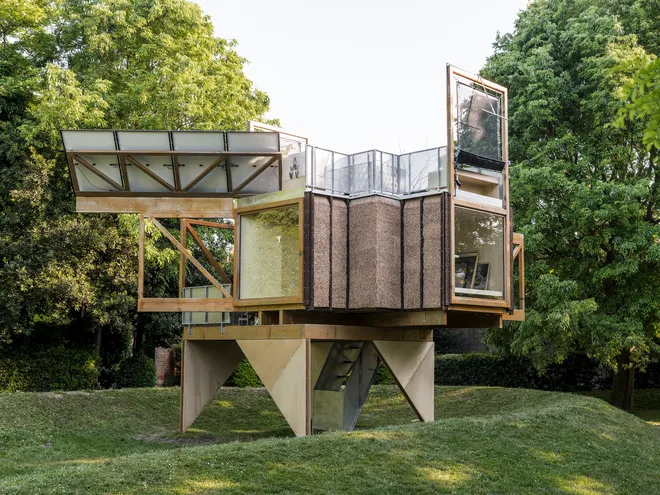
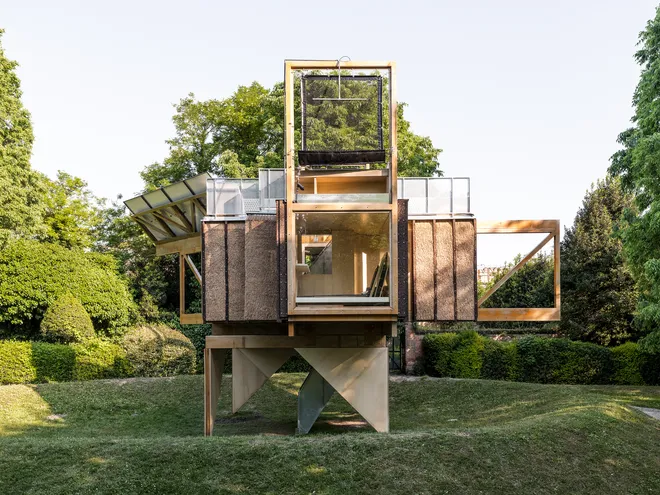
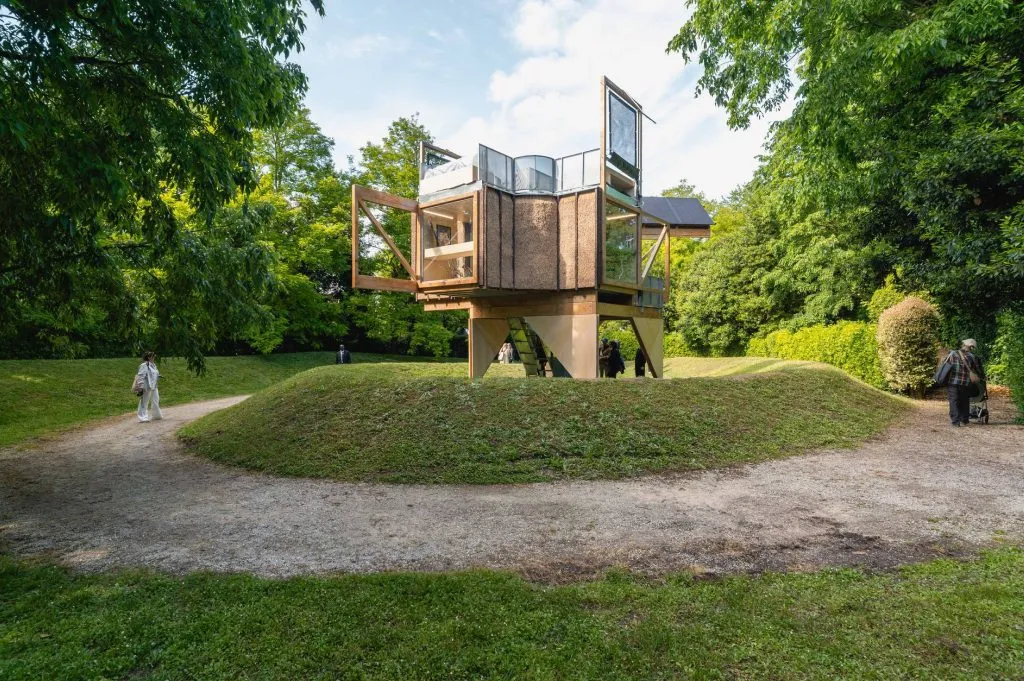
Exhibited at the Venice Architecture Biennale 2025, under the title Deserta Ecofolie: A Prototype for Minimum Dwelling, is a biogenic facade system designed by architects Pedro Ignacio Alonso and Pamela Prado with an interdisciplinary collaboration between the Atacama Desert Centre at the Universidad Católica de Chile and CINARK (Centre for Industrialised Architecture). Located in Chile’s Atacama Desert, the project explores strategies for biogenic and regenerative facades for the green transition, focusing on sustainable design solutions that respond to the ongoing environmental crisis.
Role of CINARK in Rethinking Architecture
Located in Copenhagen, Denmark, CINARK, directed by Professor Anne Beim, is a research and education centre at the Royal Danish Academy – Architecture, Design and Conservation (KADK). It focuses on how industrialised construction and prefabrication integrate sustainability, ecology, new building techniques, and materials into the built form. The centre hosts workshops and fosters dialogue between architects, manufacturers, and users to promote a holistic and collaborative approach.
CINARK’s core philosophy is to redefine the architect’s role from a designer focused on form and aesthetics to an industrial strategist who understands supply chains, materials, and manufacturing processes, ensuring that industrial methods support ecological goals. The integration of educational research is CINARK’s strategy to ensure that the next generation of building professionals acquires skills to implement sustainable industrial methods.
Modular design of Deserta Ecofolie
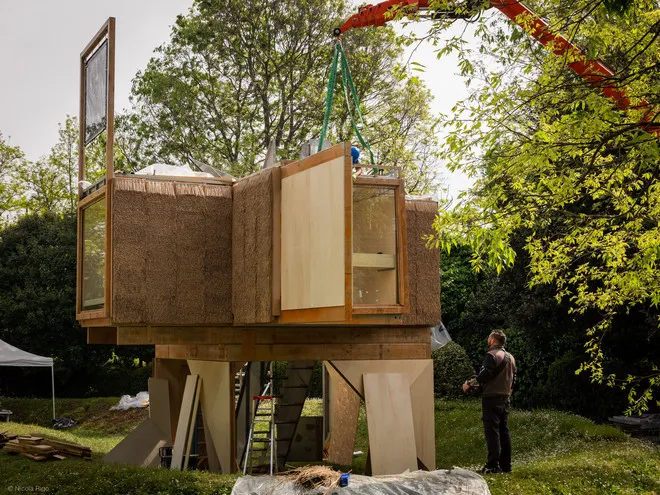
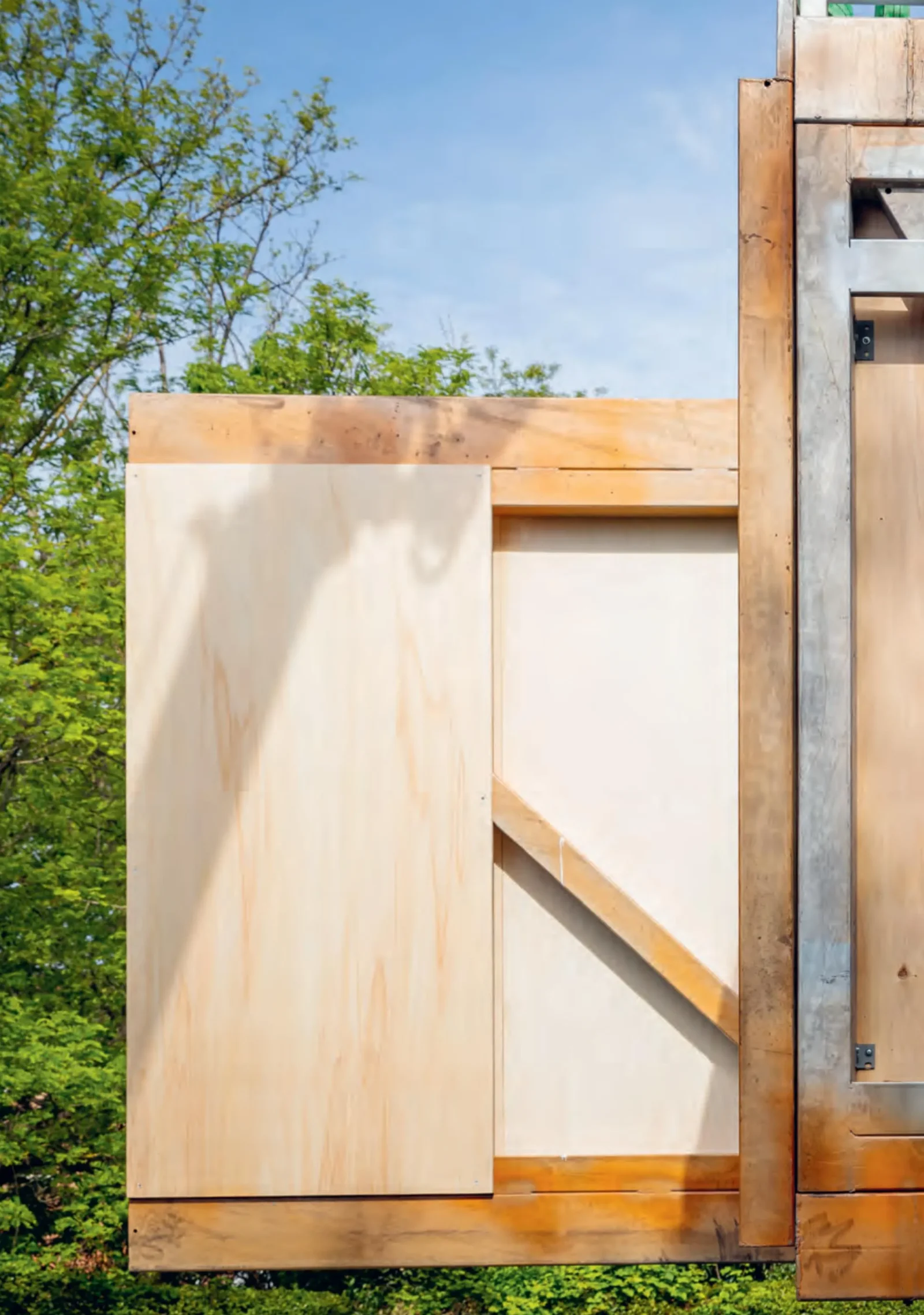
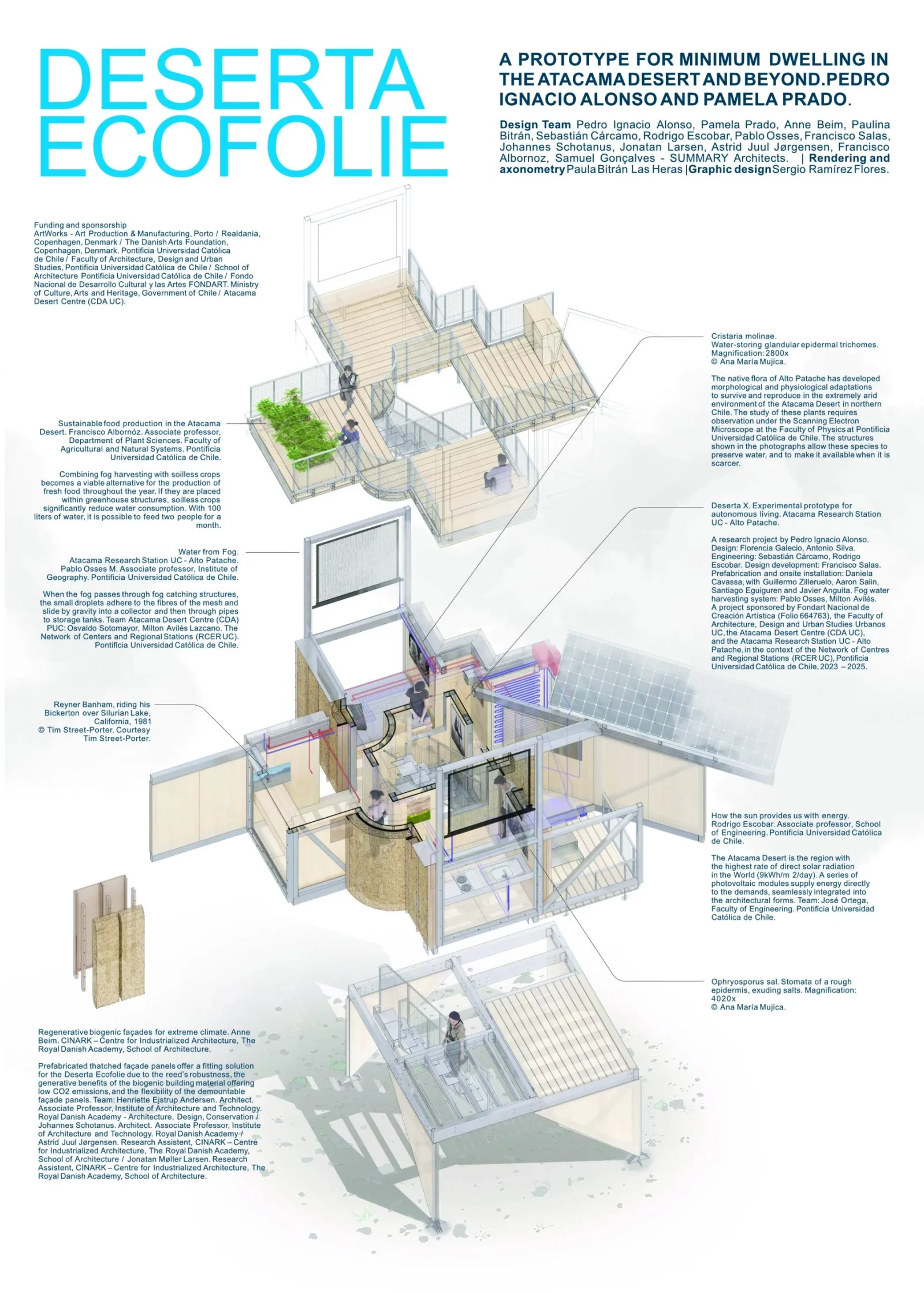
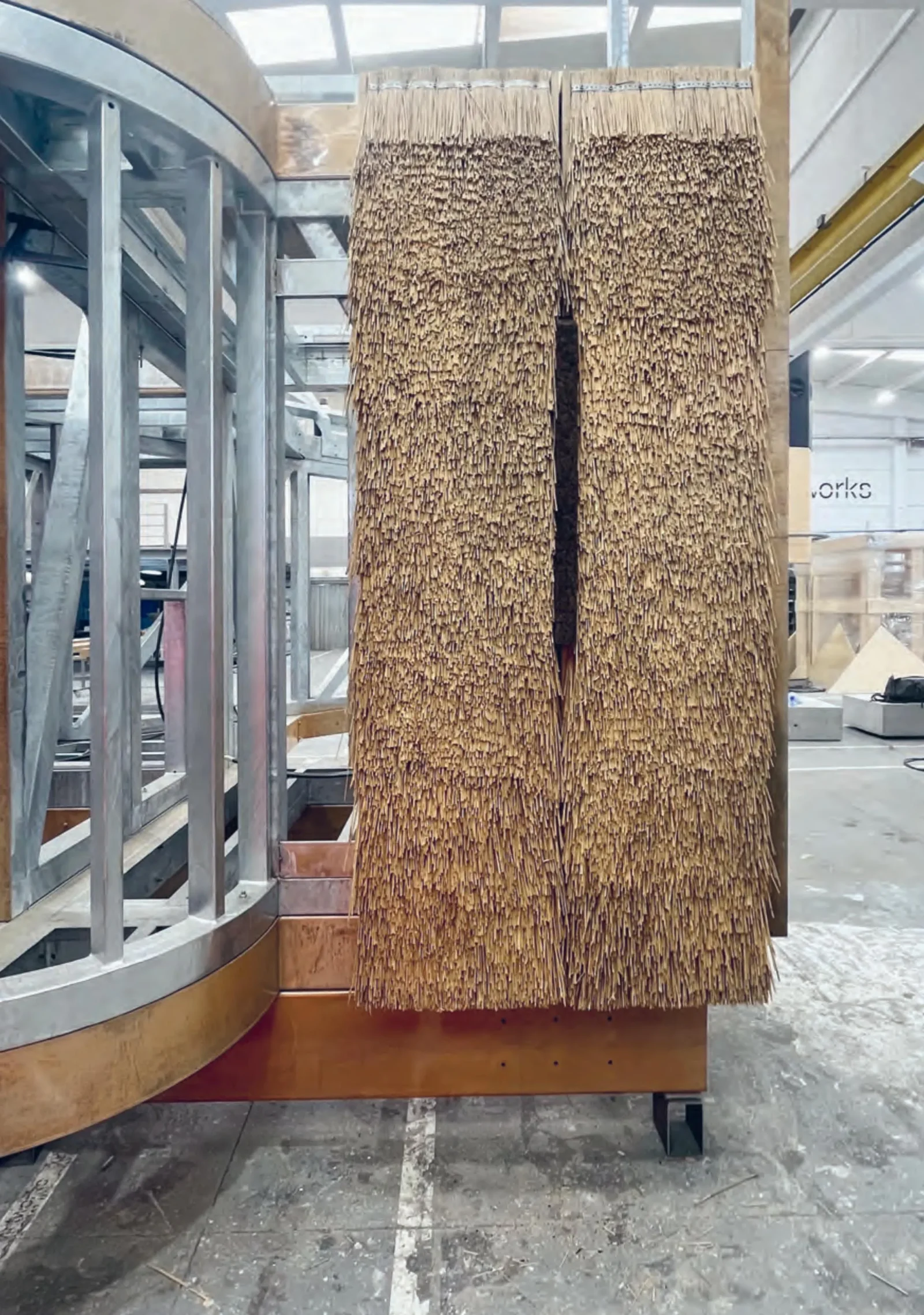
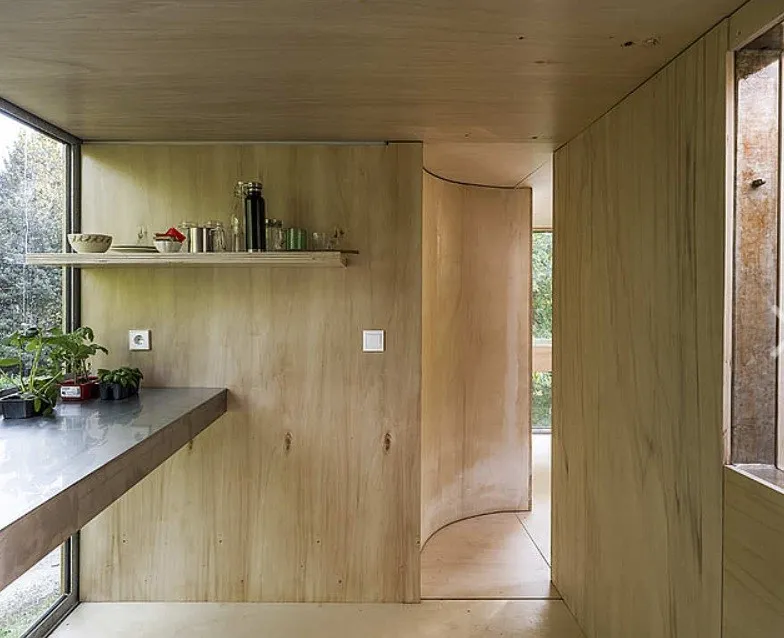
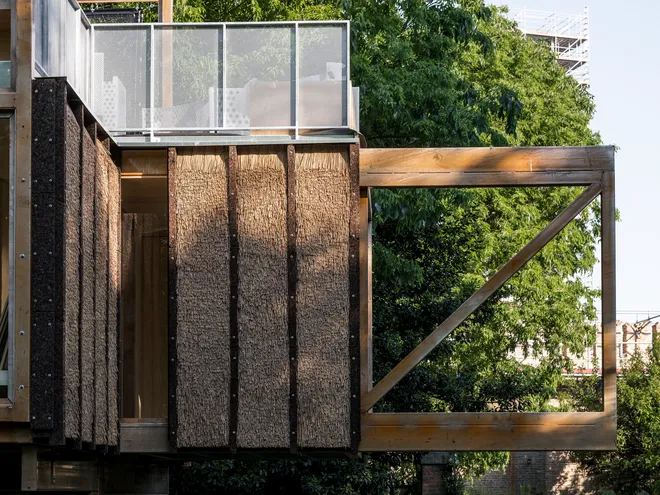
A 16 m² prefabricated Deserta Ecofolie structure accommodates a minimum dwelling for two people in the most extreme climates on Earth. Using a lightweight hybrid system, the unit was prefabricated with an outer envelope consisting of a biogenic façade system: thatched façade panels using reed, eelgrass, and cork profiles mounted into wooden cassettes. The spatial layout includes a bedroom, a kitchen, and a bathroom. At the centre is a void, and the unit is elevated on piles to raise it above the ground, providing shading beneath.
Material Innovation
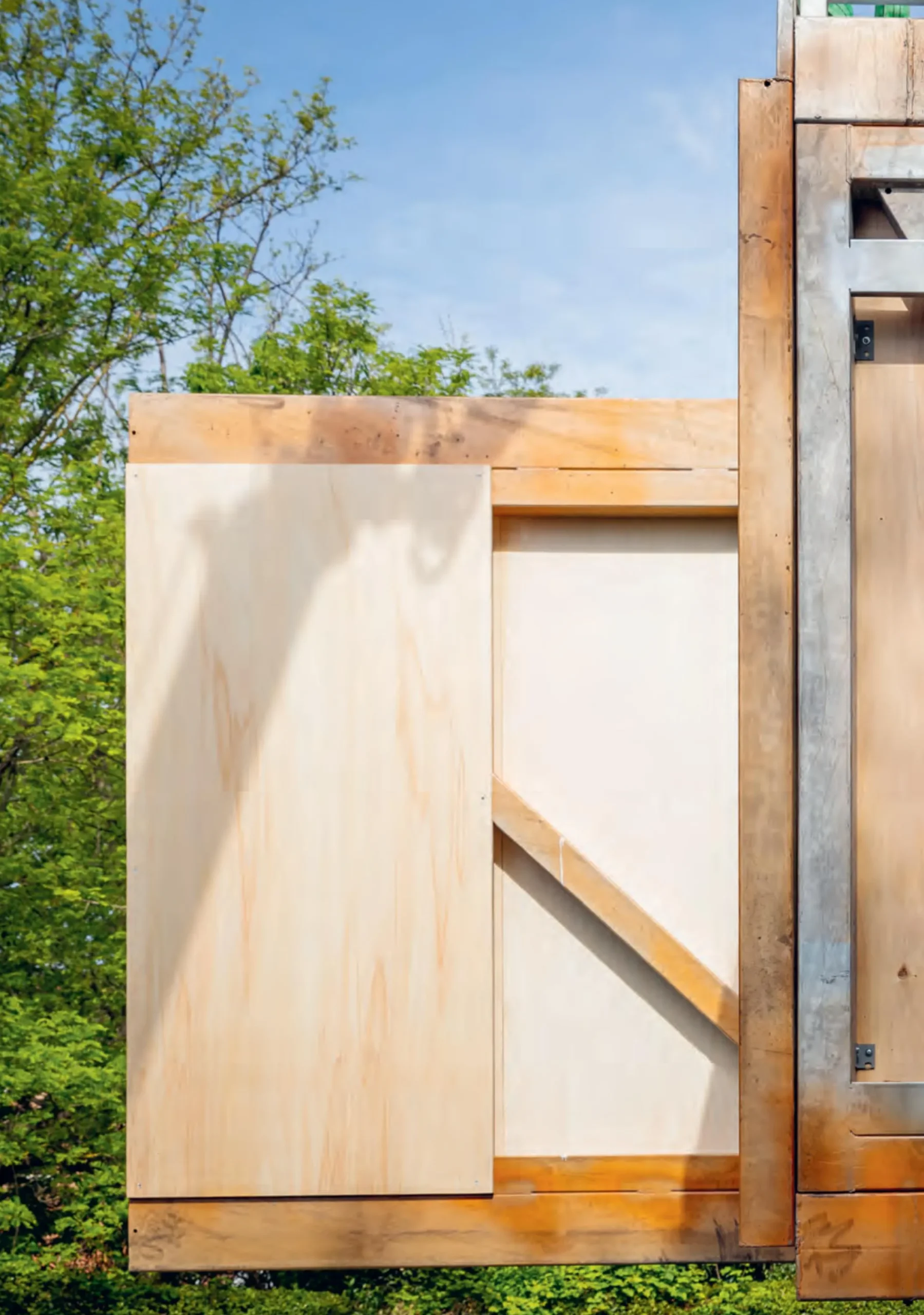
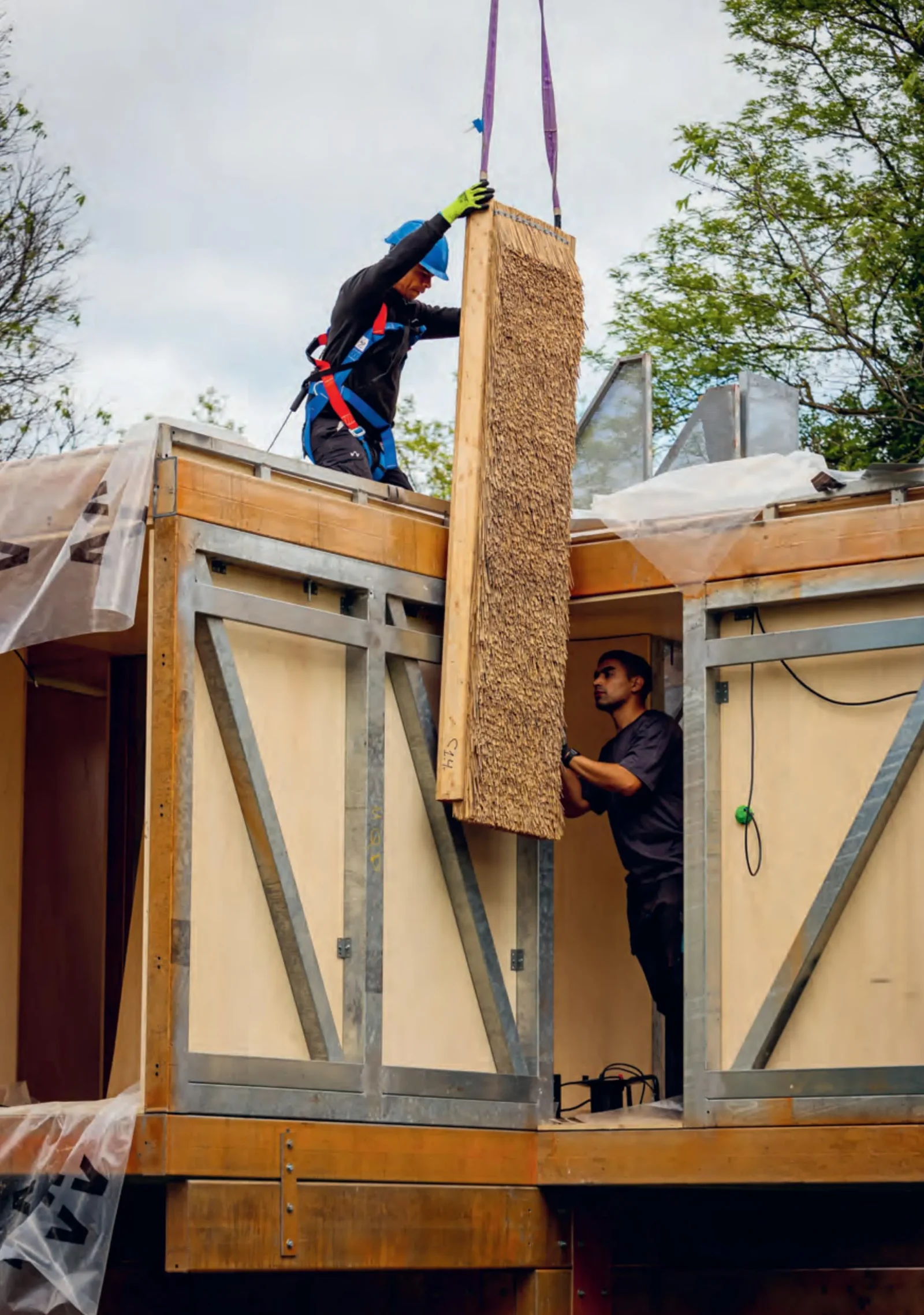
The core technical innovation lies in the modularization of the thatch application, resulting in a biogenic facade system that employs a prefabricated compact thatched solution. With high-performance Dutch techniques, the reeds are carefully secured within transportable wooden cassettes, allowing assembly in a controlled factory setting. This method of construction allowed CINARK to achieve controlled and optimized industrial production, ensuring consistent quality, reduced moisture risk, faster installation, and enhanced sustainability through standardized assembly methods.
Principle of Sufficiency over Efficiency
The research approach is grounded in the principle of sufficiency, which serves as a guiding framework for design and the responsible use of resources. While efficiency can often lead to overconsumption, sufficiency represents a balanced approach, aligning with the United Nations Sustainable Development Goals (SDGs). This biogenic facade prototype, developed through research by CINARK, represents an advancement in the methodology of sustainable construction.
Sustainability Strategies
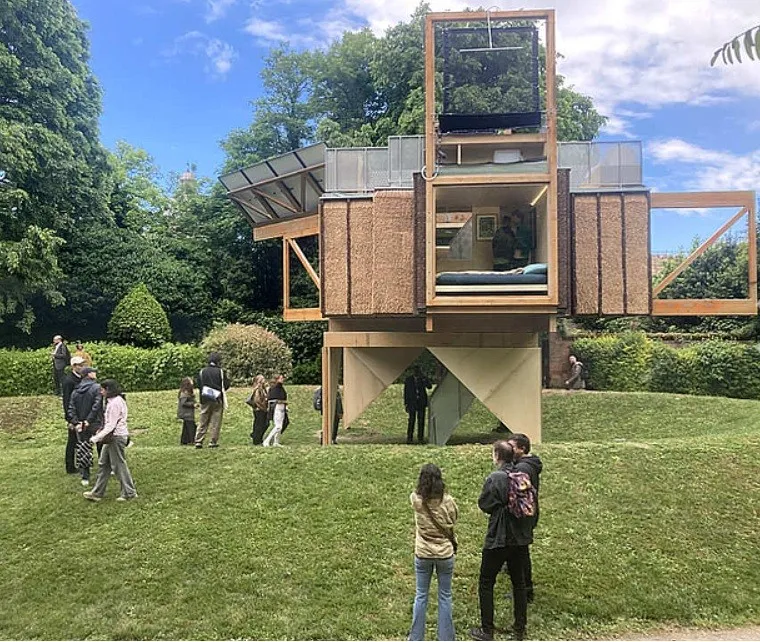
An experimental prototype demonstrates an ecological material system designed to withstand extreme dryness, high UV exposure, and massive thermal variation that possesses high resilience for global deployment. The research and application of this project explored the tectonic and tactile reintegration of reed into contemporary building culture, with an architectural expression rooted in material ecology. The key feature of the design is a fog catcher system for multiple uses, off-grid systems, and solar modules installed on the roof.
The biogenic facade system addresses the environmental burden of the global building sector by rejecting current fossil construction and its high-tech materials. In the extreme desert environment, the dense, tightly mounted thatch provides essential thermal mass and insulation, while prefabrication within wooden cassettes ensures necessary structural stability for coping with potential wind loads.
Technical and Environmental Challenges
A key challenge of the project was the perceived fire risk associated with using thatch in modern large-scale construction. CINARK research directly addresses this through in-depth scientific exploration of fire prevention through constructive detailing and material layering. Fire-retardant measures are integrated into the system’s joints, using clay (non-combustible mass), eelgrass (historic fire resistance when tightly packed), and cork (effective sealing against flame spread) for natural protection. The design also supports Design for Disassembly (DfD) and the third loop sustainability goal by relying on the inherent properties of natural materials.
Deserta Ecofolie Project details
Location: Atacama Desert, Chile
Architects: Pedro Ignacio Alonso and Pamela Prado
Research Institution: CINARK—Centre for Industrialised Architecture (The Royal Danish Academy)
Explore Courses
.jpg%202.jpg "Building Performance with Forma & Opossum")
.jpg "Ondrej Chybik - Rethinking Architecture")