


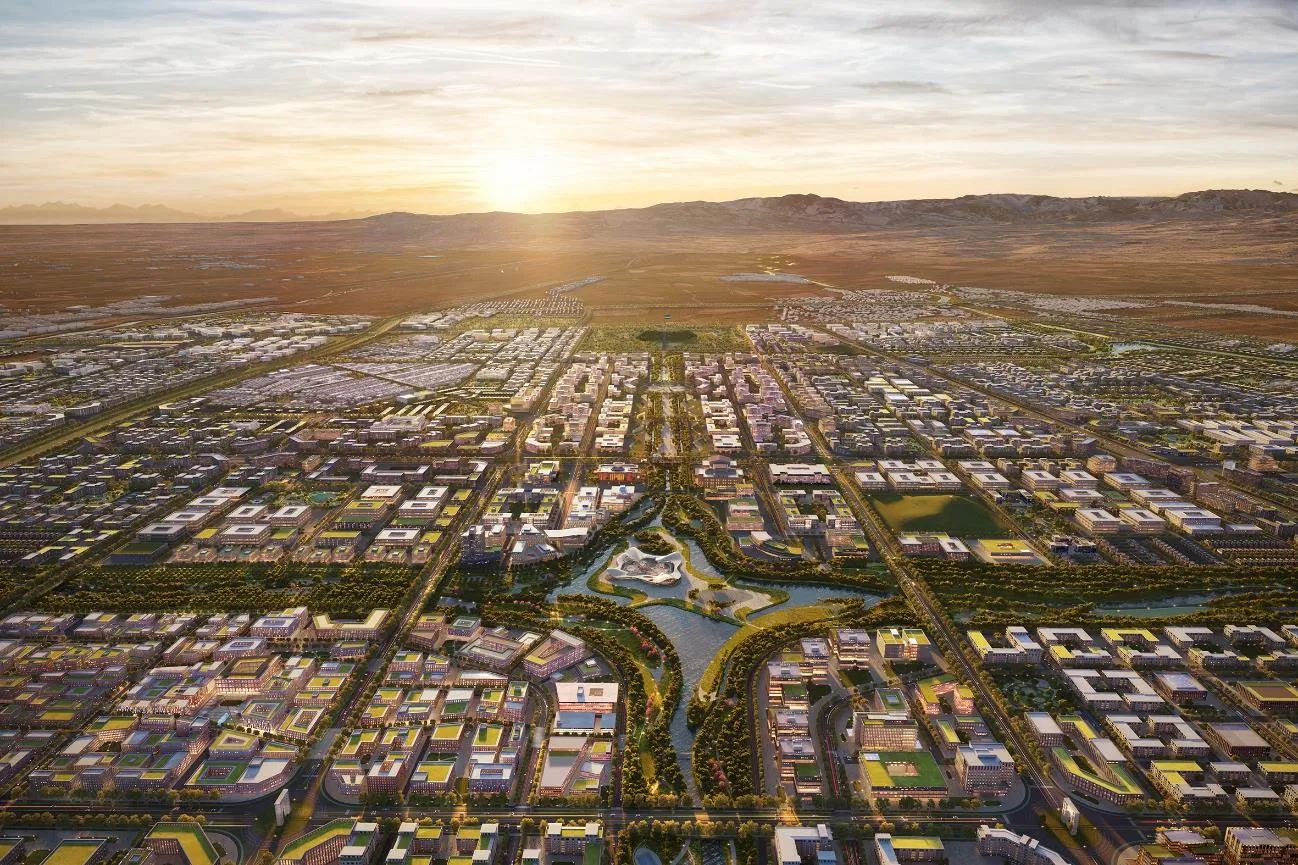
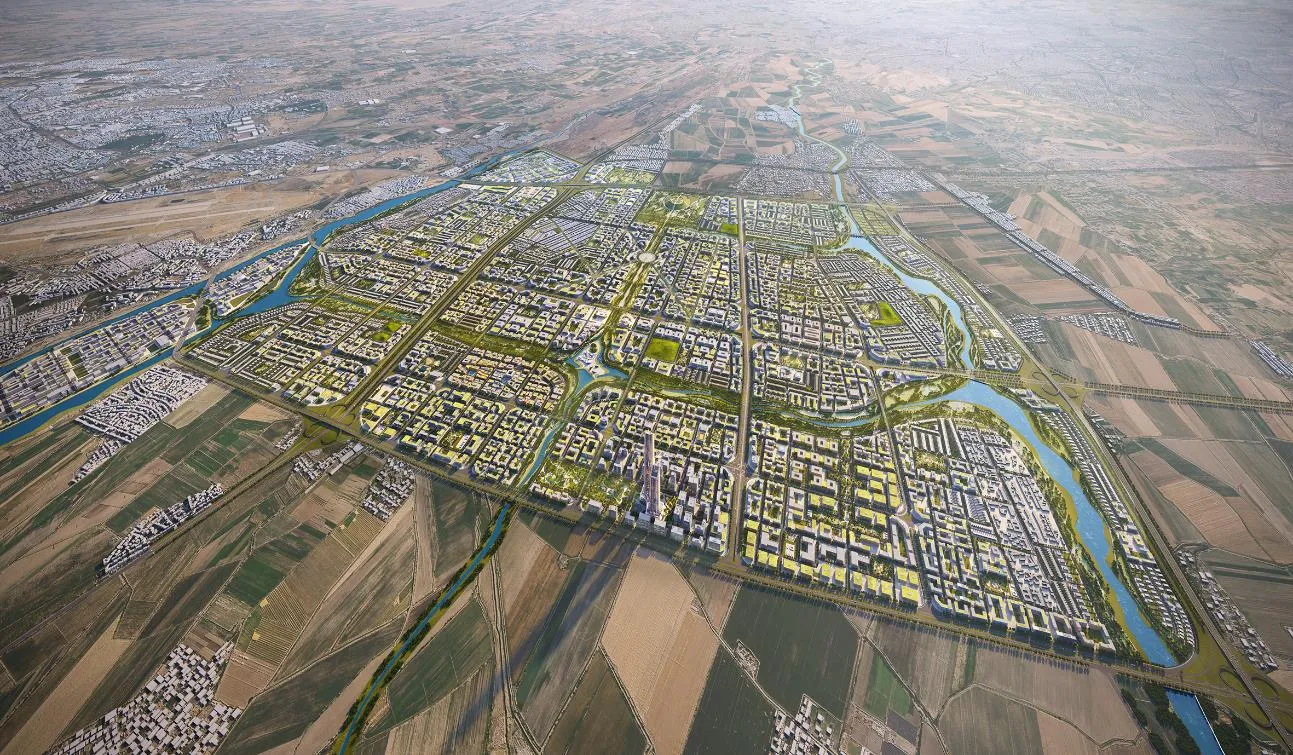
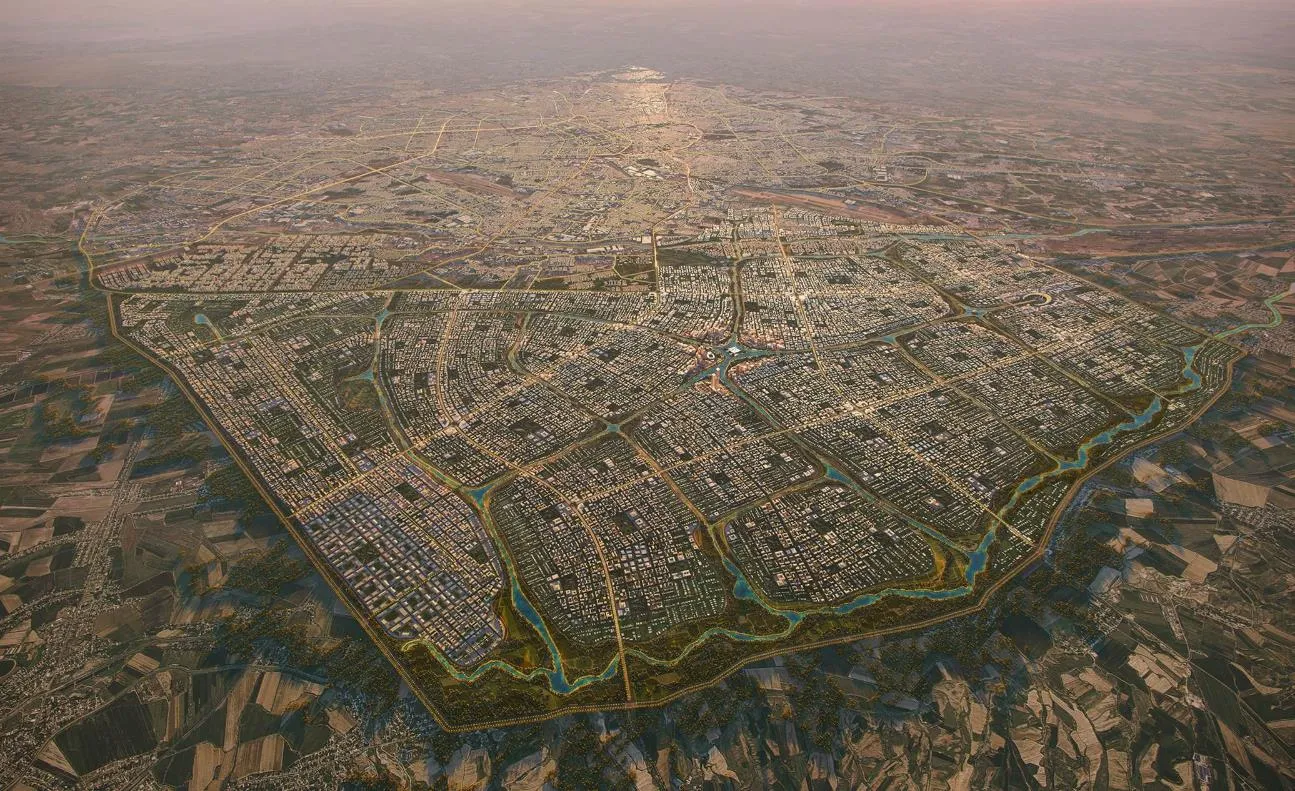
Covering 25,000 hectares, New Tashkent is expected to accommodate up to 2.5 million people and ease mounting pressure on the capital. The first district, a 6,000-hectare phase, received formal approval in mid-2024 with support from President Shavkat Mirziyoyev. Groundworks are already underway.
The city is positioned as a long-term response to Uzbekistan’s rapid urban expansion, offering a structured alternative to uncontrolled growth. Its scale allows for comprehensive planning from the outset, with infrastructure, public space, and social services designed in parallel.
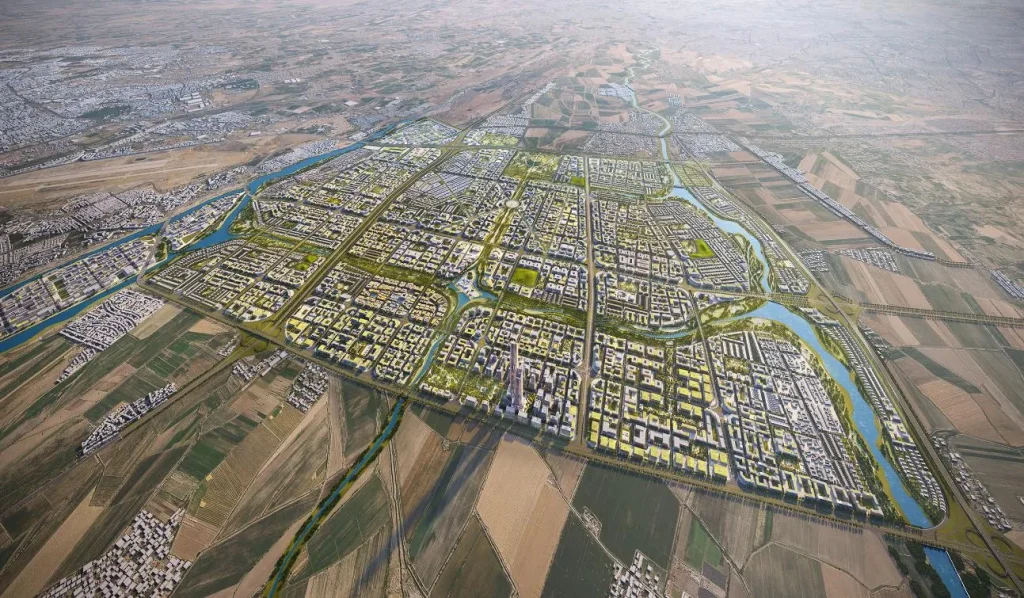
London-based firm Cross Works is leading the effort as masterplanner, architect, and digital lead. The firm is working in collaboration with Buro Happold, Gillespies, and KPMG Uzbekistan to shape the urban framework, development code, and the first wave of buildings for District 1.
The master plan sets out to balance climate resilience, livability, and digital integration, tying Uzbek identity to a wider urban vision.
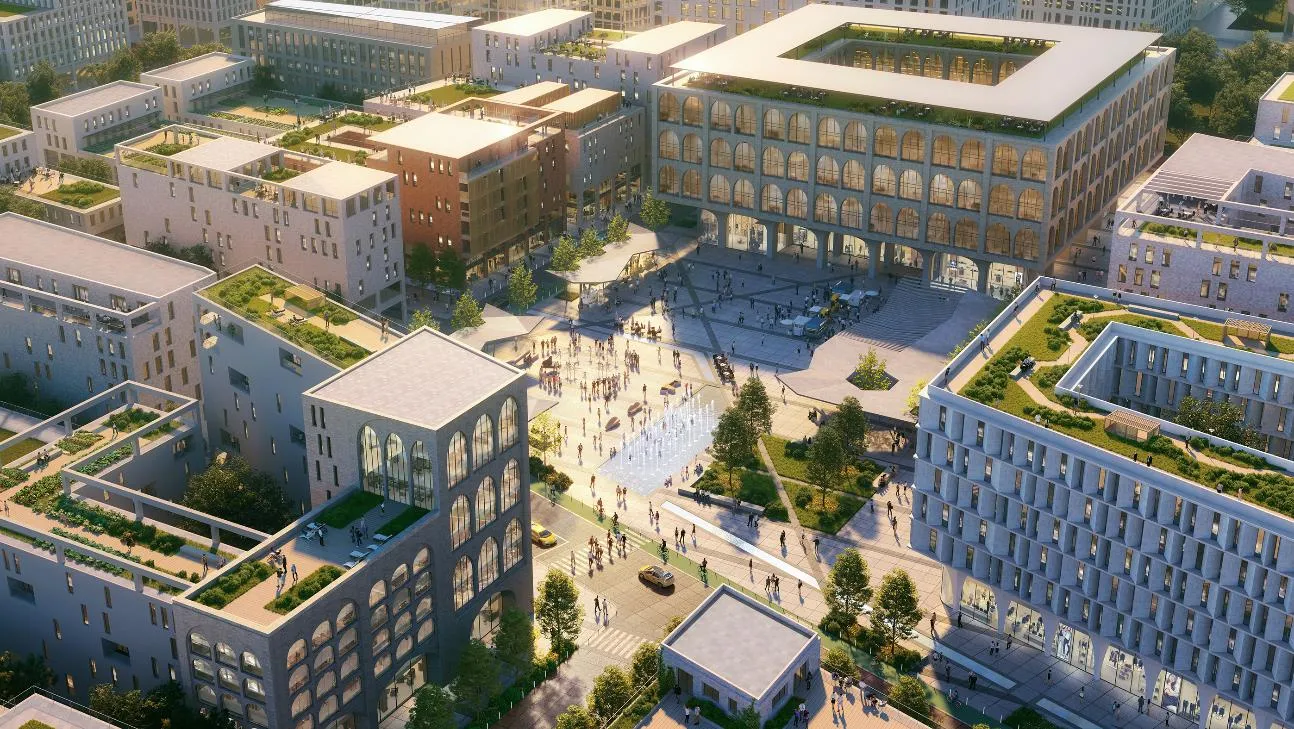
A 15-Minute City with Uzbek Soul
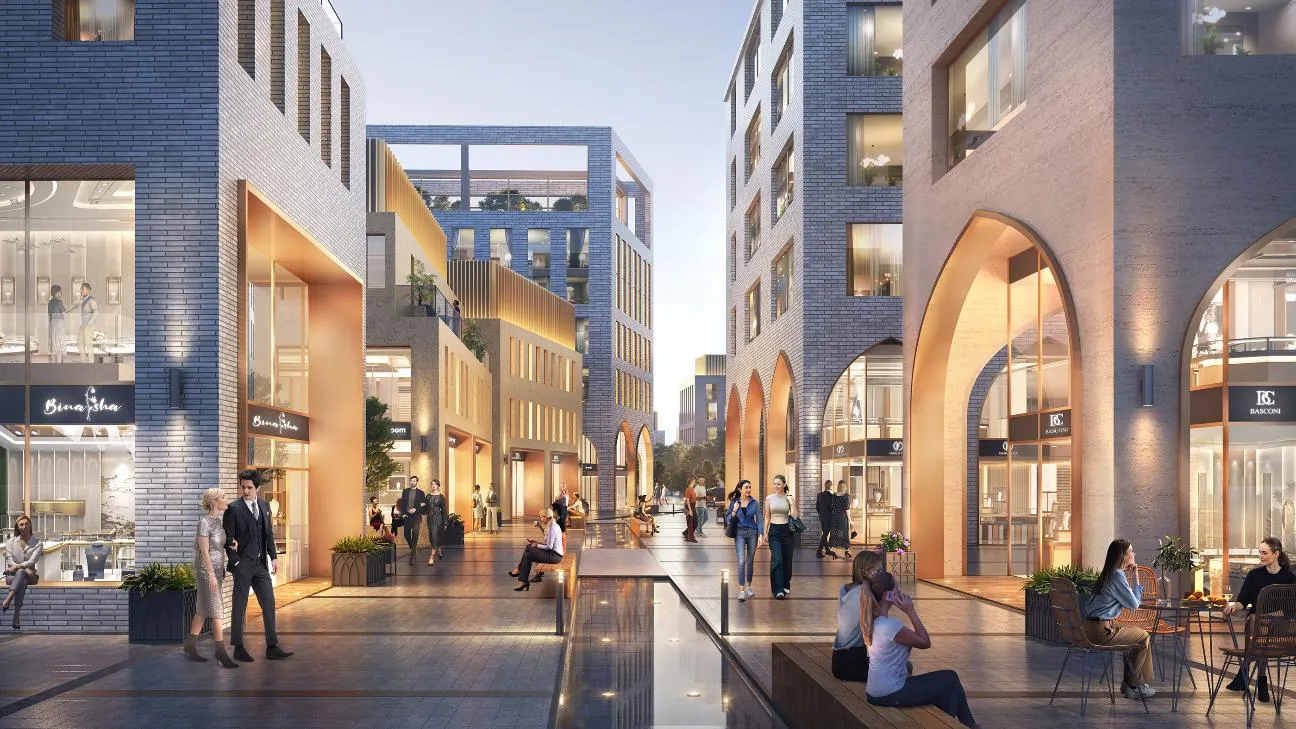
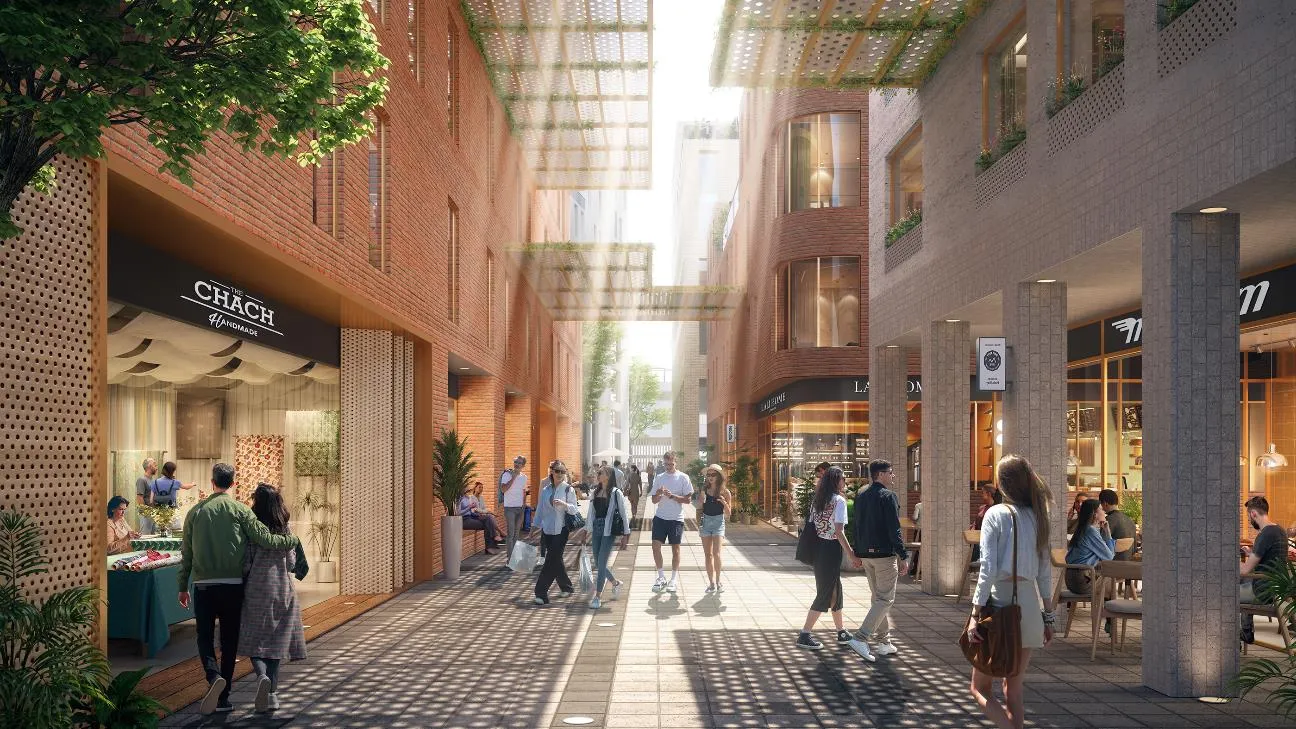
Rather than following the rigid zoning patterns common to large-scale master plans, it draws inspiration from the mahalla, the traditional Uzbek neighbourhood. Cross Works reimagines this local model to create walkable, mixed-use districts, each centred around essential services such as schools, clinics, and markets, all within a 5 to 10 minute walk. While the 15-minute city is a global planning trend, here it is shaped by local culture, not imposed from outside.
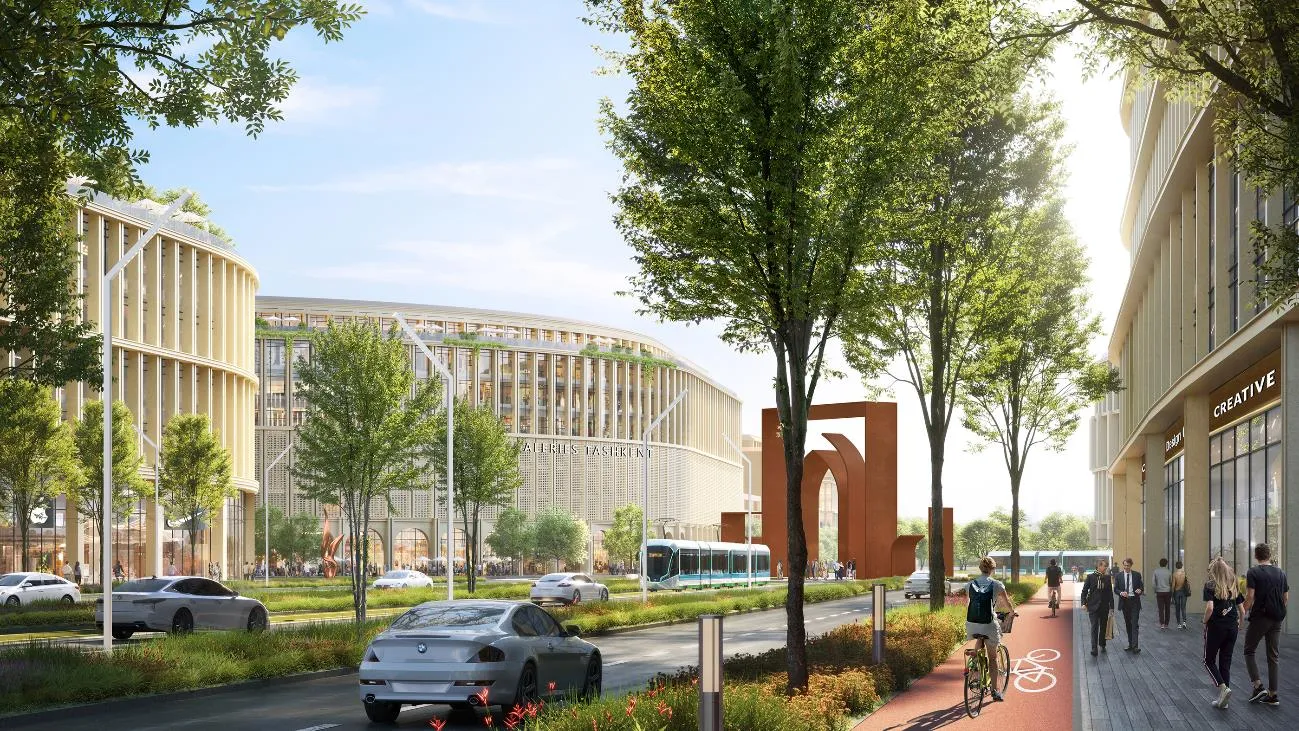
The urban layout prioritises pedestrian corridors and cycle routes over road traffic. Each district is planned to feel distinct, with its material palette, scale and layouts, drawn from Uzbek vernacular and regional craft.
Weaving Climate Resilience into the Masterplan
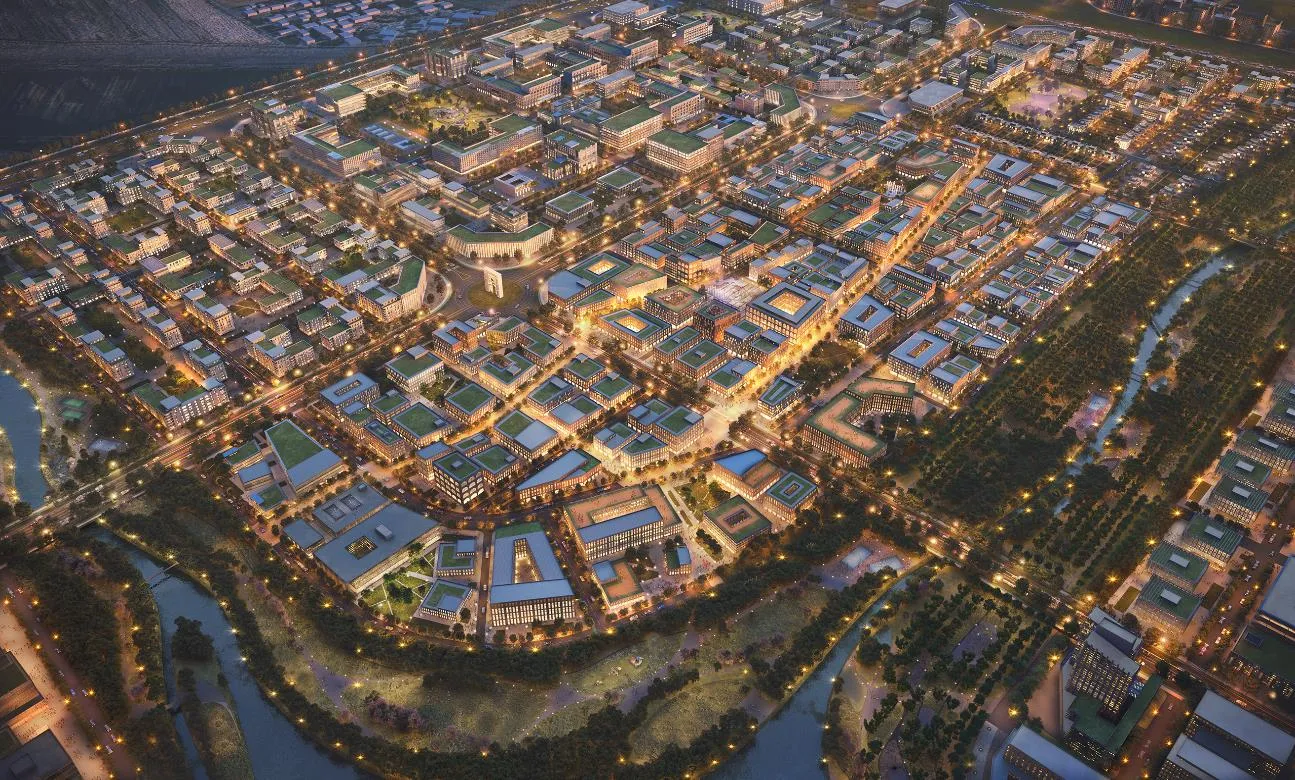
New Tashkent’s climate strategy is built around an integrated network of green and blue infrastructure, embedded into the core of the city’s master plan. More than 20 per cent of the total land area is reserved for open space.
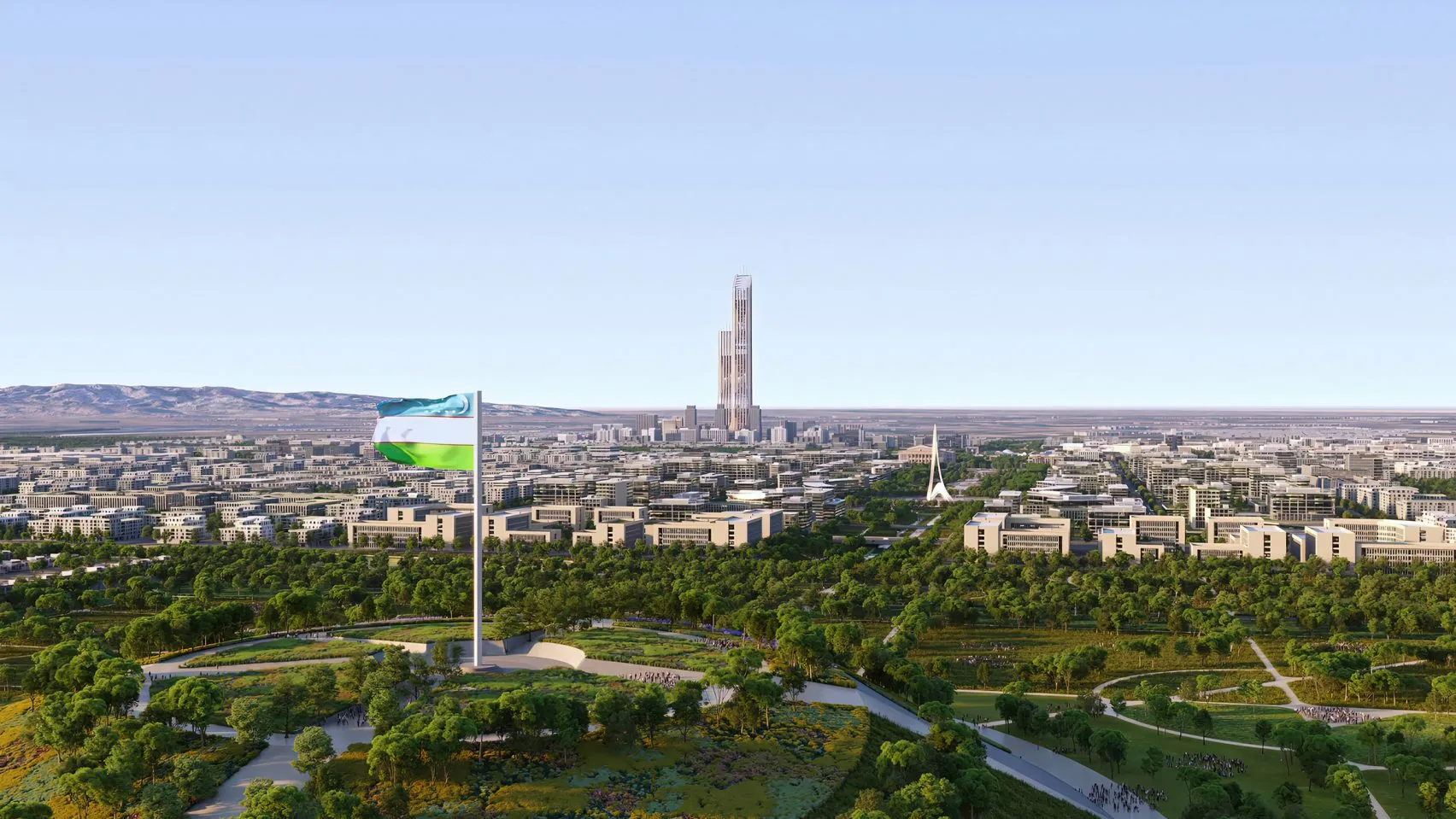
Parks, tree-lined corridors, and shaded pedestrian routes are distributed throughout, forming a continuous ecological spine. Canals sourced from mountain streams to the north intersect the terrain, recalling ancient irrigation systems while moderating temperatures across the dry plains.
This approach responds to rising temperatures, prolonged droughts and the intensifying urban heat island effect. Trees, water and shade are positioned strategically, shaping microclimates and reducing the urban heat load.
Monuments of Modern Tashkent
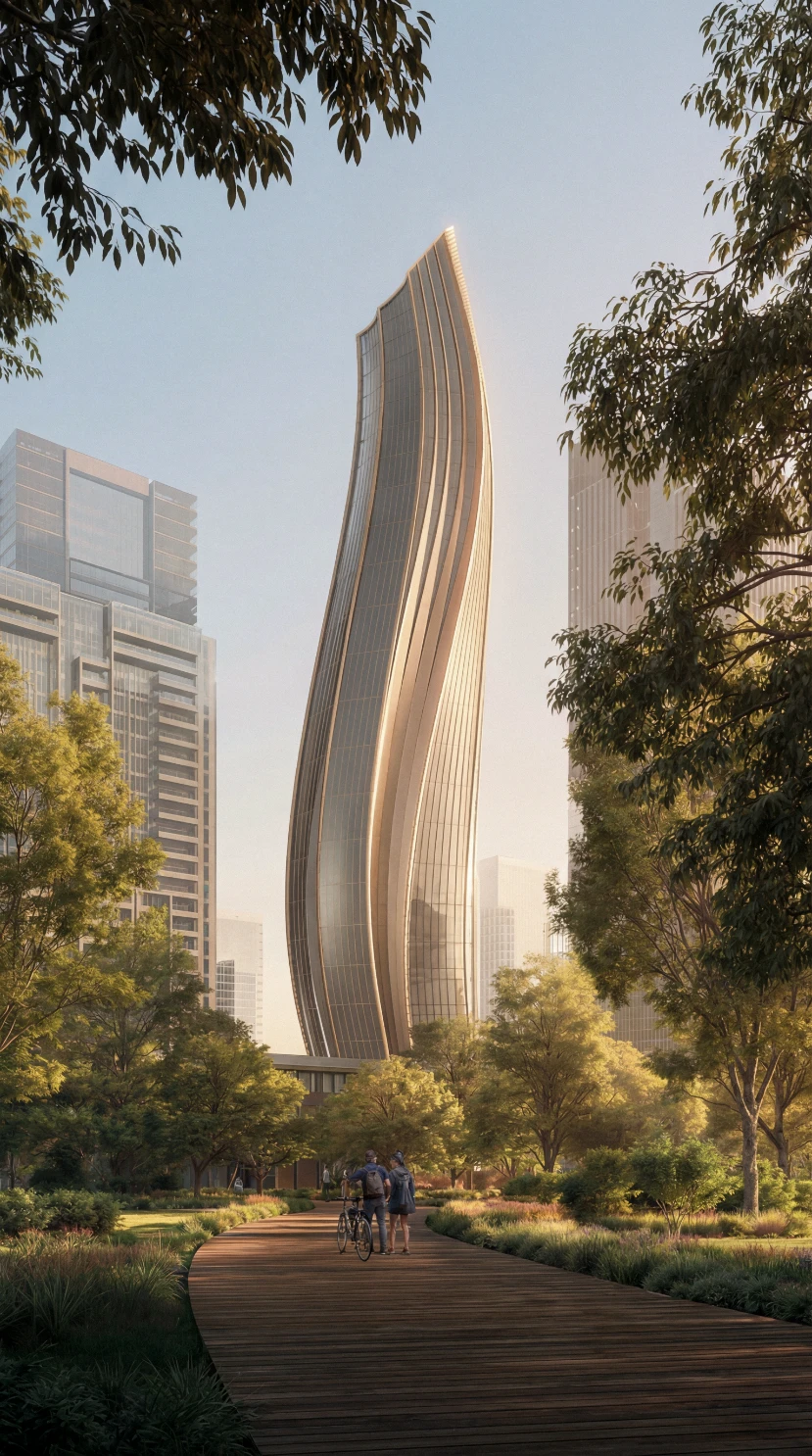
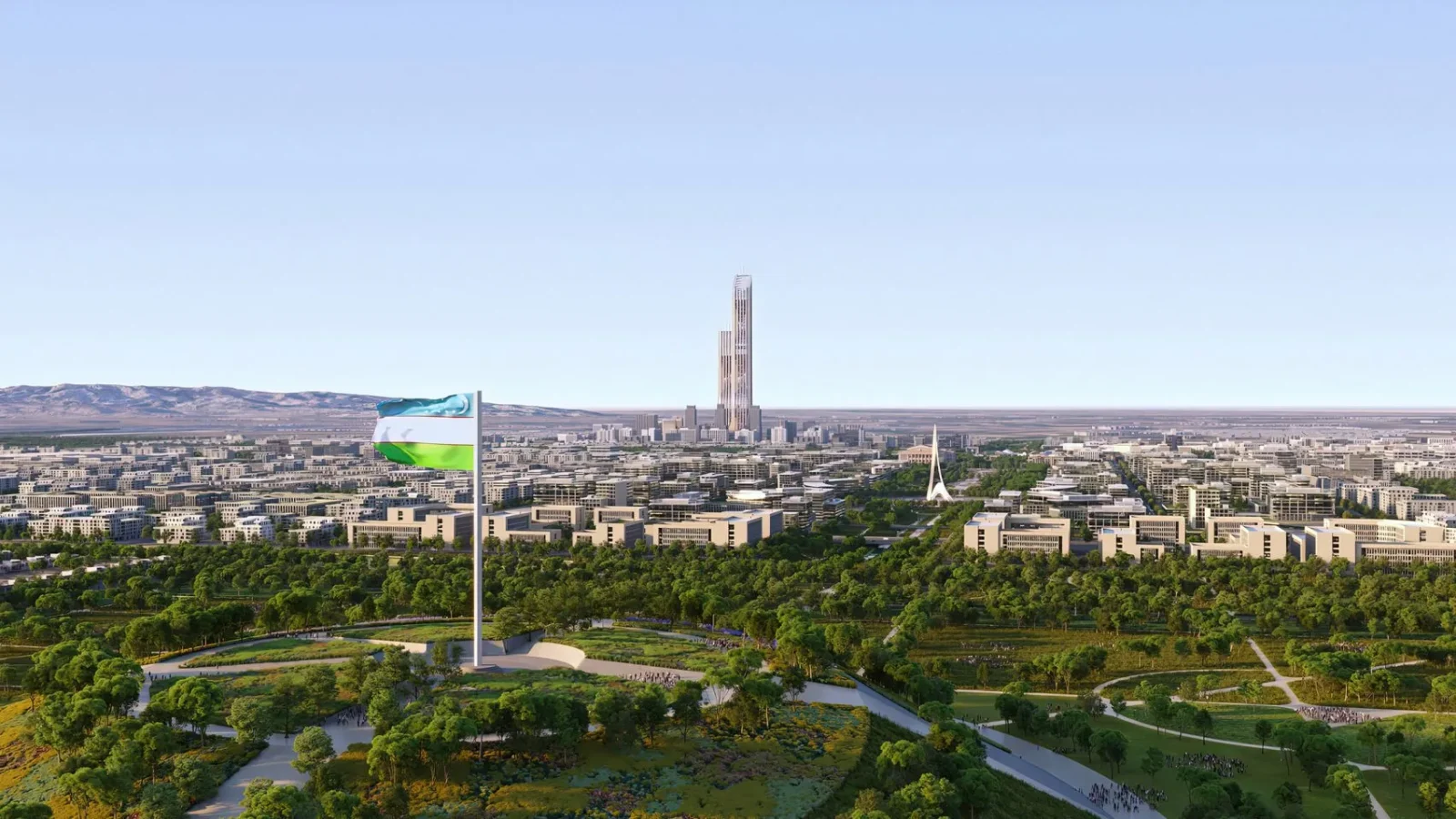
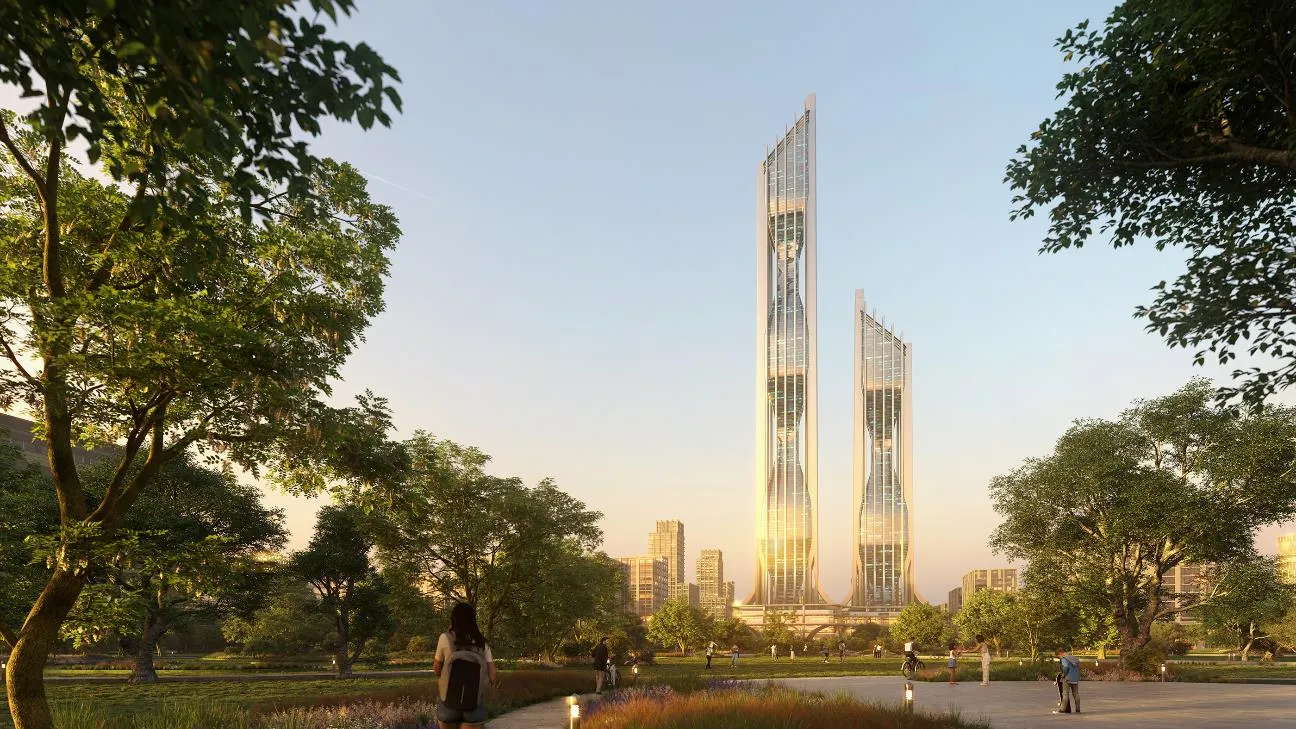
Planned landmarks will shape the city’s civic and cultural spine. Silk City will anchor a central pedestrian zone focused on crafts and retail. The 575-meter Twin City Towers are set to become among the world’s tallest, defining the commercial core. At the confluence of the canal network, Central Island will host markets, an amphitheatre, and exhibition halls.
To the north, a Government District will run along a ceremonial boulevard, ending in a public plaza surrounded by ministries and embassies. The Alisher Navoi Research Centre will house a museum, auditorium and school, tying the city’s future to one of Uzbekistan’s key cultural icons.
Cross Works’ Digital Twin Brings the City to Life
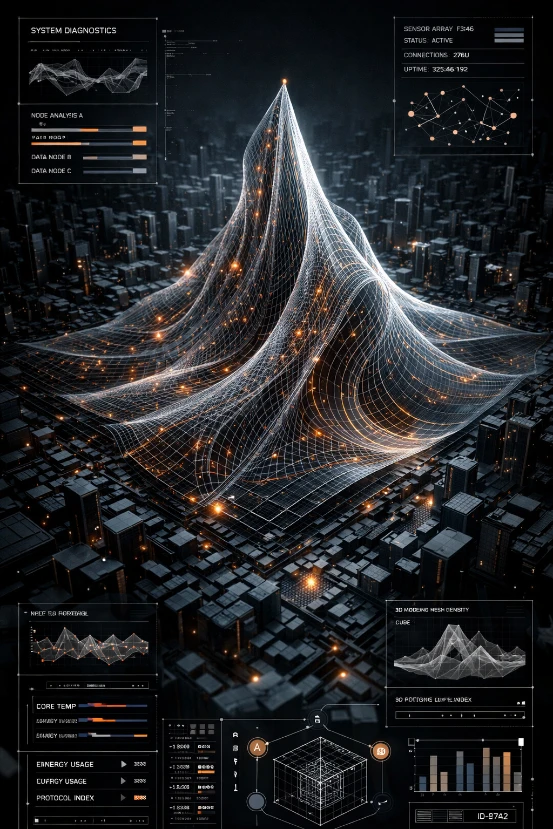
Cross Works developed an in-house Digital Twin that brings together 2D and 3D modelling, real-time GIS data, VR walkthroughs, and layered design guidelines into a single operational platform. Already in active use, it supports cross-team coordination and enables real-time testing of design strategies. A simplified version will be made public, a gesture of transparency and participatory planning.
The Tashkent Code sets a new urban standard.
Beyond its role in the master plan, Cross Works authored the Tashkent Code, a new regulatory framework intended to guide the city’s long-term urban and architectural development. Replacing outdated standards still in use across the region, the code focuses on form, proportion and spatial coherence.
Alongside a group of internationally recognised studios and local practices, Cross Works is also undertaking architectural design on selected plots. Together, these teams will begin to define the emerging architectural language of New Tashkent.
As construction advances on District 1, New Tashkent reflects a shift in how Uzbekistan is approaching growth. Climate, technology, and tradition are built into the foundations, not added later.
Faced with the realities of rapid urbanisation, the project offers a different approach for Central Asia, one where resilience, cultural continuity and digital systems are developed together, not bolted on later.
Explore Courses
.jpg "Ondrej Chybik - Rethinking Architecture")