


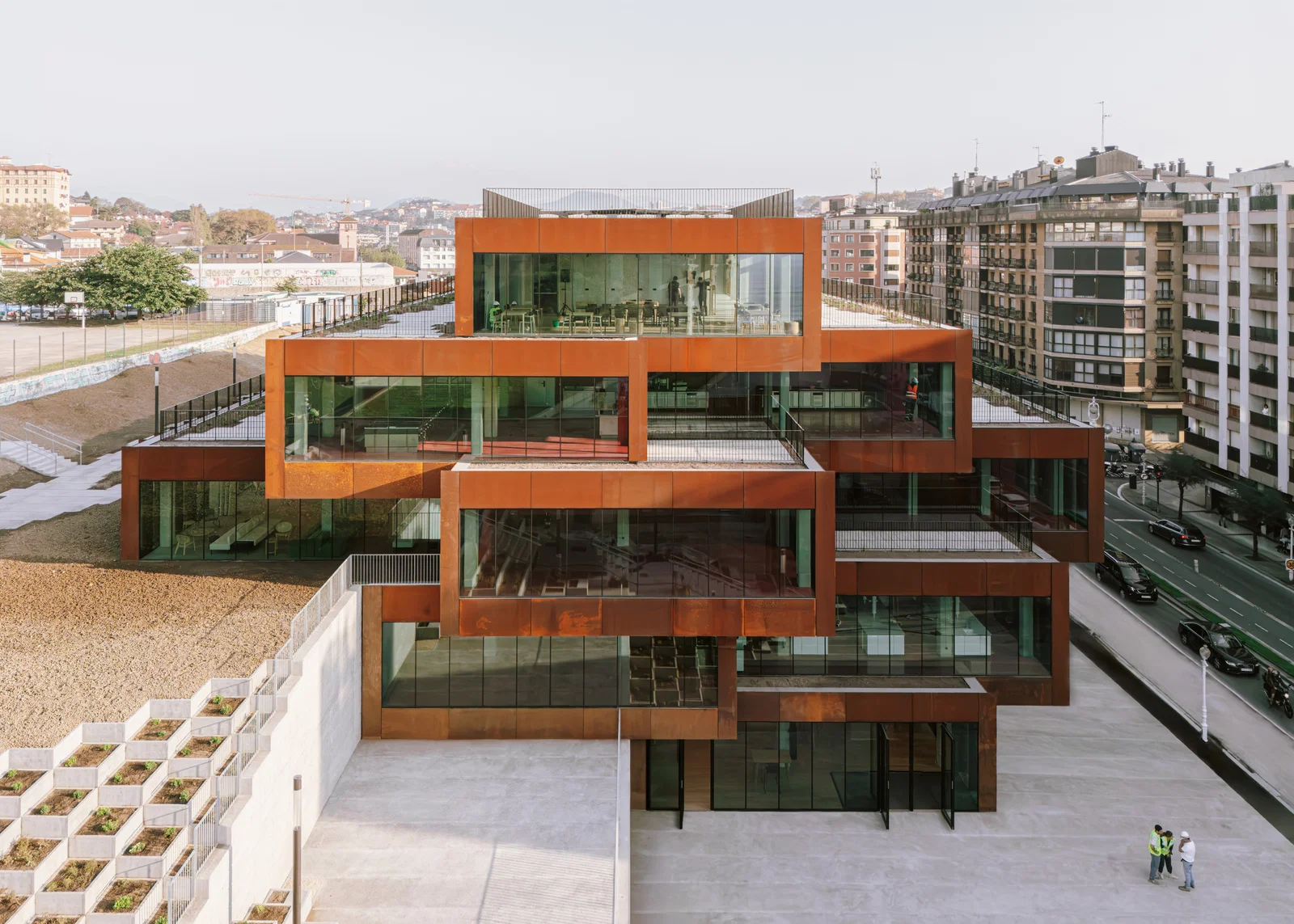
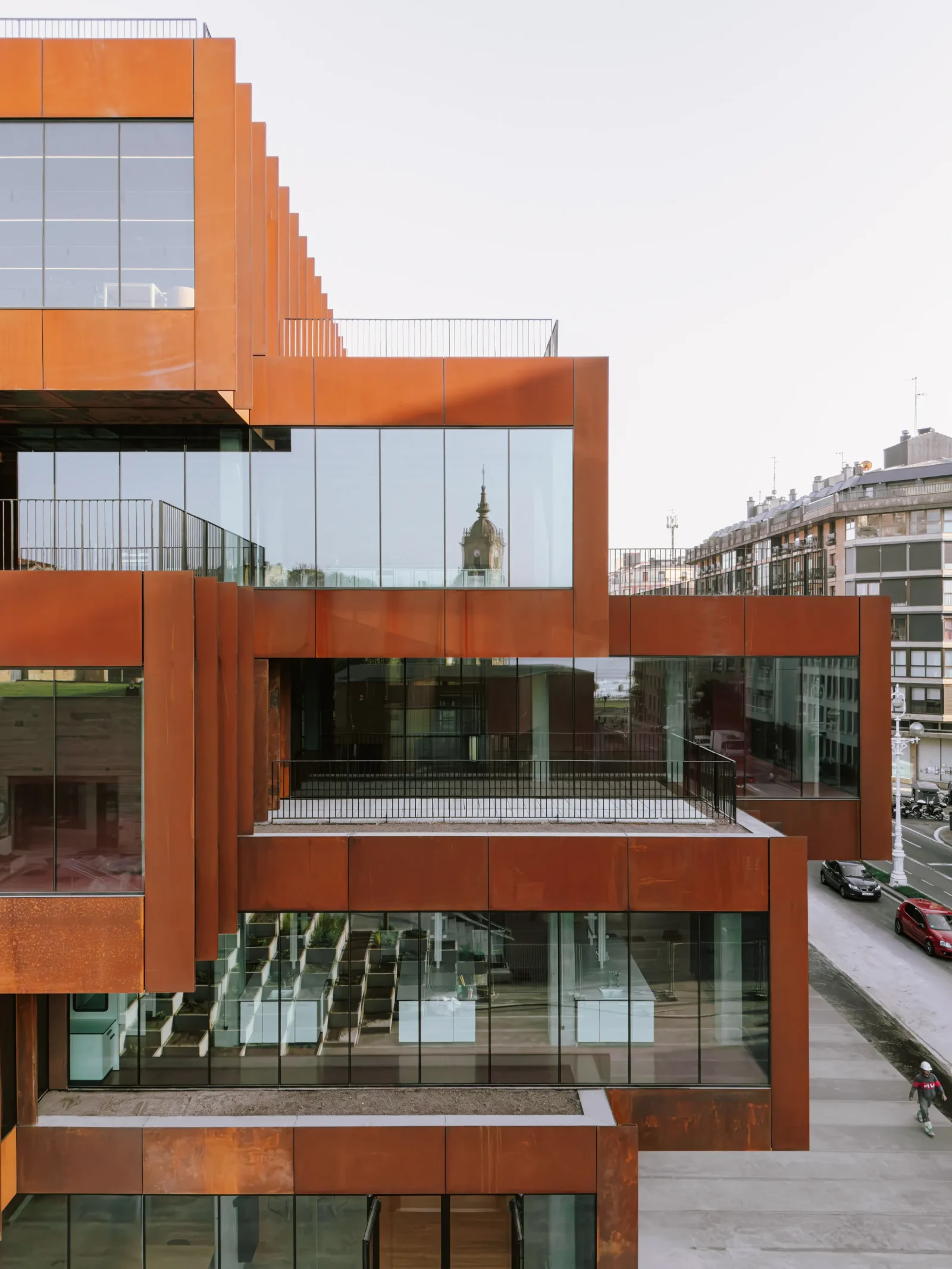
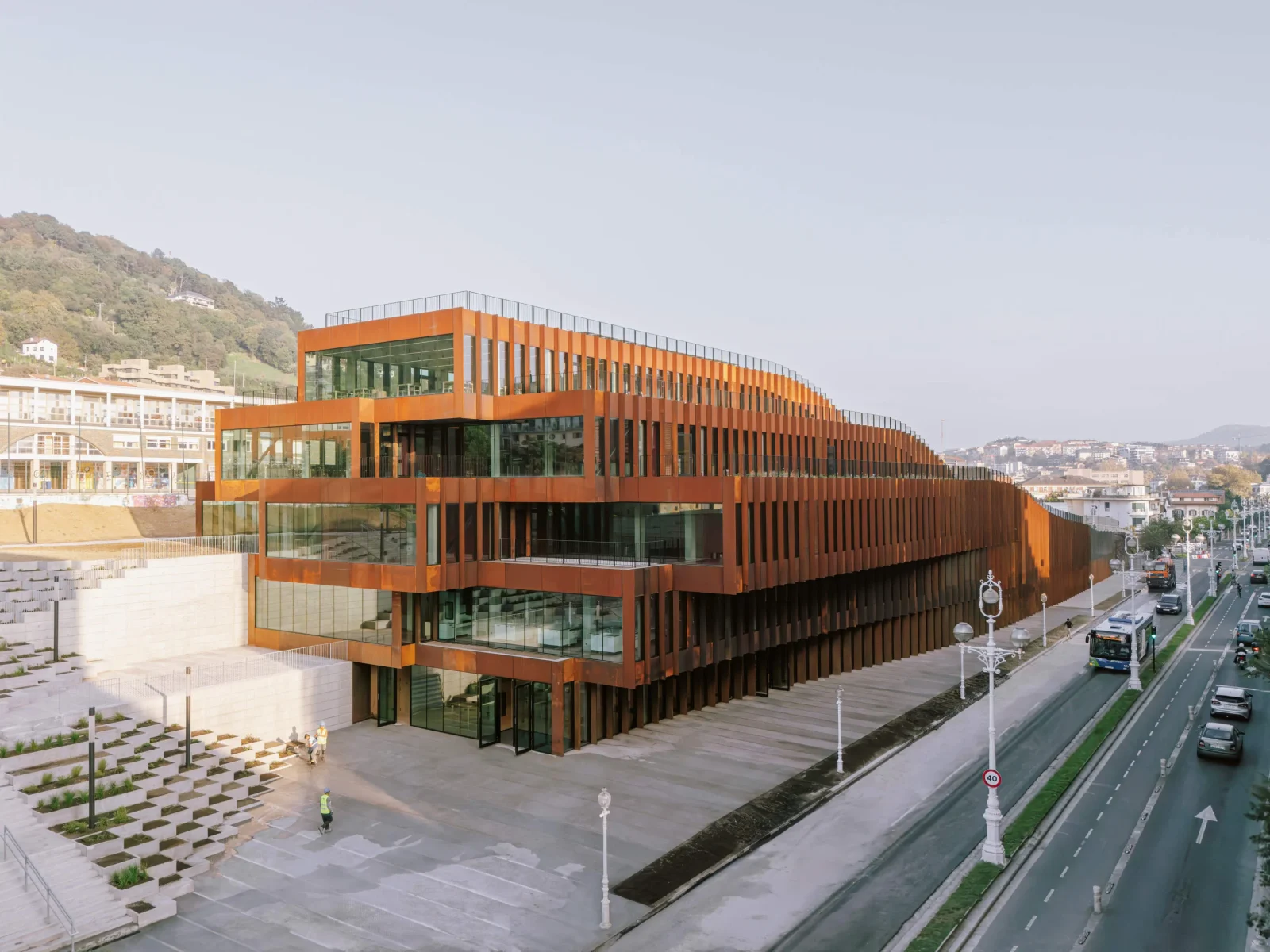
A fluid, landscape-driven food innovation hub in San Sebastián, Gastronomy Open Ecosystem (GOE) combines public terraces, research spaces, and gastronomy into one immersive architectural experience. Conceived as infrastructure and destination, the project brings together chefs, researchers, and entrepreneurs within a single, continuous form.
Rising from the Terrain
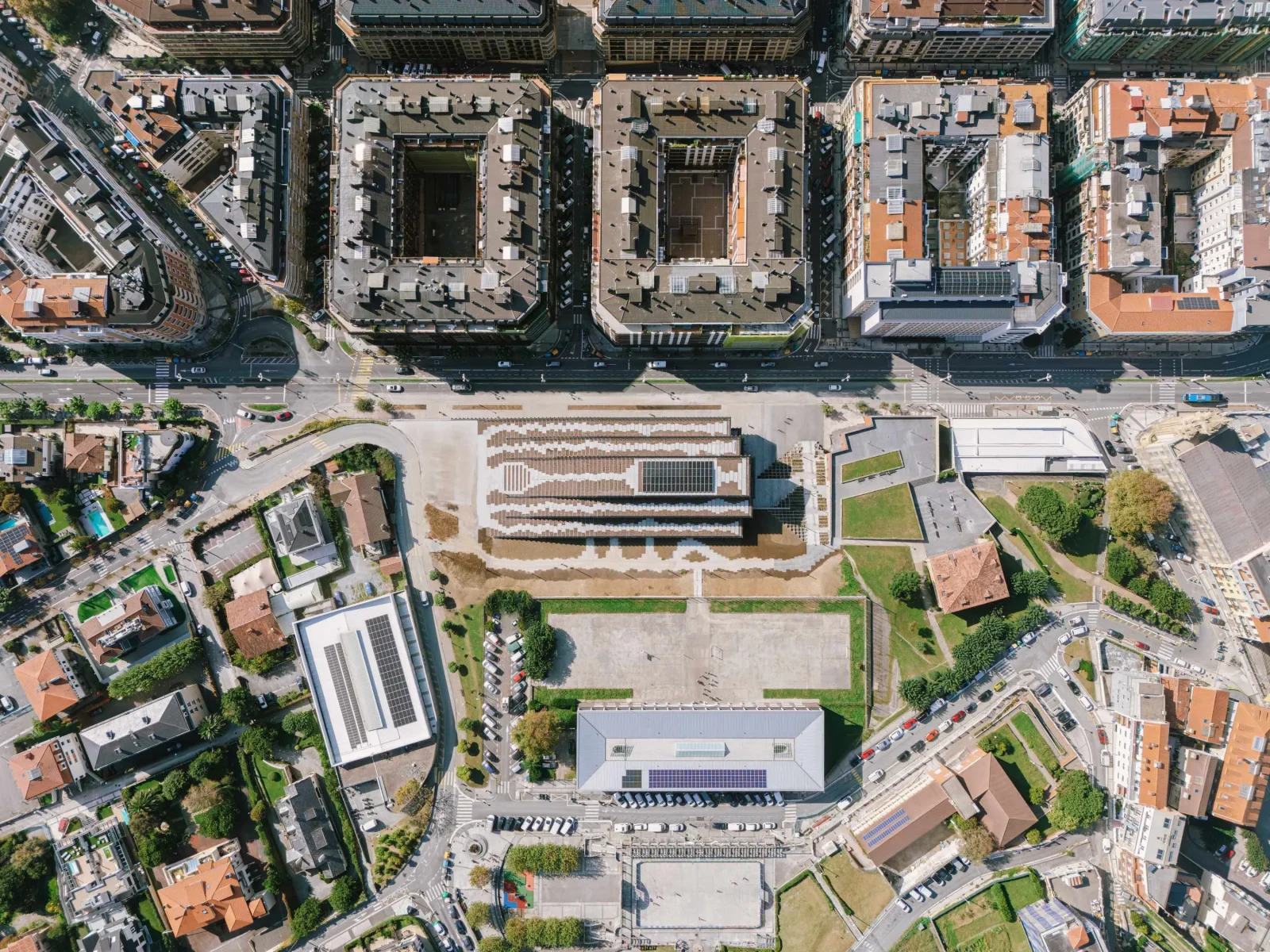
At the base of Mount Ulia, Gastronomy Open Ecosystem (GOE) unfolds as an extension of the land. Designed by BIG Architects and Bat Architecture for the Basque Culinary Centre, the project integrates seamlessly into a site shaped by a 10-metre slope.
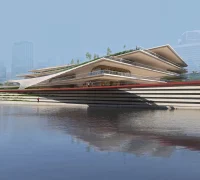
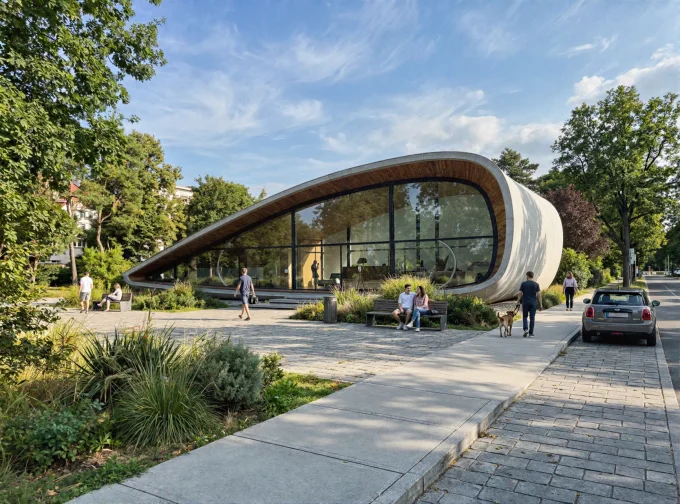
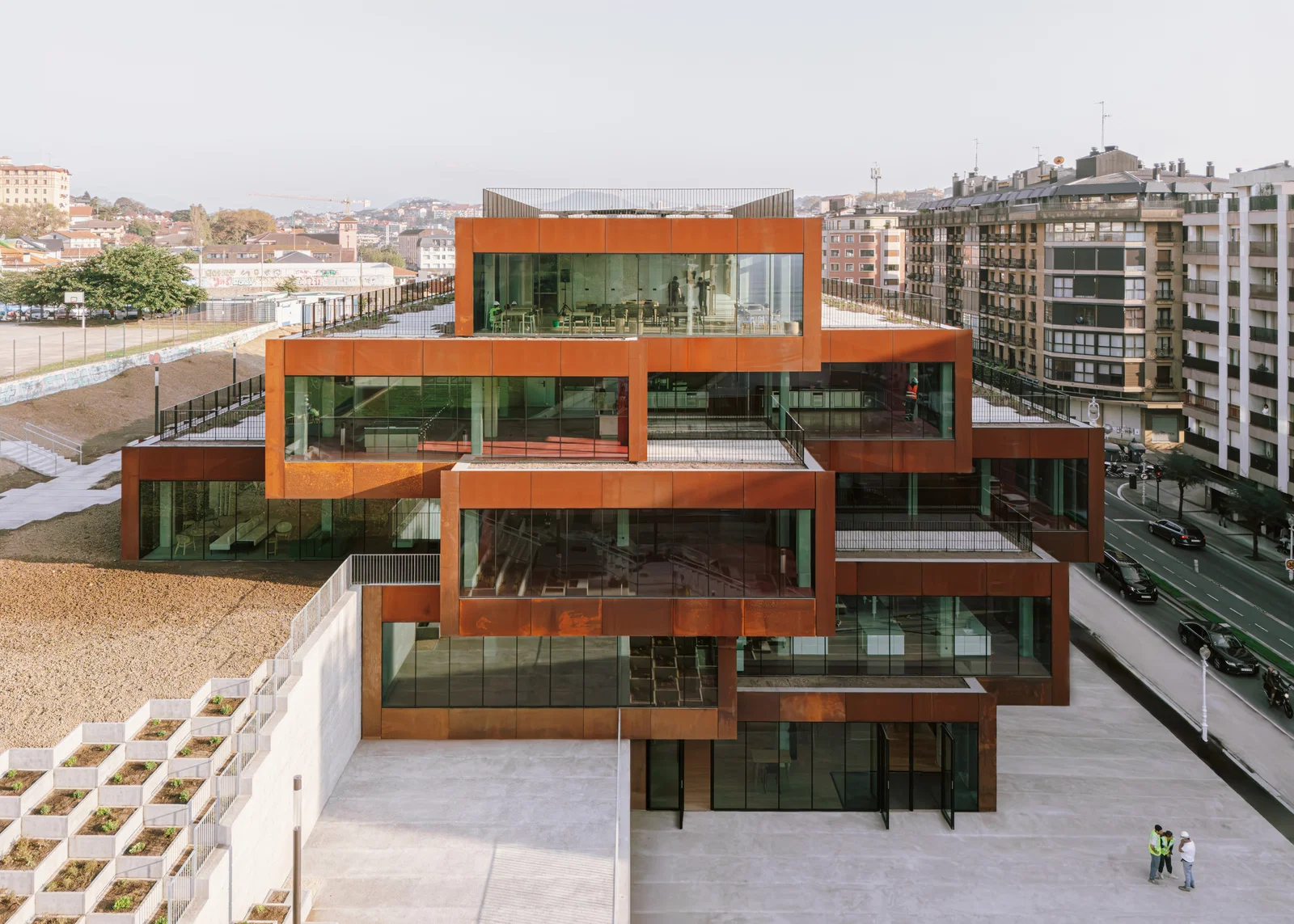
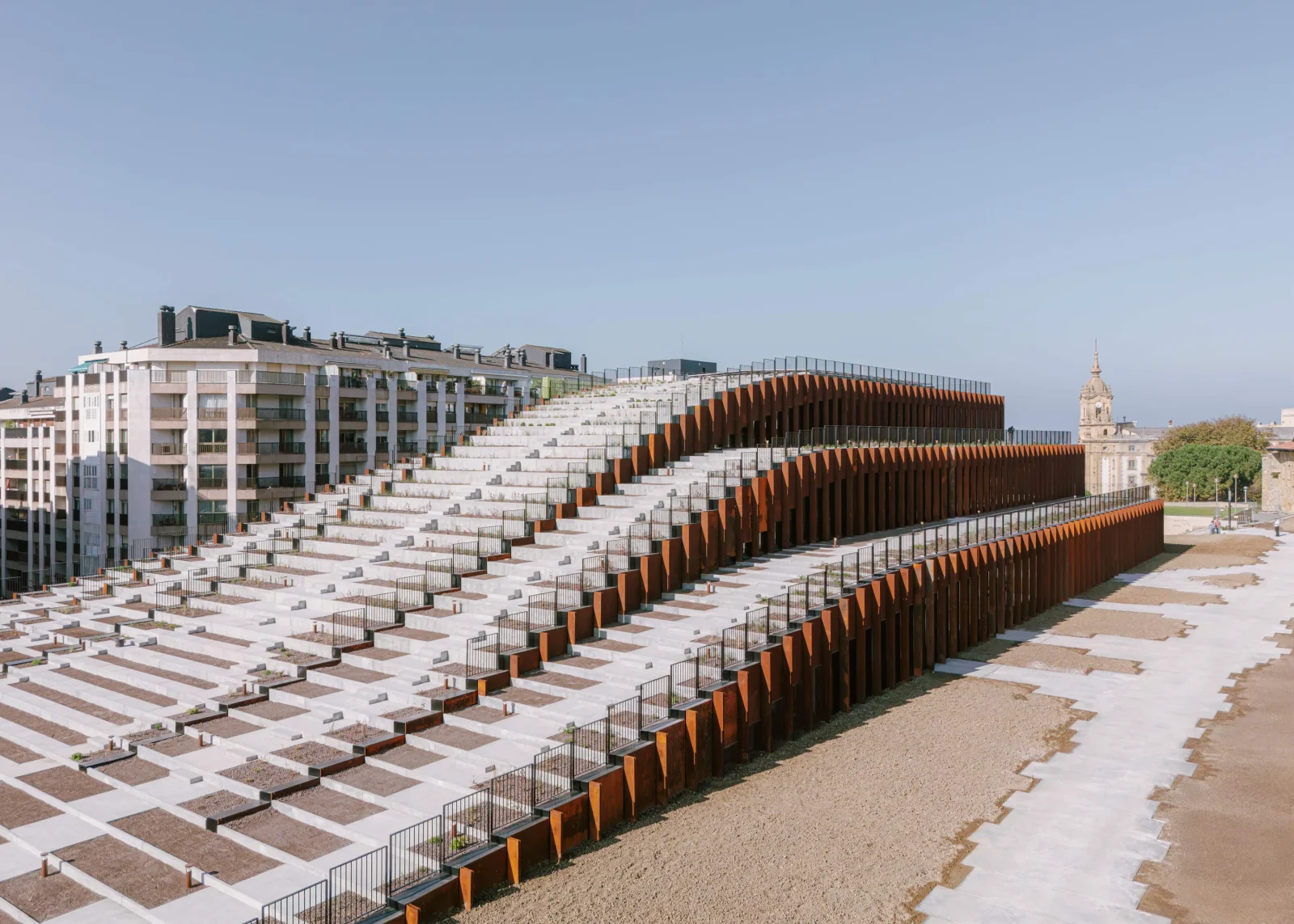
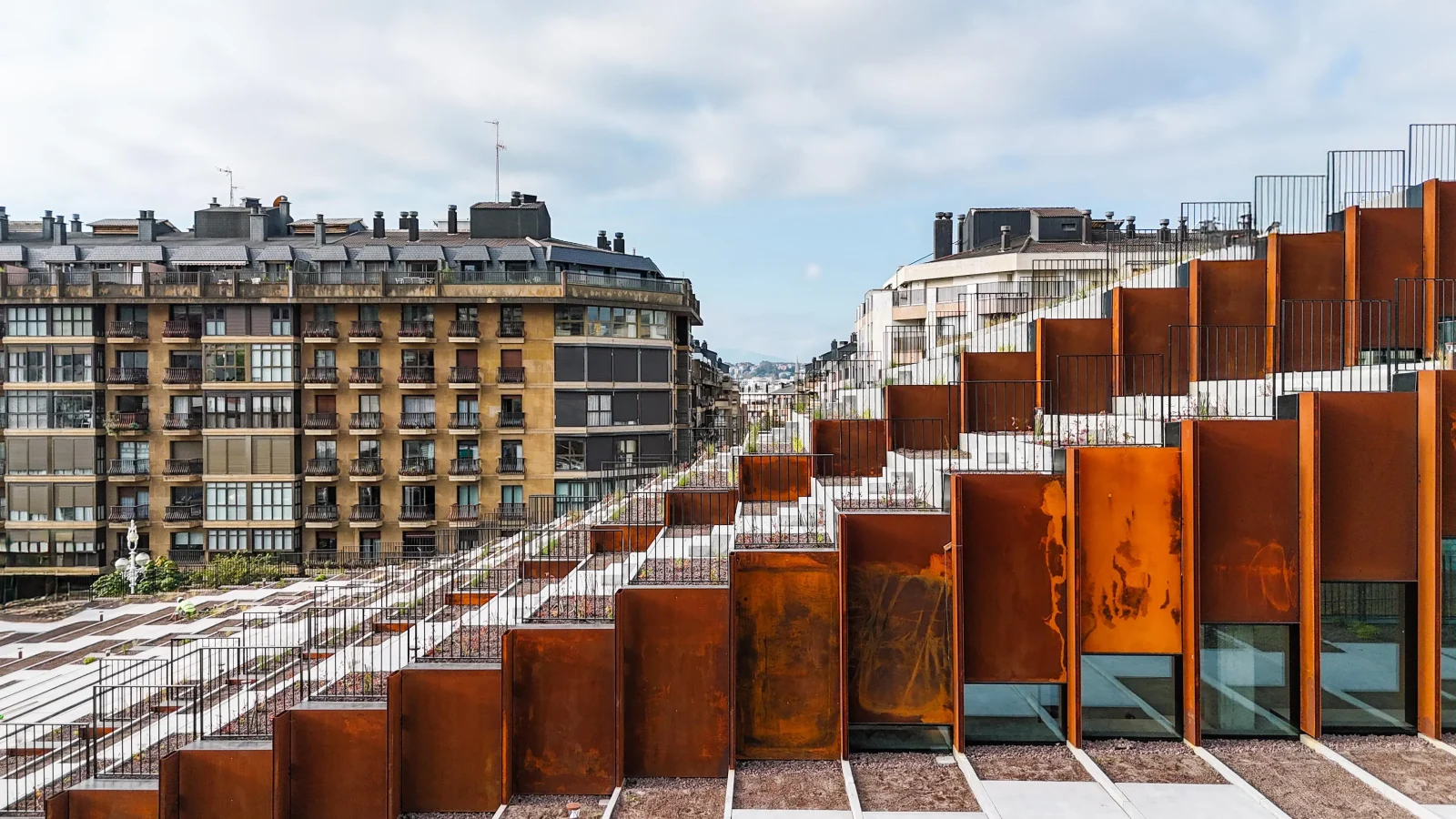
Partially embedded into the terrain, the building minimizes its visual presence while strengthening its connection to the landscape. A series of sloping, walkable roof terraces stretches toward the sea, transforming the structure into an accessible public topography that reflects the region’s natural contours.
Public Life Meets Culinary Innovation
Gastronomy Open Ecosystem (GOE) is conceived as a hub that brings together chefs, researchers, and start-ups under one continuous, curving form. A central gastronomy hall anchors the building, beginning at the lower ground entrance and evolving into a dramatic, stepped staircase. This multifunctional spine doubles as seating for events, lectures, and informal gatherings, encouraging interaction across disciplines.
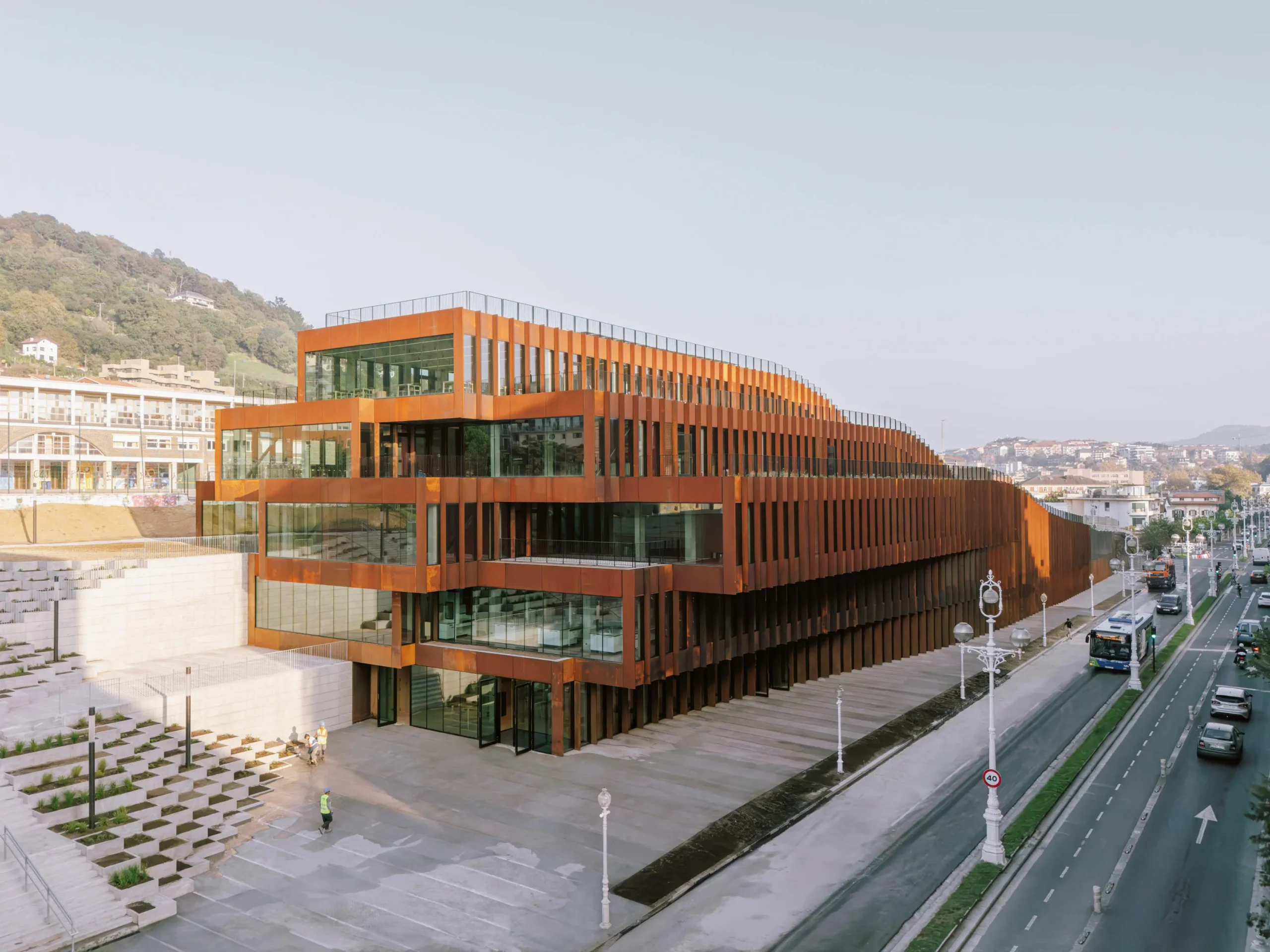
Kitchens, laboratories, and classrooms branch out from this core, designed as adaptable spaces that can shift according to evolving needs. Large glazed openings maintain constant visual connections, allowing visitors to observe culinary experimentation while moving through the building or across its terraces.
Material Contrasts with Coastal Identity
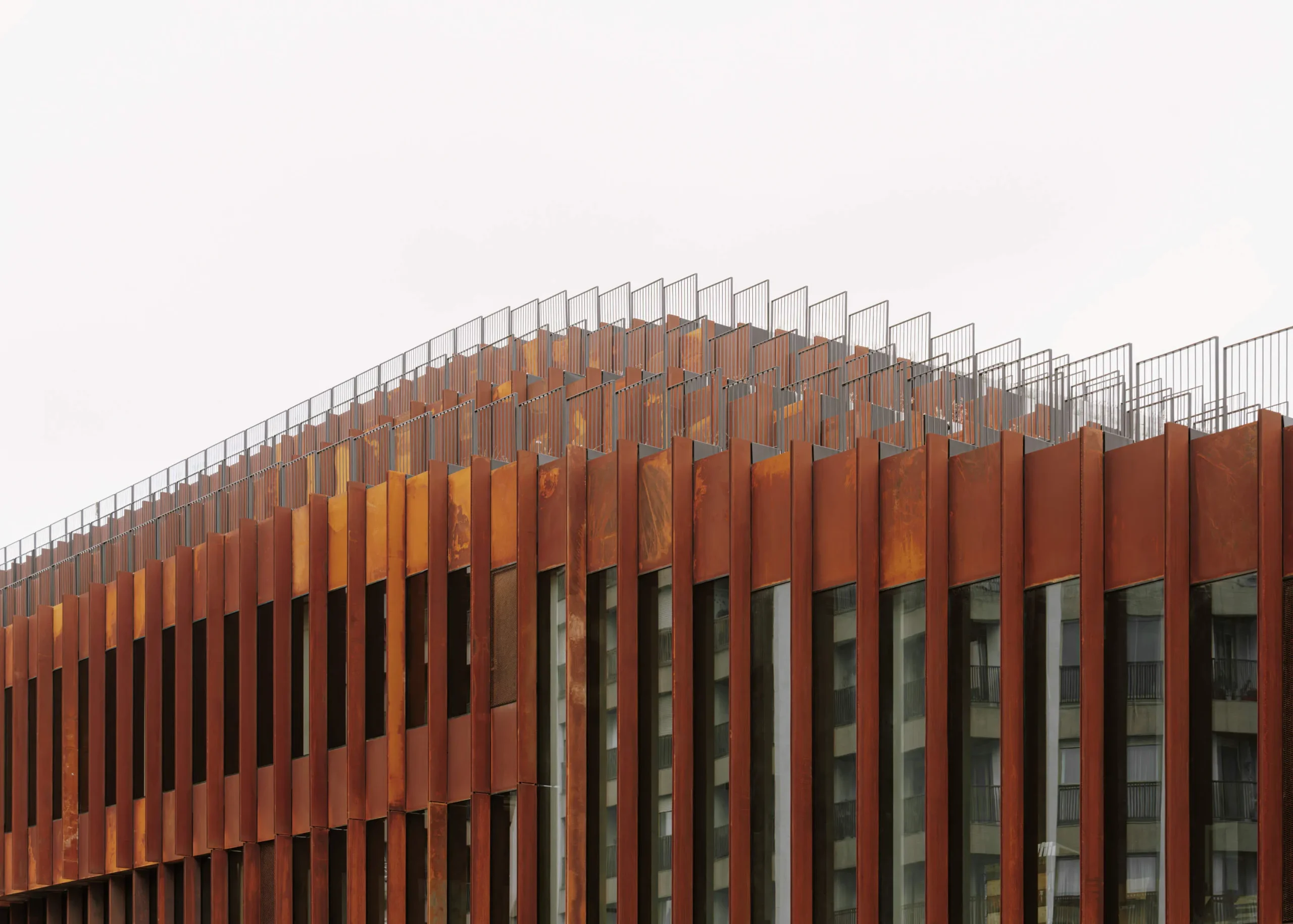
The architectural language balances precision with warmth. Back-of-house areas, including kitchens and labs, use durable industrial materials suited for hygiene and efficiency. In contrast, public-facing spaces, such as the upper-level restaurant, introduce wood and stone finishes to create a more inviting atmosphere.
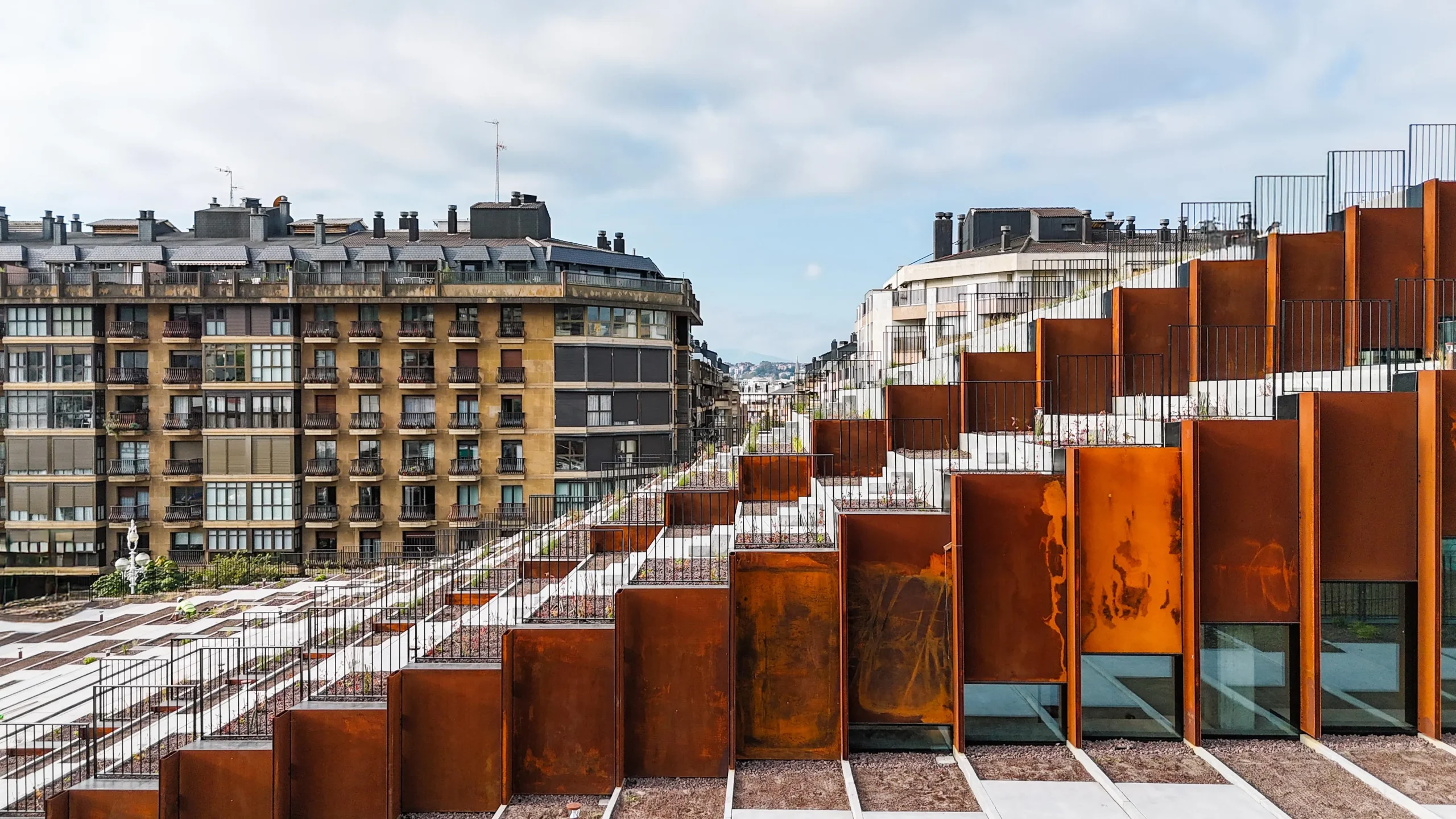
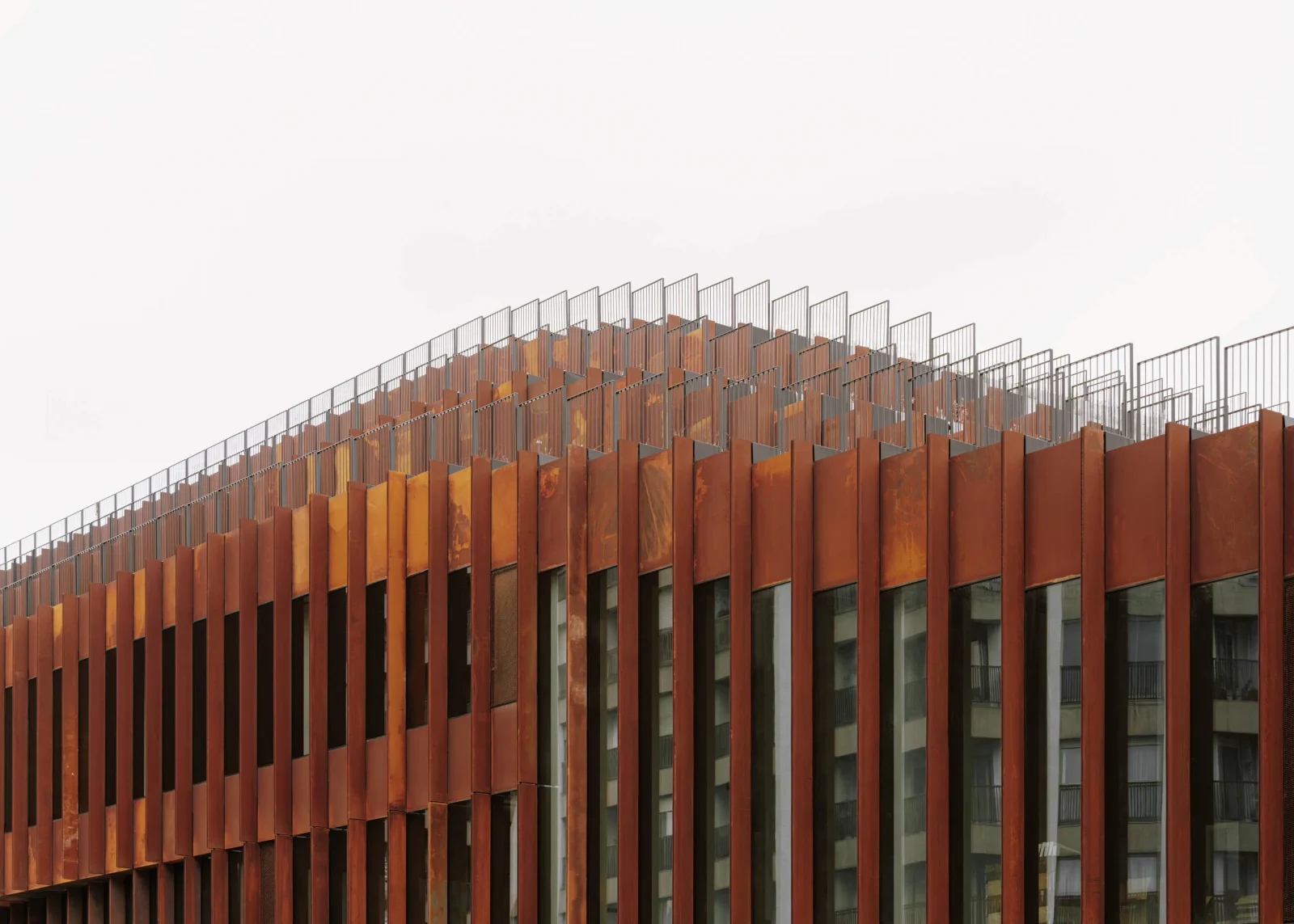
The stepped green roof references the region’s iconic coastal geology, while the transparent façade dissolves boundaries between interior and exterior.
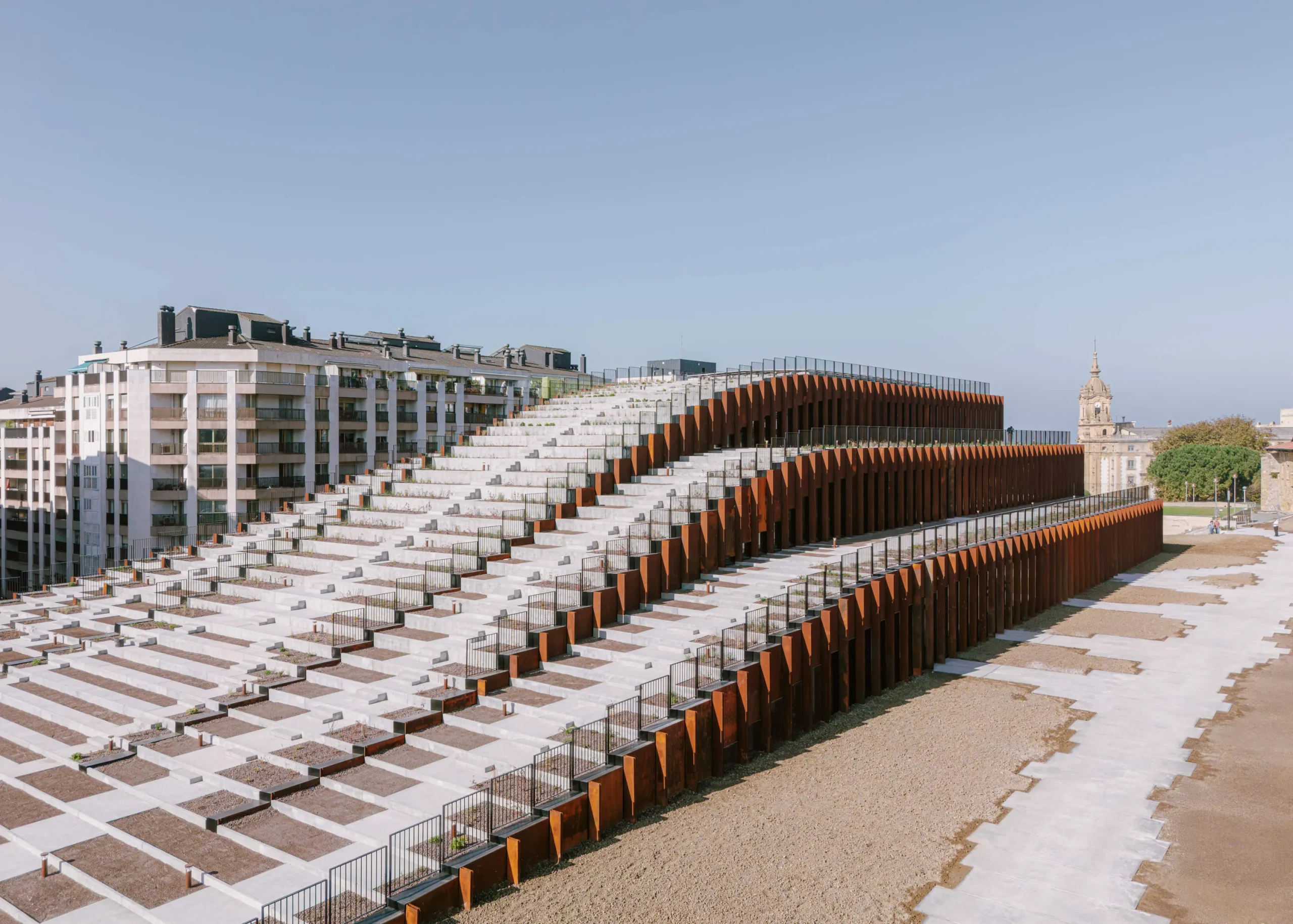
Planned landscaping alongside the building’s sculptural form connects the building to the Camino de Santiago, integrating circulation paths that invite both locals and visitors to explore the structure as part of a larger cultural journey. Gastronomy Open Ecosystem reinterprets architecture as landscape, infrastructure, and experience that blends gastronomy, research, and public life into a fluid destination that invites exploration, interaction, and continuous engagement with place and culture.
Image Credit: © Francisco Tirado
Explore Courses
.jpg "Ondrej Chybik - Rethinking Architecture")