



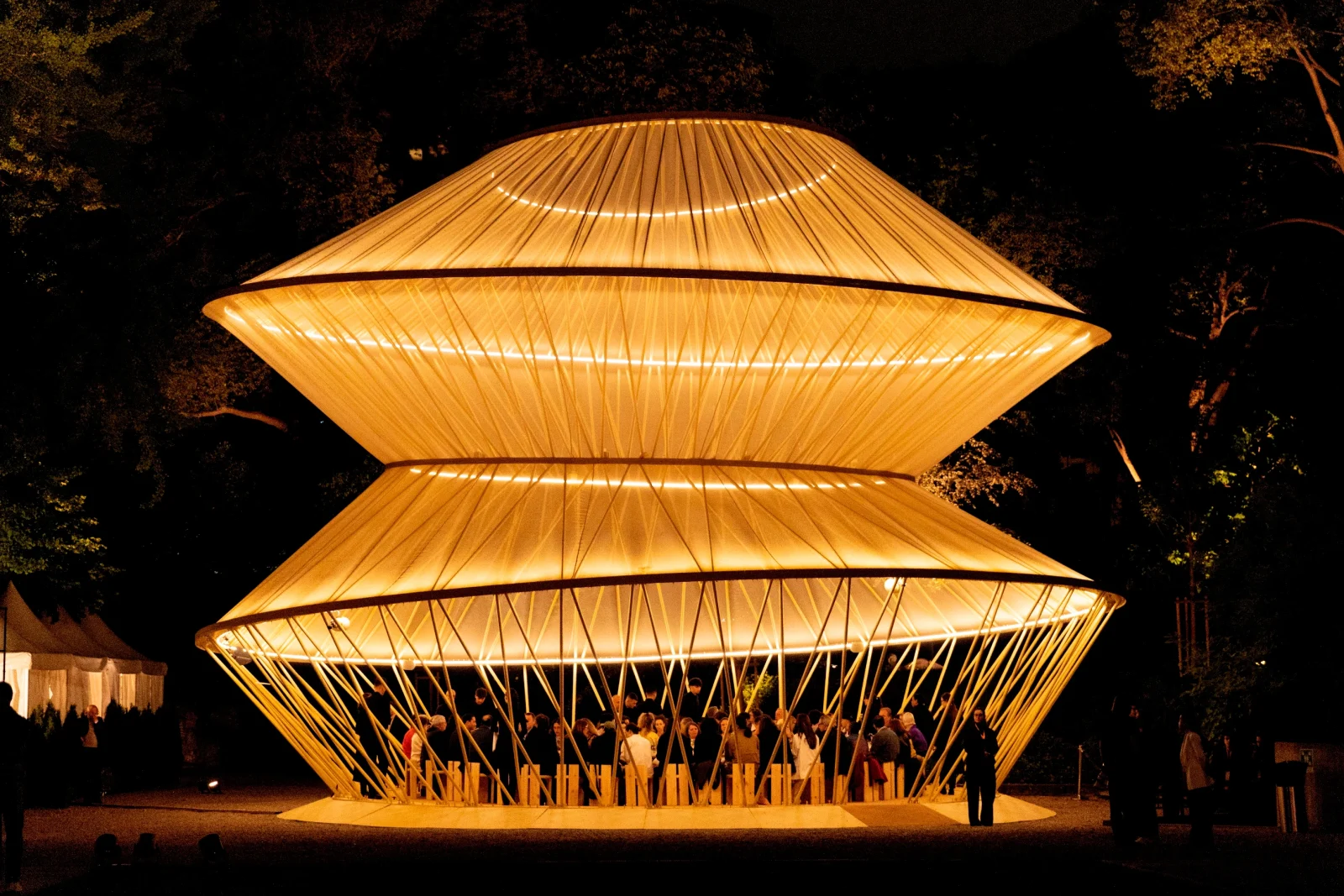




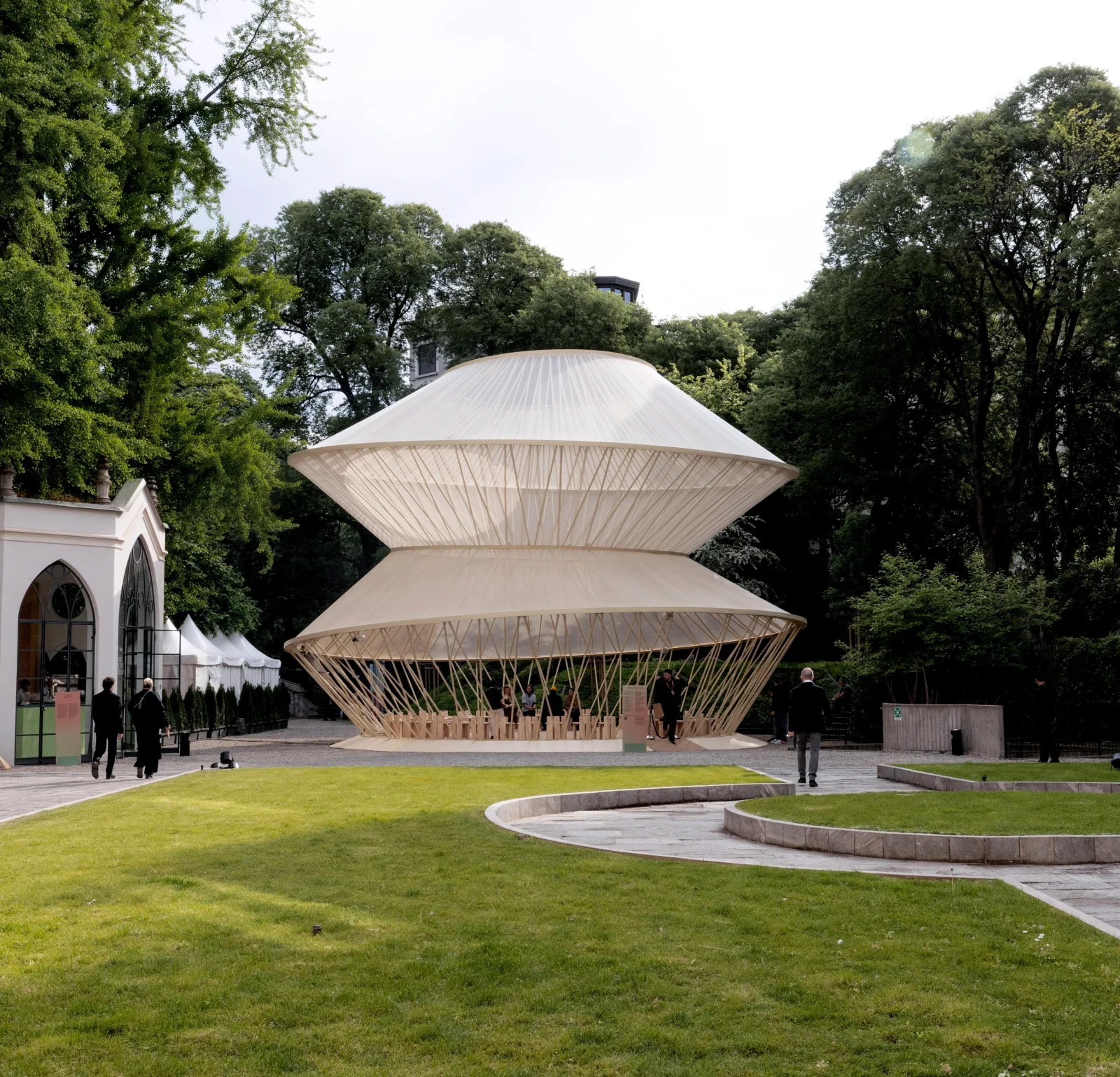

The Apricot Pavilion, presented as part of When Apricots Blossom during Milan Design Week 2026, is the architectural centerpiece of the Uzbekistan Art and Culture Development Foundation’s (ACDF) debut at the event. Located in the historic garden of Palazzo Citterio, the pavilion was designed by WHY Architecture under the direction of architect Kulapat Yantrasast, who also curated the full exhibition.
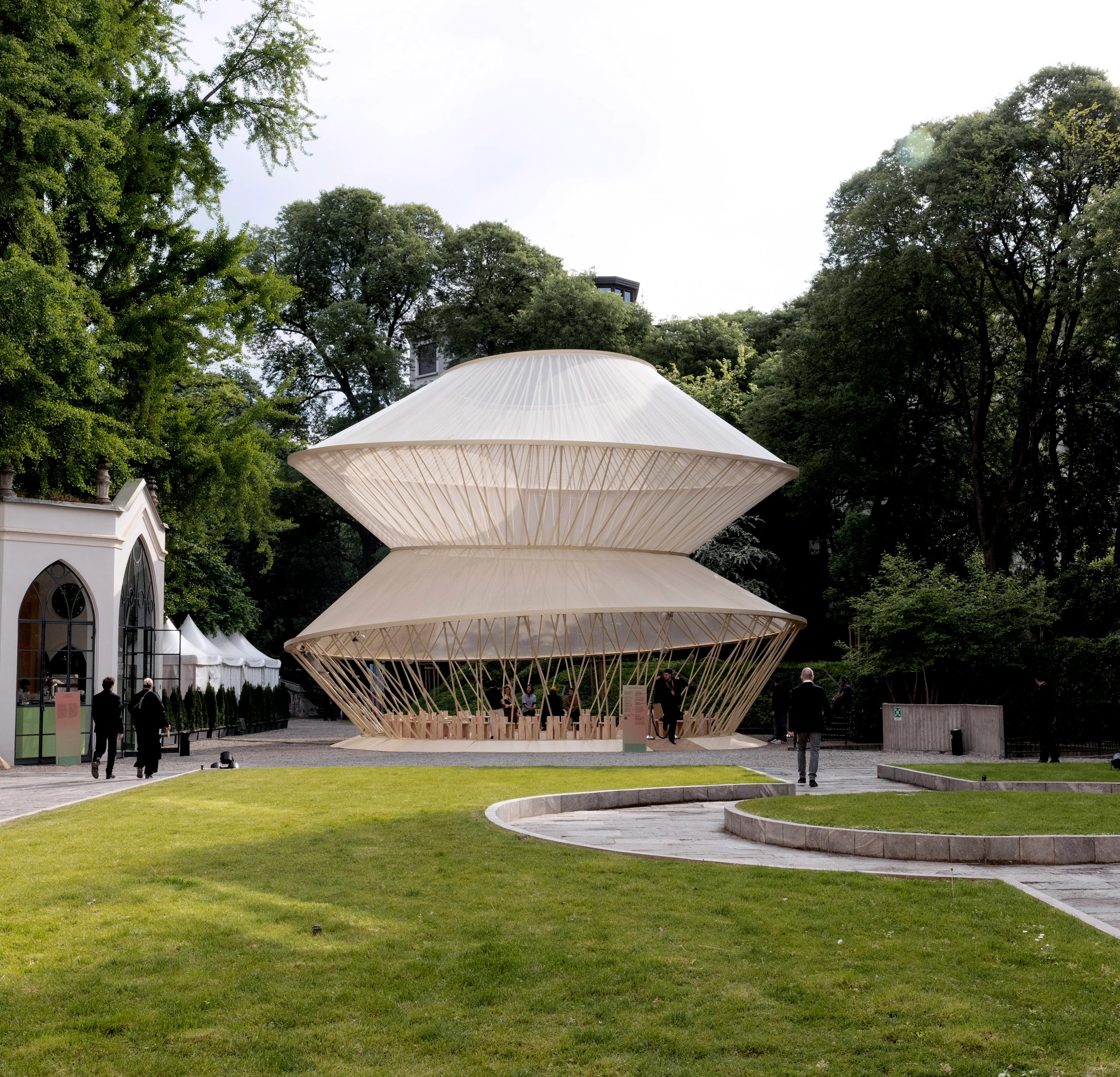
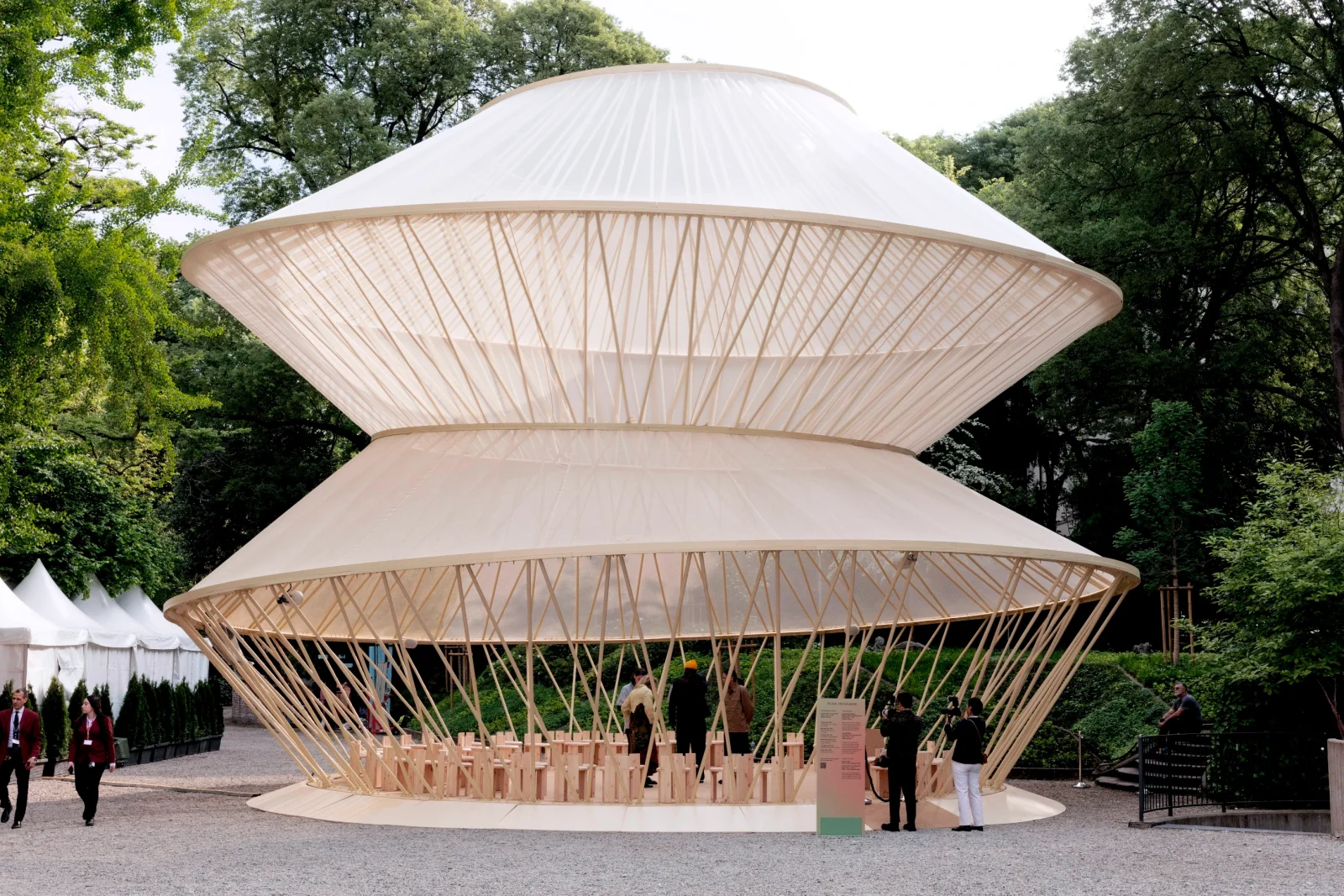
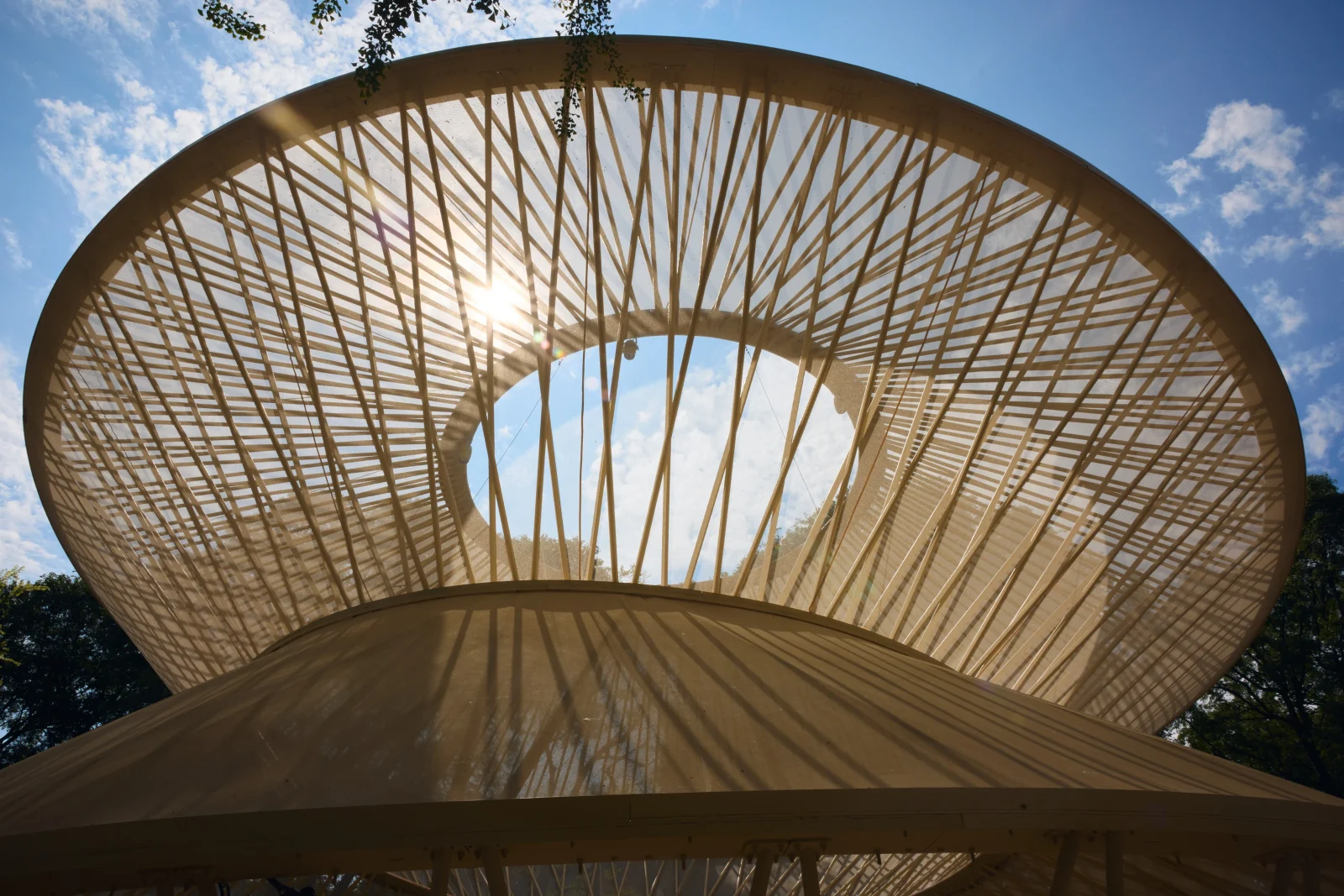
The pavilion draws directly from the yurt-making traditions of Karakalpakstan, a region in northwestern Uzbekistan that has been deeply affected by the ecological collapse of the Aral Sea. Instead of reproducing the yurt literally, the design reinterprets its structural principles. The pavilion uses a latticed framework inspired by the expandable wooden skeleton of traditional yurts, paired with a lightweight outer skin that references the felt casing typically used in nomadic dwellings. This creates a temporary, deployable structure intended to be transportable and reassembled across different contexts, reflecting the mobility and adaptability of nomadic architecture.
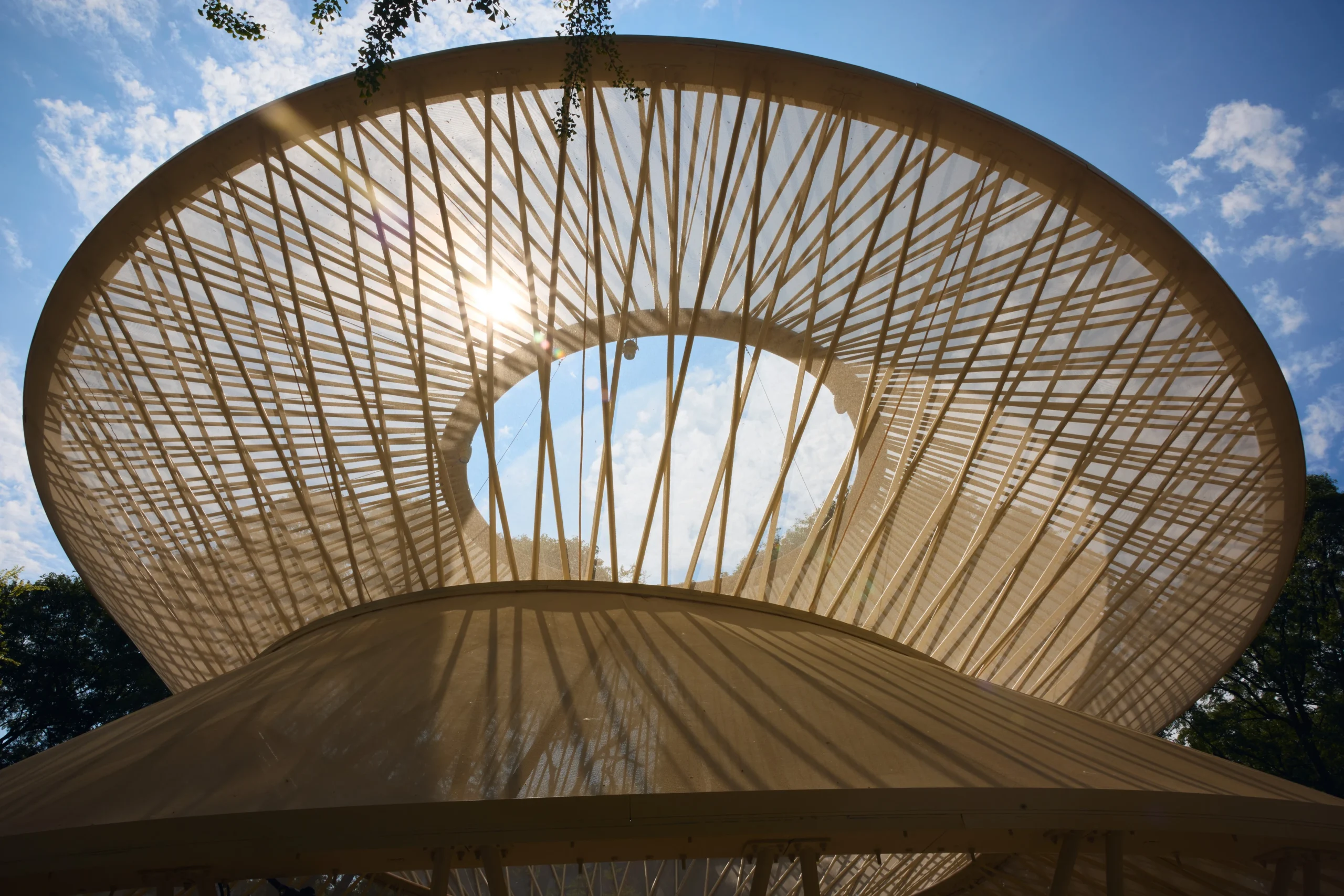
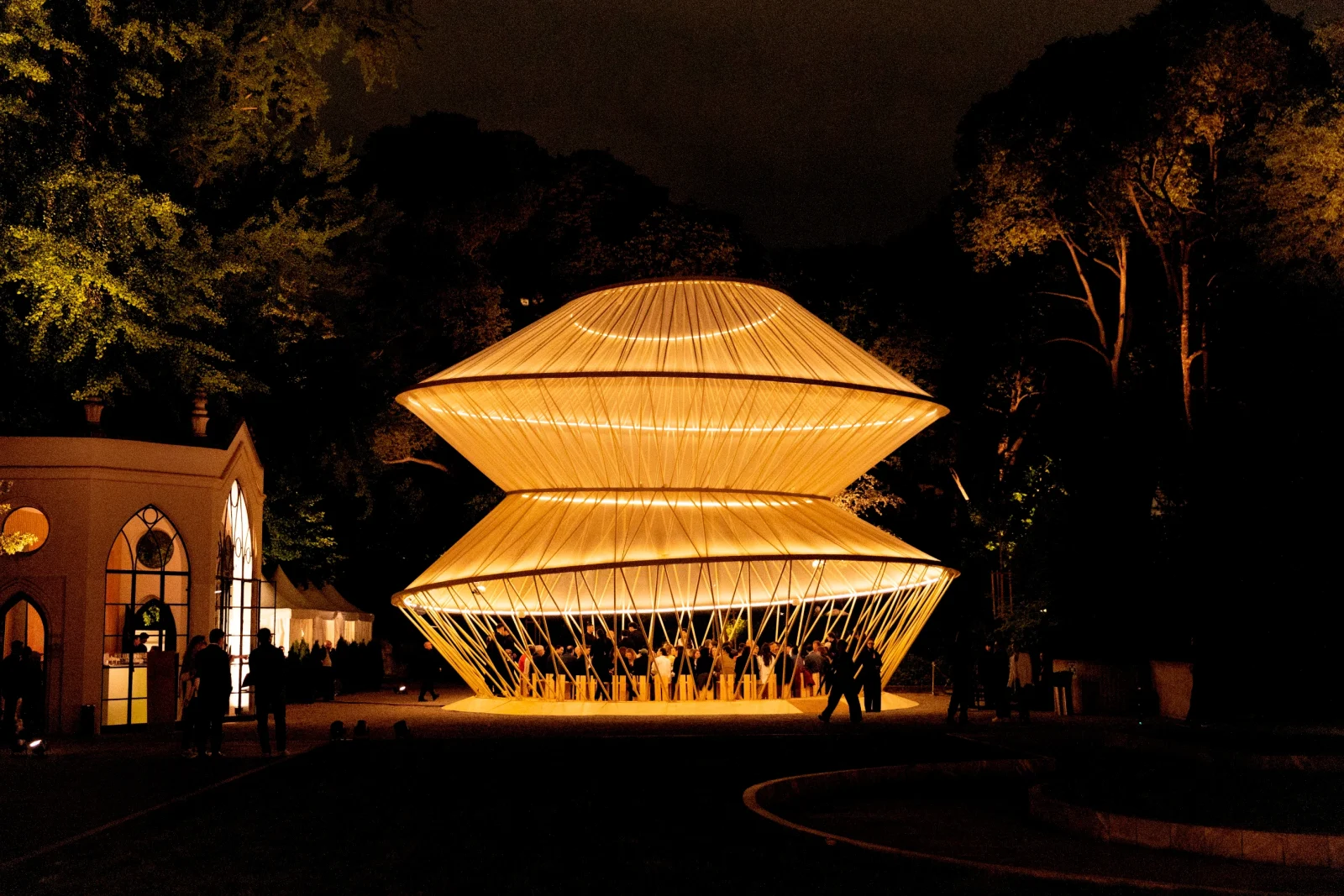
Its form is intentionally open and permeable. The fine lattice structure filters daylight during the day and creates a glowing lantern-like effect at night. This transparency allows the pavilion to function as an architectural object and a social space within the garden. It operates as a place for gathering, reflection, and conversation, and forms the social heart of the entire installation.
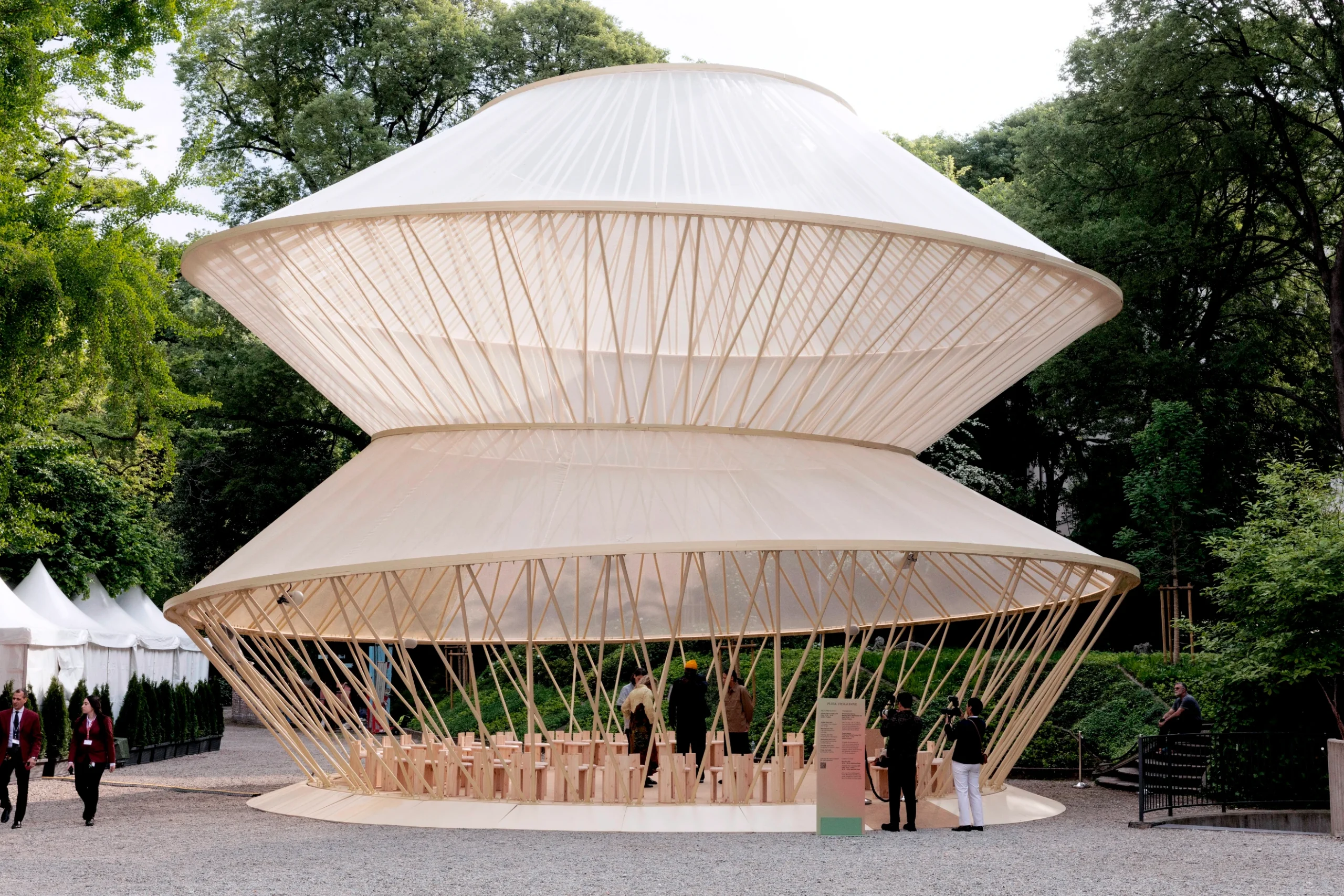
Yantrasast described the concept as an attempt to “crack open” the world of the yurt and rethink how architecture can hold absence as much as presence, particularly the absence left by the disappearing shoreline of the Aral Sea and the changing way of life in the region. The pavilion, therefore, becomes both symbolic and functional: it references shelter, memory, and environmental loss while creating a living public forum within Milan Design Week.

The pavilion hosts daily tours, talks, workshops, and live demonstrations throughout the exhibition from 20–26 April 2026. Programming included bread-stamp making and tassel-weaving sessions led by Uzbek master artisans, along with discussions on design, food, ecology, and craft traditions. These activities connect the architectural space directly to the wider themes of the exhibition, which focus on food, textiles, and shelter as key elements of cultural continuity.

Within the larger exhibition narrative, the Apricot Pavilion serves as the final stage of the visitor journey. After moving through interior gallery spaces featuring bread stamps, reed installations, textiles, and the film Where the Water Ends, visitors arrive in the garden, where the pavilion offers a quieter, contemplative environment. This sequencing positions the pavilion as the emotional and architectural culmination of When Apricots Blossom.
During Milan Design Week, the Apricot Pavilion stands out as an example of a pavilion design rooted in cultural memory and environmental reflection.
Image credit: ACDF
Explore Courses
.jpg "Ondrej Chybik - Rethinking Architecture")