




Throughout history, humankind’s desire to shape nature and build has led to the destruction of animal habitats, the extinction of species, and the struggle of animals to survive under the threat of disappearance. However, “architecture for all” also applies to animals, which have been a part of human civilization since the dawn of trade and settlement.
What is Animal-Friendly Architecture?
The necessity of coexistence compels an architectural approach that prioritizes design without harming the nature of animals. Animal-friendly architecture isn’t limited to simply providing safe shelter; it also considers the behaviors, needs, and natural life cycles of animals. When designing for animals, special design considerations must be made due to their unique needs and habits. This design approach, based not only on aesthetics but also on empathy, responsibility, and sustainability, is an important area for the architectural world, which strives to connect with nature.
In this article, we will examine 8 buildings designed with animal-friendly architecture:
1. Butterfly Aviary
Location: Sharjah, United Arab Emirates
Year: 2016
Architect: 3 Deluxe
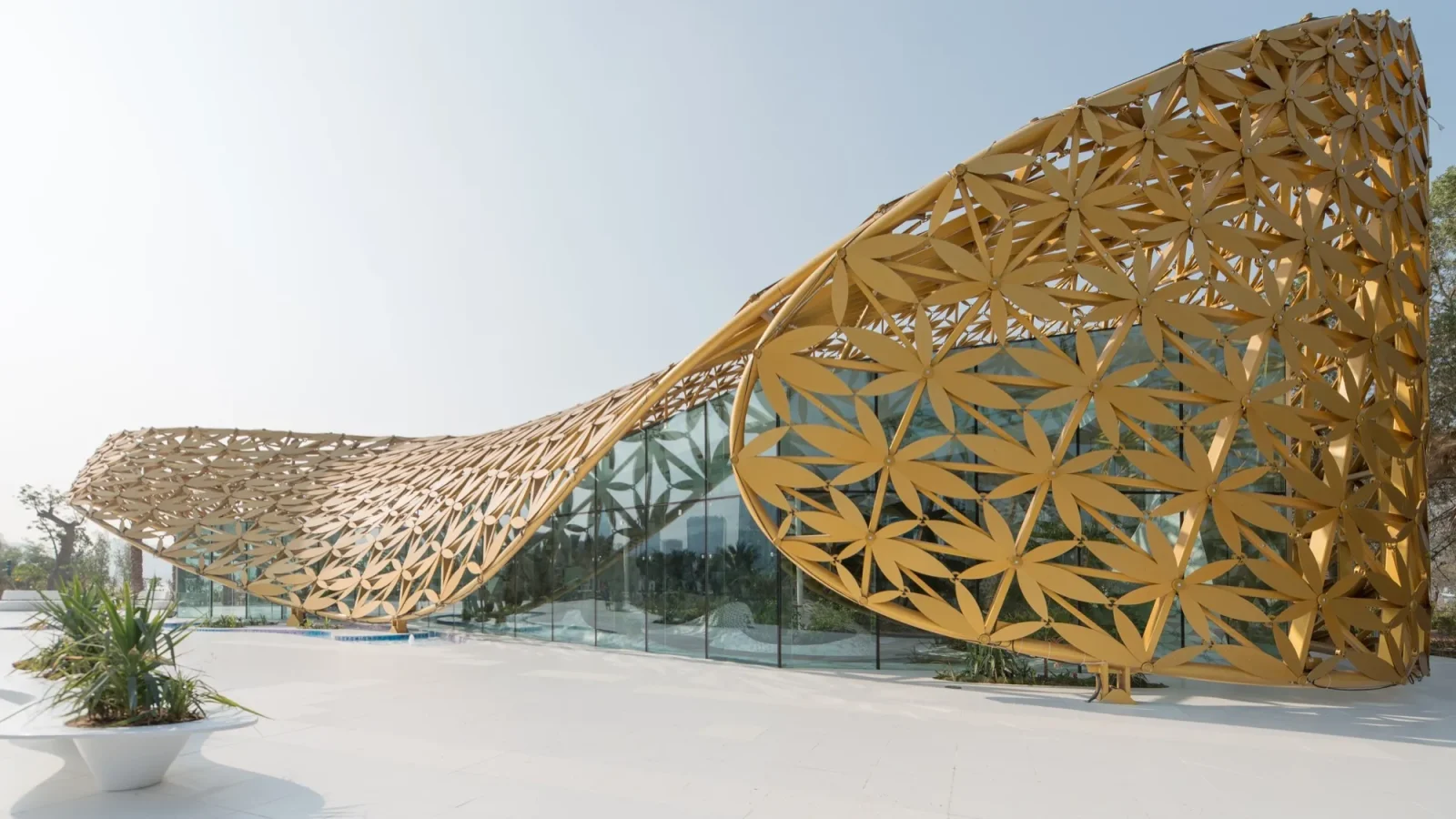
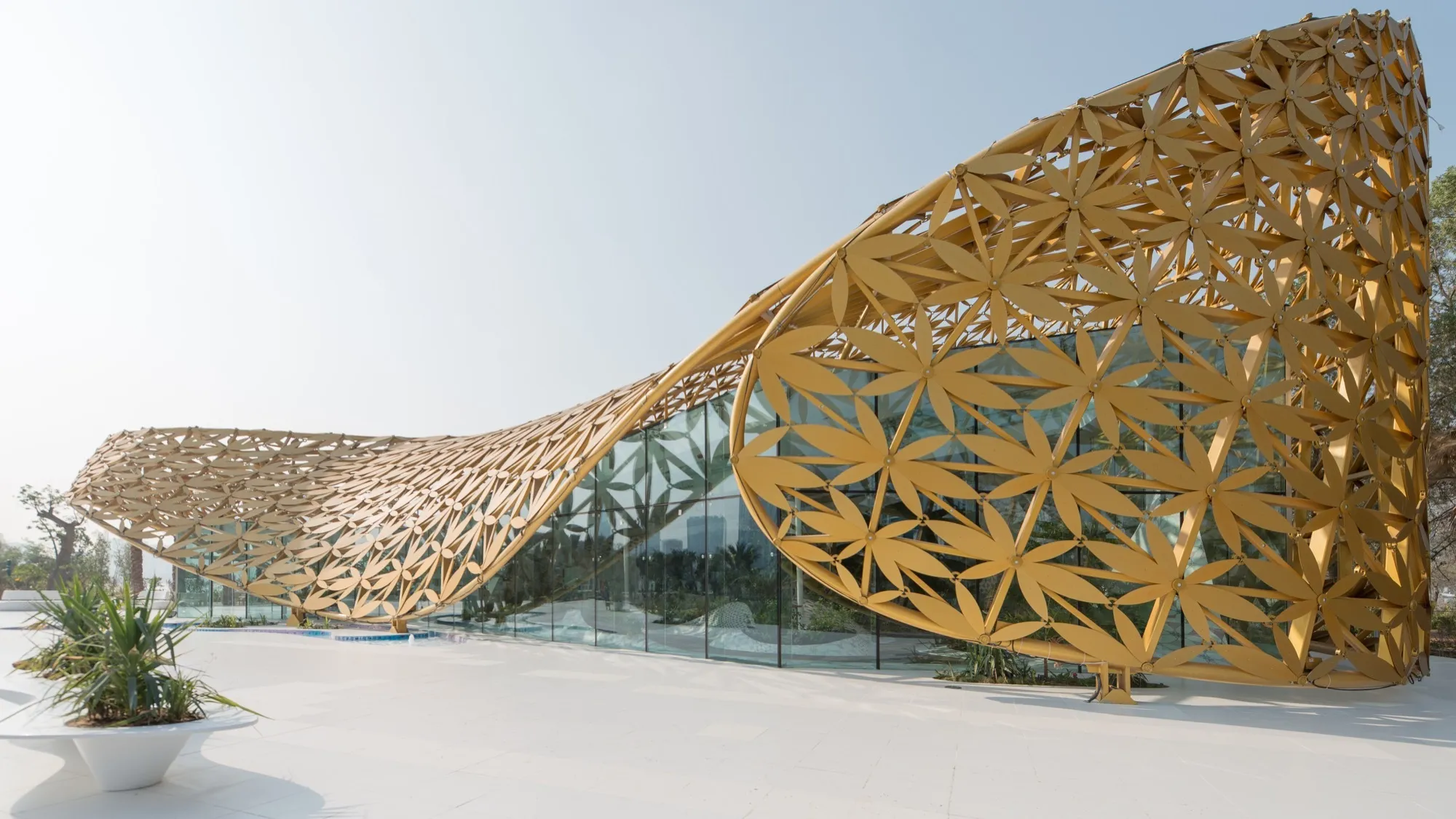
The Butterfly Aviary on Noor Island, a habitat designed for butterfly observation, is one of the most striking examples of animal-friendly architecture. This approximately 15-meter-high pavilion houses approximately 500 tropical butterflies, a shop, and a café. Rising as high as the surrounding palm trees and leafy trees, the structure was designed to blend in with the established ecosystem on Noor Island.
Inspired by the chimney effect created by the conical shape, a climatic buffer zone was formed between the interior and exterior spaces. Its intricate cladding creates shade without blocking daylight, thus protecting the butterfly biotope, while the café and glass insectarium remain fully illuminated by natural light. Floral shadows on the floor and walls blend with the images of the ornate roof, and the architecture merges with nature, creating an architectural structure that embraces Arabic ornamentation and building traditions as much as the leaves and vines.
The climatic conditions required for tropical butterflies, which live for only a few weeks, to thrive are complex. To address this, the Butterfly Aviary houses a biotope at the center of a 230 m² crystal glass structure, with its height varying from 3.5 to 5.5 meters. The interior climate is carefully controlled at 23°C with slightly increased humidity, providing a livable environment by mimicking natural conditions. Designed to mimic nature, the structure provides a livable environment for the animals.
The Butterfly Aviary’s façade is comprised of 4,000 aluminum foils inspired by the flowers associated with butterflies. Viewers are drawn to follow the momentum of light across the sparkling surface. The roof, which envelops the butterfly sanctuary like a protective curtain, creates a cooling effect, reminiscent of the classic wind towers of Arabic architecture.
2. Bat Tower
Location: New York, USA
Year: 2010
Architect: Ants of the Prairie
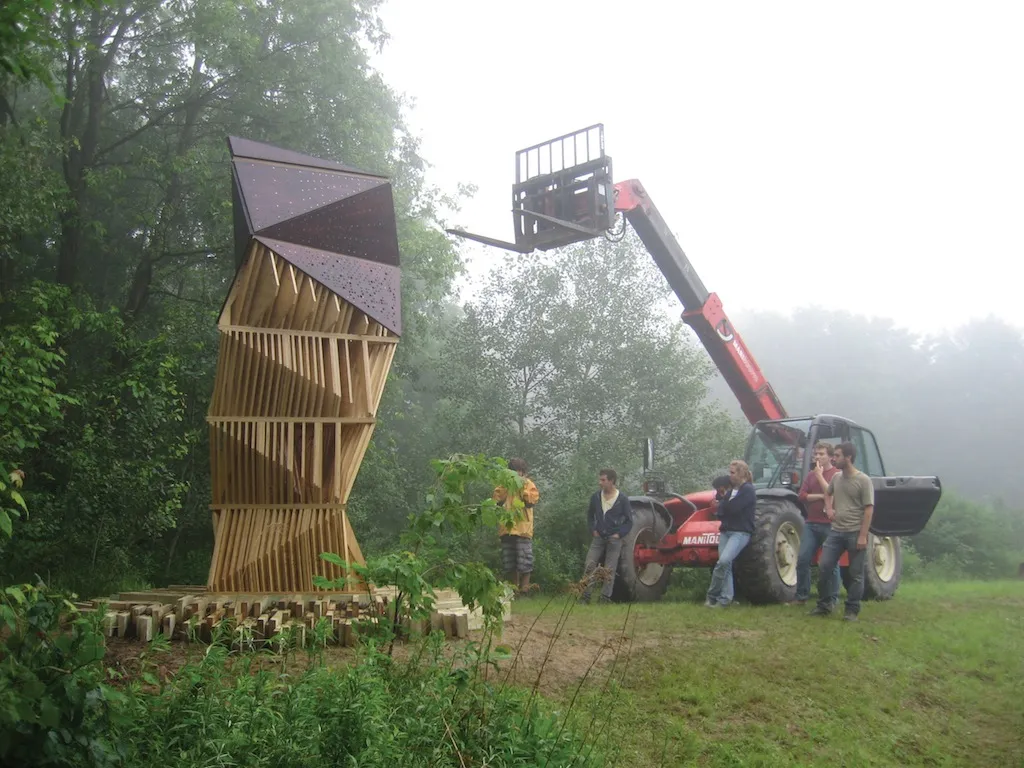
The Bat Tower is a prototype built as part of research to raise awareness about bats, which are a vital component of the ecosystem, yet are both killed by humans and declining in numbers due to White-Nose Syndrome, particularly prevalent in the United States. Featuring inspiring animal-friendly architecture, this tower challenges the conventional notion of a bat house by striving to provide visibility for bats. Standing out as a distinct outdoor sculpture rather than quietly disappearing into the background, the Bat Tower was designed with the idea of a vertical cave. Located next to a lake in Griffis Sculpture Park in New York, the prototype features a base planted with bat-attracting herbs such as chives and thyme.
A series of landing platforms located near the top of the tower, home to bats, a plethora of mosquitoes, and other insects, facilitates entry. Grooved patterns on both vertical and horizontal surfaces help bats climb and cling to the “ceilings” of the structure. To create a suitably warm interior for roosting, the living space is clad in dark-stained wooden panels that absorb sunlight. With its animal-friendly architectural approach, the Bat Tower demonstrates that the living environment is not just for humans.
3. Vulkan Beehives
Location: Oslo, Norway
Year: 2014
Architect: Snøhetta
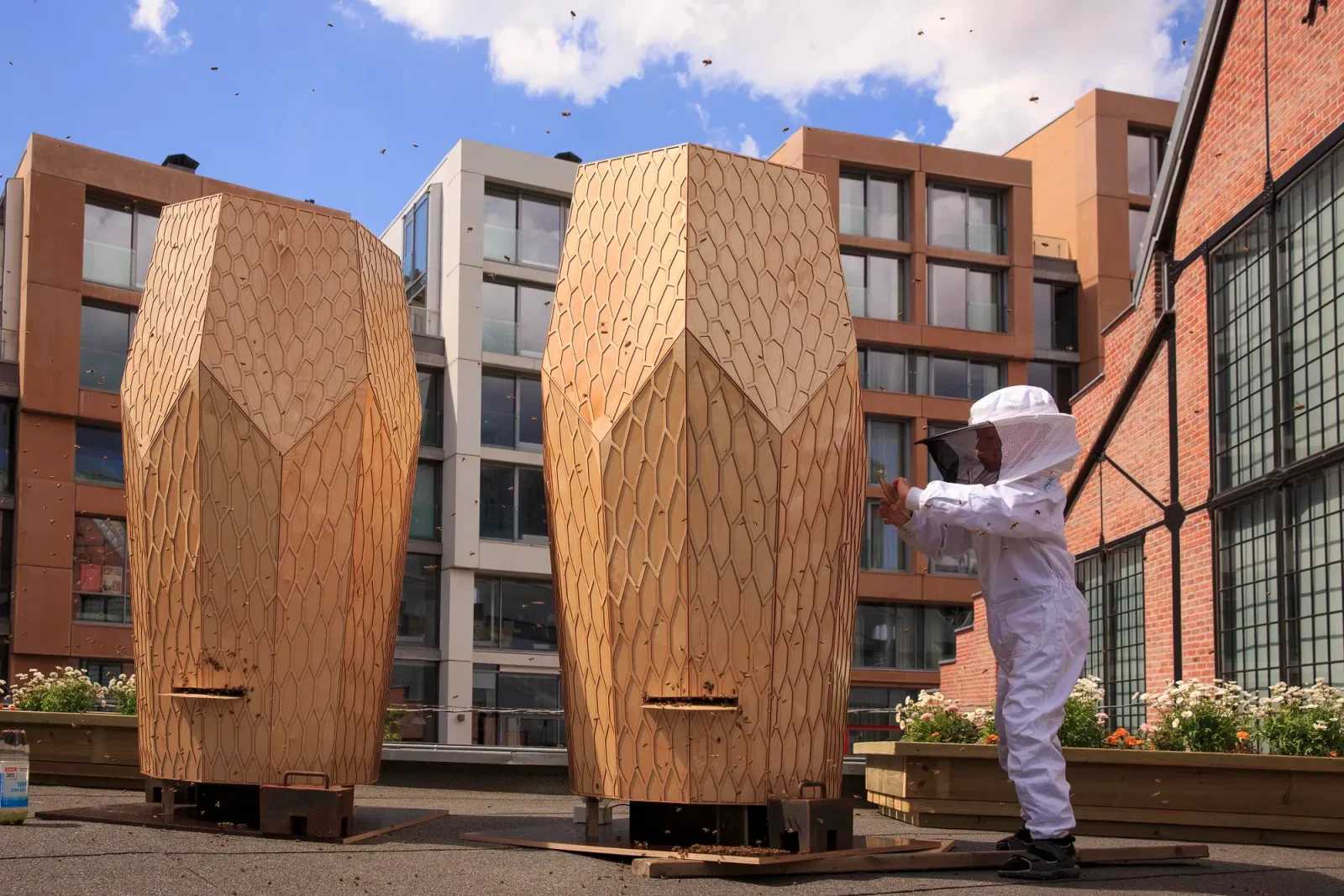
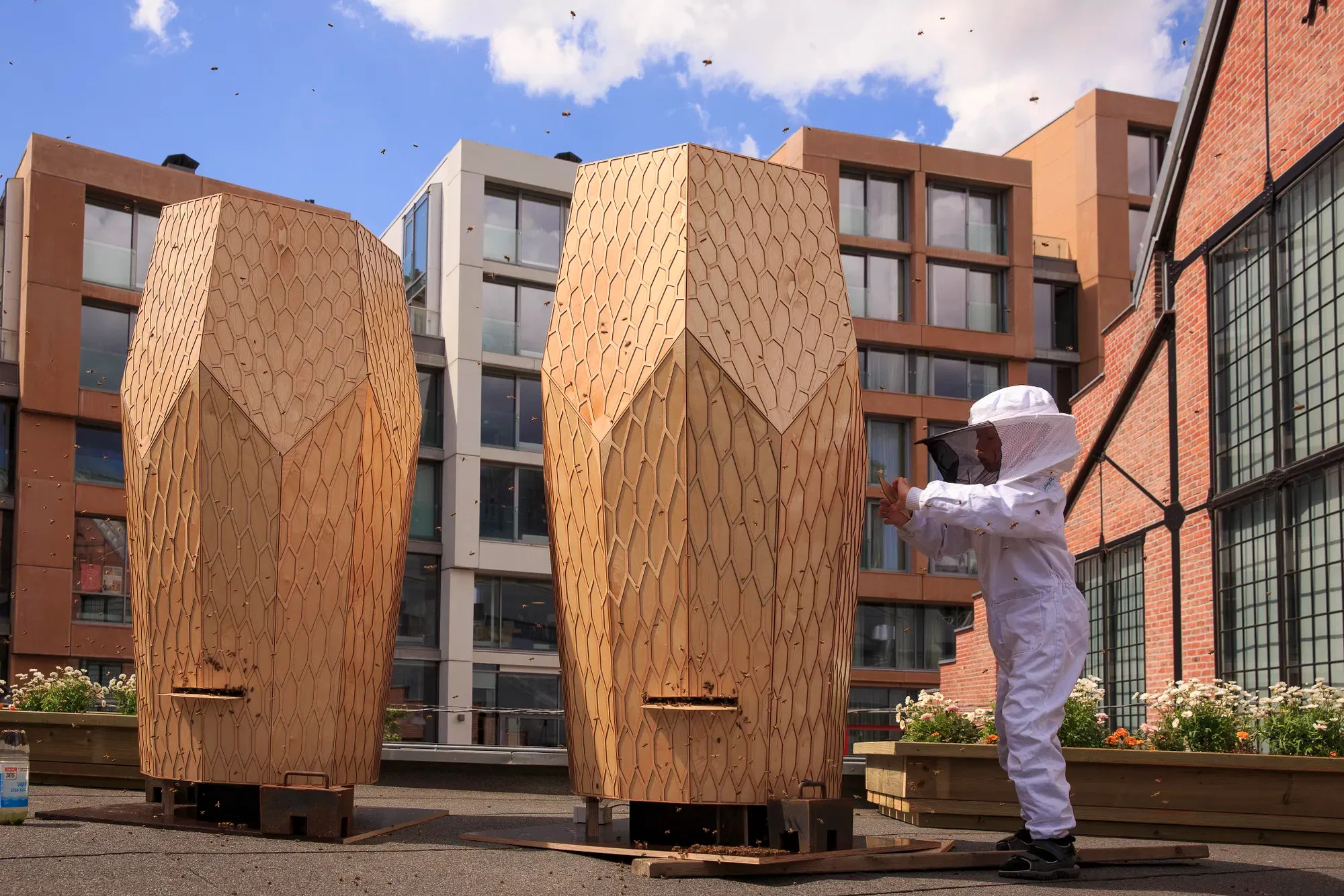
Vulkan Beehives, built for bees, an integral part of the ecosystem, vital for the reproduction of both wild and cultivated plants, and responsible for one-third of all food production worldwide, were built to address the devastation bee colonies have faced in recent years due to pesticides and habitat loss.
As one of the most unique examples of animal-friendly architecture, the project was designed by Snøhetta in collaboration with beekeeper Alexander Du Rietz. Bringing traditional beekeeping practices to an urban environment, Beehives aims to raise public awareness about colony collapse and offer a new model for urban housing for agricultural partners.
The form of the hives is inspired by the natural geometry of honeycombs, resulting in an appealing outer shell that can be efficiently produced and affordably replicated. Consisting of two intersecting hexagonal volumes, the wooden hives can be adjusted in height and width to suit the beekeeper’s needs.
Unlike traditional hives, the Vulkan Beehives provide a closed and weather-protected space for the bees. The outer shell also accommodates monitoring and sensory equipment, enabling the collection of data on bee activity. Small openings at the bottom of the two hives, which house 160,000 bees, allow the bees to enter, while the surrounding green space provides an easy source of pollen and water.
If you want to learn about how parametric logic influences complex forms, PAACADEMYY’s Grasshopper 3D course introduces you to visual programming for designing adaptive and performance-driven structures.
4. Canine & Feline Hotel
Location: Vila do Conde, Portugal
Year: 2019
Architect: Raulino Silva Arquitecto
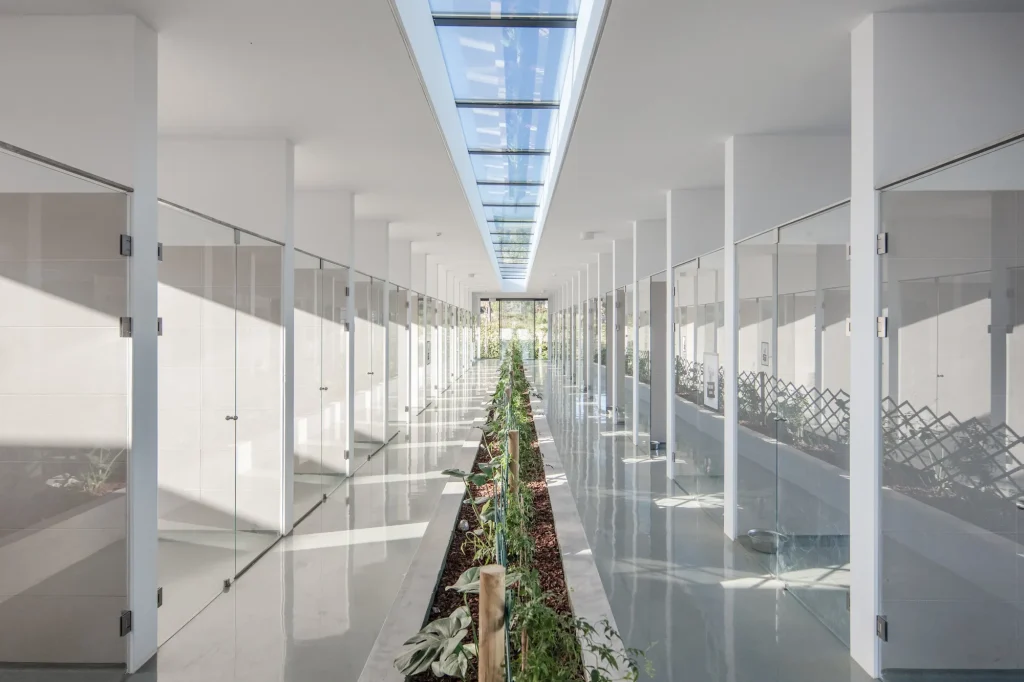
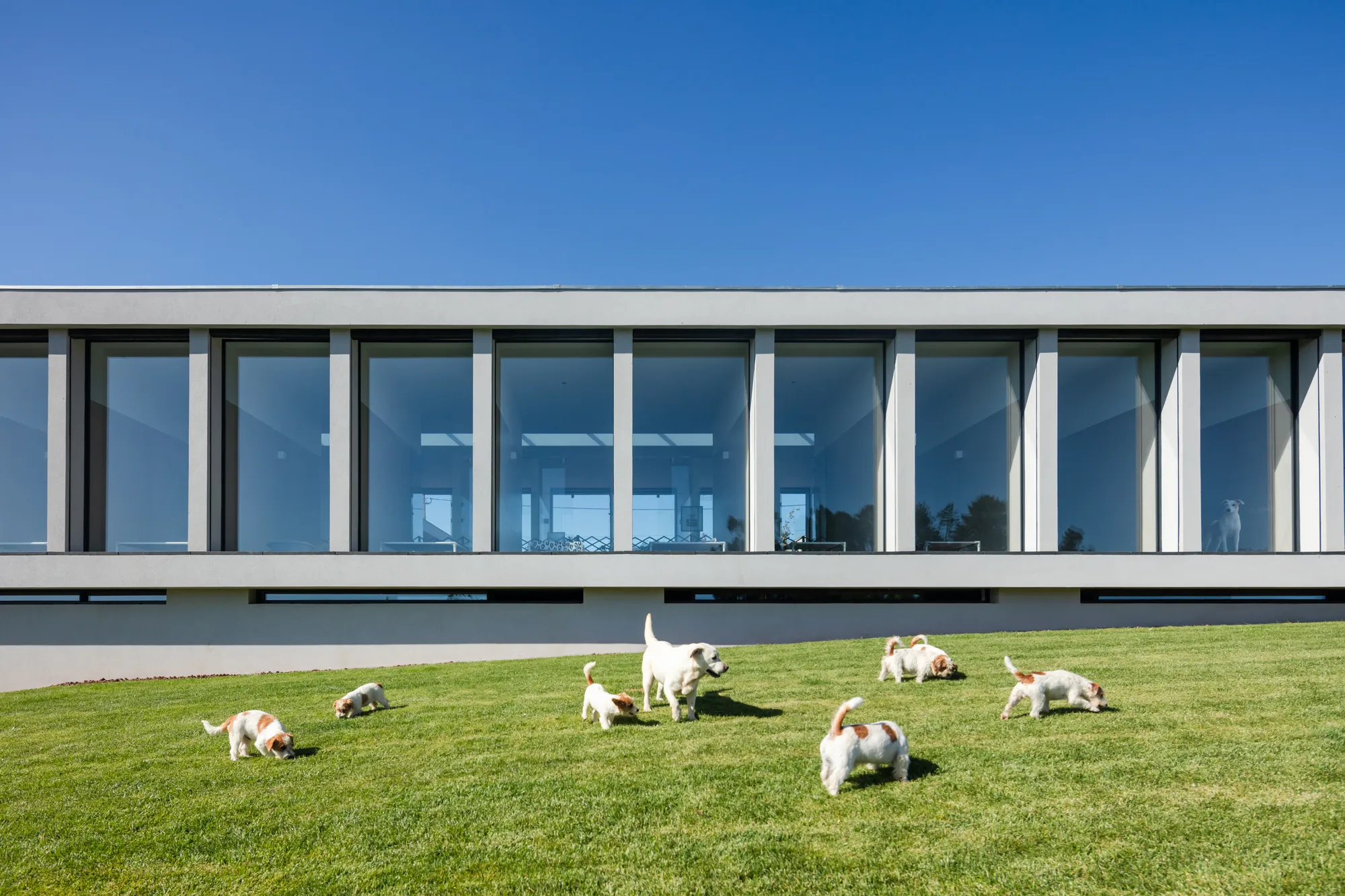
The Canine & Feline Hotel is an aesthetically pleasing, functional, sustainable, and sensitive project that redefines the relationship between humans and animals. Designed to host dogs and cats while their owners are away, this hotel provides short-term accommodation for pets in a thoughtfully conceived environment. Built on a former vineyard, this pet-friendly accommodation comprises three light gray-and-white blocks connected by exterior corridors.
The hotel, which includes a veterinary office, a grooming room, outdoor training areas, and a swimming pool, is distributed across three interconnected blocks. This allows cats and dogs to be accommodated in different areas, while common spaces are consolidated into a single mass. This fragmentation also allows for the integration of open spaces into the design.
The cat lodging area, located across the courtyard, features twelve rooms and overlooks an indoor play area illuminated by a large skylight. The dog hotel is located in a separate block, separating different types of guests to minimize noise and hostility. Making use of the sloped site, the two-level structure contains two rows of kennels on either side of a corridor, which opens onto a covered play area for dogs. An interior garden running through the center of the corridor prevents dogs across the hall from seeing each other. All rooms have large glass windows overlooking the garden.
Most of the facility’s floors are coated with waterproof epoxy, while areas such as changing rooms, bathroom walls, and staircases feature light-colored microcement finishes. The exterior of the Canine & Feline Hotel is covered with a white-grey facade thermal insulation composite system (ETICS) panels, while the roof is covered with a thermal insulation layer made of bitumen and supported by gravel.
5. Banfield Pet Hospital Headquarters
Location: Vancouver, Washington, USA
Year: 2017
Architect: TVA Architects, Gensler
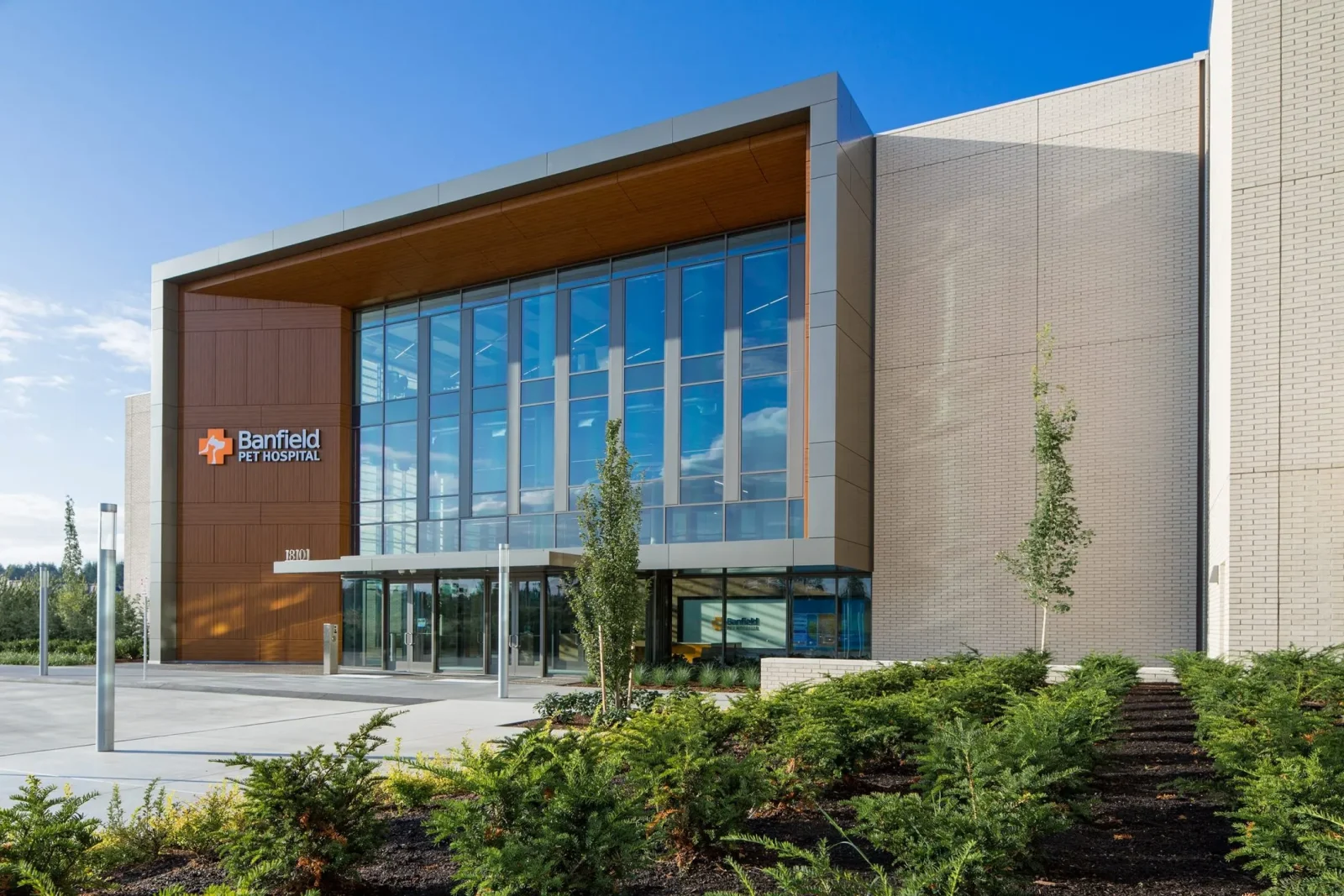
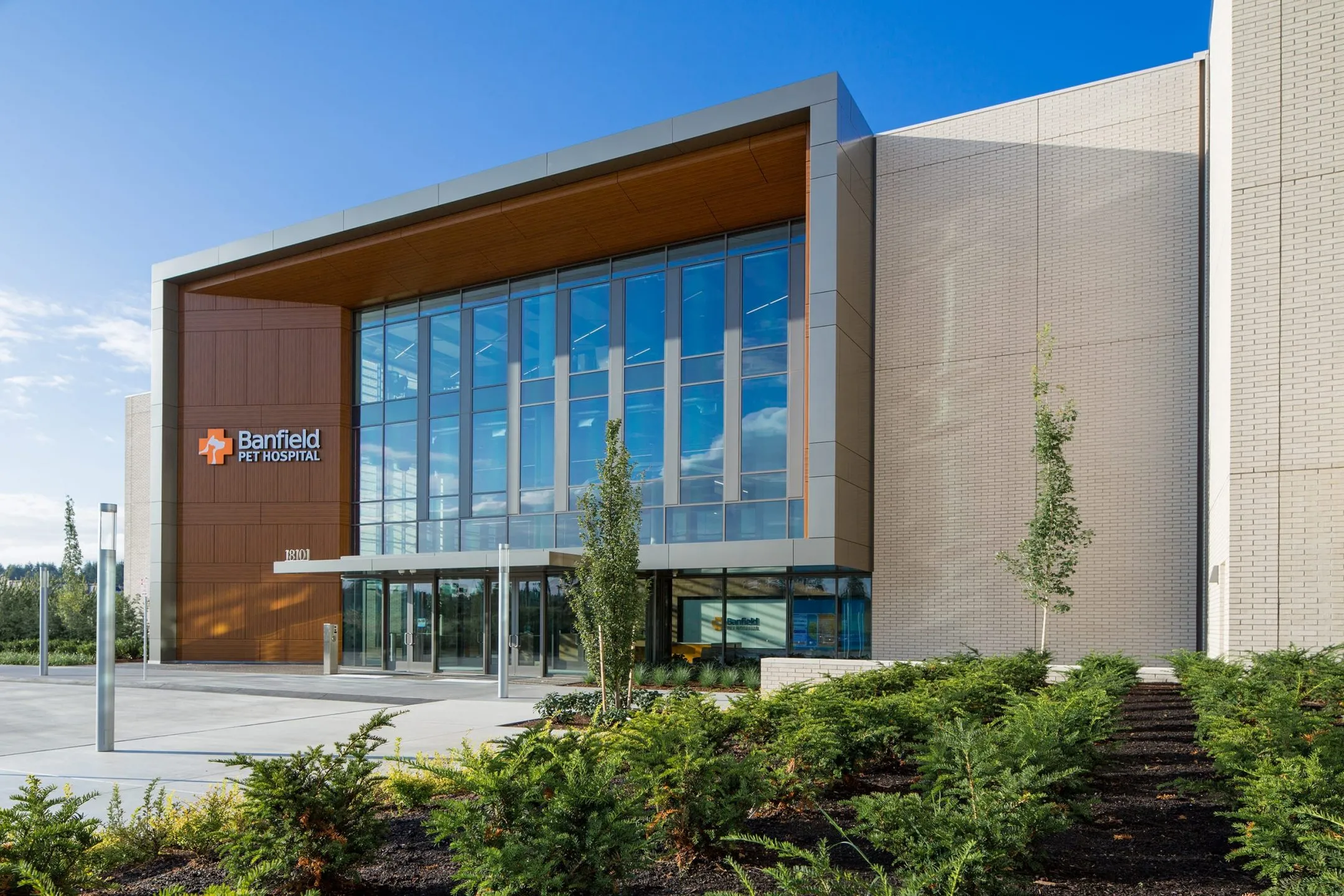
Banfield Pet Hospital Headquarters is a pet hospital designed around pet-human interaction. Developed by TVA Architects with interiors by Gensler, the headquarters is composed of three interconnected structures, with a central core dedicated to shared spaces for pets and visitors. Consuming only half the energy of a typical office building, Banfield boasts a pet-, human-, and environmentally-friendly design. The Banfield Group’s US headquarters also serves as a training facility for veterinarians.
The design theme of the three-structured building is the use of monotonous materials, interspersed with vibrant pet figures. The monotony is also interrupted by small green spaces at nodes and corners. Designed with full-height windows, the headquarters boasts well-lit interiors, offering a lush outdoor view from nearly every interior. On the ground floor, a double-height reception area connects all the main spaces from the entry lobby while offering a welcoming space for guests.
A vibrant green wall adds to the lobby’s appeal. A chandelier of dog bowls hangs from the roof in the lounge area. The headquarters features six micro-cafes with a healthy theme, a meditation room, collaboration meeting points, hidden compartments, and even standing desks to promote wellness within the workspace. A ramp extending from the ground floor to the third floor connects the three buildings. The northern glass façade reflects sunlight onto the ramp, highlighting the colorful animal silhouettes etched into the glass balustrades. This ramp, the focal point of the building, symbolizes Banfield’s ideology: the unity of people, pets, and the environment.
6. The Panda House
Location: Frederiksberg, Denmark
Year: 2019
Architect: Bjarke Ingels Group
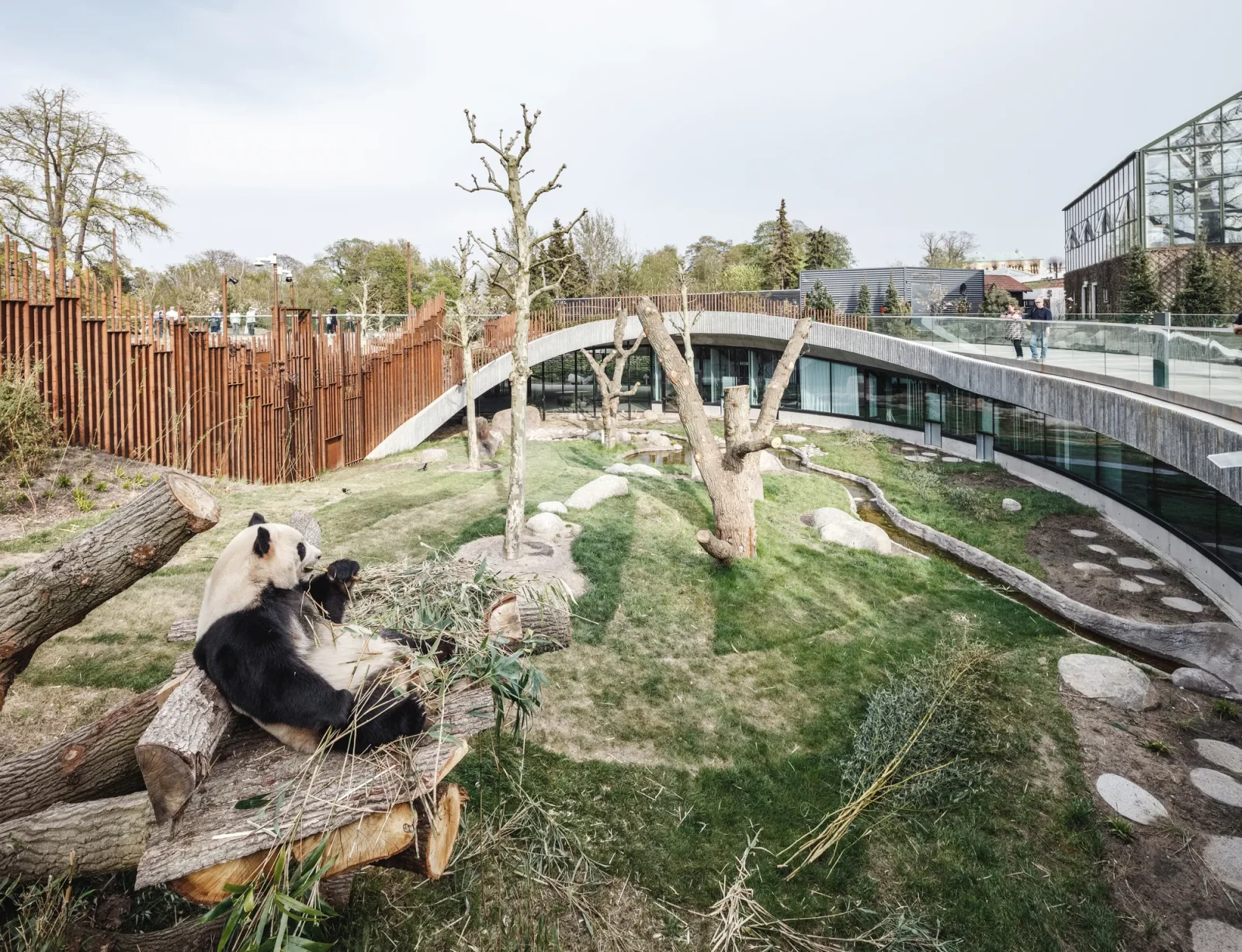
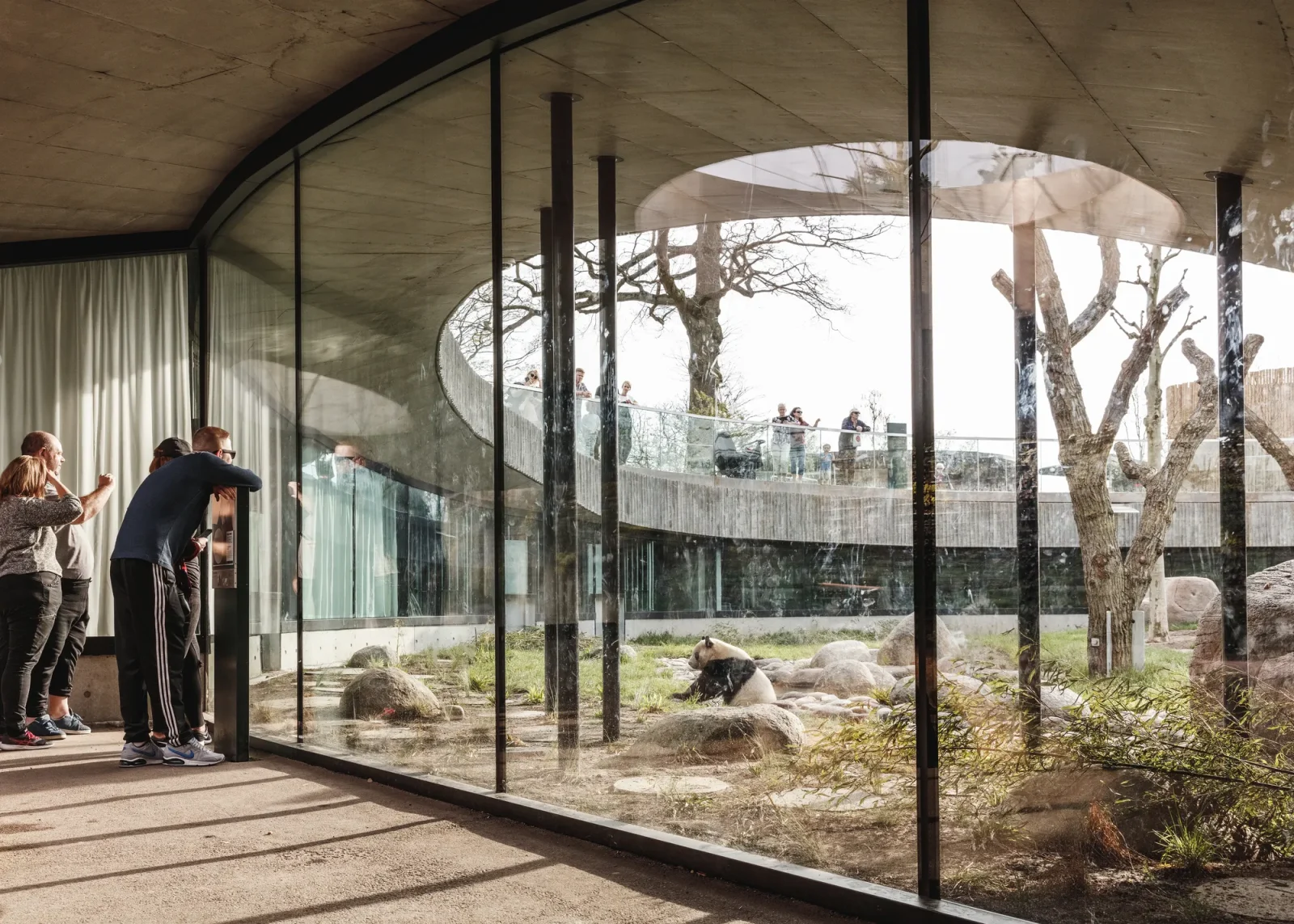
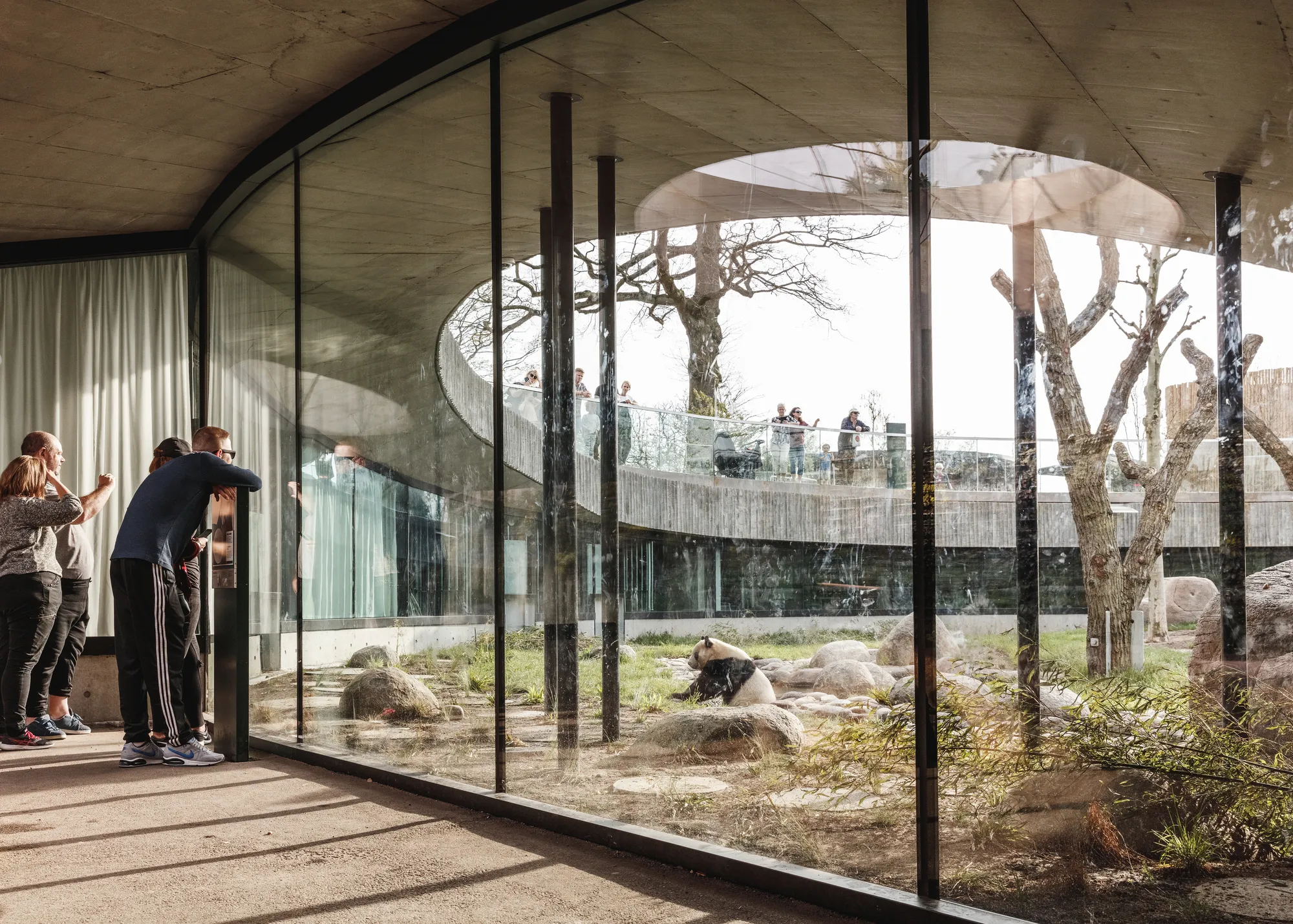
The Panda House is a remarkable example of animal-friendly architecture, designed in response to the threat of extinction faced by pandas due to habitat loss. Created to provide ideal conditions for two pandas brought from Chengdu, China, the 2,450 m² Panda House allows them to roam freely and mate comfortably. It forms a central attraction at the Copenhagen Zoo, one of the oldest zoos in Europe. Designed in a circular shape, the structure is divided into two distinct areas, resembling yin and yang symbols, creating the most natural and free environment possible for the giant pandas to live and interact with each other.
The Panda House spans two levels. On the ground floor, there is Panpan, a French-Asian bistro where visitors can dine while observing pandas and elephants. The upper level features a path that winds through local Scandinavian vegetation and leads into a dense bamboo forest. All interior spaces place the lush landscape at eye level, creating an immersive experience with wildlife and nature on either side. By removing the soil at either end of the yin and yang symbol, an undulating landscape is created that provides direct views into the pandas’ habitat. The visitor experience takes place along the perimeter of the circular enclosure and down the sloped paths that provide a glimpse of the work of zoo staff, veterinarians, and gardeners.
7. The Elephant House
Location: Frederiksberg, Denmark
Year: 2008
Architect: Foster + Partners
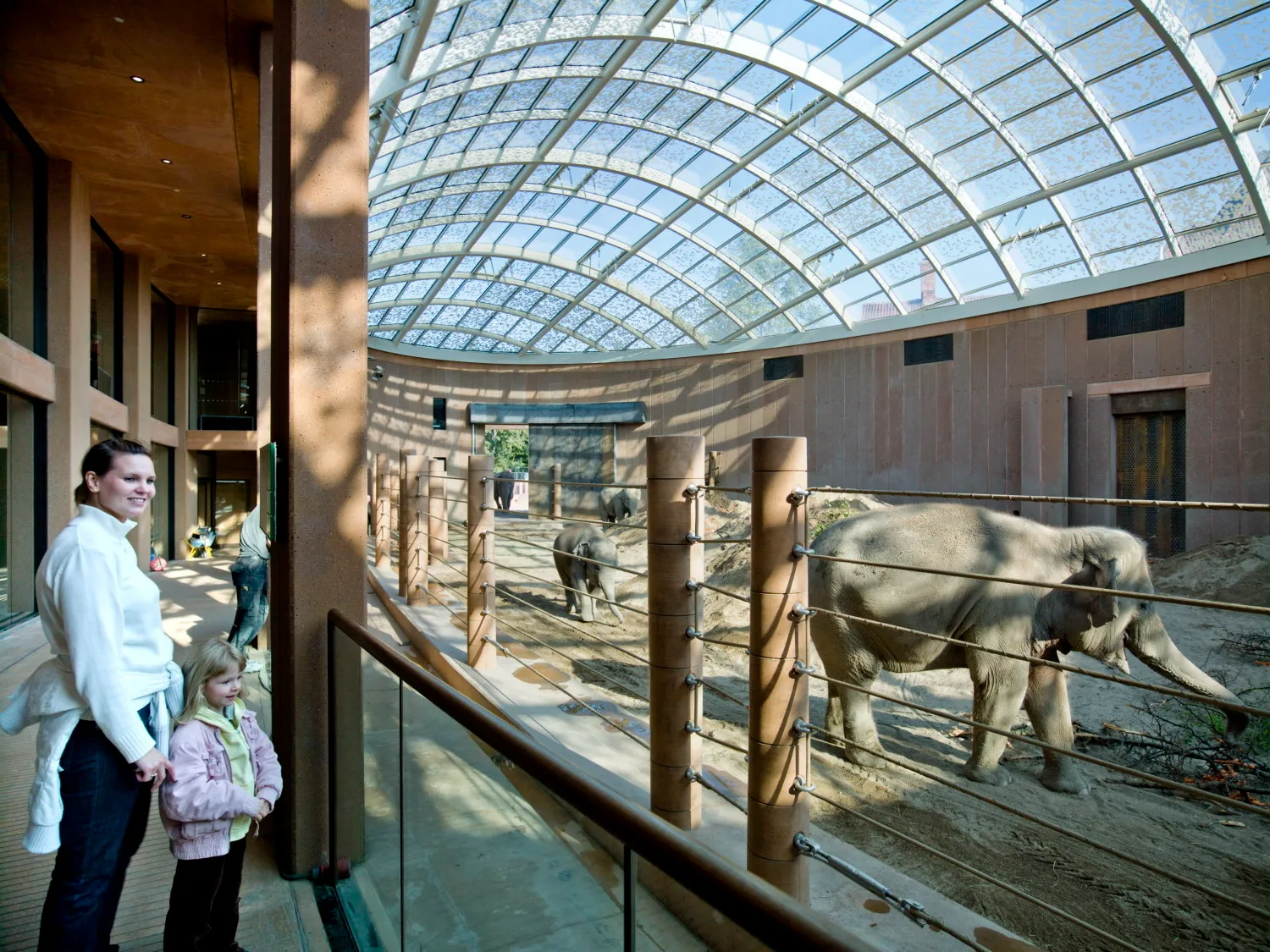
Located alongside The Panda House at Copenhagen Zoo, The Elephant House was designed to provide a healthy and stimulating environment for the Indian elephants, one of the zoo’s most visited residents, and to create easily accessible spaces where visitors can see and enjoy them. The 3,500 m² structure, with its exceptionally natural and simple design, meets the needs of the elephant community.
Following extensive research into elephant social behavior, the design reflects the tendency of male elephants to separate from the herd by organizing the facility around two distinct enclosures. Carved into the sloping terrain, these enclosures minimize the building’s physical impact on the landscape while optimizing passive thermal performance. Visitors enter the foyer from the entrance square and are guided down ramps to the education area, offering views of the enclosures along the way. Barriers between animals and humans are intentionally subtle; the paddock walls are concealed within a linear water feature, creating the impression that the elephants are simply another surprising element within the park’s landscape.
Designed to meet all the elephants’ physical needs, The Elephant House’s main enclosure provides space for six cows and calves to gather and sleep, while the floors are heated to keep them dry and maintain healthy feet. The paddocks recreate the terrain of a dry riverbed at the edge of a rainforest, which is a favorite habitat for Asian elephants. With mud pits, pools, and shade, they provide a place where the animals can play and interact freely.
8. Hathigaon
Location: Rajasthan, India
Year: 2018
Architect: RMA Architects
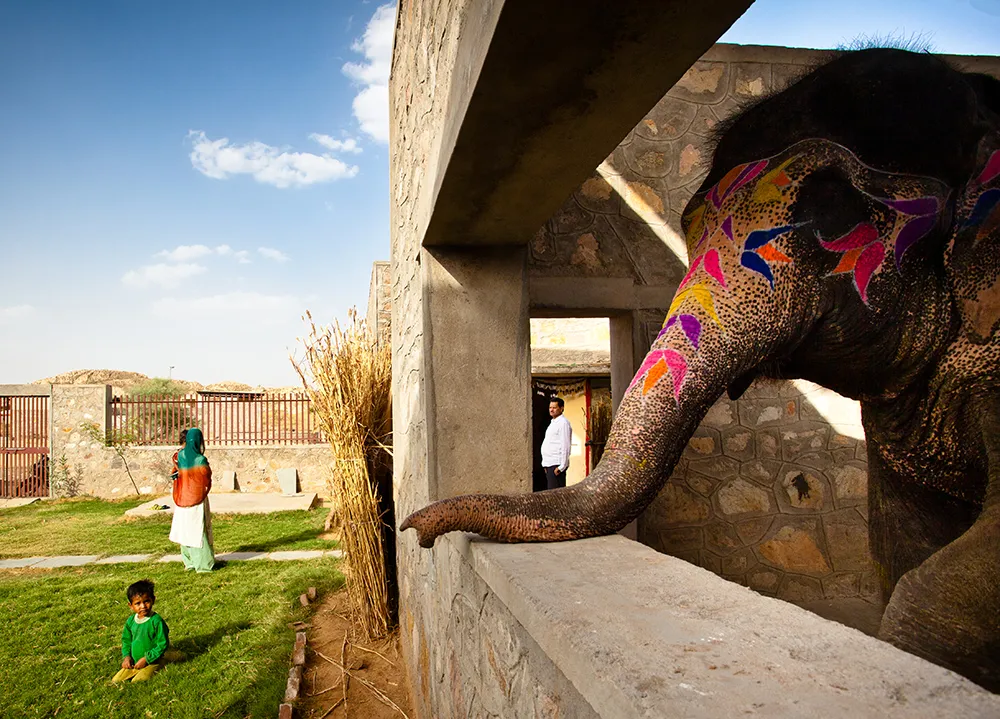
Hathigaon, a prime example of animal-friendly architecture, is a residential project designed for elephants and their caretakers at the foot of Amber Fort in Jaipur. The design strategy for this 88m² structure involves restructuring the land, which had been destroyed by local sand suppliers’ use as a sand quarry, to create a series of water bodies to collect rainwater.
The entire site was designed to contribute to rainwater harvesting, creating water basins around the area, and thus enabling the growth of vegetation. The water body strengthens the bond between the mahouts who care for the elephant and the elephant through the bathing process. This ritual is important for the elephant’s health and its attachment to its caretaker.
Housing units, arranged in clusters, are located on unused portions of the site for landscaping renovations. Courtyards and pavilions complement the compact footprints of this low-income housing development. To encourage a sense of community among residents, the master plan employs a cluster system that creates shared public spaces with varying hierarchies. All housing units are connected by semi-open elephant pens connected to the interior, providing an open-air feel for the animals and accessible to people at any time.
Explore Courses
.jpg "Architecture Diagram Mastery: Concept to Portfolio")
.jpg%202.jpg "Building Performance with Forma & Opossum")
.jpg "Ondrej Chybik - Rethinking Architecture")