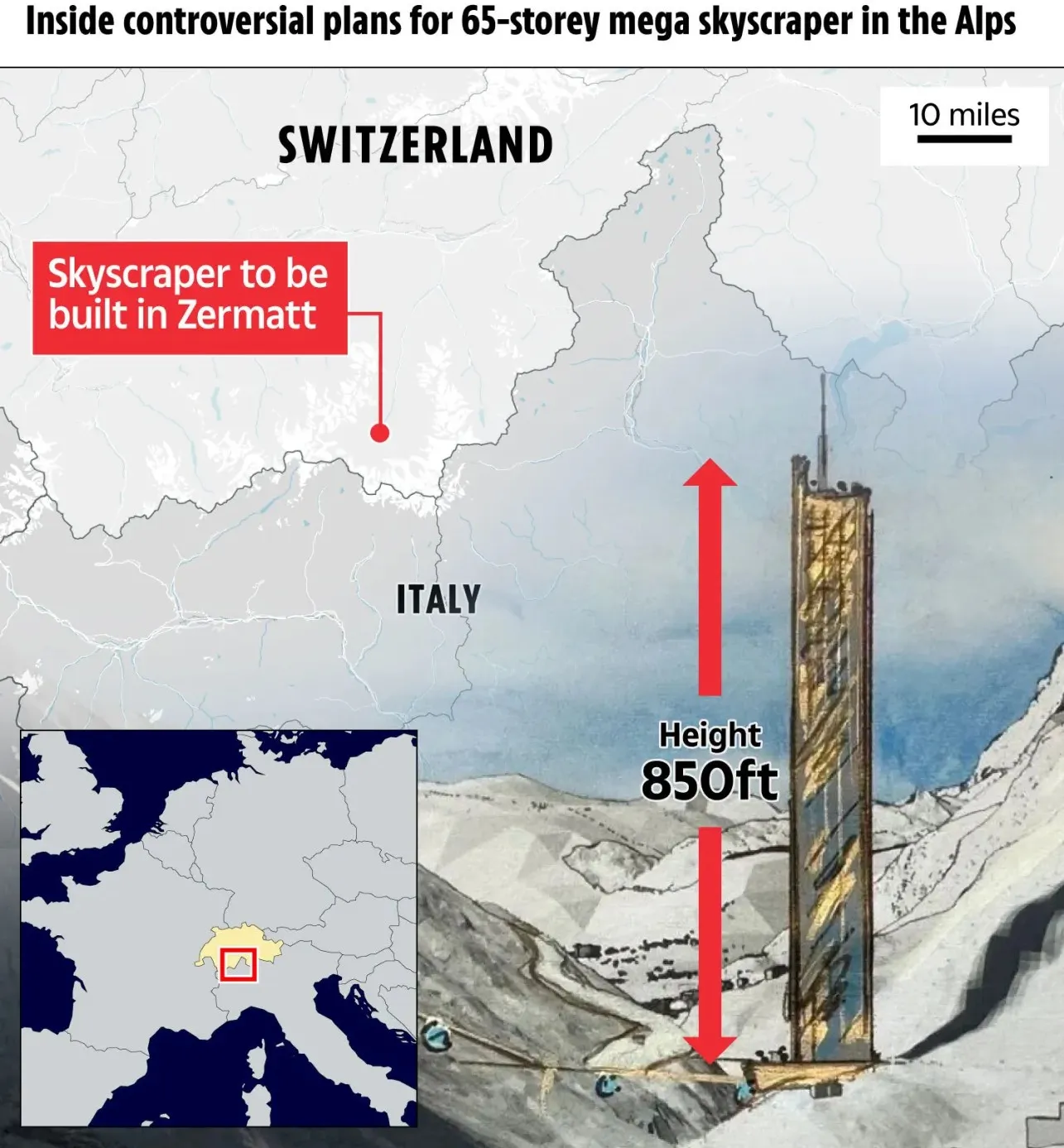
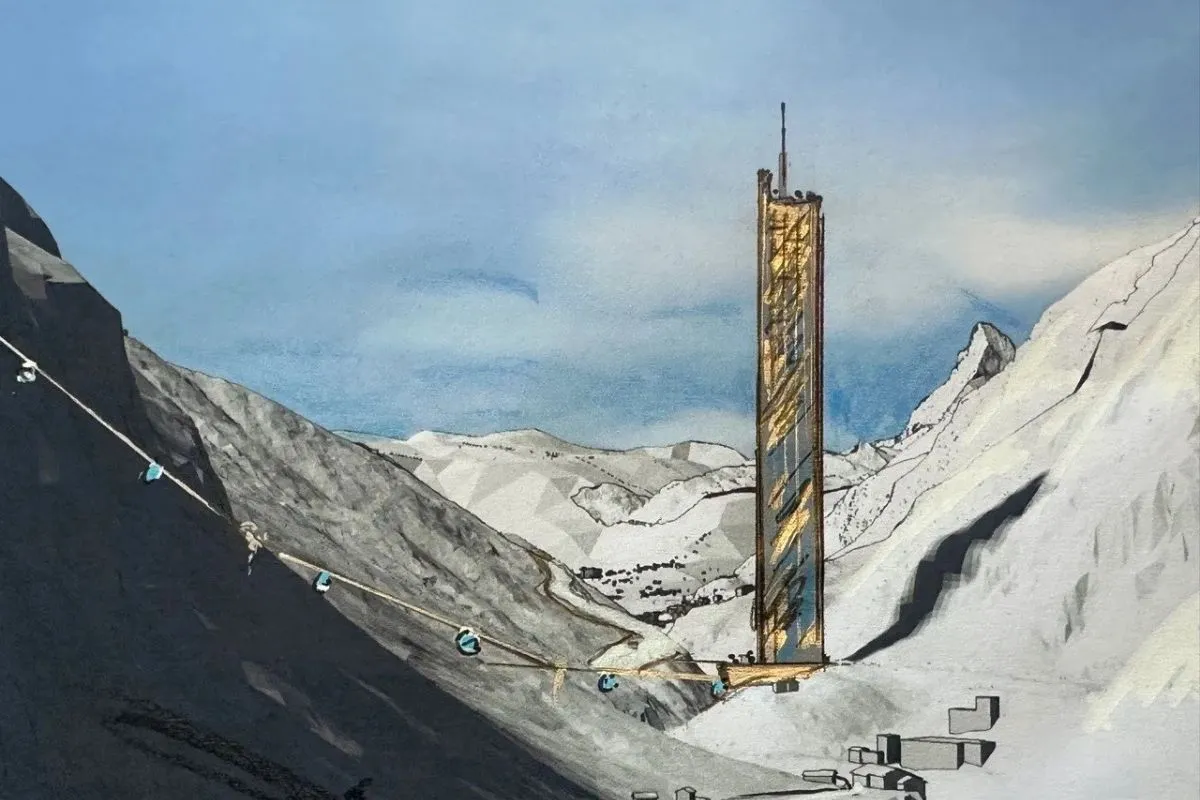
Imagine a tall skyscraper standing in the middle of a quiet, snow-covered Alpine valley, a 260-meter tower planned for Zermatt, right in view of the famous Matterhorn. This idea has quickly become one of the most talked-about proposals in the region, drawing both interest and concern from locals, tourists, and architecture experts.
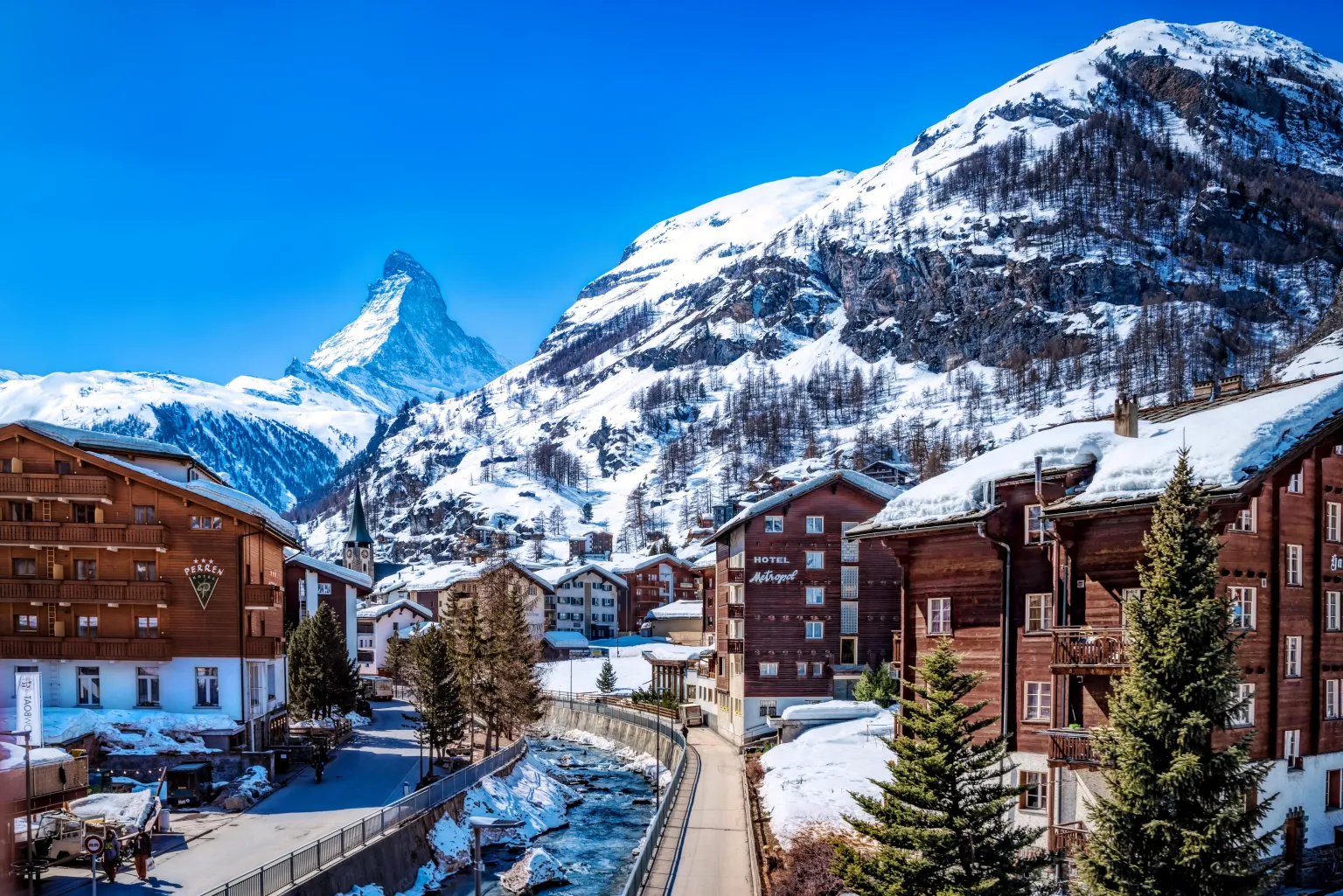
The building, known as Lina Peak, is designed to help solve Zermatt’s serious housing shortage, especially for seasonal workers who often struggle to find a place to live. However, the plan for the 65-story high-rise has also sparked debate. Many people are asking whether such a large tower belongs in a village known for its traditional wooden homes, small streets, and natural mountain scenery.
What Is Lina Peak?
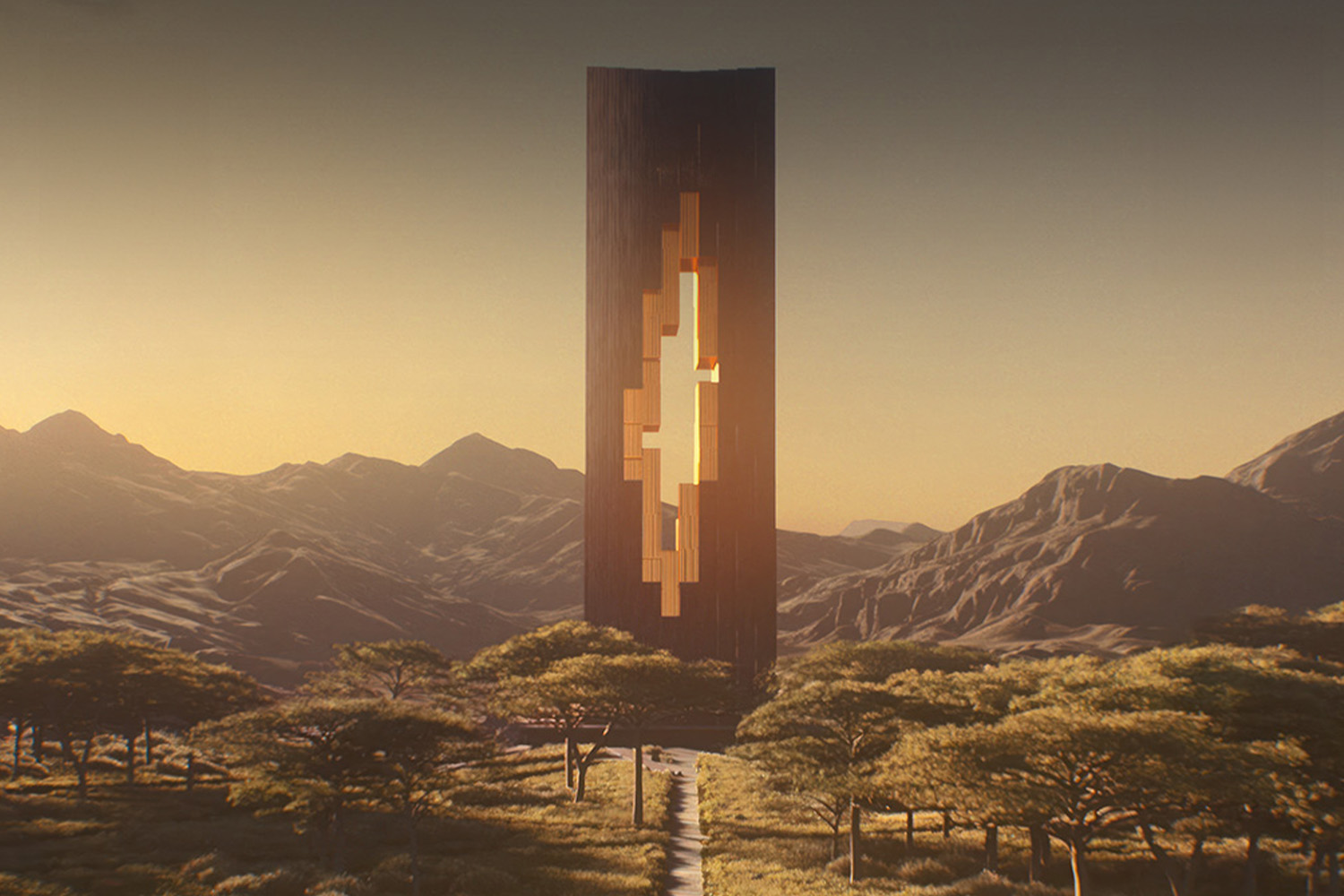
Lina Peak is a proposed high-rise residential tower designed by local architect and artist Heinz Julen. If built, the tower would stand 260 meters tall, include 65 floors, and become the tallest skyscraper in Switzerland. Julen attempts to solve Zermatt’s long-standing housing shortage.
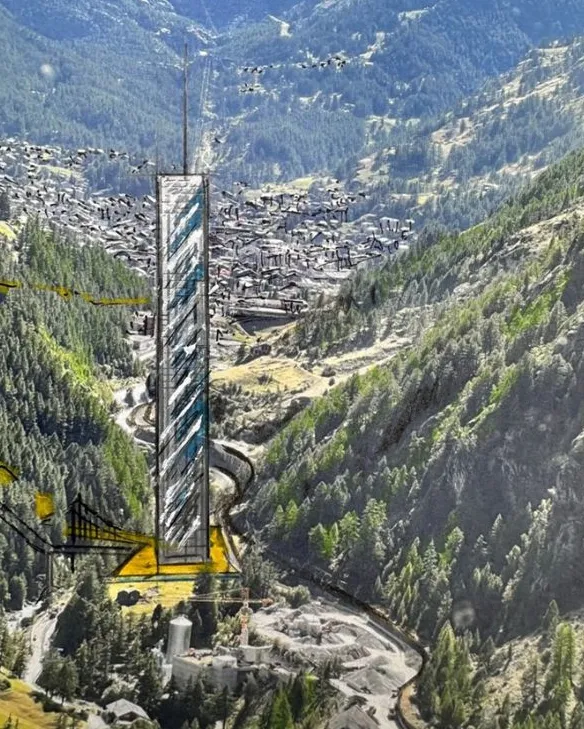
Julen introduced the concept to the public in mid-November 2025, revealing his plan to place the tower about 800 meters from Zermatt’s entrance, on farmland sitting at an elevation of roughly 1,500 meters. The building itself would stand on a 40 × 40-meter footprint, making it tall but relatively compact at the base.
He believes that going upward instead of outward is the only sensible way forward for Zermatt. Since the village is squeezed into a narrow mountain valley with very limited space, he argues that a vertical design helps create new housing without taking up more land.
The plan is for a fully mixed-use “vertical village,” combining housing with community spaces and amenities.
Residential Units: From the 2nd to the 32nd floor, the tower would offer relatively affordable housing for residents and seasonal workers, many of whom struggle to find accommodation in Zermatt due to skyrocketing real estate costs and near-zero vacancy rates.
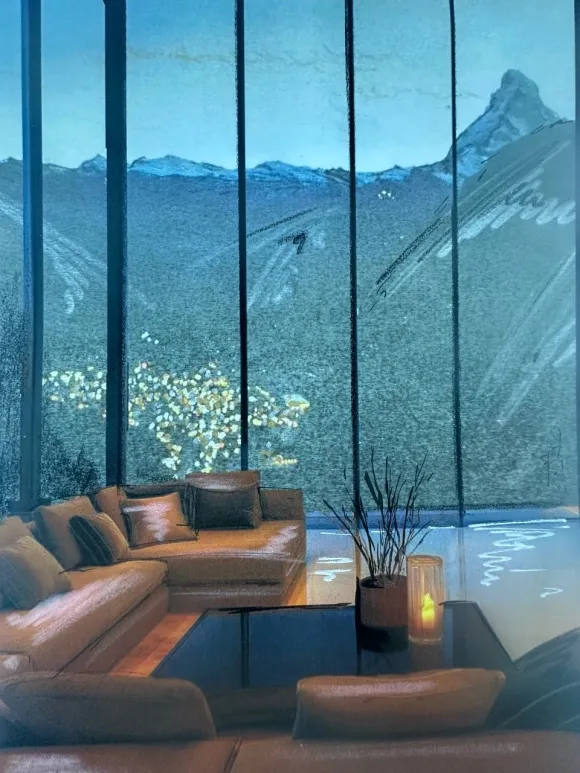
Luxury Flats: Floors 33 to 62 would be luxury apartments, featuring large windows with views of the Matterhorn. These are expected to appeal primarily to foreign buyers.
Amenities at Ground Level: The skyscraper’s base would incorporate 1,000 parking spaces, a 2,500-seat concert hall, retail shops, restaurants, a sports center, a public swimming pool, a daycare center, and a rooftop terrace accessible via high-speed elevators.
Lina Peak is expected to be a sleek steel-and-glass tower, a sharp contrast to Zermatt’s traditional Alpine chalets (traditional wooden houses or lodges) and low-rise buildings. It stands as a radical rethinking of how the village could grow without expanding its footprint outward.
Zermatt’s Housing Crisis and Overcrowding
Zermatt is a global tourist hotspot, while the permanent population is only about 5,800. During peak winter seasons, the number of people in town can swell to around 40,000.
This extraordinary seasonal swell drives up demand for housing and pushes prices to stratospheric levels. Employers in the tourism industry often struggle to provide affordable accommodation for seasonal workers: local real estate is prohibitively expensive, and vacancies are almost nonexistent.
Julen argues that Lina Peak offers a compact, high-density solution, building up, not outward, to maximize space use while reducing environmental footprint and giving seasonal workers a fair shot at decent housing. In his words, this “vertical village” could alleviate pressure on the entire resort and help sustain Zermatt’s future, especially if tourism numbers continue to grow.
The estimated cost of the Lina Peak project is around CHF 500 million (about half a billion Swiss francs). Construction, if approved, would likely take between five and ten years. The developer has already acquired the farmland plots needed, but major hurdles remain, most notably, rezoning the land from agricultural to residential/commercial and winning approval through a public referendum. Julen has said that before anything else, he needs to collect around 600 signatures to trigger the rezoning process. Only then would a vote among the community decide whether the tower can go ahead.
As soon as Lina Peak was revealed publicly, reactions were mixed, sometimes sharply divided. On one side, some locals and younger residents said they were open to novelty and intrigued by a project that offers practical housing solutions. On the other side, many raised concerns about the impact on Zermatt’s natural beauty, the loss of charm and character of the traditional Alpine village, and the risk of turning the resort into a concrete high-rise zone.
Critics warn that such a structure might irreversibly damage the visual harmony of views toward the Matterhorn and other peaks like the Gornergrat ridge, a selling point that has long drawn tourists. There’s also skepticism about whether luxury apartments aimed at wealthy foreigners truly help the housing problem for locals or simply fuel upscaling and further inflate property values.
Lina Peak wouldn’t be the first attempt at erecting a skyscraper in a Swiss alpine resort, but past efforts have failed. For instance, a proposed tower at another mountain village in the country once aimed even higher (381 meters), yet was never built. Even at lower scales, some previous “modern” towers (like in resorts similar to Zermatt) generated backlash for spoiling scenic landscapes or not fitting the region’s architectural heritage.
Thus, this new proposal is as much a test of public need for modernization as a housing solution, a bold attempt to reconcile Alpine tradition with contemporary needs.
Will Lina Peak Become Reality?
At present, the future of Lina Peak remains uncertain. The project still needs public approval, rezoning clearance, and buy-in from a community deeply aware of both the necessity and the risks.
Supporters believe it offers a practical, forward-looking answer to soaring housing demand and tourism pressure. Detractors worry it could undermine everything that makes Zermatt special, namely, its striking mountain backdrop and quaint Alpine village aesthetic. Whether Lina Peak becomes a celebrated landmark or an aborted vision may depend not just on architecture and economics but also on the heart and will of a community that holds the Matterhorn in its view and tradition in its soul.
Lina Peak is how mountain resorts like Zermatt might evolve under tourism pressure, climate constraints, and global real estate demand. It challenges the notion that Alpine villages must remain frozen in time, yet warns that progress at all costs could cost much more than money.